


dimanche, 11 mars 2012
Das türkische Trauma
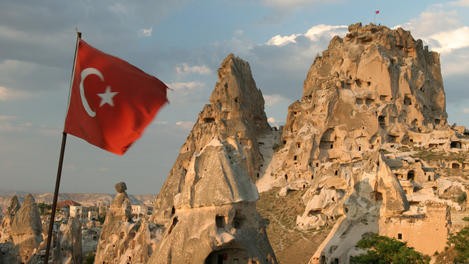
Das türkische Trauma
Der türkische Traum von der Hegemonie im Nahen Osten bleibt unerfüllt
Ex: http://www.andreas-moelzer.at
Es war der schwedische Außenminister Carl Bildt, der dieser Tage erklärte, Österreich möge doch das Trauma der Türkenbelagerung von 1683 endlich vergessen. Man müsse die Türkei möglichst schnell in die Europäische Union holen, damit diese in Zukunft auf der weltpolitischen Bühne eine Rolle spielen könne. Nur mit der Türkei sei dies möglich.
Nun mag es wirklich stimmen, daß die Österreicher mehr als andere Europäer im historischen Unterbewußtsein so etwas wie eine traumatische Furcht vor den Ambitionen der Osmanen haben. Zwar sind die Türkenkriege nahezu 400 Jahre vergangen, und in der Zwischenzeit war das Osmanische Reich sogar „Waffenbruder“ der Habsburger Monarchie im Ersten Weltkrieg, aber die Österreicher wissen, daß die Türkei, insbesondere als eine Art islamische Vormacht, geradezu das Gegenbild zu Europa, zum alten Abendland darstellt.
Bei einem Besuch in der türkischen Hauptstadt Ankara konnte der Autor dieser Zeilen vor wenigen Monaten Gespräche mit führenden türkischen Parlamentariern und mit dem Staatspräsidenten Abdullah Gül führen. Dabei wurde den europäischen Gesprächspartnern durchaus der Eindruck von aufgeklärter Vernunft vermittelt, auch von politischer Berechenbarkeit, darüber hinaus aber von einem gewaltigen Selbstbewußtsein und einer gewissen Verachtung für die Europäer. Wirtschaftlich und politisch fühlen sich die türkischen Eliten offenbar derart im Aufschwung begriffen, daß man die europäischen Bedenkenträger eher belächelt als ernstnimmt.
Das betrifft die Behandlung des kurdischen Volkes, das betrifft die Haltung Ankaras gegenüber Zypern und das betrifft natürlich auch die türkische Geschichtspolitik in Hinblick auf den Armenier-Genozid. Es sind diese drei Bereiche, an denen man die mangelnde Europareife der Türkei am klarsten erkennen kann. Recep Tayyip Erdogan, ganz in der Attitüde eines neuen Sultans, macht aus seinem Herzen auch keine Mördergrube. Bei seinen großen Rede-Auftritten, etwa vor einigen Jahren in Köln oder in Kuwait, sagt er klar und deutlich, daß die neue Türkei sich zwar als einzige wirkliche Demokratie europäischer Prägung im islamischen Bereich fühlt, daß sie aber gleichzeitig so etwas wie eine neo-osmanische Politik der neuen Machtentfaltung und beinharter Interessenswahrung betreiben will. Die sich zunehmend islamisierende Türkei hat zunehmenden Einfluß in die Turk-Staaten bis hinein nach Zentralasien. Sie gilt zunehmend als Modell für die islamisch-arabischen Staaten des Nahen Ostens und Nordafrika. Und sie strebt weiterhin nach Europa, wobei sie insbesondere in den islamischen Bereichen des Balkans ihren Einfluß auszudehnen versucht.
Europäische Werte, etwa die Respektierung des EU-Staats Zypern, eine Entschuldigung für den Armenier-Genozid oder die Respektierung von Minderheitenrechten des großen kurdischen Volkes, liegen den Türken im Zuge dieses neo-osmanischen Aufbruchs fern. Man setzt auf neue politische Stärke, auf andauernden Wirtschaftsaufschwung, auf die eigene militärische Kraft und auf nationales Selbstbewußtsein. Europa will man offenbar nur benützen.
00:05 Publié dans Actualité | Lien permanent | Commentaires (0) | Tags : andreas mölzer, turquie, politique internationale, géopolitique, union européenne, néo-ottomanisme |  |
|  del.icio.us |
  |
|  Digg |
  Facebook
L’art de la guerre : Iran, la bataille des gazoducs
La redistribution des cartes énergétiques en direction de l'Asie est en jeu dans la guerre de l'information entre l'Iran et l'Occident, mais elle est bien cachée par ce dernier.
L’art de la guerre : Iran, la bataille des gazoducs
par Manlio Dinucci
Ex: http://mbm.hautetfort.com/

Sur la scène de Washington, sous les projecteurs des media mondiaux, Barack Obama a déclamé : « En tant que président et commandant en chef, je préfère la paix à la guerre ». Mais, a-t-il ajouté, « la sécurité d’Israël est sacro-sainte » et, pour empêcher que l’Iran ne se dote d’une arme nucléaire, « je n’hésiterai pas à employer la force, y compris tous les éléments de la puissance américaine » (étasunienne, NdT). Armes nucléaires comprises donc. Paroles dignes d’un Prix Nobel de la paix. Ça, c’est le scénario. Pour savoir ce qu’il en est vraiment, il convient d’aller dans les coulisses. A la tête de la croisade anti-iranienne on trouve Israël, l’unique pays de la région qui possède des armes nucléaires et, à la différence de l’Iran, refuse le Traité de non-prolifération. Et on trouve les Etats-Unis, la plus grande puissance militaire, dont les intérêts politiques, économiques et stratégiques ne permettent pas que puisse s’affirmer au Moyen-Orient un Etat qui échappe à son influence. Ce n’est pas un hasard si les sanctions promulguées par le président Obama en novembre dernier interdisent la fourniture de produits et de technologies qui « accroissent la capacité de l’Iran à développer ses propres ressources pétrolifères ». A l’embargo ont adhéré l’Union européenne, acquéreur de 20% du pétrole iranien (dont 10% environ importé par l’Italie), et le Japon, acquéreur d’un pourcentage analogue, qui a encore plus besoin de pétrole après le désastre nucléaire de Fukushima. Un succès pour la secrétaire d’état Hillary Clinton, qui a convaincu les alliés de bloquer les importations énergétiques venant d’Iran contre leurs propres intérêts mêmes.
L’embargo cependant ne fonctionne pas. Défiant l’interdiction de Washington,Islamabad a confirmé le 1er mars qu’il terminera la construction du gazoduc Iran-Pakistan. Long de plus de 2mille Kms, il a déjà été réalisé presque entièrement dans son tronçon iranien et sera terminé dans celui pakistanais d’ici 2014. Il pourrait ensuite être étendu de 600 Kms jusqu’en Inde. La Russie a exprimé son intérêt à participer au projet, dont le coût est de 1,2 milliards de dollars.
Parallèlement, la Chine, qui importe 20% du pétrole iranien, a signé en février un accord avec Téhéran, qui prévoit d’augmenter ses fournitures à un demi million de barils par jour en 2012. Et le Pakistan aussi accroîtra ses importations de pétrole iranien. Furieuse, Hillary Clinton a intensifié la pression sur Islamabad, utilisant la carotte et le bâton : d’un côté menace de sanctions, de l’autre offre d’un milliard de dollars pour les exigences énergétiques du Pakistan. En échange, celui-ci devrait renoncer au gazoduc avec l’Iran et miser uniquement sur le gazoduc Turkmenistan-Afghanistan-Pakistan-Inde, soutenu par Washington. Son coût est estimé à 8 milliards de dollars, plus du double que prévu initialement.
A Washington, c’est cependant la motivation stratégique qui prévaut. Les gisements turkmènes de gaz naturel sont en grande partie contrôlés par le groupe israélien Merhav, dirigé par Yosef Maiman, agent du Mossad, un des hommes les plus influents d’Israël. Mais la réalisation du gazoduc, qui en Afghanistan passera par les provinces de Herat (où sont les troupes italiennes) et de Kandahar, est en retard. En l’état actuel, c’est celui Iran-Pakistan qui a l’avantage. A moins que les cartes ne soient redistribuées par une guerre contre l’Iran. Même si le président Obama « préfère la paix ».
Edition de mardi 6 mars 2012 de il manifesto
http://www.ilmanifesto.it/area-abbonati/in-edicola/manip2...
Traduit de l’italien par Marie-Ange Patrizio
00:05 Publié dans Actualité, Géopolitique | Lien permanent | Commentaires (0) | Tags : politique internationale, géopolitique, gazoducs, hydrocarbures, pétrole, gaz, iran, moyen orient, asie, affaires asiatiques | | del.icio.us | | Digg | Facebook
The Eviction of the Yeomen
The Eviction of the Yeomen
By Brooks Adams
Ex: http://www.counter-currents.com/
Editor’s Note:
The following is roughly the first 40% of “The Eviction of the Yeomen,” chapter 9 of Brooks Adams’ The Law of Civilization and Decay.
Reading Adams’ account of the forces that ultimately created the British empire and diaspora, it is hard to regard it as a glorious and civilizing process, but rather as a sordid and savage one, given that the conquest and settling of new lands, the extermination, enslavement, and dispossession of non-whites, and even the despoiling of nature and the extinction of entire species, appear to be mere extensions of the rise of capitalism in England on the ruins of a fundamentally more humane political order.
None of this implies, of course, that the heirs of these upheavals should surrender our lands and go home. Past wrongs cannot be redressed, and in any case, our primary focus should be on building a just social order for the future. And for that task, Brooks Adams offers us much food for thought.
The remainder of chapter 9 deals with the Church of England. It throws a great deal of light on the prevalence of religious cynicism and insincerity in the Angl0 cultural sphere. I will reprint it on another occasion.
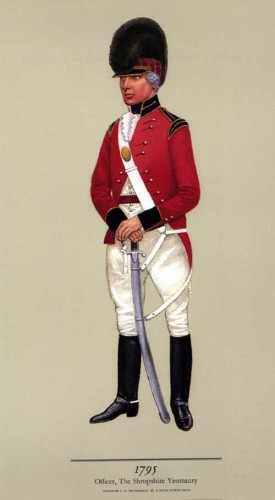 Like primitive Rome, England, during the Middle Ages, had an unusually homogeneous population of farmers, who made a remarkable infantry. Not that the cavalry was defective; on the contrary, from top to bottom of society, every man was a soldier, and the aristocracy had excellent fighting qualities. Many of the kings, like Coeur-de-Lion, Edward III, and Henry V, ranked among the ablest commanders of their day; the Black Prince has always been a hero of chivalry; and earls and barons could be named by the score who were famous in the Hundred Years’ War.
Yet, although the English knights were a martial body, there is nothing to show that, on the whole, they surpassed the French. The English infantry won Crecy and Poitiers, and this infantry, which was long the terror of Europe, was recruited from among the small farmers who flourished in Great Britain until they were exterminated by the advance of civilization.
As long as the individual could at all withstand the attack of the centralized mass of society, England remained a hot-bed for breeding this species of man. A medieval king had no means of collecting a regular revenue by taxation; he was only the chief of the free-men, and his estates were supposed to suffice for his expenditure. The revenue the land yielded consisted of men, not money, and to obtain men, the sovereign granted his domains to his nearest friends, who, in their turn, cut their manors into as many farms as possible, and each farmer paid his rent with his body.
A baron’s strength lay in the band of spears which followed his banner, and therefore he subdivided his acres as much as possible, having no great need of money. Himself a farmer, he cultivated enough of his fief to supply his wants, to provide his table, and to furnish his castle, but, beyond this, all he kept to himself was loss. Under such a system money contracts played a small part, and economic competition was unknown.
The tenants were free-men, whose estates passed from father to son by a fixed tenure; no one could underbid them with their landlord, and no capitalist could ruin them by depressing wages, for the serfs formed the basis of society, and these serfs were likewise land-owners. In theory, the villains may have held at will; but in fact they were probably the descendants, or at least the representatives, of the coloni of the Empire, and a base tenure could be proved by the roll of the manorial court. Thus even the weakest were protected by custom, and there was no competition in the labor market.
The manor was the social unit, and, as the country was sparsely settled, waste spaces divided the manors from each other, and these wastes came to be considered as commons appurtenant to the domain in which the tenants of the manor had vested rights. The extent of these rights varied from generation to generation, but substantially they amounted to a privilege of pasture, fuel, or the like; aids which, though unimportant to large property owners, were vital when the margin of income was narrow.
During the old imaginative age, before centralization gathered headway, little inducement existed to pilfer these domains, since there was room in plenty, and the population increased slowly, if at all. The moment the form of competition changed, these conditions were reversed. Precisely when a money rent became a more potent force than armed men may be hard to determine, but certainly that time had come when Henry VIII mounted the throne, for then capitalistic farming was on the increase, and speculation in real estate already caused sharp distress. At that time the establishment of a police had destroyed the value of the retainer, and competitive rents had generally supplanted military tenures. Instead of tending to subdivide, as in an age of decentralization, land consolidated in the hands of the economically strong, and capitalists systematically enlarged their estates by enclosing the commons, and depriving the yeomen of their immemorial rights.
The sixteenth-century landlords were a type quite distinct from the ancient feudal gentry. As a class they were gifted with the economic, and not with the martial instinct, and they throve on competition. Their strength lay in their power of absorbing the property of their weaker neighbors under the protection of an overpowering police.
Everything tended to accelerate consolidation, especially the rise in the value of money. While, even with the debasement of the coin, the price of cereals did not advance, the growth of manufactures had caused wool to double in value. “We need not therefore be surprised at finding that the temptation to sheep-farming was almost irresistible, and that statute after statute failed to arrest the tendency.”[1]
The conversion of arable land into pasture led, of course, to wholesale eviction, and by 1515 the suffering had become so acute that details were given in acts of Parliament. Places where two hundred persons had lived, by growing corn and grain, were left desolate, the houses had decayed, and the churches fallen into ruin.[2]The language of these statutes proves that the descriptions of contemporaries were not exaggerated.
For I myself know many towns and villages sore decayed, for it whereas in times past there war in some town an hundred households there remain not now thirty; in some fifty, there are not now ten; yea (which is more to be lamented) I know towns so wholly decayed, that there is neither stick nor stone standing as they use to say.
Where many men had good livings, and maintained hospitality, able at times to help the king in his wars, and to sustain other charges, able also to help their pore neighbors, and virtuously to bring up their children in Godly letters and good sciences, now sheep and conies devour altogether, no man inhabiting the aforesaid places. Those beasts which were created of God for the nourishment of man do now devour man. . . . And the cause of all this wretchedness and beggary in the common weal are the greedy Gentlemen, which are sheepmongers and grazers. While they study for their own private commodity, the common weal is like to decay. Since they began to be sheep masters and feeders of cattle, we neither had victual nor cloth of any reasonable price. No meruayle, for these forestallers of the market, as they use to say, have gotten all things so into their hands, that the poor man must either buy it at their price, or else miserably starve for hunger, and wretchedly die for cold.[3]
The reduction of the acreage in tillage must have lessened the crop of the cereals, and accounts for their slight rise in value during the second quarter of the sixteenth century. Nevertheless this rise gave the farmer no relief, as, under competition, rents advanced faster than prices, and in the generation which reformed the Church, the misery of yeomen had become extreme. In 1549 Latimer preached a sermon, which contains a passage often quoted, but always interesting:
Furthermore, if the king’s honor, as some men say, standeth in the great multitude of people; then these grazers, inclosers, and rent-rearers, are hinderers of the king’s honor. For where as have been a great many householders and inhabitants, there is now but a shepherd and his dog. . . .
My father was yeoman, and had no lands of his own, only he had a farm of three or four pound by year at the uttermost, and hereupon he tilled so much as kept half a dozen men. He had walk for a hundred sheep; and my mother milked thirty kine. He was able, and did find the king a harness, with himself and his horse, while he came to the place that he should receive the king’s wages. I can remember that I buckled his harness when he went unto Blackheath field. He kept me to school, or else I had not been able to have preached before the king’s majesty now.
He married my sisters with five pound, or twenty nobles apiece; so that he brought them up in godliness and fear of God. He kept hospitality for his poor neighbors, and some alms he gave to the poor. And all this he did of the said farm, where he that now hath it payeth sixteen pound by year, or more, and is not able to do anything for his prince, for himself, nor for his children, or give a cup of drink to the poor.[4]
The small proprietor suffered doubly: he had to meet the competition of large estates, and to endure the curtailment of his resources through the enclosure of the commons. The effect was to pauperize the yeomanry and lesser gentry, and before the Reformation the homeless poor had so multiplied that, in 1530, Parliament passed the first of a series of vagrant acts.[5]
 At the outset the remedy applied was comparatively mild, for able-bodied mendicants were only to be whipped until they were bloody, returned to their domicile, and there whipped until they put themselves to labor. As no labor was supplied, the legislation failed, and in 1537 the emptying of the convents brought matters to a climax. Meanwhile Parliament tried the experiment of killing off the unemployed; by the second act vagrants were first mutilated and then hanged as felons.[6]
In 1547, when Edward VI was crowned, the great crisis had reached its height. The silver of Potosi had not yet brought relief, the currency was in chaos, labor was disorganized, and the nation seethed with the discontent which broke out two years later in rebellion. The land-owners held absolute power, and before they yielded to the burden of feeding the starving, they seriously addressed themselves to the task of extermination. The preamble of the third act stated that, in spite of the “great travel” and “godly statutes” of Parliament, pauperism had not diminished, therefore any vagrant brought before two justices was to be adjudged the slave of his captor for two years. He might be compelled to work by beating, chaining, or otherwise, be fed on bread and water, or refuse meat, and confined by a ring of iron about his neck, arms or legs. For his first attempt at escape, his slavery became perpetual, for his second, he was hanged.[7]
Even as late as 1591, in the midst of the great expansion which brought prosperity to all Europe, and when the monks and nuns, cast adrift by the suppression of the convents, must have mostly died, beggars so swarmed that at the funeral of the Earl of Shrewsbury:
there were by the report of such as served the dole unto them, the number of 8000. And they thought that there were almost as many more that could not be served, through their unruliness. Yea, the press was so great that divers were slain and many hurt. And further it is reported of credible persons, that well estimated the number of all the said beggars, that they thought there were about 20,000.
It was conjectured “that all the said poor people were abiding and dwelling within thirty miles’ compass of Sheffield.”[8]
In 1549, just as the tide turned, insurrection blazed out all over England. In the west a pitched battle was fought between the peasantry and foreign mercenaries, and Exeter was relieved only after a long siege. In Norfolk the yeomen, led by one Kett, controlled a large district for a considerable time. They arrested the unpopular landlords, threw open the commons they had appropriated, and ransacked the manor houses to pay indemnities to evicted farmers. When attacked, they fought stubbornly, and stormed Norwich twice.
Strype described “these mutineers” as “certain poor men that sought to have their commons again, by force and power taken from them; and that a regulation be made according to law of arable lands turned into pasture.”[9]
Cranmer understood the situation perfectly, and though a consummate courtier, and himself a creation of the capitalistic revolution, spoke in this way of his patrons:
And they complain much of rich men and gentlemen, saying, that they take the commons from the poor, that they raise the prices of all manner of things, that they rule the poverty, and oppress them at their pleasure. . . .
And although here I seem only to speak against these unlawful assemblers, yet I cannot allow those, but I must needs threaten everlasting damnation unto them, whether they be gentlemen or whatsoever they be, which never cease to purchase and join house to house, and land to land, as though they alone ought to possess and inhabit the earth.[10]
Revolt against the pressure of this unrestricted economic competition took the form of Puritanism, of resistance to the religious organization controlled by capital, and even in Cranmer’s time, the attitude of the descendants of the men who formed the line at Poitiers and Crecy was so ominous that Anglican bishops took alarm.
It is reported that there be many among these unlawful assemblies that pretend knowledge of the gospel, and will needs be called gospellers. . . . But now I will go further to speak somewhat of the great hatred which divers of these seditious persons do bear against the gentlemen; which hatred in many is so outrageous, that they desire nothing more than the spoil, ruin, and destruction of them that be rich and wealthy.[11]
Somerset, who owed his elevation to the accident of being the brother of Jane Seymour, proved unequal to the crisis of 1549, and was supplanted by John Dudley, now better remembered as Duke of Northumberland. Dudley was the strongest member of the new aristocracy. His father, Edmund Dudley, had been the celebrated lawyer who rose to eminence as the extortioner of Henry VII, and whom Henry VIII executed, as an act of popularity, on his accession. John, beside inheriting his father’s financial ability, had a certain aptitude for war, and undoubted courage; accordingly he rose rapidly. He and Cromwell understood each other; he flattered Cromwell, and Cromwell lent him money.[12]
Strype has intimated that Dudley had strong motives for resisting the restoration of the commons.[13]
In 1547 he was created Earl of Warwick, and in 1549 suppressed Rett’s rebellion. This military success brought him to the head of the State; he thrust Somerset aside, and took the title of Duke of Northumberland. His son was equally distinguished. He became the favorite of Queen Elizabeth, who created him Earl of Leicester; but, though an expert courtier, he was one of the most incompetent generals whom even the Tudor landed aristocracy ever put in the field.
The disturbances of the reign of Edward VI did not ripen into revolution, probably because of the relief given by rising prices after 1550; but, though they fell short of actual civil war, they were sufficiently formidable to terrify the aristocracy into abandoning their policy of killing off the surplus population. In 1552 the first statute was passed looking toward the systematic relief of paupers.[14] Small farmers prospered greatly after 1660, for prices rose strongly, very much more strongly than rents; nor was it until after the beginning of the seventeenth century, when rents again began to advance, that the yeomanry once more grew restive. Cromwell raised his Ironsides from among the great-grandchildren of the men who stormed Norwich with Kett.
I had a very worthy friend then; and he was a very noble person, and I know his memory is very grateful to all—Mr. John Hampden. At my first going out into this engagement, I saw our men were beaten at every hand. I did indeed; and desired him that he would make some additions to my Lord Essex’s army, of some new regiments; and I told him I would be serviceable to him in bringing such men in as I thought had a spirit that would do something in the work. This is very true that I tell you; God knows I lie not. “Your troops,” said I, “are most of them old decayed serving-men, and tapsters, and such kind of fellows; and,” said I, “their troops are gentlemen’s sons, younger sons and persons of quality: do you think that the spirits of such base and mean fellows will ever be able to encounter gentlemen, that have honor and courage and resolution in them?” . . . Truly I did tell him; “You must get men of a spirit: . . . a spirit that is likely to go on as far as gentlemen will go; — or else you will be beaten still. . . .”
He was a wise and worthy person; and he did think that I talked a good notion, but an impracticable one. Truly I told him I could do somewhat in it, . . . and truly I must needs say this to you, . . . I raised such men as had the fear of God before them, as made some conscience of what they did; and from that day forward, I must say to you, they were never beaten, and wherever they were engaged against the enemy, they beat continually.[15]
Thus, by degrees, the pressure of intensifying centralization split the old homogeneous population of England into classes, graduated according to their economic capacity. Those without the necessary instinct sank into agricultural day laborers, whose lot, on the whole, has probably been somewhat worse than that of ordinary slaves. The gifted, like the Howards, the Dudleys, the Cecils, and the Boleyns, rose to be rich nobles and masters of the State. Between the two accumulated a mass of bold and needy adventurers, who were destined finally not only to dominate England, but to shape the destinies of the world.
One section of these, the shrewder and less venturesome, gravitated to the towns, and grew rich as merchants, like the founder of the Osborn family, whose descendant became Duke of Leeds; or like the celebrated Josiah Child, who, in the reign of William III, controlled the whole eastern trade of the kingdom. The less astute and the more martial took to the sea, and as slavers, pirates, and conquerors, built up England’s colonial empire, and established her maritime supremacy. Of this class were Drake and Blake, Hawkins, Raleigh, and Clive.
For several hundred years after the Norman conquest Englishmen showed little taste for the ocean, probably because sufficient outlet for their energies existed on land. In the Middle Ages the commerce of the island was mostly engrossed by the Merchants of the Steelyard, an offshoot of the Hanseatic league; while the great explorers of the fifteenth and early sixteenth centuries were usually Italians or Portuguese; men like Columbus, Vespucius, Vasco-da-Gama, or Magellan. This state of things lasted, however, only until economic competition began to ruin the small farmers, and then the hardiest and boldest race of Europe were cast adrift, and forced to seek their fortunes in strange lands.
For the soldier or the adventurer, there was no opening in England after the battle of Flodden. A peaceful and inert bourgeoisie more and more supplanted the ancient martial baronage; their representatives shrank from campaigns like those of Richard I, the Edwards, and Henry V, and therefore, for the evicted farmer, there was nothing but the far-off continents of America and Asia, and to these he directed his steps.
The lives of the admirals tell the tale on every page. Drake’s history is now known. His family belonged to the lesser Devon gentry, but fallen so low that his father gladly apprenticed him as ship’s boy on a channel coaster, a life of almost intolerable hardship. From this humble beginning he fought his way, by dint of courage and genius, to be one of England’s three greatest seamen; and Blake and Nelson, the other two, were of the same blood.
Sir Humphrey Gilbert was of the same West Country stock as Drake; Frobisher was a poor Yorkshire man, and Sir Walter Raleigh came from a ruined house. No less than five knightly branches of Raleigh’s family once throve together in the western counties; but disaster came with the Tudors, and Walter’s father fell into trouble through his Puritanism. Walter himself early had to face the world, and carved out his fortune with his sword. He served in France in the religious wars; afterward, perhaps, in Flanders; then, through Gilbert, he obtained a commission in Ireland, but finally drifted to Elizabeth’s court, where he took to buccaneering and conceived the idea of colonizing America.
A profound gulf separated these adventurers from the landed capitalists, for they were of an extreme martial type; a type hated and feared by the nobility. With the exception of the years of the Commonwealth, the landlords controlled England from the Reformation to the revolution of 1688, a period of one hundred and fifty years, and, during that long interval, there is little risk in asserting that the aristocracy did not produce a single soldier or sailor of more than average capacity. The difference between the royal and the parliamentary armies was as great as though they had been recruited from different races. Charles had not a single officer of merit, while it is doubtful if any force has ever been better led than the troops organized by Cromwell.
Men like Drake, Blake, and Cromwell were among the most terrible warriors of the world, and they were distrusted and feared by an oligarchy which felt instinctively its inferiority in arms. Therefore, in Elizabeth’s reign, politicians like the Cecils took care that the great seamen should have no voice in public affairs. And though these men defeated the Armada, and though England owed more to them than to all the rest of her population put together, not one reached the peerage, or was treated with confidence and esteem. Drake’s fate shows what awaited them. Like all his class, Drake was hot for war with Spain, and from time to time he was unchained, when fighting could not be averted; but his policy was rejected, his operations more nearly resembled those of a pirate than of an admiral, and when he died, he died in something like disgrace.
The aristocracy even made the false position in which they placed their sailors a source of profit, for they forced them to buy pardon for their victories by surrendering the treasure they had won with their blood. Fortescue actually had to interfere to defend Raleigh and Hawkins from Elizabeth’s rapacity. In 1592 Borough sailed in command of a squadron fitted out by the two latter, with some contribution from the queen and the city of London. Borough captured the carack, the Madre-de-Dios, whose pepper alone Burleigh estimated at £102,000. The cargo proved worth £141,000, and of this Elizabeth’s share, according to the rule of distribution in use, amounted to one-tenth, or £14,000. She demanded £80,000, and allowed Raleigh and Hawkins, who had spent £34,000, only £36,000. Raleigh bitterly contrasted the difference made between himself a soldier, and a peer, or a London speculator:
I was the cause that all this came to the Queen, and that the King of Spain spent 300,000li the last year. . . . I that adventured all my estate, lose of my principal. . . . I took all the care and pains; . . . they only sate still . . . for which double is given to them, and less then mine own to me.[16]
Raleigh was so brave he could not comprehend that his talent was his peril. He fancied his capacity for war would bring him fame and fortune, and it led him to the block. While Elizabeth lived, the admiration of the woman for the hero probably saved him, but he never even entered the Privy Council, and of real power he had none. The sovereign the oligarchy chose was James, and James imprisoned and then slew him. Nor was Raleigh’s fate peculiar, for, through timidity, the Cavaliers conceived an almost equal hate of many soldiers. They dug up the bones of Cromwell, they tried to murder William III, and they dragged down Marlborough in the midst of victory. Such were the new classes into which economic competition divided the people of England during the sixteenth century, and the Reformation was only one among many of the effects of this profound social revolution.
[. . .]
Although the spoliations of Edward [VI] are less well remembered than those of his father [Henry VIII], they were hardly less drastic. They began with the estates of the chantries and guilds, and rapidly extended to all sorts of property. In the Middle Ages, one of the chief sources of revenue of the sacred class had been their prayers for souls in purgatory, and all large churches contained chapels, many of them richly endowed, for the perpetual celebration of masses for the dead; in England and Wales more than a thousand such chapels existed, whose revenues were often very valuable. These were the chantries, which vanished with the imaginative age which created them, and the guilds shared the same fate.
Before economic competition had divided men into classes according to their financial capacity, all craftsmen possessed capital, as all agriculturists held land. The guild established the craftsman’s social status; as a member of a trade corporation he was governed by regulations fixing the number of hands he might employ, the amount of goods he might produce, and the quality of his workmanship; on the other hand, the guild regulated the market, and ensured a demand. Tradesmen, perhaps, did not easily grow rich, but they as seldom became poor.
With centralization life changed. Competition sifted the strong from the weak; the former waxed wealthy, and hired hands at wages, the latter lost all but the ability to labor; and, when the corporate body of producers had thus disintegrated, nothing stood between the common property and the men who controlled the engine of the law. By he 1 Edward VI., c. 14, all the possessions of the schools, colleges, and guilds of England, except the colleges of Oxford and Cambridge and the guilds of London, were conveyed to the king, and the distribution thus begun extended far and wide, and has been forcibly described by Mr. Blunt:
They tore off the lead from the roofs, and wrenched out the brasses from the floors. The books they despoiled of their costly covers, and then sold them for waste paper. The gold and silver plate they melted down with copper and lead, to make a coinage so shamefully debased as was never known before or since in England. The vestments of altars and priests they turned into table-covers, carpets, and hangings, when not very costly; and when worth more money than usual, they sold them to foreigners, not caring who used them for “superstitious” purposes, but caring to make the best “bargains” they could of their spoil. Even the very surplices and altar linen would fetch something, and that too was seized by their covetous hands.[17]
These “covetous hands” were the privy councilors. Henry had not intended that any member of the board should have precedence, but the king’s body was not cold before Edward Seymour began an intrigue to make himself protector. To consolidate a party behind him, he opened his administration by distributing all the spoil he could lay hands on; and Mr. Froude estimated that “on a computation most favorable to the council, estates worth . . . in modern currency about five millions” of pounds, were “appropriated—I suppose I must not say stolen—and divided among themselves.”[18] At the head of this council stood Cranmer, who took his share without scruple. Probably Fronde’s estimate is far too low; for though Seymour, as Duke of Somerset, had, like Henry, to meet imperative claims which drained his purse, he yet built Somerset House, the most sumptuous palace of London.
Notes
1. Agriculture and Prices, iv. 64.
2. 6 Henry VIII., c. 5; 7 Henry VIII., c. i.
3. Jewel of Joy, Becon. Also England in the Reign of Henry VIII, Early Eng. Text Soc, Extra Ser., No. xxxii. p. 75.
4. First Sermon before Edward VI. Sermons of Bishop Latimer, ed. of Parker Soc., 100, 101.
5. 22 Henry VIII., c. 12.
6. 27 Henry VIII., c. 25.
7. Edward VI., c. 3.
8. Brit. Mus., Cole MS. xii. 41. Cited in Henry VIII. and the English Monasteries, Gasquet, ii. 514, note.
9. Eccl. Mem., ii. pt. i, 260.
10. Sermon on Rebellion, Cranmer, Miscellaneous Writings and Letters, 194–6.
11. Sermon on Rebellion, Cranmer, Miscellaneous Writings and Letters, 195, 196.
12. Cal. ix. No. 193.
13. Eccl. Mem., ii. pt. I, 152.
14. 5 and 6 Edw. VI., c. 2.
15. Cromwell’s Letters and Speeches, Carlyle, Speech XI.
16. Raleigh to Burleigh, Life of Sir Walter Raleigh, Edwards, ii. 76, letter xxxiv.
17. The Reformation of the Church of England, ii. 68.
18. History of England, v. 432.
Article printed from Counter-Currents Publishing: http://www.counter-currents.com
URL to article: http://www.counter-currents.com/2012/03/the-eviction-of-the-yeomen/
00:05 Publié dans Histoire | Lien permanent | Commentaires (0) | Tags : histoire, yeoman, yeomanry, angleterre, sociologie, brooks adams | | del.icio.us | | Digg | Facebook
La balkanisation du Système - Ernst Jünger et la fin des temps
La balkanisation du Système - Ernst Jünger et la fin des temps
ParTomislav Sunic
La locution "la fin des temps" n'est pas sans rappeler les prédictions bibliques d'un cours du temps linéaire qui devrait conduire à la fin du monde. Cette idée semble être typique chez les gens dont la pensée est alimentée par le mental monothéiste et sémitique, comme l’annonce la Révélation présentée à la fin de l’Apocalypse (XXI, 1-2). Et j’ai vu un nouveau ciel et une nouvelle terre ; car l’ancien ciel et l’ancienne terre avaient disparu, et la mer n’est plus. J’ai vu aussi la ville sainte, la Nouvelle Jérusalem, qui descendait du ciel, d’auprès de Dieu, et préparée comme une épouse parée pour son mari.
Aujourd'hui, on observe cet esprit monothéiste dans la croyance au progrès économique, avec ses retombées idéologiques: le multiracialisme et le libéralisme apatride. Mais on rencontre également dans l’héritage européen la notion de fin des temps, bien que ces temps aient une nature cyclique. Dans ses ouvrages, Ernst Jünger décrit les temps du destin par rapport aux temps technocratiques, linéaires et mesurables du Système. Est-ce que la situation en Europe d’aujourd’hui peut être encore pire que ce qu’elle est déjà ? "Le destin peut être deviné, senti, et craint, mais il ne peut jamais être connu. Si cela devait changer, l’homme mènerait la vie d'un prisonnier qui connaît l'heure de son exécution » (1). Par conséquent, afin de mettre en place un avenir prévisible, le Système doit exiger de ses citoyens de se comporter comme des détenus dociles dans le couloir de la mort.
Pour beaucoup d’Européens - et surtout pour les anciens critiques du Système communiste -, le communisme fut le symbole de la fin des temps qui devait fatalement exclure tous les temps ultérieurs. Le cours du temps dans le communisme semblait être bloqué pour toujours. Après le désastre de 1945, de nombreux Européens avaient commencé à croire non seulement à la fin d'un monde mais à la fin du monde tout court. Pour les Européens de la postmodernité, la même question se pose : vit-on les temps finaux européens, ou est-on témoin de la fin des temps mondiaux? Il se peut que les temps européens soient bien révolus depuis longtemps et il se peut que tous les Européens vivent depuis des décennies dans un profond déclin racial. Peut-être sont-ils arrivés à la fin d’une époque qui n’a pas encore reçu son nom? Le problème réside dans le fait que les temps du Système actuel, quoique d’une brièveté certaine dans le cadre de la grande histoire, possèdent une durée pénible pour un rebelle. Comment doit-on évaluer ces temps-là?
La notion du cours du temps, surtout en cas d'urgence, est très bien ressentie dans les Balkans, une partie de l'Europe qui est constamment sous influences tectoniques majeures. La balkanisation ne signifie pas seulement la dislocation géopolitique ; elle renvoie également à une forme de la dégénérescence d’identité, où se mélangent et se confondent diverses identités politiques, religieuses et raciales qui sont constamment remplacées par de nouvelles identités venues d’ailleurs. Toutefois, compte tenu des catastrophes qui s’approchent à grands pas de l’Europe, toute balkanisation peut servir de leçon pour aiguiser le talent de survie. Ce talent exige de pratiquer la vie en solitaire, et d’être complètement détaché de tous les liens politiques avec le monde d'aujourd'hui. En cas de nécessité, on devrait, comme ce fut habituel chez les chouans vendéens pendant la Révolution française, ou chez les guérilléros espagnols pendant l’occupation napoléonienne, ou bien encore chez les haïdouks balkaniques pendant l’occupation turque du XVIe au XIXe siècle, vivre comme des paysans mais, en cas d'urgence, être prêt à rapidement prendre les armes.
Aujourd'hui, cependant, il ya deux formes opposées de la balkanisation. D'un côté, l’Europe orientale continue toujours d’être en proie à la haine interethnique entre ses peuples. D'un autre côté, on observe en Europe occidentale une guerre larvée avec les non-Européens. Or à la lumière des vagues d’immigration en provenance du Tiers-Monde, tous les Européens sont censés devenir de bons Balkaniques : pas forcément dans le sens négatif, mais dans un sens positif qui sous-entend l’esprit de la déterritorialisation locale, et qui est seulement possible dans une Europe d’Empire. Celui qui vit au milieu d'animaux sauvages devrait devenir un animal, et peu importe qu’il habite Paris, Washington ou Francfort. Comme le sociologue italien Vilfredo Pareto a justement prophétisé il y a cent ans: «Celui qui devient l'agneau va se trouver bientôt un loup qui le mangera." (2). Or le talent de vie dans la fin des temps exigera donc des loups européens d’apprendre à revêtir les habits de brebis.
On devrait se rappeler la figure de l’Anarque d’Ernst Jünger dans son roman Eumeswil. Le protagoniste, Martin Venator, vit sa double vie dans une société postmoderne et multiculturelle à coté de la casbah d’Eumeswil. Or l’Anarque n'est ni rebelle, ni dissident, ni anarchiste quoiqu’au moment donné, il puisse revêtir toutes ces trois figures à la fois. D’ailleurs, l’Anarque semble s’être très bien inséré dans le système de la pensée unique et de l’autocensure du Système. Il attend patiemment son moment ; il va frapper seulement quand le moment sera mûr. Ce roman de Jünger peut être considéré comme le Bildungsroman pour la génération actuelle de jeunes Européens dont le rôle didactique peut leur faciliter le choix de la figure du rebelle.
L’arrivée en masse d’immigrés d’une culture et d’une race étrangère à l'Europe exige de tous les Européens de bien réfléchir à quelle figure de comportement choisir, c’est à dire à quelle nouvelle identité jouer. Historiquement, les figures du rebelle nationaliste en Europe centrale et orientale n'ont jamais eu d’effet convergent sur les peuples européens. Elles ont été nuisibles et doivent donc être rejetées. Toutes les formes et figures de la rébellion – que ce soit l’appartenance à sa tribu ou à son Etat aux dépens de son voisin blanc, comme en témoignent les guerres entre la Pologne et l'Allemagne, entre les Serbes et les Croates, entre les Irlandais et les Anglais – semblent devenues dérisoires aujourd’hui. L’Europe balkanisée, avec ses figures rebelles des nationalismes exclusifs, ne fait que donner davantage de légitimité au projet multiracial du Système. Toute figure de dissident au Système, comme fut autrefois la figure de l’anarchiste ou du partisan est désormais vouée à l’échec dans un Système possédant des moyens de surveillance totale. Ce qui reste maintenant aux nouveaux rebelles, c’est le devoir de se définir comme héritiers européens, nonobstant le pays où ils vivent, que ce soit en Australie, en Croatie, au Chili, ou en Bavière.
Compte tenu de l'afflux massif d’immigrés non-européens, les Européens ne peuvent plus s’offrir le luxe de l’esprit de clocher. Le danger imminent de leur mort peut les aider à se débarrasser de leur particularisme territorial. En effet, qu’est-ce que cela veut dire aujourd’hui être Allemand, Français, Américain, vu le fait que plus de 10 pour cent d’Allemands et de Français et plus de 30 pour cent des Américains sont d'origine non-blanche?
Le génocide communiste ou le multiculturalisme génocidaire
Afin de s’appréhender soi-même et de se projeter par-dessus Le Mur du Temps on devrait faire un parallèle entre l’ancienne terreur communiste et la mort lente actuelle, causée par la dilution du fonds génétique des Européens. Dans ce contexte, les tueries gigantesques menées par les communistes en Europe orientale contre leurs ennemis suite à la fin de la Deuxième Guerre mondiale peuvent servir d’avertissement afin de mieux comprendre la situation actuelle menant à la mort de l’Europe. Dans le sillage de la terreur déclenchée par les communistes après la Seconde Guerre mondiale, les raisons idéologiques, telle que la «lutte des classes», jouaient un rôle mineur. Dans la psychologie des communistes, beaucoup plus important fut leur ressentiment pathologique vis-à-vis de leurs adversaires anticommunistes et nationalistes qui étaient plus intelligents et avaient davantage d’intégrité morale. Un semblable ressentiment est typique des immigrés non-européens. Bien entendu, ils ne sont pas encore en mesure de convertir leur haine contre les Européens blancs en conflit militaire mais leur nombre croissant peut facilement changer la donne.
Suite à la Seconde Guerre mondiale, les génocides communistes ont eu une influence catastrophique sur l'évolution culturelle et génétique de toute l’Europe orientale. La classe moyenne ainsi qu’un grand nombre de gens intelligents furent simplement supprimés, ne pouvant transmette leur patrimoine génétique, leur intelligence et leur créativité à leur progéniture. Alors, où sont donc les parallèles avec le monde multiracial d’aujourd’hui en Europe ? Force est de constater que tout ce que les communistes ne pouvaient pas parachever par la terreur en Europe orientale est en train de se faire maintenant d’une manière soft par l'actuelle "super classe" libérale et cela par le truchement de son idéologie de rechange, le « multiculturalisme ». L'afflux constant de non-Européens est en train d’affaiblir le fonds génétique des Européens, menant à leur mort douce où les lignes entre l’ami et l’ennemi s’effacent complètement. On s’aperçoit clairement de l'impact brutal de l'idéologie de l'égalitarisme et de sa nouvelle retombée dans le Système, qui enseigne, aujourd’hui comme autrefois, que tous les hommes doivent être égaux et par conséquent interchangeables à volonté.
Le multiculturalisme est la nouvelle forme du balkanisme, à savoir une idéologie servant aujourd’hui d’ersatz au communisme discrédité. En effet, le multiculturalisme utilise des moyens plus subtils que le communisme quoique leurs effets soient identiques. L’esprit communiste et l’esprit multiculturel sont très populaires auprès des gens du Tiers-Monde, mais également auprès des intellectuels de gauche du Système, toujours à l'affût d’un nouveau romantisme politique. Le communisme a disparu en Europe orientale parce qu'en pratique, il a su beaucoup mieux réaliser ses principes égalitaires en Europe occidentale quoique sous un autre signifiant et sous un autre vocable. Le Système, soit sous son vocable communiste, soit sous son vocable multiculturel, croit que toutes les nations européennes sont remplaçables au sein du Système supra-étatique et supra-européen.
Les nouvelles figures du rebelle
Les responsables de la balkanisation de l'Europe et de l'Amérique sont les capitalistes. Il est dans leur intérêt d'obtenir une armée de travailleurs de réserve en provenance du Tiers-Monde. Ils savent pertinemment que les travailleurs non-européens importés en Europe n'appartiennent pas forcément à l'élite intellectuelle de leurs pays d'origine, que leur conscience sociale n'est souvent qu'embryonnaire et qu'ils n'ont généralement aucun sens du destin européen. C'est pourquoi ils sont plus aisément manipulables. Leur marchand n'a pas d'identité, non plus. Un banquier allemand ou un ex-communiste croate devenu spéculateur dans l’immobilier ne se soucie guère de sa résidence ni de la leur - tant qu'il gagne de l'argent. Même le père fondateur du capitalisme, l’infâme Adam Smith a écrit: «Le marchand n'est pas forcément citoyen d’aucun pays" (3). Par conséquent, le nouvel Anarque, à savoir le nouveau rebelle, ne doit pas être choqué par la nouvelle sainte alliance entre le Commissaire et le Commerçant, entre les grandes entreprises et la Gauche caviar. La Gauche est en faveur de l'immigration de masse parce que la figure de l’immigré tient lieu aujourd'hui du prolétaire d’antan. Les capitalistes d’une part, et les « antifas », les pédérastes, les militants des droits de l’homme et les militants chrétiens de l'autre, sont désormais devenus les porte-parole de l'abolition des frontières et les haut-parleurs d’une Europe multiraciale et sans racines. Le capitaliste vise à réduire l'État-providence, car chaque État lui coûte cher. Un antifa veut abolir l'État, parce que tout État, lui rappelle « la bête immonde du fascisme ».
L'opinion s’est largement répandue que l'islam est l’ennemi principal de l’Europe car cette religion est prétendument violente et dangereuse. Soit. Mais on doit distinguer entre la religion et l'origine raciale. En outre, il est à souligner que ni l'Ancien Testament ni l’Évangile ne sont une prose paisible. La critique de la religion n'est donc pas appropriée quand on fustige l'immigration de masse. En l’occurrence, la plupart des 30 millions d'immigrés illégaux en Amérique sont de pieux catholiques venus d'Amérique latine, mais ils ne sont pas de souche européenne ! Ils appartiennent à une autre race et à une autre culture.
Comment façonner un nouveau type de rebelle blanc ? Le nouvel Anarque doit chercher dans sa culture et sa race ses points de départ. La notion et la réalité de la race ne peuvent être niées, même si le terme de race est aujourd’hui criminalisé à outrance par les medias. L’hérédité est considérée par les scribes académiques du Système avec horreur et dégoût, bien qu’ils sachent tous, surtout lorsque l'état d'urgence sera proclamé, qu’ils vont aller se réfugier du côté de leur propre tribu et de leur propre race. Force est de constater qu’on peut changer sa religion, ses habitudes, ses opinions politiques, son terroir, sa nationalité, voire même son passeport, mais on ne peut jamais échapper à son hérédité. La récente guerre dans les Balkans nous a montré de façon limpide que lors de l’instauration de l’état d’urgence, les anciens apatrides croates et pro-yougoslaves n’avaient pas hésité à devenir des ultras Croates - par défaut. Gare à celui qui oublie ses racines. C’est l’Autre qui va vite les lui rappeler. (4).
Toutefois, la conscience raciale dans la fin de nos temps ne peut être considérée comme un outil complet par le nouveau rebelle. La race, comme Julius Evola ou Ludwig Clauss nous l’enseignent, n'est pas seulement une donnée biologique - la race est aussi la responsabilité spirituelle. Il y a beaucoup, beaucoup de Blancs en Europe et en Amérique dont l’esprit est complètement corrompu - malgré une bonne mine "nordique". Déjà Clauss a écrit: "Examiner une race signifie d’abord de s’apercevoir du sens de sa figure corporelle. Mais ce sens ne peut être compris que du point de vue de la figure de l’âme » (5).
Pour restaurer son identité dans les temps d’urgence qui adviennent, l’Anarque doit examiner la doctrine de l'égalitarisme issue du christianisme. Les immigrés non-européens savent fort bien que l’Europe est très imprégnée d’un christianisme qui se reflète aujourd’hui dans les sentiments de culpabilité de l’homme blanc et dans le prêchi-prêcha séculièr sur la religion des droits de l’homme. En revanche, le sentiment de haine de soi n’existe guère chez les immigrés et pas plus au sein de la classe politique de leurs pays d'origine. Les Européens qui ont vécu dans les pays du Tiers-Monde savent fort bien ce que veut dire la discrimination raciale contre sa propre population. Un métis du Mexique habitant au sud de Los Angeles ou un Turc aux traits mongoloïdes habitant à Berlin Kreuzberg savent exactement quel groupe racial et culturel ils peuvent fréquenter. Le second, par exemple, n'a rien à chercher auprès des «Turcs» européens de la classe supérieure qui n’ont aucun scrupule à arborer en permanence leurs origines albanaises ou bosniaques, et qui aiment bien s’en vanter en public. Un hidalgo mexicain servant comme haut-diplomate à Madrid déteste un Cholo habitant le barrio de Los Angeles. En revanche, l'Allemagne, l'Amérique, l’Espagne, la France accordent à ces peuplades du Tiers-Monde des moyens de s’épanouir dont ils ne peuvent que rêver dans leurs pays d’origine.
Même s'il semble impossible de parler d’expulsion massive ou de transfert des populations, c’est une idée qu’on ne doit jamais exclure. Plus de 12 millions d'Allemands furent expulsés de leurs foyers en Europe orientale à la fin de l'automne 1944 et au début de 1945 - dans une période de quelques mois seulement. (6). Demain, le même scenario peut encore avoir lieu, suivi par de nouveaux génocides et par la migration massive de millions de personnes en Europe. Pour le rebelle européen reste à savoir qui sera l’architecte de ce nouveau «nettoyage ethnique» et qui en sera la victime.
Dans l’optique optimiste, même un aveugle peut s’apercevoir que le Système est mort. L’expérience avec ses dogmes abstraits de multiculturalisme et de progrès économique a échoué. Tant en Europe qu’aux États-Unis, on voit chaque jour que l'expérience libérale a touché à sa fin il y bien longtemps. Il y a suffisamment de preuves empiriques pour nous démontrer ce fait. On n’a qu’à choisir le plus visible et le plus audible. Il est caractéristique de la classe politique moribonde de vanter la « perfectibilité », « l’éternité », et la « véracité » de son Système – précisément au moment où son Système est en train de s'écrouler. Ces vœux pieux et d’auto-satisfaction, on a pu les observer tant et tant de fois dans l'histoire. Même les notions de la classe dirigeante actuelle portant sur la fin des temps et la «fin de l'Histoire» nous rappellent la mentalité de la classe politique des anciens pays communistes, en l’occurrence la Yougoslavie peu avant son effondrement. En 1990, il y avait encore de grands défilés pro-yougoslaves et procommunistes en Yougoslavie où les politiciens locaux se vantaient de l'indestructibilité du Système yougoslave. Quelques mois plus tard, la guerre commença - et le Système mourut.
Dans l’Union européenne, la classe dirigeante d'aujourd'hui ne sait plus où elle va et ce qu'elle veut faire avec elle-même. Elle est beaucoup plus faible qu'elle ne veut le laisser voir à ses citoyens. Le nouvel Anarque vit de nouveau dans un vide historique et il dépend de sa seule volonté de remplir ce vide avec le contenu de son choix. La charrue peut facilement se muer en épée.
Tomislav Sunic (www.tomsunic.com) est écrivain, ancien diplomate croate et ancien professeur américain en science politique. Il est actuellement conseiller culturel de l’American Third Position Party. Ses derniers livres publiés sont La Croatie ; un pays par défaut ? (Avatar, 2010) et Postmortem Report: Cultural Examinations from Postmodernity (Wermod et Wermod, 2010), avec une préface de Kevin MacDonald.
Notes :
1. Ernst Jünger, An der Zeitmauer, (Cotta- Klett Verlag, 1959), p. 25.
2. Vilfredo Pareto, "Dangers of Socialism", The Other Pareto (St. Martin's, 1980), p. 125.
3. Adam Smith, An Inquiry into the Nature and Causes of the Wealth of Nations, 2 Vol. (Edinburgh, Printed, at the Univ. Press, for T. Nelson, 1827) p. 172. http://www.econlib.org/library/Smith/smWN11.html
4. Tomislav Sunic, La Croatie, un pays par défaut? (Avatar, 2010).
5. Ludwig Clauß, Rasse und Charakter, (Verlag Moritz Diesterweg, Frankfurt a. M. 1942), p. 43.
6. Tomislav Sunic, „ In Fluß der verlorenen Zeiten; Das Schicksaal des Deutschtum im Donauraum “, in Kein Dogma, Kein Verbot, Kein Tabu! ( Hrsg. Alfred Schickel. Festschrift für Prof. F.W. Seidler, Pour le Merite, 2008), p. 213-219.
00:05 Publié dans Philosophie, Réflexions personnelles | Lien permanent | Commentaires (0) | Tags : balkanisation, système, réflexions personnelles, tomislav sunic | | del.icio.us | | Digg | Facebook