Ok

En poursuivant votre navigation sur ce site, vous acceptez l'utilisation de cookies. Ces derniers assurent le bon fonctionnement de nos services. En savoir plus.

samedi, 11 janvier 2014

Douguine : «Les Etats-Unis sont derrière les attentats de Volgograd»

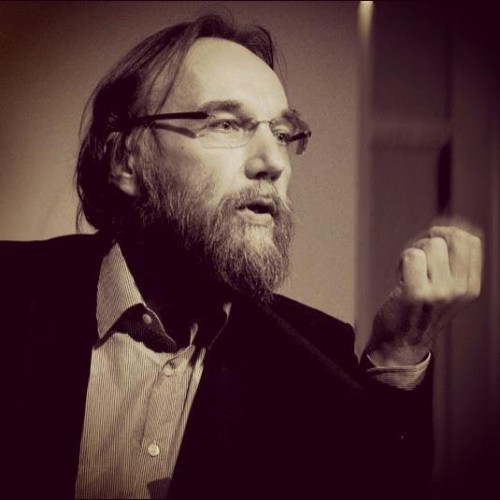
Aleksandr_Dugin.jpeg

Alexandre Douguine : «Les Etats-Unis sont derrière les attentats de Volgograd»

Auteur : Algérie Patriotique
Ex: http://www.zejournal.mobi

Algeriepatriotique : Quelle analyse faites-vous de la dégradation de la situation sécuritaire en Russie après les deux actes terroristes perpétrés à Volgograd ?

Alexandre Douguine : Je ne crois pas qu'il s’agisse de dégradation de la situation sécuritaire en Russie. Certains actes terroristes sont presque incontrôlables quand il est question des régions ayant des populations plus ou moins homogènes qui soutiennent, dans une certaine mesure, des groupes terroristes comme c'est le cas au Caucase du Nord, en Russie. Le fait que l'activité des terroristes s’accentue ces derniers temps montre que les forces qui veulent déstabiliser la Russie se focalisent sur les Jeux olympiques de Sotchi. Les Etats-Unis et les pays de l'Otan veulent montrer Poutine, qui s’oppose radicalement au libéralisme et à l’hégémonie américaine, comme un «dictateur» en comparant Sotchi à Munich à l'époque d’Hitler. C'est la guerre médiatique. Dans cette situation, les forces qui soutiennent la politique hégémonique américaine, avant tout les réseaux sub-impérialistes locaux – comme les wahhabites soutenus par l’Arabie Saoudite –, cherchent à confirmer cette image en faisant de la Russie un pays où il n’y a pas le minimum de sécurité et qui est prêt à installer la dictature en réponse aux actes terroristes qui visent essentiellement les Jeux olympiques de Sotchi chers à Poutine. On sait que le chef des renseignements saoudiens, Bandar Bin Sultan, a proposé à Poutine de garantir la sécurité en Russie en échange de l'arrêt de l'appui russe à Damas. Poutine a piqué une colère et refusé cela d'une manière explicite, en accusant les Saoudiens d'être des terroristes, ce qu'ils sont en vérité, pire que ceux qui servent les intérêts des Etats-Unis. Donc, les groupes wahhabites qui activent en Russie, téléguidés par les Saoudiens et à travers eux par leurs maîtres de Washington, ont accompli la menace de Bandar Bin Sultan. En fin de compte, ce sont les Etats-Unis qui attaquent la Russie de Poutine, afin de le châtier pour sa politique indépendante et insoumise à la dictature hégémonique américaine et libérale.

Qui en est à l'origine ?
Je crois que je l'ai expliqué dans ma réponse à la question précédente. Quant aux organisateurs concrets de cet acte terroriste, je n'en sais pas plus que les autres. Il semble que ce sont des réseaux wahhabites du Caucase du Nord et les femmes de terroristes liquidés par les services spéciaux russes. Je crois qu’elles sont ignoblement utilisées par les chefs cyniques, consciemment ou inconsciemment, qui travaillent pour les intérêts des Américains.

D'aucuns estiment que ces attentats terroristes sont la conséquence du soutien indéfectible de la Russie à la Syrie et à l'Ukraine. Etes-vous du même avis ?
C'est absolument correct. Il s'agit du «châtiment américain» accompli par les complices des Américains par le biais des Saoudiens.

Quelles vont être les mesures que prendra le Kremlin pour parer à une escalade de la violence dans le pays ?
Je crois que la montée de la violence durant la période des Jeux olympiques de Sotchi est inévitable. J'espère qu’à Sotchi on réussira quand même à contrôler la situation, mais c'est théoriquement impossible de le faire dans les régions qui l'entourent et qui sont organiquement liées à certains groupes de population du Caucase du Nord où se trouvent les bases principales des terroristes. Cette fois, ce n'est pas la Tchétchénie qui est au centre du dispositif du terrorisme, mais plutôt le Daguestan et la République de Kabardino-Balkarie. On essayera de faire pour le mieux, mais il ne faut pas oublier qu’on a affaire à une grande puissance mondiale, celle des Etats-Unis, qui nous attaque. C'est un défi sérieux qui demande une réponse symétrique. Donc, on verra...

Quenelle gratinée !...

Quenelle gratinée !...

par Michel Drac & Maurice Gendre

Ex: http://metapoinfos.hautetfort.com

Nous reproduisons ci-dessous un excellent point de vue de Michel Drac et de Maurice Gendre, cueilli sur Scriptoblog et consacrée à ce que l'affaire Dieudonné révèle de la réalité du système...

Quenelle.jpg

Quenelle gratinée !

Nous ne sonderons pas les cœurs et les reins. Quand un humoriste utilise la technique de la provocation, il n’est jamais possible de déterminer le fond de sa pensée en fonction de ses propos.

Pierre Desproges était-il antisémite quand il entamait un sketch par ces mots : « on m’a dit que des juifs se sont glissés dans la salle » ? Dieudonné l’est-il quand il lance, avec un sourire malicieux : « Des juifs ou des nazis, je ne sais pas qui a commencé » ? Allez savoir. Mais là n’est de toute façon pas notre propos. En elle-même, la risible « affaire de la quenelle » n’a aucune importance. Tout au plus peut-on la voir comme la mise en évidence d’un ras-le-bol des jeunes générations, ras-le-bol qui menace de dégénérer en une vaste crise de nerfs collective.

Le danger représenté par les « quenellistes » pour nos compatriotes juifs nous paraît tout à fait insignifiant. Pourquoi nous préoccuper de telles questions, à l’heure où la France va épouvantablement mal ? Nous avons autre chose à faire.

En revanche, ce qui mérite d’être analysé, c’est le véritable délire qui semble avoir saisi la classe médiatico-politique. Le comique fait normalement partie du politique, mais comme une fonction annexe et secondaire et cathartique. Aristophane était certes un personnage politique à Athènes, mais il ne déterminait pas l’agenda d’Alcibiade ; c’est lui qui commentait l’action d’Alcibiade, et non l’inverse. Chez nous, au contraire, c’est désormais le « premier flic de France » qui se pose en s’opposant à… un trublion. Plus grave, la dérive en question laisse en tout cas penser que les classes dirigeantes entrent actuellement dans les logiques de la violence d’Etat. Quelques constats très simples suffisent à tirer le signal d’alarme : il se pourrait que la grotesque affaire de la quenelle, venant après les arrestations arbitraires des opposants au mariage pour tous, après la détention de Nicolas Bernard-Buss, après la rocambolesque affaire Varg Vikernes, soit, aussi, un ballon d’essai en vue de faire basculer la vie politique de notre pays vers le modèle peu enviable des Etats totalitaires. On pense tout de suite, dans la situation actuelle, à la dictature hypocrite des années Brejnev-Honecker. Ainsi, dans une des premières scènes du film « La vie des autres », qui se déroule en RDA peu avant la chute du Mur, le scénario incluait un bref résumé de la condition de l’artiste dans un système oppressif. Où l’on voyait un auteur demander à un ponte du Parti que l’on lève l’interdiction professionnelle (« Berufsverbot ») infligée à un metteur en scène accusé de dissidence. A quoi l’homme du Parti répondait que de telles méthodes n’existaient pas au paradis du socialisme réel, et qu’il fallait donc « choisir ses mots avec plus de prudence ». Simple constat : quand Manuel Valls annonce qu’il cherche par tous les moyens d’interdire Dieudonné de se produire, il revendique une attitude discriminatoire que même les apparatchiks de la RDA n’osaient pas assumer. C'est-à-dire que l’injonction non discutable de « lutte contre l’antisémitisme » permet en France aujourd’hui non seulement d’entrer dans les logiques de la Stasi, mais en outre de le faire avec une impudence que le subtil Markus Wolf aurait désapprouvée.

Toujours Manuel Valls : nous avons désormais un ministre de l’Intérieur qui appelle à déclencher des troubles à l’ordre public pour pouvoir justifier une mesure sécuritaire. A l’origine de cette démarche provocatrice, il y a le garde-frontière Arno Klarsfeld, qui dans une remarquable prise de position tout à fait révélatrice à tous points de vue, a constaté benoîtement que si personne ne manifestait devant le théâtre de la Main d’Or, il n’y aurait pas de trouble à l’ordre public et le ministre de l’Intérieur ne pourrait donc pas sévir. Que maître Klarsfeld appelle à susciter des troubles mérite d’être relevé, mais qu’un ministre de l’Intérieur en exercice lui emboîte le pas, voilà qui doit sans doute encore davantage être souligné. Simple constat : pour enclencher le processus de « mise au pas » qu’ils appelaient de leurs vœux en 1933, les dirigeants du parti nazi organisèrent l’incendie du Reichstag. Cette technique du pompier pyromane est exactement celle proposée par le brillant Arno Klarsfeld, et apparemment validée par le locataire de la place Beauvau.

Passons à autre chose. L’article 58 du code pénal soviétique de 1926 incluait plusieurs dispositions fascinantes. Cet article assimilait au banditisme toutes les activités réputées « contre-révolutionnaires », ce qui permit d’une part de ne pas mentionner l’existence de délits politiques en URSS, d’autre part d’y inclure des faits que dans n’importe quel autre pays, on n’aurait même pas osé qualifier de simples contraventions. Soljenitsyne mentionne, dans « L’archipel du Goulag », un certain nombre de cas où des individus, voire des segments entiers de la population, furent condamnés au nom de leur participation fantasmagorique a posteriori à des activités antisoviétiques. Exemple parmi d’autres, dans la foulée de la conquête de l’Europe de l’Est par l’Armée rouge en 1945, le NKVD arrêta des personnes n’ayant jamais vécu en Russie, au motif qu’elles auraient participé à la guerre civile russe en tant que Russes. C’est que dans le système d’interprétation indéfiniment extensible propre au code pénal soviétique de 1926, et particulièrement dans le cadre de l’article 58, d’une part « toute action tendant à l’affaiblissement du pouvoir » était réputée « contre-révolutionnaire », donc assimilable au banditisme, et d’autre part il était admis que dans les territoires devenus soviétiques en 1945, la loi soviétique s’appliquerait intégralement de façon rétroactive. Encore plus fort, il suffisait qu’un des nouveaux citoyens de l’URSS soit jugé comme ayant eu potentiellement l’intention de prendre jadis les armes contre sa nouvelle patrie pour qu’on l’assimilât automatiquement aux « brigands antisoviétiques » de la guerre civile. Pour rappel, Christiane Taubira, dans l’affaire de la quenelle, a soutenu que l’on pouvait se rendre « complice après coup de crime contre l’humanité ». Ce qui, manifestement, dans son esprit, impliquait la complicité de Dieudonné dans les méfaits nazis des années 40, et plus particulièrement dans la déportation des juifs d’Europe. On voit bien que la logique indéfiniment extensible du code pénal soviétique de 1926 est ici à l’œuvre, au nom il est vrai d’une autre idéologie et dans un cadre politique différent.

Quant à Christophe Barbier, nous lui saurons gré de nous éviter d’avoir à chercher des références passées, puisqu’il a publiquement soutenu qu’au nom de la défense de la démocratie, il fallait « réguler »  Internet pour que Dieudonné n’y sévisse pas, et que, dixit, « les Chinois y arrivent bien ». Ici, il n’est même pas nécessaire de commenter.

En conclusion, et encore une fois sans entrer dans un débat sur l’antisémitisme supposé de monsieur Dieudonné M’Bala M’Bala, nous ne pouvons que dresser les quelques constats que nous venons d’énoncer, et en déduire qu’il faut aujourd’hui que tous les citoyens lucides et raisonnables soutiennent cet artiste sans tergiverser.

Non qu’il faille nécessairement sacraliser la parole d’un comique, non qu’il faille obligatoirement apprécier un humour qu’on pourra éventuellement juger de mauvais goût, mais parce qu’il s’agit de refuser des logiques tyranniques. Le pouvoir est actuellement dans l’impasse. Le chômage explose alors que le contexte macro-économique menace de se dégrader encore, l’insécurité augmente, la diplomatie française se ridiculise, et la crise de l’Union Européenne et de la zone euro approche manifestement d’un point de rupture. Dans ces conditions, il est logique que ce pouvoir dans l’impasse soit tenté de créer des diversions et des écrans de fumée, voire de passer d’un régime de manipulation des masses à un système d’oppression ouverte.

Alors pour bien faire comprendre que nous ne nous laisserons pas faire : QUENELLE ! 

Michel Drac & Maurice Gendre (Scriptoblog, janvier 2014)

Recordkou VS en Al Gore's idiootste Global Warming uitspraken

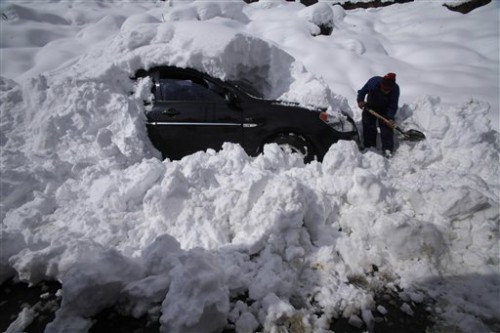
cold2.jpg

Recordkou VS en Al Gore's idiootste Global Warming uitspraken

Ironisch: Klimaat'wetenschappers' die Global Warming hoopten te bewijzen, kwamen vast te zitten in het ijs, evenals een eerste reddingsexpeditie. Uiteindelijk konden ze per helikopter worden gered.

Terwijl driekwart van de Verenigde Staten zucht onder een record koudegolf, en klimaat'wetenschappers' die met eigen ogen wilden zien hoe ver het ijs op Antarctica al gesmolten is kwamen vast te zitten in een ongekend dikke ijslaag, kijken we even terug naar het begin van deze eeuw, toen Global Warming alarmisten zoals Al Gore met hun uitspraken dat de nieuwe generatie in onze tijd geen sneeuw en ijs meer zou kennen, iedereen -inclusief bijna al 'onze' politici- de stuipen op het lijf joegen.

Global Warming wordt steeds ernstiger, zullen alle milieugroeperingen en de meeste politieke partijen u nog steeds vertellen. De historische kou in Noord Amerika is daar immers het absolute bewijs van. Dat vrijwel niet één onafhankelijke wetenschapper nog gelooft in dit inmiddels 100% ontkrachte mantra, doet niet ter zake. Immers, Global Warming is een onwrikbare peiler in de klimaatreligie, die ondanks een overweldigende lading bewijs van het tegendeel helaas ook in Nederland nog steeds veel verstokte aanhangers heeft.

Komende nacht kan het in de Amerikaanse staat Minnesota -54 graden Celcius worden, en kunnen 70 kouderecords worden gebroken. In grote delen van de VS is de gevoelstemperatuur reeds -48 graden, en wordt in een enorm gebied tussen de staten Mississippi en Ohio opnieuw sneeuwval verwacht. In Chicago hebben de autoriteiten de mensen opgeroepen thuis te blijven. Rond Indianapolis werd een uitgaansverbod ingesteld. De ijzige wind wordt zelfs in Florida en aan de Texaanse grens met Mexico gevoeld.

'Kinderen zullen geen sneeuw en ijs meer kennen'

Hoe anders had er uitgezien als de gevestigde klimaat'experts' in het jaar 2000 ook maar een béétje gelijk hadden gekregen. Zo voorspelden diverse 'wetenschappers' in dat jaar dat de Europese kinderen die toen werden geboren op hun 10e verjaardag niet meer zouden weten hoe ijs en sneeuw eruit ziet. Hoewel het nu zeer zacht is voor de tijd van het jaar - veroorzaakt door de extreme kou in Noord Amerika-, kenden we in 2012 een voorjaar dat in ruim 40 jaar niet meer zo koud was geweest.

Al Gore's idiootste uitspraken

Al Gore kan gerust dé profeet van de Global Warming kerk genoemd worden. Voor zijn inmiddels totaal ontkrachte documentaire 'An Inconvenient Truth' ontving hij zelfs de Nobelprijs. De -ijskoude- realiteit liet en laat echter zien hoe idioot zijn uitspraken waren:

1. In 2008 beweerde Gore tegen een Duits publiek dat de hele Noordpool 'over 5 jaar is gesmolten'. Wat gebeurde er echt: de ijskap groeide juist fors.

2. 'Co2 is de uitademing van onze beschaving.' Volgens Gore zou de menselijke uitstoot van Co2 snelle en ongekende opwarming veroorzaken. We lijken echter juist een periode van Global Cooling te zijn ingegaan. Bovendien is het Co2 gehalte in de atmosfeer historisch gezien erg laag, en is juist veel meer Co2 nodig om de toekomstige oogsten voor de snel groeiende wereldbevolking niet te laten mislukken.

3. 'De planeet heeft koorts.'

4. In 2006: 'Veel wetenschappers waarschuwen dat we steeds dichterbij een aantal omslagpunten komen die het binnen 10 jaar onmogelijk maken om onherstelbare schade aan de leefbaarheid van de planeet voor de menselijke beschaving te voorkomen.'

5. 'Dit is de waarheid: De Aarde is rond, Saddam Hussein viel ons niet aan op 9/11, Elvis is dood, Obama werd geboren in de VS, en de klimaatcrisis is echt.'

6. 'Het binnenste van de Aarde is zeer heet, meerdere miljoenen graden.' De hoogste temperatuur in het binnenste van de Aarde is echter 11.000 F.

7. 'Er hangt een onrealistische zweem over het praten over deze mysterieuze zaken, nu de wereld dankzij global warming voor onze eigen ogen op zo'n dramatische wijze verandert.'

8. 'Het zou een enorme opluchting zijn als de recente aanvallen op de wetenschap van global warming een teken zouden zijn dat we geen onvoorstelbare, grootschalige preventieve rampmaatregelen moeten nemen om de menselijke beschaving te beschermen.'

9. 'Het overleven van de VS zoals we het kennen loopt risico. Ja, zelfs de toekomst van de menselijke beschaving staat op het spel.'

10. 'We zouden deze uitdaging met een gevoel van diepe vreugde en dankbaarheid tegemoet moeten treden; dat wij de gevierde generatie zijn waarover orkesten, dichters en zangers over 1000 jaar zullen zeggen dat wij het in onszelf hebben gevonden deze crisis op te lossen, en de basis voor een stralende en optimistische menselijke toekomst hebben gelegd.'

50% meer ijs op de Noordpool, onbetrouwbare klimaatmodellen

Jaar na jaar komt er echter steeds meer bewijs dat er helemaal niets klopt van de Global Warming theorie. De New American schreef onlangs dat 'in tegenstelling tot de alarmistische voorspellen van Gore en zijn 'doemsdag sekte' voorspelden, de laatste satellietgegevens aantonen dat het ijs op de Noordpool sinds 2012 met 50% is gegroeid, en in oktober 2012 zelfs het snelst toenam sinds in 1979 werd begonnen met meten. Experts voorspellen dat dit de komende jaren zal doorgaan, waardoor global-warmingalarmisten koortsachtig naar verklaringen zullen moeten zoeken om hun gezicht te redden en de snel smeltende klimaathysterie nieuw leven in te blazen.'

Iedereen weet inmiddels dat de wereldwijde temperatuur al zeker 17 jaar niet meer stijgt. Deze klimaatrealiteit heeft dan ook een ruw einde gemaakt aan alle 73 door de VN gebruikte klimaatmodellen, die dus volstrekt onbetrouwbaar zijn gebleken.

Regering Rutte geeft miljarden uit aan niet-bestaand probleem

Triest genoeg baseren de Westerse overheden hun beleid nog steeds op de niet bestaande door mensen veroorzaakte opwarming. In het licht van de forse bezuinigingen op bijvoorbeeld de sociale zekerheid, gekoppeld aan enorme lastenverhogingen, zijn de tientallen miljarden euro's subsidies die alleen al het kabinet Rutte voor de global warming industrie heeft uitgetrokken, des te schrijnender.

Klimaat verandert altijd al, zonder menselijke invloed

Klimaatverandering bestaat en heeft altijd al bestaan. Toen er nog geen enkele sprake was van eventuele menselijke invloed, steeg in de middeleeuwen de gemiddelde temperatuur in het noorden van Europa naar subtropische waarden. Vervolgens kwam de bekende 'kleine ijstijd', eveneens toen door mensen veroorzaakte Co2 uitstoot geheel ontbrak. Die uitstoot is ook anno 2014 sowieso dermate gering, dat deze op wereldschaal in de atmosfeer niet eens een meetbare toename veroorzaakt, nog even los van het feit dat een relatie tussen meer Co2 en de -dus niet bestaande- opwarming nooit is bewezen.

Global Warming wetenschappers vast in het ijs

De klimaat'wetenschappers' die Global Warming wilden bewijzen en die ironisch genoeg vast kwamen te zitten in het poolijs, werden op 2 januari door een helikopter gered. Denk echter maar niet dat de reguliere media melding maakten van het doel van deze totaal mislukte missie. Dat was ongetwijfeld wel het geval geweest, als de wetenschappers 'bewijs' hadden gevonden dat het ijs wél aan het smelten is.

Wanneer komt er een einde aan dit duurste bedrog ooit?

Dat betekent dat de gevestigde orde en de globalisten zullen blijven volhouden dat het klimaat verandert door menselijke activiteiten. Op deze wijze kunnen ze hun onderdanen torenhoge milieubelastingen, veel te hoge energieprijzen en allerlei andere extreem kostbare beperkende maatregelen blijven opleggen. Het is daarom te hopen dat de gewone man wakker wordt voordat dit met afstand grootste en duurste bedrog aller tijden een definitief einde maakt aan zijn welvaart en aan de toekomst van zijn kinderen.


Xander

(1) Infowars
(2) Infowars / Washington Times
(3) KOPP
(4) Infowars / Natural News

Zie ook o.a.:

20-10: NIPCC veegt vloer aan met Global Warming theorie VN
12-09: Global Cooling bevestigd: record toename van zee-ijs
12-07: Energieakkoord NL: Duitsland laat zien dat prijzen enorm zullen stijgen
29-06: NASA: CO2 veroorzaakt geen opwarming, maar afkoeling (/ Over 7 jaar is Nederlands huishouden maandelijks € 90 kwijt aan energiebelasting)
13-05: Global dimming: Zonlicht op Aarde in halve eeuw met éénderde verminderd (/ Zon- en ruimtewetenschappers: Zonneactiviteit wijst op aanstaande nieuwe kleine ijstijd)
14-04: Pleidooi voor meer CO2 uitstoot om mensheid te redden (/ Steeds meer klimaatexperts beginnen uitblijven Global Warming toe te geven)
08-01: Bevestigd: Al 16 jaar geen Global Warming

Défense européenne : les puissances ne se bâtissent pas sur du «Wishful thinking»

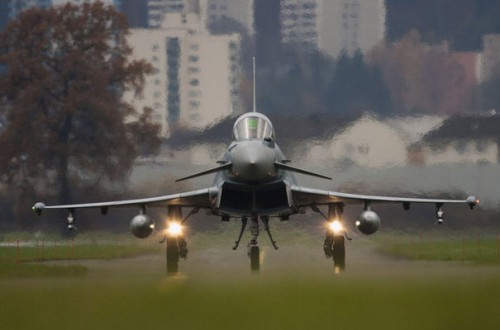
86511_a-eads-eurofighter.jpg

Défense européenne : les puissances ne se bâtissent pas sur du «Wishful thinking»

par Philippe Migault
Ex: http://fr.rian.ru
 

Annoncé comme un évènement stratégique et diplomatique crucial, le Conseil européen qui aura lieu jeudi et vendredi prochains est censé marquer un progrès en matière de politique de défense et de sécurité européenne.

Il suffit pourtant de lire un récent document du conseil de l’Union européenne (1), pour se rendre compte que la montagne accouchera une fois encore d’une souris. Qu’il s’agisse de la phraséologie employée, des mesures proposées ou des orientations implicitement induites, tout indique qu’une fois encore l’Europe autoproclamée se prépare à une grande démonstration ostentatoire dont il ne sortira rien de concret.

Les objectifs stratégiques annoncés par Bruxelles prêtent en premier lieu à sourire. L’UE « est appelée à assumer des responsabilités accrues en matière de maintien de la paix et de la sécurité internationales (…) afin de garantir (…) la promotion de ses valeurs et intérêts », affirme le document. Jusqu’ici tout va bien. Mais puisqu’il s’agit ici de défense, d’intérêts vitaux communs, de ceux qui méritent qu’on se batte voire qu’on meurt pour eux, encore faudrait-il se montrer un peu plus précis. Quels sont ces valeurs et ces intérêts ? Démocratie, paix, droits de l’homme sont cités : Logique. C’est, théoriquement, l’ADN même du projet européen. La bonne gouvernance ensuite. Voilà qui prête à sourire de la part d’une organisation persistant à appliquer à la lettre les politiques d’austérité prônées par le Fonds Monétaire International alors que ce dernier a reconnu que les résultats de ces dernières étaient inefficaces, pour ne pas dire désastreuses sur le plan économique et social. Et ensuite ? Rien. En dehors des grandes valeurs « universelles » censées faire consensus parmi 500 millions d’Européens rejetant de plus en plus le modèle de société qui leur est proposé, il n’est nulle part fait précisément mention de nos intérêts vitaux.

De défense, c’est-à-dire de guerre pour sortir du politiquement correct, il n’est d’ailleurs  guère fait mention dans ce texte, qui est bien plus une déclaration d’intention diplomatique qu’une feuille de route stratégique. Tout au plus se borne-t-on à proposer une série de mesures très générales, qui ne sont que le prolongement des politiques engagées de longue date et qui toutes relèvent du vœu pieux.

L’UE, affirme ce document doit coopérer avec les Nations Unies, l’OSCE, l’Union Africaine, l’OTAN. On enfonce des portes ouvertes : Les Etats européens de l’UE sont membres de ces entités ou coopèrent avec elles depuis leur création. En revanche alors que Bruxelles affirme vouloir « assumer ses responsabilités accrues en tant que pourvoyeur de la sécurité (…) en particulier dans son voisinage », il n’est nulle part fait mention d’un éventuel dialogue avec l’Organisation du Traité de Sécurité Collective (OTSC), visiblement inconnue au bataillon. Il est vrai que selon les récents propos de l’ancien ministre français des affaires étrangères, Hubert Védrine, la Russie n’est plus une puissance qui compte dans la mesure où elle ne conserve qu’«un pouvoir de nuisance périphérique et résiduel » et ne mérite donc guère qu’on s’y attarde que ce soit en Ukraine ou ailleurs…Cette déclaration ayant le mérite de signifier clairement que la guerre froide est terminée compte tenu de la disparition de l’ennemi principal ramené au rang de puissance régionale, encore faudrait-il savoir comment l’Europe va défendre ses intérêts –à identifier - en Afrique, au Moyen-Orient, ou en Asie-Pacifique…Or l’UE ne compte rien faire.

Avec un aplomb admirable, compte tenu de l’échec total de l’Europe de la défense jusqu’à ce jour, le document propose de « s’appuyer sur les résultats obtenus jusqu’à présent », se félicitant « des missions et opérations de gestion de crise menées dans le cadre de la PSDC » (2). L’UE claironne qu’elle est prête à renforcer ses moyens dans les Balkans occidentaux – où il n’existe plus aucune crise de haute intensité – et souligne qu’elle « déploie plus de 7 000 personnes réparties entre douze opérations civiles et quatre opérations militaires ». Le ratio, d’une opération militaire pour trois opérations civiles, atteste du très faible engagement armé européen. Quant aux effectifs évoqués ils parlent d’eux-mêmes : Entre le Mali, la République centrafricaine, l’opération Atalante, la République Démocratique du Congo (RDC) et ses forces prépositionnées, la France a presque 7 000 soldats en Afrique. Seuls nous faisons autant quantitativement, mieux qualitativement, que l’UE…Certes cette dernière a effectivement conduit des opérations de maintien de la paix dans des zones de conflit difficiles. Ce fût le cas en Ituri, province orientale de RDC, où l’UE a déployé 2 200 soldats en 2003 pour mettre fin à des massacres interethniques : 80% des effectifs étaient Français. Et tout le reste est à l’avenant : dans les faits les opérations engageant les troupes des nations européennes relèvent du trompe-l’œil. Entre des Allemands et des Suédois qui ne veulent plus se battre et n’acceptent de s’engager qu’en multipliant les caveats restreignant au strict minimum leurs règles d’engagement, le manque de moyens de la plupart des pays, Français et Britanniques, uniques nations-cadres de l’Union Européenne, se retrouvent toujours seuls aux commandes de coalitions Potemkine.

Paris et Londres ont déjà tiré toutes les conclusions de cet état de fait en matière de défense, notamment sur le plan industriel. Suite aux accords de Lancaster House, les deux pays entendent bien collaborer prioritairement sur un mode bilatéral et ne plus s’engager dans des coopérations multinationales avec des partenaires qui ne soient pas leurs égaux sur un plan financier, technologique et possédant une approche des opérations de combat similaire à la leur. Les programmes A400M et Eurofighter, menés sur un plan multilatéral entre partenaires inégaux souhaitant tous tirer les marrons du feu se sont traduits par trop de surcoûts et de délais. Il est hors de question de les reproduire.

A cette aune les propositions du document en matière de politique industrielle prêtent à sourire tant elles relèvent du « wishful thinking ». Il faut, assure le texte, « favoriser la mise en place d’une base industrielle et technologique de défense européenne plus intégrée, durable, novatrice et compétitive dans toute l’UE ». L’objectif est noble, mais il est déjà condamné. Il suffit d’en analyser les termes.

« Intégrée» ? EADS, le modèle tant vanté, vient d’annoncer qu’il comptait licencier 5 800 salariés de son pôle défense, actif qu’il n’a jamais réussi à développer à hauteur des ambitions initialement affichées. L’heure n’est plus aux fusions transnationales géantes, du Big is beautiful, l’échec du rapprochement EADS-BAE Systems le démontre. Certes les fusions permettent théoriquement de « rendre le secteur de la défense moins fragmenté (…) et (d’) éviter les doubles emplois ». Mais les entreprises préfèrent aujourd’hui mettre en place des joint-ventures ou des consortiums ad hoc correspondant à des programmes précis qu’elles gèrent de concert via des plateaux virtuels communs. Cette stratégie permet de sauvegarder l’emploi, toujours le grand perdant des fusions, ainsi que de garantir la pérennité des bureaux d’étude et leur diversité (3).

« Durable » ? S’il s’agit de « développement durable », il est toujours possible de produire des chars avec un bilan carbone moindre. S’il s’agit de faire durer, c’est-à-dire sauvegarder des entreprises dont la plupart des experts s’accordent à constater qu’elles sont trop nombreuses et provoquent des surcapacités sur la plupart des segments, ce sera difficile. Au demeurant pour maintenir le tissu industriel et créer de l’emploi, objectif affiché par le document alors que toutes les industries de défense sabrent dans leurs effectifs, il faudrait déjà que les Etats européens lancent des programmes d’armement pour que les industriels aient des contrats et embauchent…L’UE encourage ses Etats membres à investir. L’intention est louable. Mais avec quels moyens compte tenu de ceux que nous autorise notre modèle de gouvernance tant vanté ?

Quoi qu’il en soit ce débat est purement rhétorique. Car il faut savoir aussi lire entre les lignes. Les investissements dans la défense permettraient « de renforcer l’autonomie stratégique de l’Europe et, par là même, sa capacité à agir avec des partenaires ».

Notons qu’il n’est pas question un seul instant pour l’UE d’agir seule, malgré la revendication d’un objectif d’autonomie stratégique. Cela reviendrait à se comporter comme une puissance, ce qu’elle refuse par nature. Un ADN de commerçant ne sera jamais un ADN de combattant. Non, mieux vaut « agir avec des partenaires. »  Or du point de vue militaire et politique il n’y en a qu’un qui réponde aux besoins européens en termes de crédibilité militaire et de conformité politique : l’OTAN, c’est-à-dire les Etats-Unis.

Le futur conseil européen n’a donc aucunement pour ambition de parler de défense européenne. Celle-ci est vouée à l’échec tant que l’OTAN existera. Il s’agira bien davantage d’une discussion de managers gérant la crise : Alors que tout le monde rogne ses budgets de défense la question sera de savoir comment il est possible d’intervenir à l’étranger à moindres frais et comment partager le maigre gâteau du marché de l’armement européen. Rien de plus. 

Notes: 

(1) « Conclusions du conseil sur la politique de sécurité et de défense commune »

(2)  Politique de Sécurité et de Défense Commune

(3) Au demeurant les fusions transnationales relèvent du fantasme pour de simples questions de modes de gouvernance. Les groupes Français, au capital majoritairement publics, ne séduisent aucunement leurs homologues allemands, à l’actionnariat privé, souvent familial. Et aucune fusion transnationale n’a été couronnée de succès hormis, sans doute, Eurocopter, dont l’activité est autant civile que militaire.

L’opinion de l’auteur ne coïncide pas forcément avec la position de la rédaction

Philippe Migault est Directeur de recherche à l'Institut de Relations Internationales et stratégiques (IRIS). Ses principaux domaines d’expertise sont les questions diplomatiques et stratégiques, les conflits armés et industries de l'armement.

Défense nationale: l’incohérence française

France, Russie, le partenariat s’impose

Et si l’Iran privait les «Occidentaux» d’ennemi ?

« Choisis ton camp camarade ! »

Syrie: Joli coup marketing pour l’armement russe

2014 : année de la quenelle?

quenelle-tt-width-604-height-415.jpg

2014 : année de la quenelle?

Le phénomène Dieudonné : le comique qui fait peur au système.

Jean Ansar
Ex: http://metamag.fr

Ainsi les nazis sont de retour. Ils ont bien changé. Si Dieudonné est le fils du ventre encore fécond de la bête immonde, la race aryenne n’est décidément plus ce qu’elle était. Franchement je n’avais pas envie de voir un spectacle de Dieudonné mais maintenant si je peux, j’irai, avant qu’il ne soit trop tard. Ce que j'ai vu sur internet, par curiosité et besoin d’information, est parfois drôle, parfois mauvais.

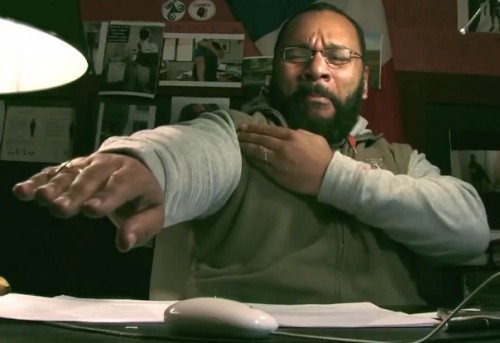
Le fameux geste de la quenelle est bien sûr un bras d’honneur vulgaire qui signifie « nique le système ». En faire un salut nazi, même inversé est proprement débile. Cela étant, la quenelle antisystème peut être antisioniste et même antisémite selon le lieu où elle est exécutée. Mais cet anti-sémitisme est pratiqué très majoritairement par des « nazillons »  issus de l’immigration et rares sont, dans le public, ceux qui se référent à Hitler, même s’il peut malheureusement y en avoir quelques-uns.

Mais on comprend que le systéme s’inquiète. Il est en effet clairement dénoncé par les pratiquants de la quenelle comme soumis excessivement à une influence. Il renoue pour des jeunes issus de l’immigration avec une vision assez classique de l’anti-sémitisme. Cette vision est confortée par la montée au créneau des institutions juives qui soutiennent globalement la volonté de Manuel Valls de censurer Dieudonné. Quelques voix discordantes se font entendre. On peut cependant être sûr que le scénario  de l’interdiction va renforcer ceux qui dénoncent une république soumise à une sorte de « police juive de la pensée » selon l’expression d Annie Kriegel.

C’est gros, très gros. Des militants juifs vont à chaque spectacle manifester et provoquer des incidents. Les préfets pourront donc objectivement en déduire qu’il y a risque de trouble à l’ordre public. Le spectacle sera donc annulé, mais c’est l’agressé qui sera puni, pas l’agresseur. Les spectateurs de Dieudonné, eux, n’attaquent personne.

Ce n’est pas nouveau. On refait à Dieudonné le coup d’Ordre Nouveau. Sauf que Dieudonné est aussi noir qu’Obama et Mandela et qu’il parle lui aussi au nom des reprouvés et des exclus… il n’invoque pas, il aurait du mal, la race supérieure. Il dénonce un complot contre la liberté d’expression dans notre démocratie verrouillée.

S’il est interdit légalement, grâce à des menaces de violences , il aura démontré que le complot dans son cas a été quelque chose de réel. Certains s’en inquiètent et mettent en garde contre des actions plus dangereuses  qu’efficaces auprès de l’opinion.

La quenelle a encore semble-t- il de beaux jours devant elle.

Life in the Electronic Concentration Camp

201106301413.jpg

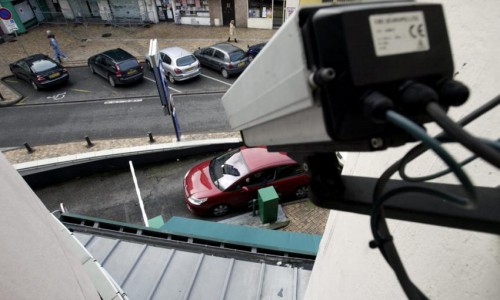
Life in the Electronic Concentration Camp: The Many Ways That You’re Being Tracked, Catalogued and Controlled

By

The Rutherford Institute

Ex: http://www.lewrockwell.com

What is most striking about the American police state is not the mega-corporations running amok in the halls of Congress, the militarized police crashing through doors and shooting unarmed citizens, or the invasive surveillance regime which has come to dominate every aspect of our lives. No, what has been most disconcerting about the emergence of the American police state is the extent to which the citizenry appears content to passively wait for someone else to solve our nation’s many problems. Unless Americans are prepared to engage in militant nonviolent resistance in the spirit of Martin Luther King Jr. and Gandhi, true reform, if any, will be a long time coming.

Yet as I detail in my book A Government of Wolves: The Emerging American Police Stateif we don’t act soon, all that is in need of fixing will soon be unfixable, especially as it relates to the police state that becomes more entrenched with each passing day. By “police state,” I am referring to more than a society overrun by the long arm of the police. I am referring to a society in which all aspects of a person’s life are policed by government agents, one in which all citizens are suspects, their activities monitored and regulated, their movements tracked, their communications spied upon, and their lives, liberties and pursuit of happiness dependent on the government’s say-so.

As the following will show, the electronic concentration camp, as I have dubbed the surveillance state, is perhaps the most insidious of the police state’s many tentacles, impacting almost every aspect of our lives and making it that much easier for the government to encroach on our most vital freedoms.

Tracking you based on your consumer activities: Fusion centers, federal-state law enforcement partnerships which attempt to aggregate a variety of data on so-called “suspicious persons,” have actually collected reports on people buying pallets of bottled water, photographing government buildings, and applying for a pilot’s license as “suspicious activity.” Retailers are getting in on the surveillance game as well. Large corporations such as Target have been tracking and assessing the behavior of their customers, particularly their purchasing patterns, for years. In 2015, mega-food corporations will be rolling out high-tech shelving outfitted with cameras in order to track the shopping behavior of customers, as well as information like the age and sex of shoppers.

Tracking you based on your public activities: Sensing a booming industry, private corporations are jumping on the surveillance state bandwagon, negotiating lucrative contracts with police agencies throughout the country in order to create a web of surveillance that encompasses all major urban centers. Companies such as NICE and Bright Planet are selling equipment and services to police departments with the promise of monitoring large groups of people seamlessly, as in the case of protests and rallies. They are also engaging in extensive online surveillance, looking for any hints of “large public events, social unrest, gang communications, and criminally predicated individuals.”

Tracking you based on your behavior: Thanks to a torrent of federal grants, police departments across the country are able to fund outrageous new surveillance systems that turn the most basic human behaviors into suspicious situations to be studied and analyzed. Police in California, Massachusetts, and New York have all received federal funds to create systems like that operated by the New York Police Department, which “links 3,000 surveillance cameras with license plate readers, radiation sensors, criminal databases and terror suspect lists.”

Tracking you based on your face: Facial recognition software promises to create a society in which every individual who steps out into public is tracked and recorded as they go about their daily business. The goal is for government agents to be able to scan a crowd of people and instantaneously identify all of the individuals present. Facial recognition programs are being rolled out in states all across the country (only twelve states do not use facial recognition software).

Tracking you based on your social media activities: The obsession with social media as a form of surveillance will have some frightening consequences in coming years. As Helen A.S. Popkin, writing for NBC News, has astutely observed, “We may very well face a future where algorithms bust people en masse for referencing illegal ‘Game of Thrones’ downloads, or run sweeps for insurance companies seeking non-smokers confessing to lapsing back into the habit. Instead of that one guy getting busted for a lame joke misinterpreted as a real threat, the new software has the potential to roll, Terminator-style, targeting every social media user with a shameful confession or questionable sense of humor.”

Tracking you based on your metadata: Metadata is an incredibly invasive set of data to have on a person. Indeed, with access to one’s metadata, one can “identify people’s friends and associates, detect where they were at a certain time, acquire clues to religious or political affiliations, and pick up sensitive information like regular calls to a psychiatrist’s office, late-night messages to an extramarital partner or exchanges with a fellow plotter.” The National Security Agency (NSA) has been particularly interested in metadata, compiling information on Americans’ social connections “that can identify their associates, their locations at certain times, their traveling companions and other personal information.”

To put it bluntly, we are living in an electronic concentration camp. Through a series of imperceptible steps, we have willingly allowed ourselves to become enmeshed in a system that knows the most intimate details of our lives, analyzes them, and treats us accordingly. As George Orwell warned, “You had to live—did live, from habit that became instinct—in the assumption that every sound you made was overheard, and, except in darkness, every movement scrutinized.”

Thus, we have arrived in Orwell’s world. The question now is: will we take a stand and fight to remain free or will we go gently into the concentration camp?

00:05 Publié dans Actualité | Lien permanent | Commentaires (0) | Tags : surveillance totale, totalitarisme, surveillance | |  del.icio.us | | Digg! Digg |  Facebook

Volgograd and the Conquest of Eurasia

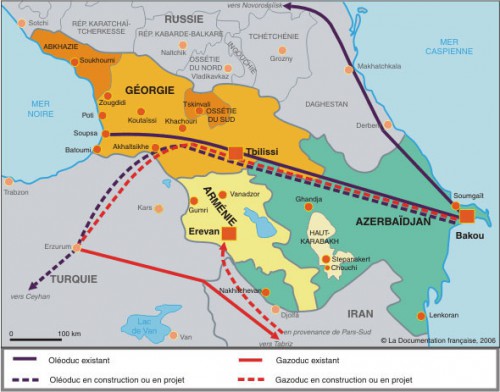
20080813112736_carte_caucase_du_sud.jpg

Volgograd and the Conquest of Eurasia: Has the House of Saud seen its Stalingrad?


The events in Volgograd are part of a much larger body of events and a multi-faceted struggle that has been going on for decades as part of a cold war after the Cold War—the post-Cold War cold war, if you please—that was a result of two predominately Eurocentric world wars. When George Orwell wrote his book 1984 and talked about a perpetual war between the fictional entities of Oceania and Eurasia, he may have had a general idea about the current events that are going on in mind or he may have just been thinking of the struggle between the Soviet Union and, surrounded by two great oceans, the United States of America.

So what does Volgograd have to do with the dizzying notion presented? Firstly, it is not schizophrenic to tie the events in Volgograd to either the conflict in the North Caucasus and to the fighting in Syria or to tie Syria to the decades of fighting in the post-Soviet North Caucasus. The fighting in Syria and the North Caucuses are part of a broader struggle for the mastery over Eurasia. The conflicts in the Middle East are part of this very grand narrative, which to many seems to be so far from the reality of day to day life.

 “Bandar Bush” goes to Mother Russia

For the purposes of supporting such an assertion we will have to start with the not-so-secret visit of a shadowy Saudi regime official to Moscow. Prince Bandar bin Sultan bin Abdulaziz Al-Saud, the infamous Saudi terrorist kingpin and former House of Saud envoy to Washington turned intelligence guru, last visited the Russian Federation in early-December 2013. Bandar bin Sultan was sent by King Abdullah to solicit the Russian government into abandoning the Syrians. The goal of Prince Bandar was to make a deal with the Kremlin to let Damascus be overtaken by the Saudi-supported brigades that were besieging the Syrian government forces from Syria’s countryside and border regions since 2011. Bandar met with Russian President Vladimir Putin and the two held closed-door discussions about both Syria and Iran at Putin’s official residence in Novo-Ogaryovo.

The last meeting that Bandar had with Putin was a few months earlier in July 2013. That meeting was also held in Russia. The July talks between Prince Bandar and President Putin also included Secretary Nikolai Patrushev, the head of the Security Council of the Russian Federation. One would also imagine that discussion about the Iranians increased with each visit too, as Bandar certainly tried to get the Russians on bad terms with their Iranian allies.

After Bandar’s first meeting with President Putin, it was widely reported that the House of Saud wanted to buy Russia off. Agence France-Presse and Reuters both cited the unnamed diplomats of the Arab petro-monarchies, their March 14 lackeys in Lebanon, and their Syrian opposition puppets as saying that Saudi Arabia offered to sign a lucrative arms contract with Moscow and give the Kremlin a guarantee that the Arab petro-sheikdoms would not threaten the Russian gas market in Europe or use Syria for a gas pipeline to Europe.

Russia knew better than to do business with the House of Saud. It had been offered a lucrative arms deal by the Saudi regime much earlier, in 2008, to make some backdoor compromises at the expense of Iran. After the compromises were made by Moscow the House of Saud put the deal on ice. If the media leaks in AFP and Reuters were not tactics or lies in the first place aimed at creating tensions between the Syrian and Russian governments, the purportedly extravagant bribes to betray Syria were wasted on the ears of Russian officials.

The House of Saud and the undemocratic club of Arab petro-monarchies that form the Gulf Cooperation Council (GCC) have always talked large about money. The actions of these self portrayed lords of the Arabia Peninsula have almost never matched their words and promises. To anyone who deals with them, the House of Saud and company are known for habitually making grand promises that they will never keep, especially when it comes to money. Even when money is delivered, the full amount committed is never given and much of it is stolen by their corrupt partners and cronies. Whether it is the unfulfilled 2008 arms contract with Russia that was facilitated with the involvement of Iraqi former CIA asset Iyad Allawi or the overabundant commitments of financial and logistical aid to the Lebanese and Palestinian peoples that never materialized, the Arab petro-sheikhdoms have never done more than talk grandly and then get their propagandists to write articles about their generosity and splendor. Underneath all the grandeur and sparkles there has always been bankruptcy, insecurity, and emptiness.

A week after the first meeting with Bandar, the Kremlin responded to the media buzz about the attempted bribe by Saudi Arabia. Yury Ushakov, one of Putin’s top aides and the former Russian ambassador to the US, categorically rejected the notion that any deal was accepted or even entertained by the Kremlin. Ushakov avowed that not even bilateral cooperation was discussed between the Saudis and Russia. According to the Kremlin official, the talks between Bandar and Putin were simply about the policies of Moscow and Riyadh on Syria and the second international peace conference being planned about Syria in Geneva, Switzerland.

More Leaks: Fighting Fire with Fire?

If his objective was to get the Russians to abandon Syria, Prince Bandar left both meetings in Russia empty-handed. Nevertheless, his visit left a trail of unverifiable reports and speculation. Discretion is always needed when analyzing these accounts which are part of the information war about Syria being waged on all sides by the media. The planted story from the Saudi side about trying to buy the Russians was not the only account of what took place in the Russian-Saudi talks. There was also a purported diplomatic leak which most likely surfaced as a counter-move to the planted story about Bandar’s proposal. This leak elaborated even further on the meeting between Bandar and Putin. Threats were made according to the second leak that was published in Arabic by the Lebanese newspaper As-Safir on August 21, 2013.

According to the Lebanese newspaper, not only did Prince Bandar tell the Russians during their first July meeting that the regimes of the GCC would not threaten the Russian gas monopoly in Europe, but he made promises to the Russians that they could keep their naval facility on the Mediterranean coast of Syria and that he would give the House of Saud’s guarantee to protect the 2014 Winter Olympics being held in the North Caucasian resort city of Sochi, on the eastern coast of the Black Sea, from the Chechen separatist militias under Saudi control. If Moscow cooperated with Riyadh and Washington against Damascus, the leak discloses that Bandar also stated that the same Chechen militants fighting inside Syria to topple the Syrian government would not be given a role in Syria’s political future.

When the Russians refused to betray their Syrian allies, Prince Bandar then threatened Russia with the cancellation of the second planned peace conference in Geneva and with the unleashing of the military option against the Syrians the leak imparts.

This leak, which presents a veiled Saudi threat about the intended attacks on the Winter Olympics in Sochi, led to a frenzy of speculations internationally until the end of August 2013, amid the high tensions arising from the US threats to attack Syria and the threats coming from Iran to intervene on the side of their Syrians allies against the United States. Originating from the same politically affiliated media circle in Lebanon, reports about Russian military preparations to attack Saudi Arabia in response to a war against Syria began to circulate from the newspaper Al-Ahed also, further fueling the chain of speculations.

A House of Saud Spin on the Neo-Con “Redirection”

Seymour Hersh wrote in 2007 that after the 2006 defeat of Israel in Lebanon that the US government had a new strategy called the “redirection.” According to Hersh, the “redirection” had “brought the United States closer to an open confrontation with Iran and, in parts of the region, propelled it into a widening sectarian conflict between Shiite and Sunni Muslims.” With the cooperation of Saudi Arabia and all the same players that helped launch Osama bin Ladin’s career in Afghanistan, the US government took “part in clandestine operations aimed at Iran and its ally Syria.” The most important thing to note is what Hersh says next: “A by-product of these activities has been the bolstering of Sunni extremist groups that espouse a militant vision of Islam and are hostile to America and sympathetic to Al Qaeda.”

A new House of Saud spin on the “redirection” has begun. If there is anything the House of Saud knows well, it is rounding up fanatics as tools at the service of Saudi Arabia’s patrons in Washington. They did it in Afghanistan, they did it Bosnia, they have done it in Russia’s North Caucasus, they did it in Libya, and they are doing it in both Lebanon and Syria. It does not take the British newspaper The Independent to publish an article titled “Mass murder in the Middle East is funded by our friends the Saudis” for the well-informed to realize this.

The terrorist bombings in Lebanon mark a new phase of the conflict in Syria, which is aimed at forcing Hezbollah to retreat from Syria by fighting in a civil war on its home turf. The attacks are part of the “redirection.” The House of Saud has accented this new phase through its ties to the terrorist attacks on the Iranian Embassy in Beirut on November 19, 2013. The attacks were carried out by individuals linked to the notorious Ahmed Al-Assir who waged a reckless battle against the Lebanese military from the Lebanese city of Sidon as part of an effort to ignite a sectarian civil war in Lebanon.

Al-Assir’s rise, however, was politically and logistically aided by the House of Saud and its shameless Hariri clients in Lebanon. He is also part of the same “redirection” policy and current that brought Fatah Al-Islam to Lebanon. This is why it is no surprise to see Hariri’s Future Party flag flying alongside Al-Qaeda flags in Lebanon. After Al-Assir’s failed attempt to start a sectarian Lebanese civil war, he went into hiding and it was even alleged that he was taken in by one of the GCC embassies.

In regard to the House of Saud’s roles in the bombings in Lebanon, Hezbollah would confirm that the attack on the Iranian Embassy in Beirut was linked to the House of Saud. Hezbollah’s leadership would report that the Abdullah Izzam Brigade, which is affiliated to Al-Qaeda and tied to the bombings, is directly linked to the intelligence services of Saudi Arabia.

Moreover, the Saudi agent, Majed Al-Majed, responsible for the attack would be apprehended by Lebanese security forces in late-December 2013. He had entered Lebanon after working with Al-Nusra in Syria. Fars News Agency, an Iranian media outlet, would report on January 2, 2014 that unnamed Lebanese sources had also confirmed that they had discovered that the attack was linked to Prince Bandar.

Wrath of the House of Saud Unleashed?

A lot changed between the first and second meetings that Prince Bandar and Vladimir Putin had, respectively in July 2013 and December 2013. The House of Saud expected its US patron to get the Pentagon involved in a conventional bombing campaign against Syria in the month of September. It is more than likely that Riyadh was in the dark about the nature of secret negotiations that the US and Iran were holding through the backchannel of Oman in the backdrop of what appeared to be an escalation towards open war.

Bandar’s threat to reassess the House of Saud’s ties with Washington is probably a direct result of the US government keeping the House of Saud in the dark about using Syria as a means of negotiating with the Iranian government. US officials may have instigated the House of Saud to intensify its offensive against Syria to catalyze the Iranians into making a deal to avoid an attack on Syria and a regional war. Moreover, not only did the situation between the US and Iran change, Russia would eventually sign an important energy contract for Syrian natural gas in the Mediterranean Sea. The House of Saud has been undermined heavily in multiple ways and it is beginning to assess its own expendability.

If one scratches deep enough, they will find that the same ilk that attacked the Iranian Embassy in Beirut also attacked the Russian Embassy in Damascus. Both terrorist attacks were gifts to Iran and Russia, which served as reprisals for the Iranian and Russian roles in protecting Syria from regime change and a destructive war. It should, however, be discerned if the House of Saud is genuinely lashing out at Iran and Russia or if it being manipulated to further the goals of Washington in the US negotiations with Tehran, Moscow, and Damascus.

In the same manner, the House of Saud wants to generously reward Hezbollah too for its role in protecting Syria by crippling Hezbollah domestically in Lebanon. Riyadh may possibly not want a full scale war in Lebanon like the Israelis do, but it does want to neutralize and eliminate Hezbollah from the Lebanese landscape. In this regard, Saudi Arabia has earnestly been scheming to recruit Lebanon’s President Michel Suleiman and the Lebanese military against Hezbollah and its supporters.

The Saud grant of three billion dollars to the Lebanese Armed Forces is not only blood money being given to Lebanon as a means of exonerating Saudi Arabia for its role in the terrorist bombings that have gripped the Lebanese Republic since 2013, the Saudi money is also aimed at wishfully restructuring the Lebanese military as a means of using it to neutralize Hezbollah. In line with the House of Saud’s efforts, pledges from the United Arab Emirates and reports that NATO countries are also planning on donating money and arms to the Lebanese military started.

In addition to the terrorists bombings in Lebanon and the attack on the Russian Embassy in Damascus, Russia has also been attacked. Since the Syrian conflict intensified there has been a flaring of tensions in Russia’s North Caucasus and a breakout of terrorist attacks. Russian Muslim clerics, known for their views on co-existence between Russia’s Christian and Muslim communities and anti-separatist views, have been murdered. The bombings in Volgograd are just the most recent cases and an expansion into the Volga of what is happening in the North Caucasus, but they come disturbingly close to the start of the Winter Olympics that Prince Bandar was saying would be “protected” if Moscow betrayed Syria.

Can the House of Saud Stand on its Own Feet?

It is a widely believed that you will find the US and Israelis pulling a lot of the strings if you look behind the dealings of the House of Saud. That view is being somewhat challenged now. Prince Mohammed bin Nawaf bin Abdulaziz Al-Saud, Saudi Arabia’s ambassador to the UK, threatened that Saudi Arabia will go it alone against Syria and Iran in a December 2013 article. The letter, like the Saudi rejection of their UN Security Council seat, was airing the House of Saud’s rage against the realists running US foreign policy.

In this same context, it should also be noted for those that think that Saudi Arabia has zero freedom of action that Israeli leaders have stressed for many years that Tel Aviv needs to cooperate secretly with Saudi Arabia to manipulate the US against Iran. This is epitomized by the words of Israeli Brigadier-General Oded Tira: “We must clandestinely cooperate with Saudi Arabia so that it also persuades the US to strike Iran.”

Along similar lines, some may point out that together the House of Saud and Israel got France to delay an interim nuclear agreement between the Iranians and the P5+1 in Geneva. The House of Saud rewarded Paris through lucrative deals, which includes making sure that the grant it gives to the Lebanese military is spent on French military hardware. Saad Hariri, the main Saudi client in Lebanon, even met Francois Hollande and French officials in Saudi Arabia in context of the deal. Appeasing the House of Saud and Israel, French President Hollande has replicated France’s stonewalling of the P5+1 interim nuclear deal with Iran by trying to spoil the second Syria peace conference in Geneva by saying that there can be no political solution inside Syria if President Bashar Al-Assad stays in power.

Again, however, it has to be asked, is enraging Saudi Arabia part of a US strategy to make the Saudis exert maximum pressure on Tehran, Moscow, and Damascus so that the United States can optimize its gains in negotiations? After all, it did turn out that the US was in league with France in Geneva and that the US used the French stonewalling of an agreement with Iran to make additional demands from the Iranians during the negotiations. Russian Foreign Minister Sergey Lavrov revealed that the US negotiation team had actually circulated a draft agreement that had been amended in response to France’s demands before Iran and the other world powers even had a chance to study them. The draft by the US team was passed around, in Foreign Minister Lavrov’s own words, “literally at the last moment, when we were about to leave Geneva.”

Instead of debating on the level of independence that the House of Saud possesses, it is important to ask if Saudi Arabia can act on its own and to what degree can the House of Saud act as an independent actor. This looks like a far easier question to answer. It is highly unlikely that Saudi Arabia can act on its own in most instances or even remain an intact state. This is why Israeli strategists very clearly state that Saudi Arabia is destined to fall apart. “The entire Arabian Peninsula is a natural candidate for dissolution due to internal and external pressures, and the matter is inevitable especially in Saudi Arabia,” the Israeli Yinon Plan deems. Strategists in Washington are also aware of this and this is also why they have replicated models of a fragmented Saudi Arabia. This gives rise to another important question: if they US assess that the Kingdom of Saudi Arabia is not a sustainable entity, will it use it until it burns out like a flame? Is this what is happening and is Saudi Arabia being sacrificed or setup to take the blame as the “fall guy” by the United States?

 Who is Hiding Behind the House of Saud?

Looking back at Lebanon, the messages from international media outlets via their headlines is that the bombings in Lebanon highlight or reflect a power struggle between the House of Saud and Tehran in Lebanon and the rest of the region. Saying nothing about the major roles of the US, Israel, and their European allies, these misleading reports by the likes of journalists like Anne Barnard casually blame everything in Syria and Lebanon on a rivalry between Saudi Arabia and Iran, erasing the entire history behind what has happened and casually sweeping all the interests behind the conflict(s) under the rug. This is dishonest and painting a twisted Orientalist narrative.

The outlets trying to make it sound like all the Middle East’s problems are gravitating around some sort of Iranian and Saudi rivalry might as well write that “the Saudis and Iranians are the sources behind the Israeli occupation of Palestine, the sources behind the Anglo-American invasion of Iraq that crippled the most advanced Arab country, the ones that are blockading medication from reaching Gaza due to their rivalry, the ones who enforced a no-fly zone over Libya, the ones that are launching killer drone attacks on Yemen, and the ones that are responsible for the billions of dollars that disappeared from the Iraqi Treasury in 2003 after Washington and London invaded that country and controlled its finances.” These outlets and reports are tacitly washing the hands of  actors like Washington, Tel Aviv, Paris, and London clean of blood by trying to construct a series of false narratives that either blame everything on a regional rivalry between Tehran and Riyadh or the premise that the Sunni Muslims and Shia Muslims are fighting an eternal war that they are biologically programmed to wage against one another.

Arabs and Iranians and Shias and Sunnis are tacitly painted as un-human creatures that cannot be understood and savages to audiences. The New York Times even dishonestly implies that the Sunni Muslims and Shiite Muslims in Lebanon are killing one another in tit-for-tat attacks. It sneakily implies that Hezbollah and its Lebanese rivals are assassinating one another. Bernard, its reporter in Lebanon who was mentioned earlier, along with another colleague write:

In what have been seen as tit-for-tat attacks, car bombs have targeted Hezbollah-dominated neighborhoods in the southern suburbs of Beirut and Sunni mosques in the northern city of Tripoli.

On Friday, a powerful car bomb killed Mohamad B. Chatah, a former Lebanese finance minister who was a major figure in the Future bloc, a political group that is Hezbollah’s main Sunni rival.

The New York Times is cunningly trying to make its readers think that Hezbollah was responsible for the bombing as part of a Shiite-Sunni sectarian conflict by concluding with an explanation that the slain former Lebanese finance minister belonged to “Hezbollah’s main Sunni rival” after saying that the bombings in Lebanon “have been seen as tit-for-tat attacks” between the areas that support Hezbollah and “Sunni mosques” in Tripoli

The US and Israel wish that a Shiite-Sunni sectarian conflict was occurring in Lebanon and the rest of the Middle East. They have been working for this. It has been them that have been manipulating Saudi Arabia to instigate sectarianism. The US and Israel have been prodding the House of Saud—which does not represent the Sunni Muslims, let alone the people of Saudi Arabia which are under its occupation—against Iran, all the while trying to conceal and justify the conflict being instigated as some sort of “natural” rivalry between Shiites and Sunnis that is being played out across the Middle East. 

It has been assessed with high confidence by outsiders concerned by the House of Saud’s inner dealings that Prince Bandar is one of the three Al-Saud princes managing Saudi Arabia’s security and foreign policy; the other two being Prince Abdulaziz bin Abdullah bin Abdulaziz Al-Saud, the Saudi deputy foreign minister and one of King Abdullah’s point men on Syria due to his ties to Syria from his maternal side, and Prince Mohammed bin Nayef bin Abdulaziz Al-Saud, the interior minister. All three of them are tied to the United States more than any of their predecessors. Prince Bandar himself has a long history of working closely with the United States, which explains the endearing moniker of “Bandar Bush” that he is widely called by. “Chemical Bandar” can be added to the list too, because of the reports about his ties to the Syrian chemical weapon attacks in Ghouta.

As a US client, Saudi Arabia is a source of instability because it has been conditioned hence by Washington. Fighting the terrorist and extremist threat is now being used by the US as a point of convergence with Iran, which coincidently has authored the World Against Violence and Extremism (WAVE) motion at the United Nations. In reality, the author of the regional problems and instability has been Washington itself. In a masterstroke, the realists now at the helm of foreign policy are pushing American-Iranian rapprochement on the basis of what Zbigniew Brzezinski, the former national security advisor of the US, said would be based on Tehran and Washington working together to secure Iran’s “volatile regional environment.” “Any eventual reconciliation [between the US and Iranian governments] should be based on the recognition of a mutual strategic interest in stabilizing what currently is a very volatile regional environment for Iran,” he explains. The point should not be lost either that Brzezinski is the man who worked with the Saudis to arm the Afghan Mujahedeen against the Soviets after he organized an intelligence operation to fool the Soviets into militarily entering Afghanistan in the first place.

The House of Saud did not work alone in Afghanistan during the Cold War either. It was rigorously backed by Washington. The United States was even more involved in the fighting. It is the same in Syria. If the diplomatic leak is to be believed about the meeting between Bandar and Putin, it is of merit to note that “Bandar Bush” told Putin that any “Saudi-Russian understanding” would also be part of an “American-Russian understanding.”

Has the “Redirection” Seen its Stalingrad?

Volgograd was called Stalingrad for a part of Soviet history, in honour of the Republic of Georgia’s most famous son and Soviet leader Joseph Stalin. It was Volgograd, back then called Stalingrad, where the Germans were stopped and the tide of war in Europe was turned against Hitler and his Axis allies in Europe. The Battle of Stalingrad was where the Nazis were defeated and it was in the Soviet Union and Eastern Europe where the bulk of the fighting against the Germans was conducted. Nor is it any exaggeration to credit the Soviets—Russian, Kazakh, Uzbek, Tajik, Tartar, Georgian, Armenian, Ukrainian, Belarusian, Chechen, and all—for doing most of the fighting to defeat the Germans in the Second World War.

Judging by the bellicose 2013 New Years Eve speech of Russian President Vladimir Putin, the terrorist attacks in Volgograd will be the start of another Battle of Stalingrad of some sorts and the launch of another Russian “war on terror.” Many of the terrorists that Russia will go after are in Syria and supported by the House of Saud.

The opponents of the Resistance Bloc that Iran, Syria, Hezbollah, and the Palestinian resistance groups form have called the battlefields in Syria the Stalingrad of Iran and its regional allies. Syria has been a Stalingrad of some sorts too, but not for the Resistance Bloc. The alliance formed by the US, Britain, France, Saudi Arabia, Qatar, Turkey, and Israel has begun to unravel in its efforts to enforce regime change in Syria. The last few years have marked the beginning of a humiliating defeat for those funding extremism, separatism, and terrorism against countries like Russia, China, Iran, and Syria as a means of preventing Eurasian cohesion. Another front of this same battle is being politically waged by the US and the EU in the Ukraine in a move to prevent the Ukrainians from integrating with Belarus, Russia, and Kazakhstan.

Volgograd and the Conquest of Eurasia

While speculation has been entertained with warning in this text, most of what has been explained has not been speculative. The House of Saud has had a role in destabilizing the Russian Federation and organizing terrorist attacks inside Russia. Support or oppose the separatist movements in the North Caucasus, the point is that they have been opportunistically aided and used by the House of Saud and Washington. Despite the authenticity of the narrative about Bandar’s threats against Russia, Volgograd is about Syria and Syria is about Volgograd. Both are events taking place as part of the same struggle. The US has been trying to encroach into Syria as a means of targeting Russia and encroaching deeper in the heart of Eurasia.

When George Orwell wrote 1984 he saw the world divided into several entities at constant or “eternal” war with one another. His fictitious superstates police language, use total surveillance, and utterly manipulate mass communication to indoctrinate and deceive their peoples. Roughly speaking, Orwell’s Oceania is formed by the US and its formal and informal territories in the Western Hemisphere, which the Monroe Doctrine has essentially declared are US colonies, confederated with Britain and the settler colonies-cum-dominions of the former British Empire (Australia, Canada, Ireland, New Zealand, and South Africa). The Orwellian concept of Eurasia is an amalgamation of the Soviet Union with continental Europe. The entity of Eastasia on the other hand is formed around China. Southeast Asia, India, and the parts of Africa that do not fall under the influence of Oceanic South Africa are disputed territory that is constantly fought for. Although not specifically mentioned, it can be extrapolated that Southwest Asia, where Syria is located, or parts of it are probably part of this fictional disputed territory, which includes North Africa.

If we try to fit Orwellian terms onto the present set of global relations, we can say that Oceania has made its moves against Eurasia/Eastasia for control of disputed territory (in the Middle East and North Africa).

1984 is not just a novel, it is a warning from the farseeing Orwell. Nonetheless, never did he imagine that his Eurasia would make cause with or include Eastasia through a core triple alliance and coalition comprised of Russia, China, and Iran. Eurasia will finish, in one way or another, what Oceania has started. All the while, as the House of Saud and the other rulers of the Arab petro-sheikhdoms continue to compete with one another in building fancy towers, the Sword of Damocles is getting heavier over their heads.