Ok

En poursuivant votre navigation sur ce site, vous acceptez l'utilisation de cookies. Ces derniers assurent le bon fonctionnement de nos services. En savoir plus.

vendredi, 21 septembre 2012

Problématique et prospective géopolitiques de la question pakistanaise


6.jpg

Andrea Jacopo SALA:

Problématique et prospective géopolitiques de la question pakistanaise


Ce sont les événements qui ont immédiatement suivi la fin de la seconde guerre mondiale qui constituent le point de départ à analyser pour comprendre les tensions qui ont affecté la zone la plus méridionale du continent asiatique. La fin des empires coloniaux et la volonté d’émancipation des nations émergentes ont entraîné un partage nouveau des territoires, tenant compte des réalités culturelles qui, auparavant, avaient cohabité sous une hégémonie étrangère unique, britannique en l’occurrence. On ne peut nullement se référer au découpage arbitraire que les puissances dominantes et coloniales ont imposé car elles sont une des causes premières des tensions qui ont ensanglanté ces pays, lesquels, aujourd’hui encore, présentent des cicatrices difficilement guérissables. Ces cicatrices, béantes, sont autant de bonnes opportunités pour tous ceux qui veulent s’immiscer dans les querelles intérieures et dans les contentieux diplomatiques qui affectent ces pays du Sud et du Sud-est de l’Asie, comme si les castes dirigeantes de l’Occident avaient la nostalgie du statut colonial d’antan, que ces jeunes nations ont rejeté; ces castes préfèrent encore et toujours contrôler ces pays indirectement, au bénéfice de leurs prorpes intérêts, plutôt que de prendre acte, sereinement, des maturations et des changements qui se sont effectués au fil du temps.


Il faut donc esquisser un bref panorama historique des événements les plus marquants qui ont accompagné la désagrégation de l’ancien “Raj” britannique, ainsi que de leurs conséquences directes, puis il faut passer au tamis toutes les problématiques liées au terrorisme, car ce terrorisme est un des moyens les plus utilisés pour intervenir dans et contre les choix politiques posés par les anciennes colonies britanniques, aussi pour s’immiscer dans les potentialités émergentes germant dans ces pays mêmes et pour freiner ou ralentir les nouvelles perspectives géopolitiques qui se révèlent réalisables depuis quelques temps.


Après le “Raj” britannique


Le “Raj” britannique des Indes (au pluriel!), on le sait, a été subdivisé en deux pays, le Pakistan et l’Inde, en 1947. C’était l’aboutissement de cette longue lutte indienne pour l’indépendance qui s’était radicalisée dans les années 20 et 30 du 20ième siècle, lutte dont les vicissitudes sont bien connues du public occidental grâce à la fascination qu’avait exercée sur bien des esprits la forte personnalité politique et spirituelle que fut Mohandas Karamchand Gandhi. Parallèlement au Parti du Congrès National Indien (PCNI), dont le “Mahatma” (Gandhi) était le membre le plus influent, existait aussi le Parti de la Ligue Musulmane (PLM), dirigé par Mohammed Ali Jinnah, tout aussi âpre dans sa lutte contre le colonialisme britannique. Dans une première phase de la lutte pour l’indépendance indienne, le PLM était allié au PCNI puisqu’ils avaient des objectifs communs. Mais, dès que les Britanniques promirent de résoudre la question indienne en renonçant à toutes prérogatives coloniales dans la région, les rapports entre le leader musulman et Gandhi se sont détériorés: tandis que le “Mahatma”, inspiré par les thèses théosophiques, rêvait d’une seule et unique nation indienne où coexisteraient pacifiquement plusieurs religions, Mohammed Ali Jinnah revendiquait l’instauration d’un Etat exclusivement islamique. La résolution du problème fut confiée à Lord Mountbatten qui a accepté la requête des Musulmans et a, par voie de conséquence, partagé le territoire du “Raj” britannique entre les dominions du Pakistan et de l’Inde.


Le plan Mountbatten contenait toutefois beaucoup d’approximations et de concessions arbitraires (et parfois inutiles), si bien qu’on ne pouvait guère le faire appliquer tout en voulant maintenir la paix: la zone d’influence du Pakistan était divisée fort maladroitement en un Pakistan occidental et un Pakistan oriental, séparé l’un de l’autre par un immense territoire sous juridiction indienne; de nombreux territoires, comme le Cachemire, n’avaient été attribués officiellement à aucun des deux nouveaux Etats souverains; malgré la volonté affichée d’attribuer aux uns et aux autres des territoires sur base de critères religieux et culturels, la partition laissait des zones à majorité hindoue au Pakistan et des zones à majorité musulmane au nouveau “dominion” de l’Inde.


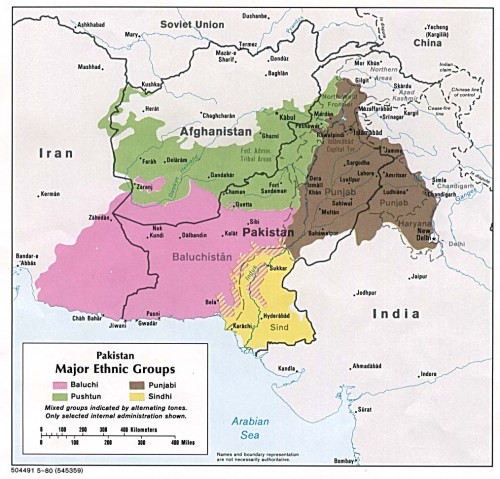
pakistan_groupes_ethniques.jpg


A cette situation délicate s’ajoutaient les prétentions chinoises sur quelques territoires de l’ancien “Raj” britannique. Le tout a enflammé la région pendant la seconde partie du 20ème siècle, aux dépens des populations. Pas moins de quatre guerres ont sévi et, suite à l’une d’elles, la zone baptisée par Lord Mountbatten “Pakistan oriental” est devenue indépendante, avec l’aide des Indiens, pour devenir l’actuel Bengladesh; la région du Cachemire a été divisée selon les lignes des fronts où s’étaient successivement affrontés Pakistanais, Indiens et Chinois. Il ne faut pas oublier non plus les nombreuses migrations qui ont suivi la partition, où les Hindous quittaient en masse les territoires sous juridiction pakistanaise-musulmane et où les Musulmans quittaient les zone attribuées à la nouvelle Inde indépendante, majoritairement hindoue. Ces transferts de population ont eu des effets fortement déstabilisants pour les équilibres internes des deux nouveaux Etats. Entretemps, alors que l’Inde optait pour la voie de la modernisation sous l’impulsion du gouvernement de Nehru, le Pakistan fut secoué par une série de coups d’Etat militaires, renversant à intervalles réguliers les régimes démocratiques.


Terrorisme et guerre au terrorisme


Après avoir déployé une politique fièrement hostile aux Etats-Unis sous la houlette de Zulfiqar Ali Bhutto, qui a ouvert le Pakistan aux technologies nucléaires, le pays tombe ensuite sous une nouvelle dictature militaire, dirigée par le Général Muhammad Zia-ul-Haq et fortement inspirée par le fondamentalisme musulman. La période de la dictature de Zia-ul-Haq fut celle d’une collaboration étroite avec les bandes anti-soviétiques actives dans le conflit afghan; ensuite, l’amitié entre Zia-ul-Haq et le chef d’une faction insurrectionnelle afghane, Gulbuddin Hekmatyar —appuyée par un financement d’au moins 600 millions de dollars en provenance des circuits de la CIA et transitant par le Pakistan— favorisait un soutien direct à la puissante guérilla intégriste qui luttait contre les Soviétiques (1).


L’existence même d’Al-Qaeda est issue de ce contexte conflictuel entre, d’une part, le gouvernement légal afghan, soutenu par l’Union Soviétique, et, d’autre part, l’insurrection des “moudjahiddins”. D’après l’ancien ministre britannique des affaires étrangères, Robert Cook, Al-Qaeda serait la traduction en arabe de “data-base”. Et ce même Cook affirmait dans un entretien accordé à “The Guardian”: “Pour autant que je le sache, Al-Qaeda était, à l’origine, le nom d’une ‘data-base’ (base de données) du gouvernement américain, contenant les noms des milliers de moudjahiddins enrôlés par la CIA pour combattre les Soviétiques en Afghanistan” (2). Ce que confirme par ailleurs Saad al-Fagih, chef du “Movement for Islamic Reform” en Arabie Saoudite: Ben Laden s’est bel et bien engagé, au départ, pour s’opposer à la présence soviétique en Afghanistan (3). Si cet appui initial des Américains à de telles organisations (qui seraient ensuite partiellement passées dans les rangs du terrorisme anti-occidental) explique les raisons stratégiques qui ont forcé les Etats-Unis à se rapprocher des organisations fondamentalistes islamiques, celles-ci, dès qu’elles ne fournissent plus aucun avantage stratégique et ne servent plus les intérêts géopolitiques immédiats de Washington, deviennent automatiquement “ennemies” et sont donc combattues en tant que telles.


Dans cette logique, on peut s’expliquer la ruine actuelle du Pakistan, sombrant dans le chaos sous le regard des Américains. Après la chute du régime de Zia-ul-Haq et pendant toute la durée du régime de Pervez Mucharraf, le gouvernement du Pakistan a été continuellement accusé de soutenir les talibans (4), surtout depuis l’opération, parachevée avec succès, visant l’arrestation du troisième personnage dans la hiérarchie d’Al-Qaeda, Khalid Shaykh Muhammad. Dans un tel contexte (et un tel imbroglio!), le ministre indien des affaires étrangères n’a pas hésité à déclarer “que le Pakistan a échoué dans ses projets d’éradiquer le terrorisme qui puise ses racines sur son prorpe territoire”: c’était immédiatmeent après les attentats de Mumbai (Bombay) (5). Ce bref rapprochement entre l’Inde et les Etats-Unis, prévisible et dirigé contre le Pakistan, ne devrait pourtant pas mener à une éventuelle intervention occidentale dans la zone du Cachemire, vu que tous les Etats impliqués dans cette zone se sont toujours montrés très rétifs à des interventions extérieures, même si de telles interventions pouvaient faire pencher la balance dans le sens de leurs propres intérêts géopolitiques. Il me paraît inutile, ici, d’évoquer la prétendue exécution du terroriste Osama Ben Laden, justement sur le territoire du Pakistan lui-même.


Mais pourquoi les relations américano-pakistanaises se sont-elles détériorées à ce point, et de manière assez inattendue?


Le tracé des gazoducs


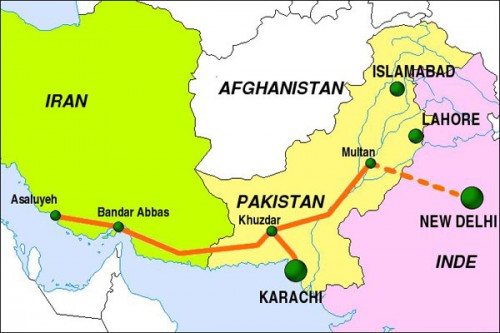
La Pakistan est devenu membre observateur de l’OCS (Organisation de Coopération de Shanghai) en 2005, ce qui constitue déjà un motif d’inquiétude pour les pays inféodés à l’OTAN. Cependant, ce qui constitue probablement la cause principale de la mobilisation des énergies et des médias pour discréditer la République Islamique du Pakistan est la proposition des Iraniens, séduisante pour les Pakistanais, de construire un gazoduc qui reliera les deux pays et dont Islamabad a prévu la parachèvement pour 2014. Le projet initial aurait dû également impliquer l’Inde, dans la mesure où un terminal du gazoduc y aurait abouti, mais les pressions américaines ont empêché l’adhésion de l’Inde au projet suggéré par l’Iran.


gazoduc_iran_pakistan_inde_01.jpg


Le projet déplait à l’évidence aux Etats-Unis non seulement parce qu’il renforce les relations entre deux pays islamiques mais aussi et surtout parce que le nouveau choix du Pakistan est diamètralement contraire aux plans prévus pour un autre gazoduc, le gazoduc dit “TAPI”, qui devrait partir du Turkménistan et passer par l’Afghanistan et le Pakistan pour aboutir en Inde, tout en étant étroitement contrôlé par des investisseurs américains.


Dans ce jeu, la région du Beloutchistan joue un rôle de premier plan, région habitée majoritairement par une ethnie très apparentée aux Pachtouns. Les Pachtouns sont un peuple originaire de régions aujourd’hui afghanes et se sont rendus tristement célèbres pour leurs violences et pour leurs velléités indépendantistes (tant en Iran qu’au Pakistan), sans oublier leurs trafics d’opium et d’héroïne qui posent quantité de problèmes au gouvernement pakistanais.


Les jeux stratégiques demeurent toutefois peu clairs et peu définis jusqu’à présent, si bien qu’il me paraît difficile de se prononcer d’une manière définitive sur les problèmes de la région. Le Pakistan reçoit encore et toujours un soutien financier de la part des Etats-Unis, en provenance directe du Pentagone; officiellement, cet argent sert à lutter contre le terrorisme mais, forcément, on peut très bien imaginer qu’il s’agit surtout de convaincre Islamabad de refuser l’offre iranienne.


Andrea Jacopo SALA,

Article paru sur le site italien http://www.eurasia-rivista.org/ en date du 6 août 2012.


Notes:


(1)   http://it.wikipedia.org/ Entrée sur Gulbuddin Hekmatyar.

(2)   http://www.guardian.co.uk/ , 8 juillet 2005

(3)   http://www.pbs.org/wgbh/pages/frontline/shows/binladen/interviews/al-fagih.html/

(4)   http://www.asiantribune.com/index.php?q=node/3231/

(5)   http://www.repubblica.it/2008/11/sezioni/esteri/india-attentato-3/dimissioni-capo-provincia/dimissioni-capo-provincia.html/


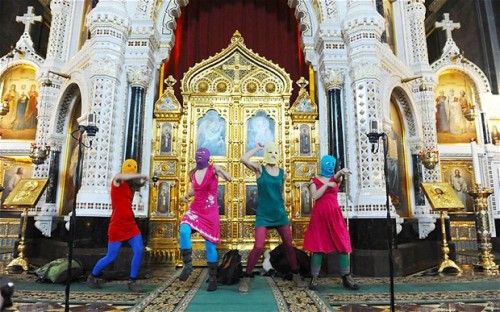
Pussy Riot – Secret History

Pussy-Riot_2339711b.jpg

Pussy Riot – Secret History

by Israel Shamir


Universally admired, Pussy Riot (or PR for short) have been promoted as superstars. But what are they? A rock or punk group they are not. A British journalist marvelled: they produce no music, no song, no painting, nada, rien, nothing. How can they be described as “artists”? This was a severe test for their supporters, but they passed it with flying honours: that famous lover-of-art, the US State Department, paid for their first ever single being produced by The Guardian out of some images and sounds.We are able to stomach obscenity and blasphemy; I am a great admirer of Notre Dame de Fleurs by Jean Genet, who combined both. However, the PR never wrote, composed or painted anything of value at all. Chris Randolph defended them in Counterpunch by comparing them with “the controversial Yegor Letov”. What a misleading comparison! Letov wrote poetry, full of obscenity but it still was poetry, while the PR have nothing but Public Relations.

Hell-bent on publicity, but artistically challenged, three young women from Russia decided – well, it sounds like a limerick. They stole a frozen chicken from a supermarket and used it as dildo; they filmed the act, called it “art” and placed it on the web. (It is still there) Their other artistic achievements were an orgy in a museum and a crude presentation of an erect prick.

Even in these dubious pieces of art their role was that of technical staff: the glory went to a Russian-Israeli artist Plucer-Sarno of Mevasseret Zion, who claimed the idea, design and copyright for himself and collected a major Russian prize. The future PR members got nothing and were described by Plucer as “ambitious provincials on the make”, or worse.

Lately they have tried to ride on a bandwagon of political struggle. That was another flop. They poured a flood of obscene words on Putin – in Red Square, in subway (underground) stations – with zero effect. They weren’t arrested, they weren’t fined, just chased away as a nuisance. And they did not attract the attention of people. It is important to remember that Putin is an avowed enemy of Russian oligarchs, owners of the major bulk of Russian media and providers of the Moscow literati, so they print on a daily basis so much anti-Putin invective, that it’s lost its shock value. You can’t invent a new diatribe against Putin – it has been already said and published. And Putin practically never interferes with the freedom of the press.

My foreign journalist friends are usually amazed by the unanimity and ferocity of the anti-Putin campaign in Russian media. It can be compared with the attacks on G W Bush in the liberal papers in the US, but in the US, there are many conservative papers that supported Bush. Putin has practically no support in the mainstream media, all of it owned by media barons. A valuable exception is TV, but it is expressly apolitical and provides mainly low-brow entertainment, also presented by anti-Putin activists like Mlle Xenia Sobtchak. So PR failed profoundly to wake up the beast.

Eventually the young viragos were mobilised for an attack on the Church. By that time they were willing to do anything for their bit of publicity. And the anti-Church campaign started a few months ago, quite suddenly as if by command. The Russian Church had 20 years of peace, recovering after the Communist period, and it was surprised by ferocity of the attack.

Though this subject calls for longer exposition, let us be brief. After the collapse of the USSR, the Church remained the only important spiritual pro-solidarity force in Russian life. The Yeltsin and Putin administrations were as materialist as the communists; they preached and practiced social Darwinism of neo-Liberal kind. The Church offered something beside the elusive riches on earth. Russians who lost the glue of solidarity previously provided by Communists eagerly flocked to the alternative provided by the Church.

The government and the oligarchs treated the Church well, as the Church had a strong anti-Communist tendency, and the haves were still afraid of the Reds leading the have-nots. The Church flourished, many beautiful cathedrals were rebuilt, many monasteries came back after decades of decay. The newly empowered church became a cohesive force in Russia.

As it became strong, the Church began to speak for the poor and dispossessed; the reformed Communists led by the Church-going Gennadi Zuganov, discovered a way to speak to the believers. A well-known economist and thinker, Michael Khazin, predicted that the future belongs to a new paradigm of Red Christianity, something along the lines of Roger Garaudy’s early thought. The Red Christian project is a threat to the elites and a hope for the world, he wrote. Besides, the Russian church took a very Russian and anti-globalist position.

This probably hastened the attack, but it was just a question of time when the global anti-Christian forces would step forward and attack the Russian Church like they attacked the Western Church. As Russia entered the WTO and adopted Western mores, it had to adopt secularization. And indeed the Russian Church was attacked by forces that do not want Russia to be cohesive: the oligarchs, big business, the media lords, the pro-Western intelligentsia of Moscow, and Western interests which naturally prefer Russia divided against itself.

This offensive against the Church began with some minor issues: the media was all agog about Patriarch’s expensive watch, a present from the then President Medvedev. Anti-religious fervour was high among liberal opposition that demonstrated against Putin before the elections and needed a new horse to flog. A leading anti-Putin activist Viktor Shenderovich said he would understand if the Russian Orthodox priests were slain like they were in 1920s. Yet another visible figure among the liberal protesters, Igor Eidman, exclaimed,“exterminate the vermin”- the Russian Church – in the rudest biological terms.

The alleged organiser of the PR, Marat Gelman, a Russian Jewish art collector, has been connected with previous anti-Christian art actions which involved icon-smashing, imitation churches of enemas. His – and PR’s problem was that it was difficult to provoke reaction of the Church. PR made two attempts to provoke public indignation in the second cathedral of Moscow, the older Elochovsky Cathedral; both times they were expelled but not arrested. The third time, they tried harder; they went to St Savior Cathedral that was demolished by Lazar Kaganovich in 1930s and rebuilt in 1990s; they added more blasphemy of the most obscene kind, and still they were allowed to leave in peace. Police tried their best to avoid arresting the viragos, but they had no choice after PR uploaded a video of their appearance in the cathedrals with an obscene soundtrack.

During the trial, the defence and the accused did their worst to antagonize the judge by threatening her with the wrath of the United States (sic!) and by defiantly voicing anti-Christian hate speeches. The judge had no choice but to find the accused guilty of hate crime (hooliganism with religious hate as the motive). The prosecution did not charge the accused with a more serious hate crime “with intent to cause religious strife”, though it could probably be made to stick. (It would call for a stiffer sentence; swastika-drawers charged with intent to cause strife receive five years of jail).

Two years’ sentence is quite in line with prevailing European practice. For much milder anti-Jewish hate talk, European countries customarily sentence offenders to two-to-five years of prison for the first offence. The Russians applied hate crime laws to offenders against Christian faith, and this is probably a Russian novelty. The Russians proved that they care for Christ as much as the French care for Auschwitz, and this shocked the Europeans who apparently thought ‘hate laws’ may be applied only to protect Jews and gays. The Western governments call for more freedom for the anti-Christian Russians, while denying it for holocaust revisionists in their midst.

The anti-Putin opposition flocked to support PR. A radical charismatic opposition leader,  poet  wrote that the opposition made a mistake supporting PR, as they antagonize the masses; the chasm between the masses and the opposition grows. But his voice was crying in the wilderness, and the rest of the opposition happily embraced the PR cause, trying to turn it into a weapon against Putin. The Western media and governments also used it to attack Putin. A Guardian editorial called on Putin to resign. Putin called for clemency for PR, and the government was embarrassed by the affair. But they were left with no choice: the invisible organizers behind PR wanted to have the viragos in jail, and so they did.

Commercially, they hit jackpot. With support of Madonna and the State Department, they are likely to leave jail ready for a world tour and photo ops at the White House. They registered their name as a trade mark and began to issue franchises. And their competitors, the Femen group (whose art is showing off their boobs in unusual places) tried to beat PR by chopping down a large wooden cross installed in memory of Stalin’s victims. Now the sky is the limit.

In August, vacation season, when there is not much hard news and newspaper readers are at the seashore or countryside, the PR trial provided much needed entertainment for man and beast. Hopefully it will drop from the agenda with the end of the silly season, but do not bet on it.

Israel Shamir reports from Moscow, his email is adam@israelshamir.net

An interview with Daniele Scalea

An interview with Daniele Scalea


An interview with Daniele Scalea, scientific secretary of the Italian Institute of Geopolitics (IsAG), co-editor-in-chief of the Italian journal Geopolitica.

GRA : Western media confidently say that the fall of the current Syrian regime is inevitable. In your opinion, how well founded this prediction is, and is there some political power that can bring order to this situation?

D.S.: I think that the Syrian regime has so far shown a stunning solidity. There was a period in which Syrian army lost a substantial part of national territory, but it has managed to reconquer it; there was then a surprise attack to Damascus (similar to the surprise attack against Tripoli which toppled Gaddafi), but the government has regained control of the city; there were some important defections among the power establishment, but the latter remain so far close and gathered around Bashar al-Assad. So, I don't think that a violent overthrow of Syrian government is imminent nor probable, except for the case of a foreign invasion.

Thus who can bring order to this situation is a NATO-led invasion (which would obviously create an order favorable to US hegemony, which could also be a "disorder", i.e. a sectarian division of Syria) or a peaceful negotiated agreement between involved great powers, which would put an end to foreign interference that is feeding the civil war in Syria.

GRA: How likely is a forceful U.S. intervention in the Syrian conflict and attempt to violently overthrow the regime of Bashar al-Assad (or the U.S. will keep a distance and will not dare to risk)? Under circumstances of such a possibility, what consequences it will bring to America itself?

D.S.: I hold really unlikely a direct armed intervention of US in the Syrian conflict, i.e. an intervention further that the arming of rebels (which is probably already underway). New US strategy provide for the use of proxy countries in war - especially in the Near East, since US focus is shifting towards Far East - with at most a limited direct contribution. Lybian war is the model: France, UK, Italy and Qatar were in the frontline, while US remained on the second row. In the Syrian case proxy roles is assumed by Turkey, Saudi Arabia and Qatar. It is so more probable an intervention by those countries. But I believe it is unlikely too. In fact, such an action would risk to bring in the conflict also Iran, and then US would be obliged to intervene in first person. That is a dream scenario for Israel, and also for a part of US establishment, but I guess that the main part of Washington rulers - and especially Obama and his entourage - want to avoid it.

GRA: How do you assess Russia's position in this issue? Is Russia able to compromise, yielding to the wiles of the West (for example, the proposal of Hillary Clinton to establish demilitarized zone), despite the fact, that Russia has already received a very difficult experience in the situation in Libya?

D.S.: Russian position has been very balanced and sane: Moscow condemns violence on both sides, works for a negotiated and peaceful solution of the crisis, and doesn't appear willing to surrender to NATO one more time, as was in Lybian case last year. A big problem would emerge in the event - for me very unlikely but not impossible - of a NATO-led or NATO-inspired foreign armed intervention in Syria. What would be Russian response? She would be ready to react? And also if morally ready, she would have the capacity for a strong power projection in the Near East? Or, as in 2003 with the US invasion of Iraq despite Russian opposition, would might make right?

GRA : How, in your opinion, will deploy the situation after the overthrow of Bashar Assad? According to the information, disseminated through the media, there are already dozens of catastrophic scenarios.

D.S.: A forced overthrow of Bashar al-Assad would very probably entail a period of futher domestic turmoil or a foreign occupation of Syria. Subject should change if al-Assad resign in the frame of a negotiated peaceful solution of the crisis.

GRA : One possible scenario is the territorial division of Syria into three parts. Chagry Erhan, Director of the Center of Strategic Research of the European peoples, believes that the Baath regime, that is being removed from power, will try to create a new state on the basis of belonging to a madhhab through Latakia-Tartus, what can lead to a decision of destruction or assimilation of the Sunni population. In addition, such a step (creation of a new state) can undertake also Kurds. And here raises a difficult question - how to prevent the partition of the country? Erhan believes that once the government will intervene in the process by violent means, this will lead to more bloodshed. How likely do you think, this scenario is?

D.S.: I don't hold likely the very creation of a new Alawi state in Syria, whereas is probable that a violent overthrow of the current regime could create a situation of civilian and sectarian war in the country. Resistance by Syrian government and armed forces have created an ideal scenario for a negotiated solution of the crisis. Negotiation should be bring domestically, between Baathist rulers and mainly Islamist opponents, and internationally between US and Russia, Turkey-Egypt-GCC and Iran.


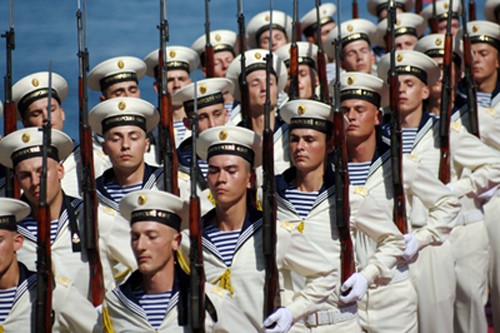
Parada militar 2011 Chile [5 de 10]

Parada militar 2011 Chile [5 de 10]


Russia e Ucraina verso l’Unione doganale

Ukraine_-Gages-diplomatiques-et-economiques-a-la-Russie-par-Mathilde-Goanec.jpg

Russia e Ucraina verso l’Unione doganale

L’idea del capo del Cremlino di creare un’unione eurasiatica con gli ex Stati dell’Urss coinvolge anche Kiev. Gli eurocrati criticano Yanukovych

Andrea Perrone

Ex: http://rinascita.eu/


La Russia spera che la pressioni sull’Ucraina messe in atto dall’Unione europea spingano Kiev tra le sue braccia. Per questo il Cremlino sta facendo pressione sul governo di Kiev, affinché sottoscriva con la Russia un’Unione doganale, tale da rappresentare un’alternativa all’integrazione nell’Ue. I leader europei hanno avvertito l’Ucraina e in particolare il suo presidente, il filorusso Viktor Yanukovych (nella foto), proprio nel fine settimana, che Kiev rischia di non conseguire l’obiettivo di una maggiore partnership con l’Unione europea, fin quando l’ex primo ministro Yulia Tymoshenko resta in carcere. Per tutta risposta Yanukovych, parlando ad un forum a Yalta (Crimea), ha ribadito che l’Ucraina è determinata a proseguire in una maggiore integrazione con l’Europa, ma gli è stato risposto molto chiaramente e senza mezzi termini che la porta dell’Ue è chiusa fino a quando non saranno attuate le riforme nel Paese. Le causa principale di questa opposizione da parte dei leader europei è costituita dalla detenzione della Tymoshenko, che è stato condannata a sette anni per abuso di potere nei negoziati sul gas con la Russia. Tutto questo a causa di uno status giuridico che gli Stati europei affermano debba venire meno. Ma in molti sottolineano che Yanukovych ha preso la decisione di mettere in carcere la sua rivale politica per le numerose e gravi accuse che le vengono addebitate. In più, le autorità ucraine hanno affermato di essere pronte a muovere nuove accuse ai danni della Tymoshenko e per questo propongono un secondo processo contro la rappresentante dell’Occidente euro-atlantico ed ex “golpista arancione” per i suoi numerosi reati. La questione ha naturalmente allarmato i Soloni europei. “Non ha idea di quanto questo caso abbia danneggiato l’immagine dell’Ucraina in Europa”, ha sottolineato il deputato portoghese Mario David, ai ministri ucraini. “Se non avremo valori comuni, allora si può dimenticare l’Accordo di associazione”, ha proseguito il politico lusitano. È necessario ricordare che nei mesi scorsi l’Ucraina e l’Ue hanno sottoscritto un documento che apre la strada a Kiev a stringere una partnership via via sempre più stretta con l’Unione europea, ma l’Ue ha messo in chiaro che l’intesa non sarà ratificata fin quando rimarrà in vigore a Kiev il clima politico attuale. Nonostante le posizioni espresse dagli eurocrati, Yanukovych non si è fatto intimorire affatto e ha annunciato che il suo Paese è deciso a favorire una maggiore integrazione, ma ora che l’Unione europea sta facendo pressioni su Kiev affinché cambi la politica interna, espresse dai tecnocrati di Bruxelles e Strasburgo, stanno spingendo l’Ucraina tra le braccia della Russia, grazie alle proposte di quest’ultima per portare sempre più Kiev nella sua orbita. I funzionari russi, a Yalta nel fine settimana per partecipare al Forum, hanno sollecitato i leader di Kiev a prendere parte alla formazione dell’Unione doganale tra Russia, Bielorussia e Kazakistan. Alexei Kostin, responsabile russo della VTB Bank e vicino al presidente Vladimir Putin, ha detto che la Russia non imporrebbe alcuna precondizione all’Ucraina. Per quanto riguarda l’Unione europea ciò che rovina le relazioni tra Kiev e Bruxelles è la detenzione della Tymoshenko, ma indubbiamente anche le posizioni filo-russe espresse da Yanukovych che certamente all’Occidente euro-atlantico non sono affatto gradite. Dal canto suo Carl Bildt, ministro degli Esteri svedese, ha dichiarato al quotidiano britannico The Independent che, nel corso di un incontro con Yanukovych, ha spiegato al presidente ucraino che l’Unione europea vuole vedere elezioni libere e corrette prima che l’accordo di adesione all’Ue venga ratificato. “La questione riguardante Yulia è in realtà soltanto la punta dell’iceberg e vi è grande preoccupazione riguardo allo Stato di diritto e alla politicizzazione dei tribunali”, ha commentato il capo della diplomazia di Stoccolma, sottolineando le critiche degli eurocrati all’indirizzo dell’Ucraina, che preferiscono sia sotto il controllo di Washington e Bruxelles, piuttosto che di Mosca. Adesso tutto è rimandato alle elezioni parlamentari previste per il mese prossimo, quando capo dello Stato e leader del Partito delle Regioni Yanukovych, si scontrerà con il partito BYuT della Tymoshenko e con diversi partiti di opposizione minori. Yanukovych dal canto suo ha ricordato che gli osservatori europei sono stati invitati a controllare lo svolgimento del voto, insistendo sul fatto che le elezioni saranno libere ed eque. Ma gli analisti, i media embedded e il mondo euro-atlantico hanno espresso il loro disaccordo, anche per la situazione che vive la fedelissima degli Stati Uniti e del mondo atlantico, Yulia Tymoshenko ancora in carcere per le accuse mosse contro di lei, tra cui un presunto omicidio di un avversario politico, che evidenziano i numerosi reati e il ruolo negativo da lei giocato nella politica ucraina dalla “rivoluzione arancione” (2004) in poi.


18 Settembre 2012 - http://rinascita.eu/index.php?action=news&id=16779