Ok

En poursuivant votre navigation sur ce site, vous acceptez l'utilisation de cookies. Ces derniers assurent le bon fonctionnement de nos services. En savoir plus.

jeudi, 19 janvier 2012

La notation des Etats membres de la zone euro pourrait entrer dans une spirale de dégradation continue

La notation des Etats membres de la zone euro pourrait entrer dans une spirale de dégradation continue
 

Ex: http://mediabenews.wordpress.com/

L’Allemagne s’est endettée à taux négatif à court terme, les banques européennes replacent à perte auprès de la BCE la quasi totalité des 500 milliards d’euros reçus de la même BCE, la Grèce ne parvient pas à finaliser un accord avec ses créanciers… Des comportements inhabituels des opérateurs financiers qui traduisent un trouble profond…

Les indicateurs ne manquent pas pour mesurer le niveau de peur des opérateurs financiers européens. Il suffit d’observer les conditions financières de la récente émission des obligations allemandes, à six mois, qui a été réalisée avec un taux d’intérêt négatif ; ou encore de comparer le montant des liquidités placées par les banques européennes auprès de la BCE (banques centrale européenne), pour avoir un sentiment du niveau des craintes importantes des investisseurs.

L'économie européenne est-elle en train de se noyer dans la peur ?

A coté des opérateurs européens, les intervenants financiers américains avaient d’ores et déjà (à partir du mois de juin 2011) commencé à rapatrier leurs fonds aux États-Unis, en réduisant de 97% leurs allocations pour le financement à court terme des banques européennes (France, Espagne, Italie, etc.).

Ces craintes sont consistantes avec un scénario dans lequel :

  • La notation des États membres de la zone euro entrerait dans une spirale de dégradation continue (à l’image de la dégradation qu’à connu la Grèce depuis 2009) ;
  • Les banques deviendraient de plus en plus fragiles (puisqu’elles subiraient des pressions sur leurs expositions aux dettes souveraines) ;
  • Les États mettront en place des plans d’austérité de plus en plus importants favorisant le chômage et la récession (justification retenue par l’agence de notation Standard & Poor’s pour “downgrader” la France et 8 autres pays de la Zone Euro) ;
  • Une importante destruction des patrimoines des ménages (source de financement des retraites pour les pays utilisant la capitalisation).

A la recherche d’une nouvelle classe d’actifs sans risque

Avant la crise des dettes souveraines, les émissions obligataires des États entraient dans la catégorie dite des « actifs sans risques ». Cette catégorie constitue des placements dans lesquels l’investisseur reçoit un rendement faible en contrepartie d’une quasi-certitude de récupérer ses avoirs à la maturité de l’instrument financier. Assureurs et fonds de pension plaçaient conséquemment une quantité importante de leurs investissements dans ces instruments financiers pour s’assurer de disposer au moment voulu (paiement des prestations de retraite, paiement de sinistres, remboursement de l’épargne etc.) des liquidités requises.

Cependant, la restructuration de la dette grecque a mis en évidence la possibilité d’une faillite (ou d’une restructuration) de dettes émises par des États membres de la zone euro. Une restructuration qui se traduisait par la perte d’une partie des avoirs investis. En effet, le sauvetage européen de la dette grecque adopté en juillet et en octobre 2011 avait pour contrepartie l’échange de dettes grecques anciennes, détenues par les investisseurs privés, par de nouvelles émissions avec une perte, lors de l’échange, d’une proportion pouvant dépasser 50% des montants investis.

Ce mode de restructuration est nouveau pour les opérateurs financiers, puisque l’échange est optionnel et nécessite l’adhésion de la majorité des investisseurs. En effet, la proposition européenne pour le sauvetage de la Grèce repose sur un mécanisme d’accord de la majorité des investisseurs pour la restructuration, qui se traduit par la non-mise en œuvre des contrats d’assurance contre le défaut (les CDS). Les investisseurs qui disposaient de ce type d’assurance pour protéger leurs actifs ne pouvaient pas obtenir le paiement de leurs sinistres, même s’ils ont subit une perte (puisque cette perte est choisie par l’investisseur et n’est pas forcée). Cependant, les fonds alternatifs semblent, selon les récents développements des négociations avec l’IIF (Association des grandes banques et institutions financières mondiales), ne pas être d’accord avec une restructuration optionnelle. Ils poussent la Grèce à faire défaut « classiquement », afin de mettre en œuvre le paiement des CDS, afin de couvrir les pertes qu’ils subiraient en contrepartie des obligations qu’ils détiennent.

Cependant, un tel scénario se traduirait par des pertes importantes pour les établissements financiers (banques et compagnies d’assurances,) qui ont vendu ces “couvertures”. Il raviverait les craintes sur la solvabilité des établissements financiers, et les rapprocherait du scénario de faillite en chaîne (dans un développement qui ressemble à celui qui a mené à la faillite de la banque Lehman Brothers).

Ces incertitudes justifient la sortie des dettes souveraines de la catégorie « actifs sans risques » et les choix des institutions financières, qui semblent préférer payer l’Allemagne pour sécuriser leurs investissements, ou placer les avoirs auprès de la BCE, même si celle-ci n’offre qu’un rendement de 0,25% (lorsqu’elle facture les liquidités prêtées à 1%).

De l’annihilation de la peur… à la peur excessive

Le facteur de peur (ou de risque) constitue un moteur essentiel dans l’investissement financier. Mais ce facteur a évolué d’un extrême à l’autre. Durant la période 2003 à 2007, les opérateurs financiers considéraient, sous l’impulsion d’une FED (réserve fédérale américiane) qui considérait que le « monde a changé » et que la stabilité économique et financière était acquise. Cette annihilation de la peur s’est traduite par l’augmentation démesurée de l’effet de levier, et la mise en place de prêts pour toutes les contreparties sans tenir compte du risque de défaut (prêts subprimes, emprunt très importants par rapport à la valeur des actifs financiers, etc.).

Aujourd’hui, les craintes deviennent trop importantes pendant la phase de la réduction du levier. Les doutes sur la régulation poussent les agents à s’interroger sur la réalité des bilans des institutions financières, et sur les pertes « cachées » qui pourraient émerger à n’importe quel moment.

Cette situation d’extrême s’explique par la psychologie humaine. En effet, face à un obstacle l’être humain se comporte de trois manières : la fuite, la confrontation ou le repli sur soi. Durant la crise, nous avons expérimenté les deux premières attitudes. Pendant la période s’étendant de l’été 2007 au premier trimestre 2008, les opérateurs ont combattu les risques de réduction de la dette. Mais devant l’importance de l’endettement, les opérateurs ont été pris de paniques et ont mis en place le cercle vicieux de la vente forcée (les opérateurs vendaient pour éviter l’accumulation des pertes, justifiant des ventes encore plus importantes, puisque les prix des actifs baissaient). Devant la mise en place de cette spirale vicieuse, les banques centrales ont injecté massivement des liquidités. Elles ont offert aux marchés financiers les armes pour fuir le pire, et pour oublier (pendant la période avril 2009 à l’été 2011) la crise et les problèmes structurelles. Cependant, les mécanismes de réduction des risques et de la réduction de la dette (dé-leverage) ont été si importants que les opérateurs semblent (au vu des derniers développements) avoir choisi le repli sur soi et la peur handicapante.

Si la peur est essentielle dans l’activité humaine (« où serait le mérite des héros s’ils n’avaient pas peur »), celle-ci doit être jugulée en créant des conditions de la prise de risque. La cacophonie politique et une régulation financière inadaptée constituent les deux principales justifications de la capitulation actuelle des marchés financiers. Ceux-ci évoluent entre optimisme injustifié (dont les prémices peuvent être lues dans le rebond des marchés actions, notamment à partir du début d’année 2012), et un pessimisme paralysant.

Il semble que le temps soit venu pour revoir en profondeur les politiques économiques et pour rétablir la place de la peur, sans l’annihiler par des camisoles monétaires – programmes d’injection de liquidité sans contreparties – ni l’attiser en cultivant le flou sur la situation réelle des bilans des établissements financiers. L’urgence des réformes sur la transparence de la réalité financières des États et des établissements financiers est importante, puisqu’elle constitue un monteur essentiel pour le fonctionnement de notre économie moderne, et pour la réduction des risques sur les perspectives de croissance et de chômage.

Driss Lamrani

THORSTEIN VEBLEN, WERNER SOMBART AND THE PERIODIZATION OF HISTORY

THORSTEIN VEBLEN, WERNER SOMBART AND THE PERIODIZATION OF HISTORY

Ex: http://library.by/portalus/modules/economics/


Источник: Journal of Economic Issues, Jun91, Vol. 25 Issue 2, p421, 8p
Loader, Colin & Waddoups, Jeffrey

THORSTEIN VEBLEN, WERNER SOMBART AND THE PERIODIZATION OF HISTORY

It is often alleged that the German historical school and the American institutional school possess a number of doctrinal and theoretical similarities.[1] Since ideas of figures within each of these schools are not homogeneous, a comparison in a short piece such as this is best focused on specific individuals. We have chosen to compare the work of a pioneer in institutional economics. Thorstein Veblen (1857-1929), with one of the second generation of the historical school, Werner Sombart (1863-1941).[2] As the dates indicate, the two were contemporaries, having published their first major works within a year of each other.[3] We will show that the two men move from similar premises in markedly different directions.


Both men offered critiques of the capitalist present supported by a schema of historical development, which posited a past golden age in pre-industrial Europe. Crucial to both critiques was an attempt to place modern capitalism in a larger historical context. This meant placing the periodization of the historical process into a series of epochs[4]--a nonmaterial (spiritual/instinctual) realm that became actualized through institutional structures. The way back to the golden age, however, would be traversed along two very different paths--for Veblen, it would mean a reiteration of his commitment to egalitarianism, for Sombart, a movement toward fascism.


Spirit and Instinct


Sombart wrote that economic epochs could be delineated by discernible types of character consisting of two elements, a spirit and a set of material forms. The spirit, defined as "the sum total of the purposes, motives, and principles which determine man's behaviour in economic life"[5] was more important than material forms, for its defined the era. Spirit, however, was not all-powerful; in order to form life in its image, certain conditions had to be present. Economic institutions, technology, material conditions, certain types of subjects and their wills all were necessary conditions for the "actualization" of spirit. There was some confusion in Sombart's writings regarding causal priority of spirit and material forces. Sometimes he wrote of spirit[6] creating material forms; at other times of material forms actualizing spirit; sometimes the spirit seemed to precede the new economic institutions; at other times it seemed to follow. However, it is clear that the economic system, or epoch, was defined by its spirit.


Veblen also wrote of "spirit," but he defined it as "[t]he complement of instinctive dispositions."[7] The peaceful instincts mentioned were the instinct of workmanship, the parental bent, the instinct of idle curiosity, while the predatory instincts were divided up into their sporting and pecuniary components. Veblen also stated that "all instinctive action is intelligent and teleological,"[8] indicating an affinity of his configuration of instincts with Sombart's spirit as a set of dominant "purposes, motives and principles" that gave meaning to his definition of historical epochs. Veblen's use of the concept, "spirit," was less central to his analysis than was the case for Sombart. The central element was, rather, the cumulatively changing institutional structure.


The spiritual/instinctual elements appeared in different ratios in the various epochs and racial groups in the two men's systems. For Sombart the whole (spirit) was more important, while the component (instinct) was more important for Veblen. An additional difference is that, for Veblen, the wholes were largely historical, while the components were immutable. For Sombart, on the other hand, both the wholes and the components (constituent elements) were historical (although not always coterminous).
Both men denied that epochs were homegeneous, although both believed an epoch could be dominated by a certain spirit/instinct. Sombart wrote that when a spirit was clearly dominant, one could speak o a "pure" or "high" period. In addition to these pure epochs there were "mixed" epochs, which were periods of transition between high epochs. These were termed either "early" or "late" depending on whether the perspective was past- or future-oriented. Thus the period from the Renaissance to the end of the eighteenth century was defined as early capitalism." While Veblen did not use the adjectives "early" and "late," he believed that periods such as the handicraft era (which chronologically approximated Sombart's early capitalist period) combined instincts that were dominant in earlier or later periods.[10]


Veblen's instincts and Sombart's spiritual elements also show remarkable structural similarities. Of the instincts postulated by Veblen, three are especially relevant to a comparison with Sombart's "spirit": the parental bent, the instinct of workmanship, and the predatory instincts. The parental bent was an instinct that went beyond having and nurturing children; it was essentially a communal instinct, which placed the common good above all else, and which disapproved of "wasteful and useless living." The instinct of workmanship promoted the desire to do a task thoroughly and well, producing a pride in the quality of work done. Veblen believed it was primarily responsible for the technical progress of humankind.[11] The parental bent and an uncontaminated instinct of workmanship were seen as positive forces (which furthered the generic ends of life) in contrast to the predatory instinct, which represented aggression--the will to compete, to subordinate, to conquer. In its sporting form, the predatory instinct gave rise especially to military activities and in its pecuniary form, to business competition and the desire to accumulate wealth and power.[12]


For Sombart, there were two primary spirits: precapitalist, dominated by the idea of sustenance, and the capitalist, which contained the principles of both accumulation (the profit motive) and rational calculation. The idea of sustenance and its extension, the principle of meeting needs, were both concerned with consumption; in the former, consumption to survive, in the latter, consumption to meet needs appropriate to one's status. In its primitive form, the idea of sustenance had the same concern for communal survival as Veblen's parental bent. The discrepancy in status characterizing more complex forms of economic organization resulted from the emergence of a military, land-owning elite, whose outlook was not unlike that defined by Veblen's predatory instinct. Within the precapitalist spirit, this aggressive orientation was subordinate to the idea of sustenance, as was craft ethic that was very to Veblen's instinct of workmanship. An important difference was that, unlike the latter, Sombart's craft ethic was oriented towards stasis, and therefore hindered rather than promoted the development of technology.[13]


Sombart's capitalist was embodied by the entrepreneur (Unternehmer), whose adventurous activities often in pursuit of wealth contradicted the stasis inherent in the idea of sustenance. The drive for accumulation embodied in sombart's entrepreneur was similar to Veblen's predatory instinct.[14] The principle of rational calculation also embodied in sombart's entrepreneur--with its objectification of the subjective elements of the work process, its instrumentality, its reduction of quality to calculable quantification in the form of money-- had no direct equivalent in Veblen's set of instincts. For Veblen, these characteristics were just a part of a contaminated manifestation of the instinct of workmanship in a capitalist institutional structure.


Economic Epochs


Using spirit and instinct as central concepts in their periodization of economic history, Sombart and veblen each delineated a set of economic stages, which cannot be directly to one another. Veblen's stages were more anthropological and less historically defined, applying to humankind's entire tenure on earth. (One and possibly two of his stages were prehistorical.) Sombart's stages were strictly historical, beginning with the European Middle Ages. (He did not address at any length the situations of prehistoric and ancient peoples.) Despite this difference, it will be argued that the two sets demonstrate important structural similarities. The configuration of spiritual/instinctual elements in the different stages, however, were weighted in such a way as to make the two men's systems incompatible.
Veblen's first three economic stages occupied the sane structural, but not chronological, positions as Sombart's first two stages and their subdivision. Veblen's first stage was "primitive savagery," characterized by stasis, communal ownership, and the parental bent. It was an economically inefficient and technologically stagnant period due to an anthropomorphic, rather than scientific, view of view of nature,[15]


This stage demonstrated qualities similar to an element of Sombart's first stage, precapitalist Europe. That element, the village community, was dominated by the idea of sustenance whose similarity to the parental bent has already been noted. In addition, the characteristics of stasis, communal ownership, a nonscientific view of nature ("empirical" and "traditional") and a lack of technological advancement were also present.[16]


Veblen's second stage, barbarism, saw the beginning of predatory culture. Here society was dominated by exploitative and warlike institutions, such as those the feudal nobility in Europe. Economic surplus, resulting from technological improvement, became the target of aggressive barbarian communities as they raided one another. Surplus also stratified communities internally by providing the means for "invidious distinction" based on command over the economic surplus.[17] A second element of Sombart's precapitalist stage, the seigniorial economy, was akin to barbarism and was also identified with the feudal nobility of Europe. This stage was also characterized by an economic surplus controlled by the lord, and an aggressive, military spirit.[18]


The third stage of Veblen, the handicraft era, witnessed the emergence of a more pervasive and less contaminated form of the instinct of workmanship, although predatory instincts of barbarism had not disappeared. This stage was characterized by the individual craftsman, who embodied all elements of the production process. He as the owner of his shop and tools and at the same time provided the labor power necessary to carry out production. The individual craftsman demonstrated a pride in his workmanship, which he saw as statement of his own work. He was willing to make the necessary technological adjustment to modify work as conditions demanded. Technological innovation, however to lead the era's demise, for as markets widened, fueled by the development of transportation and communication technologies a division of labor between pecuniary and productive pursuits arose. This development resulted in the individual placing his own interests over those of the community and the reemergence of pecuniary/ predatory instinct dominance and a contamination of the instinct of workmanship. This domination would reach its fullest development in the fourth stage of the "machine era."[19]


Sombart portrayed the handicraft element of the precapitalist epoch in terms very similar to Veblen's. He also emphasized that the handicraft system was more "natural," more communal, and conductive to the creative elements of the individual's personality. A major difference, as noted above, was that Sombart believed that the handicraft system inclined to a stasis found in the village economy, whereas, Veblen saw the predatory instinct retarding the development of technological efficiency and scientific insight, Sombart saw it promoting those factors. This can be seen in his assertion that the rise of cities stemmed not from the productive forces that Veblen identified with the instinct of workmanship, but from consumption demands of the predatory class. The latter were the "city founders;" the craftsmen and traders were simply the "city fillers" who serviced the formers' needs.[20]


Like Veblen, Sombart wrote that the impetus for the development of capitalism came from the adventurous, enterprising, predatory element of the earlier period. Entrepreneur were risk takers, those who sought to accumulate wealth and power by challenging the status quo. They range from conquerors to economic speculators. Accordingly, Sombart noted the association of trade with piracy in the early capitalist period. He presented this group as if they were the heirs of the feudal nobility with its "heroic" convictions.[21]


In other capitalists, the bourgeois spirit predominated, implying a lack of "heroism." Instead, they possessed the organizational ability to rationally plan steps toward a goal, thriftiness, an insistence on the profitable expenditure of time and the ability to calculate, to reduce things to quantities. Rather than forcing people to do their bidding, they convinced strangers to enter into contracts with them and to buy their products. This group emerged not from the nobility but from the handicraft system.[22]
While the early capitalist contained both the adventurous and calculating elements, the entrepreneurial spirit was the stronger. The bourgeois spirit was partially held in check by the traditional convictions and form of the guilds. As capitalism developed during its early period, the bourgeois spirit became stronger, so that by the epoch of high capitalism it had come to dominated the entrepreneurial spirit.[23]


Veblen's machine age and Sombart's high capitalist epoch began in the last half of the eighteenth century. Both saw these stages as characterized by artificial (as opposed to natural), impersonal relationships in which large-scale productive process reduced all qualitative standards to the simple quantitative standard of increased output for more money.


Veblen believed that the machine age brought standardization and mechanistic discipline, especially to the working class. The impersonal working of the system, the attention to cause and effect, resulted in loss of the personal qualities of work. The rationalities of a reified world were oblivious to more conventional standards of morality, truth, and beauty. While the presence of the machine was ubiquitous, the business classes maintained their pecuniary outlook. The standardized regimentation of the working classes and the pecuniary instincts of the businessman were complementary in the machine age.[24]


Sombart wrote that the high capitalist period, like the high precapitalist period, was static, but its stasis was enforced through science, self-interest and flexibility rather than through the rigid traditions of the community. It is important to note the decline of the entrepreneurial spirit in high capitalism. The reified mechanism demonstrated non of the dynamic adventurism that characterized the emergence of capitalism. Thus, while Veblen's machine age was characterized by the dominance of the predatory instinct over all others, Sombart saw the decline of its analogous spiritual element in high capitalism.[25]


Conclusion


Like Veblen, sombart distinguished two aspects of modern capitalism that were traced to the mobility and the artisanry respectively. Sombart also connected the predatory aspect of the nobility with consumption, especially luxury consumption. Unlike Veblen, however, he viewed the nobility positively, rather than simply as parasites. They were the real creators of capitalism through their will to power and wealth. They were the heroes. While Sombart, like Veblen, extolled the virtues of the producing artisan, he saw them giving way to the negative aspect of the modern capitalist system. Thus, the very element Veblen condemned as predatory and parasitic in machine age capitalism was held out by Sombart as the only hope for the future.


As a remedy for the ills of modern capitalism, Veblen looked to the instinct as they were expressed in a past golden age while Sombart became interested in a new breed of heroes--the socialist warriors. In revising Socialism and the Social Movement in 1919, he added a chapter describing Russian Bolshevism as a fighting movement that was preventing socialism from being coopted by capitalism and restoring its heroic spirit. When Bolshevism failed him, him the extreme nationalism that he displayed in Traders and Heroes moved him into the cap of the new "heroism," that of National Socialism.[26]
Veblen's evolutionary perspective and his cultural lag theory stressed the likelihood of atavistic continuities and left him uncertain of the future because blind drift was as likely an outcome as any. In his last years, while Sombart took refuge in Nazi apologetics, Veblen, though adhering to egalitarian ideas and an open society, became increasing pessimistic regarding the possibilities of throwing off the yoke of the vested interests.[27]


Notes


[1.] For example, cf. Lev E. Dobriansky, Veblenism: A New Critique (Washington, D. C.: Public Affairs Press, (1975), pp. 171-73; David Reisman, Thorstein Veblen: A Critical Interpretation (New York: Charles Scribner's Sons, 1960) pp. 155-56; Joseph Dorfman, Thorstein Veblen and His America (New York: Augustus M. Kelley, 1966) pp. 147, 156, 212-13, 323.
[2.] For Sombart's place in the German Historical School, see Dieter Lindenlaub, Richtungkampfe im Verein fur Soziapolitik (Wiesbaden: Franz Steiner, 1967) pp. 314-37; Arthur Mitzman, Sociology and Estrangement (New York: Alfred A. Knopf, 1973, 135-264; Joseph Schumpeter, History of Economic Analysis (New York: Oxford University Press. 1954) pp. 815-18.
[3.] Cf. Veblen, Essays, Reviews and Reports, ed. Joseph Dorfman (clifton, N.J.: August M. Kelley. 1973) pp. 463-65, 498-506, 529-32; sombart, Luxury and Capitalism, trans, W.R. Dittmar (An Arbor: University of Michigan Press, 1967), p. 61. In a note to Wesley Mitchell, Sombart wrote that Mitchell and Veblen were exceptions to the rule of America economists who wander along completely antiquated paths. Mitchell Papers, Butler Library, Columbia University, New York. Also cf. Arthur K. Davis, Thorstein Veblen's Social Theory (New York: Arno Press, 1980), pp. 417-32; Carle c. Zimmerman, Consumption and Standards of Living, (New York: Van Nostrand, 1936), pp. 498-520.
[4.] Leo Rogin, "Werner Sombart and the Natural Science Method," Journal of Political Economy, 41 (1933): 224; Sombart, Der moderne Kapitalismus second edition (Munich and Leipzig: Duncker und Humblot, 1928) vol. I, p. xx.
[5.] Sombart, "Economic Theory and Economic History," The Economic History Review 2 (1929): 14.
[6.] Sombart, Moderne Kapitalismus, vol. I pp. 13-14, vol. II, p. 3; Sombart, Die deutsche Volkwirtschaft im neuzehnten Jahrhundert, 8th ed. (Darmstadt: Wissenchaftliche Buchgemeinschaft, 1954) p. 44.
[7.] Veblen, The Instinct of Workmanship and the State of the Industrial Arts (new York: Augustus M. Kelley, 1964), p. 15.
[8.] Ibid., p. 32.
[9.] Sombart, Modern Kapitalismus, vol. I p. 26, pp. 3-5.
[10.] Sombart, Instinct, pp. 231-98.
[11.] Ibid., pp. 27,35.
[12.] Veblen, The Theory of the Leisure Class, (New York: New American Library, 1912) pp. 165-76.
[13.] Sombart, Moderne Kapitalismus, vol. I, pp. 14, 31-34; Sombart, The Quintessence of Capitalism, trans. and ed. M. Epstein (New York: Howard Fertig, 1967) pp. 13-21.
[14.] Sombart, Quintessence, pp. 51-55.
[15.] Veblen, Instinct, p. 74.
[16.] Sombart, Moderne Kapitalismus, vol. I, 36-37.
[17.] Veblen, Instinct, p. 32.
[18.] Sombart, Moderne Kapitalismus, vol. I p. 66.
[19.] Veblen, Instinct, pp. 344-45.
[20.] Sombart, Moderne Kapitalismus, vol. I pp. 131, 159, 190-97, 737.
[21.] Ibid., vol. II pp. 23-28; Quintessence, pp. 51-53.
[22.] Sombart, Moderne Kapitalismus, vol. II, pp. 31-34; Quintessence pp. 53-55.
[23.] Sombart, Quintessence pp. 172-180.
[24.] Veblen, The Theory of Business Enterprise (new York: Charles Scribner's Sons, 1904) chapts. 2,4.
[25.] Sombart, Quintessence pp. 344-46, 358.
[26.] Sombart, Sozialismus und soziale Bewegung, 7th edition (Jena: Gustav Fisher, 1919) 190-91; Sombart, Handler und Helden (Munich: Duncker und Humblot. 1915).
[27.] Cf Veblen Absentee Ownership (New York: B. W. Huebsch, 1923) pp. 398-445 © Library.by

Bonapartism - Machiavellianism - Elitism

Bonapartism - Machiavellianism - Elitism

di Troy Southgate

Ex: http://www.juliusevola.it/

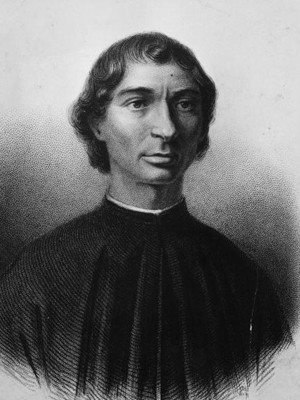
niccolo-machiavelli-0708-lg-75217122.jpgBonapartism is a rather unusual term and one which Evola borrows from R. Michels, author of the 1915 work Political Parties: A Sociological Study of the Oligarchical Tendencies of Modern Democracy. Michels demonstrates how representative democracy and "government of the people" leads to the control of the State by a self-interested minority. This view is echoed by J. Burnham in The Machiavellians, who explains that the so-called "will of the people" is eventually superseded by the domination of a bureaucratic clique. Thus Bonapartism begins with a popular demand for more freedom and equality and ends in the totalitarian "dictatorship of the proletariat." Evola likens this process to a people who have catastrophically "led and disciplined themselves." After the decline of its aristocratic nobility, ancient Greece witnessed the same systematically repressive phenomenon. Power simply became detached from a higher, spiritual authority, leading to fear and brutality. Evola then turns to Otto Weininger, who once "described the figure of the great politician as one who is a despot and at the same time a worshipper of the people, or simultaneously a pimp and a whore." Indeed, by seeking to appeal to the masses the modern leader easily commands their respect and adulation. Not in the way that traditional societies gave their loyalty to the organic State, however, because instead of engendering a healthy diversity between the various levels (not classes) of society Bonapartism forces the politician to become a "man of the people." Therefore he is perceived as a common man, rather than as someone exceptionally transcendent and symbolic. This, Weininger called "mutual prostitution." Authority is perfectly useless unless it is attached to a central idea which runs throughout the social fabric and acts as a point of reference. This affects the individual because one "is restricted not so much in this or that exterior freedom (which is, after all, of little consequence) but rather in the inner freedom - the ability to free himself from his lowest instincts." Bonapartism - which Evola interprets here as a political, rather than militaristic, term - is equated with dictatorship because this is the logical result of its democratic ethos. It completely erodes the traditional values of human existence, refusing to "distinguish clearly between the symbol, the function, and the principle, on the one hand, and man as an individual, on the other." Instead, it rejects "that a man be valued and recognised in terms of the idea and principle he upholds" and simply views man in terms of "his action upon the irrational forms of the masses." Similarly, Evola points out the errors which began with Social-Darwinism and consequently found expression in Nietzsche’s concept of the Superman (Ubermensch): "most people, even when they admit the notion of aristocracy in principle, ultimately settle for a very limited view of it: they admire an individual for being exceptional and brilliant, instead of for being one in whom a tradition and a special 'spiritual race' shine forth, or instead of whose greatness is due not to his human virtues, but rather to the principle, the idea, and a certain regal impersonality that he embodies."

Machiavellianism - despite its frequent portrayal as an aristocratic notion - is also a highly individualist philosophy. Indeed, although the concept of The Prince rejects democracy and the masses, it makes the fatal mistake of encouraging power and authority to reside in the hands of man. In other words, man is himself the be all and end all of Machiavellian doctrine. Such men are not connected to a chain of Tradition, they are merely interested in deploying their political capabilities to advance their own interests. His very position is maintained by lies, deceit and manipulation, becoming a rampant political monster to which everything must be methodically subjected. This is clearly very different to the way in which traditional aristocracies functioned and indicates that Machiavellianism is a consequence of the general decline. True elitism, argues Evola, degenerates in four stages: "in the first stage the elite has a purely spiritual character, embodying what may be generally called ‘divine right’. This elite expresses an ideal of immaterial virility. In the second stage, the elite has the character of warrior nobility; at the third stage we find the advent of oligarchies of a plutocratic and capitalistic nature, such as they arise in democracies; the fourth and last elite is that of the collectivist and revolutionary leaders of the Fourth Estate."

Troy Southgate examines late Italian philosopher Julius Evola’s Men Among the Ruins: Post-War Reflections of a Radical Traditionalist. This is chapter 5 ( n.d.r. )

CONVERGENCIAS IDENTITARIAS EN LA EUROPA DANUBIANA.

Wappen_Österreich-Ungarn_1916_(Klein).png

CONVERGENCIAS IDENTITARIAS EN LA EUROPA DANUBIANA.

 
Ex: http://enricravello.blogspot.com/

El mismo día que publicábamos en nuestro blog el artículo sobre la nueva Constitución húngara, aparecía en el diario madrileño El País un artículo firmado por un conocido vocero de lo “políticamente correcto”, Paolo Flores d´Arcais, en el que confirma lo que nosotros habíamos expuesto en nuestro escrito.


El artículo, escrito con cierto tono de amenaza, induce a tomar todas las medias posibles, incluso las más antidemocráticas, para parar la evolución nacionalista de Hungría y alienta a los poderes internacionalistas a dar un golpe de estado en Hungría similar al dado contra Berlusconi en Italia. Flores d´Arcais  confirma nuestras afirmaciones al decir que fue el hecho de un acercamiento político y estratégico entre la Italia de Berlusconi, la Hungría de Orbán y la Rusia de Putin, lo que hizo saltar las alarmas de los poderes mundialistas. Los estrategas mundialistas no podrían tolerar la construcción de ese nuevo eje europeo Roma-Budapest-Moscú, al que Flores d´Arcais define como una  “prueba de la plaga del fascismo postmoderno, blando sólo en apariencia, (…) una fuerza extendida y con un crecimiento amenazador”,  para este periodista, otra prueba de esa “plaga” es el ascenso en las encuestas de Marine Le Pen. Ya sabemos que para los poderes mundialistas la voluntad popular y las decisiones soberanas de los Estados no merecen ningún respeto.

 
En la edición del mismo día de ese rotativo madrileño, dentro de la sección de economía, se volvía a hablar del “caso húngaro”, señalando la presión de los mercados contra el florín que perdía valor de cotización en el mercado internacional de divisas.  A su vez se afirmaba que el primer ministro húngaro, no  podría aguantar la situación y terminaría por buscar algún tipo de acuerdo con el FMI, cediendo en algunas de las cláusulas de la nueva constitución. Compartimos esta opinión, de hecho ya hay algunos gestos en este sentido, Viktor Orban cederá lo menos que pueda, pero apostará por abrir negociaciones con el FMI y eso le obligará a replegarse en algunas de sus posturas de independencia política y económica. Sin embargo la reacción  del electorado húngaro, no está siendo la esperada por los poderes mundialista, el desgaste del gubernamental FIDESZ , no se traduce en un aumento de votos de la izquierda “respetable”, por el contrario, la única formación que aumenta en apoyo popular son los nacionalistas de JOBBIK, que acusan a Orban de “blando “ y no está dispuestos a la menor concesión ante la finanza internacional.

 
En su artículo, Flores d´Arcais también nos habla de la posibilidad de extensión en la zona de esa “peste fascista” afirmando que  “Si queremos evitar el contagio, es necesario que tratemos a los apestados como apestados”, en una intolerable apología al golpe de Estado contra la soberanía húngara. Flores d´Arcais y los poderes fácticos tienen motivos para tanta inquietud.

 
Vecina de Hungría,  con la que siempre ha mantenido las mejores relaciones, Austria asiste al imparable ascenso de la formación “patriota y social” (así se define) del FPÖ (que en su último congreso recuperó la denominación de “austro-alemán”) que logra situarse con un 27% de apoyo popular en las encuestas y podría convertirse en la primera fuerza del país en las próximas legislativas que se celebren en el país alpino;  así como su líder, HC Strache, es el favorito para las elecciones presidenciales. Todo apunta a que en Austria podemos asistir a la formación de un gobierno nacionalista y antimundialista dirigido por el FPÖ.

 
Una situación semejante se anuncia en la cercana Serbia, donde la oposición nacionalista y antiliberal se ha movilizado pidiendo nuevas elecciones.  Según una  encuesta recientemente publicada,  los nacionalistas del SNS de Vojislav Seselj –que mantiene relaciones oficiales con el  FPÖ –, lograrían el 38,8% de los votos, aunque según su dirección, el SNS serbio se presentará a las legislativas como parte de una gran coalición que agrupe a asociaciones de trabajadores, de campesinos y de refugiados de guerra serbios, y posiblemente también a los nacionalistas más radicales de SRS (del que el SNS fue una escisión) con los que han votado conjuntamente contra los últimos presupuestos presentados por el actual gobierno serbio.

 
En Eslovaquia, el FPÖ – que está construyendo una importante red de relaciones identitarias en toda Europa–, también mantiene relaciones oficiales con el SNS (Partido Nacional Eslovaco)  de Jan Slota, una formación de fuerte contenido nacionalista que logró un 5,8% en las últimas elecciones europeas pero que llegó a niveles del 16% y que ha formado parte de la coalición gubernamental  nacionalpopulista hasta 2006.

 
 Austria, Hungría, Serbia y Eslovaquia forman un espacio geográfico contiguo y con intensas interrelaciones comerciales, políticas, económicas y comerciales. Un espacio que  coincide en gran parte con el antiguo Imperio austro-húngaro en versión reducida. Un espacio de estas características con gobiernos dispuestos a no someterse a los dictados de los mercados internacionales sí podría convertirse en un verdadero desafío para los financieros internacionales y para los mundialista que dirigen la UE. Un espacio geopolítico, que recordémoslo, hace frontera con Ucrania, Bielorrusia y está muy cerca de Rusia.  Es cierto que para Hungría, o para cualquier otro Estado europeo, va a ser muy difícil resistir a las presiones chantajistas de los mercados internacionales y sus agencias de ratting, pero la construcción de grandes espacios europeos integrados y autosuficientes, sería sin duda el primer paso para romper resta tiranía financiera, a la que sólo se puede vencer en clave europea.
 
Es necesario señalar que este gran espacio danubiano y los países que hemos señalado pertenecen a diversos ámbitos de la común cultura europea. Austria es germana y católica, Hungría magiar y católica, Eslovaquia eslava y católica y Serbia eslava y ortodoxa, lo que hace que sea una región de gran proyección continental europea; las vinculaciones entre Austria y Alemania y las intensas relaciones entre Serbia y Rusia, son un valor añadido.

 
Sin embargo es la cuestión de las minorías nacionales y las tensiones fronterizas, lo que puede actuar de cortocircuito y de elemento de desestabilización y de enfrentamiento en la región danubiana. El hecho de que el Tratado de Trianon por el que se ponía fin a la PGM y se desmiembra el Imperio austro húngaro,  dejara importantes comunidades húngaras en territorio eslovaco, serbio (Voivodina) y en la latina y ortodoxa Rumanía (Transilvania) es todavía hoy un tema no resuelto y fuente de constantes tensiones. Sin duda éste es uno de los grandes retos y peligros que amenazan el diálogo y la cooperación en la zona, sería esperanzador poder pensar que gobiernos identitarios, y antimundialistas pudieran lograr un punto de encuentro entre las partes implicadas. De ello puede depender el futuro político de la zona danubiano-balcánica, vital para Europa.
 
Enric Ravello
Secretario de relaciones nacionales e internacionales Plataforma per Catalunya

Ernst Jünger und der Rausch

drog_Juenger_DW_Kul_264852p.jpg

Thomas Michael
Ernst Jünger und der Rausch

Ex: http://www.godenholm.de/

Merkwürdig, das die Zeit meines tiefsten Eintauchens in die Welt Jüngers mit seinem Tod zusammenfiel.

Der alte Weise ist fort- und überall, wie erwartet, die "falschen" Zitate. Der ganze plakative Kram, wiederholt von Leuten, denen eine Seite des Meisters wohl immer fremd bleiben wird. Mich langweilen die Diskurse über Jüngers politischen Hintergrund. Fehlt doch dem weitaus größten Teil der Leute, die Ihn und sein Schaffen beurteilen, ein wichtiger Ansatz zum Verständnis einiger seiner schönsten Texte.

Das Miteinander von Rauschzeit und Disziplin förderte bei Ihm, dem durch seinen ausgeprägten Hang zum Träumerischen "vorbelasteten", wahre Schätze zu Tage. Betrachtungsweisen, wie die folgende aus der wundervollen Erzählung "Besuch auf Godenholm", werden dem Adepten als die Schilderung eines bekannten Einstieges vertraut sein; "Myriaden von Molekülen beugten sich der Harmonie. Hier wirkten die Gesetze nicht mehr unter dem Schleier der Erscheinung; der Stoff war so ätherisch, daß er sie offen spiegelte. Wie einfach und zwingend das alles war." Dem Text zu Grunde, lagen ein gemeinsames "Erlebnis" mit Albert Hofmann (dem Erfinder von LSD, wie wir alle wissen) und Heribert Konzett im Jahre 1951 in der Schweiz und ein Winterabend auf der keltischen Heuneburg. Bemerkenswert ist, daß Jünger seine so gesammelten Eindrücke in die nordische Welt transferiert. Die Einzigartigkeit dieser Verbindung macht die Novelle zu etwas ganz besonderen. Drogenbedingten Ursprunges, bilden Mythos, Sonne, Sein und Sinn die Komponenten für eine Geschichte voller Bilder und herrlicher Landschaften, die den geneigten Leser mehr als einmal in Verzückung geraten lassen.

Sein Rauschmittelkonsum soll hier jedoch keineswegs überbewertet werden; er war ein Teil seines Lebens, nicht mehr, aber auch nicht weniger. Doch es entbehrt nicht einer gewissen Komik, daß Leute, die Grenzerfahrungen solcher Art verdammen, Ausschnitte seines Schaffens geradezu glorifizieren. Das zeigt um so mehr, daß seine dekadente (und äußerst fruchtbare) Seite diesen "technischen Intelligenzen" unergründlich war und bleiben wird, aber doch den "Sesam öffne Dich" zu vielen seiner Werke darstellt. Peinlich, wenn gerade "linke", sogenannte weltoffene Kreise exakt jenen Sachverhalt verkennen.

Sein "anmaßendes" Schreiben basiert auf einem Erkenntnisstand, der fernab einer Begrenzung durch zeitlich-aktuelle Dinge liegt. Aus diesem Grunde haben tagespolitische Dinge, besonders in späteren Werken, nie mehr als eine Statistenrolle gespielt. Seinen, in den verschiedenen Blättern des Neuen Nationalismus erschienenen Schriften (Arminius, Standarte, die Kommenden, Aufmarsch- den er selbst herausbrachte usw.) hat er nicht ohne Grund den Eingang in seine gesammelten Werke verwehrt. Er "lebte damals in der Idee" und natürlich war er Nationalist, doch diese 8 Jahre (1925-33) stellen nur einen Teil seines Schaffens dar. Ihre Wichtigkeit steht jedoch außer Frage. Hier wurden die Grundsteine gelegt, flossen zunehmend Rauschhaftes und metaphysische Betrachtungen in seine Werke ein; "Wer vom Zweifel geschmeckt hat, dem ist bestimmt, nicht diesseits, sondern jenseits der Grenzen der Klarheit nach dem Wunderbaren auf Suche zu gehen". Noack schreibt in seiner Jünger-Biographie treffend "er sieht die Heraufkunft einer neuen Zeit und erkennt, zugleich hellsichtig und verblendet, ihre Gefahren".

Wäre er ohne sein Festhalten am Irrationalen und Magischen zum Erklären der inneren und äußeren Welt fähig gewesen? Vielleicht ermöglichte erst der Rückzug nach innen Scharfsicht und Weitblick. Fakt ist, wenn man später erschienene Werke liest, wird man erkennen, wie wenig von seinen national-revolutionären Gedanken Alter und Reifung überlebt haben.

Wer über die "Schlüssel" verfügt und z.B. das "abenteuerliche Herz" richtig liest, dem werden seine persönlichen Betrachtungen so viel mehr geben als der politische Anteil an diesem Jünger, denn Liebe zur Heimat und Wut angesichts des liberalistischen Unvermögens der Menschen in einer "Republik ohne Gebrauchsanleitung"(Alfred Döblin), stellen keine politischen Sachverhalte dar. Es muß betont werden, das seine Sicht der Dinge aus "vier Jahren tödlicher Anstrengung und dem Versailler Vertrag" resultierte. Das erklärt vieles, und man sollte nicht den Fehler begehen, heutige Ansichten in die damalige Zeit zu projizieren. Ein Großteil der Jugend zog mit Begeisterung in den Krieg. Das mag heute unzeitgemäß klingen, hatte damals aber ohne Zweifel seine Berechtigung. Deshalb kann man in einem musischen Menschen wie Jünger einfach keinen politischen Schriftsteller sehen. Nicht aus Gründen des >nicht-festlegen-wollens<, sondern ganz einfach aus der Tatsache heraus, daß er eben diese politischen Veränderungen aus einer anderen Perspektive sah; als eine Periodik, die sehr wohl Rahmenbedingungen schafft, doch letzten Endes nicht fähig ist, wirkliche Veränderungen herbeizuführen.

     "Durch einen Zeitraum von mehr als hundert Jahren hindurch spielten sich die »Rechte« und die »Linke« die durch optische Täuschung des Wahlrechts ge­blendeten Massen wie Fangbälle zu; immer schien bei dem einen Gegner noch eine Zuflucht vor den Ansprüchen des anderen zu sein. Heute enthüllt sich in allen Ländern immer eindeutiger die Tatsache ihrer Identität, und selbst der Traum der Freiheit schwindet wie unter den eisernen Griffen einer Zange dahin. Es ist ein großartiges und furchtbares Schauspiel, die Bewegungen der immer gleichförmiger gebildeten Massen zu sehen, denen der Weltgeist seine Fangnetze stellt. Jede dieser Bewegungen trägt zu einer schärferen und unbarmherzigeren Erfassung bei, und es wirken hier Arten des Zwanges, die stärker als die Folter sind: so stark, daß der Mensch sie mit Jubel begrüßt. Hinter jedem Ausweg, der mit den Symbolen des Glückes gezeichnet ist, lauern der Schmerz und der Tod. Wohl dem, der diese Räume gerüstet betritt."

Er war gerüstet. Seine ganz eigene Symbiose aus Disziplin und Rauschzeit ließen ihn sämtliche Umwälzungen mit anderen Augen sehen. Er hat sich seine Nische, seine Rückzugsmöglichkeit bewahrt und mit Sicherheit war der Rausch eine der "Zisternen, aus denen er sein Leben lang schöpfte" (Ernst v. Salomon) und die seinem Schaffen einen zeitlosen Glanz verleihen.

Trennen wir uns doch von der Vorstellung, das Drogen die Totengräber eines funktionierenden Staates sind, denn erstens gibt es keinen solchen, und zweitens sollte man Symptome nicht für die Ursache halten. Freilich sind mir all die weißen Pülverchen und Pillen zuwider, doch passen sie ohne Zweifel in diese ekelhaft schnelle Zeit und helfen die Räder derselben am Laufen zu halten, was große Pupillen allerorts (auch in politisch und wirtschaftlich bedeutenden Kreisen) beweisen.

"Dagegen verliert sich mit der Kultur der stille Genuß an den Rändern der Hanf- und Mohngärten. Einerseits wird die Beschleunigung zu stark, zum anderen genügen innerhalb des Schwundes, oder scheinen zu genügen, die mechanisch produzierten und reproduzierten Bilder, die kulissenhaft das Blickfeld umstellen und einengen. Die kollektiven Träume verdrängen die individuellen, die innere Bildwelt wird durch die äußere überdeckt. Freilich bleibt immer ein Durst, ein mahnendes Gefühl der Leere zurück - die Ahnung, daß die Tage unfruchtbar verbraucht werden."

Es mutet grotesk an, das Drogen rein pflanzlicher Natur, nicht nur aus rechtlicher Sicht, auf eine Stufe mit all den chemischen, bastardischen Abbildern gestellt werden. In unserem Hochmut der Natur gegenüber gewinnen wir immer neue und stärker konzentrierte Substanzen ohne zu erkennen, daß das von der Natur Gegebene so viel einfacher erhöht werden kann. Aber in einer so extrovertiert ausgerichteten Gesellschaft wie der unseren werden Drogen, die aufputschend, übertünchend und verdrängend wirken, also wirklichen Schaden geistiger und körperlicher Natur verursachen, immer eine größere Verbreitung haben als solche mit denen Annäherungen möglich sind - " Die Droge wird zum Treibstoff degradiert".

Das erklärt sich aus der Tatsache heraus, das eben solche Psychedelika (z.B. Meskalin, Psylocibin) nur das zu Tage fördern, was bereits in uns ruht. Weil sich nun aber Tag für Tag eine so unerhört große Flut von unterhaltungstechnischem Müll und Flachheit über uns wälzt, beschäftigt man sich, nur zu oft, mit im Grunde unwichtigen Dingen und vergisst, tief in sich hinein zu hören. Die Menschen wirken so leer, sie haben einfach kein Interesse zu hinterfragen und Gesichter hinter den Masken zu sehen, egal, ob in Politik oder in den Medien. Mir liegt es fern, in jenen weltverbesserischen Ton zu verfallen, der diversen Leuten vergangener Zeiten eigen war, mich ärgern nur die Blindheit und Ignoranz der Masse in Bezug auf den Umgang mit Drogen.

Natürlich ist hier das Alter von großer Bedeutung. Ein Mensch, der reich an Lebenserfahrung ist, viel gesehen, viel erlebt und noch wichtiger, viel verarbeitet hat verfügt über einen großen Fundus aus dem er schöpfen kann. Freilich lauern hier auch Gefahren. Denn wenn das Verdrängen größer war als das Verarbeiten kann das plötzliche Bewußtwerden Dämme im Inneren brechen lassen, die als sicher galten. Man wird sich vielleicht vertaner Möglichkeiten bewußt werden. Also doch lieber in jungen Jahren?

Und genau hier muß den Eltern, und eben nicht dem Staat die entscheidende Rolle zufallen. Ein verantwortungsvoller Umgang mit Drogen muß sich nicht auf der Negation sämtlicher gründen, sondern vielleicht auf dem Nebeneinander der "richtigen". Die Mißerfolge der staatlichen Präventionsmaßnahmen bekräftigen dies. Sicherlich stellt eine drogenfreie Gesellschaft das Optimum dar, aber das hieße eine von Sehnsüchten und unerfüllten Hoffnungen freie Ordnung und das klingt mir doch sehr utopisch. Solange Drogen nicht sinnvoll in eine Ordnung integriert sind, werden immer Sucht, Elend und Kriminalität im Fahrwasser des Rausches folgen. Hier muß ihnen ein Platz zukommen, der auf Verehrung und damit einhergehend, auf Respekt basiert. Denn genau diese, mit rationellen Sichtweisen nicht begründbare Verehrung wäre ein wirksamerer Schutz vor Mißbrauch als alle repressiven Maßnahmen zusammen, denn sie käme von Innen. Im übrigen sind all diese Probleme hausgemacht, denn wenn man sich wenigstens hier auf die Ursprünge besinnen würde, gäbe es bedeutend weniger aus dem Gebrauch resultierende Fatalitäten. Es würde wohl kaum zu einem massenhaften Verzehr diverser Pilze oder Kakteen kommen. So aber erscheinen ständig neue Drogen auf dem Markt, deren Risiken überhaupt nicht abschätzbar sind. Pflanzliche Traumfänger spielen im heutigen Drogenkonsum nur eine untergeordnete Rolle; "der Rausch als Siegeszug der Pflanze durch die Psyche" wirkt heute anachronistisch, da der Rausch in den seltensten Fällen noch auf Pflanzen im originären Sinne zurückzuführen ist.

         - ein Koka-schnupfender Yuppie, ein siechender Fixer, ein betrunkener Prolet - Jünger schrieb richtig, daß (hier) Kräfte und Stoffe auf(treten), "die zwar aus der Natur gewonnen, doch zu stark, zu vehement für das natürliche Fassungsvermögen sind." Also wozu die Chemie? Wenn man Grenzerfahrungen in der Richtung machen will, dann mit der Frucht, welche die Erde hervorbringt, denn jede Pflanze hat ihre Bedeutung, keine existiert umsonst.

Es ist widerlich zu sehen, wie die Menschen auf Kokain ihrem (einzigen) Gott, der Eitelkeit, tausende kleine Opfer bringen oder wie in Bars und Clubs die kollektive Oberflächlichkeit zum Maß aller Dinge wird, wie Unterhaltung und Moderation gleich welcher Art den Menschen auf so wunderbare Weise in einem Netz von selbstgeschaffenen Zwängen zu fangen helfen.

Jünger soll 1937 zu Ernst von Salomon vor einem Kino stehend gesagt haben "Ich habe mir einen erhöhten Standort ausgesucht, von dem ich beobachte, wie sich die Wanzen gegenseitig auffressen." Was kann man dem noch hinzufügen? Anmaßung und Ehrlichkeit, Jünger eben.

Ich bin oft versucht, in ihm das Abbild einer geistigen Elite zu sehen, die diesen Status nur erreichte, weil sie auch mit der "anderen Seite" vertraut war. Jüngers Ansichten änderten sich aber nicht durch den bloßen Gebrauch von Drogen. Vielmehr fügten sich seine, auf diese Weise gesammelten Erfahrungen als Teile in das Puzzle Ernst Jünger ein, dessen Texte, nicht zuletzt aufgrund dieser Tatsache, auch noch in hundert Jahren ihre Leser finden werden.

Bleibt mir anzumerken, das Jünger bei der Wahl seiner "Schlüssel" nicht gerade wählerisch war. Hier sollte man doch heutzutage mit mehr Respekt und Vorsicht zu Werke gehen und lediglich die Drogen, die rein pflanzlichen Ursprunges sind, in Betracht ziehen (natürlich unter Berücksichtigung der zweifelsohne vorhandenen Risiken physischer und psychischer Natur). Ich verschließe meine Augen jedoch nicht vor der Realität mit all ihren gesetzlichen Beschränkungen und gesellschaftlichen Konventionen auf der einen Seite und bedenkenlos Genußsüchtigen auf der anderen. Die Verbreitung und Mehrung der Akzeptanz in kleinen Kreisen, nach Jünger´schem Vorbild, erschien mir immer ein wenig elitär, hat aber vielleicht ihre Richtigkeit!

         "Das Beste an unseren Genüssen ist nicht Entdeckung; es ist Wiederkehr. Das ist der Teil, an dem sich die Götter mitfreuen. Und selbst in der Entdeckung liegt Wiederkehr. Wir können nichts entdecken als unser Inneres. Wir können nur befahren, was unsichtbar bereits erfahren war. Wir reifen zu unseren Entdeckungen heran."

Zitate, soweit nicht anders kenntlich gemacht, Ernst Jünger

Literaturempfehlungen :

  • "Besuch auf Godenholm" (enthalten in Band 15 der ges.Werke)
  • "Annäherungen"
  • "Das abenteuerliche Herz" (1. Fassung)
  • "Strahlungen"                                                                                                     Halle, 1998