

samedi, 21 avril 2012
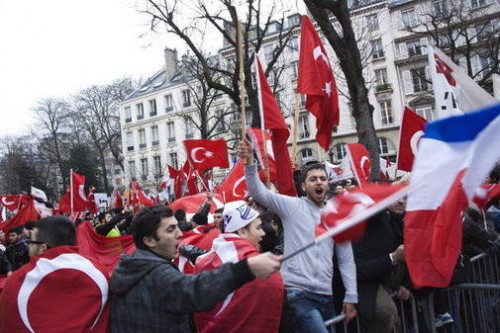
Turkse regering gaat miljoenen Turken in Europa mobiliseren
Turkse regering gaat miljoenen Turken in Europa mobiliseren
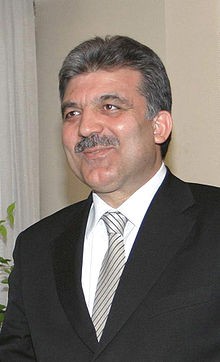 De Turkse president Abdullah Gul, die op dit moment in Nederland op staatsbezoek is, is een volgeling van de radicale islamist Fetthullah Gülen (foto), die streeft naar niets minder dan de oprichting van een Turks-islamitisch wereldrijk.
Turkije gecontroleerd door extremisten
Aan de buitenkant lijkt dat een weinig bijzondere stap, ware het niet dat het evenement in 2010 niet voor niets geheim werd gehouden. De Turkse vicepremier Bekir Bozdag, die aan het hoofd van het bewuste ministerie staat, is namelijk een aanhanger van de beruchte extremistische islamistische Gülen beweging, die behalve 'vreedzame' middelen ook het propageren van geweld en terreur niet schuwt. Het valt daarom te vrezen dat Bozdag het omvangrijke internationale netwerk van de Gülen beweging de ruggengraat van zijn 'mobilisatie'plannen zal maken en de in Europa wonende grote Turkse gemeenschap sterk zal radicaliseren.
Gülen wil Turks-islamitisch wereldrijk
In Turkije worden openlijke critici van de Gülenbeweging inmiddels als 'terreurverdachten' vastgezet. De oprichter van de beweging, Fethullah Gülen -door sommigen beschouwd als de gevaarlijkse islamist ter wereld-, vluchtte in 1998 naar de VS omdat de toenmalige seculiere Turkse regering hem wilde arresteren vanwege zijn plannen om van Turkije een radicaal islamistische staat te maken. Vanuit Amerika controleert Gülen de heersende islamitische AKP partij van premier Tayyip Erdogan, die net als de deze week in ons land op bezoek zijnde president Abdullah Gul een discipel van Gülen is.
00:16 Publié dans Actualité, Affaires européennes | Lien permanent | Commentaires (0) | Tags : immigration, turquie, allemagne, europe, affaires européennes, guerres indirectes |  |
|  del.icio.us |
  |
|  Digg |
  Facebook
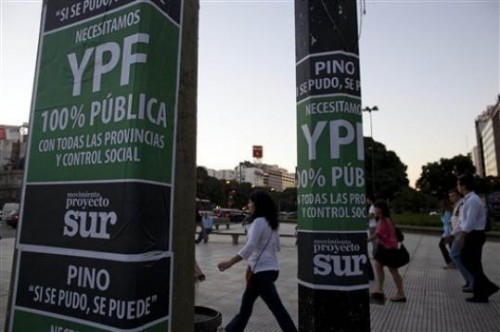
Intrigas y petróleo: a propósito de YPF
Intrigas y petróleo: a propósito de YPF
Alberto Buela (*)
En estos días llegó a mis manos una nueva edición de Del poder al exilio: quiénes y como me derrocaron, un texto de 1955 del general Perón, quien ya en su primera página afirma: “nosotros fuimos víctimas de la sorda lucha por el petróleo… el objetivo era impedir que los recursos petrolíferos argentinos fuesen explotados de manera de concurrir al desarrollo industrial del país... No es difícil comprender que en materia de petróleo, los capitales definidos como europeos son esencialmente británicos”
Esta cita de Perón viene como anillo al dedo porque en estos días el gobierno de CFK expropió el 51 % de YPF (yacimientos petrolíferos fiscales) en la parte que poseía la empresa Repsol, dejando al resto de los accionistas en posesión de sus acciones sin incomodarlos.
El periodismo, como patria locutora que se encarga diariamente de estupidizar a los pueblos planteó el tema como una cuasi guerra entre Argentina y España o como una medida stalinista de estatizar YPF.
Nada de esto es cierto. Primero, porque Repsol, como muy bien observa Antonio Mitre no es, técnicamente, ni una empresa española ni mucho menos del Estado español. El 42% pertenece a BP (british petroleum) cuando en el 2000 termina de comprar la Amoco, originaria fundadora de Repsol, el 9,5% es de la estatal mejicana Pemex. Repsol declara en España solo el 25% de sus beneficios, y solamente es ésta, la participación que puede llamarse estrictamente española.
En segundo lugar, el gobierno argentino expropia el 51% pero ni estatiza ni nacionaliza, hablando técnicamente. Pues de este 51%, el 49% pasa a manos de las diez provincias argentinas que poseen petróleo y solo el 51% restante queda en manos del Estado nacional.
Resumiendo entonces, el capital accionario de YPF queda constituido de la siguiente manera:
26% propiedad del Estado nacional
25% propiedad de diez Estados provinciales
24,5% propiedad del grupo Eskenazi
6,5% propiedad de Repsol
6% de la secular banca Lazard freres
5% de la banca Eton Park (Goldman Sachs, Mindich y Rosemberg)
5% de inversores no identificados
2% de la Bolsa de Valores de Buenos Aires (grupo Werthein)
Vemos como el Estado nacional posee solo el 26% y nadie nos asegura que los diez Estados provinciales funcionen al unísono y de acuerdo con él.
Pero por otra parte, y esto es lo que nos llama la atención, el grupo financiero Eskenazi que posee en Argentina la constructora Petersen (contratista del Estado) y los Bancos de las provincias de Santa Fe, San Juan, Entre Ríos y Santa Cruz (la provincia de los Kirchner) es abiertamente pro sionista. Prueba de ello es que al salón principal de la Amia (la mutual israelita) le fue cambiado el nombre por el de “Gregorio Eskenazi”, el abuelo de Sebastián el último gerente de YPF y padre de Enrique, la cabeza del grupo.
Además la sociedad del grupo que controla el 24,5% de YPF tiene su domicilio en Nueva Zelanda y no en Argentina.
Si a este porcentaje sumamos el 2% del grupo Werthein más el 6 % de la banca Lazard y el 5% de Goldman Sachs, dos bancas internacionales abierta y declaradamente sionistas, vemos que el 37,5% de YPF está controlado por el sionismo internacional.
Podrá el interventor por el Estado argentino Axel Kicillof, nieto de un reconocido rabino, lidiar en contra de los intereses de sus “paisanos” y a favor de los intereses de nuestro país?
Es una pregunta muy difícil de responder.
Este es uno de los motivos por los cuales la CGT sacó un comunicado avalando la expropiación de YPF pero afirmando, al mismo tiempo, “esperamos que no haya pícaros, como en la privatización, que quieran sacar provecho personal de este acto de soberanía”. Ojalá podamos recuperar el control y manejo de nuestros recursos naturales para beneficio del pueblo argentino.
Volvamos a la cita de Perón “los capitales del petróleo son esencialmente británicos”. Y esto ha sido históricamente así, al menos en el caso argentino. País que ya antes de liberarse del dominio español había caído bajo el domino británico, pues con motivo de las primeras invasiones inglesas de 1806 y aún cuando Inglaterra fue derrotada, nos dejaron de regalo a los comerciantes y prestamistas ingleses. En 1824 el gobierno de Rivadavia pidió un empréstito a los hermanos Baring y nunca más nos liberamos de “Incalaperra”, como dice el Martín Fierro.
Respecto del petróleo sabemos que fue descubierto en 1913 en la zona costera de la Patagonia y que en 1922 , y al negarse Gran Bretaña a vender gasolina para los aviones argentinos, el gobierno de Yrigoyen decide fundar YPF y pone al frente al General Mosconi quien, terminado su mandato es reemplazado por el General Alberto Baldrich hasta que el golpe de Estado de 1930 lo desplaza de la dirección de la empresa.
En 1958 el presidente Frondizi, contradiciéndose de lo afirmado en su libro Petróleo y política abre las puertas de par en par a la inversión privada extranjera.
En 1963, el gobierno radical de la misma raigambre ideológica de Yrigoyen, anula los contratos petroleros. Y comienza una burocratización de YPF que llega a 50.000 empleados. Llegando a ser la única compañía petrolera del mundo que daba pérdidas.
En 1974, el gobierno de Isabel Perón nacionaliza las bocas de comercialización de petróleo.
En 1992, bajo la nefasta presidencia Menem, se privatiza la empresa y en 1999 Repsol adquiere la casi totalidad de las acciones.
En 2007, el grupo Eskenazi de estrecha vinculación con Néstor Kirchner, adquiere el 14,5% de las acciones que le vende Repsol y en 2010 compra otro 10%.
Es digno de destacar que en la historia del siglo XX, ninguna empresa petrolera del mundo se ha vendido sin una guerra mediante. Ningún Estado nacional, teniendo una empresa propia, la entregó sin haber antes ido a una guerra para defenderla.
En América del Sur, norteamericanos e ingleses desataron una guerra en 1935 entre Bolivia y Paraguay para dirimir sus cuestiones petroleras en zona del Chaco boreal. Es que habían chocado los intereses de las compañías petroleras.
Vimos como Inglaterra nos niega a nosotros en 1922 combustible para nuestro desarrollo aeronáutico.
Modernamente las guerras de Afganistán e Irak son guerras por el control del petróleo.
Incluso países militarmente débiles como México o Venezuela no cedieron a las infinitas presiones para privatizar sus empresas nacionales de petróleo.
El único caso es la Argentina de Menem que vendió a precio de desgüase la petrolera, en esa época, estatal. Paradójicamente, en esa entrega estuvieron los Kirchner, él como gobernador de Santa Cruz y ella como diputada nacional.
La vida te da sorpresas
Sorpresas te da la vida.
Dicen que la esperanza es lo último que se pierde. Saludemos esta medida pero estemos prevenidos.
Sería de esperar que esta expropiación de YPF se enmarque en un plan nacional de manejo de los hidrocarburos. Que no quede en una medida coyuntural. Que no se limite a algo circunstancial como expropiar para expoliar. Qué los directores sean honestos y austeros. En definitiva, que esta medida heroica, por lo riesgosa, tomada por el gobierno nacional ayude a la recuperación de los valores patrios y al logro de la buena vida de los argentinos.
(*) arkegueta, eterno comenzante
buela@disenso.org
www.disenso.org
00:05 Publié dans Actualité | Lien permanent | Commentaires (0) | Tags : politique internationale, ypf, espagne, argentine, hydrocarbures, pétrole, énergie, amérique latine, amérique du sud | | del.icio.us | | Digg | Facebook
S’il est élu, François Hollande engagera la France dans une intervention militaire de l’ONU en Syrie
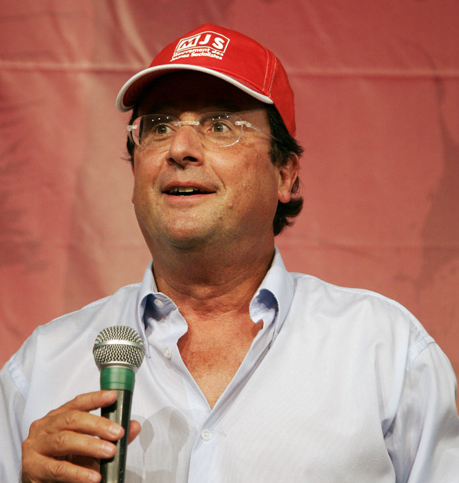
S’il est élu, François Hollande engagera la France dans une intervention militaire de l’ONU en Syrie
Ex: http://jean-marielabraud.hautetfort.com/
Afin de faire revenir le calme en Syrie, où le régime de Bachar el-Assad est fortement contesté par une partie de la population, le Conseil de sécurité des Nations unies a approuvé le plan proposé par l’ancien secrétaire général de cette organisation, Kofi Annan.
Ainsi, ce texte, par ailleurs accepté le régime de Damas et son opposition, prévoit la fin de la violence, et donc un cessez-le-feu, la mise en place d’un « processus politique ouvert », une aide humanitaire pour les zones touchées par les combats, la fin des détentions arbitraires, la liberté de la presse et le droit de manifester pacifiquement. A cela s’ajoute l’envoi sur le terrain d’une trentaine d’observateurs des Nations unies
Seulement, depuis l’entrée en vigueur du plan Annan, le cessez-le-feu n’a pas été respecté, 123 civils, au moins, ayant été tués, de même que 8 soldats de l’armée régulière.
Pour le secrétaire général de l’ONU, Ban Ki-moon, qui s’est exprimé devant le Conseil de sécurité, « des incidents violents et le bilan des victimes ont augmenté à nouveau ces derniers jours, avec des bombardements de zones habitées par des civils et des abus commis par les forces gouvernementales ». « La fin de la violence armée est ainsi clairement incomplète » a-t-il ajouté, en soulignant toutefois que les deux camps souhaitent mettre un terme « à la violence sous toutes ses formes ».
Aussi, les ministres des Affaires étrangères des pays occidentaux et arabes (la Russie et la Chine n’ayant pas souhaité y participer), réunis à Paris le 19 avril, ont indiqué vouloir exercer « une pression maximale sur la Syrie », avec le déploiement rapide d’une force « robuste » d’observateurs en cas d’échec du plan Annan.
« L’opposition a rempli ses obligations au titre du plan Annan (…) Les groupes présents sur le terrain, dont la coordination est pourtant rendue très difficile par la répression, ont respecté le cessez-le-feu malgré les provocations du régime syrien », a expliqué Alain Juppé, le chef de la diplomatie française. « On ne peut pas en dire autant du régime syrien. Il poursuit sans vergogne la répression qui a encore fait des dizaines de morts depuis la date prévue pour l’entrée en vigueur du cessez-le-feu », a-t-il poursuivi.
« Le Conseil de sécurité va devoir adopter une nouvelle résolution pour mettre en place la mission d’observation. Celle-ci doit être dotée du mandat et des moyens nécessaires pour atteindre ses objectifs. La France, avec ses partenaires du Conseil, proposera très rapidement un projet de résolution » a ainsi affirmé Alain Juppé, qui a par ailleurs estimé que les observateurs devraient disposer de « moyens terrestres et aériens ».
Pour Hillary Clinton, la secrétaire d’Etat américaine, « nous devons nous orienter vigoureusement vers le Conseil de sécurité en vue d’une résolution sous le chapitre 7″ de la charte de l’ONU, lequel permet d’imposer – y compris par la force – des sanctions à un pays « en cas de menace contre la paix, de rupture de la paix et d’acte d’agression ».
Invité à s’exprimer au sujet de cette situation sur les ondes d’Europe1, le candidat socialiste à l’élection présidentielle, François Hollande, a affirmé, s’il est élu, que la France « participerait » à une intervention militaire en Syrie à la condition qu’elle se fasse « dans le cadre de l’ONU » afin de « protéger les civils ».
Par le passé, l’on a déjà connu pareille situation. Comme en Bosnie par exemple, où le général Janvier, commandant de la FORPRONU de 1995 à 1996 parlera du paradoxe d’une « force de paix dans un pays en guerre ».
Cela étant, le général Moustapha Ahmed Al-Cheikh, chef du Conseil militaire de l’Armée syrienne libre (ASL) a demandé une intervention militaire en Syrie, sans l’aval de l’ONU, afin de « mener des frappes chirurgicales sur les installations clés du régime ».
Aussi, si une telle opération de l’ONU venait à être décider, il faudra s’assurer que les insurgés syriens ne voient pas en elle une aide militaire directe en leur faveur – et ce n’est pas gagné – et que les règles d’engagement permettent la protection maximale des casques bleus appelés à y participer. Mais l’on n’en est pas encore là, car il faudra convaincre les Russes et les Chinois au Conseil de sécurité…
Source et publication: Zone Militaire
00:05 Publié dans Actualité, Affaires européennes, Politique | Lien permanent | Commentaires (0) | Tags : politique inbternationale, politique, france, socialisme, présidentielles françaises, syrie, onu | | del.icio.us | | Digg | Facebook
How to read

Ex: http://www.theoccidentalobserver.net/2012/04/how-to-read/#more-13624
How to read
Tom Sunic
It is far easier to reflect on the art of dating than on the art of reading. For a student in humanities the main concern must not be which author he needs to read and which one he needs to discard, but rather how to read and how to interpret the text. Before he flips open a book he must ask himself a question: Who will interpret this text? Over the last several decades the focus in the humanities has not been so much the substance of the author’s work, but rather the biased interpretation of his work. The egalitarian-multicultural “paradigm” in higher education still determines how an author is studied — and hence how he is being interpreted. Here is an example: Johan W. Goethe, the German classic writer of the late 18th and early 19th century had a glowing reception in literary circles in National–Socialist Germany, a glowing reception in the postwar Allied-occupied West Germany, and a glowing one during the same period of time in the Soviet-occupied East Germany. Each political regime interpreted Goethe’s texts in accordance with the dominant political ideas of the time. The same rule of (re)interpretation applies to all authors, regardless whether they are novelists, social scientists or legal scholars.
The Frankfurt School Program in Applied Brainwashing
For many White activists, or would-be college students in humanities, it is still hard to comprehend that since the fateful 1945 the academic program in the West has been subject to a drastic methodological overhaul, which in turn resulted in gigantic brainwashing of students. The steady removal of hundreds of politically incorrect titles from library shelves on the one hand and a radically new interpretation of the classics on the other, only added insult to injury. The notion of just vs. unjust, of beauty vs. ugliness, of crook vs. hero, of truth vs. lie, has been reversed, or rather, the meaning of those words changed in accordance with the dominant leftist-liberal aka “multicultural” teaching philosophy. Very early on, largely as a result of the Frankfurt School Program in Applied Brainwashing, the System managed to conflate the notion of academic integrity with the notion of “humanism.” Any attempt by critically minded professors to examine authors lying beyond the pale of the standard curriculum, was immediately branded as a criminal, fascist enterprise, worthy of penal sanctions, loss of tenure, and academic ostracism.
Today, the choice of appropriate literature by a humanities student, or for that matter by any White activist wishing to learn more about his cultural and racial heritage, is further aggravated by his often clumsy choice of methods. Yes, titans are in town — we know that — and there are only a few honest teachers left to teach the right ropes. Without teachers to guide them, many White nationalists are inclined to start gobbling up heavy literature on race, or they may immerse themselves in academic texts on Judaism, while neglecting the simple prose of their homegrown classics. For a young White student or an activist, the unguided plowing through difficult texts on race, without prior knowledge of some of the classics, will not produce sound results. Also, there may be a strong temptation to focus on racial differences, or even show anger at lower-IQ racial groups, or make tallies of WWII body counts. Sooner, rather than later, such an approach will get a White student into trouble.
The first step for a White student or an activist is to get acquainted with at least a few classics and chose a good roadmap when reading them. Only later on, when their message begins to sink in, will he be able to grasp the criminal motives of the main movers and shakers in the study of humanities in the university. For instance, in order to understand his instructor’s palaver about Karl Marx and his epoch, a student might be well advised to combine the instructor’s mandatory reading list with his own list of authors, such as novelists Charles Dickens or Honoré de Balzac. Both novelists lived during the same epoch as the sociologist Marx, yet both were far better in graphically describing the wretched conditions of workers in early capitalist France and England.
Naturally, Shakespeare always comes in handy, not just for those wishing to understand the timeless issue of human fickleness, treachery and vanity, but also for those wishing to get a first whiff of the world of Shylock and what Shylock thinks of himself and his chosen tribe:
Shylock: “I will buy with you, sell with you, talk with you, walk with you, and so following; but I will not eat with you,
drink with you, nor pray with you.” (I, iii)
Shakespeare’s The Merchant of Venice is an important work of literature today for students wishing to grasp the language of modern banksters and the meanings of new financial fraud originating at Goldman Sachs, or when the Fed’s “Helicopter Ben” Bernanke preaches “quantitative easing” in order to con the masses into illusions about new job openings. Endless promissory notes about monetary bonds between Antonio and Shylock did not work out, so Shylock demands from Antonio a pound of flesh cut out from his body. This must have been a Shakespearian form of “prime collateral.” The same procedure is finding its mirror image today in “subprime collateral,” or in the grand total of student loan debt which has reached $1 trillion in the USA today.
Shylock: You’ll ask me, why I rather choose to have
A weight of carrion flesh, than to receive
Three thousand ducats. I’ll not answer that. But say it is my humour. (IV,i).
And the list goes on. Reading the 18th-century French Enlightenment writer Voltaire and his passages on the religious intolerance of Jews and Christians is a much safer literature for starters than passing out Jew-baiting pamphlets, or yelling silly slogans “Sieg Heil!” or White Power!” In any case, these infantile exclamations are precisely what the enemy’s big ears want to hear. Students must be also careful with Cliffs Notes, as they often hide an oblique meta-message by a stray leftist or pederast interpreter who is smart enough to tamper, or worse, reinterpret the text in accordance with his/her sick hormones. A case in point is Friedrich Nietzsche, the great anti-egalitarian Western thinker whose texts were successfully hijacked by leftist scholars after WWII. A word of advice: always look a the name of the publisher and the pedigree of the commentator, or the name of the preface writer before starting to read the text of a classic.
Plain old novels, dramas and poetry by classic Western writers often reflect better the climate of the socioeconomic and racial environment of a given epoch than heavy handed texts in sociology or ravings by a political science teacher. Only later on can the reading of novels be supplanted by the reading of scholarly works on the subjects of liberalism, race and multiculturalism. By then, a student will be already all pruned up and equipped with the necessary conceptual weaponry for the better comprehension of the horrible world he lives in. My suggestion: The course “Literature and Politics”—of course, in an ideal college environment—should be a standard undergrad 101 course in the study of humanities. The beauty of reading novels is that they provide good conceptual tools for the better understanding not just of the world as it once was, but also as it now is.
Higher Education Fraud
Today’s courses in humanities all over the Western academia are mega-sessions in educational travesty and a waste of students’ time and money. Most college courses in the humanities are in criminal violation of the right of White student to critical thinking and free inquiry. Not that all contemporary professors in the humanities are bad. In fact most of them are just simple turncoats who toe the line of the dominant political myths and who will dump them once new political myths become trendy. More obsessed with their own egos than with the quality teaching, their classes must be structured along the mimicked verbiage on “the power of diversity.” There is no attempt to guide students through the rudimentary lessons of critical thinking; intellectual curiosity is completely left aside. The entire academic fauna — both in Europe and the USA — is made up of pathetic characters sporting fake smiles and indulging in promiscuous brownnosing of their superiors, with all of them being pathologically jealous of each other. Long ago, the so-called multiracial sensitivity training program turned the Western higher education into a grotesque entertainment industry, barring intelligent White students from any critical inquiry into the nature of the beliefs being foisted on them.
A half-decent White professor with a conservative background who wishes to bypass his compulsive neurosis of self-censorship must engage in the ritual of fawning upon the Jews. Or he must deliver occasional laudatory pep talks about the state of Israel. This is just about the only safe strategy to secure himself the miniscule perks available to “conservatives.”
On the opposite side of the teaching spectrum, for a high IQ White student, who possesses some vestiges of introspection, college courses represent emotional abuse — for which neither his teacher, nor the dean’s office, nor the upper government echelons are ever called to account. Such a situation cannot last forever.
In both Europe or the USA, the only way for a White student to survive the well-planned process of educational dumbing down and brainwashing is by setting up his own parallel niche of study in which he can read in peace the right literature. As long as he is in college he should play the game, bite the bullet, and put up with years of mental torture in an ambiance which bears the fraudulent logo of “the place of free academic research and free speech.”
In no way should a White college student ever attempt to wave revisionist literature in front of the noses of his classmates, or taunt his professor with a politically incorrect remark, let alone crack a racial joke in public. This will augur his immediate kiss of death and signal a violent foreclosure of his future professional life. Getting the degree must be his primary goal.
Just about the only advantage of going to college today is its protective symbolism of the degree. Surely, the termination of the prison-like 4-year college enclosure won’t deliver fame, money, or glory. But getting a BA, MA, or PhD and going against the academic consensus will eventually elicit tacit respect from the conformists (who must always show nothing but hatred in public). To be sure, a White student won’t learn a thing from his politically correct humanities professors, whose greatest intellectual achievements consist of working out the details of their pension plan rollovers.
White students and activists whose native tongue is English have an immense advantage over Whites in Europe. The best literature today in the humanities is available in English. Besides, US college libraries, including even small college libraries, are the best in the world. Why not take advantage of it? For a White would-be genius, or would-be writer from Russia, or Germany, or France, let alone for an intelligent young writer residing in some microscopic country in Central Europe, mastering all nuances of the English language is unavoidable if he has any intention of getting into the literary limelight. In any case most scholarly books on race, modernity, on liberal decadence, or on the Jewish question, are published in English. German self-consciousness was destroyed after WWII and along with it the German language, which, although being a very rich language, other than in Germany, is barely spoken in other parts of Europe. The gloire of France is passé and although there are good books published in French, especially in the field of the sociology of postmodernity, few White Americans or English nationalists will bother learning the French language. As a global lingua franca the American English has become the only and the best weapon for cultural battles on all fronts.
Dr. Tom Sunic (www.tomsunic.com) is a former professor, author and a board member of The American Third Position Party http://american3rdposition.com/
00:05 Publié dans Réflexions personnelles | Lien permanent | Commentaires (0) | Tags : tomislav sunic, lecture, livres | | del.icio.us | | Digg | Facebook
Leo Strauss and the Conservative Movement
Leo Strauss and the Conservative Movement
Ex: http://lewrockwell.com/
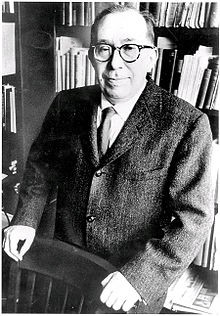
A book of mine, Leo Strauss and Conservative Movement in America: A Critical Appraisal, is about to come out with Cambridge University Press; and it has a special connection to the Mises Institute. Much of the critical thrust comes from attending conferences sponsored by the Mises Institute and from getting to know my fellow- participants and their writings. Although I harbored strong doubts about my latest subjects even before these encounters, my conversations with David Gordon, Murray Rothbard, Robert Higgs and Thomas DiLorenzo and later, discovering Mises’s comments about Strass gave additional substance to my suspicions. My project became a way of calling attention to a significant body of criticism that the liberal-neoconservative press and most scholarly organizations wouldn’t deign to present. I was upset in particular by the inability of David Gordon (and Lew Rockwell) to find a suitable publisher for a long, incisive work that David had produced about Harry Jaffa’s reading of American history. It was one of the most cerebral "value critiques" by a living thinker that I had seen.
Why, asks David, should Jaffa, a cult figure who is wined and dined by GOP benefactors, be immune from the type of assessment that other authors of scholarly works should have to accept? Why do Straussians like Jaffa, Allan Bloom, Thomas Pangle, and Charles Kesler achieve canonical status as "conservative" thinkers without having their ideas rigorously examined in widely accessible forums? It seems that the only appraisals such figures have to deal with are puff pieces in neoconservative publications and the scribbling of inflamed leftists attacking them as rightwing extremists.
Note that my book does not come out of any political engagement. It is in no way a statement of my political creed. Although hardly friendly to the Wilsonian Weltpolitik of the Straussians, I devote more space to defending my subjects from unjust critics than I do to dissecting their views. Nor was my book produced, as one nasty commentator writing to the executive editor of an Ivy League press explained, because I’m "a very angry person" trying to settle scores. Apparently my madness would "permanently discredit" any press that was foolish enough to publish me. My book at any rate is not an expression of pique, and I bend backward to make sense of arguments that I have trouble accepting at face value. I also treat main subject, Leo Strauss, with respect and empathy, even while disagreeing with his hermeneutic and liberal internationalism. I stress that for all his questionable judgments, Strauss was a person of vast humanistic learning, and more thoughtful and less pompous than some of his famous students. I fully sympathize with the plight that he and others of his background suffered who because of their Jewish ancestry were driven out of their homeland and forced to live in exile. My own family suffered the same fate.
What seemed intolerable, however, was the unwillingness of Straussians and their adulators to engage serious critics, some of whom have been associated with the Mises Institute. These expressions of moral self-importance may go back to Strauss himself. Murray Rothbard observed that at a Volker Fund conference, his teacher Mises had argued vainly with Strauss about the need to separate facts from values in doing research. Strauss had retorted that there are moral judgments inseparably attached to our use of facts. This supposedly indicates that one could not or, perhaps more importantly, should not draw the fact/value distinction that Mises, and before him, in a different form, Max Weber had tried to make. In response to these statements, Mises argued that facts remain such, no matter how people dress them up. "A prostitute would be plying the same trade no matter what designation we choose to confer on such a person." As the debate wore on and Strauss began to moralize, Mises lost his equanimity. He indicated to Rothbard that he was being asked to debate not a true scholar but a "gymnasium instructor."
In my book I quote David, who has taken over and elaborated on the criticism offered by his teacher and Murray’s teacher Mises, namely, that the Straussians reach for moral platitudes against those who are better- armed with "facts." One reason David is mentioned so often in my monograph, and particularly in the chapter "The Method Deconstructed," is that he did much of the deconstructing for me. While helping with the proofreading, which is another service he performed, David commented about how much he enjoyed my text; then, in typically David-fashion, he listed as his favorite parts of my book those pages on which he’s mentioned. Actually he missed more than half of the references to him, including two of them in the acknowledgements.
Like other thoughtful critics of Straussian methodology, specifically Grant Havers, Barry Shain, and Kenneth McIntyre, David was essential to my work. But in his case listening to him reel off what was wrong with how the Straussians read (or misread) selected texts, inspired my project. Without the fact that David cornered me about ten years ago at a conference in Auburn and explained to me in between Borscht Belt jokes the fallacies of Strauss and his disciple, I doubt that I would have done my book. His conversation and written comments, stored in the bowels of the Lew Rockwell Archives, made my task considerably less burdensome. One remark from David’s conversation in Auburn that I still remember was his hypothetical rejoinder to Harry Jaffa in a debate that never took place. Jaffa insisted on the pages of National Review, and in fact wherever else he wrote, that we should believe in equality because Lincoln did (never mind that Di Lorenzo, among others, has challenged this view of Lincoln with counter-evidence). David asked that "even if we assume that Jaffa was expressing Lincoln’s real opinion, why should we have to hold the same view"? And why are we supposed to impose Lincoln’s opinion on unwilling subjects by force of arms? No one else to my knowledge has asked these indelicate questions.
Even then David and I were sick of the smarminess with which certain Straussians would respond to logical and factual objections. Calling one’s opponent a "relativist" or scolding him for not embracing universal democratic values is not an answer at all. It is an arrogant evasion of a discussion. David also observed that in their attempt to find "secret writing" in texts, Straussians would almost compulsively read their own values into the past. Presumably all smart people who wrote "political philosophy," no matter when they lived, were religious skeptics, yearning for something like "liberal democracy." This speculation could be neither confirmed nor disconfirmed and contributed zip to scholarly discussion. Like me, David also wondered why none of the great minds whom the Straussians wrote about was ever shown to be a Christian heretic or something other than a forerunner of those who are now revealing their concealed meanings. One might have thought that if concealment was their intention, these fellows on at least some occasions would have been hiding non-modern thoughts from the public or their monarchs. Why do all "secret writings" seem to have originated with a Jewish agnostic residing in an American metropolitan area?
An observation in my book contrasting Straussian enterprises to the Mises Institute also warrants some attention here. The Miseans and the Straussians both claim intellectual descent from Central European Jewish scholars who fled from the Nazis. Moreover, both groups have processed these biographical experiences and incorporated them into their worldviews, but in totally different ways. Whereas the Miseans view their founder as the victim of a particularly noxious form of state socialism, the Straussians emphasize the evils of the "German connection," as explained by Allan Bloom in The Closing of the American Mind. While the Miseans focus on the link between state planning and tyranny, the Straussians finger the uniquely wicked heritage of the Germans in telling us why "liberal democracy" is always under siege. Strauss himself established this perspective, when in Natural Right and History he stressed the continuing danger of German ideas, even though the German military threat had been defeated six years earlier.
While the disciples of Mises favor an isolationist foreign policy designed to dismantle socialism at home, the Straussians are perpetually reliving Munich 1938, when the "democracies" backed down to a German dictatorship, just as they had failed to confront the supposed iniquities of Kaiser Wilhelm in 1914. One might push the contrast even further: while the Mises Institute celebrates the Vienna in which the Austrian School of Economics took form, including the generally supportive liberal monarchy of Kaiser Franz Josef, the Straussians have continued their efforts to counter a threat that they see originating in Central Europe. During the student revolts of the 1960s, Allan Bloom and his soul-brothers blamed these outbursts on German critics of modern democracy. Strauss’s star students managed to find the German threat wherever they looked. In one of my earliest encounters with Straussian professors, at Michigan State in 1967 and 1968, it was explained to me that German historicists had fueled the antiwar student protest with their antidemocratic notions. This connection seemed to me so surreal that it caused me to reflect on the life’s experiences of those who could believe such things.
Significantly, these Straussian attacks on the tainted German heritage play well in our society of letters. A Jewish liberal-neoconservative presence (perhaps predominance) in the media and in the academy renders some Straussian fixations profitable. Well-placed intellectuals are still agonizing over the "German catastrophe" in a way that they don’t about other bloodbaths, particularly those unleashed by Communist tyrants. There is also a culture of defeat and self-rejection among the Germans which fits perfectly with the Straussian war on German ideas and German illiberalism. Although the Left may attack the Straussians rhetorically as "fascists," it shares many of their sentiments, particularly their revulsion for German culture and for German politics before the First World War.
Another factor has helped the Straussians professionally: Their impassioned Zionism has enhanced their moral acceptability in Jewish and neoconservative circles. If their interpretive gymnastics may sometimes drive their political fans up the wall, Strauss’s disciples win points where it counts. They are recognized as part of the journalistic establishment. Whereas the Miseans (and a fortiori this author) would have trouble getting into the New York Times, Washington Post or neoconservative publications, Straussians (and their allies) appear in all these venues as both authors and respected subjects. Nothing is more baffling than the complaint that the "liberal media" ignore or persecute Straussians. This gripe is almost as baseless as another related one, that Straussians are excluded from elite universities. Would that I had been excluded from academic posts during my career the way the Straussians have been.
I do not mean to suggest that there is something wrong with how the Mises Institute has dealt with its founder’s experiences in Central Europe. Its approach to this aspect of twentieth-century history has been rational and even commendable. But it has certainly not won the Mises Institute the moral acceptability that the Straussians have achieved by taking the opposite position. Curiously, leftist opponents have laced into the Straussians for not being sufficiently Teutonophobic. Despite the scornful references to German ideas in their polemics, these Straussians are alleged to be perpetuating the hated German connection while pretending to denounce it. In short, one can never hate German thought sufficiently (except of course for Marx and a few other selected German leftists) to please our current cultural industry. But Straussians can at least be credited with having made a start here.
One final point may belong here: The professional and journalistic successes of Strauss’s students have had little to do with their efforts to revive a "classical heritage" or to make us appreciate Plato and Thucydides. The argument I try to make in my book is exactly the opposite: the Straussians have done so well at least partly because they have bet on the right horse in our current liberal internationalist politics. They provide window-dressing and cultic terminology for a widely propagated American creed pushed by government and the media, featuring calls for armed "human rights" campaigns, references to the Holocaust and the Anglosphere, and tributes to liberal or social democratic "values." The Straussians have made names for themselves by putting old and even stale wine into new bottles.
Paul Gottfried [send him mail] is Horace Raffensperger Professor of Humanities at Elizabethtown College and author of Multiculturalism and the Politics of Guilt, The Strange Death of Marxism, Conservatism in America: Making Sense of the American Right, and Encounters: My Life with Nixon, Marcuse, and Other Friends and Teachers. His latest book, Leo Strauss and the American Conservative Movement: A Critical Appraisal, was just published by Cambridge University Press.
Copyright © 2011 by LewRockwell.com. Permission to reprint in whole or in part is gladly granted, provided full credit is given.
00:05 Publié dans Philosophie, Théorie politique | Lien permanent | Commentaires (0) | Tags : leo strauss, néo-conservatisme, etats-unis, paul gottfried, théorie politique, philosophie, sciences politiques, politologie | | del.icio.us | | Digg | Facebook