

mercredi, 21 mai 2014
Rusland dumpt 20% staatsobligaties VS

Iedereen begrijpt dat het diep in de schulden gestoken België nooit zelf voor zo'n enorm bedrag aan Amerikaanse staatsobligaties kan hebben opgekocht. De ware identiteit van de koper is echter onbekend.
Vanmiddag werd definitief bevestigd dat Rusland al vóór maart 2014 voor het recordbedrag van $ 26 miljard aan Amerikaanse staatsobligaties heeft gedumpt, ongeveer 20% van het totaal. Rusland houdt nu voor net iets meer aan $ 100 miljard aan Amerikaanse schuldpapieren over, het laagste niveau sinds de Lehman-crisis in 2008. Schokkender is het feit dat het kleine België sinds december vorig jaar voor maar liefst $ 181 miljard Amerikaanse schatkistpapieren heeft gekocht, waarvan $ 40 miljard in maart.
Onze zuiderburen hebben nu bijna net zoveel Amerikaanse schulden gekocht als hun totale jaarlijkse BNP, en zijn daarmee na China en Japan wereldwijd de grootste houder van Amerikaanse staatsobligaties.
Omdat het onmogelijk is dat het diep in de schulden gestoken België dit op eigen houtje heeft kunnen doen, moet er dus een onbekende koper zijn die België gebruikt als ‘proxy’ aankoopkanaal. Vanzelfsprekend kan dat alleen met volledige medewerking van de Belgische regering gebeuren.
In augustus 2013 bezat België nog voor ‘slechts’ $ 167 miljard Amerikaanse staatsschuldpapieren. In november schoot dit bedrag ineens omhoog naar $ 257 miljard, en de teller stond in maart van dit jaar op $ 381 miljard. Ter vergelijk: het Belgische BBP schommelt zo rond de $ 400 miljard.
Japan, de nummer 2 op de lijst, heeft juist voor $ 10 miljard verkocht, terwijl China als grootste houder zijn aandeel min of meer stabiel houdt.
De massa aankopen via België tonen eens te meer aan dat het hele Westerse valuta- en staatsschuldensysteem met kunstmatige ingrepen overeind wordt gehouden, en de staatsobligatiemarkt zwaar gemanipuleerd wordt. Onafhankelijke analisten zien hierin een duidelijk signaal dat de gevreesde totale crash steeds dichterbij komt.
Xander
(1) Zero Hedge
(2) Zero Hedge
00:05 Publié dans Actualité, Affaires européennes, Belgicana, Economie | Lien permanent | Commentaires (0) | Tags : dollar, politique internationale, russie, belgique, états-unis, devises, finances internationales |  |
|  del.icio.us |
  |
|  Digg |
  Facebook
Accélération. Une critique sociale du temps
Auran Derien
Ex: http://metamag.fr
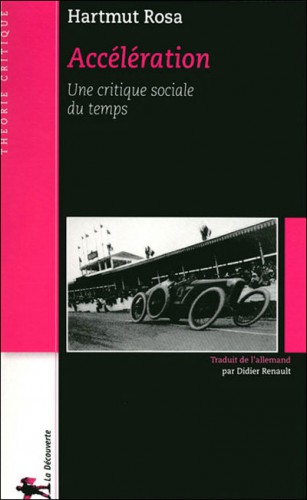 Un livre de plus consacré au temps. Au cours des décennies écoulées on n’a jamais autant écrit sur la condition humaine en relation avec le temps. Beaucoup de sociologues prennent au sérieux la temporalité pour essayer de prouver qu’ils pensent. Il ne faut pas les confondre avec des philosophes puissants comme Dilthey, Ortega et Heidegger, dont les œuvres sont centrées sur cela.
00:05 Publié dans Livre, Livre, Philosophie, Sociologie | Lien permanent | Commentaires (0) | Tags : accélération, livre, philosophie, temps, temporalité, sociologie | | del.icio.us | | Digg | Facebook
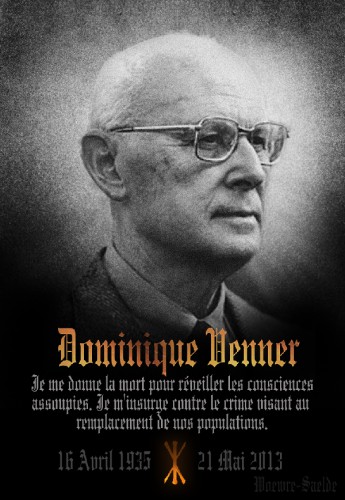
L'hommage à Dominique Venner
Pierre Le Vigan
L'hommage à Dominique Venner
La considérable affluence au colloque Dominique Venner (plus de 500 personnes à la Maison de la Chimie ce 17 mai), la qualité des interventions à la tribune laisse entrevoir un mouvement de sursum corda mais aussi de sursum ratio. « Elévation des cœurs, et élévation de notre raison. Par un acte en apparence irrationnel, mais en fait logique, Dominique Venner a ouvert une voie : celle du sacré, celle, aussi, de la hauteur de vue. La hauteur de vue n’est pas l’indifférence, elle n’est pas le refus de s’engager, elle est la froideur dans la perception des enjeux, qui va volontiers avec la chaleur de la camaraderie. La mort sacrificielle de Dominique Venner, il y a un an, à Notre-Dame de Paris, a précisément ce sens précis : ouvrir un espace du sacré. Ce que croyait précieux Dominique Venner ce n’était ni la droite ni la gauche, c’était la France et l’Europe comme civilisation, c’était le sens même de ce que patrie veut dire, et de ce qu’honneur veut dire. Car l’honneur, en un sens, c’est toujours filiation et transmission. Or, c’est tout cela, avec l’effacement du sens, avec le relativisme généralisé, avec le changement de peuple par l’immigration de masse, qui est mis à bat par la modernité ravageuse. Et par une politique criminelle, celle du mondialisme comme système à tuer les peuples. Changer notre peuple dans sa composition ethnique et culturelle pour tuer toute notion de peuple, dépolitiser tout pour ne laisser que la table rase du turbocapitalisme se déployant sur fond de grand marché universel, avec des hommes interchangeables, et d’ailleurs interchangés et inter-échangés, sans passé, sans héritage, sans histoire, et donc sans avenir. Avec un seul présent : celui de consommateur et de producteur. Avec des femmes louant leur ventre, et des hommes vendant leur sperme. Voilà le monde dont Venner ne voulait pas. Sain refus. Mais aussi portait-il une grande espérance, la lueur d’un autre monde possible, poétique, fort, tragique, noble, plein des exemples héroïques qui agrandissent nos petites vies pour leur donner un souffle, une ampleur, une dimension mythique. Nous ne guérirons jamais de Dominique Venner, et c’est pour cela que nous resterons vivants.
PLV
Pierre Le Vigan, écrivain, philosophe, vient de publier L’effacement du politique. La philosophie politique et la genèse de l’impuissance de l’Europe, la barque d’or, labarquedor@hotmail.fr, 15 €.
00:05 Publié dans Hommages, Nouvelle Droite | Lien permanent | Commentaires (0) | Tags : hommage, dominique venner, nouvelle droite | | del.icio.us | | Digg | Facebook
Some Thoughts on the Creation of Intellectual Eurasianism
Some Thoughts on the Creation of Intellectual Eurasianism
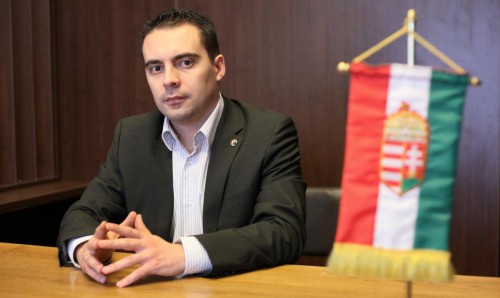
Leader of Hungarian political party "Jobbik" about Eurasian ideas
"Actually, the truth is that the West really is in great need of »defense«, but only against itself and its own tendencies, which, if they are pushed to their conclusion, will lead inevitably to its ruin and destruction; it is therefore »reform« of the West that is called for instead of »defense against the East«, and if this reform were what it should be---that is to say, a restoration of tradition---it would entail as a natural consequence an understanding with the East."
– René Guénon[1]
1. Euroatlantism and anti-traditionalism
Today's globalized world is in crisis. That is a fact. However, it is not quite clear what this crisis is. In order to get an answer, first we need to define what globalization means. For us, it does not mean the kind of public misconception, which says that the borders between the world's various economic and cultural spheres will gradually disappear and the planet becomes an organic network built upon billions of interactions. Those who believe in this also add that history is thus no longer a parallel development of great spheres, but the great common development of the entire world. Needless to say, this interpretation considers globalization as a positive and organic process from the aspect of historical development.
From our aspect, however, globalization is an explicitly negative, anti-traditionalist process. Perhaps we can understand this statement better if we break it down into components. Who is the actor, and what is the action and the object of globalization? The actor of globalization - and thus crisis production - is the Euro-Atlantic region, by which we mean the United States and the great economic-political powers of Western Europe. Economically speaking, the action of globalization is the colonization of the entire world; ideologically speaking, it means safeguarding the monopolistic, dictatorial power of liberalism; while politically speaking, it is the violent export of democracy. Finally, the object of globalization is the entire globe. To sum it up in one sentence: globalization is the effort of the Euro-Atlantic region to control the whole world physically and intellectually. As processes are fundamentally defined by their actors that actually cause them, we will hereinafter name globalization as Euroatlantism. The reason for that is to clearly indicate that we are not talking about a kind of global dialogue and organic cooperation developing among the world's different regions, continents, religions, cultures, and traditions, as the neutrally positive expression of "globalization" attempts to imply, but about a minor part of the world (in particular the Euro-Atlantic region) which is striving to impose its own economic, political, and intellectual model upon the rest of the world in an inorganic manner, by direct and indirect force, and with a clear intention to dominate it.
As we indicated at the beginning of this essay, this effort of Euroatlantism has brought a crisis upon the entire world. Now we can define the crisis itself. Unlike what is suggested by the news and the majority of public opinion, this crisis is not primarily an economic one. The problem is not that we cannot justly distribute the assets produced. Although it is true, it is not the cause of the problem and the crisis; it is rather the consequence of it. Neither is this crisis a political one, that is to say: the root cause is not that the great powers and international institutions fail to establish a liveable and harmonious status quo for the whole world; it is just a consequence as well. Nor does this crisis result from the clashes of cultures and religions, as some strategists believe; the problem lies deeper than that. The world's current crisis is an intellectual one. It is a crisis of the human intellect, and it can be characterized as a conflict between traditional values (meaning conventional, normal, human) and anti-traditionalism (meaning modern, abnormal, subhuman), which is now increasingly dominating the world. From this aspect, Euroatlantism - that is to say, globalism - can be greatly identified with anti-traditionalism. So the situation is that the Euro-Atlantic region, which we can simply but correctly call the West, is the crisis itself; in other words, it carries the crisis within, so when it colonizes the world, it in fact spreads an intellectual virus as well. So this is the anti-traditionalist aspect of the world's ongoing processes, but does a traditionalist pole exist, and if it does, where can we find it?
2. Eurasianism as a geopolitical concept
Geographically speaking, Eurasia means the continental unity of Europe and Asia, which stretches from the Atlantic to the Pacific. As a cultural notion, Eurasianism was a concept conceived by Russian emigrants in the early 20th century. It proved to be a fertile framework, since it has been reinterpreted several times and will surely continue to be so in the future as well. Nicolai Sergeyevich Trubetskoy is widely considered as the founder of Eurasianism, while Alexandr Dugin is referred to as the key ideologist of the concept. Trubetskoy was one of the greatest thinkers of the Russian emigration in the early 20th century, who attempted to redefine Russia's role in the turbulent post-World War I times, looking for new goals, new perspectives, and new meanings. On the one hand, he rejected Pan-Slavism and replaced the Slavophile ideology with a kind of "Turanophile" one, as Lajos Pálfalvi put it in an essay.[2] He tore Russian thinking out of the Eastern Slavic framework and found Genghis Khan as a powerful antetype, the founder of a Eurasian state. Trubetskoy says that it was the Khan's framework left behind that Moscow's Tsars filled with a new, Orthodox sense of mission after the Mongol occupation. In his view, the European and Western orientation of Peter the Great is a negative disruption of this process, a cultural disaster, while the desirable goal for Russia is to awaken as a part of Eurasia.
So Eurasianism was born as a uniquely Russian concept but not at all for Russia only, even though it is often criticized for being a kind of Great Russia concept in a cultural-geopolitical disguise. Ukrainian author Mikola Ryabchuk goes as far as to say that whoever uses this notion, for whatever reason, is basically doing nothing but revitalizing the Russian political dominance, tearing the former Soviet sphere out of the "European political and cultural project".[3] Ryabchuk adds that there is a certain intellectual civil war going on in the region, particularly in Russia and also in Turkey about the acceptance of Western values. So those who utter the word "Eurasianism" in this situation are indirectly siding with Russia. The author is clearly presenting his views from a pro-West and anti-Russian aspect, but his thoughts are worth looking at from our angle as well.
As a cultural idea, Eurasianism was indeed created to oppose the Western, or to put it in our terms, the Euro-Atlantic values. It indeed supposes an opposition to such values and finds a certain kind of geopolitical reference for it. We must also emphasize that being wary of the "European political and cultural project" is justified from the economic, political, and cultural aspects as well. If a national community does not wish to comply, let's say, with the role assigned by the European Union, it is not a negative thing at all; in fact, it is the sign of a sort of caution and immunity in this particular case. It is especially so, if it is not done for some economic or nationalistic reason, but as a result of a different cultural-intellectual approach. Rendering Euro-Atlantic "values" absolute and indisputable means an utter intellectual damage, especially in the light of the first point of our essay. So the opposition of Eurasianism to the Euro-Atlantic world is undeniably positive for us. However, if we interpreted Eurasianism as mere anti-Euro-Atlantism, we would vulgarly simplify it, and we would completely fail to present an alternative to the the anti-traditionalist globalization outlined above.
What we need is much more than just a reciprocal pole or an alternative framework for globalization. Not only do we want to oppose globalization horizontally but, first and foremost, also vertically. We want to demonstrate an intellectual superiority to it. That is to say, when establishing our own Eurasia concept, we must point out that it means much more for us than a simple geographical notion or a geopolitical idea that intends to oppose Euro-Atlantism on the grounds of some tactical or strategic power game. Such speculations are valueless for me, regardless of whether they have some underlying, latent Russian effort for dominance or not. Eurasianism is basically a geographical and/or political framework, therefore, it does not have a normative meaning or intellectual centre. It is the task of its interpretation and interpreter to furnish it with such features.
3. Intellectual Eurasianism - Theories and practice
We have stated that we cannot be content with anti-Euro-Atlantism. Neither can we be content with a simple geographical and geopolitical alternative, so we demand an intellectual Eurasianism. If we fail to provide this intellectual centre, this meta-political source, then our concept remains nothing but a different political, economic, military, or administrative idea which would indeed represent a structural difference but not a qualitative breakthrough compared to Western globalization. Politically speaking, it would be a reciprocal pole, but not of a superior quality. This could lay the foundations for a new cold or world war, where two anti-traditionalist forces confront each other, like the Soviet Union and the United States did, but it surely won't be able to challenge the historical process of the spread of anti-traditionalism. However, such challenge is exactly what we consider indispensable. A struggle between one globalization and another is nonsensical from our point of view. Our problem with Euro-Atlantism is not its Euro-Atlantic but its anti-traditionalist nature. Contrary to that, our goal is not to construct another anti-traditionalist framework, but to present a supranational and traditionalist response to the international crisis. Using Julius Evola's ingenious term, we can say that Eurasianism must be able to pass the air test.[4]
At this point, we must look into the question of why we can't give a traditionalist answer within a Euro-Atlantic framework. Theoretically speaking, the question is reasonable since the Western world was also developing within a traditional framework until the dawn of the modern age, but this opportunity must be excluded for several reasons. Firstly, it is no accident that anti-traditionalist modernism developed in the West and that is where it started going global from. The framework of this essay is too small for a detailed presentation of the multi-century process of how modernism took roots in and grew out of the original traditionalist texture of Greco-Roman and Judeo-Christian thinking and culture, developing into today's liberal Euroatlantism. For now, let us state that the anti-traditionalist turn of the West had a high historical probability. This also means that the East was laid on much stronger traditionalist foundations and still is, albeit it is gradually weakening. In other words, when we are seeking out a geopolitical framework for our historic struggle, our choice for Eurasianism is not in the least arbitrary. The reality is that the establishment of a truly supranational traditionalist framework can only come from the East. This is where we can still have a chance to involve the leading political-cultural spheres. The more we go West, the weaker the centripetal power of Eurasianism is, so it can only expect to have small groups of supporters but no major backing from the society.
The other important question is why we consider traditionalism as the only intellectual centre that can fecundate Eurasianism. The question "Why Eurasia?" can be answered much more accurately than "Why the metaphysical Tradition?". We admit that our answer is rather intuitive, but we can be reassured by the fact that René Guénon, Julius Evola, or Frithjof Schuon, the key figures in the restoration of traditionalist philosophy, were the ones who had the deepest and clearest understanding of the transcendental, metaphysical unity of Eastern and Western religions and cultures. Their teaching reaches back to such ancient intellectual sources that can provide a sense of communion for awakening Western Christian, Orthodox, Muslim, Hindu, or Buddhist people. These two things are exactly what are necessary for the success of Eurasianism: a foundation that can ensure supranational and supra-religious perspectives as well as an intellectual centrality. The metaphysical Tradition can ensure these two: universality and quality. At that moment, Eurasianism is no longer a mere geopolitical alternative, a new yet equally crisis-infected (and thus also infectious) globalization process, but a traditionalist response.
We cannot overemphasize the superior quality of intellectual Eurasianism. However, it is important to note here that the acquisition of an intellectual superiority ensured by the traditionalist approach would not at all mean that our confrontation with Euroatlantism would remain at a spiritual-intellectual level only, thus giving up our intentions to create a counterbalance or even dominance in the practical areas, such as the political, diplomatic, economic, military, and cultural spheres. We can be satisfied with neither a vulgar Eurasianism (lacking a philosophical centre) nor a theoretical one (lacking practicability). The only adequate form for us is such a Eurasianism that is rooted in the intellectual centre of traditionalism and is elaborated for practical implementation as well. To sum up in one sentence: there must be a traditionalist Eurasianism standing in opposition to an anti-traditionalist Euroatlantism.
The above also means that geopolitical and geographical positions are strategically important, but not at all exclusive, factors in identifying the enemy-ally coordinates. A group that has a traditionalist intellectual base (thus being intellectually Eurasian) is our ally even if it is located in a Euro-Atlantic zone, while a geographically Eurasian but anti-traditionalist force (thus being intellectually Euro-Atlantic) would be an enemy, even if it is a great power.
4. Homogeneousness and heterogeneousness
If it is truly built upon the intellectual centre of metaphysical Tradition, intellectual Eurasianism has such a common base that it is relevant regardless of geographical position, thus giving the necessary homogeneousness to the entire concept. On the other hand, the tremendous size and the versatility of cultures and ancient traditions of the Eurasian area do not allow for a complete theoretical uniformity. However, this is just a barrier to overcome, an intellectual challenge that we must all meet, but it is not a preventive factor. Each region, nation, and country must find their own form that can organically and harmoniously fit into its own traditions and the traditionalist philosophical approach of intellectual Eurasianism as well. Simply put, we can say that each one must form their own Eurasianism within the large unit.
As we said above, this is an intellectual challenge that requires an able intellectual elite in each region and country who understand and take this challenge and are in a constructive relationship with the other, similar elites. These elites together could provide the international intellectual force that is destined to elaborate the Eurasian framework itself. The sentences above throw a light on the greatest hiatus (and greatest challenge) lying in the establishment of intellectual Eurasianism. This challenge is to develop and empower traditionalist intellectual elites operating in different geographical areas, as well as to establish and improve their supranational relations. Geographically and nationally speaking, intellectual Eurasianism is heterogeneous, while it is homogeneous in the continental and essential sense.
However, the heterogeneousness of Eurasianism must not be mistaken for the multiculturalism of Euroatlantism. In the former, allies form a supranational and supra-cultural unit while also preserving their own traditions, whereas the latter aims to create a sub-cultural and sub-national unit, forgetting and rejecting traditions. This also means that intellectual Eurasianism is against and rejects all mass migrations, learning from the West's current disaster caused by such events. We believe that geographical position and environment is closely related to the existence and unique features of the particular religious, social, and cultural tradition, and any sudden, inorganic, and violent social movement ignoring such factors will inevitably result in a state of dysfunction and conflicts. Intellectual Eurasianism promotes self-realization and the achievement of intellectual missions for all nations and cultures in their own place.
5. Closing thoughts
The aim of this short essay is to outline the basis and lay the foundations for an ambitious and intellectual Eurasianism by raising fundamental issues. We based our argumentation on the obvious fact that the world is in crisis, and that this crisis is caused by liberal globalization, which we identified as Euroatlantism. We believe that the counter-effect needs to be vertical and traditionalist, not horizontal and vulgar. We called this counter-effect Eurasianism, some core ideas of which were explained here. We hope that this essay will have a fecundating impact, thus truly contributing to the further elaboration of intellectual Eurasianism, both from a universal and a Hungarian aspect.
[1] René Guénon: The Crisis of the Modern World Translated by Marco Pallis, Arthur Osborne, and Richard C. Nicholson. Sophia Perennis: Hillsdale, New York. 2004. Pg. 31-32.
[2] Lajos Pálfalvi: Nicolai Trubetskoy's impossible Eurasian mission. In Nicolai Sergeyevich Trubetskoy: Genghis Khan's heritage. (in Hungarian) Máriabesnyő, 2011, Attraktor Publishing, p. 152.
[3] Mikola Ryabchuk: Western "Eurasianism" and the "new Eastern Europe”: a discourse of exclusion. (in Hungarian) Szépirodalmi Figyelő 4/2012
[4] See: Julius Evola: Handbook of Rightist Youth. (in Hungarian) Debrecen, 2012, Kvintesszencia Publishing House, pp. 45–48
00:05 Publié dans Actualité, Affaires européennes, Eurasisme | Lien permanent | Commentaires (0) | Tags : hongrie, jobbik, gabor vona, europe, europe centrale, mitteleuropa, affaires européennes, eurasisme, eurasie, pantouranisme, politique internationale, tradition, traditionalisme | | del.icio.us | | Digg | Facebook
Les Chinois sont effarés par le laxisme des autorités françaises!
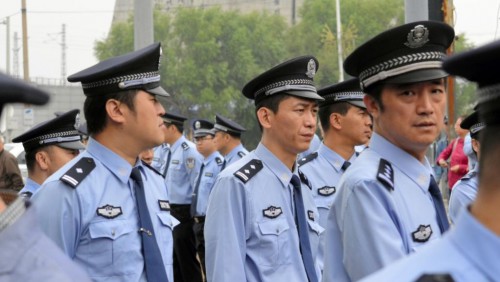
Pékin va envoyer des agents patrouiller avec leurs homologues français pour assurer la protection des touristes chinois cet été. Un abandon de souveraineté ?
Là n’est pas vraiment le problème. Mais comprenons d’abord la disposition d’esprit des Chinois envers la France. Pour maintes raisons : Dès le XVIIe siècle, dialogue riche et profond entre Louis XIV et le 2e empereur Qing (Mandchou), Kangxi, deux souverains qui règneront longtemps (Louis XIV, 54 ans ; Kangxi, 62 ans) et s’écriront souvent. Vive admiration des élites chinoises pour la civilisation française, seule jugée égale de la culture chinoise. Cette année, 50e anniversaire de la reconnaissance de la Chine populaire par le général De Gaulle… les Chinois idéalisent la France et s’y rendre est pour eux, un vrai rêve.
D’où un réel et sérieux traumatisme quand ils s’y font dépouiller par des racailles ou des bandes criminelles nomades. Bien entendu, la présence de ces policiers chinois est purement symbolique ; elle vise surtout à rassurer et apaiser des touristes qui, vu leurs moyens, viennent d’usage une seule fois en France, et tiennent à ce que cela demeure pour eux un superbe souvenir.
Certains comparent cette initiative avec les policiers roumains venus épauler la police française pour lutter contre la délinquance nomade en France : ce n’est pourtant pas la même chose ! Ici, il s’agit de coopérer pour mieux cerner les délinquants. Là, c’est pour protéger des touristes étrangers… La France n’est plus capable de protéger toute seule la population présente sur son territoire ?En France, la police, la gendarmerie, sont très capables de tout cela. Mais bien sûr, depuis deux ans, la justice française est en roue libre et, sous l’impulsion de la sinistre Mme Taubira et de sa cour, a pratiquement cessé d’agir. Pour les voyous autochtones ou allogènes, la justice française est devenue une bouffonnerie, voire une sorte de bon génie familier et tutélaire, peu menaçant ou dangereux, sauf parfois, très temporairement.
Là est le problème. Et comme en même temps, les polices des pays voisins font preuve de plus de fermeté – exigence, bien sûr, de populations qui se lassent d’être pillées – cela crée un appel d’air et les voyous de la zone Schengen affluent en France, du fait de la seule loi criminelle absolument irréfutable : l’effet de déplacement.
La police française semble avoir une réputation de laxisme en Chine… Justifiée selon vous ?
Pas du tout. Là dessus, je parle en connaissance de cause, ayant une longue pratique du dialogue avec les autorités chinoises concernées par la sécurité. Celles-ci, qui se méfient plutôt des polices des pays anglo-saxons, ont un grand respect pour le professionnalisme des policiers et gendarmes français, avec lesquels elles coopèrent volontiers ; elles demandent toujours plus d’échanges, de formations, etc.
Les Chinois sont en revanche effarés – et pas seuls – par le laxisme et l’aboulie des autorités françaises, devant les émeutes qui secouent fréquemment notre pays, les milliers de voitures incendiées, etc. En privé, entre « vieux amis », ils nous bombardent de questions : pourquoi laisser s’accomplir toutes ces exactions sans réagir ? Pourquoi avoir des forces de sécurité d’une telle qualité, si c’est pour les laisser bras ballants, interdites devant des incendiaires et des bandits qui leur tirent dessus ? Ainsi, c’est plutôt la classe politique française qu’ils ont du mal à comprendre, que nos forces de sécurité qui, une fois encore, sont très appréciées en Chine.
00:05 Publié dans Actualité, Affaires européennes, Entretiens | Lien permanent | Commentaires (0) | Tags : france, chine, paris, police, police chinoise, justice, justice française, europe, affaires européennes, politique internationale | | del.icio.us | | Digg | Facebook
Penser l’empire et “devenir-grec”
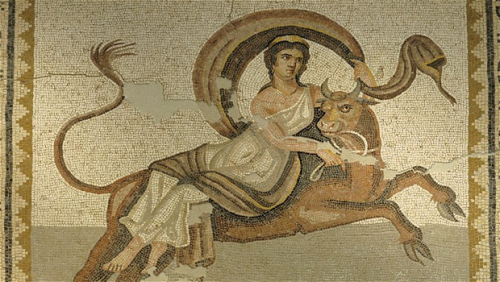
Ex: http://metamag.fr
Je voudrais vous faire part de quelques idées sur le dogme chrétien et les trois grandes religions monothéistes et ensuite aborder les idées que j’estime néfastes, malheureusement, de l’influence du christianisme sur le monde européen.
Dieu est pour moi tout ce que je ne comprends pas. C’est le mystère de la vie, de la pensée, de la création de l’univers, la notion de l’infini et du temps, de son début et de sa fin. Comment dans ces conditions peut-on être athée ? Dieu existe par définition en ce qui me concerne tant que l’univers n’aura pas délivré tous ses secrets. Et contrairement à ce qu’a pu dire Nietzche, il me semble que Dieu n’est pas mort : ce sont les seuls dieux monothéistes qui vont mourir !
Le créationnisme au XXIème siècle perd de plus en plus du terrain, me semble-t-il, face à l’évolutionnisme et aux découvertes de la science. Accepter les dogmes des trois grandes religions monothéistes – christianisme, judaïsme, islam – en ce qui me concerne, c’est non ! Selon Chateaubriand, le christianisme est une religion des miracles ce qui ne passe plus au XXIème siècle. Dostoïevski dans « Les frères Karamazov » a pu dire : « La foi ne naît pas de miracles mais c’est le miracle qui naît de la foi ! » Comment accorder le problème du Mal sur terre avec un Dieu-créateur supposé infiniment bon ? On voit bien que le christianisme est en train de s’écrouler en Europe et surtout en Europe de l’Ouest. La crise de vocation des prêtres est un signe. Et comme l’avait relevé Rougier dans son excellent livre « Celse contre les chrétiens », il y a une opposition manifeste entre Jésus Christ du Nouveau Testament, personnage humble, et le Dieu Tout-Puissant de l’Ancien Testament. Pour moi, Jésus a existé et – c’est un peu péjoratif ! – mais Il a été un illuminé ! Le christianisme est une secte juive qui a réussi.
Quelles sont les idées que j’estime néfastes du christianisme sur le monde européen ?
La religion chrétienne ne parle que de pêché originel, de renoncement et d’expiation pour expier ce pêché. Le paganisme, lui, est une vie du monde basé sur le sens du sacré qui rejette le fatalisme. Il est fondé sur le sens de l’honneur, de la responsabilité de l’homme face aux événements de la vie. La nouvelle religion chrétienne à l’origine et à Rome, en particulier, s’était efforcée de substituer l’humilitas du croyant à la dignitas du Romain.
La religion chrétienne orthodoxe, elle, n’est pas tombée dans le piège du catholicisme romain. L’Eglise orthodoxe parle de la Sainte Russie, de la Patrie, du citoyen ; Elle a pris ses distances en avril 2006 avec la conception occidentale des droits de l’homme. Le message de François « Aimez-vous ! Donnez ! » ) n’est pas un concept avec lequel on construit une religion avec la dimension du sacré. Le drame de l’Ouest, c’est qu’à la différence de l’Inde, du Japon et même de la Russie, elle n’est pas une religion identitaire mais universelle ! « Tous les hommes sont frères ! » Mais la charité chrétienne n’est pas bonne pour s’opposer à l’invasion migratoire : « La parole chrétienne demande aux hommes d’aimer ce qu’ils haïssent naturellement c’est-à-dire leurs ennemis et de honnir ce qu’ils aiment naturellement – eux-mêmes ! »
Les chrétiens selon Saint-Augustin, dans « La cité de Dieu » sont priés d’oublier la cité terrestre pour rêver de la cité de Dieu. Moi, je préfère les paroles d’Henri Janson : « Le cœur sur la main quand il faut, et la main sur la figure quand c’est nécessaire ! »
Ma conclusion c’est que les Européens, surtout à l’Ouest, doivent inventer une nouvelle religion du XXIème siècle tout en gardant leurs églises, leurs cathédrales et leurs clochers. Cette nouvelle religion sera très différente des 3 grandes religions monothéistes sémitiques qui nous viennent à l’origine du Moyen-Orient. Cette religion devra s’inspirer davantage des racines indo-européennes, grecques, romaines, druidiques en laissant une grande place au sacré, à la transcendance, à la nature, au dépassement de soi, au courage, à l’honneur, à une charité bien comprise, à la défense de la Cité et de la Patrie ! L’absence de la religion conduit au nihilisme matérialiste, individualiste, à la mort de l’espèce humaine. Le problème est de savoir : Quelle religion ? Voltaire disait : « Que chacun aille à Dieu par le chemin qui lui plaît ! »
Extrait d’une interview donnée à « La voix de la Russie ». Publié avec l’autorisation de Marc Rousset. Les titres, sous-titres et illustrations sont de la rédaction.
00:05 Publié dans Réflexions personnelles | Lien permanent | Commentaires (0) | Tags : europe, réflexions personnelles, marc rousset | | del.icio.us | | Digg | Facebook