


samedi, 02 octobre 2010
Fehler und Schwächen
Fehler und Schwächen
Ein wichtiges Instrument der Europäischen Union zur Gestaltung der Beziehungen zu angrenzenden Regionen wie dem südlichen Mittelmeerraum oder dem Kaukasus ist die „Europäische Nachbarschaftspolitik“. Nicht miteinbezogen sind hingegen die Balkanstaaten, die für Brüssel keine Beitrittsperspektive haben, weshalb die Länder dieses Teils Europas bereits an der Ernsthaftigkeit der Brüsseler Versprechen Zweifel anmelden. Dabei wäre es für Frieden und Sicherheit in Europa essentiell, wenn die EU hier Zeit und Ressourcen investierte. Schließlich gibt es auf dem Balkan immer noch eine ganze Reihe ungelöster Konflikte, die jederzeit wieder aufbrechen könnten.
Nicht gerade als Lehrbeispiel politischer Weitsichtigkeit erweist sich der Umstand, daß ausgerechnet Rußland nicht in die Europäische Nachbarschaftspolitik eingebunden ist. Schließlich ist Rußland nicht nur für die Energieversorgung Europas von herausragender Bedeutung, sondern auch ein unverzichtbarer strategischer Partner, wenn sich Brüssel außen- und sicherheitspolitisch von den USA emanzipieren will. Aber anstatt die Beziehungen zu Moskau zu vertiefen, hat die Europäische Union in den letzten Jahren mit einer Reihe bilateraler Abkommen mit ehemaligen Sowjetrepubliken den Eindruck erweckt, daß es um die Herauslösungen von Staaten aus der russischen Einflußsphäre geht. Und die Förderung von neuen Rohrleitungen wie „Nabucco“, mit der unter Umgehung Rußlands Erdgas vom Kaspischen Meer nach Europa gepumpt werden soll, ist alles andere als eine vertrauensbildende Maßnahme. Mit „Nabucco“ wird zwar, wie von der Brüsseler Zentrale gewünscht, die energiepolitische Abhängigkeit Europas von Rußland verringert, aber gleichzeitig eine zum Transitland Türkei aufgebaut, was für die Osmanen-Lobby ein zusätzliches Argument für die „Notwendigkeit“ eines türkischen EU-Beitrittes ist.
Was nun die Europäische Nachbarschaftspolitik betrifft, ist für einige EU-Mitgliedstaaten dieses Instrument untrennbar mit den nächsten Erweiterungsrunden verbunden. Und die Möglichkeit dazu besteht. Im Rahmen zu schaffender Freihandelszonen müssen Partnerländer wie etwa die nordafrikanischen Mittelmeeranrainerstaaten ihren Rechtsbestand an jenen der Europäischen angleichen, und zusätzlich werden Hoffnungen geweckt, die nicht enttäuscht werden wollen. Aber zu einer Art von Beitrittsvorbereitungs-Automatismus darf die Europäische Nachbarschaftspolitik nicht mißbraucht werden.
00:25 Publié dans Actualité, Affaires européennes | Lien permanent | Commentaires (0) | Tags : europe, affaires européennes, union européenne, parlement européen, russie, politique internationale, politique |  |
|  del.icio.us |
  |
|  Digg |
  Facebook
Impuissance européenne
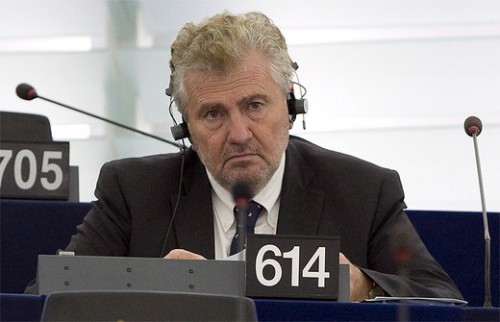
Lors d’un sommet spécial tenu en septembre 2010, les chefs d’Etat et de gouvernement des pays membres de l’UE ont débattu d’un thème important : comment l’UE peut-elle augmenter son poids en politique extérieure ? De fait, en ce domaine, il y a un urgent besoin d’agir, car l’Europe, dans le monde, est objet de moqueries, pour autant qu’on la prenne en considération… Point fondamental : les partenariats stratégiques, qui sont actuellement envisagés, avec les puissances mondiales montantes que sont la Chine, l’Inde et le Brésil, sont de bons moyens pour sortir de l’impuissance politique sur l’échiquier international. Car, c’est évident, l’UE doit se détacher de la tutelle américaine en matières de politique étrangère et de sécurité, mais elle n’est pas capable, seule, de par ses propres forces, de constituer un pôle alternatif à Washington.
Autre question : les déclarations d’intention formulées lors de ce sommet spécial de Bruxelles seront-elles traduites dans la réalité ? En effet, à l’évidence, l’UE envisage depuis des années un partenariat stratégique avec la Russie, dont l’importance est soulignée avec emphase, à intervalles réguliers, par la nomenklatura eurocratique. Mais rien de tout ce projet n’a été réalisé jusqu’ici et, aujourd’hui, les relations entre Euro-Bruxelles et Moscou se sont encore rafraîchies. Les grands bénéficiaires de ces atermoiements européens sont bien entendu les Etats-Unis d’Amérique qui, par nature, ont le plus grand intérêt à maintenir les Européens sous leur tutelle, en politique étrangère et au niveau militaire. Sans l’aide volontaire de leurs partenaires transatlantiques, qui se baignent dans l’illusion de pouvoir exercer une influence quelconque sur la politique extérieure des Etats-Unis, au nom du grand partenariat atlantiste, les Américains auraient bien des difficultés à jouer leur rôle de « policier planétaire ».
Il existe toutefois un instrument politique, qui n’a joué aucun rôle jusqu’ici et qui ne sera pas utilisé dans l’avenir : celui que constituent les versements colossaux pour l’aide au développement et autres « aides humanitaires » après les guerres ou les catastrophes naturelles. En ce domaine, vu la mauvaise conscience des anciennes puissances colonisatrices d’Europe et vu d’autres contraintes imposées par le politiquement correct, les Européens s’empressent d’être les meilleurs payeurs de la planète, sans que ce rôle, choisi, ne leur procure le moindre avantage politique. Au lieu de toujours sortir le carnet de chèques avec empressement, les Européens devraient appliquer l’adage « qui paie, achète ». Mais pour cela, l’UE n’a ni la volonté ni le courage politiques.
Andreas MÖLZER.
(article paru dans « zur Zeit », Vienne, n°38/2010 ; http://www.zurzeit;at/ ).
00:25 Publié dans Actualité, Affaires européennes, Géopolitique | Lien permanent | Commentaires (0) | Tags : géopolitique, europe, affaires européennes, actualité, politique internationale, parlement européen, andreas mölzer, autriche, union européenne | | del.icio.us | | Digg | Facebook
Engere militärische Zusammenarbeit in der EU darf nicht US-Interessen dienen
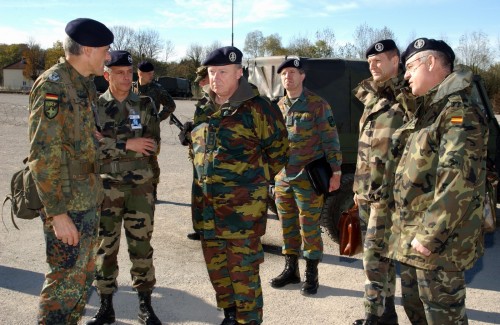
Engere militärische Zusammenarbeit in der EU darf nicht US-Interessen dienen
Zuvor ist eine von Washington unabhängige Sicherheits- und Verteidigungspolitik zu entwickeln – Österreich darf nicht im Interesse einer außereuropäischen Macht die Neutralität aufgeben
Ex: http://www.andreas.moelzer.at/
Wenn es zu einer engeren militärischen Zusammenarbeit innerhalb der Europäischen Union kommen soll, dann müsse zuvor eine eigenständige europäische Sicherheits- und Verteidigungspolitik ins Leben gerufen werden, sagte der freiheitliche Delegationsleiter im Europäischen Parlament, Andreas Mölzer, zu dem heute in Gent zu Ende gehenden informellen Treffen der EU-Verteidigungsminister. „Wenn es zu einer Bündelung der militärischen Ressourcen innerhalb der EU kommen soll, dann darf dies nicht im ausschließlichen Interesse von USA und NATO sein. Allerdings ist zu befürchten, dass die geplante engere militärische Zusammenarbeit genau diesem Zweck dient“, betonte Mölzer.
Außerdem, so der freiheitliche EU-Mandatar, müsse sich die europäische Sicherheits- und Verteidigungspolitik auf Europa konzentrieren. „Eine engere militärische Zusammenarbeit darf nicht dazu dienen, noch mehr Hilfsdienste für die USA, wie etwa im Krieg in Afghanistan, zu leisten. Vielmehr muss der Balkan, wo es eine Reihe nach wie vor ungelöster Konflikte gibt, die jederzeit wieder aufbrechen können, Schwerpunkt bleiben. Wenn die Europäische Union nicht in der Lage ist, in ihrem engeren Umfeld für Sicherheit zu sorgen, dann wird sie eine Lachnummer bleiben“, stellte Mölzer klar.
Österreich solle sich, was eine engere militärische Zusammenarbeit innerhalb der Europäischen Union betrifft, abwartend verhalten, forderte der freiheitliche Europa-Abgeordnete. „Solange es keine eigenständige, also von den USA unabhängige europäische Sicherheits- und Verteidigungspolitik gibt, muss Österreich an seiner Neutralität festhalten. Keinesfalls darf die Neutralität abgeschafft werden, um damit den Interessen einer außereuropäischen Macht zu dienen“, schloss Mölzer.
00:25 Publié dans Actualité, Affaires européennes, Défense | Lien permanent | Commentaires (1) | Tags : politique, politique internationale, europe, affaires européennes, union européenne, défense, armées | | del.icio.us | | Digg | Facebook
Immigratie in terugblik
|
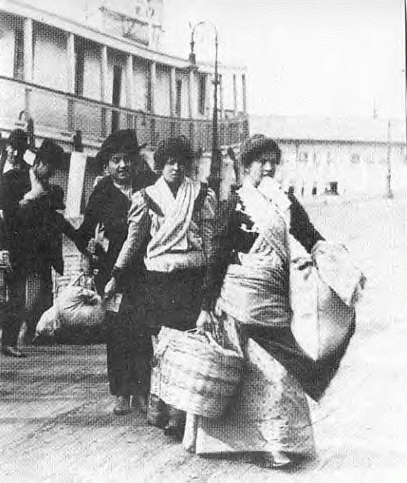
Ex: http://n-sa.be/ De volgende tekst werd ons ingezonden door een sympathisant. Hij beschrijft de gevolgen van de Ierse immigratie in het 19de-eeuwse Engeland (Manchester) en is van de hand van Friedrich Engels (De toestand van de arbeidersklasse in Engeland. Hoofdstuk 4). De vraag stelt zich dus waarom marxisten in het hedendaagse "Westen" massa-immigratie ondersteunen, goed wetende dat het gaat om een door en door kapitalistisch project. |
00:15 Publié dans Sociologie | Lien permanent | Commentaires (0) | Tags : immigration, sociologie | | del.icio.us | | Digg | Facebook
The Epic of Indians and Persians
The Epic of Indians and Persians
 The products of Oriental culture often make a bizarre impression upon Western man. This applies to Indian plastic art no less than to Indian thinking and Indian literature. Everything tends to assume the most luxurious forms of a tropical forest. The images of the gods, strange and grotesque, with their many arms, their denioniacal faces, their strange attributes; the temples with super-abundance of ornamentation and their symbolically thought-out structure; the finely spun speculations on the nature of man and God which eventually fade away into a nirvana without thought; all this bewilders us, and, in order to discern the beaury undeniably hidden in it, we Westerners must abandon many of our ways of thinking if we are to feel at home in this different world.
The epic poetry of the Indians, too, strikes us as strange. We feel at home in the Iliad. There we find a fine sense of proportion. There we find a sense of restraint and beautiful order which seems to us to be the essence of all genuine classical art. But when we read in the Mahabharata it seems as if we wander through the many galleries and turnings of a Barabhudur, and we get entangled in the multiplicity of detail and digressions.
ln size, the Mahabharata, the most important Indian epic, is tremendous. In its present form it comprises about 107,000 two-line stanzas or ślokas; if one places these more thats 2oo,ooo lines beside the almost 16,000 hexameters of the Iliad, one realizes the difference between excessiveness and wise restraint. An Indian collection of fairy-tales is called Kathasaritsagara, i.e. the ocean of fairy-tale rivers. Indeed, the Indian thinks in terms of oceans, whereas the Greek sees before him the picture of the Mediterranean.
Naturally an epic of such a size is the result of a long development.
The poem itself has something to say about this, as it tells us with amusing precision that it used to have only 24,000 ślokas, but that this poem in its turn was an expansion of an older epic of 8,800 stanzas, i.e. the size of the Iliad. This expansion is due chiefly to the insertion of numerous episodes: first, all kinds of other heroic legends which are told as exempla, but in later times also of long digressions of a philosophical and didactic nature. The sixth book of the Mahabharata contains the famous Bhagavadgita or the ‘Song of the exalted‘, which attempts to make a synthesis of the various metaphysical systems. The way in which it is inserted is remarkable: when the hero shrinks from shedding the blood of so many relations, the god who has changed into a man opposes this momentary weakness by pointing out that all living things must go the circular course through death to a new life.
The thirteenth book contains a series of legal treatises. Long digressions on worldly wisdom and politics, also on the mokśa or the liberation from the chain of regenerations, give the epic poem the character of a dharmasastra or a treatise on divine and worldly right. It is therefore easy to understand that in the temples devoted to Vishnu and Shiva and in the places of pilgrimage the Mahabharata is still read aloud to this day.
If one asks when this gigantic work was made, the answer is: in the course of about eight centuries. The final version belongs to the fourth century of our era, but the origin of the epic may certainly be as far back as the fourth century B.C. At that time it will still have been a purely epic poem. In the course of time and in the hands of Brahman priests it became the vessel which collected from all directions the streams of Indian thought. But the fact that theological and legal digressions especially could so easily find a place in it may be an indication that Indian tradition never considered it as a secular heroic poem in the narrower sense, but that the poem had a certain affinity with religious-philosophical literature.
The core of the epic may be briefly summarized in this way. Pandu, the prince of Kuru, situated in the basins of the upper reaches of the Ganges and the Jumna, leaves five sons after his death who are called Pandavas, after their father. The most prominent of these sons are Yudhishthira, Bhima, and Aryuna. They are brought up by their blind uncle Dhritarashtra. But jealousy springs up between the sons of this prince and their five cousins. The eldest son, called Duryodhana, finally succeeds in prejudicing his father against the Pandavas, in spite of the opposition of the uncle of King Bhisma, the warrior-Brahman Drona and the judge
Viduera.
 The sons of King Dhritarashtra manage to obtain the support of the famous hero Karna, the son of a charioteer. Duryodhana then makes an attempt to kill his cousins by luring them into a house of inflammable material which is then set on fire. This treacherous method is also found in Irish and Germanic literature. It recalls the burning of the hall in the legend of the Burgundians. But it also took place in real life; the Icelandic sagas give several examples of brenna inni, thc burning of the enemy in his house.
The Pandavas, however, manage to escape with their mother Kunti through a subterranean passage. But the ground has become too hot underfoot, so they hide in a wood, while Duryodhana is under the reassuring impression that they have perished in the flames.
Dressed like Brahmans, the brothers live in the wood. The extra-ordinarily strong Bhima kills two huge monsters or Rakshasas, a feat which is almost obligatory for a hero and may be compared to Beowulf’s fight with Grendel. The king of the neighbouring people of the Panchala, called Drupada, decides to hold a svayamvara for his daughter Krśna, usually called Draupadi. This means that she may take a husband of her own choosing from the princes that come from all sides. The five brothers, begging and dressed as Brahmans, also go there. As a test of their strength the suitors have to bend a huge bow and shoot an arrow at a certain target. None of those present is able to do this. Only Kama has the strength for it. But Draupadi rejects him as husband because he belongs to a lower caste. Then Aryuna comes forward and accomplishes the task.
The bending ofa bow as a test of strength is also told in the other Indian epic, the Ramayana; it is evidently an old relic from a distant past, for we are reminded of Odysseus, who bends a bow in the hall of his house where the suitors are gathered, and thus initiates the denouement.
Aryuna is now accepted as husband, in spite of the protest of many of the princes present, because he is a Brahman. Then the Pandavas reveal who they are, and moreover demand that in accordance with an old ancestral custom Draupadi shall marry them all.
Drupada succeeds in making peace between Dhritarashtra and the Pandavas. Yudhishthira is made ruler of half the kingdom. Aryuna purposely breaks the agreement between the brothers regarding their relationship to Draupadi, and as a penance goes into exile for twelve years and lives the life of a recluse. But this does not prevent him from going through a series of adventures of war and love. When finally he returns to his brothers, their power has grown continuously; they have attained a dominant position in Northern India, and Yudhishthira now makes the famous king’s sacrifice, known as the aśvamedha.
Presently, however, fate will tum against them. The sons of Dhritarashtra invite Yudhishthira to a game of dice with Sjakuni, their mother’s brother. Carried away by the game, Yudhishthira stakes everything on the last die; he loses all his possessions and, finally his own freedom and that of his brothers. In the famous story of Nala, which is one of the episodes of the epic, the svayamvara and the game of dice also occur, which proves how important these were in Indian tradition.
Tacitus also mentions the passion of the Germanic people for the game of dice in which everything is set at stake. If the player loses he allows himself to be bound and sold. ‘Such an obstinacy prevails among them in a foolish cause. But they themselves call it fidelity’. The Roman author could not surmise what lay behind this. The Edda likewise tells us that in ancient times the gods played the game of dice. But this game is more than a simple pastime. lt is a questioning of fate; and hence also a determination of fate. That is the reason why the loser never opposes the issue of the game: alea locuta est.
The Pandavas, then, have lost their kingdom, and for another twelve years they have to seek refuge in the forest. At the end of this time they remain for a thirteenth year in the service of Virata, king of the Matsya, a nation that lived south of the Kuru.
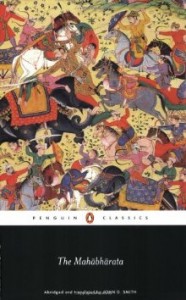 The time has come at last to reveal themselves. When the Kauravas, the princes of Kuru, undertake a large-scale cattle-raid, they are beaten by Aryuna. The Pandavas are to be restored to their kingdom, but the sons of Dhritarashtra refuse this, and on both sides preparations for the battle are made in which all the princes of North India will be involved.
The battle is described in great detail. The poet here makes use of the frequently occurring motif of the messenger. From time to time Sanyarya leaves the battlefield to keep Dhritarashtra abreast of the course of thc battle. There are many victims of the lighting, among them all the sons of Dhritarashtra. The end is a lament uttered by the mother of the dead.
Such an ending to the poem shows a similarity to that of the Iliad and Beowulf. The climax of the epic has been reached in this tremendous and decisive battle; lamentation and funeral are the satisfying final chord. But the epic continues, without however maintaining its heroic character. We are told that Yudhishthira discovers only now that Kama, the son of the charioteer, who also fell in the battle, was his own (half) brother. In order to atone for the sin unwittingly committed by him, he makes a grand sacrifice of horses. ln the end Yudhishthira gives up his kingdom, and is taken to heaven with his brothers and Draupadi.
Though very brief this summary cannot but give the impression of a genuine heroic song. Just as in the Iliad the struggle for Troy is told as a series of duels between the leaders, so also in the Mahabharata. Naturally the typically Indian features, such as the svayamvara or the game of dice and especially withdrawing into the wood for many years in solitude, must be put down to the social and cultural conditions in which this poetry came into being. Yet there can be no doubt that the characteristics which we mentioned in our discussion of European epic poetry are present here too. This applies not only to the subject-matter, but also to the elements of style in general.
A look at the contents may easily lead to the conclusion that this is a story ofa real event embellished by a strong imagination. It is, however, noteworthy that older sources of the earliest history of India, as we know them, do not mention the Pandavas nor the Kauravas. The time of the recorded facts can be determined from the poem with some degree of certainty. For the Mahabharata is said to have been recited by Vaishampayana to King Yanameyaya, going back, therefore, to about 800 B.C. From the fact that the grandfather of this Yanameyaya is supposed to have fallen in the great battle of the epic, it follows that the poem deals with events of the ninth century B.C. But is this sort of information, which can so easily have been made up at a later date, really reliable?
The very fact that the Indians treat history very freely at once forces us to exercise the utmost reserve. With so many gaps and uncertainties it seems impossible to pin down the Pandavas and the Kauravas to one or other century. This does not mean that in the Mahabharata no memories of a far-distant past have been preserved. We have already discussed this. The use of chariot: recalls those early times when the Indo-European people had taken over this method of fighting from the steppe tribes in Central Asia. They used it for a long time. In the Gaulish graves of the La Tène period chariots are still found. We have seen that in the Irish legend Cúchulainn fights on his chariot. The Greeks of the Iliad did so too. A very old feature, too, is that the Indian heroes fight with bow and arrow. This is also known of the Hittites in Asia Minor and of the Egyptians of the nineteenth dynasty. But in addition the heroes also swing swords and battle-axes.
There are indications enough not to deny the poem an historical core; the Chadwicks believe that this will now be accepted by most scholars. As far as the external elements are concerned, one can agree. But what about the core of the story itself? ln this respect opinions have certainly changed in the last ten to twenty years. If one uses the term ‘historical’ in connexion with unhistorical India, one should be clear about its real meaning. Naturally the feudal structure of society is an historical fact. The battle which the Aryan tribes had to wage against the indigenous tribes in their invasion of Hindustan was too important not to leave traces in later literature. But it was no longer felt as pure history. Instead it was transposed into a different environment. Hence the answer to the question of what is the real core of the story should be in mythological rather than historical terms. One should not look for political history in the story, but for tradition; no powerful princes of the past, but real heroes. In due course we shall try to determine what this means in greater detail. Here it may suffice to quote a few sentences from Charles Autran: «This tradition is always carried on more or less by the fame of the legend or the more or less contradictory fantasies of the myth. It has its divine or human figures which it likes to embody as ethical or cultural ideals. lt worships these as leaders. It sees in them incarnations of common memories, of protectors on the ever uncertain path of time. It jealously defends their memory against the continuous threat of oblivion. lt also rescues some impressive names from that past, either religious or magic, folkloristic or heroic. But among all this abundantly rich material one can hardly point to names or facts that could be fixed chronologically with any accuracy».
How true this is appears from a closer inspection of the character of the three Pandavas. As in all genuine epic poetry, they are types, unchanging, fixed. One is either a hero or a traitor. There is no progression or retrocession in regard to man’s inborn nature. When we consider Virgil not as the end of classical epic poetry that goes back to Homer, but as the forerunner of all epic poetry which appeared later, modern literature included, then it is precisely the characterization of pius Aeneas that is developed in the course of his poem, because he becomes conscious of his vocation! In the Iliad, however, as in the Song of Roland or in the Mahabharata, a hero is given the character he will have throughout the whole poem from the outset. Thus the action is sharply outlined owing to this clear characterization, and creates a situation in which the reader always knows how the characters will art in the various circumstances in which they are placed.
How are the Pandavas drawn? Yudhishthira is the chief of the five brothers. He is described as a more or less passive personality, who respects the law and is true to his word. He is the incamation of the idea of dharma, and for that reason he is the son of the god Dharma. Bhima, on the other hand, is a furious fighter. Armed withhis club, he undertakes the defence of the three brothers and saves them in the most difficult circumstances. Aryuna is not less brave a warrior, but he is armed with bow and arrow. He is considered as the son of the god lndra. Then there are the two youngest brothers, Nakula and Sahadeva. They remain entirely in the background. They are supposed to be twins, and so it is no wonder that tradition should take them to be the sons ofthe twin-gods: the Aśvins.
 The Swedish scholar Stig Wikander was the first to realize the true significance of this remarkable characterization, basing his inquiries upon Georges Dumézil’s investigations into the structure of the world of Germanic gods. For Dumézil observed that the relationship between the chief gods corresponds with the social groupings in the world of men, where we find, in the scale of social importance and status, first of all the king and on the same level the Brahmans. Then follow the caste of warriors and, as the lowest group, the farmers and artisans. For the latter the main emphasis lies in fertility, and various gods are active in this field: particularly a series of goddesses, apart from the twins, the Aśvins. The awe-inspiring Indra appears as the god of the warrior-caste. But the upper layer – and that is the unique feature of the Aryan system – has two facets, for kingship has a double aspect: it is the guarantee of social order and of its laws, but it also takes the initiative for reform when matters have come to a standstill. In other words: on the one hand it has a sacral-religious character, but on the other it is of a dynamic-magic nature. lt should be borne in mind that this apparent antithesis resolves itself in an unbreakable unity: thus among the lndian gods there is the inseparable pair Mithra-Varuna.
When we compare the five Pandavas (why five?) with this scheme – which is preserved in a more or less pure form among all Indo-European nations – they appear to be in complete accordance with it. The wise, almost passive Yudhishthira and the frenzied fighter Bhima together correspond to the pair Mithra-Varuna. The noble and brave Aryuna represents the caste of warriors, and it goes without saying that the twins Nakula and Sahadeva who stay in the background are a replica of the Aśvins.
This detailed correspondence between the five Pandavas and the Aryan system of gods cannot, of course, be accidental. As we have already remarked, scholars in the past tried hard to uncover an historical core in the Mahabharata. The same applies to the history of prehistoric times about which Livy speaks in his first book. The kings Romulus and Remus, Numa Pompilius, Servius Tullius in fact never existed except as mythical figures. If one looks more closely at their characterization and their actions, the typical features that we have indicated for the five Indo-European main gods appear at once. Hence it is not really true to say that everything that is mythical is a later addition to the Indian epic. This is proved by the fact that an entirely different world of gods exists in the epic: here the much younger gods Vishnu and Shiva appear. Behind them another world of gods lies hidden, namely that of the gods that are worshipped in the hymns of the Veda, but now as it were camouflaged as mortal heroes. Stig Wikander is therefore right when he concluded that the mythical core is the oldest part, and everything that is historical or pseudo-historical is merely an enrichment with motifs that were necessary to give action to the epic.
The marriage of Draupadi with all five brothers has indeed given much offence and caused much difficulty. It was thought to be a typical example of polyandry, and the actual establishment of this form of marriage among some primitive tribes of Hindustan seemed to prove the point. With the bold imagination that sometimes also carries scholars away, the thesis was propounded that the five Pandavas did not belong to the royal family of the Kurus at all but were in fact of non-Aryan origin. Did then this powerful and very popular Indian epic prefer to have for its heroes representatives of the hostile and despised primitive inhabitants of Hindustan? Did the classic epic of the Indians, in which they liked to find the traces of their war of conquest for the peninsula, really place the main heroic figures in a conjugal relationship which ran counter to all Aryan customs and was bound to appear in the highest degree offensive? There is no question of a conjugal relationship between a mortal woman and a set of tive mortal brothers, but rather of a mythical symbol. Draupadi – as has now become plain – is the goddess of fertility, who herself belongs to the lowest and third level and so comes to be closely associated with the Aśvins. In mythical terms, she is the wife of both of them, their sister or their temptress, for in this varying form the myth can attempt to give shape to what can only be sensed as a mythical symbol. Perhaps I may recall the Irish representation: the direct relationship between king and country finds its expresion in the marriage of the king to Medb, the goddess of earth. Hence Draupadi likewise has a relationship with the two persons symbolizing royal power. But the more or less fluid figure of the earth-goddess Draupadi, reduced to suit the rigid scheme of an heroic epic, in her (mythically) natural relationship to the other gods becomes part of a form of marriage in which she is the wife of all Pandavas. This is a remarkable result of a svayamvara, in which an extremely brave charioteer is rejected as husband and a marriage with five men is accepted. In considering this enormity, one wonders whether the Indian audience still had any idea of the mythical background. At any rate it proves with what almost religious reverence the epic was accepted by the Indians.
This surprising result throws light not only on the genesis of the Mahabharata but also on that of the heroic epic in general. We shall come back to this later on. We shall now try to show that a similar origin is also very probable for the second large Indian epic, the Ramayana.
Tradition ascribes the Ramayana to the poet Valmiki, which probably means that he was the final author of this epic. The present version of about 24,000 ślokas, a quarter of that of the Mahabharata, is no more than the result of the enrichment of the old epic core (especially at the end) with much non-heroic, partly antiquarian subject-matter.
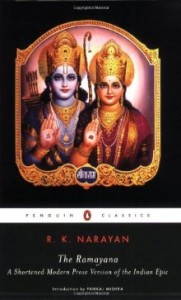
The poem begins with the story that King Dasharatha of Ayodhya has two wives. The one, Kausalya, bore him his elder son Rama, the other, Kaukeyi, a second son Bharata. When the king grows old he decides to hand over his government to Rama. But Kaukeyi, spurred on by her foster-mother, asks the king to honour a former promise. He had promised her to fulfil any two wishes. She now utters these: Rama must go into exile for fourteen years and Bharata will reign in his place. The king falls in a faint, overcome by grief. When Rama hears about all this, he insists that the king must keep his promise. He therefore decides to withdraw into the wood. His only companions are his faithful wife Sita, the daughter of Janaka, and his younger brother Lakshmana. Soon afterwards the king dies; Bharata, convinced that he has obtained the succession in an unjust way, visits his brother in the wood and tries to persuade him to return and to be king of Ayodhya. But Rama will not violate his father’s promise and firmly refuses. Bharata returns, but in order to show that he is only reigning in his brother’s stead, he places Rama’s sandals on the throne.
The further adventures of Rama and Sita form a typically romantic story. We shall recount it briefly. A Rakshasa abducts Sita when Rama and Lakshmana are absent and takes her to the capital of the island of Lanka, which was later taken to be Ceylon. Rama wants to try and free his wife from the power of the monster, and in this attempt he secures the help of an army of monkeys. The wise councillor of the monkeys, Hanuman, makes the success of the dangerous undertaking possible. The monkeys build a bridge to the island, and, in a fight that is described in copious detail, the Rakshasa is killed. Rama is now united again with Sita, who in the meantime has shown herself steadfastly faithful. The period of his exile has now expired. He returns to Ayodhya, where Bharata joyfully hands over the government to him. Leaving aside the long fight with the Rakshasa and considering only what may be called the core of the story, one gets the impression that it has not a very heroic character. The tone is noble and lofty. Rama’s exile, undertaken out of a sense of duty, as well as Bharata’s refusal to make use of his morher’s ruse, give evidence of a high moral standard, but this does not make for exciting action. The hearer is compensated, however, by the story of Rama’s adventures during his exile.
The poem was very successful. Not only did it become a source of inspiration for the whole of Indian literature, but it laid the foundation for Hinduism. It penetrated far beyond the Indian peninsula: for preference, the Wayang-play in Java still shows the adventures of Rama and Hanuman.
 Because there is so little action in the original story of Rama and Bharata, one wonders whether one is justified in speaking of an heroic legend in the accepted sense of the word. A king’s son who for years has to give up the throne, a brother who has the magnanimity not to make a use of the fortune that is thrown into his lap, all this does not really contain the subject-matter of a genuine heroic action. It is more an example of high morality. Naturally people have tried to establish an historical background for it, and the epic was thought to reflect the struggle of the Aryans for the possession of the southem part of Hindustan, or even, which is still less acceptable, the struggle of the Brahmans against the Buddhists in Ceylon.
Chadwick remarks: “The story of Rama is of special interest as illustrating the growth of mythology”. However, the conception of Rama as the incarnation of Vishnu cannot be part of this growth, for it appears only in the latest part of the epic. It is true that the later gods Vishnu and Shiva tried to get a firm hold in the older epics, both in the Mahabharata and in the Ramayana, but they did not penetrate much beyond the periphery. Chadwick also holds that the equation of the heroine Sita with the goddess of agriculture of the same name is of later origin: a folklore element that was added later. But I cannot agree with this. First of all it is a very striking coincidence, that ‘accidentally’ the heroine and the goddes of vegetation bear the same name. And in addition that name is a word meaning ‘furrow’, and so is a name which fits a goddess of agriculture perfectly. How would the wife of Rama have obtained this strange name?
Scholars have often made conjectures about the mythical background of this poem, and have often tried to prove too much by wanting to explain everything. When the German scholar Jacobi alleges that, according to Indian tradition, Sita as goddess is the wife of Indra and then deduces from this that therefore Rama equals Indra, I feel bound to make a reservation. As the epic pictures the hero, he is certainly not an incarnation of Indra. On the contrary, he is, like Yudhishthira, the typical representative of the dharma. Also he is a pronounced royal type and not at all a ksatriya, a member of the warrior caste, whose patron Indra is. If I had to point to a mythical background, I should like to see in the marriage of Rama and Sita a parallel to that of the Irish king with Medb. Behind this we can still discern the ritual marriage of the god of heaven with the goddess of earth which must be solemnized ritually by the king in the furrow. In popular customs this rite survives for a long time: in the spring the farmer and his wife nimble about together in the field, a mild form of sexual intercourse which at one time took place on the sown field.
If, then, we take Rama to be the Mithra-half of the two gods of royal authority, we would expect Bharata to represent the Varuna-half. Was he originally the usurper who pushed his brother off the throne? But in the epic he is equally admirable as a model of the dharma: the sandals on the throne of Rama are the striking symbol of this. Right is above might.
Thus we leave the two Indian epics with the feeling that they are a remarkable variant of the general Indo-European type. Iliad, Chanson of Roland, Nibelungenlied, these belong to a different world, the Western world, while in Hindustan an Oriental mentality gained the upper hand in the epic. How, then, do matters stand with the second Aryan nation, which pitched its tents on the plateau of Iran?
Firdausi has come down to us as the poet of the mighty Persian epic: the Shalt-nama or the Book of Kings. He is an historically well-known figure; Firdausi is the pen-name of Abu ‘l-Kasim Mansut, who lived from about 932 to 1021. The epic contains no fewer than 6o,ooo couplets (here too we are struck by the gigantic size of the poem) and was dedicated to Mahmud, King of Ghazni (999 to 1032), who, however, did not apparently reward the poet for it as much as the latter expected. Yet it was a great honour that was done to the king. The Mohammedan dynasties which ensconced themselves on the Persian throne thought it of great value to be considered as the legitimate descendants of the old royal generations. In the splendid figures of pre-Mohammedan tradition, Mahmud liked to recognize his own ancestors.
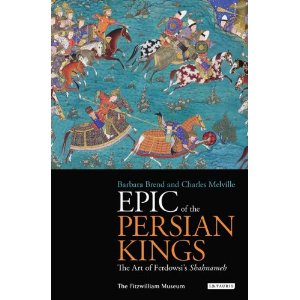 However much epic material is included in the Book of Kings, it is fundamentally the history of a dynasty which reaches far back into the Persian past. The history of Persia up to the death of Khosru ll in 628 had been written down in the Kwadhainanamagh or Book of Princes which was probably written during the first years of Yazdgard III’s reign: after the year 632. After the conquest of Persia by the Mohammedans in 638, i.e. very soon after the composition of the Book of Princes, many translations of it were made into Arabic, several of which have now been lost. In the middle of the tenth century the Shah-nama was made, written in New-Persian prose. Tradition has it that Dakiki, the court poet of Bokhara, made a poetic version of it between 977 and 997, which, however, he did not complete himself. That was done by Firdausi, who, it is assumed, completed it in about 1010.
This purely literary and written text is therefore mainly historical in character, and is not to be put on a par with genuine heroic epic poetry such as we have encountered so far. The Book of Kings deals with the history of Yamsed up to the fall of the realm of the Sassanids, and so stretches from mythical times up to the end of Persian independence. But out of this series of kings there arises the true hero, Rustum the faithful servant, who cannot die but gives successive generations of rulers his indispensable help. His origins lie in the district of Scistan in South-East Iran, and he first plays a part in the reign of Minutshir. The war with the Turanian tribes in the North begins to assume a threatening character, and their King Afrasiab succeeds in putting an end no the Persian dynasty. Then Rustum brings Kaj Kavad from Elburz and has him crowned. The king lives for a hundred years and becomes the founder of the dynasty of the Kayanides. His successor is Kaj Kaus, an ambitious ruler, of whom the myth is told that he tried no fly to heaven with trained eagles: a borrowing from the Babylonian Etana myth, which is also reflected in the well-known story of Alexander’s flight to heaven. He is succeeded by Kaj Chosrev, who was brought up in a secret place and, like Hamlet, had to feign madness. The war with Turan flares up again, in which Rustum plays a large part. With King Lohrasp a new generation of kings begins in Balkh, the capital of Bactria. His son is Vistasp, in whose reign Zarathustra proclaimed his doctrine. Under his successor Isfandiar, Rustum appears once more on the scene after having to hand over his function of leader of the army to somebody else for a time. Isfandiar is invulnerable, except in the eye. Rustum has to flee from him, but he hears from the bird Simurg that there is a plant with which Isfandiar’s life is bound up. From this plant he makes an arrow and shoots Isfandiar in the eye. With this story we are entirely in the epic-mythical atmosphere. A hero’s one vulnerable spot where he can be killed is also known from the legends of Achilles and Siegfried; we are reminded particularly of the Irish legend of Balor, who likewise can only be killed in the eye, and the deadly plant is known from the Norse myth of Balder and the Finnish legend of Lemminkäinen.
The episode of the fight between Rustum and his son Sohrab is justly famous. We have already met the same motif in the German legend of Hildebrand and Hadubrand, in the Irish story of Cúchulainn, and we shall see it again in the Russians heroic legend of Ilya Murometch. It is undoubtedly an ancient motif, but the view that it was handed down from nation to nation and so would have spread from the Persians to the Irish via the Russians and the Germans is subject to serious objections. lt is especially the early appearance of it in Irish heroic poetry that is inconsistent with this view. I would be inclined to think rather of an Indo-European tale preserved by some, but not all, separate nations. Moreover it is evident that its origin was a myth.
Pressed into a royal genealogy and drawn out over several generations, the heroic legend of Rustum was never completely rounded off. Or perhaps it would be more correct to say that the original unity was broken up kaleidoscopically as a result of this treatment. At any rate, both in Persia and in India we find book epics, that is, written works of gigantic size such as the West has never produced. There is no doubt that this is the end ofa very long development which must have had its origin in oral popular epic poetry. This epic activity can be assumed to have gone on for about a thousand years for the Mahabharata. For the Ramayana it went on for at least eight hundred years. The tradition of Persia may be estimated at about four hundred years. lt has justly been remarked that narrative poetry must have already existed before Dakiki, from which the Shah-nama derived not only its metre but also its fixed formulae and stylistic elements.
No less remarkable is the story of Artachsir i Papakan. Artachsir is the grandson of Papak, governor of Pars. When he is fifteen years old he is called to the court by the king of Iran, Ardawan. Although he is there brought up honourably at first, he is degraded to stable-hand status as a result of a quarrel during a hunt. But one of Ardawan’s concubines discovers him and falls in love with him. She tells him of a dream the king has had which indicates that the throne will be transferred to a servant, who will escape from him within the next three days. Then the pair decide to flee. They take great treasures from the palace with them and ride away on horseback. This reminds us vividly of the story of Walter and Hiltgunt, who flee from the court of Attila in a similar fashion.
On the way two women hail him as the future ruler of Iran and advise him no ride westwards in the direction of the sea. When Ardawan discovers the flight the next day, he equips an army to pursue them. In the afternoon the learns from the inhabitants that Artachsir passed that way at sunset. At the next resting-place he is told that the fugitives passed there in the afternoon and that a ram walked behind them. But on the second day Ardawan learns from a caravan that they are twenty parasangs ahead of him and that a ram was sitting behind one of the riders. Ardawan now realizes the futility of his pursuit. For the ram which had joined Artachsir was the symbol of the majesty of kingship. It had turned from Ardawan to the young hero.
This story, which can already be found in a middle-Persian manuscript and which also occurs in Firdausi’s Book of Kings has as its main character the founder of the middle-Persian kingdom of the Sassanids in A.D. 226. Nöldeke observes in connexion with this legend that it is remarkable that such romantic tales were current about the founder of the realm whose history was known with such accuracy. Certainly remarkable, but no more so than in similar cases which will be mentioned later. Here we touch upon the problem of the transition of history to heroic legend which will be discussed more fully in Chapter 10.
* * *
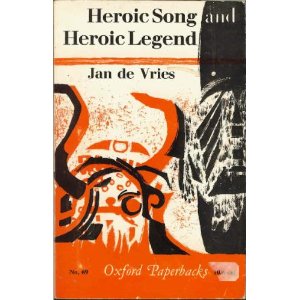
Source: Jan de Vries, Heroic song and heroic legend, Oxford 1963, pp. 99-115.
00:10 Publié dans Traditions | Lien permanent | Commentaires (0) | Tags : tradition, traditions, mythes, mythologie, inde, perse, perse antique, domaine avestique, domaine védique, traditionalisme | | del.icio.us | | Digg | Facebook
Turreau et les colonnes infernales
Archives des SYNERGIES EUROPEENNES - 1986
Turreau et les colonnes infernales
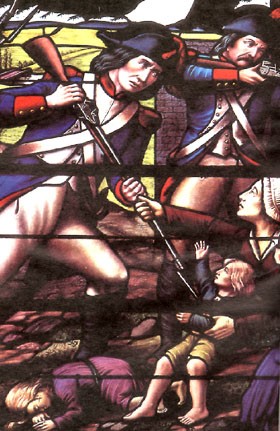 Malgré les préparatifs fébriles en vue de commémorer le 200ème anniversaire de la Révolution Française, malgré l'unanimisme des partis politiques français autour des "acquis" de 1789, un certain nombre de travaux tentent encore et toujours de cerner l'histoire de cette révolution, non d'une point de vue républicain, partisan et politicien mais d'un point de vue analytique, objectif et historique. L'ouvrage d'Elie FOURNIER, que nous évoquons ici, tente de nous expliquer ce que fut réellement, sur le plan du vécu, la Révolution française, après les brèches ouvertes ces dernières années par des historiens comme François FURET ou Pierre CHAUNU. Il ne s'agit pas de la Révolution de Paris ni de celle des membres du Club des Jacobins ni celle des "représentants du peuple" à la Convention, mais celle des peuples qui constituaient alors l'ancien royaume de France, présentement transformé en "République une et indivisible".
Le cas de la Vendée est exemplaire. Mais il n'est pas unique. D'autres provinces connurent alors des mouvements de révoltes populaires face aux exigences et à la tyrannie des comités de gouvernement. La révolution fut en effet transformée en révolte sous-tendue par les intérêts d'une certaine classe, la bourgeoisie. Et le pouvoir parisien, appuyé sur des forces armées recrutées dans les grandes capitales (Paris mais aussi Marseille, Grenoble, Lyon, Toulouse, etc...) exerça une répression féroce contre des citoyens qui refusaient le vieux principe jacobin de la "République ou la mort!".
Des hommes et des femmes, pour la plupart attachés à leurs prêtres, mais aussi aux premières réformes de la révolution (notamment la suppression d'un certain nombre de privilèges) furent massacrés au nom des valeurs neuves de la "Liberté" et de "l'Egalité". FOURNIER prend ici comme exemple le véritable génocide (le mot n'est pas trop fort!) perpétré par les généraux républicains au nom du pouvoir central sur les populations de la Vendée et des territoires limitrophes. Le décor est planté: 23 décembre 1793, juste après la défaite des troupes royalistes, accompagnée de 100.000 morts sur les routes de Normandie et de Bretagne. Pour réduire définitivement les séditions royalistes, la Convention prend la décision, sur la proposition des "patriotes" vendéens représentés à cette même Conven- tion, de supprimer froidement et systémati- quement tous les "brigands" vendéens. D'ailleurs, pour mieux marquer cette volonté d'en finir, on modifie le nom de cette région en "Vengé"...
Effacement des gens, effacement des souvenirs. Il faut extirper toute trace de vie sur ces terres, interdire par la terreur toute révolte contre la République. De fait, la République peut puiser dans le passé récent: l'exemple est là, celui des grandes répressions opérées par les troupes de l'Ancien Régime en Corse. Dans une lettre écrite le 14 juin 1794 par le Général VIMEUX au Comité de Salut Public, on peut lire à propos de la campagne de Vendée: "La guerre et le brigandage de Vendée finiront, mais comment et avec quels moyens? Avec ceux qu'on employa en Corse, après de grosses dépenses et bien des années d'erreur"... Déclaration qui rejoint par ailleurs celle du Général HUCHE, l'un des organisateurs les plus "consciencieux" et les plus patriotes de la guerre de Vendée.
Et cette terreur que connut la Vendée, terreur dont les pouvoirs centraux furent les inspirateurs, déléguant par décrets et proclamations (le plus célèbre de ces décrets étant celui du 1er août 1793) aux généraux et aux représentants du peuple le soin d'accomplir "l'extermination" (mot utilisé dans les textes légaux) des "brigands" vendéens (entendez non seulement les combattants chouans sous les ordres des chefs royalistes Charette, Stofflet, de la Rochejacquelain, etc. mais aussi tous les habitants de la Vendée sans considération d'âge ou de sexe). Cette "extermination" fut une réédition de celle qu'avait appliquée un MARBEUF à la république paoline corse quelques décennies auparavant. La tactique était simple: détruire systématiquement tous les "repaires" des habitants de la région révoltée. Autrement dit, la politique de la terre brûlée, pratiquée à une échelle collective.
Un arrêté du Général Louis Marie TURREAU donne d'ailleurs la liste, non exhaustive, des communes proscrites. Les deux "colonnes agissantes" seront responsables du massacre de plusieurs dizaines de milliers de paysans, de citoyens des villes accusés de mollesse ou de modération patriotique et même d'élus communaux pourtant favorables à la République. Ainsi, le 28 février 1794 eut lieu le massacre des Lucs, au cours duquel furent assassinés 110 enfants âgés de 7 ans et moins!
Le livre de FOURNIER nous dévoile d'autre part les causes réelles de cette politique de génocide perpétrée par les comités parisiens. Le règne de la Terreur est moins une période républicaine au sens politique du terme qu'une période morale, celle du règne de la vertu robespierriste!
Les personnages de ROBESPIERRE et de SAINT JUST, relayés en province par les délégués CARRIER à Nantes ou TALLIEN à Bordeaux symbolisent ce passage de la révolution à la construction d'une cité vertueuse. Il s'agit ici d'une nouvelle guerre de religion, au cours de laquelle s'opposent les partisans minoritaires du culte de l'Etre Suprême, ersatz de l'ancien culte catholique accomodé aux valeurs nouvelles de 1789 et les anciens tenants du culte chrétien, catholique apostolique et romain. D'ailleurs le levier des révoltes populaires paysannes en Vendée fut beaucoup moins la défense du trône que celle de l'autel. Le royalisme militant resta le fait d'une minorité consciente et l'attachement aux rites catholiques le principe de la dynamique chouanne.
Une fois de plus, il était utile de rappeler une certaine réalité de la révolution française. L'image idyllique colportée par les institutions républicaines d'éducation nationa- le, appuyée sur les travaux de MICHELET, est aujourd'hui de plus en plus remise en cause. Moins par des historiens partisans de l'Ancien Régime que par des universitaires désireux de mieux reconnaître, derrière les masques de la propagande et des idées toutes faites, la réalité historique. Au total, le livre de FOURNIER est un excellent ouvrage. A lire pour apprendre que l'histoire ne se déroule pas selon un mécanisme manichéen mais consiste en un choc perpétuel de contradictions.
Ange SAMPIERU.
Elie FOURNIER, Turreau et les colonnes infernales, Albin Michel, Paris, 1985, 89 FF.
00:08 Publié dans Histoire | Lien permanent | Commentaires (2) | Tags : histoire, 18ème siècle, révolution, révolution française, massacres, génocide, vendée, génocide vendéen, crime contre l'humanité, terrorisme | | del.icio.us | | Digg | Facebook