Ok

En poursuivant votre navigation sur ce site, vous acceptez l'utilisation de cookies. Ces derniers assurent le bon fonctionnement de nos services. En savoir plus.

vendredi, 27 mars 2009

Revolutionary Conservative: Interview with Jonathan Bowden

Small_Celtic_Cross-1.jpg

REVOLUTIONARY CONSERVATIVE:

INTERVIEW WITH JONATHAN BOWDEN

Interviewed by Troy Southgate - http://www.rosenoire.org/

REVOLUTIONARY CONSERVATIVE: INTERVIEW WITH JONATHAN BOWDEN As conducted by Troy Southgate

Jonathan Bowden is the Chairman of the New Right and a man I am proud to regard both as a like-minded spirit and a friend. The following interview was conducted in the summer of 2007.

Q1: Your family background is a heady mix of Irish and Mancunian and you were brought up in rural Kent. Would you say that any of this helped to shape your intellectual development in any significant way?

JB: One’s origins obviously influence the way everything turns out in the end. I actually spent many of my formative years in the south Oxfordshire countryside, but I do admit that the Kent coast offers a certain draw. I was born in Pembury maternity hospital in mid-Kent in 1962 and the family later branched out into Bearstead after that. I remember a blue Volkswagen beetle, an extremely low-lying bungalow, roundabouts, that sort of thing… it was all very middle-class. I especially recall a Gothic moment from my own childhood; it concerned a mad woman or witch who lived up the way. She seemed to be a sort of Grendel’s mother – you know the kind. Anyway, rumour had it that she used to sit stark naked behind her letter box, dressed only in a black balaclava helmet, and any woman passing by would then be subjected to ferocious abuse. Scatology wasn’t the word for it, if you take my drift. Then, after a certain time had elapsed, the police would be called and she’d be sat there, dressed up to the nines, with cream teas and all the rest of it. It was essentially an elaborate attempt to flirt with, seduce or just fraternise with the local policemen. Then, as soon as they’d departed and she’d promised to behave, our wired sister would be back at the letter box fulminating. All other women were the object of her hate. No feminist sisterhood in evidence there, then. Its sexual hysteria and related screamings – I remember it all as if it were yesterday. My mother was terrified of her. We always had to go round the other way. Gothic or macabre things like that have always intrigued me – it’s the hint of chaos underneath bourgeois suburban conformism, you see. Life – when you stop to consider it – is really a painting through which people articulate their own death. What interests me is the artistry to it; it’s what our forebears, the Elizabethans, used to call the skull beneath the skin.

Q2: A few years ago now, you published a series of books under a different name. Tell us more about the themes involved and what you were trying to achieve at the time.

JB: Yes, I admit that your question is along the right lines. I’ve written a great deal down in the years and under various names – one of them happened to be John Michael McCloughlin, as I recall. I’ve certainly written between thirty and fifty books – depending on how you choose to look at it. At one level I’ve composed purely for myself – fiction, plays, non-fiction, memoirs, belle lettres, higher journalism, lyrics, prosody, experimental or stream-of-consciousness work, you name it. At present it’s all beginning to appear on the internet. My website – www.jonathanbowden.co.uk – contains one full manuscript. It’s an e-Book in PDF format. It’s entitled Apocalypse TV and consists of at least 100,000 words. It’s approximately 240 pages. A Platonic dialogue between a Christian and a pagan voice, it deals with Turner Prize art or the “Sensation” exhibition, criminology and the murders of Fred and Rose West, the concept of Political Correctness, all sorts of things. A short story, A Ballet of Wasps , also exists on the site. Hopefully – and before too long – a great deal of material will appear in this way. It’s essentially got to be scanned, edited, converted to PDF and then uploaded. A play which you have read, Troy, called Lilith Before Eve , has recently been added to the site. The following three short stories, Golgotha’s Centurion, Wilderness’ Ape and Sixty-foot Dolls , will appear relatively soon. There are also four more plays known as Glock’s Abattoir, We are Wrath’s Children!, Evolution X and ,i>Stinging Beetles, for example. Ultimately, one of my life tasks is to put all of it online and then see if publishers, small outfits, that sort of thing, would be willing to do hard copy versions. One point of interest: the publisher Integral Tradition Publishing has expressed an interest in possibly treating Apocalypse TV in the way I describe – although whether this will ever extend to a desire to publish full novels of mine, such as Al-Qa’eda Moth or The Fanatical Pursuit of Purity, is altogether another issue. But, rest assured, I will bring out everything I’ve ever done over time, even if it’s only in e-Book form on the internet. Politics is just a side-line, you see; artistic activity is what really matters. The one alters effects; the other changes the world. As Bill Hopkins once told me, one man sat writing alone in a room can alter the entire cosmos. It’s the ability – through a type-writer or whatever else – to radically transform the consciousness of one’s time. Cultural struggle is the most interesting diversion of all. There’s a Lancastrian truism that my mother retailed to me: “truth is a knife passing through meat”. Well, in this particular freeway one special coda stands out – you must become your own comet streaking across the heavens – all else is just a matter of flame, spent filament, rock or tissue, en passant, which slopes off to the side. Avoid those stray meteor shoals casting off to one’s left; they are just the abandoned waifs and strays of a spent becoming. Let your life resemble a bullet passing through screens: everything extraneous to one’s task recalls such osmotic filters. (I’d especially like to thank Daniel Smalley and Sharon Ebanks for their manifold assistance with these websites. Sharon’s earlier contribution was the following: www.jonathanbowdenart.co.uk). Do you wish to survey something I’ve just written? It’s a bit of a prosody based on a Futurist painting by Fortunato Depero called Skyscrapers & Tunnel (1930).

Do they make the most Of a tubular scene-scape Designed without cost And collapsing into date Crepe rape spate fate constant ingrate?

Q3: Please tell us how you came to be involved in the Western Goals Institute, a vociferously anti-liberal and anti-communist tendency which originated in 1989 as an offshoot of the American ultra-conservative group of the same name.

JB: Yes, the organisation known as Western Goals was a bit of a shape-shifting entity – it began as Western Goals UK and then transformed itself, eventually, into the Western Goals Institute. Later still it recomposed itself into the British chapter of the World League for Freedom and Democracy; a group which, as it didn’t believe in either freedom or democracy, was rather amusing. I gave them my support – I was actually deputy chairman for a while – because I agreed with a merciless prosecution of the Cold War. Right-wingers of every type and race aligned across the globe against communism. The war had to be fought tooth and branch. I essentially concurred with Louis Ferdinand C’eline’s mea culpa about Marxist-Leninism – after having toured the Soviet Union on the proceeds of Journey to the End of the Night and Death on Credit. Don’t forget that the third world war, to use a different nomenclature for the Cold War, proved to be an alliance between Western hawks or rightist liberals and neo-fascism across the Third World. Groups like Unita, Renamo, Broad National Front (FAN), the Triple A, the United Social Forces, The Konservative Party and HNP, the Contras and Arena – never mind Ba’athism… all of these tendencies were Ultra in character. Had they all been Caucasian in profile, such groups would have seemed indistinguishable from the OAS or VMO. It was vitally necessary to delouse those “communist peons of dust”… to adopt a line from a stanza by Robinson Jeffers. I have always believed with Mephistopheles in Goethe’s Faust, whether paraphrased by Sir Oswald Mosley or not, that in the beginning there is an action.

Q4: Shortly afterwards you founded the Revolutionary Conservative Caucus with Stuart Millson. What were the reasons behind the establishing of this group and, realistically, how much do you think it managed to achieve?

JB: Ah yes, the Revolutionary Conservative Caucus and all that jazz. Where have one’s salad days gone? Anyway, the RCC was set up by Millson and myself as a cultural struggle tendency. Never really conservative, except metaphysically, it wanted to introduce abstract thought into the nether reaches of the Conservative and Unionist party – an area habitually immune to abstract thought, possibly any thought at all. There have always been such ginger groups – Rising, National Democrat and later Scorpion, Nationalism Today, Perspectives, the European Books Society, the Spinning Top Club, the Bloomsbury Forum and now the New Right. The important thing to remember is that these groups are fundamentally similar – irrespective of distinct semiotics. The system of signs may jar, but, in truth, all of them are advocating radical inequality and meaning through transcendence… that’s the key. As to accomplishments or achievements… well, they were really twofold: first, the mixing together of ultra-conservative and neo-fascist ideas; second, a belief in the importance of meta-politics or cultural struggle. By dint of a third or more casual reading, various publications like Standardbearers , Oswald Spengler’s essay Man & Technics , the ‘Revolutionary Conservative Review’, a brief and intermediate magazine called Resolution and the ultra-conservative journal Right Now… all of these formulations came out of this nexus. It’s a creative vortex, you see? Let’s take one example: my interview with Bill Hopkins in Standardbearers… this links right back to the fifties Angry Young Men and to Stuart Holroyd’s productions in Northern World, the journal of the Northern League. This interconnects – like Colin Wilson writing for Jeffrey Hamm’s Lodestar – with not only Roger Pearson but also the fact that members of the SS were in the Northern League.

Sic cum transierint mei Nullo cum strepitu dies Plebeius moriar senex. Illi mors gravis incubat Qui notus nimis omnibus Ignotus moritur sibi.

It’s this which has to be avoided.

Q5: Your first association with the New Right was as a guest speaker at the very first meeting in January 2005. What made you want to become more involved with the group and what role do you think it can play in the future?

JB: I became involved because of a residual respect for what the New Right and GRECE were trying to achieve. For my own part, this has something to do with the fact that the New Right wishes to bring back past verities in new guises. It ultimately recognises an inner salience; whence the Old Right enjoyed a Janus-faced discourse: whether esoteric or exoteric in character. Do you follow? Because the outer manifestation tended to be conspiratorial, however defined. Whereas the innermost locution rebelled against old forms, postulated a Nietzschean outlook and adopted a pitiless attitude towards weakness in all its forms. Irrespective of this, the New Right recognises that fascism and national-socialism were populist or mass expressions of revolutionary conservative doctrines. Indeed, the Conservative Revolution is tantamount to Marxism on the other side: the truth of the matter is that Evola, Junger, Spengler, Pound, Moeller van den Bruck, Bardeche, Revillo P. Oliver, Rebatet, Brasillach, Jung, Celine, Wyndham Lewis, Yockey, Bill Hopkins and Arthur Raven Thompson, say, are actually to the right of their respective political movements. It’s the same with the extreme left on the other side – whether we’re talking about Adorno, Horkheimer or Althusser. Who’s ever really read Sartre’s The Dialectic of Critical Reason? As to any influence our group might have… well, perhaps it would be best to put it in this manner. I think that the New Right can prove to be a nucleus for illiberal thinking, albeit of a revolutionary and conservative character. Take, for example, Tomislav Sunic’s thesis, Against Democracy; Against Equality – a History of the European New Right. In this purview it becomes obvious that the Conservative Revolution was the seed-bed or think tank for fascism and national-socialism, much in the manner that theoretical Marxism was for communism. In the latter’s case, one only has to think of Adorno and Horkheimer’s The Dialectic of Enlightenment as the forcing house for ‘sixties revolutionism – far more, say, than Marcuse or the Situationists. Percy Bysshe Shelley, in Paul Foot’s terms Red Shelley, once described poets as the unacknowledged legislators of mankind. But, in all honesty, if we were to substitute the word intellectual or philosopher for poet then you might be nearer the mark. (All of which isn’t to take away for a moment the impact of poets like Kipling, Robinson Jeffers or the blind and recently deceased bard John Heath Stubbs, for example). Yet, I say again, one thing that we must deliberate upon is the power of conception. A man who possesses an idea or a spiritual truth is the equivalent of fifty men. Every pundit, tame journalist, academic or mainstream politician is mouthing hand-me-down ideas from a philosopher of yesteryear. At one level artists and intellectuals have no power whatsoever; undertake a parallax view or examine it in a reverse mirror, then you will see that they are matters of the universe. For those who have heard of Mosley, Degrelle, Jose Antonio Primo de Riveria, Mussolini, even at a push Julius Caesar; figures of Bardeche, Thomas Carlyle, Spengler and Lawrence R. Brown will remain forever arcane and mysterious. But fate’s mysterious witching hour knows that you can never have one without the other.

Q6: How did you reconcile your role as Chairman of the New Right, a self-proclaimed elitist and anti-democratic group, with your former position as Cultural Officer of the British National Party (BNP)?

JB: I feel that there was no great contradiction between the New Right and the British National Party. It’s a conundrum that revolves around the exoteric-esoteric fissure mentioned before. The British National Party is a populist or nativist group – it currently has about fifteen percent electoral support across Britain. No campaign and one leaflet garners a tenth of votes. Any sort of campaign nets 15%+; whereas a full-on methodology, Eddy Butler style, can get up to a fifth or a quarter of the vote. Bearing in mind that England is now fifteen per cent non-white then these margins represent an even higher proportion of Caucasia. Given this, the party represents a plebiscitary wing, the organisation’s inner spine are (for the most part) traditional nationalists; whereas their mental fodder needs to be provided by groupings like the New Right. Hierarchically speaking, the new reformats the old, albeit with a new cloak. Let’s put it this way: New Right sensibility sublimates Julius Evola’s The Metaphysics of War into Nietzsche’s The Will to Power. You have to understand that on the doorstep a small proportion of electors can vaguely recollect what country they’re living in… never mind anything else. Philosophy blinds them to a dance of sharp-toothed wolves. My, what large teeth you have, Granny – said little Red Riding Hood. Never mind: the real point is to achieve transcendence or becoming. Let’s begin with Voice of Freedom turning into Identity, inter alia, which leaps upwards to New Imperium – a step to the side of which might really be Bill Hopkins’ essay, Ways Without Precedent, in the volume of essays which served as the Angry Young Men’s manifesto. It was called Declarations. Yet perhaps even a step beyond this actually exists. Doesn’t one of Elisabeth Frink’s sculptures of a Soldier’s massive cranium – or one of her Goggle-heads, perchance – indicate a move ahead into aesthetic puissance? Everything that exists is about to transmute into a superior variant, an intellectual and spiritual speck of light which exists over it. As a BNP activist who’d been electioneering in the streets of East London once told a journalist; “If there’s nothing above you then there’s nothing to aspire to”.

Q7: Is there any real difference between the natural ascendancy of the strong over the weak – a recurring theme in your speeches – and the ruthlessness of capitalist economics?

JB: Again, as before, my answer has to begin and end with a postulation of hierarchy tout court. Do you see? It all has to do with the fact that economics is the lowest level of social reality. It remains purely material. Despising it is no good; what you have to do must be to effectively transcend it. The neo-utilitarian economist, Arthur Marshall, who was active at the turn of the twentieth century once famously described his subject as the dismal science. Just so… literary-minded types have always preferred belletrists of finance, whether J.K. Galbraith or Hilaire Belloc’s Economics for Helen. What you need to do is accept the market as the basis for a national economy that will be mainly privately owned, as Tyndall advocated in the Eleventh Hour, and then impose implacable political ethos on it from above. Politics must master economics; businessmen must be made to be spiritually subordinate to spiritual verities: the supreme expression of which is Art. Money then serves higher interests to which it is beholden – not the other way around. In all vaguely autocratic systems the economy operates in the way I’ve described. Ultimately you have to teach people not that money is the root of all evil – that’s purblind Biblical moralising – but that capital proves to be little more than fuel. To start up your car you need to put the key in the slot. Economic activity then has to serve the national community – not the reverse. As to the alleged ruthlessness of capitalist economics – that’s largely Darwinian romanticism. Does an eagle suffer from pity as it tears its prey to pieces in the stump of a tree? Anyway, do you really suppose that we have an unfettered market after over a century of state intervention or social democratic manipulation of its mechanisms? The only real success the far-left’s ever had was to provide shot-gun marriages for statist institutions in the West. New liberals designed pension, health, credit, insurance and social housing schemes in order to buy off proletarian rebellion from below. It owed as much to the far-right as the accredited Left – hence Skidelsky’s hero-worshipping of Mosley in his biography of that name. (This author moved from being right social democrat to a left conservative at a later date). Likewise, Sir Oswald Mosley’s New Party contained Marxian economists and social commentators like John Strachey – later to be Minister of Food in the post-war Labour government. The real point has to be the metaphysical guiding post behind Mosley’s post-war treatise, The Alternative. Subordinate economics to the meaning of politics not its management. The whole point of a political class is to impose a morality on the market – as Heseltine, of all people, once said, market economics has no ethical system otherwise. Von Hayek’s methodology of the implicit moral goodness of markets (because self-correcting) is flawed. But de Benoist’s attack on an advocacy of jungle law – whether directed at von Mises, Hayek, Friedman, etc… falls sheer. Why so? Because all that’s wrong with primitivism, brutalism and what Ragnar Redbeard called Might is Right has to be an absence of culture. That’s the salient point to remember. No Sistine chapel ceilings would ever have been painted without a systematic metaphysic to master gold. Put it in its proper place, why don’t you? Yet you can only do so after its creation. In this custodianship Sir Digby Jones, the former director general of the CBI, has to find himself subordinated to the manifestation of those eight symphonies by Sir Peter Maxwell Davies.

Q8: How ‘new’ is the New Right?

JB: It is clear to me that the New Right is diverse and diachronic in form. Like the refracted sides of a cerulean gem it casts many different slants afoot. All of these shimmer and break against a dark glass. To be truthful, the biggest disjunctions between old and new have to do with reductionism, conspiracy and revisionism. The old accepts the first two categories and could be said to have reformulated itself by virtue of the third. Perhaps we could go as far as to say that Revisionism is the reworking of the Old Right in modern guise – revisionist literature could then be considered to be the Old Right’s research and development. Just so… maybe Butz, Samning, Steiglitz, Baron, Berg, Harry Elmer Barnes, Rudolf, Mattogno, Graf, Faurisson, Zundel, Rassinger, Joachim Hoffmann, Heddessheimer, et al, are really Maurras, Weininger, Brasillach, Drieu la Rochelle, Celine, Barres, Revilo P. Oliver, Yackey, Ezra Pound, Jack London and Rossenberg… all come round again. I think, in these circumstances, that the New Right is a differentiated codex or semiotic – it enables a great deal of radical conservative material to return, maybe in a new guise. Although another point should be made, in that ultra-Right movements tend to have an occult trajectory. They manifest two sides: the esoteric and the exoteric. This can be considered to be a polarity between internal and external. For the masses Jean Respail’s Camp of the Saints or Christopher Priest’s Fugue for a Darkening Island; for the elite Count Arthur de Gobineau’s Essay on the Inequality of the Human Races . To quote yet another example – for mass taste Kolberg or Der Ewige Jude; for elitist consumption Leni Riefenstahl’s Olympia or the Italian film industry’s version of Ayn Rand’s We the Living. Even Hans Jurgen Syberberg’s seven hour epic, Hitler: a Film from Germany, strives for neutrality in an area where only negative partisanship is allowed. In this context Steukers, Sunic, Gottfried, De Benoist, Walker, Lawson, Krebs and so forth, are the inner elitism or vertical dimension amidst a general carnival. They are less the meat in the sandwich than the inner pagan and non-humanist core to ideas which the residuum cannot grasp unless they are put in a more basic form. It must only be true the less it is understood, in other words… By virtue of our silk-screening, reductive and metaphysical conspiracies are materialisms. They are explanations on a physical level. New Right discourse internalises and sublimates this doxa; it circulates it as spiritual velocity. Aesthetically speaking, what can be transmuted – for a philistine or mass public – as Max Nordau’s Degeneration becomes Ortega Y Gasset’s The De-humanisation of Art at a more advanced illustrative push. Perhaps, even as a reverse dialectic, Wyndham Lewis’ The Demon of Progress in the Arts provides an overlapping negation to Y Gasset’s thesis – all prior to a new or renewed synthesis. Ethnically speaking, one might aver that The Turner Diaries amount to the outside face of the Bell Curve’s Junction. Artistically again, doesn’t Ayn Rand’s The Fountainhead provide a fusion, in mock-libertarian guise, of internal and external messages in a bottle? Whereby the heroic modernist Roark – based loosely on the living example of Mies van der Rohe – overlaps with the neo-classical sculptor ‘Steve’. A character which was loosely based on Gustav Thorak, an artist who’s heroic figurine, Atlas, outside the grand central station in Chicago influenced Ayn Rand’s last right-anarchist novel, Atlas Shrugged. I would go so far as to say that the New Right is a toxic cerebration to the Old Right’s fist: in musical terms it’s Screwdriver becoming Laibach and then morphing into Carl Orff. But isn’t Verese’s noise brought back into focus by Igor Stravinsky’s The Right of Spring? After the performance of which – the master Stravinsky had to be guarded at his concerts, like a prize fighter. Diaghilev strove to remain highly jealous throughout.

Q9: You have a keen interest in Modernism. Why does this form of artistic expression appeal to you most and what, in your opinion, makes Modernism so superior to Modern Art?

JB: Ah yes, the issue of Modernism… I’m an ultra-rightwing modernist, let’s make that clear. Even though some of my work is traditional, restorationist, historical and semi-classic in spirit… nonetheless, I’m a modernist, even on some occasions an Ultra-modernist. Let’s be definite about this: some of my pictures do relate to Bosch, Redon, Klimt, Bacon, Pacher, ancient Greek sculpture and so on, but primarily I wish to create new and ferocious forms. They must come from within; what you really require is an image the like of which no-one has ever seen before, even dreamt of prior to your conception. Bacon always declared that he wanted to paint the perfect cry, after the fashion of the nurse on the steps facing the White Guards in Battleship Potemkin. I never wished to paint the greatest scream a la Poussin’s Massacre of the Innocents. No. For my part, I wanted to paint the most ferocious image of my time – these works are not neurotic, paranoid, schizoid, disturbed or mentally ill, as some might suggest… they are passionate integers of fury. The effort is to project strength and power. One cares nothing for the aesthetic standards of the masses; they are children who only like what they know or feel comfortable with. What really matters has to be the ecstasy of becoming – early or classic modernism happened to be exactly that. It was an attack on sentimentality; it proved to be an art purely for intellectuals. It was anti-humanist, elitist, inegalitarian, vanguardist, misanthropic, sexist, racist and homophobic – all good things. It gave witness to the neo-classic bias within the Modern that related to the theories of T.E. Hulme, a revolutionary conservative, and Ortega Y Gasset, a mild fascist. In the latter’s Dehumanisation of Art he preaches a new style against the Mass – that notion has always intoxicated me; to trample upon the masses and synthesise them into a new evolutionary surge has to be our object. The failure of extremist conservatism, fascism and national-socialism was material; revolutionary right-wing ideas may only really flourish spiritually: art has to be its vehicle; the stars its limit… homo stultus, the putty. Early modernism found itself penetrated by these ideas… only much later did it become a vehicle for liberal humanism. A move which in and itself related to the academic, restorative and conservative aesthetic tendencies in Soviet and Nazi art. One of the ironies is that revolutionary art becomes liberal wall-paper; while revolutionary movements adopted philistinism as their watchword. Their anti-formalism became a rigid fear of upsetting the majority. Art partly exists to disturb expectations, but liberal anti-objectivism has gradually dissolved this influence. An image like Tato’s March on Rome becomes more and more diffuse… until you end up with a David Hockney sketch, a Yorkshire scene bathed in light, and adorning a corporate office anywhere in the world. But let’s not fall into the trap of talking about the revolution betrayed – that’s such a bore. Also, revolutions are always betrayed; that’s their purpose. It’s only then that we recognise the salient truth: namely, they are part of life’s warp and weft. They have to be taken - to use Truman Capote’s axiom – in Cold Blood. A dilemma which brings us to the exposed issue of post-modernism, I dare say.

Q10: A talented and accomplished artist, you have produced over 200 paintings of your own. What first motivated you to take up painting, and how would you describe your own inimitable style?

JB: Unlucky for some, eh? Well, let’s look at it in this way… between around six or thirteen years of age I used to draw comics or graphic novels. They were my first form. Around two thousand images definitely came into the world as a consequence of these endeavours. They were my first love, I suppose – primarily due to their combination of words and images. A factor which also accounts for my interest in the graphic, the horrific or Gothic, the linear and the pre-formed. Contrary to the desiderata of pure modernism, in graphic work you always know where you’re going but not necessarily where you intend to end up. After a brief gap – grammar school and so on – I started to produce images again. Yet now a subtle change had taken place. The pictures underwent a metamorphosis into full-scale paintings and over around thirty years have mounted up to at least 215 works. Some of the early ones are framed; others not. Around 175 or 177 (depending) are available for viewing on my website (www.jonathanbowden.co.uk), sundry sketches and preliminaries will follow… and the coup de gras shall be those graphic novels which await scanning and upload at a later date. Personally speaking, I find them to be captivating in their allure. They are extremely varied in their focus – some are ferocious, savage and expressionist; others are erotic, playful and sensual; still more have a classic, restorationist or historical bias; while the remainder embody autobiographical and ideological themes. Some pertain to child art or the ramifications of Art Brut: that is, a willing or known primitivism in terms of artistic silence. Certain other paintings are literally portraits of people known to me; whilst early on I experimented with the psycho-portrait – here you illuminate a person’s nature and not their looks. Although eschewing abstraction – unlike Norman Lowell – I’ve never been interested in pure representationality after the invention of photography to do it for you. Do you recall those nineteenth century series of photographs by the master Edward Muybridge? He was one of the great pioneers of slow-motion, frame by frame photography when this art or science was in its infancy. A sequential art motif featuring two men engaged in Graeco-Roman wrestling has to be an early classic. These images in particular had profound influence on Francis Bacon’s oeuvre. Anyway, if we examine it closely then this tradition splits several ways. It leads to the strip cartoon, the cartoon or funny, comics and the story board – a development that prepares the ground for early silent cinema. So inter alia, the fantastical and linear presentation of action becomes art’s necessity. All of which involves going inside the mind so as to furnish provender – imagination then facilitates change, transmutation, forays from within and the custody of inner space. An eventuality which portends Modernism – why don’t you think of me as a heterosexual version of Francis Bacon? Maybe you could construe yourself, Troy, as the famous critic David Sylvester with whom Bacon had a well-known artistic dialogue in Plato’s tradition. Thames and Hudson published it years ago.

Q11: In his recent book, Homo Americanus, the Croatian author Tomislav Sunic notes that “postmodernity is hypermodernity insofar as the means of communication render all political signs disfigured and out of proportion.” (p.150)? What is your view on post-modernism and hyper-modernism?

JB: I actually question whether the concept of hyper-modernity actually exists, but we don’t want to end up in a cul-de-sac of meaning and response. By no means… Do you happen to recall that story by H.P. Lovecraft, Pickman’s Model, where the artist’s baying creature at the end of various Old Bostonian tunnels was taken from life? That’s the point… Anyway, in Tomislav Sunic’s Homo Americanus, which I have to admit that I had a hand in editing, he makes a situational point about post-modernism. Note: Situationism was a literary theory of excess, somewhat ‘terrorist’ in spirit, which grew out of a fragment of late surrealism. Its chief text was Guy Debord’s The Society of the Spectacle. Certainly the notion of a twenty-four hour media circus which penetrates everything, cyclonically, has come to be seen as a cliché. Nowadays , a thinker like Jean Baudrillard just tidied up post-modern excess and evinced an ironic distance over any attachment to left radicalism. Post-modernity is really about patterning. It’s an Asiatic or Oriental deportment; one in which displaced tarot cards are endlessly displaced and new meanings then become attached to them. It self-consciously adopts a mosaic’s inflexions, but variously complex or contradictory currents enter into the mixture here. Yet misnomers abound: Stravinsky’s neo-classicism early on in the twentieth century is definitely post-modern in feel… yet historically it can hardly be described as such. Whereas an extremist modernist text written after the Second European Civil War by Samuel Beckett, Comment C’est (How It Is), could be delineated as a post-modern elixir. In it two forms – vaguely reminiscent of the actors Patrick Magee and Max Wall – drag themselves across plateaus of mud towards an uncertain future, mouthing imprecations all the while. Also, there is a complicated interaction between post-modernist diction and historical revisionism over the Shoah. Its extreme relativism, metaphysical subjectivism and heuristic bias lend itself to micrological analysis, rather like Kracuer’s estimation of the German film industry. Nonetheless, the hermeneutical pea-souper which clings to Paul de Mann’s Blindness & Insight definitely has something to do with his own partiality for writing on behalf of Leon Degrelle-like journals during that conflict. Paradoxically though, deep textual analysis or criminological fare, rather like Faurisson’s exegesis, can quite easily dovetail itself with Thion’s post-structuralism, whereby all media certainties become questionable. As to hyper-modernity, what can one say? Perhaps it relates to the mass media’s electronic self-consciousness – the self-consciousness of its own self-consciousness, if you like. Now post-modernism truly behaves like a serpent devouring its tail, or the Worm Ouroborous. It also betokens those cinema audiences in the ‘fifties, metaphorically, who sat in darkened flea-pits watching in X-Ray specs. Possibly hyper dims post-modernity, if only to provide its apotheosis and defeat. A chimpanzee sits before a Sony Playstation playing a Gulf War game with News 24 alive in the background… maybe the latter scenes in Pierre Boulle’s novel, Monkey Planet, have a certain salience. Particularly when these gestures are interestingly spliced with Christopher Priest’s racialist science-fiction novel, Fugue for a Darkening Island… the one with a piece of Ploog-like fantasy art on the cover. A neglected work – it nevertheless intones values similar to those of a British Camp of the Saints. The point to make throughout all of this, however, is that culture cannot just elicit a significatory response. It must entertain an essentialist or organic bias (even in its existential mists) – otherwise it’s meaningless. One can then look forward to conceptual art replacing an art of concepts; wherein Stewart Home’s interpretation of Manzoni’s cube smears over Kipling’s The Stranger.

Jonathan Bowden may be contacted in writing via BCM Refine, London WC1N 3XX, England.

Home Articles Essays Interviews Poetry Miscellany Reviews Books Archives Links

samedi, 21 mars 2009

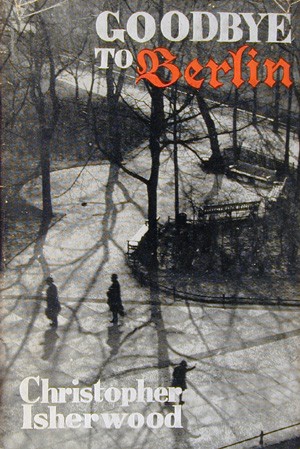
Christopher Isherwood : "Adieu à Berlin"

isherwd.jpg


Christopher Isherwood: «Adieu à Berlin»


«Ainsi défilaient les champions de la Révolution. La flambée de passion propice à la réalisation du rêve ardent de sang et de barricades devrait surgir de cette fourmilière noirâtre?» (Ernst von SALOMON).


La disparition, voici bientôt dix ans, de l'écrivain anglais Christopher Isherwood, auteur, entre autres nouvelles, d'Adieu à Berlin, nous rappelle qu'il faut aborder différemment la littérature traitant des événements qui ont secoué l'Allemagne de la défaite de 1918 à l'avènement du national-socialisme. Isherwood (1904-1986) a traité cette époque de manière magistrale, surtout la véritable période charnière entre 1929 et 1933, époque où il a vécu en Allemagne et a été témoin direct des bouleversements politiques. L'auteur a observé la reconstitution d'une forme particulière d'engagement politique collectif, propre à l'action de l'ère du nihilisme, due à un surplus de volonté accompagnant la décomposition des hautes sphères de la bourgeoisie et le déclin des valeurs civiques, entraînant la disparition du citoyen traditionnel, pacifique et productif.


Adieu à Berlin correspond à ce que Roger Stéphane décrit dans Portrait de l'aventurier comme étant un moment particulier de la culture européenne, où éclot la «désolidarisation d'avec un monde moribond». Ce monde, en effet, produit une “réalité négative et obscure”, où domine un type humain bien cerné par Drieu la Rochelle: «l'homme de main communiste, l'homme citadin, neurasthénique, excité par l'exemple des “fasci” italiens, de même celui des mercenaires des guerres de Chine, des soldats de la Légion Etrangère».


Malgré la volonté d'Isherwood de se distancier de l'horreur et de la violence d'une guerre civile berlinoise se camouflant derrière une fausse normalité, celle des cabarets, des quartiers riches en marge des masses et des hôtels de maître hors de la réalité violente de la rue, sa narration se transforme en une chronique de la révolte aveugle et désespérée, celles des hommes qui diront plus tard: «nous connaissions ce que nous aimions et nous n'aimions pas ce que nous connaissions» (propos rapportés par Ernst von Salomon).


L'importance d'Isherwood réside au fond en ceci: il est curieux d'une époque et d'une atmosphère, il s'en fait donc le chroniqueur et l'historien et, par l'excellence littéraire de son récit, il nous offre un accès aisé à cette trame d'événements qui ont fait les “années décisives” comme les a appelées Spengler. Vue sous cet angle, l'œuvre de l'écrivain anglais, devenu par après citoyen américain, n'est pas seule: sur le plan narratif, nous avons la nouvelle autobiographique d'Ernst von Salomon, Les Réprouvés;  sur un plan plus philosophique, nous avons les Considérations d'un apolitique de Thomas Mann, réflexions, hésitations d'un intellectuel qui est organiquement un citadin et un bourgeois et qui jette son regard sur ce que sont devenues les valeurs des Lumières.


Adieu à Berlin  est donc l'adieu à une époque qui se termine, à ces illusions bourgeoises qui prétendent que “plus rien ne doit se passer”. Adieu à Berlin nous restitue le cadre d'une réalité, nous livre la chronique d'une histoire complexe qui est aussi la récapitulation en condensé d'un large pan de l'histoire européenne contenu tout entier dans les années qui ont immédiatement suivi la défaite allemande de 1918. Dans Les Réprouvés  de von Salomon, on trouve les sédiments de ce qu'expérimentera Isherwood quelques années plus tard. Les thématiques littéraires qui fascineront ou horrifieront l'écrivain anglais étaient déjà nées dans les expériences de ce volontaire des Corps Francs, de ce franc-tireur, de ce terroriste, de cet aventurier, de ce partisan des solutions les plus radicales dans la lutte contre le spartakisme ou contre la République bourgeoise et procédurière de Weimar: Ernst von Salomon.


Isherwood décrit les violences des combats de rues à Berlin, la ville conquise par l'habilité propagandiste du Dr. Goebbels et de son journal agressif, dur, caustique et percutant, Der Angriff. «Dans les murs d'un Berlin qui se transformait, apparaissaient, écrites en lourdes lettres gothiques, les affiches de la peste brune. On pouvait y lire: “l'Etat bourgeois approche de sa fin! Il faut forger une nouvelle Allemagne! Elle ne sera ni un Etat bourgeois ni un Etat de classe! Pour réaliser cette mission, l'histoire t'a choisi, toi, le Travailleur manuel et intellectuel!». Pour sa part, von Salomon ne se fait plus aucun illusion, ses espoirs se sont définitivement évanouis: «Le vin qui fermentait dans les tonneaux de la bourgeoisie, sera un jour bu sous la dénomination de “fascisme”».


Adieu à Berlin est la mémoire qui nous reste d'une civilisation vieille-bourgeoise, démocratique et pluraliste, perdue au milieu de la marée montant du nihilisme s'annonçant dans l'élan et les ruines, dans un nouveau vitalisme, tel celui que prévoit un personnage du livre, Hinnerk: «Unir les jeunesses communistes et hitlériennes et, avec l'aide de ces bataillons unifiés, envoyer au diable les voleurs de la grosse industrie et de la haute finance, avec leurs appendices, ces ordonnances de merde, et ensuite établir, comme loi suprême, comme unique loi décente, la camaraderie (...) Et tu pourras appeler cela socialisme ou nationalisme, cela m'est absolument égal».


Sur les décombres et les différences, Christopher Isherwood salue un écrivain allemand, dont l'idiosyncrasie est foncièrement différente de la sienne, mais dont le constat est pareil au sien: une époque entrait, à Berlin, dans ces années décisives, en extinction.


José Luis ONTIVEROS.

(Trad. franç.: Rogelio PETE).

lundi, 16 mars 2009

R. Scruton : Waarom cultuur belangrijk is

Boekbespreking

Roger Scruton - Waarom cultuur belangrijk is

Ex: http://onsverbond.wordpress.com/

Het is een open deur intrappen als we stellen dat de conservatieve maatschappijvisie in het publieke debat slechts een minderwaardige positie krijgt toegemeten. Doch - eerlijkheidshalve - is deze op dit moment nog onvoldoende georganiseerd. Buiten enkele zeldzame initiatieven zoals de Iskander-rondzendlijst van Vbr. prof. dr. Matthias Storme en bladen zoals Nucleus en TeKoS blijft het in Vlaanderen nagenoeg windstil.

Het is dan ook niet verwonderlijk dat hongerige lezers hun nectar vaak over de grens halen. Zo beweegt boven de Moerdijk heel wat meer. Het initiatief rond het Bitter Lemon, de uitgeverij Aspekt en auteurs als Andries Kinneging en Ad Verbrugge zijn alvast talrijker en ook beter gewapend om het debat te voeden. Daarom achtten wij de kans klein om een nochtans bekende Engelse conservatief als Roger Scruton ooit in Vlaanderen vertaald te zien. Zijn nieuwste boek ‘Culture Counts’ lag daarom bij ons bezoek aan een New Yorkse boekhandel meteen in het winkelmandje. Groot was onze verbazing toen wij enkele maanden geleden dit werk alsnog in een Nederlandse uitgave zagen verschijnen. Erop vertrouwend dat de vertalers zich nauwgezet aan de tekst hielden, wagen wij het erop hier de Engelse versie te bespreken.

Reeds in de inleiding formuleert de schrijver duidelijk het opzet van dit boek: de verdediging van de Westerse cultuur. Hierbij positioneert Scruton zich uitdrukkelijk tegenover zowel haar innerlijke als externe vijanden, resp. de ‘postmodernisten’ en de ‘humorloze islam’. En omdat jarenlange indoctrinatie en inbreuken op onze Europese cultuur hun tol hebben geëist, voelt hij zich niet te goed om terug te grijpen naar de basis en te vertrekken vanuit het definiëren van het begrip ‘cultuur’. Deze dient men te zien als “de kunst en de literatuur waardoor de beschaving tot bewustzijn van zichzelf komt en haar visie op de wereld definieert”. Of het nu de Griekse, Romeinse of Egyptische beschaving betreft, elk heeft daaraan in de geschiedenis zijn eigen invulling gegeven. Men moet werkelijk ziende blind te zijn om te ontkennen dat Europa sinds 1500 jaar met zijn kathedralen, schilderwerken, beeldhouwkunst en architectuur ook een dergelijke beschaving rijk is.

Kathedraal van Chartres, gebouwd tussen 1194 en ca. 1220.

In een tweede fase wenst Roger Scruton antwoord te vinden op volgende twee vragen: hoe kunnen we in deze samenleving ware cultuur (h)erkennen en hoe kan deze worden doorgegeven opdat ze niet verloren gaat. De nieuw-rechtse filosoof Alain de Benoist stelde in dat verband al eerder dat er twee types conservatieven zijn: “zij die de vlam brandend houden en zij die de as koesteren”. Beide pistes krijgen de nodige aandacht bij de Engelse filosoof.

Is cultuur er enkel voor de elite, voor een selecte groep van al dan niet zelfverklaarde intellectuelen? Ja en neen. Neen, omdat ze de overdracht van morele en emotionele kennis betreft en dit zou in principe voor iedereen beschikbaar dienen te zijn en aangeleerd te worden. Ja, omdat het inspanning vergt. De schrijver haalt daarbij uit naar onder meer het medium televisie, dat hij eerder ziet als een verstrooiing. Door het gebruik van snelle beelden en het gebruik van actie en sterke emoties amputeert het de verbeeldingskracht van de Europeaan.

Liefhebbers van poprock zullen het misschien niet graag lezen, maar Scruton vindt deze vorm van muziek ook niet echt cultuur, gezien de focus te veel op ritme en minder op tonaliteit ligt. Hoeft het gezegd dat klassieke muziek wel die harmonie en melodie in zich draagt en daarom de tand des tijds zo makkelijk doorstaat? Samen met bijvoorbeeld een schilderij van Rembrandt of de kathedraal van Chartres slaagt Beethoven erin zijn publiek te imponeren, te laten meeleven. Zonder nochtans te shockeren via obsceniteiten of overdreven sentimentaliteit, waarvan moderne ‘kunst’ vaak doorwrochten is. Neen, ware kunst kenmerkt zich door zijn focus op zijn intrinsieke waarde: l’art pour l’art en geen politieke, economische of zelfs emotionele motieven. Kunst staat op zichzelf en geniet precies daarom aandacht. Het zet aan tot denken, tot reflectie, tot het formuleren van een visie op deze wereld.

Na de lezer vertrouwd te hebben gemaakt met het begrip cultuur en hoe deze op te sporen, rest nog de vraag hoe deze waarde(n)volle cultuur aan onze volgende generaties door te geven, hoe hen te overtuigen van haar rijkdom. Hoeft het gezegd dat de Engelse auteur weinig vertrouwen heeft in de filosofie van scholen zoals Freinet en Steiner? Onderwijs moet kennisgericht zijn, niet kindgericht. Hoe kan het kind immers uit zichzelf weten wat goed, slecht, mooi, lelijk is?

Onze cultuur is boven alles de moeite waard te worden overgedragen en verspreid. Nochtans staan adepten van de Frankfurter Schule klaar om de cultuur van de zogenaamde ‘Dead white men’ neer te sabelen en te brandmerken als seksistisch, racistisch en dies meer. Ook heel wat moslims springen op de kar en zien de kans schoon om met de christelijke concurrent af te rekenen. Edward Saïd is misschien de bekendste telg van deze strekking met zijn boek ‘Orientalism’.

Scruton toont echter aan dat er geen reden is waarom onze Europese cultuur zich zou moeten schamen voor haar verleden. Evenmin zou deze minder aandacht of respect tonen voor vreemde invloeden dan bijvoorbeeld in islamitische landen het geval is. Anderzijds stelt de schrijver terecht dat precies ‘verlichte’ academici, actief in bijvoorbeeld vrouwenstudies, vaak wetenschappelijke kritiek ter zijde schuiven als deze indruist tegen hun politieke overtuiging. Indien de Europese cultuur het vrije woord, onderwijs en wetenschappelijk onderzoek niet had gekoesterd in haar schoot, zouden we nooit op bijvoorbeeld technologisch vlak zo’n grote sprongen voorwaarts hebben gemaakt. Wetenschap en cultuur of in extenso wetenschap en christelijke religie vormen geen tegenspraak.[1] Zou het kunnen dat onder zogenaamde intellectuelen ‘geestelijke vadermoord’ gemeengoed is geworden?

Met dit boek heeft Scruton als specialist inzake esthetica en filosofie opnieuw een interessant werk afgeleverd. Akkoord, het boek is niet altijd even toegankelijk en verdient daarom af en toe de nodige reflectie en bezinning. Maar wie de boodschap heeft gevat, beseft meer dan ooit dat onze Europese cultuur meer dan de moeite waard is te worden beleefd en overgedragen. Uit respect voor het verleden, met een blik op de toekomst.

Vbr. OS lic. rer. oec. et merc. Pieter Vandermoere

vendredi, 13 février 2009

Het vergeten conservatisme

Het Vergeten Conservatisme

samedi, 17 janvier 2009

London - urbanes Testlabor der "One World"

London – urbanes Testlabor der »One World«

Gefunden : http://www.deutsche-stimme.de

Moscheen, Synagogen, Hindutempel – so wie die Themsestadt könnten bald auch deutsche Städte aussehen

Von wegen »britische« Polizei – auch die Behörden
in Großbritannien sind längst auf »Multikulti«-Kurs

Die Stadt an der Themse war einst unbestrittener Nabelpunkt der Welt und das Zentrum transnationaler Handels- und Kolonialpolitik. Auf einem Viertel des Erdballs flatterte der Union Jack, bis die vorletzte Jahrhundertwende den Höhepunkt des kolonialen Hegemonialanspruchs Großbritanniens markierte.

Seither befand sich die Hauptstadt des Vereinigten Königreichs in stetigem Wandel. London ist nicht mehr der Ausgangspunkt des britischen Expansionsdranges, sondern ein multikultureller Schmelztiegel ganz nach dem Geschmack großkapitalistischer »Global Players«. Stadt und Umgebung mutierten zum Babylon Europas. Im einstigen Zentrum des britischen Weltreiches werden heute 300 Sprachen gesprochen, es gibt 183 Synagogen, 130 Moscheen und 37 Hindu-Tempel – Europas Babylondon.

Großbritanniens koloniales Erbe und die weiterhin enge Verbindung des Inselstaats mit den ehemaligen Kolonien im Commonwealth schuf jenen besonderen Einwanderungsdruck, dessen Intensität mit einem Pendelschwung zu vergleichen ist. Während die britische Geschichte infolge der Vormachtstellung des Königreichs auf See von starken Auswanderungswellen geprägt war, in deren Verlauf Engländer, Schotten und Waliser fremde Kontinente besielten und wirtschaftlich erschlossen, änderte sich die Richtung der Menschströme schlagartig in den siebziger Jahren.

Oberste Devise der jeweiligen Kolonialverwaltungen war es, die überseeischen Landstriche eng an das »britische Mutterland« zu binden und Schulwesen und Rechtsprechung kopiert und möglichst unverfälscht auf die jeweiligen Kolonien zu übertragen. Es ist daher nicht verwunderlich, daß mit Beginn der siebziger Jahre die erste große Einwanderungswelle aus der Karibik, aus Indien, Pakistan und Bangladesch auf London hereinbrach.

Natürliche migrations-hemmende Barrieren wie die Unkenntnis der Sprache, der landesüblichen Gepflogenheiten, der Gesetzeslage und der kultureller Exklusivität stellten kaum Hindernisse für die einreisenden Fremden dar. Um die letzte Jahrhundertwende zogen dann vermehrt reiche Russen nach London. Rund 250 000 Russen haben London zum »Moskau an der Themse« gemacht – mit drei florierenden russischen Tageszeitungen und vier eigenen Schulen.

Keine Meldepflicht für Immigranten

Im Zuge der EU-Osterweiterung 2004 kamen schließlich Polen, Slowenen, Tschechen und Slowaken ins Königreich. Die meisten der osteuropäischen Zuwanderer stammen aus Polen. Sonntags sind beispielsweise nunmehr die Besucher von katholischen Gottesdiensten gegenüber den traditionellen Briten als Anglikaner in der Überzahl.

Allein seit 2004 sind schätzungsweise 1,8 Millionen Ausländer ins Land gekommen, allein nach London 650.000 Einwanderer, so der Daily Telegraph. Es fehlen aber präzise Zahlen, weil es im Vereinigten Königreich keine Meldepflicht gibt.

Zwei entscheidende Gründe machten diesen zweiten großen Zustrom möglich. Erstens: Die Labour-Regierung unter Tony Blair verzichtete 2004 nach dem Beitritt der osteuropäischen Staaten in die Europäische Union auf eine entsprechende Regulierung für den heimischen Arbeitsmarkt. Dieser freiwillige Verzicht auf eine Begrenzung hinsichtlich des Schutzes einheimischer Arbeitskräfte wurde bitter bestraft und begünstigte die Masseneinwanderung massiv.

Da – zweitens - infolge eines konjunkturellen Aufschwungs in den Jahren zwischen 1997 und 2007 mehr als zwei Millionen Arbeitsstellen geschaffen wurden, beugte sich die Labour-Regierung dem Druck der Wirtschaftslobbyisten und schuf jenen verhängnisvollen Umstand, den der konservative Politiker Chris Graylingin die Worte faßte: »Die Regierung schuf britische Jobs für ausländische Arbeitskräfte«. Auf keinen Fall herrscht in Großbritannien auch nach dieser »Job-Offensive« Vollbeschäftigung. Das Arbeitsministerium mußte einräumen, daß mehr als 80 Prozent aller neuen Stellen von Ausländern besetzt wurden.

Afrikanische Autohändler in Elephant&Castle

»Die Welt in einer Stadt« – mit diesem Motto bewarb sich London in der Bewerbungskampagne zur Austragung der olympischen Spiele 2012. In den vergangenen zehn Jahren sind mehr Ausländer nach London gezogen als nach New York. Die »Tube« – die Londoner Untergrundbahn verbindet ganze Erdteile miteinander. Von den polnischen Delikateß-Läden in West-London über den Currymarkt in Southall führt die Fahrt den Reisenden bis zu afrikanischen Autohandelsplätzen in Elephant&Castle.

Derzeit ist in London mit seinen Vororten jeder dritte gemeldete Einwohner außerhalb Großbritanniens geboren worden – in der Stadt London selbst mit mehr als sieben Millionen Einwohnern sind es fast 40 Prozent. Nur noch zwei von drei Londonern sind weiß, da auch statistisch Angehörige der zweiten und dritten Generation in Großbritannien nicht mehr als Ausländer erfaßt werden.

Auch andere britische Städte sind ein Vielvölkergemisch. Die Statistik besagt zwar, daß der Ausländeranteil in Deutschland höher liegt, aber das trügt: In Großbritannien kann man sich viel leichter einbürgern lassen, und deshalb werden die meisten Ausländer auf den Inseln irgendwann als Passport-»Briten« geführt.

Ohne Ausweiskontrollen, Einreisekriterien und Anstellungskontingente wird der Moloch laut Zukunftsprognosen weiter anschwellen. Ein Blick auf die Fernsehbildschirme, die sich in der Berichterstattung zu den Bombenanschlägen im Juni 2005 überschlugen, offenbart dem Zuschauer nicht mehr die Sicht auf eine europäische Stadt. Träger von Turban, Kaftan und Burka dominieren Londons Straßenbild.

In der Innenstadt Londons (City of London, das Viertel der globalen Hochfinanz) hört man häufig Englisch mit Akzent: 27 Prozent aller Beschäftigten in der City sind Ausländer. Die Schwerreichen aus Rußland, Amerika, Indien, den Golfstaaten und vielen anderen Teilen der ganzen Welt profitieren von den Steuerprivilegien für Ausländer.

Einheimische – nur noch Minderheit unter vielen

Nur britische Einkünfte müssen an den Staat versteuert werden – alle anderen Einnahmen bleiben steuerfrei. Zwar sollen Ausländer, die länger als sieben Jahre in Großbritannien wohnen, ab April dieses Jahres einen Pauschalbetrag von jährlich 30.000 Pfund bezahlen. Doch »für die wirklich Reichen wird dies nicht mehr als ein lästiger Flohbiß sein«, sagt Vince Cable, finanzpolitischer Sprecher der Liberaldemokraten.

Rund 66 Prozent der Edel-immobilien mit einem Preis von mehr als zwei Millionen Pfund (2,7 Millionen Euro) sind nach Angaben der Maklerfirma Knight Frank im Besitz von Ausländern.

Das Privatleben der Hochfinanz findet immer noch weitgehend in den westlich gelegenen Edelstadtteilen Kensington und Chelsea, Knightsbridge, Mayfair und Notting Hill statt. Hier leben die begüterten Briten und Ausländer, und hier verschwimmen die Grenzen zwischen den Nationalitäten – die Wohlhabenden und Superreichen bilden eine Multikulti-Klasse für sich. Die Mehrheit der zugereisten Fremden bleibt naturgemäß ethnozentrisch und weiterhin unter sich und die Ghettoisierung einzelner Volksgruppen prägen die Viertel Londons.

Europas erstes Babylon ist unzweifelhaft London. Andere Städte wie Paris, Stuttgart, Freiburg und Mannheim werden dem Beispiel Londons in Kürze folgen. Es ist nur eine Frage der Zeit, bis das abendländische Antlitz deutscher Städte nicht nur verschwommen, sondern gänzlich unkenntlich sein geht. Es liegt am Willen des Volkes, es nicht soweit kommen zu lassen.

Mathias Krebs

jeudi, 01 janvier 2009

Une figure du 20ème siècle : James Connolly

Une figure du 20ème siècle, James Connolly

Image Hosted by ImageShack.usMarxiste, révolutionnaire, syndicaliste et Irlandais. C’est ainsi que l’on peut définir James Connolly (1868-1916). S’il fut un infatigable rédacteur d’articles et auteur d’essais, il fut aussi un militant proche des ouvriers dont il défendait la cause que ce soit en Écosse, aux États-Unis ou en Irlande. Il est l’un des dirigeants de l’insurrection de Pâques 1916, les « Pâques sanglantes ».
La jeunesse

James Connolly (Séamas O Conghaile en gaélique) est né le 5 juin 1868 à Édimbourg, dans une famille d’origine irlandaise, émigrée suite aux famines des années 1840. Des conditions de vie misérables le font très tôt entrer en contact avec le monde du travail, puisqu’il est successivement apprenti imprimeur, apprenti boulanger et apprenti dans une tuilerie à Edimbourg, à partir des années 1878-1879. En 1882 (il a 14 ans) il s’engage au 1er bataillon du King’s Liverpool Regiment qui est affecté en Irlande, ce premier contact avec le pays de ses ancêtres s’avérera décisif ; il y rencontre Lillie Reynolds qui deviendra sa femme en 1889.

Les années écossaises

En 1889, son batailon revient en Angleterre et geste incompréhensible, à quatre mois de la fin de son engagement, il déserte l’armée anglaise, et s’exile en Écosse. Le 13 avril, il épouse Lillie Reynolds à Perth. À Édimbourg, il fait la connaissance du Français Léo Melliet, un communard qui fut maire du quartier des Gobelins en 1870. Ces années écossaises sont celles de l’apprentissage politique, au contact des militants socialistes (il rencontre à plusieurs reprises la fille de Karl Marx, Eleonor Aveling) et autres révolutionnaires, mais aussi de l’étude du Marxisme. Trois ans plus tard, il est nommé secrétaire de la Scottish Socialist Federation ; ses premiers articles sont publiés dans Justice, le journal de la Social Democratic Federation (SDF). En 1894 et 1895 il se présente par deux fois aux élections municipales de St Giles Ward à Edimbourg, ce sont deux échecs. Connolly, sans emploi, sa famille connaît la misère. John Leslie loue dans Justice les qualités rédactionnelles et organisationnelles de son ami ; la réponse vient d’Irlande, Le Dublin Socialist Club lui propose un poste de permanent.

L’activiste en Irlande

L’année suivante, il revient donc en Irlande pour s’y installer et travaille désormais au Dublin Socialist Club dont il veut faire une organisation marxiste. Le 29 mai, il crée, avec sept autres socialistes, le l’Irish Socialist Republican Party dont il est secrétaire. Au mois d’octobre, publication de son essai « L’Irlande aux Irlandais » dans Labour Leader et parallèlement « The Rights of Ireland and the Faith of a Felon » de James Fintan Lalor.

Au mois de mars 1897, nouvelle publication : « Erin’s Hope : The End and the Means ». Il est arrêté au mois de juin, alors qu’il participe à des manifestations contre le jubilé de la reine Victoria. À la fin de l’année il fonde le Club 98 pour commémorer la révolution de 1798. Il entreprend avec Maud Gonne la rédaction d’un manifeste sur le problème de la famine : « Les Droits de la vie et les Droits de la propriété ». Au mois de juin de cette année 1898, il se rend en Écosse et rencontre Keir Hardie du Independent Labour Party. Le 13 août il lance son journal Worker’s Republic dont la parution irrégulière (85 numéros) se poursuivra jusqu’en mai 1903 (une deuxième série hebdomadaire du Worker’s Republic paraîtra du 29 mai 1915 au 22 avril 1916 à Dublin. Le congrès de la IIe Internationale se déroule à Paris en 1900, E. W. Stewart et John Lying sont les représentants de l’Irish Socialist Republican Party.

1901 voit la publication de « The New Evangel » ; Connolly est élu au Trades Council de Dublin. En janvier de l’année suivante, il est candidat malheureux aux élections municipales de Dublin. Au mois d’août il participe à des meetings aux États-Unis à l’invitation du Socialist Labor Party de Daniel De Leon. Il collabore avec la rédaction de The People à New York 1903, après une nouvelle défaite électorale aux municipales, il part en tournée en Écosse où il préside en juin à Edimbourg le meeting inaugural du Socialist Labor Party (SLP), une dissidence de la Social Democratic Federation (SDF). De retour à Dublin, l’Irish Socialist Republican Party se transforme en section Irlandaise du SLP.

Le séjour américain

En septembre, Connoly part s’installer aux États-Unis, il prend un emploi d’agent d’assurance et adhère au SLP de De Leon. Il prend connaissance de la situation des Irlandais qui ont émigré antérieurement. Sa famille le rejoindra au mois d’août de l’année suivante. En 1906, il adhère à l’Industrial Workers of the World (IWW) syndicat, créé en 1905 par Eugene Debs ; il milite notamment auprès des travailleurs des usines Singer. Au mois de janvier 1907, il est élu à la direction du SLP, puis en mars il crée l’Irish Socialist Federation (ISF). En octobre, il démissionne du SLP suite à une violente polémique avec De Leon et achève la rédaction de « Mouvement ouvrier dans l’histoire irlandaise ». En janvier suivant, il crée The Harp, le journal de l’ISF à New York, tout en poursuivant son action au sein de l’IWW ; en décembre, il publie « Le Socialisme pour tous ». Au mois de juin 1909, Connolly est élu organisateur national du Socialist Party of America, dont le leader n’est autre qu’Eugene Debs. Connolly considérera son émigration comme une erreur et, témoin de l’évolution de la situation en Irlande, décide de rentrer.

Les dernières années

Le 16 juillet 1910, il est de retour en Irlande et en août il adhère au Socialist Party of Ireland (SPI), et s’en va créer les sections de Belfast et de Cork. Il poursuit son activité littéraire en publiant successivement Mouvement ouvrier, Nationalité et Religion, puis Mouvement ouvrier dans l’histoire irlandaise. 1911 voit son installation à Belfast (mars) et son adhésion au syndicat Irish Transport and General Workers’ Union (ITGWU). En octobre, il coordonne la grève des ouvrières dans les minoteries de Belfast et participe à la création d’une section textile de l’ITGWU. L’année suivante, il est l’un des co-fondateurs de l’Irish Labour Party (ILP) dont il rédige le programme. En janvier 1913, création de l’Ulster Volunteer Force (UVF - unioniste). Le 26 août marque le début de la grève générale à Dublin et le 31 de violents affrontements entre policiers et grévistes font une victime, une jeune ouvrière et des dizaines de blessés. Connolly est arrêté, il entame une grève de la faim et est relâché le mois suivant. Le 23 novembre, c’est la création de l’Irish Citizen Army (ICA - nationaliste) par James Connolly et James Larkin ; le but est de protéger les ouvriers et les grévistes. L’ICA sera une des composantes de l’IRA (Irish Republican Army). Dés 1914, Connolly se prononce contre la partition de l’Irlande et au mois d’août prend position contre la guerre dans un article de l Irish Worker. Parallèlement, il est nommé président de l’Irish Neutrality League (INL). Le 24 octobre, Larkin émigre aux États-Unis, Connolly occupe le poste de secrétaire général de l’ITGWU. Il prend la direction de l’Irish Worker (bientôt interdit par les autorités) et le commandement de l’ICA. 1915 est une année de préparation, annonciatrice de celle qui va suivre : outre l’organisation de meetings contre la conscription, il publie des articles sur la lutte armée. Il s’occupe de la formation militaire de l’Irish Citizen Army et négocie avec les Irish Volunteers les conditions d’un soulèvement. En décembre, il publie La Reconquête de l’Irlande au titre prémonitoire.

1916, en janvier il est décidé que le soulèvement aura lieu à Pâques. Le lundi 24 avril 1916, des membres de l’ICA et des Volunteers prennent le contrôle de divers bâtiments dans Dublin (Hotel des Postes, Mendicity Institute, Four Courts, biscuiterie Jacobs, moulins à farine Boland, etc). Proclamation du gouvernement provisoire de la République Irlandaise dont Connolly est vice-président (président : Patrick Pearse), il est aussi commandant général de la division de Dublin de l’Irish Republican Army (IRA - fusion de l’ICA et des Irish Volunteers). Les combats vont durer 6 jours et faire 450 morts et plus de 2600 blessés. Le 27, il est grièvement blessé. Le samedi 29, Pearse propose aux membres du Gouvernement provisoire d’arrêter les combats, dans le but d’épargner la population civile de Dublin ; son avis prévaut en dépit de l’acharnement des jusqu’au-boutistes ; Pearse signe la reddition inconditionnelle de l’armée républicaine irlandaise. La loi martiale décrète 16 exécutions capitales, 3226 arrestations, 1862 internements en Angleterre. Le 9 mai, James Connolly est condamné à mort par la cour martiale, et fusillé le 12 à la prison de Kilmainham à Dublin.

Source : Jeune Bretagne


Article printed from :: Novopress.info Flandre: http://flandre.novopress.info

URL to article: http://flandre.novopress.info/?p=3873


dimanche, 30 novembre 2008

Un torque en or de l'âge de fer

Un torque en or de l'age de Fer découvert en Angleterre

AFP 20/11/2008 : "Un rare collier en or datant de l'âge de Fer, d'une valeur estimée à 350.000 livres (414.000 euros), a été découvert dans un champ du centre de l'Angleterre par un chercheur de métaux amateur, a rapporté jeudi le Guardian.

Présenté par un expert comme la plus belle découverte d'un objet de cette époque depuis un demi-siècle, ce collier vieux de 2.200 ans se trouvait dans un champ. [...] "C'est quelque chose de fabuleux, la plus belle découverte datant de l'âge de Fer depuis 50 ans", a estimé JD Hill, responsable de la section consacrée à cette période au British Museum. "Ce qui est fascinant, c'est qu'il a été trouvé dans un endroit où aucun torque (ndlr collier métallique ancien) n'est censé se trouver", a-t-il ajouté. "Le moins qu'on puisse dire, c'est que la région de Newark n'est pas réputée pour être un haut-lieu des découvertes de l'âge de Fer".

00:15 Publié dans archéologie | Lien permanent | Commentaires (1) | Tags : angleterre, âge du fer, protohistoire, british museum | |  del.icio.us | | Digg! Digg |  Facebook

vendredi, 22 août 2008

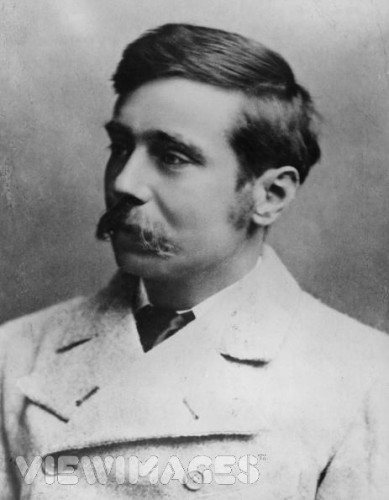
Brèves réflexions sur l'oeuvre de H. G. Wells

3251550.jpg

Werner OLLES:


Brèves réflexions sur l’oeuvre de H. G. Wells


Incontestablement,  Herbert George Wells est l’un des plus intéressants écrivains du 20ème siècle, à facettes multiples. Son oeuvre complète comprend près de cent volumes et va de la théorie (en biologie, en histoire contemporaine, en philosophie et en politique) à ces romans et récits devenus si célèbres dans le monde entier. Toutes ces créations littéraires sont des exemples de perfection en matière de littérature fantastique et utopique: de véritables classiques de la narration contemporaine. Wells est entré dans l’histoire intellectuelle de notre monde comme le père fondateur de la littérature de science-fiction et comme l’un des plus géniaux écrivains de ce genre.


H. G. Wells est né le 21 septembre 1866 dans la petite ville de Bromley dans le Comté de Kent en Angleterre. Son père était jardinier; plus tard, ses économies lui permirent d’ouvrir un petit commerce d’étoffes mais sa carrière de commerçant ne fut guère brillante. Le foyer parental était petit bourgeois, bigot, ce qui limitait les perspectives du jeune Wells. De cette époque de jeunesse date également son antipathie profonde à l’encontre du catholicisme qu’il abhorrait véritablement, l’accusant d’être une pensée pré-bourgeoise. La haine intense qu’il cultivait pour le culte “romain”, accusé d’être contre-révolutionnaire et médiéval, hostile à la modernité, l’amena même à plaider, pendant la seconde guerre mondiale, pour une destruction complète de Rome par les bombardiers alliés. Cette violente position anti-catholique le mettait pourtant en porte-à-faux par rapport à de nombreux intellectuels et écrivains anglais de son époque mais ne le dérangeait pas outre mesure: beaucoup d’écrivains anglicans en effet, comme Graham Greene, Evelyn Waugh, G. K. Chersterton ou Julien Green se convertirent au catholicisme.


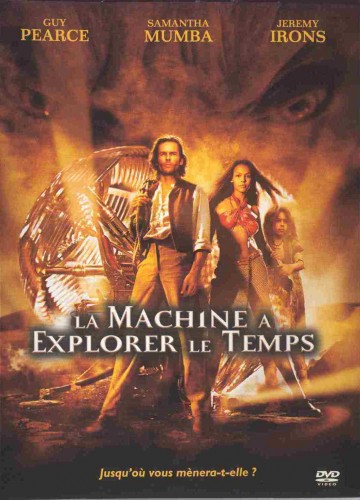
Déjà dans ses premiers ouvrages, comme “La machine à remonter le temps”, un récit fantastique où un inventeur s’envole vers le futur, il se percevait lui-même en héros. De manière parfaitement prosaïque, il décrit un petit paradis où débarque son “voyageur à travers le temps”; y vivent les “Eloïs”, des créatures affables qui vivent en dehors de tous soucis. Mais bien vite, l’inventeur et voyageur remarque que cette société, en apparence si paisible, est pourtant soumise à la terreur le plus brutale. Les “Eloïs”, en effet, sont rançonnés et exploités par les Morloks, des monstres souterrains qui les massacrent sans pitié.


machineExplorer.jpg


Dans “L’Ile du Dr. Moreau”, le héros est un scientifique expulsé d’Angleterre qui mène des  expériences dans une île du Pacifique Sud, afin de transformer des animaux en demi-êtres à la suite d’opérations chirurgicales précises. Moreau, vivisectionniste démoniaque, est simultanément un Prométhée et un dieu punisseur. Les parallèles avec le récit de la Genèse sont flagrants: l’homme est toujours menacé de glisser à nouveau vers l’état de la bête et, à l’instar des créatures fabriquées par Moreau, les hommes, eux aussi, sont condamnés à la souffrance.


Wells s’était engagé dans la “Fabian Society”, une association de socialistes britanniques mais ce ne fut que pour une courte durée. Ses rêves sociaux-révolutionnaires se sont assez rapidement évanouis et il se tourne alors vers la métaphysique. Dans “La guerre des mondes”, il décrit comment des extra-terrestres réduisent l’Angleterre en cendres. Dans les années 30, Orson Welles fit de ce récit un reportage radiophonique qui semblait si vrai que des dizaines de milliers  d’Américains prirent la fuite, en panique devant cette invasion imminente de Martiens. Dans “Les géants arrivent”, il pose la question: les hommes, comme jadis les dinosaures, sont-ils condamnés à disparaître?


A la fin de sa vie, l’évolution de la politique et le développement des technologies firent de lui un pessimiste (voir son essai: “L’esprit est-il au bout de ses possibilités?”). H. G. Wells meurt le 13 août 1946 à l’âge de 79 ans à Londres.


Werner OLLES.

(article paru dans “Junge Freiheit”, Berlin, n°33/2006; trad. franç.: Robert Steuckers).

vendredi, 25 juillet 2008

Tolkien over financierders

Tolkien over financierders


“De ware vergelijking is: “democratie” = regering door wereldfinancierders… Het hoofdkenmerk van moderne regeringen is dat wij niet weten wie regeert, zowel de facto als de jure. Wij zien de politicus en niet zijn beschermheer; nog minder de beschermheer van de beschermheer of wat het belangrijkste van allemaal is: de bankier van de beschermheer. Getroond boven allen, op een manier zonder gelijke in heel het verleden, is de versluierde profeet van de financiën. Hij beheerst alle levende mensen door een soort van magie en levert orakels in een taal niet begrepen door de mensen”.

J.R.R. Tolkien,
Candour Magazine, 13 July 1956, p. 12