Commentaries published on this website, most notably by Richard Spencer and Elizabeth Wright, have underlined the problems with the Tea Party movement and its most prominent representatives. These pointed observations about Glenn Beck, Rand Paul, Sarah Palin, and Christine O’ Donnell have all been true; and if I have more or less defended some of these figures in the past, I’ve done so, while conceding most of the argument made against them. I agree in particular with Elizabeth Wright’s brief against Rand Paul’s stuttering attempt to object to the public accommodations clause in the Civil Rights Act and her withering attack on Glenn Beck’s recent “carnival of repentance” in Washington.
Elizabeth concludes that such soi-disant critics of the Left cannot bring themselves to find fault with any excess in the Civil Rights movement -- and especially not with its far leftist icon Martin Luther King. “Conservatives” are so terrified of being called “racists” or for that matter, sexists or homophobes, that they devote themselves tirelessly to showing they are just as sensitive as the next PC robot. Indeed, they often go well beyond anyone on the left in genuflecting before leftist icons. This was the purpose of the Martin Luther King-adoration rally held by Beck in Washington.
And even more outrageously, such faux conservatives accuse long-dead Democratic presidents, who were well to the right of the current conservative movement, of being more radical than they actually were. It would be no exaggeration to say that Wilson and FDR were far more reactionary than any celebrity in the Tea Party movement. One could only imagine what such antediluvian Democrats would have said if they had heard last year’s “Conservative of the Year,” chosen by Human Events, Dick Cheney, weeping all over the floor about not allowing gays to marry each other. And what would that stern Presbyterian and Southern segregationist Wilson have thought about the cult of King or the attempts by Tea Party leaders Palin and McDonnell to impose feminist codes of behavior on business and educational establishments. Wilson had to be dragged even into supporting the extension of the franchise to women.
The Tea Party sounds so often like the Left because it is for the most part a product of the Left. Its people were educated in public schools, watch mass entertainment, and have absorbed most of the leftist values of the elite class, to whose rule they object only quite selectively. From the demonstrators’ perspective, that elite isn’t patriotic enough in backing America’s crusades for human rights and in looking after the marvelous welfare state we’ve already built. The Tea Party types are understandably upset that their entitlements may be imperiled, if the current administration continues to run up deficits. This is the essence of their anti-government rant. And above all they don’t want more illegals coming into the country who may benefit from the social net and who may be receiving tax-subsidized medical care.
But this, we are assured, has nothing to do with race or culture. In fact the Tea Party claims to be acting on behalf of blacks and legally resident Latinos, in the name of Martin Luther King and all the civil rights saints of the past. It just so happens that almost all these activists are white Christians. Nonetheless, they are also people, as Elizabeth perceptively notices, who would like us to think they’re acting in the name of other ethnic groups, even if those groups don’t much like them. As four “young conservatives” explained to the viewers of the Today show last week, the Right wishes to lower taxes, specifically “to make jobs available to black Americans.” Unfortunately black Americans loathe those reaching out to them, presumably as a gesture of repentance as well as in pursuit of votes.
Those “conservatives” who want a moderate but not excessive welfare state and who act in the name of blacks, Latinos and dead leftist heroes, are fully tuned in to the conservative establishment. According to polls, these folks love FOX-news and avidly read movement conservative publications. Palin, Sean Hannity and Karl Rove, all FOX contributors, are among their favored speakers; and the Tea Party’s likely candidate for president, Sarah Palin, is now surrounded by such predictable neocon advisors as Randy Scheuermann and Bill Kristol. Even with her insipid, ungrammatical phrases about reducing the size of government, Palin already looks like an updated, feminine and feminized version of what the GOP has been running for president for decades, with neocon approval.
Actually one shouldn’t expect anything else from the Tea Party. In the 1980s the conservative movement witnessed a monumental sea change, when the neoconservatives assumed full power and proceeded to kick out dissenters. This development shaped the future of the Right, and its effects are still with us. The neoconservatives not only neutralized any real Right but also managed to infantilize what they took over. An entire generation of serious conservative thinkers were bounced out and replaced by either lackeys or by those who were essentially recycled liberal Democrats. The latter had recoiled from the anti-Zionist stands of the leftwing of the Democratic Party and then were given as a consolation prize carte blanche to swallow up the conservative movement.
Afterwards the establishment Right began to move in the direction of the Left, and it did so while limiting the range of disagreement with its opponents to a few acceptable talking points. The emphasis was on Middle Eastern intervention, disciplining anti-Semitic nations, and spreading “democratic values.” Internally the neocon Herrenklasse had no real interest, except for being able to do favors for corporations that financed them and for the Religious Right, which is fervently Zionist. The notion the neocons bestowed depth on the conservative movement may be the most blatant lie ever told. What they brought was agitprop, of the kind practiced by Soviet bureaucrats, and armies of culturally illiterate adolescents to turn out their party propaganda.
In all fairness, it must be said that the master class tolerated other points of view, for example from Catholic Thomists or Evangelicals, as long as these religiously inspired positions didn’t interfere with what counted for the neocons. Those who called the shots would also occasionally demand from their dependents certain favors, in return for subsidies and publicity, e.g., stressing the compatibility of Christian theology with neocon policies. Freeloading intellectuals could only be tolerated for so long.
This hegemony had two noticeable effects on the current Right, aside from the unchanged role of the neocons as the main power-players. The rightwing activists shown on TV and those they support in elections include badly educated duds, and these are individuals who often don’t sound like anything an historian might recognize as conservative. Their yapping about human rights (supposedly there is now a human right to own a gun) and their outpouring of the politics of guilt, as noted by Elizabeth Wright, are just two of their weird characteristics. About ten years ago I gaped with astonishment when I read a commentary by Jonah Goldberg explaining that the Catholic counterrevolutionary Joseph de Maistre was really a far leftist. It seems that Maistre questioned the idea of universal human rights und dared to note that human beings were marked by different national and ethnic features. These quirks, according to Goldberg, belong exclusively to the left, like “liberal fascism.” When the intellectual Right can come up with such nonsense and then parley it into a fortune, it is hard to imagine any lower depths of cultural illiteracy to which it could sink.
The “conservative wars” of the 1980s, which involved mostly a mopping up operation, also led to a hard Right that is unrelated to any other American intellectual Right. Those associated with this Right wish to have nothing to do with the failed or decimated Old Right that was smashed decades ago. It has found its home among the thirty-some generation and even more, among younger conservatives who are not part of the DC neocon network. One finds among these militants an almost primitive counterrevolutionary mentality. It is one that has taken form as an impassioned reaction to the Left’s masquerading as the Right, which began with the neoconservatives’ ascendancy to total domination. Although I have my reservations about what I’m describing, it must be seen as a spirited response to a fraud as well as to something that is intellectually and aesthetically vulgar.
Clearly this youthful Right is in no way influenced by Russell Kirk or by other “cultural conservatives” of an earlier generation. Its advocates reject a Right that was co-opted by the neocons and by those who are thought to have failed to resist that fateful takeover. Nor would most of those in the “culturally conservative” camp (Jim Kalb may be the exception here) feel comfortable with the exuberant reactionaries of the rising generation. Many of them sound like neo-pagans because they are convinced that the Western religious tradition has given rise to what they condemn as “the pathology of egalitarianism.” The French New Right, Nietzsche, and Carl Schmitt have all shaped this still inchoate youthful American Right. In their case Europe has cast its shadow on the US, unlike the multicultural Left, which, as I have argued in several books, is our poisonous gift to the Europeans.
The emergence of this anti-egalitarian Right and the infantilization of movement conservatism indicate what can not be undone. The American Right has changed irreversibly because of what occurred during the Reagan years and in the ensuing decade. We shall continue to live with the consequences.




 del.icio.us
 Digg
Digg Facebook


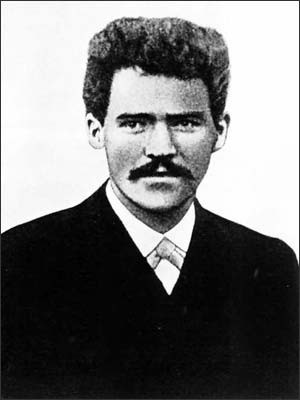 Comenzamos por señalar la corriente darwinista que reinterpretó la lucha de clases como una lucha de razas, en la que destaca la obra de Ludwig Gumplowicz (Der Rassenkampf), judío de origen polaco que, casualmente, sería considerado como maestro sociológico por el germanista radical Ludwig Woltmann. Precisamente, increpado Gumplowicz por su discípulo Woltmann al haber abandonado el concepto de raza, el sociólogo nostálgico respondió en los siguientes términos: «Me sorprendía … ya en mi patria de origen el hecho de que las diferentes clases sociales representasen razas totalmente heterogéneas; veía allí a la nobleza polaca, que se consideraba con razón como procedente de un tronco completamente distinto del de los campesinos; veía la clase media alemana y, junto a ella, a los judíos; tantas clases como razas … pero, en los países del occidente de Europa sobre todo, las distintas clases de la sociedad hace ya mucho tiempo que no representan otras tantas razas antropológicas y, sin embargo, se enfrentan las unas a las otras como razas distintas …».
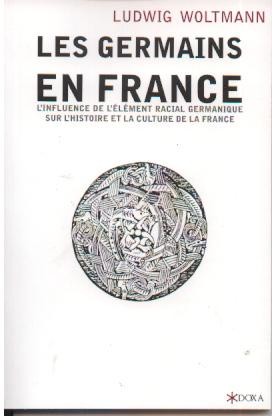 Las tesis iniciales de Woltmann, no obstante lo anterior, irían cobrando un intenso matiz germanista, hasta el extremo de no tolerar la unión de los alemanes con otras ramas de la familia nord-europea. Es más, una posible asimilación de los otros pueblos germánicos –daneses, holandeses, etc- la condicionaba a su dominio por parte de una gran Alemania. La extravagancia de Woltmann, que partía de la idea según la cual el valor de una civilización depende de la cantidad de raza rubia germana que contenga, le hizo asegurar que los grandes hombres (nobles, políticos, artistas, filósofos, etc) más representativos de la cultura y la sociedad italiana, francesa y española eran, sin duda alguna, de ascendencia germánica, pensando que sus cualidades anímicas y espirituales revelarían siempre los caracteres antropológicos del germano, dolicocéfalo y rubio, aun cuando su apariencia física externa fuera la de un alpino braquicéfalo o la de un oscuro mediterráneo.
Paul E. Gottfried
Paul Gottfried has spent the last thirty years writing books and generating hostility among authorized media-approved conservatives. His most recent work is his autobiography Encounters; and he is currently preparing a long study of Leo Strauss and his disciples. His works sell better in Rumanian, Spanish,Russian and German translations than they do in the original English, and particularly in the Beltway. Until his retirement two years hence, he will continue to be Raffensperger Professor of Humanities at Elizabethtown College in Elizabethtown, PA.