


jeudi, 17 octobre 2013
EL DRAMA DE LAMPEDUSA Y SUS MUCHOS CULPABLES
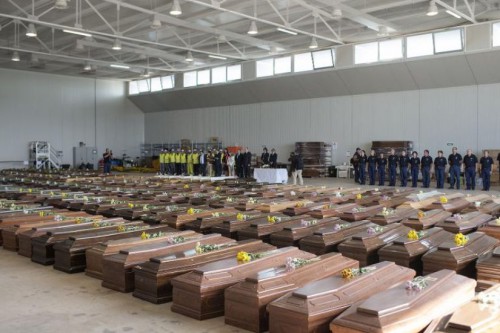
EL DRAMA DE LAMPEDUSA Y SUS MUCHOS CULPABLES
Enrique Ravello
Ex: http://enricravello.blogspot.com
El 8 de octubre, cinco días después de la trágica muerte de decenas de inmigrantes “sub-saharianos” en las costas de la isla italiana de Lampedusa, era detenido Bensalem Khaled, un tunecino de 35 años, considerado el responsable de la mafia que pretendía hacer entrar a esos inmigrantes en Italia de forma clandestina.
00:05 Publié dans Actualité, Affaires européennes | Lien permanent | Commentaires (0) | Tags : politique internationale, europe, affaires européennes, italie, lampedusa, immigration, méditerranée, actualité |  |
|  del.icio.us |
  |
|  Digg |
  Facebook
La Russie et l’ONU contre l’OTAN

La Russie et l’ONU contre l’OTAN
Nous avions déjà fait un parallèle entre les faux-massacres attribués aux Serbe en Bosnie et au Kosovo, et les tentatives de montages du même type en Syrie. La manipulation des cadavres des civils, la volonté de faire fi des inspections de l’ONU, le règne absolu de la mauvaise foi et du mensonge, le soutien total au terrorisme, sont bien les marques de la diplomatie américaine.
La question est de savoir désormais si les États-Unis vont intervenir. Le rôle de la France et de l’Angleterre n’étant important que pour donner une légitimité à cette fameuse communauté internationale, incarné en fait par les États-Unis et eux seuls.
Pour continuer notre parallèle avec le Kosovo, il faut prendre en compte plusieurs facteurs.
Premièrement, les opérations au sol au Kosovo ont été un échec. La mafia albanaise, même encadrée par les services secrets occidentaux, s’est faite laminer par les unités serbes. L’OTAN n’a jamais osé venir affronter les Serbes directement, consciente de la faible valeur combattive du soldat américain face à son homologue serbe. De plus dans le cas de la Syrie, les États-Unis n’ont pas 250.000 hommes prêts à envahir le pays comme pour l’Irak.
Deuxièmement, le bombardement par des missiles de type « Tomawak » n’aura pas plus d’effet sur l’armée syrienne que sur l’armée serbe. Rappelons que l’action de « Raytheon » avait été diminuée de moitié après les résultats de la campagne de bombardement sur la Serbie. Du point de vue militaire, ces bombardements n’auront en effet que peu d’efficacité. Les troupes syriennes combattent imbriquées avec les islamistes dans des zones urbanisées. Il restera aux Américains les bombardements pour terroriser les populations civiles, ce qui constitue leur spécialité, mais qui en Serbie a au contraire mobilisé la population contre l’envahisseur. Ils pourront cependant être utilisés pour éviter la débandade des islamistes, en leur faisant croire à une intervention américaine. L’enjeu étant d’arriver à Genève 2 avec quelque chose à négocier.
Troisièmement, les bombardements aériens à haute altitude. Ils n’auront guère plus d’efficacité que les missiles, et comme eux pourraient viser les cibles fixes des infrastructures civiles ou militaires, aéroports, centrales électriques, bâtiments administratifs ou de télévision, etc. En outre la DCA syrienne, même avec des bombardements à haute altitude, risque de faire des dégâts dans une aviation habituée à bombarder impunément les civils comme les militaires.

F117 “furtif” abattu au-dessus de l’ex-Yougoslavie le 27 mars 1999, grâce un vieux radar des années 70…
Quatrièmement, les bombardements d’appuis au sol. Dans ce cas-là, les pertes seront encore plus grandes, et à moins que l’armée turque envahisse la Syrie, elles seront sans effet réel sur les résultats des combats, à moins de concéder la perte de dizaines d’avions.
Cinquièmement, la suprématie aérienne. C’est un objectif auquel l’OTAN peut prétendre, avec également de nombreuses pertes à la clé, et toujours un faible impact sur les combats au sol. Le fait que le ciel serbe fut américain n’a rien changé sur les combats d’infanterie.
Sixièmement, l’action diplomatique. Ce qui fit basculer la volonté au demeurant très faible de Milošević en 1999, fut le soutien insignifiant de la Russie et pour finir, la pression de Viktor Tchernomyrdine sur le Président serbe. La Russie d’alors avait un Président malade, une oligarchie corrompue et pro-américaine et était ruinée après la crise de 1998. Seule l’action symbolique du Premier Ministre de l’époque, Evguéni Primakov, sauva en partie l’honneur de la Russie. Rappelons tout de même que Milošević obtint satisfaction sur tout ce qu’il demandait déjà à Rambouillet.
Aujourd’hui, la Russie de Vladimir Poutine est tout sauf un pays faible, et ce sont les pays occidentaux, qui sont ruinés et qui ne peuvent plus se permettre d’autres aventures militaires. Les systèmes S-300 sont sans doute déjà en Syrie, même s’ils n’ont pas encore été livrés. Dans ce cas les pertes en chasseurs bombardiers seront importantes. Le dernier sondage montre que seuls 9% de la population américaine est favorable à une intervention. Comment expliquer la mort de pilotes dans un conflit qui, une fois de plus, ne mènera qu’à une impasse ?
Si l’on part du principe, pas toujours évident, que les États-Unis sont un acteur rationnel, l’agitation actuelle ne se justifie une nouvelle fois, uniquement par le fait qu’il faut donner de l’espoir aux djihadistes, pour éviter une débandade complète, et que le conflit syrien s’arrête avant même la réunion de Genève 2. Il est possible que les menaces soient suivies de bombardements, mais leur efficacité restera limitée et risque de provoquer une escalade dans la région où l’Iran n’a pas l’intention d’abandonner son allié. Pour les États-Unis, l’enjeu est de taille, une défaite des islamistes par l’armée syrienne les privera de leur meilleur allié depuis l’Afghanistan, en passant par la Yougoslavie, jusqu’à aujourd’hui. Plus que jamais, la Russie, comme le prévoyait Emmanuel Todd en 2002, est la puissance pacificatrice nécessaire à l’ordre multipolaire, qui quoi que fassent les États-Unis, se met en place peu à peu.
Xavier Moreau
00:05 Publié dans Actualité, Affaires européennes | Lien permanent | Commentaires (0) | Tags : géopolitique, politique internationale, otan, onu, russie, europe, affaires européennes | | del.icio.us | | Digg | Facebook
L'Europe bientôt confrontée à des migrations africaines massives
L'Europe bientôt confrontée à des migrations africaines massives
par Jean-Paul Baquiast
Ex: http://www.europesolidaire.eu

Cette carte est déjà un peu ancienne, mais dans l'ensemble, elle marque bien les tendances
Le monde qui vient, notre monde, est la proie de ce que certains ont appelé les quatre Cavaliers de l'Apocalypse (cf un de nos articles). On peut sans grand risque les identifier, même si la liste peut paraître trop courte: la multiplication des Etats faillis, la dislocation économique générant des inégalités croissante entre les pays (revenus moyens de 1 à 2 dollars par jour et par personne pour de nombreuses sociétés africaines, contre 50 à 100 en Europe), la diffusion des idéologies et religions radicales, le réchauffement climatique.
Les causes en sont très diverses, toutes sont aggravées par le capitalisme financier international principalement basé dans les pays riches, toutes pèseront en priorité sur le milliard et demi d'Africains que comptera prochainement l'Afrique, toutes finalement se traduiront par une augmentation continue des migrations provenant de ce continent et qui tentent de profiter du niveau de vie supérieur des Européens.
Les naufrages à répétition d'embarcations apportant des dizaines, et maintenant des centaines d'émigrants africains autour de Lampedusa et des côtes voisines ne sont donc pas près de diminuer., suscitant selon les cas soit l'indifférence, soit des deuils nationaux, objurgations du pape et manifestations d'ONG. Ces réactions sont tout à fait compréhensibles, les secondes sont à l'honneur de ceux qui s'émeuvent (encore que dans le même temps nul ne s'émeut vraiment du nombre des morts sur les routes, qu'il serait facile de diminuer en réduisant drastiquement la vitesse). Il reste cependant, aussi impopulaire que ce soit de le dire, qu'un minimum de mises au point s'impose.
Les citoyens des pays riches accepteraient-ils volontairement les sacrifices considérables qui seraient nécessaires pour atténuer le poids imposés sur les citoyens africains par les quatre Cavaliers de l'Apocalypse sus-désignés. La réponse est évidemment négative. Sans même envisager que des aides massives soient accordées à l'Afrique pour tenter de fixer sur le continent des millions de candidats au départ, quelle commune européenne accepterait l'implantation et l'entretien de centaines ou même de dizaines d'Erythréens, Somaliens ou ressortissants d'autres pays même plus proches de l'Europe. Pratiquement aucune.
Il faudrait que ceci soit imposé par les gouvernements, faute de politiques européennes communes en ce sens. Aucun gouvernement n'y consentira, sauf au compte-goutte. Les difficultés actuelles liées à la circulation et à l'intégration des Roms seraient multipliées à l'infini. Parler de couloirs humanitaires permettant de sécuriser des flux migratoires ne correspond à rien, dans la mesure où aucune structure d'accueil viable ne serait mise en place au bout de ces couloirs. Quant à prétendre qu'avec leurs cultures spécifiques ces migrants se dissoudraient sans effort dans les populations autochtones, ce n'est pas seulement rêver mais mentir sciemment.
L'Europe
Les opinions et les gouvernements se tourneront donc vers l'Europe, pour demander une adaptation radicale de la politique de l'Union européenne en matière de migration (cf Wikipedia). Mais comme on le constate aujourd'hui tous les jours, celle-ci est bien trop superficielle et complexe pour s'appliquer à des changements en profondeur des flux migratoires. Pour le moment, elle a surtout pour résultat d'encourager différentes maffias à faire miroiter l'éden européen à un nombre croissant de candidats au départ durement rackettés à cette occasion.
Dans quel sens la modifier? Rien de sérieux n'est pour le moment envisagé. Pourtant, d'ores et déjà, la moindre personne compétente en pratique maritime dira que pour décourager les embarcations de passeurs, il faudrait que des unités navales militaires européennes légères mais en nombre suffisant les interceptent et les repoussent vers les ports d'où elles proviennent. Ceci non seulement à partir des eaux internationales mais dans les eaux territoriales des Etats qui les tolèrent. Or nul Etat européen n'oserait le faire. On imagine sans peine, en cas de résistance voire d'accident, le scandale international en résultant. La Russie, la Chine, pour ne pas parler des Etats-Unis, seraient les seuls pays capables en ce moment, si leurs intérêts étaient menacés, de prendre de telles mesures contraires au droit maritime international.
Ajoutons que la situation ainsi décrite ne pourra que s'aggraver avec les effets du réchauffement climatique, le plus menaçant et le moins évitable de nos Cavaliers de l'Apocalypse. Ce ne seront plus alors des milliers mais des millions d'Africains qui entreprendront prochainement la longue migration vers le nord, vers une Europe de son côté affaiblie par les mêmes facteurs de destruction. Il serait illusoire de penser que ces migrants continueront à se présenter gentiment aux frontières de l'Europe. Très vite, les esprits montés par divers radicalismes, ethniques, nationalistes ou religieux, ils viendront en armes forcer les passages. L'Europe dans ce cas mobilisera ses forces militaires, comme les Etats-Unis commencent à le faire sur la frontière mexicaine, à l'encontre de migrants pourtant bien plus proches culturellement. Plus personne alors ne criera au scandale en Europe. On évoquera, à tort ou à raison en termes moraux, la légitime défense.
Que proposez vous, diront les lecteurs aux auteurs de cet article? Rien pour le moment, sinon commencer à considérer la situation actuelle dans toute son ampleur, et sur le long terme. Y compris bien sûr avec les représentants des Etats concernés et de l'ONU. Ce pourrait être le début de la sagesse, plutôt qu'en appeler à de bons sentiments caparaçonnés d'égoïsme et d'incompétence.
00:05 Publié dans Actualité, Affaires européennes | Lien permanent | Commentaires (0) | Tags : afrique, affaires africaines, europe, affaires européennes, politique internationale, immigration, migrations | | del.icio.us | | Digg | Facebook
Die Geburt der Moderne
Die Geburt der Moderne
von Benjamin Jahn Zschocke
Ex: http://www.blauenarzisse.de
 Der Nationalsozialismus ist der absolute Fixpunkt der deutschen Geschichte – wirklich alles ballt sich zu ihm hin. Alle zeitlich daran angrenzenden Epochen verschwinden in seinem Schatten.
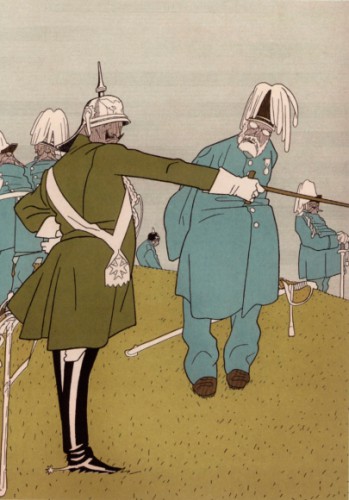
Der in Chemnitz lehrende Professor für Europäische Geschichte des 19. und 20. Jahrhunderts Frank-Lothar Kroll ist dafür bekannt, eine mittelbar an diese Zeit angrenzende Epoche, nämlich das Deutsche Kaiserreich von 1871 bis 1918, dankenswerter Weise aus diesem Schatten hervorzuholen. Unter Zuhilfenahme aller verfügbaren historischen Quellen betrachtet er diese Epoche so, wie sie war und nicht, wie sie laut der verengten Sichtweise eines „deutschen Sonderweges“ – bei einem gleichzeitig angenommenen „westeuropäischen Normalweg“ – gewesen sein soll.
Ein umfassendes Update der Quellenlage
Krolls aktuellstes Werk Geburt der Moderne. Politik, Gesellschaft und Kultur vor dem Ersten Weltkrieg unternimmt auf reichlich 200 Seiten den Versuch, einen Gesamtüberblick über die gesellschaftlichen Entwicklungslinien zwischen 1900 und 1914 zu geben. Da dies in solcher Kürze fast unmöglich scheint, verzichtet Kroll auf alle narrativen Elemente und gibt dem Leser in höchster Komprimierung sozusagen ein Update der aktuellen Quellenlage, in deren Ergebnis die Annahme des besagten „deutschen Sonderweges“ ebenso definitiv zu den Akten gelegt werden muß, wie das „persönliche Regiment“ unseres letzten Kaisers Wilhelm II.
Die seit gut fünfzig Jahren praktizierte „germanozentrische“ Herangehensweise gelangt bei Kroll ebenfalls auf die Deponie. Vielmehr gehört der historische Blickwinkel nach seinem Verständnis auf eine europäische Dimension geweitet, was allein angesichts der verästelten außenpolitischen Bündnisse dieser Epoche gar nicht anders möglich ist.
Doch Krolls Schwerpunkt liegt in diesem Buch definitiv nicht auf dem Ersten Weltkrieg: ungleich mehr interessiert ihn der kulturelle und soziale Entwicklungsstand eines Landes, das zur damaligen Zeit das fortschrittlichste der Welt war. Krolls große Stärke ist es, nicht nach Belieben zu werten, sondern nüchtern Fakten um Fakten vorzutragen und damit großkalibrig gegen die an deutschen Gymnasien, Universitäten und in den Medien herrschende Guido Knopp-Mentalität vorzugehen.
Kultureller Vorreiter des Kontinents
Besonders der kulturelle Schwerpunkt reizt an Krolls Buch. Die titelgebende These, nach der die Moderne bereits zwischen 1900 – 1914 unter Wilhelm II. ihren Anfang nahm sowie erste Schwerpunkte herauskristallisierte – und damit nicht erst in den gepriesenen (dekadenten und auf Kredit finanzierten) so genannten Goldenen Zwanzigern – macht die Lektüre besonders empfehlenswert. Walther Rathenau schrieb schon 1919 in seinem Text Der Kaiser: „Für Kunst lag [beim Kaiser, Anm. BJZ] eine entschiedene formale Begabung zugrunde, die in rätselhafter Weise über die kunstfremde Umgebung emporhob […]. So ergab sich von selbst der Anspruch des künstlerischen Oberkommandos.“
Unter anderem am Beispiel der Kulturreform aber auch der Jugendbewegung arbeitet Kroll heraus, welche in Europa zur damaligen Zeit einmalige Fülle an verschiedenartigsten Kulturinstitutionen entstand und sich in aller Ruhe, teils sogar mit erheblichen Finanzspritzen, entwickeln konnte. Am bekanntesten sind auf dem Gebiet der Kunst wohl die Strömungen des Jugendstils, des Expressionismus und des Impressionismus, die zwischen 1900 – 1914 ihren Anfang nahmen. Besonders mit Blick auf Letzteren lohnt ebenso die Lektüre des bereits 1989 bei Königshausen & Neumann erschienenen Werkes von Josef Kern Impressionismus im Wilhelminischen Deutschland.
Weimars Probleme im Voraus erkannt – und behoben
Der oben mit „Guido Knopp-Mentalität“ zusammengefaßten Erscheinung heutiger Geschichtsschreibung (eigentlich politischer Bildung), tritt Kroll mit aller Entschiedenheit entgegen: Erhellend sind zum Beispiel seine Erkenntnisse auf dem Gebiet der Presse– und Parteienlandschaft. Er spricht hier von einem „beispiellosen Pluralismus“. Außerdem wird die vielzitierte, himmelschreiende Armut der späten Phase der Industrialisierung (auf die im gymnasialen Geschichtsunterricht „zufällig“ eine monatewährende Behandlung der deutschen Arbeiterbewegung folgt) als Ammenmärchen enttarnt: „Wirkliche Massenarmut, die zur Verelendung trieb, gab es im wilhelminischen Deutschland – anders als im viktorianischen und edwardianischen England – nicht, wenngleich, die Mehrheit der Arbeiterschaft von sehr bescheidenen Einkommen zehrte.“
Am schwerwiegendsten sind, mit Blick auf den anfangs benannten Schatten einer gewissen Epoche wohl Krolls Feststellungen zum angeblich durch und durch judenfeindlichen Deutschland unter Wilhelm II.: „Die unmissverständliche Zurückweisung solcher Zumutungen seitens des Kaisers und der Reichsregierung verdeutlichte einmal mehr, dass im ‚ausgleichenden Klima des wilhelminischen Obrigkeitsstaates‘ dem politischen Einfluss radikalisierter Massen und Massenbewegungen, anders als in den späten Jahren der Weimarer Republik, enge Grenzen gesetzt waren.“
An anderer Stelle wird Kroll noch deutlicher: „Dass sich die Mobilisierung antisemitischer Ressentiments in Deutschland – und nicht etwa in Frankreich, wo sie vor und nach der Jahrhundertwende weitaus stärker verbreitet waren – Jahrzehnte später zu einer parteipolitischen Massenformation verdichten und schließlich in die Katastrophe des ‚Dritten Reiches‘ einmünden sollte, lag, bei aller partiell vorhandenen gesellschaftlichen Diskriminierung der rechtlich gleichgestellten Juden im Kaiserreich, nicht an strukturellen Defiziten oder Defekten des vermeintlichen wilhelminischen Obrigkeitsstaates. Eigentliche Ursache waren vielmehr die fatalen Konsequenzen der militärischen und politischen Niederlage Deutschlands im Ersten Weltkrieg.“
Hörenswerte Audio-Rezension bei Deutschlandradio Kultur.
Frank-Lothar Kroll: Geburt der Moderne. Politik, Gesellschaft und Kultur vor dem Ersten Weltkrieg. Band 1 der Reihe Deutsche Geschichte im 20. Jahrhundert. 224 Seiten, Be.Bra Verlag 2013. 19,90 Euro.
Josef Kern: Impressionismus im Wilhelminischen Deutschland. Studien zur Kunst– und Kulturgeschichte des Kaiserreichs. 476 Seiten, Königshausen & Neumann Verlag 1989. 50,00 Euro.
00:05 Publié dans art, Livre, Livre, Révolution conservatrice | Lien permanent | Commentaires (0) | Tags : modernisme, modernité, allemagne, livre, histoire, art | | del.icio.us | | Digg | Facebook
Christopher Gérard Interviews Dominique Venner

Christopher Gérard Interviews Dominique Venner
Ex: http://www.counter-currents.com
Translated by Giuliano Adriano Malvicini
Translator’s Note:
The following is an interview with Dominique Venner from 2001, originally published on the occasion of the release of his book Dictionnaire amoureux de la chasse. It seems fitting, as a last farewell, to let Dominique Venner himself speak.
Christopher Gérard: Who are you? How do you define yourself? A werewolf, a white falcon?
Dominique Venner: I am a Frenchman of Europe, or a European whose mother tongue is French, of Celtic and Germanic ancestry. On my father’s side, I am of old Lorraine peasant stock, but they originally emigrated from the German part of Switzerland in the seventeenth century. My mother’s family, many of whom chose military careers, is originally from Provence and Vivarais. I myself was born in Paris. I am a European by ancestry, but birth isn’t enough on its own, if one doesn’t possess the consciousness of being what one is. I exist only through roots, through a tradition, a history, a territory. I will add that I was destined to dedicate myself to arms. Certainly, there is a trace of that in the steel in my pen, the instrument of my profession of writer and historian. Should I add to this brief portrait the epithet of werewolf? Why not? A terror to “right-minded” people, an initiate of the mysteries of the forest, the werewolf is a figure in which I can recognize myself.
CG: In Le Cœur rebelle (The Rebellious Heart, 1994), you sympathetically evoke the memory of “an intolerant young man who carried within himself, as it were, the scent of a coming storm”: that was you when you fought first as a soldier in Algeria and then as political activist in France. So who was that young Kshatriya, where did he come from, who were his teachers, his favourite authors?
DV: That’s what the “white falcon” in your first question alluded to, the memory of intoxicating and dangerous times, during which the young man I was thought he could invert a hostile destiny through a violence that he had accepted as necessary. It may seem extremely presumptuous, but at the time, I didn’t recognize anyone as a teacher. Certainly, I looked for stimulus and recipes for action in Lenin’s What is to be Done? and in Ernst von Salomon’s The Outlaws. I might add that the readings of my childhood had contributed to forging a certain world-view that in the end remained rather unchanged. In no particular order, I’ll mention Military Education and Discipline Among the Ancients, a small book about Sparta that belonged to my maternal grandfather, a former officer, The Legend of the Eagle by Georges d’Esparbès, La Bande des Ayaks by Jean-Louis Foncine, The Call of the Wild by Jack London, and later the admirable Martin Eden. Those were the formative books I read at the age of ten or twelve. Later, at the age of twenty or twenty-five, I had of course gone on to read other things, but the bookstores back then were poorly stocked. Those years were a time of intellectual penury that is hard to imagine today. The library of a young activist, even one who devoured books, was small. In mine, besides historical works, prominent works were Reflections on Violence by Georges Sorel, The Conquerors by Malraux, The Genealogy of Morals by Nietzsche, Service inutile by Montherlant, and Le Romantisme fasciste by Paul Sérant, which was a revelation for me in the sixties. As you can see, that didn’t go very far. But even if my intellectual horizons were limited, my instincts went deep. Very early, when I was still a soldier, I felt that the war in Algeria was something very different from what the naive defenders of “French Algeria” said or thought. I had understood that it was an identitarian struggle for Europeans, since in Algeria they were threatened in their very existence by an ethnic adversary. I also felt that what we were defending there — very poorly — were the southern frontiers of Europe. Frontiers are always defended against invasions on the other side of oceans and rivers.
CG: In this book, which is something of an autobiography, you write: “I am from the land of trees and forests, of oaks and wild boars, of vineyards and sloping roofs, of epic poems and fairy-tales, of the winter and summer solstices.” What sort of a strange fellow are you?
DV: Very briefly stated, I am too consciously European to in any way feel like a spiritual descendant of Abraham or Moses, but do I feel that I am entirely a descendant of Homer, Epictetus, and the Round Table. That means that I look for my bearings in myself, close to my roots, and not in faraway places that are entirely foreign to me. The sanctuary where I meditate is not the desert, but the deep and mysterious forest of my origins. My holy book is not the Bible, but the Iliad[1], the founding poem of the Western psyche, which has miraculously and victoriously crossed the sea of time. A poem that draws from the same sources as the Celtic and Germanic legends, and manifests the same spirituality, if one goes to the trouble to decode it. Nevertheless, I don’t ignore the centuries of Christianity. The cathedral of Chartres is a part of my world as much as Stonehenge or the Parthenon. That’s the heritage that we have to make our own. The history of the Europeans isn’t simple. After thousands of years of indigenous religion, Christianity was imposed on us through a series of historical accidents. But Christianity was itself partially transformed, “barbarized” by our ancestors, the barbarians, Franks and others. Christianity was often thought of by them as a transposition of the old cults. Behind the saints, people continued to celebrate the old gods without asking too many questions. And in the monasteries, monks often copied ancient texts without necessarily censoring them. This continuation of pre-Christian Europe still goes on today, but it takes other forms, despite all the efforts of biblical sermonizing. It seems especially important to take into account the development of Catholic traditionalists, who are often islands of health opposing the surrounding chaos with their robust families, their numerous children and their groups of physically fit youths. Their adherence to the continuity of family and nation, to discipline in education, the importance they place on standing firm in the face of adversity are of course things that are in no way specifically Christian. They are the residue of the Roman and Stoic heritage which the church had more or less carried on until the beginning of the twentieth century. On the other hand, individualism, contemporary cosmopolitanism, and the religion of guilt are, of course, secularized forms of Christianity, as are the extreme anthropocentrism and the desacralization of nature in which I see a source of a Faustian modernity gone mad, and for which we will have to pay a heavy price.
CG: In Le Cœur rebelle, you also say that “dragons are vulnerable and mortal. Heros and gods can always return. There is no fatality outside of the minds of men.” One thinks of Jünger, whom you knew personally, and who saw titans and gods at work . . .
DV: Killing all fatalist temptations within oneself is an exercise from which one may never rest. Aside from that, let’s not deprive images of their mystery and their multiple radiations, let’s not extinguish their light with rational interpretations. The dragon will always be part of the Western imagination. It symbolizes by turns the forces of the earth and destructive forces. It is through the victorious struggle against a monster that Hercules, Siegfried, or Theseus attained the status of hero. In the absence of heroes, it isn’t hard to recognize – in our age – the presence of various monsters which I don’t think are invincible, even if they appear to be.
CG: In your Dictionnaire amoureux de la chasse (Plon, 2000), you reveal the secrets of an old passion and you describe in veiled terms the secrets of an initiation. What have those hours of tracking given you, how have they transformed, even transfigured you?
DV: In spite of its title, this Dictionnaire amoureux is not at all a dictionary. I conceived it as a pantheistic poem for which hunting is only a pretext. I owe my most beautiful childhood memories to hunting. I also owe it the fact that I have been able to morally survive the periods of ghastly despair that followed the collapse of the hopes of my youth, and reestablish a balance. With or without a weapon, in the hunt, I return to the sources that I cannot do without: the enchanted forest, silence, the mystery of wild blood, the ancient comradeship of the clan. To me, hunting is not a sport. It is a necessary ritual in which each participant, predator or prey, plays the part assigned to it by its nature. Together with childbirth, death and seeding, I believe that hunting, if it is performed in accordance with the right norms, is the last primordial rite that has partially evaded the disfigurements and the deadly manipulations of modernity.
CG: Elsewhere in this book, you evoke several ancient myths, several figures from still clandestine pantheons. I’m thinking of the myth of the Wild Hunt and the figure of Mithras. What do they mean to you?
DV: We could add to the list, most notably Diana-Artemis, the goddess of childbirth, the protector of pregnant women, of cows in calf, of vigorous children, of life in its dawn. She is both the great predator and the great protector of animality, which is what the best hunters also are. Her figure corresponds to the ancients’ idea of nature, which is the complete opposite of the saccharine notions of a Jean-Jacques Rousseau and of sunday strollers. They knew that nature was fearsome to the weak, and pitiless. It is through force that Artemis defends the inviolable realm of the wild. She ferociously kills those mortals who through their excesses put nature in danger. That’s what happened to two furious hunters, Orion and Acteon. By violating her, they had transgressed the limits beyond which the order of the world falls into chaos. That symbol hasn’t aged, on the contrary.
CG: If there is an omnipresent figure in your book, it is the forest, the refuge of outcasts and rebels . . .
DV: The whole literature of the Middle Ages – the chansons de geste or the Arthurian legends – saturated as it is with celtic spirituality, invariably embellishes on the theme of the forest, that dangerous world, that refuge of spirits and fairies, hermits and rebels, which is also a place of purification for the tormented soul of the knight, whether his name be Lancelot, Percival, or Yvain. In chasing a deer or a wild boar, the hunter penetrated its spirit. By eating the animal’s heart, he appropriated its strength. In the lay of Tyolet, by killing the roebuck, the hero gains the ability to understand the spirit of wild nature. I feel that very strongly. For me, entering the forest is much more than a physical need, it is a spiritual necessity.
CG: Could you recommend a few great novels about hunting still in print?
DV: The first that comes to mind is Les Veillées de Saint-Hubert by the Marquis de Foudras, a collection of short stories recently re-published by Pygmalion. Foudras was a marvelous story-teller, as was his countryman and successor Henri Vincenot — whose La Billebaude one of course has to read. He was to the world of castles and hunting with hounds what Vincenot is to that of thatched cottages and poaching. Among the great novels that initiate the reader into the mysteries of the hunt, one of the best is Le Guetteur d’ombres by Pierre Moinot, which transcends well-crafted literary narrative. In the abundant production of Paul Vialar, who was made famous by La grande Meute, I have soft spot for La Croule, a term that refers to the mating call of the woodcock. It’s a pretty novel, a quick read. The main character is a young woman, the kind one would like to meet once in a while, one who possesses a passion for the ancestral domain. I also suggest reading La Forêt perdue, a short and magnificent medieval poem in which Maurice Genevoix lets us re-experience the spirit of Celtic mythology through the impossible pursuit of a huge, invulnerable deer by a relentless huntsman, in whom we discover a young and daring Knight with a pure soul.
Vernal equinox MMI
Notes
1. Dominique Venner adds that the harsh and rhythmical translation of Leconte de Lisle (from around 1850) is his favourite. This version of the Iliad and the Odyssey is available in two volumes from éditions Pocket.
All rights and copyright by Christopher Gérard
(It is absolutely forbidden to copy or share this particular interview anywhere else on the internet without prior asking of the respective author Christopher Gérard.)
Editor’s Note: I have no way of contacting Christopher Gérard, but he is welcome to contact me at editor@counter-currents.com.
Source: http://eurocontinentalism.wordpress.com/2013/10/05/an-interview-with-dominique-venner/ [2]
Article printed from Counter-Currents Publishing: http://www.counter-currents.com
URL to article: http://www.counter-currents.com/2013/10/christopher-gerard-interviews-dominique-venner/
URLs in this post:
[1] Image: http://www.counter-currents.com/wp-content/uploads/2013/10/Giampietrino_05.jpg
[2] http://eurocontinentalism.wordpress.com/2013/10/05/an-interview-with-dominique-venner/: http://eurocontinentalism.wordpress.com/2013/10/05/an-interview-with-dominique-venner/
00:05 Publié dans Entretiens, Nouvelle Droite | Lien permanent | Commentaires (0) | Tags : chasse, dominique venner, nouvelle droite, entretiens | | del.icio.us | | Digg | Facebook