Ok

En poursuivant votre navigation sur ce site, vous acceptez l'utilisation de cookies. Ces derniers assurent le bon fonctionnement de nos services. En savoir plus.

dimanche, 19 janvier 2014

Einde vrij internet: EU en VS gaan grote concerns alle macht geven

Einde vrij internet: EU en VS gaan grote concerns alle macht geven

Britten kunnen kritische websites nu al blokkeren


Het einde van het vrije internet is nabij. In de VS, en binnenkort ook in de EU, kunnen de grote en machtige concerns binnenkort meer bandbreedte reserveren. Dat betekent dat ondernemingen die produkten willen verkopen en organisaties die mensen een bepaalde mening willen opdringen, voorrang krijgen boven onafhankelijke -lees: kritische- blogs en websites, die het niet van hun inkomsten moeten hebben. Kortom: het internet wordt de komende jaren omgevormd tot één groot propagandakanaal voor de globalisten in Brussel en Washington.

Providers krijgen binnenkort de mogelijkheid grote (internet)ondernemingen te bevoordelen. Feitelijk wordt het internet gewoon verkocht aan de hoogste bieder. Hoe meer geld, hoe meer bandbreedte, hoe vaker en sneller je boodschap bij de mensen aankomt. Kleine, onafhankelijke websites zullen worden gemarginaliseerd en weggedrukt.

Geld = toegang

Telecombedrijven vinden deze ontwikkeling fantastisch, want naast de inkomsten van de gebruikers en uit reclame, mag men nu ook geld gaan vragen voor 'voorrang' op het internet. Natuurlijk zullen overheden en regeringen vooraan staan bij het kopen van snellere websites. Dat dit niet als verhulde subsidie wordt gezien komt omdat alle grote landen eraan mee zullen doen.

In Groot Brittannië gaat men zelfs nog een stap verder bij het uitbannen van alle niet gewenste berichten en meningen, door providers de mogelijkheid te geven om kritische websites als 'esoterie' te bestempelen, en vervolgens te blokkeren.

Hou de burger dom en ongeïnformeerd

De voorrang die de Amerikaanse dataconcerns krijgen zorgt ervoor, dat de persoonlijke gegevens van de doorgaans nog steeds zeer naïeve internetter en sociale netwerker vrij beschikbaar komen en kunnen worden misbruikt door zowel bedrijven als overheden.

Het internet wordt daarmee omgevormd tot wat de TV al jaren is, namelijk een middel om de gewone man dom en ongeïnformeerd te maken en te houden. Onafhankelijke, kritische stemmen, die niet alles wat de elite de wereld in spuugt voor zoete koek aannemen, zullen langzaam maar zeker verdwijnen, mede omdat overheden steeds meer actie ondernemen om hen zwart en belachelijk te maken.

Censuur i.p.v. netneutraliteit

Censuur in optima forma, dus. De EU Commissie staat er volledig achter. Brussel heeft dan ook talrijke 'denktanks' gevormd die niets anders doen dan positieve europropaganda verspreiden. Daarnaast hebben lobbyisten van grote concerns zoals Monsanto steeds meer macht en invloed op het EU-beleid gekregen.

De petitie 'Save The Internet' wil dat de netneutraliteit gegarandeerd blijft, dus dat al het internetverkeer gelijk wordt behandeld, en niet bepaalde boodschappen voorrang krijgen boven anderen. De EU-Commissie beloofde aanvankelijk dat dit oorspronkelijke principe van het internet overeind zou blijven, maar een voorstel hiertoe werd afgewezen. Het internet wordt nu een soort kabel-TV, waarvan de inhoud wordt gecontroleerd door een handjevol aanbieders.

Eerste slag in VS tegen vrij internet een feit

Gespecialiseerde diensten -of ze nu voor bedrijven of overheden werken- brengen zo het neutrale en vrije internet in gevaar, en houden innovatie tegen. Afgelopen week werd in de VS het vrije internet de eerste slag toegediend, toen een hogere rechtbank regels die gelijke behandeling op het internet moeten waarborgen, afwees. De argumentatie was dat de overheid breedbandaanbieders als informatie-, en niet als telecomproviders ziet.

De grote provider Verizon was eind 2010 tegen de nieuwe opzet in beroep gegaan, omdat deze tegen het recht op vrije meningsuiting in zou gaan, en de grote concerns de controle geeft over welke gegevens en boodschappen op wat voor wijze op het internet verschijnen.

Geen uitleg over blokkade

Critici vrezen dat providers in de VS en de EU hun bandbreedte gaan verkopen aan de hoogste bieder. Vanzelfsprekend zullen ze hier geen inzage over hoeven geven, omdat het om 'vertrouwelijke zakelijke contracten' zal gaan. Kritische websites die plotseling niet of nauwelijks meer bereikbaar zijn, zullen dan ook geen enkele uitleg daarover krijgen, behalve mogelijk een nietszeggende verklaring over 'data overbelasting'.

'Onwetendheid is Kracht'

Conclusie: als er niets gebeurt om het te stoppen, zal het internet verworden tot een propagandakanaal van de machtige globalistische elite. Dan zal het definitief gedaan zijn met de waarheid, en zal, geheel volgens George Orwells '1984', de consument feitelijk worden volgepompt met

'Oorlog is Vrede'
'Vrijheid is Slavernij'
'Onwetendheid is Kracht'


Xander

(1) Deutsche Wirtschafts Nachrichten

Zie ook o.a.:

2013:
28-11: Geheim EU-akkoord: Lidstaten moeten trouw zweren aan Nieuwe Wereld Orde (/ EU gaat kritische stemmen op internet aanpakken)
16-07: Netneutraliteit EU-commissaris Kroes maakt einde aan onafhankelijk internet
11-06: DHS-insider: Obama start totalitaire internetcensuur en wereldoorlog

2012:
04-12: Einde vrijheid meningsuiting dreigt door VN-controle over internet
01-12: Wikileaks oprichter: Plotselinge totalitaire wereldcontrole via internet zeer dichtbij
10-10: EU-denktank: Drastische maatregelen om bevolking EU te controleren
02-10: Project Clean IT: EU plant totale controle over het internet

Crusade Without the Cross: The Paradox of the Greek Left

ac1.jpg

Crusade Without the Cross:
The Paradox of the Greek Left

By Dimitris Michalopoulos

Ex: http://www.counter-currents.com

To Francis Parker Yockey
In memoriam

Following the end of the Greek Civil War in 1949, many of the defeated Communists fled to countries behind the Iron Curtain. Most of them were to die before they could see their homeland again. Those who survived in the exile, came back to Greece as late as 1975. For not all of them wanted  to compromise with the right-wing 1949-1974 regime of Greece. Still, do you know what was the first reaction of the defeated fighters upon reaching the countries of the Soviet bloc, late in the 1940s? When they were asked to take a bath for sanitary reasons, they declined; for they did not want the oil spread on their body by the Orthodox priests during the christening ceremony to be removed!

Such was the statement of a Greek Communist intellectual in Paris, in 1995. I was bewildered. I was then considered to be a “specialist” on the relations between Greece and the countries of the Eastern bloc and I thought I knew “everything” on the “colonies” that the Greek Communists had founded mainly in the “People’s Democracies” and in the Soviet Union. I knew that the Greek Orthodox clergy had supported either overtly or in veiled terms the Communist “rebellion” in Greece. Still from the Greek Church’s backing up the Communists to the latter’s desire not to “lose the oil of the christening” there was a big gulf. That is why upon my coming back to Greece, I started looking into the matter. The result of my research? My Paris interlocutor was right.

It is not possible to recount the history of the Marxist ideas in Greece, without taking into account the Greek Orthodox Church. And so for two reasons: a) The Modern Greek nationhood relies wholly upon the Church. As a matter of fact, Greek is considered to be every Orthodox Christian who “recognizes the spiritual jurisdiction of the [Greek] Patriarchate of Constantinople”;[1] and b) thanks precisely to the Greek Church, Materialism was disseminated in the Balkans and, further, was raised to “official”, i.e. State ideology in the Romanian countries long before the 1789 Revolution in France.[2]
Ac-elas.jpgThis story of materialistic ideas that were spread in the Balkans by the Greek Orthodox Church is a long (and very interesting) one. The roots are to be found in Byzantium itself. For from the eleventh century on, a revival of Platonism and neo-Platonism took place in Constantinople; and this revival led up to a kind of crypto-paganism. The 1453 capture of the Byzantine capital by the Ottomans put an end to this neo-platonic current; and Gennadius I Scholarius, the first Constantinopolitan Patriarch to be in office following the fall of the Byzantine Empire, directed the philosophical research of his flock towards the “beacon of Aristotle’s thought.” Still, this direction was to have very important consequences.

Ecclesiastical Preamble

The Greek Orthodox Patriarchate in Constantinople/Istanbul was criticized prior to the 1821-1829 Greek War of Independence very mildly by the Left, viz. the Greek Enlightenment scholars and their disciples. And for good reason; for the Greek Enlightenment, thanks to the protection of the Orthodox Church, anticipated the French one by several decades. In other words, materialist doctrines were being taught throughout Greece by Greek Orthodox . . . clergymen. And as a result the Enlightenment principles became the State Ideology in Balkan countries long before they prevailed in France.

In such a contradictory evolution, two characters assumed the key role, namely Cyril Lucar (1572-1638) and Theophilus Corydaleus (1570-1646). Both were disciples of Cesare Cremonini (1550-1631) at the University of Padua; and both wholeheartedly adopted Cremonini’s materialistic interpretation of Aristotle’s thought.[3] For if St Thomas Aquinas (1225-1274) had managed to espouse the creeds of the Roman Catholic Church with Stagirite’s teaching, it was Pietro Pomponazzi (1462-1525), professor at the Padua University from 1509 to 1512, who paved the path to the Enlightenment.

P. Pomponazzi published in 1516 his book De immortalitate animae (= On the Immortality of the Soul). He had moved at that time from the University of Padua to the one in Bologna; the impact of his book’s coming out, nonetheless, was terrible throughout Italy and even Europe. It triggered a real revolution in Christian thought; and this revolution was to culminate in 1517, i.e., merely a year later, with Luther’s Disputatio pro declaratione virtutis indulgentiarum, i.e., the famous Ninety-Five Theses.

As a matter of fact, Pomponazzi overtly disagreed in his book on the Immortality of the Soul with St Thomas Aquinas’ teaching. The latter, based on the Aristotelian intellectual production, professed that the human soul could survive separation from the body; yet Pomponazzi declared that the soul’s survival was incompatible with entelechy, i.e., the Actualizing Form, a fundamental concept in Stagirite’s thinking and teaching. The corollary was the solemnization of the belief that the human soul was tied irreversibly to the human body; and so all doors were opened to materialism.

It was C. Cremonini who crossed triumphantly the door opened by Pomponazzi. He was appointed professor at Padua University in 1591, and since the Papal jurisdiction did not encompass Padua (for it was protected by the Venetian Republic), he felt free to propagate his Aristotelian-based materialism. His enthusiastic admirers and followers saw in him Aristoteles redivivus (= Aristotle reborn), the princeps philosophorum (= Prince of the Philosophers), the genius Aristotelis (= Aristotle’s genius) and so on.[4]

The result? When Cyril Lucar, Cremonini’s student and follower, became Patriarch of Constantinople, he appointed Th. Corydaleus, also a follower of Cremonini, director of the Patriarchal Academy,[5] a prestigious institution of higher learning. Most likely it was in 1625;[6] and so Materialism came under the aegis and the virtual protection of the Greek Patriarchate, the leading one of the Orthodox Christendom. So, the Patriarchal Academy developed into the avant-garde of the European Left.[7]

That is why the “progressive mind” of the Patriarch Cyril I Lucar is nowadays enthusiastically acclaimed in Greece and in the Western countries as well. No matter that he was converted to Calvinism and even wrote a Confession of Faith clearly endorsing Protestant theses:[8] Confessio fidei reverendissimi domini Cyrilli, Patriarchae Constantinopolitani nomine et consensus Patriarcharum Alexandrini et Hierosolymitani, . . . , scripta Constantinopoli mense Martio anni 1629.[9] He was of course anathematized by an Ecclesiastical Council held in Constantinople in 1638.[10] Still, his memory remains unharmed.[11] For the Left-wing intelligentsia see in him the “Father of the Greek Enlightenment.”[12]

It is true that he founded an important printing house in 1627,[13] the first Greek one in the Levant. What is more, he was put to death by the Ottoman authorities, due mainly to accusations of the Jesuits who saw in him a bitter foe of the Roman Church. Still, the truth is that he was a Calvinist[14] and most likely a materialist.

His companion and zealous ally, Th. Corydaleus, was undoubtedly a materialist; and he did not dissimulate his ideas, though he was a Greek Orthodox clergyman. Unlike Cyril Lucar he did not suffer death at the hands of the Ottomans. Quite the contrary! He was ordained Metropolitan Bishop of Naupactus and Arta.[15] Further, he founded a school in Athens, his native city, where he continued teaching materialism shrouded in Aristotelian thought till the end of his life. He created chaos in his Metropolitan See; he became a monk in 1622 and renounced his vows in 1625; yet he was never stigmatized by the Greek Orthodox Church.[16] And the Ottoman authorities, properly “indoctrinated” by the Constantinopolitan Patriarchate, ever never bothered him.

He wrote several books that enjoyed great popularity in both Greece and the Graecized Balkan countries as well up to the late eighteenth century. Needless to say that this popularity was mostly due to the high regard the Greek clergy had for them.[17] The result? The Maurokordatos family, a rich and very influential Greco-Jewish Constantinopolitan one, managed to have Sevastos Kyminitēs, their protégé and an ardent Corydaleus’ supporter,[18] appointed as head of the Bucharest Princely Academy. This Academy, along with the Patriarchal one in Constantinople, was a renowned educational institution, one of the very few in the Balkans at that time. No sooner than appointed, S. Kyminitēs began propagating materialism rooted in Aristotle’s thought. And even though he was totally disliked by his students, he enjoyed the protection of the Maurokordatos family, was a favorite with the Patriarchal Court at Constantinople and the Ottoman authorities as well. He maintained, therefore, his post until 1702, the year of his death. The corollary was that thanks to him materialism became the state Ideology in the Romanian Lands, Walachia and Moldavia,[19] then vassal countries of the Ottoman Empire.

The Left in Independent Greece

The Modern and Contemporary Greek people is a multiracial mixture. Since acceptance of the jurisdiction of the Greek Orthodox Patriarchate at Constantinople was, in practice, the exclusive criterion of being regarded as Greek, it goes without saying that Modern Greeks are descendants of all the Balkan’s Christian nations – and mainly of Albanians, Slavs, and Romanians.[20] Civil strife flourished in such an ambiance; and democratic/socialist ideas thrived as well.

The first wholly democratic current, with obvious tendencies to turn actually into a socialist movement, was that of Theodōros Grivas, in Acarnania, viz. the south-western part of Mainland Greece. Thanks to his achievements during the Greek War of Independence, Grivas was a general of the Greek Army under Otho, the first King of Greece (1832-1862). Nonetheless, he had in view a radical change of Greece’s Statehood structures. In the framework of the revolution that put an end to Otho’s reign, in October 1862, he formed a “People’s Army” 4,500 strong, and declared he was “ready for a march to Athens” with the intention of proclaiming the Republic, endow Greece with a federal structure, and “rehabilitate the landless peasantry.” In short, he was in open conflict with the Provisory Government that assumed power after King Otho’s fall, and aspired only at establishing the so-called “Royal Republic” regime. Undoubtedly, Grivas had sympathizers in the main agglomerations of the country; that is why his “Popular Army”, wherein mostly landless peasants were recruited, struck terror among the wealthy social strata. Had he survived and put into effect his “march to Athens,” the course of the Modern History of Greece would be different. But in 1862 he was 65 years old and suffered from asthma; and he passed away on October 24, 1862 (Old Style).[21]

Rumors are going about him even today in Mainland Greece. He is said to have been poisoned by the British; and that he wanted to capture Athens in order to paint red the royal palace. Be that as it may, not only had the 1862 Grivas movement a clear-cut socialist character but many partisans of him proved to be ready to rise up in arms against the establishment.[22] It was on his ‘precedent’ that the communist uprising would be molded in the twentieth century.

* * *

The Greek Communist Party was founded on November 17, 1918 as the Socialist Labour Party of Greece.[23] It was renamed Communist Party of Greece (Kommounistiko Komma Hellados/K.K.E.) not earlier than late November, 1924.[24] From its very beginning, the K.K.E. had three key problems to cope with: a) the Macedonian Issue; b) the Trotskyite current within it; and c) the elaboration of a “revolutionary process” fit for Greece.

As for the first question, it must be kept in mind that the autochthonous population of Macedonia were Slavs; and those Slavs had often a Bulgarian national conscience. Whatever the fact of the matter, Macedonians were seeking independence; and the Greek Communists toed that very line in 1922.[25]

Such a decision, quite in accordance with the traditional/initial Marxist internationalism, was utterly disapproved by the public opinion of Greece and was abandoned at last. Pantelēs Pouliopoulos, nonetheless, the first Secretary-General of the newborn K.K.E. was put on trial and got eighteen months in prison.[26] Following his release in 1926, he was re-elected Secretary-General; yet he was at odds with the Party apparatus – already a Stalinist one. As a result he deserted the K.K.E. and founded his own Communist group,[27] baptized “Spartacus” after the journal they were publishing from 1928 on.[28]

The Greek “Spartacists” were overtly Trotskyites; and their deep disagreement with the Stalinist K.K.E. arose early in 1934. For it was then that Pouliopoulos published his book “A Democratic or a Socialist Revolution in Greece?”[29] and turned down the “revolutionary process” advocated by the K.K.E. The latter, obviously based on the Russian experience, “deserted” the workers and was seeking an alliance with the democratic bourgeois parties and, above all, the peasantry. Pouliopoulos and his Trotskyites, on the other hand, insisted on the necessity to propagate Marxism among the 100,000 “industrial proletarians,” dwelling mostly in Piraeus, the seaport of Athens.[30]

As for Piraeus, Pouliopoulos was correct: the workers there were mostly Right-wing or overtly fascists.[31] He tried, nevertheless, to indoctrinate them with Marxism’s Trotskyite variety but in vain. Meanwhile the K.K.E. concluded alliance with the Liberal Party (founded by Eleutherios Venizelos prior to World War I); yet this rapprochement accelerated the march of Greek politics towards the authoritarian government established jointly by King George II and his Prime Minister, Iōannēs Metaxas, on August 4, 1936.

Pouliopoulos, further, had a tragic end. Arrested by the Police of the authoritarian government in 1937, he declined the “offer” to leave his “homeland.” He was, therefore, imprisoned and, following the 1941 occupation of Greece by the Axis Powers, he was interned in an Italian concentration camp. At last, he was shot in 1943 by way of reprisal for a guerrilla attack against an Italian military train.[32] And an important “detail”: one of his “companions” was Andreas Papandreou,[33] who accepted the police’s offer to leave Greece, fled to the United States, became a university professor and, thanks to his American citizenship, Prime Minister of Greece in 1981.[34]

Civil Strife (1942-1949)

The authoritarian government established in August, 1936, stopped the Communist Party’s course to power. Still, the K.K.E. had one more card to play, namely the refugees who had immigrated into Greece from Turkey in the early 1920s. That was due to an agreement concluded by the two countries at Lausanne, Switzerland, in 1923, following the crushing defeat the Greeks suffered at the hands of the Turkish Nationalist Army. In the framework of this agreement, a compulsory exchange of populations was bilaterally agreed; as a result, ca. 1,500,000 people fled from Turkey into Greece.

If truth be told, this exchange had little, if any, relevance with the two involved countries. The crux was Macedonia and the framework, nay, the very basis of the machinations was the famous dogma of Sir Halford Mackinder. According to the latter’s doctrine if the “Slavs.” in practice the Russians, achieved to put under their control the seashore of Macedonia, they would “stand” as “world masters.”[35]

It is certain that Sir Halford Mackinder, one of the founders of the Jewish-run London School of Economics, announced his theory in 1904. Still, this announcement was all but a crystallization of ideas existing long before Sir Halford. For early in the nineteenth century the British Foreign Office already saw in the Ottoman Empire (that ruled Macedonia at that time) a “bulwark against Russian expansion.”[36] The collapse of this “bulwark”, nonetheless, was easily foreseen after the 1878 Berlin Congress. The corollary was that Greeks, under undisputable British influence, should be substituted for the autochthonous Macedonians. Such Greeks would come only from Asia Minor. That is why the 1923 Greco-Turkish “compulsory” exchange of populations was notified in advance by Eleutherios Venizelos as early as 1914.[37] The bulk of Macedonian Moslems (ca. 500,000 people overall) had emigrated into Turkey as soon as the Balkan wars were over. The Greeks, in essence the Christian Orthodox dwellers of Anatolia, were exhorted by the “heads” of their communities to leave their homeland (most likely upon advice of the Greek Orthodox Patriarchate in Istanbul); and so in spite of the entreaties of their Turkish compatriots to stay.[38]

Therefore, the point is that the 1,500,000 people who immigrated into Greece and used to live there in unpredictable misery, were hopeful that they would soon be back in their homeland; but in 1926 their hope proved to be vain. That is why they took up the Communist ideology. The repercussions on Greek politics would be very serious.

In fact, from the early 1920s on the electoral strength of the K.K.E. was steadily rising. From 2% of the electorate in 1929, it attained 5% in 1932, 6% in 1933 and 9.5% in 1935.[39] It was one of the strongest Communist parties in Eastern Europe; and it is an irony that Greece was the sole country to escape from the Iron Curtain.

* * *

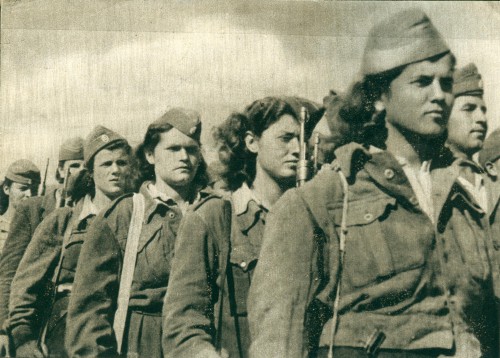
In 1941 Greece was occupied by the Axis Powers, namely Germany and Italy. Still, in that very year, on September 27, 1941, the National Liberation Front (Ethniko Apeleutherōtiko Metōpo/E.A.M.) was founded, wherein the K.K.E. was the leading force.[40] On June 7, 1942, moreover, the “armed struggle” against the occupation troops began by the E.A.M.’s “military arm,” namely “People’s National Liberation Army” (Ethnikos Laïkos Apeleutherōtikos Stratos/E.L.A.S).[41] The latter was under a leadership of Arēs Velouchiōtēs, a fortune-hunter who soon proved to be a military genius. From 1943 on, the whole of Greece was ruled by E.A.M. and strictly controlled by E.L.A.S. The Right-wing guerilla forces were speedily and savagely exterminated. The only exception was Epirus, where there flourished a nationalist armed movement, the “National Troops of Greek Partisans” (Ethnikai Homades Hellēnōn Antartōn/E.O.E.A.), guided by Napoleōn Zervas, a commissioned officer of the (regular) Greek Army.

Needless to say that E.A.M./E.L.A.S. were particularly powerful in the very regions where the Th. Grivas’ socialist movement had taken place in the nineteenth century. Still, it is essential to insist on the fact that the Communist-run guerilla troops were substantially assisted by the Greek Orthodox clergy. Even two Metropolitan Bishops overtly adhered to E.A.M.,[42] whilst the rank-and-file of E.L.A.S. included priests in cassocks.[43] The behavior, on the other hand, of the E.L.A.S. troops towards the Orthodox clergy and, generally speaking, the Church was more than kind.[44] For the Communist-run E.A.M. used to see in the Church a pillar of its power.

Thanks to the “Revolution” proclaimed by Arēs Velouchiōtēs already in 1942, ten to seventeen Italian and German divisions were nailed down in Greece early in 1943.[45] So, towering were the ambitions of the Communists: they considered the “struggle” against the occupation troops as the “First Stage” of the “Socialist Revolution in Greece.” Yet they reckoned without their host; and in that very case the “host” was Stalin. In May, 1943, he actually dissolved the Comintern, because “he had never seriously endorsed the [Trotskyite] idea of the World Revolution.”[46] The “dissolution” was, moreover, a friendly gesture to Great Britain and the U.S.A.; for Stalin was already preoccupied with the reconstruction “of his devastated country.”[47]

Late in September, 1944, the Greek Government “in exile” at Cairo was informed that the dogma of Sir Halford Mackinder was again in force. For the British wanted a cordon sanitaire to be formed by the countries on the north-eastern Mediterranean seashore, in order to stop the “Russian expansion.”[48] Such a country was, of course, Greece; and Stalin speedily agreed not to send Soviet troops in the Greek parts of Macedonia and Thrace.[49] In the evening of October 9, 1944, Churchill had a meeting with Stalin in the Kremlin: the agreement was “formally” concluded; and the British Prime Minister stated the following on October 27, in the House of Commons:

Upon the tangled questions of the Balkans, where there are Black Sea interests and Mediterranean interests to be considered, we were able to reach complete agreement and I do not feel that there is any immediate danger of our combined war effort be weakened by divergences of policy or doctrine, in Greece, Roumania, Bulgaria or Yugoslavia and, beyond the Balkans, Hungary. We have reached a very good working agreement about all these countries singly and in combination, in the object of . . . providing . . . for a peaceful settlement after the war is over.[50]

That meant that Greece was to be held under exclusive British control and that Yugoslavia was not going to be encompassed in the “Russian sphere of influence.” As a result, the Russophile E.A.M./E.L.A.S. were abandoned – and the tragedy of the Greek Left began.

* * *

During the operations against the occupation troops, the E.L.A.S. units were abundantly supplied by the British. And when, in October, 1944, the Germans evacuated Athens, the Communists considered the time to be ripe for the power to be seized by themselves. Early in December, 1944, therefore, a huge demonstration took place in the very center of the Greek capital; yet, contrary to what was going on so far, the Police opened fire. It was the beginning of the Civil War or, according to the Communists, the “Second Stage” of the “Revolution.” Churchill was eloquent in Parliament:

So far as has been ascertained the facts are as follows: the Greek Organization called E.A.M. had announced their intention to hold a demonstration on December 3rd. The Greek Government at first authorised this, but withdrew their permission when E.A.M. called for a general strike to begin on December 2nd. The strike in fact came into force early on December 3rd. Later in the morning the E.A.M. demonstration formed up and moved to the principle square of Athens, in spite of Government ban. On the evidence so far available I am not prepared to say who started the firing which then took place. The Police suffered one fatal casualty and had three men wounded. The latest authentic reports give the demonstration’s casualties as 11 killed and 60 wounded.[51]

Moscow remained silent, nay, indifferent.[52] What is more (and strangely enough) the battle in Athens were fought not by the well-trained units of E.L.A.S.[53] but by the latter’s Athens reserves – in fact bands of ill-equipped teenagers who were literally massacred by the British troops then occupying Athens.[54] Even today the accusations of “betrayal” against the 1944 Communist’s leadership are common. Still, the facts are not yet established. Two things are clear, nevertheless: a) the head of the Athens police force at that time, Angelos Ewert, was a British agent;[55] b) the Communist leadership that fled to the U.S.S.R. after the final defeat suffered by K.K.E. armed forces at the hands of the National Army in 1949 were never trusted by Stalin and, as a rule, met a “bad end.”[56]

In January, 1945, an agreement was reached between the British and the Communist troops. The latter laid down their arms, and were given the promise that they could develop freely political activity henceforth. Yet Churchill was determined to have “no peace without victory.”[57] A reign of terror followed;[58] A. Velouchiōtēs was murdered in 1945; and exasperated the Greek Communists triggered off the so-called “Third Stage” of their “Revolution” in 1946. In practice this was one more phase of the Civil War. It was to last until the summer of 1949. The Communist Army was defeated by the well-equipped National one and thanks to Tito’s attitude as well; for the latter, after his rupture with Stalin, overtly toed the line of the Western Powers.

All that time the Russians remained silent; and their “expansion” towards the Mediterranean Sea never took place. Simultaneously, autochthonous Macedonians, of Slavic stock, regarded as “Communists” by the Greek authorities, left their homes and fled either to Yugoslavia or in other countries of the “Iron Curtain.”[59]

Greece was once more a “Western Country.”

As an Epilogue

In April, 1967, two or three days after the military coup, at 2.00’ in the night, there was a ring at the front door. I woke up at once, though I sleep very soundly; I rushed out of my room and I went to look at what was going on.

All my family was up and about: three policemen had entered our home and were searching my father’s bookcase. Needless to say that they were silly people. What were they expecting to find out? The “dangerous” books, viz. the Marxist ones, were already carried by my Mother to the house of her own parents; and no policeman had the idea to search over there. The search, however, was about an hour long; afterwards, the policemen said good bye, and left our home.

That night I slept on my parents’ bed, between my dad and my mother, although I was 15. If truth be told, I was then and there like a baby; and my father kept patting my head, in order to calm me. The day after all our phone communications (either at home or in my father’s lawyer office) were cut off. You can imagine what it means for a barrister not to be able to make a phone call. Fortunately, we were without telephone only a year. For in 1968 we had again the ‘right’ to call up. 

It was this way that my High-School classmate and daughter of a leading Communist lawyer, answered to my entreaty. I had asked her to give an account of her experience – in her capacity as member of an influential family of the Greek Left; and she described to me the “most terrifying night” in her life. Her father was the Secretary-General of the E.A.M. in Thessaly; he was sentenced to death by a Court-Martial in the 1940s and he survived thanks to personal and family connections. Yet he was tired by his bitter experience of the “lost Communist Revolution”; and a couple of years following my classmate’s “most terrifying night”, he passed away due to a heart attack.

The military coup in question was the one brought off in Greece on April 21st, 1967. It had little (if anything) to do with Fascism. It is well-established today that its main reason lay in Mackinder’s dogma. The 1967 Six-Day Arab-Israeli War, triggered off in the first decade of June, was in view long before it started. And it was clear that, following either an Arab victory (not likely) or defeat (most possible) the Soviet “presence” in the Eastern Mediterranean would be considerably increased.[60] Meantime, Greece was in a long political crisis; and the political ascendancy of Andreas Papandreou would undoubtedly pave the way for a “mass infiltration” of “Communists”, i.e., Russophile Left-wing people into the Greek State apparatus.[61] That is why the Israelis and the “military establishment” of the United States stirred up the coup and, of course, approved of it, whilst the U.S.A. Department of State disavowed it.[62]

This is the framework wherein the tragedy of the Greek Left took place. The Greek Left knew very little about Marx and Marxism. As a rule, the E.A.M./E.L.A.S. people used to see in Communism a remedy for the traumas that Greek National Life was leaving on their psyche. The refugees from Asia Minor wanted to go back to their “homes” and were frustrated by the foiling of their expectations. The peasants wished to have a less hard life. Educated people, like the father of my classmate, were seeking for the modernization and, if possible, Europeanization of the incredibly archaic social structures of Modern and Contemporary Greek nationhood. Almost the whole of them were conservative householders and good members of Greek Orthodox Church’s congregation. They were engaged in a “Crusade” in order to cure the painful paradoxes of Modern Greece. Yet they did not realize that their “Cross” was lost in the pitiless implementation of Mackinder’s Geopolitics.

Notes

[1] Correspondance du comte Capodistria, président de la Grèce, I (Geneva : Cherbouliez, 1839), p. 265.

[2] See Dimitris Michalopoulos, “The Enlightenment, the Porte and the Greek Church: A Paradox of Balkan History”, in Seyfi Kenan (ed.), The Ottomans and Europe. Travel, Encounter and Interaction (Istanbul: ISAM, 2010), pp. 449-468

[3] Ariadna Camariano-Cioran, Les académies princières de Bucarest et Jassy et leurs professeurs (Salonika : Institute for Balkan Studies, 1974), p. 181.

[4] Cléobule Tsourkas, Les débuts de l’enseignement philosophique et de la libre pensée dans les Balkans. La vie et l’œuvre de Théophile Corydalée (Salonika : Institute for Balkan Studies, 19672), p. 192.

[5] Ibid., p. 22.

[6] Steven Runciman, The Great Church in Captivity. Translated into Greek by N. K. Paparrodou (Athens: Bergadēs, 1979), p. 489.

[7] Ibid.; C. Tsourkas, Les débuts de l’enseignement philosophique…, p. 195; cf. Ariadna Camariano-Cioran, Les académies princières…, p. 181.

[8] Vasileios Stauridēs, Historia tou Oikoumenikou Patriarcheiou, 1453-sēmeron (= History of the Ecumenical Patriarchate, 1453-today), Salonika: Kyriakidēs Bros, 1987, p. 40.

[9] “Kyrillos I Loukaris” (= Cyril I Lucar), Encyclopedia Papyros-Larousse-Britannica (in Greek), vol. 37th (Athens: Papyros, 1989), p. 50.

[10] V. Stauridēs, Historia tou Oikoumenikou Patriarcheiou…, p. 49.

[11]“Kyrillos I Loukaris”, Encyclopedia Papyros-Larousse-Britannica, vol. 37th, p. 50.

[12] Ibid.

[13] V. Stauridēs, Historia tou Oikoumenikou Patriarcheiou…, p. 40.

[14] S. Runciman, The Great Church in Captivity, p. 475ff.

[15] Cl. Tsourkas, Les débuts de l’enseignement philosophique…, pp. 78-80.

[16] Ibid., p.76.

[17] Ibid., p. 103.

[18] N. Iorga, Byzance après Byzance (Bucharest : Association International d’Études du sud-est européen. Comité national roumain, 1971), pp. 212-213; Cl. Tsourkas, Les débuts de l’enseignement philosophique…, p. 173.

[19] Ariadna Camariano-Cioran, Les académies princières…, pp. 363-373, 667.

[20] Dimitris Michalopoulos, Fallmerayer et les Grecs, Istanbul : Isis, 2011.

[21] Archives des Affaires étrangères (Paris [hereafter : AAE]), Mémoires et documents. Grèce, vol. 7 (1830-1862), f. 212r.; D. Michalopoulos, Vie politique en Grèce pendant les années 1862-1869 (Athens : University of Athens/Saripoleion, 1981), pp. 52-55.

[22] AAE, Correspondance politique, Grèce, vol. 85 (novembre-décembre 1862), ff. 46v., 85r., 102v.

[23] Panos Lagdas, Arēs Velouchiōtēs . Ho prōtos tou agōna (=Arēs Velouchiōtēs. The First one in the [Armed Communist] Struggle), vol. I (Athens: Kypselē, 1964), p. 121.

[24] Dēmētrēs Livieratos, Pantelēs Pouliopoulos. Henas dianooumenos epanastatēs (=Pantelēs Pouliopoulos, an Intellectual Revolutionary), Athens: Glaros, 1992, p. 23.

[25] D. Livieratos, Pantelēs Pouliopoulos…, p. 25ff.

[26] Ibid., pp. 27-28.

[27] Ibid., p. 30.

[28] Ibid., p. 35.

[29] Pantelēs Pouliopoulos, Dēmokratikē ē Sosialistikē epanastasē stēn Hellada, Athens, 19662.

[30] Ibid., pp. 181,191.

[31] Dimitris Michalopoulos, « La Roumanie et la Grèce dans la Seconde Guerre mondiale », Revue Roumaine d’Histoire (Bucharest), tome XLIII (2004), pp. 227- 229.

[32] D. Livieratos, Pantelēs Pouliopoulos…, pp. 87-90.

[33] Andreas Papandreou, Democracy at Gunpoint. The Greek Front (Penguin Books, 1973), pp. 68, 70.

[34] Oral testimony by Aikaterinē Anastasiadou, sister of P. Pouliopoulos’ wife (1996).

[35] Orestēs E. Vidalēs, To synchrono geōpolitiko perivallon kai hē ethnikē mas politikē (= The Contemporary Geopolitical Environment and [Greek] national policy), Athens: Hellinikē Euroekdotikē, 1988, p.23ff.

[36] Theophilus C. Prousis, Lord Strangford at the Sublime Porte (1821): The Eastern Crisis (Istanbul: Isis, 2010), p. 38.

[37] Eleutherios Venizelos Papers (Athens), I/35/1, E. Venizelos to the Greek minister at Bucharest (Athens, late in 1914). Published in : Dimitris Michalopoulos, Attitudes parallèles. Éleuthérios Vénisélos et Take Ionescu dans la Grande Guerre (Athens : Historical Institute for Studies on Eleutherios Venizelos and his Era, 2008), pp. 35-36.

[38] Markos Vafeiadēs, Apomnēmoneumata (= Memoirs), vol. I (Athens : Diphros, 1984), p. 44.

[39] Sp. Linardatos, Pōs eftasame stēn 4ē Augoustou (= How did we reach on August 4th), Athens: Themelio, 1965), pp. 61, 152.

[40] Dionysēs Charitopoulos, Arēs, ho archēgos tōn ataktōn (= Ares, Leader of the Irregulars), vol. I (Athens: Exantas, 1997), p. 71.

[41] P. Lagdas, Arēs Velouchiōtēs…, vol. II (Athens : Kypselē, 1964), pp. 15-21.

[42] D. Charitopoulos, Arēs…, vol. I, 453-454; vol. II (Athens: Exantas, 2004), pp. 249, 260.

[43] Ibid., vol. I, pp. 398-400; vol. II, pp. 53-54, 249.

[44] Ibid., vol. I, p. 400; P. Lagdas, Arēs Velouchiōtēs…, vol. II, pp. 239-240.

[45] Archives of the Foreign Ministry of Greece (hereafter: AYE), Archeion presvy Athanasiou Politē (= Ambassador Athanasius Politēs’ Papers), 9, A. Politēs, Greek ambassador to the Soviet Union, to the Greek Government at Cairo, telegram No. 44, Kuibyshev, February 14, 1943; and telegram No. 123, Kuibyshev, April 8, 1943.

[46] AYE, Archeion presvy Athanasiou Politē, 9, A. Politēs to the Greek Government at Cairo, telegram No. 229, Kuibyshev, May 26, 1943.

[47] AYE, Archeion presvy Athanasiou Politē, 9, A. Politēs to the Greek Government at Cairo, telegram No. 240, Kuibyshev, June 4, 1943.

[48] AYE, Archeion presvy Athanasiou Politē, 10, the Press Office of the Greek Government at Cairo, to A. Politēs, telegram No. 617, Cairo, October Ist, 1944.

[49] AYE, Archeion presvy Athanasiou Politē, 10, the Press Office of the Greek Government at Cairo, to A. Politēs, telegram No. 422, Cairo, October 2, 1944.

[50] AYE, Archeion presvy Athanasiou Politē, 10, “The Prime Minister’s statement on the Moscow talks… Issued by the Press Department of the British Embassy”, Moscow, Saturday, October 28, 1944.

[51] AYE, Archeion presvy Athanasiou Politē, 10, “Prime Minister’s answer in Parliament…to question about incidents in Athens on December 3rd.”

[52] AYE, Archeion presvy Athanasiou Politē, 10, A. Politēs to the Foreign Ministry of Greece, dispatch 1204/E, Moscow, December 4. 1944.

[53] AYE, Archeion presvy Athanasiou Politē, 10, Dēmētrios Pappas, Greek Ambassador in Cairo, to A. Politēs, dispatch No. 6113, Cairo, December 22, 1944.

[54] Ibid.

[55] Sp. V. Markezinēs, Synchronē Politikē Historia tēs Hellados, 1936-1975 (= Political History of Contemporary Greece, 1936-1975), vol. III (Athens: Papyros: 1944), p. 56 (note 40).

[56] N. I. Mertzos, Svarnout. To prodomeno antartiko (= Svarnout. The Betrayed Guerilla), Salonika, 19846, pp. 10-11.

[57] Sp. V. Markezinēs, Synchronē Politikē Historia tēs Hellados…, vol. II (Athens: Papyros, 1994), pp. 38-39.

[58] AYE, Archeion presvy Athanasiou Politē, 11. (A file full of Tass bulletins concerning the situation in Greece.) Oral testimonies recollected by the author of these lines as well.

[59] AYE, Archeion presvy Athanasiou Politē, 11, A.Politēs to the Foreign Ministry of Greece, dispatch No. 1032/C, Moscow, September 17, 1945. (According to the Tass Agency, reliable in that case.)

[60] AYE, 1967, 2.4, “The Middle East Crisis.” Memorandum signed by D. N. Karagiannēs, ref.number GMA35-1368, Athens, August 5, 1967.

[61] AYE, 1967, 5.1, Colonel Iōannēs Sorokos, military attaché of the Greek Embassy in Washington, to the Greek Ambassador to the U.S.A., No. 1312/0009, Washington, D. C., May 10, 1967.

[62] Ibid.; Alexandros Matsas, Greek Ambassador in Washington, D.C., to the Foreign Ministry of Greece, dispatch No. 1674, Washington, D.C., May 19, 1967.

Source: Ab Aeterno no. 13, October-December, 2012.


Article printed from Counter-Currents Publishing: http://www.counter-currents.com

URL to article: http://www.counter-currents.com/2014/01/crusade-without-the-cross-the-paradox-of-the-greek-left/

URLs in this post:

[1] Image: http://www.counter-currents.com/wp-content/uploads/2014/01/porphyry.jpg

Viktor Orban in Moscow


Orban.jpg

Viktor Orban in Moscow

Pyotr ISKENDEROV

Ex: http://www.strategic-culture.org


The first EU-Serbia intergovernmental conference coming up in January is supposed to demonstrate the progress of Serbia's application to join the European Union. «Serbia must continue the reforms it has begun, the results of which will be a key indicator in assessing the integration process», stated the European Parliament Committee on Foreign Affairs. At the same time, in a discussion on Serbia's European prospects, members of the European Parliament hailed the local elections held in Kosovo in late 2013 as «a big step forward on the path to democracy». 

The politicization of Serbia's application to join the EU is obvious. This refers to the socioeconomic requirements being made of Belgrade and recommendations to revise the parameters of cooperation with Russia in the energy field, as they do not conform to the spirit of the European Union, the Energy Charter and the Third Energy Package. 

However, how can one talk about «nonconformity» if within the EU itself the approaches of individual countries to choosing an energy policy are increasingly different? The European Union is not a monolith. A number of its member countries have already made it clear that they do not plan to uncomplainingly follow the directives of Brussels in the energy field, although they do not call their EU membership into question (at least, not yet). At the very moment when the European Parliament members in Strasbourg were starting their discussions at their winter session, Hungarian Prime Minister Viktor Orban arrived in Moscow for a working visit... 

Over the past two decades, relations between Russia and Hungary have seen complicated periods. There have been both actions of the Hungarian government against Russian oil and gas companies (mainly against Surgutneftegaz) and attempts by Budapest to play a «double game» on the energy field. However, in the last few years relations have been improving. Viktor Orban's working visit to Moscow in January 2013 was a momentous occasion. At that time, during his meeting with Russian President Vladimir Putin, the head of the Hungarian government suggested that Russia participate in the modernization of Hungary's energy system. And now these plans are beginning to be implemented. 

According to Sergei Kirienko, the head of the state corporation Rosatom, nuclear energy is becoming an important area of bilateral Russian-Hungarian cooperation. «Negotiations with Hungary are in the active stage», stated Kirienko. This refers to Russia's participation in building two new power producing units at Hungary's Paks nuclear power plant (in addition to the existing four which were built with the help of the USSR) with a total output of 2500-3400 MW. The contract is valued at 10 billion dollars. «Over 40 percent of the work volume», according to V. Putin, «is to be done by the Hungarian side. This means that approximately three billion dollars will be allocated for supporting jobs in Hungary, and tax revenues alone will come to over a billion dollars.» 

And if one adds the agreements reached by Moscow and Budapest in late 2013 on strict adherence, regardless of possible complications, to the previously agreed-upon schedule for the construction of the Hungarian part of the South Stream gas pipeline and the start of Russian gas deliveries to Hungary in early 2017, one must acknowledge that cooperation between Russia and Hungary in the energy field is becoming a strategic partnership.

There are two main reasons for the progressive development of relations between Russia and Hungary. The first is connected with tension in the relations between Budapest and Brussels. Pressure from EU leadership on Hungary has become increasingly overt over the past few years, touching on both the state sovereignty of Hungary and the sentiments of its people. It is sufficient to recall the improvisations of German politicians with regard to the need to send paramilitary units to Hungary or the proposal discussed in the European Commission to impose sanctions on Budapest for peculiarities of Hungarian national legislation which did not please Brussels. 

In the eyes of Hungarians, all of this has significantly reduced the attractiveness, to put it mildly, of the European Commission's recommendations in other areas as well, including energy. Furthermore, why not follow the example of German business in this matter? In recent years it has been conducting an independent policy of cooperating with Russia in the energy field. This refers, in particular, to the recent withdrawal of the German energy holding RWE from the Nabucco project.

Furthermore, Russian-Hungarian cooperation has a good financial and economic basis. Russian proposals are simply more profitable, well-planned and serious than similar proposals from Western companies. This is proven by a simple fact: today Russia supplies 80% of oil and 75% of natural gas consumed in Hungary. 

As the Hungarian press acknowledges, among all the candidates for the contract, only Rosatom is prepared to provide appropriate preliminary financing for the project to develop the Paks nuclear power plant. At first the French company Areva and the Japanese-American company Westinghouse planned to take part in the tender, but Hungary never received any concrete proposals from them. The Russian corporation, on the other hand, proposed terms which serve the interests of the Hungarian side.

It must be said that Hungary's interest in developing atomic energy does not exactly suit the priorities of the European Union, where many are dreaming of a «shale revolution», which would bring Europe no less, but rather more, of an ecological threat than a nuclear plant. 

The Hungarian government's stake on the development of nuclear energy, observing, of course, all safety requirements, is an important step on a Europe-wide scale. As shown by Russia's cooperation with other countries, in particular Iran, Russian proposals fully meet safety requirements. So the energy alliance of Moscow and Budapest may serve as an example for other European countries.

Ruzie met Israël bewijst dat Obama Iran als nieuwe bondgenoot ziet

Ruzie met Israël bewijst dat Obama Iran als nieuwe bondgenoot ziet

Oud brigadier-generaal Chen noemt Kerry's plan voor Palestijnse staat 'absurd' en 'krankzinnig'


Moshe Yaalon en John Kerry. Israëlische leiders worden onmiddellijk terecht gewezen als ze kritiek hebben, maar Iraanse leiders kunnen zeggen wat ze willen, zonder ook maar enige tegenspraak van het Witte Huis.

De ruzie die de afgelopen dagen ontstond tussen de VS en Israël, nadat de Israëlische minister van Defensie Moshe Yaalon zware kritiek had geuit op zowel de Amerikaanse minister van Defensie John Kerry als diens vredesplan, laat eens te meer zien dat president Barack Hussein Obama niet langer de Joodse staat, maar Iran als belangrijkste bondgenoot in het Midden Oosten beschouwt. De Iraanse leiders kunnen immers zonder enige veroordeling van het Witte Huis de VS blijven verketteren, zoals ook deze week weer gebeurde.

'De minister van Defensie verontschuldigt zich als de minister (Kerry) beledigd was door diens woorden,' aldus de verklaring gisterenavond van het kantoor van minister Yaalon. Die had Kerry eerder 'obsessief' en 'messiaans' genoemd, en het vredesplan wat hij heeft gepresenteerd 'het papier waarop het is geschreven niet waard'.

Zowel het Amerikaanse ministerie van Buitenlandse Zaken als het Witte Huis reageerden woedend, en eisten een excuus, dat er na enkele uren ook kwam. Dat gebeurde echter pas nadat premier Netanyahu twee uur lang met minister Yaalon had gepraat. Tenslotte zag die geen andere uitweg dan zich te verontschuldigen.

Netanyahu vergeleek toenadering tot Iran rechtstreeks met Hitler

Eigenlijk was de ruzie al eerder begonnen, namelijk tijdens de begrafenis van de afgelopen weekend overleden oud-premier Ariel Sharon. In het bijzijn van vicepresident Joe Biden citeerde Netanyahu Sharons belofte dat hij nooit meer zou toestaan dat Israël en de Joden moeten betalen voor de fout van het Westen, dat in 1938 toenadering zocht tot Adolf Hitler, die ondertussen druk bezig was met de voorbereidingen voor de Holocaust tegen het Joodse volk.

De regering Obama beschouwde dit als een steek onder water naar de toenadering tot Iran, en het accepteren van de nucleaire aspiraties van dit land. In die zin was Netanyahu's kritiek zelfs directer als die van Yaalon.

De ontstane ruzie onderstreept dat Obama Israël geleidelijk aan heeft afgewaardeerd als belangrijke bondgenoot in het Midden Oosten, en de Joodse staat aan het inruilen is voor de islamitische republiek Iran. Dat blijkt overduidelijk uit het feit dat de leiders en andere officials in Teheran de VS in nog veel hardere bewoordingen kunnen blijven verketteren, zonder dat er ook maar één woord van kritiek uit Washington op komt.

Geen reactie op beledigingen en beschuldigingen door Rouhani

In september 2013 zette de Iraanse president Rouhani Obama publiekelijk op zijn nummer, door een uitnodiging voor een persoonlijk gesprek af te wijzen. Sindsdien gaat Rouhani op de Iraanse TV regelmatig tekeer tegen het Witte Huis, beschuldigt hij Obama van misleiding, en beweert hij dat Amerika en het Westen hebben gebogen voor de wil van Iran.

Deze week nog sprak viceminister van Buitenlandse Zaken Abbas Araghchi het Witte Huis rechtstreeks tegen, door te zeggen dat Obama niet de waarheid had gesproken toen hij zei dat Iran erin had toegestemd om delen van zijn uraniumverrijking te ontmantelen.

Iran mag zeggen wat het wil, Israël niet

Het Witte Huis reageerde hier enkel op door te zeggen dat het 'niet uitmaakt wat de Iraniërs zeggen, maar wat ze doen.' Die regel geldt duidelijk niet voor Israëlische leiders en officials. Zij worden bij veel minder hevig kritiek op Obama en zijn regering onmiddellijk keihard terecht gewezen. Een woordvoerder van het ministerie van Buitenlandse Zaken zei dat 'Kerry en zijn team dag en nacht werken om een veilige vrede voor Israël te waarborgen.'

Dat Kerry en zijn team hard werken is niet iets wat in Israël wordt betwijfeld. Wat men in de Joodse staat niet kan accepteren, is dat Amerika wil bepalen wat voor Israël 'veilig' is, en hoe het zich moet opstellen tegenover een nucleair Iran en de Palestijnen. De mening van Israël zelf doet daarbij nauwelijks ter zake.

Yaalon nam inhoud kritiek niet terug

Yaalon luchtte hier zijn hart over door te zeggen dat 'Kerry mij niets hoeft te vertellen over de Palestijnen. Ik leef en adem het conflict met de Palestijnen. Ik weet wat ze denken, wat ze willen en wat ze echt bedoelen. Het Amerikaanse veiligheidsplan dat ons werd voorgelegd is het papier waarop het geschreven werd niet waard.'

Met grote tegenzin moest de minister uiteindelijk zijn excuses aanbieden. Merk echter de terminologie op: '... verontschuldigt zich als de minister (Kerry) beledigd was door diens woorden.' Feitelijk bood Yaalon enkel zijn excuses aan voor het beledigen van Kerry, maar nam hij niets van de inhoud van zijn kritiek terug.

'Absurd spelletje'; Palestijnse staat 'krankzinnig'

Yaalon kreeg vandaag steun van oud brigadier-generaal Amatzia Chen, ooit lid van Sharons legendarische 101e eenheid. 'Yaalon zei duidelijk dingen. Er is hier een absurd spelletje gaande dat op een mislukking zal uitlopen. De media staan bol van politieke standpunten die zelfs niet een klein beetje overeenkomen met de realiteit.'

Chen vond het dan ook een goede zaak dat Yaalon zich heeft uitgesproken. 'Het is namelijk volkomen duidelijk dat wij geen (vredes)partner hebben. Ze proberen een land te fabriceren met een Palestijns volk - dat is een in de geschiedenis nog nooit vertoonde krankzinnigheid.'

Chen wees op de mislukking van Sharons eenzijdige terugtrekking uit Gaza in 2005. Dat leverde niet de door de Palestijnen beloofde vrede op, maar juist nog veel meer terreur. 'Zo zal het ook gaan als we Judea en Samaria evacueren. Dat moeten we zelfs niet eens overwegen.' (2)


Xander

(1) DEBKA
(2) Arutz 7

Zie ook o.a.:

14-01: Ruzie VS-Israël na zware kritiek minister Defensie op Kerry's vredesplan
14-01: VS weigert Israël details over deal Iran, dat onmanteling kernsites ontkent
13-01: Hamas: Israël volgens islamitische profetieën over 8 jaar vernietigd
09-01: Iran negeert alle afspraken Genève, bevestigt streven naar kernwapens (/ Opperleider Khamenei noemt Verenigde Staten 'satanisch')
09-01: Oude islamitische tekst bewijst dat imam Mahdi reeds aanwezig en actief is
07-01: Abbas' Fatahpartij: Vernietiging heel Israël einddoel van vredesverdrag

2013:
20-12: Hoge Palestijnse official: Ja, wij steunden volmondig de Nazi's
18-12: Iran: Genève-akkoord betekenisloos, mogelijk nog 20 jaar onderhandelen
13-12: Geen bezwaar VS en EU tegen Iraanse (kern)raketten die Israël kunnen raken
02-12: Deal met Iran: Vervult Obama islamitische profetie over wegbereider Mahdi?
26-11: 'Obama belooft Iran status als 7e wereldmacht'

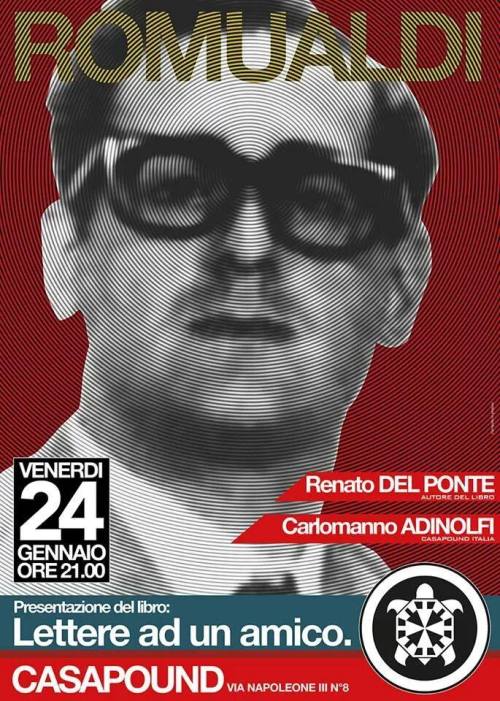
Romualdi

00:05 Publié dans Evénement, Hommages | Lien permanent | Commentaires (0) | Tags : adriano romualdi, italie, événement | |  del.icio.us | | Digg! Digg |  Facebook

Proust et Céline

Céline & Proust.jpg

Proust et Céline


par Marc Laudelout


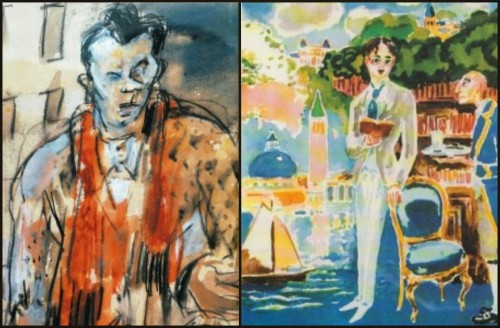
   Opposer Proust à Céline aura été une constante de la critique depuis près d’un siècle. Dès 1932, Léon Daudet écrivait ceci : « Proust, avec toute sa puissance, que j’ai célébrée un des premiers, c’est aussi un recueil de toutes les observations et médisances salonnières dans une société en décomposition. Il est le Balzac du papotage. De là une certaine fatigue dont M. Céline  va  libérer sa génération ¹. » Céline lui-même s’est voulu en quelque sorte l’antithèse de celui qu’il considéra parfois comme un rival. Mais les auteurs d’un récent Dictionnaire amoureux de Proust ² ont tort de croire qu’il n’a jamais varié dans ses appréciations. Il fut un temps où Céline se devait de s’opposer à lui pour édifier une œuvre aussi émotive que celle de son illustre aîné mais assurément moins bavarde, ou à tout le moins ne se perdant pas dans les dédales d’une infinie introspection. À la fin de sa vie, Céline admettra que « Proust est le dernier, le grand écrivain de notre génération ³ », ce qui n’est tout de même pas rien. L’un des co-auteurs de ce dictionnaire note que les ressemblances entre les deux œuvres sont plus grandes qu’on ne le croit généralement. Et d’affirmer, par exemple, que la compassion de Bardamu à l’égard du sergent Alcide s’applique exactement à celle éprouvée par le baron de Charlus envers les soldats de la Grande Guerre. Et que le fameux aphorisme célinien, « La grande défaite, en tout, c’est d’oublier », est une phrase que Proust aurait pu signer, voulant dire par là que tous deux détestent l’oubli – ce qui n’est pas faux mais n’a rien d’original.


   Voilà un rapprochement qui aurait le don d’exaspérer l’inénarrable Charles Dantzig, proustolâtre éperdu et anticélinien primaire. Anxieux, il imagine, dans un avenir proche, l’équivalent (anti)proustien du Contre Céline qui nous fut infligé il y a une quinzaine d’années : « J’ai été frappé au moment d’une querelle littéraire contre le réalisme, que j’ai eue il y a quelques mois, de voir qu’on s’en servait pour défendre Céline au détriment de Proust. Dans les temps haineux qui se sont réveillés, je ne serais pas surpris si, dans cinq ans, paraissait un pamphlet contre Proust, la mollesse et la décadence. Et on regrettera alors ce qui, rétrospectivement, sera devenue une époque. L’époque “Proust friendly”  4». Allusion, on l’aura compris, à l’expression « gay friendly » chère à l’auteur ; « les temps haineux » évoquant les manifestations contre « le mariage pour tous ». Cela étant, c’est méconnaître l’œuvre célinienne que de la réduire au « réalisme » ; hier au « populisme ». Déjà dans un de ses bouquins, ne faisait-il pas sien le commentaire navrant d’un Malraux vieillissant qui comparait la verve de Céline à celle d’un chauffeur de taxi ?  Ailleurs il qualifie  Céline et Beethoven  de  « génies  des adolescents incultes 5» [sic]. Lorsque la bêtise culmine à ce point, on demeure sans voix.


Marc LAUDELOUT


1. Léon Daudet, « L.-F. Céline : “Voyage au bout de la nuit” », Candide, 22 décembre 1932.


2. Jean-Paul et Raphaël Enthoven, Dictionnaire amoureux de Proust, Plon / Grasset, 2013. Voir les propos du second [sur Proust et Céline] recueillis par Philippe Delaroche, « L’autre questionnaire de Proust », Lire, n° 419, octobre 2013, p. 8. Sur les deux auteurs, voir le portrait qu’en dresse Emmanuel Ratier dans Faits & Documents, n° 368, 15 décembre-15 janvier 2013 (B.P. 254-09, 75424 Paris Cedex 09).


3. Jean Guenot (éd.), Céline à Meudon (Transcription des entretiens avec Jacques d’Arribehaude et Jean Guenot), Éd. Guenot, 1995.


4. Charles Dantzig, Émission « Secret professionnel » (Du côté de chez Swann), France Culture, 6 octobre 2013. Cette émission peut actuellement être écoutée sur le site internet de France Culture.


5. Idem, Encyclopédie capricieuse du tout et du rien, Grasset, 2009.

Complicated situation around Iran and the KSA


Complicated situation around Iran and the KSA

The situation around Iran continues to be quite difficult, despite significant progress in the normalization of relations between the West and Iran and the achievement of an interim agreement on the Iranian nuclear program in Geneva on November 24 at a working meeting of the “six” international negotiators and a Tehran delegation. President Rouhani failed to gain the immediate trust of the USA and its allies with his major changes to the accents of Iran’s foreign policy, although the process proceeded in the right direction relatively quickly.

The fact is that much of the negative role, being played in Washington, comes from the Republicans and other conservative forces sitting in the US Congress. First, they approved a list of 19 individuals and entities that fell under sanctions for involvement in Iran’s nuclear program, which forced the Iranian delegation to leave the conference room in Geneva on December 13, since the interim agreement of November 24 provides for the non-imposition of any additional sanctions against Tehran. Then, a group of senators prepared a list of new sanctions against Iran in late December, if negotiations on the nuclear issue reached a deadlock. In response, Iranian parliamentarians prepared their list of appropriate measures that could be applied in case the U.S. toughened its position and the negotiations were derailed. Although it is clear that President Obama himself is interested in the successful completion of the Geneva process, since this would contribute to significant freezing of the Iranian nuclear program, the normalization of relations with Tehran, and allow Washington to continue on a course aimed at reformatting its policy in the Middle East, which started in October 2013.

That is when the U.S. Administration finally realized the fatality of placing its stakes on supporting those forces in the Arab world that assisted radical Islam, extremism and even terrorism, by financing and providing military assistance to organizations and groups affiliated with al-Qaeda or currents even more radical in their ideologies. Their goal is to transform the Arab world into a radical Wahhabi Caliphate. Moreover, it was only this example of a bloody war in Syria that made American strategists realize this fact, and they started developing new approaches to their policy in the region. This explains the change of attitude towards Iran, which can become a real counterweight to the aggressive policy of Saudi Arabia, even more so, since the oil dependence of the U.S. economy has been substantially reduced after the “shale revolution”, and the importance of the Wahhabi Kingdom has decreased as well, in terms of the world’s energy supplies.

At the same time, American and European companies are interested in participating in the modernization of the Iranian economy and the development of large oil and gas projects that were frozen because of the sanctions. In addition, Iran is a very large market, given its 70 million people and solvency thanks to vast oil and gas resources of this country. Their development, especially the South Pars Gas Field, will require tens of billions in investments and the latest technologies, including for the creation of facilities for liquefying gas for export. Iran’s power industry, industrial sector, telecommunications, and transport infrastructure have huge investment opportunities. In other words, this is a very tasty area for Western business, which is much more promising than the economies of the GCC countries, where labor resources are limited.

Thus, Saudi Arabia became nervous as it realized that its place as the main strategic ally of the USA in the Persian Gulf might soon be taken over by Iran. The more so, knowing that Tehran played this role in the 1970s under the Shah’s regime. Moreover, if one considers Iran’s powerful armed forces, which will surely be modernized, one can understand what Riyadh is afraid of – a complete change in the regional balance of forces, where Saudi Arabia will fall into the shadows of Iran and Iraq.

Nevertheless, instead of making steps towards Tehran, the stubborn and conservative aging leaders of the KSA started, simply saying, to “play dirty tricks” through the development of an entire network of anti-Iran intrigues. At first, the Saudis tried to push Israel into joint strikes against Iran’s nuclear facilities. Then, when this idea had failed, Riyadh decided to put together an anti-Iran military bloc by transforming the GCC from an economic and political union of Arabian monarchies into a military alliance. At the last summit of the organization in December in Kuwait, the Saudis put forward a proposal to create a sort of a “Gulf” NATO to deter Iran. Although, as it is well known, Iran never attacked its neighbors during its modern history after the Khomeini Revolution, but only fought to repel the aggression of Iraq, started in 1980 at the instigation of Saudi Arabia, the GCC countries and the United States.

So far other members of the Council – with the exception of Bahrain, whose royal regime entirely depends on Saudi bayonets (Saudi troops were brought to the island in February 2011 to suppress actions of the Shiite majority population) – are reacting coolly to all this. Only a kind of military command was established, but there are no common armed forces. Moreover, small Arab principalities of the Gulf will hardly wish to worsen their relations with Iran, at the time when this country is coming out of Western isolation.

Moreover, Riyadh revived talks of a regional missile defense system called “ParsPRO” to repel possible missile and air strikes on the GCC from Iran. Its components, based on the purchase of the “Patriot” systems, would be placed virtually everywhere – from Kuwait to Qatar and the UAE. At that, they planned to spend up to $20 billion for just the first phase. Moreover, this was done despite the fact that in early December, the Iranian Foreign Minister Mohammad Javad Zarif visited four Gulf countries and put forward a number of interesting initiatives to strengthen stability and security in the Gulf, which received positive feedback from Kuwait, Qatar, UAE and Oman.

In any case, we can be sure that Tehran can overcome the remaining difficulties in the coming period and make a leap forward, despite the machinations of Saudi Arabia and the pressure of the pro-Israel lobby in Washington. Russia understands this, and is getting ready to expand its cooperation with Iran – a country that is a friend of the Russian Federation. It is no mere chance that Russian Foreign Minister Sergey Lavrov made an official visit to Tehran in mid-December, and that the capital of Iran hosted a meeting of the Joint Intergovernmental Commission on Trade, Economic, Scientific and Technical Cooperation.

Viktor Titov, PhD in History, a political observer on the Middle East, exclusively for the online magazine New Eastern Outlook.

Western and Gulf barbarity

anti-government-armed-rebels-in-syria.jpg

Western and Gulf barbarity: Iraq and Lebanon can go to Hell providing Syria falls

Jibril Khoury and Walter Sebastian

Modern Tokyo Times - http://moderntokyotimes.com

The political leaders of America, France, Qatar, Saudi Arabia, Turkey and the United Kingdom should be held accountable for helping to spread terrorism, Salafi indoctrination and boosting the cause of Takfiri Islamist who rejoice in killing fellow Muslims and non-Muslims. It is also abundantly clear that in order to destroy Syria that major Gulf and Western powers care little about destabilizing Iraq and Lebanon because violence and tensions are on the rise in both nations. Of course, you have other players like Jordan implementing anti-Syrian policies alongside Kuwait and other Gulf states which are involved in the venture to crush the Syrian government. Likewise, Libya is a go-between in the Levant for sending military hardware and untold numbers of terrorists have entered Syria from this country and other regional nations like Tunisia in North Africa.

Lee Jay Walker at Modern Tokyo Times says: “Ironically, the Obama administration believes that it is fine to enter talks with the Taliban in Afghanistan via the terrorist sponsoring nation of Qatar. Therefore, the Obama administration which supports homosexual and female rights in America now wants open dialogue with the Taliban which supports killing apostates to Christianity, killing homosexuals, stoning women to death for adultery – and so forth. This isn’t so surprising because the Taliban is the real mirror of Saudi Arabia but of course Gulf nations are much more dangerous because they export Salafi hatred all over the world based on their petrodollars. However, it is strange that open talks with the secular government of Syria is shunned by America but being allies with Islamist apartheid forces in Saudi Arabia and talking to “year zero Islamists” in Afghanistan is fine.”

Turning back to the crisis in Syria then it is clear that outside nations care little about the consequences engulfing Iraq and Lebanon. After all, by funneling more military arms to various groups of terrorists within the so-called Free Syrian Army (FSA) and other al-Qaeda affiliated terrorist groups; then clearly the consequences of this were bound to reverberate into Iraq and Lebanon. Despite this, and with the deaths of thousands of American, British and other allied troops in Iraq, it now seems that these troops were mere fodder. This is based on the reality that al-Qaeda affiliated groups have not only gone back into areas they were forced out of in Iraq but now they are also stretching their dangerous tentacles to Lebanon and Syria.

Indeed, under the current Obama administration and the governments of France and the United Kingdom, a whole array of terrorist groups have more space to move because of the collective policies of the above troika of destabilizing powers. Al-Qaeda and other terrorist groups are now moving easily from Iraq to the Levant and have greater freedom in many parts of North Africa and West Africa. At the same time, Salafi Islam is spreading because of nations like Kuwait, Qatar and Saudi Arabia therefore Sufi shrines are being destroyed by Islamists which hate religious diversity in Libya, Mali and Somalia. Alongside this you have state sponsored indoctrination being spread to the Middle East and parts of Africa – and much further afield – whereby Christians can be hunted down like wild animals in Somalia by the al-Shabaab because of Gulf petrodollars and religious channels emanating from the Gulf region. In this sense, America and the United Kingdom are openly siding with the Islamist Salafi objectives of major Gulf powers. Not surprisingly, Ethiopia, Kenya, Nigeria and Uganda are keeping a watchful eye on events.

All major regional powers and Western nations understand that Iraq and Lebanon are very fragile therefore events in Syria will spiral out of control. Yet this reality doesn’t enter the agenda at the moment because the only goal is to destroy Syria at all costs providing the government is overthrown. The elites in the Gulf and West care little about the reality of what happened to Afghanistan, Iraq and Libya because they are not blind to reality. Therefore, their collective actions against Syria are not only barbaric against this nation but they are also notifying Iraq and Lebanon that they can go to hell.

Currently Lebanon isn’t anywhere near like Iraq and Syria but the omens are not looking good because dangerous Takfiri forces backed by outside nations are intent on spreading sectarianism in this country. Recent history in this nation points to a very delicate balance because you have many different religious sects. It is therefore extremely barbaric that outside nations are flooding Syria with terrorists, mercenaries, military weapons and are enabling Salafists to spread sectarianism. Not surprisingly, the monthly death rate is once more in the thousands in Iraq because al-Qaeda affiliated groups, military weapons and enormous indoctrination is mirroring what is happening in Syria. This collective chaos is being backed by Ankara, Doha, London, Paris, Riyadh and Washington – and others within the Gulf.

Hatred towards the Shia within the Takfiri and other Sunni Islamist camps is extremely hostile.  Abu Muhammad al Adnani in early 2012 (Al Qaeda in Iraq) stated “So, Iraq, Iraq, O people of the Sunnah. Stop the black extension that is coming towards you. Cut off the head of the [Shi'ite] snake, the tail of which is amongst you. Know that the coming stage is a stage of real confrontation and war against the despicable [Shi'ites], whether you like it or not, and that the war of the Sunnis with the [Shi'ites] is not a sectarian war, like people are braying about. A sect is part of something, and the [Shi'ites] don’t have anything to do with Islam; they have their own religion and we have our own. The war of the Sunnis with the [Shi'ites] is a religious war, a holy war of faith, a war of faith and unbelief, a war of idolatry and monotheism. There is no way out of it and there is no swerving from it. The [Shi'ites] know this well.”

The above mindset is being openly supported by leading Gulf powers and the CIA, MI6 and other covert agencies are linking many terrorist ratlines in order to send military arms to religious fanatics and terrorists in Syria. Libya is a powerful nation for manipulation because central forces have been destroyed and the NATO, mercenary and terrorist chain is strong. Meanwhile, Turkey is a major conduit whereby weapons from a host of nations are openly manipulating the border area and likewise Lebanon is of strategic importance for nations supporting terrorism, sectarianism and sedition.

Iraqi nationals must be wondering what they did because minorities like the Christians and Mandaeans have been cleansed in many areas under the watch of America, the United Kingdom and other allied forces; untold numbers of Muslims have been killed because of terrorism and sectarianism; and other powerful brutal realities. Now, once more, Iraq is being undermined by the policies of Ankara, Doha, London, Paris, Riyadh and Washington – and other Gulf nations. Therefore, it is abundantly clear that the lives of Iraqi and Syrian nationals are cheap to the above ruling elites in their respective nations. Given this reality, Iraq, Lebanon and Syria fear the worse because Takfiri Islamists – combined with Western intrigues and the support of international terrorism – is without doubt the most dangerous unified force for any nation and region to face.

Over forty years ago major Gulf powers, Western nations and Pakistan supported the same Islamist thought patterns many decades ago in Afghanistan. The legacy of this reality is still causing mayhem in Afghanistan today while Pakistan managed to destabilize itself. Women are now in the shadows, terrorism is rampant in Afghanistan and Pakistan, the Shia are slaughtered in Pakistan on a regular basis, non-Muslims have no rights in Afghanistan and apostates face persecution – and religious bigotry is part and parcel of modern day Pakistan. In other words, it is a nightmare because Sunni Islamist terrorist groups in Pakistan kill Shia Muslims in mosques, kill girls for studying, attack hospitals and even kill people during funeral processions.

The above madness in Afghanistan and Pakistan was created by the combined forces of major Western and Gulf powers alongside Pakistan playing a very dangerous game. Secret services including the CIA, MI6 and the ISI therefore spread untold mayhem and of course this also laid the foundations for September 11. Therefore, major powers understand what they are doing in Syria and they know the repercussions of Afghanistan; this reality means that Iraq and Lebanon can go to hell providing they remove the Syrian government. Sadly, the same barbaric nations escape international criminal courts because they play by the rules they created.

Lee Jay Walker gave guidance to both main writers

leejay@moderntokyotimes.com

http://moderntokyotimes.com

Le défi de la connaissance compétitive

artificial-intelligence.gif

Le défi de la connaissance compétitive

Ex: http://www.infoguerre.fr

Notre vie sociétale consacre-t-elle véritablement cette intime foi dans la recherche permanente de connaissances qui ne saurait être un simple individualisme mais devrait être considéré comme un actif intellectuel inscrit au service de l’intérêt général de toute nation européenne, même si ce dernier est aujourd’hui tributaire des soubresauts financiers d’une économie mondialisée.
En regard de ce monde où compte davantage l’intérêt du rendement productif et des plus-values spéculatives, l’économie de la connaissance ne demeure-t-elle pas, au même titre que la valeur du travail, une garantie tout autant de développement humain que de puissance économique.

Aussi, dans une Europe des nations en proie à la crise du « sauve qui peut », engendrée par le sauvetage des banques et des institutions financières depuis 2008, l’urgence politique est bel et bien aujourd’hui la remise « en ordre de bataille » de toutes les synergies de la connaissance (stratégie de Lisbonne) pour assurer la pérennité d’une prospérité individuelle au sein d’une économie européenne transnationale.
Cette exigence politique doit conduire les pays européens à s’inscrire non pas dans une conception de toute puissance publique avec une approche dogmatique d’excellence pour ses seules institutions administratives, d’enseignement supérieur et de recherche mais davantage dans une logique de soutien en simple autorité facilitatrice, ambassadrice de l’offre de services et de coopération ouverte dans les domaines de la Connaissance et de la Recherche, qui sont irrémédiablement enclin à construire les axes stratégiques de développement économique de demain.

S’agissant tout particulièrement de la France, elle devrait d’abord déconstruire cette implacable logique d’excellence parisienne qui favorise l’inexorable désolidarisation territoriale dans la valorisation des savoirs au détriment de l’intérêt national et en se faisant, de s’assurer également de l’impérieuse nécessité de la mise en œuvre d’un véritable multiculturalisme de la connaissance (interdisciplinarité et pluridisciplinarité) dans le choix de construction des pôles régionaux de compétitivité économique et d’enseignement supérieur. Pour cela, il est nécessaire de rompre avec cette culture technocratique qui, fondée sur la toute puissance administrative, le corporatisme (dévoiement élitiste) et le culte du diplôme, des titres et des décorations, consacre pour chaque création de poste d’emploi dans le secteur public, la destruction directe de deux emplois dans le secteur privé. Ce qui constitue d’ores et déjà une réelle problématique économique à ce même niveau régional de gouvernance territoriale puisque l’ensemble des effectifs publics de nos collectivités locales a augmenté de près de 175 % sur les 10 dernières années.

En définitive, cette crise économique qui a traversée tout le continent européen nous a très vite rappelé que la Recherche et l’Innovation, dans un élan de tertiairisation des économies nationales, étaient les principaux moteurs de la croissance économique nécessaire au rétablissement de la compétitivité européenne (des nations) et au rééquilibrage des rapports de force entre les puissances économiques. A titre comparatif, les Etats-Unis d’Amérique, première puissance économique mondiale, reste une source de référence en la matière. Outre la stratégie de « coopétition », les actions de Recherche et d’Innovation sont concentrées sur seulement 3% des quelques 4 400 établissements américains de l’enseignement supérieur. Le fonctionnement du secteur de l’économie de la connaissance s’appuie d’une part, sur une émulation concurrentielle (comprenant une politique assumée de recrutement international, « Brain drain ») et d’autre part, sur un mode de financement majoritairement à caractère privé (donations, frais d’inscription, entreprises). Ce dernier oriente les développements en matière de Recherche et d’Innovation compétitives. Dans ce contexte, culturellement entretenu, le bienveillant Etat fédéral étatsunien joue un rôle proactif d’accompagnement et d’appui à la réussite des débouchés commerciaux comme à celle de la veille et de l’influence socioculturelles et économiques, sans devoir jamais exclure toute réussite du « self made man ».

Ainsi, nos freins socioculturels(1) nationaux, sous l’influence lobbyiste et des castes, au sein d’une Europe économique transnationale, permettent-ils encore de croire tout autant à la réussite individuelle qu’à la prospérité de la France et de toute la zone continentale, sans d’ailleurs s’enfermer dans une éternelle logique de prérogatives administratives publiques, de désintérêt entrepreneurial et de restrictions réglementaires dans le périmètre de l’économie de la connaissance (capital immatériel), recouvrant les champs à forte valeur ajoutée que sont la Recherche et l’Innovation. Cette forte valeur ajoutée elle-même assise sur une politique de veille (créative) et de gestion tant des connaissances que des relations interculturelles.

*****

Extrait de la publication « Le socioculturel à l’épreuve des TIC : les éléments d’un alignement avec la stratégie d’entreprise » de Mounim BELALIA, Doctorant Chercheur au CREPA, Université Paris Dauphine.

1. La culture nationale :
Dans l’étude de (Hofstede, 1991), l’auteur se base sur la comparaison de 64 filiales de la firme IBM et identifie quatre facteurs qui expriment 49% de la variance des données et représentent la dimension nationale de la culture :

  • La distance hiérarchique qui signifie le degré des inégalités sociales, y compris les relations avec les autorités ;
  • Le degré d’individualisme, versus collectivisme, qui caractérise les sociétés dans lesquelles les liens entre les personnes sont lâches ;
  • Le degré de masculinité qui fait appel à des valeurs communément associées dans les pays à l’homme comme la performance, le succès et la compétition. Cela s’oppose à la féminité qui regroupe des valeurs comme les relations personnelles, le service, le soin apporté aux faibles et la solidarité ;
  • Le contrôle de l’incertitude qui réfère au degré de préférence des situations structurées par rapport aux non structurées.
  • Dans une étude ultérieure, l’auteur fait appel à une analyse du comportement des étudiants dans 23 pays et ajoute un cinquième facteur : l’orientation sur le long terme qui décrit la vision centrée sur le futur tandis que l’orientation court terme porte sur le passé et le présent (exemple du respect des traditions et obligations sociales).

2. La culture du groupe d’appartenance :
Dans ce niveau de culture, l’auteur identifie des facteurs liés à l’appartenance régionale, ethnique, religieuse ou linguistique qu’il considère à l’origine de différences à l’intérieur d’un même pays. Il donne l’exemple des Etats-Unis dont la société est composée d’immigrants et fournit à la fois des variétés d’assimilation et de conservation d’une identité de groupe.
Il est donc à retenir trois facteurs relatifs à ce niveau de culture :
a. La culture régionale ;
b. La culture ethnique et religieuse ;
c. La langue.

3. La culture d’entreprise :
L’étude de (Hofstede, Neuijen, Ohavy et Sander, 1990) analyse les comportements quotidiens des employés issus de 10 organisations différentes dont 5 au Danemark et 5 aux Pays-Bas. Les résultats des statistiques établies par les auteurs révèlent six dimensions de la variance inter- organisationnelle : 

  • L’orientation processus tournée vers les procédures et méthodes, ce qui est le cas des organisations mécanistes et bureaucratiques. A l’opposé de cette vision, on trouve l’orientation résultat tournée vers les objectifs organisationnels et stratégiques et ayant pour modèle l’organisation organique et innovante ;
  • L’orientation emploi qui prend en considération le bien-être des salariés, versus job qui s’intéresse plutôt à l’efficacité du travail et dépend des compétences individuels ;
  • L’ouverture du système qui renvoie à la fluidité de l’information et la facilité de la communication entre les salariés dans les niveaux hiérarchiques de l’entreprise ;
  • Le degré de contrôle dans l’organisation qui signifie le degré de tolérance de cette dernière vis-à-vis des préférences individuelles (Cabrera et all., 2001) ;
  • La dimension professionnelle de l’organisation qui signifie que les employés s’identifient à leur profession et métier plutôt qu’à leur entreprise ;
  • La conformité aux exigences institutionnelles qui renvoie à la propension de l’organisation à adhérer au « politiquement correct », et qui constitue l’antithèse du pragmatisme visant à répondre d’abord aux contraintes du marché et besoins des clients.

Note

(1) Le « socioculturel » se définit selon une grille d’analyse qui se décompose en trois niveaux : la culture nationale, la culture du groupe d’appartenance et la culture organisationnelle.