Ok

En poursuivant votre navigation sur ce site, vous acceptez l'utilisation de cookies. Ces derniers assurent le bon fonctionnement de nos services. En savoir plus.

mercredi, 24 avril 2013

Politieke correctheid en taalepuratie

Politieke correctheid en taalepuratie: het mysterie van de verdwenen allochtoon

Tot een van de bloedigste regimes sinds de tweede wereldoorlog kan dat van de Rode Khmer gerekend worden, de militaire tak van de Communistische Partij van Democratisch Kampuchea (nu Cambodja). Hun bezieler en leider, Pol Pot, had het plan opgevat om de stedelijke beschaving, en eigenlijk de beschaving tout court, af te schaffen via massale deportaties naar het platteland. Men schat dat tussen 1975 en 1979 2 à 3 miljoen Cambodjanen (op een totaal van 7 miljoen) zijn omgekomen.

Behalve in wreedheid overtrof Pol Pot zijn leermeesters Stalin en Mao ook inzake de totale beslaglegging op het sociale verkeer en het privé-leven. Slapen, ontlasting, eten en drinken: het moest allemaal collectief gebeuren. Alles wat naar cultuur, expressie en individualiteit verwees, werd verboden, op straffe van executie: eigendom (uiteraard), naast kleding en uiting van persoonlijke smaak (iedereen liep in het zwart), boeken (behalve dan de reguliere communistische literatuur), het dragen van een bril (te intellectueel!), kennis van een vreemde taal (gevaar voor imperialistische smetten), maar ook vriendschappen en familiale banden die konden leiden tot groepsvorming buiten de cellulaire staatsstructuur. Allemaal fout, weg ermee.

Opmerkelijk is ook het belang dat de Khmers in hun ijver hechtten aan een juist taalgebruik. Daartoe moest er grote schoonmaak gehouden worden, niet alleen in de politieke terminologie. Woorden als vader of moeder waren taboe wegens niet conform de communistische gemeenschapszin, naast een hele resem andere vervuilde woorden uit de omgangstaal. Deze opkuis vereenvoudigde het leven aanzienlijk, en zou leiden tot de ideale maatschappij, zo meenden de Khmers oprecht: hun insteek was, hoe schandalig we dat nu ook vinden, idealistisch, op het maakbaarheidsprincipe gebaseerd, en, tja, in die zin zelfs politiek-correct.

Uiteindelijk werden de Khmers verjaagd door de Vietnamezen, die hen ook eerst in het zadel hadden geholpen. Waarna de indoctrinatie gewoon doorging. Tot daar de recente geschiedenis.

Newspeak

De verhouding tussen politieke macht en taalcontrole was het stokpaardje van de Engelse schrijver-filosoof George Orwell. Al in 1945 publiceerde hij zijn legendarisch geworden Animal Farm, een grotesk-satirische allegorie over een boerderij waar de varkens het hebben overgenomen en een welzijnsstaat creëerden volgens hoger beschreven Stalinistische principes. Maar de wreedheid is nagenoeg afwezig: de propaganda en de indoctrinatie hebben de vrijheidsberoving en de fysieke liquidatie grotendeels overbodig gemaakt. Iedereen is gelukkig omdat… het woord ongeluk gewoon is afgeschaft, meer moet dat niet zijn!

Orwell had vooral de Stalin-dictatuur voor ogen –in die zin was hij zelfs een pleitbezorger van de Koude Oorlog-, maar de eigenlijke visionaire dimensie van zijn distopische roman reikte verder: hij zag al de “perfecte democratie” opdoemen, waar macht en controle over het discours, in al zijn aspecten, samenvalt. Daartoe is dus geen dictatuur nodig, integendeel: hoe groter het gepalaver, hoe groter de verwarring, des te beter voor het systeem.

De moderne macht is niet meer repressief, ze grijpt in op het niveau van de taal, de betekenissen, de tekst. Ze organiseert de democratie en de publieke opinie op zo’n manier, dat de free speech alleen nog een variatie is op de legitieme thema’s, in een vast verbaal stramien.  Alles wat daar buiten valt, wordt gekwalificeerd als ongeoorloofd, nefast, grof, extreem.

Het systeem dat vandaag spreekwoordelijk als “Orwelliaans” wordt gekarakteriseerd, drijft daarom voornamelijk op taalmanipulatie en massapsychologie, met de communicatiewetenschap als sleuteldiscipline. Zowel de simplifiërende on-liner als het omgekeerde, de quasi-onbegrijpelijke woordenbrij, behoren tot het retorisch arsenaal van de macht.

De moderne macht is niet meer repressief, ze grijpt in op het niveau van de taal, de betekenissen, de tekst.

Het ingrijpen in de woordenschat is daarvan een essentieel aspect: termen worden gedumpt, andere worden uitgevonden. De nieuwe termen zijn nooit helder of éénduidig,- ze zijn veeleer wollig en mistig, om de contradicties van het systeem zelf toe te dekken. In een weinig bekend essay van 1946, getiteld “Politics an the English Language”, doet George Orwell die newspeak haarfijn uit de doeken. Macht berust op verwarring en ondoorzichtigheid, en daartoe moeten er verbale mistgordijnen geschapen worden. Dat gebeurt op alle niveau’s. We kennen allemaal het fenomeen van de informaticatechneut die u om de oren slaat met vakjargon, en zo zijn autoriteit bevestigt: het is jammer genoeg schering en inslag.

Zowel systemen als individuen ontlenen hun autoriteit aan een complex taalgebruik, een groteske overdaad aan woorden, frasen, alinea’s en voetnoten, die op de duur alleen nog naar elkaar verwijzen. Het euvel komt voor bij wetenschappers, technici, kunstenaars, en zeker ook politici. Er ontstaan dan kasten van specialisten die elkaar afschermen via een jargon dat zogezegd noodzakelijk is om ingewikkelde knopen te ontwarren, terwijl ze de knopen juist nog dikker maken. (→ meer hierover: “Eilanden van gezond verstand”).

Op het politieke vlak wordt de verloren gegane legitimiteit (“wie gelooft die mensen nog?”) ruimschoots gecompenseerd door de professionele inbreng van spindoctors en communicatiestrategen allerhande. Woorden worden gecreëerd, gecombineerd, gedumpt, helemaal conform hun inwerking op de publieke opinie. Met de media uiteraard als noodzakelijke sluis, en het academisch-cultureel establishment als aangever.

Allo-wat?

Ik moest dan ook voortdurend aan Orwell denken, toen steden zoals Amsterdam en Gent aankondigden dat ze het woord “allochtoon” zouden schrappen.

Het woord werd ons ooit opgedrongen als hallucinant staaltje newspeak (omdat men niet over vreemdelingen, migranten of mensen-van-buitenlandse-origine mocht spreken), en nu wordt het dus door diezelfde taalpolitie weer afgevoerd. Verre van dit met het Rode Khmer-regime te willen vergelijken, stelt men toch vast dat hier een gelijkaardig politiek-correct voluntarisme aan het werk is: het idee dat problemen zich oplossen door de taal te fatsoeneren. Terwijl het net andersom is: de taal is een weerspiegeling van de sociale realiteit, die niet homogeen is, maar heterogeen en conflictueus.

De ontkenningsstrategie die erachter schuilt is perfide en lachwekkend tegelijk. Ooit stelde Steve Stevaert, nu actief als havenbaas in Vietnam, voor om de term “Vlaams Belang” niet meer uit te spreken, en enkel nog de afkorting “VB” te gebruiken (wat dan evengoed op “Vuile Bruinzakken” of “Vunzige Bastaards” kon slaan, kies zelf maar). Daarmee zou het probleem volgens hem wel van de baan geraken. Het was ook de tijd dat de zo slimme professor Etienne Vermeersch in de media elke vraag over die verboden partij beantwoordde met een lakoniek “Wie?”, in dezelfde optimistische veronderstelling dat het probleem zo zichzelf zou oplossen.

In het kader van een permanente goed-nieuws-show wordt de realiteit geregisseerd en verbaal uitgefilterd,- iets waar de media overigens voluit aan meedoen.

Dit taalkundig proberen te overrulen van de realiteit is typerend voor een maakbaarheidsideologie die au fond niet geïnteresseerd is in het werkelijke maatschappelijke spanningsveld: in het kader van een permanente goed-nieuws-show wordt de realiteit geregisseerd en uitgefilterd,- iets waar de media overigens voluit aan meedoen. De quasi-ethische omlijsting van het woordverbod (“onzuiver taalgebruik” wordt meteen ook “immoreel taalgebruik”) is kenmerkend voor een bovenbouw die wanhopig op zoek is naar legitimatie: Gent en Amsterdam, redders van het correcte Nederlands, en hoeders van de beschaving!

Op zich totaal betekenisloos geworden stoplappen als “racistisch” en “(on-) democratisch” fungeren als sleutelwoorden in deze epuratie, die ver voorbij de strikt politieke sfeer gaat. De manier bv. hoe kreupelen, steeds vanuit de bemoeizucht van de sociale sector, invaliden werden, dan gehandicapten, daarna mindervaliden, nog later andersvaliden, om voorlopig te eindigen als personen-met-een-beperking,- is tekenend voor de fascinatie van de socio-politieke sector voor labelling en semantische inkapseling.

We denken ook aan de systematische kruistocht van de reguliere media die afgeven op het “racistische”, “vunzige”, “barbaarse” taalgebruik op het internet, en de filters die worden toegepast op de eigen publieksfora.  Op die manier proberen de elites taalkundig greep te krijgen op de massa, via een progressief-ethisch alibi, met zelfs esthetische parfums van “goede smaak”. De missionarishouding dus. Het is nog maar een kwestie van tijd, voor ze bij de UNESCO er achter komen wat de term “voil Janet” precies betekent, en dan krijgt het Aalsters carnaval zijn genadeslag…

Tentensletje

Conclusie? De overheid moet zich niet moeien met taalkundige epuratie. Als ze de treinen op tijd laat rijden en sneeuw ruimt ben ik al heel tevreden. Taal is iets levend, en baart constant nieuw materiaal dat van onderuit ontstaat, als vulkanische lava. Elk jaar neemt de Dikke Van Dale zo’n 1500 woorden op die tot de omgangstaal zijn gaan behoren. Het zijn woorden die soms door individuen worden verzonnen, schrijvers of journalisten, maar dikwijls ook uit de volksverbeelding zelf voortkomen. Vooral de jeugd- en jongerentaal is een vruchtbare bron, denk aan het tentensletje van de editie 2010.

In essentie loopt het woordenboek dus steeds de feiten achterna. Dat kan ook niet anders: de officiële taal, het AN, is maar een schaduw van de levende taal. Maar de Orwelliaanse krachten in het bestel willen op de feiten vooroplopen en de maatschappij kneden via het plichtlexicon, het Groene of het Rode boekje, het geadministreerde discours.

Toen een brave academische borst recent meende dat het woord “makak” moest geschrapt worden, wees Peter de Roover er fijntjes op dat dit woord vrijwel enkel nog gebruikt wordt… als scheldwoord door Marokkaanse allochtonen onderling. Ook het woord “neger” is in onbruik geraakt, niet bij decreet maar spontaan. Het woord boerka maakt in de volksmond dan weer opgang als vuilzak voor gemengd huishoudelijk afval. De etymologie is dikwijls complex en verrassend, het gebruik onorthodox. Zo is het woord “bougnoul” van oorsprong een Arabische term die… “neger” betekent.  Verbieden dan maar?

De enige autonomie die mensen nog rest, en waar ze fanatiek aan moeten houden, is de vrijheid om hun woorden te kiezen, vanuit de onderbuik, niet alleen vanuit het hoofd.

Het verzet tegen de standaard- en plichttaal is fundamenteel, en gelukkig springlevend. Om die reden maak ik me, zoals de lezer al heeft kunnen vaststellen, ook niet al te druk over de spellingregels, uitgedokterd door een clubje taalgeleerden ergens in den Haag. Nog veel minder maak ik me bezorgd over de door puristen zo gehate chat- en SMS-taal, of andere idiomen en tussentalen. Integendeel, ze vormen een vitaal tegengewicht voor de opgelegde new speak, de bureaucratische sluiers en het abrakadabra van de systeemtechnici.

Deze stille –en soms luidruchtige- strijd tussen spontane idiomen en cultuurtaal is, is veel belangrijker dan de immer verwaterende politieke tegenstelling. Het is dé nieuwe conflictzone van de postmoderne democratie, waar alles draait rond retoriek, taalspelen, demagogie en massamanipulatie.

De enige autonomie die mensen nog rest, en waar ze fanatiek aan moeten houden, is de vrijheid om hun woorden te kiezen, vanuit de onderbuik, niet alleen vanuit het hoofd. En er desnoods nieuwe te verzinnen als het vocabularium niet volstaat.

De schutting- en straattaal, samen met het kernproza dat op het internet floreert, is geen verbale restfractie maar vormt, integendeel, de stamcellen van het spraakweefsel. In ons geval het Nederlands. Als containerbegrip, niet als standaard. De vitale kern van een taal bestaat uit schimpscheuten en krachttermen, niet uit blabla.

Daar kan de Gentse burgemeester Termont, goede leerling van Stevaert, niets aan veranderen. Gelukkig maar, dedju.

Le culte de l’Amérique en Europe

Emrah Kaynak:

Le culte de l’Amérique en Europe

Ex: http://aucoeurdunationalisme.blogspot.com/


Le culte de l’Amérique en Europe
Le rapport que l’Europe entretient avec les États-Unis ressemble à s’y méprendre au rapport traditionnel métropole-colonie à ceci près que la colonie d’antan s’est muée en modèle-type universel. Le moindre événement qui a lieu aux États-Unis a une projection hors norme dans le Vieux Continent. Un attentat engendre trois morts outre-Atlantique et aussitôt le plan Vigipirate est renforcé en France ; un cyclone s’apprête à toucher la côte est des Etats-Unis, après avoir dévasté les Caraïbes, et c’est toute l’Europe qui retient son souffle.

La double explosion qui a frappé le marathon de Boston a joui d’une exposition médiatique extraordinaire : éditions spéciales dans les journaux télévisés et dans la presse écrite. Un événement similaire dans un pays périphérique n’aurait très certainement pas joui du même écho. A l’inverse, les États-Unis sont recroquevillés sur leur société et font très peu cas de ce qui se passe au-delà de leurs frontières, hormis lorsque leurs intérêts directs sont en cause.

Ce qui est nommé fâcheusement « mondialisation » n’est en réalité que la propagation virale de la culture consumériste étasunienne et de son corrélat moral dans le reste du monde. Ce qui se déroule aux états-Unis préfigure très souvent ce qui se passera d’ici peu en Europe : combat entre le moderne (néo-libéralisme anglo-américain) contre l’ancien, le dépassé (modèle social européen). Sarkozy, qui faisait du jogging à New-York affublé d’un T-shirt NYPD, incarne à merveille cette dévotion infantile pour l’Oncle Sam. En son temps, il déclarait au Journal Le Monde : « J’aime l’énergie et la fluidité de l’Amérique. Ce sentiment que tout est possible. Cette impression - peut être artificielle - que des sagas sont possibles, qu’on peut partir du bas de l’échelle et monter très haut, ou bien le contraire ». (1)

La sujétion européenne est non seulement politique mais aussi économique et intellectuelle. La politique étrangère européenne est déjà sous tutelle, alors que le marché européen n’est déjà plus qu’un comptoir de marchandises étasuniennes. L’UE est la terre d’accueil la plus importante du monde pour les marchandises, les services et les capitaux en provenance des États-Unis.

L’Angleterre, la France, l’Allemagne qui étaient les incubateurs des courants de pensée avant-gardistes, se contentent de plus en plus de décalquer les concepts et idées marqués du sceau étasunien . Tout ce qui est estampillé États-Unis, par rapport à n’importe lequel de ses équivalents, représente per se une valeur ajoutée. Que ce soit en nouvelles technologies (Apple, Microsoft, Google, Facebook…), en vêtements (Nike), en productions culturelles de masse (cinéma, série TV, musique,…), en boissons et en produits alimentaires (Coca-cola, Mc Donald,…), le Made in USA bénéficie d’une attractivité sans égal (2).

« Le théâtre, les jeux, les farces, les spectacles, les gladiateurs, les bêtes curieuses, les médailles, les tableaux et autres drogues de cette espèce étaient pour les peuples anciens les appâts de la servitude, le prix de leur liberté ravie, les outils de la tyrannie. Ce moyen, cette pratique, ces allèchements étaient ceux qu’employaient les anciens tyrans pour endormir leurs sujets sous leur joug. Ainsi les peuples abrutis, trouvant beaux tout ces passe-temps, amusés d’un vain plaisir qui les éblouissait, s’habituaient à servir aussi niaisement mais plus mal que les enfants n’apprennent à lire avec des images brillantes » avisait déjà Étienne de La Boétie. (3)

Cette acculturation psychologique s’exprime de la manière la plus éclatante par l’anglomanie butée qui sévit autant dans les couches populaires qu’au sein des élites dirigeantes (4). Publicitaires, journalistes, scientifiques, hommes politiques recourent abusivement à l’anglais qui est censé conférer un surcroît de sérieux à leurs propos. L’anglais est en passe de devenir une véritable « supralangue » qui relègue toutes autres langues au rang de dialecte régional. La langue n’est pas simplement un vecteur de communication ; il s’agit en outre d’un objet idéologique qui traduit une certaine « cosmovision » c’est-à-dire une appréhension générale de l’existence.

L’onde du culte de l’Amérique, l’idée que c’est le meilleur pays au monde, s’étend à l’Europe entière et au reste du monde. Après les événements du 11 septembre 2001, l’Europe avait proclamé ses affinités électives avec les États-Unis sous l’aphorisme « nous sommes tous américains ». Cette déclaration de soumission s’est concrétisée et s’est même intensifiée ces dernières années dans les faits et dans les esprits. La conversion à la culture usaméricaine, au néo-libéralisme, à l’esprit du temps, contraint malheureusement les masses à l’aliénation et à l’encerclement de l’imaginaire.

Emrah Kaynak

Notes :

(1) http://www.lemonde.fr/societe/article/2006/09/09/nicolas-sar...

(2) Cette Amérique qu’on aime, Thierry Fiorilli, http://archives.lesoir.be/cette-amerique-qu-8217-on-aime-823....

(3) Etienne de la Boétie, Discours de la servitude volontaire, 1574.

(4) L’anglomanie en Belgique francophone,
http://correspo.ccdmd.qc.ca/Corr16-3/Anglomanie.html.
Psychopathologie : une introduction phénoménologique de Georges Charbonneau

Pierre Le Vigan:

Psychopathologie : une introduction phénoménologique de Georges Charbonneau

Auteur d’un ouvrage sur les personnalités hystériques, le psychiatre et phénoménologue Georges Charbonneau  anime aussi la revue Le Cercle herméneutique. Il vient de publier un livre qui condense ses réflexions depuis plus de 20 ans. C’est aussi le fruit des travaux de l’école de phénoménologie psychopathologique. Cette école, parfois aussi appelée psychothérapie existentielle, reste marquée par les noms d’Eugène Minkowski (Traité de psychopathologie), Ludwig Binswanger (Mélancolie et manie, Trois formes manquées de la présence humaine), Hubertus Tellenbach (La mélancolie), Wolfgang Blankenburg (La perte de l’évidence naturelle),  Arthur Tatossian (La phénoménologie des psychoses) et quelques autres. En toile de fond c’est le Martin Heidegger d’Etre et temps (1927) dont les hypothèses sont sollicitées et en quelque sorte remises au travail. 

Le premier tome de l’ouvrage de Charbonneau est essentiellement consacré aux névroses. Il concerne aussi les personnalités pathologiques. Le second tome est consacré aux psychoses : délire et paranoïa. Il aborde donc les crises du Soi, ce qu’on appelle l’ipséité. L’ouvrage remplit pour l’essentiel son cahier des charges : ouvrir un tableau articulé et dialectique des manifestations psychopathologiques et de leurs significations comme déformation, ou altération, de la présence humaine. Certes, le plan traduit quelques flottements : les dépressions non mélancoliques donc non psychotiques sont ainsi traitées dans le tome II essentiellement consacré aux psychoses ; elles eussent été plus à leur place dans le tome I, à côté du chapitre sur la fatigue et ses différentes formes.

Sans doute aussi, l’usage répété de certains termes « bricolés » (ruptivité, nostrité, mienneté, chacunité, sienneté…)   peut agacer : les ressources de la langue française offrent bien des possibilités et c’est la grandeur d’intellectuels généralistes comme Alain Finkielkraut, Luc Ferry,  André Comte-Sponville, Ludovic Maubreuil ou Eric Werner d’énoncer des choses subtiles avec les mots de tout le monde et dans une langue compréhensible par tout homme de bonne volonté. L’usage de mots complexes ou pseudo-innovants vise bien souvent à créer une barrière artificielle, qui n’est autre qu’une barrière sociale de distinction au sens de Pierre Bourdieu, et crée une désagréable atmosphère d’élitisme autoproclamé.

Il n’en reste pas moins que le lecteur aurait tort d’en rester à ce possible et légitime agacement, non plus qu’au fait que le numéro de Krisis sur la psychologie n’est pas cité alors que les proximités de certaines des analyses développées avec celles du livre de G. Charbonneau sont évidentes et connues de l’auteur.  Qu’importe. Krisis veut justement dire jugement, et ce sont les idées qu’il faut juger. Or, dans le présent ouvrage, l’analyse des malaises dans l’homme, des délires, des décrochages existentiels, des ruptures d’avec le monde commun, de l’hystérie en termes de position dans l’espace, des pathologies de la personnalité en termes d’expérience du monde, et en termes d’analyse de l’humeur  c'est-à-dire le thymique, constituent de vrais points d’appui pour chacun d’entre nous, confronté à notre fragilité d’être-jeté-dans-le-monde.

Par ailleurs, des développements de concepts sont bienvenus, tels l’historialité, l’auroréal et le vespéral (ou, pour le dire plus simplement, le matinal et le couchant) qui, pour avoir déjà été analysées (souvent par la sémiotique, avec notamment Jacques Fontanille et Claude Zilberberg) avaient rarement été synthétisés de manière complète et dans une perspective unificatrice. Un livre indispensable pour mieux se comprendre, soi-même et les autres, soi-même avec les autres.

Pierre Le Vigan.

Georges Charbonneau, Introduction à la psychopathologie phénoménologique, MJW féditions, diffusion Vrin, tome I, 236 pages, 20 E, tome II, 215 pages, 20 E.

Pierre Le Vigan est auteur de Le malaise est dans l’homme. Psychopathologie et souffrances psychiques de l'homme moderne, Avatar, 2010, 195 p. , 22 €. www.avatareditions.com

The Doctrine of Kimilsungism


Toward Inter-Korean Cooperation

The Doctrine of Kimilsungism

by NILE BOWIE
 
Ex: http://www.counterpunch.org/

Each year on April 15th, North Koreans pay homage to the founder of their nation, Kim il-Sung – the most revered figure in the North Korean psyche. Despite the tense state of affairs on the Korean peninsula and war-like rhetoric emanating from the North, the mood in the country is one of patriotic celebration as citizens of Pyongyang take part in communal dancing and other festivities to remember their departed leader. Kim il-Sung was a guerilla fighter who fought for Korean independence against the Japanese, who occupied the peninsula prior to the Korean War. He was installed into power by the Soviet Union, which bankrolled the North’s post-war reconstruction efforts and shaped its economic policy. After a turbulent history of being under the thumb of larger regional powers, Kim il-Sung is credited with freeing Korea from the yoke of colonialism, even earning him sympathy from some of the elderly generations living in the South. North Korea’s reverence for Kim il-Sung appears wholly Stalinistic to the Western eye, but there are complex reasons why the North Korean ruling family continues to be venerated unquestionably, part of which deals with North Korea’s race-based brand of nationalism that few analysts take into account.

Imperial Japan ruled the Korean peninsula for thirty-five years beginning in 1910, and historians claim that Koreans of the time had little patriotic or nationalistic sensibilities and paid no loyalty toward the concept of a distinct Korean race or nation-state. The Japanese asserted that their Korean subjects shared a common bloodline and were products of the same racial stock in an attempt to imbue Koreans with a strong sense of national pride, suggesting the common ancestry of a superior Yamato race. Following the independence of the DPRK, its leaders channeled the same brand of race-centric nationalism. Domestic propaganda channeled rhetoric of racial superiority different from that of the Aryan mythology of Nazi Germany; mythmakers in Pyongyang focused on the unique homogeneity of the Korean race and with that, the idea that its people are born blemish-free, with a heightened sense of virtuousness and ethics. The characteristic virginal innocence of the Korean people is stressed incessantly in North Korean propaganda, obliging the guidance of an unchallenged parental overseer to protect the race – that’s where the Kim family comes in.

DPRK001

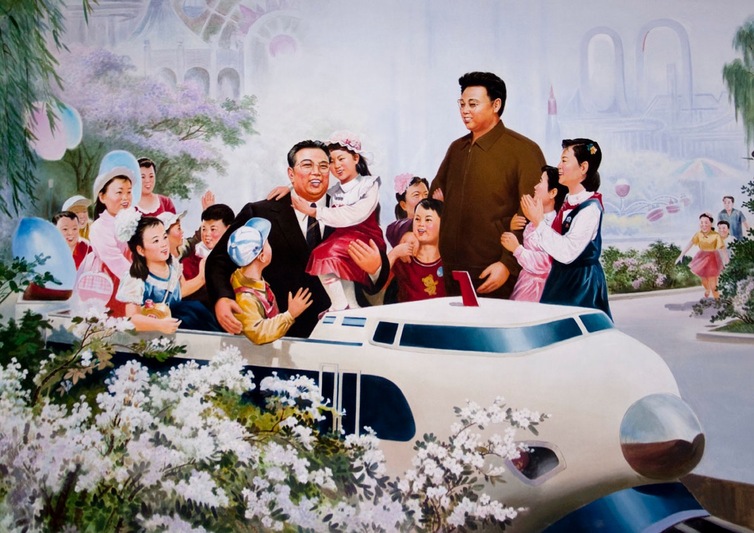
Both Kim il-Sung and his son Kim Jong-il, who ruled North Korea from 1994 to 2011, are credited with super-human feats that North Korean school children learn about from the cradle. The domestic portrayal of Kim il-Sung and Kim Jong-il is that of a firm parental entity who espouses both maternal concern and paternalistic authority. The personality cult around the Kim family is itself is built into the story of racial superiority, mythicizing Kim il Sung into a messianic entity destined to lead the Korean people to independence through a self-reliance philosophy known as the Juche idea. The Juche ideology channels vague humanistic undertones while trumpeting autonomy and self-reliance. Analysts argue that the Juche idea and the volumes of books allegedly written by the leaders on a broad series of Juche-based social sciences is essentially window dressing designed more for foreign consumption. Foreign visitors are lectured about Juche thought and kept away from the central ideology, which is that of a militant race-based ultra-nationalism.

Defectors also claim that there is a stronger effort on indoctrinating the masses internally with the official fantasy biographies of the leaders to further their messianic character, rather than a serious application of teachings such as Juche thought. In North Korea, the leader is never seen exerting authority onto his people; he is instead depicted as caring for injured children in hospitals and nurturing soldiers on the front lines. State media has once described Kim Jong-il as “the loving parent who holds and nurtures all Korean children at his breast.” The Democratic People’s Republic of Korea may have a communist exterior, however it bares little resemblance to a Marxist-Leninist state in its commitment to improve material living standards; economics are nowhere near a central priority in contrast to the importance placed on the military. Domestic propaganda encourages its subjects to remain in their natural state of intellectual juvenescence and innocence, under the watch of the great parent. Kim il-Sung, given the title of “Parent Leader” in state media, was portrayed as a nurturing maternal figure, fussing over the food his soldiers consumed and making sure they had warm clothing.

Much like the mysticism around Japan’s Mount Fuji during the time of the Imperial Japanese occupation, Korea’s highest peak, Mount Paektu, was designated a sacred place and given a central role in official mythology. Kim Jong-il’s birth supposedly took place on the peaks of Mt. Paektu beneath twin rainbows in a log cabin during the armed struggle against the Japanese occupiers. His biography reads, “Wishing him to be the lodestar that would brighten the future of Korea, they hailed him as the Bright Star of Mount Paektu.” Images of fresh snowfall and snow-capped peaks of Mount Paektu are conjured to exemplify the pristine quality of Korean racial stock, and state media often refers to the DPRK as the “Mount Paektu Nation” and Kim Jong-un as the “Brilliant Commander of Mount Paektu.” Pyongyang is often depicted under snow, symbolizing the purity of the race, described by state media as “a city steeped in the five thousand year old, jade-like spirit of the race, imbued with proudly lonely life-breath of the world’s cleanest, most civilized people – free of the slightest blemish.”

Nearly all of the North’s domestic propaganda maintains a derogatory depiction of foreigners, especially of Americans, who are unanimously viewed as products of polluted racial stock. Six decades of ethno-centric propaganda has reinforced the North’s xenophobia and unwillingness to interact with the outside world. In his book ‘The Cleanest Race,’ DPRK expert B.R. Meyers cites a conversation between North and South Korean personnel discussing the increasing presence of foreigners in the South, to which the North Korean general replied, “Not even one drop of ink must be allowed.” Domestic propaganda reinforces the trauma and devastation experienced during the Korean war, when nearly a third of the North Korean population were killed in US led aerial bombardments, flattening seventy eight cities and showering over fourteen million gallons of napalm on densely populated areas over a three year period, killing more civilian causalities than the atomic bombing of Hiroshima and Nagasaki. Credible threats to the DPRK’s national security have allowed the ruling family to consolidate power, while legitimizing the ‘Songun Policy’ or military-first policy.

North Korea’s most unstable period came after the death of Kim il-Sung in 1994, as economic difficulties deepened following the fall of the Soviet Union and severe environmental conditions that resulted in a period of the famine from 1995 to 1997, killing nearly one million people. As the economy collapsed, social discipline and internal security began to breakdown outside of Pyongyang. Defectors reported seeing streets littered with famished corpses of the starving. Instances of soldiers robbing civilians in search of food and cases of cannibalism in rural areas were prevalent. Kim Jung-il maintained in this period that the US-led economic blockade against Korea was the dominant cause of the famine and economic stagnation. Kim Jong-il realized that having the backing of military generals was crucial to maintaining his power and authority, so as to quell the possibility of an ambitious general staging a military coup. The introduction of ‘Songun Policy’ gave members of the army preferential treatment with respect to receiving food rations, in addition to granting more authority to hardline generals. Much of the food aid received from abroad was redistributed directly to the military.

Kim Jong-il, having overseen the most arduous and economically stagnate period of North Korean history, sought to legitimize his rule through the procurement of nuclear weapons. “In 2006 the Dear General successfully saw the acquisition of a nuclear deterrent that would protect the Korean race forever. Truly, the son had proven himself worthy of his great father,” as described by state media. The state propaganda apparatus had done much to equate this accomplishment as the pride of the nation, depicting it as integral to the national defense of the country and the race. Understanding the role of the DPRK’s nuclear weapons is crucial for policymakers in the US and South Korea, who have placed the North’s denuclearization as a prerequisite for dialogue. North Korea cannot be expected to commit political suicide, nor can it be made to forfeit its main source of pride, legitimacy and defense in exchange for only thin assurances of security and prosperity from the US.

DPRK003

The North Korean regime is complicated, and its doctrine of race-based militant ultra-nationalism bares more resemblance to National Socialism than to Communism. The DPRK is a product of brutal occupation, subsequent isolation, and decades of failed rapprochement policies on the part of South Korea and the US. It will take decades of interaction with the outside world to undo the social conditioning that North Koreans have lived under for six decades, something that can only be accomplished with delicate diplomacy and the incremental normalization of inter-Korean relations. Kim Jong-un has revolutionary credentials, and eventually the old guard of generals and advisors that surround him will pass, and he will exert total control over the nation and its direction. At its current pace of military development, the North will have the technology to act on its many threats in the coming years. If the current crisis tells the world anything, its that the approach of the US and South Korea is not conducive to peace, and further calls for the North to denuclearize will not yield results any different from what the world has already seen. While Kim Jong-un’s actions in the present scenario are grounded in building his domestic appeal, the underlying message is that North Korea is a nuclear state, and it wishes to be recognized as one for the purposes of defense and national security.

The policies of conservative President Lee Myung-bak deeply strained inter-Korean relations, and incumbent President Park Geun-hye has picked up where he left off. Although it would be described as unrealistic by South Korea’s conservative establishment, the only possible method for rapprochement that could actually work would come in the form of South Korea distancing itself from the United States. Given the unique paranoia and xenophobia of North Korea’s regime and how they’ve managed the country in near-isolation since its independence, the only hope of changing the regime’s behavior is accepting it in its current form, increasing inter-Korean cooperation in areas of trade and tourism through the construction of special industrial zones in the North. The Sunshine Policy years spearheaded by South Korean President Kim Dae-jung showed that inter-Korean relations faired far better under a policy of openness and economic exchange over the conservative approach of the South Korean right.

Sanctions, demands of denuclearization, and backing the North into a corner will only yield the same familiar results – an ugly stalemate that throws the Korea peninsula into a serious security crisis every so often. South Korea has a better chance of convincing the North to denuclearize only after trust and normalized relations are established, and that can only happen if the South is willing to scale back its military partnership with the US and acknowledge Pyongyang’s right to defend itself. Although Seoul would be viewed as giving into Pyongyang’s threats, a revival of the Sunshine policy is the only way to mend relations between the two Koreas. Regardless of Pyongyang’s nuclear policy, the establishment of inter-Korean industrial zones and economic spaces will herald greater opportunity for civilians from both Koreas to come into contact, allowing opportunities for North Koreans to be exposed to outsiders and to become familiarized with modern industrial technologies and work methods.

North Korea’s approach in the current scenario is widely viewed as irrational, and it has behaved in a way that undermines its legitimate security concerns. The only way to deradicalize the North’s xenophobic ethno-militarism is through economic exchange and the normalization of relations, and that can only happen if the South incrementally scales back its military exercises and recognizes the North as a nuclear state. There is no reason for tension on the Korean peninsula today, and if new policy directions were taken by the administration in Seoul, such instability would not have to occur. Being part of the same race, a neutral-Seoul could have much greater influence over Pyongyang than China ever could, and the normalization of relations would yield mutually beneficial economic growth that would stabilize the North and reduce the long-term insecurities that Kim Jong-un would face – inter-Korean cooperation is in the interests of all countries in the region. The current standoff on the Korean peninsula is much like a fork in the road of inter-Korean relations; pride should be pushed aside because its either sunshine or war.

Nile Bowie is an independent political analyst and photographer based in Kuala Lumpur, Malaysia. He can be reached at nilebowie@gmail.com

Sorel y el Sindicalismo Nacional

Georges_Sorel.jpg

Sorel y el Sindicalismo Nacional

 Gustavo Morales

Ex: http://alternativaeuropeaasociasioncultural.wordpress.com/

Si alguien se atreve a levantar su voz contra las ilusiones del racionalismo en el acto es considerado como un enemigo de la democracia

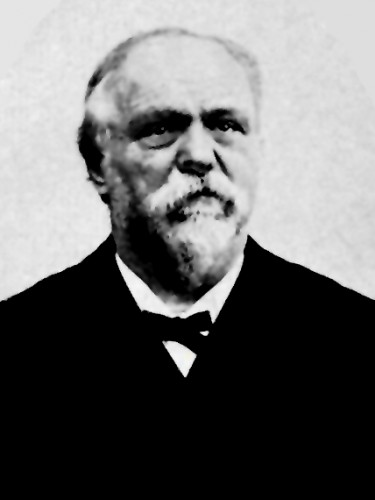
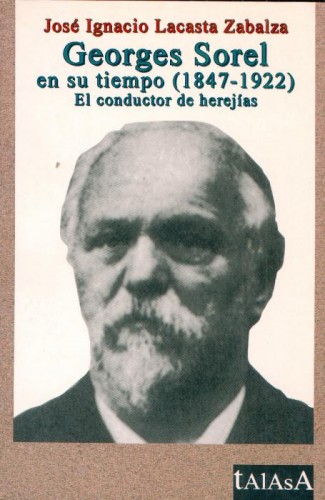
Georges Sorel (1847-1922) era un ingeniero francés, padre del revisionismo revolucionario que supera el carácter materialista del marxismo y llegará a ser básico para la génesis del fascismo. El ambiente intelectual de Sorel se enmarca en el Barrio Latino de París, muy lejos de las frías escuelas teoréticas de Viena.
Marxista confeso, Sorel pretende, originalmente, completar el pensamiento de su maestro. A principios del siglo XX el pensamiento socialista debe enfrentarse a una serie de problemas nuevos, difícilmente explicables mediante el análisis marxista ortodoxo. Sorel se desmarca de las estructuras racionalistas y destaca que el marxismo es la construcción de un mito revolucionario para ilusionar a las masas, negando su valor como explicación racional de la realidad.
Sorel niega el valor del racionalismo, al que acusa de corruptor. Antepone a Pascal y a Bergson frente a Descartes y a Sócrates. Sorel sustituye los fundamentos racionalistas y hegelianos del marxismo por:
1.- La nueva visión de la naturaleza humana que predica Le Bon, quien aconseja que "para vencer a las masas hay que tener previamente en cuenta los sentimientos que las animan, simular que se participa de ellos e intentar luego modificarlos provocando, mediante asociaciones rudimentarias, ciertas imágenes sugestivas; saber rectificar si es necesario y, sobre todo, adivinar en cada instante los sentimientos que se hacen brotar". Resume Le Bon que "la razón crea la ciencia, los sentimientos dirigen la historia".
2.- Por el anticartesianismo de Bergson. Las enseñanzas de Bergson permiten sustituir el contenido racionalista, es decir, utópico, del marxismo por los mitos revolucionarios. Sorel afirma que todo gran movimiento viene motivado por mitos. El método psicológico toma el relevo al enfoque mecanicista tradicional (1899), frente al método científico, el recurso a una teoría de los mitos sociales. Sorel no repudia el marxismo, incluso llega a defenderlo contra algunos socialistas democráticos. Se debe a que considera que no existe ninguna relación entre la verdad de una doctrina y su valor operativo en tanto que instrumento de combate. Sorel desplaza el mito de la esfera del intelecto y lo instala en la de la afectividad y la actividad. Una mentalidad religiosa contra la mentalidad racionalista. Sorel recuerda que Bergson nos ha enseñado que la religión no ocupa en exclusiva la región de la conciencia profunda, la ocupan también, por las mismas razones, los mitos revolucionarios. Con ello, Sorel rechaza el presunto carácter científico del marxismo y niega la posibilidad de la explicación social en términos cuasi matemáticos.
3.- Por la rebelión de Nietzsche.. La única actitud coherente del revolucionario es la negación de los valores imperantes y la afirmación de otros nuevos y rebeldes. En Reflexiones sobre la violencia, Sorel afirma: Los mitos no son descripciones de cosas, sino expresiones de voluntad... conjuntos de imágenes capaces de evocar en bloque y exclusivamente a través de la intuición, previamente a cualquier tipo de análisis reflexivo, la masa de los sentimientos que corresponden a las diversas manifestaciones de la guerra librada por el socialismo en contra de la sociedad moderna. Sorel identifica mito y convicciones, entendiendo éstas en términos de las ideas y creencias de Ortega. Sorel distingue entre la ética del guerrero, que apoya, y la del intelectual, que condena: Ya no hubo soldados ni marinos, sólo hubo tenderos escépticos.

Fases del pensamiento soreliano

Socialismo marxista

En una primera fase, los sorelianos metamorfosean el marxismo, construyen una nueva ideología revolucionaria, desechando las teorías marxistas de plusvalor y de clase. Sorel vacía el marxismo de hedonismo y de materialismo, haciéndolo pasar de ser una máquina intelectual esclerotizada a una fuerza movilizadora en pos de la destrucción de lo que existe, el mundo materialista burgués. La teoría de los mitos se vuelve el motor de la revolución y la violencia su instrumento: La violencia proletaria, no sólo puede garantizar la revolución futura, sino que, además, parece ser el único medio de que disponen las naciones europeas, embrutecidas por el humanismo, para recobrar su antigua energía. Para Sorel, sólo los hombres que viven en estado de tensión permanente pueden alcanzar lo sublime. En esa vía, Sorel reivindica el cristianismo primitivo y el sindicalismo de combate de su tiempo. No nos molestaremos en demostrar que la idea de violencia revolucionaria no se ciñe al derramamiento de sangre ni a la brutalidad, que son inherentes a la explotación del trabajador, camuflada bajo la cortina de humo del sufragio partitocrático. Por esa vía, también la crítica del sociólogo Pareto al marxismo, base de su teoría de las élites, se acerca a la de Sorel.
 

Sindicalismo nacional

En una segunda fase, a partir de que Sorel abandona el socialismo (1909), el mito nacional sustituye al mito exclusivamente proletario, ya desalentado en la lucha contra la decadencia democrática y racionalista. La enseñanza obligatoria, la alfabetización en las zonas rurales, el acceso lento pero continuo de la clase obrera a la cultura, no favorecen la conciencia de clase del proletariado, sino más bien una nueva toma de conciencia de la identidad nacional. Los sorelianos ven la organización de la sociedad en términos sindicalistas. Sorel cree que el sindicalismo, en su lucha contra la dictadura de la burguesía y la dictadura del proletariado, ambas materialistas, posee un alto valor civilizatorio. La influencia de Sorel se refleja en el parlamento de productores defendido por José Antonio, así como en la afirmación: Concebimos a España como un gigantesco sindicato de productores. Ledesma asumirá, además, el término de sindicalismo nacional que se extiende entre los sorelianos franceses e italianos. A la postre, lo nacional vira hacia formas de sindicalismo al igual que los sindicalistas varían hacia diferentes escuelas de nacionalismo. Asumen, también, de Sorel que la disciplina, la autoridad, la solidaridad social, el sentido del deber y del sacrificio, los valores heroicos, son otras tantas condiciones necesarias para la supervivencia de la nación. El mito nacional releva al mito meramente social como motor revolucionario. Para ello, es preciso que la convicción se apodere absolutamente de la conciencia y actúe antes que los cálculos de la reflexión hayan tenido tiempo de aparecer en el espíritu. Es decir, opta por la opción de la nueva civilización que nace de la acción directa antes de la reflexión teórica. Aquí Ledesma recibe una mayor influencia soreliana que José Antonio, que a pesar de su renuncia a la torre de marfil de los intelectuales siente una cierta nostalgia por ella, visible en su Elogio y reproche a Ortega y Gasset.
La vanguardia cultural de la primera década del siglo XX, los futuristas, reciben con entusiasmo las ideas sorelianas prefascistas: Los elementos esenciales de nuestra poesía serán el coraje, la audacia y la rebelión.. Queremos derribar los museos, las bibliotecas, atacar el moralismo (...) Ensalzamos las resacas multicolores y polifónicas de las revoluciones. En pie en la cumbre del mundo, lanzamos una vez más el desafío a las estrellas. (Marinetti, 1909).
Un hecho crucial en la opinión pública occidental está en 1920. Cuando, respaldados por numerosas huelgas parciales y ocupaciones de fábricas en el norte de Italia, los nacionalsindicalistas italianos presenten su propuesta de autogestión de la industria al ministro de Trabajo, Arturo Labriola. El primer ministro Giolitti reconoce el derecho de participación de los trabajadores en las empresas. El nacionalsindicalismo italiano obtiene así una victoria épica.
Con todo ello, los sorelianos abren la tercera vía entre las dos concepciones totales del hombre y la sociedad que son el liberalismo y el marxismo, ideologías presas del racionalismo donde se prescinde de la intuición y del sentimiento en favor de un imposible concepción matemática de las ciencias sociales. El discurso de Sorel se hace transversal, basado fundamentalmente en el poder de los sindicatos pero repudiando el carácter meramente reivindicativo de éstos, es decir, su domesticación en brazos del socialismo parlamentario. Sorel repudia los pactos y acuerdos con la burguesía, así como el sistema de dominio del liberalismo democratizado: el parlamentarismo. Sorel odió tanto a la burguesía y la democracia liberal que recibió con expresiones de júbilo la revolución rusa, a pesar de haber criticado enérgicamente el leninismo de los revolucionarios profesionales. Sorel ve en Lenin la revancha del genio creador del jefe contra la vulgaridad democrática. Aconsejaba a los sindicatos alejarse del mundo corrupto de los políticos y de los intelectuales burgueses, distinguiendo entre conspiración y revolución. Sólo la segunda da vida a una nueva moral. Sólo los trabajadores más militantes -dice Sorel- son sindicalistas: El obrero de la gran industria sustituirá al guerrero de la ciudad heroica. Por tanto, los valores de ambos son comunes y el ascetismo y la eliminación del individualismo suponen características compartidas por el soldado-monje y por el obrero-combatiente. Podemos encontrar coincidencias entre el desarrollo de Sorel y el de Spengler.
 

Fascismo

Sorel no desacreditó el uso que los fascistas hacían de su nombre. De hecho, el fascismo nace de la crítica sindicalista, con un fuerte componente soreliano, al marxismo racionalista ortodoxo. El fascismo se revela contra la deshumanización introducida por la modernización en las relaciones humanas, pero, al contrario que el tradicionalismo, desea conservar celosamente los logros del progreso. La revolución fascista busca transformar la naturaleza de las relaciones entre el individuo y la comunidad sin que por ello sea necesario desbaratar el motor de la actividad económica moderna. Los sorelianos son los primeros revolucionarios surgidos de la izquierda que se niegan a cuestionar la propiedad privada. Consideran que atacarla supone confundir al enemigo real: la concepción burguesa y materialista de la existencia, que también encarnan el jacobino y el socialdemócrata.
 
sorel9788496266957.jpg
Los sorelianos se mantienen fieles a la idea de que todo progreso depende, y dependerá, de una economía de mercado, al igual que hoy defiende el economista joseantoniano Velarde Fuertes, distintas de los planteamientos estatistas de Dionisio Ridruejo. En este punto del debate, los nacionalsindicalistas se escinden, la mayoría pasa a apoyar directamente al fascismo, incluso cuando éste modera su aspecto de transformación económica de la sociedad. Otro pequeño sector, el ala izquierda, rompe con el fascismo y recupera el viejo axioma del sindicalismo revolucionario: la sociedad de trabajadores libres.
El paso de uno a otro es visible en José Antonio en la comparativa del Discurso de la Comedia de 1933 al Discurso de la revolución Española de 1935, en el que enumera cuatro tipos de propiedad: la personal, la familiar, la comunal y la sindical. Están ausentes la estatal y la correspondiente a sociedades anónimas.
En cualquier caso, con la síntesis fascista, la estética revolucionaria y heroica se convierte en parte integrante de la política y de la economía.
 

Conclusión

Sorel, en los artículos reunidos en las Ilusiones del Progreso, denuncia a Descartes, dado que sus ideas lo son de la clase dominante. Desecha el racionalismo que deviene en optimismo al entender el mundo como un inmenso almacén donde todos pueden satisfacer sus necesidades materiales. Sorel pide que el socialismo se transforme en una filosofía de comportamiento moral, donde las relaciones de los trabajadores generen una nueva ética, absolutamente distinta de la moral burguesa, el enemigo real de Sorel.
Sorel abandona el proletarismo cuando comprueba que la violencia obrera, sustentada en las reivindicaciones materiales, no eleva al proletariado al nivel de una fuerza histórica susceptible de engendrar una nueva civilización. Sorel anuncia que el sindicalismo se separa del socialismo racionalista y repudia, finalmente, a Marx y a Hegel. Sorel asume la frase de Croce y afirma: El socialismo ha muerto, cuando descubre, con amargura, que las ideas, preocupaciones, fines y comportamientos del trabajador no difieren de aquellas de los burgueses. El carácter pactista del parlamentarismo liberal ha seducido a los partidos socialistas europeos occidentales y los sindicatos, animados por la acción directa y el mito de la huelga revolucionaria, o se amoldan o se separan radicalmente del socialismo parlamentario.
Sorel se desentiende de las construcciones teóricas que anteceden a la acción. Él es un enamorado del hecho revolucionario, lo que ayuda a comprender su paso del marxismo de combate, que abandona cuando la socialdemocracia se domestica en los parlamentos, y da su posterior adhesión a los procesos de revolución nacional que sacuden Europa.
Cuando el 23 de marzo de 1919, en la plaza San Sepolcro de Milán, Mussolini funda el fascismo italiano, entre los presentes se encuentran muchos sindicalistas sorelianos, hastiados de la connivencia de la burguesía con el Partido Socialista Italiano del que también procede el futuro Duce.
En resumen, el fascismo no nace de la burguesía sino que es una escisión de la izquierda socialista, la fracción de aquellos que abominan del liberalismo parlamentario y consideran que la misión histórica del proletariado no es imponer una dictadura sino crear una civilización.
A la postre el fascismo pierde su empuje revolucionario, es decir, cuando inicia su política de pactos con la burguesía industrial, los partidos nacionales del resto de Europa rompen con él y buscan un nuevo engarce de la revolución nacional con el brío puro y antipolítico de las masas anarcosindicalistas. El mejor ejemplo lo tenemos en Ramiro Ledesma y La Conquista del Estado. Ledesma no opta por el fascismo, a pesar de su viva la Italia de Mussolini o viva la Germania de Hitler, ni por el bolchevismo, también a pesar de su viva la Rusia de Stalin, sino por algo consustancial a todos ellos, el fin de la democracia liberal, ese régimen basado en palabras del soreliano Berth, en el voto secreto...el símbolo perfecto de la democracia. Ved a ese ciudadano, ese miembro de lo soberano, que temblorosamente va a ejercer su soberanía, se esconde, elude las miradas, ninguna papeleta será lo suficientemente opaca para ocultar a las miradas indiscretas su pensamiento....
Ledesma, como Sorel y José Antonio, entienden que el trabajador está llamado a recuperar el sentimiento heroico de la existencia, antaño en manos del guerrero.
Sorel es la superación del mecanicismo marxista.. José Antonio da un paso más, superando el fascismo corporativista y enlazando la cuestión social y la nacional con el compromiso humano y utópico.
En resumen, el fascismo es un revisión del socialismo. El nacionalsindicalismo, al final, supone una superación del carácter material y pactista de ambos, entroncando con el sindicalismo revolucionario y la nacionalización del proletariado, construyendo una sociedad vertebrada sin estatismo.