


vendredi, 07 mai 2010
Wird Europa am Hindukusch verteidigt? EU verkommt zum Superzahlmeister
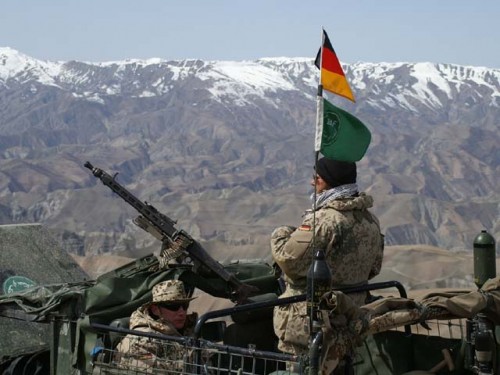
Wird Europa am Hindukusch verteidigt? – EU verkommt zum Superzahlmeister
Ex: http://www.andreas-moelzer.at/
(Alb)Traum europäische Armee
Die ersten frühen Anfänge einer europäischen Armee in den 50-er Jahren scheiterten an der Furcht der Franzosen vor einer deutschen Wiederaufrüstung. Mit dem blutigen Zerfall Jugoslawiens in den 90ern und dem immer wieder aufflackernden Kosovo-Konflikt sah die EU schließlich Handlungsbedarf und baute seit 1992 sukzessive eine europäische Sicherheits- und Verteidigungspolitik (ESVP) als Teil der Gemeinsamen Außen- und Sicherheitspolitik auf.
Die ESVP basiert auf einer Zusammenarbeit von EU und NATO mit Operationen im Rahmen der „Petersberg-Aufgaben“ (humanitäre Aufgaben und Rettungseinsätze, friedenserhaltende Aufgaben sowie Kampfeinsätze bei der Krisenbewältigung einschließlich friedensschaffender Maßnahmen). Dafür wurden eigene multinationale „schnelle Eingreiftruppen“, Eurokorps bzw. Battlegroups, bestehend aus jeweils 1.500 bis 2.000 Soldaten gegründet und eine Europäische Verteidigungsagentur eingerichtet.
Weltweite KampfeinsätzeEuropäische Soldaten werden zu sogenannten „Friedensoperationen“ nach Afghanistan, Bosnien-Herzegowina, Dafur, Georgien, Guinea-Bissau, Indonesien, Mazedonien, in den Gazastreifen, den Irak, den Kongo, den Tschad oder die Zentralafrikanische Republik geschickt.
Der Balkan liegt vor Europas Türen, Einsätze zur Stabilisierung dieser Region können mit sicherheitspolitischen Interessen der EU erklärt werden. Wenn jedoch EU-Staaten an der Seite Washingtons am Afghanistan-Krieg teilnehmen, ist mehr als zweifelhaft, ob Europa am Hindukusch verteidigt wird.
Die Weichen für ein Aufgehen in der NATO sind gestellt
Bis heute nicht vollständig geklärt ist das Verhältnis zwischen EU bzw. ESVP auf der einen, und der NATO auf der anderen Seite. Jedoch gibt es eine Reihe von Indizien, die darauf hindeuten, daß die europäischen Verteidigungskapazitäten in die Dienste der NATO und damit der USA gestellt werden sollen. In einem im Jänner des Vorjahres im außenpolitischen Ausschuß des Europäischen Parlaments angenommenen Berichts des französischen EU-Abgeordneten finnischer Nationalität, Ari Vatanen über die „Rolle der NATO im Rahmen der Sicherheitsarchitektur der EU“ wird festgehalten, daß „die NATO den Kern der europäischen Sicherheit bildet und die EU über ein ausreichendes Potential verfügt, um ihre Aktivitäten zu unterstützen, so daß eine Stärkung der europäischen Verteidigungskapazitäten und eine Vertiefung der Zusammenarbeit beiden Organisationen nutzen wird“. Zudem wird ausdrücklich darauf hingewiesen, daß „94 Prozent der EU-Bevölkerung Bürger von NATO-Mitgliedstaaten sind, 21 von 27 EU-Mitgliedstaaten Verbündete der NATO, 21 von 26 NATO-Staaten EU-Mitgliedstaaten sind“. Und auch die Türkei bleibt als „langjähriger NATO-Verbündeter“ und EU-Beitrittskandidat nicht ohne Erwähnung. Eine engere Verschränkung von Nordatlantikpakt und Europäischer Union würde die Aufnahme Ankaras somit weiter beschleunigen.
Konkret ist vorgesehen, daß die EU künftig verstärkt Einsätze außerhalb Europas („out of area“) durchführt. In Art. 43 des Vertrags von Lissabon werden beispielsweise Einsätze zur Bekämpfung des Terrorismus erwähnt, die auch in Drittländern auf deren Hoheitsgebiet stattfinden können. Begründet wird die Ermächtigung zu Interventionen mit „humanitären“ Erwägungen: Schließlich gelte es, „aktiv massenhaft begangene Greueltaten und regionale Konflikte, unter denen die Menschen nach wie vor stark leiden, zu verhüten oder entsprechende Maßnahmen zu treffen“. Auffallend häufig finden regionale Konflikte und damit verbundene Greueltaten in Ländern statt, wo Bodenschätze locken (Sudan oder Kongo) oder in für den Rohstofftransport bedeutenden Regionen (z.B. Kaukasus) statt.
Weltpolizist und Superzahlmeister Brüssel
Mit der beabsichtigten Ausbildung zum Weltpolizisten kommt Brüssel einerseits der Aufforderung Washingtons nach, sich stärker militärisch zu engagieren, und andererseits deckt sich dieses Vorhaben mit Plänen des US-Verteidigungsbündnisses, die NATO zu einem weltweit tätigen Bündnis auszubauen. Der Einsatz in Afghanistan, an dem ein Großteil der EU-Mitglieder teilnimmt, ist ein Vorgeschmack dessen, wohin die Reise gehen soll. Schließlich gibt es keine Anzeichen dafür, daß der Nahe und Mittlere Osten in absehbarer Zeit zur Ruhe kommen wird, und in Afrika sowie in Zentralasien gibt es eine Reihe von politisch instabilen Staaten, die eines Tages ein „humanitäres Eingreifen“ erforderlich machen könnten.
Zudem wird die beabsichtigte Militärisierung wird die Steuerzahler noch teuer zu stehen kommen. Schließlich verpflichtet der Vertrag von Lissabon die EU-Staaten zur „schrittweisen Verbesserung ihrer militärischen Fähigkeiten“, also zur Aufrüstung. Im Vatanen-Bericht des EU-Parlaments werden „höhere Investitionen in die Verteidigung auf der Ebene der EU-Mitgliedstaaten“ und die Schaffung eines“ operationellen EU-Hauptquartiers“ gefordert.
Steuermillionen zur AufrüstungDass eine „Friedensmission“ mit Toten und hohen Kosten verbunden ist, bringt dem deutschen Afghanistan-Einsatz viel Kritik. Wenn nun in Zeiten der Finanzkrise und des milliardenschweren griechischen Hilfspakets fast 65 Mio. für Spezialausrüstung aufgebracht werden sollen, ist dafür keine Akzeptanz bei den Bürgern vorhanden.
Ebenso wenig verständlich ist, dass das österreichische Heer, das immerhin allein im kommenden Jahr 80 Mio. einsparen soll, gleichzeitig 350 Soldaten für EU-Battlegroups verspricht. Während der Treibstoff für Heeresfahrzeuge knapp wird, Soldaten in uralten Uniformen und maroden Kasernen Dienst leisten und für die Wartung der milliardenteuren Eurofighter das Geld fehlt, werden die spärlichen Mittel für Auslandsmissionen verpulvert – Auslandseinsätze statt Heimatsicherung also.
Die geplante Unterordnung unter US-amerikanische geopolitische Interessen fällt in Washington naturgemäß auf Wohlgefallen. Aber das war nicht immer so. Als sich wegen der Hilflosigkeit Europas in den Balkankriegen in den 90er Jahren – nicht zuletzt ermuntert durch den damaligen US-Präsidenten Bill Clinton – die Europäer aufmachten, ihre sicherheitspolitischen und militärischen Kapazitäten zu verbessern, läuteten in den USA bald die Alarmglocken. Der ehemalige Vize-Außenminister Strobe Talbott befürchtete, daß eine EU-Armee „erst innerhalb der NATO zu existieren beginnt und dann zum Konkurrenten der NATO wird“. Bei einer sicherheitspolitischen Emanzipation Europas hätten die USA jedenfalls viel zu verlieren. Denn die NATO bindet, wie Zbignew Brzezinski, Nationaler Sicherheitsberater unter Jimmy Carter einmal zugab, „die produktivsten und einflußreichsten Staaten an Amerika und verleiht den Vereinigten Staaten selbst in innereuropäischen Angelegenheiten eine wichtige Stimme.“
Vor den US-Kriegskarren gespannt
Wenn es um internationale Hilfsleistungen geht, ist die EU willkommen, ansonsten spielt sie oft nur eine Statistenrolle. Dann wird versucht, außenpolitische Ohnmacht mit Großzügigkeit zu kompensieren. Immer wieder lässt sich die Europäische Union in US-Kriege wie in Afghanistan hineinziehen. Damit läuft sie Gefahr, Geld und Ressourcen zu verlieren, die anderswo gebraucht werden. Schwerpunkt von Auslandseinsätzen sollte die Peripherie Europas sein.
Bedeutungslose EUDas Interesse der USA beschränkt sich darauf, im Namen der Terrorbekämpfung Passagierdaten und finanzielle Ressourcen aus der EU zu pressen. Die Nichtteilnahme Barack Obamans am EU/USA-Gipfel im Mai hat – allen Träumen vom „Global Player“ zum Trotz – die weltpolitische Bedeutungslosigkeit der Europäischen Union erneut unterstrichen. Der verunglückte Vertrag von Lissabon hat nur den Weg zu einem zentralistischen Bundesstaat geebnet und die Stellung Europas in der Welt geschwächt
Nach sorgfältigem Für und Wider könnten noch Einsätze außerhalb Europas geführt werden, die etwa aus Gründen der Energie- und Rohstoffversorgung im Interesse der EU liegen. Es kann aber nicht Ziel der EU sein, US-Wirtschaftsinteressen zu verteidigen oder für amerikanische Angriffskriege den Zahlmeister zu spielen.
00:30 Publié dans Actualité | Lien permanent | Commentaires (0) | Tags : actualité, afghanistan, politique internationale, moyen orient, géopolitique, allemagne, europe, affaires européennes, asie, affaires asiatiques, défense, armée |  |
|  del.icio.us |
  |
|  Digg |
  Facebook
Japan kämpft mit öffentlichen Tribunalen gegen Schuldenkrise an
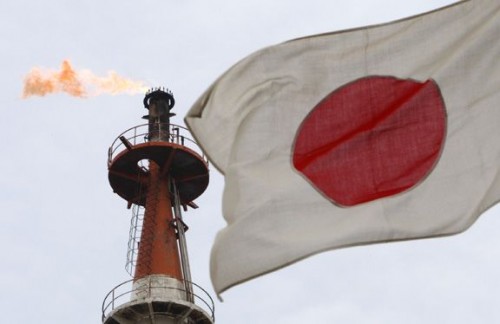
Japan kämpft mit öffentlichen Tribunalen gegen Schuldenkrise an |
| BN-Redaktion / http://www.blauenarzisse.de/ |
| Fast genauso schlimm wie in Griechenland gestaltet sich gegenwärtig die finanzielle Lage Japans. Die Schulden des „Landes der aufgehenden Sonne“ betragen rund 200 Prozent des Bruttoinlandsproduktes. Der stellvertretende Direktor beim Internationalen Währungsfonds (IWF), Naoyuki Shinohara, forderte deshalb radikale Sparmaßnahmen. Sonst würde Japan bald kein frisches Geld am Kapitalmarkt mehr bekommen. Und die Regierung bemüht sich tatsächlich auf ungewöhnliche Weise: Sie hat live im Internet übertragene Tribunale eingeführt, auf denen der Rotstift angesetzt wird. Seit September 2009 wird Japan von den Demokraten unter Ministerpräsident Yukio Hatoyama regiert. Doch die Zustimmung für die Regierung im Volk schwindet. Man wirft ihr Unentschlossenheit vor. Mit dem vor kurzem eingeführten Finanztribunal will Hatoyama nun gegensteuern. Beobachtet von zig Kameras und Zuschauern sowie live übertragen im Internet, steht auf dem Tribunal die Frage auf der Tagesordnung, an welchen Ecken und Enden gespart werden könnte. Die Bürger bekommen so einen Einblick in die wirkliche finanzielle Situation des Landes und können in Echtzeit per Twitter Sparvorschläge machen. Insbesondere stehen die intransparenten Schattenhaushalte und staatliche Verschwendung auf dem Prüfstand. Insgesamt sollen so rund 6600 Behörden sowie öffentliche und regierungsnahe Organisationen auf Geldverschwendung untersucht werden. |
00:29 Publié dans Actualité | Lien permanent | Commentaires (0) | Tags : actualité, crise, économie, droit, japon, asie, affaires asiatiques, politique internationale, pacifique | | del.icio.us | | Digg | Facebook
Céline, le invettive di un dannato sul viale del tramonto
Céline, le invettive di un dannato sul viale del tramonto
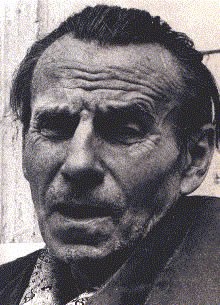 Ecco il Mostro. Sporco, indecente, nel pensare, nello scrivere e nel vivere. La lurida grandezza di Céline in tutto il suo splendore che poi coincide con la pienezza del suo squallore, ritratta in sette pose. Sette interviste nell’arco di un quindicennio sul viale del tramonto, dal dopoguerra alla sua morte, tornano in libreria sotto il titolo di Polemiche (Guanda, pagg. 120, euro 12,50).
Si avvicina il mezzo secolo della sua morte, ma non si allontanano le maledizioni sull’opera di Louis-Ferdinand Destouches, medico che diventò in arte Céline. Maledetto per il suo maledettismo, imperdonabile per le sue filippiche contro gli ebrei, i borghesi, i capitalisti. Non amo Céline, non sono un suo cultore, i suoi pamphlet irriverenti mi irritano, a cominciare da Bagattelle per un massacro e così la sua prosa intermittente e merdace, con tutti quei punti sospensivi; non ho mai scritto nulla su di lui e sulle sue opere. E ancor meno amo i celiniani, anzi detesto i manieristi del turpiloquio che traggono nobiltà e ispirazione da lui; non sopporto il rococò del triviale degli ultimi suoi emuli. Però, c’è della grandezza autentica nella sua scrittura, nel personaggio, nella sua vita. C’è della purezza nella sua impurità, e del genio nel suo delirio. Céline ha penetrato come pochi negli abissi della condizione umana, perduta a Dio e alla dignità, abbandonata nelle fogne oscure della vita. Uno dei rari scrittori che ha passione di verità e genuino desiderio di far combaciare la parola alla vita e alla verità più nuda e cruda. Così il suo stile riflette la sua passione di verità, tragica e brutale.
Quel vivere ai confini della morte, alla ricerca di emozioni estreme e grottesche, quello scrivere sulla soglia dell’invettiva, tra la parola e il vomito. Fu un medico valoroso, Céline, e un soldato valoroso, prima d’essere quel grande scrittore che fu. E pagò con quattordici mesi di duro carcere le sue parole di fuoco sugli ebrei e sul mondo; fu accusato di essere collaborazionista ma non aveva mai collaborato con nessuno, non aveva scritto per le riviste filo-naziste, era stato messo al bando nella Germania nazista, come arte degenerata, mentre dicevano che piacesse a Stalin. Viveva da barbone, in Danimarca e poi in Francia, in guerra contro il mondo. A condannarlo furono anche intellettuali che magari avevano trescato col nazismo. Come Sartre, che prima di collaborare con il comunismo e chiudere un occhio sui suoi orrori, aveva scritto anche per riviste collaborazioniste; ma alla fine il dannato fu lui, Céline. Io non vorrei dire, ma gli unici intellettuali che hanno pagato di persona le loro idee o anche i loro deliri, sono stati i Céline, i Pound, i Brasillach, i Gentile, i Pericle Ducati, i Borsani, i Carl Schmitt, gli Hamsun e si potrebbe ancora continuare. Epurati, a volte condannati a morte, o segregati in carcere, umiliati in gabbie, considerati peggio che bestie. Ed erano fior di scrittori, a volte anche generosi e grandi nella loro umanità, oltre che nei loro errori. La stessa cosa non avvenne invece per gli intellettuali che sostennero il comunismo, Stalin e Mao, Ho Chi Minh e Castro. Alcune idee si pagano, altre sono gratuite, se non addirittura ben pagate. Si vede che sono idee più grandi, più esigenti, diranno a propria consolazione i maledetti...
Céline fa parte di quell’universo di intellettuali dannati per uso di parola; ma lui restò un caso a sé, anarchico, disperatamente solo, non inscrivibile in nessun partito e in nessuna ideologia. Detestando i capitalisti e amando i poveri, Céline a volte dà l’impressione di essere un comunistoide, come lui stesso dice. Nella sua bella introduzione, Ernesto Ferrero ricorda che Céline fu difeso dal movimento nazionale ebreo, fu detestato dai nazisti che proibirono i suoi libri, ed egli stesso scrisse invettive contro Petain e contro Hitler paragonandolo a un clown pervaso di «satanismo wagneriano», fu il meno tedescofilo degli scrittori francesi e si tenne sempre in disparte. Una volta disse che gli ebrei sono i padri della nostra civiltà, e «si maledice sempre il proprio padre».
00:10 Publié dans Littérature | Lien permanent | Commentaires (0) | Tags : littérature, lettres, lettres françaises, littérature française, céline | | del.icio.us | | Digg | Facebook
Julius Evola on Race
Ex: http://www.theoccidentalobserver.net/authors/Sunic-Evola.html#TS

Julius Evola on Race
Tom Sunic
May 1, 2010
Growing interest in English speaking countries for the Italian philosopher Julius Evola may be a sign of the revival of the awesome cultural legacy of the Western civilization (see here and here). This legacy is awkwardly termed the “traditional –revolutionary – elitist – anti-egalitarian – postmodern thought.” But why not simply call it classical thought?
The advantage of Evola, in contrast to many modern scholars of the same calibre, may be his staggering erudition that goes well beyond the narrow study of race. Evola was just as much at ease writing thick volumes about religion, language and sexuality as writing about legal issues related to international politics, or depicting decadence of the liberal system. His shortcomings are, viewed from the American academic perspective, that his prose is often not focused enough and his narrative often embraces too many topics at once. Evola was not a self-proclaimed “expert” on race — yet his erudition made him compose several impressive books on race from angles that are sorely missing among modern sociobiologists and race experts. Therefore, Evola’s works on race must be always put in a lager perspective.
In this short survey of Evola’s position on race I am using the hard cover of the French translation of Indirizzi per una educazione razziale (1941) (Eléments pour une éduction raciale, 1984) and the more expanded Sintesi di dottrina della razza (1941), (“Synthesis of the racial doctrine”), translated into German by the author himself and by Annemarie Rasch and published in Germany in 1943. To my knowledge these two books are not available in English translation. His and Rasch’s excellent German translation of Sintesi had received (in my view an awkward and unnecessary) ‘political’ title; Grundrisse der faschistischen Rassenlehre (“Outlines of the fascist racial doctrine”) and is available on line.
Race of the Body vs. Race of the Spirit
Evola writes that race represents a crucial element in the life of all humans. However, while acknowledging the clear-cut physical and biological markers of each race, he stresses over and over again the paramount importance of the spiritual and internal aspects of race — two points that are decisive for genuine racial awareness of the White man. Without full comprehension of these constituent racial parts — i.e., the “race of the soul” and the “race of the spirit” — no racial awareness is possible. Evola is adamantly opposed to conceptualizing race from a purely biological, mechanistic and Darwinian perspective. He sees that approach as dangerously reductionist, leading to unnecessary political and intellectual infighting.
Diverse causes have contributed until now to the fact that racism has become the object of propaganda entrusted to incompetent people, to individuals who are waking up any day now as racists and anti-Semites and whose simple sloganeering has replaced serious principles and information. (Eléments pour une éduction raciale, p. 15)
Evola freely uses the term ‘racism’ (razzismo) and ‘racist’ (razzista). This was quite understandable in his epoch given that these words in Europe in the early thirties of the 20th century had a very neutral meaning with no dreaded symbols of the absolute evil ascribed to them today. The same can be said of the word ‘fascism’ and even ‘totalitarianism’ — words which Evola uses in a normative manner when depicting an organic and holistic society designed for the future of the Western civilization. For Evola, the sense of racial awareness is more a spiritual endeavor and less a form of biological typology.
And in this respect, we need to repeat it; we are dealing here with a formation of a mentality, a sensibility, and not with intellectual schemes or classifications for natural science manuals. (Eléments p. 16)
For Evola, being White is not just a matter of good looks and high IQ, or for that matter something that needs to be sported in public. Racial awareness implies a sense of mysticism combined with the knowledge of one’s family lineage as well as a spiritual effort to delve into the White man’s primordial and mythical times. This is a task, which in the age of liberal chaos, must be entrusted only to élites completely detached from any material or pecuniary temptation.
Thus, racism invigorates and renders tangible the concept of tradition; it makes the individual get used to observing in our ancestors not just a series of the more or less illustrious “dead,” but rather the expression of something still alive in ourselves and to which we are tied in our interior. We are the carriers of a heritage that has been transmitted to us and that we need to transmit – and in this spirit it is something going beyond time, something indicating, what we called elsewhere, ‘the eternal race.’ (Eléments, p.31)
In other words race is at a same time a heritage and a collective substrate. Irrespective of the fact that it expresses itself among all people, it is only among few that it attains its perfect realization and it is precisely there that the action and the significance of the individual and the personality can assert themselves. (Eléments, p.34)
Evola offers the same views in his more expanded Sintesi (Grundrisse), albeit by using a somewhat different wording. Racial awareness for Evola requires moral courage and impeccable character and not just physical prowess. It is questionable to what extent many White racists today, in a self-proclaimed “movement” of theirs, with their silly paraphernalia on public display, are capable of such a mental exercise.
Race means superiority, wholeness, decisiveness in life. There are common people and there are people “of race”. Regardless of which social status they belong to, these people form an aristocracy(Grundrisse, p.17).
In this particular regard, the racial doctrine rejects the doctrine of the environment, known to be an accessory to liberalism, to the idea of humanity and to Marxism. These false doctrines have picked up on the theory of the environment in order to defend the dogma of fundamental equality of all people. (Grundrisse, p. 17)
And further Evola writes:
Our position, when we claim that race exists as much in the body as in the spirit, goes beyond these two points of view. Race is a profound force manifesting itself in the realm of the body (race of the body) as in the realm of the spirit (race of the interior, race of the sprit). In its full meaning the purity of race occurs when these two manifestations coincide; in other words, when the race of the body matches the race of the spirit and when it is capable of serving the most adequate organ of expression. (p.48)
Racial-Spiritual Involution and the present Dark Ages
Evola is aware of the dangerous dichotomy between the race of the spirit and the race of the body that may occur within the same race — or, as we call it, within the same ingroup. This tragic phenomenon occurs as a result of selecting the wrong mates, miscegenation, and genetic flaws going back into the White man’s primordial times. Modern social decadence also fosters racial chaos. Evola argues that very often the “race of the body” may be perfectly pure, with the “race of the spirit” being already tainted or destroyed. This results in a cognitive clash between a distorted perception of objective reality vs. subjective reality, and which sooner or later leads to strife or civil war.
Evola harbors no illusions about master race; he advocates racial hygiene, always emphasizing the spiritual aspect of the race first. On a practical level, regarding modern White nationalists, Evola’s words are important insofar as they represent a harsh indictment of the endless bickering, petty sectarianism and petty jealousy seen so often among Whites. A White nationalist may be endowed with a perfect race of the body, but his racial spirit may be dangerously mongrelized.
Studying racial psychology is a crucial task for all White racialists — an endeavor in which Evola was greatly influenced by the German racial scholar and his contemporary Franz Ludwig Clauss.
Furthermore, a special circumstance must be singled out, confirming the already stated fact that races that have best biologically preserved the Nordic type are inwardly sometimes in a higher degree of regression than other races of the same family. Some Nordic nations — especially the Anglo-Saxons — are those in which the tradition-conditioned normal relationship between the sexes has been turned upside down. The so-called emancipation of woman — which in reality only means the mutilation and degradation of woman — has actually started out among these nations and has been most widespread among them, whereas this relationship still retains something of a tradition-based view among other nations, regardless of it its bourgeois or its conventional echo.(Grundrisse p. 84).
Evola is well aware of the complexity of understanding race as well as our still meager knowledge of the topic. He is well aware that race cannot be just the subject of biologists, but also of paleontologists, psycho-anthropologists and mystics, such as the French mystic René Guenon, whom he knew well and whom he often quotes.
Following in Evola’s footsteps we may raise a haunting question. Why individuals of the same White race, i.e. of the same White in-group frequently do not understand each other? Why is it that the most murderous wars have occurred within the same race, i.e. within the same White ingroup, despite the fact that the European ingroup is more or less biologically bonded together by mutual blood ties? One must always keep in mind that the bloodiest wars in the 20th century occurred not between two racially opposed out-groups, but often within the same White ingroup. The level of violence between Whites and Whites during the American civil war, the savagery of the intra-White civil war in Spain from 1936 to 1939, the degree of mutual hatred amidst White Europeans during WWII, and not least the recent intra-White barbarity of the Yugoslav conflict, are often incomprehensible for a member of the non-European outgroup. This remains an issue that needs to be urgently addressed by all sociobiologists. It must be pondered by all White nationalist activists all over the world.
There are actually too many cases of people who are somatically of the same race, of the same tribe, indeed who are fathers and sons of the same blood in the strict sense of the word and, yet who cannot “understand” each other. A demarcation line separates their souls; their way of feeling and judging is different and their common race of the body cannot do much about it, nor their common blood. The impossibility of mutual understanding lies therefore on the level of supra-biology (“überbiologische Ebene”). Mutual understanding and hence real togetherness, as well as deeper unity, are only possible where the common "race of the soul" and the "spirit" coexist. (Grundrisse, 89)
In order to understand his political and moral predicament, the White man must therefore delve into myths of his prehistory and look for his faults. For Evola, we are all victims of rationalism, Enlightenment and positivistic sciences that keep us imprisoned in a straitjacket of “either-or,” always in search for causal and rational explanations. Only by grasping the supraracial (superraza) meaning of ancient European myths and by using them as role models, can we come to terms with the contemporary racial chaos of the modern system.
It is absolutely crucial to grasp the living significance of such a change of perspectives inherent to racist conceptions; the superior does not derive from the inferior. In the mystery of our blood, in the depth of our most abysmal of our being, resides the ineffaceable heredity of our primordial times. This is not heredity of brutality of bestial and savage instincts gone astray, as argued by psychoanalysis, and which, as one may logically conclude, derive from “evolutionism” or Darwinism. This heredity of origins, this heredity which comes from the deepest depth of times is theheredity of the light. (Eléments 72–73)
Briefly, Evola rejects the widespread idea that we have evolved from exotic African monkeys, as the standard theory of evolution goes, and which is still widely accepted by modern scientists. He believes that we have now become the tainted progeny of the mythical Hyperborean race, which has significantly racially deteriorated over the eons and which has been adrift both in time and space. Amidst the ruins of the modern world, gripped by perversion and decadence, Evola suggest for new political elites the two crucial criteria, “the character and the form of the spirit, much more than intelligence.” As a racial mystic, Evola warns:
Because the concept of the world can be much more precise with a man without instruction than with a writer; it can be more solid with a soldier, or a peasant loyal to his land, than with a bourgeois intellectual, professor, or a journalist. (quoted in Alain de Benoist’s, Vude droite, 1977, p. 435)
We could only add that the best cultural weapons for our White “super-race” are our common Indo-Aryan myths, our sagas, our will to power — and our inexorable sense of the tragic.
Tom Sunic (http://www.tomsunic.info; http://doctorsunic.netfirms.com) is author, translator, former US professor in political science and a member of the Board of Directors of the American Third Position. His new book, Postmortem Report: Cultural Examinations from Postmodernity, prefaced by Kevin MacDonald, has just been released. Email him
Permanent link: http://www.theoccidentalobserver.net/authors/Sunic-Evola....
00:10 Publié dans Traditions | Lien permanent | Commentaires (0) | Tags : tradition, traditions, traditionalisme, evola, julius evola, révolution conservatrice, raciologie, race, racisme, italie | | del.icio.us | | Digg | Facebook
Caspar von Schrenck-Notzing, rénovateur du conservatisme
Archives de SYNERGIES EUROPEENNES - 1997
Portrait de Caspar von Schrenck-Notzing, éditeur de “Criticón”, rénovateur du conservatisme
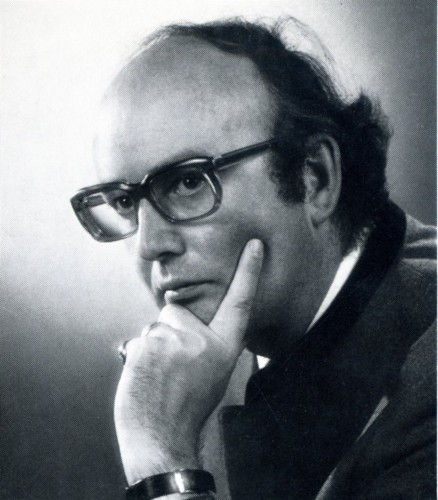 Son pseudonyme est “Critilo”: ce qui a une signification profonde. En effet, “Critilo” est une figure du roman El Criticón (1651-57) de Baltasar Gracián. Le titre de ce roman, Caspar von Schrenck-Notzing l'a repris pour le donner à sa célèbre revue d'inspiration conservatrice, Criticón. A travers tout le roman El Criticón, Baltasar Gracián développe une théorie du regard, où “voir” signifie réceptionner le monde avec étonnement, mais cette réception par les yeux est une toute autre chose que l'opinion du vulgum pecus: elle vise bien plutôt à aller dénicher, avec méfiance, les vrais visages qui se cachent derrière les masques, à mettre au grand jour les cœurs qui se dissimulent derrière les vêtements d'apparat. Ces principes d'El Criticón sont les fils conducteurs qui nous permettent de juger l'œuvre publicistique du Baron Caspar von Schrenck-Notzing.
Celui-ci est publiciste, éditeur, rédacteur, maquettiste, correcteur, archiviste, excellent commentateur de l'actualité et éditorialiste dans sa revue. Depuis plus de trois décennies, Caspar von Schrenck-Notzing se consacre à mettre sur pied un réseau conservateur. Car il faut promouvoir, dit-il, la cause du conservatisme en publiant des revues, en introduisant publications et articles d'inspiration conservatrice dans les circuits de diffusion et dans les organes qui font l'opinion. Il faut promouvoir le conservatisme en créant des académies privées et des bibliothèques, des maisons d'édition, des radios, des télévisions et des agences de presse, sinon il n'y aura jamais de “renversement des opinions” en faveur d'un néo-conservatisme moderne. Jusqu'ici, les mouvements conservateurs ont été marqués par de longues suites de disputes entre professeurs sans chaires, discutant interminablement autour de chopes de bière dans leurs bistrots favoris. Rien de constructif n'en est évidemment ressorti. Aucune coopération raisonnable ne peut s'ensuivre.
L'œuvre de Schrenck-Notzing est surtout dirigée contre la dictature de l'opinion collective. Les contre-courants culturels, les personnalités originales voire marginalisées et les “partisans” en marge des grandes idéologies dominantes le fascinent. Infatigable, pendant toute sa vie, Schrenck-Notzing a lutté contre la machinerie journalistique qui jette de la poudre aux yeux, qui noie le réel derrière un écran de fumée idéologique. Ses livres, tels Charakterwäsche (1965), Zukunftsmacher (1968) et Honorationendämmerung (1973) sont devenus des classiques de la littérature conservatrice et sont... contestataires justement parce qu'ils sont conservateurs. L'an passé, il a édité un ouvrage de référence essentiel, le Lexikon des Konservatismus (1996), excellent panorama des multiples facettes de cette mouvance conservatrice.
En s'appuyant sur les écrits de Baltasar Gracián, Schrenck-Notzing nous dit: «Si, comme au XVIIième siècle, la communauté ne peut plus maîtriser le chaos, mais, au contraire, l'incarne, alors l'homme ne peut plus opposer au conformisme aveugle que la raison déchiffrante; la condition humaine se reflète bien, dans ce cas, dans la situation du temps, car l'obligation de faire fonctionner son intelligence est en l'homme, chaotique par nature, comme un diamant au beau milieu d'un plat de méchants légumes et de vilains navets».
Schrenck-Notzing est né le 23 juin 1927 à Munich. Il est le fils d'un champion hippique, qui, pendant un certain temps, dirigea l'écurie des chevaux de course de l'armée. Il est aussi le petit-fils du médecin pionnier de la parapsychologie, Albert von Schrenck-Notzing. Et l'arrière-petit-fils de Ludwig Ganghofer.
Peter D. RICHARD.
(article paru dans Junge Freiheit n°26/97).

00:05 Publié dans Théorie politique | Lien permanent | Commentaires (0) | Tags : conservatisme, allemagne, néoconservatisme, droite, théorie politique, europe, affaires européennes | | del.icio.us | | Digg | Facebook