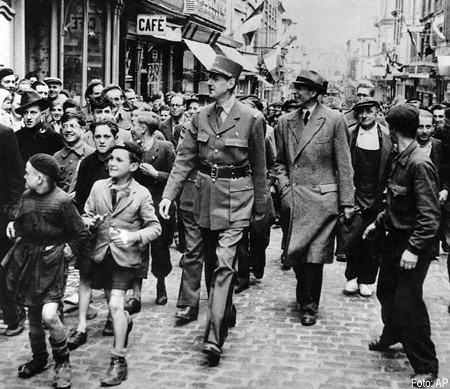
Celui dont le tout un chacun du sérail politique s'arrache la filiation l'a clairement expliqué selon Peyrefitte qui reprend dans son ouvrage, ces paroles suivantes du général De Gaulle :
A bon entendeur de la cohérence intellectuelle, salut!
En poursuivant votre navigation sur ce site, vous acceptez l'utilisation de cookies. Ces derniers assurent le bon fonctionnement de nos services. En savoir plus.


Ex: http://aucoeurdunationalisme.blogspot.com
00:10 Publié dans Histoire | Lien permanent | Commentaires (0) | Tags : histoire, france, d-day, jour j, débarquement en normandie, normandie, de gaulle, deuxième guerre mondiale, seconde guerre mondiale, alain peyrefitte |  |
|  del.icio.us |
  |
|  Digg |
  Facebook
by Wayne Madsen
|
Although President Obama's «pivot to Asia» is receiving media attention, his little-known push to establish American hegemony over the rapidly melting Arctic polar zone has gone largely unnoticed. Using three NATO allies, all of them monarchies, Obama is trying to establish a U.S.-led condominium of the United States, Canada, Norway, and Denmark over the Arctic, conspicuously leaving Russia out of the equation. Obama’s military and intelligence push into the Arctic could be taken from the pages of the 1960s Cold War thriller by Alistair MacLean, «Ice Station Zebra», With the depletion of the Arctic ice pack opening up formerly non-navigable Arctic maritime zones to shipping, Obama and his Wall Street handlers are eyeing the Arctic as America’s new region for natural resource exploitation. And, as always, the Pentagon and the U.S. intelligence Community are ready to act as the centurions for the investment bankers and hedge fund tycoons. U.S. Defense Secretary Chuck Hagel’s Arctic Strategy was unveiled in Halifax in November 2013. Hagel said the Pentagon’s «Arctic Strategy» is centered upon the U.S. bolstering its military capabilities in the Arctic region with the opening of new sea lanes for natural resource «exploration», The first step of the Obama «polar pivot» has been to militarize it under the NATO umbrella. The Svalbard Treaty of 1920, ratified by 40 nations, agreed to demilitarize the Norwegian-owned Arctic archipelago of Svalbard and to permit commercial activities on the islands by the signatories. Only Norway and Russia (and the former Soviet Union) exercised the right to commercially exploit the resources of the islands, mainly by mining coal. Russia has largely withdrawn its commercial interests from the islands with only some 370 Russians and Ukrainians remaining in Svalbard, many of them living at the mining community in Barentsburg, the Russian research station at Ny-Ålesund, and the small mining outpost at Sveagruva. A dependency of Norway, Svalbard has seen its Norwegian population grow with many of the Norwegians living in the capital of Longyearbyen. As signatories of the Svalbard Treaty, Americans, Canadians, and Britons are free to travel and reside on Svalbard without restrictions imposed by Norwegian authorities. Americans first started to arrive in Svalbard as part of the team that oversees the operation of the Svalbard Global Seed Vault, a project of Global Crop Diversity Trust, which stores most of the world's crop and botanical varieties in an underground vault. Russia believes that NATO has violated the Svalbard Treaty by covertly operating military functions at the Svalbard Satellite Station at Ny-Ålesund, which is connected to Harstad and Andoya, Norway by the Svalbard Undersea Cable System. Andoya was the site of a Norwegian Sound Surveillance System (SOSUS) array, art of the U.S. Integrated Undersea Surveillance System (IUSS) that acoustically tracked Soviet and Russian submarines. There is a belief that the Norwegians have continued to employ acoustic intelligence devices against the Russians and that Svalbard is part of the Norwegian monitoring activities, in violation of the Svalbard Treaty. The U.S. also maintains a Globus II HAVE STARE radar station in Vardo in the Norwegian Arctic, which is used to collect electronic intelligence for the U.S. National Security Agency from Russian military targets across the Norwegian border. The mushroom-like radome that conceals the HAVE STARE radar is a tell-tale sign of a U.S. military-intelligence presence. Radomes have appeared in increasing numbers from the National Security base at Menwith Hill, England to northern Norway, Svalbard, Greenland, Iceland, the Faeroes, northern Canada, and even remote and uninhabited Jan Mayen Island in the Norwegian Sea. Complementing America's operations in Svalbard and Norway is the increasing use by NATO of Sweden's Arctic Lapland for military purposes. Most NATO activities in Sweden involve NEAT, which stands for NATO Exercises and Advanced Testing. The U.S. is also expanding its military presence at the Thule airbase in Greenland as part of the U.S. Air Force 21st Space Wing's missile defense network. Thule provides missile launch sensor data to the North American Air Defense Command (NORAD) and the Air Force Space Command. A number of Greenland «home rule» governments have wanted the United States to withdraw its military forces from Greenland but Washington and Denmark, which remains the sovereign authority over Greenland through the contrivance of calling Greenland a self-governing country within the «Kingdom of Denmark,» have rejected Greenlandic calls for the demilitarization of Greenland. The «kingdom» contrivance has also been used to keep the independence-minded Faeroe Islands in the Norwegian Sea firmly under Denmark's, and by default, NATO's, control. The Faeroes and Greenland are part of Denmark's Joint Arctic Command, which in turn reports to NATO. Although Greenland's Prime Minister Aleqa Hammond of the social democratic Siumut Party favors independence, she, like other past leaders, face determined opposition from Washington and Copenhagen, where NATO lobbyists exercise final say. Hammond stated «We will stand up as a people and demand what is rightfully ours.» According to a document found in the CIA archives, The U.S. has always believed it has ultimate authority over Greenland. And Denmark has not always been such an obedient slave to the dictates of Washington. A formerly TOP SECRET CIA document, dated January 31, 1947, states that the U.S. Minister to Denmark, Josiah P. Marvel, Jr., raised the issue of Greenland with the Danish Foreign Minister, Gustav Rasmussen. The U.S., at the time, was interested in wresting control of Greenland from Denmark to use it as a military base against the Soviet Union. When Marvel insisted on discussing the future of Greenland with Rasmussen, the Danish Foreign Minister replied, «While we owe much to America, I do not feel we owe them the whole island of Greenland.» What a difference a generation makes. Former Danish Prime Minister and outgoing NATO Secretary General Anders Fogh Rasmussen, nicknamed the «Fogh of War» by his many critics, handed Greenland to the United States on a Georg Jensen silver platter and warned the Faeroes not to even think about independence. Whatever the Americans paid for Rasmussen’s knee-jerk loyalty, it was worth it to Washington. U.S. dominance over the Arctic is spelled out in the Pentagon's National Strategy for the Arctic Region, a policy that was developed under the stewardship of Daniel Y. Chiu, the deputy assistant secretary of defense for strategy. Chiu sees the rapid climate change that is affecting the Arctic facilitating a greater U.S. naval and other military presence in the region. Last February, U.S. forces participated in the first airborne operation north of the Arctic Circle. The exercise, codenamed SPARTAN PEGASUS, saw paratroopers from the Army's 25th Infantry Division parachute into Deadhorse on Alaska's North Slope. In 2012, the commander of the U.S. Northern Command (NORTHCOM) and NORAD signed the Tri-Command Framework for Arctic Cooperation with the Commander of Canadian Joint Operations Command. The agreement «enhances military cooperation to support safety, security and defense operations in the region.» NORTHCOM has assumed sole responsibility for military operations in the Arctic region, placing Greenland, Svalbard, Jan Mayen Island, and the North Pole within NORTHCOM's jurisdictional domain. And NORTHCOM has not been shy about ordering U.S. fighter planes to engage Russian military aircraft in dangerous «cat-and-mouse» games over the Bering Sea between Siberia and Alaska. NORTHCOM has increased its presence in Canada's first Inuit-ruled territory, Nunavut. In March, NORTHCOM conducted Exercise ARCTIC WARRIOR/GUERRIER NORDIQUE in Iqaluit, Nunavut. The Stephen Harper government in Ottawa has increasingly stymied the rights of Native Canadians over the natural resources on their lands. The presence of NORTHCOM military units in the Nunavut capital of Iqaluit last March was a message by Ottawa and Washington to the local leaders that their self-government has «limits,» just like those imposed by Washington and Copenhagen on their Inuit cousins in Greenland. The same restrictions by the neo-colonialists of Ottawa and Washington will be imposed on the emerging Deline Gotine nation, the first native Canadian self-governing entity in Canada's Northwest Territories. In addition, the people of Deline Gotine will have no authority to ban natural gas fracking in their territory. NATO has urged Denmark and Canada to resolve a dispute over ownership of Hans Island, a 1.3 kilometer barren uninhabited island between Greenland and Canada's Ellesmere Island. The island will be ruled as a shared condominium between Canada and Denmark. Left out of the agreement are Greenland and Nunavut, the two Inuit governments that actually would have had no problems resolving sovereignty issues between the same native people. However, in the Arctic, the decisions are made in Washington, while the NATO puppets of Ottawa, Copenhagen, and Oslo obediently wag their tails. |
00:07 Publié dans Actualité, Affaires européennes, Géopolitique | Lien permanent | Commentaires (0) | Tags : géopolitique, politique internationale, arctique, géostratégie, europe, affaires européennes, états-unis, obama, northcom, otan | | del.icio.us | | Digg | Facebook
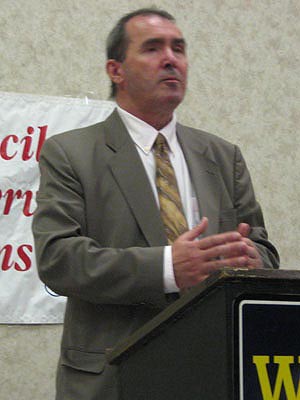
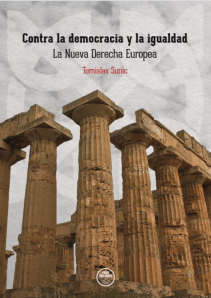
OrientacionesÉste es el primer libro que se publicó en lengua inglesa sobre la Nueva Derecha Europea, y a día de hoy sigue siendo una introducción imprescindible a esta escuela de pensamiento fundamental para la comprensión de la política europea. Tomislav Sunic examina las cuestiones principales que han preocupado a los pensadores de la Nueva Derecha desde su fundación por Alain de Benoist en 1968, así como la naturaleza problemática de la etiqueta “Nueva Derecha” para una corriente que se ve a si misma más allá de los conceptos tradicionales de izquierda y derecha: su revolucionaria filosofía política; su concepción cíclica de la historia; su actitud hacia la democracia, el capitalismo y el socialismo; y su defensa de la espiritualidad “pagana”. El autor también analiza el papel de algunos autores anteriores que han sido especialmente influyentes en el desarrollo del movimiento, como es el caso de Oswald Spengler, Carl Schmitt y Vilfredo Pareto.Tomislav Sunic nació en Zagreb (Croacia) en 1953. Es doctor en Ciencias Políticas por la University of California at Santa Barbara. El doctor Sunic da conferencias por todo el mundo y dirigía su propio programa de radio, The Sunic Journal, emitido a través de Voice of Reason Network, una emisora de radio online. Es autor de varios libros, incluyendo Homo Americanus: Hijo de la Era Postmoderna (publicado en español por Ediciones Nueva República), y Postmortem Report: Cultural Examinations from Postmodernity (Collected Essays), los cuales profundizan en cuestiones planteadas en este libro. Recientemente ha publicado en lengua francesa Chroniques des Temps Postmodernes (marzo, 2014), una obra que ha generado gran expectación en Francia
00:07 Publié dans Livre, Livre, Nouvelle Droite | Lien permanent | Commentaires (0) | Tags : livre, nouvelle droite, tomislav sunic, théorie politique, sciences politiques, politologie | | del.icio.us | | Digg | Facebook
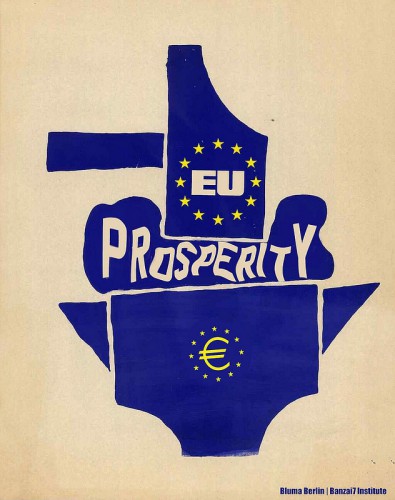
The European elections saw gains by the far right, far left, libertarians, and radical populists. The common thread was opposition to the budding continental empire of the EU and its dominance by the neoliberal plutocracy. The Europeans need the message of anarcho-pluralism and pan-secessionism as much as Americans do. This looks like a job for the national-anarchists.
Antiwar.Com
The conventional wisdom is nearly always wrong, and rarely so wrong as when it comes to the EU elections, the results of which are being trumpeted as the triumph of the “far right.” The more alarmist among these uniformly pro-EU commentators are even claiming neo-fascism in Europe is on the march. Well, they’re at least half right: something is on the march. They just don’t know what it is.
The “far right” meme is based on the results in France, where the National Front of Marine le Pen has for the first time won a plurality of seats in the European Parliament, and this news is usually coupled with panic-stricken reports of UKIP’s sweep across the Channel. Yet the two parties have nearly nothing in common except for opposition to the euro and the European project. The French Front is statist, protectionist, and carries red banners in the streets on May Day. UKIP is a quasi-free market split from the Tories, pro-free market and vaguely Little Englander. They aren’t opposed to immigration per se: they just want immigrants with assets, as opposed to the poorer variety.
The only thing these two movements have in common is opposition to the rule of Brussels, but that is quite enough for the Eurocrats and their journalistic camarilla to cast them in the role of volatile “extremists,” dangerous “populists” out to tear apart the “social fabric” of Europe. One prominent Eurocrat, the former Prime Minister of Luxembourg, foresees a replay of 1914: “I am chilled by the realization of how similar the crisis of 2013 is to that of 100 years ago,” intones Jean-Claude Juncker.
While there aren’t many Archdukes left to assassinate, whatever the similarities to 1914, the so-called right-wing populists have little to do with it. Indeed, it is the EU, in seeking to assert itself as an international power, that has ratcheted up the war danger by challenging Russia in Ukraine, allying with Washington to push NATO to the very gates of Moscow. In opposing the EU’s very existence, these parties – whatever their other characteristics – are taking on the forces that make war more likely.
And while a good number of these emerging parties may be fairly characterized as “right-wing populist,” this generalization doesn’t hold at all when one looks at the details. Yes, the National Democratic Party of Germany, a group with clear neo-Nazi sympathies, has entered the European Parliament for the first time: yet that has little to do with the minor uptick in their vote total and much more to do with German election law, recently revised to lower the threshold for being granted seats (from five percent to one percent). On the other hand, the Alternative for Germany (AfD), a party opposed to the euro albeit not necessarily to the political concept of the EU, garnered six percent: AfD is a split from the now politically irrelevant Free Democrats, whose leading lights are economists and academics rather than skinheads. It is a party that came out of nowhere and has now displaced the Free Democrats as Germany’s rising third force – yet the NPD gets all the publicity.
The reason is because the NPD’s negligible gains fit the preordained theme of the news coverage, the meme adopted by the media elite and handed down from on high.
The idea that “right-wing populism” or even neo-fascism is on the march due to the results of the European elections is never so nonsensical as when it is applied to Italy, where Beppe Grillo’s “Five Star” movement came in with 21 percent of the vote, an astounding total given the party’s brief history and scant resources. The Five Starists are a unique combination of Euro-skepticism, populism (they favor direct democracy via the Internet), and outright cynicism, Italian-style. And while the 40 percent garnered by the pro-EU Democratic party is being hailed by the media and the Eurocrats (or do I repeat myself?) as a great victory, that the Five Stars managed to even approximate their last vote total without much institutional backing was in itself a major accomplishment. My point, however, is that Italy has real fascist parties, none of which registered above a few percent in the recent election.
Another example of this nonsensical “immigrant-bashing-neo-fasicsts-are-on-the-rise” line being handed out by Brussels is Greece, where, it’s true, the openly fascist semi-criminal “Golden Dawn” party polled nearly 10 percent. Yet these same alarmists downplay the victory – by four percentage points – of Syriza, a far-left outfit, over the ruling center-right coalition: the usual excuse given is that the margin isn’t considered big enough for an “upset.” Syriza is described in news accounts as an “anti-austerity” party, a bit of a euphemism that downplays its origins as a coalition of Communists, Trotskyists, and other far-left grouplets.
In Poland, the controversial Janusz Korwin-Mikke and his “New Right” party combine a quasi-libertarian domestic program with outright opposition to the EU and a mean streak of misogynistic notions about women and sexuality that have won the party notoriety: they won 7 percent of the vote, thus ensuring them seats. They are the Polish version of UKIP: the same goes for the Danish Peoples Party, which won 27 percent and doubled its seats. The neo-fascist British National Party lost all its seats this time around.
However, a kernel of truth abides in the conventional wisdom: there is indeed a rising fascist presence in European politics, and it is not confined to France’s National Front, which is not openly fascist in any case. There is a geographical factor involved in this trend: the most successful fascist parties are those in southeastern Europe, including not only Golden Dawn but Hungary’s Jobbik party – which is openly anti-Semitic and looks to the pro-Nazi collaborationists of World War II for inspiration. The Austrian Freedom Party, founded by Jorge Haidar, gained 27 percent, doubling its representation in the European Parliament. Under Haidar’s leadership, the party was more like UKIP than BNP, but in recent years has veered more toward the Geert Wilders model – whose own Dutch anti-Muslim movement, by the way, fared pretty badly.
That none of these mostly West European parties, including Le Pen’s National Front, has the slightest chance of actually coming to power doesn’t stop the “progressive” left from sounding the alarm – just hearing it galvanizes their followers and confirms them in the knowledge that anyone to their right is a racist homophobic misogynist with a secret yen for World War II memorabilia. Their big blind spot, however, is apparent when their gaze turns eastward, and particularly where it concerns the EU’s latest conquest – Ukraine.
I had to laugh when I saw the tweets from the usual suspects hailing the presidential election results in Ukraine as proof fascism has no presence in that country. The presidential contest hardly measured the Ukrainian fascists’ actual strength: the real test will come later, with parliamentary elections and the progress of the EU’s “austerity” program. In the meantime, the Svoboda (Freedom) party has seven supporters in the “interim” government, which will probably be unchanged until and unless parliamentary elections are held.
Originally the “Social National” party (i.e. national socialist, wink wink!), Svoboda holds 35 seats in the Rada (parliament), the result of their 10 percent vote total last time around. After playing such a key role in the Maidan protests, their vote total is bound to go up, and indeed the victory of the so-called Chocolate King, the oligarch Petro Poroshenko, in the presidential election will pave the way for their future success. A pretty sleazy character in his own right, the filthy-rich Poroshenko will preside over EU-dictated terms of austerity that promise to be fertile ground for precisely the sort of Weimar-like “populism” the Eurocrats are warning against.
Thus the Euro-elites dig their own graves – which one wouldn’t mind at all if they didn’t insist on taking so many innocents with them.
The reaction against the EU project on both the right and the left is easily explained: people don’t trust big institutions, particularly of the governmental variety. The bigger they are, the more people resent and resist them.
The EU is often portrayed by its boosters as the prerequisite for Europe fully entering modernity, leaving behind the old detritus of national borders and cultural particularities and moving to embrace a Brave New World. Yet the Eurocrats uphold an old-fashioned conception of modernity, one born before the computer age empowered individuals and fostered the merits of decentralized decision-making. Just look at the decision by some idiotic Spanish judge to censor the Google search engine: these people just don’t get it, do they?
All this baloney about how failure to recognize the supremacy of Brussels risks a replay of the Great War represents a severe case of projection. The foreign policy of the EU has been consistently aggressive and expansionist. This is underscored not only by Brussels’ recent Ukrainian foray but also by its ambitions of absorbing Georgia. And don’t forget the on-again off-again ascension of Turkey to full EU status, long a project on the Eurocrats’ agenda: the idea is to pair NATO membership with EU membership in a discount package deal. It is of course entirely laughable that Turkey is European in any respect: but power politics trumps culture and even language, at least among the Euro-elites. As the EU charges eastward, it won’t be long before they’ll be claiming the “president” of Kazakhstan a long lost European brother.
NOTES IN THE MARGIN
You can check out my Twitter feed by going here. But please note that my tweets are sometimes deliberately provocative, often made in jest, and largely consist of me thinking out loud.
I’ve written a couple of books, which you might want to peruse. Here is the link for buying the second edition of my 1993 book, Reclaiming the American Right: The Lost Legacy of the Conservative Movement, with an Introduction by Prof. George W. Carey, a Foreword by Patrick J. Buchanan, and critical essays by Scott Richert and David Gordon (ISI Books, 2008).
You can buy An Enemy of the State: The Life of Murray N. Rothbard(Prometheus Books, 2000), my biography of the great libertarian thinker, here.
00:05 Publié dans Actualité, Affaires européennes, Politique | Lien permanent | Commentaires (0) | Tags : politique internationale, actualité, europe, affaires européennes, union européennes, élections européennes, politique | | del.icio.us | | Digg | Facebook
La leçon de la chute de l’Empire romain
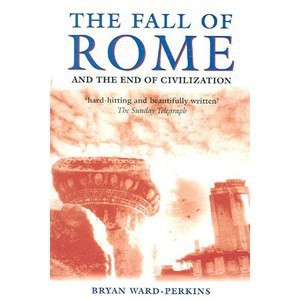
 Lisez d’urgence La chute de Rome, fin d’une civilisation, de Bryan Ward-Perkins, traduit de l’anglais chez Alma Éditeur. Cet ouvrage de l’historien, universitaire et archéologue britannique, est un pavé dans le jardin de l’idéologie dominante. La thèse défendue, avec toutes les précautions de langage d’un éminent professeur à Oxford, au rebours de toute l’historiographie bien pensante contemporaine, est que la chute de l’Empire romain, de la romanité, fut un recul de civilisation, une régression qu’il faudra plus de dix siècles pour rattraper. Et encore…
La thèse de Ward-Perkins renoue avec le sentiment d’admiration qu’on avait pour l’Antiquité gréco-romaine, pensée comme supérieure, du Moyen-Âge nostalgique au XIXe siècle. Selon l’auteur la « post-romanité », à partir du catastrophique Ve siècle, c’est-à-dire le début du Moyen-Âge, fut une régression de la civilisation dans pratiquement tous les domaines. Voire même, dans certaines régions, comme la Grande-Bretagne, un retour à l’âge de fer…
Les conclusions de Ward-Perkins, essentiellement fondées sur les plus récentes recherches archéologiques, mais aussi sur l’épigraphie et le décryptage des textes du Bas-Empire, ont de quoi choquer. On les croyait oubliées, tant l’idéologie pollue la recherche historique. Les historiens médiévistes (” la grande clarté du Moyen-Âge ”) essaient de nous persuader que leur période fut la naissance d’une ”autre” civilisation, qu’il n’y eut pas recul et déclin, mais transition progressive. Non, pour l’historien d’Oxford, il y eut un effondrement dans tous les domaines, dont on mettra plus de dix siècles à se remettre.
En réalité, le haut Moyen-Âge fut pour lui une période de régression de civilisation dans pratiquement tous les secteurs : technique, économique, démographique, sanitaire, culturel … Le niveau de vie et de confort de la ” bourgeoisie” de l’Empire romain, de la cour impériale aux casses moyennes, (par exemple, chauffage central, égouts et eau courante) ne sera retrouvé qu’à l’aube des temps modernes. En l’an 100, 50% de la population des Gaules savait lire et écrire, même imparfaitement ; en l’an mil, à peine 1%. Les techniques architecturale, sculpturale, picturale de l’Empire ne furent retrouvées progressivement qu’entre le XIIe et le XVIe siècle. Les infrastructures routières et les vitesses de transports terrestres du IIe siècle ne seront égalées qu’au XVIIIe siècle. Il fallut attendre le début du XIXe siècle pour que des villes, comme Londres, dépassent le million d’habitant, alors que Rome et Alexandrie atteignaient les deux millions à l’apogée de l’Empire, au IIe siècle.
 Même Charlemagne, auteur de la ”renaissance carolingienne”, qui voulut succéder aux Empereurs romains en se faisant couronner en 800 dans une Rome en ruine et dépeuplée, et rétablir l’éducation de la jeunesse, était un semi illettré. Le Moyen-Âge (du Ve au XVe siècles, mille ans) fut, pour l’historien et archéologue, un âge de déclin brutal et de très lente renaissance.
Les causes de cette chute de l’Empire romain, c’est-à-dire d’une civilisation supérieure, furent provoquée non pas tant par des facteurs endogènes (crise économique, christianisation et abandon du paganisme) que par les invasions barbares, notamment germaniques, qui désorganisèrent et ravagèrent la complexe organisation de l’immense Empire, qui s’étendait des marches de l’Écosse au Moyen-Orient. Dans la partie occidentale de l’Empire, ce furent les invasions germaniques qui s’avérèrent responsables de la régression, et dans la partie orientale, un peu plus tard, les invasions arabo-musulmanes. La catastrophe s’étala du IVe au VIIIe siècle.
À notre époque où la notion de progrès est intouchable, quoi qu’on en dise, Ward-Perkins se demande pourquoi la notion de déclin est rejetée. Pour lui, c’est le signe d’un aveuglement et d’un optimisme obtus. Le mérite de l’historien anglais est aussi de réhabiliter la notion de ”civilisation” face à celle de barbarie, ce qui est un scandale face à l’idéologie actuelle, égalitariste, ”ethnopluraliste”, pour laquelle toutes les ”cultures” se valent.
En cela, Ward-Perkins conteste donc le concept germanique et égalitaire de kultur, selon lequel tous les peuples sont égaux dans leurs productions historiques, pour lui opposer le concept de civilisation, fondamentalement gréco-romain, selon quoi les peuples sont inégaux. Vaste débat.
Bien sûr, l’essai de Ward-Perkins peut choquer parce qu’il réhabilite l’image de ”la grande nuit du Moyen-Âge”, qui n’est pas acceptée par les historiens actuels. Il peut aussi inspirer les auteurs d’uchronie qui pourraient penser que si l’Empire romain ne s’était pas effondré, au Ve siècle, Louis XIV aurait surfé sur Internet. On ne refait pas l’histoire. Si la civilisation antique gréco-romaine ne s’était pas écroulée du IVe au VIIe siècles sous le double choc des invasions germaniques et arabes, le niveau technologique des XXe et XXIe siècles aurait peut-être été atteint dès l’an mil.
Citons, pour conclure, sans commentaires, le diagnostic de l’historien britannique :
« J’affirme que les siècles post-romains connurent un déclin spectaculaire de la prospérité économique et de modèles élaborés, et que ce déclin frappa l’ensemble de la société, de la production agricole à la haute culture et des paysans jusqu’aux rois. Un effondrement démographique se produisit très probablement, et l’ample circulation des marchandises de qualité cessa tout à fait. Des outils culturels de haut niveau, tels que l’écrit, disparurent de certaines régions et se restreignirent dans toutes les autres. » Pour l’auteur, « l’hypertrophie que prennent les thématiques religieuses » participent du déclin intellectuel de l’Antiquité tardive et du haut Moyen-Âge.
Il lui semble très nocif « d’éliminer toute notion de crise grave et de déclin dans la vision que l’on a du passé. Cela me semble dangereux, aujourd’hui et maintenant ». Il s’en prend en ces termes à l’aveuglement des élites contemporaines :
« La fin de l’Occident romain s’accompagna d’un grand nombre d’horreurs et d’un processus de dislocation tel que j’espère sincèrement ne jamais m’y trouver confronté dans ma vie présente. Une civilisation complexe fut détruite, ramenant les habitants de l’Occident à des manières de vivre telles qu’aux temps préhistoriques. Les Romains, avant la chute, étaient aussi convaincus que nous le sommes, nous aujourd’hui, que leur monde resterait, pour l’essentiel, tel qu’il était. Ils avaient tort. À nous de ne pas répéter leur erreur et de ne pas nous bercer d’une fallacieuse assurance. »
00:05 Publié dans Histoire, Nouvelle Droite | Lien permanent | Commentaires (0) | Tags : guillaume faye, nouvelle droite, empire romain, livre, décadence, déclin | | del.icio.us | | Digg | Facebook

El varón consumado, sabio en dichos, cuerdo en hechos,
es admitido y aun deseado del singular comercio de los discretos.
Baltasar Gracián, Oráculo manual y arte de la prudencia, 6, 1647
25 años después: pensar a Carl Schmitt como método
Giovanni B. Krähe
Ex: http://geviert.wordpress.com
A modo de introducción
Hoy se cumplen 25 años de la muerte de Carl Schmitt. ¿Qué se puede decir sobre el interés por Schmitt a 25 años de su muerte? Compartimos algunas reflexiones “prácticas” para un “buen” uso de la obra del jurista, de manera que siga resistiendo al tiempo como lo ha hecho hasta ahora.
Todo lector interesado en conocer las implicaciones prácticas del pensamiento schmittiano sabe que debe abandonar, en primer lugar, la mera lectura en perspectiva histórica de la obra del jurista (ese Schmitt “de Weimar”). Esta lectura histórica debe ser siempre preliminar y necesaria, por lo mismo debe saber que se limita a un esfuerzo interpretativo-descriptivo que no irá más allá de la narración de eventos del pasado. Se trata de una estrategia hermenéutica que, si no es hábil en organizar y ponderar bien su recursos heurísticos, su propia pregunta, su análisis final, termina entonces simplemente en un docto anacronismo. En segundo lugar, para recuperar un Schmitt más práctico y actual, referido al presente que nos ocupa, digámoslo así, se debe abandonar también la lectura monotemática y circular de las obras de Schmitt: se trata de esa lectura trivial (porque retórica, vieja y no sustancial) de ese Schmitt “de la dictadura”, el Schmitt teórico “de la excepción” y demás combinaciones con la primera perspectiva mencionada.
Leer a Carl Schmitt o a autores alemanes afines (Heidegger por ejemplo), significa dejar ese vicioso prurito bibliófilo de los temas intelectuales favoritos de café. Significa, en otras palabras, abandonar ese mito inmóvil, porque completamente incapacitante (la metáfora es de Tarchi-Benoist), alrededor del pensamiento “reaccionario”. Se trata de esa adolescente hagiografía “tradicional” de pensadores conservadores, “monárquicos”, todos seguidores de reyes muertos sin nombre ni espada. ¿Para qué es necesario superar este voluntario mito incapacitante?Para pretender una clara y robusta perspectiva realista de método y aplicación, de programa político si se quiere, donde la mirada hacia el pasado se convierte siempre en la justa medida de algo que será aplicado en el presente puntual. Este es, después de todo, el significado del pensamiento conservador: un pensamiento completamente arrojado en el presente fáctico.
Frente a esta necesidad, todo lo bueno que las dos perspectivas mencionadas sobre Schmitt (la histórica y la monotemática) pueden aún darnos sobre la vida, la obra y el pensamiento del autor a 25 años de su muerte, se demuestra como un ejercicio preliminar que debe dirigirse hacia el método, hacia el método schmittiano. Si conocemos el método, podemos prescindir completamente del autor-Schmitt, de cualquier autor (y purgarnos de nuestro vicio bibliófilo de paso). Podemos liberarnos de los temas intelectuales recurrentes y dialogar con el autor frente a frente a partir de la pregunta que nos plantea. Una pregunta que puede mantenerse válida más allá de su autor. Este es el verdadero significado de estos 25 años para nosotros. Se reflexione bien que no se trata de una metáfora hermenéutica al estilo de cualquier otro manierismo postmoderno. Para lograr este objetivo práctico-aplicativo de la obra del jurista, en este post intentaremos una lectura de la Teología política como método. Esto quiere decir que no nos limitaremos a la enésima exégesis del libro Este ejercicio partirá más bien desde el libro como instrumento y como medio, no como fin.
El método de la politische Theologie: la analogía
El método que denominaremos método político-teológico es desarrollado por Schmitt en el tercer capítulo de su Politische Theologie I (de ahora en adelante abreviado con PT I). Un ejemplo aplicativo de este método se encuentra en el textode Schmitt sobre Donoso cortés. Para poder colocar el método que vamos a presentar sumariamente, es necesaria la lectura de los dos textos mencionados.
El principio a la base del método político-teológico que Schmitt nos presenta en el tercer capítulo de su PT I parte preliminarmente del principio jurídico de la analogía. Como sabemos, la analogía ocupa un lugar preciso en la doctrina jurídica. La analogía “atribuye a un caso o a una materia que no encuentra una reglamentación expresa en el ordenamiento jurídico, la misma disciplina prevista por el legislador para un caso y para una materia similar” (Bobbio). El objetivo es evitar la la laguna, el “vacío” del derecho en un caso no previsto. La analogía adquiere evidencia y aplicabilidad únicamente en el ámbito de la ratio juris. Con esto queremos decir que la analogía jurídica no va entendida en los términos filosóficos de la analogia entis, o según la perspectiva lingüistico-cultural de la analogía lógico-semántica. La analogía en Schmitt va entendida preliminarmente en términos lógico-jurídicos, (recht-logisch). Si queremos hacernos una idea de este tipo de analogía lógico-jurídica, deberemos pensar en sus ámbitos aplicativos y los límites de la misma, por ejemplo en el caso de la analogia legis (ampliación del alcance de una norma o parte de ella) o la misma analogía juris (aplicación de toda la norma a un caso no previsto. Este tipo de analogía generalmente está prohibido en el derecho penal por ejemplo). El ámbito aplicativo de este tipo de analogía lógico-jurídica que Schmitt utiliza en su método, prescribeun determinado ámbito de validez y un vínculo material inmediato que incluye en su interior a la analogía lógico-semántica. Tengamos en mente esto último. Observaremos a continuación cómo Schmitt aplica el principio de la analogía a su teología política.
Analogía jurídica e isomorfismo material político-teológico: la estructura esférica
La analogía jurídica presupone la unidad y la coherencia del orden jurídico. Aquella no cubre una “laguna” o un “vacío” en sentido general o dogmático (de lo contrario el orden jurídico no sería unitario y coherente), más bien aplica técnicamente una determinada norma a dos hechos A y B (Sachverhalt) que son plausibles de comparación en su aspecto material (Sachzusammenhang). La similitud o la diferencia entre los dos hechos sigue un criterio (el tertium comparationis) que no se basa en la relación meramente lógica entre los dos supuestos materiales. El caso (Sachverhalt) al cual debemos aplicar la analogía, no representa un vacío para el sistema en sentido estricto, sino un hecho (Tatbestand) que exige una extensión o aplicación analógico-jurídica.
¿Para qué nos sirve comprender la analogía jurídica? para lo siguiente: la analogía político-teológica de Schmitt presupone una unidad coherente entre un orden político-jurídico y un orden político-religioso cualquiera, más allá de la formas históricas que ambos órdenes posean: se trata de una unidad entre un vínculo material y un vínculo espiritual, un vínculo que adquiere únicamente diferentes formas históricas en el tiempo. No se trata de una unidad “ontológico-metafísica”, o una nueva “filosofía de la historia”, puesto que el vínculo de esta unidad material-espiritual está permanentemente expuesto a la contingencia. Se trata, en la teoría schmittiana, de la figura del enemigo y del caso excepcional (ver más adelante). Es precisamente esta componente de permanente y contingente apertura de la mencionada unidad hacia lo impredecible (en sentido realista), hacia aquello que puede poner en juego su integridad, lo que permite ver dicha unidad material-espiritual de ambos órdenes como una identidad, una identidad ontológico-política.
Para ver esta unidad con más claridad, Schmitt primero radicaliza ideal-típicamente (en el sentido de llevar a la raíz) la componente material de los conceptos jurídicos, con el objetivo de mostrarnos el fundamento político-decisorio “detrás” de ellos en el tiempo. Según Schmitt, este nexo entre la analogía y su vínculo político-decisorio se puede observar si analizamos con atención, en el tiempo, la formas últimas de los conceptos jurídicos, es decir, la relación entre el vínculo político-material que introduce una norma y el vínculo ideo-lógico que la vuelve legitima en el tiempo como orden social precisamente.
Se trata de un método hermenéutico ideal-típico que puede aplicarse a cualquier periodo histórico y que ha sido desarrollado con éxito (por el lado histórico-semántico) por un alumno de Schmitt, Reinhart Koselleck. En el fondo se puede notar un concepto muy peculiar de ideo-logía, de análisis ideo-lógico. Se trata de un análisis que no es marxista, si vemos bien (pre-marxista más bien): entre dos hechos A y B, como en el caso de la analogía ordinaria mencionada, la analogía schmittiana no observa dos ordenamientos que se relacionan causalmente (una estructura económica y una superestructura “cultural”, digamos ilustrativamente), sino dos “estructuras” instituidas, dos concretos status quo A y B, uno material y el otro espiritual (no sólo cultural), que se relacionan isomorficamente y se conservan en el tiempo a través del permanente superamiento del vacío de la excepción y la exclusión del enemigo (Katechon). Contingencia, isomorfismo y mantenimiento entonces, o en los términos de Niklas Luhmann si se quiere: variación, selección, estabilidad (1). Veamos un ejemplo gráfico para poder ser más claros. El gráfico se refiere al tercer capítulo de la PT I (material interno del Geviert-Kreis):

Del cristal de Hobbes a la esferas de Schmitt
Podemos observar dos esferas unidas horizontalmente por un vínculo de identidad analógico entre ellas (analogische Identitat). El vínculo es horizontalmente analógico porque determina dos identidades homogéneas cada una con el propio fundamento institutivo, ordenador. En el ejemplo, se pueden ver dos realidades espirituales: la axiomática, referida a la lógica clásica, fundamento de la epistemología moderna (Axiomatik), y el dogma cristiano. Se note que, desde el método Schmittiano, ambas realidades son complementarias (tarea para los que creen todavía weltanschaulich en la separación entre religión y ciencia). Pero observemos primero la relación externa a las esferas. Podemos notar que este vínculo horizontal de identidad analógica está fundado en un vínculo material vertical que es la existencia política concreta (konkret-politisches Dasein). Se note que el vínculo material es exterior a las esferas. Esta existencia es concreta porque se basa en una decisión (Entscheidung) a partir de un espacio territorial determinado (Erde). El momento decisorio (Entscheidung) tiene una función axial precisa que permite la re-producción permanente de la decisiones colectivas vinculantes erga omnes en el tiempo, ya sea verticalmente como re-presentación política (Repraesentation), que horizontalmente como autoridad (politisches Symbole). A esta dinámica virtuosa se añade la legitimidad, que es legitimidad procedural, técnica (Technik). Esta triple dinámica alrededor del eje decisorio, entre el símbolo político, la técnica y la representación política (ver rectángulo inferior), está a la base misma del vínculo de identidad analógico entre las dos esferas superiores (ver flecha central). Se note ahora a la izquierda, completamente externo a la triple dinámica axial, al enemigo (Feind). El enemigo es el posesor del poder contingente, aquel que determina esta triple dinámica decisoria en su estricto y unívoco sentido político-ontológico: el enemigo determina, desde la contingencia, la existencia misma de toda la relación dinámica mencionada, convirtiendo el vínculo analógico identitario entre las esferas, en un vínculo político-ontológico concreto. Veamos ahora la relación isomórfica, esférica, que se crea a partir de este vínculo político-ontológico.
Observemos ahora el interior de las esferas. Un determinado orden histórico-político o status quo (por ejemplo la monarquía o la liberal-democracia) determina siempre, como fundamento de su mantenimiento en el tiempo, un isomorfismo entre un aspecto material y un aspecto espiritual. Esto quiere decir que un determinado status quo político-social (la monarquía, la democracia liberal) y un orden metafísico-teológico (Dios en la monarquía; el individuo o sujeto abstracto en el deismo liberal neo-humanista respectivamente) se fundan entre sí especularmente de manera autológica y autoreferencial (Spiegelindetitat). Se trata de dos realidades concretas en relación isomórfica en dos momentos históricos diferentes, no se da una “base” o “estructura” y una “sobre”estructura entre ambos. Se note además que estamos al interior de la esfera: tanto el lado material (el ordenamiento político-jurídico, material, la juristische Gestaltung) como el espiritual (los conceptos y categorías jurídico-teológicas, die lezte jur. Begrifffe) son relacionalmente lo mismo finalmente. Estamos lejos de cualquier “teoría del reflejo” o concepto de ideología marxista. Estamos mucho más cerca, sin duda, de los primeros idéologues franceses (destutt de Tracy), que veían un nexo orgánico y concreto entre las ideas, los contenidos ideacionales y un determinado orden político-social. Justamente por este nexo orgánico entre lo espiritual y lo material, pensamos que la representación adecuada para esta lectura de Schmitt sea una esfera.
Resumiendo: 1) dos esferas o identidades espirituales perfectamente isomórficas (geistliche Identität 1 y 2). En nuestra interpretación, una de ellas se funda (Grund), por ejemplo, en el dogma y la otra en la axiomática lógico-racional clásica (Aristóteles, Descartes). 2) al interior de cada esfera espiritual encontramos un principio de identidad y causa estrictamente especular (Spiegelindentität) entre dos concepciones, aparentemente distintas. Se trata de esa aparente dualidad completamente moderna, por lo tanto espuria, entre una “esfera material” y una “esfera espiritual” que se fundan y se auto-legitiman en la negación de la otra y viceversa. En el esquema vemos los ejemplos que introduce Schmitt, es decir, la realidad histórico-política con su “base” económico-social (la “estructura” marxiana) y su respectiva “sobreestructura” ideológica. La lucha aquí es aparente. 3) Tales analogías de caracter autoreferente y autológico se representan recursivamente y permanentemente en la historia al interior de cada esfera, cuyo isomorfismo fundamental (dogma religioso y lógica clásica) es inmóvil. La inmovilidad no se funda en un principio abstracto, sino en la forma precisa de una causa agente que modifica o introduce tal estado, en nuestro caso, la decisión (Entscheidung). La representación del acto decisorio se da en un lugar preciso, su ordenamiento (la tierra, die Erde). Instrumentos de este orden son la técnica y el simbolismo político-religioso (la re-presentación). La decisión determina el equilibrio isomórfico entre las dos esferas. Este es el tertium comparationis de Schmitt entre un momento histórico y el otro, lo que le permite observar similitudes y diferencias en dos momentos históricos: la decisión. El ámbito de la decisión es el ámbito de la existencia concreta, que es ortogonal a las dos esferas y siempre expuesto al enemigo.
En otro post veremos más de cerca un ejemplo concreto a partir del mencionado texto sobre Donoso.
Nota
(1) Ver Gesellschaft der Gesellschaft de N. Luhmann. Como en el caso de la teoría luhmaniana, se notará una implícita perspectiva neo-evolucionista detrás de este método schmittiano, muy afín al actual análisis de la evolucionary economics (pero que Schmitt extiende originalmente al campo de los contenidos ideacionales (Mannheim), en sentido ideo-lógico no-marxista) y la teoría político-institucional de la Path dependence.
00:05 Publié dans Philosophie, Révolution conservatrice, Théorie politique | Lien permanent | Commentaires (0) | Tags : philosophie, philosophie politique, carl schmitt, théorie politique, politologie, sciences politiques, révolution conservatrice | | del.icio.us | | Digg | Facebook
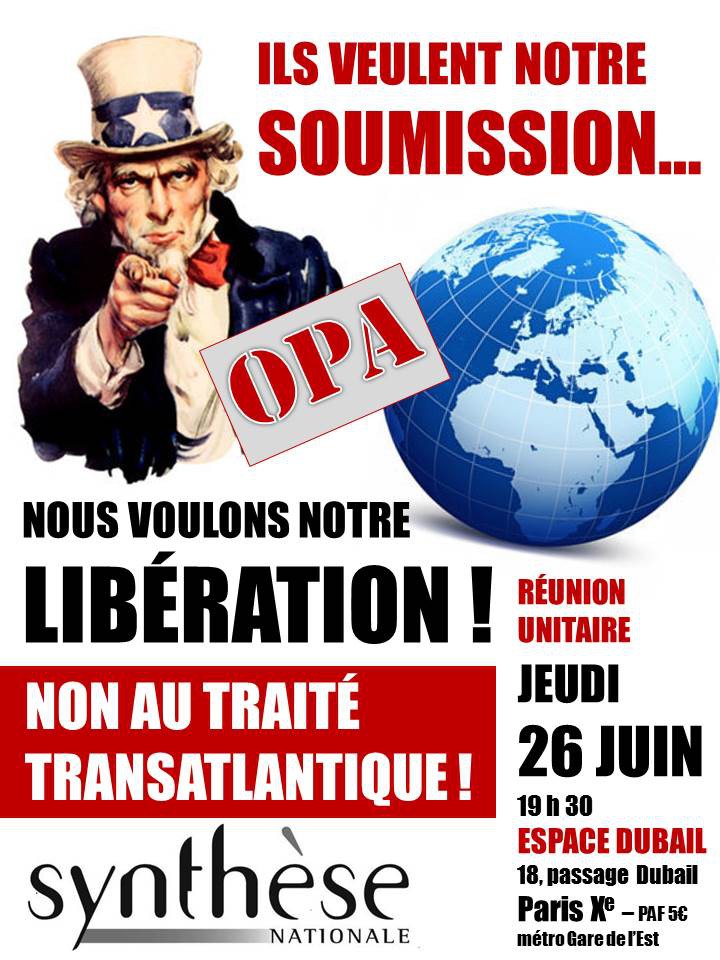
00:05 Publié dans Actualité, Affaires européennes, Evénement | Lien permanent | Commentaires (0) | Tags : événement, paris, traité transatlantique, europe, affaires européennes, états-unis, amérique, amérique du nord, atlantisme, occidentalisme, capitalisme | | del.icio.us | | Digg | Facebook