While mankind suffers through the worst global crisis in recent memory, the rest of the world appears to be benefiting from our discomfiture.
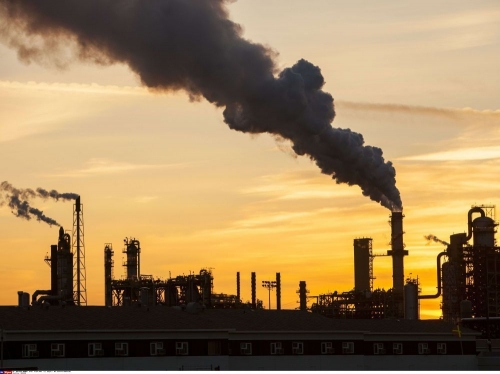
The quarantines, travel bans, and economic stagnation brought about by COVID-19 have had a number of unintended consequences for the natural environment: improvements in air quality resulting from the reduction of major pollutants such as nitrous oxide and greenhouse gases; cleaner waterways (most famously the canals of Venice); and the return of wildlife to humanized landscapes.
While some of the more outrageous claims (concerning Venetian dolphins and drunk elephants) have been debunked as fabrications, this has not prevented a few Twitter users from making some controversial observations on the current crisis: “Corona is the cure. People are the disease.” “This isn’t an apocalypse. It’s an awakening.” “The earth is cleansing herself.” “The human race is so shitty that when we’re absent, the world begins to thrive again.” And the one that has garnered the most attention:
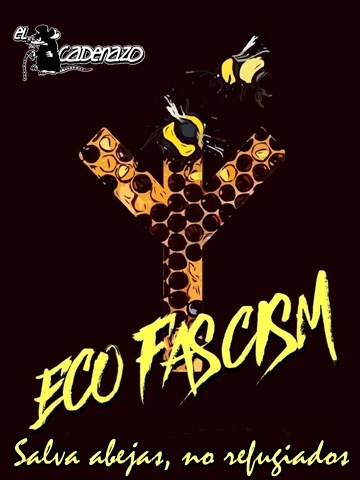
 Comments like these have caused a fair amount of hand-wringing among the environmental Left, not because they are objectively untrue, but rather because of their association with the specter of ecofascism.
While libertarians and Republican dads tend to denounce any kind of environmental concern, from driving hybrids to recycling, as “ecofascism,” for the Left, ecofascism is best defined as “anything in the environmental movement that makes us uncomfortable.” This holds true whether or not the accused actually supports authoritarianism, corporatism, nationalism, or any other hallmarks of historical Fascism. It is particularly true if the proponent upholds race realism or ethnonationalism, which are invariably castigated as forms of “white supremacy.”
Some unfashionable ideas that the Left associates with ecofascism include:
- Any focus on stabilizing human population growth in the Third World;
- Any suggestion that immigration and open borders have negative environmental effects;
- Any criticism of the human race in terms of its ecological impact (namely because this fails to differentiate between oppressive white patriarchs and victimized peoples of color);
- Any criticism of poor ecological practices by non-Westerners, such as poaching, deforestation, and excessive reproduction;
- Any condemnation of individualism, democracy, or liberalism for their inability to resolve key environmental issues; and
- Any suggestion that there is a natural order or hierarchy which mankind ought to model itself upon and respect.
Since this is not a coherent platform but rather a broad set of features common to various environmental thinkers and groups, I will refer to this constellation of ideas as “Ur-Ecofascism,” following Umberto Eco’s similarly vague (and similarly polemical) description of Fascist ideology.
Due to these unpalatable associations, any suggestion that the recent pandemic might have an environmental silver lining is, of course, anathema to the Left — for whom the only possible silver lining would be sabotaging Trump’s re-election bid.
A Brief Aside on Ur-Ecofascism
Ever since the beginnings of the environmental movement, there have been some adherents who cheer on mass death as a means of nature “cleansing” itself. In the seventies, this included Garret Hardin’s “lifeboat ethics” and the policies of Paul Ehrlich (of Population Bomb notoriety), whose critics regarded such misanthropy as implicit in their worldview. Ironically, these thinkers envisioned overpopulation as an existential threat to mankind, and were accordingly more concerned with saving future humans than wild nature for its own sake.
One finds this view quite openly espoused by the early Earth First! ecowarriors, one of whom claimed in 1982 that “the heart and soul of EARTH FIRST! philosophy is that the human race resembles a cancer, which is rapidly devastating the Earth and Her community of life, and leading toward a massive ecological breakdown” [1]. Founder Dave Foreman similarly proclaimed that “in our decimation of biological diversity, in our production of toxins, in our attack on the basic life-support system of Earth, in our explosive population growth, we humans have become a disease — the Humanpox” [2]. Sea Shepherd founder Paul Watson likewise enjoined his readers to “think of our species as the AIDS of the earth” [3]. Another ecowarrior claimed in 1987 that “if radical environmentalists were to invent a disease to bring human population back to ecological sanity, it would probably be something like AIDS,” as it could bring about a relatively peaceful reduction of the human population that would inflict far less damage on the natural world than war or nuclear holocaust [4]. In a 1983 article, Foreman suggested that the human population ought to be reduced to fewer than a billion worldwide, and called for state-subsidized sterilization after having one child, tax penalties for parents, the restriction of life-support technology, capital punishment for violent crimes, and “mandatory sterilization for all people with genetic defects or those unfit to be parents” [5]. Others also called for ending foreign aid to impoverished countries suffering drought or famine, claiming that nature should be allowed to take its course.
 And that is coming from a group of self-identified anarchists! We also have the statements of literal ecofascists, such as the late and venerable Pentti Linkola, whose observations of mass man’s destructive nature famously led him to write: “If there were a button I could press, I would sacrifice myself without hesitating, if it meant millions of people would die.” Rather than mass die-offs, however, his preference was for the complete abolition of liberal democracy and the institution of a strong centralized government with “tireless control of citizens,” which could enact the controversial measures necessary to reverse human-inflicted environmental damage.
There is also the “Esoteric National Socialist” Savitri Devi, who prized the aristocrats of the natural world — among which she included tigers, ancient oak trees, and Aryan man — and whose life was dedicated to their preservation. Hence, she applauded the National Socialist efforts at conservation and its rejection of Christian anthropocentrism; hence, she believed in the necessity for a worldwide population reduction, while still ensuring the survival of Aryan man against the encroaching hordes from the South and East. However, for a variety of historical reasons, “Man, formerly an integral part of Nature (and sometimes its crown), became the torturer of all beauty, the enemy of the universal Mother, the cancer of the planet.” Thus, in a world utterly given over to American hedonistic capitalism and Soviet anthropocentric tyranny, she could see nothing to do but:
. . .to aid all beautiful minorities attacked by the agents of chaos; to resist, even if that should delay only a few decades the disappearance of the last aristocrats among men, animals, or trees. There is nothing else that one can do, if not, perhaps, to curse in one’s heart, day and night, today’s humanity (apart from very rare exceptions), and to work with all one’s efforts for its destruction.
It is worth noting that, despite their obvious differences from the humanist Left, these ostensibly misanthropic ecofascists are not typically motivated by hatred, but by love. This includes a love of wild spaces, nonhuman animals, and even certain human types that can only thrive in a world that has not been utterly subjugated to the needs of neoliberal globalism, with all of nature transformed into a mere standing reserve for human use.
Ecofascism and COVID-19
Are these comments applauding the environmental benefits of COVID-19, then, a kind of resurgent ecofascism? The Left certainly thinks so. Nevertheless, these commenters are mistaken in their enthusiastic appraisal of this pandemic. Though it is objectively true that this brief lull in human economic activity has had a few short-term benefits, there are several problems with regarding the present crisis as a positive ecological development, from both a pragmatic and an ideological perspective.
Leaving aside the ethical question of whether or not massive amounts of suffering should ever be applauded (we are dealing with misanthropes, here), any positive ecological benefits from the global lockdown will almost certainly be negated during the recovery period. The emissions in China have already returned to pre-lockdown levels since the country reopened in late March. Following the 2008 recession and a similar dip in atmospheric pollution, the level of global emissions actually shot up five percent due to stimulus spending that boosted fossil fuel use. In the scramble for economic recovery, it is certain that environmental considerations will fall by the wayside.

The line of thinking — which praises any war, famine, or plague that reduces human population as a net positive for the natural world — was ably critiqued by Pentti Linkola himself:
“War is followed by a frantic period of rebuilding, which enlivens and inspires technological advancement and raging investments, so that economies leap forward. Along with business, the most destructive forms of human recreation like tourism, vacation-home building and harmful sports also come to a halt in wartime. In the aftermath of war, however, the population will frenziedly ‘make up for the losses’” [6].
In addition to this pragmatic objection, there is an ideological one. Namely, what I have called Ur-Ecofascism is so vaguely defined that its principles can actually be held by individuals of vastly different political orientations: reactionary traditionalists like Thomas Malthus; turn-of-the-century Progressives like Madison Grant and Theodore Roosevelt; National Socialists like Savitri Devi and Heidegger; latter-day authoritarians like Pentti Linkola; conservatives like Garrett Hardin; anarcho-tribalists like the early Earth First! crew; and leftist vegan anarchists like the Animal Liberation Front saboteurs. Moreover, “ecofascism” has such a pejorative ring that its use outside of hostile polemic is unadvisable.
Thus, it is necessary to move away from this depiction of Ur-Ecofascism, which is (like Umberto Eco’s Ur-Fascism) defined by its enemies. From our perspective — traditionalist, ethnonationalist, defiantly reactionary — what does the ideal human relationship with the natural world look like? We seek to keep human population at manageable levels, but value preservation of distinct racial types rather than suicidal extinction. We wish to maintain large tracts of wildlands for their own sake and for our posterity, but also want to preserve the cities that exist as lasting monuments to our cultures. We wish to refrain from wasting natural resources, but recognize the need for military and economic strength in order to avoid our conquest by less scrupulous powers. We want to live in accordance with natural law, but aspire to understand the cosmos and explore the stars. We desire a form of government that is sufficiently strong to address complex 21st-century problems, while still retaining a high degree of individual freedoms. We love wild nature, but we love our gods, our people, and our honor too.
Seen from this perspective, then, is there still a silver lining to the COVID-19 pandemic and lockdown? As it happens, yes. It highlights the absurdity of our present way of life, as well as the necessary linkages between man and nature, and it provides an opening for our ideas to receive broader currency.

Climate Change and the Real Ecological Crisis
The COVID-19 pandemic has called attention to the greatest environmental threats facing the world: anthropogenic pollution and the destruction of wildlands.
These issues have gotten short shrift in recent years due to the hegemony of climate change discourse. I will not debate the reality or desirability of anthropogenic climate change, as I am neither a climatologist nor a sophist. I will simply make the following observations:
For one, it may be the case that anthropogenic climate change is simply not occurring as thought, or at least does not pose the kind of threat currently assumed. If one hitches one’s environmental politics entirely to this horse, this opens him up to being wholly discredited by a change in the facts. This is what happened to those like Paul Ehrlich, whose inaccurate predictions of resource scares in the 1970s ultimately undermined his more substantive arguments concerning population growth.
More importantly, by positing something like global warming as the chief ecological threat facing the world, it is implied that if the necessary technology were invented to solve it, humanity would be able to go about our lives much as we always have, free of any major systemic changes. However, solving the threat of global warming through better technology or energy efficiency will not get at the root of the problem: the contravention of the natural order, excessive multiplication of humanity, the technologization of the Earth, and transformation of natural beauty into slums and parking lots.
Additionally, focusing on greenhouse gas emissions instead of matters like biodiversity and wilderness preservation effectively shifts the blame for environmental degradation entirely to Western nations. It conveniently masks the numerous ecological sins committed by the oppressed peoples of the world — poaching, deforestation, excessive reproduction — and therefore serves the third-worldist narrative that holds white Europeans culpable for all of the world’s ills.
So, while the climate change debate is highly politicized and mired in corruption and intangibility, the COVID-19 pandemic has shifted focus to two more concrete aspects of ecological degradation. One of these is air and water pollution. Aside from greenhouse gases, which are about the only things that get mentioned these days, more immediately lethal forms of industrial waste can poison soils and waterways, kill plants and animals, and cause chronic diseases in humans. During the lockdowns, the cessation of industrial activity led to a significant temporary reduction in atmospheric pollution, leading some experts to conclude that the lockdown saved more lives due to pollution reduction than were actually threatened by the virus itself. Moreover, given the link between air pollution and respiratory illness, studies found that greater exposure to air pollution led to weakened immune and respiratory systems, and was therefore correlated with higher mortality from coronavirus infections.
An additional lesson of the COVID-19 outbreak that the world will hopefully heed is the danger of rampant habitat destruction and illegal animal trades. Deforestation for agricultural and mining purposes is the largest cause of habitat loss worldwide, and forces wild animals to migrate outside of their ecosystem and come into contact with other animals or humans they normally wouldn’t interact with. This creates an opportunity for pathogens to get into new hosts.
COVID-19 is believed to have spread from a species of horseshoe bat to other animals in a live animal market in Wuhan, which facilitated its spread to humans. Other epidemics have followed a similar trajectory: The SARS epidemic in 2003 came from civet cats, MERS in 2012 from camels; avian influenza, Nipah virus, Ebola, and HIV all originated in animals and were transmitted to humans. According to Dr. Seth Berkley, “Deforestation and the sale of live wild animals or bushmeat, such as bats and monkeys, make the emergence of new viruses inevitable, while population growth, dense urbanization, and human migration make their spread easier.”
Thus, while concerns about habitat conservation and endangered species are often considered quite frivolous and elitist even within the realm of environmental politics itself, this virus illustrates the essential links between pollution, habitat destruction, and human health. This is significant not solely from the environmentalists’ perspective, but that of any Rightist or ethnonationalist who cares for the wellbeing of his people and national heritage, as well as the integrity of wild nature.
Open Borders and Immigration
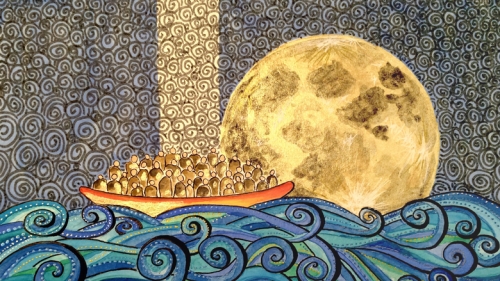
Panic over the outbreak has also generated strong support for travel bans, border controls, and immigration restrictions among politicians and the populace, which runs counter to the open borders propaganda of the Left. COVID-19 did what three years of Congressional haggling could not: in March, President Trump signed an executive order closing the southern border to stop the spread of the virus from possibly infected illegal immigrants. The State Department suspended the admission of refugees for three weeks. Thousands of migrants were turned away at the southern border. Illegal crossings slowed to a trickle throughout March and April, and those who crossed over were expelled back to Mexico in an average of 96 minutes after being caught. More than eighty countries instituted travel restrictions, particularly from Italy or China. The high levels of unemployment due to the coronavirus lockdown has led several politicians to demand a moratorium on all forms of immigration, while so many native Americans are out of work. And on April 20th, President Trump signed an order temporarily suspending all immigration into the United States.
Of course, the Left has harshly condemned these measures as expressions of “racism” and “xenophobia” that will ultimately prove “worse than the disease.” Out of their pathological fear of these buzzwords, politicians throughout the West delayed taking the most obvious steps to contain the virus — stopping all travel in and out of their countries, and quarantining any citizens re-entering from abroad. Their virtue-signaling cost thousands of lives.
This pandemic has illustrated that the distinction between the countryman and the foreigner is not purely irrational, that suspicion of the outsider is sometimes justified, that people are different and in-group preferences are real and legitimate, and that the primary purpose of a government is to protect its people from enemies foreign and domestic. And if we needed any further illustrations, this egregious dereliction of duty will hopefully convince a sufficient number of Americans that their politicians, academics, and media are utterly illegitimate and comprise, for all intents and purposes, an occupation government.
The Right has always understood the need for borders. They preserve wholesome cultural, racial, and ethnic distinctions; they defend those within from the lawlessness without; they are the guarantors of territorial sovereignty. In times of crisis, of war, of famine and plague, borders become especially significant. The leftist will, of course, tell us that, to the contrary, such crises illustrate the need for globalism and international cooperation above all else. However, while international cooperation is a fine thing, historically speaking it is the exception rather than the rule. A state is the last line of defense to protect its own people.
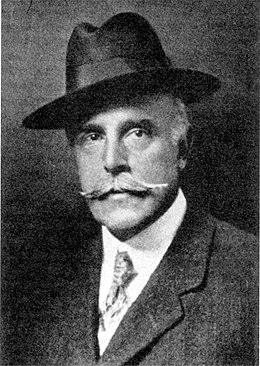 The environmental dimensions of the immigration debate are less well-known. The link between wilderness preservation and nativism was established by Madison Grant in the 1920s, but disappeared in the latter half of the 20th century. This is because, since the 1970s, the environmental movement has been almost completely dominated by leftists who have pushed this question to the wayside for purely ideological reasons.
There have been some exceptions. As in other respects, the early Earth First! ecowarriors were one of the few groups to broach the subject. Alongside increased local pressures on fragile ecosystems through population growth, pollution, and urban sprawl, ecowarriors argued that immigrants to the United States will seek to gain a higher standard of living, thereby increasing their ecological impact [7]. As Paul Watson warned, “The cost of immigration is massive sprawl, damming up every river and using every square foot of land to feed more and more people in the materially comforting style that they expect to enjoy in this most materialistic of nations” [8].
In addition, while the birthrate of native-born Americans has leveled off since the middle of the twentieth century, immigration levels have been at a historic high since the 1960s, and immigration is now the main driver of U.S. population growth [9]. Support for continued high levels of immigration means support for continued U.S. population growth, and all the ecological ills that come with it.
Limitation of immigration, both legal and illegal, is therefore essential in terms of territorial integrity, cultural preservation, public health, and environmental protection. In this respect, again, rightist nationalism and environmentalism necessarily go hand-in-hand.
The New World Order
The pandemic and the global lockdown have illustrated, in a very visceral way, the failures of the present Western political order. Our ostensibly liberal, democratic, internationalist, techno-capitalist End of History state has shown itself to be woefully inadequate for handling questions of great import. Greg Johnson already brought up many of these points early in the crisis, which I’ll merely summarize and elaborate upon:
Democracy encourages politicians merely to think ahead to the next election, and prevents them from taking a long-term view or making unpopular decisions. This results in a schizophrenic national policy, where primary objectives are reversed (in the United States) every four years. In this case, it prevented the rapid travel bans and border closures due to Republican fears of economic apocalypse and Democratic denunciations of racism. Ultimately, rather than closing the borders and instituting rigorous quarantines, leaving the country largely functional, the Establishment waited until the disease had already metastasized and adopted measures that will hamper the national economy for years. This failure to deal with complex or future problems also affects environmental policy and overall national strategy.
Free Trade has led to the outsourcing of vital industries — including pharmaceutical products — to China, rendering us utterly at their mercy in the event of hostilities. Even with the vast sums of money proffered by the government, this extended lockdown will certainly lead to the bankruptcy of countless businesses in our frivolous service-based economy, and due to outsourcing, we will have little left to replace them. The oligarchs’ need for slave labor will guarantee that, once the crisis is over, more serfs will be imported from south of the border in order to displace American workers.
Liberal Individualism valorizes selfishness and social atomization, rather than the communal ethos necessary for peoples and nations to survive in a time of crisis. Liberalism’s implosion was only forestalled in the West due to our centuries-old civic culture, which valued responsibility and community spirit; it has never been successfully exported, and that cultural capital has been steadily eroded over the last two hundred years. All of the steps taken to prevent the virus’s spread and limit its social impact were in spite of, not in accordance with, the pieties of liberal democracy. Worldwide, the virus has been seen as a justification for authoritarian measures and played into the hands of aspiring autocrats, causing much pearl-clutching among our virtuous intelligentsia.
Neoliberalism has also proven, yet again, its incompatibility with the real world. The recent bipartisan relief package signed by Congress has approved of government interference in the market in a number of ways: direct payments to families and businesses; forcing private banks to make emergency loans; mandated limitations on executive pay; grants to hospitals in order to pay for the uninsured (a step towards “Medicare for All”); temporarily banning foreclosures and evictions; requiring employers to offer paid sick leave; and forcing one private corporation to increase production of ventilators.
In short, this pandemic and lockdown have shown the bankruptcy of the contemporary world order and the superiority of nationalism, authoritarianism, autarchy, communitarianism, and socialism (“national socialism,” if you will) in securing people’s wellbeing in times of crisis.
This lack of a long-term view, as well as its purely materialistic focus, is also the reason why the contemporary order is wholly incapable of addressing ecological degradation. This is yet another instance in which the goals of nationalism and right-wing ecology overlap.

Springtime for Traditional Values
This is more subjective and hard to quantify (and I doubt we’ll be seeing empirical studies on the subject anytime soon). However, based on my own observations and those of other writers, this lockdown has reawakened the social values of a bygone era.
Many people are doing their jobs from home, allowing them to perform a typical day’s work in half the time (showcasing the absurdity of our commuter-based, forty-hour week wage-slavery). Children have been granted a temporary reprieve from their daily prison sentences, and are not being forced to remain seated for eight hours and mentally poisoned by axe-grinding leftist schoolteachers. Since all schooling is at home now, parents actually are getting some insight into their child’s educational curriculum, and hopefully adding their own commentary. College students have likewise returned home, freeing them temporarily from the degeneracy and indoctrination of the higher education citadels.
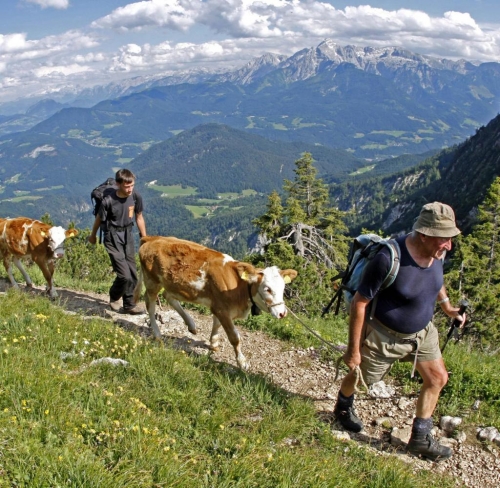
Due to quarantines, families are spending more time together. Around my own neighborhood, I see couples walking dogs, children riding bikes and playing in their front yards, families planting flowers and painting houses and engaged in other home improvement projects. The hiking trails around my city are busier, since all the venues for more degenerate amusements — movie theaters, shopping malls, nightclubs, bars — are closed. I imagine that Tinder, Grindr, Ashley Madison, and all the other facilitators of fornication and adultery have experienced a lull. With restaurants shut down, people are actually cooking at home, eating meals together, and not supporting multinational corporations that feed us poison. Grocery store warfare excepted, a modicum of social decorum has returned. People are generally more serious and keep their distance from each other in public. And like one fellow Counter-Currents writer, I too would like to see our American obsession with glad-handing and back-slapping replaced by formal bows and Roman salutes.
Of course, all of this has a dark side, as it is dependent upon widespread economic collapse. Doubtless, many people are responding to the quarantine in less wholesome ways, by increased substance abuse and binging on television, and many are indubitably eager to return to their degenerate lifestyles. However, this experience does show that much of what we have resigned ourselves to as inescapable features of modern life are in fact absurd, wasteful, and needlessly soul-crushing — and that it does not have to be that way. This is a realization that is critical for the traditionalist Right, as well as the right-wing ecologist.

The Green Volksgemeinschaft
All of these aforementioned gains from the COVID-19 outbreak are, of course, extremely tenuous. High levels of pollution have already started to return in countries where the lockdowns have been lifted. Any renewed awareness of the dangers of deforestation and illegal animal trades will disappear in the scramble to restore the global economy. The lull in U.S. immigration will likely be reversed as the country is reopened and ailing businesses seek cheap labor, even at the cost of further immiserating the American working class. Governments will undoubtedly retain their tighter grip on national economies, but it will be to the benefit of their corporate sponsors, not the people. And in a few months’ time, people could be going back to schools and work, binge drinking in bars, and remember this surreal return to the 1950s as nothing more than an extended nation-wide Spring Break.
All of this could be forgotten — if we allow it to be. This crisis has shown the hollowness at the core of the present system, and as the Dissident Right, it is our duty to push what is falling. This is an opportunity to show that we can have a more fulfilled population, cleaner air and water, thriving ecosystems, distinct cultures, national sovereignty, and a government that exists to serve its people — and not at the cost of some natural disaster, but by our own choice and political will.
And, rather than merely ignoring the “ecofascist” label that will inevitably be foisted upon us, we can respond that unlike our enemies, we are the true defenders of freedom, truth, purity, nobility, and all that is fair on this good Earth.
Please support our work by sending us a credit card donation through Entropy — just click “send paid chat.” Entropy allows you to donate any amount from $3 and up. All paid chats will be read and commented upon in the next episode of Counter-Currents Radio, which airs every Friday.
Notes
[1] Pete Dustrud, “Recreating,” EF! Journal 2, no. 3 (February 2, 1982), 6.
[2] Dave Foreman, Confessions of an Eco-Warrior (New York: Crown Trade Paperbacks, 1991), 6.
[3] Paul Watson, “On the Precedence of Natural Law,” Environmental Law and Litigation 3 (1988), 79-90.
[4] Christopher Manes /“Miss Ann Thropy.” “Population and AIDS,” Earth First! Journal 7, no. 5 (May 1, 1987), 32.
[5] Dave Foreman/“Chim Blea,” “Cat Tracks: Reducing Population,” Earth First! Journal 3, no. 6 (August 1993), 3.
[6] Pentti Linkola, Can Life Prevail? (Arktos, 2011), 73.
[7] Dave Foreman, “Is Sanctuary the Answer?” Earth First! Journal 8, no. 1 (November 1, 1987), 22.
[8] Watson, “The Bullshit that Must End: Hominid Triviality and Ecology,” Earth First! Journal 25, no. 4 (May/June 2005), 12.
[9] Philip Cafaro and Winthrop Staples III, “The Environmental Argument for Reducing Immigration into the United States.” In Life on the Brink: Environmentalists Confront Overpopulation, ed. Philip Cafaro and Eileen Crist (Athens, GA: University of Georgia Press, 2012), 173.

Earth Day Special
Today is Earth Day, which has been an occasion to call for conservationism and environmental protection since it was first celebrated in America with bipartisan support in 1970, in response to the Santa Barbara oil spill of 1969. Although in recent decades, environmentalism has come to be identified with the political Left, taking stewardship of the Earth and seeking harmony in the relationship between man and nature has traditionally been an issue of the Right. Progressives, on the other hand, especially as manifested in Communism, have historically been proponents of mass industrialization, believing that it is as possible to transform the planet into a technological utopia as they consider it possible to alter human nature itself, and exhibited complete disregard for the destructive impact their projects had on the natural world.
Today, of course, despite some differences in their surface rhetoric, the mainstream Left and Right are united in viewing the Earth as nothing more than a resource to be exploited for economic growth, differing only in the details. But the True Right has always recognized that man must be understood within the context of the natural order as a whole, and that it is only by understanding and respecting our place within it that societies and individuals can truly grow and prosper without sacrificing their children’s futures.
We would like to draw your attention to the following articles which deal with these themes:
- Robert Stark Interviews Greg Johnson on Eco-Fascism (French version here)
- Jonathan Bowden, “The E Word: Eugenics & Environmentalism, Madison Grant & Lothrop Stoddard“
- Mark Deavin, “Henry Williamson: Nature’s Visionary“
- Savitri Devi, “Race, Economics, & Kindness: The Ideal World“
- Alex Graham, “Jorian Jenks: Farmer & Fascist“
- Alex Graham, “Profiles of Early Conservationists“
- Greg Johnson, “Animal Justice?“
- Greg Johnson, “Heidegger & Ethnic Nationalism,” Part 1, Part 2
- Greg Johnson, “Toward a Right-Wing Environmentalism“
- Greg Johnson, “West-Coast White Nationalism“
- Greg Johnson, “Why Environmentalists Should Have Large Families” (Czech version here, French version here)
- Pentti Linkola, “Humanflood“
- George P. Stimson, Jr., “Paper or Plastic? Neither.“
- George P. Stimson, Jr., “Radical Naturalism“
- William de Vere, “Ecofascism Resurgent“
- William de Vere, “Ecology Viewed from the Right“
- William de Vere, “Leftward Drift and Radical Ecology: The Tragedy of Earth First!” Part 1, Part 2
- William de Vere, “The Purgative Fantasy“
- William de Vere, “The WASP in the Wilderness“
- Michael Walker, “Environmentalism & White Nationalism: A Shared Destiny“
- Michael Walker, “The Spotted Owl & the Elephant in the Room“



 del.icio.us
 Digg
Digg Facebook



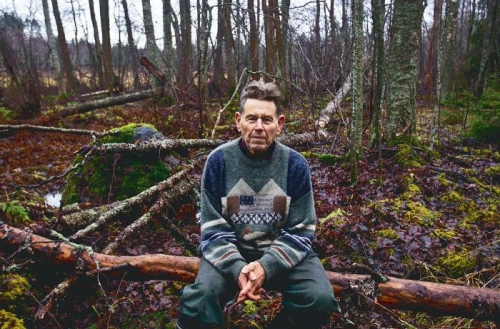
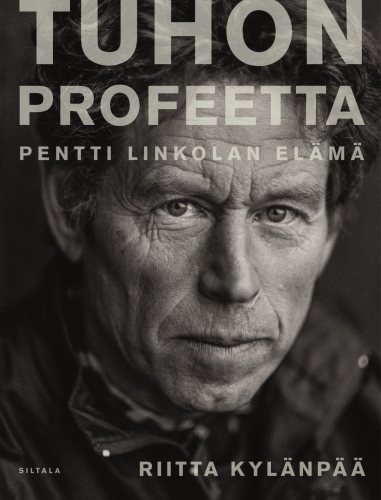
 Pentti Linkola réclame la désindustrialisation globale ainsi que la sortie du capitalisme et de la société de consommation. Il exige par ailleurs l’arrêt de toute immigration, l’euthanasie pour les déficients et la fin des aides financières à un Tiers Monde en croissance démographique exponentielle. Il récuse enfin cette idée folle et meurtrière qu’est l’égalité. « Comment peut-on penser si stupidement que la vie humaine a la même valeur et la même humanité, la même moralité, indépendamment du nombre ? Il me semble clair que chaque fois qu’un nouvel enfant naît, la valeur de chaque humain dans le monde diminue légèrement. Il me semble évident que la moralité de l’explosion de population est complètement différente de celle de l’époque où l’homme était une espèce clairsemée et noble à ses débuts. » Son point de vue se rapproche de la vision de Julius Evola, lui aussi fort critique envers la politique nataliste du Ventennio fasciste. Dans son dernier entretien du 4 février 2020 avec Erkki Kiviemi pour le site Kulttuuritoimitus, il estime que « le coronavirus peut ralentir légèrement la destruction de la terre, mais une fois vaincu, le même mode de vie continuera. Tant que le progrès économique et le développement sont des objectifs humains clés, sauver la planète est perdue ».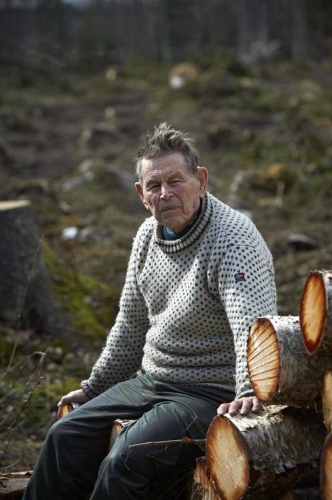



 Son nouvel ouvrage, Devant l’effondrement, ne peut que déplaire aux hiérarques d’Europe Écologie – Les Verts (EE-LV) et à leurs potentiels électeurs bo-bo prêt à tout pour sombrer une nouvelle fois dans l’hédonisme « éthique ». Avec cet « essai de collapsologie », Yves Cochet « avoue avoir rédigé cet ouvrage d’une main tremblante (p. 120) ». Son propos sciemment pessimiste contrarie les desseins merveilleux d’EE – LV au moment où leurs homologues autrichiens et bientôt allemands gouvernent et vont gouverner en partenariat avec les conservateurs chrétiens-démocrates. Il s’agace du réformisme radieux qui émane de son parti. « Collés à l’actualité, obsédés par la rivalité pour les places – comme dans les autres partis, en somme -, la quasi-totalité des animateurs Verts se bornent à décliner les clichés rassurants du développement durable, aujourd’hui renommé “ Green New Deal ” ou “ transition écologique ” (p. 221). »
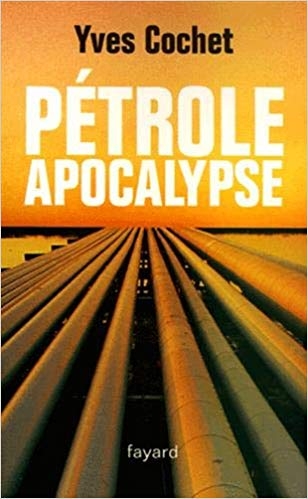 Si Yves Cochet oppose trois modèles : le productiviste, l’augustinien et le modèle discontinuiste qui « pourrait être compatible avec l’un et l’autre, puisqu’il se focalise surtout sur la forme de l’évolution du monde, et non sur sa substance (p. 55) », on remarque qu’il se réfère à un sermon de Saint-Augustin de décembre 410 qui aurait inspiré Oswald Spengler et le vitalisme civilisationnel… Suite aux travaux précurseurs de Nicholas Georgescu-Roegen et à la prise en compte de la non-linéarité des systèmes complexes, il distingue l’économie biophysique de l’économie écologique qui « tente d’évaluer le prix des services des écosystèmes en intégrant la finitude des ressources et la pollution dans le cadre de l’économie néo-classique (p. 73) ». À l’économie néo-classique, il propose l’« économie biophysique [qui] se concentre explicitement sur les relations de puissance, à la fois dans le sens physique d’énergie par unité de temps et dans le sens social de contrôle sur les autres (p. 71) ». À la jonction des sciences exactes et des sciences humaines, l’économie biophysique se base « sur les stocks et les flux de matière et d’énergie plutôt que sur les comportements individuels (les “ préférences des consommateurs ”). L’accent est mis sur la qualité de l’énergie, ainsi que sur la quantité d’énergie disponible (p. 71) ». Il parie que « l’économie biophysique, qui envisage un monde au climat déréglé et à l’énergie rare, est une meilleure base d’orientation pour la construction d’une société soutenable que les formes individualiste et croissanciste de la théorie économique néo-classique (p. 91) » parce que « plutôt que de prendre la rareté relative comme point de départ, [elle] se concentre sur le surplus économique et la pénurie absolue (p. 86) ».
 Yves Cochet évacue bien trop rapidement la violence humaine. La grève contre la réforme des retraites déclenchée le 5 décembre 2019 a déjà démontré la sauvagerie sous-jacente des Franciliens et des Parisiens qui essayaient de monter dans le seul train de banlieue ou dans l’unique rame de métro. Certains n’hésitèrent pas à se battre. Et ne parlons pas des rapports conflictuels en ville entre piétons, automobilistes, cyclistes, patineurs à roulettes et « trottinettistes ». Cette agressivité propre à la nature humaine, accentuée par la modernité tardive pourrait atteindre rapidement son paroxysme au moment de l’effondrement social. La vie en zone urbaine après la « Grande Déflagration » sera certainement plus difficile que dans la France périphérique déjà habituée aux privations. « Il faudra réapprendre à maîtriser une agro-écologie alimentaire, énergétique et productrice de fibres pour les vêtements, cordes et papiers, la production de matériaux de construction indigènes, voire la fabrication de quelques substances secondaires, mais utiles, telles que l’alcool, l’ammoniac, la soude, la chaux… Tous ces domaines étant équipés en outils low tech aptes à êtres fabriqués, entretenus et réparés par des ouvriers locaux (p. 118). » En pratique, on utilisera le bois de chauffage, le charbon de bois et les biogaz dont le méthane.

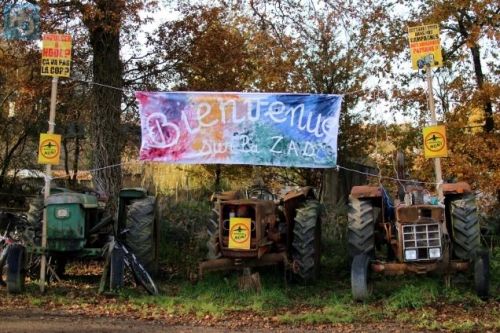









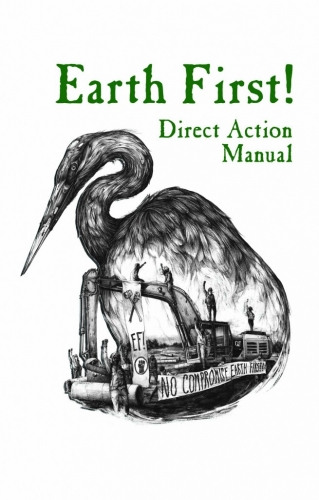 L’autre version est plus ouvertement radicale dans ses prescriptions politiques, et pourrait être comprise comme le bras écologique de la Nouvelle Gauche. Elle trouve son armée parmi les adhérents des mouvements post-1980 « Earth First ! » et des Fronts de Libération de la Terre ou des Animaux, ainsi que parmi les anarchistes verts, les anarcho-primitivistes et les éco-féministes ; ses tactiques sont les manifestations de masse, la désobéissance civile, et les actes mineurs de sabotage qui sont parfois qualifiés d’« éco-terrorisme ». Les activistes souscrivant à ces vues tendent à rejeter complètement la civilisation, et travaillent à combattre ses nombreux maux – hiérarchie, racisme, patriarcat, spécisme, homophobie, transphobie, les classes, l’étatisme, le fascisme, privilège blanc, capitalisme industriel, et ainsi de suite – pour mettre fin à l’exploitation et à l’oppression de toute vie sur Terre. « Libération totale » est leur cri de ralliement. Bien que s’inspirant du primitivisme romantique et du Transcendantalisme de la Nouvelle-Angleterre, les fondements philosophiques de l’écologie gauchiste peuvent être retrouvés plus directement dans la contre-culture des années 60, la critique de la théorie des races, le féminisme, et les mouvements pour la paix et les droits civiques.
 Finalement, pour s’opposer au développement du libéralisme des Lumières, du socialisme, du matérialisme scientifique et de l’industrialisme dans l’époque moderne, le romantisme et l’idéalisme allemand offrirent une nouvelle expression artistique et philosophique de l’ancienne vision-du-monde holistique, qui trouva plus tard son expression la plus radicale dans l’anti-anthropocentrisme de Nietzsche, Heidegger, and Robinson Jeffers.
 Bien sûr, étant donné notre nature défectueuse et déchue, la plupart des humains resteront attachés à leur volonté propre et à leurs intérêts matériels. Ainsi, alors que la religion de l’égalitarisme propose un anthropocentrisme fondamental par lequel tous les humains sont égaux simplement du fait qu’ils sont humains, dans la doctrine traditionnelle cela est nié par le fait de l’inégalité humaine. Comme l’a observé Savitri Devi, un beau lion a plus de valeur qu’un humain dégénéré, étant donné la plus grande conformité du lion vis-à-vis de l’ordre naturel et de l’Eidos divin. Pour cette raison, la métaphysique traditionnelle aussi bien qu’une écologie vue de droite requièrent le rejet de l’humanitarisme sentimental de la gauche moderne, d’après lequel chaque vie humaine (ou même chaque vie non-humaine, dans le cas des droits des animaux) a une valeur égale.
 Pour l’écologiste de droite, cependant, la fin de toutes les choses humaines n’est pas un argument pour ne pas vivre avec honneur et combattre sans passion contre les forces de désintégration et de chaos. L’Homme contre le Temps peut, sur le long terme, être voué à échouer dans ses entreprises terrestres, mais cela ne diminue pas sa résolution. C’est parce qu’il agit avec le sens du détachement noble – le karma yoga de la Bhagavad Gita, le wou-wei de Lao-Tseu, ou l’Abgeschiedenheit de Maître Eckhart – par lequel l’action découle de la pureté de son être et de son rôle dans le cosmos plutôt que d’un calcul utilitaire ou d’un effort volontaire. Soutenir l’ordre naturel demande de défendre ses expressions les plus pures : le saint, l’innocent et le noble parmi l’humanité, ainsi que les arbres et les loups et les rochers qui étaient là avant nous, qui respectent dans une harmonie inconsciente l’ordre cosmique auquel l’homme peut seulement aspirer.
 Acquis au racialisme scientifique, il popularisa le concept du Blut und Boden (Sang et Sol), espérant abolir une société industrielle fermée au monde des affaires afin de la remplacer par une société organique prenant sa base sur un système de nobilité agreste héréditaire.
 Most widely held works



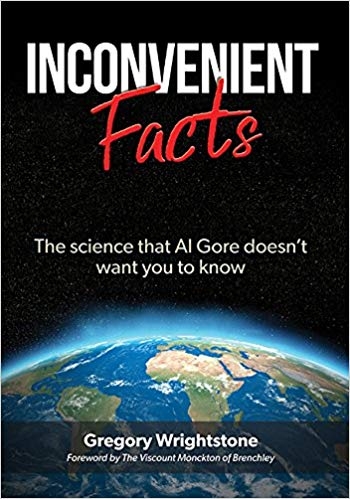 On nous rabâche que la hausse du taux de dioxyde de carbone dans l’atmosphère fait monter les températures mondiales. Mais les données satellites ne montrent rien de tel. En fait, les prévisions tirées des modèles informatiques pour 2019, dépassent de près d’un demi-degré Celsius les mesures satellites réelles. Pire encore, chaque fois qu’un scientifique relève des problèmes concernant la prétendue crise, il est traité de « négateur du changement climatique. »



 Les éditions Allia publient cette semaine un essai de Friedrich-Georg Jünger intitulé La perfection de la technique. Frère d'Ernst Jünger. Auteur de très nombreux ouvrages, Friedrich-Georg Jünger a suivi une trajectoire politique et intellectuelle parallèle à celle de son frère Ernst et a tout au long de sa vie noué un dialogue fécond avec ce dernier. Parmi ses oeuvres ont été traduits en France un texte écrit avec son frère, datant de sa période conservatrice révolutionnaire,



 Pour l’ethnologue Jean Servier, auteur de L’Homme et l’Invisible (Imago, 1980), « La science occidentale défend l’hominisation du singe, peut‐être parce qu’il est plus facile d’être un singe « parvenu » qu’un ange déchu […]. Selon toutes les traditions, l’homme a été d’abord esprit, participant de toute la sérénité du Monde Invisible. Un désir l’a poussé à rompre l’harmonie cosmique : il lui a fallu, en expiation, descendre dans la matière, dans l’univers des formes, dans l’animalité : revêtir des vêtements de peaux. »

 Ludwig Klages was a one-of-a-kind brilliant man who is firstly known for his graphology work. But it is his philosophical work especially which deserves our attention. In fact, Klages belongs to what used to be called Lebensphilopsohie, a term that applies to Nietzsche’s. One thing they share is this dionysiac view on life which is often called « biocentric » when applied to Klages’ philosophy. His anti-christianity is another common point with Friedrich Nietzsche, and the same goes for a genre of paganism, or pantheism, shared by both philosophers.