Ok

En poursuivant votre navigation sur ce site, vous acceptez l'utilisation de cookies. Ces derniers assurent le bon fonctionnement de nos services. En savoir plus.

lundi, 29 novembre 2010

Brève histoire de l'oligarchie en Russie

oligrusse.jpg

Brève histoire de l'oligarchie en Russie

Le mot oligarque symbolise à lui tout seul l'histoire de la Russie de ces vingt dernières années et nous le trouvons utilisé pour désigner tout et n'importe quoi. Ce terme qui, au milieu des années 90, était synonyme de puissance et était ouvertement revendiqué est aujourd'hui récusé par les grandes fortunes de Russie, tant il est lié aux pires heures de l'ère Eltsine.

L'oligarchie a fortement évolué tout au long de la période. Certains oligarques sont tombés dans l'oubli, d'autres ont fui ou sont en prison. Les plus pragmatiques se sont adaptés en renonçant à toute prétention politique, ce qui rend d'autant le terme inadéquat pour les désigner aujourd'hui. C'est Boris Berëzovski, l'éminence grise du Président Eltsine, qui popularise pour la première fois le terme en 1996, lors d'un entretien donné au "Financial Times". Il qualifie ainsi lui-même les sept banquiers qui ont réuni leurs moyens afin de permettre à Boris Eltsine d'être réélu Président. La misère et l'anarchie dans lesquelles était plongée la Russie, rendait un deuxième mandat peu probable pour ce piètre gestionnaire. Ces sept banquiers prétendaient contrôler plus de 50% de l'économie russe. On les surnomma "semibankirschina". Ce terme était l'adaptation contemporaine de celui de « Sémiboyarschina », les sept boyards qui trahirent le Tsar et livrèrent Moscou aux envahisseurs polonais en 1610. En 1996, il s'agit pour ces banquiers de sauver les actifs industriels, malhonnêtement privatisés pendant les premières années de l'ère Eltsine, d'un possible retour des communistes au pouvoir.

Après s'être enrichis en détournant les fonds publics, grâce à la complicité d'hommes politiques haut-placés, ces hommes d'affaires se sont ensuite emparés pour des sommes ridicules, de pans entiers du patrimoine industriel russe, notamment dans le secteur des ressources
naturelles. En ces temps troubles, pour assurer la sécurité physique du produit de leur prédation, ils s'associèrent avec les mafias qui avaient éclos un peu partout en Russie.

Ces mafias constituaient également des entités économiques disposant de liquidités considérable à un moment où celles-ci faisaient justement défaut, et où tout était à vendre. Le plus célèbre de ces mafieux fut Anatoli Bykov, qui prit part à la guerre de l'aluminium.

Boris Abramovitch Berëzovski, homme d'affaires russo-israélien, est le plus connu de ces oligarques. Sa fortune trouve son origine dans la vente frauduleuse des voitures produites par la société d'Etat AvtoVaz, plus connue en Europe sous le nom de LADA. Il parvient ensuite à se rapprocher de la "famille" Eltsine. Il s'empare alors d'actifs pétroliers et industriels, puis de la gestion de la compagnie Aéroflot, qu'il amène au bord de la faillite.

L'éditeur de la version russe du magazine "Forbes", le russo-américain Paul Klebnikov, lui consacre un ouvrage très critique, « le parrain du Kremlin ». Sa liberté de parole lui vaut d'être assassiné le 9 juillet 2004 à Moscou. Le soutien ouvert de Paul Klebnikov à la politique de restauration de l'Etat de Vladimir Poutine explique que son assassinat a eu très peu d'écho en France, contrairement à celui d'Anna Politovskaïa deux ans après.

Vladimir Alexandrovitch Goussinski, est également un homme d'affaires russo-israélien. Sa fortune provient de la banque qu'il fonde en 1989, et de son alliance avec le maire de Moscou, Youri Loujkov. Il fonde le premier groupe de médias privé et regroupe ses activités au sein de «Média Most». Il livre à Boris Berëzovski un combat à mort au début des années 90, puis se réconcilie avec lui en 1996, afin de soutenir la candidature d'Eltsine. Il est un membre éminent du congrès juif mondial, et fonde avec Mikhaïl Friedman, le congrès juif russe. La
crise de 1998 l'affaiblit durablement.

Vladimir Olegovitch Potanine, dont le poste au ministère du commerce extérieur, lui permet de s'enrichir considérablement et de créer son groupe financier, INTERROS, et sa banque, ONEXIM est un autre oligarque fameux. En 1995, il est le concepteur du système de prêts contre actions, qui permet aux banquiers d'acquérir à peu de frais des pans entiers de l'industrie russe. Pour quelques centaines de millions de dollars prêtés à l'Etat russe à la limite de la banqueroute, les oligarques s'emparent alors d'actifs qui en valent plusieurs milliards. Vladimir Potanine, grâce à ce système, s'empare de Norilsk Nickel.

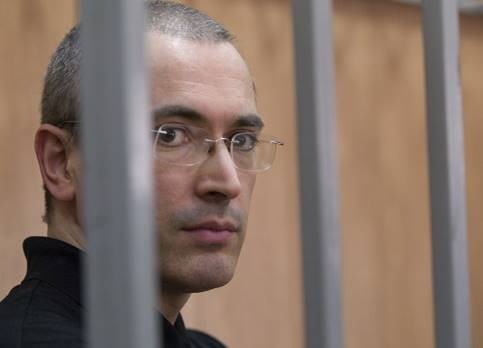
Mikhaïl Borisovitch Khodorkowski débute sa carrière comme membre influent du Komsomol de Moscou (organisation de jeunesse soviétique où étaient recrutées les futurs cadres du parti communiste). C'est grâce aux fonds de cette organisation et à ses liens avec le parti communiste, qu'il fonde sa banque, la MENATEP. Il s'empare ensuite des actifs de la compagnie Yukos grâce au système prêts contre actions.  La privatisation de Yukos est émaillée de nombreux assassinats et se fait au mépris le plus absolu du droit des actionnaires minoritaires, notamment étrangers. Le maire de Neftyougansk, où se trouve le plus gros actif de Yukos, et qui avait entrepris une grève de la faim pour obtenir le paiement des taxes dues à sa ville au bord de la ruine, est assassiné le 26 juin 1998, jour de l'anniversaire de Khodorkowski. Le chef de la sûreté de Yukos, Alexeï Pitchouguine, est toujours en prison pour ce crime. Ceux qui s'apitoient sur le sort de l'oligarque en pensant qu'il paie très cher des opérations financières feraient bien de s'informer sur les crimes de sang de l'ère Khodorkowski. Khodorkowski se lie avec les milieux d'affaires états-uniens et dépense sans compter auprès des agences de communication pour se construire une image positive, abusant les très complaisants médias occidentaux.

Mikhaïl Maratovitch Friedman reste encore aujourd'hui l'un des plus puissants hommes d'affaires russe. Avec son associé Piotr Aven, ministre du commerce extérieur au début des années 90, il fonde le groupe consortium "Alfa", dont les fleurons sont la banque "Alfa" et la compagnie pétrolière "TNK".

Vladimir Victorovitch Vinagradov privatise à son profit la banque d'état "Inkombank" en 1993. Il disparaît de la scène politico-économique après la banqueroute de sa banque, lors de la crise de 1998.

Alexander Pavlovitch Smolenski, condamné à l'époque soviétique pour divers trafics refait lui surface en créant la banque "Stolichny". La privatisation à son profit de la banque d'état AGROPROM, lui permet de fonder "SBS AGRO", première banque privée et deuxième banque de Russie. En 1998, la banque est emportée par la crise et ruine plusieurs millions de petits épargnants. Il perd alors toute influence politique, même s'il conserve sa fortune.


Ces sept banquiers ne sont pas les seuls hommes riches et influents de l'ère Eltsine, mais ce sont eux les "faiseurs de rois". Ils ont construit leur fortune sur le triptyque "Tchénovnik" (responsable politique), mafieux, homme d'affaires. On trouve également dans les provinces russes, des oligarques locaux très puissants, ayant construit leur pouvoir sur la même base.

La crise de 1998 entraîne la disparition de deux des sept banquiers, Vinogradov et Smolenski. Une nouvelle génération apparaît alors sur les ruines de la Russie d'après la crise. Ils ont fait leur fortune dans les années 90 et sont alors au sommet de leur puissance. Ils sont plus jeunes que la première génération, mais ils lui sont très liés.

Les plus célèbres sont Mikhaïl Prokhorov, partenaire de Vladimir Potanine au sein de Norilsk Nickel, Roman Abramovitch lié à Boris Berëzovski, et Oleg Déripaska, homme-lige des frères Mikhaïl et Lev Tchernoï au sein de Russki Alumini. C'est également à cette époque que les hommes d'affaires commencent à prendre leur distance avec les mafieux qui les ont protégés.

Au début des années 2000, les oligarques se trouvent, comme en 1996,face au risque de retour au pouvoir des communistes. Même avec un contrôle quasi complet de la presse russe, les oligarques ont besoin d'un candidat crédible pour défendre leurs intérêts. Ils jettent leur dévolu sur un homme, dont la loyauté pour le Président Eltsine, leur laisse supposer qu'ils le manipuleront aussi facilement que le Président sortant. Porté par sa victoire en Tchétchénie, Vladimir Poutine est ainsi élu Président le 26 mars 2000. Mais pour les oligarques, c'est le début de la fin.


Après l'élection de Vladimir Poutine à la présidence en mars 2000, la grande question qui anime la presse occidentale est de savoir si le nouveau Président sera une marionnette entre les mains des oligarques. Etonnamment, plus Vladimir Poutine fera rentrer les oligarques dans le rang, plus il se sera la cible des attaques de cette presse, qui quelques mois auparavant, dénonçait leur emprise sur la Russie.

Le premier à faire les frais du changement de pouvoir est Vladimir Goussinski, dont les médias avaient attaqué Vladimir Poutine durant les élections. Il s'enfuit en Espagne, puis en Israël en juillet 2000. Le holding « Média-Most », criblé de dettes est démantelé et finit entre les mains du monopole gazier public, Gazprom. Ce même mois de juillet 2000, le Président Poutine convoque les oligarques pour leur annoncer les nouvelles règles auxquelles ils doivent se soumettre, s'ils ne veulent pas avoir à rendre compte de leurs multiples prédations. Ces règles sont au nombre de quatre :

  • Payer les impôts.
  • Arrêter l'évasion fiscale.
  • Réinvestir les profits des sociétés en Russie.
  • Enfin et surtout, ne plus faire de politique.

La plupart des oligarques sentent le vent tourner et se soumettent aux nouvelles règles. Deux des sept banquiers tentent pourtant de s'opposer à la volonté du nouveau Président. Le premier est Boris Berëzovski, l'ancienne éminence grise d'Eltsine, qui n'admet pas son déclassement. Mais Vladimir Poutine dirige désormais la Russie d'une main de fer. Il purge rapidement l'administration présidentielle, et sait qu'il peut compter sur le soutien des structures de forces. En 2001 Berëzovski est contraint de fuir à Londres. Il complote depuis la capitale anglaise et devient un ennemi juré du Kremlin. Il finance toutes les formes d'opposition à Vladimir Poutine, en Russie comme à l'étranger. Il soutient la prise de pouvoir de Mikhaïl Saakhachvili en Géorgie en 2003, puis la révolution orange en Ukraine en 2004. Il soutient le terroriste tchétchène Akhmed Zakaïev, réfugié également à Londres. Il promet régulièrement de grandes révélations sur Vladimir Poutine, sans que rien de concluant ne soit jamais publié. Il bénéficie en outre de la protection des services secrets anglais.

Le deuxième oligarque à ne pas accepter la nouvelle donne est Mikhaïl Khodorkowski. Les médias occidentaux, alimentés par les agences de communication américaines ont, à tort, attribué l'arrestation de l'oligarque à de prétendues ambitions politiques, et ont tâché d'en faire un nouveau Soljenitsyne. Khodorkowski tombe pour des motifs moins glorieux. A partir de 2003, Il se met à financer toutes les oppositions possibles à la Douma, des communistes jusqu'aux libéraux. Il espère ainsi former un groupe parlementaire lequel lui permettrait de bloquer la réforme fiscale qu'a entreprise Vladimir Poutine. Entre 2003 et 2004, la taxation des bénéfices des compagnies pétrolières russes est effectivement passée de 5% à 30% en moyenne. L'oligarque a également l'intention de faire entrer massivement des compagnies américaines dans l'actionnariat de Youkos, que ce soit Chevron ou Exxon. Enfin, il veut s'affranchir du monopole du transport des hydrocarbures de « Transneft » et construire avec les Chinois, un pipeline qui relierait directement ses forages à la Chine. Il est peu vraisemblable que Khodorkowski ait eu une ambition politique personnelle, il était trop intelligent pour ne pas savoir qu'il représentait tout ce que le peuple russe haïssait. La condamnation de Khodorkowski et de ses associés, extrêmement populaire auprès des Russes, marque réellement la fin du système oligarchique en Russie. Il semble en outre que Vladimir Poutine considère personnellement, que Khodorkowski doive payer pour les crimes de sang trop nombreux qui ont entouré la privatisation de Youkos, notamment celle du maire de Youganskneft, le jour de l'anniversaire de l'oligarque. C'est dans ce sens que Vladimir Poutine a comparé dernièrement la situation de Khodorkowski à celle d'Al Capone, ce mafieux américain, condamné non pas pour ses crimes de sang, improuvables, mais pour fraude fiscale.

L'exemple de Khodorkowski porte ses fruits, les conglomérats de matières premières paient désormais leurs taxes. Le Kremlin en profite pour remettre la main sur plusieurs actifs industriels. Ceux de Youkos passent sous le contrôle de la compagnie publique Gazprom en 2004. En 2005, Sibneft, la compagnie de Berëzovski puis d'Abramovitch est également rachetée par Gazprom et devient Gazpromneft.

Des sept banquiers de 1996, il n'en reste que deux. L'un des deux, Vladimir Potanine, a annoncé en février 2010, qu'il léguera sa fortune de plus de $5 milliards, à des œuvres de bienfaisance. Le second est Mikhaïl Friedman, dont on annonce la chute depuis plusieurs années sans qu'elle se soit produite pour l'instant. La jeune génération des Déripaska, Abrahmovitch ou Prokhorov a abandonné la politique au profit des affaires, des stations de ski et des clubs de football. De plus, la crise de 2008 a affaibli durement Déripaska, qui ne doit la préservation de son empire qu'au prêt de $4,5  milliards que lui accorde le gouvernement russe au travers de la VnechEconomBank.

Comme un signe des temps, Dimitri Medvedev et Vladimir Poutine ont annoncé le lancement d'une vague de privatisations, mais cette fois, elles rapporteront plus de $40 milliards à l'état russe, et permettront à des sociétés étrangères d'entrer dans le capital et la gestion de ces sociétés. Le temps des oligarques est désormais révolu, aucun homme d'affaire russe, si riche soit-il, n'a plus les moyens de faire élire le Président de la Fédération de Russie. Contrairement aux affirmations romanesques de Pierre Avril dans le Figaro, ceux qu'il appelle les « nouveaux oligarques » sont en fait des hommes d'affaires, qui sont certes très proches du gouvernement et en ont profité pour accroître leur fortune, mais n'influent pas sur les décisions politiques. Ce défi que Vladimir Poutine a réussi à relever, vaincre les oligarchies dont certaines l'avaient mené au pouvoir, est exactement le même qui se pose aujourd'hui à Viktor Ianoukovitch en Ukraine et... à Barack Obama aux Etats-Unis.

Xavier Moreau

Suisse: succès du référendum pour l'expulsion des criminels

Suisse : succès du référendum pour l’expulsion des criminels étrangers

Ex: http://tpprovence.wordpress.com/

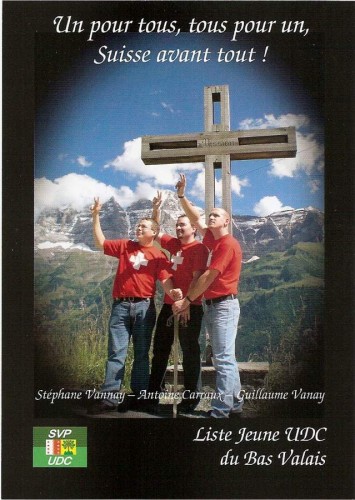
Flyer_JUDC_district_Monthey.jpgLe référendum d’initiative populaire «Pour le renvoi des criminels étrangers» a été approuvé aujourd’hui par 53 % des votants. Ce texte prévoit la suppression des méandres législatifs qui actuellement faisaient que très peu de criminels étrangers finissaient par être expulsables.

Pour torpiller ce projet de référendum, un contre-projet concocté par le gouvernement et une majorité du Parlement avait été lancé et était également soumis au vote aujourd’hui ; il prévoyait de durcir les lois actuelles mais en conservant les méandres législatifs qui empêchent l’expulsion de la plupart des criminels étrangers. Ce contre-projet a été repoussé par 54% des votants mais a certainement fait perdre des voix au projet initial.

L’Union Démocratique du Centre (UDC) qui était à l’initiative de ce référendum s’est retrouvée seule pour le soutenir, face au gouvernement, à tous les autres partis et à la quasi-totalité des médias. C’est une nouvelle victoire pour ce parti populiste qui avait déjà fait gagner l’année passée le référendum pour l’interdiction des minarets en Suisse.

Rappelons qu’en France une loi pour l’expulsion des criminels étrangers à été supprimée par Nicolas Sarkozy quand il était Ministre de l’Intérieur.

Warum kriminelle Migranten unsere Rettung sind

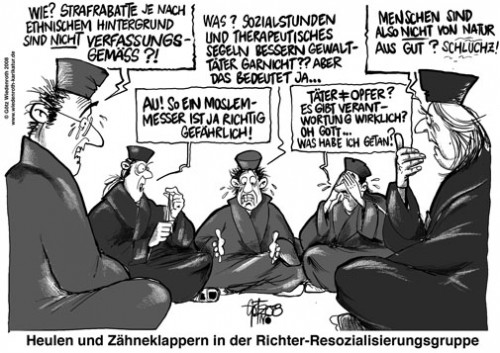
PK080418_JustizSkandalurteile.jpg

Warum kriminelle Migranten unsere Rettung sind
Ellen KOSITZA - Ex: http://www.sezession.de/

Sich über Namen, für die einer im Normalfall wenig kann, auszulassen, gilt als ähnlich unfein wie öffentliches Lästern über Äußerlichkeiten. Sei’s drum, ich gehe davon aus, daß Malte Lehming ein Problem mit seinem Namen hat. Psychologen wissen, daß Leute, die etwa „Klein“ und Maus“ heißen – zweifellos anständige Namen! –, im Schnitt stärker nach Rebellion streben und gewissermaßen aufsässiger auftreten als solche, die „Groß“ oder „Hund(t)“ heißen.

Mein Verdacht ist, daß sich jemand mit Namen Lehming eventuell sowohl von den bekannten Gerüchten, die mit Lemmingen verbunden werden, mit aller Kraft absetzen will als auch von Eigenschaften, die man mit „Lehm, lehmig“ assoziiert, einem trägen, amorphen, schwerfälligen Stoff.

Zu dieser These würde passen, daß Malte Lehming ausgerechnet als „Meinungschef“ beim Tagesspiegel reüssiert und in dieser Funktion hauptsächlich „klare Kante“ zeigen will, und zwar auf Teufel-komm-raus. Hauptsache, mal was „Widerborstiges“ sagen, Sinn, Zweck und Verstand spielen da selten eine Rolle. In seinem „Kontrapunkt“ vom 16.11. hat sich der Profilierungswütige einmal mehr selbst übertroffen.

Man lese:

In Berlin gibt es ausländische Jugendbanden. Das ist ein Problem. Noch größer wäre das Problem, wenn es sie nicht gäbe.

Sie sind jung, mutig, mobil, hungrig, risikobereit, initiativ. Solche Menschen braucht das Land. Natürlich ist es nicht schön, wenn Jugendliche – ob mit türkischem oder libanesischem Hintergrund – in den Straßen von Berlin Banden bilden, Reviere verteidigen und mit Messern hantieren. Aber hinter der Kritik an ihrem Verhalten verbirgt sich oft bloß der Neid derer, die Vitalität als Bedrohung empfinden, weil sich die eigene Mobilität auf den Wechsel vom Einfamilienreihenhaus in die Seniorenresidenz beschränkt. Lieber ein paar junge, ausländische Intensivtäter als ein Heer von alten, intensiv passiven Eingeborenen.

Nebenbei soll es solche „jungen, mutigen, initiativen…“  Jugendbanden ja auch außerhalb Berlins geben. Man hörte davon aus östlichen Bundesländern. Dürfte man wohl entsprechend umformulieren: „Natürlich ist es nicht schön, wenn Jugendliche – ob mit Glatzen und Springerstiefeln oder in unauffälligen Klamotten wie Kapuzenpullis und Palästinensertüchern – in den Dörfen und Kleinstädten Vorpommerns Banden bilden, mit Messern hantieren, Reviere verteidigen; aber: “?

Weiter Lehming, nun mit absurden Vorstellungen bürgerlicher Bildungswelten:

Jugendbanden? Igitt! So tönt es voll Abscheu und Empörung just aus jenen bürgerlichen Wohnzimmern, wo das Video des Musicals „West Side Story“ in keiner Sammlung fehlt und „Maria“, „Tonight“ und „America“ in Originalsprache auswendig mitgesungen werden können. In dem Tanzfilm befehden sich zwei Banden, die amerikanischen „Jets“ und die „Sharks“, die aus Puerto Rico zugewandert sind. (…) Gerade das Wilde und Gesetzlose der beiden Gangs, plus der sich auf die Ethnie gründende Zusammenhalt ihrer Mitglieder, machen den Charme des Stückes aus. (…) Demographisch, das weiß man, steht Deutschland vor dem Super-Gau.

Hier fügte ein Kommentator, an Lehming gerichtet, ein:

„Intellektuell auch.“

Lehming ist nun keineswegs ein linker Vogel, der nicht anders kann. Er ist nur immer sehr durcheinander. Zuletzt hatte er die USA um ihre attraktive, erfolgreiche, „vitale“ und „mobile“ Tea-party-Bewegung (die er eigentlich genauso gut als dicke, weiße „Altersheimer“ mit Verlustängsten bezeichnen hätte können) beneidet. Möglicherweise stellen die „mobilen, intiativen“ Türkenbanden für ihn einfach das gültige deutsche Pendant zur ähnlich (wenn auch anders) „initaitven“ Tea-Party- dar?

Jedenfalls, für Deutschland findet Lehming:

Eine solche Gesellschaft braucht vor allem junge, tatkräftige, durchsetzungsfähige, agile Menschen, um das psychologische Gesamtgefüge auszugleichen. Ein Volk, das schnurstracks in die Seniorenrepublik der Schneeköpfe tapst, schafft sich in der Tat selbst ab. Zu Recht beklagen wir die Kriminalität vieler ausländischer Jugendgangs. Aber das Maß an Phantasie, Mut und Vitalität, was deren Mitglieder oft aufbringen, zeigt auch: In diesen Menschen steckt, im Gegensatz zu den mentalen Altersheimern, noch ein Wille, ein Drang. Das sollten wir zu würdigen lernen – und uns fragen, wie wir die positiven Eigenschaften der Jugendlichen trennen können von den negativen Zielen, auf die sie sich richten. Wenn Deutschland nicht einmal mehr Jugendbanden hat, ist alles zu spät.

Wie es um das „psychologische Gesamtgefüge“ des Herrn Lehming bestellt ist, will ich gar nicht wissen. „Ein Wille, ein Drang“ scheinen irgendwie vorhanden zu sein, ein klitzekleiner Dachschaden möglicherweise auch. Da ich mich nun schon auf seinen Namen kapriziert habe  möchte ich (Kositza, slaw., heißt übrigens Ziege) dem doch auch noch ein Gesicht geben. Dieser Mann macht mir Angst.

Rede aan het graf van Louis Gueuning (06/11/2010)

Rede aan het graf van Louis Gueuning (06/11/2010)

Ex: http://www.kasper-gent.org/

Beste vrienden,

Vandaag zijn we hier in Henegouwen samen gekomen om Louis Gueuning te herdenken. Louis Gueuning, hij die de leer van het Verdinaso trouw bleef tot aan zijn dood. Hij die tijdens de Tweede Wereldoorlog trouw bleef aan zijn eigen volk. Hij die blijvend gestreden heeft voor een hereniging van alle Nederlanden.

Vandaag beste vrienden, herdenken wij Louis Gueuning. En misschien vind u het wel raar dat deze toespraak gehouden wordt namens KASPER, een recent gestichte studentenvereniging waarvan de leden zelfs nog niet geboren waren toen Louis Gueuning zijn ziel gescheiden werd van zijn lichaam.

Wel beste vrienden, dit is inderdaad niet de normale gang van zaken. Wij stellen vandaag vast dat twee tot drie generaties verloren zijn gegaan in een seculariserende, liberale, materialistische en democratische tijdsgeest. In de voorbije decennia hebben deze volksverscheurende krachten ons aloude Nederlandse volk door elkaar geschud, in de hoop een nieuwe orde te kunnen stichten waar alles beter zou worden. Helaas was dit een fabeltje. Mede onder druk van de Koude Oorlog werden de Nederlanden in een demo-liberale chaos gedrukt die vandaag de dag resulteert in complete wanorde.

Het is in deze wanorde dat de jeugd van vandaag haar tradities, haar volk, haar Nederlandse en Europese eigenheid terug tracht te vinden. Een nieuwe generatie, geboren na het einde van de Koude Oorlog en bijhorende demo-liberaals keurslijf, staat op. Wij stellen vast dat vele sociale proefprojecten uit de naoorlogse periode gefaald hebben. Democratisering van het onderwijs, multiculturaliteit, Vaticanum II, privatisering, globalisering, … en ga zo maar door. Ons volk gelooft niet meer en kent zijn geloof niet meer. Ons volk kreunt onder volksvreemde multiculturaliteit. Ons volk leest niet meer. Onze scholen leren niets meer. Onze Leiders zijn volksvreemd geworden. Onze Leiders leiden ons niet meer. Onze Koningshuizen zijn marionetten geworden van de partijpolitieke elite. Ons volk zingt niet meer. Ons volk is doofstom geworden voor hun eigen cultuur en tradities.

In deze toestand van wanorde stellen wij als jeugd vast dat onze generatie smacht naar een nieuwe tijd, een nieuwe orde. Onze jeugd denkt graag nostalgisch terug aan een tijd waar volk en orde nog samen gingen, een tijd die wij helaas nooit gekend hebben. Het is in deze geest dat de ideeën van grote personen zoals Louis Gueuning ons een frisse, en vaak zelfs actuele, invalshoek bieden. Een invalshoek die wij dienen te gebruiken om vertrekkende vanuit de bestaande wanorde een nieuwe orde op te bouwen, een nieuwe orde die de toekomst van ons Dietse volk kan verzekeren.

Zo stichtte Louis Gueuning het Albrecht- en Isabellecollege, een eliteschool waarvan hij directeur werd. Vandaag zien we eens te meer waarom elitescholen nodig zijn. Er zijn allesvernietigende krachten aan het werk, waarbij zogenaamde vaardigheden boven kennis worden geplaatst. Waarbij de jeugd zijn Cathechismus niet meer kent. Waarbij de jeugd zijn volkslied niet meer kent. Waarbij de jeugd de hiërarchische verhouding met zijn leerkracht niet langer aanvaard. Waarbij de jeugd zijn klassieke filosofie niet meer kent. Waarbij tucht, orde en discipline vervangen worden door anarchie en wanorde.
Het idee van een eliteschool vormt een noodzakelijke uitweg willen wij de toekomstige generaties een schoolse opvoeding geven die hen toestaat een groot en groots Nederlands volk te vormen.

Ook plaatste Louis Gueuning het begrip personalisme sterk naar voor. In deze visie zijn individu en gemeenschap niet tegengesteld aan elkaar, maar wederzijds versterkend. Ze werken samen ter verwezenlijking van hogere waarden, zoals waarheid, goedheid, schoonheid, het absolute. Waarden die de liberale maatschappij als ouderwets omschrijft, maar die meer dan noodzakelijk zijn om ons volk te verheffen.

Het personalisme vormt de gulden middenweg tussen individualisme en collectivisme, twee methodes die de laatste decennia veelvuldig beproefd zijn en die hun ondeugd langzamerhand bewezen hebben. Hier, in onze Nederlanden, groeit onze jeugd vandaag op in een alsmaar individualistischer wordende maatschappij. De personalistische ideeën van Louis Gueuning vormen een wondermooie uitweg uit deze crisis.

Ook het begrip roeping stond centraal in het denken van Louis Gueuning. Iedere mens heeft een unieke roeping in zijn leven en in de maatschappij, die hij zo goed mogelijk moet invullen. Op deze manier is de maatschappij voedingsbodem voor én resultante van zichzelf ontplooiende individuen. Een waarlijk vrij mens dient zich namelijk te ontdoen van alle individualisme en liberalisme, een waarlijk vrij mens stelt zijn eigen ontplooiing ten dienst van het volk. De wanorde van vandaag tracht de volkse ontplooiing te vernietigen en stelt op een individualistische wijze enkel de eigen ontplooiing voorop, vaak enkel en alleen ten dienst van materiële waarden. Ook hier moeten wij als jeugd tegen strijden. Ook hier biedt het denken van Louis Gueuning een zeer waardevol aanknopingspunt.

Verder is er ook nog de staatsvisie. Ons Dietse volk wordt verscheurd door broedertwist en schande, aangedreven door partijpolitieke idiotismen en foutieve volksbegrippen. Hiertegenover staat de Heel-Nederlandse gedachte, een gedachte die ook centraal stond in het denken van Louis Gueuning. Alle historische Nederlanden verenigen, een machtige en stromende gouden delta te midden van Europa vormen, ook dit is een uitdaging waar de generaties van morgen voor staan.


Onze generatie staat klaar om de erfenis van Louis Gueuning op te nemen. Onze jeugd dient op te staan en in staat te zijn om op de wanordelijke demo-liberale puinhoop van vandaag de nieuwe Nederlanden van morgen te stichten. Wij dienen niet te wanhopen beste vrienden, maar hoopvol naar de toekomst te kijken. Zo zien wij dat onze jeugd zijn traditionele Rooms-Katholieke geloof weer aan het terugvinden is. Zo zien wij dat onze jeugd weer grootse staatskundige gedachten durft te verkondigen. Zo zien wij dat onze jeugd het materialisme van zich tracht af te werpen. Wij zien dat onze jeugd terug durft op te komen voor het solidarisme en personalisme als alternatief voor het kapitalisme en het individualisme. Wij zien dat onze jeugd de destructieve partijpolitieke geest  van zich af wil werpen en waarlijk vrij wil worden. De weg is nog lang, maar moge de geest van Louis Gueuning leven, groeien en bloeien!

Geschreven en uitgesproken door Thomas B. , Vice-Praeses KASPER 2009-2011, aan het graf van Louis Gueuning te Mainvault (Aat), 6 november 2010.

00:16 Publié dans Belgicana | Lien permanent | Commentaires (0) | Tags : belgicana, belgique, flandre, wallonie, louis gueuning | |  del.icio.us | | Digg! Digg |  Facebook

Greek & Barbarian

Greek & Barbarian

F. Roger DEVLIN

Ex: http://www.counter-currents.com/

The Landmark Herodotus: The Histories
Edited by Robert B. Strassler
New York: Pantheon, 2007

Independent scholar Robert Strassler has produced far and away the best English edition aimed at the general reader of the work which remains the fountainhead of the Western historical tradition. Let us hope there is still a fit audience out there for it—men, that is, capable of learning what Herodotus has to teach. Generations of schoolboys at British public schools, German Gymnasia, and American rural academies once read his Histories to learn who they were—in other words, what it meant to be men of the West.

On a first approach, Herodotus’s great work appears a confusing welter of names, colorful stories, digressions, and miscellaneous ethnographic information. I have taught the work to undergraduates and remember students valiantly struggling to discuss “that one King of Wherever, who was fighting that tribe, whatever they were called . . .” In reality, the narrative is carefully—indeed intricately—structured, but in a manner that only becomes clear after repeated readings. What Strassler has done is provide a wealth of maps, indices, cross references, notes, illustrations, and appendices which reduce the preliminary mental effort required merely to grasp this overall structure. The reader can thus proceed more quickly to genuine historical understanding.

It is remarkable that no one in the small, overspecialized world of academic classical studies has ever bothered to attempt such a project. Strassler himself fetchingly admits: “I am not a scholar of ancient Greek and indeed can barely parse a simple sentence in that language” (xlvi). He commissioned a new translation for this edition by Andrea Purvis of Duke University. It is not “dazzling,” as the publisher’s blurb claims, but perhaps something better: unpretentiously accurate, and less mannered than its nearest competitor, David Grene’s 1987 version.

Herodotus grew up in Halicarnassus, an important trading center on the edge of the Greek world, where Greek and Barbarian came into frequent contact. He traveled widely, visiting Egypt as well as many Greek cities; he interviewed public figures and veterans of the events he recounts and gave public readings of his work, which he called the “Inquiries” (historiē in Greek). His great theme is the contrast between Greek and Barbarian, and more particularly the struggle of Greek freedom with Asiatic despotism. The narrative is designed from the beginning to culminate in a description of the successful Greek struggle to repel the Persian invasions of 490 and 480 BC.

Herodotus, like most ancient writers, was concerned with freedom primarily in a political sense. He says nothing about freedom of commerce or religion or conscience or of individual action. All of these may be fine things, but they are ideals which belong to a later age.

During the Cold War, many were inclined to cite the greater efficiency of the market economy as the fundamental distinguishing trait of the West, proudly pointing to our groaning supermarket shelves and favorably contrasting them with Soviet bread lines. Persons used to this way of viewing matters will be especially liable to a feeling of cognitive dissonance when reading Herodotus, who constantly stresses the wealth of oriental despotisms; whereas “in Hellas,” according to one Greek quoted in the Histories, “poverty is always and forever a native resident” (Book 7: chapter 102).

An especially famous and illustrative story, not less significant for being probably unhistorical, concerns Solon the Athenian lawgiver and Croesus of Lydia (immortalized in the expression “rich as Croesus”). After proudly displaying his wealth to his Athenian visitor, Croesus hopefully asks whether Solon in all his travels has “yet seen anyone who surpasses all others in happiness and prosperity?” Solon disappoints him by naming a number of Greeks who lived in relatively moderate circumstances. Croesus indignantly asks “are you disparaging my happiness as though it were nothing? Do you think me worth less than even a common man?” Solon explains that no judgment can be made while Croesus is still alive, for reversals of fortune are too common. (1:30-32) Croesus eventually attempts to conquer the Persians, but is defeated by them and deprived of his kingdom.

The Asiatics as portrayed by Herodotus might be described, for lack of a better word, as accumulators. This applies no less to political power than to wealth. “We have conquered and made slaves of the Sacae, Indians, Ethiopians, Assyrians, and many other great nations” says one Persian grandee matter of factly, “not because they had committed injustices against Persia, but only to increase our own power through them” (7:8). In other words, they are believers in what a contemporary neoconservative journalist might call “national greatness.” They build larger monuments than the Greeks and undertake vast projects such as diverting rivers. It never seems to occur to them that anything might become too big or too organized. When they attempt the conquest of Greece, Herodotus shows them becoming encumbered by their vast baggage trains, unable to moor their multitude of ships properly in tiny Greek coves—generally crushed beneath their own weight like a beached whale as much as they are defeated by the Hellenic armies.

A related Asiatic trait is a failure to acknowledge human limitations. When Xerxes’ invasion is delayed by stormy weather at the Hellespont, he orders the beachhead scourged and branded. His slaves are instructed to say: “Bitter water, your Master is imposing this penalty upon you for wronging him. King Xerxes will cross you whether you like it or not” (7:35). Similarly, there is no real place in the Asiatic’s thought for death, because it is the ultimate limitation on human planning and power. Xerxes weeps while reviewing his army as it occurs to him that all his men will be dead in a hundred years, but decides he must simply put the matter out of his mind.

The Solonian view of happiness as a life well lived from beginning to end, by contrast, begins with the fundamental fact of human finitude. It is this characteristically Greek view which Aristotle eventually formalized and extended in his discussion of happiness (eudaimonia) in the Nicomachian Ethics, and which has continued to influence the best minds of Christendom to this day. The modern “consumerist” mentality, by contrast, might be understood as a relapse into Asiatic barbarism.

The Persians make efforts to buy off Greek leaders. Herodotus describes the wealth of a Persian Satrap named Hydarnes, and then recounts his advice to some Spartan envoys passing through his province on the way to the Persian capitol:

“Lacedaemonians, why are you trying to avoid becoming the King’s friends? You can see that the King knows how to honor good men when you look at me and the state of my affairs. This could be the same for you if only you would surrender yourselves to the King, since he would surely think you to be good men and allow each of you Greek territory to rule over.” To this they replied, “Hydarnes, you offer us this advice only because you do not have a fair and proper perspective. For you counsel us based on your experience of only one way of life, but you have had no experience of the other: you know well how to be a slave but have not yet experienced freedom, nor have you felt whether it is sweet or not. But if you could try freedom, you would advise us to fight for it, and not only with spears, but with axes!” (7:135)

When the envoys arrive in Susa,

At first the King’s bodyguards ordered them and actually tried to force them to prostrate themselves before the King; but they refused to do so, saying that they would never do that, even if the bodyguards should try to push them down to the ground headfirst, since it was not their custom [nomos] to prostrate themselves before any human being. (7:136)

King Xerxes, by contrast, is a great believer in “leadership:” if he were alive today, one might picture him topping the bestseller lists with books on his “Seven Principles of Effective Leadership.” Before invading Greece, he asks:

How could 1,000 or even 10,000 or 50,000 men, all of them alike being free and lacking one man to rule over them, stand up to an army as great as mine? Now if they were under the rule of one man, as is our way, they would fear that man and be better able, in spite of their natural inclinations, to go out and confront larger forces, despite their being outnumbered, because they would then be compelled by the lash. But they would never dare to do such a thing if they were allowed their freedom! (7:103)

At the Battle of Salamis, he has a throne erected for himself on a prominent hill, convinced that his men will fight best knowing they are under his watchful eye.

Herodotus leaves us in no doubt where he stands on this issue; he relates in his own voice that

the Athenians increased in strength, which demonstrates that an equal voice in government has beneficial impact not merely in one way, but in every way: the Athenians, while ruled by tyrants, were no better in war than any of the peoples living around them, but once they were rid of tyrants, they became by far the best of all. Thus it is clear that they were deliberately slack while repressed, since they were working for a master, but that after they were freed, they became ardently devoted to working hard so as to win achievements for themselves as individuals. (5:78)

This comparative lack of emphasis on leadership does not mean the ancients were egalitarian levelers. All successful enterprises must be organized hierarchically, because this is what allows men to coordinate their efforts. The Greeks, in fact, made a proverb of a line from Homer’s Iliad: “Lordship for many is no good thing; let there be one ruler.” Moreover, they greatly honored men who performed leadership functions successfully.

Public offices were, however, always distinguished from the particular men holding them. They did not regard their magistrates as sacred, and none ever claimed to be descended from Zeus. Aristotle defined political freedom as “ruling and being ruled in turn.” In battle, Greek captains fought in a corner of the phalanx beside their men; they could be difficult for an enemy to distinguish.

What allowed Greeks to combine effective organization with political freedom? Herodotus suggests it was a kind of “rule of law.” As a Greek advisor explains to Xerxes:

Though they are free, they are not free in all respects, for they are actually ruled by a lord and master: law [nomos] is their master, and it is the law that they inwardly fear—much more so than your men fear you. They do whatever it commands, which is always the same: it forbids them to flee from battle, and no matter how many men they are fighting, it orders them to remain in their rank and either prevail or perish. (7:104)

In order to appreciate what is being said here, it is important to understand what is meant by law, or nomos. If it were possible to make intelligible to Herodotus such modern legal phenomena as executive orders, Supreme Court decrees, or annually updated administrative regulations, it is more than doubtful whether he would have considered them examples of nomos. These are simply instruments of power, not much different from what existed in the Persian Empire or any despotism. A “rule of law” in this sense makes no particular contribution to freedom. In fact, much of the West’s current predicament results from our traditional respect for law being converted into a weapon against us, rendering us subject to a regime of arbitrary commands disguised as “law” and concocted by an irresponsible power elite hostile to our interests.

It is essential to nomos that it be superpersonal. Often the word can be translated “custom,” which helps one understand that it cannot be decreed by any man, whether King or Hellenic magistrate. Freedom under nomos is not lack of a master, as Herodotus makes clear, but the capacity for self-mastery. In battle, it extends even to the point of demanding total self-sacrifice.

This helps to explain why wealth is dangerous to freedom; the man who becomes used to gratifying his desires comes to be ruled by desire and loses his capacity for self-mastery and sacrifice. When an earlier King of Persia is threatened by rebellion, Herodotus shows him being advised as follows:

Prohibit them from possessing weapons of war, order them to wear tunics under their cloaks and soft boots, instruct them to play the lyre and the harp, and tell them to educate their sons to be shopkeepers. If you do this, sire, you will soon see that they will become women instead of men and thus will pose no danger or threat to you of any future rebellion. (1:155)

The limitations of the Asiatic leadership principle become evident when an Asiatic army loses its leader. It is liable to cease being an army—to become a rabble, a mob of individuals incapable of organization or initiative. A famous episode from later Greek history makes clear how the Greek way was different: In 401 BC, about a generation after Herodotus’ death, an army of ten thousand Greek mercenaries marched into the heart of the Persian Empire in support of a rival candidate for the Imperial title. Their leader was killed in battle and they were stranded hundreds of miles deep in hostile territory. A Persian representative came to accept their surrender and collect their weapons, and was flummoxed to learn the Greeks had no intention of handing any weapons over. Instead, they simply met in assembly and elected a new leader for themselves—exactly as they were accustomed to do in the political assembles of their home cities. They proceeded to fight their way back to Greece with most of them surviving, and the entire might of the Persian Empire was insufficient to stop them. It is safe to say that no Persian army could have equaled the feat.

This spirit of independence and self-reliance did not last forever. The Greek cities wore out their strength through decades of fighting with one another. In 338, they finally fell to Philip, King of Macedon. By 291, Athenians were celebrating the triumphal return of a Macedonian general to their city in hymns describing him as a “living god.” He used the Parthenon to house his harem. Economic historians tell us that the overall Greek standard of living was higher in this later age, however.

Today we see a traitorous leadership consciously abandons our heritage of freedom to a barbarism worse than Persian, buying us off with the bread and circuses of television, shopping malls, and tax subsidies for collaborators, punishing the few who offer even verbal resistance. The reader who still has a mind to do something about this situation might find some lessons in the pages of Herodotus. He would be well advised to take a little time from our current plight to reacquaint himself with what Western man has been.

TOQ Online, April 19, 2009

The Doctrine of Higher Forms

The Doctrine of Higher Forms

Sir Oswald MOSLEY

Ex: http://www.counter-currents.com/

1311427.jpgSince the war I have stressed altogether five main objectives. The true union of Europe; the union of government with science; the power of government to act rapidly and decisively, subject to parliamentary control; the effective leadership of government to solve the economic problem by use of the wage-price mechanism at the two key-points of the modern industrial world; and a clearly defined purpose for a movement of humanity to ever higher forms.

It is strange that in this last sphere of almost abstract thought my ideas have more attracted some of the young minds I value than my practical proposals in economics and politics. The reason is perhaps that people seek the ideal rather than the practical during a period in which such action is not felt to be necessary. This is encouraging for an ultimate future, in which through science the world can become free from the gnawing anxiety of material things and can turn to thinking which elevates and to beauty which inspires, but the hard fact is that many practical problems and menacing dangers must first be faced and overcome.

The thesis of higher forms was preceded by a fundamental challenge to the widely accepted claim of the communists that history is on their side. On the contrary, they are permanent prisoners of a transient phase in the human advance which modern science has rendered entirely obsolete. Not only is the primitive brutality of their method only possible in a backward country, but their whole thinking is only applicable to a primitive community. Both their economic thinking and their materialist conception of history belong exclusively to the nineteenth century. This thinking, still imprisoned in a temporary limitation, we challenge with thinking derived from the whole of European history and from the yet longer trend revealed by modern science. We challenge the idea of the nineteenth century with the idea of the twentieth century.

Communism is still held fast by the long obsolete doctrine of its origin, precisely because it is a material creed which recognizes nothing beyond such motives and the urge to satisfy such needs. Yet modern man has surpassed that condition as surely as the jet aircraft in action has overcome the natural law of gravity which Newton discovered. The same urge of man’s spiritual nature served by his continually developing science can inspire him to ever greater achievement and raise him to ever further heights.

The challenge to communist materialism was stated as follows in Europe: Faith and Plan:

What then, is the purpose of it all? Is it just material achievement? Will the whole urge be satisfied when everyone has plenty to eat and drink, every possible assurance against sickness and old age, a house, a television set, and a long seaside holiday each year? What other end can a communist civilization hold in prospect except this, which modern science can so easily satisfy within the next few years?

If you begin with the belief that all history can be interpreted only in material terms, and that any spiritual purpose is a trick and a delusion, which has the simple object of distracting the workers from their material aim of improving their conditions—the only reality—what end can there be even after every conceivable success, except the satisfaction of further material desires? When all the basic needs and wants are sated by the output of the new science, what further aim can there be but the devising of ever more fantastic amusements to titillate material appetites? If Soviet civilization achieves its furthest ambitions, is the end to be sputnik races round the stars to relieve the tedium of being a communist?

Communism is a limited creed, and its limitations are inevitable. If the original impulse is envy, malice, and hatred against someone who has something you have not got, you are inevitably limited by the whole impulse to which you owe the origin of your faith and movement. That initial emotion may be well founded, may be based on justice, on indignation against the vile treatment of the workers in the early days of the industrial revolution. But if you hold that creed, you carry within yourself your own prison walls, because any escape from that origin seems to lead towards the hated shape of the man who once had something you had not got; anything above or beyond yourself is bad. In reality, he may be far from being a higher form; he may be a most decadent product of an easy living which he was incapable of using even for self-development, an ignoble example of missed opportunity. But if the first impulse be envy and hatred of him, you are inhibited from any movement beyond yourself for fear of becoming like him, the man who had something which you had not got.

Thus your ideal becomes not something beyond yourself, still less beyond anything which now exists, but rather, the petrified, fossilized shape of that section of the community which was most oppressed, suffering, and limited by every material circumstance in the middle of the nineteenth century. The real urge is then to drag everything down toward the lowest level of life, rather than the attempt to raise everything towards the highest level of life which has yet been attained, and finally to move beyond even that. In all things this system of values seeks what is low instead of what is high.

So communism has no longer any deep appeal to the sane, sensible mass of the European workers who, in entire contradiction of Marxian belief in their increasing “immiseration,” have moved by the effort of their own trade unions and by political action to at least a partial participation in the plenty which the new science is beginning to bring, and towards a way of living and an outlook in which they do not recognize themselves at all as the miserable and oppressed figures of communism’s original workers.

The ideal is no longer the martyred form of the oppressed, but the beginning of a higher form. Men are beginning not to look down, but to look up. And it is precisely at this point that a new way of political thinking can give definite shape to what many are beginning to feel is a new forward urge of humanity. It becomes an impulse of nature itself directly man is free from the stifling oppression of dire, primitive need.

The ideal of creating a higher form on earth can now rise before men with the power of a spiritual purpose, which is not simply a philosophic abstraction but a concrete expression of a deep human desire. All men want their children to live better than they have lived, just as they have tried by their own exertions to lift themselves beyond the level of their fathers whose affection and sacrifice often gave them the chance to do it. This is a right and natural urge in mankind, and, when fully understood, becomes a spiritual purpose.

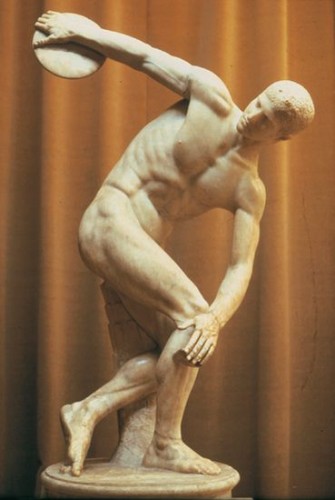
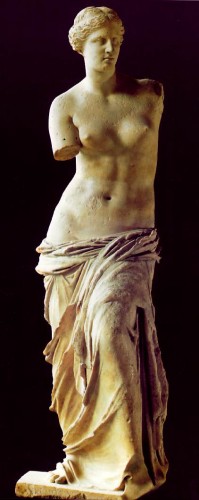
venus_milo_ac-grenoble.jpgThis purpose I described as the doctrine of higher forms. The idea of a continual movement of humanity from the amoeba to modern man and on to ever higher forms has interested me since my prison days, when I first became acutely aware of the relationship between modern science and Greek philosophy. Perhaps it is the very simplicity of the thesis which gives it strength; mankind moving from the primitive beginning which modern science reveals to the present stage of evolution and continuing in this long ascent to heights beyond our present vision, if the urge of nature and the purpose of life are to be fulfilled. While simple to the point of the obvious, in detailed analysis it is the exact opposite of prevailing values. Most great impulses of life are in essence simple, however complex their origin. An idea may be derived from three thousand years of European thought and action, and yet be stated in a way that all men can understand.

My thinking on this subject was finally reduced to the extreme of simplicity in the conclusion of Europe, Faith and Plan:

To believe that the purpose of life is a movement from lower to higher forms is to record an observable fact. If we reject that fact, we reject every finding of modern science, as well as the evidence of our own eyes. . . . It is necessary to believe that this is the purpose of life, because we can observe that this is the way the world works, whether we believe in divine purpose or not. And once we believe this is the way the world works, and deduce from the long record that it is the only way it can work, this becomes a purpose because it is the only means by which the world is likely to work in future. If the purpose fails, the world fails.

The purpose so far has achieved the most incredible results—incredible to anyone who had been told in advance what was going to happen—by working from the most primitive life forms to the relative heights of present human development. Purpose becomes, therefore, quite clearly in the light of modern knowledge a movement from lower to higher forms. And if purpose in this way has moved so far and achieved so much, it is only reasonable to assume that it will so continue if it continues at all; if the world lasts. Therefore, if we desire to sustain human existence, if we believe in mankind’s origin which science now makes clear, and in his destiny which a continuance of the same progress makes possible, we must desire to aid rather than to impede the discernible purpose. That means we should serve the purpose which moves from lower to higher forms; this becomes our creed of life. Our life is dedicated to the purpose.

In practical terms this surely indicates that we should not tell men to be content with themselves as they are, but should urge them to strive to become something beyond themselves. . . . To assure men that we have no need to surpass ourselves, and thereby to imply that men are perfect, is surely the extreme of arrogant presumption. It is also a most dangerous folly, because it is rapidly becoming clear that if mankind’s moral nature and spiritual stature cannot increase more commensurately with his material achievements, we risk the death of the world. . . .

We must learn to live, as well as to do. We must restore harmony with life, and recognize the purpose in life. Man has released the forces of nature just as he has become separated from nature; this is a mortal danger, and is reflected in the neurosis of the age. We cannot stay just where we are; it is an uneasy, perilous and impossible situation. Man must either reach beyond his present self, or fail; and if he fails this time, the failure is final. That is the basic difference between this age and all previous periods. It was never before possible for this failure of men to bring the world to an end.

It is not only a reasonable aim to strive for a higher form among men; it is a creed with the strength of a religious conviction. It is not only a plain necessity of the new age of science which the genius of man’s mind has brought; it is in accordance with the long process of nature within which we may read the purpose of the world. And it is no small and selfish aim, for we work not only for ourselves but for a time to come. The long striving of our lives can not only save our present civilization, but can also enable others more fully to realize and to enjoy the great beauty of this world, not only in peace and happiness, but in an ever unfolding wisdom and rising consciousness of the mission of man.

The doctrine of higher forms may have appealed to some in a generation acutely aware of the divorce between religion and science because it was an attempted synthesis of these two impulses of the human movement. I went so far as to say that higher forms could have the force of a science and a religion, in the secular sense, since it derived both from the evolutionary process first recognized in the last century, and from the philosophy, perhaps the mysticism, well described as the ‘eternal becoming’, which Hellenism first gave to Europe as an original and continuing movement still represented in the thinking, architecture and music of the main European tradition.

To simplify and synthesize are the chief gifts which clear thought can bring, and never have they been so deeply needed as in this age. A healing synthesis is required, a union of Hellenism’s calm but radiant embrace of the beauty and wonder of life with the Gothic impulse of new discoveries urging man to reach beyond his presently precarious balance until sanity itself is threatened. The genius of Hellas can still give back to Europe the life equilibrium, the firm foundation from which science can grasp the stars. He who can combine within himself this sanity and this dynamism becomes thereby a higher form, and beyond him can be an ascent revealing always a further wisdom and beauty. It is a personal ideal for which all can try to live, a purpose in life.

We can thus resume the journey to further summits of the human spirit with measure and moderation won from the struggle and tribulation of these years. We may even in this time of folly and sequent adversity gain the balance of maturity which alone can make us worthy of the treasures, capable of using the miraculous endowment, and also of averting the tempestuous dangers, of modern science. We may at last acquire the adult mind, without which the world cannot survive, and learn to use with wisdom and decision the wonders of this age.

I hope that this record of my own small part in these great affairs and still greater possibilities has at least shown that I have ‘the repugnance to mean and cruel dealings’ which the wise old man ascribed to me so long ago, and yet have attempted by some union of mind and will to combine thought and deed; that I have stood with consistency for the construction of a worthy dwelling for humanity, and at all cost against the rage and folly of insensate and purposeless destruction; that I have followed the truth as I saw it, wherever that service led me, and have ventured to look and strive through the dark to a future that can make all worth while.

Source: http://www.oswaldmosley.com/higher-forms.htm