



mercredi, 05 mars 2014
Italian Futurism
00:05 Publié dans art, Evénement | Lien permanent | Commentaires (0) | Tags : italie, événement, futurisme, art, avant-gardes |  |
|  del.icio.us |
  |
|  Digg |
  Facebook
mercredi, 22 janvier 2014
Italian Futurism 1909-1944
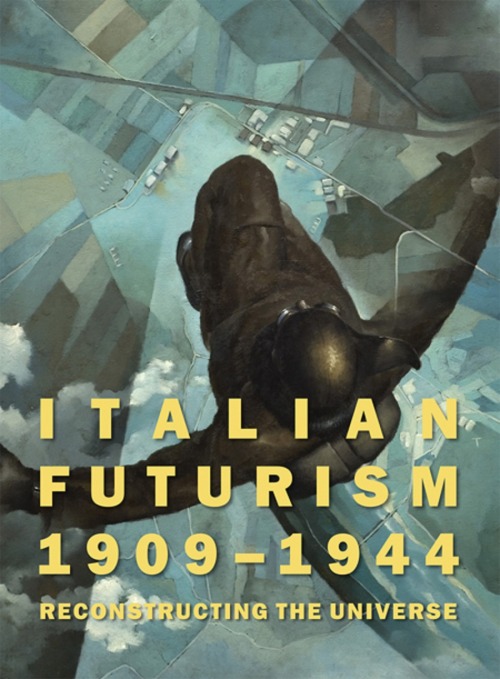
Edited and with introduction by Vivien Greene. Text by Walter Adamson, Silvia Barisione, Gabriella Belli, Fabio Benzi, Günter Berghaus, Emily Braun, Marta Braun, Esther da Costa Meyer, Enrico Crispolti, Massimo Duranti, Flavio Fergonzi, Matteo Fochessati, Daniela Fonti, Simonetta Fraquelli, Emilio Gentile, Romy Golan, Vivien Greene, Marina Isgro, Giovanni Lista, Adrian Lyttelton, Lisa Panzera, Maria Antonella Pelizzari, Christine Poggi, Lucia Re, Michelangelo Sabatino, Claudia Salaris, Jeffrey T. Schnapp, Susan Thompson, Patrizia Veroli.
Published to accompany the exhibition Italian Futurism, 1909–1944: Reconstructing the Universe opening at the Solomon R. Guggenheim Museum in 2014, this catalogue considerably advances the scholarship and understanding of an influential yet little-known twentieth- century artistic movement. As part of the first comprehensive overview of Italian Futurism to be presented in the United States, this publication examines the historical sweep of Futurism from its inception with F.T. Marinetti’s manifesto in 1909 through the movement’s demise at the end of World War II. Presenting over 300 works created between 1909 and 1944, by artists, writers, designers and composers such as Giacomo Balla, Umberto Boccioni, Anton Giulio Bragaglia, Fortunato Depero, Gerardo Dottori, Marinetti, Ivo Pannaggi, Rosa Rosà, Luigi Russolo, Tato and many others, this publication encompasses not only painting and sculpture, but also architecture, design, ceramics, fashion, film, photography, advertising, free-form poetry, publications, music, theater and performance. A wealth of scholarly essays discuss Italian Futurism’s diverse themes and incarnations.
00:05 Publié dans art, Livre, Livre | Lien permanent | Commentaires (0) | Tags : art, italie, futurisme, avant-gardes | | del.icio.us | | Digg | Facebook
vendredi, 06 septembre 2013
Esprits insoumis

"Il faut être indulgent à ceux qui, au lieu de profiter paisiblement des grandes routes toutes tracées et foulées par les générations précédentes et par les aînés, s’en écartent pour chercher une autre voie. Ils ont au moins de l’audace et du courage, vertus essentielles aux conquérants, si modestes soient-ils. Ils ne sont pas tous des triomphateurs mais il ne faut pas sourire devant le sentier, si petit soit-il, que quelques-uns parmi eux frayent dans n’importe quel domaine, parce qu’il y aura toujours des esprits insoumis qui préféreront aux belles routes battues les sentiers pittoresques et incertains, et aussi parce que des sentiers tracés peuvent devenir, grâce à ceux qui suivront et qu’ils auront tentés, de larges avenues."
Valentine de Saint-Point
Ex: http://zentropaville.tumblr.com
00:05 Publié dans Littérature | Lien permanent | Commentaires (0) | Tags : valentine de saint-point, féminisme, futurisme, lettresz, lettres françaises, littérature, littérature française | | del.icio.us | | Digg | Facebook
mardi, 18 juin 2013
La spiritualità di Marinetti
La spiritualità di Marinetti: fra anticlericalismo, spiritismo e cristianesimo
È noto come il Programma sansepolcrista del 1919 fosse fortemente anticlericale e presentasse addirittura un piano di “svaticanizzazione” dell’Italia mediante il sequestro di beni e l’abolizione dei privilegi ecclesiastici. All’adunata di piazza San Sepolcro del 23 marzo 1919 a Milano partecipa anche Filippo Tommaso Marinetti in qualità di leader del Partito Politico Futurista.
L’anticlericalismo di Marinetti ben si sposa con quello del movimento fascista, anzi è ancor più radicale di quest’ultimo, come si evince dal manifesto “Contro il Papato e la mentalità cattolica, serbatoi di ogni passatismo”, sempre del 1919, in cui il poeta propone di: «Sostituire all’attuale anticlericalismo retorico e quietista un anticlericalismo d’azione, violento e reciso, per sgomberare l’Italia e Roma dal suo medioevo teocratico che potrà scegliere una terra adatta ove morire lentamente».
 Tali dichiarazioni non fanno altro che confermare quanto già espresso da Marinetti ne L’aeroplano del Papa, pubblicato nel 1912, in cui il padre del Futurismo predicava la necessità di «svaticanare l’Italia» e – in tempi non sospetti – di muovere guerra alla bigotta Austria.
Ma il violento anticlericalismo marinettiano è ben visibile in nuce già nel celebre Manifesto futurista del 1909, così pregno di quel dinamismo anarchico ed antitradizionale che sarà la cifra essenziale del movimento futurista, dal quale prenderà il via una nuova e rivoluzionaria stagione culturale, e che rappresentò, ça va sans dire, l’antecedente storico non solo di tutta l’arte a venire, ma anche di un nuovo modo di intendere la vita veloce e disinvolto.
Coevo al Manifesto del Futurismo è il “Manifesto politico per le elezioni del 1909” in cui Marinetti faceva professione di nazionalismo, anti-pacifismo, anti-socialismo ed anti-clericalismo. Dello stesso anno è anche l’incendiario romanzo Mafarka, il futurista, che gli valse un processo per oltraggio al pudore. Pervaso da suggestioni nietzscheane ed anti-romantiche, il romanzo culmina con la generazione da parte del protagonista di un essere dalle fattezze di uccello meccanico, stante a simboleggiare la volontà di potenza ed il genio creativo dell’artista, temi cari al filosofo della “morte di Dio”.
 A proposito delle concezioni antimetafisiche di Marinetti, Julius Evola – che di metafisica, invece, campava – ricorderà nella sua autobiografia di quando il poeta, dopo aver letto un suo scritto, gli disse chiaro e tondo che le proprie idee erano lontane dalle sue più di quelle di un esquimese. Ma si sa, quando non si crede più nella trascendenza, si finisce spesso col credere a tutto: così fu anche per Marinetti, che come molti altri positivisti della sua epoca – pensiamo a Cesare Lombroso, e alla sua passione per i tavolini traballanti – prese a frequentare medium e spiritisti, stringendo amicizia, tra l’altro, con la sensitiva e poetessa triestina Nella Doria Cambon, confidente, per altro, anche di Svevo e di D’Annunzio.
Ma il vitalismo di cui è pervasa l’intera opera marinettiana non è esente da influenze misticheggianti: quella di Marinetti è però una “mistica della materia”, infatti, il movimento, l’azione, il dinamismo, per Marinetti, non sono che espressioni di quell’energia bergsonianamente intesa come frutto di uno slancio vitale che spinge la materia ad evolversi. Egli stesso affermava che ogni sera era solito inginocchiarsi e pregare di fronte alla lampadina del proprio comodino, perché in essa circolava la “divina velocità”.
 Con l’avanzar degli anni, nondimeno, farà ritorno alla fede cattolica. Negli anni ’30 promuove addirittura il movimento dell’“arte sacra futurista”, sostenendo che: «Solo gli artisti futuristi, che da vent’anni impongono nell’arte l’arduo problema della simultaneità, possono esprimere simultaneamente i dogmi simultanei del culto cattolico, come la Santa Trinità, l’Immacolata Concezione e il Calvario di Dio».
I suoi ultimi scritti, del 1944, sono “L’aeropoema di Gesù”, dove canta con enfasi palinodica «l’illusione di essere di metallo, mentre si è solo povera carne piangente», ed il “Quarto d’ora di poesia per la X Mas” – scritto poche ore prima di morire – in cui pare destreggiarsi tra il ritrovato amore per Dio e la passione per l’azione che l’accompagnò per tutta la vita: «Non vi grido arrivederci in Paradiso – dirà ai combattenti della X – ché lassù vi toccherebbe ubbidire all’infinito amore purissimo di Dio mentre voi ora smaniate dal desiderio di comandare un esercito di ragionamenti dunque autocarri avanti».
Giovanni Balducci
00:05 Publié dans art | Lien permanent | Commentaires (0) | Tags : art, avant-gardes, marinetti, futurisme, italie | | del.icio.us | | Digg | Facebook
dimanche, 27 mars 2011
Futurist Manifesto of Lust
Futurist Manifesto of Lust
Valentine de Saint-Point
http://www.unknown.nu/futurism/lust.html
A reply to those dishonest journalists who twist phrases to make the Idea seem ridiculous;
to those women who only think what I have dared to say;
to those for whom Lust is still nothing but a sin;
to all those who in Lust can only see Vice, just as in Pride they see only vanity.
to those women who only think what I have dared to say;
to those for whom Lust is still nothing but a sin;
to all those who in Lust can only see Vice, just as in Pride they see only vanity.
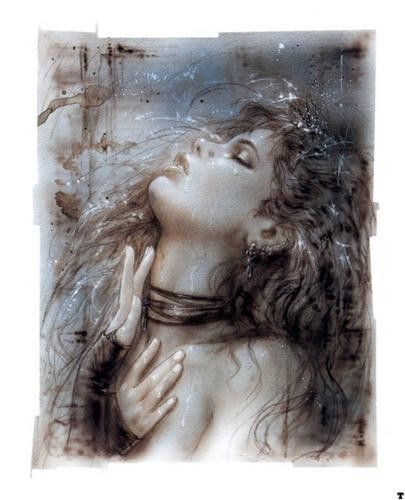 Lust, when viewed without moral preconceptions and as an essential part of life’s dynamism, is a force.
Lust is not, any more than pride, a mortal sin for the race that is strong. Lust, like pride, is a virtue that urges one on, a powerful source of energy.
Lust is the expression of a being projected beyond itself. It is the painful joy of wounded flesh, the joyous pain of a flowering. And whatever secrets unite these beings, it is a union of flesh. It is the sensory and sensual synthesis that leads to the greatest liberation of spirit. It is the communion of a particle of humanity with all the sensuality of the earth.
Lust is the quest of the flesh for the unknown, just as Celebration is the spirit’s quest for the unknown. Lust is the act of creating, it is Creation.
Flesh creates in the way that the spirit creates. In the eyes of the Universe their creation is equal. One is not superior to the other and creation of the spirit depends on that of the flesh.
We possess body and spirit. To curb one and develop the other shows weakness and is wrong. A strong man must realize his full carnal and spiritual potentiality. The satisfaction of their lust is the conquerors’ due. After a battle in which men have died, it is normal for the victors, proven in war, to turn to rape in the conquered land, so that life may be re-created.
When they have fought their battles, soldiers seek sensual pleasures, in which their constantly battling energies can be unwound and renewed. The modern hero, the hero in any field, experiences the same desire and the same pleasure. The artist, that great universal medium, has the same need. And the exaltation of the initiates of those religions still sufficiently new to contain a tempting element of the unknown, is no more than sensuality diverted spiritually towards a sacred female image.
Art and war are the great manifestations of sensuality; lust is their flower. A people exclusively spiritual or a people exclusively carnal would be condemned to the same decadence—sterility.
Lust excites energy and releases strength. Pitilessly it drove primitive man to victory, for the pride of bearing back a woman the spoils of the defeated. Today it drives the great men of business who run the banks, the press and international trade to increase their wealth by creating centers, harnessing energies and exalting the crowds, to worship and glorify with it the object of their lust. These men, tired but strong, find time for lust, the principal motive force of their action and of the reactions caused by their actions affecting multitudes and worlds.
Even among the new peoples where sensuality has not yet been released or acknowledged, and who are neither primitive brutes nor the sophisticated representatives of the old civilizations, woman is equally the great galvanizing principle to which all is offered. The secret cult that man has for her is only the unconscious drive of a lust as yet barely woken. Amongst these peoples as amongst the peoples of the north, but for different reasons, lust is almost exclusively concerned with procreation. But lust, under whatever aspects it shows itself, whether they are considered normal or abnormal, is always the supreme spur.
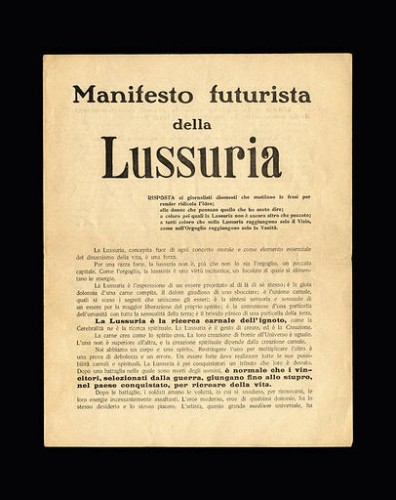
The animal life, the life of energy, the life of the spirit, sometimes demand a respite. And effort for effort’s sake calls inevitably for effort for pleasure’s sake. These efforts are not mutually harmful but complementary, and realize fully the total being.
For heroes, for those who create with the spirit, for dominators of all fields, lust is the magnificent exaltation of their strength. For every being it is a motive to surpass oneself with the simple aim of self-selection, of being noticed, chosen, picked out.
Christian morality alone, following on from pagan morality, was fatally drawn to consider lust as a weakness. Out of the healthy joy which is the flowering of the flesh in all its power it has made something shameful and to be hidden, a vice to be denied. It has covered it with hypocrisy, and this has made a sin of it.
We must stop despising Desire, this attraction at once delicate and brutal between two bodies, of whatever sex, two bodies that want each other, striving for unity. We must stop despising Desire, disguising it in the pitiful clothes of old and sterile sentimentality.
It is not lust that disunites, dissolves and annihilates. It is rather the mesmerizing complications of sentimentality, artificial jealousies, words that inebriate and deceive, the rhetoric of parting and eternal fidelities, literary nostalgia—all the histrionics of love.
We must get rid of all the ill-omened debris of romanticism, counting daisy petals, moonlight duets, heavy endearments, false hypocritical modesty. When beings are drawn together by a physical attraction, let them—instead of talking only of the fragility of their hearts—dare to express their desires, the inclinations of their bodies, and to anticipate the possibilities of joy and disappointment in their future carnal union.
Physical modesty, which varies according to time and place, has only the ephemeral value of a social virtue.
We must face up to lust in full conciousness. We must make of it what a sophisticated and intelligent being makes of himself and of his life; we must make lust into a work of art. To allege unwariness or bewilderment in order to explain an act of love is hypocrisy, weakness and stupidity.
We should desire a body consciously, like any other thing.
Love at first sight, passion or failure to think, must not prompt us to be constantly giving ourselves, nor to take beings, as we are usually inclined to do so due to our inability to see into the future. We must choose intelligently. Directed by our intuition and will, we should compare the feelings and desires of the two partners and avoid uniting and satisfying any that are unable to complement and exalt each other.
Equally conciously and with the same guiding will, the joys of this coupling should lead to the climax, should develop its full potential, and should permit to flower all the seeds sown by the merging of two bodies. Lust should be made into a work of art, formed like every work of art, both instinctively and consciously.
We must strip lust of all the sentimental veils that disfigure it. These veils were thrown over it out of mere cowardice, because smug sentimentality is so satisfying. Sentimentality is comfortable and therefore demeaning.
In one who is young and healthy, when lust clashes with sentimentality, lust is victorious. Sentiment is a creature of fashion, lust is eternal. Lust triumphs, because it is the joyous exaltation that drives one beyond oneself, the delight in posession and domination, the perpetual victory from which the perpetual battle is born anew, the headiest and surest intoxication of conquest. And as this certain conquest is temporary, it must be constantly won anew.
Lust is a force, in that it refines the spirit by bringing to white heat the excitement of the flesh. The spirit burns bright and clear from a healthy, strong flesh, purified in the embrace. Only the weak and sick sink into the mire and are diminished. And lust is a force in that it kills the weak and exalts the strong, aiding natural selection.
Lust is a force, finally, in that it never leads to the insipidity of the definite and the secure, doled out by soothing sentimentality. Lust is the eternal battle, never finally won. After the fleeting triumph, even during the ephemeral triumph itself, reawakening dissatisfaction spurs a human being, driven by an orgiastic will, to expand and surpass himself.
Lust is for the body what an ideal is for the spirit—the magnificent Chimaera, that one ever clutches at but never captures, and which the young and the avid, intoxicated with the vision, pursue without rest.
Lust is a force.
00:05 Publié dans art, Philosophie | Lien permanent | Commentaires (0) | Tags : art, avant-gardes, futurisme, luxure, désir, valentine de saint-point, lettres, lettres françaises, littérature, littérature française | | del.icio.us | | Digg | Facebook
vendredi, 25 mars 2011
Futurismo: Valentine de Saint-Point molto futurista, poco femminista
Futurismo: Valentine de Saint-Point molto futurista, poco femminista
Donna vera e genio puro, avanguardista e provocatrice fu autrice del “Manifesto delle Donne” e della “Lussuria”
Claudio Cabona
Ex: http://rinascita.eu/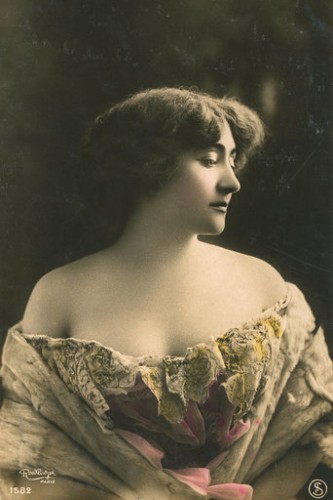 Se non ora quando? La donna e la sua dignità, il suo ruolo sociale. La posizione da assumere all’interno e nei confronti del sistema Italia. Dibattiti su dibattiti, manifestazioni, mobilitazioni in nome di una rinascita in gonnella, appelli infuocati al popolo rosa. Costruzione di una nuova identità femminile o starnazzo di gallinelle? La donna paragonata all’uomo, divisione fra sessi al centro di battaglie e rivendicazioni che sanciscono nuove superiorità o inferiorità?
“L’Umanità è mediocre. La maggioranza delle donne non è né superiore né inferiore alla maggioranza degli uomini. Sono uguali. Meritano entrambe lo stesso disprezzo. Nel suo insieme, l’umanità non è mai stata altro che il terreno di coltura donde sono scaturiti i geni e gli eroi dei due sessi. Ma vi sono nell’umanità, come nella natura, momenti più propizi a questa fioritura... E’ assurdo dividere l’umanità in donne e uomini. Essa è composta solo di femminilità e di mascolinità”.
La femminilità e la mascolinità sono due elementi che separano e caratterizzano i due sessi, ma che in quest’epoca moderna sembrano essersi in parte persi, lasciando spazio ad un indebolimento dell’individuo che è sempre più costruzione e non realtà.
“Un individuo esclusivamente virile non è che un bruto; un individuo esclusivamente femminile non è che una femmina.
Per le collettività, e per i diversi momenti della storia umana, vale ciò che vale per gli individui. Noi viviamo alla fine di uno di questi periodi. Ciò che più manca alle donne, come agli uomini, è la virilità. Ogni donna deve possedere non solo virtù femminili, ma qualità virili, senza le quali non è che una femmina. L’uomo che possiede solo la forza maschia, senza l’intuizione, è un bruto. Ma nella fase di femminilità in cui viviamo, soltanto l’eccesso contrario è salutare: è il bruto che va proposto a modello”.
Il rinnovamento? Una nuova donna non moralizzatrice, ma guerriera, scultrice del proprio futuro. Un cambiamento che passa attraverso una riscoperta del potenziale rivoluzionario della femminilità che non deve essere un artificio creato e voluto dall’uomo, ma una nuova alba. Non bisogna conservare, ma distruggere antiche concezioni.
”Basta le donne di cui i soldati devono temere le braccia come fiori intrecciati sulle ginocchia la mattina della partenza; basta con le donne-infermiere che prolungano all’infinito la debolezza e la vecchiezza, che addomesticano gli uomini per i loro piaceri personali o i loro bisogni materiali!... Basta con la donna piovra del focolare, i cui tentacoli dissanguano gli uomini e anemizzano i bambini; basta con le donne bestialmente innamorate, che svuotano il Desiderio fin della forza di rinnovarsi!. Le donne sono le Erinni, le Amazzoni; le Semiramidi, le Giovanne d’Arco, le Jeanne Hachette; le Giuditte e le Calotte Corday; le Cleopatre e le Messaline; le guerriere che combattono con più ferocia dei maschi, le amanti che incitano, le distruttrici che, spezzando i più deboli, agevolano la selezione attraverso l’orgoglio e la disperazione, la disperazione che dà al cuore tutto il suo rendimento”.
Non può e non deve esservi differenza fra la sensualità di una femmina, il suo essere provocante e la sua inclinazione a diventare madre, pura e cristallina. La demarcazione fra “donna angelo” e “donna lussuriosa” è puramente maschilista e priva di significato. Il passato e il futuro si incrociano nei due grandi ruoli che la donna ricopre all’interno della società: amante e procreatrice di vita. Figure diverse, ma al contempo tasselli di uno stesso mosaico.
“La lussuria è una forza, perché distrugge i deboli ed eccita i forti a spendere le energie, e quindi a rinnovarle. Ogni popolo eroico è sensuale. La donna è per lui la più esaltante dei trofei.
La donna deve essere o madre, o amante. Le vere madri saranno sempre amanti mediocri, e le amanti, madri inadeguate per eccesso. Uguali di fronte alla vita, questi due tipi di donna si completano. La madre che accoglie un bimbo, con il passato fabbrica il futuro; l’amante dispensa il desiderio, che trascina verso il futuro”.
Il sentimento e l’accondiscendenza non possono ergersi a valori centrali della vita. L’energia femminile non solo si manifesta come ostacolo, ma anche luce che illumina strade di conquista dell’umana voglia di esistere.
“La Donna che con le sue lacrime e con lo sfoggio dei sentimenti trattiene l’uomo ai suoi piedi è inferiore alla ragazza che, per vantarsene, spinge il suo uomo a mantenere, pistola in pugno, il suo arrogante dominio sui bassifondi della città; quest’ultima, per lo meno, coltiva un’energia che potrà anche servire a cause migliori”.
Queste parole, non moraliste né tanto meno prettamente femministe, non furono di una persona qualsiasi. Appartennero ad una donna sì, ma unica, che rigettò tutte le definizioni, stracciando etichette e pregiudizi. Il suo verbo, ancora oggi, nonostante la sua visione del mondo sia stata coniata nel 1912, è ancora attuale e può insegnare molto a chi si pone domande sul “mondo rosa” e non solo. Avanguardista, provocatrice e futurista. Lei fu Valentine de Saint-Point (1875-1953), autrice del “Manifesto delle Donne” e della “Lussuria”. Contribuì, come poche intellettuali nella storia, all’emancipazione della donna sia dal punto di vista dei diritti che del pensiero, partecipando anche a vari movimenti di rivendicazione. Odiava le masse, le certezze, i dettami borghesi, amava la libertà di pensiero, l’essere femmina, l’essere futuro. Concludo con l’ultima parte del manifesto, momento più alto della poetica di una delle grandi donne del ‘900. La speranza è che femmine come Valentine esistano ancora oggi, perchè l’Italia ha bisogno di loro, di voi.
”Donne, troppo a lungo sviate dai moralismi e dai pregiudizi, ritornate al vostro sublime istinto, alla violenza, alla crudeltà.
Per la fatale decima del sangue, mentre gli uomini si battono nelle guerre e nelle lotte, fate figli, e di essi, in eroico sacrificio, date al Destino la parte che gli spetta. Non allevateli per voi, cioè per sminuirli, ma nella più vasta libertà, perché il loro rigoglio sia completo.
Invece di ridurre l’uomo alla schiavitù degli squallidi bisogni sentimentali, spingete i vostri figli e i vostri uomini a superare sé stessi. Voi li avete fatti. Voi potete tutto su di loro.
All’umanità dovete degli eroi. Dateglieli”.
08 Marzo 2011 12:00:00 - http://rinascita.eu/index.php?action=news&id=6928
00:05 Publié dans art, Histoire, Littérature | Lien permanent | Commentaires (0) | Tags : futurisme, avant-gardes, valentine de saint-point, littérature, lettres, lettres françaises, littérature française, art, féminisme | | del.icio.us | | Digg | Facebook
mardi, 15 mars 2011
Future Conservatism
Brett STEVENS
Ex: http://counter-currents.com/
This article seemed to fly under the radar at first, just a few months after three European heads of state admitted multiculturalism is failing:
A Populus poll found that 48% of the population would consider supporting a new anti-immigration party committed to challenging Islamist extremism, and would support policies to make it statutory for all public buildings to fly the flag of St George or the union flag.
Anti-racism campaigners said the findings suggested Britain’s mainstream parties were losing touch with public opinion on issues of identity and race.
The poll suggests that the level of backing for a far-right party could equal or even outstrip that in countries such as France, the Netherlands and Austria. France’s National Front party hopes to secure 20% in the first round of the presidential vote next year. The Dutch anti-Islam party led by Geert Wilders attracted 15.5% of the vote in last year’s parliamentary elections. – The Guardian
Interestingly, this is the voters telling the conservative right what it needs to do in order to succeed. It should listen, because if you have a goal, the methods needed to accomplish that goal are negotiable, but the goal itself is not.
It would be a shame for the right to insist on methods, not goals, and thus repeat its past failures without achieving its possible future successes. Conservatism is an outlook and with that, an ideal which represents an ongoing goal, and we should be open to any method of achieving it.
Specifically:
- End the violence. Citizens do not want to endorse any party whose primary method is fighting, or who looks to start wars. They are looking for diplomatic solutions within our legal system. This does not mean they oppose strong acts, like deportation or ending welfare, only that they fear the heavy hand that tends toward violence. The far right suffers for its support of shaven-headed young men who drink too much and listen to angry toneless music while beating up foreigners; in addition, these young men suffer from the same lifestyle. It can change and it should.
- Have a comprehensive plan. We get it; nationalism means that each country is centered on one culture, one ethnic group and one values system. However, that concept is a starting point, not a solution. The ideas of the right regarding the environment, overpopulation, nuclear proliferation, education and other concepts need to be fleshed out in a direct form, or the only people it will attract are single-issue voters.
- Affirm general rules; do not attack specific groups. We know that Muslim integration in Europe has failed. It has failed because diversity has always failed. We should stay focused on that idea: diversity doesn’t work. Whether the ingredients of that diversity are Muslims, Africans, Jews, Scientologists, Cylons or hypermilers is irrelevant. We also know liberalism fails. We don’t need to bash specific liberals.
- Make your vision clear and clearly different. It’s one thing to say what you don’t like, and another to suggest what you do like. We live in ugly utilitarian cities wracked by dishonesty, crime and corruption. We have dedicated our lives to tolerance of individuals instead of finding values we share. We need a clear vision of what a society that has gotten beyond these problems looks like.
- Be responsible. A number of far-right parties seem entrenched in the methods of old, and seem to run their finances like low-rent crime syndicates. You have to be kidding. If you want us to trust you with a nation, you need to be on the up-and-up all the way. No exceptions.
The media image of the far right is skinheads who like to hurt people, sadistic toothless rednecks, and investment bankers who grinningly endorse Social Darwinism. They profit from selling this fear — and that’s what it is, repackaged fear of inferiority — at the expense of the far right, who have not been able to effectively combat it. That needs to change.
It is also worth noting that conservative parties succeed when they tune their various parts according to a common note, which should be as literal as race, but an organic vision like unity of culture and purpose.
Modern society is *soft* in precisely this fashion – its rulers have lost the ability take tough decisions: to seek long term benefits when these come at the price the cost of short term costs to themselves.
The ultimate reason is, I believe, that humans can only make tough decisions when these are supported by *transcendental aims*, in the sense that humans do not want to forgo short term gratification in this world unless life is about something *more* than gratification – and where non-worldly realities (God, heaven, truth, beauty etc.) are seen as more real and more enduring than immediate gratification – and therefore more important. – Bruce Charlton’s Miscellany
He’s right: we need some transcendental unity here or we’ll lose sight of the big picture and focus on what is immediate, including the material, the personal and the convenient.
Whether that vision is old school religion, a new religious hybrid (most likely a Vedic-Christian hybrid like Scientology and the New Age religions) or a simple agreement on transcendence itself, as enumerated by some powerful thinkers, will be decided in the future. For now, let’s recognize we need something higher than the material to unite us.
The right was thrown into disarray by World War II, which led to it abandoning many of its core principles, to our mutual failing as European-derived civilizations. A kind of bitterness set in, by which conservatives adopted public “neoconservative” and “neoliberal” (same thing) views, but in private smirked with an I-told-you-so grimace. Conservatives no longer believed they could be heard, so they let the disaster unfold, getting ready for that moment of bittersweet victory.
That outlook, and the kind of defensive reactionary paranoia that begets street violence where none is needed, holds the right back. At this point, liberalism has failed; it had a century and change to fix our problems, and it made them exponentially worse. The only people who are endorsing liberalism these days are the hopeful social climbers who want to mask perceived low origins with what they hope are aristocratic opinions.
But for the right to succeed, however, it needs to return to its principles and goals — and move on from its failed methods.
Source: http://www.amerika.org/politics/future-conservatism/
00:05 Publié dans Philosophie | Lien permanent | Commentaires (0) | Tags : philosophie, conservatisme, idées, futurisme, réflexions personnelles | | del.icio.us | | Digg | Facebook
jeudi, 24 février 2011
Futurisme et dadaisme chez Evola
Futurisme et dadaïsme chez Evola
Salvatore FRANCIA
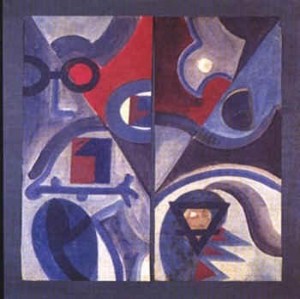 Nous devons également mentionner l'influence qu'exerça sur Evola adolescent le groupe qui s'était constitué autour des revues de Giovanni Papini et du mouvement futuriste. Le jeune Evola ne tarda pas à reconnaître toutefois que l'orientation générale du futurisme ne s'accordait que fort peu avec ses propres inclinaisons. Dans le futurisme, beaucoup de choses lui déplaisaient : le sensualisme, l'absence d'intériorité, les aspects tapageurs et exhibitionnistes, l'exaltation grossière de la vie et de l'instinct, curieusement mêlée avec celle du machinisme et d'une espèce d'américanisme, même si, par ailleurs, le futurisme se référait à des formes chauvines de nationalisme.
Justement, à propos du nationalisme, ses divergences de vue avec les futuristes apparaissent dès le déclenchement de la première guerre mondiale, à cause de la violente campagne interventionniste déclenchée par le groupe de Papini et le mouvement futuriste. Pour Evola, il était inconcevable que tous ces gens, avec à leur tête Papini, épousassent les lieux communs patriotards les plus éculés de la propagande anti-germanique, croyant ainsi sérieusement appuyer une guerre pour la défense de la civilisation et de la liberté contre la barbarie et l'agression.
Evola, à l'époque, n'avait encore jamais quitté l'Italie et n'avait qu'un sentiment confus des structures hiérarchiques, féodales et traditionnelles présentes en Europe centrale, alors qu'elles avaient quasiment disparu du reste de l'Europe à la suite de la révolution française. Malgré l'imprécision de ses vues, ses sympathies allaient vers l'Autriche et l'Allemagne et il ne souhaitait pas l'abstention et la neutralité italiennes, mais une intervention aux côtés des puissances impériales d'Europe centrale. Après avoir lu un article d'Evola dans ce sens, Marinetti lui aurait dit textuellement : « Tes idées sont aussi éloignées des miennes que celles d'un Esquimau ».
Après 1918, Evola est attiré par le mouvement dadaïste, surtout à cause de son radicalisme. Le dadaïsme défendait une vision générale de la vie sous-tendue par une impulsion vers une libération absolue se manifestant sous des formes paradoxales et déconcertantes, accompagnées d'un bouleversement de toutes les catégories logiques, éthiques et esthétiques. « Ce qui vit en nous est de l'ordre du divin, affirmait Tristan Tzara, c'est le réveil de l'action anti-humaine ». Ou encore : « Nous cherchons la force directe, pure, sobre, unique, nous ne cherchons rien d'autre ». Le dadaïsme ne pouvait conduire nulle part : il signalait bien plutôt l'auto-dissolution de l'art dans un état supérieur de liberté. Pour Evola, c'est en cela que résidait la signification essentielle du dadaïsme. C'est ce que nous constatons en effet à la lecture de son article « Sul significato dell'arte modernissima », reproduit en appendice de ses Saggi sull'idealismo magico, publiés en 1925. En réalité, le mouvement auquel Evola avait été associé n'a réalisé que bien peu de choses. Evola en avait espéré davantage. Si le dadaïsme représentait la limite extrême et indépassable de tous les courants d'avant-garde, tout ne s'auto-consommait pas dans l'expérience d'une rupture effective avec toutes les formes d'art.
Au dadaïsme succéda le surréalisme, dont le caractère, du point de vue d'Evola, était régressif, parce que, d'une part, il cultivait une espèce d'automatisme psychique se tournant vers les strates subconscientes et inconscientes de l'être (au point de se solidariser avec le psychanalyse elle-même) et, d'autre part, se bornait à transmettre des sensations confuses venues d'un « au-delà » inquiétant et insaisissable de la réalité, sans aucune ouverture véritable vers le haut.
Il est difficile de parler de la peinture d'Evola, vu l'abstraction des sujets. En contemplant les tableaux d'Evola et en lisant ses poèmes dadaïstes, on comprend que le monde moderne, tel que le percevaient les élites des premières années de notre siècle, apparaissait comme le symbole du dénuement et de la purification. Ces élites rejetaient les oripeaux de la culture bourgeoise du XIXème et voulaient créer rapidement une « nouvelle objectivité » que certains ont cru découvrir dans le bolchevisme et d'autres dans le nazisme.
À 23 ans, Evola cesse définitivement de peindre et d'écrire des poésies. Ses intérêts le portent vers une autre sphère.
(Extrait de Il pensiero tradizionale di Julius Evola, Società Editrice Barbarossa, Milano, 1994 ; ouvrage disponible auprès de notre service librairie. Prix: 240 FB ou 45 FF, port compris).
00:05 Publié dans art, Traditions | Lien permanent | Commentaires (0) | Tags : art, dadaïsme, futurisme, italie, julius evola, avant-gardes, tradition, traditionalisme, art, arts plastiques, peinture | | del.icio.us | | Digg | Facebook
vendredi, 04 février 2011
Evola: de Mafarka a Mitra
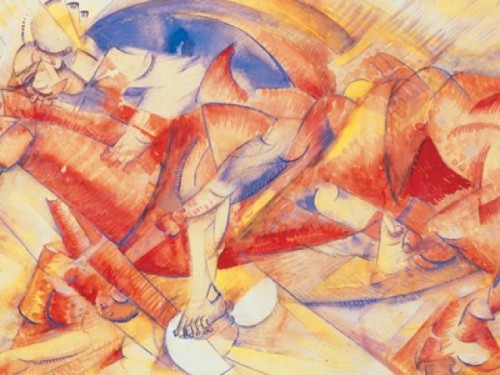
Jean-Marc Vivenza representa a vanguarda musical futurista europeia. Conjugando teoria e prática, inscreve-se na história das vanguardas culturais europeias afirmando, alto e forte, uma revolução política, espiritual e artística, através do que não é música, no sentido que lhe dão os «modernos» e que só merece o seu nome. Bruitismo. Este artigo, publicado em Volonté Futuriste (1989), prova, caso fosse necessário, que da colisão de duas visões, aparentemente antitéticas, pode nascer uma análise clara e sem falhas que poderá enriquecer cada um dos campos.
* * *
Para muitos espíritos, o futurismo estaria numa posição absolutamente antitética em relação à Tradição europeia. O percurso de Julius Evola dá-nos, sobre esse assunto, uma resposta de uma singular recorrência contra os a priori e os pronto-a-pensar.
* * *
Para muitos espíritos, o futurismo estaria numa posição absolutamente antitética em relação à Tradição europeia. O percurso de Julius Evola dá-nos, sobre esse assunto, uma resposta de uma singular recorrência contra os a priori e os pronto-a-pensar.
Julius Evola nasce em Roma a 19 de Maio de 1898 - no seio de uma família da nobreza rural pela parte do seu pai, Vincenzo e, durante toda a vida, ficará ligado a esta cidade onde morre em 14 de Junho de 1974. Este pensador representa hoje uma das maiores figuras da filosofia tradicional. Partindo das fontes da mais longínqua antiguidade indo-europeia, constituiu, através da publicação dos seus livros, de um dos mais violentos requisitórios contra a ilusão moderna e os seus mitos contemporâneos: «a igualdade», «o regime da quantidade» e «o materialismo».
Romano em todas as fibras do seu ser, é sob a protecção do Império que ele coloca todas as perspectivas do seu combate «contra o mundo moderno». Eterno gibelino ao serviço do Imperium de forma quase sacerdotal, faz da sua vida uma luta contínua, luta contra as forças do niilismo actual (ou idade do ferro, segundo uma expressão sua). Teorizando, de uma forma determinista, o desaparecimento inevitável de todos os valores e concluindo pela necessidade de um retorno ao caos original através de uma paróptica «final dos tempos», tempera o seu pessimismo com nuances de uma eventual esperança de endireitamento provisório e momentâneo. No entanto, se este pensamento parece à primeira vista, na sua estrutura interna, estranho à teoria da «excitação dinâmica da História», tão cara aos futuristas, é bom conhecermos o papel que exerceu sobre Evola a vanguarda do princípio do século XX e o lugar (pouco conhecido) que ele aí detinha e a influência que isso teve na sua reflexão posterior.
Um artista de vanguarda
É, primeiro, como pintor e como poeta que Julius Evola se exprime no quadro da actividade artística das vanguardas. Pondo-se em contacto com a revista futurista Lacerba, descobre os fundamentos de uma crítica radical do sistema burguês, o anti-democratismo, ao mesmo tempo que nasce, segundo alguns autores, o seu interesse pelos místicos alemães e a tradição esotérica.
Lembremo-nos que numerosos artistas futuristas introduzem-se na pesquisa profunda e concreta do pensamento oculto. Bastará citar o caso muito conhecido de Russolo de que a obra «Para além da matéria» é uma exposição magistral de esoterismo operativo, para nos convencermos da permanência de uma curiosidade instintiva desta escola de arte sobre este assunto.
É necessário saber que Evola, mesmo durante o período do movimento futurista, nunca deixou de manifestar interesse pelo pensamento tradicional. Com efeito, bastará ler o seu texto Arte abstracta para melhor compreendermos o mecanismo intelectual do jovem Evola.
Vejamos o que ele escreve: «A consciência abstracta, suporte da estética mais acabada, liga-se, de facto, a um outro plano (quase a outra dimensão) do espírito, o qual não tem nada a ver com o que se desenrola a vida quotidiana prática e sentimental até àquele que encontra um eco nos clamores da humanidade trágica. E a via que aí conduz é difícil e dolorosa porque, para a percorrer, é necessário queimar tudo o que habitualmente os homens consideram como a sua vida mais profunda e mais autêntica. Se, por acaso, nos perguntarem a que devemos comparar isto, encontraremos, talvez, em alguns místicos qualquer coisa de aproximativo: na interioridade silenciosa e glacialmente ardente de um Ruysbroek ou de um Mestre Eckhart, por exemplo. Uma lógica que não tem mais nada a ver com aquela que todos os dias rege este mundo: nele, as luzes mais banais como as mais gloriosas enfraquecem, à imagem das débeis vegetações subterrâneas; a vontade comum reina, como que ébria; as palavras tornam-se incompreensíveis como se pertencessem a uma língua estrangeira. Diríamos que toda a vegetação se desagrega como que sugada por uma extrema rarefacção, e renova com o caos elementar, seco e ardente, ardente e monótono. Mas, para aquele que penetrou totalmente na natureza da arte abstracta, parece que esta incoerência, esta loucura, não é mais do que aparência, por detrás da qual palpita, numa luminosidade metálica, o sentido da absoluta liberdade do Eu».
Esta descoberta da expansão virtual dos sentidos e da matéria desenvolve um estudo preciso destes novos estados de consciência, regidos por esta luminosidade metálica, que ele recebe daquilo que podia, e pode ainda, aparecer como arte informal, caótica e sem ordem.
Uma nova objectividade
As pinturas de Evola que foram, na totalidade, objecto de compra por parte dos museus italianos não serão estranhas aos familiares da obra ulterior.
Elas apresentam todos os sinais da presença simbólica. «Ali encontramos», diz Romualdi *, «a interioridade ardente que Evola menciona no seu ensaio L'Arte Astratta. Os globos, de um vermelho ardente ou de um verde magnético, como acetato de cobre incandescente, de uma luz irreal sob os céus devastados; os cilindros rodam como as fábricas de fogo na noite; as formas luminosas ascendem ao céu enquanto se formam nuvens inquietantes. É uma visão poderosa do elementar apanhado, por meio de uma linguagem de formas geométricas, num espaço invisível procedido do espaço visível (comparável à Hiper-urânia platoniana ou ao goetiano "mundo das mães").»
Quando examinamos os quadros de Evola (da mesma forma que outros testemunhos do futurismo), compreendemos porque o décor do mundo moderno pode ser adaptado por algumas elites que, deixando para trás os tarecos burgueses herdados do século XIX, marcham em passo rápido para uma neue sachlichkeit, uma nova objectividade que pensam encontrar no bolchevismo, no fascismo ou no nazismo. É a eles que se destinam as formulações de O Trabalhador ** de Jünger: "Ao menos, em certos resumos parciais, o século XX oferece já as linhas mais puras e mais seguras... Começamos a ver o sentido das altas temperaturas, os frios geométricos das luzes, a incandescência do metal. A paisagem torna-se mais fria e mais ardente, com ela desaparecem os últimos rastos das "delicadezas" e da "cordialidade que fala à alma".
De Mafarka a Mithra
De Mafarka a Mithra
Se prosseguirmos a nossa análise filosófica comparada, descobrimos, no coração dos princípios evolianos, o idealismo absoluto de inspiração hegeliana incarnada na exigência fundamental de uma «realização espiritual absoluta pela acção», paralelo evidente com o axioma da trindade futurista: ARTE, VIDA, ACÇÃO.
Da mesma forma, como não reconhecer o idêntico combate e uma vontade parecida entre o instintivo manifesto futurista de 1909, que termina pela célebre frase: «Hirtos no cume do mundo, lançamos uma vez mais o nosso desafio às estrelas!...», espécie de profissão de fé gnóstica e da consciente e reflectiva reactivação do culto de Mithra no pensamento evoliano: «O dominador do Sol, o matador do touro, o padrão de uma raça real regenerada na "Força Forte das Forças"».
Entre Apolo e Dionísio, a majestade doriana do vencedor pindárico encontra numa espécie de futurismo solar a «religião da Vida», a «religião do Devir» cara a Mafarka, promessa de eterno retorno.
Este telurismo dinâmico é o ponto de contacto entre as duas experiências. Futurismo e tradição. O próprio Evola convida-nos a «abolir o limite e o apoio que representa a visibilidade das coisas para nos pormos em contacto com as existências vertiginosas». O processo pelo qual a vida orgânica está agarrada na sua raiz profunda, sem apoio, arrancada à sua natureza... arrebatada para além de si ao longo de uma vida vertiginosa onde se alumia a ordem das diferentes forças cósmicas».
Em Evola, o ultrapassar do futurismo não se operou pela sua negação. Pelo contrário, sublinha a sua importância como resposta num tempo histórico num dado período e, nota o estranho desempenho que este tem no seu espírito e no desenvolvimento do seu pensamento.
A título de purificação
A título de purificação
Presentemente, longe do maniqueísmo de fachada, é possível entender a utilidade, da forma que o próprio Evola a entendia, da necessária acção regeneradora que podem ter certos fenómenos criativos.
O convite que ele formulava para um «salto no brutal a título de purificação» é a exacta busca que, da via tradicional à disciplina do manifesto técnico futurista, exige do aluno ou do discípulo este rigor, esta contingência afim de atingir a mestria da sua arte, isto é, de si mesmo pela revelação da energia pura, numa espécie de metalurgia espiritual onde o metal vil é rudemente malhado afim de se tornar num ferro flamejante.
O convite que ele formulava para um «salto no brutal a título de purificação» é a exacta busca que, da via tradicional à disciplina do manifesto técnico futurista, exige do aluno ou do discípulo este rigor, esta contingência afim de atingir a mestria da sua arte, isto é, de si mesmo pela revelação da energia pura, numa espécie de metalurgia espiritual onde o metal vil é rudemente malhado afim de se tornar num ferro flamejante.
Esta ascese comum não deve escapar ao observador. As vias parecem diferentes, os caminhos comunicam.
Do futurismo à tradição, é o mesmo pensamento de ordem e o ultrapassar hierárquico pelo valor que se afirma. Exprime a permanência, através das épocas e das formas, de uma doutrina que extrai profundamente as suas raízes específicas da cultura indo-europeia.
(Jean-Marc Vivenza)
Notas:
* Adriano Romualdi, Julius Évola, l?homme et l?oeuvre, Guy Trédaniel, 1985.
** Ernst Jünger, O Trabalhador - Domínio e Figura, introdução, tradução e notas de Alexandre Franco de Sá, prefácio de Nuno Rogeiro, Hugin Editores, 2000.
00:05 Publié dans art, Traditions | Lien permanent | Commentaires (0) | Tags : art, peinture, tradition, traditionalisme, traditions, evola, avant-garde, futurisme, mafarka, marinetti, jean-marc vivenza | | del.icio.us | | Digg | Facebook
jeudi, 04 novembre 2010
Visages de l'archéofuturisme

Après la « Grande Catastrophe » qui a vu sombrer dans le chaos l’ancien système politico-économique du fait de la convergence de désastres de toutes natures, ont subsisté des bulles de survie, sortes de baronnies qui se sont ensuite rapprochées les unes des autres. La nouvelle structure regroupait dans une Communauté des Etats Européens, les anciennes régions de l’Europe Occidentale dotées d’une très large autonomie. Mais de graves problèmes internationaux resurgirent avec de nouvelles menaces. La Russie et ses pays satellites proposèrent alors à la Communauté des Etats européens de fusionner pour assurer l’unité et la défense des « peuples apparentés »: la Fédération Eurosibérienne était née.
La Fédération comporte 125 états autonomes comme les Etats autonomes de Bretagne ou d’Ile de France, la République Romaine et le Royaume d’Albanie, etc. qui s’entendent sur les « questions principales »: quel est l’ennemi commun ? Quel est l’ami commun ? Ils sont représentés face au Gouvernorat impérial installé à Bruxelles, par le Directorat central de la Fédération.
Les litiges internes entre les États de la Fédération sont résolus par un Conseiller plénipotentiaire auprès du Tribunal-Inter-États de Saint Petersbourg et son Prévôt auquel il doit rendre compte, et qui dépend aussi du Gouvernorat impérial de Bruxelles où sont ses bureaux.
Dans la Fédération, on tente de concilier deux principes: l’autorité absolue et la rapidité de décision de l’autorité politique centrale, le Gouvernorat élu par le Sénat Impérial; et une grande liberté d’organisation laissée aux Régions-Etats.
Chacune des Régions-Etats autonomes est libre dans les domaines où elle n’est pas soumise aux compétences du Gouvernorat Impérial, d’organiser ses institutions comme elle l’entend. Elle doit simplement, par les moyens qu’elle désire, désigner un nombre de députés fixé en proportion de sa population au Sénat Fédéral d’Empire.

L’ idéologie officielle de la Fédération est le « constructivisme vitaliste ».
La nouvelle économie techno-scientifique n’est plus, comme autrefois au XXe siècle, destinée à toutes les zones de la Terre ni à tous les humains. Seulement 10 % de l’ humanité en bénéficient, en général regroupés dans les villes, beaucoup moins étendues et peuplées qu’autrefois. Dans la fédération, 20% de la population vit dans une économie industrielle techno-scientifique; ce qui a permis de repeupler les zones rurales désertées et résolu les problèmes de pollution et de gaspillage énergétique.
L’innovation scientifique est très dynamique bien qu’elle ne repose plus sur un énorme marché mondial et ne concerne donc qu’une minorité de la population, les autres étant revenus à une économie rurale, artisanale et pastorale de type médiéval. L’explication de ce dynamisme est simple: le volume global de l’investissement et des budgets publics et privés n’ont plus à se préoccuper des besoins de toutes natures de 80% de la population vivant dans des communautés néo-traditionnelles, selon un système socio-économique archaïque, qui se débrouillent seules et librement pour leur production et leurs échanges, et pour nombre desquelles le solstice d’été est un moment fort
La Fédération Eurosibérienne pratique le libre-échange intérieur, mais ses frontières extérieures sont protégées par des barrières douanières très élevées. Les flux financiers et spéculatifs internationaux n’existent plus.
Dans l’élite, 18% des naissances sont assurées par l’ingénierie génétique: gestations en incubateurs, sans grossesse pour les femmes, avec « amélioration programmée du génome ». Mais cette technique est rigoureusement prohibée dans les communautés néo-traditionnelles et, ailleurs, soumise à l’approbation du Comité Eugénique Impérial. Les enfants issus de cette procréation artificielle sont souvent consacrés « pupilles d’Empire » et placés dans des centres d’éducation qui les transforment en cadres ultra-performants. Seuls les dirigeants et les cadres de la Fédération ont accès au réseau d’informations, l’ EKIS « Euro Kontinent Information Service ». Le système des médias, ouvert à tous, en cours au XXe siècle, a entièrement disparu car, pense-t-on, il aboutissait paradoxalement à la désinformation, à la désagrégation de l’esprit public et créait des paniques.
Les véhicules électriques sont généralisés, les automobiles interdites aux particuliers avec retour aux tractions hippomobiles, prohibition des véhicules à moteur dans les communautés rurales néo-traditionnelles, abandon des autoroutes sur le tracé desquelles ont été construites des lignes de chemin de fer classiques rapides pour le transport des camions et des containers (« ferroutage »), limitation progressive des transports aériens au profit des planétrains, introduction de dirigeables-cargos pour le fret et les transports civils, restauration du réseau des canaux, utilisation mixte des énergies nucléaires et éoliennes pour les transporteurs maritimes, etc.
(dessins de Schuiten)
00:09 Publié dans Nouvelle Droite, Philosophie, Synergies européennes | Lien permanent | Commentaires (0) | Tags : nouvelle droite, synergies européennes, faye, guillaume faye, archéofuturisme, futurisme, philosophie | | del.icio.us | | Digg | Facebook
samedi, 30 octobre 2010
Filippo Marinetti
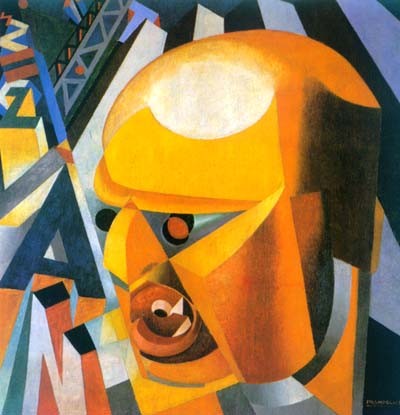 Filippo Marinetti
Kerry BOLTON
Filippo Marinetti is unlike most of the post-nineteenth Century cultural avant-garde who were rebelling against the spirit of several centuries of liberalism, rationalism, the rise of the democratic mass, industrialism, and the rule of the moneyed elite. His revolt against the leveling impact of the democratic era was not to hark back to certain perceived ‘golden ages’ such as the medieval eras upheld by Yeats and Evola, or to reject technology in favor of a return to rural life, as advocated by Henry Williamson and Knut Hamsun. To the contrary, Marinetti embraced the new facts of technology, the machine, speed, and dynamic energy, in a movement called Futurism.
The futurist response to the facts of the new age is therefore a quite unique reaction from the anti-liberal literati and artists and one that continues to influence certain aspects of industrial and post-industrial sub cultures. An example of a contemporary cultural movement paralleling Futurists is New Slovenian Art, which like futurism embodies music, graphic arts, architecture, and drama. It is a movement whose influence is felt beyond the borders of Slovenia. The best-known manifestation of this art form is the industrial music group Laibach.
Marinetti is also the inventor of free verse in poetry, and Futurist adherents have had a lasting impact on architecture, motion pictures and the theater. The Futurists were the pioneers of street theatre. They inspired both the Constructivist movement in the USSR and the English Vorticists Ezra Pound and Wyndham Lewis.
Marinetti was born in Alexandria Egypt in 1876. He graduated in law in Genoa in 1899. Although the political and philosophical aspects of the course held his interest, he traveled frequently between France and Italy and interested himself in the avant-garde arts of the later nineteenth Century promoting young poets in both countries. He was already a strong critic of the conservative and traditional approaches of Italian poets. He was at this time an enthusiast for the modern, revolutionary music of Wagner, seeing it as assailing “equilibrium and sobriety . . . meditation and silence . . . ”
By 1904, Futurist elements had manifested in his writing, particularly in his poem Destruction that he called “an erotic and anarchist poem,” a eulogy to the “avenging sea” as a symbol of revolution. After an apocalyptic destruction, the process of rebuilding begins on the ruins of the “Old World.” Here already is the praise of death as a dynamic and transformative.
 With the death of Marinetti’s father in 1907, his wealth allowed him to travel widely and he became a well-known cultural figure throughout Europe. Nietzsche was at this time one of the most well-known intellectuals who desired liberation from the old order. Nietzsche was widely read among the literati of Italy, and D’Annunzio was the most prominent in promoting Nietzsche. Among the other philosophers of particular importance whom Marinetti studied was the French syndicalist theorist Georges Sorel, who inclined towards the anarchism of Proudhon. This rejected Marxism in favor of a society comprised of small productive, cooperative units or syndicates; and founded a new myth of heroic action and struggle. Rejecting much of the pacifism of the left. Sorel viewed war as a dynamic of human action. Sorel in turn was himself influenced by Nietzsche, and applying the Nietzschean Overman to socialism, states that the working class revolution requires heroic leaders. Sorel became influential not only among Left wing syndicalists but also among certain radical nationalists in both France and Italy.
Futurist Manifesto
Marinetti’s artistic ideas crystallized in the Futurist movement that originated from a meeting of artists and musicians in Milan in 1909 to draft a Futurist Manifesto. With Marinetti were Carlo Carra, Umberto Boccioni, Luigi Russolo and Gino Severini. The manifesto was first published in the Parisian paper Le Figaro, and exhorted youth to, “Sing the love of danger, the habit of energy and boldness.”
 The Futurists were contemptuous of all tradition, of all that is past:
We want to exult aggressive motion . . . we affirm that the magnificence of the world has been enriched by a new beauty: the beauty of speed.
The machine was poetically eulogized. The racing car became the icon of the new epoch, “which seems to run as a machine gun.” The Futurist aesthetic was to be joy in violence and war, as “the sole hygiene of the world.” Motion, dynamic energy, action, and heroism were the foundations of “the culture of the Futurist future. The fisticuffs, the sprint and the kick were expressions of culture. The Futurist Manifesto is as much a challenge to the political and social order as it is to the status quo in the arts.
It declared:
1. We intend to sing the love of danger, the habit of energy and fearlessness.
2. Courage, audacity, and revolt will be essential elements of our poetry.
3. Up to now literature has exalted a pensive immobility, ecstasy, and sleep. We intend to exalt aggressive action, a feverish insomnia, the racer’s stride, the mortal leap, the punch and the slap.
4. We affirm that the world’s magnificence has been enriched by a new beauty: the beauty of speed A racing car whose hood is adorned with great pipes, like serpents of an explosive breath–a roaring car that seems to ride on grape shot is more beautiful than the victory of Samothrace.
5. We want to hymn the man at the wheel, who hurls the lance of his spirit across the Earth, along the circle of its orbit.
6. The poet must spend himself with ardor, splendor, and generosity, to swell the enthusiastic fervor of the primordial elements. Except in struggle, there is no more beauty. No work without an aggressive character can be a masterpiece. Poetry must be conceived as a violent attack on unknown forces, to reduce and prostrate them before man.
7. We stand on the last promontory of the centuries. Why should we look back when what we want is to break down the mysterious doors of the impossible? Time and space died yesterday. We already live in the absolute, because we have created eternal, omnipresent speed.
8. We will glorify war–the world’s only hygiene–militarism, patriotism, the destructive gesture of freedom-bringers, the beautiful ideas that kill, and scorn for women.
9. We will destroy the museums libraries academies of every kind, will fight moralism feminism, every opportunistic or utilitarian cowardice.
10. We will sing of great crowds excited by work, by pleasure, and by riot. We will sing of the multi-colored, polyphonic tides of revolution in the modem capitals, we will sing of the vibrant nightly fervor of arsenals and shipyards blazing with violent electric motors, greedy railway stations that devour smoke-plumed serpents, factories hung on clouds by the crooked lines of their smoke; bridges that stride the rivers like giant gymnasts, flashing in the sun with a glitter of knives; adventurous steamers that sniff the horizon: deep-chested locomotives whose wheels paw the tracks like the hooves of enormous steel horses bridled by tubing: and the sleek flight of planes whose propellers chatter in the wind like banners and seem to cheer like an enthusiastic crowd.
It is from Italy that we launch through the world this violently upsetting incendiary manifesto of ours. With it, today, we establish Futurism, because we want to free this land from its smelly gangrene of professors, archaeologists, ciceroni and antiquarians. For too long has Italy been a dealer in second-hand clothes. We mean to free her from the numberless museums that cover her like so many graveyards.
Museums: cemeteries! . . . Identical, surely, in the sinister promiscuity of so many bodies unknown to one another. Museums: public dormitories where one lies forever beside hated or unknown beings. Museums: absurd abattoirs of painters and sculptors ferociously slaughtering each other with color-blows and line-blows, the length of the fought-over walls!
That one should make an annual pilgrimage, just as one goes to the graveyard on All Souls’ Day, that we grant. That once a year one should leave a floral tribute beneath the Gioconda, I grant you that . . . but I don’t admit that our sorrows, our fragile courage, our morbid restlessness should be given a daily conducted tour through the museums. Why poison ourselves? Why rot? And what is there to see in an old picture except the laborious contortions of an artist throwing himself against the barriers that thwart his desire to express his dream completely? Admiring an old picture is the same as pouring our sensibility into a funerary urn instead of hurtling it far off in violent spasms of action and creation.
Do you then wish to waste all your best powers in this eternal and futile worship of the past, from which you emerge fatally exhausted, shrunken, beaten down?
In truth we tell you that daily visits to museums, libraries, and academies (cemeteries of empty exertion, Calvaries of crucified dreams, registries of aborted beginnings!) are, for artists, as damaging as the prolonged supervision by parents of certain young people drunk with their talent and their ambitious wills. When the future is barred to them, the admirable past may be a solace for the ills of the moribund, the sickly, the prisoner . . . But we want no part of it, the past, we the young and strong Futurists!
So let them come, the gay incendiaries with charred fingers! Here they are! Here they are! . . . Come on! set fire to the library shelves! Turn aside the canals to flood the museums! . . . Oh, the joy of seeing the glorious old canvases bobbing adrift on those waters, discolored and shredded! . . . Take up your pickaxes, your axes and hammers and wreck, wreck the venerable cities, pitilessly!
The oldest of us is thirty so we have at least a decade for finishing our work. When we are forty, other younger and stronger men will probably throw us in the wastebasket like useless manuscripts–we want it to happen!
They will come against us, our successors will come from far away, from every quarter, dancing to the winged cadence of their first songs, flexing the hooked claws of predators, sniffing dog-like at the academy doors the strong odor of our decaying minds which will have already been promised to the literary catacombs.
But we won’t be there . . . At last they’ll find us–one winter’s night–in open country, beneath a sad roof drummed by a monotonous rain. They’ll see us crouched beside our trembling aeroplanes in the act of warming our hands at the poor little blaze that our books of today will give out when they take fire from the flight of our images.
They’ll storm around us, panting with scorn and anguish, and all of them, exasperated by our proud daring, will hurtle to kill us. Driven by a hatred the more implacable the more their hearts will be drunk with love and admiration for us.
Injustice, strong and sane, will break out radiantly in their eyes. Art, in fact, can be nothing but violence, cruelty, and injustice.
The oldest of us is thirty: even so we have already scattered treasures, a thousand treasures of force, love, courage, astuteness, and raw will-power, have thrown them impatiently away, with fury, carelessly, unhesitatingly, breathless, and unresting . . . Look at us We are still untired! Our hearts know no weariness because they are fed with fire, hatred, and speed . . . Does that amaze you? It should, because you can never remember having lived! Erect on the summit of the world, once again, we hurl our defiance at the stars.
You have objections?–Enough! Enough! We know them . . . We’ve understood! . . . Our fine deceitful intelligence tells us that we are the revival and extension of our ancestors–Perhaps! . . . If only it were so!–But who cares? We don’t want to understand! . . . Woe to anyone who says those infamous words to us again! Lift up your heads. Erect on the summit of the world, once again we hurl our defiance after stars!”
A plethora of manifestos by Marinetti and his colleagues followed, futurist cinema, painting, music (“noise”), prose, plus the political and sociological implications.
 War, the World’s Only Hygiene
Marinetti’s manifesto on war shows the central place violence and conflict have in the Futurist doctrine.
We Futurists, who for over two years, scorned by the Lame and Paralyzed, have glorified the love of danger and violence, praised patriotism and war, the hygiene of the world, are happy to finally experience this great Futurist hour of Italy, while the foul tribe of pacifists huddles dying in the deep cellars of the ridiculous palace at The Hague. We have recently had the pleasure of fighting in the streets with the most fervent adversaries of the war and shouting in their faces our firm beliefs:
1. All liberties should be given to the individual and the collectivity, save that of being cowardly.
2. Let it be proclaimed that the word Italy should prevail over the word Freedom.
3. Let the tiresome memory of Roman greatness be canceled by an Italian greatness a hundred times greater.
For us today, Italy has the shape and power of a fine Dreadnought battleship with its squadron of torpedo-boat islands. Proud to feel that the martial fervor throughout the nation is equal to ours, we urge the Italian government, Futurist at last, to magnify all the national ambitions, disdaining the stupid accusations of piracy, and proclaim the birth of Pan-Italianism.
Futurist poets, painters, sculptors, and musicians of Italy! As long as the war lasts let us set aside our verse, our brushes, scapulas, and orchestras! The red holidays of genius have begun! There is nothing for us to admire today but the dreadful symphonies of the shrapnel and the mad sculptures that our inspired artillery molds among the masses of the enemy.
Artistic Storm Trooper
Marinetti brought his dynamic character into an aggressive campaign to promote Futurism. The Futurists aimed to aggravate society out of bourgeoisie complacency and the safe existence through innovative street theater, abrasive art, speeches, and manifestos. The speaking style of Marinetti was itself bombastic and thunderous. The art was aggravating to conventional society and the art establishment. If a painting was that of a man with a mustache, the whiskers would be depicted with the bristles of a shaving brush pasted onto the canvas. A train would be depicted with the words “puff, puff.”
Both the words and deeds of the Futurists matched the nature of the art in expressing contempt for the status quo with its preoccupation with “pastism” or the “passe.” Marinetti for example, described Venice as “a city of dead fish and decaying houses, inhabited by a race of waiters and touts.”
To the Futurist Boccioni, Dante, Beethoven and Michelangelo were “sickening” Whilst Carra set about painting sounds, noises and even smells. Marinetti traversed Europe giving interviews, arranging exhibitions, meetings and dinners. Vermilion posters with huge block letters spelling ‘futurism’ were plastered throughout Italy on factories, in dance halls, cafes and town squares. Futurist performances were organized to provoke riot. Glue was put onto seats. Two tickets for the same seat would be sold to provoke a fight. “Noise music” would blare while poetry or manifestos were recited and paintings shown. Fruit and rotten spaghetti would be thrown from the audience, and the performances would usually end in brawls.
Marinetti replied to jeers with humor. He ate the fruit thrown at him. He welcomed the hostility as proving that Futurism was not appealing to the mediocre.
Politics

The first political contacts of Marinetti and the Futurists were from the Left rather than the Right, despite Marinetti’s extreme nationalism and call for war as the “hygiene of mankind.” There were syndicalists and even some anarchists who shared Marinetti’s views on the energizing and revolutionary nature of war and gave him a reception.
In 1909, Marinetti entered the general elections and issued a “First Political Manifesto” which is anti-clerical and states that the only Futurist political program is “national pride,” calling for the elimination of pacifism and the representatives of the old order. During that year, Marinetti was heavily involved in agitating for Italian sovereignty over Austrian-ruled Trieste. The political alliance with the extreme Left began with the anarcho-syndicalist Ottavio Dinale, whose paper reprinted the Futurist manifesto. The paper, La demolizione was not especially anarcho-syndicalist, but of a general combative nature, aiming to unite into one “fascio” all those of revolutionary tendencies, to “oppose with full energy the inertia and indolence that threatens to suffocate all life.” The phrase is distinctly Futurist.
Marinetti announced that he intended to campaign politically as both a syndicalist and a nationalist, a synthesis that would eventually arise in Fascism. In 1910, he forged links with the Italian Nationalist Association, which from its birth also had a pro-labor, syndicalist aspect. In 1913 a Futurist political manifesto was issued which called for enlargement of the military, an “aggressive foreign policy,” colonial expansionism, and “pan-Italianism”; a “cult” of progress, speed, and heroism; opposition to the nostalgia for monuments, ruins, and museums; economic protectionism, anti-socialism, anti-clericalism. The movement gained wide enthusiasm among university students.
Interventionism
The chance for Italy’s “place in the sun” came with World War I. Not only the nationalists were demanding Italy’s entry into the war, but so too were certain revolutionary syndicalists and a faction of socialists led by Mussolini. From the literati came D’Annunzio and Marinetti.
In a manifesto addressed to students in 1914 Marinetti states the purpose of Futurism and calls for intervention in the war. Futurism was the “doctor” to cure Italy of “pastism,” a remedy “valid for every country.” The “ancestor cult far from cementing the race” was making Italians “anaemic and putrid.” Futurism was now “being fully realized in the great world war.”
The present war is the most beautiful Futurist poem which has so far been seen. Futurism was the militarization of innovating artists.
The war would sweep away all the proponents of the old and senile, diplomats, professors, philosophers, archaeologists, libraries, and museums.
The war will promote gymnastics, sport, practical schools of agriculture, business and industrialists. The war will rejuvenate Italy: will enrich her with men of action, will force her to live no longer off the past, off ruins and the mild climate, but off her own national forces.
The Futurists were the first to organize pro-war protests. Mussolini and Marinetti held their first joint meeting in Milan on March 31st 1915. In April, both were arrested in Rome for organizing a demonstration.
Futurists were no mere windbags. Nearly all distinguished themselves in the war, as did Mussolini and D’Annunzio. The Futurist architect Sant Elia was killed. Marinetti enlisted with the Alpini regiment and was wounded and decorated for valor.
Futurist Party

In 1918, Marinetti began directing his attention to a new postwar Italy. He published a manifesto announcing the Futurist Political Party, which called for “Revolutionary nationalism” for both imperialism and social revolution. “We must carry our war to total victory.”
Demands of the manifesto included the eight hour day and equal pay for women, the nationalization and redistribution of land to veterans; heavy taxes on acquired and inherited wealth and the gradual abolition of marriage through easy divorce; a strong Italy freed, from nostalgia, tourists, and priests; industrialization and modernization of “moribund cities” that live as tourist centers. A Corporatist policy called for the abolition of parliament and its replacement with a technical government of 30 or 40 young directors elected form the trade associations.
The Futurist party concentrated its propaganda on the soldiers, and recruited many war veterans of the elite Arditi (daredevils), who had been the black-shirted shock troops of the army who would charge into battle stripped to the waist, a grenade in each hand and a dagger between their teeth.
In December 1919, the Futurists revived the “Fasci” or “groups.” which had been organized in 1914 and 1915 to campaign for war intervention, and from which was to emerge the Fascists.
Futurists and Fascists
The first joint post-war action between Mussolini and Marinetti took place in 1919 when a Socialist Party rally was disrupted in Milan.
That year Mussolini founded his own Fasci di Combattimento in Milan with the support of Marinetti and the poet Ungasetti. The futurists and the Arditi comprised the core of the Fascist leadership. The first Fascist manifesto was based on that of Marinetti’s Futurist party.
In April, against the wishes of Mussolini who thought the action premature, Marinetti led Fascists and Futurists and Arditi against a mass Socialist Party demonstration. Marinetti waded in with fists, but intervened to save a socialist from being severely beaten by Arditi. (To place the post-war situation in perspective, the Socialists had regularly beaten, abused, and even killed returning war veterans). The Fascists and futurists then proceeded to the offices of the Socialist Party paper Avanti, which they sacked and burned.
Marinetti stood as a Fascist candidate in the 1919 elections and persuaded Toscanini to do so. Whilst the Fascists held back, the Futurists threw their support behind the poet-soldier D’Annunzio’s takeover of Fiume. Marinetti arrived and was warmly welcomed by D’Annunzio.
When the Fascist Congress of 1920 refused to support the Futurist demand to exile the King and the Pope, Marinetti and other Futurists resigned from the Fascist party. Marinetti considered that the Fascist party was compromising with conservatism and the bourgeoisie. He was also critical of the Fascist concentration on anti-socialist agitation and on opposition to strikes. Certain futurist factions realigned themselves specifically with the extreme Left. In 1922, there were several Futurist exhibitions and performances organized by the Communist cultural association, Pro-letkul, which also arranged a lecture by Marinetti to explain the doctrine of Futurism.
Futurism and the Fascist Regime

When the Fascists assumed power in 1922 Marinetti, like D’Annunzio, was critically supportive of the regime. Marinetti considered: “The coming to power of the Fascists constitutes the realization of the minimum futurist program.”
Of Mussolini the statesman, Marinetti wrote: “Prophets and forerunners of the great Italy of today, we Futurists are happy to salute in our not yet 40-year-old Prime Minister of marvelous futurist temperament.”
In 1923, Marinetti began a rapprochement with the Fascists and presented to Mussolini his manifesto “The Artistic Rights Promoted by Italian Futurists.” Here he rejected the Bolshevik alignment of Futurists in the USSR. He pointed to the Futurist sentiments that had been expressed by Mussolini in speeches, alluding to Fascism being a “government of speed, curtailing everything that represents stagnation in the national life.”
Under Mussolini’s leadership, writes Marinetti:
Fascism has rejuvenated Italy. It is now his duty to help us overhaul the artistic establishment . . . . The political revolution must sustain the artistic revolutions Marinetti was among the Congress of Fascist Intellectuals who in 1923 approved the measures taken by the regime to restore order by curtailing certain constitutional liberties amidst increasing chaos caused by both out-of-control radical Fascist squadisti and anti-Fascists.
At the 1924 Futurist Congress, the delegates upheld Marinetti’s declaration:
The Italian Futurists, more than ever devoted to ideas and art, far removed from politics, say to their old comrade Benito Mussolini, free yourself from parliament with one necessary and violent stroke. Restore to Fascism and Italy the marvelous, disinterested, bold, anti-socialist, anti-clerical, anti-monarchical spirit . . . Refuse to let monarchy suffocate the greatest, most brilliant and just Italy of tomorrow . . . Quell the clerical opposition . . . . With a steely and dynamic aristocracy of thought.
In 1929, Marinetti accepted election to the Italian Academy, considering it important that “Futurism be represented” He was also elected secretary of the Fascist Writer’s Union and as such was the official representative for fascist culture. Futurism became a part of fascist cultural exhibitions and was utilized in the propaganda art of the regime. During the 1930s, in particular the Fascist cultural expression was undergoing a drift away from tradition and towards futurism, with the fascist emphasis on technology and modernization. Mussolini had already in 1926 defined the creation of a “fascist art” that would be based on a synthesis culturally as it was politically: “traditionalistic and at the same time modern.”
In 1943, with the Allies invading Italy, the Fascist Grand Council deposed Mussolini and surrendered to the occupation forces. The fascist faithful established a last stand, in the north, named the Italian Social Republic.
With a new idealism, even former Communist and liberal leaders were drawn to the Republic. The Manifesto of Verona was drafted, restoring various liberties, and championing labor against plutocracy within the vision of a united Europe. Marinetti continued to be honored by the Social Republic. He died in 1944.
00:05 Publié dans art | Lien permanent | Commentaires (0) | Tags : italie, art, avant-gardes, futurisme, marinetti | | del.icio.us | | Digg | Facebook
vendredi, 09 avril 2010
Avant-Garde Fascism
Avant-Garde Fascism
 Avant-Garde Fascism: The Mobilization of Myth, Art, and Culture in France, 1909–1939
Mark Antliff
Durham and London: Duke University Press, 2007

Mark Antliff, a professor of Art, Art History, and Visual Studies at Duke University, has put together a useful analysis of the cultural-aesthetic memes utilized by French fascists of 1909-1939 to promote their visions of national renewal. Antliff’s analysis focuses on the connection between fascist ideologies and the European avant-garde, which most people would more likely associate with the anti-national left. Antliff is fairly even handed in the book, with the occasional use of scare quotes to express his skepticism/disdain for certain “fascist ideas.”
In contrast, I believe his use of the term “democracy” should always have scare quotes, as “democratic” systems deceive the populace into believing that someone other than self-interested elites are running the show; however, apparently, Antliff and I disagree on our political preferences. Antliff also concludes the book with a line about how the ideas of the French fascists were not able to stem the tide of the “bloodshed” caused by the military aggressions of Hitler and Mussolini (including the invasion of France). Very well. One hopes an academic will write about the real blood that has been shed imposing “equality” on “the people” – either that of the mass-murdering Marxists or the genocidal globalist multiculturalists and their plans for a multiracial West. So much for my complaints about the book. What about fascism and avant-garde aesthetics?
Roger Griffin, in his Fascism (Oxford: Oxford University Press, 1995), famously described fascism as “palingenetic populist ultra-nationalism” – making the elements of renewal, rebirth, and regeneration central to all permutations of this ideology. It is also important to differentiate between real fascism and “para-fascist” ersatz fascism. Para-fascism is often confused with real fascism in the public mind, which gives the false impression that fascism is ossified reactionary conservatism, rather than a revolutionary movement interested in avant-garde themes and ideas.
The differences between real revolutionary fascism and para-fascism are easily summarized: Para-fascist regimes are authoritarian, traditionalist, reactionary regimes, often military dictatorships, that fossilize a status quo favoring traditional elites of business, nobility, religion, and the military. Such regimes want nothing to do with the revolutionary and palingenetic aspects of true fascism; the idea that the secular religious, Futuristic, and avant-garde characteristics of, say, (early) Italian Fascism has anything to do with Franco’s Spain or Pinochet’s Chile is absurd.
 Indeed, as Griffin makes clear, fascists and para-fascists are usually, by their very nature, bitter enemies. While para-fascists may co-opt some superficial characteristics of their fascist opponents, in power they tend to ruthlessly suppress the expression of revolutionary fascism. When para-fascism attempts to co-opt fascism by sharing power – as Antonescu attempted in Romania with the Legionaries — conflict is inevitable, since the objectives of the two parties are completely different: para-fascist ossification vs. fascist palingenetic regeneration. Thus, in Romania, civil war between para-fascists and fascists led to the victory of the para-fascists, and the exile of the fascist forces. The idea that Antonescu was “fascist” is a byproduct of either ideological ignorance or ideological mendacity, a Marxist desire to strip their fascist competitors of revolutionary dynamism and reduce them to mere “bourgeois hooligans.”
Not all fascisms were equally “fascist” and revolutionary, and even individual fascist movements have oscillated between revolutionary ideals and borderline reactionary para-fascism.
For example, Italian fascism went through three distinct phases. In the years before the seizure of power and in the first half-dozen years of Mussolini’s regime, Italian fascism was in its “purest” form – revolutionary and palingenetic – emphasizing the regeneration of the Italian people and the Italian nation-state. Avant-garde themes and theorists, particularly Futurism, were important in this period, and individuals such as Marinetti were influential in early day Italian fascism.
However, the forces of reaction and of compromise with the establishment were always present; the presence of the King and the Vatican were two impediments to the process of “fascistization” that Mussolini could not, or would not, deal with. In the end, the Concordat was a turning point and the regime’s second phase veered to the “right” in the 1930s, becoming more conservative and reactionary, replacing internal regeneration with external imperialism. Without WW II, chances were good that Italian fascism would have degenerated into a stagnant para-fascist regime similar to that of Franco’s Spain.
Military defeat and the overthrow of Il Duce stopped that process; in the last and third phase of Italian fascism, the “Salo Republic,” the ideology shifted to the left, embracing a militant socialism, and becoming overtly pan-European in scope.
What about the Hitler and the Nazis? There has been some debate as to whether German National Socialism was a form of fascism. It seems to me obvious that it was; that differences existed between the Italian and German forms of fascism is not an argument against that conclusion. All genuine fascisms displayed important differences, yet still contained within themselves the core components of Griffin’s “palingenetic populist ultra-nationalism.”
In the case of National Socialism, the palingenesis was biological; Nazism was a heavily racialized and materialist form of fascism. The German National Socialists were tribalistic in worldview rather than Futurist, and, internal debates aside; Hitler himself was very hostile to the European avant-garde.
Thus, key differences between fascist forms are observed. The German brand had the biopolitical advantage of recognizing the importance of race. On the other hand, the Italian brand had the sociopolitical advantage of a more optimistic Futurist orientation, and was more open-minded with respect to tapping into the cultural energies created by the avant-garde artistic and sociopolitical movements extant in the first decades of the twentieth century.
 In some sense, perhaps the “purest” brand of fascism was that of Codreanu and his “Legion of the Archangel Michael,” also known as the Iron Guard. This intensely palingenetic movement emphasized spiritual and moral regeneration to create a Romanian “New Man” to lead the nation to a higher level and fulfill the destiny of the Romanian people. This highly “virulent” form of “palingenetic populist ultra-nationalism” proved itself unable to co-exist with Antonescu’s conservative authoritarian para-fascism; the Legionary movement’s attempt to seize full power for itself (rather than share it with para-fascists; this sharing was correctly seen by the Legionaries as being an emasculating compromise of their ideology) was crushed by the para-fascist military apparatus.
Three fascisms, three different movements. But the revolutionary energies unleashed by these ideologies stand in sharp contrast to the moribund and ossified conservatism of the para-fascists. The political/cultural avant-garde (Italian), the biological-racialist (German), and the spiritual/moral (Romanian) components of these fascisms are important to us today.
And it is probably wrong to separate out the avant-garde mindset as being only applicable to the political/cultural sphere. After all, we really do need new, cutting-edge memes with respect to both materialist race and non-materialist morality. To quote a certain pro-fascist poet: “Make it new!”
 With respect to Antliff’s book itself, chapter topics include Sorelian myth and anti-Semitism, and the fascistic politics of Valois, Lamour, and Maulnier. The importance of Sorelian myth was underscored by a recent Michael O’Meara piece that appeared on TOQ Online. Antliff stresses that culture and aesthetics were extremely important to Sorel in his quest to formulate a doctrine of instrumentally utilizing myth to overturn the hated rationalist-capitalist-democratic system. Art is part of this aesthetic emphasis and, truth be told, Sorel focused on culture over politics; indeed, he was scornful of the power of the myth being used and squandered for low-level political aims.
Further, Sorel went through a distinctly “anti-Semitic” phase, in which Jews were considered the exemplars of ultra-rationalist anti-creators, whose worldview set them in opposition to native peoples and native cultural expressions and aesthetics. Opposing the pro-Dreyfus “French” journal La revue blanche, Sorel sarcastically referred to the journal’s Jewish founders as “two Jews come from Poland in order to regenerate our poor country, so unhappily still contaminated by the Christian civilization of the seventeenth century.” Sorel accused Jewish intellectuals of wanting to promote an abstract (i.e., non-ethnic, non-national, non-cultural) concept of (French) citizenship and to also promote “cosmopolitan anarchy.”
Related to this “anti-Semitism,” Sorel admired and promoted the Classical World; the values of classical heroes, such as the Greeks at Thermopylae, were something counterpoised against the Jewish ethic and the degeneration of parliamentary democracy.
Sorel considered art as related to the creativity of work, a creativity that he wished to inculcate into the “productive workers” in place of assembly line mass capitalism and rationalized “one man-one vote” democracy. He also considered an enlightened “proletariat” as being able to reinvigorate a stagnant bourgeoisie through class conflict.
Georges Valois, 1878–1945

Georges Valois (born Alfred-Georges Gressent) went through a wide variety of ideological contortions in his lifetime, from fascism to “libertarian communism,” ending up dying in a Nazi concentration camp after being captured as a member of the “French Resistance.” While such an unbalanced individual represents much of what is wrong with the “movement” (changing your mind is one thing – completely switching your worldview from one moment to the next is another), some of his activities during his “fascist stage” are of interest.
Particularly enlightening is the focus on the urbanism of Le Corbusier, which stands in contrast to much of the American “movement” and its anti-urbanist emphasis on militant ruralism. No doubt, in the West today, the city is an anti-white, anti-Western disaster, full of racial enemies. No doubt as well that throughout much of human history, the city was an unhealthy and sterilizing place, inimical to racial survival and racial progress.
However, in our modern technological age, if we can solve our racial problems, the city itself does not necessarily have to be a racial evil. As part of a natural continuum of human ecologies – isolated rural, rural, suburban/town, small city, larger cities, etc. – the city may play an important role in the Futurist racial ethnostate of tomorrow, a place of technological advancement, racially healthy avant-garde memes, and sociopolitical dynamism. Racial nationalism can and should be reconciled to a certain degree of urbanism – not the urbanism of degeneration, but that of regeneration.
This of course underlies a schism within activism that often goes unnoticed – between modernist, technological tribalist-racialist Futurism and a ruralist anti-technological ecotribalism. It is clear that the French fascists described by Antliff for the most part fall into the first group. Thus, a major divide exists between the Futurist-Modernist fascists (think Marinetti in Italy) and the ruralist soil-oriented romantic past-oriented fascists (think Darre in Germany, or the agrarian-nostalgic Vichy regime in France).
Of course, a healthy society needs both worldviews, and in practical terms a balance is required. For example, Valois incorporated a “love for the native soil” along with his Futurist mindset. Indeed, Valois contrasted “Asiatic nomadness” associated with communism with the “Latin sedentary” style — derived from “cultured Roman legions” — of the French, tied to the native soil and inclined to fascism. He also associated the hated nomadic lifestyle with capitalism, since hyper-rational capitalism uprooted the workers from grounding in an organic society and turned them into atomized, rootless “nomads.”
A related issue is the relationship between Futurism and the veneration of the past. Antliff makes clear that the emphasis on the past in fascism (e.g., the Greco-Roman classical world) was not meant to mean turning back the clock and shunning progress. Instead, this look to the past was, paradoxically, futurist, in that the fascists wanted to take from the past certain noble values and behaviors and use these to help build the modern, technological world of tomorrow. Therefore, one need not discard the past to build a new future, but judiciously use elements of the past as necessary building blocks for the projected futurist edifice. Different strands of fascist thought need not be incompatible, just as common ground must be found between the tribalist futurist and tribalist ruralist strands of modern racial nationalist thought.
Another French fascist, Philippe Lamour, also went through many ideological “twists and turns,” ultimately rejecting fascism in favor of anti-fascism and syndicalism. Lamour originally represented the fascist variant of “machine primitivism” – that is, an anti-rationalist “new consciousness attuned to the dynamism of technology.” Thus, urban industrialism, technology, productivity, and futurist modernism need not be associated with “rational” egalitarianism but with tribalistic fascism. Lamour wished to create a “community of producers” integrating the different classes of French society to overturn liberal democracy in favor of a modernist technologically dynamic fascist state.
Early French fascists such as Lamour also promoted the idea of a European federation, and attempted to make common cause with more pan-European and “leftist” German National Socialists, such as the Strasserian “Black Front,” who favored European cooperation as opposed to Hitler’s hegemony through military conquest. Not coincidentally, before he fell into Hitler’s orbit, Mussolini also favored an alliance of European (fascist) states, promoted through the doctrine of “Roman Universality,” with practical expression through events such as the pan-fascist Montreux conference.
Lamour’s greatest contribution to French fascism was the promotion of the “conflict of generations,” pitting the younger fascistic generation of WW I against the older generation of parliamentary democrats. This latter group was seen as being out of touch with the new age of national regeneration, avant-garde culture and politics, Sorelian myth, as well as technological productivity. Lamour and his “war generation” were at the forefront of the battle of youth vs. the image of fossilized reactionary status quo politicians.
Aesthetically, the work of German artist Germaine Krull and even Soviet filmmaker Sergei Eisenstein influenced the avant-garde sensibilities of “machine primitive” young French fascists such as Lamour. Antliff summarizes Lamour’s unique contribution to the ideology of interwar French fascism as the melding of “machine aesthetics” to the concept of generational warfare. Thus, to Lamour, technological dynamism and the replacement of the ossified previous generation with fresh youth were the Sorelian myths required to spark an era of national renewal.
Thierry Maulnier, 1908–1988

Thierry Maulnier (born Jacques Talagrand), author of “Crisis Is in Man,” had as his concept of Sorelian myth “classical violence.” Within the journal Combat, Maulnier and colleagues opposed the leftist French Popular Front’s Marxist-themed “culture” with their own view of aesthetics in architecture and sculpture. Antliff describes Combat’s as focusing on “three interrelated spheres: political institutions, human spirituality, and aesthetics.” The classicism of the Maulnier school promoted the idea of a “synthesis of Dionysian energy and Apollonian restraint.”
Politically, Maulnier wished for a form of French fascism that rejected parliamentary democracy but which still supported the rights and aspirations of the individual, as opposed to what was perceived as the more authoritarian and collectivist societies of Fascist Italy and National Socialist Germany. These distinctions between French and other fascisms became more salient after Mussolini fell into Hitler’s orbit and became hostile to French national interests. Indeed, before the start of WW II, Maulnier advocated a “minimal fascist program” for France that would be both a short-term “fix” to bolster the French military for confrontation with the Axis, as well as preparation for the long-term and permanent fascistic remodeling of society after the Axis threat had dissipated.
It must be noted that the Valois, Lamour, and Maulnier fascist ideologies, while linked together by a palingenetic call for national renewal and a rejection of parliamentary democracy, did differ in important ways. In particular, the classicism of Maulnier can be contrasted with the militant futurism and “machine primitivism” of Lamour. Although Antliff stresses that the French fascist focus on the classical world does not necessarily imply a rejection of modernism per se, the specific differences between Maulnier and Lamour were the greatest of any of the individuals profiled by Antliff. Valois and Lamour both embraced the image of “industrial production” as a central motif of their ideology; however, while Lamour spun together a myth of generational conflict, Valois instead emphasized a “spirit of victory” in which the heroism of WW I will now be turned to a battle of the entire nation to create an organized fascist-industrial society. Of these three men, it was Lamour who was the most steadfastly “avant-garde” in cultural-aesthetic orientation, Maulnier the least.
Crude ethnic stereotyping may lead one to conclude that an emphasis on art, culture, and aesthetics in the creation of fascist ideology was (and is) a particularly “French” phenomenon. Of course, other fascist movements were concerned with these issues, sometimes to a significant extent, but none of them incorporated such memes into the core of the political thinking as did French fascist thinkers. Indeed, the cultural-aesthetic emphasis of the French strain of fascism is a breath of fresh air after immersion in the more focused political thought of the Italian Fascists and the racialist ideals of the German National Socialists.
In fact, all three areas of focus – cultural-aesthetic, political, and racialist – are required for a complete memetic complex to promote fascistic ideals. As a biological reductionist, I would emphasize the racialist first of all, but doing so with respect to modern genetic science rather than the sort of quackery that passed as “racial science” under the Nazis. However, biological racialism by itself is not enough. Without an edifice of political and cultural-aesthetic memes, the foundation of ultimate interests will go nowhere.
Related to this issue of political aesthetics, I was impressed by Alex Kurtagic’s analysis of “semiotic systems” and the importance of style in shaping perceptions of status within nationalist memes. This is important. Of course, the enemy will, as a matter of course, attempt to oppose this approach through co-option and/or mockery.
Co-option is a problem for any memetic threat to establishment power; for example, the GOP has effectively co-opted “rightist, racist” concerns through the exploitation of “implicit whiteness.” This strategy has enabled the Republicans to retain white support while at the same time moving continuously leftward in the direction of overtly anti-white policies.
Thus, while aesthetics and style are important, they always must be innately linked to content to prevent the establishment from utilizing the same semiotic systems to promote the exact opposite of our objectives. Dealing with co-option will be difficult, and it is crucially important that the problem be analyzed from the beginning in a proactive fashion.
In other words, right from the start, the construction of unique avant-garde racial-nationalist semiotic systems must incorporate strategies for preventing co-option and dealing with co-option if these preventive measures fail. Therefore, we must identify, in advance, as many problems with each approach as possible, and develop multiple contingency plans for dealing with each emergent counter-move of the establishment.
Mockery is also a problem; the establishment, utilizing its control of the mass media and its stable of celebrity puppets, can subject any racial-nationalist semiotic system to a barrage of withering ridicule. It is important that the elitist and superior nature of the system be of sufficient strength that adherents can turn around such ridicule and assert it as a matter of pride and not shame. In other words, the establishment ridicule itself must be mocked as the pathetic attempts of a dying and out-of-touch system to delegitimize a novel movement of which they are afraid.
Again, careful planning is required to plan against the establishment’s ridicule strategy, but if both co-option and mockery can be successfully dealt with, the semiotic-aesthetic strategy has a chance to achieve its objectives. And those objectives are, in essence, to defuse the “social pricing” attacks of the establishment against racial-nationalist activists and adherents, by providing an alternative value system opposed to, and independent of, establishment standards and acceptance.
In summary, Antliff has dissected a particularly interesting and heretofore unexplored strain of French fascism characterized by an embrace of avant-garde cultural concepts, modernism, Futurism, productivity and the planned society, urbanism and industrial technology, exemplified by so-called “machine primitivism.”
With today’s worries of “peak oil,” and concerns that the multiracial West will collapse, visions of decentralized ruralistic tribalism have again become prominent in nationalist thought. However, the white man is endlessly inventive, and free of the shackles of genocidal globalist multiculturalism, the technological genius of whites, so unleashed, may provide the foundation for a Futurist, technologically advanced and tribalist society. Such a society would have options for both the urbanist technological and ruralist agrarian lifestyles for those whose preferences are for one or the other.
Although I am sure he is an “anti-fascist,” Antliff’s work helps us to consider one technological Futurist option. The major conclusion from both Antliff’s and Kurtagic’s analyses is that staid and conformist methods for sociopolitical activism may be best replaced, at least in part, by avant-garde memes that let some “fresh air” into stale “movement” environs.
00:13 Publié dans Littérature | Lien permanent | Commentaires (0) | Tags : littérature, lettres, lettres françaises, littérature française, littérature italienne, lettres italiennes, art, avant-gardes, futurisme, fascisme, années 20, années 30 | | del.icio.us | | Digg | Facebook
dimanche, 08 novembre 2009
Primo futurismo italiano e futurismo russo
 Primo Futurismo italiano e futurismo russo: estetiche a confronto in occasione del centenario
di Stella Bianchi / http://www.italiasociale.org/
I rapporti tra i movimenti futuristi italiano e russo servono a capire l’esordio delle avanguardie europee:,Marinetti e Majakovskij, rappresentano un’intreccio di confronti e divergenze tra i due filoni futuristici. .
Il Futurismo ha conosciuto la sua realizzazione più grande in Italia e in Russia, e la storia dell’ intersezione dei due movimenti è di primaria importanza perché spesso si è posto il problema del primato cronologico del primo rispetto al secondo.
Dietro alla complessa vicenda dei rapporti tra i due "futurismi", si cela una questione ancora più intrigante, che tocca la nozione stessa di "avanguardia". Questo termine nacque in Francia e fu mutuato dal registro linguistico militare perché la sua funzione di superamento della cultura borghese, doveva essere di rottura e d’innovazione sia nel campo estetico che in quello politico..
L'agognata saldatura delle 'due avanguardie' fu un sogno che divenne dominante dopo lo sconvolgimento dovuto alla prima guerra mondiale, col sovvertimento degli istituti politici tradizionali e con il sorgere del Bolscevismo in Russia e del Fascismo in Italia.
Così, la questione del "primato" e delle "influenze", pur continuando ad esser discussa soprattutto sotto il profilo artistico, ha acquisito una valenza metastorica, perché si rifaceva retrospettivamente al periodo d'oro del primo Futurismo.
La ricostruzione documentaria del dibattito che ne scaturì (con l'intervento, tra gli altri, di Marinetti e Majakovskij , di Prezzolini, di Croce, di Jakobson,di Livsic, di Chlebnikov e di altri..) consente di mettere in luce lo snodo decisivo dell’interpretazione critica dell'avanguardia novecentesca.
L’ampia silloge di fonti originali esaminate negli ultimi trent’anni da più studiosi, ha portato un contributo essenziale alle celebrazioni per il centenario del Futurismo, evidenziando gli aspetti dell’influenza occidentale nei confronti della cultura slava in Russia.
Il dibattito sul primato del Futurismo italiano rispetto a quello russo sembra aver trovato una soluzione perché ormai tutti gli studiosi sono concordi nel sostenere che quello italiano precedette quello russo.
I due movimenti artistico-letterari si sono influenzati a vicenda pur provenendo da formazioni differenti.
Il Futurismo italiano si è affacciato alla ribalta con il noto Manifesto di Filippo Tommaso Martinetti pubblicato agli inizi di febbraio del 1909 da diversi quotidiani inizialmente a Milano e poi su La Gazzetta dell’Emilia a Bologna il 5 febbraio 1909, L’Arena di Verona il 9 febbraio 1909 e infine su Le Figaro di Parigi il 20 febbraio 1909.Questo fu il primo di una lunga serie di manifesti programmatici del Futurismo che seguirono negli anni successivi.
Nel 1910 Marinetti, dopo esser stato assolto dall’accusa di oltraggio al pudore con la sua opera Mafarka il futurista,trovò inaspettati alleati tra i giovani pittori Boccioni,Carrà e Russolo e con il poeta Palazzeschi.
Nel 1910 uscì il Manifesto Futurista della pittura promosso dai pittori divisionisti Boccioni,Carrà,Balla e Severini.(abolizione della prospettiva tradizionale).
Iniziò così una serie di serate a tema futurista durante le quali Marinetti incontrava il suo pubblico e spesso nascevano risse e discussioni.
Nello stesso periodo in Europa si erano sviluppate molte correnti poetiche di avanguardia che riflettevano i gusti dell’epoca come il Simbolismo che in Russia aveva trovato una sua specifica collocazione che facilitò l’introduzione del Futurismo italiano.
La prima volta che in Russia fu introdotto il termine Futurismo fu quando si compose il gruppo di artisti che operavano a San Pietroburgo e che furono denominati egofuturisti poiché esaltavano l’individualismo come chiave di filosofia del futuro.
Gli scambi culturali tra Italia e Russia si erano realizzati già dal 1905 con la rivista letteraria simbolista di Marinetti “Poesia” che era talmente diffusa a Mosca che tra il 1909 e il 1910 comparvero altrettanti articoli futuristi italiani su riviste letterarie russe.
Nel 1911 e anche nel 1912 più di un artista cubista russo venne in Italia per conoscere di persona il Futurismo nascente e da qui si formò una corrente di cubofuturisti russi tra cui Kamenskij.
Nello stesso anno, cioè nel 1911 veniva pubblicata in Francia un’ampia raccolta di manifesti futuristi che trovarono nei poeti francesi Guillaume Apollinaire e Blaise Cendrars(il poeta soldato) i suoi più illustri estensori ampliando così la platea degli artisti che conobbero ed aderirono alle teorie di Marinetti e dei suoi compagni.
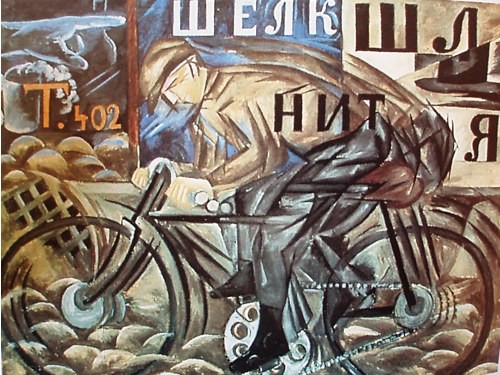
In questo modo anche in Russia cominciarono a fervere molti sperimentalismi letterari soprattutto intorno al poeta Chlebonikov che giocava con gli echi simultanei delle parole , con le assonanze , con la creazione di neologismi , con il linguaggio infantile asemantico.E già da allora,la ricerca strettamente formale russa antiaccademica stava avanzando i suoi primi rilevanti progressi attraverso molti sperimentalismi letterari.
Spesso alcuni gruppi di artisti russi organizzavano mostre,si riunivano in serate speciali in cui declamavano i principi della loro estetica oppure passeggiavano per strada con vestiti stravaganti e i volti dipinti declamando tra i passanti a viva voce e in maniera provocatoria i versi dei loro poemi come soleva fare Natalja Goncarova Michail Larionov,David e Nikolaj Burljuk,Benedict Livsic,Aleksej Krucenyc e Vladimir Majakovskij (1909).Ma c’e’ da dire che le loro provocazioni non erano condivise dal popolo.Questi artisti che operavano a Mosca , facevano parte del gruppo Gileia e si contrapponevano ai futuristi di San Pietroburgo perché si battevano per la collettività e per il movimento organizzato.
La ricerca del nuovo, in Russia non era però proiettata verso il mondo moderno, come in Italia(modernismo tecnologico) poiché la Russia necessitava di un profondo e strutturale rinnovamento della società e questo elemento era vissuto come una basilare esigenza anche se spesso l’artista si dibatteva tra le innovazioni occidentali e la necessità di non snaturare la cultura slava e quindi si poneva l’esigenza di rimanere fedele alle proprie radici e alla propria nazione(primitivismo)
Per questo motivo,la diffidenza nei confronti dei modelli occidentali,portò alcune avanguardie russe agli antipodi della cultura futurista dominante, privilegiando modelli fantasiosi con riferimenti preistorici e precristiani(gruppo neoprimitivista “Fante di Quadri” di Natalja Goncarova).
Ecco perché Marinetti trovò spesso grandi ostacoli nei contatti con il Futurismo russo e più volte venne accolto da loro con diffidenza in quanto nella sua estetica predicava la realizzazione del futuro nel presente e perché le sue teorie risultavano paternalistiche,invece i russi concepivano l’arte come ricerca delle radici popolari del passato,al servizio del popolo e come precorritrice della futura rivoluzione
La divergenza tra i due Futurismi si concretizzò definitivamente nel 1914 ad opera di Majakovskij che attorno al LEF (Levyi Front Iskusstv),Fronte di sinistra delle arti, aveva riunito poeti,scenografi e registi.(Einsenstein)
Nel 1913 fu fondata da un gruppo di intellettuali(Papini, Soffici e Prezzolini) la rivista letteraria Lacerba che diede spazio al Futurismo italiano nell’esaltazione anarchica del “genio” e del “superuomo”.In questo periodico comparvero interventi di Marinetti,Folgore,Boccioni,Carrà e Govoni.
Lacerba pubblicò anche il Programma politico futurista nel quale venivano attaccate le istituzioni clericali,liberali e moderate di Giolitti e di Gentiloni.
Le contraddizioni tra i due Futurismi sono molte.Il Futurismo italiano inneggiava alla rivoluzione tecnologica, esaltava la fiducia illimitata nel progresso, decretando inesorabilmente la fine delle vecchie ideologie e della letteratura ottocentesca, viste come passatismo da superare.
“Un’automobile ruggente è più bello della Nike di Samotracia” l’aggettivo bello andava al maschile perché l’automobile era considerata un oggetto maschile che esprimeva un senso di potenza ascrivibile solo ad un soggetto maschio .….
L’esaltazione del dinamismo, della velocità ,della simultaneità nella scrittura e nelle arti figurative erano gli elementi fondanti del Futurismo italiano e li troviamo espressi al meglio nelle opere di Boccioni.
In occidente, l’espandersi di grandi città, il moltiplicarsi di industrie, di catene di montaggio, di mezzi di trasporto, di metropolitane, di automobili, l’estendersi di strade illuminate artificialmente,il telegrafo senza fili ,la radio ,gli aeroplani,spingeva ad un concetto di arte vista come cambiamento veloce delle cose fino all’elaborazione di un’estetica della velocità.
Il Futurismo russo esaltava la visione frammentaria della realtà ,e nella lingua scritta usava le parole come mattoncini(cubismo a parole)in una concezione dello spazio che si stava sgretolando e che ibridandosi con altre avanguardie diventava cubofuturismo..
I futuristi italiani per contrapporsi alla cultura tardo ottocentesca ormai priva di forti contenuti, arrivarono a scardinare completamente la sintassi con l’abolizione dell’aggettivo, dell’avverbio,della punteggiatura e con l’esaltazione dell’onomatopea enfatizzata dalla ripetizione martellante di parole o di intere frasi(ma questo elemento lo troviamo anche in Apollinaire)alla ricerca di un linguaggio slegato dai canoni di bellezza tradizionali(Palazzeschi)…
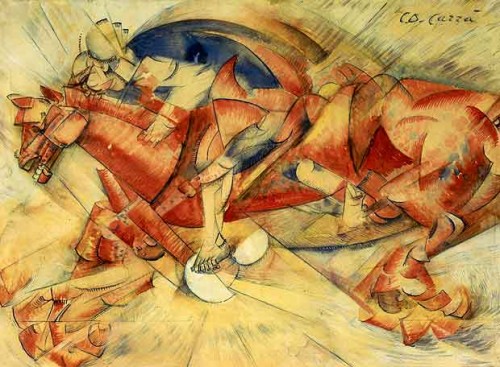
Se nel Futurismo russo emergeva la frammentazione della realtà in particelle più piccole(movimento letterario della Centrifuga), in quello italiano invece si rappresentava l’attimo inteso come parte del movimento stesso…fino ad arrivare al Divisionismo.
Nel Futurismo russo spesso vi erano interpolazioni tra testo visivo e testo scritto in un analogismo transmentale dal quale scaturivano tutti i significati possibili e tutte le idee (uso del linguaggio come potenza creativa).
Nel transmentalismo, le parole rappresentavano segni (una specie di Strutturalismo in fieri) generatori di nuovi inediti orizzonti espressivi che diventavano le chiavi interpretative della realtà.
Nello sforzo di pervenire ad un’interpretazione più definita della realtà,si arrivò fino al Raggismo(Goncarova) in cui la struttura a raggio colpiva ogni elemento per cogliere anche la più piccola rifrazione della luce.
Kandinskij tradusse più tardi, Il Trattato dell’Armonia di Schomberg e per spiegare la sua estetica pittorica usava una metafora musicale(transmentale): ”il colore è il tasto,l’occhio è il martelletto,l’anima è un pianoforte con molte corde”.
Da qui si evince la funzione estetica e poetica del linguaggio,come la definì
Jacobson nei suoi studi.
Molti artisti russi mutuarono la loro arte da pregresse esperienze come cartellonisti(i lubok erano delle stampe popolari russe usate come cartelloni pubblicitari).Ma questo accadde anche per artisti italiani come Soffici e Boccioni
E poi si ritorna alla russa Goncarova anch’essa disegnatrice prima che poetessa…
Majakovskij aveva iniziato come cartellonista pubblicitario approdando poi alla poesia intesa però come propaganda politica ed espressione della rivoluzione e come capovolgimento dei valori sentimentali e ideologici fino ad arrivare a rappresentazioni teatrali nelle quali l’azione è definita dal movimento della folla,l’urto delle idee,le critiche al mondo piccolo-borghese.
I futuristi italiani si descrivevano come’ prepotenti’ , dinamici ,militaristi,patrioti,esaltavano la guerra come sola igiene del mondo,si opponevano alle istituzioni come i musei e consideravano la donna come un soggetto destabilizzante per l’arte e quindi da emarginare.(anche se più tardi nel 1912 qualcuno scrisse Il Manifesto delle donne futuriste) Ecco un’altra contraddizione che evidenziava la magmatica dialettica interna al Futurismo italiano.
Nel Futurismo russo invece operavano molte donne attive come Natalja Goncarova,Alexandra Exter,Olga Rozanova,Lioubov Popova,Varvara Stepanova,Nadeshda Udaltsova.
In poche parole , Martinetti voleva trasmettere un impulso impattante, una forte spinta alla trasformazione e al rinnovamento della società e avrebbe voluto creare un fronte unico futurista in Europa per poi estenderlo a tutto il mondo.
I tentativi di mettere a confronto questi due Futurismi hanno spesso portato a conclusioni ossimoriche : è stato detto tutto e il contrario di tutto.
Alcuni studiosi hanno sostenuto che il Futurismo russo avesse influenzato quello italiano, qualcun altro ha sempre sostenuto il contrario, come il poeta russo Majakovskij.
Ma è certo che il Futurismo italiano ha il grande merito di aver contagiato anche altre nazioni come la Francia,e resta nella sua unicità come la confluenza di quelle avanguardie europee che il Modernismo influenzò profondamente.
Forse il Futurismo italiano si avvantaggio di un primato cronologico,anche se c’è da dire che i primi contatti tra intellettuali italiani e russi avvennero a Parigi.
Ardengo Soffici nel 1903 si recò nella capitale francese dove conobbe una coppia di editori e lì inizio a pubblicare suoi scritti;ci fu poi la collaborazione di G.Papini a riviste letterarie francesi …ma nello stesso tempo Goncarova si trasferì a Parigi insieme ad altri artisti russi e lì nell’ effervescente capitale d’oltralpe, i contatti con i migliori autori simobolisti furono inevitabili.
Insomma, ci furono contatti e scambi da ambedue le parti e Parigi all’epoca era la culla delle migliori produzioni artistico-letterarie.
Ci furono molte interrelazioni tra l’estetica russa e quella italiana che stanno a testimoniare la speciale corrispondenza tra la nostra spiritualità e quella russa e ciò dimostra una certa consonanza tra le due culture.
In tutti e due i casi però,si è passati dall’elaborazione teorica ad uno sbocco politico dei due movimenti che suggellò un divergente percorso ideologico poichè, dopo il deflagrante evento della Prima Guerra Mondiale , gran parte dei futuristi italiani appoggiarono più o meno attivamente il regime fascista che nella sua propaganda si riferiva continuamente a quell’insieme di valori propugnati dai marinettiani mentre il Futurismo russo si fece portavoce dei principi dei soviet.
Prezzolini assimilava il Futurismo al Bolscevismo e Croce assimilava il Futurismo al Fascismo..due posizioni estreme e semplicistiche al punto tale che il nostro Futurismo venne ben presto sconfessato dal Fascismo poiché non dava il giusto spazio alla Storia , alla memoria del passato e alla città di Roma culla di Civiltà.In Russia, dopo l’avvento dei soviet, molti futuristi esiliarono all’estero soprattutto a Parigi e Majakovskij si suicidò nel 1930.
In Italia il secondo Futurismo si divise in due fasi:la prima và dal 1918 al 1928 e in questo periodo il Futurismo si legò al postcubismo e al costruttivismo.
Nella seconda fase che và dal 1929 al 1938 il Futurismo si affiancò al surrealismo.Di quest’ultima corrente fecero parte i pittori: Fillia(Luigi Colombo), Enrico Prampolini,Nicolay Diulgheroff,Mario Sironi,Ardengo Soffici e Ottone Rosai.CarloCarrà si staccò ben presto dal gruppo prendendo le distanze dall’ideologia fascista e abbracciando la metafisica.
-L’Avanguardia trasversale –Il futurismo tra Italia e Russia di Cesare G.De Michelis
Conferenza di presentazione libro presso libreria Mondatori Venezia 16 giugno 2009
-L’Arena di Verona 18 maggio 2008 pag.57 a cura di A.Pantano
-Archivio del Corriere della Sera.it-La Goncarova e Larionov:mostra a Milano
-Il venerdì futurista-Conferenza tenuta dal prof.Rino Cortiana presso la
Biblioteca dipartimentale di Cà Foscari Venezia il 12 giugno 2009
30/06/2009
00:10 Publié dans art | Lien permanent | Commentaires (0) | Tags : art, avant-gardes, italie, russie, futurisme | | del.icio.us | | Digg | Facebook
mardi, 16 juin 2009
Teatro e futurismo
Teatro e Futurismo
Ex: http://augustomovimento.blogspot.com/
«Il Futurismo vuole trasformare il Teatro di Varietà in teatro dello stupore, del record e della fisicofollia»
(dal Manifesto del Teatro di Varietà)
 L’abilità propagandistica e il desiderio di sollevare scalpore, spingono i futuristi ad intervenire anche in campo teatrale. In particolare Marinetti credeva che tutti fossero potenzialmente poeti o drammaturghi. Da questa idea cominciarono, in tutta Italia, a dilagare le celeberrime “serate futuriste”, inizialmente nelle piazze – coinvolgendo nelle rappresentazioni anche il pubblico – e successivamente nei teatri. Marinetti, Corra e Settimelli sono considerati gli iniziatori del teatro “sintetico” futurista: questo aggettivo deriva dal fatto che si trattava per lo più di piccoli “attimi sintetici”, le cui caratteristiche sono la concentrazione, la compenetrazione, la simultaneità e il dinamismo.
Non sempre il pubblico accettava la “forza d’urto” di quel teatro, e spesso rispondeva con ingiurie e con il lancio di ortaggi. Immancabilmente le serate futuriste si concludevano con provocazioni di ogni tipo e con risse furibonde, con tanto di sfide a duello. Spesso i nemici e avversari dei futuristi affittavano interi palchi, munendosi di ortaggi, e al momento opportuno facevano scattare la baraonda. A quel punto i futuristi avevano già vinto la loro battaglia pubblicitaria. L’eco del putiferio si estendeva, attraverso i giornali, in tutta l’Italia.
Osservando più tecnicamente il teatro futurista, si può osservare che – come i dadaisti e i surrealisti – neppure i futuristi italiani furono uomini di teatro nel senso professionale del termine, ma artisti, scrittori, poeti che consideravano il teatro non solo un ideale punto d’incontro, ma anche il migliore strumento di propaganda del loro ideale vitalistico, nazionalista e tecnocratico. Nonostante la mancanza di professionismo, furono coloro che al teatro concessero un’attenzione più continua e organica, soprattutto a livello teorico, in una serie di manifesti: il manifesto dei drammaturghi futuristi (1911), del teatro di varietà (1913), del teatro futurista sintetico (1915), della scenografia futurista (1915), del teatro della sorpresa (1921).
 La contestazione del teatro «passatista e borghese» investe prima di tutto il teatro drammaturgico: a un dramma analitico, basato su una logica degli eventi di fatto impossibile e sulla credibilità astrattamente psicologica dei personaggi, i futuristi contrappongono il dramma sintetico, che coglie, in un’unica visione, momenti cronologicamente e spazialmente lontani, ma connessi fra loro da analogie e da contrapposizioni profonde. Non c’è bisogno di una premessa da sviluppare in una serie successiva di episodi pazientemente organizzati, ma basta l’intuizione del nucleo essenziale dei fenomeni. I personaggi non hanno contenuto psicologico, ma si risolvono totalmente nelle loro azioni, che possono anche esaurirsi in gesti molto semplici, di assoluto valore o non esserci affatto, lasciando l’azione affidata agli oggetti.
Le “sintesi futuriste”, opera soprattutto di Marinetti, furono anche rappresentate, non però dai futuristi stessi, ma da normali compagnie professioniste che non potevano avere né una specifica preparazione, né un particolare interesse ideologico. Il loro significato rimase perciò confinato nella dimensione letteraria.
Non esiste una sola concezione di teatro futurista: esso può essere infatti sia un teatro eccentrico o grottesco, sia dell’assurdo che sintetico. A differenza del teatro classico, il teatro di prosa per eccellenza, non sono fondamentali i dialoghi o comunque le scene parlate, bensì l’attenzione viene catturata dai suoni, dalle luci e dai movimenti corporei. Non è un caso che nel teatro futurista sia utilizzata molto spesso la danza, al fine di trasmettere al pubblico, attraverso i movimenti dei ballerini, un senso di moto, di velocità e dinamismo. Al posto dei dialoghi vi sono didascalie lunghissime e molto dettagliate. Il teatro futurista è spesso un teatro muto e talvolta – in aggiunta – i personaggi sono incomprensibili nelle loro azioni, tanto che lo spettatore rimane stupito e con un senso di confusione. In più capita che il personaggio non sia un attore, bensì un oggetto. In scena si riesce a far diventare reale, normale e logico un comportamento completamente surreale, mentre le frasi, i gesti e le reazioni appartenenti al senso comune risultano banali e assurdi.
Anche il grande Majakovskij si interessò molto al nuovo teatro futurista, ma intendendolo più in senso satirico, per prendere in giro la realtà e gli schemi del buon senso.
 Sul piano scenografico Enrico Prampolini sviluppò tutte le premesse insite nel gusto dei futuristi per le macchine e la tecnologia, scegliendo una scena mobile e luminosa, nella quale l’attore umano sarebbe apparso banale e superato, ed era quindi auspicabile sostituirlo con marionette o addirittura con l’attore-gas «che estinguendosi, o procreandosi, propagherà un odore sgradevolissimo, emanerà un simbolo di identità alquanto equivoca», supremo sberleffo al mattatore del tipico teatro antico italiano.
Il manifesto più significativo è forse quello del teatro di varietà, definito il vero teatro confacente alla sensibilità e all’intelligenza dell’uomo moderno, poiché esalta il sesso di fronte al sentimento, l’azione e il rischio di fronte alla contemplazione, la trasformazione e il movimento muscolare di fronte alla staticità, ma soprattutto perché distrae lo spettatore dalla sua secolare condizione di voyeur passivo trascinandolo nella follia fisica dell’azione.
Per approfondire, leggi il Manifesto del Teatro di Varietà
00:10 Publié dans Littérature | Lien permanent | Commentaires (0) | Tags : littérature, lettres, lettres italiennes, littérature italienne, théâtre, dramaturgie, avant-garde, futurisme, italie, philosophie | | del.icio.us | | Digg | Facebook
lundi, 16 février 2009
Le théâtre futuriste
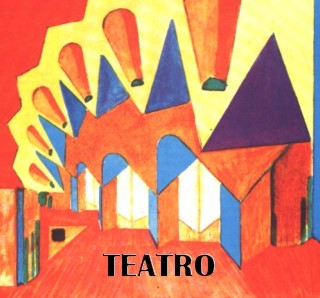
Archives de SYNERGIES EUROPEENNES - 1990
Le théâtre futuriste
Es gibt keinen Hund. Das futuristische Theater. 61 theatralische Synthesen von F.T. Marinetti und Cangiullo, Soggetti, Settimelli, Carli, Boccioni, Buzzi, Balla, Depero, Dessy, Rognoni, Vasari, Nanetti, Janelli, Folgore, Corra, Ginna, Chiti, Calderone, Govoni, Aschieri, Pratella, Fillia und 4 Manifeste, aus dem Italienischen übersetzt und herausgegeben von Brigitte LANDES, München, edition text + kritik, 1989, 223 S., DM 42, ISBN 3-88377-304-2.
Tenant compte du regain d'intérêt pour les futurismes, pour leur revendication d'une «fusion de l'art et de la vie», c'est-à-dire pour l'inclusion dans la sphère artistique de la technique, de la vitesse, des bruits de moteur, de la dynamique, une romaniste allemande, Brigitte Landes, a cru bon d'explorer le lieu par excellence des provocations futuristes, le théâtre. Ce théâtre de scènes courtes, de variété, qui finissait toujours en bagarres, avec l'arrivée de la police pour vider les lieux. La couleur, Marinetti l'avait déjà annoncée dès son manifeste du 11 janvier 1911: il faut mépriser le public des premières, ces bourgeois coincés qui arrivent comme un troupeau pour exhiber leurs femelles coiffées de nouveaux chapeaux. Pour échapper à la banalité, les acteurs doivent être animés du désir de se faire siffler: injures, sifflets, tomates indiquent clairement que la pièce n'est pas du rabâchage (B. Landes, pp. 7 à 9). En 1913, Marinetti, dans un nouveau manifeste, fait l'apologie du théâtre de Variété (cf. B. Landes, pp. 153 à 161) parce que la Variété est sans traditions ni dogmes, purement actuelle. Elle est anti-académique, primitive et naïve. Elle détruit la fausseté festive, le pseudo-sacré, le sérieux ampoulé et le sublime de carton-pâte. Une nouvelle phase du théâtre futuriste commence en janvier 1915, par un nouveau manifeste co-signé par Marinetti, Corra et Settimelli: c'est le théâtre futuriste et synthétique. Ce manifeste commence par un constat: le théâtre est le mode d'expression culturelle le plus prisé des Italiens. Pour neuf Italiens qui vont au théâtre, un seul lit des bouquins: il faut donc que le futurisme s'infiltre dans la société par le biais du théâtre. Ce théâtre subversif doit être synthétique, soit excessivement court. D'une durée de quelques minutes à peine. Ce que ne comprennent pas les innovateurs de l'art dramatique de l'époque tels Ibsen, Maeterlinck, Andreïev, Claudel, Shaw. Ce théâtre, ensuite, doit être a-technique, c'est-à-dire rejeter les techniques traditionnelles qui ont conduit l'art dramatique dans la fange du pédantisme et de l'abêtissement. Ce théâtre doit être dynamique et simultané, naître de l'improvisation, de l'intuition qui jaillit comme l'éclair, de l'actualité riche en découvertes. Ce théâtre doit être autonome, a-logique et irréel, ne rien avoir de commun avec la photographie. En conclusion, ce manifeste de janvier 1915, demande qu'un lien s'établisse enfin entre les acteurs et les spectateurs, inaugurant ainsi les modes d'expression théâtrale contemporains.
En 1921, nouveau manifeste du théâtre futuriste de Rodolfo De Angelis avec la collaboration de Marinetti, Cangiullo, Corra, Carli, Settimelli, Prampolini, Depero, Tato, Casavola, Mix, Bragaglia, Scrivo, Bellanova. C'est le théâtre futuriste de la surprise, prévoyant la farce provocatrice dans la salle: vente d'une même place à plusieurs personnes pour provoquer algarades, injures, gifles et bagarres; badigeonnage de sièges avec de la glu pour ajouter à la pièce proprement dite le spectacle de la fureur d'un bourgeois; les mauvaises places coûtent cher, les bonnes places sont bradées pour presque rien. La provocation et l'interpellation des spectacteurs y atteignent leur comble.
Brigitte Landes complète ces quatre manifestes d'une anthologie de pièces futuristes.
Robert Steuckers.
00:05 Publié dans Littérature | Lien permanent | Commentaires (0) | Tags : livres, littérature, lettres, lettres italiennes, littérature italienne, avant-gardes, futurisme | | del.icio.us | | Digg | Facebook
dimanche, 23 novembre 2008
Marinetti et la révolution futuriste
Marinetti et la révolution futuriste
Trouvé sur: http://metapoinfos.hautetfort.com
Les éditions de l'Herne viennent de publier un ouvrage de Maurizio Serra, historien et diplomate italien, consacré à Marinetti et au futurisme.

"La guerre futuriste est une mobilisation totale contre les valeurs politiques, morales et culturelles du passé; elle permet à Marinetti de rompre les ponts avec la décadence, d'être de plain-pied dans la réalité qui n'est plus la conséquence du passé mais son contraire.
Il repère un ennemi immédiat - les empires centraux "moribonds" - et un objectif facile - l'irrédentisme ; mais surtout il identifie, dans la technique au service du mythe, l'avènement traumatique de la modernité. [... ] Marinetti n'est décidément pas facile à cerner. Il est de "droite" ou plutôt d'"extrême droite", lorsqu'il en appelle au droit du plus fort, au reniement de la solidarité de classe, à la loi martiale contre les pacifistes et les traîtres, à la destruction de l'ennemi et pas seulement à sa défaite.
Il est de "gauche ", ou plutôt d'"extrême gauche" parce qu'à ses yeux la guerre doit mener à la dissolution de tout ordre préétabli, y compris celui des non-belligérants comme l'Eglise - d'où sa fronde pendant la période fasciste contre les compromis et la corruption du régime. "
00:05 Publié dans Littérature | Lien permanent | Commentaires (0) | Tags : philosophie, avant-gardes, art, fascisme, futurisme, italie, lettres italiennes | | del.icio.us | | Digg | Facebook
vendredi, 03 octobre 2008
Entretien inédit avec Julius Evola
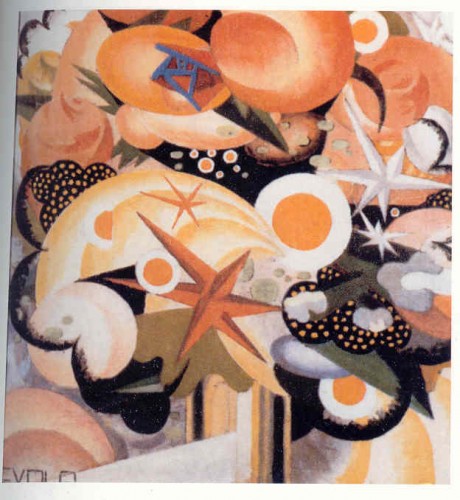
Entretien inédit avec Julius EVOLA
Moi, Tzara et Marinetti
Documents retrouvés par Marco DOLCETTA
Nous publions ici quelques extraits d'un entretien télévisé inédit d'Evola, transmis sur les ondes en 1971 par la TFI, la télévision suisse de langue française. Cet entretien rappelait aux téléspectateurs la période où Evola fut un peintre dadaïste...
En mars 1971, je fréquentais à Paris l'Ecole des Hautes Etudes en Sciences Sociales, pour obtenir un doctorat en philosophie politique. Mais le cinéma et la télévision m'intéressaient déjà. Un soir, j'ai discuté avec Jean-José Marchand qui réalisait alors pour l'ORTF «Les Archives du XXième siècle» et cette discussion nous a conduit à une collaboration fructueuse. Nous étions tous deux animés du désir de rencontrer Julius Evola. Nous voulions l'introduire dans une série d'entretiens portant sur trois points importants du dadaïsme. J'ai organisé cet entretien et il a duré longtemps... Au départ, Evola n'y était pas entièrement hostile, mais il demeurait sceptique. Puis, dans un français impeccable, il m'a parlé très longtemps de l'expérience dada et des doctrines ésotériques. De ce long dialogue, la télévision n'a retenu que trois minutes...
Pour la postérité je dois signaler qu'Evola a refusé de répondre à deux questions. La première: «Dans le Livre du Gotha qui appartenait à mon ancien camarade de collège à Genève, Vittorio Emanuele de Savoie, et à son père Umberto, il n'y a pas de Baron Evola qui soit mentionné. Etes-vous vraiment baron?». La seconde: «Pourquoi, dans l'édition Hoepli de 1941 de votre livre de synthèse des doctrines de la race avez-vous mis en illustration un portrait de Rudolf Steiner, sans mentionner son nom, mais en signalant qu'il était un exemple de race nordico-dinarique, de type ascétique, doté d'un pouvoir de pénétration spirituelle?». Ce jour-là, j'ai compris que Steiner avait cessé de l'intéresser, voire de lui plaire. Evola me fit une grande et belle impression. Voici quelques petits extraits de notre long entretien...
Q.: Parlons du dadaïsme. Quelles ont été ses manifestations en Italie et quelle a été votre contribution personnelle au dadaïsme?
Il faut d'abord souligner qu'il n'y a pas eu de mouvement dadaïste au sens propre en Italie. Il y avait un petit groupe réuni autour de Cantarelli et Fiozzi qui avait publié une petite revue appelée Blu, à laquelle ont collaboré des dadaïstes, mais c'est Tzara qui m'en a appris l'existence. Plus tard, j'y ai moi-même apporté ma collaboration, mais cette revue n'a connu que trois numéros. Pour le reste, j'ai organisé une exposition de mes œuvres en Italie et une autre en Allemagne, dans la galerie Der Sturm de Monsieur von Walden. Il y avait soixante tableaux. En 1923, j'ai participé à une exposition collective, avec Fiozzi et Cantarelli en Italie, à la galerie d'Art Moderne de Bragaglia; ensuite, j'ai publié un opuscule intitulé Arte Astratta pour la Collection Dada. Donc: de la peinture, de la poésie et mon interprétation théorique de l'art abstrait. Et puis, j'ai prononcé des conférences, notamment sur Dada à l'Université de Rome. Ensuite, j'ai écrit un poème: La Parola Oscura del Paesaggio Interiore, un poème à quatre voix en langue française, qui a été publié pour la Collection Dada en 1920 à 99 exemplaires. Ce poème a été réédité récemment par l'éditeur Scheiwiller de Milan.
A Rome, il y avait une salle de concert très connue dans un certain milieu et qui s'appelait L'Augusteo. Au-dessus de cette salle, un peintre futuriste italien, Arturo Ciacelli, avait créé un cabaret à la française: Le Grotte dell'Augusteo. Dans ce cabaret, il y avait deux salles que j'ai décorées moi-même. C'était un petit théâtre, dans lequel il y a eu une manifestation dada, où l'on a récité mon poème à quatre voix, avec quatre personnages évidemment, trois hommes et une fille qui, pendant cette récitation, buvaient du champagne et fumaient, et la musique de fond était de Helbert, de Satie et d'autres musiciens de cette veine; cette soirée avait été réservée uniquement à des invités, chacun recevant un petit talisman dada. Nous avions l'intention de nous focaliser uniquement sur le dadaïsme, en l'introduisant en même temps que le manifeste dada; malheureusement, la personne qui avait promis une aide financière n'a pas...
Q.: ...n'a pas tenu sa promesse.
En effet, elle n'a pas tenu sa promesse... Quant à l'exposition dadaïste, elle ne se contentait pas seulement d'exposer des tableaux; nous avions l'intention déclarée de choquer le plus possible les bourgeois et il y avait dans la salle toute une série d'autres manifestations. A l'entrée, chaque invité était traité comme un vilain curieux, ensuite, à travers toute la salle, étaient inscrites des paroles de Tristan Tzara: «J'aimerais aller au lit avec le Pape!». «Vous ne me comprenez pas? Nous non plus, comme c'est triste!». «Enfin, avant nous, la blennorragie, après nous, le déluge». Enfin, sur chaque cadre, il y avait écrit en petit, des phrases telles: «Achetez ce cadre, s'il vous plait, il coûte 2,50 francs». Sur une autre scène à regarder, on dansait le shimmy, ou, selon les goûts, s'étalaient les antipathies de Dada: «Dada n'aime pas la Sainte Vierge». «Le vrai Dada est contre Dada», et ainsi de suite. Par conséquent, vu cette inclinaison à laquelle nous tenions beaucoup, parce que, pour nous, une certaine mystification, un certain euphémisme, une certaine ironie étaient des composantes essentielles du dadaïsme, vous pouvez donc bien imaginer quel fut en général l'accueil que recevait le public lors de ces soirées, de ces manifestations dadaïstes; elles n'étaient pas organisées pour que l'on s'intéresse à l'art, mais pour nous permettre de faire du chahut: on recevait les visiteurs en leur jettant à la tête des légumes ou des œufs pourris! A part le public en général, les critiques ne nous prenaient même pas au sérieux... Ils n'avaient pas l'impression que nous faisions là quelque chose de sérieux, ou du moins, dirais-je, de très sérieux, au-delà de ce masque d'euphémisme et de mystification. C'est pourquoi je puis dire qu'en Italie le dadaïsme n'a pas eu de suite. Quand je m'en suis allé, après avoir publié trois ou quatre numéros, le Groupe de Mantoue s'est retiré dans le silence, et il n'a pas eu de successeur...
Q.: Retrospectivement, que pensez-vous aujourd'hui de l'expérience dadaïste et du dadaïsme?
Comme je vous l'ai dit, pour nous, le dadaïsme était quelque chose de très sérieux, mais sa signification n'était pas artistique au premier chef. Pour nous, ce n'était pas d'abord une tentative de créer un art nouveau, en cela nous étions à l'opposé du futurisme qui s'emballait pour l'avenir, pour la civilisation moderne, la vitesse, la machine. Tout cela n'existait pas pour nous. C'est la raison pour laquelle il faut considérer le dadaïsme, et aussi partiellement l'art abstrait, comme un phénomène de reflet, comme la manifestation d'une crise existentielle très profonde. On en était arrivé au point zéro des valeurs, donc il n'y avait pas une grande variété de choix pour ceux qui ont fait sérieusement cette expérience du dadaïsme: se tuer ou changer de voie. Beaucoup l'ont fait. Par exemple Aragon, Breton, Soupault. Tzara lui-même a reçu en Italie, peu de temps avant sa mort, un prix de poésie quasi académique. En Italie, nous avons connu des phénomènes analogues: Papini, conjointement au groupe auquel il était lié quand il jouait les anarchistes et les individualistes, est devenu ultérieurement catholique. Ardengo Soffici, qui était un peintre bien connu quand il s'occupait d'expressionnisme, de cubisme et de futurisme, est devenu traditionaliste au sens le plus strict du terme. Voilà donc l'une de ces possibilités, si l'on ne reste pas seul sur ses propres positions. Une troisième possibilité, c'est de se jeter dans l'aventure, c'est le type Rimbaud... On pourrait même dire que la méthode dadaïste n'est pas sans un certain rapport avec la formule “Dada Toujours”, telle que je l'ai interprétée, et qui est aussi la formule d'Arthur Rimbaud, celle de maîtriser tous les sens pour devenir voyant. Comme je l'ai dit, l'autre solution est de se lancer dans une aventure, comme le firent d'une certaine façon Blaise Cendrars et d'autres personnes. Pour finir, il y a bien sûr d'autres possibilités positives, si bien que la nature inconsciente mais réelle de ce mouvement est une volonté de libération, de transcendance.
Poser une limite à cette expérience et chercher à s'ouvrir un chemin, ou choisir d'autres champs où cette volonté pourrait être satisfaite: c'est ce que je faisais en ce temps, après le très grave moment de crise auquel j'ai survécu par miracle. Je suis... parce que l'arrière-plan existentiel qui avait justifié mon expérience dadaïste n'existe plus. Je n'avais plus aucune raison de m'occuper de cette chose, et je suis passé à mes activités pour lesquelles je suis... essentiellement connu.
Q.: Que pensez-vous du regain d'intérêt aujourd'hui pour le mouvement dadaïste, regain qui provient de milieux variés?
A ce propos, je suis très sceptique, parce que, selon mon interprétation, le dadaïsme constitue une limite: il n'y a pas quelque chose au-delà du dadaïsme, et je viens de vous indiquer quelles sont les possibilités tragiques qui se présentent à ceux qui ont vécu profondément cette expérience. Par conséquent, je dis que l'on peut s'intéresser au dadaïsme d'un point de vue historique, mais je dis aussi que la nouvelle génération ne peut pas en tirer quelque chose de positif: c'est absolument exclu.
(Interview paru dans L'Italia Settimanale, n°25/1994; trad. franç. : Robert Steuckers).
00:05 Publié dans Traditions | Lien permanent | Commentaires (0) | Tags : julius evola, traditionalisme, dadaïsme, futurisme, avant-gardes, italie, contestation | | del.icio.us | | Digg | Facebook
dimanche, 11 mai 2008
Vivenza ou la révolution bruitiste
Vivenza ou la révolution bruitiste
par J. M. LOMBART
"Hurle le feu et le souffle du feu, le bruit fils du combat des corps en mouvement s'incarne dans les c¦urs humains".
Ainsi s'achève son sulfureux pamphlet "La Révolution bruitiste". S'il fait grincer quelques dents et hurler quelques sensibilités fragiles, il faut reconnaître à Vi-venza une logique d'un radicalisme hors du commun aujourd'hui.
Après les concerts de l'année 86 en Allemagne, Hol-lande et Italie, le voici de retour. Le cycle français a été introduit par la magistrale soirée (organisation "va-rié-té") donnée à Grenoble en la basilique du Sacré C¦ur. Les gens conviés à cette cérémonie en sont en-core tout retournés, la mystique bruitiste trouva dans ces lieux son grand prêtre.
D'un son chaque fois plus énorme et impressionnant (cela semble d'ailleurs un euphémisme de le répéter), d'une mise en scène encore plus frappante, cette soirée (novembre 86) était le premier concert de Vivenza à Grenoble depuis quatre ans.
L'intransigeance doctrinale de Vivenza ne peut laisser indifférent, sa lucidité lui a permis de dégager de l'hé-ritage futuriste la substantifique moëlle qui génère son travail actuel.
Une cohérence rigoureuse
Sa volonté, sa cohérence en font, il faut bien le recon-naître à présent, l'un des plus puissants représentants du courant industriel. La violence dynamique de ses compositions, liée à une présence scénique déconcer-tante, lui ont permis de se hisser à travers des pâles imitateurs balbutiants et enfantins bricoleurs, au pre-mier rang créatif, écrabouillant comme il aime à le dire, la sclérose électro-acoustique et la frilosité institution-nelle ainsi que l'amateurisme dilettante.
Bien entendu, cette ascension a des risques, et l'un des plus importants reste celui de l'incompréhension. Nombreuses sont les personnes qui préfèrent la fuite devant les évidences politico-culturelles de Vivenza, mê-me s'il ne fait pas dans la dentelle, son cri et son at-titude sont un nécessaire contre-poison pour nos conformismes colonneux. Nos habitudes intellec-tuel-les sont, il est vrai, mises à mal avec lui et, plu-sieurs fois, à la passion qui l'anime, j'ai voulu substi-tuer dans la discussion l'analyse froide mais c'est un ter-rain où il excelle tout aussi bien et c'est ce qui fait sa force et sa cohésion car effectivement chez lui nous ne retrouvons pas tous nos travers répulsifs de cette scène inculte et bruyante. Tout au contraire, ici, le propos est fondé sur une rigueur dépensée, un fondamentalisme bruitiste unique en son genre. Cet aspect particulier peut nous permettre de penser que nous sommes en face d'une réflexion sûrement étudiée et d'une attitude d'une extrême importance.
Sur la ligne qui va des servo-mécanismes aux compo-sitions bruitistes en passant par les textes, disques et concerts, Vivenza nous livre le résultat d'un travail d'une concision qui est remarquable, à plus d'un titre.
Cette détermination dans la démarche depuis plusieurs années ne peut que frapper et c'est pourquoi il est né-cessaire à présent (si l'on ne veut pas se trouver dés-armé face à son propos et à son travail) de lire ce qu'il écrit ou d'écouter très attentivement ce qu'il ne cesse de répéter: "La problématique bruitiste doit être abor-dée d'une manière tout à fait nouvelle, les écoles élec-tro-acoustiques n'ont pas su conserver d'une manière l'aspect révolutionnaire du propos bruitiste tel qu'il nous fut livré par les Italiens; il nous appartient main-tenant de réaliser l'incarnation dynamique de leur vision".
"Le bruit a une exigence dynamique qu'il nous faut développer, même ou surtout violemment, peu importe les craintes, nous devons travailler la matière sonore au corps".
"Fuir les vagues errances anémiées du dilettantisme, qui fait que tout le monde se dit intéressé par le son, mais nul ne songe à savoir si le son s'intéresse à eux. La matérialité objective du bruit est une conception organique vivante, vibrante, mais il ne faut pas plaisanter avec. La position de l'esthète touche-à-tout ne marche pas. Ici, c'est complètement totalitaire au sens psy-cho-logique du mot, c'est-à-dire que cela concerne l'individu en totalité. L'être dans son objectivité et non pas son oreille avec la distance du touriste, le recul de la prudence et du confort. Soit tu décides de t'imposer dans cette discipline et tu te contingentes, soit il vaut mieux continuer à cultiver son néant".
Un "janséniste" sulfureux
Avec de tels propos, il est vrai, rien n'est fait pour dis-siper ce brouillard sulfureux qui semble dissimuler ce personnage hors du commun.
Dans un précédent article, j'avais employé le terme de jansénisme à son sujet et c'est vrai que pour lui le nombre des élus semble fort restreint à l'intérieur du cénacle qui contient "la minorité consciente" luttant avec détermination à la révélation révolutionnaire de la fureur du bruit.
Rigueur d'un autre temps ou ascèse visant l'intégration totale de l'individu dans les structures même du bruit, union furieuse, passionnée et douloureuse rendue vi-si-ble l'espace d'un concert.
Le tellurisme révolutionnaire de Vivenza nous plonge directement dans ces racines profondes: "du plus fort de la matière domestiquée surgit l'immense écho du langage de la terre. Alimentée du sang et de la sueur des hommes de la terre, fécondée, accouche dans la violence du bruit qui est son langage, du bruit qui est son cri, du bruit qui est son sens et sa forme".
Et c'est dans ce bruit que Vivenza s'immerge afin d'y appliquer cette "orchestration méthodique", cette or-ganisation mécaniste et radicale parce que nécessaire et obligatoire sous peine de dérapage. En effet, Vivenza sait qu'il y a un risque et le concert nous livre intégra-lement cette fragilité, ce danger de l'emballement du dépassement, caché par l'agencement précis de la scè-ne et des appareils.
Une cassure historique à colmater
"L'énergie du bruit est une énergie de destruction et de construction". Tout s'articule dans cette dialectique précise, cette relation toujours délicate entre la virtua-lité dynamique des matériaux et leur maîtrise, leur architecture. Nous ne pouvons face à ce travail continuer à reproduire nos schémas catégoriques d'analyse. Vi-venza déroute et c'est très bien, Vivenza dérange et c'est encore mieux, Vivenza déconcerte et nous som-mes désarmés. Sa logique très particulière nous avait déjà surpris lorsqu'il y a quelques années il nous avait expliqué en quoi les propositions théoriques bruitistes formulées par les avant-gardes du début du siècle (futurisme, constructivisme) n'avaient pu s'incarner concrètement, en quoi il y avait une cassure historique qui demandait d'être colmatée, un lien qu'il était né-ces-saire de réaliser. En quoi les écoles acous-tiques qui avaient éclos après-guerre ne pouvaient se dire héri-tiè-res des visions révolutionnaires bruitistes et ce langage effectivement était neuf, particulièrement décapant, nul-le comparasion n'était réellement possible entre le travail savant mais ennuyeux des instituts d'électro-acoustique et celui de Vivenza.
Certains s'étonnent de voir ressortir de l'oubli des théories du début du siècle. Mais Vivenza n'est pas un pâle continuateur qui se contenterait de réactualiser des principes vieux de soixante-dix ans. Vivenza n'est pas un fossile. Il n'est, pour s'en convaincre, que de se pencher un instant sur sa production et ses composi-tions, d'examiner de près ses textes pour voir si le fu-turisme italien est bien la source dont il se réclame (et cela dans une démarche qui combine l'honnêteté intel-lectuelle à la nécessité historique et théorique), il ne se suffit pas de ce rappel, il ne se cantonne pas dans l'attitude de l'historien frileux ou du disciple dévôt.
"Le bruit ne saurait se satisfaire d'une telle attitude. Cette sclérose serait l'antithèse de toute démarche dy-namique". Au contraire, nous sommes ici en présence d'une évidente et concrète action d'une exceptionnelle nouveauté dans ce qu'elle a de profondément novatrice et d'autre part de terriblement enracinée dans son rap-pel historique si particulier qu'il en est presque unique par sa radicalité dans le monde de l'art contemporain.
C'est d'ailleurs ce qui fait dire au journaliste italien Ottavio Casattini: "Représentant la plus pure expres-sion du radicalisme sonore bruitiste mécanique, Vi-ven-za s'affirme comme le plus sérieux propagandiste de l'authenticité industrielle, dans toute son intégralité et toute sa pureté doctrinale".
Porter le bruit à son
maximum de rage et de force
Le jugement de Casattini semble d'une grande justesse d'analyse. Cette authenticité est bien la marque de Vi-ven-za, sa spécificité.Le bruit est, avec lui, porté à son maximum de rage et de force, conservant toute son intégralité essentielle, refusant de l'utiliser en faire-valoir.
Vivenza est bien cet énorme "Souffle des Forges" qui s'affirme à présent avec une intensité d'autant plus dramatique qu'elle est en passe de disparaître de notre paysage industriel européen puisque cette industrie du XIXième siècle est, à plus ou moins court terme, pro-mise à la destruction.
Pour que l'oubli n'afflige pas nos mémoires, Vivenza fait hurler les machines en paraphrasant Dziga Vertov: "Vive la poésie de la machine mue et se mouvant, la poésie des leviers, roues et ailes d'acier, le cri de fer des mouvements, les aveuglantes grimaces des jets in-candescents."
J.-M. LOMBART.
00:28 Publié dans Musique | Lien permanent | Commentaires (0) | Tags : futurisme, bruitisme, avant-gardes | | del.icio.us | | Digg | Facebook