

Many readers likely never heard the name of the remarkable Serbia-born political operator named Srđa Popović. Yet he and his organization, CANVAS, have played a lead role in most every CIA-backed Color Revolution since he led the toppling of Serbian President Slobodan Milosevic in 2000, at least fifty according to last count. Now he has turned his sights on Hungary and Hungary’s popular and defiant Prime Minister Victor Orban.
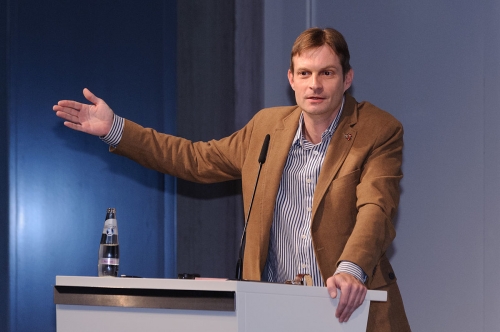
On September 8, the professional regime-change specialist Srđa Popović came to Budapest and joined with the anti-Orban opposition groups in front of the Hungarian Parliament. It‘s clear that Popović was not in town to promote his Hungarian book on nonviolent regime change but rather to give aid to the anti-Orban parties before Hungarian elections in spring of 2018. Many in Hungary smell the oily hand of Hungarian-born regime-change financier George Soros behind the Popović appearance now in Budapest.
Because of the manufactured aura of “hip doer-of-good-deeds” surrounding the personality of Srđa Popović, it’s useful to look closely at who sponsored his remarkable career since he founded a tiny Belgrade student opposition NGO called Otpor! in 1998 with its now famous clenched fist logo. The career of Srđa Popović from 2000 until today suggest a remarkably dishonest manipulator in the service of foreign intelligence agencies and governments, despite his vehement claims otherwise.
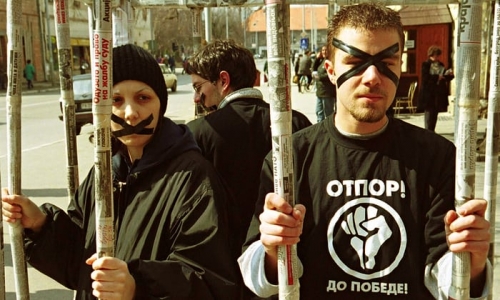
Serbia’s Otpor!
Popović first came to international notice as the founder of the Belgrade student political activist organization Otpor! which means “Resistance!” in Serbian. In October 1998 Popović founded Otpor!, initially as a student protest group at Belgrade University dealing with student grievances. That was soon to change. He and other Otpor founders were trained in the methods of US regime-change specialist Gene Sharp founder of the Albert Einstein Institute in Cambridge Massachusetts and by US State Department soft coup specialists such as Belgrade Ambassador Richard Miles and other trained US intelligence operatives, including election specialists and public relations image makers.
Guiding Otpor!’s Milošević ouster operation, US Ambassador to Serbia Richard Miles was a specialist in regime change, far more so than in classical diplomacy. He orchestrated the CIA coup in Azerbaijan that brought Aliyev to power in 1993 before arriving in Belgrade, and after that went on to orchestrate the CIA coup in Georgia that brought US asset Mikheil Saakashvili to power.
The US Agency for International Development (USAID), widely known as a CIA front, had channeled the Serb Otpor! Millions of dollars in funds through commercial contractors and through the US-government-financed NGOs: the National Endowment for Democracy (NED), the National Democratic Institute, and the International Republican Institute. The Open Society Institute of George Soros was also funneling money into Popović ’s Otpor! for the toppling of Milosevic. I have yet to find a CIA and US State Department regime change or Color Revolution in which the “democracy-building” foundations of Soros were not in a kind of harmony with the Washington State Department and CIA agenda. Maybe just a coincidence.
The NED with all its affiliates was a project of Ronald Reagan CIA head, Bill Casey, in the early 1980’s to conceal CIA regime change operations around the world behind the front of a “private” democracy NGO, the NED. Allen Weinstein, cofounder of the NED admitted to the Washington Post, “A lot of what we do today was done covertly 25 years ago by the CIA.”
According to Michael Dobbs, who was foreign investigative reporter for the Washington Post during the Milosevic ouster, the IRI paid for Popović and some two-dozen other Otpor! leaders to attend a training seminar on nonviolent resistance at the Hilton Hotel in Budapest in October,1999. There Popović and the other handpicked Serbian students received training in such matters as how to organize a strike and how to communicate with symbols, such as the clenched fist that became their logo. They learned how to overcome fear and how to undermine the authority of a dictatorial regime.
The principal lecturer at the secret Hilton Hotel meeting was Gene Sharp’s associate, retired US Army Col. Robert Helvey, a former Defense Intelligence Agency analyst who trained and then used the Otpor! activists to distribute 70,000 copies of a manual on nonviolent resistance in Serb translation. Helvey worked with Gene Sharp, founder of the controversial Albert Einstein Institution, teaching techniques to the US government to conceal its coup d’états under the guise of nonviolence. Sharp was described by Helvey as “the Clausewitz of the nonviolence movement,” a reference to the renowned Prussian military strategist.
Popović and his Otpor! NGO were recipients of a major share of over $41 million US government money for their “democracy-building” campaign in Serbia. Dobbs describes the US involvement:
Behind the seeming spontaneity of the street uprising that forced Milošević to respect the results of a hotly contested presidential election on September 24 was a carefully researched strategy put together by Serbian democracy activists with active assistance of Western advisers and pollsters… US-funded consultants played a crucial role behind the scenes in virtually every facet of the anti-drive, running tracking polls, training thousands of opposition activists and helping to organize a vitally important parallel vote count. US taxpayers paid for 5,000 cans of spray paint used by student activists to scrawl anti-Milošević graffiti on walls across Serbia.
In short, Popović began his revolution-making career as a regime change specialist in an operation funded by the CIA, US State Department, US Government NGOs including the infamous NED and George Soros’ Open Society Institute. The question is what did Srđa Popović do after his first helpful service to Washington in 2000?
After his success in getting rid of Milosevic for his US Government sponsors, Popović created a new organization called CANVAS. He decided to globalize his business model that worked so well in Belgrade in 2000, to make himself an international “go to” person for making US State Department fake democracy regime change. CANVAS or the Centre for Applied Nonviolent Action and Strategies calls itself a non-profit, non-governmental, “educational institution focused on the use of nonviolent conflict.” According to Wikipedia, CANVAS seeks to “educate pro-democracy activists around the world in what it regards as the universal principles for success in nonviolent struggle.”
Popović and CANVAS claim that at least 50% of their obviously substantial funding for this philanthropic work comes from Popović ’s Otpor ally, Slobodan Đinović, co-chair of CANVAS and listed as CEO of something called Orion Telecom in Belgrade. A Standard & Poors Bloomberg business search reveals no information about Orion Telecom other than the fact it is wholly-owned by an Amsterdam-listed holding called Greenhouse Telecommunications Holdings B.V. where the only information given is that the same Slobodan Đinović is CEO in a holding described only as providing “alternative telecommunication services in the Balkans.” It sounds someting like a corporate version of the famous Russian matryoshka doll nested companies to hide something.
Leaving aside the unconvincing statement by Popović ’s CANVAS that half their funds come from Dinovic’s selfless generosity from his fabulous success as telecom CEO in Serbia, that leaves the other roughly 50% of CANVAS funds unaccounted for, as Popović declines to reveal the sources beyond claiming they are all private and non-government. Of course the Washington NGO is legally private though its funds mainly come from USAID. Of course the Soros Open Society Foundations are private. Could these be some of the private patrons of his CANVAS? We don’t know as he refuses to disclose in any legally auditable way.
There is no charge for CANVAS workshops and its revolutionary know-how can be downloaded for free on the Internet. This generosity, when combined with the countries CANVAS has trained regime-change opposition group “pro-democracy activists” suggests that the other 50%, if not more, of CANVAS funding comes from money channels that lead at least in part back to the US State Department and CIA. The Washington Freedom House is known to have financed at least a part of the activities of CANVAS. Freedom House, closely tied to the US neo-conservative war lobby, gets most of its funding from the US Government.
Popović’s CANVAS claims to have trained “pro-democracy activists” from more than 50 countries, including Ukraine, Georgia, Zimbabwe, Burma (actually the legal name since independence from the British is Myanmar but Washington insists on the colonial name), Ukraine, Georgia, Eritrea, Belarus, Azerbaijan, Tunisia, Egypt and Syria. Popović ’s CANVAS was involved as well in unsuccessful attempts to start Color Revolution regime change against Venezuela’s Hugo Chaves and the opposition in the failed 2009 Iran Green Revolution.
Every one of those countries happen to also be targets for Washington regime-change of governments who refuse to toe the Washington line on key foreign policy issues, or which contain vital raw materials such as oil, natural gas or strategic minerals.
Goldman Sachs and Stratfor
Even more interesting details recently came to light on the intimate links between the US “intelligence consultancy”, Stratfor—known as the ”Shadow CIA” for its corporate clients which include Lockheed Martin, Northrop Grumman, Raytheon and U.S. government agencies including the Department of Homeland Security and the Defense Intelligence Agency.
It was revealed in a huge release of internal memos from Stratfor in 2012, some five million emails provided them by the hacker community Anonymous, that Popović, after creating CANVAS also cultivated very close relations with Stratfor. According to the Stratfor internal emails, Popović worked for Stratfor to spy on opposition groups. So intimate was the relationship between Popović and Stratfor that he got his wife a job with the company and invited several Stratfor people to his Belgrade wedding.
Revealed in the same Stratfor emails by Wikileaks was the intriguing information that one of the “golden geese” funders of the mysterious CANVAS was a Wall Street bank named Goldman Sachs. Satter Muneer, a Goldman Sachs partner, is cited by Stratfor’s then-Eurasia Analyst Marko Papic. Papic, asked by a Stratfor colleague whether Muneer was the “golden goose” money behind CANVAS, writes back, “They have several golden gooses I believe. He is for sure one of them.”
Now the very remarkable Mr Popović brings his dishonest career to Hungary where, not a dictator, but a very popular true democrat who offers his voters choices, is the target for Popović’ peculiar brand of US State Department fake democracy. This will not at all be as easy as toppling Milošević, even if he has the help of student activists being trained at Soros’ Central European University in Budapest.
F. William Engdahl is strategic risk consultant and lecturer, he holds a degree in politics from Princeton University and is a best-selling author on oil and geopolitics, exclusively for the online magazine “New Eastern Outlook.”
https://journal-neo.org/2017/10/01/the-dishonest-career-o...

 del.icio.us
 Digg
Digg Facebook

 Le Front Démocratique, mené par Mandic, coalition hétéroclite à dominante nationale-conservatrice, libérale et néanmoins pro-européenne, a priori toutefois nettement plus favorable à la Russie de Poutine que le DPS, avec 20,6% des voix et 18 sièges (-2), échoue une fois de plus à menacer son adversaire principal.
 Avant même d’aborder ces sanglants faits historiques occultés par une histoire officielle qui s’apparente de plus en plus à un ensemble de dogmes officiels incontestables sous peine d’excommunication civile et judiciaire, Christophe Dolbeau prouve que l’Oustacha, Ante Pavelic et l’État indépendant croate demeurent les victimes d’une virulente et intense désinformation. Éléments en pointe de la résistance croate à l’entreprise démente, centralisatrice et unificatrice de la dynastie usurpatrice serbe des Karageorgevic, les oustachis coopèrent avec les nationalistes macédoniens de l’ORIM (Organisation révolutionnaire intérieure macédonienne) et combattent les tchetnik royalistes panserbes de Draja Mihaïlovic qui bénéficient parfois de l’assistance matérielle des Italiens, toujours méfiants à l’égard d’une Croatie indépendante qui contrarient leurs ambitions balkaniques. Zagreb tente d’atténuer les litiges territoriaux et frontaliers avec Rome en s’érigeant en royaume offert à un membre de la Maison royale italienne de Savoie, le duc Aymon de Spolète, devenu Tomislav II. Mais le souverain abdique le 12 octobre 1943…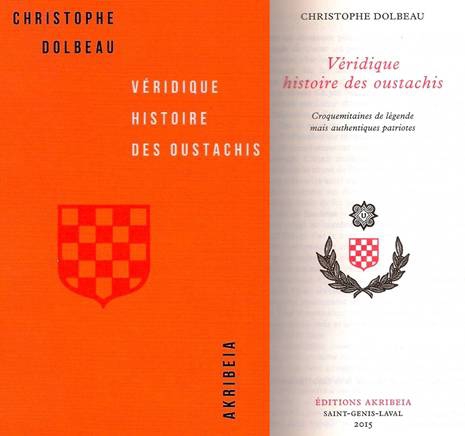
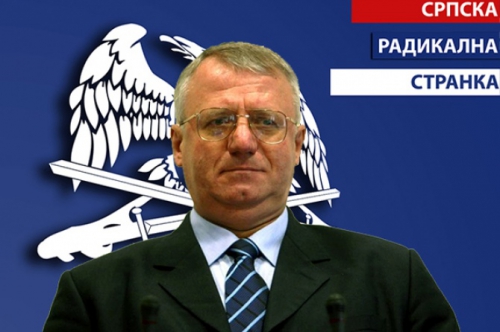
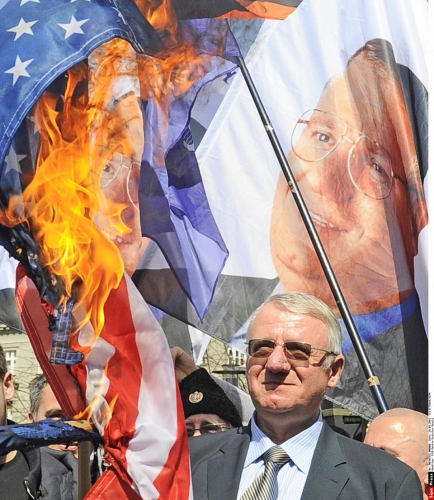
 En l’absence de résultats définitifs à cette heure, le Parti Progressiste Serbe (SNS) d’Aleksandar Vucic aurait obtenu 49% des voix et 161 sièges, lui donnant ainsi une large majorité, même s’il n’a pas réussi à dépasser la barre des 50% des suffrages. Il bénéficierait en effet de l’exclusion de nombreuses formations arrivées très légèrement en dessous des 5% permettant d’avoir des élus, sauf cas spécifique des listes représentant les minorités.

 Bujar Hysa aveva invece svolto un ruolo chiave nel reclutamento di Aldo Kobuzi e di Maria Giulia Sergio. A inizio gennaio 2014 veniva intercettata una telefonata tra Hysa e il cognato di Aldo, Mariglen Dervishllari, il quale avvertiva l’imam: “Ti sto mandando mio fratello; gli ho dato il tuo numero di cellulare”. Senza il supporto della rete di Balla e Hysa sarebbe stato impossibile per i due volontari jihadisti organizzare e finanziarsi il viaggio in Siria.
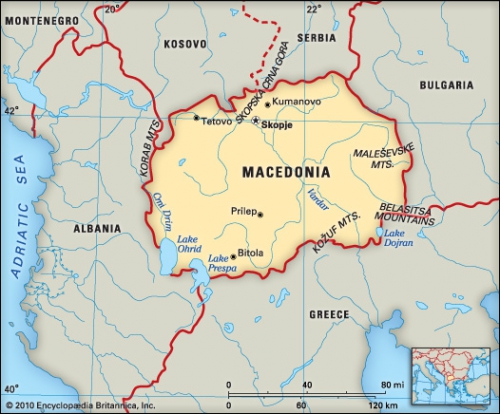
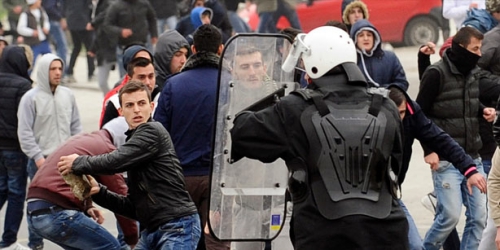
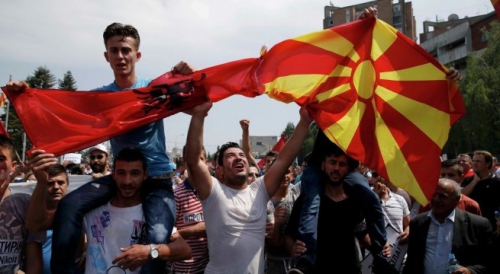
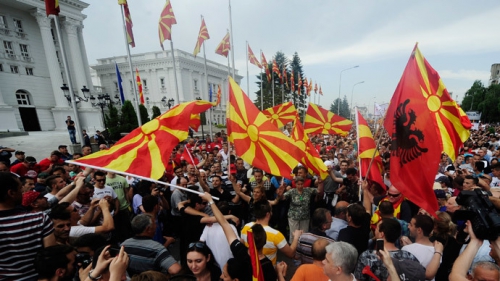
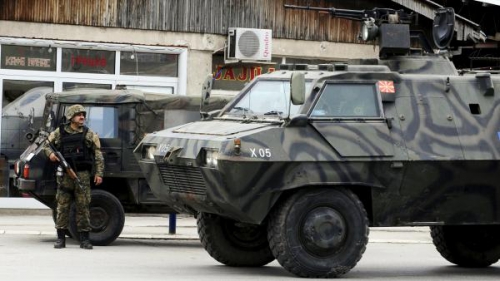
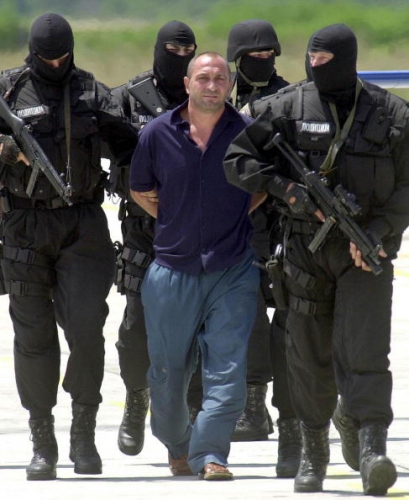
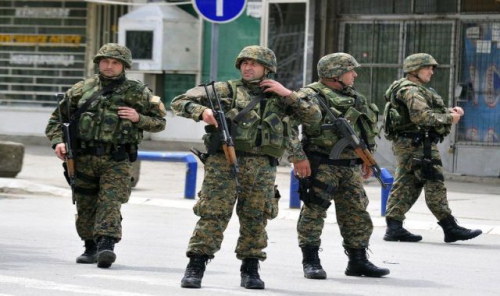

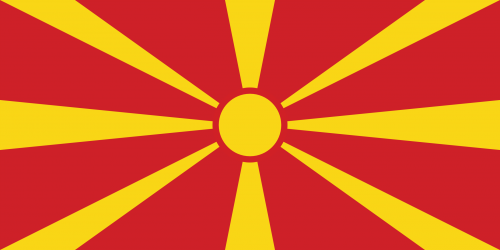


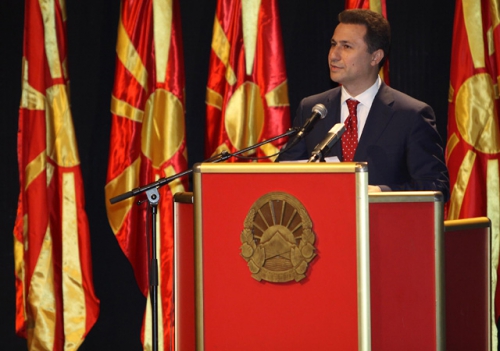
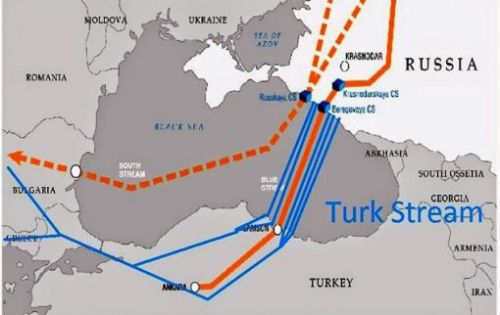
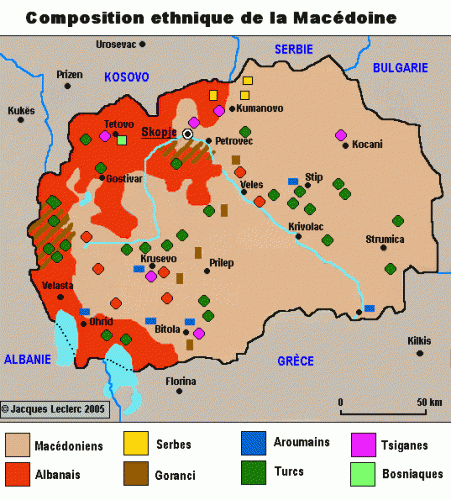
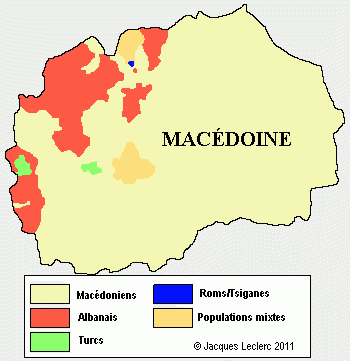 Soros, Nuland e la loro felice compagnia stanno cercando in ogni modo di mettere a ferro e fuoco la Repubblica di Macedonia. I loro burattini all’ interno del territorio macedone, ovvero l’attuale leader dell’ opposizione nonchè presidente del partito social democratico Zoran Zaev, insieme al vecchio presidente macedone Branko Cervenkovski, stanno però fallendo una mossa dopo l’altra. Non è servito a nulla comprare giornali locali, fare centinaia di siti internet uniti ad una propaganda pressante sui siti web, non è servito neppure possedere le televisioni “24 Vesti” o “Telma”, il popolo Macedone è ben informato e sta eroicamente resistendo, tenendo bene a mente i fatti ucraini di piazza Majdan. Nonostante abbia un PIL di poco più di 10 miliardi di dollari, nulla se paragonato ad esempio al denaro gestito dai grandi fondi d’investimento internazionali come i 4000 miliardi di Blackrock, l’attuale presidente Gruevski sta lottando con onestà e coraggio per evitare lo scenario peggiore, resistendo ad ogni tipo di attacco, come ad esempio l’accusa di aver spiato 20000 macedoni, in realtà operazione orchestrata dalla CIA come ha ammesso in un incontro privato, segretamente ripreso, proprio Zoran Zaev. I motivi per cui la Macedonia è sotto attacco sono: il ruolo di anello debole dei paesi balcanici per la costruzione del gasdotto Turkish stream – Balkan stream e oltretutto la pace nei balcani favorirebbe la messa in atto della “nuova via della seta cinese” collegando commercialmente il porto greco del Pireo all’ Ungheria, dunque al cuore dell europa attraverso Macedonia e Serbia.