![PUCCI_MAIN_IMAGE_04[2].jpg](http://euro-synergies.hautetfort.com/media/01/01/412595558.jpg)
Matrice de l’Homme Nouveau
par Sébastien Holué
Ex: http://www.dedefensa.org
« Construire une nouvelle version, une version « améliorée » de l’homme – voici la tâche du communisme » écrivit le « prophète de la révolution permanente » et bras droit de Lénine, Trotski, dans les années 20. L’ambition du régime bolchevique était en effet de créer un « homme nouveau », individu d’une espèce nouvelle. Le marxisme-léninisme reprenait l’idée marxiste de déterminisme historique et donc la possibilité de transformer l’individu par un processus révolutionnaire. L’être humain était pour les communistes une matière malléable à souhait : les idées du physiologiste Ivan Setchenov (1825-1905) sur les stimuli influencèrent profondément Lénine, puis les recherches d’Ivan Pavlov (1849-1936) sur le réflexe conditionné. Staline évoqua à son tour l’artiste comme un « ingénieur des âmes », reprenant en fait l’idée centrale de l’avant-garde russe. Jusqu’à la disparition de l’URSS, l’agitation et la propagande soviétiques utilisèrent dans leur outillage le principe fondamental de « l’aiguille hypodermique ». L’idée qu’un message doit nécessairement provoquer une réaction, celle-ci pouvant être calculée et anticipée. La réalité échappa largement à l’utopie du projet initial. L’homme soviétique devint, dans la langue du sociologue et écrivain Alexandre Zinoviev (1922-2006), un homo sovieticus (titre de son livre de 1982), espèce effectivement différente de l’homo occidentalis, si tant est qu’elle existe. Mais qui disposait d’autant, voire plus, de défauts que de qualités, résultant du contexte totalitaire dans lequel il évoluait : indifférence au travail, à la propriété d’autrui, passivité et grossièreté, tels étaient les traits principaux de ce « nouvel homme ». Dès lors, l’expression homo sovieticus, dont le caractère scientifique est débattu par les historiens, acquit une connotation très péjorative (1).
La supériorité morale du capitalisme préserve l’homo occidentalis de l’indifférence au travail et à la propriété d’autrui. Cela par et pour une exposition continue aux forces salubres du libre marché. De fait, nous explique le Prix Nobel d’Economie Robert Shiller, « les gens n’ont pas toujours le temps et l’énergie d’analyser les informations à leur disposition. Ils ont des biais psychologiques qui les rendent vulnérables à la manipulation et à la tromperie » (2). L’exploitation de cette vulnérabilité est le fonds de commerce de la publicité, aiguille hypodermique par excellence. Elle est réputée démocratique du fait de son omniprésence et usage quasi-libre. Mais plus qu’un modèle de société, elle diffuse un arrière-plan psychologique peu reluisant. La publicité est inoculation inconsciente, dès le plus jeune âge, de l’image mentale d’un homme incomplet et dépendant, dont le salut passe par la consommation, au risque sinon de passer à côté de sa vie. La publicité est perversion de l’économie intime, traque de l’attention. Le philosophe Matthew B. Crawford note que notre monde a privatisé le silence, transformé en produit de luxe. « La société enjoint de se plier au bruit afin d’être partie du tout plutôt que de se tenir à l’écoute de soi. Aussi se trouve modifiée la structure même de l’individu », écrit l’historien Alain Corbin dans son Histoire du silence (3). Sur le plan structurel, si la pratique intensive de la méditation modifie le fonctionnement du cerveau (4), il en va à coup sûr de même pour la surexposition passive aux média. L’injonction identifiée par Alain Corbin fait écho à la « conspiration universelle » dénoncée par Georges Bernanos, dès 1944, dans La France contre les robots : « On ne comprend absolument rien à la civilisation moderne si l’on n’admet pas d’abord qu’elle est une conspiration universelle contre toute espèce de vie intérieure » (5).

Il n’y a bien sûr pas de conspiration universelle au sens propre. La massification des esprits s’enseigne et se pratique au grand jour ; seuls quelques milliers de praticiens ont dans un pays comme la France les moyens de grandes ambitions. Mais il est vrai que le processus d’élaboration des contenus est parfois obscur. Le cas des journalistes est intéressant, qui se font souvent le devoir d’anticiper la réception de l’information au nom d’une responsabilité sociétale (6). « Les médias dominants sont évidemment contraints de tenir compte de leur système de financement – intérêts de leurs actionnaires et publicité qu’ils reçoivent – et cela influe sur leur traitement de l’information ou sur sa hiérarchisation », explique également le médiologue François-Bernard Huyghe (7). De la « fabrication du consentement » (8) à l’aiguille hypodermique, il n’y a qu’un pas. Une fois franchi, le message non commercial au premier degré (informations, programmes scolaires, cinéma, etc..) s’arme sur le modèle de la publicité. Une interprétation correcte et émolliente du monde ambitionne ainsi d’inculquer à homo occidentalis ses critères du bon goût et de l’autocensure, l’assise conformiste de son industrieuse passivité. Le relativisme de combat vise le désarmement psychologique. L’emprise est affaire de communication érigée en système de domination, dans ce cas de propagande et désinformation. Les Etats-Unis s’emploient toujours à diffuser avec abnégation et doigté leur modèle capitaliste, eux qui par exemple « n’imposent en Asie aucune idéologie en dehors du libre commerce » (9). Les élites communistes chinoises ont depuis longtemps compris l’intérêt de certains ajustements idéologiques. Doux commerce, délicate sublimation. Guerre mondiale, civilo-militaire, pour la maîtrise du temps de cerveau disponible. Les élites locales imparfaitement alignées sur les Etats-Unis s’accrochent au concept stratégique d’« exception culturelle » ; les réfractaires censurent.
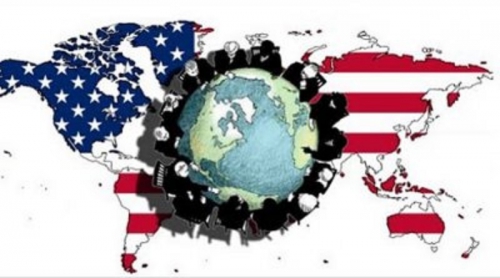
Sur cette base éclairée tente de prendre forme en Europe le projet énoncé entre autres par Alexandre Kojevnikov, dit Kojève (1902-1968). Ce philosophe et économiste représenta la France dans les négociations sur le commerce international (O.C.D.E., G.A.T.T., C.N.U.C.E.D.). Son entreprise philosophique était celle d’une mise à jour du système du savoir hégélien comme système circulaire « épuisant toutes les possibilités de la pensée ». Il analysait les évènements du monde à la lumière du concept de « fin de l’histoire » ou de « mort de l’homme proprement dit », entendant par là la naissance d’une société post-révolutionnaire, donc homogène et universelle, où l’ère de la tragédie disparaîtrait devant celle de l’administration et de la gestion (10). La philosophie de Kojève est en phase avec une version influente du libéralisme contemporain, qui insiste sur ce que le philosophe Michael Sandel appelle le « sujet désengagé » : « La liberté de ce libéralisme postule un sujet qui n’est pas défini par ses liens d’appartenance. Il vit détaché de l’Histoire, de la tradition et de l’identité culturelle. Cette conception de la liberté domine la philosophie anglo-américaine » (11). L’art contemporain et les néoconservateurs ne sortent donc pas de nulle part. Dans sa réduction de l’homme à un agent économique, ce libéralisme présente de grandes affinités avec le socialisme. Fondement de détestations et enthousiasmes partagés sur de nombreux sujets de société. Justification par l’avance progressiste d’influences politiques et économiques extérieures. Support idéologique à la pénétration de nouveaux marchés. Une conception de l’homme ainsi mise en musique par Jacques Attali : « Je crois que l’identité est fondamentale, même si pour moi elle ne se construit pas dans l’exclusion mais dans l’inclusion et l’échange. […] L’identité française, c’est d’abord la langue […] D’où le fait que la francophonie est un élément très important de l’identité française. […] C’est un jeu d’équilibriste avec un balancier. Le fil, c’est la France. Des deux côtés du balancier, il y a l’Europe et la francophonie. […] Oui, avec un parlement de la zone euro, voire un gouvernement de la zone euro. Pour le reste, je suis pour l’élargissement de l’Union, le plus vaste possible, l’Ukraine, la Russie… Il faut rétablir le sentiment de fierté d’être européen. […] on a une langue potentiellement parlée par 700 millions de personnes […] » (12). L’homme a démérité des Lumières. Les bolcheviques de l’humanisme visent donc la « mort de l’homme » et de ses civilisations, utopie à la légitimité renforcée après-guerre par les horreurs du XXème siècle et les prémisses de la seconde mondialisation. Le Village Global – c’est-à-dire l’intégration économique, humaine et politique du monde – et par suite la Fin de l’Histoire sont envers et contre tout l’horizon contemporain. L’obstacle des civilisations peut-il être levé sans leur entrechoquement ? Rêve partagé de l’administrateur et du manager de soumettre le politique, le militaire et le religieux, figures tragiques vouées à disparaître. Xavier Huillard, président de l’Institut de l’entreprise et patron de Vinci, peut faire aujourd’hui ce constat : « Lors de mes études, j’avais appris que l’Etat était le garant du long terme et que nous, entreprises, étions là pour optimiser le court terme. En fait, cette image s’est inversée. Les entreprises […] ont une vision […]. Face à une absence de projet, faut-il s’étonner que nos concitoyens n’adhèrent plus au discours politique ? » (13) Si les politiques ne définissent plus l’avenir souhaitable, à quoi servent-ils ?
Le néolibéralisme a lui pour grand dessein l’affranchissement définitif de la donne biologique et culturelle. Les vagues du Progrès permettent gracieusement d’espérer renverser la table à moyen terme, sans trop avoir à se salir les mains. Vagues idéologiques, technologiques ou hybrides, peu importe ; « surfe ou crève », susurre le propagandiste. L’immigration extra-européenne, la révolution numérique et la mondialisation sont ainsi bonnes en elles-mêmes, le transhumanisme n’étant qu’une variation technologiste sur le même thème. « L’objectif est désormais d’éliminer le hasard pour construire enfin un monde supposé intégralement et définitivement heureux. L’horizon rêvé est celui où le hasard sera maîtrisé, contrôlé, donc purement et simplement anéanti », annonce le philosophe Roger-Pol Droit (14). Un monde gouverné par les algorithmes, qui « enferme l’humanité dans l’univers utilitaire et manipulable de la quantité », écrit Marc Fumaroli (15). Fin de la tragédie, de l’Histoire et de l’homme, dont l’évolution est jusqu’à présent un enchaînement hasardeux et non maîtrisé. Antoinette Rouvroy, chercheuse en droit de l’université de Namur, estime que les firmes de big data visent pour cela une « gouvernementalité algorithmique ». Un mode de gouvernement inédit « opérant par configuration anticipative des possibles plutôt que par réglementation des conduites, et ne s’adressant aux individus que par voie d’alertes provoquant des réflexes plutôt qu’en s’appuyant sur leurs capacités d’entendement et de volonté » (16). L’aiguille hypodermique mise au goût du jour. Pour servir, estiment Marc Dugain et Christophe Labbé, « les intérêts de l’appareil d’Etat américain et ceux d’une supra-oligarchie née du numérique » (17).
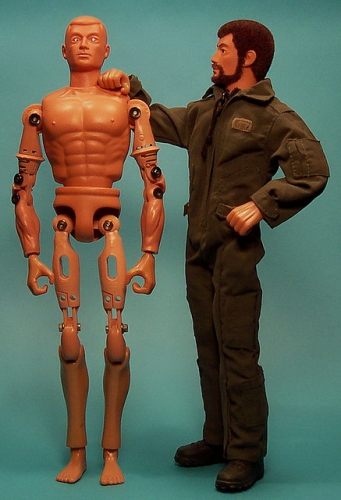 Selon le professeur en sciences politiques Michael Kenny, « les Britanniques ont pris la difficile décision, au moment de la disparition de l’Empire, d’entrer dans l’UE pour continuer de jouer leur rôle au plan international » (18). Il est de fait intéressant de rapprocher l’actuelle séquence historique de la période des empires coloniaux. Il était alors question de « mission civilisatrice » issue de l’humanisme des Lumières ou du positivisme. De projections de populations hors du continent européen, révolutions industrielles et première mondialisation (1880-1914) (19). Aujourd’hui comme hier, les motivations économiques sont parmi d’autres de s’emparer des richesses d’un pays et assurer l’approvisionnement en matières premières, garantir des débouchés à l’industrie nationale en cas de surproduction, forcer l’ouverture et contrôler les routes commerciales. Le contrôle de la traite négrière est devenu celui des flux d’émigration volontaire. « Gigantesque mouvement de migration des cerveaux européens vers l’Amérique qui, dans le sillage de la guerre, changea la face du monde » (20). Fuite des cerveaux et immigration plus ou moins choisie. La conquête d’espaces de peuplement (Etats-Unis, Australie…) par des sociétés encore très agricoles renvoie, pour nos sociétés de services, à l’installation de populations jeunes et fécondes dans des pays riches et vieillissants (21). Apport de carburant humain pour les économies locales, devenues creusets de l’Homme Nouveau. L’immigration est présentée comme une chance car la démographie européenne est en baisse, et bien sûr on ne peut pas obliger les Européens à faire des enfants, nous répète-t-on à l’envie. D’ici à 2050, le secrétaire d’Etat italien Sandro Gozi estime ainsi qu’il pourrait manquer 40 millions de travailleurs dans tout le continent (22)... Notre époque est celle d’un néo-colonialisme universaliste, expurgé de tout discours raciste mais toujours inégalitaire, qui vise, par la pratique du néolibéralisme politique et économique, le dépassement de toutes les civilisations. Les Soviétiques misaient en leur temps sur le communisme pour atteindre le même objectif. Quand le colonisateur universaliste est lui-même colonisé, il prête moins le flanc à la critique morale et politique (23). Agent à part entière ou supplétif d’un impérialisme par nature intégrateur et expansionniste, misant plus sur la communication que sur les armes. C’est l’épuisement de son récit qui mena l’Union Soviétique à sa perte, la fin de la guerre froide menaçant elle-même de déstabiliser le vainqueur (24).
Comme on lance de nos jours la production à grande échelle d’un avion de combat – le JSF F-35 – avant l’achèvement de sa mise au point, on dote périlleusement homo occidentalis de prototypes d’institutions mondiales. Cela avant que sa gangue identitaire ne soit suffisamment entamée. Propagande mise à part, l’Union Européenne, institution mondialiste, n’est pas l’Europe, ensemble géographique et culturel. Face aux aléas, le service du Bien autorise tous les reniements, tels les suites du non au référendum de 2005 sur la Constitution européenne, la politique monétaire de la BCE face à la crise financière, la complaisance de l’UE vis-à-vis de l’islamo-nationalisme turc, les concessions faîtes au Royaume-Uni pour conjurer le Brexit, etc. Gestation amorale d’un proto-néo-Etat, ne reculant pas devant le fracas des armes en Ukraine, après l’ex-Yougoslavie. Même si le bilan militaire des Etats-Unis et de leurs alliés depuis le retrait du Vietnam est largement négatif, malgré leur supériorité technologique et matérielle (25). Malgré ses efforts dialectiques, la nomenklatura continentale ne peut pas encore échapper au tragique, tant les révolutions, même froides, ne sont jamais de longs fleuves tranquilles.
Phagocyté par le haut, l’Etat l’est aussi par le bas. « Les Etats ont besoin de s’assurer du concours des entreprises technologiques pour remplir certaines de leurs missions fondamentales, dont la protection du territoire et de la population. Ainsi le système de renseignement électronique mis en place par les Etats-Unis travaille-t-il en étroite collaboration avec les firmes de la Silicon Valley, ce qui contribue à expliquer la bienveillance des autorités de régulation américaines à leur égard » (26), explique Nicolas Baverez. La réduction des barrières douanières et la mondialisation affectent, au sein de chaque pays, le type de coopération entre régions « riches » et « pauvres », avec la délocalisation de la production. Le basculement d’une production matérielle vers une production immatérielle reconcentre une large part de la valeur ajoutée dans les régions centrales (les « métropoles »). L’accélération du cycle de vie des produits et l’innovation généralisée font désormais plus appel aux métiers et aux milieux des régions centrales que des régions périphériques (27). Moretti Polegato, fondateur de Geox, estime ainsi que « le capitalisme industriel européen doit se transformer en capitalisme culturel. Nous devons créer et breveter, pas fabriquer des chaussures et des chemises » (28). Dans le même temps, 90.1 % des 5.7 millions d’immigrés que comptait la France au 1er janvier 2012 habitaient dans les grandes agglomérations, dont 2.18 millions dans celle de Paris (29). 40 % des habitants de Londres, la plus grande ville du monde occidental, sont nés à l’étranger (30). Le multiculturalisme a une dimension politique bien analysée par le sociologue québécois Mathieu Bock-Côté : « Le multiculturalisme canadien n’a pas une histoire heureuse. A l’origine, dans les années 70, il y a une intention claire : dissoudre politiquement le peuple québécois, qui menaçait l’unité canadienne avec sa tentation indépendantiste. Dans la perspective multiculturaliste, l’identité québécoise ne serait plus celle d’un peuple fondateur du Canada, mais seulement une nuance de bleu dans la grande diversité canadienne. C’est ainsi qu’on pourrait la désamorcer politiquement. Dans la logique du multiculturalisme, il ne peut plus y avoir de culture propre à la société d’accueil. La culture nationale est déclassée, c’est désormais un communautarisme parmi d’autre » (31). Le choc des civilisations contribue à les disqualifier aux yeux d’une opinion de plus en plus déculturée. Tirant la conclusion qui s’impose, la fondation Terra Nova préconisa en 2011 de refonder la base électorale du PS sur une alliance des classes aisées et des « minorités », abandonnant ouvriers et employés en voie de lepénisation aigüe au FN (32). A dire vrai, sur une planète de citoyens sans racines, la nationalité signifie-t-elle encore quelque chose ? (33) Benjamin Barber, ancien conseiller de Bill Clinton, estime que la prime économique et multiculturelle aux métropoles doit se traduire sur le plan politique : « face à de grands enjeux comme l’immigration ou le réchauffement climatique, contrairement aux responsables politiques nationaux, le maire n’est pas enferré dans une idéologie mais contraint au pragmatisme : sa ville doit fonctionner. […] Manque encore un « Conseil de sécurité » des villes ou un « Parlement mondial des maires » qui permettrait d’aider les villes les plus fragiles du Sud ! Ce serait possible si les Etats redistribuaient plus de richesses aux municipalités » (34). Les métropoles nous sont vendues aujourd’hui comme les organisations internationales hier, l’argent devant aller à l’argent, pour la bonne cause bien sûr. On ne s’y prendrait pas autrement pour en faire à terme des enclaves extraterritoriales. « [L’Etat démocratique du XXIe siècle] doit accepter des sentiments d’appartenance multiples, au plan infra-étatique ou continental », écrit Nicolas Baverez (35). S’enferrer dans l’idéologie est bien dommageable quand ce n’est pas au service de puissants intérêts transnationaux. L’Etat, sa tragique légitimité politique et historique, sa masse critique, reste bien un obstacle potentiel sur la Voie du Progrès.

Si une idéologie aussi radicale et élitiste ne peut pas être promue toute nue auprès du grand public, il faut bien susciter en Occident une forme d’adhésion démocratique. La propagande, la désinformation et l’efficacité économique ont leurs limites. Une fois l’emploi de la terreur écarté, il ne reste que l’argent public, adroitement injecté dans l’économie, pour affermir la foi des croyants, s’assurer le soutien d’idiots utiles et corrompre les masses. Certaines élites se sont particulièrement distinguées, la France représentant aujourd’hui « 1 % de la population mondiale, 3.7 % de la production de la planète, mais 15 % de l’ensemble des transferts sociaux » (36). Dans le monde, "en moyenne, la dette publique dépasse maintenant le niveau atteint pendant la Grande Dépression (dans les années 30) et s'approche du niveau qui était le sien au lendemain de la Deuxième Guerre mondiale", note le FMI dans l’un de ses rapports semestriels sur la dette (37). Les engagements des Etats-providence « se révèlent financièrement intenables : ils représentent deux fois et demie le PIB du monde développé, alors que leurs ressources se tarissent et que se profile le choc du vieillissement […] la dette publique se résume en effet à un impôt sur les pauvres et les générations futures » (38), analyse Nicolas Baverez. Nous ferions donc bien de l’intégrer à nos réflexions sur le développement durable ! Pour les Etats, le bilan financier de la mondialisation est comparable à celui de la Deuxième Guerre Mondiale, au profit très inégalement réparti de centaines de millions d’individus aux quatre coins du monde. Un milliard de travailleurs supplémentaire furent intégrés en deux décennies dans la production et les échanges mondiaux (39). Le dumping social bat son plein : « Aux Etats-Unis, presque toute la croissance depuis vingt-cinq ans a été captée par les plus riches. Les 40 % d’Américains les moins payés voient leur pouvoir d’achat baisser », nous explique Patrick Artus. Car l’économie des pays développés ne suit pas, avec sur le long terme un déclin de sa croissance annuelle exprimée en pourcentage du PIB : 2.8 % de 1987 à 1996, 2.5 % de 1997 à 2006, 1.1 % de 2007 à 2016 (40). Le Prix Nobel d’Economie Maurice Allais observait déjà que le taux de croissance annuel du PIB réel français, qui fut de 4.9 % pendant la période 1950-1974, s’abaissa à 2.27 % pendant la période 1974-1997. L’année 1974 était pour lui une date charnière à partir de laquelle les tendances fondamentales furent profondément modifiées : « Après 1974 trois faits majeurs dominent, l’accroissement continu et massif du chômage, la diminution considérable des emplois industriels, la baisse de la croissance du produit intérieur brut ». Il n’y voyait qu’une seule cause majeure et déterminante : « la politique à partir de 1974 de libéralisation mondialiste des échanges extérieurs de l’Organisation de Bruxelles, dont les effets ont été aggravés par la dislocation du système monétaire international et l’instauration généralisée du système des taux de change flottants » (41). Le philosophe Marcel Gauchet estime lui qu’après le choc pétrolier de 1973, la France a manqué son entrée dans la mondialisation. Nos élites se sont ensuite converties à une Europe mal pensée et un néolibéralisme néfaste, dans l’oubli de l’Histoire (42). Sur plus de quarante ans, les explications du déclin par une série de crises conjoncturelles (pétrolières, financières, etc.) ne tiennent donc pas. Maurice Allais analysait ainsi le poids relatif des composantes du sous-emploi total en France pour la période 1995-1997 : libre-échange mondialiste : 50.7 % - structure de la politique sociale : 24.5 % - immigration non communautaire : 17 % - progrès technologique : 5.2 % - situation conjoncturelle : 2.6 % (43). De temps en temps, un tabou fait mine de tomber. Rendons grâce à l’économiste américain le plus en vogue actuellement de nous expliquer pourquoi le progrès technologique ne produit plus de croissance (44).
Les démocrates perçurent pourtant le danger dès l’antiquité. Pourquoi trouvait-on, parmi les premiers fonctionnaires des cités grecques, des esclaves jouissant d’une condition privilégiée ? Ces fonctions requéraient une expertise dont les citoyens étaient bien souvent dénués. Il s’agissait pour la cité de placer hors du champ politique un certain nombre de savoirs spécialisés, dont la maîtrise ne devait légitimer la détention d’aucun pouvoir. Surtout, la démocratie directe, telle que la concevaient les Grecs, impliquait que l’ensemble des prérogatives politiques soit entre les mains des citoyens. Le recours aux esclaves assurait ainsi que nul appareil administratif ne pouvait faire obstacle à la volonté du peuple. En rendant invisibles ceux qui avaient la charge de son administration, la cité conjurait l’apparition d’un État qui puisse se constituer en instance autonome et, le cas échéant, se retourner contre elle (45). Permanence des Etats profonds, des réseaux américains étoffés pendant la Seconde Guerre Mondiale. Théâtre d’ombres électoral ; « democracy is seriously overrated », nous dit Frank Underwood (46). Obsession à juste titre de nos élites, le populisme est la forme d’opposition la plus médiatique à leur confiscation du pouvoir. Selon François-Bernard Huyghe, le terme est utilisé « sans avoir fait l’objet d’une définition précise, contre tous ceux qui remettent en cause l’ordre établi dans la sphère occidentale » (47). Le philosophe Vincent Coussedière y voit un « instinct de conservation désespéré » (48), pas tant une idéologie qu’une réaction du peuple à sa propre décomposition sociale. En se dressant contre son élite, le peuple populiste entendrait lui signifier qu’il veut conserver sa sociabilité propre, être protégé des influences extérieures excessives et gouverné selon son intérêt (49). Malentendu, mouvement d’humeur ou réaction, en tout cas négation flagrante de l’Homme Nouveau. Dans le monde entier, la résistance monte et s’organise contre le néo-colonialisme universaliste. Elle est forcément très hétérogène, pas toujours bien disposée ou inspirée. La diabolisation est son lot commun. Le dogme a notamment du mal à s’imposer dans les petites nations d’Europe de l’Est, déçues par l’indifférence endémique de l’UE, méfiantes à l’égard des contraintes économiques et de la mondialisation, hostiles aux politiques d’accueil de migrants (50). Chat échaudé par quarante-cinq ans de soviétisme craint l’eau froide du Progrès.
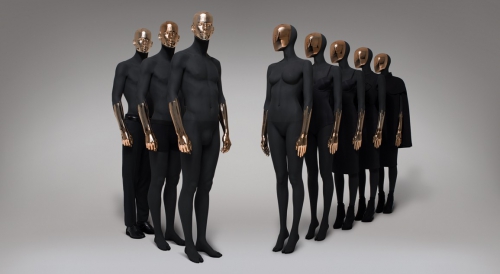
La chute d’un autre Mur de mensonges et fausses certitudes se profile à l’horizon. Sensible sur les quarante dernières années, le déclin démographique, économique et militaire des pays développés signe la faillite idéologique de leurs élites. Avec elle s’annonce l’évolution rapide et en profondeur du mode de vie occidental, sous couvert ou non de lutte contre le réchauffement climatique (économie du partage, circulaire, reflux à venir de la périurbanisation, etc.) (51). Parallèlement, la surveillance technologique s’accroît au nom de la lutte antiterroriste. Winter is coming (52).
Sébastien Holué
Notes
(1) KOZOVOÏ Andreï, Russie – Dictionnaire d’histoire et de civilisation, entrée « Homo sovieticus », Ellipses, Paris, 2010, pp.159-160
(2) SHILLER Robert, « Nous sommes dans une situation similaire à la grande peur des années 30 », propos recueillis par Clément Lacombe et Marc Vignaud, Le Point, n°2276, 21 avril 2016, p.69
(3) MAHLER Thomas, « Pourquoi nous avons perdu le silence », Le Point, n°2273, 31 mars 2016, pp.60-62
(4) GAIRIN Victoria, « Méditer », Le Point, n°2198, 30 octobre 2014, p.72. L’utilisation d’un caisson d’isolation sensorielle, réduisant au minimum tous les stimuli, donnerait des résultats comparables. Voir Wikipédia, « Caisson d’isolation sensorielle », consulté le 24 avril 2016.
(5) Cité dans DANDRIEU Laurent, « Le people, fleur du désert spirituel », Valeurs Actuelles, n°4141, 7 avril 2016, p.72
(6) Voir RIOCREUX Ingrid, La langue des médias – Destruction du langage et fabrication du consentement, L’Artilleur, Paris, 2016
(7) HUYGHE François-Bernard, « La désinformation », La Nouvelle Revue d’Histoire, n°84, mai-juin 2016, pp.6-9
(8) Voir CHOMSKY Noam, HERMAN Edward, La fabrication du consentement – De la propagande médiatique en démocratie, Agone, Marseille, 2008
(9) SORMAN Guy, « Le destin du monde se joue aux Paracels », Le Point, n°2271, 17 mars 2016, pp.155-157
(10) JULIA Didier, Dictionnaire de la philosophie, entrée « Kojève », Larousse, Paris, 1992, pp.144-145
(11) SANDEL Michael, « Michael Sandel, les leçons politiques de la star de Harvard », propos recueillis par J. D., Le Point, n°2274, 7 avril 2016, pp.118-121
(12) ATTALI Jacques, « Faire de la France la première puissance d’Europe », propos recueillis par Yves de Kerdrel et Yves Roucaute, Valeurs Actuelles, n°4143, 21 avril 2016, pp.97-98. Les concepts de cosmopolitisme et d’« amitié entre les peuples » sont bien surannés. L’identité all inclusive de l’authentique « citoyen du Monde » reste toutefois à définir concrètement.
(13) HUILLARD Xavier, « Ayez donc le moral ! », propos recueillis par Marie de Greef-Madelin et Frédéric Paya avec Agnès Pinard Legry, Valeurs Actuelles, n°4144, 28 avril 2016, pp.48-50. Xavier Huillard obtint ses diplômes à la fin des années 70.
(14) DROIT Roger-Pol, La philosophie ne fait pas le bonheur… et c’est tant mieux !, Flammarion, Paris, 2015
(15) Cité dans LE FOL Sébastien, « Le numérique va-t-il tuer la démocratie ? », Le Point, n°2275, 14 avril 2016, pp.115-117
(16) Citée dans DUGAIN Marc, LABBE Christophe, L’homme nu, Plon/Robert Laffont, Paris, 2016
(17) Cités dans LE FOL Sébastien, op.cit.
(18) Cité dans STRAUCH-BONART Laetitia, « Voyage chez les intellectuels britanniques à l’heure du Brexit », Le Point, n°2278, 5 mai 2016, pp.135-139
(19) Voir BERGER Suzanne, Notre première mondialisation – Leçons d’un échec oublié, Seuil, Paris, 2003
(20) VILLANI Cédric, BAUDOIN Edmond, Les rêveurs lunaires – Quatre génies qui ont changé l’histoire, Gallimard-Grasset, Paris, 2016
(21) Voir Wikipédia, « Colonialisme », consulté 22 avril 2016.
(22) GOZI Sandro, « Cette génération qui doit sauver l’Europe », Le Point, n°2277, 28 avril 2016, pp.115-117. Les sondages en France et en Italie montrent un désir d’enfant inassouvi pour des raisons économiques (prix du logement, difficulté à concilier famille et carrière, etc.). Du fait notamment des progrès de la robotique, faire des prévisions sur le marché de l’emploi à l’horizon 2050 relève de l’enfumage. Il s’agit sans doute ici de 40 millions de consommateurs.
(23) Il est humain, trop humain, qu’il s’efforce malgré tout de vivre dans un quartier privilégié, d’échapper en partie à l’impôt, voire d’acquérir la nationalité américaine.
(24) En mai 1988, Arbatov, conseiller de Gorbatchev, dit à l’hebdomadaire Newsweek : « Nous allons vous faire une chose terrible, nous allons vous priver d’Ennemi». On se pose en s’opposant.
(25) Voir CHALIAND Gérard, Pourquoi perd-on la guerre ?, Odile Jacob, Paris, 2016. Il est bon de se le rappeler quand les références aux années 30 se multiplient.
(26) BAVEREZ Nicolas, Danser sur un volcan, Albin Michel, Paris, 2016
(27) DAVEZIES Laurent, « L’état de la désunion », propos recueillis par Matthieu Huvelin, Le: CNAM Mag’, n°2, juin 2015,, p.39. Consulté le 17 juin 2015.
(28) POLEGATO Moretti, « Vivement les Etats-Unis d’Europe », Le Point, n°2277, 28 avril 2016, pp.74-75.
(29) DELHOMMAIS Pierre-Antoine, « Le chiffre – 90.1 », Le Point, n°2277, 28 avril 2016, p.17
(30) Journal Télévisé de 20H, France 2, 1er mai 2016
(31) BOCK-CÔTE Mathieu, « Non à la trudeaumania ! », Le Point, n°2277, 28 avril 2016, pp.119-120
(32) DESANGES Guillaume, « Terra Nova ou la nouvelle idéologie socialiste », Valeurs Actuelles, 13 octobre 2011. Consulté le 1er mai 2016.
(33) SELASI Taiye, « Sur une planète de citoyens sans racines, la nationalité signifie-t-elle encore quelque chose ? », Géo Hors-Série, Les Grands Défis de Demain – Edition 2015, septembre – octobre 2015, pp.96-99. Numéro réalisé en partenariat avec le New York Times News Service & Syndicate.
(34) BARBER Benjamin, « Les villes savent trouver des solutions locales à des défis globaux », propos recueillis par Jean-Christophe Servant, Géo Hors-Série, Les Grands Défis de Demain – Edition 2015, septembre – octobre 2015, pp.92-93
(35) Cité dans GERNELLE Etienne, « Baverez : pourquoi ce n’est pas le moment de dormir… », Le Point, n°2269, 3 mars 2016, pp.42-44
(36) BAVEREZ Nicolas, op.cit.
(37) Challenges.fr (avec AFP), « Dette : le FMI tire la sonnette d’alarme », 13 avril 2016. Consulté le 25 avril 2016.
(38) BAVEREZ Nicolas, op.cit.
(39) BAVEREZ Nicolas, op.cit.
(40) LACOMBE Clément, VIGNAUD Marc, « Les nouvelles lois de l’économie », Le Point, n°2276, 21 avril 2016, pp.62-66
(41) ALLAIS Maurice, La mondialisation, la destruction des emplois et de la croissance – L’évidence empirique, Clément Juglar, Paris, 1999, pp.144-145. Par deux fois, en 1963 et 1967, le général de Gaulle refusa l’adhésion britannique à la Communauté Européenne. 1973 : entrée du Royaume-Uni dans le Marché Commun. 1974 : dernier budget excédentaire de l’Etat en France. 1976 : décret instituant le regroupement familial en France, possibilité donnée aux travailleurs immigrés de faire venir leur famille. 1977 : inauguration du Centre Pompidou, voué à la création moderne et contemporaine.
(42) GAUCHET Marcel, « La France ne sera plus une grande puissance », propos recueillis par Saïd Mahrane, Le Point, n°2270, 10 mars 2016, pp.145-149
(43) ALLAIS Maurice, op.cit., p.180. Avec une erreur de plus ou moins 20 % sur chaque poste en raison des incertitudes statistiques.
(44) GORDON Robert, « Il faudra augmenter soit l’immigration, soit les impôts », propos recueillis par Marc Vignaud, Le Point, n°2276, 21 avril 2016, pp.67-68
(45) ISMARD Paulin, La Démocratie contre les experts – Les esclaves publics en Grèce ancienne, Seuil, Paris, 2015
(46) Frank Underwood est un personnage de la série House of Cards. Cité dans JACOBERGER-LAVOUE Virginie, « Le monde vu par les séries », Valeurs Actuelles, n°4140, 31 mars 2016, pp.66-68
(47) HUYGHE François-Bernard, op.cit.
(48) COUSSEDIERE Vincent, « Le populisme, c’est l’instinct de conservation du peuple », propos recueillis par Olivier Maulin, Valeurs Actuelles, n°4141, 7 avril 2016, pp.22-23
(49) MAULIN Olivier, « Analyse – Le penseur du retour au peuple », Valeurs Actuelles, n°4141, 7 avril 2016, p.22
(50) LORRAIN François-Guillaume, « Cette Europe qui veut faire sécession », Le Point, n°2276, 21 avril 2016, pp.147-151. Milan Kundera donna en 1983 cette définition de la petite nation : « Celle dont l’existence peut être à n’importe quel moment mise en question, qui peut disparaître et qui le sait ». Il ajouta que, « dans notre monde moderne où le pouvoir a tendance à se concentrer de plus en plus entre les mains de quelques grands, toutes les nations européennes risquent de devenir bientôt de petites nations et de subir leur sort » (revue Le Débat, n°27, novembre 1983, pp.15-16).
(51) Le développement de la Chine et de l’Inde contraint de toute façon le capitalisme à repenser ses modes de production, au risque sinon de tensions croissantes entre puissances nucléaires pour la maîtrise des approvisionnements en matières premières et denrées.
(52) Devise de la Maison Stark dans la série Game of Thrones.





 del.icio.us
 Digg
Digg Facebook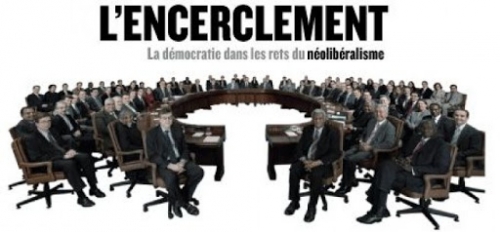
 Lucien appelait à une saine réaction populaire, comme disait Pie X dans les prédictions qu’on lui prête. Mais tout cela a fait long feu et les sondages donnent Macron vainqueur aux prochaines élections… Ou Sarkozy. On continuera de tonner contre (Flaubert) puis on fera la queue devant Picard, McDonald, ou chez le marchand d’or.
 Villiers-de L’Isle-Adam le disait déjà dans ses Contes cruels : « le premier des bienfaits dont nous soyons, positivement, redevables à la Science, est d’avoir placé les choses simples essentielles et « naturelles » de la vie HORS DE LA PORTEE DES PAUVRES. »
 Cela c’est quelque chose que les leaders de Davos appliquent. Pas d’humanitarisme, privons le peuple et il se calmera. Il ne s’agit pas de donner plus, comme au cours des Trente Glorieuses, quand on avait une U.R.S.S. un peu plus convaincante que la Russie miniature de Poutine, des syndicats marxistes et des partis communistes. Car si on lui donne, il demandera plus. Faisons-lui peur avec la dette, le climat, le machisme, les attentats, il se soumettra. Trottinette/bicyclette, jeûne et smartphone au programme. Dix mètres carrés pour mille euros. Voyez le film Marie-Francine, de Valérie Lemercier, qui a très bien compris tout cela. Quatre ans plus tard le mouvement social se contente d’empuantir un peu plus Paris, avec sa grève des éboueurs qui ne débouche sur rien.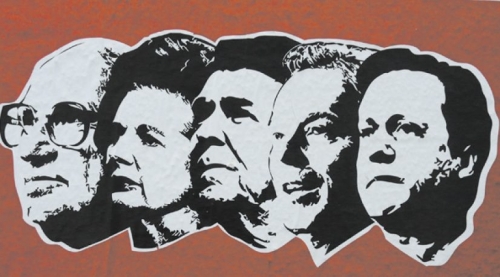
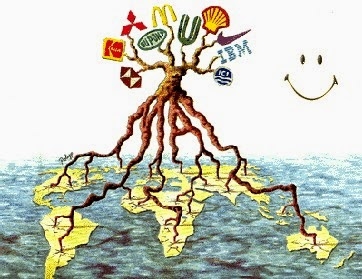

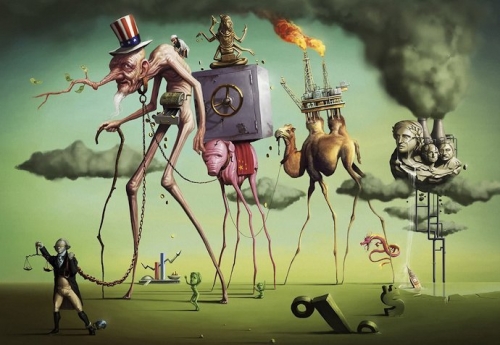
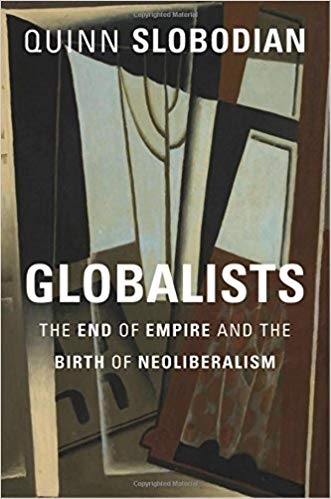 One of the seminal ideological battles of recent history has been that between internationalism, in one form or another, and nationalism. Countless words have been devoted to dissecting the causes, effects, merits, and drawbacks of the various incarnations of these two basic positions. Neoliberalism has, however, succeeded in becoming the dominant internationalist ideology of the power elite and, because nationalism is its natural antithesis, great effort has been expended across all levels of society towards normalizing neoliberal assumptions about politics and economics and demonizing those of nationalism.
 Slobodian begins with the dramatic shift in political and economic conceptions of the world following the First World War. As he observes, the very concept of a “world economy,” along with other related concepts like “world history,” “world literature,” and “world affairs,” entered the English language at this time (p. 28). The relevance of the nineteenth-century classical liberal model was fading as empire faded and both political and economic nationalism arose. As the world “expanded,” so too did the desire for national sovereignty, which, especially in the realm of economics, was seen by neoliberals as a terrible threat to the preservation of the separation of imperium and dominium. A world in which the global economy would be segregated and subjected to the jurisdiction of states and the collective will of their various peoples was antithetical to the neoliberal ideal of free trade and economic internationalism; i.e., the maintenance of a “world economy.”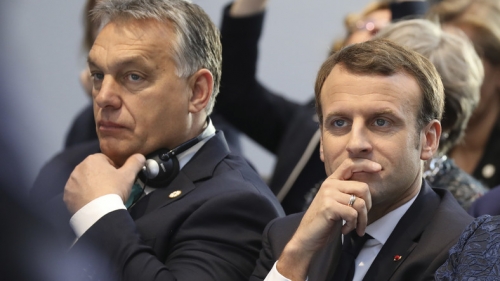
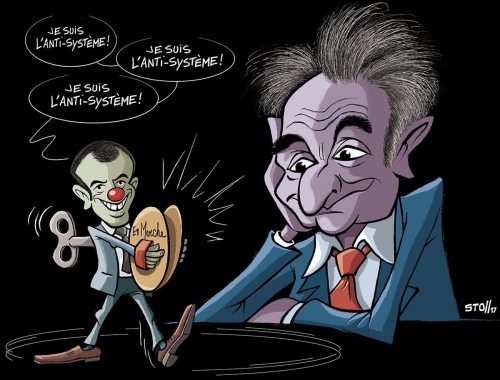
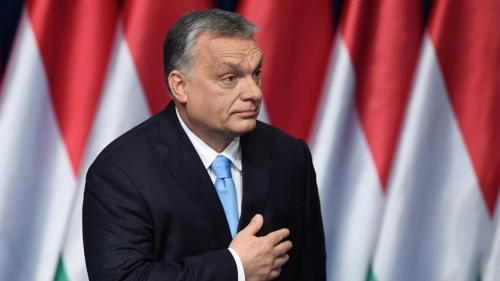
 Or la conception illibérale de l’État, dont s’est réclamé Orban en 2014, apparaît comme une alternative interne à l’équilibre traditionnel des pouvoirs et , à l’extérieur, comme une révision de la politique étrangère et donc comme la chance d’une « autre gouvernance » de l’Union, dont le pivot serait désormais la nation, seul juge du bien commun.







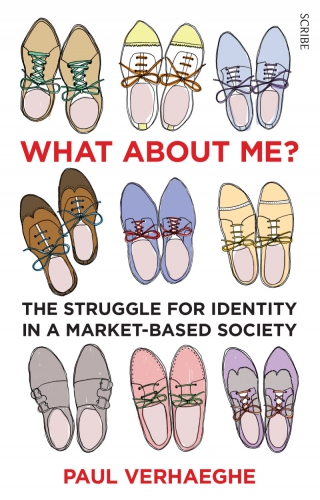 Or nous intériorisons et reproduisons ces croyances. Les riches se persuadent qu'ils ont acquis leur richesse par le mérite, en ignorant les avantages - tels que l'éducation, l'héritage et la classe d'origine - qui peuvent avoir contribué à son obtention. Les pauvres tendent à se blâmer pour leurs échecs, même quand ils ne peuvent guère changer leur propre situation.
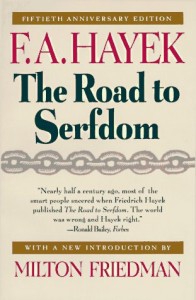 Dans La Route de la servitude, publié en 1944, Hayek a notamment souligné que toute forme de planification par un gouvernement conduisait inexorablement, en écrasant l'individualisme, à un contrôle social de type totalitaire. Tout comme Bureaucratie, le livre de Mises, La Route de la servitude a été énormément lu. Il a notamment attiré l'attention de certains très riches, qui ont vu dans cette philosophie une occasion de se libérer de la réglementation et de l'impôt. Lorsqu'en 1947, Hayek fonde la première organisation de promotion de la doctrine du néolibérale - la Société du Mont Pelerin - il est soutenu financièrement par des millionnaires et par leurs fondations.
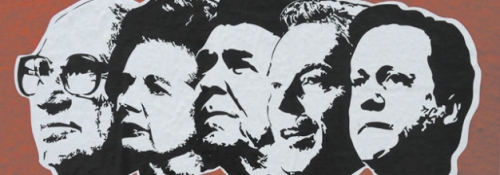
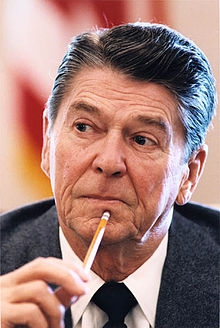
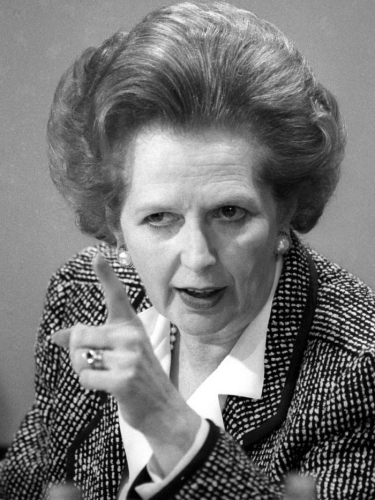 Après que Margaret Thatcher et Ronald Reagan eurent pris le pouvoir, le reste suivit : réductions d'impôts massives pour les riches, écrasement des syndicats, déréglementation, privatisations, externalisation, concurrence dans les services publics. Grâce au FMI, à la Banque mondiale, au traité de Maastricht et à l'Organisation mondiale du commerce, les politiques néolibérales ont été imposées - souvent sans le consentement démocratique des populations - dans une grande partie du monde. Le plus remarquable a été leur adoption par les partis qui appartenaient autrefois à la gauche : le Labour et les Démocrates, par exemple. Comme le fait remarquer Stedman Jones, « il est dur d'imaginer aucune autre utopie qui ait été aussi pleinement réalisée ».
  La privatisation ou la marchandisation des services publics tels que l'énergie, l'eau, les trains, la santé, l'éducation, les routes et les prisons a permis aux entreprises de mettre en place des péages, des loyers ou des dépôts de garantie, payables par les usagers et par les gouvernements.
 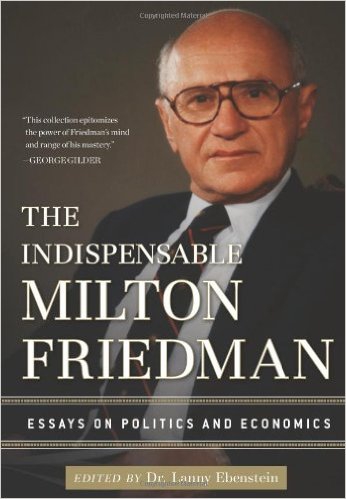 L'anonymat du néolibéralisme est jalousement protégé. Ceux qui sont influencés par Hayek, Mises et Friedman ont tendance à rejeter le terme, clamant - non sans justesse - qu'il n'est aujourd'hui utilisé que de façon péjorative. Mais ils ne nous proposent aucun terme substitutif. Certains se décrivent comme libéraux ou libertaires classiques, mais ces descriptions sont à la fois trompeuses et curieusement dissimulatrices, comme si elles suggéraient qu'il n'y a rien de nouveau depuis la La Route de la servitude, Bureaucratie ou le travail classique de Friedman Capitalisme et liberté.


 Pour François Perroux : « Dans un ensemble humain, les coûts de l’homme se répartissent opérationnellement en trois groupes. Ce sont : 1°Ceux qui empêchent les êtres humains de mourir (lutte contre la mortalité dans le travail professionnel et hors des limites de ce travail); 2°Ceux qui permettent à tous les êtres humains une vie physique et mentale minima (activités de préventions hygiéniques, de soins médicaux, de secours invalidité, vieillesse, chômage) ; 3°Ceux qui permettent à tous les êtres humains une vie spécifiquement humaine, c’est-à-dire caractérisée par un minimum de connaissances et un minimum de loisirs (essentiellement : coûts d’instruction élémentaire, coût de loisir minimum)9 ». Selon Perroux, les coûts humains constituent un minimum à couvrir avant tout autre besoin. Dans le cadre de la mondialisation néolibérale, si l’on excepte une petite minorité, la couverture des coûts humains n’est pas assurée pour une large part de la population et se réduit, comme peau de chagrin, pour le restant.
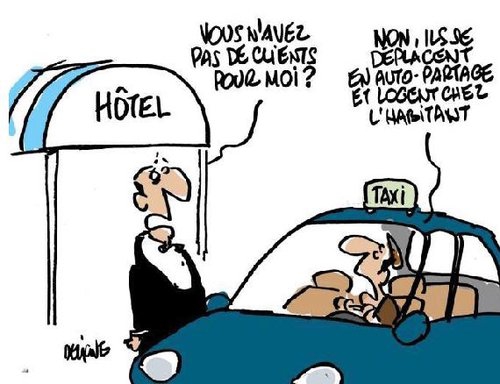

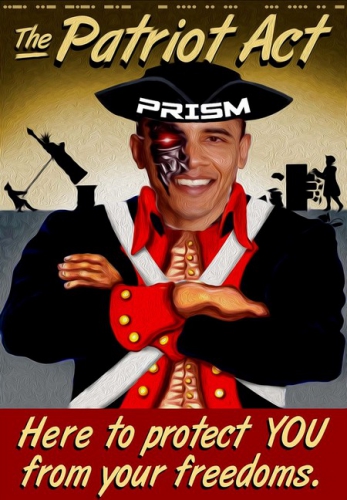

 With privatization comes a kind of collective amnesia about the potential democratic role of government, the importance of the social contract, and the importance of public values. For instance, war, intelligence operations, prisons, schools, transportation systems, and a range of other operations once considered public have been outsourced or simply handed over to private contractors who are removed from any sense of civic and political accountability. The social contract and the institutions that give it meaning have been transformed into entitlements administered and colonized by largely the corporate interests and the financial elite. Policy is no longer being written by politicians accountable to the American public. Instead, policies concerning the defense budget, deregulation, health care, public transportation, job training programs, and a host of other crucial areas are now largely written by lobbyists who represent mega corporations. How else to explain the weak deregulation policies following the economic crisis of 2007 or the lack of a public option in Obama’s health care policies? Or, for that matter, the more serious retreat from any viable notion of the political imagination that “requires long-term organizing—e.g., single-payer health care, universally free public higher education and public transportation, federal guarantees of housing and income security.”