


by Robert PARRY
Exclusive: Early U.S. presidents warned against the dangers of “entangling alliances,” prescient advice that the neocons want President Obama to ignore amid demands from Israel and Saudi Arabia that America tie itself up in the endless and bloody sectarian conflicts of the Middle East, reports Robert Parry.
American neocons are rallying to the new Israeli-Saudi alliance by demanding that President Barack Obama engage more aggressively against the two countries’ foes in the Middle East, thus “bolstering Israeli and Saudi confidence,” as the Washington Post’s deputy editorial-page editor Jackson Diehl declared.
For years, the Washington Post has served as Official Washington’s neocon flagship, bristling in support of every hawkish demand for U.S. intervention in the Mideast, most notably assembling a flotilla of misguided consensus in support of President George W. Bush’s 2003 invasion of Iraq and then pounding any American skeptics who dared emerge over the horizon.
Diehl’s column on Monday [10/28/13] represented an extension of the neocons’ knee-jerk support of Israeli interests to those of the Saudi monarchy, Israel’s new secret friend. Diehl hoisted the banner of this odd-couple alliance in excoriating President Obama for letting down these two “allies” as they maneuver to crush what’s known as the Shiite crescent extending from Iran through Iraq and Syria to the Hezbollah strongholds in Lebanon.
In sync with the regional interests of Saudi Arabia and Israel, Diehl argued that the United States should toughen up its military posture in the Middle East with the goal of “reshaping conditions on the ground,” specifically going after Bashar al-Assad’s regime in Syria and damaging the new Iranian government of President Hassan Rouhani, or in Diehl’s words, “weakening Assad [and] degrading Iranian strength.”
Diehl added, “That work could be done without deploying U.S. troops, but it would be hard, expensive and require a lot of presidential attention.” Presumably, Diehl wants the U.S. military to launch those cruise missiles that were poised to “degrade” Assad’s regime in late August, and he hopes the U.S. diplomatic corps will rebuff Iran’s overtures for a diplomatic settlement over its nuclear program.
Like other neocons, Diehl takes Obama to task for giving peace a chance – by accepting Assad’s surrender of Syria’s chemical weapons, by seeking a negotiated settlement to the Syrian civil war (with Assad agreeing to send representatives to Geneva although the fractious Saudi-backed Syrian rebels and their jihadist allies still balk), by working with Iran on a deal that would swap tighter international controls over Iran’s nuclear program for sanctions relief, and by pressing for meaningful talks between Israel and Palestine toward a two-state solution.
Diehl deems this diplomatic offensive a series of “foreign policy fantasies,” the title of his Washington Post op-ed. By pushing diplomacy over confrontation, Obama has, in Diehl’s view, “driven a wedge between the United States and some of its closest allies [leaving] U.S. allies in the region – Israel, Saudi Arabia, Jordan and Turkey – marooned in a scary new world where their vital interests are no longer under U.S. protection.
“Israel and Saudi Arabia worry that Obama will strike a deal with Iran that frees it from sanctions without entirely extirpating its capacity to enrich uranium — leaving it with the potential to produce nuclear weapons. But more fundamentally, they and their neighbors are dismayed that the United States appears to have opted out of the regional power struggle between Iran and its proxies and Israel and the Arab states aligned with the United States.
“It is the prospect of waging this regional version of the Cold War without significant U.S. support that has prompted Saudi leaders to hint at a rupture with Washington — and Israeli Prime Minister Benjamin Netanyahu to talk more publicly than ever about Israel’s willingness to act alone.”
Fighting for Others
Diehl — like virtually all his compatriots in the mainstream U.S. news media — leaves out the detail that Israeli already possesses one of the most sophisticated though undeclared nuclear arsenals in the world, while U.S. intelligence agencies still conclude that Iran is not working on even a single nuclear bomb.
Diehl also doesn’t bother to explain exactly why the American people should continue to expend vast amounts of money, prestige and blood to take sides in these interminable and often incomprehensible conflicts in the Middle East. The neocons simply behave as if every American should understand why a Shiite-dominated regime is so much more objectionable than a Sunni one; why an absolute monarchy like Saudi Arabia is preferable to a limited democracy like Iran; and why Israel has some fundamental right to possess East Jerusalem and other Palestinian lands.
For many Americans, it’s perhaps even harder to understand why the likes of Jackson Diehl and his boss, editorial-page editor Fred Hiatt, continue to reign over the Washington Post’s editorial section more than a decade after they helped guide the American people into the disastrous war in Iraq.
Not only has there been no accountability for their journalistic errors, including reporting Saddam Hussein’s alleged possession of WMDs as “flat fact” when it was no fact at all, but also none for the ugly character assassination against war critics, such as former U.S. Ambassador Joseph Wilson whose wife, CIA officer Valerie Plame, saw her career destroyed when the Bush administration exposed her identity on the Post’s op-ed pages and Hiatt then kept up a years-long campaign to destroy Wilson’s reputation. [See Consortiumnews.com’s “Why WPost’s Hiatt Should Be Fired.”]
Beyond no accountability at the Post, there appear to have been no lessons learned. Hiatt, Diehl and the other neocons simply continue to place the policy desires of Israel, in particular, and now its new buddy, Saudi Arabia, above the foreign policy of the U.S. government and above the interests of the American people.
In the early years of the Republic, Presidents George Washington and John Adams warned against the dangers of “entangling alliances” that could draw the United States into faraway and expensive conflicts that would drain the Treasury and create unnecessary enemies. In his Farewell Address, Washington saw the risk of foreign influence coming not only from adversaries but from allies who would seek to twist American domestic opinion in their favor.
Washington warned: “The great rule of conduct for us, in regard to foreign nations, is in extending our commercial relations, to have with them as little political connection as possible. Europe has a set of primary interests, which to us have none, or a very remote relation. Hence she must be engaged in frequent controversies the causes of which are essentially foreign to our concerns. Hence, therefore, it must be unwise in us to implicate ourselves, by artificial ties, in the ordinary vicissitudes of her politics, or the ordinary combinations and collisions of her friendships or enmities.”
Those early warnings seem particularly prescient today regarding the Middle East, given the extensive and expensive efforts by Israel and Saudi Arabia to win favor in Official Washington through lobbying, propaganda and financial favors doled out to many influential Americans.
While Israel’s skills at lobbying and propaganda are renowned, Saudi Arabia also can throw its weight around through its ownership of American debt, its ability to manipulate oil prices and its stakes in major U.S. corporations, including in the powerful Wall Street financial sector.
Now that these two longtime rivals, Israel and Saudi Arabia, have formed a behind-the-scenes alliance – joining together on key regional issues such as countering Iranian influence, subverting the Assad regime in Syria, and backing the military coup in Egypt – the Obama administration finds itself confronting an imposing phalanx of political and economic clout.
The ease with which neocons like Jackson Diehl lift up the banner of this new combination of Israeli-Saudi interests is a telling sign of the two countries’ impressive geopolitical muscle. [For more on this topic, see Consortiumnews.com’s “Israeli-Saudi Alliance Slips into View.”]
___________________________________________________________________________________
Robert Parry broke many of the Iran-Contra stories in the 1980s for the Associated Press and Newsweek. His latest book, Neck Deep: The Disastrous Presidency of George W. Bush, was written with two of his sons, Sam and Nat, and can be ordered at neckdeepbook.com. His two previous books, Secrecy & Privilege: The Rise of the Bush Dynasty from Watergate to Iraq and Lost History: Contras, Cocaine, the Press & 'Project Truth' are also available there. Or go to Amazon.com
___________________________________________________________________________________
Article published here: Consortiumnews.com. Image: © N/A
URL: http://www.a-w-i-p.com/index.php/2013/11/18/neocons-push-israeli-saudi-alliance

 del.icio.us
 Digg
Digg Facebook
 • En un peu moins de quatre ans, depuis la Libye-2010, la France a effectué un virage à 180° par rapport à la tradition principielle de sa politique. Elle a ainsi largement contribué à la déstabilisation, désordre et chaos sans véritable sens, d’une bonne partie du continent africain ; on sait qu’il s’agit de la conséquence inéluctable et diabolique de cette sorte d’interventions qui sont bien de type neocon. Il est intéressant d’entendre Lellouche se référer, à propos de l’affaire centrafricaine, à la nécessité du rétablissement de la stabilité pour la sécurité générale à cause des effets de cette affaire sur la situation de l’immense “bande sahélienne” allant de l’Océan Atlantique à la Corne de l’Afrique, qui s’est créée dans sa nuisance actuelle à partir de l’affaire libyenne et donc de l’intervention française, et qui constitue selon ses propres mots un «réservoir de crise de déstabilisation, constitué de réseaux criminels, de drogue, d’enlèvements, et aussi de réseaux salafistes fondamentalistes» ; il est intéressant, disons-nous, de voir mentionner prioritairement l’existence des “réseaux criminels” (le crime organisé sur place), c’est-à-dire le pur désordre et l’illégalité totale et sans but idéologique, alors même que toutes ces entreprises du bloc BAO ont été lancées dans leur esprit affiché du point de vue de la communication, selon le faux-nez humanitaire et droitdel’hommiste transformé pour la cause en stratégie générale contre “la menace terroriste et idéologique” évidemment universelle. L’effet principal de nos interventions n’est même plus en priorité “la menace terroriste”, c’est d’abord le désordre et le chaos purs du banditisme et du crime organisés ; la barbarie déstructurante de l’expert postmoderne accouchant de la barbarie nihiliste du bandit.
  Il a été porté à notre attention un texte déjà ancien du

 Sie änderten das Aufstandsgesetz von 1807 und das Posse Comitatus Gesetz von 1878. Diese Gesetze untersagten den Einsatz von Bundes- und Nationalgardetruppen zur Durchsetzung von Gesetzen innerhalb des Landes, ausgenommen, dieser ist verfassungsmäßig erlaubt oder ausdrücklich vom Kongress während eines Aufstandes oder anderer nationaler Notstandssituationen genehmigt.


 [
[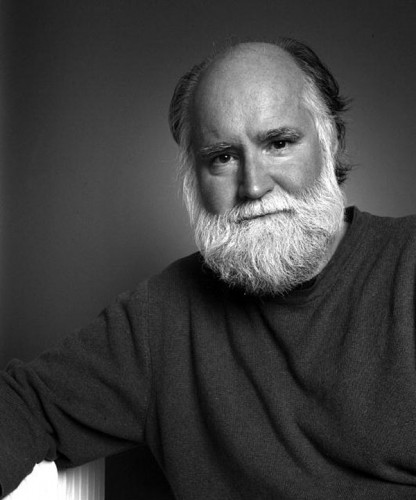 Nicholson Baker est un romancier américain bien connu: il a acquis une réputation (sulfureuse) en Allemagne, où son roman “Vox”, consacré à cette nouvelle forme de sexualité et d’érotisme qui se construit via le téléphone, a connu un succès retentissant. Mais Nicholson Baker a décidé, récemment, de ne plus se consacrer exclusivement aux romans ou à la sexualité par procuration technologique qui turlupine ses contemporains. Son nouvel ouvrage, “Menschenrauch” en allemand, “Fumée humaine”, est consacré à la seconde guerre mondiale. Quelle est la motivation qui a poussé notre auteur à changer de registre? La guerre en Irak! Elle a été vendue au public américain et britannique comme une “guerre juste”, menée par les “bons” contre un “méchant”, que l’on vouait à l’avance au gibet. Cette simplification propagandiste et belliciste, profondément cruelle parce qu’assénée avec bonne conscience, Nicholson Baker l’a tout de suite rejetée, instinctivement. Comme plus d’un pacifiste anglo-saxon, l’hypocrisie et l’hystérie des “guerres justes” menées tambour battant par Londres et Washington l’ont induit à se poser la question cruciale: existe-t-il vraiment une “guerre juste” en soi, et les guerres décrétées
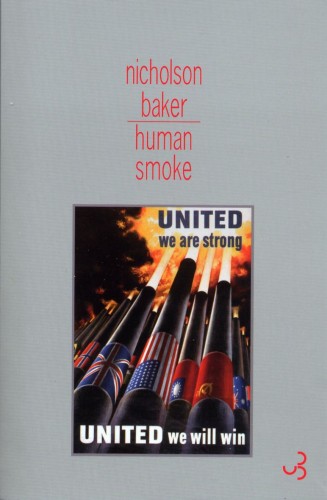 Ce livre a provoqué un tollé aux Etats-Unis : on n’a pas manqué de reprocher à Nicholson Baker de professer un « pacifisme naïf et spécieux » ; on l’accuse d’avoir « trahi la mémoire des morts », et surtout de deux grands morts, Churchill et Roosevelt, rien que parce qu’il a cité quelques-uns de leurs textes, pour prouver qu’ils ont délibérément voulu la guerre. On reproche aussi à Nicholson Baker d’avoir voulu prouver l’antisémitisme des alliés et donc d’avoir dit, par ricochet, que l’antisémitisme n’était pas une caractéristique exclusive de l’Axe. En refusant ainsi de localiser l’antisémitisme dans le seul camp allemand, Nicholson Baker aurait dédouané le nazisme et la personne d’Hitler. Telle n’était pas son intention, bien sûr, mais les manichéisme qui président aux discours bellicistes et aux narrations véhiculées par les médias ne tolèrent aucune entorse à leurs schémas binaires : il faut les accepter benoîtement ou subir ostracisme et inquisition. Si Hitler a été indubitablement antisémite, ses adversaires n’étaient pas exempts du même mal, sauf que, chez eux, il était sans doute moins virulent, déclamé de manière moins spectaculaire. Il est vrai que l’historiographie israélienne actuelle, qui n’est pas tendre avec la « narration sioniste » dominante jusqu’ici au sein de l’Etat hébreu, n’omet pas de rappeler que les maximalistes sionistes de l’entre-deux-guerres avaient des sympathies pour l’Axe et pour l’IRA, considéraient que les Britanniques étaient tout à la fois les ennemis principaux de la cause sioniste et les alliés des Arabes en Palestine et en Transjordanie et que les membres du LHI et de l’Irgoun ont lutté contre la présence anglaise et, partant, contre l’Angleterre en guerre contre le Reich et l’Italie fasciste, jusqu’en 1942, année où leurs activistes principaux ont été éliminés par l’action conjuguée des services britanniques et de la Haganah sioniste mais pro-alliée. Pour reprendre le combat contre l’Angleterre dès 1944, bien avant l’effondrement définitif du IIIème Reich (!!), et le continuer jusqu’en 1948, notamment contre la Légion Arabe du général écossais Glubb Pacha. Là encore, dans l’histoire récente du Proche-Orient, les manichéismes ne sont plus de mise dans la communauté scientifique, que l’on appartienne ou soutienne l’un camp ou l’autre.
 A una veintena de kilómetros de la capital georgiana, Tiflis, se encuentra la base militar de Vaziani, que hasta mediados del año 2001 albergó unidades militares soviéticas, herencia de los años en que Georgia fue una república constitutiva de la URSS. Fue devuelta al Gobierno georgiano, que en ella instaló algunas de sus unidades de reacción rápida.