Ok

En poursuivant votre navigation sur ce site, vous acceptez l'utilisation de cookies. Ces derniers assurent le bon fonctionnement de nos services. En savoir plus.

vendredi, 13 novembre 2015

Jonathan Bowden: Gabriele d'Annunzio

DAnnunzio-Vittoriale-02-e1428026079406.jpg

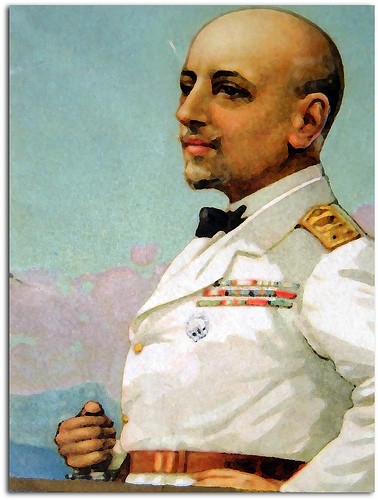
Gabriele D’Annunzio

Editor’s Note:

The following text is the transcript by V. S. of Jonathan Bowden’s New Right lecture in London on January 21, 2012. I want to thank Michèle Renouf for making the recording available.   

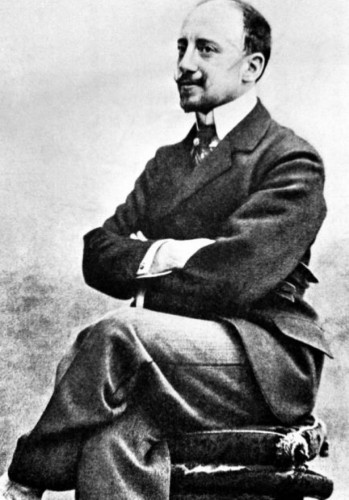
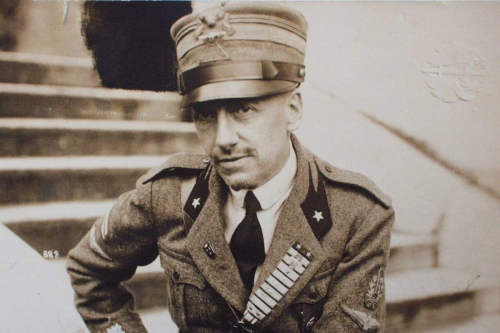
Gabriele D’Annunzio had basically two careers, one of which was as a writer and literati and the other was as a politician and a national figure. If you look him up on Wikipedia there’s a strange incident which occurred in 1922 when D’Annunzio was pushed out of a window several floors up in a particular dwelling and was badly injured and semi-crippled for a while. Of course, this was during a crucial period in Italian politics because Mussolini emerged as leader of the country and was made prime minister after the March on Rome under a still monarchical system and absorbed and swallowed up all other Italian parties to form the Fascist state in Italy that lasted right until the end of the Second World War.

D’Annunzio as a figure was involved in the Romantic and Decadent movement in Italian literature. He wrote a large number of plays, quite a large number of operas, a large number of novels, and some short story collections. He was too controversial to ever be awarded something like the Nobel Prize, but at the beginning of Italy’s 20th century period he was one of the most popular people in Italy. Almost everyone had an opinion about him and almost everyone had heard of him.

His work combines various pagan, vitalist, and Nietzschean forces, and he was heavily influenced by Friedrich Nietzsche and his philosophy. Some of his works were banned on grounds of public morals both in translation abroad and in Italy per se. The Flame of Life was one of his more ecstatic and Byronic celebrations of life. The Triumph of Death was another of his works, and The Maidens of the Rocks was another one, and a poem called Halcyon which was part of an interconnected series of poems five in number. He was going to write a larger collection than this, but those were the ones that got done. Also, he celebrates the Renaissance period and the period of Italian greatness when Italian civilization became synonymous with Western civilization and indeed looked to put its stamp upon world civilization.

So, D’Annunzio brought together a wide number of strands which supervened in Italian politics and culture since the unification of Italy under Garibaldi in the 19th century. Like Germany, Italy was unified as a modern European nation-state quite late in the day, and a triumphant sense of national vanguardism, identity, and pressure and force was always part of D’Annunzio’s ideology.

Superficially, it seems strange that you have artists of extreme individuality like Maurice Barrès in France in the 1890s who wrote a book called The Cult of the Self (Le Culte du Moi) along Nietzschean and Stirnerite lines and professed a very extreme individuality who were also ardent nationalists. This is because this cult of the heroic individual and this cult of the masculinist and this cult of the superman and the cult of the pagan individual that D. H. Lawrence’s novels in English literature could be said to be part and parcel of at least at one degree went hand in glove with the belief in national renaissance and national glory. The great individual was seen as the prototype of the great man of the nation and was seen as a national leader in embryo whether or not the work took on any political coloration at all. So, what appears to be a collective doctrine and what appears to be an individualistic doctrine marry up and come together and cohere in various creative ways and this was part of the creative tension of the late 19th century.

D’Annunzio is a 19th-century figure who explodes into the 20th century by virtue of mechanized politics. Debts and the pursuit of various people to whom he owed money because of his extraordinarily lavish and aristocratic lifestyle led D’Annunzio to live in France at the time of the outbreak of the Great War, but he soon hurried back to Italy in order to demand his entry into the Great War on the Allied or Western or Tripartite side. Of course, in the Great War, Italy fought with the Western allies, with France, with Russia and Britain against Germany, the Austro-Hungarian Empire, and the Ottoman or Turkish Empire in the convulsive conflict which people who lived through it thought would be the war to end all wars.
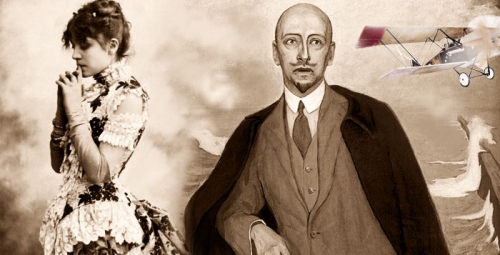
d’Annunzio-700x357.jpg

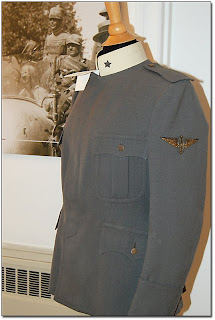
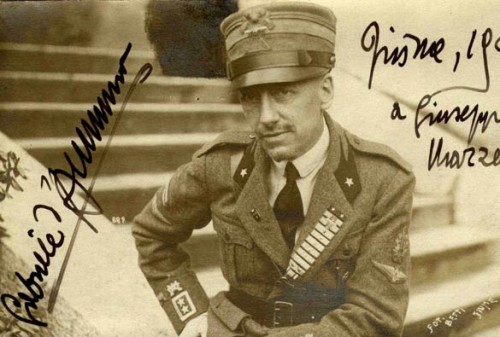
D’Annunzio had an extraordinary war. He joined up when he was around 50 years of age and gravitated towards the more aristocratic arm of the three that were then available. It’s noticeable that the war in the air attracted a debonair, an individualistic, and an aristocratic penchant. Figures as diverse as Goering in the German air force and Moseley in the British air force and D’Annunzio in the Italian air force all fought a war that in its way had little to do with the extraordinarily mechanized armies that were fighting on the ground.

You had this strange differentiation between massive armies and fortifications of steel with tunnels turning the surface of the Earth like the surface of the moon down on the ground until tanks were developed that could cut through the sterile nature of the attrition of the front – a very static form of warfare from 1915 until the war’s end in 1918 – and yet above it you had this freedom of combat, this freedom in the air with biplanes which were stretched together from canvas and wood and wire and were extraordinarily flimsy by modern standards, without parachutes for the most part, and where the men used to often fire guns and pistols at each other before machine guns were actually fixed to the wings so they can actually fly on each other in flight.

There was a cult of chivalry on all sides in the air which really didn’t superintend on the massive forces that were arrayed against each other on the ground, and this enabled a spiritual dimension to the war in the air that was commented upon by many of the men who fought at that level. This in turn reflected the sort of joie de vivre and the belief in danger and force that aligned D’Annunzio with the futurist movement of Marinetti and with many anti-bourgeois currents in cultural and aesthetic life at the time.

As the 19th century drew to a close there came a large range of thinkers and writers such as Maurice Barrès in France, such as D’Annunzio and Marinetti in Italy who were appalled by the sterility of late 19th-century life and yearned for the conflicts which would engulf Europe and the world in the next century. You have a situation where each era – such as the one we’re in in the moment – precedes what is coming with all sorts of conflicted and heterogeneous ideologies which only become clear once you’ve actually lived through the subsequent period. Between about 1880 and 1910 an enormous ferment of opinion with men as voluble as Stalin and Hitler being in café society parts of Europe planning what was to come or what they might be alleged to be part of at certain distant times. Men often dismissed as cranks and dreamers and wayfaring utopians on the margins of things who were destined later on to leap to the center of European culture and expectancy.

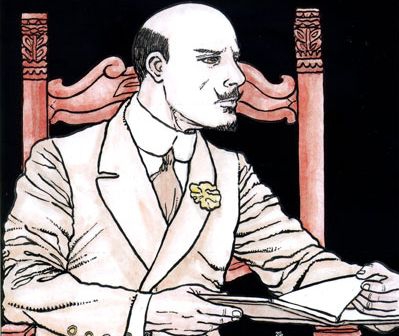
There’s a great story that the French writer Jean Cocteau says about Lenin. He met the man at a party in a house in France in 1910, and the man was sitting in the house. In other words, he was looking after it while someone was away. And Cocteau said to his friends, “And who are you?” and the man said, rather portentously, “Men call me Vladimir Ilyich Ulyanov. I am known as Lenin. I am plotting the destruction of the Russian Czarist regime, and I am going to wipe out the entire ruling class in Russia and install a proletarian dictatorship.” Straight out without any intermission! And they all said, “Well, that’s very interesting! One applauds you, monsieur!” He said, “What are you doing at the moment?” And he said, “I edit a small journal called Iskra, The Spark, which is the beginning of the ferment of the revolutionary energies which are coming to Russia and eventually the world!” And they thought, “Well, this is interesting!” You know. How many subscribers had Iskra had at that moment? 400? 40? 4? And yet, of course, Vladimir Ilyich Ulyanov would emerge from the chaos of post-revolutionary Russia, as Russia struggled from its defeat by the Germans in the First World War, to become the leader of the world’s first and most toxic revolutionary state. Nothing is predictable in this life.

When the German high command sealed the Bolshevik leadership, including Vladimir Ilyich, in a train and sent it through their occupied territories into Greater Russia in the hope that it would just create more chaos and foment more distress, they had no idea that this tiny, little faction would seize maybe 11-12% of parliamentary votes and would then take over a weakened state with a small paramilitary force. Because the Bolshevik Revolution was in no sense a social revolution as its proselytizers claimed for upwards of half a century afterwards. It was an armed coup by the armed wing of a tiny political party.

There’s a famous story that Lenin, Trotsky, and Stalin all slept in one room with newspaper on the floor the day after the revolution, and Lenin said, “Comrades! A very important thing has happened! We have been in power for one day!” And the amount of Russia that they controlled, of course, was extraordinarily small.
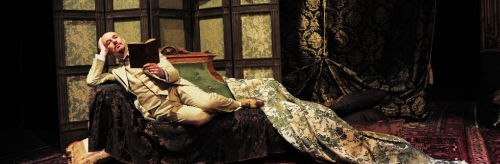
dAnnunzio-tra-amori-e-battaglie.jpg

So, one has to realize that this ferment of ideas, Right, Left, and center, religious, aesthetic, and otherwise, occurred between 1880 and the beginning of the period that led up to the Great War and out of which most of the modern ideologies of the first half to first three quarters of the 20th century emerged.

D’Annunzio largely created Italian Fascism. Nearly everything that came out of the movement led by Mussolini at a later date originated with him and his ideas. The idea of the man alone, set above the people who is yet one of them, the idea of a squad of Arditi, people who are passionate and fanatical and frenzied with a stiff-arm Roman salute who are dressed in black and who are an audience for the leader, as well as security for the leader, as well as a prop to make sure particularly the masses and crowd when they are listening to the leader go along with what the leader is saying, as well as a sort of nationalist chorus . . . All of these ideas come from D’Annunzio and his period of forced occupation and Italianization of the port of Fiume.

So, there’s a degree to which this possible assassination attempt against D’Annunzio in 1922 which puts him out of commission for a certain period was in its way emblematic of the fact that he was a key player in Italian politics. He was the only rival for the leadership of what became known as the extreme Right with Mussolini. Certain Fascists at times looked to D’Annunzio when the fortunes of their own movement dipped.

It’s noticeable that during the occupation of Fiume, which we’ll come onto a bit later in this talk, D’Annunzio thought that there should be a march on Rome and rushed to align himself with the Fascists and other forces of renewal and nationalistic frenzy in Italian life after Italy’s victory as part of the winning side during the Great War. That march never happened, but of course was to happen later when Mussolini and other leaders had engaged in deals with the existing Italian establishment. The Mussolinian march on power was a coup with the favor of the state it was taking over rather than a coup against the nature of the state which was hostile to what was coming. So, in a way, the Italian march was leaning on a door that was already open and only forces like Italian Communism and so on, which are outside the circle of the state and its reference to political resources, opposed what the Mussolinians then did.

There is this view that Mussolini and the Fascist movement regularized and slightly de-romanticized the heroic conspectus of what D’Annunzio stood for. D’Annunzio was an artist and when Fiume, which is part of Croatia, was taken over by his militia between 1,000 and 3,000 strong in the early 1920s, because it had an Italian majority and he wished to secure it for Italy in relation to the post-Great War dispensation, he made music the foundation-stone of the City-State of Fiume. There’s a degree to which this is part of the extreme rhetoricism and aestheticism that D’Annunzio was into. This is not practical politics to make music your cardinal state virtue and to create idealized state assemblies with a minimum of chatter, because D’Annunzio believed not in parliamentary democracy but in a form of civics whereby each participant of the nation was represented. That’s why in Fiume he begins the prospect of a corporate state, and he begins an assembly or a vouchsafe body for farmers, for workers, for employers, for the clergy, for industrialists, and so on in a manner that Mussolini would later take over because most of what the Mussolinians did was actually pre-ordained for them by D’Annunzio’s moral and aesthetic coup d’état.

D’Annunzio believed that life should be brief and hectic and as heroic as possible and that the Italians should be based upon the principles of the ancient Roman Empire and of the Renaissance. In other words, he quested through the Italian period of phases of thousands of years of culture for the highest possible spots upon which to base Italy in the 20th century. At his funeral which occurred in 1938, Mussolini declared that Italy will indeed rise to the heights of which he wished and D’Annunzio always wanted Italy to be on the winning side and to be a major player in international and European events.

The truth of the matter, of course, is that Italy for most of its 20th-century existence has not been a minor player, but has not been amongst the major players, has been amongst the second-tier powers of Europe in all reality, and there’s a degree to which many Italian military adventures which were initiated by Mussolini fell back on German tutelage and support when they run into difficulties, although those imperial adventures in Ethiopia and elsewhere were supported by D’Annunzio, who became very close to the regime when he realized that they wished to set up a neo-Italian empire along Romanist lines.

D’Annunzio also supported Mussolini leaving the League of Nations, and he believed oppressed Italians who lived outside of Italy proper should be included, in an irredentist way, in Italy proper. Irredentism is the idea that if you have people of your own nationality who live outside the area of the nation-state you should incorporate them in one way or another, by conquering intermediate territory or by agglomerating them back into a larger federation. This is the idea of having a greater country: Britain and the Greater Britain, Italy and the Greater Italy, Russia and the Greater Russia, and so forth.

There’s a degree to which D’Annunzio aligned himself with the forces of conceptual modernism without being a modernist himself. In a literary and linguist way, he was very much a Romantic of the 19th-century vogue, but his sensibility was extraordinarily modern.

In contemporary Italian literature, there is no easy and defined position about D’Annunzio. One would have thought that a man who died in 1938 and his political career was over by 1922 to all effects would be historical now. D’Annunzio is still a live topic in Italy and is still controversial not least because of the sort of Byronic “sexism” of his novels, poetry, and plays, a screen play in one case and librettos for various operas. Also the fact that he’s such a precursor of Italian Fascism to the degree that he is regarded as the first Duce, the first leader, the first fascistic leader of any prominence that Italy had before Mussolini that his reputation is still extremely divisive in Italian letters. Most of the center and Left when D’Annunzio’s name is mentioned in Italy today still go, “Ahhhh nooo!” If you can imagine a sort of fascistic D. H. Lawrence who later had Moseley’s career up to a point, that’s the nearest you get to a British example of a man like D’Annunzio. Lawrence, of course, would have a completely different reputation had he endorsed the politics of Nazi Germany in the way that he sort of endorsed, slightly, the politics of fascistic Italy. In some ways, Lawrence, who was sort of made into a cult by the Cambridge literary criticism of F. R. Leavis in Britain and I. A. Richards in the United States post-Second World War, would never have preceded to those heights had he endorsed certain political causes of the ’30s and ’40s. So, in a sense, his early death was fortuitous in terms of his post-war reputation.

Robinson Jeffers, the American poet and fellow pagan with whom Lawrence communicated during his life quite manfully, fell into desuetude after the Second World War for, not advocating pro-Axis sympathy as a neutralist America, but by advocating isolationism. Isolationism is, of course, an ultra-nationalist position in American life. The belief that America should not involve itself in the teeming wars of the 20th century, what Harry Elmer Barnes calls perpetual war for perpetual peace, but that America should retreat to its own borders and not concern itself with events outside America, occasionally looking outside to the Caribbean and Latin America. But Lawrence would have gone the same way as Jeffers had he had a career like D’Annunzio and had he endorsed some of the positions that D’Annunzio did.

D’Annunzio’s position on Fascism outside of Italy was more contradictory because he was a nationalist first and last and ultimately it was Italy’s destiny that concerned him not that of other countries. He was in favor of leaving the United Nations, but rather like Charles Maurras in France he was a nationalist in some ways more than a Fascist and his nationalism was proto-fascistic even though he provided much of the aesthetic coloring for what later came in the Italian political dictatorship.
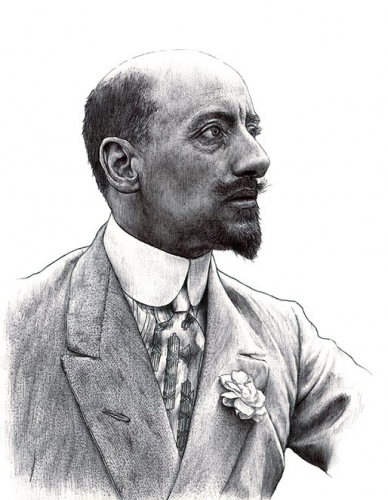
dannarticle_inset_galassi-1.jpgD’Annunzio was a man of great individual courage — it has to be said — and combined the ferocity of the warrior and the sensibility of the artist. One of his most famous individual coups was this 700-mile round trip in an airplane to drop pamphlets of a sort of pro-Western/pro-Italian type on Vienna, which is still remembered to this day. Another of his feats was attacking various German boats with small little motor-powered launchers, something that prefigures a lot of modern warfare where great, large hulking liners and aircraft carriers can be disabled by small boats that speed around them. The principle of guerrilla type or asymmetric warfare whereby much larger entities can be hamstrung by their smaller, Lilliputian equivalents or rivals. Again, this sort of special forces warfare in a way, whether in the air or on the sea, was part and parcel of D’Annunzio’s aesthetic and ethic of life.

It’s noticeable that in modern warfare the notion of individualistic courage never goes away, but war is so much reduced to the big battalions, so much reduced to raw firepower, and so much reduced to the expenditure of force between massive units that are industrially arranged against each other that individual combat often becomes slightly meaningless. But it gravitates to certain areas: the sniper, the elite boatman or frogman, the elite warrior in the air becomes the equivalent of the lone warrior loyal to sort of ideologies of warriorship in previous civilizations and you can see this in the way that these men think about themselves and think about their own missions.

In a previous talk to a gathering such as this, I spoke about Yukio Mishima and the ideology of the samurai based upon the cult of bushidō in Japan. This is the idea of almost an aesthetic martial elitism who sees itself both in artistic and religious terms and yet is also a morality for killing. All of these things are provided for in one package. A man like D’Annunzio did incarnate many of these values in a purely Western and Southern European sense.

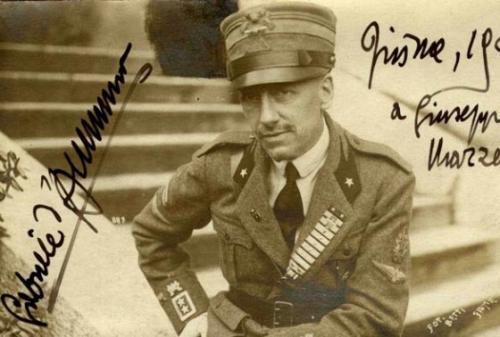
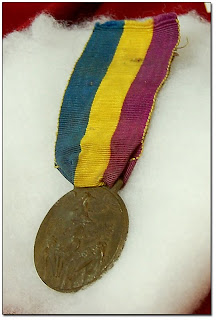
D’Annunzio’s war record was such that he won most of the medals, including the gold medal, the equivalent to the Victoria Cross, and he won silver crosses which are a slightly lesser medal and a bronze cross. He was also awarded other medals including a British military cross, because of course he was fighting on the British and Allied side in the First World War.

One of his points that was made by Mussolini and other Italian nationalists was that Italy did not get from the First World War the post-war dispensation which they expected. This is true of almost everybody essentially, but it’s certainly true that Italy was thrust back into the pack of secondary powers by the major victors in the First World War: Britain, the United States, and France. Their role in the post-war peace, which of course was a highly torturous and afflictive peace upon the defeated Germany, was to have major repercussions on the decades that followed. That peace had little to do with what Italy wanted. One of the reasons for the occupation of what later became part of Yugoslavia by paramilitary Italian arms led by D’Annunzio was his dissatisfaction with Italy’s role at the table after the Great War.

His belief in “One Italy” and “Italy Forever” and “where an Italian felt injustice, Italy must be there to protect them,” this belief that caused thousands of men to rise up and come to D’Annunzio’s banner . . . When he began this assault on Fiume he had about 300 men with him. By the time it was over he had about 3,000.

On the internet you can see in 1921 enormous crowds within the city, almost everyone in the city is there cheering on D’Annunzio, who engaged in this increasing rhetoric from the balcony. Indeed, the Mussolinian stage scene whereby the dictator figure, or dictator manqué in this case, addresses the masses who look up to a balcony is all constructed and lit up by stage lights and that sort of thing is all part and parcel of D’Annunzionian theater. D’Annunzio would always ask the crowd rhetorical questions: “Do you love Italy?” And there’s this response, “Yes!” And then there will be another response from D’Annunzio and then another response. If somebody gives a contrary sort of response in the crowd, because these are enormous mass meetings which are difficult to control, he has squads of men dressed in black positioned in the crowd who can sort various malefactors out. This combination of support with a degree of psychological bullying is all part of the festival of nationalistic spirit that somebody like D’Annunzio believes in building almost as a theatrical event where you let the crowd down over time by stoking them up into more and more responses and you allow moments where the crowd just bellows and howls in response until they are replete and exhausted and the man strides back to the edge of the balcony to begin a speech. All of these are things that Mussolini would later develop. So, D’Annunzio in a sense provides a theatrical package for what becomes Italian and Southern European radical nationalism at a later time.

He didn’t live to see the full extent of Italian Fascism, but he had to be kept sweet by the Mussolinian government. Mussolini was once asked by a fellow Fascist leader in Italy what he thought of D’Annunzio and why he behaved in relation to him in the way that he did and he said, “When you have a rotten tooth there are two solutions. You either pull it out violently or you pack it with gold, and I have decided on the secondary option with D’Annunzio.” So, D’Annunzio was given a large amount of money by the Italian state to swear off political involvement after 1922, something that makes the possible assassination of him, attempted assassination, in 1922 rather interesting and mysterious. No one knows whether that was an attempted assassination or not. It’s quite obscure in the historical literature, but it certainly put D’Annunzio back and it put him out of commission for the entire period that the Mussolinians marched to power quite literally.

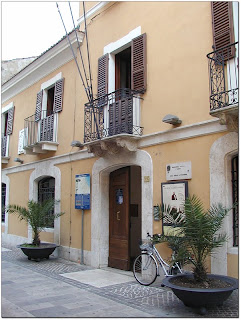
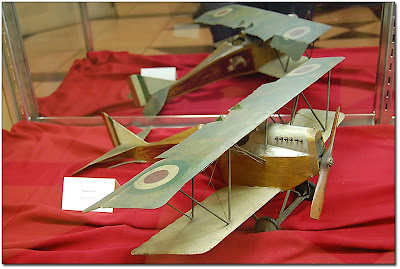
Later on, he would awarded the leadership of the equivalent of the Society of Arts; he would be awarded a state bursary which paid for a collected edition of his works that was printed and published by the Italian state itself and was available in all libraries and schools and universities; he was awarded numerous medals and forms of honor; his house was turned into a museum which still exists and is one of the major tourist sites in contemporary Italy where planes that he flew in the Great War are restored and can be looked at, boats which he used in the Great War are restored and can be looked at, as well as a library, a military research institute, and all sorts of photographs from the period. There is a large mausoleum to him, which is a contemporary Italian monument of significance. He’s compared in some ways to Garibaldi, the figure in the 19th century with his Redshirt movement that helped unite Italy as a warring, patchwork quilt of a nationality into one overall nation-state along modern lines.

D’Annunzio is one of these synthetic and syncretic figures who combine in themselves several different lives: lover, soldier, aesthete, political warrior, writer, artist. He combined four or five lives in one particular lifespan and brought together all sorts of confluences in the Italian politics of his day.

When he was elected to the senate as an independently-minded conservative at the end of the 19th century, he had no real sectarian politics at all except a belief in conservatism and revolution as he described it. He later moved across the parliament floor to join the Left in a particular vote that broke a deadlock in Italian politics of the time and was regarded as the creation of a new synthesis where part of the Right joined the Left and then split off again to form a different part of the Right or could at least be said to be a precursor of those same developments.

Mussolini, of course, was sat with the socialists and was a socialist deputy and was part of the bloc that favored nationalists rather than international solutions as part of Italian socialism. This is why during the First World War or the run-up to it the Axis within Italy which favored Italy’s involvement in the war against strong pacifists and internationalist currents that wanted to keep Italy out of the European conflagration lost out and one of the key proponents were the Futurists, D’Annunzians, and proto-Fascists from the bosom of the Italian Socialist Party, who combined a degree of nationalism with quite straight-forward Italian social democracy of the period.

D’Annunzio married and had, I think, three children, but was well known for a very torrid love life consisting of a great string of mistresses. He had dalliances with two extraordinarily notorious Italian actresses, both of whom he wrote plays for and operettas. He was well regarded as a sort of bon viveur and a figure about whom myths constellate. Even to this day D’Annunzio is regarded as a cad and egotist and a scoundrel in many circles because that is how he presented himself and the male ego in his literary works.

How original D’Annunzio was is difficult to quantify. His philosophical debt is to Nietzsche, his literary debt is to the Italian literary tradition which essentially goes back to the Renaissance. His great use of style – he was one of the greatest stylists of the modern Italian language – has made sure that his books are in print to this day, but he still remains a controversial figure because of the politics with which he was associated.

How far and aesthetically motivated his desire for dictatorship could work in practice and would not implode because of impracticality is a moot point, but D’Annunzio certainly gave a brio to early Italian experimental and Right-wing politics. He gave a poetic license to authoritarianism which helped make Southern European Fascism extraordinarily culturally interesting long into the Mussolinian regime. It is interesting to notice how many intellectuals and artists aligned with the movement in Italy and made peace with its government.

Also, the use of oppression, which is very light-handed in Italy was part and parcel of this doctrine of brio and of ubiquitousness and the use of style. In some ways it was a very style-conscious regime, an exercise in theater. Many of the post-war historians of Fascist Italy talk about it as being a sort of theatrical society with Mussolini as almost a political actor in some respects. This is very much in the D’Annunzionian tradition which he laid down at Fiume.
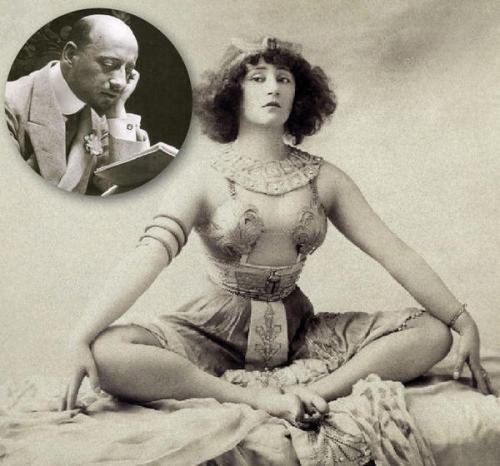
danuncio_full_landscape.jpg

Fiume. They conquered this city which is part of Croatia but had an Italian majority at that time. The Italian governor refused to fire on D’Annunzio and his paramilitaries when they entered the city. They took it over and created a sort of corporate state within the state, heralding its creation as a city-state. They said it left the League of Nations, which they refused to recognize because Italians were being exploited by the remit of the League of Nations, the forerunner of the United Nations. They created this sort of aesthetic, fascistic junta that was part theater, part hyper-reality, and part just a governing civic administration with a military arm. Gradually, the forces of reaction, as D’Annunzio would have called them, attempted to call Fiume to account. The Allies chafed against its continued existence as an independent military satellite and city-state. Italian nationalists and others may have flocked to it, including Leftists like anarchists and syndicalists who admired D’Annunzio’s brio and sort of cult of machismo and Italian irregular adventurism which has a medieval tradition, certainly an antique Italian tradition with many admirers from across the spectrum. Yet in the end the Italian state was forced to take action and fired on Fiume, and Italian naval vessels shelled the city. There was a declaration of war, somewhat absurdly, against Italy by D’Annunzio where 3,000 men took on a nation-state that could put tens of thousands of men in boats and planes into play.

Eventually, of course, when the shelling became too bad he said that he could not allow the aesthetic construction of the city to be damaged and so he handed it over to prior Italian power and an international settlement, which involved Yugoslav control eventually coming in.

But Fiume represented a direct incursion of fantasy into political life because there is a degree to which D’Annunzio combined elements of performance art in his political vocabulary. There’s no doubt that he thought of politics as a form of theater, particularly for the masses, and this is because he was an elitist, because as an elitist he partly despised the masses except as the voluntarist agents of national consciousness. He theatricalized politics in order to give them entertainment without allowing them any particular say in what should be done. This idea of politics as performance art with the masses onstage but as an audience, an audience that responded and yet was not in charge, because there’s nothing democratic about D’Annunzio from his individualistic egotism as an artist all the way through to his sort of quasi-dictatorship of Fiume. He represented a particularly pure synthesis and the violence that was used and so on was largely rhetorical, largely staged, largely a performance, partly a sort of theater piece.

In post-modernism, there’s this idea that artists crash cars, burn buildings, and exhibit what they’ve done in gallery spaces and that sort of thing as an attempt at an incursion of reality into the artistic space. D’Annunzio did it the other way around. There was an incursion not of reality into the artistic space, but of artistry into the political space and he went seamlessly from writing these novels of male chauvinism and excess and erotic predatoriness and Italianate brio to running a city-state almost without running any sort of marked gap between the two moments. In the chaotic situation of post-Great War Italy and its environs, he found a template upon which his dreams – his critics would say his bombastic dreams – could be lived out and there is a sort of dreamer of the day to D’Annunzio, but he was also quite hard-headed and practical and most of his political exercises in chauvinism came off unlike many dreams that remain in the scrap-heap of political alternative.

So, in a sense, D’Annunzio’s greatest novel was the creation of what became the Italian Fascist state, which until it was defeated externally and internally was one of the most stable societies modern Europe has seen.

This belief in a nation’s ability to renew itself by bringing various tendencies that are abroad within it together and synthesizing them through the will of one man who must be a visionary of one sort or another is part and parcel of D’Annunzio’s legacy. It’s why he can’t just settle down and be an artist. It’s why, indeed, his post-war Italian reputation is so mixed, because he can’t be divorced from the politician and the statesman that he indeed was.

It’s interesting to think how the world would have developed if European nationalities would have increasingly fallen under the sway of these cross-bred artistic, hybridized figures. Nearly all far Right, and some far Left, leaders have these sorts of characteristics: extreme individuality, colorful backgrounds in the past, a sort of anti-bourgeois sentiment, a refusal to live a conventional life completely, the belief in new forms, and the construction of new forms of modernity almost in a haphazard and experimental way. These people only get their chance during war, economic breakdown, chaos, and revolutionary change when everything comes up for grabs and there is a new dispensation abroad. But it is noticeable that these people do get their chance when these events occur.

It’s also noticeable that the post-war period, very much in Western Europe at any rate, is dominated by two factors. One is the Cold War, which congeals the continent into two rival blocs under partial American domination in the Western sector and direct Soviet domination, of course, of the Eastern bloc, but the second is a fear of contamination through change which is underpinned by the desire to keep market economies functioning at a tolerable level of sufficiency. It’s quite obvious that there is a terror abroad in the Western liberal landscape about what would occur if there is an economic collapse. Not just a slow-down, not just a depression or recession or series of recessions that ends in a Japanese-like depression which can go on for 20 years where you don’t grow at all, zero growth, but something much more devastating than that. An actual crack and crash in the system itself. Because with mass democracy there is no knowing what sorts of demagogues and what sorts of visionaries people might start voting for in small or larger numbers when such a crash occurs and when they literally can’t pay their bills and so D’Annunzio came out of an era of chronic instability and fashioned that instability to his own liking and making, because Fiume was the prototype for a state.

Indeed, in ancient Southern Europe, the city-state was the forerunner of the nation-state. He was attempting to do with an Athens or a Sparta of his own imagination and will and intellect what later became Mussolinian Italy on a nation-wide scale and if Italy had succeeded in carving out an empire for itself in North Africa and further afield in modernity it would have been the basis for an Italian empire because the nature of these things is to expand. That kind of power always chafes against the possibility of restriction and unless it comes up against a greater external force it will always chafe against it in an attempt to push it back and gain greater suzerainty thereby. That’s inevitable. Even under mercantilist pressure, the British Empire adopted that sort of course for many centuries until, if you like, the stabilization of the 20th century and the loss of empire in mid-century.

So, what we’ll see if there are enormous economic crashes in the near to distant future the sort of politics that D’Annunzio represented come back. No one knows what form it will take because things never repeat themselves. They only seem to, because the syntheses that are created are always new and always original. But this crossover between theater, literature, lived demagoguery, the martial and martinet spirit and the spirit of the lone adventurer, the spirit of the marauder, the spirit of the armed troubadour is very much a part and parcel of what D’Annunzio stood for. His present notoriety in contemporary Italy is because he is a man of so many parts and such a threatening overall presence – threatening in the sense that Italian Fascism, although much more integrated into the historical story than fascisms elsewhere, is still very much a devilish shadow cast over the post-Italian polity that all are aware of and yet few dare to speak of with any courage or glory.

D’Annunzio believed that courage and glory and heroic belief in national affirmation were the very principles of life. His example, so out of kilter with contemporary reality, is interesting and refreshing. D’Annunzio is like a sort of Julius Caesar crossed with Jack London. There’s a strange amalgam of tendencies living out of one man and it is remarkable that he could bring that union or fusion with such panache and charisma. Probably it was the military career that he had during the Great War that enabled him to step out of the literary study and into the statesman’s counting house, onto the statesman’s balcony. Without that experience in the Great War I doubt he would have had the following to achieve that. But D’Annunzio represents this strange amalgam in European man of the restless adventurer and the poet, of the dreamer and the activist, of the stoic and the fanatic.

The city-state that he created at Fiume provided for religious toleration and atheism, because of course as a Nietzschean D’Annunzio was an atheist and was not religiously motivated even though the paganism of his literature harks back to the neo-pagans of the Renaissance and to the Roman Empire of antiquity.

The real source of origin for D’Annunzio’s moral equipment has to be ancient Rome and as I look about me in this society there are an enormous number of novels, aren’t there, devoted to ancient Rome? Quite populist, mainstream fare. And it’s quite clear that there is a fascination with Europe’s past and with its authoritarian, bellicose, adventurist, and escapist past and possibly through the mirror image of intermediaries like D’Annunzio there may be a link to a new and more invigorating Europe of adventure and of skill and of destiny and of the will of the desperado and of the man who will never take no for an answer and of the man who would chant these slogans that Achilles uses in Homeric epics to the crowd and hear the Arditi chant them back again and that these are echoes which you can still hear and are still not entirely dormant in Europe at the present time as the Balkan Wars of the 1990s proved in their bloody way. There’s a degree to which these prior giants of Europe are sleeping but are not at rest and there is always the fear in contemporary liberal establishments that these figures and the forces that they represented will be catalyzed yet again in the future by new visionaries and by new leaders and by new literati and by new sources of inspiration who combine the individual and the collective, combine the national and the quietude of the man alone and combine the Renaissance and the ancient world in a new pedigree of what it means to be a man, what it means to be an European and what it means to have a destiny in the modern world.

D’Annunzio preconfigured much of European history until at least the late 1940s, which bearing in mind that he was born towards the middle of the 19th century was quite an achievement. It is not to say that figures who are alive now are not in themselves creating the synthesis for forces that will emerge in the next 50 years.

Thank you very much!
Article printed from Counter-Currents Publishing: http://www.counter-currents.com

URL to article: http://www.counter-currents.com/2015/11/gabriele-dannunzio-3/

URLs in this post:

[1] Image: https://secure.counter-currents.com/wp-content/uploads/2015/11/Enrico_Marchiani_Ritratto_di_Gabriele_dAnnunzio_in_uniforme_da_Ardito._Olio_su_tela.jpg

mercredi, 21 octobre 2015

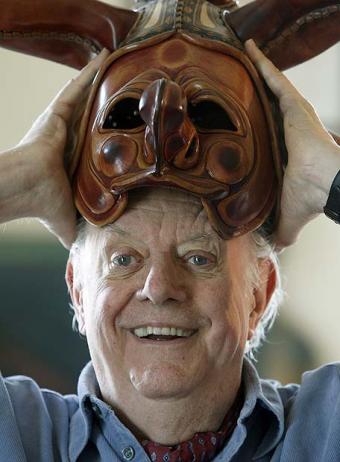
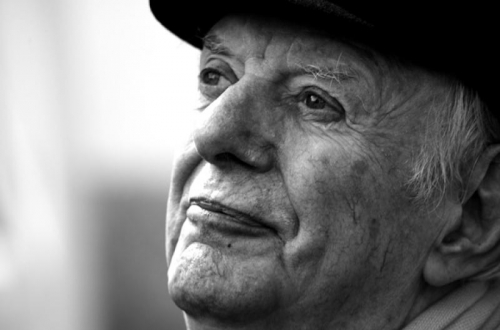
Dario Fo: Nos intellectuels ineptes, tristes et asservis à la pensée unique

dariofo.jpg

Dario Fo: Nos intellectuels ineptes, tristes et asservis à la pensée unique

Culture Dissidence Liberté d'expression
 
Ex: http://www.arretsurinfo.ch

J’ai bien connu Dario Fo à Rome. C’était en 1974. Des affichettes placardées sur la Piazza Navona annonçaient son spectacle le soir même. Fo était un artiste déjà fort célèbre ; sa critique politique et sa défense des militants accusés de terrorisme, dérangeaient le système. Après un long et tortueux périple, où j’ai cru ne jamais arriver, j’ai fini par trouver le quartier pauvre de la banlieue romaine où Dario Fo se produisait. La salle, était bondée, en délire. Son spectacle comique, enthousiasmant, tenait de la Commedia dell’Arte et du meeting politique. Il y avait un climat de radicalisation gauche droite de quasi guerre civile en Italie. C’était les sombres « années de plomb ». Les années Gladio pour ceux qui connaissent l’histoire. A la sortie de ce spectacle si revigorant, le cercle qui entourait Fo m’a approchée. Stupéfait d’apprendre que je venais de Suisse pour atterrir en ce lieu perdu, Fo m’invita à se joindre aux acteurs de sa troupe et amis. Assise à l’arrière du véhicule je découvris que les amis qui accompagnaient Dario Fo assuraient sa protection armés de bâtons. Son épouse, l’actrice Franca Rame avait été séquestrée et violentée pour son engagement politique quelques mois plus tôt par un groupe néo-fasciste. Le souvenir de cette nuit romaine d’un Dario Fo accueillant, généreux, exubérant, préparant lui-même le diner, en riant, est resté gravé dans ma mémoire. [Silvia Cattori].


Dario_Foxxxx.jpg
Remettons les choses à plat : la loi [pour limiter] les écoutes téléphoniques, la réforme du Sénat, les interventions sur la RAI, l’article 18 [du statut du Travailleur] annulé par le Jobs Act(*) (que c’est moche cette expression, Jobs Act), autant de choses qui, si elles étaient arrivées il y a quinze ans sous le règne du Seigneur d’Arcore (Silvio Berlusconi, NdT) auraient – et ont effectivement – rempli les rues de manifestants, et les pages des journaux. Mais alors, que s’est-il passé, que nous est-il arrivé, pour que s’abatte un silence aussi effrayant ? Pour que se produisent cet assoupissement paradoxal, cette anesthésie générale. Vous rappelez-vous cette vieille fable, « Le joueur de flute » ? Un joueur de flûte enchante les rats de la ville et les conduit au fleuve où ils se noient, libérant ainsi la cité. Mais comme les gens de la ville … ne tiennent pas parole et ne le paient pas, lui se venge et avec sa flûte il enchante cette fois les enfants de la cité et les emmène avec lui.Voilà, la même chose s’est produite avec les journalistes qui  devraient être les premiers à avoir conscience de l’importance de l’information : à force de jouer de la flûte, ils ont endormi trop de gens ! Mais ce n’est pas seulement le problème de la presse écrite. Nous avons aujourd’hui une classe d’intellectuels qui a en grande partie oublié d’utiliser le tambour, un instrument formidable pour réveiller les enfants ahuris. La plupart se taisent, ils n’ont plus de dignité et donc ne s’indignent plus. C’est cela qui est terrible et incroyable : le manque d’indignation. Cela dépasse de loin la trahison du clergé ! Tous pensent la même chose : mais pourquoi donc devrais-je m’exposer ? Peut-être qu’un jour j’aurai besoin de quelque chose, d’une faveur, d’un coup de main de celui que je suis en train de critiquer.

Tout se joue sur la peur du chantage, sur la possibilité d’en tirer un avantage pour soi. Ceux qui font l’information et l’opinion ont compris cela : il faut rester dans le jeu. Si tu te mets à critiquer, ou même à faire des remarques ou des réflexions gênantes, tu es purement et simplement  éliminé. Désormais le pli est pris : on aligne sur le tableau le nom de ceux qui se sont « mal comportés ». Celui dont la tête dépasse des rangs est jeté dehors. Et par « dehors » j’entends, mis totalement hors-jeu.

Les conséquences de cette pensée, non pas « unique » mais asservie, conformiste, et opportuniste sont terribles : les anticorps disparaissent peu à peu. Cela crée potentiellement une société d’ineptes, de lèches-culs. Il suffit de regarder les parlementaires qui expliquent leur volte-face par la vieille excuse « J’ai une famille moi », un refrain si souvent entendu du temps du Fascisme. Je vois clairement aujourd’hui un encerclement de la liberté d’expression, et les personnes qui ont le courage de s’exprimer sont marginalisées. Depuis toujours le pouvoir veut faire taire les voix dissidentes : mais dans un système sain, d’habitude il trouve une limite en ceux qui s’opposent à lui. Les intellectuels, un temps, guidaient l’opinion publique. Mais aujourd’hui, qui ose relever la tête ?

Dario Fo, Prix Nobel de littérature
26 sept. 2015 (version imprimée)

Traduction : Christophe/Fatto Quotidiano

Notes de traduction :

(*) Jobs Act : Loi italienne mise en place par le gouvernement de Matteo Renzi réformant en profondeur le marché du travail

Source: FattoQuotidiano.fr

URL: Arret sur info

mardi, 13 octobre 2015

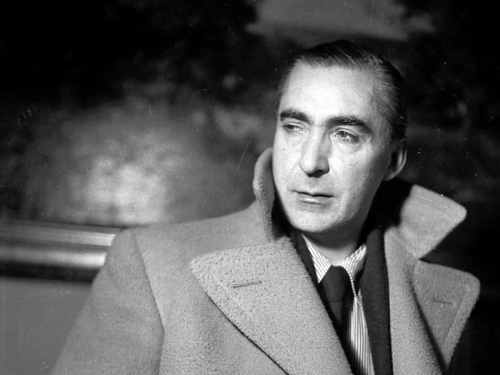
Qui aura la peau de Malaparte?

malaparte.jpg

Qui aura la peau de Malaparte?

Pour Curzio Malaparte, la libération de l’Italie du joug mussolinien par les Alliés est une illusion. L’écrivain y voit plutôt le triomphe du matérialisme et du consumérisme. Surtout, il déplore la misère qui frappe le peuple napolitain en même temps que la décadence dans laquelle se vautrent ses élites.

Dans La peau qui paraît en 1949, Malaparte dresse un tableau sombre de l’Italie post-fasciste. À ses yeux, la libération formelle de l’Italie laisse place à une métamorphose du champ politique qui n’altère en rien la servitude de son peuple. Au fond, il n’y a pas de véritable changement : la cruauté des hommes perdure, avec ou sans Mussolini. La présence des Alliés est perçue comme hostile. Elle apporte avec elle son lot de misère et rajoute un peu plus au chaos qui domine le paysage napolitain. La force de La peau est de nous rappeler que, fascisme ou non, l’humiliation, la destruction et la misère humaine sont consubstantielles à toute offensive politico-militaire et que les violences morales ou physiques ne sont pas l’apanage des dictatures.

Naples est livrée aux plus basses vicissitudes de la part de ses habitants, les corps se négocient pour quelques cigarettes américaines ou contre quelques misérables denrées de subsistance. Corps de femmes, corps d’enfants, tout y passe sans aucune considération pour la dignité humaine. Quand on a faim, on oublie tout. Les mères vendent leurs enfants, et les femmes leur corps, les hommes se murent dans un silence. Tout le monde se découvre, se met à nu sur le marché, à la vue du public. Les corps sont omniprésents, les âmes semblent avoir disparues. C’est à cause de cette peau, cette maudite peau qui exaspère tant Malaparte : « Cela n’a rien à voir, d’être un homme convenable. Ce n’est pas une question d’honnêteté personnelle. C’est la civilisation moderne, cette civilisation sans Dieu, qui oblige les hommes à donner une telle importance à leur peau. Seule la peau compte désormais. Il n’y a que la peau de sûr, de tangible, d’impossible à nier. C’est la seule chose que nous possédions, qui soit à nous. La chose la plus mortelle qui soit au monde. Seule l’âme est immortelle, hélas ! Mais qu’importe l’âme, désormais ? Il n’y a que la peau qui compte. Tout est fait de peau humaine. Même les drapeaux des armées sont faits de peau humaine. On ne se bat plus pour l’honneur, pour la liberté, pour la justice. On se bat pour la peau, pour cette sale peau. » Malaparte dénonce le matérialisme triomphant et déjà anticipe ses dangers, il a assisté à la naissance en direct du consumérisme d’après-guerre et voit de ses propres yeux de quelles infamies sont capables les hommes « pour cette sale peau ».

L’Italie des vainqueurs

Naples est dans l’anarchie, il n’y plus de maître puisque Mussolini est défait. Il en résulte un état de nature quasi hobbesien : l’homme est un loup pour l’homme. La loi du plus fort règne, et les plus forts à Naples et dans toute l’Italie, ce sont les Alliés, plus exactement les soldats américains. Jeunes, beaux, fiers, souriants, les libérateurs regardent ces pauvres Italiens délabrés avec mépris ; « this bastard dirty people », dira le colonel Jack Hamilton.

Les nouveaux conquérants sont pourtant aimés du peuple italien, qui leur réserve un accueil des plus chaleureux notamment lorsqu’ils débarquent à Rome, et ce même si en passant, un char américain écrase un homme, devenu en l’espace de quelques secondes, un drapeau de peau.

Pendant que le peuple souffre des privations et des humiliations, la fine fleur de l’élite italienne aux mœurs légères se réunit dans des salons, les bourgeois pédérastes se griment en marxistes révolutionnaires, plus préoccupés par leurs affaires de mœurs que du sort de leur pays. Malaparte assiste à l’une de ces réunions, puis à une curieuse cérémonie païenne, il en sort éprouvé. «  À mes yeux, Jean-Louis était l’image même de ce que sont, hélas ! certaines élites des jeunes générations dans cette Europe non point purifiée, mais corrompue par les souffrances, non point exaltée, mais humiliée par la liberté reconquise : rien qu’une jeunesse à vendre. Pourquoi ne serait-elle pas, elle aussi, une « jeunesse à vendre » ? Nous aussi, dans notre jeunesse nous avions été vendus. C’est la destinée des jeunes, en Europe, d’être vendus dans la rue par faim ou par peur. Il faut bien que la jeunesse se prépare et s’habitue, à jouer son rôle dans la vie et dans l’État. Un jour ou l’autre si tout va bien, la jeunesse d’Europe sera vendue dans la rue pour quelque chose de bien pire que la faim ou la peur. » La décadence des élites et la bassesse du peuple italien sont tels que la rédemption devient une nécessité. La spectaculaire éruption du Vésuve vient alors purifier, par la lave et la cendre brûlantes, le péché et l’orgueil des hommes.

vesuve9999.jpg

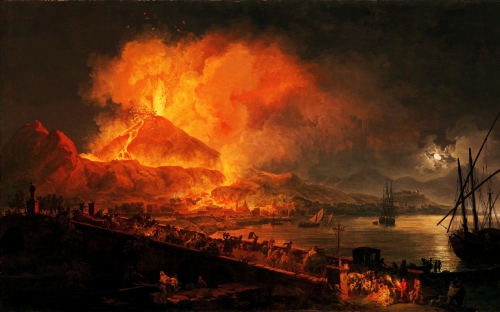
Le Vésuve, symbole d’une justice divine impartiale

Face à l’arrogance américaine et aux vilenies napolitaines, la réaction de la nature et ce qu’elle contient de divin se manifeste dans une éruption volcanique, telle une scène d’Apocalypse, spectacle visuel impitoyable et magnifique à la fois. Le Vésuve, « dieu de Naples, totem du peuple napolitain » se réveille et gronde la terre. Les hommes sont perdus dans les ruelles, les cris, les prières et les supplications fusent sous l’œil impassible du terrible volcan. Pour la première fois, la peau est oubliée, on pense à son âme et à se repentir. Pour la première fois, les GI’s éprouvent un sentiment de crainte, la conscience de leur propre finitude, de leur petitesse. Hommes ou femmes, Américains ou Italiens, vainqueurs ou vaincus, tous sont égaux face à ce seigneur de la mort aveugle et sans pitié.

La loi du plus fort est toujours la meilleure, et c’est bien le Vésuve qui règne depuis des temps immémoriaux. Des scènes d’offrandes pagano-chrétiennes se succèdent dans les jours qui suivent l’éruption, les napolitains sacrifient des animaux, jettent des agneaux, poulets et lapins égorgés « palpitants encore, au fond de l’abîme ». Ils offrent des présents au Vésuve : fromages, gâteaux, pains, fruits et vins sont dédiés à cette divinité terrestre. Un long cortège de femmes, d’enfants et de vieillards monte sur sa pente ornée de sculptures de lave éteinte, alternant entre prières et insultes à l’encontre du volcan. Quand les actions malsaines des hommes atteignent un point de non retour, le Vésuve se réveille : l’hubris humain le tire de sa léthargie. Une fois éteint, désarmé de tout pouvoir de coercition, il redevient un dieu mort.

Un caméléon nostalgique de la grandeur de l’Italie

malaparte-febo.1294907906.jpgL’écrivain risqua sa vie pour libérer son pays de Mussolini dont il fut pourtant proche au départ. Lors d’un discours destiné aux soldats italiens qui combattaient le fascisme, il confie : « Le nom Italie puait dans ma bouche comme un morceau de viande pourrie. » L’écrivain refuse de s’attacher à un patriotisme aveugle et prend le recul nécessaire afin de discerner les tares de son propre pays qui se situent dans le fascisme ou dans le post-fascisme.  Malaparte s’identifie davantage à la Rome antique et à la Renaissance qu’à l’Italie moderne. C’est un homme du passé obnubilé par la richesse culturelle et artistique que lui ont légué les temps anciens : le patriotisme moderne ne semble pas être fait pour lui, le présent le désespère et il ne croit pas en un avenir meilleur. Ce qu’il vit au présent est vulgaire et ignoble, pessimiste résolu et réactionnaire esthétique, il est tourné vers le passé car il est attiré par ce qui est raffiné.
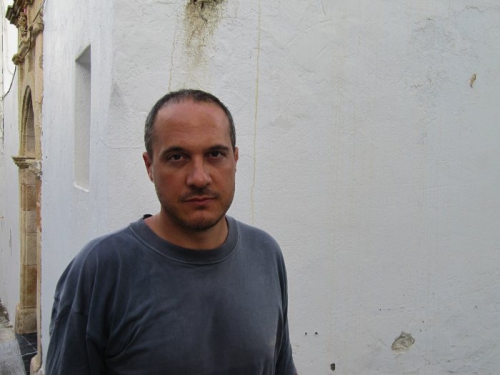
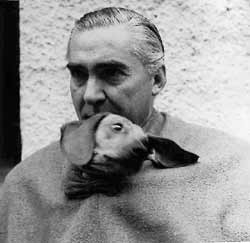
Malaparte est un grand cynique, il aboie pour dénoncer et aime le faire devant les grands hôtels pour déranger les clients, ces consciences tranquilles, bourgeoises, ancrées dans leur confort matériel et intellectuel. Mais son cri animal n’est pas seulement parasite, il est aussi empreint de douleur et de pitié, il crie pour ceux qui ont les cordes vocales sectionnées par la méchanceté et la cruauté humaine, qu’il s’agisse de chiens (son propre chien Fébo dans La peau ) ou d’hommes.

jeudi, 23 avril 2015

“Les noirs et les rouges”, d'Alberto Garlini

Garlini_photo1_Laura-Pagliara.jpg

“Les noirs et les rouges”, d'Alberto Garlini

Les malveillants

Ex: http://www.parismatch.com

Baston, complots et attentats : Alberto Garlini suit le parcours sanglant d’un militant d’extrême-droite dans l’Italie des années 1970. Machiavélique.

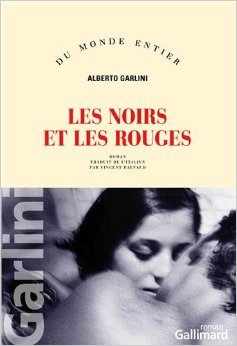
noirsrouges.jpgOn n’en finit pas de revivre les « années de plomb » en Italie. Là-bas, entre 1968 et 1975, au lieu de mastiquer des marguerites comme tout le monde, jeunes fascistes et jeunes gauchistes se sont livrés à une guerre acharnée. Rien à voir avec les révolutionnaires parisiens de l’époque dont le bla-bla sentencieux endormait jusqu’aux fleurs. Chez nous, on jouait à la révolution. Chez eux, c’était la guerre. De Lotta nazionale, jusqu’aux Brigades rouges, on avalait chaque matin du chien-loup en brochette sur des barbelés. Les vieux de chaque bord étaient maudits. La nostalgie geignarde du passé impérial, des Chemises noires et du salut romain exaspéraient les jeunes fascistes qui vouaient, en revanche, un culte à Mussolini. Même chose en face : les dinosaures du Parti communiste étaient maudits, tandis que Staline, Lénine ou Mao, les vrais monstres, restaient d’indéboulonnables idoles.
Le livre le plus excitant, le plus brutal et le plus audacieux du moment

C’est tout ça que ressuscite Alberto Garlini dans « Les noirs et les rouges », le livre le plus excitant, le plus brutal et le plus audacieux du moment. Car, attention, pour une fois, on ne raconte pas l’histoire bien installés dans le camp des « bons » qui vous massacrent au nom de la justice ou du prolétariat. On est chez les « méchants », les fascistes ! Et pas dans une bande à états d’âme. Stefano, le héros, et ses copains raffolent de la castagne, de la chaleur du feu, des cris bestiaux de leurs victimes, de l’odeur du brûlé, de la rage des coups… Le goût du sang est pour eux aussi irrésistible que celui du pollen pour les abeilles. Surtout que les petits gauchistes leur tournent les sangs, avec leur tête de fils à papa, leurs diplômes de futurs notaires, leurs déjeuners du dimanche chez la grand-mère et leur arrogance de gamins qui flirtent avec la soubrette. A l’extrême droite, on ne joue pas au tennis mais on massacre les révolutionnaires de bonne famille qui pleurent quand ils se font mal en tombant des nues. Car on appartient au peuple, le vrai, pas celui qui, dix ans plus tard, s’enrichira chez Gallimard en souriant de son passage aux usines Peugeot.

Stefano, un fils d’ouvrier d’Udine, devient un héros du jour au lendemain quand il massacre une bonne poignée de « rouges » à l’université de droit de Rome. Sa philosophie est celle du Duce : « Si j’avance, suivez-moi. Si je recule, tuez-moi. Si je meurs, vengez-moi. » Ce n’est pas du Kant. Mais quand on trace sa route à coups de ranger en pleine poire, c’est très efficace. Et le résultat est là : Stefano grimpe dans la hiérarchie secrète des noirs qui veulent abattre la démocratie. Il va tuer un homme qui a « donné » un flic sympathisant, importer des armes, saboter la visite d’un ministre yougoslave, mettre une bombe dans un train et, finalement, participer à un attentat monstrueux dans une banque à Milan. Sauf que, peu à peu, il comprend. Que la police l’a repéré depuis longtemps, que ses bombes sont fournies par les « services », que ses commanditaires fréquentent l’autre bord. La lutte, la fraternité, l’utopie se transforment en tromperies, trahisons, braquages, complots et intrigues. Ne reste à l’arrivée que la fuite. Et la mort.

« Les noirs et les rouges », d’Alberto Garlini, éd Gallimard, 676 pages, 27,50 euros.

mercredi, 18 mars 2015

Il ’68 lo ha inventato D’Annunzio a Fiume

annDAnnunzio-soldato.jpg

Il ’68 lo ha inventato D’Annunzio a Fiume

È un tale anticipatore che ha rinnovato la letteratura italiana dell’800 quando pubblicò Il Piacere, subito diffuso in tutto il mondo, quando all’estero nessuno conosceva Manzoni. Ha rinnovato la poesia italiana, i rapporti con la borghesia, con la politica, con la vita militare. Soprattutto ci lascia oggi un messaggio molto importante, “Conservare intera la libertà fin nell’ebbrezza” e “Non chi più soffre ma chi più gode conosce”. E qui non si tratta di edonismo, ma di godimento come vita intellettuale libera e gioiosa. Questi sono i suoi messaggi, oltre a quello di guardare sempre avanti, progettare e imporre il proprio futuro, saper far sognare agli altri uomini i propri sogni.
 
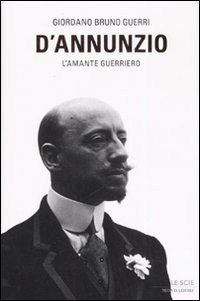
di Giordano Bruno Guerri
 
Ex: http://www.lintellettualedissidente.it 

ann12445931.jpgCi racconti un episodio OFF dell’inizio della tua carriera?
Un giorno ho pubblicato il mio libro su Bottai, che era la mia tesi di Laurea, da Feltrinelli. Ebbe un immenso successo soprattutto di discussioni sollevate, perché per la prima volta si sosteneva e si dimostrava che non solo era esistita una cultura fascista, ma che erano esistiti anche dei fascisti onesti e in gamba come Bottai. Il fatto poi che l’avesse pubblicato Feltrinelli… puoi immaginare l’emozione e il disorientamento che provocò. Un giorno ricevetti una chiamata da un ragazzo a me ignoto, mi disse che aveva letto il libro e avrebbe avuto piacere di incontrarmi con alcuni amici. Andai volentieri a quel pranzo in Corso Sempione, dove trovai e conobbi le menti migliori della Nuova Destra di allora, che erano Solinas, Cabona, Tarchi, e non so quanti altri. La cosa buffissima, che mi fece molto ridere, era che il ristorante – tutt’altro che ‘Nuova Destra’ – era tenuto da un signore in camicia nera che ci salutò con il saluto romano e che aveva l’intero ristorante tappezzato di ritratti di Mussolini. Fu un curioso incontro, abbastanza OFF, mi sembra!

Sei uno scrittore, un giornalista, uno degli storici più apprezzati d’Italia e in questo momento sei il Presidente del Vittoriale degli Italiani, la casa museo di Gabriele D’Annunzio. Quest’anno si chiudono le celebrazioni del 150° anniversario della sua nascita, che cosa ha lasciato D’Annunzio all’arte e alla cultura italiana?
D’Annunzio non solo ha lasciato, ma dona ancora. È un tale anticipatore che ha rinnovato la letteratura italiana dell’800 quando pubblicò Il Piacere, subito diffuso in tutto il mondo, quando all’estero nessuno conosceva – e tuttora nessuno conosce – Manzoni. Ha rinnovato la poesia italiana, i rapporti con la borghesia, con la politica, con la vita militare. Soprattutto ci lascia oggi un messaggio molto importante, “Conservare intera la libertà fin nell’ebbrezza” e “Non chi più soffre ma chi più gode conosce”. E qui non si tratta di edonismo, ma di godimento come vita intellettuale libera e gioiosa. Questi sono i suoi messaggi, oltre a quello di guardare sempre avanti, progettare e imporre il proprio futuro, saper far sognare agli altri uomini i propri sogni.

Le battaglie politiche di D’Annunzio oggi sono ancora attuali?
Sono sempre attuali. Contrariamente a quello che si pensa, con questa etichetta di ‘filofascista’ che gli è stata attribuita – lo era anche, perché era un superuomo e quindi aveva adottato il superomismo che poi combaciava in qualche modo con il fascismo –, era sostanzialmente un libertario e la difesa della libertà dell’individuo deve essere un nostro compito, dovrebbe essere una delle missioni della Destra, peraltro…

D’Annunzio fa di Fiume “città di vita, città di arte”, quella è una pagina molto importante…
È una pagina straordinaria, qualsiasi Paese disponesse di un episodio simile nella propria storia lo avrebbe mitizzato con film, romanzi e quant’altro, invece sembra quasi che ce ne vergogniamo. Fiume fu un’anticipazione del ’68 da destra, perché nello spirito libertario di Fiume e di d’Annunzio c’era anche questa componente superomista, per cui il ‘capo’ era gran parte della cosa, ma Fiume fu un’avventura indimenticabile che insieme al futuro ripercorre il passato dell’Italia, il Rinascimento. D’Annunzio conquistò Fiume come un condottiero rinascimentale e la mantenne come un pirata di oggi.

La musica è un elemento centrale nella Carta del Carnaro…
Sì, nella costituzione c’è la musica come strumento di vita e di elevazione del popolo, che deve essere quasi distribuita, donata nelle scuole e a tutti quanti, così come la bellezza delle città; l’arredo urbano, così chiamato oggi con una definizione tremenda, non è stato inventato dagli assessori dei vari Comuni, ma è stato inventato da d’Annunzio.

Nell’ultima biografia “La mia vita carnale” racconti un D’Annunzio privato, quotidiano, amante: come corteggiava le donne il Vate?
Lui aveva il grande vantaggio di essere corteggiato, arrivava in un salotto e le donne erano tutte lì a pendere da un suo sorriso – sdentato, peraltro – perché il suo carisma, la sua fama, la sua eleganza, soprattutto il suo eloquio erano tali da incantare tutte quante. Credo che le seducesse con la parola straordinaria di cui disponeva; a trent’anni disse di aver usato, e gli si può credere, 15.000 parole, mentre noi ne usiamo mediamente da 2.000 a 3.000. Faceva sentire le donne regine della propria vita – questo era un dono magnifico – e secondo il suo motto riceveva quel che donava, una dedizione assoluta.

annDannunzio_Giornale.jpgUn aspetto poco conosciuto di D’Annunzio è l’esoterismo, il suo rapporto con l’aldilà. È vero che ti è capitato di metterti in contatto con il fantasma di D’Annunzio al Vittoriale?
Vivo nella casa dell’Architetto Maroni – come tutti i Presidenti quando sono al Vittoriale – dove Maroni, D’Annunzio e Luisa Baccara facevano delle sedute spiritiche e si mettevano in contatto con l’aldilà. Ogni tanto mi passano accanto dei venti, sento dei soffi, però credo fermamente che sia dovuto alle finestre, che sono ancora quelle degli anni Venti!

Un’altra biografia molto importante che hai affrontato è quella di un grande uomo e artista italiano del Novecento, Filippo Tommaso Marinetti…
Marinetti fu l’ultimo uomo importante che vide D’Annunzio vivo; venti giorni prima della morte andò a trovarlo con tutta la famiglia e gli portò un dono magnifico: una scultura che era il doppio comando di un bimotore Caproni con una dedica che diceva: “Noi siamo i motori della nuova Italia”. Ho scritto questi due libri insieme, prima è uscito D’Annunzio e poi Marinetti, perché fanno parte di uno stesso magnifico progetto culturale inconscio della cultura italiana e mondiale. Due innovatori, uno che parte dal passato (D’Annunzio), uno che guarda direttamente al futuro, ma entrambi vogliono cambiare tutto, due rivoluzionari.

All’inizio tra i due correva buon sangue, poi ci fu uno scontro di personalità. Tu citi sempre una battuta bellissima di D’Annunzio nei confronti di Marinetti…
Marinetti lo stuzzicava dandogli del passatista, del vecchio trombone, e D’Annunzio, da grande creatore della lingua, lo fulminò con un epiteto straordinario: ‘cretino fosforescente’. È futurista al massimo!

Secondo te la vita di D’Annunzio è stata più futurista dei Futuristi? Lui veniva nominato ‘passatista’, in realtà la biografia del Vate affronta tutte le tematiche dell’uomo futurista…
Non tutti i Futuristi sono riusciti a vivere una vita futurista, D’Annunzio sì. Basti pensare a quello che ha fatto con il Vittoriale. Si dice che i Futuristi volessero distruggere i musei, non è vero, era una provocazione. D’Annunzio, al rovescio, creò il museo della propria vita che in realtà non è un museo, è il tempo che si è fermato al momento della sua morte per perpetuare la sua vita. Ha progettato il proprio futuro nel mondo dopo la propria morte ed è riuscito a realizzarlo straordinariamente. Il Vittoriale oggi gode di una salute pienissima, ti voglio dire con orgoglio in anteprima per OFF (perché i dati ufficiali verranno comunicati soltanto a fine anno) che a fine novembre avevamo già avuto 16.000 visitatori in più, ovvero l’8% in più del 2012, e che gli incassi sono di conseguenza aumentati. Il Vittoriale non produce solo cultura e bellezza, ma anche ricchezza. Credo che D’Annunzio, a 75 anni dalla morte, possa essere contento.

Qui su OFF abbiamo intervistato Mimmo Paladino e Velasco, che hanno collaborato con te…
Sono due donatori del Vittoriale, hanno dato al Vittoriale delle opere straordinarie, Mimmo Paladino il suo cavallo blu, che è diventato quasi un simbolo del nuovo Vittoriale, così dominante sul lago, e Velasco la sua muta di cani che accompagnano D’Annunzio e i suoi dieci compagni seppelliti nel Mausoleo, quindi mi fa piacere questa comunione.

Oggi che cosa farebbe D’Annunzio nella situazione politica italiana?
Verrebbe d’istinto dire che cercherebbe di prendere in pugno la situazione. Purtroppo sono smentito dal fatto che non lo fece nel 1921 quando avrebbe potuto, ma era tale la disillusione di Fiume – ricordiamoci che fu costretto ad abbandonare Fiume a cannonate dal governo in carica di Giolitti – che si disgustò profondamente e si ritirò al Vittoriale. Chissà, oggi magari non lo farebbe, certo non passerebbe per il Parlamento!

Le similitudini che qualcuno ha fatto, secondo me azzardando un po’, tra Grillo e D’Annunzio, secondo te sono giuste?
Ma per carità, prima di tutto c’è una differenza culturale pari alla Fossa delle Marianne di 11 km. Certo, i grandi eversori sono sempre accostabili, non a caso Grillo tempo fa mise nel suo mitico blog una frase che sembrava totalmente sua ed era di D’Annunzio. Era una frase che incitava alla necessità di rovesciare l’attuale mondo politico per rinnovare tutto, per riprenderci la gioia di vivere, l’economia, la libertà. Erano parole di d’Annunzio che Grillo ha fatto proprie. Dubito che D’Annunzio avrebbe fatto proprie delle parole di Grillo…

Fonte:
Il Giornale

dimanche, 02 novembre 2014

Ur-Fascism

cincinnatus-cincinnati.jpg

Ur-Fascism

By Organon tou Ontos 

Ex: http://www.counter-currents.com

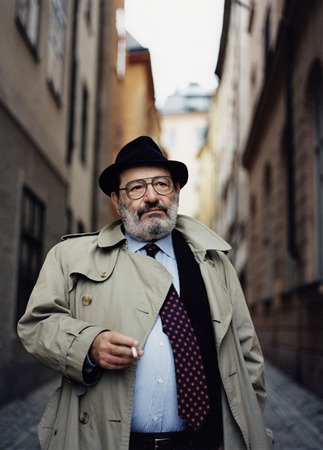
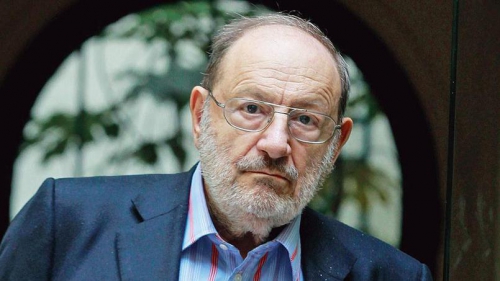
eco_umberto_l.jpgThe following amplifies the concept of ur-fascism advanced by Umberto Eco [2].

Ur-fascism is both unity and multiplicity, like life itself: Unity in its embodiment of a single phenomenon and multiplicity because of the diversity and disparity within that phenomenon. “Ur” means primal or primordial: For example, in the form of Heidegger’s “ur-grund” (“primal ground”) or ur-volk (“primeval people”) as well as Goethe’s “ur-phenomenon” (“archetypal pattern”). “Fascism” comes from the Latin, fasces, meaning “bundle”: politically, a people unified. Ur-fascism is the primordial wellspring of all fascist aspirations and movements. This has many roots: Nation, race, ethnicity, heritage, lineage, culture, tradition, language, history, ideals, aims, and values. When a group has emerged, organically and historically, with its own identity, fate, and interests, a people has come into existence.[1]

A people that is integrated genealogically, linguistically, and institutionally at the highest level forms a nation. At higher levels, peoples may be fused together under empires. At lower levels, a people could comprise a family, community, or local state.

Ur-fascism is the primordial foundation of all fascist movements and governments, historically or potentially, that unify peoples at distinct levels. Another term for “people” is the modern English “folk” and the German “Volk.” The former comes from the Old English “folc,” meaning “common people.” “Folk” was diffused through the introduction of the compound “folklore” by antiquarian and demographer, William Thoms. Peoples are distinct and diverse entities, reflected in the history of fascism. Ur-fascism is the primordial origination in archetypal organic patterns, residing in all living things, of a fascistic impulse toward a primeval will to life that has exhibited itself historically in many political, social, and institutional morphologies, ultimately as the differentiation and coagulation of diverse tendencies, traits, and movements.

Ur-fascism metaphysically privileges the people. It accentuates the disparity of interests between peoples, while Marxism emphasizes the disparity of interests between classes. A people is prior to its classes, metaphysically, and its interests take precedence over its classes, ethically.

The founder and leader of the Iron Guard of Romania, Corneliu Codreanu, held that “A people becomes aware of its existence when it becomes aware of its entirety, not only of its component parts and their individual interests.”[2] Ur-fascism grounds the interests of a people or community above that of the individuals and classes that belong to it. As such, it transcends revolutionary socialism and reactionary conservatism. The interests of the community in its entirety take precedence over the interests of individuals and classes that belong to it. Nonetheless, ur-fascism is both revolutionary and conservative: revolutionary in its readiness to overturn structures that are toxic to the life of a people, and once conservative in its insistence on retaining and preserving what is vital to a given people.

On the basis of a view of society as a social organism that is organized, directed, and governed by a vital social organ in the form of the state, Giovanni Gentile maintained that the state “interprets, develops, and potentiates the whole life of people.”[3]

Ur-fascism does not eventuate in the elimination of social classes, hierarchy, or inequality, but rather folds these in to the service of a people as a whole. In a developing plant or animal, cells undergo differentiation and become structurally and functionally suited to certain roles. The Marxist aspiration to end inequality and ultimately dissolve hierarchy is as futile as a revolt among the cells of an organism that is organically suited and required for the weal of the organism as a whole. Equality among an organism’s cells would mean death for the organism. This does not mean that injustice should not be addressed, and inequality and hierarchy are not ends in and of themselves. Neither the aristocratic nor proletarian socialist solution is desirable. Inequality and hierarchy exist to elevate the community as a whole, not any one part of it.

Ur-fascism forms the primeval basis of the fascistic political response and will to life of a people as a whole, rather than any segment within it. If authentic in its embryonic and developmental forms, it will grow to maturity and enable a whole people to persist over time.

A genuine fascist movement or government first exists (a) in embryo, as a nascent political organism or coalescent forces in a government and (b) reaches mature development, around it a variety of explicit aims and goals are embellished and solidified as policies.

In embryonic form, fascist movements and governments originate as phenomena that arise from within a community. According to Umberto Eco, this embryonic form may arise as one, two, or several of the phenomena below, at once or else separately, in orderly or disorderly succession. Ur-fascism is the organic origination of a fascistic movement or government. Just as complex organisms arise from but one, two, or but a few cells, so too does an authentic fascist movement or government. Only one or handful of the phenomena below is necessary, as “it is enough the one of them be present to allow fascism to coagulate around it.” At the national or local level, as nascent movements or existing governments, fascism may initially take the form of, grow from within, or else be signaled and distinguished by:

  1. Syncretic revival of tradition: reawakening to identity through an integration of disparate traditions, symbols, icons, and ideals among and across past cultures.
  2. Rejection of modernism: reaffirmation of primordial ideals and political values and a disavowal of the universalism and egalitarianism central to the Enlightenment.
  3. The necessity of action: realization of the centrality of action as an inherent aspect of a vibrant community, as well as its necessity as a response to decline.
  4. The necessity of unity: realization of the primacy of primeval truths and basic values, as against perpetual dissent, endless discussion, and disagreement.
  5. Rejection of difference: affirmation of national, racial, ethnic, cultural, linguistic, or religious identity, and as such, opposition to their erosion and decline.
  6. Appeal to class interests: repudiation of class conflict and dissention in the community, and an affirmation of the legitimate interests of distinct classes and interests.
  7. Reality of internal and external threats: drawing attention to internal and external sources of decline and threats to identity, whether ethnic, social, cultural or global in origin.
  8. Inconstancy in the enemy: the mobilizing and galvanizing reality of distinct threats, often from enemies that fluctuate quickly in strength, tenor, scale, and magnitude.
  9. Reality of life as struggle: resuscitation and renewal of the community by overcoming decline, while grasping that life is struggle and requires permanent vigilance.
  10. Populist elitism: elevating the individual as part of his distinct community, promoting its higher over its lower elements, and basing government on the leadership principle.
  11. A regard for death: realization that death is inevitable, the inculcation of heroic aspiration in everyone, and the mobilizing reality of distant or impending community death.
  12. Reaffirmation of traditional life: the preservation of traditional families and family roles.
  13. The primacy of community: recognition of the primacy of community over the individual, the nation over its classes, and the inability of democracy to preserve it.
  14. The mobilization of language: mobilization of the community is only fully possible through novel uses of language, terms, and phrases, in tandem with symbols and imagery.

The emergence of embryonic fascist movements or nascent fascist governments entails that one, two, or more of the above phenomena have clustered together to form a nucleus, which grows and develops. Ultimately, various policies, plans, and position coagulate around the nucleus. Historically, there were many such policies, plans, and positions. In many cases, they were extensions of the unique vision of the movement or government and the people or nation in question. Whether or not such policies were successful is a different matter, but metaphysically, a fascist movement or government has come to maturity when it has progressed from an embryonic stage in which a nucleus is formed to one in which that nucleus has several different policies clustered around it. These will vary among regimes, but they often include:

  1. Agrarianism and the preservation of rural life, ethnic identity that is rooted in the unique soil and geographic context of the nation — as in the NSDAP policy of blood and soil.
  2. Anti-capitalist and anti-consumerist policy that rejects economic materialism.
  3. Anti-communist policy opposing class conflict and rejecting economic reductionism.
  4. An anti-liberal domestic policy that rejects individualism as the basis of social life.
  5. An explicit foreign policy aspiring to autarky and freedom from world finance, and a local policy supporting individual and community self-sufficiency and local adaptedness.
  6. Policy reflecting support of class collaboration, reconciliation, and legitimate class interests, from basic worker’s rights but also the protection of private property.
  7. Economic policy grounded in corporatism, syndicalism, mixed economics, and Third Position economics, as was advanced in Italy, Germany, and Falangist Spain.
  8. Policy reflecting strong support of the young and youth movements, promoting youth that uphold national values and interests, and strengthening the health of the community.
  9. Environmentalist policy and advocacy of animal welfare, often in conjunction with policy supporting sustainable agriculture, renewable energy, and sound population control.
  10. Policy advancing irredentist and ethnic nationalist aims, the extension of “living space” (Lebensraum) in German policy or “vital space” (spazio vitale) in Italian policy.
  11. Familial policy advancing protections for the interests of traditional families, but also promoting the legitimate gender interests for men and women in familial contexts.
  12. Ethnic and racial policies of fecundism or eugenics, aiming for healthy populations.
  13. Policy that integrates the interests of the collective with elitist aspirations, synchronizing mass mobilization with the leadership principle, harmonizing individual and society.
  14. The aestheticizing of social, national, and community life, incorporating social symbols, utilizing rallies, drawing on social ritual and ceremony, and revitalizing traditions.

Eco only discusses the embryonic phase, since his analysis is concerned to explain how fascist movements and nascent fascist governments may emerge. In that sense, his analysis forms a kind of preventative diagnosis, as he aims to show how fascism can be identified before it is allowed to develop into a concrete fascist government.

I have developed his view into a two tiered system, with the embryonic phase representing Eco’s own analysis, and forming the basis for the initial, prenatal phase of fascist development, originating in one, two, or more of the traits I list, each of which is reworded from Eco’s traits; and the developmentally mature stage of fascism, whereby different policies cluster or coagulate around the nucleus that formed in the embryonic stage. Fascism can arise in many ways, and develop many policies.

It is not the case that fascism is a strictly national phenomenon. Instead, it is a way of life that is rooted in organic, synergistic impulse. It can emerge at low societal levels, including the local community (“local fascism”), or else at much higher levels, including the nation.

Moreover, as a response to problems in nations and the decline of communities, fascism has exhibited great historical diversity. Franco’s Spain eschewed expansion, but the pursuit of fresh living space was an important factor in German fascist policy. Italian fascism, however, stressed the pursuit of vital space, which was principally cultural and spiritual, while Mosley’s British Union advocated isolationism and protectionism. And while racial policy was central to German and Norwegian fascism, it was not a central component of Italian Fascism until after 1938, and was never a formulaic component of Portuguese or Spanish fascism. Following World War II, Perón’s Argentina allowed different parties. Catholic conservatism was a significant factor in Spain, while Quisling’s National Gathering looked back to its pagan roots.

Ur-fascism is a family of living worldviews, including past, concrete fascist movements and all possible future movements, and rooting the possibility of fascism in a plurality of different grounds. All movements spring from local conditions and native aspirations.

Understanding ur-fascism as a unique instance of family resemblance also allows us a resource by which to articulate aspects of the decline of European nations and Western Civilization in general. Ur-fascism views different forms of fascism as springing from a common pool of possible sources, and the traits which associate to form the nuclei of fascist movements and regimes have causal relationships with each other. The deconstruction of the West proceeds largely by attacking several of the traits that comprise the core of different fascist worldviews. For example, “antifa,” Leftists, and anti-nationalist advocates attack the traditional family, which is related to if not causally congruent with others traits in the first list. In other words, attacking any of the traits in the list of embryonic traits will likely impinge on several other traits.

Seventy years of consistent deconstruction of the West has largely been predicated on attacks on these features. It follows that any authentic efforts to salvage the nations of the West will require rehabilitating the aims, values, and aspirations of authentic fascism.

In this fashion, my construal of ur-fascism forms a form of prescriptive diagnosis, in contrast to Eco’s preventative diagnosis. If the traits of embryonic fascism bear causal relations of this sort, then nationalists aspiring to save their communities should upheld most of them.

Ur-fascism is a unified family of distinct fascist worldviews, forming a primordial wellspring out of which different fascist movements, historically, have emerged. Its embryonic traits personify primeval biological tendencies that have deep roots in evolutionary history. As an authentic prescription of political mobility, it hearkens back to organic permutations in the history of life that have been exhibited by organismal forms, populations, and lineages. Novel biological forms emerge in the history of life, and exhibit themselves in distinct groups and lineages, arising from underlying mechanisms that work to ensure the persistence of these groups and lineages. The primacy of community over individual is an expression of an integrative tendency in the history of life that is responsible for the diversity of life, and grounds the diversity of fascism.

It is through this conception that we can grasp Eco’s claim that ur-fascism is “primitive”: fascism is a human political system that is deeply rooted in primeval, pervasive biological impulses and patterns that lead to the emergence of distinct communities.

Understood in this way, Eco’s characterization of ur-fascism as “eternal fascism” is transparent: while fascism always manifests in certain places and times, it can always come back again in unexpected guises and different forms; it can never truly, entirely be eradicated.

Notes

1. Wiktionary defines “ur” as proto-, primitive, original. There have been several other explicit uses; Goethe employs “ur-sprung” (“origin”) in his Ueber den Ursprung der Sprache.

2. Stephen Fischer-Galati, Man, State, and Society in East European History (Pall Mall, 1971), quoted on p. 329.

3. Giovanni Gentile and Benito Mussolini, The [3] Doctrine [3] of [3] Fascism [3].

See also the author’s blog: http://ur-fascism.blogspot.com [4]


Article printed from Counter-Currents Publishing: http://www.counter-currents.com


URL to article: http://www.counter-currents.com/2014/10/ur-fascism/


URLs in this post:

[1] Image: http://www.counter-currents.com/wp-content/uploads/2014/10/Umberto-Eco.-007.jpg

[2] advanced by Umberto Eco: http://www.themodernword.com/eco/eco_blackshirt.html

[3] The: http://www.worldfuturefund.org/wffmaster/reading/germany/mussolini.htm

[4] http://ur-fascism.blogspot.com: http://ur-fascism.blogspot.com


vendredi, 03 octobre 2014

Gog, Papini e il libro nero della modernità

Cara_Papini[1].jpg

Gog, Papini e il libro nero della modernità

A vent’anni di distanza dal romanzo precedente Gog torna ad essere il protagonista di questo nuovo romanzo di Giovanni Papini intitolato “Il libro nero”.

di Valerio Alberto Menga

Ex: http://www.lintelletualedissidente.it

Gog, peregrino del mondo malato di nervi sparito nel nulla, dopo aver letto in edizione inglese il precedente racconto in cui il suo nome diede il titolo all’opera, fa recapitare un nuovo manoscritto a Papini che, per la seconda volta, decide di pubblicare. Ora, dopo la pubblicazione del precedente libro (“Gog” è del 1931, un anno prima del “Viaggio al termine della notte” di Céline) fa seguito questo romanzo alla quale Papini ha voluto dare il titolo de “Il libro nero. Nuovo diario di Gog” perché, come egli stesso afferma nell’avvertenza introduttiva, “i fogli di questo nuovo diario appartengono quasi tutti a una delle più nere età della storia umana, cioè degli anni dell’ultima guerra e del dopoguerra”.

In questo nuovo diario, oltre a nuovi incontri eccellenti – una sorta di “interviste impossibili” che Papini, attraverso la maschera di Gog, finge di aver fatto ad alcuni degli uomini più influenti della cultura, dell’arte, della scienza e della politica del tempo – con uomini del calibro di Dali, Picasso, Molotov, Hitler, Marconi, Huxley e Paul Valery, vi è anche una carrellata di una serie di (immaginari) manoscritti inediti e autografi, raccolti con zelante mania da Gog, di alcuni grandi della letteratura come Walt Whitman, Cervantes, Victor Hugo, Stendhal, Kafka, Tolstoj, Goethe e William Blake. In questo nuovo diario di Gog, migliore addirittura del primo, l’impressione che si era avuta dell’immaginario protagonista del romanzo che incarna il malato uomo moderno – quasi un demone si era detto in precedenza– muta radicalmente, quasi smentendola, con la lettura di questo nuovo lavoro.

papinigog.jpgPapini ci mostra un Gog sempre più mosso da umana pietà, che addirittura si commuove e si spaventa, mentre l’umanità pare sempre più demoniaca e priva di senno. Se nel primo romanzo Gog pareva schernire l’umanità, ora pare invece averne pena. Sempre schivo, diffidente e riservato, questo magnate giramondo, spettatore attonito delle vicende umane, non prende mai parte a nessuno dei progetti che nuovamente gli vengono proposti dagli uomini che incontra, folli o straordinari che siano. Il massimo che gli riesce di fare è finanziare, o semplicemente dare promessa di tale intento, a qualche inventore o rivoluzionario in cerca di contributi economici per portare a termine il proprio progetto innovativo. Il romanzo si apre, non per niente, con l’incontro con Ernest O. Lawrence, fisico e Premio Nobel per essere stato l’inventore e il perfezionatore del ciclotrone, il primo acceleratore circolare di particelle atomiche. L’era atomica è quella profetizzata da Papini, e la paura di una guerra nucleare il nuovo spettro che si aggira per il mondo. Ma la profezia più grande contenuta nel romanzo è quella che il nostro Gog/Papini riceve da Lin Youtang – il capitolo è infatti intitolato “Visita a Lin Youtang (o del pericolo giallo)”- di cui vale la pena riportare qualche passaggio:
“- Il popolo cinese, mi ha detto, è il popolo più pericoloso che sia al mondo e perciò è destinato a dominare la terra. Per secoli e secoli è rimasto chiuso nei confini dell’immenso impero perché credeva che il resto del pianeta non avesse alcuna importanza. Ma gli Europei e poi i Giapponesi gli hanno aperto gli occhi, gli orecchi e la mente. Hanno voluto stanarci per forza e pagheranno cara la loro cupidigia e la loro curiosità. Da un secolo i cinesi aspettano di vendicarsi e si vendicheranno.” “Il popolo cinese è astuto e paziente…In realtà i cinesi non sono né conservatori né democratici né comunisti. Sono semplicemente cinesi, cioè una specie umana a parte che vuol vivere e sopravvivere, che si moltiplica e deve espandersi per necessità biologica più che per ideologia politica.”“Il popolo cinese è immortale, sempre eguale a se stesso sotto tutte le dominazioni.” “Nessun altro popolo può sperare di sopraffarlo e di respingerlo. È un popolo scaltro e crudele, popolo di mercanti e d’imbroglioni, di briganti e di carnefici, che sa usare ai suoi fini ora l’inganno ora la ferocia. È destinato, perciò, a diventar padrone del mondo perché gli altri popoli sono più ingenui e più buoni di lui. Ci metterà il tempo che sarà necessario ma il futuro gli appartiene.”

Gog verrà ci porta a conoscenza delle conseguenze della Tecnica, del dominio della Macchina sull’Uomo, come avviene nel capitolo intitolato “Il tribunale elettronico” in cui è una macchina e non un giudice in carne e ossa a emettere le (sbrigative) sentenze; o come nel poema “Il Primo e l’Ultimo” che Gog ritrova a firma di Miguel de Unamuno, in cui il primo e l’ultimo uomo della terra (Adamo e W. S. 347926) si confrontano trovandosi in antitesi: Adamo è un uomo in carne ed ossa, pieno di emozioni, di paure e di tabù, mentre W.S. 347926 (questo è il suo nome) è una sorta di cyborg che, guardando in faccia il suo avo pronuncia le seguenti parole: “Tutto ciò che voi andate balbettando è una fila di non sensi, espressi con un gergo selvaggio, sorpassato, incomprensibile e vuoto. Per noi le parole Dio, colpa, redenzione, peccato, bene e male, non hanno più, da secoli e secoli, alcun significato.” Profetico è anche il racconto dal titolo significativo “Il nemico della natura” dove un uomo distrugge tutta la fauna che si trova davanti perché infastidito da essa, dandoci le sue insensate ragioni. Illuminante il capitolo “Ascenzia” dove viene riprodotta la commedia della democrazia; significativo il racconto “Il transvolatore solitario”, un solitario indiano che odia gli uomini e si rifugia nei cieli azzurri dell’Immenso per sfuggire alla loro mediocrità. Il capitolo “Visita a Otorikuma”, che piacerebbe tanto a Massimo Fini, sottolinea invece i paradossi della guerra moderna:

“In atlri tempi e in altre civiltà le azioni sconfitte erano obbligate a cedere territori e a pagare indennità…Ora, invece, i cpai politici e quelli militari dei paesi vinti, vengono ritenuti delinquenti e come tali processati e puniti. È questo un fatto nuovo nella storia moderna”. È da segnalare, infine, il racconto più nostalgico contenuto nel romanzo/diario intitolato “L’imbruttimento dell’Italia”, che piacerebbe tanto a un Vittorio Sgarbi, in cui viene riprodotta l’immagine di un Paese di cui, per dirla con Longanesi, non riconosciamo più né il volto né l’anima. Un romanzo da leggere, indispensabile per comprendere i mali del nostro tempo.

‘Gog’ e le profezie di Giovanni Papini

giovanni-papini

‘Gog’ e le profezie di Giovanni Papini

Il romanzo, che facilmente si può definire nichilista, se non esistenzialista, rimane di straordinaria attualità per le problematiche esistenziali vissute dall’uomo moderno, ieri come oggi. Per chi abbia apprezzato il “Viaggio al termine della notte” di Céline questa è una lettura consigliata. Diversissimo lo stile asciutto di Papini in confronto a quell’innovazione stilistica dell’autore francese appena citato, ma si percepisce la stessa irrisione nei confronti dell’umanità, delle sue miserie, delle sue fragilità e della sua inconsistenza.

di Valerio Alberto Menga

Ex: http://www.lintelletualedissidente.it

“Satana sarà liberato dal suo carcere e uscirà per sedurre le nazioni, Gog e Magog…”

Apocalisse, XX, 7.

Chi è Gog? Questa è la domanda dalla difficile risposta. Talmente difficile che anche arrivati a fine romanzo ci si ritrova con diversi dubbi sull’identità del personaggio che da il tiolo all’opera in questione. Ma di chi stiamo parlando?

Stiamo parlando di Giovanni Papini, scrittore talentuoso e dimenticato autore di questo vecchio romanzo, ormai fuori catalogo, ma reperibile ovunque su internet tra i buon vecchi libri usati. Fu edito dalla casa editrice Vallecchi che decise di dedicare un’intera collana “opere di Giovanni Papini” all’autore del romanzo in questione.

E chi è Papini? Questa la domanda dalla altrettanto difficile risposta.
Uno scrittore dimenticato, amico e sodale dell’altrettanto talentuoso e dimenticato intellettuale del Novecento italiano Giuseppe Prezzolini: l’anarco-conservatore, allievo di Longanesi e maestro di Montanelli. Insieme, Papini e Prezzolini, fondarono “Lacerba”, il “Leonardo” e la famosa testata “La Voce”, la più grande rivista politico-culturale dalla quale uscì il meglio del fascismo e dell’antifascismo: Benito Mussolini, Benedetto Croce, Curzio Malaparte, Piero Gobetti, Giovanni Amendola…per citarne alcuni.

papini_gog1-200x297.jpgPapini fu giornalista, scrittore, filosofo, poeta, aforista, animatore culturale e agitatore politico, come molti toscani dell’epoca. Fu nazionalista, futurista, filo-fascista, ateo e anticlericale, per poi convertirsi alla religione cattolica. Passò da Nietzsche a Gesù, percorso che si può riassumere nelle rispettive e simboliche opere “Un uomo finito” del 1913 e “Storia di Cristo” del 1921. Ed è forse proprio nella sua riscoperta spirituale, nella sua conversione cattolica, che si può spiegare il suo antisemitismo, probabile percorso nel solco di una certa tradizione cristiana che vede negli ebrei gli assassini di Cristo.
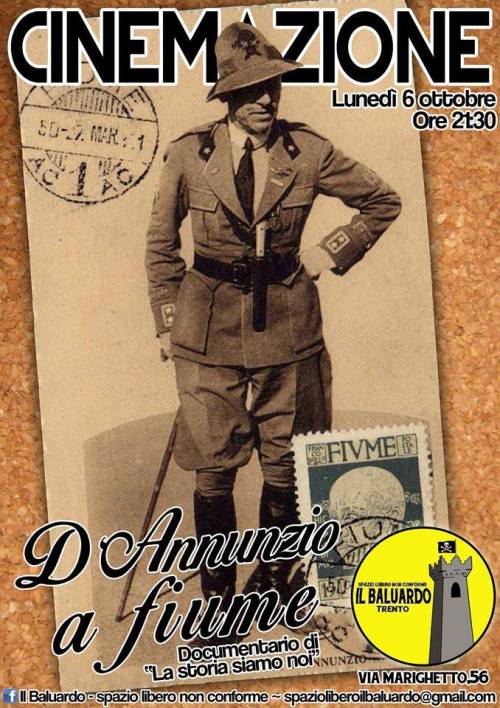
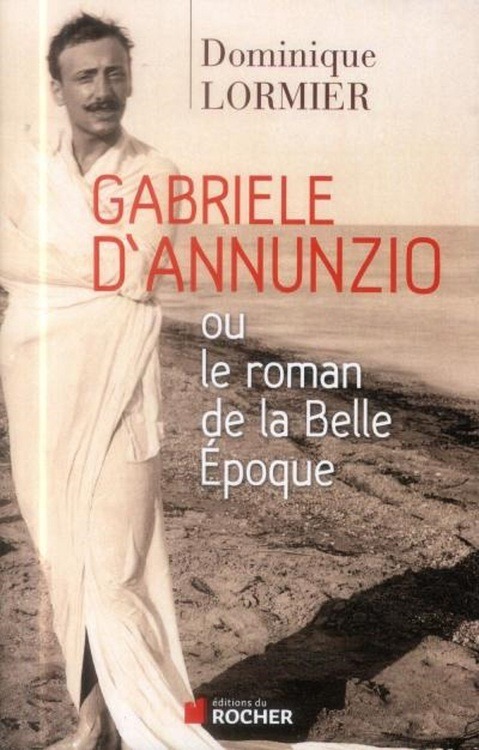
Ma la domanda rimane: chi è Gog?

Gog invece è un personaggio ambiguo, frutto di un miscuglio di razze originarie delle isole Hawaii. Un misantropo ricco sfondato che si annoia della vita e degli uomini e dopo esser stato proprietario e direttore di aziende, aver girato mezzo mondo, ed aver comprato una nazione, tenta di comprendere questi strani esseri chiamati uomini, dal quale pare prender le distanze e porsi al di fuori della stessa umanità – il che fa addirittura dubitare della natura umana del protagonista.

La citazione dall’Apocalisse con cui Papini introduce il personaggio, un essere demoniaco che si beffa dell’Uomo e delle sue miserie, fa addirittura pensare al lettore che esso sia addirittura Satana in persona, in visita sulla Terra come mero turista curioso alla ricerca della natura umana.

Il romanzo è scritto sotto forma di diario, il Diario di Gog appunto, che Papini afferma di aver ricevuto in dono dall’autore prima della sua scomparsa, e che, dopo una difficile opera di ricostruzione cronologica, ha tentato di trascrivere fedelmente. Costruzione cronologica resa difficile dal fatto che Gog nei suoi diari indica il luogo, il giorno e il mese, ma non l’anno in cui ha vissuto le esperienze descritte in quelle pagine. Forse per sottolineare l’attualità delle inquietudini umane che si raccontano nel testo.

Gog, abbreviativo di Gogin, comincia a scoprire l’umanità attraverso la letteratura delle maggiori opere della letteratura mondiale, che riterrà  “Roba assurda, noiosa: talvolta insignificante o nauseabonda”. Tali ai suoi occhi appaiono opere come L’Iliade di Omero, La Divina Commedia di Dante, Il Don Chixote di Cervantes, L’Orlando Furioso di Ariosto, il Gulliver di Swift, Il Faust di Goethe, Madam Bovary di Falubert, Il Vangelo…Insomma tutto lo annoia. Nulla è in grado di soddisfarlo, di eccitarlo, di esaltarlo e di colpirlo. Tutto lo sfiora. Proprio come “l’uomo liquido” della post-modernità.

Allora decide di partire per il Mondo cercando di conoscere uomini eccezionali, alcuni grandi del suo tempo come Lenin, Freud, Henry Ford, Einstein, Gandhi, G.B. Shaw, Edison, Wells; nessuno all’altezza delle sue aspettative. Compra per divertirsi sedicenti maghi, resuscitatori di morti, i più grandi giganti della terra, un boia sadico e nostalgico della buon vecchia tortura, e molto altro ancora… Ma nulla da fare. L’uomo rimane per Gog un miserabile buffone che inganna se stesso e gli altri,  così come l’esistenza stessa appare priva di fine.

Il romanzo, che facilmente si può definire nichilista, se non esistenzialista, rimane di straordinaria attualità per le problematiche esistenziali vissute dall’uomo moderno, ieri come oggi. Per chi abbia apprezzato il “Viaggio al termine della notte” di Céline questa è una lettura consigliata. Diversissimo lo stile asciutto di Papini in confronto a quell’innovazione stilistica dell’autore francese appena citato, ma si percepisce la stessa irrisione nei confronti dell’umanità, delle sue miserie, delle sue fragilità e della sua inconsistenza.

Scorrendo le pagine di “Gog” pare di percepire il Papini nichilista, ancora intriso delle letture di Nietzsche, sicuramente il Papini ossessionato dal “Diavolo” – figura sempre presente nelle opere dell’autore – per poi addirittura riconoscere, arrivati al capitolo finale, il Papini autore della “Storia di Cristo”.

Un libro per tutti e per nessuno.

jeudi, 02 octobre 2014

Documentaria: D'Annunzio a Fiume

vendredi, 19 septembre 2014

D'Annunzio ou le roman de la Belle Epoque

" Considéré comme le plus grand écrivain italien de son époque, Gabriele d’Annunzio (1863-1938) est l’une des figures centrales de la Belle Époque, de la Grande Guerre 1914-1918 et des Années Folles. Enfant surdoué, poète sublime, romancier mondialement reconnu, auteur d’œuvres de théâtre jouées par les plus grands, il multiplie les aventures amoureuses avec les plus belles femmes de son époque, duchesses et comtesses, artistes et comédiennes, fréquente les personnalités les plus illustres de son époque, comme Edmond Rostand, Marcel Proust, Maurice Barrès, Anna de Noailles, André Gide, Anatole France, Pierre Loti, Robert de Montesquiou, Marie de Régnier, Romaine Brooks, Jean Cocteau, Ida Rubinstein, Claude Debussy. Il mène la vie la plus mondaine qui soit, allant de réceptions en spectacles, mais peut également s’isoler dans la recherche d’une authentique quête mystique. Ami des humbles et des pauvres, il rencontre des personnages pittoresques comme une célèbre guérisseuse en Gironde, ou l’un des derniers bergers échassiers des Landes. D’Annunzio joue un rôle déterminant dans l’entrée en guerre de l’Italie en 1915, aux côtés des Alliés. Aviateur, marin et fantassin, il se couvre de gloire sur le front austro-italien, lors d’exploits militaires retentissants. A Fiume, il rédige une constitution révolutionnaire, refuse de rejoindre le fascisme de Mussolini, prend sa retraite au bord du lac de Garde. Il fait tout son possible pour empêcher une alliance italo-allemande contre la France et va même le payer de sa vie en 1938. "

dimanche, 27 octobre 2013

Aux frontières de l’Europe de Paolo Rumiz


rumiz.jpg

Aux frontières de l’Europe de Paolo Rumiz

Ex: http://fahrenheit451.hautetfort.com


poster_178913.jpgPour écrire ce livre, Paolo Rumiz a entrepris un périple original de 33 jours sur plus de 6000 km, à travers 10 pays, en bus, en train, en auto-stop, à pied, simplement muni d’un sac à dos de 6 kilos contenant le strict minimum : de quoi se vêtir et de quoi écrire. Pourquoi alors traverser l’Europe à la verticale, depuis le cap Nord en Norvège jusqu’à Odessa en Ukraine ? Né en 1947 à Trieste, ville carrefour, à cheval entre l’occident et l’orient, aux premières loges des bouleversements géopolitiques des confins de l’Europe, Paolo Rumiz est parti à la recherche de la frontière, cette ligne d'ombre que l’on franchit avec le sentiment de l'interdit,  mais aussi à la poursuite de l’âme slave, cette chimère disséminée toujours plus à l’Est.
C’est donc un voyage intéressant qui nous conduit dans ces terres oubliées du tourisme, aux noms exotiques disparus dans le grand chambardement géopolitique du siècle dernier, voire bien avant (Botnie, Livonie, Latgale, Polésie, Carélie, Courlande, Mazurie, Volhynie, Ruthénie, Podolie, Bucovine, Bessarabie, Dobrogée). Tous ces noms à la magie incertaine sont de formidables lieux de rencontres diverses et marquantes qui dessinent par petites touches, par micro récits du quotidien ou du passé, une autre Europe. Voici, les Samis, les  derniers pasteurs de rennes dans la péninsule de Kola, le jeune Alexandre, un orphelin au grand coeur qui rentre chez lui après 2 ans de prison, les pélerins ou les moines des  îles Solovki et encore tant d’autres.

Il y a dans l’écriture de Paolo Rumiz beaucoup de tendresse et de mélancolie par rapport à ces endroits qu’il traverse et ces personnages qu’il rencontre. On sent qu’il a un amour profond pour cette région du monde, pour le style de vie des personnes qu’il rencontre et pour ce qu’il appelle l'âme slave. Il a envie de montrer à quel point cette âme slave est partie intégrante de l’Europe alors même que cette dernière ne cesse de prendre ses distances avec elle et de la maintenir plus ou moins à l’écart, à sa périphérie. Mais qu’est-ce que cette âme slave au juste ? Difficile à dire exactement. Et c’est peut-être là où le bât blesse avec le livre de Paolo Rumiz.

Ce voyage à la marge de l’Europe finit par être un voyage chez des gens plus ou moins en marge. Paolo Rumiz fait-il l’éloge de la rusticité, de la simplicité, voire du dénuement – pour ne pas utiliser le terme pauvreté? Serait-ce alors ça la fameuse âme slave ? L’âme du pauvre ? Certainement pas, et j’exagère sans doute un peu mais il est clair qu’un certain dégoût de l’Europe occidentale et de son développement est présent de manière plus que diffuse dans le livre. S’il ne s’agissait seulement que de la détestation de l’Europe bureaucratique et de sa  forme institutionnelle (UE), passe encore, mais il s’agit de quelque chose de plus viscéral et qui présente le monde ouest-européen comme faux, artificiel, superficiel, chronophage, loin de la nature etc.

Alors quoi, la solution, ce serait pour les autres parties de l’Europe de rester dans cette marge, ce dénuement que Paolo Rumiz décrit durant son périple ? Alors quoi, on ne rencontre pas de gens simples, authentiques, partageant des valeurs de partage, d’empathie en Europe occidentale, admirateurs de la nature (ok, peut-être un peu moins) ? Alors quoi la solution, c’est juste ça ; aller à l’Est, l’âme slave ? Paolo Rumiz n’est certes pas dans une totale idéalisation de cette partie du monde (un peu quand même), mais clairement la violence, le racisme latent, le myticisme inquiétant, le culte de l’argent ou de la fraude ou encore les ravages de l’alcoolisme - pour citer en vrac quelques éléments – ne sont qu’à la périphérie de son propos. Le livre n’avait pas vraiment besoin d’être accompagné de cette sourde antipathie – qui n’est pas une critique – de l’Europe occidentale.

Malgré cet aspect parfois irritant, le livre de paolo Rumiz est intéressant en nous faisant découvrir des contrées peu courues et en revenant sur l’existence de frontières dures, de leurs logiques de mur, de périphérie et d’exclusion dont l’Européen lambda peut avoir de nos jours perdu la notion, la tangibilité.

lundi, 23 septembre 2013

L'impresa fiumana

lundi, 22 avril 2013

Antonio Pennacchi und der Canale Mussolini

Antonio Pennacchi und der Canale Mussolini

Götz Kubitschek 

Ex: http://www.sezession.de/

canmuss710305025.jpgCanale Mussolini ist ein Epochen- und Familienroman, der – autobiographisch angereichert – davon erzählt, wie aus den Männern und Frauen einer norditalienischen, mittellosen Bauernsippe handfeste Faschisten werden: un-ideologische zwar, aber ist das nicht immer so, wenn es um die Masse unterhalb der weltanschaulich gefestigten Revolutionäre geht?
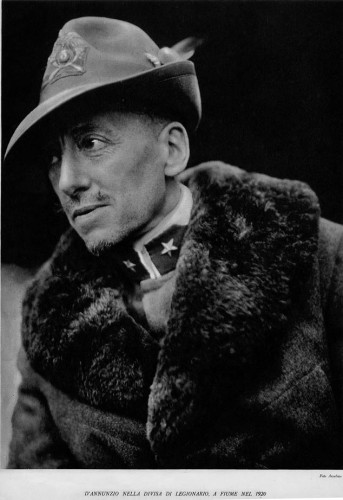
Grandios schildert Pennacchi den Kippunkt in diesem hervorragend erzählten Buch: wie die Männer und Frauen der Sippe Peruzzi auf ihren Felder schuften und trotzdem auf keinen grünen Zweig kommen; wie sie schon mit einem Fuß bei den Sozialisten stehen, aber auch bei den Faschisten auf einer Versammlung vorbeischauen; wie sie dann unter dem gewaltsamen Druck der Linken (die das nicht dulden mögen) halb im Zorn, halb aus Rache zu den Schwarzhemden überlaufen und erst einmal alles niederbrennen, was an sozialistischen Parteilokalen in ihrer Reichweite ist.

Hier findet schlicht die persönliche Lage das geeignete politische Gefährt, und die Widerborstigkeit der Sippe paßt einfach nicht zur Bräsigkeit der linken Gewerkschaftsbonzen. Der Dank der Bewegung bleibt nicht aus: Mitte der dreißiger Jahre bekommen die Peruzzis Land in den trockengelegten Pontinischen Sümpfen und bauen mit an diesem faschistischen Großprojekt, das 30000 umgesiedelten Neubauern Land und Brot gibt.

Ein Rezensent, der Canale Mussolini im Original las, berichtete von hinreißenden Dialogen in Mundart. Zum Glück versucht die Übersetzung erst gar nicht, irgendein Kauderwelsch an die Stelle der italienischen Dialekte zu setzen, der Ton des Romans ist auch so »mündlich« genug. Es wird richtig erzählt, episch, abschweifend.

Die ganze faschistische Epoche Italiens wird plastisch, immer aus Sicht der kleinen Leute, der unterschiedlichen Charaktere der Peruzzis. Da tauchen die faschistischen Suppenküchen auf, die Solidaritätsvereine, die Versammlungshäuser, die Paraden, Uniformen und modernen Errungenschaften. Der Duce hämmert – noch nicht an der Macht – den Pflug der Peruzzis wieder gerade und starrt dabei dem Sippen-Zentrum, der stolzen »Mama« Armida, auf den Hintern, was ihr nicht schlecht gefällt. Immer wieder schildert der Erzähler die völlig harmlose Szene, und vielleicht erinnert sich Mussolini nur deshalb nach Jahren noch an diese Familie.

Wenn überhaupt von ideologischem Überbau die Rede ist, dann treuherzig, ein bißchen wie auswendig gelernt (»diese fixe Idee vom Römischen Reich und von der imperialen Größe, die uns Italienern von Natur aus und von Rechts wegen zustanden, aber auch diese etwas heidnische Vorstellung, daß die Menschen nicht irgendwie alle gleich sind«). Die Weltgeschichte ist mit eingewoben, denn irgendein Peruzzi ist immer dabei: ob im Abessinienkrieg und seinen elenden Gemetzeln, ob in Nordafrika oder beim griechischen Intermezzo (das nur mit deutscher Waffenhilfe nicht in einem Desaster endete), aber auch dort, wo – erzählt wie vom Hörensagen – Mussolini sich mit Italo Balbo oder einem anderen faschistischen Granden anlegt oder auf Hitler trifft.

Es gibt dieses seltsame Wort von der »befreienden Lektüre«: Ein Text rauscht durch die Köpfe wie das Wasser durch den Augiasstall – der ganze Mist, der sich angesammelt hat, wird fortgespült. Canale Mussolini könnte für Italien eine solche Wirkung haben, die Voraussetzungen für einen hysteriefreien Blick auf die eigene Geschichte sind dort besser als bei uns.

Für deutsche Leser könnte die Wirkung nur dann befreiend sein, wenn sie verstünden, daß man die Massen im faschistischen Italien durchaus mit jenen im Dritten Reich vergleichen kann. Aber dieses Vorverständnis einzufordern, ist für sie etwa so, als vergliche man eine Mausefalle mit einer Tretmine.

Antonio Pennacchi: Canale Mussolini. Roman, München: Hanser 2012. 446 S., 24.90 €

vendredi, 29 mars 2013

G. d'Annunzio: Mostra fotografica

dimanche, 24 mars 2013

Rivoluzionario e inimitabile, ecco chi era mio nonno: Gabriele D'Annunzio


dannunzio-divisa.jpg

"Rivoluzionario e inimitabile, ecco chi era mio nonno: Gabriele D'Annunzio"

Federico D'Annunzio, imprenditore col physique dell'intellettuale, racconta vita e opere dell'avo, nato esattamente 150 anni fa: "Il fascismo? Lui lo vedeva come un fumetto. La sua scrittura? Potenza assoluta. Fu un genio: oggi avrebbe milioni di followers"


Ex: http://www.ilgiornale.it/
 

Federico d'Annunzio, physique dell'intellettuale e ambizioni dell'imprenditore, romano di nascita e milanese di rinascita, è nipote legittimo del poeta-soldato Gabriele D'Annunzio.
Figlio di Gabriele jr. (1942-96, sposato a Patrizia dei conti dell'Acqua), a sua volta figlio di Ugo Veniero (1887-1945, marito di Luigia Bertelli), terzogenito del Vate, Federico d'Annunzio, 48 anni, tre matrimoni, tre figlie e un'azienda, è, oltre che uomo d'affari, uomo di Lettere.

Che ben conosce vita e opere del celebre bisnonno: il Comandante, che nasceva proprio 150 anni fa, oggi.

Federico d'Annunzio, tanto di parla, ancora oggi, di fascismo, di Regime e di rapporti tra intellettuali e Potere. Ma quali furono le relazioni di Gabriele con il fascismo?
«In Gabriele è forte lo slancio patriottico, che appare già nei suoi scritti "abruzzesi" di inizio Novecento. Dopo la verità positiva, naturale, raccontata dai "fotografi" letterari dell'epoca, d'Annunzio intesse la trama necessaria per vestire la nobiltà d'Italia. In seguito gli scritti e i discorsi interventisti, e la conquista di Fiume, confermano questo percorso. Ed è "sopra" d'Annunzio che il Fascismo costruisce le proprie fondamenta. Egli tuttavia non partecipa, ma è costretto a seguire il sogno creato dalla sua stessa poesia. Come avviene spesso per la figura femminile amata e poi respinta con pari violenza, così d'Annunzio assiste al cambiamento dell'ideale in realtà: la volontà superiore trasformata in silenzio, le parole vane, così come le costruzioni e le conquiste fasciste. Il fascismo agli occhi di d'Annunzio è un fumetto, una sacca vuota che non lascia nulla di sé».

Perché un ragazzo dovrebbe leggere d'Annunzio, oggi?
«Per l'uso sconvolgente e sperimentale che d'Annunzio fa della parola. In ogni suo scritto, in ogni poesia, nel mezzo di una descrizione o di un passaggio apparentemente piano, appare, sempre, in modo improvviso e ineluttabile, un capolavoro totale: sequenze di immagini luminose, contrastate, definite, di ombre, di sensazioni, di scintille irraggiungibili descritte con assoluta esattezza, rese vive, strappate da momenti così intimi, da non sembrare neppure intuibili, neppure visibili. E ecco invece tutto davanti agli occhi...».

Esempi?
«L'incipit di Forse che sì, forse che no. Quanta enorme distanza dalle Novelle della Pescara. Siamo in pieno Futurismo, azione, energia, morte, ricerca pura della velocità che sposi il linguaggio, per menti che non temono la fatica, la costruzione che si miscela come un arcano, semplicissimo e terribilmente potente, e in cima alla salita, il segreto, custodito in tutti gli scritti successivi: il d'Annunzio notturno. Che cresce negli anni seguenti sino al "Libro dei libri" di Gabriele, quel Diario Segreto che è il fuoco della letteratura e dello scrivere inimitabile».

Non le pare di esagerare?
«Dopo d'Annunzio è quasi impossibile scrivere, ed è quasi impossibile leggere. Al confronto molta letteratura sembra vaga, diluita, amatoriale. Non vi è ricerca felice e dolorosa della purezza, della tecnica, della linea che demarca la verità dell'immagine dal compiacimento solitario e inutile. In d'Annunzio tutto è dono, la scrittura è un dono: che le luci del Poeta, le favolose faville, possano passare, per qualche imperscrutabile magia, nel cuore e negli occhi del lettore, perché il candore senza protesta, la forza idiota, e ogni accostamento sino ad allora impossibile, possano vivere nella luce vera della parola, che trasporta un dono inarrestabile e involontario. Per Gabriele tutto è poetico e involontario, la scrittura non è un gesto d'amore, è dono perché consapevole, ma la volontà in tutto ciò è inutile. La fatica, la lotta, è con se stessi, cercare la perfezione ad ogni costo, per rendere il momento assoluto, dandogli vita eterna».

Non capisco.
«Prima di Joyce, d'Annunzio crea metaforme, plasmi, melodie di pensieri ravvicinati e soprapposti, fino ad allora solo intuiti. Essi tra essi trovano nuovi splendori, crescono in bellezza e ricchezza e appaiono più onesti e più grandi. Si assiste alla espansione del pensiero alla potenza dei suoi moduli sovrapposti, le nuove concatenazioni sono piante e fiori d'altri mondi, eppure comprensibili, solo difficili da raggiungere. Ci vuole forza per raggiungere questi confini, ma il premio è una consapevolezza di sé (senza confini). Sembra una verità parallela, eppure è così: tanta la sperimentazione, l'intuizione favolosa, tanto grande il respiro del pensiero dentro di sé. Nasce un orgoglio e una intimità con se stessi che si credeva avere perduto, se non mai posseduto. La gioia si nasconde dietro una frase, e dopo questa si vorrebbe chiudere il libro ed aspettare che questa carezza si esaurisca.

Ma la lettura di d'Annunzio è sempre così entusiasmante?
«Tutto il contrario. Alcuni momenti sono insopportabili, uno spregio per lo spettatore trattato a orpello, a scafo imbrattato di catrame, utile solo a trasportare la propria gloria, ma vergognoso di bellezza e di sentimento. Nasce l'odio per tanta arroganza, tanta presunzione tremendamente onesta e supportata da una superiorità inavvicinabile, nella facondia, nella sensualità, nella esattezza della vista e delle rime. Odio, soltanto odio, e un desiderio di schianto, immediato, senza speranza né pietà, che si fotta l'Inclito! Leggere d'Annunzio è anche questo».

Quale percorso consiglia per conoscere d'Annunzio?
«Comincerei leggendo il Giovanni Episcopo, che esprime un d'Annunzio maturo, dopo il Piacere e un periodo di sospensione creativa. Il racconto, e la dedica a Matilde Serao, disvelano tutto d'Annunzio, e la poetica successiva: la volontà di "invenzione", la tecnica della parola, l'analisi cruda di se stesso attraverso il racconto, con un linguaggio insolitamente composto e misurato. Godibile, leggibile, l'Episcopo è un buon inizio per conoscere Gabriele».

Non si parte dal Piacere?
«No, il Piacere va giustificato, quasi perdonato, attraverso la lettura degli scritti successivi. È un libro che mostra la umana debolezza del giovane Gabriele alla ricerca del successo. Il libro si avviluppa intorno a un estetismo ancora formale e immaturo, stupefacente, che ritrova invece una forma lirica e autentica nel Fuoco. Il Piacere mostra una parte marginale, debole, della sensibilità poetica di d'Annunzio, che è invece soprattutto interessato all'Uomo, alla sua complessità e al suo dialogo interiore».

Poi?
«La prosa e la poesia di d'Annunzio sono l'opera di un infaticabile ed appassionato sperimentatore, sorretto da una vena poetica inesauribile. Il celebre vivere inimitabile fu l'immagine utile, lo strumento di Gabriele verso la scrittura, l'unico suo vero destino. Leggere d'Annunzio è una esperienza che concede piaceri e drammatiche esaltazioni (e fatiche), ed andrebbe alternata con letture di altri autori, per godere appieno per contrasto della scrittura inimitabile. Per continuare la lettura suggerisco il Trionfo della morte, che raccoglie tracce di tutta la scrittura precedente e successiva. Vi è l'Abruzzo crudele e giusto, la famiglia, la Femmina assoluta (infine, la Nemica), e la Morte, un argomento quasi sconosciuto ma dominante per comprendere la poesia di Gabriele».

Altri libri...
«L'Innocente, illuminato dal contrasto tra il titolo e il testo. Figlio non figlio, padre non padre, protagonista è la colpa e la hybris, ridiretta e esposta, un viaggio al fondo del dolore, nelle profondità del Male. Una confessione che lascia stupiti, per giorni, o per sempre. Siamo noi così? Un libro indimenticabile, un ferro rovente nel cuore. E poi il Fuoco, capolavoro sull'onestà inevitabile della lirica e della poesia, l'Alcyone, il manifesto dello scrivere inimitabile, ed il teatro, con La figlia di Iorio e Il ferro. Ma proprio Il ferro, il nuovo teatro sperimentale, annuncia il periodo più raffinato e dolce della scrittura di d'Annunzio. Fioriscono il Notturno ed il Libro Segreto, diari intimi che concedono ai lettori "a fior di pelle" emozioni non raccontabili, che stanno solo nello spazio tra il Poeta e il Sé. E nel Libro Segreto un d'Annunzio terribile, che falcia la propria scrittura, e inventa, appena prima di morire, una nuova letteratura. Quest'ultimo, senza dubbio, il mio preferito.

Chi sarebbe oggi d'Annunzio?
«Uno scrittore, ancor più inimitabile. Avrebbe milioni di follower, scriverebbe in lingue diverse, cambierebbe le identità dei social networks, costringendoli a una nuova radicale modalità broadcast. Ed il mondo non potrebbe stancarsi di lui: saprebbe inventare, stupire e cogliere ancora di ciascuno la natura profonda».

samedi, 23 mars 2013

Quel Vate per tutti e per nessuno

Quel Vate per tutti e per nessuno

Creò la liturgia fascista senza essere fascista e disegnò una nuova estetica politica. Ma in fondo fu fedele solo a se stesso

dannunz.jpgGabriele D'Annunzio fu il più grandioso nocchiero che traghettò l'Italia dall'Ottocento al Novecento, dalla piccola borghesia di provincia alla nazionalizzazione delle masse, dalla Belle Époque alla guerra, dalla galanteria all'eros, dalla morale all'estetica, dal cavallo al velivolo e al sommergibile, dal culto romantico del genio e dell'eroe al culto moderno del superuomo, ardito trascinatore delle folle.
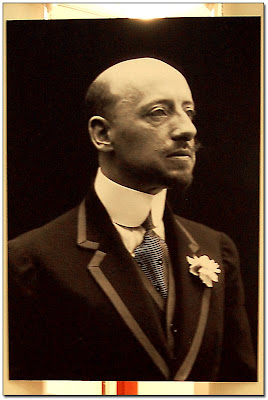
Restano in lui vivi i tratti del secolo in cui nacque, quel 12 marzo di 150 anni fa, e restano le tracce di quell'Italia provinciale che sognava il passaggio dalla piccola borghesia alla nobiltà imperiale di Roma o di Parigi, dal decoro alla gloria. D'Annunzio trasfigura quelle origini borghesi e ottocentesche nella modernità impetuosa e guerriera.
«In Italia ci sono soltanto tre uomini che possono fare la rivoluzione: Mussolini, D'Annunzio e Marinetti», disse il massimo intenditore di rivoluzioni, Vladimir Illich Ulianov, detto Lenin. Era finita da poco la prima guerra mondiale e il leader del comunismo mondiale aveva ricevuto a Mosca una delegazione socialista italiana. Ma nessuno dei tre indicati da Lenin era socialista e tutti e tre potevano definirsi, in varia misura, figli di Nietzsche più che di Marx. Ma gli altri due erano poeti e artisti... Questo spiega perché fu Mussolini a fare quella (mezza) rivoluzione. D'Annunzio fu il più famoso anticipatore del fascismo, il suo «san Giovanni Battista». Ma ne fu anche il più grande dissidente. Non si comprende il fascismo, l'estetizzazione della politica, il rituale fascista, il saluto romano, il culto della bella morte e la retorica militare e cameratesca, senza D'Annunzio. Non si può capire la sintesi tra radicalismo di destra e radicalismo di sinistra, tra sindacalismo rivoluzionario e nazionalismo eroico, senza passare per l'opera, i discorsi e la vita di D'Annunzio (che fu parlamentare di destra, poi passò a sinistra - vado verso la vita - e non fu rieletto).
La fusione tra paganesimo e cristianesimo della liturgia fascista è di stampo dannunziano; l'eja eja alalà, il discorso dal balcone, il superuomo affacciato sulle folle, gli arditi, il mito del duce (che D'Annunzio rilanciò nel 1912 in un saggio su Cola di Rienzo). D'Annunzio crea l'habitat in cui prende corpo la mitologia fascista e da cui attinge la sua maggiore fascinazione rispetto alla rivoluzione socialista. Il mito della guerra attraversa tutta l'epoca e permea le intelligenze più vive del tempo; ma D'Annunzio, tra le varie anime letterarie e militari che alimentano il fascismo, è quello che le incarna di più. Stretto è pure il nesso tra fiumanesimo dannunziano e sansepolcrismo fascista; e tracce di D'Annunzio si ritrovano nell'estremo fascismo di Salò, che risente non solo geograficamente della suggestione estetico-eroico-mortuaria del Vittoriale, ormai disabitato del suo capriccioso signore, morto nel '38. Certo, il fascismo fu anche molto altro, e D'Annunzio fu sicuramente molte altre cose, oltre che precursore del fascismo. Di estetica politica in D'Annunzio parlò Thomas Mann, poi Hofmannsthal che ne rimase incantato; ma sarà Walter Benjamin a cogliere l'estetizzazione della politica poi ereditata dal fascismo. Il suo conterraneo abruzzese Gioacchino Volpe, in un saggio sul D'Annunzio politico e combattente, lo considerò creatore di poesia totale, intesa come «arte eroica al servizio della nazione».

Il rapporto fra D'Annunzio e il fascismo-regime fu controverso, fatto di slanci e prove di amicizia ma anche di netto dissenso, a volte taciuto, a volte filtrato, fino alla tentazione antifascista. Che in alcuni dannunziani prese corpo con l'esperienza breve di Alleanza Nazionale (corsi e ricorsi onomastici). Il rapporto fra D'Annunzio e il regime non fu diverso da quello di un altro esteta e combattente famoso, Ernst Jünger, rispetto al nazismo. Jünger, più di D'Annunzio, non amò gli aspetti volgari e torbidi del nazismo, detestò Hitler e partecipò perfino alla congiura anti-hitleriana; ma la sua fama di precursore e scrittore di guerra, il suo prestigio come eroe di guerra (aveva avuto l'onorificenza militare massima) fermarono Hitler dal proposito di punirlo. O, se vogliamo cambiar tempo, luogo e versante ideologico, lo stesso rapporto di amore e timore tra il Vate e il Duce ci fu tra Castro e Che Guevara, anch'egli come D'Annunzio appellato «il Comandante»: la sua morte prematura fu una salvezza per Castro che diventò amministratore delegato del Mito e si liberò di un ingombrante Compagno scontento. Così accadde con D'Annunzio.

Ma l'ultimo D'Annunzio sostenne il fascismo dopo l'impresa africana e le sanzioni: i copiosi doni alla patria, la retorica della guerra che riaffiorava sulle sue labbra, la missione civilizzatrice italiana in Africa, la polemica con la «perfida Albione», il dono alla Patria della croce militare avuta dalla corona britannica. Nel '37 accettò di presiedere l'Accademia d'Italia. Non fu solo ipocrita il carteggio cameratesco e a tratti pomposamente cordiale con Mussolini. L'ultimo D'Annunzio non condivise l'alleanza con la Germania, non solo perché estraneo al razzismo e al fanatismo hitleriano, ma anche perché vedeva in Parigi la grande sorella latina e nei teutonici i grandi nemici dell'Italia irredenta. E in questo era perfettamente in sintonia con Mussolini, anch'egli di formazione filofrancese e antitedesco fino alle Sanzioni.

D'Annunzio non fu mai fascista e tantomeno antifascista, ma restò sempre dannunziano, egli amava se stesso e la propria opera sopra ogni cosa, non si può irregimentare in nessun regime ma solo farsi adorare, e non si sente intellettuale organico a nessun partito. La sua vera aspirazione fu elevare la vita al rango di opera d'arte. Il suo dissenso dal regime, notò Volpe, nasceva dalla sua riduzione da protagonista a testimone della Nuova Italia. Nutriva il polemico rimpianto che la rivoluzione italiana avrebbe dovuto farla lui. La sua impresa fiumana fu l'antefatto del Sessantotto: vitalismo, trasgressione e immaginazione al potere furono celebrati là, nella prima rivoluzione estetica. Quei ragazzi dai capelli lunghi di mezzo secolo dopo erano gli inconsapevoli nipoti di quelle teste pelate: D'Annunzio, Marinetti, Mussolini (e Lenin). D'Annunzio visse più vite in una sola e più epoche in una vita. Servì nella religione della parola e della vita, della patria e della bellezza, un solo dio: Imago sui, l'immagine di sé.

mercredi, 06 avril 2011

Little Caesar - Gabriele D'Annunzio the Abruzzese

Little Caesar

Gabriele D’Annunzio the Abruzzese


Self-proclaimed “Superman” Gabriele D’Annunzio (Photo by New York Scugnizzo)


“In men of the highest character and noblest genius there is to be found an insatiable desire for honor, command, power and glory.”

– Cicero: De Oficiis, I, 78 B.C.


The end of World War I witnessed the breakup of three of the great royal dynasties of Europe. The Hohenzollern Empire of Germany, the Hapsburg Empire of Austria-Hungary and the Romanov Empire of Russia all went the way of the Imperium Romanum before them…into the misty and romanticized pages of history. In their places were created various new geopolitical entities ranging from ethno-states like Poland to multi-national states like Czechoslovakia. With some notable exceptions (like Yugoslavia) the new governments were republics.


Centuries of authoritarian, monarchial rule plus the exorbitant costs of the war left the new crop of leaders ill-equipped to deal with the problems afflicting their respective societies. Soon a wave of demagogues, strongmen and tinpot dictators would enter the picture, attempting to carve out a legacy for themselves in the ruins of postwar Europe.


In Hungary the Bolshevik revolutionary Béla Kun (née Cohn Béla) established a brutal, short-lived Communist regime (1919) before being overthrown in a disastrous war with Romania. He fled to the nascent Soviet Union where he lived, and continued to brutalize, until he was executed under Stalin’s orders in 1938 “…because he knew too much.” Kun’s brief reign was ironically instrumental in subsequently moving Hungarian politics far to the Right.


In one of the more laughable episodes of this period, on March 13th, 1920 a group of 5,000 Freikorps (German paramilitary volunteers) led by a man named Hermann Ehrhardt seized control of the city of Berlin, drove out the Weimar government, and installed a nondescript fellow by the name of Wolfgang Kapp as figurehead ‘Chancellor’. A group of rightists led by one General Walther von Luëttwitz was the real power behind the throne.


Kapp, a bespectacled bureaucrat and journalist, lacked the charisma to make a convincing frontman. Most of the other Freikorps and military commanders as well as conservative politicians refused to have anything to do with him or his “government”. Four days later the whole scheme fell apart when the Weimar Cabinet called for a general strike and Kapp fled to Sweden. The schlemiel died of cancer two years later while in German custody in Leipzig.


The only happening during the so-called “Kapp Putsch” worth noting was the effect a singular, harsh incident associated with it (the shooting of a rambunctious, small boy by several Freikorps troops) would have on an eyewitness: a young Austrian veteran of the German Army by the name of Adolf Hitler. Several years later in his book Mein Kampf he would remark it was his first lesson in the use of force to rule the masses.


While its monarchy survived the war, Italy was not immune to the intrigues of demagogues. One, in fact, would eventually seize power in 1922. Four years later he would proclaim himself dictator while keeping the King around as a figurehead. His name was Benito Mussolini. As Il Duce he would march Italy nearly to its ruin in World War II. Before all this happened, however, he would have to contend with another forceful personality who very nearly ‘stole his thunder’. Though Mussolini won the contest, he was nonetheless profoundly influenced by this most remarkable individual whose biography is studied to this day by those fascinated with the lives of “those who dare”.


Place of birth in Pescara

(Courtesy of Wikimedia Commons)

Gabriele D’Annunzio was born on March 12th, 1863 in the town of Pescara, Abruzzi. Just a couple of years earlier the region had been part of the Kingdom of the Two Sicilies before its conquest by Giuseppe Garibaldi. Some controversy apparently exists among historians as to D’Annunzio’s birth name. His father, Francesco Paolo Rapagnetta, had been adopted at the age of 13 by a childless uncle named Antonio D’Annunzio. He was raised with the surname Rapagnetta-D’Annunzio. In 1858 he married Luisa De Benedictis, by whom he had five children – three girls and two boys. According to Professor John Woodhouse (Fiat-Serena Prof. of Italian Studies, Univ. of Oxford), at the time of Gabriele’s baptism Rapagnetta had been dropped and the elder boy was officially registered as Gabriele D’Annunzio. Later in his life he would take to writing his surname as “d’Annunzio” to give it a more noble air.


Francesco Paolo had inherited half of his uncle’s fortune and as a result Gabriele and his siblings grew up fairly well off. His father, however, was a notorious drinker and womanizer who kept a string of mistresses. This caused no small amount of ill feeling between father and son. The level of dysfunctional feelings in the D’Annunzio family household was revealed when Gabriele refused to travel a short distance to be with his father before he died. After his father’s death, Gabriele realized the family had been saddled with heavy debts, forcing him to sell the D’Annunzio country home.


Gabriele D’Annunzio’s talents as a writer, as well as his disregard for personal danger, were recognized early in his life. An oft-repeated tale goes that a local fisherman had once given the boisterous lad a mussel to eat. In trying to pry it open he accidentally stabbed himself in the left thumb, bleeding profusely. Instead of running home to his mother for aid, he first ate the mollusk before binding the wound himself.


Originally tutored at home, at the age of 11 his father sent him to a prestigious boarding school, the Collegio Cicognini, in Prato, Tuscany. It must have made quite an impression on young Gabriele as years later he would describe this place as “…a plantation made in the images of the second Circle [of Dante’s Inferno], reducing the most vivacious of human saplings to ‘dried twigs with poison’. Oddly, he would later send both of his sons there when they were old enough.


D’Annunzio’s first brush with fame came in 1879 when he wrote and later published a small collection of 30 poems he entitled Primo vere. The poetry was written in the neo-Latin style of the great Tuscan poet (and future Nobel laureate) Giosuè Carducci. Against the rules of the Collegio Cicognini, he sent a complimentary copy of the book to Giuseppe Chiarini, one of Italy’s leading critics, who gave the book a mostly favorable review in the influential newspaper Il fanfulla della domenica.


Veiled bust of Eleonora Druse

(Photo by New York Scugnizzo)

It was also during his adolescent phase D’Annunzio discovered his fascination with, and his power over, women. He was known to have had at least several passionate affairs with females while still a teenager. Given his physique, this was certainly strange, for Gabriele D’Annunzio stood less than 5’6” tall, was slightly built, and had teeth that would make an Englishman envious! Yet despite this and the fact he would bald early in life, he was never lacking for female company.


In 1881 he entered l’Universita di Roma La Sapienza where he aggressively pursued a literary career by joining various literary groups and writing articles for a number of local newspapers. A year later he published his second volume of poetry, Canto novo, which illustrated his break with the austerity of Carducci’s style by its sensuality and exultation of nature. Some of the 63 poems in the book dealt with the poet’s love for the landscape of his native Abruzzi.


Shortly after this he published Terra Vergine (It: Virgin Land), a collection of short stories dealing with the hardships of peasant life in his native Abruzzi. It was inspired by the pen of noted Sicilian writer Giovanni Verga, who achieved fame by his tales of the grinding poverty in his own native Sicily. For this some accused D’Annunzio of copying Verga’s ideas and plots. Most, though, recognized the originality of D’Annunzio’s work, especially his penchant for the shocking and grotesque. This contrasted with Verga’s use of pathos to arouse sympathy in the reader. Their writings were similar only in the subject matter.


When circumstances forced him to temporarily ‘retire’ from his journalistic activities, he devoted himself to writing novels. His first, Il piacere (1889), was later translated into English as The Child of Pleasure. His next novel was Giovanni Episcopo (1891). It was his third novel, L’innocente (It: The Intruder), published in 1892 and later translated into French, that first brought him attention and acclaim from foreign critics. His pen worked feverishly after this, creating novels and books of poetry. Of the former, his novel Il fuoco (1900) is considered by many literary critics to be the most lavish glorification of any city (in this case, Venice) ever written. Of the latter, his book Il Poema Paradisiaco (1893) is considered among the finest examples of D’Annunzio’s poetry.


His entrance into upper-class Roman society came in the form of a young, attractive woman named Maria Hardouin di Gallese. He seduced and impregnated her in April of1893, marrying her four months later under a cloud of scandal. Maria was the daughter of a noble house, and her father, a duke, strongly disapproved of D’Annunzio as a son-in-law. He was even conspicuously absent from their wedding. Though initially smitten with his young bride, Gabriele would later develop the disinterest that characterized his relationships with women throughout his life. After bringing three sons into the world, D’Annunzio and his wife divorced in 1891.


It would seem only natural a man with his surpassing ambitions would develop an interest in politics, and in that regard Gabriele D’Annunzio would hardly defy convention. Taking advantage of a vacancy in the Italian Parliament, D’Annunzio campaigned for a seat representing Ortona a Mare in his native Abruzzi. It was at this time D’Annunzio the dramatist first made use of giving speeches from balconies to the masses, one of many innovations of his that his fascist protégé Benito Mussolini would later emulate.


By 1897 he was elected to the Chamber of Deputies where he sat for three years as an independent. His devil-may-care attitude, however, caused him to amass a sizable debt. He was eventually forced to flee Italy for France to escape his creditors. During his self-imposed exile he did not grow lax. Among his works he wrote the Italian libretto for Pietro Mascagni’s powerful but inordinately long opera Parasina. In 1908 he took a flight with aviation pioneer Wilbur Wright, which piqued D’Annunzio’s interest in flying. He proved to be an able aviator.


D'Annunzio's airplane navigator scroll (Photo by New York Scugnizzo)


World War I saw his return to Italy in the spring of 1915 where he campaigned extensively for that country’s entry into the war on the side of the Triple Entente (UK, France and Russia). Unbeknownst to him was the fact Italy had by April 26th, 1915 signed a treaty (known later as the Treaty of London) pledging to enter the war on the side of the entente powers. After Italy entered the war on May 23rd, 1915, he volunteered his services as a fighter pilot, taking part in many battles. The publicity he received fueled his already tremendous ego. On January 16th, 1916 while trying to fly over the city of Trieste, his flying boat was attacked by Austrian fighter aircraft. Forced to make an emergency landing, he sustained an injury to the right side of his head which left him permanently blind in his right eye.


In spite of this serious injury, he continued to fly missions into Austrian territory. In August of 1917 he led no less than three daring bombing raids on the Austrian port city of Pola (now Pula, Croatia). These raids became famous in part because of D’Annunzio’s insistence his Italian airmen celebrate the success of each raid by yelling out the ancient Greco-Roman battle cry of “Eia, eia, eia, alala!” instead of the more traditional Germanic “Ip, ip, urrah!” which he considered uncouth and barbaric.


D'Annunzio's model SVA (Photo by New York Scugnizzo)


On October 24th, 1917 Italy suffered its greatest defeat of the war in the disaster at Caporetto. On February 10-11th, 1918 he took part in a daring, if militarily unimportant raid, into Austrian territory now known as the Bakar Mockery. Though it achieved no physical military objective, it uplifted Italian morale which had suffered as a result of Caporetto while delivering a psychological blow to the Austrians.


D’Annunzio’s greatest feat during the war came on August 9th, 1918 when leading the 87th fighter squadron “La Serenissima” he dropped a total of 400,000 propaganda leaflets (50,000 of them painted in the colors of the Italian flag) over the city of Vienna, capital of the Austro-Hungarian Empire. This daring mission is immortalized in Italy as “Il Volo su Vienna” (It: The Flight over Vienna).


At war’s end the internationally acclaimed “fighter-poet” returned to Italy, his ultra-nationalist and irredentist feelings having been hardened by years of battle. With the collapse of the Hapsburg Empire of Austria-Hungary, he dreamed of Italy expanding into the Balkans by annexing lands historically inhabited by Italian-speaking peoples. It was a dream shared by many both in Italy and on the other side of the Adriatic Sea. What would follow would catapult Gabriele D’Annunzio to the pinnacle of the fame and controversy that characterized his life.


After the war Italian armies occupied considerable territory in the Trentino, South Tyrol, Venezia Giulia, the Istrian Peninsula, Dalmatia and most of what is now Albania. In fact, these were most of the lands promised them four years earlier by the entente powers.


What threw a monkey wrench in the works was a man named Woodrow Wilson, President of the United States. The U.S. had been a late entry into the war, and in the minds of American diplomats they didn’t have to abide by the terms of the Treaty of London. Since the administration of President Teddy Roosevelt, America’s WASP elites had turned their previous continent-specific belief in “Manifest Destiny” to a global arena. At the negotiations pursuant to the infamous Treaty of Versailles, Wilson let it be known he believed every recognizable ethnos had the right to self-determination (translation: America had vested business and political interests in the creation of the pseudo-nation known as Yugoslavia).


As documented by Prof. Woodhouse, Wilson also inherited that wonderful Anglo-American tradition known as anti-Italian bigotry. This tradition had revealed itself previously on numerous occasions, most notably on March 14th, 1891 when a total of 17 Sicilian-Americans were murdered by a lynch mob comprised of a good chunk of the adult male population of the city of New Orleans, Louisiana!


During the negotiations in Paris on April 23rd, 1919 the head of the American delegation went so far as to publish a column in the French newspaper Le Temps condemning what he called “Italian imperialism”. He arrogantly claimed Italian negotiators were acting “contrary to Italian public opinion” (without stating exactly how he knew this to be true).


The crux of all this was the city of Fiume (now Rijeka, Croatia). A number of powers (including America’s ‘good friend’ the UK) desired control of this strategically important area. Wilson was adamant Fiume be turned over to the nascent state of Yugoslavia to fulfill its right to ‘self-determination’. That the bulk of the citizenry was Italian-speaking and had already voted by a wide margin to become part of Italy was irrelevant.


D'Annunzio's Uniform

(Photo by New York Scugnizzo)

D’Annunzio the pan-Italian ultra-nationalist was furious with what he saw as American interference in what was basically an Italian affair. In a series of speeches he whipped up the Italian masses in preparation for his “grand adventure” in Fiume. His speeches denouncing the treachery of the Allies and the arrogance of Wilson were given wide coverage in the American press, which gratuitously heaped anti-Italian invectives on him in turn.


It also didn’t help the Italian government’s case that numerous private individuals besides D’Annunzio were taking matters into their own hands. Benito Mussolini by this time had organized his first bands of squadristi (the future Blackshirts) to battle his political opponents and pave the way for his eventual takeover of Italy. Giovanni Host-Venturi, a captain of the Arditi (elite Italian storm troopers during World War I) and a Major Giovanni Giuriati formed the Legione Fiumana (Fiume Legion) to take the port city by force, if necessary. American, British and French critics pointed to this as “proof” the Italians could not be depended upon to correctly administer the territories promised them.


On September 12th, 1919 at the head of a motley force of 2,500 irregulars, Gabriele D’Annunzio the “fighter-poet” invaded the city of Fiume. The inter-Allied force of British, American and French soldiers garrisoned there chose not to force a confrontation in order to avoid an international incident with their Italian allies. Instead they withdrew. From the governor’s balcony D’Annunzio addressed a throng of the citizenry and informed them of his plan to annex Fiume to Italy. Their wildly enthusiastic response affirmed in his mind the justness of his actions.


The Italian government, however, was not so enthusiastic. General Pietro Badoglio telegraphed the Italian soldiers who had followed D’Annunzio into Fiume that they were guilty of desertion. D’Annunzio reacted by publicly condemning the government for its weakness and indecision.


Similarly, he lashed out (though privately) at Mussolini, who up until this time was a partner in D’Annunzio’s endeavor. D’Annunzio had expected material support from Il Duce. Mussolini, however, was not yet strong enough to make such a move and chose to bide his time, instead. He even went so far as to edit and then publish the highly vituperative letter D’Annunzio had written, denouncing him, to make it seem the poet-hero was in fact supportive of him. Only in 1954 was the text of the original letter published. By then, though, D’Annunzio’s name had become so thoroughly linked with Fascism few were willing to stick their necks out to expose the true contempt he had early on developed for Mussolini and his movement.


Italian Prime Minister Francesco Saverio Nitti, realizing the weight of popular opinion was with D’Annunzio, offered him generous terms, among which was a general amnesty for him and his men. Fiume and surrounding territories would also be ultimately joined with Italy. All should have proceeded smoothly after this, but for the fact that it was now D’Annunzio himself who began to stonewall. A referendum by the people of Fiume seemed supportive of Nitti’s offer; D’Annunzio declared the vote null and void.


Apparently Gabriele D’Annunzio, like Gaius Julius Caesar 2,000 years before him, had become addicted to the powers he now wielded. The notoriety, and the legion of female admirers now at his disposal, didn’t hurt either. He rejected Nitti’s offer.


The government in Rome then demanded the plotters surrender and sent a naval task force to blockade Fiume. Things became embarrassing, however, when a number of Italian sailors, including basically the entire crew of the destroyer Espero, joined up with D’Annunzio’s forces. It has also been long alleged that a number of sympathetic rightists in Northern Italy’s industrial community clandestinely shipped supplies to D’Annunzio’s forces (in violation of the blockade) while claiming losses due to ‘piracy’.


Renato Brozzi Fiume medal

(Photo by New York Scugnizzo)

In retaliation for the blockade D’Annunzio declared Fiume an independent state, the Reggenza Italiana del Carnaro (It: Italian Regency of Carnaro) with himself as Duce. This was the closest he came to becoming the Renaissance despot he dreamed of being. As Duce he indulged his megalomania, giving balcony speeches, surrounding himself with military trappings, black-shirted followers and fostering a cult of personality.


With the help of Italian syndicalist Alceste De Ambris he wrote a constitution for Fiume, the Carta del Carnaro (It: Charter of Carnaro), which combined elements of syndicalist, corporatist and liberal republican ideals. The Charter stipulated that Fiume was a corporatist state, with nine corporations controlling various sectors of the economy and a tenth, created by D’Annunzio, representing the people he judged to be ‘superior’ (poets, prophets, heroes and “supermen”).


It must be mentioned D’Annunzio’s idea of the ‘superman’ was more in line with the philosophical vision of Nietzsche rather than the racial one of Hitler. It is also worth noting the Charter declared music to be the fundamental principle of the state. This document plus D’Annunzio’s antics in Fiume greatly interested Benito Mussolini and in no small way influenced the future course of Fascism in Italy. In fact, D’Annunzio has been described by his detractors as the “John the Baptist of Fascism”.


On November 12, 1920 Italy signed the Treaty of Rapallo with the newly-formed Kingdom of Serbs, Croats and Slovenes (renamed Yugoslavia in 1929) which, among other things, established Fiume as the independent “Free State of Fiume”, effectively ending D’Annunzio’s dictatorship. D’Annunzio responded by declaring war on Italy. By this time it was obvious his hold on the city was crumbling. On Christmas Eve Italian troops invaded Fiume in the face of stiff resistance from diehard loyalists. A naval artillery shell from the Andrea Doria through the window of his headquarters impressed upon him the wisdom of surrender.


In a way, though, he won. Fiume would be a de facto Italian possession by 1924. It would remain so until the end of World War II when the victorious Allies would pry it from Italian hands and give it to Yugoslavia (after the ‘ethnic cleansing’ of its Italian population).


Far from returning with his tail between his legs, D’Annunzio’s popularity with the Italian populace was actually enhanced by his Fiume adventure. In spite of claims by many of his Fascist sympathies, he consistently refused to have anything to do with the movement. He even ignored fascist entreaties to run in the elections on May 21, 1921.


Piazza G. D'Annunzio, Ravenna (Photo by New York Scugnizzo)


In spite of this, Mussolini regarded the erstwhile dictator as a rival for his future control of Italy. His fears were probably well-placed as by this time a number of high-ranking members of the Fascist Party of Italy, including Blackshirt leader Italo Balbo, seriously considered the idea of turning to D’Annunzio for leadership. Thus, on August 13th, 1922, when Gabriele D’Annunzio fell out of a window two days before a scheduled meeting with Mussolini and Italian PM Nitti, many believed (and still believe) he had ‘help’ from some of Il Duce’s thugs.


D’Annunzio’s injuries as a result of his fall incapacitated him, leaving him unable to witness Mussolini’s triumphal “March on Rome” (October 22-29, 1922). After this he withdrew from politics, though he still from time to time “stuck his two cents in” many of Mussolini’s decisions. In 1924, after Italy formally annexed Fiume, D’Annunzio was ennobled the Prince of Monte Nevoso by the King upon the ‘recommendation’ of Mussolini. He approved of the Italian invasion of Ethiopia in 1935. However, he was adamantly opposed (along with Italo Balbo) to Mussolini having anything to do with Adolf Hitler, whom he contemptuously referred to in a letter to Mussolini as a marrano (Sp: swine).


Mussolini, for his part, was content to leave D’Annunzio alone after his ascension to power, preferring instead to regularly dole out large sums of money to him to finance his various egocentric projects. The most notable of these was a museum to himself D’Annunzio began during his lifetime, dubbed Il Vittoriale degli Italiani (It: The Shrine of Italian Victories) and located at his estate in Gardone Riviera, Lombardia. It contains his mausoleum.


Gabriele D’Annunzio died on March 1st, 1938, presumably of a stroke. His death caused a period of national mourning throughout Italy and beyond. Even in countries now hostile to Italy his passing was noted with sorrow. No less than The Times of London published this eulogy of him under the heading “The Spirit of the Cinquecento”:


Poet, novelist and politician, dramatist and demagogue, aesthete and soldier, Gabriele D’Annunzio, Prince of Monte Nevoso, is dead. No poet of our time has led a fuller life than this Byron of the modern world […] showed himself a fighter of dauntless courage and a politician who swayed the fortunes of Europe […] bore his wounds with stoic fortitude.


After his death his memory would be all but buried with him for the next 50 years. Scholars in recent decades, however, have shown a renewed interest in his life and works.


It would be simple to dismiss him as a mere hedonist and fascist (as many have done), ignoring his many contributions to the fields of journalism, poetry and drama. In truth, he was no fascist at all, for Gabriele D’Annunzio served neither Mussolini nor Fascism. He served no one and nothing other than his own ego and surpassing ambitions. His inability to form a lasting relationship with women, plus his penchant for decadent living, were perhaps his greatest personal flaws, but history has a habit of forgiving earth-shakers their frailties. His love of nature and aesthetics, as well as his utter rejection of Hitler, put him on a much higher plane than the plebe who became ruler of Italy. Had he lived in an earlier time, today he might be numbered with other tragic heroes who tried and failed like Cola di Rienzo or even Pompey the Great. His legacy is most certainly clouded by the politics of our times. His biography remains a case study of one of the most fascinating and striking personalities of the early part of the 20th century.


Niccolò Graffio


Further reading:

• John Woodhouse: Gabriele D’Annunzio: Defiant Archangel, Clarendon Press, 1998

http://www.gabrieledannunzio.net/english/index.htm


mardi, 22 mars 2011

Portrait: Gabriele d'Annunzio

xp080515102142.jpg

Portrait: Gabriel d'Annunzio


Il avait le teint brouillé des grands nerveux, les yeux bleuâ­tres, d'un azur profond et embrumé, voilé de quelque lointain rêve, la cornée et l'iris légèrement en saillie entre les paupières glabres, comme les yeux des bustes antiques – déjà. Les lèvres d'un gris mauve, comme des lèvres de marbre – déjà – d'un marbre jadis teinté, dont la nuance purpurine se serait effacée. Les dents mauvaises. Mais qu'importaient ces couleurs de la face et de l'émail dentaire ! La couleur est la chose éphémère, comme l'était cette nuance roussâtre du poil sur l'arcade sour­cilière, sous le nez, à la pointe du menton. Et qu'importait, de même, ce corps petit et musclé, avec son torse long, ses jam­bes courtes ! De ces proportions sans grâce le poète s'accommo­dait, sachant bien que sa gloire future concentrait tout l'inté­rêt de son humaine apparence dans le buste, promis – déjà – à l'éternité. Or, la tête était admirable par la forme et par les volumes, par tout ce qui ressortit à la statuaire. Il n'est pas jus­qu'à cette complète calvitie qui ne parût par avance un dépouil­lement volontaire de toute simulation et de tout accident. « Ma clarté frontale », comme l'appelait le maître, avec ce mélange d'orgueil et de sarcasme qui, dans sa bouche, pre­nait le ton d'un défi, d'une raillerie adressée aux circonstances, aux bizarreries de la nature, aux défaillances d'un dieu distrait. Et la main aussi – la main qui caresse et qui tient la plume (et l'épée) – la main qui est volupté et qui est esprit (et fierté), la main était belle : petite, féminine, ciselée, impérieuse, ayant cette force de dédain que le plus hautain visage ne peut exprimer et que, seule, une belle main reflète avec tranquillité. Au petit doigt, deux bagues d'or, chacune ornée d'une émeraude cabochon. J'ai lu que, sur le lit funèbre, le doigt ne portait plus que deux minces anneaux nus, sans aucune pierre pré­cieuse. Il y a tout un symbole de grandeur et de renoncement dans cette disparition des émeraudes.


 Sur le ciel noir de l'époque, la mort de Gabriele d'Annun­zio a jeté, durant quelques jours, les suprêmes clartés de la fusée qui s'éteint ou du météore qui rentre dans la nuit. Astre ou bouquet d'artifice ? Là est la question. Certes, la fin d'un tel homme ne pouvait passer inaperçue. Elle devait éblouir encore, les puissances du feu étant les caractéristiques mêmes de l'âme qui prenait congé de nous. Mais je ne puis m'empê­cher de noter combien fut bref ce dernier éblouissement, com­bien la nécrologie (en maints articles où il faut voir un signe des temps et le reflet des modes changées) fut prompte à di­minuer, à « minimiser », comme on dit dans un affreux jargon, l'importance de ce brusque départ,


 Me trompé-je ? Mais il me semble que, en Italie même, c'est avec quelque précipitation que furent rendus à la haute renom­mée du défunt les honneurs qu'on lui devait, ou qu'on ne pou­vait lui refuser. Dans quelques semaines, la «Voie triomphale » ouvrira sa vaste perspective devant le char de M. Hitler. Ses dalles toutes neuves retentiront sous les martèlements sourds de ce « pas romain » qui fait sa rentrée dans Rome après un bien long détour. Mais le char funèbre du poète n'aura pas suivi la nouvelle avenue. Sans doute parce qu'il y aurait eu antimonie à ce que les gloires du passé empruntassent les routes de l'ave­nir. Dans une petite église de campagne, un simple cercueil de noyer ciré a reçu l'absoute rituelle. Et la dépouille du héros fut inhumée dans la terre de cette même colline où il avait vécu retiré durant les seize ou dix-sept dernières années de sa vie.


 Ainsi va le siècle, ainsi vont les destins des hommes et des États, et les cieux, un instant déchirés par le suprême éclair de la flamme que le vent a soufflée, les cieux sont redevenus ce qu'ils étaient : un amoncellement de nuages sombres.


 Quel grand vide, pourtant, ce mort laisse après soi ! Ce vide, on ne le mesure pas encore. Ou bien disons, pour ceux qui pensent que la vie est un renouvellement incessant où nul vide ne se creuse qui ne soit aussitôt comblé, où ce qui s'en va est aussitôt remplacé (fût-ce par son contraire, ce qui est le cas le plus fréquent), disons pour ceux-là que la mort de Gabriele d'Annunzio constitue un grand événement, et point seulement dans l'Histoire de la Littérature universelle, mais dans l'His­toire universelle tout court, l'Histoire de l'Humanité.


 C'est toute une conception du monde qui s'efface avec cette éclatante figure. Et j'entends bien que cette conception était depuis longtemps déjà dépassée, démodée, périmée (comme disent les générations nouvelles, avec ce luxe d'expressions méprisantes qu'elles ont toujours à l'égard des gens et des choses qui les ont précédées). Mais Gabriele d'Annunzio, jus­qu'à ce soir du 1er mars où la mort l'a frappé à sa table de travail, était le plus illustre « survivant » d'une époque éva­nouie, le représentant le plus magnifique et le plus accompli d'un certain ordre de grandeur. Lui disparu, c'est tout un pan de la civilisation qui s'effondre ou, si l'on veut, c'est tout un décor qui disparaît comme dans une trappe.


 Il a commencé par le culte de l'Amour et de la Beauté. Il ne s'agissait pas, dans son esprit, comprenez bien, de deux reli­gions séparées, ayant chacune leur objet distinct, mais d'une religion unique ayant un double objet sur un seul autel. Les exigences des sens le tourmentaient, et ses aventures furent nombreuses, mais il n'eût point donné satisfaction à ses instincts s'il ne les eût associés – du moins en pensée, car l'imagination du poète supplée parfois aux réalités – à la poursuite d'une forme belle. D'autre part, la définition selon laquelle la beauté serait « une promesse de bonheur » correspond exactement à la manière de sentir qu'il eut dans sa jeunesse, et sa jeunesse se prolongea longtemps, comme on sait, jusque dans son vieil âge. Il ne distinguait point alors la Beauté de la Volupté. Certes, il ne ravalait pas son idole à n'être qu'un instrument du plaisir, mais il considérait l'extase amoureuse, les paradis physiques, comme un accroissement de la Beauté, laquelle ne pouvait, selon lui, atteindre son point de perfection et, si je puis dire, culminer que dans le délire sensuel.


 Mais ici encore, gardez-vous d'une équivoque ! N'allez pas confondre cette chasse ardente avec la morne dépravation. Dès l'instant que l'amour est requis, ou que l'âme aspire à lui, le voluptueux cesse d'être enfermé dans le cercle de la débauche. Ce qu'il cherche dans les voies de la sensualité, c'est une éva­sion, un moyen de se surpasser soi-même, c'est une issue vers le sublime. La Beauté, aux yeux de Gabriele d'Annunzio, fut donc toujours une sorte de prêtresse qui a pour sacerdoce l'ini­tiation aux mystères, et le plus grand mystère de la vie, peut­-être son unique but, pense le poète à cette époque, c'est l'Amour.


 De plus, comme cet artiste du verbe était en même temps très érudit en matière d'art, toutes les tentatives que les peintres, les sculpteurs, les orfèvres, les émailleurs, les tailleurs d'ivoire et autres servants de la Beauté avaient faites en tous les siècles et tous les pays pour saisir et fixer quelque aspect particulier, éphémère de l'éternelle idole, il les connaissait. Aux figures évoquées par sa propre imagination, laquelle ne cessait d'inventer des formes et des symboles, s'ajoutait un peuple de souvenirs. Il était environné d'images rêvées, mais aussi d'une multitude d'images rencontrées par lui dans tous les musées d'Europe. Entre les créatures de son esprit et les visages des portraits, des statues, des médailles, s'établissaient de perpé­tuels échanges. Il se créait, entre les deux plans, tout un jeu de références et d'allusions. Le danger eût été qu'une mémoire si fidèle n'étouffât, sous ses apports constants, le jaillissement spontané de l'imagination créatrice. Mais la Poésie, chez Ga­briele d'Annunzio, n'avait rien à craindre de Mnémosyne. Combien de fois la Muse annunziesque n'a-t-elle pas prouvé, en souriant, à sa redoutable compagne, qu'elle aurait pu se passer d'elle ! Une flamme extraordinaire maintenait à la tem­pérature voulue le creuset où s'opérait la fusion magique.


 Dans le domaine du vers notamment, où il excella tout jeune, (son premier recueil, Primo vere, contient les poèmes écrits en 1879 et 1880, entre seize et dix-sept ans), Annunzio possède le double don sans lequel il n'est pas de grand poète : l'alliance de l'image neuve et de la sonorité ; il est plastique et musical. Romancier, il a, par les illustrations qu'il a données du culte « Amour et Beauté », imposé à toute une époque sa vue per­sonnelle du monde, la mystique sensualiste d'un paganisme nouveau. Il est à l'origine d'un certain romanesque lyrique, tout à l'opposé de l'école naturaliste, qui, elle, a bien souvent caché, cultivé comme un vice, sous le couvert de la recherche du Vrai, un amour monstrueux, assidu, acharné de la Laideur. Il a créé une atmosphère d'enchantement qui n'appartient qu'à lui, détourné le XIXe siècle finissant des spectacles amers, des étalages complaisants de la bassesse humaine et de la platitude. Il nous a induits en des rêveries fastueuses ; il nous a rendu les clés des jardins ornés, des palais au fond des parcs ; il a peuplé nos songes de fascinantes figures de femmes, restauré les loisirs heureux ou ravagés par des passions aristocratiques.


 Et sans doute, il a pu entrer quelque naïveté dans ces évo­cations, de même qu'il y eut quelque bric-à-brac dans l'exis­tence de l'auteur lorsqu'il voulut, pour son propre compte, mettre sa vie en accord avec ce luxe imaginaire.


 Mais on aurait tort de limiter au goût du pittoresque et du bibelot ce vœu profond d'un cœur fervent. N'oublions pas que, dans les romans de Gabriele d'Annunzio, la Mort est toujours présente, accoudée aux terrasses avec les amoureux ou, solitaire, jouant de la harpe, en attendant son heure, dans le boudoir voisin de la chambre à coucher. Le culte « Amour et Beauté » ne peut être sincère, pratiqué avec foi, et ne peut mener loin sans que s'y glissent l'odeur attristante des roses effeuillées, la saveur de la lie au fond du verre, tout ce qui présage, an­nonce, révèle les approches de la visiteuse voilée.


 Ensuite il y a entre l'esthétique et l'éthique de secrets pas­sages. Le culte du Beau ne suffirait point à faire accéder une âme à la sainteté. Le Beau ne se confond pas avec le Bon. Que de fois n'est-il pas son contraire ! Mais il est rare que quelqu'un de bien déterminé à faire du culte de la Beauté sa raison de vivre, ne soit pas porté vers ce qui est noble et vers ce qui est grand. Cette ascension est patente dans l'œuvre et le caractère de Gabriele d'Annunzio.


 Comparée à son œuvre romanesque, son œuvre dramatique frappe déjà par un certain caractère d'austérité. Les passions y règnent encore en maîtresses, mais il ne s'agit plus unique­ment ici de la passion amoureuse et de l'exaltation de la Beauté. Ce sont tous les tragiques de la vie qui se donnent rendez-vous en ces drames étranges. La volonté de transposer le réel dans le lyrisme, de l'intégrer à la poésie, voilà ce qui crée l'unité entre ces drames divers, ainsi que le lien entre ce théâtre et les romans qui l'ont précédé.


 Les Lettres françaises garderont une reconnaissance parti­culière à ce grand poète italien, ce merveilleux génie bilingue, qui sut couler ses sentiments, ses rêves légendaires, la vibration de sa lyre épique et sacrée dans notre « doux parler ». Lui-même s'est dépeint tel qu'il fut en sa première jeunesse, attentif aux leçons de ceux qu'il nomme ses deux maîtres en matière de langage : l'Italien Ernesto Monaci et le Français Gaston Paris. Il a conté comment, à la veille de la Grande Guerre, exilé sur notre sol, entre le cap de Grave et l'Adour, il se plaisait à reconnaître, au cours de ses promenades à cheval, le long des grèves, dans le large déferlement de la houle atlantique, la grande chevelure glauque de la fée Morgane, divinité bienfai­sante des Gaules. Or, « en cet automne lointain des Landes », le poète écrivait le Martyre de saint Sébastien, ce poème fran­çais, unique dans notre littérature, où les sources communes de notre langue et de la langue italienne retrouvent parfois leur surgeon primitif, comme deux sœurs jumelles, à certaines heu­res, et quoique depuis longtemps séparées, sentent palpiter en­core au fond de leur subconscient le souvenir du tendre emmêle­ment qu'elles avaient dans le sein maternel.


 Ce français poétique de Gabriele d'Annunzio est « en dehors de tout » peut-être, hors du courant, hors du temps écoulé. Mais quelle étonnante merveille ! Nourri aux allégories et symboles du Roman de la Rose, aux truculences et trivialités magnifiques de nos vieux fabliaux, il est, avec cela, aussi éloigné que pos­sible de l'archaïsme pédantesque, aussi embaumé, aussi frais qu'un parterre de fleurs à l'aurore.


 Vint la guerre. On sait ce que la France doit à Gabriele d'Annunzio. Dans la lettre fameuse que le poète écrivit à Mau­rice Barrès, le jour où l'Italie se rangea aux côtés des Alliés, il est une phrase superbe que je n’ai jamais pu relire sans être parcouru de ce frisson qui se transmet de l'âme au corps lorsque retentit dans l'air la voix de l'héroïsme : « ... le vert et le bleu de nos drapeaux confondent leurs couleurs dans le soir qui tombe ».


 Une vie nouvelle commençait alors pour le grand écrivain. Elle devait être courte et flamboyante. Six années à peine, avant la retraite au bord du lac, sur la colline ! Mais, à partir de ce mois de mai 1915, où il quitta son appartement parisien pour regagner son pays, qu'il allait entraîner dans la guerre, quel changement chez cet homme qui, moins d'un an aupara­vant, souriait, au milieu d'un cercle de femmes, dans les théâ­tres et les salons de Paris.


Pourtant, du premier jour où son destin le requiert d'agir, il est prêt, armé chevalier en lui-même, et par lui-même, et sur l'heure ! De la religion « Amour et Beauté », sans transition apparente (mais les transitions, il les avait sans doute vécues dans son cœur, durant ses méditations solitaires sous les pins brûlants d'Arcachon), il passe, non seulement au culte des Héros, mais à la pratique de l'héroïsme, non seulement à la « chanson de geste », mais à la « geste » elle-même. Il n'est plus le troubadour qui s'exalte à célébrer les exploits des Ro­land, des Olivier, des Renaud. Il est l'égal des preux. Et un jour, il les surpasse. Il s'est élancé dans le ciel, suivi de ses compagnons montés sur des monstres ailés. Il libère Fiume, comme Persée délivra Andromède, et il la rend à sa patrie.


François PORCHE.


Extrait de La Revue Belge, 1920-1930.

samedi, 16 octobre 2010

Italo Svevo

Italo Svevo, un uomo caduto in piedi, così tanto borghese,così tanto italiano

di Graziella Balestrieri

Fonte: Roberto Alfatti Appetiti (Blog) [scheda fonte]

"Ogni lettore, quando legge, legge sé stesso. L'opera dello scrittore è soltanto una specie di strumento ottico che egli offre al lettore per permettergli di discernere quello che, senza libro, non avrebbe forse visto in se stesso". (M.Proust)

 
italosvevo_big.jpgN.S.

In ogni opera di Svevo vidi me stessa.
Non nacqui in una famiglia borghese. Mio padre lavorava tutto il giorno e lo vedevo poco, però aveva l’attenzione giusta e capì subito che i libri mi piacevano e ogni settimana sin da piccolina mi comprava un volume nuovo, che io puntualmente leggevo sottolineavo e poi capivo dopo. A quei tempi, prima del Liceo, in casa c'erano solo libri politici, destra e sinistra, tanto è vero che ebbi una confusione mentale che dura sino ad oggi. Ovvio, mia mamma berlingueriana e mio padre un fascistone. E vabbè, non tutti i mali vengono per nuocere. Leggevo pure quelli, ma non mi entusiasmavano, sì la storia era interessante, ma quel modo di scrivere non mi esaltava. A 17 anni mi accorsi di un libro che stava lì. Una vita, Italo Svevo. 
Non so di preciso cosa mi incuriosì, ma iniziai a leggere e poco tempo dopo in classe capii il perché. Nei temi andavo sempre fuori traccia, è vero, ma perché mi annoiavo e le trovavo stupide, per cui scrivevo quello che mi andava. Dopo aver letto Una Vita, iniziai ancora di più a fare di testa mia, seguivo solo il flusso della mia coscienza, e quando in un tema in classe pensai di aver scritto un qualcosa di magnifico la prof ai colloqui disse a mio padre "Sua figlia scrive in modo strano, mette virgole e punti dove vuole, e cambia le tracce, argomenti interessanti, ma ha qualche problema?". Mio padre disse “bu, legge sempre, se questo è un problema non lo so”. Io sorrisi ed ero pienamente soddisfatta, una prof che io consideravo la quinta essenza della borghesuccia messa lì a insegnare non capiva come scrivevo. Io che la lingua tagliente non l’ho mai riposta, le dissi “si vede che lei non ha mai letto Svevo o Joyce”. Lei non rispose e da allora i miei voti in italiano aumentarono in maniera indescrivibile. Il quinto anno cambiò insegnante, arrivò e quando fu il tempo di “spiegare” Svevo disse testuali parole “Svevo era pazzo, un fissato con la malattia, facciamo poco”. Io andai su tutte le furie e le testuali mie parole non credo di ricordarle, ma la prof diceva di non agitarmi e disse “se ti piace tanto spiegalo tu”. Io mi alzai e spiegai, ma questo episodio lo legai al dito. Agli esami di stato, quando lei voleva farsi bella con me su Svevo dinnanzi alla commissione esterna, mi alzai con la sedia e passai a Filosofia. Un libro non ti cambia la vita, ma te la stravolge. Una vita fu per me, e poi più tardi La coscienza di Zeno, una catastrofe positiva che avrebbe fatto di Svevo un mio “padre letterario”.
Per la prima volta mi trovavo davanti a due vocaboli che mi giravano intorno, ma che non sapevo definire: inetto e borghese. Iniziare a guardare le cose di “sbieco”….la vita, prenderla di sbieco. Così dove tutti guardavano dritto per dritto iniziai ad inclinare la testa, per avere una prospettiva diversa. I personaggi, a me cari, da Alfonso Nitti a Zeno Cosini avevano tutti un filo conduttore: non nasci borghese ma qualcuno ti costringe a diventarlo, ma una soluzione esiste: l’ironia. In Italia non è stato molto amato, capirai il piccolo borghese qui domina e la fa da padrone. Vivere: un impiego statale, una famiglia, i figli, i pranzi con i parenti. L’amante. Tutto regolare. Troppo regolare. Così Svevo che poi è in Una Vita e ancor di più in Zeno Cosini e Senilità si ritrovava ai tempi a vivere in maniera parallela la “malattia” della scrittura e la “salute” dell’impiegato di banca con la famigliola perfetta. La differenza tra salute e malattia. Cosa è sano, cosa è malato?

L’inetto sveviano si trova in un mondo che non ha voluto, costretto a vivere “una vita” che non è la sua ma è quella che gli altri vorrebbero che fosse. Matrimoni per convenienza, bei vestiti, un’amante. Un torpore borghese che uccide ogni apertura mentale. Così in Svevo la malattia è la cosa più “sana”, quella che può sconfiggere la salute borghese. La rinuncia a essere sani nei suoi racconti è l’unico modo di affrontare il buio: “Si trovava, credeva, molto vicino allo stato ideale sognato nelle sue letture stato di rinunzia e quiete. Non aveva più neppure l’agitazione che gli dava lo sforzo di dover rifiutare. Non gli veniva offerto più nulla; con la sua ultima rinunzia egli s’era salvato, per sempre , credeva, da ogni bassezza a cui avrebbe potuto trascinarlo il desiderio di godere”(Una vita).

Ettore Schimtz , il vero nome dell’austro-italiano Italo, nasce a Trieste nel 1861, quando l’Italia diventa Italia. Per quanto mi riguarda, nonostante ai licei la vita degli scrittori si riduce al “nasce, vive muore e queste sono le opere”, la cosa importante che viene tralasciata è: il vissuto, l’ambiente che lo ha portato a scrivere. Ed è fondamentale in Svevo perché per seguire quel flusso di coscienza che Proust ritrova nel passato, Joyce ritroverà e perderà nel raccontare le mille vicissitudini della sua terra, nonostante l’esilio volontario, nel raccontare il proprio vivere si riesce a capire se stessi e a scavare nell’animo della gente che ti circonda. Non venne mai considerato un esteta della scrittura, alcuni addirittura arrivarono a dire "che non sapeva scrivere", un dilettante. Ma Svevo per uscire dai canoni della perfezione dell’ideologia naturalista in un qualche modo ha dovuto cercare la via migliore per raccontare e capire se stesso: la normalità. Scrivere in maniera normale, come farebbe una persona normale. Non fu mai “un esaltato” della vita al pari di D’Annunzio, nemmeno alla ricerca della bellezza, non ha mai voluto trovare altro che il significato stesso della vita. E come si fa a trovare l’essenza della vita se non si ricerca prima il proprio essere?

svevocouv.jpgCosì, nel sembrare un pessimista di natura, cerca nei suoi personaggi la chiave per descrivere l’uomo che cade in piedi. Che non è semplice, perché se cadi il segno di un livido ti rimane, cadendo e rimanendo in piedi il dolore lo senti solo dentro. Non è fisico, è solo mentale. Alfonso Nitti, bancario che lascia la mamma e si ritrova in una città che non sembra appartenergli, a cui non vuole appartenere, il personaggio di Una vita ricalca l’archetipo del debole, di colui che si arrende all’amore perché non è amato dalla donna che vorrebbe, che si arrende alla perfezione e alla cura estetica del collega che lo snerva nel suo essere borghese e arrivista, si arrende alla distanza inevitabile del suo capo, il Maller. Solo la morte per quanto crudele e distante, riuscirà ad avvicinarlo alla perfezione della vita, ma questo nemmeno servirà ad sentire più vicini quelli che lui considerava mal volentieri “colleghi”."La Banca Maller, in puro stile burocratico, annuncia un funerale che avviene con l’intervento dei colleghi e della direzione" (Una vita). Alfonso, che si dà colpe non sue, scriverà alla mamma: “Non credere, mamma, che qui si stia tanto male; sono io che ci sto male”. Non faceva nulla e quel nulla lo portava ad avere un’inerzia totale dinnanzi alle cose. Non era stanco, era solo annoiato. Tutti i giorni lì su quella sedia, tutti i giorni a subire e non capire, tutti i giorni un pezzo di vita che si vedeva portar via, ma la cosa assurda è che mentre gli altri “sembravano” contenti di vivere così, Alfonso era contento di non vivere. Avrà ragione Joyce a dire che nella penna di un uomo c’è un solo romanzo e che quando se ne scrivono diversi si tratta sempre del medesimo più o meno trasformato. Così da Una Vita si passa alla Coscienza di Zeno, che nel 1924 Svevo spedisce al suo ormai amico Joyce, trasferitosi a Trieste e suo professore di inglese che Livia Veneziani Svevo descriverà così: “Fra il maestro, oltremodo irregolare, ma d’altissimo ingegno e lo scolaro d’eccezione le lezioni si svolgevano con un andamento fuori dal comune”. Joyce, entusiasta del suo “allievo”, fa conoscere il manoscritto in Francia dove verrà pubblicato. In Italia sarà per merito di Eugenio Montale, sulle pagine della rivista L’Esame, che Svevo riuscirà ad avere la prima notorietà. Zeno Cosini che cerca di guarire da una malattia non ancora ben definita ed inizia il percorso psicoanalitico presso il Dottor S. Dottore che, per quanto poco si sforzi di capire il problema, non riuscirà a farlo e nel momento dell’abbandono della terapia da parte di Zeno si vendicherà pubblicando le memorie del suo paziente con la speranza che questo gli procuri dolore. Ma Zeno, che è più impegnato ad amare la sua sigaretta non farà altro che ridere e deridere il suo analista.
Come poteva credere di guarirlo se la cura consisteva nel dovergli togliere l’unica cosa che lo faceva stare bene: la scrittura. Zeno sapeva benissimo che ciò che lui imputava al fumo, "il veleno che mi scorre nelle vene, questo mi procura nevrosi", non era la causa principale del suo malessere. Un mondo popolato da borghesi, alla ricerca del vivere bene, della salute, di tutto ciò che deve apparire, di tutto ciò che è importante per gli altri. Mai qualcuno a chiedersi se quello che vedi è quello che senti, mai nessuno a chiedere se quello che vivi ti appartiene. Zeno sposerà Augusta, brutta ma dolcissima, sorella di Ada di cui lui era innamorato ma che preferì il borghese e mondano Guido. Così dopo la delusione si autoconvincerà che Augusta è la donna della sua vita. Non più gli altri che ti convincono. Lo spazio vitale è talmente ristretto che ti autoconvinci. Non starò qui a elencare e descrivere pezzo per pezzo i capitoli della Coscienza di Zeno. Solo il fumo. Si iniziai a fumare per colpa di Zeno. Non riuscivo a capire perché quel modo ossessivo di parlare di un qualcosa che io avevo sempre cercato di evitare a mio padre. Iniziai a fumare Davidoff, marca tedesca, perché Zeno iniziò con quelle di marca tedesca.

svevosenil.jpgStupida come cosa, ma immediatamente riuscii a capire il veleno che ti attraversa le vene, riuscii a capire quanto sia debole un uomo dinnanzi ad un vizio, che non ti serve, che non è utile, che è dannoso, ma diventa vitale. E più di tutto mi impressionò in Zeno il tentativo di voler smettere e la volontà certa di non farlo mai. Il medico della casa di cura dove venne “rinchiuso” per smettere di fumare gli dice:"Non capisco perché lei, invece di cessare di fumare, non si sia piuttosto risolto di diminuire il numero delle sigarette che fuma". Il non averci mai pensato di Zeno risulta l’immagine migliore del romanzo, il dolore che vivi dallo stacco brutale da un qualcosa a cui sei morbosamente legato ti ripaga dell’amore per cui morbosamente sei legato a quella cosa. Così o si rinuncia in maniera totale o non si rinuncia. Così Zeno passerà ogni sera ad annotare una U.S, un’ultima sigaretta mai spenta.
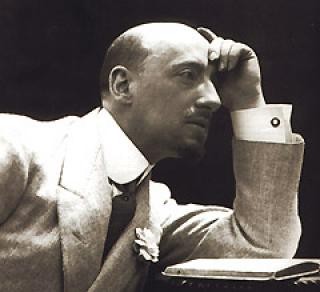
La morte del padre, che avrà la forza di dare un ultimo schiaffo al figlio, agli occhi di Zeno risulta non minaccioso e imperioso, solo un ultimo gesto per rimanere attaccato alla vita. In fondo lo schiaffo sarebbe stato solo la continuazione del loro rapporto. L’incomprensione non avrebbe avuto vita in una carezza. Sposando Augusta, Zeno non aveva scelto, era uno che si lasciava scegliere. Le alternative erano poche. Così un’amante che non dà problemi ricalca perfettamente lo stile borghese. La famiglia perfetta e il marito con l’amante. Capitolo a parte è Senilità, che fu un insuccesso per l’ormai famoso Svevo. Emilio Brentani e Amalia, sua sorella, sono l’immagine della sconfitta e a loro fanno da contraltare Stefano Balli, rude e senza coscienza, e Angiolina, che secondo Svevo vive in un eccesso di illusioni. Emilio perderà letteralmente la testa per Angiolina, convinto dall’inizio che ella sarà solo un giocattolo che poi lui non sarà più in grado di far funzionare. Più aumenta la passione, più svanisce ogni cosa. Senilità è il romanzo della distruzione, dell’uomo che conosce il passaggio del piacere piccolo borghese e si avvicina alle idee proletarie. In tutto questo va detto che il romanzo è molto più fluido e ben scritto rispetto agli altri, ma forse per questo è distruttivo, descrive un piccolo borghese Emilio che ha vissuto in maniera mediocre e riesce a vivere il romanzo che non saprà scrivere mai. Scrivere è una cosa, l’aver vissuto è un’altra. Così lo stesso Svevo scriverà: "Io a quest’ora e definitivamente ho eliminato dalla mia vita quella ridicola e dannosa cosa che si chiama letteratura". L’immagine che ho sempre avuto attraverso gli occhi di Svevo è come dire: provate a immaginare un uomo che cammina lentamente in mezzo al traffico, la gente corre, spintona, cade, si rialza, fa finta di niente, se ti osservano è solo per un motivo, per vedere quello che indossi, se cercano conversazione è solo per sapere i fatti tuoi. Così chi non corre passa in mezzo alle macchine e tutti a suonare con i clacson. "Spostati idiota, qui si corre". Ho sempre pensato che i romanzi di Svevo fossero quel momento in cui tu ti fermi, ma non perché gli altri lo vogliono. Lo decidi tu e se sai fermarti bene, se trovi la chiave, l’ironia, fai si che le macchine degli altri vadano a sbattere una contro l’altra e tu rimani lì: con il sogghigno arguto, con la testa inclinata, a guardare la vita di sbieco. Se cammini correndo, non osservi. Se rimani fermo lo fai. L’inetto sveviano non subisce alla fine, sceglie di subire: è diverso. Non sarà stato uno scrittore eccelso, banale a tratti, ma è stato l’unico a saper descrivere il flusso della vita nell’uomo: esiste qualcosa di più banale e complicato dell’uomo?
Svevo riuscì a descrivere l’epica della grigia casualità della nostra vita di tutti i giorni”(Eugenio Montale)

N.S


Tante altre notizie su www.ariannaeditrice.it

mercredi, 06 octobre 2010

Dichtersoldat und Künder neuen Lebens

Archives - 2003


Dichtersoldat und Künder neuen Lebens

Vor 65 Jahren starb der aristokratische Nationalist Gabriele D’Annunzio


d'annunzio_3.jpgDas 20. Jahrhundert bot geistigen Abenteurern Entfaltungsmöglichkeiten, von denen wir Heutige angesichts einer »verwalteten Welt« nur träumen können. Eine dieser abenteuerlichen Biographien des letzten Jahrhunderts hatte der italienische Dichter, Krieger und Nationalist Gabriele D’Annunzio (1863–1938). Beeinflußt von der Lebensphilosophie Friedrich Nietzsches, eroberte er nach Ende des Ersten Weltkriegs handstreichartig die Adriastadt Fiume und errichtete eine nationalistische Herrschaft des totalen Lebens.
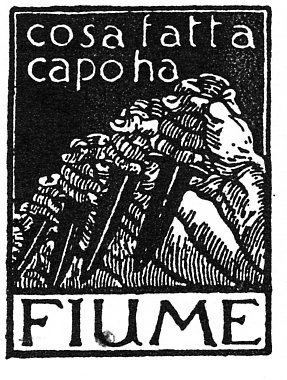
Seit dem 18. Januar 1919 tagte die Pariser Friedenskonferenz unter dem Vorsitz des französischen Deutschenhassers Clemenceau und beriet über das Schicksal der Mittelmächte. Als die Sieger des Weltkrieges am 28. Juni 1919 unter der Drohung einer vollständigen militärischen Besetzung des Reiches und der Aufrechterhaltung der Hungerblockade die deutsche Unterzeichnung des Versailler Vertrages erzwangen, war die Empörung des gedemütigten deutschen Volkes über alle Parteigrenzen hinweg groß. Mit eiserner Hand zeichneten die Mitglieder des »Rates der Vier« völlig willkürlich eine neue Staatenkarte Nachkriegseuropas, die die Volkstumsgrenzen vielfach mißachtete. So sprach man Italien, das im Mai 1915 Österreich den Krieg erklärt hatte, völkerrechtswidrig den Süden Tirols zu.

Obwohl der italienische Regierungschef Orlando dem Vierer-Gremium der Sieger angehörte und eine reiche Kriegsbeute zulasten Deutsch-Österreichs aushandelte, fühlte man sich in Italien um den gerechten Lohn des Krieges betrogen. Der Tradition des sogenannten Irredentismus folgend, der italienische »Heimaterde« an das Mutterland anzuschließen gedachte, warf man auch begehrliche Blicke auf die gegenüberliegende Adriaküste.

So entbrannte zwischen Italien und dem künstlich geschaffenen Königreich der Serben, Kroaten und Slowenen 1919 ein politischer Streit um die in der Nähe Triests liegende Grenz- und Hafenstadt Fiume, das heutige Rijeka. In den Versailler Verhandlungsrunden beschloß man die Entsendung einer alliierten Truppe in die strittige und gemischt-ethnische Stadt. Nun sollte die geschichtliche Stunde des Gabriele D’Annunzio schlagen.

An der Spitze mehrerer hundert Soldaten der italienischen Sturmtruppen, der Arditi, rückte der weltbekannte Dichter und italienische Kriegsheld widerstandslos in die Adriastadt ein. In seiner ersten Rede verkündete er »die Heimkehr Fiumes, das in der tollen und niedrigen Welt der Verworfenheit die einzige Wahrheit, die einzige Liebe, das strahlende Flammenzeichen des italienischen Widerstandes ist.«

Was sich in den nächsten fünfzehn Monaten in dieser Stadt des nietzscheanischen Lebens abspielte, kann politische Romantiker und revolutionäre Enthusiasten noch heute in Begeisterung versetzen. Es war ein die Sinne betörender Reigen aus nationalistischen Reden und Festen, aus Liebe, Rausch und Gesang, aus klirrenden Waffen, wehenden Fahnen und schwarzen Uniformen. In einem Brief fing D’Annunzio diese wohl einmalige Atmosphäre ein: »Gestern abend habe ich eine große Rede gehalten, mitten im brennenden Delirium. Du kannst dir dieses merkwürdige Leben in Fiume nicht vorstellen, wir verbringen die Nächte mit coup de mains, wie Diebe und Piraten.«


Antibürgerliches Traumreich


Die gewöhnlichen Gesetze der Politik waren außer Kraft gesetzt; das Leben spielte sich in einem Traumreich ab. Der Historiker Ernst Nolte bemerkte dazu: »All das war sehr viel mehr als das gigantische Theater eines genialen Regisseurs. Es waren nicht zuletzt englische Gäste, die vom Charme des Kommandanten bezaubert und von dem staatlichen Gegenbild zur alltäglichen Nüchternheit der bürgerlichen Gesellschaft hingerissen waren.«

Neben D’Annunzio prägten vor allem die schwarzuniformierten italienischen Elitesoldaten, die Arditi, das Leben der Stadt. Im Weltkrieg für die gefährlichsten Unternehmen eingesetzt, lebten sie die Nietzsche-Forderung: Lebe gefährlich! Stirb stolz! Ihr Lied, die »Giovinezza«, wurde später die Hymne des italienischen Faschismus; ihr weißer Totenkopf auf schwarzem Hemd symbolisierte die Macht über Leben und Tod. Mit kurzen, glühenden Worten schrieb D’Annunzio:

»Bei den Arditi. Gegen Abend. Das wahre Feuer. Die Rede, die gierigen Gesichter – Die Rasse aus Flammen. Die Chöre – die offenen, klangvollen Lippen – Die Blumen, der Lorbeer. Der Ausgang. Die Dolche nackt in der Faust. Eine ,Grandezza‘, die ganz römisch ist. Alle Dolche hoch. Die Rufe. Der begeisterte Lauf der Kohorte. Das Fleisch auf Holzglut gebraten. Die auflodernde Flamme brennt im Gesicht – Das Delirium des Mutes. Rom: das Ziel!«

Der dichtende Volkstribun schmetterte vom Balkon des Gouverneurspalastes seine mitreißenden Reden und versetzte die Menge in Zustände der Ekstase. D’Annunzio feierte sich, die Jugend, das Leben und das Vaterland. Wenn der »Comandante« die Frage »Wem gehört Italien?« in die Menge seiner Landsleute schleuderte, donnerte es ein »Uns!« zurück. Für den alternden Kriegsheld war Fiume mehr als ein Jungbrunnen, es war die glutvolle Revolte gegen eine rationale, materialistische Bürgerwelt: »Hier bin ich, ecce Homo (…). Ich bitte nur um das Recht, Bürger der Stadt des Lebens zu sein. In dieser närrischen und feigen Welt ist heute Fiume ein Zeichen der Freiheit.«

Fiume wurde mit den Monaten aber auch Zeichen der Dekadenz: Vielfältige sexuelle Ausschweifungen prägten das Nachtleben, Drogen machten die Runde und die zahlreichen Fest- lichkeiten und Kulturveranstaltungen zerrütteten die Stadtfinanzen. Um die Anflüge von nationaler Anarchie einzudämmen und dem gemeinschaftlichen Leben wieder eine feste Form zu geben, erließ der Comandante im August 1920 eine neue Verfassung, die Carta del Canaro, die nationalistische, syndikalistische und aristokratische Elemente in sich vereinigte. Dieser Neuordnung sollte aber keine lange Dauer beschieden sein.

Nachdem sich Rom und Belgrad über den zukünftigen Status von Fiume als »Freistaat« geeinigt hatten, wurde der D’Annunzio zum Verlassen der Stadt aufgefordert. Als er dieser Forderung nicht nachkam, eröffnete das italienische Schlachtschiff »Andrea Doria« Ende Dezember 1920 das Feuer auf die Stadt, dem fast 40 Arditi zum Opfer fielen. Auf diese Weise endete das römische »Gesamtkunstwerk« Fiume. In einer letzten Rede verabschiedete sich D’Annunzio von der Adriaperle mit den Worten: »Wir werfen heute nacht den Trauerruf ,Alala‘ über die ermordete Stadt.«


Ästhetisierung der Politik


Was von dieser Nachkriegsepisode aber blieb, war der dort kreierte »faschistische Stil«, der für die nationalistischen Massenbewegungen bis 1945 bestimmend blieb. Sein Erfolgsgeheimnis war die Ästhetisierung der Politik und nicht die Politisierung der Kunst, wie sie die Kommunisten betrieben.

Das Fiume-Abenteuer mit seinem ungezügelten Leben, den Selbstinszenierungsmöglichkeiten und dem Ausleben eines heroischen Ästhetizismus war dem 1863 als Sohn eines Bürgermeisters geborenen Gabriele auf den Leib geschnitten. Von Eltern und Schwestern umhätschelt und von den Musen geküßt, entwickelte er früh ein außerordentliches Selbstbewußtsein: »Ich bin sechzehn Jahre alt und schon spüre ich in der Seele und im Geist das erste Feuer jener Jugend erglühen, die naht: in meinem Herzen ist tief eingeprägt ein maßloser Wunsch nach Wissen und Ruhm, welcher oft über mich mit einer düsteren und quälenden Melancholie herfällt und mich zum Weinen zwingt: ich dulde kein Joch.«

Schnell machte er sich in Künstlerkreisen einen Namen und lebte seinen heidnischen Schönheits- und Sinnenkult in vollen Zügen aus. Er liebte extravagante Kleidung, Luxus in jeder Form und vor allem die Frauen, denen er in notorischer Untreue verfallen war. Seine großen Bücher »Lust« (1889), »Der Triumph des Todes« (1894) und »Feuer« (1900) drehen sich alle um stürmische Liebschaften und harsche Enttäuschungen großer Ästheten. Im ersten Jahrzehnt des 20. Jahrhunderts erreichte der Dichter bereits den Zenit seines künstlerischen Schaffens. Als der extrovertierte Dandy 1910 wieder einmal in eine finanzielle Krise geriet, siedelte er nach Frankreich über, wo sein politisches Bewußtsein und sein Draufgängertum reifte. Als 1914 der Weltkrieg ausbrach, forderte D’Annunzio den Kriegseintritt Italiens: »Ich hoffe, daß wir in zwei Wochen Österreich den Krieg erklären. Das wäre für mich eine freudige und schöne Gelegenheit, um in die Heimat zurückkehren zu können.«

Als Italien dem deutschen Verbündeten 1915 den Krieg erklärte, wofür auch der damalige Sozialist Benito Mussolini kräftig getrommelt hatte, meldete sich der 52-jährige D’Annunzio freiwillig an die Front. Schnell erwarb er sich legendären Kriegsruhm. Noch nachdem er bei einer Flugzeuglandung ein Auge verloren hatte, steuerte er 1918 ein Flugzeug bis nach Wien, wo er anti-österreichische Flugblätter abwarf und nach der Überlieferung über dem Parlamentsgebäude einen Topf mit Exkrementen entleerte. Zugegebermaßen ein origineller Ausdruck seiner Parlaments- und Habsburgerverachtung.

Das Ende des Krieges und damit der Steigerung aller Lebenskräfte im Waffengang entließ ihn wieder in das fade Leben der westlichen Gesellschaft. »Was soll ich mit dem Frieden anfangen?«, fragte er sich. Doch dann rief ihn Fiume!

D’Annunzios Verhältnis zum seit 1922 regierenden Faschismus war distanzierter als man vielleicht annehmen möchte. Als Mussolini nach dem Tode des Dichtersoldaten vor 65 Jahren dessen Anwesen besuchte und mit ihm Zwiesprache hielt, sagte er: »Nein, Comandante, du bist nicht tot, und du wirst niemals sterben, solange es, eingepflanzt inmitten des Mittelmeeres, eine Halbinsel gibt, die man Italien nennt«

Als Repräsentant eines elitären deutschen Nationalismus wäre Gabriele D’Annunzio mit seinen schweren Anflügen von Dekadenz undenkbar gewesen. Georg L. Mosse stellt deutlich den Unterschied des italienischen »Fascho-Dandys« etwa zum deutschen Dichterkreis um Stefan George und dessen Ideal der Reinheit und Zucht heraus:

»Sie hätten jedwede Bezichtigung der Dekadenz von sich gewiesen, und wirklich hätten die ihnen eigene Harmonie der Form, die Klarheit des Ausdrucks und die Ergebenheit gegenüber dem nationalen Anliegen keinen Platz in der Dekadenzbewegung gefunden. Gabriele D’Annunzios mystische Ekstasen, seine erotische Hemmungslosigkeit waren ihnen fremd. Sein überbordender italienischer Nationalismus steht im Gegensatz zu ihrem ernsthaften und eindringlichen Versuch, das wahre Deutschland zu enthüllen.«


Jürgen W. Gansel


jeudi, 27 mai 2010

Fiume o morte! A propos d'un volume collectif sur Gabriele d'Annunzio

Archives de SYNERGIES EUROPEENNES - 1996

Fiume o morte!

A propos d'un volume collectif sur Gabriele d'Annunzio


fiumeaffiche.jpgGabriele d'Annunzio (1863-1938), au temps de la “Belle époque”, était le seul poète italien connu dans le monde entier. Après la première guerre mondiale, sa gloire est devenue plutôt “muséale”, sans doute parce qu'il l'a lui-même voulu. Il devint ainsi “Prince de Montenevoso”. Un institut d'Etat édita ses œuvres complètes en 49 volumes. Surtout, il tranforma la Villa Cargnacco, sur les rives du Lac de Garde, en un mausolée tout à fait particulier (“Il Vittoriale degli Italiani”) qui, après la seconde guerre mondiale, a attiré plus de touristes que ses livres de lecteurs. En Allemagne, d'Annunzio a dû être tiré de l'oubli en 1988 par l'éditeur non-conformiste de Munich, Matthes & Seitz, et par un volume de la célèbre collection de monographies “rororo”. Aujourd'hui, coup de théâtre, un volume collectif rédigé par des philosophes et des philologues nous confirme que la grand “décadant” a sans doute été le “dernier poète-souverain de l'histoire” (références infra). A quel autre écrivain pourrait-on donner ce titre?


La ville et le port adriatique de Fiume (en croate “Rijeka”, en allemand “Sankt-Veit am Flaum”) était peuplée à 50% d'Italiens à l'époque. Les conférences parisiennes des vainqueurs de la première guerre mondiale avaient réussi à faire de cette cité un pomme de discorde entre l'Italie et la nouvelle Yougoslavie. Le Traité secret de Londres, qui envisageait de récompenser largement l'Italie pour son entrée en guerre en lui octroyant des territoires dans les Balkans, en Afrique et en Europe centrale, n'avait pas évoqué Fiume. Le Président Wilson n'avait pas envie d'abandonner à l'Italie l'Istrie et la Dalmatie. Après l'effondrement de l'Autriche-Hongrie, une assemblée populaire proclame à Fiume le rattachement à l'Italie. Des troupes envoyées par plusieurs nations alliées prennent position dans la ville. Des soldats et des civils italiens abattent une douzaine de soldats français issus de régiments coloniaux annamites (Vietnam). Aussitôt le Conseil Interallié ordonne le repli du régiment de grenadiers sardes, seule troupe italienne présente dans la cité. Ce régiment se retire à Ronchi près de Trieste. Là, quelques officiers demandent au héros de guerre d'Annunzio de les ramener à Fiume. Le 12 septembre 1919, d'Annunzio pénètre dans la ville à la tête d'un corps franc. Le soir même, le “Comando”, avec le poète comme “Comandante in capo”, prend le contrôle de la ville. Les Anglais et les Américains se retirent. D'Annunzio attend en vain l'arrivée de “combattants, d'arditi, de volontaires et de futuristes” pour transporter le “modèle de Fiume” dans toute l'Italie.


Des festivités et des chorégraphies de masse, des actions et des coups de force symboliques rendent Fiume célèbre. D'Annunzio voulait même débaptiser la ville et la nommer Olocausta (de “holocauste”, dans le sens premier de “sacrifice par le feu”). Sur le plan de la politique étrangère, le commandement de Fiume annonce dans son programme l'alliance de la nouvelle entité politique avec tous les peuples opprimés, surtout avec les adversaires du royaume grand-serbe et yougoslave. L'entité étatique prend le nom de “Reggenza Italiana del Carnaro” et se donne une constitution absolument non conventionnelle, la “Carta del Carnaro”. Son mot d'ordre est annoncé d'emblée: spiritus pro nobis, quis contra nos? (Si l'esprit est avec nous, qui est contre nous?). Le Premier ministre italien de l'époque était Giovanni Giolitti, âgé de 78 ans. Sous son égide, l'Italie et la nouvelle Yougoslavie s'unissent par le Traité de Rapallo. Avant qu'il ne soit ratifié, le héros de la guerre aérienne, Guido Keller, jette sur le parlement de Rome un pot de chambre, rempli de navets et accompagné d'un message sur les événements. Rien n'y fit. L'Italie attaque Fiume par terre et par mer. C'est le “Noël de Sang” (“Il Natale di Sangue”). Le régime de d'Annunzio prend fin, après quinze mois d'existence.


Le volume collectif qui vient de paraître en Allemagne n'est pas simplement une histoire de Fiume sous le “Comandante”. La préoccupation des auteurs a été bien davantage d'expliquer les événements de Fiume à la lumière des nouvelles formes “non-conventionnelles” de guerre et de propagande, nées de la première guerre mondiale (par “non-conventionnel”, on entend ici le non respect de la séparation entre combattants et non combattants, entre guerre et paix). Dans les nouvelles technologies de la vitesse (l'avion, la vedette lance-torpilles, les troupes d'assaut), dans les médias (le cinéma) et l'art de la propagande, d'Annunzio était d'une façon ou d'une autre impliqué. Ou en était carrément l'initiateur. En tant qu'aviateur, que commandant de vedettes lance-torpilles, qu'orateur et harangueur, le héros de la première guerre mondiale, couvert de décorations, élevé au grade de lieutenant-colonel, décidait lui-même des missions qu'il allait accomplir. Le philologue Siegert, dans sa contribution (), étudie la renovatio imperii  voulue par d'Annunzio à la lumière de l'histoire de la guerre aérienne entre 1909 et 1940, depuis la journée du vol aérien de Brescia jusqu'à la mort de Balbo.


La domination des airs, selon les théories du Général Giulio Douhet, paralysait l'adversaire en détruisant sa logistique. Douhet ne connaissait pas la différence entre l'armée et la population civile, la guerre aérienne réduisant tous les traités à des “chiffons de papier sans valeur”. Ou, comme le formulait Sir Arthur Harris, commandant des flottes de bombardiers britanniques pendant la seconde guerre mondiale, dans son ouvrage de 1947, Bomber Offensive:  . Siegert écrit: «Ce que l'on appelle la “target area bombing” fonde une nouvelle époque de l'histoire de l'Etre. Des choses comme les humains ne sont plus du tout les objets d'une intentio recta, mais les contenus contingents d'un espace standardisé à détruire sur lesquels circulent des objectifs aléatoires». Pendant la guerre, d'Annunzio a survolé Vienne, sur laquelle il a lancé des tracts où il était écrit qu'ils auraient pu être des bombes. Cette action confirmait la possibilité d'une guerre aérienne à outrance et constituait une opération de propagande destinée à frapper l'imagination des Viennois.


Pendant la seconde guerre mondiale également, les sociologues affectés au “Strategic Bombing Survey” du Pentagone n'ont pas seulement considéré les tapis de bombes sur les villes allemandes comme un simple moyen de paralyser l'effort de guerre de l'ennemi mais comme un premier pas vers la rééducation de la population du Reich: ainsi, un pas de plus était franchi dans le processus d'effacement des différences entre guerre et paix. Plus généralement, les théories de la guerre aérienne chez d'Annunzio et chez Douhet, puis chez les praticiens anglo-saxons du bombardement des villes à outrance, permettent de lever les frontières, de lancer des opérations sur l'espace tout entier sans tenir compte d'aucune barrière. L'Etat national classique devient ainsi caduc et doit en bout de course être remplacé par une forme néo-impériale, par une renovatio imperii  sur le modèle de Fiume.


Dans d'autres contributions de ce volume, notamment celle de Friedrich Kittler sur les “arditi” (les “téméraires”), version italienne de Sturmtruppen allemandes (dont Jünger fit partie) de la première guerre mondiale ou celle de Hans Ultich Gumbrecht sur les “redentori della vittoria” (= les sauveurs de la victoire) nous amènent à porter des réflexions non habituelles sur l'histoire des idées au XXième siècle. Le volume contient également une chronologie de la “guerre pour Fiume” et quelques réflexions sur la guerre aérienne telle que la concevaient d'Annunzio et Guido Keller. Enfin, des textes sur la constitution de Fiume et sur le statut de son “armée de libération”.


Ludwig VEIT.

(texte paru dans Criticón, n°152/1996).


Hans-Ulrich GUMBRECHT, Friedrich KITTLER, Bernhard SIEGERT (Hrsg.), Der Dichter als Kommandant. D'Annunzio erobert Fiume, Wilhelm Fink Verlag, München, 1996, 340 p., DM 58,-, ISBN 3-7705-3019-5.


vendredi, 09 avril 2010

Avant-Garde Fascism

Avant-Garde Fascism

antliffAvant-Garde Fascism: The Mobilization of Myth, Art, and Culture in France, 1909–1939
Mark Antliff
Durham and London: Duke University Press,  2007

Mark Antliff, a professor of Art, Art History, and Visual Studies at Duke University, has put together a useful analysis of the cultural-aesthetic memes utilized by French fascists of 1909-1939 to promote their visions of national renewal. Antliff’s analysis focuses on the connection between fascist ideologies and the European avant-garde, which most people would more likely associate with the anti-national left. Antliff is fairly even handed in the book, with the occasional use of scare quotes to express his skepticism/disdain for certain “fascist ideas.”

In contrast, I believe his use of the term “democracy” should always have scare quotes, as “democratic” systems deceive the populace into believing that someone other than self-interested elites are running the show; however, apparently, Antliff and I disagree on our political preferences. Antliff also concludes the book with a line about how the ideas of the French fascists were not able to stem the tide of the “bloodshed” caused by the military aggressions of Hitler and Mussolini (including the invasion of France). Very well. One hopes an academic will write about the real blood that has been shed imposing “equality” on “the people” – either that of the mass-murdering Marxists or the genocidal globalist multiculturalists and their plans for a multiracial West. So much for my complaints about the book. What about fascism and avant-garde aesthetics?

Roger Griffin, in his Fascism (Oxford: Oxford University Press, 1995), famously described fascism as “palingenetic populist ultra-nationalism” – making the elements of renewal, rebirth, and regeneration central to all permutations of this ideology. It is also important to differentiate between real fascism and “para-fascist” ersatz fascism. Para-fascism is often confused with real fascism in the public mind, which gives the false impression that fascism is ossified reactionary conservatism, rather than a revolutionary movement interested in avant-garde themes and ideas.

The differences between real revolutionary fascism and para-fascism are easily summarized: Para-fascist regimes are authoritarian, traditionalist, reactionary regimes, often military dictatorships, that fossilize a status quo favoring traditional elites of business, nobility, religion, and the military. Such regimes want nothing to do with the revolutionary and palingenetic aspects of true fascism; the idea that the secular religious, Futuristic, and avant-garde characteristics of, say, (early) Italian Fascism has anything to do with Franco’s Spain or Pinochet’s Chile is absurd.

fortunato_depero_1945Indeed, as Griffin makes clear, fascists and para-fascists are usually, by their very nature, bitter enemies. While para-fascists may co-opt some superficial characteristics of their fascist opponents, in power they tend to ruthlessly suppress the expression of revolutionary fascism. When para-fascism attempts to co-opt fascism by sharing power – as Antonescu attempted in Romania with the Legionaries — conflict is inevitable, since the objectives of the two parties are completely different: para-fascist ossification vs. fascist palingenetic regeneration. Thus, in Romania, civil war between para-fascists and fascists led to the victory of the para-fascists, and the exile of the fascist forces. The idea that Antonescu was “fascist” is a byproduct of either ideological ignorance or ideological mendacity, a Marxist desire to strip their fascist competitors of revolutionary dynamism and reduce them to mere “bourgeois hooligans.”

Not all fascisms were equally “fascist” and revolutionary, and even individual fascist movements have oscillated between revolutionary ideals and borderline reactionary para-fascism.

For example, Italian fascism went through three distinct phases. In the years before the seizure of power and in the first half-dozen years of Mussolini’s regime, Italian fascism was in its “purest” form – revolutionary and palingenetic – emphasizing the regeneration of the Italian people and the Italian nation-state. Avant-garde themes and theorists, particularly Futurism, were important in this period, and individuals such as Marinetti were influential in early day Italian fascism.

However, the forces of reaction and of compromise with the establishment were always present; the presence of the King and the Vatican were two impediments to the process of “fascistization” that Mussolini could not, or would not, deal with. In the end, the Concordat was a turning point and the regime’s second phase veered to the “right” in the 1930s, becoming more conservative and reactionary, replacing internal regeneration with external imperialism. Without WW II, chances were good that Italian fascism would have degenerated into a stagnant para-fascist regime similar to that of Franco’s Spain.

Military defeat and the overthrow of Il Duce stopped that process; in the last and third phase of Italian fascism, the “Salo Republic,” the ideology shifted to the left, embracing a militant socialism, and becoming overtly pan-European in scope.

What about the Hitler and the Nazis? There has been some debate as to whether German National Socialism was a form of fascism. It seems to me obvious that it was; that differences existed between the Italian and German forms of fascism is not an argument against that conclusion. All genuine fascisms displayed important differences, yet still contained within themselves the core components of Griffin’s “palingenetic populist ultra-nationalism.”

In the case of National Socialism, the palingenesis was biological; Nazism was a heavily racialized and materialist form of fascism. The German National Socialists were tribalistic in worldview rather than Futurist, and, internal debates aside; Hitler himself was very hostile to the European avant-garde.

Thus, key differences between fascist forms are observed. The German brand had the biopolitical advantage of recognizing the importance of race. On the other hand, the Italian brand had the sociopolitical advantage of a more optimistic Futurist orientation, and was more open-minded with respect to tapping into the cultural energies created by the avant-garde artistic and sociopolitical movements extant in the first decades of the twentieth century.

eur-sq-colosseoIn some sense, perhaps the “purest” brand of fascism was that of Codreanu and his “Legion of the Archangel Michael,” also known as the Iron Guard. This intensely palingenetic movement emphasized spiritual and moral regeneration to create a Romanian “New Man” to lead the nation to a higher level and fulfill the destiny of the Romanian people. This highly “virulent” form of “palingenetic populist ultra-nationalism” proved itself unable to co-exist with Antonescu’s conservative authoritarian para-fascism; the Legionary movement’s attempt to seize full power for itself (rather than share it with para-fascists; this sharing was correctly seen by the Legionaries as being an emasculating compromise of their ideology) was crushed by the para-fascist military apparatus.

Three fascisms, three different movements. But the revolutionary energies unleashed by these ideologies stand in sharp contrast to the moribund and ossified conservatism of the para-fascists. The political/cultural avant-garde (Italian), the biological-racialist (German), and the spiritual/moral (Romanian) components of these fascisms are important to us today.

And it is probably wrong to separate out the avant-garde mindset as being only applicable to the political/cultural sphere. After all, we really do need new, cutting-edge memes with respect to both materialist race and non-materialist morality. To quote a certain pro-fascist poet: “Make it new!”

Mostra 1933With respect to Antliff’s book itself, chapter topics include Sorelian myth and anti-Semitism, and the fascistic politics of Valois, Lamour, and Maulnier. The importance of Sorelian myth was underscored by a recent Michael O’Meara piece that appeared on TOQ Online. Antliff stresses that culture and aesthetics were extremely important to Sorel in his quest to formulate a doctrine of instrumentally utilizing myth to overturn the hated rationalist-capitalist-democratic system. Art is part of this aesthetic emphasis and, truth be told, Sorel focused on culture over politics; indeed, he was scornful of the power of the myth being used and squandered for low-level political aims.

Further, Sorel went through a distinctly “anti-Semitic” phase, in which Jews were considered the exemplars of ultra-rationalist anti-creators, whose worldview set them in opposition to native peoples and native cultural expressions and aesthetics. Opposing the pro-Dreyfus “French” journal La revue blanche, Sorel sarcastically referred to the journal’s Jewish founders as “two Jews come from Poland in order to regenerate our poor country, so unhappily still contaminated by the Christian civilization of the seventeenth century.” Sorel accused Jewish intellectuals of wanting to promote an abstract (i.e., non-ethnic, non-national, non-cultural) concept of (French) citizenship and to also promote “cosmopolitan anarchy.”

Related to this “anti-Semitism,” Sorel admired and promoted the Classical World; the values of classical heroes, such as the Greeks at Thermopylae, were something counterpoised against the Jewish ethic and the degeneration of parliamentary democracy.

Sorel considered art as related to the creativity of work, a creativity that he wished to inculcate into the “productive workers” in place of assembly line mass capitalism and rationalized “one man-one vote” democracy. He also considered an enlightened “proletariat” as being able to reinvigorate a stagnant bourgeoisie through class conflict.

Georges Valois, 1878–1945

Georges Valois, 1878–1945

Georges Valois (born Alfred-Georges Gressent) went through a wide variety of ideological contortions in his lifetime, from fascism to “libertarian communism,” ending up dying in a Nazi concentration camp after being captured as a member of the “French Resistance.” While such an unbalanced individual represents much of what is wrong with the “movement” (changing your mind is one thing – completely switching your worldview from one moment to the next is another), some of his activities during his “fascist stage” are of interest.

Particularly enlightening is the focus on the urbanism of Le Corbusier, which stands in contrast to much of the American “movement” and its anti-urbanist emphasis on militant ruralism. No doubt, in the West today, the city is an anti-white, anti-Western disaster, full of racial enemies. No doubt as well that throughout much of human history, the city was an unhealthy and sterilizing place, inimical to racial survival and racial progress.

However, in our modern technological age, if we can solve our racial problems, the city itself does not necessarily have to be a racial evil. As part of a natural continuum of human ecologies – isolated rural, rural, suburban/town, small city, larger cities, etc. – the city may play an important role in the Futurist racial ethnostate of tomorrow, a place of technological advancement, racially healthy avant-garde memes, and sociopolitical dynamism. Racial nationalism can and should be reconciled to a certain degree of urbanism – not the urbanism of degeneration, but that of regeneration.

This of course underlies a schism within activism that often goes unnoticed – between modernist, technological tribalist-racialist Futurism and a ruralist anti-technological ecotribalism. It is clear that the French fascists described by Antliff for the most part fall into the first group. Thus, a major divide exists between the Futurist-Modernist fascists (think Marinetti in Italy) and the ruralist soil-oriented romantic past-oriented fascists (think Darre in Germany, or the agrarian-nostalgic Vichy regime in France).

Of course, a healthy society needs both worldviews, and in practical terms a balance is required. For example, Valois incorporated a “love for the native soil” along with his Futurist mindset. Indeed, Valois contrasted “Asiatic nomadness” associated with communism with the “Latin sedentary” style — derived from “cultured Roman legions” — of the French, tied to the native soil and inclined to fascism. He also associated the hated nomadic lifestyle with capitalism, since hyper-rational capitalism uprooted the workers from grounding in an organic society and turned them into atomized, rootless “nomads.”

A related issue is the relationship between Futurism and the veneration of the past. Antliff makes clear that the emphasis on the past in fascism (e.g., the Greco-Roman classical world) was not meant to mean turning back the clock and shunning progress. Instead, this look to the past was, paradoxically, futurist, in that the fascists wanted to take from the past certain noble values and behaviors and use these to help build the modern, technological world of tomorrow. Therefore, one need not discard the past to build a new future, but judiciously use elements of the past as necessary building blocks for the projected futurist edifice. Different strands of fascist thought need not be incompatible, just as common ground must be found between the tribalist futurist and tribalist ruralist strands of modern racial nationalist thought.

Another French fascist, Philippe Lamour, also went through many ideological “twists and turns,” ultimately rejecting fascism in favor of anti-fascism and syndicalism. Lamour originally represented the fascist variant of “machine primitivism” – that is, an anti-rationalist “new consciousness attuned to the dynamism of technology.” Thus, urban industrialism, technology, productivity, and futurist modernism need not be associated with “rational” egalitarianism but with tribalistic fascism. Lamour wished to create a “community of producers” integrating the different classes of French society to overturn liberal democracy in favor of a modernist technologically dynamic fascist state.

Early French fascists such as Lamour also promoted the idea of a European federation, and attempted to make common cause with more pan-European and “leftist” German National Socialists, such as the Strasserian “Black Front,” who favored European cooperation as opposed to Hitler’s hegemony through military conquest. Not coincidentally, before he fell into Hitler’s orbit, Mussolini also favored an alliance of European (fascist) states, promoted through the doctrine of “Roman Universality,” with practical expression through events such as the pan-fascist Montreux conference.

Lamour’s greatest contribution to French fascism was the promotion of the “conflict of generations,” pitting the younger fascistic generation of WW I against the older generation of parliamentary democrats. This latter group was seen as being out of touch with the new age of national regeneration, avant-garde culture and politics, Sorelian myth, as well as technological productivity. Lamour and his “war generation” were at the forefront of the battle of youth vs. the image of fossilized reactionary status quo politicians.

Aesthetically, the work of German artist Germaine Krull and even Soviet filmmaker Sergei Eisenstein influenced the avant-garde sensibilities of “machine primitive” young French fascists such as Lamour. Antliff summarizes Lamour’s unique contribution to the ideology of interwar French fascism as the melding of “machine aesthetics” to the concept of generational warfare. Thus, to Lamour, technological dynamism and the replacement of the ossified previous generation with fresh youth were the Sorelian myths required to spark an era of national renewal.

Thierry Maulnier, 1908–1988

thierry-maulnier

Thierry Maulnier (born Jacques Talagrand), author of “Crisis Is in Man,” had as his concept of Sorelian myth “classical violence.” Within the journal Combat, Maulnier and colleagues opposed the leftist French Popular Front’s Marxist-themed “culture” with their own view of aesthetics in architecture and sculpture. Antliff describes Combat’s as focusing on “three interrelated spheres: political institutions, human spirituality, and aesthetics.” The classicism of the Maulnier school promoted the idea of a “synthesis of Dionysian energy and Apollonian restraint.”

Politically, Maulnier wished for a form of French fascism that rejected parliamentary democracy but which still supported the rights and aspirations of the individual, as opposed to what was perceived as the more authoritarian and collectivist societies of Fascist Italy and National Socialist Germany. These distinctions between French and other fascisms became more salient after Mussolini fell into Hitler’s orbit and became hostile to French national interests. Indeed, before the start of WW II, Maulnier advocated a “minimal fascist program” for France that would be both a short-term “fix” to bolster the French military for confrontation with the Axis, as well as preparation for the long-term and permanent fascistic remodeling of society after the Axis threat had dissipated.

It must be noted that the Valois, Lamour, and Maulnier fascist ideologies, while linked together by a palingenetic call for national renewal and a rejection of parliamentary democracy, did differ in important ways. In particular, the classicism of Maulnier can be contrasted with the militant futurism and “machine primitivism” of Lamour. Although Antliff stresses that the French fascist focus on the classical world does not necessarily imply a rejection of modernism per se, the specific differences between Maulnier and Lamour were the greatest of any of the individuals profiled by Antliff. Valois and Lamour both embraced the image of “industrial production” as a central motif of their ideology; however, while Lamour spun together a myth of generational conflict, Valois instead emphasized a “spirit of victory” in which the heroism of WW I will now be turned to a battle of the entire nation to create an organized fascist-industrial society. Of these three men, it was Lamour who was the most steadfastly “avant-garde” in cultural-aesthetic orientation, Maulnier the least.

Crude ethnic stereotyping may lead one to conclude that an emphasis on art, culture, and aesthetics in the creation of fascist ideology was (and is) a particularly “French” phenomenon. Of course, other fascist movements were concerned with these issues, sometimes to a significant extent, but none of them incorporated such memes into the core of the political thinking as did French fascist thinkers. Indeed, the cultural-aesthetic emphasis of the French strain of fascism is a breath of fresh air after immersion in the more focused political thought of the Italian Fascists and the racialist ideals of the German National Socialists.

In fact, all three areas of focus – cultural-aesthetic, political, and racialist – are required for a complete memetic complex to promote fascistic ideals. As a biological reductionist, I would emphasize the racialist first of all, but doing so with respect to modern genetic science rather than the sort of quackery that passed as “racial science” under the Nazis. However, biological racialism by itself is not enough. Without an edifice of political and cultural-aesthetic memes, the foundation of ultimate interests will go nowhere.

Related to this issue of political aesthetics, I was impressed by Alex Kurtagic’s analysis of “semiotic systems” and the importance of style in shaping perceptions of status within nationalist memes. This is important. Of course, the enemy will, as a matter of course, attempt to oppose this approach through co-option and/or mockery.

Co-option is a problem for any memetic threat to establishment power; for example, the GOP has effectively co-opted “rightist, racist” concerns through the exploitation of “implicit whiteness.” This strategy has enabled the Republicans to retain white support while at the same time moving continuously leftward in the direction of overtly anti-white policies.

Thus, while aesthetics and style are important, they always must be innately linked to content to prevent the establishment from utilizing the same semiotic systems to promote the exact opposite of our objectives. Dealing with co-option will be difficult, and it is crucially important that the problem be analyzed from the beginning in a proactive fashion.

In other words, right from the start, the construction of unique avant-garde racial-nationalist semiotic systems must incorporate strategies for preventing co-option and dealing with co-option if these preventive measures fail. Therefore, we must identify, in advance, as many problems with each approach as possible, and develop multiple contingency plans for dealing with each emergent counter-move of the establishment.

Mockery is also a problem; the establishment, utilizing its control of the mass media and its stable of celebrity puppets, can subject any racial-nationalist semiotic system to a barrage of withering ridicule. It is important that the elitist and superior nature of the system be of sufficient strength that adherents can turn around such ridicule and assert it as a matter of pride and not shame. In other words, the establishment ridicule itself must be mocked as the pathetic attempts of a dying and out-of-touch system to delegitimize a novel movement of which they are afraid.

Again, careful planning is required to plan against the establishment’s ridicule strategy, but if both co-option and mockery can be successfully dealt with, the semiotic-aesthetic strategy has a chance to achieve its objectives. And those objectives are, in essence, to defuse the “social pricing” attacks of the establishment against racial-nationalist activists and adherents, by providing an alternative value system opposed to, and independent of, establishment standards and acceptance.

In summary, Antliff has dissected a particularly interesting and heretofore unexplored strain of French fascism characterized by an embrace of avant-garde cultural concepts, modernism, Futurism, productivity and the planned society, urbanism and industrial technology, exemplified by so-called “machine primitivism.”

With today’s worries of “peak oil,” and concerns that the multiracial West will collapse, visions of decentralized ruralistic tribalism have again become prominent in nationalist thought. However, the white man is endlessly inventive, and free of the shackles of genocidal globalist multiculturalism, the technological genius of whites, so unleashed, may provide the foundation for a Futurist, technologically advanced and tribalist society. Such a society would have options for both the urbanist technological and ruralist agrarian lifestyles for those whose preferences are for one or the other.

Although I am sure he is an “anti-fascist,” Antliff’s work helps us to consider one technological Futurist option. The major conclusion from both Antliff’s and Kurtagic’s analyses is that staid and conformist methods for sociopolitical activism may be best replaced, at least in part, by avant-garde memes that let some “fresh air” into stale “movement” environs.

Published:

mercredi, 10 mars 2010

Il superomismo sociale di D'Annunzio

Il superomismo sociale di D’Annunzio

Autore: Luca Leonello Rimbotti - http://www.centrostudilaruna.it/

GabrieleD.jpgChe le rivoluzioni nazionali europee del XX secolo abbiano regolarmente avuto alle loro spalle il meglio dell’intellettualità dei rispettivi Paesi, e che tale prestigioso palladio non abbia l’eguale in altri contesti ideologici, costituisce una delle maggiori frustrazioni per l’intellighentzia liberalgiacobina. Nel caso del Fascismo italiano, la galleria dei padri nobili più lontani, come quella degli immediati profeti e antesignani, è sterminata. Di qui, l’ingrato lavoro cui si sottopongono da decenni i poligrafi antifascisti: nascondere se possibile, altrimenti mettere in sordina e depistare, al fine di limitare il danno che reca alla credibilità democratica il fatto che il Fascismo possa impunemente godere del prestigio postumo di tanti geni nazionali che lo precorsero. Senza andare più indietro, i casi di un Carducci, di un Oriani, di un Pascoli, di un Pirandello, di un Pareto, di un Marinetti sono conosciuti: qui si concentra sovente lo sforzo dei nuovi “negazionisti”: le assonanze, le precise rispondenze, le plateali coincidenze tra il loro pensiero ideale, sociale e politico e l’ideologia fascista vengono appunto negate o minimizzate, contestando l’incontestabile attraverso la pratica abituale del cavillo cabalistico oppure della semplice deformazione.

D’Annunzio è un caso a sé. Il grande poeta è stato a lungo ridicolizzato dai progressisti come esteta da burla, in virtù del suo “decadentismo borghese”. E a lungo è stato giudicato come nulla più che una manifestazione retorica di interessi di classe. Molti ricorderanno i frasari paramarxisti che per lunghe stagioni relegarono D’Annunzio tra i servi del capitalismo. Un solo esempio a caso: quel libro einaudiano con cui Angelo Jacomuzzi nel 1974 definiva il pensiero del Vate «funzionale all’affermazione dell’ideologia del capitalismo avanzato». Oggi, che il febbrone marxistico è degenerato in pandemìa liberista, sciocchezze del genere non sono più somministrabili. Oggi questo particolare tipo di “negazionismo” viaggia su binari meno rozzi, più sfumati. Eppure, qua e là, vediamo ancora riaffiorare con altri argomenti l’antica tendenza alla mistificazione.

Stavolta, infatti, non si vuole enfatizzare il D’Annunzio reazionario, ma piuttosto fabbricarne addirittura uno antifascista. Si passa, insomma, da una forzatura a un’invenzione di sana pianta. È il caso, ad esempio, di un breve scritto di Vito Salierno, intitolato non a caso Gabriele d’Annunzio: il disprezzo per i fascisti e il rapporto con Mussolini, che compare nel libro a più mani L’Italia e la “grande vigilia”. nella politica italiana prima del fascismo, a cura di Romain H. Rainero e Stefano B. Galli (Franco Angeli editore). Il saggetto in parola, sin da titolo, si picca di voler dimostrare che D’Annunzio e i fascisti non avevano nulla a che spartire. Due mondi diversi. A riprova, si cita la famosa lettera che il Comandante inviò a Mussolini il 16 settembre 1919, rimproverandolo di non aver mobilitato i Fasci a sostegno dell’impresa fiumana. E si cita anche l’ordine dato ai legionari, a Marcia su Roma appena terminata, di «mantenersi assolutamente estranei all’attuale situazione politica». Il fatto che D’Annunzio e Mussolini avessero la medesima ideologia non conta. Contano le occasionali divergenze sulla tattica politica. Poco importa, ad esempio, che D’Annunzio si fosse affacciato al balcone di Palazzo Marino a Milano il 3 agosto 1922 – in piena fase insurrezionale fascista – per arringare una folla nazionalista e avendo a fianco fior di squadristi e neri gagliardetti… e poco importa che in occasione della Marcia, D’Annunzio, se non si sperticò in elogi, neppure si pronunciò contro: si sa infatti che il Vate, quell’ingresso a Roma, avrebbe voluto farlo lui, mancandogli tuttavia i talenti politici per scegliere il come e il quando. Suscettibile com’era, ci rimase male quando la “rivoluzione nazionale” fu portata a compimento da altri, relegandolo ai margini della scena.

E si sa anche che certe sue rampogne a Mussolini erano figlie più di un antagonismo tra caratteri forti che non tra divergenti vedute di fondo. Mussolini aveva la capacità politica che sfuggiva completamente al Comandante, tutto avvolto nelle sue potenti evocazioni simboliche. D’Annunzio, da parte sua, ebbe il talento estetico necessario per fondare la liturgia celebrativa e la mistica comunitaria, poi ereditate dal Fascismo e socializzate su scala nazionale.

Non potendo contestare in toto la coincidenza ideologica tra Mussolini e D’Annunzio, oggi, per confutare il primo e salvare il secondo da una fratellanza ideologica che disturba, si preferisce pestare sul pedale delle marginali divergenze: ad esempio, quelle immaginate tra il corporativismo fascista e il corporativismo della Carta del Carnaro. Che effettivamente, se guardata col microscopio, rigirata in controluce, ai raggi X, proprio volendo, in alcune sfumature è un po’ diversa, che so, dalla Carta del Lavoro… Oppure, come ha fatto Ferdinando Cordova – in un suo vecchio libro recentemente ristampato –, si preferisce cavillare su certe differenze di scelta politica tra alcuni arditi e legionari dannunziani e gli arditi e gli squadristi fascisti… Insomma, una letteratura bizantina che gode ancora buona salute. Gli storici più equilibrati e meno corrivi hanno da tempo liquidato questi tentativi di imbrogliare le carte.

Il pensiero politico dannunziano, presente non solo negli scritti e discorsi politici, ma nella sua intera produzione letteraria, poetica e giornalistica, era quanto mai chiaro. L’Immaginifico possedeva il dono divino, assente nei tardi glossatori democratici, della brutale schiettezza. La sua ideologia? Ce l’ha riassunta anni fa un insospettabile come Paolo Alatri: «il principio della completa libertà d’azione dell’uomo superiore… la polemica antidemocratica e antiparlamentare, la celebrazione delle virtù della razza, l’esaltazione della guerra, l’esaltazione della romanità e la celebrazione del Risorgimento… un socialismo di superuomini…». Cos’altro aggiungere? Questa ideologia dannunziana proprio non fa venire in mente nessuna assonanza, a quanti accarezzano un improbabile D’Annunzio anti-fascista o a-fascista?

I vecchi storici marxisti erano in fondo più onesti degli attuali “revisionisti” democratici. Lo stesso Alatri – ma come lui anche i vari Ernesto Ragionieri o Gabriele De Rosa – rimarcavano per l’appunto che D’Annunzio «preparò il terreno al fascismo», proprio perché, se non fascista (un carattere come quello era maldisposto per natura a inquadrarsi in un partito comandato da un altro…), fu quanto meno protofascista. E, inoltre, proprio quegli storici ricordavano il debito che l’ideologia nazionalpopolare di D’Annunzio aveva col socialismo nazionale di Corradini, col suo imperialismo sociale e con il sindacalismo rivoluzionario: tutti elementi che furono alla base dell’ideologia fascista. Dice: ma nella Carta del Carnaro si parla di libertà, si afferma che tutti i cittadini sono uguali… e poi a capo della Reggenza il Vate mise De Ambris, un libertario antifascista. Sì, ma che dire del fatto che alla prima occasione D’Annunzio se ne sbarazzò a favore di Giuriati, che era fascista e che diventò un gerarca? Ma poi, non si parla nella Dottrina del Fascismo proprio dello “Stato etico” come manifestazione della vera libertà e dell’eguale dignità di tutti gli Italiani? E che dire poi della stragrande maggioranza dei legionari fiumani, che dal 1921 confluirono in blocco nel PNF? Senza contare che, se ci fu, come ci fu, una forte vena “di sinistra” nella Carta del Carnaro, essa fu preceduta e di molto dal programma sansepolcrista dei Fasci di Combattimento.

Per la verità, la leggenda di un D’Annunzio “di sinistra” (ma di una sinistra estrema, non tanto nazionale, quanto addirittura internazionalista e para-comunista) venne malauguratamente diffusa da De Felice e poi rinforzata da qualche suo allievo. In un famoso convegno di storici tenutosi a Pescara nel 1987, De Felice pensò bene di provare questo fantasioso schieramento del poeta, ricordando che D’Annunzio invitò a Fiume sia Gramsci che il commissario sovietico agli esteri Cicerin. Questa presa di posizione di De Felice è alla base dei tentativi della storiografia contemporanea di rinverdire la mitologia di un D’Annunzio estraneo alla politica e ai valori del Fascismo e con l’unico occhio rimastogli volto alla sinistra estrema. Ma, anche qui, si tratta di argomenti facilmente smontabili. Un conto sono le tattiche o gli atti politici contingenti, un altro conto è l’ideologia politica di fondo che sostiene un’azione. Basterà ricordare, per chiarire la faccenda, che, ad esempio, il primo Stato occidentale che riconobbe diplomaticamente l’URSS fu l’Italia, ma nel 1923 e per iniziativa di Mussolini, e senza che per questo diventasse comunista…

Fatto sta che è su mitologie di tale inconsistenza che ancora oggi si lavora. Una volta conosciuta l’opera dannunziana, una volta letta la sua straripante prosa estremistica, se ne riconoscono le tracce che anticiparono il Fascismo fin dai primi scritti giovanili negli anni Ottanta dell’Ottocento. Se il punto di partenza dell’ideologia di D’Annunzio fu il superomismo nietzscheano, a questo il poeta aggiunse col tempo quella sensibilità sociale che già era da un pezzo nell’aria sia nel nazionalismo corradiniano, sia nelle scelte dei sindacalisti rivoluzionari in favore dell’interventismo: confluiti poi l’uno e gli altri nel Fascismo. Il Vate si esprimeva a favore della energia dominatrice che agisce tanto nell’arte quanto nell’arte politica di un capo carismatico; esaltava le glorie italiane e affidava alla nazione una missione da realizzarsi attraverso i trionfi guerrieri; celebrava il destino della stirpe formulando una delle rivendicazioni imperialistiche più radicali del Novecento: a questo aggiunse l’idea di una nobiltà del popolo presente anche nell’umile lavoro quotidiano. Da Giovanni Rizzo, il prefetto che il Duce inviò al Vittoriale per sorvegliare non tanto D’Annunzio quanto la fauna di parassiti che lo circondava, sappiamo che Gardone pullulava di faccendieri e mestatori: «avversari di varia tinta, partigiani, zelatori e gelosi si davan da fare per attizzare il fuoco della discordia». Ma invano: D’Annunzio confermò fino alla fine l’identità di ideali col Fascismo. Dev’essere stata una ben strana inimicizia, quella tra i due, se ad esempio nel 1936 D’Annunzio poté inviare a Mussolini – che chiamava spesso il grande Capo – parole che non lasciano scampo: «Tutta la mia arte migliore si tendeva dal mio profondo nell’ansia di scolpire la tua figura grande, mentre tu solo contro gli intrighi de’ vecchi, contro la falsità degli ipocriti… difendevi la tua patria, la mia patria, l’Italia, l’Italia, l’Italia, tu solo, a viso aperto!…».

* * *

Tratto da Linea del 27 giugno 2008.

mercredi, 13 janvier 2010

L'insegnamento della Costituzione di Fiume

dc140919.jpg
L'insegnamento della Costituzione di Fiume


Giorgio Emili - Articoli

Scritto da Giorgio Emili   

Ex: http://www.area-online.it/ 

La politica si spezza il cuore a forza di predicozzi e buoni sentimenti, nell’era del conflitto sociale.
La Costituzione dovrebbe fare da collante e i valori in essa contenuti dovrebbero essere totalmente condivisi. La realtà, come bene abbiano visto, è un’altra: addirittura opposta. Lo scontro è aperto, i valori non sono condivisi, aleggia da decenni l’idea non dichiarata di una parte giusta che ha vinto e che reca in sé tutto il bene possibile.

La Costituzione italiana – serve parlar chiaro -  in molte parti nasconde questa realtà.
Per molti aspetti continua a essere la Costituzione del dissenso, prodotta da una frattura della storia italiana.
Le istituzione cercano, giustamente, di evidenziare le note concilianti, il sapore pieno di salvaguardia della democrazia e dei valori innati. L’evidenza dei fatti e la scarsa considerazione, da parte dei comuni cittadini, del tessuto della nostra Costituzione (certo, quanti la conoscono realmente?, quanti hanno approfondito le sue norme?) testimoniano che il passo decisivo verso la reale distensione degli animi non è ancora compiuto. Del resto perché tanti tentativi di riforma, perché tante dichiarazioni sulla necessità di un suo adeguamento?
La fiducia nella Costituzione ha, da sempre, sopito il conflitto, rasserenato gli animi, colmato i buchi di ogni possibile deriva. Questo però, a quanto pare, non basta. Fiducia cieca nella Costituzione, ci mancherebbe, ma è bello ricordare che esiste (è esistito) un modello costituzionale diverso (e per certi versi controverso) che ha un filo conduttore invidiabile.
Da uno scritto di Achille Chiappetti abbiamo scoperto una felice ricostruzione della Carta del Carnaro, la Costituzione di Fiume.
«Lo Statuto della Reggenza italiana del Carnaro, promulgato l’8 settembre del 1920, costituisce da sempre – scrive Chiappetti - un angolo oscuro quasi perduto della coscienza costituzionale del nostro Paese. Il suo testo predisposto dal socialista rivoluzionario Alceste De Ambris rappresenta infatti un insieme di estrema modernità e di inventiva anticipatoria di quelli che sarebbero stati i successivi sviluppi dell’organizzazione economica dello Stato fascista e delle democrazie moderne. Il suo impianto – spiega - fondato sul sistema corporativo e sul valore del lavoro produttivo, come fondamento dell’eguaglianza e della libertà, nonché sul non riconoscimento della proprietà se non come funzione sociale, costituisce un modello che e stato troppo spesso dimenticato». Ma la parte più affascinante di quelle considerazioni sullo statuto fiumano riguarda l’analisi di singole norme, soprattutto se confrontate con le attuali della nostra Costituzione.
«La Reggenza riconosce e conferma la sovranità di tutti i cittadini  - dice lo Statuto -, senza distinzione di sesso, di stirpe, di lingue, di classe, di religione». «Amplia ed innalza e sostiene sopra ogni altro diritto i diritti dei produttori». Ancora: «La Reggenza si studia di ricondurre i giorni e le opere verso quel senso di virtuosa gioia che deve rinnovare dal profondo il popolo finalmente affrancato da un regime uniforme di soggezione e di menzogne». Si respira  - chiosa Achille Chiappetti - «un aria di positività e di concordia quasi da costituzione statunitense e non il clima di tensione e scontro che risuona nelle prime parole della nostra Carta repubblicana».
Le conclusioni hanno forte sapore dannunziano e meritano di essere segnalate. Si innalza, infatti, su tutti l’articolo XIV della Carta del Carnaro: «La vita è bella e degna che veramente e magnificamente la viva l’uomo rifatto intiero dalla libertà».
«È nello Statuto fiumano, dunque, che e possibile trovare l’ispirazione per un concetto di socialità posto in maniera differente e del tutto a-conflittuale che meriterebbe di essere ripreso per dare forza ad un nuovo risorgimento italiano».
Ecco. La felicita nella nostra Costituzione non c’è – dice Chiappetti - . E non solo lui.

mardi, 12 janvier 2010

Quis contra nos? Gabriele d'Annunzio et la Marche sur Fiume

d'aannn.jpgPeter VERHEYEN:

Quis contra nos?

Gabriele d’Annunzio et la Marche sur Fiume


Dans l’histoire, nous trouvons bon nombre de figures difficilement classables dans une catégorie proprette et bien définie. Elles nous apprennent que les clivages entre la gauche et la droite, entre le conservatisme et le progressisme ne sont finalement que des clivages entre « concepts conteneurs » aux contours médiocrement balisés, que l’on peut sans doute appliquer aux politicards sans intérêt qui sévissent de nos jours mais qui n’ont aucune pertinence dans la réalité, en dehors des tristes et inutiles baraques à parlottes que sont devenus les parlements. Gabriele d’Annunzio est l’exemple d’un penseur original, de la trempe de ceux que l’on ne rencontre pas tous les jours. Ce poète excentrique, cet aviateur et ce révolutionnaire demeure, encore de nos jours, une personnalité dont on peut s’inspirer ; ce n’est donc pas un hasard si son portrait orne un certain mur de la « Casa Pound » de Rome, le magnifique squat occupé aujourd’hui par des nationaux révolutionnaires dans la capitale italienne. Sa Marche sur Fiume en septembre 1919 et l’occupation de la ville qui s’ensuivit et dura quinze mois, n’a pas seulement été une entreprise toute d’ardeur et de témérité : elle a donné le ton pour d’autres générations de nationalistes révolutionnaires, d’anarchistes et d’autres esprits libres de l’entre-deux-guerres et, même, d’époques ultérieures. Le concept de « Zone Temporaire Autonome », telle que décrite dans les travaux de l’anarchiste Hakim Bey, a finalement été traduit dans le réel, et pour la première fois, à Fiume. La ville est ainsi devenue un microcosme où les rêves les plus radicaux, quels qu’ils soient, ont reçu la chance de se développer. Il serait dès lors dommage de dénigrer la Marche sur Fiume comme un simple précédant de la Marche sur Rome de 1922.


Dès son plus jeune âge, d’Annunzio avait lu Shakespeare et Baudelaire et ses premiers pas de poète, il les a faits dans le sillage du poète italien Giosué Carducci. L’influence de Nietzsche fut grande chez lui et le leitmotiv du « surhomme » devint rapidement central dans son œuvre. Il en déduisit un rôle important à accorder à l’héroïsme. Il hissa le culte éthique de la beauté, propre de l’héritage latin antique, au-dessus des fausses valeurs de l’industrialisme et du matérialisme. Il se dressa contre le positivisme et proclama qu’il ne voulait plus entendre de « vérité » mais voulait, plus simplement, posséder un rêve. C’est en ces années de maturation que l’influence de Nietzsche se fit fortement sentir sur d’Annunzio : il en vint à prêcher l’avènement d’une aristocratie spirituelle, arme contre la morale bourgeoise, et à concentrer ses efforts pour faire advenir une ère nouvelle. Avant la première guerre mondiale, sa pensée avait influencé le mouvement futuriste mais le fondateur du futurisme, Tomaso Marinetti, considérait que d’Annunzio était un personnage appartenant au passé. Après avoir séjourné un certain temps en France, il revint en Italie en 1915, en suscitant un énorme intérêt et pour participer aux combats de la guerre. Il avait déjà 52 ans au moment où elle éclata mais cela ne l’empêcha pas de se porter volontaire pour commander une division de cavalerie et la mener au feu, contre les puissances centrales. Il acquis bien vite le statut de héros, notamment en lançant une attaque contre les tranchées ennemies, vêtu d’une longue cape flottante jetée sur ses épaules et armé seulement d’un pistolet. Autre geste héroïque qu’il convient de rappeler : il s’envola un jour, à bord d’un avion, pour lancer des tracts sur Vienne, ce qui lui permit d’obtenir la « médaille d’or », la plus haute décoration honorifique d’Italie.


Lors de la conférence préludant au Traité de Versailles en 1919, l’Italie exigea le port de Fiume. Mais le sort de la ville était scellé, semble-t-il. En Italie, un sentiment général prenait le dessus : celui de subir une « victoire mutilée », concept forgé par d’Annunzio lui-même. La situation était devenue explosive, d’autant plus que l’état de l’économie se détériorait considérablement, avec son cortège de millions de chômeurs et l’atmosphère prérévolutionnaire que cette misère impliquait.


Les Etats-Unis, la Grande-Bretagne et la France voulaient que Fiume fasse partie du nouvel Etat, né de Versailles : la Yougoslavie unitaire. Les alliés occidentaux occupent le port pour concrétiser leur volonté. En août 1919, les troupes italiennes sont contraintes de quitter la ville après quelques fusillades échangées avec des soldats français. Un petit groupe d’officiers, qui avaient dû quitter le port adriatique, s’est alors adressé à d’Annunzio, pour lui dire : « Nous l’avons juré : ou nous reprenons Fiume ou nous mourrons. Et que faites-vous pour Fiume ? ». Le 12 septembre 1919, pour répondre à ce défi, d’Annunzio, gravement malade, marche sur Fiume à la tête de deux mille légionnaires italiens, qui avaient déserté et s’étaient affublés de chemises noires ; leurs colonnes avancèrent en chantant « Giovinezza » et prirent la ville. Fiume était soudainement devenue le symbole de la liberté qui se dressait contre la lâcheté du temps. En fait, Fiume était devenue non seulement le symbole de la « victoire mutilée », qu’on essayait de réhabiliter, mais aussi le symbole de la « latinité ». En dehors de la ville, d’Annunzio rencontre le général italien Vittorio Emanuele Pittaluga, qui commandait les forces italiennes présentes devant la cité. Il donna l’ordre à d’Annunzio de faire demi-tour, mais le poète-soldat sortit son atout et lui montra fièrement ses médailles. Le général Pittaluga n’eut pas le cœur de faire tirer sur le héros. Ils entrèrent tous deux dans la ville sans qu’un seul coup de feu n’ait été tiré. Les alliés, abasourdis, furent contraints de quitter les lieux et d’Annunzio annonça  qu’il avait l’intention d’occuper la ville jusqu’à ce qu’elle soit annexée à l’Italie. Il prit le titre de « Commandante » et, quelques semaines plus tard, sept mille légionnaires supplémentaires et quatre cent marins vinrent renforcer ses effectifs.


Les légionnaires de d’Annunzio se prononçaient en faveur de la liberté des peuples opprimés et tournaient leurs regards vers les expériences du tout jeune régime soviétique. D’Annunzio entra également en contact avec Sean O’Kelly, le futur président de l’Irlande, qui représentait le « Sinn Fein » à Paris ; ensuite, avec des nationalistes égyptiens et avec les autorités soviétiques. Le 28 avril 1920, il met sur pied une « Ligue de Fiume » pour faire contrepoids à la « Société des Nations ». Vladimir Lénine citait d’Annunzio comme « l’un des rares révolutionnaires d’Italie », un compliment qu’il avait préalablement adressé à Mussolini. Ces faits nous montrent que les extrêmes se touchent effectivement, même si d’actuels bourgeois trotskisants ne l’admettront jamais.


La « Carta del Carnaro » : base de l’Etat Libre de Fiume


L’Etat Libre de Fiume reposait sur des idées proto-fascistes, sur des idées républicaines et démocratiques antiques et sur quelques formes d’anarcho-syndicalisme : en ce sens, il exprimait un éventail bigarré mais intéressant d’idées fortes, issues de trois sphères intellectuelles fort différentes. D’Annunzio et l’anarchiste national-syndicaliste Alceste de Ambris rédigèrent le 27 août 1920 la constitution de Fiume, intitulée « Carta del Carnero » ; elle hissait la musique au rang de principe cardinal de l’Etat. D’après Gabriele d’Annunzio, la musique est un langage rituel, disposant du pouvoir d’exalter les objectifs de l’humanité. Les idées développées dans cette « Carta del Carnero » étaient inspirées du syndicalisme, surtout de ses éléments corporatifs. Les principes d’autonomie, de production, de communauté et de corporatisme y étaient tous importants. Inspirés par l’antiquité, les libérateurs de Fiume firent de la Cité une république, avec un régent comme chef d’Etat, qui, comme sous la république romaine, devait diriger la Cité avec des pouvoirs dictatoriaux si l’époque était soumise à un danger particulièrement extraordinaire. Autre élément important : la décentralisation complète, afin de dégager le politique autant que possible du parlement et de le ramener sur la « piazza », sur la place publique, sur le forum, de façon à ce que les simples citoyens soient tous impliqués dans le fonctionnement de la politique de la cité.


Les méchantes langues diront que c’est là du populisme mais, en fait, cette disposition rappelait la démocratie antique où un droit civil positif incitait les citoyens à participer aux débats politiques. Le parlement ne recevait dans cette « Carta » qu’un rôle peu signifiant, tandis que neuf corporations, qui accueillaient l’ensemble des citoyens et étaient basées sur leurs activités économiques, étaient destinées à gouverner véritablement. On créa même une dixième corporation, pour souligner l’importance du facteur spirituel : « … elle sera réservée aux forces mystérieuses du progrès et de l’aventure. Elle sera une sorte d’offrande votive au génie de l’inconnu, à l’homme du futur, à l’idéalisation espérée du travail quotidien, à la libération de l’esprit de l’homme au-delà des efforts astreignants et de la sueur sanglante que nous connaissons aujourd’hui. Elle sera représentée dans le sanctuaire civique par une lampe allumée portant une ancienne inscription en toscan, datant de l’époque des communes, qui appelle à une vision idéale du travail humain ; « Fatica senza fatica » » (article 9, Carta del Carnero).


A côté de ces corporations, les citoyens et la commune se voient octroyer, eux aussi, un rôle important. Les citoyens obtiennent leurs droits politiques et civiques dès l’âge de 20 ans. Tous, hommes et femmes, reçoivent le droit de vote (1) et peuvent, par l’intermédiaire d’institutions législatives, lever l’impôt dans le but de mettre un terme à la lutte entre le travail et le capital. La commune, elle, était basée sur le « potere normativo », le « pouvoir normatif », c’est-à-dire le pouvoir de soumettre le législatif aux lois coutumières.


La marine de Fiume se nommait « les Uscocchi », d’après le nom de pirates disparus depuis longtemps et qui avaient vécu jadis dans les îles de l’Adriatique, pas très éloignées de Fiume, et prenaient pour proies les bateaux marchands vénitiens et ottomans. Les Uscocchi modernes ont permis ainsi à Fiume de s’emparer de quelques navires bien chargés et de s’assurer de la sorte une plus longue vie. Artistes, figures issues de la bohème littéraire, homosexuels, anarchistes, fuyards, dandies militaires et autres personnages hors du commun se rendirent par essaims entiers à Fiume.


Fiume fut une république bizarre et excentrique, que l’on peut aussi qualifier de « décadente ». Chaque matin, d’Annunzio y lisait ses poésies du haut de son balcon et, chaque soir, il organisait un concert, suivi d’un feu d’artifice. Dans la constitution, l’enseignement se voyait attribuer un grand rôle, avec usage fréquent de poésie, de littérature et de musique dans les classes (articles 50 à 54 de la « Carta del Carnero »). Cette légèreté et cette superficialité apparentes exprimaient surtout l’autonomie et la liberté, n’étaient pas signes de décadence. Cependant, les problèmes ne tardèrent pas à survenir : ils se sont manifestés par des divergences idéologiques. Au départ, d’Annunzio voulait rendre Fiume à l’Italie, avait agi pour que Rome annexe la ville portuaire adriatique mais ses compagnons légionnaires ne voyaient pas l’avenir de cette façon. D’Annunzio, tourmenté par le doute, a fini par renoncer, lui aussi, à son idée initiale.  L’un des corédacteurs de la constitution de Fiume, l’anarcho-syndicaliste Alceste de Ambris, plaidait pour une alliance entre les éléments fascistes de gauche et les révolutionnaires de gauche, mais elle ne se concrétisa jamais. L’objectif d’Alceste de Ambris était d’exporter la révolution de Fiume vers l’Italie toute entière mais, comme on le verra par la suite, Mussolini s’y opposait, tout en glissant petit à petit vers des options de droite. Cette mutation dans l’esprit de Mussolini, dira de Ambris, fera de lui « un instrument antirévolutionnaire aux mains de l’établissement bourgeois ».


La fin rapide de l’expérience insolite et originale que fut l’Etat Libre de Fiume vint au moment où Giolitti succéda à Nitti au poste de premier ministre en Italie. En novembre 1920, Giolitti signe à Rapallo un traité avec le nouvel Etat yougoslave. Ce traité fixe les frontières définitives entre les royaumes de Yougoslavie et d’Italie. Ce traité était à l’avantage de l’Italie : elle recevait l’Istrie, la région située à l’Est de la Vénétie ; Fiume devenait une ville-Etat indépendante. D’Annunzio, pour sa part, refusait de se retirer de Fiume ; Giolitti décida de faire donner l’armée pour le déloger. L’armée régulière prend la ville. Mussolini déclare : « maintenant l’épine enfoncée dans le flanc de Fiume est ôtée ; la rage de détruire, le feu de la destruction qui avait pris à Fiume n’a pas incendié l’Italie ni même le monde ». Lors des combats, commencés le 24 décembre 1920, il y eu 52 morts. Les trois mille hommes de d’Annunzio, après quatre jours de combat, se rendirent à l’armée régulière, forte de 20.000 hommes. L’Etat Libre de Fiume, qui fut éphémère, représente une révolte héroïque et passionnée contre la modération, incarnée par les autorités officielles de l’Italie. Même si l’on peut considérer que l’expérience de d’Annunzio était dès le départ condamnée à une fin prématurée, il faut dire que le souvenir de Fiume demeurera, comme un espoir général et comme source d’inspiration du futur fascisme.


D’Annunzio, effectivement, inspira Mussolini qui reprendra certains de ses emblèmes comme les chemises noires, oripeaux des combattants « arditi » de la première guerre mondiale, ces troupes de choc et d’élite de l’armée italienne ; Mussolini reprendra aussi une bonne part des us et de la terminologie de d’Annunzio. Mais tout cela n’était pas vraiment nouveau. Giuseppe Garibaldi, fondateur de l’Italie moderne, avait déclaré, en insistant, que les Italiens devaient s’habituer à l’idée de porter des chemises de couleur, car elles étaient le symbole de toutes les causes visant l’émancipation. Même le terme « fascio », d’où dérive le mot « fascisme » et qui signifie « groupe » ou « ligue », avait une longue tradition déjà dans la terminologie de la gauche italienne. En 1872, Garibaldi avait fondé un « fascio operaio », un « faisceau ouvrier », et, en 1891, apparaît un groupe d’extrême gauche qui a pour nom « Fascio dei Lavoratori », le « faisceau des travailleurs ». En dehors d’Italie, le mot « fascio » existe et exprime une idée de force, reprise par toutes sortes d’organisations politiques. A l’instar du futur fascisme, d’Annunzio exalte la violence et l’action héroïques et méprise le socialisme et le mode de vie bourgeois. Les marches de masse, dont la Marche sur Fiume fut le modèle initial, étaient considérées par les contemporains comme une réaction disciplinée, héroïque et collective contre le grand anonymat qu’imposait l’idéologie bourgeoise. La rébellion des jeunes hommes de gauche contre un socialisme perçu comme bourgeois et oppresseur, comme mou et antirévolutionnaire, était un trait commun aux légionnaires de Fiume et aux miliciens fascistes. Tous se réclamaient d’une puissance italienne, qui devait s’exprimer sur les plans militaire, culturel et sexuel.


Quelle leçon devons-nous tirer aujourd’hui de la Marche sur Fiume ? Tout d’abord, et c’est indubitablement la leçon principale qu’elle nous donne, c’est que la pensée politique ne peut pas, ne peut plus, se limiter aux concepts conteneurs conventionnels que sont le conservatisme, le progressisme, la gauche et la droite, etc. Toute pensée révolutionnaire s’exprime par la parole et par l’action, et ne met jamais d’eau dans son vin. Les compromis sont de simples instruments de la politique politicienne, axée sur les comptabilités électorales ; ils sont toutefois autant de coups de poignard dans les idéaux révolutionnaires. La prise de Fiume et la constitution qui s’ensuivit ont constitué le premier exemple de ville-Etat de facture utopique et poétique dans l’histoire contemporaine. Gabriele d’Annunzio était tout à la fois révolutionnaire, poète, guerrier, chef et philosophe. Fiume nous apprend a élargir notre propre horizon philosophique, lequel ne doit jamais se laisser aveugler par les compromis ni chavirer dans la médiocrité. Dans un régime où ont cohabité l’anarcho-syndicalisme, le proto-fascisme et l’idéal de la démocratie et de la république antiques, il n’y avait pas de place pour le bourgeoisisme passif, celui qui aime tant se laisser enchaîner par le conformisme moral et social et refuse d’emprunter une voie propre et héroïque :


Tutto fu ambito

e tutto fu tentato.

Ah perchè non è infinito

Come il desiderio, il potere umano ?


Cosi è finito il sogno fiumano.

NON DVCOR, DVCO !

Gridiamo ancora Noi,

per ricordare e per agire !


(Nous avons tout voulu,

nous avons tout tenté.

Et pourquoi donc le pouvoir humain

n’est-il pas aussi infini que le désir ?


C’est ainsi que finit le rêve de Fiume.

NON DVCOR, DVCO !

crions-nous encore,

pour nous souvenir et pour agir !) (2)


Peter VERHEYEN v/o Pjotr,

Scriptor NSV !’09-’10,

Stud. rer. hist..

( branding@nsv.be ).


Notes :

(1)     Deux instances constituent le pouvoir exécutif : un Conseil de Sénateurs auquel peuvent appartenir tous les citoyens qui disposent de leurs droits politiques. la deuxième instance est le Conseil des « Provisori », composé de soixante délégués, élus au suffrage universel et selon une représentation proportionnelle. Y siègent des ouvriers, des marins, des patrons d’entreprise, des techniciens, des enseignants, des étudiants et des représentants d’autres groupes professionnels.


(2) Texte d’une chanson intitulée « NON DVCOR, DVCO » du groupe italien « Spite Extreme Wing ».