Ok

En poursuivant votre navigation sur ce site, vous acceptez l'utilisation de cookies. Ces derniers assurent le bon fonctionnement de nos services. En savoir plus.

mardi, 12 octobre 2010

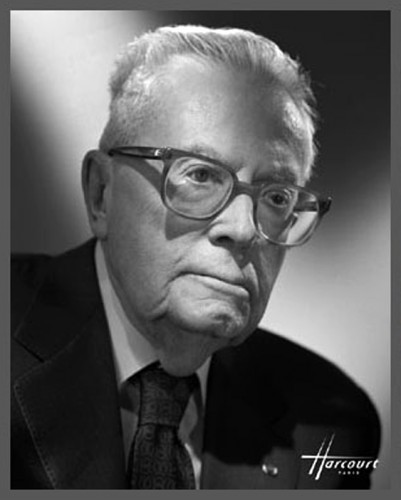
Maurice Allais, prix Nobel d'économie, meurt à 99 ans

Maurice%20Allais.jpg

Maurice Allais, prix Nobel d'économie français, meurt à 99 ans

Le seul Français à avoir reçu le prix Nobel d’économie est décédé samedi à son domicile à l’âge de 99 ans.


Né le 31 mai 1911 à Paris, polytechnicien et membre de l’Institut, Maurice Allais a en particulier enseigné à l’École des mines de Paris et dirigé le Centre d’analyse économique.

Il a reçu le prix Nobel en 1988 pour ses contributions à la théorie des marchés et de l’utilisation des ressources.

Maurice Allais n’a pas toujours été bien compris, loin s’en faut. «Beaucoup de lecteurs le considèrent comme un champion du protectionnisme», ce qui est un «jugement profondément inexact», soulignait, lors de la même cérémonie, l’enseignant et chercheur Thierry de Montbrial.

Mais il est vrai qu’à force de vouloir que l’union politique précède l’union économique, Maurice Allais s’était affirmé comme un farouche défenseur d’une Communauté européenne d’abord soucieuse d’assurer sa propre sécurité économique, ce qui l’avait fait passer pour celui qui voulait bâtir une forteresse autour de l’Europe.

Il rappelait ainsi l’an dernier , qu’«un protectionnisme raisonné entre des pays de niveaux de vie très différents est non seulement justifié, mais absolument nécessaire».

Il se définissait lui-même comme un «libéral socialiste». C’est, expliquait-il cette position qui lui faisait souhaiter par exemple, pour éviter une destruction de l’agriculture et de l’industrie françaises, le rétablissement de préférences régionales au sein du commerce international dès lors que les écarts de salaires devenaient trop importants.

Le Figaro

Alerte aux attentats: désinformation, manipulation, réalité?

Alerte aux attentats : désinformation, manipulation, réalité ?


Ex: http://www.polemia.com/

garde_n4.jpg« A propos du plan vigipirate qui concerne les risques liés à la menace terroriste en France, le ministère de l’intérieur, de l’outre-mer et des collectivités territoriales rappelle que la France est actuellement au niveau d’alerte "rouge". »
Le quotidien genevois, Le Temps, s’interroge sur le véritable objectif de la « mise en garde pratiquement sans équivalent » lancée par les autorités américaines et britanniques pour alerter leurs nationaux en voyage touristique en Europe afin qu’ils évitent tout particulièrement la Tour Eiffel et la Hauptbannof de Berlin.
Polémia

Le domaine de la lutte

Une mise en garde pratiquement sans équivalent pour alerter qui? Les touristes américains, afin qu’ils évitent les environs de la tour Eiffel et de la Hauptbahnhof de Berlin? Les Européens eux-mêmes, pour qu’ils ne sous-estiment pas l’enjeu de la guerre en cours en Afghanistan et au Pakistan? Les terroristes en devenir, pour qu’ils se sentent traqués et commettent ainsi un faux pas?

La mise en garde des Etats-Unis contre un risque d’attentats en Europe a fini par susciter craintes et désarroi. Les autorités américaines ont raison, bien sûr, de prévenir leurs concitoyens en cas d’informations crédibles et concordantes, comme elles le font depuis des années à l’égard de la Somalie, de l’Afghanistan ou, plus récemment, du Mexique. Mais ici, le caractère diffus de la menace ne fait qu’augmenter la confusion, ajoutant la peur de l’impuissance à celle d’une action meurtrière éventuelle.

Cette décision américaine est en réalité au croisement de deux tendances lourdes de la lutte contre le terrorisme telle qu’elle a vu son origine à Manhattan, après l’écroulement des deux Tours jumelles. Le monde n’est plus le même, et chacun est prié d’en prendre note. «Si tu vois quelque chose, dis quelque chose», proclament sans cesse depuis neuf ans les messages dans le métro et les autobus new-yorkais. Chacun, partout, est ainsi converti en agent particulier d’un combat global. Les Américains ne font aujourd’hui qu’étendre le domaine de la lutte à l’Europe. Ce ne sont pas eux, mais les Européens qui se sentent choqués par cette évolution.

En outre – et c’est la deuxième tendance à l’œuvre – tous les attentats doivent désormais pouvoir être déjoués, même les plus improbables, veulent croire les Américains. Caméras de surveillance dans chaque coin, contrôles interminables aux aéroports et, maintenant, établissement progressif de zones à risque autour des lieux les plus fréquentés. L’approche est erronée, elle aura toujours un coup de retard. Mais qui en défend une autre?

Luis Lema
Editorial 
Le Temps
06/10/2010

Correspondance Polémia –07/10/2010

Image : les paras de la Légion sous la Tour Eiffel

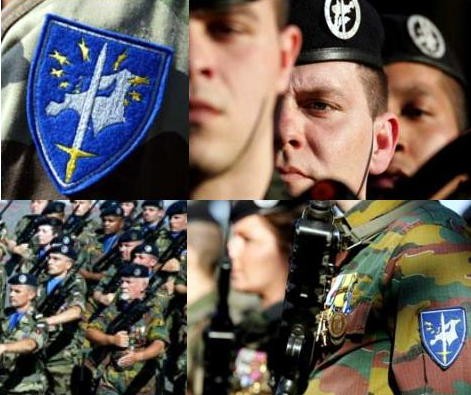
Toute coopération militaire plus étroite entre pays membres de l'UE ne doit pas servir les intérêts américains

eurocorps.jpg

Toute coopération militaire plus étroite entre pays membres de l’UE ne doit pas servir les intérêts américains

Première chose à faire : développer une politique de sécurité et de défense indépendante de Washington

Ensuite : l’Autriche ne peut en aucun cas renoncer à sa neutralité pour satisfaire les intérêts d’une puissance extra-européenne

Si jamais nous parvenons à établir une coopération militaire plus étroite entre pays membres de l’UE, alors nous devons préalablement mettre en œuvre une politique de sécurité et de défense européenne autonome, a déclaré Andreas Mölzer, chef de la délégation FPÖ au sein du Parlement européen, à l’occasion de la clôture de la réunion informelle, à Gand en Flandre, des ministres de la défense de l’UE. « Lorsqu’il s’agira de fédérer les ressources militaires au sein de l’UE, cela ne pourra nullement se faire dans l’intérêt exclusif des Etats-Unis et de l’OTAN. Il y a toutefois lieu de craindre que la coopération militaire plus étroite que l’on prévoit serve en ultime instance ce but-là », a insisté Mölzer.


Ensuite, a ajouté le mandataire FPÖ, toute politique de sécurité et de défense européenne devra concentrer ses efforts sur l’Europe. « Une coopération militaire plus étroite entre pays européens ne doit pas servir à aider encore davantage les Etats-Unis, comme par exemple dans la guerre qui sévit en Afghanistan. Il faut que ce soient les Balkans qui demeurent le centre majeur des préoccupations européennes en matières de défense et de sécurité, car cette région d’Europe reste toujours, comme auparavant, agitée par une série de conflits irrésolus qui sont toujours susceptibles de s’amplifier. Si l’UE n’est pas capable de veiller à asseoir une sécurité dans son propre environnement géographique, alors elle demeurera objet de moqueries et de sarcasmes », a constaté Mölzer en toute clarté.


En ce qui concerne toute coopération plus étroite des pays membres de l’UE en matières militaires, l’Autriche doit rester en position d’attente, a demandé le député européen de la FPÖ. « Aussi longtemps qu’il n’existera pas une communauté de défense et de sécurité commune et autonome en Europe, qui soit complètement indépendante des Etats-Unis, l’Autriche doit demeurer fidèle à sa neutralité. En aucun cas, il ne faudra renoncer à cette neutralité, car cela nous entrainerait à servir les intérêts d’une puissance extra-européenne », a conclu Mölzer.


Source : http://www.andreas-moelzer.at/

Een nieuwe macht Centraal-Azië?

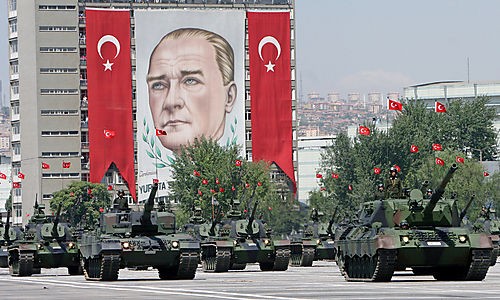
u_Tuerkische_Armee_Symbolbild.jpg

Een nieuwe macht Centraal-Azië?

De nieuwsbrief van de DeltaStichting staat meestal vol met zeer interessante informatie. Wanneer men echter de laatste nieuwe nieuwsbrief bekijkt, vindt men een zéér interessant artikel van de hand van Peter Logghe. Hieronder alvast de integrale versie. Wie zich wil inschrijven op deze nieuwsbrief, kan dat ->hier<- doen.
 

Een nieuwe macht Centraal-Azië in opbouw? En vooral: wélke macht in opbouw?  De jaren 80 en 90 van de vorige eeuw hebben in Europa, maar niet alleen daar, enorme politieke energie vrijgemaakt. Het verdwijnen van de Muur en van het IJzeren Gordijn hebben een aantal oude Europese verwanten bijvoorbeeld dichter tot elkaar gebracht, en hebben bijvoorbeeld wat verdeeld was, terug aaneengesmeed – alhoewel bepaalde voegen nog niet helemaal juist zitten).

Want in de 19de en de 20ste eeuw zou het islamitische, nog Middeleeuws aanvoelende Turkije – de zieke man van Europa – door Mustafa Kemal pardoes, en onder de harde leiding van het Turkse leger, in de moderne en laïcistische wereld zijn binnengebracht. Turkije ging vrij snel de weg op van Frankrijk: een jacobijnse eenheidsstaat, die er alles aan deed om een Turkse eenheidsidentiteit aan alle bewoners van het Turkse grondgebied op te dringen. Daar werd onder andere de kiem gelegd van het nog steeds durende conflict met de Koerdische minderheid, maar ook met andere minderheden werden spanningen voelbaar: de keuze voor het hanafitisch soennisme als staatsreligie zorgde er bijvoorbeeld voor dat de Alevieten zich als tweederangsburgers beschouwden – of bekeken werden. In 1928 bijvoorbeeld wordt godsdienstonderwijs al helemaal afgeschaft, wat pas in 1950 teruggedraaid wordt.

Turkije was in 1949 het eerste islamitische land dat Israël zou erkennen, waarmee we eventjes ook het buitenlandse politiek beleid van Turkije aanraken. Het zou jarenlang doorgaan als een van de trouwste leden van het NAVO-bondgenootschap, een veilige haven voor Amerikaanse vliegtuigen en vloot, en dit tot ver in Eurazië.

Turkije en Rusland: een gespannen verhouding, want buurlanden. De verhouding werd nog moeilijker toen Amerika in de Iraakse oorlog aan Turkije een sleutelrol in de regio verschafte. Of wou verschaffen. Amerika wou volop de Turkse kaart trekken, zette bijvoorbeeld ook de Europese Unie onder druk om Turkije lid van de EU te laten worden, en steunde ook volop andere Turkische volkeren in Rusland en China.

Het weer stond nochtans reeds op fundamentele verandering. In dezelfde jaren 80 en 90 van de vorige eeuw stak het islamitische reveil zowat overal de kop op, ook in Turkije, en daarmee kwam ook de geopolitieke rol, die de VSA voor Turkije hadden uitgeketend, onder druk te staan. Een eerste poging van Erbakan met zijn Refahpartij (met als programma: één grote islamitische gemeenschap van Marokko tot Indonesië) werd in 1997 hardhandig gestopt door het Turkse leger, dat in het verleden ook nooit verlegen zat om een staatscoup meer of minder.

Even later was het de politieke beurt aan de opvolger van Erbakan, Erdogan, en de islamitisch religieuze partij AKP, die in 2001 was opgericht. Ze legden het iets slimmer aan boord. Erdogan wist dat het pleit slechts te winnen was, dat hij slechts aan de macht kon komen, als hij erin slaagde zijn naam nooit te noemen en als hij – in schijn althans – gehecht bleef aan het Westers bondgenootschap. Zo beloofde Erdogan aan de Amerikaanse neoconservatieven de banden met Amerika te zullen versterken.


Nochtans konden de breuken met het verleden niet lang verborgen blijven. In 2003 bijvoorbeeld weigerde de Turkse regering om Amerikaanse vliegtuigen in hun oorlog tegen Irak boven Turks grondgebied te laten vliegen. Een fundamentele rol in de wijziging van het Turks buitenlands beleid speelt de Turkse minister van Buitenlandse Zaken, Achmed Davutoglu. Hij zou eigenlijk volledig willen breken met de politiek van de oude natie-staat om terug aan te knopen met de lijn van het rijk, in casu het Ottomaanse Rijk. Voor Davutoglu is het duidelijk dat Kemal Ataturk er eertijds niet in was geslaagd om het Turkse identiteitsbesef uit te breiden tot de grenzen zelf van de Turkse staat. Daarom wil hij het nieuwe Turkse Rijk opbouwen rond het nieuwe bindmiddel: de islam. Want, zo redeneert hij, zelfs islamitische Koerden hebben massaal voor de AKP gestemd om op die manier de goddeloze marxisten van de PKK van de macht te houden. Als er momenteel één bindmiddel is dat er mogelijkerwijze in kan slagen alle Turkssprekende onder één gezag te brengen, dan misschien wel de islam.

Een tweede breuklijn die zich aan het aftekenen is binnen de grenzen van Turkije, is die van de houding tegenover Israël. Gedurende decennia heeft het Turkse leger – en bij uitbreiding het Turkse establishment – met Israël een zeer goede band opgebouwd. Maar stilaan doet zich een ontdubbeling voor in Turkije: een bepaalde Turkse elite, inbegrepen het leger, een deel van de administratie en de magistratuur, wil de goede relaties met Israël behouden, terwijl de regering van AKP er absoluut geen graten in ziet dat de relaties gaandeweg minder hartelijk worden. Ook dat is een bouwsteentje in het nieuwe neo-Ottomaanse bouwwerk: de Turken krijgen in de Arabische wereld stilaan de naam van “verdedigers van het ware geloof”, en bouwen voor zichzelf veel goodwill op als bemiddelaar tussen allerlei rivaliserende islamitische kampen en strekkingen.Hoeft het gezegd dat dit allemaal niet van aard is om geruststellend te werken in de rest van de wereld? Er is onrust bij de Amerikaanse overheden ontstaan omtrent de betrouwbaarheid van hun trouwste Aziatische bondgenoot. Maar ook in de islamitische wereld zelf groeit de ongerustheid bij deze sterkere rol voor Turkije. Concurrentie is altijd een constante geweest in de islamitische wereld: de soennitische wereld, Egypte, Marokko, Saoudie-Arabië, maar vooral Iran kijkt met onverholen vijandschap naar Turkije. Iran ziet met de dag zijn invloed in de rest van de islamwereld verzwakken ten voordele voor Turkije.

Turkije zit ergens wel in een tang: het wil zijn rol binnen de NAVO behouden (als islamitisch land), maar wil tezelfdertijd zijn invloed binnen de islamitische wereld versterken. Wat als die twee in een vijandig spel terechtkomen, kan men zich afvragen. Maar Turkije gaat nog verder: in de jongste jaren heeft deze Aziatische reus-in-de-kiem een tiental nieuwe ambassades in Afrika en Latijns-Amerika geopend. Op diplomatiek veld heeft het nieuwe gesprekken met Rusland aangevat, want het wil Washington in elk geval duidelijk maken dat het géén loutere pion van Amerika meer wil zijn in het gebied. Turkije wil meespelen met de grote staten. Het is lid van de G-20, op economisch vlak steeg het van de 28ste naar de 17de plaats in de ranglijst van het IMF. Het ligt strategisch zeer goed tussen Amerika, Rusland en China en bevindt zich op een scharnierplaats ten opzichte van het Continentaal Plateau. Het zal, als islamitisch land, zijn rol willen spelen in dit werelddeel.

Peter Logghe

Carl Schmitt: A Dangerous Man

Carl Schmitt (part IV)

 A Dangerous Man

by Keith PRESTON
 
 
Carl Schmitt (part IV)
 

When Hitler first came to power, Carl Schmitt hoped that President von Hindenburg would be able to control him, and dismiss him from the chancellor’s position if necessary. But within days of becoming chancellor, Hitler invoked Article 48 and began imposing restrictions on the freedoms of speech, press, and assembly. Within a month, all civil liberties had essentially been suspended. Within two months, a Reichstag dominated by the Nazis and their allies (with the communists having been purged and subject to repression under Hitler’s emergency measures) passed the Enabling Act, which, more or less, gave Hitler the legal right to rule by decree. The Enabling Act granted Hitler actual legislative powers, beyond the emergency powers previously provided for by Article 48. Schmitt regarded the Enabling Act as amounting to the overthrow of the constitution itself and the creation of a new constitution and a new political and legal order.

The subsequent turn of events in Schmitt’s life remains the principal, though certainly not exclusive, source of controversy regarding Schmitt’s ideas and career as a public figure and intellectual. Schmitt remained true to his Hobbesian view of political obligation that it is the responsibility of the individual to defer to whatever political and legal authority that becomes officially constituted. On May 1, 1933, Carl Schmitt officially joined the Nazi Party.

Despite his past as an anti-Nazi, Schmitt’s prestigious reputation as a jurist and legal scholar heightened his value to the party. Herman Goering appointed Schmitt to the position of Prussian state councilor in July, 1933. He then became leader of the Nazi league of jurists and was appointed to the chair of public law at the University of Berlin. While occasionally including a racist or anti-Semitic comment in his writings and lectures during this time, Schmitt also hoped to strike a balance between Nazi ideology and his own more traditionally conservative outlook.

Schmitt’s hopes for such a balance were dashed by the Night of the Long Knives purge on June 30, 1934. Not only were hundreds of Hitler’s potential rivals within the party killed, but so were a number of prominent conservatives, including Schmitt’s former associate, General Kurt von Schleicher. Even Papen, who had initially been vice-chancellor under the Hitler regime, was placed under house arrest.

In response to the purge, Schmitt published the most controversial article of his career, “The Fuhrer Protects the Law.” On the surface, the article was merely a sycophantic and opportunistic effort at defending Hitler’s brutality and lawlessness. While Schmitt likely regarded the killing of rival Nazis as little more than a dishonorable falling out among thugs, he also included within the article subtle references to unjust murders that had been committed during the course of the purge, meaning the killing of his friend General Schleicher and others outside Nazi circles, and urged justice for the victims. The wording of the article pretended to absolve Hitler of responsibility while dropping very discreet and coded hints to the contrary.

Though Schmitt enjoyed the protection afforded to him by his associations with Goering and Hans Frank, he never exerted any influence over the regime itself. The purge of the SA leadership had the effect of empowering within the Nazi movement one of its most extreme elements, the SS. The SS soon concerned itself with the presence of “opportunists” and the ideologically impure elements, which had joined the party only after the party had seized power for the sake of being on the winning side. These elements included many middle-class persons and ordinary conservatives whose actual commitment to the party’s ideology and value system were questionable.

Schmitt was a prime example of these. His efforts to revise his theories to make them somewhat compatible with Nazi ideology were subject to attacks from jurists committed to the Nazi worldview. Further, former friends, professional associates, and students of Schmitt who had emigrated from the Third Reich were incensed by his collaboration with the regime and began publishing articles attacking him from abroad, pointing out his anti-Nazi past during his association with Schleicher, his prior associations with Jews, his Catholic background, and the fact that he had once referred to Nazism as “organized mass insanity.”

Schmitt attempted to defend himself against these attacks by becoming ever more virulent in his anti-Semitic rhetoric. When the Nuremberg Laws were enacted in September of 1935, he defended these laws publicly. His biographer Bendersky described the political, ethical, and professional predicaments Schmitt found himself in during this time:

No doubt at the time he tried to convince himself that he was obligated to obey and that as a jurist he was also compelled to work within the confines of these laws. He could easily rationalize his behavior with the same Hobbesian precepts he had used to explain his previous compromises. For he always adhered to the principle Autoritas, non veritas facit legem (Authority, not virtue makes the law), and he never tired of repeating that phrase. Authority was in the hands of the Nazis, their racial ideology became law, and he was bound by these laws.

Schmitt further attempted to counter the attacks hurled at him by both party ideologues and foreign critics by organizing a “Conference on Judaism in Jurisprudence” that was held in Berlin during October of 1936. At the conference, he gave a lecture titled “German Jurisprudence in the Struggle against the Jewish Intellect.” Two months later, Schmitt wrote a letter to Heinrich Himmler discussing his efforts to eradicate Jewish influence from German law.

Yet, the attacks on Schmitt by his party rivals and the guardians of Nazi ideology within the SS continued. Schmitt’s public relations campaign had been unsuccessful against the charges of opportunism, and Goering had become embarrassed by his appointee. Goering ordered that public attacks on Schmitt cease, and worked out an arrangement with Heinrich Himmler whereby Schmitt would no longer be involved with the activities of the Nazi party itself, but would simply retain his position as a law professor at the University of Berlin. Essentially, Schmitt had been politically and ideologically purged, but was fortunate enough to retain not only his physical safety but his professional position.

For the remaining years of the Third Reich, Schmitt made every effort to remain silent concerning matters of political controversy and limited his formal scholarly work and professorial lectures to discussions of routine aspects of international law or vague and generalized theoretical abstractions concerning German foreign policy, for which he always expressed outward support.

Even though he was no longer active in Nazi party affairs, held no position of significance in the Nazi state, and exercised no genuine ideological influence over the Nazi leadership, Schmitt’s reputation as a leading theoretician of Nazism continued to persist in foreign intellectual circles. In 1941, one Swiss journal even made the extravagant claim that Schmitt had been to the Nazi revolution in Germany what Rousseau had been to the French Revolution. Schmitt once again became fearful for his safety under the regime when his close friend Johannes Popitz was implicated and later executed for his role in the July 20, 1944, assassination plot against Hitler (though, in fact, Schmitt himself was never in any actual danger.)

When Berlin fell to the Russians in April 1945, Schmitt was detained and interrogated for several hours and then released. In November, Schmitt was arrested again, this time by American soldiers. He was considered a potential defendant in the war crimes trials to be held in Nuremberg and was transferred there in March 1947. In response to questions from interrogators and in written statements, Schmitt gave a detailed explanation and defense of his activities during the Third Reich that has been shown to be honest and accurate. He pointed out that he had no involvement with the Nazi party after 1936, and had only very limited contact with the party elite previously. Schmitt provided a very detailed analysis and description of the differences between his own theories and those of the Nazis. He argued that while his own ideas may have at times been plagiarized or misused by Nazi ideologists, this was no more his responsibility than Rousseau had been responsible for the Reign of Terror. The leading investigator in Schmitt’s case, the German lawyer Robert Kempner, eventually concluded that while Schmitt may have had a certain moral culpability for his activities under the Nazi regime, none of his actions could properly be considered crimes warranting prosecution at Nuremberg.

Schmitt’s reputation as a Nazi, and even as a war criminal, made it impossible for him to return to academic life, and so he simply retired on his university pension. He continued to write on political and legal topics for another three decades after his release from confinement at Nuremberg, and remained one of Germany’s most controversial intellectual figures. For some time, his pre-Nazi works were either ignored or severely misinterpreted. A number of prominent left-wing intellectuals, including those who had been directly influenced by Schmitt, engaged in efforts at vilification.

An objective scholarly interest in Schmitt began to emerge in the late 1960s and 1970s, even though Schmitt’s reputation as a Nazi apologist was hard to shake. Interestingly, the framers of the present constitution of the German Federal Republic actually incorporated some of Schmitt’s ideas from the Weimar period into the document. For instance, constitutional amendments that alter the basic democratic nature of the government or which undermine basic rights and liberties as outlined in the constitution are forbidden. Likewise, the German Supreme Court may outlaw parties it declares to be anti-constitutional, and both communist and neo-Nazi parties have at times been banned.

Schmitt himself returned to these themes in his last article published in 1978. In the article, Schmitt once again argued against allowing anti-constitutional parties the “equal chance” to achieve power through legal and constitutional means, and expressed concern over the rise of the formally democratic Eurocommunist parties in Europe, such as those in Italy and Spain, which hoped to gain control of the state through ordinary political channels.


Schmitt’s Contemporary Relevance


The legacy of Schmitt’s thought remains exceedingly relevant to 21st-century Western political and legal theory. His works from the Weimar period offer the deepest insights into the inherent weaknesses and limitations of modern liberal democracy yet to be discussed by any thinker. This is particularly significant given that belief in liberal democracy as the only “true” form of political organization has become a de facto religion among Western political, cultural, and intellectual elites. Schmitt’s writings demonstrate the essentially contradictory nature of the foundations of liberal democratic ideology. The core foundation of “democracy” is the view that the state can somehow be a reflection of an abstract “peoples’ will,” which, somehow, rises out of a mass society of heterogeneous individuals, cultural subgroups, and political interest groups with irreconcilable differences.

This is clearly an absurd myth, perhaps one ultimately holding no more substance than ancient beliefs about emperors having descended from sun-gods. Further, the antagonistic relationship between liberalism and democracy recognized by Schmitt provides a theoretical understanding of the obvious practical truth that as democracy has expanded in the West, liberalism has actually declined. The classical liberal rights of property, exchange, and association, for instance, have been severely comprised in the name of creating “democratic rights” for a long list of social groups believed to have been excluded or oppressed by the wider society. The liberal rights of speech and religion have likewise been curbed for the ostensible purpose of eradicating real or alleged “bigotry” or “bias” towards former out-groups favored by proponents of democratic ideology.

The contradictions between liberalism and democracy aside, Schmitt’s work likewise demonstrates the ultimately self-defeating nature of liberalism taken to its logical conclusion. A corollary of liberalism is universalism, yet liberal universalism likewise contradicts itself. Liberalism, as Westerners have come to understand it, is a particular value system rooted in historic traditions and which evolved within a particular civilization and was affected by historical contingencies (the Protestant Reformation, the Enlightenment, and Modernism being only the most obvious.)

Schmitt’s definition of the essence of the political as the friend/enemy dichotomy simultaneously exposes the limitations of liberalism’s ability to sustain itself. Robert Frost’s quip about a liberal being someone who is unable to take his own side in a fight would seem to apply here. The principal weakness of liberalism is its inability to recognize its own enemies. Even in the final months of the Weimar republic, liberals, socialists, and even Catholic centrists held so steadfastly to the formalities of liberalism that they were unable to perceive the imminent destruction of liberalism that lurked a short distance ahead.

This insight of Schmitt would seem to go a long way towards explaining the behavior of many present day zealots of Liberal Democratic Fundamentalism. It is currently the norm for liberals to react with a grossly exaggerated, almost phobic, sense of urgency concerning the supposed presence of elements espousing “racism,” “fascism,” “homophobia,” and other illiberal or ostensibly illiberal ideas in their own societies. In virtually all Western countries, elements espousing the various taboo “isms” and “phobias” with any degree of seriousness are marginal in nature, often merely eccentric individuals, tiny cult-like groups, or politically irrelevant subcultures.

And yet, liberals who become hysterical over “fascism,” typically express absolutely no concern about the importation of unlimited numbers of persons from profoundly illiberal cultures into their own nations. Indeed, criticizing such things has itself become a serious taboo among liberals, who somehow believe that such values as secularism, feminism, and homosexual rights can never be threatened by the mass immigration of those from cultures with no liberal tradition, where theocratic rule is the norm, or where the political and social status of women has not changed in centuries or even millennia, where there is no tradition of free speech, where capital punishment is regularly imposed for petty offenses, and where homosexuality is often considered to be a capital crime.

A related irony is that liberals have embraced “Green” consciousness in a way comparable to the enthusiasm and adulation shown to pop music stars by teenagers, while remaining oblivious to the demographic and ecological consequences of unlimited population growth fueled by uncontrolled immigration.

Schmitt’s steadfast opposition to legal formalism as a method of constitutional interpretation and as an approach to legal theory in general is also interesting when measured against the standard complaints about “judicial activism” found among “mainstream” American conservatives. Schmitt’s view that laws, even constitutional law itself, should be interpreted according to the wider essence or deeper substance of the laws and constitutions in question and according to the concrete realities of specific political situations would no doubt make a lot of American conservatives uncomfortable. Of course, an important distinction has to be made between Schmitt’s seemingly open-ended approach to legal theory and the standard ideas about a “living constitution” found among American liberal jurists. Schmitt was concerned with the very real and urgent question of the need to preserve civil order and political stability in the face of severe social and economic crisis, civil unrest, and threats of revolution, whether through direct violence or cynical manipulation of ordinary political and legal processes. The various legal theories involving a supposed “living constitution” or “evolving standards” advanced by American liberals represents the far more dubious project of simply replacing the traditional Montesquieu-influenced American constitution with an ostensibly more “progressive” democratic socialist one.

That said, one has to wonder if it would not be appropriate for American anti-liberals to initiate an ideological move away from advocating strict adherence to the principle of legal or judicial neutrality towards a perspective that might be called “defensive judicial activism,” e.g. the advocacy of the use of the courts at every level to resist the encroachments of the present therapeutic-managerial-multiculturalist-welfare state in the same manner that liberals have used the courts to impose their own extra-legislative agenda. This would be an approach that is more easily discussed than implemented, of course, but perhaps it is still worthy of discussion nevertheless.

The political theory of Carl Schmitt likewise aids the development of a more thorough understanding of the nature of the state itself. Contrary to the prevailing view that political rule can be rooted objectively in sets of formal legal rules and institutional procedures, or that the state can be a mere reflection of the idealized abstraction of “the people,” Schmitt recognized that ultimately political rule is based on the question of “Who decides?” Ideological pretenses to the contrary, there will be a “sovereign” (whether an individual or a group) who possesses final authority as to what the rules will be and how they will be interpreted or applied.

Schmitt’s friend/enemy thesis likewise contains the recognition that the prospect of lethal violence defines the essence of politics. Political rule is about force, and about possessing the ability to exercise the necessary amount of physical violence to maintain a system of rule. The truth of these observations and of Schmitt’s broader critique of liberalism and democracy do not by themselves eliminate the problematical nature of Schmitt’s own Hobbesian outlook. Clearly, Schmitt’s own life and career illustrate the limitations of such a view. Indeed, after his purge by the Nazis, Schmitt reflected on Hobbes more extensively and modified his views on political obligation somewhat. He concluded that political obligation must be reciprocal in nature. Hobbes taught that the individual was obligated to obey political authority for the sake of his own protection. Schmitt argued in light of the Nazi experience that the individual’s obligation of obedience is negated when the state withdraws its protection. Schmitt’s concern with the primacy of order and stability could well be summarized by the Jeffersonian principle that “prudence, indeed, will dictate that governments long established should not be changed for light and transient causes.”

Yet, there is the wider question of the matter whereby the malignant nature of a particular state is such that the state not only fails to provide protection for the individual but threatens the wider culture and civilization itself, a situation for which Dr. Samuel Francis coined the term “anarcho-tyranny.” Clearly, in such a scenario, it will seem that the obligation of political obedience, individually or collectively, becomes abrogated.

Keith Preston


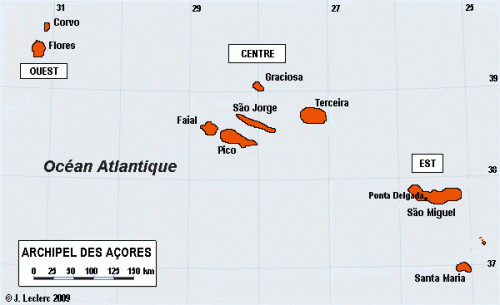
12 octobre 1943: les Alliés anglo-saxons occupent les Açores

acores-map.gif


12 octobre 1943 : les Alliés anglo-saxons occupent les Açores


Les Alliés pourront occuper les Açores, y établir des bases aéronavales et faire relâche dans les ports de l’île, suite à des accords secrets anglo-portugais où Londres force la main à Lisbonne, en lui rappelant un traité signé au 19ème siècle et scellant une alliance entre les deux pays. Par cet accord, plusieurs centaines de kilomètres sur le territoire océanique ne seront plus livrés au bon vouloir des sous-marins allemands. Hitler perd définitivement la bataille de l’Atlantique. Rétrospectivement, nous pouvons en conclure que les Açores sont un archipel de très grande importance stratégique pour l’Europe et pour le contrôle de l’Atlantique à partir des côtes du Vieux Continent. Elles permettent notamment de contrôler la route vers les Amériques et de surveiller les côtes marocaines. Il ne s’agit pas seulement de « confettis d’Empire », de résidus de la grandeur passée du Portugal mais d’une position stratégique de toute première importance qu’il ne s’agit pas de perdre.

La influencia de la Nueva Derecha en los partidos "neopopulistas" europeos


LA INFLUENCIA DE LA NUEVA DERECHA EN LOS PARTIDOS "NEOPOPULISTAS" EUROPEOS

Joan Antón Mellón
Profesor de Ciencia Política de la UB
INTRODUCCIÓN
Los partidos neopopulistas europeos han consolidado su posición electoral ensus respectivos sistemas de partidos, e incluso en Italia la (LN) o en Austria el (FPÖ) han alcanzado el poder en coalición con otros partidos de derecha. Al respecto es ilustrativo los 5,5 millones de votos obtenidos por J.Mª Le Pen en la primera vuelta de las elecciones presidenciales francesas del 2002 o el 26,6% de votos obtenidos por el partido neopopulista suizo UDC en las elecciones parlamentarias de octubre del 2003. Su banderín de enganche es la xenofobia: «preferencia nacional» defienden los franceses FN y MNR; «Austria primero» propugna el FPÖ; hundir a cañonazos las embarcaciones de los emigrantes ilegales es la «propuesta política» que expuso en un mitin Umberto Bossi, líder de la LN italiana y ministro del gobierno italiano de S. Berlusconi; pero su influencia va más allá de su directa capacidad en las labores de gobierno o en la oposición, están influyendo decisivamente en las propuestas de otras subfamilias políticas de derechas1 al competir por la misma posible clientela electoral en unos mismos mercados políticos, es la denominada lepenización de los espíritus2. En última instancia rentabilizada políticamente por las organizaciones neopopulistas que se presentan como el original de las propuestas y no como remedos vergonzantes de éstas. Las organizaciones neopopulistas europeas han sido bien estudiadas en susvertientes sociológicas, organizativas e ideológicas. En mi opinión las tesis más incisivas y reveladoras se deben a las investigaciones de H.G. Betz, P.Perrineau, N. Mayer y R. Griffin, con una modesta contribución de quien escribe estas líneas3. Del profesor británico R. Griffin destaquemos su brillante análisis de que las propuestas neopopulistas pueden ser calificadas de «liberalismo etnocrático» y que constituyen una inteligente reconversión adaptativa (en una época de hegemonía de los valores democráticos) de los clásicos idearios de la extrema derecha. Sabemos quién vota a estas formaciones políticas y bastante del porqué, sin embargo está bastante inexplorado el terreno de cuáles son los referentes filosófico-ideológicos de los presupuestos xenofóbicos de las organizaciones neopopulistas. A esta relevante cuestión esta dedicado el presente artículo, si sabemos a partir de qué parámetros piensan los partidos xenofóbicos podremos contrarrestar su discurso desmontando sus argumentos base. He aquí nuestro objetivo central.
La Nueva Derecha Europea son los ideólogos que han actualizado los caducos discursos fascistas y ultranacionalistas del primer tercio del siglo XX. Son los revolucionarios conservadores del siglo XXI. Proporcionan, como veremos, legitimidad ideológica, entre otras, a las formaciones políticas neopopulistas.
I. ¿QUÉ Y QUIÉNES SON LA NUEVADERECHA EUROPEA?
La Nueva Derecha Europea (ND) está constituida por asociaciones cultural-políticas que se crean a imitación de la francesa Groupement de Recherche et dÉtudes pour la Civilisation Européenne (GRECE). Desde su fundación en1968 la ND francesa ha sido el faro teórico de sus homólogas europeas y su «maître à penser» Alain de Benoist el líder intelectual indiscutido. Dado que el combate de la ND es metapolítico, cultural los buques insignia de la flota de la ND siempre son revistas y, derivadas de ella, editoriales. En Francia la revista oficial es Éléments pour la culture européenne, en Italia, Trasgressioni, liderada por el politólogo Marco Tarchi, en Bélgica, Vouloir, dirigida por R.Steuckers, en el Reino Unido, Scorpion, con su hombre fuerte M. Walker y en España el alto funcionario del Ministerio de Educación Javier Esparza, director entre 1993 y 2000 (fecha del último número) de Hespérides. Todos ellos comparten unos mismos criterios culturales y políticos y, por ello, sus artículos más emblemáticos son intercambiados, traducidos y publicados por sus respectivas revistas. El núcleo central de sus convicciones radica en que tienen una visión de la naturaleza humana radicalmente opuesta a la tradición ilustrada. Para la ND el hombre es naturalmente desigual, agresivo, territorial y jerarquizado. No nace libre sino que la libertad es una conquista sólo alcanzable por los mejores, los cuales deben dirigir a la comunidad. Y ésta forja su destino en un combate constante contra todo tipode adversidades. Se es libre por superación personal y por pertenecer a una determinada comunidad que ha logrado preservar su soberanía. Para la ND los protagonistas de la Historia son los pueblos étnicamente homogéneos. De ahí que el enemigo principal, superado un visceral anticomunismo calificado de juvenil, sea el cristianismo por sus concepciones igualitarias y universalistas y el liberalismo por su radical visión individualista y anti-holística 4 del hombre. EE.UU como líder occidental mundial y potencia única, tras 1989, es el demonio a vencer, mientras que, en un terreno más abstracto, los Derechos Humanos son el gran objetivo a derribar.
En su opinión, obsoleta la frontera clásica entre la derecha y la izquierda, la nueva división radica entre los colaboradores y/o funcionarios del Sistema o tecno-estructura mundial y los partidarios de la recuperación de las raíces culturales de los diferentes pueblos del mundo para superar la decadencia y anomia actuales. En este heroico combate el papel que se otorga a si misma la ND es metapolítico, ser un laboratorio de ideas, agitar culturalmente y disputar al Sistema la hegemonía 5 ideológica (en cualquiera de las formas que adopta) para preparar unos nuevos planteamientos políticos rupturistas. Europa y el Tercer Mundo frente a EE.UU. Todo ideario político articulado elabora una utopía en la que se ven reflejados sus objetivos. La utopía de la ND sería una Europa libre de inmigrantes (o residiendo éstos temporalmente como ciudadanos sin acceso ala nacionalidad). Un mundo plural, heterogéneo, formado por comunidades homogéneas. Recuperada de la catástrofe igualitaria del cristianismo y su laicización racionalista ilustrada en cualquiera de sus manifestaciones: humanismo, liberalismo, marxismo 6; que se reconociera en su pasado indoeuropeo precristiano para decidir, libremente, su glorioso destino al recuperar su espiritualidad y su afán de lucha, sepultada por siglos de hegemonía de los valores mercantiles burgueses (materialistas y prosaicos) e igualitaristas.Fiel a estos planteamientos metapolíticos la ND se mantiene alejada de la lucha política partidista e incluso marca distancias y descalifica muchas de las propuestas de las formaciones políticas que más tienen en cuenta sus criterios de base: las formaciones políticas neopopulistas. Evidenciándose con ello queen el terreno de las ideas políticas es más relevante el uso político que se hacede ellas que las propias ideas.
II. ¿CUÁLES SON LOS OBJETIVOS DE LA ND?
La ND europea nace en Francia en la década de los sesenta del pasado siglo como un intento de reformulación del tradicional ultranacionalismo francés, traumatizado por las derrotas de los procesos de descolonización y deslegitimado por el colaboracionismo de Vichy. Además, sus planteamientos iniciales están también condicionados por la explosión ideológica y cultural de Mayo del 68 (7) y por la luz europeista que continua proyectando el Nacionalsocialismo en el universo ideológico de la extrema derecha y derecha radical, a pesar de su desaparición como régimen político en 1945. El ideario del Fascismo Clásico alemán proyecta su luz de estrella muerta igual que la proyecta el magma cultural que hizo posible, entre otros factores, su toma del poder en 1933 y su legitimación ideológico-cultural. Perdida la capacidad de seducción de los derrotados mitos fascistas es necesario substituirlos por otros. Es necesario una nueva Revolución Conservadora adaptada a una muy dura realidad para las Extremas Derechas y Derechas Radicales europeas: La Europa que resurge de sus cenizas despuésde 1945 se construye a partir de valores y criterios políticos antifascistas y profundamente democráticos; y la revelación propagandística de los horrores de los campos de exterminio ha evidenciado la intrínseca perversidad de los idearios fascistas.8 Dicha nueva Revolución Conservadora asume la radical crítica de la modernidad efectuada por los revolucionarios conservadores alemanes del primer tercio del Siglo XX: desprecian a Kant tanto como admiran a Nietzsche 9 y leen detenidamente los conservadores planteamientos metafísicos deHeidegger. Pero no sólo leen estos autores, sino todo aquello que pueda ser útil 10 ante su enorme tarea: redefinir la modernidad, ya que eso supone, en la segunda mitad del siglo XX, redefinir los conceptos de libertad y democracia en contra de las hegemónicas acepciones liberal-democráticas y socialdemócratas. En un largo proceso de estrategias y tácticas metapolíticas de destilación de ideas, alambicamiento de análisis 11 y proceso sincrético de síntesis global. Teniendo como objetivo que una cosmovisión alternativa a la ilustrada-burguesa se imponga en el mundo 12 y como medio el combate cultural-ideológico, en una muy inteligente, en mi opinión, utilización de un sistema ecléctico de disonancia cognitiva cultural. Se asume todo aquello que apoya,«demuestra» o «legitima» una determinada concepción del hombre y de la naturaleza y de las potencialidades de los seres humanos. Juzgados en su esencia como unos entes esencialmente: comunitarios, desiguales, agresivos, jerárquicos y territorializados. Condicionados por sus características biológicas, socialbiológicas y etnoculturales, pero libres para forjar su destino sino renuncian a su voluntad de poder como comunidades e individuos. La amplitud del objetivo estratégico de la ND (redefinición de la modernidad) y de la opción táctica escogida (intervención metapolítica) comportan una renuncia a la actividad política directa. Pueden permanecer puros, fieles a sus ideas. Dedicados a leer pensar y propagar. Algunos se cansan en este largo viaje, pero los auténticos representantes de las esencias de la ND como A. de Benoist, M. Tarchi o J. Esparza permanecen y no ingresan en los partidos neopopulistas o liberal-conservadores que, desde un primer momento, los esperan con los brazos abiertos, ávidos de intelectuales solventes. E incluso la ND francesa se permite despreciar al FN en general y a su líder J.Mª Le Pen de forma pública desde 1990 en particular por su populismo y su asunción del liberalismo.13 Tanto da; como la clase política sabe muy bien -y así lo apuntábamos previamente- más importante que las propias ideas es el uso político que se hace de ellas. En este sentido, conceptos como el «Derecho a la Diferencia»; planteamientos políticos como la «necesidad» de la creación de amplios movimientos comunitarios superadores de factores ideológicos y de clase; su visión del capitalismo como un sistema de producción idóneo si se lo supedita a control político; su óptica patriarcal; el planteamiento estratégico-táctico ninista (definirse como ni de derechas ni de izquierdas); la distinción jurídica entre ciudadano y nacional, entre otros factores, son asumidos de una determinada manera, política, por quienes los asimilan en sus planteamientos programáticos. De ahí que el mencionado «Derecho a la Diferencia» de la ND se convierte en la propagandística consigna del FN y el MNR «Preferencia Nacional».14 Al defenderse posturas radicales diferencialistas y antimulticulturales se potencia un racismo espiritual que se vulgariza en la xenofobia de los planteamientos políticos, culturales y jurídicos de las organizaciones neopopulistas. O la crítica radical de la ND al conjunto deideologías 15 se transforma, en su adaptación política de las organizaciones neopopulistas, en el rechazo de éstas a los otros partidos políticos en bloque,descalificando así la consustancial pluralidad de la democracia representativa.Son las concepciones nucleares de una Derecha Radical renovada, adaptada a las cambiantes realidades de los inicios del siglo XXI. La ND, por tanto, no ha transversalizado a la derecha y a la izquierda, «superándolas». Este análisis encierra, ideológicamente, una intencionalidad política que es más un deseo que una realidad: su análisis es que el fin tecnocrático de las ideologías (en la postmodernidad de un mundo globalizado) ha permitido resucitar una visión alternativa a la modernidad liberal- burguesa a la vez tradicional (pagana e indoeuropea) y futurista, aristocrática y armonicista. Una tercera vía 16 capaz de reconciliar, como la Ilustración no ha podido hacer, pares antagónicos.
La lúcida crítica que efectúan a las miserias de las sociedades occidentales (por ejemplo el papel mundial que juega lo que denominan Tecno-estructura, el déficit democrático, el anómico egotismo o la infantilización de la sociedad) no debe obnubilar nuestra capacidad de análisis del ideario de la ND francesa y de sus más débiles sucursales europeas. Denuncian y rechazan cualquier totalitarismo17 (cuyo origen, en su opinión, es el monoteísmo) pero lo hacen desde una perspectiva de superhombre nietzscheano, más allá del bien y el mal. Creen, como sus padres espirituales, que la sangre vale más que el oro; que la «forma de estar en el mundo» legitima cualquiera de sus actos, más allá del bien y el mal; que la libertad es un concepto práctico y político y que la voluntad de poder, como ley universal de la vida, establece quien es superior capaz y quien es débil e impotente.18 Y todo esto es lo que el antifascismo ha considerado como fascismo. Por tanto, mientras se escuchen ideas fascistas habrá que levantar la bandera del antifascismo y convencer a P.A. Taguieff recordándole que es suyo el siguiente análisis, tras comentar la ruptura explícita entre GRECE y el FN a partir de 1990 al calificar Benoist al FN de Extrema Derecha tradicional: «(...) cette rupture nimplique pas lannulation de limprégnation «greciste» du discours de certains responsables du Front National, formés dans la mouvance de la «Nouvelle droite».19 Igual opina M.Florentín: « (...) el Frente Nacional francés ha bebido muchos principios ideológicos en las fuentes del GRECE (...)» 20 A la ND no le gustarán las políticas que propugnan los partidos neopopulistas pero muchos de los cuadros neopopulistas comparten la cultura política de las publicaciones de la ND. Las ideas abstractas todo el mundo entiende que hay que darles forma y contenido para que puedan concretarse. Lo selecto se convierte en práctico no selecto al intentarse aplicarlas a la realidad. Por eso, inspirándonos en una reflexión de R. Griffin, podríamos preguntarnos si todo el inmenso horror de lo sucedido recientemente en la ex-Yugoslavia ¿no es el intento de construir sociedades etnicamente homogéneas, mediante una férrea y combativa voluntad de poder de una comunidad que recuerda su mítico pasado y quiere forjarse un destino como comunidad? 21 En última instancia la vieja propuesta del fascismo clásico de conseguir la armonía mediante una revolución cultural, espiritual y «nacional» es la propuesta, renovada, de la ND. Aunque ahora se acepte incluso la democracia, redefinida. Lo importante es acabar con la hegemonía del universalismo y del igualitarismo. De ahí que las propuestas liberales etnocráticas de las organizaciones neopopulistas sean la concreción política real de estas propuestas metapolíticas.22 El ideario de la ND, por tanto, es la filosofía política de la Derecha Radical europea actual, como en su día las concepciones de la Revolución Conservadora Alemana fueron uno de los decisivos basamentos ideológicos del ideario nazi. La misma inmensa diferencia que se dio entre E.Jünger y A. Hitler es la inmensa diferencia que existe hoy entre A. de Benoisty J.Mª Le Pen o B.Mégret. Todos ellos compartían y comparten una visión del mundo alternativa a la concepción ilustrada-liberal-socialista que afirma que es una verdad por sí misma que los hombres nacen iguales.
NOTAS:
1Véase Hainswort, P.: The Politics of the Extreme Right, Tiper, Londres, 2000.
2Véase Tevain, P. y Tissot, S.: Dictionaire de la Lépenisation des esprits, LEsprit Frappeur,2002.
3Antón Mellón, J.: «El neopopulismo en Europa occidental. Un análisis programáticocomparado: MNR (Francia), FPÖ (Austria) y LN (Italia), en Antón Mellón, J.(edit.): Las ideaspolíticas en el siglo XXI, Ariel, Barcelona, 2002.
4Las doctrinas holísticas propugnan que el todo es superior a la suma de las partes y poseecaracterísticas que le son propias.
5En el sentido en que da a este término el filósofo marxista italiano A. Gramsci.
6Recordemos al respecto que en capítulo 11 de Mi lucha A. Hitler descalifica como ideas modernas tanto al liberalismo como la democracia y el socialismo.
7La editorial de GRECE Le Labyrinthe ha publicado una obra al respecto: Le mai 68 de laNouvelle Droite.
8Por eso ha aparecido la corriente historiográfica denominada Negacionismo. Negando laexistencia del Holocausto se reafirma la no maldad intrínseca del ideario nazi.
9El objetivo general de Nietzsche y de la ND es idéntico: la substitución de los valores aluso, hegemónicos en Occidente, por otros que se creen superiores.
10«Practicando una lectura extensiva de la historia de las ideas, la ND no duda en recuperar aquellas que le parecen acertadas en cualquier corriente de pensamiento.» Benoist, A. de y Champetier, Ch.: Manifiesto: la Nueva Derecha en el año 2000.
11Por ejemplo para la ND el racismo (que denuncian en paralelo a una defensa de los inmigrantes aunque propugnan su regreso a sus países de origen) es un producto patológico delideal igualitario.
12Se pretende que lo espiritual predomine sobre lo material; lo idealista/altruista sobre lopragmático; lo heroico sobre lo prosaico; la generosidad sobre el cálculo constante; locomunitario sobre lo individual; el sacrificio sobre el hedonismo; el espíritu de aventura sobrela comodidad; el ánimo guerrero sobre el pacifismo; la jerarquía sobre la igualdad.
13Véase las publicaciones francesas Le Choc du mois, nº31(1990) y Les Dossiers delHistoire, nº82(!992).
14Analogía que ofrece pocas dudas. « (...) les formulations récents du national-populisme sonttributaires de lidéologie de la différence mise au point par la Nouvell droite.» Taguieff, P.A.:Sur la Nouvelle droite, Descartes, Paris,1994, p. 98.
15«Del marxismo al conservadurismo ultraliberal, pasando por todas las variedades del centrismo y de la socialdemocracia, uno se encuentra en presencia de la misma visión de lasociedad, del Estado y del hombre.» Benoist, A. de y Faye, G.: Las ideas de la Nueva Derecha,Ediciones Nuevo Arte Tor, Barcelona, 1986, p. 450.
16«(el Estado (...) dirige políticamente la economía sin intervenir administrativamente en sugestión. Esta concepción de una «economía dirigida» constituye la tercera vía entre el liberalismo del Estado mínimo y el socialismo del Estado nacionalizador y poli-intervencionista.» Benoist,A. de y Faye, G.: Las ideas de la Nueva Derecha, Op. Cit. 387.
17Véase Benoist, A.de: Communisme et nazisme 25 réflexions sur le totalitarisme au Xxesiècle(1817-1989). Le Labyrinthe, París,1989.
18En palabras del propio Nietzsche: «Aquí resulta necesario pensar a fondo y con radicalidady defenderse contra toda debilidad sentimental: la vida misma es esencialmente apropiación,ofensa, avasallamiento de lo que es extraño y más débil, opresión, dureza, imposición de formaspropias, anexión y al menos, en el caso más suave, explotación».Apud Tugendhat, Problemas,Gedisa, Barcelona, 2002, p. 86.
19Taguieff, P. A.: Sur la Nouvelle droite, Op. Cit. 346.
20Florentín, M.: Guía de la Europa Negra, Op.Cit.,82.
21Con independencia del hecho que, probablemente, S. Milosevic nunca haya leído nada deA. de Benoist.
22«Es necesario replantear el mundo en términos de conjuntos orgánicos de solidaridad real:de comunidades de destino continentales, de grupos nacionales coherentes y ópticamentehomogeneos por sus tradiciones, su geografía y sus componentes etnoculturales (...) Estas asociaciones de naciones son geopolíticamente posibles y supondrían la destrucción del marco económico-estratégico actual.» Faye, G.: «Pour en finir avec la civilisation occidentale», Éléments, núm. 34 (1980), 8-9.