Populism seeks to rescue popular government from corrupt elites. Naturally, the elites strike back. The most common accusation from elite commentators is that populism is “anti-democratic.” As Yascha Mounk frames it, populism is “the people vs. democracy.” I argue that populism is not anti-democratic, but it is anti-liberal. (See Donald Thoresen’s review of Mounk’s The People vs. Democracy here [2].)
Many critics of populism accuse it of being a form of white identity politics, and many critics of white identity politics accuse it of being populist. Populism and white identity politics are distinct but sometimes overlapping phenomena. I will argue, however, that populism and white identity politics complement one another, so that the strongest form of white identity politics is populist, and the strongest form of populism is identitarian. But first, we need to clarify what populism really is.
Political Ideology or Political Style?
One of the more superficial claims about populism is that it is not a political ideology but simply a “political style.” An ideology is a set of principles. A political style is a way of embodying and communicating political principles. The idea that populism is merely a political style is based on the observation that there are populisms of the Left and the Right, so how could it be a unified ideology? Of course, there are also liberalisms of the Left and Right, but this does not imply that liberalism is merely a style of politics rather than a political ideology.
Principles of Populism
Just as Right and Left liberalism appeal to common political principles, Right and Left populists also have the same basic political ideas:
- All populists appeal to the principle of popular sovereignty. Sovereignty means that a people is independent of other peoples. A sovereign nation is master of its own internal affairs. It can pursue its own ends, as opposed to being subordinated to the ends of others, such as a foreign people or a monarch. The sovereignty of the people is the idea that legitimate government is “of the people, by the people, for the people,” meaning that (1) the people must somehow participate in government, i.e., that they govern themselves, and (2) the state acts in the interest of the people as a whole, i.e., for the common good.
- All populists politically mobilize on the premise that popular government has been betrayed by a tiny minority of political insiders, who have arrogated the people’s right to self-government and who govern for their own factional interests, or foreign interests, but not in the interest of the people as a whole. Populists thus declare that the political system is in crisis.
- All populists hold that the sovereignty of the people must be restored (1) by ensuring greater popular participation in politics and (2) by replacing traitorous elites with loyal servants of the people. Populists thus frame themselves as redeeming popular sovereignty from a crisis.
Two Senses of “the People”
When populists say the people are sovereign, they mean the people as a whole. When populists oppose “the people” to “the elites,” they are contrasting the vast majority, who are political outsiders, to the elites, who are political insiders. The goal of populism, however, is to restore the unity of the sovereign people by eliminating the conflict of interests between the elites and the people.
Ethnic and Civic Peoplehood
There are two basic ways of defining a people: ethnic and civic. An ethnic group is unified by blood, culture, and history. An ethnic group is an extended family with a common language and history. Ethnic groups always emerge in a particular place but do not necessarily remain there. A civic conception of peoplehood is a construct that seeks to impose unity on a society composed of different ethnic groups, lacking a common descent, culture, and history. For instance, civic nationalists claim that a person can become British, American, or Swedish simply by government fiat, i.e., by giving them legal citizenship.
Ethnic nationalism draws strength from unity and homogeneity. Ethnically defined groups grow primarily through reproduction, although they have always recognized that some foreigners can be “naturalized”—i.e., “assimilated” into the body politic—although rarely and with much effort. Civic nationalism lacks the strength of unity but aims to mitigate that fact with civic ideology and to offset it with strength in numbers, since in principle the whole world can have identity papers issued by a central state.
A civic people is a pure social construct imposed on a set of particular human beings that need not have anything more in common than walking on two legs and having citizenship papers. Civic conceptions of peoplehood thus go hand in hand with the radical nominalist position that only individuals, not collectives, exist in the real world.
An ethnic people is much more than a social construct. First of all, kinship groups are real biological collectives. Beyond that, although ethnic groups are distinguished from other biologically similar groups by differences of language, culture, and history, there is a distinction between evolved social practices like language and culture and mere legislative fiats and other social constructs.
Ethnic peoples exist even without their own states. There are many stateless peoples in the world. But civic peoples do not exist without a state. Civic polities are constructs of the elites that control states.
Populism and Elitism
Populism is contrasted with elitism. But populists are not against elites as such. Populists oppose elites for two main reasons: when they are not part of the people and when they exploit the people. Populists approve of elites that are organically part of the people and function as servants of the people as a whole.
Populists recognize that people differ in terms of intelligence, virtue, and skills. Populists want to have the best-qualified people in important offices. But they want to ensure that elites work for the common good of the polity, not for their own factional interests (or foreign interests). To ensure this, populists wish to empower the people to check the power of elites, as well as to create new elites that are organically connected to the people and who put the common good above their private interests. (For more on this, see my “Notes on Populism, Elitism, and Democracy [9].”)
Populism and Classical Republicanism
When political scientists and commentators discuss the history of populism, most begin with nineteenth-century agrarian movements like the Narodniki in Russia and the People’s Party in the United States. But nineteenth-century populism looked backward to the republics of the ancient world, specifically the “mixed regime” of Rome.
Aristotle’s Politics is the most influential theory of the mixed regime. (See my “Introduction to Aristotle’s Politics” here [10].) Aristotle observed that a society can be ruled by one man, a few men, or many men. But a society can never be ruled by all men, since every society inevitably includes people who are incapable of participating in government due to lack of ability, for instance the very young, the crazy, and the senile.
Aristotle also observed that the one, few, or many could govern for their factional interests or for the common good. When one man governs for the common good, we have monarchy. When he governs for his private interests, we have tyranny. When few govern for the common good, we have aristocracy. When the few govern for their private interests, we have oligarchy. When the many govern for the common good, we have polity. When they govern for their factional interests, we have democracy.
It is interesting that for Aristotle, democracy is bad by definition, and that he had to invent a new word, “polity,” for the good kind of popular rule that was, presumably, so rare that nobody had yet coined a term for it.
Aristotle recognized that government by one man or few men is always government by the rich, regardless of whether wealth is used to purchase political power or whether political power is used to secure wealth. Thus popular government always empowers those who lack wealth. The extremely poor, however, tend to be alienated, servile, and greedy. The self-employed middle classes, however, have a stake in the future, long-time horizons, and sufficient leisure to participate in politics. Thus popular government tends to be stable when it empowers the middle classes and chaotic when it empowers the poorest elements.
Finally, Aristotle recognized that a regime that mixes together rule by the one, the few, and the many, is more likely to achieve the common good, not simply because each group is public spirited, but also because they are all jealous to protect their private interests from being despoiled by the rest. Aristotle was thus the first theorist of the “mixed regime.” But he was simply observing the functioning of actually existing mixed regimes like Sparta.
One can generate modern populism quite easily from Aristotle’s premises. Aristotle’s idea of the common good is the basis of the idea of popular sovereignty, which means, first and foremost, that legitimate government must look out for the common good of the people.
Beyond that, Aristotle argued that the best way to ensure legitimate government is to empower the many—specifically the middle class—to participate in government. The default position of every society is to be governed by the one or the few. When the elites govern selfishly and oppress the people, the people naturally wish to rectify this by demanding participation in government. They can, of course, use their power simply to satisfy their factional interests, which is why democracy has always been feared. But if popular rule is unjust, it is also unstable. Thus to be stable and salutary, popular rule must aim at the common good of society.
The great theorist of popular sovereignty is Jean-Jacques Rousseau. In his On the Social Contract, Rousseau claims that the General Will is the fount of sovereignty and legitimacy. What is the General Will? The General Will wills the common good. The common good is not a convention or construct of the General Will but rather an objective fact that must be discovered and then realized through political action.
Rousseau distinguishes the General Will from the Will of All. The General Will is what we ought to will. The Will of All is what we happen to will. The Will of All can be wrong, however. Thus we cannot determine the General Will simply by polling the people.
Rousseau even holds out the possibility that an elite, or a dictator, can know the General Will better than the populace at large. But no matter how the General Will is determined—and no matter who controls the levers of power—political legitimacy arises from the common good of the people.
Populism and Representation
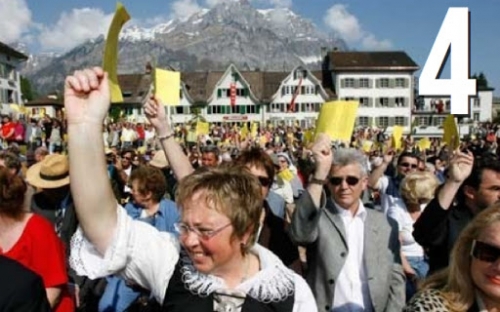
Populism is often associated with “direct” as opposed to “representative” democracy. Populists tend to favor referendums and plebiscites, in which the electorate as a whole decides on important issues, as opposed to allowing them to be decided by representatives in parliament. In truth, though, there is no such thing as direct democracy in which the whole of the people acts. Even in plebiscites, some people always represent the interests of others. Thus democracy always requires some degree of representation.
One can only vote in the present. But a people is not just its present members. It also consists of its past members and its future members. Our ancestors matter to us. They created a society and passed it on to us. They established standards by which we measure ourselves. And just as our ancestors lived not just for themselves, but for their posterity, people today make decisions that affect future generations. Thus in every democratic decision, the living must represent the interests of the dead and the not yet born.
Moreover, within the present generation, some are too young to participate in politics. Others are unable due to disability. The basic principle for excluding living people from the electorate is that they would lower the quality of political decision-making. However, they are still part of the people, and they have genuine interests. Thus the electorate must represent their interests as well.
Beyond that, there are distinctions among competent adults that may lead to further constriction of the electorate, again to raise the quality of political decision-making. For instance, people have argued that the franchise should be restricted to men (because they are the natural guardians of society or because they are more rational than women), or to people with property (because they have more to lose), or to people with children (because they have a greater stake in the future), or to military veterans (because they have proven themselves willing to die, if necessary, for the common good). But again, all of those who are excluded from the franchise are still part of the people, with interests that must be respected. So they must be represented by the electorate.
Thus even in a plebiscite, the people as a whole is represented by only a part, the electorate. Beyond that, unless voting is mandatory, not every member of the electorate will choose to vote. So those who do not vote are represented by those who do.
Thus far, this thought experiment has not even gotten to the question of representative democracy, which takes the process one step further. An elected representative may stand for hundreds of thousands or millions of voters. And those voters in turn stand for eligible non-voters, as well as those who are not eligible to vote, and beyond that, those who are not present to vote because they are dead or not yet born. The not-yet-born is an indefinite number that we hope is infinite, meaning that our people never dies. It seems miraculous that such a multitude could ever be represented by a relative handful of representatives (in the US, 535 Representatives and Senators for more than 300 million living people and untold billions of the dead and yet-to-be-born). Bear in mind, also, that practically every modern politician will eagerly claim to be really thinking about the good of the entire human race.
But we have not yet scaled the highest peak, for people quite spontaneously think of the president, prime minister, or monarch—a single individual—as representing the interests of the entire body politic. Even if that is not their constitutional role, there are circumstances—such as emergencies—in which such leaders are expected to intuit the common good and act accordingly.
Thus it is not surprising that cynics wish to claim that the very ideas of a sovereign people, a common good, and the ability to represent them in politics are simply myths and mumbo-jumbo. Wouldn’t it be better to replace such myths with concrete realities, like selfish individuals and value-neutral institutions that let them peacefully pursue their own private goods?
But the sovereign individual and the “invisible hand” are actually more problematic than the sovereign people and its avatars. From direct democracy in small towns to the popular uprisings that brought down communism, we have actual examples of sovereign peoples manifesting themselves and exercising power. We have actual examples of leaders representing a sovereign people, divining the common good, and acting to secure it.
There is no question that sovereign peoples actually exercise power for their common goods. But how it happens seems like magic. This explains why popular sovereignty is always breaking down. Which in turn explains why populist movements keep arising to return power to the people.
Populism and Democracy
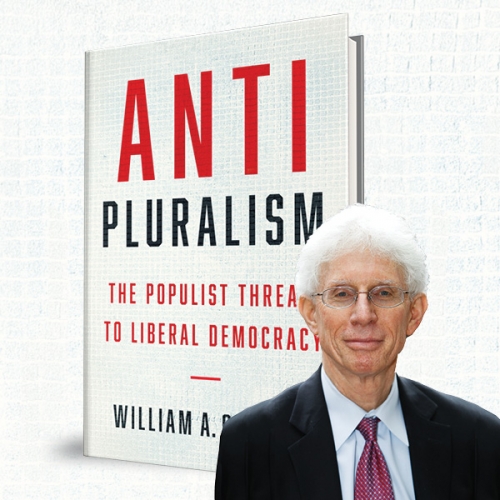
The claim that populism is anti-democratic is false. Populism simply is another word for democracy, understood as popular sovereignty plus political empowerment of the many. Current elites claim that populism threatens “democracy” because they are advocates of specifically liberal democracy. (See my review of Jan-Werner Mueller’s What Is Populism? here [15] and William Galston’s Anti-Pluralism here [16].)
Liberal democrats claim to protect the rights of the individual and of minorities from unrestrained majoritarianism. Liberal democrats also defend “pluralism.” Finally, liberal democrats insist that the majority is simply not competent to participate directly in government, thus they must be content to elect representatives from an established political class and political parties. These representatives, moreover, give great latitude to unelected technocrats in the permanent bureaucracy.
Liberal democracy is, in short, anti-majoritarian and elitist. Populists recognize that such regimes can work for the public good, as long as the ruling elites are part of the people and see themselves as its servants. But without the oversight and empowerment of the people, there is nothing to prevent liberal democracy from mutating into the rule of corrupt elites for their private interests and for foreign interests. This is why populism is on the rise: to root out corruption and restore popular sovereignty and the common good.
Populists need not reject liberal protections for individuals and minorities, ethnic or political. They need not reject “pluralism” when it is understood as freedom of opinion and multiparty democracy. Populists don’t even reject elites, political representation, and technocratic competence. Populists can value all of these things. But they value the common good of the people even more, and they recognize that liberal values don’t necessarily serve the common good. When they don’t, they need to be brought into line. Liberals, however, tend to put their ideology above the common good, leading to the corruption of popular government. Ideological liberalism is a disease of democracy. Populism is the cure.
Populism and White Identity Politics
What is the connection between populism and white identity politics? I am both a populist and an advocate of white identity politics. But there are advocates of white identity politics who are anti-populist (for instance, those who are influenced by Traditionalism and monarchism), and there are non-white populists around the world (for instance, Rodrigo Duterte in the Philippines and Thaksin Shinawatra in Thailand).
However, even if there is no necessary connection between populism and white identity politics, I wish to argue that the two movements should work together in every white country. White identitarians will be strengthened by populism, and populism will be strengthened by appeals to white identity.
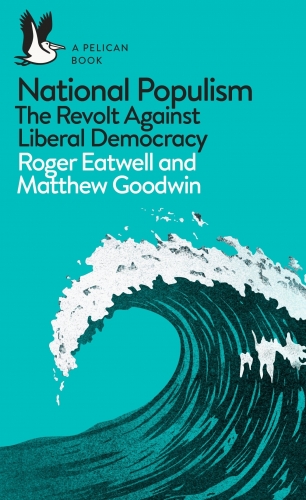
Why should white identitarians align ourselves with populism? Roger Eatwell and Matthew Goodwin argue in National Populism: The Revolt Against Liberal Democracy that the rise of national populism is motivated by what they call “the Four Ds.” The first is Distrust, namely the breakdown of public trust in government. The second is Destruction, specifically the destruction of identity, the destruction of the ethnic composition of their homelands due to immigration and multiculturalism. The third trend is Deprivation, referring to the collapse of First-World living standards, especially middle-class and working-class living standards, due to globalization. The final trend is Dealignment, meaning the abandonment of the center-Left, center-Right duopolies common in post-Second World War democracies. (For more on Eatwell and Goodwin, see my “National Populism Is Here to Stay [18].”)
The Destruction of identity due to immigration and multiculturalism is a central issue for white identitarians. The Deprivation caused by globalization is also one of our central issues. The only way to fix these problems is to adopt white identitarian policies, namely to put the interests and identity of indigenous whites first. Once that principle is enshrined, everything we want follows as a matter of course. It is just a matter of time and will.
As for Distrust and Dealignment, these can go for or against us, but we can certainly relate to them, and we can contribute to and shape them as well.
Eatwell and Goodwin argue that the “Four Ds” are longstanding and deep-seated trends. They will be affecting politics for decades to come. National populism is the wave of the future, and we should ride it to political power.
Why do populists need to appeal to white identity? It all comes down to what counts as the people. Is the people at its core an ethnic group, or is it defined in purely civic terms? Populists of the Right appeal explicitly or implicitly to identitarian issues. Populists of the Left prefer to define the people in civic or class terms and focus on economic issues. Since, as Eatwell and Goodwin argue, both identitarian and economic issues are driving the rise of populism, populists of the Right will have a broader appeal because they appeal to both identity and economic issues.
The great task of white identitarians today is to destroy the legitimacy of civic nationalism and push the populism of the Right toward explicit white identitarianism.
If you want to support our work, please send us a donation by going to our Entropy page [19] and selecting “send paid chat.” Entropy allows you to donate any amount from $3 and up. All comments will be read and discussed in the next episode of Counter-Currents Radio, which airs every Friday.
Don’t forget to sign up [20] for the twice-monthly email Counter-Currents Newsletter for exclusive content, offers, and news.

 del.icio.us

 Digg
 Facebook

 Dans les années 2000, le livre de John Gray « Les hommes viennent de Mars, les femmes viennent de Vénus » eut en France un succès colossal. Les lecteurs des deux sexes le dévoraient pour essayer de comprendre le sexe opposé. On pouvait surement opposer beaucoup d’arguments à la méthode « vulgarisante » de Gray, mais son objectif était clair : aider les hommes et les femmes à mieux se comprendre pour mieux vivre ensemble, et particulièrement en couple.
 Qu’une call-girl accepte une relation sexuelle pour de l’argent ne dérange pas les féministes. Qu’une carriériste accepte une relation sexuelle avec son supérieur pour obtenir une promotion ne dérange pas les féministes. Ce qui dérange les féministes, ce qui pour elle relève de l’abomination, c’est qu’une femme accepte, parfois, une relation sexuelle par amour pour son mari.


 Le Nationalisme Blanc est simplement l’idée d’une société où tout le monde autour de vous est votre parentèle. C’est une société où vous pouvez comprendre vos concitoyens et leur faire confiance. Où vous pouvez coopérer pour poursuivre le bien commun. Où vous aurez envie de participer à de grands projets, même si vous ne les verrez peut-être pas terminés de votre vivant. Où les gens plantent des arbres pour que les générations futures puissent avoir de l’ombre. C’est une société dans laquelle les gens ressentent une identité si forte avec l’organisme politique qu’ils sont prêts à sacrifier leur vie pour lui, s’ils le doivent. Mais le plus important, c’est une société dans laquelle vous pouvez vous sentir chez vous. C’est le but du Nationalisme Blanc : assurer des patries pour tous les peuples blancs.
 Notes



 Bloy, Drumont, Bernanos observaient la même entropie en leur temps. Sur le journal La Croix, qu’embêtait la manif anti-PMA récemment, Léon Bloy écrivait vers 1900 dans son journal : « Pour ce qui est de la Croix, vous connaissez mes sentiments à l’égard de cette feuille du Démon, surtout si vous avez lu la préface de Mon Journal. »

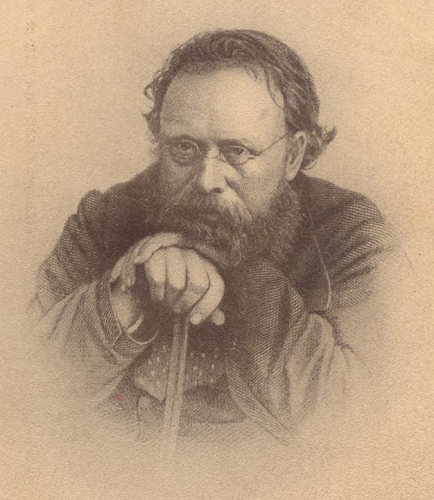


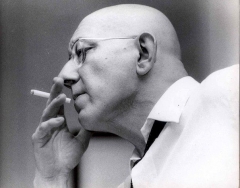 Le grand théoricien de l’autonomie radicale, Cornélius Castoriadis, définissait celle-ci comme « les hommes assemblés se donnant à eux mêmes leurs propres lois » et « sachant qu’ils le font ». En sommes, il s’agit d’une démocratie directe véritable remettant strictement en cause le principe d’hétéronomie, une autonomie à la fois individuelle et collective. Pour Castoriadis, l’autonomie est la possibilité pour la société « d’entretenir avec elle-même un rapport réflexif lui permettant de ne pas aliéner à une instance extra-sociale (le divin, les lois de la nature, ou celles de l’économie politique) sa créativité »


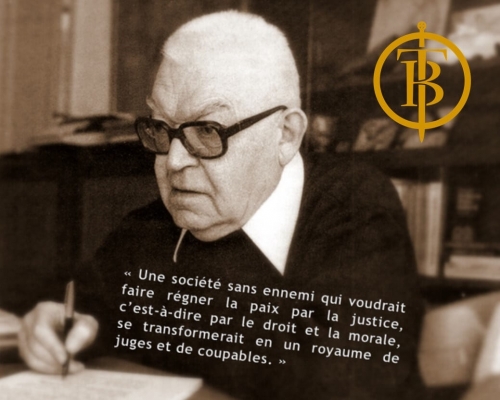



 La ZAD applique dans les faits la TAZ (zone temporaire autonome) pensée par le libertaire étatsunien Hakim Bey (photo). Pseudonyme de Peter Lamborn Wilson, historien passionné par la piraterie (1), Hakim Bey prend en exemple pertinent les navires pirates et la vie sociale des flibustiers de l’île de la Tortue. Pirates et boucaniers « étaient des “ bandits sociaux ”, bien que leurs communautés de base ne soient pas des sociétés paysannes traditionnelles, mais des “ utopies ” créées ex nihilo sur des terres inconnues, des enclaves de liberté totale occupant des espaces vides sur la carte (2) ». Le projet de TAZ contribue à la fluidité d’un univers mouvant, « liquide » et fluctuant. Le théoricien n’hésite pas à comparer la famille et la bande en valorisant cette dernière. « La famille est fermée par la génétique, par la possession par l’homme de la femme et des enfants, par la totalité hiérarchique de la société agraire/industrielle. La bande est ouverte – certes pas à tous, mais par affinités électives, aux initiés liés par le pacte d’amour. La bande n’appartient pas à une hiérarchie plus grande, mais fait plutôt partie d’une structure horizontale de coutumes, de familles élargies, d’alliance et de contrat, d’affinités spirituelles etc. (3) »
 Ce manque volontaire de stabilité indispose bien des militants qui ne comprennent pas l’intérêt immédiat d’une action ponctuelle. Son succès repose sur « la défense […] “ l’invisibilité ” – qui est un art martial -, et l’« invulnérabilité » – qui est un art occulte dans les arts martiaux (8) ». Pour le géographe Philippe Pelletier, « l’occupation des places publiques par les mouvements de contestation montre une volonté de réappropriation collective de l’espace. Les zones à défendre ou les zones d’autonomie temporaire, le Rojava libertaire ou encore le Chiapas zapatiste recèlent une dimension territoriale évidente, même passagère ou fragile, qui n’est pas contradictoire avec un fonctionnement en réseau élargi, via Internet ou le téléphone portable (9) ». Que dire alors de l’occupation, des semaines durant, des ronds-points par les « Gilets jaunes » ? Aurait-elle été une réalisation utopique inachevée ? Une ZAD embryonnaire ou une TAZ inaboutie ? Or, nonobstant la volatilité du monde, l’impératif territorial subsiste, ce qui rapproche paradoxalement le ZADiste du partisan décrit par Carl Schmitt. Ce sont des combattants politiques, au contraire du pirate profondément apolitique. « Ce critère conceptuel, le caractère politique, a (dans l’ordre inverse) la même structure que chez le pirate du droit de guerre maritime, dont le concept inclut le caractère non politique de son activité néfaste, qui vise le vol et le gain privé. Il y a dans le pirate, selon le mot des juristes, l’animus furandi (10). » Le ZADiste ou le TAZiste s’apparente au guérillero « qui combat en s’alignant sur une politique (11) ».
 Force est de constituer qu’à travers ses écrits, le Comité invisible ne privilégie pas le communautarisme. Certes, il mentionne le cluster qui « ne s’impose pas, il émerge sur un territoire à partir d’une “ communauté ” (21) », mais d’une façon presque providentielle. Il aurait pu s’intéresser au maître-livre d’Alexandre P. Prokhorov (22) qui valorise du point de vue russe cette notion-clé qui valorise des groupes autosuffisants composés d’unités homogènes. Le Comité invisible préfère, pour sa part, la commune à qui il donne une nouvelle acception puisqu’elle « revient au moment même où l’État et la bourgeoisie s’effacent comme forces historiques (23) ». Loin d’adhérer à la TAZ, il envisage la commune comme « le pacte de se confronter ensemble au monde. C’est compter sur ses propres forces comme source de sa liberté. Ce n’est pas une entité qui est visée là : c’est une qualité de lien et une façon d’être au monde (24) ». Un esprit suspicieux pourrait y voir un appel sous-jacent et implicite à l’autarcie et à l’entre-soi. En définissant ce qu’il entend par « liberté », le Comité invisible rejoint par bien des détours l’aristocratisme d’un Michel-Georges Micberth (25). « Être libre et être lié, écrit le Comité invisible, c’est une seule et même chose. Je suis libre parce que je suis lié, parce que je participe d’une réalité plus vaste que moi. Les enfants des citoyens, dans la Rome antique, c’étaient des liberi : c’était, au travers d’eux, Rome qui grandissait (26) ». Le Comité invisible se réfère même à « la démocratie athénienne [qui] est une démocratie hoplitique. On y est citoyen parce que l’on y est soldat; d’où l’exclusion des femmes et des esclaves (27) ». Cette solidarité quasi-organique d’ordre militaire assure à l’ensemble une cohésion réelle. On retrouve cette perception « solidariste » chez les penseurs territorialistes des bio-régions (28). Au Moyen Âge, « ce qui fait la commune, alors, c’est le serment mutuel prêté par les habitants d’une ville ou d’une campagne de se tenir ensemble. Dans le chaos du XIe siècle en France, la commune, c’est se jurer assistance, s’engager à se soucier les uns des autres et à se défendre contre tout oppresseur. C’est littéralement une conjuratio (29) ». Ne s’agit-il pas une forme plus large du clan ou de la tribu ? Le Comité invisible se prononce à l’heure des « nouvelles tribus postmodernes » pour le recours à la commune.


 Il importe de connaître ces quelques cas concrets, car « cette démarche communautaire, pronostique Jure George Vujic, sous-entend bien entendu le réaménagement culturel de l’Europe dans le cadre d’un ensemble organique coordonnant une pluralité de communautés charnelles autogérées, respectueux de l’hétérogénéité sociale culturelle et ethnique (51) ». Ce sentiment de retrouver une osmose communautaire n’est pas propre aux milieux de gauche. Piliers de la revue d’écologie intégrale chrétienne Limite, Gautier Bec, son épouse Marianne Murano et leurs enfants ont déménagé de Dreux, lieu par excellence de la société multiraciale multiconflictuelle, pour rejoindre d’autres familles écolo-chrétiennes dans un hameau de La Bénisson-Dieu aux confins de la Bourgogne, du Forez et du Beaujolais dans le département de la Loire. Ils ne sont pas seuls. En Bourgogne et dans le Bourbonnais existent des communautés populaires enracinées de sensibilité païenne. Sans la citer nommément, on peut penser à cette association bourguignonne qui depuis dix ans se prépare à prendre le relais d’un système qui, chaque année, vacille un peu plus sur ses fondations. Elle entend assurer un regroupement communautaire ainsi que de favoriser ce préalable indispensable à leur redressement moral et physique qu’est le réenracinement identitaire des Européens. Cette communauté arrive à relayer assez régulièrement les offres d’emploi, de reprises de commerces et les annonces immobilières de notre secteur afin de permettre aux personnes intéressées qui souhaiteraient la rejoindre d’y trouver les conditions favorables pour le faire.
 Parce que « nous refusons d’avaliser le caractère instable, précaire, fugace, flexible, versatile et temporaire du vécu construit par le marché, s’élèvent Serge Ayoub, Michel Drac (photo) et Marion Thibault. Nous refusons la mobilité constante parce qu’elle n’est pas dans notre nature (54) », la BAD « devient une base de reconquête (55) », celle qui rend « la sécession nécessaire (56) ». « Espace de sécurité (57) », la BAD « s’éloigne du Système pour reconstruire l’Humain hors du Système (58) » avant de contre-attaquer. « Il faut prendre appui sur le chaos généré par le mondialisme néo-libéral pour construire une alternative au modèle mondialiste et néo-libéral (59). » En dissidents conséquents, « nous ne disons pas : contre le système. Nous disons hors du système (60) ». Comment ? En multipliant partout dès à présent des BAD. « Sur les ruines de l’État bourgeois dépassé par les forces du Marché, sur les décombres de l’État socialiste avalé par la technocratie, nous ne voulons pas seulement construire un troisième type d’État. Nous voulons, parce que c’est possible et nécessaire, fonder avant tout une contre-société (61). » Cela présuppose un état d’esprit incivique, rebelle et réfractaire, et d’user d’une forme basse d’insoumission au quotidien. Par exemple, on accouche à domicile en prétextant une arrivée trop rapide du bébé, la longueur du trajet et la limitation de la vitesse sur les routes départementales; « l’école à la maison et l’apprentissage de l’artisanat, comme l’absentéisme scolaire, ont pour effet d’échapper à la prison de l’école (62) ». Et si les forces du désordre légal sur injonction d’une justice dépravée ou d’un rectorat dégénéré veulent enlever les enfants de leurs familles afin de les expédier dans les bagnes scolaires de la « Ripoublique », l’opposition, y compris physique, deviendra une véritable possibilité. Telles les banlieues de l’immigration aujourd’hui contrôlées par les vendeurs de drogue et la délinquance organisée, tout un immeuble, tout un pâté de maison, toute une rue, tout un quartier, tout un village, toute une contrée riposteront à la tentative d’enlèvement.


 13 : Comité invisible, L’insurrection qui vient, La fabrique éditions, 2007.
 39 : Hakim Bey, op. cit., p. 59, souligné par l’auteur.
 54 : Serge Ayoub, Michel Drac et Marion Thibaud, G5G. Une déclaration de guerre, Éditions du Pont d’Arcole, 2012, p. 26, souligné par les auteurs.

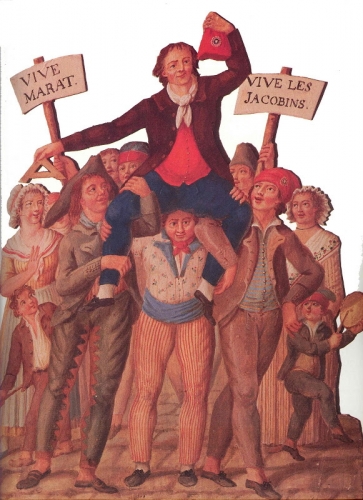
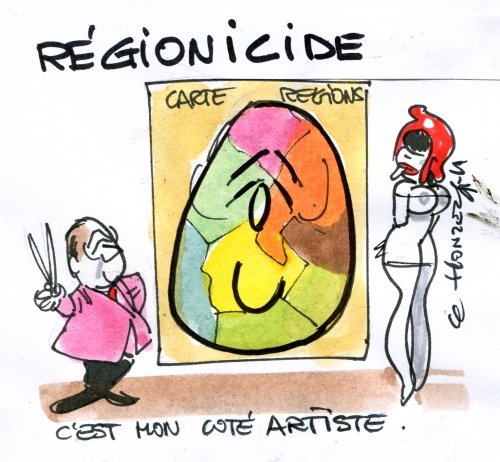
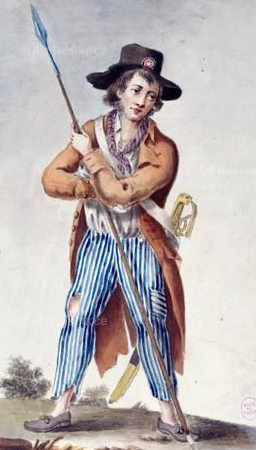 De fait, le parisianisme actuel, qu’il ait été fluctuant et grotesque sous le règne des nullités chiraquienne et hollandienne, ou qu’il soit celui du très directif Emmanuel Macron, est parfaitement illégitime parce que la Nation n’y trouve pas son compte, à la différence de ce qu’éprouvent les maîtres de l’économie et la cohorte de leurs féodaux, si gâtés par nos princes.

 En raison de sa provenance californienne, ce courant de pensée est plus connu sous le vocable anglais de New Age. On peut situer l’origine de cette mouvance intellectuelle au début des années 1960, notamment avec le livre de Marilyn Ferguson, Les enfants du Verseau (1962).


 Hinsichtlich der „Umvolkung“ oder des „Bevölkerungsaustausches“ sollte man darauf hinweisen, daß es dies immer schon gegeben hat und immer geben wird. Vor kurzem gab es mehrere kleine Bevölkerungs-Austauschaktionen im ehemaligen Jugoslawien, wobei viele Kroaten, muslimische Bosniaken und Serben in Bosnien ihre ehemaligen Wohnorte verlassen mußten. Vertreibung wäre hier ein besseres Wort für diese Aktion, da dieser Bevölkerungsaustausch in Ex-Jugoslawien mitten im Kriege stattgefunden hat.
 Deswegen ist jegliche Kritik an der Masseneinwanderung ohne eine vorhergehende Kritik am liberalen Handel bzw. am Kapitalismus sinnlos. Und umkehrt. Die kleinen kriminellen Migrantenschlepper, die meistens aus dem Balkan stammen, sind nur ein Abbild der großen Gutmenschen-Migrantenschlepper, die in unseren Regierungen sitzen. Auch unsere Politiker, ob sie in Brüssel oder in Berlin sitzen, befolgen nur die Regeln des freien Marktes.
 Natürlich könnte der heutige Bevölkerungsaustausch von jedem europäischen Staat jederzeit gestoppt oder auch rückgängig gemacht werden, solange Politiker Mut zur Macht haben, solange sie politische Entscheidungen treffen wollen, oder anders gesagt, solange sie die Entschlossenheit zeigen, den Zuzug der Migranten aufzuhalten.

 Demzufolge stellt sich die Frage, was bedeutet es heute, ein guter Europäer zu sein? Ist ein Bauer im ethnisch homogenen Rumänien oder Kroatien ein besserer Europäer, oder ist ein Nachkomme der dritten Generation eines Somaliers oder Maghrebiners, der in Berlin oder Paris wohnt, ein besserer Europäer?
 Die einzige Waffe, sich gegen den heutigen Völkeraustausch zu wehren, liegt in der Wiedererweckung unseres biologisch-kulturellen Bewußtseins. Ansonsten werden wir weiterhin nur die hohlen Floskeln der christlichen, liberalen oder kommunistischen Multikulti-Ideologie wiederkäuen. So richtig es ist, die Antifa oder den Finanzkapitalismus anzuprangern, dürfen wir nicht vergessen, daß die christlichen Kirchen die eifrigsten Boten des großen Bevölkerungsaustauschs sind.

 Ceci pourrait être utile pour les gens qui réfléchissent aux moyens de survivre dans les temps qui viennent.

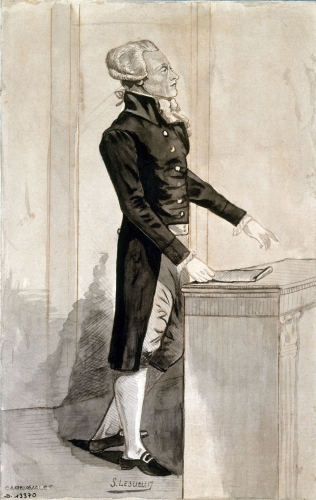 "Dès son adolescence, écrit-il sans retenue, Robespierre fut probe modeste et studieux ; il prit de bonne heure la défense du faible contre le fort, de la raison contre le préjugé ; il arrive aux États Généraux, en 1789, plein de vénération pour la mémoire de Rousseau, dont il médita les écrits toute sa vie ; déjà il aimait et plaignait le peuple, abhorrait les grands méprisait les faiseurs d'esprit et était convaincu que tout était à reformer dans l'ordre civil et politique de la France."

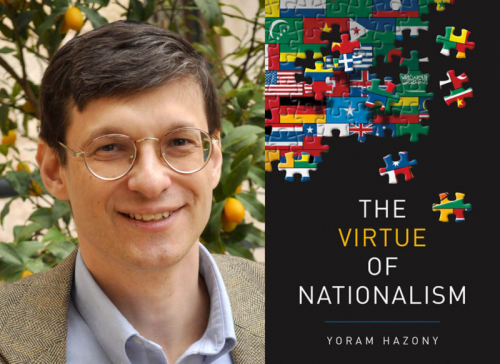
 Hazony defines the nation-state in contradistinction to two alternatives: tribal anarchy and imperialism. Tribal anarchy is basically a condition of more or less perpetual suspicion, injustice, and conflict that exists between tribes of the same nation in the absence of a common government. Imperialism is an attempt to extend common government to the different nations of the world, which exist in a state of anarchy vis-à-vis each other.
 Hazony argues that nationalism has a number of advantages over tribal anarchy. The small states of ancient Greece, medieval Italy, and modern Germany wasted a great deal of blood and wealth in conflicts that were almost literally fratricidal, and that made these peoples vulnerable to aggression from entirely different peoples. Unifying warring “tribes” of the same peoples under a nation-state created peace and prosperity within their borders and presented a united front to potential enemies from without.
 The “mutual loyalty” at the heart of nation-states is a product of a common ethnicity. How does ethnic unity make free institutions possible? Every society needs order. Order either comes from within the individual or is imposed from without. A society in which individuals share a strong normative culture does not need a heavy-handed state to impose social order.
 In fact, Hazony argues, imperialism is far more conducive to hatred and violence than nationalism.
 The third principle is “government monopoly of organized force within the state” (p. 177), as opposed to tribal anarchy. A failed state is one in which different ethnic groups create their own militias.
 The difference between good nationalism and bad nationalism is simple: Good nationalism is universalist. A good nationalist wants to ensure the sovereignty of his own people, but does not wish to deny the sovereignty of other peoples. Instead, he envisions a global order of sovereign nations, to the extent that this is possible. Hazony, however, wishes to stop short of the idea of a universal right to self-determination, which I will deal with at greater length later.



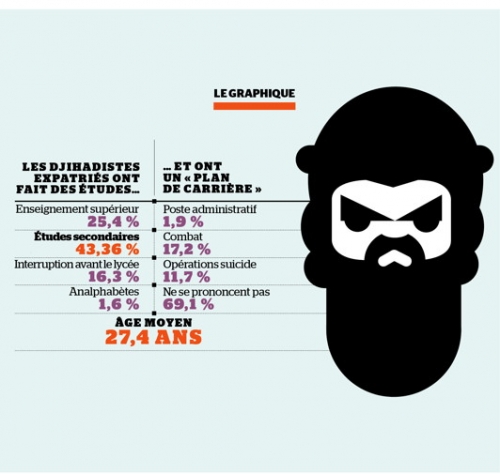
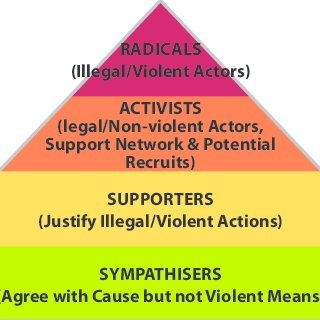
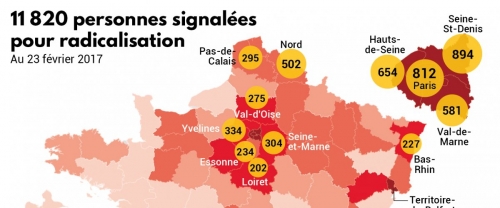




 La seconde raison de la défaite perpétuelle de la droite, c’est son conservatisme. Les réaco-conservateurs assimilent trop souvent l’avenir à un déploiement inéluctable des forces progressistes. Ils en viennent à prendre l’objet (l’avenir) façonné par le sujet (la gauche) pour le sujet lui-même. Le futur étant devenu synonyme d’avancées « progressistes », l’unique remède ne pourrait être que son contraire – le passé – plutôt qu’un avenir alternatif. Or il y a là une forme de défaitisme, comme si la droite assimilait sa propre déconfiture, ratifiant le monopole de la gauche sur l’avenir. Puisque l’Histoire n’est qu’une longue série de victoires progressistes, c’est l’avenir lui-même qu’il faudrait brider, plutôt que les acteurs qui le façonnent. Ralentir le temps et sanctuariser certaines institutions apparaît alors comme la solution par défaut.