


 De onlusten in Londen en andere Engelse steden zijn een dubbelzinnig eerbetoon aan de apathie, de morele lafheid, de onbekwaamheid en het carrièrezuchtige opportunisme van de Britse politieke en intellectuele klassen. Op de ene of andere manier zijn zij erin geslaagd niet te zien wat evident is voor iedereen die een wandelingetje maakt in een drukke Britse straat: dat een grote proportie van de jonge bevolking van het land, lelijk, agressief, gemeen, slecht opgevoed en onbeschoft is en misdadige neigingen heeft. Die jeugd heeft geen enkel zelfrespect, wel veel eigendunk. Ze vindt dat ze recht heeft op een hoog levenspeil en op andere dingen, zonder daar ook maar de minste inspanning voor te doen.
Denk even na over het volgende: hoewel Groot-Brittannië een zeer hoge jeugdwerkloosheid kent – ongeveer 20 procent van de jongeren onder de 25 jaar heeft geen baan – moet het land al jaren jonge werkkrachten uit het buitenland importeren, zelfs voor ongeschoolde banen in de dienstensector. De verklaring van die paradox ligt voor de hand voor iedereen die de jonge Britten kent.
Geen enkele zinnige werkgever in de dienstensector zal een jonge Brit kiezen als hij een jonge Pool kan krijgen. De jonge Pool zal waarschijnlijk niet alleen hard werken en welgemanierd zijn, maar ook nog kunnen tellen. En de kans is groot – de ultieme vernedering – dat hij zelfs beter Engels zal spreken dan de Brit, als we het over de standaardvariant van de taal hebben. Zijn Engels zal misschien minder vloeiend maar wel correcter zijn, zijn accent gemakkelijker te begrijpen.
Occasioneel schoolbezoek
Ik overdrijf niet. Na verplicht onderwijs – misschien noem ik het beter occasioneel schoolbezoek – tot de leeftijd van zestien jaar, met een prijskaartje van 80.000 pond per hoofd, kan ongeveer een kwart van de Britse kinderen niet vlot lezen of eenvoudige rekensommen maken. Het maakt je trots dat je een Britse belastingbetaler bent.
Ik denk dat ik met vrij grote zekerheid kan zeggen, uit mijn ervaring als arts in een van de wijken waar net een politiekantoor afgebrand is, dat de helft van de relschoppers op de vraag ‘Ben je goed in wiskunde?' zou antwoorden ‘Wat is wiskunde?'.
De Britse jongeren voeren de westerse wereld aan in vrijwel alle aspecten van de sociale pathologie, van tienerzwangerschappen tot drugsgebruik, van dronkenschap tot geweldmisdrijven. Er bestaat geen vorm van wangedrag die onze versie van de welvaartsstaat niet heeft opgespoord en gesubsidieerd.
Televisie in slaapkamer
Britse kinderen hebben veel meer kans op een televisie in hun slaapkamer dan op een vader in huis. Een derde van onze kinderen eet nooit aan tafel met een ander lid van het huishouden – het woord ‘gezin' zou misplaatst zijn voor de sociale regelingen in de wijken waaruit de meeste relschoppers afkomstig zijn. Ze zijn dan ook radicaal ongesocialiseerd en diep egoïstisch. Hun visie op relaties met andere mensen is die van Lenin: wie doet wat met wie. Tegen hun volwassenheid zijn ze voorbestemd om niet alleen werkloos maar ook totaal ongeschikt voor de arbeidsmarkt te zijn.
Afhankelijk zijn van de overheid is voor veel Britse jonge vrouwen geen afhankelijkheid maar net het omgekeerde: onafhankelijkheid. Afhankelijkheid betekent elke vorm van vertrouwen op de mannen die hen zwanger maken en die hun uitkering van de overheid als zakgeld beschouwen, om aan te vullen met een beetje drugshandel. (Mark Duggan, wiens dood door toedoen van de waarschijnlijk incompetente politie de rellen zou hebben uitgelokt, deed volgens zijn eigen broer ‘zaakjes'; welke zaakjes dat waren, werd met de mantel der liefde bedekt).
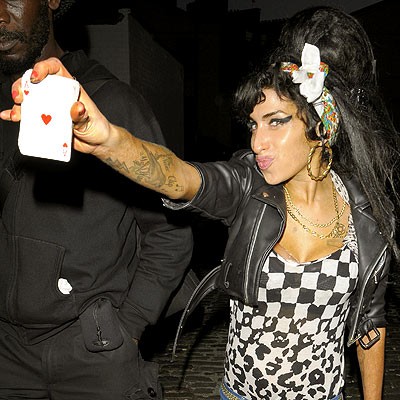
Het deel van de maatschappij dat rellen schopt is relatief arm, maar bezit toch alle elektronische apparatuur die nodig is voor wat echt telt in het leven: het entertainment van de populaire cultuur. En wat is de Britse populaire cultuur geweldig. Misschien was Amy Winehouse haar mooiste parel en haar meest authentieke vertegenwoordiger, met haar militante, ideologische vulgariteit, haar domme smaak, haar walgelijke persoonlijke gedrag en haar absurde zelfmedelijden.
Haar vunzige leven was een lang bad in braaksel, zowel letterlijk als metaforisch, dat verontschuldigd noch verklaard kan worden door haar hoogst middelmatige talent. Maar toch liet onze intellectuele klasse niet het minste afkeurende geluidje horen toen ze na haar dood bijna heilig werd verklaard. Die klasse heeft sinds lang de ruggengraat van een weekdier.
Bespottelijke straffen
Misdaad wordt in Engeland nog nauwelijks bestraft. Een opperrechter vond inbraak een lichte overtreding die geen gevangenisstraf verdiende en de volgende opperrechter gaf hem gelijk. Tegen de tijd dat hij twaalf is, heeft een modale jongere uit een achterstandswijk geleerd dat hij niets te vrezen heeft van de wet en dat hij alleen op zijn hoede moet zijn voor mensen die sterker of gewetenlozer zijn dan hij. De straffen zijn bespottelijk. De politie gedraagt zich intimiderend maar tegelijkertijd ineffectief en incompetent en gaat steeds vaker gekleed in uitrusting die meer geschikt lijkt voor de bezetters van Afghanistan. De mensen die nu het bangst zijn voor onze politie zijn de onschuldigen.
Dat alles doet geen afbreuk aan de persoonlijke verantwoordelijkheid van de relschoppers. Maar deze onlusten zijn symptomatisch voor een maatschappij die snel uiteenvalt, voor een volk dat geen leiders en geen volgelingen telt maar enkel nog egoïsten.
mardi, 16 août 2011
Opérations de l'OTAN en Libye: accélérateur d'une dislocation géopolitique mondiale?
Opérations militaires de l'OTAN en Libye : accélérateur d'une dislocation géopolitique mondiale ?
Xavier JARDEZ
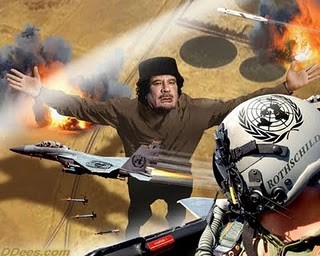 Dans son bulletin GEAB N° 51 (Global Europe Anticipation Bulletin – janvier 2011)*, le Laboratoire Européen d'Anticipation Politique (LEAP) – think tank monégasque dirigé par Franck Biancheri - prévoyait que l’année 2011 serait une année difficile pour ceux qui n’étaient pas préparés à la crise systémique globale, c'est-à-dire « une crise que affecte les fondements même du système (tous les secteurs et tous les relais, et non pas un secteur particulier comme c'était le cas avec la bulle Internet par exemple) et une crise qui affecte simultanément toute la planète (et non pas comme en 1929 un espace atlantique Etats-Unis et Europe de l'Ouest encore peu intégré in fine) ». Selon le LEAP, l’intervention anglo-américano-française en Libye en est la parfaite illustration ainsi qu’un puissant soutien à la dislocation géopolitique mondiale.
On demanda à l’opinion publique d’approuver, non de penser
Le vrai contexte du conflit libyen n’a rien à voir avec ce que gouvernements et médias en donnent tant en Grande-Bretagne qu’en France et aux Etats-Unis. Il débute avec la révolution en Tunisie et sa propagation aux autres pays arabes avec des résultats divergents. Dans l’analyse de GEAB 52 (février 2011), la Libye apparaissait dans la catégorie des « pays dont les régimes pouvaient contenir jusqu’à la fin de 2012, en recourant à la violence, les tentatives de changement ». Y figuraient aussi l’Algérie, l’Arabie saoudite, la Syrie contre lesquels, selon le bulletin, ni la Grande-Bretagne, ni la France, ni les Etats-Unis n’oseraient lancer une action militaire « pour défendre les populations » ou « accélérer le changement » pour les raisons suivantes :
- -une trop grande population
- -des régimes dont la déstabilisation serait dangereuse pour l’Occident
- -des implications régionales potentiellement « explosives »
- -des obstacles logistiques
- -une certaine opposition de puissances non-occidentales à une résolution onusienne de soutien
- -un destin militaire incertain
- -un fort impact sur les prix mondiaux du pétrole et du gaz.
La différence de traitement entre la Libye et ces derniers pays est que les opérations militaires y apparaissaient techniquement, politiquement et militairement possibles à moindre risque contrairement aux pays cités. Kadhafi a été diabolisé dans les médias occidentaux mais a été courtisé, ces dernières années par les leaders occidentaux, notamment Sarkozy lui offrant tous les honneurs, pour lui vendre armes et réacteurs nucléaires. Son pays est vaste mais peu peuplé, croulant sous le pétrole dans une région hostile à la centralisation du pouvoir. Il était donc la cible rêvée si l’on arrivait à donner à cette action militaire une légitimité internationale.
Qui fut la suivante :
« Le peuple libyen est attaqué brutalement par un dictateur méprisable ; les démocraties (une espèce de mini-OTAN) doivent protéger de toute urgence le peuple libyen en révolte (dont personne n’a vu de photos même dans Benghazi, à l’inverse de ce qui s’est passé pour les foules en Egypte, au Yémen à Bahreïn, en Jordanie), de massacres de masse perpétrés par le dictateur libyen (ici encore pas de preuves, pas de photos) ; les révolutionnaires ont de plus formé un gouvernement alternatif dont la légitimité doit être soutenue (sans savoir vraiment qui en faisait partie à l’exception de l’ancien ministre de l’intérieur, Abdel Fattah Younis – certainement un grand démocrate - et quelques exilés de Londres et des Etats-Unis depuis des décennies). »
On demanda donc, spécialement en France, à l’opinion publique d’approuver, non de penser.
Pas de plan B en cas d’échec occidental
Les jours qui suivirent ont très rapidement montré
- -que le peuple libyen ne s’est pas soulevé ;
- -que les services secrets français, britanniques et la CIA opéraient en Libye bien avant le « déclenchement » officiel de la rébellion ;
- -que le soutien à cette coalition de la part des pays arabes ou africains a été quasi inexistant ;
- -qu’une large portion de l’Occident (Allemagne, Pologne…) a été opposé à cette intervention militaire ;
- -que Sarkozy, Cameron et Obama n’avaient pas de plan B si le « blitzkrieg » échouait ;
- -que la situation était source de risques géopolitiques majeurs pour le monde arabe et l’Europe.
(….)
Quels étaient les objectifs des participants à l’intervention militaire ? Pour Obama, pris au piège de l’effondrement du « mur du pétro-dollar » dû à la révolution arabe, et englué dans des problèmes budgétaires, financiers et économiques, à qui il était impossible de s’afficher comme un adversaire direct d’un autre pays musulman après l’Irak et l’Afghanistan, il s’agit de maintenir « le mur » par l’établissement de régimes « amis », de consolider le camp occidental en générant des conflits entre l’Occident et le reste du monde, de vendre des armes et d’engendrer des zones d’instabilité autour de l’Europe pour ralentir toute velléité d’indépendance stratégique de l’Europe. Pour Cameron, soutien fidèle des Etats-Unis, ses buts traditionnels épousent ceux de leur parrain, et s’y ajoute, celui jamais démenti, d’affaiblir la cohésion de l’Europe continentale. Sarkozy, converti aux vertus de l’américanisme, légitimant au nom de la démocratie, tout action servant les intérêts de l’Occident, a abandonné, sur l’autel de l’intervention en Libye, les deux pendants de la politique étrangère des dernières décennies, à savoir, le renforcement de la cohésion européenne autour de la France et de l’Allemagne et l’affaiblissement de l’influence US en Méditerranée. Pour Sarkozy, même les plus fervents soutiens à l’intervention en Libye affirment qu’elle est là à des fins de politique domestique, pour remonter sa popularité. Si rien ne marche en Libye, il deviendra pour Obama, le principal coupable.
Quant aux pays arabes, opposés a priori à l’intervention en Libye, ils s’y sont ralliés car le danger pour eux n’est pas Kadhafi, mais les révolutions populaires arabes et tout ce qui peut les affaiblir est le bienvenu. Ils ont ainsi eu le plaisir de voir l’Occident engager un conflit qui leur évite d’étendre un soutien aux mouvements révolutionnaires qui éclatent chez leurs voisins. Si Israël joue dans ce conflit la carte de la discrétion, il ne fait aucun doute que son influence est primordiale dans le conflit libyen, car il lui permet de miner le mouvement révolutionnaire arabe qui l’inquiète.
Cauchemar géopolitique
C’est ainsi que le conflit libyen accélère le processus de dislocation géopolitique mondial selon certaines lignes :
- -incapacité des Etats-Unis à assumer le leadership militaire. Depuis 1945, c’est la première fois que la coalition qu’ils ont assemblée réunit si peu de pays. L’Occident étant réduit au strict minimum. Il n’y a ni Asiatiques, ni Africains, ni Latino-Américains. Des Arabes, seul le Qatar est visible.
- -LEAP pense que le conflit libyen aboutira à l’émergence d’un vrai centre européen de défense et au-delà de la défense, la position de l’Allemagne axée sur la diplomatie prévaudra.
- -failles dans l’unité de l’OTAN
- -naissance d’une diplomatie Euro-BRIC avec l’abstention de l’Allemagne au Conseil de Sécurité fidèle à sa ligne d’indépendance vis-à-vis de Washington, initiée par Schröeder
- -impasse de l’Europe sur la « Somalie méditerranéenne » : piraterie, mafias en tous genres, terrorisme, instabilité régionale… ces conséquences sont loin des promesses de changements démocratiques en Libye prophétisées par la coalition.
L’intervention en Libye peut donner lieu à un cauchemar géopolitique pire que celui de la Yougoslavie, l’Irak et l’Afghanistan réunis. Elle est une aubaine pour ceux qui souhaitent affaiblir les mouvements révolutionnaires dans le monde arabe. En France, concernant cette guerre, la propagande médiatique est telle qu’il est impossible d’accorder la moindre foi aux sondages. Le Laboratoire Européen d'Anticipation Politique (LEAP) remarque d’ailleurs que « la cote de popularité d Nicolas Sarkozy continue de chuter, ce qui est bien incompatible avec les fortes adhésions à sa politique libyenne affirmées par les sondeurs » (1).
LEAP
24/07/2011
Extrait GEAB n°54 (15 avril 2011)
Résumé et synthèse par Xavière Jardez
Polémia invite ses lecteurs à se reporter sur le site http://www.france-irak-actualite.com/ . Ils y trouveront des informations sur la situation actuelle de la Libye au lendemain de l’assassinat du général Younès, chef de l’armée rebelle, et sur les doutes quant à l'avenir, formulés par le président Sarkozy et son ministre des affaires étrangères, sur lesquels les médias français se montrent assez discrets.
*Version intégrale : http://www.leap2020.eu/Operation-militaire-en-Libye-Un-accelerateur-puissant-de-la-dislocation-geopolitique-mondiale_a6826.html
(1) Alors qu’en mars 63% des Français soutenaient - soi-disant - l’intervention française en Libye, le 1er juillet ils n’étaient plus que 30% à y être « plutôt favorable ». Selon une enquête de l’hebdomadaire Le Point, publiée le 20 juillet : 66% des Français ne souhaitent pas la réélection de Nicolas Sarkozy.
Correspondance Polémia – 9/08/2011
Xavière Jardez
00:06 Publié dans Actualité, Géopolitique | Lien permanent | Commentaires (0) | Tags : actualité, géopolitique, politique internationale, libye, afrique, affaires africaines, monde arabe, monde arabo-musulman, méditerranée, afrique du nord, otan, atlantisme |  |
|  del.icio.us |
  |
|  Digg |
  Facebook
lundi, 15 août 2011
De generatie van Amy Winehouse
De generatie van Amy Winehouse
Rellen in Verenigd Koninkrijk
Theodore DALRYMPLE
Ex: http://www.standaard.be/artikel/detail.aspx?artikelid=JH3DRJO3
00:14 Publié dans Actualité, Affaires européennes, Réflexions personnelles | Lien permanent | Commentaires (0) | Tags : angleterre, grande-bretagne, émeutes, violence, violences urbaines, europe, affaires européennes, politique internationale, actualité, réflexions personnelles, theodore dalrymple | | del.icio.us | | Digg | Facebook
White Riot: Assimilation & Cultural Death in England
White Riot:
Assimilation & Cultural Death in England
By Francis Alexander
Ex: http://www.counter-currents.com/
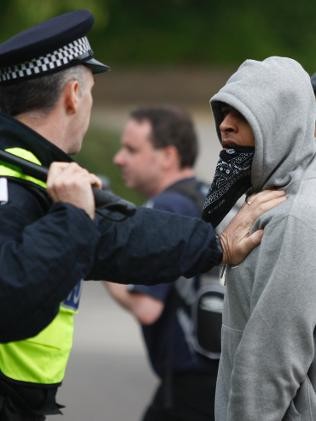 As an ethnocentric white man, well aware that the mainstream media do not report the racial character of non-white violence, I closely examined photographs of the recent riots that have occurred in England. To my dismay I saw new numerous white youths participating in the violence. Most of the rioter’s faces were concealed, making it difficult to determine their race, and though they were most probably a minority, the number of white rioters was sizable.
This is something many racialist writers have ignored, reacted on instinct, and attributed sole responsibility to the Negro colony. What I am writing is not to let the blacks of the hook but use this as a way of objectively analyzing the shortcomings of my own people, to illustrate the scale of our tasks in regenerating them. If you do not believe in my basic premise, take a look at these pictures http://www.dailymail.co.uk/news/article-2024120/London-riots-2011-suspects-Photos-released-know-looters.html [2]
How did this come to be? The sort of looting that occurred is normally something only done by Negroes. The simple answer is that a substantial proportion of English white working class youth have adopted Negro folkways in a very thorough and total manner. In the US the closest equivalent is the Wigger phenomena. This differs in that Wiggers are simply young whites who act black and do so as a youthful and foolish idiosyncracy, something they grow out of, because a grown man looks stupid with his baggy jeans round round his knees and a backward baseball cap.
We don’t have Wiggers in the UK, we have instead, chavs: alternatively known as rude boys, pikeys, townies, hoodies, or feral youths. For them, Negro speech, attitudes, dress, musical tastes, and disorganized criminality come to them completely naturally and spontaneously, and are a badge of social station and identity. They are not even conscious of imitating aliens. There is no affectation there; their negrification is deep-set. Can one imagine your typical middle-class American wigger joining a Negro riot?
I thought not, and that is the difference.
How is all this even possible? Well, one of the advantages of being primitive is that blacks have a natural and intuitive understanding of ethnocentrism. They refer to blacks who act white as “Bounties,” after the coconut-chocolate bar that is black on the outside and, white in the inside. These feral white youths on the other hand, are like a sandwich full of excrement: white on the outside and black on the inside. To put it in Evolian terms their race of the body is white, their race of the soul is Negro, and their like almost every one else in our society incoherently nihilistic.
All of this proves the point made by Guillaume Faye that assimilation is cultural death, which results not only in African and Asians being superficially Westernized but also in European culture being Africanized and Islamified.
Assimilation has done its work too well in England. Most middle-class English people have non-white friends, and I myself have met privately educated Asians with manner and outlook identical to native rahs (rah being slang for the tattered and plutocratic remnants of the English gentry). If worse is better, then better (i.e. “successful” assimilation) is also definitely worse.
One of the reasons that the British National Party has failed to enjoy the sort of breakthroughs that other national-populist parties have is that race relations in the UK are simply somewhat “better” than they are in the rest of Europe, i.e. less tense and therefore less likely to produce racial awakening. In turn, one of the reasons they emphasize Islam so much is that they are the one group to remain culturally as well as racially alien, and even many of them have been integrated into a basically bourgeois life style
There are number of reasons why this is the case.
The first of all is that the English, are still quite culturally confident in a sort of effortless way. Unlike Scandinavians or White Americans, they are not ashamed of who they are; white guilt is probably as uncommon as white pride. The English are too reserved for either to really resonate.
Despite this, they are unfortunately lacking in the aggressive ethnocentrism of the French, Italians, or Flems, which angers and humiliates the colonizing population, thereby further provoking a backlash from an already hostile population. The English are too polite.
A further factor is the strength of the class system, which results in non-whites being happy to imitate the manner of whatever class they belong to, for Blacks this is the feral underclass, whose manners they have changed in turn, for Asians either the lower or upper- middle classes depending upon whether they are Muslims or from one of the higher IQ groups.
A final factor is that much of the non-white population is dispersed in penny packets. There is no equivalent of America’s inner cities and France’s banlieus, which provide the territory needed to form strong non-white identities. Thus loyalty in the underclass is to soil rather than blood; specifically to whatever estate they live on. They refer to it as their “ends,” what Americans would call a housing project. The idea of multi-racial looters loyal to some ghastly warren of sub-Corbussian architecture may seem fantastical to Americans, but such is the poisoned fruit of our ever so successful assimilation.
In persuading the English people to put race before economic class, and blood before money; to persuade them to vote for a party willing to deport their non-white personal friends and acquaintances, in all these things English nationalists face an uphill task. Regardless, they must persevere or the English people will be dispossessed without resistance and go quietly into the night convinced that their Afro-Asian colonizers and future masters, are in fact, just like them: English.
We must therefore emphasize more than ever that a people is defined not by shared customs or legal status but by ancestry, continuous identity and a sense of a sacred presence. To appeal solely to culture or customs is to be disarmed, given that docile and intelligent non-white immigrants can absorb our culture, while stupid and surly ones can drag the lowest elements of our people down with them, to their convulsive and chthonic depths of post-modern urban ferality.
Article printed from Counter-Currents Publishing: http://www.counter-currents.com
URL to article: http://www.counter-currents.com/2011/08/white-riot/
00:07 Publié dans Actualité, Affaires européennes | Lien permanent | Commentaires (0) | Tags : actualité, londres, angleterre, grande-bretagne, europe, affaires européennes, politique internationale, émeutes, violence, violences urbaines | | del.icio.us | | Digg | Facebook
Londres dans la tempête anthropotechnique
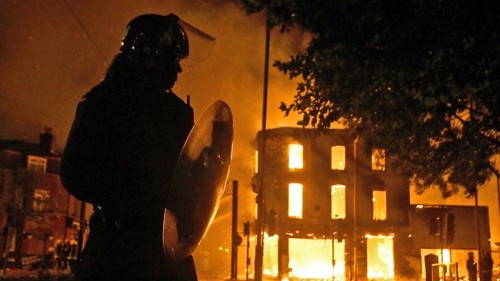
Londres dans la tempête anthropotechnique
par Jean-Paul BAQUIAST
Pourquoi employer, pour désigner les émeutes qui se produisent en ce moment dans certains quartiers londoniens, un terme apparemment obscur, celui de tempête anthropotechnique, plutôt que parler de simples émeutes des banlieues, semblables à celles s'étant produites en France il y a quelques années?
Pourquoi, plus banalement encore, ne pas parler de simples scènes de pillage, comme l'on en voit partout dans le monde? Parce que s'il s'agit d'un phénomène sans doute classique, la révolte de minorités non assimilées par le système de pouvoirs dominants et par conséquent marginalisées, il prend des formes nouvelles, l'émergence de modèles de destruction de l'ordre social en place particulièrement visibles et exemplaires. Ces modèles sont « virtuels », sous la forme d'images et de commentaires se réverbérant en écho. Mais ils naissent d'actions concrètes sur le terrain et donnent à ces actions une force d'exemple quasiment illimitée. De nouveaux acteurs jusque là passifs sont incités à prendre des initiatives. Les troubles semblent alors se générer et se répandre spontanément, sur le mode viral.
Inévitablement les sociétés attaquées génèrent des réactions de défense dont les modèles se répandent à leur tour à travers les réseaux. Ces réactions, constructives ou destructrices selon le point de vue des observateurs politiques, sont d'abord classiques, sur le mode de la répression policière traditionnelle. Mais devant l'échec de cette forme de défense, les pouvoirs inventent des solutions reposant le plus souvent sur le contrôle des activités à travers les outils technologiques fournis par les réseaux et l'intelligence artificielle. Ces solutions paraissent émerger elles-aussi spontanément. Ceci tient en partie à la capacité d'adaptation rapide des technologies utilisées et des humains faisant appel à elles. Il est aujourd'hui difficile de prévoir le type de société qui résultera des affrontements à prévoir entre les forces agonistes et antagonistes en présence. D'où l'intérêt d'essayer de rafraichir en permanence les outils d'analyse.
Le facteur technologique
Le premier facteur à prendre en compte est la puissance du facteur technologique aujourd'hui en action, que nous venons de résumer rapidement. La capacité des réseaux sociaux et des images virtuelles à fédérer les oppositions a été découverte à l'occasion des révoltes arabes. Aujourd'hui, il semble que le pouvoir de Bachar El Hassad, malgré ses centaines de chars, sera obligé à la longue de s'incliner devant la mobilisation en profondeur provoquée par la diffusion des images, aussi rares et réprimées que soient celles-ci. Le pouvoir chinois est lui-aussi dans l'expectative face à la naissance d'oppositions de ce type.
Ce facteur technologique est désormais bien connu. Il comporte le volet des médias, la télévision et internet, qui propagent dans le monde entier des symboles d'une grande puissance contagieuse, servant pour beaucoup de spectateurs d'exemples à suivre. La mémétique a décrit ce mode de propagation, les acteurs se copiant les uns les autres tout en diversifiant par mutation la nature de leurs initiatives. Il faut actualiser les modèles mémétiques déjà anciens pour tenir compte de la puissance des nouveaux modes de production et de diffusion des contenus propres aux sociétés urbaines. On voit se généraliser des outils de communication instantanée entre individus et petits groupes qui les rendent en cas de confrontation plus mobiles et réactifs que les forces de l'ordre n'employant que des moyens traditionnels de communication. Il s'agit pourrait-on dire alors de superorganismes en reconstitution permanente.
Un point méritera d'être précisé. La généralisation de la société en réseau a depuis les origines favorisé l'apparition apparemment spontanée et quasiment irrépressible d'agents internes de destruction d'autant plus efficaces qu'ils s'attaquent spontanément aux systèmes complexes, comme si la complexité les stimulaient. Il s'agit des virus informatiques et en associations avec eux, des humains, pirates ou hackers. Beaucoup semblent motivés, non pour des raisons politiques ou économiques, mais par le désir très puissant de se montrer supérieurs, fut-ce anonymement, aux barrières qui leur sont opposées. Dans notre terminologie, il s'agit typiquement d'agents de type anthropotechniques, associant des technologies de type proliférant et des humains (anthropos) tourmentés par un besoin de sortir de la norme. Cela peut prendre une forme ludique mais aussi déboucher sur des actions qui seront qualifiées de criminelles.
Or dans le cas des émeutes urbaines, on voit systématiquement apparaître des groupes dits de casseurs qui ne se bornent pas à piller mais, semble-t-il, à détruire pour détruire. On a parlé de jeu ou de sport. Médiatisés sur les réseaux, de tels comportements se répandent et se diversifient sur le mode mémétique viral. On peut s'interroger sur les raisons de leur succès reproductif, déploré par les responsables de l'ordre. S'agit-il d'une propension séculaire des sociétés organisées à générer des comportements destructifs externes de la part de ceux que cette organisation rejette? Faut-il alors intensifier les mesures répressives classiques? S'agit-il au contraire de formes d'auto-destruction internes qui seront de plus en plus nombreuses et agressives au fur et à mesure que les sociétés en réseau se complexifieront? Quels rapports entretiendront ces auto-destructions avec les actions de contestation plus pacifiques s'exprimant à travers des manifestations médiatisées, sur le mode des campements de la place Tahrir au Caire. Ces dernières en souffriront-elles ou en tireront-elles profit? Des analyses systémiques semblent s'imposer, si l'on ne veut pas s'enfermer dans la vieille dialectique du « surveiller et punir » illustrée par Michel Foucault.
Le facteur anthropologique
En état de co-activation avec ce facteur technologique se trouve le facteur que nous nommons ici anthropologique. Il faut pas à cet égard se cacher derrière les non-dits bien pensants, qui ne trompent plus personne aujourd'hui. Les insurgés des banlieues européennes conjuguent le refus de l'exploitation propre à tous prolétariats ou minorités exploitées ou rejetées par le secteur productif avec des composantes ethniques. La Grande Bretagne, pour ce qui la concerne, dans la suite d'une histoire coloniale et industrielle dont les hauts-faits inspirent encore l'imagination des classes dirigeantes, a cru pouvoir faire venir sur son territoire, pratiquement sans contraintes, les représentants de populations et de religions qui se livraient chez elles à des conflits incessants. Elle espérait apparemment pouvoir les réconcilier autour des bonnes moeurs de la gentry, tout en continuant à exploiter leur force de travail sans offrir de perspective d'emplois sérieux et de promotion. Des aides à l'assimilation avaient été mises en place sous les gouvernements travaillistes, mais elles viennent d'être supprimées.
Il n'y a rien d'étonnant à ce que, la crise économique et politique actuelle aidant, ce soit dans le pot-pourri de nationalités provenant principalement de l'ancien Empire, que se recrutent - fussent-ils naturalisés depuis plusieurs générations, les individus les plus activistes. Certes, les affrontements de la décenie précédente opposants protestants et catholiques en Irlande avaient rappelé que les Européens peuvent à tout moment prendre les armes les uns contre les autres, comme ils l'ont fait tout au long du 20e siècle. Reste qu'aujourd'hui les images des combats de rue véhiculent l'image détestable de conflits ethniques, même si comme d'habitude les premières victimes des destructions sont des famlles fraichement immigrées. Il peut s'agir d'une véritable dynamite. Parler comme le fait aujourd'hui le gouvernement Cameron de comportements relevant du banditisme classique ne suffit donc pas à prendre la mesure anthropologique du problème.
En France ou dans les autres pays européens, il paraît évident que des facteurs voisins sont à l'oeuvre qui nourriront si rien n'est fait des révoltes également destructrices. Mais pour le moment il nous semble que le maillon faible face à de telles révoltes risque bien d'être le Royaume Uni. Pourquoi? La société britannique, bien qu'indéniablement profondément démocratique en termes politiques, est aussi profondément inégalitaire en termes sociaux. De plus elle a depuis des décennies perdu la capacité de faire appel au secteur public et à de véritables mesures économiques où l'Etat et les organisations syndicales pourraient faire un contrepoids aux oligarchies financières. C'est ainsi que la majorité libérale conservatrice a embouché sans aucunes précautions les trompettes du FMI et de Wall Street en démantelant la police, les universités et les services sociaux, entre autres barrages possibles aux revendications de la rue. S'est ajoutée à cela la corruption profonde générée par le système médiatique, où même l'austère Scotland Yard a perdu sa respectabilité.
Face aux mouvements de rue, le gouvernement se trouve un peu dans la situation de Bachar El Assad: devoir durcir encore la répression ou démissionner. Certains parlent de faire appel à l'armée. Cela fera peut-être taire un moment les manifestants. Mais ne fera qu'aggraver les difficultés à terme. Il faudrait pensons-nous proposer aux minorités ethniques en réseau des perspectives à plus long terme qui réinséreraient les manifestants les plus désireux de s'intégrer au sein d'autres réseaux offrant des perspectives d'activités technologiques motivantes. C'est la question évoquée dans notre éditorial du 27 juillet, « L'avenir de la Grèce est aussi le nôtre ». Mais cette perspective supposerait un véritable changement de système politique et économique. Rien ne prouve pour le moment que la peur générée par les émeutes fasse progresser, en Grande Bretagne comme ailleurs en Europe, la prise au sérieux du besoin d'un tel changement.
Jean-Paul Baquiast
Europe solidaire
09/08/2011
Correspondance Polémia – 12/08/2011
00:05 Publié dans Actualité, Affaires européennes, Sociologie, Théorie politique | Lien permanent | Commentaires (0) | Tags : europe, affaires européennes, actualité, londres, angleterre, grande-bretagne, émeutes, violence, violences urbaines, politique internationale, sociologie, problèmes contemporains, théorie politique, sciences politiques, politologie | | del.icio.us | | Digg | Facebook
dimanche, 14 août 2011
In der Geiselhaft des Norwegers
In der Geiselhaft des Norwegers
Der „Norweger“ hält die Europäer in Geiselhaft. All jene, für die Erhaltung des christlichen Abendlandes eintreten und für die Erhaltung ihrer national-kulturellen Identität als Europäer, sie stehen nun im Verdacht, Gesinnungsgenossen des Herrn Breivik zu sein.
Gastkommentar von Andreas Mölzer („Wiener Zeitung“, 3. August 2011)
 |
 |
Da setzt ein Psychopath, beheimatet in einem der liberalsten Länder Europas, eine 1.500 seitige Kompilation aus den verschiedensten im Internet erhältlichen Texten ins Netz, um wenige Tage später das Regierungsviertel seines Landes in die Luft zu jagen und die Massenhinrichtung von fast 100 wehrlosen Jugendlichen zu inszenieren. So wie er seine Tat durchführte, nämlich kalt, gnadenlos und triumphierend, wahnsinnig eben, so hat er auch die pseudo-ideologische Pseudo-Legitimation seines Mordens via Internet organisiert: Da bringt er gezielt junge Menschen um ihr Leben, dort nimmt er gezielt Millionen andere in politische Geiselhaft.
Ja Geiselhaft ist es, in der sich nunmehr all jene Europäer befinden, welche die Massenzuwanderung in soziokultureller Hinsicht für bedrohlich halten und den nach Europa strömenden radikalen Islam für gefährlich. All jene, die bewusst für die Erhaltung des christlichen Abendlandes eintreten und für die Erhaltung ihrer national-kulturellen Identität als Europäer, sie stehen nun im Verdacht, Gesinnungsgenossen des Herrn Breivik zu sein. An ihrer Spitze die Ikonen der europäischen rechtsdemokratischen Bewegungen wie der Holländer Geert Wilders, die Französin Marine Le Pen, der Österreicher Heinz Christian Strache, der Finne Timo Soini oder eben die Vorsitzende der norwegischen Fortschrittspartei Siv Jensen selbst.
Wer den Fehler begeht, sich angesichts dieser Geiselhaft offensiv in jene Richtung hin wehren zu wollen, die da lautet, alles das was der Norweger in seiner Kompilation zum Besten gibt, sei ja nicht falsch, die Bezugnahme auf Winston Churchill, auf Thomas Jefferson, auf Otto von Bismarck, wäre ja nicht grundsätzlich abzulehnen. Eine Kritik des extremistischen Islamismus, der ja etwa die Anschläge von 9/11 zu verantworten hat, müsse ja erlaubt sein. Und die sozialen, kulturellen und politischen Probleme, die die ungebremste Migration nach Europa gebracht hat, seien ja evident! Eine solche Verteidigung führt gegenwärtig offenbar unmittelbar auf das politisch-mediale Schafott. Vertreter der Lega Nord und des Front National können gegenwärtig ein Lied davon singen. Und selbst die strikte und hoch emotionale Distanzierung, wie sie etwa der Niederländer Wilders praktiziert, ändert nichts daran, dass er der geistigen Komplizenschaft mit dem norwegischen Massenmörder bezichtigt wird. Was Wunder, dass Österreichs Freiheitliche sich da gegenwärtig den erhobenen Zeigefinger ihrer politischen Mitbewerber gefallen lassen müssen und sich die Schelte vom Bundespräsident abwärts über die gesamte Gutmenschen-Gemeinschaft bis hin zu selbsternannten Rechtsextremismus-Experten, wie dem unter falschen Namen segelnden Heribert Schiedel aus dem Dokumentationsarchiv des Österreichischen Widerstands, anhören müssen.
Die Situation erinnert an die Tage des Briefbombenterrors Mitte der 90-er Jahre, als die Haider-FPÖ in ähnlicher Geiselhaft des Briefbombenattentäters Franz Fuchs bzw. seiner nach wie vor nicht völlig auszuschließenden Hintermänner stand. Die indessen längst vergessenen Bekennerschreiben der obskuren Bajuwarischen Befreiungsarmee zitierten ja seitenweise freiheitliche Elaborate, um hier eine zumindest geistige Urheberschaft zu konstruieren. Aus welcher Hexenküche diese Bekennerschreiben wirklich kamen, wurde letztlich nie wirklich geklärt. Nach dem Prinzip „cui bono“ kann jedenfalls gesagt werden, dass sie nur den Gegnern der Freiheitlichen nützten.
Ähnlich ist es mit dem 1.500-seitigen Wirrsinns-Elaborat des norwegischen Psychopathen. Nützen tut dieses primär den Gegnern der rechtspopulistischen Bewegungen Europas. Und diese Gegner zeigen bislang auch kaum Hemmung diesen taktischen Nutzen voll als Wasser auf ihre Mühlen zu leiten.
Was hilft es da, wenn man darauf hinweist, dass Habermas und Marcuse keineswegs für den blutigen Terror der Roten Armeefraktion der 70-er Jahre verantwortlich gemacht werden können? Was nützt es – um weiter in der Geschichte zurück zu gehen – wenn man darauf hinweist, dass der heilige Augustinus und die anderen Kirchenväter wohl kaum für die Hexenverbrennungen oder den jahrhundertelangen blutigen Terror der Inquisition verantwortlich seien? Was ändert es da – um wieder in die jüngere Geschichte zurück zu kehren – wenn man erklärt, dass Friedrich Nietzsche nicht für den Holocaust und Karl Marx nicht für den Archipel Gulag haftbar gemacht werden können?
Das Geschäft des politischen Kleingeldwechselns blüht in diesen Tagen. Und jene eher kleinkarierten Spindoktoren im etablierten Politbereich, die nunmehr eine günstige Gelegenheit für ihren „Kampf gegen Rechts“ sehen, haben eben keine moralische Hemmung, die ideologische Geiselnahme des Norwegers für sich zu nutzen. Es liegt nunmehr an den potentiellen politisch-ideologischen Geiseln, sich moralisch einwandfrei und politisch taktisch klug aus dieser Falle zu befreien. Dies wird sicher nicht gelingen, wenn man radikal-cholerisch auf die Attacken reagiert. Und es wird auch nicht gelingen, wenn man sich kleinmütig von bisherigen politischen Haltungen distanziert. Jene Probleme im Bereich der Massenmigration und der Islamisierung, die man bislang mit großem Beifall des Wählerpublikums thematisierte, sie bleiben bestehen – auch trotz der norwegischen Tragödie. Ob man in der politischen Kommunikation, im Tonfall, eben in der Sprache, beim Aufzeigen dieser Problemfelder nicht maßvoller werden sollte, muss diskutiert werden. Dasselbe betrifft aber auch die Gegner der ach so bösen Rechtspopulisten quer durch Europa. Diese werden ihre Terminologie der Ausgrenzung ebenso mäßigen müssen.
EU-Parlaments-Homepage bestätigt:
Andreas Mölzer ist der fleißigste österreichische EU-Parlamentarier
Zur Redestatistik
Zur Anfragenstatistik
Zur Statistik der parl. ErklärungenAuch die unabhängige Internetseite MEPranking.eu bestätigt die äußerst hohe parlamentarische Aktivität von MdEP Andreas Mölzer

17:30 Publié dans Actualité, Affaires européennes | Lien permanent | Commentaires (0) | Tags : europe, affaires européennes, politique internationale, actualité, norvège, scandinavie, terreur, attentat | | del.icio.us | | Digg | Facebook
Vers la tyrannie?
Vers la tyrannie ?
Difficile de dire quels visages prendront ces délires oligarchiques, mais on peut supposer que les "corporate globalists" et leurs laquais vont faire preuve d'une inventivité à toute épreuve.
Premier élément passé totalement inaperçu dans l'euphorie de l'accord Obama-Chambre des Représentants (1) la mise en place d'un Super-Congrès aux États-Unis. De quoi s'agit-il ?
L'activiste larouchiste Debra Freeman l'explique dans un communiqué publié le 1er août :" Le Super-congrès est un comité de 12 représentants, composé de six démocrates et six républicains, qui auront le pouvoir, l’autorité et la responsabilité de décider, entre la mi et la fin novembre, de coupes supplémentaires de 1,5 mille milliards de dollars. Ces coupes seront ensuite présentées au vote de l’ensemble du Congrès. Cependant, lorsqu’il sera saisi des recommandations de ce groupe de douze, le Congrès n’aura pas le droit d’y apporter le moindre amendement ni même d’entreprendre un « filibuster », procédure d’obstruction parlementaire qui permet de retarder le plus possible, ou même bloquer l’adoption d’une loi. Les élus ne pourront se prononcer sur ce projet que par oui ou par non, et même s’ils votent non, c’est-à-dire contre le projet de loi, des coupes automatiques de l’ordre de 1,500 milliards de dollars auront lieu. Elles seront divisées également entre les dépenses de la défense, et celles des programmes sociaux, sans que plus aucune discussion ne puisse avoir lieu sur le sujet".
Si les mots ont encore un sens, cela s'appelle un coup d’État (anti)constitutionnel.
Oslo
Plus terrible encore : le massacre norvégien. Comme on pouvait le redouter dès les premières heures, cette tragédie exhale de très fortes odeurs de Gladio "scandinave" et de réseau stay-behind nouvelle mouture.
On évoque de plus en plus dans les milieux du renseignement la présence d'un deuxième tireur sur l'île d'Utoeya, ainsi que des "exercices" anti-terroristes qui se déroulaient dans le quartier d'Oslo où ont eu lieu les explosions (même scénario qu'à Londres le 7 juillet 2005 et aux Etats-Unis le 11 septembre 2001).
Des spécialistes mettent également en avant le rôle du SIMAS : une structure mise en place par l'US Intelligence et qui a recruté chez des policiers retraités, des anciens militaires etc.
Opération fausse bannière, dites-vous?
Restrictions des libertés
Il est à craindre qu'après le très mal nommé Patriot Act (concocté par John Ashcroft et le "délicieux" Michael Chertoff) et les iniques lois Perben, les gouvernements occidentaux pour plaire à leurs "employeurs", se lancent dans une nouvelle frénésie législative et liberticide qui mettra un peu plus en cause l'habeas corpus, les droits de la défense et les principes élémentaires de l'Etat de Droit.
Des affaires aussi rocambolesques et grotesques que celles de Tarnac risquent de se multiplier. Mais les prochaines fois, on peut supposer que ce n'est pas l'ultra-gauche qui sera visée mais plutôt les milieux de la droite radicale. Des officines barbouzardes cherchent déjà leur proie et promettent des coups de filet dans les jours ou les semaines à venir. On peut imaginer que le sémillant "frérot" Alain Bauer est déjà en embuscade pour offrir à la mediasphère les explications toutes faites dont il a le secret et dont il avait déjà gratifié la population française lors du scandale Julien Coupat-Yldune Lévy.
Les poulets anti-terroristes trouveront très opportunément des caches d'armes, des plans, des maquettes, des écrits subversifs etc.
Malheureusement on ne connait que trop bien ce genre de montage minable mais qui fonctionne toujours auprès d'un public crédule et totalement lobotomisé.
Port d'armes
Cette stratégie de la tension et ces restrictions des libertés s'accompagneront très probablement d'une guerre aux armes à feu notamment aux Etats-Unis.
Les tentatives multiples de ces derniers mois de mettre à mal le deuxième amendement (Rahm Emanuel, nouveau maire de Chicago, est très en pointe dans ce "combat"), font redouter aux patriotes, aux constitutionnalistes, aux libertariens et aux conservateurs américains une opération faux-drapeau de grande envergure qui mettrait en scène un tireur fou provoquant une fusillade dans une école, un jardin d'enfants ou tout autre lieu public.
Un événement tragique qui remettrait en cause ce droit fondamental et permettrait à l'oligarchie d'obtenir l'appui d'une population américaine traumatisée.
Il faut bien comprendre que les Américains n'ont pas le même regard que les Français sur le port d'armes.
Pour les Français le monopole de la violence légale et légitime est entre les mains des forces coercitives de l'Etat. Les Français ont accepté que leur sécurité soit assurée par la police et la gendarmerie. Pas d'auto-défense en France.(2)
Aux Etats-Unis la logique est différente. Le port d'armes n'est pas seulement envisagé comme une façon de mettre hors d'état de nuire un voyou ou un agresseur mais il est aussi le plus sûr et l'ultime moyen de se prémunir de la tyrannie du gouvernement.(3)
“When governments fear the people, there is liberty. When the people fear the government, there is tyranny. The strongest reason for the people to retain the right to keep and bear arms is, as a last resort, to protect themselves against tyranny in government.” — Thomas Jefferson
Le même Jefferson d'ajouter :
"Aucun homme libre ne devrait être désarmé, les lois qui interdisent le port d’armes désarment seulement ceux qui ne sont pas enclins ni déterminés à commettre des crimes. De telles lois rendent les choses pires pour ceux qui sont assaillis et meilleurs pour les assaillants; elles servent plutôt à encourager les homicides que de les prévenir, parce qu’un homme désarmé peut être attaqué avec une plus grande certitude qu’un homme armé".
James Madison de son côté déclarait : "Pour préserver la liberté, il est essentiel que toute la population entière possède des armes en tout temps".
George Washington, lui, nommait sa collection d'armes privées "les dents de la liberté du peuple".
Les partisans du deuxième amendement ont-ils raison de se méfier d'un coup fourré de l’État fédéral?
Absolument. La presse américaine, y compris dominante, a révélé un scandale dont l'ATF (Alcohol, Tobacco, Firearms and explosives) est partie prenante. L'ATF aurait fourni des armes à des cartels mexicains.
Or, ces gangs de la drogue viennent régler une partie de leur "désaccord" sur le sol américain. Un carnage n'est donc pas impensable.
Depuis quelques jours, on voit déjà sortir du bois tous les opposants au deuxième amendement pour réclamer un contrôle plus drastique et une législation plus dure sur les armes à feu.
Il faut également rappeler l'affaire de la milice Hutaree. Cette milice avait menacé de déclarer la guerre à l'Etat fédéral et de commettre des attentats contre la police du Michigan. Après vérification, on découvrit que la milice Hutaree était infiltrée par le FBI et avait été transformée en simple "joujou" du Homeland Security...
Maurice Gendre( 1 ) A l'heure où ces lignes sont écrites (lundi 1er août), on attend encore que le Sénat se prononce.
( 2 ) A la vue des troubles à l'ordre public permanents à Marseille et Sevran pour ne citer que ces deux exemples parmi des dizaines d'autres, on peut être désormais persuadé que "le monopole de la violence physique légitime" entre les mains de l’État n'est plus qu'un songe.
Les Français devant faire face à une réglementation sur les armes extrêmement restrictives (décrets du 6 mai 1995 et de décembre 1998), ils ne leur restent plus que trois solutions :
- assurer leur propre défense et ils termineront comme Papy Galinier (embastillé)
- ne rien faire et ils seront à la merci de la voyoucratie et n'auront plus qu'à prier d'être épargnés par la vindicte de la racaille
- s'organiser clandestinement et ils finiront également dans les geôles républicaines traités comme de vulgaires comploteurs qui souhaitent renverser la démocratie et l'Etat de Droit.
Heureuses perspectives, n'est-il pas ? Max Weber aurait de quoi philosopher...
( 3 ) La tyrannie n'est plus une simple crainte. Le congressman Brad Sherman avait raconté comment on l'avait menacé de déclencher la loi martiale si lui et certains de ses collègues ne votaient pas le plan de renflouement Paulson.
On rappellera aussi les tragédies de Waco et Ruby Ridge pour se convaincre que l'Etat fédéral peut traiter les citoyens américains de la plus ignoble des manières. C'est pour cela que des organisations telles que les Oath keepers (Les gardiens du serment fondé par Stewart Rhodes, un ancien proche de Ron Paul) ou les Gun owners of America (adeptes de l'open carry en référence au vieux principe "A right unexercised is a right lost"), se préparent à faire face à des troubles civils graves fomentés par le gouvernement fédéral et à une suspension des libertés constitutionnelles en cas d'écroulement.
00:05 Publié dans Actualité, Réflexions personnelles, Théorie politique | Lien permanent | Commentaires (0) | Tags : tyrannie, théorie politique, sciences politiques, politologie, actualité, menées liberticides, liberté d'expression | | del.icio.us | | Digg | Facebook
samedi, 13 août 2011
Démondialisation = survie des peuples européens
Démondialisation = Survie des Peuples Européens...
Par Marc Rousset (*)
Ex: http://synthesenationale.hautetfort.com/
Un mot nouveau, le plus souvent critiqué dans les médias, a fait son apparition : la démondialisation. Selon Pascal Lamy, socialiste carriériste à l’OMC baignant dans le libre échangisme anglo-saxon, style Dominique Strauss-Kahn et Christine Lagarde, la démondialisation est un concept réactionnaire (1). Les droits de douane nourriraient la xénophobie et le nationalisme, bref la démondialisation ne serait rien d’autre que « l’horreur national-protectionniste ».
Quant à Patrick Artus, suite aux fonctions rémunérées qu’il exerce chez dans le Système, il n’est pas à une contradiction près ! Après avoir écrit « Globalisation, le pire est à prévoir » (2), il pense désormais qu’il serait fou de « refuser la mondialisation » (3).
Frédéric Lordon (4), lui, se demande, à juste titre, si la Chine dont le salaire mensuel moyen est de 150 euros, ne deviendra pas à son tour victime de délocalisation au Vietnam, au salaire moitié moindre de 75 euros !... à moins que la mondialisation ne connaisse un rebond en direction du continent africain « encore entièrement à enrôler et qui cassera tous les prix ». Il s’interroge aussi pour savoir (5) si les rapports entre les nations doivent se concevoir sous l’exclusive perspective de la marchandise et constate que les libéraux lessivent les entendements au point de faire oublier qu’entraver un peu la circulation des conteneurs et des capitaux n’interdit nullement de « promouvoir la plus grande circulation des œuvres, des étudiants, des artistes, des chercheurs, des touristes, comme si la circulation marchande était devenue la jauge exclusive du degré d’ouverture des nations »
Avec la même approche que le Prix Nobel Maurice Allais, je suis intervenu plusieurs fois dans tous mes ouvrages (6) et de multiples chroniques pour montrer que le libre échange mondialiste était en fait un véritable suicide économique de l’Occident orchestré par les sociétés multinationales. Ce qui est bon pour les entreprises multinationales est de plus en plus nuisible aujourd’hui pour les Etats-Unis (taux de chômage réel de 17,2%) et les salariés européens qui perdent leurs emplois industriels ! Un protectionnisme européen salvateur, afin de garder les économies d’échelle compétitives que ne peut offrir un espace national, s’imposera donc lors des révolutions nationales à venir ! L’Union Européenne n’est aujourd’hui qu’un agent de la décadence industrielle et de la mondialisation, « un sas de décompression » selon Régis Debray, au service des entreprises multinationales avec des conséquences gravissimes pour les peuples européens : désindustrialisation, précarisation, perte de « savoir faire » industriel, paupérisation, déqualification des emplois, développement des services à la personne sans aucun intérêt technologique, perte d’identité et immigration extra-européenne.
Au-delà du dogme libre échangiste mondialiste, il est possible de concevoir une économie mondiale avec plusieurs espaces autarciques autocentrés et des flux d’échanges maitrisés entre ces espaces. La démondialisation correspond au simple bon sens de nos pères et à la nécessité de défense urgente, de survie identitaire et économique des peuples européens !
(*) économiste, écrivain, auteur de « La Nouvelle Europe Paris-Berlin-Moscou »
Notes
(1) Le Monde éditorial du 1er Juillet 2011
(2) La Découverte, Paris 2008
(3) Patrick Artus, « Ce n’est pas le moment de refuser la mondialisation », Flash Economie Natixis, n°472-21 juin 2011
(4) Frédéric Lordon, Le Monde Diplomatique, août 2011, p. 8
(5) Ibid p 9
(6) La Nouvelle Europe Paris-Berlin-Moscou - pp. 47-65, Godefroy de Bouillon, 2009
00:10 Publié dans Actualité, Affaires européennes, Economie | Lien permanent | Commentaires (0) | Tags : économie, démondialisation, mondialisation, globalisation, europe, affaireseuropéennes, actualité, politique internationale | | del.icio.us | | Digg | Facebook
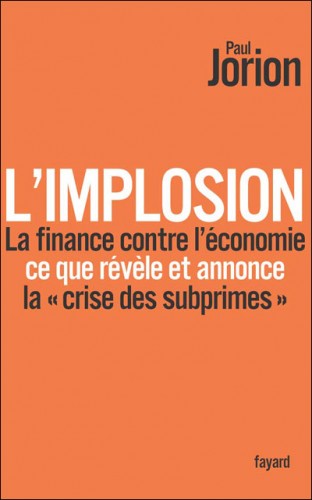
Dit kapitalisme isgedoemd om te mislukken (Paul Jorion)
|
|
|
| Dit kapitalisme is gedoemd om te mislukken - Paul Jorion |
|
Volgens de Belgische antropoloog Paul Jorion bewijst de Europese schuldencrisis dat het kapitalisme op zijn laatste benen loopt. "Iedereen is de ander geld schuldig, iedereen is kwetsbaar. Daarom loopt het systeem vast.' 'In ons kapitalistische systeem zit een weeffout: alle rijkdom komt in handen van een relatief klein groepje mensen terecht. Dat groepje, dat steeds meer land, bedrijven en grondstoffen bezit, is erbij gebaat dat de anderen consumeren. In plaats van die anderen meer salaris te geven om die consumptie te betalen, lenen zij hen geld uit - tegen rente. Zo vergroten zij hun eigen rijkdom, terwijl de rest meer schulden opbouwt. Dat systeem explodeert nu."
Proberen handelaren en geldschieters er zoveel mogelijk uit te halen? Is de globalisering een kapitalistische samenzwering? Moet de staat ingrijpen? Werkt zelfregulering niet? (Op schampere toon) "O ja." Hoe weet u dat? En de politici? Wat moeten ze doen? Hoe kunt u er zo droogjes tegenaan kijken? Het gaat toch ook om uw continent, uw munt? Wat leert de crisis u? |
 Hebben we daar niet allemaal baat bij gehad?
00:10 Publié dans Actualité, Affaires européennes, Economie | Lien permanent | Commentaires (0) | Tags : actualité, affaires européennes, europe, capitalisme, globalisation, mondialisme, crise financières, économie, finances, paul jorion | | del.icio.us | | Digg | Facebook
jeudi, 11 août 2011
London: Die britische Regierung hilflos!
London: Die britische Regierung reagiert auf die Unruhen hilflos wie der gestürzte Diktator Mubarak
Udo Ulfkotte
Zwanzigtausend Londoner (20.000!) haben in der vergangenen Nacht den Notruf gewählt und die Polizei um Hilfe vor Gewalttätern gebeten. In den wenigsten Fällen konnte die Polizei helfen. Viele Briten rannten vor den Migrantengangs um ihr Leben. Die Gefängnisse in London sind jetzt bis auf den letzten Platz gefüllt. Und die britische Regierung reagiert jetzt hilflos wie der gestürzte ägyptische Diktator Mubarak: Sie will die Massenproteste niederschlagen und die sozialen Netzwerke und Massenkommunikationsmittel vorübergehend abschalten lassen. Und 16.000 Polizisten sollen die Gewaltorgie junger Migranten beenden. Der EU-Politiker Gerard Batten fordert die Londoner Regierung auf, die Gewaltorgie durch Truppen niederschlagen zu lassen.

Die jüngsten Ereignisse in Norwegen und in Großbritannien läuten das Ende unserer Freiheiten ein. Denn die Politik wird nun alles dransetzen, um unter dem Mantel des Schutzes der Bevölkerung den totalen EU-Überwachungsstaat auszubauen. Die Chinesen erwarten das von uns vor den Olympischen Spielen 2012.
Die Migrantenunruhen in Großbritannien tragen bizarre Züge: Da stehen bewaffnete Afrikaner bewaffneten Türken gegenüber, die ihre Geschäfte vor dem plündernden Mob verteidigen und den Afrikanern zubrüllen: »Dies ist unser Stadtviertel«. Wo die Polizei keine Chance mehr hat, da ziehen nun Bürgerwehren auf. London erlebt auf einen Schlag die multikulturelle Realität. Besonders schlimm muss es für jene Journalisten sein, die nach den Attentaten von Norwegen vor der großen neuen potenziellen Gefahr von rechts warnten: Europäer, die mit der wachsenden Zuwanderung nicht einverstanden sind.
MEHR: http://info.kopp-verlag.de/hintergruende/europa/udo-ulfkotte/london-die-britische-regierung-reagiert-auf-die-unruhen-hilflos-wie-der-gestuerzte-diktator-mubarak.html
00:20 Publié dans Actualité, Affaires européennes | Lien permanent | Commentaires (0) | Tags : angleterre, grande-bretagne, londres, europe, affaires européennes, émeutes, violence, violences urbaines, actualité, politique internationale | | del.icio.us | | Digg | Facebook
Krantenkoppen - Augustus 2011 (2)
Krantenkoppen
Augustus 2011 (2)
http://www.dewereldmorgen.be/a rtikels/2011/07/17/erkenning-v an-palestina-oorlog-met-iran
http://www.dewereldmorgen.be/a rtikels/2011/07/25/ilan-papp-d e-knorrige-diplomaten-van-de-s churkenstaat-isra-l
http://www.nation.be/web/oslo- vraie-tuerie-sous-fausse-banni ere/
http://www.powned.tv/nieuws/bu itenland/2011/08/poetin_wil_wi trusland_erbij.html
http://english.pravda.ru/world /europe/31-07-2011/118623-serb ia_world_order-0/
http://www.express.be/business /nl/economy/brazilaanse-munt-o p-hoogste-niveau-ooit/149882.h tm
http://www.express.be/business /nl/economy/wat-doet-de-dollar -als-amerika-straks-failliet-g aat/149912.htm
http://www.kreuz.net/article.1 3616.html
00:05 Publié dans Actualité, Affaires européennes | Lien permanent | Commentaires (0) | Tags : actualité, affaires européennes, europe, pays-bas, flandre, journaux, presse, médias, politique internationale | | del.icio.us | | Digg | Facebook
mardi, 09 août 2011
Aanslagen in Noorwegen, Populisme en het N-SA
Aanslagen in Noorwegen, Populisme en het N-SA
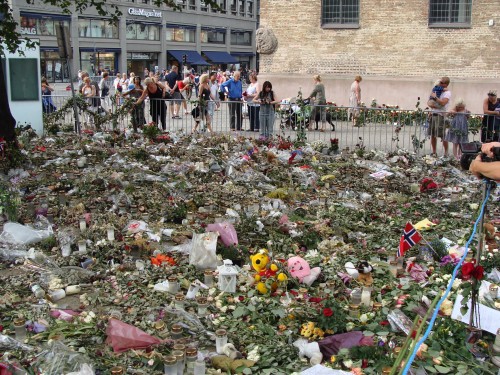
| Over de hele wereld is met afschuw gereageerd op eenzame wolf Anders Behring Breivik zijn onmenselijke slachting. Inderdaad, niemand zal ontkennen dat de man aan een extreme vorm van megalomane psychose leidt. En inderdaad, dat betekent niet dat de man zijn motieven aan veralgemeende associaties te wijten zijn. Breivik was geen fundamentalistische christen met religieuze motieven (net zo min als zijn moslimequivalenten dat voor de islam zijn). Evenmin was hij door nationale motieven begeesterd, of toch niet in de zin dat wij dat zijn (juist het tegenovergestelde daarvan, waarover later meer).
De wijze waarop Breivik zijn terreur uitvoerde was typerend voor psychopaten: minutieus en lang op voorhand gepland, in koele bloede uitgevoerd en zonder enige vorm van medeleven. De psychotische factor hoeft niemand dus te ontkennen. Timothy McVeigh (1995), het Columbine drama (2002), Hans van Themsche (2006), Winnenden (2009), Kim de Gelder (2009)... zij vallen allemaal onder deze categorie. Toch verschilt Breivik van dergelijke thuislandterroristen. Zij hadden allemaal wel wat omstandigheden om hun een zware psychose aan te wijten. Timothy McVeigh was een in de marginaliteit gevallen en getraumatiseerde oorlogsveteraan. Voornoemde jongeren hadden allemaal wel een geschiedenis van antisociaal gedrag, pesterijen, aanpassingsmoeilijkheden etc. wat hun menselijke ontwikkeling scheef deed groeien. Bij deze gevallen kunnen wij een lijn trekken. Maar niet in dit geval. Breivik was van bevoorrechte afkomst, genoot een goede opleiding, was directeur van een niet klein bedrijf (Geofarm) en was zelfs lid van een vrijmetselaarsloge. Ja, de man had een zeer actief internetleven, wat zijn narcisme en paranoïa kan verklaren. En sommigen zijn al wat meer ontvankelijk dan anderen voor de virtuele realiteit van het Facebook-ego en gewelddadige computerspelletjes.
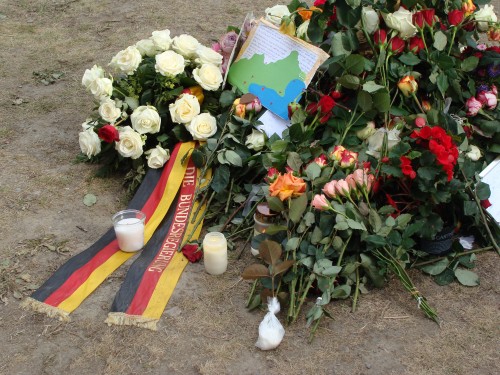
De bloemen van de Duitse Bondsregering, Oslo, 5 augustus 2011 (foto: RS) Dit kan echter onmogelijk alles verklaren. Zonder de ideologische kant is het verhaal van Breivik dan ook niet compleet. Hoezeer zij die nu aangeschoten wild zijn voor de massamedia en -opinie dit alles ook willen relativeren, Breivik zijn motieven niet in de correcte context plaatsen zou hetzelfde zijn als (bijvoorbeeld) elke moslimterrorist relativeren. Dat zal je het Vlaams Belang en Wilders dan weer niet zo snel zien doen, dus neen, zo eenvoudig is het niet. Breivik maakte zich vrolijk over multicultuur, marxisme, islam en immigratie. Hij heeft zich de afgelopen jaren genoeg bewezen als aanhanger van een opkomende stroming van "extreemrechts", namelijk het populisme. Breivik valt welzeker te categoriseren onder de stroming van Dewinter, Wilders, Bossi, Freysinger, Brinkmann... Kortom, een burgerlijk "extreemrechts" dat zich in dienst stelt van liberalisme, pro-zionisme, anti-islam, (gepolitiseerd) identitarisme, atlanticisme, ja zelfs antifascisme (de islam geldt in hun ogen als "fascistisch"). De ironie is dat, ondanks alle gefulmineer tegen het "islamo-socialisme" en het "cultuurmarxisme", de ideologen van dit neoconservatisme (o.a. Irving Kristol, Norman Podhoretz, Richard Perle, Paul Wolfowitz) vanwege hun linkse en/of trotskistische verleden zélf de grootste cultuurmarxisten van de laatste decennia zijn. De dader blijkt dus ook geen bewonderaar te zijn van een Vidkun Quisling of Knut Hamsun, maar wel van Winston Churchill en (Noorse verzetsstrijder) Max Mannus. Zijn wereldbeeld laat zich dan ook goed samenvatten in de badge van de "Justiciar Knight" (zie hier voor een afbeelding en bijbehorende uitleg). Breivik is een karakteristieke 'bekeerling' van de middenklasse tot de Shock of Civilizations. Niet voor niets is de België-connectie van Breivik te herleiden tot pro-Westerse networkers zoals Paul Beliën. Of Breivik ook werkelijk onder het pseudoniem 'Fjordman' voor Beliën zijn blog The Brussels Journal (een weblog die bij het Vlaams Belang aanleunt) heeft geschreven wordt opmerkelijk genoeg bevestigd noch ontkend door de blog zelf. Maar het hoeft ook niet te verbazen mocht dit werkelijk zo zijn, de overeenkomsten zijn zo al treffend genoeg. Aan de basis van Breiviks ideologische motivatie ligt immers een gebrek aan vertrouwen in en een haat voor de onmacht van de overheid. Dit soort van Europese neocons (neoconservatieven) vallen systematisch belastingen aan, geven hun kinderen 'christelijke' thuisscholing, willen de wapenwetten afschaffen, nemen deel aan schaduworganisaties zoals de vrijmetselaars... Zogezegd om hun autarkie te vrijwaren, maar de politieke implicaties zijn anders. Dit extreemrechts baseert zich op een uit de lucht gegrepen identitair idee van een raciaal/historisch/... Hollywoodconcept van Europa, wat onvermijdelijk tot een anti-islam en pro-internationaal kapitalistische agenda leidt. Het is ook de basis voor hun steun aan de militaire 'strijd tegen het terrorisme'. Niet toevallig is deze 'strijd' zich in toenemende mate inwaarts gaan keren met allerhande 'veiligheidsmaatregelen' (Patriot Act, militairen, camera's, nultolerantie, avondklokken...). En niet toevallig zijn het deze middenklassers die in het aanzicht van de proletarisering, de druk op de sociale zekerheid, de gettoïsering etc. een oproep tot interne sociale orde en stabiliteit combineren met een pathologische minachting voor hun eigen electoraat (zie in deze zin ook de anti-vakbond vakbond van het Vlaams Belang). Zij vertalen hun belangenbehartiging met de nodige minachting in een genre populistische opzweperij. Zo schreef Bruno Valkeniers in zijn repliek op de heksenjacht: "Het zou een ongelooflijke vergissing zijn om de vaak terechte zorgen van de 'Bange Blanke Man' (opnieuw) als gevaarlijk en onwenselijk onder de mat te borstelen. Het zijn niet allemaal gekken die zich ongerust maken over de massale inwijking van niet-Europese vreemdelingen, de criminaliteit, de opmars van een intolerante islamitische ideologie." Ware het echter niet dat die 'Bange Blanke Man' een uitvinding is van Valkeniers' partij en diens soortgenoten om de eigenlijke oorzaken met de gevolgen te verwisselen. Nu zijn er stemmen uit 'radikaalnationalistische' kringen te horen die deze geconstrueerde, gepolitiseerde identiteiten zelf aanhalen als argument tegen Breivik, maar het is ons onduidelijk hoe dit te vertalen valt in deze kringen die nota bene zelf de meest fanatieke aanhangers van deze leugen zijn! Wij gunnen iedereen het ontwaken uit deze naïeve strijd van nuttige idioten, maar voorlopig is het nog wachten tot dit zich vertaalt in consequent handelen, om nog niet te spreken van een partijpolitieke koers. Ondertussen is het Nieuw-Solidaristisch Alternatief (N-SA) de enige nationalistische oganisatie in Vlaanderen die voortdurend waarschuwt voor (en afstand neemt van) de dwaalsporen van 'islamofobie' (Bang) en de mythe van 'Europa' (Blank). Onze vrees is dat deze 'Bange Blanke Man' uiteindelijk de revolutie van een nieuw fascisme ontketent. Terwijl het kapitalisme onze sociale verworvendheden vernietigt, terwijl de euroglobalisering een hypotheek op de kleinkinderen van onze kleinkinderen neemt, terwijl de dictatuur van de banken ongestraft over/voorbij alle democratische structuren walst... Terwijl de wereld instort, worden wij door Führer Dewinter en zijn schare pseudo-intellectuele opportunisten wijsgemaakt dat de moslims en sociaaldemocraten onder een hoedje spelen voor de superieure Vlaming, Europeaan en Westerling uit te roeien. Moet het met zo'n an sich reeds psychotisch vijandsbeeld verbazen dat het vigilantes zoals Breivik voortbrengt? Moet het verbazen dat de illusie van de Clash of Civilizations tot Big Brother leidt? En dat dit elke vorm van echte politieke oppositie onmogelijk maakt, zoals de onze? Elke vorm van polarisering tussen de slachtoffers van kapitalisme en globalisering is er een dat het onderdrukkende systeem dat wij bevechten enkel zal bestendigen. Het is dan ook contraproductief en (bij deze wederom bewezen) gevaarlijk groepen op basis van hun afkomst, religie of overtuiging te viseren. Nochtans de reden dat onze hoofdcoördinator Eddy Hermy op dit moment voor de rechter gedaagd wordt! Is er een beter voorbeeld mogelijk van hoe dit populisme de weg opent naar draconische repressie tegen elke vorm van echte oppositie? Ja, Breivik was een psychopaat. Maar zijn ideologische motieven zijn in hetzelfde bedje ziek als marxistische terroristen gisteren en de moslimterroristen vandaag. Of wacht, dat marxistisch terrorisme is toch niet zo zeer yesterday's news als wij dachten: "De aanval brengt de vraag naar voren hoe de arbeidersbeweging en haar jongerenorganisaties te verdedigen tegen fascisten. Alle linkse jongerenorganisaties, zoals Animo en Comac, zouden onmiddellijk samen zelfverdedigingscommissies moeten vormen, gekoppeld aan de vakbonden en de commissies van winkelbewakingsagenten. Elke openbare activiteit moet worden bewaakt en verdedigd, en elke daad van agressie bestreden." Hetgeen ons terugbrengt naar de ideëenwereld van The Brussels Journal, die eenzelfde Redneckautarkie nastreven. Er zit iets fundamenteel psychotisch in een verwrongen denkbeeld waarin haat en leugen samengaan voor de polarisering van de maatschappij tot een burgeroorlog te drijven. Zeker wanneer elke zinnige mens zou moeten beseffen dat dit onvermijdelijk tot een versteviging van het huidige kapitalistische regime zal leiden, desnoods manu militari. Enkel zij die danig doorspekt zijn van ideologisch dogma, zoals de marxisten van Vonk, de populisten van het Vlaams Belang, Al-Qaeda en Breivik, kunnen blind blijven voor de gevolgen van hun acties. Voor het N-SA is het dan ook kristalhelder, zowel in het verleden, nu als in de toekomst: immigratie is een economisch fenomeen, het financieelkapitalisme en al zijn exponenten zijn onze vijand. De allochtoon is geen imperialistische moslim en de arbeider is geen luie cultuurmarxist. Wij zullen blijven strijden voor de nationale en sociale strijd, tegen asociaal kapitalisme, tegen asociaal populisme. Wij geloven niet in de strijd tussen de Bange Blanke Man en de slachtoffers van het Imperium. Wij verdedigen de slachtoffers, de Blanke Arbeider in de eerste plaats, tegen een amorfe macht die land, God, noch gebod kent. Wij voelen ons niet aangesproken, maar de populisten waar wij te vaak onterecht mee geassocieerd worden kunnen beter beginnen nadenken! |
12:02 Publié dans Actualité, Affaires européennes, Politique | Lien permanent | Commentaires (0) | Tags : norvège, scandinavie, terrorisme, flandre, politique, europe, affaires européennes, actualité, politique internationale | | del.icio.us | | Digg | Facebook
lundi, 08 août 2011
Xavier Raufer: la fuite devant la réalité
Xavier Raufer: la fuite devant la réalité
00:10 Publié dans Actualité, Affaires européennes, criminologie, Politique | Lien permanent | Commentaires (0) | Tags : politique, france, europe, affaires européennes, actualité, criminalité, délinquence | | del.icio.us | | Digg | Facebook
dimanche, 07 août 2011
La contesa geopolitica sino-statunitense
La contesa geopolitica sino – statunitense
Che la prorompente ascesa di svariati paesi abbia assestato un duro colpo all’assetto mondiale incardinato sull’unipolarismo statunitense è un fatto che pochi oseranno contestare.
La resurrezione della Russia sotto l’autoritaria egida di Putin affiancata all’affermazione della Cina al rango di grande potenza costituiscono i due principali fattori destabilizzanti in grado di ridisegnare i rapporti di forza a livello internazionale.
Se la Russia, tuttavia, ha potuto contare sulla monumentale eredità sovietica, la Cina ha fatto registrare un progresso politico ed economico assolutamente straordinario.
Il lungimirante progetto di ristrutturazione messo a punto in passato da Deng Xiao Ping ha inoppugnabilmente svolto un ruolo cruciale nell’odierno riscatto cinese e tracciato un solco profondo entro il quale sono andati a collocarsi tutti i suoi successori, da Jang Zemin a Hu Jintao, passando per Jang Shangkun.
Come tutti i paesi soggetti a forte sviluppo economico, la Cina si trova a dover soddisfare una crescente seppur già esorbitante domanda di idrocarburi.
Per farlo, è costretta ad estendere la propria capacità di influenza ai paesi produttori Medio Oriente e a quelli dell’Africa orientale attraverso i territori dell’Asia centrale e le vie marittime che collegano il Golfo Persico al Mar Cinese Meridionale.
In vista di tale scopo, la diplomazia cinese ha escogitato una efficace strategia diplomatica imperniata sul principio della sussidiarietà internazionale e profuso enormi sforzi per dotarsi di un esercito capace di sostenere gli ambiziosi progetti egemonici ideati dal governo di Pechino.
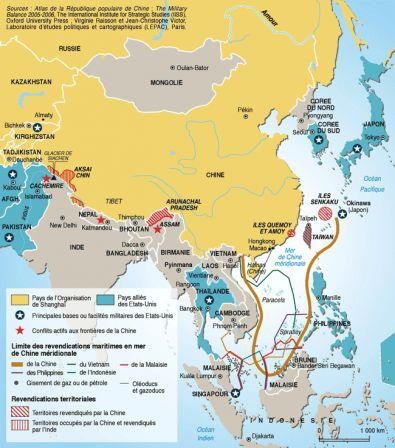
L’Organizzazione per la Cooperazione di Shangai – che raggruppa Cina, Russia, Kazakistan, Kirghizistan, Tajikistan, e Uzbekistan e che annovera Iran, Pakistan, India e Mongolia in qualità di osservatori – patrocinata dalla Cina ha promosso una partnership strategica tra i paesi aderenti ad essa atta a favorire un’integrazione continentale in grado di far ricadere cospicui vantaggi su tutto l’insieme.
In aggiunta, va sottolineato il fatto che è in fase di consolidamento l’asse Mosca – Pechino nello scambio tra armamenti e petrolio.
La Cina acquista gran parte delle proprie forze militari dalla Russia dietro congrui conguagli e costituisce il primo cliente per il mercato bellico russo.
Caldeggia la realizzazione di una pipeline che attinga dai giacimenti russi e faccia approdare petrolio ai terminali cinesi, trovando però l’opposizione della Russia, incapace di far fronte tanto alla domanda cinese quanto a quella europea.
In compenso, Mosca sostiene la realizzazione del cosiddetto “gasdotto della pace”, un corridoio energetico finalizzato a far affluire il gas iraniano in territorio cinese attraverso Pakistan ed India, in grado di orientare gli idrocarburi iraniani verso est e consentendo in tal modo alla Russia di assestarsi su una posizione assolutamente dominante ed incontrastata sul solo mercato europeo.
Ruggini vecchie e nuove hanno impedito la rapida realizzazione dei progetti in questione portando il governo di Pechino ad individuare soluzioni alternative.
Non a caso, uno dei grandi scenari in cui si gioca attualmente la partita tra gli Stati Uniti in declino ma decisi a vender cara la pelle e la rampante Cina in piena ascesa economica è l’Africa, che grazie alle sue immense risorse di idrocarburi (e materie prime) costituisce l’oggetto del desiderio tanto dell’una quanto dell’altra potenza.
La Storia insegna sia che la scoperta di giacimenti di idrocarburi nelle regioni povere costituisce il reale movente dei conflitti che vedono regolarmente fazioni opposte combattere aspramente, quasi sempre a danno della popolazione, per garantirsene il controllo sia che dietro di esse si celano direttamente o indirettamente quelle grandi potenze interessate ad estendere la propria egemonia geopolitica.
Sudan, Nigeria, Congo, Angola, Yemen, Myanmar (l’elenco è sterminato).
La penetrazione di Pechino in Africa è proceduta gradualmente, ma il consolidamento di essa è stato reso possibile solo grazie ai passi da gigante fatti registrare dalla marina cinese.
Dietro suggerimento dell’influente ammiraglio Liu Huaqing, il governo di Pechino aveva infatti sostenuto il progetto riguardante l’adozione di sottomarini classe Kilo e di incrociatori classe Sovremenniy, oltre al potenziamento dei sistemi di intelligence e delle tecnologie militari necessarie a supportare una flotta efficiente ed attrezzata di tutto punto per fronteggiare qualsiasi tipo di minaccia.
Il Primo Ministro Hu Jintao e suoi assistenti di governo hanno inoltre potuto approfittare della risoluzione ONU di fine 2008 finalizzata alla repressione della pirateria del Corno d’Africa per insinuare la propria flotta fino al Golfo Persico e al largo del litorale di Aden, don licenza di sconfinare in aperto Mediterraneo attraverso il Canale di Suez.
La pirateria, ben supportata dal caos politico che governa la Somalia, in questi ultimi anni ha esteso consistentemente il proprio raggio d’azione arrivando a lambire le coste dell’Indonesia e di Taiwan ad est e del Madagascar a sud.
Ciò ha effettivamente sortito forti ripercussioni sui traffici marittimi internazionali, portando circa un terzo delle cinquemila imbarcazioni commerciali che transitavano annualmente per quella via a propendere per il doppiaggio del Capo di Buona Speranza pur di evitare di imboccare il Canale di Suez.
Ciò ha comportato un dispendio maggiore di denaro dovuto alla dilatazione dei tempi di trasporto e rafforzato le ragioni della permanenza della flotta cinese lungo le rotte fondamentali.
Tuttavia l’opera di contrasto alla pirateria – sui cui manovratori e membri effettivi ben poca luce è stata fatta – si colloca in un piano del tutto secondario nell’agenda cinese, interessata prioritariamente ad assumere il controllo delle rotte marittime fondamentali e dei paesi che si su di esse si affacciano.
Di fondamentale importanza a tale riguardo risultano gli stretti di Malacca e Singapore, specialmente in forza della quantità di petrolio che vi transita, ben tre volte superiore a quella che transita attraverso il Canale di Suez.
Circa quattro quinti dei cargo petroliferi provenienti dal Golfo Persico destinati alla Cina passa per lo Stretto di Malacca, mentre gran parte di quelli diretti al Giappone passano per quello di Singapore.
E’ interessante notare come, di converso, gli Stati Uniti e i loro alleati abbiano agito pesantemente per destabilizzare i paesi che costituiscono l’asse portante della strategia cinese.
La secessione del Sudan del Sud dal governo centrale di Khartoum ha minato l’integrità della Repubblica del Sudan privandola dell’area ricca di petrolio e compromettendone gran parte degli introiti legati alle esportazioni.
Nel fomentamento dei dissidi si è intravista la mano pesante di Israele, che per ammissione dello stesso ex direttore dello Shin Bet Avi Dichter aveva sostenuto attivamente le forze indipendentiste del sud.
Un’operazione atta a privilegiare le etnie e le tribù meridionali invise alla preponderanza araba del resto del paese, che segna una logica soluzione di continuità rispetto alla classica strategia antiaraba propugnata da Tel Aviv, interessata costantemente a stringere legami con i paesi regionali non arabi.
Gli Stati Uniti, dal canto loro, avevano rifornito di aiuti i paesi limitrofi al Sudan affinché sovesciassero il governo centrale di Khartoum fin dall’era Clinton, mentre attualmente si sono “limitati” a stanziare corpose iniezioni di denaro a contractors privati incaricati di addestrare le frange secessioniste.
La Cina era il principale sponsor del presidente sudanese Omar Hassan El Bashir, con il quale erano stati regolarmente barattati tecnologie, armamenti e infrastrutture in cambio di petrolio.
Un altro paese fortemente destabilizzato in relazione alla sua posizione strategicamente cruciale è lo Yemen, cui gli Stati Uniti hanno richiesto con insistenza la concessione dell’isola di Socotra per installarvi una base militare che, se unita alla Quinta Flotta stanziata nel vicino Bahrein, formerebbe la principale forza militare dell’intero Golfo Persico.
L’isola si situa a metà strada tra il Mar Rosso e l’Oceano Indiano ed occupa una posizione che coincide con il crocevia delle rotte commerciali che collegano il Mediterraneo, mediante il Canale di Suez, al Golfo di Aden e al Mar Cinese Meridionale.
Myanmar è stato invece oggetto di una vera e propria rivoluzione colorata, quella “color zafferano” che deve il suo nome al colore delle vesti indossate dai monaci buddhisti protagonisti delle rivolte antigovernative.
Non è un segreto che la giunta militare guidata dall’enigmatico generale Than Shwe si sia resa responsabile di efferatezze che la rendono difficilmente difendibile, ma siccome gli stati non hanno mai conformato il proprio operato alle tavole della legge morale non stupisce che il sostegno statunitense accordato alle frange rivoltose non abbia nulla a che vedere con la tutela dei diritti umani, ma risponda a ben precisi obiettivi geopolitici.
Il dominio degli stretti di Malacca e Singapore consente infatti di esercitare un controllo diretto sugli approvvigionamenti energetici destinati alla Cina.
La Cina ha però effettuato le proprie contromosse, fornendo il proprio appoggio politico all’isolato governo di Rangoon e raggiungendo con esso accordi commerciali e diplomatici di capitale importanza strategica.
Pechino ha rifornito la giunta militare al potere di armamenti e tecnologie militari, ha stanziato fondi sostanziosi per la costruzione di numerose infrastrutture come strade, ferrovie e ponti.
In cambio, ha ottenuto il diritto di sfruttare i ricchi giacimenti gasiferi presenti sui fondali delle acque territoriali ex birmane oltre a quello di dislocare le proprie truppe e di installare basi militari nel territorio del Myanmar.
Alla luce dei fatti, risulta che il Myanmar corrisponda a un segmento fondamentale del “filo di perle” concepito da Pechino, l’obiettivo strategico che prevede l’installazione di basi militari in tutti i paesi del sud – est asiatico che si affacciano sull’oceano indiano.
Tale obiettivo è oggettivamente favorito dall’evoluzione dei rapporti tra Pakistan e Stati Uniti, in evidente rotta di collisione.
Islamabad ha mal digerito tanto le accuse di connivenza con il terrorismo rivolte ai propri servizi segreti (ISI) quanto le sortite unilaterali compiute dai droni statunitensi in territorio pakistano e ha giocato sulla centralità mediatica di cui è stato oggetto il poco credibile blitz che avrebbe portato all’uccisione di Osama Bin Laden per esternare pubblicamente la propria ferma protesta nei confronti dell’atteggiamento di Washington, che ha a sua volta replicato aspramente per bocca del Segretario alla Difesa Robert Gates e poi per il suo successore Leon Panetta.
Ciò ha spinto Pechino a scendere in campo al fianco del Pakistan, suscitando il plauso del Presidente Ali Zardari.
Tuttavia le relazioni tra Cina e Pakistan erano in fase di consolidamento da svariati mesi e hanno prodotto risultati letteralmente allettanti.
La realizzazione del porto sia civile che militare di Gwadar, dal quale è possibile dominare l’accesso al Golfo Persico, è indubbiamente il più importante di essi.
Il progetto in questione comprende inoltre la costruzione di una raffineria e di una via di trasporto in grado di collegare lo Xinjiang al territorio pakistano.
Un valore aggiunto al porto di Gwadar è già stato inoltre conferito dall’intesa raggiunta con Islamabad e il governo di Teheran relativa alla realizzazione di un corridoio energetico destinato a far approdare il gas iraniano ai terminali cinesi.
In tal modo lo sbocco portuale di Gwadar promette di divenire una dei principali snodi commerciali per l’energia iraniana, attirando Teheran verso l’orbita cinese e consentendo quindi al governo di Pechino di inanellare un’ulteriore gemma alla propria “collana di perle”.
La chiara vocazione eurasiatica del progetto cinese ha ovviamente suscitato forti preoccupazioni presso Washington, che non mancherà di lastricare di mine la nuova “via della seta” finalizzata a compattare il Vicino e Medio Oriente all’Asia orientale e suscettibile di sortire forti contraccolpi sulla politica energetica europea, destinata a legarsi indissolubilmente alla Russia.
00:14 Publié dans Actualité, Eurasisme, Géopolitique | Lien permanent | Commentaires (0) | Tags : actualité, politique internationale, chine, etats-unis, pacifique, espace pacifique, asie, affaires asiatiques, géostratégie, géopolitique | | del.icio.us | | Digg | Facebook
Die US-Hochfinanz treibt die Welt systematisch in die Zinsknechtschaft

Die US-Hochfinanz treibt die Welt systematisch in die Zinsknechtschaft
Eine neue Form des Imperialismus
von Prof. Dr. Eberhard Hamer (ex: http://www.zeit-fragen.ch/)
Manches, was an der Euro-Krise und der Weltfinanzkrise widersinnig erscheint, könnte dennoch strategisch sinn- und planvoll sein:
- Warum mussten die US-Bürger die Staatshaftung für die schiefgelaufenen Spekulationen der Hochfinanz-Banken übernehmen?
- Und warum mussten auch die EU-Staaten die Haftung für die Verluste der internationalen Zockerbanken übernehmen?
- Und warum hat die der Hochfinanz gehörende FED (Federal Reserve Bank) den Zinssatz für ihre Eigentümerbanken auf null gesetzt?
- Warum haben die internationalen Zockerbanken den Ländern mehr Kredite aufge-drückt, als diese bei normalem Zins bedienen, geschweige denn zurückzahlen könnten?
- Und warum haben die in die Politik gewechselten Bankster-Kollegen Sarkozy, Trichet, Strauss-Kahn und Obama die Regierungen der soliden Euro-Länder gezwungen, als Gesamtschuldner für die Schulden der überschuldeten Staaten mit einzutreten und die EU gegen alle Satzungen und Verträge zur Transferunion umzudrehen?
- Und warum musste die EZB (Europäische Zentralbank) entgegen ihrer Satzung mehr faule Kredite der Zockerbanken für verschuldete Staaten (Griechenland, Portugal) übernehmen, als sie Eigenkapital hat?
- Und warum dürfen die internationalen Banken, welche die faulen Kredite an die Pleitestaaten vergeben haben, nicht an der Haftung für diese Kredite beteiligt werden?
- Warum darf nach privatisierten Supergewinnen an den faulen Finanzprodukten nur noch über sozialisierte Haftung und Rückzahlung diskutiert werden?
- Und warum weigern sich die Weltfinanzindustrie und die ihr untertänigen Regierungen so beharrlich, längst vorhandene Zahlungsunfähigkeit von Schuldnerländern (Griechenland, Portugal, Irland u.a.) zuzugeben?
- Und warum dürfen die überschuldeten Pleiteländer wie Griechenland oder Portugal keinen Staatsbankrott erklären und sich darüber wieder sanieren?
Zu all diesen Einzelfragen gibt es Tausende von politischen und wirtschaftlichen Erklärungen oder Lösungsvorschlägen, deren Nachteil aber darin liegt, dass sie selektiv erklären oder lösen, aber keine Gesamtschau und noch weniger eine Gesamtstrategie hinter diesen Fragen vermuten. Die offizielle Presse sekundiert sie damit, dass man an keine «Verschwörungstheorien» gegen die US-Hochfinanz denken dürfe.
Tatsächlich aber ergeben alle diese Einzelfragen einen gemeinsamen Sinn, wenn man in ihnen Auswüchse eines dahinterstehenden strategischen Planes sieht. Das gilt insbesondere für die Tatsache, dass die Überschuldungskrise einzelner europäischer Länder und der USA nicht kurzfristig und damit weniger schmerzhaft gelöst wird, sondern in die Länge gezogen wird.
John Perkins ist ein mutiger Mann. Er lebt noch – wenn auch unter neuer Identität. Er war jahrelang einer der Spitzenagenten der US-Hochfinanz und hat die von ihm und seinen «Economic Hit Men (EHM)»-Kollegen inszenierten kriminellen Machenschaften beschrieben. Sein atemberaubendes Buch «Bekenntnisse eines Economic Hit Man» (München 2007, ISBN 978-3-442-15424-1) zeigt die Machenschaften der US-Hochfinanz und der von ihr abhängigen US-Administration, welches auch für die heutige Finanzkrise Antworten gibt: «Economic Hit Men (EHM) sind hochbezahlte Experten, die Länder auf der ganzen Welt um Millionen Dollar betrügen. Sie schleusen Geld von der Weltbank, der US Agency for International Development (USAID) und anderen ausländischen ‹Hilfsorganisationen› auf die Konten grosser Konzerne und in die Taschen weniger reicher Familien, die die natürlichen Rohstoffe unseres Planeten kontrollieren. Die Mittel der EHM sind betrügerische Finanzanalysen, Wahl-manipulationen, Bestechung, Erpressung, Sex und Mord. Ihr Spiel ist so alt wie die Macht. Doch heute im Zeitalter der Globalisierung hat es neue und erschreckende Dimensionen angenommen.» (S. 9)
«Das ist die eigentliche Kompetenz der EHM: Wir bauen ein Weltreich auf. Wir sind eine Elite aus Frauen und Männern, die internationale Finanzorganisationen dazu benutzen, jene Bedingungen zu schaffen, mit denen andere Länder der Korporatokratie unterworfen werden sollen. Und diese Korporatokratie beherrscht unsere grössten Konzerne, unsere Regierung und unsere Banken. Wie unsere Pendants in der Mafia bieten wir, EHM, einen Dienst oder eine Gefälligkeit an. Das kann z.B. ein Kredit zur Entwicklung der Infrastruktur sein, Stromkraftwerke, Schnellstrassen, Häfen, Flughäfen oder Gewerbeparks. An den Kredit ist die Bedingung geknüpft, dass Ingenieurfirmen und Bauunternehmer aus unserem Land all diese Projekte bauen. Im Prinzip verlässt ein Grossteil des Geldes nie die USA. Es wird einfach von Banken in Washington an die Ingenieurbüros in New York, Houston oder San Francisco überwiesen.
Obwohl das Geld fast umgehend an Unternehmen zurückfliesst, die zur Korporatokratie (dem Geldgeber) gehören, muss das Empfängerland alles zurückzahlen, die Schuldsumme plus Zinsen. Wenn ein EHM richtig erfolgreich ist, dann sind die Kredite so hoch, dass der Schuldner nach einigen Jahren seinen Zahlungsverpflichtungen nicht mehr nachkommen kann. Dann verlangen wir wie die Mafia unseren Anteil. Dazu gehört vor allem: Die Kontrolle über Stimmen in der Uno, die Errichtung von Militärstützpunkten oder der Zugang zu wichtigen Ressourcen wie Öl oder die Kontrolle über den Panama-Kanal. Natürlich erlassen wir dem Schuldner dafür nicht die Schulden – und haben uns so wieder ein Land dauerhaft unterworfen.» (S. 22/23)
Das unbegrenzte Geld für solche Machenschaften hat die US-Hochfinanz durch die ihr gehörende FED. Es wird einfach neu gedruckt. In den letzten 35 Jahren hat sich die Dollarmenge auf diese Weise vervierzigfacht (bei nur vervierfachtem Güterwachstum). Dieses Geld ist die Macht, mit welcher die US-Hochfinanz die gesamte Welt beherrscht, sich dienstbar macht und diejenigen, welche ihr Geld angenommen haben, zu Zinssklaven macht.
Perkins beschreibt, wie mit gefälschten Gutachten übermässige Kredite in die Länder (und wieder zurück in die USA) gedrückt werden, wie mit Bestechungen oder Drohungen die Regierungen kreditgeneigt gemacht werden. Wer gar zu widerspenstig ist, erleidet Unfälle wie die Präsidenten Torrijos (Panama), Roldos (Ecuador), Allende (Chile) u.a.
«Wer das Geld hat, der beherrscht die Welt», wird S. Rothschild zitiert, und wer die FED besitzt, hat eine Gelddruckmaschine, die ihm unbegrenzte Geldmittel zur Welt-Geld-Herrschaft liefert.
Die neue Form der Weltherrschaft liegt nur darin, dass sie nicht mehr militärisch Völker unterjocht, sondern den Völkern zuerst übermässige Kredite andient, um mit Hilfe von deren Verzinsung die finanzielle und wirtschaftliche Herrschaft über dieses Volk zu erringen (Schuld-Zins-Knechtschaft).
Auch in der Euro-Krise kann man das gleiche Muster wiederentdecken:
Griechenland war eigentlich schon pleite, als es mit von Goldman Sachs gefälschten Bilanzen und Bonitäten in die Euro-Zone gezogen wurde. In diesem neuen Verbund haben die internationalen Banken nun Griechenland noch hemmungsloser kreditiert, bis Griechenland nicht nur überschuldet, sondern eigentlich auch zahlungsunfähig war.
Statt nun in Griechenland einen sauberen Staatsbankrott und danach Sanierung zuzu-lassen, haben die internationalen Banken «alternativlos» von den übrigen Euro-Ländern einen «Rettungsschirm» angeblich für Griechenland, in Wirklichkeit aber für die Bankenschulden verlangt und bekommen, so dass die internationalen Banken nicht nur Griechenland allein als Schuldner hatten, sondern die Einzelschulden zu Gesamtschulden aller europäischen Länder wurden und die EU im ESM (Europäischen Stabilitätsmechanismus) zur Transferunion.
Nicht nur für die Länder, sondern auch für die internationalen Banken wurde der Rettungsschirm zum Netz, mit dem sie ihre gesamten unsoliden Finanzprodukte erst an die einzelnen Länder und damit an die Gemeinschaft abladen konnten – eine so gewaltige Schuldensumme (Europa: 6000 Milliarden Euro), dass nicht nur die Schuldnerländer, sondern auch die freiwillig in die Gesamthaftung eingetretenen soliden Länder aus dieser Last nicht mehr herauskommen werden, sondern endgültig in die Schuldknechtschaft und Zinsknechtschaft der US-Hochfinanz fallen. In den nächsten 50 Jahren wird also in Europa weniger für den eigenen Wohlstand als für die Zinsen der Hochfinanzkredite gearbeitet.
Wenn man John Perkins gelesen hat, versteht man auch, weshalb man die Verschul-dung Deutschlands für fremde Banken und fremde Länder als «ohne Alternative» durchsetzen musste. Es ging nicht um den Euro und nicht einmal um Europa, sondern um die Erhaltung der Kredite der Hochfinanz und darum, dass nicht im Zusammenbruch eines Landes diese Kredite und die damit verbundene Zinsknechtschaft aufgelöst würden.
Aus diesem Grunde darf es auch keine «private Beteiligung» an den Schulden geben, dürfen nicht die Täterbanken zur Entschuldung der Staaten – etwa durch Schuldenschnitt – mit herangezogen werden. Die Schulden sollen nicht mehr das Problem der Gläubiger sein, sondern allein des Schuldnerstaates und der mit ihm in Gesamthaftung verbundenen Euro-Länder – insbesondere Deutschlands.
Die Weltherrschaft der US-Hochfinanz mit Hilfe von hemmungslos gedrucktem Geld, Krediten und Zinsen ist eine neue Form des Imperialismus, die nicht mehr auf Bajonette, sondern auf Schulden baut.
Die Verschuldung der Welt gegenüber der US-Hochfinanz hat zudem den Vorteil, dass sie auch die wohl kommende Abwertung des Dollars in andere Währungen überdauert, sogar relativ gleich bleibt. Das System ist so klug konstruiert, dass die einzelnen Bürger und Länder glauben, das geschähe in ihrem Interesse oder im Interesse «europäischer Solidarität», während es in Wirklichkeit allein dem Finanzimperialismus dient.
Würden allerdings die Schuldnerländer, wie vor Jahren Argentinien, abwerten und die Zinszahlungen einstellen, hätte die Hochfinanz grösste Probleme, weil damals die Mobilisierung ihrer Welthilfstruppen wie IWF, Weltbank, EMF o.a. nicht geholfen hat. Argentinien hat sich durchgesetzt und sich sogar saniert. Die Hochfinanz muss also alles daran setzen, dass sich solche Beispiele – z.B. in Griechenland? – nicht wiederholen, damit ihr die Steine nicht aus der Mauer brechen. Aber sie hat ja willige Helfer im Brüsseler Politbüro, bei der EZB, im IWF u.a., die gerade mit dem ESM daran arbeiten, die Verschuldung zumindest noch längerfristig zu erhalten.
Nun zeigt sich, dass es für die Finanzknechtschaftspolitik der Hochfinanz Sinn macht, vorerst noch am Schrecken ohne Ende zu halten, statt an einem Ende mit Schrecken, weil die Transferunion und zum Beispiel die endgültige Schuldenübernahme Deutschlands erst noch festgezurrt werden müssen, bevor es eine Lösung geben darf. •
John Perkins, Bekenntnisse eines Economic Hit Man. München 2007. ISBN 978-3-442-15424-1
Keim für weitere krisenhafte Entwicklungen
Leider gibt es aber doch eine ganze Reihe von Faktoren, die zu einer vorsichtigeren Einschätzung mahnen. Eine zweite Grosse Depression konnte zwar abgewendet werden, aber die Kosten der Krisenbekämpfung waren ausserordentlich hoch und könnten den Keim für weitere krisenhafte Entwicklungen in sich tragen. Da sind zunächst einmal die offensichtlichen Kosten für die staatlichen Haushalte zu nennen. Zahlreiche Länder hat die Kombination aus krisenbedingt einbrechenden Staatseinnahmen und massiven Ausgaben-erhöhungen zur Krisenbekämpfung an den Rand des Staatsbankrotts gebracht. Die europäische Schuldenkrise ist nur die offensichtlichste Folge dieser Entwicklung. Die Tatsache, dass im Mai 2011 die Sorge um eine kaum vermeidbar scheinende Umschuldung Griechenlands bereits wieder die Schlagzeilen dominierte, zeigt, dass diese Krise noch nicht ausgestanden ist. Aber auch die finanzielle Situation in den USA auf Bundes- und Einzelstaatenebene ist so besorgniserregend, dass hier ohne weiteres der nächste grosse Krisenherd entstehen könnte. Es wird jedenfalls noch Jahre dauern, bis sich die Staatshaushalte erholt haben werden und sich die Lage normalisiert hat.
Aymo Brunetti. Wirtschaftskrise ohne Ende?, Seite 150f
thk. Das 2011 erschienene Buch von Aymo Brunetti «Wirtschaftskrise ohne Ende» ist eine lohnenswerte Lektüre, die die Hintergründe und Zusammenhänge der aktuellen Finanz- und Wirtschaftskrise darlegt. Für den Autor, der die Direktion für Wirtschaftspolitik im Staatsekretariat für Wirtschaft (SECO) des Eidgenössischen Volkswirtschaftsdepartements leitet und zudem als Titularprofessor an der Universität Basel und als Honorarprofessor an der Universität Bern lehrt, sind die Folgen der Krise noch nicht überstanden, und er sieht beträchtlichen Handlungsbedarf. Aymo Brunetti zeigt in leicht verständlicher Sprache und sachlicher Art und Weise auf, wie die globale Wirtschaftskrise entstanden ist, wie Regierungen und Zentralbanken darauf reagiert haben und wie die europäische Währungsunion ins Wanken geraten ist. Das Buch bietet eine leicht lesbare Orientierungshilfe, die es erlaubt, in kurzer Zeit einen Überblick über die komplexen Zusammenhänge der aktuellen Krise zu gewinnen.
Ehemaliger Ministerpräsident Erwin Teufel zur EU: «Die Staatschefs brechen das Recht»
zf. In einem Gespräch mit der Frankfurter Allgemeinen Sonntagszeitung vom 31. Juli nahm der ehemalige Ministerpräsident von Baden-Württemberg, Erwin Teufel, sehr kritisch zu den Euro-Plänen der Staats-und Regierungschefs der EU-Staaten Stellung. Teufel, so die Zeitung, «sieht das Vertrauen in die europäischen Staats-und Regierungschefs erschüttert, weil diese sich selbst nicht mehr an Recht und Gesetz hielten.» Teufel wörtlich: «Das Vertrauen in die handelnden Staatsmänner in Europa ist verlorengegangen. Wenn Staats-und Regierungschefs in einer Nacht wesentliche Stabilitätskriterien wegputzen, die in Verträgen festgehalten, also geltendes Recht sind, geht Vertrauen verloren. Vom Bürger erwartet man, dass er sich an Normen, an Recht und Gesetz hält […] - und Staats-und Regierungschefs tun es nicht.»
00:07 Publié dans Actualité, Economie | Lien permanent | Commentaires (0) | Tags : etats-unis, finances, banques, dictature de l'intérêt, mondialisation, globalisation, ploutocratie, actualité, politique internationale, haute finance | | del.icio.us | | Digg | Facebook
samedi, 06 août 2011
D. Jamet: "Est-il interdit de parler d'immigration en France"?

Dominique Jamet : “Est-il interdit de parler d’immigration en France ?”
Source Atlantico cliquez ici
L'extrême droite et la droite populiste responsables moraux des attentats d'Oslo ? C'est ce qu'on peut lire dans plusieurs médias nationaux. Preuve qu'il est toujours difficile de parler sereinement d'immigration en France...
ll y a huit ans, le nommé Richard Durn remplissait la mission - « cruelle mais nécessaire » – qu’il s’était assignée, à savoir tuer un maximum de membres du Conseil municipal de Nanterre, ville qu’il disait « exécrer ». Personne – je veux dire personne de bonne foi - ne prétendit alors que le Parti socialiste, les Verts ou la Ligue des Droits de l’homme, trois organisations dont il avait été membre, étaient pour quelque chose dans l’acte de ce dément. Durn lui-même, dans une lettre-testament, avait expliqué qu’il voulait seulement une fois dans son existence se sentir libre et puissant, et conclure sur ce coup d’éclat sa « vie de merde ».
L'extrême droite et la droite populiste responsables des attentats d'Oslo ?
Aussi bien, dans un premier temps, aucun journal, aucune organisation politique n’ont accusé le Parti du progrès norvégien, et pas davantage le Front national ou l’UMP, d’avoir organisé ou commandité le massacre conçu et perpétré par Anders Breivik, tant il était évident que l’idée tordue d’exterminer le plus grand nombre possible de jeunes Norvégiens pour mieux contenir l’Islam avait germé et fleuri toute seule dans ce cerveau fêlé. Laurent Joffrin a même tenu, avec beaucoup d’élégance, à disculper Robert Ménard et Eric Zemmour et, après réflexion, Elisabeth Lévy : ils n’étaient pas dans le coup.
Une telle sagesse, une telle modération ne pouvaient pas durer. Deux jours ne s’étaient pas écoulés que, s’étant ressaisis, le MRAP, SOS Racisme, Rue 89, Libération, après une enquête expresse, désignaient les responsable moraux de la récente tuerie et des tueries à venir : les droites extrêmes, les partis populistes, les apprentis-sorciers de la majorité qui, en faisant de l’immigration le bouc émissaire de tous nos maux, font souffler sur l’Europe et la France, les vents mauvais, les vents « délétères », les vents « nauséabonds » de la xénophobie et du racisme. D’où le réchauffement climatique de la haine, à l’origine de la vague de terrorisme chrétien fondamentaliste que pressentent les augures. Au fait, Benoît XVI a-t-il condamné les crimes de M. Dupont de Ligonnès ?
Il n’est pas douteux que le carnage d’Oslo et les justifications qu’avance son auteur, mégalomane narcissique mais parfaitement conscient de ses actes et cohérent dans son délire, apportent une bouffée d’oxygène bienvenue au discours quelque peu fané des professionnels de l’antiracisme et des docteurs de l’angélisme.
L’occasion était trop tentante de ressortir du placard les amalgames les plus éculés et de confondre dans une même condamnation tous ceux qui, sur la base d’analyses, d’inquiétudes, d’intentions et de propositions bien différentes, ont tenu à un moment ou un autre des propos politiquement incorrects sur l’immigration et plus précisément sur la menace que l’Islam ferait peser sur notre culture et notre civilisation. C’est une chaîne longue et lâche dont les premiers maillons s’appellent François Mitterrand (« le seuil de tolérance »), Valéry Giscard d’Estaing (« l’invasion »), Jacques Chirac (« le bruit et l’odeur »), Nicolas Sarkozy (« la racaille »), Alain Finkielkraut (« la France se métisse »).
La doxa politiquement correcte de l'immigration
Jusque là, tout va bien, mais le discours de Grenoble est-il si différent du discours de Le Pen, M. Guéant ne persécute-t-il pas les sans-papiers, M. Longuet n’a-t-il pas appartenu au mouvement Occident, la Droite populaire, composante de l’UMP n’est-elle pas une passerelle vers le Front national, le Front national est-il aussi éloigné qu’il voudrait le faire croire des Identitaires, lesquels sont bien proches des néonazis qui ne désapprouvent pas Anders Breivik, propagandiste par l’exemple d’une nouvelle solution finale ? Tous populistes, tous extrêmistes, tous racistes ! C’est l’habituelle et insupportable reductio ad hitlerum, l’anathème qui dispense d’explication, l’arme absolue, dans le dialogue, de ceux qui refusent le dialogue, la forme contemporaine du « fasciste ! » qui, des années cinquante aux années quatre-vingt, fut l’efficace joker par lequel les communistes mettaient victorieusement fin à tout débat.
Il existe actuellement une doxa politiquement correcte de l’immigration dont il est aussi dangereux de s’écarter que d’un chemin sécurisé à travers un champ de mines.
France : terre d'immigration...
L’article premier en est que la France a toujours été une terre d’immigration. Les preuves en surabondent d’ailleurs : Blanche de Castille, Pétrarque, Vinci, Anne d’Autriche, Jean-Baptiste Lully, Marie-Antoinette…
Aucun immigré en particulier, et l’immigration en général, si l’on en croit la doxa, ne posent aucun problème d’aucune sorte, ni d’ordre public, ni d’ordre social, ni d’ordre culturel, ni d’assimilation. Les seuls problèmes viennent de ceux que nous leur créons, à travers la discrimination, la chasse au faciès, la ghettoïsation, la répression des sans-papiers.
Il n’y a aucune différence d’aucune sorte, dans aucun domaine, entre un Français de souche, français depuis vingt générations et un Français naturalisé depuis cinq minutes, un Français binational, un Français francisé, même s’il ne le souhaite pas, parce qu’il est né et a grandi sur notre sol, et un Français heureux bénéficiaire d’un mariage blanc.
L’immigration est un enrichissement : elle ouvre notre culture sur les autres cultures, remplit les caisses de la Sécurité sociale, diversifie notre cuisine et crée notamment dans le secteur agricole (l’herbe) et dans le secteur industriel (héroïne, crack et cocaïne) des dizaines de milliers d’emplois.
Mais cessons d’enfiler les perles. La vérité est que la France est confrontée depuis la fin de la seconde guerre mondiale à une situation sans équivalent dans son histoire depuis qu’elle existe, c’est-à-dire depuis le dixième siècle et la fin des grandes invasions. Ce pays – le nôtre – à la démographie stagnante, comme tous ses voisins à la population vieillissante, est passé en soixante ans seulement de quarante à soixante-cinq millions d’habitants. Cette augmentation extraordinaire, signe et source de vitalité, s’explique pour l’essentiel (sans que quiconque puisse fournir un chiffre exact, puisque la loi nous interdit de savoir qui nous sommes) par un apport de sang nouveau. Autant qu’on puisse le mesurer, il semble qu’aujourd’hui un habitant de la France sur trois soit étranger, fils ou petit-fils d’étrangers.
... en pleine mutation
Comment une telle mutation, qui a d’ailleurs coïncidé avec le passage d’une société plus qu’à demi-rurale à une société urbanisée et qui a coïncidé avec la perte d’un certain nombre de repères anciens (l’Eglise, l’armée, la patrie, le drapeau, la famille traditionnelle) pourrait-elle ne poser aucun problème d’adaptation ?
Et cela d’autant plus que l’immigration qui a modifié et modifie chaque jour le visage de la France n’est pas une immigration de proximité, géographique et ethnique, donc aisément assimilable, mais une immigration largement africaine et asiatique, principalement musulmane, démographiquement jeune et féconde, socialement pauvre, culturellement différente. Quel rapport avec le racisme ou l’antiracisme a le fait de s’interroger, très légitimement, sur les conséquences que l’immigration peut avoir en termes de niveau de vie, d’évolution des mœurs et de la culture, de sécurité et sur les nouvelles bases de l’identité nationale ? Nous sommes à un tournant, et un tournant difficile, d’une histoire dix fois séculaire.
On peut évidemment regarder ailleurs. On peut évidemment n’en jamais parler et n’y jamais penser. On peut estimer que l’immigration est une chance pour la France. Mais la meilleure attitude consiste-t-elle à nier ou à affronter la réalité ?
Face à cette réalité, la classe politique installée – les deux grands partis de gouvernement - reste majoritairement sur la ligne qui a sépare la France d’en haut de la France d’en bas, et qui a coupé les élites bien portantes des masses bien souffrantes. Elle sait mieux que le peuple ce qui est bon pour le peuple, et n’aime pas que celui-ci se mêle de ses affaires. A l’inverse, ceux qui, à gauche comme à droite, exploitent les colères et les frustrations du peuple et lui murmurent à l’oreille ce qu’il a envie d’entendre peuvent être dits populistes, entendez démagogues. Mais est-il si choquant d’écouter le peuple, et de tenir compte de ce qu’il vit et de ce qu’il veut ? Le populisme est aussi un visage de la démocratie.
00:05 Publié dans Actualité, Affaires européennes | Lien permanent | Commentaires (0) | Tags : immigration, société multiculturelle, multiculturalisme, france, europe, affaires européennes, dominique jamet, politique internationale, actualité, politique | | del.icio.us | | Digg | Facebook
Le cauchemar pakistanais
Le cauchemar pakistanais
Afghanistan, Pakistan, Inde: Pourquoi la guerre dans l’Hindou-Kouch va durer encore longtemps
par Jürgen Rose*
Ex: http://www.horizons-et-debats.ch/
AFPAK: c’est ainsi que les géostratèges appellent le théâtre des hostilités dans l’Hindou-Kouch qui oppose deux acteurs étroitement liés: l’Afghanistan et le Pakistan. Ces deux Etats sont davantage liés que séparés par une frontière longue de 2640 kilomètres qui traverse le territoire de 40 millions de Pachtounes, divisés en 65 tribus, qui vivent le long de cette ligne. Cette frontière est traversée quotidiennement par quelque 200 000 de ces personnes. C’est sous le couvert de cet incessant flux humain que tous les combattants irréguliers peuvent se déplacer entre leurs zones d’opérations en Afghanistan et leurs zones de repli au Pakistan, combattants qui, par leur guérilla, infligent depuis des années des pertes de plus en plus importantes aux troupes d’occupation internationales dans l’Hindou-Kouch.
Cette situation constitue la raison principale pour laquelle le président George W. Bush avait déjà ordonné des opérations de commando de ses Special Forces et des attaques de drones sur le territoire du Pakistan. Fraîchement entré en fonctions, Barack Obama, couronné du prix Nobel de la paix à Oslo, a ordonné d’intensifier ces lâches attaques de drones – pilotées depuis des postes de commandement inattaquables aux Etats-Unis, loin du théâtre des hostilités – qui font des quantités de victimes civiles innocentes. En outre, le chef de guerre du Bureau ovale exerce des pressions de plus en plus fortes sur Islamabad pour que l’armée pakistanaise «enfume» les nids de résistance et les zones de repli de la guérilla dans les zones tribales de la North West Frontier Province (NWFP) afin de mettre fin au conflit en Afghanistan.
Toutefois, cette stratégie, qui mise sur une victoire militaire sur la guérilla semble condamnée à l’échec. En effet, elle ignore des paramètres fondamentaux qui déterminent la politique pakistanaise, surtout la situation difficile dans laquelle se trouve enfermé le Pakistan entre l’Afghanistan à l’ouest et l’Inde à l’est. Cette situation conflictuelle a été désignée par l’acronyme plus approprié d’AFPAKIND. Ce «dilemme sandwich» résulte du conflit existentiel dans lequel se trouve le Pakistan, depuis sa fondation, avec la grande puissance nucléaire qu’est l’Inde dont la manifestation la plus visible est le conflit à propos du Cachemire qui a fait l’objet de trois guerres mais n’est toujours pas résolu.
L’engagement indien en Afghanistan ne peut qu’inquiéter les généraux pakistanais qui voient de toute façon leur pays menacé en permanence sur son front oriental. C’est que là-bas, pour ainsi dire à l’arrière du Pakistan, l’Inde n’a pas seulement créé un réseau de bases de ses Services secrets RAW appelées officiellement «consulats» ou «centres d’information». De là elle apporte notamment un soutien à des rebelles séparatistes dans la province pakistanaise du Béloutchistan et pilote des attaques de cibles situées au Pakistan. En outre, Delhi amène ses conseillers militaires à former également les forces armées afghanes (ANA) et investit d’importantes sommes d’argent dans la reconstruction et le développement de cet Etat d’Asie centrale. Dans ce but, elle coopère surtout avec les forces de l’Alliance du Nord que les Etats-Unis ont catapulté au pouvoir en 2001 et en même temps avec le régime taliban pachtoune soutenu par les Services de renseignements «Inter Services Intelligence» (ISI) et l’armée qui sert de représentant des intérêts stratégiques du Pakistan.
Il n’y a donc rien d’étonnant à ce qu’Islamabad associe le régime de Kaboul, de plus en plus lié à l’Inde, avec le développement d’un «Front occidental» visant à soutenir le terrorisme au-delà de la frontière du Pakistan et le considère comme un ennemi. L’importante menace pour ses intérêts stratégiques qui en résulte a pour conséquence que les militaires pakistanais, avec l’aide de l’ISI, continuent de soutenir de toutes leurs forces la résistance afghane selon la devise «L’ennemi de mon ennemi est mon ami.» Robert D. Blackwill, analyste américain réputé, a noté récemment à ce sujet dans un article de Foreign Affairs ce qui suit: «L’Armée pakistanaise, dominée par son attitude hostile à l’Inde et le désir de profondeur stratégique ne va ni cesser de soutenir les talibans afghans qui, pendant de nombreuses années, ont défendu leurs intérêts et de leur offrir un sanctuaire, ni accepter un Afghanistan vraiment indépendant.» Cette résistance, constituée avant tout des talibans, du réseau Haqqani et des combattants de Gulbuddin Hekmatyar, se recrute avant tout parmi les Pachtounes vivant de part et d’autre de la frontière afghano-pakistanaise. En sous-main, les militaires pakistanais concèdent sans détours qu’ils collaborent naturellement avec ces groupements parce qu’ils ont besoin en Afghanistan d’alliés sur lesquels ils puissent compter.
Pour Islamabad, le caractère fâcheux de cette situation consiste dans le fait qu’il doit d’une part soutenir la lutte des résistants afghans contre les troupes d’occupation internationales jusqu’à ce qu’elles s’en aillent afin que les forces valables pour une alliance contre l’Inde reprennent le pouvoir à Kaboul. L’ex-chef de l’ISI, le général de division Asad M. Durrani, a déclaré à ce sujet lors d’une interview menée par l’auteur de ces lignes: «Nous essayons naturellement de maintenir absolument le contact avec toutes les forces de la résistance et en particulier avec les talibans depuis qu’ils sont venus au pouvoir en 1995 en Afghanistan. Mais je serais personnellement très reconnaissant si l’ISI soutenait la résistance afghane. En effet, c’est seulement si la résistance afghane – celle des «nouveaux talibans», pas celle du mollah Omar – demeure suffisamment forte que les troupes étrangères se retireront. Sinon, elles resteront. […] Même si, depuis 2001, cela ne correspond plus à la position officielle du gouvernement pakistanais, les talibans, qui s’opposent aux forces d’occupation en Afghanistan, mènent à mon avis notre guerre au sens où, s’ils réussissent, les troupes étrangères se retireront. Mais s’ils échouent et si l’Afghanistan reste sous domination étrangère, nous continuerons d’avoir des problèmes. Si L’OTAN, la puissance militaire la plus forte du monde, s’incruste pratiquement à la frontière pakistanaise pour des raisons d’intérêts économiques et géopolitiques – songez au new great game – cela créera un énorme malaise au Pakistan.»
D’autre part cependant les forces armées pakistanaises, pour empêcher, en territoire pakistanais, des opérations militaires de plus grande ampleur que la guerre des drones et les opérations de commando des Special Forces, se voient contraintes, en tant qu’alliées des Etats-Unis dans la «guerre contre le terrorisme», d’intervenir contre les combattants irréguliers. Cette situation conflictuelle constitue en quelque sorte la garantie fatale que la guerre dans l’Hindou-Kouch durera aussi longtemps que les troupes occidentales d’occupation resteront dans le pays et que le conflit existentiel pakistano-indien ne sera pas résolu, celui-ci n’étant certes pas forcément dans l’intérêt absolu des généraux pakistanais car la paix avec l’Inde exposerait l’Etat et la société à une pression de légitimité durable et mettrait en péril l’aide considérable des Etats-Unis en matière d’armement. Dans ce contexte, l’assassinat du chef terroriste Oussama ben Laden, salué par le gouvernement Obama comme un succès politique éclatant, n’aura que peu d’influence sur la guerre en Afghanistan, d’autant plus que la politique d’occupation de l’«unique grande puissance» va de toute façon se poursuivre indéfiniment étant donné ses intérêts stratégiques et géoéconomiques à long terme, malgré toutes les déclarations sur le retrait des troupes. Par conséquent tout laisse penser que ces prochaines années, on va continuer à mourir et à tuer copieusement dans le lointain Hindou-Kouch, avec la participation fidèle de la vassale des Etats-Unis qu’est la Bundeswehr, cela s’entend. •
Il faut cesser de livrer des armes a Benghazi
Le ministre russe des Affaires étrangères, Lavrov, a reproché à son homologue français Juppé, lors d’une visite à Moscou la semaine passée, d’avoir interprété les résolutions de l’ONU d’une manière très libre. […]
Lundi, le président d’Afrique du Sud, Zuma, avait présenté le nouveau plan de paix de l’Union africaine au président russe Medvedjew et au secrétaire général de l’OTAN Rasmussen lors de pourparlers à Sotchi. Des diplomates ont rapporté, qu’un cessez-le-feu était prévu, qui pourrait aboutir, par un dialogue national et une phase transitoire, finalement à une démocratie et des élections.
Source: «Frankfurter Allgemeine Zeitung» du 6/7/11
L’Union africaine: Ne pas arrêter Kadhafi
Tripolis, le 3 juillet (dapd). Le Président de la Commission de l’Union africaine, Jean Ping, a invité tous les gouvernements du continent à ignorer le mandat d’arrêt de la Cour pénale internationale contre le chef d’Etat libyen Kadhafi. Le tribunal de la Haye a été «discriminatoire» et poursuit uniquement des crimes commis en Afrique tout en ignorant ceux que les puissances occidentales ont commis en Irak, en Afghanistan ou au Pakistan, a déclaré Ping vendredi soir.
Source: «Frankfurter Allgemeine Zeitung» du 4/7/11
00:05 Publié dans Actualité, Géopolitique | Lien permanent | Commentaires (0) | Tags : actualité, géopolitique, politique internationale, pakistan, moyen orient, asie, affaires asiatiques, islam, talibans, afghanistan | | del.icio.us | | Digg | Facebook
jeudi, 04 août 2011
Presseschau - August 2011 (1)
Presseschau
August 2011 (1)
AUßENPOLITISCHES
Anders B.
Ein einsamer Sonderling voll hasserfüllter Gedanken
http://www.welt.de/politik/ausland/article13503960/Ein-einsamer-Sonderling-voll-hasserfuellter-Gedanken.html
Massaker angekündigt
Terrorist veröffentlicht vor der Tat Manifest
http://www.welt.de/vermischtes/article13504232/Terrorist-veroeffentlicht-vor-der-Tat-Manifest.html
Anders Behring Breivik
Spuren eines Todesschützen
http://www.spiegel.de/netzwelt/netzpolitik/0,1518,776087,00.html
Breiviks Vordenker
Ein bisschen Reue, ein bisschen Ausrede
http://www.spiegel.de/politik/ausland/0,1518,777315,00.html
(Die „taz“ gewohnt niveauvoll…)
Anti-Islam-Events in Berlin
Rechtspopulisten grillen
http://www.taz.de/Anti-Islam-Events-in-Berlin/!75308/
Vom Gedankengut zur Tat: Über den Umgang mit dem Attentat von Oslo
http://www.tagesschau.de/multimedia/video/ondemand100_id-video950190.html
Borbeck: Dreiste Nazi-Provokation angesichts rassistisch motivierten Massakers in Norwegen
http://www.lokalkompass.de/essen-nord/politik/borbeck-dreiste-nazi-provokation-angesichts-rassistisch-motivierten-massakers-in-norwegen-d78419.html
Norwegen
Wie gefährlich ist Thilo Sarrazins Buch?
http://www.derwesten.de/nachrichten/politik/Wie-gefaehrlich-ist-Thilo-Sarrazins-Buch-id4916012.html
Die Protokolle der Weisen von Mekka
http://www.heise.de/tp/artikel/35/35228/1.html
Frankfurts Attentäter heißt Arid U.
Zwei Mörder - unterschiedliche Reaktionen
http://www.freie-waehler-frankfurt.de/artikel/index.php?id=139
Terror in Norwegen: Zur ideologischen Antonymisierung durch die imperiale Hegemonie
http://rotefahne.eu/headline165145.html
Der Oslo-Attentäter ist Freimaurer dritten Grades (Meister)
Großloge von Norwegen bestätigte Mitgliedschaft
http://www.news4press.com/Meldung_603213.html
Das politische Geschäft mit dem Leid
http://www.jungefreiheit.de/Single-News-Display-mit-Komm.154+M5c333a9af04.0.html
Der Unterschied
http://www.jungefreiheit.de/Single-News-Display-mit-Komm.154+M5c3e5963cd2.0.html
Das Blutbad von Norwegen
http://www.sezession.de/25949/25949.html#more-25949
Norwegian Psycho
http://www.sezession.de/26028/norwegian-psycho.html
Porträt des Attentäters: "Mein Freund Anders"
http://nachrichten.t-online.de/anschlaege-in-norwegen-mein-freund-anders-/id_48354770/index
(Zu Norwegen)
Warum?
http://korrektheiten.com/2011/07/23/warum-oslo-hintergruende/
Osloer Merkwürdigkeiten
http://korrektheiten.com/2011/07/24/osloer-merkwuerdigkeiten/
Fjordman antwortet
http://www.sezession.de/25996/fjordman-antwortet.html
As der Schwerter
Thematische Liste der übersetzten Fjordman-Essays
http://fjordman.wordpress.com/thematische-liste-der-ubersetzten-essays/
(besonnen…)
Sicherheitsdebatte
Kommentar: Weniger wäre mehr
http://www.op-online.de/nachrichten/politik/kommentar-sicherheitsdebatte-weniger-waere-mehr-1336639.html
(auch besonnen…)
Norwegen-Attentat: Innenminister Friedrich warnt vor Aktionismus
http://www.jungefreiheit.de/Single-News-Display-mit-Komm.154+M51b44290726.0.html
(......man beachte die Feststellung ganz am Ende des Interviews...)
„Hohe operative Intelligenz“
Interview
Kai Hirschmann, stellvertretender Leiter des Instituts für Terrorismusforschung in Essen, hält die These vom Einzeltäter für wahrscheinlich.
http://www.welt.de/print/wams/politik/article13504286/Hohe-operative-Intelligenz.html
The Political Thinking of Anders Behring Breivik
http://dougsaunders.net/2011/07/political-thinking-anders-behring-breivik/
(Sehr interessant und kritisch zum Thema Antisemitismus)
Defamation - Antisemitismus (german) 1 / 7
http://www.youtube.com/watch?v=Y17DaTL5D2k
Gaddafi: Zum Abschuß freigegeben
http://www.jungefreiheit.de/Single-News-Display-mit-Komm.154+M5291624072a.0.html
Ahmed Wali Karsai - Schattenmann und Partner
Er galt als zwielichtiger König von Kandahar. Der ermordete Präsidenten-Bruder Ahmed Wali Karsai hinterlässt in der umkämpften südafghanischen Provinz ein Machtvakuum.
http://www.dw-world.de/dw/article/0,,15228515,00.html
Afghanistan Bombenanschlag bei Trauerfeier für Karsais Halbbruder
http://www.zeit.de/politik/ausland/2011-07/anschlag-afghanische-moschee
Palmas Moslems sind sauer
http://www.comprendes-mallorca.de/balearen/balearennewsdetails/datum/2011/07/17/palmas-moslems-sind-sauer/
(Welches Geschenk hatte er denn dabei?...)
De Maizière spricht in Israel vom "Geschenk der Versöhnung"
http://www.morgenpost.de/printarchiv/politik/article1700953/De-Maiziere-spricht-in-Israel-vom-Geschenk-der-Versoehnung.html
(ach so…)
De Maizière will Rüstungskooperation mit Israel ausbauen
http://www.spiegel.de/politik/ausland/0,1518,774076,00.html
Israels Wissenschaftsminister im Gespräch
Wir helfen dem, der sich vergeblich Kinder wünscht
http://www.faz.net/artikel/C30351/israels-wissenschaftsminister-im-gespraech-wir-helfen-dem-der-sich-vergeblich-kinder-wuenscht-30459786.html
Griechenland
Minidemo vor dem Minigolf - Wie Urlauber die Schuldenkrise erleben
http://www.eu-info.de/dpa-europaticker/191371.html
Robert Kurz
Giftmülldeponien des Kredits
http://www.exit-online.org/textanz1.php?tabelle=aktuelles&index=0&posnr=527
Inside 9/11
http://www.inside-911.de/film.html
http://juergenelsaesser.wordpress.com/2011/07/02/inside-911-das-erste-video-zu-unserer-911-konferenz-und-zum-neuen-911-buch/
(Die nächste Hysterie?...)
Terrorismus
USA besorgt wegen „Körper-Bomben“
http://www.focus.de/politik/ausland/terrorismus-usa-besorgt-wegen-koerper-bomben_aid_643731.html
Dänische Grenzkontrollen: Hessens Europaminister für Urlaubs-Boykott
http://www.all-in.de/nachrichten/boulevard/vermischtes/Vermischtes-Daenische-Grenzkontrollen-Hessens-Europaminister-fuer-Urlaubs-Boykott;art15814,984289
Gesellschaft für bedrohte Völker wirft China anhaltende Unterdrückung der Uiguren vor / Delius: „Wohlstand statt Freiheit wird scheitern!“
http://www.blauenarzisse.de/index.php/aktuelles/2647-gesellschaft-fuer-bedrohte-voelker-wirft-china-anhaltende-unterdrueckung-der-uiguren-vor-delius-wohlstand-statt-freiheit-wird-scheitern
(Tenor der geplanten Revolution: Regierungen und Unternehmen sind tendenziell böse, private Internetuser sind per se gut und dürfen gesinnungsethisch im Internet tun, was immer sie möchten…)
"Wir haben eine Schlacht zu schlagen"
Der Internetaktivist Richard Stallman über die Bedrohung durch Unternehmen und Regierungen, die die Freiheit im Netz einschränken wollen
http://www.taz.de/1/archiv/digitaz/artikel/?ressort=tz&dig=2011%2F07%2F04%2Fa0127&cHash=0ad60230d4
Es ist eindeutig Topiary
Lulzsec-Sprecher vor Gericht
http://www.n-tv.de/technik/Lulzsec-Sprecher-vor-Gericht-article3947811.html
Azerbaidschan rüstet sich zum Krieg gegen Armenien (wg. Bergkarabach)
http://www.youtube.com/watch?v=w2eLairE740
Ungarn: Sieg über Türken wird Feiertag
http://www.jungefreiheit.de/Single-News-Display-mit-Komm.154+M5a30888b40f.0.html
Airlines verwehren Demonstranten Flug nach Tel Aviv
http://www.tagesanzeiger.ch/ausland/europa/Airlines-verwehren-Demonstranten-Flug-nach-Tel-Aviv-/story/20973617
Krieg in Libyen
Mehr als 1300 Bootsflüchtlinge erreichen Lampedusa
http://www.spiegel.de/politik/ausland/0,1518,773538,00.html
Arte-Doku über Akustikfolter
Satanische Töne
Dauerbeschallung mit Heavy Metal und Sesamstraßen-Songs: "Musik als Waffe" (Arte, 23.25 Uhr) seziert die Akustikfolter von Guantánamo – und enttäuscht dabei.
http://www.taz.de/1/leben/medien/artikel/1/satanische-toene/
SOS – Österreich
http://sosheimat.wordpress.com/
Casa Pound
Italien - Neofaschismus im linken Gewand
http://wissen.dradio.de/italien-neofaschismus-im-linken-gewand.37.de.html?dram:article_id=11484&sid=
Mexiko
14-jähriger Killer zu drei Jahren Haft verurteilt
http://www.focus.de/politik/schlagzeilen/nid_78334.html
Ärger mit PayPal
Kuba-Embargo in Deutschland
http://www.taz.de/!75445/
China warnt USA vor "großer Sauerei"
Größter Kreditgeber sieht Schuldenstreit mit Sorge
http://www.heute.de/ZDFheute/inhalt/7/0,3672,8312679,00.html
Ethnische Spannungen
Pekings Angst vor islamistischen Uiguren in Xinjiang
http://www.welt.de/politik/article13520053/Pekings-Angst-vor-islamistischen-Uiguren-in-Xinjiang.html
INNENPOLITISCHES / GESELLSCHAFT / VERGANGENHEITSPOLITIK
Ein Geldzyklus geht zu Ende
http://www.ehrenhauser.at/lang/de/blog/unser-geld-entsteht-durch-verschuldung/
Der Welt-Geldbetrug
https://krisenfrei.wordpress.com/2011/07/14/gelddeckung-und-gold/#more-1545
Bankrotterklärung Europas durch einen Wirtschaftsweisen
https://krisenfrei.wordpress.com/2011/07/10/bankrotterklarung-europas-durch-einen-wirtschaftsweisen/
Neue Netzstudie
Die Grünen sind im Internet eine Volkspartei
http://www.welt.de/politik/deutschland/article13448661/Die-Gruenen-sind-im-Internet-eine-Volkspartei.html
Kleine Reihe zu den größten Fehlern der Konservativen: (II) Die Kulturmißachtung. Oder: Das Ende der Postmoderne verpasst
http://www.blauenarzisse.de/index.php/anstoss/2633-kleine-reihe-zu-den-groessten-fehlern-der-konservativen-ii-die-kulturmissachtung-oder-das-ende-der-postmoderne-verpasst
Kleine Reihe zu den größten Fehlern der Konservativen: (III) Der falsche Ansatz. Oder: Konservative Frauen sind keine vom Aussterben bedrohte Spezies
http://www.blauenarzisse.de/index.php/anstoss/2657-kleine-reihe-zu-den-groessten-fehlern-der-konservativen-iii-der-falsche-ansatz-oder-konservative-frauen-sind-keine-vom-aussterben-bedrohte-spezies
Junge Freiheit
Thomas Goppel gratuliert ultrarechter Wochenzeitung zum Geburtstag
http://www.sueddeutsche.de/bayern/umstrittener-gastbeitrag-herr-goppel-und-die-junge-freiheit-1.1120846
Wowereit von der Opernbühne gebuht
http://nachrichten.rp-online.de/kultur/wowereit-von-der-opernbuehne-gebuht-1.1329579
(rein apologetisch…)
Facebook-Partys passé?
Das Sommerloch ist gefüllt – mit Bullshit
http://www.giga.de/top-themen/00153515-facebook-partys-passe-das-sommerloch-ist-gefuellt-mit-bullshit/
(tiefdenkender, wenngleich letztlich naiv…)
Zwischenruf
Das große Erbe der "Facebook-Partys"
http://www.tagesspiegel.de/meinung/das-grosse-erbe-der-facebook-partys/4360738.html
Bosbach gegen generelles Verbot von Facebook-Partys
http://www.abendblatt.de/politik/article1945109/Bosbach-gegen-generelles-Verbot-von-Facebook-Partys.html
Hamburg
Senat gegen Verbot von Facebook-Partys
http://www.welt.de/print/die_welt/hamburg/article13468357/Senat-gegen-Verbot-von-Facebook-Partys.html
(organisiertes Chaos…)
Facebook-Partys
Plötzlich wollen alle zur CDU
http://www.tagesspiegel.de/medien/digitale-welt/ploetzlich-wollen-alle-zur-cdu/4374934.html
Forum Deutscher Katholiken fordert Rücktritt von CDU-Abgeordneter Grütters
http://www.jungefreiheit.de/Single-News-Display-mit-Komm.154+M53b5d0b76d7.0.html
Das politische Pendel
Jetzt schlägt es wieder zurück
http://hartgeld.com/filesadmin/pdf/Art_2011-190_PolitschesPendel.pdf
CDU-Abgeordneter fordert Transferunion in der Euro-Zone
http://www.jungefreiheit.de/Single-News-Display-mit-Komm.154+M567b83e8a5e.0.html
Die Hurra-Europäer als Totengräber
http://www.jungefreiheit.de/Single-News-Display-mit-Komm.154+M511ef23a8d3.0.html
(Und hier ein Hurra-Europäer, der das Gift mit noch mehr Gift bekämpfen möchte…)
Leitartikel: Rettung, aber keine Hilfe
Euro-Partner schnüren Paket für Griechenland
Von Detlef Drewes
http://www.mainpost.de/ueberregional/politik/zeitgeschehen/Leitartikel-Rettung-aber-keine-Hilfe;art16698,6250147
die kommenden
http://die-kommenden.sozrev-m.info/
Kopp-Online
http://www.kopp-online.com/
Aktionsbündnis Direkte Demokratie – Gegen den EURO-Rettungswahnsinn
http://eurodemostuttgart.wordpress.com/
Die Welt vor Wichtigtuern und Titelhubern schützen
Die Grünen wollen den Doktortitel aus dem Personalausweis streichen lassen. Was fällt ihnen als nächstes ein? Und was sagt das über die Partei aus?
http://www.tagesspiegel.de/meinung/die-welt-vor-wichtigtuern-und-titelhubern-schuetzen/4395862.html
Die Natur siegt immer: Der genderisierte SPIEGEL kämpft gegen die Neue Rechte und ihre Mehrheitsmeinung
http://www.blauenarzisse.de/index.php/anstoss/2662-die-natur-siegt-immer-der-genderisierte-spiegel-kaempft-gegen-die-neue-rechte-und-ihre-mehrheitsmeinung
Marine-Zeitschrift verunglimpft tote Gorch-Fock-Kadettin
http://www.abendblatt.de/politik/deutschland/article1951567/Marine-Zeitschrift-verunglimpft-tote-Gorch-Fock-Kadettin.html
„Gorch Fock“, Erik Lehnert und die Internetdemoskopie
http://www.sezession.de/25611/gorch-fock-erik-lehnert-und-die-internetdemoskopie.html#more-25611
„Wir. Dienen. Deutschland.“
http://www.jungefreiheit.de/Single-News-Display-mit-Komm.154+M52167e094b1.0.html
Familiäres und militärisches Ethos
http://www.sezession.de/25674/familiares-und-militarisches-ethos.html
Über Martin Böcker, das „Campus“-Magazin und das Institut für Staatspolitik …
http://www.sezession.de/25766/uber-martin-bocker-das-campus-magazin-und-das-institut-fur-staatspolitik.html#more-25766
„Aber unsere Leutnants …“
http://www.sezession.de/26184/aber-unsere-leutnants.html
Die heilige Kuh
http://www.sezession.de/25775/die-heilige-kuh.html#more-25775
(während auf den Teufel Gaddafi gebombt wird, erhalten die Musterdemokraten in Saudi-Arabien Panzer…)
Wulff verteidigt Panzer-Deal
http://www.welt.de/print/welt_kompakt/print_politik/article13479476/Wulff-verteidigt-Panzer-Deal.html
Über Sinn und Unsinn von Studentenverbindungen im Jahre 2011
http://www.blauenarzisse.de/index.php/gesichtet/2688-ueber-sinn-und-unsinn-von-studentenverbindungen-im-jahre-2011
Grafenwöhr
Schüsse auf Wohnhaus
http://www.br-online.de/bayerisches-fernsehen/rundschau/militaer-grafenwoehr-usa-ID1310457871401.xml
Wir sind das Tätervolk
Katastrophe! Seattle ist überschwemmt und Kalifornien eine fiese Ökodiktatur: Dirk C. Fleck hat den faszinierenden Klimawandel-Roman "Maeva!" geschrieben. Eine Begegnung mit dem Autor
http://www.taz.de/1/archiv/digitaz/artikel/?ressort=tz&dig=2011%2F07%2F13%2Fa0145&cHash=bad96cb05c
Promotionsbetrug? Schaut Euch mal das Abi an!
http://www.jungefreiheit.de/Single-News-Display-mit-Komm.154+M50a8addc23c.0.html
(Pauschalverurteilung einer ganzen Generation. Zitat: „unleugbare Tatsache (…): Nationalsozialismus und Holocaust sind Familiengeschichte“)
Familie in der Nazi-Zeit
http://www.hiergeblieben.de/pages/textanzeige.php?limit=10&order=datum&richtung=DESC&z=1&id=32785
Bischof Williamson und die Piusbrüder
Fall des Holocaust-Leugners erneut vor Gericht
http://www.dradio.de/dlf/sendungen/hintergrundpolitik/1495728/
Bundesregierung lehnt Entschädigung von Rotarmisten ab
http://www.jungefreiheit.de/Single-News-Display-mit-Komm.154+M58476d85ebf.0.html
Menschenrechte auch für Deutsche in den alten Ostgebieten? „Flächendeckend deutsche Kindergärten und Schulen östlich von Oder und Neiße“
http://www.blauenarzisse.de/index.php/gesichtet/2676-menschenrechte-auch-fuer-deutsche-in-den-alten-ostgebieten-flaechendeckend-deutsche-kindergaerten-und-schulen-oestlich-von-oder-und-neisse
Problem Metalldiebe
http://www.echo-online.de/region/darmstadt-dieburg/weiterstadt/Metall-Diebe-stehlen-fuenf-Tonnen-Leitplankenteile;art1302,2029670
http://www.wiesbadener-tagblatt.de/region/untertaunus/aarbergen/10983946.htm
Links, Rechts, „Querfront“: Zeitschriften außerhalb des Mainstreams
http://www.blauenarzisse.de/index.php/rezension/2717-links-rechts-querfront-zeitschriften-ausserhalb-des-mainstreams
LINKE / KAMPF GEGEN RECHTS / ANTIFASCHISMUS
Linksextremismus: Betteln um die Watschen
http://www.sezession.de/25885/linksextremismus-betteln-um-die-watschen.html
Brandenburgs roter Sumpf
http://www.jungefreiheit.de/Single-News-Display-mit-Komm.154+M5ef627d75bc.0.html
(Bzgl. Robert Andreasch)
Bayerischer Rundfunk distanziert sich von linkem Journalisten
http://www.jungefreiheit.de/Single-News-Display-mit-Komm.154+M5af49be79e9.0.html
ver.di beschließt Rüge gegen “Grünen Sarrazin” Rolf Stolz
http://www.pi-news.net/2011/07/ver-di-beschliest-ruge-gegen-grunen-sarrazin/#more-199064
Kampf gegen Rechts – Kampf gegen Israel
http://www.pi-news.net/2011/07/kampf-gegen-rechts-kampf-gegen-israel/
Grüne kritisieren Einsparungen im „Kampf gegen Rechts“
http://www.jungefreiheit.de/Single-News-Display-mit-Komm.154+M5747051c79c.0.html
(Nun ist auch die geballte Faust nicht mehr konform. Der nächste Promi-Nazi-Schwachsinn…)
Nazi-Tattoo überstochen
Michelle Hunziker gibt Leibwächter neue Chance
http://www.focus.de/panorama/boulevard/nazi-tattoo-ueberstochen-michelle-hunziker-gibt-leibwaechter-neue-chance_aid_646811.html
Ochsen- und Eselquoten
http://www.jungefreiheit.de/Single-News-Display-mit-Komm.154+M55aec90de16.0.html
„Den Papstbesuch in Berlin zum Desaster machen!“ / Antifa-Bündnis ruft zur Blockade und Störung auf
http://www.blauenarzisse.de/index.php/aktuelles/2650-den-papstbesuch-in-berlin-zum-desaster-machen-antifa-buendnis-ruft-zur-blockade-und-stoerung-auf
Lunapark wird seit 2008 von dem ex(?)-Trotzkisten Winfried Wolf herausgegeben
http://www.lunapark21.net/index.html
Schwere linksextreme Ausschreitungen in Berlin
http://www.jungefreiheit.de/Single-News-Display-mit-Komm.154+M5e21d42826c.0.html
Hanau
Feuer im „autonomen Kulturzentrum“
http://www.op-online.de/nachrichten/hanau/feuer-autonomen-kulturzentrum-1341861.html
EINWANDERUNG / MULTIKULTURELLE GESELLSCHAFT
(Ein Einzelkämpfer…)
Ponchomann am Kölner Dom
http://quotenqueen.wordpress.com/2011/04/19/ponchomann-am-kolner-dom/
(Jetzt müssen schon die Ameisen für die Einwanderungsgesellschaft herhalten…)
Forscher finden Multi-Kulti im Ameisenstaat
http://www.bild.de/regional/frankfurt/frankfurt-regional/forscher-finden-multikulti-im-ameisenstaat-18902990.bild.html
Freizeitpöbel
http://www.sezession.de/25825/freizeitpobel.html#more-25825
Was Stephan Voß nicht sieht
http://www.sezession.de/25531/was-stephan-vos-nicht-sieht.html
Drecksthema „Deutschenfeindlichkeit“
http://www.sezession.de/25545/drecksthema-deutschenfeindlichkeit.html#more-25545
Boxen statt Knast für ausländische Intensivstraftäter: Der Film „Friedensschlag“
http://www.blauenarzisse.de/index.php/rezension/2658-boxen-statt-knast-fuer-auslaendische-intensivstraftaeter-der-film-friedensschlag
Türkische Fernsehmacher in Offenbach wollen Landsleute aus der Image-Schublade holen
http://www.op-online.de/nachrichten/offenbach/diskussion-bei-frankfurt-1304784.html
Deutscher Kulturrat setzt auf mehr Türken in der Kultur
http://www.jungefreiheit.de/Single-News-Display-mit-Komm.154+M50f5ee73092.0.html
Müller wirbt für lockerere Zuwanderungsregeln
http://www.jungefreiheit.de/Single-News-Display-mit-Komm.154+M5e8ef400c75.0.html
Böhmer wünscht sich mehr Ausländerinnen im Sport
http://www.jungefreiheit.de/Single-News-Display-mit-Komm.154+M5a881d7bedd.0.html
Grüne wollen Muslimen Beerdigungen ohne Sarg ermöglichen
http://nachrichten.t-online.de/gruene-wollen-muslimen-beerdigungen-ohne-sarg-ermoeglichen/id_47790412/index?news
Annäherung in Hessen
Alle wollen integrieren
http://www.fr-online.de/rhein-main/alle-wollen-integrieren/-/1472796/8642654/-/
Frankfurt
Parolen an der Moschee
http://www.fr-online.de/frankfurt/parolen-an-der-moschee/-/1472798/8629388/-/index.html
....der Slogan steht jetzt gut sichtbar auf der Fassade der Christus-Kirche in Bochum:
http://www.christuskirche-bochum.de/2011/07/multikulturelles-stammesbewusstsein/
„Tötet die Deutschen“ und „Lügen, die man gerne glaubt“
http://www.sezession.de/25676/totet-die-deutschen-und-lugen-die-man-gerne-glaubt.html#more-25676
(man beachte z.B. mal den Kommentar von delice über Jesus. Zitat: „Es mag sein, dass Sie Jesus germanisiert haben mögen, woran sie glauben, dennoch bleibt er der Jesus aus Nazareth und nicht der aus Rom oder der Ockermark oder aus Oslo! Jesus blieb zeitlebens in Palästina und gleiche galt bis zum Tode von Jesus auch für seine Apostel und Weggefährten.
Wie krank Personen im Westen selbst damit umgehen verdeutlicht solche verdrehten Aussagen. Es verdeutlicht geradezu den unsäglichen und unstillbaren Genuss an unerträglich gewordenen Götzenbildern. Ein ergötzendes Bild ist die eines am Kreuze leidenden jungen Menschen.
Der (sexistische) Voyeurismus kennt da wahrlich keine Grenzen mehr, wenn beinahe schon an jeder Weggabelung oder Straßenkreuzung unbedingt eines dieser Jesusabbildungen aufgestellt sein muss. Eine gestandene Feministen mag es gefallen, wenn ein junger Adonis leidet, aber nicht ein gesunder Menschenverstand.
Wo ein germanisch aussehender Blondschopf seit nunmehr über 2000 Jahren halbnackt, also exhibitionistisch und an mehreren stellen blutüberströmt und zusätzlich am Kreuze angenagelt hängt, vielmehr baumelt; versehen noch mit einem Dornenkranz auf dem Haupte, das den Kopf auch beschwerend rein pikest, um noch mehr Blut strömen zu lassen.
Solches herzzerreißendes Leidensbild steht dann im und um eine Ortschaft so dicht aufgereiht, dass jeder aufs Neue täglich darauf schauen muss.
Graf Dracula lässt im gleichen Sinne grüßen. Bei ihm verwesten wenigstens die aufgespießten Leichen nach einer gewissen Zeit; hier aber, beim – Jesus am Kreuze – angeschlagen bleibt alles immer noch recht frisch!...)
Terror in Norwegen
Norwegischer Attentäter war besessen von der Türkei
http://www.deutsch-tuerkische-nachrichten.de/2011/07/149690/
Bürgermeister von Guben fordert Grenzkontrollen
http://www.jungefreiheit.de/Single-News-Display-mit-Komm.154+M5de277e1696.0.html
Haft für Menschenschmuggler aus Offenbach
http://www.op-online.de/nachrichten/offenbach/drei-jahre-haft-menschenschmuggler-offenbach-1341313.html
Marseille
Zugüberfall in Wildwestmanier auf Deutsche Bahn
http://www.tagesschau.sf.tv/Nachrichten/Archiv/2011/07/08/Vermischtes/Zugueberfall-in-Wildwestmanier-auf-Deutsche-Bahn
Sarrazin warnt vor Kreuzberger Zuständen
http://www.jungefreiheit.de/Single-News-Display-mit-Komm.154+M5bbb78f2c60.0.html
(Sarrazin ist der Provokateur, der Menschen mit „abstrusen Meinungen“ angreift. Diese tätigen nur Überreaktionen…)
Sarrazin in Neukölln
Kommentar: Fremde Welten
http://www.op-online.de/nachrichten/politik/kommentar-fremde-welten-1327893.html
Linken-Politikerin wirft Sarrazin „Rassismus und Dummheit“ vor
http://www.jungefreiheit.de/Single-News-Display-mit-Komm.154+M54ce6cfbb5d.0.html
Henryk M. Broder
Warum ich diesen Journalistenpreis zurückgebe
http://www.welt.de/debatte/henryk-m-broder/article13497770/Warum-ich-diesen-Journalistenpreis-zurueckgebe.html
(„Antifanten“ hetzen Ausländer auf…)
Was machte Dirk Stegemann bei den Aleviten?
http://www.pi-news.net/2011/07/was-machte-dirk-stegemann-bei-den-aleviten/
Sarrazin, Kreuzberg und der Vorbürgerkrieg
http://www.jungefreiheit.de/Single-News-Display-mit-Komm.154+M51d1287c0fa.0.html
Ausländergewalt: Neue Fälle in Duisburg, Hamburg, Frankfurt/Main und Osterholz-Scharmbeck
http://www.blauenarzisse.de/index.php/aktuelles/2639-auslaendergewalt-neue-faelle-in-duisburg-hamburg-frankfurtmain-und-osterholz-scharmbeck
Bonn: Eskalation bei Musikfestival “Rheinkultur”
http://www.pi-news.net/2011/07/bonn-eskalation-bei-musikfestival-rheinkultur/#more-199009
Offenbach
Räuber-Duo überfällt drei Seniorinnen
http://www.op-online.de/nachrichten/offenbach/ueberfall-jugendliche-raub-waldstrasse-1308781.html
Raubüberfälle in Offenbach aufgeklärt
Raub von Taschen trainiert
http://www.op-online.de/nachrichten/offenbach/raub-taschen-trainiert-1332275.html
Offenbach
Schnellrestaurant überfallen
http://www.presseportal.de/polizeipresse/pm/43561/2076219/pol-of-pressemitteilung-des-polizeipraesidiums-suedosthessen-von-samstag-dem-09-07-2011
Angst vor kleinem Freund
http://www.op-online.de/nachrichten/offenbach/angst-kleinem-freund-1331851.html
Jugendschöffengericht schickt 20-jährigen aus Offenbach für dreieinhalb Jahre hinter Gitter
Beispiellose Überfallserie
http://www.op-online.de/nachrichten/offenbach/beispiellose-ueberfallserie-1334587.html
KULTUR / UMWELT / ZEITGEIST / SONSTIGES
Sozialistische Architektur
Schlachtschiffe des Kommunismus
http://einestages.spiegel.de/external/ShowTopicAlbumBackground/a23045/l0/l0/F.html#featuredEntry
Rekonstruiertes Rathaus von Wesel
Ein Glücksfall für die alte Hansestadt
http://www.derwesten.de/staedte/wesel/Ein-Gluecksfall-fuer-die-alte-Hansestadt-id4892185.html
590 Millionen Euro
Politiker geben finales Okay für Stadtschloss-Bau
http://www.spiegel.de/kultur/gesellschaft/0,1518,772721,00.html
Stadt ohne Mitte – Parteien ohne Plan
http://www.tagesspiegel.de/berlin/stadt-ohne-mitte-parteien-ohne-plan/4411002.html
Makler und Stadtplaner
"Wir brauchen mehr Hochhäuser"
http://www.rp-online.de/region-duesseldorf/duesseldorf/nachrichten/bauprojekte/wir-brauchen-mehr-hochhaeuser-1.1321908
Stadtplanung
Hochhäuser haben ihr schlechtes Image verloren
http://www.rp-online.de/region-duesseldorf/duesseldorf/nachrichten/bauprojekte/hochhaeuser-haben-ihr-schlechtes-image-verloren-1.1324971
P&C-"Weltstadthaus": Brutalarchitektur in Wien
Die Wiener verteidigen ihre Stadt schon lange nicht mehr. Sie haben resigniert – gegenüber Behörden und Primat der Wirtschaft.
http://diepresse.com/home/immobilien/wissen/672360/PCWeltstadthaus_Brutalarchitektur-in-Wien?_vl_backlink=/home/immobilien/wissen/636657/index.do&direct=636657
So sehr hat sich Bremen verändert
http://www.weser-kurier.de/Bilder/Bremen/Historisch/396503/So-hat-sich-Bremen-veraendert.html?id=411288
Wieder ein Abriss in Nürnberg
Milchversorgung: Investor zwingt Mieter in die Knie
http://www.nordbayern.de/nuernberger-nachrichten/nuernberg/milchversorgung-investor-zwingt-mieter-in-die-knie-1.1359177#commentsForm-982174
Architektur
Recycelte Plastikflaschen sind Baustoff der Zukunft
http://www.welt.de/wissenschaft/article13474015/Recycelte-Plastikflaschen-sind-Baustoff-der-Zukunft.html
Der zweite Wiederaufbau
Freiburg hat nach dem Krieg seine Struktur weitgehend bewahrt, Städte wie Frankfurt wollen nun ihre modernistischen Sünden wiedergutmachen.
http://www.badische-zeitung.de/freiburg/der-zweite-wiederaufbau--47460453.html
(Antwort: Wohl keiner.)
Publikumspreis für zeitgenössische Architektur
Welches Gebäude ist Ihr Favorit?
http://www.stuttgarter-zeitung.de/inhalt.publikumspreis-fuer-zeitgenoessische-architektur-welches-gebaeude-ist-ihr-favorit.668d7b09-ae62-41a6-95a9-043c470a85fc.html
(Die Leserkommentare tendieren recht eindeutig in kritische Richtung)
Dreiste Diebe: 22 Klotüren gestohlen
http://www.op-online.de/nachrichten/deutschland/dreiste-diebe-klotueren-gestohlen-zr-1343119.html
Disney-Planstadt Celebration
Zu schön, um schön zu sein
http://einestages.spiegel.de/static/topicalbumbackground/23121/zu_schoen_um_schoen_zu_sein.html
(Seltsame Form von „Humor“ bei der „taz“. Man lese die Leserdebatte dazu…)
Schämt euch, ihr Schlampen!
Kolumne von Deniz Yücel
http://taz.de/1/sport/die-wm-kolumnen/artikel/1/schaemt-euch-ihr-schlampen/
Otto von Habsburg gestorben
http://www.jungefreiheit.de/Single-News-Display-mit-Komm.154+M5b1923c6854.0.html
http://www.pi-news.net/2011/07/otto-von-habsburg-der-letzte-kronprinz-ist-tot/#more-199071
Gepäckwagen
Das Ende der Kofferkulis an den Bahnhöfen
http://www.focus.de/reisen/urlaubstipps/bahn/gepaeckwagen-das-ende-der-kofferkulis-an-den-bahnhoefen_aid_642896.html
Fünf Prozent fettleibig
Mehr als jeder zehnte Schulanfänger zu dick
http://www.faz.net/artikel/C30840/fuenf-prozent-fettleibig-mehr-als-jeder-zehnte-schulanfaenger-zu-dick-30462637.html
The New Antaios Journal
http://www.new-antaios.net/
Der Puddingprotest: Die en-Tarte-te Kunst
Nicht nur Rupert Murdoch, auch Bill Gates, Emma Thompson und Calvin Klein bekamen schon eine Torte ins Gesicht
http://sz-magazin.sueddeutsche.de/blogs/promileaks/709/der-puddingprotest-die-en-tarte-te-kunst/
„Mixed Martial Arts“…
"Prügelei" wird stattfinden
http://www.mittelhessen.de/lokales/region_giessen/giessen/486029_Pruegelei_wird_stattfinden.html
(auch eine Karriere…)
Rekord
US-Geschäftsmann fliegt zehn Millionen Meilen
http://www.welt.de/reise/Fern/article13482063/US-Geschaeftsmann-fliegt-zehn-Millionen-Meilen.html
Sascha Lobo und Holm Friebe
Nie mehr Marionette im "Firmen-Kasperletheater"
http://www.sueddeutsche.de/karriere/sascha-lobo-und-holm-friebe-im-gespraech-nie-mehr-marionette-im-firmen-kasperletheater-1.1119137
Eine bessere Welt ist googlebar!
http://www.spiegel.de/kultur/gesellschaft/0,1518,777162,00.html
Ein Blick in die deutsche Literaturgeschichte: Das Nibelungenlied – Ist Hagen von Tronje ein feiger Mörder?
http://www.blauenarzisse.de/index.php/rezension/2677-ein-blick-in-die-deutsche-literaturgeschichte-das-nibelungenlied-ist-hagen-von-tronje-ein-feiger-moerder
Meredith
Germanische Comic-Kunst
http://www.meredyth.de/
Förderverein Nibelungenhort e.V.
https://www.facebook.com/pages/Nibelungenhort-eV/153436611399966?sk=info
Er schlägt sie alle
Der Schlagzeuger Martin Grubinger hat Hände wie ein Bauarbeiter. Kommt vom Trommeln. Zehn Stunden pro Tag. Längst ist er der beste der Welt – wirklich wichtig ist ihm etwas anderes
http://sz-magazin.sueddeutsche.de/texte/anzeigen/36037/1/1
USA
"Badesalz" – eine neue Horrordroge
http://www.badische-zeitung.de/panorama/badesalz-eine-neue-horrordroge--48086985.html
00:20 Publié dans Actualité, Affaires européennes | Lien permanent | Commentaires (0) | Tags : presse, journaux, médias, europe, allemagne, affaires européennes, politique internationale, actualité | | del.icio.us | | Digg | Facebook
mercredi, 03 août 2011
Somalie: merci, mais nous avons déjà amplement donné...
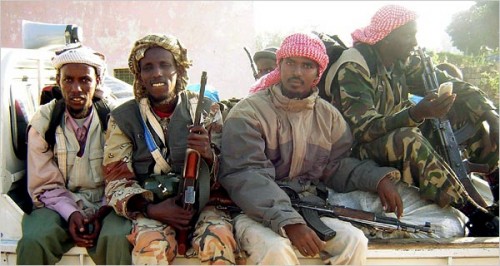
Communiqué de Bernard Lugan
29 juillet 2011
La Somalie étant encore frappée par une famine, une nouvelle fois les médias déversent des images atroces accompagnées de commentaires dégoulinants de bons sentiments et chargés de reproches culpabilisateurs. Comme si nous, Européens, avions la moindre responsabilité dans ce drame dont les deux principales causes répétitives sont clairement identifiées :
- Une guerre tribale que se livrent des clans historiquement rivaux.
- Une surpopulation suicidaire qui a détruit le fragile équilibre écologique régional. Comment pourrait-il d’ailleurs en être autrement avec un taux de natalité brute de plus de 48% et un indice de fécondité par femme atteignant 6,76 enfants ?
Au moment où une intense campagne vise à préparer les esprits à une intervention, il est impératif de donner les clés du problème somalien tant il est vrai que seul le retour à l’histoire permet de tempérer les émois humanitaires :
1) La Somalie est en guerre depuis 1978. Le problème n’y est pas ethnique mais tribal, le grand ensemble ethnique somali qui occupe une vaste partie de la Corne de l’Afrique est en effet divisé en trois grands groupes (Darod, Irir et Saab), subdivisés en tribus, en clans et en sous clans qui se sont toujours opposés. Hier pour des points d’eau et des vols de chameaux, aujourd’hui pour des trafics plus « modernes ».
2) Le 15 octobre 1969, après l’assassinat du président Ali Shermake, le général Siyad Barre prit le pouvoir. C’était un Darod de la tribu Maheran. En 1977, il lança son armée dans l’aventureuse guerre de l’Ogaden. Dans un premier temps, l’armée éthiopienne fut balayée, puis l’offensive somalienne se transforma en déroute. Après cette défaite, les réalités tribales s’imposèrent avec encore plus de force qu’auparavant et le gouvernement ne fut plus désigné que sous l’abréviation MOD, qui signifiait Marehan-Ogadeni-Dhulbahante, à savoir les trois clans associés aux affaires.
3) Une terrible guerre tribale opposa ensuite les Darod entre eux. Finalement, la tribu Hawiyé l’emporta sur celle des Maheran et le 27 janvier 1991 le général Siyad Barre fut renversé.
4) La Somalie subit alors la loi de deux factions antagonistes du CSU (Congrès somalien unifié), mouvement tribal des Hawiyé, qui éclata sur un critère clanique opposant le clan agbal d’Ali Mahdi Mohamed au clan Habar Gedir dirigé par le « général » Mohamed Farah Aidid. Dans le nord du pays, le 18 mai 1991, le Somaliland, ancien protectorat britannique, se déclara indépendant.
5) La guerre des milices provoqua une atroce famine et l’opinion américaine se mobilisa. En France le docteur Kouchner lança la campagne du « sac de riz pour la Somalie ». Puis, au mois de décembre 1992, un corps expéditionnaire US débarqua dans une mise en scène théâtrale pour « rendre l’espoir » aux populations somaliennes. L’opération « Restore Hope » avait été déclenchée au nom d’une nouvelle doctrine inventée pour la circonstance, l’ingérence humanitaire, ce colonialisme des bons sentiments. Ce fut un échec cuisant et le 4 mai 1993, l’ONU prit le relais des Etats-Unis en faisant débarquer un corps expéditionnaire de 28.000 hommes. Le 5 juin, 23 Casques Bleus pakistanais furent tués par les miliciens du « général » Aidid et le 12 juin, un commando américain échoua dans une tentative de représailles contre le chef de guerre somalien. Le 3 octobre enfin, 18 soldats américains perdirent la vie dans l’affaire de la « chute du faucon noir ».
6) Au mois de mars 1994, à Nairobi, un accord de réconciliation fut signé entre les deux chefs hawiyé, mais il demeura lettre morte. A partir du mois d’août, l’anarchie fut totale, les hommes d’Ali Mahdi contrôlant le nord de Mogadiscio et ceux du « général » Aidid le sud. Le 22 août, 7 Casques Bleus indiens furent tués. Les Américains rembarquèrent alors, abandonnant dans le bourbier somalien le contingent de l’ONU composé de soldats pakistanais et bengalais. Le 28 février 1995, il fallut un nouveau débarquement baptisé opération « Bouclier unifié » pour extraire les malheureux devenus otages. L’ONU quittait la Somalie sur un cuisant échec politique et militaire qui lui avait coûté 136 morts et 423 blessés.
7) Les clans somalis se retrouvèrent alors entre eux et ils s’affrontèrent de plus belle. Le 1° août 1996, le « général » Aidid, grièvement blessé au combat mourût. Son fils Hussein Aidid lui succéda à la tête de son parti, le CSU/UNS (Congrès somalien unifié/Union nationale somalienne), c’est à dire sa milice tribale composée du noyau dur du sous clan des Saad, lui-même étant une sous division du clan des Habr Gedir de la tribu hawiyé. Dans le sud du pays, les miliciens de Hussein Aidid s’opposèrent aux Rahanwein, ces derniers s’affrontant ensuite en fonction de leur appartenance clanique tandis que dans le nord-est, plusieurs composantes des Darod dirigées par Abdullahi Yussuf Ahmed créaient au mois d’août 1998 une région autonome baptisée Puntland.
8) En 2004, après d’interminables discussions entre les factions claniques, un accord de partage du pouvoir fut trouvé, mais le Gouvernement Fédéral de Transition, incapable de s’installer en Somalie fut contraint de « gouverner » depuis le Kenya.
9) Puis un nouveau mouvement fit son apparition sur la scène somalienne, les Tribunaux islamiques dont les milices, les Shababs (Jeunes) menacèrent de prendre Mogadiscio. Au mois de décembre 2006, pour les en empêcher, l’armée éthiopienne entra en Somalie sans mandat international, mais encouragée par les Etats-Unis.
10) Par le vote de la Résolution 1744 en date du 21 février 2007, le Conseil de sécurité de l’ONU autorisa ensuite le déploiement d’une mission de l’Union Africaine, l’AMISOM. L’UA avait prévu qu’elle serait composée de 8000 hommes, or les pays volontaires ne se bousculèrent pas.
Depuis, à l’exception du Somaliland et dans une mesure moindre du Puntland, les islamistes contrôlent la majeure partie du pays. Or, pour eux, la famine est une véritable aubaine car :
- Elle va leur permettre d’être reconnus par la « communauté internationale » qui devra traiter avec eux pour l’acheminement de l’aide alimentaire.
- Elle va leur permettre d’achever la prise de contrôle du pays.
- Elle va leur permettre de tirer de juteux profits des détournements de cette aide, comme cela avait été le cas lors de la grande famine d’Ethiopie dans les années 1984-1985.
La conclusion de cette mise au point est donc claire : nous n’avons rien à faire dans cette galère. A moins, naturellement, de vouloir verser dans le « tonneau des Danaïdes » somalien une aide qui serait pourtant tellement utile à nos SDF et à toutes ces familles françaises qui ne mangent plus à leur faim.
Enfin, mes pensées vont à cet officier français - et à sa famille -, prisonnier des milices somaliennes depuis deux longues années et dont le sort n’émeut pas particulièrement l’opinion. Mais il est vrai qu’il n’a pas la chance d’appartenir à la corporation journalistique...
Pour en savoir plus sur l’actualité africaine libérée du prisme de la pensée unique et du politiquement correct, je ne puis que vous conseiller de vous abonner à la revue l’Afrique Réelle envoyée par PDF le 15 de chaque mois. Pour en savoir plus :
http://afriquereelle.blogspot.com
Bernard Lugan
20:10 Publié dans Actualité | Lien permanent | Commentaires (0) | Tags : actualité, politique internationale, géopolitique, afrique, affaires africaines, somalie, corne de l'afrique, océan indien | | del.icio.us | | Digg | Facebook
Schutter in Noorwegen: wat u verzwegen wordt
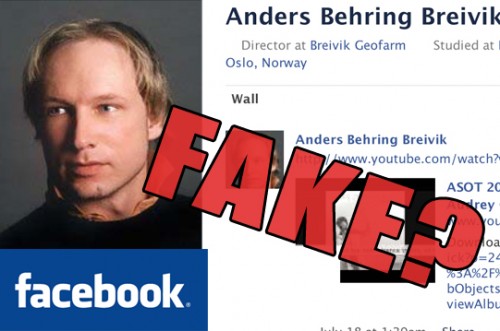
Schutter in Noorwegen: wat u verzwegen wordt
Voor de aanslagen in Oslo publiceerde dader Anders Behring een manifest. Van dichtbij bekeken blijkt nu dat dit werk, dat meer dan 1.000 bladzijden omvat, geen eigen werk bevat. Het is een knip-en-plak-werk van onder andere het Anarchist Cookbook, een verzamelig wapenwinkels… en het manifest van de Unabomber. Ondertussen blijkt ook dat de man een ratatouille aan denkbeelden had. Nationalist, christen, maar tegelijkertijd vrijmetselaar en overtuigd zionist. Het is op z’n minst merkwaardig aangezien vrijmetselaars en nationalisten of christenen niet altijd even goede vrienden zijn. De reden hiervoor is simpel: deze informatie is gebaseerd op een vals Facebook-profiel en niet op gedegen journalistiek.
Het manifest van Anders Behring is nu links en rechts op websteks van nieuwskanalen te vinden. Zoals hierboven reeds besproken, is dit geen werk van een gestoord genie, maar een knip-en-plak-werk van een gestoord man. Wij kunnen ondertussen op basis van het lezen van de stukken die geen beschrijving van winkelproducten zijn en bepaalde feiten in het leven van de man en zijn slachtoffers een paar belangrijke conclusies trekken.
1. Identiteit: gepolitiseerd en “joods-christelijk”
Anders Behring praat in zijn manifest, dat de titel “de Europese verklaring van onafhankelijkheid” draagt, over de Europese identiteit. Wanneer hij over dit laatste spreekt, heeft hij het echter over eenzelfde soort identiteit die we kunnen vinden bij radicale islamitische jongeren die een “internetislam” aanhangen. Via opzoekwerk (lees: Google) rapen zij allerlei aspecten van verschillende, vaak vijandige, visies bij elkaar en steken zij zo hun eigen visie op de wereld in elkaar. In het geval van Anders Behring ging het over een joods-christelijk Europa, een superieure cultuur, dat in constant conflict zou zijn met de moslims. Het is een volledige politisering van de identiteit. Waar nationalisten vertrekken vanuit het feit van de identiteit en het bestaan van volkeren om een politieke visie te ontwikkelen, zijn dit soort “internetstrijders” (aangezien al hun ervaring opgedaan wordt op fora en internetspreekgroepen, nooit door enig contact met anderen) aanhangers van het radicale omgekeerde. Zij ontwikkelen een bepaalde politieke visie, in dit geval een pure anti-islamitische, en gebruiken allerlei diverse elementen uit de Europese geschiedenis om dat te onderbouwen. Dit is vertrekken vanuit een te bewijzen feit en vervolgens het bewijs manipuleren of bedenken om gelijk te krijgen.
2. Logebroeder, “nationalist en christen”
In de media is ondertussen uitgebreid gesproken over het feit dat de man zich nationalist en christen noemt. Wat maar zeer zelden wordt vermeld, is zijn lidmaatschap van de loge. De man was een actief lid van de St. Olaus til de tre Søiler-loge, de grootste van Noorwegen. Graag belichten de media het feit dat nationalisten tegen de grote immigratie is en belichten zij maar al te graag de anti-islamitische visie van een Wilders, etc… Wat zij echter maar zéér zelden tot niet vermelden, is de grote wederzijdse haat tussen veel vrijmetselaarloges en de islam. Zo staat de islam, net zoals het christendom, radicaal tegenover de visie van Verlichting van de loge. Hamas schrijft dan ook in zijn manifest dat in de gebieden waar de islam de macht heeft, de loge zal vernietigd worden (http://www.vecip.com/default.asp?onderwerp=1326).
Wanneer we verder ingaan op de denkwijze van Anders Behring zien we ook dat de man veel meer bij het Verlichtingsdenken van de vrijmetselaars staat dan bij de visie van conservatieve nationalisten. Het Vlaams Belang doet hij af als racistisch en anti-homoseksueel. Deze partij zou “vele hervormingen nodig hebben om ons niveau te bereiken”. Met “ons niveau” mag het wel duidelijk zijn dat hij hier niet sprak over nationalisten onder de noemer “ons”, maar over het neoconservatieve denken dat enkel de progressieve verwezenlijkingen met betrekking tot volledige persoonlijke vrijheid wil behouden. Het homohuwelijk, eventueel -adoptie, recht op abortus, etc… zijn dingen waar conservatieve nationalisten zich tegen verzetten, het is iets waar neoconservatieven als Anders Behring voor zullen strijden. Zonder enige kennis ter zake vermeldt hij ook de VMO als afgedaan en contraproductief. De man lijdt duidelijk aan een zeer ernstige vorm van zelfwaan waarin hij zichzelf ziet als grote oordeler van organisaties en partijen. Men kan zich dan ook de vraag stellen of hij, in plaats van dingen opgezocht te hebben, niet gewoon dingen neerschreef die hij in logemiddens in private gesprekken hoorde en zelf verder uitwerkte.
3. Het valse Facebook-profiel
Over de media gesproken. Momenteel wordt er gesproken over het beruchte Facebook-profiel van Anders Behring. Hierin zou hij zich voordoen als christen, conservatief, etc… Het is echter toonaangevend voor de kwaliteit van de media dat de pers een vals Facebook-profiel als bron aan het gebruiken is. Reeds in het verleden bleek dat sommige mensen valse Facebook-profielen aanmaken wanneer iemand voor gruwelijke feiten in het nieuws is. Het eerste Facebook-profiel dat ontstond na deze feiten, werd dan ook snel gewist door Facebook. Daarna, na deze feiten, verscheen er opnieuw een profiel. Een profiel in de Engelse taal, niet in de Noorse. Doorheen de uren na de aanslagen en na zijn arrestatie verschenen er steeds nieuwe dingen op het Facebook-profiel. De media nemen dit graag over, zonder ook maar één moment na te denken over het feit dat hijzelf niet meer in de mogelijkheid was iets aan te passen. Het is dan ook pas na de aanslagen dat op dit profiel christelijk en nationalistisch verscheen, aangepast door iemand die niets met de man te maken heeft. Hier het “originele” profiel, hier het profiel dat de media graag gebruikt.
De man was immers geen fervent gebruiker van Facebook om zijn denkbeelden te verspreiden, maar wel via de webstek www.document.no. Eigenaar van deze webstek is een joodse voormalig linkse journalist Hans Rustad, die een neoconservatieve anti-islam visie heeft ontwikkeld. Ondertussen heeft Rustad besloten een collectie van commentaren van Anders Behring geplaatst, geen enkele van die commentaren geen een visie weer van een extremistische visie. Enkel het napraten van neoconservatieve denkbeelden over een joods-christelijk Europa met een “rechtsliberale” ordening in een permanent bondgenootschap met Israël. Dat het kamp werd uitgekozen voor een aanval kan wel eens te maken hebben met het feit dat het voor een groot deel in het teken stond van de oproep om Israël te boycotten. Niet dat daarmee gezegd moet worden dat het een groot zionistisch complot was, verre van. Anders Behring was echter de fase van normale politieke dialoog volledig ontstegen, opgezweept door neoconservatieve “joods-christelijke” denkbeelden, dat hij zo’n bijeenkomsten als legitiem doelwit zag.
4. Politieke denkbeelden
De media slaagt er ook niet in om de grote sympathie die de man had voor Israël weer te geven. Had hij bij hem thuis ook maar één minieme foto gehad met Hitler erop, dan was dit reeds uitvergroot. In zijn documenten maakt hij echter constant melding aan de grote steun die Europa dient te geven aan Israël in de strijd met de Palestijnen. Zo maakt hij melding van een ridderorde die opgericht zou zijn te Londen in 2002 door 12 personen met de naam Knights Templar. Doel van deze ridderorde: het grijpen van de politieke macht in Europa, het verdrijven van de moslims en de onvoorwaardelijke steun aan Israël. Dit door moordaanslagen en het gebruik van massavernietigingswapens. Niet echt een visie met veel steun in rechtsnationalistische middens, zo is de neoconservatieve pro-Israël visie van bepaalde parlementsleden reeds genoeg aangevallen door nationalisten.
Ook wordt u niet verteld dat de man lid is geweest van een politieke partij: de conservatieve Noorse Partij van Vooruitgang. Sindsdien heeft hij op internet denkbeelden geplaatst die meer aan een neoconservatieve Bush doet denken, dan aan nationalistische denkbeelden. Het doet denken aan de beschrijving van de schutters die in Columbine op school het vuur opende op leerlingen. Deze schutters werden toen allebei afgedaan als radicale antisemitische extreem-rechtse militanten, terwijl één van de twee zelf een jood was. Het toont maar aan hoe de media graag hypewoordjes gebruiken, zonder ook maar één keer zelf iets op te zoeken.
5. Plagiaat
Ondertussen hebben nationalisten in Frankrijk het manifest van Anders Behring ook onder de loep genomen. Zij kwamen tot de conclusie dat de man gewoon zeer grote delen gekopieerd heeft van het manifest van de Unibomber, waarbij hij gewoon termen veranderde. “Vooruitgangsdenken” werd “multicultureel” denken, etc… Hieronder vindt u dan ook, als slot van dit artikel, enkele voorbeelden (in het Frans) van de gelijkenissen tussen de twee manifesten die door de mensen van Égalité & Reconcliation werden gevonden. Laat u dus niet beliegen door de pers. Deze man was geen nationalist en geen christen. Zijn visie was neoconservatief, neoliberaal, pro-zionistisch en gericht op een progressieve persoonlijke vrijheid. Vier denkbeelden die haaks staan op het conservatieve rechtse nationalisme in Europa. Dringend tijd dat nationalistische partijen dit soort denkbeelden officieel afzweert, identiteit is immers een beginpunt los van politiek denken dat leidt tot conclusies. Identiteit is geen middeltje om een perverse visie op de wereld goed te praten.
Extrait de « La société industrielle est son avenir », de Théodore Kaczynski :
« 6. Tout le monde ou presque reconnaîtra que nous vivons dans une société profondément troublée. Une des manifestations les plus répandues de la folie de notre monde est le gauchisme, donc une discussion de la psychologie du gauchisme peut servir d’introduction à la discussion des problèmes de la société moderne en général.
7. Mais qu’est-ce que le gauchisme ? Pendant la première moitié du 20ème siècle le gauchisme aurait pratiquement pu être identifié avec le socialisme. Aujourd’hui le mouvement est fragmenté et il n’est pas clair de définir qui peut correctement être appelé un gauchiste. Quand nous parlons des gauchistes dans cet article nous entendons principalement les socialistes, les collectivistes, les gens « politiquement corrects », les féministes, les activistes gays et du handicap, les activistes des droits des animaux et tout ce genre de gens. Mais ceux qui sont associés avec un de ces mouvements ne sont pas tous des gauchistes. Ce que nous essayons de décrire dans la discussion du gauchisme n’est pas tant un mouvement ou une idéologie qu’un type psychologique, ou plutôt une collection de types associés. Ainsi, ce que nous entendons par « le gauchisme » apparaîtra plus clairement au cours de notre discussion de la psychologie gauchiste »
Extrait de « 2083, une déclaration d’indépendance européenne », de Behring Breivik :
« Une des manifestations les plus répandue de la folie de notre monde est le multiculturalisme, donc une discussion sur la psychologie des multiculturalistes peut servir d’introduction à la discussion sur les problèmes de l’Europe occidentale en général.
Mais quel est le multiculturalisme ou le communisme culturel ? Le mouvement est fragmenté et il n’est pas clair de définir qui peut correctement être appelé culturels marxiste. Quand nous parlons des gauchistes dans cet article nous entendons principalement des individus qui appuient le multiculturalisme : socialistes, collectivistes, les gens « politiquement correct », les féministes, les militants homosexuels et les défenseurs des droits des animaux animaux, environnementaliste, etc. Mais ceux qui sont associés avec un de ces mouvements ne soutiennent pas tous le multiculturalisme. Ce que nous essayons de décrire dans la discussion du marxisme n’est pas tant un mouvement ou une idéologie qu’un type psychologique, ou plutôt une collection de types associés. »
Extrait de « La société industrielle est son avenir », de Théodore Kaczynski
« 8. Même ainsi, notre conception du gauchisme restera beaucoup moins claire que nous ne le souhaiterions, mais il ne semble y avoir aucun remède à cela. Tout que nous essayons de faire est d’indiquer d’une façon grossière et approximative les deux tendances psychologiques dont nous croyons qu’elles sont la principale motivation du gauchisme moderne. Nous n’affirmons en aucun cas donner TOUTE la vérité sur la psychologie gauchiste. De plus, notre discussion est censée ne s’appliquer qu’au gauchisme moderne. Nous laissons ouverte la question de la mesure dans laquelle notre discussion pourrait s’appliquer aux gauchistes du 19ème et du début du 20ème siècle.
9. Nous appelons les deux tendances psychologiques qui sont à la base du gauchisme moderne « le sentiment d’infériorité » et « la sursocialisation ». Le sentiment d’infériorité est une caractéristique du gauchisme moderne dans son ensemble, tandis que la sursocialisation est caractéristique seulement d’un certain segment du gauchisme moderne ; mais ce segment est hautement influent. »
Extrait de « 2083, une déclaration d’indépendance européenne », de Behring Breivik
« Notre conception des marxistes culturels restera beaucoup moins claire que nous ne le souhaiterions, mais il ne semble y avoir aucun remède à cela. Tout que nous essayons de faire est d’indiquer d’une façon grossière et approximative les deux tendances psychologiques dont nous croyons qu’elles sont la principale motivation du multiculturalisme moderne. De plus, notre discussion est censée ne s’appliquer qu’aux deux tendances du marxisme moderne.
Nous n’affirmons en aucun cas donner TOUTE la vérité sur la psychologie culturelle marxiste. Aussi, notre discussion est signifié deux appliquer deux marxistes modernes culturel uniquement, que nous appelons « sentiments d’infériorité » et « sur-socialisation. »
Le sentiment d’infériorité est une caractéristique de la culture marxiste dans son ensemble, tandis que la sursocialisation est caractéristique d’un seul segment de la diversité culturelle du marxisme, mais ce segment est très influent. »
00:15 Publié dans Actualité, Affaires européennes | Lien permanent | Commentaires (0) | Tags : norvège, scandinavie, actualité, europe, affaires européennes, terrorisme, politique internationale | | del.icio.us | | Digg | Facebook
mardi, 02 août 2011
Krantenkoppen - Augustus 2011 (1)

Krantenkoppen
Augustus 2011 (1)
http://www.countercurrents.org /lendman240711A.htm
http://www.mecanopolis.org/?p= 23762
http://www.egaliteetreconcilia tion.fr/Nouvel-Ordre-Mondial-O slo-ground-zero-des-repression s-domestiques-7513.html
http://www.prisonplanet.com/an ders-behring-breivik-manufactu ring-a-patsy.html
http://info.kopp-verlag.de/hin tergruende/geostrategie/mike-a dams/us-regierung-gibt-offen-z u-mexikanische-drogenbanden-mi t-3-waffen-beliefert-zu-haben- aber-wa.html
http://helmutmueller.wordpress .com/2011/06/13/solidaritat-mi t-dem-griechischen-volk/
http://www.prisonplanet.com/po lice-knew-gunmans-name-before- arrest.html
http://www.voltairenet.org/Lib ya-Washington-prepares-its
http://www.mecanopolis.org/?p= 23788
http://info.kopp-verlag.de/hin tergruende/europa/webster-g-ta rpley/terroranschlaege-in-norw egen-unter-falscher-flagge-nic ht-nur-ein-schuetze-auf-der-in sel-anti-terro.html
Breivik ist [auch] den Zigeunern wohlgesonnen."
http://www.kreuz.net/article.1 3608.html
00:05 Publié dans Actualité, Affaires européennes | Lien permanent | Commentaires (0) | Tags : actualité, europe, affaires européennes, politique internationale, presse, médias, journaux, pays-bas, belgique | | del.icio.us | | Digg | Facebook
dimanche, 24 juillet 2011
Krantenkoppen - Juli 2011 (8)
http://www.ftm.nl/followleader /baas-in-eigen-buik.aspx
http://fr.myeurop.info/2011/07 /13/la-hongrie-met-en-place-de s-camps-de-travail-obligatoire -2956
http://www.cameroonvoice.com/n ews/article-news-3906.html#.Th qg2oXiiQl.facebook
http://www.themoscowtimes.com/ news/article/news-analysis-vla dimir-putins-2012-dilemma/4403 76.html
http://fr.rian.ru/economic_new s/20110712/190126199.html
http://www.voltairenet.org/L-O TAN-face-a-l-ingratitude-des
00:10 Publié dans Actualité, Affaires européennes | Lien permanent | Commentaires (0) | Tags : presse, journaux, médias, actualité, politique internationale, europe, flandre, pays-bas, affaires européennes | | del.icio.us | | Digg | Facebook
mercredi, 20 juillet 2011
Théorie du genre : destituer l'homme de son humanité

Théorie du genre : destituer l'homme de son humanité
Ex: http://www.polemia.com/
Luc Chatel vient d’imposer dans les programmes de première de Sciences de la vie et de la terre la « théorie du genre ». Le professeur Jean-François Mattei analyse ici le sens philosophique de ce lyssenkisme pédagogique. Il s’agit pour lui d’une négation pure et simple de la notion d’humanité, d’un retour à la barbarie dans une perspective post-soixante-huitarde.
Polémia.
La confusion des genres
On ne comprend pas la vague de fond des gender studies américaines... qui monte à l’assaut des rives françaises, si l’on se contente d’y voir un avatar du féminisme. Il s’agit en effet moins de libérer la femme de son oppression biologique que de destituer l’homme de son piédestal ontologique dans un retournement inattendu. Le « genre » ne concerne pas en effet l’homme en tant que mâle, sexué selon le système hétérogamétique XY dont la biologie montre la nécessité, mais l’homme en tant qu’humanité, voué à une essence dont l’éthique affirme la dignité. Pour le dire brièvement, la théorie du genre veut en finir avec l’humanisme occidental depuis la Renaissance afin d’abolir toute forme d’universalité. Le diagnostic de Michel Foucault sera ainsi corroboré : l’ « homme » est bien, en Occident, une « invention récente » dont le visage de sable s’efface peu à peu « comme à la limite de la mer ».
Les travaux sur le genre partent d’un postulat radical : la différence entre l’homme et la femme relève d’un genre social sans rapport avec le genre sexuel, dans la mesure où le comportement humain dépend du seul contexte culturel. S’il y a une différence biologique des sexes, elle n’a aucune incidence anthropologique, encore moins éthique, de sorte que l’hétérosexualité n’est pas une pratique orientée par la nature, mais l’effet d’un déterminisme culturel qui a imposé ses normes oppressives. On s’attaque en conséquence à la différence entre le masculin et le féminin en annulant, avec leur identité propre, leur inclusion dans la catégorie de l’humain. Monique Wittig, la « lesbienne radicale » qui refuse d’être une « femme » et qui prétend ne pas avoir de « vagin », énonce l’impératif catégorique du temps : il faut détruire politiquement, philosophiquement et symboliquement les catégories d’ « homme » et de « femme » (La pensée straight, p. 13). Et cette destruction s’impose parce qu’ « il n’y pas de sexe », qu’il soit masculin ou féminin, car c’est « l’oppression qui crée le sexe et non l’inverse » (p. 36). Si le genre grammatical n’existait pas, le sexe biologique se réduirait à une différence physique anodine.
Déconstruire les différences entre le masculin et le féminin
On avance donc, dans un énoncé purement performatif, que les différences entre le féminin et le masculin sont les effets pervers de la construction sociale. Il faut donc déconstruire celle-ci. Mais on ne se demande à aucun moment pourquoi les sociétés humaines ont toujours distingué les hommes et les femmes, ni sur quel fond l’édifice grammatical, culturel et politique prend appui. Comment expliquer que tous les groupes sociaux se soient ordonnés selon les « oppositions binaires et hiérarchiques » de l’hétérosexualité, comme le reconnaît Judith Butler ? Loin de s’inquiéter de cette permanence, la neutralité du genre se contente de dissocier le biologique de l’anthropologique, ou, si l’on préfère, la nature de la culture, afin d’évacuer la fonction tyrannique du sexe.
Cette stratégie de déconstruction ne se réduit pas à la négation de l’hétérosexualité. Les gender studies, au même titre que les queer studies ou les multicultural studies, ont le souci de miner, par un travail de sape inlassable, les formes d’universel dégagées par la pensée européenne. Judith Butler n’hésite pas à soutenir que « le sexe qui n’en est pas », c’est-à-dire le genre, constitue « une critique de la représentation occidentale et de la métaphysique de la substance qui structure l’idée même de sujet » (Trouble dans le genre, p. 73). On se débarrasse, d’un coup de plume, du sexe, de l’homme, de la femme et du sujet pris dans la forme de l’humanité. Ce qui entraîne par une série de contrecoups, la destruction de l’humanisme, imposé aux autres cultures par l’impérialisme occidental, et, plus encore, la destruction de la république, de l’État et de la rationalité. La déconstruction, apportée aux USA par la French Theory avant qu’elle nous revienne comme un boomerang, a pour fin ultime de ruiner le logocentrisme identifié par Derrida à l’eurocentrisme, en d’autres termes à la raison universelle.
Confusion entre l’homme et la femme et la réalité et la virtualité
Elle se fonde pour cela sur la confusion des genres, entre l’homme et la femme, mais aussi entre la réalité et la virtualité. C’est ce que laissait entendre la critique de l’hétérosexualité par Foucault au profit de l’homosexualité qui permettrait de « rouvrir des virtualités relationnelles et affectives » (Dits et Écrits). C’est pour sacrifier à ces virtualités qu’un couple canadien décidait récemment de ne pas révéler aux gens le sexe de leur bébé de quelques mois, prénommé Storm, afin qu’il puisse le choisir librement par la suite.
On aurait tort alors de regretter que le genre, à défaut du sexe, fasse une entrée remarquée à Sciences Po et dans les programmes des lycées. L’humanité future est désormais en marche vers un monde sans oppression qui, délivré du sexe, sera bon chic bon genre. Quand ce dernier aura définitivement neutralisé les identités et les différences, l’homme nouveau pourra partager le soulagement de Swann : « Dire que j’ai gâché des années de ma vie, que j’ai voulu mourir, que j’ai eu mon plus grand amour, pour une femme qui ne me plaisait pas, qui n’était pas mon genre ! »
Jean-François Mattéi
Institut universitaire de France
Le Procès de l’Europe, PUF, 2011
Magistro 18/06/2011
Voir aussi les articles sur Polémia :
« La barbarie intérieure : essai sur l'immonde moderne », de Jean-François Mattei
Ils osent mettre le « gender » dans les programmes scolaires !
La théorie du « genre » au programme des lycées : une nouvelle avancée totalitaire
Théorie du Gender : bienvenue dans « Le Meilleur des Mondes »
Correspondance Polémia – 30/06/2011
00:05 Publié dans Actualité, Sociologie | Lien permanent | Commentaires (2) | Tags : actualité, meorus contemporaines, problèmes contempiorains, gender studies, philosophie | | del.icio.us | | Digg | Facebook
mardi, 19 juillet 2011
Intellectuels faussaires: triomphe médiatique des experts en mensonge
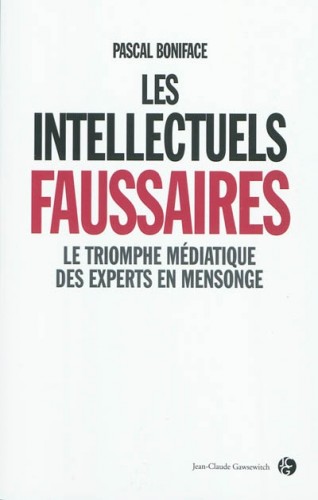
« Les Intellectuels faussaires : Le triomphe médiatique des experts en mensonge » de Pascal Boniface (entretiens)
Ex: http://www.polemia.com/
Directeur de l’Institut de relations internationales et stratégiques (Iris), engagé à gauche, Pascal Boniface décape des idoles médiatiques, qu’il appelle des « experts en mensonge ». Un réjouissant jeu de massacre.
On ne peut guère soupçonner Pascal Boniface d’avoir, lui aussi, retourné sa veste, comme tant de ces « intellectuels faussaires » qu’il décrypte avec alacrité dans son dernier ouvrage éponyme. Après sa thèse d’État en droit international public sur les sources du droit international du désarmement, il fait très tôt partie des jeunes conseillers en affaires stratégiques proches de Charles Hernu, le premier ministre de la Défense de François Mitterrand, après mai 1981. Expert pour les questions de défense auprès du groupe socialiste de l’Assemblée nationale, il travaille aussi sur ces sujets aux cabinets de Jean-Pierre Chevènement, ministre de la Défense, puis de Pierre Joxe, d’abord à l’Intérieur puis à nouveau à la Défense.
 Boniface est resté fidèle à cet engagement socialiste, tout en menant une brillante carrière d’universitaire (il est aujourd’hui enseignant à l’Institut d’études européennes de l’université Paris-VIII) et de consultant. Passé par l’université Paris-I, l’École spéciale militaire de Saint-Cyr Coëtquidan et l’Institut d’études politiques de Paris et de Lille, il crée en 1990 l’Institut de relations internationales et stratégiques (Iris), l’un des meilleurs think tanks français. Il en est le directeur. Auteur d’une quarantaine d’ouvrages, responsable de l’Année stratégique et du trimestriel la Revue internationale et stratégique, il est aussi, pour une autre passion, le secrétaire général de la Fondation du football.
On peut discuter son analyse du conflit israélo-palestinien : en 2003, son livre Est-il permis de critiquer Israël ? avait déjà suscité de vives controverses (lire dans Valeurs actuelles). Sa galerie des “experts en mensonge” est sans doute un peu polémique, parfois injuste. Sa liste – Bernard-Henri Lévy, Caroline Fourest, Alexandre Adler, François Heisbourg, Philippe Val et quelques autres – est sans doute incomplète. Mais les citations qu’il fait, les rappels de quelques énormités et de concepts creux assénés par tous ces intellectuels courtisés par tant de médias font mouche. Pascal Boniface s’est sans doute fait des ennemis pour longtemps. Il nous explique les raisons de cette charge, à gauche toute…
Frédéric Pons : Pourquoi avoir écrit ce livre maintenant sur les « intellectuels faussaires » ?
Pascal Boniface : Il est vrai qu’il aurait pu être écrit de puis longtemps. J’attendais que quelqu’un s’en charge. Cela n’est pas venu. J’étais de plus en plus agacé de voir ces mensonges et contre vérités défiler en boucle, ne pas être contredits. Voir ces faussaires triompher médiatiquement, alors que nombreux étaient ceux qui connaissaient leurs failles, devenait difficile à supporter ; je me suis donc attelé à la tâche. Les multiples réactions positives que je reçois montrent que, pour le public également, le moment était venu.
F.P. :Est-il exact que vous avez essuyé le refus de nombreux éditeurs ?
P.B. : Quatorze éditeurs ont rejeté le livre ; et encore, je ne l’avais envoyé ni à Grasset, ni à Denoël, ni à quelques autres dont je connaissais par avance la réponse, forcément négative. Cela montre bien le poids des connivences dans le milieu éditorial et, d’un certain côté, le non-respect du public auquel on dénie une variété de choix. Il y a là un vrai problème sur le plan démocratique.
F.P. Et dans les médias ?
P.B. : Si je ne peux pas parler d’un silence médiatique, il est vrai que je n’ai guère d’illusions sur les comptes-rendus de nombreux grands médias. Mais des journaux d’opinion à droite comme à gauche en font part et, surtout, le bouche à oreille fonctionne fort bien.
F.P. : N’êtes-vous pas vous-même, comme quelques journalistes de Valeurs actuelles, un habitué des plateaux de télévision ?
P.B. : Je suis en effet régulièrement invité dans des médias. Il y en a également où je suis interdit, uniquement sur la base de mes positions sur le conflit au Proche-Orient.
F.P. : Vous vous êtes aussi trompé…
P.B. : Mais je défie quiconque de me prendre en défaut de mensonges volontaires. Il a pu m’arriver de commettre des erreurs, comme tout un chacun, mais moins que certains que je cite en exemple. Cela me mortifie à chaque fois que je m’en rends compte. Mais je ne pourrais jamais émettre un argument auquel je ne crois pas, uniquement parce qu’il me permettrait de mieux convaincre le public.
F.P. : Homme de gauche, vous brisez des idoles qui sont pour la plupart issues de la gauche ou engagées à gauche. Ne tirez-vous pas contre votre propre camp, et peut-on être débatteur de droite sans être automatiquement un faussaire ?
P.B. : Je suis malheureusement parvenu à un âge où je n’ai plus d’illusions sur le fait que le monopole du coeur ou de la vertu serait à gauche. Je me sens toujours de gauche mais je connais des gens de droite d’une parfaite intégrité et animés par des convictions sincères et l’envie de servir l’intérêt général, et des gens qui se disent de gauche qui ne sont que des opportunistes sans foi ni loi et qui, au-delà des déclarations généreuses, ne pensent qu’à leur carrière personnelle.
F.P. : Qu’appelez-vous exactement « le bain amniotique de la pensée dominante » ?
P.B. : C’est le fait de croire que le monde occidental est supérieur aux autres civilisations, qu’il a le monopole de la vertu, qu’il serait en danger parce que justement il est plus vertueux, qu’Israël est la seule démocratie du Proche-Orient et que l'opposition à sa politique ne s’explique que par ce facteur, qu’il est l’avant-garde de la lutte contre le terrorisme islamiste, et que donc, au lieu de le critiquer pour sa politique à l’égard des Palestiniens, il faudrait plutôt le soutenir. Enfin, c’est aussi penser que l’islam en tant que tel est un danger. Et puis surtout, par rapport aux périls stratégiques, se concentrer sur la dénonciation des effets sans jamais réfléchir aux causes.
F.P. : Que reprochez-vous précisément à « l’entrée en force de la morale dans l’agenda international », phénomène que vous disséquez et qui permettrait à certains intellectuels de « nous faire avaler des couleuvres » ?
P.B. : Je serais ravi que la morale entre en force dans les relations internationales. Malheureusement, on l’évoque pour ne pas la mettre en pratique. Trop souvent son évocation conduit à un manichéisme qui divise le monde en deux : le bien d’un côté, le mal de l’autre. Par ailleurs, si on tranche les situations stratégiques au nom de la morale, on parvient vite à une situation où celui qui s’oppose à vous n’est pas un contradicteur mais un être immoral. Si votre opposant est contre la morale, pas la peine d’argumenter, il suffit d’excommunier. C’est une insulte à l’intelligence. Trop souvent, ceux qui se réclament d’une approche morale le font de façon sélective.
F.P. : Pourquoi dites-vous que BHL est de venu le « seigneur et maître des faussaires » ?
P.B. : Il a bâti autour de lui un réseau dont il est le centre. Membre du conseil de surveillance du Monde, président de celui d’Arte, actionnaire de Libération, proche d’Arnaud Lagardère et de François Pinault, il occupe une place médiatique absolument incroyable. Fort de cette position, il peut raconter n’importe quoi sans que jamais cela ne remette en question sa visibilité. Sur sa proximité avec le commandant Massoud, avec la famille de Daniel Pearl, il a multiplié les contrevérités. Par connivence ou par peur, on n’ose pas le contredire si on fait partie du milieu médiatique.
F.P. : Comment caractériseriez-vous le portrait type d’une « sérial-menteuse », telle que vous la décrivez sous les traits de Caroline Fourest ?
P.B. : Elle est la Marion Jones du débat public : apparence impeccable, bonnes performances, mais qui ne sont pas basées sur l’honnêteté. Simplement, la lutte antidopage est plus efficace dans le domaine du sport que la lutte antimensonges dans le domaine intellectuel. Sa caractéristique principale est d’attribuer à ses adversaires des propos qu’ils n’ont jamais tenus pour s’en offusquer.
F.P. : En êtes-vous sûr ?
P.B. : Encore récemment, pour répondre au portrait que je dresse d’elle, elle disait que j’avais toujours soutenu “des régimes peu recommandables” (ce qui est plutôt le cas de nombre de ses amis), que je combattais tous ceux qui défendaient la laïcité et le droit des femmes, et elle s’interrogeait par ailleurs de façon calomnieuse sur les financements de l’Iris (en clair, elle sous-entendait que j’étais financé par les pays arabes). Bien sûr elle ne répondait en rien sur le fond à ma démonstration, qu’elle confirmait plutôt par ses propos.
F.P. : Peut-on dire qu’Israël et l’islamisme sont devenus des facteurs clivants entre intellectuels, notamment à gauche, transformant certains en “faussaires” ?
P.B. : Je n’irai pas jusque-là. Il y a d’autres éléments, mais il est vrai que le soutien d’Israël et la stigmatisation de l’islam permettent une certaine impunité aux faussaires.
F.P. : Est-il possible, dans les médias, d’échapper aux «vents dominants » ou aux modes intellectuelles ?
P.B. : Malgré un battage médiatique digne des régimes autoritaires, Bernard-Henri Lévy n’aurait vendu que 3 500 exemplaires de son dernier livre. Cela prouve que le public est moins idiot que ne le pense une partie de ces élites faussaires. La connivence ne crée pas forcément le succès. En revanche, elle éloigne une grande partie de l’opinion de ces élites, ce qui est dangereux pour la démocratie.
Propos recueillis par Frédéric Pons
Valeurs actuelles
30/06/2011
Pascal Boniface, Les Intellectuels faussaires : Le triomphe médiatique des experts en mensonge, Jean-Claude Gawsewich éditeur, mai 2011, 272 pages, 19,90 euros
Correspondance Polémia – 4/07/2011
00:05 Publié dans Actualité, Livre, Manipulations médiatiques, Politique | Lien permanent | Commentaires (0) | Tags : mensongesmédiatiques, manipulations mdiatiques, livre, pascal boniface, france, actualité, médias, presse, journaux | | del.icio.us | | Digg | Facebook
lundi, 18 juillet 2011
"Fatigue du sens" de Richard Millet

« Fatigue du sens » de Richard Millet
Ex: http://www.polemia.com/
Polémia a publié récemment un article sur « La révolte des intellectuels ». L’essai fulgurant de Richard Millet, Fatigue du sens, en est l’illustration. Didier Marc présente ici l’œuvre de l’ « écrivain prolifique et magnifique » qui en est l’auteur : le témoignage courageux et passionné d’un écrivain-guerrier pour qui « l’Europe tout entière n’est plus qu’une déchirure raciale dont l’islam et l’antiracisme sont les fourriers et le libéralisme le grand ordonnateur ».
Polémia
 Richard Millet est un écrivain prolifique et magnifique. Son œuvre comprend une cinquantaine de livres, des romans et des essais, tous écrits dans une langue et un style qui n’ont guère d’équivalent dans la littérature française contemporaine. Le sentiment de la langue
L’auteur du Sentiment de la langue (1), ouvrage qui a obtenu le Prix de l’essai de l’Académie française en 1994, est né en Haute-Corrèze et a vécu au Liban de six à quatorze ans, double enracinement que l’on retrouve dans toute son œuvre. Le pays de sa prime enfance c’est celui des hauts plateaux du Limousin, celui de Siom, son village entre Tulle et Aubusson, un pays « obscur entre l’eau, le granit et le ciel », aux gens repliés « dans les éternelles postures primitives ». Puis viendra le Liban et Beyrouth, cette ville pleine d’odeurs, de « chants d’oiseaux et de cris d’enfants », où il devient adolescent « dans un creuset de langues, de vocables et d'accents [qui] incitait à la tolérance », mais où, plus tard, il éprouvera « au plus haut le fait de vivre tout en achevant de [se] séparer de l'espèce humaine ».
Ces lieux de mémoire lui inspireront la plupart de ses livres, parmi lesquels deux sont particulièrement emblématiques : Ma vie parmi les ombres (2) pour la Corrèze, et La Confession négative (3) pour le Liban.
Le premier est un roman autobiographique, une plongée dans l’univers crépusculaire, funèbre, d’un monde rural que ses habitants abandonnent et qui meurt ; c’est une sorte de requiem pour une civilisation millénaire qui disparaît. C’est là qu’il erre, « perdu ou sauvé par l'écriture, ombre parmi les grandes ombres de Siom ». Ce livre pourrait être placé sous l’invocation de Patrice de la Tour du Pin selon lequel « les pays qui n’ont plus de légendes sont condamnés à mourir de froid ».
Confessions négatives
Le second livre, La Confession négative, est également autobiographique. C’est le récit de l'engagement de l’auteur, alors âgé de 22 ans, à Beyrouth aux côtés des chrétiens maronites et de leurs phalanges armées, lors de la guerre civile de 1975-1976. Millet était venu au Liban « chercher la poésie », et il n'y a trouvé que « la fleur inverse de [sa] propre abjection ». Ce mot renvoie sans doute, comme l’a souligné le critique Richard Blin (4), aux Fleurs du mal, « livre atroce », disait Baudelaire, dans lequel « j'ai mis tout mon cœur, toute ma haine ». Dans son journal, Mon cœur mis à nu, il écrivait aussi : « Il n'y a de grand parmi les hommes que le poète, le prêtre et le soldat. L'homme qui chante, l'homme qui bénit, l'homme qui sacrifie et se sacrifie ». C’est à ces hauteurs (celles où l’on côtoie Jünger, Malaparte ou Malraux) que se situe Richard Millet dans cet admirable récit qu’il définit lui-même comme un « opéra baroque ».
Après le Liban, il regagnera l'Europe « où les hommes ne croient plus à rien et où les ormes sont morts de maladie » et consacrera une part importante de son œuvre à défendre et illustrer la langue française, notamment avec sa trilogie sur Le sentiment de la langue.
Langue sans appartenance, nationalité sans fondement…
Cet amour du français se retrouve dans l’essai qu’il vient de publier sous le titre Fatigue du sens. Il y dénonce, en effet, le déclin de notre langue devenue « simple outil de communication, d’information, de propagande ». Le français d’aujourd’hui, le « sous-français contemporain […] est une langue sans appartenance véritable, de la même façon qu’il existe des nationalités ou des identités sans fondement ». En d’autres termes, le déclin de la langue est consubstantiel à la décadence de la nation. On assiste ainsi aujourd’hui à une véritable « tiers-mondisation des langues nationales par quoi le libéralisme établit le règne du Marché ».
Le cri de douleur d’un écrivain français, soucieux des origines
Ce thème n’est toutefois qu’un des aspects de cet essai qui est avant tout le cri de douleur d’un écrivain français qui a le « vaste souci de l’origine » et s’interroge sur « ce qu’il advient du sens de la nation et de [son] identité devant une immigration extra-européenne qui la conteste comme valeur et […] ne peut que la détruire, non pas avec l’intention de le faire mais parce que l’illimitation de son nombre et son assentiment aux diktats du libéralisme international rencontrent cette terrible fatigue du sens qui affecte les Européens de souche ». Par ce propos liminaire, le ton du livre est donné. Mais Millet n’est ni un pamphlétaire ni un provocateur. C’est un écrivain de souche française qui clame son appartenance à un peuple qui n’est plus aujourd’hui qu’une « population – une variabilité statistique ». Le peuple français, « parfaite synthèse » des Latins, des Celtes et des Germains, « ne peut qu’entrer en conflit avec une immigration extra-européenne » devenue massive.
L’immigré, figure emblématique de la société post-moderne
Cette immigration, estime-t-il, est devenue un « cauchemar », pour les autochtones comme pour les immigrés, car elle n’est, sous tous ses aspects, qu’un « trafic d’êtres humains où les intérêts mafieux rencontrent ceux du capitalisme international ». Il n’hésite pas à dire que « seuls les imbéciles et les propagandistes du Bien » peuvent continuer à prétendre que l’immigration est une « chance pour la France ». Pour lui, elle est, au contraire, porteuse d’une « guerre civile innommée ». Elle est devenue une idéologie, l’acmé de la pensée dominante, et l’immigré (le clandestin, le sans-papiers, le Rom) non seulement le nouveau prolétaire, mais la figure emblématique de la société post-moderne.
Ecrivain enraciné dans le sol français, dans la « vieille terre de la langue », Richard Millet ne peut se résoudre à « voir des minarets se dresser sur le plateau de Millevaches […] déjà défiguré par des éoliennes ». Il souffre de ne plus se reconnaître dans le pays qui est le sien, qui a honte de lui-même et ne cesse de se repentir et de se renier. Il se demande « comment être le citoyen d’un pays dont Yannick Noah, « cet histrion du Bien, miroir de l’insignifiance française, symbole de l’idéologie mondialiste » est la personnalité préférée. La France n’est plus qu’un « grand corps épuisé », un « non-lieu » incrusté dans une « mosaïque de non-lieux labellisés » (l’Europe, le monde).
Français de sang
Dans la même veine, il stigmatise l’idéologie racialiste du métissage généralisé et l’antiracisme, cet « appareil idéologique d’Etat » qui « finira par jeter l’opprobre sur ceux qui, n’appartenant à aucune minorité visible, ne sont que des Français de souche », expression à laquelle il préfère celle de « Français de sang ».
Comment en est-on arrivé là ? « C’est dans l’enseignement que tout s’est joué », énonce fort justement l’auteur. Ancien professeur dans la banlieue sud-est de Paris, il a pris conscience que face à une majorité d’élèves issus de l’immigration il ne pouvait plus « dire nous, ni renvoyer à un champ référentiel historique, géographique, culturel, religieux commun ». Ce constat l’a amené à renoncer à la « conception intégrationniste » de l’enseignement qu’il avait fait sienne et à abandonner ce métier. Mais il n’oublie pas de pointer également la responsabilité des idéologues et des pédagogues qui ont « mis à mal le système éducatif français au nom d’idéaux égalitaristes ». Ils ont notamment, au nom du fameux « apprendre à apprendre » cher aux « experts » en sciences de l’éducation, vidé la notion d’apprentissage de son sens. « Pourquoi apprendre et quel savoir », s’interroge l’ancien professeur, « lorsque l’idée de connaissance obéit à la logique horizontale et que la haine de l’intelligence, de l’héritage, de la profondeur, de l’effort est une des caractéristiques du monde contemporain ! »
Sans craindre le reproche incapacitant d’islamophobie, il écrit que l’islam est incompatible avec le christianisme européen et que sa « ruse suprême est de faire croire qu’il n’a rien à voir avec l’islamisme ». Il considère que l’islam, devenu, volens nolens, la deuxième religion en France, est un « universalisme expansif et réducteur ».
L’Europe, espace de disneylandisation ethnique
Millet n’est cependant pas un anti-immigré obsessionnel, comme voudraient le faire croire tous ceux, et ils sont nombreux, que ses idées insupportent et qui le détestent. Il n’hésite pas à montrer du doigt la figure du « Français de souche fatigué d’être lui-même au point de devenir l’esclave de […] sa veulerie, de sa médiocrité, de son acrimonie petite-bourgeoise… ». Il condamne également la « sous-américanisation » de la France et, au-delà, de l’Europe qui sont devenues « un espace de dysneylandisation ethnique […], le modèle du “parc humain” (5) de l’avenir où l’esprit est mis à mal par le divertissement et le spectacle ». Il se sent en exil, enfin, dans ce monde d’aujourd’hui que gouvernent « la Loi, la Tolérance, le Bien, l’Humanité » et que régentent les « lobbies sexuels, religieux, ethniques, régionalistes, maçonniques, etc. ».
En écrivant, dans une phrase qui pourrait résumer l’ensemble de son livre, « l’Europe tout entière n’est plus qu’une déchirure raciale dont l’islam et l’antiracisme sont les fourriers et le libéralisme le grand ordonnateur », Richard Millet a sans doute encore élargi le cercle de ses contempteurs. Mais il n’en a cure, car son essai, scandaleux pour la doxa et tous les bien-pensants du politiquement correct, est un véritable livre de combat. Il constitue, malgré parfois certaines généralisations un peu excessives, un ensemble de « fragments en forme de carreaux d’arbalètes » décochés sur le « monde horizontal » qui est le nôtre, c'est-à-dire le monde qui a renoncé « à toutes les valeurs de la verticalité ». Fatigue du sens est le témoignage courageux et passionné d’un écrivain-guerrier.
Didier Marc
6/07/2011
Richard Millet, Fatigue du sens, éd. Pierre-Guillaume de Roux, 2011, 154 pages, 16 €.
Notes
(1) Le Sentiment de la langue, I, II, III, La Table Ronde, puis coll. Petite Vermillon, 2003.
(2) Gallimard, 2003, puis Folio, 2005.
(3) Gallimard, 2009.
(4) In Le matricule des anges,
(5) Cf. Allusion à Peter Sloterdijk, n° 100, février 2009. Règles pour le parc humain. Une lettre en réponse à la Lettre sur l'Humanisme de Heidegger, Paris, Editions Mille et Une Nuits, « La petite collection », 2000.
Correspondance Polémia – 8/07/2011
00:15 Publié dans Livre, Philosophie | Lien permanent | Commentaires (0) | Tags : livre, france, philosophie, richard millet, actualité | | del.icio.us | | Digg | Facebook
jeudi, 14 juillet 2011
Sécurité nationale et sécurité sociétale
Sécurité nationale et sécurité sociétale
par Marc ROUSSET
 À moins d’un an des élections présidentielles, le 7 juillet 2011, comme par hasard, le ministre de l’Intérieur Claude Guéant vient subitement de réaliser qu’il serait « irresponsable » de ne pas s’attaquer au problème de l’immigration légale de 200 000 personnes par an, au-delà des 50 000 clandestins, soit en tout environ 250 000 personnes par an qui continuent à entrer chaque année en France. Cet apport de population représente une agglomération lilloise nouvelle tous les trois ans peuplée presque exclusivement d’immigrés en provenance de l’Afrique, autrement dit une invasion légale, autorisée et suicidaire organisée par les inconscients qui nous gouvernent depuis trente ans et qui continue , ne l’oublions pas, avec le président Sarkozy, malgré ses propos lénifiants, ses belles paroles et ses talents de prestidigitateur, à l’inverse d’un de Gaulle, pour ne pas s’attaquer d’une façon efficace aux problèmes très réels de fond !
Claude Guéant vient en fait de redécouvrir le concept de « l’insécurité sociétale ». La sécurité nationale recouvre la protection de l’indépendance, de la souveraineté et de l’intégrité du territoire d’un État contre les attaques militaires et la domination politique d’un autre État. La sécurité sociétale telle que l’ont définie Ole Waevar et ses collaborateurs de l’École de Copenhague dans les années 1990 est « la capacité d’une société à perdurer dans ses caractéristiques essentielles lorsque son environnement change ou qu’elle est exposée à des menaces hypothétiques ou réelles ». Si la sécurité nationale concerne donc le maintien de la souveraineté, la « sécurité sociétale » concerne celui de l’identité, de la capacité des populations à conserver leur culture, leurs institutions et leur mode de vie. Dans le monde contemporain, la menace la plus importante pour la sécurité sociétale des nations provient de l’immigration.
Samuel P. Huntington remarque dans son ouvrage, Qui sommes- nous ? (Paris, Odile Jacob, 2004) que l’Amérique n’a jamais connu véritablement le modèle et concept du melting pot mis en avant par Hector St-John de Crèvecoeur dans les années 1780 pour fabriquer une nouvelle race métissée d’hommes, le nouvel Américain qui serait « un mélange d’Anglais, d’Écossais, d’Irlandais, de Français, de Hollandais, d’Allemands et de Suédois ». L’Amérique aurait plutôt connu le modèle de la « soupe de tomates ».
Selon Milton Gordon, le modèle de « la soupe de tomates » présuppose que « les immigrants et leurs descendants adoptent les modèles culturels communément admis de la culture anglo-saxonne » et qu’ils « s’adaptent à l’histoire culturelle de la partie anglo-américaine de la population ». Ce modèle tient pour acquis le caractère déterminant et pérenne de la culture des colons fondateurs. La métaphore culinaire correspondante est celle de « la soupe de tomates » que l’immigration agrémente de céleri, de croûtons, d’épices, de persil et d’autres ingrédients qui enrichissent et diversifient le goût, mais ils n’en sont pas moins intégrés dans un ensemble qui, fondamentalement, demeure de la soupe à la tomate (cf. Huntington, p. 132). C’est ce modèle qui décrit le plus fidèlement l’intégration des immigrants aux États-Unis jusque dans les années 1960.
Aujourd’hui, l’Amérique et l’Europe vivent le modèle d’une autre métaphore, celle de la « salade sociétale » (salad bowl), métaphore conçue par l’Américain Horace Kallen en 1915, qui est en fait l’image du pluralisme ethnique et culturel. Philippe Némo remarque que « le multiculturalisme est aussi absurde qu’un jeu auquel chacun prétendrait jouer avec ses propres règles ». En fait, salade sociétale = société multi-ethnique = société multiculturelle = délitement de la nation = décadence = déculturation = non-intégration des immigrés = à terme guerre civile avec intervention de l’armée ! C’est alors que l’insécurité sociétale, tout juste découverte par Monsieur Claude Guéant, devient un problème grave et tragique de sécurité nationale !
Marc Rousset
Article printed from Europe Maxima: http://www.europemaxima.com
URL to article: http://www.europemaxima.com/?p=2055
00:07 Publié dans Actualité, Sociologie, Théorie politique | Lien permanent | Commentaires (0) | Tags : sociologie, sécurité, insécurité, théorie politique, politologie, sciences politiques, actualité, problémes contemporains | | del.icio.us | | Digg | Facebook