Review:
Catherine Nixey
The Darkening Age: The Christian Destruction of the Classical World
Boston: Houghton Mifflin Harcourt, 2018
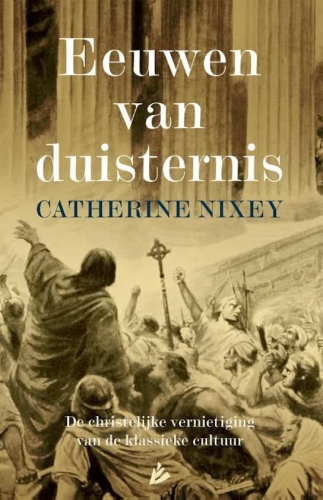
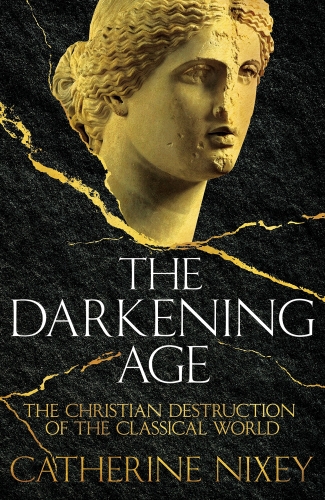 Catherine Nixey’s The Darkening Age is a powerful and highly readable account of the Christian destruction of classical antiquity. It is certainly not without flaws, but it offers hard-hitting and concise rebuttals to widespread myths surrounding the history of early Christianity.
There are surprisingly few books on this subject. The only comprehensive account of Christianity’s crimes against the pagan world is Karlheinz Deschner’s ten-volume Kriminalgeschichte des Christentums (Criminal History of Christianity), which has never been translated into English. The main reason for this, of course, is that Christianity dominated intellectual life in Europe for more than a millennium, and history is written by the victors. Nixey points out that until 1871, Oxford required all of its students to be members of the Church of England. Few ventured to criticize Christianity in such an atmosphere.
The Darkening Age is (as far as I know) the only work of popular history on the subject of Christian violence against pagans. Unlike Deschner’s work, it is not a dense, scholarly tome but rather a polemic written for a popular audience. Nixey’s prose is bold and lively, and she makes no pretense of impartiality, as she makes clear in her Introduction:
This is a book about the Christian destruction of the classical world. The Christian assault was not the only one – fire, flood, invasion and time itself all played their part – but this book focuses on Christianity’s assault in particular. This is not to say that the Church didn’t also preserve things: it did. But the story of Christianity’s good works in this period has been told again and again; such books proliferate in libraries and bookshops. The history and the sufferings of those whom Christianity defeated have not been. This book concentrates on them.
Nixey acknowledges that the Catholic Church did indeed preserve Classical manuscripts and works of art. She praises “the Christianity of ancient monastic libraries, of the beauty of illuminated manuscripts, of the Venerable Bede.” However, as she points out, much more was destroyed than was preserved. That the Church preserved a fraction of the total body of Classical manuscripts and art does not change the fact that Christianity’s triumph was made possible in large part by the destruction of paganism.
Christian monks are often credited with preserving Classical texts. Less often acknowledged is that monks themselves were also complicit in the destruction of Classical Antiquity. These included St. Benedict, the famed founder of the Benedictine Order. Upon arriving at Monte Cassino, where he established his first monastery, his first act was to destroy a statue of Apollo along with an altar dedicated to him, upon which he built a chapel dedicated to St. John the Baptist. He went further, “pulling down the idols and destroying the groves on the mountain . . . until he had uprooted the last remnant of heathenism in those parts.”
St. Martin of Tours, a monk and bishop to whom the oldest monastery in Europe is dedicated, destroyed pagan shrines and statues throughout the Gaulish countryside. A line in the Life of St. Martin reads: “He completely demolished the temple belonging to the false religion and reduced all the altars and statues to dust.” Exaggerations abound in hagiographies, naturally, but it is telling that both Benedict’s and Martin’s hagiographers saw temple destruction as praiseworthy and gushed over their escapades.
Bands of Christian monks were known to go on similar rampages in Syria. The book opens with a description (drawn with some poetic license) of the overthrowing of Palmyra in 385 CE. The altar of the Temple of Al-Lat (a Near Eastern goddess associated with Athena) was destroyed, and the statue of Allat-Athena was decapitated and had her arms and nose chopped off. Nearly two thousand years later, ISIS finished what their monotheistic forebears had started by demolishing temples and statues at Palmyra, including what remained of the statue of Athena.
The Greek orator Libanius described the destruction of temples in Syria: “These people hasten to attack the temples with sticks and stones and bars of iron, and in some cases, disdaining these, with hands and feet. Then utter desolation follows, with the stripping of roofs, demolition of walls, the tearing down of statues, and the overthrow of altars, and the priests must either keep quiet or die . . . .”
Thus the destruction of temples and works of art was not the domain of lone wolves and isolated lunatics. It was enacted and abetted by Christian monks, bishops, and theologians, some of whom were later canonized. Even St. Augustine once declared “that all superstition of pagans and heathens should be annihilated is what God wants, God commands, God proclaims!” John Chrysostom delighted in the decline of paganism: “The tradition of the forefathers has been destroyed, the deep rooted custom has been torn out, the tyranny of joy [and] the accursed festivals . . . have been obliterated just like smoke.” He gloated that the writings “of the Greeks have all perished and are obliterated.” “Where is Plato? Nowhere! Where is Paul? In the mouths of all!”
Chrysostom encouraged other Christians to ransack people’s houses and pry them for any sign of heresy. This tactic was also embraced by Shenoute, an Egyptian abbot who is now considered a saint in the Coptic church. Shenoute and his gangs of thugs would break into houses of locals suspected to be pagans and destroy “pagan” statues and literature. In his words, “there is no crime for those who have Christ.” A fifth-century Syrian bishop advised Christians to “search out the books of the heretics . . . in every place, and wherever you can, either bring them to us or burn them in the fire.”
One of the greatest crimes instigated by a Church official was the destruction of the Serapeum in 392 CE. The Serapeum was built by Ptolemy III in the third century BCE and was dedicated to Serapis, a Greco-Egyptian deity combining Osiris and Apis. It was said to be one of the largest and most magnificent temples of the ancient world. It housed thousands of scrolls belonging to an offshoot collection of the Great Library of Alexandria, which became all that remained of the library after its destruction. In the center of the temple was a grand statue of Serapis overlaid with ivory and gold. The pagan historian Ammianus Marcellinus wrote that the temple’s splendor was such that “mere words can only do it an injustice.”
Accounts of the events surrounding the Serapeum’s destruction differ, but it is thought to have begun when Theophilus, bishop of Alexandria, and his followers mockingly paraded pagan artifacts in public, provoking pagan attacks. The Christians counter-attacked, and the pagans took refuge in the Serapeum. Emperor Theodosius, who had passed a decree closing all pagan temples and forbidding pagan worship in 391, sent a letter to Theophilus granting pardons to the pagans and instructing him to destroy the temple.
 The destruction of the Serapeum was celebrated by Christian chroniclers. “And that was the end of the vain superstition and ancient error of Serapis,” one concluded. Serapis was described as a “decrepit dotard.”
Christians are thought to have destroyed about two and a half thousand shrines, temples, and religious sites throughout Alexandria (a footnote explains that this figure derives from a fourth-century register of the city’s five districts). One Greek professor wrote, “The dead used to leave the city alive behind them, but we living now carry the city to her grave.”
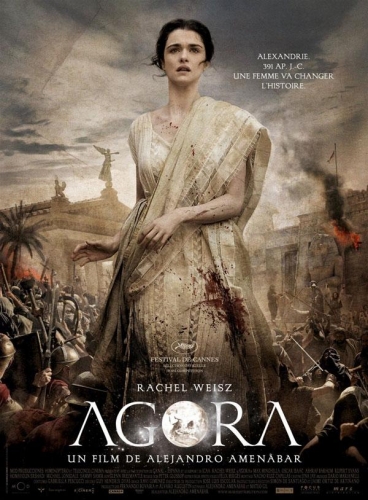
About twenty years later, in 415 CE, the renowned philosopher, mathematician, and astronomer Hypatia of Alexandria was murdered by a Christian mob. This was the culmination of a chain of events arising from the clash between Orestes, Imperial Prefect of Alexandria, and Cyril, archbishop of Alexandria, over the city’s large Jewish population. Hypatia was a friend of Orestes, and Christians targeted her as a scapegoat for Orestes’ unwillingness to negotiate with Cyril. One day in March, she was attacked by a mob of Christians who dragged her to a nearby church, stripped her naked, and stabbed her with shards of pottery. Her body was dismembered and burned.
It is true that the conflict that led to Hypatia’s death was ultimately a political one and that her murder was not a spontaneous attack motivated solely by Christian hatred of paganism. But Hypatia’s murder shows that, regardless of their precise motivations, Christians had no qualms about brutally murdering one of Alexandria’s greatest thinkers. Hypatia’s death was even celebrated by later Christian chroniclers such as John of Nikiu, who equated her learning with “satanic wiles” and praised Cyril for eradicating idolatry in Alexandria.
Nixey does downplay the fact that both parties engaged in violence over the course of these events. Then again, her stated intent was to document Christian violence alone, and thus she cannot be faulted for her bias. Moreover, while it is true that pagan mobs committed sporadic acts of violence against Christians, these cannot justly be compared to Christian violence. The latter involved the destruction of cultural heritage (statues, shrines, temples, libraries), whereas the former arose as a response to the civilizational threat that Christianity represented.
The destruction of paganism also took place within monastery walls. Monks would write over the texts of Classical manuscripts with ecclesiastical literature, erasing them by scrubbing their surfaces with pumice stones. Cicero’s De re publica was written over by Augustine. A biography by Seneca was written over with the Old Testament. Archimedes’ Method of Mechanical Theorems was overwritten with a prayer book. It was only recently, with the aid of modern imaging technologies, that scholars were able to recover the Archimedes Palimpsest in its entirety.
Basil of Caesarea’s influential “Address to Young Men on Greek Literature” undoubtedly had an impact on which texts were preserved and which were not. In the essay, Basil (St. Basil “the Great”) outlined which works of Classical literature were acceptable in his eyes. He advised Christians to shun the bawdier and more violent works of Classical literature, as well as those works in which Greco-Roman deities were overtly praised. Many works were simply excised from the canon as a result. As for works of philosophy, monks had little interest in copying out the writings of philosophers who opposed Christianity, except with the express purpose of refuting them (as Origen did in his Contra Celsum).
The decline of Classical literature was thus “slow but devastating.” It is estimated that less than ten percent of Classical literature has survived into the modern era. In terms of Latin literature specifically, it is estimated than only one percent has survived. Interest in Classical authors reached a low point during the first few centuries of the Early Middle Ages, not to be revived until the late eighth century. Nixey writes:
From the entirety of the sixth century only ‘scraps’ of two manuscripts by the satirical Roman poet Juvenal survive and mere ‘remnants’ of two others, one by the Elder and one by the Younger Pliny. From the next century there survives nothing save a single fragment of the poet Lucan. From the start of the next century: nothing at all.
The Catholic Church did assimilate elements of Classical philosophy. Neo-Platonism, for instance, influenced a number of Christian philosophers, from Augustine, Origen, and Pseudo-Dionysius the Areopagite to later figures such as Marsilio Ficino and Ralph Cudworth. They represent Christianity at its best, i.e., its most Hellenized. But when one strips away the pagan veneer layered upon the Church and dives to the heart of Christian teachings (of which the early Christians are the best representatives), one finds that the general attitude toward Classical learning, and knowledge in general, is hostile. One writer railed against those who “put aside the sacred word of God and devote themselves to geometry . . . Some of them give all their energies to the study of Euclidean geometry, and treat Aristotle . . . with reverent awe; to some of them Galen is almost an object of worship.” This condemnation of worldly knowledge was common among early Christians. It is embedded in the Bible, beginning with Adam and Eve and the story of the Tower of Babel. This theme persists throughout scripture. Paul writes in his first letter to the Corinthians that “the wisdom of this world is foolishness with God” (1 Corinthians 3:19). Another passage in this letter is particularly illustrative of the Christian disregard for knowledge as well as of the slave morality inherent in Christianity:
. . . God hath chosen the foolish things of the world to confound the wise; and God hath chosen the weak things of the world to confound the things which are mighty; and base things of the world, and things which are despised, hath God chosen, yea, and things which are not, to bring to nought things that are. (1 Corinthians 1:27-28)
 Celsus observed that “slaves, women and little children” and “the foolish, dishonorable and stupid” were those most receptive to the Christian message, which is not surprising in light of the Christians’ contempt for the wise, the strong, and the honorable.
Book-burnings were not uncommon. The works of the Neo-Platonic philosopher Porphyry, for example, were burned on the orders of Constantine; about a century later, Theodosius II and Valentinian III also consigned his works to the flames. Ammianus Marcellinus writes that:
. . . innumerable books and whole heaps of documents, which had been routed out from various houses, were piled up and burnt under the eyes of the judges. They were treated as forbidden texts to allay the indignation caused by the executions, though most of them were treatises on various liberal arts and jurisprudence.
Indeed, although Christians ostensibly only burnt books pertaining to magic, divination, and Christian heresy, works of philosophy were sometimes lumped under this category. Dirk Rohmann writes:
Moreover, while there have been ancient precedents to suggest that certain philosophers were characterised as magicians, in Late Antiquity magic and heresy came to be linked more clearly to these philosophical traditions. . . . Heretics were thus not only understood as non-conformist Christians, but occasionally those pagans whose opinions informed Christian-heretical discourse could also be dubbed as heretics in Late Antiquity, as opposed to the modern understanding of the term heresy that is limited to Christians. Along with imperial and ecclesiastical legislation that outlawed magical, heretical and astrological texts, I have argued that within Christian communities an unwillingness arose not only to preserve texts on these subjects but also texts that were related to these genres or were considered the basis for astrological or heretical world-views.[1] [2]
A common belief among early Christians was that pagan works of art, literature, philosophy, and so on were demonic. They believed in the literal existence of demons, winged minions of Satan who enticed humans to commit sins. Pagan temples were thought to be centers of demonic activity. According to Augustine, “All the pagans were under the power of demons. Temples were built to demons, altars were set up to demons, priests ordained for the service of demons, sacrifices offered to demons, and ecstatic ravers were brought in as prophets for demons.”
This gave rise to great paranoia. Christians fretted over whether using the same baths as pagans, for example, would infect them with demons. One Christian wrote to Augustine asking him whether it would be all right for Christians to eat food found in a pagan temple in the event that they were starving and there was no other option. (Augustine replied that it would be better to die from starvation.) Paganism was described as if it were a disease. It was natural, then, that Christians would want to eradicate it.
Christians believed that pagan statues were possessed by demons and could only be purged of demonic influence if they were damaged in some form (at a minimum, by chopping off the nose or limbs). Dragging them, spitting at them, or throwing dirt at them was thought to be insufficient. The Christian mutilation of ancient statues can be seen in museums today. Nixey writes:
In Athens, a larger-than-life statue of Aphrodite has been disfigured by a crude cross carved on her brow; her eyes have been defaced and her nose is missing. In Cyrene, the eyes have been gouged out of a life-sized bust in a sanctuary of Demeter, and the nose removed; in Tuscany a slender statue of Bacchus has been decapitated. . . . A beautiful statue of Apollo from Salamis has been castrated and then struck, hard, in the face, shearing off the god’s nose. Across his neck are scars indicating that Christians attempted to decapitate him but failed.
It is also likely that some of the damage suffered by the Parthenon, particularly the East pediment (which depicts the birth of Athena), can be attributed to Christians. Images of gods at the Dendera Temple complex also show signs of having been attacked with blunt weapons.
The belief held by most Christians that paganism was demonic and diseased prevented them from peaceably tolerating their pagan neighbors. Constantine’s famous Edict of Milan, passed in 313 CE, nominally established religious freedom throughout the Empire, but persecution of pagans began soon after the edict was passed. Constantine’s biographer praised him for having “confuted the superstitious error of the heathen in all sorts of ways.” Indeed, during the latter half of his reign, Constantine himself ordered the pillaging and destruction of pagan temples, such as the temple of Asclepius in Cilicia and a temple of Aphrodite in Lebanon. He also ordered the execution of pagan priests. Statues were forcibly removed from temples and melted down, contributing to the growing wealth of the Church. Others were stolen and kept in the homes of wealthy Christians. The poet Palladas remarked of these that “here, at least, they will escape the cauldron that melts them down for petty change.”
 Constantine’s son banned pagan sacrifices in 341, declaring that “superstition shall cease.” In 356, the worship of pagan images became a capital crime. He also ordered the closure of temples. Following the brief reign of Julian “the Apostate” (361-363), Rome was ruled by Christian emperors until the end. Julian was succeeded by Jovian, who ordered the destruction of the Royal Library of Antioch and reinstated the death penalty for those who worshiped pagan gods. Nicene Christianity was declared the official religion of the Empire in 380, during the reign of Theodosius I. From 389 to 392, Theodosius issued a series of decrees banning pagan sacrifices and other rituals, closing pagan temples, and abolishing pagan holidays. He declared,”No person shall be granted the right to perform sacrifices; no person shall go around the temples; no person shall revere the shrines.” He also disbanded the Vestal Virgins and the Olympic Games. In 399, he passed a decree authorizing temple destruction, announcing that “if there should be any temples in the country districts, they shall be torn down without disturbance or tumult. For when they are torn down and removed, the material basis for all superstition will be destroyed.”
The incident of the removal of the Altar of Victory in 382 is illustrative of the one-sidedness of the “tolerance” ostensibly accorded to all subjects of the Empire. Christians objected to the presence of the Altar of Victory in the Roman Senate House, and the Christian emperor Gratian had it removed. The senator Symmachus petitioned Valentinian II, requesting the restoration of the Altar and making an appeal to religious tolerance, but he was rebuffed.
In 399, Theodosius’ son Arcadius decreed that all remaining pagan temples should be demolished. In 408, his brother and co-emperor Honorius issued a decree proclaiming that “if any images stand even now in the temples and shrines, they shall be torn from their foundations . . . The buildings themselves of the temples which are situated in cities or towns or outside the towns shall be vindicated to public use. Altars shall be destroyed in all places.”
Nixey emphasizes that these were not hollow decrees. Christian records themselves attest to this. Marcellus, Bishop of Apamea, was described as “the first of the bishops to put the edict in force and destroy the shrines in the city committed to his care.” (He was later burnt alive by pagans in retaliation.) One Christian writer rejoiced that emperors would “spit in the faces of dead idols, trample on the lawless rites of demons, and laugh at the old lies.” Another gloated, “Your statues, your busts, the instruments of your cult have all been overturned – they lie on the ground and everyone laughs at your deceptions.”
It is estimated that in 312, about seven to ten percent of the Roman Empire was Christian (four to six million out of a population of about sixty million). Within a century, the reverse had come to pass, and between seventy and ninety percent of the Empire was Christian. Most conversions took place out of intimidation and were prompted by the destruction of temples and sacred objects. Libanius, who was banished from the Empire in 346, remarked at the end of the fourth century that temples were “in ruins, their ritual banned, their altars overturned, their sacrifices suppressed, their priests sent packing and their property divided up between a crew of rascals.”
Where the Christian destruction of Classical heritage is usually downplayed or overlooked, stories of Christian martyrs in late Antiquity have become ingrained in the popular imagination. Martyrs were venerated by the Church, and their stories were told and retold, often exaggerated and taken out of context. Thus there are some lingering misconceptions surrounding Christian martyrdom in ancient Rome.
The idea that Christians were tortured and executed en masse by a continuous succession of bloodthirsty Roman emperors is false. During the first two and a half centuries following the birth of Christ, the only instance of Imperial persecution of Christians was Nero’s brief persecution of them in 64. Over the course of three centuries of Roman rule, there were fewer than fifteen years of government-led persecution of Christians. Importantly, as Nixey notes, the Romans did not attempt to eradicate Christianity itself. If Rome had directed the full weight of its Imperial might toward halting the spread of Christianity in its earliest days, it would have succeeded.
After Nero, the Imperial persecution of Christians did not recommence until nearly two centuries later, during the reign of Decius. The Decian persecution began in 250 CE, after Decius decreed that all Romans had to perform sacrifices to him and to the Roman gods. His edict did not target Christians specifically; his intent was to unify the Empire and ensure loyalty from his subjects. Failure to adhere to the edict was punishable by death, but Christians were given the opportunity to apostatize. The edict lasted only one year. This was soon followed by the Valerian persecution, which was similar in effect and lasted from 257 to 260.
The most severe imperial persecution of Christians was the “Great Persecution” under Emperor Diocletian, which lasted from 303 to 313. Hundreds of Christians were killed, tortured, or imprisoned. However, the majority of Christians in the Empire were able to escape punishment, whether through apostasy, bribery, or fleeing the Empire. Diocletian’s efforts overall were ineffectual.
Nixey devotes a chapter to analyzing the correspondence between Pliny the Younger, governor of Bithynia, and Emperor Trajan on the subject of Christians in the Empire. In 112 CE, Pliny wrote Trajan asking for counsel on how to deal with local Christians, who were disrupting the peace. This letter (Epistulae X.96) is the first recorded mention of Christians by a Roman writer and provides much insight into how early Christians were perceived by the Romans. Pliny saw them as an irksome cult that undermined Imperial unity and provoked disorder. His “persecution” of Christians was born not out of fanatical hatred, but out of pragmatism. He did not object to them on religious grounds and never refers to them as being wicked, possessed by demons, and so on. Trajan’s response to Pliny states that Christians ought to be punished. But he adds one important clause: “These people must not be hunted out” (conquierendi non sunt).
Pliny thus saw execution as a last resort. He gave recalcitrant Christians multiple opportunities to comply with the law. Other Roman officials did the same. There is one account of a young Christian girl who voluntarily presented herself to the Roman governor Dacian in the hopes of being martyred. He did not want to kill her and implored her to comply: “Think of the great joys you are cutting off . . . The family you are bereaving follows you with tears.”
The glorification of martyrdom meant that many Christians were enthusiastic about being martyred. When the late-second century governor Arrius Antoninus executed some Christians in his province, local Christians flocked to him and demanded to be killed in a similar manner. This prompted him to remark, “Oh, you ghastly people. If you want to die you have cliffs to jump off and nooses to hang yourselves with.”
It says something about Christianity that its greatest heroes are not those who achieved great things but rather those who were made to suffer. It brings to mind Julius Evola’s description of Christian asceticism as “a kind of masochism, of taste for suffering not entirely unmixed with an ill-concealed resentment against all forms of health, strength, wisdom, and virility.”[2] [3] It also attests to the inherent egalitarianism of Christianity; George Bernard Shaw once defined martyrdom as “the only way in which a man can become famous without ability.”
The life-negating nature of Christianity was also manifested in the Christian attitude toward everyday Roman pastimes. Christians were repelled by the Romans’ frank attitude toward sexuality and sought to suppress erotic art and literature. They denounced feasts of merriment, and a decree forbidding “convivial banquets in honor of sacrilegious rites” was passed in 407. Wrestling was labeled “the Devil’s trade.” Christians also railed against bathhouses, which functioned as town squares and were thought to be infested with demons. Statues of Roman deities that stood in bathhouses were often destroyed.
It is ironic that in their quest to divorce themselves from the material world, early Christian monks became obsessed with earthly sins to a pathological extent. Monks spent their days contemplating their sins and reproaching themselves. Early Christian descriptions of demons and the sins they incite are meticulous and extensive. Accounts of martyrdom often linger over the gruesome procedures by which Christians were supposedly killed and evince an almost masochistic preoccupation with torture.
Nixey is right to point out that the Romans did not celebrate abject licentiousness and debauchery, as is sometimes assumed. The Romans prized modesty (pudicitia or pudor) and self-discipline (gravitas). There were legal restrictions on sexuality, and hypersexuality was looked down on, as was effeminacy. Unlike Christians, though, the Romans embraced sexuality as a natural part of life and did not seek to smother it.
Nixey fails to make a similar clarification on the issue of religious tolerance. Her description of Roman civilization as “fundamentally liberal” in this regard is misleading. Romans were tolerant of others insofar as they made offerings to Roman gods and to the Emperor; the Empire enforced orthopraxy rather than orthodoxy. Hence, educated Roman elites, despite the fact that many were unbelievers, still made offerings to the gods and adhered to traditional Roman customs (mos maiorum).
Roman polytheism was pluralistic in the sense that a man could worship, say, both Jupiter and Isis or Mithras. Imported cults from Egypt and the East were introduced to Rome in the first century and gradually became a part of Roman religion (though they never acquired the status of traditional Roman deities). However, the government did place restrictions on cults that were perceived as a threat to Imperial unity. In 186 BCE, for example, the Senate prohibited the Bacchanalia (a mystery cult with roots in the Dionysian Mysteries) on the grounds that the cult’s secrecy could breed conspiracy and political subversion.
Of course, the purpose of the ban on the Bacchanalia was not to eradicate the cult, but to regulate it and ensure the supremacy of Roman religion. The ban merely placed initiates under the watch of consuls and stipulated that Bacchanalian rites required the approval of the Senate in order to be performed. This is a far cry from the Christian attitude toward pagans, which was one of unhinged hostility bent on the total eradication of paganism. Herein lies one of the essential differences between paganism and biblical monotheism.
Indeed, the extermination of paganism was celebrated by Christians. Isidore of Pelusium triumphantly declared in the early fifth century that “the pagan faith . . . [had] vanished from the earth.”[3] [4] In 423, Theodosius decreed that “the regulations of constitutions formerly promulgated shall suppress all pagans, although we now believe that there are none [emphasis mine].”[4] [5] By the time of Hypatia’s murder in 415, Classical paganism was in its death throes.
By the time Justinian ascended to the throne in 527, the destruction of paganism had more or less already taken place. Pagans were still around, but the greatest damage had already been done. Nixey overdramatizes Justinian’s closing of the Neo-Platonic Academy in 529, which was largely a question of ceasing to publicly fund the institution (she writes this off as “a finicky detail or two about pay”). The Ne-Platonic Academy could not boast a “golden chain” going back to Plato, as it possessed no direct links to the original Platonic Academy (which was destroyed when Sulla sacked Athens in 86 BCE). The closure of the Academy did not plunge Europe into the Dark Ages, as she claims. The “seven last philosophers” indeed fled Athens and sought refuge in the court of the Persian emperor Khosrow I, but they returned to Athens shortly thereafter. Upon their return, Justinian granted them residence in the Empire and permitted them to practice philosophy and teach privately. The teaching of philosophy in Athens continued for about fifty years, until Athens was sacked by the Slavs in 582.[5] [6] This is not to say that Justinian was innocent; he prohibited paganism, executed pagans, and staged book-burnings throughout the Empire.
Nixey’s implication is that the Dark Ages spanned the entirety of the Middle Ages. She does not elaborate on this, but one of her main influences is Edward Gibbon, whose view of the Middle Ages was notoriously dim. More recent medieval scholarship has called this trope into question. The first few centuries of the Early Middle Ages were characterized by cultural and economic decline, but the Middle Ages as a whole witnessed many great achievements. Three cultural renaissances occurred during the Middle Ages: the Carolingian Renaissance in the eighth and ninth centuries, the Ottonian Renaissance in the tenth century, and the Renaissance of the twelfth century. These periods saw a renewed interest in Greek and Roman philosophy, literature, science, and so on. Of course, the achievements that took place during the Middle Ages owe nothing to Christianity and everything to Europeans themselves. It is in spite of Christianity, and not because of it, that the medieval renaissances took place. It is in spite of Christianity that European civilization in general was able to attain such great heights.
There are a handful of sloppy errors throughout the book. For instance, Nixey’s assertion that the centuries after Constantine did not produce any satirical poets is false; there were some. They were generally unenthusiastic about Christianity. The final elegy by the sixth-century poet Maximianus, thought to be the last true Roman poet, discusses his impending death and has been interpreted as a lament on the decline of the pagan world.
Then there are some deeper flaws, in addition to those already mentioned. She projects eighteenth-century Enlightenment ideals onto Greco-Roman civilization, as suits her New Atheist fable. She overlooks the fact that philosophy and mysticism were not mutually exclusive in the ancient world. The boundary between philosophy and theurgy, mysticism, and magic was a blurry one; as mentioned earlier, condemning texts on magic and divination to the fire led to the burning of works of philosophy as well. Skepticism was also confined to the elites; most ordinary Greeks and Romans themselves did believe in the gods and supernatural forces.
She does not mention that the Roman aristocracy was in a state of decline, as this would undermine her praise of their atheism and cosmopolitanism. By the time of Constantine, the aristocracy had lost its martial spirit and had become soft and complacent. Ammianus Marcellinus bemoaned the fact that “the few houses that were formerly famed for devotion to serious pursuits now teem with the sports of sluggish indolence.”[6] [7] This made it easier for Christianity to infiltrate the elite. As the elite became more Christianized, many converted to Christianity out of a desire for upward mobility.
Another flaw that stands out is the curious omission of a certain tribe. Nixey does not mention Jews outside the context of Hypatia’s murder other than to describe them as “the hated enemies of the Church,” citing John Chrysostom’s anti-Jewish homilies. But the Jews both directly and indirectly contributed to the destruction of the Classical world. The fanatical hatred and dogmatism of the early Christians was directly inherited from their Jewish forebears. Exodus 22:20 reads, “He that sacrificeth unto any god, save unto the LORD only, he shall be utterly destroyed.” Jews also engaged in the destruction of pagan statues, temples, and works of art themselves. During the Kitos War, for example, Jewish rebels led by Lukuas ravaged Cyrenaica, destroying pagan statues and temples as well as Roman official buildings and bathhouses. Additionally, they ethnically cleansed the region by brutally murdering as many as two hundred forty thousand of its inhabitants.[7] [8] The carnage was such that Rome had to restore the population by establishing new colonies there. Lukuas and the Jews then set fire to Alexandria, destroying Egyptian temples and desecrating the tomb of Pompey. This was but one of several Jewish rebellions against the Roman Empire.
The parallels between the Jewish and Christian crimes against pagans are striking. Roman authorities correctly recognized Christianity as a form of Judaism in disguise. The destruction of statues and the like was not unheard of in the ancient world, but it usually occurred in the context of Imperial conquest and regime change. The Jewish and Christian crimes against pagans, on the other hand, stemmed solely from the hatred and vengeance intrinsic to biblical monotheism. Both Jews and Christians claimed a monopoly on religious truth and declared that all “false” religions must be eradicated. Contrast this Semitic intolerance with Celsus’ assertion that “there is an ancient doctrine [ἀρχαῖος λόγος] which has existed from the beginning, which has always been maintained by the wisest nations and cities and wise men.”[8] [9] (Celsus goes on to exclude the Jews from the “wisest nations” and describes Judaism as a perversion of ancient wisdom.)
Both the Jewish and Christian attacks on Indo-European paganism were essentially ressentiment-fueled slave revolts. In a very literal sense: Jews in the Roman Empire actually did descend from slaves imported from the East, and Christianity’s earliest and most zealous converts were likewise drawn from the lowest rungs of society. Christianity appealed to slaves because, like Judaism, it prized all that represented the opposite of their superior masters. Nietzsche noted this parallel, remarking that Christianity stood “all valuations on their head” and that Judaism represented an “inversion of values.”[9] [10] [10] [11] Jan Assmann has used the term “normative inversion” to describe the process whereby elements of Judaism evolved as a conscious rebellion against Egyptian religion.[11] [12] The term could easily be applied to Christianity as well.
 It is possible that Nixey decided to downplay Christianity’s Jewish roots in order to avoid potential accusations of anti-Semitism. If this is the case, it is a testament to the fact that, two thousand years after the Jewish-Roman Wars, Jewish subversion is still a very real phenomenon.
A Christian may retort that the actions of zealous monks two millennia ago have little bearing on Christianity today and as it evolved in Europe. However, one cannot truly understand Christianity – and thus the core that lies buried behind the magnificent edifice of the Catholic Church – without studying its early history and scripture. No amount of pagan influence can fully suppress the poison that lies at the heart of Christianity, which exists fundamentally at war with Indo-European paganism as well as with Europe itself.
I cannot recommend The Darkening Age without reservations, but it is nonetheless a compelling and powerfully-written account of the Christian destruction of Classical Antiquity. The errors scattered throughout are unfortunate, and one hopes that someday another Anglophone writer will come along and write a better popular work on the subject. But in the meantime, this book provides a solid counterweight to widespread misconceptions about early Christian history. It ably demolishes the myths which hold that Christianity triumphed solely through peaceful means, that early Christians were innocents who were barbarically slaughtered by evil Roman emperors, and that Christianity preserved more than it destroyed. None of the book’s flaws are so grave as to diminish the truth of its thesis. It serves as a potent reminder of the threat that biblical monotheism has posed and continues to pose to European civilization.
Notes
[1] [13] Dirk Rohmann, Christianity, Book-Burning, and Censorship in Late Antiquity: Studies in Text Transmission (Berlin: De Gruyter, 2016), p. 148.
[2] [14] Julius Evola, The Doctrine of Awakening: The Attainment of Self-Mastery According to the Earliest Buddhist Texts (Rochester, Vt.: Inner Traditions International, 1996), p. 74.
[3] [15] Peter Brown, Power and Persuasion in Late Antiquity: Towards a Christian Empire (Madison: University of Wisconsin Press, 1992), p. 128.
[4] [16] Ibid., p. 128.
[5] [17] Alan Cameron, “The Last Days of the Academy of Athens,” Proceedings of the Cambridge Philological Society, vol. 195 (1969), pp. 8, 25.
[6] [18] Ammianus Marcellinus, Res Gestae XIV.6.18.
[7] [19] Dio Cassius, Hist. rom. 5.68.32.
[8] [20] Origen, Contra Celsum 1.14.
[9] [21] Friedrich Nietzsche, Beyond Good and Evil, trans. Judith Norman (Cambridge: Cambridge University Press, 2001), p. 56 (§62).
[10] [22] Ibid., p. 84 (§195).
[11] [23]Jan Assmann, Moses the Egyptian: The Memory of Egypt in Western Monotheism (Cambridge: Harvard University Press, 1997), p. 31. Greg Johnson wrote an excellent series [24] of articles [25] on this book [26].





 del.icio.us
 Digg
Digg Facebook
 Lucius Quinctius Cincinnatus
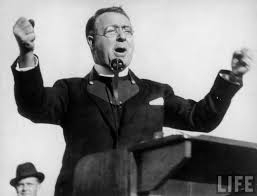
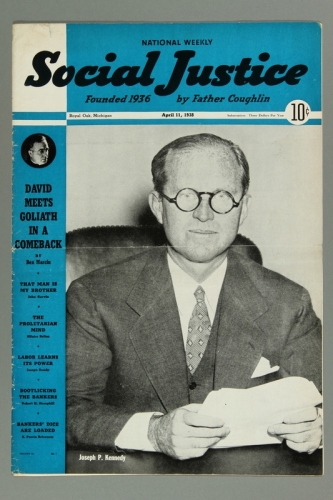 The paper was PM, and for the first two years of its existence (1940-42), it exulted in damning Father Coughlin as a seditionist, a yellow-journalist, a Nazi mouthpiece, and an impious opponent of democracy. PM began with a long series of articles in the summer of 1940. “Nazi Propagandist Coughlin Faithless to Church and Country: Hatred and Bigotry Spread Throughout the Nation by Priest,” screamed one headline. After American entry into the war, histrionic, full-page editorials by Editor Ingersoll became a regular feature; e.g., one titled “Has Charles Coughlin Lied Again?”
 From the start, PM was renowned for its crankiness and an eagerness to print facts and speculation side-by-side, journalistic taste be damned. For example, in 1941 New Yorker editor Harold Ross discovered that his male secretary had embezzled about a hundred thousand dollars from him over the years. Ross wanted to keep the story hushed up, especially after the greedy amanuensis gassed himself in his Brooklyn apartment and was revealed to be a homosexual who squandered the dough on boyfriends, the turf club, and maybe a blackmailer. This was Harold Ross’ nightmare idea of a scandal. Most of his friends in the press were happy to help him bury the lurid tale. Not PM, though, which printed the murky details of the kitchen suicide, as well as the disarray of Ross’ personal finances.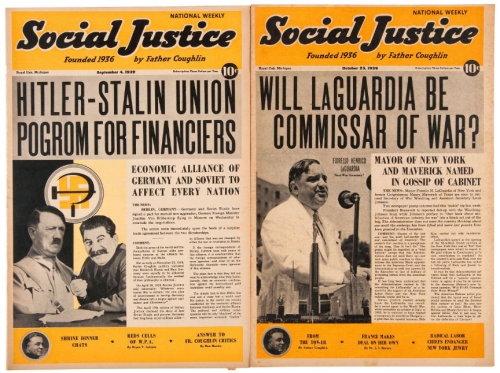
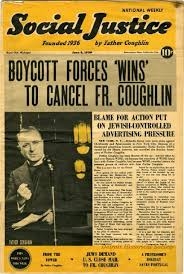
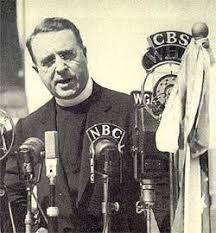 Fr. Coughlin lived until 1979, seldom remarked upon or remembered. Since that time, the smear campaign has begun anew, as though taken straight from the pages of the 1942 PM. All the trite pejoratives get leveled at him: fascist, pro-Nazi, conspiracy-thinker. And, of course, “anti-Semite.” The website of Washington, DC’s Holocaust Museum even has a page dedicated to him, and it’s filled with every sort of twist and innuendo in the cliché barrel. For example, after Germany’s Kristallnacht made the headlines in November 1938, the priest gave a radio talk explaining the background to the news. This is spun as Coughlin “defend[ing] the state-sponsored violence of the Nazi regime,” although he did not, in fact, endorse violence, window-breaking, or persecution of Jews. From sites such as this, you might get the impression that Fr. Coughlin was a sort of Julius Streicher in a Roman collar.

 Dans le monde arabe, à la défaite militaire s’ajoute la défaite symbolique. Il y a bien évidemment l’humiliation de l’occupation : le Sinaï égyptien (qui sera récupéré par le président Sadate), le Golan syrien (annexé en 1981), les fermes libanaises de Chebaa et les territoires palestiniens de Gaza et de Cisjordanie (dont Jérusalem-Est), administrés auparavant par l’Égypte et la Jordanie. Il y a aussi la spoliation du peuple palestinien, qui se retrouve occupé et malmené pendant des décennies par une puissance étrangère. Mais il y a aussi l’échec du nationalisme arabe qui en annoncera bien d’autres. Cet échec de trois grandes armées arabes encouragera le réveil de la résistance palestinienne. Dans les années 1970, l’Organisation de libération de la Palestine (OLP) jouera un rôle analogue à celui de Nasser, décédé en 1970. En Jordanie comme au Liban, Yasser Arafat apparaîtra comme une figure tutélaire à son tour, stimulé par quelques succès militaires dont les grandes armées arabes ont été incapables. On retrouvera ce phénomène avec le Hezbollah libanais. Un peu plus de dix ans après cette guerre, à la cause arabe contre Israël se substituera une cause nouvelle, nourrie par la montée du wahhabisme à la faveur des pétrodollars, celle de la guerre d’Afghanistan (1979). Tandis que l’Égypte vient de signer un traité de paix avec Israël (ce que la Jordanie fera en 1994), des milliers de combattants venus du monde arabe se retrouveront ainsi plongés dans un conflit lointain au nom d’une appartenance religieuse, encouragés par les Américains et contre l’ennemi « impie » tout désigné : l’Union soviétique.

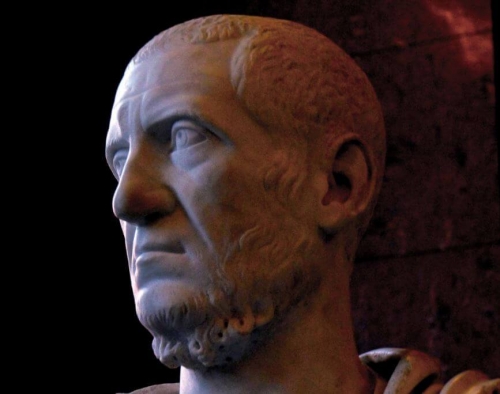
 Voici les propos qu’on lui prête :
 Selon ce grandiose Calgacus, on est là aussi pour être rincés par les impôts qui n’ont jamais été aussi élevés (France, Allemagne, USA) pour les couches faibles et moyennes dans ce monde pourtant si libéral :
 L’identité entre modernisation et occidentalisation du Japon est un des lieux communs les plus véhiculés. Les écrivains, les cinéastes, mais également, ce qui est plus grave, les historiens décrivent souvent un archipel féodal qui aurait embrassé la modernité occidentale en découvrant la puissance nouvelle des empires européens en pleine expansion au milieu du XIXe siècle. Les canonnières britanniques auraient suscité chez ce peuple de tradition isolationniste un sentiment d’urgence et de faiblesse, l’obligeant à rattraper son retard technique, économique et politique. Cette approche considère donc que la modernité japonaise est le produit de l’Occident, que les causes profondes de la transformation de la société japonaise sont exogènes et que ce changement radical peut se comprendre sur le mode de la pure et simple imitation, notamment à travers des tendances nouvelles comme le nationalisme, l’impérialisme ou encore le capitalisme à la japonaise.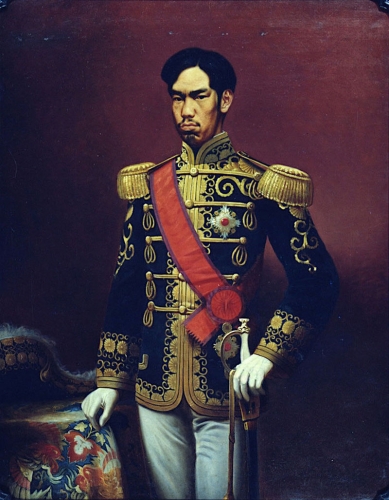
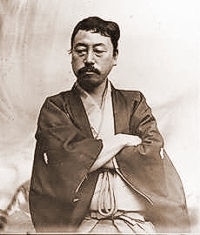 La modernité japonaise se caractérise également par l’émergence de nationalismes de nature différente. Si les premiers intellectuels de la période Meiji s’interrogèrent sur la possibilité d’un changement de régime pour permettre aux Japonais de disposer de plus de droits individuels (liberté de réunion, d’association, d’expression…) et de véritables libertés politiques, le débat s’est ensuite orienté sur la question de la définition de cette nouvelle identité japonaise. « À partir des années 1887-1888 […], les termes du débat évoluèrent et se cristallisèrent désormais sur la question des identités à l’intérieur de la nation, avec un balancement entre trois éléments, l’Occident et son influence toujours fascinante et menaçante, l’Orient (mais il s’agit surtout de la Chine) qui devint une sorte de terre d’utopie ou d’expansion, et le Japon enfin, dont il fallait sans cesse redéfinir l’essence entre les deux pôles précédents. » Ce qui est particulièrement intéressant dans le cas japonais, c’est que le nationalisme, qui est par excellence une doctrine politique moderne, ne s’est pas seulement constitué à partir du modèle occidental.
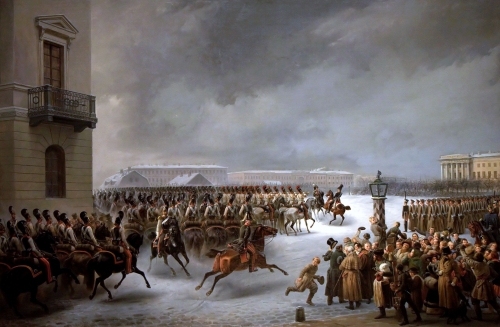
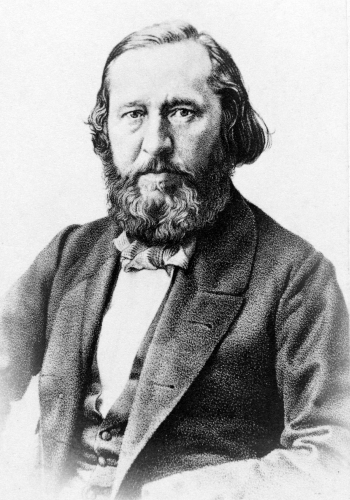
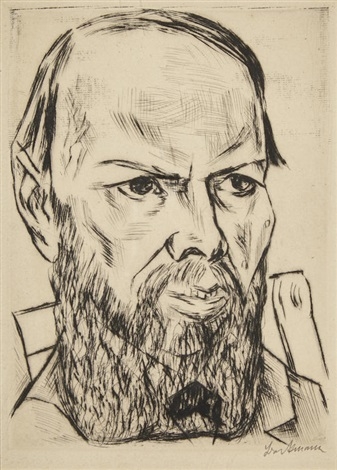 Dostojewski: National-religiöse Überwindung des Nihilismus
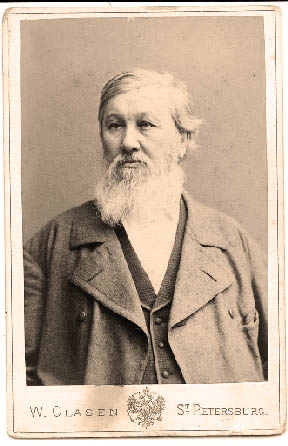 Danilewski: Der russische Spengler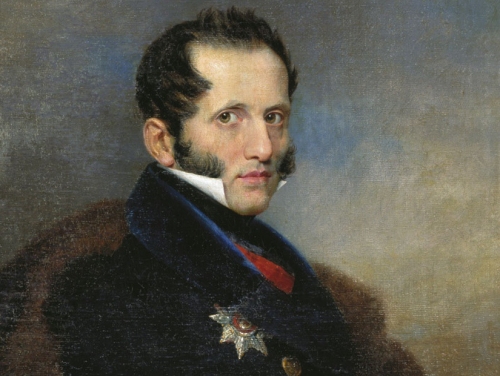
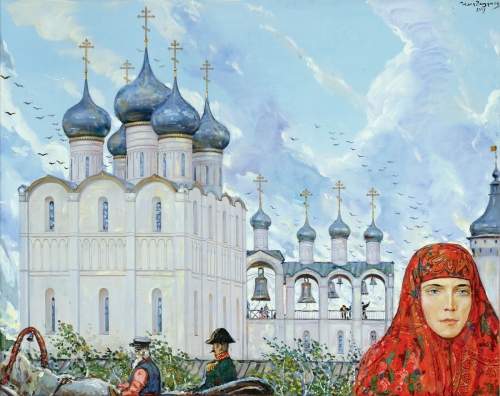

 Im Zuge der ukrainischen Krise geriet auch Dugin ins Visier der westlichen Öffentlichkeit; etablierte deutsche Zeitungen, darunter Die Welt und die Frankfurter Allgemeine Zeitung, porträtierten den vermeintlichen „rechtsradikalen Guru“ und „Einflüsterer Putins“29. Dugins Stern scheint jedoch zu sinken. Im Mai dieses Jahres wurde er als Soziologieprofessor an der staatlichen Moskauer Lomonossow-Universität vom Rektor entlassen. Grund waren unter anderem sein Aufruf, die Opfer des Massakers von Odessa vom Mai 2014 mit dem Blut der „Kiewer Junta“ zu rächen, sowie eine sich anschließende Unterschriftensammlung gegen ihn. Als aktuell bedeutendster Vertreter der langen Tradition russischer Großreichsideen dürfte seine Stimme jedoch nicht leiser werden. Europas Patrioten und Konservative sollten diesen Gegenpol zur ideologischen Dominanz des Westens zu schätzen wissen. Aber sie sollten auch nicht vergessen: Die Ideen dieses wichtigen Verbündeten stehen in einer langen Tradition russischen Reichsbewußtseins. Sie verkörpern nicht mehr und nicht weniger als den ideologischen Überbau nationaler Interessen.




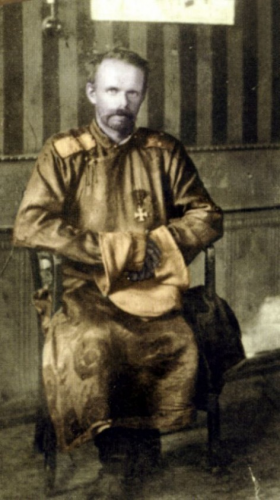 «i cavalieri liberi del barone Ungern von Sternberg, che sognava di ricostituire in Asia l’impero di Gengis Khan. Un giorno salì a cavallo e disse ai suoi: “Vado su Alpha Centauri”. Nessuno lo vide mai più».
 Lors du référendum de Maastricht de 1992, il appelle à un « oui » critique au nom de l’intérêt de l’Europe, car Michel Jobert est très européen. « L’Europe, si elle nous tient à cœur, n’aura de visage, d’identité, que si elle est capable d’assurer elle-même sa sécurité, au lieu de faire semblant de ne pas voir que, au-dessus d’elle, le parapluie nucléaire américain est troué depuis des années et que les États-Unis se replient d’Europe, à l’évidence (dans L’aveuglement du monde occidental. Chroniques de politique internationale 1993 – 1996, Albin Michel, 1997, p. 334). » Parfois désabusé, il estime par exemple que « la fameuse trilogie – monnaie unique, politique étrangère commune, défense commune – est, malgré les étapes et les dates fixées dans l’accord de Maastricht, du domaine de l’imaginaire ou de l’approximation (op. cit., p. 25) ».

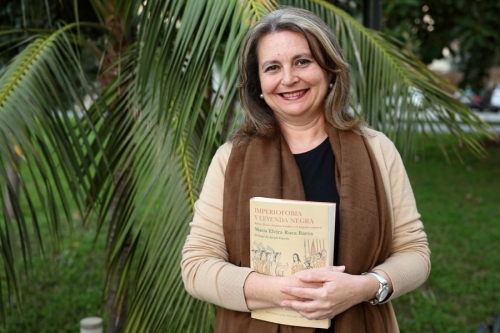
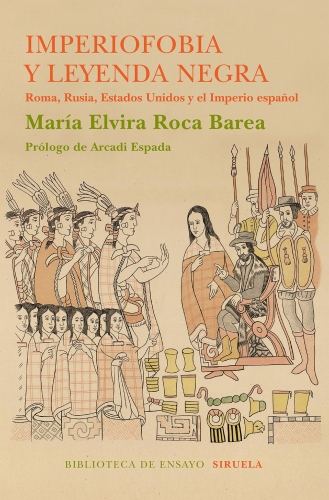 Acabo de consultar la web de Siruela y veo que ya va por la 18ª edición, y el número de reseñas y entrevistas a la autora se multiplica desde su salida. Si escribo esta breve reseña no es por otro motivo que el de compartir sensaciones y reflexiones, animar a su lectura, recomendar el estudio serio y objetivo de la Historia, la de España y la del mundo, y cerrar el paso a toda suerte de racismo.
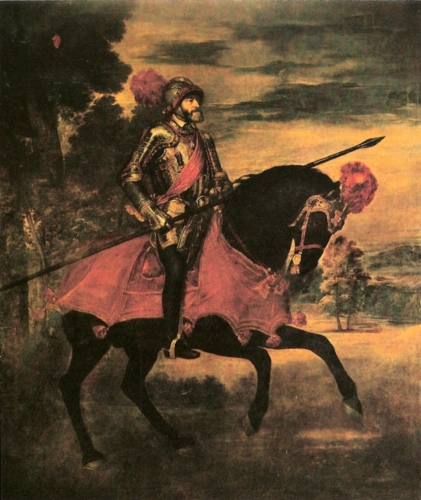 Luteranos y calvinistas no fueron mejores en su intolerancia, como demuestra la señora Roca, antes bien, fueron especialmente fanáticos en sus orígenes, y traidores a la civilización en la que se insertaron, aliándose con los turcos y prefiriendo el yugo de éstos, al yugo suave del Imperio carolino. La historia les juzgará, pues ahora son justamente esos países intolerantes y catolicofóbicos los que han hecho de la "tolerancia" su religión o sucedáneo de religión. Y ahora sí, deshecho ese Imperio universal que extendiera una civilización católica, tienen al "turco", o algún análogo suyo, metido dentro, destrozándoles en sus entrañas.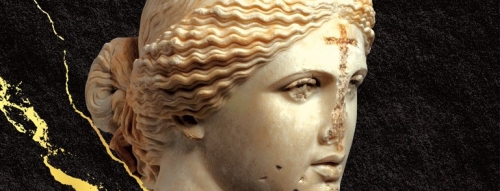

 En 1625, une proclamation officielle ordonna aux prisonniers irlandais d’être rassemblés et vendus comme esclaves aux planteurs anglais. Entre 1629 et 1632, un grand nombre d’Irlandais, hommes et femmes, furent envoyés en Guyane, à Antiqua et à Montserrat. En 1637, environ 69 % de la population de Montserrat était constituée d’esclaves irlandais. Il fallait acheter de nouveaux esclaves, de 20 à 50 livres sterling, des esclaves irlandais capturés et vendus pour 900 livres de coton. Les Irlandais sont devenus la plus grande source d’esclaves pour les marchands d’esclaves anglais.
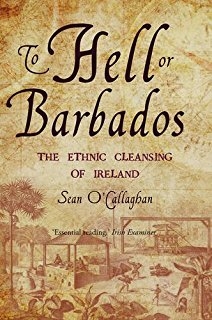 De 1600 à 1699, peu de gens comprennent que plus d’Irlandais étaient vendus comme esclaves que d’Africains.

 Bundeswehr
 Uhle-Wettler verfaßte als erster deutscher Autor eine Biographie über
  Als Franz Uhle-Wettler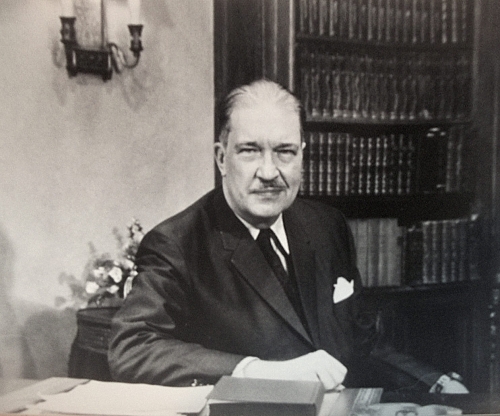

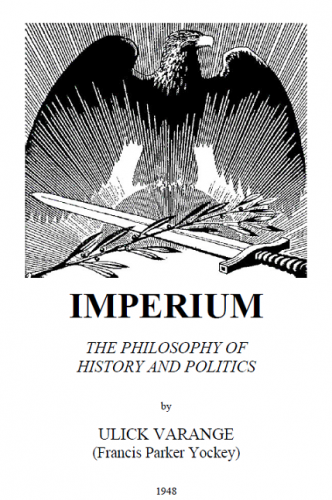 Writing in 1963, Oliver avoids mention of Yockey’s “culture-distorter” or the Jewish Question (although he makes a nod to that Birchite proxy, the International Communist Conspiracy). Years later, with the “Birch Business” well behind him,

Neben diesen Riesen nimmt sich der spanische Beitrag zu der Sache „Liberalismus“ recht mickrig aus. Allein der Name geht auf spanische Geschehnisse „von vor zweihundert Jahren“ zurück.
Der Liberalismus brachte einen Jahrhundertbrand für Spanien
Seit dem 1812 – zur Zeit der napoleonischen Besetzung Spaniens – in der freien Hafenstadt Cádiz vollzogenem Verfassungsexperiment, standen die Anhänger des Absolutismus denen des Liberalismus feindlich gegenüber. Erstere wurden von den Verfechtern von Volkssouveränität und Parlamentarismus „Servile“ geschimpft, diese wiederum nannten jene abschätzig „Liberale“. Von Cádiz und aus dem Spanischen fanden „liberal“, „Liberaler“ und, endlich, „Liberalismus“ schnell Eingang in den modernen europäischen Wortschatz.
So schnell, wie die Liberalen die Chance ergriffen hatte, die ihnen die Kriegswirren – inklusive scheußlichsten Thronstreitigkeiten, an deren Ende die Gefangennahme der gesamten Königsfamilie durch Napoleon, stand – geboten hatten, genau so schnell formierte sich die absolutistische Opposition: Nicht wenige der 1812 nach Cádiz berufenen gewählten Abgeordneten waren geschworene Feinde des Liberalismus.
Mit dieser ihrer Bitte rannten die deswegen später von den Liberalen auch als „Perser“ verschrienen Absolutisten bei Ferdinand, der nur allzugern den Monarchen von Gottes Gnaden abgeben wollte, offene Türen ein. Trotzdem: mit dem Cádizer Verfassungsexperiment war ein Jahrhundertbrand gelegt. Für Spanien brach eine neue Zeit der Verfassungskämpfe und Bürgerkriege an, welche im Bürgerkrieg (1936-1939) ihren vorerst letzten Gipfelpunkt fand.
Ein gottesleugnerischer Humanismus
Im Zuge der Restauration des Ancien Régime, die in Spanien den Charakter einer regelrechten Rückgängigmachung von Französischer und liberaler Revolution annahm, kam es zu Liberalenverfolgungen solchen Ausmaßes, dass sich selbst das legitimistische Europa, mit Metternich an der Spitze, darüber entrüstete. Tatkräftig unterstützt wurde die Reaktion in Spanien vom Klerus.
Der Klerus hatte gute Gründe, den Liberalismus, der ein direkter Erbe von Aufklärung und Revolution war, zu verfolgen. Der aufrichtige Katholizismus vieler Liberaler änderte nämlich nichts daran, dass ausnahmslos jeder Liberalismus, sei es theoretisch, sei es praktisch, ein gottesleugnerischer Humanismus ist: „Menschenrechte“, „Philanthropie“, „Humanität“, „Volkssouveränität“, „Rationalismus“, „Selbstbestimmung des Individuums“, „Fortschritt“, verstanden als irdische Vervollkommnung und moralische Höherentwicklung des Menschengeschlecht, standen und stehen in einem unvereinbaren Gegensatz zu Gott, seiner Vorsehung sowie seiner Weltordnung.
Ihre Ideologie machte die Liberalen politisch gefährlich
Auch politisch war der Liberalismus bei weitem nicht so harmlos, wie es auf den ersten Blick, d.h. noch zu Cádiz, 1812, geschienen hatte: Von Anfang an sorgten für seine Verbreitung Geheimgesellschaften, allen voran die Freimaurerei. Es war geradezu eine Spezialität spanischer Liberaler und Freimaurer, überall Verschwörungen, wie z.B. die, welche 1820 im unteritalienischen Bruderkönigreich Neapel-Sizilien die Revolution auslöste, anzuzetteln.
Auch war es nicht unüblich, dass dieselben Verwaltungseliten des Absolutismus gleichzeitig ebenfalls Anhänger der liberalen Sache waren. So war es unvermeidlich, dass der letzte monarchische Absolutismus in Spanien über kurz oder lang den Liberalismus befördern würde, wenn auch unfreiwillig. Aus diesem Grunde auch scheinen alle späteren Tatsachen das liberale Selbstbewusstsein zu bestätigen, die von der Geschichte als „richtig“ vorgestellte Richtung, wenn nicht gar denselben Sinn der Geschichte, zu repräsentieren.
Der Liberalismus hatte für die Liberalen unzweifelhaft auf seiner Seite das geschichtliche „Recht des Neuen“ gegenüber dem Alten und Verbrauchten. In diesem Sinne das Neue und deshalb wirklich Rechtmäßige zu verkörpern, trieb die liberale Ideologie zur politischen Handlung an.
Die spanische Revolution von 1820 und die Heilige Allianz
Im bereits genannten Jahre 1820 gelang es den Liberalen, sich mit Hilfe des von ihnen unterwanderten Militärs für drei Jahre an der Macht zu halten. Während dieses sogenannten „liberalen Trienniums“ (Trienio Liberal) ging es hoch her in Spanien. Es kam zu den ersten antiklerikalen Gräueltaten – in Madrid war eine Gruppe Geistlicher auf offener Straße ermordet worden –, zu „Privatisierungen“ sowie zu unpopulären „kapitalistischen Reformen“.
Alarmiert von den Vorgängen in Spanien und Neapel beschloss die Heilige Allianz unter der Führung der Großmächte Russland, Österreich und Preußen, dem revolutionären Treiben in Südeuropa ein Ende zu setzen. Eine Intervention war so oder so unumgänglich. Namentlich die neapolitanischen Vorgänge hatten gezeigt, welche Kreise eine Revolution in Spanien ziehen konnte: Nicht ganz zufällig hatte die neapolitanische Verfassung die spanische von 1812 zum Vorbild und war auch sonst unter Mitwirkung bedeutender spanischer Liberaler zustande gekommen.
Nach der Intervention der Heiligen Allianz in Neapel-Sizilien wussten die spanischen Liberalen, dass sie als nächstes dran sein würden. Deshalb versuchten sie, sich auf ihre eigene doktrinäre und ideologische Weise in „Europa“ – worunter sie vornehmlich ihren imaginären Verbündeten Frankreich verstanden – Gehör zu verschaffen, was natürlich misslang.
Das real existierende Europa war restaurativ, das System der internationalen Politik das der Legitimität und des „Gleichgewichts der Kräfte“, nicht das der „Solidarität zwischen freien Völkern“ wie die spanischen Liberalen genauso trotzig wie verzweifelt verlautbaren ließen. Überhaupt machten Trotz und Verzweiflungsgeheul auf die Heilige Allianz nicht den geringsten Eindruck.
Auf dem Veroneser Kongress (1822) wurde Frankreich damit beauftragt, ein Expeditionsheer unter der Führung des Herzogs von Angouleme nach Spanien zu entsenden, um König Ferdinand als absoluten Herrscher wieder einzusetzen. Die Franzosen, die 1823 in Spanien eindrangen, um die Rechte des Thrones und des Altars wieder herzustellen, wurden als die „hunderttausend Söhne des heiligen Ludwig“ vom spanischen Volk als Befreier, und zwar vom Liberalismus, umjubelt.
Im Schatten des Absolutismus wuchs der Liberalismus
Mit dem unrühmlichen Ende des „Liberalen Trienniums” setzte eine extreme Reaktionsperiode ein (1823-1833), die von den Liberalen das „abscheuliche Jahrzehnt“ getauft wurde. Trotz der Schwere der Verfolgungen sowie zahlreicher Hinrichtungen konnten die Liberalen weiterhin an ihrer Revolution arbeiten: Als Untergrund standen sie in ständigem Kontakt mit ihren politischen Weggefährten im französischen und englischen Exil.
Auch die Solidarität unter Freimaurern leistete ihnen gute Dienste. Und dank der Änderung des internationalen politischen Klimas sowie der anhebenden kapitalistischen Entwicklung Europas konnten sie nun doch Unterstützung, und zwar von England und Frankreich, erwarten. Der ultraabsolutistischen „Kamarilla“ um Ferdinand – von daher stammt übrigens auch des deutsche Wort – zum Trotz war ab 1830 sogar der Hof liberal durchsetzt: Königin Marie Christine, selbst liberalen Reformen nicht abgeneigt, legte ihr gewichtiges Wort für liberalisierende, später offen liberale, Räte und Minister ein.
Es darf also nicht wundern, dass, als Ferdinand VII. 1833 starb, den Liberalen Spanien wie eine reife Frucht in die Hände fiel. Eine erneute Thronstreitigkeit – diesmal mit dem Bruder Ferdinands, Don Carlos, dem absolutistisch-legitimistischen Thronanwärter – bot den Liberalen einen Rechtsvorwand, sich der Krone zu bemächtigen: Angeblich im Sinne des traditionellen kastilischen Erbfolgerechts hielten die Liberalen die „Rechte“ der kaum den Windeln entschlüpften Tochter Ferdinands, Isabella, hoch.
(Bild: Verfassunggebende Versammlung, Cádiz 1812)