


 del.icio.us
 Digg
Digg Facebook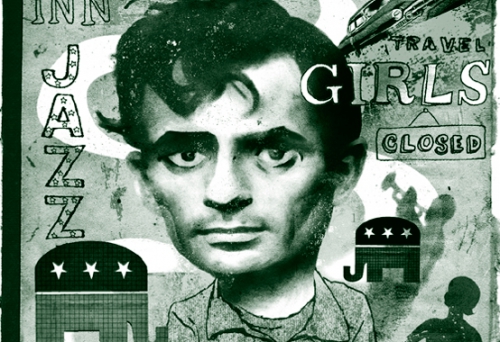
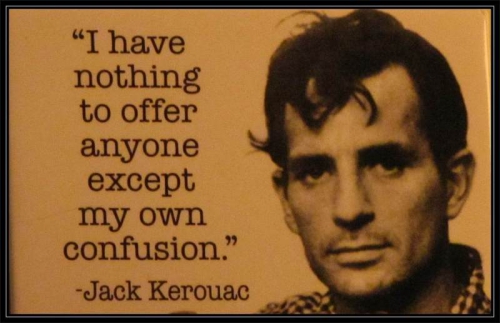
In Jack Kerouac’s last piece of writing, “After Me, the Deluge,” the writer rued his influence on the hippie movement. In so doing, both in the Chicago Tribune magazine, where “Deluge” appeared in 1969, and during a pie-eyed appearance on Bill Buckley’s Firing Line the year before, Kerouac validated the pop-cultural notion that by going against the grain of Eisenhower’s suburban, conservative America, he unwittingly helped inspire the ’60s counterculture and its many excesses.
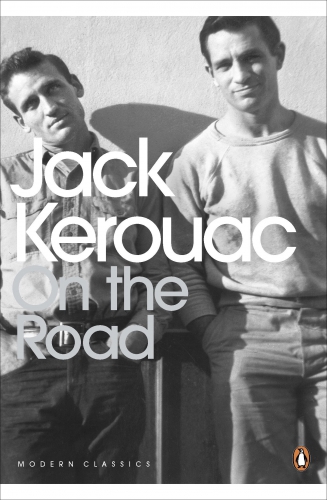
With its hobo squalor, its sexual candor, and most of all its aimless and irrepressible urge to roam, Kerouac’s famous On the Road, published in September of 1957, certainly appeared to signal a departure from the domestic conventions of the late 1950s. Relationships in the book are volatile and tenuous, while people and property are often exploited just for kicks. As a chronicle of freewheeling social disintegration, On the Road went down as a book very much at odds with its time, a foretaste of the cultural revolutions that rocked the late 1960s.
Often unnoticed or forgotten is that the road trips in Kerouac’s book were undertaken between 1947 and 1950, the postwar Truman years, in whose grain On the Road actually resides, even if Kerouac downplayed this fact. Betwixt the numerous travels that made up On the Road, Kerouac wrote his first book, The Town and the City (1950), a family history/coming-of-age novel in which World War II assumes its proper dimensions as an influence on the lives of his Martin family. Tellingly, however, Kerouac’s chief surrogate, young Peter Martin, was almost determinedly unmoved by it all: “Mighty world events meant virtually nothing to him, they were not real enough, and he was certain that his wonderful joyous visions of super-spiritual existence and great poetry were ‘realer than all.’”
Hence On the Road, a series of larks whose settings and patterns, preoccupations and mores, are marked by a recent conflict that goes almost entirely unmentioned. But the war’s influence was profound, starting with the wanderlust itself, which followed years of gasoline and tire rationing and Detroit’s suspension of automaking during the conflict. Further, space on Pullman cars and interstate buses was largely reserved for troops, furloughed GIs and their families, or those setting out to work in vital war industries. Everyone else had to stay put, scramble for the few remaining tickets, or venture into the black market.
With war’s end, people rushed to get behind the wheel and go, and automakers, tire manufacturers, oil companies, and others offered plenty of encouragement. Magazine ads of the time occasionally achieved near Kerouacian poetry in invoking the joyous splendors awaiting motorists. A Lincoln ad from 1945: “These grey years will end with brighter days … Then, free as a birdsong, you’ll share in the secrets of a thousand roads … Travel the taut highway that thins to a dot in the distance.” A Nash Motors ad from the same year was borderline orgasmic: “Waiting for you … wide highways that beg your car to spread her wings and fly … Her low, sweet motor-music as the miles race by … the way she quickens to a throttle-touch and leaps ahead to flatten out the hills and make the pavement sing beneath her wheels.”
Years later, Kerouac remarked that On the Road had been an investigation into “post-Whitman America,” an idea that tallied with a bit of doggerel (“Song of the Open Road … Again!”) produced in 1946 by Quaker State copywriters: “Oh, some roads stretch to Mexico, / And some roads stretch towards Nome, / And roads reach out from east and west, / And beckon us from home …”
Of course, as Kerouac sensitively attested in The Town and the City, the war had been beckoning Americans from home for years. He chronicled “the whole legend of wartime America … the great story of wandering, sadness, parting, farewell.” He marveled at “the young soldier-wives who were beginning to wander the nation … in search of some pitiable little home or situation that would bring them close to their young husbands, if only for a few months.” All this movement provoked “night-dreams woven out of three thousand miles of continental traveling … enacted upon some deranged little map of the mind that was supposed to represent the continent of America.” He added, “No one could see it, yet everyone was in it, and it was like the incomprehensible mystery of life … grown fantastic and homeless.” The members of his Martin family, being no exception, were also “uprooted by war,” part of the “great wartime wanderings” of that period.
Before On the Road’s protagonists, Sal and Dean, ever balled the jack across miles of open blacktop, moving from one brief habitation to the next, America was in the throes of temporary relocations, out-and-out migrations, and demographic shifts of an unprecedented scale. Some 15 million Americans were in uniform and away from home during the war, and Life reported that an estimated 75 percent of them did not intend to return to their hometowns. Nearly as many relocated owing to war-related industry, largely to be near shipyards and aircraft plants along the coasts and the Gulf Shore or near the veritable arsenal that emerged in and around Detroit. The sociologist Francis E. Merrill noted in 1948 that more than 27.5 million Americans “experienced at least one wartime change of residence that removed them from one set of social influences and often failed to substitute similar influences.” Roughly 20 percent of the population, in other words, was socially unmoored by the war.
And the migrations didn’t end with the war’s conclusion. Throughout the 1940s, an estimated 12 million Americans relocated to a new state. As a record of human movement within the country, this dwarfs the Great Migration (of Southern blacks to the North and Midwest), the second wave of which—beginning in 1940—is partly subsumed into this far larger, racially neutral tally.
Hidden within the numbers for that decade are various pathologies associated with social dislocation. This is what Merrill was hinting at when he noted that many Americans, in relocating, found themselves bereft of familiar social influences. Such influences serve as inhibitors, informally keeping most people from significant misbehavior. When you’re known to those around you, your actions naturally have greater social consequence than if you’re a stranger. Many of those 27.5 million during the war, and those 12 million over the course of the decade, were living—at least for a time—as virtual strangers in their new communities, which included occupied foreign capitals, stateside garrison towns, and American cities swelling with newly arrived defense workers. Furthermore, couples were often living apart (with, say, the man in uniform and the woman engaged in defense work), while children were subject to diminished supervision. Consequently, America in the ’40s experienced significant increases in promiscuity, infidelity, rape, out-of-wedlock births, divorce, venereal disease, auto theft, truancy, and juvenile delinquency.
Further, as Merrill noted, planning for the future is difficult in times of flux, and an uncertain future generates an equally uncertain present, which in turn produces indecision that can erode adherence to conventional mores. Thus, in The Town and the City we see one of the Martin daughters, Liz, elope at 18 with her piano-player boyfriend, leaving the town of Galloway (a fictionalized Lowell, Mass.) for Hartford, Conn. From there the two move to Detroit to find better-paying defense work. At 19, Liz delivers a stillborn baby in this strange and distant city, plunges into depression, and disappears from her family for a time. In the fall of 1945 she turns up in New York City (by way of San Francisco), separated from her husband and working as a nightclub singer when not occasionally flashing leg in “second-rate floorshows.”
“She had become one of the many girls in America,” Kerouac writes, capturing exactly the indecision Merrill noted, “who flit from city to city in search of something they hope to find and never even name, girls who ‘know all the ropes,’ know a thousand people in a hundred cities and places, girls who work at all kinds of jobs, impulsive, desperately gay, lonely, hardened girls.” All of which makes the roving escapades of Sal and Dean appear tamer in context. What seemed outré in the reading in 1957 was less so in the doing in 1947; less so, for that matter, in the reading in 1967, after the deluge Kerouac regretted had somewhat normalized many of the behaviors of 20 years prior, which—however prevalent they were at the time—were still considered misbehaviors. The excesses of the 1960s were in some ways a pale recurrence of those of the 1940s, the difference resting more in the attitude toward those excesses than in the excesses themselves.
♦♦♦
But it wasn’t just behaviors in the ’40s that had been changed by the war—behaviors, again, that put the Beats nearer the American mainstream than they seemed ten years later, when On the Road was finally published. Whole environments through which Kerouac moved in his travels had been changed—if not created—by the war. For instance, the Bay Area ghetto in which Kerouac (“Sal”) lives with a buddy for a time, while employed as a rent-a-cop, didn’t exist before the war. Kerouac called this black enclave “Mill City,” but it was actually Marin City (across the Golden Gate from San Francisco and just north of Sausalito), then a collection of hastily constructed dwellings put up at the beginning of the war to house thousands of newly arrived workers at a nearby shipyard. Among them were many African-Americans, whose population in the San Francisco-Oakland area grew sixfold during the war. Los Angeles saw a similar influx of African-American defense workers—as reflected in Chester Himes’s 1945 novel If He Hollers Let Him Go, in which a black machinist, as a wartime expediency, is put in an unaccustomed position of authority in the racially, politically, and (with a certain white Rosie the Riveter) sexually fraught atmosphere of a San Pedro shipyard.
When the war boom ended and the (mostly white) GIs came home to preferential hiring, these blacks were relegated once more to a poorer, often marginalized existence. But the scale and impact of such migrations went largely overlooked by Kerouac. Like Peter Martin in The Town and the City, he gave little thought to the shifting fortunes of whole human populations, preoccupied as he was with his joyous visions of super-spiritual existence. He described Mill City thus: “It was, so they say, the only community in America where whites and Negroes lived together voluntarily … and so wild and joyous a place I’ve never seen since.” This is classic slumming, oblivious of the fact that blacks at the time didn’t live anywhere “voluntarily” in the sense Kerouac implies. They lived where they were allowed to live, such as in cheap wartime shacks mostly ceded by whites following the peace and the drop-off in local industry, whereas Kerouac and others could pop in voluntarily for a time and admire the beat Negroes with their irrepressible laughter and happiness. As Kerouac writes at one point, “next door … lived a Negro called Mr. Snow whose laugh, I swear on the Bible, was positively and finally the one greatest laugh in all this world.”
To be fair, in “October in the Railroad Earth,” written in San Francisco several years after the travels that made up On the Road, Kerouac did reveal a fleeting, Joycean awareness of the grubbiness and disappointment that attended the large-scale migration of blacks to the West Coast during and after the war. He described a “poor grime-bemarked” street near the city’s Southern Pacific station as a scene of “lost bums,” including black migrants who—having long ago left the East only to find themselves now chronically unemployed—were in the grip of such hopelessness, irresponsibility, and lack of initiative that all they did was “stand there spitting in the broken glass, sometimes fifty in one afternoon against one wall at Third and Howard.”
The entire West Coast, of course, was changed by the war. Washington, Oregon, and California saw population increases ranging from 37 percent to more than 53 percent during the 1940s, and California experienced the greatest population increase of any state that decade, moving it for the first time into the top three in total population. More specifically, the war precipitated a westward migration that eventually (from 1940 to 1970) saw the black population of Los Angles grow tenfold and that of San Francisco-Oakland more than fifteenfold. It’s not too squiggly a line that connects the fleeting defense boom of the ’40s with such defining moments of the ’60s as the Watts Riots and the rise of the Black Panthers in Oakland; not too dim an influence that the boom had on such distinctive postwar artifacts as Sweet Sweetback’s Baadasssss Song (the original blaxploitation film, from 1971, set in and around poverty-stricken black Los Angeles) and “Mau-Mauing the Flak Catchers” (Tom Wolfe’s tragicomic 1970 essay on Bay Area race relations). Kerouac, of course, is not responsible for lack of awareness of future trends and events, even trends that were already somewhat discernible. Perhaps, to borrow from his description of wartime upheavals in The Town and the City, it was all so big that everyone was in it but no one could see it. However, it is a failure of imagination on his part to think that ghetto life was truly as joyous for those who lacked the options available to the free-ranging author. There had, after all, been a significant race riot in Harlem in 1943, touched off by the NYPD’s rumored mistreatment of a black vet. Kerouac, as an on-again, off-again student at Columbia and resident of New York City in the early ’40s, could be expected to have known about that riot.
♦♦♦
An influx of out-of-state Americans (white or black), however, wasn’t the only war-induced demographic change experienced by California and the West in the 1940s. Upon leaving Mill City, Kerouac/Sal headed for L.A. and, en route, hooked up with a Latina named Teresa, with whom he eventually lived for a spell in a San Joaquin Valley encampment near Fresno. There he picked cotton to raise money for a journey east, and for kicks frequented nearby “Mextowns” with Teresa and her brother, Rickey, “a wild-buck Mexican hotcat with a hunger for booze.” There were remnants of the old Dust Bowl migrants thereabouts, the Okies and Arkies famously portrayed in The Grapes of Wrath and After Many a Summer Dies the Swan. But the scene Kerouac describes is populated largely by Mexicans, with a touch of formerly Southern blacks—the predominance of the one and the presence of the other being artifacts of the recent war.
Mexicans, of course, were not exactly new in Central Valley agriculture, the history of which is a litany of one racial/ethnic/class group after another being recruited en masse and just as summarily dismissed based on harvests, populist resentments, and economic variables. First it was Native Americans and tramps; then Chinese laborers found in surplus after the railroad completion and the Gold Rush exhaustion; then Japanese immigrants; then, in the 1920s, large numbers of Mexicans, roughly 75,000 of them. The arrival of each itinerant, socially disenfranchised group helped depress the local wage base and, when combined with the unseemly poverty that thereby attended the farm-labor community, brought repeated calls from the local working classes for racial and ethnic restrictions, which—if passed—resulted only in the Central Valley growers’ finding another marginalized group to exploit. By the end of the 1920s, the process again repeated itself with importation of Mexicans in such numbers that an agitation emerged to place quotas on Mexican immigration. That prompted the growers to import Filipino workers, some 30,000 by 1930, according to Carey McWilliams in his book California: The Great Exception.
It was the Depression and the Dust Bowl that brought the likes of Tom Joad to the Central Valley, when white laborers suddenly found themselves in surplus. Roughly 350,000 Okies and Arkies, McWilliams noted, entered the agricultural labor pool in California between 1935 and 1938, in the process displacing Latinos and becoming the main focus of local resentment for their grotty, wage-depressing influence.
But this period in California culture, however immortalized in populist lore, was short-lived. The tide soon began to change once more, owing to a series of events related to America’s looming and then actual involvement in World War II. By 1940, Franklin Roosevelt had commenced an arms buildup in anticipation of U.S. war involvement, and the economy began to boom. That same year, Congress passed the first peacetime draft. Both events stirred those Okies and Arkies to rush into the military or to better-paying defense work. In the months following Japan’s December 1941 attack on Pearl Harbor and America’s entry into the war, large-scale growers throughout the West faced an abrupt labor shortage. Filipino agricultural workers had also availed themselves of higher-paying industrial opportunities. And the entire West Coast population of Japanese-Americans (many of them, too, agricultural workers) had been forcibly relocated to the interior.
Produce was rotting on the vine, and ripened crops were being plowed under for lack of harvesting help. The result was the 1942 Mexican Farm Labor Agreement, the first of a series of treaties with Mexico more commonly known as the Bracero Program, by which the federal government sought the return, as provisional guest workers, of those “wetbacks” who had left or been repatriated at the onset of the Depression.
Under the Bracero Program—which, though conceived to address the exigency of food production in wartime, lasted until 1964—an average of 200,000 farm laborers a year were brought into the United States, almost certainly some of them known to Teresa, Rickey, and Sal from the Mextowns in and around Fresno in the late 1940s. Countless more arrived and operated outside the program, sometimes with the help of American agencies willing to make a burlesque of border enforcement for the sake of American business. Untold numbers of these melted away into various other corners of the American economy, thus making room for yet more cheap, politically impotent migrants from south of the border. The rush was contributing to ethnic tensions during Kerouac’s time in the San Joaquin Valley. He describes how Okies at a roadhouse near his and Teresa’s encampment “went mad” one night, tying a man to a tree and lashing him brutally with sticks. “From then on,” Kerouac writes, “I carried a big stick with me in the tent in case they got the idea we Mexicans were fouling up their trailer camp.”
So great was the demand for north-of-the-border toil at south-of-the-border wage rates that of course Bracero Program quotas couldn’t keep up. Consequently, human trafficking in brown-skinned labor was under way even before the 1940s ended. Such trafficking is the kernel of the crime in Ross Macdonald’s first novel, 1949’s The Moving Target, in which a dubious sun-cult temple atop a southern-California hillside serves as a receiving station for undocumented workers headed into the Bakersfield area.
♦♦♦
The bargain-based attraction of Mexico ran both ways, however, and in the spring of 1950 Kerouac and pals crossed the border themselves, driving south. Beat father figure William S. Burroughs had taken up residence in Mexico City and sent Kerouac a letter touting how far a man could make his dollar go yonder, “including all the liquor he can drink.” The road trip is the centerpiece of Part Four of On the Road, arguably the most Beat section in the book, with the dusty Mexican whores, the boyish excitement over Third World slumming, and the enormous joint the guys all share one afternoon (“the biggest bomber anybody ever saw”). But even here, off in the wilds, Kerouac was within the American zeitgeist. In January of 1948, Life revealed how a certain Mexican university, “accredited under the GI Bill of Rights,” had become a “paradise” to which veterans went to “study art, live cheaply and have a good time.” One of Kerouac’s travel companions, as it happens, had begged his way into the Mexican venture by promising that he could raise a hundred dollars and, once there, “sign up for GI Bill in Mexico City College.”
In fact, Kerouac’s life during On the Road was funded, at least in part, by checks he was receiving in his status as a World War II veteran, though his military service was nearly a farce. He served briefly in the Navy, spending a portion of his enlistment under psychiatric observation, before being discharged (honorably) as ill-fit for military life. (He did, however, undertake two sailings with the merchant marine, and this is hardly to be discounted. The merchant marine’s wartime casualty rate was comparable to that of the Marine Corps, and one of the ships on which Kerouac had sailed was torpedoed on its next outing, with significant loss of life.)
The checks Kerouac received after the war were earmarked for education: “It was over a year before I saw Dean again,” he writes of 1948, at the beginning of Part Two of On the Road. “I stayed home all that time, finished my book and began going to school on the GI Bill of Rights.” But those education checks mostly went to other purposes: “We got ready to cross the groaning continent again,” Kerouac writes elsewhere in Part Two. “I drew my GI check and gave Dean eighteen dollars to mail to his wife; she was waiting for him to come home and she was broke.” Later, when he and the guys were at Burroughs’s place in Louisiana, Kerouac was “waiting for my next GI check to come through.” Then, on the West Coast: “Dean and I goofed around San Francisco in this manner until I got my next GI check and got ready to go back home.” Later, in early 1949, “I had a few dollars saved from my GI education checks and I went to Denver, thinking of settling down there.”
Were it not for government largesse extended to the country’s veterans, On the Road might never have been written, a point Kerouac made—semi-lucidly—in 1969, in “After Me, the Deluge,” when railing against the relativism and anti-
establishmentarianism of kids those days:
So who cares anyhow that if it hadn’t been for western-style capitalism so-called (nothing to do with the black market capitalism in Jeeps and rice in Asia), or laissez-faire, free economic byplay, movement north, south, east, and west, haggling, pricing, and the political balance of power carved into the United States Constitution and active thus far in the history of our government, and my perfectly recorded and legitimatized United States coast guard papers, just as one instance of arch (nonanarchic) credibility in our provable system, I wouldn’t have been able or allowed to hitchhike half broke thru 47 states of this Union and see the scene with my own eyes, unmolested?
Of course, 25 years before, Kerouac was present at what was arguably the birth of that very anti-establishment, and his feelings then were a little more mixed. The later stretches of The Town and the City find Peter Martin in New York City in 1944, where he reunites socially with a charismatic acquaintance from his college days, the poet Leon Levinsky (Allen Ginsberg). Levinsky is full of loquacious enthusiasm for the coming day when everybody “is going to fall apart, disintegrate” and “all character-structures based on tradition and uprightness and so-called morality will slowly rot away.” He calls this eagerly anticipated event “the great molecular comedown.”
More to Levinsky’s taste is the milieu occupied by their mutual acquaintance Will Dennison (Burroughs), a heroin addict whose apartment is “overrun with people who dash about getting morphine prescriptions from dishonest doctors.” Dennison shares the apartment with his sister, who takes benzedrine to stay alert and help run the “madhouse,” including caring for Dennison’s child. “You’ve got to see it,” Levinsky remarks, “especially Dennison with his baby son in one hand and a hypo needle in the other, a marvelous sight.” Although Peter disagrees that it sounds marvelous, he otherwise skips right past that disturbing image to inquire after Dennison’s wife.
Peter also makes the mistake of likening Levinsky to a childhood friend from Galloway named Alexander Panos (Kerouac’s real-life Lowell friend Sebastian Sampas, a budding poet who enlisted in the Army and was eventually killed in the Italian campaign). To this well-intended comparison Levinsky responds with a hauteur that the world would eventually come to recognize in Ginsberg but that Peter, in Kerouac’s words, met only with “smiling indulgence.” Dismissing Panos’s “social conscience bleatings about the brotherhood of man,” Levinsky, with no protest from Peter, goes on to denounce Panos as a “smalltown Rupert Brooke,” a “joy-and-beauty poet of the hinterlands.”
It’s all the more interesting to note, then, that Kerouac’s voluminous correspondence—compiled, edited, and (in 1995) published by biographer and scholar Ann Charters—reveals the young Kerouac to have been much less forbearing toward Ginsberg than Peter Martin was toward Leon Levinsky. When Ginsberg dared reproach Kerouac for his own “peckerhead romanticism,” Kerouac, in a letter to Ginsberg dated August 23, 1945, replied by calling Ginsberg “unutterably vain and stupid,” after also having run down Burroughs and several other personalities from that scene, following a social event that Kerouac had found particularly distasteful.
Roughly two weeks later, in a follow-up letter to Ginsberg, Kerouac clarified his reaction to the Burroughs event, which he called “la soirée d’idiocie.” Referring obliquely to his own Catholic, conservative youth, he remarked, “You understand, I’m sure. Remember that the earlier part of my life has always been spent in an atmosphere vigorously and directly opposed to this sort of atmosphere … It automatically repels me, thereby causing a great deal of remorse, and disgust.” Having admitted his own ingrained prejudice, he then issued a far more elegant indictment of the anti-establishment than he was ever able to muster in his wretched, reactionary final years under the influence:
There is a kind of dreary monotony about these characters, an American sameness about them that never varies and is always dull … Like a professional group, almost. The way they foregather at bars and try to achieve some sort of vague synthesis between respectability and illicitness … That is annoying, but not half so much as their silly gossiping and snickering.
Warming to his irritation, and addressing the hauteur to which Ginsberg was prone to subject him, Kerouac offered this valediction:
There’s nothing that I hate more than the condescension you begin to show whenever I allow my affectionate instincts full play with regard to you; that’s why I always react angrily against you. It gives me the feeling that I’m wasting a perfectly good store of friendship on a little self-aggrandizing weasel. I honestly wish that you had more essential character, of the kind I respect. But then, perhaps you have that and are afraid to show it. At least, try to make me feel that my zeal is not being mismanaged … as to your zeal, to hell with that … you’ve got more of it to spare than I. And now, if you will excuse me for the outburst, allow me to bid you goodnight.
Yet this is the company he kept for what were his most productive and successful years—years when, under the guise of his various alter egos (Peter Martin, Sal Paradise, etc.), Kerouac feigned impressionability, his fictionalized selves shambling with childlike curiosity after one countercultural dynamo or another, thereupon to record their antics as something vitally American. To quote Sal Paradise, “the only people for me are the mad ones, the ones who are mad to live, mad to talk, mad to be saved, desirous of everything at the same time, the ones who never yawn or say a commonplace thing, but burn, burn, burn like fabulous yellow roman candles exploding like spiders across the stars and in the middle you see the blue centerlight pop and everybody goes ‘Awww!’” Yet here again is Kerouac in that follow-up letter to Ginsberg in 1945 in which he recounted how repellent but also commonplace he found Burroughs’s social scene: “Strangely, the thing that annoys me the most is the illusion everyone has that I’m torn in two by all this … when actually, all I want is clear air in which to breathe, and there is none because everybody’s full of hot air.”
So much for mad talk and roman candles.
Thus, although he was right about the deluge, Kerouac was wrong (and evasive) about the sequence. The anti-establishment he bemoaned didn’t come after him, in the late 1960s or even the late 1950s. He helped conjure it into being as early as the mid-1940s, with the friends he kept and the stories he told, which began appearing in print in 1950. He denounced the hippies as so many bastard children of his misapprehended innocence. But his innocence was always a literary stratagem. The problem wasn’t that everyone misapprehended it but that we all fell for it in the first place.
Jon Zobenica’s writing has appeared in The Atlantic Monthly, The American Scholar, and The New York Times Book Review.
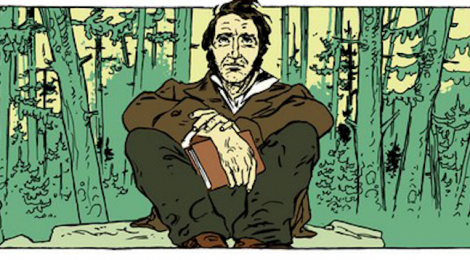
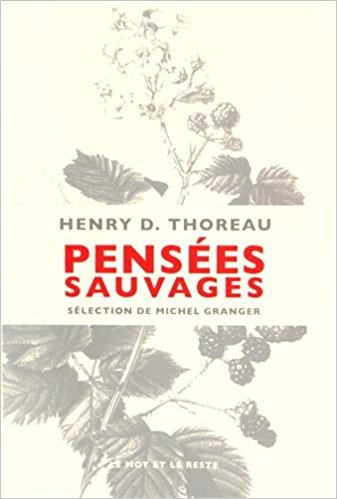 Sélectionnées et ordonnées par Michel Granger, professeur de littérature américaine à l’université Lyon 2 et spécialiste de Thoreau, les Pensées sauvages sont extraites de divers ouvrages du naturaliste, dont le fameux Walden ou la vie dans les bois. Au final, nous tenons entre les mains une remarquable anthologie dans laquelle chacun peut puiser, au gré de ses humeurs, de ses inspirations ou de ses centres d’intérêt, une réflexion aussi dense que stimulante sur notre rapport à la modernité. « Puissent ces idées “excitantes” qui vont à l’encontre de la doxa néolibérale et de l’optimisme de la techno-science être prises en compte pour nourrir la réflexion contemporaine », exhorte le professeur Granger en des termes qui font directement écho à la pensée de Jacques Ellul, de Bernard Charbonneau ou d’Ivan Illich.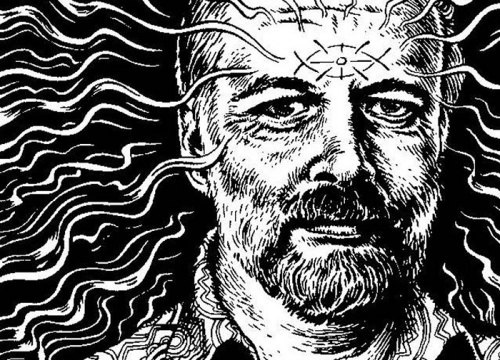

 Le comte nommé Allamistakéo, la momie donc, donne sa vision du progrès :
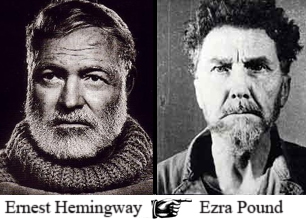
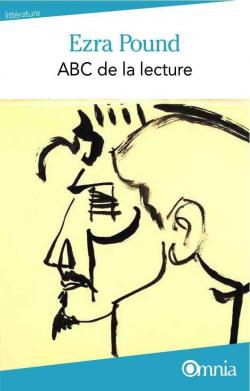 Les causes de l’avilissement du langage selon Ezra Pound convergent avec les observations que fit Pasolini quelques années plus tard dans Empirisme Hérétique ; il pointe les dégâts que cause l’Usure, mais aussi le catholicisme qu’il percevait comme une religion castratrice, en prenant comme point d’appui la décadence de Rome qui transforma « de bons citoyens romains en esclaves ». De fait, si Dieu est aussi mort aux yeux de Pound, l’hégémonie culturelle des sociétés modernes est aux mains de la Technique. Si le degré hégémonique de cette dernière indique le niveau de décadence d’une civilisation, Ezra Pound estime que c’est d’abord la littérature, et donc le langage, qui en pâtit la première, car si « Rome s’éleva avec la langue de César, d’Ovide et de Tacite. Elle déclina dans un ramassis de rhétorique, ce langage des diplomates « faits pour cacher la pensée », et ainsi de suite », dit-il dans ABC de la Lecture. La critique d’Ezra Pound ne diffère guère de celle de Bernanos ou de Pasolini sur ce point, outre le fait qu’il aille plus loin dans la critique, n’hésitant pas à fustiger les universités, au moins étasuniennes, comme agents culturels de la Technique, mais aussi l’indifférence navrante de ses contemporains. Le triomphe des Musso, Levy et autre Meyer ne trouve aucune explication logique, tout du moins sous le prisme littéraire. Seules les volontés capitalistes des éditeurs – se cachant sous les jupes du « marché » qu’ils ont pourtant façonné – expliquent leur invasion dans les librairies. Comme il l’affirme dans Comment Lire, « Quand leur travail [des littérateurs, ndlr] se corrompt, et je ne veux pas dire quand ils expriment des pensées malséantes, mais quand leur matière même, l’essence même de leur travail, l’application du mot à la chose, se corrompt, à savoir devient fadasse et inexacte, ou excessive, ou boursouflée, toute la mécanique de la pensée et de l’ordre, socialement et individuellement, s’en va à vau-l’eau. C’est là une leçon de l’Histoire que l’on n’a même pas encore à demi apprise ».
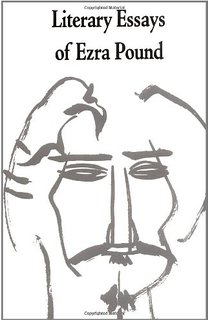 Cette glorification de la médiocrité, Ezra Pound la voyait d’autant plus dans la reproduction hédoniste à laquelle s’adonnent certains scribouillards dans le but de connaître un succès commercial. Aujourd’hui, plus que jamais, la réussite d’un genre littéraire entraîne une surproduction incestueuse de ce même genre, comme c’est notamment le cas en littérature de fantaisie, où l’on vampirise encore Tolkien avec autant de vergogne qu’un charognard. Si la « technicisation » de la littérature comme moyen créatif, ou plutôt en lieu et place de toute création, devient la norme, alors, comme le remarquait plus tard Pasolini, cela débouche sur une extrême uniformisation du langage, dans une forme déracinée, qui efface petit à petit les formes sophistiquées ou argotiques d’une langue au profit d’un galimatias bon pour les robots qui présentent le journal télé comme on lirait un manuel technique. Les vestiges d’une ancienne époque littéraire ne sont plus que le fait de compilations hors de prix et d’hommages ataviques afin de les présenter au public comme d’antiques œuvres dignes d’un musée : belles à regarder, mais réactionnaires si elles venaient à redevenir un modèle. Ezra Pound disait que « le classique est le nouveau qui reste nouveau », non pas la recherche stérile d’originalité qui agite la modernité comme une sorte de tautologie maladive.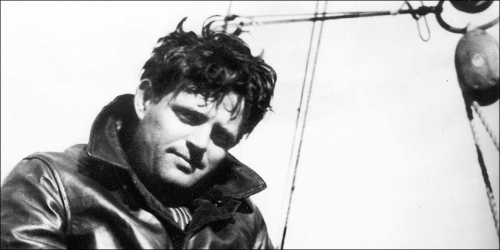
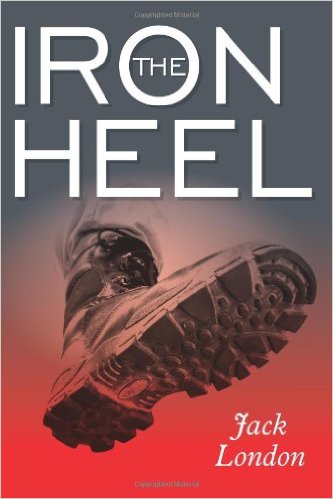 Le peuple est donc détesté car il ne comprend rien. Merkel, Juncker ou Sutherland n'arrêtent pas de nous insulter au sujet de l'immigration. On nous accuse d'inventer ce que nous redoutons. Vite, la camisole.
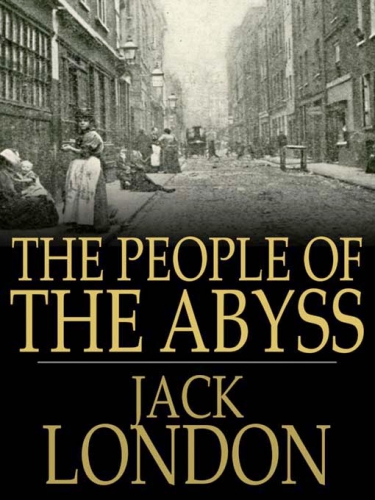 London cite d'ailleurs la machine politique, comme le grand Ostrogorski à l'époque (un savant russe qui fut envoyé par le tzar pour étudier la corruption du système politique US, la « machine », les « boss » et tout le reste). Ensuite il appelle le nécessaire alcoolisme, qui effarera aussi Louis-Ferdinand Céline dans ses Bagatelles (il y consacre bien trente pages à l'alcool notre phénomène) :
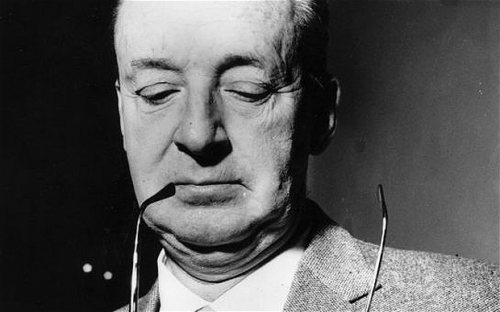
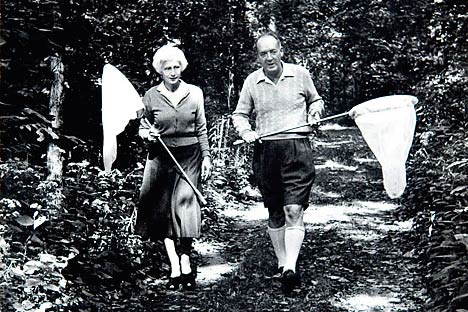
 Dans Lolita, ni femme ni culture. Seule une gamine de douze ans et l’Amérique des motels qui défile le long des routes. L’histoire en elle-même et le scandale qu’elle suscita n’apparaissent finalement que comme secondaires si l’on songe que le roman existait déjà en substance quinze ans plus tôt, sous le titre de L’Enchanteur, que Nabokov n’avait pas publié mais dont il reprend de très près la trame. Dans les deux œuvres, l’auteur insiste sur le caractère déterminant de la mère de la fillette, tantôt gravement malade et inspirant la pitié, tantôt vulgaire et ignare, suscitant le dégoût du narrateur autant que celui du lecteur. Lorsqu’il paraît, le roman reçoit de manière immédiate et étonnamment évidente le qualificatif de « littérature américaine ». En réalité, il s’agit là de bien davantage qu’un simple symbole, puisque c’est l’achèvement du détachement absolu des personnages de leurs origines culturelles, la rupture définitive avec la Russie amoureusement méprisée ou douloureusement regrettée et paradoxalement, dans l’évolution du style de Nabokov, du point culminant où les personnages, pourtant sans réelles profondeur et texture historiques, se donnent à voir dans leur plus complexe richesse. « Je suis le chien fidèle de la nature. Pourquoi alors ce sentiment d’horreur dont je ne puis me défaire ? », s’interroge Humbert Humbert, incapable d’aimer les femmes, mais torturé par l’amour d’une fillette.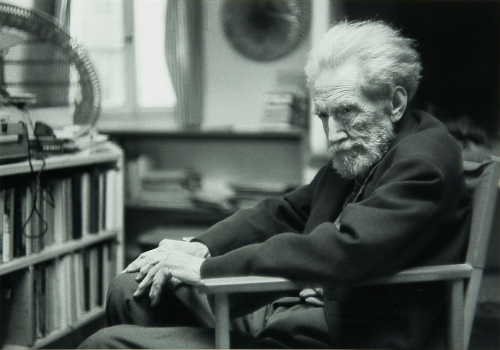
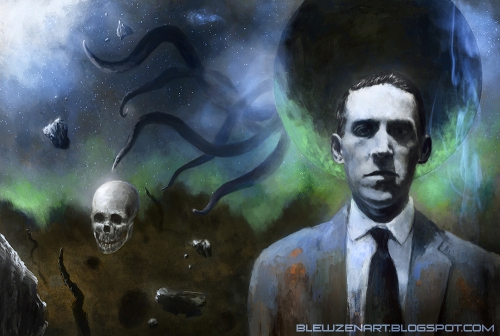

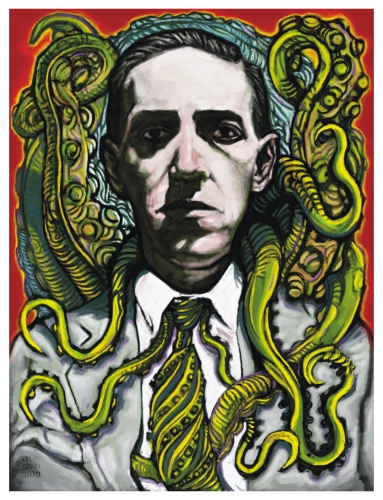
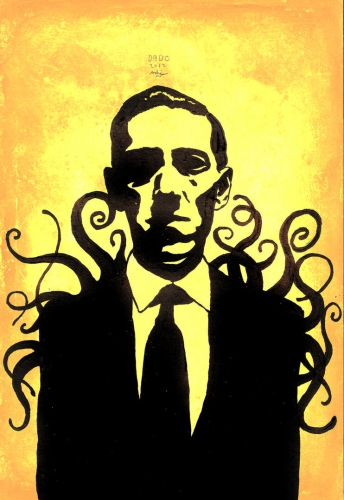 But therein lies their charm. Consider this collection, to continue the pop culture metaphor, a kind of Lovecraft Unplugged.
 La première étape traversée par le personnage principal revient donc à s’en affranchir. On apprend doucement à prendre du recul, à concevoir l’apparente réalité comme une extrême relativité, une illusion dont Sigismond en traduirait ainsi les contours en tant que « […] nous sommes dans un monde si étrange que vivre ce n’est que rêver, et que l’expérience m’enseigne que l’homme qui vit rêve ce qu’il est, jusqu’au moment où il s’éveille. […] Dans ce monde, en conclusion, chacun rêve ce qu’il est, sans que personne s’en rende compte ». Pedro Caldéron, « La vie est un songe ».

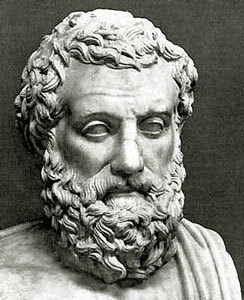 The Greeks, unlike ourselves, expected their literary men to be thinkers and teachers as a matter of course. This expectation was justified by figures of the stature of Aeschylus, Sophocles and Euripides. Dramatists like these preached, taught, entertained and prophesied with such vitality and authority that their judgements were taken away by their audiences and applied to all levels of civic life. That both playwrights and audiences prospered upon this didactic relationship is best shown by the intellectual versatility of the Hellenic world, which has yet to be repeated.
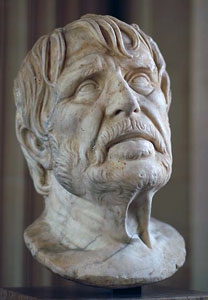 When the Roman Empire rose to take its place, Terence and Seneca, the bright lights of Latin, reflected a frightening deterioration in what was expected of a writer. Julius Caesar found it an easy matter to be both a swashbuckler and a scribe in a world that, culturally, could not even conquer sculpture. But Rome’s poverty was magnificence compared to the bankruptcy prevailing in Britain and everywhere else in the civilized world today.
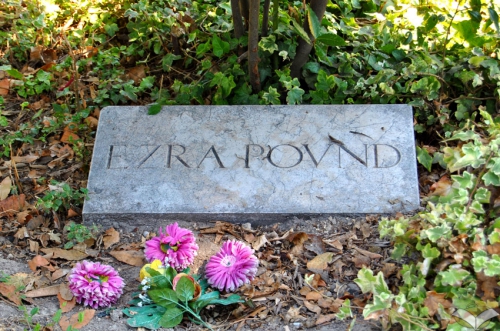
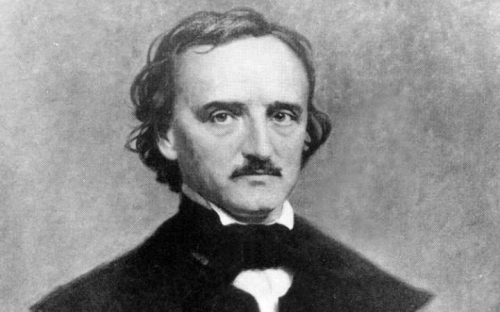
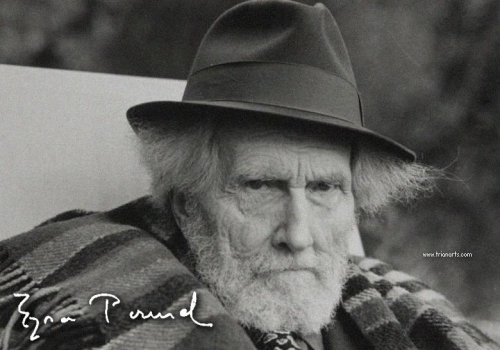
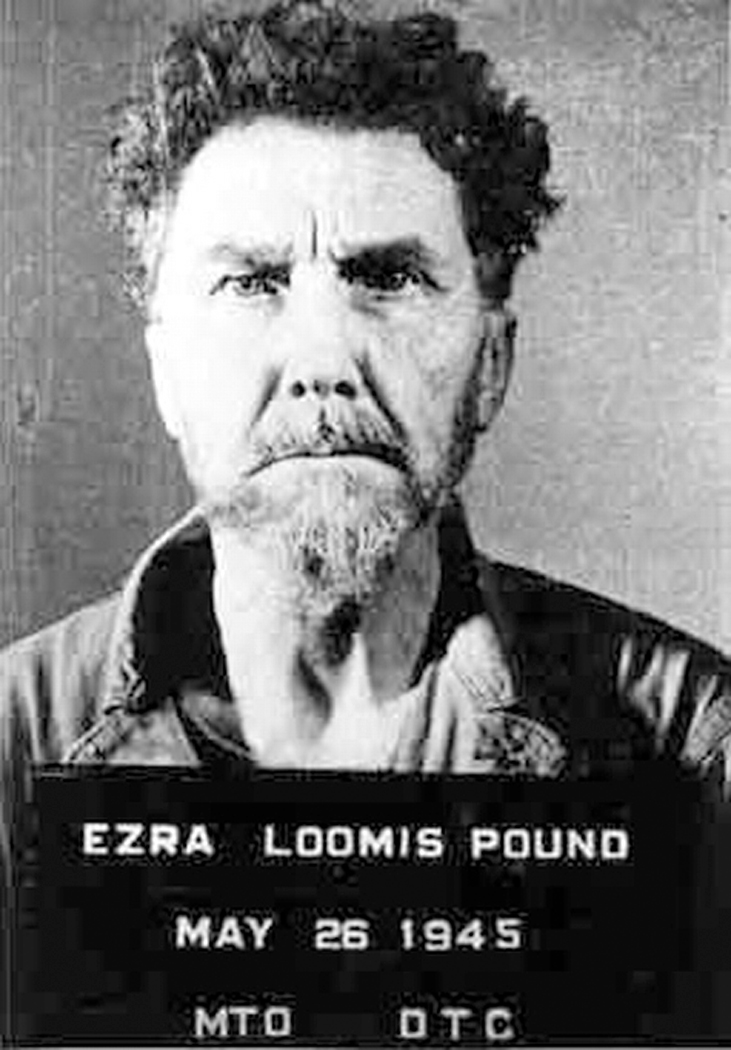
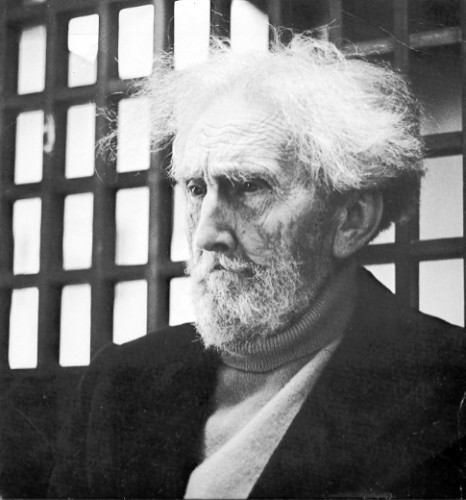
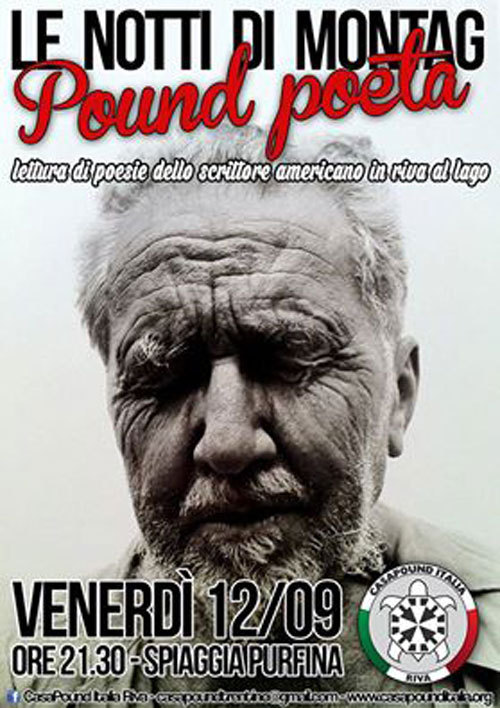
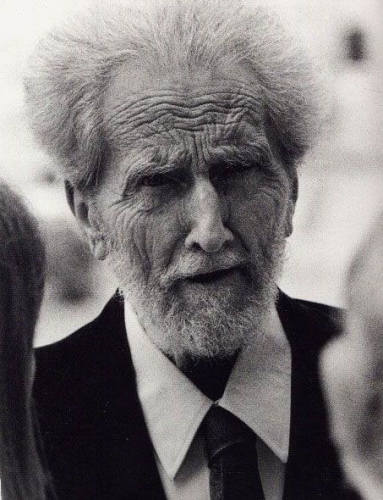 Au mois de novembre 1972, disparaissait le génial Ezra Pound dont la lutte contre l’usure fut une direction fondamentale de la vie et de l’œuvre. Les
 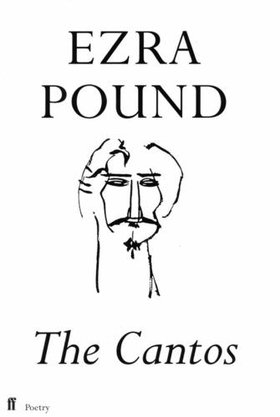 Si Pound n’est pas apprécié dans les médias, la raison en est son immense lucidité. Il a accepté la responsabilité historique d’écrire à contre courant, d’être un rebelle à temps complet. Son talent secouait la médiocrité et le mensonge. Son œuvre fonctionne comme un miroir dans lequel les trafiquants voient leur infâmie. Tout cela a été délégitimé par l’industrie du spectacle et les prédicateurs médiatiques. L’écrivain contemporain, celui pour qui les lobbys obtiendront un prix “ en souvenir de Nobel”, n’est plus qu’un propagandiste du meilleur des mondes. Pound reste l’ultime manifestation de l’esprit, incarne l’aède antique même si en ce moment les shopping center ont remplacé le forum.

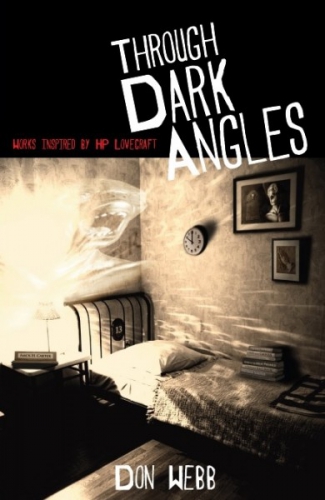 Don Webb has been writing short stories, and the occasional novel, since, as a rather indifferent undergraduate at Texas Tech, he took a supposedly easy-A class in “The Science Fiction Short Story” and discovered that unlike his fellow slackers, he’d rather take the write a story option than the term paper. The story itself was equally indifferent, but by then the hook was in, a writer born.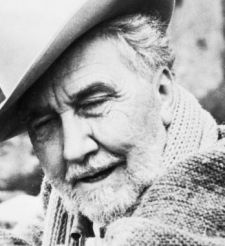



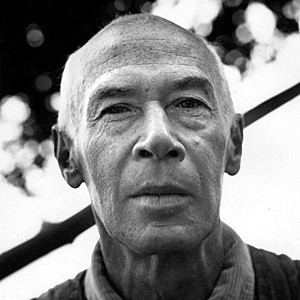 « Le spectacle le plus pitoyable, c’est celui de toutes ces voitures garées devant les usines et les aciéries. L’automobile représente à mes yeux le symbole même du faux-semblant et de l’illusion. Elles sont là, par milliers et par milliers, dans une telle profusion que personne, semble-t-il, n’est trop pauvre pour en posséder une. D’Europe, d’Asie, d’Afrique, les masses ouvrières tournent des regards envieux vers ce paradis ou le prolétaire s e rend à son travail en automobile. Quel pays merveilleux ce doit être, se disent-ils ! (Du moins nous plaisons nous à penser que c’est cela qu’ils se disent !) Mais ils ne demandent jamais de quel prix se paie ce privilège. Ils ne savent pas que quand l’ouvrier américain descend de son étincelant chariot métallique, il se donne corps et âme au travail le plus abêtissant que puisse accomplir un homme. Ils ne se rendent pas compte que même quand on travaille dans les meilleures conditions possibles, on peut très bien abdiquer tous ses droits d’être humain. Ils ne savent pas que (en américain) les meilleures conditions possibles cela signifie les plus gros bénéfices pour le patron, la plus totale servitude pour le travailleur, la pire tromperie pour le public en général. Ils voient une magnifique voiture brillante de tous ses chromes et qui ronronne comme un chat ; ils voient d’interminables routes macadamisées si lisses et si impeccables que le conducteur a du mal à ne pas s’endormir ; ils voient des cinémas qui ont des airs de palaces, des grands magasins aux man