




 del.icio.us
 Digg
Digg Facebook


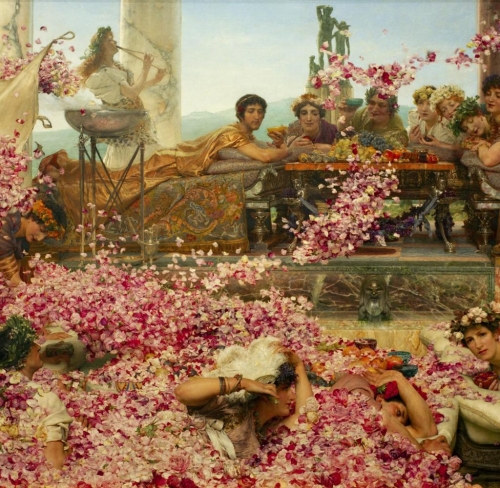
 Avant que l’on commence à se lamenter sur les décadences décrites par nos ancêtres romains et jusque par nos auteurs contemporains, et quelle que soit l’appellation qui leur fut attribuée par les critiques modernes, « nationalistes », « identitaires », « traditionalistes de la droite alternative, » « de la droite extrême » et j’en passe, il est essentiel de mentionner deux écrivains modernes qui signalèrent l’arrivée de la décadence bien que leur approche respective de son contenu et de ses causes fut très divergente. Ce sont l’Allemand Oswald Spengler avec son Déclin de l’Occident, écrit au début du XXème siècle, et le Français Arthur de Gobineau avec son gros ouvrage Essai sur l’inégalité des races humaines, écrit soixante ans plut tôt. Tous deux étaient des écrivains d’une grande culture, tous deux partageaient la même vision apocalyptique de l’Europe à venir, tous deux peuvent être appelés des pessimistes culturels avec un sens du tragique fort raffiné. Or pour le premier de ces auteurs, Spengler, la décadence est le résultat du vieillissement biologique naturel de chaque peuple sur terre, vieillissement qui l’amène à un moment historique à sa mort inévitable. Pour le second, Gobineau, la décadence est due à l’affaiblissement de la conscience raciale qui fait qu’un peuple adopte le faux altruisme tout en ouvrant les portes de la cité aux anciens ennemis, c’est-à-dire aux Autres d’une d’autre race, ce qui le conduit peu à peu à s’adonner au métissage et finalement à accepter sa propre mort. À l’instar de Gobineau, des observations à peu près similaires seront faites par des savants allemands entre les deux guerres. On doit pourtant faire ici une nette distinction entre les causes et les effets de la décadence. Le tedium vitae (fatigue de vivre), la corruption des mœurs, la débauche, l’avarice, ne sont que les effets de la disparition de la conscience raciale et non sa cause. Le mélange des races et le métissage, termes mal vus aujourd’hui par le Système et ses serviteurs, étaient désignés par Gobineau par le terme de « dégénérescence ». Selon lui, celle-ci fonctionne dorénavant, comme une machine à broyer le patrimoine génétique des peuples européens. Voici une courte citation de son livre : « Je pense donc que le mot dégénéré, s’appliquant à un peuple, doit signifier et signifie que ce peuple n’a plus la valeur intrinsèque qu’autrefois il possédait, parce qu’il n’a plus dans ses veines le même sang, dont des alliages successifs ont graduellement modifié la valeur ; autrement dit, qu’avec le même nom, il n’a pas conservé la même race que ses fondateurs ; enfin, que l’homme de la décadence, celui qu’on appelle l’homme dégénéré, est un produit différent, au point de vue ethnique, du héros des grandes époques. »
  L’écrivain Salluste est important à plusieurs titres. Primo, il fut le contemporain de la conjuration de Catilina, un noble romain ambitieux qui avec nombre de ses consorts de la noblesse décadente de Rome faillit renverser la république romaine et imposer la dictature. Salluste fut partisan de Jules César qui était devenu le dictateur auto-proclamé de Rome suite aux interminables guerres civiles qui avaient appauvri le fonds génétique de nombreux patriciens romains à Rome.
 Nul doute que la crainte de l’Autre, qu’elle soit réelle ou factice, resserre les rangs d’un peuple, tout en fortifiant son homogénéité raciale et son identité culturelle. En revanche, il y a un effet négatif de la crainte des autres que l’on pouvait observer dans la Rome impériale et qu’on lit dans les écrits de Juvénal. Le sommet de l’amour des autres, ( l’ amor hostilis) ne se verra que vers la fin du XXème siècle en Europe multiculturelle. Suite à l’opulence matérielle et à la dictature du bien-être, accompagnées par la croyance à la fin de l’histoire véhiculée par les dogmes égalitaristes, on commence en Europe, peu à peu, à s’adapter aux mœurs et aux habitudes des Autres. Autrefois c’étaient Phéniciens, Juifs, Berbères, Numides, Parthes et Maghrébins et autres, combattus à l’époque romaine comme des ennemis héréditaires. Aujourd’hui, face aux nouveaux migrants non-européens, l’ancienne peur de l’Autre se manifeste chez les Blancs européens dans le mimétisme de l’altérité négative qui aboutit en règle générale à l’apprentissage du « déni de soi ». Ce déni de soi, on l’observe aujourd’hui dans la classe politique européenne et américaine à la recherche d’un ersatz pour son identité raciale blanche qui est aujourd’hui mal vue. A titre d’exemple cette nouvelle identité négative qu’on observe chez les gouvernants occidentaux modernes se manifeste par un dédoublement imitatif des mœurs des immigrés afro-asiatiques. On est également témoin de l’apprentissage de l’identité négative chez beaucoup de jeunes Blancs en train de mimer différents cultes non-européens. De plus, le renversement de la notion de « metus hostilis » en « amor hostilis » par les gouvernants européens actuels aboutit fatalement à la culture de la pénitence politique. Cette manie nationale-masochiste est surtout visible chez les actuels dirigeants allemands qui se lancent dans de grandes embrassades névrotiques avec des ressortissants afro-asiatiques et musulmans contre lesquels ils avaient mené des guerres meurtrières du VIIIe siècle dans l’Ouest européen et jusqu’au XVIIIe siècle dans l’Est européen.
 Les lignes de Juvénal sont écrites en hexamètres dactyliques ce qui veut dire en gros un usage d’échanges rythmiques entre syllabes brèves ou longues qui fournissent à chacune de ses satires une tonalité dramatique et théâtrale qui était très à la mode chez les Anciens y compris chez Homère dans ses épopées. À l’hexamètre latin, le traducteur français a substitué les mètres syllabiques rimés qui ont fort bien capturé le sarcasme désabusé de l’original de Juvénal. On est tenté de qualifier Juvénal de Louis Ferdinand Céline de l‘Antiquité. Dans sa fameuse VIème satire, qui s’intitule Les Femmes, Juvénal décrit la prolifération de charlatans venus à Rome d’Asie et d’Orient et qui introduisent dans les mœurs romaines la mode de la zoophilie et de la pédophilie et d’autres vices. Le langage de Juvénal décrivant les perversions sexuelles importées à Rome par des nouveaux venues asiatiques et africains ferait même honte aux producteurs d’Hollywood aujourd’hui. Voici quelques-uns de ses vers traduits en français, de manière soignés car destinés aujourd’hui au grand public :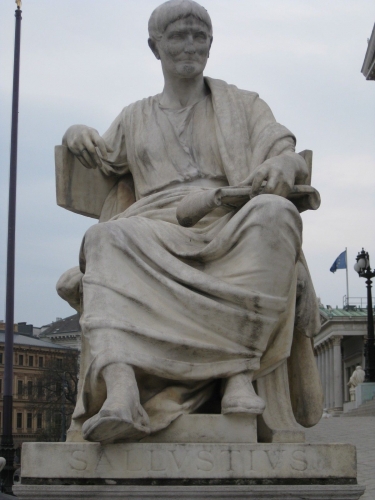
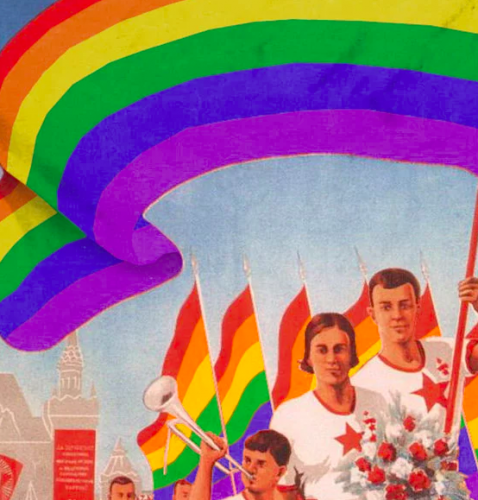
I’m reading one of the best books I’ve ever seen, historian Yuri Slezkine’s The House of Government: A Saga of the Russian Revolution. It’s a massive — over 1,000 pages — history of the Bolshevik movement, focusing on the people who lived in a vast apartment building constructed across the Moskva River from the Kremlin, for party elites. In the 1930s, during the purges, it was the most dangerous address in the country. The secret police came for people there all the time.
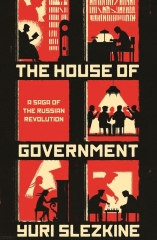 The book has given me a breakthrough in understanding why so many people who grew up under communism are unnerved by what’s going on in the West today, even if they can’t all articulate it beyond expressing intense but inchoate anxiety about political correctness. Reading Slezkine, a UC-Berkeley historian, clarifies things immensely. Let me explain as concisely as I can. All of this is going into the book I’m working on, by the way.
In my book, I identify two main factors that make the “soft totalitarianism” we’re drifting into different from the hard totalitarianism of the communist years. One is the vastly greater capabilities of surveillance technology, and its penetration into daily life in this current stage of capitalism. The other is the pseudo-religion of Social Justice, the holy trinity of which is Equity, Diversity, and Inclusion. The mathematician James Lindsay last year wrote an insightful essay analyzing Social Justice ideology as a kind of postmodern religion (“faith system,” he writes). Reading Slezkine on Bolshevism illuminates this with new depth.
To be clear, Social Justice religion is not the same thing as Bolshevism, which conquered a nation and turned it into a charnel house. But the psychological dynamics are so similar that I can understand now why Soviet-bloc emigres feel in their bones that something wicked is coming, and coming fast.
I’m going to give a brief overview of the ideas in this part of Slezkine’s book. Slezkine describes the Bolsheviks as “millenarian sectarians preparing for the apocalypse.” He gives a short history of apocalyptic sects, which he said began in the Axial Age, the period between the 8th and the 3rd centuries BC that saw parallel developments in civilizations — Chinese, Indian, Middle Eastern, Greco-Roman — that caused a fundamental shift in human consciousness. The Axial Age introduced some concepts that are still with us today, including the idea that history is linear. Religion and philosophical systems of the Axial Age developed a sense of separation from the Real (that is, what is material), and the Ideal (what is transcendent). They also introduced the idea that time would culminate in a final battle between Good and Evil that would result in the End of History and the everlasting reign of Justice. The rich will be conquered, and the poor will triumph.
Slezkine writes at some length about these themes in the Hebrew Bible (Old Testament), but points out that they also existed in parallel in other religions of the era. The two Abrahamic religions that emerged from Axial Age Judaism — Christianity and Islam — modified these same concepts for themselves. The Book of Revelation in the Christian Bible is the standard Western account of the Apocalypse, but not the only one.
In the 16th century, the radical Protestant theologian Thomas Müntzer, leader of an apocalyptic Reformation sect, led an armed revolt against the Catholic Church, Martin Luther, and feudal authority. He and his followers believed the Last Days were upon the world, and that revolutionary violence was necessary to prepare for them.
These movements, says Slezkine, often depend on the virtuous mutually surveilling each other to keep everyone in line. Calvin’s Geneva was like this, and had laws prescribing the death penalty for relatively minor violations of its purity code. In the 17th century, the English Puritan movement under Thomas Oliver [the mistake was mine — RD] Cromwell (the “Puritan Moses”) was in this same vein.
The Enlightenment birthed apocalyptic millenarianism without God. Slezkine doesn’t mention him, but I want to put in a plug for the book Black Mass by the English political philosopher John Gray, which I wrote about here. Gray is an atheist, but he cannot stand the militant atheism of people like Richard Dawkins and the late Christopher Hitchens. In the book, Gray writes about how the instinct for utopia, born out of religion, keeps surfacing in the West, even without God. Nothing is more human, he writes, than to be prepared to kill and die to secure meaning in life. More Gray:
Those who demand that religion be exorcised from politics think this can be achieved by excluding traditional faiths from public institutions; but secular creeds are formed from religious concepts, and suppressing religion does not mean it ceases to control thinking and behaviour. Like repressed sexual desire, faith returns, often in grotesque forms, to govern the lives of those who deny it.
Slezkine writes that this same apocalyptic millenarianism erupted in anti-Christian form in the French Revolution. The Jacobins were Enlightenment apocalyptics, believing in the triumph of Reason, Science, and Virtue. And they were proto-Bolsheviks. Robespierre, in a 1794 speech to the National Assembly, praised “virtue, without which terror is destructive; terror, without which virtue is impotent. The Terror is nothing but justice, prompt, severe, inflexible; it is thus an emanation of virtue.”
In 19th century America, millenarianism took more gentle forms, but was still popular. Baptist preacher William Miller prophesied the end of the world in 1843, and reached a national audience with his forecast of doom. It didn’t happen, but his work gave rise to the Adventist movements, which are still with us today. Joseph Smith, founder of the Latter-Day Saints faith, was another millenarian — a more successful one.
Slezkine says that apocalyptic millenarianism in 19th century Europe often took the form of nationalism. Karl Marx advocated German nationalism as the first step in the worldwide communist revolution. Following Hegel, History was Marx’s god. Slezkine:
[F]aith in progress is just as basic to modernity as the Second Coming was to Christianity (‘progressive’ means ‘virtuous’ and ‘change’ means ‘hope’). ‘Totalitarianism’ is not a mysterious mutation: it is a memory and a promise; an attempt to keep hope alive.
By “totalitarianism,” he means the system by which apocalyptic millenarians enforce the conditions they believe will constitute the New Jerusalem — the utopia in which their sect believes.
The Marxist faith system prophesied a worldwide conflagration — Revolution — that would see the saints (the Proletariat) cleanse the world of the wicked (the Bourgeoisie) and their false religion (Capitalism). The Revolution would establish Communism: a paradise in which the state would wither away, because the cause of man’s alienation would have been dealt with. Marx despised religion, but he did not believe that his system was religious at all. It was, he taught, entirely scientific — thus making Marxism entirely compatible with what Enlightenment-era elites believed was the prime source of authority.
In Russia of the late 19th century, there was a great deal of apocalyptic fervor, and, of course, a number of Marxist and other left-wing revolutionary groups. The Bolsheviks were the most ruthless and disciplined of them all. Slezkine says it doesn’t matter whether the faith of the Bolsheviks was really a religion or not. The fact is, it functioned like one. If religion is a set of agreements about sacred realities, though sacred realities believed to be objectively true, and the community organized around those beliefs, then every state on earth is religious. The Bolshevik “faith” united people, focused them around what Slezkine calls “the ultimate conditions of their existence,” and told them what they had to do.
For the pre-revolutionary Bolsheviks, the priests and the prophets were their intellectuals, who were “religious about being secular.” Writes Slezkine: “A conversion to socialism was a conversion to the intelligentsia, to a fusion of millenarian faith and lifelong learning.”
The Bolshevik faith was initially spread among the intellectuals primarily through reading groups. Once you adopted the Marxist faith, everything else in life became illuminated. The intellectuals went into the world to preach religion to the workers. These missionaries, says Slezkine, appealed to and tried to intensify hatred in the hearts of their listeners. They spoke to the moral sense within the common people, and gave them what, if taken in a strictly religious sense, would be called prophetic revelations.
The pre-revolutionary Bolsheviks denounced “Philistines” — people who are sunk in their everydayness, and lack revolutionary consciousness. It is chilling to read the lines of description they had for people like this. Slezkine calls the Philistines the “stock antipode of the intelligent” — that is, the kind of person that a member of the intelligentsia saw as his exact opposite. In pre-revolutionary Russia, the intelligentsia saw themselves as a kind of secular priesthood. The way they wrote about their enemies, and the way they rhapsodized about revolution, was utterly fanatical and inhuman. Slezkine:
The revolutionaries were going to prevail because of the sheer power of their hatred. It cleansed the soul and swelled like the flood of the real day.
The “real day” is the day of Apocalypse, when the truth is fully made manifest, and all evil, injustice, and lies are cleansed from the earth. It would come about through “sacred fury.” Slezkine quotes Bolshevik memoirs recalling the revolutionary days of 1917-18. Pure ecstasy, like the day of Pentecost in the New Testament.
Slezkine draws this interesting distinction:
Marx and Engels were not utopians – they were prophets. They did not talk about what a perfect system of social order should be and how and why it should be adopted or tested; they knew with absolute certainty that it was coming – right now, all by itself, and thanks to their words and deeds.
The Bolsheviks, however, did have a complex plan for creating utopia. Reading Slezkine, you can’t help but be impressed by the power and discipline that Lenin and his lieutenants exercised. He was one of the most evil men who ever lived, Lenin — Slezkine’s accounts of Bolshevik mass murder of class enemies on Lenin’s orders make Robespierre’s bloodthirstiness seem like amateur hour. But he was a true revolutionary genius.
For young people in pre-revolutionary Russia, being part of these leftist groups “gave one a great sense of purpose, power, and belonging.” Note this: one reason for the advance of revolutionary consciousness is that parents, despite depending on the stability of Tsarist autocracy, would not turn away from their radicalized children. Slezkine: “The ‘students’ were almost always abetted at home while still in school and almost never damned when they became revolutionaries.”
Bolshevism in power tried to destroy the traditional family, seeing it as an incubator of capitalism. Slezkine writes about how this form of Bolshevik radicalism had to give way to a more conservative ideology of the family, because it caused problems that Soviet society could not deal with.
In power, Bolsheviks carried out apocalyptic destruction of the old order, including the mass murder of class enemies. I have just now arrived at the point in Slezkine’s narrative in which he describes the “Great Disappointment” — a term (borrowed from the Millerites) for the experience of the New Jerusalem not having arrived as promised. As I understand it, Slezkine will describe the homicidal spasms of the 1930s, under Stalin, as the vengeful Bolshevik reaction to utopia’s failure. Utopia can only have failed because its proselytes were weak in faith — and therefore deserve to be punished for their infidelity.
So, what does this have to do with our own Social Justice Warriors? There are clear parallels. Again, I encourage you to read James Lindsay’s analysis of the postmodern faith system of Social Justice for more.I believe that this is what those who lived under communism intuit from the Social Justice Warriors — I mean, why it frightens them:
Like the early Bolsheviks, the SJWs are radically alienated from society. They regard ordinary people as the intelligents regarded the so-called Philistines: with visceral contempt.
Justice depends on group identity. For Marxists, the line between Good and Evil ran between classes: the Proletariat and the Peasants on one side, the Bourgeoisie on the other. Marxism sees justice as entirely a matter of taking power away from the Bourgeoisie, and giving it to the revolutionary classes. Some in the bourgeoisie acquired revolutionary consciousness, and aided the Revolution.
Similarly, for the SJWs, the line also passes between groups, based on group identity. The Oppressors are whites, males, capitalists, heterosexuals, and Christians. The Oppressed are ethnic minorities, women, anti-capitalists, LGBTs, atheists, and other “marginalized” people. Justice is about taking power from the Oppressors and giving it to the Oppressed. Some among the Oppressors acquire revolutionary consciousness and aid the revolution; they are called “allies,” and practice “allyship.”
Social Justice Warriors, like the early Bolsheviks, are intellectuals whose gospel is spread by intellectual agitation. It is a gospel that depends on awakening and inspiring hatred in the hearts of those it wishes to induce into revolutionary consciousness. This is why it matters immensely that they have established their base within universities, where they can train those who will be going out to work in society’s institutions in ideologized hatred.
SJWs believe that science is on their side, even when their claims are unscientific. They are doing the old post-Enlightenment utopian trick of making essentially religious claims, but claiming that they are objectively true. Quote from a Times story: “We’re all born nonbinary. We learn gender.”
SJWs are utopians who believe that Progress requires smashing all the old forms for the sake of liberation. After we are freed from the chains that bind us, we will experience a new form of life. From a June 4 New York Times Magazine story on destroying gender binaries:
Our talk shifted again from the past to the future. Jacobs spoke about foreseeing a time when people passing each other on the street wouldn’t immediately, unconsciously sort one another into male or female, which even Jacobs reflexively does. “I don’t know what genders are going to look like four generations from now,” they added, allowing that they might sound utopian, naïve. “I think we’re going to perceive each other as people. The classifications we live under will fall by the wayside.”
Among the voices of the young, there are echoes and amplifications of Jacobs’s optimism, along with the stories of private struggle. “There are as many genders as there are people,” Emmy Johnson, a nonbinary employee at Jan Tate’s clinic, told me with earnest authority. Johnson was about to sign up for a new dating app that caters to the genderqueer. “Sex is different as a nonbinary person,” they said. “You’re free of gender roles, and the farther you can get from those scripts, the better sex is going to be.” Their tone was more triumphal: the better life is going to be. “The gender boxes are exploding,” they declared.
In the case of transgender SJWs, parents can become the greatest advocates for their children, as in pre-revolutionary Russia with the radical youth. A distressed parent of a female-to-male transgender told me that in her child’s high school, the pressure on parents from other parents to suppress all doubts about transgenderism was intense. Here, from that same NYT Magazine piece I quote above, is another anecdote:
Kai grew up in the Maryland suburbs outside Washington; both his parents are economists. He came out to them as genderqueer a year and a half ago, and they, as he put it, were willing “to step through the door” he held wide for them, the door into his way of seeing himself. They read a piece of creative writing he gave them, a meditation using Dadaism to explicate the nonsense of either-or. His mother asked if she could buy him new clothes. “Shopping for clothes was something we’d always done,” he said. “It was her way of saying, ‘I want to keep being part of your life.’ That was really stepping through the door. And then, all the nerve-rackingness of shopping in the men’s section of a department store and trying on pants and worrying about how people are looking at you and reading your gender, it would have been really hard to do on my own. But my mother was there. Just like when we’d shopped together before. And that made it normal.”
Here’s an interesting difference: from what I can tell, most SJWs don’t have a clearly envisioned utopia. What will the world look like when whiteness is once and for all defeated? When toxic masculinity has been fully vanquished? And so forth. They don’t know; all they know is that these things must come to pass, and will come to pass. We have to first destroy the old world and its corrupt structures. From the point of view of someone who stands to be smashed by these revolutionaries, it doesn’t really matter whether or not they have a plan for what to do after you’re overthrown.
Here’s another interesting difference, and an important one: SJWs may want to destroy the oppressive practices, but unlike the Bolsheviks, they don’t want to destroy the institutions of society. Rather, they want to conquer them and administer them. The religion of Social Justice has already conquered the university, as James Lindsay points out, and is moving quickly into other institutions: media (the NYT is its Pravda), law, tech, entertainment, and corporate America. The Social Justice faith system can be easily adapted by the institutions of bourgeois capitalism — a fact that conceals its radicalism.
The people who have lived in societies suffused with this kind of ideology — emigres from Soviet-bloc countries — can see through the veil. With this new book I’m working on, I’m going to do my best to help readers see through their eyes. Meanwhile, if you are really interested in the Russian Revolution, I strongly urge you to read The House Of Government — all 1,128 pages of it. Yuri Slezkine is a masterful storyteller. It reads like a novel.







 1969 promovierte Sander bei Hans-Joachim Schoeps in Erlangen zum Dr. phil. Der Titel seiner Promotionsschrift lautete „Marxistische Ideologie und allgemeine Kunsttheorie“; Sander setzte sich hier insbesondere mit der Kunstkonzeption von Marx und Engels auseinander. Es war wohl insbesondere der Einfluß des Staatsrechtlers Carl Schmitt, mit dem er bis 1981 brieflich in Kontakt stand, der ihn in dieser Zeit mehr und mehr zu rechtskonservativen Auffassungen tendieren ließ. Von 1964–1974 arbeitete er für das Deutschland-Archiv. In dieser Zeit gestaltete er gelegentlich auch Rundfunkfeuilletons für öffentlich-rechtliche Sender. Sanders „Geschichte der Schönen Literatur in der DDR“ (1972) löste eine heftige Kampagne aus, in deren Folge der Verlag das Buch aus dem Vertrieb zog. Sander verlor nun zunehmend an publizistischem Spielraum. Alternativen fand er unter anderem bei Caspar von Schrenck-Notzings Zeitschrift Criticón.
  Sander hat nie einen Hehl daraus gemacht, daß er die Bundesrepublik für nicht reformierbar hielt. Beide deutsche Staaten seien unter Kuratel der Besatzer entstanden, was unter anderem für eine Negativauslese im Hinblick auf die Eliten gesorgt habe. Dennoch sei nichts verloren: Die Deutschen bräuchten „sich nur innerlich aufzuraffen“, so Sander im „Nationalen Imperativ“, „um sich der brüchigen alten Zustände der Innen- und Außenpolitik zu entledigen, wieder auf die überlieferten, immer noch wirkenden Tugenden zu setzen und neue Formen und Ziele zu wagen, die in Richtung auf einen neuen Machtstaat, eine neue Großmacht drängen, die den Nachbarn durchaus zuzumuten wäre, weil durch nichts sonst das schutzbedürftige Europa noch gerettet werden kann.“ Diese Sätze können, in einer Zeit, in der Europa durch die Auswirkungen der „Flüchtlingskrise“ schutzbedürftiger denn je ist, durchaus als Vermächtnis Sanders nicht nur an die Deutschen gelesen werden.


 Influence ? Aujourd’hui, la notion est dans l'air du temps : opérations d'influence, communication d'influence, e-influence ou stratégie d'influence...
  Au fil du temps, l'influence se pense dans divers contextes :
 Ainsi, suivant les époques, il peut :