Ok

En poursuivant votre navigation sur ce site, vous acceptez l'utilisation de cookies. Ces derniers assurent le bon fonctionnement de nos services. En savoir plus.

lundi, 29 août 2016

Washington’s Sunni Myth and the Middle East Undone

1233-iraksyrie.jpg

Washington’s Sunni Myth and the Middle East Undone

Ex: http://warontherocks.com

A Westerner with extensive on-the-ground experience in Syria and Iraq tackles conventional Western views of the civil wars in Iraq and Syria and proposes a dramatic rethinking of the region.

Editor’s Note: This is the second of two articles on this topic, the first of which was published last week. There has been some controversy over my decision to allow this author to write under a pen name. I know the author’s identity and while his arguments are surely controversial, I am confident in his sourcing and subject matter expertise. I carefully considered his request to use a pen name. I decided that this case reasonably meets the standards for such protection published on our site. The author, in my view, can reasonably and seriously fear for his professional employment and safety publishing under his real name. -RE / Update: The author’s pen name has been changed to protect someone with the same name who has nothing to do with the article.

I was not surprised to see my first article greeted with so much outrage by those who adhere to the conventional Western narrative of the civil wars in Iraq and Syria as well as the larger tumult of the Middle East. In truth, these conflicts are not so easily defined by the easy sectarian narrative offered in the Western press.  I argued that Western elites were surrendering to and even embracing the Saudi definition of what Sunni identity should mean. And I provided accounts of the conflicts in Syria and Iraq that do not comport with what you likely have been reading in the newspapers.

But there is far more to the story. It is worth recounting how we got to this point. In the aftermath of the toppling of Saddam and his regime, Iraq’s Sunnis were betrayed by many of their own religious, political, and tribal leaders who demanded that they boycott the post-2003 political order by waging an insurgency against the world’s most powerful military and the government it sought to stand up and support. Of course, it did not help that the U.S.-led occupation and the security forces it empowered victimized Sunni Iraqis disproportionately. The American military’s posture was more aggressive in Sunni-majority areas, and Iraqi security forces collaborated with Shia death squads in pursuit of a vicious counterinsurgency strategy that saw bodies piled up and neighborhoods cleansed. Iraqis en masse suffered from a collective trauma that will take decades to recover from. But hardline Sunni rejectionists and their Western backers have claimed that if Sunnis are not “empowered” then there is no alternative available to them but the Islamic State of Iraq and the Levant (ISIL). When adopted by Westerners, this argument seems to support Sunnis but actually represents a very low opinion of them because it holds that Sunnis require disproportionate political power to avoid becoming terrorists. Since 2003, Sunni rejectionists have pushed this narrative to hold Iraq hostage, blackmailing Baghdad and its allies like gangsters in a protection racket.

If Sunni leaders did not receive the government position or the business contract they wanted, they would then claim persecution on account of their Sunni identity, switch sides, gather their relatives, and use violence. Examples of this phenomenon from early 2013 include:

Still, the West has pressured the Iraqi government to allow into its ranks Sunni representatives like the above, who oppose the very legitimacy of the government and the notion of a Shia ruler. There were no Shias in the Anbar or Ninawa provinces to threaten Sunnis.  At best, they were politically disgruntled, which is an insufficient reason to embrace the world’s most vicious terrorist organization.

The Jihad Returns to Haunt Syria

The interplay between the conflict in Iraq and the Syrian civil war created a perfect storm. The U.S.-led occupation of Iraq and the sectarian war it ignited influenced how Syrian Sunnis thought of themselves. The Syrian government was warned that it was next in line for regime change, and it took preemptive measures to scuttle the American project in Iraq. By supporting or tolerating insurgents (including al-Qaeda) for the first three years of the occupation, Damascus sought to bog the Americans down. But by then, the Syrian government had lost control of its eastern border. After 2006, at least one million mostly Sunni Iraqis fled into Syria, including some with ties to the insurgency who either came to Syria to facilitate insurgent operations in Iraq, to find a safe place for them and their families, or both. Many former al-Qaeda in Iraq members had fled to Damascus and were living normal lives as family men and laborers before the Syrian crisis erupted in 2011. In my own interviews with detained members of Jabhat al-Nusra, I learned that when the Syrian insurgency started, these men were contacted by old friends who told them, in effect, “We’re putting the band back together.” Many of these Iraqis formed the early core of al-Nusra, which until recently was al-Qaeda’s Syrian affiliate.

By 2010 or 2011, Iraq appeared to be stable. When the uprising started in Syria and the country became unstable, many of the Iraqi Sunni rejectionists returned to Iraq from their Syrian exile. Insurgents in Syria had created failed state zones, power vacuums full of militias, and a conservative Islamist Sunni population mobilized on sectarian slogans. The Turks were letting anyone cross into Syria, which was exploited most successfully by jihadists. By the summer of 2012, many local Syrians saw the arrival of foreign fighters in a positive light, as if they were members of the Lincoln Battalion of foreign volunteers in the Spanish Civil War. As I myself witnessed, they were welcomed and housed by Syrians, who facilitated their presence and cooperated with them.

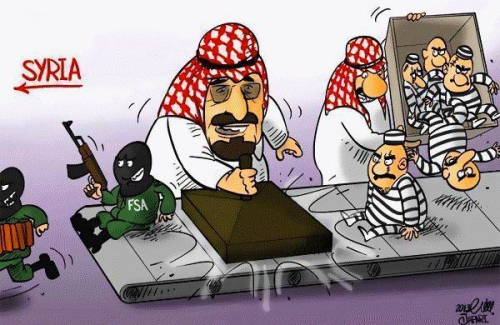
These thousands of foreign fighters in Syria eventually sided in large numbers with ISIL, seizing parts of Syria. From there, the group was able to launch its offensive into Iraq in the summer of 2014 (although the ground in Mosul had been prepared by the jihadists for quite some time). The prospect of a Sunni sectarian movement seizing Damascus evoked their dreams of expelling the Shia from Baghdad (although the difference, of course, is that Baghdad is a Shia-majority city, unlike Damascus). The Syrian uprising mobilized public and private Gulf money for a larger Sunni cause in Syria, Iraq, and elsewhere in the region. A lot of this support went to the Sunni rejectionists of Iraq, who staged sit-ins and demonstrations in majority-Sunni cities in Iraq. Meanwhile, Al Jazeera had transformed from the voice of Arab nationalism into the voice of sectarian Sunnis, virtually promoting al-Qaeda in Syria and celebrating the initial ISIL “revolutionaries” in Iraq.

carte-syrie-irak-FR-7.png

From Syria, Back to Iraq

In 2012, as jihadists gathered in centers of rebellion around Syria, Sunni rejectionists in Iraq allowed jihadists to re-infiltrate their ranks as they launched this campaign of demonstrations, thinking they could use the presence of these men as leverage against the government. At the time, al-Qaeda and ISIL forerunner Islamic State of Iraq were still united. They had systematically assassinated key leaders of the “Awakening” movement, neutralizing those that could have blocked the jihadist rapprochement with Sunni leaders in Iraq. From 2006 to 2009, they also assassinated many rival insurgent commanders to weaken alternative armed movements. Former insurgents described to me how just before the Americans withdrew from Iraq in 2011, insurgent leaders from factions as politically diverse as the Naqshbandis, the Islamic Army, the Army of the Mujahedin, and the 1920 Revolutions Brigades all met in Syria to plan to take the Green Zone in Baghdad (an ambition that was, ironically, accomplished this year by Shia rather than Sunni masses). While these groups initially lacked the ability to take the Green Zone, they made their move when the demonstrations started with the help of the Islamic State, which saw utility in cooperating with these groups, for the time being.

When Sunni protestors in 2012 and 2013 filled squares in Ramadi, Mosul, Hawija, Falluja, and elsewhere chanting “qadimun ya Baghdad (“we are coming, Baghdad”), it was hard for the government and average citizens in Baghdad not to interpret this as a threat from various Sunni-majority cities. These were not pro-democracy demonstrations. They were rejecting the new order — an elected government — and calling for overthrow of the Shia.

Sunni rejectionist leaders rode this wave of support and became a key factor in how easily ISIL later seized much of the country. According to Iraqi insurgents I spoke to, ISIL’s leaders initially thought that they would have to depend on former insurgents, including Baathists, as a cover to gain support. While ISIL’s jihadists did initially cooperate with some of these groups, it was not long until ISIL discovered it did not need them and purged them from its newly seized territories. Many Sunni rejectionist leaders, now understanding the horror of what they helped to unleash, then fled, leaving their populations displaced, destroyed, and divided. Likewise in Syria, Sunni rejectionists and their Western supporters argued that the only way to defeat ISIL is to topple Assad, and thus placate their sectarian demands. And the West somehow believes that they are representative of Syria’s Sunnis writ large. The secular or progressive opposition activists amenable to pluralism unfortunately have no influence because they have no militias of their own.

The Evolution of Sectarian Identity in the Modern Middle East

There is a major crisis within Sunni identity. Sunni and Shia are not stable, easily separable categories. Twenty years ago, these terms meant something else. The 2003 invasion of Iraq was the geopolitical equivalent of the asteroid that caused the extinction of the dinosaurs. Just as species were killed off or arose thanks to that cataclysm, so too in the Muslim world, old identities were destroyed while new ones were created, as discussed by Fanar Haddad at the Hudson Institute. One of these new identities was the post-Saddam “Sunni Arab,” treated by their Western taxonomists as if they were an ethnic group rather than a fluid, fuzzy, and diverse religious sect. For centuries, Sunni identity was conflated with “Muslim” and the identity of “Muslim” was distinct from members of heterodox or heretical sects. Generally speaking, Shias living in areas dominated by Sunnis were subordinate to them juridically and by custom. The war in Iraq helped create a sense of “Sunni-ness” among otherwise un-self-conscious Sunni Muslims,  and it also overturned an order many took for granted. To make matters worse, not only were Shia Islamist parties (such as Dawa and the Supreme Council) brought to power (as well as Sunni Islamist parties such as the Islamic Party), but Sunnis bore the brunt of the occupation’s brutality (while Shias bore the brunt of the insurgency’s brutality).

The result is that we now see Sunni identity in the way that the Saudis have been trying to define it since they began throwing around their oil wealth in the 1960s to reshape Islam globally in the image of Wahhabism. Haddad explains:

[T]he anti-Shia vocabulary of Salafism has clearly made some headway in Iraq and indeed beyond. This is only to be expected given that Salafism offers one of the few explicitly Sunni and unabashedly anti-Shia options for Sunnis resentful of Shia power or of Sunni marginalization.

In other words, we now see a Sunni identity in Iraq that dovetails with Saudi Wahhabism. And the response in the West is to reinforce this!

Ironically, we do something similar with Shia identity. Westerners (and sectarian Sunnis) believe Shia are all the same and all an extension of Iranian (Persian) theocratic power — but they are not, and assuming this is the case has negative effects in the region. It is true that there is far more political coherence to Shia religious identity in the Middle East compared to the Sunni, but placing the center of Shia identity in Iran dramatically misconceives the center of power in the Shia Arab world. To be a sect, you need to have a sense of coherence with centers of power through which someone speaks on your behalf. Shias know what they are and who their leaders are. In Iraq and even beyond its borders, Grand Ayatollah Ali Sistani looms larger than others for Shia, especially but not exclusively in the Arab world.  The Sunnis have no equivalent leader.

kepel600-tt-w.jpg

We tend to view Hizballah or the Iranian Revolutionary Guard Corps solely as threats to the West or Israel, but they are also mature local actors with influence on other Shias. Before 2011, the Shia axis was merely an idea. Compared to the Shia of Lebanon, Syria, and Iran, Iraqi Shias were relatively isolated from neighboring countries and struggles. They were insular, and their aspirations were more mundane, as they were discovering middle-class life. Just as Sunni rejectionists playing ISIL’s game in radicalizing their populations, this process also radicalized many Iraqi Shia, mobilizing them in self-defense and even launching some of them into Syria to support Assad. Now Shias from Iraq, Lebanon, Iran, Syria, Afghanistan, and elsewhere are cooperating on the battlefield. From 2003 until the present day, Shia civilians have been targeted in Iraq nearly every day, not to mention in Pakistan, Afghanistan, Syria, Lebanon, and Yemen.

Despite this virtual war on Shias supported and condoned by major Sunni religious leaders, Shias have remained much more restrained than their Sunni counterparts. What is keeping Lebanese, Iraqi, and Syrian Shias from committing massacres and displacing all Sunnis in their path? By and large, it is a more responsible religious leadership guiding them from Qom or Najaf, organizing Shias and offering structure and discipline. According to interviews I have conducted in the region, Hizballah leaders privately complain to Iraqi Shia leaders about their behavior, condemning them for alienating and failing to absorb Sunnis. They scold these leaders for their violations, reminding them that when Hizballah expelled the Israeli occupation, it did not blow up the houses of the many Christian and Shia collaborators or violently punish them.

When we say Sunni, what do we mean? There are many kinds in too many countries: Sunni Kurds, Uighurs, Senegalese, tribal Arabs, urbanites in Cairo, Damascus, Baghdad, Bedouins, and villagers. You cannot make Sunnism into a politically coherent notion unless you are willing to concede to the narrative of al-Qaeda, ISIL, or the Muslim Brotherhood. The latter has historically avoided the explicit, toxic sectarianism of the jihadi groups, but it is also a broken and spent force as its projects in the Arab world having largely failed.

Before the rise of the modern Arab nation-state, cities possessed a state-sponsored moderate Islam that was involved in the law. Urban Sunnis were largely part of the moderate Hanafi school of Sunni jurisprudence. This school, one of four mainstream Sunni schools, is the most tolerant and flexible. The countryside historically practiced folk Islam or considered itself Shia, Sufi, or Alawi. Hanafization took place because it was the religion of elites, the religion of empire, the religion of Ottomans. Today, there is no state Hanafi Islam and other moderate institutions. traditional Sunni Islam of the state has crumbled.

It is therefore impossible to find a genuine center of Sunni power. It is not yet Saudi Arabia, but unless the West changes the way it sees the Middle East, that will become a self-fulfilling prophecy with cataclysmic results.

Saudi Arabia is the dominant state supporting Sunni Islam today via mosques, foundations, and Islamic education. As a result, Salafism — a movement that holds Islam should be practiced as it was by the Prophet Mohammad and his companions — is the new religion of empire and its rejectionist tendencies are a danger to all countries with a Sunni population, from Mali to Indonesia. One reason why Syrian Sunnis became so radicalized is that many of them spent years working in the Gulf, returning with different customs and beliefs. When a Gulf state supports the opening of a mosque or Islamic center in France or Tanzania, it sends its Salafi missionaries and their literature along with it. Competing traditions, such as Sufism, are politically weak by comparison. Muslim communities from Africa to Europe to Asia that lived alongside for centuries alongside Christians, Buddhists, and Hindus are now threatened as Sufis and syncretic forms of Islam are pushed out by the Salafi trend.

topelementsyrie.jpg

I have come to understand that in its subconscious, the institutional culture of the Syrian regime views this transnational Sunni identity as a threat and it is one reason why Alawites are overrepresented in the Syrian security forces. This is partly for socioeconomic reasons, but it is also seen by the regime as key to preserving the secular and independent nature of the state. Their rationale is that Alawites as a sect have no relations or connections or loyalties outside of Syria. As a result, they cannot betray the country by allying with the Saudis, Qataris, or the Muslim Brotherhood, nor can they suddenly decide to undo the safeguards of secularism or pluralism inherent in the system.

The vision propagated by the Islamic State is consistent with the Salafi interpretation of Islamic law, which is why Egypt’s al-Azhar or other institutions of “moderate Islam” cannot be counted upon to stem the tide of Salafism. Al-Azhar, traditionally the preeminent center of Sunni Islamic learning, failed to reject ISIL as un-Islamic. Leading Sunni theologians in the Arab world have condemned ISIL on the grounds that the group is excessive, applying the rules wrong, or pretending to have an authority it does not legally possess, but they do not cast the movement as un-Islamic and contrary to Sharia. Only technical differences separate the ideology of Jabhat al-Nusra from that of ISIL or Ahrar al-Sham or even Saudi Arabia. The leadership of al-Nusra also holds takfiri views, and their separation from al-Qaeda did not involve a renunciation of any aspect of its toxic ideology. Ahrar al-Sham likewise appeals to the same tendencies.

Curiously, U.S. political leaders seem more dedicated than anyone in the world to explaining that ISIL is not true to the tenets of Sunni Islam. The problem is that Muslims do not look to non-Muslim Western political leaders as authoritative sources on Islam.

The irony, of course, is that the main victims of Salafization are Sunnis themselves. Sunni elites are being killed, and the potential to create Sunni civil society or a liberal political class is being made impossible. ISIL seized majority-Sunni areas. Main Sunni cities in Iraq and Syria are in ruins and their populations scattered, and, obviously, the Syrian Arab Army’s brutal campaign has also contributed to this. Millions of Sunnis from Syria and Iraq are displaced, which will likely lead to a generation of aggrieved Sunni children who will receive education that is extreme, sectarian, and revolutionary or militant in its outlook — if they get any education at all. Already, many live in exile communities that resemble the Palestinian refugee camps, where a separate “revolutionary” identity is preserved.

The Sunni public has been left with no framework. Sunnis represent the majority of the Middle East population, and yet having in the past embraced the state and been the state, they now have nothing to cohere around to form any robust and coherent movement or intellectual discourse. A movement built around the idea of Sunnism, such as the foreign-backed Syrian opposition and some Iraqi Sunni leaders, will create an inherently radical region that will eventually be taken over by the real representatives of such a notion — al-Qaeda, ISIL, or Saudi Arabia.

State Collapse and Militias Fighting for Assad

Five years of bleeding has weakened the Syrian army and forced it to rely upon an assortment of paramilitary allies, nowhere more so than in Aleppo. On July 28, the Russians and Syrians offered insurgents in east Aleppo amnesty if they left, and they invited all civilians to come to the government-held west Aleppo. This offer was explicitly modeled on the 2004 evacuation of Falluja’s residents, which came at a high price, in order to retake the city from al Qaeda in Iraq. In response, Sunni extremists called for an “epic” battle in Aleppo. The jihadist offensive was named after Ibrahim al Yusuf, a jihadist who killed dozens of Alawite officer candidates at the Aleppo military academy in 1979 while sparing Sunni cadets. It is led by Abdullah Muheisni, a shrill Saudi cleric who called upon all Sunnis to join the battle and who marched into the city triumphantly. Up to two million people in west Aleppo are threatened by the jihadist advance, protected by an army hollowed out after five years of attrition.

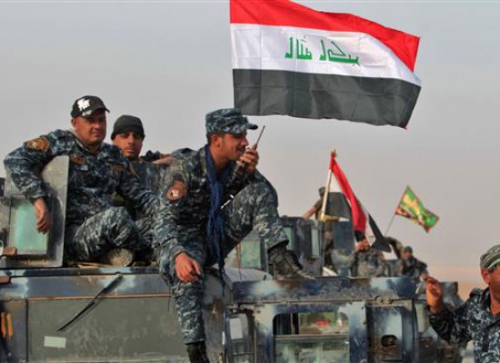
This has forced the Syrian regime to rely on Shia reinforcements from Iraq, Lebanon, Afghanistan, and Iran. There is a big difference between these Shia reinforcements and their jihadist opponents. The Iraqi Popular Mobilization Forces (PMF) and others have come to Syria to help the Syrian army prevent further state collapse. They would not be there had a foreign-backed insurgency not weakened the army. The foreign Shia militias do not interact with Syrian civilians and are only on the frontlines. They are not attempting to impose control. Even the worst of the Iraqi Shia militias avoid overt sectarianism and work hard to stress that the enemy is not all Sunnis but rather those who advocate for a violent Wahhabi ideology. Moreover, I learned in interviews that the regime has arrested and even executed unruly Shia militiamen.

Meanwhile, Muheisni and his hordes represent an explicitly totalitarian and genocidal ideology that endangers all people of the region who are not Salafi men. The Shia PMF units in Aleppo such as Kataeb Hizballah and Nujaba have plenty of Sunnis in Baghdad that they could massacre if they had an anti-Sunni agenda, and yet they leave them alone just as they do the Sunni civilians of government-held portions of Aleppo.

Finally, Iran and its non-Syrian Shia partners cannot establish roots in Syria or change its society as easily as some seem to think. As much as the Alawite sect is called Shia, this is not entirely accurate and they do not think of themselves as Shia. They are a heterodox and socially liberal sect that bears little resemblance in terms of religious practice or culture to the “Twelver Shias,” such as those of Iran, Iraq, or Lebanon. There is only a very tiny Twelver Shia population in Syria.

Many of the soldiers fighting in the Syrian army to protect Aleppo are Sunnis from that city, and most of the militiamen fighting alongside the army in various paramilitary units are Sunni, such as the mixed Syrian and Palestinian Liwa Quds and the local Sunni clan-based units. In Aleppo, it is very much Sunni versus Sunni. The difference is that the Sunnis on the government side are not fighting for Sunnism.  Their Sunni identity is incidental. By contrast, the insurgents are fighting for a Sunni cause and embrace that as their primary identity, precluding coexistence. This does not, of course, mean the government should drop barrel bombs on their children, however.

The presence of Iraqi Shia militiamen is no doubt provocative and helps confirm the worst fears of some Sunnis, but the fact that these foreign Shia are supporting their Syrian allies does not negate the fact that there are many more thousands of Sunnis on the side of the government. Those foreign Shia militias believe, according to my interviews, that if they do not stop the genocidal takfiri threat in Syria, then Iraq and Lebanon will be threatened. Alawites and other minorities believe this too of course. But in Syria there is still a state and it is doing most of the killing, though not for sectarian reasons but for the normal reasons states use brutality against perceived threats to their hegemony. There have been exceptions such as the 2012 Hula or 2013 Baniyas massacres in which ill-disciplined local Alawite militiamen exacted revenge on Sunni communities housing insurgents, targeting civilians as well.

1433iraq.jpg

What is Washington to Do?

U.S. policy in the Middle East, especially in conflict zones and conflict-affected states, should be focused on (1) doing no harm and (2) making every effort to stop Saudi Arabia from becoming the accepted center of the Sunni Arab world or the Sunni world writ large, while (3) building and reinforcing non-sectarian national institutions and national forces.

America’s Troublesome Saudi Partners

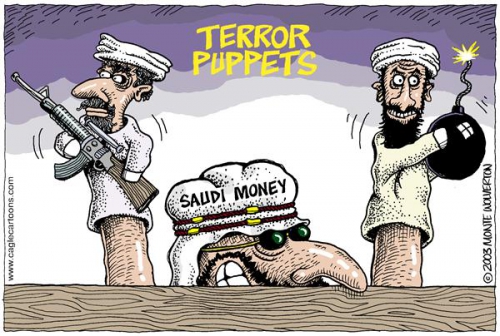
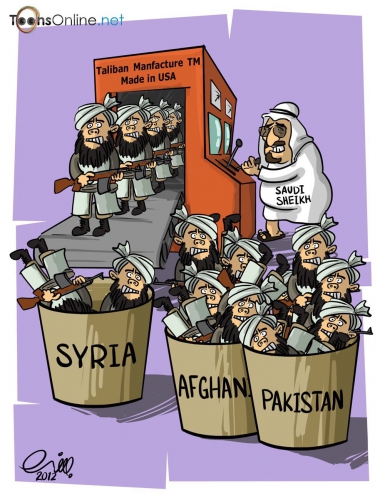
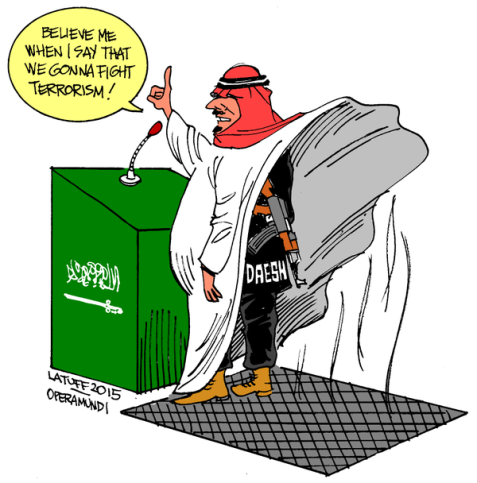
As regards Saudi Arabia, many American thought leaders and policymakers have long understood the fundamental problems presented by this longstanding U.S. partner but the policy never changes. Indeed, U.S. policy has in many ways accepted and even reinforced the longstanding Saudi aim to define Sunni identity in the Arab world and beyond. It is dangerous to accept the Saudi narrative that they are the natural leaders of the Sunni world given the dangerous culture they propagate. Promoting a sectarian fundamentalist state as the leader of Arab Sunnis is hardly a cure for ISIL, which only takes those ideas a bit further to their logical conclusions.

Washington may not have the stomach to take a public position against the form of Islam aggressively propagated by its Saudi “partners,” but there must be an understanding that Wahhabism is a dangerous ideology and that its associated clerical institutions represent a threat to stability in Islamic countries around the world. The United States could seek to sanction media outlets, including satellite channels and websites, that promote this form of Islam. Think this is unprecedented? Washington has targeted Lebanese Hizballah’s al-Manar station with some success.

Syrian and Iraqi Sunnis are not holding their breath waiting to hear what Gulf monarchs will say. They wait only to see how much money might be in the envelopes they receive for collaboration. For leadership, Iraqi and especially Syrian Sunnis should be encouraged to look closer to home — to their own local communities and the state. The state should be strengthened as a non-sectarian body.

The Need for Non-Sectarian Institutions in the Middle East

In Washington’s policy circles, we often hear calls for Sunni armies and militias to “solve” Iraq and Syria. Yet Sunni armies already exist in these countries in the form of ISIL, al-Qaeda, and Ahrar al-Sham. The answer is not more Sunni armed groups.

If the goal is to excise jihadism, do not try to coexist with Sunni rejectionists advancing Saudi notions of Sunni identity. If Assad were fed to the jihadists as a sacrifice, then the next Alawite, Christian, Shia, secular, or “apostate” leader would become the new rallying cry for jihadists. Their goal is not merely the removal of one leader, but the extermination of all secularists, Shias, Alawites, Christians, and Jews, and others who are different — including fellow Sunnis. The Syrian government is often criticized for making little distinction between ISIL, Jabhat al-Nusra, Ahrar al-Sham, and the “moderates” who cooperate with them, but this misconceives how the Syrian state forces see the conflict. To them, any insurgent force with Islamist slogans is a slippery slope leading to the same result. Critics may complain that at various points in the war Syrian state forces spent more resources fighting the American-backed insurgents than ISIL, but this is because ISIL emerged largely in areas where the Syrian government had already been driven out. Meanwhile, the so-called moderates were the main day-to-day threat to government-held population centers such as Aleppo, Hama, Homs, Damascus, and Daraa.

It is irrational for the West to expect the Syrian government to focus on the enemies the West wants to see defeated while Western powers, along with Gulf countries and Turkey, are supporting insurgents that attack government forces which secure cities. The Syrian security forces have a finite amount of men, ammunition, fuel, and other resources, and they need to protect a great deal of military infrastructure, terrain, population centers, and supply lines. This naturally forces the regime to make choices. When foreign-backed insurgents attack state-held areas, the state’s security forces are less able to conduct operations elsewhere. For example, when American-backed insurgents cooperated with al-Qaeda and foreign fighters to seize cities in Idlib province last year, the Syrian Arab Army sent reinforcements from the east to Idlib. This left Palmyra wide open for ISIL to attack, which they did, seizing the ancient city. In February of this year, with the Cessation of Hostilities in place, the Syrian state was able to focus more resources on ISIL and retake Palmyra with Russian backing. ISIL and al-Qaeda thrive in stateless zones throughout the Muslim world. Supporting insurgents to create more such zones will only give such groups more space to occupy.

Every proposal to further weaken regime security forces leads to a greater role for Shia militias and the ill-disciplined militias the regime relies upon for support. Escalation by supporting proxies does not pressure the regime to negotiate. It only pressures the regime to use even more repressive and abhorrent tactics. The only compromises it makes are about which actors it will rely upon to defeat its enemies. As law and order breaks down, even Alawite militias have lost respect for the security forces. What is left of the Syrian state is failing, and the West bears some responsibility for that.

chsunn.jpg

As jarring as this may sound to many Western readers, the Syrian government offered a model of secular coexistence based on the idea of a nation-state rather than a sect. This is a model wherein Sunnis, Alawis, Christians, Druze, Kurds, Shias, and atheists are all citizens in a deeply flawed, corrupt, and — yes — repressive system in need of improvement but not in need of destruction. The Syrian state has clearly become progressively more brutal as the civil war has dragged on. Still, the regime is not sectarian in the way most in the West seem to think. It is also not purely secular in that it encourages religion (a bit too much) and allows religion to influence the personal status laws of its various sects.

The regime has always felt insecure vis-à-vis its conservative Sunni population, and it has gone out of its way to placate this group over the years by building mosques and Quranic memorization institutes across the country. But denying that the regime is sectarian is not a defense of the regime’s moral choices. Rather, it just shows that it commits mass murder and torture for other reasons, such as the protection and holding together of what is left of the state. This is not an apology for the massive and well-documented human rights violations committed by the Syrian government throughout the course of this war. But until 2011, it offered a society where different religious groups and ethnicities lived together, not in perfect harmony, but at peace. If you do not believe me, look at the millions who have fled from insurgent-held areas to government-held areas and have been received and treated just like any other citizens.

This is far preferable to the sectarian model advanced by much of the Syrian armed opposition, which seeks to create something that will lead ultimately to, at worst, a jihadist caliphate and, at best, a toxic and repressive state in the mold of Saudi Arabia. As I noted in my previous article, the Syrian government has unleashed desperate levels of brutality, using collective punishment, indiscriminate attacks on insurgent-held areas, and harsh siege tactics. Many thousands have died in the regime’s prisons, including the innocent. Likewise, the insurgency has slaughtered many thousands of innocents and participated in the destruction of Syria. This legacy of crimes committed by all will hopefully be dealt with, but all responsible parties should view ending this conflict as the first priority.

In Iraq, there exists a state that should be supported over the claims of Sunni rejectionists who still think they can reestablish Sunni dominance in Iraq. The West should have learned from Iraq, Libya, Egypt, and now Yemen how disastrous regime change is. Better instead to promote a gradual evolution into something better by abandoning the disastrous (and failed) regime change policy and supporting decentralization, as called for by Phil Gordon.

What Drives Disorder?

It is wrong to listen to those who say that insurgents will not stop fighting as long as Assad is in power. Many have stopped already, many cooperate tacitly or overtly, and there are many discussions about ceasefires taking place inside and outside Syria.

It is often claimed that Assad “is a greater magnet for global jihad than U.S. forces were in Iraq at the height of the insurgency.” Assad inherited the same enemy the United States faced in Iraq. The primary recruiter for extremists is the war, the power vacuum created by war, the chaos and despair resulting from it, and the opportunity jihadists see to kill Shias, Alawites, secular apostate Sunnis, Christians, and Western armies gathering for what they view as the final battle before judgment day. Assad is barely mentioned in ISIL propaganda. He is too small for them. They want something much larger, as do the other Salafi jihadi groups operating in the region. It is naive to think that if Assad is simply replaced with somebody else the West finds suitable that the jihadis will be satisfied. Moreover, Assad (just like Maliki) is not in Yemen, Libya, the Sinai, or Afghanistan, and, yet, the Islamic State is growing in all those places.

Many Sunni majority countries in the Middle East and elsewhere are also skeptical of regime change in Syria. Even Turkey, which has allowed jihadists to freely use its territory for much of the war, is slowly changing its policy on regime change in Syria. So those who worry about alienating the so-called Sunni world are really only talking about alienating the Saudis — they just won’t admit it. Saudi Arabia is a more mature version of ISIL, so why should they be placated to defeat anyone?

Regime change or further weakening the Syrian army creates more space for ISIL and similar groups. It grants a victory to the Sunni sectarian forces in the region and leads to state collapse in the remaining stable areas of Syria where most people live.

By pitting moderate Sunnis against extremist Sunnis, the United States merely encourages the sectarian approach. The answer to sectarianism is non-sectarianism, not better sectarianism. If you are looking for a Sunni narrative, you are always playing into the hands of the Sunni hardliners. This does not mean the answer is the Syrian regime in its past or current forms. Opposing sectarian movements does not necessarily mean supporting authoritarian secular states. But functioning states, even imperfect and repressive ones, are preferable to collapsed states or jihadist proto-states.

infographie-afp-1448320225.jpg

Westerners are outsiders to this civil war, even if they helped sustain it. For the West, this is not an existential threat, but it is for many of those who live in the Middle East. Those in the region who are threatened by ISIL feel as though beyond the walls of their safe havens there is a horde of zombies waiting to eat their women and children. They might feel that if there is not a cost, in a social sense, paid by those communities who embraced ISIL, then those communities will not have been defeated or learned their lesson. Then, they worry another generation of Sunni extremists will just wait for another chance to take the knives out again. There is an anthropological logic to violence. This is a civil war, inherently between and within communities. It is not merely two armies confronting each other on a battlefield and adhering to the Laws of War. In the eyes of the Syrian and Iraqi states, it is a war on those who welcomed al-Qaeda and then ISIL into their midst.

There is no mechanical link between showing benevolence to formerly pro-ISIL communities and to their not radicalizing in the future. Islamic culture today is globalized, courtesy Saudi funding and modern communications. Many Iraqi Sunnis previously embraced al-Qaeda, only to then embrace the even more virulent ISIL. Future generations should remember that this choice garnered consequences for atrocities, such as the Bunafer tribesmen engaging in the Speicher massacre of Shia soldiers in Iraq. There is a symbolism in a Shia PMF fighter marching into Tikrit, making it clear to Sunni chauvinists that they cannot be the masters over Shia serfs. Yet too severe a punishment, or an unjust one, can indeed leave people with nothing to resort to but violence.

There is little good Washington can do, but it can still inflict a great deal of harm, even if it is motivated by the best of intentions. In The Great Partition, the British historian Yasmin Khan asserted that the partition of India and Pakistan, which killed over one million and displaced many millions, “stands testament to the follies of empire, which ruptures community evolution, distorts historical trajectories and forces violent state formation from societies that would otherwise have taken different—and unknowable—paths.” The same lessons can be learned in Iraq, Libya, and the clumsy international intervention in Syria. It is time that the West started to mind its own business rather than address the failure of the last intervention with the same tools that caused the disaster in the first place. At most, the West can try to help manage or channel the evolution of the region or contain some of its worst side effects.

The order in modern Europe is a result of bloody processes that saw winners and losers emerging and the losers accepting the new order. ISIL’s arrival has expedited this historic process in the Middle East. It has helped organize and mobilize Iraq Shias and connect them to the rest of the world, while the disastrous decision of many Sunnis to embrace movements such as ISIL has caused many of their communities to suffer irreparable damage and dislocation.

Perhaps the Middle East is going through a similar process that will lead to a new more stable order after these terrible wars are over. This period of great flux offers creative opportunities. While some analysts have called for breaking up Syria and Iraq into smaller ethnic and sectarian entities, this would lead to more displacement and fighting, as it did in the Balkans over the course of over a century. Instead of promoting the worst fissiparous tendencies in the region, the solution might be creating greater unity

The American asteroid that hit the Middle East in 2003 shattered the old order. Those tectonic plates are still shifting. The result will not be an end to the old borders, as many have predicted or even suggested as policy. It will also not be the total collapse of states. The evolving new order will retain the formal borders, but central states will not have full control or sovereignty over all their territory. They will rely on loose and shifting alliances with local power brokers, and they will govern in a less centralized way. Accepting this and supporting looser federal arrangements may be the best path forward to reduce fears, heal wounds, and bring about stability.

Cyrus Malik is a pen name for a security consultant to the humanitarian community in the Levant and Iraq.

vendredi, 26 août 2016

Robert Steuckers, The European Enterprise: Geopolitical Essays

RS-GeopolEssays.jpg

The European Enterprise: Geopolitical Essays  

Paperback – 2016

by Robert Steuckers (Author), Alexander Jacob (Translator)

See all formats and editions Paperback
$24.95 

To order:

https://www.amazon.com/European-Enterprise-Geopolitical-E...

In an age of rampant globalisation the study of geopolitics assumes a crucial, and urgent, significance. While geopolitical considerations have always ruled imperial structures in the past, the present state of international politics, where America postures on the world-stage as sole hegemon, demands a renewed attention to the historical, economic, cultural and spiritual bases of the major empires of the European mainland. After the last great war, the main counterpoise to the ambitious American international enterprise has been the Soviet Union and its successor, the Russian Federation. Western Europe, however, has been hampered in its natural development as the matrix of "western civilisation" - which includes the Russian and the American - by the severe calamities it suffered in the two world-wars.

Steuckers' essays, which complement the Russian Eurasianist works, are therefore of particular importance in emphasising the western European role in a new world-order that will be directed not by the self-aggrandisement of capitalistic states but by the historical maturity requisite for genuine cultural development within and outside Europe.

dimanche, 21 août 2016

Grande Fête Médiévale

FetemedSeptevqaE1rnng97o1_500.jpg

00:03 Publié dans Evénement | Lien permanent | Commentaires (0) | Tags : fête médiévale, france, événement | |  del.icio.us | | Digg! Digg |  Facebook

vendredi, 05 août 2016

Tweets: documentation exceptionnelle!

Paruline_jaune1.jpg

Chaque jour un flot de tweets vous attendent sur :

https://twitter.com/RobertSteuckers

Documentation exceptionnelle !

mardi, 26 juillet 2016

Dostoïevski et la dégénérescence du monde par le réseau

jagenholz_dostojewski_550.jpg

Dostoïevski et la dégénérescence du monde par le réseau

par Nicolas Bonnal

Ex: http://www.dedefensa.org

Car il est poussé dans le filet par ses propres pieds ; et il marche sur les mailles du filet...

Job, 8, 18

J'ai souvenance d'un brillant texte de notre cher Guy Sorman (qui redonna jadis ses lettres de prosaïsme au Figaro magazine) dans le journal de la « droite » espagnole ABC (BHL est chargé lui de distraire et surtout d'instruire les maigres sections d'assaut du mondialisme dans El Pais). Et Guy Sorman, essayiste pourtant renommé pour ses piles d'invendus, et entre deux éloges des réfugiés considérés comme des forces vives du capital selon les Marx Brothers et Merkel, présentait ainsi son argumentaire : « même la Russie finira un jour par être démocratique et progressiste et globalement dans le global ». Sans oublier la Chine, l'Iran, la Turquie et tous les autres bons copains de ses modèles Américains.

La Russie n'est donc pas progressiste, branchée et dans le coup, et ce surtout depuis que – selon Marc Ferro – elle a déçu les aspirations prolétariennes d'une gauche que l'on croyait portée plutôt à servir la soupe à la vieille bourgeoisie américanisée.

Sur la Russie et le progrès j'ai heureusement mieux que Sorman ou BHL : Dostoïevski. Je l'ai aussi sur le thème des « réseaux », sociaux ou numériques, qui aujourd'hui captent, détournent et recyclent toutes les énergies et intellects de la planète terre devenue nervalienne. On cite brièvement cette vision du mage dans Aurélia :

« Cette pensée me conduisit à celle qu'il y avait une vaste conspiration de tous les êtres animés pour rétablir le monde dans son harmonie première, et que les communications avaient lieu par le magnétisme des astres, qu'une chaîne non interrompue liait autour de la terre les intelligences dévouées à cette communication générale, et les chants, les danses, les regards, aimantés de proche en proche, traduisaient la même aspiration. La lune était pour moi le refuge des âmes fraternelles qui, délivrées de leurs corps mortels, travaillaient plus librement à la régénération de l'univers. (1) »

Dostoïevski a abordé le thème de la confrontation de la Russie et du progrès, de la Russie et de l’Occident dans plusieurs de ses plus grands livres, en particulier dans l'Idiot et dans Les Possédés, qui eux font allusion à une origine américaine de la prochaine révolution.

krokodil_dostojewski.JPGDans le récit satirique Crocodile (2), il le fait d’une manière parodique, s’en prenant aux préjugés modernistes du dernier homme à venir (et surtout à durer). Il y a l’épisode humanitaire – ne pas maltraiter un pauvre animal, fût-ce un croco –, l’épisode pédagogique – de l’importance de la question économique ! – et pour finir l’épisode gastronomique qui résout la question – en dévorant le crocodile.

Depuis deux siècles nous nous gorgeons de ce progrès technique et économique, et il semble que l'imbécillité satisfaite qui l’accompagne n’a jamais été plus remise en question qu'à l’époque de Flaubert ou de Dostoïevski. Mais à la même époque un Walt Whitman célèbre les achèvements de ce qu’il est convenu de nommer à la télé la modernité...

Dans Passage to India ou Song of the Exposition (à comparer avec le cadre médiéval et traditionnel des Tableaux, le chef d'oeuvre pianistique de Moussorgski), le trop célébré Walt Whitman chante et célèbre sur tous les tons le canal de Suez, ce passage qui va réunir l’orient et l’occident, notions fort disparues auxquelles on fait mine de croire encore : car «dans un monde unifié on ne peut s’exiler » (Debord). Avec une accumulation dont il a le secret, le « pohète » américain fait l’état des lieux, et il nous étourdit avec son clinquant verbalisme, chaque mot faisant office de paradigme roturier de la modernité aboyante:

With latest connections, works, the inter-transportation of the world,

Steam-power, the great express lines, gas, petroleum,

These triumphs of our time, the Atlantic’s delicate cable,

The Pacific railroad, the Suez canal, the Mont Cenis and Gothard and

Hoosac tunnels, the Brooklyn bridge,

This earth all spann’d with iron rails, with lines of steamships threading in every sea,

Our own rondure, the current globe I bring.

Barde « tendance » avant l’heure, Maïakovski un rien couillon, « animal verbal » (Daudet) plus que poète, Whitman est en extase devant ce qui pétarade. Il admire nos exploits à Suez (dont bien sûr Dostoïevski se moque avec son crocodile du Nil), et il célèbre le chemin de fer unificateur, celui des Anglais aux Indes ou des Américains :

I see the tracks of the railroads of the earth,

I see them in Great Britain, I see them in Europe,

I see them in Asia and in Africa.

I see the electric telegraphs of the earth,

I see the filaments of the news of the wars, deaths, losses, gains, passions,

Of my race.

Or précisément sur ces chemins de fer qui ont vidé les campagnes et ruiné le contribuable français (la moitié des lignes servant à faire élire un député), ou ont justifié une bonne moitié des crises boursières de l’époque (comme les actions techno d’aujourd’hui), Dostoïevski a quelque chose de peu aimable à dire, et qu'il va dire dans l’Idiot. C’est un autre idiot métaphorique (un simple d’esprit qui voit l’Esprit) que le Prince, l’ivrogne Lebedev qui s’exprime sur les chemins de fer et leur réseau qui selon lui s’en prend aux formes de vie.

Montrez-moi donc quelque chose qui approche de cette force dans notre siècle de vices et de chemins de fer…

dostoidiot3458352037-fr-300.jpgLebedev voit dans tout réseau moderne un affaiblissement à la fois spirituel et physique de l’homme, lié au progrès de la matrice du confort matériel. L’homme va être coupé de ses sources de vie et de son tellurisme. C’est aussi la leçon d’Andersen (La Vierge des glaces), de Novalis ou de Vigny (« avant vous j’étais belle et j’allais parfumée »…). Mais Tocqueville nous a aussi prévenus sur les risques que faisaient peser l’égalité et le réseau fort sur les hommes dits modernes. Dans le tome II de sa somme, il décrit, dans un texte mal compris, cet affaiblissement des forces de vie liées au développement étatique:

« C’est ainsi que tous les jours il rend moins utile et plus rare l’emploi du libre arbitre ; qu’il renferme l’action de la volonté dans un plus petit espace, et dérobe peu à peu à chaque citoyen jusqu’à l’usage de lui-même. L’égalité a préparé les hommes à toutes ces choses : elle les a disposés à les souffrir et souvent même à les regarder comme un bienfait… il ne tyrannise point, il gêne, il comprime, il énerve, il éteint, il hébète, et il réduit enfin chaque nation a n’être plus qu’un troupeau d’animaux timides et industrieux, dont le gouvernement est le berger (3). »

Retournons à l’Idiot. Lebedev voit le premier, cent-vingt ans avant Tchernobyl, un lien entre l’étoile absinthe de l’Apocalypse (Tchernobyl désigne comme on sait l’absinthe en russe) et l’extension du réseau en Europe :

« Le collégien lui affirma que l’"Étoile Absinthe" qui, dans l’Apocalypse, tombe sur terre à la source des eaux, préfigurait, selon l’interprétation de son père, le réseau des chemins de fer étendu aujourd’hui sur l’Europe. »

Lebedev dégage comme le prince Muichkine une aura d’imperfection, d’inadéquation à la mondanité. C’est souvent le cas chez Dostoïevski : le porteur de la vérité doit être ridiculisé ou caricaturé – pour ne pas être pris au sérieux par la compagnie qui doit continuer de se tordre, comme dit Allais.

Lebedev va désigner une autre cible, qui nous rapproche de la petite société actuelle: l’idéologie du bonheur matériel universel ; le dernier homme dont parle Francis Fukuyama après bien d'autres.

Vous n’avez pas d’autre fondement moral que la satisfaction de l’égoïsme individuel et des besoins matériels. La paix universelle, le bonheur collectif résultant du besoin !

Lebedev n’est bien sûr pas un sot : il n’incrimine pas la machine en tant que telle. Il incrimine plutôt la notion de réseau. Par ailleurs il a pleinement conscience que son expression des forces de vie est incompréhensible à un esprit moderne :

« Par eux-mêmes les chemins de fer ne peuvent corrompre les sources de vie. Ce qui est maudit, c’est l’ensemble ; c’est, dans ses tendances, tout l’esprit scientifique et pratique de nos derniers siècles. Oui, il se peut que tout cela soit bel et bien maudit ! »

Sur le ton de l’imprécation, emporté par cette inspiration religieuse, Lebedev adresse un défi au monde matérialiste et satisfait, monde sans gouvernail et sans cap même :

« Je vous lance maintenant un défi à vous tous, athées que vous êtes : comment sauverez-vous le monde ? Quelle route normale lui avez-vous ouverte vers le salut, vous autres, savants, industriels, défenseurs de l’association, du salariat et de tout le reste ? Par quoi sauverez-vous le monde ? Par le crédit ? Qu’est-ce que le crédit ? À quoi vous mènera-t-il? »

Ainsi Dostoïevski n'encenserait pas ce monde et son crédit ?

A ce propos le psalmiste dit :

« Que l’usurier jette le filet sur tout ce qui est à lui... (4) »

Cent ans avant l’effet de serre et le réchauffement climatique du cerveau qui va avec, Lebedev voit l’avènement de l'homoncule affaibli par sa si riche information et la « thermocratie » (5). Il constate l’absence de la force dans notre société :

« Et osez dire après cela que les sources de vie n’ont pas été affaiblies, troublées, sous cette “étoile”, sous ce réseau dans lequel les hommes se sont empêtrés. Et ne croyez pas m’en imposer par votre prospérité, par vos richesses, par la rareté des disettes et par la rapidité des moyens de communication !  Les richesses sont plus abondantes, mais les forces déclinent ; il n’y a plus de pensée qui crée un lien entre les hommes ; tout s’est ramolli, tout a cuit et tous sont cuits ! Oui, tous, tous, tous nous sommes cuits !… Mais suffit ! (6) »

Nicolas Bonnal

Notes

(1) Nerval, Aurélia, 2ème partie, VI.

(2) Lisez mon étude sur france-courtoise.info/pdf/BonnalDostoievskiCrocodile.pdf. Voyez aussi Internet, nouvelle voie initiatique (les Belles Lettres, 2000)...

(3) De la Démocratie II, IV, ch.6

(4) Psaumes, 109, 11

(5) Gilles Châtelet, Vivre et penser comme des porcs (2000).

(6) L'Idiot, III, chapitre  IV

lundi, 25 juillet 2016

Robert Steuckers: tweets à profusion!

oiseauquichante.png

Chaque jour un flot de tweets vous attendent sur :

https://twitter.com/RobertSteuckers

Documentation exceptionnelle !

A Short History of Modern Iraq's Ethnic Minorities

dimanche, 24 juillet 2016

DA QIN (Les Romains en Chine)

daqint10.jpg

DA QIN (Les Romains en Chine)

Ex: http://lectraymond.forumactif.com/
 
C’aurait pu être une nouvelle aventure d’Alix : parcourir la Route de la Soie à la recherche de son papa Astorix – treize siècles plus tard, à la recherche du sien, Marco Polo balisa la route, mâchant le travail du scénariste le plus scrupuleux -  et je crois d’ailleurs savoir qu’on l’avait déjà proposée au comité Martin. Mais bon, on a déjà vu notre blond héros nonchalamment rechercher sa petite sœur (C’ÉTAIT A KHORSABAD) ou dramatiquement échouer avec sa maman (LE SORTILEGE DE KHORSABAD), comme lui disparues dans le désastre de Carrhae. Ca commençait à bien faire… Mais moi, ça m’aurait bien plu un remake de L’EMPEREUR DE CHINE, par voie terrestre plutôt que maritime cette fois…

En tout cas, les relations sino-romaines ont actuellement le vent en poupe et, après le malais LE CHOC DES EMPIRES sorti en DVD voici quelques années, puis le sino-américain DRAGON BLADE (avec Jackie Chan) qui vient de sortir il y a un mois, on reparle de Carrhae tant dans le 7e que le 9e Art (au fait, c’est quoi le 8e ?).

Je voudrais dire quelques mots de la nouvelle BD de chez Soleil, DA QIN. Comme j’ai la flemme de mettre en ligne des images, je vous invite amici à cliquez ici :
http://www.soleilprod.com/serie/da-qin-01-l-age-de-fer.html
http://www.bedetheque.com/BD-Da-Qin-Tome-1-L-age-de-fer-2...
http://www.sceneario.com/bande-dessinee/da-qin/l-age-de-f...


Da Qin/1. L'âge de fer
Scénario : Richard, Olivier / Dessin : WeiLin, Yang / Couleurs : Lofé, Greg / Storyboard : Ullcer
Dépot légal : 02/2016 (parution le 10/02/2016)
Editeur : Soleil Productions / Collection : Quadrants Boussole / 48 pl.
ISBN : 978-2-302-04636-8
(suite annoncée : « Le voyage vers l’Est »)

53 av. n.E., la bataille de Carrhes s'achève par la défaite romaine et la mort du proconsul Crassus. Numa, commandant la cavalerie auxiliaire, est avec quelques autres fait prisonnier par les Parthes et déporté vers l'Est, très loin de Rome. Le Galate Brennus est en colère contre l’officier romain, mais celui-ci regagne son estime en combattant et tuant un tigre féroce ! Ils finissent par retrouver la liberté et rencontrent les Han, de redoutables combattants ! Ils font alliance pour s’en sortir… Numa n'aura de cesse de s'échapper : pour fuir ses geôliers et recouvrer la liberté ; mais aussi informer César des incroyables opportunités d'enrichissement dans le fabuleux pays des Sères. Les dieux se montreront-ils bienveillants ?

La confrontation de deux représentants d’illustres cultures antiques : Numa, un soldat romain et un prince chinois, Xiaolong. Un voyage aux confins du monde, à mi-chemin entre la BD historique et le peplum musclé.

C’est assez bien fait, quoique certains détails m’étonnent. A la bataille de Carrhae, on oublie le personnage de Publius Crassus, qui est remplacé par le héros, Numa, comme commandant de la cavalerie auxiliaire. Il est vrai que dans l’histoire, Publius était tué et décapité à l’issue de sa charge malheureuse, ce qui aurait été fâcheux pour le héros de cette histoire qui n’aurait pu continuer l’album. Nécessité scénaristique donc. Je m’étonne cependant de voir un Galate, Brennus, co-commander une troupe censée venir… de Gaule.
Poncif du barbare, la hache n’était pas une arme celtique ; du reste les costumes romains de l’album ne sont pas tardo-républicains, mais du haut-empire. Sans oublier le harnais de phalères du proconsul Crassus, qui ravale celui-ci au rang de simple centurion ! Pour les costumes parthes et chinois, je suis sans avis (quoiqu’il me semble que les guerriers chinois de la BD n’aient qu’un très lointain rapport avec ceux en terre cuite trouvés dans la tombe de l’empereur Qin [retrouvée près de Xi’an en 1974], et dont Jacques Martin s‘était abondamment servi dans L’EMPEREUR DE CHINE). Je note néanmoins des cataphractaires parthes assez convaincants, et les casques parthes faits de quatre triangles rivetés (Spangenhelm), typiquement orientaux.

L’histoire démarre deux ans après Carrhae, en 51 donc. Les auteurs ne retracent pas la longue marche vers l’Est de leurs personnages; une petite carte eut été pédagogique. Mais ils se rattrapent par quelques notes et définitions bienvenues en fin de volume. On est également dans le flou quant au nombre de légionnaires captifs, auxquels du reste se joindront quelques Grecs de Bactriane qui traînaient par là [alliés des Parthes et des Han contre les Xiongnu, c’est bien trouvé].

A la fin Numa et Brennus (et leurs camarades) acceptent de suivre Xiaolong dans son expédition vers le mystérieux pays de Fusang et ses pyramides de jade, le pays de l’élixir d’immortalité : la pointe extrême orientale de la Sibérie ? le Japon ? l’Amérique ? L’avenir nous le dira (si toutefois les ventes satisfont l’éditeur, spécialiste des séries avortées).

Perso, pour des raisons de chronologie… et le jade je parierais pour l’Amérique des Mayas.

Il faut bien passer le temps car normalement ce ne serait qu’en 37 que les Romains (?) devenus mercenaires des Xiongnu, après la défaite de ceux-ci, auraient incorporé la Chine des Han occidentaux et pris leurs quartiers dans le couloir du Hexi à Zhelazhai (Yongchan) sur la Grande Muraille de Chine.
Soit pour le scénariste Olivier Richard encore quatorze années à meubler.
On fait confiance à son imagination fertile ? Je me tâte…  

00:05 Publié dans Bandes dessinées | Lien permanent | Commentaires (0) | Tags : da qin, bande dessinée, 9ème art | |  del.icio.us | | Digg! Digg |  Facebook

samedi, 23 juillet 2016

Les confréries initiatiques et culturelles : Les varous

Les confréries initiatiques et culturelles: Les varous

varou273_3211.jpgLes Francs, les Saxons et les Scandinaves sont venus s'installer sur nos cotes et dans l'intérieur de nos terres, on pense généralement qu'ils oublièrent très rapidement leurs anciennes traditions. Il s'agit là de conceptions simplistes ; les Traditions ne sont pas une mode que l'on change au gré du temps et des vents. Nos Traditions sont éternelles ; elles sont au plus profond de nous même. Nos Ancêtres les ont exprimées suivant leurs instincts et leurs aspirations profondes. Elles nous conviennent parce que liées à notre tempérament. Si elles sont momentanément étouffées, elles sont latentes en nous et ressurgiront car notre Etre est éternel et ne peut être modifié dans son essence profonde. Le Peuple les a maintenues avec obstination alors que leur sens était oublié, mais leur maintien était un besoin impératif ; quelquefois elles se manifestent inconsciemment. Nos Traditions sont nos façons de concevoir le monde et de vivre en harmonie avec lui.

Ainsi, les Vikings ne purent être aussi facilement « assimilés » qu'on le dit - l'assimilation totale est impossible car il y a toujours des caractères irréductibles incompressibles, ce qu'on appelle le « tempérament normand ».

Arrivés dans une population en fait peu différente, puisque sur le vieux fond originel étaient venus se greffer les Celtes, puis les Saxons et les Francs, de même origine et Civilisation que les Scandinaves, nos Vikings défendirent leurs traditions. Rioulf se souleva avec les Normands de l'Ouest contre la dynastie ducale et fut défait avec ses troupes au Pré-de-la-Bataille en 935 après avoir fait le siège de Rouen, un siècle plus tard Guillaume écrasait les Cotentinais et Bayeusins révoltés. Ils transmirent bien autre chose à leurs descendants qu'un « tempérament » et une pigmentation à dominante « claire ».

Ils marquèrent de leur empreinte les noms de champs, le vocabulaire agricole et maritime et, surtout, ils transmirent à leurs descendants une partie de leur mythologie et de leurs croyances religieuses. Pour qui sait chercher on peut trouver dans nos traditions normandes des traces de l'ancienne religion nordique ; à notre connaissance cette question n'a encore jamais été étudiée d'une manière sérieuse et approfondie. Jusqu'à présent quelques rares publications ont examinées les faits folkloriques en tâchant de leur donner un certain nombre d'explications. Nous procéderons d'une manière plus logique - en étudiant l'origine de nos Traditions, puis en examinant leurs survivances.

Parmi les traditions normandes, en feuilletant les recueils de contes et légendes, nous découvrons des histoires de Varous. Ce nom d'origine germanique désigne un « homme-loup » et correspond exactement au danois moderne varulv, werwolf en allemand, (wair/wer : homme, wolf/ulf/ulv : loup). Il s'agit donc là d'une tradition Scandinave qui a traversé les siècles.

Les antiques confréries...

GERMANIA-FRONTCOVERweb.jpgDans la Germanie (C XLIV), l'historien latin Tacite nous donne la plus ancienne mention d'une confrérie guerrière, celle des Harii (dont le nom signifie probablement les « guerriers ») : « Quant aux Haries, leur âme farouche enchérit encore sur leur sauvage nature en empruntant les secours de l'art et du moment: boucliers noirs, corps peints ; pour combattre, ils choisissent des nuits noires ; l'horreur seule et l'ombre qui accompagnent cette année de lémures suffisent à porter l'épouvante, aucun ennemi ne soutenant cette vue étonnante et comme infernale, car en toute bataille les premiers vaincus sont les yeux ».

Dans un autre passage, Tacite présente des traditions analogues adoptées par tout un peuple, celui des Haltes (les ancêtres des hessois actuels) - « dès qu'ils sont parvenus à l'âge d'homme, ils laissent pousser cheveux et barbe et c'est seulement après avoir tué un ennemi qu'ils déposent un aspect pris par vœu et consacré à la vertu. Sur leurs sanglants trophées ils se découvrent le front, alors ils croient avoir enfin payé le prix de leur naissance, être dignes de leur patrie et de leurs parents ; les lâches et les poltrons restent dans leur salelé. Les plus braves portent en outre un anneau de fer, ce qui est ignominieux chez cette nation, en guise de chaîne, jusqu'à ce qu'ils se rachètent par la mort d'un ennemi (C. XXXI)».

L'archéologie nous apporte aussi sa contribution, sur des plaques de bronze du 7e siècle de notre ère provenant de l'île d'Oland (Suède), nous voyons quelques scènes qui doivent se rattacher à des danses rituelles. Sur ces quatre plaques nous apercevons :

- un personnage tenant en laisse un animal ou un monstre,

- un guerrier entre deux ours ;

- deux guerriers porteurs d'une lance et coiffés d'un casque à cimier en forme de sanglier.

- un personnage, porteur de deux lances et coiffé d'un curieux casque, qui exécute une sorte de danse, à côté de lui, un guerrier est revêtu d'une peau de loup - il s'agit probablement d'une danse rituelle.

On pense que le casque, dont proviennent ces plaques, devait appartenir à un membre d'une confrérie cultuelle. Sur le casque de Sutton-Hoo (Cf. Heimdal N° 7, p. 8) nous trouvons des guerriers, analogues à celui de la quatrième plaque, qui exécutent une danse.

Bronsplåt_pressbleck_öland_vendeltid.jpg

Plus tard, à l'époque des Vikings, nous apprenons que les Chefs Scandinaves aiment s'entourer d'une garde formée de guerriers d'élite, les Bersekir. Comme leur nom l'indique, ces guerriers sont vêtus d'une peau d'ours. Ils sont insensibles aux armes et au feu, dans le combat ils sont pris de « fureur » et ne craignent aucun danger ; ils en ressortent complètement épuisés. A la même époque nous trouvons un autre type de guerriers qui eux s'identifient à des loups. Les Ulfhedhnar. Tacite notait déjà que les princes s'entouraient de suites de jeunes guerriers et les Sagas nous racontent les aventures des Vikings de Jomsburg qui formaient une sorte de confrérie.

La mythologie nous apprend que les guerriers morts étaient dédiés à Odin. Les Valkyries venaient les chercher sur le champ de bataille pour les emmener au Valhal. Pour se préparer au Ragnarök, le « crépuscule des dieux », ils passaient la journée à se battre, le soir les morts ressuscitaient. Ces Einherjar formaient l'armée d'Odin, l'armée des morts

La philologie nous apportera un dernier élément ; le terme hansa n'a pas à l'origine un sens commercial, il signifie «suite, cohorte, troupe». Sur une pierre runique de Bjälbo nous trouvons le terme kiltar, une guilde de Frisons, mais dans les anciens glossaires du vieil-haut-allemand, gelt est synonyme de bluostar (« sacrifice »). Ainsi, à l'origine, les hanses et guildes sont des confréries cultuelles qui exécutent des sacrifices rituels.

... au rituel initiatique

Les travaux des spécialistes de la religion nordique, ceux du grand savant néerlandais Jan de Vries, ont permis de mettre en évidence l'importance des confréries cultuelles chez les anciens peuples du Nord.

A première vue on serait tenté de les répartir en deux catégories - les confréries guerrières et les confréries cultuelles En fait, cela serait peu fondé car à cette époque tout homme libre est un guerrier, d'autre part le sacré est présent dans toute action guerrière. Avant la bataille, pour dédier les ennemis à Odin, on envoie une lance (son attribut) au dessus d'eux. La coutume des Haries a plus un sens religieux que celui d'une ruse de guerre ; ils s'identifient magiquement à l'armée des esprits, la « Chasse sauvage ».

Quels sont les rites de ces confréries ? Nous avons peu de documents sur cette question : il s'agit de rites occultes (donc secrets), christianisés ou poursuivis quand ils ne pouvaient être assimilés, bien des éléments ont disparu. Toutefois. Jan de Vries (Altg. Rel., T. 1, pp 454 et 499) a pu établir qu'il existait une coutume initiatique. L'admission dans une confrérie est considérée comme l'entrée dans la communauté des esprits des Ancêtres. « Le postulant est coupé du monde auquel il appartenait et pour pénétrer dans le monde des ancêtres il connaît la mort symbolique puis la renaissance qui est liée à l'attribution d'un nouveau nom. Les mystères de la Tribu lui sont alors dévoilés ; on lui montre les objets sacrés, on lui apprend les rites et on l'informe de l'Histoire mythique de la Nation, des dieux et de la création du monde, des règles de morale et des tabous. Enfin des rites particuliers doivent le réintroduire dans le monde profane » (op. cit. p. 499). Ainsi, nous remarquons le rôle prééminent donné au culte des Ancêtres au sein de ces confréries, la communauté des morts et des vivants forme un tout (Cf. notre article sur le clan dans le N° 7 de Heimdal), cette communauté a sa source dans un mythe originel.

Des défilés rituels...

bersd52d4dee3d12c2aa44b.jpgQuant aux manifestations de ces rituels, les membres des confréries défilent recouverts de peaux de bêtes - peaux de loup (animal d'Odin), d'ours, de cerf... - ou même de feuillage. Ils s'identifient à l'armée des morts mais aussi à des animaux ou à des éléments naturels car le culte des morts est lié au culte de la nature et de la fécondité - il s'agit de penser à la mort et à la renaissance de la nature qui trouve son parallèle dans la mort des Ancêtres et leur réincarnation dans un de leurs descendants.

S'identifiant aux morts et aux animaux dont ils portent la dépouille, ils parcourent le pays en exécutant des danses rituelles au caractère magique et sont transportés par une « fureur sacrée ». Dans la Saga d'Egill on parle de Kveldulfr (« loup du soir ») qui, d'après Gamillscheg, serait à l'origine de l'expression française « courir le guilledou »

... au Carnaval

Ces processions avaient lieu pendant les douze jours de chaos qui se situent entre le Jul (Noël) et la nouvelle année, le Carnaval avec ses corporations, ses personnages étranges, son « déchaînement » en est une manifestation maintenue à travers les siècles mais vidée d'une partie de son sens. En Norvège, pendant la période du Jul, des groupes, grimés en animaux, traversent les villages. Le carnaval vit encore dans une bonne partie de l'Europe du Nord - défilé du Jol, défilé de Perchta, Fastnacht...


Mais on trouve d'autres survivances. La Hanse, les guildes et corporations médiévales sont les héritières des confréries de l'ancien Nord. Jusqu'à une époque récente, les corporations d'étudiants, avec leur « bizutage », leurs « beuveries rituelles » et leurs défilés colorés n'étaient pas sans rappeler cette tradition. On pense même que les danses rituelles christianisées seraient à l'origine des mystères médiévaux.

En Normandie, les varous

Mais ces croyances ont bien souvent été rejetées et qualifiées de « démoniaques » après l'implantation du christianisme.

Tel est le cas des Varous, tradition bien attestée en Normandie. Le Varou « Tous les soirs, au coucher du soleil il revêt une peau de loup, de chèvre ou de mouton. Cette peau s'appelle une hure. Le diable, auquel ce malheureux est échu en partage, le traite fort durement ; les coups de bâton trottent, les croquignoles et les nasardes ne sont point épargnées ; les gourmades et les horions pleuvent à foison : le pauvre patient souffre cruellement. C'est ce qui arrive surtout, si à l'heure que Satan lui a fixée, le possédé ne se trouve pas exactement au rendez-vous qui est ordinairement le pied d'un if; le malin va et pour le bon exemple, au centre de chaque carrefour, et devant toutes les croix du voisinage ». (Du Bois, Recherches.-, sur la Normandie, p 299).

Dans les anciennes lois normandes (Leges régis Henrici primi), pour le châtiment de certains crimes, il est dit que le coupable soit traité comme loup) («Wargus habeatur »).

Jusqu'au 18e siècle, des prêtres, se faisant l'auxiliaire de la justice, tenaient des monitoires, cérémonies au cours desquelles ils adjuraient les témoins de certains crimes de se faire connaître ; ceux qui n'obéissaient pas « aux injonctions d'un monitoire étaient excommuniés, changés en loup et forcés de courir la nuit dans les campagnes pendant un certain nombre d'années» (J. Lecceur, Esquisses du Bocage Normand, II, p. 403). Ils devenaient varous.

Le thème du Varou a donné naissance à de nombreuses histoires et légendes, entre autres celle du Varou de Gréville recueilli par J. Fleury et celle de la jeune fille Varou de Clécy présentée par Jules Lecoeur (Ces deux textes sont rassemblés dans l'ouvrage de Marthe Moricet).

wj9cdb2d9343a80d88099acd7b1.jpgMais ce qui nous semble encore plus intéressant c'est l'étude des « périodes d'activité » des Varous. Ils courent la nuit comme les Harii ou la « Chasse Sauvage » et particulièrement autour de la période de Noël, pendant l'Avent du côté de Pont-Audemer, de Noël à la Chandeleur dans la Manche. Il est un dicton du Bessin qui dit : « A la Chandeleur, toutes bêtes sont en horreur ». M. Moricet s'en étonne, en fait cela correspond à la période de chaos des douze nuits pendant laquelle Odin faisait chevaucher l'armée des morts. Tout est clair.

Nous pouvons aussi supposer qu'une partie de ces traditions n'a pas été rejetée dans la « démonologie ». Les Confréries de Charitons, typiquement normandes, sont apparues dès l'époque ducale alors que les traditions nordiques étaient encore relativement vivaces, ce sont des confréries à caractère religieux et qui sont chargés du « culte des morts », donc sur le plan chrétien l'exact correspondant des confréries initiatiques cultuelles originelles. On peut même envisager une étape intermédiaire, il y a à Jumièges une antique confrérie qui élit son Grand Maître lors du feu de la Saint-Jean, le Confrérie du Loup Vert, nous en reparlerons... Dans notre prochain numéro, pour la période du Jul, nous étudierons le mythe normand de la Mesnie Hellequin, nous suivrons Odin et sa chasse sauvage.

Georges BERNAGE.

BIBLIOGRAPHIE :

Louis de BEACKER, de la Religion du Nord de la France avant le christianisme, p. 189 à 193 (le Weerwolven flamand).

Amélie BOSQUET, La Normandie Romantique et Merveilleuse -

rééd. Le Portulan, Brionne, 1971. p. 223 à 243.

Marthe MORICET, Récits et Contes des Veillées Normandes, Caen, 1963. p. 65 à 75.

Jan de VRIES, Altgermanische Religionsgeschichte, p. 488 à 505. Roy CHRISTIAN,   Old   English   Customs,   1972.   p.   21   à   26.

Source : HEIMDAL (Normandie-Europe du nord) N° 13 – Automne 1974

00:05 Publié dans Traditions | Lien permanent | Commentaires (0) | Tags : varous, traditions, normandie, paganisme, paganisme germanique | |  del.icio.us | | Digg! Digg |  Facebook

vendredi, 22 juillet 2016

Où va l’histoire (de l’homme)? La réponse de Rémi Brague

braguephoto.jpg

Où va l’histoire (de l’homme)?

La réponse de Rémi Brague

par Pierre Le Vigan,

auteur , essayiste

Ex: http://metamag.fr

Pierre Le Vigan, est architecte, urbaniste, diplômé en psychopathologie et en histoire ; il est l’auteur de plusieurs livres et a participé à plusieurs ouvrages collectifs dont le Liber amicorum Alain de Benoist (2003 et 2014). Il a notamment publié «L’Effacement du politique / La philosophie politique et la genèse de l’impuissance de l’Europe».

bragueliv424a0de4ff102ff249de94.jpgIl n’y a qu’une chose qui ne soit pas très pertinente dans le livre d’entretien du professeur Rémi Brague avec Giulio Brotti, c’est le titre. Il ne s’agit pas de savoir « où va l’histoire ». Car l’histoire n’est pas un véhicule, c’est le réseau même des routes possibles. C’est la carte. Il s’agit de savoir, non où va l’histoire, mais où va l’homme.

Il s’agit de savoir où nous allons, juchés sur le véhicule que nous avons-nous même construit, et sur lequel nous avons décidé de nous arrimer, et qui est la modernité. Une modernité « tardive », comme disait Friedrich Schiller, mais qui tarde en tout cas à se terminer. Elle se retourne sur elle-même pour mieux reprendre de l’élan, et ne cesse de détruire ses propres fondements : la croyance en l’homme, au progrès, en l’universalisme. La modernité, tardive ou hyper, est une machine en apparence folle. Mais est-elle si folle ? Elle a sa logique. Elle est en fait autophage.

Dans les lignes qui suivent, nous serons moins dans la digestion, c’est-à- dire la paraphrase, que dans l’inclusion, c’est à dire le commentaire, que Rémi Brague qualifie comme « le modèle européen de l’appropriation culturelle ».

L’entretien avec Rémi Brague porte sur l’esprit de notre temps. Il déroule la question : pouvons-nous continuer l’homme si nous ne croyons plus en l’homme ? En d’autres termes, si nous ne savons plus quelle est la place que nous avons à tenir sur terre, si nous ne croyons plus à notre part de responsabilité, si notre présence au monde ne relève plus que du ludique, à quoi bon poursuivre l’homme ? On objectera que, justement, les hommes sont de plus en plus nombreux. Mais l’humanité est par là même de plus en plus fragile, et de plus en plus menacée de perdre son humanité.

Il y a de plus en plus d’hommes ? Mais ne seront-ils pas de moins en moins humains ? On peut appeler cela « oubli de l’être ». Il ne s’agit pas d’un énième « c’était mieux avant » ou de quelque chose comme « l’oubli de son parapluie », comme dit plaisamment R. Brague. Il s’agit de l’oubli de ce que l’être peut manifester. De ce qu’il peut dévoiler. D’abord lui-même. La question est : qu’est-ce que nous avons oublié ? Et nous pouvons déjà avancer quelques éléments de réponse. Que l’historicité de l’homme n’est pas seulement le « tout passe ». Qu’il y a des permanences, celles que les religions et les philosophies explorent, chacune à leur façon.

Pour comprendre la place de l’homme dans le monde, il faut tenter de comprendre le sens de l’histoire humaine. « Le sens de l’histoire » est le titre d’un livre de Nicolas Berdiaev. Cela ne veut pas dire que l’histoire n’a qu’une direction mais cela signifie qu’elle n’est pas absurde, insensée. Il nous arrive ce qui nous ressemble. Comprendre le sens de l’histoire nécessite de comprendre l’histoire de la pensée. Rémi Brague souligne que nous avons longtemps sous-estimé intellectuellement le Moyen Age. Nous sommes passés des Antiques aux Renaissants, directement. Or, comprendre la pensée nécessite de comprendre le moment central du Moyen Age. Au moins dix siècles. Car, comme le remarquait Etienne Gilson, la Renaissance est toute entière dans la continuité du Moyen Age. C’est « le Moyen Age sans Dieu », disait encore Gilson. Ce qui, à la manière de Hegel, doit, du reste, être compris non comme un manque mais comme l’intégration d’une négativité.

brague070408771.jpgJustement, sans Dieu, comment fonder la morale ? « Que dois-je faire ? » s’interroge Rémi Brague à la suite de Kant. L’idée du « bien faisable », idée d’Aristote, suffit pour cela. Mais comment hisser les hommes au niveau nécessaire pour que l’humanité ait un sens ? En d’autres termes, la morale n’est pas qu’une question de pratique. Il est besoin de ce que Kant appelait une raison pure pratique. Sa forme moderne pourrait sans doute être définie comme une esthétique de la morale, telle qu’on la trouva chez Nietzsche, ou encore, très récemment, avec Dominique Venner.

Pour cela, c’est l’idée platonicienne du Bien (difficile ici d’éviter la majuscule) qui est nécessaire. Cette idée du Bien rejoint celle du Vrai, du Beau et celle de l’Un : c’est la convertibilité des transcendances, expliquée par Philippe Le Chancelier et d’autres théologiens du Moyen Age. C’est leur équivalence, qui n’est pas leur identité mais est leur correspondance (l’analogie avec les correspondances de métro serait ici à la fois triviale et parfaitement adaptée). Le Bien, le Beau, le Vrai sont différentes formes d’une même hypostase, telle est l’idée néo-platonicienne que l’on trouve chez Flavius Saloustios, un des « intellectuels d’État » de Julien l’Apostat, le rénovateur du paganisme. N’ayant précisément pas eu lieu durablement, la restauration du paganisme laisse dissociés le beau, le vrai, le bien (ou encore le bon). D’où un malaise dans l’homme.

On rencontre parfois l’idée que la genèse de la modernité vient, avec Copernic, de la fin de la position centrale de l’homme. Ce n’est pourtant pas la même chose que la fin du géocentrisme et la fin de l’anthropocentrisme. Mais Brague soutient qu’il n’y a pas eu de fin de l’anthropocentrisme car il n’y avait pas d’anthropocentrisme. L’homme antique ne se voyait pas dans une position centrale, mais au sein d’un système du vivant. Voilà la thèse de Brague.

Est-ce si sûr ? « Mais que l’homme soit un animal politique à un plus haut degré qu’une abeille quelconque ou tout autre animal vivant à l’état grégaire, cela est évident. La nature en effet, selon nous, ne fait rien en vain, et l’homme de tous les animaux possède la parole. Or tandis que la voix sert à indiquer la joie et la peine, et appartient pour ce motif aux autres animaux également (car leur nature va jusqu’à éprouver les sensations de plaisir et de douleur, et à se les signifier les uns aux autres), le discours sert à exprimer l’utile et le nuisible et, par suite aussi le juste et l’injuste. Car c’est le caractère propre de l’homme par rapport aux autres animaux, d’être le seul à avoir le sentiment du bien et du mal, du juste et de l’injuste, et des autres notions morales, et c’est la communauté de ces sentiments qui engendre famille et cité » (Politiques I, 2).

A partir d’Aristote, n’y a-t- il pas anthropocentrisme même si l’homme n’est pas en surplomb, même s’il ne lui est pas demandé d’agir « comme maître et possesseur de la nature », comme régisseur du vivant, mais bien plutôt de le ménager, d’en prendre soin ? (le christianisme de François d’Assise ne sera d’ailleurs pas loin de cette vision). L’anthropocentrisme n’est pas la dévoration du monde par l’homme, tant que la modernité ne se déchaîne pas. Tant qu’elle reste « modérément moderne ».

Le contraire de l’anthropocentrisme, c’est l’homme dans le flux du vivant. Nous sommes d’ailleurs revenus à cela avec Michel Foucault et la fin de la sacralisation de l’homme et de sa centralité. Le paradoxe est que nous sommes dans une société du contrat au moment où notre sociologie et le structuralisme tardif nous expliquent que le sujet n’en est pas vraiment un et que, somme toute, l’homme n’existe pas mais est « agi » par des forces et structures qui le dépassent. Dès lors, nous quittons la modernité classique pour autre chose. Ce que met à mal la culture post-moderne (ne faudrait-il pas plutôt parler d’idéologie, terme nullement dépréciateur dureste ?) c’est, nous dit Rémi Brague, trois choses : l’historicité, la subjectivité de l’homme, la vérité.

braguegrec081217867.jpgNous avons aboli le monde vrai et la distinction entre vrai et faux, nous avons aboli le sujet et nous avons aboli le propre de l’homme qui est d’être un être historique. En d’autres termes, « l’homme est mort » – et pas seulement « Dieu est mort » (ce que Nietzsche constatait avec déploration, craignant que nous ne soyons pas à la hauteur du défi)). Dieu est mort et l’homme est mort. Et l’un est peut-être la conséquence de l’autre, suggèreRémi Brague. La sociobiologie a pris la place de l’histoire, la sociologie a pris la place du sujet (« les sciences humaines naturalisent l’histoire » explique Brague), la sophistique postmoderne a pris la place de la vérité, ou tout du moins de sa recherche. Les Anciens (on est Anciens jusqu’à la Révolution française, hantée elle-même par l’Antiquité) voulaient améliorer l’homme. Nous voulons maintenant le changer. Nous oscillons entre le rêve transhumaniste, qui n’est autre qu’un posthumanisme, et une postmodernité liquide qui relève d’un pur vitalisme dont l’une des formes fut, disons-le sans tomber dans le point Godwin ou reductio ad hitlerum, le national-socialisme. ( comme le montre très bien la confrontation des textes de Werner Best, doctrinaire nazi du droit, et de Carl Schmitt, in Carl Schmitt, Guerre discriminatoire et logique des grands espaces, éditions Krisis, 2011, préface de Danilo Zolo, notes et commentaires de Günter Maschke, traduction de François Poncet. On y voit que Best critique Schmitt au nom d’un vitalisme que Schmitt refuse d’adopter. Dont acte. Face à ce double risque de liquéfaction ou de fuite en avant transhumaniste, Rémi Brague rappelle le besoin de fondements qui nomme métaphysiques mais qui ne viennent pas forcément « après » la physique, dans la mesure où ils donnent sens àl’horizon même du monde physique. Rémi Brague appelle cela des « ancres dans le ciel » (titre d’un de ses précédents ouvrages).

L’image est belle. Elle contient par la même une vérité. Elle va au-delà de la révélation chrétienne, qui peut sans doute en être une des formes. Mais certainement pas la seule. Heidegger parlait de « marcher à l’étoile ». Une autre façon d’avoir une ancre dans le ciel.

Rémi Brague, Où va l’histoire ? Entretiens avec Giulio Brotti, éditions Salvator, 184 pages, 20 €

Source


In Search of Fascism

romaeur4699293.jpg

In Search of Fascism

Review:

Fascism: The Career of a Concept, Paul E. Gottfried, Northern Illinois University Press, 256 pages

Ex: http://www.theamericanconservative.com

The term “fascism” is employed with such regular enthusiasm by everyone from political activists to celebrities and academics that our pundits could be forgiven for assuming that fascists lurk behind every corner and at every level of government. MSNBC host Keith Olbermann accused the Bush administration of fascism. Thomas Sowell has called President Obama a fascist. A quick online search yields accusations that Donald Trump and Hillary Clinton are fascists. The term “Islamofascism” circulates widely, and groups as dissimilar as campus Social Justice Warriors and the leaders of the National Rifle Association have been dubbed fascist.

It’s clear why fanatics or dogmatists would label their opponents with the f-word: rhetorical play scores political points. But is there ever any truth behind the label?

Paul Gottfried enters the semantic fray with a clarifying and elucidating new book, Fascism: The Career of a Concept. His study is not based on new archival finds. It’s not narrative history. It’s instead a comparative study of different treatments of fascism in which Gottfried discloses his preferred methodologies and favorite historians. Despite the prevalence of allegations of fascism, Gottfried submits that the only indisputable example of fascism in practice is Mussolini’s interwar Italy.

“This study will examine the semantic twists and turns undergone by the word fascism since the 1930s,” Gottfried explains. “Like other terms that have changed their meaning, such as conservatism and liberalism,” he continues, “fascism has been applied so arbitrarily that it may be difficult to deduce what it means without knowing the mindset of the speaker.”

The term fascism, as it has gained currency in our radio-television lexicon, lacks a clear referent. Its use reveals more about the speaker than about the signified phenomenon: the context in which the term is used can determine the speaker’s place on the left-right spectrum. “Fascism” has become a pejorative and disparaging marker for views a speaker dislikes; it’s a name that relegates the named to pariah status, provoking censorship and shaping basic notions about political figures and policies. “Fascism now stands,” Gottfried says, “for a host of iniquities that progressives, multiculturalists, and libertarians all oppose, even if they offer no single, coherent account of what they’re condemning.”

Gottfried is frustrated by the vagaries and false analogies resulting from the use of “fascism” as rhetorical weaponry. He criticizes “intellectuals and publicists” who are nominally antifascist yet “feel no obligation to provide a historically and conceptually delimited definition of their object of hate.”

Tracing the evolution of the meanings and representations of this political ideology in the works of numerous researchers, Gottfried’s study can seem, at times, like an amalgam of book reviews or bibliographical essays—or like several synopses strung together with his own comparative evaluations. Academics more than casual readers will appreciate these efforts to summarize the field, although anyone wishing to acquire a surface-level knowledge of this deep subject will come away edified.

foro.jpgSo what exactly is fascism? This question, Gottfried insists, “has sometimes divided scholars and has been asked repeatedly ever since Mussolini’s followers marched on Rome in October 1922.” Gottfried presents several adjectives, mostly gleaned from the work of others, to describe fascism: reactionary, counterrevolutionary, collectivist, authoritarian, corporatist, nationalist, modernizing, and protectionist. These words combine to form a unified sense of what fascism is, although we may never settle on a fixed definition because fascism has been linked to movements with various distinct characteristics. For instance, some fascists were Christian (e.g., the Austrian clerics or the Spanish Falange) and some were anti-Christian (e.g., the Nazis). There may be some truth to the “current equation of fascism with what is reactionary, atavistic, and ethnically exclusive,” Gottfried acknowledges, but that is only part of the story.

“The initial momentum for locating fascism on the counterrevolutionary Right,” writes Gottfried, “came from Marxists, who focused on the struggle between fascists and the revolutionary Left and the willingness of owners of forces of production to side with the fascists when faced by revolutionary threats.”

Fascism is not necessarily a creature of the counterrevolutionary right, however. Gottfried maps an alternative tradition that describes fascism as a leftist collectivist ideology. Fascism promoted welfare policies and thrived on revolutionary fervor. In the United States in the 1920s and ’30s, the progressives more than self-identified members of the right celebrated and admired European fascism. FDR praised and imitated Mussolini. Such details seem to substantiate the claim that fascism was intrinsically leftist, at least in the eyes of U.S. citizens who were contemporaries of interwar fascism. But, Gottfried notes, “Fascism drew its strength from the attempt to oppose the Left while taking over some of its defining characteristics.”

Gottfried’s book may not be intended as an antidote for the less rigorous and nakedly polemical Liberal Fascism. Unlike the author of that work, Jonah Goldberg, who seemed genuinely surprised by his discovery of what was in fact a well-documented connection between fascism and the left, Gottfried is characteristically measured and careful as he compares research rather than selectively and pugnaciously repurposing it. Gottfried is taken seriously by those who reject his own paleoconservatism—including those on the left who find his views unpalatable or downright offensive—because he doesn’t smear opponents or resort to knee-jerk, grandiose claims to shock or surprise.

Gottfried concludes that fascism is right-wing after all, not left-wing, even if its concrete manifestations have been more militant than traditional conservatism. Like traditional conservatives, fascists did not believe that government programs could alter human nature, and they saw little value in the human-rights mantras extolling the individual’s capacity for self-government.

Today the managerial state carries out leftist projects on behalf of equality and diversity, but that was not true for interwar European governments. Fascism was a product of the 20th century in which conservative adoration for aristocratic hierarchy seemed anachronistic and pragmatically useless as a political stratagem. Without an established aristocracy in their way, fascists constructed an artificial hierarchy to control the populace: a mythical and symbolic hierarchy attracted to the aesthetics of high modernism. The interwar fascists colored brute force with nationalist iconography and aestheticized violence as a cathartic and regenerative force against decadence.

Probably all treatments of “fascism” as a cohesive, homogeneous philosophy held together by likeminded adherents are wrong, incomplete, careless, or dishonest. Gottfried believes that the term “fascism” has undergone unwarranted manipulation since the German historian Ernst Nolte conflated fascism and Nazism in a manner that enabled less astute critics on “the multicultural Left” to justify “their attack on their opponents as Nazis and not simply generic fascists.”

formus3270118576ed2ccc41d07.jpg

The failure or refusal to distinguish between totalizing, exterminatory Nazism and other, less extreme forms of fascism may signal the intentional propagation of a political agenda. Gottfried cautions against such politicization of history. “History,” he warns, “is of immediate practical interest to political partisans, and this affinity has allowed a contentious activity to be sometimes grossly abused.”

The popular embrace of incorrect or highly contested notions of fascism has generated media sensationalism about an ever-imminent fascist threat that must be eradicated. The media trope of looming fascism has provoked demands for the kinds of censorship and authoritarianism that, ironically, characterize the very fascism that supposedly needs to be eliminated. Gottfried’s study is too particular, nuanced, and multifaceted to be reduced to simple correctives for these mass-media trends. It is, however, a model for the type of work that can earn the right a hearing from more attentive audiences. Critiques of fascism from the right must follow Gottfried’s lead, not Goldberg’s, to attain credibility.

Allen Mendenhall is an assistant attorney general for the state of Alabama and an adjunct professor at Faulkner University and Huntingdon College. Views expressed in this review are his own and do not reflect those of his employer.

jeudi, 21 juillet 2016

La haine du moderne pour le secret

secret-professionnel-lors-d-un-controle-fiscal-6527398-k4.jpeg

La haine du moderne pour le secret

Le problème d’une société qui prône la transparence n’est pas seulement qu’elle bannit toute vie privée, mais qu’elle encourage le bourgeois à dévoiler impudiquement sa transparente existence intérieure.

[Cet article est paru initialement dans le troisième numéro de la revue Limite]

Nous savons, depuis la publication de La France contre les robots en 1947, que la civilisation moderne est une « conspiration contre toute espèce de vie intérieure ». Mais ce que Georges Bernanos n’a pas eu le temps d’observer, c’est l’inversion, le retournement – qu’il n’aurait pas hésité à qualifier de satanique – de la vie intérieure en exhibition. Car il y a une haine du moderne pour le secret. À raison : l’immatériel est son contraire et le spirituel son ennemi héréditaire. Comment dès lors avoir prise sur ce qui, par définition, lui échappe ? La réponse est toute trouvée : externaliser, si l’on peut dire, la vie intérieure, la retourner comme un gant pour la rendre perméable aux injonctions de la société technicienne.

Aujourd’hui, la vie intérieure, pour assurer son salut, ne doit plus seulement faire face à la forme primitive de la civilisation des machines – c’est-à-dire sa négation même – mais à sa forme raffinée. L’ultime ruse du monde moderne consiste à singer le sentiment, à faire croire qu’il existe toujours là où il a disparu depuis bien longtemps. Faux émois sur les réseaux sociaux, mises en scène compassionnelles dans les médias, disparition progressive du surmoi chez les individus… Le nouvel impératif est le suivant : « Exprimez vos sentiments ! » Les exprimer à défaut de les éprouver bien entendu. La vie intérieure n’est plus valorisée que sous une forme paradoxale. Alors que la beauté du sentiment résidait précisément dans le secret – soustrait au regard d’autrui, il renvoyait à la vie de l’âme et au mystère de l’esprit – il est désormais livré en pâture. La tromperie moderne consiste à faire croire que le sentiment a plus de valeur parce qu’il est livré. Pire, le seul sentiment valable – réel – serait le sentiment partagé.

Or, éprouver un sentiment n’implique pas qu’il faille l’exprimer et exprimer un sentiment n’implique pas qu’on l’éprouve. Les Anciens avaient bien compris que l’être véritable était voilé. Leur ontologie fonctionnait sur le mode du dévoilement. Par conséquent, le voilé était condition de possibilité du dévoilé, l’inconnu était condition de possibilité du connu. Appliquons ce schéma à la vie intérieure et faisons l’apologie du secret ! Pas de sentiment véritable qui ne soit au préalable caché, pas de sentiment véritable s’il est d’abord exprimé. Les pleureuses qui sévissent sur les réseaux sociaux s’apitoient sur la toile avant de se demander si cela vaut la peine de verser de vraies larmes. Les indignés sur commande le sont-ils toujours quand les caméras de télévision disparaissent ? Le subterfuge des machines fonctionne à la perfection : les robots sont devenus le réceptacle de nos sentiments qu’ils vident de leur teneur en même temps qu’ils les laissent se déverser.

La noblesse de la dissimulation

Cela ne veut pas dire que l’expression des sentiments conduise nécessairement à l’inauthenticité. Il est, par exemple, possible d’exprimer un sentiment malgré soi. En effet, le corps peut trahir la vie intérieure quand la joie ou la tristesse produisent des larmes. Cette faille n’est pas en soi un danger, elle ne fait que rappeler l’union intime de l’âme et du corps. Autre cas : lorsque la personne en question fait le choix de se confier. La confidence implique une extension du secret et non sa négation. Dans la confidence, je livre mon secret en tant que tel dans le cadre d’une relation de confiance. Dès lors, j’entends bien que mon secret en reste un. À l’inverse, le sentiment qui s’exhibe sur la place publique est suspect. Plus précisément, c’est sa sincérité qui devient, à juste titre, suspecte. Qu’est-ce qu’un sentiment qui se montre à la vue de tous ? Un sentiment qui est confié sans confident ? La vie intérieure, malgré les exceptions évoquées ci-dessus, implique qu’elle ne soit accessible qu’à celui qui l’éprouve.

LBportrait1.gifFace à la hideur morale de l’exhibition, il est urgent de revaloriser la noblesse de la dissimulation. La souffrance intérieure est la plus belle car elle implique un courage. Il y a une lâcheté dans l’exhibition, une volonté de se délester d’un poids. Mais surtout un mensonge : volonté de montrer qu’on éprouve des sentiments alors qu’ils sont marqués du sceau de l’inauthenticité. Ne pas confondre la faiblesse de celui qui flanche et la laideur de celui qui se répand. La civilisation des machines encourage la transparence et en fait une vertu morale, elle confond à dessein le sentiment et le sentimentalisme – une manière détournée de poursuivre son sinistre objectif. Car, dans la société technicienne, ce qui est exhibé est aussitôt détruit.

Un autre écrivain, Léon Bloy, critiquait le stéréotype bourgeois de l’honnêteté. Qu’est-ce qu’un honnête homme ? Un hypocrite qui prétend n’avoir rien à cacher. Or nous avons tenté de montrer que le secret était la condition de possibilité de la vie intérieure, car les vivants ont tous quelque chose à cacher. En cela, le bourgeois est déjà mort au-dedans. Et la mort de la vie intérieure équivaut à la mort physique, la surpasse même. Voici venu le temps des zombies, des robots, dirait Bernanos.

00:05 Publié dans Philosophie | Lien permanent | Commentaires (0) | Tags : secret, philosophie, transparence, modernité | |  del.icio.us | | Digg! Digg |  Facebook

“VINCERE IN UN MONDO COMPLESSO”

aspal440q_0.jpg

“VINCERE IN UN MONDO COMPLESSO”

Giovanni Caprara 

Ex: http://www.eurasia-rivista.org

L’apparizione di nuovi attori transnazionali con capacità offensive rilevanti ha costretto i decisori delle nazioni tecnologicamente avanzate a rivedere le metodologie per garantire la sicurezza ed ha cambiato lo scenario del classico teatro di battaglia. I concetti di vittoria sufficiente, guerra asimmetrica, guerra non lineare e guerra cibernetica, possono essere tutti riassunti nella filosofia “vincere in un mondo complesso”. La sfida è come impiegare le forze e le capacità militari in ambienti complessi contro avversari con accresciute tecnologie ed armamenti. Fondamentale sarà il contributo dell’esercito nelle operazioni integrate a livello globale a rendere possibile la vittoria in un mondo complesso.

Questo concetto risponde alle funzionalità fondamentali per le forze congiunte tra le varie specializzazioni e per proiettare il potere attraverso la terra ai domini aereo, marittimo, spaziale e del cyberspazio. La dinamica del conflitto in un mondo complesso è diversa da quella classica: la sua finalità è garantire il raggiungimento degli obiettivi politici e strategici per mezzo del congiungimento tra l’esercito ed i concetti funzionali dettati dalle necessità, come implementare l’integrazione delle forze militari con una vasta gamma di partner nazionali e internazionali. Principalmente si dovranno prevenire i conflitti, plasmare efficaci ambienti di sicurezza, e vincere le guerre con le Forze Armate che operano come una unica entità con gli alleati. Una strategia che vuole favorire una base intellettuale ed un quadro per l’apprendimento di quanto è cambiato nello scenario globale e per l’applicazione dello sviluppo della forza.

Questo approccio metodologico per garantire la sicurezza in una ambiente ad alta conflittualità, è proprio di una Nazione tecnologicamente avanzata e decisa ad una proiezione di forza. La visione dei futuri conflitti armati deve considerare sia la continuità nella natura stessa della guerra quanto nel cambiamento dello scenario. Le guerre del futuro, comprese quelle contro formazioni paramilitari insurrezionali, dovranno essere risolte a terra. Da qui il concetto che riconosce alle forze dell’esercito la componente di essenzialità per il raggiungimento di risultati politici sostenibili, stabilizzando l’area con missioni di prevenzione ed umanitarie. Condizioni indispensabili per pacificare il teatro bellico. Le operazioni congiunte fra diverse specialità ed in concerto con gli alleati, saranno fondamentali per far fronte a tale complessità, ed il contributo dell’esercito sarà nel fornire molteplici opzioni per i decisori.

Vincere in un mondo complesso vuol dire operare sulle questioni strategiche, tattiche, operative e logistiche nello spazio-tempo: ossia quale sarà il livello di scontro, lo spazio bellico, la prontezza, i rifornimenti e quale sarà l’avversario. Negli scenari contemporanei, la guerra al terrorismo è la prima causa di conflitto e le formazioni eversive per loro natura sono asimmetriche. Quest’ultima si palesa quando i contendenti ricorrono a risorse dissimili, ad esempio, i militari, perciò una formazione legale, che si contrappongono a gruppi criminali. Pertanto le strategie e le tattiche dovranno plasmarsi su tale teatro. Lo spazio bellico è mutato con l’avvento dei nuovi attori e le implementazioni dei sistemi d’arma, ed include luoghi mai prima coinvolti, come il cyberspazio. Solamente nello spazio bellico non può verificarsi asimmetria, in quanto vi sarà sempre l’uniformità dei luoghi fra i belligeranti, ossia dove il primo attacca l’altro deve difendere. Infatti, la dimensione temporale non può esprimere asimmetria: sin quando un attore è in fase offensiva, l’altro dovrà continuare a difendersi, se non contrattaccare, pertanto vincere in un mondo complesso vuol dire avere la peculiarità dell’adattamento.


L’attore che desidera raggiungere un obiettivo, deve elaborare una strategia e dotarsi di strumenti per poterla sostenere discendendo dai termini di armi e di evoluzione dei concetti di spazio e tempo. I mezzi necessari a perseguire il proprio target possono essere identificati in una miscellanea di potenza ed informazione. L’attore deve possedere energia che consenta lo spostamento e/o la modificazione dei sistemi d’arma, ed una efficiente struttura di comando e controllo per muovere i propri mezzi e scambiare i flussi di energia. Più semplicemente, nel corso dell’attività bellica, dovrà essere in grado di rinnovare le strategie e le armi. L’asimmetria fra i contendenti è nella difformità di possesso di energia ed informazione. Uno stato ha capacità esponenziali di mobilitare energia ed informazione in comparazione a quella di una organizzazione non statuale, ma quest’ultima può adottare tattiche che le consentano di sopperire alla propria debolezza per generare danni più grandi rispetto alle risorse reperite.

Il principio della vittoria in un mondo complesso è dunque il ritorno al potere delle forze terrestri, un capitale umano che fa la differenza quando è necessario stabilizzare e pacificare un territorio, ma anche per operare in ambienti ad alta conflittualità, e per tale motivo è stato varato il progetto “Soldato Futuro”. Nel quadro degli sviluppi in ambito NATO, è infatti da tempo attivo il programma “Soldato Futuro”, la cui finalità è conferire ad ogni singolo militare una assoluta interoperabilità, sia in ambito interforze che nelle missioni multinazionali. Il progetto prevede equipaggiamenti fra loro integrati che si basano sulla sinergia fra il soldato e la sua dotazione, in modo da renderlo abile ed in linea ai nuovi scenari internazionali. Ogni singolo militare è integrato nel sistema automatizzato di Comando e Controllo ed è inserito nel processo di digitalizzazione degli attuali e futuri contesti operativi. Il progetto entra nel concetto di guerra networkcentrica, ossia la trasposizione del teatro bellico in un contesto informatico con particolare attenzione alle comunicazioni, pertanto un sistema in grado di ricevere e trasmettere informazioni tali da agevolare una corretta percezione del campo di battaglia e dello sviluppo, in tempo reale, dei combattimenti.

La finalità del Network Enabled Capability, Nec, è quella di collegare ad un’unica rete elementi tra loro diversi per ottenerne l’integrazione e la necessaria interazione. Una significativa implementazione del concetto geostrategico per la ridefinizione delle forze terrestri nell’ambito delle operazioni congiunte in conflitti non nucleari e di peacekeeping. Il soldato futuro nel principio della vittoria in un mondo complesso, ha l’obiettivo di incrementare le capacità letali e di sopravvivenza della fanteria, ed è inserito di fatto nella Forza Nec. Una mossa strategica per ricollocare le forze terrestri delle Nazioni alleate in spazi condivisi contro avversari comuni per implementare i rispettivi punti di forza e sopperire alle vulnerabilità. Una tattica che consente di dividere le forze speciali netcentriche in piccole squadre abilitate ad operare in profondità. Il concetto di vittoria in un mondo complesso introduce un principio di simultaneità, ossia la capacità delle forze dell’esercito di estendere la propria influenza oltre il campo di battaglia fisico verso fattori quali la percezione del pubblico, la sovversione politica e la criminalità, sia in patria che all’estero. Per ottenere la vittoria in un mondo complesso, non si può prescindere dalla “visione di futuro conflitto armato”: quest’ultimo sarà influenzato principalmente dai cambiamenti nel panorama geopolitico principiato dalla competizione per l’acquisizione del potere e lo sfruttamento delle risorse naturali. In questa visione futura l’obiettivo strategico dell’esercito, sarà quello di applicare tattiche che dovranno rendere l’ avversario incapace di rispondere in modo efficace. Per quanto riguarda il controllo e la stabilizzazione, la necessità sarà quella di sedare la resistenza e far rispettare l’occupazione militare in quelle zone dove operano le organizzazioni terroristiche transnazionali, naturalmente rispettando i diritti umani del popolo liberato dall’oppressione dittatoriale o sovversiva.

00:05 Publié dans Géopolitique | Lien permanent | Commentaires (0) | Tags : vaincre, victoire | |  del.icio.us | | Digg! Digg |  Facebook

mercredi, 20 juillet 2016

Los ases bajo la manga de las guerrillas

che-guerilla.jpg

Los ases bajo la manga de las guerrillas

Si queremos situar un punto inicial para el combate de guerrilla, podemos fácilmente situarlo desde el primer conflicto entre tribus prehistóricas. Desde hace miles de años, el hombre ha ido evolucionando la manera de combatir, los diferentes caminos de hacer la guerra. El conflicto, el combate que se producía entre estas tribus primitivas también podrían ser un ejemplo de guerra de guerrillas: no contaban con una estructura militar jerarquizada, no hacían uso de un uniforme oficial, y tampoco concurría un combate en un campo de batalla con dos frentes claramente diferenciados. Trataban de emboscar, saquear y arrasar aldeas enemigas en el menor tiempo posible. Al contrario que la guerra de guerrilla, la guerra convencional es un concepto mucho más moderno. Teóricamente, no se puede configurar un ejército convencional hasta que no se haya creado un estado, pues el mantenimiento de sus tropas depende de una comandancia militar estructurada, un programa logístico, burocracia… Con la creación de los primeros imperios nacerían los primeros ejércitos profesionales, que encontraban resistencia armada dispersa en forma de rebeldes y guerreros nómadas. Guerrillas.

La metodología, las tácticas de ejércitos irregulares quizás no hayan cambiado tanto con el paso del tiempo. Pero sí han ido adaptándose gracias a nuevas tecnologías, que han proporcionado nuevos medios para realizar ataques más precisos y letales, mayor información para preparar emboscadas y hacerse con el control del armamento enemigo. Grupos insurgentes con mayor capacidad para cortar líneas de suministro, conocer mejor los puntos débiles y atacar donde más duele. Se ha definido como una forma de hacer la guerra “irregular”, “No convencional”, pero no por ello menos efectivo.

La importancia de la opinión pública. El apoyo de la población

Por parecida que sea la estructura y la manera de ejecutar sus acciones, las guerrillas se han visto influenciadas a lo largo del tiempo por factores como la política a través de la insurgencia, aprovechar el conocimiento del terreno o la opinión pública manifiesta, junto con el producto mediático que los medios informativos lanzan a los consumidores. Este último factor no pasaría de largo a uno de los mayores estrategas en cuanto a guerra de guerrillas se refiere, Mao Tse Tung, en su escrito “Sobre la guerra prolongada”, en el que hace constar la importancia para los soldados de mezclarse con la gente del lugar, aprender de sus costumbres, conocer su día a día. Mientras que la población se asemejaría al mar, al agua, el ejército conformaría los peces que viven en ella. Cuanto mayor y más estrecha sea su relación, mayor aceptación tendría un ejército insurgente, simpatizando con la causa. Una visión un tanto alejada a la relación que podría tener Atila y los hunos con las aldeas y pueblos conquistados. En los tiempos modernos, la relación con la población puede brindar una ventaja fundamental como la que tuvo la Resistencia francesa ante la invasión nazi: proporcionando suministros, inteligencia sobre el enemigo, ocultando miembros en zonas urbanas ocupadas, asistiendo a la defensa de ciertos distritos, etc.

El desarrollo de nuevas formas de comunicación supuso un componente ideal para influir en la opinión pública. Insurgentes y grupos revolucionarios han dependido en gran parte de ésta para continuar con sus luchas particulares, las cuales sin el apoyo de la población no tendría ningún sentido estricto. No cuentan con la misma capacidad armamentística ni efectiva para hacer frente a un ejército convencional, al contrario que Mao Tse Tung contra el Kuomintang. A finales del siglo XIX y principios del XX, grupos anarquistas se labraron la reputación de grupo revolucionario antisistema al atacar figuras políticas y miembros de familia real, como los intentos de atentar contra la vida de Alfonso XII en España, o el asesinato del primer ministro español José Canalejas a manos de Manuel Pardiñas. Se acuñó el término “Propaganda por el hecho”, transmitiendo el mensaje a través de acciones, no palabras. Osama bin Laden llegaría a afirmar en una carta a Mullah Omar, líder talibán, que “más de la mitad de las batallas se están librando en el campo de los medios de comunicación. La guerra con estos representa el 90% de la preparación para la batalla”.

guerilla-dans-la-brume-v10n03-1457017000-crop_mobile.jpg

A muchos le llegará la imagen del Che Guevara si mencionamos la palabra “revolución”. Nadie puede negar el carisma y la popularidad que tuvo el Comandante Guevara entre la población cubana, y la que póstumamente obtendría su causa allende fronteras. Lejos de la icónica imagen que representa, los hechos plasman la victoria sobre la dictadura impuesta por el general Batista tras el golpe de estado del 10 de marzo de 1952, previo a las elecciones en Cuba. La situación en su capital, La Habana, reflejaba un panorama de corrupción, violación de derechos humanos y un trato de favor a empresarios y mafiosos que viajaban desde Estados Unidos para instalarse en casinos y hoteles. El que fuera asesor del Presidente Kennedy, Arthur M. Schlesinger Jr., describiría La Habana como “una encantadora ciudad convertida en un burdel y un casino para hombres de negocios norteamericanos”. Batista se erigiría como un hombre más cercano a los intereses de EEUU que a los de su propio pueblo. Explotando comercialmente a Cuba con un gobierno represivo y corrupto, comenzó a germinar la semilla de la resistencia y de la revolución. En este sentido, Batista perdería claramente la guerra en el campo mediático, algo que cobró una importancia notable a la hora de ser derrocado finalmente en 1959.

El Viet-Cong y el factor cancha. El as bajo la manga norvietnamita

Una de las características más típicas de las guerrillas es su familiaridad con del terreno. Ya sea zona rural, urbana, en medio de la jungla o entre montañas, la guerrilla destaca por conocer hasta el mínimo rincón de la zona donde se encuentran. Esto proporciona una ventaja vital a la hora de equilibrar la balanza a tu favor. Si no, que se lo pregunten a Estados Unidos y los problemas para localizar a grupos talibanes entre las montañas de Afganistán. O la derrota sufrida entre junglas de bambú a manos del ejército norvietnamita y el Frente de Liberación Nacional, más conocido como el Viet Cong.

Esta última puso sobre la mesa la efectividad de las tácticas de guerrilla frente a un ejército todopoderoso como el estadounidense. Un enfrentamiento en plena guerra fría tras la expulsión de los franceses en 1954, buscando la unificación que trataría de desbaratar las fuerzas de Vietnam del Sur y Estados Unidos. Liderados por Ho Chi Minh, los efectivos militares de Vietnam del Norte ocupaban la primera línea de batalla, mientras que el Viet Cong hostigaba con ataques relámpago en la jungla, trampas hechas de estacas de bambú, pinchos y emboscadas aprovechando puntos clave del terreno. Si bien es cierto que tanto la Unión Soviética y China proporcionaron armamento y suministros al ejército norvietnamita, Vietnam del Sur contaba con el apoyo americano: mayor número de efectivos: infantería, artillería, y una superioridad aérea que permitía realizar bombardeos estratégicos. Ante la amenaza que presentó el Viet Cong, se introdujo la estrategia militar de “buscar y destruir” (Seek and Destroy), en la que pelotones de infantería se infiltraban en territorio hostil para localizar al enemigo, destruirlo y retirarse inmediatamente con apoyo aéreo, lo cual no resultó finalmente eficaz.

Enfatizando la importancia de conocer el terreno, una de las claves de la estrategia del Viet Cong residía en el uso de túneles. Bien escondidos y perfectamente camuflados, resultaban perfectos para ataques relámpago y emboscadas, donde varios soldados podían atacar repentinamente y desaparecer sin dejar rastro. En el distrito de Cu Chi, al noroeste de Saigón, se extiende un extenso sistema de túneles interconectados entre sí, rutas subterráneas que servían para dar cobijo a las tropas, transporte de suministros, como zonas de entrenamiento y bases operativas… Una cobertura perfecta contra los ataques aéreos norteamericanos.

Tuneles Vietcong 2
El entramado subterráneo del Vietcong fue una gran ventaja a la hora de combatir a las tropas norteamericanas

A todo ello le sumamos el ingenio y la capacidad inventiva del Viet Cong a la hora de crear trampas. El terreno de combate estaba formado por densas junglas, humedales, zonas empantanadas donde la visibilidad era muy reducida. Un escenario perfecto para colocar trampas con estacas de bambú impregnadas de heces, minas enterradas en el suelo imposibles de localizar, incluso lianas que al ser apartadas del camino activaban granadas de mano que caían cerca del pelotón enemigo.

Estos dispositivos, aparte de causar un gran número de bajas (un 11% del total de bajas de EEUU) y heridos (alrededor de un 17%), suponen un golpe para la moral del enemigo. El estrés producido por un este campo de batalla era algo para lo que los americanos nunca estuvieron preparados. Las imágenes que llegaban del desarrollo de la contienda no eran alentadoras, provocando entre la sociedad estadounidense un profundo rechazo a la guerra y al alistamiento militar. El desenlace lo definiría perfectamente Henry Kissinger, por aquel entonces miembro Consejero de Seguridad Nacional para el gobierno de Nixon: “Nosotros buscamos su debilitamiento físico; nuestros oponentes, el agotamiento psicológico. En el camino, olvidamos una de las máximas de la guerra de guerrillas: ellos vencen si no pierden. En cambio, un ejército convencional pierde si no gana”.

La pesadilla de Napoleón: la guerrilla española

En el plano político, la oposición de la sociedad civil, de la población que sufría una invasión por parte de un ejército foráneo se traducía en una resistencia frente a la nueva autoridad. Llevada a cabo por grupos insurgentes, la resistencia armada tuvo uno de sus mayores exponentes en la Guerra de la Independencia española frente a la Francia Napoleónica. Sería la primera vez que se concentrara un grupo de guerrilleros numeroso y disperso en un campo de batalla amplio. La ocupación de las tropas napoleónicas se originó gracias al Tratado de Fontainebleau, por el cual se permitía el paso por España para invadir Portugal. Una ocasión ideal para ocupar la península sin recibir resistencia. Tras las abdicaciones de Bayona, Napoleón aprovechó la renuncia al trono de Carlos IV y su hijo Fernando VII, y decidió mandar al exilio a la familia real. Figuras políticas, burócratas y aristócratas españoles juraron fidelidad a José I, el hermano de Napoleón. Este gesto se vería como una traición en sí, tachando de colaboracionistas a todo aquel que deseara apoyar la ocupación francesa por afinidad política, ideológica o interés personal. El levantamiento del 2 de mayo en Madrid, y las represalias tomadas por el Mariscal Murat encenderían la mecha final para el llamamiento a todos los españoles a empuñar las armas en contra del invasor. Hay que recordar que el ejército español inicialmente no apoyó el levantamiento.

Las principales zonas de actuación de la guerrilla española, claves en la derrota de Napoleón.

Las guerrillas comenzaron a surgir en todas las regiones españolas. Se derrocaron autoridades impuestas por franceses, y se formaron las llamadas juntas. Reclutando ciudadanos de a pie, tomaron mosquetes y cañones de armerías locales que utilizaron en campamentos militares para aprender a disparar. Aprendieron que al ejército francés no se le podía vencer en pleno campo de batalla, así que llevaron el combate a la lucha callejera. Golpear y huir, atacar en pequeños grupos de paisanos a las patrullas francesas, causando inseguridad y desconfianza. Bandidos asaltaban caminos y rutas por las que pasaban convoyes de suministros. Al ser la península un territorio donde la población se encuentra tan dispersa, los franceses no podían seguir el rastro de estos guerrilleros. Se formaron partidas, pequeños grupos formados por amigos y vecinos, los cuales repartían el botín requisado entre ellos. Poco a poco, haciéndose con el control de aduanas francesas y puestos avanzados, se pudo pagar un salario regular a los combatientes. Esto, junto con el apoyo que el ejército británico brindaba a tropas y guerrilleros españoles, comenzó a decantar la guerra a favor de España, causando un gran desgaste con el paso del tiempo a las tropas francesas.

El primer ministro británico, William Pitt, hizo referencia al sentido del honor de la gente de España, su sobriedad y sobre todo, odio a los franceses. Napoleón descartó claramente a este grupo de guerrilleros, tildados como simples rateros y bandidos sin mayor fin que el pillaje y la villanía. Como él mismo reconocería más tarde preso en la isla de Santa Elena, “esa desgraciada guerra me destruyó”.

Curiosamente, la guerra de guerrillas ha sido la forma predominante de combatir del ser humano. Con el paso del tiempo, las guerras convencionales son las que en su mayor parte escriben la historia, pero la fuerza dominante hoy en día son ataques puntuales por fuerzas militares que no representan a un país concreto. Una disciplina que tiene sus raíces bien enterradas en la sociedad, con unas convicciones individuales que varían de una lucha a otra, pero cuyo entendimiento resulta relevante para comprender por qué están combatiendo. En la Guerra de la Independencia española, el sentimiento de odio hacia los franceses bastó para que más de 25.000 españoles repartidos en toda la península plantaran cara al ejército de Napoleón. Qué problemas sufre la sociedad, la injusticia y el maltrato que sufrieron los cubanos durante la dictadura de Batista, que poco más actuó como un camarero al servicio de mafiosos y empresarios, provocó una revolución que definiría la política tanto interior como exterior de Cuba hasta el día de hoy.
Muy recomendables son “La ciudad perdida” y “Platoon”. Por una parte, la situación vivida en La Habana en el momento de transición de la dictadura de Batista al gobierno de Fidel, las reivindicaciones del grupo revolucionario y los negocios que ejecutaban empresarios norteamericanos en la zona. En Platoon, a pesar de ser rodadas en las junglas filipinas, ofrece una visión completa e impactante sobre el cansancio físico y mental que supuso combatir en aquella guerra.

00:05 Publié dans Militaria | Lien permanent | Commentaires (0) | Tags : guerilla, kleinkrieg, problèmes militaires | |  del.icio.us | | Digg! Digg |  Facebook

Hommage à Roger Nimier

nimier.jpg

Hommage à Roger Nimier

par Luc-Olivier d’Algange

Ex: http://mauditseptembre62.hautetfort.com

Roger Nimier fut sans doute le dernier des écrivains, et des honnêtes gens, à être d'une civilisation sans être encore le parfait paria de la société; mais devinant cette fin, qui n'est pas une finalité mais une terminaison.

Après les futilités, les pomposités, les crises anaphylactiques collectives, les idéologies, viendraient les temps de la disparition pure et simple, et en même temps, des individus et des personnes. L'aisance, la désinvolture de Roger Nimier furent la marque d'un désabusement qui n'ôtait rien encore à l'enchantement des apparences. Celles-ci scintillent un peu partout dans ses livres, en sentiments exigeants, en admirations, en aperçus distants, en curiosités inattendues.

Ses livres, certes, nous désabusent, ou nous déniaisent, comme de jolies personnes, du Progrès, des grandes abstractions, des généralités épaisses, mais ce n'est point par une sorte de vocation éducative mais pour mieux attirer notre attention sur les détails exquis de la vie qui persiste, ingénue, en dépit de nos incuries. Roger Nimier en trouvera la trace aussi bien chez Madame de Récamier que chez Malraux. Le spectre de ses affections est large. Il peut, et avec de profondes raisons, trouver son bien, son beau et son vrai, aussi bien chez Paul Morand que chez Bernanos. Léautaud ne lui interdit pas d'aimer Péguy. C'est assez dire que l'esprit de système est sans prise sur lui, et que son âme est vaste.

On pourrait en hasarder une explication psychologique, ou morale. De cette œuvre brève, au galop, le ressentiment qui tant gouverne les intellectuels modernes est étrangement absent. Nimier n'a pas le temps de s'attarder dans les relents. Il va à sa guise, voici la sagesse qu'il nous laisse.  Ses quelques mots pointus, que l'on répète à l'envie, et que ses fastidieux épigones s'efforcent de reproduire, sont d'un piquant plus affectueux que détestateur. Pour être méchant, il faut être bien assis quelque part, avec sa garde rapprochée. Or le goût de Roger Nimier est à la promenade, à l'incertitude, à l'attention. Fût-ce par les méthodes de l'ironie, il ne donne pas la leçon, mais invite à parcourir, à se souvenir, à songer, - exercices dont on oublie souvent qu'ils exigent une intelligence toujours en éveil. Son goût n'est pas une sévérité vétilleuse dissimulée sous des opinions moralisatrices, mais une liberté exercée, une souveraineté naturelle. Il ne tient pas davantage à penser comme les autres qu'il ne veut que les autres pensent comme lui, puisque, romancier, il sait déjà que les autres sont déjà un peu en lui et lui dans les autres. Les monologues intérieurs larbaudiens du Hussard bleu en témoignent. Nimier se défie des représentations et de l'extériorité. Sa distance est une forme d'intimité, au rebours des familiarités oppressantes.

rm3479608754.jpgL'amour exige de ces distances, qui ne sont pas seulement de la pudeur ou de la politesse mais correspondent à une vérité plus profonde et plus simple: il faut aux sentiments de l'espace et du temps. Peut-être écrivons nous, tous, tant bien que mal, car nous trouvons que ce monde profané manque d'espace et de temps, et qu'il faut trouver quelque ruse de Sioux pour en rejoindre, ici et là, les ressources profondes: le récit nous autorise de ses amitiés.  Nul mieux que Roger Nimier ne sut que l'amitié est un art, et qu'il faut du vocabulaire pour donner aux qualités des êtres une juste et magnanime préférence sur leurs défauts. Ceux que nous admirons deviendront admirables et la vie ressemblera, aux romans que nous écrivons, et nos gestes, aux pensées dites « en avant ». Le généreux ne jalouse pas.

Il n'est rien de plus triste, de plus ennuyeux, de plus mesquin que le « monde culturel », avec sa moraline, son art moderne, ses sciences humaines et ses spectacles. Si Nimier nous parle de Madame Récamier, au moment où l'on disputait de Mao ou de Freud, n'est-ce pas pour nous indiquer qu'il est possible de prendre la tangente et d'éviter de s'embourber dans ces littératures de compensation au pouvoir absent, fantasmagories de puissance, où des clercs étriqués jouent à dominer les peuples et les consciences ? Le sérieux est la pire façon d'être superficiel; la meilleure étant d'être profond, à fleur de peau, - « peau d'âme ». Parmi toutes les mauvaises raisons que l'on nous invente de supporter le commerce des fâcheux, il n'en est pas une qui tienne devant l'évidence tragique du temps détruit. La tristesse est un péché.

Les épigones de Nimier garderont donc le désabusement et s'efforceront de faire figure, pâle et spectrale figure, dans une société qui n'existe plus que pour faire disparaître la civilisation. La civilisation, elle, est une eau fraîche merveilleuse tout au fond d'un puits; ou comme des souvenirs de dieux dans des cités ruinées. L'allure dégagée de Roger Nimier est plus qu'une « esthétique », une question de vie ou de mort: vite ne pas se laisser reprendre par les faux-semblants, garder aux oreilles le bruit de l'air, être la flèche du mot juste, qui vole longtemps, sinon toujours, avant son but.

Les ruines, par bonheur, n'empêchent pas les herbes folles. Ce sont elles qui nous protègent. Dans son portrait de Paul Morand qui vaut bien un traité « existentialiste » comme il s'en écrivait à son époque (la nôtre s'étant rendue incapable même de ces efforts édifiants), Roger Nimier, après avoir écarté la mythologie malveillante de Paul Morand « en arriviste », souligne: « Paul Morand aura été mieux que cela: protégé. Et conduit tout droit vers les grands titres de la vie, Surintendant des bords de mer, Confident des jeunes femmes de ce monde, Porteur d'espadrilles, Compagnons des vraies libérations que sont Marcel Proust et Ch. Lafite. »

Etre protégé, chacun le voudrait, mais encore faut-il bien choisir ses Protecteurs. Autrefois, les tribus chamaniques se plaçaient sous la protection des faunes et des flores resplendissantes et énigmatiques. Elles avaient le bonheur insigne d'être protégées par l'esprit des Ours, des Lions, des Loups ou des Oiseaux. Pures merveilles mais devant lesquelles ne cèdent pas les protections des Saints ou des Héros. Nos temps moins spacieux nous interdisent à prétendre si haut. Humblement nous devons nous tourner vers nos semblables, ou vers la nature, ce qui n'est point si mal lorsque notre guide, Roger Nimier, nous rapproche soudain de Maurice Scève dont les poèmes sont les blasons de la langue française: « Où prendre Scève, en quel ciel il se loge ? Le Microcosme le place en compagnie de Théétète, démontant les ressorts de l'univers, faisant visiter les merveilles de la nature (...). Les Blasons le montrent couché sur le corps féminin, dont il recueille la larme, le soupir et l'haleine. La Saulsaye nous entraîne au creux de la création dans ces paradis secrets qui sont tombés, comme miettes, du Jardin royal dont Adam fut chassé. »

Hussard, certes, si l'on veut, - mais pour quelles défenses, quelles attaques ? La littérature « engagée » de son temps, à laquelle Nimier résista, nous pouvons la comprendre, à présent, pour ce qu'elle est: un désengagement de l'essentiel pour le subalterne, un triste "politique d'abord" (de Maurras à Sartre) qui abandonne ce qui jadis nous engageait (et de façon engageante) aux vertus mystérieuses et généreuses qui sont d'abord celles des poètes, encore nombreux du temps de Maurice Scève: « Ils étaient pourtant innombrables, l'amitié unissait leurs cœurs, ils inspiraient les fêtes et décrivaient les guerres, ils faisaient régner la bonté sur la terre. » De même que les Bardes et les Brahmanes étaient, en des temps moins chafouins, tenus pour supérieurs, en leur puissance protectrice, aux législateurs et aux marchands, tenons à leur exemple, et avec Roger Nimier, Scève au plus haut, parmi les siens.

Roger Nimier n'étant pas « sérieux », la mémoire profonde lui revient, et il peut être d'une tradition sans avoir à le clamer, ou en faire la réclame, et il peut y recevoir, comme des amis perdus de vue mais nullement oubliés, ces auteurs lointains que l'éloignement irise d'une brume légère et dont la présence se trouve être moins despotique, contemporains diffus dont les amabilités intellectuelles nous environnent.

Qu'en est-il de ce qui s'enfuit et de ce qui demeure ? Chaque page de Roger Nimier semble en « répons » à cette question qui, on peut le craindre, ne sera jamais bien posée par l'âge mûr, par la moyenne, - dans laquelle les hommes entrent de plus en plus vite et sortent de plus en plus tard, - mais par la juvénilité platonicienne qui emprunta pendant quelques années la forme du jeune homme éternel que fut et demeure Roger Nimier, aimé des dieux, animé de cette jeunesse « sans enfance antérieure et sans vieillesse possible » qu'évoquait André Fraigneau à propos de l'Empereur Julien.

Qu'en est-il de l'humanité lorsque ces fous qui ont tout perdu sauf la raison régentent le monde ? Qu'en est-il des civilités exquises, et dont le ressouvenir lorsqu’elles ont disparu est exquis, précisément comme une douleur ? Qu'en est-il des hommes et des femmes, parqués en des camps rivaux, sans pardon ? Sous quelle protection inventerons-nous le « nouveau corps amoureux » dont parlait Rimbaud ? Nimier écrit vite, pose toutes les questions en même temps, coupe court aux démonstrations, car il sait que tout se tient. Nous perdons ou nous gagnons tout. Nous jouons notre peau et notre âme en même temps. Ce que les Grecs nommaient l'humanitas, et dont Roger Nimier se souvient en parlant de l'élève d'Aristote ou de Plutarque, est, par nature, une chose tant livrée à l'incertitude qu'elle peut tout aussi bien disparaître: « Et si l'on en finissait avec l'humanité ? Et si les os détruits, l'âme envolée, il ne restait que des mots ? Nous aurions le joli recueil de Chamfort, élégante nécropole où des amours de porphyre s'attristent de cette universelle négligence: la mort ».

Par les mots, vestiges ultimes ou premières promesses, Roger Nimier est requis tout aussi bien par les descriptifs que par les voyants, même si  « les descriptifs se recrutent généralement chez les aveugles ». Les descriptifs laisseront des nécropoles, les voyants inventeront, comme l'écrivait Rimbaud « dans une âme et un corps ». Cocteau lui apparaît comme un intercesseur entre les talents du descriptif et des dons du voyant, dont il salue le génie: «Il ne fait aucun usage inconsidéré du cœur et pourtant ses vers ont un caractère assez particulier: ils semblent s'adresser à des humains. Ils ne font pas appel à des passions épaisses, qui s'essoufflent vite, mais aux patientes raisons subtiles. Le battement du sang, et c'est déjà la mort, une guerre, et c'est la terre qui mange ses habitants ».Loin de nous seriner avec le style, qui, s'il ne va pas de soi, n'est plus qu'un morose « travail du texte », Roger Nimier va vers l'expérience, ou, mieux encore, vers l'intime, le secret des êtres et des choses: « Jean Cocteau est entré dans un jardin. Il y a trouvé des symboles. Il les a apprivoisé. »

nimier-09bf61.pngLoin du cynisme vulgaire, du ricanement, du nihilisme orné de certains de ses épigones qui donnent en exemple leur vide, qui ne sera jamais celui des montagnes de Wu Wei, Roger Nimier se soucie de la vérité et du cœur, et de ne pas passer à côté de ce qui importe. Quel alexipharmaque à notre temps puritain, machine à détruire les nuances et qui ne connaît que des passions courtes ! Nimier ne passe pas à côté de Joseph Joubert et sait reconnaître en Stephen Hecquet l'humanité essentielle (« quel maître et quel esclave luttant pour la même cause: échapper au néant et courir vers le soleil ») d'un homme qui a « Caton pour Maître et Pétrone pour ami. » Sa nostalgie n'est pas amère; elle se laisse réciter, lorsqu'il parle de Versailles, en vers de La Fontaine: « Jasmin dont un air doux s'exhale/ Fleurs que les vents n'ont su ternir/ Aminte en blancheur vous égale/ Et vous m'en faites souvenir ».

On oublie parfois que Roger Nimier est sensible à la sagesse que la vie et les œuvres dispensent « comme un peu d'eau pris à la source ». La quête d'une sagesse discrète, immanente à celui qui la dit, sera son génie tutélaire, son daemon, gardien des subtiles raisons par l'intercession de Scève: « En attendant qu'à dormir me convie/ Le son de l'eau murmurant comme pluie ».

Luc-Olivier d'Algange

Extrait d’un article paru dans l’ouvrage collectif, Roger Nimier, Antoine Blondin, Jacques Laurent et l’esprit Hussard, sous la direction de Philippe Barthelet et Pierre-Guillaume de Roux, éditions Pierre-Guillaume de Roux 2012.

mardi, 19 juillet 2016

La Science-Fiction comme littérature gramscienne

Star-Trek-2009-science-fiction-8795990-942-528.jpg

La Science-Fiction comme littérature gramscienne

La Science-Fiction est probablement le seul genre littéraire en perpétuelle évolution. Évolution non seulement dans la multiplication de ses sous-genres, mais aussi des sous-genres eux-mêmes. De plus, ces évolutions découlent elles-mêmes de celles de notre monde et de sa complexification. Qu’il s’agisse des réseaux, de la mondialisation, ou encore des enjeux climatiques, la Science-Fiction est la seule littérature à explorer toutes ces problématiques de manière lucide, là où le reste de la littérature n’offre plus que du divertissement – bien que la Science-Fiction elle-même subit à son tour les assauts inhibitoires de la culture de masse. Asimov affirmait avec justesse qu’ « on peut définir la Science-Fiction comme la branche de la littérature qui se soucie des réponses de l’être humain aux progrès de la science et de la technologie ». Et pour cause, comme le précisait Valerio Evangelisti dans le Monde Diplomatique, « en jouant avec les systèmes-mondes, en manipulant les hypothèses, la science-fiction constitue un de ces laboratoires où se lisent l’intime composition chimique du monde actuel… et les forces qui le feront entrer en explosion ».

« La mondialisation de l’économie, le rôle hégémonique de l’informatique, le pouvoir d’une économie dématérialisée, les nouvelles formes d’autoritarisme liées au contrôle de la communication, tous ces thèmes paraissent laisser indifférents les écrivains de la « grande littérature », du moins en Europe », ajoutait Evangelisti, toujours dans son article « La Science-Fiction en prise avec le monde réel ». De fait, la Science-Fiction est le seul genre littéraire à s’intéresser véritablement aux enjeux et problématiques liées au Progrès, mais surtout la seule à permettre une véritable critique sur des sujets aussi variés que complexes, justement grâce à l’extrapolation que son cadre maximaliste offre à l’auteur et au lecteur. À contrario, le nouveau roman façon Musso  ou Levi ne s’intéresse qu’à la promotion d’un mode de vie foncièrement bourgeois, soit matérialiste, hédoniste et totalement déconnecté, non seulement des véritables problèmes, mais surtout des personnes auxquelles il s’adresse. En faisant la part belle à des protagonistes n’ayant d’autres soucis que ceux de leur garde-robe ou de leurs relations amoureuses fadasses, le nouveau roman cherche justement à instiller l’envie chez son lecteur, lui faire croire qu’atteindre ce modèle culturel doit être son objectif de vie, en sus de lui apporter réconfort et consolation grâce à un happy end systématique. Or, la Science-Fiction n’est pas une littérature de réconfort ; c’est une littérature du réel. Quel intérêt aurait eu 1984 s’il disposait d’une fin heureuse ? Quel succès aurait eu Le Meilleur des Mondes s’il ouvrait la voie au triomphe de protagonistes, en lieu et place de leur résignation ? Cependant, la dystopie n’est pas seule à faire prendre conscience aux lecteurs la réalité du Pouvoir ou de la machine capitaliste ; le cyberpunk, et même le space opera, lui ouvrent autant de grilles de lectures qu’il pourrait y avoir de romans.

science-fiction-carlos-guestri.jpg

C’est justement cette élasticité et l’esprit critique inhérent à la Science-Fiction qui nous poussent à nous interroger sur sa nature gramscienne. La théorie de l’hégémonie culturelle développée par Gramsci s’épanche longuement sur le rôle organique que doivent remplir les intellectuels, mais aussi les littérateurs. En posant les problématiques propres aux fonctions nationales de la littérature, Gramsci fut l’un des premiers à proposer une sociologie de la littérature. Le « bloc historique » qu’il évoque pour renverser l’ordre établi est composé de ces mêmes intellectuels et littérateurs, car ils ont un rôle de cheville médiatrice entre les classes, à l’instar de Pasolini. La Science-Fiction remplit elle aussi cette fonction. Elle est une littérature nationale populaire en France et dans les pays anglophones, et joue toujours un rôle critique vis-à-vis du « système », du capitalisme, de la société de consommation, ou des soi-disant progrès de l’occidentalisme. À ce titre, l’on ne peut que remarquer la justesse de Gramsci qui refuse de séparer la littérature de l’ensemble des productions symboliques d’une société, et des fonctions qu’elles remplissent, là où Marx n’y voyait qu’un bien marchand comme un autre. Or, comme susmentionné, la Science-Fiction est le seul genre à s’occuper de la prise de conscience de ses lecteurs de la réalité de notre monde, là où les autres genres se concentrent sur leur fonction de divertissement et de propagande hédoniste, conformément aux exigences d’une culture de masse s’appuyant sur des logiques capitalistiques, où « dominent les histoires intimistes, qui auraient pu se passer il y a cinquante ans – ou qui pourraient se produire dans cinquante ans… Amours, passions et trahisons perpétuent leur consommation sous une lumière tamisée, dans un monde aux couleurs pâles et aux fragrances de poussière et de talc », pour citer une nouvelle fois Evangelisti. Ce dernier prouve le réalisme du genre lorsqu’il se demande « quel autre genre littéraire a-t-il jamais consacré un roman aux mécanismes des crises économiques ? », question à laquelle seules des œuvres de Science-Fiction nous viennent à l’esprit.

« Avec la métaphore, la science-fiction a su percevoir, mieux que toute autre forme de narration, les tendances évolutives (ou régressives) du capitalisme contemporain. Cela lui a souvent permis de dépasser les limites habituelles de la littérature et de se répandre dans les mœurs, les comportements, les façons de parler ordinaires, dans la vie quotidienne, en un mot. »

-Valerio Evangelisti-

Or, la puissance de la Science-Fiction, contrairement au nouveau roman ou à la bit-lit, est qu’elle s’adresse à tous. Bien sûr, elle n’est pas exempte d’auteurs qui versent dans la masturbation intellectuelle et pour lesquels il faudrait être soi-même expert en physique quantique pour y comprendre quelque chose, mais globalement le genre n’est pas aussi élitiste que les maisons d’édition et les lecteurs de mauvais romans tentent de le faire croire. Il n’y a pas besoin d’avoir un bagage scientifique pour comprendre Neuromancien, ni d’un diplôme en sciences politiques pour cerner la satire des 500 Millions de la Bégum. Au contraire même, ces ouvrages sont les exemples par excellence de l’universalité des problématiques qu’aborde la Science-Fiction, et de son accessibilité au plus grand nombre. En cela, les écrivains de ce genre littéraire jouent totalement leur rôle d’intellectuels organiques, souvent méprisés d’ailleurs par une auto-proclamée « véritablement vraie » littérature qui caracole dans des concours littéraires pompeux qui tiennent plus de la bulle sous-culturelle que du phénomène qu’on chercherait à nous faire croire. Ils constituent une caste déracinée qui ne représente plus qu’elle-même. Les écrivains de Science-Fiction ne figurent ni au Goncourt, ni dans aucune Académie que ce soit ; et c’est justement parce qu’ils font de la littérature populaire qu’ils sont considérés avec dédain. Ernst Jünger commettait d’ailleurs cet impair en refusant de reconnaître son Héliopolis comme une œuvre de Science-Fiction. L’on oublie trop souvent que nos plus grands auteurs se vantaient de faire de la littérature populaire, précisément pour s’opposer à une forme de bien-pensance culturelle et bourgeoise. Contrairement à leurs détracteurs, les auteurs de Science-Fiction représentent toujours l’autoconscience culturelle, parce qu’ils apportent une critique de la classe dominante là où les élites intellectuelles en Europe ne s’intéressent plus qu’à leur propre renommée, quitte à passer quelques compromis avec ce qu’ils sont censés combattre.
314143.jpg

00:05 Publié dans Littérature | Lien permanent | Commentaires (0) | Tags : science-fiction, littérature, lettres, métapolitique | |  del.icio.us | | Digg! Digg |  Facebook

Anglo-American Diversity

bernard-gribble-mayflower.jpg

Anglo-American Diversity

It is often said that Diversity is Our Greatest Strength™. It is also often said that White people have no culture. So it follows—by the logic of the left—that White people are not diverse, since diversity is largely used as a synonym for multiculturalism. We know of course that when people speak of diversity, however, it just means less White people. While it is debatable for the critical thinker to what degree diversity is useful and what kinds of diversity are in fact beneficial, there is no doubt on the alt-right that ethnic or racial pluralism is a source of tension and conflict in society and undermines cohesion and trust. We also reject the idea that the English-speaking European people of North America have no culture as rank bigotry. I cannot think of a single way one could reasonably define culture while excluding two hundred million people and the majority population of one of the world’s largest and most influential countries. To do so requires a radical re-interpretation of culture that is likely riddled with contradictions.

Even during the height of European imperialism—when it was broadly acknowledged that some societies were inferior to others—there was substantial interest in how otherized and primitive societies functioned and studies were undertaken to learn how they worked and how their people lived. In other words, some of the most prejudiced people to have ever lived could acknowledge that the people they deemed inferior had culture and found it valuable to study. It is really only our contemporary leftists aping as aristocrats who deem everything outside their ideological borders as nihil.

But to be frank, they are just stupid. Very stupid. I could form an argument about how there are (((cultural marxist))) influences at work here going back to the 1930s aimed at making us hate our folk and traditions, and New Left influences going back to the 1960s glorifying the struggle and identity of people of color against Whites, but that is old hat and too sophisticated a response to one of the most banal and canned responses that liberals have about White identity in the United States. It is sufficient to say that anyone who espouses the notion is probably more of an idiot than evil.

Furthering the idiocy hypothesis is the rampant historical illiteracy in this country among all races and the way in which our past is taught to us. In primary education, we learn a liberal, civic nationalist, and teleological interpretation of US history that goes something like this:

  • People fleeing religious persecution and looking for economic opportunity came to the New World.
  • The British were mean to them and they declared independence.
  • Also black slavery. Those racist colonists wanted freedom for themselves but not anyone else.
  • Not everyone could vote, because racism and sexism.
  • After the Civil War, when people who wanted slaves fought people who wanted trve freedom, the slaves were finally free, but not really because of racism and segregation.
  • Blacks get the right to vote but aren’t allowed to because racism.
  • Immigrants came to America and were treated badly, but they became Americans in the end so it was bad that they were treated badly since that was bad.
  • People from Asia were banned from immigrating to the United States at some point a while ago. That was racist. It took a long time for the ban to be lifted.
  • Women finally get the right to vote in the early 20th century.
  • America fought for freedom in the two World Wars but denied it to African Americans at home because of racism.
  • After the Civil Rights Movement and the election of our first black president, we have made so much progress from our dark and racist past! Such freedom very equality.

Civic nationalism and the march of progress are not ethno-national narratives. In terms of identity, very little attention is given to the base population of the United States, British people, and thereafter the broader White category, which assimilated subsequent European immigrant populations. These only matter episodically according to the civic nationalist, who doesn’t care about them being replaced, only that they became American (which of course has no definition beyond a set of shared values and no ethnic component). And to the leftist, White people are a collective of homogeneous scum who oppress people of color and deserve what’s coming. Race does matter, just not ours.

Even if you buy that White people are bad and diversity is good, there is still a powerful ignorance being espoused. Though the founding stock of this country was overwhelmingly British, within that context there was substantial cultural as well as ethnic heterogeneity that continues to have an impact on American culture and society. Ironically, we wuz diverse. And in a lot of ways, we frankly still are. This is something given very little attention in the Pilgrims–>taxation without representation–>American Revolution against tyranny–>African slavery—>Civil Rights movement narrative, but it is critically important to the history of the United States and Anglo-American culture. What are we meant to learn from history if not our origins? If the only answer to the question, “Who are you?” is “I am an American,” you are either ill-informed or were born before 1960.

The best book I have ever read on the subject of European diversity in the foundations of the United States is Albion’s Seed: Four British Folkways in America, which was written by American historian David Hackett Fischer in 1989. Briefly, I wish to provide a survey of the four classifications given in Albion’s Seed, to highlight the intra-racial diversity within the White population that created the United States, something which should theoretically not exist if White people are not diverse. It should be noted that like all classifications of human populations, these are more general than specific:

Puritans

Major areas of settlement: New England
Origins: southeast England (especially East Anglia)
Migration period: 1629–1640
General values: order, theocracy, legalism
Brief description: The Puritans came to build their own little Zion and build it they did. For over a century, this radical Protestant sect demographically dominated New England and built and controlled its institutions. Due to immigration, their region would ultimately become Catholic majority, but retained many features of the old stock. They believed in a concept of ordered liberty and broadcasting their values to the world (signaling), and their successors would carry that tradition on through movements like abolitionism, feminism and the “civil rights” movement. The parts of this country settled by Puritans or later settled by their descendants would form the core of Republican support in the latter 19th century and switch to Democrats in the 20th, largely remaining so to this day.

Cavaliers

Major areas of settlement: Chesapeake Bay / Tidewater, and expanding into the coastal South
Origins: south and west England
Migration period: 1642–1675
General values: hierarchy, honor
Brief description: To Virginia went many second sons of the nobility and their indentured servants (and later, African slaves), where a free man could hope to own vastly larger estates than he would in England and rule over a larger household. Aristocratic conceptions of social organization and liberty went with them; they were royalists during the English Civil War, and many were sympathetic to the Crown during the War of Independence. On the other hand, the region produced many of the nation’s Founding Fathers, who saw their liberty, i.e. property, as threatened by British taxes.

colonial.jpg

Quakers

Major areas of settlement: Delaware Valley and Pennsylvania, later into parts of the Midwest
Origins: northern England / Midlands, Germany, distant Scandinavian roots
Migration period: 1675–1715
General values: equality, tolerance
Brief description: The “Friends” migrated to the Delaware Valley with the intention of building a society that would tolerate all Christian sects, especially their own. The Quakers became a minority in Pennsylvania, Delaware and West Jersey fairly quickly owing to the odd combination of their openness to outsiders and strict religion. Many of their values survived and were adopted by the heterogeneous European population that came to inhabit their settlements and later expanded into the Midwest.

Borderers

Major areas of settlement: the former “backcountry,” Appalachia, the Southern highlands; later parts of Texas, the Southwest and California
Origins: generally “Northern Britain,” i.e. the English border counties, the Scottish Lowlands, and Ulster
Migration period: 1717–1775
General values: autonomy, honor, xenophobia
Brief description: Often self-identifying as “Scotch-Irish” in the United States to differentiate themselves from later waves of Irish Catholics, this mongrel tribe of Anglo-Americans was “diverse” from the outset. Upon landing in the Carolinas and mid-Atlantic colonies, they made their way west where they could live as far from central authority as possible and regulate their own affairs. Their homeland—along the fringes of England, Ireland and Scotland—had known a millennium of violence and they lived as a martial people who would not only become a buffer against the Indians of our continent, but ultimately subdue them. From the late 1600s until 1815, the Borderers experienced a war each generation. And they have since supported every war the United States has fought in, though not necessarily supporting starting the wars. Jim Webb, a former Democratic senator from Virginia who ran for that party’s nomination in 2016 before becoming swiftly disillusioned with where it had gone in the current, has written an excellent book on them called Born Fighting: How the Scots-Irish Shaped America.

farw014.jpg

Now, one could argue that the origins of these peoples and the regional cultures of the United States don’t matter, since they all became “Americans” or “White people.” But that’s kind of like saying the ethnic and cultural groups of China don’t matter since they are all “Chinese” or “Asian people.” Imagine if this logic were applied to the hundred ethnic groups of Tanzania? Leftists would never say this about any group other than Anglo-Americans.

But of course, the origins of these people do matter; the origins of all people matter. At a population-wide level, they inform the general attitudes and behaviors of their members, socially, politically, culturally, aesthetically, economically, judicially, etc. They set standards that newcomers either acclimate to or clash with. To ignore origins and kinship, and reduce people to pure materialism or geographic determinism—or any other euphorically progressive canard that insists on the tabula rasa—is to signal status and profess ignorance. You are just so enlightened and brave for denying the existence of tribal in-groups (for White people). Ironically, deracinated White leftists are their own distinct ethno-cultural group, just not a very fit one in the Darwinian sense. In other words, White Mormons will survive the racial collapse of the United States while SWPLs will be hit hardest.

Anglo-Americans (in both the British sense and the Anglophone European sense) were heterogeneous in their origins, and retain substantial diversity today, especially with regard to culture, politics, and the like. If diversity is a strength, we certainly have it, and our regional and subcultural stereotypes confirm it. From SWPLS to WASPs, from rednecks to hipsters, from the Irish-Italian-German-Polish mishmash of lower and middle-class White city dwellers to the huwhyter-than-thou suburbs, from the Yankee to the Southron, we already have diversity, and lo and behold, it is a source of social and political conflict. Does anyone sincerely believe that on top of that intra-racial diversity that somehow increasing multi-racial diversity is going to build a better society?

The debate over diversity in America and White identity underscores the need for us to take our own side. No one else is going to stick up for us; not constitutional conservatives and certainly not non-whites. Anglo-Americans must stand up and assert collective racial interests like every other group does. Survival in a multi-ethnic and multiracial polity demands that we do this, not out of any desire to preserve the American empire but to ensure we have a future on this continent. When those hostile to us say stand and deliver, we must say no, regardless of our regional affiliations or differing European ancestries.

00:05 Publié dans Histoire | Lien permanent | Commentaires (0) | Tags : histoire, états-unis, population des états-unis | |  del.icio.us | | Digg! Digg |  Facebook

lundi, 18 juillet 2016

Jean-Louis Harouel - Les droits de l'homme contre le peuple

Jean-Louis Harouel

Les droits de l'homme contre le peuple

Conférence de Jean-Louis Harouel au Cercle Aristote le 20 juin 2016 : "Les droits de l'homme contre le peuple"

Rejoignez-nous sur Facebook !
http://www.facebook.com/lecerclearistote
http://cerclearistote.com

Islam: The Magian Revolution

Coupole-de-la-mosqu-e-ornements-orientaux-de-Isfahan-Iran-Banque-d'images.jpg

Islam: The Magian Revolution

Western academics and media-types write a lot of drivel about Islam. Part of the problem is there is a dearth of good information, and a bounty of superficial, politically self-serving garbage. But the real problem is misplaced emphasis. Western experts and commenters are used to thinking of history in simplistic terms--as the story of human progress. This model might be a good fit for Euro-American history, it is at least workable. But the progressive model falls apart when applied to the history of Islam. Islam’s heights seem to correspond to the West’s depths, and vice-versa. The “Progress” model causes Westerners to ask the wrong questions about Islamic history. “What went wrong?” “Why has the Middle East been so beset by violence?” “When will Islam adopt modern political and ethical principles?”

This misguided criticism has two faces--liberal and reactionary. Both sides share a simplistic view of history--that millennia-long, worldwide advance of the human spirit. But each side approaches its subject with different motives. Liberals, who dominate public discourse on the subject (surprise), assume the intrinsic goodness of all people. “Islam is peace” (eye roll). They feel good when they can cite examples of seemingly precocious modernism, such as early Muslim rulers’ tolerance (in the strictest sense) for religious minorities. It makes them feel good to contrast these anecdotes with the supposedly unrelenting fanaticism of Euro-Americans throughout the Middle Ages and the Early Modern period, the 19th and 20th centuries, up to and including last week. This rosy, Islamophilic picture is not really about Islam. It is just another stick with which to beat guilt into the Euro-American historical conscience.

The liberal position, while dominant, does not go unchallenged. On the other side are the reactionaries. They are “reactionaries” because they have no real position on Islam, they only know that the liberals are wrong, and reflexively counterattack. Theirs is a form of hypercriticism, given to denying long-established facts and trends of Islamic history with little or no justification other than to refute the Islamophiles. Given the current situation in the West, their excesses are understandable. But the reactionaries’ zeal leads them to stake out indefensible positions. Many of them are have ulterior motives--some are pro-Jewish fanatics or apologists for imperialism, others are democratic ideologues. But they share a defect. They lack a healthy, Faustian drive to pursue universal Truth--whether we like its conclusions or not.

Both approaches fail for two reasons. First, neither affords its subject the proper attitude of “sympathetic criticism.” The student must devote himself to understanding a culture on its own terms--learning its languages, reading its history and literature--all the while imagining things from its perspective. Once he has done this, he can render judgment on its ethics, its cultural attainments, and its overall importance to history. This was the approach of the great orientalists of the late 19th and early 20th century. They devoted tremendous intellectual effort to comprehending Islamic civilization, yet they were unafraid to pass judgment on its shortcomings. The liberals have no aptitude for criticism, the reactionaries have none for sympathy.

Second, the liberals and reactionaries neglect the questions of philosophical history. It is from this oversight that they fall into their assumption of perpetual historical progress. But there is a better way. One hundred years ago, Oswald Spengler reframed the discussion of history by tearing down an idea of progress (at least as it is commonly understood). His “Copernican revolution” in historical thought worked wonders for the study of Classical civilization and Europe, but it would prove even more effective for understanding the meaning of Middle Eastern history. Spengler shifted the emphasis away from time and toward Cultures. Following Spengler, we can understand how meaningless most of the questions posed by conventional commenters are, and begin to see Islam for what it really is.

spengler_large.jpg

The Magian Reformation

Spengler rejected the conventional historical focus on religions and polities. He saw these as merely superficial expressions of something deeper--the Culture. Cultures, in Spengler’s scheme, are a complex of peoples who share a world-outlook. This outlook--the spirit of a Culture--drives it to produce or adapt a religion. “Religion” is the outward expression of the world-outlook and includes such things as prayer rituals, religious architecture, calligraphy, and sculpture. For example, while Euro-Americans and Korean evangelicals may both be “Christians,” they do not belong to the same Culture, because their world-outlooks differ so drastically, despite their notionally common religion. A present-day American protestant has more in common, spiritually, with a 9th-century Norse pagan than with a modern-day Korean convert, despite professing the same doctrines. Cultures are the basic unit by which to analyze history.

Islam is part of the “Magian” Culture. In his Decline of the West, Spengler defines the Magian Culture as comprising the Muslim Arabs, but also many pre-Islamic Middle Eastern groups such as the Babylonian Jews, the Zoroastrians, the Coptic and Syriac Christians, as well as syncretic/heretical groups like the Manichaeans. It arose around the time of Christ and lasted until the 12th century when the anti-rationalist thinker Al-Ghazali dealt the deathblow to Magian philosophical speculation. All of subsequent Magian history was, in Spengler’s view, “civilization”--grandiose, bombastic, imperial, but sterile. No new philosophical or religious ideas could arise from the Magian world outlook. The culture had run its course.

So the birth of Islam does not represent the foundation of a new religion. It was, rather, a revolution in Magian religious thought. As such, it is analogous to the Reformation in Western history. Like Luther, Muhammad preached a puritanical systematization of earlier currents in the spiritual thought of his Culture. Muhammad and Luther were both anti-clerical, iconoclastic reformers who exhorted their adherents to build a more personal relationship with God. They both made the scripture accessible to the masses--Luther by translating the Bible into the vernacular, Muhammad by “receiving revelations” in easily memorized rhymed prose. After their deaths, their Cultures were unified the culture by marginalizing the earlier creeds and, at the same time, quickly spawning an array of heresies. The puritanical movements unleashed a storm, driving the post-reformation Europeans and post-Islam Magians to conquer half the world in a fanatical outburst of religious fervor--compare that to the religious and colonial wars of Europe in the 16th and 17th centuries.

Both movements, to a large degree, cleansed their cultures of foreign influence. Hellenistic influence on the Middle East, while not wiped out, was severely reduced in the first centuries of Islam. The Greek language, long the lingua franca of the Eastern Mediterranean, died out in Egypt and Syria, and later in Anatolia. To use Spengler’s term, Islam ended the Hellenistic pseudomorphosis (false-development) of early Magian Culture, allowing it to come into its own. Likewise after Luther, Northern Europe was free to work out its own cultural development. Free of Rome, the North underwent its own Renaissance. Florence and Rome were replaced by Nuremberg, Rotterdam, and Weimar. The Italian composers of the baroque were, by degrees, superseded by the likes of Bach and Handel. Thus Muhammad is not an Islamic Jesus, but a Luther. His movement, Islam, is a puritanical systematization of earlier currents in the Magian spirit.

Islam needs a Reformation

All this flies in the face of the conventional wisdom. Lacking any deeper insight into the place of Islam in history, the Mass-Media has been promoting a meme, “Islam needs a Reformation” eg: (WSJ and HuffPo). It makes sense superficially. Based on the conventional historical assumptions, one would compare Muhammad to Jesus as founders of world-religions. It follows then that Islam, having gotten a late start, is due for a reformation. After all, it’s been 14 centuries since Muhammad fled to Medina, and about the same duration separates Jesus from Martin Luther. The pre-Reformation Church superficially resembles current-day Islam.

But with a deeper understanding of history, comparing Jesus to Muhammad is preposterous. In contrasting the current state of the West and the Middle East, it would be ridiculous to set the two up as analogs. Jesus no longer matters to Faustian man. When the decadent West looks for myths and heroes, it looks for world-denying saints of Tolerance and Progress. New heroes must spring up or be manufactured--MLK and Gandhi, Anne Frank and Mother Theresa. Jesus would seem to fit the mold, but he is too bound-up in the popular imagination with the distant past. And in the popular imagination, History is Progress, therefore the farther back you go, the more evil everything is. But the West has absolutely no need for heroic men-of-the-world like Luther, so his place in our history is undervalued.

hitti8_BO1,204,203,200_.jpgBut the reborn Islamic fury, much pondered in the West, is not the necessary outcome of Islam’s doctrines. That the Middle East is still populated by “Muslims” is of less consequence than its stage of historical development. Islam is in winter. For centuries following the Crusades the Arabs and Persians were inactive. Islam’s last great conquests were not carried out by these “core-Magians,” but by the Berbers, Turks, and Mughals. And these imperial peoples could only prolong the agony of Magian decline. After c. 1500, the Magians had no meaningful history. They have endured wars and changes of dynasty, but no revolutions of thought or spirit. Classic histories of Middle East recognized this historical void--in over 750 pages of The History of the Arabs, the Lebanese Christian scholar Philip Hitti devoted less than 100 to anything after the 13th century.

What’s to be done

The liberal and reactionary views of Islam are shallow and polemic. They are worthless as history. Neither framework allows us to understand the relationship between Magian culture and ours because the Magians are actually ahead of us. Their decline did not begin in the 19th century, but in the 11th. Their reformation did not happen in the 16th century, but in the 7th.

Where are we now? Today’s situation resembles the era of the Crusades, with the roles reversed. Like Islam of the 1100s, the West has passed its peak. Our spirit is dying, our philosophy and art have ossified. We find ourselves beset by external enemies, barely able to summon the strength for our own preservation. Like Europe of the 1100s, the Middle East is the matrix of peoples--young, vigorous and aggressive.

What can we look forward to? If the West follows the same trajectory as Islam did after 1100, we are doomed. While Islam expelled the Crusaders and launched counteroffensives on its Eastern and Western frontiers, it only did so because it received infusions of fresh blood semi-civilized converts. These barbarian peoples adopted the outward forms of Magian Culture--Islam--but were unable to revive its spiritual vigor.

So contrary to the common view, the West does not face an ancient religious enemy. Islam died centuries ago--any invocation of its doctrines is now entirely superficial. The Arabs have for centuries wallowed in spiritual decrepitude. The “refugees” are not driven on by religious fervor, but simple greed, lust, and envy. They are not so much religious fanatics as they are zombies. Soulless and decrepit, they swarm to history’s last civilization. Do we still have the spirit to do what needs to be done?


Holland, Tom. In the Shadow of the Sword: The Birth of Islam and the Rise of the Global Arab Empire. New York: Doubleday, 2012.

Spengler, Oswald, and Charles Francis Atkinson. The Decline of the West: Perspectives of World-history. Vol. 2. New York: Alfred A. Knopf, 1957.

dimanche, 17 juillet 2016

Laurent Henninger Vers la fluidification du monde

Laurent Henninger

Vers la fluidification du monde

Cercle Aristote

Conférence de Laurent Henninger au Cercle Aristote le 27 juin 2016 : "Vers la fluidification du monde"

Rejoignez-nous sur Facebook !
http://www.facebook.com/lecerclearistote
http://cerclearistote.com

The Unique Evil of the Left

revolution__064652100_1922_20082010.jpg

The Unique Evil of the Left

There can be no doubt that great cruelty and violence can be and have been inflicted in the name of preserving the existing order.

But when we compare even the worst enormities of the more distant past with the leftist totalitarian revolutions and total wars of the twentieth centuries, they are in general a mere blip. The entire history of the Inquisition, said Joe Sobran, barely rises to the level of what the communists accomplished on a good afternoon.

The French Revolution, and particularly its radical phase, was the classic manifestation of modern leftism and served as the model for still more radical revolutions around the world more than a century later.

As that revolution proceeded its aims grew more ambitious, with its most fervent partisans demanding nothing less than the total transformation of society.

In place of the various customs and settled ways of a France with well over a millennium of history behind it, the radical revolutionaries introduced a “rational” alternative cooked up in their heads, and with all the warmth of an insane asylum.

burke00x300.jpgStreets named after saints were given new names, and statues of saints were actually guillotined. (These people guillotining statues were the rational ones, you understand.) The calendar itself, rich with religious feasts, was replaced by a more “rational” calendar with 30 days per month, divided into three ten-day weeks, thereby doing away with Sunday. The remaining five days of the year were devoted to secular observances: celebrations of labor, opinion, genius, virtue, and rewards.

Punishments for deviations from the new dispensation were as severe as we have come to expect from leftism. People were sentenced to death for owning a Rosary, giving shelter to a priest, or indeed refusing to abjure the priesthood.

We are plenty familiar with the guillotine, but the revolutionaries concocted still other forms of execution as well, like the Drownings at Nantes, designed to humiliate and terrorize their victims.

Given that the left has sought the complete transformation of society, and given that such wholesale change is bound to come up against the resistance of ordinary people who don’t care for having their routines and patterns of life overturned, we should not be surprised that the instrument of mass terror has been the weapon of choice. The people must be terrified into submission, and so broken and demoralized that resistance comes to seem impossible.

Likewise, it’s no wonder the left needs the total state. In place of naturally occurring groupings and allegiances, it demands the substitution of artificial constructs. In place of the concrete and specific, the Burkean “little platoons” that emerge organically, it imposes remote and artificial substitutes that emerge from the heads of intellectuals. It prefers the distant central government to the local neighborhood, the school board president over the head of household.

Thus the creation of the departments, totally subordinate to Paris, during the French Revolution was a classic leftist move. But so were the totalitarian megastates of the twentieth century, which demanded that people’s allegiances be transferred from the smaller associations that had once defined their lives to a brand new central authority that had grown out of nowhere.

The right (properly understood), meanwhile, according to the great classical liberal Erik von Kuehnelt-Leddihn, “stands for free, organically grown forms of life.”

The right stands for liberty, a free, unprejudiced form of thinking; a readiness to preserve traditional values (provided they are true values); a balanced view of the nature of man, seeing in him neither beast nor angel, insisting on the uniqueness of human beings which cannot be transformed into or treated as mere numbers or ciphers. The left is the advocate of the opposite principles; it is the enemy of diversity and the fanatical promoter of identity. Uniformity is stressed in all leftist utopias, paradises in which everybody is the same, envy is dead, and the enemy is either dead, lives outside the gates, or is utterly humiliated. Leftism loathes differences, deviations, stratifications…. The word “one” is its symbol: one language, one race, one class, one ideology, one ritual, one type of school, one law for everybody, one flag, one coat of arms, one centralized world state.

Erik Ritter von Kuehnelt-Leddihn.jpgIs Kuehnelt-Leddihn’s description partly out of date? After all, who touts their allegiance to “diversity” more than the left? But the left’s version of diversity amounts to uniformity of an especially insidious kind. No one may hold a dissenting view about the desirability of “diversity” itself, of course, and “diverse” college faculties are chosen not for their diversity of viewpoints but precisely for their dreary sameness: left-liberals of all shapes and sizes. What’s more, by demanding “diversity” and proportional representation in as many institutions as possible, the left aims to make all of America exactly the same.

Leftists have long been engaged in a bait-and-switch operation. First, they said they wanted nothing but liberty for all. Liberalism was supposed to be neutral between competing worldviews, seeking only an open marketplace of ideas in which rational people could discuss important questions. It did not aim to impose any particular vision of the good.

That claim was exploded quickly enough when the centrality of government-run education to the left-liberal program became obvious. Progressive education in particular aimed to emancipate children from the superstitions of competing power centers (parents, church, or locality, among others) and transfer their allegiance to the central state.

Of course, the leftist yearning for equality and uniformity played a role as well. There is the story of the French Minister of Education who, looking at his watch, tells a guest, “At this moment in 5,431 public elementary schools, they are writing an essay on the joys of winter.”

As Kuehnelt-Leddihn put it:

Church schools, parochial schools, private schools, personal tutors, none is in keeping with leftist sentiments. The reasons are manifold. Not only is delight in statism involved, but also the idea of uniformity and equality — the idea that social differences in education should be eliminated and all pupils be given a chance to acquire the same knowledge, the same type of information, in the same fashion, and to the same degree. This should enable them to think in identical or at least in similar ways.

As time has passed, leftists have bothered less and less to pretend to be neutral between competing social visions. This is why conservatives who accuse the left of moral relativism have it so wrong. Far from relativistic, the left is absolutist in its demands of conformity to strict moral codes.

For example, when it declares “transgender” persons to be the new oppressed class, everyone is expected to stand up and salute. Left-liberals do not argue that support for transgender people may be a good idea for some people but bad for others. That’s what they’d say if they were moral relativists. But they’re not, so they don’t.

And it is not simply that dissent is not tolerated. Dissent cannot be acknowledged. What happens is not that the offender is debated until a satisfactory resolution is achieved. He is drummed out of polite society without further ado. There can be no opinion apart from what the left has decided.

Now it’s true: the left can’t remind us often enough of the tolerant, non-judgmental millennials from whom this world of ubiquitous bigotry can learn so much. So am I wrong to say that the left, and particularly the younger left, is intolerant?

In fact, we are witnessing the least tolerant generation in recent memory. April Kelly-Woessner, a political scientist at Elizabethtown College who has researched the opinions of the millennials, has come up with some revealing findings. If we base how tolerant a person is on  how he treats those he disagrees with — an obviously reasonable standard — the millennials fare very poorly.

Yes, the millennials have great sympathy for the official victim groups whose causes are paraded before them in school and at the movies. That’s no accomplishment since millennials agree with these people. But how do they treat and think about those with whom they disagree? A casual glance at social media, or at leftist outbursts on college campuses, reveals the answer.

Incidentally, who was the last leftist speaker shouted down by libertarians on a college campus?

Answer: no one, because that never happens. If it did, you can bet we’d be hearing about it until the end of time.

On the other hand, leftists who terrorize their ideological opponents are simply being faithful to the mandate of Herbert Marcuse, the 1960s leftist who argued that freedom of speech had to be restricted in the case of anti-progressive movements:

Such discrimination would also be applied to movements opposing the extension of social legislation to the poor, weak, disabled. As against the virulent denunciations that such a policy would do away with the sacred liberalistic principle of equality for “the other side,” I maintain that there are issues where either there is no “other side” in any more than a formalistic sense, or where “the other side” is demonstrably “regressive” and impedes possible improvement of the human condition. To tolerate propaganda for inhumanity vitiates the goals not only of liberalism but of every progressive political philosophy.

Even much of what passes as conservatism today is tainted by leftism. That’s certainly the case with the neoconservatives: can you imagine Edmund Burke, the fountainhead of modern conservatism, supporting the idea of military force to spread human rights around the world?

Talk to neoconservatives about decentralization, secession, nullification, and you’ll get exactly the same left-wing replies you’d hear on MSNBC.

Now I can imagine the following objection to what I’ve said: whatever we may say about the crimes and horrors of the left, we cannot overlook the totalitarianism of the right, manifested most spectacularly in Nazi Germany.

But in fact, the Nazis were a leftist party. The German Workers’ Party in Austria, the forerunner of the Nazis, declared in 1904: “We are a liberty-loving nationalistic party that fights energetically against reactionary tendencies as well as feudal, clerical, or capitalistic privileges and all alien influences.”

When the party became the National Socialist German Workers’ Party or the Nazis, its program included the following:

The National Socialist German Workers’ Party is not a worker’s party in the narrow sense of the term: It represents the interests of all honestly creative labor. It is a liberty-loving and strictly nationalist party and therefore fights against all reactionary trends, against ecclesiastical, aristocratic, and capitalist privileges and every alien influence, but above all against the overpowering influence of the Jewish-commercial mentality in all domains of public life….

It demands the amalgamation of all regions of Europe inhabited by Germans into a democratic, social-minded German Reich….

It demands plebiscites for all key laws in the Reich, the states and provinces….

It demands the elimination of the rule of Jewish bankers over business life and the creation of national people’s banks with a democratic administration.

Liberty or Equality.jpgThis program, wrote Kuehnelt-Leddihn, “oozes the spirit of leveling leftism: it was democratic; it was anti-Habsburg (it demanded the destruction of the Danube monarchy in favor of the Pan-German program); it was against all unpopular minorities, an attitude that is the magnetism of all leftist ideologies.”

The leftist obsession with “equality” and leveling means the state must insinuate itself into employment, finance, education, private clubs — pretty much every nook and cranny of civil society. In the name of diversity, every institution is forced to look exactly like every other one.

The left can’t ever be satisfied because its creed is a permanent revolution in the service of unattainable ends like “equality.” People of different skills and endowments will reap different rewards, which means constant intervention into civil society. Moreover, equality vanishes the moment people begin freely exchanging money for the goods they desire, so again: the state must be involved in everything, at all times.

Moreover, each generation of liberals undermines and scoffs at what the previous one took for granted. The revolution marches on.

Leftism is, in short, a recipe for permanent revolution, and of a distinctly anti-libertarian kind. Not just anti-libertarian. Anti-human.

And yet all the hatred these days is directed at the right.

To be sure, libertarians are fully at home neither on the left nor the right as traditionally understood. But the idea that both sides are equally dreadful, or amount to comparable threats to liberty, is foolish and destructive nonsense.

samedi, 16 juillet 2016

From Churchill to Blair: How British Leaders Have Destroyed Iraq for Over a Century

iraq-2.jpg

From Churchill to Blair: How British Leaders Have Destroyed Iraq for Over a Century

Ex: http://www.counterpunch.org

After seven years, the Chilcot report has delivered a damning verdict on Tony Blair’s role in the war on Iraq, but British Prime Ministers playing a destructive role in Iraq is a centuries old practice.

Britain has used its military might and commercial prowess to subjugate Iraq and control its oil resources for over one hundred years.

Churchill invented Iraq. The end of World War I left Britain and France in command of the Middle East and the allies carved up the region as the defeated Ottoman Empire fell apart. Winston Churchill convened the 1912 Conference in Cairo to determine the boundaries of the British Middle Eastern mandate. After giving Jordan to Prince Abdullah, Churchill, gave Prince Abdullah’s brother Faisal an arbitrary patch of desert that became Iraq.

Historian Michael R. Burch recalls how the huge zigzag in Jordan’s eastern border with Saudi Arabia has been called “Winston’s Hiccup” or “Churchill’s Sneeze” because Churchill carelessly drew the expansive boundary after a generous lunch.

Churchill’s imperial foreign policy has caused a century of instability in Iraq by arbitrarily locking together three warring ethnic groups that have been bleeding heavily ever since. In Iraq, Churchill bundled together the three Ottoman vilayets of Basra that was predominantly Shiite, Baghdad that was Sunni, and Mosul that was mainly Kurd.

Britain set up a colonial regime in Iraq. British oppression in Iraq intensified and an uprising in May 1920 united Sunni and Shia against the British. Winston Churchill, the responsible cabinet minister, took almost a decade to brutally quash the uprising leaving 9,000 Iraqis dead.

winston-churchill.jpg

Churchill ordered punitive village burning expeditions and air attacks to shock and awe the population. The British air force bombed not only military targets but civilian areas as well. British government policy was to kill and wound women and children so as to intimidate the population into submission.

Churchill also authorized the use of chemical weapons on innocent Iraqis.

In 1919 Churchill remarked, “I do not understand this squeamishness about the use of gas. I am strongly in favour of using poisoned gas against uncivilised tribes… It will cause great inconvenience and spread a lively terror”.

Churchill, saw Iraq as an experiment in aerial technological colonial control as a cheaper way to patrol the over-extended empire. Almost one hundred years since Churchill sought the use of aerial technology to cling onto influence over a restive Iraq, Blair’s government began flying deadly drones over Baghdad and Helmand Province in Afghanistan.

To Britain’s imperial Prime Ministers, aviation has always promised to be the trump card, the guaranteed way of keeping native peoples and their resources under control. Arthur “Bomber” Harris, who was to lead the aerial bombardment of Germany 20 years after bombing Iraq, boasted that he had taught Iraqis “that within 45 minutes a full-sized village can be practically wiped out and a third of its inhabitants killed or wounded”.

The British Royal Air Force maintained its military control over Iraq until World War II, even after Iraqi independence in 1932. Despite formal independence, British political and economic influence in Iraq barely receded.

Britain’s relationship with Iraq has always revolved around the issue of oil. Churchill viewed Iraq as an important gateway to Britain’s Indian colony and oil as the lifeblood for Britain’s Imperial Navy.

Britain established the Iraq Petroleum Company (IPC) as the vehicle through which Iraqi oil would be exploited. British Petroleum (BP), or the Anglo-Persian Oil Company as it was known back then, was also heavily involved in plundering Iraqi oil.

British oilmen benefited incalculably from Iraq’s puppet regime until the Iraqi masses rose up against British influence. This led to the Iraq revolution of 1958 and the rise and eventual Presidency of Saddam Hussein.

ac_rr_m24_palestine38_1.jpg

British and US intelligence helped Saddam’s Ba`ath Party seize power for the first time in 1963. Ample new evidence shows that Saddam was on the CIA payroll as early as 1959, when he was part of a failed assassination attempt against Iraqi leader Abd al-Karim Qassem. During the 1980s, the United States and Britain backed Saddam in the war against Iran, providing Iraq with weapons, funding, intelligence, and even biological and chemical weapons of mass destruction.

In 2003 the Guardian reported that a chemical plant, which the United States said was a key component in Iraq’s chemical warfare arsenal, was secretly built by Britain in 1985 behind the backs of the Americans. Documents show British ministers knew at the time that the $14 million dollar British taxpayer funded plant, called Falluja 2, was likely to be used for mustard and nerve gas production.

British relations with Saddam Hussein only began to sour when Hussein nationalized the Iraq Petroleum Company in 1972. As a result of Iraq’s oil revenues finally flowing directly into the Iraqi Treasury, the nation experienced a massive windfall when oil prices quadrupled in 1973.

battle4_BO1,204,203,200_.jpgThe Iraqi nation grew increasingly wealthy, as oil revenues rose from $500 million in 1972 to over $26 billion in 1980, an increase of almost 50 times in nominal terms.

During the 1990’s, Britain supported severe economic sanctions against Iraq because of Saddam’s increasing resource nationalism. The United Nations estimated that 1.7 million Iraqis died as a result of the sanctions. Five hundred thousand of these victims were children.

The British and American sanctions on Iraq killed more civilians than the entirety of chemical, biological, and nuclear weapons used in human history.

Glaring similarities between Britain’s 1917 occupation of Iraq and the modern military debacle in Iraq are too salient to dismiss or to ignore.

They told us that Iraq was a nuclear threat; Iraq was a terrorist state; Iraq was tied to Al Qaeda. It all amounted to nothing. Since the 2003 invasion, hundreds of thousands of Iraqis have died and over a million have been displaced because of this lie.

Prior to 2003, Iraq had zero recorded suicide bombings. Since 2003, over a thousand suicide bombs have killed 12,000 innocent Iraqis.

Tony Blair recently admitted to CNN that the 2003 invasion of Iraq played a part in the rise of the Islamic State militant group, and apologized for some mistakes in planning the war.

It is important to note that Al Qaeda in Iraq did not exist prior to the British-American invasion and that terror organization eventually became ISIS.

Former British Foreign Secretary, Robin Cook, told the House of Commons that Al Qaeda was unquestionably a product of Western intelligence agencies. Mr. Cook explained that Al Qaeda, which literally means an abbreviation of “the database” in Arabic, was originally an American computer database of the thousands of Islamist extremists, who were trained by the CIA and funded by the Saudis, in order to defeat the Russians in Afghanistan.

Blair’s legacy in Iraq is ISIS. Blair has recently called ISIS the “greatest threat” faced by Britain.

Shortly after British general Stanley Maude’s troops captured Baghdad in 1917, he announced, “our armies do not come into your cities and lands as conquerors or enemies, but as liberators.”

Almost a century later in 2003 Tony Blair said, “Our forces are friends and liberators of the Iraqi people, not your conquerors. They will not stay a day longer than is necessary”.

History has a habit of repeating itself, albeit with slightly different characters and different nuances. Iraq may well go down in history as Britain’s greatest longstanding foreign policy failure.

Garikai Chengu is a scholar at Harvard University. Contact him on garikai.chengu@gmail.com.

 
More articles by:

Entretien avec Clément Rosset


Entretien avec Clément Rosset

par fanacau

00:05 Publié dans Entretiens, Philosophie | Lien permanent | Commentaires (0) | Tags : entretien, clément rosset, philosophie | |  del.icio.us | | Digg! Digg |  Facebook

vendredi, 15 juillet 2016

A Primer: USAID & US Hegemony

usaid-1.jpg

A Primer: USAID & US Hegemony

Tony Cartalucci

Ex: https://landdestroyer.blogspot.com

July 8, 2016 (Tony Cartalucci - NEO) - A nation is its institutions. If those institutions are overrun and no longer exist, so too does the nation itself cease to exist. Institutions range from the offices of government, to education, to agricultural and economic development, to the management of natural resources, national infrastructure including energy and transportation, and security. These are the things we think about when we think about the concept of a modern nation-state.

Contrary to popular belief, the invasion and occupation of any particular nation is not a mere exercise of military might. It also, by necessity, involves the destruction or overrunning and eventual replacement of all the above mentioned institutions.

The most extreme modern-day example of this was the US invasion of Iraq, where Iraqi institutions from top to bottom were either entirely destroyed and replaced, or taken over by the Coalition Provisional Authority (CPA). The CPA was literally headed by an American, Paul Bremer, who, far from being a military man, was instead drawn from the US State Department and a background of chairing corporate-financier boards of directors.

The CPA assumed responsibility for all aspects of life in Iraq, from the privatization of Iraq's economy, to "reconstruction," to reorganizing the nation socially, politically, and economically.

The average onlooker will remember US President George Bush's "shock and awe," and may remember several of the more notorious battles of the invasion and subsequent occupation. What they rarely recall is the all encompassing dominion the US assumed over the nation through the CPA which was merely underpinned by US military forces. Yet despite the relatively dull nature of the CPA's work versus security operations carried out by American forces, the CPA is what essentially "occupied" and ultimately conquered Iraq.

USAID & Co. - Low Intensity Invasion and Occupation 

Iraq and Afghanistan are extreme examples of the US exercising global hegemony, which included spectacular, full-scale military invasions, lengthy occupations, and nationwide "nation-building" carried out by various organizations utilized by the US to project power abroad.

One of these organizations is USAID. It should be, but rarely is, troubling to the world's nations that USAID played an integral part in the invasion, occupation, and conquest of  Iraq and Afghanistan, while it also maintains an extensive presence everywhere else US interests have directed their attention.

USAID and a virtual army of nongovernmental organizations (NGOs) and front-companies it supports worldwide, are engaged in activities in other nations ranging from education, energy, natural resources, economic development, transportation, and security - or in other words everything foreign nations should already be attending to themselves.

usaid.jpg_1718483346.jpg

USAID does not seek to genuinely partner with foreign governments, but instead, create networks that operate independently of and parallel to existing, indigenous institutions and networks. USAID and its expanding network of facilitators extends into any given nation, slowly assuming responsibility over all areas a sovereign government should be managing, leaving existing governments irrelevant, empty shells. When parallel networks gain critical mass, they can then be used as a means of removing existing governments from power, and installing a client regime in its place - one that answers to the special interests that sponsored and directed USAID's activities to begin with.

USAID actively seeks to co-opt local talent - both individually and small groups of talented individuals. They generally target start-ups and independent NGOs which is why USAID and other US government-funded NGOs are increasingly engaged in co-working spaces - even sponsoring the creation and management of new spaces across the developing world to create a convenient poaching ground for local talent.

A Global Game of Go 

USAID does not exist to "aid" anyone. It functions solely to overrun a targeted nation by building their networks over existing indigenous ones, turning a nation's people against itself, and making preexisting networks irrelevant.

They are essentially filling up the sociopolitical, geostrategic, technological, and information space with their own influence, displacing all else.

Unlike the Western game of chess, where players seek to eliminate their opponent's pieces from the board in a game of strategic attrition, USAID and other organizations like it and the strategy they are pursuing is more comparable to the Eastern game of go. In go, players seek to place as many pieces as possible onto the board, assuming control over the most territory.

In this context, any nation could represent a board, with its own pieces scattered across it in areas like energy, education, healthcare, and security. USAID seeks to place its own pieces on this board, generally under the guise of charity or foreign aid. It continues placing its pieces on the board, backed with inexhaustible resources and the benefit of its true intentions often being poorly understood by the governments and the people of the nations it is operating in.

The US through USAID is essentially playing a game of go against an unskilled player who doesn't even know the game has begun. USAID is then able to quickly and easily overwhelm the board with its "pieces" - NGOs it funds, organizations and talent it has co-opted, and entirely parallel institutions running various aspects of a targeted nation right under the nose of that nation's government.

In coordination with other US State Department-funded political fronts and NGOs, the business of then eliminating indigenous institutions and overthrowing established governments in favor of proxy institutions run by Western interests and client regimes bent to the will of the US, can begin in earnest.

Targeted nations often realize too late that the "space" on the board has been dominated by these foreign interests with whatever remains of indigenous institutions and networks so badly neglected and atrophied, they stand little chance of putting up any resistance.

Counterinsurgency Manuals are USAID's "Rule Book"

USAID's version of "go" has its own rule book of sorts, found easily online as free downloads from any number of US government websites in the form of counterinsurgency manuals. In these manuals, it is described how gaining control over any given population requires controlling the basic essentials that population depends on - everything from energy production to education, to garbage collection and job creation.

By controlling these aspects in any given population, one then controls that population itself. It is the key to not only defeating an "insurgency," it is also the key to running a successful insurgency oneself. USAID projecting its influence into any given nation is in fact a sort of insurgency - a literal attempt to take control of a government - however incremental and patient the nature of that insurgency might be.

Areas included in US counterinsurgency manuals as essential to control include (but are not limited to):
  • police and fire services, 
  • water, 
  • electricity 
  • education and training, 
  • transportation, 
  • medical, 
  • sanitation, 
  • banking, 
  • agriculture, 
  • labor relations, 
  • manufacturing and, 
  • construction
When inquiring into how many of these are regularly included in USAID programs, the answer is virtually all of them.

USAID Cuba Leak.jpg

Beating USAID's Game 

For any given nation, USAID should be listed as a foreign agency and its activities heavily restricted. Every penny they administer, if allowed to operate at all, should go straight into government programs. USAID programs should be made subordinate to government institutions, carried out by government institutions, and its role in such programs credited subordinately to government institutions. USAID should be strictly forbidden to operate independent networks, programs, workshops, contests, and meetings anywhere beyond America's borders.

But more importantly, nations must understand the "go" board their territory and populations represent. They must create and place their own superior pieces upon this board in such numbers and of such quality that there is no room for USAID's pieces to begin with. By doing so, a nation is not just countering USAID and the conspiracy it represents, it is defeating it at the most fundamental level this "game" is being played.

A nation creating strong institutions and networks within their own borders to manage and move forward those areas essential to the progress of modern civilization precludes the need for "foreign aid" in the first place. It is not just a matter of pride that a nation need not rely on "foreign aid," but a matter of its survival, as "aid" is not given freely, and as in the case of USAID, serves as a vector for hegemony's projection into the very heart of one's nation.

Tony Cartalucci, Bangkok-based geopolitical researcher and writer, especially for the online magazine New Eastern Outlook”.   

Christian Harbulot : "Fabricants d'intox, la guerre mondialisée des propagandes"

Christian-Harbulot-son-nouvel-essai-Fabricants-d-intox.jpg

Christian Harbulot : "Fabricants d'intox, la guerre mondialisée des propagandes"

Le directeur de l’Ecole de guerre économique, Christian Harbulot, nous présente son ouvrage intitulé “Fabricants d’intox”. Dans un récit édifiant, l’auteur dévoile la manière dont les Etats, les militaires, la société civile et les acteurs économiques se servent de la propagande pour arriver à leurs fins.


http://www.tvlibertes.com/

https://www.facebook.com/tvlibertes

https://twitter.com/tvlofficiel

Pour nous soutenir :

http://www.tvlibertes.com/don/

Ou directement via Facebook :

https://www.facebook.com/tvlibertes/a...