By Mardean Isaac
En poursuivant votre navigation sur ce site, vous acceptez l'utilisation de cookies. Ces derniers assurent le bon fonctionnement de nos services. En savoir plus.

Les Suisses sont depuis longtemps habitués à contribuer au façonnement de l’Etat et de la politique. Commençant par la formation coopérative des communes et des «Landsgemeinden» dans les cantons de montagne, peu à peu tous les cantons se donnèrent – depuis l’époque de la Régénération dans les années 1830 – une Constitution démocratique avec le développement successif des droits populaires.[1]
Au niveau fédéral, on introduisit déjà lors de la fondation de l’Etat fédéral de 1848 le référendum obligatoire pour les amendements de la Constitution. En 1874 suivit le référendum législatif facultatif qui fut plus tard – en 1921 – complété par le référendum facultatif pour les accords internationaux. Il y a 125 ans, le 5 juillet 1891, le peuple suisse vota avec 60% des voix en faveur de l’introduction du droit d’initiative au niveau fédéral. Depuis les Suisses ont déposé plus de 300 initiatives dont 203 furent soumises au peuple, les autres furent en général retirées suite à des contre-projets acceptables rédigés par le Parlement. Durant ces 125 ans, 22 initiatives, dont dix depuis 2002, furent adoptées par le peuple suisse et la majorité des cantons.Ce procédé démocratique développé en Suisse au cours de l’histoire est, en principe, possible également dans d’autres pays. Un développement constant de la démocratie directe du bas vers le haut est sans doute le fondement le plus solide. Car la démocratie directe implique aussi, à part le droit du citoyen de prendre des décisions, le devoir d’engager ses forces pour le bien commun. Celui qui dans une commune, en coopération responsable et pour le bien commun, apprend à planifier et à gérer, peut l’appliquer ensuite à des niveaux supérieurs de l’Etat.
Sous le titre «125 ans d’initiative populaire fédérale – une réussite?» le Zentrum für Demokratie Aarau a organisé le 5 juillet 2016 un forum en présence d’un nombreux public, avec la participation de deux conseillers aux Etats (Thomas Minder, sans parti, Schaffhouse et Hans Stöckli, parti socialiste, Berne) ainsi que de deux professeurs de droit (Andreas Kley[2] et Markus Müller[3]). Le Pr Andreas Glaser[4] a dirigé de manière très vivante et engagée la réunion et le débat avec les auditeurs.
«La démocratie directe occupe en ce moment l’Europe entière. Dans beaucoup de pays de l’UE, les uns exigent de manière euphorique, après la décision du Brexit, davantage de droits décisionnels pour le peuple de façon immédiate, tandis que les autres se voient confortés dans leur position qu’il ne faut pas se fier au peuple et que la politique doit demeurer uniquement l’affaire de l’élite.» (Katharina Fontana [5] )
Sur des questions d’une importance capitale pour l’avenir d’un Etat – comme par exemple l’adhésion à l’Union européenne ou la substitution de la monnaie du pays par une monnaie unitaire – la perspective suisse exigerait une votation obligatoire même au plus haut niveau étatique, dans chaque pays membre. Après la décision du Brexit, il y aura probablement aussi dans d’autres pays européens une velléité du peuple de poser la question de la sortie. Si les autorités évitent de manière trop acharnée de demander le vote populaire, par peur que la majorité approuve la sortie, cela pourrait avoir des répercussions négatives: pour pouvoir parler d’une «Nation fondée sur la volonté du peuple = Willensnation», le gouvernement et le Parlement de chaque Etat devraient savoir si une nette majorité de la population est d’accord ou s’oppose à l’intégration dans une organisation supranationale.
D’ailleurs cela ne regarde personne si le citoyen donne sa voix suite à une analyse soigneuse des documents à disposition ou suite à ses sentiments personnels subjectifs. C’est son affaire tout à fait personnelle, sa propre liberté.
[Lire l’interview du conseiller aux Etats Thomas Minder.] Ainsi s’exprime aussi Pr Andreas Kley à Aarau :
«Dans la démocratie directe, les opinions se manifestent de manière subite, c’est dû au système. On peut qualifier cela de citoyens colériques, d’actes émotionnels ou erronés etc. C’est une perspective négative. Je pense qu’en démocratie, on ne peut pas gouverner contre la volonté du peuple, sinon il faut l’abolir ou bien introduire une dictature.»
Bien que la démocratie directe ait jouée en Suisse, au cours des siècles, un rôle important pour la satisfaction des citoyens, mais aussi pour la paix sociale dans le pays, il y a toujours à nouveau dans ce pays des discussions si le droit d’initiative ne devrait pas d’une manière ou d’une autre être limité. Car à la différence du droit au référendum, avec lequel les citoyens peuvent s’exprimer sur les décisions parlementaires, l’initiative populaire est un instrument actif qui ne pose presque pas de limites aux désirs et idées des citoyens pour contribuer à des changements concrets de la Constitution – le plus souvent contre la volonté du Parlement – dans le processus politique. Ainsi, on récolte actuellement des signatures pour neuf initiatives populaires fédérales, entres autres «Pour davantage de logements abordables», «Pour plus de transparence dans le financement de la vie politique», «Pour un congé de paternité raisonnable – en faveur de toute la famille» ou bien «Le droit suisse au lieu de juges étrangers (initiative pour l’autodétermination)».
Quand on pense à quel point les droits politiques des citoyens suisses sont ancrés dans le peuple, certaines voix entendues lors du forum à Aarau ont pu surprendre, bien que la plupart des prises de position aient été plutôt positives. Ainsi, le professeur de droit Markus Müller a constaté que le peuple suisse n’est qu’un acteur parmi d’autres: «La démocratie bien comprise consiste, dans ma perception des choses, en l’art de donner au peuple le rôle qu’il peut effectivement remplir. C’est le rôle de l’organe de contrôle, de l’initiateur […].»
Cette «définition» du droit d’initiative et de référendum des citoyens ne se trouve toutefois pas dans la Constitution fédérale, mais le peuple suisse est véritablement l’instance suprême de l’Etat fédéral suisse. C’est pourquoi le présentateur, Pr Andreas Glaser, a confronté de manière directe son collègue bernois avec un témoignage de notre pays voisin – non habitué à la démocratie: «Le président fédéral allemand M. Gauck a déclaré après la votation du Brexit: actuellement, ce ne sont pas les élites qui sont le problème, ce sont les populations. Markus Müller, tu devrais le voir de la même façon, n’est-ce pas? C’est donc la population qui est le problème?»

Et Markus Müller de répondre: «[…] que le peuple soit le problème, c’est à cause de l’élite. L’élite n’atteint plus le peuple. – En lisant dans les brochures officielles, dans les livrets de votation aux meilleures intentions, alors j’ai le sentiment que les gens pensent que la population suisse s’arrête aux employés de bureau. Et ce n’est pas le cas: je connais un employé de nettoyage dans la centrale nucléaire de Gösgen, il pense différemment, il faut l’atteindre différemment.»
Depuis quand est-ce qu’il y a en Suisse deux sortes de citoyens – des élites et des employés de nettoyage? En quoi diffère un employé de nettoyage? Refuse-t-il peut-être de se laisser expédier, sur des rails huilés, directement au sein de l’UE par certaines prétendues élites? Cela me rappelle une ancienne collègue de travail à l’école professionnelle, une partisane fervente de l’adhésion à l’UE. Un jour, elle arrive en colère dans la salle des professeurs et s’exclame: «Avec mes élèves [des apprentis électro-monteurs] je ne discute plus de l’UE, ils sont tous contre!» Cela devrait être chose difficile pour les «experts» autoproclamés de forcer ces jeunes gens actifs dans leur propre pays pour l’adhésion à l’UE – heureusement!
Un participant dans le public a également critiqué une telle classification des citoyens: «Monsieur Müller, vous contestez en quelque sorte au peuple, au ‹citoyen lamda› la capacité de décider. Moi, j’ai une toute autre opinion. Souvent ce sont justement les non-juristes ou les ‹citoyens lamda› qui ont un bien meilleur jugement des réalités. En effet, il y a avant chaque votation un débat intense, dans lequel presque tous les arguments des adhérents et des adversaires sont discutés. Ainsi, durant le processus de la votation, tout devient très clair. Je suis vraiment de l’avis qu’il faut prendre au sérieux la décision des citoyens.»
Hansueli Vogt, également professeur de droit et participant au forum, pointa du doigt la contradiction fondamentale dans la pensée de certains «cercles progressistes»: «Je trouve hautement élitiste de penser que des spécialistes du nettoyage à la centrale de Gösgen ne soient pas capable de se forger une opinion. Ce sont précisément les droits individuels, très appréciés dans vos rangs: la liberté de pensée, la liberté personnelle, la liberté économique etc. qui caractérisent le citoyen instruit. On ne peut pas défendre les droits individuels, dans une société éclairée où l’on met l’individu au centre, et d’autre part nier sa capacité de décision. Voilà une incohérence totale.»
Les propositions de M. Müller pour mieux diriger les électeurs vont donc également dans ce sens: il veut supprimer l’initiative populaire rédigée de toutes pièces et accepter seulement les initiatives en forme de proposition conçue en termes généraux.
Si les citoyens sont limités, par une initiative populaire, à n’exprimer qu’une orientation générale, alors ils ne peuvent plus «obstruer» les activités du Parlement. La majorité parlementaire serait libre de rédiger elle-même les textes légaux de sorte qu’ils s’adaptent, entre autres, au dit «droit international», notamment aux accords bilatéraux avec l’UE.
Une participante de la réunion d’Aarau a relevé l’exemple le plus récent de la politique suisse, tout en classant l’idée de M. Müller dans ses aspects du droit public: «La proposition du Professeur Müller de ne tolérer les initiatives populaires qu’en forme de proposition conçue en termes généraux reviendrait à supprimer le droit d’initiative. Cela se réduirait à peu près à une pétition. Les débats actuels comme, par exemple, celui sur l’Initiative contre l’immigration de masse s’expliquent précisément du fait que le texte de l’initiative a été rédigé de toutes pièces – et qu’il se trouve actuellement comme article 121a dans la Constitution fédérale. On y trouve des mesures concrètes concernant les ‹contingents› et les ‹plafonds annuels› permettant une gestion souveraine des flux migratoires en Suisse. Les fonctionnaires des administrations bernoises et bruxelloises prétendent une violation à l’Accord sur la libre circulation des personnes et se plaignent des électeurs suisses. Si, par contre, les électeurs suisses ne pouvaient formuler que des souhaits du genre: cher Parlement, auriez-vous la gentillesse de veiller à ce que moins de migrants envahissent notre pays» [6] – cela conviendrait sans doute mieux aux aspirations de la Berne fédérale, mais il ne s’agirait alors que d’un pur droit à la pétition.
Faudra-t-il donc, à l’avenir, s’exposer aux intempéries pour récolter les 100 000 signatures en vue d’une pétition stérile?
Le conseiller aux Etats Thomas Minder s’est exprimé de manière similaire dans l’interview :
«La possibilité de créer des textes d’initiative rédigés de toutes pièces est nécessaire pour débattre d’un sujet de manière différenciée. Car dans la démocratie directe suisse le Oui ou le Non dans les urnes sont certes une chose essentielle – cependant, il est beaucoup plus important pour le développement des droits populaires de pouvoir débattre du sujet dans le pays, à la table des habitués, lors de débats publics, de discussions dans les médias, avec des lettres de lecteurs.»
D’ailleurs, il y a 125 ans, les objections contre l’initiative rédigée de toutes pièces étaient similaires: «Des conseillers fédéraux et des parlementaires émirent de sérieux avertissements contre le danger ‹d’une confusion illimitées et d’une législation imparfaite›. Ce nouvel instrument mènerait à la démagogie, dit-on. Il s’agirait d’une initiative ‹anarchique› permettant ‹de s’adresser à la population derrière le dos des députés›.» (Katharina Fontana [7]).
En 1890, le Conseil national donna néanmoins son aval à l’initiative populaire au texte rédigé de toutes pièces, après que le Conseil des Etats s’en fût montré moins récalcitrant. Le Pr Andreas Kley partage l’avis, d’un des conseillers aux Etats d’alors du camp de l’Union conservatrice (catholique) qui s’était battu avec succès, contre la majorité libérale du Parlement, en faveur du droit à l’initiative populaire:
«Ce que Theodor Wirz, conseiller aux Etats et pionnier résolu de l’initiative populaire avait dit en 1890 a gardé toute sa pertinence aujourd’hui encore. Wirz avait critiqué le Parlement ‹despotique›, notamment le Conseil national en posant la question rhétorique: ‹Y a-t-il un droit populaire qui n’ait pas été caractérisé, par les tuteurs du peuple, comme étant dangereux et révolutionnaire? A qui est-ce, finalement, de régner en roi et en maître dans le pays?› Wirz et la majorité du Conseil des Etats refusèrent donc la réduction de l’initiative populaire à sa forme de proposition conçue en termes généraux. Ils précisèrent qu’il s’agissait, pour le Conseil des Etats, ‹d’une question d’honneur d’offrir au peuple suisse, de manière beaucoup plus résolue que le Conseil national, cette Magna Charta Libertatum›.»[8]
Cette «Magna Charta» de la liberté politique du peuple suisse a contribué, au cours de 125 ans, à d’innombrables débats au sein des partis politiques, des associations et des organismes civiques, sur des questions politiques et sociales, menant les citoyens à se décider pour ou contre des centaines d’initiatives populaires. Ainsi, les citoyens contribuent eux-mêmes, par leur propre action, à faire évoluer le modèle suisse et se soucient de son acceptation maximale au sein de la population. •
Par Marianne Wüthrich, docteur en droit, 22 août 2016
1 cf. Roca, René. Wenn die Volkssouveränität wirklich eine Wahrheit werden soll … Die schweizerische direkte Demokratie in Theorie und Praxis. Das Beispiel des Kantons Luzern, Schriften zur Demokratieforschung, Band 6, Zürich-Basel-Genf 2012
2 Chaire de droit public, histoire constitutionnelle et philosophie de l’Etat et du droit, Université de Zurich
3 Chaire de droit administratif et public et de droit procédural, Université de Berne
4 Chaire de droit public, administratif et européen, spécialisé dans les questions de démocratie, Université de Zurich
5 Fontana, Katharina. «125 Jahre Volksinitiative. Keine Zähmung nötig», in: «Neue Zürcher Zeitung» du 9/7/16
6 Actuellement, 1.4 millions de citoyens de l’UE résident en Suisse, tandis que, sur le territoire entier de l’Union européenne, le nombre de ressortissants de l’UE habitant dans un autre pays membre s’élève à 15.4 millions. C’est d’autant plus remarquable que le nombre de la population suisse s’élève à 8 millions d’habitants, chiffre 60-fois mineur à celui de l’Union.
7 Fontana, Katharina. «125 Jahre Volksinitiative. Keine Zähmung nötig», dans: «Neue Zürcher Zeitung» du 9/7/16
8 Kley, Andreas Kley. «125 Jahre eidgenössische Volksinitiative. Die Magna charta libertatum des Schweizervolkes»,www.news.uzh.ch/de/articles/2016/125-Jahre-Volksinitiativ...

A la question initiale «L’initiative populaire fédérale est-elle une histoire de réussite», posée par le professeur Andreas Glaser, la réponse fut affirmative par tous les participants au forum.
«Pour moi, l’initiative populaire est le facteur de réussite absolu de la Suisse, pour la stabilité du pays. Il y a des personnes désirant réduire les droits, pour moi, ils font fausse route. Je veux élargir les droits démocratiques en Suisse. Je ne changerais rien au système de la démocratie directe. Il faut prendre grand soin de l’initiative populaire.» (Thomas Minder, conseiller aux Etats et entrepreneur, sans parti, SH)
«Il va de soi que l’initiative populaire est une réussite. Elle a un excellent effet constructif pour nos systèmes juridique et politique, notre démocratie consensuelle. Ce qui à fait ses preuves aux niveaux communal et cantonal, le fait aussi au niveau fédéral. Son effet est grand, pas seulement si elle est acceptée en votation, mais également comme base consécutive du travail.» (Hans Stöckli, conseiller aux Etats et avocat, PS BE)
«Pour moi aussi, l’initiative populaire est une perle de la démocratie directe suisse. Pourquoi est-elle d’une si grande importance? Parce qu’elle est un instrument en nos mains pour ne pas être livrés aux autorités. Elle élimine, relativise ou réduit en nous le sentiment d’impuissance et la perte de contrôle. C’est très important au niveau psychologique. Car nous savons que, si nous le désirons, nous avons la possibilité de nous faire entendre, c’est en tout cas rassurant.» (Markus Müller, professeur de droit, BE)
00:05 Publié dans Actualité, Affaires européennes, Théorie politique | Lien permanent | Commentaires (0) | Tags : suisse, démocratie, démocratie directe, théorie politique, sciences politiques, politologie, europe, affaires européennes, référendum |
|
del.icio.us |
|
Digg |
Facebook
Morceaux choisis dans la revue de presse de Pierre Bérard
Ex: http://metapoinfos.hautetfort.com
Au sommaire :
• Des outils d'espionnage de l'unité d'élite de la NSA publiés par des pirates :
http://www.lemonde.fr/pixels/article/2016/08/18/des-outil...
Bernard Lugan sur Katehon. La France et l'Afrique face à l'offensive islamiste :
http://katehon.com/fr/article/la-france-et-lafrique-face-...
• Excellent entretien de Gilbert Collard avec Bernard Lugan à propos de la somme qu'il vient de publier sur l'Histoire de l'Afrique du Nord au Rocher :
https://www.youtube.com/watch?v=ZePv-84yrbU
• Jean-Claude Empereur a publié dans le numéro d'avril-juin 2016 de la Revue politique et parlementaire un excellent article consacré à L'Europe dans la tourmente, repris ici par Katehon :http://katehon.com/fr/article/europe-mondialisation-et-gr...
• La société française bascule-t-elle vers l'extrême droite ? Une émission de France culture avec Nicolas Lebourg qui publie bientôt des Lettres aux Français qui croient que cinq ans d'extrême droite remettraient la France debout, Jérome Fourquet qui vient de publier une étude sur Le spectre de la guerre civile (que cherchent les islamistes), Stéphane François qui comme N. Lebourg récuse toute assimilation de la situation présente avec le contexte des années trente. Tous deux s'accordent en revanche à rapprocher l'actualité avec ce qui s'est passé en France dans les années précédant la première guerre mondiale avec une remise en cause de la logique libérale. Les changements de la donne géopolitique procèdent au changements de paradigme de l'extrême droite.https://tempspresents.com/2016/08/15/terrorisme-droitisat...
• Une intéressante étude parue sur le site du Mouvement Anti-Utilitariste dans les Sciences Sociale (MAUSS) sur la ville durable comme fard de la ville néo-liberale:http://www.journaldumauss.net/?La-ville-durable-comme-far...
• À propos du décès de l'historien Ernest Nolte, le site Theatrum belli re-publie un entretien avec ce grand historien enregistré sur Canal Académie avec Christophe Dickès :http://www.theatrum-belli.com/deces-hier-de-lhistorien-et...
• Pour Slobodan Despot qui se penche ici sur la vie politique telle qu'elle ne va plus, nous avons dépassé le stade de la politique démocratique et parlementaire, de l'État de droit et de tout l'héritage de la modernité européenne auxquels, par sentiment de loyauté de nombreux Européens demeurent, hélas, fidèles. Citant Lev Goumilev et Alexandre Zinoviev, il montre que nous avons secrété un "antisystème" nécrosé enfanté de nos valeurs et de notre prospérité retournées contre elle-mêmes. Un texte sans illusion, recru de dégoût et de lassitude devant l'impolitique qui caractérise notre époque, mais loin d'être désespéré. Issu de sa chronique dominicale (car le dimanche, on doute) hebdomadaire intitulée L'antipress.• Hors de l'Église politiquement correcte, point de salut ! Le discours des nouveaux curés qui entendent dicter nos comportements et nos pensées ressemble beaucoup à l'ancienne rhétorique cléricale selon Mathieu Bock-Côté, qui se prononce avec fougue contre le parti des culs-bénits et ses chaisières de confort :http://www.causeur.fr/bien-pensance-politiquement-correct...
• Dans un entretien roboratif accordé au Figaro le libéral Brice Couturier prenant Raymond Aron comme modèle et la "résistance" comme étendard dénonce le "parti des médias" aveuglé par ses bons sentiments. Cet ancien de la rédaction de la revue néo-conservatrice Le meilleur des mondes qui demeure attaché à la logique des droits de l'homme annonce également qu'il rend son tablier de chroniqueur dans la matinale de France culture. Couturier, encore un effort pour rejoindre le camp de la dissidence! (Première référence). Nous donnons également le point de vue de l'OJIM qui dénonce les nombreuses tentatives de diversion qui sont devenues une spécialité des médias de grand chemin. Le mépris des réalités a de beaux jours devant lui (seconde référence) :
http://www.lefigaro.fr/vox/monde/2016/08/19/31002-20160819ARTFIG00333-brice-couturierle-parti-des-medias-et-l-intelligentsia-meprisent-la-realite.phphttp://www.ojim.fr/brice-couturier-fustige-le-parti-des-m...
• Jure George Vujic réfléchit sur les notions d'hospitalité et de taqiya dans un article très affûté :A propos du burkini• Mathieu Bock-Côté publie une excellente mise au point sur le burkini, qui comme "signe visible d'agressivité identitaire" relèverait à contrario notre impensé culturel. Il serait contre-productif néanmoins d'inscrire à notre générique cette affaire du burkini et de la prendre trop au sérieux puisqu'elle n'est, comme beaucoup d'événements dont on sature l'opinion publique, qu'une stratégie de diversion déployée de façon à ne jamais aborder les véritables problèmes, comme le montre bien la gourmandise avec laquelle nos politiciens se sont emparés d'elle de Nicolas Sarkozy à Manuel Valls:http://www.lefigaro.fr/vox/politique/2016/08/18/31001-201...
• Sur le site de Causeur Laurent Gayard déplume le storytelling de la créatrice "australienne" du burkini qui a reçu un fatwa approbatrice du grand mufti de Sydney, personnage haut en couleur qui ne recule devant aucune affirmation "complotiste" et misogyne... Le burkini jouit ainsi d'un merveilleux patronage pour habiller le lobbying islamique en combat libertaire dans lequel n'aura pas manquer de sombrer le NPA "anticapitaliste" de Besancenot (seconde référence):• Pour Catherine Kintzler, philosophe spécialiste de la laïcité, le port du burkini sur une plage publique, pas plus que le port d'une soutane ou d'une kippa dans la rue, ne relève d'une question de laïcité. C'est donc à tort que la municipalité de Villeneuve-Loubet a invoqué cet argument pour en proscrire l'usage. Le conseil d'État interprétant la loi n'a fait que s'y conformer. Selon elle l'affaire si elle soulève ainsi une fausse question laïque, ne signifie pas que le burkini soit de l'ordre de l'anecdotique. Ce n'est pas tant une question d'ordre juridique qu'une question politique qui engage la conception de la cité. Elle peut se résumer ainsi: le peuple souverain accepte-t-il le communautarisme islamique ou le repousse-t-il ?• Conclusion (provisoire) de l'affaire du burkini : le conseil d'État a tranché. Une décision qui ne plait guère à la Fondation Polémia qui en tire les bonnes conclusions. La laïcité ne suffit pas pour protéger l'identité française de l'islamisation :• L'avocat Régis de Castelnau se prononce sur le burkini avant (première référence) et après l'ordonnance du Conseil d'État qu'il relativise remettant à sa place l'interprétation qu'en a donné le quotidien de révérence (seconde référence) :A propos de la Corse• La Corse laboratoire et emblème paradoxal de l'identité française. Sisco affirme haut et fort ce que la France rêve de dire sans oser le faire car la Corse est le lieu où l'esprit conservateur et nationaliste de la France est demeuré intact selon Frédéric Saint Clair. De pertinentes réflexions :• Les Corses n'ont pas envie de recevoir des leçons de morale antiracistes et des cours de valeurs républicaines venant de gens qui ferment les yeux depuis si longtemps sur ce qui se passe dans les banlieues de l'immigration où les salafistes sont comme des poissons dans l'eau d'après Paul-françois Paoli :• Dans I-Média, une des émissions phares de Télé-Libertés, Jean-Yves Le Gallou propose une lecture alternative des événements de Sisco et revient sur leur traitement par les médias de propagande :• Pour Laurent Bouvet le camp d'été "décolonial" interdit aux "blancs" qui se déroule du 25 au 28 août montre que ceux qui se présentent comme la crème de l'antiracisme ne sont en fait que des essentialistes et des discriminants raciaux comme ceux qu'ils entendent dénoncer. Curieusement Bouvet prend acte du "métissage" pour assurer que les races n'existent pas. On se demande dès lors ce qu'est le soit-disant "métissage". Une telle sophistique n'apporte guère d'éclaircissement sur une question pourtant cruciale. Assez bonne démonstration par ailleurs:• Jean-Pierre Filliu qui soutient les "forces démocratiques" rebelles opposées à Bachar el Assad livre un article sur "Comment l'Amérique d'Obama ment sur la menace jihadiste":http://filiu.blog.lemonde.fr/2016/08/19/comment-lamerique...
• Theatrum belli livre un entretien de Tancrède Josseran avec la revue Conflits sur le thème de la Turquie au coeur des relations internationales:• Un article croustillant sur Soros du journaliste Giampaolo Rossi publié dans Il Giornale, traduit ici par Danielle Borer. Le "philanthrope marionnettiste" s'y voit assimilé à Shelob, figure monstrueuse du Seigneur des Anneaux :• Xavier Moreau évoque pour stratpol et les-non-alignés l'incompétence des instituts de recherche stratégiques français consultés par le gouvernement et les grandes entreprises. Au premier rang de ceux-ci, l'IFRI (Institut français des relations internationales) dont toutes les analyses de prospective sur les crises syriennes et ukrainiennes se sont révélées erronées :• Quels sont les think tanks oligarchiques les plus influents ? Une vidéo s'efforce de répondre de manière pédagogique :• Excellent texte de Richard Labévière, qui mis en rapport avec le précédant éclaire bien la situation présente de l'économie dont certains esprits bornés aimeraient nous faire croire qu'elle n'obéit qu'à la pure logique des marchés alors qu'elle fonctionne dans sa partie prédatrice avec l'aide des ONG. Il s'ouvre par une citation d'Hervé Juvin que voici : "l'application extra-territoriale du droit américain a détruit des entreprises françaises (Alcatel et Alstom notamment), elle a permis d’extorquer des milliards d’euros à des entreprises européennes. Elle s’apprête à attaquer Sanofi, Airbus, Safran et bien d’autres. Elle a pour prétexte la lutte anti-corruption, le respect des embargos américains, le combat anti-terroriste, pour objectif affiché l’efficacité économique, la moralisation des affaires, l’établissement des conditions d’une concurrence libre, ouverte et équitable partout dans le monde. Tout cela à l’appui d’un impérialisme juridique grandissant, tout cela au bénéfice de l’intérêt national américain. L’extra-territorialité du droit américain se propage à la faveur de l’abandon du droit international, de la faiblesse du régalien et de la négation de la puissance de mise en Europe. Elle constitue un élément majeur de la stratégie de « Global Constraint » – « contrainte globale » – qui renouvelle la stratégie de l’empire américain " (première référence). L'article de Labévière est suivi du débat entre Hervé Juvin et Christian Dargham sur l'extraterritorialité du droit américain, nouvelle figure juridique de l'impérialisme de la puissance "indispensable" :• Pascal Boniface interroge Mathieu Slama à propos de son livre La Guerre des Mondes, réflexion sur la croisade de Poutine contre l'Occident (Édition de Fallois). Pour celui-ci ce qui se joue entre les pays occidentaux et la Russie est une opposition entre deux grandes visions du monde concurrentes. Excellent entretien sur la conception occidentale de l'universalisme qui ne célèbre Big Other que pour mieux l'asservir à la figure d'un semblable :• Selon Ingrid Riocreux, auteur du livre sur La langue des médias paru récemment aux éditions de L'Artilleur (Le Toucan), experts et médias ont traité, et traitent encore, l'épisode du Brexit d'après des idées préconçues qui relèvent plus du dogme que de l'analyse. Incontestablement, avec le Brexit, un bug s'est manifesté dans la matrice progressiste qui sert aux médias de vérité révélée. Quand il s'agit de sauver la validité des prédictions apocalyptique de tous les commentateurs autorisés à propos de la sortie de la Grande Bretagne de l'UE, tout n'est-il pas permis ? Remarquable analyse de linguistique appliquée, et ce qui ne gâche rien, fortement teintée d'humour. Comme l'écrit Marcel Gauchet dans Comprendre le malheur français, "le parti des médias ne parle pas des vrais problèmes, sinon sur un mode complètement biaisé" :• Pour Caroline Galactéros le choix est fait : ce sera Sarkozy. Elle pose cependant bien des conditions dont il n'est pas certain que le candidat fantasque les réalise autrement qu'en parole. Ses multiples revirements de la "double-peine" au droit de la nationalité et à la discrimination positive ne confinent-ils pas à l'incohérence d'un personnage sans conviction et qui règle son agenda sur les sondages ? :• Pour comprendre la crise du lait l'excellent site de réinformation Breizh-info a interrogé Noël Rozé de la Coordination rurale en Bretagne. Celui-ci dénonce le discours ambigüe de la FNSEA• Sur Tv-Libertés, une intéressante émission d'Anne Brassié qui reçoit l'écrivain Luc-Olivier d'Algange tandis que le comédien Didier Carette lit des extraits de son oeuvre qui fustigent ce monde "festif" emmailloté de mille convenances absurdes qui participent de la disparition d'un des traits de notre civilisation; l'art de la conversation :
00:05 Publié dans Actualité | Lien permanent | Commentaires (0) | Tags : actualité, france, europe, affaires européennes, presse, journaux, revues, médias |
|
del.icio.us |
|
Digg |
Facebook

Retour sur le droit du sang. Un débat fondamental
par Thomas Ferrier
Ex: http://thomasferrier.hautetfort.com
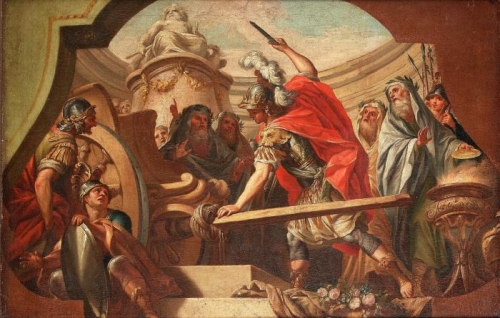
Le néolithique constitue une rupture considérable dans l’histoire de l’humanité. C’est là que naissent les premières communautés organisées autour de villages puis de cités. Elle oppose irrémédiablement l’homme de l’avenir, qui est le sédentaire, à l’homme du passé qu’est le nomade. Ce qui subsiste du mode de vie nomade, ce sont des asociaux qui vivent aux dépens des populations agricoles. Lorsque dans la mythologie latine, Romulus fonde Rome, il dessine des frontières symboliques définissant le pomœrium, un espace sacré. C’est parce que Remus franchit cette frontière, en élément extérieur donc « nomade », que Romulus le tue. Fonder une cité, c’est en définir les frontières et les habitants légitimes.
A Athènes, le mythe de l’autochtonie définit la citoyenneté. C’est par leur implantation ancienne, sans cesse renouvelée par les générations successives, que le citoyen s’enracine dans sa terre. Cela définit des ayant droits naturels, héritiers de la longue mémoire de la cité mais aussi chargés de la transmettre à leurs descendants. L’introduction de nouveaux citoyens, qui n’en seraient pas les porteurs naturels par l’histoire, serait un élément de rupture dans cette continuité millénaire.
Les Pisistratides, famille de tyrans ayant régné à Athènes, ne voyaient pas dans les Athéniens des citoyens mais des sujets. Peu importe alors que ces derniers soient athéniens « de souche » ou venus d’ailleurs. Au fond, les hommes n’étaient que du bétail et leur provenance ne comptait donc pas. Ce principe se retrouva à la fin de l’empire romain, lorsque les principes de liberté de la république périclitèrent, avec Caracalla qui donna la citoyenneté romaine à tous les hommes libres nés sur le sol impérial en 212 après J.C. C’est un principe qu’on retrouve sous la féodalité, où le droit du sang est réservé aux seigneurs, mais où « tout serf né sur la terre d’un seigneur est serf du dit seigneur ».
Lorsque Périclès est arrivé au pouvoir et a établi les fondements de la démocratie à Athènes, même s’il eut des précurseurs comme Solon et Clisthène, une des premières mesures qu’il prit fut de redonner à la citoyenneté athénienne tout son sens. En 451 avant J.C, il établit ainsi la règle de citoyenneté suivante : « est athénien celui né de deux parents athéniens mariés selon les lois de la cité ». Ses propres enfants, qu’il eut de la grecque Aspasie, qui n’était pas athénienne, ne furent pas citoyens de droit. Il semble néanmoins que, toute exception confirmant la règle, les Athéniens les aient finalement naturalisés à l’issue d’une assemblée plénière, ce qui était exceptionnel.
Il alla plus loin, bravant ce que le droit moderne appelle « principe de non-rétroactivité ». Du fait que les tyrans avaient bradé la citoyenneté athénienne afin de se créer des allégeances en la conférant à des gens qui n’auraient pas pu l’obtenir du peuple, Périclès choisit de remettre en question toutes les naturalisations antérieures à son arrivée au pouvoir. Des milliers de personnes furent ainsi privées de la citoyenneté athénienne, dont ils avaient disposé par les tyrans, et donc implicitement rétablies dans leur citoyenneté d’origine.
A une époque où une forme de néo-nomadisme qu’on appelle « migration internationale » veut s’imposer et briser l’unité des populations sédentaires regroupées en Etats-nations homogènes, afin d’établir un monde sans frontières où régnera sans partage le principe du renard dans le poulailler, selon le cauchemar pensé par les partisans du mondialisme, il est fondamental de rétablir en France et en Europe les principes de citoyenneté propres à une démocratie et destinés à en garantir la pérennité. Face à cette rupture que voudraient imposer les mondialistes, le droit (démocratique) du sang ou « ius sanguinis » est le garant de la continuité entre les générations, le garant du droit inaliénable des autochtones à demeurer eux-mêmes sur la terre de leurs ancêtres.
C’est au service d’intérêts étrangers qu’en Europe, le droit du sang qui dominait alors sans partage, de l’Islande à la Russie, et y compris en France, a été affaibli par la décision des gouvernements successifs qui n’avaient aucun mandat en ce sens et qui se sont bien gardés de demander leur avis aux citoyens, pourtant les premiers concernés, de la même façon qu’ils ont imposé une immigration de peuplement, après avoir pourtant permis une immigration de travail à vocation temporaire, qui aurait dû prendre fin dès les premiers signes d’une montée du chômage.
Certes, l’Etat français avait introduit une forme de droit du sol dès 1889 afin de pallier à son déficit démographique face à l’Allemagne, mais cela ne concernait que des populations européennes, donc de même souche, dans un contexte où les migrations internationales restaient très limitées et uniquement intra-continentales. Ce faisant, malgré tout, il trahissait les intérêts de son peuple en mettant le doigt dans un engrenage qui finit par perdre l’empire romain, même si à l’époque, dans son contexte, cette mesure était sans danger. Elle devait en revanche devenir mortifère avec l’établissement d’un empire colonial en Afrique et en Asie du sud-est puis avec l’immigration post-coloniale qui en résulta dès les années 60.
Dans les années 2000, à la suite d’une propagande continue, le droit du sang, qui était la règle en Allemagne, en Italie et en Grèce, cette dernière respectant alors cette longue tradition athénienne établie par Périclès, fut sabordé. Bien sûr, tout comme en France, il existe toujours mais le mode d’acquisition de la nationalité a été considérablement élargi, et ce à chaque fois par la gauche ralliée par un universalisme tordu aux principes les plus délétères du mondialisme libéral, bien sûr une gauche sans mandat pour agir mais animée par une idéologie folle, et proprement eurocidaire disons le.
Le droit du sang, c’est donc rien de moins que la règle du sédentaire voulant se protéger du nomade, la règle du citoyen pour ne pas être ravalé au rang de sujet, la règle de l’indigène maître chez lui, la règle de l’ayant droit naturel protégé contre toute dépossession de son héritage par un tiers. C’est donc par principe le rejet du mondialisme et c’est pourquoi ce dernier s’attaque à lui et aboie contre toute personne qui voudrait le restaurer dans sa splendeur passé. C’est donc bien un débat fondamental. Enracinement ou néo-nomadisme, droit de l’indigène ou droit du migrant. Le salut de l’Europe passera nécessairement par le rétablissement, sous une forme nationale mais plus vraisemblablement européenne, comme je le prône, du droit du sang comme règle d’accès à la citoyenneté.
Thomas FERRIER (Le Parti des Européens)
00:05 Publié dans Actualité, Affaires européennes, Droit / Constitutions | Lien permanent | Commentaires (0) | Tags : droit du sang, ius sanguinis, europe, actualité, droit, affaires européenne |
|
del.icio.us |
|
Digg |
Facebook
10:33 Publié dans Actualité, Affaires européennes | Lien permanent | Commentaires (0) | Tags : actualité, europe, allemagne, affaires européennes, politique, politique internationale, journaux, medias, presse |
|
del.icio.us |
|
Digg |
Facebook

Voorzitter Rainer Wendt: ‘Politici zullen het in hun broek doen van angst vanwege het onvoorstelbare geweld dat overal zal losbarsten’
‘Iedereen die hier onrust, geweld, criminaliteit en mensenverachting komt brengen, moeten we er consequent uitgooien’
'Duitsland heeft geen toekomst meer' als het open-grenzen welkomsbeleid van de regering Merkel niet radicaal wordt omgegooid.
De voorzitter van de Duitse politievakbond DpolG, Rainer Wendt, waarschuwt in zijn nieuwe boek ‘Duitsland in gevaar’ dat de zwakke staat de enorme problemen die grote aantallen migranten veroorzaken, niet meer aankan. Volgens Wendt zal dit onherroepelijk tot grote sociale onrust en gevechten leiden, ‘die nauwelijks beheersbaar zullen zijn’. Zullen Duitse en Europese burgers nu wel massaal opstaan tegen hun leiders, en eisen dat er een onmiddellijk einde komt aan de totaal onverantwoordelijke, ondermijnende en gevaarlijke import van miljoenen moslims? Het zijn immers al lang niet meer enkele bloggers en politieke ‘populisten’ die schrijven dat onze samenleving in complete chaos en bruut geweld dreigt te ontaarden.
Regering Merkel heeft angstklimaat gecreëerd
‘Duitsland in gevaar – Hoe een zwakke staat onze veiligheid op het spel zet’, luidt de volledige titel van het nieuwe boek van de leider van de politievakbond. Daarin bevestigt hij alles wat door de reguliere media nog altijd wordt weggehoond als ‘complottheorie’ en ‘populistische bangmakerij’. Zo wijst hij erop dat autochtone Duitsers die hun auto verkeerd parkeren torenhoge boetes moeten betalen, maar dat migranten die iemand met hoge snelheid doodrijden, onbestraft worden vrijgelaten.
Dankzij de regering Merkel heerst er in Duitsland inmiddels een angstklimaat, schrijft Wendt. De gewone man durft niet meer te zeggen wat hij werkelijk denkt, omdat hij bang is uitgelachen en uitgescholden te worden, en onmiddellijk in de hoek van (extreem)rechts te worden gezet. ‘Zodat het zeker is dat ze voortaan hun mond houden.’
Autochtone Duitsers kapot bezuinigd, migranten vertroeteld door de staat
De Duitse politici hebben met het binnenlaten van massa’s migranten uit Noord Afrika en het Midden Oosten enorme misstanden in de Duitse samenleving veroorzaakt. ‘Deze verloren generatie zal woedend zijn als ze in de steek zijn gelaten. Zo geweldig woedend, dat de politie er machteloos tegen zal staan.’ Zo groeit de woede bij kapot bezuinigde oudere en gebrekkige Duitsers, die zelf lopend naar de dokter moeten, maar moeten toekijken hoe de jonge, kerngezonde nieuwe ‘medeburgers’ zich voor tienduizenden euro’s met taxi’s naar de (uitkerings)instanties laten rijden, ‘met de zonderlinge verklaring dat ze anders wel eens verdwaald kunnen raken, omdat ze de weg niet kennen.’
Wendt is daarom van mening dat het in Duitsland spoedig helemaal mis zal gaan, zeker zodra de Duitsers, die vaak twee banen nodig hebben om rond te kunnen komen, zien hoe jeugdige allochtone vechterbazen een 24/7 verzorging door de staat krijgen. Over de import van zo ontzettend veel criminele migranten vraagt hij zich verbijsterd af: ‘In welk ander land kan men relatief ongestoord eindeloos misdaden blijven begaan, zonder echt bang te hoeven zijn voor sancties?’
Duitse politici, wars van enige realiteitszin, krijgen inmiddels de zenuwen van het volk. Dat voelt echter heel goed aan dat de staat hen niet meer kan beschermen, stelt de vakbondleider. Zo stijgt bijvoorbeeld het aantal inbraken in woningen en auto’s explosief, zo erg dat er nauwelijks nog een politieagent is te vinden die hier iets aan kan of wil doen. ‘In landelijke regio’s zien mensen meestal maandenlang niet één enkele politieauto. Het geweldmonopolie van de staat smelt dan ook als sneeuw voor de zon.’
‘De slechte jaren moeten nog komen’
Toch is dit nog maar het begin, waarschuwt Rendt. ‘De slechte jaren moeten nog komen.’ Ja, er worden weer nieuwe agenten aangesteld, maar tegelijkertijd wordt verzwegen dat dit er veel minder zijn dan de aantallen die in de komende jaren met pensioen gaan. Er komen daarom tijden aan ‘waarin politici het waarschijnlijk in hun broek zullen doen van angst’ vanwege het ‘onvoorstelbare geweld’ dat overal in Duitsland zal losbarsten.
‘Iedereen die hier geweld en criminaliteit brengt moeten we eruit gooien’
‘Niemand kan dat willen, maar het zal gebeuren.’ Het is volgens hem dan ook onzin om de mensen die nu waarschuwen voor deze ontwikkeling ‘als Nazi’s neer te zetten’. Hij roept de politiek dan ook om ‘de mouwen op te stropen’ om samen met het volk en de politie zo snel mogelijk een sterke, weerbare staat te maken, en ‘consequent iedereen eruit te gooien die hier onrust, geweld, criminaliteit en mensenverachting komt brengen.’
‘Ingrijpen, anders heeft Duitsland geen toekomst meer’
Gebeurt dan niet, dan heeft het ooit zo vreedzame Duitsland geen toekomst meer, waarschuwt hij. ‘Met onze rijkdom kunnen we dan nog een tijdje veel conflicten in onze samenleving sussen, en met geld dichtplakken. Maar als de verdelingsgevechten uiteindelijk groter worden, en Duitse belastingbetalers het niet meer kunnen opbrengen, zullen er openlijke onlusten en gevechten tussen verschillende groepen uitbreken, die nauwelijks beheersbaar zullen zijn.’
Aanstormende burgeroorlog
Met andere woorden: als Duitsland niet heel snel zijn grenzen sluit en honderdduizenden migranten, die hier enkel voor het geld en het zaaien van ellende zijn gekomen, de deur wijst, stevent het land onherroepelijk op een burgeroorlog af. En met Duitsland zal dan heel West Europa opnieuw in brandende vlammen ten onder gaan. Nogmaals: het is niet een of andere ‘rechtse populist’ die dit op zijn Facebook schrijft, maar een van de meest respectabele en gezaghebbende Duitse veiligheidsofficials. Dat betekent dat zelfs de meest verstokte politiek-correcte linkse cynicus deze waarschuwingen heel serieus zou moeten nemen.
Xander
(1) KOPP
00:05 Publié dans Actualité, Affaires européennes | Lien permanent | Commentaires (0) | Tags : allemagne, europe, politique internationale, affaires européennes, violences urbaines, guerre civile |
|
del.icio.us |
|
Digg |
Facebook

par Thomas Ferrier
Ex: http://thomasferrier.hautetfort.com
Dans un article d’avril 2016, nous avions dénoncé l’obsession présidentielle en France, cette « mère des batailles » qui excite les passions avec un président sortant profondément rejeté, mais qui n’a pas encore officiellement annoncé se représenter, désormais 13 candidats de droite prêts à s’affronter dans des primaires, et dont fait partie le président précédent, la candidate du FN créditée dans les sondages de 26% à 28% des voix environ, garantie a priori d’être qualifiée pour le second tour, et une quarantaine de candidats déclarés, surtout de gauche. De plus, les mêmes candidats de 2012 seront à peu près tous candidats en 2017 sauf surprise, ce qui montre le peu de renouvellement de la classe politique en France.
S’il y a autant de candidats pour la place suprême, on supposera deux choses, à savoir que la place est bonne, et de cela on ne doute pas quand on observe l’actuel président, mais aussi qu’on y dispose d’un réel pouvoir d’action, d’une capacité de changer les choses. C’est ce que Marine Le Pen et Nicolas Dupont-Aignan notamment expliquent, faisant de cette élection un enjeu majeur. Voilà le mythe auquel j’entends ici m’attaquer.
Prenons comme hypothèse par exemple Marine Le Pen, puisqu’elle fait partie des candidats déterminés le plus à changer les choses et qu’elle est en mesure d’être au moins au second tour. Supposons donc que, par un faisceau de convergences favorables, la présidente du FN soit élue présidente, face à un président sortant usé ou à un candidat de droite très démonétisé. Elue, pourrait-elle alors changer les choses et appliquer son programme ?
Il lui faudrait d’abord gagner les élections législatives suivantes un mois après. Un candidat de droite ou de gauche bénéficiera de « l’effet président » mais Marine Le Pen, élue on l’imagine dans un contexte d’extrême-tension, n’en disposerait pas forcément, et surtout son appareil politique ne serait sans doute pas prêt à gouverner. Il y aurait donc sans doute un groupe présidentiel de taille correcte mais incapable de gouverner seul. Il faudrait donc établir une coalition avec la droite, en acceptant l’idée que cette dernière y soit prête et n’exige pas d’être à sa tête.
Et la voici alors déjà bloquée à peine élue et incapable de changer radicalement les choses comme elle s’y était engagée. Supposons donc une deuxième hypothèse, et cela commence à faire beaucoup, à savoir que par un étrange concours de circonstance le FN soit majoritaire à l’assemblée ou dispose en tout cas d’une forte minorité. On peut alors imaginer une coalition de droite guidée par le FN, même si aucune coalition de cette nature n’a encore existé autour de la droite nationale depuis 1945.
Présidente à la tête d’une majorité de coalition, dont la stabilité resterait alors à démontrer, car les élus de droite pourraient « claquer la porte » face à toute proposition un peu courageuse sur des thématiques identitaires par exemple, elle serait donc en mesure de changer radicalement de politique ? Et bien, même dans ce cas, non.
Le Sénat en France a été créé pour empêcher toute alternative politique trop radicale. Son mode de scrutin, indirect et par le biais d’un renouvellement d’un tiers tous les trois ans, rend les possibilités pour un parti comme le FN, mais tout autant pour le Front de gauche d’ailleurs, d’y être majoritaire illusoires. Or sans le soutien du Sénat, aucune réforme constitutionnelle ne peut être engagée. En effet, selon l’article 89 de la constitution française, le président propose un texte aux deux assemblées, qui ont un pouvoir égal, et qui doivent le voter de manière identique. Ce n’est qu’après cette procédure que le président peut convoquer un référendum ou le congrès.
En termes clairs, le Sénat bloquerait concrètement tout parti déterminé à changer radicalement de politique. Et à ce blocage, il faut ajouter l’attitude du conseil constitutionnel. Ce dernier, depuis son coup d’état juridique de 1973, a gagné un pouvoir important. Si la réforme constitutionnelle contrevient aux principes fondamentaux, il pourrait donner un avis défavorable et censurer la dite réforme. Serait-il ainsi possible de le contourner, comme le faisait De Gaulle à son époque ? C’est peu probable en ayant une des deux chambres à dos.
Les Etats européens modernes, pour se prémunir contre toute « révolution par les urnes », et en souvenir de l’arrivée au pouvoir par ce biais d’un dictateur d’origine autrichienne, ont blindé leur constitution. La loi fondamentale allemande de 1949 par exemple a un pouvoir considérable et pourrait interdire tout parti qui aurait dans son programme une rupture radical d’avec ce cadre juridique. Et le mode de scrutin choisi au Royaume-Uni (majoritaire à un tour) ou en France (majoritaire à deux tours) est également un frein considérable.
Les candidats aux élections présidentielles, tous camps confondus, font des promesses aux électeurs dont ils n’ont aucune garantie de pouvoir les réaliser, à supposer que cela soit leur intention. La gauche et la droite ont au moins la possibilité de disposer d’une majorité à l’assemblée et éventuellement au sénat. Cela a permis au gouvernement PS de faire passer un certain nombre de lois, dont le « mariage pour tous », mais souvent grâce à l’appui de centristes. La droite de même pourrait engager certaines politiques plus ou moins courageuses, mais pas trop courageuses quand même pour ne pas perdre l’appui du centre.
Si le centre revendiqué, le Mouvement Démocrate de Bayrou par exemple, est assez faible, le centre-droit et le centre-gauche sont très forts et pèsent dans les politiques publiques. C’est eux qui empêchent toute vraie réforme. Même si Sarkozy par exemple muscle son discours devant les journaux télévisés, qu’est-ce qui prouve que s’il est élu il pourra le réaliser. En 2007 il a déchanté en découvrant le pouvoir réel d’un président. Il est même tombé de haut.
Un président français peut-il changer les choses en bien ? Je ne le crois pas. Cet enjeu électoral qu’on nous présente comme la « mère des batailles » ne déterminera pas notre avenir, même si un président catastrophique peut avoir un très mauvais impact sur le moral de ses concitoyens. Ce n’est donc pas totalement sans importance mais il ne faut pas en attendre un quelconque salut.
Thomas FERRIER (Le Parti des Européens)
00:05 Publié dans Actualité, Affaires européennes | Lien permanent | Commentaires (2) | Tags : françois hollande, france, europe, affaires européennes, politique, politique internationale, présidentialisme, cinquième république |
|
del.icio.us |
|
Digg |
Facebook

A Westerner with extensive on-the-ground experience in Syria and Iraq tackles conventional Western views of the civil wars in Iraq and Syria and proposes a dramatic rethinking of the region.
Editor’s Note: This is the second of two articles on this topic, the first of which was published last week. There has been some controversy over my decision to allow this author to write under a pen name. I know the author’s identity and while his arguments are surely controversial, I am confident in his sourcing and subject matter expertise. I carefully considered his request to use a pen name. I decided that this case reasonably meets the standards for such protection published on our site. The author, in my view, can reasonably and seriously fear for his professional employment and safety publishing under his real name. -RE / Update: The author’s pen name has been changed to protect someone with the same name who has nothing to do with the article.
I was not surprised to see my first article greeted with so much outrage by those who adhere to the conventional Western narrative of the civil wars in Iraq and Syria as well as the larger tumult of the Middle East. In truth, these conflicts are not so easily defined by the easy sectarian narrative offered in the Western press. I argued that Western elites were surrendering to and even embracing the Saudi definition of what Sunni identity should mean. And I provided accounts of the conflicts in Syria and Iraq that do not comport with what you likely have been reading in the newspapers.
But there is far more to the story. It is worth recounting how we got to this point. In the aftermath of the toppling of Saddam and his regime, Iraq’s Sunnis were betrayed by many of their own religious, political, and tribal leaders who demanded that they boycott the post-2003 political order by waging an insurgency against the world’s most powerful military and the government it sought to stand up and support. Of course, it did not help that the U.S.-led occupation and the security forces it empowered victimized Sunni Iraqis disproportionately. The American military’s posture was more aggressive in Sunni-majority areas, and Iraqi security forces collaborated with Shia death squads in pursuit of a vicious counterinsurgency strategy that saw bodies piled up and neighborhoods cleansed. Iraqis en masse suffered from a collective trauma that will take decades to recover from. But hardline Sunni rejectionists and their Western backers have claimed that if Sunnis are not “empowered” then there is no alternative available to them but the Islamic State of Iraq and the Levant (ISIL). When adopted by Westerners, this argument seems to support Sunnis but actually represents a very low opinion of them because it holds that Sunnis require disproportionate political power to avoid becoming terrorists. Since 2003, Sunni rejectionists have pushed this narrative to hold Iraq hostage, blackmailing Baghdad and its allies like gangsters in a protection racket.
If Sunni leaders did not receive the government position or the business contract they wanted, they would then claim persecution on account of their Sunni identity, switch sides, gather their relatives, and use violence. Examples of this phenomenon from early 2013 include:
Still, the West has pressured the Iraqi government to allow into its ranks Sunni representatives like the above, who oppose the very legitimacy of the government and the notion of a Shia ruler. There were no Shias in the Anbar or Ninawa provinces to threaten Sunnis. At best, they were politically disgruntled, which is an insufficient reason to embrace the world’s most vicious terrorist organization.
The Jihad Returns to Haunt Syria
The interplay between the conflict in Iraq and the Syrian civil war created a perfect storm. The U.S.-led occupation of Iraq and the sectarian war it ignited influenced how Syrian Sunnis thought of themselves. The Syrian government was warned that it was next in line for regime change, and it took preemptive measures to scuttle the American project in Iraq. By supporting or tolerating insurgents (including al-Qaeda) for the first three years of the occupation, Damascus sought to bog the Americans down. But by then, the Syrian government had lost control of its eastern border. After 2006, at least one million mostly Sunni Iraqis fled into Syria, including some with ties to the insurgency who either came to Syria to facilitate insurgent operations in Iraq, to find a safe place for them and their families, or both. Many former al-Qaeda in Iraq members had fled to Damascus and were living normal lives as family men and laborers before the Syrian crisis erupted in 2011. In my own interviews with detained members of Jabhat al-Nusra, I learned that when the Syrian insurgency started, these men were contacted by old friends who told them, in effect, “We’re putting the band back together.” Many of these Iraqis formed the early core of al-Nusra, which until recently was al-Qaeda’s Syrian affiliate.
By 2010 or 2011, Iraq appeared to be stable. When the uprising started in Syria and the country became unstable, many of the Iraqi Sunni rejectionists returned to Iraq from their Syrian exile. Insurgents in Syria had created failed state zones, power vacuums full of militias, and a conservative Islamist Sunni population mobilized on sectarian slogans. The Turks were letting anyone cross into Syria, which was exploited most successfully by jihadists. By the summer of 2012, many local Syrians saw the arrival of foreign fighters in a positive light, as if they were members of the Lincoln Battalion of foreign volunteers in the Spanish Civil War. As I myself witnessed, they were welcomed and housed by Syrians, who facilitated their presence and cooperated with them.
These thousands of foreign fighters in Syria eventually sided in large numbers with ISIL, seizing parts of Syria. From there, the group was able to launch its offensive into Iraq in the summer of 2014 (although the ground in Mosul had been prepared by the jihadists for quite some time). The prospect of a Sunni sectarian movement seizing Damascus evoked their dreams of expelling the Shia from Baghdad (although the difference, of course, is that Baghdad is a Shia-majority city, unlike Damascus). The Syrian uprising mobilized public and private Gulf money for a larger Sunni cause in Syria, Iraq, and elsewhere in the region. A lot of this support went to the Sunni rejectionists of Iraq, who staged sit-ins and demonstrations in majority-Sunni cities in Iraq. Meanwhile, Al Jazeera had transformed from the voice of Arab nationalism into the voice of sectarian Sunnis, virtually promoting al-Qaeda in Syria and celebrating the initial ISIL “revolutionaries” in Iraq.

From Syria, Back to Iraq
In 2012, as jihadists gathered in centers of rebellion around Syria, Sunni rejectionists in Iraq allowed jihadists to re-infiltrate their ranks as they launched this campaign of demonstrations, thinking they could use the presence of these men as leverage against the government. At the time, al-Qaeda and ISIL forerunner Islamic State of Iraq were still united. They had systematically assassinated key leaders of the “Awakening” movement, neutralizing those that could have blocked the jihadist rapprochement with Sunni leaders in Iraq. From 2006 to 2009, they also assassinated many rival insurgent commanders to weaken alternative armed movements. Former insurgents described to me how just before the Americans withdrew from Iraq in 2011, insurgent leaders from factions as politically diverse as the Naqshbandis, the Islamic Army, the Army of the Mujahedin, and the 1920 Revolutions Brigades all met in Syria to plan to take the Green Zone in Baghdad (an ambition that was, ironically, accomplished this year by Shia rather than Sunni masses). While these groups initially lacked the ability to take the Green Zone, they made their move when the demonstrations started with the help of the Islamic State, which saw utility in cooperating with these groups, for the time being.
When Sunni protestors in 2012 and 2013 filled squares in Ramadi, Mosul, Hawija, Falluja, and elsewhere chanting “qadimun ya Baghdad (“we are coming, Baghdad”), it was hard for the government and average citizens in Baghdad not to interpret this as a threat from various Sunni-majority cities. These were not pro-democracy demonstrations. They were rejecting the new order — an elected government — and calling for overthrow of the Shia.
Sunni rejectionist leaders rode this wave of support and became a key factor in how easily ISIL later seized much of the country. According to Iraqi insurgents I spoke to, ISIL’s leaders initially thought that they would have to depend on former insurgents, including Baathists, as a cover to gain support. While ISIL’s jihadists did initially cooperate with some of these groups, it was not long until ISIL discovered it did not need them and purged them from its newly seized territories. Many Sunni rejectionist leaders, now understanding the horror of what they helped to unleash, then fled, leaving their populations displaced, destroyed, and divided. Likewise in Syria, Sunni rejectionists and their Western supporters argued that the only way to defeat ISIL is to topple Assad, and thus placate their sectarian demands. And the West somehow believes that they are representative of Syria’s Sunnis writ large. The secular or progressive opposition activists amenable to pluralism unfortunately have no influence because they have no militias of their own.
The Evolution of Sectarian Identity in the Modern Middle East
There is a major crisis within Sunni identity. Sunni and Shia are not stable, easily separable categories. Twenty years ago, these terms meant something else. The 2003 invasion of Iraq was the geopolitical equivalent of the asteroid that caused the extinction of the dinosaurs. Just as species were killed off or arose thanks to that cataclysm, so too in the Muslim world, old identities were destroyed while new ones were created, as discussed by Fanar Haddad at the Hudson Institute. One of these new identities was the post-Saddam “Sunni Arab,” treated by their Western taxonomists as if they were an ethnic group rather than a fluid, fuzzy, and diverse religious sect. For centuries, Sunni identity was conflated with “Muslim” and the identity of “Muslim” was distinct from members of heterodox or heretical sects. Generally speaking, Shias living in areas dominated by Sunnis were subordinate to them juridically and by custom. The war in Iraq helped create a sense of “Sunni-ness” among otherwise un-self-conscious Sunni Muslims, and it also overturned an order many took for granted. To make matters worse, not only were Shia Islamist parties (such as Dawa and the Supreme Council) brought to power (as well as Sunni Islamist parties such as the Islamic Party), but Sunnis bore the brunt of the occupation’s brutality (while Shias bore the brunt of the insurgency’s brutality).
The result is that we now see Sunni identity in the way that the Saudis have been trying to define it since they began throwing around their oil wealth in the 1960s to reshape Islam globally in the image of Wahhabism. Haddad explains:
[T]he anti-Shia vocabulary of Salafism has clearly made some headway in Iraq and indeed beyond. This is only to be expected given that Salafism offers one of the few explicitly Sunni and unabashedly anti-Shia options for Sunnis resentful of Shia power or of Sunni marginalization.
In other words, we now see a Sunni identity in Iraq that dovetails with Saudi Wahhabism. And the response in the West is to reinforce this!
Ironically, we do something similar with Shia identity. Westerners (and sectarian Sunnis) believe Shia are all the same and all an extension of Iranian (Persian) theocratic power — but they are not, and assuming this is the case has negative effects in the region. It is true that there is far more political coherence to Shia religious identity in the Middle East compared to the Sunni, but placing the center of Shia identity in Iran dramatically misconceives the center of power in the Shia Arab world. To be a sect, you need to have a sense of coherence with centers of power through which someone speaks on your behalf. Shias know what they are and who their leaders are. In Iraq and even beyond its borders, Grand Ayatollah Ali Sistani looms larger than others for Shia, especially but not exclusively in the Arab world. The Sunnis have no equivalent leader.

We tend to view Hizballah or the Iranian Revolutionary Guard Corps solely as threats to the West or Israel, but they are also mature local actors with influence on other Shias. Before 2011, the Shia axis was merely an idea. Compared to the Shia of Lebanon, Syria, and Iran, Iraqi Shias were relatively isolated from neighboring countries and struggles. They were insular, and their aspirations were more mundane, as they were discovering middle-class life. Just as Sunni rejectionists playing ISIL’s game in radicalizing their populations, this process also radicalized many Iraqi Shia, mobilizing them in self-defense and even launching some of them into Syria to support Assad. Now Shias from Iraq, Lebanon, Iran, Syria, Afghanistan, and elsewhere are cooperating on the battlefield. From 2003 until the present day, Shia civilians have been targeted in Iraq nearly every day, not to mention in Pakistan, Afghanistan, Syria, Lebanon, and Yemen.
Despite this virtual war on Shias supported and condoned by major Sunni religious leaders, Shias have remained much more restrained than their Sunni counterparts. What is keeping Lebanese, Iraqi, and Syrian Shias from committing massacres and displacing all Sunnis in their path? By and large, it is a more responsible religious leadership guiding them from Qom or Najaf, organizing Shias and offering structure and discipline. According to interviews I have conducted in the region, Hizballah leaders privately complain to Iraqi Shia leaders about their behavior, condemning them for alienating and failing to absorb Sunnis. They scold these leaders for their violations, reminding them that when Hizballah expelled the Israeli occupation, it did not blow up the houses of the many Christian and Shia collaborators or violently punish them.
When we say Sunni, what do we mean? There are many kinds in too many countries: Sunni Kurds, Uighurs, Senegalese, tribal Arabs, urbanites in Cairo, Damascus, Baghdad, Bedouins, and villagers. You cannot make Sunnism into a politically coherent notion unless you are willing to concede to the narrative of al-Qaeda, ISIL, or the Muslim Brotherhood. The latter has historically avoided the explicit, toxic sectarianism of the jihadi groups, but it is also a broken and spent force as its projects in the Arab world having largely failed.
Before the rise of the modern Arab nation-state, cities possessed a state-sponsored moderate Islam that was involved in the law. Urban Sunnis were largely part of the moderate Hanafi school of Sunni jurisprudence. This school, one of four mainstream Sunni schools, is the most tolerant and flexible. The countryside historically practiced folk Islam or considered itself Shia, Sufi, or Alawi. Hanafization took place because it was the religion of elites, the religion of empire, the religion of Ottomans. Today, there is no state Hanafi Islam and other moderate institutions. traditional Sunni Islam of the state has crumbled.
It is therefore impossible to find a genuine center of Sunni power. It is not yet Saudi Arabia, but unless the West changes the way it sees the Middle East, that will become a self-fulfilling prophecy with cataclysmic results.
Saudi Arabia is the dominant state supporting Sunni Islam today via mosques, foundations, and Islamic education. As a result, Salafism — a movement that holds Islam should be practiced as it was by the Prophet Mohammad and his companions — is the new religion of empire and its rejectionist tendencies are a danger to all countries with a Sunni population, from Mali to Indonesia. One reason why Syrian Sunnis became so radicalized is that many of them spent years working in the Gulf, returning with different customs and beliefs. When a Gulf state supports the opening of a mosque or Islamic center in France or Tanzania, it sends its Salafi missionaries and their literature along with it. Competing traditions, such as Sufism, are politically weak by comparison. Muslim communities from Africa to Europe to Asia that lived alongside for centuries alongside Christians, Buddhists, and Hindus are now threatened as Sufis and syncretic forms of Islam are pushed out by the Salafi trend.

I have come to understand that in its subconscious, the institutional culture of the Syrian regime views this transnational Sunni identity as a threat and it is one reason why Alawites are overrepresented in the Syrian security forces. This is partly for socioeconomic reasons, but it is also seen by the regime as key to preserving the secular and independent nature of the state. Their rationale is that Alawites as a sect have no relations or connections or loyalties outside of Syria. As a result, they cannot betray the country by allying with the Saudis, Qataris, or the Muslim Brotherhood, nor can they suddenly decide to undo the safeguards of secularism or pluralism inherent in the system.
The vision propagated by the Islamic State is consistent with the Salafi interpretation of Islamic law, which is why Egypt’s al-Azhar or other institutions of “moderate Islam” cannot be counted upon to stem the tide of Salafism. Al-Azhar, traditionally the preeminent center of Sunni Islamic learning, failed to reject ISIL as un-Islamic. Leading Sunni theologians in the Arab world have condemned ISIL on the grounds that the group is excessive, applying the rules wrong, or pretending to have an authority it does not legally possess, but they do not cast the movement as un-Islamic and contrary to Sharia. Only technical differences separate the ideology of Jabhat al-Nusra from that of ISIL or Ahrar al-Sham or even Saudi Arabia. The leadership of al-Nusra also holds takfiri views, and their separation from al-Qaeda did not involve a renunciation of any aspect of its toxic ideology. Ahrar al-Sham likewise appeals to the same tendencies.
Curiously, U.S. political leaders seem more dedicated than anyone in the world to explaining that ISIL is not true to the tenets of Sunni Islam. The problem is that Muslims do not look to non-Muslim Western political leaders as authoritative sources on Islam.
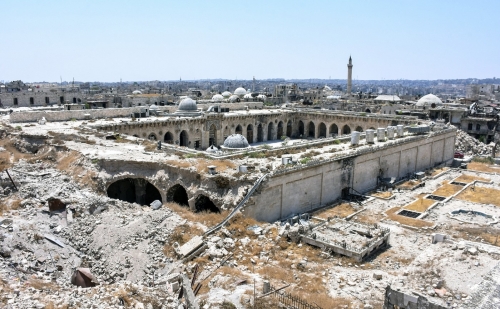
The irony, of course, is that the main victims of Salafization are Sunnis themselves. Sunni elites are being killed, and the potential to create Sunni civil society or a liberal political class is being made impossible. ISIL seized majority-Sunni areas. Main Sunni cities in Iraq and Syria are in ruins and their populations scattered, and, obviously, the Syrian Arab Army’s brutal campaign has also contributed to this. Millions of Sunnis from Syria and Iraq are displaced, which will likely lead to a generation of aggrieved Sunni children who will receive education that is extreme, sectarian, and revolutionary or militant in its outlook — if they get any education at all. Already, many live in exile communities that resemble the Palestinian refugee camps, where a separate “revolutionary” identity is preserved.
The Sunni public has been left with no framework. Sunnis represent the majority of the Middle East population, and yet having in the past embraced the state and been the state, they now have nothing to cohere around to form any robust and coherent movement or intellectual discourse. A movement built around the idea of Sunnism, such as the foreign-backed Syrian opposition and some Iraqi Sunni leaders, will create an inherently radical region that will eventually be taken over by the real representatives of such a notion — al-Qaeda, ISIL, or Saudi Arabia.
State Collapse and Militias Fighting for Assad
Five years of bleeding has weakened the Syrian army and forced it to rely upon an assortment of paramilitary allies, nowhere more so than in Aleppo. On July 28, the Russians and Syrians offered insurgents in east Aleppo amnesty if they left, and they invited all civilians to come to the government-held west Aleppo. This offer was explicitly modeled on the 2004 evacuation of Falluja’s residents, which came at a high price, in order to retake the city from al Qaeda in Iraq. In response, Sunni extremists called for an “epic” battle in Aleppo. The jihadist offensive was named after Ibrahim al Yusuf, a jihadist who killed dozens of Alawite officer candidates at the Aleppo military academy in 1979 while sparing Sunni cadets. It is led by Abdullah Muheisni, a shrill Saudi cleric who called upon all Sunnis to join the battle and who marched into the city triumphantly. Up to two million people in west Aleppo are threatened by the jihadist advance, protected by an army hollowed out after five years of attrition.
This has forced the Syrian regime to rely on Shia reinforcements from Iraq, Lebanon, Afghanistan, and Iran. There is a big difference between these Shia reinforcements and their jihadist opponents. The Iraqi Popular Mobilization Forces (PMF) and others have come to Syria to help the Syrian army prevent further state collapse. They would not be there had a foreign-backed insurgency not weakened the army. The foreign Shia militias do not interact with Syrian civilians and are only on the frontlines. They are not attempting to impose control. Even the worst of the Iraqi Shia militias avoid overt sectarianism and work hard to stress that the enemy is not all Sunnis but rather those who advocate for a violent Wahhabi ideology. Moreover, I learned in interviews that the regime has arrested and even executed unruly Shia militiamen.
Meanwhile, Muheisni and his hordes represent an explicitly totalitarian and genocidal ideology that endangers all people of the region who are not Salafi men. The Shia PMF units in Aleppo such as Kataeb Hizballah and Nujaba have plenty of Sunnis in Baghdad that they could massacre if they had an anti-Sunni agenda, and yet they leave them alone just as they do the Sunni civilians of government-held portions of Aleppo.
Finally, Iran and its non-Syrian Shia partners cannot establish roots in Syria or change its society as easily as some seem to think. As much as the Alawite sect is called Shia, this is not entirely accurate and they do not think of themselves as Shia. They are a heterodox and socially liberal sect that bears little resemblance in terms of religious practice or culture to the “Twelver Shias,” such as those of Iran, Iraq, or Lebanon. There is only a very tiny Twelver Shia population in Syria.
Many of the soldiers fighting in the Syrian army to protect Aleppo are Sunnis from that city, and most of the militiamen fighting alongside the army in various paramilitary units are Sunni, such as the mixed Syrian and Palestinian Liwa Quds and the local Sunni clan-based units. In Aleppo, it is very much Sunni versus Sunni. The difference is that the Sunnis on the government side are not fighting for Sunnism. Their Sunni identity is incidental. By contrast, the insurgents are fighting for a Sunni cause and embrace that as their primary identity, precluding coexistence. This does not, of course, mean the government should drop barrel bombs on their children, however.
The presence of Iraqi Shia militiamen is no doubt provocative and helps confirm the worst fears of some Sunnis, but the fact that these foreign Shia are supporting their Syrian allies does not negate the fact that there are many more thousands of Sunnis on the side of the government. Those foreign Shia militias believe, according to my interviews, that if they do not stop the genocidal takfiri threat in Syria, then Iraq and Lebanon will be threatened. Alawites and other minorities believe this too of course. But in Syria there is still a state and it is doing most of the killing, though not for sectarian reasons but for the normal reasons states use brutality against perceived threats to their hegemony. There have been exceptions such as the 2012 Hula or 2013 Baniyas massacres in which ill-disciplined local Alawite militiamen exacted revenge on Sunni communities housing insurgents, targeting civilians as well.

What is Washington to Do?
U.S. policy in the Middle East, especially in conflict zones and conflict-affected states, should be focused on (1) doing no harm and (2) making every effort to stop Saudi Arabia from becoming the accepted center of the Sunni Arab world or the Sunni world writ large, while (3) building and reinforcing non-sectarian national institutions and national forces.
America’s Troublesome Saudi Partners
As regards Saudi Arabia, many American thought leaders and policymakers have long understood the fundamental problems presented by this longstanding U.S. partner but the policy never changes. Indeed, U.S. policy has in many ways accepted and even reinforced the longstanding Saudi aim to define Sunni identity in the Arab world and beyond. It is dangerous to accept the Saudi narrative that they are the natural leaders of the Sunni world given the dangerous culture they propagate. Promoting a sectarian fundamentalist state as the leader of Arab Sunnis is hardly a cure for ISIL, which only takes those ideas a bit further to their logical conclusions.
Washington may not have the stomach to take a public position against the form of Islam aggressively propagated by its Saudi “partners,” but there must be an understanding that Wahhabism is a dangerous ideology and that its associated clerical institutions represent a threat to stability in Islamic countries around the world. The United States could seek to sanction media outlets, including satellite channels and websites, that promote this form of Islam. Think this is unprecedented? Washington has targeted Lebanese Hizballah’s al-Manar station with some success.
Syrian and Iraqi Sunnis are not holding their breath waiting to hear what Gulf monarchs will say. They wait only to see how much money might be in the envelopes they receive for collaboration. For leadership, Iraqi and especially Syrian Sunnis should be encouraged to look closer to home — to their own local communities and the state. The state should be strengthened as a non-sectarian body.
The Need for Non-Sectarian Institutions in the Middle East
In Washington’s policy circles, we often hear calls for Sunni armies and militias to “solve” Iraq and Syria. Yet Sunni armies already exist in these countries in the form of ISIL, al-Qaeda, and Ahrar al-Sham. The answer is not more Sunni armed groups.
If the goal is to excise jihadism, do not try to coexist with Sunni rejectionists advancing Saudi notions of Sunni identity. If Assad were fed to the jihadists as a sacrifice, then the next Alawite, Christian, Shia, secular, or “apostate” leader would become the new rallying cry for jihadists. Their goal is not merely the removal of one leader, but the extermination of all secularists, Shias, Alawites, Christians, and Jews, and others who are different — including fellow Sunnis. The Syrian government is often criticized for making little distinction between ISIL, Jabhat al-Nusra, Ahrar al-Sham, and the “moderates” who cooperate with them, but this misconceives how the Syrian state forces see the conflict. To them, any insurgent force with Islamist slogans is a slippery slope leading to the same result. Critics may complain that at various points in the war Syrian state forces spent more resources fighting the American-backed insurgents than ISIL, but this is because ISIL emerged largely in areas where the Syrian government had already been driven out. Meanwhile, the so-called moderates were the main day-to-day threat to government-held population centers such as Aleppo, Hama, Homs, Damascus, and Daraa.
It is irrational for the West to expect the Syrian government to focus on the enemies the West wants to see defeated while Western powers, along with Gulf countries and Turkey, are supporting insurgents that attack government forces which secure cities. The Syrian security forces have a finite amount of men, ammunition, fuel, and other resources, and they need to protect a great deal of military infrastructure, terrain, population centers, and supply lines. This naturally forces the regime to make choices. When foreign-backed insurgents attack state-held areas, the state’s security forces are less able to conduct operations elsewhere. For example, when American-backed insurgents cooperated with al-Qaeda and foreign fighters to seize cities in Idlib province last year, the Syrian Arab Army sent reinforcements from the east to Idlib. This left Palmyra wide open for ISIL to attack, which they did, seizing the ancient city. In February of this year, with the Cessation of Hostilities in place, the Syrian state was able to focus more resources on ISIL and retake Palmyra with Russian backing. ISIL and al-Qaeda thrive in stateless zones throughout the Muslim world. Supporting insurgents to create more such zones will only give such groups more space to occupy.
Every proposal to further weaken regime security forces leads to a greater role for Shia militias and the ill-disciplined militias the regime relies upon for support. Escalation by supporting proxies does not pressure the regime to negotiate. It only pressures the regime to use even more repressive and abhorrent tactics. The only compromises it makes are about which actors it will rely upon to defeat its enemies. As law and order breaks down, even Alawite militias have lost respect for the security forces. What is left of the Syrian state is failing, and the West bears some responsibility for that.

As jarring as this may sound to many Western readers, the Syrian government offered a model of secular coexistence based on the idea of a nation-state rather than a sect. This is a model wherein Sunnis, Alawis, Christians, Druze, Kurds, Shias, and atheists are all citizens in a deeply flawed, corrupt, and — yes — repressive system in need of improvement but not in need of destruction. The Syrian state has clearly become progressively more brutal as the civil war has dragged on. Still, the regime is not sectarian in the way most in the West seem to think. It is also not purely secular in that it encourages religion (a bit too much) and allows religion to influence the personal status laws of its various sects.
The regime has always felt insecure vis-à-vis its conservative Sunni population, and it has gone out of its way to placate this group over the years by building mosques and Quranic memorization institutes across the country. But denying that the regime is sectarian is not a defense of the regime’s moral choices. Rather, it just shows that it commits mass murder and torture for other reasons, such as the protection and holding together of what is left of the state. This is not an apology for the massive and well-documented human rights violations committed by the Syrian government throughout the course of this war. But until 2011, it offered a society where different religious groups and ethnicities lived together, not in perfect harmony, but at peace. If you do not believe me, look at the millions who have fled from insurgent-held areas to government-held areas and have been received and treated just like any other citizens.
This is far preferable to the sectarian model advanced by much of the Syrian armed opposition, which seeks to create something that will lead ultimately to, at worst, a jihadist caliphate and, at best, a toxic and repressive state in the mold of Saudi Arabia. As I noted in my previous article, the Syrian government has unleashed desperate levels of brutality, using collective punishment, indiscriminate attacks on insurgent-held areas, and harsh siege tactics. Many thousands have died in the regime’s prisons, including the innocent. Likewise, the insurgency has slaughtered many thousands of innocents and participated in the destruction of Syria. This legacy of crimes committed by all will hopefully be dealt with, but all responsible parties should view ending this conflict as the first priority.
In Iraq, there exists a state that should be supported over the claims of Sunni rejectionists who still think they can reestablish Sunni dominance in Iraq. The West should have learned from Iraq, Libya, Egypt, and now Yemen how disastrous regime change is. Better instead to promote a gradual evolution into something better by abandoning the disastrous (and failed) regime change policy and supporting decentralization, as called for by Phil Gordon.
What Drives Disorder?
It is wrong to listen to those who say that insurgents will not stop fighting as long as Assad is in power. Many have stopped already, many cooperate tacitly or overtly, and there are many discussions about ceasefires taking place inside and outside Syria.
It is often claimed that Assad “is a greater magnet for global jihad than U.S. forces were in Iraq at the height of the insurgency.” Assad inherited the same enemy the United States faced in Iraq. The primary recruiter for extremists is the war, the power vacuum created by war, the chaos and despair resulting from it, and the opportunity jihadists see to kill Shias, Alawites, secular apostate Sunnis, Christians, and Western armies gathering for what they view as the final battle before judgment day. Assad is barely mentioned in ISIL propaganda. He is too small for them. They want something much larger, as do the other Salafi jihadi groups operating in the region. It is naive to think that if Assad is simply replaced with somebody else the West finds suitable that the jihadis will be satisfied. Moreover, Assad (just like Maliki) is not in Yemen, Libya, the Sinai, or Afghanistan, and, yet, the Islamic State is growing in all those places.
Many Sunni majority countries in the Middle East and elsewhere are also skeptical of regime change in Syria. Even Turkey, which has allowed jihadists to freely use its territory for much of the war, is slowly changing its policy on regime change in Syria. So those who worry about alienating the so-called Sunni world are really only talking about alienating the Saudis — they just won’t admit it. Saudi Arabia is a more mature version of ISIL, so why should they be placated to defeat anyone?
Regime change or further weakening the Syrian army creates more space for ISIL and similar groups. It grants a victory to the Sunni sectarian forces in the region and leads to state collapse in the remaining stable areas of Syria where most people live.
By pitting moderate Sunnis against extremist Sunnis, the United States merely encourages the sectarian approach. The answer to sectarianism is non-sectarianism, not better sectarianism. If you are looking for a Sunni narrative, you are always playing into the hands of the Sunni hardliners. This does not mean the answer is the Syrian regime in its past or current forms. Opposing sectarian movements does not necessarily mean supporting authoritarian secular states. But functioning states, even imperfect and repressive ones, are preferable to collapsed states or jihadist proto-states.

Westerners are outsiders to this civil war, even if they helped sustain it. For the West, this is not an existential threat, but it is for many of those who live in the Middle East. Those in the region who are threatened by ISIL feel as though beyond the walls of their safe havens there is a horde of zombies waiting to eat their women and children. They might feel that if there is not a cost, in a social sense, paid by those communities who embraced ISIL, then those communities will not have been defeated or learned their lesson. Then, they worry another generation of Sunni extremists will just wait for another chance to take the knives out again. There is an anthropological logic to violence. This is a civil war, inherently between and within communities. It is not merely two armies confronting each other on a battlefield and adhering to the Laws of War. In the eyes of the Syrian and Iraqi states, it is a war on those who welcomed al-Qaeda and then ISIL into their midst.
There is no mechanical link between showing benevolence to formerly pro-ISIL communities and to their not radicalizing in the future. Islamic culture today is globalized, courtesy Saudi funding and modern communications. Many Iraqi Sunnis previously embraced al-Qaeda, only to then embrace the even more virulent ISIL. Future generations should remember that this choice garnered consequences for atrocities, such as the Bunafer tribesmen engaging in the Speicher massacre of Shia soldiers in Iraq. There is a symbolism in a Shia PMF fighter marching into Tikrit, making it clear to Sunni chauvinists that they cannot be the masters over Shia serfs. Yet too severe a punishment, or an unjust one, can indeed leave people with nothing to resort to but violence.
There is little good Washington can do, but it can still inflict a great deal of harm, even if it is motivated by the best of intentions. In The Great Partition, the British historian Yasmin Khan asserted that the partition of India and Pakistan, which killed over one million and displaced many millions, “stands testament to the follies of empire, which ruptures community evolution, distorts historical trajectories and forces violent state formation from societies that would otherwise have taken different—and unknowable—paths.” The same lessons can be learned in Iraq, Libya, and the clumsy international intervention in Syria. It is time that the West started to mind its own business rather than address the failure of the last intervention with the same tools that caused the disaster in the first place. At most, the West can try to help manage or channel the evolution of the region or contain some of its worst side effects.
The order in modern Europe is a result of bloody processes that saw winners and losers emerging and the losers accepting the new order. ISIL’s arrival has expedited this historic process in the Middle East. It has helped organize and mobilize Iraq Shias and connect them to the rest of the world, while the disastrous decision of many Sunnis to embrace movements such as ISIL has caused many of their communities to suffer irreparable damage and dislocation.
Perhaps the Middle East is going through a similar process that will lead to a new more stable order after these terrible wars are over. This period of great flux offers creative opportunities. While some analysts have called for breaking up Syria and Iraq into smaller ethnic and sectarian entities, this would lead to more displacement and fighting, as it did in the Balkans over the course of over a century. Instead of promoting the worst fissiparous tendencies in the region, the solution might be creating greater unity
The American asteroid that hit the Middle East in 2003 shattered the old order. Those tectonic plates are still shifting. The result will not be an end to the old borders, as many have predicted or even suggested as policy. It will also not be the total collapse of states. The evolving new order will retain the formal borders, but central states will not have full control or sovereignty over all their territory. They will rely on loose and shifting alliances with local power brokers, and they will govern in a less centralized way. Accepting this and supporting looser federal arrangements may be the best path forward to reduce fears, heal wounds, and bring about stability.
Cyrus Malik is a pen name for a security consultant to the humanitarian community in the Levant and Iraq.
00:05 Publié dans Actualité, Géopolitique | Lien permanent | Commentaires (0) | Tags : actualité, géopolitique, moyen orient, proche orient, syrie, irak, monde arabe, islam, islamisme, daesh, djihadisme, politique internationale, eiil, isis, état islamique |
|
del.icio.us |
|
Digg |
Facebook

par Thomas Ferrier
Ex: http://thomasferrier.hautetfort.com
Aux yeux de Jean-Claude Juncker, président de la commission dite « européenne », « les frontières sont la pire invention politique. » Un tel propos traduit, outre une inconscience politique totale à un moment où les Européens s’inquiètent d’un flux migratoire aux frontières du continent, une idéologie de nature mondialiste. Dans sa vision du monde, la seule frontière c’est celle qui sépare le globe de l’espace.
Cette phobie des frontières, cette « horophobie », n’est pas l’apanage du seul Juncker. C’est la pensée de tous ceux qui prônent l’adhésion de la Turquie à l’Union Européenne, de tous ceux soutiennent une immigration aneuropéenne sans limites, une Europe passoire où tout migrant qui franchit ses « frontières » devient automatiquement citoyen. Elle accompagne naturellement le rejet du « droit du sang » donc de la notion de droit de propriété sur un territoire donné. « Le monde appartient à tous » et autres niaiseries gauchistes, qui nous démunissent face au mal, dominent leur (non-)pensée.
A contrario, les souverainistes fétichisent la notion de « frontière nationale » sans saisir le fait qu’avec la mondialisation la frontière est surtout à l’intérieur même de la nation, entre ceux qui y ont leur place légitime et ceux dont des gouvernements laxistes ont choisi d’imposer la présence aux dits légitimes.
La question de Schengen est très significative. Le choix de supprimer les frontières internes à l’Union Européenne n’est pas scandaleux. La frontière a pour but de séparer deux entités et non de diviser une seule entité. Si on estime que les Européens ont entre eux une parenté commune et un devenir commun, alors il est même normal qu’ils aient une frontière commune.
Le problème de Schengen, c’est néanmoins celui du vase à moitié rempli, comme dans tout ce que fait l’actuelle Union Européenne qui ne va jamais au bout des choses. La suppression des frontières intérieures implique le renforcement des frontières extérieures et non leur fragilisation. En laissant aux Etats le soin de protéger leurs frontières avec l’espace hors Schengen, donc en mettant en première ligne des pays comme la Grèce, l’Espagne ou l’Italie, des pays sous-dimensionnés en moyens financiers, pour certains à peine sortis de dictatures et donc plus enclin au laxisme de type gauchiste, ou chrétien, que les autres, l’Union Européenne a commis une faute majeure.
Puisque Schengen est incapable de faire respecter les frontières communes, alors que se passe-t-il ? Chacun fait comme il peut. La Grèce construit un mur à sa frontière avec la Turquie en Thrace. La Hongrie construit un mur tout autour pour empêcher les migrants d’y pénétrer. Le Royaume-Uni vote en faveur d’un brexit, même s’il n’est pourtant pas membre de l’espace Schengen, tant l’incapacité de l’UE à maîtriser les flux migratoires est patente.
Faire l’Europe, c’est en définir précisément les frontières, les pays qui ont vocation à en faire partie et sur quelle base. Le problème n’est pas de ne pas avoir de frontières intérieures, à partir du moment où les frontières extérieures sont bien gardées, ce qui n’est malheureusement pas le cas.
Créer un corps européen de garde-frontières doté des moyens d’agir ne suffirait pas. Déterminer une politique européenne à adopter face aux migrants, et ce dans le sens de la fermeté et de la reconduite systématique aux frontières, est nécessaire. Cela veut dire harmoniser les lois en Europe, couper l’appel d’air que certains pays comme la France envoient stupidement par idéologie mondialiste ou comme l’Italie avec les déclarations inopportunes du Vatican dans le sens du laxisme.
Cela veut aussi dire verrouiller les frontières de l’Union Européenne avec la Turquie et de contrôler activement la Mer Egée afin de ne plus être les otages d’Erdogan. Il est d’ailleurs plus que temps de mettre fin au processus d’adhésion de la Turquie à l’Union Européenne. Défendons nos frontières.
Mais qui dit diplomatie européenne, politique européenne de gestion des flux migratoires, corps européen de garde-frontières, et donc implicitement armée européenne et police européenne, donc en somme qui dit frontières européennes, dit « Etat européen ». On retrouve là le concept propre au Parti des Européens, à savoir que sans Etat européen unitaire, et identitaire, nous sommes démunis. A ce moment là, les souverainistes ont raison. Sans frontières européennes, les frontières nationales s’imposent automatiquement.
Donc oui aux frontières, mais à de vraies frontières européennes, solidement gardées même si ouvertes aux Serbes, Albanais, Arméniens, Ukrainiens ou Russes par exemple, qui sont des Européens, mais fermées aux autres. Refusons de supprimer les visas pour les Turcs mais réfléchissons vraiment à les supprimer pour les Russes, un souhait de Poutine qui irait dans l’intérêt de toute l’Europe, à partir du moment où la Russie respecte des normes précises, et communes, permettant d’éviter toute falsification par des migrants. Certains dénoncent une Forteresse Europe imaginaire, alors que le laxisme règne. Au contraire, bâtissons-la.
Thomas FERRIER (Le Parti des Européens)
00:05 Publié dans Actualité, Affaires européennes, Politique | Lien permanent | Commentaires (0) | Tags : jean-claude juncker, europe, union européenne, affaires européennes, politique, ppe, politique internationale |
|
del.icio.us |
|
Digg |
Facebook

Eh bien non, ce débat est absurde, pire, il est potentiellement toxique pour les valeurs identitaires, les vraies valeurs religieuses et spirituelles, la responsabilité et la liberté individuelle. Le choix de se couvrir ou de se dénuder, de cacher ou de se montrer est individuel, personnel. La seule limite est celle d’assumer le regard d’autrui si l’on choisit la provocation, si l’on choisit de ne pas respecter le bon sens commun, l’anonymat protecteur, la modestie, que l’on stimule sans réfléchir à son impact sur le désir de l’autre…Il va de soi que l’on respecte les codes vestimentaires, relationnels, culturels de l’endroit où l’on vit. Par respect, par politesse, par adhésion aux règles du vivre ensemble, par respect de la majorité qui l’emporte sur les droits individualistes, par respect des rapports de force ( ce que la gauche moraliste veut systématiquement inverser et discriminer positivement).
Dans une logique de terreur qui suit une escalade inéluctable de violences et de menaces, la tension monte, suite à des actes violents commis par des individus qui n’appartiennent pas à la majorité de la population indigène. Des têtes brûlées, convertis de fraîche date à l’Islam fondamentaliste wahhabite, compatible avec le néolibéralisme saoudien et qatari et des islamoracailles en rupture de ban commettent des actes violents, justifient l’état d’urgence et la restriction des libertés individuelles en Europe. Le terrorisme, il ne faut jamais l’oublier est un récit construit par ceux qui le définissent et l’instrumentalisent pour justifier le rôle idéologique du Pouvoir et de l’Etat progressiste. Il s’agit de faire peur aux indigènes qui rechignent à se faire imposer un vivre ensemble peu tolérant. Faire pression sur les musulmans pour qu’ils se laïcisent contre le repoussoir fondamentaliste. Criminaliser les opinions et attitudes critiques qui seront dénoncées selon la pratique de la gauche moraliste bisounours, comme du racisme, de la discrimination, une forme d’antisémitisme en quelque sorte. Les médias jouent ici un rôle d’amplification, d’incitation à adopter un profil de martyr, de terroriste effrayant, sanguinaire et fou.
La psychiatrie clinique a pourtant bien décrit cette entité d’acte de folie et de rage incontrôlable appelée « amok » en Malaisie. Péter les plombs, s’en prendre sans discernement à tout ce qui se trouve sur sa route, faire usage d’armes sanglantes, transgresser tous les tabous sociaux, en étant un homme jeune qui a subi une humiliation. Les medias en amplifient la portée et rendent ces actes répliquables, imitables. L’épidémie contagieuse est en route et elle s’autoalimente. On retrouve un peu les entités des folies collectives d’autrefois, la chasse aux sorcières, la diabolisation, la recherche et exclusion des boucs émissaires Cette mentalité relève plus de l’ancien testament que du christianisme lumineux et de miséricorde. Pathologies archaïques psychiatriques, diabolisation, instrumentalisation de déséquilibrés qui se voient offrir une chance unique d’exister, de se sacrifier, amplification de leur impact pathologique par les medias qui en boucle, renforcent cette stratégie de la tension et du chaos et annonce de grands retours en arrière pour ce qui est de la liberté d’expression ou de penser.
L’immigration massive liée à la mondialisation et à la globalisation de l’économie, sa logique de faire baisser les coûts de production tout en forçant à la croissance démographique et de consommation aboutit à une menace majeure. Ce n’est pas l’Islam, ni le burkini qui en sont la cause. Une immigration avec zéro burka ne changerait rien à ce problème. Bien sûr qu’il est intolérable de se faire imposer des modes culturelles, vestimentaires exotiques et peu compatibles avec le bon sens commun. Mais c’est la mentalité de la gauche moraliste anti discriminatrice qui est responsable de ce complexe paralysant qui empêche de dire que le Roi est nu, que la burka ( mon désamour) est laide et symboliquement oppressante. Ce qui n’était pas prévu, c’est que ces symboles provocateurs allaient être assumés aussi, affirmés de manière provocatrice par certains qui refusent l’hypocrisie des valeurs marchandes occidentales. Et que la gauche allait renier son histoire, en défendant un droit de l’homme individualiste abstrait contre le bon sens commun et les valeurs collectives chrétiennes et d’intégration respectueuse.
Si le bon sens commun n’ose plus s’exprimer, si la repentance empêche toute exigence de respect par rapport à la culture dominante, si les droits de l’Homme individualiste sont la valeur ultime (contre une Loi supérieure divine par exemple), rien ne servira de voter une Loi, qui ne sera jamais appliquée ,puisque les droits de l’Homme sont supérieurs au droit national.
La réprobation citoyenne suffirait et tant pis pour les provocateurs qui hurleront au racisme, à l’islamophobie, à la discrimination. Qu’ils assument, à la loyale, les conséquences de leur attitude.
Interdire la burka serait un piège qui se développera : interdiction d’autres signes religieux, d’autres signes d’appartenance comme la chemise paysanne à fleurs, de la jupe pour les nouveaux sectaires du féminisme et de la théorie du genre. Il ne faut pas ouvrir cette boîte de Pandore mais affirmer sans culpabilité les valeurs chrétiennes (l’amour du Prochain comme perspective spirituelle et non pas comme obligation légale) et les traditions identitaires, l’effort vers le Bien et le Juste, véritable sens du mot Jihad. C’est la gauche qui utilise l’Islam caricatural, contrefaçon issue des guerres américaines et de leurs alliés salafistes et ultralibéraux économiquement pour imposer ses valeurs de renoncement et de destruction des valeurs conservatrices. Ne nous trompons pas d’adversaire. Ne menons pas une bataille qui n’est pas la nôtre. Je préfère une immigration clairement visible qu’une pression à la fausse intégration. La remigration (un peu comme le sionisme du départ), est une véritable voie de retour aux sources et de réenracinement identitaire. C’est là que doit se mener la bataille pour le Vrai, l’authenticité, pour les valeurs conservatrices, l’acceptation des limites, le retour à la dimension humaine.
Il serait logique et préférable, par exemple, d’augmenter de 10% les rentes AVS que de continuer à démonter le filet social solidaire historique en laissant s’installer des migrants peu assimilables qui pompent les ressources locales directement au bénéfice et en direction des pays et familles d’origine ( en plus d’eux-mêmes, bien sûr)…
Non au port provoquant la burka et à l’islam politique salafiste. Non au terrorisme moral de la gauche droit de l’hommiste individualiste .Non à l’immigration de masse de la mondialisation et de sa menace pour la solidarité et la démocratie de proximité, le principe de souveraineté. Ne pas oublier non plus qu’il existe une stratégie pour utiliser les « migrations artificielles forcées » pour déstabiliser ou faire pression sur les Etats. La Turquie d’Erdogan, mais aussi les monarchies familiales pétrolières, certains Etats faillis du tiers-Monde en usent à discrétion. Sans oublier les besoins de sous-enchère salariale des multinationales.
Dominique Baettig, ancien conseiller national, militant souverainiste
18 août 2016
00:05 Publié dans Actualité | Lien permanent | Commentaires (0) | Tags : actualité, burkini |
|
del.icio.us |
|
Digg |
Facebook

Chaque jour un flot de tweets vous attendent sur :
https://twitter.com/RobertSteuckers
Documentation exceptionnelle !
10:18 Publié dans Actualité, Synergies européennes | Lien permanent | Commentaires (0) | Tags : synergies européennes, robert steuckers |
|
del.icio.us |
|
Digg |
Facebook

Chaque jour un flot de tweets vous attendent sur :
https://twitter.com/RobertSteuckers
Documentation exceptionnelle !
10:15 Publié dans Actualité, Synergies européennes | Lien permanent | Commentaires (0) | Tags : synergies européennes, tweets, robert steuckers |
|
del.icio.us |
|
Digg |
Facebook

From the outset of independence, the Iraqi Army swiftly set about straightening Iraq's backbone, roving across the new borders of the state with demonstrations of force. The new country's Sunni-led government crushed uprisings led by Kurds, Yezidis, and Shi'a tribes. In 1933, three thousand Assyrians were massacred in a series of rampages as the nascent Iraqi army slaughtered their way through villages in the north. The military quickly emerged as the only institution capable of cohering the country, and violence became the principal ideal of Iraqi governance.
The belief that Iraq was an Arab state -- and that its citizens should either become Arab or be punished for not being so -- became the guiding principle of social control. Groups within Iraq but not loyal to its rulers have long been construed as fifth columns: the Shi'a, for their allegiances to Iran; the Assyrians, for the assertion of their indigenous ethnicity, their ties to the British, and their ambitions for autonomy; the Kurds, for placing their own interests above those of the state; and the Jews, for participating in the international Zionist conspiracy.
"...an Iraqi people does not yet exist; what we have is throngs of human beings lacking any national consciousness of sense of unity, immersed in religious superstition and traditions, receptive to evil, inclined towards anarchy and always prepared to rise up against any government whatsoever. I have begun with the army because I consider it to be the backbone for the creation of the nation." -- King Faisal I, 1932.
The militarization of Iraqi politics led to an extensive history of coups and counter-coups; Saddam Hussein took over in 1979 after a few more. Saddam's Ba'ath regime hailed the resurgence and unity of a superior ancient race (the Arabs); pursued the righting of wrongs suffered under foreign influence (e.g., the annexation of Kuwait); exhibited ruthless disdain for all other forms of political organization, especially communism; and was profoundly anti-Semitic. Non-Arabs were expelled from ethnically mixed areas, largely in the north, their property seized and destroyed, and replaced with Arabs. The Kurds were eventually targeted for annihilation.
Following the toppling of the Ba'ath regime in 2003, western state-crafters largely turned to exiles to run the country. Many of these men had been banished from Iraq by Saddam when they were young for opposing his rule, and spent the subsequent decades in states of paranoia and intellectual stagnancy. The scene was set for them to unleash their blinkered partisanship and aggrieved sense of righteous destiny into the new Iraq.
The leaders of the Iraqi Governing Council, the transitional authority from 2003--4, began de-Ba'athification, which saw prominent officials and thousands of rank-and-file employees loyal to Saddam removed from office and barred from participation in the new Iraq. Under the auspices of Paul Bremer, the American architect of the occupation, the core of the state was gutted. The returning exiles atomized the Sunni presence in Iraq -- in 1922, a year after Iraq was created as a League of Nations mandate, not a single Shi'a was in its provincial government; by 2006, as ethnic violence tore Baghdad apart, only one out of fifty-one members of its provincial council was Sunni.
One of the central tasks of Nouri al-Maliki, Iraq's Shi'a Prime Minister from 2006 to 2014, was to rebuild a national army. But he refused to integrate the Sahwa militia -- a popular Sunni force that had subdued al Qaeda in Iraq -- fearing a loss of influence over the security forces, and filled the army's ranks with Shi'a loyal to him. Maliki had Sunni leaders imprisoned and executed, accusing them of perfidy and sundry crimes, and invoking the de-Ba'athification laws, which could be applied in a highly elastic manner to marginalize or persecute nearly anyone.
Today, preachers foment vicious sectarianism on the streets of Baghdad, directing the alienation and suffering of Iraqis towards perpetual righteous fury. Sunni jihadist groups target the Shi'a population and mosques with waves of car and suicide bombings. Shi'a symbols -- images of Ali, the al-Sadr family -- are publicly displayed as if those of the state, and Shi'a nasheed -- jihad hymns -- blare out of government buses. The Mahdi Army, a death squad loyal to the Shi'a demagogue, Muqtada al-Sadr, set about ridding entire Baghdad neighborhoods of Sunnis. There are several maps depicting this demographic cleaving -- one includes Christian neighborhoods -- but the most important ones show the crucial decline of mixed neighborhoods.
Iraqi leaders have woven the country's narratives around their hatred for one another. Their tussle for control over communities and the country has come at the expense of both. For Iraq's smaller peoples -- such as Mandaeans, black Iraqis, Assyrians, and Yezidis -- this brutalization has taken a disproportionate toll.
The Mandaeans practice an ancient gnostic religion. Their name comes from the Aramaic for "knowledge." (They are also known as Sabians -- the root of which, sba, is Syriac for plunge or bathe -- in reference to the central place of baptism in their religious culture). Submersion into water is not merely a sacrament, as in Christianity, but a rite that accompanies the majority of Mandaean rituals, including marriage and preparation for death. Ancient inhabitants of southern Mesopotamia, they have largely been confined to the marshes, channels, and deltas of Khuzestan and Basrah with successive persecutions.
Mandaeans have their own language and scripture, which is close to the dialect of the Babylonian Talmud. Their alphabet adds two letters to the twenty-two usually found in Aramaic. Alap (written with a circular glyph) begins and concludes their alphabet, signaling the wholeness of the twenty-four hours and the perfection and completeness of the universe. They were silver and goldsmiths, and in the twentieth century, many moved to Baghdad and became doctors and pharmacists.
There were sixty to seventy thousand Mandaeans on the eve of the US-led invasion of Iraq in 2003; following waves of kidnapping, rape and murder, only a few thousand remain. Knowledge of their faith and written language is confined to their priesthood, and the clergy is dwindling. Their diaspora threatens the continuity of their traditions: Sabian architecture -- manda -- must be built on flowing ("living") water, which serves as their sacred space. This is often a problem in the various major western cities in which Mandaeans seek asylum, and where water is too dirty to be used for rituals. For Mandaeans, water is a symbol of God: the source of wisdom, birth and renewal in the universe. Their communal severance from it is a symbol of their disappearance.
Iraq has a significant population of black African descent, concentrated mainly around Basra -- a predominantly Shi'a province that produces significant amounts of Iraq's oil, near the ports settled in waves across centuries of slave trading. Many still practice aspects of the heritage they brought with them, from healing and mourning rituals to spirit summoning and African dances and instruments. Like African-American slaves, they built cities, staffed the homes of the rich, and worked on plantations and farms. There is even a parallel controversy over the word Arab Iraqis use to term them -- Abd, slave or servant -- the modern, casual deployment of which speaks to an ongoing legacy of racial inferiority. No black Iraqi has ever attained a government position; most work menial jobs, washing cars or providing local private security for businesses.

Black Iraqis do not have their own ethnic quota in Parliament, unlike almost all other ethnic and religious groups in Iraq. Come election time, Sunni and Shi'a parties lure them with bribes and gifts in exchange for oaths swearing allegiance to Allah. Inspired by the Civil Rights Movement and further emboldened by the election of Barack Obama, black Iraqi community leaders tried to mobilize their communities. Jalal Diyab, founder of the Free Iraqi Movement, lobbied to get black Iraqis on provincial councils -- and most significantly, he sought to have blacks represented as a discrete ethnic block in Parliament, where they have never had a representative. He was shot dead on April 26, 2013. No investigation into his murder took place, and the other candidates of the Free Iraqi Movement withdrew from the local council elections.
Assyrians trace their heritage to the ancient Assyrian civilization, which also encompassed the state of Babylonia in today's central and southern Iraq. They became some of the earliest Christians, and navigated life under the Persian and Islamic Arab Empires. Following the devastating Mongol sweep across Asia in the thirteenth century, the Assyrians were largely confined to the mountains of northern Mesopotamia and the plains that stretched out from them. When their bid for autonomy failed, the Assyrians of the Hakkâri mountains (in today's south-east Turkey) were expelled from their highland redoubts. Turks attempting to create an ethno-religiously pure Republic killed every Christian they could find, including around three hundred thousand Assyrians, between 1914 and 1923.
The surviving Assyrians marched, starved and ravaged, towards uncertain futures across the region and beyond. Most ended up concentrated within Iraq, scattered across refugee camps and exposed to further depredation. Iraq celebrated its independence by massacring three thousand Assyrians in and around the village of Simele in 1933, an exhibition of how the state planned to treat the potentially disloyal. Crowds in Baghdad greeted the returning army by garlanding them with flowers and rose water.
But the violence of the early decades of the century left a permanent legacy. The Patriarch of the Chaldean Church, a Catholic offshoot of the Church of the East, and a bishop of the Syriac Orthodox Church in Iraq wrote to King Faisal, probably under duress, congratulating him on the "peace" yielded by the massacre. The Church of the East Patriarch, Mar Shimun, was exiled from Iraq in 1933.
Saddam let the Assyrians be Christians as long as they exchanged everything else about themselves for the privilege of worship. Assyrian civil organizations, media outlets, and clubs and societies were outlawed by the mid-seventies. The modern Assyrian language -- the morphology of which is partly rooted in the Akkadian language of the ancient Assyrians -- was restricted to the home. Ancient Assyrian figures were depicted as early Iraqi Arabs, undermining Assyrian claims to an indigenous, non-Arab ethnicity.
Catholic schools taught their pupils in Arabic rather than Assyrian; one of the men closest to Saddam was a Chaldean Catholic who Arabized his name from Mikhail Yuhanna to Tariq Aziz. When Saddam was still feted by America, he was handed the key to the city of Detroit after donating two hundred and fifty thousand dollars to a Chaldean Church (whose reverend had publicly congratulated the dictator on his ascent to power).
Jockeying for a piece of influence was a mainstay of life under Arabist totalitarianism -- with the lid of tyranny lifted, preachers, bishops and imams pulled apart the strains of ethnicities and congregations. In 2003, in the run-up to the U.S. invasion, the influential Chaldean bishop Sarhad Jammo wrote a letter to Paul Bremer describing the grouping of Chaldeans with Assyrians -- in fact ethnically indistinguishable save for sect -- as "an injustice against our people" and demanded that they be recognized as a separate ethnic group, despite previous claims to the contrary.
Since 2003, Assyrians have been the targeted victims of the whole spectrum of atrocity. More than seventy churches across Iraq have been attacked or destroyed. Entire neighborhoods have been emptied of their residents following episodes of rape, murder, and intimidation deliberately fashioned to purge Iraq of Christianity. A pre-2003 population of around 1.2 million mainly ethnically Assyrian Christians in Iraq has dropped to four hundred thousand.
All of the poisonous movements in Iraqi politics conspired in June of 2014, when Mosul -- Iraq's second city -- fell to ISIS. Mosul, a largely Sunni city that was historically a hub of mercantile comingling, had been plagued by the Sunni insurgency since the collapse of central authority in Iraq in 2003. Racketeers funded jihadi activity by theft and extortion; dozens of teachers, professors, and other educated people were killed or expelled; clergy were abducted and executed. Suicide bombers targeted administrative and government institutions. Three weeks after the capture of Mosul, the groundwork was laid for the declaration of an Islamic Caliphate.
Following the full withdrawal of US troops from Iraq in 2011, the expression of Baghdad's insecurities towards Sunnis intensified. On paper, the Iraqi army in Mosul outnumbered the invading ISIS fighters by at least ten to one. But the largely Shi'a government forces were deeply resented by their charges, who perceived them as occupiers loyal to a remote and repressive state dedicated to sectarian persecution and marginalization.
The army in and around Mosul had extraordinary organizational and operational problems -- poor training, dilapidated structures, failures of payment, "ghost" divisions, and corruption so endemic that soldiers would often bribe their superiors to abdicate duty. So what, and who, was the army fighting for? For Iraq's political class and the Army officials tied to it, Mosul was not a city worth risking lives for; it fell with barely a shot fired. Souvenirs of the Iraq that its protectors had shed -- badges, flags, uniforms -- littered the ground. The jihadists treated themselves to a harvest of their desertion, reaping the Humvees, ordnance, tanks, weapons and bullets that America had endowed Iraq with, using them to carve their way into the state the machinery was purchased to defend.
A few weeks into the Islamic State's occupation of Mosul, it tagged Christian property with "N" for Nassarah, the Quranic term for Christian, and Property of the Islamic State. Christians were told by decree on Friday, June 18th, that they had a day to decide whether to convert to Islam, live as Dhimmi, a subjugated rank afforded to some non-Muslims under a Caliphate, or flee. All but those who were too old or infirm to leave fled. They were robbed of all they owned, down to identification papers, pension books, and babies' earrings. All forty-five Christian establishments in Mosul were closed, destroyed, or converted into an apparatus of the Islamic State.
The other historically Assyrian towns of the Nineveh Plains were all emptied of their hundred and fifty thousand inhabitants as militants sped along unobstructed. Thousands of Syriac manuscripts were burnt, and testaments to the Syriac Christian heritage were desecrated. The fourth-century Mor Behram monastery, built on the tomb of the children of the last pagan Assyrian king, was blown up in March. The Islamic State has also waged a campaign of destruction against the ancient material culture and heritage of northern Iraq, laying waste to the Assyrian cities of Nimrud, Dar-Sharrukin and the Seleucid city of Hatra. Just as they did a century ago, deracinated Assyrians roam Mesopotamia, seeking succor. Tens of thousands live on roadsides or in makeshift accommodations in the Kurdish-controlled cities of Arbil and Dohuk.

The Yezidis, concentrated in northern Iraq, adhere to an ancient Mesopotamian religion, influenced by Zoroastrianism, with Mithraic, Sufi, and Abrahamic elements, as well as sui generis teachings, superstitions, and legends. They believe that Xwede, the eternal God, created the universe, but then handed dominion over worldly affairs to a heptad of angels. Malek Tawus -- an angel in the form of a peacock -- is the most important: the mediator between humanity and Xwede. Their profound attachment to nature, a legacy of the original Mesopotamian faiths, extends to kissing trees, praying in the direction of the sun, and reverence for snakes and birds.
Yezidis do not prize a scripture -- they have transmitted their communal mythologies, fused with memories of their persecutions, orally. (They probably only began to collate their fragments in response to the interest of nineteenth-century orientalists, although some Yezidis state that their original scriptures and language were destroyed by Muslims.) Their faith lives through memory, speech, and song, embodied in sanctuaries, shrines, and complex, insular modes of social organization. They accept no conversions, believing that they alone are descendants of Adam but not Eve. They are divided into castes endogamous within themselves. There are large Yezidi communities ins Ain Sifni and the Shekhan district of Nineveh, where they live alongside Assyrians, as well as in the Sinjar region in the northwest. The ribbed, fluted domes of their distinctive religious architecture punctuate the landscape.
Following the outbreak of ISIS across Nineveh, the Yezidis have been subjected to a campaign of genocide. They are not even recognized as ahl al-kitab, "people of the book" -- those who follow scriptures deemed holy in Islam -- a category that should extend to Christians, Jews, and Mandaeans. A fraudulent old calumny that construes Yezidis as devil worshippers has provided the religious justification for the Islamic State's attempt to terminate their existence.
In the early hours of August 3rd, ISIS militants invaded Sinjar and surrounding villages, forcing tens of thousands of Yezidis to flee, mainly into the mountains, where they began to die from thirst, hunger, and heat exhaustion. Yezidi males old enough to have armpit hair were rounded up and executed or buried alive. Boys with hairless underarms were abducted, to be groomed into jihad. Young women and girls were abducted and sold into sexual slavery. Matthew Barber, a scholar of the Yezidi plight, has the names of at least forty-eight hundred girls involved in such abductions and around the same number of men killed. Some early eyewitness accounts of the enslavement of girls emerged on social media (along with many denials), but an article in the official Islamic State magazine Dabiq attempted to present a coherent Islamic explanation: In accordance with Sharia, the "polytheists" were rightfully distributed among the fighters "to help men avoid the sin of adultery."
The only ground forces that provided a safe passage for beleaguered Yezidis around Sinjar were the Kurdish YPG militia of Syria. As the Iraqi army withdrew from the north, Kurdish militias quickly filled the vacuum. For a while, ISIS and the Kurds seemed to have an understanding: You take yours from Iraq, and we'll take ours.
When ISIS began to advance on Assyrian and Yezidi towns -- which had been occupied since 2003 by the Kurdistan Regional Government (KRG), who had disarmed the inhabitants -- the Kurdish militias known as peshmerga ("those who confront death") withdrew and fled back to areas securely held by the KRG. This betrayal continues to provoke a profound feeling of mistrust from Yezidis and Assyrians alike. The collaboration of some of their Arab and Kurdish Sunni neighbors with the Islamic State has compounded the sense among exiled Assyrians and Yezidis that they would find it very hard to go home, even if their towns were liberated.
The KDP (Kurdistan Democratic Party) -- the dominant, tribally organized party within the KRG -- has attempted to patronize the Yezidis into identifying as Kurds. In KDP propaganda, Yezidis are depicted as "original Kurds." Yezidis act as a kind of living museum for the Kurdistan project, which has sought to implant deeper civilizational roots and narratives to render Kurdish territorial and national claims more robust. In exchange for KDP votes, the peshmerga promised to protect Yezidis, pressuring them to stay put until hours before the ISIS incursion -- conveying no sense of imminent danger or of their own potential flight.
The Yezidis count seventy-two persecutions in their history: this latest could permanently disfigure their culture. There is little in the way of a coherent strategic understanding of how self-reliance could meaningfully sustain the Yezidi people.
ISIS has been deemed an unprecedented evil, but it represents the consolidation of disparate strains of violence and religious totalitarianism hatched across the region. Consolidation into a Caliphate has magnified and systematized the horror. It has certainly put into relief the abject failures of national organization in the Middle East. The lucrative ISIS trade in artifacts pilfered from archaeological sites consumes material history to fund the illusory manifestation of the original Islamic khilafah (Caliphate) and set in motion its eschatology. History becomes the very fuel by which it is burned.
Many of the more prominent former members of the Ba'ath party have put their skills and expertise, if not their ideology, to work in the formation and operation of the Islamic State. Their genocidal policy towards Shi'a Arabs is savagely regressive and steeped in sectarian mania, but is also a gamble of allegiance with echoes of the ethnic cleansing that created nation-states like Turkey and Serbia.
The flag of the Islamic State still flies over Mosul and much of Nineveh, and it tells its own visual story: primitive and stark, the warmly rounded letters -- inviting in their almost dumbly handwritten thickness -- spelling out the beginning of the shahada, the central Islamic creed. The circle beneath them, intended to represent the original seal of Muhammad, suggests a planet engulfed in the end of everything that came before him. A call to a pure beginning, their approach to statecraft is both shockingly regressive and consciously transgressive in relation to both modern Arab states and Islamist organizations.

Abu Bakr al-Baghdadi can be seen brushing his teeth with a miswak before his Mosul sermon, an affectation designed to hark back to the time of Mohammad -- and yet his organization publishes a glossy four-hundred-page report annually, complete with infographics detailing the stylistic variety of their murders. The foreign fighters of ISIS have made a show of burning passports. Alongside propaganda and pageantry, ISIS moved with great speed in providing state functions -- police, welfare, retirement homes, food distribution, law courts, street cleaning, electrical repairs -- after the Caliphate was declared, making good on the pledge of a comprehensive Islamic entity while gains were still being made and the adrenaline of a prophetic vision was coursing.
Since the convulsions of summer 2014, the two most significant territories taken back from ISIS in Iraq have been Sinjar and Ramadi. Sinjar was re-taken in November of last year by Yezidi and Kurdish forces just as easily as it was abandoned by the peshmerga in the first place. The operation took two days, having been stalled for over a year, over questions of how to coordinate and divide both the operation and the spoils of it. The destroyed city is now occupied by a patchwork of competing militias and political interests. Mass graves of Yezidis slaughtered by the Islamic State are still being unearthed.
As for Ramadi, (strategically more important for the Iraqi government as it connects Baghdad to Syria and Jordan), some 80% of the city has been destroyed in the process of Iraqi security forces retaking it from ISIS, on top of damage and displacement sustained during a prior tussle for control in early 2014. While ISIS has been largely dislodged from the city, they will continue to pose a constant threat of infiltration and terrorism, impeding the repopulation and restoration of the city. Similar problems are likely to befall Fallujah, which the Iraqi army and affiliated militias are currently attempting to re-take from ISIS.
When it comes to Iraq, there is no status quo ante bellum. ISIS emerged out of the same fragmented and lawless Iraq that is now trying to combat it. The same failures that led to the rise of the Islamic State are plaguing attempts to defeat and supplant it. The heavily politicized nature of the Iraqi army, as well as the opportunistic presence of largely Shi'a militias beyond government command in anti-ISIS operations, is one deep problem. What will come after liberation is the next. It is almost inconceivable that the Iraqi government, riven across all lines and utterly beset by partisanship, corruption, greed and incompetence, can create a lasting sense of allegiance across its citizenry. Each side in Iraq is striving to position itself to emerge stronger after ISIS -- but only to reap the greater spoils of their defeat.
At a rally calling for the protection of Iraqi minorities in London in September 2014, Iraq's spurned inhabitants huddled to yell at the country that authored it. Chants modulated to include as many minority communities as had members present. As Mandaeans, Yezidis, Assyrians and others joined the crowd, they instructed those leading the chants to add their names to the roll call of peoples that needing saving. At the edge of the rally, just within earshot, a small group of Shi'a Arabs -- a family of three and their friend -- gathered around a bench in disappointment. The mother complained that the focus was on Christians. "What you're saying happened to you has happened to us, too."
These dispersed ambassadors of their former country were like strange relatives meeting at the funeral of a distant relative. Everyone was weighing their tears. They mourned not Iraq, but what it had taken from them.
00:05 Publié dans Actualité, Histoire | Lien permanent | Commentaires (0) | Tags : actualité, histoire, irak, minorités en irak, yezidis, assyriens, moyen orient, mésopotamie, kurdes, kurdistan, kurdistan irakien, état islamique, eiil, isis |
|
del.icio.us |
|
Digg |
Facebook
00:05 Publié dans Actualité, Théorie politique | Lien permanent | Commentaires (1) | Tags : droits de l'homme, jean louis harouel, théorie politique, politologie, sciences politiques, philosophie politique |
|
del.icio.us |
|
Digg |
Facebook
00:05 Publié dans Actualité, Défense, Militaria, Philosophie, Théorie politique | Lien permanent | Commentaires (0) | Tags : fludification, actualité, armées de l'air, marines, armées, défense, militaria, philosophie politique, polémologie, théorie politique, sciences politiques, politologie |
|
del.icio.us |
|
Digg |
Facebook

Tony Cartalucci
Ex: https://landdestroyer.blogspot.com


00:05 Publié dans Actualité, Géopolitique | Lien permanent | Commentaires (0) | Tags : usaid, actualité, états-unis, développement, politique internationale, impérialisme, impérialisme américain, aide au développement, géopolitique |
|
del.icio.us |
|
Digg |
Facebook
00:05 Publié dans Actualité, Manipulations médiatiques | Lien permanent | Commentaires (0) | Tags : christian harboulot, intox, propagande, manipulation, manipulations médiatiques |
|
del.icio.us |
|
Digg |
Facebook
00:05 Publié dans Actualité, Affaires européennes, Livre, Livre | Lien permanent | Commentaires (0) | Tags : voeux pieux, wishful thinking, thilo sarrazin, allemagne, europe, affaires européennes, livre |
|
del.icio.us |
|
Digg |
Facebook
00:05 Publié dans Actualité, Entretiens | Lien permanent | Commentaires (0) | Tags : actualtié, entretien, sid lukkassen, ismail selvi, pays-bas, actualité, turquie, akp, erdogan |
|
del.icio.us |
|
Digg |
Facebook

Chaque jour un flot de tweets vous attendent sur :
https://twitter.com/RobertSteuckers
Documentation exceptionnelle !
00:05 Publié dans Actualité, Synergies européennes | Lien permanent | Commentaires (0) | Tags : tweets, robert steuckers, synergies européennes |
|
del.icio.us |
|
Digg |
Facebook

Will the West Survive the Century?
By Patrick J. Buchanan
Ex: http://www.lewrockwell.com
“Nativism … xenophobia or worse” is behind the triumph of Brexit and the support for Donald Trump, railed President Barack Obama in Ottawa.
Obama believes that resistance to transformational change in the character and identity of countries of the West, from immigration, can only be the product of sick minds or sick hearts.
According to The New York Times, he will spend the last months of his presidency battling “the nativism and nationalism” of Trump and “Britain’s Brexiteers.”
Prediction: Obama will fail. For rising ethnonationalism and militarization of frontiers is baked in the cake, if the West wishes to remain the West.
Behind that prediction lie the startling figures of the U.N.’s “World Population 2015″ chart, which just arrived.
Consider but a few of those figures.
Between now and 2050, Europe will lose 32 million people. Not one European nation has a fertility rate — 2.1 children per woman — sufficient to keep it alive. A quarter of all Europeans are 60 or older.
The tribes that created the West are passing away.
Contrast Europe with Africa, just across the Mediterranean.

Between now and 2050, Africa will add 1.3 billion people, to reach 2.4 billion in 2050. Then its population will double again, to 4.4 billion, by 2100.
Only 5 percent of Africans are 60 or older, while 41 percent of Africans are 15 or younger.
Given the tyranny, destitution and disease that afflict Africa, what — other than barriers, border guards and warships — is there to stop tens of millions of young African men from crossing over in coming decades to fill the empty spaces left by dying Europeans?
The Arab-Muslim population of North Africa alone, from the western Sahara and Morocco to Egypt and Sudan, will add 130 million people in 35 years. Egypt will add 60 million, to reach a population of 151 million by 2050.
Yet Egypt will still have only the fifth-highest population of Muslims, behind Indonesia, Pakistan, Bangladesh and India.
While impossible to find a Western country with a fertility rate that will prevent its native-born people from dying off, it is difficult to find a Muslim country that does not boast a rising or exploding population.
If the future belongs to the young, it belongs to Asians, Africans and Latin Americans, and it belongs to Islam.
Eastern Europe presents the grimmest picture in Europe.
Between now and 2050, Poland will lose 5 million people; Ukraine almost 10 million; and Russia 15 million. Lithuania, Latvia and Estonia will see one-sixth of their combined population disappear.
Such losses are comparable to those of World War II.
In percentage terms, Ukraine will suffer most. By midcentury, its population will have shrunk by 21 percent, to 35 million. Is this not a graver matter than whose flag flies over Crimea?
The bleakest prospects belong to Japan, home to some of the most capable, industrious and advanced people on earth.
Between now and 2050, Japan will lose 19 million people and see its population fall to 107 million. A third of the nation is already 60 or older. Only 1 in 7 Japanese are under 16.
Japanese are the oldest people on earth. In coming decades, a large slice of Japan’s population will be working to support healthcare, pensions and welfare for the aged, infirm and dying.
And the United States?
With Mexico and Central America adding 56 million people in 35 years, either the U.S. secures its southern border or the 11-12 million immigrants here illegally will have millions of new compatriots.
America is already evolving into another country.
Though the U.S. is projected to grow by 67 million people in 35 years, this growth will be wholly among Hispanics, Asians and African-Americans. In each of the past four years, non-Hispanic white Americans have registered more deaths than births.

Between July 2014 and July 2015, the Asian-American population grew by 3.4 percent, and the Hispanic population grew 2.2 percent. The black population was up 1.3 percent. But the white population grew by only 0.1 percent.
White America has begun to die.
Can Obama really believe that amnesty for undocumented immigrants is still in the cards with a Republican Congress scorched by the forces behind Trump?
Can he believe that the right-wing parties proliferating across Europe, which see their nation’s imperiled by a rising tide of Muslim immigrants and refugees, will pack it in and support the EU’s march to a transnational superstate that controls immigration and borders?
What has been tabled for discussion this year, in Europe and America, is the future of the West as an identifiable civilization to be cherished and defended by the peoples whose ancestors created it.
And Obama’s reverence for Islam notwithstanding, the West remains the greatest civilization of them all.
Belatedly, Western Man appears to have decided to defend the shire, pull up the drawbridge, and man the parapets on the castle walls.
As for Trumpism and the Brexiteers, Mr. President, in the words of Jimmy Durante, “you ain’t seen nothing yet.”
Patrick J. Buchanan [send him mail] is co-founder and editor of The American Conservative. He is also the author of seven books, including Where the Right Went Wrong, and Churchill, Hitler, and the Unnecessary War. His latest book is Suicide of a Superpower: Will America Survive to 2025? See his website.
Copyright © 2016 Creators.com
Previous article by Patrick J. Buchanan: Why Trump Will Win
00:05 Publié dans Actualité | Lien permanent | Commentaires (0) | Tags : actualité, démographie, politique internationale, géopolitique |
|
del.icio.us |
|
Digg |
Facebook

L’effondrement US en mode turbo
Ex: http://www.entrefilets.com
08/07/2016 Nous avons toujours pensé que l’implosion des USA marquerait le coup d’envoi de l’effondrement final du Système néolibéral atlantiste. Or aujourd’hui, il n’y a plus que les pixels de la narrative hollywoodienne qui permettent encore de masquer la réalité d’un Empire en plein naufrage. Et les choses s’accélèrent à une vitesse phénoménale. Devant la perspective d’une probable victoire de Trump face à une Clinton politiquement déjà morte, la pègre washingtonienne panique et tente maintenant d’allumer des contre-feux partout où elle le peut, à l’intérieur en cherchant à provoquer une guerre civile raciale dans le pays et, à l’extérieur, en accélérant la mécanique de confrontation directe avec la Russie (1). Avec des résultats tellement incertains que plusieurs Etats, comme le Texas et la Californie, préparent déjà leur version locale d’un «brexit» pour échapper à l’incendie qui menace de tout emporter de ce pays faussaire (2).
De Kiev à Dallas
La pègre dirigeante de l’Etat profond US semble avoir définitivement tranché la question de la présidentielle US. Hillary, c'est fini. Même si elle échappe, pour l’instant, à une inculpation dans l’affaire dite de l’emailgate, Clinton n'est plus qu'un cadavre politique qui s’auto-pratique la respiration artificielle et plus personne ne semble vouloir parier sur elle. Rien ne la sauvera et, quand bien même devrait-elle arriver au pouvoir par la répétition des tricheries qui conduisirent Doobleyou par deux fois à la Présidence, elle ne pourra pas gouverner. Trop de casseroles, trop de cadavres dans les placards. Elle est même désormais soupçonnée d’avoir profité de son passage à la Maison-Blanche pour engranger des sommes faramineuses pour sa fondation en échange de contrats d’armements (3).
C’est à notre avis à la lumière de ce constat qu’il faut regarder les évènements de Dallas où les projets de guerre civile raciale initiée en 2014 (4) à Fergusson viennent de subir un fameux coup d’accélérateur. Des images de RT montrent ainsi l’un des tireurs en action et il est absolument évident qu’il s’agit d'un professionnel parfaitement aguerri, type ancien marine "déséquilibré" éventuellement téléguidé et/ou contractant de la CIA (5). Rappelons qu'en 2015, les forces de polices US ont tués plus de 1100 civils, dont la moitié "non blancs". 40% des personnes assassinées étaient des Noirs non armés. A ce stade il ne s'agit plus de bavures, mais d'une stratégie. Des troubles sociaux importants pourraient en effet, le cas échéant, servir d'écran de fumée à toutes sortes d'opérations allant de la supension du processus électoral pour cause d'état d'urgence, à l'assassinat pur et simple de Trump allez savoir.
Quant au front ouvert contre la Russie en Europe grâce au coup d’Etat de Maïdan (6), inutile d’y revenir tant nous avons déjà largement exposé ici les manœuvres US qui visent à faire du Vieux-Continent (désormais transformé en caserne de l’Otan) le théâtre de la guerre éventuelle à venir (7).
Mais à l'heure où l'Otan a choisi à dessein de tenir son nouveau sommet aux portes de la Russie pour irriter toujours un peu plus Moscou, nous enfoncerons tout de même le clou pour dénoncer une fois encore le degré de soumission absolument scandaleux des merdias occidentaux qui continuent à relayer la narrative américaine de la menace russe. Ce faisant, ils se font les "collaborateurs" zélés des forces bellicistes qui menacent de faire sombrer le monde dans une nouvelle boucherie, et, tôt ou tard, chacun devra répondre de ses actes.

Un pays faussaire profondément divisé
Mais comme on dit, le pire n'est jamais garanti.
Et pour revenir à notre propos, tout porte désormais à croire que l'année 2016 pourrait donc bien être l’année de la dernière ligne droite vers l’effondrement US.
La perspective est certes vertigineuse, voire incroyable. Pour en mesurer la probabilité, il faut donc s’arracher, c’est le mot, de la narrative hollywoodienne pour comprendre que les Etats-Unis ne disposent en réalité d’aucun ciment véritable qui pourrait leur permettre de surmonter l’immensité de la crise terminale qui les ronge depuis près d’une décennie.
Evoquant cette possible dislocation des Etats-Unis en mars 2009 déjà (8), nous citions ainsi un texte de Philippe Grasset, sublime rédacteur du site de defensa.org qui résume très bien la fragilité intrinsèque de ce pays faussaire que sont les Etats-Unis: «Les USA ne sont pas, selon notre appréciation, une nation avec ce que le terme a de nécessairement héroïque (d’historique), mais un système utilitaire. (...) Qu’il soit habile, bien réparti dans la gestion de ses intérêts, avec des vertus de boutiquier extrêmement remarquables, à l’origine dans tous les cas, aucun doute. Mais il n’a aucun lien avec l’Histoire, il n’a pas cette transcendance qui est notamment établie par la vertu de l’héroïsme (ou «sacrifice de l’intérêt particulier au bien général»). L’intérêt particulier a trouvé un bon placement dans une association et une organisation générales, justement nommées «bien général»; ce qui n'est nullement un «bien public» au sens classique impliquant une mise à la disposition de tous d’une manière générale, comme à une collectivité historique, renvoyant ainsi à la notion de transcendance. Les citoyens US sont les actionnaires de ce «bien général» et lui demandent régulièrement des comptes, avec bien sûr les plus malins qui remportent la mise. Tout cela marche bien, comme une entreprise bien gérée, où la rentabilité pour les actionnaires est la référence suprême. En résulte un assemblage artificiel profondément divisé [avec] des tensions permanentes entre les diverses régions et communautés.» Et de rappeler que ce système a été assemblé par la violence des armes lors de la Guerre de Sécession et que «Lincoln et Grant savaient ce qu’ils faisaient lorsqu’ils ordonnaient à Sherman de tout détruire de la culture sudiste, de la «nation sudiste», dans sa fameuse «marche de Géorgie» de 1864, parce qu’ils savaient que le système ne peut accepter une véritable diversité.»
Nous avions alors ajouté à ce tableau que «les circonstances mêmes de la création de ce pays le prive de tout lien naturel avec la terre qu'il occupe puisqu'il a été bâti sur un territoire volé au terme du génocide des Nations indiennes. La légitimité du lien à la terre, qui constitue la référence première, le socle organique de la constitution d'une véritable nation, fait encore ici défaut. En cela, les Etats-Unis ne sont donc [qu'un système utilitaire] «flottant» à la surface d'une terre volée».
Partant, les mouvements sécessionnistes qui montent en puissance en Californie (41% des Californiens pensent que leur Etat devrait être indépendant selon un sondage opérés sur près de 9000 personnes) et au Texas sont donc à considérer on ne peut plus sérieusement.
La panique grandissante par laquelle la pègre washingtonnienne procède aujourd'hui dans sa gestion de la crise est un symptôme tout aussi révélateur de la fragilité de cet Etat faussaire. Et si ses manoeuvres échouent, son effondrement pourrait donc être bien plus rapide qu'attendu, laissant alors une Europe probablement groggie pour un certain temps, mais enfin libérée.
Mis en ligne par entrefilets.com le 8 juillet 2016
1 Hacked Emails Confirm NATO Push To Provoke, Escalate Conflict With Russia
2 California dreaming: 'Movement to secede from US continues'
4 Why the Obama administration is so determined to start a race war
5 Fusillade à Dallas : un homme tire à bout portant sur un policier (VIDEO CHOC)
6 Ukraine-Russie: quand l’Empire tombe le masque
00:10 Publié dans Actualité, Géopolitique | Lien permanent | Commentaires (0) | Tags : actualité, états-unis, géopolitique, politique internationale |
|
del.icio.us |
|
Digg |
Facebook
00:05 Publié dans Actualité, Entretiens | Lien permanent | Commentaires (0) | Tags : actualité, pays-bas, sid lukkassen, yernaz ramautarsing, débat, gauche, politiquement correct |
|
del.icio.us |
|
Digg |
Facebook

U.S. War on Russia and China Will Mean Ruin for the Whole of Europe and Asia.
| What we shouldn’t do now is inflame the situation further through saber-rattling and warmongering… |
| Whoever believes that a symbolic tank parade on the alliance’s eastern border will bring security is mistaken. .. |
| We are well-advised to not create pretexts to renew an old confrontation… |
| (It would be) fatal to search only for military solutions and a policy of deterrence. |
German Foreign Minister Frank-Walter Steinmeier, commenting on NATO’s recent military exercises in Poland and the Baltics.
Frank-Walter Steinmeier’s cry of distress is that of a man watching a tidal wave of destruction gathering force, similar to ones that have engulfed his country twice in the 20th Century. His dread is not to be dismissed since it comes from a man who is in a position to know what the U.S. is up to. His words reflect the fears of ever more people across all of the Eurasia from France in the West to Japan in the East.
Under the euphemism of “containment,” the U.S. is relentlessly advancing its new Cold War on Russia and China. Its instrument in the West is NATO and in the East, Japan and whatever other worthies can be sharked up.
It is a Cold War that grows increasingly hotter, with proxy wars now raging in Eastern Ukraine and Syria and with confrontations in the South China Sea. There is an ever-growing likelihood that these points of tension will flare up into an all-out military conflict.
In the West, this conflict will begin in Eastern Europe and Russia, but it will not stop there. All the European NATO countries would be on the front lines. In the East, the conflict will take place in the Western Pacific in the region of China’s coast and in the peninsulas and island countries in the region, including Japan, the Philippines, and Indochina.
In each case, the US will be an ocean away, “leading from behind,” as Barack Obama would put it, or engaged in “offshore balancing” as some foreign policy “experts” might term it.
No matter the “victors,” all of the Eurasia, from France in the West to Japan in the East would be devastated. No matter the outcome, the US could escape unscathed and “win” in this sense. And all Eurasian nations would lose. It would be World War II redux.
One can get a sense of what this means in the case of economic conflict by looking at the minimal economic warfare now being waged on Russia in the form of sanctions. Those sanctions are hurting both Russia and the rest of Europe. The US is untouched.
The same is also true for military conflict. Want to know what it would look like? Look at Eastern Ukraine. All of the Eurasia could come to resemble that sorry nation in the event of a military conflict pitting the US and its allies against Russia and China. Eurasia, be forewarned!
The goal of the US foreign policy elite would clearly be for Russia and China to “lose,” but even if they “won,” they would be brought low, leaving the US as the world’s greatest economic and military power as it was in 1945.
Europe is beginning to awaken to this. We have Steinmeier’s plea above. But it is not only Germany that is worried. The French Senate wants an end to the sanctions imposed on Russia. Business people in many Western European countries, most notably in Germany and Italy, European farmers who export to Russia and tourist entrepreneurs like those in Turkey and Bulgaria also want an end to sanctions and military exercises. Parties of the Right want an end to domination by NATO and Brussels, both controlled by the US. The Brexit is just one rumbling of such discontent.
All these nations are growing increasingly aware of the fate that awaits them if overt conflict erupts with Russia. The people of Germany want none of it. Likewise, the people of Japan are stirring against the US effort to goad Japan into fighting China. All remember the devastation of WWII.
Let’s recall the casualty figures, i.e., deaths, among the principal combatants of WWII:
By comparison, for the US, safely far offshore, the number was 419,000 (0.32%)!
And for a few other countries which “got in the way” of the major adversaries:
One wonders what the leaders of Poland or the Philippines or some elements in Vietnam are thinking when they take a belligerent attitude to Russia or China in order to please the US.
The problem with this US strategy is that it could easily spill over into a nuclear conflict as nearly happened in the Cuban Missile Crisis. Then the US too would be reduced to radioactive rubble. The bet of the Western policy elite must be that Russia and China would not respond to a conventional war with a nuclear response.
However, Vladimir Putin has made it clear that in any war with the West, the US will feel the impact at once. The neocons and the rest of the US foreign policy elite must be betting that Putin can do nothing because he would not use nuclear weapons. So the destruction will be confined to Europe and Asia.
But that assumption is a dangerous one. Nuclear weapons might not be used. Russia and China might respond with a conventional weapons attack on US cities. In WWII Germany was able to wreak considerable devastation using conventional bombs on England delivered by airplanes and V2 rockets. Similarly, the US was able to do enormous damage to Germany and to Japan with conventional weapons, especially fire bombing as in Tokyo and Dresden. Today technology has advanced greatly, and US cities have nuclear power plants nearby.
What is the likely outcome of a conventional war waged against US cities? Do we wish to find out? And once it begins where is the firewall against an all-out nuclear exchange? Where are the neocons and the rest of the US foreign policy elite taking us? Certainly, the damage will begin with Eurasia, but Americans would do well to worry that great swarms of chickens might come home to roost in New York, Chicago and Los Angeles. This is not the 20th Century.
For some, the scenarios above might seem unduly alarmist. They might doubt that the US elite would be capable of consciously unleashing such a vast bloodletting. For those, it is useful to recall the words of President Harry S. Truman, who said in 1941, when he was still a Senator and before the US had entered WWII:
“If we see that Germany is winning the war, we ought to help Russia; and if that Russia is winning, we ought to help Germany, and in that way let them kill as many as possible. . . .”
Is that not what happened?
People of Eurasia, beware.
A version of this article originally appeared on RT here.
00:05 Publié dans Actualité, Affaires européennes, Géopolitique | Lien permanent | Commentaires (0) | Tags : actualité, actualité internationale, politique internationale, géopolitique, europe, atlantisme, affaires européennes, otan, bellicisme, bellicisme américain |
|
del.icio.us |
|
Digg |
Facebook

Ex: http://www.dedefensa.org
Dans l’émission L’Histoire immédiate (chaîne Histoire) du 6 juillet, Régis Debray observe que les évènements de mai 68 qu’il n’a pas vécus puisqu’il était en prison en Bolivie (de 1967 à 1971), marquent l’accélération décisive de l’américanisation de la France et de sa plongée dans le consumérisme. L’américanisation de la France grâce à Mao (les gauchistes maoïstes étaient en pointe dans le mouvement) : « Amusant... Ou bien non, pas amusant du tout », commente Debray avec une ironie un peu lasse. Trois jours plus tard, cette analyse aujourd’hui unanimement acceptée par les esprits hors-Système/antiSystème, trouve une confirmation opérationnelle en étendant la vertu de l’américanisation de 1968 à l’Europe.
Il est sans la moindre vergogne, mot inconnu chez lui puisqu’il a dirigé la Commission européenne pendant dix ans, ni la moindre conscience de sa condition de gredin, l’exceptionnellement insignifiant Barroso, Portugais gaucho-maoïste en 1968. En toute impudence parce que “pour le mérite”, il a donc reçu le 8 juillet son bâton de maréchal pour un travail si bien fait : une nomination à la direction internationale de Goldman-Sachs comme directeur honoraire et conseiller. Le montant du salaire annuel n’est pas communiqué : sans doute approche-t-on les sept chiffres, comme le bâton de maréchal que recevait (le passé est de rigueur) un général vainqueur d’une guerre compte en France sept étoiles. (Sept étoiles sur les champs de bataille d’antan : beaucoup moins que l’Europe d’aujourd’hui, et alors comment peut-on dire que le progrès est une idée dépassée ? L’UE de Goldman Sachs bien plus qu’un maréchal, et alors comment peut-on avancer que l’héroïsme n’existe plus ?)
... Brève présentation de l’événement par Thomas P. Carney, du Washington Examiner, le 8 juillet (même aux USA, on s’aperçoit de la chose qui nous garantit la pureté des adversaires du Brexit) : « Jose Manuel Barroso was president of the European Commission (the central governing apparatus of the European Union) for a decade. His central mission was expansion and centralization of the EU. “More integration is simply indispensable for our economy,” Barroso said. He doubled the membership size. Barroso saw Britain's exit from the EU, the “Brexit,” as a horrible idea. “It will not be wise for Britain to now make a jump in the dark,” Barroso said. “It is quite obvious from my point of view that we are stronger if we are together.”
» Today Goldman Sachs, the New York-based global investment bank, announced: “the appointment of José Manuel Barroso as non-executive chairman of Goldman Sachs International (GSI). He will also be an advisor to Goldman Sachs.” It's not a mystery, is it, why the fishermen of Hastings or Wales may not have believed that Barroso's interests were aligned with theirs? »
13:00 Publié dans Actualité, Affaires européennes | Lien permanent | Commentaires (1) | Tags : josé manuel barroso, goldman sachs, europe, affaires européennes, union européenne, globalisation, mondialisme |
|
del.icio.us |
|
Digg |
Facebook

Italiaanse Anti-EU partij al maanden nr. 1 in peilingen
Impliciet dreigement premier Renzi: Omvallen Italiaanse banken zal Deutsche Bank meesleuren en Europees financiële systeem doen instorten
Franse politie ‘nu al machteloos’ tegen massale volksprotesten
Van de meeste van onze apathische landgenoten hoeven we helaas niets te verwachten, dus moet onze redding van de in de maak zijnde Europese Superstaatdictatuur uit het flamboyante zuiden komen. De voortekenen dat de gewone man eindelijk in opstand gaat komen tegen de Europese politieke- en bankenelite, zijn het sterkst zichtbaar in Frankrijk en Italië. Massale protesten en stakingen ontregelen al wekenlang het openbare leven in Frankrijk, en in Italië is de eurokritische Vijf Sterren Beweging van Beppe Grillo in vier peilingen naar de eerste plaats gesneld. Grillo wil een referendum over het Italiaanse lidmaatschap van de eurozone organiseren.

Anti-EU partij M5S nr.1 in de peilingen
Dat de Vijf Sterren Beweging een serieuze bedreiging voor de gevestigde orde vormt, bleek twee weken geleden al, toen de burgemeestersverkiezingen in de hoofdstad Rome werden gewonnen door de kandidaat van de nieuwe volkspartij. Ook in Turijn, Napels en Triëst is de partij aan de macht gekomen. Inmiddels laat M5S de centrum-linkse Democratische Partij (PD) van premier Matteo Renzi met 30,6% tegen 29,8% achter zich. In andere peilingen is het verschil zelfs al 6%.
De premier lijkt behoorlijk in de war van de ontwikkelingen, want hij verklaarde zich te zullen inzetten voor een referendum over onder andere de beperking van de Italiaanse senaat, ‘niet omdat dit cruciaal is voor het lot van een individu (dus de burger), maar voor de toekomstige geloofwaardigheid van de Italiaanse politieke klasse.’ Mish Shedlock van het bekende MishTalk reageert: ‘Wow! Die verklaring is zo belachelijk, dat je je moet afvragen of Renzi niet stiekem wil dat het referendum mislukt.’
Dat referendum stelt tevens voor om iedere politieke partij die 40% van de stemmen krijgt, automatisch een meerderheid in het parlement te geven. Als geen enkele partij dat lukt, dan volgt er een tweestrijd, en zal de winnaar daarvan alsnog die meerderheid krijgen.
Honderden miljarden nodig om Italiaanse banken te ‘redden’
Renzi is ondertussen verwikkeld in een heftig politiek gevecht met de ECB en de Duitse bondskanselier Merkel, die zijn eis om honderden miljarden euro’s Europees belastinggeld in te zetten om de Italiaanse banken te redden, vooralsnog afwijzen. Als dat zo blijft, betekent dat waarschijnlijk een herhaling van het drama met de kleine Banca Ertruria, waar behalve grootaandeel- en obligatiehouders ook kleinere spaarders een groot deel of zelfs al hun geld kwijtraakten in een ‘bail-in’ om de bank overeind te houden.
Zoals we al eerder schreven leidde dat tot de zelfmoord van een Italiaanse gepensioneerde, die zijn in tientallen jaren opgebouwde spaargeld van iets meer dan een ton kwijtraakte, en feitelijk naar de bankmanagers zag gaan.
Shedlock vroeg zich eerder deze week al af of de EU gezien alle plannen en maatregelen van Brussel kan ‘overleven als een gevangenis voor zijn onderdanen... Het korte antwoord is dat de kiezers dit beslissen, en ze zijn nu al woedend. Als er bail-ins komen, betekent dat zonder twijfel het einde van de regering Renzi.’
Renzi dreigt impliciet met omvallen Deutsche Bank
Overigens wijst de Italiaanse premier terecht op de enorme risico’s die de EU loopt met de Deutsche Bank, die voor tientallen biljoenen euro’s zeer risicovolle speculaties (derivaten) op de balansen heeft staan. De verhouding is volgens Renzi zelfs 1 op de 100, waarbij 1 de slechte leningen van de Italiaanse banken zijn, en 100 de derivatenzeepbel van DB.
Renzi lijkt er dan ook impliciet mee te dreigen dat als de honderden miljarden voor de Italiaanse banken er niet komen, deze zullen omvallen, en Deutsche Bank in hun val zullen meesleuren. En daarmee zal het hele financiële systeem in Europa instorten, met ernstige wereldwijde consequenties.
‘Deze mate van krankzinnigheid is precies waarom de euro verdoemd is,’ concludeert Shedlock. ‘Stap er nu uit! Ik herhaal mijn waarschuwing van december: Haal nu je geld weg van de Italiaanse banken!’ (1)

Miljoenen demonstranten leggen Frankrijk lam
Hoewel Frankrijk deze weken vooral op TV komt vanwege het EK voetbal, vinden er buiten de stadions almaar massaler wordende volksprotesten plaats, waar de media nauwelijks over willen berichten. Het aantal demonstranten tegen het beleid van de socialistische president en regering is gegroeid van tienduizenden naar miljoenen.
Op het alternatieve nieuwsportaal ‘YourNewsWire.com’ is te lezen dat op de straten van veel steden anarchie heerst. Duizenden gemaskerde demonstranten voeren felle straatgevechten met de politie, die onder andere waterkanonnen inzet. De demonstranten zouden echter al gesteund worden door miljoenen Fransen, die de uitbuiting en verwurging van de arbeidersklasse door de elite spuugzat zijn.
EU krijgt de schuld van ellende
Veel Fransen geven de EU er de schuld van dat hun land er financieel en economisch zo slecht voorstaat. ‘Alle landen nemen de EU richtlijnen over, die enkel de belangen van de kapitalisten dienen,’ legde een demonstrant tegen Russia Today uit. Naast de hervormingen op de arbeidsmarkt en de EU is ook het TTIP vrijhandelsverdrag met de VS een belangrijk thema.
Toeristen ondervinden veel overlast van de stakingen en demonstraties. Zo werd de toegang tot de Eiffeltoren onlangs opnieuw geblokkeerd omdat een deel van het personeel het werk had neergelegd.
Regering Valls grijpt naar ondemocratische machtsmiddelen
De regering van premier Valls probeert de massa demonstraties te verbieden, maar mede omdat die worden gesteund door de vakbonden, zorgt dat alleen maar voor nog meer woede onder het volk. Desondanks probeert de regering nu via allerlei wettelijke trucjes het parlement buitenspel te zetten, zodat de protesten hard kunnen worden bestreden. Uit een opiniepeiling bleek dat 73% van de bevolking ‘geschokt’ is dat de politici steeds vaker naar dit soort ondemocratische machtsmiddelen grijpen om hun zin door te drijven (2).
Volksopstand, revolutie, burgeroorlog?
Conclusie: onze berichten van enige weken geleden dat er een nieuwe revolutie in Frankrijk broeit, zijn beslist niet overdreven. En vlak ook de Italianen niet uit; wij verwachten dat de grote volksopstand tegen de elite als eerste in deze twee landen zal losbarsten. Als de politiek dan nog steeds weigert naar het volk te luisteren, dan zouden die opstanden wel eens op burgeroorlogen kunnen uitlopen.
Xander
(1) Zero Hedge
(2) Epoch Times
Zie ook o.a.:
06-07: Bankensysteem EU opnieuw op rand van instorting
02-07: Italiaanse oppositie eist dat euro verdwijnt en EU-bankenunie wordt geblokkeerd (/ Duitsland en Nederland straks honderden miljarden per jaar aan transferbetalingen kwijt)
01-07: Italiaans bankensysteem op omvallen: EU pompt € 150 miljard ‘om paniek te voorkomen’
26-06: Soros: Wanordelijke desintegratie EU onomkeerbaar, leiders zijn burgers vergeten
00:05 Publié dans Actualité, Affaires européennes | Lien permanent | Commentaires (0) | Tags : troubles sociaux, loi travail, m5s, beppe grillo, france, italie, politique, politique internationale, europe, affaires européennes |
|
del.icio.us |
|
Digg |
Facebook