Ok

En poursuivant votre navigation sur ce site, vous acceptez l'utilisation de cookies. Ces derniers assurent le bon fonctionnement de nos services. En savoir plus.

vendredi, 17 décembre 2010

D. H. Lawrence on Men & Women

D. H. Lawrence on Men & Women

Derek HAWTHORNE

Ex: http://www.counter-currents.com/

1. Love and Strife
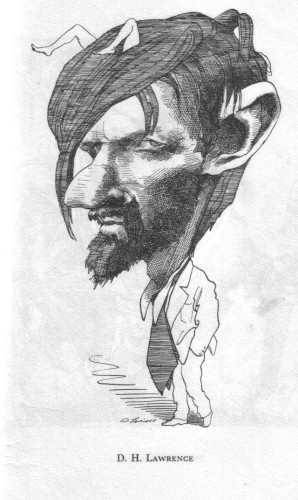
Lawrence.jpgIn a 1913 letter D. H. Lawrence writes that “it is the problem of to-day, the establishment of a new relation, or the readjustment of the old one, between men and women.” Lawrence’s views about relations between the sexes, and about sex differences are perhaps his most controversial – and they have frequently been misrepresented. But before we delve into those views, let us ask why it should be the case that establishing a new relation between men and women is “the problem of to-day.” The reason is fairly obvious. The species divides itself into male and female, reproduces itself thereby, and the overwhelming majority of human beings seek their fulfillment in a relationship to the opposite sex. If relations between the sexes have somehow been crippled—as Lawrence believes they have been—then this is a catastrophe. It is hard to imagine a greater, more pressing problem.

Lawrence came to relations with women bearing serious doubts about his own manhood, and with the conviction that his nature was fundamentally androgynous. Throughout his life, but especially as a boy, it was easier for him to relate to women and to form close bonds with them. Thus, when Lawrence discusses the nature of woman he draws not only upon his experiences with women, but also upon his understanding of his own nature. One of the questions we must examine is whether, in doing so, Lawrence was led astray. After all, Lawrence eventually came to repudiate the idea of any sort of fundamental androgyny and to claim that men and women are radically different. In Fantasia of the Unconscious he writes, “We are all wrong when we say there is no vital difference between the sexes.” Lawrence wrote this in 1921 intending it to be provocative, but it is surely much more controversial in today’s world, where it has become a dogma in some circles to insist that sex differences (now called “gender differences”) are “socially constructed.” Lawrence continues: “There is every difference. Every bit, every cell in a boy is male, every cell is female in a woman, and must remain so. Women can never feel or know as men do. And in the reverse, men can never feel and know, dynamically, as women do.”

Lawrence saw relations between the sexes as essentially a war. He tells us in his essay “Love” that all love between men and women is “dual, a love which is the motion of melting, fusing together into oneness, and a love which is the intense, frictional, and sensual gratification of being burnt down, burnt into separate clarity of being, unthinkable otherness and separateness.” The love between men and women is a fusing—or a will to fusing—but one that never fully takes place because the relation is also fundamentally frictional. Again and again Lawrence emphasizes the idea that men and women are metaphysically different. In other words, they have different, and even opposed ways of being in the world. They are not just anatomically different; they have different ways of thinking and feeling, and achieve satisfaction and fulfillment in life through different means.

Lawrence’s view of the difference between the sexes can be fruitfully compared to the Chinese theory of yin and yang.  These concepts are of great antiquity, but the way in which they are generally understood today is the product of an ambitious intellectual synthesis that took place under the early Han dynasty (207 B.C.–9 A.D.). According to this philosophy, the universe is shot through with an ultimate principle or power known as the Tao. However, the Tao divides itself into two opposing principles, yin and yang. These oppose yet complement each other. Yang manifests itself in maleness, hardness, harshness, dominance, heat, light, and the sun, amongst other things. Yin manifests itself in femaleness, softness, gentleness, yielding, cold, darkness, the moon, etc.

Contrary to the impression these lists might give, however, yang is not regarded as “superior” to yin; hardness is not superior to softness, nor is dominance superior to yielding. Each requires the other and cannot exist without the other. In certain situations a yang approach or condition is to be preferred, in others a yin approach. On occasion, yang may predominate to the point where it becomes harmful, and it must be counterbalanced by yin, or vice versa. (These principles are of central importance, for example, in traditional Chinese medicine.) The Tao Te Ching, a work written by a man chiefly for men extols the virtues of yin, and continually advises one to choose yin ways over yang. Lao-Tzu tells us over and over that it is “best to be like water,” that “those who control, fail. Those who grasp, lose,” and that “soft and weak overcome stiff and strong.”

Like the Taoists, Lawrence regards maleness and femaleness as opposed, yet complementary. It is not the case that the male, or the male way of being, is superior to the female, or vice versa. In a sense the sexes are equal, yet equality does not mean sameness. The error of male chauvinism is in thinking that one way, the male way, is superior; that dominance and hardness are just “obviously” superior to their opposites.

Yet the same error is committed by some who call themselves feminists. Tacitly, they assume that the male or yang characteristics are superior, and enjoin women to seek fulfillment in life through cultivating those traits in themselves. To those who might wonder whether such a program is possible, to say nothing of desirable, the theory of the “social construction of gender” is today being offered as support. According to this view, the only inherent differences between men and women are anatomical, and all of the intellectual, emotional, and behavioral characteristics attributed to the sexes throughout history have actually been the product of culture and environment. (And so “yin and yang,” according to this view, is really a rather naïve philosophy which confuses nurture with nature.) Clearly, Lawrence would reject this theory. In doing so, he is on very solid ground.

It would, of course, be foolish not to recognize that some “masculine” and “feminine” traits are culturally conditioned. An obvious example would be the prevailing view in American culture that a truly “masculine” man is unable, without the help of women or gay men, to color-coordinate his wardrobe. However, when one sees certain traits in men and women displaying themselves consistently in all cultures and throughout all of human history it makes sense to speak of masculine and feminine natures. It is plausible to argue that a trait is culturally conditioned only if it shows up in some cultures but not in others. Unfortunately, the “social construction of gender” thesis has achieved the status of a dogma in academic circles. And, in truth, ultimately it has to be asserted as dogma since believing in it requires that we ignore the evidence of human history, profound philosophies such as Taoism, and most of the scientific research into sex differences that has taken place over the last one hundred years.

I said earlier that Lawrence believes men and women to be “metaphysically different,” and in his essay “A Study of Thomas Hardy” he does indeed write as if he believes they actually see the world with a different metaphysics in mind:

It were a male conception to see God with a manifold Being, even though He be One God. For man is ever keenly aware of the multiplicity of things, and their diversity. But woman, issuing from the other end of infinity, coming forth as the flesh, manifest in sensation, is obsessed by the oneness of things, the One Being, undifferentiated. Man, on the other hand, coming forth as the desire to single out one thing from another, to reduce each thing to its intrinsic self by process of elimination, cannot but be possessed by the infinite diversity and contrariety in life, by a passionate sense of isolation, and a poignant yearning to be at one.

So, men seek or are preoccupied with multiplicity, and women with unity. What are we to make of such a bizarre claim? First of all, it seems to run counter to the Greek tradition, especially that of the Pythagoreans, which tended to identify the One with the masculine, and the Many with the feminine. However, if one looks to Empedocles, a pre-Socratic philosopher Lawrence was particularly keen on, one finds a different story. Empedocles posits two fundamental forces which are responsible for all change in the universe: Love and Strife. Love, at the purely physical level, is a force of attraction. It draws things together, and without the intervention of Strife it would result in a monistic universe in which only one being existed. Strife breaks up and divides. It is a force of repulsion and separation. Now, Empedocles seems to identify Love with Aphrodite, and we may infer, though he does not say so, that Strife is Ares. In other words, he identifies his two forces with the archetypal female and male. This can offer us a clue as to what Lawrence is up to.

In Lawrence’s view, it is the female who wants to draw things, especially people, together. It is the female who yearns to heal divisions, to break down barriers. “Coming forth as the flesh, manifest in sensation” she seeks to overcome separateness through feeling, primarily through love. In the family situation, it is the female who tries to unite and overcome discord through love, whereas it is the male, typically, who frustrates this through the insistence on rules and distinctions. The ideal of universal love and an end to strife and division is fundamentally feminine—one which men, throughout history, have continually frustrated. It is characteristic of men to make war, and characteristic of women, no matter what cause or principle is involved, to object and to call for peace and unity.

Now the male, as Lawrence puts it, suffers from a sense of isolation, and a “yearning to be one.” He yearns for oneness, in fact, as the male yearns for the female. Yet his entire being disposes him to see the world in terms of its distinctness, and, indeed, to make a world rife with distinctions. Lawrence implies that polytheism is a “male” religion, and monotheism a “female” one. It is easy to see the logic involved in this. Polytheism sees the divine being that permeates the world as many because the world is itself many. Further, societies with polytheistic religions have always been keenly aware of ethnic and social differences, differences within the society (as in the Indian caste system), and between societies. Monotheism, on the other hand, tends toward universalism. Christianity especially, however it has actually been practiced, declares all men equal in the sight of God and calls for peace and unity in the world. (Lawrence, as we shall see later on, does indeed regard Christianity as a “feminine” religion, and blames it, in part, for feminizing Western men.)

This fundamental, metaphysical difference has the consequence that men and women do, in a real sense, live in different worlds. But perhaps such a formulation reflects a male bias towards differentiation. It is equally correct to say, in a more “feminine” formulation, that it is the same world seen in two, complementary ways. Indeed, it may be the case that it is difficult to see, from a male perspective, how the two sexes and their different ways of thinking and perceiving can achieve a rapprochement. Lawrence believes, of course, that they can live together, and that their opposite tendencies can be harmonized. In this way he is like Heraclitus, Lawrence’s favorite pre-Socratic, when he says “what is opposed brings together; the finest harmony is composed of things at variance, and everything comes to be in accordance with strife.” Heraclitus also tells us that “They do not understand how, though at variance with itself, it [the Logos] agrees with itself. It is a backwards-turning attunement like that of the bow and lyre.” In order to make a lyre or a bow, the two opposite ends of a piece of wood must be bent towards each other, never meeting, but held in tension. Their tension and opposition makes possible beautiful music, in the case of the lyre, and the propulsion of an arrow, in the case of the bow. Both involve a harmony through opposition.

In a 1923 newspaper interview Lawrence is quoted as saying “If men were left to themselves, they would rush off . . . into destruction. But women keep life back at its own center. They pull the men back. Women have enormous passive strength, the strength of inertia.” Here Lawrence uses an image he was very fond of: women are at the center, the hub. This is because they are closer to “the source” than men are.
womeninlove.jpgIn Fantasia of the Unconscious, Lawrence tells us “The blood-consciousness and the blood-passion is the very source and origin of us. Not that we can stay at the source. Nor even make a goal of the source, as Freud does. The business of living is to travel away from the source. But you must start every single day fresh from the source. You must rise every day afresh out of the dark sea of the blood.” Lawrence believes that men yearn for purposive, creative activity, which involves moving away from the source. However, the energy and inspiration for purposive activity is drawn from the source, and so there is a complementary movement back towards it.

In The Rainbow, Lawrence describes how Tom Brangwen, besotted with his wife, seems to lose himself in a sensual obsession with her, and with knowing her sexually. But gradually,

Brangwen began to find himself free to attend to the outside life as well. His intimate life was so violently active, that it set another man in him free. And this new man turned with interest to public life, to see what part he could take in it. This would give him scope for new activity, activity of a kind for which he was now created and released. He wanted to be unanimous with the whole of purposive mankind.

Sex is one means of contacting the source. Men contact the source through women. This does not mean, of course, that blood-consciousness is in women but not in men. Rather, it means that in most men the blood-consciousness in them is “activated” primarily through their relationship to women. Second, in women blood-consciousness is more dominant than it is in men. Women are more intuitive than men; they operate more on the basis of feeling than intellect. It should not be necessary to point out that whereas such an observation might, in another author, be taken as a denigration of women, in Lawrence it is actually high praise. Women are also much more in tune with their bodies and bodily cycles than men are. Men tend to see their bodies as adversaries that must be whipped into shape.

When Lawrence continually tells us that we must find a way to reawaken the blood-consciousness in us, he is writing primarily for men. Women are already there—or, at least, they can get there with less effort. There is an old adage: “Women are, but men must become.” To be feminine is a constant state that a woman has as her birthright. Masculinity, on the other hand, is something men must achieve and prove. Rousseau in Emile states “The male is male only at certain moments, the female is female all of her life, or at least all her youth.” We exhort boys to “be a man,” but never does one hear girls told to “be a woman.” One can compliment a man simply by saying “he’s a man,” whereas “she’s a woman” seems mere statement of fact. The psychological difference between masculinity and femininity mirrors the biological fact that all fetuses begin as female; something must happen to them in order to make them male. It also articulates what is behind the strange conviction many men have had, including many great poets and artists, that woman is somehow the keeper of life’s mysteries; the one closest to the well-spring of nature.

In “A Study of Thomas Hardy,” Lawrence states that “in a man’s life, the female is the swivel and centre on which he turns closely, producing his movement.” Goethe tells us “Das ewig Weiblich zieht uns hinan” (“The Eternal Feminine draws us onwards”). The female, the male’s source of the source, stands at the center of his life. The woman as personification of the life mystery entices him to come together with her, and through their coupling the life mystery perpetuates itself. But he is not, ultimately, satisfied by this coupling. He goes forth into the world, his body renewed by his contact with the woman, but full of desire to know this mystery more adequately, and to be its vehicle through creative expression.

Without a woman, a man feels unmoored and ungrounded, for without a woman he has no center in his life. A man—a heterosexual man—can never feel fulfilled and can never reach his full potential without a woman to whom he can turn. As to homosexual men, it is a well-known fact that many cultivate in themselves characteristics that have been traditionally usually associated with woman: refined taste in clothing and decoration, cooking, gardening, etc. What these characteristics have in common is connectedness to the pleasures of the moment, and to the rhythms and necessities of life. Men are normally purpose-driven and future-oriented. They tend to overlook those aspects of life that please, but lack any greater purpose other than pleasing. They tend, therefore, to be somewhat insensitive to their surroundings, to color, to texture, to odor, to taste. They tend, in short, to be so focused upon doing, that they miss out on being. Heterosexual men look to women to ground them, and to provide these ingredients to life—ingredients which, in truth, make life livable. Homosexual men must make a woman within themselves, in order to be grounded. (This does not mean, however, that they must become effeminate – see my review essay of Jack Donovan’s Androphilia for more details.)

Homosexual men are, of course, the exception not the rule. Lawrence writes, of the typical man, “Let a man walk alone on the face of the earth, and he feels himself like a loose speck blown at random. Let him have a woman to whom he belongs, and he will feel as though he had a wall to back up against; even though the woman be mentally a fool.” And what of the woman? What does she desire? Lawrence tells us that “the vital desire of every woman is that she shall be clasped as axle to the hub of the man, that his motion shall portray her motionlessness, convey her static being into movement, complete and radiating out into infinity, starting from her stable eternality, and reaching eternity again, after having covered the whole of time.” Man is the “doer,” the actor, whereas woman need do nothing. Just by being woman she becomes the center of a man’s universe.

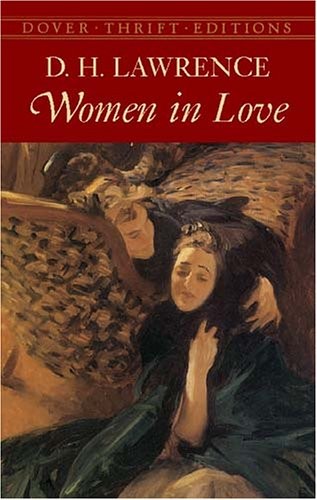
The dark side of this, in Lawrence’s view, is a tendency in women towards possessiveness, and towards wanting to make themselves not just the center of a man’s life but his sole concern. In Women in Love, Lawrence’s describes at length Rupert Birkin’s process of wrestling with this aspect of femininity:

But it seemed to him, woman was always so horrible and clutching, she had such a lust for possession, a greed of self-importance in love. She wanted to have, to own, to control, to be dominant. Everything must be referred back to her, to Woman, the Great Mother of everything, out of whom proceeded everything and to whom everything must finally be rendered up.

Birkin sees these qualities in Ursula, with whom he is in love. “She too was the awful, arrogant queen of life, as if she were a queen bee on whom all the rest depended.” He feels she wants, in a way, to worship him, but “to worship him as a woman worships her own infant, with a worship of perfect possession.”

Woman’s possessiveness is understandable given that the man is necessary to her well-being: she is only happy if she is center to the orbit and activity of some man. Again, for Lawrence, such a claim does not denigrate women, for he has already as much as said that a man is nothing without a woman. Nevertheless, some will see in this view of men and woman a sexism that places the man above the woman. From Lawrence’s perspective, this is illusory. It is true that the man is “doer,” but his perpetual need to act and to do stands in stark contrast to the woman, who need do nothing in order be who she is. It is true, further, that men’s ambition has given them power in the world, but it is a power that is nothing compared to that of the woman, who exercises her power without having to do anything. She reigns, without ruling. The man does what he does, but must return to the woman, and is “like a loose speck blown at random without her” – and he knows this. Much of misogyny may have to do with this. From the man’s perspective, the woman is all-powerful, and the source of her power a mystery.

Many modern feminists, however, conceive of power in an entirely male way, as the active power of doing. Lawrence recognized that in trying to cultivate this male power within themselves, women do not rise in the estimation of most men. Instead they are diminished, for men’s respect for and fascination with women springs entirely from the fact that unlike themselves women do not have to chase after an ideal of who they ought to be; they do not have to get caught up in the rat race in order to respect themselves. They can simply be; they can live, and take joy just in living.

One can make a rough distinction between two types of feminism. The most familiar type is what one might call the “woman on the street feminism,” which one encounters from average, working women, and which they imbibe from television, films, and magazines. This feminism essentially has as its aim claiming for women all that which formerly had been the province of men—including not only traditionally male jobs, but even male ways of speaking, moving, dressing, bonding, exercising, and displaying sexual interest. Ironically, this form of feminism is at root a form of masculinism, which makes traditionally masculine traits the hallmarks of the “liberated” or self-actualized human being.

The other type of feminism is usually to be found only in academia, though not all academic feminists subscribe to it. It insists that women have their own ways of thinking, feeling, and relating to others. Feminist philosophers have written of woman’s “ways of knowing” as distinct from men’s, and have even put forward the idea that women approach ethical decision-making in a markedly different way. It is this form of feminism to which Lawrence is closest. Lawrence’s writings are concerned with liberating both men and women from the tyranny of a modern civilization which cuts them off from their true natures. Liberation for modern women cannot mean becoming like modern men, for modern men are living in a condition of spiritual (as well as wage) slavery. In an essay on feminism, Wendell Berry writes

It is easy enough to see why women came to object to the role of [the comic strip character] Blondie, a mostly decorative custodian of a degraded, consumptive modern household, preoccupied with clothes, shopping, gossip, and outwitting her husband. But are we to assume that one may fittingly cease to be Blondie by becoming Dagwood? Is the life of a corporate underling—even acknowledging that corporate underlings are well paid—an acceptable end to our quest for human dignity and worth? . . . How, I am asking, can women improve themselves by submitting to the same specialization, degradation, trivialization, and tyrannization of work that men have submitted to? [Wendell Berry, “Feminism, the Body, and the Machine,” in The Art of the Commonplace: The Agrarian Essays of Wendell Berry, ed. Norman Wirzba (Washington, D.C.: Counterpoint, 2002), 69–70.]

I will return to this issue later.

Having now characterized, in broad strokes, Lawrence’s views on the differences between men and woman, I now turn to a more detailed discussion of each.

2. The Nature of Man

As we have seen, Lawrence believes that men (most men) need to have a woman in their lives. Their relationship to a woman serves to ground their lives, and to provide the man not only with a respite from the woes of the world, but with energy and inspiration. However, this is not the same thing as saying that the man makes the woman, or his relationship to her, the purpose of his life. In Fantasia of the Unconscious Lawrence writes, “When he makes the sexual consummation the supreme consummation, even in his secret soul, he falls into the beginnings of despair. When he makes woman, or the woman and child, the great centre of life and of life-significance, he falls into the beginnings of despair.” This is because Lawrence believes that true satisfaction for men can come only from some form of creative, purposive activity outside the family.

women1.jpgHaving a woman is therefore a necessary but not a sufficient condition for male happiness. In addition to a woman, he must have a purpose. Women, on the other hand, do not require a purpose beyond the home and the family in order to be happy. This is another of those claims that will rankle some, so let us consider two important points about what Lawrence has said. First, he is speaking of what he believes the typical woman is like, just as he is speaking of the typical man. There are at least a few exceptions to just about every generalization. Second, we must ask an absolutely crucial question of those who regard such claims as demeaning women: why is being occupied with home and family lesser than having a purpose (e.g., a career) outside the home? The argument could be made—and I think Lawrence would be sympathetic to this—that the traditional female role of making a home and raising children is just as important and possibly more important than the male activities pursued outside the home. Again, much of contemporary feminism sees things from a typically male point of view, and denigrates women who choose motherhood rather than one of the many meaningless, ulcer-producing careers that have long been the province of men.

Lawrence writes, “Primarily and supremely man is always the pioneer of life, adventuring onward into the unknown, alone with his own temerarious, dauntless soul. Woman for him exists only in the twilight, by the camp fire, when day has departed. Evening and the night are hers.” Lawrence’s male bias creeps in here a bit, as he romanticizes the “dauntless” male soul. Men and women always believe, in their heart of hearts, that their ways are superior. Nevertheless, Lawrence is not here relegating women to an inferior position. Half of life is spent in the evening and night. Day belongs to the man, night to the woman. It is a division of labor. Lawrence is drawing here, as he frequently does, on traditional mythological themes: the man is solar, the woman lunar.

Lawrence characterizes the man’s pioneering activity as follows: “It is the desire of the human male to build a world: not ‘to build a world for you, dear’; but to build up out of his own self and his own belief and his own effort something wonderful. Not merely something useful. Something wonderful.” In other words, the man’s primary purpose is not having or doing any of the “practical” things that a wife and a family require. And when he acts on a larger scale—Lawrence gives building the Panama Canal as an example—it is not with the end in mind of making a world in which wives and babes can be more comfortable and secure (“a world for you, dear”). He seeks to make his mark on the world; to bring something glorious into existence. And so men create culture: games, religions, rituals, dances, artworks, poetry, music, and philosophy. Wars are fought, ultimately, for the same reason. It is probably true, as is often asserted, that every war has some kind of economic motivation. However, it is probably also true to assert that in the case of just about every actual war there was another, more cost-effective alternative. Men make war for the same reason they climb mountains, jump out of airplanes, race cars, and run with the bulls: for the challenge, and the fame and glory and exhilaration that goes with meeting the challenge. It is an aspect of male psychology that most women find baffling, and even contemptible.

Now, curiously, Lawrence refers to this “impractical,” purposive motive of the male as an “essentially religious or creative motive.” What can he mean by this? Specifically, why does he characterize it as a religious motive?

It is religious because it involves the pursuit of something that is beyond the ordinary and the familiar. It is a leap into the unknown. The man has to follow what Lawrence frequently calls the “Holy Ghost” within himself and to try to make something within the world. He yearns always for the yet-to-be, the yet-to-be-realized, and always has his eye on the future, on what is in process of coming to be. Yet there seems to be, at least on the surface, a strange inconsistency in Lawrence’s characterization of the man’s motive as religious. After all, for Lawrence the life mystery, the source of being is religious object—and women are closer to this source. Man is entranced by woman, and with her he helps to propagate this power in the world through sex, but his sense of “purpose” causes him to move away from the source. So why isn’t it the woman whose “motives” are religious, and the man who is, in effect, irreligious?

The answer is that religion is not being at the source: it is directedness toward the source. Religion is possible only because of a lack or an absence in the human soul. Religion is ultimately a desire to put oneself at-one with the source. But this is possible only if one is not, originally or most of the time, at one with it. In a way, the woman is not fundamentally religious because she is the goddess, the source herself. The sexual longing of the man for the woman, and his utter inability ever to fully satisfy his desire and to resolve the mystery that is woman, are a kind of small-scale allegory for man’s large-scale, religious relationship to the source of being itself. He is, as I have said, renewed by his relations with women and, for a time, satisfied. But then he goes forth into the world with a desire for something, something. He creates, and when he does he is acting to exalt the life mystery (religion and art), to understand it (philosophy and science), or to further it (invention and production).

Lawrence speaks of how a man must put his wife “under the spell of his fulfilled decision.” Woman, who rules over the night, draws man to her and they become one through sex. Man, who rules the day, draws woman into his purpose, his aim in life, and through this they become one in another fashion. The man’s purpose does not become the woman’s purpose. He pursues this alone. But if the woman simply believes in him and what he aims to do, she becomes a tremendous source of support for the man, and she gives herself a reason for being. The man needs the woman as center, as hub of his life, and the woman needs to play this role for some man. Without a mate, though a man may set all sorts of purposes before him, ultimately they seem meaningless. He feels a sense of hollow emptiness, and drifts into despair. He lets his appearance go, and lives in squalor. He may become an alcoholic and a misogynist. He dies much sooner than his married friends, often by his own hand. As to the woman, without a man who has set himself some purpose that she can believe in, she assumes the male role and tries to find fulfillment through some kind of busy activity in the world. But as she pursues this, she feels increasingly bitter and hard, and a terrific rage begins to seethe beneath her placid surface. She becomes a troublemaker and a prude. Increasingly angry at men, she makes a virtue of necessity and declares herself emancipated from them. She collects pets.

In Studies in Classic American Literature Lawrence writes:

As a matter of fact, unless a woman is held, by man, safe within the bounds of belief, she becomes inevitably a destructive force. She can’t help herself. A woman is almost always vulnerable to pity. She can’t bear to see anything physically hurt. But let a woman loose from the bounds and restraints of man’s fierce belief, in his gods and in himself, and she becomes a gentle devil.

If a woman is to be the hub in the life a man, and derive satisfaction from that, everything depends on the spirit of the man. A few lines later in the same text Lawrence states, “Unless a man believes in himself and his gods, genuinely: unless he fiercely obeys his own Holy Ghost; his woman will destroy him. Woman is the nemesis of doubting man.” In order for the woman to believe in a man, the man must believe in himself and his purpose. If he is filled with self-doubt, the woman will doubt him. If he lacks the strength to command himself, he cannot command her respect and devotion. And the trouble with modern men is that they are filled with self-doubt and lack the courage of their convictions.

Lawrence, following Nietzsche, in part blames Christianity for weakening modern, Western men. Men are potent—sexually and otherwise—to the extent they are in tune with the life force. But Christianity has “spiritualized” men. It has filled their heads with hatred of the body, and of strength, instinct, and vitality. It has infected them with what Lawrence calls the “love ideal,” which demands, counter to every natural impulse, that men love everyone and regard everyone as their equal.

Frequently in his fiction Lawrence depicts relationships in which the woman has turned against the man because he is, in effect, spiritually emasculated. The most dramatic and symbolically obvious example of this is the relationship of Clifford and Connie  in Lady Chatterley’s Lover. Clifford returns from the First World War paralyzed from the waist down. But like the malady of the Grail King in Wolfram’s Parzival, this is only (literarily speaking) an outward, physical expression of an inward, psychic emasculation. Clifford is far too sensible a man to allow himself to be overcome by any great passion, so the loss of his sexual powers is not so dear. He has a keen, cynical wit and believes that he has seen through passion and found it not as great a thing as poets say that it is. It is his spiritual condition that drives Connie away from him, not so much his physical one. And so she wanders into the game preserve on their estate (representing the small space of “wildness” that still can rise up within civilization) and into the arms of Mellors, the gamekeeper. Their subsequent relationship becomes a hot, corporeal refutation of Clifford’s philosophy.

In Women in Love, Gerald Crich, the industrial magnate, is destroyed by Gudrun essentially because he does not believe in himself. Outwardly, he is “the God of the machine.” But his mastery of the material world is meaningless busywork, and he knows it. Gudrun is drawn to him because of this outward appearance of power, but when she finds that it is an illusion she hates him, and ultimately drives him to his death. For Lawrence, this is an allegory of the modern relationship between the sexes. Men today are masters of the material universe as they have never been before, but inside they are anxious and empty. The reason is that these “materialists” are profoundly afraid of and hostile to matter and nature, especially their own. Their intellect and “will to power” has cut them off from the life force and they are, in their deepest selves, impotent. The women know this, and scorn them.

In The Rainbow, Winifred Inger is Ursula’s teacher (with whom she has a brief affair), and an early feminist. She tells Ursula at one point,

The men will do no more,–they have lost the capacity for doing. . . .  They fuss and talk, but they are really inane. They make everything fit into an old, inert idea. Love is a dead idea to them. They don’t come to one and love one, they come to an idea, and they say “You are my idea,” so they embrace themselves. As if I were any man’s idea! As if I exist because a man has an idea of me! As if I will be betrayed by him, lend him my body as an instrument for his idea, to be a mere apparatus of his dead theory. But they are too fussy to be able to act; they are all impotent, they can’t take a woman. They come to their own idea every time, and take that. They are like serpents trying to swallow themselves because they are hungry.”

In Fantasia of the Unconscious Lawrence writes, “If man will never accept his own ultimate being, his final aloneness, and his last responsibility for life, then he must expect woman to dash from disaster to disaster, rootless and uncontrolled.”

It is important to understand here that the issue is not one of power. Lawrence’s point not that men must dominate or control their wives. In fact, in a late essay entitled “Matriarchy” (originally published as “If Women Were Supreme”) Lawrence actually advocates rule by women, at least in the home, because he believes it would liberate men. He assumes the truth of the claim—now in disrepute—that early man had lived in matriarchal societies and writes, “the men seem to have been lively sorts, hunting and dancing and fighting, while the woman did the drudgery and minded the brats. . . . A woman deserves to possess her own children and have them called by her name. As to the household furniture and the bit of money in the bank, it seems naturally hers.” The man, in such a situation, is not the slave of the woman because the man is “first and foremost an active, religious member of the tribe.” The man’s real life is not in the household, but in creative activity, and religious activity:

The real life of the man is not spent in his own little home, daddy in the bosom of the family, wheeling the perambulator on Sundays. His life is passed mainly in the khiva, the great underground religious meeting-house where only the males assemble, where the sacred practices of the tribe are carried on; then also he is away hunting, or performing the sacred rites on the mountains, or he works in the fields.

Men, Lawrence tells us, have social and religious needs which can only be satisfied apart from women. The disaster of modern marriage is that men not only think they have to rule the roost, but they accept the woman’s insistence that he have no needs or desires that cannot be satisfied through his relationship to her. He becomes master of his household, and slave to it at the same time:

Now [man’s] activity is all of the domestic order and all his thought goes to proving that nothing matters except that birth shall continue and woman shall rock in the nest of this globe like a bird who covers her eggs in some tall tree. Man is the fetcher, the carrier, the sacrifice, and the reborn of woman. . . . Instead of being assertive and rather insentient, he becomes wavering and sensitive. He begins to have as many feelings—nay, more than a woman. His heroism is all in altruistic endurance. He worships pity and tenderness and weakness, even in himself. In short, he takes on very largely the original role of woman.

Ironically, in accepting such a situation without a fight, he only earns the woman’s contempt: “Almost invariably a [modern] married woman, as she passes the age of thirty, conceives a dislike, or a contempt, of her husband, or a pity which is near to contempt. Particularly if he is a good husband, a true modern.”

3. The Nature of Woman

In Fantasia of the Unconscious Lawrence writes, “Women will never understand the depth of the spirit of purpose in man, his deeper spirit. And man will never understand the sacredness of feeling to woman. Each will play at the other’s game, but they will remain apart.” But what is meant by “feeling” here? Lawrence is referring again to his belief that women live, to a greater extent than men, from the primal self. In the case of most men today, “mind-consciousness” and reason are dominant—to the point where they are frequently detached from “blood-consciousness” and feeling.

In describing the nature of woman Lawrence once again draws on perennial symbols: “Woman is really polarized downwards, towards the centre of the earth. Her deep positivity is in the downward flow, the moon-pull.” The sun represents man, and the moon woman. Day belongs to him, and night to her. However, another set of mythic images associates the earth with woman and the sky with man. The “pull” in women is towards the earth, and this means several things. First, the earth is the source of chthonic powers, and so, as poetic metaphor, it represents the primal, pre-mental, animal aspect in human beings. In a literal sense, however, Lawrence believes that women are more in tune than men with chthonic powers: with the rhythms of nature and the cycle of seasons. Further, the “downward flow” refers to Lawrence’s belief that the lower “centres” of the body are, in a sense, more primitive, more instinctual than the upper, and that women tend to live and act from these centers more than men do. Lawrence writes, “Her deepest consciousness is in the loins and belly. . . . The great flow of female consciousness is downwards, down to the weight of the loins and round the circuit of the feet.”

Finally, to be “polarized downwards, towards the centre of the earth” means to have one’s life, one’s vital being fixed in reference to a central point. If Lawrence intends us to assume that man is polarized upwards then we may ask, toward what? If woman is oriented towards the center of the earth, then–following the logic of the mythic categories–is man oriented toward the center of the sky? But the sky has no center. Man is less fixed than woman; he is a wanderer. He is a hunter, a seeker, a pioneer, an adventurer. Woman, on the other hand, lives from the axis of the world. Mircea Eliade writes that “the religious man sought to live as near as possible to the Center of the World.” Woman is at the center. Man begins there, then goes off. He returns again and again, the phallic power in him rising in response to the chthonic power of the woman. And his religious response is an ongoing effort to bring his daytime self into line with the life force he experiences when in the arms of the woman.

Woman, Lawrence tells us, “is a flow, a river of life,” and this flow is fundamentally different from the man’s river. However, “The woman is like an idol, or a marionette, always forced to play one role or another: sweetheart, mistress, wife, mother.” The mind of the male is built to analyze and categorize. But the nature of woman, like the nature of nature itself, defies categorization. Even before Bacon, man’s response to nature was to force it to yield up its secrets, to bend it to the human will, or to see it only within the narrow parameters of whatever theory was fashionable at the moment. The male mind attempts to do this to woman as well–and the woman, to a great extent, cooperates. She fits herself into the roles expected of her by authority figures, whether it is dutiful daughter-sister-wife-mother, or dutiful feminist and career-woman.

Lawrence writes, “The real trouble about women is that they must always go on trying to adapt themselves to men’s theories of women, as they always have done.” Two opposing wills exist in women, Lawrence believes: a will to conform or to submit, and a will to reject all boundaries and be free. In Women in Love, Birkin compares women to horses:

“And of course,” he said to Gerald, “horses haven’t got a complete will, like human beings. A horse has no one will. Every horse, strictly, has two wills. With one will, it wants to put itself in the human power completely—and with the other, it wants to be free, wild. The two wills sometimes lock—you know that, if ever you’ve felt a horse bolt, while you’ve been driving it. . . . And woman is the same as horses: two wills act in opposition inside her. With one will, she wants to subject herself utterly. With the other she wants to bolt, and pitch her rider to perdition.”

Ursula, who is present at this exchange, laughs and responds “Then I’m a bolter.” The trouble is that she is not.

Lawrence’s fiction is filled with vivid portrayals of women (arguably much more vivid and well-drawn than his portrayals of men). The central characters in several of his novels are women (The Rainbow, The Lost Girl, The Plumed Serpent, and Lady Chatterley’s Lover). All of Lawrence’s major female characters exhibit these two wills, but frequently he presents pairs of women each of whom represents one of the wills. This is the case in Women in Love. Ultimately, in Ursula’s character the will to surrender emerges as dominant. In her sister Gudrun the will to be free and wild dominates, with tragic results. In Lady Chatterley’s Lover, Connie Chatterley exhibits the will to surrender, and her sister Hilda the will to be free. The two lesbians in Lawrence’s novella The Fox are cut from the same cloth. Similar pairs of women also crop up in Lawrence’s short stories. In each case, one woman learns the joys of submitting, not to a man but to the earth, to nature, to the life mystery within her. The man is a means to this, however. The best example of this in Lawrence’s fiction is probably Connie Chatterley’s journey to awakening. In John Thomas and Lady Jane, an earlier version of Lady Chatterley’s Lover, Lawrence has Connie speak of the significance of her lover and of his penis: “I know it was the penis which really put the evening stars into my inside self. I used to look at the evening star, and think how lovely and wonderful it was. But now it’s in me as well as outside me, and I need hardly look at it. I am it. I don’t care what you say, it was penis gave it me.” As to the other woman in Lawrence’s fiction, she tends to be horrified by the primal self in her, and its call to surrender. She lives from the ego. She rages against anything in her nature that is unchosen, and against anything else that would hem her in, especially any man. She views herself as “realistic” and hardheaded, but the general impression she gives is of being hardhearted and sterile.

In his portrayals of the latter type of woman, Lawrence is partly depicting what he believes to be a perennial aspect of the female character, and partly depicting what he regards as the quintessential “modern” woman. It is in the nature of woman to counterbalance the will to submit with an opposing will that “bolts,” and kicks against all that which limits her, including her own nature. Lawrence believes that modern womanhood and all the problems of women today arise from the over-development of that will to freedom.

A “will to freedom” sounds like a good thing, so it is important to realize that essentially what Lawrence means by this is a negative will which tries either to control, or to destroy all that which it cannot control. Lawrence’s critique of modernity is a major topic in itself, but suffice it say that he believes that in the modern period a disavowal of the primal self takes place on a mass, cultural scale. The seeds of this disavowal were sown by Christianity, and reaped by modern scientism, which becomes the avowed enemy of the religion that helped foster it. Individuals live their lives from the standpoint of ego and mental-consciousness, and distrust the blood-consciousness. The negative will in women seizes upon reason and ego-dominance as a means to free herself from the influence of her dark, chthonic self, and from the influence of the men that this dark, chthonic self draws her to. The will to negate, using the mind as its tool, thus becomes the path to “liberation.”

Lawrence writes in Apocalypse:

Today, the best part of womanhood is wrapped tight and tense in the folds of the Logos, she is bodiless, abstract, and driven by a self-determination terrible to behold. A strange ‘spiritual’ creature is woman today, driven on and on by the evil demon of the old Logos, never for a moment allowed to escape and be herself.

And in an essay he writes, “Woman is truly less free today than ever she has been since time began, in the womanly sense of freedom.” This is, of course, exactly the opposite of what is asserted by most pundits today, when they speak of the progress made by woman in the modern era. Why does Lawrence believe that woman is now so unfree? The answer is implied in the quotation from Apocalypse: she is not allowed to be herself.

In Studies in Classic American Literature Lawrence tells us

Men are not free when they are doing just what they like. The moment you can do just what you like, there is nothing you care about doing. Men are only free when they are doing what the deepest self likes.

And there is getting down to the deepest self! It takes some diving.

Because the deepest self is way down, and the conscious self is an obstinate monkey. But of one thing we may be sure. If one wants to be free, one has to give up the illusion of doing what one likes, and seek what IT wishes done.
aaron'srod.jpgWhat Lawrence says here is applicable to both men and women. “To be oneself” in the true sense means to answer to the call of the deepest self. We can only achieve our “fullness of being” if we do so. The mind invents all manner of goals and projects and ideals to be pursued, but ultimately all that we do produces only frustration and emptiness if we act in a way that does not fundamentally satisfy the needs of our deepest, pre-mental, bodily nature.

Lawrence writes further in Apocalypse: “The evil Logos says she must be ‘significant,’ she must ‘make something worth while’ of her life. So on and on she goes, making something worth while, piling up the evil forms of our civilization higher and higher, and never for a second escaping to be wrapped in the brilliant fluid folds of the new green dragon.” Earlier in the same text, Lawrence tells us that “The long green dragon with which we are so familiar on Chinese things is the dragon in his good aspect of life-bringer, life-giver, life-maker, vivifier.” In short, the “green dragon” represents the life force, the source of all, the Pan power. Lawrence is saying that modern woman, in search of something “significant” to do with her life, falls in with all the corrupt (largely, money-driven) pursuits that have brought men nothing but ulcers, emptiness, and early death. “All our present life-forms are evil,” he writes. “But with a persistence that would be angelic if it were not devilish woman insists on the best in life, by which she means the best of our evil life-forms, unable to realize that the best of evil life-forms are the most evil.” Like men, she loses touch with the natural both within herself and in the world surrounding her. Lawrence’s dragon symbolizes both of these: primal nature as such, and the primal nature within me. It is this dragon which Lawrence seeks to awake in himself, and in his readers. The tragedy of modern woman is that she has renounced the dragon, whereas she would be better off being devoured by it.

In John Thomas and Lady Jane Lawrence also links the ideal of fulfilled womanhood to the dragon. Following Connie Chatterley’s musings on the meaning of the phallus (which I quoted earlier), Lawrence writes:

The only thing which had taken her quite away from fear, if only for a night, was the strange gallant phallus looking round in its odd bright godhead, and now the arm of flesh around her, the socket of the hand against her breast, the slow, sleeping thud of the man’s heart against her body. It was all one thing—the mysterious phallic godhead. Now she knew that the worst had happened. This dragon had enfolded her, and its folds were pure gentleness and safety.

Make no mistake, Lawrence believes that women can adopt the ways of men; he believes that they can succeed at traditionally male work. But he believes that they do this at great cost to themselves. “Of all things, the most fatal to a woman is to have an aim,” Lawrence tells us. In general, he believes that the ultimate aim of life is simply living, and that we set a trap for ourselves when we declare that some goal or some ideal shall be the end of life, and believe that this will make life “meaningful.” This applies to men, but even more so to women. Why? Because, again, women are so much closer to the source that men tend to regard women as the life force embodied (“Mother Nature”). For a woman to live for something other than living is to pervert her nature, and her gift. Again, Lawrence’s position is not that a woman is incapable of doing the work of a man, but ultimately she will find it deadening: “The moment woman has got man’s ideals and tricks drilled into her, the moment she is competent in the manly world—there’s an end of it. She’s had enough. She’s had more than enough. She hates the thing she has embraced.”

In our age, many women who have forgone marriage and children in order to pursue a career are discovering this. The body has its own needs and ends, and the organism as a whole cannot flourish and achieve satisfaction unless these needs and ends are satisfied. With some exceptions, women who have chosen not to have children regret it, and suffer in other ways as well (for example, they are at higher risk for developing ovarian cancer than women who have given birth). The same goes for men, many of whom spend a great many “productive” years without feeling a need to reproduce–then are suddenly hit by that need and launch themselves on a frantic, sometimes worldwide search for a suitable mate able to father them a child. Lawrence wrote the following, prophetic words in one of his final essays:

It is all an attitude, and one day the attitude will become a weird cramp, a pain, and then it will collapse. And when it has collapsed, and she looks at the eggs she has laid, votes, or miles of typewriting, years of business efficiency—suddenly, because she is a hen and not a cock, all she has done will turn into pure nothingness to her. Suddenly it all falls out of relation to her basic henny self, and she realizes she has lost her life. The lovely henny surety, the hensureness which is the real bliss of every female, has been denied her: she had never had it. Having lived her life with such utmost strenuousness and cocksureness, she has missed her life altogether. Nothingness!

This quote suggests that Lawrence believes that the woman, the hen, ruins herself by taking up the ways appropriate and natural for the cock – but this is not exactly what he means. In Lawrence’s view, the modern ways of the cock are destroying the cock as well, but they are doubly bad for the hen. What’s bad for the gander is worse for the goose. Lawrence believes that in order to achieve satisfaction in life, we must get in touch with that primal self that the woman is fortunate enough always to be closer to.

4. A New Relation Between Man and Woman

So what is to be done? How are we to repair the damage that has been done in the modern world to the relation between the sexes? How are we to make men into men again, and women into women?

Lawrence has a great deal to say on this subject, but one of his oft-repeated recommendations essentially amounts to saying that relations between the sexes should be severed. By this he means that in order for men and women to come to each other as authentic men and women, they must stop trying to be “pals” with each other. In a 1925 letter he writes, “Friendship between a man and a woman, as a thing of first importance to either, is impossible: and I know it. We are creatures of two halves, spiritual and sensual—and each half is as important as the other. Any relation based on the one half—say the delicate spiritual half alone—inevitably brings revulsion and betrayal.”

In order for men and women to be friends, they must deliberately put aside or suppress their sexual identities and their very different natures. They must actively ignore the fact that they are men and women. They relate to each other, in effect, as neutered, sexless beings. They can never truly relax around each other, for they must continually monitor the way that they look at each other or (more problematic) touch each other. Sitting in too close proximity could awaken feelings that neither wants awakened. If, with respect to their “daytime selves,” men and women are forced to relate to each other in this way regularly, it has the potential of wrecking the ability of the “nighttime self” to relate to the opposite sex in a natural, sensual manner. Once accustomed to the daily routine of suppressing thoughts and feelings, and taking great care never to show a sexual side to their nature, these habits carry over into the realm of the romantic and sexual. Dating and courtship become fraught with tension, each party unsure of the “appropriateness” of this or that display of sexual interest or simple affection. The man, in short, becomes afraid to be a man, and the woman to be a woman. “On mixing with one another, in becoming familiar, in being ‘pals,’ they lose their own male and female integrity.” Writing of the modern marriage, Wendell Berry states

Marriage, in what is evidently its most popular version, is now on the one hand an intimate “relationship” involving (ideally) two successful careerists in the same bed, and on the other hand a sort of private political system in which rights and interests must be constantly asserted and defended. Marriage, in other words, has now taken the form of divorce: a prolonged and impassioned negotiation as to how things shall be divided. During their understandably temporary association, the “married” couple will typically consume a large quantity of merchandise and a large portion of each other.

If we must suppress our masculine and feminine natures in order to be friends with the opposite sex, in what way then do we actually relate to each other? We relate almost entirely through the intellect. Lawrence writes, “Nowadays, alas, we start off self-conscious, with sex in the head. We find a woman who is the same. We marry because we are ‘pals.’” And: “We have made the mistake of idealism again. We have thought that the woman who thinks and talks as we do will be the blood-answer.” Modern men and women begin their relationships as sexless things who relate through ideas and speech. The man looks for a woman, or the woman for a man who thinks and talks as they do; who “knows where they are coming from,” and has “similar values.” They might as well not have bodies at all, or conduct the initial stages of their relationships by telephone or email. Indeed, that is exactly the way many modern relationships are now beginning. But the primary way men and women are built to relate to each other is through the body and the signals of the body; through the subtle, sexual “vibrations” that each gives off, through the sexual gaze (different in the male and in the female), and through touch. No real, romantic relationship can be forged without these, and without feeling through these non-mental means that the two are “right” for each other. We cannot start with “mental agreement” and then construct a sexual relationship around it.

Lawrence, like Rousseau, had a good deal to say about education, and in fact much of what he says is Rousseauian. His ideas on the subject are expressed chiefly in Fantasia of the Unconscious and in a long essay, “The Education of the People.”

In Fantasia of the Unconscious, in a chapter entitled “First Steps in Education,” Lawrence lays out a new program for educating girls and boys: “All girls over ten years of age must attend at one domestic workshop. All girls over ten years of age may, in addition, attend at one workshop of skilled labour or of technical industry, or of art. . . . All boys over ten years of age must attend at one workshop of domestic crafts, and at one workshop of skilled labour, or of technical industry, or of art.” The difference between how boys and girls are to be educated (at least initially) is that whereas both are required to attend a “domestic workshop,” only boys are required to attend a “workshop of skilled labour or of technical industry, or of art.” Keep in mind that Lawrence is laying down the rules for education in his ideal society. He anticipates that whereas all males will work outside the home (in some fashion or other), not all females will. His system is not designed to force women into the role of homemakers, for he leaves it open that girls may, if they choose, learn the same skills as boys. As to higher education, Lawrence leaves this open: “Schools of mental culture are free to all individuals over fourteen years of age. Universities are free to all who obtain the first culture degree.” The system is designed in such a way that individuals are drawn to pursue certain avenues based on their personalities and natural temperaments. Unlike our present society, in Lawrence’s world there would be no universal pressure to attend university: only individuals with certain natural gifts and inclinations would go in that direction. Similarly, the system leaves open the possibility that some women will pursue the same path as men, but only if that is their natural inclination. The intent of Lawrence’s program is not to force individuals into certain roles, but to cultivate their natural, innate characteristics. And as we have seen, Lawrence believes that males and females are innately different.

Lawrence makes it clear elsewhere that in the early years education will be sex-segregated. This is intended to facilitate the development of each student’s character and talents. Males, especially early in life, relate more easily to other males and are better able to devote themselves to their studies in the absence of females. The same thing applies to females. Sex-segregated education in the early years also has the advantage, Lawrence believes, of promoting a healthier interaction between males and females later on. In Fantasia of the Unconscious he states, “boys and girls should be kept apart as much as possible, that they may have some sort of respect and fear for the gulf that lies between them in nature, and for the great strangeness which each has to offer the other, finally.” After all, “You don’t find the sun and moon playing at pals in the sky.”

But this is, of course, all in the realm of fantasy. Lawrence’s system would be practical, if modern society could be entirely restructured, and he is aware that this is not likely to occur anytime soon. So what are we to do in the meantime? Here we encounter some of Lawrence’s most controversial ideas, and most inflammatory prose. He writes, “men, drive your wives, beat them out of their self-consciousness and their soft smarminess and good, lovely idea of themselves. Absolutely tear their lovely opinion of themselves to tatters, and make them look a holy ridiculous sight in their own eyes.” It is this sort of thing that has made Lawrence a bête noire of feminists. Yet, in the next sentence, he adds “Wives, do the same to your husbands.” Lawrence’s intention, as always, is to destroy the ego-centredness in both husband and wife; to destroy the modern tendency for men and women to relate to each other, and to themselves, through ideas and ideals.

As a man and a husband, however, he writes primarily from that standpoint: “Fight your wife out of her own self-conscious preoccupation with herself. Batter her out of it till she’s stunned. Drive her back into her own true mode. Rip all her nice superimposed modern-woman and wonderful-creature garb off her, Reduce her once more to a naked Eve, and send the apple flying.” Does he mean any of this literally? Is he advocating that husbands beat their wives? Perhaps. Lawrence and Frieda were famous for their quarrels, which often came to blows, though the blows were struck by both. Lawrence states the purpose of such “beatings” (whether literal or figurative) as follows: “Make her yield to her own real unconscious self, and absolutely stamp on the self that she’s got in her head. Drive her forcibly back, back into her own true unconscious.”

As we have already seen, Lawrence believes that healthy relations between a man and a woman depend largely on the man’s ability to make the woman believe in him, and the purpose he has set for himself in life. Sex unites the “nighttime self” of men and women, but the daytime self can only be united, for Lawrence, through the man’s devotion to something outside the marriage, and the woman’s belief in the man. This is just the same thing as saying that what unites the lives of men and women (as opposed to their sexual natures) is the woman’s belief in the man and his purpose. And so Lawrence writes:

You’ve got to fight to make a woman believe in you as a real man, a pioneer. No man is a man unless to his woman he is a pioneer. You’ll have to fight still harder to make her yield her goal to yours: her night goal to your day goal. . . . She’ll never believe until you have your soul filled with a profound and absolutely inalterable purpose, that will yield to nothing, least of all to her. She’ll never believe until, in your soul, you are cut off and gone ahead, into the dark. . . . Ah, how good it is to come home to your wife when she believes in you and submits to your purpose that is beyond her. . . . And you feel an unfathomable gratitude to the woman who loves you and believes in your purpose and receives you into the magnificent dark gratification of her embrace. That’s what it is to have a wife.

Friends of Lawrence must have smiled when they read these words, for he was hardly giving an accurate description of his own marriage. As I have mentioned, Lawrence and Frieda frequently fell into violent quarrels, and she would often demean and humiliate him, and he her. Yet, ultimately, Frieda believed in Lawrence’s abilities and his mission in life; he knew it and derived strength from it. Those who may think that Lawrence’s prescriptions for marriage require an extraordinarily submissive and even unintelligent wife should take note of the sort of woman Lawrence himself chose.

Now, some might respond to Lawrence’s description of marriage by asking, understandably, “Where is love in all of this? What has become of love between man and wife?” Yet Lawrence speaks again and again, especially in Women in Love, of love between man and wife as a means to wholeness, as a way to transcend the false, ego-centered self. In a 1914 letter he tells a male correspondent:

You mustn’t think that your desire or your fundamental need is to make a good career, or to fill your life with activity, or even to provide for your family materially. It isn’t. Your most vital necessity in this life is that you shall love your wife completely and implicitly and in entire nakedness of body and spirit. Then you will have peace and inner security, no matter how many things go wrong. And this peace and security will leave you free to act and to produce your own work, a real independent workman.

Initially in these remarks Lawrence seems to be taking a position different from the one he expressed in the later Fantasia of the Unconscious, where he asserts that the man derives his chief fulfillment from purpose, not from the home and family. But Lawrence’s position is complex. He believes that the man requires a relationship to a woman in order to be strengthened in the pursuit of his purpose. Recall the lines I quoted earlier, “Let a man walk alone on the face of the earth, and he feels himself like a loose speck blown at random. Let him have a woman to whom he belongs, and he will feel as though he had a wall to back up against; even though the woman be mentally a fool.” Man fulfills himself through having a purpose beyond the home, but he must have a home and a wife to support him. Through romantic love (which always involves a strong sexual component) the man comes to his primal self, and emerges from the encounter with the strength to carry on in the world. Lawrence is telling his correspondent—and this becomes clear in the last lines of the passage quoted—that in order to accomplish anything meaningful he must first submerge himself, body and soul, into love for his wife.

Of course, this makes it sound as if Lawrence regards married love merely as a means to an end: merely as a means to pursuing a male “purpose.” Elsewhere, however, he speaks of it as if it were an end in itself. This is particularly the case in Women in Love. Early in the novel Birkin tells Gerald, “I find . . . that one needs some one really pure single activity—I should call love a single pure activity. . . . The old ideals are dead as nails—nothing there. It seems to me there remains only this perfect union with a woman—sort of ultimate marriage—and there isn’t anything else.” Again, Lawrence is seeking a way to get beyond idealism, and all the corrupt apparatus of modern, ego-driven life. To get beyond this, to what? To the true self, and to relationships based upon blood-consciousness and honest, uncorrupted sentiment. In Women in Love, Lawrence’s plan for achieving this involves a “perfect union” with a woman (and, as he states in the same novel, “the additional perfect relationship between man and man—additional to marriage”).

Birkin wants to achieve this with Ursula, but he keeps insisting over and over (much to her bewilderment and anger) that he means something more than mere “love.” The reason for this is that Birkin and Lawrence associate “love” with an ideal that is drummed into the heads of people in the modern, post-Christian world. We are issued with the baffling injunction to “love thy neighbor,” where thy neighbor means all of humanity. Any intelligent person can see that to love everyone means to love no one in particular. And any psychologically healthy person would find valueless the “love” of someone who claimed also to love all the rest of humanity. Lawrence is reacting also against the lovey-dovey, white lace, sanitized, billing and cooing sort of “love” that society encourages in married couples. Lawrence’s disgust for this sort of thing is expressed in his short story “In Love.” The main character, Hester, is repulsed by the “love” her fiancé, Joe, shows for her. They had been friends prior to their engagement and got on well

But now, alas, since she had promised to marry him, he had made the wretched mistake of falling “in love” with her. He had never been that way before. And if she had known he would get this way now, she would have said decidedly: Let us remain friends, Joe, for this sort of thing is a come-down. Once he started cuddling and petting, she couldn’t stand him. Yet she felt she ought to. She imagined she even ought to like it. Though where the ought came from, she could not see.

Birkin (like Lawrence) wants to avoid at all costs falling into this sort of scripted, stereotyped love relationship, but Ursula has a great deal of difficulty understanding what it is that he does want. He tries his best to explain it to her:

“There is,” he said, in a voice of pure abstraction, “a final me which is stark and impersonal and beyond responsibility. So there is a final you. And it is there I would want to meet you—not in the emotional, loving plane—but there beyond, where there is no speech and no terms of agreement. There we are two stark, unknown beings, two utterly strange creatures, I would want to approach you, and you me. And there could be no obligation, because there is no standard for action there, because no understanding has been reaped from that plane. It is quite inhuman—so there can be no calling to book, in any form whatsoever—because one is outside the pale of all that is accepted, and nothing known applies. One can only follow the impulse, taking that which lies in front, and responsible for nothing, giving nothing, only each taking according to the primal desire.”

The “final me and you” refers to the primal self. “The old ideals are dead as nails” and so is modern civilization. Birkin does not want his relationship to Ursula to “fit” into the modern social scheme, to become conventional or “safe.” He also fears and abhors the impress of society on his conscious, mental self. He does not want to come together with Ursula “though the ego,” as it were. He wants them to come together through their primal selves and to forge a relationship that is based on something deeper and far stronger than what the overly socialized creatures around him call “love.” Yet, at the same time, one could simply say that what he wants is a truer, deeper love, and that what passes for love with other people is usually not the genuine article. They are doing what one “ought” to do, even when in bed together.

In The Rainbow (to which Women in Love forms the “sequel”), Tom Brangwen offers his views on love and marriage in a famous passage:

“There’s very little else, on earth, but marriage. You can talk about making money, or saving souls. You can save your own soul seven times over, and you may have a mint of money, but your soul goes gnawin’, gnawin’, gnawin’, and it says there’s something it must have. In heaven there is no marriage. But on earth there is marriage, else heaven drops out, and there’s no bottom to it. . . . If we’ve got to be Angels . . . and if there is no such thing as a man or a woman among them, then it seems to me as a married couple makes one Angel. . . . [An] Angel can’t be less than a human being. And if it was only the soul of a man minus the man, then it would be less than a human being. . . . An Angel’s got to be more than a human being. . . . So I say, an Angel is the soul of a man and a woman in one: they rise united at the Judgment Day, as one angel. . . . If I am to become an Angel, it’ll be my married soul, and not my single soul.”

À la Aristophanes in Plato’s Symposium, men and women form two halves of a complete human being. Human nature divides itself into two, complementary aspects: masculinity and femininity. A complete human being is made when a man and a woman are joined together. But they cannot be joined—not really—through the mental, social self, but only through the unconscious, primal self.

In Women in Love, this view returns but in a modified form. Now Birkin tells us, “One must commit oneself to a conjunction with the other—for ever. But it is not selfless—it is a maintaining of the self in mystic balance and integrity—like a star balanced with another star.” And Lawrence tells us of Birkin, “he wanted a further conjunction, where man had being and woman had being, two pure beings, each constituting the freedom of the other, balancing each other like two poles of one force, like two angels, or two demons.” Tom Brangwen’s view implies that men and women, considered separately, do not have complete souls, and that a complete soul is made only when they join together in marriage. There is a suggestion in what he says that the “individuality” of single men and women is false, and that only a married couple constitutes a true individual. Birkin’s ideal, on the other hand, involves the man and the woman each preserving their selfhood and individuality and “balancing” each other.

Despite the fact that Birkin frequently, and transparently, speaks for Lawrence we cannot take him as speaking for Lawrence here. I believe that it is Brangwen’s position that is closest to Lawrence’s own. When Women in Love opens, Birkin is in a relationship with Hermione, who Lawrence portrays as a woman living entirely from out of her head, without any naturalness or spontaneity. Yet there is a bit of this in Birkin as well, which is perhaps why he reacts against it so violently when he sees it in Hermione. After the passage just quoted from Women in Love, Lawrence writes of Birkin, “He wanted so much to be free, not under the compulsion of any need for unification, or tortured by unsatisfied desire. . . . And he wanted to be with Ursula as free as with himself, single and clear and cool, yet balanced, polarised with her. The merging, the clutching, the mingling of love was become madly abhorrent to him.” Lawrence then goes on to describe Birkin’s fear and loathing of women’s “clutching.” Birkin is a conflicted character. He wants to lose himself in a relationship with a woman, but fears it at the same time. He wants Ursula, and talks on and on about spontaneity and the evil of ideals, yet he is continually preaching to Ursula about his ideal relationship which, conveniently, is one in which he can unite with her yet preserve his ego intact. This at first bewilders then infuriates Ursula, who never understands what it is that he wants. In the end, the problem resolves itself, probably just as it would in real life. Drawn to Ursula by a power stronger than his conscious ego, Birkin eventually drops all of his talk, surrenders his will, and settles into a married bliss that is marred only by his continued desire for the love of a man.

Ultimately, Lawrence believes that the “establishment of a new relation” between men and women depends upon a return to the oldest of relationships, and that this is possible only through a recovery of the oldest part of the self. We must, he believes, drop our ideal of the unisex society and be alive again to the fundamental, natural differences between men and women. Men and woman do not naturally desire to enjoy each other’s society at all times. We must not only educate men and women apart, but re-establish “spaces” within civilized society where men can be with men, and women with women. We must not force men and women together and command them to forget that they are men and women. Education and, indeed, much else in society must work to cultivate and to affirm the natural, masculine qualities and virtues in men, and the feminine qualities and virtues in women. Having become true men and women and having awakened, through their apartness, to the mystery and the allure that is the opposite sex, they will then come together and forge romantic alliances that are not based upon talk and “common values” but upon the “pull” between man and woman. Lawrence is not referring here simply to lust. A sexual element is, of course, involved, but what he means is the mysterious, ineffable attraction between an individual man and a woman, what we often call “chemistry,” which has nothing to do with the words they utter or the ideals they pay lip service to. And once this attraction is established, if the two desire to become bound to each other, then they must surrender themselves to the relationship. They must overcome their fear of the loss of ego boundaries. They must drop all talk of “rights” and not fall into the trap of treating the marriage as if it were a business partnership. For both, it is a leap into the unknown but in this case the unknown is the natural. When we plant a seed we must close the earth over it and go off and wait in anticipation. But we know that nature, being what it is, will produce as it has before. If all goes well, in that spot will grow the plant we were expecting. Similarly, marriage is not a human invention but something that grows naturally between a man and woman if its seed is planted in the fertile soil of the primal selves of each.

lundi, 29 novembre 2010

The Doctrine of Higher Forms

The Doctrine of Higher Forms

Sir Oswald MOSLEY

Ex: http://www.counter-currents.com/

1311427.jpgSince the war I have stressed altogether five main objectives. The true union of Europe; the union of government with science; the power of government to act rapidly and decisively, subject to parliamentary control; the effective leadership of government to solve the economic problem by use of the wage-price mechanism at the two key-points of the modern industrial world; and a clearly defined purpose for a movement of humanity to ever higher forms.
It is strange that in this last sphere of almost abstract thought my ideas have more attracted some of the young minds I value than my practical proposals in economics and politics. The reason is perhaps that people seek the ideal rather than the practical during a period in which such action is not felt to be necessary. This is encouraging for an ultimate future, in which through science the world can become free from the gnawing anxiety of material things and can turn to thinking which elevates and to beauty which inspires, but the hard fact is that many practical problems and menacing dangers must first be faced and overcome.

The thesis of higher forms was preceded by a fundamental challenge to the widely accepted claim of the communists that history is on their side. On the contrary, they are permanent prisoners of a transient phase in the human advance which modern science has rendered entirely obsolete. Not only is the primitive brutality of their method only possible in a backward country, but their whole thinking is only applicable to a primitive community. Both their economic thinking and their materialist conception of history belong exclusively to the nineteenth century. This thinking, still imprisoned in a temporary limitation, we challenge with thinking derived from the whole of European history and from the yet longer trend revealed by modern science. We challenge the idea of the nineteenth century with the idea of the twentieth century.

Communism is still held fast by the long obsolete doctrine of its origin, precisely because it is a material creed which recognizes nothing beyond such motives and the urge to satisfy such needs. Yet modern man has surpassed that condition as surely as the jet aircraft in action has overcome the natural law of gravity which Newton discovered. The same urge of man’s spiritual nature served by his continually developing science can inspire him to ever greater achievement and raise him to ever further heights.

The challenge to communist materialism was stated as follows in Europe: Faith and Plan:

What then, is the purpose of it all? Is it just material achievement? Will the whole urge be satisfied when everyone has plenty to eat and drink, every possible assurance against sickness and old age, a house, a television set, and a long seaside holiday each year? What other end can a communist civilization hold in prospect except this, which modern science can so easily satisfy within the next few years?

If you begin with the belief that all history can be interpreted only in material terms, and that any spiritual purpose is a trick and a delusion, which has the simple object of distracting the workers from their material aim of improving their conditions—the only reality—what end can there be even after every conceivable success, except the satisfaction of further material desires? When all the basic needs and wants are sated by the output of the new science, what further aim can there be but the devising of ever more fantastic amusements to titillate material appetites? If Soviet civilization achieves its furthest ambitions, is the end to be sputnik races round the stars to relieve the tedium of being a communist?

Communism is a limited creed, and its limitations are inevitable. If the original impulse is envy, malice, and hatred against someone who has something you have not got, you are inevitably limited by the whole impulse to which you owe the origin of your faith and movement. That initial emotion may be well founded, may be based on justice, on indignation against the vile treatment of the workers in the early days of the industrial revolution. But if you hold that creed, you carry within yourself your own prison walls, because any escape from that origin seems to lead towards the hated shape of the man who once had something you had not got; anything above or beyond yourself is bad. In reality, he may be far from being a higher form; he may be a most decadent product of an easy living which he was incapable of using even for self-development, an ignoble example of missed opportunity. But if the first impulse be envy and hatred of him, you are inhibited from any movement beyond yourself for fear of becoming like him, the man who had something which you had not got.

Thus your ideal becomes not something beyond yourself, still less beyond anything which now exists, but rather, the petrified, fossilized shape of that section of the community which was most oppressed, suffering, and limited by every material circumstance in the middle of the nineteenth century. The real urge is then to drag everything down toward the lowest level of life, rather than the attempt to raise everything towards the highest level of life which has yet been attained, and finally to move beyond even that. In all things this system of values seeks what is low instead of what is high.

So communism has no longer any deep appeal to the sane, sensible mass of the European workers who, in entire contradiction of Marxian belief in their increasing “immiseration,” have moved by the effort of their own trade unions and by political action to at least a partial participation in the plenty which the new science is beginning to bring, and towards a way of living and an outlook in which they do not recognize themselves at all as the miserable and oppressed figures of communism’s original workers.

The ideal is no longer the martyred form of the oppressed, but the beginning of a higher form. Men are beginning not to look down, but to look up. And it is precisely at this point that a new way of political thinking can give definite shape to what many are beginning to feel is a new forward urge of humanity. It becomes an impulse of nature itself directly man is free from the stifling oppression of dire, primitive need.

The ideal of creating a higher form on earth can now rise before men with the power of a spiritual purpose, which is not simply a philosophic abstraction but a concrete expression of a deep human desire. All men want their children to live better than they have lived, just as they have tried by their own exertions to lift themselves beyond the level of their fathers whose affection and sacrifice often gave them the chance to do it. This is a right and natural urge in mankind, and, when fully understood, becomes a spiritual purpose.

venus_milo_ac-grenoble.jpgThis purpose I described as the doctrine of higher forms. The idea of a continual movement of humanity from the amoeba to modern man and on to ever higher forms has interested me since my prison days, when I first became acutely aware of the relationship between modern science and Greek philosophy. Perhaps it is the very simplicity of the thesis which gives it strength; mankind moving from the primitive beginning which modern science reveals to the present stage of evolution and continuing in this long ascent to heights beyond our present vision, if the urge of nature and the purpose of life are to be fulfilled. While simple to the point of the obvious, in detailed analysis it is the exact opposite of prevailing values. Most great impulses of life are in essence simple, however complex their origin. An idea may be derived from three thousand years of European thought and action, and yet be stated in a way that all men can understand.

My thinking on this subject was finally reduced to the extreme of simplicity in the conclusion of Europe, Faith and Plan:

To believe that the purpose of life is a movement from lower to higher forms is to record an observable fact. If we reject that fact, we reject every finding of modern science, as well as the evidence of our own eyes. . . . It is necessary to believe that this is the purpose of life, because we can observe that this is the way the world works, whether we believe in divine purpose or not. And once we believe this is the way the world works, and deduce from the long record that it is the only way it can work, this becomes a purpose because it is the only means by which the world is likely to work in future. If the purpose fails, the world fails.

The purpose so far has achieved the most incredible results—incredible to anyone who had been told in advance what was going to happen—by working from the most primitive life forms to the relative heights of present human development. Purpose becomes, therefore, quite clearly in the light of modern knowledge a movement from lower to higher forms. And if purpose in this way has moved so far and achieved so much, it is only reasonable to assume that it will so continue if it continues at all; if the world lasts. Therefore, if we desire to sustain human existence, if we believe in mankind’s origin which science now makes clear, and in his destiny which a continuance of the same progress makes possible, we must desire to aid rather than to impede the discernible purpose. That means we should serve the purpose which moves from lower to higher forms; this becomes our creed of life. Our life is dedicated to the purpose.

In practical terms this surely indicates that we should not tell men to be content with themselves as they are, but should urge them to strive to become something beyond themselves. . . . To assure men that we have no need to surpass ourselves, and thereby to imply that men are perfect, is surely the extreme of arrogant presumption. It is also a most dangerous folly, because it is rapidly becoming clear that if mankind’s moral nature and spiritual stature cannot increase more commensurately with his material achievements, we risk the death of the world. . . .

We must learn to live, as well as to do. We must restore harmony with life, and recognize the purpose in life. Man has released the forces of nature just as he has become separated from nature; this is a mortal danger, and is reflected in the neurosis of the age. We cannot stay just where we are; it is an uneasy, perilous and impossible situation. Man must either reach beyond his present self, or fail; and if he fails this time, the failure is final. That is the basic difference between this age and all previous periods. It was never before possible for this failure of men to bring the world to an end.

It is not only a reasonable aim to strive for a higher form among men; it is a creed with the strength of a religious conviction. It is not only a plain necessity of the new age of science which the genius of man’s mind has brought; it is in accordance with the long process of nature within which we may read the purpose of the world. And it is no small and selfish aim, for we work not only for ourselves but for a time to come. The long striving of our lives can not only save our present civilization, but can also enable others more fully to realize and to enjoy the great beauty of this world, not only in peace and happiness, but in an ever unfolding wisdom and rising consciousness of the mission of man.

The doctrine of higher forms may have appealed to some in a generation acutely aware of the divorce between religion and science because it was an attempted synthesis of these two impulses of the human movement. I went so far as to say that higher forms could have the force of a science and a religion, in the secular sense, since it derived both from the evolutionary process first recognized in the last century, and from the philosophy, perhaps the mysticism, well described as the ‘eternal becoming’, which Hellenism first gave to Europe as an original and continuing movement still represented in the thinking, architecture and music of the main European tradition.

To simplify and synthesize are the chief gifts which clear thought can bring, and never have they been so deeply needed as in this age. A healing synthesis is required, a union of Hellenism’s calm but radiant embrace of the beauty and wonder of life with the Gothic impulse of new discoveries urging man to reach beyond his presently precarious balance until sanity itself is threatened. The genius of Hellas can still give back to Europe the life equilibrium, the firm foundation from which science can grasp the stars. He who can combine within himself this sanity and this dynamism becomes thereby a higher form, and beyond him can be an ascent revealing always a further wisdom and beauty. It is a personal ideal for which all can try to live, a purpose in life.

We can thus resume the journey to further summits of the human spirit with measure and moderation won from the struggle and tribulation of these years. We may even in this time of folly and sequent adversity gain the balance of maturity which alone can make us worthy of the treasures, capable of using the miraculous endowment, and also of averting the tempestuous dangers, of modern science. We may at last acquire the adult mind, without which the world cannot survive, and learn to use with wisdom and decision the wonders of this age.

I hope that this record of my own small part in these great affairs and still greater possibilities has at least shown that I have ‘the repugnance to mean and cruel dealings’ which the wise old man ascribed to me so long ago, and yet have attempted by some union of mind and will to combine thought and deed; that I have stood with consistency for the construction of a worthy dwelling for humanity, and at all cost against the rage and folly of insensate and purposeless destruction; that I have followed the truth as I saw it, wherever that service led me, and have ventured to look and strive through the dark to a future that can make all worth while.

Source: http://www.oswaldmosley.com/higher-forms.htm

lundi, 22 novembre 2010

Grossbritannien: ein Vorgeschmack auf die auch den Deutschen bevorstehende Zukunft

Großbritannien: ein Vorgeschmack auf die auch den Deutschen bevorstehende Zukunft

Udo Ulfkotte

Ex: http://info.kopp-verlag.de/


In Großbritannien passiert gerade das, was den Deutschen in den kommenden Monaten erst noch bevorsteht: weite Teile der Bevölkerung verarmen rasend schnell. Rentner schließen sich aus purer Not zu Gangs zusammen, immer mehr Kinder leiden Hunger, Schulen werden geschlossen und die Abgaben immer weiter erhöht. In Deutschland zuckt man hinsichtlich dieser Entwicklung in Ländern wie Großbritannien noch hochnäsig mit den Schultern – und verdrängt, dass sie auch uns bevorsteht.


Seit Monaten schon steht Großbritannien am Rande des Staatsbankrotts. Die Regierung hat keine Wahl – sie muss sparen, weil es nichts mehr zu verteilen gibt. Im öffentlichen Dienst werden 490.000 Stellen gestrichen – viele Beamte werden entlassen. Zudem will die Regierung durch die Reform der Beamtenpensionen weitere 1,8 Milliarden Pfund einsparen. Parallel dazu werden die Rentenbeiträge erhöht. Das ist nichts anderes als eine Gehaltskürzung für die Pensionäre. Am härtesten sind die Gemeinden von den finanziellen Kürzungen betroffen. Sie verlieren bis 2015 jedes Jahr 7,1 Prozent ihres Budgets – und das in einer Zeit, in der die Nachfrage nach Sozialbauwohnungen und Sozialhilfe vor dem Hintergrund der Finanz- und Wirtschaftskrise dramatisch steigt.

Unter den Folgen leiden zuerst die Ärmsten, die Rentner etwa. Nie zuvor hat die britische Polizei so viele Rentner beim Diebstahl oder bei Raubüberfällen erwischt. Man muss in diesem Zusammenhang wissen, dass viele Briten nicht fürs Alter vorsorgen. Das hat ja in der Vergangenheit der Staat erledigt. 32 Prozent der Briten, die älter als 50 Jahre sind, haben nicht einen Cent fürs Alter gespart. Nun steigen die Steuern, die Preise für Lebensmittel und vor allem die Preise fürs Wohnen in sicherer Umgebung. Die Immobilienpreise für Häuser auf dem Land steigen um wöchentlich durchschnittlich 200 Pfund (235 Euro). Das sind immerhin mehr als 12.000 Euro im Jahr. Und das inmitten der schlimmsten Wirtschaftskrise seit 80 Jahren. Parallel dazu fallen die Durchschnittseinkommen der Briten unvorstellbar schnell.

Großbritannien, einst berühmt für seine vielen Privatschulen, erlebt auch bei der Bildung ein Desaster: 38 Privatschulen mussten schon schließen, weil die Eltern sich das Schulgeld nicht mehr leisten können, vielen weiteren droht das gleiche Schicksal. Und das ist erst der Anfang. Weil die Studiengebühren an den Universitäten massiv erhöht werden, haben gerade erst Studenten die Tory-Parteizentrale gestürmt.

Wie ein schlechter Witz mutet es da an, dass die Regierung nun einen »Wohlfühlindex« der Briten veröffentlichen will. Den Briten wird künftig eine Statistik präsentiert, in der sie sehen, wie »gut« es ihnen geht. Die britische Regierung, die nun zehn Milliarden Pfund (11,8 Milliarden Euro) für den Bailout in Irland finanzieren muss, erfindet derweilen immer neue Abgaben, die Geld in die klammen Kassen spülen. Die jüngste neue Steuer ist eine »Flutsteuer«, die all jene Immobilieneigentümer zahlen sollen, die Grundstücke in der Nähe von Gewässern haben. Schließlich können Straßen und öffentliche Einrichtungen bei Überschwemmungen Schäden nehmen – und da sollen schon einmal jene vorbeugend zahlen, die private Grundstücke in der Nähe von Gewässern besitzen. Gerade erst hat Starkregen einen Wetterballon der Polizei in Manchester zerstört, der 80.000 Pfund gekostet hatte – irgendwo muss man das Geld ja wieder beim Bürger eintreiben. Nur am Rande sei erwähnt, dass die britischen Polizisten inzwischen offiziell dazu angehalten werden, im Dienst möglichst nicht den Polizeifunk zu nutzen, sondern über ihre privaten Mobiltelefone SMS zu verschicken, wenn sie in Einsätzen sind. Denn für jede Nutzung des Funks muss die Polizei Gebühren zahlen. Und die will man sparen.

Weil die Abgaben steigen und die Einkommen sinken, gibt es nun überall im Land Streiks. Der öffentliche Nahverkehr steht nicht nur in London vor dem Kollaps. Und während immer mehr Briten nicht wissen, wie sie das Überleben finanzieren sollen, will die Regierung die sozialen Leistungen drastisch zusammenstreichen. Arbeitslose müssen künftig jeden ihnen angebotenen Job annehmen, oder sie verlieren alle Ansprüche auf staatliche Unterstützung. Die Regierung hat die Parole ausgegeben, Arbeitslosigkeit sei »Sünde«. Auch Eltern von kleinen Kindern sollen dazu gezwungen werden, einer geregelten Arbeit nachzugehen. Wer Sozialleistungen bezieht, gilt in Großbritannien nun ganz offiziell als »Schmarotzer«.

Der Kündigungsschutz wird Stück für Stück abgeschafft - und zwar vor allem auch für Behinderte. Die müssen ihre Arbeitskraft jetzt in kleinen Portionen am Markt anbieten. Wenn sie nicht den ganzen Tag durchgehend arbeiten können, dann eben nur einige Stunden, hauptsache sie arbeiten - so die Regierung.

In Deutschland hält man das alles derzeit noch für undenkbar. Vor wenigen Monaten noch hielten die Briten die brutale Entwicklung, die sie jetzt direkt vor ihrer Haustür am eigenen Leib erleben, ebenfalls für völlig unvorstellbar. Auch die Deutschen werden in den kommenden Monaten eine kalte Dusche nach der anderen bekommen. Bestsellerautor Michael Grandt hat den Deutschen das alles vor wenigen Monaten ganz nüchtern in seinem neuen Standardwerk Der Staatsbankrott kommt aufgeschrieben und die Fakten mit vielen Quellen belegt. Man weiß als gut informierter Deutscher, was kommen wird. Aber viele wollen es einfach nicht hören. Bis die Traumwelt mit einem Knall zusammenbricht. So wie derzeit für viele Briten.


dimanche, 21 novembre 2010

Moslims en joden struikelen over speelgoedvarken

fermeanimaux.jpg

Moslims en joden struikelen over speelgoedvarken

Ex: http://www.ad.nl/

LONDEN - In het Verenigd Koninkrijk heeft een keten van speelgoedwinkels een
varkentje uit een speelgoedboerderij gehaald. De directie wil zo voorkomen
dat joodse en islamitische ouders aanstoot nemen aan het 'onreine' dier.
De merkwaardige maatregel kwam aan het licht nadat een moeder bij de winkel
had geklaagd dat er een varkentje ontbrak in de boerderijset HappyLand
Goosefeather Farm. Die had de vrouw voor de eerste verjaardag van haar
dochtertje gekocht, meldt The Sun

"De boerderij had wel nog een varkenshok en een knop die een knorgeluid
maakt als je er op duwt. Maar het varken was spoorloos", aldus de vrouw.

Klachten
De moeder schreef een brief naar de directie van de Early Learning
Centre-winkel en kreeg een mail terug met de verklaring voor de mysterieuze
verdwijning van het plastic varkentje. Het speelgoeddiertje was uit alle
boerderijpakketten verwijderd om joodse en islamitische ouders niet voor het
hoofd te stoten. Beide religies verbieden het nuttigen van varkenvlees. De
beslissing was genomen na enkele klachten van klanten.

dimanche, 17 octobre 2010

Britain and the Weimar Republic

Britain and the Weimar Republic: The History of a Cultural Relationship

Colin Storer (author)

Between the two world wars, Germany managed - despite all the political upheavals it was experiencing - to attract extremely large numbers of British travellers and tourists. During the Weimar period in particular, Germany attracted visitors from virtually every section of British society. In this book, Colin Storer moves beyond the traditional scholarly focus on figures such as Christopher Isherwood and John Maynard Keynes to provide the first broad comparative study of British intellectual attitudes towards Weimar Germany. Based on original research and using striking examples from intellectual life and literature it highlights the diversity of British attitudes, challenges received opinions on areas such as the 'inevitable collapse' of the Republic, and seeks to establish why Weimar Germany was so appealing to such a variety of individuals.

Imprint: I.B.Tauris
Publisher: I.B.Tauris & Co Ltd

Hardback
ISBN: 9781848851405
Publication Date: 30 Sep 2010
Number of Pages: 264
Height: 216
Width: 134

00:11 Publié dans Histoire | Lien permanent | Commentaires (0) | Tags : histoire, grande-bretagne, allemagne, weimar, années 20, années 30 | |  del.icio.us | | Digg! Digg |  Facebook

samedi, 16 octobre 2010

Cyrpus in World War II

Cyprus in World War II: Politics and Conflict in the Eastern Mediterranean

Anastasia Yiangou (author)

World War II marked a pivotal point in the history of Cyprus, yet surprisingly, this period of the island's history has been little studied to date. Anastasia Yiangou here provides the first major study of the impact of World War II on the political development of Cyprus. In doing so, she traces shifting Cypriot attitudes to the war and the formation of a triangular conflict in the island between the Left, Right and British colonial power. She explains how the British and Cypriots fought a war alongside each other, yet remained far apart in discussions on the future of the island. Yiangou's original and compelling analysis highlights how the post-1945 landscape of Cypriot political struggles was shaped by forces set in motion during the war itself.

Anastasia Yiangou holds a PhD from the Institute of Commonwealth Studies, University of London in 2009. She has taught at the University of Cyprus and the G.C. School of Careers, Cyprus.

Imprint: I.B.Tauris
Publisher: I.B.Tauris & Co Ltd
Series: International Library of Twentieth Century History

Hardback
ISBN: 9781848854369
Publication Date: 30 Sep 2010
Number of Pages: 304
Height: 216
Width: 134

Cyprus: Diplomatic history

Cyprus: Diplomatic History and the Clash of Theory in International Relations

William Mallinson (author)

Hardback £54.50

What are the mainsprings of international rivalry and conflict and how are they to be uncovered - by international relations theory, history or by the practice of diplomacy? Cyprus is ideal for thoroughly testing theory and practice. The island has been at the epicentre of international relations rivalry throughout its history and to this day Cyprus remains a geopolitical tinder-box with acute tension between Cyprus and Turkey over the Turkish occupation of a third of the island. Hostility has now been transferred to the forum of the EU, with Cyprus as a member and the US and Britain pushing for Turkey to join. Meanwhile in the geopolitical hinterland, Russia remains suspicious of the island's British bases which project NATO power in the Eastern Mediterranean and the Middle East. William Mallinson's approach in analyzing Cyprus' problems and the dangers for international relations is unique. He applies practical hands-on experience of international diplomacy with academic research as an historian and international relations theorist.

Mallinson applies international theory to his minute analysis of revealing documents - the life-blood of the historian of diplomacy - and shows how historical research provides the essential basis for international relations theory.

Imprint: I.B.Tauris
Publisher: I.B.Tauris & Co Ltd

Hardback
ISBN: 9781848854161
Publication Date: 30 Sep 2010
Number of Pages: 256

mercredi, 06 octobre 2010

Les Hellènes en Mer du Nord

Les Hellènes en Mer du Nord


Germ350_B23757-9_U1D.gifAprès bien des tâtonnements, confinant à l’archéologie-fiction, l’itinéraire de l’expédition grecque de Pythéas en Mer du Nord, autour des Iles Britanniques et le long des côtes norvégiennes vient d’être reconstitué par une équipe de chercheurs de la « Technische Universität Berlin ». La tradition des hellénistes rapporte, en effet, que Pythéas a quitté Massalia (Marseille), vers 330 avant J. C., pour cingler vers le nord et atteindre, dit-on, la mystérieuse île de Thulé, que les Anciens considéraient comme l’extrémité septentrionale du monde. C’est ici que les spéculations allaient bon train : cette île de Thulé était-elle l’Islande, la Norvège (prise erronément pour une île), les Shetlands, les Orcades ou les Féroé ?


L’équipe des chercheurs berlinois s’est concentrée sur l’étude des longitudes et latitudes et sur tous les éléments issus des textes antiques et signalant une durée de voyage, une distance évaluée par les marins de Massalia. L’équipe pluridisciplinaire, comptant des mathématiciens, des spécialistes de la géodésie et des historiens de l’antiquité, a pu finalement décrypter, grâce à tout un éventail de technologies modernes, ce que fut le trajet accompli par Pythéas et ses compagnons.


Le résultat est aussi intéressant que révolutionnaire. Après avoir contourné la péninsule ibérique par cabotage, Pythéas a traversé la Manche de Brest aux Cornouailles, pour poursuivre sa route, toujours par cabotage, le long de la face occidentale de la Grande-Bretagne, jusqu’aux Shetlands. De là, il a pris le risque de s’aventurer en haute mer, poussé par les vents, pour arriver en Norvège dans le Fjord de Trondheim. D’après les sources antiques, ce voyage des Shetlands à Trondheim, la Thulé des Grecs anciens, aurait duré six jours (soit 90 km par journée de trajet). Cette durée paraît réaliste, d’autant plus que cela correspond à la journée quasi boréale que décrit Pythéas : « le soleil, là-bas, ne prend que deux à trois heures de repos ». Tel est effectivement le cas, en été, dans la région de Trondheim.


On suppose que Pythéas a entrepris son expédition vers le nord pour le compte des marchands grecs de Massalia, afin de repérer des sites où se procurer de l’étain (Cornouailles) ou de l’ambre (que l’on trouve partout dans la région baltique et le long des côtes danoises de la Mer du Nord), deux matières jugées utiles ou précieuses dans l’antiquité et introuvables dans le bassin méditerranéen.  


(source : « Der Spiegel », n°32/2010, p. 109).


Les résultats obtenus par l’équipe berlinoise peuvent se lire dans un ouvrage paru auprès d’un prestigieux éditeur scientifique :


- A. KLEINEBERG, C. MARX, E. KNOBLOCH, D. LELGEMANN, Germania und die Insel Thule, Wissenschaftliche Buchgesellschaft, Darmstadt, 176 p., 29,90 euro.


Notice de l'éditeur


Kleineberg, Andreas / Marx, Christian/ Knobloch, Eberhard / Lelgemann, Dieter
Germania und die Insel Thule

Die Entschlüsselung von Ptolemaios’ ›Atlas der Oikumene‹

Forschung
2010. 131 S. mit 4 farb. Vorsatzkt., 8 s/w Kt. u. 10 Tab., Sachverz. u. Index. 17 x 24 cm, Fadenh., geb. mit SU.
Lieferbar
B 23757-9


Langtext
»It is one of the most puzzling riddles of antiquity« galt seit 1952 für den Weltatlas des Klaudios Ptolemaios aus dem zweiten Jh. n. Chr. Doch was ist daran so rätselhaft? Die Schrift des großen Mathematikers und Geographen enthielt mutmaßlich keine Landkarten, wohl aber mehrere Tausend Städtenamen mit Angabe ihrer geographischen Koordinaten, deren heutige Lage bislang nicht entschlüsselt werden konnte. Durch interdisziplinäre Zusammenarbeit zwischen Geodäten und Wissenschaftshistorikern ist es einem Forscherteam der TU Berlin gelungen, die Angaben für ›Germania Magna‹ und der sagenhaften Insel Thule zu decodieren. Das Ergebnis ist nichts weniger als revolutionär, weil sich praktisch Hunderte Verortungen erstmals schlüssig klären lassen. Das Weltbild der Antike muss hierdurch mit völlig neuen Augen betrachtet werden!

Autoreninfo

Christian Marx, geb. 1976, ist wissenschaftlicher Mitarbeiter am Institut für Geodäsie und Geoinformationstechnik der TU Berlin.

Dieter Lelgemann, geb. 1939, ist emeritierter Professor für astronomische und physikalische Geodäsie an der TU Berlin. Er beschäftigt sich u. a. mit der Geschichte der antiken Geodäsie in den hellenistischen und chinesischen Kulturen. Sein 2009 bei der WBG erschienenes Buch ›Die Erfindung der Messkunst‹ fand breite Beachtung in der wissenschaftlichen Fachwelt. Zudem war er an dem 2010 bei der WBG erschienenen Buch ›Germania und die Insel Thule‹ als Autor beteiligt.

Eberhard Knobloch, geb. 1943, ist emeritierter Professor für Geschichte der exakten Wissenschaften und der Technik an der TU Berlin und Projektleiter an der Berlin-Brandenburgischen Akademie der Wissenschaften. Von 2001 bis 2005 war er Präsident des deutschen nationalen Komitees für Wissenschaftsgeschichte. Seit 2006 ist er Präsident der European Society for the History of Sciences.

Andreas Kleineberg, geb. 1970, ist wissenschaftlicher Mitarbeiter am Institut für Geodäsie und Geoinformationstechnik der TU Berlin.


jeudi, 23 septembre 2010

Scruton over de Natiestaat, Nation-Building en Wagner

Scruton over de Natiestaat, Nation-Building en Wagner

roger-scruton.jpgOp vrijdag 23 juni jl. gaf de conservatieve filosoof Roger Scruton een lezing over de crisis die het multiculturele dogma in onze samenleving heeft veroorzaakt. Net voor de lezing had ik een kort gesprek met Scruton over de natiestaat, nation-building in Irak en de opvoering van Wagners Ring-cyclus door de Vlaamse opera.

U noemt de natiestaat de grootste Europese verwezenlijking. De Europese Unie heeft dat erfgoed weggegooid. Waarom gelooft u niet dat economische samenwerking conflicten tussen Europese naties zal voorkomen?

Economische samenwerking heeft nooit conflicten voorkomen in het verleden, nietwaar? Natuurlijk is economische samenwerking een goede zaak op zich, maar conflicten hebben hun oorsprong in allerlei rivaliteiten die niets met economie hebben te zien: immigratie en emigratie, bedreigde grenzen, taalverschillen, religieuze verschillen, enz. Het volstaat niet om te zeggen dat we mensen gaan aanmoedigen om handel te drijven met elkaar. Samenwerking tussen a en b is enkel mogelijk indien a zich onderscheidt van b. Indien het onderscheid van de natiestaat verloren gaat, verlies je ook ondernemingen.

Uw verdediging van de natiestaat wordt bekritiseerd door diegenen die menen dat de geschiedenis van de Europese natiestaat samenvalt met de donkerste periode van de Westerse beschaving: kolonialisme, imperialisme, fascisme en nationaal-socialisme. Wat zegt u daarop?

Eerst en vooral, wat is er verkeerd met kolonialisme en imperialisme? Wat is de Europese Unie, als het geen imperialisme is? Empire is een natuurlijk iets voor mensen en het is een manier om conflicten te overwinnen. Over fascisme zou ik zeggen dat het uiteraard gaat om een verminkte vorm van de natiestaat. De natiestaat bestaat in Engeland op zijn minst sinds Shakespeare’s verheerlijking ervan. En de donkerste periode in de Europese geschiedenis werd veroorzaakt door een pathologische vorm van Duits nationalisme, niet door de natiestaat.

Menig islamitisch immigrant kent geen territoriale loyaliteit welke een voorwaarde is voor burgerschap in de natiestaat. Wat te doen met diegenen die niet willen assimileren?

Het correcte beleid tegenover diegenen die niet willen assimileren is hen de optie te geven om elders te gaan waar ze dat wel kunnen, zoals bijvoorbeeld, waar ze vandaan komen.

Er wordt nu veel gepraat over een Amerikaans imperium. Hoe kijkt u daar tegen aan?

Het gaat niet om imperialisme van de oude stempel. Natuurlijk gebruiken de Amerikanen hun macht om – in hun overtuiging – overal ter wereld democratische regeringen te stichten omdat zij denken dat democratie de enige weg naar stabiliteit is. Welke andere vorm van stabiliteit is er in deze moderne wereld? Ik zeg niet dat de Amerikanen het recht hebben om hun macht op deze wijze te gebruiken. Niettemin, dat is hoe ze het doen. Het is niet hetzelfde als imperialisme. Integendeel, het is een poging om onafhankelijke staten te creëren door dictators te verwijderen.

Irak is met zijn met artificiële grenzen een product van het kolonialisme. Zijn de Amerikanen niet gedoemd om te falen in hun nation-building aldaar?

Ik hoop het niet maar het is wel waarschijnlijk voor de redenen waarnaar je verwijst. Irak is een volkomen artificiële staat net zoals België. In een regio die de natiestaat niet heeft gekend is het zeer onwaarschijnlijk om te slagen. Mijn eigen mening is dat de correcte benadering tegenover Irak is om het op te splitsen in een Koerdisch, Sjiitisch en Soennitisch gedeelte.

U bent Wagner-kenner. De Vlaamse Opera gaat Wagners ‘Der Ring des Nibelungen’ (de Ring-cyclus) opvoeren. Momenteel wordt Das Rheingold vertoond. De regisseur heeft echter de context van de Germaanse mythologie overboord gegooid en plaats de opera in een geglobaliseerde internetgemeenschap. Wat denkt u van zo’n interpretatie?

De gewoonte om de opera’s van Wagner te verminken is nu zodanig diep in onze cultuur verankerd dat men niet kan hopen dat ze vertoond zullen worden zoals hij het bedoeld heeft. Indien men de Ring-cyclus ontdoet van de openbaring van de natuur, de jager-verzamelaar gemeenschap, de akkerbouw en de rol van de goden daarin, dan neem je de structuur van het muziekdrama weg. De Ring-cyclus heeft vele betekenissen maar het heeft deze omdat het ook een letterlijke betekenis heeft. Als je de letterlijke betekenis vernietigt, vernietig je ook al de andere.

De regisseur [Ivo Van Hove] zal zich waarschijnlijk verdedigen door te stellen dat hij Wagner vertaalt naar de moderne wereld van vandaag.

De Ring-cyclus is een schitterend portret van de moderne wereld, net omdat het gesitueerd is in mythische tijden. Door deze mythische tijden te creëren maakt Wagner het mogelijk om onze eigen toestand te zien. Als je het vastpint op het huidige moment van de internetcultuur, dan verlies je die mythische tijd en verlies je die eerste moderne betekenis zodat het morgen al verouderd zal zijn.


Scruton in het Nederlands:

Roger Scruton heeft een uitzonderlijk hoogstaand oeuvre van meer dan 30 boeken geschreven waarbij hij diepgang combineert met breedte: of hij nu schrijft over de dreiging van de islam, over Westerse filosofie, over het conservatisme, over esthetica, over moderne cultuur en zelfs over seksuele begeerte, het is steeds met een professionalisme dat de specialist versteld doet staan.

De betekenis van het conservatisme (Edmund Burke Lezing I, Aspekt, 2001)

Voor de Edmund Burke Stichting sprak Scruton over zijn eigen conservatieve overtuiging en zijn ervaring met mei ’68. Een ideale inleiding met bibliografie.

Het Westen en de islam – Over globalisering en terrorisme (Houtekiet, 2003)

De botsing met de islam dwingt ons, aldus Scruton, om grondig na te denken over de fundamenten van onze politieke ordening.

Moderne cultuur – Een gids voor kritische mensen (Agora, 2003)

Tegenover de richtingloze moderne cultuur plaatst Scruton het spirituele houvast dat onze traditie biedt en houdt hij een warm pleidooi voor ‘hoge cultuur’.

Andere: Filosofisch denken – Een handleiding voor nieuwsgierige mensen (Bijleveld, 2000). In de reeks ‘Kopstukken Filosofie’ verschenen tevens vertalingen van zijn werken over Spinoza en Kant (Lemniscaat, 2000).

 
Meer informatie op Scrutons website.


vendredi, 30 avril 2010

1812: les Etats-Unis face à l'Angleterre

Mansur KHAN:

1812: les Etats-Unis face à l’Angleterre


War%201812.jpgLa guerre anglo-américaine de 1812 a eu notamment pour cause l’avancée continue de nouveaux colons américains dans la région située entre l’Ohio et le Mississippi. Ce territoire était contesté entre les deux puissances : Britanniques et Américains le convoitaient. Le Président Jefferson avait déjà formulé des menaces en 1807 : « Si l’Angleterre ne nous donne pas satisfaction, comme nous le souhaitons, nous prendrons le Canada qui pourra alors entrer dans l’Union » (1). La clique gouvernementale au pouvoir à Washington à l’époque prévoyait déjà, en cas de guerre avec l’Angleterre, de prendre possession de la Floride orientale et occidentale qui appartenaient encore à l’Espagne (2).


Lorsque la guerre de 1812 fut ultérieurement soumise à une analyse objective, Henry Adams découvrit « … que Timothy Pickering et que les éléments les plus radicaux du parti fédéraliste hostile à la guerre jouèrent un rôle clef dans le scénario, en encourageant les Anglais à poursuivre leur politique commerciale agressive, laquelle, par ricochet, permit aux fauteurs de guerre américains, les « warhawks », les faucons, de mener le pays au conflit ouvert : ils ont manipulé et interprété la politique commerciale et maritime de Jefferson d’une manière perverse et traîtresse … Irving Brant a montré dans sa remarquable biographie de Madison que celui-ci n’avait pas été poussé à la guerre contre ses vues personnelles par Clay, Calhoun et les « warhawks » mais qu’il en avait pris la décision sur base de ses convictions propres » (3).


Les bellicistes ont justifié leur engagement à l’époque par l’argument suivant : il fallait favoriser les exportations de tabac, de coton et d’autres surplus de la production. Mais Washington ne s’est pas contenté dans l’histoire d’écouler ses seuls surplus…


Mansur KHAN.


NOTES :

(1) Gert RAITHEL, Geschichte der Nordamerikanischen Kultur – Vom Puritanismus bis zum Bürgerkrieg 1600-1870, Bd. 1, Zweitausendeins, Frankfurt/M., 1997, p. 264.

(2) Mansur KHAN, Die Geheime Geschichte der amerikanischen Kriege. Verschwörung und Krieg in der US-Aussenpolitik, Grabert, Tübingen, 2003 (3ième éd.), pp. 1994-223.

(3) Harry Elmer BARNES (éd.), Entlarvte Heuchelei (Ewig Krieg für Ewigen Frieden) – Revision der amerikanischen Geschichtsschreibung, Karl Priester, Wiesbaden, 1961, p. 2 ss.

vendredi, 23 avril 2010

LEAP: les finances des USA et du Royaume-Uni en grand danger dès 2010

LEAP : les finances des USA et du Royaume-Uni en grand danger dès 2010

Communiqué public du Laboratoire Européen d’Anticipation Politique (LEAP), 15 avril 2010

Ex: http://fortune.fdesouche.com/

Comme l’avait anticipé le LEAP – Europe 2020, il y a déjà plusieurs mois, et contrairement à ce qu’ont raconté la plupart des médias et des « experts » au cours des dernières semaines, la Grèce a bien l’Eurozone pour lui apporter soutien et crédibilité (notamment en matière de future bonne gestion, seule garante d’une sortie du cycle infernal des déficits publics croissants) (1). Il n’y aura donc pas de cessation de paiement grecque, même si l’agitation autour de la situation grecque est bien l’indicateur d’une prise de conscience croissante que l’argent est de plus en plus difficile à trouver pour financer l’immense endettement public occidental : un processus désormais « insoutenable », comme le souligne un récent rapport de la Banque des Règlements Internationaux.

Le bruit fait autour de la Grèce par les médias, anglais et américains en particulier, aura tenté de cacher à la plupart des acteurs économiques, financiers et politiques, le fait que le problème grec n’était pas le signe d’une prochaine crise de la zone Euro (2) mais, en fait, un indice avancé du prochain grand choc de la crise systémique globale, à savoir la collision entre, d’une part, la virtualité des économies britannique et américaine fondées sur un endettement public et privé insoutenable et, d’autre part, le double mur de la maturité des emprunts venant à échéance à partir de 2011, cumulée à la pénurie globale de fonds disponibles pour se refinancer à bon marché.

Comme nous l’avons expliqué dès Février 2006, lors de notre anticipation sur son imminence, il ne faut pas oublier que la crise actuelle trouve son origine dans l’effondrement de l’ordre mondial créé après 1945, dont les Etats-Unis ont été le pilier, secondé par le Royaume-Uni.

Aussi, pour comprendre la portée réelle des évènements générés par la crise (comme le cas grec par exemple), il convient de rapporter leur signification aux faiblesses structurelles qui caractérisent le cœur du système mondial en pleine déliquescence : ainsi, pour notre équipe, le « doigt grec » ne montre pas tant l’Eurozone que les dangers explosifs des besoins exponentiels de financement du Royaume-Uni et des Etats-Unis (3).

Prévision des émissions de dette souveraine en 2010 (Total : 4.500 milliards de dollars) - Sources : FMI / Hayman Advisors / Comcast, mars 2010

Rappelons-nous qu’au cours d’une période où la demande de financements dépasse l’offre disponible, comme c’est le cas aujourd’hui, les montants d’émission de dettes souveraines en valeur absolue jouent un rôle plus important que les ratios (montants en valeur relative).

Un exemple très simple peut le démontrer : si vous disposez de 100 euros et que vous avez deux amis, l’un « pauvre », A, qui a besoin de 30 Euros et l’autre « riche », B, de 200 Euros ; même si B peut vous donner en gage sa montre de luxe qui vaut 1.000 Euros alors que A n’a qu’une montre à 20 euros, vous ne pourrez pas aider B car vous ne disposez pas des moyens suffisants pour satisfaire son besoin de financement ; alors qu’en discutant gage et intérêt, vous pouvez décider de le faire pour A.

Cette mise en perspective invalide ainsi tout les raisonnements qui fleurissent dans la plupart des médias spécialisés et qui se fondent sur le ratio d’endettement : en fait, selon leur raisonnement, il est évident que vous allez aider B, puisque son taux d’endettement est nettement plus favorable (20%) que celui de A (150%) ; mais, dans le monde de la crise, où l’argent n’est pas disponible en quantités illimitées (4), la théorie se heurte au mur de réalité : vouloir est une chose, pouvoir en est une autre.

Ainsi, le LEAP – Europe 2020 pose deux questions très simples :

. Qui pourra/voudra soutenir le Royaume-Uni après le 6 mai prochain, quand son désordre politique exposera inéluctablement la déliquescence avancée de tous ses paramètres budgétaires, économiques et financiers ?

La situation financière du pays est tellement dangereuse que les technocrates en charge de l’Etat ont élaboré un plan, soumis aux partis en lice pour les prochaines élections législatives, afin d’éviter tout risque de vacance du pouvoir qui pourrait entraîner un effondrement de la Livre sterling (déjà très affaiblie) et des bons du Trésor (Gilts) britanniques (dont la Banque d’Angleterre a racheté 70% des émissions de ces derniers mois) : Gordon Brown resterait Premier Ministre, même s’il perd les élections (sauf si les Conservateurs peuvent se targuer d’une majorité suffisante pour gouverner seuls) (5).

En effet, sur fond de crise économique et politique, les sondages laissent penser que le pays s’oriente vers un « Hung Parliament », sans majorité claire. La dernière fois où cela est arrivé, c’était en 1974, sorte de préalable politique à l’intervention du FMI dix-huit mois plus tard (6).

Pour le reste, le gouvernement manipule les indicateurs dans un sens positif, afin de créer les conditions d’une victoire (ou d’une défaite maîtrisée).

Pourtant, la réalité reste déprimante. Ainsi, l’immobilier britannique est piégé dans une dépression qui empêchera les prix de retrouver leurs niveaux de 2007 avant plusieurs générations (autant dire jamais) selon Lombard Street Research (7). Et les trois partis se préparent à affronter une situation post-électorale catastrophique (8).

Selon le LEAP – Europe 2020, le Royaume-Uni pourrait connaître une situation « à la grecque » (9), avec la déclaration par les dirigeants britanniques qu’en fait, la situation du pays est infiniment pire qu’annoncée avant les élections.

Les rencontres multiples, fin 2009, du ministre britannique des finances, Alistair Darling, avec Goldman Sachs, constituent un indice très fiable de manipulation, en matière de dette souveraine. En effet, comme nous l’écrivions dans [notre] dernier [numéro], il suffit de suivre Goldman Sachs pour connaître le prochain risque de cessation de paiement d’un Etat.

Besoins de financement du gouvernement fédéral US, 2010-2014 (en milliers de milliards de dollars) – En foncé : le déficit fédéral. En clair : la dette arrivant à maturité (les futurs emprunts à court terme ne sont pas comptabilisés) (10)

. Qui pourra/voudra soutenir les Etats-Unis une fois que le détonateur britannique (11) aura été mis à feu, déclenchant la panique sur le marché des dettes souveraines dont les Etats-Unis sont de très loin le premier émetteur ? D’autant plus que l’ampleur des besoins en matière de dette souveraine se conjugue à l’arrivée à échéance, à partir de cette année, d’une montagne de dettes privées américaines (immobilier commercial et LBO à refinancer, pour un total de 4.200 milliards de dollars de dettes privées arrivant à échéance aux Etats-Unis d’ici 2014, avec une moyenne d’environ 1.000 milliards USD/an) (12).


Par hasard, c’est le même montant que l’émission globale de nouvelles dettes souveraines pour la seule année 2010, dont près de la moitié par le gouvernement fédéral américain. En y ajoutant les besoins de financement des autres acteurs économiques (ménages, entreprises, collectivités locales), c’est donc près de 5.000 milliards de dollars que les Etats-Unis vont devoir trouver en 2010 pour éviter la « panne sèche ».

Et notre équipe anticipe deux réponses tout aussi simples :

. Pour le Royaume-Uni, le FMI et l’UE peut-être (13) ; et nous allons assister à partir de l’été 2010 à la « bataille de la Banque d’Angleterre » (14) pour tenter d’éviter un effondrement simultané de la Livre sterling et des finances publiques britanniques.

Dans tous les cas, la Livre n’en sortira pas indemne et la crise des finances publiques va générer un plan d’austérité d’une ampleur sans précédent.

. Pour les Etats-Unis, personne ; car l’ampleur des besoins de financement dépassera les capacités des autres opérateurs (FMI compris) (15), et cet épisode entraînera directement, à l’hiver 2010/2011, l’explosion de la bulle des bons du Trésor US, sur fond de remontée massive des taux d’intérêts pour financer les dettes souveraines et les besoins de refinancement des dettes privées, entraînant une nouvelle vague de faillites d’établissements financiers.

Mais il n’y a pas que les Etats qui peuvent entrer en cessation de paiement. Une Banque centrale peut aussi faire faillite quand son bilan est composé d’ « actifs-fantômes » (16) et la Fed va devoir faire face à un risque réel de faillite, comme nous l’analysons dans ce numéro.

L’hiver 2010 va également être le théâtre d’un autre phénomène déstabilisateur aux Etats-Unis : le premier grand test électoral depuis le début de la crise (17), où des millions d’Américains vont probablement exprimer leur « ras-le-bol » d’une crise qui dure (18), qui n’affecte pas Washington et Wall Street (19) et qui génère un endettement public américain désormais contre-productif : un Dollar emprunté génère désormais une moins-value de 40 cents (voir graphique ci-dessous).

Evolution de la productivité marginale de la dette au sein de l'économie américaine, en dollars (ratio PIB/Dette 1966-2010) - Source : EconomicEdge, mars 2010 (cliquez sur le graphique pour l'agrandir)

On peut ne pas être d’accord avec les réponses que fournit notre équipe aux deux questions posées ci-dessus.

Cependant, nous sommes convaincus que ces questions sont incontournables : aucune analyse, aucune théorie sur l’évolution mondiale des prochains trimestres n’est crédible, si elle n’apporte pas de réponses claires à ces deux interrogations : « qui pourra/voudra ? ».

De notre côté, nous pensons comme Zhu Min, le gouverneur adjoint de la banque centrale chinoise, que « le monde n’a pas assez d’argent pour acheter encore plus de bons du Trésor américains » (20).

Dans ce [numéro], notre équipe a donc décidé de faire le point sur ces risques majeurs pesant sur le Royaume-Uni et les Etats-Unis et d’anticiper les évolutions des prochains mois, dans le contexte croissant d’une « guerre de velours » entre puissances occidentales (guerre financière, monétaire, commerciale). Et nous dévoilons une série de recommandations pour faire face au double choc des besoins de financement britanniques et américains.

———-
Notes :
(1) C’est le type de contrainte que le Royaume-Uni va devoir s’imposer tout seul après les prochaines élections, ou bien via une intervention directe du FMI ; et que les Etats-Unis sont incapables de s’imposer, sans qu’une crise majeure affecte leur dette publique.

(2) Non seulement la peur diffusée à longueur d’interviews d’experts était sans fondement, mais en plus le cas grec a bien servi à pousser la zone Euro à se doter des instruments et procédures qui lui manquaient en matière de gouvernance. Et nous ne mentionnons même pas l’évidente frustration de nombreux commentateurs et experts qui auraient rêvé de voir l’Allemagne refuser sa solidarité et/ou qui faisaient du cas grec la preuve de leurs théories économiques sur les zones monétaires. A ce sujet, l’équipe du LEAP – Europe 2020 souhaite rappeler son opinion : les théories économiques, que ce soit sur les zones monétaires ou sur d’autres sujets, ont autant de valeur que les horoscopes. Elles ne disent rien sur la réalité, mais tout sur l’esprit de leurs auteurs et de ceux qu’ils « ciblent » avec leurs analyses. Une zone monétaire n’existe et ne dure que s’il y a une volonté politique forte et pérenne de partager un destin commun : ce qui est le cas de l’Eurozone. Pour le comprendre, il faut s’intéresser à l’Histoire et non pas à l’économie. Ainsi, pour éviter de répéter à longueur d’articles ses préjugés de baby-boomer et ses dogmes théoriques, un prix Nobel d’économie comme Paul Krugman ferait mieux d’étudier l’Histoire. Cela permettrait aux lecteurs du New York Times et des nombreuses autres publications qui le reprennent dans le monde entier, de cesser de se focaliser à tort sur les quelques arbres qui cachent la forêt.

(3) Comme nous l’avons souvent rappelé depuis plus d’un an, il est bien évident que la zone Euro possède aussi des pays qui font face à des besoins de financement très importants et cela contribue justement à créer un environnement difficile pour le refinancement de toute dette publique importante. Or, les deux « champions » toutes catégories, en matière de besoins de financement/refinancement, sont les Etats-Unis et le Royaume-Uni.

(4) Nous insistons sur ce fait essentiel : les sauvetages de banques par les Etats, puis désormais les risques de faillite de ces mêmes Etats, illustrent le fait que, contrairement au discours lénifiant qui peuple les médias, l’argent n’est pas disponible en quantités illimitées. Quand tout le monde en a besoin, c’est à ce moment là qu’on s’en rend compte.

(5) Source : Guardian, 30 mars 2010

(6) Source : BBC / National Archives, 29 décembre 2005

(7) Source : Telegraph, 06 avril 2010

(8) Source : The Independent, 06 avril 2010

(9) C’est après leur victoire électorale que les nouveaux dirigeants grecs ont déclaré que la situation budgétaire du pays était beaucoup plus mauvaise qu’annoncée.

(10) Ces estimations sont fondées sur les anticipations officielles du gouvernement fédéral qui, selon le LEAP – Europe 2020, sont beaucoup trop optimistes, tant en matière de rentrées fiscales (les rentrées seront plus faibles) qu’en ce qui concerne les dépenses de stimulation de l’économie US (les dépenses seront plus élevées).

(11) Depuis 2006, à travers de nombreux [numéros], nous avons largement explicité les liens structurels entre la City et Wall Street et le rôle de « flotteur » que joue le Royaume-Uni par rapport au vaisseau américain. En l’occurrence, la défiance vis-à-vis de la dette de Londres déclenchera de manière irréversible une défiance vis-à-vis de Washington.

(12) Source : Brisbane Times, 15 décembre 2009

(13) Peut-être, car il n’y a aucun mécanisme de solidarité financière qui s’impose dans l’UE, surtout pour un pays qui refuse depuis des décennies tout engagement contraignant avec ses partenaires européens. Le « splendide isolement » peut devenir un terrible piège, quand le vent tourne. Reste donc le FMI … dont Gordon Brown était étrangement si préoccupé de remplir à nouveau les caisses l’année dernière !

(14) Et à la différence de la bataille d’Angleterre (juin 1940 – octobre 1940), qui vit les pilotes de la RAF, assistés du radar, empêcher l’invasion nazie des îles britanniques, les « pilotes » des établissements financiers de la City, assistés de l’Internet, contribueront à aggraver le problème en fuyant vers l’Asie et l’Eurozone.

(15) Le LEAP – Europe 2020 avait indiqué début 2009 qu’une fois passé l’été 2009, il serait impossible de canaliser la crise. L’année dernière, les besoins de financement US étaient encore dans la gamme des interventions possibles d’un FMI recapitalisé à hauteur de 500 milliards de dollars (suite au G-20 de Londres). Outre le fait que cette somme n’est plus disponible dans son intégralité, puisque le FMI a dû déjà débourser plus de 100 milliards de dollars d’aide aux pays les plus gravement touchés par la crise, cette année, la mobilisation de ce montant ne représenterait que 10% des besoins de court terme des Etats-Unis ; autant dire, une goutte d’eau.

(16) Comme l’ont démontré les informations enfin communiquées par la Fed sur l’état de son bilan. Sources : Huffington Post, 22 mars 2010 ; Le Monde, 06 avril 2010

(17) L’élection présidentielle de 2008 a été concomitante avec la perception qu’une crise commençait. En novembre 2010, les électeurs exprimeront leurs opinions après deux pleines années de crise. C’est une grande différence.

(18) A la différence de ce que proclament Wall Street et Washington, la crise est toujours là et les PME américaines sont de plus en plus pessimistes. Un détail très utile pour comprendre les statistiques US : elles ignorent généralement les PME dans l’établissement de leurs différents indicateurs. Quand on sait qu’aux Etats-Unis aussi, les PME constituent le socle de l’économie, cela relativise fortement la valeur de ces statistiques (même non manipulées). Source : MarketWatch, 13 avril 2010

(19) Pour évaluer l’ampleur du problème socio-politique américain, ce n’est pas tant le rapport de force Démocrates/Républicains qui va être intéressant à suivre, mais l’évolution des extrêmes au sein de ces deux partis et le développement de tout ce qui se situe hors des deux partis.

(20) Source : Shanghai Daily, 18 décembre 2009

LEAP – Europe 2020

(Merci à SPOILER)

mercredi, 24 mars 2010

Die Islamisierung Grossbritanniens und der Widerstand

Die Islamisierung Großbritanniens und der Widerstand

Geschrieben von: Nils Hermann

Ex: http://www.blauenarzisse.de/   

english-defence-league-de.jpgEuropa im Jahre 2010 ist ein Europa der Fronten, die sich langsam aber sicher bilden. In allen europäischen Ländern gibt es große Parallelgesellschaften. In fast allen dieser Länder hat sich aber auch nennenswerter Widerstand gebildet. Ob liberal, konservativ, sozialistisch, regionalistisch oder faschistisch, alle diese Formen treten auf und erzeugen unterschiedliche Wirkungen. In Großbritannien stellen sich vornehmlich drei Parteien dem Problem der Islamisierung.
Nach dem Zusammenbruch des Empires wanderten viele Muslime nach Großbritannien aus

Im Vereinigten Königreich gibt es mehrere Formen des Widerstandes. Doch wichtig ist zuerst, wogegen sich der Widerstand bildet. Nach dem Zusammenbruch des Empires kamen viele Einwanderer aus allen Kontinenten nach Großbritannien und integrierten sich mehr oder weniger. Ihnen war allen gemeinsam, dass sie eingeladen wurden, um die einseitige Freizügigkeit im Commonwealth zu nutzen. Die Gruppe, welche sich von Anfang an am wenigsten integrierte, war die der pakistanischen Muslime. Der erste Widerstand in den 80ern, als die Probleme überschaubar waren, ging von kleinen postfaschistischen Skinheadgruppen aus, die ein (Erfolgs-)Modell für ganz Europa bilden sollten.


Als der Islam immer offener als Problem auftrat, ob mit Anschlägen, in der alltäglichen Kriminalität oder in den Sozialsystemen, so sehr wurde auch der Widerstand immer professioneller. Anfang des Jahres wurde die Organisation „Islam4UK“ verboten, die radikaler als jede vorherige die Islamisierung des Vereinigten Königreiches forderte. Sie gehört zu gut drei Dutzend anderen verbotenen Terrororganisationen. Allerdings war keine davon so sehr von den Erfolgen der Islamisierung überzeugt wie „Islam4UK“. Nun ist diese Zuversicht auch nicht mehr unbegründet. Längst sind die muslimischen Einwanderer nicht mehr die Herrscher in ihren eigenen Ghettos oder in den britischen Gefängnissen.

Zum Beispiel haben prominente Moslems Positionen in der herrschenden Labour Party besetzt. Seit dem Amtsantritt Tony Blairs hat gerade diese Partei die Einwanderung in einem deutlich höherem Maße vorangetrieben. Es gäbe viele witzige Anekdoten über die Islamisierung zu erzählen. Doch dies sei dem Publizisten Udo Ulfkotte und der Webseite „Politically Incorrect“ überlassen. Wichtiger ist die sachliche Frage: Wer stellt sich dem entgegen?

Islamkritik auf die Fahnen geschrieben

Die islamkritische „Rechte“ in Großbritannien ist in relativ viele, jedoch auch erfolgreiche, Organisationen zerstreut. Die erfolgreichste ist die konservative United Kingdom Independence Party (UKIP), die nach außen hin seriös und gleichzeitig progressiv auftritt. Im Parteiprogramm steht hier Islamkritik neben der Hauptforderung der Unabhängigkeit vom Kontinent, also von der Europäischen Union (EU). Hinzu kommt noch der Hang zur Marktwirtschaft, was sie von ihrem kleineren Konkurrenten unterscheidet.


Hinter dem Namen British National Party verbirgt sich eine sozialistische und nationalistische Partei, die trotz aller Radikalität nicht bedeutungslos ist. Bis vor kurzem nahm diese nur Weiße auf. Weil ihr das Pateiverbot drohte, entfernte sie diesen Punkt jedoch aus der Satzung.

Als liberal kommt hingegen die außerparlamentarische Opposition in Form der English Defense League daher. Diese hat sich Anfang des Jahres aus Protest gegen einen Aufmarsch der Organisation „Islam4UK“ gebildet und versucht nun durch eine Vielzahl an Demonstrationen Aufmerksamkeit zu erlangen. Diese bekommt sie, aber kaum positive. Die English Defense League versucht sich von der Rechten abzugrenzen, jedoch ohne Erfolg.

Diese Gruppierungen stellen sich einem Islam entgegen, der mit höherer Geburtenzahl, dem Willen zur Macht und freundlichen Helfern auftritt. Die Lösung des Problem drückte ein Parlamentarier der UKIP so aus: „Eine Symbiose aus EU-skeptischen und EU-feindlichen Konservativen wird nicht lange auf sich warten lassen und mehr erreichen, als alle Faschisten der letzten 70 Jahre.“

dimanche, 21 mars 2010

L'héritage des clans en Ecosse

clanbedford.jpg

Archives de SYNERGIES EUROPEENNES - 1988

L'héritage des Clans en Écosse

par Freiceadan nan Gaidheal

Grâce à Sir Walter Scott et à toute l'armée de ses héritiers, depuis la Reine Victoria jusqu'aux millionnaires texans du pétrole se réclamant d'une vague ascendance calédonienne, le système écossais des clans est généralement perçu aujourd'hui en termes de tartans, de kilts et de chefs vivant à Dallas. Mais le système des clans est davantage que tout ce folklore : il incarne l'idée d'un modèle de relations entre les hommes, entre égaux, entre les égaux et les chefs qu'ils se désignent et entre égaux et le pays qu'ils habitent et enrichissent. Cette idée de­meure aussi valable et pertinente aujourd'hui qu'il y a mille ans.

Car le clan écossais était davantage qu'une simple association d'hommes vêtus de plaid et partageant un même nom. Avant que les romantiques de l'ère victorienne ne l'imaginent, il n'existait rien de semblable au "tartan clanique". Le clan constituait une entité sociale très rare dans l'Europe d'alors : il était une association d'hommes libres, possédant leurs propres terres et élisant leurs chefs.

Les terres du clan n'étaient pas possédées par un seigneur, ou par le chef du clan, mais par la to­talité de ses membres. Seul le clan en tant que tout pouvait vendre ou céder les terres qui lui appartenaient. Ces terres étaient partagées entre tous les membres par l'assemblée du clan pour le bénéfice de toute la collectivité. Une partie était allouée au chef et à son administration ; une autre aux prêtres (d'abord païens, ensuite chrétiens de rite celtique) ; une autre partie était travaillée en commun et, enfin, une dernière partie était tenue en réserve pour subvenir aux besoins des pauvres, des vieillards et des infirmes. Le reste était partagé de façon telle que chaque membre du clan puisse disposer de son propre lopin à cultiver.


Solidarité clanique et éligibilité des rois


Chacun des membres du clan payait des impôts au clan de façon à soutenir la communauté et de soutenir les pauvres, les vieux, les malades et les orphelins. Lorsqu'un membre du clan tom­bait malade, il ou elle avait droit, légalement, à de la nourriture et un traitement médical gra­tuits, payés par le clan. Se doter de provisions pour le bien-être de tous les membres du clan, telle était la fonction même de l'institution cla­nique, codifiée dans l'ancienne loi écossaise.

Le chef du clan n'était pas un suzerain héréditaire mais un chef élu, choisi habituellement mais non nécessairement dans une famille de chefs, lors de l'assemblée de tout le clan. Le chef en titré nommait et formait généralement son successeur, le tanist (du gaélique tanaiste, « second »), qui n'était pas son fils aîné mais la personne qu'il jugeait la plus capable de lui succéder. L'assemblée du clan n'était pas tenue d'entériner ce choix.

Le même système de tanistry, ou de chefferie élective, se retrouvait à plus grande échelle dans le gouvernement de l'Écosse entière. Cha­cune des six provinces ou mhaorine (intendance) de l'Écosse du haut moyen-âge était gouvernée par un mormaer (mor-mhaer ou Grand Intendant) élu par les chefs des clans de sa province. Il était issu généralement d'une vieille famille d'intendants. Tous les chefs de clan du pays, conjointement aux mormaer et aux évêques de rite celtique, avaient le droit d'élire et de déposer le Ard Righ na h-Alba ou le Grand Roi d'Écosse au cours d'une grande assemblée tenue selon la coutume dans l'ancienne capitale Scone. Les Grands Rois étaient généralement choisis dans les maisons royales de Moray et Atholl mais la dignité de roi n'avait rien d'héréditaire et ne se transmettait pas de père à fils aîné.

Les hommes et les femmes d'un clan, même humbles, n'étaient nullement serfs et leur chef n'était jamais un despote féodal. Chaque membre du clan avait son mot à dire dans l'élection du chef et détenait une part de propriété dans les terres collectives du clan. Il ou elle disposait de droits clairement définis par l'ancienne et complexe loi celtique. Les querelles étaient réglées par arbitrage devant un breithaemh professionnel, un juge. La peine de mort était rarement prononcée et, le cas échéant, uniquement pour des crimes monstrueux. Les femmes ne l'encouraient jamais. Les jugements barbares par ordalie, les punitions entraînant des mutilations, pratiquées dans toute l'Europe avec la bénédiction de l'Église officielle, étaient inconnues dans la vieille Écosse. La punition la plus terrible et la plus crainte était le bannissement.


Le christianisme sape le système clanique


Les femmes détenaient une place élevée dans la société clanique, contrairement à la position subordonnée (« bien meuble » ou « instrument ») que leur assignait l'idéologie chrétienne domi­nante. Toute femme pouvait être élue chef de clan et même conduire son clan à la bataille. Elle demeurait propriétaire de tous les biens qu'elle avait amenés lors de son mariage. Elle pouvait exercer une fonction à égalité avec un homme et elle jouissait de nombreux droits non octroyés ailleurs dans le « monde chrétien ».

Ce système celtique, unique en son genre, atteignit son apogée vers la moitié du XIème siècle, sous le règne sage et éclairé de MacBeth MacFindlaech, mis en scène plus tard par Shakespeare. La chute de MacBeth en 1057, dont la position fut usurpée par le roi­marionnette Malcolm Canmore, mis sur le trône d'Écosse par une armée anglaise, enclencha le processus de déclin des clans.

Ce déclin a eu pour base l'Église chrétienne. Tout comme en Scandinavie, en Écosse, l'Église apporta dans le sillage de ses missions la fin de la liberté et la mort des anciennes et vénérables traditions, apanages d'une nation fière et indépendante. L'Église imposa à l'esprit des hommes une tyrannie totalitaire, à l'ombre du chevalet de torture et des bûchers. L'Église détestait le système clanique parce qu'il interdisait la transmission de terres aux ecclésiastiques et parce qu'il subordonnait la hiérarchie ecclésiale à sa structure propre, chaque espace clanique devant constituer un diocèse dont les membres intervenaient dans la nomination des évêques. Rome suspectait ainsi l'Église celtique d'Écosse de servir de havre à des idées indépendantes et « hérétiques ».

En Écosse, l'Église, comme une calamité, s'abattit sur le peuple par les intrigues de Mar­garet, l'épouse fanatique et religieuse de Mal­colm Canmore, le roi laquais des Anglais. Ses fils continuèrent son travail de sape. Trois d'entre eux régnèrent sur l'Écosse. Ils importèrent des prêtres et des moines anglais, ce qui contribua à mettre l'Église celtique à genoux.

Des conceptions étrangères à l'Écosse, comme la primogéniture (l'hérédité du pouvoir et des terres par le fils aîné, indépendamment de ses compétences) et, surtout, l'idée que les terres ne sont pas un héritage collectif inaliénable, appartenant au peuple dans son ensemble, mais une simple propriété qui peut être vendue ou achetée. Dans cette conception, les hommes ne sont plus eux-mêmes que des « biens meubles » et doivent être traités en conséquence (servage et féodalisme). Voilà quelques-uns des principes pervers que l'Église a imposé à la vieille Écosse.


Les Highlands restent libres...


Sous le règne des fils de Margaret (et surtout sous David Ier), qui s'emparèrent du pouvoir illégalement, soit par « héritage » tout en déposant le roi élu Donald Ban, des chevaliers normands furent introduits dans le pays pour défendre le roi contre le peuple. Ceux-ci reçurent en octroi des terres écossaises en remerciement de leurs services. Le Roi, selon la loi traditionnelle, n'avait pas le droit de les donner...

Dans la partie méridionale de l'Écosse, la culture autochtone celtique, avec son système de clan, fut annihilée par une religion étrangère, un système politique étranger, des soldats étrangers et une langue étrangère. L'Église encouragea l'usage de l'anglais à la place du gaélique parce que cette langue était celle des « hérétiques » du rite celtique. L'ère des hommes libres, régis par des lois correctes, fut supplantée par la domination âpre de seigneurs en armures et à cheval, de prêtres étrangers en robe soutenus par une police tonsurée des esprits, sur leurs serfs.

Seuls les Highlands demeurèrent libres. En 1411, sur le champ sanglant de Red Harlaw, les Highlanders furent sur le point de libérer l'Écosse entière. Hélas, ils connurent l'échec. Un jour humide d'avril 1746, les Highlands finirent par ployer le genou. Les derniers restes du système clanique succombèrent avec eux. La loi étrangère et féodale de la possession personnelle des terres fut imposée au Nord, transformant les chefs de clan en seigneurs héréditaires et leurs clansmen en manants.

Les mérites des deux systèmes sociaux peuvent se jauger à la lumière de ce qui se passa après. Comme le Dr. Johnson put le prévoir avec justesse, la nouvelle loi transforma les chefs patriarcaux en seigneurs rapaces. Pendant plus de mille ans, sous l'ancien système, les clansmen des Highlands avaient vécu en toute sécurité sur la terre de leurs ancêtres. Après moins de cent ans sous la nouvelle loi, les collines étaient désertées de leurs habitants, chassés par les héritiers non élus de leurs anciens chefs, de façon à faire de la place pour les moutons, décrétés « plus rentables ». Le lien immémorial entre la terre et le peuple venait de se briser. L'ancienne culture et l'ancienne langue furent houspillés, au bord de l'annihilation.


Freiceadan nan Gaidheal (article tiré de la revue The Dragon, n°1, 1987, éditée par Julie O'Loughlin, adresse : BM-IONA, London WCIN 3XX).


mardi, 16 mars 2010

Les Malouines ou la porte vers l'Antarctique

Falklands_Jeremy_3.jpg

Bernhard TOMASCHITZ:


Les Malouines ou la porte vers l’Antarctique


La réactivation du conflit anglo-argentin pour les Malouines: l’enjeu, c’est le contrôle des matières premières!


Les relations entre l’Argentine et le Royaume-Uni entrent à nouveau en zone de turbulences. Le motif? Une fois de plus, les Iles Malouines dans l’Atlantique Sud, dont les Argentins réclament la rétrocession. L’entreprise britannique « Desire Petroleum » a entamé, fin février, début mars, des prospections et commencé des forages à 500 km au nord des Iles et devant les côtes argentines, afin de trouver du pétrole. Les réserves pétrolières dans cette région inhospitalière sont estimées, par les spécialistes, à 60 milliards de barils (de 159 litres chacun). A titre de comparaison, citons quelques chiffres : l’Arabie saoudite dispose des plus grandes réserves de pétrole au monde, avec 260 milliards de barils.


falklands_6_yomp.jpgFace à ces prospections, l’Argentine cherche à marquer des points sur le front diplomatique. Jorge Taiana, ministre argentin des affaires étrangères, a demandé, lors d’un entretien avec le secrétaire général de l’ONU, Ban Ki-Moon, l’intervention des Nations Unies. Il avance pour argument que les forages britanniques à proximité des Iles sont « un acte illégal qui offense le droit des gens », alors que « des résolutions explicites des Nations Unies exigent qu’aucune des deux parties ne pose d’actes unilatéraux qui pourraient aggraver la situation ». En 1982, le Royaume-Uni et l’Argentine s’étaient affrontés lors d’une guerre de dix semaines pour la maîtrise de l’archipel malouin. Un millier de soldats avaient laissé leur vie dans ce conflit, tous camps confondus.
 

Aujourd’hui, l’Argentine reçoit le soutien des pays d’Amérique latine gouvernés à gauche. Le Président du Venezuela, Hugo Chavez,  a exigé, lors d’une rencontre à Mexico, rassemblant les responsables de 32 Etats d’Amérique centrale et d’Amérique du Sud, que la Reine d’Angleterre, Elizabeth II, retourne à l’Argentine les Iles occupées depuis 1833 par les Britanniques. Le président brésilien, Lula da Silva, quant à lui, a demandé pour quelle raison d’ordre géographique, politique ou économique l’Angleterre maintient-elle sa présence dans les Malouines ; aussitôt sa question posée, il a donné la réponse : « Il se pourrait bien que la raison en est que l’Angleterre est membre permanent du Conseil de Sécurité de l’ONU ». Le Président bolivien Evo Morales est pour sa part convaincu « que toute l’Amérique latine et tous les Etats des Caraïbes se rangeront derrière l’Argentine pour défendre les Iles Malouines ».


En constatant le soutien général dont bénéficie l’Argentine dans le Nouveau Monde, les Etats-Unis cherchent à éviter de perdre encore du crédit et de l’influence en Amérique latine, à cause d’un nouveau conflit pour les Malouines. Pour cette raison, le Président Obama a pris une position neutre, au grand dam de la Grande-Bretagne. « Les Etats-Unis reconnaissent de facto l’administration britannique des Iles Malouines mais ne prennent pas position face aux revendications de souveraineté des parties concernées », a fait savoir Obama. En Grande-Bretagne, où l’on aime se revendiquer des « special relationships » (des relations spéciales) entre Londres et Washington, cette posture de neutralité prise par les Etats-Unis a provoqué une tempête d’indignation. « L’Amérique trahit la Grande-Bretagne quand l’heure est grave » titrait le quotidien Daily Telegraph. Le Royaume-Uni se dit prêt à défendre les Malouines seul s’il le faut. « Nous avons pris toutes les mesures nécessaires pour nous assurer que les habitants des Iles soient correctement protégés », a déclaré Gordon Brown. Pour le premier ministre britannique, le conflit avec l’Argentine arrive au bon moment. Car en mai, il y aura en Grande-Bretagne des élections pour la Chambre des Communes : les sondages estiment à l’unanimité que les travaillistes de Brown doivent escompter une défaite. Or une attitude de fermeté dans la défense des intérêts britanniques offrirait une occasion magnifique de détourner l’attention des électeurs des problèmes de politique intérieure et du triste état de l’économie anglaise. Ce ne serait sans doute pas un hasard si les forages entrepris par les Britanniques à proximité des Malouines se soient déroulés quelques semaines avant les élections pour la Chambre des Communes, élections qui laissent entrevoir un changement de direction au profit des conservateurs.


A cela s’ajoute que les Britanniques ont considérablement renforcé leur présence militaire dans les Iles au cours de ces dernières années. Dans la base militaire de Mount Pleasant, à 35 miles de la capitale de l’archipel malouin, Stanley, quelque deux mille soldats britanniques sont stationnés. Ils sont équipés de missiles sol-air et appuyés par un destroyer et des avions de combat de type Eurofighter. Fin décembre 2009, les forces armées britanniques ont exécuté des manœuvres devant les Iles Malouines, « simulant l’invasion de l’archipel par l’ennemi ».


Les Iles Malouines n’ont pas seulement une importance économique pour Londres mais aussi une grande importance stratégique. A la fin janvier 2010, l’analyste militaire russe Ilya Kramnik a rédigé une longue contribution pour l’agence de presse RIA Novosti, où l’on peut lire « que les Iles Malouines et les autres îles de l’Atlantique Sud contrôlées par les Britanniques constituent de facto la porte d’entrée vers l’Antarctique ; c’est cela qui explique l’attitude résolue de Londres de vouloir garder à tout prix la souveraineté britannique non seulement sur les Malouines mais aussi sur la Géorgie du Sud et sur les Iles Sandwich du Sud ; les Britanniques veulent en outre maintenir leur volonté de souveraineté sur les Shetland et les Orcades du Sud, selon les dispositions du Traité de l’Antarctique ». Depuis de longues années, Londres s’efforce, devant la Commission de l’ONU responsable des plateaux continentaux, d’obtenir pour la Grande-Bretagne, dans cette région maritime, la souveraineté sur environ un million de km2.


Le Traité de l’Antarctique, en vigueur depuis 1961 et résultant d’une convention internationale, stipule que l’Antarctique, continent inhabité, doit être réservé exclusivement à des activités pacifiques, surtout scientifiques. Juste avant l’entrée en vigueur de ce traité, les revendications territoriales des uns et des autres, en l’occurrence celles du Royaume-Uni qui revendiquaient plus d’un million de km2, ont été « gelées ». Mais sous la carapace de glace de l’Antarctique se trouvent des réserves énormes de matières premières, dont l’exploitation pourrait s’avérer fort intéressante, et pas uniquement pour les Britanniques.


Bernhard TOMASCHITZ.

(article tiré de l’hebdomadaire viennois « zur Zeit », n°9/2010 ; trad.. franc. : Robert Steuckers).


mardi, 05 janvier 2010

Intégration ou isolement? Le dilemme de la Grande-Bretagne face au continent

Grande_Bretagne_1689.gifArchives de SYNERGIES EUROPEENNES - 1990
Intégration ou isolement?

Le dilemme de la Grande-Bretagne face au continent


par Gwyn DAVIES


Le samedi 24 février 1990 s'est tenu à Londres le colloque annuel de l'association IONA. Sous la présidence de Mr. Richard Lawson, plusieurs orateurs ont pris la parole: le Prof. Hrvoje Lorkovic, Robert Steuckers, Gwyn Davies et Michael Walker. Vouloir publiera chacune de ces interventions. Nous commençons par celle de Mr. Davies.


A une époque de grande fluidité, lorsque des changements soudains bouleversent les modèles devenus conventionnels de la vie quotidienne, il est souvent nécessaire de juguler nos impulsions immédiates qui nous poussent à participer à l'euphorie générale que suscite la nouveauté. Lorsque des concepts jadis tenus pour intan­gibles et immuables s'effritent à une vitesse in­soupçonnée, il est trop facile de se laisser porter par l'effervescence d'une liberté nouvelle. Mais l'homme rationnel doit maintenir une saine dis­tance devant l'immédiateté provocatrice du chan­gement, car le changement per se  n'est pas un but en soi mais un simple catalyseur qui fera ad­venir un but. Les actions prestées à des époques aussi décisives ne doivent pas s'arcbouter sur le rien de l'éphémère mais, au contraire, réfléchir des analyses solides, denses et raisonnées. Car lorsque les pratiques conventionnelles subissent une révision radicale, des décisions doivent être prises rapidement, des choix doivent être posés; dans ces moments où nous sommes confrontés à des dilemmes, les fonctions sélectives de notre intelligence doivent pouvoir travailler à bon es­cient. Si les choses doivent se passer ainsi dans la vie personnelle de chacun d'entre nous, il est d'autant plus impératif qu'elles empruntent la même voie temporisatrice, réfléchie, délibérée, lorsque la destinée des nations est en jeu.


Lorsque les constantes rigidifiées de l'orthodoxie politique acceptée par tous sont challengées voire balancées par-dessus bord, lorsque la Grundnorm (la norme fondamentale) du gouver­nement des Etats est minée et affaiblie derrière le paravent de la cohésion structurelle de l'ordre existant, les groupes sociaux qui souhaitent de­venir des pièces influantes sur l'échiquier trans­formé n'enregistreront des succès, ne réaliseront leurs ambitions, que s'ils identifient correctement puis résolvent les questions-clefs que soulève la réalité nouvelle.


Susciter de nouveaux foyers d’énergie en Europe


Les événements récents qui ont agité la partie orientale de l'Europe au cours de ces derniers mois, ont soulevé l'espoir de voir disparaître la division artificielle du continent. Les deux blocs, aux contours bien distincts, qui se sont regardés en chiens de faïence depuis une quarantaine d'années, abrités derrière leurs retranchements respectifs (d'ordre tant physique que philoso­phique), se sont débarrassé aujourd'hui de leur antipathie mutuelle, au point de permettre à leurs satellites de dévier de leurs orbites préétablies.


En effet, avec l'implosion imminente de l'une des composantes du binôme USA/URSS, les liens gravitationnels qui avaient préalablement entravé le mouvement des planètes satellisées pourraient très bientôt se dissoudre. Mais les lois de l'ordre naturel nous enseignent que dans tout univers nouvellement émergé, de nouveaux foyers d'énergie doivent rapidement jaillir du chaos pour imposer de la discipline dans le vide désordonné. En gardant ces lois à l'esprit, il est d'une importance vitale de bien évaluer les mo­dèles émergeants hors de ce bouillonnement de transformations et de forger, sur base de telles données, un concept global pour indiquer à la Grande-Bretagne la marche à suivre dans la dé­cennie tumultueuse qui s'ouvre devant nous.


Le contexte historique des relations euro-britanniques


Avant de vous livrer notre contribution à l'élaboration de ce concept, il m'apparaît néces­saire de passer en revue le contexte historique des relations euro-britanniques.


D'abord, il me semble opportun de constater que les Iles britanniques n'ont pas eu la moindre in­fluence sur la scène européenne avant la conquête normande. L'installation par la force d'une aris­tocratie étrangère a conduit l'Angleterre à partici­per activement aux rivalités et machinations des dynasties de l'Occident chrétien et, plus particu­lièrement, à la longue lutte d'hégémonie avec les Capétiens de France. Le rêve angevin d'un Etat anglo-français faillit réussir après le mariage d'Henri II avec Eléonore d'Aquitaine mais le projet s'enlisa dans une orgie de luttes fratri­cides. Après l'échec de cette union, le Royaume d'Angleterre n'a plus eu la possibilité de jouer un rôle déterminant sur la scène politique euro­péenne et les Français affrontèrent seuls les fai­blesses du Saint Empire et les prétentions fragiles des Hohenstaufen.


Dès le début du XIIIième siècle, la Couronne anglaise ne s'engagea plus qu'à la périphérie de l'arène européenne en jouant le rôle d'un agent interventionniste. Beaucoup, sans doute, ne se­ront pas d'accord avec mon affirmation et cite­ront, pour la réfuter, les triomphes d'Edouard III et de Henri V en France et la grandiose participa­tion du Prince Noir dans la querelle pour la suc­cession au trône de Castille. Il n'en demeure pas moins vrai que, malgré les épisodes héroïques de Crécy, Poitiers, Navarette et Azincourt, l'Etat anglais fut incapable de transformer ses succès tactiques en gains stratégiques permanents.


Avec le début de la Guerre des Deux Roses (entre les partis de York et de Lancaster), la Guerre de Cent Ans touchait à sa fin et le conflit interne, très sanglant, qui se déroula sur le sol anglais, empêcha toute déviation des forces na­tionales vers des objectifs étrangers.


Ce ne fut pas avant le règne de Henri VIII que l'appétit pour les engagements transnationaux revint à la charge, aiguillonné par le tort causé au commerce de la laine flamande par la rivalité entre les maisons de Valois et de Habsbourg. L'intervention théâtrale et sans conséquence du Roi Henri peut être considérée comme la dernière expression de l'ancienne doctrine de l'absolutisme monarchique. Ses royaux succes­seurs ne purent plus se payer le luxe de traiter la politique étrangère comme un instrument au ser­vice de leurs ambitions personnelles.


L’ère impériale commence

avec Elizabeth Ière


L'ère élizabéthaine ouvrait un âge nouveau. La philosophie du temps s'accomodait parfaitement aux exigences du commerce, dont les demandes pressantes annulaient tous les autres impératifs qui tentaient de s'imposer à la Cour. Le com­merce devint ainsi le premier moteur de l'action royale. La Couronne répondit au défi écono­mique en élargissant ses perspectives et en adoptant une vision impériale, reflet de sa propre gloire et de l'agitation vociférante des princes marchands dont les fortunes aidèrent à asseoir l'ordre intérieur.


L'hégémonie monolithique des Habsbourgs d'Espagne sur le commerce avec l'Orient créa un goulot d'étranglement et obligea les négociants britanniques à chercher d'autres voies de com­munication; la royauté marqua son accord tacite pour l'organisation de telles expéditions; des compagnies à participation se mirent à proliférer, tirant profit des découvertes et de leur exploita­tion. Les bénéfices engrangés grâce au trafic d'esclaves et à la piraterie frappant les posses­sions espagnoles dans le Nouveau Monde ont conféré une légitimité officielle à l'idéologie ex­pansioniste. Et comme les raiders et les mar­chands avaient besoin de bases et que les bases demandaient à être défendues, l'Angleterre éla­bora une stratégie coloniale pour protéger et fournir en matériaux divers ses postes d'outre-mer. L'existence même de ces dépendances lointaines postulait l'inévitable développement de colonies, car colons, soldats et artisans débar­quaient sans cesse dans les comptoirs initiaux, processus qui assurait la promotion et l'expansion du commerce.


La protection des routes commerciales conduisit l'Angleterre à mener des guerres successives contre les puissances continentales, la Hollande, la France et l'Espagne. Ces guerres induisirent à leur tour la politique de Balance of Power (équilibre de puissance), qui atteindra son abo­minable apex dans les désastres humains de la première guerre mondiale.


En résumé, l'approche doctrinale des Britanniques vis-à-vis des querelles continentales était la suivante: soutien politique et militaire au parti ou à l'alliance dont la victoire empêcherait la création d'un bloc unitaire hostile disposant de suffisamment de ressources pour priver l'Etat britannique de l'oxygène du commerce. Les ré­sultats engrangés par ce calcul astucieux ont été énormes; il suffit de se remémorer les triomphes britanniques à la suite de la Guerre de Succession d'Espagne (1701-14) et de la Guerre de Sept Ans (1756-63). A la fin de ce conflit, le continent nord-américain était devenu chasse gardée de la Grande-Bretagne et sa suprématie maritime pou­vait faire face à tous les défis.


Arrivé au sommet de sa puissance, le régime des rois hannovriens oublia les prudences d'antan et poursuivit les projets d'outre-mer dans le plus parfait isolement. Mais cet oubli de la politique européenne traditionnelle coûta très cher; il en­traîna la perte des treize colonies américaines re­belles, soutenues par ses alliés européens, trop heureux de porter des coups durs à la vulnérable Albion.


La clef de la suprématie britannique: le système des coalitions


Mais les leçons de la défaite américaine ont été rapidement assimilées. Les guerres de la Révolution et de l'Empire offrirent l'occasion de remettre en jeu les règles du système des coali­tions. Tandis que les alliés de l'Angleterre rece­vaient de considérables subventions et affron­taient les Français sur terre, les Britanniques agissaient sur mer avec brio, contrôlaient les voies de communication maritimes et purent ainsi survivre au blocus continental napoléonien, fermé au commerce britannique, et à la défaite de toutes les puissances européennes devant les ar­mées de l'Empereur corse.


Grande-Bretagne-map.jpgEnsuite, après l'effondrement des rêves bona­partistes de conquête de l'Orient consécutif à la bataille perdue du Nil, les Britanniques purent débloquer des ressources considérables pour as­seoir leur domination aux Indes et s'emparer de colonies étrangères dont le site détenait une im­portance stratégique. Au Congrès de Vienne en 1815, c'est un second Empire britannique, fer­mement établi, qui se présentait face aux autres puissances européennes.

 

Dès le début du XIXième siècle, une destinée impériale prenait son envol et allait occuper toutes les imaginations britanniques pendant près d'un siècle. Les troubles intérieurs qui agitaient les puissances rivales permirent à cette destinée de se déployer sans opposition. L'Europe perdait tout intérêt aux yeux des Anglais. J'en veux pour preuves les abandons successifs d'atouts straté­giques en Europe continentale: la dissolution de l'union avec le Royaume du Hannovre en 1837 et, plus tard, l'abandon d'Héligoland pour obte­nir des réajustements de frontière en Afrique orientale.


Les Indes: pièce centrale de l’Empire britannique


L'ère de la Splendid Isolation  commençait et les seules menaces qui étaient prises en compte, étaient celles qui mettaient l'Empire en danger, et plus particulièrement les Indes. De là, le souci quasi hystérique qui s'emparait des milieux dé­cisionnaires londoniens lorsque la fameuse «question d'Orient» faisait surface et l'inquiétude qui les tourmentait face à l'expansionisme des Tsars en Asie Centrale. Avec toutes les res­sources de ses vastes domaines d'outre-mer, la Grande-Bretagne se croyait à l'abri de toute at­taque directe et les paroles de Joseph Chamberlain, prononcées en janvier 1902, sont l'écho de cette confiance: «Nous sommes le peuple d'un grand Empire... Nous sommes la nation la plus haïe du monde mais aussi la plus aimée... Nous avons le sentiment de ne pouvoir compter que sur nous-mêmes et c'est pourquoi j'insiste en disant que c'est le devoir de tout homme politique britannique et que c'est le de­voir du peuple britannique de ne compter que sur eux-mêmes, comme le firent nos ancêtres. Je dis bien que nous sommes seuls, oui, que nous sommes dans une splendid isolation, entourés par les peuples de notre sang».


Mais au moment même où ces paroles étaient prononcées, les réalités politiques du jour heur­taient de plein fouet cette arrogance. L'alliance anglo-japonaise de 1902 marquait une limite dans le déploiement de la politique étrangère britan­nique: Londres était obligée d'abandonner les «formules obligatoires et les superstitions vieil­lottes» (comme l'affirma Lansdowne à la Chambre des Lords), c'est-à-dire ne plus consi­dérer l'isolement comme désirable et adopter à la place une approche plus active de la scène inter­nationale, avec un engagement limité auprès de certaines puissances pour des objectifs spéci­fiques.


L'Allemagne wilhelmienne, aveuglée par les possibilités d'un destin impérial propre, renia, à cette époque, les principes de la Realpolitik, en rejetant toutes les offres d'alliance britanniques. La conséquence inévitable de ce refus fut le rap­prochement anglo-français, avec l'Entente Cordiale de 1904, impliquant la résolution à l'amiable des querelles coloniales qui, jusqu'alors, avaient envenimé les relations entre les deux puissances occidentales. Cette amitié nouvelle fut encore renforcée par les crises suc­cessives au Maroc et par la «conciliation des inté­rêts» entre Russes et Britanniques au détriment de la Perse.


La polarisation en Europe était désormais un fait et l'équilibre savamment mis au point par Bismarck pour éviter une tragédie fatale fut re­misé au placard et tous se précipitèrent avec une criminelle insouciance vers la destruction mu­tuelle. L'inutile catastrophe que fut la première guerre mondiale blessa et mutila l'Europe au point que même les puissances victorieuses en sortirent exsangues et épuisées par leur victoire à la Pyrrhus. Non seulement ce conflit inutile sema les graines de misères futures mais tous les pro­tagonistes furent désormais exposés aux usurpa­tions extra-européennes. Les bénéficiaires réels des carnages de la Somme et de l'Isonzo, de Verdun et de Tannenberg, furent des puissances observatrices et opportunistes, des belligérants prudents, comme le Japon et les Etats-Unis. Par le sacrifice de ses soldats dans la Forêt d'Argonne, les Etats-Unis, par le droit du sang versé, demandèrent à siéger à la Conférence de Versailles. Pour la première fois, une ombre transatlantique voilait un soleil européen, pâle et malade. La puissance américaine n'était encore qu'au stade de l'enfance et, bien que ses mar­chands avaient exploité à fond les opportunités laissées par les Européens occupés à s'entre-dé­chirer et avaient systématiquement braconné les anciens marchés réservés de l'Europe sur les autres continents, de vastes zones du globe res­taient à l'abri de la pénétration américaine grâce au protectionnisme colonial.


Le premier après-guerre


Durant ces années cruciales du premier après-guerre, quand la marée montante des nationa­lismes envahissait les débris d'anciens empires continentaux, la Grande-Bretagne quitta, dépitée, le théâtre européen, pour se vautrer une nouvelle fois dans les délices nostalgiques de sa gloire impériale d'antan. Mais la puissance de l'Empire s'était ternie dès les années 90 du siècle passé, lorsque le principe du Two Power Standard  (équilibre des forces entre, d'une part, la Grande-Bretagne, et, d'autre part, les deux na­tions les plus puissantes du continent) ne s'appliquait plus qu'à la flotte. Dans les années 30, qu'en était-il de ce tigre de papier? N'était-ce plus qu'illusion?


Tandis que les Français cherchaient à contrer une Allemagne renaissante en forgeant un jeu d'alliances complexes avec des Etats est-euro­péens et balkaniques, les Britanniques restaient stupidement aveugles. La politique étrangère du gouvernement national-socialiste allemand fonc­tionnait à l'aide du Führerprinzip. Les signes avant-coureurs d'un désastre imminent étaient parfaitement perceptibles. Mais un malaise débili­tant paralysait les ministères britanniques suc­cessifs. La crise tchécoslovaque demeurait, pour ces diplomates, «une querelle dans un pays loin­tain, entre des peuples dont nous ne savons rien». L'arrogance et l'ignorance venaient d'atteindre leur apogée.


L'incapacité de Neville Chamberlain à saisir le projet hitlérien dans sa totalité apparaît à l'évidence dans les garanties aussi pieuses que sans valeur que son gouvernement accorda à toute une série d'Etats est-européens instables. Ces gestes vains ne firent rien pour arrêter les ambitions germaniques et ne servirent qu'à en­traîner la Grande-Bretagne dans une guerre où la victoire était impossible et la défaite inévitable.


Si la première guerre mondiale avait permis aux Etats-Unis d'entrer dans un club d'élite de «courtiers de puissance» internationaux, la se­conde leur permit d'assumer simultanément les rôles de Président et de trésorier. A la Grande-Bretagne, il ne restait plus qu'à devenir le secré­taire scrupuleux, qui enregistre et annonce les motions décidées par le patron-contrôleur.


Les buts de guerre des Etats-Unis


Les Etats-Unis ne sont pas entrés dans le conflit à son début, animés par une ferveur libérale, par le feu d'une croisade. Ils sont entrés en guerre à contre-cœur, contraints d'agir de la sorte par une agression japonaise délibérée. Mais dès que leurs forces pesèrent dans la balance, les Etats-Unis décidèrent que leurs sacrifices pour la cause de la liberté ne seraient pas si vite oubliés et que le monde devrait leur en savoir gré. Le prix exigé par les Américains pour la sauvegarde de l'Europe était élevé: c'était le remodelage du Vieux Continent ou, du moins, de sa portion dite «libre». L'Europe devait être à l'image de ses li­bérateurs et le Plan Marshall était l'instrument destiné à provoquer la métamorphose.


Il n'est guère surprenant que les Américains aient largement réussi dans la tâche monumentale qu'ils s'étaient assignée, à savoir transformer l'Europe sur les plans culturel et économique. Le Vieux Continent, ébranlé, a été obligé d'embrasser la main tendue qui offrait les moyens de la reconstruction, quelqu'aient d'ailleurs été ces moyens. Les Etats-Unis utilisè­rent l'aide alimentaire et les transfusions de dol­lars pour reconstituer les économies des pays tombés dans leur sphère d'influence. Les Soviétiques utilisèrent, quant à eux, des moyens nettement plus frustes: l'Armée Rouge comme élément de coercition et la mobilisation en masse des forces de travail. Quoi qu'il en soit, l'assistance américaine précipita les bénéficiaires dans un réseau étroit de dépendance économique. Par leur «générosité» magnanime, les Etats-Unis s'assurèrent la domination de leur zone de comptoirs à l'Ouest de l'Elbe pendant quelque deux décennies après la fin de la guerre.


Si tel était le magnifique butin ramassé par les Américains, que restait-il aux Britanniques, si­non les fruits amères d'une défaite réelle mais non formelle? Les années d'austérité qui s'étendirent jusqu'à la fin des années 50 ternirent la «victoire» et mirent cruellement en exergue le coût de la guerre. L'Empire se désagrégea lente­ment, malgré la conviction têtue que la nation britannique restait un arbitre dans les affaires du monde. Cette illusion fit que les Britanniques se préoccupèrent d'une stratégie globale, au détri­ment d'une stratégie européenne. L'énorme charge des budgets militaires, due à cette volonté de garder une position en fait intenable, retarda la restructuration économique de la métropole, ce qui provoqua la chute de la livre sterling, devant un dollar qui ne cessait de monter.


Et malgré le désir de préserver le statut de super-puissance pour la Grande-Bretagne, la politique des gouvernements successifs ne put nullement ôter aux observateurs objectifs l'impression que notre pays n'était guère plus qu'un pion de l'Amérique. L'opération de Suez, qui sera un fiasco, fut lancée par l'état-major britannique malgré l'opposition de Washington. La réaction négative du State Department suffit à arrêter pré­maturément l'opération, ce qui contribua à aigrir les relations franco-britanniques pendant toutes les années 60. La Grande-Bretagne battit sa coulpe et ne tenta plus aucune intervention unila­térale sans recevoir au préalable l'imprimatur  de son «allié» d'Outre-Atlantique.


Les «special relationships»


Les fameuses special relationships,  dont on parle si souvent, sont effectivement spéciales, car quel Etat souverain délaisse volontairement ses intérêts légitimes pour satisfaire les exigences stratégiques d'un partenaire soi-disant égal? Le mythe de la dissuasion nucléaire indépendante de la Grande-Bretagne montre le véritable visage de ces «relations spéciales»: car sans la livraison par les Etats-Unis des fusées lanceuses, sans leur coopération dans la conception des bombes, sans leurs matériaux nucléaires, sans les facilités qu'ils accordent pour les essais, sans leurs plate­formes de lancement, sans leurs systèmes de navigation et sans leurs informations quant aux objectifs, où résiderait donc la crédibilité de l'arme nucléaire anglaise?


Un tel degré de dépendance à l'endroit de la technologie militaire américaine fait qu'un flux continu de concessions part de Londres pour aboutir à Washington: cela va des arrangements particuliers qui permettent aux forces américaines d'utiliser des bases britanniques d'outre-mer  —ce qui réduit à néant les discours pieux sur l'auto-détermination—  jusqu'aux droits de dé­collage et de survol pour les appareils de l'USAF en route pour attaquer des Etats tiers, sans que le gouvernement britannique ne soit mis au courant! Toutes ces concessions font que les Européens perçoivent de plus en plus souvent la Grande-Bretagne comme un simple pion dans la politique américaine; la promptitude empressée de nos politiciens qui obéissent aux moindres lubies du Pentagone signale qu'ils accordent une pleine confiance aux requêtes de Washington.


L'affaire de Suez, au moins, a prouvé la fragilité de l'édifice impérial. La course au désengage­ment qui s'ensuivit conduisit à accorder l'indépendance tant aux colonies qui la désiraient qu'à celles qui ne la désiraient pas. Le «rôle glo­bal» du Royaume-Uni ne se justifiait plus, ne méritait plus les soucis et l'attention qu'on lui avait accordé dans le passé. Pendant ce temps, la situation changeait en Europe.


Le défi du Traité de Rome


En 1957, les Six signent le Traité de Rome et mettent ainsi sur pied deux corps supra-natio­naux, la CEE et l'EURATOM, destinés à com­pléter la CECA déjà existante. Le but déclaré de ces organisations, c'était de favoriser une plus grande unité entre les Etats participants par l'harmonisation des lois et par une libéralisation des régimes commerciaux. Inutile de préciser que ces changements ne suscitèrent que fort peu d'enthousiasme en Grande-Bretagne; les Traités furent ratifiés avant le discours de Macmillan (Wind of Change),  quand le Royaume-Uni se laissait encore bercer par la chimère de la Commonwealth Preference  (La préférence au sein du Commonwealth). Mais l'institution de tarifs douaniers communs par les Etats membres de la CEE frappait les marchandises d'importation venues de l'extérieur. Il fallait ré­pondre à ce défi et c'est ainsi que le RU devint l'un des principaux signataires du Traité de Stockholm de 1959, établissant l'AELE (Association Européenne du Libre Echange; EFTA en anglais). Cette Association fut créée comme un simple mécanisme destiné à faciliter le commerce et n'avait pas d'objectifs en politique extérieure allant au-delà des buts purement mer­cantilistes.


Il apparut très vite que l'adhésion à l'AELE/EFTA n'était pas un substitut adéquat à la pleine adhésion à la CEE. Rapidement, les re­présentants des intérêts commerciaux de la Grande-Bretagne exercèrent une pression cons­tante sur le gouvernement, afin qu'il leur garan­tisse un accès préférentiel aux marchés plus lu­cratifs, c'est-à-dire qu'il demande la pleine ad­hésion du RU à la CEE. Macmillan s'exécuta et la première demande britannique fut soumise en juillet 1961, pour être finalement rejetée par De Gaulle en 1963, à la suite de longues négocia­tions inutiles. L'opposition française n'empêcha pas qu'une seconde demande fut formulée en 1967. L'amertume laissée par l'affaire de Suez était passée. Et la Grande-Bretagne entra finale­ment dans la Communauté le 1 janvier 1973, en même temps que l'Irlande et le Danemark. Un ré­férendum en 1975 donna des résultats en faveur de l'adhésion: 67% des votants ayant émis un avis favorable. Les rapports ultérieurs du RU avec la CEE furent souvent turbulents et diffi­ciles, ce qui trahit la profonde ambiguïté des atti­tudes britanniques à l'égard des principes consti­tutifs de l'eurocentrisme.


La Grande-Bretagne reste en marge de l’Europe


A tort ou à raison, la Grande-Bretagne se perçoit toujours comme une nation à part, jouissant d'un lien particulier, bien que souvent ambigu, avec les pays associés au Commonwealth, lesquels forment un monde où les affinités historiques ac­quièrent fréquemment plus d'importance que la solidarité interne.


L'influence pernicieuse des «relations spéciales» freine le développement d'une approche plus eu­rocentrée des relations internationales. Lorsque les intérêts militaires américains exigent que les politiques nationales de Londres et de Washington soient parallèles, comment cela peut-il être possible, comment la collaboration RU/USA peut-elle s'avérer rentable, si la Grande-Bretagne participe activement à un sys­tème protectionniste eurocentré? Il vaudrait la peine de noter le nombre de fois où le gouverne­ment britannique a résisté aux initiatives commu­nautaires parce qu'elles offusqueraient inutile­ment Washington et provoqueraient une «guerre commerciale» soi-disant au détriment de tous.


De plus, malgré que la Grande-Bretagne ait ac­cepté l'Acte Unique Européen, dont le premier article déclare que «les communautés euro­péennes et que la coopération politique euro­péenne auront pour objectif de contribuer en­semble à faire des progrès concrets en direction de l'unité européenne», Londres ne respecte que formellement ces aspirations. Tout ce qui va au-delà des paramètres de pure coopération écono­mique est perçu d'un très mauvais oeil à Westminster et les privilèges locaux et étriqués de la Grande-Bretagne sont défendus fanatique­ment, bec et ongles.


Pareilles équivoques ne donnent nullement con­fiance aux autres Européens; la crédibilité de la Grande-Bretagne est ruinée. De plus en plus de voix réclament la construction d'une Europe à deux vitesses avec, d'une part, les Etats récalci­trants relégués à un étage inférieur, de façon à permettre aux éléments plus progressistes de poursuivre le rêve de l'unité sans trop d'entraves. Tandis que la Grande-Bretagne croupit, asservie, sous le régime thatchérien, il semble inconcevable qu'une convergence réelle puisse un jour avoir lieu entre les partenaires eu­ropéens.


Alors que notre gouvernement proclame à grands cris l'importance du progrès scientifique et tech­nologique, la contribution britannique à l'Agence Spatiale Européenne est incroyablement basse. Alors que notre gouvernement se déclare le dé­fenseur impavide de la livre sterling, il refuse de participer au mécanisme de stabilisation qu'est le serpent monétaire européen. Voilà qui est abso­lument déconcertant. Si des objectifs éminement conservateurs comme ceux-là ne sont même pas activement poursuivis, pourquoi nous étonne­rions-nous que le gouvernement de Madame Thatcher s'oppose implacablement à l'augmentation des droits des travailleurs grâce à une nouvelle Charte sociale?


Dans tous ses domaines, le RU exerce ses préro­gatives pour bloquer et retarder les résolutions de la Communauté et pour satisfaire ses propres objectifs, en fin de compte négatifs pour le salut du continent. Si cette opposition s'appuyait sur une critique tranchante des principes mécanicistes et bureaucratiques qui sous-tendent le processus d'unification européenne porté par les institutions communautaires, la position britannique jouirait d'un certain capital de sympathie. Mais, malheu­reusement, cette hostilité ne consiste pas en une censure permanente et constructive du modus operandi;  au contraire, elle présente toutes les caractéristiques d'un nombrilisme malsain et per­vers. En effet, cet égoïsme étroit, justifié par l'«intérêt national», nous oblige à nous demander si le RU doit demeurer associé au processus d'unification européenne, tant que la seule justi­fication qu'il évoque pour son engagement, re­pose sur la base douteuse de l'expédiant écono­mique.


Une orientation européenne sans arrière-pensées pour la Grande-Bretagne


Or c'est précisément aujourd'hui, en ces jours décisifs, dans le tourbillon de changements qui balaye ce dualisme moribond auquel nous de­vons la division de notre continent, que les têtes pensantes en Grande-Bretagne doivent se mobili­ser pour construire le futur de l'Europe. Ces têtes pensantes doivent ignorer les événements péri­phériques de l'Afrique du Sud et de Hong Kong, montés en épingle pour les distraire. Ce sont des soucis résiduels, hérité d'un Empire qui est bel et bien mort aujourd'hui. Le seul défi actuel con­siste, pour nous, à définir quelles relations le RU entretiendra avec l'Europe. Cette question cru­ciale nous conduit à un dilemme tranché. En ef­fet, deux voies, qui s'excluent l'une l'autre, s'offrent à notre choix: celle de l'isolement et celle de l'intégration.


La première de ces voies ne demande pas un ef­fort particulier de lucidité car la politique actuelle de la Grande-Bretagne accentue déjà la tendance au désengagement en Europe. Cependant, il nous faudra bien mettre en évidence les dangers inhé­rents à ce retrait.


Un exemple: combien de temps le programme Inward Investment (Investissement intérieur), tant vanté par Madame Thatcher, survivra-t-il dans un RU découplé? Après tout, le rôle de Cheval de Troie pour les industries japonaise et américaine, que joue notre pays, n'est possible que parce que les investisseurs nippons et yankee considèrent le RU comme une tête de pont vers la CEE, idéale pour les opérations «tourne-vis». Ces opérations seraient rapidement évacuées ail­leurs si disparaissaient les opportunités de péné­trer le marché européen dans sa totalité.


Certes, les conséquences économiques d'un repli sur soi seraient catastrophiques. La menace qui pèse sur nous est toutefois plus terrible encore si on l'envisage d'un point de vue plus large. Si le RU prend ses distances par rapport à l'Europe, sans plus avoir d'ancrage de sécurité dans un Empire, il dérivera, erratique, sur la mer des re­lations internationales sans motivation et sans punch. Très rapidement, notre nation se réduirait à un simple appendice des puissants Etats-Unis et perdrait, dans la foulée et sans doute à jamais, tout vestige de son ascendance morale et cultu­relle.


Avec un tel destin à l'horizon, la perspective de voir un RU isolé, survivant comme une entité bien distincte au XXIième siècle, s'avère pure illusion. La seule vraie chance de préserver l'héritage culturel unique de nos îles, c'est, para­doxalement, de les immerger dans un idéal euro­péen. Cette solution n'est pas aussi contradictoire qu'elle en a l'air à première vue car l'éthos euro­péen n'exige pas un renoncement total à nos identités (à rebours du modèle américain si vo­race et destructeur). L'éthos européen appelle une synthèse entre l'élément national/ethnique et le projet continental. L'élément national/ethnique acquiert ainsi un sens du contexte civilisationnel, soit un sens vital du destin. Le concept d'Europe peut s'accomoder de la multiplicité de ses com­posantes sans mutiler celles-ci par quelque con­centration artificielle, par quelque corset de con­formisme.


Dans cette optique, l'idée d'une «Europe aux cent drapeaux» demeure parfaitement compatible avec l'objectif d'un continent plus fort et plus confédéré. Les progrès dans le sens de l'hété­rogénéité doivent toutefois toujours avancer dans le même sens que la marche à l'unité, si l'Europe veut éviter les pièges des monolithismes de tous ordres.


Comme la réunification allemande est désormais davantage une question de calendrier que de conjoncture, il existe un risque réel de voir les faibles économies est-européennes basculées dans une nouvelle Mitteleuropa germanocentrée. Les tentations de se livrer à un paternalisme ger­manique menacent la logique d'une Europe des peuples, car la diversité serait asphyxiée sous une uniformité germano-industrielle, terreau sur lequel pourraient germer de nouvelles idéologies autoritaires. Un tel scénario doit être évité à tout prix, si l'on veut faire l'économie d'un conflit. La Grande-Bretagne ne doit pas fuir ses respon­sabilités et doit participer à la sécurité collective du continent.


La notion de Balance of power  est sans doute démodée. Mais sauf si l'on pousse le processus d'unification européenne jusqu'à son ultime conclusion, avec la pleine participation de toutes les nations européennes dans l'enthousiasme, le retour de cette vénérable doctrine serait inévitable pour contrer les prédominances dangereuses. Dans le cas particulier qui nous préoccupe, l'énergie déployée par la ferveur pangermanique ne pourra être canalisée que par le consensus et non par la coercition, de façon à ce que, demain, l'Europe puisse être une et que tous les peuples du Continent puissent prospérer avec une égale vigueur.


Nous, peuples des Iles britanniques, devons être prêts à renier l'hypocrisie et la rhétorique propa­gée pendant des siècles de désintérêt hautain puis embrasser avec une conviction venue tout droit du cœur notre identité européenne réelle et con­crète. La barrière illusoire que constitue le Pas-de-Calais a longtemps été plus difficile à traver­ser pour nous que les immensités de l'Atlantique. Toutefois, le retour de la vraie perspective euro­péenne doit recevoir la priorité absolue. Re­connaître notre héritage européen commun, vouloir agir positivement à la lumière de cette évidence, voilà les impératifs vitaux à honorer si nous voulons préserver la paix, si nous voulons résister puis repousser l'avance d'une culture créole globale, faites de bric et de broc.


Gwyn DAVIES.  

lundi, 28 décembre 2009

L'Ecosse deviendra-t-elle indépendante?

Ecosse.png


Dr. PETERSEN :


L’Ecosse deviendra-t-elle indépendante ?


Un chapitre nouveau dans une longue lutte pour l’indépendance et la liberté !


L’histoire ne fait jamais de sur-place. On le constate en observant les efforts que font actuellement les Ecossais pour devenir plus indépendants de l’Etat britannique et pour se poser comme une entité autonome en des domaines de plus en plus diversifiés.


Pour comprendre les événements qui secouent aujourd’hui l’Ecosse, il faut se livrer à une brève rétrospective : le 1 mai 1707, l’Ecosse et l’Angleterre fusionnent pour former le Royaume-Uni, dont la capitale, Londres, devient le centre d’où émanent tous les pouvoirs. Depuis les Romains, on avait l’habitude de considérer les deux pays comme deux îles distinctes, dotées de quelques « ponts de terre ferme ». A partir de 1707, ces deux « îles » et ces deux peuples, désormais fusionnés, seront considérés comme un bloc uni à tous les points de vue : formel, juridique, administratif et territorial. L’histoire de l’Ecosse avait commencé pendant les « siècles obscurs », entre 400 et 800 de l’ère chrétienne, où elle avait subi diverses attaques ennemies comme le reste de la Grande-Bretagne, pendant l’époque romaine et après le départ des légions de l’Urbs. L’Ecosse, au 7ème siècle avait été partagée entre quatre royaumes, souvent en querelle pour des questions territoriales ou pour savoir lequel jouirait d’une supériorité sur les autres. Finalement, les divers peuples qui composaient l’Ecosse de ces « siècles obscurs » vont fusionner pour former, en bout de course, un royaume unique d’Ecosse. Les étapes suivantes sont mieux connues : on se souvient tous de la lutte de l’Ecosse pour conserver sa liberté, sous l’égide de William Wallace qui s’était opposé avec énergie à la rude mainmise anglaise sur le pays.


L’Ecosse : mise hors jeu par des techniques raffinées


Au 17ème siècle, la voie vers l’unité de la Grande-Bretagne semblait déjà tracée avec les Stuarts qui étaient rois d’Angleterre et, par union personnelle, aussi rois d’Ecosse. Cependant, après les Stuarts, l’annexion de l’Ecosse par l’Angleterre allait se faire par des techniques raffinées, mettant hors jeu les Ecossais. D’abord, les Anglais menacent de proclamer l’ « Alien Act », par lequel tous les Ecossais vivant en dehors d’Angleterre auraient été considérés comme étrangers et exclus de tout commerce avec l’Angleterre et ses colonies. Ensuite, les Anglais appliquent une technique financière, en créant la « Company of Scotland », une société commerciale écossaise, laquelle était flanquée d’un projet, dit « Projet Darien » ; dans le cadre de cette société, on envisageait de créer une colonie exclusivement écossaise à Panama. Le projet échoua de manière catastrophique et ruina complètement les finances du royaume d’Ecosse. Acculés à la misère et à la banqueroute, les Ecossais n’avaient plus qu’une issue, pour redonner de la stabilité à leur pays : accepter l’Union complète, l’ « Act of Union ».


Depuis lors, plus de 300 ans se sont passés et voilà que les héritiers de Wallace remettent en question ce « mariage de raison » entre les deux pays. Il y a déjà de nombreuses années que le processus d’émancipation vis-à-vis du « grand frère anglais » est en cours et constitue un objet de querelle entre les « époux », avec pour corollaire, que la partie écossaise du contrat matrimonial revendique de plus en plus souvent un franc divorce. Fer de lance de cette revendication, le SNP (Scottish National Party) d’Alex Salmond avait fait de celle-ci le point numéro 1 de son programme électoral de 2007. Tony Blair avait senti passer le vent du boulet, en perdant des voix dans une Ecosse traditionnellement travailliste, sans compter le ressac qu’il avait subi pour avoir trop manifestement soutenu la politique belliciste américaine en Irak. La défaite de Blair et le pacifisme écossais ont donc contribué à renforcer toutes les tendances favorables à l’indépendantisme en Ecosse.


Les tirades de Blair


McConnell, un des leaders du parti travailliste en Ecosse, avait pourtant adopté un profil fort différent de celui de Blair lors de la campagne électorale calédonienne, mais avait tout de même émis l’opinion que l’Ecosse retirait d’énormes avantages de son union avec l’Angleterre. Blair, lui, lança force tirades pour démontrer que les Ecossais devraient payer leur éventuelle indépendance fort cher. Mais ni les admonestations de McConnell ni les tirades de Blair n’ont pu modifier l’opinion des Ecossais. Taylor, journaliste de la BBC, a commenté la victoire du SNP : « La plupart des Ecossais veulent que leur fierté nationale et leur identité se reflètent dans les structures politiques. Beaucoup d’entre eux traduisent ce désir par une volonté d’indépendance ».


La marche vers l’indépendance a commencé en 1999, lors de la fameuse « dévolution », qui a permis aux Ecossais d’avoir leur propre parlement. Les compétences dont bénéficie ce parlement écossais comprennent, pour l’essentiel, tous les aspects de la « domestic policy », de la « politique intérieure ». Dont, notamment, les politiques de l’enseignement, de l’environnement, du transport, du tourisme et de la région proprement dite. Le 30 novembre 2009, exactement le jour de la fête nationale écossaise, ce parlement présente enfin le « livre blanc », qui résume les desiderata des Ecossais, cherchant à obtenir l’indépendance vis-à-vis de toutes les autres composantes du Royaume-Uni. Ce « livre blanc » recadre le processus d’indépendance, tel que l’envisage le SNP, dans un contexte plus vaste, et avance quatre options :

1.     Le statu quo.

2.     Un élargissement des droits et compétences de l’actuel parlement régional écossais.

3.     Une forme d’autonomie qui laisserait aux Ecossais presque toutes les compétences d’un Etat normal, y compris la souveraineté financière et monétaire, à l’exception de la défense et de la sécurité. En avançant ce projet d’autonomie, les Ecossais parlent de « dévolution max » (le maximum en matière de dévolution) ou d’ « indépendance light » (l’indépendance ‘light’).

4.     Se détacher complètement de la Grande-Bretagne. Dans ce dernier cas, le SNP veut conserver la monarchie et la livre sterling.


Le problème : la crise financière


Le processus vers l’indépendance est toutefois freiné en Ecosse aujourd’hui parce que le gouvernement d’Alex Salmond est minoritaire. Toutefois en janvier prochain, un projet de loi sera présenté au parlement écossais, visant l’organisation d’un référendum sur la constitution future de l’Ecosse. Deuxième frein au processus d’indépendance : la récession actuelle et la situation financière tendue. Dans ce contexte économique peu favorable, les sondages les plus récents montrent qu’une bonne part de la population écossaise craint que la puissance financière d’une Ecosse indépendante, détachée du Royaume-Uni, serait battue en brèche. Ainsi, en 2008, deux grandes banques, la « Royal Bank of Scotland » (RBS) et la « Halifax Bank of Scotland » n’ont pu être sauvées que par des injections de capitaux fournis par le trésor britannique.


Avec cette situation financière considérablement fragilisée pour arrière-plan, on assiste en Ecosse aujourd’hui à l’émergence d’une dualité politique. On peut ainsi tracer un parallèle avec la situation d’il y a 300 ans. A l’époque, l’Ecosse s’était embarquée dans une aventure financière à Panama, où les risques financiers étaient considérables. La suite ne s’est pas fait attendre : les finances du royaume ont été mises en banqueroute complète. La seule issue avait donc été de s’unir à l’Angleterre. Aujourd’hui, nous devons constater que les finances sont à nouveau ébranlées, conséquence de la crise financière et bancaire mondiale, dans le déclenchement de laquelle la « City » londonienne porte une très lourde responsabilité. C’est pourquoi beaucoup d’Ecossais, même s’ils ont un jour aspiré à un maximum d’autonomie voire à l’indépendance, voient leur salut dans un maintien de l’union avec l’Angleterre. Les conservateurs écossais, par exemple, dans les eaux troubles de l’omniprésente crise financière, préfèrent encore et toujours naviguer sous pavillon britannique.


Malgré cette réticence sur fond de crise, les « dévolutionnistes » ne baissent pas les bras. La majorité des Ecossais ne cessera pas de vouloir bientôt vivre le vieux rêve de l’indépendance. Sur le long terme, les angoisses générées par la crise financière ne pourront pas faire taire les aspirations d’un peuple à la liberté. La voie vers l’indépendance de l’Ecosse est tracée et rien, me semble-t-il, ne pourra plus l’arrêter.


Dr. PETERSEN.

(article paru dans DNZ, Munich, n°51/2009 ; trad. franc. : Robert Steuckers).  


jeudi, 26 novembre 2009

La découverte du trésor de Sterling en Ecosse

torques_display.jpg


La découverte du trésor de Stirling en Ecosse


David Booth, un Britannique qui, comme bon nombre de ses concitoyens, aime manier un détecteur de métaux, vient de faire une découverte archéologique sensationnelle : en testant son nouvel appareil, Booth fait à peine quelques pas qu’il découvre quatre torques datant du premier siècle avant J. C. La torque, rappelons-le, était un bijou fort prisé par les hommes appartenant à l’aristocratie des tribus celtiques. Deux de ces pièces sont d’origine écossaise ou irlandaise. Une troisième provient vraisemblablement du Sud-Ouest de la France actuelle. La quatrième combine des éléments de style local et de style méditerranéen. L’hebdomadaire allemand « Der Spiegel », qui relate la découverte, estime que toute l’histoire antique de l’Ecosse doit être révisée à la suite de cette découverte fortuite d’un archéologue malgré lui. Cette découverte prouve que les régions du Nord de la Grande-Bretagne à l’âge du fer n’étaient pas aussi isolées qu’on ne l’a cru jusqu’ici.


(source : « Der Spiegel », n°47/2009).

lundi, 23 novembre 2009

Meltdown

meltdown.jpgMeltdown

February 19, 2009

By Joe Priestly / http://bnp.org.uk

It seems like every day brings with it a new and significant development and always more evidence of the conspiracies and cock-ups of Brown and co. It’s impossible to keep pace with events – this feels like meltdown. Nothing works and nothing makes sense; reality is catching up with the liblabcon fantasy.

Over the past sixty years or so the liblabcons have been spinning a web of lies to justify the destruction of British culture and the genocide of the British people. Their common purpose is to remake Britain as a society consisting of peoples and cultures from every corner of the earth. The responsibility for putting in place the final pieces of this multicultural jigsaw fell to the New Labour government, ably supported of course by the ‘opposition’. The economy was the key. It was essential that people had money to spend on the latest distractions. Hence the government-sponsored credit boom; it was a smokescreen behind which they hid our demise.

They didn’t want us to trouble ourselves with concerns about immigration, Islam, asylum, education, crime, the EU… just in case we came to the wrong conclusion. So they gave us easy credit and unbridled consumerism and added the big match and the soaps to stop us thinking about what really matters.

But a financial storm blew away their easy-money smokescreen and left the liblabcons with nowhere to hide. People are now counting their pennies and thinking less about hi-tech toys and the latest Big Brother controversy and more about the state of the nation and its impact on their lives and futures. They’re waking up to the mess that the liblabcons have made of this country.

The establishment is ideology-led and has convinced itself that nature can be moulded to fit its plan. And it’s this thinking that’s brought Britain to its sorry state. But perhaps it had to come to this. Maybe nothing short of crisis would have woken us from our slumber – that is the British way isn’t it? It seems to me though that we’re waking up now. What’s that they say about the problem being the catalyst for its own solution? And we can see it in action in the increasing number of people who are making the connection between the ideology and its manifestations.

The establishment is founded on a lie so monumentally absurd that it’s spent all its life lurking between the lines and only ever appearing as hint and suggestion. Stripped of all its camouflage the bare-faced lie is that the genocide of the British people is good for the British people – little wonder they had to sugar-coat it with a billions tending towards trillions credit boom.

But that alone wasn’t enough. It was necessary also for them to rework every aspect of society to discourage dissent and to encourage the British people’s acquiescence in their own genocide. It worked for a long time and that and the booming economy encouraged the liblabcons to think that the good times would last forever and that their transformation of Britain would proceed unnoticed.

That was then; the party finished a while back. Post party, in the cold light of a looming depression, the changes imposed on Britain are not all that their liblabcon architects had painted them to be. What they said would be utopia looks increasingly like chaos – and that’s before the lights start going out. The consequences of the lie are beginning to be felt and it’s dawning on British people that the reality of the lie is their destruction.

And as Nazi Propaganda Minister Goebbels* observed, “The lie can be maintained only for such time as the state can shield the people from the political (and) economic… consequences of the lie.” And he should know. The British political and media establishment used the credit boom to soften the impact of its ideology on the population; they encouraged people to focus on personal gain while they got on with the job of creating 21st century multiracial multicultural Britain. But the boom has turned to bust and their lie is there for all to see.

Politicians, power brokers, celebrities, and mainstream media-types have staked their reputations (read fortunes) on their sick lie and its bastard child multiracial multicultural Britain. The maintenance of the lie is all that separates them from ruin; without it they’d be irrelevant. They are the status quo and everything they do is aimed at holding that position; they have no choice but to maintain the lie. But now the spend fest is over. The cupboard is bare and winter approaches; the liblabcons have run out of the means to shield the British people from the consequences of the lie. The reality of mass third world immigration is upon us.

If we take fact as truth then a lie is a deliberate distortion of fact. In respect of mass immigration and its impact on British society the establishment distorts the facts so as to paint a positive picture of its creation the multiracial multicultural society. But the nearer a disaster looms the more it is recognised for what it is, irrespective of official explanations. Ignoring facts doesn’t make them go away nor does it diminish their truth.

The establishment lost the argument years ago and their position now is entirely dependant upon those members of the population that remain indifferent to politics and politicians until they impact on them personally. But the collapse of consumerism and the maturation of the multiracial multicultural society is encouraging even the formerly indifferent to pay attention to the shenanigans of people in power. The establishment sold out for short term advantage and the short term is almost up; the theft of a nation from under the noses of its people isn’t something that can go unnoticed forever. The British people are waking up to the liblabcons’ crimes.

Having distorted the facts for six decades the British establishment is in no position to face them. Facing facts will expose the lie and their world will come crashing down. Britain is a multiracial multicultural society because the establishment ignored the facts; in spite of the fact of the chaos of third world multiracial multicultural societies, Britain’s political and media elite facilitated the importation of millions of third world aliens into our midst as part of a plan to make Britain into such a society. Now the predictable is happening; multiracial multicultural chaos is playing on our streets.

Of course they never would have predicted it. Their world view, their equality dogma, prohibits any such prediction. And whereas a growing number of the rest of us are coming to believe that the liblabcons were negligent in failing to anticipate the chaos that would accompany mass third world immigration, the liblabcons continue the charade of the multiracial multicultural society as utopia – in the face of growing evidence to the contrary. You’ve got to laugh.

The liblabcons put me in mind of a kind of circus act that I saw on TV years ago but haven’t seen since. I don’t know what it’s called but it involved spinning plates (crockery) on canes. Those that know what I’m talking about please hum along for a moment while I explain for those that don’t… A number of canes (at a guess about 50) is set vertically and fixed at the lower point, the ‘artist’ gyrates each cane in turn and sets a plate spinning on the upper point so that it balances under its own momentum, he does the same with each cane until each has a plate spinning on it. He then attempts to maintain this equilibrium by moving from one cane to another to tend to those plates in danger of slowing beyond the critical and crashing to the floor. In a short while his movement has become a rush from one cane to another as the plates lose momentum faster than he can maintain it. And then the inevitable happens. First one plate then another and another until almost in unison the rest crash to the floor.

Their situation is analogous to that of the circus artist upon the realization that the inevitable is, well, inevitable. The plates haven’t yet all crashed to the floor but they’re going to. Like the circus artist the liblabcons have created something that can’t be maintained but unlike him they can’t just throw up their hands and walk away from the crashing plates; they’ve got far too much invested in keeping things spinning for as long as possible.

But in a meltdown everything goes wrong. And the liblabcons’ frantic effort to keep their metaphorical plates spinning merely draws attention to the illogic of setting them spinning that way in the first place. Our economy and our society aren’t working because they’re founded on an ideological fallacy, universal equality and the theory of the interchangeability of man. Yet the liblabcons’ solutions to the problems caused by their way of thinking is yet more of the same; they’re trying to solve society’s problems with the same thinking that created them. And they’re beginning to look ridiculous because of it; every time they open their mouths they contradict themselves. Their world view is in meltdown, and yet it looked so good on paper – or so they used to say.

To paraphrase Karl Marx, Marxism is collapsing under the weight of its own contradictions. There’s so much going wrong now in this country that our establishment and its idiotic thinking are permanently under the spotlight and both are being revealed as barrels of contradiction. That’s why no liblabcon type will ever stand his ground – they haven’t got a coherent argument so they avoid argument. It’s a variation on the no-platform theme. Even establishment media persons are shuffling their feet away from liblabcon egalitarianism. The lie is being found out and every time an establishment mouthpiece attempts a cover up they succeed only in shoving their foot further down their throat. Everything they do is founded on a lie and the lie is being undone by its own contradictions.

British society today is a manifestation of liblabcon equality ideology. The alienation that we feel is a consequence of society following the incoherent ideology of egalitarianism, which quite literally doesn’t make sense. It is smoke and mirrors and it’s survived to this point, since WWII, on a combination of bullying, bullshit, and brass neck. It’s bullied, bullshit, and brass necked its way to intimidating the rest of us into going along with its world view. But in spite of the power of its ‘followers’, equality ideology has never convinced more than a committed few. Tolerance of its ‘inherent contradictions’ requires a dedication far beyond the means of most people; the majority of those that go along with equality ideology do so because it’s the direction of least resistance.

The reality is that equality ideology has a fundamental weakness; it lacks continuity. Its argument is riddled with inconsistencies and so its proponents always seek refuge in vagueness. These people need plenty of room for manoeuvre.

Yet their room for manoeuvre is shrinking. It’s becoming clearer by the hour that the problem is the liblabcons and their equality thinking – the logical conclusion of which is the state of Britain today, economically, socially, and spiritually. Having created this mess, the establishment is now in the unfortunate position of not only having to defend it but to promote it as well. And so naturally incoherence features in every aspect of everything that the establishment does and says. Whatever the policy, whatever the department, whatever the statement, you know it won’t make sense. There are countless examples of the idiocy of liblabcon thought in action; three which immediately come to mind are free movement of labour, the incarceration of immigrants, and the Afghanistan ‘war’.

In their blind pursuit of ‘equality’ the liblabcons sanctioned the free movement of labour and in so doing signed away this country’s right to favour its own workers on its own soil over foreign workers on its soil – surely the most treasonable act ever committed. I wonder if they think they’re going to get away with that one forever. And as if that wasn’t bad enough, from the liblabcons’ long term health point of view that is, by severing their commitment to their own population they sort of compound their problems by effectively making themselves redundant. If they’re not there to represent our interests what exactly are they for? Is that what they mean by an unintended consequence, or was it intended and part of a conspiracy of extreme subtlety? I can never work out whether their determination to have us see them as lying, idiotic, thieving, hypocritical, treacherous cowards is due to incompetence or whether it’s part of a cunning plot that’s beyond my wit to understand.

It seems to me they’re paying the price of living a lie and the lie is coming back to haunt them.

Having said that, I’m sure I could put the case for the liblabcons better than they do. Consider the gaga they offer in explanation for the statistical over-representation of ethnic minorities in prisons and in secure mental health institutions. You don’t need me to tell you what it is – they parrot the Marxist line, that these inequalities of outcome are a consequence of the racism of the criminal justice and mental health systems. Any other explanation would set in motion a train of thought that leads back to the source of the problem, equality dogma and its application; the Marxists’ intention is to set the train of thought on a wild goose chase after whites as the cause of the problem. It’s the easy option and it’s the only one that doesn’t question their insane world view.

But there’s a nice irony in this; their explanation is a perfect example of the inconsistency it was intended to disguise. For them the problem is not the equality idea but opposition to the idea. And so every explanation they offer for any of society’s problems must always be tailored to protect the easily bruised equality idea. It’s this that has them tripping over their own feet.

Ethnic minorities are over-represented in prisons and mental hospitals either because they’re more inclined to criminality and mental health problems or because they’re not treated the same as the majority population. If it’s not one it’s the other. And that’s a no brainer for the establishment whose equality dogma dictates that ethnic minorities can never be the cause of any problem. The problem therefore is the majority population. It’s that catch-all again, racism, the only explanation that doesn’t question the equality idea.

But it’s here they get their wires crossed. According to them the criminal justice system is racist because it treats ethnic minorities differently from ethnic Britons, and the mental health system is racist because it treats ethnic minorities the same as ethnic Britons and fails to take into account cultural and ethnic difference in behaviour when diagnosing mental illness. Doesn’t that just sum up these gibbering liblabcon wrecks? The criminal justice system is racist because it discriminates; the mental health system is racist because it doesn’t discriminate.

They’re less concerned with the soundness of their argument than they are with arriving at the right conclusion; equality ideology must never be seen to be a problem. All their roads lead to racism.

The “racism” accusation began as a tactic, it developed into a strategy, and now it looks increasingly like a last ditch effort. You can tell they’re no longer comfortable with it, it’s like they’re suddenly aware that British people are sick to death with the accusation and contemptuous of its argument. But when liblabcon backs are against the door – it’s either racism or the admission that their thinking has been wrong all along.

Nothing they say makes sense because their argument is founded not on hard facts but on wishful thinking. Their explanations run contrary to the facts and as the facts become clearer so do the holes in the explanations. That’s what’s happening now; the reality of the multiracial multicultural society is hitting home and the liblabcons’ equality/diversity sweet talk is at such odds with the facts that it’s encouraging the scepticism it’s designed to stop.

Consider the conflict in Afghanistan: The establishment is putting our soldiers’ lives on the line in Afghanistan allegedly to protect Britain from terrorism yet at the same time it keeps Britain’s borders open to any Tom, Dick, or Harry who cares to cross them. Anybody else see the contradiction here? Yet the liblabcons don’t get it – their idiotic ideology won’t allow them to.

 They’re in denial. It’s a common response to overwhelming collapse. They’re taking the only option open to them, they’re burying their faces in their comfort blankets and singing nursery rhymes about joy and diversity. Liblabcon thought is reaching its logical conclusion – illogicality. They’re in meltdown.

lundi, 19 octobre 2009

The Anglo-US Drive into Eurasia and the Demonization of Russia

264515072_small2.jpgThe Anglo-US Drive into Eurasia and the Demonization of Russia
Reframing the History of World War II


Global Research, October 2, 2009

As tensions mount between the U.S. and the North Atlantic Treaty Organization (NATO) on one side and Moscow and its allies on another, the history of the Second World War is being re-framed to demonize Russia, the legal successor state and largest former constituent republic (pars pro toto) of the Union of Soviet Socialist Republics (U.S.S.R.). In 2009, the U.S.S.R. and the Nazi government of Germany started being portrayed as the two forces that ignited the Second World War.

The historicity behind such a narrative is incorrect and nothing can be further from the truth in regards to Moscow. The security of the European core of the Soviet Union was the main objective of the Kremlin as well as the recovery of lost territory. The Soviet government was also aware of war plans against the Soviet Union. Adolph Hitler thought Britain would join Germany in war against the Soviets, even until the latter part of the Second World War.

This discourse in itself is part of a broader roadmap to control Eurasia through the encirclement of any rival powers, such as Russia and China. To understand the geo-politics and strategic nature of the encirclement of Russia and China by the U.S. and NATO, as well as the Eurasian alliance being formed by Moscow and Beijing as a counter-measure, one must look at the historic Anglo-American drive to cripple and contain any power in Eurasia.

Geography is the basis of the social evolution of traditional power, whether in feudal societies or in industrial societies. For example the property ownership of the landed class, which originally was the nobility, gave rise to the factory system. The rise of financial power is somewhat different, but yet it is also tied to geography.

The United States, India and Brazil are all “natural great powers” — a term coined herein. Natural great powers are states that are bound, with time, to develop or evolve into major hubs of human production because of their geographic configuration or nature’s blessings. In the Eurasian landmass, above all others, there are three states that we can call natural great powers; these states are Russia, China, and India. They have large territories and vast resources and, due to the two former factors, possess great human capacity that can lead to major productivity.

Without human capacity, however, geography and resources are meaningless, and therefore any impairment of population growth or social development through war, civil strife, famine, political instability and/or economic instability can obstruct the emergence of a natural great power. This is exactly what has been happening in the Russian Federation and its earlier predecessors, the U.S.S.R. and the Russian Empire, for the last two hundred years - from the numerous episodes of civil war, the First World War, and the Second World War, to the Yeltsin era and the problems in Caucasia. This is also why the declining population of Russia is a major worry for the Kremlin. If left undisturbed, such nation-states like China and Russia, would dominate the global economy and, by extension, international politics.

This is exactly what Anglo-American foreign policy has been trying to prevent for almost three centuries, first strictly under British clout and then later through combined British and American cooperation. In Europe, the containment policy was first applied to France for centuries and later, after German unification under Prince Otto von Bismarck, to Germany. Later the policy was expanded in scope to all Eurasia (the proper geographic extension of Europe or the “Continent”, as the British called it).

Part of this policy included the prevention of Russian access to the shores of the Mediterranean Sea or the Persian Gulf, which would threaten British trade and eventually maritime supremacy. This is one of the main reasons that the British and French played Czarist Russia and Ottoman Turkey against one another and militarily supported the Ottoman Empire in the Crimean War, when the possibility of Russia, under Catherine II, gaining Ottoman territory on the Mediterranean Sea seemed real.

Why did the Soviets and Chinese Bear the Brunt of the Burden in the Second World War?

The U.S.S.R. and China suffered the greatest material, demographic and overall losses in the Second World War. A quantitative comparative overview and cross-examination of the casualty figures of Britain, the United States, the Soviet Union and China will show the staggering differences between the so-called “Western Allies” and the so-called “Eastern Allies.”

Britain suffered 400,000 casualties and the U.S. suffered just over 260,000 casualties. U.S. civilian casualties were virtually non-existent and no U.S. factories were even touched. On the other hand, the U.S.S.R. had about 10 million military casualties and 12 to 14 million civilian casualties, while China had about 4 to 5 million military casualties and civilian casualties that have been estimated in the range of 8 to 20 million deaths.

Suffering can not be qualified or quantified, but much is overlooked in regards to the Soviet Union and China. Without question the Soviet Union and China lost the greatest ratio of their populations amongst the major Allies. In many cases the casualties of the series of civil wars in the Soviet Union (which saw foreign involvement and even intervention) and the casualties of the Japanese invasion of China (30 million people, starting before 1939) are not counted as Second World War casualties by many historians in Western Europe and the Anglosphere. 

Most the fighting in the Second World War also took place in the territories of China and Russia. Both Eurasian giants also faced the greatest destruction of infrastructure and material loss, which set their development back by decades. The agricultural and industrial capacity of China alone was cut in half. The Axis, specifically Germany and Japan (two economic rivals of the U.S. and Britain), also were crippled. In contrast, the U.S. was virtually untouched, while Britain as a state was totally depended on U.S. patronage. [1]

U.S. Economic Expansion: Global Wars and the Growth of U.S. Industrial and Economic Might

Both the First World War and the Second World War managed to eliminate any economic rivalry or challenge to U.S. corporations. While Europe and Asia were ravaged by war, the U.S. inversely grew economically. U.S. industrial might grew by leaps and bounds, while the industrial capacities of Europe and Asia were destroyed by both Allied and Axis sides in the Second World War and by the Allies and the Central Powers in the First World War.

By the end of the the Second World War, the U.S. literally owned half the global economy through loans, American foreign investment and war debts. U.S. economic expansion and the American export boom were unprecedented in the scale that took place during the period from 1910-1950, all of which was tied to the Eurasian warscape. Also, it was also only the U.S. that had the economic resources to rebuild the economies and industrial capacities of Europe and Asia, which it did with strings attached. These strings involved favourable treatment of U.S. corporations, preferential trade with the U.S., and the setting up of U.S. branch plants.

1945 was the beginning of Pax Americana. Even much of the foreign aid provided by the U.S. government (with the approval of Congress), to facilitate the reconstruction of European states, flowed back into the private bank accounts of the owners of U.S. corporations, because American firms were awarded many reconstruction-related contracts. War had directly fuelled the industrial might of the United States, while eliminating other rivals such as the Japanese who were a major economic threat to U.S. markets in Asia and the Pacific.

Just to show the extent of the American objectives to handicap their economic rivals one should look at the handling of Japan from 1945 till about October 1, 1949. After the surrender of Tokyo to the U.S. on the U.S.S. Missouri and the start of the American occupation and administration of Japan, the Japanese economy began to rapidly decline because of the calculated neglect of the U.S. through the office of the Supreme Commander of the Allied Powers (SCAP). In economic terms, the Japanese case was initially very similar to that of Anglo-American occupied Iraq.
 
In late-1949 all this began to change. Almost overnight, there was literally a complete change, or a flip-flop, in U.S. policy on Japan. It was only after October 1, 1949 when the People’s Republic of China was declared by Mao Zedong and the Communist Party of China that the U.S. began to allow Japan to recover economically, so as to use it as a counter-weight to China. As a side note, in a case of irony, the quick change in American policy regarding Japan allowed the U.S. to overlook the Japanese policy of not allowing foreign investment, which is one of the reasons for the economic success of Japan and one of the reasons why the financial elites of Japan form part of the trilateral pillar of the global economy along with the elites of the U.S. and Western Europe.

The “Open Doors” Policy of the Anglo-American Establishment

Anglo-American elites also made it clear that they wanted a global policy of “open doors” through the 1941 Atlantic Charter, which was a joint British and American declaration about what post-war international relations would be like. It is very important to note that the Atlantic Charter was made before the U.S. even entered the Second World War. The events and description above was the second clear phase behind the start of modern neo-liberal globalization; the first phase was the start of the First World War. In both wars the financial and corporate elite of the U.S., before the entry of the U.S. as a combatant, had funded both sides through loans and American investment, while they destroyed one another. This included the use of middlemen and companies in other countries, such as Canada.

The creation of the U.S. Federal Reserve in 1913, before the First World War and the U.S. domestic (not foreign, because of the regulations of other states) de-coupling of the gold standard from the U.S. dollar in 1933, before the Second World War, were required beforehand for the U.S. domination of other economies. Both were steps that removed the limits and restrains on the number of U.S. dollars being printed, which allowed the U.S. to invest and loan money to the warring states of Europe and Asia.

Norman Dodd, a former Wall Street banker and investigator for the U.S. Congress, who examined  U.S. tax-exempt foundations, revealed in a 1982 interview that the First World War was anticipated by U.S. elites in order to further manage the global economy. [2] War or any form of large-scale traumatic occurences are the perfect events to use for restructuring societies, all in the name of the war effort and the common good. Civil liberties and labour laws can be suspended, while the press is fully censored and opposition figures arrested or demonized, while corporations and governments merge in close coordination and under the justification of the war effort. This was true of virtually all sides in the First World War and the Second World War, from Canada to Germany under Adolph Hitler.
 
In contrast to the views of its own citizens, the American government was never really neutral during both the First World War and the Second World War. The U.S. was funding and arming the British at the start of the Second World War. Also before the American entry in the Second World War, the U.S., Canada, and Britain started the process of joint war planning and military integration. Before the Japanese attacked Pearl Harbour on December 7, 1941 the U.S. and Canada, which was fighting Germany, on  August 17, 1940 signed the Ogdensburg Agreement, which was an agreement that spelled out joint defence through the Permanent Joint Board of Defence and joint war planning against Germany and the Axis. In 1941, the Hyde Park Agreement formally united the Canadian and American war economies and informally united the U.S., Canadian, and British economies. The U.S. and British military command would also be integrated. In part, the monetary arrangement that was made through these war transactions between the U.S., Canada, and Britain would become the basis for the Bretton Woods formula.
 
Also, the empires of Britain, France, and other Western European states were not dismantled just due to the fact that they were all degraded because of the Second World War, but because of Anglo-American economic interests. The imperialist policies of these European states made it mandatory for their colonies to have preferential trade with them, which went against the “open doors” policy that would allow U.S. corporations to penetrate into other national economies, especially ones that were ravaged by war and thus perfect for U.S. corporate entrance.
 

The Reasons for the German-Soviet Non-Aggression Pact
 
Britain and the U.S. also deliberately delayed their invasion of Western Europe, calculating that it would weaken the Soviets who did most the fighting in Europe’s Eastern Front. This is why the U.S. and Britain originally invaded North Africa instead of Europe. They wanted the Third Reich and the Soviet Union to neutralize one another.

The German-Soviet Non-Aggression Pact or the Ribeentrop-Molotov Pact caused shock waves in Europe and North America when it was signed. The German and Soviet governments were at odds with one another. This was more than just because of ideology; Germany and the Soviet Union were being played against one another in the events leading up to the Second World War, just as how previously Germany, the Russian Empire, and the Ottoman Empire were played against one another in Eastern Europe [3]

This is why Britain and France only declared war on Berlin, in 1939, when both the U.S.S.R. and Germany had invaded Poland. If the intentions were to protect Poland, then why only declare war against Germany when in reality both the Germans and the Soviets had invaded? There is something much deeper to be said about all this.

If Moscow and Berlin had not signed a non-aggression agreement there would have been no declaration of war against Germany. In fact Appeasement was a deliberate policy crafted in the hope of allowing Germany to militarize and then allowing the Nazi government the means, through military might, to create a common German-Soviet border, which would be the prerequisite to an anticipated German-Soviet war that would neutralize the two strongest land powers in Europe and Eurasia. [4]

British policy and the rationale for the non-aggression pact between the Soviets and Germans is described best by Carroll Quigley. Quigley, a top ranking U.S. professor of history, on the basis of the diplomatic agreements in Europe and insider information as an professor of the elites explains the strategic aims of British policy from 1920 to 1938 as:

[T]o maintain the balance of power in Europe by building up Germany against France and [the Soviet Union]; to increase Britain’s weight in that balance by aligning with her the Dominions [e.g., Australia and Canada] and the United States; to refuse any commitments (especially any commitments through the League of Nations, and above all any commitments to aid France) beyond those existing in 1919; to keep British freedom of action; to drive Germany eastward against [the Soviet Union] if either or both of these two powers became a threat to the peace [probably meaning economic strength] of Western Europe [and most probably implying British interests]. [5]

In order to carry out this plan of allowing Germany to drive eastward against [the Soviet Union], it was necessary to do three things: (1) to liquidate all the countries standing between Germany and [the Soviet Union]; (2) to prevent France from [honouring] her alliances with these countries [i.e., Czechoslovakia and Poland]; and (3) to hoodwink the [British] people into accepting this as a necessary, indeed, the only solution to the international problem. The Chamberlain group were so successful in all three of these things that they came within an ace of succeeding, and failed only because of the obstinacy of the Poles, the unseemly haste of Hitler, and the fact that at the eleventh hour the Milner Group realized the [geo-strategic] implications of their policy [which to their fear united the Soviets and Germans] and tried to reverse it. [6]

It is because of this aim of nurturing Germany into a position of attacking the Soviets that British, Canadian, and American leaders had good rapports (which seem unexplained in standard history textbooks) with Adolph Hitler and the Nazis until the eve of the Second World War.

In regards to appeasement under Prime Minister Neville Chamberlain and its beginning under the re-militarization of the industrial lands of the Rhineland, Quigley explains:

This event of March 1936, by which Hitler remilitarized the Rhineland, was the most crucial event in the whole history of appeasement. So long as the territory west of the Rhine and a strip fifty kilometers wide on the east bank of the river were demilitarized, as provided in the Treaty of Versailles and the Locarno Pacts, Hitler would never have dared to move against Austria, Czechoslovakia, and Poland. He would not have dared because, with western Germany unfortified and denuded of German soldiers, France could have easily driven into the Ruhr industrial area and crippled Germany so that it would be impossible to go eastward. And by this date [1936], certain members of the Milner Group and of the British Conservative government had reached the fantastic idea that they could kill two birds with one stone by setting Germany and [the Soviet Union] against one another in Eastern Europe. In this way they felt that two enemies would stalemate one another, or that Germany would become satisfied with the oil of Rumania and the wheat of the Ukraine. It never occurred to anyone in a responsible position that Germany and [the Soviet Union] might make common cause, even temporarily, against the West. Even less did it occur to them that [the Soviet Union] might beat Germany and thus open all Central Europe to Bolshevism. [7]

The liquidation of the countries between Germany and [the Soviet Union] could proceed as soon as the Rhineland was fortified, without fear on Germany’s part that France would be able to attack her in the west while she was occupied in the east. [8]

In regards to eventually creating a common German-Soviet, the French-led military alliance had to first be neutralized. The Locarno Pacts were fashioned by British foreign policy mandarins to prevent France from being able to militarily support Czechoslovakia and Poland in Eastern Europe and thus to intimidate Germany from halting any attempts at annexing both Eastern European states. Quigley writes:

[T]he Locarno agreements guaranteed the frontier of Germany with France and Belgium with the powers of these three states plus Britain and Italy. In reality the agreements gave France nothing, while they gave Britain a veto over French fulfillment of her alliances with Poland and the Little Entente. The French accepted these deceptive documents for reason of internal politics (...) This trap [as Quigley calls the Locarno agreements] consisted of several interlocking factors. In the first place, the agreements did not guarantee the German frontier and the demilitarized condition of the Rhineland against German actions, but against the actions of either Germany or France. This, at one stroke, gave Britain the right to oppose any French action against Germany in support of her allies to the east of Germany. This meant that if Germany moved east against Czechoslovakia, Poland, and eventually [the Soviet Union], and if France attacked Germany’s western frontier in support of Czechoslovakia or Poland, as her alliances bound her to do, Great Britain, Belgium, and Italy might be bound by the Locarno Pacts to come to the aid of Germany. [9]

The Anglo-German Naval Agreement of 1935 was also deliberately signed by Britain to prevent the Soviets from joining the neutralized military alliance between France, Czechoslovakia, and Poland. Quigley writes:

Four days later, Hitler announced Germany’s rearmament, and ten days after that, Britain condoned the act by sending Sir John Simon on a state visit to Berlin. When France tried to counterbalance Germany’s rearmament by bringing the Soviet Union into her eastern alliance system in May 1935, the British counteracted this by making the Anglo-German Naval Agreement of 18 June 1935. This agreement, concluded by Simon, allowed Germany to build up to 35 percent of the size of the British Navy (and up to 100 percent in submarines). This was a deadly stab in the back of France, for it gave Germany a navy considerably larger than the French in the important categories of ships (capital ships and aircraft carriers), because France was bound by treaty to only 33 percent of Britain’s; and France in addition, had a worldwide empire to protect and the unfriendly Italian Navy off her Mediterranean coast. This agreement put the French Atlantic coast so completely at the mercy of the German Navy that France became completely dependent on the British fleet for protection in this area. [10]

The Hoare-Laval Plan was also used to stir Germany eastward instead of southward towards the Eastern Mediterranean, which the British saw as the critical linchpin holding their empire together and connecting them through the Egyptian Suez Canal to India. Quigley explains:

The countries marked for liquidation included Austria, Czechoslovakia, and Poland, but did not include Greece and Turkey, since the [Milner] Group had no intention of allowing Germany to get down onto the Mediterranean ‘lifeline.’ Indeed, the purpose of the Hoare-Laval Plan of 1935, which wrecked the collective-security system by seeking to give most Ethiopia to Italy, was intended to bring an appeased Italy in position alongside [Britain], in order to block any movement of Germany southward rather than eastward [towards the Soviet Union]. [11]

Both the Soviet Union, under Joseph Stalin, and Germany, under Adolph Hitler, ultimately became aware of the designs for the planning of a German-Soviet war and because of this both Moscow and Berlin signed a non-aggression pact prior to the Second World War. The German-Soviet arrangement was largely a response to the Anglo-American stance. In the end it was because of Soviet and German distrust for one another that the Soviet-German alliance collapsed and the anticipated German-Soviet war came to fruition as the largest and deadliest war theatre in the Second World War, the Eastern Front.

The Origins of the Russian Urge to Protect Eurasia

With this understanding of the Anglo-American strategic mentality of weakening Eurasia the ground can be paved for understanding the Russian mentality and mind frame for protecting themselves through protecting their European core and uniting  Eurasia through such organizations as the Warsaw Pact, the Collective Security Treaty Organization (CSTO), and the Shanghai Cooperation Organization (SCO), and such Russian policies as the Primakov Doctrine and allying Moscow with Iran and Syria.

As spheres of influence were carved in Europe, it was understood that Greece would fall into the Anglo-American orbit, while Poland, Bulgaria, Romania, Albania, Yugoslavia, and Czechoslovakia would fall within the Soviet orbit. Due to this understanding the Red Army of the Soviet Union watched as the Greek Communists were butchered and the British militarily intervened in the Greek Civil War. The reason for these agreements involving spheres of influence in Europe was that the Soviets wanted a buffer zone to protect themselves from any further invasions from Western Europe, which had been plaguing the U.S.S.R. and Czarist Russia.

In reality, the Cold War did not start because of Soviet aggression, but because of a long-standing historic impulse by Anglo-American elites to encircle and control Eurasia. The Soviet Union honoured its agreement with Britain and the U.S. not to intervene in Greece, which even came at the expense of Yugoslav-Soviet relations as Marshal Tito broke with Stalin over the issue. This, however, did not stop the U.S. and Britain from falsely accusing the Soviets of supporting the Greek Communists and declaring war on the Soviets through the Truman Doctrine. This move was a part of the Anglo-American  bid to encircle the Soviet Union and to control Eurasia. Today this policy, which existed before the First World War and helped spark the Second World War, has not changed and Anglo-American elites, such as Zbigniew Brzezinski, still talk about partitioning Russia, the successor state of the Soviet Union.

Mahdi Darius Nazemroaya is a Research Associate of the Centre for Research on Globalization (CRG) specializing in geopolitics and strategic issues.

NOTES

[1] British elites, however, had managed to incorporate themselves into the economic livelihood of the U.S., forming an Anglo-American elite and effectively separating themselves from the interests of the majority of British citizens.

[2] Mahdi Darius Nazemroaya, Plans for Redrawing the Middle East: The Project for a “New Middle East”, Centre for Research on Globalization (CRG),
November 18, 2006.

[3] Mahdi Darius Nazemroaya, The “Great Game”: Eurasia and the History of War, Centre for Research on Globalization (CRG),
December 3, 2007.


[4] China at this time was already being limited by Japan and before that by combined Japanese, Russian, and Western European policies. This would leave Germany and the U.S.S.R. as the two main threats to Anglo-American interests.

[5] Carroll Quigley, The Anglo-American Establishment: From Rhodes to Cliveden (San Pedro, California: GSG & Associates Publishers, 1981), p.240.

[6] Ibid., p.266.

[7] Ibid., p.265.

[8] Ibid., p.272.

[9] Ibid., p.264.

[10] Ibid., pp.269-270.

[11] Ibid., p.273.


dimanche, 30 août 2009

Short note on the Pacts of August 1939

pactsigning.jpg


Short note on the Pacts of August 1939

(The Pact of Mutual Help between UK  and  Poland

and the Molotov-Ribbentrop Pact)

Tiberio Graziani *

Considering the alliances signed by the insular Great Britain in the frame of their secular anti-European power politics, finalized at containing and defeating the aims of friendship and / or integration among the nations of the European Continent, it is worth mentioning - as an illustrative example - the Pact of  Mutual Help between the UK and Poland, signed in London on 25 August 1939.

As known, the Anglo-Polish Friendship Treaty, signed by Lord Halifax and Count Rczynski, was a deliberate violation (1) of the similar Treaty that Germany and Poland had signed on 26 January 1934, and, above all, an explicit interference in the delicate relations between the National Socialist Reich and USSR; Berlin and Moscow, in fact, just two days earlier, on 23 August, had signed a non-aggression treaty, known to history as the Molotov-Ribbentrop Pact, named after their respective foreign ministers.


In this case, the United Kingdom intended  to use - as part of a diplomatic-military device, theoretically equal, -  the strategic position of Poland as a "splitter" between two continental powers in order to affect, simultaneously, both the creation of a potential axis Moscow -Berlin and the German-Polish agreements, and thereby removing any future potential perspective of welding / integration between the European Peninsula and the Asian continental mass.

The disturbing action devised by London, through a fine texture of diplomatic activities, which U.S. were involved (2), was perfectly consistent with British geopolitical doctrine, whose exploitation of the tensions between the continental nations constituted a key pillar of  its equilibrium policy (balance of power).


1. Some months before, on 19 May 1939, a Mutual Help Agreement between France and Poland (probably on U.S. and U.K. request) was signed in Paris by Polish ambassador Juliusz Lukasiewicz  and French Minister of Foreign Affairs, Georges Bonnet. For Berlin, and under some aspects for Moscow too, the  two Mutual Help Agreement constituted a sort of threat for the continental peace.


2.  We refer to meetings among U.S. Ambassador William Christian Bullitt, Jr. and the Polish Ambassadors Potocki and Lukasiewicz, which occurred in France in November 1938 and February 1939;  see  Giselher Wirsing, Roosevelt et l'Europe (Der Kontinent Masslose), Grasset, Paris, 1942, p. 266.


* Eurasia. Rivista di studi geopolitici (Eurasia. Journal of Geopolitical Studies – Italy)

www.eurasia-rivista.org

direzione@eurasia-rivista.org


vendredi, 05 juin 2009

Oswald Mosley e l'Unione dei Fascisti inglesi

Cultura
inv

Oswald Mosley e l’Unione dei Fascisti inglesi

Giovedì 28 Maggio 2009 – Alberto Bertotto - http://www.rinascita.info/

Oswald Mosley e l’Unione dei Fascisti inglesi


Tra il 1922 ed il 1934 Mussolini e il Fascismo vennero considerati dai conservatori e da buona parte dell’opinione pubblica britannica come il leader ed il partito capace di “far prevalere la legalità sull’anarchia”. I conservatori affermavano che il Fascismo era “per il patriottismo, per una vita nazionale solida e sana, per lo stimolo dell’efficienza e per l’economia” e consideravano la “rivoluzione” mussoliniana come una “ricostruzione politica e sociale” al fine di “unificare e coordinare tutte le classi al servizio della nazione”. Il Fascismo in Inghilterra riscuoteva “le simpatie di tutte le parti politiche” ad “eccezione dei comunisti”. I conservatori, come Winston Churchill, descrivevano l’Italia come un Paese che dava “l’impressione di disciplina e di ordine”. Mussolini era considerato uno statista che “pensava solo al bene duraturo del suo popolo” e il governo da lui presieduto veniva visto come un esecutivo “sostenuto dal consenso attivo e pratico delle masse”. Fu in questo contesto che, nell’ottobre del 1932, maturò la scelta da parte di Oswald Mosley (foto) (Londra, 16 novembre del 1896-Orsay, 3 dicembre del 1980) di fondare un nuovo movimento denominato British Union of Fascists (BUF). Alcuni politici di destra arrivarono ad ipotizzare un’alleanza tra i conservatori e le blackshirts (camicie nere) in funzione antilaburista.
I principi e le linee guida della BUF erano: 1) politica economica basata sull’organizzazione corporativa delle Stato; socializzazione delle aziende al di sopra di una certa dimensione strutturale attraverso un’amministrazione unica comprendente i capitalisti, gli operai ed i consumatori. In caso di discordie insanabili tra le diverse componenti sociali, sarebbe dovuto intervenire d’autorità lo Stato, proponendo una revisione del suffragio basato sul lavoro corporativo: la Camera dei Comuni non doveva più essere partitica, ma bensì corporativa (ogni lavoratore votava un rappresentante della sua corporazione); 2) patriottismo, devozione assoluta al Re e all’Impero e apertura alle istanze rivendicative degli ex combattenti; 3) amicizia tra le tutte le nazioni fasciste europee. La crisi del 1929 aggravò la già precaria situazione economica inglese ed i governi, laburista prima e conservatore poi, si mostrarono incapaci di guidare il paese fuori dalla “grande depressione”. La soluzione di Mosley alle contingenti difficoltà economiche prevedeva l’adozione di una politica protezionistica (ovvero sottrarre il mercato britannico alle incertezze del sistema capitalistico e garantire alla nazione una totale autosufficienza) e l’introduzione di tecniche moderne di produzione di massa (così da consentire, con la produzione di massa, l’aumento dei salari, senza tuttavia perdere in competitività imprenditoriale). Bisognava, inoltre, limitare gli scambi economici al canale preferenziale tra la madre patria e l’Impero coloniale.
Fondamentale era il potenziamento dell’agricoltura che avrebbe dovuto permettere di ottenere una produzione interna sufficiente a soddisfare il fabbisogno della popolazione inglese senza dover far ricorso alle importazioni dall’estero. Tale organizzazione della politica economica si era resa ancor più urgente dopo la crisi del 1929. Bisognava evitare il declino della nazione britannica perché essa doveva “continuare a vivere in un modo degno della sua grandezza”. La creazione di uno Stato corporativo sul modello italiano era il prioritario obiettivo che la BUF si proponeva di realizzare non appena avesse ottenuto il suo primo successo elettorale. Fu proprio l’unione tra tradizione e rivoluzione che attirò al movimento di Mosley i consensi di “alcuni autentici, ma patriottici, rivoluzionari”. Costoro erano per la maggior parte uomini che, come lo stesso Mosley e buona parte dei dirigenti del suo partito, avevano combattuto durante la prima guerra mondiale. Essi capivano che il Fascismo italiano era una rivolta dei giovani contro la vecchia e mediocre politica, una politica timorosa e insensibile a priori all’irrinunciabile cambiamento. Comunque la condanna senza appello del vecchio sistema dei partiti fu dovuta al fatto che la British Union of Fascists rifiutò sempre di essere la guardia pretoriana della destra tradizionale.
Nel 1930 Mosley propose all’esecutivo il celebre Memorandum Mosley in cui egli illustrava le sue idee riguardo l’economia: insieme ai laburisti più radicali, Mosley pensava ad una politica di programmazione, di controllo degli investimenti e di rafforzamento dell’esecutivo “sia per un controllo dell’alta finanza sia per un progressivo svuotamento degli influssi incontrollabili dell’economia mondiale attraverso tempestive misure protezionistiche, oppure attuando un autoisolamento dell’economia nazionale” (Ernst Nolte). Per il suo estremismo antisemita Mosley perse l’appoggio di numerosi uomini influenti tra cui Lord Rothermere (Harold Sidney Harmsworth) e i Tory non solo esclusero categoricamente ogni forma di alleanza con la BUF, ma fecero altresì approvare dal parlamento inglese una legge che poneva il movimento fascista britannico sotto il controllo della Polizia.
L’atteggiamento di Mosley verso Mussolini ed il Fascismo era ambivalente: da un lato egli negava categoricamente qualsiasi intenzione di emulare il corrispettivo mussoliniano ed insisteva sull’originalità del Fascismo inglese. Dall’altro molti erano gli elogi riservati al Duce ed alle sue mirabili realizzazioni nel campo sociale. Per quanto riguarda i rapporti con il capo del Fascismo littorio, Mosley incontrò Mussolini “circa una mezza dozzina di volte tra il 1932 ed il 1936”. A rovinare il clima favorevole per il suo partito ci pensò lo stesso Mosley: il 4 ottobre del 1936 i fascisti in camicia nera da lui guidati marciarono sull’East End di Londra per intimidire e ridurre al silenzio le organizzazioni sindacali e i gruppi ebraici che soggiornavano in quei quartieri. Il tentativo di scimmiottare la marcia su Roma (28 ottobre del 1922) si risolse in un autentico disastro: 300.000 uomini eressero barricate, si scontrarono con i sostenitori del Fascismo albionico e riuscirono a scacciarli. Questo episodio, noto come la “battaglia di Cable Street”, spezzò la schiena alla BUF. Rimasto vedovo nel frattempo (la prima moglie, Cinthya Curzon, figlia del viceré d’India George Curzon , era morta di peritonite nel 1933), Mosley si risposò nel 1936 con Diana Mitford, di 14 anni più giovane di lui. Le nozze vennero effettuate a casa di Joseph Goebbels (Ministro della Propaganda del Terzo Reich) e Adolf Hitler fu uno degli invitati.
Mosley, di Benito Mussolini, ammirava “l’ottima cultura, l’affabilità, l’umorismo schietto, l’ottimismo, il realismo, la perspicacia, il coraggio e l’impegno politico costante”. I maggiori successi ottenuti dal capo fascista di palazzo Venezia erano, agli occhi dell’omologo inglese, l’organizzazione dello Stato italiano su basi corporative, la centralità della famiglia e la politica demografica, aspetti ripresi in seguito e molto apprezzati dal Mosley stesso. Mussolini, secondo l’opinione della BUF, non aveva altra intenzione se non quella di procurare al suo popolo nuove terre da coltivare: il suolo della nostra penisola, infatti, non era più sufficiente al sostentamento della popolazione italiana in esponenziale crescita numerica. Era perciò necessario rivolgere lo sguardo oltre i confini nazionali (conquistare l’Etiopia per espandere le colonie). Il governo di Roma era disponibilissimo a trattare pacificamente con la Gran Bretagna che, invece, si dimostrava perennemente ostile e diffidente verso l’Italia fascista mussoliniana perché aveva osato “sfidare l’ordine coloniale, contestando lo sfruttamento dei territori africani da parte delle grandi nazioni capitalistiche e proponendo che tali territori diventassero un’area di libero insediamento delle popolazioni mediterranee”. L’Italia del Duce, ammoniva la BUF, non si sarebbe tirata indietro di fronte ad un’eventuale minaccia di guerra e sarebbe stata per l’Inghilterra un avversario pericoloso, anche perché avrebbe potuto contare sull’aiuto incondizionato della Germania nazista e su quello del Giappone del Tenno.
La BUF è stato probabilmente l’unico movimento fascista europeo che non ha mai ceduto alle seduzioni ed alle lusinghe nazionalsocialiste, ma che al contempo è sempre rimasto fedele all’originaria impostazione italiana, un’impostazione aliena da simpatie ideologiche per il tiranno nazista Adolf Hitler, il Fuhrer dei tedeschi. L’entrata in guerra dell’Italia nel giugno del 1940 costò cara ad Oswald Mosley e alla sua BUF. Dopo aver tentato in tutti i modi di ostacolarne l’ascesa (nel 1934 le adesioni al movimento fascista londinese raggiunsero approssimativamente le 40.000 unità, di cui 5-10.000 membri attivi), il governo di Sua Maestà Britannica, il 23 maggio del 1940, varò una legge fatta su misura per i fascisti inglesi, la legge 18 B. Il capo della BUF venne arrestato ed il partito di cui lui era l’antesignano fu sciolto d’autorità. Al termine del secondo conflitto mondiale, nel 1948, Mosley fondò l’Union Movement e con esso si candidò, nel 1959, a North Kensington e, nel 1966, nel collegio di Shoreditch e Finsbury, venendo sconfitto in entrambe le circoscrizioni elettorali inglesi. Nel 1951, Mosley, dopo essersi trasferito in Irlanda, traslocò a Parigi dove trascorse gli ultimi anni di vita. Nel 1968 scrisse un’autobiografia dal titolo “My life” e nel 1977 fu candidato alla carica di Rettore Magnifico dell’Università scozzese di Glasgow. Ottenne in questa occasione un centinaio di voti a favore. In sintesi, ecco quello che diceva il Mosley credendoci per davvero: “In realtà il Fascismo è il più grande, costruttivo e rivoluzionario credo esistente al mondo. Oggettivamente esso o è rivoluzionario o non lo è per niente”.
Il retaggio di civiche, nonché di militari virtù in perfetto stile “Old England”, così come la sana educazione ricevuta dal Mosley, il suo senso della disciplina, l’sua attitudine al comando non meno che all’obbedienza, la sua raffinatezza nel portamento, la sua giovanile irruenza contro il compromesso e la fedeltà dell’ufficiale inglese a un superiore codice d’onore si aggiunsero agli umori e ai malumori della generazione mosleyana e alla avversione verso l’impotenza manifesta, verso il dilettantismo dei comportamenti politici e verso la corruzione dilagante. Mosley scriverà nel suo “My life”: “Le idee che restano astratte non mi hanno mai attratto; l’azione deve seguire il pensiero perché la vita politica non resti priva di significato”. Era l’antipatia per il laissez-faire liberale: la famosa teoria del “ci pensa direttamente il mercato”.
(Brani scelti tratti, dopo parziali modifiche lessicali e brevi integrazioni, dall’articolo di Gino Salvi intitolato: Oswald Mosley e la British Union of Fascists. Storia Verità, gennaio-febbraio 2009, n. 55).

mercredi, 03 juin 2009

Angleterre: reprise de la grève en faveur de la préférence nationale

british-jobs-for-british-workers-bnp.jpg


Angleterre : reprise de la grève en faveur de la préférence nationale

Lundi, 25 Mai 2009 - http://unitepopulaire.org/

 Depuis la semaine passée, les grèves ont repris dans de nombreuses usines britanniques pour protester contre la violation des accords passés il y a quelques mois avec le patronat concernant la préférence nationale à l’embauche – nous vous renvoyons à l’article purement informatif du Figaro du 20 mai consacré à cette nouvelle. Cela nous donne l’occasion de publier ce texte très judicieux de M. Philippe Marlière, maître de conférence en sciences politiques à Londres, qui avait pris la défense des ouvriers anglais avec beaucoup d’à-propos dans les colonnes de Rue 89 à l’occasion des grèves précédentes en février dernier :


« La BBC est sans aucun doute la meilleure télévision au monde. Ses programmes sont dans l'ensemble de qualité et sa ligne éditoriale est plutôt pluraliste et centriste. C'est un fait rarissime dans un monde de médias bêtifiants et de droite. Cependant, trois sujets échappent à ce modus operandi.  Sur les ondes de la BBC, il n'est guère permis de critiquer la famille royale, la politique étrangère de la Grande-Bretagne et des Etats-Unis ou la marche capitaliste du monde. Des événements récents ont concerné le troisième de ces interdits majeurs.


Début février, des grèves sauvages ont éclaté dans les raffineries Total et dans des centrales électriques à travers le pays. Les travailleurs britanniques protestaient contre le recours à une main-d'œuvre italienne et portugaise (employée à des salaires inférieurs aux normes locales), qui entraînait leur mise au chômage, puisque les emplois étaient réservés aux travailleurs étrangers. Gordon Brown et Peter Mandelson sont montés au créneau pour dénoncer la nature "xénophobe" de ces grèves. […]


La BBC, confrontée à une question politiquement sensible, est devenue le porte-parole d'un gouvernement hostile aux droits des travailleurs. Car ce que craint Gordon Brown, c'est le renouveau de la combativité salariale et syndicale. Tony Blair et Gordon Brown n'ont en effet pas défait la législation du travail thatchérienne. Dans le monde occidental, la Grande-Bretagne est le pays qui restreint toujours le plus sévèrement le droit de grève.


Derek Simpson, le coleader du syndicat Unite, a dit les choses clairement : "Ces grèves n'ont rien à voir avec le racisme ou l'immigration. C'est une question de classe." Il est tentant de préciser le propos : ces grèves britanniques sont une question de lutte des classes. Karl Marx considérait que la lutte des classes s'organisait autour d'une classe capitaliste qui détenait le capital, dirigeait et gérait la production et, enfin, s'appropriait la plus-value correspondant à l'exploitation du labeur des travailleurs. Depuis l'époque victorienne, rien de nouveau sous le soleil de l'exploitation capitaliste !


En décembre 2007, la Cour européenne de justice (CEJ) avait abondé dans ce sens avec deux arrêts qui avaient fait beaucoup de bruit. L'arrêt Laval avait interdit aux syndicats d'agir contre les entreprises qui refusent d'appliquer à leurs salariés détachés dans un autre pays communautaire, les conventions collectives applicables dans ce pays. L'arrêt Viking avait estimé que le droit de recourir à des pavillons de complaisance procède de la liberté d'établissement garantie par le droit européen. La CEJ en avait conclu que la lutte des syndicats contre ces pavillons est de nature à porter atteinte à cette liberté fondamentale.


"Les emplois britanniques aux travailleurs britanniques" : c'est un vieux slogan du British National Party (BNP), une formation d'extrême droite. Il a récemment été repris par Gordon Brown, le très néolibéral Premier ministre, jamais à court de promesses démagogiques. Ces mots empoisonnés ont été lancés au visage du démagogue par les grévistes qui ont demandé avec ironie qu'il tienne sa promesse ! La xénophobie dénoncée par le New Labour et la BBC était imaginaire. Les grévistes n'ont exercé aucun chantage sur les travailleurs italiens et portugais non-syndiqués, sous-contractés, sous-payés, ni n'ont exigé leur rapatriement. Les cibles de leurs critiques ont été les employeurs et leur course au dumping social, ainsi que le gouvernement qui les soutient dans cette entreprise. […]


Gordon Brown, dont la politique économique a amené le pays au bord de la faillite, a répété le mot d'une interview à une autre : Protectionnisme ! Une majorité de Britanniques considèrera que c'est la parade désespérée d'un gouvernement incapable de raisonner en dehors des mots d'ordre des années 80 et 90 : Dérégulation ! Libre entreprise ! Flexibilité ! Le New Labour agonise, mais ces travailleurs en lutte ont décidé de prendre leur destin en main. Bien leur en a pris. »


Philippe Marlière, maître de conférence en sciences politiques à Londres, Rue89, 11 février 2009

samedi, 30 mai 2009

L'histoire vraie de Lawrence d'Arabie

lawrence_pic.jpg

L'histoire vraie de Lawrence d'Arabie 

Patrick Grainville
23/04/2009 |
http://www.lefigaro.fr/

T. E. Lawrence - On a retrouvé la version intégrale des «Sept Piliers de la sagesse», la fameuse saga autobiographique de l'agent britannique.

Quand éclate la Grande Guerre, Hussein, le chérif de La Mecque, et ses fils en profitent pour se révolter contre l'occupation turque, vieille de cinq cents ans ! Les Turcs étant alliés aux Allemands, les Arabes sont solidaires des ­forces françaises et britanniques. Lawrence est un familier du Moyen-Orient où il a mené des missions archéologiques. Il parle l'arabe et se fait recruter comme officier de renseignement. Il est bientôt chargé de rencontrer le chérif Fayçal, fils d'Hussein, retranché au cœur des mon­tagnes dans l'arrière-pays de Médine.

Ainsi commence la gigantesque saga, avec le portrait majestueux de Fayçal, le prophète, l'icône de la rébellion. C'est lui qui va réunir les tribus, les réconcilier, les rallier contre les Turcs. C'est le frère loyal de Lawrence. Tel est le couple rayonnant de cette longue pérégrination guerrière à travers ce que Lawrence appelle le Hedjaz, c'est-à-dire l'Arabie des villes saintes, et plus largement un pays qui s'étend de La Mecque à Damas.

La légende de Lawrence est telle que le lecteur, gavé de gloses et de clichés, s'attend à un mélange inextri­cable de combats et de méditations dostoïevskiennes. Tant le personnage est réputé complexe, déchiré, masochiste. Mais les pages où il confie ses dilemmes et ses vertiges sont finalement limitées par rapport à l'insatiable tableau des courses, des escarmouches, des bivouacs virils, des sabotages à la dynamite de voies ferrées et de ponts.

La cavalcade épique occupe la presque totalité du livre, à part un préambule caustique et une parenthèse au bout de huit cents pages où Lawrence prend du recul et révèle soudain un tout autre portrait de lui-même, sous le masque du guerrier et du militant de la cause arabe. Il se qualifie « d'escroc à succès » et « d'imposteur impie ». C'est un précipice qui s'ouvre au cœur du héros et de son épopée pour les scinder en deux parts irréconciliables. Un divorce entre l'action et la pensée.

On tue, on fouette, on torture à tout-va !

Le mythe de Law­rence va prospérer au tranchant de cette faille. Lawrence opère cette volte-face vertigineuse qui retourne le colonel efficace et fervent en traître attifé en Bédouin, en sceptique très occidental, persuadé de son échec, de son égotisme, Zarathoustra raté, miné par la culpabilité et l'autoflagellation. Car, dès le départ, Lawrence a deviné que les Britanniques veulent canaliser et contrôler le désir d'indépendance des Arabes, il ne croit donc au succès de sa mission que dans la brûlure de l'action.

Pourtant, c'est un combattant clairvoyant, entouré de cheikhs tribaux truculents et divisés, plus amateurs de razzias que du ­fantasme de l'unité arabe. ­Certaines tribus partent pour la bataille avec leurs esclaves armés de dagues, en croupe des méharis. Lawrence admire leurs cuisses noires et musclées. D'autres se dénudent carrément dans l'assaut pour que leurs vêtements souillés n'infectent pas leurs blessures. Et Lawrence de savourer le spectacle des volées de ­jambes athlétiques et brunes. Son homosexualité n'est jamais avouée directement. Mais il chouchoute un couple de serviteurs juvéniles, amants l'un de l'autre, facétieux et transgressifs à souhait. Leurs foucades garçonnières agrémentent la ritournelle des tueries. Car on tue, on fouette, on torture à tout-va ! Lawrence, lui-même, exécute de trois balles un soldat fautif. Il en fait une description détaillée. Le fameux sadomasochisme du personnage n'est jamais revendiqué, il se déduit de la somme des souffrances infligées et endurées dans les déserts torrides parcourus par des méharistes coriaces et cruels.

L'originalité du livre tient à la multitude d'actes bruts commis dans des paysages décrits avec une exactitude de géologue et de géographe. Ce qui prime est la souplesse, la précision, la prégnance, la frontalité du récit. C'est le roman physique des granits dressés en embuscade, des grès, des laves, des dunes diamantines, des silex coupants, des puits antiques, des dromadaires omniprésents, de leurs selles somptueuses, des oueds, des gorges piranésiennes et des vallées parfumées. La chimère de Lawrence va échouer en 1920, puisque les Britanniques ne vont pas honorer leurs promesses faites aux Arabes.

Depuis Œdipe, pas de mythe sans Sphinx, sans duplicité, sans échec, sans dérapage pervers. Jamais un aventurier n'a été capable d'être à la fois aussi clair et concret dans l'action et aussi abstrait dans la méditation amère qui la récuse. Cette monstruosité, ces deux bords d'une blessure qui ne peut cicatriser, voilà la chair béante du mythe qu'un accident de moto viendra nimber de mort absurde.

Les Sept Piliers de la sagesse de Thomas Edward Lawrence traduit de l'anglais par Éric Chédaille Phébus, 1 072 p., 25 €.

samedi, 02 mai 2009

Portret C. S. Lewis (1898-1963)

Portret C.S. Lewis (1898-1963)

C.S. LEWIS

door Bart Jan Spruyt - http://bitterlemon.eu/


"Do not be scared by the word authority. Believing things on authority only means believing them because you have been told by someone you think trustworthy. Ninety-nine per cent of the things you believe are believed on authority. I believe there is such a place as New York. I have not seen it myself. I could not prove by abstract reasoning that there must be a place. I believe it because reliable people have told me so. The ordinary man believes in the Solar System, atoms, evolution, and the circulation of the blood on authority – because the scientists say so. (...) A man who jibbed at authority in other things as some people do in religion would have to be content to know nothing all his life."

Clive Staples Lewis werd op 29 november 1898 in Belfast geboren uit ouders die nominaal lid waren van de Anglicaanse Kerk. Zijn vader, waarmee Lewis een groot deel van zijn leven een problematische verhouding had, was advocaat en stamde uit een sociaal geëmancipeerd Engels arbeidersmilieu. Zijn moeder was van vaders kant afkomstig uit een Schots-Iers predikantengezin en van moeders kant stamde zij uit een oud Anglo-Normandisch geslacht dat zich onder Hendrik II in Ierland gevestigd had. Op dat laatste was Lewis als jongeman erg trots.

Samen met zijn drie jaar oudere broer Warren beleefde hij een gelukkige kindertijd. Centraal in hun bestaan stond een fantasiewereld, uitgedrukt in zelf geschreven sprookjes, tekeningen en sILLEtjes, al snel mede gevoed uit de omvangrijke ouderlijke boekerij waar de kinderen onbeperkte toegang toe hadden. Zo vermeldde Lewis als tienjarige in zijn dagboek: “Paradise Lost gelezen, erover nagedacht.” Daar is hij nog vele jaren mee doorgegaan, getuige het in 1942 verschenen A Preface to Paradise Lost. Aan deze gelukkige periode kwam abrupt een einde door de vroege dood van zijn moeder. Vervolgens bracht hij enkele jaren door op twee Engelse kostscholen die hem tot laat in zijn leven depressief makende herinneringen opleverden. In zijn autobiografie Surprised by Joy (1955) heeft hij maar liefst zeven hoofdstukken nodig om dit liefdeloze en intellectueel afstompende milieu te beschrijven.

In 1916 won Lewis een beurs voor University College in Oxford, maar moest al spoedig zijn studie afbreken om als negentienjarige officier zijn land te dienen in de Noord-Franse loopgraven. In april 1918 kwam er een eind aan zijn oorlogservaringen door een ernstige granaatwond die hij opliep tijdens de Slag bij Arras. Na de oorlog hervatte hij zijn studie in Oxford. Hij studeerde er cum laude af in de klassieke talen, in de klassieke filosofie en in de Engelse taal- en letterkunde. Vanaf 1925 was hij als fellow in de Engelse taal- en leterkunde verbonden aan Magdalen College. Nadat hij gedurende zijn jeugd langere tijd van het christendom vervreemd was geraakt, begon rond die tijd ook een proces van religieuze heroriëntatie. Onder andere onder invloed van de dood van zijn vader en als gevolg van gesprekken met gelovige collega's als J.R.R. Tolkien en Hugo Dyson bekeerde hij zich tot het christendom. Zoals hij later in Surprised by Joy zou beschrijven vond de eigenlijke bekering plaats op 22 september 1931 tijdens een tochtje in de zijspan van de motorfiets van zijn broer. Als eerste literaire neerslag van zijn bekering publiceerde hij The Pilgrim's Regress (1932), een geestrijke allegorie naar het model van John Bunyan's boek.

Een nationaal bekend figuur zou Lewis pas tijdens de Tweede Wereldoorlog worden. Die bekendheid kreeg hij enerzijds door een aantal druk beluisterde lezingen over filosofische en religieuze onderwerpen voor de BBC-microfoon. Een aantal van die lezingen werden later gebundeld onder de titel Mere Christianity (1952), nog steeds een van zijn meest gelezen boeken. Daarnaast verscheen in 1942 het eerste publiekssucces, The Screwtape Letters, dat in het eerste jaar negen drukken kende en een jaar later eenzelfde succes kende in de Verenigde Staten.

Tot 1954 werkte hij onafgebroken in Oxford. In dat jaar werd hij in Cambridge benoemd op een speciaal voor hem ingestelde leerstoel voor letterkunde. In 1956 trouwde hij met de Amerikaanse Joy Davidham Gresham, een gescheiden voormalige communiste die zich onder invloed van Lewis’ boeken tot het christendom bekeerd had. Vier jaar later al stierf zij. In een van zijn laatste boeken, A Grief Observed (1961), dat onder het pseudoniem N.W. Clerk verscheen, probeerde hij verslag te doen van dit verschrikkelijke verlies. C.S. Lewis stierf op 22 november 1963, de dag dat John F. Kennedy in Dallas werd neergeschoten. Hij ligt begraven op het kerkhof van de Holy Trinity Church in Headington, Oxford.

Volgens zijn levenslange vriend Owen Barfield zijn er in zekere zin drie “C.S. Lewissen” geweest. Tijdens zijn leven heeft Lewis aan drie verschillende roepingen succesvol beantwoord. Op de eerste plaats was daar de gerespecteerde Oxford-docent, literatuurgeleerde en literair criticus. Daarnaast de schrijver van romans en kinderboeken. En ten slotte was er de populaire en invloedrijke apologeet, filosoof en volkstheoloog die veel lezers (opnieuw) op een verfrissende wijze het christendom binnen leidde. Daarbij geldt echter ook dat in veel van zijn werk filosofie, theologie, literatuur en fictie niet scherp te scheiden zijn.

In 1936 publiceerde Lewis zijn baanbrekende The Allegory of Love. Lewis beschrijft in dit boek hoe in de vroege middeleeuwen de klassieke goden in allegorische vorm weer het christelijk denken binnenkomen. Streden de goden vroeger tegen elkaar, nu worden het personificaties van krachten in de mens zelf. In de loop van de eeuwen begint de kracht van de allegorie echter te verzwakken. Dit wordt veroorzaakt door het verzwakkende besef dat de stoffelijke wereld primair een afspiegeling is van de bovennatuur. Steeds meer gaan elementen als satire, alledaagsheid en liefdesperikelen overheersen en daarmee verdwijnt de kracht van de allegorie in de westerse literatuur. Een ander levenswerk op het gebied van de literatuurgeschiedenis was zijn English Literature in the Sixteenth Century (1954) dat als deel III verscheen van The Oxford History of English Literature.

In zijn zeven kinderboeken (The Chronicles of Narmia) en drie science fiction romans verwerkte Lewis ook tal van theologische en filosofische ideeën. Zo vindt men in de roman That Hideous Strength talloze ideeën in literaire vorm die men in The Abolition of Man (1943) in filosofische vorm uitgewerkt vindt. Zijn beroemdste literaire werk is ongetwijfeld het al eerder genoemde The Screwtape Letters. In dit boek schrijft een oudere duivel eenendertig brieven aan een jongere collega met talloze adviezen hoe een jonge gelovige het best verleid kan worden. Het boek weerspreekt het binnen de hedendaagse Nederlandse intelligentsia wijd verbreide vooroordeel dat christendom en humor elkaar niet verdragen.

C.S. Lewis vormde de belichaming van een natuurlijk soort conservatisme. In zijn levensstijl (zo weigerde hij pubs te betreden waar de radio aan stond), in zijn literaire opvattingen (pas heel laat kwam hij tot waardering voor het werk van T.S. Eliot) en in zijn politieke opvattingen was Lewis een conservatief pur sang. Voor wat betreft de politiek moet daarbij wel vermeld worden dat Lewis een groot scepticus was ten aanzien van politici en partijpolitiek. Winston Churchill bewonderde hij overigens zeer, maar dat verhinderde hem in 1951 niet de minister-president te laten weten dat hij afzag van een hem aangeboden titel. Lewis was bang dat zijn critici zo'n adellijke titel als bewijs zouden opvatten dat zijn religieus werk slechts verholen anti-progressieve propaganda was. Zijn onverschilligheid inzake de dagelijkse politiek weerhield hem er niet van over een breed scala aan politieke onderwerpen te schrijven: misdaad, censuur, pacifisme, doodstraf, dienstplicht, vivisectie enzovoorts. Ook over de verzorgingsstaat had hij uitgesproken opvattingen. In een artikel in The Observer schreef hij in 1958:

"The modern State exists not to protect our rights, but to do us good or make us good — anyway, to do something to us or to make us something. Hence the new name ‘leaders’ for those who were once ‘rulers’. We are less their subjects than their wards, pupils, or domestic animals. There is nothing left of which we can say to them, ‘mind your own business.’ Our whole lives are their business."

De staat kan ervoor zorgen dat mensen zich gedragen, maar uiteindelijk kan hij de mens niet goed maken. Deugd veronderstelt vrije keuze. Lewis was er vooral bang voor dat de verzorgingsstaat zich verder zou ontwikkelen tot een technocratie van het soort dat hij al in romanvorm had beschreven in That Hideous Strength.

Veel conservatieven zien in The Abolition of Man zijn belangrijkste filosofische werk. In dit werk geeft Lewis een zeer originele verdediging van de natuurrechtsleer. De meeste beschavingen, religies en denksystemen gingen in het verleden van dezelfde morele codex uit. Wanneer men die codex analyseert komt men vanzelf uit bij de bekende deugden als Rechtvaardigheid, Eerlijkheid, Bramhartigheid en Voorzichtigheid. Hij laat zien wat de consequenties zijn wanneer de moderne cultuur het idee van een objectieve morele orde verwerpt.

Lewis is in Nederland een bekend auteur. Een aantal belangrijke boeken van hem is vertaald en leverbaar.

Literatuur

Er is zoveel over Lewis geschreven dat het hier slechts mogelijk is een bescheiden selectie te geven.

Een mooie biografie werd geschreven door Roger Lancelyn Green en Walter Hooper: C.S. Lewis: A Biography (A Harvest Book).

De biografie Jack: A Life of C.S. Lewis van George Sayer werd ook in het Nederlands vertaald (Crossway Books).

In de bundel Ontijdige bespiegelingen van Robert Lemm is een korte lezenswaardige inleiding in het werk van Lewis opgenomen (Kok Agora).

Een interessante visie op het conservatieve mens- en geschiedbeeld van Lewis vindt men in het door Peter Kreeft geschreven C.S. Lewis for the Third Millennium. Six essays on the Abolition of Man (Ignatius Press).

Een kort essay over de politieke opvatingen van Lewis werd geschreven door John G. West, Jr.: Public Life in the Shadowlands. What C.S. Lewis Teach Us About Politics (Acton Institute), met een geannoteerde bibliografie van de boeken en essays van Lewis die handelen over politieke thema's.

lundi, 30 mars 2009

"The Independent dresse un portrait à charge de Sarkozy

The Independant dresse un portrait à charge de Sarkozy

Ex: http://ettuttiquanti.blogspot.com/
Dans une tribune, le quotidien britannique The Independent du 23 mars dresse un portrait à charge de Nicolas Sarkozy et de son comportement.

"Quand il a rendu visite au Président italien, en une demi-heure, le téléphone de Sarkozy a sonné quatre fois. A chaque fois Sarkozy a répondu. (...) Le Président autrichien s'est senti honoré. Durant leur rencontre, il n'y a eu que deux appels. (...)Lors des préparations de sa visite d'Etat en Grande Bretagne, les services diplomatiques de deux pays partageaient la même anxiété. Pouvait-on faire confiance au Président pour éteindre son portable ? S'il sonnait pendant le banquet officiel et qu'il réponde, que ferait le Prince Philip ?

"Le français est la langue des diplomates. (...) Quand les éminences diplomatiques ont su comment leur Président s'était comporté, elles ont eu honte."

"Il est faux de dire que le Président consacre tous ses soins à Carla Bruni. En plus de sa frivolité et de son manque de tact, le Président épuise son équipe par son hyper-activité. Cela pourrait être une qualité à une condition : que cela corresponde à une stratégie. Mais il n'y a pas de stratégie."

"Un diplomate français désespéré résume le régime Sarkozy : "Il n'y a plus de Cinquième République. C'est Louis XV et Madame du Barry."