


mercredi, 28 octobre 2015
Patries. Un film choc de Cheyenne Carron sur le racisme anti-blanc et la remigration

Patries. Un film choc de Cheyenne Carron sur le racisme anti-blanc et la remigration
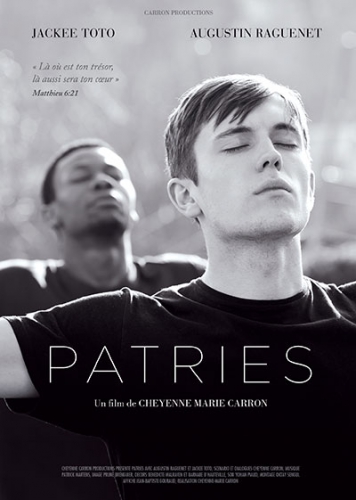
Le 21 octobre prochain sortira le nouveau film de la cinéaste indépendante Cheyenne Marie Carron , intitulé « Patries ». Un film particulièrement attendu car controversé avant même sa sortie, un film que nous avons pu visionner en exclusivité et en avant-première.
Cinéaste engagée, Cheyenne Marie Carron fait des films depuis 2001 sans bénéficier de la promotion et de l’aide dont bénéficient beaucoup de films qui ne font pourtant pas honneur au cinéma français. Sorti en 2014, son film L’Apôtre avait même suscité de violentes critiques et menaces parce qu’il évoquait l’histoire d’un jeune musulman désireux de se convertir au catholicisme. On se souvient même qu’une salle, à Nantes, avait déprogrammé le film après les attentats de janvier, de peur de représailles de la part d’islamistes.
N’ayant pas vu L’Apôtre, mon regard a donc pu se porter en toute objectivité sur le film Patries, film présenté comme traitant du racisme anti-blanc, dont j’avais vu la bande annonce au mois de mars dernier et lu le synopsis : « Sébastien et ses parents viennent d’emménager en banlieue parisienne. À son arrivée, il essaie de se faire accepter par un groupe de jeunes issus de l’immigration africaine. Malgré le rejet qu’il subit, une amitié complexe se noue avec Pierre, un jeune Camerounais en quête d’identité »
Quelle agréable surprise. Ou plutôt, quelle violente surprise. Car Patries est un film long-métrage coup de poing, une gifle en pleine figure, réalisé avec un budget équivalent à celui d’un clip publicitaire de 3 minutes effectués par des professionnels de la communication.
Un film intégralement tourné en noir et blanc et qui se divise en deux parties ; on suit d’abord principalement Sébastien (et le jeune acteur Augustin Raguenet) , jeune de la France périphérique obligé de suivre ses parents (dont son père aveugle) en banlieue parisienne, sa mère ayant trouvé un emploi à Paris. Très vite, il fait la connaissance de Pierre, un Camerounais qui le prends sous son aile et tente d’intégrer Sébastien à « sa bande », sans succès. Car Sébastien – éduqué par des parents ayant porté le « vivre ensemble » au statut de quasi-religion – va vite se rendre compte qu’il n’est pas le bienvenue dans cette banlieue, lui, le blanc, le babtou, la face de craie. La réalité des métropoles françaises et notamment de ses banlieues lui explose alors en plein visage sans que ses parents n’y comprennent rien et il deviendra rapidement une sorte de bouc émissaire pour deux « racailles » africaines ayant dès la première rencontre refusé de lui serrer la main en raison de sa couleur de peau. Seule solution pour lui ? Fuir, retourner dans la France périphérique, ou bien faire face, physiquement, et « s’intégrer » dans son propre pays.
La deuxième partie est centrée sur le personnage de Pierre, incarné par le brillant Jacky Toto, jeune Camerounais qui prend Sébastien sous son aile mais qui, suite à un mensonge non avoué de sa part, rompra de fait leur amitié et leur confiance naissante. Pierre – qui ne trouve pas de travail malgré sa volonté manifeste de réussir – est victime de DRH sans scrupules et d’une administration française qui ne pense qu’à l’aider, à l’assister, là où il voudrait réussir par lui même. Dans le même temps, il est en pleine crise identitaire, lui le Camerounais arrivé à 5 ans en France, jamais retourné au pays, mais n’ayant jamais su creuser sa place dans un pays qui n’est pas le sien. Doit-il partir et monter une entreprise au Cameroun, afin de réussir sa vie et d’aider son peuple , sur la terre de ses ancêtres ? Doit-il rester aux côtés de cette mère qui a tout sacrifié pour lui permettre une vie meilleure en France, et aux côtés de sa soeur, qui par le jeu d’une union mixte avec un bobo parisien français de souche, se sent beaucoup plus intégrée que lui ?
Le résultat est un film abouti, dont la scène finale ne pourra surprendre que ceux qui, habitant la France périphérique, ne connaissent pas ou n’ont pas connu la vie en banlieue, la vie d’un jeune blanc devenu étranger dans son propre pays. Durant ce film, qui, non sans un clin d’oeil appuyé à La Haine de Kassovitz , provoque un retour très violent au réel pour le spectateur, on se dit que du côté des enfants d’immigrés comme du côté des jeunes Français de souche, la cohabitation pacifique sera tout simplement impossible dans le futur, si ce n’est à la marge. Seuls les nantis ou les « vieux » comme dirait Julien Langella, et non pas les « anciens » , refusent de voir cette réalité, de l’admettre, alors même qu’elle est aujourd’hui communément admise par toute la jeunesse, quelle que soit sa couleur de peau ou son identité.
Patries est un film dur, violent psychologiquement, porté par une superbe bande-son particulièrement adaptée qui dévoile tantôt la foi chrétienne profonde de la réalisatrice, tantôt le ressenti de la rue, avec quelques morceaux de rap bien trouvés. C’est un film qui lève le voile sur une réalité jamais évoquée jusqu’ici par le cinéma français, trop souvent englué ces dernières années dans le politiquement correct et la médiocrité. Un film qui mériterait lui aussi d’être projeté dans toutes les salles obscures de France et d’être montré à la jeunesse de France, dans les collèges et les lycées. Car la réalité de la France des villes d’aujourd’hui, c’est plus Patries que L’Esquive, film médiocre sur des « jeunes de banlieue » qui avait, politiquement correct oblige, remporté 4 Césars alors même que la critique spectateurs ne lui accorde aujourd’hui que 2,6 sur 5 (2 962 notes) sur Allo Ciné.
Cheyenne Marie Carron est une cinéaste courageuse, au caractère bien trempé. C’est pourquoi elle a réussi avec brio ce film qui, au delà de ce qu’il montre, est techniquement réussi, surtout quand on connait le faible budget alloué. C’est pourquoi aussi, une certaine presse pourrait lui tomber rapidement dessus, ne pouvant admettre qu’une réalité certaine soit portée sur les écrans. Patries est en cette année 2015 au cinéma Français ce que « Catch Me Daddy » fut au cinéma anglais en 2014. Une révélation, une claque, à voir absolument à partir du mois d’octobre.
Plus d’informations sur le film ici
INTERVIEW
PATRIES
E.C : Le sujet du racisme anti-blanc, est assez tabou, avez-vous, vous-même subi du racisme ?
Cheyenne Carron : Je suis ni blanche, ni noire, mais marron clair de peau. Je n’ai jamais souffert de racisme de la part de personnes blanches ou noires. Depuis mon adolescence j’ai eu l’occasion de fréquenter des garçons et des filles issues de tous milieux et de toutes origines ethniques. J’ai observé les manifestations du racisme sous toutes ses formes. Aujourd’hui, j’ai pris assez de distance avec ce sujet pour pouvoir m’y intéresser. J’ai constaté que beaucoup de magnifiques films ont été fait dénonçant le racisme contre les noirs, je pense à « Imitation of Life », « 12 years a slave », ou « Dear white people », mais je n’ai jamais vu de films sur le racisme anti-blanc. Alors j’ai eu envie de corriger cela. Mais, avant de parler de racisme, Patries est surtout un film qui parle de différentes quêtes liées à l’identité.
E.C : N’avez-vous pas peur d’être taxée de racisme ?
C.C : Les valeurs dans lesquelles j’ai été élevée me mettent à l’abri de ce type de sentiment. J’ai des frères et sœurs blancs et un frère noir de peau. (Je viens d’une famille qui a adopté des enfants). Je ne suis pas raciste, et je pense donc qu’il est grand temps de parler des sujets qui fâchent ! Pour moi il ne s’agit pas de désigner des coupables et des victimes, mais il faut montrer le racisme mais aussi ceux qui l’exploitent en faisant mine de le condamner.
E.C : N’est-ce pas dangereux de traiter de ce sujet dans cette période compliqué ?
C.C : Il y a danger de se faire récupérer par des partis politiques extrêmes. Mais je pense qu’il y a aussi danger à ne pas s’emparer de ces sujets et de laisser à des gens sans humanité, et de les laisser pourrir dans la société… Et puis, je crois qu’un artiste doit s’emparer des problèmes de son temps.
E.C : Pour écrire ce scénario, vous êtes vous inspirée d’un livre, ou de faits divers ?
C.C : Je me suis inspirée du témoignage de plusieurs personnes. Elles m’ont raconté la manière dont elles tentaient de s’intégrer, mais aussi la manière dont elles vivaient une forme de rejet lié à leur couleur de peau, blanche ou noire.
E.C : Dans Patries vous nous montrez une famille, celle de Pierre, qui semble très attachée à son pays d’origine : le Cameroun.
C.C : Les sœurs de Pierre et sa mère, elles, sont très enracinées dans la culture Française, elles se sentent pleinement françaises. Pierre, lui, a un vrai désir qui grandit tout au long du film : celui de redécouvrir le pays d’où il vient. J’ai eu envie de parler d’un homme qui ne se sent pas heureux d’être en France, parce que sa culture d’origine lui manque. Je trouvais intéressant de montrer un immigré qui a soif de son identité perdue. Ça nous change du discourt habituel.. La France n’est pas son eldorado, il cherche autre chose. Pierre est aussi, d’une certaine façon, un héros. Il rêve de bâtir, et il croit en son destin. Mais pour lui, au fond de son cœur, son destin n’est pas en France. Son destin c’est le pays de ses ancêtres, alors que sa sœur ne jure que par la France.
E.C : Les deux mères de famille ont en point commun leur foi, c’est une thématique qui revient souvent dans vos films : la religion.
C.C : J’ai voulu faire le portrait de deux mères catholiques, à l’image de la mienne que j’aime. En tant qu’enfant abandonnée, j’aurais pu être adoptée par une maman noire, mais ce fut une maman blanche.
E.C : La notion de patrie incarne des réalités diverses selon le point de vue de chacun ; pour vous, quelle valeur a-t-elle ?
C.C : Moi qui ai été Pupille de l’État Français jusqu’à mes 19 ans, la patrie française ça a un sens. En tant qu’enfant abandonnée, j’ai bénéficié de la protection de l’État français et ça, ça n’a pas de prix. Mais il ne faut pas traiter les immigrés comme des enfants abandonnés ! Eux ont une terre quelque part, où ils sont nés, et où ils ont parfois une famille et des souvenirs. Un jour cette terre peut leur manquer, c’est le cas de Pierre.
E.C : Et où en êtes-vous avec le CNC ? J’ai cru comprendre que vos précédents films n’ont pas été subventionnés.
C.C : En 2014 le CNC m’a refusé deux scénarios (Hadès et Ma vie pour tes yeux lentement s’empoisonne), alors je ne présenterai plus mes scénarios à l’avenir. Je n’ai pas présenté Patries. J’ai beau faire ma maligne, à chaque refus ça me mine le moral et j’ai le sentiment que mon travail ne trouvera jamais grâce aux yeux du CNC. J’ai financé Patries avec l’argent que j’ai gagné sur les DVD de L’Apôtre.
E.C : Quels sont vos prochains projets ?
C.C : Je vais continuer à chercher le financement de « Hadès » et « Ma vie pour tes yeux lentement s’empoisonne », j’essaie d’élargir mon champ d’action à l’étranger. Si je n’y parviens pas, je vais devrais arrêter le cinéma. Je lui aurait donné tout ce que j’ai pu et Lui m’aura apporté beaucoup de joie et de réconfort.

Entretien avec Cheyenne-Marie Carron, réalisatrice
Ex: http://www.belle-et-rebelle.com
Cheyenne-Marie Carron est un OVNI. On ne croise pas un petit bout de femme comme elle tout les matins devant la haie de son champ.
Elle a été adoptée toute petite par une famille qui compte deux autres enfants adoptés ainsi que deux enfants “bio”. Elle est la réalisatrice d’une petite dizaine de films et commence à faire parler d’elle et notamment dans les médias rattachés à ce qu’on appelle la réacosphère. Un caractère bien trempé et une personnalité solaire: elle fait son petit bonhomme de chemin et à l’occasion de la sortie prochaine de son nouveau film, Patries, Cheyene-Marie Carron nous permet de nous intéresser à elle en nous accordant un entretien.
-Bonjour Madame, qui êtes-vous ? Pouvez-vous vous présenter succinctement aux lecteurs de Belle-et-Rebelle ?
J’ai 38 ans. Je suis une réalisatrice, scénariste et productrice, catholique.
-Quelle est la motivation qui pousse une jeune femme comme vous à réaliser un film aussi polémique que Patries, qui porte sur le racisme anti-blanc, ce thème tellement controversé ?
Ce qui me pousse n’est pas la polémique, mais l’injustice. Beaucoup de très beaux films existent sur le racisme contre les noirs, mais aucun sur le racisme contre les blancs. J’ai eu envie de corriger cela.
-D’après vous, pour quelles raisons le racisme anti-blanc est-il l’un des tabous de la France moderne?
Peut-être la peur… La peur de se rendre compte qu’on ne déracine pas impunément les gens sans que cela n’entraîne de conséquences.
Comment se manifeste selon vous le racisme anti-blanc ? -
Je pense qu’il prend sa source d’abord dans un mal-être. Celui de se sentir étranger à la culture française, avec peut-être un sentiment de honte et rage d’avoir abandonné son pays d’origine. Puis vient la conséquence, c’est à dire l’agression verbale ou physique de l’homme blanc, du Français.
Dans cette situation tout le monde souffre, d’abord la victime, le Français blanc de peau, mais aussi celui qui agresse.
-Quels obstacles avez-vous rencontrés dans la réalisation de votre film?
Aucun, car je n’ai rien demandé !
Le CNC m’a été refusé sur tous les films, et j’ai décidé de ne plus rien demander à cet organisme, ni aux régions. Je fais mes films sans argent, et je galère pas mal… mais je m’accroche.
-Cheyenne-Marie, soyez honnête, vous aimez vous compliquer la vie: femme, entrepreneure, politiquement incorrecte, catholique, artiste, j’en passe et des meilleures, vous cherchez les ennuis ?
Je ne cherche pas les ennuis, et si l’on m’en fait, je me défends, car j’ai le sentiment d’accomplir des choses justes.
-Est-ce que d’après vous, le harcèlement de rue des femmes ne relève pas aussi du racisme anti-blanc?
Ce harcèlement s’étend aussi à des femmes qui ne sont pas blanches. Il provient je crois d’un regard sur la femme occidentale qui prend sa source dans le mépris de notre culture.
Il faut que la femme occidentale par sa dignité et sa fierté en impose aux barbares.
-J’ai cru comprendre que vous n’êtes pas dans le circuit de distribution classique des films. Comment faites-vous pour faire voir vos films ? Avez-vous des idées de leur audience ?
Effectivement personne n’accepte de distribuer mes films, alors je prends mon courage à deux mains et frappe aux portes des cinémas. De manière étonnante, mes films voyagent aux quatre coins du monde grâce aux DVD et la VOD [Vidéo à la Demande; NDLR], et je reçois parfois des courriels d’encouragements venant de très loin. C’est ça aussi la magie d’un film, une fois terminé, il fait sa vie !
-Qu’est-ce qui vous révolte au quotidien?
Le manque de courage.
-Qu’est-ce qui vous fait garder l’espoir?
Ma foi en l’Eglise et en la France.
-Qu’est-ce qui vous émerveille ?
En ce moment, c’est le printemps qui m’émerveille…
-Qu’est-ce qui vous dégoûte?
L’orgueil.
-Les livres/images/œuvres/artistes/films qui ont fait de vous ce que vous êtes.
Ça n’est rien de tout ça.
Ce qui a fait ce que je suis devenue, c’est ma mère. Une sainte femme qui m’a recueillie lorsque j’avais 3 mois, et le prêtre de mon village qui m’a inspiré le film L’Apôtre. Cet homme a tendu la main à la famille du tueur de sa soeur.
Ces deux personnes sont les deux figures qui ont fait ce que je suis.
Ensuite, il y bien sûr des centaines de gens qui ont croisé ma route, et qui m’ont tendu la main !
-Votre idée du bonheur?
Avoir des enfants… ce que je n’ai pas pour le moment.
-Première chose que vous feriez si vous étiez présidente de la République.
Je restaurerai la Monarchie !
-Votre sucrerie préférée.
Les chocolats de Patrick Roger.
Son film, L’apôtre, est disponible en VOD ainsi qu’en DVD.
Patries sortira en septembre 2015.
00:05 Publié dans Cinéma, Film | Lien permanent | Commentaires (0) | Tags : cinéma, film, cheyenne-marie carron, france, racisme, anti-racisme |  |
|  del.icio.us |
  |
|  Digg |
  Facebook
mercredi, 14 octobre 2015
Un autre cinéma est possible
Méridien Zéro #249: "Un autre cinéma est possible"
Cette semaine, Méridien Zéro a l'honneur et l'avantage de vous proposer un entretien avec la réalisatrice Cheyenne-Marie Carron, à quelques jours de la sortie de son film Patries (le 21 octobre). L'occasion pour nous d'éclairer l'oeuvre de cet auteur atypique et de revenir sur quelques aspects du cinéma français...
A la barre et à la technique Eugène Krampon et Wilsdorf.

00:05 Publié dans Cinéma, Entretiens, Film | Lien permanent | Commentaires (0) | Tags : cheyenne-marie caron, cinéma, méridien zéro, entretien, film | | del.icio.us | | Digg | Facebook
jeudi, 01 octobre 2015
«De l’anti-héros au héros mauvais: apologie de l’individualisme et destruction du lien social dans les séries contemporaines»

«De l’anti-héros au héros mauvais: apologie de l’individualisme et destruction du lien social dans les séries contemporaines»
Ex: http://www.arretsurinfo.ch
Attention spoilers : cet article contient des éléments-clés de Game of Thrones, jusqu’à la saison 4 incluse, et un tout petit spoil de Desperate Housewives (saison 8). D’autres séries sont évoquées mais aucun élément-clé n’est révélé.
NB : Cet article n’engage que moi. Il se fonde grandement sur mes propres sensibilité et subjectivité et s’apparente bien plus à un fil de réflexions personnelles (qui pourraient néanmoins en intéresser d’autres) qu’à une véritable étude systématique et scientifique.
Nos héros sont des estropiés bourrés de vices. Cela peut sembler caricatural, mais c’est pourtant bien ce qui se détache d’une analyse de nos séries contemporaines.
Dans un précédent article, j’ai évoqué le concept de héros. Traditionnellement, il est un personnage exemplaire, censé édifier le lecteur ou le spectateur, l’inspirer, lui présenter une conduite modèle. Il peut bien sûr avoir des défauts, des failles, mais il tend globalement à la vertu, accomplit des actions nobles. Ce concept n’a pas entièrement disparu, et l’on a des héros de ce type aujourd’hui (Harry Potter, pour n’en citer qu’un). Néanmoins, on a aussi de nombreuses séries qui présentent des héros cyniques, vicieux, mais malgré tout charismatiques (beaucoup plus que les personnages vertueux !) Qu’est-ce que cela veut dire ?
Un point tout à fait marquant est le fait que plusieurs héros souffrent d’un lourd handicap. On a par exemple Dr House et Tyrion Lannister. Ajoutons quelques précisions. House est bel et bien infirme : le muscle de sa cuisse a subi des dommages qui le gênent fortement dans ses déplacements et, surtout, engendrent une douleur difficilement tolérable, qui le rend accro aux médicaments. Tyrion Lannister est nain, ce qui n’est pas en soi un handicap, mais engendre, dans son cas, le mépris général, jusqu’à celui de sa propre famille. Tous deux ont pour point commun de compenser ce handicap (physique pour House, social pour Tyrion) par un maniement habile de la parole, ce qui les rend extrêmement brillants par rapport aux autres personnages. Tyrion explique d’ailleurs dès le début (saison 1, épisode 2) qu’il cultive son penchant intellectuel pour pallier sa petite taille et la déconsidération sociale qu’elle engendre (en des termes bien plus drôles, évidemment !). Paradoxalement, ces personnages en souffrance deviennent les plus charismatiques de la série, les plus attirants, même les plus séduisants. Et pourtant, ils sont bien loin de la vertu. House est un cynique misanthrope qui ne voit dans la médecine qu’un puzzle à résoudre et envisage la vie humaine bien plus comme un calcul arithmétique que comme une fin en soi. Il est vrai que cela donne lieu à des situations qui proposent parfois une réflexion éthique très intéressante, les autres personnages incarnant des visions différentes et soulevant des cas de conscience épineux ; mais House reste souvent celui qui a la réplique la plus cinglante, qui trouve toujours le bon mot, ce qui fait pencher implicitement la balance de son côté. Tyrion, lui, commence la série ivre et entouré de prostituées, et continue sur cette voie pendant un certain temps. Les repères se brouillent quand il rencontre Shae, ancienne prostituée, et semble trouver en elle une certaine rédemption. Le spectateur apprécie qu’il ne se jette pas sur la jeune Sansa qu’on lui a mariée de force (une attitude, il faut le dire, peu courante dans ce monde où le viol apparaît comme tout à fait anecdotique). Mais c’est pour mieux appréhender une nouvelle déchéance : il tue, presque d’un même coup, la femme qu’il aime et son propre père (acte tabou s’il en est). Mais malgré cela, Tyrion reste le personnage le plus sympathique de la série, le seul personnage drôle d’ailleurs (tout comme House).
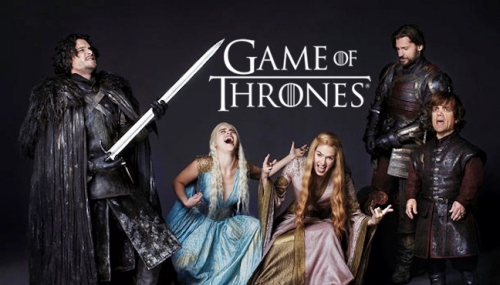
Ce phénomène ne se cantonne pas à ces deux personnages, mais semble être plus global. Une simple étude de Game of Thrones suffirait à souligner toute l’ambiguïté axiologique dont est porteuse la série : le seul personnage clairement mauvais est, semble-t-il, Joffrey, tous les autres étant extrêmement ambivalents. Bien sûr, un personnage ne peut pas être parfait, au risque de tomber dans un sirupeux remake du Club des Cinq. Mais ce qui est dérangeant dans ces séries, c’est que les repères sont brouillés et que l’on ne distingue plus le bien du mal.
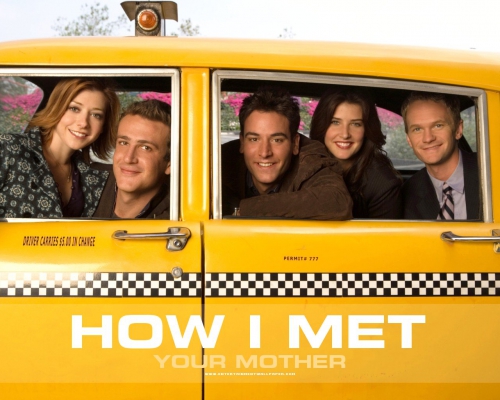
Est-il besoin de rappeler que Dexter est un tueur en série qui a un goût prononcé pour le sang et met en pratique la peine de mort (nous sommes aux États-Unis où elle est en vigueur dans la plupart des États, d’accord, mais ici le débat semble tranché d’avance) ? L’idée lumineuse du héros de Breaking Bad à qui l’on diagnostique un cancer en phase terminale est de mettre ses talents de chimiste au service de la fabrication de méthamphétamines… Barney, dans How I Met Your Mother, qui vole progressivement la vedette à Ted, à la fois dans le scénario et dans le cœur des spectateurs, n’est autre qu’un sex addict manipulateur et misogyne (et néanmoins il est celui qui nous aura fait le plus rire et qui tient le rôle central des meilleurs épisodes). Bon courage pour trouver l’ombre d’une vertu dans des séries historiques comme Rome ou Les Tudors, où les scénaristes ont même pris soin de remplir les vides laissés par l’histoire par de nouveaux vices (inceste, sadomasochisme, manipulation…). Ce serait un affront au lecteur de rappeler qu’un récit historique en dit plus sur notre temps que sur la période présentée…
Et qu’est-ce que cela nous dit, justement ? Pourquoi cherche-t-on à jouir et à nous faire jouir du vice, de la perversion, de la méchanceté, de la manipulation ? Pourquoi nos héros sont-ils malades, physiquement et psychiquement ? Pourquoi associe-t-on le charisme, l’habileté, la virtuosité à des « anti-héros », comme on entend si fréquemment ? À se demander si l’« anti » n’est pas en réalité devenu la norme. Vit-on une époque boiteuse et en souffrance, à l’image de House ? Estime-t-on plus le vice que la vertu ?
Ce qui est flagrant, c’est que ces séries développent très peu des sentiments de solidarité, de charité, de générosité. Peu d’actes sont gratuits et désintéressés ; toutes les actions des personnages semblent s’inscrire dans un vaste projet géopolitique où chacun serait un État en plein exercice de sa volonté de puissance. C’est, par exemple, particulièrement marqué dans Desperate Housewives où les relations les plus intimes que ces femmes entretiennent avec leur mari ou leurs enfants sont toutes faites de manipulations et de calculs froids. Et, paradoxalement, ces plans machiavéliques s’avèrent particulièrement divertissants, et la série devient de moins en moins intéressante quand elle se met à verser dans quelque chose de plus mielleux et moralisateur, surtout à partir du bon en avant de cinq ans à la suite de la saison 4 (à mon sens, la seule scène sincèrement touchante est celle où Gaby raccompagne Carlos, ivre, oubliant pour une fois son image sociale pour venir en aide à son mari qui a sombré dans l’alcoolisme (saison 8, épisode 5), mais c’est une appréciation tout à fait personnelle).
D’une manière générale, les séries nous présentent comme séduisants l’égoïsme, le mépris de l’autre, en somme l’individualisme. Le mot est lancé. Se pourrait-il que les séries répondent à une certaine idéologie, l’idéologie dominante, celle du néolibéralisme, du « chacun pour soi » ? Un néolibéralisme qui marche doit casser les luttes sociales ; et quoi de plus facile que de les anéantir à la racine ? En faisant l’apologie de l’individualisme et en traitant avec mépris les actions généreuses, ces séries tendent à dissoudre la solidarité qui pourrait (et devrait) se créer face à l’oppression. Margaret Thatcher l’avait dit : « Il n’y a pas de société, il n’y a que des individus ». Je ne dis pas qu’il s’agit là d’un « complot », car je sais que le mot est mal vu. On peut davantage poser l’hypothèse d’une auto-alimentation du système : on fait rire le public par le vice et l’irrespect d’autrui, il en redemande, on lui fait croire que c’est ce qu’il aime, on n’envisage plus que ce biais pour créer des scénarios, etc. Il est vrai qu’on a (que j’ai ?) du mal à envisager un humour sans une bonne dose de répliques cinglantes, et elles passent souvent par le mépris.
C’est en tant que grande amatrice de séries que je m’interroge. Je m’interroge sur le bien-fondé de ce que je regarde, sur l’influence que cela peut avoir sur moi, sur nous. Est-on condamné à ne regarder que Plus belle la vie et La petite maison dans la prairie si l’on veut rester sain d’esprit (et d’âme) ? Réjouissante perspective…
Hannah Arendt disait que nous nous trouvions dans une brèche entre le passé et l’avenir (« a gap between past and future ») et que nous avions perdu le contact avec la tradition ; elle mettait son espoir dans les neoi, les nouveaux venus sur terre, qui pourraient créer à nouveau. Nietzsche a brillamment identifié la mort de Dieu qui nous a déconnectés des valeurs chrétiennes (ou religieuses au sens large) ; il en appelait de nouvelles, mais quelles sont-elles ? Spengler, quant à lui, parlait du déclin de l’Occident…
Clara Piraud
Source: brunoadrie.wordpress.com
00:05 Publié dans Cinéma, Film | Lien permanent | Commentaires (0) | Tags : cinéma, films, 7ème art, sociologie, moeurs contemporaines, anti-héros | | del.icio.us | | Digg | Facebook
samedi, 05 septembre 2015
Lars von Trier’s The Idiots

Lars von Trier’s The Idiots
By Tonio Kröger
Ex: http://www.counter-currents.com
I. (Minor Spoilers)
The Idiots (Idioterne) is not an accessible film, and neither is it is easy to digest. The sexual content is so extreme that The Idiots is rated the same as any pornographic film in the United Kingdom, Spain, Australia, Norway, and several others. The depiction of mentally disabled individuals, both real and those merely acting as such, is alarming and controversial. During the screening at the Cannes Film Festival in 1998, film critic Mark Kermode was removed from the venue for exclaiming, ‘Il est merde!’ He was responding less to the actual quality of the film, and more to its remarkably provocative and unsettling subject matter.
 Lars von Trier, of course, thrives on such reactions. His aim is to disturb and unnerve, to stir the viewer out of his seat and out of his comfort zone. This is done not simply for the ‘shock value’ in itself, as there is no legitimate artistic worth in managing to provoke or enrage the audience; instead this is done in order to communicate something through the shocking material. By knocking the viewer out of his ordinary perspective, where everything is comfortably perceived and organized according to a familiar worldview, Lars von Trier can assault him with a new perspective, a new challenge that might threaten his old way of viewing reality.
This is truer of The Idiots than any other LvT film, and that includes the psychological horror of Antichrist and the raw sexual trauma of Nymphomaniac. This is due to the highly abrasive nature of the film’s narrative, which tells the story of a group of people who act like they are mentally retarded as a form of rebellion against what they understand to be a constrictive, conformist, and sterilizing society. Their antics, which they call ‘spazzing,’ include going into town to sell Christmas ornaments that they have made, going to the pool to create mischief with the other swimmers, and eating at restaurants only to spazz and leave without paying.
It is during the last antic that the group comes into contact with Karen, a seemingly ordinary person who becomes drawn and intimately attached to the spazz community over the next two weeks. Karen initially provides the neutral perspective of the group, the backdrop of normality to their witting insanity; she is very curious, though, and constantly questions the reasoning behind their activities, allowing the viewer to get a keener understanding of what they do. She firstly represents the ignorant audience who nevertheless desire to know more, but later, as we will see, she represents the fulfilment of the ‘spazz way of life.’
The group is led by a man named Stoffer, who is clearly the one who takes their mission the most seriously, ostensibly giving it an ideological basis and a higher cause than merely acting like idiots. Karen asks Stoffer why they do what they do, and Stoffer replies, ‘In the stone age all the idiots died. It doesn’t have to be like that nowadays. Being an idiot is a luxury, but it is also a step forward. Idiots are the people of the future. If one can find the one idiot that happens to be one’s own idiot . . .’ Stoffer finds in idiocy an outlet for what bourgeois society has repressed or camouflaged, namely a kind of personal creativity that does not accord with social normalcy. It is a new freedom, one which was obviously unavailable in a more brutal time, but which is presently imperative in an era that prizes comfort, material luxury, and ostracizes everything that is not conducive to ‘making one’s way in the world,’ i.e., becoming rich and popular. Stoffer asks meaningfully, ‘What’s the idea of a society that gets richer and richer when it doesn’t make anyone happier?’ Stoffer’s idea is instead to make one happier regardless of riches.
The means of achieving this are chiefly to ‘find the one idiot that happens to be one’s own idiot,’ a demonstrably individualistic and interiorized path that cannot help but hearken back to the Dionysian nature of the Breaking the Waves heroine, Bess. The idea is to determine the other side of oneself, the side that society has dispelled and rejected from its embrace. It is in this sense that we are reminded of C. G. Jung’s conception of the ‘shadow,’ or the secret personality that is imbued with our darker elements, with everything that has been evicted from and cannot fit into conscious life. Stoffer’s aim is essentially to reconcile modern man with his shadow self in a radical way; he aims to reintegrate man with his inner darkness to create something that is once again whole, independent of outer definitions and social parameters. When one character wakes him up, telling him that another spazzer is breaking things on the property, Stoffer responds, ‘Sheds are bourgeois crap. Smashing windows is obviously part of Axel’s inner idiot.’ The smashing of windows is an act that is socially reprehensible, but, since it allegedly exists as part of Axel’s ‘inner idiot,’ his ‘shadow self,’ it is perfectly acceptable in spazzer society.
This opposition between consciousness and the shadow is present not only in the individual sense, where the characters play out this drama in themselves, but in the collective sense as well. What this means is that the bourgeoisie, which is invariably treated as a great evil and as something to be rebelled against, represents the conscious side, and the spazzer society represents the shadow side; they are the ‘reservoir of darkness’ that has spilled out from respectable society, and has come to life after society has failed to suppress it. They even use society’s own tools against it, inverting the logic of social machinations to serve immoral ends. In one scene, for example, Stoffer has one of the spazzers pretend to have tripped over a loose cobblestone near a well-to-do homeowner’s property, then pesters the man to pay them off in order to avoid a lawsuit. When the wealthy man asks whether the spazzer didn’t simply trip on his own rather than a loose stone, Stoffer answers, ‘Are you saying they drag their feet? that they are clumsy?,’ which forces the man to retreat, unwilling to be responsible for anything that might be considered ‘politically incorrect.’ Stoffer considers this to be a victory over the ‘fascist’ system that he hates, contemptuously gazing into its soul and mocking it.
There are other scenes, too, that reveal other ‘victorious’ moments against other, more typical members of society. The house where they are staying, for example, is that of Stoffer’s uncle, who has entrusted Stoffer to sell it. When he visits the house, he remarks that he take better care of it, saying that, ‘These floors have been waxed every day for fifty years,’ which of course exemplifies the hated bourgeois attitude. Later on, coming into possession of caviar, Stoffer shows his group how to ‘eat it the way they eat caviar in Soelleroed [their town],’ stuffing it into his mouth as though he were a child eating chocolate. Allured by the antics of her new friends, Karen also learns to spazz, and though she meaningfully does not participate to the same extent as the others, she says that, ‘We’re so happy here. I’ve no right to be so happy.’
II (Major Spoilers)
The ‘paradise’ of Soelleroed is largely an illusion, however, as the final third of the film reveals. It is in these segments that the real darkness of the shadow comes out, which altogether reflects the failure of Stoffer’s mission to reconcile it with their conscious lives. This is as manifest in Stoffer himself as in any of the others. In one scene, for instance, a city official arrives at the house to offer them a government grant and a new location where they might stay, somewhere that is further away from normal society and which therefore makes it harder for them to intrude upon normal people. Stoffer of course reacts violently to this, ripping off his clothes and chasing the official all the way back to town naked, screaming ‘Fascist! fascist!’ the whole time. The others drag him back to the house, but they have to physically restrain him, strapping him to a bed overnight as he has reverted to a purely irrational state, succumbing to an episode that was formerly merely an act.
Another character, too, after the girl he fell in love with is stolen away from the house by her father, chases after him, running into his car, gesturing wildly and speaking nonsense. Affected so deeply by his feeling for her, he is no longer able to bridge the gap between his conscious self and the primitive he used to play at but has now become reality. This is not a successful integration between consciousness and the shadow; this is the conquest of the former by the latter, resulting in the personality regressing to something animalistic and instinctual. Stoffer’s experimentation in human happiness has failed, because there is no longer anything human in his subjects.
There are more obvious instances of this darkness, too. After the night which Stoffer spends in straps, they have a party, and at the end of the party he requests a gangbang. Most of his fellows willingly participate, but some do not; this leads Stoffer and another to chase one of the unwilling women down, essentially raping her in a violently disturbing scene of spazz sex. It is significant that Karen retreats from this scene altogether, abstaining from the evil that has infiltrated the rest of the ‘shadow group.’ It is even more significant that she is not raped, for she has maintained her own sense of self in contradistinction to the others; her personality is still intact while those of the others have been overwhelmed and utterly ransacked of their humanity.
Nearing the end of the film, Stoffer comes to doubt the sincerity of his fellow idiots, suspecting that this is all just some sort of game to them. He orders them to play ‘spin the bottle,’ with whomever the bottle points at having to demonstrate his commitment to the cause by spazzing in ‘real life’ places such as at work or at home with the wife and kids. The first fails completely, refusing to spazz in front of his family; he elects a normal life instead of the idiot life and the mistress he kept among them. The second opts to spazz in front of an art class he will be teaching, but he fails as well, causing Stoffer to storm out of the class, saying, ‘You love this middle class crap. These old dames use more make-up than the national theatre.’ The teacher, Henrik, says, ‘I had no pride in my inner idiot.’ The shadow self was just an illusion for them, something to play at in an insubstantial expression of inward identity.
Stoffer himself comes no closer to the reconciliation between the shadow and the ego. Instead of being the romantic and anarchic hero revolting against the oppressive bourgeois system that he likes to consider himself, he is infact a representation of it in its inverted sense; he is the ‘other side of the same coin,’ reflecting the absence of a genuine morality that extends to both the ‘middle class’ and the bohemian individualism. His ethos is fundamentally the same as that of his bourgeois uncle: ‘In reality, the acceptance of the shadow-side of human nature verges on the impossible. Consider for a moment what it means to grant the right of existence to what is unreasonable, senseless, and evil! Yet it is just this that the modern man insists upon. He wants to live with every side of himself — to know what he is. That is why he casts history aside. He wants to break with tradition so that he can experiment with his life and determine what value and meaning things have in themselves, apart from traditional presuppositions’ (C. G. Jung, ‘Psychotherapists or the Clergy’).
Stoffer is the epitome of the ‘modern man’ in that he wants to throw off all social inhibitions, not merely those of the 20th Century middle class, but the entire framework of human society. His revolt is the same as the student and hippy revolts of the sixties, revolts which were ultimately codified into the same bourgeois vassals that they originally reacted against. This is what makes Stoffer the superficial counterpart to the bourgeoisie; this is what makes him its useful idiot.
Karen is the only one who volunteers to spazz in her own life. Taking along her friend Suzanne for company, Karen returns to her home, somewhere she has not been for two weeks. We soon learn that her son had died, and that her son’s funeral was the day after she joined the group. Her husband comes home, and they sit down to eat – and Karen drools and dribbles at her food, which causes her family to stare, and her husband to hit her. Suzanne takes her hand, and they leave together, smiling naively, innocently.
Earlier in the film, Karen says to Stoffer, ‘I just want to be able to understand why I’m here,’ to which he replies, ‘Perhaps because there is a little idiot in there that wants to come out and have some company.’ While that is true in a certain, limited sense, it is truer to say that Karen’s ‘little idiot’ needed to come out to save her conscious self. Besieged by an impossible grief and a mother’s mourning, Karen’s ego longed for an escape route from the world’s immense difficulty. That she alone found it amongst all the idiots testifies both to the extent of her trauma and her extraordinary capability of dealing with it; she alone could make real sense of what the idiots were only playing at. Their reactions (aside from Stoffer, who was overcome by his own shadow) were conditioned by their belonging to the bourgeois order, something from which they recoiled in theory, but which they nevertheless could not do without; Karen’s reaction, on the other hand, was conditioned by a more profound disorder, which demanded an extreme process in order to be able to cope with it. Her struggle was far more real than that of the others, which is why she was the only one to find the solution to it.
The Idiots reveals both the positive and the negative scenarios that are the consequence of a Dionysiac revolt against the Apollonian dream-world. In order to ‘revolt successfully,’ to truly indulge in Dionysian fruit, the individual’s actions must be founded on something universally real that transcends particular circumstances; he must determine himself based on who he really is rather than merely a perception or a projection of who he is. This is where most of the idiots failed: ‘The shadow is a moral problem that challenges the whole ego-personality, for no one can become conscious of the shadow without considerable moral effort. To become conscious of it involves recognizing the dark aspects of the personality as present and real. This act is the essential condition for any kind of self-knowledge’ (C. G. Jung, Aion). The idiots never really became conscious of their shadow; they acted it out either as a meaningless game that allowed them an illusion of rebellion against their bourgeois lives, or, in the case of Stoffer, as a license to perform whatever irrational and pernicious acts that occurred to him, as long as they did not agree with the prevailing social order. They never addressed the shadow as a ‘moral problem,’ as something that directly influences the person; they addressed it as a ‘social problem,’ and thus remained chained to the illusions of Apollo’s dream-world.
Karen alone represents Dionysus as the purveyor of dynamic, uninhibited truth. She refused the moral violations of the other idiots, she refused their pretensions of abandoning society, and she refused their needless and unlawful interdictions with the rest of the town; in a word, Karen rejected rejection, and she did so because her rebellion was founded on an affirmation of self rather than on its negation. Unlike Stoffer, who loses control when he is confronted with that which he hates and fears most (the bourgeois city official), Karen maintains perfect control as she releases her inner idiot in front of her family, again exemplifying a personal command that eluded the others.
Speaking of her return home, where she demonstrates her restored personal strength, she says to the idiots, ‘We’ll see if I can show you if it has all been worthwhile.’ This follows a farewell in which Karen expresses an open, authentic love for many of the idiots, and repeats her avowal of happiness to have been amongst them. Karen’s family, cold, unfeeling, and uncomprehending of what it must be for a mother to lose her son, failed to ease her grief; it was only in her introspection, the confrontation with her ‘inner idiot’ as a lifeboat that carries her from the drowning ego, that actually saves the ego. By acknowledging her despair in this radical context, she could dilute and eventually sublimate it into something far more positive, to the extent that, all things considered, she does not even know why or how she can be so happy. In this sense, the freedom of Dionysus is attained not as a rejection of Apollo, but as a victorious affirmation of the reconciliation between the unconscious and the conscious; while the rest of the idiots founded their shadow-search on a rejection of Apollo, Karen had to be rejected by him instead. This is what led to her final freedom; this is what made it all worthwhile.
Article printed from Counter-Currents Publishing: http://www.counter-currents.com
URL to article: http://www.counter-currents.com/2015/08/lars-von-triers-the-idiots/
URLs in this post:
[1] Image: https://secure.counter-currents.com/wp-content/uploads/2015/08/TheIdiots.jpg
00:05 Publié dans Cinéma, Film | Lien permanent | Commentaires (0) | Tags : lars von trier, cinéma, film, danemark | | del.icio.us | | Digg | Facebook
vendredi, 28 août 2015
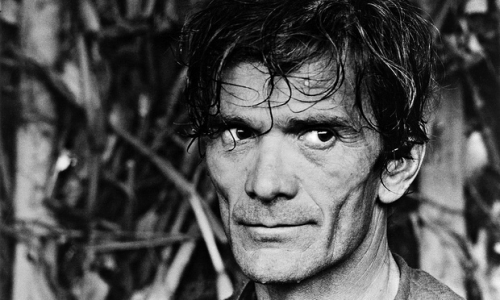
Le théorème irrésolu de Pier Paolo Pasolini
Le théorème irrésolu de Pier Paolo Pasolini
par Patrice-Hans Perrier
Ex: http://www.dedefensa.org
La figure iconoclaste du cinéaste italien nous interpelle en cette époque de soumission et de trahisons multiples. Nous avons décortiqué les derniers écrits polémiques de Pasolini publiés sous le titre d’« Écrits corsaires » (*). Déjà, au beau milieu des années 1960, ce dernier avait compris que la Société de consommation était un fascisme en état de gestation. Nous nous débattons, quarante années après son assassinat, dans les méandres d’un véritable Léviathan qui achève de consommer ce que nous avions de plus précieux : notre innocence.
Fasciné, très tôt, par la culture populaire des bidonvilles et des banlieues ouvrières de l’après-guerre, le cinéaste Pier Paolo Pasolini prendra la relève du néoréalisme italien en travaillant la pellicule sur un mode à mi-chemin entre le documentaire et la fable surréaliste. Reprenant les canons esthétiques du néoréalisme, Pasolini termine en 1962 un film poignant intitulé Mamma Roma. Mettant en scène une Anna Magnani qui deviendra son égérie, et une source d’inspiration pour d’autres cinéastes prometteurs, le metteur en scène brosse un tableau saisissant des faubourgs de la Ville éternelle. Jeune quarantenaire, Pasolini aborde, finalement, le cinéma à la manière d’un écrivain et d’un sociologue qui a vécu « pour de vrai » auprès des classes défavorisées de l’Italie de l’après-guerre.
Praticien d’un « cinéma-vérité » proche de la tradition documentaire, Pasolini capte l’ambiance extraordinaire des bas-fonds romains en faisant déambuler son personnage principale – une prostituée qui tente de fuir son inhumaine condition – dans les alentours du Parc des aqueducs et de l’aqueduc de l’Aqua Claudia. Cet opus cinématographique inaugure une pratique qui deviendra sa véritable signature : filmer le plus possible les décors naturels de la cité et mettre en scène des figurants qui ne sont pas des professionnels du septième art. Tourné en noir et blanc, Mamma Roma ressemble à une véritable plongée au plus profond de l’existence quotidienne de ce « petit peuple » qui n’est déjà plus qu’un lointain souvenir.
 Le témoin oculaire d’une époque de transition
« … la société de consommation de masse, en recouvrant artificiellement le tissu vivant de l’Italie par un ensemble insipide et uniforme de valeurs pragmatiques propres à l’idéologies du « bien-être », a littéralement étouffé l’identité du pays, a broyé dans une même machine imbécile de normalisation tous les particularismes culturels, les « petites patries » et les mondes dialectaux de la campagne italienne, jusqu’à modifier moralement et même physiquement le paysan pauvre … »
Pier Paolo Pasolini, in « Écrits corsaires – Scritti Corsari »
Artiste manifestement en porte-à-faux face aux élites de son époque, Pasolini tente de témoigner du délitement des anciennes cultures populaires au profit de l’impérialisme de cette société de la consommation qui ne tolère plus aucune forme de dissidence. Militant communiste de la première heure, pourfendant les nostalgiques de l’ancien régime fasciste, le bouillant polémiste refuse de basculer dans le « camp du bien » représenté par un gauchisme à la mode qui fera, de plus en plus, le jeu du grand capitalisme international. Réalisant que la démocratie-chrétienne d’après-guerre sert toujours les mêmes intérêts qui contrôlaient les fascistes de l’ère mussolinienne, Pasolini tente de cerner avec une précision sans faille la transition qui s’est amorcée durant les « trente glorieuses » (1945 – 1975).
Le portrait de cette période de transition est loin d’être reluisant. Pendant que la masse des anciens prolétaires, comparés à des « néo-bourgeois », se laisse embrigader par la société de consommation, un véritable pouvoir occulte tisse sa toile et provoque des crises artificielles qui auront pour effet d’accélérer la transformation en profondeur de la société italienne. Les élites aux manettes utiliseront une « stratégie de la tension », savamment dosée, afin de mettre en scène ses troupes de choc. Cette montée en crescendo de la tension atteindra son point culminant avec l’attentat terroriste de la gare de Bologne en 1980. Ce qui constitue un des attentats terroristes les plus meurtriers du XXe siècle aura des conséquences considérables sur les futures orientations de la vie politique en Italie.
Pier Paolo Pasolini sera, envers et contre tous ses détracteurs, l’observateur lucide et prophétique d’une époque charnière qui peut se comparer à celle qui fut le théâtre de la dissolution du gaullisme en France. Pasolini décrypte, avec plusieurs coups d’avance, la mutation de l’ancien monde paysan et patriarcal vers une société de consommation qui permet d’agréger les citoyens au sein d’une « internationale » néolibérale qui ne dit pas son nom. Parlant de la démocratie-chrétienne, il souligne que « bien que ce régime ait fondé son pouvoir sur des principes essentiellement opposés à ceux du fascisme classique (en renonçant, ces dernières années, à la contribution d’une Église réduite à n’être plus qu’un fantôme d’elle-même), on peut encore très justement le qualifier de fasciste. Pourquoi ? Avant tout parce que l’organisation de l’État, à savoir le sous-État, est demeurée pratiquement la même; et plus, à travers, par exemple, l’intervention de la Mafia. La gravité des formes de sous-gouvernement a beaucoup augmenté ». Faisant allusion aux lobbys de l’ombre qui poussent leurs pions, Pasolini se rapprochait des conceptions actuelles qui ont trait à l’« État profond » et autres réseaux de gouvernance « occulte » ayant fini par court-circuiter l’appareil d’état.
Quand le discours des politiques sonne faux
Profondément influencé par la pensée critique d’Antonio Gramsci – un théoricien marxiste qui mettra de l’avant le primat de l’ « hégémonie culturelle » comme moyen central de maintien et de consolidation de l’appareil d’état dans un monde capitaliste –, Pasolini réalise que les élites italiennes aux commandes utilisent un discours politique caduc. Manipulant des concepts qui avaient leur raison d’être avant la Deuxième guerre mondiale, la classe politique italienne se comporte en véritable somnambule, incapable de comprendre ce qui se trame derrière la scène. La dislocation des anciens lieux de reproduction des habitus socioculturels et religieux semble avec été provoquée par la mutation d’un capitalisme qui ne se contente plus d’exploiter les masses.
Il s’agit de transformer les citoyens en consommateurs dociles, sortes de citadins décervelés qui ont perdu la mémoire. Chassés de leurs anciens faubourgs, relocalisés dans des banlieues uniformes et grises, les nouveaux citoyens de la société de consommation ne possèdent plus de culture en propre. Il s’insurge contre le fait qu’«une telle absence de culture devient [devienne], elle aussi, une offense à la dignité humaine quand elle se manifeste explicitement comme mépris de la culture moderne et, par ailleurs, n’exprime que la violence et l’ignorance d’un monde répressif comme totalité».
Le délitement de l’ancienne société
Pasolini s’intéresse à cette perte des repères identitaires qui finit par gruger les fondations d’une société déshumanisée par le passage en force du nouveau capitalisme apatride des années d’après-guerre. Il n’hésite pas à parler de « révolution anthropologique » et va jusqu’à affirmer « que l’Italie paysanne et paléo-industrielle s’est défaite, effondrée, qu’elle n’existe plus, et qu’à sa place il y a un vide qui attend sans doute d’être rempli par un embourgeoisement général, du type que j’ai évoqué … (modernisant, faussement tolérant, américanisant, etc.) ». À la manière des précurseurs du cinéma-vérité et documentaire québécois, Pier Paolo Pasolini filme, enregistre et consigne les derniers sédiments d’une société archaïque en voie de dissolution. Pris à parti, dans un premier temps, par les ténors de la droite, ce créateur iconoclaste finira par s’attirer les foudres de l’intelligentsia au grand complet.
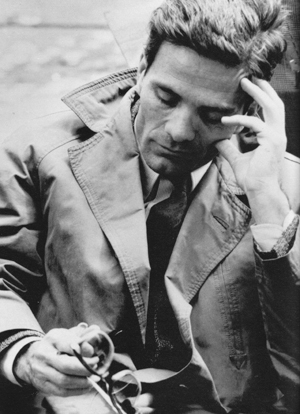 Un humaniste dégouté par la violence ordinaire
Il est impératif de lire (ou de relire) ses « Écrits corsaires » qui rassemblent un florilège de ses meilleurs pamphlets et autres écrits polémiques. Démontrant une intelligence critique sans pareil, Pasolini demeure un véritable hérétique qui n’a jamais baissé le ton fasse aux trop nombreuses impostures d’une intelligentsia, de droite comme de gauche, corrompues jusqu’à la moelle. Militant communiste, non-croyant et anticonformiste, il se désole, néanmoins, de la disparition de cette foi catholique qui représentait un des « relais » de l’authentique culture populaire. S’il s’est élevé contre le pouvoir démagogique des autorités ecclésiastiques et politiques de l’ancien régime, il admet que celui de la nouvelle classe technocratique est encore plus effrayant.
Il tente d’esquisser le profil de cette hyper-classe mondiale qui s’est installée à demeure depuis : « Le portrait-robot de ce visage encore vide du nouveau Pouvoir lui attribue des traits « modernes » dus à une tolérance et à une idéologie hédoniste qui se suffit pleinement à elle-même, mais également des traits féroces et essentiellement répressifs : car sa tolérance est fausse et, en réalité, jamais aucun homme n’a dû être aussi normal et conformiste que le consommateur; quand à l’hédonisme, il cache évidemment une décision de tout pré-ordonner avec une cruauté que l’histoire n’a jamais connue. Ce nouveau Pouvoir, que personne ne représente encore et qui est le résultat d’une « mutation » de la classe dominante, est donc en réalité – si nous voulons conserver la vieille terminologie – une forme « totale » de fascisme ».
Plus que jamais d’actualité, le vibrant témoignage de Pier Paolo Pasolini interpelle ceux et celles qui ont à cœur de refonder les agoras de nos cités prises en otage. Ses écrits polémiques, ses films et sa truculente poésie sont encore accessibles. Mais, pour combien de temps encore ?
Patrice-Hans Perrier
Notes
(*) Écrits corsaires – Scritti corsari, une compilation de lettres brulantes mise en forme en 1975. Écrit par Pier Paolo Pasolini, 281 pages – ISBN : 978-2-0812-2662-3. Édité par Flammarion, 1976.
00:05 Publié dans Cinéma, Philosophie | Lien permanent | Commentaires (0) | Tags : cinéma, italie, philosophie, pier paolo pasolini, pasolini | | del.icio.us | | Digg | Facebook
lundi, 15 juin 2015
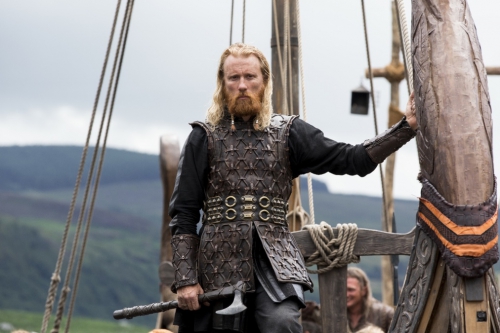
Sept films à voir ou à revoir sur les Vikings
Sept films à voir ou à revoir sur les Vikings
Ex: http://www.cerclenonconforme.hautetfort.com
Du 8ème au 11ème siècle, de terribles raids ravagent une majeure partie de l'Europe du Nord. Débarquant de leurs impressionnants drakkars et ne connaissant pas de Dieu unique, les Vikings ont très abondamment imprégné l'imaginaire collectif médiéval européen. L'Histoire ne retiendra qu'une imagerie guerrière de ces conquérants venus de l'Hyperborée. Or, s'il apparaît indéniable que les Scandinaves ne dédaignaient pas faire périr par le glaive et si leur perception des échanges commerciaux se confondait parfois avec la rapine, les Vikings apparurent également comme de formidables commerçants dont les colonies surent se dissoudre parmi les communautés autochtones, au point de disparaître progressivement en tant que peuple distinct et abandonner leurs croyances païennes. Le cinéma consacra quelques réalisations à ces redoutables guerriers-commerçants. Pour le meilleur comme pour le pire car rares sont les films parvenus à maintenir une certaine distance entre l'Histoire et la légende.
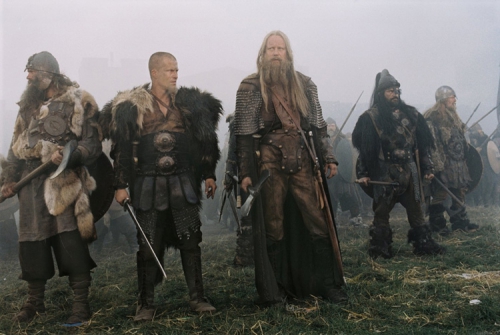
ALFRED LE GRAND VAINQUEUR DES VIKINGS
Titre original : Alfred the Great
Film anglais de Clive Donner (1968)
871 dans le Wessex au Sud de l'Angleterre. Le jeune prince Alfred, frère du roi du Wessex, se destine à une vie sacerdotale. Ce parcours est contrarié par son amour pour Edwige, fille du roi de Murcie. Il l'épouse. Une chute mortelle à cheval du Roi endeuille les noces le jour même, favorisant ainsi l'accès d'Alfred au trône. La tâche n'est guère aisée en ces temps où toute l'Europe du Nord est harcelée par les raids scandinaves. Le chef des Vikings, Guthrun, exige un trésor et prend en otage la jeune reine dont il fait sa maîtresse. Abandonné par la noblesse, Alfred est contraint de se cacher dans les marais. Seuls des hors-la-loi et des gueux acceptent de prendre les armes pour faire face à l'envahisseur danois...
Si Donner prend quelques libertés avec l'Histoire d'Alfred, premier unificateur des royaumes anglo-saxons, il livre néanmoins ici une œuvre sérieuse retraçant fidèlement les villes et campagnes médiévales britanniques. Les scènes de batailles constituent un autre point fort du film et sont particulièrement réussies. La dernière bataille est tout simplement épique grâce à certaines prises de vue réalisées depuis un avion. Une réalisation à voir absolument et ne sombrant jamais dans les facilités dans sa représentation des Vikings.
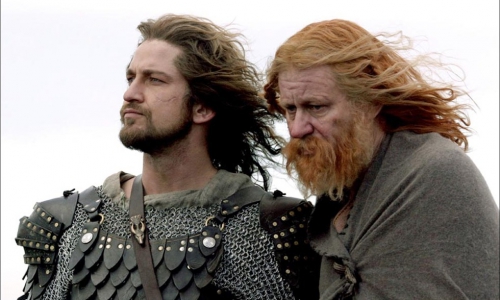
BEOWULF, LA LEGENDE VIKING
Titre original : Beowulf & Grendel
Film américain de Sturla Gunnarsson (2009)
Le Danemark au 6ème siècle. Le roi Hrothgar fait appel à Beowulf, un guerrier réputé invincible, et le charge de l'élimination d'un troll nommé Grendel, accusé de semer la terreur dans le royaume. Beowulf part immédiatement sur les traces du troll et réalise rapidement que Grendel n'est pas cet être sanguinaire et détenant des pouvoirs surnaturels tel que décrit à la cour. Bien au contraire, Beowulf est rapidement convaincu que le Roi cache bien des choses et pourrait être à l'origine de la monstruosité et de la soif de vengeance du troll. Beowulf ne sait s'il doit tuer le troll, d'autant plus qu'il fait la rencontre de Selma, une mystérieuse et sensuelle sorcière...
Hollywood qui se préoccupe d'un poème épique majeur des littératures anglo-saxonne et germano-scandinave, ça donne ça... Cependant moins catastrophique que les deux premières adaptations de la légende de Beowulf qui invitaient au suicide, la réalisation de Gunnarsson offre de belles images tournées en Islande bien qu'elles dénaturent totalement la localisation danoise de l'histoire originelle. Certaines séquences sont vraiment réussies et ne peuvent que faire regretter la faiblesse de l'ensemble malgré le bénéfice d'un budget ambitieux.
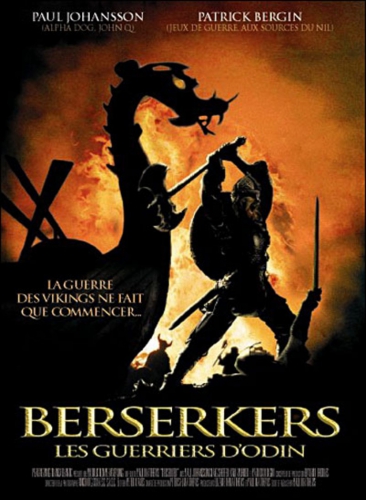
BERSERKERS, LES GUERRIERS D'ODIN
Titre original : Berserker
Film sud-africain de Paul Matthews (2004)
Thorsson, seigneur viking, établit un pacte avec le dieu Odin et ses Berserkers, guerriers intrépides, pour défendre ses terres et prendre possession de celles de ses ennemis. Thorsson triomphe et trahit aussitôt sa promesse d'offrir le fruit de leurs conquêtes aux Berserkers. Au contraire, il entreprend leur exécution. Odin mène une terrible vengeance sur Thorsson et sa descendance. Barek, son fils héritier, et sa promise Brunhilda la Valkyrie seront traqués sans relâche par les Berserkers. La malédiction éternelle ne peut se voir conjurée que par la hache du guerrier viking le plus impitoyable...
On peut craindre le pire de ce film et c'est bien le pire qui ressort... Le premier tiers du film ne manque pourtant pas d'attrait et masque relativement bien le criant manque de moyens. Et patatras ! Vous pensiez ne jamais pouvoir visionner un film sur les Vikings dont l'histoire se déroule jusqu'au 21ème siècle ? Vous avez bien lu ! L'intrigue du film se transporte jusqu'à nos jours. Grâce soit rendue à Paul Matthews qui a osé le faire et est même parvenu à convaincre des financeurs de le suivre dans son projet abracadabrant. Il n'y a désormais plus qu'à espérer qu'Odin transpose sa malédiction sur le cinéaste.
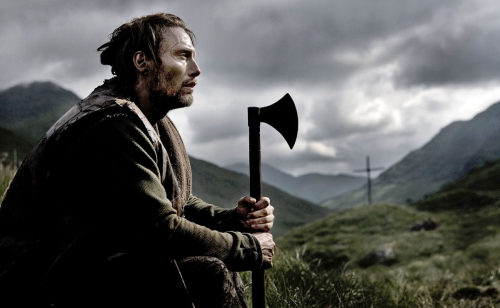
VALHALLA RISING, LE GUERRIER SILENCIEUX
Titre original : Valhalla Rising
Film anglo-danois de Nicolas Winding Refn (2009)
Autour de l'an mil en Ecosse, l'exacerbation des tensions entre chrétiens et païens est à son comble. Des chefs de clans vikings et écossais font se livrer leurs prisonniers esclaves à de terribles combats à mains nues. Un guerrier muet et borgne, surnommé One-Eye, et demeurant invaincu, s'affranchit en assassinant son maître Barde et s'échappe avec un enfant. Les fuyards rejoignent bientôt une troupe de Vikings convertis au Christianisme cherchant à se croiser en direction de la Terre Sainte. Le brouillard fait dériver l'embarcation dans une mauvaise direction et nos héros débarquent sur une terre inconnue. Les tensions entre chrétiens et païens affranchis augmentent tandis qu'ils sont la cible de redoutables indigènes...
Curieux phénomène que cette pléthore de films sur les Vikings et la mythologie scandinave. Valhalla Rising n'est pas un chef-d'œuvre et les puristes de la Weltanschuung Nordique s'arracheront encore quelques cheveux de plus. Mais diversifier les scénarii ne permet-il pas de faire vivre notre plus longue mémoire et la sortir du chloroforme d'un certain élitisme universitaire ? Et tant pis, si on frôle parfois l'iconoclasme. Nonobstant, la photographie est magnifique et le scénario parvient à tenir en haleine.
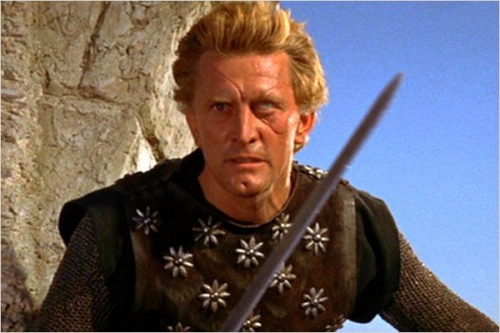
LES VIKINGS
Titre original : The Vikings
Film américain de Richard Fleischer (1957)
Vers 900, l'Angleterre est harcelée par les raids vikings conduits par le chef Ragnar. Edwin, roi de Notrhumbrie, est tué et son épouse violée. Son successeur, Aella, ordonne l'arrestation de son cousin Egbert, suspecté de complot, qui parvient finalement à rejoindre les envahisseurs scandinaves. Les deux fils de Ragnar, Einar et Erik, fruit du viol de la reine, se vouent une haine farouche. Lors d'un nouveau raid, Einar capture Morgana, la fiancée d'Aella, qui parviendra à s'échapper grâce à la complicité d'Erik. Erik est également accusé d'avoir donné une épée à Ragnar qui, capturé, a été offert à l'appétit des loups. Si les deux frères parviennent à se réconcilier en vue de l'assaut du château d'Aella, la bonne entente ne semble pas pouvoir durer...
La réalisation de Fleischer est LE bijou sur les peuples venus de l'Hyperborée. Un film d'une extraordinaire beauté dans ses paysages et dans la reconstitution des drakkars. Les nombreuses scènes de combat sont remarquables et d'une violence inouïe. Les acteurs, Kirk Douglas en tête, sont tous plus convaincants les uns que les autres. On pardonnera aisément un côté images d'Epinal et la grosse bévue de l'utilisation du Fort-la-Latte totalement anachronique. Un pur chef-d'œuvre par Thor et Odin !
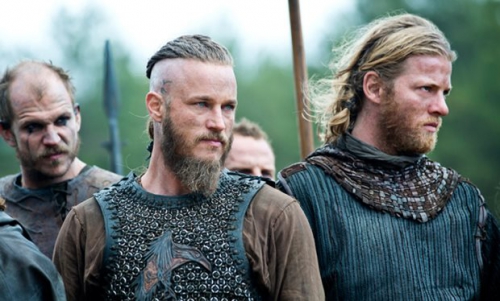
VIKINGS
Série canado-irlandaise de Michael Hirst (2013-2016)
La Scandinavie à la fin du 8ème siècle. Ragnar Lodbrok est un jeune guerrier viking aussi intrépide qu'assoiffé de gloire et de conquêtes. Simple fermier, il est l'homme lige de Haraldson. Ragnar se lasse de mener inlassablement les mêmes raids sur les terres de la Baltique et se met en tête d'étendre les pillages en direction de l'Ouest. Haraldson lui interdit de se lancer dans une telle entreprise. Mais le tenace Ragnar est bien décidé à mener ses plans comme il l'entend. Se fiant aux signes et à la volonté des dieux, Ragnar fait clandestinement construire une nouvelle génération de vaisseaux aussi légers que rapides. La désobéissance de Ragnar va modifier à jamais l'histoire des peuples hyperboréens et d'une majeure partie de l'Europe...
Splendide ! Il n'y a pas d'autres mots ! Un scénario solide et prenant sublimé par un important travail de documentation. C'est à une véritable plongée au cœur des sociétés vikings à laquelle le spectateur est invité. Les profils psychologiques de certains personnages manquent néanmoins parfois d'un peu de profondeur. On a hâte de découvrir les prochaines saisons avec l'espoir que Vikings ne sombre pas dans le politiquement correct comme tant d'autres séries ou films qui s'émoussent au fil des saisons et des épisodes. Game of Thrones et Le Hobbit sont malheureusement là pour nous le rappeler.
LES VIKINGS ATTAQUENT
Titre original : I Normanni
Film franco-italien de Giuseppe Vari (1962)
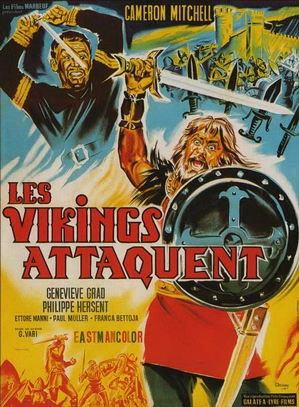 Au 9ème siècle, nombre de seigneurs anglais s'affrontent pour établir et consolider leur pouvoir. Wilfred, neveu du roi Dagobert est un jeune intriguant. Faisant la cour à la reine Patricia, il parvient à faire retenir prisonnier le Roi et porter les soupçons de félonie sur des contingents Normands, commandés par Olaf, établis sur ses terres et souhaitant y demeurer pacifiquement. Olivier d'Anglon, un jeune comte, s'éprend de Svetlana qu'il pense être la fille du chef viking mais qui se révèle en réalité être la fille issue des premières noces de Dagobert. A l'intrigue amoureuse, se joint la cupidité de Wilfred à qui Dagobert refuse de faire connaître la cachette de son trésor. Le sang ne peut que couler...
Le succès de la réalisation de Fleischer a certainement fait fleurir des idées dans la tête d'autres cinéastes. Ainsi de Vari dont le film demeure très largement en dessous de celle du réalisateur américain. Mais on a connu pire depuis sur les Vikings à l'écran alors ne boudons pas celui-ci qui se laisse regarder. Particularité intéressante, les Scandinaves ne sont pas présentés de prime abord comme des barbares sanguinaires avides de rapines et de combats mais bien comme des envahisseurs commerçants et soucieux de quiétude.
Virgile /
Note du C.N.C.: Toute reproduction éventuelle de ce contenu doit mentionner la source
C.N.C.
00:05 Publié dans Cinéma, Film | Lien permanent | Commentaires (0) | Tags : cinéma, films, vikings, 7ème art | | del.icio.us | | Digg | Facebook
samedi, 16 mai 2015
Sisters of Salome: Femmes Fatales, Left & Right
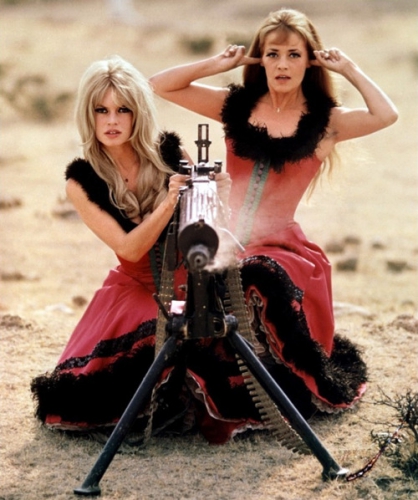
Sisters of Salome:
Femmes Fatales, Left & Right
By Fenek Solère
Ex: http://www.counter-currents.com
Left/Right dichotomies in the representation of female militants in the movies The Baader Meinhof Complex (2008) and A Student named Alexander (2011).
‘Although typically villainous, or at least morally ambiguous, and always associated with a sense of mystification and unease, femme fatales have also appeared as heroines in some stories . . .’
— Mary Ann Doane
From the Levantine Lilith to the Celtic Morgan Le Fay; and from Theda Bara’s vamp in Hollywood’s A Fool There Was to Eva Green in Sin City: A Dame to Kill For, the notion of the fille d’Eve tantalizes us. In sociological terms the notion of diabolic women is potent with misogyny, witchcraft and the negative aspects of anima, how woman appears to man, from the Jungian viewpoint. To take the cinematic angle, licentious dames mean box office receipts, plain and simple. Roger Vadim’s And God Created Woman (1957), starring starlet Brigitte Bardot and Jean-Jacques Beineix’s Betty Blue (1986) with Beatrice Dalle being just two cases that prove the point.
Stereotypes range from enchantress to succubus, haunting our consciousness in different guises, such as the spectral Cathy from Emily Brontë’s classic Wuthering Heights (1847) or the more malign character of Rebecca in Daphne du Maurier’s 1938 book of the same name. As Charles Baudelaire (1821-67) (1), Once mused, ‘The strange thing about woman — her pre-ordained fate — is that she is simultaneously the sin and the Hell that punishes it’. Indeed, a whole academic industry has grown up deconstructing such iconography with writers like Toni Bentley’s Sisters of Salome (2002); Bram Dijkstra’s Idols of Perversity: Fantasies of Feminine Evil in Fin-de-Siècle Culture (1986); and Elizabeth K. Mix’s Evil by Design: The Creation and Marketing of the Femme Fatale in 19th-Century France (2006) leading the way.
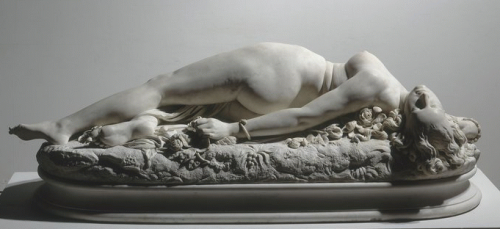
Baudelaire’s own magnum opus Les Fleurs du Mal (1857) epitomizes the dichotomy perfectly. The schizophrenia embodied in his poetic creations, Jean Duval (Black Venus) and Apollonie Sabatier (White Venus), both mirroring and reinforcing some male fantasies about women’s sexuality in the closing decades of the nineteenth century. The dialectics of Serpent Culture and Snake Charmer sensuality, so beautifully carved in Auguste Clesinger’s (picture here above) writhing milk white statue Woman Bitten by a Snake (1847), a representation of Apollonie Sabatier currently on display in the Musée d’Orsay, raises the question, is she squirming in agony or riding a paroxysm of pleasure from the venomous bite?
Moving beyond the arts, literature and film to the political milieu? What evidence do we have for Femme Fatale’s within the Left/Right dichotomy? There is certainly a colorful cast of charismatic characters to choose from: Inessa Armand, Rosa Luxemburg, Clara Zetkin, Jiang Quing, Bernardine Dohrn, and Angela Davis to name but a few on the left-side. Unity Mitford, Savitri Devi, Alessandra Mussolini, Beate Zschape, Yevgenia Khasis, and Marine Le Pen, as examples from the right side of the aisle.
It is my intention to dismiss empathetic documentaries like Confrontation Paris, 68, The Weather Underground (2002) and hatchet-job investigative journalism like Turning Point’s Inside the Hate Conspiracy (1995) about America’s The Order without further comment. Instead arguing that there are few, if any, historically accurate, unbiased and insightful fictional or factional celluloid representations of female (or for that matter male) political militants in circulation. Instead, what we are served up are predictable stereo-types and clichéd cartoonesque parodies, completely aligned with the liberal left Euro-68 ethos, wherein, a mélange of well-meaning but misguided (and always attractive) socialist idealists try to change society for the better, juxtaposed with psychopathic rightist harridans, or male sexual inadequates, portrayed as vacuous outsiders, decidedly uncool and devoid of social capital.
Indicative examples of the genre being, from the left: The Lost Honour of Katharina Blum (1975), The Underground (1976), Running on Empty (1988), What to Do in Case of Fire (2002), Baader (2002), The Dreamers (2004), Guerilla — The Taking of Patty Hearst (2005), Regular Lovers (2005), Mesrine: Killer Instinct (2008), Che (2008), The Baader Meinhof Complex (2008), The Company You Keep (2012) and Something in the Air (2013). As opposed to the more objectionable characterizations of rightists in productions like The Day of the Jackal (1973), The Odessa File (1974), The Boys from Brazil (1978), Betrayed (1988), Siege at Ruby Ridge (1996), Brotherhood of Murder (1999), and A Student named Alexander (2011).
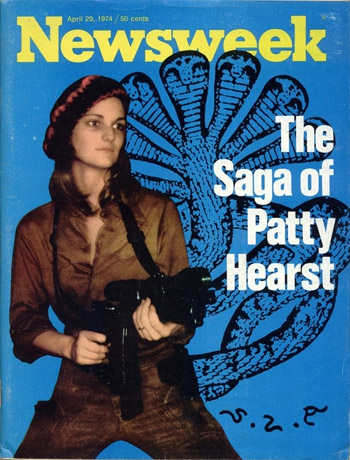 For the sake of argument I have been deliberately selective and will focus specifically on Uli Edels’s Baader Meinhof Complex and Enzo De Camillis’s fifteen minute short A Student named Alexander. Risking the approbation of cultural commentators by possibly extrapolating too general a hypothesis from too limited a sample, I nevertheless press my case, that the content, reaction and intent of both these films exemplify the paradox of Left/Right caricatures in the entertainment media.
Recipient of 6.5 million euros from various film boards and Golden Globe and Oscar nominee in the Best Foreign Film category, The Baader Meinhof Complex, rode the wave of resurgent seventies retro, a movie filled with baby boomer nostalgia for the late sixties and early seventies. Simpler times, when idealism meant Sartre, anti-Vietnam protest, Che Guevara posters, and smoking pot in bedsits listing to the sitar music of Ravi Shankar.
The movies all-star cast includes Martina Gedeck as Ulrike Meinhof, Moritz Bleibtreu as Andreas Baader, Johanna Wokalek as Gudrun Ensslin, and Alexandra Maria Lara as Petra Schelm. All of whom had already or were soon to appear in mainstream feature films like: The Lives of Others, Run Lola Run, The Good Shepherd, Pope Joan, North Face, Control, and Downfall.
The action begins with the 1967 Schah-Besuch mass street protest in Berlin against the Shah of Iran. Mohamed Reza Pahlavi’s supporters are depicted launching an unprovoked attack on the anti-Pahlavi elements, resulting in running battles and the shooting of Benno Ohnesorg in Krumme Strasse 66, by what appears to be a reactionary police officer, Karl-Heinz Kurras, but who was in reality a card-carrying member of the Communist Party acting as an undercover operative for the East German Stasi.
We are then treated to scenes where Maoist students hold packed meetings, intercut with footage of American warplanes strafing and bombing Vietnamese peasants. Rapidly followed by ‘Red’ Rudi Dutschke (3) of 2nd June Movement fame (named after the aforementioned riot) raising his clenched fist, the Messianic leader of the Gramscian ‘Long March through the Institutions’.
Dutschke is elevated to intellectual martyr status when he is mercilessly gunned down in the street by Josef Bachmann, portrayed by actor Tom Schilling, whose cinematic appearance is clearly meant to conjure images of a Hitler Youth or a die-hard Werewolf with a chronic nervous disposition. Which is ironic given that the Baader Meinhof gang and the various later incarnations of the Red Army Faction relied so heavily on a group linked to Heidelberg University, the Sozialistisches Patientiv Kollektiv (Socialist Patient Collective), an organization that sought to convince neurotics and the insane that they were not wrong, it was the system that was wrong, and social revolution was the cure.
‘Shooting is like fucking,’ screams Baader as Bernd Eichinger’s screenplay and Rainer Klausman’s hypnotic lens combine to present a seductive and fast paced cine-orgasm of free love, role model women for Second Wave feminism, cool people smoking cigarettes in coffee shops debating Marxist dialectics, driving around in BMWs, burning department stores, shooting up road signs, Robin Hood bank robbers sunning themselves topless in PLO training camps, liberating captives in a back glow of exploding gelignite and the swashbuckling rat-a-tat of 9mm shells.
Even the capture of Baader, Ensslin, and Meinhof for their egregious crimes are contextually ambiguous. Baader, in a scene more reminiscent of the end of Butch Cassidy and the Sundance Kid (1969) than the original television footage of his stand-off with police; Meinhof, kicking and screaming in outrage, rather than the deflated, depressed, and played-out fantasist she was; and Ensslin, by pure chance, when a shop assistant notices a gun in her handbag. Another martyr is then injected into the story as Holger Meins (4) is depicted a la Bobby Sands (5), going on hunger strike and the subsequent trial in Stammheim (6), more Monty Python farce than a serious attempt to enact justice.
One is left in doubt as to where the audience’s sympathy is meant to lie. Especially, with our ever heroic protagonists making fun of the trial judges and gaining increasing support from those in attendance with their witty quips and stunning mind-games. Even The movie’s ending perpetuates the on-going myth that the ‘night of death’ was not triggered by the failure of the Mogadishu hijack (7) to negotiate their release but was in fact a pre-arranged multiple state murder made to look like simultaneous suicide. The movie culminating in a defiant cadre of young stern faced acolytes holding a graveside vigil, determined eyes set on continuing the struggle.
As a consequence, Christina Gerhardt writing in the Film Quarterly describes the movie thus: ‘During its 150 minutes, the film achieves action film momentum, bombs exploding, bullets spraying and glass shattering’. While Christopher Hitchens commenting in Vanity Fair refers to the movie’s ‘Uneasy relationship between sexuality and cruelty . . . an almost neurotic need to oppose authority’. A theme implied by Michael Bubach, son of Siegfried Bubach, the former Chief Federal prosecutor assassinated by the Red Army Faction in 1977, who’s summation of the feature pointed to the fact that the film ‘concentrates almost exclusively on portraying the perpetrators, which carries the danger that the viewer will identify too strongly with the protagonists’.
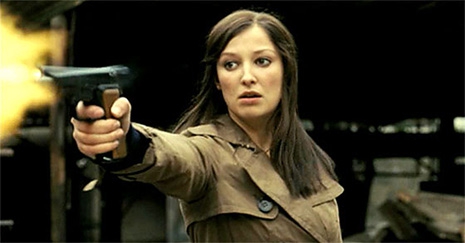
Examples of how this claim can be justified are so numerous that they would prove tedious to list. However, two personifications, beyond the central characters, stand out in particular, the first involving a chase sequence where Petra Schelm, portrayed by the beautiful Alexandra Maria Lara, is cornered and dies defiantly in a shoot-out with a horde of drone-like cops. The second is the murderous Brigitte Mohnhaupt, depicted by the stunning Naja Uhl, who is shown bedding Peter-Jurgen Boock, played by the teenage heart-throb actor Vinzenz Kiefer, before cold bloodedly slaughtering Siegried Bubach in his own home, organizing the ‘hit’ on Jurgen Ponto, Chairman of the Dresdner Bank of Directors, and the kidnap and murder of Hanns Martin Schleyer. Mohnhaupt, the leader of the second generation of the urban guerillas was also implicated in the 1981 attempt to kill NATO General Frederick Kroesen with a PRG-7 anti-tank missile. In fact, just the sort of unrepentant femme fatale we meet in her polar-opposite, the rightist Francesca Mambro in A Student Named Alexander, but who is treated in the diametrically opposite way.

In Enzo De Camillis’s 15 minute silver ribbon winning short, shown at the Roma Film Fest and lauded for its journalistic quality, the much maligned Mambro is portrayed by Valentina Carnelutti (8), who at least partially resembles Mambro. De Camillis, a blood relative of the Alexander in question, (so no conflict of interest there?) indicated his intent in making the movie was to ‘show young people what they do not know, to reflect on a period of history that should not be repeated’. So, following a showing at The House of Cinema to an audience of impressionable students, a discussion is initiated, moderated by Santo Della Volpe (9), who declares at the outset, that ‘The goal of the short is not to re-open old wounds or discussions on the years of lead (10), but to bring to light the issue of the victims that are set aside, of which we no longer speak’.
Really? Well, that is somewhat convenient given the long list of crimes committed by the Italian Brigate Rosse during the period in question. The most notorious being the ambush at Via Fani on the 16th March 1978 and the kidnap and murder of the President of the Christian Democrats, Aldo Moro. But it should also be remembered, especially given the context of De Camillis’s film, that the Left also killed activists from the right wing Italian Social Movement (MSI) and the University National Action group, like Miki Mantakas, murdered in Via Ottaviano in Rome in 1975, and Stephan and Virgilio Mattei, the sons of the MSI party District Secretary for Prati.
It is also a disingenuous claim given the vociferous presence of the Association of Families of victims of the massacre at Bologna train station of 2nd August 1980, whose demands echo down the decades through documentaries and dramas. The latter being the main event used to demonize Mambro and her then lover, now husband, Valerio Fioravanti (11). Although, they have long denied involvement in the Bologna attack, though freely admitting, like their Nuclei Armati Rivoluzionari (Armed Revolutionary Nuclei) NAR accomplices to other political killings, such as, the assassination of Judge Vittorio Occorsio (12) in 1976 and Magistrate Mario Amato (13) in 1980.
Fioravanti maintains that the bombing was the work of Libya, but the Italian government were reluctant to pursue that line of enquiry because of the state’s dependence on Libya’s oil and blamed neo-fascists instead. Mambro and Fioravanti also confessed to planning an attack on the then Prime Minister Francesco Cossiga (14), so one can hardly accuse them of hiding their intentions. When the initial 16 year prison term for Mambro was converted into house arrest in 1998, the Bologna Association’s President Paolo Bolognesi, described Mambro’s parole as ‘A disgrace. It is outrageous that this parole was granted to a terrorist who does not have the requirements, who was sentenced and has never expressed any feelings of detachment from her past’. This, despite the fact that the NAR, never claimed responsibility for the incident and there is substantive cause to believe that the Mafia Banda della Magliana gang (15) and prominent politician Licio Gelli’s (16) secretive Masonic Propaganda Due P2 Lodge (17) linked to the NATO’s Cold-War Operation Gladio architecture (18) had a hand in the incident.
The prosecution’s main witness against Mambro’s partner Fioravanti, Massimo Sparti, of the banda della Magliana, was even contradicted by his own son. ‘My father has lied about his part in the Bologna history’, he declared. Similarly the sinister presence of German terrorists Thomas Kram and Margot Frohlich, closely linked to both the PLO and Carlos the Jackal, who were in Bologna that very same day was never properly investigated. Coincidences like this and the possible link to the Ustica Massacre (19), when Aerolinea Itavia flight 870 was brought down by a missile, gave President Francesco Cossiga pause for thought, leading him to state on the 15th March 1991 that he felt the attribution of the Bologna Massacre to fascist activists may be based on misinformation supplied by the security services.
Returning to A Student named Alexander, unlike the Baader Meinhof Complex, the detail is nearly entirely on the victim, showing his cluttered bedroom, his journey by car to the art school in Piazza Risorgimento. No context is provided as to why Mambro and the NAR are robbing the Banca Nazionale on the 5th March 1982. Neither is reference made to the murder of her fellow MSI activists Franco Bigonzetti and Francesco Ciavatta, gunned down in the Acca Larentia by Left extremists, the Armed Squads for Contropotere Territorial, despite the fact that this led Mambro and her cohort to confront both their political opponents and the police in three days of shootings, stabbings and torching cars across Prenestino:
‘A few of us knew what this meant. Francesco Ciavatta was in our small circle. Our immediate reaction was shock, as if a relative had died. We looked at each other not knowing what to do. All around the city young militants flocked to us. The Italian Social Movement did not react. Kids like us were being used to keep order at meetings of Giorgi Almirante (20) , ready to take the blows and hit back . . . Acca Larentia marked the final break with the MSI . . . It could no longer be our home. For three days we shot at police and this marked the point of no return . . .’
— Francesca Mambro
Even, the circumstances of Alexander’s death are disputed. The movie depicts Mambro standing over the boy, firing into his head execution style, apparently mistaking him and his small umbrella for an armed plain clothes policeman. The counter argument is that he was killed in cross-fire as the NAR broke out of a police encirclement. A shoot out in which Mambro did not have in her possession the gun that was identified as the murder weapon and was herself very seriously wounded in the abdomen. She later recalls, hiding out in a garage, where a young doctor visits her and confirms ‘that it is only a matter of time . . . saying I could die . . .’
A discussion followed as to whether or not her compatriots should kill her there and then because she may talk under anesthetic but instead the NAR cell, led by Giorgio Vale (21), who went on later to found Terza Posizione (22), deposited her on the roadside outside an Emergency room.
When Mambro’s Rome based lawyer Amber Giovene challenged the authenticity of the way Mambro is depicted in the movie, claiming it ‘harmed her image’ she was met with a barrage of criticism. The case, overseen by prosecutor Barbara Sargent, was opened three months after the film opened and came like a bolt from the blue to the self-righteous director and the cultural association School of Arts and Entertainment. People in Bologna were whipped up into a state of frenzy, signing a petition in support of the film, which had already received a letter of commendation from the President of the Republic, Giorgio Napolitano. Expressions like censorship and statements like ‘You cannot stop a cultural work, you cannot stop history’, were bandied around with the usual air of moral indignation.
The 2013 Appeal notes relating to the accusation of defamation of Mambro’s character read: due to the benefit of the law, Francesca Mambro, who has never repented of her criminal and terrorist past, nor as ever wanted to work together to build the truth about serious events like the Bologna Massacre, will remain free. The request for the seizure of the short film is extremely serious because it sets a precedent on the freedom of cultural expression, journalism and news, and also because it opens the door to dangerous revisions and attempts to wipe clean historical memory’. The account continues: ‘A country without memory will never understand the present or the future’.
The double standards and contradictions exemplified in the differing responses to A Student Called Alexander and The Baader Meinhof Complex cannot be more stark. Memorialization of such actions are to be glamorized and mythologized if of the Left and censored and misrepresented if of the Right. The word revision is of itself loaded, implying an attempt to challenge supposedly known historical facts and is a term usually reserved for historians deviating from the legend of the Jewish Holocaust. Indeed, it seems that anything that transgresses the Left’s self-serving narrative is to be expunged, cast down the Orwellian memory hole, or twisted beyond all recognition.
Roberto Natale, the auteur of such movie classics as Kill Baby Kill and Terror Creatures from the Grave, also reiterated before his recent demise, that ‘there is a right and duty to tell. Art strengthens the record and citizens need to know. We journalists are on the side of those who stubbornly continue to speak against the custom in our country to silence uncomfortable voices, instead of being willing to speak. This short film has to circulate and be seen in schools, but not only in Rome’.
So, is the movie meant to educate or perpetuate the questionable conviction of Mambro for that specific crime? Be re-assured De Camillis states: ‘I tell you a story, I do not give you a political speech. I want to get out of games of this type. The short film I made for a number of reasons that I think are important. It is a warning to our politicians. Right now, if you do not listen to the needs of young people, you risk terrorism, perhaps we have already. We remember the riots in San Giovanni in Rome in October (23), the bullets that came in envelopes and the letter bombs’.
Then specifically commenting on the release of Francesca Mambro, but of course not being invested in any way, De Camillis adds:
I will not even enter into legal issues because one relies on the judgment of the judiciary already formulated in 1985. But a citizen reflecting on the penalties imposed on others for far less serious offenses fully expatiated are still in prison. Mambro was guilty of 97 murders and was sentenced to nine life sentences. Yet, she walks outside, lives 400 meters from my house, and I may happen across her path by accident. There is a whisper that this story has resurfaced because of my family bonding and friendship with Alexander . . . Who was Alexander Caravillani? He was a boy of 17, he ran with the times, had a girlfriend, and harbored all the fantasies of a 17-year-old. He was not political, nor left or right. He passed in front of the bank, was simply crossing the street, going to school when he was shot, his short umbrella tumbling from his jacket, leading Mambro to believe he was a plain clothes policeman. Then she came back and put a bullet in his head. For that, she was sentenced to life imprisonment.
This is a story, he insists once again, to preserve the history of the years of lead.
 And if that is indeed the case, why not tell the story of one of the murdered MSI Youth Front members, Sergio Ramelli, 18; Francesco Cechin, 19; and Paolo Di Nella, 20, contemporaries of Alexander Caravillani (picture) and Mambro, who met their deaths by beating, shooting, and stabbings from Leftist brigands like the Autonomus Workers in the late ’70s and early ’80s? But of course, that will never happen. It does fit their agenda.
On February 11th 2012, De Camillis in direct contradiction to his supposed non-political stance is quoted, ‘Today, the city of Rome is right’, referring to the ‘post fascist’ Mayor Gianni Alemanno (24), MSI Youth Front veteran and graduate of Campo Hobbit (25), who was elected in April 2008 to the sound of Fascist-era songs and shouts of ‘Duce’. ‘Who are those who have called me to present the short film?’ asked Camillis, ‘They are Alemanno’s allies, Berlusconi’s Il Popolo della Liberta (26) . . . When it all came out I was in silence and I decided to just promote it, as I always do. But in the face of this attack, I mean to defend it at all costs. It is a ‘cultural action’ like opposition to gagging journalists. This is a way to silence not only the news but also the authorship of the image’.
There is clearly no intention of admitting even the possibility of bias or inaccuracy. De Camillis and his people are intent on staking their claim to the moral high ground. The following day, Mambro’s lawyer responded: ‘I write in the name and on behalf of the my client Francesca Mambro about the article published yesterday . . . I understand the presentation of the short film flatters the author. But I do not understand the claim that Mambro came back and shot him in the head. I do not know if Mr. De Camillis’s draws from insider sources? Caravillani, unfortunately died in the firefight because a bouncing bullet caused his immediate death. A bullet from an assault rifle that Mambro had never had in her possession, either as she entered the bank or as the NAR shot their way out. The scene is constructed in a way that will definitively condemn Mambro’. When Caravillani was struck, the judges concluded, it was because the young man, after he had run, suddenly found himself in the trajectory of shots fired between the various agents . . . Unfortunately, even the trailers of the short graphically depict Mambro in the disputed manner, astride a guy lying on the ground, shooting the coup de grace . . . I am sure, that in the name of the need to preserve the memory of the years of lead, both you and the newspaper for which he writes would give an account of this correction’. My personal advice is not to hold your breath for a retraction. Smear and distortion is their modus operandi.
Sentenced, for the killing of 9 individuals between May 1980 and March 1982, and the alleged involvement in the massacre of the Bologna bombing on 2nd August 1980, Mambro served 16 years in prison. Sometimes sharing a cell with Anna Laura Braghetti (27) (picture), of the Brigate Rosse, then after 1998 home detention until the 16th September 2008 when she was granted parole on the basis of ‘repeated and tireless dedication to reconciliation and peace with the victims’ families (28). Parole was ended on September 16th 2013 when the sentence was disposed of . . .’
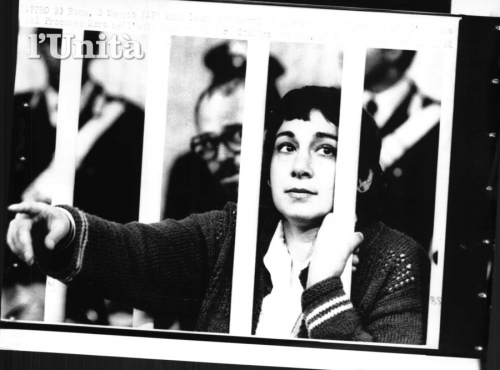
So to end has I began with a quote from a French man of letters, Alexandre Dumas (29), author of The Three Musketeers, ‘she is purely animal; she is the babooness of the Land of Nod; she is the female of Cain: Slay her!’ Or at least besmirch her reputation and disparage her cause so that no one will want to emulate her.
Notes
1. Along with Edgar Allan Poe, Baudelaire identified counter enlightenment philosopher Joseph de Maistre as his maître a penser and adopted aristocratic views. He argued ‘There are but three things worthy of respect: the priest, the warrior and the poet. To know, to kill and to create . . .’
2. Auguste Clesinger (1814-1883), French sculptor who created Bacchante, the Infant Hercules Strangling Snakes, Nereid, and Sappho, was an Officier de la Legion d’honneur.
3. Rudi Dutschke (1940-1979), disciple of Rosa Luxemburg and critical Marxist, survived Josef Bachmann’s attack, but drowned as consequence of having an epileptic fit in the bath.
4. Holger Meins, seized with Baader and Jan Carle-Raspe on the 1st June 1972, went on hunger strike, dying a mere 39kg in weight. He is a central character in the movie Moses und Aron by Jean-Marie Straub and Daniele Huillet (1974). Followed by a documentary about Meins called Starbuck — Holger Meins by Gerd Conradt (2002).
5. Bobby Sands (1954-81), a member of the Provisional Irish Republican Army (IRA) died whilst on hunger strike in HM Maze Prison. During the course of his protest he was elected to the British Parliament as an Anti-H Block candidate. He has been depicted in various films including Some Mother’s Son (1996) and Hunger (2008) and is celebrated in songs like Christy Moore’s The People’s Own MP’.
6. Stammheim is a high security prison in Stuttgart.
7. Four militants of the Commando Martyr Halime hijacked Lufthansa flight 181 on the 13th October 1977. The plane was stormed in Somalia by GSG-9 elite counter-terrorism units in an operation code-named Feuerzauber (Fire Magic).
8. Valentina Carnelutti was trained at the Theatre Active in Rome and the Mime Theatre Movement. She has also appeared in the movies Martina Singapore (1995), Ridley Scott’s Hannibal (2001) and The Best of Youth (2003).
9. Santo Della Volpe is a professional journalist who covered the first Gulf War and is a managing editor on Italy’s TG3.
10. The term “Years of Lead” was used to describe the socio-political turmoil in Italy between the 1960s to the 1980s. It is thought that the reference originated from a movie called Marianne and Julianne by Margarethe Von Trotta. The Italian title was Anni di Piombo, literally years of lead. A later linked feature called The German Sisters (1981) became a classic of new German cinema, sympathetic to Gudrun Ensslin and dedicated to women’s civil rights.
11. Born in 1958, Giuseppe Valerio ‘Giusva’ Fioravanti, was a former child actor, who became a leader in the NAR and has been romantically linked with Mambro since 1979. While serving his prison sentence he made a documentary on Rome’s Rebibbia prison, Piccoli Ergastoli, Little Life Sentences (1997).
12. Occorsio Vittorio (1929-1976) oversaw the trial of those indicted for the Piazza Fontana bombing.
13. Maria Amato was an Italian magistrate assassinated by NAR member Gilberto Cavallini in 1980.
14. Francesco Cossiga, Italy’s 42nd Prime Minister and 8th President between 1985-1992.
15. The Banda della Magliana was a criminal network operating out of Lazio, named after the district from where most of their leaders originated. Their activities included the murder of the banker Roberto Calvi, the kidnapping of Emanuela Orlandi and the attack on John-Paul II.
16. Licio Gelli, an Italian financier, heavily involved in the Banco Ambrosiano scandal and the venerable master of the P2 Lodge.
17. The Propaganda Due (P2) Lodge was under the jurisdiction of the Grand Orient of Italy implicated in numerous crimes and mysteries, often referred to as a ‘state within the state’.
18. Operation Gladio was the code-name for NATO’s ‘stay behind’ activity should the Warsaw Pact mount an invasion of western Europe. The name Gladio came from the word gladius, a type of short Roman sword.
19. The Ustica Massacre is still a subject of some controversy. Whether or not a French naval aircraft brought the plane down with a missile, or a bomb was set off in the toilet as evidenced by forensic experts, it is known that the Libyan leader Colonel Gadaffi was in the same airspace at the time. Linking the Ustica and Bologna incidents became common in some conspiracy circles.
20. Giorgio Almirante (1914-1988) studied under Giovanni Gentile, the eminent pro-Fascist philosopher and wrote for the Rome-based fascist journal Il Tevere. He once described Julius Evola as ‘Our Marcuse, only better’. Almirante was suspected of safe-housing Carlo Cicuttini, a MSI leader in the Monfalcone area and later a member of the Ordine Nuovo, a suspect convicted in absentia for his part in the Peteano di Sagrado killings. Almirante and his rival Pino Rauti often clashed bitterly on the tactics and methodology used by the Italian Right.
21. Giorgi Vale was killed in a shoot-out with police.
22. The Terza Posizione emerged from the national student’s movement under Roberto Nistri, who was imprisoned from 1982 to the early 2000s.
23. The San Giovanni Riots of the 15th October were violent street protests by Black Bloc Left extremists.
24. Gianni Alemanno was born in Bari in 1958. He is a former secretary of the MSI’s Youth Wing, who entered the Chamber of Deputies representing Lazio, serving as Rome’s 63rd Mayor between 2008-2013 and a Minister of Agriculture under Silvio Berlusconi. He is married to Isabella Rauti, the daughter of Pino Rauti.
25. Campo Hobbit was named after Catholic writer J. R. R. Tolkien’s first novel. It was an alternative cultural and musical ‘happening’ linked to Elemire Zolla who wrote The Arcana of Power 1960-2000. Held in various locations, the first in Montesarchio, it boasted its own Manifesto and became a ‘field school’ for the Italian New Right and thinkers like Pino Rauti and Marco Tarchi.
26. Berlusconi’s Il Poplo della Liberta was closely aligned with Gianfranco Fini’s conservative National Alliance and Umberto Bossi’s Lega Nord.
27. Anna Laura Braghetti owned the apartment where Aldo Moro was imprisoned. She is also the subject of her own book Prisoner which influenced Marco Bellocchio’s film Good Morning, Night (2003).
28. Mambro currently works for the Italian NGO Hands off Cain, an association campaigning against the death penalty linked to the Libertarian Radical Party.
29. Alexandre Dumas (1802-1870). It was said of Dumas, that his ‘tongue was like a windmill — once set in motion, you never knew when it would stop, especially if the theme was himself’ — Watts Phillips, English illustrator, playwright and novelist.
Article printed from Counter-Currents Publishing: http://www.counter-currents.com
URL to article: http://www.counter-currents.com/2015/05/sisters-of-salome/
URLs in this post:
[1] Image: http://www.counter-currents.com/wp-content/uploads/2015/05/unoStudenteDiNomeAlessandro.gif
[2] Image: http://www.counter-currents.com/wp-content/uploads/2015/05/WomanBittenByaSnake-e1431024185283.jpg
00:05 Publié dans Cinéma, Film | Lien permanent | Commentaires (0) | Tags : cinéma, films, femmes fatales, terrorisme, terrorisme féminin, 7ème art | | del.icio.us | | Digg | Facebook
lundi, 04 mai 2015
Sept films à voir ou à revoir sur la Guerre comme expérience intérieure
Sept films à voir ou à revoir sur la Guerre comme expérience intérieure
Ex: http://cerclenonconforme.hautetfort.com
A propos de la guerre, Ernst Jünger écrivait : "Oui, le soldat, dans son rapport à la mort, dans le sacrifice de sa propre personne pour une idée, ignore à peu près tout des philosophes et de leurs valeurs. Mais en lui, en ses actes, la vie trouve une expression plus poignante et plus profonde qu'il n'est possible en aucun livre. Et toujours, de tout le non-sens d'un processus extérieur parfaitement insensé, ressort une vérité rayonnante : la mort pour une conviction est l'achèvement suprême. Elle est proclamation, acte, accomplissement, foi, amour, espérance et but ; elle est, en ce monde imparfait, quelque chose de parfait, la perfection sans ambages. " Il y a un siècle, la Première Guerre mondiale inaugurait le combat moderne en même temps qu'elle propulsait sur des centaines de théâtres d'opération des millions de jeunes âmes volontaires ou contraintes de vivre leur guerre "comme expérience intérieure". Des hommes, tel Ernst Jünger, héraut de l'aristocratie guerrière allemande, René Quinton ou Joseph Darnand, frères d'armes français, naquirent pour la seconde fois sous la tempête des Orages d'acier. Mais combien d'hommes marqués à jamais par l'indicible effroi de l'expérience du combat ? Eux qui clamèrent plus volontiers, non la Guerre notre mère mais la Guerre notre mort. Le thème de la guerre figure parmi les plus explorés du cinéma. Excellente occasion de découvrir ou redécouvrir, sous de nombreux aspects, de brillantes réalisations abordant plus généralement la perception psychologique des conflits.

LES CHEMINS DANS LA NUIT
Titre original : Wege in der Nacht
Film allemand de Krzysztof Zanussi (1979)
1943, des soldats du Reich prennent possession d'une grande ferme polonaise. La chasse aux alentours est l'occupation favorite des officiers de la Wehrmacht, parmi lesquels deux universitaires, Friedrich et son cousin Hans-Albert. Friedrich se distingue de son cousin par sa passion pour l'art et la littérature. Il tombe bientôt amoureux d'Elzbieta, fille du baron propriétaire, qui est animée des mêmes goûts artistiques. Un amour nullement réciproque. Elzbieta juge Friedrich trop peu critique à l'égard de la barbarie de la guerre. Et patriote polonaise ardente, Elzbieta est bien décidée à utiliser l'amour de Friedrich pour aider l'action militaire des partisans polonais...
Pas tout à fait un film de guerre, la réalisation de Zanussi explore de manière admirable la collaboration par l'inaction. Si Friedrich n'est pas un national-socialiste convaincu, son inaction pour combattre le régime et son acceptation de la barbarie le transforment en complice actif. Et c'est toute la faiblesse morale du héros, présenté comme un personnage affable et sympathique mais obéissant aveugle à un régime qu'il ne cautionne pas, que souhaite mettre en exergue le réalisateur. Tourné en 1979, Zanussi, de nationalité polonaise, ne manque pas d'établir un parallèle fort avec l'intelligentsia polonaise, de même, complice du régime communiste par sa lâcheté. Le film, en outre servi par de brillants interprètes, est un petit bijou.

EMPIRE DU SOLEIL
Titre original : Empire of the Sun
Film américain de Steven Spielberg (1987)
Shanghai en 1941, la zone anglaise de la ville connaît un destin singulier quand le reste de la Chine est occupée par l'armée japonaise. James Graham est le jeune fils d'un riche industriel britannique et mène une adolescence insouciante. Mais James est bientôt rattrapé par la guerre. L'aviation japonaise vient d'attaquer Pearl Harbour scellant la déclaration de guerre nippone aux forces alliées. L'armée impériale envahit la Concession internationale de Shanghai. Séparé de sa famille, le jeune garçon erre et découvre la peur et la mort avant de se retrouver prisonnier dans un camp dans lequel il doit apprendre à survivre. Ses rêves de révolte et de guerre perdent leur sens. Aidé par le prisonnier Basile, James n'a d'autre possibilité pour évader son esprit que de transformer sa détention en aventure extraordinaire...
Si le talent de Spielberg est largement surestimé, le présent film constitue l'une de ses meilleures réalisations avec Rencontres du troisième type. Bien que non soldat, James est contraint de mener et vivre sa guerre sans fusil comme un parcours initiatique qui le révèlera et le conduira à l'âge adulte. L'image émouvante d'un antihéros qui se représente la guerre et la barbarie comme son nouveau terrain de jeu. Le film est une adaptation du récit semi-autobiographique de l'écrivain de science fiction James Graham Ballard. Une œuvre lyrique et envoutante.

LE FAUBOURG OKRAINA
Titre original : Okraina
Film russe de Boris Barnet (1933)
1er août 1914, l'Allemagne mobilise et déclare la guerre à la Russie tsariste. Un vent patriotique souffle dans tout le pays, aussi sur le faubourg d'une petite ville menacée par l'avancée des troupes du Kaiser. Gresin, le fabricant attitré de bottes pour l'armée est le plus fervent patriote et enjoint tous les hommes en âge de combattre du quartier à monter au front. L'ouvrier Nikolaj Kadin est mobilisé et rejoint par son frère Son'ka qui se porte volontaire. Ces modestes ouvriers et paysans vont bientôt découvrir les horreurs des tranchées et la gestion irresponsable d'officiers généreux en chair à canon. A l'arrière du front, l'effervescence patriotique cède la place à la contestation d'un conflit engraissant les marchands de canons. Les thèses bolchéviques trouvent un terreau favorable à leur éclosion...
Certes, il s'agit d'un film de propagande stalinienne qui ne fait guère l'économie d'un certain nombre de poncifs. C'est le lot des films de propagande après tout... Barnet livre néanmoins ici une vision douce-amère de la guerre, éloignée de la grandiloquence d'autres productions bolcheviques. L'autre particularité du film réside également en une présentation de la perception du conflit par l'ensemble des classes sociales, limitant un point de vue uniquement prolétaire. Bref, une réalisation assez iconoclaste au sein du monolithisme du cinéma soviétique. A voir !

FLANDRES
Film français de Bruno Dumont (2005)
De nos jours en Flandre, Demester doit quitter son exploitation agricole, accompagné d'autres jeunes Flamands, pour être propulsé sur un théâtre d'opération lointain. Demester menait jusqu'alors une vie pauvre et simple. Il aime secrètement Barbe, son amie d'enfance avec laquelle il partage de longues ballades. Il aime Barbe malgré ses mœurs libres et ses amants, parmi lesquels Blondel qui la séduit. Attendant le retour de Demester, Blondel et leurs compagnons, Barbe s'ennuie au village. Quant à Demester, de nature aussi taciturne et morose que l'était son ciel de Flandre, il fait face à la guerre avec une parfaite tenue au feu et se mue en véritable guerrier. Une guerre dont il ne sortira pas indemne psychologiquement...
Afrique du Nord ? Moyen Orient ? Rocailleux et écrasé par un lourd et brûlant soleil, le théâtre d'opération défini par Dumont est imaginaire et filmé avec un ton glacé. Le film n'épargne rien au spectateur plongé au cœur d'un voyage au bout de l'enfer. Une descente aux enfers qui se poursuit après le retour du champ de bataille et maintient le spectateur dans une position inconfortable sublimée par d'interminables moments de silence. Bruno Dumont ne cesse d'étonner et de confirmer l'étendue de son incroyable talent. A voir absolument !

LA HONTE
Titre original : Skammen
Film suédois d'Ingmar Bergman (1968)
Jan et Eva Rosenberg vivent reclus sur une île et vouent une passion inconditionnelle pour la musique dans un monde en proie à une guerre lointaine. Une panne de radio suivie d'autres incidents mineurs précipitent progressivement l'île dans le conflit. Les comportements de chacun se modifient radicalement. Jan se montre ainsi de plus en plus agressif envers Eva. Arrêtés tour à tour par les conquérants et les libérateurs, les amoureux sont relâchés sur ordre de leur ami, le colonel Jacobi. Eva s'offre au colonel bientôt fusillé sous leurs yeux. Les musiciens prennent la fuite en compagnie d'autres fugitifs en barque sur une mer jonchée de cadavres. Ils savent que, désormais, plus rien ne sera comme avant...
L'histoire de deux civils ordinaires plongés dans un conflit imaginaire aussi banal qu'insoutenable. Avec brio, le réalisateur démontre l'intrusion de la violence et les irréversibles bouleversements qu'elle engendre. Les deux individus sont littéralement pris au piège et otages d'un monde qui ne les concerne pas. Une anomalie dans la filmographie de Bergman qui parvient à montrer la guerre avec un indéniable talent conjugué à une parfaite psychologisation des protagonistes. Un chef d'œuvre !

LA LIGNE ROUGE
Titre original : The Thin Red Line
Film américain de Terence Malick (1998)
1942, la bataille de Guadalcanal fait rage dans le Pacifique. Le cadre paradisiaque est trompeur. Au milieu de tribus amérindiennes otages d'un conflit étranger, soldats américains et nippons se livrent une lutte sans merci, dont aucun combattant ne sortira indemne. Au sein de la Charlie Company, le fantassin Witt, accusé d'avoir déserté, bénéficie de la clémence du sergent Welsh. Le chemin menant à l'objectif, la colline 210 défendue par un solide bunker, semble interminable et la préparation d'artillerie semble bien mince. De nombreux soldats gisent déjà au sol. Les survivants sont assoiffés. Il n'y a plus d'intendance... Le capitaine Staros refuse de poursuivre l'assaut commandé par sa hiérarchie, estimant qu'il s'agit d'une mission-suicide. Après de longues heures d'attente, une patrouille de sept hommes est chargée d'effectuer la reconnaissance des abords de la colline 210. Le G.I. Witt en fait partie...
Witt et ses compagnons d'armes étaient de simples civils peu auparavant. Qu'a-t-il bien pu s'opérer pour qu'ils se muent en bêtes de guerre ? Malick livre ici une formidable réalisation sur le vécu d'une troupe et mêle très habilement l'alternance de scènes d'effroyables combats avec de longs plans sur la faune et la flore insulaires et le quotidien d'indifférentes tribus autochtones plongées, malgré elles, dans l'une des plus sordides boucheries. Autre habileté : l'utilisation de la voix off pour accentuer le caractère tragique de la guerre. A voir absolument!

SIGNES DE VIE
Titre original : Lebenszeichen
Film allemand de Werner Herzog (1967)
Pendant la Seconde Guerre mondiale, un jeune soldat du Reich, Stroszek, est blessé et envoyé en convalescence dans un dépôt de munitions dont il assure la garde sur l'île de Crète. Loin du tumulte de la bataille et réduit à l'inaction, le soldat occupe le temps en s'astreignant à d'inutiles tâches qu'il juge nécessaires à son équilibre psychique. Le conscrit pourrait mener une vie paisible dans cette forteresse que nul ne menace, en compagnie d'une jeune femme grecque dont il fait son épouse et deux autres camarades. Mais face à l'interminable attente, Stroszek sombre progressivement dans la folie et devient dangereux pour son entourage...
Premier long-métrage du génial Werner Herzog. Et c'est une réussite ! Stroszek, symbole du combattant déchu de sa guerre, orphelin de sa mort, que ses gestes dérisoires pour se maintenir parmi les guerriers attirent vers la déraison. Quel contraste entre la violence d'une guerre et le pacifique calme solaire de cette île du Dodécanèse où le temps semble s'être arrêté ! Herzog filme magnifiquement la lente dégradation des rapports entre ces êtes que la guerre a oubliée. Une œuvre oppressante !
Virgile / C.N.C.
Note du C.N.C.: Toute reproduction éventuelle de ce contenu doit mentionner la source
00:05 Publié dans Cinéma, Film, Militaria | Lien permanent | Commentaires (0) | Tags : guerre, guerre comme expérience intérieure, ernst jünger, militaria, cinéma, films, 7ème art | | del.icio.us | | Digg | Facebook
samedi, 02 mai 2015
Sept films à voir ou à revoir sur la Société irlandaise

Sept films à voir ou à revoir sur la Société irlandaise
Ex: http://cerclenonconforme.hautetfort.com
Un pub bondé... Au comptoir, des hommes et des femmes de toute condition sociale communient autour d'un curieux breuvage aussi noir qu'épais. Les pintes de stout se remplissent aussi lentement que les gosiers la lampent. La Guinness se mérite. Toutes les discussions s'entremêlent. On y parle de tout sauf du temps qu'il fait car il y pleut toujours ! Le Celtic Glasgow a perdu le derby contre l'ennemi juré des Rangers. Et le XV de la Poblacht na hÉireann a cédé à Lansdowne Road contre Galles. Sale week-end ! Temps de merde ! Le tapotement d'un bodhràn bientôt accompagné d'une guitare recueille l'attention d'un petit groupe de quinquagénaires qui tente de reprendre tant bien que mal The Fields of Athenry. Les femmes assises à leur côté soufflent, d'autant plus que l'un des compères n'a pas manqué de remarquer la démarche mal assurée d'une petite jeune femme rousse, certes un peu empotée, mais dont la jupe qu'elle arbore fièrement s'appellerait une ceinture dans n'importe quel autre pays... Assurément !, se disent les femmes, ils ont déjà trop bu... Cette scène vous remémore quelque souvenir ? Alors vous êtes déjà allé en Irlande ! La société irlandaise est aussi contrastée que ce fichu temps qui passe par toutes les couleurs en moins de temps qu'il n'en faut pour enfiler son anorak. La résumer en sept films relève d'une gageure impossible. Alors, autant éviter les clichés mentionnés ci-dessus et découvrir un tout petit peu cette drôle de petite île. Juste comme ça. L'Eire de rien...

GENS DE DUBLIN
Titre original : The Dead
Film américain de John Huston (1987)
Dublin, 6 janvier 1904. Comme chaque année, les sœurs Kate et Julia Morkan réunissent leurs plus proches amis pour fêter l'Epiphanie. La soirée joyeuse et bien arrosée est rythmée au gré des poèmes, chants et danses gaëliques. Les langues se délient pour évoquer les chers disparus, familiers ou inconnus. La soirée tire progressivement à sa fin. Molly Ivors, nationaliste ardente, quitte la réception la première pour se rendre à un meeting. Une dernière complainte émeut Greta, l'une des convives. De retour à l'hôtel, Greta révèle à son époux, Gabriel, l'histoire d'un jeune homme éperdument épris d'elle dont l'amour a conduit le prétendant à la mort. Le jeune homme aimait fredonner cette même complainte. Gabriel est anéanti par la nouvelle...
Remarquable adaptation de la dernière nouvelle du roman Dubliners de James Joyce et dernier film tourné par Huston peu de temps avant sa mort. La mort justement, et le temps qui s'écoule irrémédiablement, sont les thèmes principaux affleurant tout au long de ce huis-clos bouleversant et remarquablement interprété par des acteurs, tous issus de la diaspora irlandaise. Une adaptation remarquable. A voir absolument !

LE LIBRAIRE DE BELFAST
Titre original : The Bookseller of Belfast
Film documentaire irlandais d'Alessandra Celesia (2011)
Fumeur invétéré et toujours accompagné de ses grosses lunettes cerclées magnifiant son air débonnaire, John Clancy, surnommé John "Belfast" ou John "Books", exportait auparavant les œuvres de William Butler Yeats jusqu'en Californie. Mais la petite bouquinerie de John, une petite maison de briques rouges, à l'intérieur de laquelle se pressent quatre mille livres invendus, doit fermer pour cause d'explosion, non celle d'une énième bombe loyaliste ou catholique, mais à cause de l'explosion des loyers. Comment maintenir son petit sanctuaire, lui qui a toujours plus offert de livres qu'il n'en a vendus, dans un Belfast en pleine mutation, submergé par la crise et tentant de panser les plaies de six décennies d'affrontements communautaires ? Pour ce brave John, il s'agit désormais de retrouver un chemin...
Mélancolique et émouvant portrait d'un petit bouquiniste que la spéculation arrache à son paradis. Celesia dresse magnifiquement son portrait empreint de la mémoire identitaire de la capitale nord-irlandaise. Autour de John, trois jeunes ordinaires et peu paumés, issus de la nouvelle génération d'une ville qui se réveille avec la gueule de bois : Robert, un punk dyslexique passionné d'opéra et par l'Empire romain, son frère Connor, un rappeur couvert de multiples cicatrices et Jolene, jeune chanteuse écumant les télé-crochets. Au milieu des alertes à la bombe, un remarquable tableau d'une ville qui se projette vers l'avenir. Qui n'est jamais allé en Ulster ne connaît pas l'Irlande...

THE MAGDALENE SISTERS
Film irlandais de Peter Mullan (2002)
Comté de Dublin en 1964. Elles sont trois adolescentes et ne se connaissent pas. Margaret est violée par son cousin lors d'un mariage. La jolie Bernadette, orpheline, est estimée trop provocante avec les garçons. Rose est une fille-mère qui a dû abandonner son enfant à une famille catholique. Les trois adolescentes sont placées dans le couvent des sœurs de Marie-Madeleine pour avoir déshonoré leurs parents. Les jeunes filles vont bientôt se confronter aux dures lois qui régissent la vie du couvent et devoir expier leur comportement immoral par le travail et la prière. Sous les ordres de la sœur Bridget, elles vont laver le linge de l'Eglise et de la haute société irlandaises, subissant les pires humiliations et mauvais traitements...
Terrifiant portrait de l'un des traits majeurs de la société irlandaise, son rigorisme moral. Ce film romancé est inspiré d'un documentaire télévisé qui dénonça les horreurs des couvents Magdalene qui ne fermèrent leurs portes qu'en... 1996 ! Symboles du Pêché originel d'Eve croquant la pomme, des générations de jeunes filles irlandaises ont été maintenues sous le régime de terreur d'une autorité parentale toute-puissante lorsque celle-ci estimait son honneur bafoué. Aussi, la victime d'un viol en devenait-elle coupable et la beauté était-elle assimilée à un trait diabolique. Mullan livre ici réalisation oppressante et glaçante que d'aucuns jugeront parfois outrancière.

PAVEE LACKEEN, LA FILLE DU VOYAGE
Titre original : Pavee Lackeen, the traveller girl
Film irlandais de Perry Ogden (2005)
Winnie est une adolescente issue de la communauté gitane irlandaise et partage sa vie, entourée de ses neuf frères et sœurs, dans une caravane de la zone industrielle de Dublin. Exclue une semaine de l'école après une bagarre, Pavee erre en ville et se rêve en jeune mariée devant une vitrine de robes, avant de s'approprier les pièces d'une fontaine pour jouer aux jeux vidéos et cambriole enfin un container de la Croix Rouge pour y voler nombre de vêtements. Pendant ce temps, sa mère multiplie les interventions face à l'administration pour régulariser leur situation. La caravane est menacée d'expulsion...
Les films sur la communauté des gens du voyage ne sont pas légions. Pavee Lackeen connut une sortie fantomatique en France, dépassant péniblement les 10.000 entrées. 45 à 50.0000 gitans vivent en Irlande à l'écart de la société, locuteurs d'un langage dont aucune racine ne provient d'un rameau identifié. Avec une certaine complaisance à l'égard de cette communauté mais sans faire abstraction de ses nombreux passages outre la loi, Perry Ogden invite le spectateur à s'immerger au sein des mystères des communautés gitanes. Si le film avait été français, il s'en serait trouvés facilement pour dénoncer certains traits stigmatisants. Un film qui peut tenter les plus curieux.

PHILOMENA
Film américano-anglo-français de Stephen Frears (2013)
1952, Philomena Lee n'est encore qu'une adolescente lorsqu'elle tombe enceinte. Reniée par sa famille, Philomena est enfermée au couvent de Roscrea. Travaillant à la blanchisserie, elle est autorisée à voir son fils une heure par jour avant qu'il ne lui soit définitivement enlevé à l'âge de trois ans et confié à une famille américaine. Cinquante années ont passé. Philomena est sortie de l'institution dans laquelle elle était enfermée. Une seule ambition guide sa vie : retrouver son fils. Philomena rencontre par hasard Martin Sixsmith, journaliste récemment licencié, à qui elle se confie. Le journaliste persuade Philomena de l'accompagner outre-Atlantique et de partir à la recherche d'Anthony. Le journaliste retrouve la trace du fils très rapidement mais néanmoins trop tard...
Si le synopsis peut apparaître proche de celui de The Magdalene Sisters, la présente réalisation insiste moins sur le quotidien de l'enfermement que sur la quête d'une mère à la recherche de son enfant enlevé. Le ton est également très différent et Frears n'hésite pas à traiter le sujet sous l'angle de la comédie. C'est bien sur le tandem de l'union naissante entre une mère éplorée mais pleine de dignité et un journaliste désabusé qui porte presque l'âge du fils disparu que s'appuie l'intrigue.

THE SNAPPER
Film anglais de Stephen Frears (1993)
A Dublin au début des années 1990, Sharon Curley, vingt ans, mène une existence heureuse dans sa famille ouvrière en compagnie de ses cinq frères et sœurs. Enceinte et non-mariée, Sharon refuse de dévoiler l'identité du géniteur. Un marin espagnol de passage assure-t-elle. La famille s'accommode finalement assez bien que leur fille ait fait un bébé toute seule jusqu'à ce que la rumeur du quartier attribue la paternité à George Burgess, un quinquagénaire, marié et père de l'une des meilleures amies de Sharon. La future mère peine à démentir et se remémore une certaine fin de soirée trop arrosée terminée sur le capot d'une voiture. Moquée dans le quartier et au pub, Sharon est contrainte de laisser son père, Dessie, et les hommes de la famille défendre son honneur à coups de poings...
Un snapper est un mot argotique traduisible par mioche. Non, The Snapper n'est pas un film dramatique ; Frears n'étant pas un représentant du film noir. Au contraire, le réalisateur dresse le portrait attachant de l'insouciante Sharon dans une société irlandaise dans laquelle la prohibition de la contraception et le conservatisme moral règnent en maître et où le pub fait office de parlement du peuple qui fait et défait les rois. Un film tonique aux dialogues savoureux et souvent très drôles. A voir !

THE VAN
Film anglo-irlandais de Stephen Frears (1996)
Si le football n'est pas le sport favori en République d'Irlande, les Irlandais entendent bien ne manquer aucun match de leur sélection nationale qualifiée pour la Coupe du Monde 1990. Au pire, c'est toujours une excellente occasion trouvée de boire ! Et ça, Bimbo Reeves le sait. Boulanger dublinois récemment licencié, Bimbo rejoint chaque soir ses copains dans un pub de Barrytown, dans la banlieue nord de Dublin. Contrairement à ses amis, tous chômeurs de longue durée, il est inconcevable pour Bimbo de ne pas retrouver un travail au plus vite. Lui vient alors une idée folle. Acquérir, grâce à ses indemnités, une camionnette pour vendre des fish and chips. Aidé de son plus vieil ami, Bimbo découvre le véhicule idéal, certes quelque peu crasseux et sans moteur. La compétition de football fait engranger à la sandwicherie ambulante des chiffres inespérés mais la réussite économique menace leur amitié...
Des acteurs épatants, passant du rire aux larmes, pour une véritable réussite ! On objectera peut être que les personnages de la filmographie de Frears sont parfois un peu trop copiés-collés d'un film à l'autre mais qu'importe. La scène de la retransmission du match de l'Eire au pub est remarquable. De même que celles de beuverie. Une ambiance que ravira tous les fans de football et de bière qui bien souvent sont les mêmes.
Virgile / C.N.C.
Note du C.N.C.: Toute reproduction éventuelle de ce contenu doit mentionner la source
00:05 Publié dans Cinéma, Film | Lien permanent | Commentaires (0) | Tags : cinéma, irlande, films, pays celtiques, 7ème art | | del.icio.us | | Digg | Facebook
dimanche, 26 avril 2015
Pasolini : le chant de l’abyme
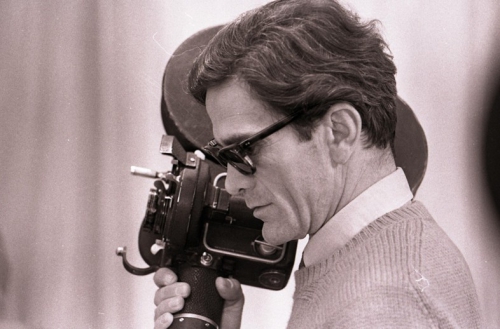
Pasolini: le chant de l’abyme
« Scandaliser est un droit. Être scandalisé est un plaisir. Et le refus d’être scandalisé est une attitude moraliste. »
Devant le journaliste français qui l’interroge, Pier Paolo Pasolini ne mâche pas ses mots. Il ne l’a jamais fait. Il vient de terminer Salo ou les 120 journées de Sodome. Le lendemain, il sera mort. C’est ainsi que débute le beau film qu’Abel Ferrara a consacré à cet homme qui paya de sa vie son droit sacré au blasphème moderne.
Rassurons d’emblée ceux que les biopics convenus lassent ou exaspèrent : le film de Ferrara n’a pas l’ambition, ni la volonté, d’embrasser toute la vie du poète italien de façon linéaire. Son récit se concentre sur les derniers jours de sa vie, comme si ces ultimes instants recelaient en eux-mêmes toute sa puissance tragique et artistique.
Alternant les scènes de vie familiale avec les interviews politiques, Ferrara s’aventure également, à la manière des récits en cascade des Mille et une nuits, dans le champ de l’imaginaire en illustrant son roman inachevé Pétrole et les premières esquisses du film Porno-Teo-Kolossal racontant le voyage d’Epifanio et de son serviteur Nunzio à travers l’Italie à la recherche du Paradis, guidés par une comète divine. Enchâssant la fiction dans la réalité (et même la fiction dans la fiction), Ferrara trace une ligne de vie viscérale entre Pasolini et ses œuvres : « Pasolini n’était pas un esthète, mais un avant-gardiste non inscrit, affirme Hervé Joubert-Laurencin. Il n’a pas vécu sa vie comme un art mais l’art comme une vie, il n’était pas « décadentiste » mais « réaliste », il n’a pas « esthétisé la politique » mais « politisé l’art ». »
Et sa voix politique, frontale mais toujours respectueuse, a eu un retentissement phénoménal dans les années 1960/1970 en Italie et en Europe, en se heurtant au conservatisme politique et au puritanisme moral. La beauté de son cinéma politique résidait dans le regard cru qu’il portait sur les choses, notamment les plus triviales. Devant sa caméra elles ne se transformaient pas en verbiage théorique. Les choses restaient des choses, d’un réel trop éclatant, trop beau, trop vrai : « Je n’ai pas honte de mon « sentiment du beau ». Un intellectuel ne saurait être qu’extrêmement en avance ou extrêmement en retard (ou même les deux choses à la fois, ce qui est mon cas). C’est donc lui qu’il faut écouter : car la réalité dans son actualité, dans son devenir immédiat, c’est-à-dire dans son présent, ne possède que le langage des choses et ne peut être que vécue. » (Lettres luthériennes)
Vent debout face à la houle
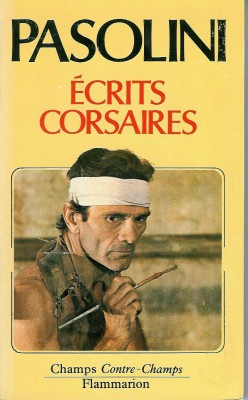 Pasolini était un homme du refus. Mais pas circonstancié et tiède : « Pour être efficace, le refus ne peut être qu’énorme et non mesquin, total et non partiel, absurde et non rationnel. » (Nous sommes tous en danger) C’est tout ou rien. Pasolini était CONTRE. Contre la droite cléricale-fasciste et démocrate-chrétienne mais aussi contre les illusions de son propre camp, celui du gauchisme (cette « maladie verbale du marxisme ») et de ses petit-bourgeois d’enfants.
Il était contre les belles promesses du Progrès qui font s’agenouiller les dévots de la modernité triomphante, ces intellos bourgeois marchant fièrement dans un « sens de l’Histoire » qu’ils supposent inéluctable et forcément bénéfique. « La plupart des intellectuels laïcs et démocratiques italiens se donnent de grands airs, parce qu’ils se sentent virilement « dans » l’histoire. Ils acceptent, dans un esprit réaliste, les transformations qu’elle opère sur les réalités et les hommes, car ils croient fermement que cette « acceptation réaliste » découle de l’usage de la raison. […] Je ne crois pas en cette histoire et en ce progrès. Il n’est pas vrai que, de toute façon, l’on avance. Bien souvent l’individu, tout comme les sociétés, régresse ou se détériore. Dans ce cas, la transformation ne doit pas être acceptée : son « acceptation réaliste » n’est en réalité qu’une manœuvre coupable pour tranquilliser sa conscience et continuer son chemin. C’est donc tout le contraire d’un raisonnement, bien que souvent, linguistiquement, cela en ait l’air. […] Il faut avoir la force de la critique totale, du refus, de la dénonciation désespérée et inutile. » (Lettres luthériennes)
« Les saints, les ermites, mais aussi les intellectuels, les quelques personnes qui ont fait l’histoire sont celles qui ont dit « non« , et pas les courtisans ou les assistants des cardinaux. »
C’est aussi son rejet de la nouvelle langue technique qui aplatit tout sur son passage, écrasant les particularismes culturels et linguistiques, réduisant en poussière le discours humaniste et faisant du slogan le nouveau port-étendard d’un monde mort sur lequel l’individu narcissique danse jusqu’à l’épuisement. Et la gauche, qui ne veut pas rester hors-jeu, s’engouffre dans cette brèche en prêtant allégeance à la civilisation technologique, croyant, de façon arrogante, qu’elle apportera Salut et Renouveau sans percevoir qu’elle détruit tout sentiment et toute fierté chez l’homme. Les regrets pointent : « L’individu moyen de l’époque de Leopardi pouvait encore intérioriser la nature et l’humanité dans la pureté idéale objectivement contenue en elles ; l’individu moyen d’aujourd’hui peut intérioriser une Fiat 600 ou un réfrigérateur, ou même un week-end à Ostie. » (Écrits corsaires)
Si Pasolini était épris de cette belle passion triste qu’est la nostalgie, c’était non pas celle, réactionnaire, d’un Âge d’or fantasmé, mais celle d’une époque où le peuple avait le sens de la mesure, la dignité chevillée au corps et le ventre plein. Celle d’une Italie créatrice et glorieuse. Quand les petites gens n’avaient pas la pauvre ambition de devenir les puissants qu’ils combattaient : « J’ai simplement la nostalgie des gens pauvres et vrais, qui se battaient pour renverser ce patron, mais sans vouloir pour autant prendre sa place ! Puisqu’ils étaient exclus de tout, personne ne les avait même colonisés. […] Dis-moi, maintenant, si le malade qui songe à sa santé passée est un nostalgique, fût-il idiot ou misérable avant d’être atteint ? » (Nous sommes tous en danger) Quelque chose d’humain semble fini et Pasolini pleure un monde en ruine.
L’abrutissement de masse du monde bourgeois
Ferrara filme Pasolini comme le dernier homme d’une Terre dévastée, cette Italie tant aimée et tant haïe. L’ultime représentant d’une Humanité désormais asservie par l’aliénation de la mentalité bourgeoise qui dépasse le cadre de la classe sociale. « Par bourgeoisie, je n’entends pas tant une classe sociale qu’une pure et simple maladie. Une maladie très contagieuse ; c’est si vrai qu’elle a contaminé presque tous ceux qui la combattent, des ouvriers du Nord aux ouvriers immigrés du Sud, en passant par les bourgeois d’opposition, et les « solitaires » (comme moi). Le bourgeois – disons-le par un mot d’esprit – est un vampire, qui n’est pas en paix tant qu’il n’a pas mordu le cou de sa victime pour le pur plaisir, naturel et familier, de la voir devenir pâle, triste, laide, sans vie, tordue, corrompue, inquiète, culpabilisée, calculatrice, agressive, terrorisante, comme lui. » (Contre la télévision)
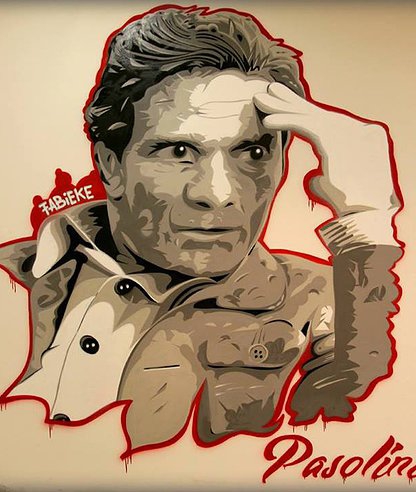 La télévision étant, pour lui, le bras armé de cette aliénation de masse. « La télévision, loin de diffuser des notions fragmentaires et privées d’une vision cohérente de la vie et du monde, est un puissant moyen de diffusion idéologique, et justement de l’idéologie consacrée de la classe dominante. » (Contre la télévision) Pasolini découvre, horrifié, la propagande moderne du divertissement de masse dont la bêtise n’a d’égale que la vulgarité, sous couvert d’un manichéisme moral mis au goût du jour : « Il émane de la télévision quelque chose d’épouvantable. Quelque chose de pire que la terreur que devait inspirer, en d’autres siècles, la seule idée des tribunaux spéciaux de l’Inquisition. Il y a, au tréfonds de ladite « télé », quelque chose de semblable, précisément, à l’esprit de l’Inquisition : une division nette, radicale, taillée à la serpe, entre ceux qui peuvent passer et ceux qui ne peuvent pas passer. […] Et c’est en cela que la télévision accomplit la discrimination néo-capitaliste entre les bons et les méchants. Là réside la honte qu’elle doit cacher, en dressant un rideau de faux « réalismes ». » (Contre la télévision)
Mais cet avilissement général est aussi de la responsabilité des hommes politiques qui acceptent tacitement de voir leur parole simplifiée, leur image dégradée, leur rôle discrédité. « L’écran de télévision est la terrible cage de l’Opinion publique – servilement servie pour obtenir un asservissement total – qui tient prisonnière toute la classe dirigeante italienne : la mèche blanche d’Aldo Moro, la jambe courte de Fanfani, le nez retroussé de Rumor, les glandes sébacées de Colombo, sont un spectacle représentatif qui tend à spoiler l’humanité de toute humanité. » (Contre la télévision)
C’était vrai du temps de Pasolini, ça l’est encore plus de nos jours. Un simple coup d’œil sur la prodigieuse machine consensuelle à fabriquer du bouffon qu’est Le Grand Journal de Canal + suffit à s’en convaincre. Un bref regard sur un quelconque programme de télé-réalité dont le but, toujours le même, est d’humilier les participants en flattant le spectateur suscite le dégoût.
Pour le romancier italien, seule une prise du conscience des téléspectateurs, un sursaut salvateur du peuple, contre cet instrument mesquin et vulgaire permettra de sortir le pays de sa torpeur générale. Il ne se faisait pourtant guère d’illusion : « Quand les ouvriers de Turin et de Milan commenceront à lutter aussi pour une réelle démocratisation de cet appareil fasciste qu’est la télé, on pourra réellement commencer à espérer. Mais tant que tous, bourgeois et ouvriers, s’amasseront devant leur téléviseur pour se laisser humilier de cette façon, il ne nous restera que l’impuissance du désespoir. » (Contre la télévision)
Le fascisme au carré de la société de consommation
 Si le fascisme avait détruit la liberté des hommes, il n’avait pas dévasté les racines culturelles de l’Italie. Réussissant le tour de force de combiner l’asservissement aux modes et aux objets à la destruction de la culture ancestrale de son pays, le consumérisme lui apparut comme, pire que le fascisme, le véritable mal moderne à combattre. Un mal qui s’est immiscé dans le comportement de tous les Italiens avec une rapidité folle : en l’espace de quelques années, l’uniformisation était telle qu’il était désormais impossible de distinguer, par exemple, un fasciste d’un anti-fasciste. Il n’y a plus que des bourgeois bêtes et vulgaires dans un pays dégradé et stérile.
La longue plainte de Pasolini est celle d’un homme qui assiste, impuissant, au génocide culturel de son pays : « Aucun centralisme fasciste n’est parvenu à faire ce qu’a fait le centralisme de la société de consommation. Le fascisme proposait un modèle réactionnaire et monumental, mais qui restait lettre morte. Les différentes cultures particulières (paysannes, sous-prolétariennes, ouvrières) continuaient imperturbablement à s’identifier à leurs modèles, car la répression se limitait à obtenir leur adhésion en paroles. De nos jours, au contraire, l’adhésion aux modèles imposés par le centre est totale et inconditionnée. On renie les véritables modèles culturels. L’abjuration est accomplie. On peut donc affirmer que la « tolérance » de l’idéologie hédoniste voulue par le nouveau pouvoir est la pire des répressions de toute l’histoire humaine. » (Écrits corsaires)
L’injonction hédoniste et la fausse tolérance ont également souillé la naïveté des cœurs tendres. Les hommes et les femmes sont devenus des machines se fracassant les unes contre les autres. « Le consumérisme a définitivement humilié la femme en créant d’elle un mythe terroriste. Les jeunes garçons qui marchent presque religieusement dans la rue en tenant, d’un air protecteur, une main sur l’épaule de la jeune fille, ou en lui serrant romantiquement la main, font rire ou bien serrent le cœur. Rien n’est plus insincère qu’un tel rapport réalisé concrètement par le couple de la société de consommation. » (Lettres luthériennes) La fausse libération sexuelle est en réalité une obligation sociale, créant un désarroi chez ceux qui ne se conforment pas à la panoplie du parfait petit consommateur de corps. Le couple est désormais maudit.
« Je sais qu’en tapant toujours sur le même clou, on peut arriver à faire s’écrouler une maison. »
Pasolini refuse ce bonheur factice dont l’unique cause est la satisfaction immédiate des besoins matériels, l’achat compulsif et jovial dans une société au bord du gouffre, la grande fête des magasins accueillants : « Tout le monde est malin et, par conséquent, tout le monde a sa bonne tête de malheureux. Être malin est le premier commandement du pouvoir de la société de consommation : être malin pour être heureux (hédonisme du consommateur). Résultat : le bonheur est entièrement et totalement faux, alors que se répand de plus en plus un malheur immédiat. » (Lettres luthériennes)
Le crépuscule d’un homme haï par tous
« Je suis complètement seul. Et, de plus, entre les mains du premier qui voudra me frapper. Je suis vulnérable. Soumis à tous les chantages. Je bénéficie peut-être, c’est vrai, d’une certaine solidarité, mais elle est purement virtuelle. Elle ne peut m’être d’aucune aide dans les faits. » (Contre la télévision) Prophète de sa propre destinée, Pasolini a succombé à la haine de ses contemporains.
Il fut assassiné la nuit du 1er au 2 novembre 1975 sur la plage d’Ostie, près de Rome, par une bande de misérables lâches, ces « ragazzi di vita », héros de ses romans et de ses films, qu’il côtoyait régulièrement. Assassiné par ceux qu’il aimait. Ferrara, qui a toujours été fasciné par la chute des figures mythiques, ne nous épargne pas la cruauté de ces derniers instants d’horreur. Ceux d’un homme battu à mort parce que porteur de la marque infamante du scandale. Il avait 53 ans.
À la suite de cette ignominie, certains n’hésitèrent pas à brandir cette justification puante selon laquelle « il l’avait bien cherché, ce sale PD ». Une excuse d’assassins que, sous couvert d’un puritanisme moral, on entend encore de nos jours pour justifier les pires crimes (viols, lynchages ou attentats). Pour légitimer la violence physique des bourreaux, il faut commencer par accuser « la violence symbolique » et « oppressante » des victimes. Soit la barbarie qui considère, in fine, le meurtre comme une réponse appropriée à un poème, un film ou un dessin. Une perte de sens de la mesure ahurissante. Une logique proprement fasciste.
Profondément pessimiste, Pasolini était descendu en Enfer, au-delà de l’horizon, et nous avait mis en garde : « Je ne crois pas que l’homme puisse être libre. Il ne faut jamais rien espérer : l’espérance est une chose horrible que les partis ont inventée pour garder leurs militants. » Mais il a paradoxalement chanté le plus beau des conseils à Gennariello dans ses Lettres luthériennes, celui qui mérite notre attention en tout lieu et en tout temps, celui qui fait danser la grâce avec la rage : « Ne te laisse pas tenter par les champions du malheur, de la hargne stupide, du sérieux joint à l’ignorance. Sois joyeux. »
Nos desserts :
- La dernière interview de Pasolini, sur Ballast
- Vidéo : fascisme et société de consommation
- Documentaire : Enquête sur l’assassinat de Pasolini
- Émission INA : Pier Paolo Pasolini : une vitalité désespérée
- Film La Ricotta
- Film L’Évangile selon saint Matthieu
- Extrait du film Salo ou les 120 journées de Sodome
00:05 Publié dans Biographie, Cinéma, Hommages | Lien permanent | Commentaires (0) | Tags : pier paolo pasolini, cinéma, film, italie | | del.icio.us | | Digg | Facebook
vendredi, 24 avril 2015
Cinéma: les enfants terribles de Big Brother
Cinéma: les enfants terribles de Big Brother
Œuvre contre-utopique par excellence, 1984 de George Orwell a depuis longtemps connu une prospérité indéniable dans les salles obscures. Pas tant en termes d’adaptation qu’en celui d’influence. D’Alphaville de Jean-Luc Godard à Matrix des frères Wachowski, en passant par Brazil de Terry Gilliam et Equilibrium de Kurt Wimmer, partons à la rencontre des rejetons orwelliens.
 Publié en 1948, le célèbre roman d’Orwell nous propulse dans une société totalitaire où la liberté individuelle n’existe pas ; les personnes sont broyées, conditionnées, enrégimentées, sous la coupe d’élites déshumanisées y faisant la loi pour leur propre intérêt.
1984 est aujourd’hui devenu le terme générique pour ceux qui veulent, sous forme de fable, pourfendre tous les totalitarismes ou formes totalitaires de domination, et pas seulement le communisme ou le fascisme que l’auteur a connu et combattu. Comme le note François Bordes, « Orwell est, en effet, devenu, une sorte d’imago, une projection fantasmatique. Son visage se confondrait alors avec l’image inconsciente d’un maître perdu, d’un penseur de gauche pur et « adorable », au sens étymologique, c’est-à-dire que l’on peut adorer et prier dans l’espoir de retrouver une explication du monde. » (« French Orwellians ? La gauche hétérodoxe et la réception d’Orwell en France à l’aube de la Guerre froide », Agone, n° 45, mars 2011)
Transpositions éclectiques
Le cinéma n’échappe pas à cette réappropriation (parfois malencontreuse) du roman d’Orwell. Laissons de côté les adaptations des deux Michael (Anderson en 1956, Radford en 1984) pour se concentrer sur les références – explicites ou non – présentes dans certaines œuvres de science-fiction.
« Il arrive que la réalité soit trop complexe pour la transmission orale. La légende la recrée sous une forme qui lui permet de courir le monde », annonce la voix caverneuse au début d’Alphaville (1965) de Godard. Réalité d’un monde déshumanisé, mécanique et froid comme le carrelage des grands ensembles des années 1960, préfigurant l’horreur urbaine dans toute sa splendeur (et faisant songer aux décors uniformes et glacés de THX 1138 (1971) de George Lucas). Légende d’un cinéma luttant contre la disparition de l’art et de la conscience dans les sociétés consuméristes post-modernes, avides de technologies et de contrôle. La réalité, c’est aussi une bureaucratie étouffante et kafkaïenne, à l’instar de celle de Brazil (1985), dans laquelle déambulent des humains plus soumis qu’autonomes qui, s’ils ne sont pas prisonniers de cuves remplies de liquide amniotique comme dans Matrix (1999) n’en demeurent pas moins esclaves (souvent inconscients) du système qui les écrase. Dans tous les cas, la surveillance est proportionnelle au bonheur/Bien universel proclamés par l’État/parti totalitaire.
Violence mécanique contre lutte biologique
À l’instar de Winston déclarant, dans 1984, « Je comprends COMMENT ; je ne comprends pas POURQUOI », il ne faut jamais dire « pourquoi » mais « parce que » dans Alphaville. Ou quand les finalités du système nous obsèdent et nous échappent inlassablement. Le « pourquoi » étant la question légitime de tout homme libre désirant trouver un sens à l’absurdité du monde, quand le « parce que » découle de la logique implacable d’individus devenus machines qui ne savent rien mais calculent, enregistrent et se contentent de tirer des conséquences. La conséquence de cette logique ? La force comme seule et unique réponse. « Ici, il n’y a pas de pourquoi », répond le nazi d’Auschwitz à Primo Levi, qui venait de lui demander pourquoi il lui avait arraché le glaçon qu’il espérait lécher pour étancher sa soif.
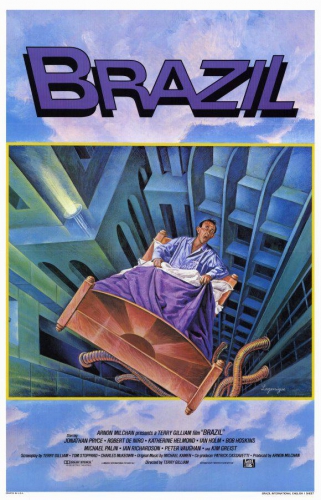
Brazil, de Terry Gilliam
Le Parti de 1984 se livre à l’élimination systématique des opposants, réels ou potentiels : on « épure », on arrête ou on « vaporise » à tout va. Les gens non assimilables par le système sont exterminés. Dans Matrix, les machines de Zero One dissolvent et recyclent les humains inutiles pour nourrir les vivants. Une logique identique, en quelque sorte, à celle de Soleil Vert (1973) de Richard Fleischer. Dans Alphaville, on condamne des hommes à mort pour avoir agi de façon illogique : pleurer la mort de sa femme est synonyme d’une rafale de mitrailleuse dans le bide. On exécute également les « anormaux » dans un théâtre en forme de chaise électrique géante, puis on les jette aux ordures pour laisser la place à de nouveaux condamnés. La solution écologique extrême pour régler le problème démographique en somme… Néanmoins, certains peuvent être guéris à grands coups de propagande. On les envoie donc dans… un HLM (Hôpital de la longue maladie) !
Une autre caractéristique de cette violence est l’impérialisme exponentiel. Tout totalitarisme maintient un état de guerre permanent et total en fédérant la masse contre un ennemi objectif en vue de réaliser un paradis terrestre (la fin de l’histoire ou la pureté de la race). Dans 1984, cela se traduit par les conquêtes extérieures se réalisant à travers la guerre aux deux autres États totalitaires (l’Estasia et l’Eurasia).
« Il y a partout la même structure pyramidale, le même culte d’un chef semi-divin, le même système économique existant par et pour une guerre continuelle. » (1984)
Se considérant d’une race supérieure, Alpha-60, l’ordinateur tout puissant d’Alphaville, ne trouve rien d’illogique à détruire l’homme ordinaire et à écraser les peuples « inférieurs » des autres galaxies. Devant la sidération de Lemmy Caution (« c’est impensable, une race entière ne peut être détruite »), l’ordinateur fasciste prétend tout calculer pour que l’échec soit impossible. Et Caution de rétorquer : « Je lutterai pour que cet échec soit possible », notamment en liquidant les savants fous qui « serviront d’exemple terrible à tous ceux qui prennent le monde pour un théâtre où la force technique et le triomphe de cette force mènent librement leur jeu. »
Novlangue variable et temps malléable
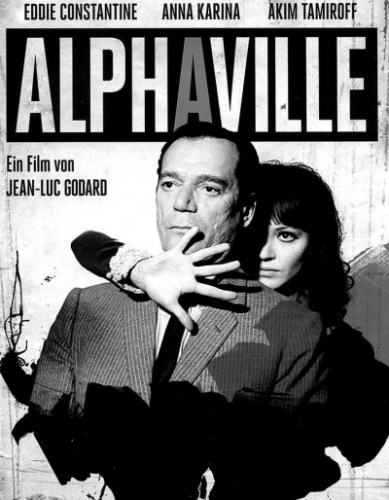 Alphaville de Jean-Luc Godard
Dans 1984, le parti manipule le langage à sa guise. Le déplacement des mots déréalise la réalité : c’est le but de la novlangue qui, en supprimant des mots et en les contractant, rend abstraite la réalité qu’ils décrivaient et détruit la pensée qui les sous- tendait. C’est le cas notamment des termes majeurs comme « honneur, justice, moralité, internationalisme, démocratie, science, religion. » La vérité historique est détruite : les rectifications sont des rectifications mensongères et les nouvelles statistiques sont des corrections de statistiques fantaisistes. La substitution d’un non-sens à un autre. Tout est incertain, le passé est aboli dans la mesure où on peut le réécrire au gré des besoins de la politique quotidienne.
Au sein d’Alphaville, des mots maudits disparaissent, remplacés par des nouveaux : « pleurer », « lumière d’automne » et « tendresse » sont supprimés au nom de la rationalité. Personne ne sait plus ce que veut dire le mot « conscience ». Natacha cherche en vain sa signification dans la Bible, seul livre autorisé, transformé en dictionnaire et réduit au strict logique minimum. Comme le dit cyniquement Alpha-60, « La signification des mots et des expressions n’est plus perçue. Un mot isolé ou un détail isolé dans un dessin peuvent être compris mais la signification de l’ensemble échappe. »
« Le mot « guerre », lui-même, est devenu erroné. Il serait probablement plus exact de dire qu’en devenant continue, la guerre a cessé d’exister. […] Une paix qui serait vraiment permanente serait exactement comme une guerre permanente. [C’est] la signification profonde du slogan du parti : La guerre, c’est la Paix. » (1984)
Le roman de George Orwell accorde également une importance considérable à la question du temps car il représente un enjeu aux yeux du pouvoir. Maîtriser le temps, c’est assurer sa domination sur les citoyens en régissant tous les instants de leur vie. Les individus se trouvent dépossédés de toute appréhension personnelle du temps : non seulement ils ne décident pas de la façon de l’occuper, mais ils ne peuvent pas non plus se repérer dans l’histoire, puisque celle-ci fait l’objet de falsifications. Ils sont donc livrés, pieds et poings liés, à la structure du temps imposée par le Parti de façon autoritaire. En affirmant un présentisme absolu et indiscutable (« personne n’a vécu dans le passé, personne ne vivra dans le futur. Le présent est la forme de toute vie ») l’ordinateur Alpha-60 est celui qui contrôle le passé et donc l’avenir, le présent et donc le passé.
Huxley en contre-champ
 Orwell, qu’on a tendance à mettre à toutes les sauces, n’est pourtant pas la seule référence du cinéma de science-fiction contestataire. L’influence du Meilleur des mondes (1932) d’Aldous Huxley est tout autant primordiale chez les cinéastes de la seconde moitié du XXe siècle.
Dans ce roman, l’État mondial impose le bonheur à tous ses sujets grâce à l’abondance des biens renouvelables, la satisfaction des sens, la liberté sexuelle, la suppression de toute privation, de toute émotion, le soma euphorisant, etc. Les hommes sont donc heureux dans l’ordre matériel. C’est là une grande différence avec l’anticipation sombre d’Orwell dans laquelle le Parti a une soif insatiable de pouvoir total sur tout être humain. De plus, l’auteur de 1984 s’inspire davantage de la contre-utopie archétypale du Russe Evguéni Ivanovitch Zamiatine, Nous autres (1920), que du Meilleur des mondes, car la soif de pouvoir, le sadisme et la cruauté sont absentes du roman d’Huxley, tandis que Zamiatine avait perçu ce côté irrationnel, barbare et fanatique du totalitarisme, essentiel selon Orwell.
On trouve ainsi l’inspiration du Meilleur des mondes dans Bienvenue à Gattaca (1997) d’Andrew Nicol pour la dimension eugéniste. Chez Huxley, les bébés naissent en flacons par portées de jumeaux pouvant atteindre 16 012 individus, tous identiques, ne possédant aucune curiosité intellectuelle. Dans le film génial de Nicol, le génotype des enfants est pré-sélectionné avant leur naissance et conditionne leur vie future, professionnelle comme sentimentale.
 De son côté, Equilibrium (2002) de Kurt Wimmer explore l’annihilation des sentiments à coups de drogue permanente. Le prozium du film, censé protéger les hommes de leurs passions destructrices, renvoie au soma du livre qui réduit tous les obstacles entre le désir et la satisfaction et permet de se libérer de la réalité au profit du rêve.
Dans THX 1138 (déjà cité), le bonheur est obligatoire et le consumérisme est l’unique horizon indépassable : « Achetez plus et soyez heureux. » Cependant, l’interdiction des actes sexuels renvoie davantage à la ligue Anti-sexe de 1984. Les influences de ces deux colosses se croisent et se complètent couramment.
Alphaville, quant à lui, fait directement écho à la caste suprême du Meilleur des mondes : les Alphas. Les sujets de l’État mondial imaginé par Huxley, répartis en castes immuables (alpha, bêta, gamma, delta et epsilon) dès leur mise en flacon, ne questionnent jamais la légitimité de la place et des tâches qui leur sont assignées. Le pouvoir absolu choisit, dirige, réprime et neutralise tout ce qui pourrait menacer l’ordre. À ce titre, Alphaville, cité des êtres supérieurs dénués d’émotion inutiles, est bien le « monde des meilleurs ».
Enfin, et pour compléter ce sombre tableau, l’art, qui se nourrit de tragédies, de larmes, d’angoisses, de passions violentes, n’a pu survivre dans le monde du signe de T (comme le modèle de voiture T de Ford), pas plus que dans celui de Big Brother. La littérature fait peur à l’institution car le patrimoine culturel, le pouvoir des mots pourraient contrecarrer la soumission aux stéréotypes officiels, susciter une pensée personnelle, déstabiliser le discours d’autorité. La littérature véhicule une représentation du monde ancien qu’il faut détruire. Elle informe, éveille, aiguise l’esprit critique, transmet de génération en génération des textes qui restent toujours vivants. On brûle donc les tableaux dans Equilibrium, les livres dans Fahrenheit 451 (1966) et lorsque Alpha-60 demande à Lemmy Caution : « Savez-vous ce qui transforme la nuit en lumière ? », celui-ci répond : « la poésie ».
L’amour comme acte politique
Et l’espoir dans cette armada de cauchemars ? Le seul recours au monde inhumain est incarné par le rebelle, l’opposant, le dissident, le fugitif, le réfractaire, les prolétaires des bas-fonds de Londres d’Orwell, les sauvages de la réserve d’Huxley. Et, plus que tout, c’est l’amour qui constitue l’acte révolutionnaire par excellence face à la machine totalitaire. Dans 1984, tout amour, tout lien érotique, toute tendresse, donc toute fusion intime personnelle, est prohibé car échappant à l’emprise de l’État. Comme pour I-330 dans le roman de Zamiatine et, de manière plus ambiguë, pour Lenina dans celui d’Huxley, c’est une femme qui incarne la rébellion, la possibilité de la dissidence, tout simplement parce que, malgré ses travers et ses manques, elle incarne la vie, le vivant, ce qui est par définition et essence impossible à totalement canaliser. Ainsi, l’embrassement de Winston et Julia « avait été une bataille, leur jouissance une victoire. C’était un coup porté au Parti. C’était un acte politique. » L’amour, cette « chose qui ne varie ni le jour ni la nuit, dont le passé représente le futur, […] une ligne droite qui pourtant, à l’arrivée, a bouclé la boucle » : la réponse à l’énigme de Caution, Alpha-60 ne pourra la trouver sous peine de devenir humain (« mon semblable, mon frère ») et donc de s’autodétruire.
« Le commandement des anciens despotismes était : « Tu ne dois pas ». Le commandement des totalitaires était : « Tu dois ». Notre commandement est : « Tu es ». » (1984)
On se souvient également du baiser de Trinity qui ramène Néo d’entre les morts au beau milieu du chaos final, perturbant la logique mécanique des agents de la matrice. C’est aussi Natacha qui prononce lentement « Je…vous…aime », les derniers mots du film de Jean-Luc Godard, se sauvant elle-même de l’aliénation mentale. Une fin infiniment plus optimiste que celle de 1984 où les anciens amants, après un passage terrifiant au Ministère de l’Amour, ont retourné leur amour réciproque pour celui, véritable, envers Big Brother. En ce sens, Brazil est plus fidèle à la contre-utopie d’Orwell avec un faux espoir final des plus déprimants.
Le feu de la subversion
Matrix Revolutions
Dans Le Meilleur des mondes, John le Sauvage, face à l’humiliant esclavage d’une structure sociale fermée et étouffante, réitère son droit à la transgression. « Je n’en veux pas du confort. Je veux Dieu, je veux de la poésie, je veux du danger véritable, je veux de la liberté, je veux de la bonté. Je veux du péché. » Le « droit d’être malheureux » qu’il revendique en toute lucidité participe de la condition et du bonheur d’être un homme véritable.
Demeurer un homme en refusant la perfection mathématique de la raison instrumentale c’est également ce que fait Lemmy Caution, en répliquant à l’un des 14 milliards de centres nerveux composant Alpha-60 qui trouvent logique de le condamner à mort : « Je refuse de devenir ce que vous appelez normal. […] Allez vous faire foutre avec votre logique ! »
Nos desserts :
- George Orwell, le frivole et l’éternel, sur Le Comptoir
- Orwell et le socialisme des gens ordinaires, par Kevin Victoire
- Émission de radio George Orwell, le socialisme contre la modernité ?
- Conférence de Jorge Semprun « George Orwell, Le lion et la licorne, 1941 »
- Documentaire INA sur le grand George
- Le film 1984 de Michael Anderson
- Et l’adaptation du même roman par Michael Radford
- Quand Godard rencontre Eluard : Alphaville – Capitale de la douleur
- L’émission Mauvais Genres de France Culture, consacrée aux utopies et contre-utopies
00:05 Publié dans Cinéma, Littérature | Lien permanent | Commentaires (0) | Tags : cinéma, georges orwell, littérature, lettres, lettres anglaises, littérature anglaise | | del.icio.us | | Digg | Facebook
mardi, 17 mars 2015
War Porn

Ex: http://www.tomdispatch.com
[Note for TomDispatch Readers: Just a small reminder that, in return for a donation of $100 or more to this site, you can choose between signed, personalized copies of two top-notch cultural histories of American war in our time: Christian Appy’s superb new book, American Reckoning: The Vietnam War and Our National Identity, and my own The End of Victory Culture. Just check out our donation page for details and for other book possibilities as well, including my new book Shadow Government: Surveillance, Secret Wars, and a Global Security State in a Single Superpower World. And remember that your donations really do keep this site rolling along! Tom]
Yes, they’ve become “the greatest generation” (a phrase that’s always reminded me of an ad line for a soft drink), but they didn’t feel that way at the time. As Susan Faludi pointed out in her classic book Stiffed and as I experienced as a boy, the men who came home from World War II were often remarkably silent about their wartime experiences -- at least with their children. My father, who had been the operations officer for the 1st Air Commando Group in Burma, had a couple of pat stories he would fall back on, if pressed, but normally only spoke of the war when angry. I can, for instance, remember him blowing up and forbidding my mother and me from using a nearby grocery store because, he claimed, its owners had been “war profiteers.” On rare occasions, he might pull out of the closet an old duffel bag filled with war souvenirs, including a Nazi armband (undoubtedly traded with someone who had been on the European front) and several glorious orange or white silk maps of Burma, assumedly meant to take up no space in a commando’s kitbag. These were thrilling moments of my childhood, though again my dad had little to say about what we looked at.
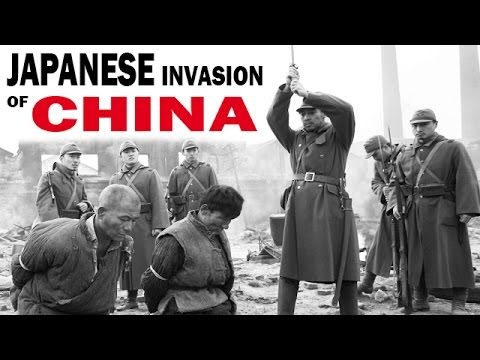 Otherwise, his war was a kind of black hole in family life. But for boys like me, that mattered less than you might expect for a simple reason: we already knew what our fathers had experienced at war. We had seen it at the movies, often with those fathers sitting silently beside us. We had seen John Wayne die on Iwo Jima and war hero Audie Murphy (playing himself) gun down the Germans. We had been with Doolittle’s Raiders over Tokyo for more than 30 seconds, had won back Burma, landed on Omaha beach, and fought island by island across the Pacific toward Japan. And of course, as our “victory culture” assured us we would, we had won.
It’s hard to emphasize just how formative those war movies were for so many of us, especially if you add in the cheap, all-green sets of World War II toy soldiers with which we reenacted movie versions of our fathers’ war on our floors and, of course, the sticks, and later toy guns, with which we so gloriously shot down “Japs” and “Nazis” in any park or backyard. A whole generation of young Americans would go off to Vietnam stoked on John Wayne & Co. -- on a version of war, that is, that our fathers never told us hadn’t happened.
Ron Kovic, who came back from Vietnam in a wheelchair and wrote the memoir Born on the Fourth of July, recalled the experience vividly: "I think a lot of us went to Vietnam with movie images of John Wayne in our minds. On a reconnaissance patrol, I remember once imagining that I was John Wayne."
Today, former diplomat and whistleblower Peter Van Buren explores the way American war movies, from World War II to today, have produced a remarkably uniform vision of how American war works, one that, in its modern form, is undoubtedly once again lending a helping hand to our latest conflicts. In May 2011, Van Buren arrived at TomDispatch, just back from a 12-month State Department assignment in Iraq embedded with the U.S. military. In his first piece for this site, he reported on the heroic balderdash that embedded reporters -- think, for instance, of Brian Williams -- delivered to the American people about the U.S. military. It was, he wrote then, a kind of “war pornography.” (“Let me tell you that nobody laughed harder at the turgid prose reporters used to describe their lives than the soldiers themselves.”) So think of today’s piece, almost four years later, as a reprise on that theme with an embedded Hollywood stepping in to take the place of all the Brian Williamses of our world. Tom
War Porn
Hollywood and War from World War II to American Sniper
By Peter Van BurenIn the age of the all-volunteer military and an endless stream of war zone losses and ties, it can be hard to keep Homeland enthusiasm up for perpetual war. After all, you don't get a 9/11 every year to refresh those images of the barbarians at the airport departure gates. In the meantime, Americans are clearly finding it difficult to remain emotionally roiled up about our confusing wars in Syria and Iraq, the sputtering one in Afghanistan, and various raids, drone attacks, and minor conflicts elsewhere.
Fortunately, we have just the ticket, one that has been punched again and again for close to a century: Hollywood war movies (to which the Pentagon is always eager to lend a helping hand).American Sniper, which started out with the celebratory tagline “the most lethal sniper in U.S. history” and now has the tagline “the most successful war movie of all time,” is just the latest in a long line of films that have kept Americans on their war game. Think of them as war porn, meant to leave us perpetually hyped up. Now, grab some popcorn and settle back to enjoy the show.
There’s Only One War Movie
Wandering around YouTube recently, I stumbled across some good old government-issue propaganda. It was a video clearly meant to stir American emotions and prepare us for a long struggle against a determined, brutal, and barbaric enemy whose way of life is a challenge to the most basic American values. Here's some of what I learned: our enemy is engaged in a crusade against the West; wants to establish a world government and make all of us bow down before it; fights fanatically, beheads prisoners, and is willing to sacrifice the lives of its followers in inhuman suicide attacks. Though its weapons are modern, its thinking and beliefs are 2,000 years out of date and inscrutable to us.
Of course, you knew there was a trick coming, right? This little U.S. government-produced film wasn’t about the militants of the Islamic State. Made by the U.S. Navy in 1943, its subject was “Our Enemy the Japanese.” Substitute “radical Islam” for “emperor worship,” though, and it still makes a certain propagandistic sense. While the basics may be largely the same (us versus them, good versus evil), modern times do demand something slicker than the video equivalent of an old newsreel. The age of the Internet, with its short attention spans and heightened expectations of cheap thrills, calls for a higher class of war porn, but as with that 1943 film, it remains remarkable how familiar what’s being produced remains.
Like propaganda films and sexual pornography, Hollywood movies about America at war have changed remarkably little over the years. Here's the basic formula, from John Wayne in the World War II-era Sands of Iwo Jima to today's American Sniper:
*American soldiers are good, the enemy bad. Nearly every war movie is going to have a scene in which Americans label the enemy as “savages,” “barbarians,” or “bloodthirsty fanatics,” typically following a “sneak attack” or a suicide bombing. Our country’s goal is to liberate; the enemy's, to conquer. Such a framework prepares us to accept things that wouldn’t otherwise pass muster. Racism naturally gets a bye; as they once were “Japs” (not Japanese), they are now “hajjis” and “ragheads” (not Muslims or Iraqis). It’s beyond question that the ends justify just about any means we might use, from the nuclear obliteration of two cities of almost no military significance to the grimmest sort of torture. In this way, the war film long ago became a moral free-fire zone for its American characters.
*American soldiers believe in God and Country, in “something bigger than themselves,” in something “worth dying for,” but without ever becoming blindly attached to it. The enemy, on the other hand, is blindly devoted to a religion, political faith, or dictator, and it goes without saying (though it’s said) that his God -- whether an emperor, Communism, or Allah -- is evil. As one critic put it back in 2007 with just a tad of hyperbole, “In every movie Hollywood makes, every time an Arab utters the word Allah… something blows up.”
*War films spend no significant time on why those savages might be so intent on going after us. The purpose of American killing, however, is nearly always clearly defined. It's to “save American lives,” those over there and those who won’t die because we don't have to fight them over here. Saving such lives explains American war: in Kathryn Bigelow’s The Hurt Locker, for example, the main character defuses roadside bombs to make Iraq safer for other American soldiers. In the recent World War II-themed Fury, Brad Pitt similarly mows down ranks of Germans to save his comrades. Even torture is justified, as in Zero Dark Thirty, in the cause of saving our lives from their nightmarish schemes. In American Sniper, shooter Chris Kyle focuses on the many American lives he’s saved by shooting Iraqis; his PTSD is, in fact, caused by his having “failed” to have saved even more. Hey, when an American kills in war, he's the one who suffers the most, not that mutilated kid or his grieving mother -- I got nightmares, man! I still see their faces!
*Our soldiers are human beings with emotionally engaging backstories, sweet gals waiting at home, and promising lives ahead of them that might be cut tragically short by an enemy from the gates of hell. The bad guys lack such backstories. They are anonymous fanatics with neither a past worth mentioning nor a future worth imagining. This is usually pretty blunt stuff. Kyle’s nemesis in American Sniper, for instance, wears all black. Thanks to that, you know he’s an insta-villain without the need for further information. And speaking of lack of a backstory, he improbably appears in the film both in the Sunni city of Fallujah and in Sadr City, a Shia neighborhood in Baghdad, apparently so super-bad that his desire to kill Americans overcomes even Iraq's mad sectarianism.
*It is fashionable for our soldiers, having a kind of depth the enemy lacks, to express some regrets, a dollop of introspection, before (or after) they kill. In American Sniper, while back in the U.S. on leave, the protagonist expresses doubts about what he calls his “work.” (No such thoughts are in the book on which the film is based.) Of course, he then goes back to Iraq for three more tours and over two more hours of screen time to amass his 160 “confirmed kills.”
*Another staple of such films is the training montage. Can a young recruit make it? Often he is the Fat Kid who trims down to his killing weight, or the Skinny Kid who muscles up, or the Quiet Kid who emerges bloodthirsty. (This has been a trope of sexual porn films, too: the geeky looking guy, mocked by beautiful women, who turns out to be a superstar in bed.) The link, up front or implied, between sexuality, manhood, and war is a staple of the form. As part of the curious PTSD recovery plan he develops, for example, Kyle volunteers to teach a paraplegic vet in a wheelchair to snipe. After his first decent shot rings home, the man shouts, “I feel like I got my balls back!”
*Our soldiers, anguished souls that they are, have no responsibility for what they do once they’ve been thrown into our wars. No baby-killers need apply in support of America's post-Vietnam, guilt-free mantra, “Hate the war, love the warrior.” In the film First Blood, for example, John Rambo is a Vietnam veteran who returns home a broken man. He finds his war buddy dead from Agent Orange-induced cancer and is persecuted by the very Americans whose freedom he believed he had fought for. Because he was screwed over in The 'Nam, the film gives him a free pass for his homicidal acts, including a two-hour murderous rampage through a Washington State town. The audience is meant to see Rambo as a noble, sympathetic character. He returns for more personal redemption in later films to rescue American prisoners of war left behind in Southeast Asia.
*For war films, ambiguity is a dirty word. Americans always win, even when they lose in an era in which, out in the world, the losses are piling up. And a win is a win, even when its essence is one-sided bullying as in Heartbreak Ridge, the only movie to come out of the ludicrous invasion of Grenada. And a loss is still a win in Black Hawk Down, set amid the disaster of Somalia, which ends with scenes of tired warriors who did the right thing. Argo -- consider it honorary war porn --reduces the debacle of years of U.S. meddling in Iran to a high-fiving hostage rescue. All it takes these days to turn a loss into a win is to zoom in tight enough to ignore defeat. In American Sniper, the disastrous occupation of Iraq is shoved offstage so that more Iraqis can die in Kyle’s sniper scope. In Lone Survivor, a small American “victory” is somehow dredged out of hopeless Afghanistan because an Afghan man takes a break from being droned to save the life of a SEAL.
In sum: gritty, brave, selfless men, stoic women waiting at home, noble wounded warriors, just causes, and the necessity of saving American lives. Against such a lineup, the savage enemy is a crew of sitting ducks who deserve to die. Everything else is just music, narration, and special effects. War pornos, like their oversexed cousins, are all the same movie.
A Fantasy That Can Change Reality
But it's just a movie, right? Your favorite shoot-em-up makes no claims to being a documentary. We all know one American can't gun down 50 bad guys and walk away unscathed, in the same way he can't bed 50 partners without getting an STD. It's just entertainment. So what?
So what do you, or the typical 18-year-old considering military service, actually know about war on entering that movie theater? Don’t underestimate the degree to which such films can help create broad perceptions of what war’s all about and what kind of people fight it. Those lurid on-screen images, updated and reused so repetitively for so many decades, do help create a self-reinforcing, common understanding of what happens “over there,” particularly since what we are shown mirrors what most of us want to believe anyway.
No form of porn is about reality, of course, but that doesn’t mean it can’t create realities all its own. War films have the ability to bring home emotionally a glorious fantasy of America at war, no matter how grim or gritty any of these films may look. War porn can make a young man willing to die before he’s 20. Take my word for it: as a diplomat in Iraq I met young people in uniform suffering from the effects of all this. Such films also make it easier for politicians to sweet talk the public into supporting conflict after conflict, even as sons and daughters continue to return home damaged or dead and despite the country’s near-complete record of geopolitical failures since September 2001. Funny thing: American Sniper was nominated for an Academy Award for best picture as Washington went back to war in Iraq in what you'd have thought would be an unpopular struggle.
Learning From the Exceptions
You can see a lot of war porn and stop with just your toes in the water, thinking you've gone swimming. But eventually you should go into the deep water of the “exceptions,” because only there can you confront the real monsters.
There are indeed exceptions to war porn, but don’t fool yourself, size matters. How many people have seen American Sniper, The Hurt Locker, or Zero Dark Thirty? By comparison, how many saw the anti-war Iraq War film Battle for Haditha, a lightly fictionalized, deeply unsettling drama about an American massacre of innocent men, women, and children in retaliation for a roadside bomb blast?
Timing matters, too, when it comes to the few mainstream exceptions. John Wayne’s The Green Berets, a pro-Vietnam War film, came out in 1968 as that conflict was nearing its bloody peak and resistance at home was growing. (The Green Berets gets a porn bonus star, as the grizzled Wayne persuades a lefty journalist to alter his negative views on the war.) Platoon, with its message of waste and absurdity, had to wait until 1986, more than a decade after the war ended.
In propaganda terms, think of this as controlling the narrative. One version of events dominates all others and creates a reality others can only scramble to refute. The exceptions do, however, reveal much about what we don’t normally see of the true nature of American war. They are uncomfortable for any of us to watch, as well as for military recruiters, parents sending a child off to war, and politicians trolling for public support for the next crusade.
War is not a two-hour-and-12-minute hard-on. War is what happens when the rules break down and, as fear displaces reason, nothing too terrible is a surprise. The real secret of war for those who experience it isn't the visceral knowledge that people can be filthy and horrible, but that you, too, can be filthy and horrible. You don't see much of that on the big screen.
The Long Con
Of course, there are elements of “nothing new” here. The Romans undoubtedly had their version of war porn that involved mocking the Gauls as sub-humans. Yet in twenty-first-century America, where wars are undeclared and Washington dependent on volunteers for its new foreign legion, the need to keep the public engaged and filled with fear over our enemies is perhaps more acute than ever.
So here’s a question: if the core propaganda messages the U.S. government promoted during World War II are nearly identical to those pushed out today about the Islamic State, and if Hollywood’s war films, themselves a particularly high-class form of propaganda, have promoted the same false images of Americans in conflict from 1941 to the present day, what does that tell us? Is it that our varied enemies across nearly three-quarters of a century of conflict are always unbelievably alike, or is it that when America needs a villain, it always goes to the same script?
Peter Van Buren blew the whistle on State Department waste and mismanagement during the Iraqi reconstruction in his first book,We Meant Well: How I Helped Lose the Battle for the Hearts and Minds of the Iraqi People. A Tom Dispatch regular, he writes about current events at his blog, We Meant Well. His latest book isGhosts of Tom Joad: A Story of the #99Percent.
Follow TomDispatch on Twitter and join us on Facebook. Check out the newest Dispatch Book, Rebecca Solnit's Men Explain Things to Me, and Tom Engelhardt's latest book, Shadow Government: Surveillance, Secret Wars, and a Global Security State in a Single-Superpower World.
Copyright 2015 Peter Van Buren
00:05 Publié dans Cinéma, Film | Lien permanent | Commentaires (0) | Tags : hollywood, cinéma, cinéma américain, états-unis, 7ème art | | del.icio.us | | Digg | Facebook
vendredi, 13 mars 2015
Le dernier loup: le grand retour de l'éthologie
Un film beau et cruel comme la vie
Jean Ansar
Ex: http://metamag.fr
Jean Ansar
Ex: http://metamag.fr
Le dernier film de Jean jacques Annaud renoue avec ce qui fait l'originalité et le succès de cet immense cinéaste français. Il fera vite oublier le médiocre "Or noir" et viendra rappeler le souffle de "L’ours", des "Deux frères", de "La guerre du feu", du "Nom de la rose" ou de "7 ans au Tibet".
Le souffle de la vie et la beauté des images sont au rendez vous de ce "Dernier loup", film franco-chinois qui est une ode aux peuples premiers, en l’occurrence aux mongols et à leur conception du monde. Un peuple dont le dieu totem est le loup. Gengis khan, le plus grand conquérant du monde, a adapté la stratégie de la meute dans son art militaire.
L’histoire est classique
C’est un « eastern » où le loup joue le rôle du bison et l'administration communiste celui de l'homme ennemi de la nature et des mongols, ces autres indiens. 1969, Chen Zhen, un jeune étudiant originaire de Pékin, est envoyé en Mongolie Intérieure afin d'éduquer une tribu de bergers nomades. Mais c'est véritablement Chen qui a beaucoup à apprendre, sur la vie dans cette contrée infinie, hostile et vertigineuse, sur la notion de communauté, de liberté et de responsabilité, et sur la créature la plus crainte et vénérée des steppes, le loup. Séduit par le lien complexe et quasi mystique entre ces créatures sacrées et les bergers, il capture un louveteau afin de l'apprivoiser. Mais la relation naissante entre l'homme et l'animal ainsi que le mode de vie traditionnel de la tribu et l'avenir de la terre elle-même, est menacée lorsqu'un représentant régional de l'autorité centrale décide par tous les moyens d'éliminer les loups de cette région.
Cela étant ce film n’est pas manichéen et l’administrateur chinois ne veut que le bien des mongols par le progrès et il détruit avec bonne conscience un équilibre naturel fragile. Le loup lui-même est cruel, le louveteau mord la main qui le nourrit et la meute est impitoyable pour les ruminants.
C’est un grand film éthologiste sur les rapports des animaux entre eux, des animaux et des hommes, sur le comportement et l'agressivité comme ressort de la survie. Les écologistes n’aimeront pas ce film, trop brutal et sanglant pour leur exquise sensibilité. Leur monde est celui où le loup mongol cohabiterait avec le mouton chinois. Mais le mongol comme le loup sait que, s’il renonce à sa cruauté vitale, il disparaîtra mais ne deviendra pas mouton. Il n’y a pas de théorie du genre dans la vraie vie.
L'Éthologie : apprendre la vie
Ce film devrait plus que d’autres relancer l'intérêt pour cette science formidable mais souvent ignorée pour des motifs politiciens qu’est l’Éthologie. Le terme "éthologie" signifie étymologiquement « étude des mœurs ». Ce domaine, sous le nom générique, englobe surtout l'étude du comportement animal tel qu'il peut être observé chez l'animal sauvage ou domestiqué, dans son milieu naturel ou en captivité. L'éthologie humaine quitte le champ d'investigation des spécialistes de l'instinct animal pour décrire le comportement individuel et collectif. Il faut inclure dans cette signification l'étude comportementale des êtres humains et des relations homme-animal. L'éthologie se définit originellement comme l'étude des comportements instinctifs puis, actuellement, plus généralement, comme la biologie du comportement.

Le plus célèbre des éthologistes est Konrad Lorenz. Il a popularisé l'éthologie dans des livres admirables, mais voilà il n’est pas politiquement correct. Konrad Lorenz, est un biologiste et zoologiste autrichien titulaire du prix Nobel de physiologie ou médecine. Lorenz a étudié les comportements des animaux sauvages et domestiques. Il a écrit des livres qui ont touché un large public tels que "Il parlait avec les mammifères", "les oiseaux et les poissons" ou "L'Agression, une histoire naturelle du mal". En 1940, il devient professeur à l'université de Königsberg où il occupe la chaire d'Emmanuel Kant. Il est mobilisé en 1941 dans l'armée comme médecin psychiatre et fait prisonnier par les Russes en 1944 puis déporté en Arménie soviétique jusqu'en 1948. Dans ses travaux ultérieurs, Lorenz se servira de cette expérience (enthousiasme nationaliste et constat des dégâts du lavage de cerveaux chez les allemands nazifiés et les russes communisés) pour élaborer une critique des dérives de l'instinct d'agression chez l'homme, de la psychologie de l'endoctrinement et du danger de celui-ci.
De 1949 à 1951, il dirige l'institut d'éthologie comparée d'Altenberg puis l'Institut Max Planck de physiologie comportementale (un des 80 instituts de recherche de la Société Max-Planck) de Buldern (1951-1954) puis celui de Seewiesen (Bavière) (1954). Il reçoit en 1973, conjointement avec Karl von Frisch et Nikolaas Tinbergen, le prix Nobel de physiologie ou médecine pour leurs découvertes concernant « l'organisation et la mise en évidence des modes de comportement individuel et social » ; il s'agit du seul prix Nobel jamais remis à des spécialistes du comportement. Leurs travaux constituent les fondements d'une nouvelle discipline de la biologie : l'éthologie.
Devenu humaniste et écologiste, il est cependant diabolisé
Konrad Lorenz fut membre du parti nazi à partir de 1938. Eugéniste, il fut également membre du « département de politique raciale » du parti, produisant conférences et publications. Adoptant pleinement l'idéologie nazie il écrivit, par exemple, dans une lettre à Oskar Heinroth, lors de la déclaration de guerre de la Grande Bretagne à l'Allemagne : « Du pur point de vue biologique de la race, c'est un désastre de voir les deux meilleurs peuples germaniques du monde se faire la guerre pendant que les races non blanches, noire, jaune, juive et mélangées restent là en se frottant les mains» . La controverse publique sur l'affiliation de Konrad Lorenz au parti nazi prit naissance lors de sa nomination pour le prix Nobel. Cette controverse porta sur un article publié dans le Journal de psychologie appliquée et d'étude du caractère (Zeitschrift für angewandte Psychologie und Charakterkunde) en 1940, « Désordres causés par la domestication du comportement spécifique à l'espèce » (Durch Domestikation verursachte Störungen arteigenen Verhaltens). Cet article fut publié dans un contexte de justification scientifique de restrictions légales contre le mariage entre Allemands et non Allemands. Jamais Lorenz ne cacha cette publication, il la cita abondamment et il reprit ces idées dans la plupart de ses livres. Il y développe le concept de l'auto-domestication de l'homme, soit que la pression de sélection de l'homme par l'homme aurait conduit à une forme de dégénérescence de l'espèce humaine dont les plus touchées sont les races occidentales. Les souches primitives étant celles qui ont été épargnées par cette dégénérescence.
Il s'agit d'un article foncièrement anti-suprémaciste aryen. Cette publication lui retira toute possibilité d'une carrière politique et signa son abandon de tout contact avec la vie politique. Il dit à ce propos: « L'essai de 1940 voulait démontrer aux nazis que la domestication était beaucoup plus dangereuse que n'importe quel prétendu mélange de races. Je crois toujours que la domestication menace l'humanité ; c'est un très grand danger. Et si je peux réparer, rétrospectivement, l'incroyable stupidité d'avoir tenté de le démontrer aux nazis, c'est en répétant cette même vérité dans une société totalement différente mais qui l'apprécie encore moins. »
Ce fut le style de cet article, adoptant un ton délibérément politique et non scientifique, publié dans un contexte de haine raciale que les détracteurs de Lorenz soulevèrent. La remise du prix Nobel à Lorenz entraîna un grand remous dans la communauté des sciences humaines, en particulier au sein de l'école de behaviorisme américain. Le long combat que Lorenz fit contre les théories de cette école, sur les comportements innés et acquis, lui valut beaucoup d'ennemis. Notons, entre autres, l'article de Lehrman de 1953, dans Quarterly Review of Biology : « Une critique de la théorie du comportement instinctif de Konrad Lorenz » citant le caractère et les origines « nazis » des travaux de celui-ci qui démarra la guerre.
La controverse au sujet de l'article de 1940 prit véritablement racine après la publication dans Sciences en 1972 d'un discours prononcé au Canada par Léon Rosenberg, de la faculté de médecine de Harvard, et la publication par Ashley Montagu, un anthropologue opposé à la théorie des instincts de l'homme de Lorenz, de la conférence d'Eisenberg : « La nature humaine de l'homme ». Dans cette conférence, l'article de 1940 est critiqué comme s'il s'agissait d'un article à caractère scientifique et actuel. Il s'agit d'une demie-page (sur plus de 70) des pires passages politiques cités hors contexte et se terminant par : « Nous devons - et nous le ferons - compter sur les sentiments sains de nos meilleurs éléments pour établir la sélection qui déterminera la prospérité ou la décadence de notre peuple… ».
Si cette dernière proposition semble prôner un eugénisme nazi, l'affirmation que les meilleurs éléments ne sont pas nécessairement « aryens » et donc que certains devraient céder leur place à des représentants d'autres races, était totalement suicidaire à l'époque. Lorenz laisse sous entendre, dans sa biographie, qu’il fut mobilisé lors de la guerre germano-soviétique et envoyé sur le front de l'est pour cette raison.
Les médias s'emparèrent de ce scandale et le montèrent en épingle. Lorenz fut alors présenté comme un partisan pro-nazi. ….. Le mal absolu n’allait pas épargner l’éthologie. Les rapports avec les animaux, d’Alain de Benoist à Franz olivier Giesbert, sont de nouveaux d'actualité. L'éthologie devrait reprendre tout sa place, sans occulter le travail de Lorenz, qui aurait aimé ce « dernier loup ».
00:05 Publié dans Cinéma, Film | Lien permanent | Commentaires (0) | Tags : cinéma, film, 7ème art, jean-jacques annaud, le dernier loup, loups, konrad lorenz, éthologie, biologie | | del.icio.us | | Digg | Facebook
jeudi, 05 mars 2015
Visions of China: The Nationalist Spirit in Chinese Political Cinema

Visions of China: The Nationalist Spirit in Chinese Political Cinema
Michael Presley
Ex: http://peopleofshambhala.com
What follows is an introduction, with examples, of a particular sub-set of Chinese cinema, namely film as overt political propaganda. Here, the distinction is one between China and Chinese considered as an organic national unit, opposed to two enemies: first, their historical and overtly hostile enemy, Japan; and second, a covert foreign cultural and economic influence, Occidental-style liberal capitalism. The films discussed are political inasmuch as they uncover a distinctly political ground; a ground most acutely expressed within the work of German political theorist Carl Schmitt’s The Concept of the Political (1927-1932). For Schmitt, the political is strictly defined by the disjunction between a people and their existential enemy, a distinction that supersedes all other social or cultural considerations. Without going into the historical precedent for the existence of Japan as China’s enemy, or considering whether within an objective historical context the Japanese are necessarily worthy of being their enemy, we will simply accept the fact that it is so. Alternately, the political enemy defined by Western influence is less understood, and often less immediately recognized, in spite of its likely more subversive and on-going quality.
We recognize that at the present time in world history the West is thoroughly dominant, although for how long it will remain so is an open question. However, because of its cultural, economic and military dominance, there is no current Western analog we can cite that sufficiently compares to the current Sino-Japanese relationship. This is so in spite of certain efforts to invoke a subset of Islam (under the common name Al-Qaeda), and lately Russia, as the Western enemy. The former is at most a loose association whose presence is often not very definable as a concrete geopolitical entity, whereas Russia, unlike the former Soviet Union, takes the form more of a competitor showing certain social, political and economic interests that run afoul of the modern Western liberal agenda. For its part, China has, at times, been considered an enemy, however this concept is difficult to square with the fact that Western capital has made China its manufacturing base, and in a symbiotic relation China has financed much of the West’s debt-backed monetary system.
Nevertheless, it would be wrong to conclude that Western liberalism has no mortal enemy, because in a real sense its enemy is none other than an historical, anti-liberal, pre-modern indigenous tradition. We trace this movement away from a more traditional non-liberal Occidental form, first in Thomas Hobbes’ political theory, and, broadly speaking, even earlier within an epistemological nominalism found within certain strains of late medieval scholastic philosophy—thinking which ultimately led to philosophical Idealism, along with a related strain of empirical skepticism and a beginning scientism derived from Descartes’ personalist methodology. By the time of the Enlightenment, the liberal deed was done and the die cast. Tradition, from then on, was no longer an option for anyone.

In our present context, that is, politically oriented cinematic expression, we cannot be surprised to find tradition mostly deprecated within American popular cinema, inasmuch as America is a child of the Enlightenment. Likewise, it cannot be denied that Hollywood remains the most influential cinematic product, worldwide. In spite of an indigenous Chinese film industry, Avatar is the highest grossing film in China. At the same time we note that the number three and number five mainland money-makers are adaptations of a Chinese classic novel (The Journey to the West). Shorn of special effects, Hollywood cannot be said to dominate Chinese cinema, and a strong nationalistic spirit manifests among Chinese movie-goers. Whatever the case, the future development of Chinese cinema is likely not to follow a derived Hollywood script.
It is wrong to view China through an Occidental liberal lens. As a non-liberal ethnostate we must understand that China’s geopolitical actions are less directed toward exporting its own peculiar political-economic system (a system officially known as Socialism with Chinese Characteristics) in hopes that others might emulate it, than it is in preserving and protecting what the regime believes to be its own indigenous ethnic and racial prerogatives within internal contiguous borders (to include Tibet and the Xinjiang Uyghur Autonomous Region), and externally by way of exploiting developmentally challenged areas such as Africa. In the latter, unlike the liberal Western agenda’s foreign policy, Chinese are not interested in turning Africans into Chinese, but rather are they concerned with a more long-term strategic position. If this can be done by leaving Africans to be Africans, that is fine, and in fact it is preferred. The West, on the other hand, is intent upon turning Africans into liberal Westerners, a naïve and ultimately futile project given the ethnic and tribal instincts of Africans. Chinese, who are also ethnic, tribal, and non-liberal seem to have a better intrinsic understanding of the situation.
Considering our topic proper, we must recognize that the Hollywood product is no more than loosely disguised political and social propaganda, albeit quite subtle compared to either “old-style” Soviet or National Socialist propaganda [think Sergei Eisenstein and Leni Riefenstahl]. Ironically, out-in-the-open political propaganda is much less insidious than the subtler variety typically found within Western movies, simply because overt propagandistic displays are easier to recognize, and possibly discount. No one likes to be fooled or manipulated. To this end, in two of the films we will consider, overt propagandizing in effect diminishes any higher aesthetic value they may possess. Also, we should always remember that any ubiquitous media, our “external environment,” conditions us in ways that are often subtle, and unrecognized. We may consider the words of Canadian English professor, Marshall McLuhan [the introduction to The Mechanical Bride], for some guidance:
[This] book… makes few attempts to attack the very considerable currents and pressures set up around us today by the mechanical agencies of the press, radio, movies, and advertising. It does attempt to set the reader at the centre of the revolving picture created by these affairs where he may observe the action that is in progress and in which everybody is involved. From the analysis of that action, it is hoped, many individual strategies may suggest themselves.
Thus, by observing certain cinematic forms—an analysis of action, perhaps we may profit as we attempt to understand and ameliorate a profound Western decadence, and spiritual deracination that too often manifests among our indigenous population. Questions we may confront along the way: is a political solution available, even potentially; can a foreign sensibility show the way or offer guidance; and, if so, can cinematic art be an effective means to a political end?
To decide, we must consider the general status of politics in art. Within an aesthetic context, some believe that politics sullies the very notion of art. Here, art is taken as something sublime, and removed from the more vulgar aspects of Homo politicus. From the standpoint of what we might want to call high-art, a critique of political cinema requires us to ask whether such a thing can ever be more than an exercise in acknowledging a sort of low brow entertainment, an attempt to give the vulgar more due than is proper, and ultimately whether political art is even worth an aesthetic critique. That is to ask, can political propaganda ever be said to have an aesthetic value? Can it ever approach high art, or is it a perversion of the very notion of art? These questions can only be answered first by considering the nature of art in conjunction with the nature of man.

Actress Li Lili, country innocent Ling Ling, in Daybreak (left) and Zhou Huishen (Xiao Yun) and Zhao Xuan (Xiao Hong), in Street Angel (right).
Before beginning a discussion of art one ought to first set forth, or have already established, a groundwork of principles allowing a reference or a framework for subsequent valuation. Within popular art criticism, especially criticism pertaining to ubiquitous and common cinema (common in the sense that it is opposed to fine art), a ground is often not made very explicit. Maybe rightly so, since all leaving the cinema are critics; everyone has an opinion and anyone’s seems to be as good as any other. But do these matters turn on opinion, and in any case is there an inherent epistemological equality among opinions? We understand that it is not easy to formulate a groundwork for aesthetic valuation due to the generally recognized non-objective (at least in an empirical sense) nature of aesthetics, which leads some to argue that any conclusions must therefore be inconclusive and likely arbitrary. Others know differently, and want to base their critique within a progressive aesthetic hierarchy leading upward to an ideal, a transcendental conception of Beauty, whose being-nature supports the final end of man (in an Aristotelian teleological sense), and whose arbiter is generally believed to be the wisdom found in and flowing from tradition. Behind it all, aesthetic judgment is required. The first question, then, is how to judge? To simply state that aesthetics is the science of “the beautiful” solves nothing as we attempt to parse specific instances of art. Such a definition necessarily points beyond whatever can be contained within words, even though our words may lead us toward a rational understanding of art as the expression of the formal idea of Beauty, and as it uncovers a non-rational, non-discursive experience of the transcendental.
At the same time it is wrong to judge art wholly through its participation in, or as an expression of, an integral transcendental formal idea, simply because various practical aspects of a particular art may not be transcendental at all. Within the philosophy of art, as the historian of philosophy, Étienne Gilson, argued [see The Arts of the Beautiful], art’s most fundamental aspect is a making. It is a human activity resulting in the creation of artifacts. And as a directed activity it is intentional. The resulting product may be produced for a variety of reasons, the least of which is intended to express any transcendental idea of Beauty. For instance: art may be intended to evoke a certain emotion; it may be made for decoration; a therapeutic value might be supposed; or perhaps the goal is simple entertainment with no other implied motive; for advertising; or, as in our current subject, overt political influence. The list is not exhaustive. The ability of an art-form to meet the criteria of more mundane purposes does not in any way depend upon the artwork being representative of an ideal, however this fact does not necessarily exclude its participation in the ideal, nor can we always casually dismiss art that is not made in order to represent or evoke a transcendental theme.
Turning to political art we should keep in mind that its place in Western tradition (derived as it is from classical philosophy) always understood that man cannot fulfill his natural end outside the social order, and because of it the polity or state has traditionally been understood to exist prior to the individual. Thus, the arts of the political (that is, political endeavors in their fullest meaning) are inseparable from the nature of man, and art-forms depicting political arts must correspondingly hold a valued place in any discussion of art as art. The degree to which examples of political art achieve their goal, that is, as an expression of the political as a concrete instance of an ideal, can be used as a criteria to establish an ordinal aesthetic hierarchy. It is not the purpose of this review to rank the films discussed, but rather to simply highlight some examples of the genre. At the same time, each in their own way could be ranked high, from a political standpoint. We are not here referencing acting, cinematography, special effects, and all the rest, but rather the film’s expression of the political.
Cinema should be a primary vehicle of political expression. Cinema holds a unique position among the arts inasmuch as it participates in formal aspects of the several isolated pre-cinematic art forms. Cinema shows movement as does dance. Cinema offers up spoken word as does rhetoric, poetry, and song. It may describe color, and juxtaposition of form as in painting. Perhaps more importantly film abstracts both the comedic and tragic from traditional theater. This multiform aspect may be why cinema has always been attractive to the political propagandist, and it is not incorrect to state that cinema, more than any other art form, exemplifies the Platonic hesitancy that denies unfettered music into the polity, but rather requires necessary censorship within the best of all states. Today in the liberal Occident, especially the United States, we do not always primarily think about a dangerous political aspect of cinema inasmuch as censorship is generally considered to be repugnant to the civic mind. Because of it, the state censor has been reduced to a vestigial, industry sponsored non-governmental review board (the Classification & Ratings Administration, or CARA) that no one knows anything about, nor does anyone particularly care. However, it is not so within more traditional societies, or in non-liberal regimes. In such regimes there are two chief considerations: first, and typically most important, the maintenance of the regime against subversive elements; and second, the idea that the regime ought to act as a moral agent in order to correct behavior and edify the citizenry. Contrary to modern-day Western political norms we should point out that the first above-cited notion may or may not be indicative of tyranny, but depends upon the motive and methods of the regime in question, while the second aspect is part and parcel of classical Western political theory stemming from Plato, along with Aristotle’s understanding of the state as logically prior to the individual. Here, the state is necessary in order for citizens to achieve their individual natural end. Needless to say, these considerations remain unpopular within modern political theory, in spite of some later efforts to recover lost ground, for instance in some of the work of Leo Strauss.
Political propaganda, whether cinematic or no, finds its most immediate subject matter in war. War is, after all, the ultimate existential crisis for a people, and, anent Carl Schmitt, the conflict between a nation and their enemy is said to define the concept of the political, altogether. As a contrast to China’s relation to Japan, Hollywood’s presentation of the Japanese question has changed considerably since the Second World War. Although Americans have rehabilitated Japanese, making them as a likeness unto their own image, it is not so from the standpoint of the Chinese toward the Japanese, where, across a small area of ocean, island-mainland cousins remain solid enemies. This East Asian political disjunction now becomes our starting point when considering Chinese political cinema.

Vignettes from The Classic for Girls.
Chinese political cinema began with a theme of disaffection. It was a disaffection over not only external forces (forces not always, or even primarily, Japanese), but internal social discontent associated with a turn from an agrarian feudal order, to a modern cosmopolitan state. Shanghai was a principal focal point as it represented the locus of both old and new. In assessing a not particularly arbitrary starting time, we consider the May Fourth (1919) Movement as a turning point. At the beginning of the last century China was in transition. An imperial dynastic tradition had fallen apart, while European colonialism carved up the coastal cities of China. The end of the First World War resulted in a Chinese sense of political betrayal inasmuch as whatever China could do for the Entente (mostly the Chinese Labor Corps) had been summarily discounted at Versailles. Japan came away the big winner on the Chinese mainland, and as a result an anti-Western sentiment grew, along with an established hatred for anything Japanese. But this resentment was two-edged. First, in spite of a sense of political betrayal, Chinese intellectuals understood that their only hope for cultural transformation [that is, liberalism as opposed to “the old ways”] was to appropriate both the West’s advanced technology and, as a foil to tradition, its ideology. However, it is one thing to make use of foreign technical knowledge, but quite another to appropriate foreign political thinking. A gun is a gun is a gun. Can the same be said for the social effects of Enlightenment derived political theory? And what happens when a culture encounters both, at the same time? One also senses that a growing Western influenced Chinese social decadence, associated in their own minds with the economic hegemony of what we now call globalist capitalism, was instinctively repellant to those steeped in a traditional Confucius-Taoist-Buddhist hierarchical folk culture. In fine, the May Fourth Movement contained a contradiction between liberalism (i.e., the universal rights of man) and nationalism (an organic understanding of what constitutes a nation), and early Chinese political cinema infused it all.
Before discussing specific films it is necessary to say a few words about the distinction between what follows and what most people may know as Chinese cinema. If they know it at all, Westerners are likely familiar with Chinese fantasy cinema. Here, women are portrayed as kung-fu masters, adept at swordplay and hand to hand fighting. They are merciless killers, able to climb walls effortlessly, and fly through the air. They can fight on willowy bamboo stalks. Sexuality may be implied, but is hardly ever explicit. Entertaining as they may be, characters such as those typically portrayed by Michelle Yeoh and Brigitte Lin have no place in early Chinese political cinema. In reality, women are not by nature physical fighters, but if made into fighters their weapons are usually sexuality coupled with cunning. Only in modern times, with the advent of killing at a distance, are women able to become warriors. By the time of the Chinese Civil War women were sometimes conscripted as soldiers, and women soldiers are portrayed in one of the films we will discuss. First we will give a brief synopsis of representative political films, and then offer some general comments, starting with three pre-communist films.
Daybreak [Tianmíng, 天明 1933, available at the Internet Archive with English subtitles] directed by Sun Yu, an American educated Chinese, tells the story of Ling Ling, a naïve country girl who, due to war, leaves her fishing village for Shanghai. Taking a position as a factory worker, Ling Ling is soon brutalized by the owner’s son, and falls into a life of prostitution. In spite of her fall, Ling Ling retains an essential dignity, and works her way up to a position of “high class” call-girl servicing rich clients. She becomes well to do as a result of her client’s largesse, using her earnings to help orphans. Ling Ling’s friend has become a political revolutionary, and in order to cover for him she allows herself to be arrested. The final scene before her firing squad is an appeal for the Chinese as a people to stop internecine conflict, and instead to focus their collective efforts on nationalism with the aim of defeating both the internal and the foreign enemy.
Another pre-revolutionary film, Nuer jing 女兒經 1934, highlights explicitly the May Fourth Movement’s contradiction. The movie’s title (in English known alternately as A Bible for Girls/The Classic for Girls, or sometimes Women’s Destiny) is taken from a Ming era (1368-1644) Confucian primer for young girls, the purpose being to establish a moral foundation and guidance within an established hierarchical social order. The Classic for Girls is rather long, about two and a half hours, and is available without translation at the Internet Archive. The action takes place within an upscale Shanghai apartment, where a group of young women stage a reunion, narrating their life stories over the past ten years, each story shown as a separate “movie within a movie” vignette. Due a particular moral or social failing exacerbated by fate, each woman succumbed to some or another tragedy. The implication is that in large part their problems were due to Western-style social decadence coupled to a personal moral failure. At the close of the film, the women are nevertheless upbeat, happily watching a street parade staged by the Sino-fascist New Life Movement, a KMT inspired anti-communist, anti-democratic, “neo-traditionalist” group incorporating a strain of Sino-Christianity by way of Soong Mei-ling’s influence [Generalissimo Chaing’s wife].
Street Angel [Malu tianshi, 马路天使 1937] directed by Yuan Muzhi, tells the story of two sisters, Xiao Hong (played by Zhou Xuan) and Xiao Yun (Zhao Huishen). Like Ling Ling in Daybreak, sisters have fled war only to be exploited by their adoptive parents. Xiao Yun is coerced into prostitution, while Xiao Hong is employed as a “sing song” girl, lately to be sold to a rich businessman/gangster. Rebellious sister Xiao Yun is stabbed by her adoptive father, and cannot be saved. A physician refuses to help; her poor friends have no money to pay him. In the end, there appears to be no way out for the characters within Shanghai society as it is.
After the Japanese surrender and the defeat of the KMT Nationalist Party, the Chinese Civil War ended with the creation of the People’s Republic of China in 1949. An early Chinese Communist Party sponsored film, The White Haired Girl [Bai Mao Nu, 白毛女 1950] directed by Wang Bin and Shui Hua, tells the story of peasant girl Xi’er (Tian Hua) and her betrothed, Dachun (Li Baiwan). In order to satisfy Xi’er’s father’s land tax, the daughter is sold into slavery to the landlord, who proceeds to rape her. Pregnant, she escapes into the mountains suffering a miscarriage. The girl lives off the land taking shelter in a cave, but during the harsh winter her black hair turns white. In order to survive, at midnight Xi’er leaves her mountain abode, stealthily enters a Taoist shrine, and steals food placed by peasants as an offering to the local goddess. The frightened peasants spy her running in and out of the shrine, and create the legend of the “white haired goddess of the temple.” Shortly after Xi’er’s slavery, her betrothed runs away from the village and, out of grief along with a desire for political justice, enlists in the Communist Party Eighth Route Army which now, several years on, has liberated his village. Strangely intrigued by the peasant’s folk tale, Dachun sets a trap for the temple goddess who, of course, turns out to be his long lost love. Xi’er, with the help of the Red Army and peasants, captures the evil landlord, who is swiftly brought to justice.

Xi’er sold (left), Xi’er as Taoist goddess (center) and The ghost becomes human (right).
The Red Detachment of Women [Hongse niangzijun, 红色娘子军 1961, directed by Xie Jin] is more or less based on historical events. RDW is set during the Chinese Civil War (the so-called Agrarian Revolution years), 1927—1937. At the time represented in the movie, the Hainan island area was a fighting ground between KMT Nationalists, Japanese, and Chinese Communist guerrillas. In 1934 (some sources say 1931) the 2nd Women’s Independent Regiment of the Red Army was commissioned. Legend has it that over 100 women ran away from oppressive captivity, and joining peasants and workers helped form the force. It has been reported that during the Japanese occupation of Hainan over a third of the male Chinese population were killed. This practically necessitated that women be engaged in many non-traditional roles, not a problem since gender egalitarianism was an ostensible CCP ideal, at least as it pertained to the proletariat workers and peasants.
Xijuan Zhu plays peasant girl Wu Qinghua, who has escaped the slave dungeon of Nan Batian, the Southern Tyrant. The defiant Wu escaped before, so this time she’s chained up in anticipation of being sold to another master. After her final escape, and on the run, she meets disguised Red Army officer, Hong Chongqing, who directs her to the Red Army hideout. Once there she joins an all-woman’s detachment and successfully leads her regiment to victory over Nan and his running dogs.
In a more modern vein we consider two recent films, first Zhang Yimou’s Flowers of War [Jinling Shisan Chai, 金陵十三钗 2011]. Zhang Yimou is likely the best known Chinese director, responsible for many notable films such as Ju Dou, The Story of Qui Ju, Shanghai Triad, House of Flying Daggers, and Curse of the Golden Flower. Flowers of War is set in 1937 Nanking during the Japanese invasion. It is the story of an American posing as a Catholic priest, and his at first reluctant attempt to save a group of Chinese Catholic schoolgirls. The American’s fighting companions consist of a cynical band of prostitutes who have lately arrived from the ruins of a bombed out brothel, seeking shelter. In order to save the pure and innocent schoolgirls, these world weary prostitutes take the place of the schoolgirls. They cut their hair, don Catholic dress, and wrap their bodices with sharp glass shards that will be used as knives in order to cut the throats of their Japanese captors who are coming to take them away in order to use them as “comfort women”. Once the prostitutes are taken away by Japanese troops, the American escapes to safety with the Chinese Catholic girls.
Next we consider the Chinese adaptation of Pierre Choderlos de Laclos’ novel, Dangerous Liaisons [危險關係, 2012]. Directed by South Korean Hur Jinho, this Mandarin language Chinese movie is set in 1931 Shanghai. The decadence of the characters is certainly appalling; naïve character Du Fenyu (played by Zhang Ziyi) considers suicide, only finally understanding that Western decadence must give way to positive action; at the end of the film she leaves Shanghai, joining the Communists [one suspects that it is not the Nationalist KMT inspired New Life Movement that she joins, as portrayed in the film, National Customs, but one cannot be sure] in her new role as school teacher and, one suspects, Japanese fighter.

Peasant Wu, confronting her tormentor.
Finally, two examples of overt propaganda that completely strip the films of all aesthetic sensibility may be cited. First, Breaking With Old Ideas, and then, National Customs. The first was produced under the care of Jiang Qing [artistic director of the Cultural Revolution] as a “reminder” to all Chinese that revisionism must never be allowed to manifest in the era of “Mao Zedong Thought”. Yet, to take this film either as entertainment or edification would be to take it out of any possible context, and the contorted plot underscores just how spiritually stifling communism can be. National Customs is different, in that it actually aims at showing the contrasts between two social orders: traditional Chinese agrarian folkways, and modern Shanghai Western influence. However, due to the influence of KMT censors, the film turns into nothing more than a grotesque indoctrination session. This is really too bad inasmuch as National Customs highlights two ironies. First, it is the last movie featuring actress Ruan Lingyu before her suicide, and secondly, it is thoroughly anti-Western. The first is an irony inasmuch as Ruan’s character, Zhang Lan, espouses sentiments that would have prevented her from suicide had she paid attention. The second irony is that the KMT were entirely dependent upon Western support, and once that stopped the mainland fell to the CCP. Plus, Soong Mei-ling was hardly, in real life, the apotheosis of the young woman played by Ruan, but in outward appearance was more like the character Zhang Tao, played by Li Lili. [As an aside, for anyone interested in this era’s cinema, they can be directed to the movie, Center Stage, an excellent quasi-documentary about the life of Ruan Lingyu. It is available online with subtitles, for free.]
A common theme among the films is how those possessed of naïve apolitical innocence, or cynical immorality, can rise above their station given the proper influence. Proper influence is a correct political outlook conjoined to a nationalist spirit. The women in Daybreak, Street Angel, andDangerous Liaisons are, in a real sense, pre-political since they have not yet been introduced to, or have only recently been made aware of, a political solution that could ameliorate their depravity. In the later films, by the time Xi’er and Wu escape their immediate oppression, a political solution offers itself, and it only remains for them to embrace it. But, in return, before embracing a political solution they must to be willing to offer up their lives. One’s life is the necessary condition inherent within a true political context. The situation described by Flowers is much the same. Strictly speaking, political ideology is not the immediate issue for the women, much less the American. Nevertheless, the individual’s life must be judged as secondary to the hopeful existence of a greater nation-being which, for its part, must survive at all costs. Along with killing the enemy (although in this instance killing Japanese is a secondary problem for the women), their immediate concern is saving the next life-giving generation—Chinese school girls. Unlike Wu (Red Detachment of Women), these women are not professional soldiers, but civilians, and their planning against the enemy is ad hoc. In a similar rejection of Western modernity, Du Fenyu forsakes her ill-gotten gain (inherited from a dead spouse) in order to groom the next generation, and fight the Japanese army. It is a moral teaching, hearkening back to The Classic for Girls, and the book of the same name expounding moral instruction for girls and young women.
To conclude we should probably say a few words about religion. Religion is understandably downplayed within these revolutionary themes, just as overt Chinese tradition is deprecated in official Communist era films (The White Haired Girl and The Red Detachment of Women). This is not surprising, as the Communist Party takes the place of the church, and the transcendental spirit is transformed into the community of socialists. Strict Western-style political communism was never suited for China, though. Chinese have always been superstitious, and have always expressed authentic religious feeling. Consequently, Chinese art was always religious, featuring large doses of Buddhist ceremony and Taoist magic. To cite an example: in the historical Three Kingdom period [220-280 AD] Warlord Lui Bei’s chief advisor and general, Zhuge Liang, is depicted as a Taoist priest in Luo Guanzhong’s Romance of the Three Kingdoms. But Chinese Communism is slow to change. In spite of religious scenes in both The White Haired Girl and Flowers of War, religion is not a chief characteristic or influence upon any character’s heroic action. Rather, the chief influence is political—a nationalist spirit. The earlier film depicts traditional folk religion as simple superstition, and if anything it exists as a hindrance to the peasant’s acceptance of the clear light of Chinese Communism. In effect, the Eighth Route Army is responsible for debunking primitive religious superstition, and it is the army that is responsible for “reincarnating” Xi’er back into the world of the living.
For their part, both the Flowers and ersatz priest are out of place in the cathedral. But only at first. As the movie progresses it is almost as if a spirit descends upon the characters, and guides their thinking. But even that is not clear. And if it is an Occidental spirit, it is not the current liberally interpreted spirit of “turn the other cheek” Christianity, but rather an earlier Judaic tradition of destroying one’s enemies without mercy. For the Flowers, their humanity may simply be the blossom of an integral “Taoist yin” nature directed toward feminine nurture; coupled, no doubt, with both fear and intense hatred of Japanese soldiers. The American, in his role as a newly self-ordained priest, could have easily left on his own, saving his life and turning the rest over to Japanese invaders. In many respects his is the most enigmatic of characters, and his inclusion in the film, along with Chinese Catholic school girls, deserves further consideration.

Christian Bale, Western reprobate turned hero (top) and Zhang Ziyi as Du Fenyu, disenchanted and leaving Shanghai (bottom)
To conclude, although the Chinese Communists downplayed religion, Chinese tradition began an official restatement shortly after the disastrous attempt to destroy all vestiges of tradition during the Cultural Revolution. In a beginning effort at recovery, in 1987, China Central Television produced a 36 episode series of one of the great modern Chinese classics, The Dream of the Red Chamber/Mansion [Hong Lou Mang 紅樓夢 by Cao Xueqin and Gao E]. However, not surprisingly, Taoist and Buddhist aspects of the novel were significantly downplayed, to the point of making the adaptation rather lean, to say the least. To compare, one of the vignettes featured in The Classic for Girls, depicts one woman’s young daughter kidnapped, most likely for possible sale. This may have be a conscious effort to recreate a beginning episode in the aforementioned novel, that is, an acknowledgement and a return to tradition.

Michael Presley is currently a Southerner who briefly sojourned in China, where he lived and studied with a Taoist priestess. His own outlook is best described by English comedic stylist Vivian Stanshall’s description of the (fictional) Sir Henry of Rawlinson End: changing yet changeless as canal water, armored but not always effete, opsimath and eremite; still feudal.
00:04 Publié dans art, Cinéma | Lien permanent | Commentaires (0) | Tags : art, cinéma, chine, asie, affaires asiatiques, cinéma chinois | | del.icio.us | | Digg | Facebook
mardi, 17 février 2015
Cinquante nuances de Grey, ou le nouvel opium du peuple

L'opium du peuple n'est plus la consolation de la grenouille de bénitier, c'est la partie de pattes en l'air à cache-cache.
Ex: http://www.bvoltaire.fr
La manipulation des opinions, c’est-à-dire des peuples, c’est une affaire d’opium, d’opium du peuple. Il y a les grandes manipulations et les petites manipulations qui sont parfois plus grandes qu’on ne le croit. Jugez-en.
En France, traditionnellement et comme chacun sait, l’opium du peuple, c’était la religion, catholique et quasi absolue. La lutte contre cet opium-là est séculaire dans notre beau pays. Pour faire simple, le premier assaut fut la Réforme, suivie du cortège des guerres de religion. Le siècle de Louis XIV et la Contre-Réforme furent des réponses politique et religieuse vigoureuses. Mais un nouvel assaut se préparait, les Lumières du XVIIIe siècle, encyclopédistes et autres francs-maçons. On en connaît le couronnement, la « Grande Révolution », comme disent encore ses fidèles.
 De soubresaut en soubresaut, de rémission (Napoléon) en nouvel accès de fièvre (la Commune), notre « opium » des peuples de France s’enlise, se délite, se désagrège, se décompose, se métamorphose. Péguy et tant d’autres n’y pourront rien. Un grand coup lui est porté par la loi de séparation de l’Église et de l’État en 1905.
Depuis, et sans porter atteinte aux espoirs des croyants, ni dénigrer leur foi séculaire, laquelle fait partie de mon identité, j’observe un haut clergé de France pour le moins frileux, pour ne pas dire maso. Il ne fait plus rêver, il ne distille plus l’opium du peuple. Parle-t-il encore de Lui ?
Alors, vers quel paradis se tournent certains de nos compatriotes ? Vers les Cinquante nuances de Grey.
C’est une petite histoire commencée en 68, libération sexuelle, peace and love. On continue avec l’essor spectaculaire du porno (Emmanuelle), qui bénéficie des « nouvelles techniques d’information et de communication ». Et on en arrive à ce succès de librairie et à l’écran… avec le manuel théorique et les exemples pratiques en plein écran. La foule se rue.
Petite manipulation pas si innocente que ça. L’opium du peuple n’est plus la consolation de la grenouille de bénitier, c’est la partie de pattes en l’air à cache-cache.
Depuis Mitterrand, c’est l’opium fornicateur dont la gauche gave le bon peuple. « Chacun fait, fait, fait, c’qui lui plaît, plaît, plaît », tra la la.
B…z, braves électeurs, on s’occupe du reste…
00:06 Publié dans Cinéma, Film, Sociologie | Lien permanent | Commentaires (0) | Tags : cinquante nuances de grey, cinéma, film, sociologie, moeurs contemporains, problèmes contemporains | | del.icio.us | | Digg | Facebook
lundi, 16 février 2015
Celluloid Heroism and Manufactured Stupidity in the Age of Empire
From Citizenfour and Selma to American Sniper
Celluloid Heroism and Manufactured Stupidity in the Age of Empire
by HENRY A. GIROUX
Ex: http://www.counterpunch.org

America’s addiction to violence is partly evident in the heroes it chooses to glorify. Within the last month three films appeared that offer role models to young people while legitimating particular notions of civic courage, patriotism, and a broader understanding of injustice. Citizenfour is a deeply moving film about whistleblower Edward Snowden and his admirable willingness to sacrifice his life in order to reveal the dangerous workings of an authoritarian surveillance state. It also points to the role of journalists working in the alternative media who refuse to become embedded within the safe parameters of established powers and the death-dealing war-surveillance machine it legitimates.
Snowden comes across as a remarkable young man who shines like a bright meteor racing across the darkness. Truly, the best of what America has to offer given his selflessness, moral integrity, and fierce commitment not only to renounce injustice but to do something about it. Selma offers an acute and much needed exercise in pubic memory offering a piece of history into the civil rights movement that not only reveals the moral and civic courage of Martin Luther King Jr. in his fight against racism but the courage and deep ethical and political americas-ed-deficit-300x449commitments of a range of incredibly brave men and women unwilling to live in a racist society and willing to put their bodies against the death dealing machine of racism in order to bring it to a halt. Selma reveals a racist poison at the heart of American history and offers up not only a much needed form of moral witnessing, but also a politics that serves as a counterpoint to the weak and compromising model of racial politics offered by the Obama administration.
The third film to hit American theaters at about the same time as the other two is American Sniper, a war film about a young man who serves as a model for a kind of unthinking patriotism and defense of an indefensible war. Even worse, Chris Kyle himself, the hero of the film, is a Navy Seal who at the end of four tours of duty in Iraq held the “honor” of killing more than 160 people. Out of that experience, he authored an autobiographical book that bears a problematic relationship to the film. For some critics, Kyle is a decent guy caught up in a war he was not prepared for, a war that strained his marriage and later became representative of a narrative only too familiar for many vets who suffered a great deal of anguish and mental stress as a result of their war time experiences. This is a made for CNN narrative that is only partly true.

A more realistic narrative and certainly one that has turned the film into a Hollywood blockbuster is that Kyle is portrayed as an unstoppable and unapologetic killing machine, a sniper who was proud of his exploits. Kyle models the American Empire at its worse. This is an empire steeped in extreme violence, willing to trample over any country in the name of the war on terrorism, and leaves in its path massive amounts of misery, suffering, dislocation, and hardship. Of the three films, Citizenfour and Selma invoke the courage of men and women who oppose the violence of the state in the interest of two different forms of lawlessness, one marked by a brutalizing racism and the other marked by a suffocating practice of surveillance.
American Sniper is a film that erases history, spectacularizes violence, and reduces war and its aftermath to cheap entertainment, with an under explained referent to the mental problems many vets live with when they return home from the war. In this case the aftermath of war becomes the main narrative, a diversionary tacit and story that erases any attempt to understand the lies, violence, corruption, and misdeeds that caused the war in the first place. Moreover, the film evokes sympathy not for its millions of victims but exclusively for those largely poor youth who have to carry the burden of war for the dishonest politicians who send them often into war zones that should never have existed in the first place. Amy Nelson at Slate gets it right in stating that “American Sniper convinces viewers that Chris Kyle is what heroism looks like: a great guy who shoots a lot of people and doesn’t think twice about it.” Citizenfour and Selma made little money, were largely ignored by the public, and all but disappeared except for some paltry acknowledgements by the film industry. American Sniper is the most successful grossing war film of all time.
 Selma will be mentioned in the history books but will not get the attention it really deserves for the relevance it should have for a new generation of youth. There will be no mention in the history books regarding the importance of Edward Snowden because his story not only instructs a larger public but indicts the myth of American democracy. Yet, American Sniper resembles a familiar narrative of false heroism and state violence for which thousands of pages will be written as part of history texts that will provide the pedagogical context for imposing on young people a mode of hyper-masculinity built on the false notion that violence is a sacred value and that war is an honorable ideal and the ultimate test of what it means to be a man. The stories a society tells about itself are a measure of how it values itself, the ideals of democracy, and its future.
The stories that Hollywood tells represent a particularly powerful form of public pedagogy that is integral to how people imagine life, themselves, relations to others, and what it might mean to think otherwise in order to act otherwise. In this case, stories and the communal bonds that support them in their differences become integral to how people value life, social relations, and visions of the future. American Sniper tells a disturbing story codified as a disturbing truth and normalized through an entertainment industry that thrives on the spectacle of violence, one that is deeply indebted to the militarization of everyday life.
Courage in the morally paralyzing lexicon of a stupefied appeal to patriotism has become an extension of a gun culture both at home and abroad. This is a culture of hyped-up masculinity and cruelty that is symptomatic of a kind of mad violence and unchecked misery that is both a by-product of and sustains the fog of historical amnesia, militarism, and the death of democracy itself. Maybe the spectacular success of American Sniper over the other two films should not be surprising in a country in which the new normal for giving out honorary degrees and anointing a new generation of heroes goes to billionaires such as Bill Gates, Jamie Dimon, Oprah Winfrey, and other leaders of the corrupt institutions and bankrupt celebrity culture that now are driving the world into political, economic, and moral bankruptcy, made visible in the most profound vocabularies of stupidity and cruelty.
War machines and the financial elite now construct the stories that America tells about itself and in this delusional denial of social and moral responsibility monsters are born, paving the way for the new authoritarianism.
Henry A. Giroux currently holds the McMaster University Chair for Scholarship in the Public Interest in the English and Cultural Studies Department and a Distinguished Visiting Professorship at Ryerson University. His most recent books are America’s Education Deficit and the War on Youth (Monthly Review Press, 2013) and Neoliberalism’s War on Higher Education (Haymarket Press, 2014). His web site is www.henryagiroux.com.
00:05 Publié dans Cinéma, Film, Sociologie | Lien permanent | Commentaires (0) | Tags : cinéma, film, sociologie | | del.icio.us | | Digg | Facebook
mercredi, 11 février 2015
Filmbespreking: Michiel de Ruyter
Filmbespreking: Michiel de Ruyter
door Sjors Remmerswaal
Ex: http://rechtsactueel.com
Het is bepaald geen sinecure om de Nederlandse volkheld Michiel Adriaanszoon de Ruyter waardig te verfilmen, die een groot deel van zijn leven ten dienste van het vaderland de zeeën heeft bevaren. Op allerlei functies binnen de Nederlandse vloot heeft hij zich uitermate verdienstelijk gemaakt. Internationaal bekend is de overwinning bij Kijkduin in 1673, de Engelse en Franse vloot was in aantallen veel te sterk voor de Nederlandse vloot, maar De Ruyter wist de overwinning te behalen en te voorkomen dat de vijandige troepen aan wal gingen en Nederland bezetten.
Een dergelijke man van de daad, doorheen de eeuwen zeer geliefd onder het Nederlandse volk, ja ga dat verhaal maar eens verfilmen…. Toch is het filmregisseur zeker geslaagd, het is een knappe verfilming geworden vol met actie en romantiek en het redelijk vast aanhouden van de historische werkelijkheid. De producent is Klaas de Jong, die eerder verdienstelijk de Scheepsjongens van Bontekoe verfilmde.
De hoofdrol wordt gespeeld door Frank Lammers, die Michiel de Ruyter goed weet te spelen, als gewone Zeeuwse volksjongen die vanwege zijn grote kwaliteiten opklimt binnen de marine, sterk en krachtig, aangevuld met wat Zeeuwse humor. Ook zijn er andere rollen die alleraardigst naar voren komen, zo schittert Barry Atsma als een daadkrachtige en intelligente Johan de Witt en Sanne Langelaar als de vrouw van de Ruyter, als een ijzersterke moeder en liefdevolle vrouw.
Prins van Oranje Willem III komt er minder van af, die wordt geportretteerd als homofiele slappeling, die wordt gestuurd en gemanipuleerd door Oranjegezinde intriganten. Daarentegen wordt de Republiek opgehemeld en haar verdedigers grote kwaliteiten aangemeten. Wellicht is ook interessant daarbij te vernoemen dat de Republiek vooral ook talloze ontwortelde bureaucraten voortbracht, die zich op behoorlijke schaal gingen verrijken ten koste van de Nederlandse bevolking.
Echter dit doet nauwelijks af van de heerlijke kijk- en luisterbeleving die de film is. Vechtpartijen en romantische scènes wisselen elkaar af onder het genot van ophemelende muziekdeunen. Meerdere malen zien we ook de Ruyter knokken met de bemanning van de Engelse vloot en ook zien we de elite eenheid Korps Mariniers aan de slag op de Theems. Ja, het zijn natuurlijk ook mooie stukken Nederlandse geschiedenis.
Het zeker een film om in het filmhuis te gaan bezoeken, want met de extra effecten en dramatische muziek en de knappe beelden van op de schepen, krijgt men zo meer dan een extra kijkervaring.
00:05 Publié dans Cinéma, Film | Lien permanent | Commentaires (0) | Tags : cinéma, film, pays-bas, michiel de ruyter, marine, 17ème siècle, histoire | | del.icio.us | | Digg | Facebook
jeudi, 05 février 2015
Aux côtés des derniers samouraïs
Jules Brunet et les officiers français défenseurs de la République de Hakodate
Rémy Valat
Ex: http://metamag.fr
Rémy Valat
Ex: http://metamag.fr
La France n'a pas les honneurs du cinéma à grands spectacles (et à grands effets visuels) hollywoodiens. L'Histoire non plus d'ailleurs, la réalité des faits n'est que secondaire. Il suffit de prendre pour exemple le film Master and Commander : The Far Side of the World, réalisé par Peter Weir en 2003, mettant en scène les aventures du capitaine Jack Aubrey de la Royal Navy, héros d'une série de romans de l'écrivain britannique Patrick O'Brian. Cette histoire s'inspire des aventures de Thomas Cochrane, un célèbre officier de la marine britannique, et le roman original se déroule pendant la guerre anglo-américaine de 1812. Or au cinéma, Russel Crowe (qui campe le rôle de Jack Aubrey) fait face avec ses hommes et son navire aux méchants marins français de la frégate Acheron, tandis que dans l'œuvre originale, les « méchants » sont embarqués sur la frégate américaine Norfolk. Certes, un roman n'est pas la vérité historique pourrait-on nous rétorquer. La même année, était diffusé sur le grand écran le Dernier Samouraï (The Last Samurai), réalisé par Edward Zwick. Un film de qualité, à l'esthétique remarquable appuyé par la musique de Hans Zimmer, mais prenant d'étranges libertés avec l'histoire. Certes le cinéma est un divertissement, mais cet argument ne justifie pas tout. Il y a surtout, dans l’hégémonique politique culturelle nord-américaine (Hollywwood et Disney en tête), une volonté de s’accaparer du patrimoine d’autrui.
L'histoire du Dernier Samouraï, calquée sur celle du Dernier des Mohicans de Fenimore Cooper, met en scène les aventures d'un officier, américain forcément, Nathan Algren, (incarné par l'acteur et scientologue Tom Cruise) qui apporte son soutien, après sa capture, aux samouraïs de Takamori Saigo entrés en conflits contre l'empereur Meiji. Cet officier, survivant de la bataille de Little Big Horn, est devenu alcoolique pour avoir été le témoin des atrocités des guerres indiennes. Il gagne sa vie comme acteur au service d’un marchand d’armes faisant la promotion des carabines Winchester, réputées pour leur efficacité contre les Amérindiens (bien que le 7ème de cavalerie était équipé de carabines Springfield, modèle 1873, et selon les témoignages de survivants de la bataille, les canons de celles-ci, surchauffés par les tirs incessants, n’auraient plu permis l’extraction des balles par la culasse...). Nathan Algren, donc, arrive en vue du Japon, le 12 juillet 1876 !? Beau tour de force pour un militaire survivant d’une bataille qui s’est déroulée les 25 et 26 juin 1876 dans le Montana, rejoint la côte Est, trouve un travail chez Winchester et s’embarque illico pour le Japon, tout cela en 16 jours ! Et en 1876 ! Passons aussi sur les équipements des samouraïs, affublés d'armures du XVIe siècle et abandonnées depuis des lustres. On est loin de la rigueur et du désir d'authenticité des films de Kurozawa Akira.
 D'un point de vue historique, Saigō Takamori (1827-1877), incarné par Watanabe Ken, a bien pris les armes contre l'empereur Meiji en 1876. Saigô s'est longtemps opposé au shogunat et a apporté son soutien à l'empereur pendant la guerre du Boshin (1868-69), mais n’acceptera pas les profondes réformes structurelles de l'État et de la société nippone entreprises après la restauration impériale. La rupture sera consommée lorsque le projet d'invasion de la Corée qu'il propose sera rejeté (1873). Replié sur ses terres, il prendra la tête d'une insurrection qui sera réprimée par l'armée impériale. Vaincu militairement, Saigô se suicide selon les règles du code de l'honneur des samouraïs. Toutefois, ce « dernier samouraï » n'avait pas, quel dommage, de conseiller militaire américain.
En revanche, l'armée shogunale, vaincue par les troupes impériales après la guerre du Boshin, avait à sa disposition des officiers.... français : les cadres d'une mission dirigée par le capitaine Jules Chanoine à laquelle était associée un officier de talent, un certain Jules Brunet. Relatons brièvement leur histoire, la vraie.
La première mission militaire française au Japon
En réponse à l'intrusion occidentale, le dernier shôgun, le jeune Tokugawa Yoshinobu, fît appel à des spécialistes de différents pays d'Europe et des États-Unis, les industriels et ingénieurs français était forts prisés, surtout dans les domaines du génie civil, des chantiers navals, de la métallurgie et des textiles. La France soutint cette politique de développement économique et industriel depuis la signature du traité de paix, d’amitié et de commerce de 1858 ; un partenariat revitalisé par le succès de l’Exposition universelle de 1867. Paris espérait également contre-carrer les projets britanniques dans l’île, Londres soutenant l’empereur Meiji. Du point de vue militaire, la France contribua surtout au développement de la marine de guerre, notamment par la construction du chantier naval de Yokosuka (lire sur cette question la thèse de Elisabeth de Touchet, Quand les Français armaient le Japon. La création de l’arsenal de Yokosuka (1865-1882), PUR, 2003) et prit part un temps à la réorganisation de l'armée de terre. Après avoir fait appel au ministère de la Guerre britannique, qui laissa tarder sa réponse, les autorités shôgunales réclamèrent le conseil de cadres militaires français pour former un embryon d'armée moderne, caserné à Yokohama et comportant 1 000 fantassins, 650 artilleurs et 350 cavaliers.
La mission, moins d'une vingtaine d'officiers, arriva au Japon au début de l'année 1867. Elle est surprise par la guerre civile et la crise de régime, le ministère de la Guerre réclamant prudence et circonspection à ces hommes dont la sympathie penche pour le Shôgun. Les sudistes, partisans de l’empereur, remontent vers le nord et s’emparent de Kyôtô, puis d’Edô, la capitale siège du shôgunat. Tokugawa Yoshinobu capitule (27 avril 1868), mais des jusqu’au-boutistes, dont l’amiral Enomono Takeaki, refusent la défaite et se replient pour poursuivre la lutte dans la partie septentrionale de l’île de Honshû. Le capitaine Jules Brunet, qui a succédé au capitaine Chanoine envoyé en mission en Sibérie en juillet 1868, prend fait et cause pour les derniers samouraïs, au moment où le prince Higashikuze réclame le départ des instructeurs français encore présents au Japon. Avant de déserter en compagnie de trois autres officiers de la mission (Bouffier, Fortant, son ami du régiment des artilleurs à cheval de la garde, Marlin et Bouffier), il écrit quelques mots à son supérieur, le capitaine Chanoine : «Je vous ai présenté ma démission, mais vous ne l’avez pas acceptée. J’ai attendu le jour du départ pour la France. Réfléchissant dans mon for intérieur, j’ai décidé que devant l’hospitalité chaleureuse du gouvernement chôgounal, il fallait répondre dans le même esprit. Impatient d’agir, j’ai décidé de rejoindre les serviteurs de l’ancien régime et mes élèves qui aiment leur patrie. »
Ces officiers français embarquent avec l’amiral Enomono Takeaki, à bord du navire amiral cuirassé, Kaiyô-Maru, fraîchement sorti des chantiers navals hollandais, tandis que le reste de la mission retourne en métropole. Enomono, conseillé par Jules Brunet va tenter d’organiser la résistance dans la province du Sendai, mais les forces impériales équipées d’artillerie lourde de fabrication américaine, s’emparent rapidement du principal bastion de la résistance shôgunale : la forteresse de Tsugaru. La flotte rebelle se replie et jette l’ancre dans la baie de Hakodate, actuelle préfecture de Hôkkaidô (20 octobre), et s’empare, après de vaines négociations, de la forteresse défendant la rade (28 octobre). Le 25 décembre, un scrutin est organisé et Enomono Takeaki est élu président de la République d’Ezo (ancien nom de Hôkkaidô). La supériorité numérique et matérielle de l’armée régulière est écrasante, mais qu’importe, les combattants français, qui ont reçu le renfort de trois autres officiers venus de Shanghaï (Nicole, Crateau et Eugène Collache) tentent le tout pour le tout en tentant l’abordage du navire amiral adverse, le Koketsu-Kan dans la baie de Miyako : les assaillants seront repoussés par les mitrailleuses Gatling déployées sur le pont du bâtiment (6 mai 1869). Le 20 mai, l’armée impériale débarque en différents points de l’île et les positions rebelles s’effondrent une à une, les derniers combattants et Enomono Takeaki, refugiés dans la forteresse de Goryokaku, se rendent. Remis aux autorités françaises, les officiers seront jugés et condamnés, mais la guerre de 1870 leur ouvrira la porte de leurs cachots.
Qui était Jules Brunet, cet officier aventureux qui a inspiré le personnage de Nathan Algren du film Le dernier samouraï ?
Jules Brunet (Belfort, 2 janvier 1838-Fontenay-sous-Bois, 12 août 1911) est le fils d’un vétérinaire aux armées (Jean Brunet du 3e régiment de dragons). À 19 ans, il intègre l’École Polytechnique (1er novembre 1857), puis l’école d’application de l’artillerie et du génie avec le grade de sous-lieutenant (1er octobre 1859). Le 1er octobre 1861, il est affecté au 3e régiment d'artillerie, avec le grade de lieutenant en second, et participe à la campagne du Mexique. Officier intelligent, doué en écriture et en dessins, il croque sur le vif sur des carnets à dessin des moments de la vie militaire ou les mets en scène sous forme de sketches qui seront publiés dans des revues françaises. Nathan Algren, le « Jules Brunet » de la fiction hollywoodienne possède des carnets de dessins, comportant des croquis et des études sur les tribus indiennes, mais ce point du scénario paraît être un clin d’œil au film Danse avec les Loups (le lieutenant John Dunbar, interprété par Kevin Costner, tient lui aussi un journal illustré). Jules Brunet sera ensuite affecté au régiment d’artillerie à cheval de la garde impériale (3 février 1864). C’est le 3 août 1867 qu’il est officiellement attaché à la 1ère mission française au Japon. Après l’aventure nippone, Jules Brunet gravira tous les échelons : capitaine en 1er (5e régiment d’artillerie à cheval, 24 novembre 1870), chef d’escadrons (en qualité de conseiller auprès de l’attaché militaire de l’ambassade de France en Autriche, 8 octobre 1875), lieutenant-colonel (attaché militaire à l’ambassade de France en Italie), général de brigade (état-major général de l’Armée, 29 décembre 1891), général de division (en qualité de membre du comité technique de l’artillerie, 8 novembre 1898). Jules Brunet a épousé Anne Viguié le 7 février 1870 (mairie du 10e arrondissement).
La geste de Jules Brunet n’est pas sans rappeler les aventures d’un autre artilleur, Charles-Nicolas Fabvier (1782-1855), héros de l’expédition de Morée et du siège d’Athènes . Il reste de belles réalisations cinématographiques à faire, mais pour cela, il faut plus que de l’argent, il faut de l’attachement à l’histoire de son pays. C’est la chose que l’on peut réellement envier au cinéma hollywoodien.
00:05 Publié dans Cinéma, Film, Histoire, Militaria | Lien permanent | Commentaires (0) | Tags : samourais, japon, affaires asiatiques, asie, jules brunet, cinéma, film, militaria, 19ème siècle | | del.icio.us | | Digg | Facebook
dimanche, 14 décembre 2014
Citizenfour, Snowden, and the Surveillance State
Citizenfour, Snowden, and the Surveillance State
A viewing of the film Citizenfour, real-life drama of Edward Snowden’s first days on the run from the National Security Agency (NSA), is bound to elicit one visceral response: chilling. We see in Laura Poitras’ splendid documentary not only Snowden’s by-now familiar personal saga, but the specter of modern technological domination at its most frightening. The film, by way of Snowden’s revelations and commentary, poses searing questions about the impact of surveillance technology on American society and, in turn, on the future of democratic politics anywhere.
Snowden’s journey is well-known enough: hasty departure from Hawaii, where he worked as a technician for the NSA, to Hong Kong as whistleblower in possession of vast information related to the agency’s worldwide eavesdropping activities, then on to Moscow where he finally gains residential status. Poitras’ film centers on eight tense days Snowden spent at a hotel in Hong Kong, where his stunning revelations are turned into dramatic footage along with a series of reports by Glenn Greenwald and others for the London Guardian on U.S. surveillance programs, which have become more intrusive than generally believed. With these programs, Snowden comments, “we are building the biggest weapon for oppression in the history of mankind,” adding that, despite accumulated evidence of domestic NSA espionage, protest in the U.S. is barely visible: Congress, the White House, mass media, and public remain virtually silent in the face on escalating threats to privacy and freedoms.
The Snowden narratives depict a system, NSA at the center, of nonstop secret monitoring and tracking of American citizens, with no accountability and little justification beyond stale references to “national security” and the need to detect and monitor terrorists. In the film we see a post-9/11 technological labyrinth that vacuums up billions of electronic transactions daily and locates millions of people through cellphone and other GPS coordinates. In partnership with corporations like Microsoft and Verizon, the NSA routinely shares data with the Drug Enforcement Administration (DEA), Defense Intelligence Agency (DIA), CIA, and IRS, all ostensibly to spy on terrorists, drug traffickers, and assorted criminals. One result of all this data processing is an exhaustive watch list, currently identifying more than a million “threats”, funneled through the shadowy Terrorist Identities Datamart Environment (TIDE), maintained by the shadowy Terrorist Identities Group (TIG)..
With its sprawling acres of supercomputers, the NSA has been the largest and most intrusive spy agency since 1952, its “black” operations initially driven by the Cold War – a history thoroughly chronicled by James Bamford in a series of books (most recently The Shadow Factory). Thanks to the exhaustive work of Bamford and such whistleblowers and William Binney and Snowden, we currently know far more about this presumably super-secret, or “deep state” realm of the American power structure than will ever be officially acknowledged. The subtitle of The Shadow Factory, written in 2008, is “The Ultra-Secret NSA from 9/11 to the Eavesdropping on America”, indicating that Snowden’s domestic revelations were not as pathbreaking as often depicted. (Unnecessary disclosure: I worked three youthful years for the NSA as a Russian linguist – but never part of any war effort.)
In Citizenfour we learn that in 2013 alone the NSA collected 124.8 billion telephone data items and 97.1 billion pieces of computer data on unsuspecting people around the world, including theoretically off-limits domestic targets. Such “metadata” collection is of course the stuff of totalitarian scenarios that match or exceed the worst Orwellian nightmares. The film (and Snowden’s accounts in general) raises questions about the fate of individual privacy, political freedoms, and democratic governance in an era of ever-expanding (and elusive) surveillance technology.
The first question goes directly to the predicament of democracy itself, already under siege. When government agencies can create eavesdropping resources well beyond the reach of laws, policies, and conventions, what public leverage can ordinary people hope to secure over the machinery of state and military power? Can nonstop mega-data collection and processing, carried out by intelligence organizations with little regard for its consequences, ever be compatible with democratic politics? Can the “deep state” of modern communications, more far-reaching with each technological innovation, serve anything but elite domination?
 A second – equally crucial – question turns on the already-deteriorating character of public discourse: feeble resistance to technological authoritarianism in the U.S. is palpable and alarming. Congress has done nothing to tame the juggernaut, while the Obama administration remains essentially content with dancing around the issue, obsessed with Snowden’s notoriety (and imputed criminality). Despite what has been revealed by Snowden – and Bamford and Binney before him – few dare to speak out, surely fearful of being derided as “soft on terrorism”. Further, NSA programs are so “deep”, so shrouded in mystery, that hardly anyone seems able to penetrate the technological fortress sufficiently to fathom what is taking place. And of course NSA work is in highly-classified, including even its budget (estimated at possibly $20 billion yearly).
Transparency and accountability are meaningless concepts when it comes to the NSA playbook. We have seen how those recently in charge of agency operations – General James Clapper and Keith Alexander – have blatantly lied to Congress about the extent of NSA domestic spying, as shown in Citizenfour. Unlike baseball players denying they took performance-enhancing drugs, Clapper and Alexander could stonewall everything in broad daylight with legal impunity, protected by their status within the warfare state. In November, meanwhile, Vermont Senator Patrick Leahy offered up a bill to limit NSA access to domestic phone records, a tepid reform that nonetheless failed to muster enough votes to cut off debate. The USA Freedom Act, as it was called, was too extreme for Senate Republicans, whose freedom-loving rhetoric got hopelessly lost in the maze of surveillance priorities. They insist that meta-data collection is required to combat terrorism – though, as Bamford convincingly shows, domestic espionage activities have actually done little to track or intercept domestic terrorism.
Third, abundant evidence shows that surveillance order rests on a tight partnership of government, corporations, and the military – a power structure extending far beyond the familiar “Big Brother”, understood strictly as a matter of state controls. The now infamous PRISM program, undertaken by George W. Bush in 2007, relies on extensive data-mining shared by the NSA and such corporations as Microsoft, AT&T, Google, Verizon, Yahoo, and Apple. Telephone and computer information is often simply turned over to the NSA, usually without much legal fuss – a system of cooperative ventures, or integrated power, endemic to a militarized state-capitalism.
Freewheeling NSA surveillance poses yet another question: can “deep”, all-consuming, globalized eavesdropping, in the hands of an aggressive ruling elite, be brought under popular control by even the most well-intentioned reforms? Progressives have long embraced the hope of a democratic Internet and related media infused with a high degree of electronic populism, yet in reality the American power structure holds immense advantages in technological, material, and institutional resources over any challenger. The NSA itself can easily trump lesser organizations and movements, suggesting that the prospect of counter-forces strong enough to take on the juggernaut would seem to be dim – at least while the existing power apparatus remains intact. There is the linked problem of whether NSA technology can even be sufficiently grasped to carry out meaningful reform. Snowden and Binney appear to know their way around the fortress, but how many Snowdens and Binneys do we have? There is one certainty here: those at the summits of power, those who manage the apparatus, have no desire to relinquish the God-like power they wield through their arsenal of supercomputers and hundreds of global listening posts. Quite the contrary: their messianic goal is precisely to expand that power, pushing it to its outer limits without the slightest regard for Constitutional or other political limits.
This brings us back to Snowden and his political relevance. In Citizenfour we encounter a beleaguered Snowden, a person unsure and fearful, anxious about the future, understandably in limbo about the potential consequences of his risky actions. Snowden had obviously done much reflection in the weeks and probably months leading up to his decision to flee, although the political ramifications could only be rather murky. Solutions to broadening NSA surveillance were not likely to be on the immediate horizon. A fearsome thought emerges: could the technology now be so sophisticated, so “deep”, that effective reforms will no longer be viable — that something of a turning point might have been reached? Could the apparatus have taken on a life of its own, impervious to the actions of Congress, political intervention, popular movements? Could Snowden’s revelations, for all their spectacular media impact, be overwhelmed by the sheer pace of technological change.
In strictly political terms, Snowden is actually more forthcoming in his recent Nation interview (November 17, 2014) conducted by Stephen F. Cohen and Katrina Vanden Heuvel. In both the documentary and the Nation, Snowden is quick to affirm that he is not especially comfortable dealing with politics, that he is “no politician”, being far more adept at technology. Indeed computer work nowadays appears to consume the bulk of his time in Moscow. In a candid moment, however, Snowden tells Cohen and Vanden Heuvel that, contemplating the surveillance onslaught, people “have the right of revolution – it’s about revolutionary ideas”, adding: “It’s about direct action, even civil disobedience”. He identifies the Occupy movement, though now rather moribund, as something of an inspiration. No less than the future of democracy, in the U.S. and worldwide, is at stake.
At another point in the Nation exchanges Snowden seems ready to embrace social movements as the most efficacious counter-force, possibly the only hope. He tells Cohen and Vanden Heuvel that “we cannot be effective without a mass movement”, but immediately adds “the American people today are too comfortable to adapt to a mass movement.” Unfortunately, he laments, the education system is designed primarily for “indoctrination”, hardly the source of a reflective, critical, galvanized public needed to take on the surveillance state. As for Snowden himself, not being a “politician” leaves him with a daunting challenge – “to focus on technological reform, because I speak the language of technology”.
Could such reform, however ambitious, furnish a solution to the rapidly-expanding system of technological domination we face? Snowden’s own prior comment – that “we cannot be effective without a mass movement” – no doubt provides the best answer. At one moment in the film Snowden concedes that technological constraints placed on the fortress within the U.S. (or any single country) will be checkmated unless those constraints become systemic and global, which poses new layers of obstacles. Snowden knows better than most that communications technology by its very nature is both ever-changing and unbounded, recognizing no temporal boundaries; its very logic is to adapt and expand, resisting barriers (if any) set by mortal politicians. This is emphatically true for “deep” entities like the NSA, which fiercely asserts both its power and secrecy. It follows that U.S.-centered reforms, even in the unlikely event Congress overcomes its fear and lethargy, is destined to be neutralized even before any legislation is signed into law. Despite his remarkably bold and courageous moves, therefore, Snowden’s political options – and indeed those of everyone else – have clearly yet to be articulated, unless his idea of “revolution” is to be taken seriously.
In the end, government and military elites perched atop the surveillance order will happily continue business-as-usual until overthrown by more powerful, resource-laden counter-forces. Their privileged status is much too embedded in the fortunes of the security state and war economy, which depends as never before on endless flows of electronic information, personal tracking, and institutional controls.
CARL BOGGS is the author of The Hollywood War Machine, with Tom Pollard (second edition, forthcoming), and Drugs, Power, and Politics (forthcoming), both published by Paradigm.
00:05 Publié dans Cinéma, Film | Lien permanent | Commentaires (0) | Tags : edward snowden, nsa, film, cinéma, 7ème art, laura poitras, états-unis, surveillance totale, services secrets, services secrets américains | | del.icio.us | | Digg | Facebook
vendredi, 21 novembre 2014
Hiroshi Teshigahara, La Femme des Sables, (Japon, 1964)
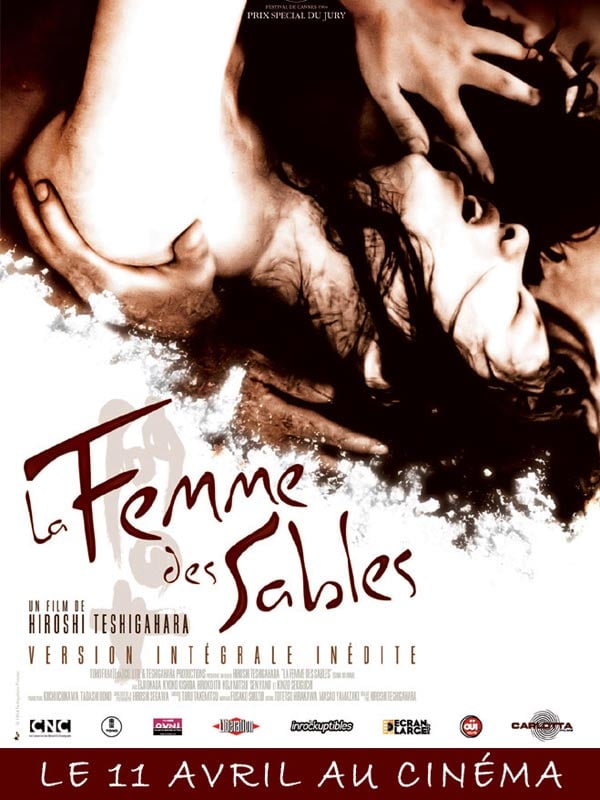
Hiroshi Teshigahara, La Femme des Sables, (Japon, 1964)
Ex: http://cerclenonconforme.hautetfort.com
 La deuxième des quatre œuvres issues de la collaboration de Teshigahara avec l’écrivain Kobo Abe, La Femme des Sables, est son long métrage le plus célèbre. C’est aussi certainement celui qui laisse l’impression la plus forte et la plus durable.
Si l’on peut rester de marbre devant Le Traquenard ou Le Visage d’un Autre, à cause notamment de certaines longueurs franchement pénibles, d’un style parfois curieux et d’un propos relativement décousu, le flot d’images surréalistes et envoûtantes de La Femme des Sables, en revanche, constitue une expérience esthétique fascinante, et ce malgré un director’s cut de 147 minutes bien tassées.
Visuellement, cette œuvre regorge de trouvailles : superpositions de plans, alternance entre les gros plans d’insectes, de grains de sable ou du grain de la peau humaine, et de longues étendues désertiques animées par le vent ou par les traces laissées par un être humain… La photographie en noir et blanc est franchement splendide, et du point de vue de l’atmosphère générale, le terme « hanté » ne semble pas usurpé.
La trame du film elle-même est plutôt originale : un citadin, instituteur de son état dans une mégapole japonaise et entomologiste amateur, se rend dans le désert à la recherche de spécimens rares, dans l’espoir de voir son nom passer à la postérité dans une encyclopédie. Après une longue marche, il s’allonge sur le sable et laisse ses pensées vagabonder. Il songe aux papiers, aux archives, aux dossiers, aux permis, à la masse effroyable de paperasse qui donne à chacun un sentiment ambigu : celui d’appartenir à une société et d’être reconnu par celle-ci, tout en étant au fond qu’un nom parmi tant d’autres – un grain de sable parmi les grains de sable.
Il s’assoupit, et à son réveil il se laisse convaincre par un inconnu de se laisser guider jusqu’à un village au beau milieu du désert où il pourra se restaurer et passer la nuit. Arrivé au village, notre homme découvre une maison de bois passablement délabrée, encaissée au fond d’une fosse de sable. Le voyageur descend par une échelle de corde à la rencontre de son hôte, une femme vivant seule dans cette tombe à ciel ouvert. Au cours du repas, l’homme plein d’orgueil et sûr de sa supériorité de citadin, prend son hôte de haut lorsque celle-ci lui parle de son quotidien et des étranges phénomènes dont elle est régulièrement témoin.
L’homme se rend compte au cours de la nuit que la femme vit d’un labeur peu commun : elle entasse des kilos de sable dans de grandes caisses de métal, que des paysans hissent depuis le sommet de la fosse à l’aide d’un treuil. On pense tout d’abord qu’il s’agit d’une méthode fastidieuse destinée à éviter que la maison ne finisse par être intégralement ensevelie ; on apprend plus tard que ce sable est revendu à des entrepreneurs peu scrupuleux qui mettent en œuvre ce matériau peu coûteux et dangereux dans leurs constructions.
La condescendance du voyageur vis-à-vis de la femme qui le nourrit et l’héberge est bien vite vengée : le matin venu, l’homme s’aperçoit en effet que l’échelle de corde a disparu… Il ne tarde pas à comprendre qu’il est tombé dans un piège et que sa survie dépend de l’aide qu’il voudra bien apporter à la femme des sables dans sa tâche absurde et sans fin. L’homme passe de la révolte et de l’espoir à la résignation, puis au dépassement de sa condition tout au long de ce film en forme de quête initiatique.

Le film tourne autour de la notion d’identité : la place que l’homme occupe dans la société, instituteur au sein d’une grande ville, semble largement suffire à son épanouissement ; pourtant son incursion d’entomologiste amateur en quête de renommée et les réflexions qu’il se formule au cœur du désert, au sujet de ce qui fonde l’identité en tant que citadin, sont deux éléments qui montrent bien que notre homme redoute déjà au fond de lui de n’être rien d’autre qu’un grain de sable dans le désert. Lorsqu’il se retrouve confronté à une villageoise recluse au fin fond du désert pourtant, son statut officiel lui fournit une assurance mâtinée d’orgueil qui se mue vite en condescendance ; plus tard encore au cours de sa captivité, il nourrit toujours l’espoir d’être secouru, il place tous ses espoirs dans la certitude que le monde moderne auquel il appartient finira par le rattraper, qu’on viendra le chercher, que tout rentrera dans l’ordre pour lui.
A mesure que le film se déroule, toutes les craintes de l’homme s’avèrent fondées. Il comprend qu’il n’a jamais rien acquis d’autre qu’une identité de façade, intégralement administrative et sans réalité charnelle. Sa solitude cauchemardesque trouve un écho direct dans cette image du prisonnier au fond d’une tombe de sable. De nombreux plans du film viennent alimenter l’analogie, parfois en exacerbant le caractère futile des tentatives d’évasion : l’homme est semblable aux insectes qu’il collectionne, s’agitant vainement pour s’extirper de cette fosse où il lui faut maintenant apprendre à vivre.
Toute la futilité et l’absurdité de la condition humaine sont mises en évidence de façon tragique ; le labeur quotidien, infiniment renouvelé, infiniment absurde, rappelle bien évidemment le mythe de Sisyphe. Il ne faut pas s’en étonner : l’ouvrage de Kobo Abe semble en effet largement redevable à la philosophie existentialiste. La conclusion de la Femme des Sables est d’ailleurs fidèle, en substance, à celles que Kierkegaard, Sartre ou Camus ont pu formuler dans leurs travaux : Teshigahara nous suggère en effet à la fin de son long métrage que l’homme doit trouver sa liberté intérieure en acceptant sa condition, en collaborant avec la femme des sables et en se livrant à une activité intellectuelle.
Au-delà de cette lecture philosophique, qu’il ne faut bien évidemment pas se sentir obligé de partager, il reste un petit bijou du cinéma japonais des années 60, à l’ambiance particulièrement soignée, et dont la beauté formelle n’est certainement pas la moindre des qualités.
Lydéric / C.N.C.
Note du C.N.C.: Toute reproduction éventuelle de ce contenu doit mentionner la source.
00:05 Publié dans Cinéma, Film, Littérature | Lien permanent | Commentaires (0) | Tags : cinéma, film, 7ème art, cinéma japonais, japon, lettres, lettres japonaises, littérature japonaise, littérature, abé kobo | | del.icio.us | | Digg | Facebook
jeudi, 02 octobre 2014
Bon anniversaire Brigitte

Le billet de Patrick Parment
Ex: http://synthesenationale.hautetfort.com
Cessons deux minutes dʼêtre sérieux et soyons futiles. Renvoyons les socialos-umpéistes dans les eaux fangeuses où se roule comme des porcs tout ce petit personnel qui sous Louis XIV nʼaurait tout juste été bon qu’à porter les sceaux dans les couloirs de Versailles pour que nous pissions en paix.
Non, l’événement du jour, c’est l’anniversaire de Brigitte Bardot. Quatre-vingt balais au compteur et une pugnacité jamais démentie. Non seulement la dame pense – et plutôt bien – mais encore elle pense tout haut ce que l’ensemble des Gaulois tait en général. Par lâcheté ? Allez savoir. Elle l’écrit même, ce qui lui vaut quelques ennuis avec la justice. Mais elle s’en fout ! Bon, d’accord, de temps en temps, avec ses animaux, elle nous gonfle, mais j’ai pris le parti depuis longtemps de tout lui pardonner. Il n’y a qu’une Bardot et... des millions de ploucs. Il faut tout pardonner à BB parce que les hommes de ma génération se sont quand même bien astiqués le poireau en fantasmant sur son corps de rêve. Elle a vraiment incarné la beauté dans ce qu’elle a de plus violent et de plus bestial.
BB, c’est tout de même autre chose que toutes ces pétasses qui se trémoussent dans des films sans intérêt tournés en général par des imbéciles, la fesse triste et le sein pendant... quand il y en a. Je parle, bien sûr, du cinéma français (Anémone et sa tête d’autruche, Casta, sa niaiserie et ses dents de travers ! pour ne citer qu’elles). Toutes ces petites connes n’inspirent aux foules qu’un sentiment de pitié, pas même une érection.
Tandis que Bardot, on se précipitait, et on aurait même payé pour remplacer Jean Gabin dans je ne sais quel navet ! Sortez vos DVD et regardez Babette s’en va en guerre, vous m’en direz des nouvelles. Bardot, c’est de la gonzesse, de la vraie, comme on les aime. Gainsbourg, qui était loin d’être un sot et qui avait du talent, ne s’y était pas trompé. Il était tombé dans le panneau, avant d’épouser sa planche à pain, et lui avait concocté des chansons qui prouvaient qu’il était soudain passé de la bandaison ordinaire au priapisme incontrôlé.
Bardot chantant, c’est tout d’un coup le technicolor qui jaillit dans votre vie, au risque de coller une torgnolle à votre bourgeoise dès fois qu’elle aurait l’audace de vous faire une crise de jalousie. Et puis Bardot, c’est le symbole d’une France qu’on a aimé, presque insouciante, avec ses clochers et ses curés en soutane, ses facteurs à vélo, ses gardes- champêtres roulant le tambour. Tout ça n’est pas de la nostalgie mais des images que nous renvoie Brigitte Bardot qui incarna une certaine image de la beauté française.
Bon anniversaire, Madame.
00:05 Publié dans Actualité, Cinéma | Lien permanent | Commentaires (0) | Tags : brigitte bardot, actualité, cinéma, france | | del.icio.us | | Digg | Facebook
samedi, 24 mai 2014
Noé, un film qui déplaît aux monothéistes
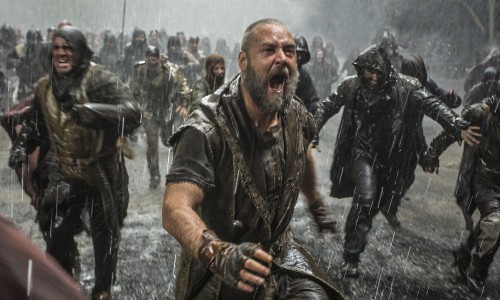
Noé, un film qui déplaît aux monothéistes
Ex: http://thomasferrier.hautetfort.com

L'explication vient du fait que le realisateur et scénariste Darren Aronofsky (à qui on doit le très bon "Black Swan" et "Requiem for a Dream"), voulant sortir de l'image des habituels "pepla" bibliques en carton-pâte et papier-mâché, a fait le choix de se démarquer en donnant au film un côté paradoxalement plus druidique, voire hindou, que biblique, quitte à prendre quelques libertés avec le récit biblique de la Genèse.
Par sa dimension tant esthétique que philosophique, le film évoque en effet davantage le Seigneur des Anneaux de Peter Jackson qu'un film biblique. À commencer par des paysages dont les vallées et collines verdoyantes nous rappellent l'Irlande ou l'Écosse que le désert biblique (le film a en fait été tourné en Islande, d'où la présence aussi de paysages volcaniques).
Deux lignées humaines s' affrontent. Faut-il y voir déjà là un polygénisme qui ne dit pas son nom ? Celle corrompue, qui est issue de Caïn, dix générations après son géniteur, est cruelle, violente, épuise les ressources naturelles, et mange de la viande. Les ressources épuisées, leur bétail tué, elle va même jusqu'à recourir au cannibalisme, qui rappelons-le est considéré comme l'horreur absolue dans moult croyances, y compris le paganisme (se souvenir d'Atrée maudit des dieux avec toute sa lignée, pour avoir goûté à la chair humaine).
Bref, elle fait penser aux Orcs et Huru-kaïs de Tolkien. À ceci près - et c'est là le pari intéressant de Darren Aronofsky - qu'ils sont en outre les plus fidèles gardiens de l'orthodoxie monothéiste stricte et absolutiste, et de la soumission totale à un dieu unique. Faut-il y voir un pic adressé au rigorisme islamique, à certains haredim ou encore à certaines églises protestantes américaines ?
Celle d'Abel à laquelle appartient Noé (campé par un Russel Crowe qui n'a pas perdu son coté héroïque désintéressé de Gladiator, Robin des Bois ou Man of Steel), est agro-pastorale, et volontiers panthéiste. Son grand-père Mathusalem (joué par un Anthony Hopkins malicieux et joueur) fait penser par la sagesse qui émane de lui à une sorte de Gandalf (Seigneur des Anneaux là-encore) ou de Yoda par son coté facétieux. Et même, en usant à plusieurs moments clé, de sortilèges, il nous rappelle l'enchanteur Myrddin (Merlin). Bref on comprend pourquoi il n'a pas plu à certains fous-furieux de l'islam, ces derniers dont l'Egypte, l'Arabie Saoudite, le Pakistan, l'Iran, ayant prononcé des fatwas interdisant le visionnage de l'oeuvre. Quant au Vatican, il s' est montré très "réservé", comme d'habitude, comme il l'avait fait pour la Trilogie du Seigneur des Anneaux, ou pour Avatar...
En somme un film qui pourra plaire à un public de sensibilité païenne ou paganisante, que ce public soit européen, indien, voire judéo-païen ("cananéen").
Bruno MARCIUS (LBTF/PSUNE)
00:09 Publié dans Cinéma | Lien permanent | Commentaires (0) | Tags : noé, cinéma, 7ème art, bible, monothéisme, déluge, arche de noé | | del.icio.us | | Digg | Facebook
dimanche, 11 mai 2014
Tout le monde il est gentil, tout le monde il est raciste

Tout le monde il est gentil, tout le monde il est raciste
«Qu’est-ce qu’on a fait au bon dieu»
Le film qui fait rire jaune l’idéologie antiraciste
Jean Ansar
Ex: http://metamag.fr
Il y a toujours eu des divorces profonds entre la critique et le public de cinéma. La critique qui représente toujours l’idéologie dominante se prend pour le guide intellectuel du public. Elle aime les films prétentieux, engagés et donneurs de leçon. Elle raffole des films afghans qui font 45 entrées. Le public, lui, aime le cinéma spectacle de divertissement ou intelligent ce qui est souvent le contraire d’ailleurs d’intellectuel.
C’est pourquoi la critique des pères la pudeur et des nouveaux dévots et bigotes de l’antiracisme idéologique a mal accueilli tout au début le film de Philippe de Chauveron avec un Christian Clavier désopilant, fin dans son jeu et dont c’est le grand retour. Mais la France, elle, se tord de rire sans complexes ni retenus. La critique s’incline, mais tente de détourner le sens du film, de le politiser et même de l’instrumentaliser.
En fait, ce film prouve que l’on peut rire à gorge déployé d’un racisme bon enfant à la française. C’est le premier point et c’est le plus important. Les Verneuil, petits bourgeois catholiques de province, ont 4 filles. Les 3 premières épousent coup sur coup un arabe, un juif et un chinois. La petite dernière, elle, une révélation d’une beauté à la française, s’éprend enfin d’un catholique comme papa et maman, seulement il est noir. Cela fait beaucoup et c’est pour cela que l’on rit de bon cœur. D’autant plus que papa et maman ne se sentent pas racistes. Papa est gaulliste et ils font du racisme comme monsieur Jourdain fait de la prose. Pourtant ils sont sympathiques. Certains passages sont même émouvants. Cela ne peut pas passer pour une certaine gauche. Surtout que dans ce film, tout le monde il est gentil mais tout le monde il est raciste. Le Chinois par rapport à l’arabe et au juif et l’arabe par rapport au juif et au chinois et le juif par rapport à l’arabe et au chinois et les 3 par rapport au noir.
Quand au père du jeune ivoirien, pas immigré lui, il est encore plus raciste que le papa français et assume son racisme anti-blanc, ce qui n’empêchera pas les deux pères, la veille du mariage, de devenir les meilleurs amis du monde. Ce film est objectivement une réussite. Il est cependant trompeur.
La France dépeinte n’existe plus
 Ce racisme sans conséquences n’est plus d’actualité. C’est une France où l’on accueille l’autre avec méfiance et bienveillance mais où l’autre ne tente pas d‘imposer, de dominer. On est très loin des « racailles » de banlieue même si elles sont présentes, car le jeune algérien marié à une fille Verneuil est avocat et on le voit défendre, commis d’office, ceux qu’il qualifie de « capuches sans cerveaux ». Une France avec une diversité marginale et exotique et pas, comme c’est le cas, une diversité de peuplement et de substitution de populations et de mode de vie. La comédie est exploitée par les antiracistes politiques pour prouver que le pays a changé et que finalement, il faut accepter dans la bonne humeur d’être tous des Verneuil, des familles «Benneton » comme le dit, lors d’une messe, un habitant de la localité.
Ce racisme sans conséquences n’est plus d’actualité. C’est une France où l’on accueille l’autre avec méfiance et bienveillance mais où l’autre ne tente pas d‘imposer, de dominer. On est très loin des « racailles » de banlieue même si elles sont présentes, car le jeune algérien marié à une fille Verneuil est avocat et on le voit défendre, commis d’office, ceux qu’il qualifie de « capuches sans cerveaux ». Une France avec une diversité marginale et exotique et pas, comme c’est le cas, une diversité de peuplement et de substitution de populations et de mode de vie. La comédie est exploitée par les antiracistes politiques pour prouver que le pays a changé et que finalement, il faut accepter dans la bonne humeur d’être tous des Verneuil, des familles «Benneton » comme le dit, lors d’une messe, un habitant de la localité.
Comme Intouchables, autre immense succès populaire, le long métrage de Philippe de Chauveron pourrait être interprété comme la métaphore d'une France vieillissante et rance qui aurait besoin des enfants de l'immigration pour se régénérer. Mais il est beaucoup plus « non politiquement correct ». Ce ton fait que ce film avec ses formules hilarantes serait impossible aux Usa.
Dans le Figaro, Alexandre Devecchio voit bien ce qui fait peur à l’idéologie dominante. « Le film dit, sur le ton de la comédie, ce qu'Eric Zemmour et Alain Finkielkraut ne peuvent plus exprimer sans déclencher les foudres des justiciers auto-proclamés de l'antiracisme? Et si l'impressionnant succès du film était justement dû à son absence de tabou ? Le réalisateur nie avoir voulu réaliser un film politique. Mais derrière son apparent formatage, Qu'est-ce qu'on fait au bon Dieu? est peut-être la comédie la plus anticonformiste jamais produite par TF1. » Certains seraient déjà d’ailleurs dans le collimateur des censeurs auto proclamés.
 De son coté Le Monde constate. « Le film de Philippe de Chauveron, fait actuellement exploser tous les compteurs du box-office français. Accueil critique ? Inexistant, aucune projection de presse n’ayant précédé sa sortie. Bouche-à-oreille ? Exceptionnel, à tel point que les deux plus gros succès du cinéma français, Intouchables (19,44 millions d’entrées) et même Bienvenue chez les Ch’tis (20,48 millions) ne paraissent pas hors d’atteinte. Visible sur Internet, l’efficace bande-annonce laisse présager le pire : 1,58 min de clichés raciaux ou racistes, on ne sait trop, en tous genres. Quel est donc ce film qui fait salle comble aussi bien à Paris qu’en régions ? Un ersatz cinématographique des thèmes chers au Front national ? L’affaire est plus compliquée. »
De son coté Le Monde constate. « Le film de Philippe de Chauveron, fait actuellement exploser tous les compteurs du box-office français. Accueil critique ? Inexistant, aucune projection de presse n’ayant précédé sa sortie. Bouche-à-oreille ? Exceptionnel, à tel point que les deux plus gros succès du cinéma français, Intouchables (19,44 millions d’entrées) et même Bienvenue chez les Ch’tis (20,48 millions) ne paraissent pas hors d’atteinte. Visible sur Internet, l’efficace bande-annonce laisse présager le pire : 1,58 min de clichés raciaux ou racistes, on ne sait trop, en tous genres. Quel est donc ce film qui fait salle comble aussi bien à Paris qu’en régions ? Un ersatz cinématographique des thèmes chers au Front national ? L’affaire est plus compliquée. »
Ils ne pensent qu’à ça le front national. Le film participerait à la banalisation de ses thèmes. C’est un peu vrai, il permet de ne pas se sentir coupable de penser comme Clavier. Et ils craignent au Monde ce succès populaire. « Curieux film, laissant présager le pire dans sa première moitié, que l’on finit parfois par trouver drôle, y compris à son corps défendant. Derrière le message de tolérance qu’il entend délivrer – vive la différence, vive les mariages mixtes – se profile pourtant quelque chose de plus ambigu, une manière, certes comique mais tout de même, de vouloir banaliser sinon le racisme, du moins les propos racistes. »
En France on rit encore de bon cœur du racisme bon enfant des identités diverses et des clichés qui ont la vie dure. La critique est mal à l’aise, le public raffole… une fois de plus les fausses élites ne comprennent rien au peuple et veulent lui imposer ses choix et ses goûts… en vain. Le racisme de la prétention des fausses élites est en échec et lui ne fait plus rire personne depuis longtemps.
00:05 Publié dans Cinéma | Lien permanent | Commentaires (0) | Tags : cinéma, film, 7ème art | | del.icio.us | | Digg | Facebook
jeudi, 24 avril 2014
300. Naissance d’une nation
300. Naissance d’une nation
par Thomas Ferrier
Ex: http://thomasferrier.hautetfort.com
 La suite attendue du film « 300 » de Zach Snyder, intitulée « l’Avènement d’un Empire » (Rise of an Empire), est récemment sortie sur nos écrans. A la musique, Tyler Bates a cédé la place à Junkie XL, qui nous propose une bande originale brillante, finissant en apothéose en mêlant son dernier morceau à une mélodie de Black Sabbath.
Comme dans le premier film, c’est un récit qui nous est proposé, jusqu’à l’extrême fin. La reine spartiate Gorgo raconte ainsi la vie de Thémistocle, le héros athénien du film, jusqu’à ce que ses troupes interviennent d’une manière décisive à Salamine. Les nombreuses invraisemblances et les libertés prises avec l’histoire sont ainsi justifiées. Il faut les admettre pour profiter pleinement du message optimiste du film.
L’ouverture avec un Xerxès décapitant Léonidas mort correspond au récit traditionnel. Quant à la « naissance » du dieu-roi, concept contraire à la tradition zoroastrienne, grande oubliée du film, la jeunesse de Xerxès, assistant impuissant au parcours d’une flèche de Thémistocle perforant l’armure de Darius, son père, est narrée, ainsi que la manipulation dont il est la victime par Artémise, jouée par Eva Green, mégère inapprivoisée avide de sang vengeur.
A l’incendie de Sardes par les Athéniens, qui sera le véritable déclencheur de la guerre avec les Perses, le scénariste a préféré « accuser » Thémistocle, personnage tragique, à la fois responsable des malheurs de son peuple et vainqueur ultime de ses ennemis.
A la grandeur sobre et un peu égoïste de Léonidas dans le premier film, Thémistocle est un idéaliste, rêvant d’une Grèce rassemblée et même d’une nation grecque. Le voici émule avant l’heure d’Isocrate. Son discours sur la nécessaire unité de la Grèce au-delà des querelles de cités rappelle celui des véritables européistes, partisans d’une Europe-Nation. Gorgo est davantage souverainiste, estimant que Sparte a « assez donné », mais elle saura faire son devoir et venir en renfort. C’est ainsi que Spartiates et Athéniens unis écrasent la marine perse, tandis qu’Artémise meure dans les bras de son ennemi.
Et même le traître du premier film, le bossu Ephialtès, sert à sa manière la Grèce en invitant Xerxès à attaquer Thémistocle, alors qu’il sait que ce dernier a prévu un piège dans lequel les Perses vont s’engouffrer. Les Spartiates, à l’instar des Rohirrim menés par Gandalf dans « Les deux tours », arrivent à la rescousse, avec à leur tête une nouvelle Valkyrie, une Gorgo marchant l’épée dressée. Même si la Sparte historique traitait ses femmes avec une quasi égalité, on ne verrait pourtant jamais une femme au combat.
Si le message du premier film était celui opposant 300 Européens au monde entier, la dimension cosmopolite de l’armée perse a été adoucie. A l’exception d’un émissaire perse, vu dans le premier film, les généraux et soldats perses pourraient passer pour des Iraniens. En revanche, le message du second est offensif. Après la résistance, la reconquête. Certes, au bord de l’abîme, tout comme l’Europe ne s’unira qu’à proximité du tombeau, selon Nietzsche. La reconquête et l’unité. Tous les Grecs combattent désormais ensemble. Historiquement, c’est bien sûr faux. Thessaliens et Grecs d’Asie mineure étaient dans l’armée perse, et Thèbes jouait double jeu. La mort héroïque de Léonidas, habilement exploitée par Thémistocle, sert de mythe mobilisateur. La Grèce a eu ses martyrs. L'Europe n'a pas encore eu les siens.
Le message politique de Thémistocle, appliqué à la Grèce mais qui pourrait tout aussi bien l’être à l’Europe, est fort. La ruine d’Athènes, incendiée par Xerxès, est également un moment décisif du film. Bien que nous sachions que Salamine fut une victoire grecque, la dimension tragique de leur combat apparaît nettement. Monté sur un cheval de guerre qui saute de bâteau en bâteau comme s’il était Pégase, Thémistocle pourfend les ennemis de son épée, jusqu’à combattre et vaincre Artémise, tandis que Xerxès s’éloigne, sentant l’ombre de la défaite.
Le film est un hymne à l’unité de l’Europe, ce qui est bien surprenant pour une production américaine, au cœur même de l’assemblée d’Athènes. En pleine crise, la Grèce se retrouve à nouveau comme préfiguration de l’Europe de demain, qui reste à bâtir. Une Grèce qui lutte pour la démocratie autour d’Athènes, aidée d’une Sparte qui pourtant n’y croit guère. L’alliance d’Athènes et de Sparte, c’est l’alliance de l’Union Européenne et de la Russie face à un empire qui menace ses libertés, un empire qui a reçu l’aide de renégats (Artémise, Ephialtès) qui agissent contre leur propre peuple.
Thomas FERRIER (LBTF/PSUNE)
00:05 Publié dans Cinéma | Lien permanent | Commentaires (0) | Tags : cinéma, film, 7ème art, 300, thomas ferrier, grèce, grèce antique, antiquité grecque, hellenisme | | del.icio.us | | Digg | Facebook
mercredi, 23 avril 2014
Hercule, un Jésus européen ?
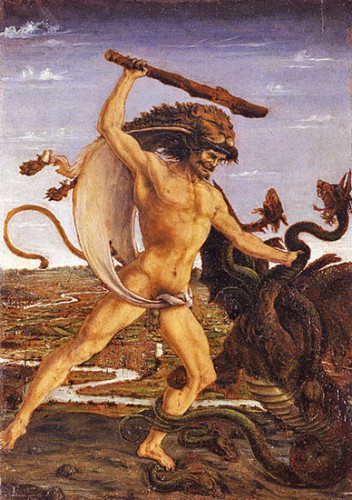
Hercule, un Jésus européen?
par Thomas Ferrier
Ex: http://thomasferrier.hautetfort.com
« Hercules, the legend begins » est enfin sorti sur les écrans français après avoir connu un terrible échec commercial, il y a deux mois, aux Etats-Unis. On pouvait donc craindre le pire, malgré une bande annonce des plus alléchantes. Après avoir vu ce film, que j’ai pour ma part beaucoup apprécié, je m’interroge sur le pourquoi de cette descente en flammes et de ce qui a déplu à la critique.
Bien sûr, dans cette Grèce du XIIIème siècle avant notre ère, il y a de nombreux anachronismes comme des combats de gladiateurs ou encore la conquête de l’Egypte. Si de beaux efforts graphiques ont été faits, on se trouve dans une Grèce de légende, à mi-chemin entre la Grèce mycénienne et la Grèce classique. Et de même, la légende du héros, avec les douze travaux, est absente ou malmenée, alors que de nouveaux éléments s’ajoutent, comme une rivalité entre Héraclès et son frère Iphiclès. Tout cela a pu surprendre un public habitué à ces classiques.
Et pourtant de nombreuses idées audacieuses se sont glissées dans ce film et le rendent passionnant. Ainsi, la vie d’Hercule s’apparente par certains aspects à celle de Jésus. De nombreux films américains, à l’instar de Man of Steel, la comparaison implicite est patente. Dans « Hercules », elle est voulue mais détournée. Alcmène s’unit à Zeus sans que le dieu apparaisse, se manifestant par une tempête accompagnée d’éclairs. Cela ne vous rappelle rien ? De même, Hercule est fouetté et attaché par les deux bras dans une scène rappelant la crucifixion. Mais il en sort vainqueur, brisant ses liens, et écrasant grâce à deux énormes blocs de pierre attachés par des chaînes à ses bras tous ses ennemis. Enfin, il devient concrètement roi à la fin de son aventure, ne se revendiquant pas simplement « roi de son peuple » mais roi véritable.
Bien sûr, ce « Jésus » aux muscles imposants mais sobres, à la pigmentation claire et aux cheveux blonds, n’a pas la même morale. Fils du maître de l’univers, dont il finit par accepter la paternité, Zeus en personne, il tue ses ennemis, jusqu’à son propre père adoptif, combat avec une férocité qui en ferait l’émule d’Arès, et semble quasi insensible à la douleur. Une scène le présente même recevant sur son épée la foudre de Zeus qu’il utilise ensuite comme une sorte de fouet électrique pour terrasser les combattants qui lui font face.
Par ailleurs, la « diversité » est réduite à sa plus petite expression, limitée à des mercenaires égyptiens, crédibles dans leur rôle. Les Grecs en revanche sont tous bien européens, avec des traits parfois nordiques. Il n’est pas question comme dans « Les Immortels » ou « Alexandre » de voir des afro-américains en armure ou jouant les Roxanes. En revanche, on retrouve davantage l’esprit de Troie, l’impiété en moins. En effet, cette fois les athées ont le mauvais rôle à l’instar du roi de Tirynthe Amphitryon. Hercule lui-même, qui ne croit pas dans l’existence des dieux pendant une bonne partie du film, finit par se revendiquer explicitement de la filiation de Zeus et la prouver. En outre, Hercules rappelle par certains côtés le premier Conan, puisque le héros est trahi et fait prisonnier, puis s’illustre dans des combats dans l’arène d’une grande intensité, bondissant tel un fauve pour fracasser le crâne d’un ennemi, mais il reste toujours chevaleresque, protégeant les femmes et les enfants.
A certains moments, le film semble même s’inspirer des traits guerriers qu’un Breker donnait à ses statues. Kellan Lutz n’est sans doute pas un acteur d’une expression théâtrale saisissante mais il est parfaitement dans son rôle. Si les douze travaux se résument à étrangler le lion de Némée, à vaincre de puissants ennemis mais qui demeurent humains, et à reconquérir sa cité, son caractère semi-divin, même si le personnage refuse tout hybris, est non seulement respecté mais amplifié. En ce sens, Hercule apparaît comme un Jésus païen et nordique, mais aussi un Jésus guerrier et vengeur, donc très loin bien sûr du Jésus chrétien. Fils de Dieu, sa morale est celle des Européens, une morale héroïque.
Toutefois, bien sûr, certains aspects modernes apparaissent, comme la relation romantique entre Hercule et Hébé, déesse de la jeunesse qu’il épousera après sa mort dans le mythe grec, et le triomphe de l’amour sur le mariage politique. C’est bien sûr anachronique. Mais « la légende d’Hercule » ne se veut pas un film historique.
Enfin, la morale est sauve puisque dans le film, Héra autorise Zeus à la tromper, alors que dans le mythe classique elle met le héros à l’épreuve par jalousie, afin de faire naître un sauveur. Zeus ne peut donc être « adultère ». Cela donne du sens au nom du héros, expliqué comme « le don d’Héra », alors qu’il signifie précisément « la gloire d’Héra », expression énigmatique quand on connaît la haine de la déesse envers le héros. Pour s’exprimer, Héra pratique l’enthousiasme sur une de ses prêtresses, habitant son corps pour transmettre ses messages. C’est conforme à la tradition religieuse grecque.
Les défauts du film sont mineurs par rapport à ses qualités, graphiques comme scénaristiques, mais ce qui a dû nécessairement déranger c’est qu’il est trop païen, trop européen, trop héroïque, qu’il singe le christianisme pour mieux s’y opposer. Le fils de Dieu est marié et a un enfant (à la fin du film). Le fils de Dieu n’accepte pas d’être emmené à la mort mais triomphe de ses bourreaux. Le fils de Dieu devient « roi des Grecs ». Enfin le fils de Dieu apparaît comme tel aux yeux de tous et n’est pas rejeté par son propre peuple. Ce film ne pouvait donc que déranger une société américaine qui va voir des films où Thor lance la foudre, où Léonidas et ses « 300 » combattent jusqu’à la mort avec une ironie mordante, mais qui reste très chrétienne, très puritaine et hypocrite.
Thomas FERRIER (LBTF/PSUNE)
00:05 Publié dans Cinéma, Traditions | Lien permanent | Commentaires (0) | Tags : herakles, hercule, mythologie, mythe, religion, traditions, mythologie grecque, grèce antique, antiquité grecque, hellenisme, film, cinéma, 7ème art | | del.icio.us | | Digg | Facebook