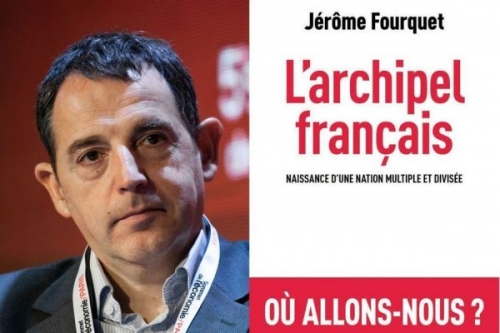
Jérôme Fourquet is a mainstream pollster with the venerable French Institute of Public Opinion (IFOP), the nation’s leading polling agency. He made a splash last year with his book, The French Archipelago: The Birth of a Multiple and Divided Nation, which presented a fine-grain statistical analysis of socio-cultural changes in French society and, in particular, fragmentation along ethno-religious and educational lines.
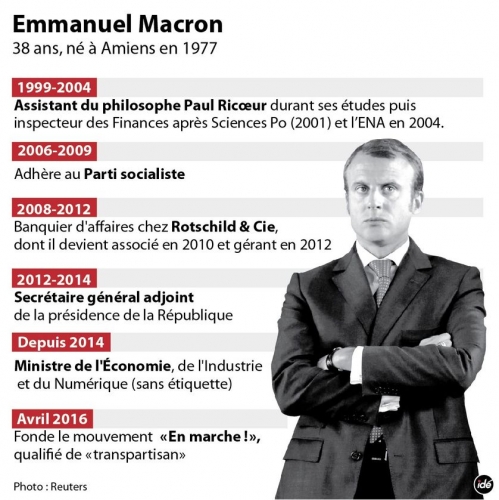
The book persuasively makes case that the centrist-globalist Emmanuel Macron’s election to the presidency and the collapse of the traditional parties of government in 2017 were not freak events, but the reflection of long-term trends which finally expressed themselves politically. The same can be said for the growing popularity of anti-establishment movements like Marine Le Pen’s National Rally (RN) and the yellow-vests.
Following the works of many sociologists and historians, Fourquet sees French politics as historically divided between a Catholic Right and secularist Left. This divide had been highly stable since the French Revolution, if not earlier, with a dechristianizing core stretching out from the greater Parisian basin into the Limousin, with most of the periphery remaining relatively conservative. These subcultures united people of different classes within particular regions and corresponded politically with the conservative and Socialist parties who have taken turns governing France since World War II.
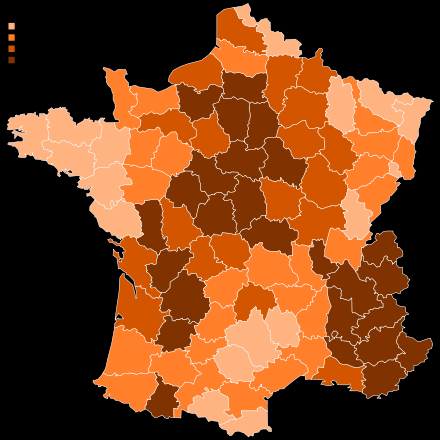
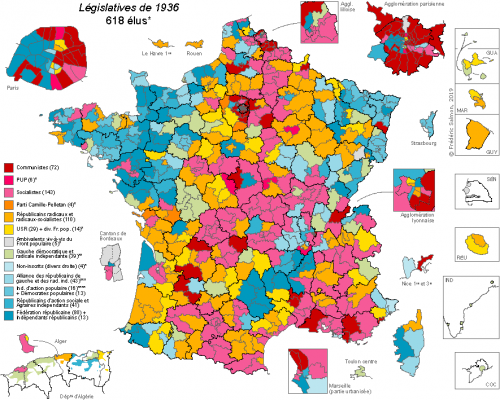
Since 1945, the collapse of Catholicism and the steady cognitive/economic stratification of French society have destroyed the reach and unity of the Catholic-right and secularist-left blocs. Macron was able to tap into the latent political demand of the wealthiest, most educated, and mobile 20% of French society, while the increasingly alienated and déclassés lower classes of French Whites have been falling out of the mainstream political system altogether.
Fourquet meticulously documents the social trends of the past 70 years: the decline of Catholicism, the Communist Party, and traditional media, the triumph of social liberalism, the division of cities into gentrified areas, crime-ridden ghettos, and the (self-)segregation of individuals along educational and ethnic lines. In all this, Fourquet’s book serves as an excellent statistical companion piece to Éric Zemmour’s Le Suicide français, which looks at many of the same themes through the lens of political and cultural events.
What’s in a first name? Quite a lot, actually
Fourquet uses a wealth of socio-economic and polling data to make his case. Some of the most innovative and striking evidence however is the big-data analysis of first names in France’s birth registries since 1900. This looks into the trends for numerous different types of names: Christian, patriotic, regional (Breton and Corsican), Muslim, African, and . . . Anglo. Far from being random, Fourquet shows that the trends in first-name giving correlate with concurrent social and political phenomena. For example, the number of people giving their girls patriotic names like France and Jeanne spiked during moments of nationalist fervor, namely the first and second world wars (p. 35).
More significantly, Marie went from being the most common name for girls (20% of newborns in 1900) to 1-2% since the 1970s. Unsurprisingly given the Virgin Mary’s importance in the Catholic religion, Marie was more popular in more religious regions and declined later in the conservative periphery. Marie’s decline thus seems to be a solid temporal and geographical marker of dechristianization (mass attendance and traditional Christian values, such as marriage and opposition to abortion and gay marriage, also collapsed during this period).
First names also provide a marker for assimilation of immigrant groups. Fourquet shows how Polish first names exploded in the northern mining regions of France in the 1920s and then fully receded within two decades. He shows the same phenomenon for Portuguese immigrants and first names in the 1970s. This assimilation is in accord with sociological data showing that European immigrants tend to rapidly converge in terms of educational and economic performance with the native French population.
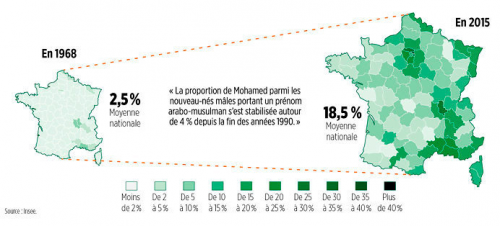
By contrast, Fourquet shows that people with Muslim last names almost never choose to give their children traditional French first names. He documents a massive increase in the proportion of newborns given Muslim first names from negligible in the 1960s to around a fifth of the total. There is also an increase in the number of people with Sub-Saharan African names.
Somewhat similarly to Europeans, Asian immigrants (disproportionately from the former Indochina) are much more likely to adopt French first names and perform comparably in economic and educational terms.
Beyond these stark ethno-religious demographic changes, Fourquet also highlights more subtle trends that often fall below the radar. First names also provide a marker for the degree to which the French have a common culture or, conversely, of heightened individual or sectoral identities.
Fourquet identifies an explosion in the number of different names used by the French. This figure was stable around 2000 from 1900 to 1945, rising to over 12,000 today. And this does not count the proliferation “rare names” – those for which there are less than 3 people with that name – among all populations. Fourquet takes this as evidence of increased individualism and “mass narcissism,” more and more people wishing to differentiate themselves.
In principle, until recently the French were forced by Napoleonic-era legislation to choose their first names from the Christian calendar, medieval European names, or Greco-Roman antiquity. All of France proper used a common corpus of names, with little local variation. The list of acceptable names was extended by ministerial instruction to regional and mythological names in 1966, while in 1993 the restriction was abolished. However, the trend of more-and-more names in fact long predates these legal changes. Evidently municipal authorities already were tolerating unusual names more and more.
What are the names in question? All sorts. The use of Breton (Celtic) names in Brittany has more tripled from 4% to around 12% (p. 127), with sharp rises corresponding to moments of heightened Breton regionalist politics in the 1970s.
Similarly, Italian-Corsican first names have risen from virtually nil in the 1970s to 20% of Corsican newborns today, coinciding with the rise of the Corsican nationalist vote on the island to 52.1% in 2017 (p. 130). Corsican nationalism has risen despite the fact that use of the French language has largely supplanted the Corsican dialect. Many Corsicans resent colonization both by wealthy metropolitan French buying up properties on the fair isle and by Afro-Islamic immigrants.
There has also been a steady increase of the use of markedly Jewish first names like Ariel, Gad, and Ephraïm – which were virtually unheard of in 1945 (p. 213)
One of the most intriguing trends is the proliferation of Anglo first names from a mere 0.5% of newborns in the 1960s to 12% in 1993, today stabilized around 8% (p. 120). Names like Kevin, Dylan, and Cindy became extremely popular, evidently influenced by American pop stars and soap operas (The Young and the Restless was a big hit in France under the title Les Feux de l’Amour). Significantly, Anglo names are more popular among the lower classes, going against the previous trend of French elites setting top-down fashion trends for names. Indeed, many yellow-vest and RN cadres in France have conspicuously (pseudo-)Anglo first names, such as Steeve [sic] Briois (mayor of the northern industrial city of Hénin-Beaumont), Jordan Bardella (RN youth leader and lead candidate in the 2019 EU parliamentary elections), and Davy Rodriguez (youth deputy leader).
A fragmented France: Globalists, populists, and Muslims
Fourquet sees France as an “archipelago” of subcultures diverging from one another. Among these: Macron-supporting educated metropolitan elites, the remaining rump of practicing Catholics (6-12% of the population), conservative-supporting retirees, expats outside of France (whose numbers have more than tripled to around 1.3 million since 2002), alienated lower-class suburban and rural Whites (often supporting the yellow-vests and/or Marine Le Pen), and innumerable ethnic communities, mostly African or Islamic, scattered across France’s cities.
The French are less and less united by common schools, media, and life experiences. The fifth or so of most educated, wealthy, and deracinated French finally manifested politically with Macron’s triumph in 2017. But will these other subcultures become politically effective? Fourquet concludes that
Thus, over the past 30 years, many islands of the French archipelago are becoming politically autonomous and obey less and less the commands of the capital-island and its elites. Though indeed the scenario in which the [subculturally] most distant islands or provinces would declare their independence does not seem to be on the order of the day. (pp. 378-79)
Still, we can see major subcultural blocs consolidating. In the immediate, the most important is the vast suburban and rural bloc of alienated Whites. Support for Marine Le Pen correlates with distance from city-centers, the presence of Afro-Islamic immigrants (until these overwhelm the natives), and/or chronic unemployment. Fourquet says that “the yellow-vest movement has been particularly revealing not only of the process of archipelization underway but also of the peripheries’ inability to threaten the heart of the French system” (379). It seems probable the bloc of alienated Whites will continue to grow and develop politically.
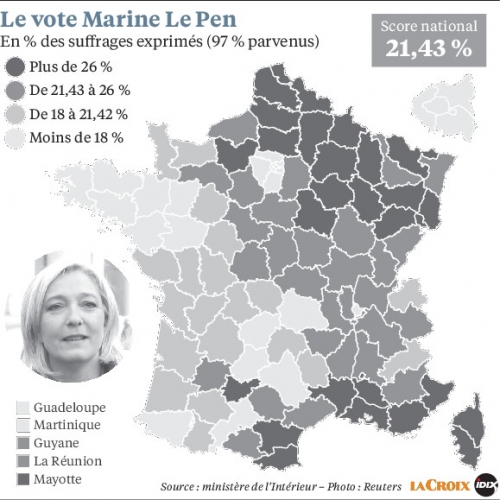
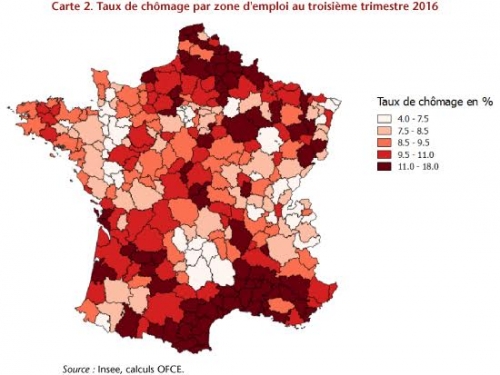
The White “popular bloc” is not coherent politically but is basically entropic. The yellow-vests, themselves not an organized group at all, did not so much have a political program but a set of concerns essentially revolving around purchasing power, public services declining areas, and direct democracy. The most clear and political demand of the yellow-vests was the famous Citizen Initiative Referendum (RIC), similar to practices in Switzerland or California. This measure, whatever its merits, is more about means than ends and is entropic as such.
Marine Le Pen’s National Rally, the other great manifestation of this bloc, is characterized by a mix of socialistic civic nationalism and political opportunism. Given the travails of the Brexit and Trump experiences, one wonders how an eventual National Rally administration would or could govern, especially if virtually the entire French educated class would similarly rise in opposition.
The other great emerging bloc(s) is that made up of France’s fast-growing African and Islamic communities. I would have liked more information on this group. There is data indicating that French Muslims are considerably endogamous (most marry within their own ethny, though there is some variation by community). While the French overwhelmingly support abortion and homosexuality, only small majorities of Muslims do, an important marker of limited convergence. He also observes that a significant minority of Muslims are entering the middle and upper classes, and indeed that the more educated a Muslim is the more likely he or she is to be married to a native French.
However, other indicators of “assimilation” have if anything gone into reverse since the early 2000s: more Muslim women are wearing headscarves, Muslim youth are more likely to say sex before marriage is immoral than their elders (75% to 55%), and two thirds of young Muslims support censorship blasphemy and one quarter condones the murder of cartoonists mocking Mohamed. The War on Terror and renewed Arab-Israeli conflict appear to have rekindled Muslim identity in France. What’s more the sheer number of Muslims and the unending flow from the home country appear to be making them more confident in rejecting assimilation.
In the coming decades, we can reasonably expect French society to become polarized between an Afro-Islamic bloc, united by economic interests and ethno-religious grievances, and a middle/lower class White bloc. And I use the word White, rather than native French, advisedly: many prominent French nationalists and their supporters are of Italian, Polish, or Portuguese origin.
To his credit, Fourquet repeatedly emphasizes the scale and unprecedented nature of the ethno-religious changes in the French population. He also discretely observes the potential for conflict, saying of Paris: “This great diversity is the source of tensions (the demographic balance within certain neighborhoods is changing according to the arrival or reinforcement of this or that group)” (p. 377). And then hidden away in a footnote: “In a multiethnic society, the relative weight of different groups becomes a crucial matter, as individuals seek a territory in which their group is the majority or at least sufficiently numerous.” Indeed.
Fourquet concludes:
At the heart of the capital-island [Paris], the elites reassure themselves in the face of their opponents’ impotence. In so doing, they think that they can rely on the traditional exercise of authority without having to draw the consequences of the birth of a France with a new form and new drives: a multiple and divided nation. (p. 379)
This book left me curious, but also unnerved, about the further social transformations in store for our societies, even beyond the ethnic factor. The disturbing trends in France very much have their analogues in other Western nations. White proles – vilified by their own ruling class or left to their own devices – are in sorry shape. Western elites have lost their collective minds. Looking further afield, how will individualism and social fragmentation manifest in other nations, such as Israel or Japan? Will authoritarian states like China be better able to manage these tendencies, or not? To what extent will these trends intensify? What new trends will emerge in coming decades with advent of yet more new technologies? Amidst this uncertainty, there will certainly also be political opportunities.

 del.icio.us
 Digg
Digg Facebook








 Mais qu’est-ce que « sauver » veut dire ? Sauver est apporter le salut, cela nous le savons, tout le monde le sait sans néanmoins comprendre profondément la portée d’un tel geste. Apporter le salut, s’il faut donc définir correctement cette expression, signifie faire l’effort de redonner son intégrité à une personne, la considérer en son entièreté. Il ne s’agit donc point originellement d’une action visant à la soustraire d’un danger extérieur à elle-même, donc de se permettre soi-même de la dominer de ses sentiments prétendument supérieurs. Cela est autre chose que le salut. C’est d’ailleurs l’attitude prétentieuse qui prédomine dans notre monde lorsque de l’homme l’on désire en faire autre chose que ce qu’il est ! Mais nous y reviendrons.










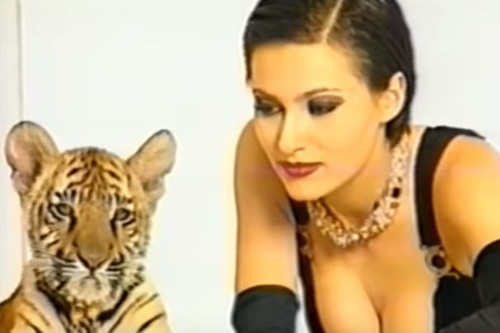
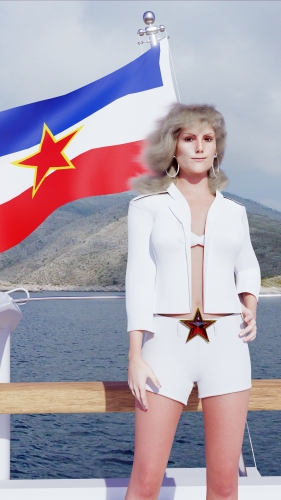 Dès les années 1980, Lepa Brena alias Fahreta Živojinovitch remplit les salles en Bosnie-Herzégovine yougoslave post-titiste. Dix ans plus tard, la Serbe Ceca vend plus de dix millions de disques. Svetlana Ražnatovitch de son vrai nom épouse en 1995 le célèbre commandant Arkan, chef des Tigres, le nom courant pour désigner la Garde des volontaires serbes dans la guerre contre la Croatie. Un policier assassine son mari en 2000 à 47 ans. Malgré un destin tragique à la George Floyd, cette disparition ne suscite pas une protestation planétaire… Ceca met ensuite son immense popularité au service d’un modeste club de football belgradois.
 Contrairement à l’Occident mondialisé et dégénéré où un répertoire clairement nationaliste l’exclurait aussitôt des cénacles artistiques, Miroslav Ŝkoro a présidé de longues années le conseil d’administration de la plus grande société d’édition musicale croate. Il se joint parfois aux concerts de son ami Marko Perkovitch Thompson avec qui il chante la foi, le travail, la famille, la patrie, l’armée et l’honneur. Interdit de séjour dans différents États membres de la pseudo-Union européenne, Marko Perkovitch Thompson, 54 ans, enthousiasme toujours un public jeune et fidèle dans des concerts au décorum souvent politisé. En 2012, 43 % des lycéens croates écoutaient du turbofolk! Perkovitch Thompson s’en écarte toutefois pour privilégier un autre courant musical tout aussi entraînant : l’ethno-rock.
 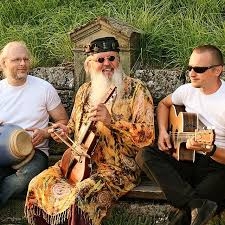 On ne doit pas confondre le turbofolk, l’ethno-rock et l’électro-folk avec la « Oï ! », la musique skinhead, le RAC (rock anti-communiste) et le RIF (rock identitaire français). La synthèse heureuse entre le rock et la musique vernaculaire ne s’opère pas encore dans l’Hexagone à l’exception notable d’un sympathique et talentueux groupe gascon. Boisson Divine est ce qui se rapproche le plus du turbofolk balkanique. Ces genres musicaux valent en tout cas mille fois mieux que l’abject rap des banlieues américanosphériques.
 Sur ce dernier point, on se souvient par exemple de la stratégie employée par les cigarettiers américains pour étendre leur marché. Durant la première guerre mondiale ils avaient généreusement distribué des cigarettes aux soldats. Résultat, après la fin des hostilités, la plupart des hommes fumait. Mais comment faire fumer les femmes ? Les cigarettiers ont donc sollicité Edward Bernays, publicitaire et neveu de Sigmund Freud. Celui-ci s’est adressé aux suffragettes et féministes, les incitant à défiler clopes au bec, devant les caméras, lors du traditionnel défilé de la parade de Pâque 1929. Les cigarettes étaient appelées « torches de la liberté ». Ainsi, grâce à Bernays, fumer devenait soudainement le symbole de la conquête du pouvoir masculin et de la libération de la femme... au prix de quelques cancers mais pour le plus grand profit de l’industrie cigarettière (contrôlée par des hommes) ! Un cas d’école !
 Paradoxalement, c’est bien dans des loges masculines que s’élabore l’idéologie féministe. Si la franc-maçonnerie est alors le laboratoire de pensée de la République (elle le reste assez largement aujourd’hui), la République est alors un instrument au service de la banque, de la finance et de l’industrie (idem). Le sas entre les trois entités est donc loin d’être étanche : les francs-maçons sont surreprésentés dans les instances républicaines (à titre d’exemple, six présidents de la IIIe République sont francs-maçons), et le rôle des francs-maçons élus se cantonne essentiellement à défendre les intérêts bien compris de l’oligarchie. De là ces scandales qui, lorsqu’ils éclatent, éclaboussent à la fois la franc-maçonnerie, la République et l’oligarchie (krach boursier de 1882, scandale des décorations, scandale de Panama…). Tout cela pour dire que la franc-maçonnerie n’aurait jamais pu fonder le féminisme s’il y avait eu le moindre danger que le féminisme soit contraire aux intérêts de l’oligarchie. Bien au contraire : la « libération de la femme » sort la femme de son foyer et la livre pieds et poings liés à un patronat immoral et cupide. De fait, la « libération de la femme » double la main d’œuvre disponible et, comme aujourd’hui avec l’immigration (les mêmes sont à la manœuvre), fait peser à la baisse sur les salaires. Les féministes sont les idiotes utiles du Grand Capital… et de ses agents francs-maçons, qui sont historiquement des hommes (notons que le rôle de la franc-maçonnerie dans l’élaboration du féminisme apparaît très clairement dans d’autres pays que la France. Citons notamment l’Espagne, la Grande-Bretagne ou les Etats-Unis…).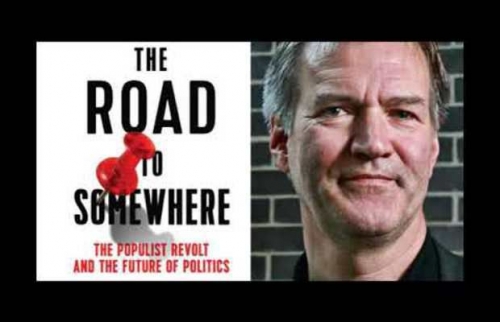
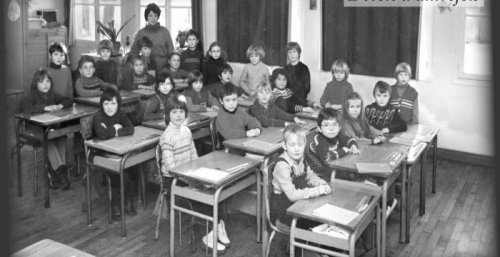
 Dans toute l’Europe francophone apparaît brusquement « rénové », c’est-à-dire en rupture avec l’autorité magistrale, les techniques de dressage (Roland Barthes qualifie l’orthographe de « fasciste »), l’enracinement dans l’histoire nationale et l’apprentissage des langues anciennes (latin, grec). On retrouve dans la mentalité des Partout cette hantise de la « réalisation de soi » au mépris de toute règle contraignante, de toute référence au passé et de tout sentiment d’appartenance à une communauté organique.
 À l’époque où j’étudiais à l’Université de Bruxelles, il y avait deux cités universitaires : l’une pour les garçons au cœur du campus, l’autre pour les jeunes filles légèrement en dehors. Ainsi pouvaient déjà se côtoyer, vers 1970, des jeunes provenant de toutes les provinces du Royaume. Le programme Erasmus, d’abord à l’échelon européen, puis au plan mondial, accentue ensuite cet élargissement des horizons et l’impression que « le monde est un village », pour reprendre le titre d’une émission créée par la radio belge francophone en 1998. « La massification de l’enseignement supérieur », l’émergence d’un « secteur universitaire hypertrophié » : voilà des phénomènes qui remontent aux années 1960, vont de pair avec une disqualification du travail manuel et ipso facto avec l’immigration fournissant au patronat une armée de réserve, une classe ouvrière de rechange.
 J
J 1 :
1 : 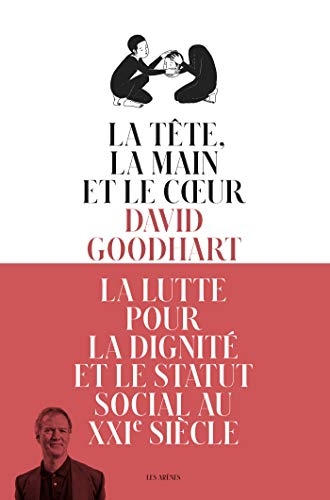
 Après bien d’autres, d’ailleurs cités par l’auteur (y compris Charles Murray
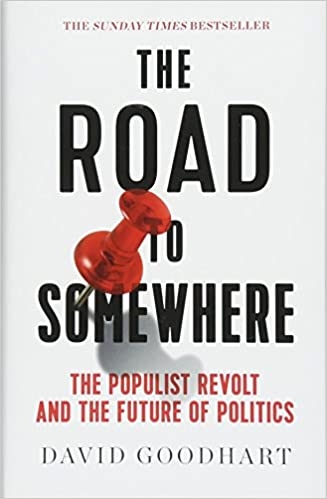 C’est la sélection croissante, au cours de 70 dernières années, sur les performances cognitives dans l’éducation supérieure qui a abouti à la création d’une classe cognitive, renforcée aujourd’hui par l’endogamie cognitive (combinant héritage génétique et ressources pour l’éducation), rendue plus facile avec l’accès croissant des femmes à l’éducation supérieure. Dans Coming Apart , Charles Murray avait montré que Princeton et Yale accueillaient plus d’étudiants provenant du dernier centile que des 6 premiers déciles de revenu.
 Et en politique
 L’économie du soin a un double problème : il est de moins en moins attractif et ceux qui y travaillent s’en vont, souvent désenchantés. Les hommes, particulièrement ceux qui ont un faible statut, ont perdu, sans pouvoir rien mettre à la place, leur rôle principal qui était celui de gagner l’argent de la famille. Un nombre disproportionné de métiers qui ne peuvent être automatisés sont traditionnellement occupés par des femmes, métiers qui n’attirent pas les hommes. Daniel Susskind, dans A World Without Work, publié en 2020, rapporte les résultats d’une enquête au Royaume-Uni selon laquelle « la plupart des hommes qui ont perdu leur emploi industriel préfèrent ne pas travailler que de prendre un “pink collar work” » (traduction personnelle).
 S’il faut préserver les procédures de sélection méritocratiques, il faut aussi veiller à répartir respect et statut plus équitablement en élargissant les sources de réussite et en élevant le statut de ceux qui ne vont pas à l’université. Les dernières recherches sur les capacités cognitives pourraient nous y aider. Une étude menée à l’université Carnegie Mellon aux États-Unis définit trois types de styles cognitifs : la verbalisation (journalistes, avocats…) ; la visualisation spatiale (ceux qui pensent analytiquement : ingénieurs, mathématiciens…) ; la visualisation des objets (artistes…) qui ont tendance à penser un contexte plus large. Mais la diversité doit aussi s’appliquer aux idéologies et valeurs politiques.










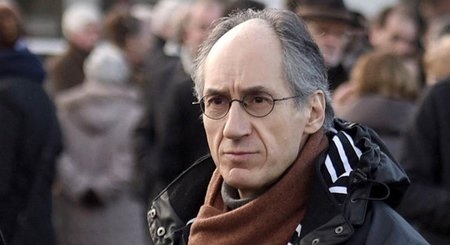 The chief editor of Charlie Hebdo is aware of this discriminatory order and approves of it. A
 Elites are unhappy with us, the people, says
  This is the view of a Moroccan-French author, Youssef Hindi, a friend and a co-worker with Alain Soral. He has asserted that Jews have systematically infiltrated Muslim and Christian elites in order to stimulate destructive wars between Muslims and Christians, for the benefit of Jews alone, who will thus be able to settle in the Holy Land, drive out the original inhabitants, and establish a world empire of nations obedient to Jerusalem, which is the ultimate content of Jewish Messianism. Hindi’s West and Islam has the caption “Messianic sources and the genesis of Zionism from medieval Europe to the Clash of Civilizations”.