Kerry BOLTON
Filippo Marinetti is unlike most of the post-nineteenth Century cultural avant-garde who were rebelling against the spirit of several centuries of liberalism, rationalism, the rise of the democratic mass, industrialism, and the rule of the moneyed elite. His revolt against the leveling impact of the democratic era was not to hark back to certain perceived ‘golden ages’ such as the medieval eras upheld by Yeats and Evola, or to reject technology in favor of a return to rural life, as advocated by Henry Williamson and Knut Hamsun. To the contrary, Marinetti embraced the new facts of technology, the machine, speed, and dynamic energy, in a movement called Futurism.
The futurist response to the facts of the new age is therefore a quite unique reaction from the anti-liberal literati and artists and one that continues to influence certain aspects of industrial and post-industrial sub cultures. An example of a contemporary cultural movement paralleling Futurists is New Slovenian Art, which like futurism embodies music, graphic arts, architecture, and drama. It is a movement whose influence is felt beyond the borders of Slovenia. The best-known manifestation of this art form is the industrial music group Laibach.
Marinetti is also the inventor of free verse in poetry, and Futurist adherents have had a lasting impact on architecture, motion pictures and the theater. The Futurists were the pioneers of street theatre. They inspired both the Constructivist movement in the USSR and the English Vorticists Ezra Pound and Wyndham Lewis.
Marinetti was born in Alexandria Egypt in 1876. He graduated in law in Genoa in 1899. Although the political and philosophical aspects of the course held his interest, he traveled frequently between France and Italy and interested himself in the avant-garde arts of the later nineteenth Century promoting young poets in both countries. He was already a strong critic of the conservative and traditional approaches of Italian poets. He was at this time an enthusiast for the modern, revolutionary music of Wagner, seeing it as assailing “equilibrium and sobriety . . . meditation and silence . . . ”
By 1904, Futurist elements had manifested in his writing, particularly in his poem Destruction that he called “an erotic and anarchist poem,” a eulogy to the “avenging sea” as a symbol of revolution. After an apocalyptic destruction, the process of rebuilding begins on the ruins of the “Old World.” Here already is the praise of death as a dynamic and transformative.
 With the death of Marinetti’s father in 1907, his wealth allowed him to travel widely and he became a well-known cultural figure throughout Europe. Nietzsche was at this time one of the most well-known intellectuals who desired liberation from the old order. Nietzsche was widely read among the literati of Italy, and D’Annunzio was the most prominent in promoting Nietzsche. Among the other philosophers of particular importance whom Marinetti studied was the French syndicalist theorist Georges Sorel, who inclined towards the anarchism of Proudhon. This rejected Marxism in favor of a society comprised of small productive, cooperative units or syndicates; and founded a new myth of heroic action and struggle. Rejecting much of the pacifism of the left. Sorel viewed war as a dynamic of human action. Sorel in turn was himself influenced by Nietzsche, and applying the Nietzschean Overman to socialism, states that the working class revolution requires heroic leaders. Sorel became influential not only among Left wing syndicalists but also among certain radical nationalists in both France and Italy.
Futurist Manifesto
Marinetti’s artistic ideas crystallized in the Futurist movement that originated from a meeting of artists and musicians in Milan in 1909 to draft a Futurist Manifesto. With Marinetti were Carlo Carra, Umberto Boccioni, Luigi Russolo and Gino Severini. The manifesto was first published in the Parisian paper Le Figaro, and exhorted youth to, “Sing the love of danger, the habit of energy and boldness.”
 The Futurists were contemptuous of all tradition, of all that is past:
We want to exult aggressive motion . . . we affirm that the magnificence of the world has been enriched by a new beauty: the beauty of speed.
The machine was poetically eulogized. The racing car became the icon of the new epoch, “which seems to run as a machine gun.” The Futurist aesthetic was to be joy in violence and war, as “the sole hygiene of the world.” Motion, dynamic energy, action, and heroism were the foundations of “the culture of the Futurist future. The fisticuffs, the sprint and the kick were expressions of culture. The Futurist Manifesto is as much a challenge to the political and social order as it is to the status quo in the arts.
It declared:
1. We intend to sing the love of danger, the habit of energy and fearlessness.
2. Courage, audacity, and revolt will be essential elements of our poetry.
3. Up to now literature has exalted a pensive immobility, ecstasy, and sleep. We intend to exalt aggressive action, a feverish insomnia, the racer’s stride, the mortal leap, the punch and the slap.
4. We affirm that the world’s magnificence has been enriched by a new beauty: the beauty of speed A racing car whose hood is adorned with great pipes, like serpents of an explosive breath–a roaring car that seems to ride on grape shot is more beautiful than the victory of Samothrace.
5. We want to hymn the man at the wheel, who hurls the lance of his spirit across the Earth, along the circle of its orbit.
6. The poet must spend himself with ardor, splendor, and generosity, to swell the enthusiastic fervor of the primordial elements. Except in struggle, there is no more beauty. No work without an aggressive character can be a masterpiece. Poetry must be conceived as a violent attack on unknown forces, to reduce and prostrate them before man.
7. We stand on the last promontory of the centuries. Why should we look back when what we want is to break down the mysterious doors of the impossible? Time and space died yesterday. We already live in the absolute, because we have created eternal, omnipresent speed.
8. We will glorify war–the world’s only hygiene–militarism, patriotism, the destructive gesture of freedom-bringers, the beautiful ideas that kill, and scorn for women.
9. We will destroy the museums libraries academies of every kind, will fight moralism feminism, every opportunistic or utilitarian cowardice.
10. We will sing of great crowds excited by work, by pleasure, and by riot. We will sing of the multi-colored, polyphonic tides of revolution in the modem capitals, we will sing of the vibrant nightly fervor of arsenals and shipyards blazing with violent electric motors, greedy railway stations that devour smoke-plumed serpents, factories hung on clouds by the crooked lines of their smoke; bridges that stride the rivers like giant gymnasts, flashing in the sun with a glitter of knives; adventurous steamers that sniff the horizon: deep-chested locomotives whose wheels paw the tracks like the hooves of enormous steel horses bridled by tubing: and the sleek flight of planes whose propellers chatter in the wind like banners and seem to cheer like an enthusiastic crowd.
It is from Italy that we launch through the world this violently upsetting incendiary manifesto of ours. With it, today, we establish Futurism, because we want to free this land from its smelly gangrene of professors, archaeologists, ciceroni and antiquarians. For too long has Italy been a dealer in second-hand clothes. We mean to free her from the numberless museums that cover her like so many graveyards.
Museums: cemeteries! . . . Identical, surely, in the sinister promiscuity of so many bodies unknown to one another. Museums: public dormitories where one lies forever beside hated or unknown beings. Museums: absurd abattoirs of painters and sculptors ferociously slaughtering each other with color-blows and line-blows, the length of the fought-over walls!
That one should make an annual pilgrimage, just as one goes to the graveyard on All Souls’ Day, that we grant. That once a year one should leave a floral tribute beneath the Gioconda, I grant you that . . . but I don’t admit that our sorrows, our fragile courage, our morbid restlessness should be given a daily conducted tour through the museums. Why poison ourselves? Why rot? And what is there to see in an old picture except the laborious contortions of an artist throwing himself against the barriers that thwart his desire to express his dream completely? Admiring an old picture is the same as pouring our sensibility into a funerary urn instead of hurtling it far off in violent spasms of action and creation.
Do you then wish to waste all your best powers in this eternal and futile worship of the past, from which you emerge fatally exhausted, shrunken, beaten down?
In truth we tell you that daily visits to museums, libraries, and academies (cemeteries of empty exertion, Calvaries of crucified dreams, registries of aborted beginnings!) are, for artists, as damaging as the prolonged supervision by parents of certain young people drunk with their talent and their ambitious wills. When the future is barred to them, the admirable past may be a solace for the ills of the moribund, the sickly, the prisoner . . . But we want no part of it, the past, we the young and strong Futurists!
So let them come, the gay incendiaries with charred fingers! Here they are! Here they are! . . . Come on! set fire to the library shelves! Turn aside the canals to flood the museums! . . . Oh, the joy of seeing the glorious old canvases bobbing adrift on those waters, discolored and shredded! . . . Take up your pickaxes, your axes and hammers and wreck, wreck the venerable cities, pitilessly!
The oldest of us is thirty so we have at least a decade for finishing our work. When we are forty, other younger and stronger men will probably throw us in the wastebasket like useless manuscripts–we want it to happen!
They will come against us, our successors will come from far away, from every quarter, dancing to the winged cadence of their first songs, flexing the hooked claws of predators, sniffing dog-like at the academy doors the strong odor of our decaying minds which will have already been promised to the literary catacombs.
But we won’t be there . . . At last they’ll find us–one winter’s night–in open country, beneath a sad roof drummed by a monotonous rain. They’ll see us crouched beside our trembling aeroplanes in the act of warming our hands at the poor little blaze that our books of today will give out when they take fire from the flight of our images.
They’ll storm around us, panting with scorn and anguish, and all of them, exasperated by our proud daring, will hurtle to kill us. Driven by a hatred the more implacable the more their hearts will be drunk with love and admiration for us.
Injustice, strong and sane, will break out radiantly in their eyes. Art, in fact, can be nothing but violence, cruelty, and injustice.
The oldest of us is thirty: even so we have already scattered treasures, a thousand treasures of force, love, courage, astuteness, and raw will-power, have thrown them impatiently away, with fury, carelessly, unhesitatingly, breathless, and unresting . . . Look at us We are still untired! Our hearts know no weariness because they are fed with fire, hatred, and speed . . . Does that amaze you? It should, because you can never remember having lived! Erect on the summit of the world, once again, we hurl our defiance at the stars.
You have objections?–Enough! Enough! We know them . . . We’ve understood! . . . Our fine deceitful intelligence tells us that we are the revival and extension of our ancestors–Perhaps! . . . If only it were so!–But who cares? We don’t want to understand! . . . Woe to anyone who says those infamous words to us again! Lift up your heads. Erect on the summit of the world, once again we hurl our defiance after stars!”
A plethora of manifestos by Marinetti and his colleagues followed, futurist cinema, painting, music (“noise”), prose, plus the political and sociological implications.
 War, the World’s Only Hygiene
Marinetti’s manifesto on war shows the central place violence and conflict have in the Futurist doctrine.
We Futurists, who for over two years, scorned by the Lame and Paralyzed, have glorified the love of danger and violence, praised patriotism and war, the hygiene of the world, are happy to finally experience this great Futurist hour of Italy, while the foul tribe of pacifists huddles dying in the deep cellars of the ridiculous palace at The Hague. We have recently had the pleasure of fighting in the streets with the most fervent adversaries of the war and shouting in their faces our firm beliefs:
1. All liberties should be given to the individual and the collectivity, save that of being cowardly.
2. Let it be proclaimed that the word Italy should prevail over the word Freedom.
3. Let the tiresome memory of Roman greatness be canceled by an Italian greatness a hundred times greater.
For us today, Italy has the shape and power of a fine Dreadnought battleship with its squadron of torpedo-boat islands. Proud to feel that the martial fervor throughout the nation is equal to ours, we urge the Italian government, Futurist at last, to magnify all the national ambitions, disdaining the stupid accusations of piracy, and proclaim the birth of Pan-Italianism.
Futurist poets, painters, sculptors, and musicians of Italy! As long as the war lasts let us set aside our verse, our brushes, scapulas, and orchestras! The red holidays of genius have begun! There is nothing for us to admire today but the dreadful symphonies of the shrapnel and the mad sculptures that our inspired artillery molds among the masses of the enemy.
Artistic Storm Trooper
Marinetti brought his dynamic character into an aggressive campaign to promote Futurism. The Futurists aimed to aggravate society out of bourgeoisie complacency and the safe existence through innovative street theater, abrasive art, speeches, and manifestos. The speaking style of Marinetti was itself bombastic and thunderous. The art was aggravating to conventional society and the art establishment. If a painting was that of a man with a mustache, the whiskers would be depicted with the bristles of a shaving brush pasted onto the canvas. A train would be depicted with the words “puff, puff.”
Both the words and deeds of the Futurists matched the nature of the art in expressing contempt for the status quo with its preoccupation with “pastism” or the “passe.” Marinetti for example, described Venice as “a city of dead fish and decaying houses, inhabited by a race of waiters and touts.”
To the Futurist Boccioni, Dante, Beethoven and Michelangelo were “sickening” Whilst Carra set about painting sounds, noises and even smells. Marinetti traversed Europe giving interviews, arranging exhibitions, meetings and dinners. Vermilion posters with huge block letters spelling ‘futurism’ were plastered throughout Italy on factories, in dance halls, cafes and town squares. Futurist performances were organized to provoke riot. Glue was put onto seats. Two tickets for the same seat would be sold to provoke a fight. “Noise music” would blare while poetry or manifestos were recited and paintings shown. Fruit and rotten spaghetti would be thrown from the audience, and the performances would usually end in brawls.
Marinetti replied to jeers with humor. He ate the fruit thrown at him. He welcomed the hostility as proving that Futurism was not appealing to the mediocre.
Politics
The first political contacts of Marinetti and the Futurists were from the Left rather than the Right, despite Marinetti’s extreme nationalism and call for war as the “hygiene of mankind.” There were syndicalists and even some anarchists who shared Marinetti’s views on the energizing and revolutionary nature of war and gave him a reception.
In 1909, Marinetti entered the general elections and issued a “First Political Manifesto” which is anti-clerical and states that the only Futurist political program is “national pride,” calling for the elimination of pacifism and the representatives of the old order. During that year, Marinetti was heavily involved in agitating for Italian sovereignty over Austrian-ruled Trieste. The political alliance with the extreme Left began with the anarcho-syndicalist Ottavio Dinale, whose paper reprinted the Futurist manifesto. The paper, La demolizione was not especially anarcho-syndicalist, but of a general combative nature, aiming to unite into one “fascio” all those of revolutionary tendencies, to “oppose with full energy the inertia and indolence that threatens to suffocate all life.” The phrase is distinctly Futurist.
Marinetti announced that he intended to campaign politically as both a syndicalist and a nationalist, a synthesis that would eventually arise in Fascism. In 1910, he forged links with the Italian Nationalist Association, which from its birth also had a pro-labor, syndicalist aspect. In 1913 a Futurist political manifesto was issued which called for enlargement of the military, an “aggressive foreign policy,” colonial expansionism, and “pan-Italianism”; a “cult” of progress, speed, and heroism; opposition to the nostalgia for monuments, ruins, and museums; economic protectionism, anti-socialism, anti-clericalism. The movement gained wide enthusiasm among university students.
Interventionism
The chance for Italy’s “place in the sun” came with World War I. Not only the nationalists were demanding Italy’s entry into the war, but so too were certain revolutionary syndicalists and a faction of socialists led by Mussolini. From the literati came D’Annunzio and Marinetti.
In a manifesto addressed to students in 1914 Marinetti states the purpose of Futurism and calls for intervention in the war. Futurism was the “doctor” to cure Italy of “pastism,” a remedy “valid for every country.” The “ancestor cult far from cementing the race” was making Italians “anaemic and putrid.” Futurism was now “being fully realized in the great world war.”
The present war is the most beautiful Futurist poem which has so far been seen. Futurism was the militarization of innovating artists.
The war would sweep away all the proponents of the old and senile, diplomats, professors, philosophers, archaeologists, libraries, and museums.
The war will promote gymnastics, sport, practical schools of agriculture, business and industrialists. The war will rejuvenate Italy: will enrich her with men of action, will force her to live no longer off the past, off ruins and the mild climate, but off her own national forces.
The Futurists were the first to organize pro-war protests. Mussolini and Marinetti held their first joint meeting in Milan on March 31st 1915. In April, both were arrested in Rome for organizing a demonstration.
Futurists were no mere windbags. Nearly all distinguished themselves in the war, as did Mussolini and D’Annunzio. The Futurist architect Sant Elia was killed. Marinetti enlisted with the Alpini regiment and was wounded and decorated for valor.
Futurist Party
In 1918, Marinetti began directing his attention to a new postwar Italy. He published a manifesto announcing the Futurist Political Party, which called for “Revolutionary nationalism” for both imperialism and social revolution. “We must carry our war to total victory.”
Demands of the manifesto included the eight hour day and equal pay for women, the nationalization and redistribution of land to veterans; heavy taxes on acquired and inherited wealth and the gradual abolition of marriage through easy divorce; a strong Italy freed, from nostalgia, tourists, and priests; industrialization and modernization of “moribund cities” that live as tourist centers. A Corporatist policy called for the abolition of parliament and its replacement with a technical government of 30 or 40 young directors elected form the trade associations.
The Futurist party concentrated its propaganda on the soldiers, and recruited many war veterans of the elite Arditi (daredevils), who had been the black-shirted shock troops of the army who would charge into battle stripped to the waist, a grenade in each hand and a dagger between their teeth.
In December 1919, the Futurists revived the “Fasci” or “groups.” which had been organized in 1914 and 1915 to campaign for war intervention, and from which was to emerge the Fascists.
Futurists and Fascists
The first joint post-war action between Mussolini and Marinetti took place in 1919 when a Socialist Party rally was disrupted in Milan.
That year Mussolini founded his own Fasci di Combattimento in Milan with the support of Marinetti and the poet Ungasetti. The futurists and the Arditi comprised the core of the Fascist leadership. The first Fascist manifesto was based on that of Marinetti’s Futurist party.
In April, against the wishes of Mussolini who thought the action premature, Marinetti led Fascists and Futurists and Arditi against a mass Socialist Party demonstration. Marinetti waded in with fists, but intervened to save a socialist from being severely beaten by Arditi. (To place the post-war situation in perspective, the Socialists had regularly beaten, abused, and even killed returning war veterans). The Fascists and futurists then proceeded to the offices of the Socialist Party paper Avanti, which they sacked and burned.
Marinetti stood as a Fascist candidate in the 1919 elections and persuaded Toscanini to do so. Whilst the Fascists held back, the Futurists threw their support behind the poet-soldier D’Annunzio’s takeover of Fiume. Marinetti arrived and was warmly welcomed by D’Annunzio.
When the Fascist Congress of 1920 refused to support the Futurist demand to exile the King and the Pope, Marinetti and other Futurists resigned from the Fascist party. Marinetti considered that the Fascist party was compromising with conservatism and the bourgeoisie. He was also critical of the Fascist concentration on anti-socialist agitation and on opposition to strikes. Certain futurist factions realigned themselves specifically with the extreme Left. In 1922, there were several Futurist exhibitions and performances organized by the Communist cultural association, Pro-letkul, which also arranged a lecture by Marinetti to explain the doctrine of Futurism.
Futurism and the Fascist Regime
When the Fascists assumed power in 1922 Marinetti, like D’Annunzio, was critically supportive of the regime. Marinetti considered: “The coming to power of the Fascists constitutes the realization of the minimum futurist program.”
Of Mussolini the statesman, Marinetti wrote: “Prophets and forerunners of the great Italy of today, we Futurists are happy to salute in our not yet 40-year-old Prime Minister of marvelous futurist temperament.”
In 1923, Marinetti began a rapprochement with the Fascists and presented to Mussolini his manifesto “The Artistic Rights Promoted by Italian Futurists.” Here he rejected the Bolshevik alignment of Futurists in the USSR. He pointed to the Futurist sentiments that had been expressed by Mussolini in speeches, alluding to Fascism being a “government of speed, curtailing everything that represents stagnation in the national life.”
Under Mussolini’s leadership, writes Marinetti:
Fascism has rejuvenated Italy. It is now his duty to help us overhaul the artistic establishment . . . . The political revolution must sustain the artistic revolutions Marinetti was among the Congress of Fascist Intellectuals who in 1923 approved the measures taken by the regime to restore order by curtailing certain constitutional liberties amidst increasing chaos caused by both out-of-control radical Fascist squadisti and anti-Fascists.
At the 1924 Futurist Congress, the delegates upheld Marinetti’s declaration:
The Italian Futurists, more than ever devoted to ideas and art, far removed from politics, say to their old comrade Benito Mussolini, free yourself from parliament with one necessary and violent stroke. Restore to Fascism and Italy the marvelous, disinterested, bold, anti-socialist, anti-clerical, anti-monarchical spirit . . . Refuse to let monarchy suffocate the greatest, most brilliant and just Italy of tomorrow . . . Quell the clerical opposition . . . . With a steely and dynamic aristocracy of thought.
In 1929, Marinetti accepted election to the Italian Academy, considering it important that “Futurism be represented” He was also elected secretary of the Fascist Writer’s Union and as such was the official representative for fascist culture. Futurism became a part of fascist cultural exhibitions and was utilized in the propaganda art of the regime. During the 1930s, in particular the Fascist cultural expression was undergoing a drift away from tradition and towards futurism, with the fascist emphasis on technology and modernization. Mussolini had already in 1926 defined the creation of a “fascist art” that would be based on a synthesis culturally as it was politically: “traditionalistic and at the same time modern.”
In 1943, with the Allies invading Italy, the Fascist Grand Council deposed Mussolini and surrendered to the occupation forces. The fascist faithful established a last stand, in the north, named the Italian Social Republic.
With a new idealism, even former Communist and liberal leaders were drawn to the Republic. The Manifesto of Verona was drafted, restoring various liberties, and championing labor against plutocracy within the vision of a united Europe. Marinetti continued to be honored by the Social Republic. He died in 1944.



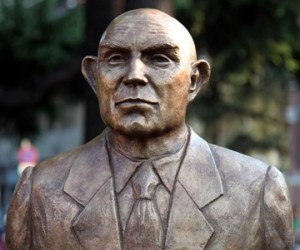 Le idee politiche sono paragonabili a quei fiumi “carsici” che nei loro tortuosi e rapidi percorsi sprofondano nelle viscere delle montagne per riaffiorare, poi e a distanza di molti chilometri, improvvisamente e più impetuosi di prima.
 del.icio.us
 Digg
Digg Facebook
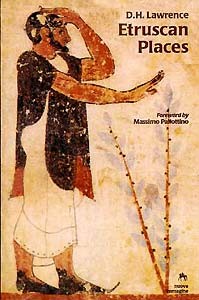 C’est à la fin du VIIe siècle avant la naissance du Christ qu’apparaît en Toscane une population que les Latins appelleront Tusci ou Etrusci, dont les origines continuent de rester énigmatiques. On suggère aujourd’hui que la culture étrusque est née d’un ancien substrat local qui s’est lentement modifié au cours des différentes vagues de population s’installant en Italie, tandis que l’hypothèse qui prévalait au début du siècle passé rejoignait le récit d’Hérodote, d’après lequel ce peuple serait venu par la mer de Lydie.
 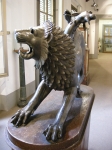 Lawrence, suivant en cela la leçon d’un nombre incalculable d’auteurs mais sans toutefois tomber dans le délire de certains qui, comme Keyserling, fonda à Darmstadt en 1920 une École de la Sagesse dénonçant les limites de la culture occidentale et puisant son enseignement de pacotille dans une Inde fantasmée, confère au monde ancien une vertu éminente : au contraire de ce que nous pouvons constater à notre époque de spécialistes qui poussent de grands cris dès qu’un esprit un peu audacieux essaie de créer des passerelles entre plusieurs domaines de savoir, le monde ancien ne craignait pas d’établir des parentés symboliques, donc réelles, entre les êtres vivants et les choses, reliés par un flux souterrain de sang (5). «Merveilleux monde, écrit ainsi Lawrence, qu’était sans doute ce monde ancien où toutes choses semblaient vivantes, luisantes dans l’ombre crépusculaire du contact qui les faisait se toucher, un monde où chaque chose n’était pas seulement une individualité isolée prise au piège de la lumière diurne; où chaque chose apparaissait en son clair contour, visuellement, mais qui du sein de sa clarté même était reliée par des affinités émotionnelles ou vitales à d’autres choses étranges, une chose surgissant d’une autre, mentalement contradictoires qui fusionnaient dans l’émotion, si bien qu’un lion pouvait au même instant être aussi une chèvre, et ne pas être une chèvre [Lawrence a évoqué précédemment la chimère en bronze d’Arezzo, conservée au musée de Florence et qui fut en partie restaurée par Benvenuto Cellini)» (p. 142).
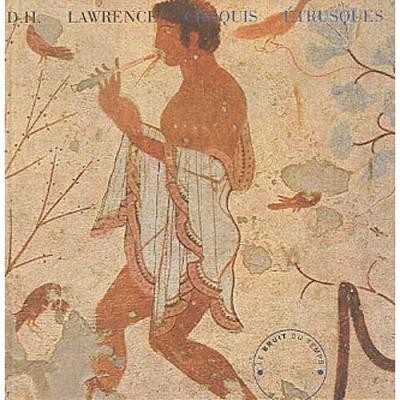 C’est dans un chapitre inachevé, resté à l’état de manuscrit et qui, peut-être, eût pu servir à Lawrence de conclusion pour ses Croquis étrusques, intitulé Le musée de Florence, que l’auteur va systématiser ses intuitions sur le thème d’une déperdition, au travers des siècles, d’une force rayonnante qui s’échappe désormais inéluctablement des œuvres des hommes. Ainsi, selon Lawrence, nous devons bien comprendre que les religions elles-mêmes de nos ancêtres les plus magnifiques, comme le sont, à ses yeux, les Étrusques, ne sont que des bribes d’un savoir immémorial ayant précédé les plus anciennes civilisations : «Ce qu’il nous faut saisir lorsque nous contemplons des œuvres étrusques, c’est que celles-ci nous révèlent les derniers feux d’une conscience cosmique humaine – disons, la tentative d’hommes aspirant à la conscience cosmique – différente de la nôtre. L’idée qui veut que notre histoire soit issue des cavernes ou de précaires habitats lacustres est puérile. Notre histoire prend corps à l’achèvement d’une phase précédente de l’histoire humaine, une phase prodigieuse et comparable à la nôtre. Il est bien plus vraisemblable que le singe descende de nous que nous du singe» (p. 225). Renversement de perspective qui a dû faire bondir les esprits scientistes ou chagrins, c’est tout un, qui lurent les Croquis étrusques lorsqu’ils furent publiés ! On se demande même comment l’auteur n’a semble-t-il pas été traité de réactionnaire. Il l’a peut-être été, à la réflexion, tout comme on n’a pas manqué de lui reprocher son manque de sérieux scientifique (cf. la réception du livre, pp. 272-278). Citons donc longuement ce très beau passage, toujours extrait du même texte qui ne fut pas recueilli en livre par Lawrence, où il semble sérieusement douter de la théorie de l’évolution, l’homme ayant toujours été un homme, l’homme ne provenant pas du singe comme nous l’avons vu mais l’homme, pourtant, depuis qu’il s’est coupé de ses plus profondes racines de savoir symbolique, paraissant en revanche devoir dégénérer, dévoluer : «Les civilisations apparaissent comme des vagues, et comme des vagues elles s’évanouissent. Tant que la science, ou l’art, n’aura pu saisir le sens dernier de ces symboles flottant sur l’ultime vague de la période préhistorique, c’est-à-dire cette période qui précède la nôtre, nous ne serons pas en mesure d’instituer la juste relation avec l’homme en ce qu’il est, en ce qu’il fut, en ce que toujours il sera.
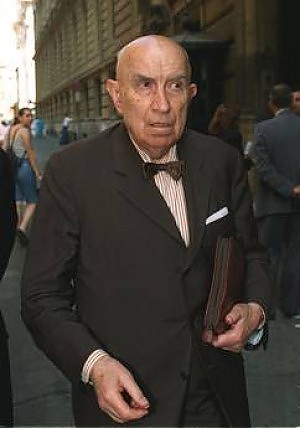 GIANFRANCO MIGLIO
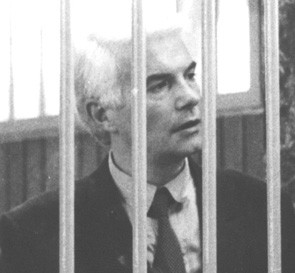 «Je hais ce livre. Je le hais de tout mon coeur. Il m’a donné la gloire, cette pauvre chose qu’on appelle la gloire, mais il est en même temps à l’origine de toutes mes misères. Pour ce livre, j’ai connu de longs mois de prison, (...) de persécutions policières aussi mesquines que cruelles. Pour ce livre, j’ai connu la trahison des amis, la mauvaise foi des ennemis, l’égoïsme et la méchanceté des hommes. C’est de ce livre qu’a pris naissance la stupide légende qui fait de moi un être cynique et cruel, cette espèce de Machiavel déguisé en cardinal de Retz que l’on aime voir en moi». Ces quelques lignes, écrites par Curzio Malaparte en introduction à son célèbre essai Technique du coup d’Etat, l’auteur de La désintégration du système, Giorgio Freda, aurait pu les faire siennes. Car, pour avoir rédigé cette modeste brochure qui, en une soixantaine de pages très denses, sape à la base le système bourgeois, ce jeune éditeur a subi des années de persécutions judiciaires et mediatiques.
 Mais Giorgio Freda est avant tout l’homme d’un texte. Et quel texte ! Il s’agit de La désintégration du système, qui voit le jour en 1969, en pleine contestation étudiante. L’Italie subit alors, non une explosion soudaine et aussi vite retombée comme en France, mais un «mai rampant». Convaincu de l’impérieuse nécessité d’une subversion radicale du monde bourgeois, Freda estime que tout doit être tenté, au moment où beaucoup de jeunes cherchent à donner un contenu véritablement révolutionnaire à la révolte étudiante, pour éviter que celle-ci ne soit récupérée par les tenants de l’orthodoxie marxiste ou du réformisme social-démocrate. C’est à ces jeunes que s’adresse La désintégration du système, qui loin d’être le programme personnel du seul Freda, synthétise des exigences communes à tout un milieu national-révolutionnaire, de Giovane Europa à Lotta di Popolo.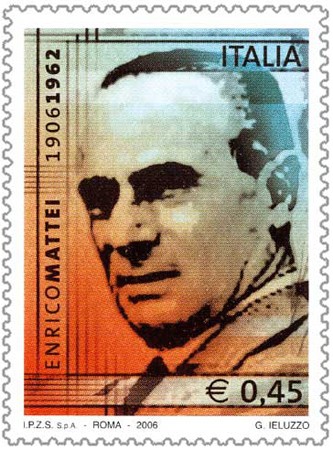
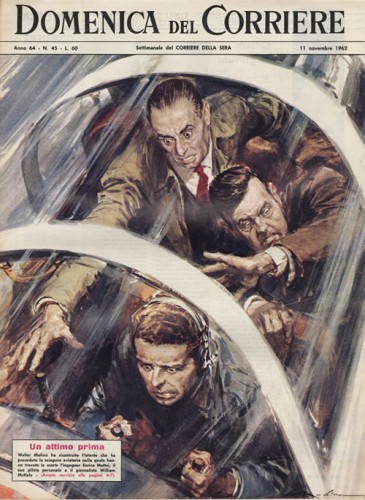 La politique autonome de l’ENI s’est adressée surtout aux pays du Proche et du Moyen Orient et d’Afrique du Nord. L’Iran fut évidemment l’exemple le plus prestigieux dans le palmarès du groupe italien, qui était parvenu à s’insinuer dans un pays considéré comme chasse gardée et exclusive de la « British Petroleum ». Mais il y eut aussi l’Egypte de Nasser : elle fut le premier pays avec lequel Mattei amorça des rapports stables et durables, dès 1956. Il faut aussi évoquer l’appui financier qu’accorda Mattei au Front de Libération National algérien, ce qui irrita bien entendu la France, dont la classe dirigeante s’était faite à l’idée de perdre ses territoires d’Outremer. Les rapports entre l’ENI et le FNL étaient de fait assez étroits : le chef politique du mouvement indépendantiste algérien, Mohammed Ben Bella, avait un appartement à sa disposition à Rome.
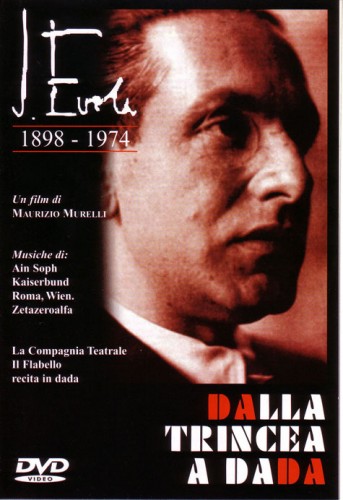 Renato del Ponte is a central figure in European Evolianism. Founder of the Centro studi evoliani in Genoa in 1969 and editor of the journal Arthos, he also runs the Roman Traditionalist Movement.





 N.S.
N.S. Così, nel sembrare un pessimista di natura, cerca nei suoi personaggi la chiave per descrivere l’uomo che cade in piedi. Che non è semplice, perché se cadi il segno di un livido ti rimane, cadendo e rimanendo in piedi il dolore lo senti solo dentro. Non è fisico, è solo mentale. Alfonso Nitti, bancario che lascia la mamma e si ritrova in una città che non sembra appartenergli, a cui non vuole appartenere, il personaggio di Una vita ricalca l’archetipo del debole, di colui che si arrende all’amore perché non è amato dalla donna che vorrebbe, che si arrende alla perfezione e alla cura estetica del collega che lo snerva nel suo essere borghese e arrivista, si arrende alla distanza inevitabile del suo capo, il Maller. Solo la morte per quanto crudele e distante, riuscirà ad avvicinarlo alla perfezione della vita, ma questo nemmeno servirà ad sentire più vicini quelli che lui considerava mal volentieri “colleghi”."La Banca Maller, in puro stile burocratico, annuncia un funerale che avviene con l’intervento dei colleghi e della direzione" (Una vita). Alfonso, che si dà colpe non sue, scriverà alla mamma: “Non credere, mamma, che qui si stia tanto male; sono io che ci sto male”. Non faceva nulla e quel nulla lo portava ad avere un’inerzia totale dinnanzi alle cose. Non era stanco, era solo annoiato. Tutti i giorni lì su quella sedia, tutti i giorni a subire e non capire, tutti i giorni un pezzo di vita che si vedeva portar via, ma la cosa assurda è che mentre gli altri “sembravano” contenti di vivere così, Alfonso era contento di non vivere. Avrà ragione Joyce a dire che nella penna di un uomo c’è un solo romanzo e che quando se ne scrivono diversi si tratta sempre del medesimo più o meno trasformato. Così da Una Vita si passa alla Coscienza di Zeno, che nel 1924 Svevo spedisce al suo ormai amico Joyce, trasferitosi a Trieste e suo professore di inglese che Livia Veneziani Svevo descriverà così: “Fra il maestro, oltremodo irregolare, ma d’altissimo ingegno e lo scolaro d’eccezione le lezioni si svolgevano con un andamento fuori dal comune”. Joyce, entusiasta del suo “allievo”, fa conoscere il manoscritto in Francia dove verrà pubblicato. In Italia sarà per merito di Eugenio Montale, sulle pagine della rivista L’Esame, che Svevo riuscirà ad avere la prima notorietà. Zeno Cosini che cerca di guarire da una malattia non ancora ben definita ed inizia il percorso psicoanalitico presso il Dottor S. Dottore che, per quanto poco si sforzi di capire il problema, non riuscirà a farlo e nel momento dell’abbandono della terapia da parte di Zeno si vendicherà pubblicando le memorie del suo paziente con la speranza che questo gli procuri dolore. Ma Zeno, che è più impegnato ad amare la sua sigaretta non farà altro che ridere e deridere il suo analista.
 Stupida come cosa, ma immediatamente riuscii a capire il veleno che ti attraversa le vene, riuscii a capire quanto sia debole un uomo dinnanzi ad un vizio, che non ti serve, che non è utile, che è dannoso, ma diventa vitale. E più di tutto mi impressionò in Zeno il tentativo di voler smettere e la volontà certa di non farlo mai. Il medico della casa di cura dove venne “rinchiuso” per smettere di fumare gli dice:"Non capisco perché lei, invece di cessare di fumare, non si sia piuttosto risolto di diminuire il numero delle sigarette che fuma". Il non averci mai pensato di Zeno risulta l’immagine migliore del romanzo, il dolore che vivi dallo stacco brutale da un qualcosa a cui sei morbosamente legato ti ripaga dell’amore per cui morbosamente sei legato a quella cosa. Così o si rinuncia in maniera totale o non si rinuncia. Così Zeno passerà ogni sera ad annotare una U.S, un’ultima sigaretta mai spenta.
 Nel 1997 Gualtiero Ciola pubblicava un’opera, poi ristampata, che costituiva un originale punto di riferimento per un’adeguata considerazione delle origini etniche dei popoli italiani. Nel suo corposo studio Noi, Celti e Longobardi, Ciola analizza le testimonianze archeologiche e linguistiche che hanno segnato il territorio della penisola italica, fornendo utili indicazioni per seguire nuovi percorsi di ricerca.
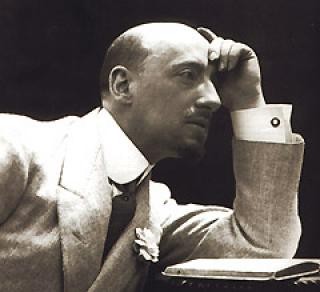 Das 20. Jahrhundert bot geistigen Abenteurern Entfaltungsmöglichkeiten, von denen wir Heutige angesichts einer »verwalteten Welt« nur träumen können. Eine dieser abenteuerlichen Biographien des letzten Jahrhunderts hatte der italienische Dichter, Krieger und Nationalist Gabriele D’Annunzio (1863–1938). Beeinflußt von der Lebensphilosophie Friedrich Nietzsches, eroberte er nach Ende des Ersten Weltkriegs handstreichartig die Adriastadt Fiume und errichtete eine nationalistische Herrschaft des totalen Lebens.
 The pages devoted to Spengler in The Path of Cinnabar are thus quite critical; Evola even concludes that the influence of Spengler on his thought was null. Such is not the opinion of an analyst of Spengler and Evola, Attilio Cucchi (in “Evola, Tradizione e Spengler,” Orion no. 89, 1992). For Cucchi, Spengler influenced Evola, particularly in his criticism of the concept of the “West”: by affirming that Western civilization is not the civilization, the only civilization there is, Spengler relativizes it, as Guénon charges. Evola, an attentive reader of Spengler and Guénon, would combine elements of the the Spenglerian and Guénonian critiques. Spengler affirms that Faustian Western culture, which began in the tenth century, has declined and fallen into Zivilisation, which has frozen, drained, and killed its inner energy. America is already at this final stage of de-ruralized and technological Zivilisation.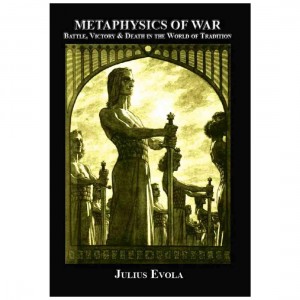



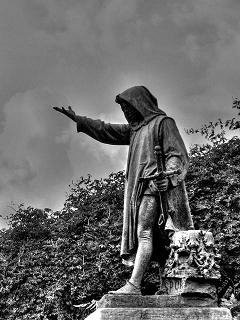 A young Italian nationalist leads his followers on a march through Rome, seizing power from corrupt elites to establish a palingenetic regime. Declaring himself Tribune, his ultimate aim is to recreate the power and glory of Ancient Rome. However, a conspiracy of his enemies topples him from power, and he is imprisoned. Eventually, the most powerful man in the West frees him and restores him to power — albeit as leader of a puppet regime. His second attempt at Italian rebirth is cut short; he is captured, killed, and his body desecrated by the howling mob. A man who had attempted to drive his degenerate countrymen to fulfill a higher destiny is cut down by the unthinking masses — a cowardly herd who lacked the ability to comprehend, much less work towards, this leader’s dreams of glory.

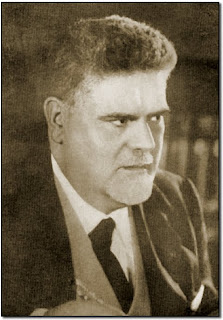

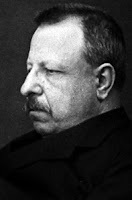

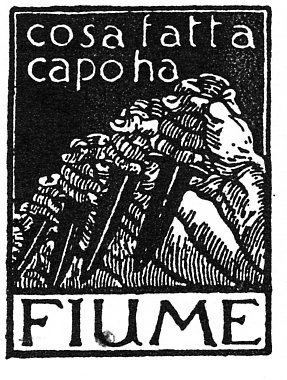 Gabriele d'Annunzio (1863-1938), au temps de la “Belle époque”, était le seul poète italien connu dans le monde entier. Après la première guerre mondiale, sa gloire est devenue plutôt “muséale”, sans doute parce qu'il l'a lui-même voulu. Il devint ainsi “Prince de Montenevoso”. Un institut d'Etat édita ses œuvres complètes en 49 volumes. Surtout, il tranforma la Villa Cargnacco, sur les rives du Lac de Garde, en un mausolée tout à fait particulier (“Il Vittoriale degli Italiani”) qui, après la seconde guerre mondiale, a attiré plus de touristes que ses livres de lecteurs. En Allemagne, d'Annunzio a dû être tiré de l'oubli en 1988 par l'éditeur non-conformiste de Munich, Matthes & Seitz, et par un volume de la célèbre collection de monographies “rororo”. Aujourd'hui, coup de théâtre, un volume collectif rédigé par des philosophes et des philologues nous confirme que la grand “décadant” a sans doute été le “dernier poète-souverain de l'histoire” (références infra). A quel autre écrivain pourrait-on donner ce titre?
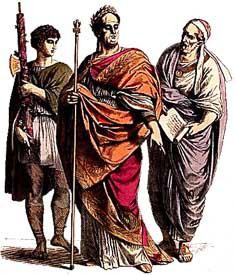 Negli anni che vanno dai primi del secolo XX al secondo dopoguerra, con le significative riprese ai giorni nostri (su cui poi ci soffermeremo), ma con intensificazione nel periodo iniziale della presa del potere da parte del fascismo sino al "culmine" rappresentato dalla Conciliazione dell'11 febbraio 1929, si è manifestata in Italia l'azione culturale, di pressione politica e anche il travaglio esoterico di un insieme composito di personalità, gruppi, riviste e tendenze che il prof. Piero di Vona per primo nel 1985 riassumeva per esigenze di chiarezza sotto la denominazione di "corrente romana del tradizionalismo" e che, almeno fino a pochi anni fa, non ha costituito una linea di pensiero omogenea, ben organizzata in un gruppo unitario e compatto dalle caratteristiche comuni, ideologicamente e politicamente parlando, ma una tendenza che poté assumere aspetti e sfaccettature differenti. Il significato dell'azione di questo insieme di personalità e gruppi, assai differente nell'impostazione e nei metodi, si è tradotto in pratica nella riproposizione del modello spirituale, religioso e rituale del paganesimo romano (che noi abbiamo proposto di definire meglio come "via romana agli déi"), che le autorità dello Stato italiano avrebbero daovuto fare proprio in contrapposizione alle ingerenze e allo strapotere politico e morale della Chiesa cattolica.


