Les ouvrages du Retour Aux Sources font la part belle aux méthodes d’organisation et d'action pensées par la gauche radicale (TAZ d’Hakim Bey, théorie des multitudes de Négri, éco-villages, …).
 Croyez-vous la droite anti-libérale incapable de produire des idées pertinentes et des outils opérationnels adaptés à notre époque en crise ?
La droite anti-libérale a de toute évidence un problème pour se penser en rupture avec le Système. Ceci peut paraître curieux, dans la mesure où elle est objectivement plus étrangère au Système que n’importe quelle autre tendance politique. Mais au fond, c’est logique : pour se penser en rupture avec le Système, il faudrait que la droite anti-libérale conceptualise une rupture au sein du concept général de « droite », car une partie de la « droite » est dans le Système. Or, la droite anti-libérale, prisonnière de l’illusion d’un continuum de la « droite », ne parvient pas à penser cette rupture.
Ici, il faut bien dire que les logiques de classe ont tendance à prendre le pas sur les logiques purement politiques : il y a toujours un moment où le bon bourgeois anti-libéral est renvoyé à ses contradictions : comment être un bourgeois anti-libéral, aujourd’hui ?
Bref, je ne crois pas que la droite anti-libérale soit incapable de produire des idées pertinentes. Je constate en revanche qu’elle a du mal à les concrétiser, et même à les amener au stade du programme, du plan d’action. La droite anti-libérale est une sensibilité qui ne peut pas s’organiser.
Penser restaurer le système, l'aider à s'auto-corriger ou lutter pour le réformer (comme le font les réactionnaires, par exemple) n'aura pour résultat que de retarder la fin du Cycle et le début du suivant, selon vous. Quel peut donc être le rôle à jouer et la voie à suivre par des hommes différenciés en cette fin de Kali-Yuga? Cultiver une conscience politique propre à la formation d'une élite capable d'encadrer une (hypothétique et future) révolte des masses? Montrer l'exemple en se plaçant en dehors du jeu (retraite physique, élévation individuelle)? Ou combiner les deux?
L’économie occidentale contemporaine n’est pas réformable. C’est une énorme machine hypersophistiquée, une bonne partie des pièces s’est mise à fonctionner sans souci de l’ensemble, on a perdu le cahier de maintenance, et pour tout arranger, le pilote de machine est sourd, fou et ivre mort. La seule chose à faire, c’est d’attendre que le moteur explose, en se protégeant autant que possible contre les projections ! La priorité pour des hommes différenciés, comme vous dites, c’est de se préparer à se sauver eux-mêmes, alors que nous allons vers une période très, très dure.
Au demeurant, je pense que ce travail, s’il est conduit à termes, portera des fruits au-delà de son objectif immédiat. Au fond, si nous nous organisons pour nous en tirer le mieux possible, nous produisons simultanément et spontanément un modèle que d’autres voudront imiter. Paradoxalement, penser un égoïsme collectif, dans le contexte actuel, c’est aussi une manière d’aider tous ceux qui ne peuvent plus penser que l’égoïsme individuel. Plus que la noblesse des intentions, il faut juger l’efficacité concrète, et sous cet angle, la démarche consistant à structurer une contre-société me paraît aujourd’hui la plus porteuse.
Le narrateur de Vendetta explique ses actes (des assassinats, ndlr) à mots (ironiquement) choisis : ceux du champs-lexical managérial (« expérience passionnante et vie pleine de sens », etc.).
Penser les médiations nécessaires à une révolution, avec les concepts du système, résonne comme un aveu d'incapacité à produire du sens à l’extérieur de la matrice. Sens que le dernier opus du Retour au Sources (G5G – La Guerre de Cinquième génération) se propose, lui, de recréer. Pouvez-vous nous en dire plus?
Vous avez très bien saisi l’esprit des deux livres. Vendetta est une description de ce que l’on peut redouter, si la démarche proposé dans G5G est empêchée.
Il ne faut pas perdre de vue que les révoltés structurent toujours leur révolte avec, à la base, les concepts, les catégories du système qu’ils combattent. C’est pourquoi le parti communiste soviétique avait repris une partie des « techniques de gouvernement » propres à l’Eglise orthodoxe. C’est pourquoi le cérémonial napoléonien avait récupéré une partie des us et coutumes de la société de cour à la française. Etc.
Vendetta a été écrit pour expliquer, en gros : le Hitler, le Staline, le Mao de demain sont dans les tuyaux, et c’est la « démocratie libérale » contemporaine qui est en train de les incuber. Elle les incube d’une part parce que son dérèglement finit par rendre la vie impossible aux gens, ce qui va les pousser à la révolte ; et d’autre part parce qu’elle leur apporte sur un plateau les ingrédients de la violence révolutionnaire future : primat de la jouissance, de l’instantanéité, réduction de l’expérience humaine à l’individualité, compensée par un fonctionnement en réseau fluide.
On commence d’ailleurs à voir poindre cette nouvelle violence politique. Cette semaine (NB : début janvier 2011), nous avons eu une tuerie aux USA, avec un type qui a ouvert le feu en aveugle, lors d’un rassemblement politique. C’est là une pulsion de destruction (et d’autodestruction) qui ne s’organise pas, ou alors seulement de manière informelle, en réseau, et qui ne poursuit aucun autre objectif que la satisfaction de ceux qui s’y livrent. C’est ce vers quoi nous allons : la dictature par l’anarchie, l’extrême violence incontrôlable servant de prétexte à l’encadrement paranoïaque, partout, tout le temps.
G5G, à l’inverse, consiste à dire : dépêchons-nous d’offrir une issue, une voie vers le dehors de ce Système devenu fou, et qui nous rend fous. G5G, c’est le seul antidote à Vendetta, si vous voulez.
Dans De la souveraineté, vous expliquez que le mondialisme néolibéral se caractérise par l'absence d'idéologie originelle, combinée à une pathologie narcissique et au profit comme finalité - ce tout menant, selon vous, à la dictature du matérialisme bourgeois (fortification de l'élite du capital et asservissement de la masse).
Vous y opposez une posture européenne et traditionnelle : celle de la soumission du corps à la force, et de la force à l'esprit. Cette posture est-elle consubstantielle, comme mentionné par ailleurs, d’un certain élitisme et d’une purification éthique (mais pas ethnique) inévitable?
Dans De la souveraineté, j’ai essayé de faire comprendre rapidement quelque chose à mes lecteurs, tout en sachant que c’est quelque chose qu’on ne peut faire comprendre rapidement qu’au prix d’un certain simplisme. Ce quelque chose, c’est : le Système dans lequel nous vivons est une idéologie, à l’intérieur de laquelle nous habitons, et si nous avons l’impression qu’il n’y a pas d’idéologie, c’est parce que nous sommes dedans. L’absence d’idéologie originelle perçue par nous à la racine du Système provient uniquement du fait que nous confondons notre habitation au monde avec le rapport spontané, naturel, immédiat, de l’homme au monde. C’est la différence entre notre totalitarisme et les défunts modèles soviétiques et nazis : chez Goebbels, chez Souslov, tout le monde savait qu’il existait une idéologie ; c’était visible, revendiqué, même. Chez nous, cela reste caché. A aucun moment, le capitalisme et le consumérisme contemporain ne se donnent explicitement pour des constructions idéologiques. Le néolibéralisme lui-même se vit comme une simple description du réel. Quand un économiste néolibéral confond profit comptable et richesse, il ne sait pas qu’il opère un choix idéologique ; dans son esprit, c’est pareil, forcément pareil.
Ce qui permet, à mon avis, de prendre conscience du caractère idéologique du mondialisme néolibéral, c’est le rappel tranché, brutal, des alternatives possibles. On ne se sait enfermé dans l’idéologie que quand on en voit le dehors. C’est pourquoi j’ai rappelé qu’il avait existé, et qu’il existait encore, des mondes où l’impératif consumériste en contrepoint de l’impératif productiviste aurait été à peu près complètement dénué de sens – des mondes où le corps était là pour construire la force, et la force nécessaire pour préserver l’esprit. Des mondes, en somme, où l’être se réalise en réalisant sa nature, et non en violant la nature autour de lui. Ce rappel permet de faire comprendre en quoi le mondialisme néolibéral est idéologique : quand on voit le dehors, on comprend qu’on est à l’intérieur de quelque chose, d’une construction, qui n’est pas tout le monde, seulement un certain rapport au monde.
Quant à la question de l’élitisme, à la nécessité d’une forme de purification, il ne faut pas en faire un impératif figé, une sorte d’affirmation par hypothèse, que je donnerais là, au nom de je ne sais quelle autorité imaginaire. Il s’agit surtout dans mon esprit de rendre pensable une alternative, donc de rendre possible l’énonciation du négatif. Que ce négatif soit énoncé à partir d’une alternative élitiste ou non-élitiste, en fait, peu m’importe : à mes yeux, l’essentiel, c’est qu’il soit à nouveau énoncé. C’est la dynamique collective qui doit définir l’alternative au nom de laquelle le négatif est énoncé.
Sous diverses formes (action violente, retraite armée), l’engagement physique tient une place de choix dans les ouvrages du Retour Aux Sources.
Si le Grand Jihad (lutte intérieure contre ses mauvais penchants) doit précéder le Petit Jihad (lutte physique), pourquoi choisir de mettre plus en lumière l’action de révolte – au détriment du cheminement intérieur et individuel qui y mène ?
Vous trouvez que l’engagement physique tient une place de choix ? Pour l’instant, ce n’est que du papier… Plus tard, on verra de quoi il retourne, quand on passera à la pratique.
On sait, grâce à Norbert Elias notamment, que l’interdiction de la violence conduit à un auto-contrôle qui s’étend inexorablement à tous les domaines de la moralité (autocensure,…).
Rejoignez-vous cette idée que, pour redevenir humain, il faut d’abord redevenir barbare ?
Je pourrais vous répondre que les barbares sont généralement contraints à un très fort autocontrôle, puisque leur barbarie peut à tout moment se manifester entre eux. En ce sens, on pourrait tout aussi bien retourner le propos, et dire que pour nous libérer de l’obligation de l’auto-contrôle, il faut au contraire nous re-civiliser.
C’est la Loi qui libère. L’auto-contrôle, l’auto-censure contemporains trouvent leur source dans la disparition de la Loi. On ne sait plus ce qu’on a le droit de dire, de prôner. On ne sait plus où est l’orthodoxie. La Loi existe peut-être, mais elle est fixée si haute, si loin, qu’on ne peut plus la lire, tout au plus la deviner.
Ce que nous devons faire, c’est nous organiser entre nous pour définir une Cité à nous, distincte de la fausse cité définie par le Système. Et dans notre Cité à nous, nous fixerons notre Loi à nous. Et tout le monde pourra la lire, et tout le monde saura ce qu’on peut dire ou ne pas dire, et pourquoi. Alors nous serons libres. Il ne s’agit donc pas d’être barbares : il s’agit d’avoir une ville à nous, pour être civilisés entre nous.
Dans vos livres, l’individualité des personnages et leur temporalité (vie et mort) ne sont que des moyens au service d'une tâche (combat) sans cesse à recommencer. L'assurance de ne pas voir "le jour de la victoire" peut décourager certains de passer à l'action ("A quoi bon?") – mais constitue aussi pour d'autres l'essence de leur engagement (dépassement de la peur de la mort). Comment peut-on (ou pourquoi doit-on) lutter, en ces temps de chaos, dans la joie et l'espérance?
Je n’ai écrit aucun roman, je suppose donc que le « vos » de « vos livres » fait référence ici aux romans publiés par le Retour aux Sources. Ou alors, il s’agit d’Eurocalypse, auquel j’ai participé ?
Bref. En tout cas, à titre personnel, je crois qu’un homme ne peut échapper à l’Absurde qu’en préparant sa mort. C’est sans doute en quoi je suis radicalement étranger à mon époque, d’ailleurs. Je n’arrive pas à comprendre à quoi rime l’existence qu’on nous propose, et qui pourrait se résumer ainsi : vous allez consommer le plus possible pour penser le moins possible à la mort, et quand vous mourrez, ce sera discrètement, dans une chambre d’hôpital, avec des soins palliatifs pour que vous ne fassiez pas de bruit et une euthanasie pour économiser les frais médicaux. Où est l’intérêt ?
 Je trouve qu’une vie intéressante est une vie où l’on se bat, où l’on souffre, où l’on affronte l’adversité, et surtout, où l’on s’affronte soi-même. Je trouve qu’une vie intéressante est une vie difficile. C’est ce qui me donne de la joie, en tout cas, et peut-être de l’espérance ; je me dis que quand je partirai, couché sur un lit à regarder le plafond en sentant le froid qui remonte de mes pieds vers mon cœur, je pourrai dire au patron, dont je suppose qu’il m’attend de l’autre côté : j’ai joué ma partition, maintenant, tu décides pour la suite. Je trouve que ce qui rend la vie intéressante, c’est de se battre pour en arriver là : savoir qu’on a lutté.
Donc, en somme, pour répondre à votre question : c’est la lutte qui donne joie et espérance. Il ne s’agit donc pas de trouver joie et espérance pour lutter, mais de lutter pour trouver joie et espérance. Enfin, c’est comme ça que je vois les choses.
On trouve dans Vendetta cette sentence très juste : « On peut tout vouloir (…) à condition de vouloir les conséquences de ce qu’on veut ».
Dans un contexte de tensions réelles, et de surenchère générale – consciente ou ignorée - peut-on réellement vouloir précipiter le chaos?
Le narrateur de Vendetta est un homme absolument désespéré. Et c’est terrifiant : imaginez un monde où on aurait fabriqué des millions de fils uniques narcissiques, shootés à la consommation, plongés dans une absurdité radicale, et du jour au lendemain, réduits à la pauvreté, à l’impossibilité de se délivrer de l’Absurde par la consommation, de l’absence de transcendance par la mondanité. C’est le monde de demain, si la machine économique occidentale tombe complètement en panne, d’un coup, alors que le conditionnement consumériste des populations s’est poursuivi jusqu’au dernier moment.
Alors là, oui, en effet, on va avoir des gens qui pourront tout vouloir…
Vous explorez, à travers l'écriture, deux scenarii envisageables dans un futur proche : version décliniste, l’élite continue de piloter sans rencontrer d’écueil majeur et nous mourrons spirituellement. Version catastrophiste (Eurocalypse), l'accident se produit et laisse place au désastre. Comme les survivalistes, croyez-vous à la possibilité d'un collapse rapidement généralisable? Dans ce cas, pourquoi l'élite prendrait-elle le risque d'un clash intégral, alors que le chaos modéré lui permet de régner?
Je suppose que « l’élite », qui a manifestement créé le chaos, est persuadée qu’elle pourra le contrôler de bout en bout, dans un scénario décliniste. Mais la question, c’est : est-ce qu’elle pourra le contrôler de bout en bout ?
Vous savez, le Système n’est pas aussi fort qu’on le croit. Oh, certes, ce n’est pas nous qui allons le renverser frontalement. Mais le risque est réel qu’il se renverse lui-même. Tenez, imaginez, dans quelques années : révolte au Congrès des USA, audit de la FED, fin du financement de la dette par la dette, faillite des Etats US, réduction drastique du budget militaire étatsunien, évacuation des bases US un peu partout dans le monde. Peu après, l’Iran, délivré de la pression US, annonce disposer de l’arme nucléaire. Une « super-Intifada » traverse les « territoires occupés », le Hezbollah multiplie les attaques contre Israël. La Chine, furieuse que les Occidentaux aient organisé la déstabilisation du Soudan pour en récupérer le pétrole, laisse faire la révolte musulmane, et même la soutient discrètement. Paniquée, Tel-Aviv ordonne au MOSSAD de déclencher une série d’attentats sous faux drapeau, en Europe occidentale, pour obliger les Européens à s’engager massivement au Proche-Orient. La France, dont le président est un certain Dominique Strauss-Kahn, envoie des troupes en Palestine. Les banlieues françaises, du coup, s’enflamment…
C’est un scénario possible, parmi des dizaines qui peuvent nous plonger, très vite et presque sans crier gare, dans un contexte si instable que plus personne ne pourra vraiment le maîtriser. Alors la question, ce n’est pas est-ce que « l’élite » veut le chaos (elle le veut), ni elle est-ce qu’elle pense le maîtriser (elle le pense). La question, c’est : est-ce qu’elle pourra le maîtriser ?
Entre violence de bande synonyme de « refus de l’atomisation imposée par le monde moderne » (M. Maffesoli), et dépouille de blancs nantis interprétée comme de la « lutte des classes qui s’ignore » (A. Soral), la banlieue française est-elle en train de « rappeler au peuple qu’il s’est éloigné de la vertu » (in Vendetta)? Peut-elle, entre islam modéré et frustration exaspérée, constituer un relais de force révolutionnaire?
La banlieue française, peut-on en parler au singulier ? « On » voudrait nous faire croire qu’elle est peuplée majoritairement d’islamo-gangsters violeurs, ce qui est ridicule. Il serait tout aussi ridicule de prétendre qu’elle n’est peuplée que de gens vertueux…
La banlieue française me semble surtout, aujourd’hui, faire l’objet de beaucoup de fantasmes. En pratique, j’ai plutôt l’impression qu’on a affaire à un patchwork très hétérogène, où les forces les plus positives coexistent avec des forces extrêmement négatives. Le jeu, de mon point de vue de « de souche », consiste à nouer des alliances avec les forces positives pour neutraliser et si possible éradiquer progressivement les forces négatives.
D’où, soit dit en passant, l’intérêt d’une démarche comme E&R : il est essentiel que les hommes de bonne volonté réfléchissent ensemble à la manière dont on peut sortir de la situation inextricable où notre classe dirigeante nous a mis. Il s’agit de définir un processus de ré-enracinement des populations déportées chez nous par le capitalisme mondialisé – un ré-enracinement soit ici, soit dans leur pays d’origine, selon les cas, mais toujours dans le respect du droit des gens, sans naïveté mais sans préjugés. Il va falloir que tout le monde y mette du sien.
Votre idée de BAD (Base Autonome Durable), ilot fractionnaire, est pensée comme un système superposable au Système. Une alternative en lisière, reposant sur l'autonomie sécuritaire et médiatique, la construction d'une économie alternative et "une esthétique de la rareté, de la conscience et de la possession de soi". L'autonomie de la communauté y serait assurée par le trinôme Gardes (sécurité), Référents (éducation) et Intendants (production visant l'autarcie). Vous soulignez par ailleurs l'importance du légalisme ("c'est de loin la meilleure subversion").
Pourtant, entre bouc-émissairisation (cf. Tarnac) et accomplissement limité (cf. la Desouchière), la BAD n'est-elle pas une idée "grillée"? Par ailleurs, accepter de ne pas dépasser les bornes du système, n'est ce pas réduire sa marge de manœuvre?
Tout d’abord, je vous ferai remarquer une chose : si j’avais décidé de « dépasser les bornes du système », je ne préviendrais pas…
Ensuite, je reste ouvert à toute autre proposition. Quel concept alternatif à la BAD peut-on me proposer ? Pour l’instant, j’observe qu’on ne m’a rien avancé de bien concluant. Alors la BAD n’est pas la panacée, certes, mais en attendant, c’est une expérimentation à conduire.
Les modes de vie alternatifs existent d'ores et déjà : dans le domaine de l'éducation (écoles Montessori, Steiner, homeschooling,…), de l'autonomie alimentaire (AMAP, magasins de producteurs, …), de l'habitat (auto construction, énergies renouvelables,…),…
Quelle urgence ou nécessité implique de penser l'autonomie sous forme communautaire, comme dans le cas de la BAD ?
Je ne sais pas si la BAD sera nécessairement communautaire. Ce qui est certain, c’est que si vous voulez résister à la pression du Système, il faut que ce soit collectif. Mais communautaire, ce n’est pas obligatoire. On peut très bien imaginer d’ailleurs plusieurs niveaux d’intégration, avec des noyaux communautaires et des entreprises non communautaires gravitant autour, et intégrant progressivement des individus « à cheval », un pied « dans le Système », un pied dehors.
Bref, sur le plan organisationnel, tout est à construire, tout est ouvert. Je crois qu’il faut tester, et c’est l’expérimentation qui nous dira progressivement comment faire.
Nombre de nos camarades s’interrogent sur l’organisation concrète d’une BAD. Se rapproche-t-on des écos-villages développés par Diana Leafe Christian ? Selon vous, qu’elle serait - entre petites structures totalement autarciques et communautés plus poreuses, donc dépendantes -, la taille optimale d’une BAD? Comment y gérer l’humain (« recrutement », sélection, …) en fonction des différentes sensibilités (du néo-baba au survivaliste) ?
Je n’ai pas d’opinion arrêtée sur la taille des BAD. Il est très possible qu’il existe plusieurs « formats » de BAD, et que ces formats présentent tous points faibles et points forts, à étudier selon les circonstances, les choix des individus constituant le groupe, etc. Nous allons d’ailleurs tester prochainement, avec quelques amis, un projet collectif : nous nous ferons un plaisir d’informer E&R Bretagne sur le déroulement de ce projet, ce sera l’occasion d’échanger des expériences.
Cela dit, ce n’est pas la question-clef.
La question-clef, pour moi, ce n’est pas la BAD, mais le réseau des BAD. Là où la démarche « fractionnaire » que je propose se distingue des solutions « survivalistes » ou « écolos » préexistantes, c’est que je ne suggère pas d’installer des BAD ici, là, et là, d’une certaine manière et pas d’une autre. Ce que je suggère, c’est de construire progressivement, par le réseau des BAD, une contre-société.
Pour moi, si un jour on met au point la « BAD idéale », ce sera très bien, mais ce n’est pas l’objectif. L’objectif, c’est par exemple qu’un jour, la population « ordinaire » apprenne qu’il existe désormais un tribunal d’appel pour traiter en deuxième instance tous les litiges que les tribunaux locaux des BAD auront jugés, en fonction d’un code juridique « fractionnaire » (appelez ça autrement si vous voulez, du moment que cela veut dire : séparé, distinct, de l’autre côté d’une ligne imaginaire séparant Système et contre-société). Ce jour-là, le jour où il existera une Loi de la contre-société, je peux vous dire que nous aurons porté au Système que nous combattons le coup le plus rude que nous pouvions lui porter, avec nos faibles ressources : nous aurons repris la parole.
C’est de cela qu’il s’agit. Et comme vous le voyez, ça n’a rien à voir avec les néo-babas.
Pour conclure cet entretien, et avant de laisser nos lecteurs retourner fourbir leurs armes contre l’hétéronomie, avez-vous quelque chose à ajouter ? Une remarque, un conseil de lecture, une recommandation ou une digression sur un sujet de votre choix, …
Peut-être un mot sur votre président, Alain Soral, qui a (encore) des démêlés avec le lobby qui n’existe pas.
Nous ne sommes pas tout à fait d’accord sur cette question : lui, il croit que c’est la question centrale, et moi, je crois qu’elle est très périphérique, même si elle est très perceptible. En outre, peut-être influencé par le protestantisme, je porte sur le monde juif un regard beaucoup plus nuancé que le sien – et même, dans certains cas, un regard de sympathie. J’aurais sans doute, un jour, pas mal de choses à lui dire sur le livre d’Ezéchiel, l’éthique de responsabilité et la question du « contrat » passé entre l’homme et Dieu dans la religion hébraïque… où notre ami pourrait voir que lire Ezéchiel comme un texte « sioniste », c’est faire un léger anachronisme !
Mais, en attendant, je trouve lamentable qu’on attaque quelqu’un en justice pour des propos où il ne fait que formuler une opinion sur l’état du pays et le rôle d’une communauté. Si ces propos sont fallacieux, qu’on en apporte la preuve dans une discussion ouverte et contradictoire. Depuis quand, en France, la justice doit-elle sanctionner les simples opinions ? Il est possible que celles de monsieur Soral soient erronées : eh bien, qu’on le prouve, qu’on déconstruise son propos, qu’on en montre les limites ou les erreurs. Mais la justice n’a pas à intervenir dans le débat d’idées, ou alors, et qu’on nous le dise franchement, nous vivons sous une dictature.
La judiciarisation du débat, en France, devient étouffante. Elle participe d’une entreprise générale d’intimidation des esprits libres. C’est pourquoi, indépendamment de notre opinion sur le fond, nous devons soutenir Alain Soral quand on prétend le faire taire par décision de justice, alors qu’il n’a formulé aucun appel explicite à commettre le moindre acte illégal.
Sinon, après, à qui le tour, et sous quel prétexte ?
Pour E&R en Bretagne,
Mathieu M. et Guytan



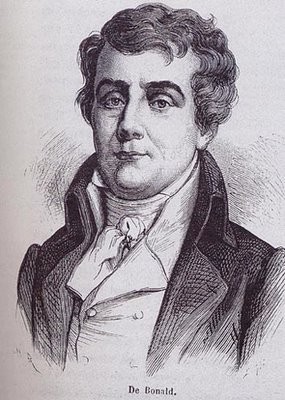 Unlike Edmund Burke and Joseph de Maistre, Louis de Bonald devoted little space to analyzing the French Revolution itself. His focus instead was on understanding the traditional society which had been swept away. His review of Mme. de Staël’s Considerations on the Principal Events of the French Revolution


 del.icio.us
 Digg
Digg Facebook






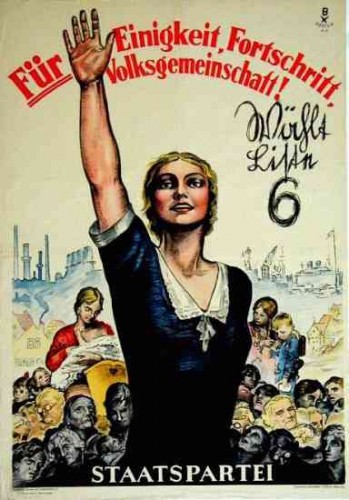
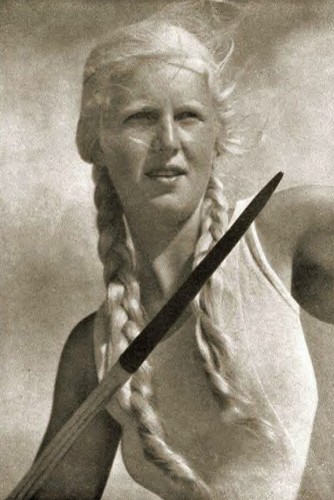 National Socialism promoted two images of woman: the hardworking peasant mother in traditional dress, and the uniformed woman in service to her people. Both images were an attempt to combat two types of woman that are foreign to Traditional European societies: the Aphrodisian and Amazonian woman.
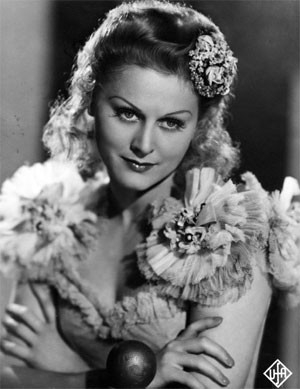 These were the Aphrodisian elements that had made their way into the Weimar Republic and Third Reich, and which the National Socialists tried to restrain, along with modern Amazonian woman (the unmarried, childless, career woman in mannish dress). The Aphrodite type was represented by the “movie ‘star’ or some similar fascinating Aphrodisian apparition.”[6] In his introduction to the writings of Bachofen, National Socialist scholar Alfred Baeumler wrote that the modern world has all of the characteristics of a gynaecocratic age. In writing about the European city-woman, he says, “The fascinating female is the idol of our times, and, with painted lips, she walks through the European cities as she once did through Babylon.”[7]
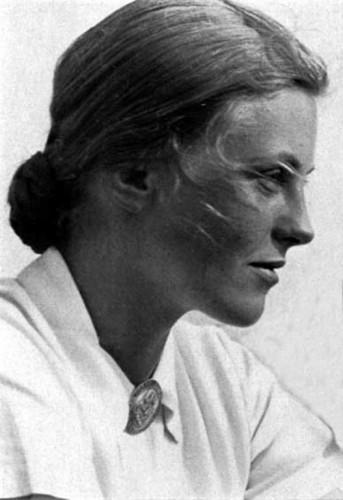 The earliest Europeans tended toward simplicity in dress and appearance. Adornments were used solely to signify caste or heroic deeds, or were amulets or talismans. In ancient Greece, jewels were never worn for everyday use, but reserved for special occasions and public appearances. In Rome, also, jewelry was thought to have a spiritual power.[11] Western fashion often was used to display rank, as in Roman patricians’ purple sash and red shoes. The Mediterranean cultures, influenced by the East, were the first to become extravagant in dress and makeup. By the time this influence spread to northern Europe, it had been Christianized, and makeup did not appear again in northern Europe until the fourteenth century, after which followed a long period of its association with immorality.[12]
 , trans. Guido Stucco (Rochester, Vt.: Inner Traditions, 1995), 211, footnote.
 , by J. J. Bachofen, trans. Ralph Manheim (Princeton: Princeton University Press, 1967), xxx–xxxi.
 (Milwaukee, Wis.: Gareth Stevens, 2007), 13.
 , trans. Guido Stucco (Rochester, Vt.: Inner Traditions, 2002), 260–62.
.jpg)

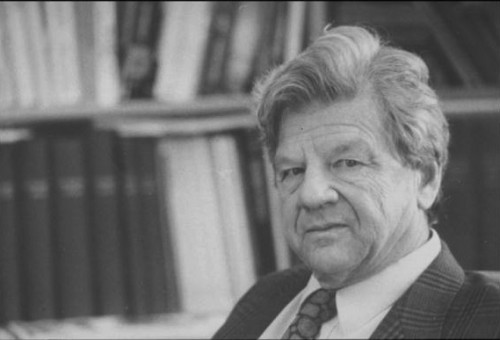
 Né à Vienne en 1926, d’un père dalmate et d’une mère d’origine juive, et mort en toute discrétion en 2002 après avoir vécu entre les États-Unis, l’Allemagne et l’Amérique du sud; prêtre anticlérical, médiéviste joyeusement apatride, érudit étourdissant, sorte d’Épicure gyrovague, polyglotte, curieux, passionné, insaisissable, et touche-à-tout; critique radical, en pensée comme en acte, de la modernité industrielle, héritier de Bernard Charbonneau et de Jacques Ellul, inspirateur d’intellectuels comme Jean-Pierre Dupuy, Mike Singleton, Serge Latouche, Alain Caillé, André Gorz, Jean Robert ou encore des mouvements écologistes, décroissantistes et post-développementistes; hélas aussi figure de proue d’une certaine intelligentsia des années soixante qui ne feuilleta, en général, que Une Société sans école et ne retint de son travail que ce qui pouvait servir ses mauvaises humeurs adolescentes puis, plus tard, ses bonnes recettes libertariennes, Ivan Illich est sans conteste l’un des penseurs les plus originaux, les plus complets, les plus lucides ainsi que les plus mal lus du XXe siècle.
 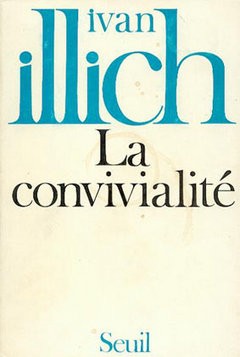 Dans le premier, Une société sans école, Illich montre que l’école, comme institution, et «l’éducation» professionnalisée, comme logique de sociabilisation, non seulement nuisent à l’apprentissage et à la curiosité intellectuelle, mais surtout ont pour fonction véritable d’inscrire dans l’imaginaire collectif des valeurs qui justifient et légitiment les stratifications sociales en même temps qu’elles les font. Il ne s’agit pas seulement, à l’instar du travail de gauche «classique» de Bourdieu et Passeron, de montrer que l’école reproduit les inégalités sociales, donc qu’elle met en porte-à-faux, stigmatise et exclut les classes sociales défavorisées dont elle est censée favoriser l’ascension sociale, mais de démontrer que l’idée même de cette possibilité ou de cette nécessité d’ascension sociale par la scolarité permet, crée ces inégalités en opérant comme un indicateur d’infériorité sociale. Par ailleurs, l’école et les organismes d’éducation professionnels agissent en se substituant à toute une série d’organes d’éducation propres à la société civile ou aux familles, délégitimant les apprentissages qu’ils procurent. Elle est donc un moyen de contrôle social et non pas de libération des déterminations sociales. Les normes de l’éducation et du savoir, la légitimité de ce que l’on sait faire et de ce que l’on comprend se mettent donc à dépendre d’un programme et d’un jugement mécanique qui forment aussi un écran entre l’individu et sa propre survie ou sa propre valeur. Ce programme est celui de l’axe production/consommation sur lequel se fonde la modernité industrielle. «L’école est un rite initiatique qui fait entrer le néophyte dans la course sacrée à la consommation, c’est aussi un rite propitiatoire où les prêtres de l’alma mater sont les médiateurs entre les fidèles et les divinités de la puissance et du privilège. C’est enfin un rituel d’expiation qui ordonne de sacrifier les laissés-pour-compte, de les marquer au fer, de faire d’eux les boucs émissaires du sous-développement» (1).

 (1968),
  (1970), and
  (1972). Baudrillard believed that there were four ways an object acquired value: through its functional value (similar to the Marxian use-value); through its exchange, or economic value; through its symbolic value (the object’s relationship to a subject, or individual, such as an engagement ring to a young lady or a medal to an Olympic athlete); and, finally, through its sign value (the object’s value within a system of objects, whereby a Montblanc fountain-pen may signify higher socioeconomic status than a Bic ball-pen, or a Fair Trade organic chicken may signify certain social values in relation to a chicken that has been intensively farmed). Baudrillard focused most of his energy on the latter forms of value. Writing at the juncture between evolutionary psychology and marketing, Geoffrey Miller (an evolutionary psychologist) does the same here, except from a purely biological perspective.
 , Jean Baudrillard’s early works on consumerism, and some of the texts in Miller’s own bibliography, which include — surprise, surprise! —
  , by Richard Herrnstein and Charles Murray, and
  , by Richard Lynn, among others.
 Malgré l’instrumentalisation des corpus doctrinaux de l’Ecole de Francfort et malgré les désastres que cette instrumentalisation a provoqué en Europe, les idées diffusées par l’Ecole de Francfort véhiculent des thèmes intéressants qui, eux, n’ont pas été inclus dans la vulgate, seule responsable des dégâts sociaux et anthropologiques que nous déplorons depuis quelques décennies en Europe. Quand un Herbert Marcuse (1898-1979) nous parle de l’homme unidimensionnel, pour déplorer sa banalisation dans les sociétés industrielles modernes, il ne fait qu’énoncer un état de choses déjà déploré par Nietzsche. L’homme unidimensionnel de Marcuse partage bien des traits en commun avec le « dernier homme » de Nietzsche. Dans « Eros et la civilisation », Marcuse évoque le refoulement du désir dans les sociétés modernes, exactement comme le déploraient certains mouvements de jeunesse alternatifs allemands entre 1896 et 1933 ; cette option philosophique de vouloir libérer les instincts refoulés, en imitant les groupes marginaux ou exclus des sociétés même au détriment des majorités politiques et parlementaires, a eu, avec l’appui de tout un attirail d’interprétations freudiennes, un impact important sur la révolte étudiante des années 67-68 en Allemagne, en France et ailleurs en Europe. Marcuse condamnera toutefois l’usage de la violence et se fera apostropher comme « mou » par certains échaudés, dénommés « Krawallos ». Entre la théorie écrite et la pratique mise en œuvre par les services à partir des années 60 du 20ème siècle, il y a une nette différence. Mais c’est la vulgate, la version instrumentalisée, sloganisée à l’usage des Krawallos, qui a triomphé au détriment de la théorie proprement dite : c’est au départ d’une hyper-simplification du contenu d’ « Eros et la civilisation » que l’on a fabriqué la société festiviste actuelle, une société festiviste incapable de forger un Etat digne de ce nom ou de générer un vivre-ensemble harmonieux et créatif. Tout comme dans le « Meilleur des mondes » d’Aldous Huxley, on vend des drogues et l’on favorise la promiscuité sexuelle pour endormir les volontés.
  Outre Marcuse, idole des festivistes de mai 68, l’Ecole de Francfort a surtout aligné, en Allemagne, deux figures notoires, Theodor W. Adorno (1903-1969) et Max Horkheimer (1895-1973). Ces deux philosophes ont été les principaux représentants de la philosophie allemande dans les années 50. Adorno a déployé une critique de l’autoritarisme qui, selon lui, aurait toujours structuré la pensée allemande et, partant, européenne et américaine, faisant courir le risque de voir émerger de nouveaux fascismes à intervalles réguliers dans l’histoire. Il va vouloir déconstruire cet autoritarisme pour enrayer à l’avance toute émergence de nouveaux fascismes. Pour y procéder, il élaborera un système de mesure, consigné dans son célèbre ouvrage, La personnalité autoritaire. On y apprend même comment mesurer sur « l’échelle F » le degré de « fascisme » que peut receler la personnalité d’un individu. Le livre contient aussi un classement des citoyens en « Vorurteilsvollen » et « Vorurteilsfreien », soit ceux qui sont « pleins de préjugés » et ceux « qui sont libres de tous préjugés ». Ceux qui sont pleins de préjugés comptent aussi les « rebelles » et les « psychopathes », les « fous » et les « manipulateurs » dans leurs rangs. Ceux qui sont libres de tout préjugé comptent tout de même des « rigides », des protestataires, des impulsifs et des « easy goings » (« ungezwungene Vorurteilsfreie ») dans leurs rangs, qui sont posés comme sympathiques, comme mobilisables dans un projet « anti-autoritaire » mais dont l’efficacité n’est pas parfaite. Le summum de la qualité citoyenne ne se trouve que chez une minorité
 Outre la composition de cet instrument de contrôle que fut le livre d’Adorno intitulé La personnalité autoritaire (Studien zum autoritären Charakter), les deux philosophes de l’Ecole de Francfort, installés dans l’Allemagne d’après-guerre, en rédigent le principal manifeste philosophique, Die Dialektik der Aufklärung (= « La dialectique des Lumières »), où ils affirment s’inscrire dans la tradition des Lumières, née au 18ème siècle, tout en critiquant certains avatars ultérieurs de cette démarche philosophique. Pour Horkheimer et Adorno, la science et la technologie, qui ont pris leur élan à l’époque des Lumières et dans les premiers balbutiements de la révolution industrielle avec l’appui des Encyclopédistes autour de d’Alembert et Diderot, ont pris au fil du temps un statut marqué d’ambigüité. La technologie et la science ont débouché sur la technocratie, affirment Horkheimer et Adorno dans leur manifeste, et, dans ce processus involutif, la raison des Lumières, d’idéelle est devenue « instrumentale », avec le risque d’être instrumentalisée par des forces politiques ne partageant pas l’idéal philosophique des Lumières (sous-entendu : les diverses formes de fascisme ou les néoconservatismes technocratiques d’après 1945). Le programme promu par La personnalité autoritaire peut être interprété, sans sollicitation outrancière, comme un instrument purement technocratique destiné à formater les masses dans un sens précis, contraire à leurs dispositions naturelles et ontologiques ou contraire aux legs d’une histoire nationale particulière. Alors qu’ils inventent un instrument de nature nettement technocratique, Adorno et Horkheimer critiquent la technocratie occidentale sur des bases sociologiques que nous pouvons pleinement accepter : en effet, les deux philosophes s’inscrivent dans un filon sociologique inauguré, non pas par Marx et ses premiers fidèles, mais par Georg Simmel et Max Weber. Ce dernier voulait lancer, par ses travaux et ceux de ses étudiants, « une science du réel, nous permettant de comprendre dans sa spécificité même la réalité en laquelle nos vies sont plongées ». Pour Simmel et Weber, le développement des sciences et des technologies apporteront certainement une quantité de bienfaits aux sociétés humaines mais elles provoqueront simultanément une hypertrophie des appareils abstraits, ceux de la technocratie en marche, par exemple, ceux de l’administration qui multipliera les règles de coercition sociale dans tous les domaines, conduisant à l’émergence d’un gigantesque « talon d’acier » (iron heel) ou d’une cage d’acier, qui oblitèreront la créativité humaine.
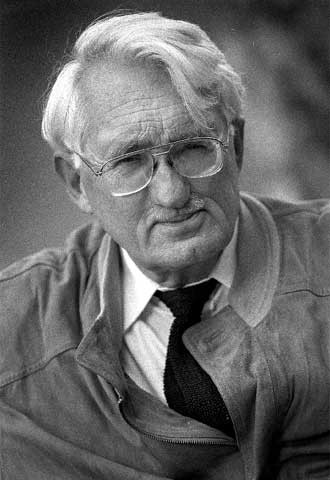 Habermas, ancien assistant d’Horkheimer puis son successeur à la tête de l’Institut de Francfort, devient, dès la fin des années 60, la figure de proue de la seconde génération de l’Ecole de Francfort. Son objectif ? Pour éviter la « cristallisation » des résidus de l’autoritarisme et des effets de l’application de la « raison instrumentale », une « cristallisation » qui aurait indubitablement ramené au pouvoir une nouvelle idéologie forte et autoritaire, Habermas s’ingéniera à théoriser une « praxis de la discussion permanente » (s’opposant en cela à Carl Schmitt qui, disciple de l’Espagnol Donoso Cortès, abominait la discussion et la « classe discutailleuse » au bénéfice des vrais décideurs, seuls aptes à maintenir le politique en place, les Etats et les empires en bon ordre de fonctionnement). La discussion et cette culture du débat permanent devaient justement empêcher les décisions trop tranchées amenant aux « cristallisations ». Les évolutions politiques devaient se dérouler lentement dans le temps, sans brusqueries ni hâtes même quand les décisions claires et nettes s’avéraient nécessaires, vu l’urgence, l’ Ernstfall. Cette posture habermasienne ne plaisait pas à tous les hommes de gauche, surtout aux communistes durs et purs, aux activistes directs : sa théorie a parfois été décrite comme l’incarnation du « défaitisme postfasciste », inaugurant, dans l’après-guerre, une « philosophie de la désorientation et des longs palabres ». Habermas est ainsi devenu le philosophe déréalisé le plus emblématique d’Europe. En 1990, il déplore la réunification allemande car celle-ci « met en danger la société multiculturelle et l’unité européenne qui étaient toutes deux depuis quelque temps déjà en voie de réalisation ». La seule alternative, pour Habermas, c’est de remplacer l’appartenance nationale des peuples par un « patriotisme constitutionnel », préférable, selon lui, « aux béquilles prépolitiques que sont la nationalité (charnelle) et l’idée de la communauté de destin » (Habermas s’attaque là aux deux conceptions que l’on trouve en Allemagne : l’idéal nationalitaire de romantique mémoire et l’idéal prussien a-national de participation à la vie et à la défense d’un type particulier d’Etat, à connotations spartiates). Le « patriotisme constitutionnel » est-il dès lors un antidote à la guerre, à ces guerres qu’ont déclenché les patriotismes appuyés sur les deux « béquilles » dénoncées par Habermas, soit l’idéal nationalitaire et l’idéal prussien ? En principe, oui ; en pratique, non, car en 1999 quand l’OTAN attaque la Serbie sous prétexte qu’elle oppresse la minorité albanaise du Kosovo, Habermas bénit l’opération en la qualifiant « de bond en avant sur la voie qui mène du droit des gens classique au droit cosmopolite d’une société mondiale de citoyens ». Et il ajoutait : « les voisins démocratiques (c’est-à-dire ceux qui avaient fait leur l’idée de « patriotisme constitutionnel ») ont le droit de passer à l’action pour apporter une aide de première nécessité, légitimée par le droit des gens ». Contradiction : le « constitutionalisme globaliste de l’OTAN » a sanctifié un réflexe identitaire ethno-national, celui des Albanais du Kosovo, contre le réflexe ethno-national des Serbes. L’OTAN, avec la bénédiction d’Habermas, a paradoxalement agi pour restaurer l’une des béquilles que ce dernier a toujours voulu éradiquer. Tout en pariant sur un élément musulman, étranger à l’Europe, importation turque dans les Balkans, au détriment de l’albanité catholique et orthodoxe, avant de l’être pour la « serbicité » slave et orthodoxe. Le tout pour permettre à l’US Army de se faire octroyer par le nouvel Etat kosovar la plus formidable base terrestre en Europe, Camp Bondsteele, destiné à remplacer les bases allemandes évacuées progressivement depuis la réunification. Camp Bondsteele sert à asseoir une présence militaire dans les Balkans, tremplin pour le contrôle de la Mer Noire, de la Méditerranée orientale et de l’Anatolie turque. Ces déclarations d’Habermas vieillissant ressemblent étrangement à l’agitation de ces chiens qui tentent de se manger la queue.
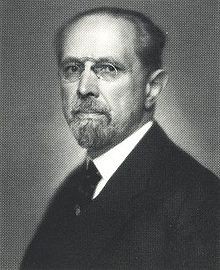 La noticia del apresurado y dichoso financiero yanqui, nos trae al recuerdo la figura del gran economista alemán profesor Werner Sombart, que ejerció docencia, justamente sonada, como profesor de Economía Política, en la Universidad de Berlín, y cuya obra es una verdadera pena que aun no haya sido traducida —que sepamos— al castellano.
 La lotta che l’individualismo liberaldemocratico ha ingaggiato per demolire ogni realtà e rappresentazione comunitaria ha il significato di un finale regolamento di conti tra l’umano e il disumano. Al fondo, si apre una divaricazione tra visioni del mondo che è oltre la sociologia, oltre la storia, investendo l’antropologia e la vita di base di ognuno. Chi cura l’appartenere e percepisce il legame, avverte la precisa sensazione, e la avverte come verità di evidenze, che l’individuo è preceduto da qualcosa che lo connota e lo distingue, cioè la comunità che gli dona individuazione anche come singolo soggetto, e senza la quale l’essere non è appunto individuabile, non è descrivibile, non rivela nulla di sé, se non la solitudine astratta e il nonsenso concreto. Chi giudica che la società venga prima dell’individuo pensa socialmente, pensa comunitariamente, pensa plurale. Chi invece giudica che sia l’individuo a venire prima della società ragiona in termini di monade semplice e ottusa: l’essere umano assembrato casualmente, riunito in folla per necessità e bisogno. I “contrattualisti”, quei liberali che pensano la società come nata dall’incontro dei meri bisogni, costituiscono i grandi demolitori moderni dell’idea comunitaria. Coloro che da secoli tendono l’insidia ad ogni costituirsi di tessuti relazionali e di legami politici e metapolitici. Essi pensano unicamente entro categorie individuali: l’interesse, la sicurezza, il profitto.
 Le projet d'instauration d'une société multiculturelle où les cultures, les religions, entreraient en dialogue, s'enrichissant mutuellement de leur diversité, a paru de nature à remplacer avec bonheur l'ancienne recherche d'assimilation de ceux qui venaient d'ailleurs. Les Pays-Bas, la Grande-Bretagne et quelques autres ont été en pointe dans ce domaine. Et voilà que le vent tourne. Comment comprendre la montée d'un populisme xénophobe dans une bonne partie de l'Europe ? Réaction de populations déstabilisées par la crise économique mondiale et en quête d'un bouc émissaire ? Ou effet des limites d'une utopie ?
 Terwijl de meerderheid van onze werkende mensen tussen de 80 en 120 euro bruto per dag verdienen. Terwijl uitkeringstrekkers 50 euro of minder per werkdag ontvangen, zijn er in dit land toch gelukkige zielen die zonder uitkering of zonder zelfs maar te werken kunnen genieten van Club Med-faciliteiten. De plaats van gebeuren: Brussel.
 A condição de assalariado, que é hoje o destino de quase todos os trabalhadores, nos anos cinqüenta apenas concernia a 60% da população ativa. Foi durante os três decênios seguintes à Segunda Guerra Mundial quando começou a generalizar-se. Naquela época descansava sobre dois pilares. Primeiro, um salário direto e crescente, fruto de uma economia estimulada pelo produtivismo fordista e o consumismo importado dos Estados Unidos. Depois, um salário indireto assegurado pelo Estado keynesiano, dispensador de seguridade social, a qual incitava os indivíduos a comportarem-se no mercado como trabalhadores e consumidores "livres", quer dizer desligados das solidariedades tradicionais. Êxodo rural, crescimento urbano, deslocamento das comunidades: este foi o preço que se teve que pagar pela americanização do modo de vida que caracterizou os Trinta Gloriosos, como denominou a estes anos Jean Fourastié.


Nazi Fashion Wars:
The Evolian Revolt Against Aphroditism in the Third Reich, Part 2
Judaism is not historically opposed to cosmetics and jewelry, although two stories can be interpreted as negative indictments on cosmetics and too much finery: Esther rejected beauty treatments before her presentation to the Persian king, indicating that the highest beauty is pure and natural; and Jezebel, who dressed in finery and eye makeup before her death, may the root of some associations between makeup and prostitutes.
In most cases, however, Jewish views on cosmetics and jewelry tend to be positive and indicate woman’s role as sexual: “In the rabbinic culture, ornamentation, attractive dress and cosmetics are considered entirely appropriate to the woman in her ordained role of sexual partner.” In addition to daily use, cosmetics also are allowed on holidays on which work (including painting, drawing, and other arts) are forbidden; the idea is that since it is pleasurable for women to fix themselves up, it does not fall into the prohibited category of work.[1]
In addition to the historical distinctions between cultures on cosmetics, jewelry, and fashion, the modern era has demonstrated that certain races enter industries associated with the Aphrodisian worldview more than others. Overwhelmingly, Jews are overrepresented in all of these arenas. Following World War I, the beauty and fashion industries became dominated by huge corporations, many of the Jewish-owned. Of the four cosmetics pioneers — Helena Rubenstein, Elizabeth Arden, Estée Lauder (née Mentzer), and Charles Revson (founder of Revlon) — only Elizabeth Arden was not Jewish. In addition, more than 50 percent of department stores in America today were started or run by Jews. (Click here for information about Jewish department stores and jewelers, and here for Jewish fashion designers).
Hitler was not the only one who noticed Jewish influence in fashion and thought it harmful. Already in Germany, a belief existed that Jewish women were “prone to excess and extravagance in their clothing.” In addition, Jews were accused of purposefully denigrating women by designing immoral, trashy clothing for German women.[2] There was an economic aspect to the opposition of Jews in fashion, as many Germans thought them responsible for driving smaller, German-owned clothiers out of business. In 1933, an organization was founded to remove Jews from the Germany fashion industry. Adefa “came about not because of any orders emanating from high within the state hierarchy. Rather, it was founded and membered by persons working in the fashion industry.”[3] According to Adefa’s figures, Jewish participation was 35 percent in men’s outerwear, hats, and accessories; 40 percent in underclothing; 55 percent in the fur industry; and 70 percent in women’s outerwear.[4]
Although many Germans disliked the Jewish influence in beauty and fashion, it was recognized that the problem was not so much what particular foreign race was impacting German women, but that any foreign influence was shaping their lives and altering their spirit. The Nazis obviously were aware of the power of dress and beauty regimes to impact the core of woman’s self-image and being. According to Agnes Gerlach, chairwoman for the Association for German Women’s Culture:
Not only is the beauty ideal of another race physically different, but the position of a woman in another country will be different in its inclination. It depends on the race if a woman is respected as a free person or as a kept female. These basic attitudes also influence the clothes of a woman. The southern ‘showtype’ will subordinate her clothes to presentation, the Nordic ‘achievement type’ to activity. The southern ideal is the young lover; the Nordic ideal is the motherly woman. Exhibitionism leads to the deformation of the body, while being active obligates caring for the body. These hints already show what falsifying and degenerating influences emanate from a fashion born of foreign law and a foreign race.[5]
Gerlach’s statements echo descriptions of Aphrodisian cultures entirely: Some cultures view women as a sex object, and elements of promiscuity run through all areas of women’s dress and toilette; Aryan cultures have a broader understanding of the possibilities of the female being and celebrate woman’s natural beauty.
The Introduction of Aphrodisian Elements into Germany and the Beginning of the Fashion Battles
Long before the Third Reich, Germans battled the French on the field of fashion; it was a battle between the Aphrodisian culture that had made its way to France, and the Demetrian placement of woman as a wife and mother. As early as the 1600s, German satirical picture sheets were distributed that showed the “Latin morals, manners, customs, and vanity” of the French as threatening Nordic culture in Germany. In the twentieth century, Paris was the height of high fashion, and as tensions between the two countries increased, the French increased their derogatory characterizations of German women for not being stereotypically Aphrodisian. In 1914, a Parisian comic book presented Germans as “a nation of fat, unrefined, badly dressed clowns.”[6] And in 1917, a French depiction of “Virtuous Germania” shows her as “a fat, large-breasted, mean-looking woman, with a severe scowl on her chubby face.”[7]
Hitler saw the French fashion conglomerate as a manifestation of the Jewish spirit, and it was common to hear that Paris was controlled by Jews. Women were discouraged from wearing foreign modes of dress such as those in the Jewish and Parisian shops: “Sex appeal was considered to be ‘Jewish cosmopolitanism’, whilst slimming cures were frowned upon as counter to the birth drive.”[8] Thus, the Nazis staunch stance against anything French was in part a reaction to the Latin qualities of French culture, which had migrated to the Mediterranean thousands of years earlier, and that set the highest image of woman as something German men did not want: “a frivolous play toy that superficially only thinks about pleasure, adorns herself with trinkets and spangles, and resembles a glittering vessel, the interior of which is hollow and desolate.”[9] Such values had no place in National Socialism, which promoted autarky, frugalness, respect for the earth’s resources, natural beauty, a true religiosity (Christian at first, with the eventual goal to return to paganism), devotion to higher causes (such as to God and the state), service to one’s community, and the role of women as a wife and mother.
Opposition to the Aphrodisian Culture in the Third Reich
Most students of Third Reich history are familiar with the more popular efforts to shape women’s lives: the Lebensborn program for unwed mothers, interest-free loans for marriage and children, and propaganda posters that emphasized health and motherhood. But some of the largest battles in the fight for women occurred almost entirely within the sphere of fashion—in magazines, beauty salons, and women’s organizations.
The Nazis did not discount fashion, only its Aphrodisian manifestations. On the contrary, they understood fashion as a powerful political tool in shaping the mores of generations of women. Fashion and beauty also were recognized as important elements in the cultural revolution that is necessary for lasting political change. German author Stafan Zweig commented on fashion in the 1920s:
Today its dictatorship becomes universal in a heartbeat. No emperor, no khan in the history of the world ever experienced a similar power, no spiritual commandment a similar speed. Christianity and socialism required centuries and decades to win their followings, to enforce their commandments on as many people as a modern Parisian tailor enslaves in eight days.[10]
Thus, Nazi Germany established a fashion bureau and numerous women’s organizations as active forces of cultural hegemony. Gertrud Scholtz-Klink, the national leader of the NS-Frauenschaft (NSF, or National Socialist Women’s League), said the organization’s aim was to show women how their small actions could impact the entire nation.[11] Many of these “small actions” involved daily choices about dress, shopping, health, and hygiene.
The biggest enemies of women, according to the Nazi regime, were those un-German forces that worked to denigrate the German woman. These included Parisian high fashion and cosmetics, Jewish fashion, and the Hollywood image of the heavily made up, cigarette-smoking vamp—the archetype of the Aphrodisian. These forces not only impacted women’s clothing, personal care choices, and activities, but were dangerous since they touched the German woman’s very spirit.
Clothing should not now suddenly return to the Stone Age; one should remain where we are now. I am of the opinion that when one wants a coat made, one can allow it to be made handsomely. It doesn’t become more expensive because of that. . . . Is it really something so horrible when [a woman] looks pretty? Let’s be honest, we all like to see it.[14]
Though understanding the need for tasteful and beautiful dress, the Nazis were adamantly against elements foreign to the Nordic spirit. The list included foreign fashion, trousers, provocative clothing, cosmetics, perfumes, hair alterations (such as coloring and permanents), extensive eyebrow plucking, dieting, alcohol, and smoking. In February 1916, the government issued a list of “forbidden luxury items” that included foreign (i.e., French) cosmetics and perfumes.[15] Permanents and hair coloring were strongly discouraged. Although the Nazis were against provocative clothing in everyday dress, they encouraged sportiness and were certainly not prudish about young girls wearing shorts to exercise. A parallel can be seen in the scanty dress worn by Spartan girls during their exercises, a civilization characterized by its Nordic spirit and solar-orientation.
Some have said that Hitler was opposed to cosmetics because of his vegetarian leanings, since cosmetics were made from animal byproducts. More likely, he retained the same views that kept women from wearing makeup for centuries in Western countries—the innate understanding that the Aphrodisian woman is opposed to Aryan culture. Nazi proponents said “red lips and painted cheeks suited the ‘Oriental’ or ‘Southern’ woman, but such artificial means only falsified the true beauty and femininity of the German woman.”[16] Others said that any amount of makeup or jewelry was considered “sluttish.”[17] Magazines in the Third Reich still carried advertisements for perfumes and cosmetics, but articles started advocating minimal, natural-looking makeup, for the truth was that most women were unable to pull off a fresh and healthy image without a little help from cosmetics.
Although jewelry and cosmetics were not banned, many areas of the Third Reich were impossible to enter unless conforming to Nazi ideals. In 1933, “painted” women were banned from Kreisleitung party meetings in Breslau. Women in the Lebensborn program were not allowed to use lipstick, pluck their eyebrows, or paint their nails.[18] When in uniform, women were forbidden to wear conspicuous jewelry, brightly colored gloves, bright purses, and obvious makeup.[19] The BDM also was influential in shaping fashion in the regime, with young girls taking up the use of clever pejoratives to reinforce the regime’s message that unnatural beauty was not Aryan. The Reich Youth Leader said:
The BDM does not subscribe to the untruthful ideal of a painted and external beauty, but rather strives for an honest beauty, which is situated in the harmonious training of the body and in the noble triad of body, soul, and mind. Staunch BDM members whole-heartedly embraced the message, and called those women who cosmetically tried to attain the Aryan female ideal ‘n2 (nordic ninnies)’ or ‘b3 (blue-eyed, blonde blithering idiots).’[20]
The Nazis offered many alternatives to Aphrodisian values: beauty would be derived from good character, exercise outdoors, a good diet, healthy skin free of the harsh chemicals in makeup, comfortable (yet still stylish and flattering) clothing, and from the love for her husband, children, home, and country. The most encouraged hairstyles were in buns or plaits—styles that saved money on trips to the beauty salon and were seen as more wholesome and befitting of the German character. In fact, Tracht (traditional German dress) was viewed as not merely clothing, but also as “the expression of a spiritual demeanor and a feeling of worth . . . Outwardly, it conveys the expression of the steadfastness and solid unity of the rural community.”[21] Foreign clothing designs, according to Gerlach, led to physical and “psychological distortion and damage, and thereby to national and racial deterioration.”[22]
* * *
Some people may be inclined to interpret Aphrodisian culture as positive for the sexes—it puts the emphasis for women not on careers but on their existence as sexual beings. Men often encourage such behavior by their dating choices and by complimenting an Aphrodisian “look” in women. But Aphrodisian culture is not only damaging to women, as Bachofen relates, by reducing them to the status of sex slave of multiple men. It also is degrading for men, at the level of personality and at the deepest levels of being. As Evola writes about the degeneration into Aphroditism:
The chthonic and infernal nature penetrates the virile principle and lowers it to a phallic level. The woman now dominates man as he becomes enslaved to the senses and a mere instrument of procreation. Vis-à-vis the Aphrodistic goddess, the divine male is subjected to the magic of the feminine principle and is reduced to the likes of an earthly demon or a god of the fecundating waters—in other words, to an insufficient and dark power.[23]
(PICTURE: Swedish singer Zarah Leander)
If someone needs the ‘unusual’ to be moved to astonishment, that person has lost the ability to respond rightly to the wondrous, the mirandum, of being. The hunger for the sensational . . . is an unmistakable sign of the loss of the true power of wonder, for a bourgeois-ized humanity.[24]
A society that promotes so much unnatural beauty will no doubt lose the ability to experience the wondrous in the natural. It is essential that people retain the ability to love and be moved by the pure and natural, in order to once again return to a civilization centered in a Traditional Aryan worldview.
Notes
1. Daniel Boyarin, “Sex,” Jewish Women’s Archive.
2. Irene Guenther, Nazi ‘Chic’?: Fashioning Women in the Third Reich (Oxford: Berg, 2004), 50–51.
3. Guenther, 16.
4. Guenther, 159.
5. Agnes Gerlach, quoted in Guenther, 146.
6. Guenther, 21–22.
7. Guenther, 26.
8. Matthew Stibbe, “Women and the Nazi state,” History Today, vol. 43, November 1993.
9. Guenther, 93.
10. Stefan Zweig, quoted in Guenther, 9.
11. Jill Stephenson, Women in Nazi Germany (Essex, UK: Pearson, 2001), 88.
12. Stephenson, 133.
13. Guenther, 120.
14. Adolf Hitler, quoted in Guenther, 141.
15. Guenther, 32.
16. Guenther, 100.
17. Guido Knopp, Hitler’s Women (New York: Routledge, 2003), 231.
18. Guenther, 99.
19. Guenther, 129.
20. Guenther, 121.
21. Guenther, 111.
22. Gerlach, quoted in Guenther, 145.
23. Evola, Revolt, 223.
24. Josef Pieper, Leisure: The Basis of Culture , trans. Gerald Malsbary (South Bend, Ind.: St. Augustine’s Press, 1998), 102.