


mardi, 05 octobre 2021
La Russie contourne l'Ukraine. Du gaz vers la Hongrie via la mer Noire (et les Balkans)
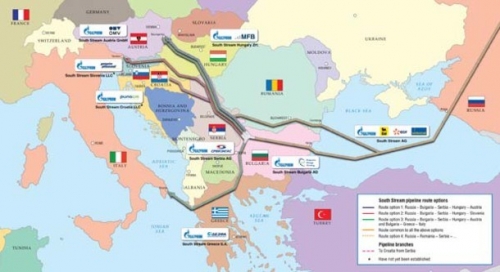
La Russie contourne l'Ukraine. Du gaz vers la Hongrie via la mer Noire (et les Balkans)
Lorenzo Vita
Ex: https://it.insideover.com/energia/la-russia-scavalca-lucraina-il-gas-allungheria-passa-per-mar-nero-e-balcani.html
L'importance stratégique du gaz n'est pas seulement représentée par le pays producteur et importateur, mais aussi par le territoire qu'il traverse. L'Ukraine en sait quelque chose, puisqu'elle a récemment vu le transit de l'or bleu russe vers la Hongrie interrompu. Après le contrat signé par le géant gazier russe Gazprom à Budapest, l'approvisionnement énergétique de la Hongrie ne viendra plus d'Ukraine, mais de Serbie. Le gaz de Moscou empruntera la route de la mer Noire, puis la Turquie, la Bulgarie et enfin la Serbie, pour entrer dans les foyers des Hongrois sans passer par le territoire contrôlé par Kiev.
Le contrat signé par le ministre hongrois des affaires étrangères, Peter Szijjarto, et la directrice générale des exportations du géant gazier russe, Elena Burmistrova, prévoit une fourniture de gaz de 4,5 milliards de mètres cubes par an pendant quinze ans. Après 2036, une nouvelle prolongation peut être négociée.
Pour Budapest, il s'agit d'une livraison d'une importance fondamentale, avant tout parce qu'elle confirme la capacité du gouvernement de Viktor Orban à agir sur plusieurs fronts dans le secteur de l'énergie. Mais ce qui ressort avant tout, c'est le coup porté par le Kremlin au voisin indiscipliné de l'Ukraine, qui, pour la première fois, a été privé des droits de transit du gaz de Moscou vers le pays d'Europe centrale. Un geste qui a un poids spécifique très important dans les relations entre les deux pays, à tel point que Kiev a immédiatement demandé aux États-Unis et à l'Allemagne de sanctionner la Russie pour ce qu'elle considère comme une "utilisation politique" du gaz par son voisin.
La demande ukrainienne, cependant, rompt avec une vérité que Kiev lui-même connaît bien. Dénoncer l'utilisation politique du gaz et de ses approvisionnements, c'est en fait dénoncer quelque chose qui est clair pour tout le monde en Europe et au-delà. Ce n'est pas un hasard si l'Union européenne, ainsi que les États-Unis, ont opté depuis un certain temps déjà pour une politique de diversification des sources d'énergie afin d'éviter la dépendance au gaz russe. Ce n'est pas non plus une coïncidence si l'UE et les États-Unis ont encouragé la création d'Eastmed, un projet de gazoduc visant à acheminer le gaz des champs de la Méditerranée orientale directement vers l'Europe, en contournant la Turquie. On ne peut pas non plus oublier l'opposition absolue des États-Unis à Nord Stream 2, qui relie les champs gaziers russes aux terminaux allemands.
L'idée de diversification vient d'une perspective purement politique ainsi que de la nécessité de se protéger d'un nombre réduit de pays fournisseurs. Mais cela permet de montrer que tout le monde est extrêmement conscient du rôle politique du gaz. Surtout, dans une phase où l'on parle de transition énergétique, mais c'est dans celle où l'or bleu à être le véritable "game-changer" de la politique de nombreuses régions du monde. En commençant par l'Europe de l'Est.
En ce sens, il est clair que recevoir ou ne pas recevoir de gaz russe est un message. Tout comme le fait de le voir passer sur son territoire. Couper à l'Ukraine le droit de passage du gaz vers la Hongrie entraîne une perte d'argent (selon Kiev, totalement injustifiée), mais c'est surtout le signal donné par Moscou d'une nouvelle position sur le front occidental. Il ne faut pas non plus sous-estimer le choix de désigner le Turkish Stream (et ensuite la suite du Balkan Stream) comme un corridor pour le transport de l'or bleu. Ce choix est obligatoire, oui, sur le plan géographique, mais il est également fondamental pour comprendre les relations complexes entre la Russie et la Turquie, comme le confirme la récente rencontre de Recep Tayyip Erdogan avec Vladimir Poutine. Au fil des ans, le président turc a fait preuve d'une certaine proximité avec les intérêts ukrainiens : mais dans le même temps, il ne peut s'empêcher d'exploiter les tensions pour obtenir des droits de transit qui lui seraient autrement refusés. Et pour tisser davantage la toile de l'étrange relation avec le Kremlin.
18:31 Publié dans Actualité, Affaires européennes, Géopolitique | Lien permanent | Commentaires (0) | Tags : politique internationale, géopolitique, gaz, hydrocarbures, gazoducs, hongrie, ukraine, russie, europe, affaires européennes |  |
|  del.icio.us |
  |
|  Digg |
  Facebook
Climatisme: idéologie de l'assujettissement et de la pauvreté

Climatisme: idéologie de l'assujettissement et de la pauvreté
par Roberto Pecchioli
SOURCE : http://www.ilpensieroforte.it/dibattiti/5268-il-climatismo-ideologia-di-sottomissione-e-povertà
Dans le climat de changement rapide de ces années frénétiques, un rôle central est joué par un récit répété jusqu'à l'épuisement, cru par le bombardement médiatique : l'idéologie du changement climatique. Comme l'enseignait Carl Schmitt, les idéologies sont des concepts théologiques sécularisés, et dans le cas du "climatisme" (le terme a été inventé en 2015 par Mario Giaccio), cela est tout à fait clair. Il s'agit d'une authentique foi religieuse, avec ses rituels (les conférences internationales périodiques), ses croyants et ses disciples, ses prêtres - scientifiques et militants -, une grande prêtresse, Greta Thunberg, au langage apocalyptique, au visage renfrogné et au ton inquiet. La divinité à vénérer, féminine selon les temps, est Gaea, la terre, un organisme sensible dont l'ennemi est l'homo sapiens.
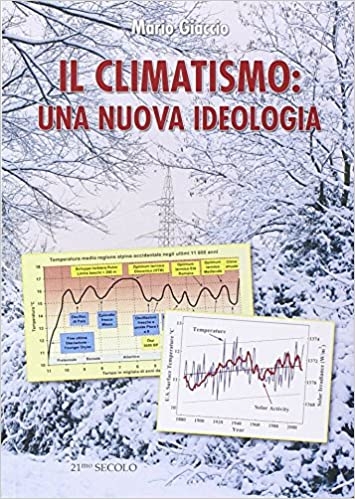
Les hérauts ne sont pas des prophètes ou des apôtres désarmés, mais les échelons supérieurs du pouvoir économique, financier et scientifique, qui a imposé la nouvelle idéologie dans le cadre de plans de domination à long terme (Great Reset, Agenda 2030) cachés derrière le double rideau du changement climatique et de la transition énergétique, qui a déjà rendu les factures d'électricité et de gaz si chères.
Par rapport au passé, il y a un changement majeur : avant, on parlait de réchauffement climatique, aujourd'hui les maîtres des mots se sont rabattus sur le changement climatique, plus générique. En tout cas, on ne peut échapper à une idéologie dont le principal court-circuit concerne le rôle de l'espèce humaine. Le dogme incontesté, en effet, est l'origine anthropique du changement climatique de la planète. C'est l'homme, avec sa volonté de puissance, qui est le prédateur responsable du déséquilibre naturel. Jusqu'à présent, rien à redire : des thèses proclamées par beaucoup sans succès.
La contradiction est claire : si le climat change, la raison n'est pas dans les cycles de la nature, mais dans le travail exclusif de l'homme. C'est un péché d'hybris, la démesure que les Grecs n'aimaient pas. Gaea fait-elle une crise de colère ou suit-elle simplement son propre chemin d'époque ? Non, l'homme est responsable. Avec une arrogance et une volonté de puissance égales et opposées, la religion climatique propose la solution : laisser l'homme modifier Gaea, interrompre et inverser le changement, par la déclinaison écologique et "durable" de la technologie. La technologie et la science humaines restent les Démiurges, les instruments d'un Dieu moindre mais pas trop grand, Homo sapiens reconfiguré en allié de Gaea.
Le climatisme est une volonté de puissance masquée par la bonté proclamée de ses objectifs. C'est l'Homme qui changera le cours du climat de la Terre par des modèles de comportement, de conduite et de développement qui apaiseront la colère de Gaea. Sur le plan symbolique, il s'agit d'une captatio benevolentiae, d'une tentative d'amitié avec une puissance supérieure, avec laquelle nous dialoguons d'égal à égal. Toujours Prométhée, toujours Titan au pouvoir, à la différence que maintenant il ne défie plus la colère des dieux, mais devient leur allié.
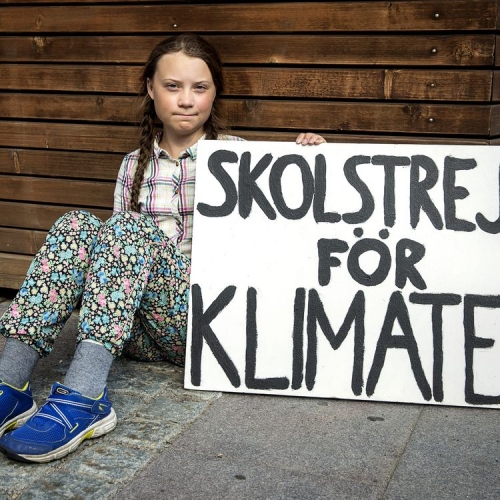
Le premier défaut de l'idéologie climatique est l'impossibilité de vérifier sa véracité - à l'heure des vérités scientifiques -. Il est en effet impossible d'affirmer ou de nier que la planète se réchauffe ou se refroidit sur le long terme. Le GIEC (Groupe international d'experts sur le changement climatique), un forum mondial créé en 1998, commence à l'admettre. Bien que la thèse de base reste celle du changement climatique, étayée par des décennies d'observations et de mesures, le GIEC a conclu que "dans la recherche et la création de modèles climatiques, nous devons reconnaître que nous avons affaire à un système chaotique et que, par conséquent, la prédiction à long terme des états climatiques futurs n'est pas possible". La raison scientifique est que les modèles mathématiques complexes utilisés sont incapables de calculer les variables infinies du système. Même le comportement des températures futures en fonction des émissions de CO2 ne peut être prédit qu'approximativement. Les prévisions météorologiques restent fiables dans une quinzaine de jours. Pour le reste, la règle de nos grands-parents s'applique : sous nos cieux, il fera chaud en été, froid en hiver et pluvieux en automne.
La méthodologie des prévisions climatiques souffre d'un défaut irrémédiable qu'Edward Lorenz a démontré il y a soixante ans : le nombre infini de petites variations dans les conditions initiales qui rendent le résultat final peu fiable. L'atmosphère - a-t-il découvert - est un système déterministe chaotique, initiant ainsi la théorie du chaos. Le calcul aboutit à une étrange courbe en forme de papillon, d'une longueur infinie, appelée l'attracteur de Lorenz. De toutes les solutions mathématiques finales, une seule est vraie, mais inconnue. Il s'agit de la simplification populaire connue sous le nom d'effet papillon, tiré du célèbre article de Lorenz intitulé Predictivity : Can the flapping of a butterfly's wings in Brazil determine a tornado in Texas ? La plupart des scientifiques sérieux parlent de probabilités, pas de certitudes. Les croyances comme le changement climatique, cependant, ne connaissent pas de nuances. Le changement climatique, pour ses adeptes, est certain, il va dans le sens d'un réchauffement de la planète et est dû non pas à des facteurs naturels inconnus, mais à l'action de l'homme.

Il y a quelques années, l'acronyme LOHAS (Lifestyle of Health and Sustainability), un mode de vie sain et durable, est devenu populaire. Aujourd'hui, le phénomène est devenu un phénomène de masse, soutenu par un grand nombre d'universitaires, d'acteurs, de politiciens, de journalistes et de gestionnaires. Le style LOHAS représente les classes sociales les plus élevées, domine les médias et le débat politique. Il incarne l'esprit de l'époque et s'incline vers la gauche. Il est loin le temps où les partis de gauche voulaient donner de meilleurs revenus et de meilleures opportunités aux plus pauvres. Aujourd'hui, seule l'élite progressiste peut se permettre des voyages coûteux, tout en faisant des affaires lucratives avec le lobby du climat. Pour eux, le changement climatique génère un double avantage. Ils peuvent s'élever au-dessus des masses moralement et matériellement : la foule prolétarienne se déplace en métro, à vélo ou dans des trains de proximité bondés, l'élite, elle, se déplace dans des voitures électriques élégantes subventionnées par les impôts de tous. Telle est la nouvelle moralité, sans tenir compte du fait que les batteries au lithium de la nouvelle mobilité sont le résultat d'activités minières ayant un énorme impact environnemental et des coûts humains dramatiques (exploitation, santé, conditions de travail).
Le deuxième pilier sur lequel repose la politique climatique, après le dogme de la culpabilité humaine, est le chantage de l'absence d'alternatives, qui aboutit à la proclamation de l'urgence. L'état d'exception - comme on le voit avec la dictature sanitaire épidémique - exige la soumission, qu'il obtient en combinant la peur de la catastrophe avec la crainte d'être expulsé si l'on n'est pas " fidèle à la ligne " et la punition pour ceux qui ne se déclarent pas adhérents à la nouvelle foi. Cela fonctionne : il crée une victimisation, un conformisme et une indignation contre un " mauvais " pouvoir, finalement démasqué par les " bons ", manipulés par les marionnettistes avec un cynisme consommé.

Annoncer la catastrophe ne suffit pas : le message doit être incessant, chargé d'urgence et de craintes toujours relancées. Chaque doute doit être combattu en permanence sur un large front. Elle fonctionne parce qu'un appareil de milliers de fonctionnaires à plein temps chargés du "climat" a été créé dans les ONG, les fondations, les agences, les instituts de recherche, les autorités publiques, les entreprises, les églises et, bien sûr, les salles de presse.
Les lobbyistes verts, généreusement financés par les gouvernements et les fondations privées, tous contrôlés par les riches, qui sont les premiers responsables des malheurs environnementaux, ont la mainmise sur tout ce qui se passe. C'est le pouvoir des Vendredis pour l'avenir, des Amis de la Terre, de Greenpeace, du WWF, etc. Nous sommes frappés par une information permanente à sens unique dans les médias publics et privés. Les sceptiques - appelés de manière désobligeante négationnistes comme tous ceux qui ne sont pas d'accord avec les récits imposés - n'ont pratiquement aucun soutien financier et deviennent invisibles. L'esprit du temps vert est sacro-saint et omniprésent.
Personne n'est prêt à s'engager dans un débat sur les incertitudes de la recherche sur le climat et de ses impacts, sur les nombreuses façons de faire face au changement climatique ou sur l'équilibre des coûts et des avantages. Personne ne reconnaît publiquement que l'objectif de "neutralité climatique" en 2045 ou 2050 est une fixation arbitraire. Nous voulons ce que nous voulons, et pas plus.
Un journal libéral, le Frankfurter Allgemeine Zeitung, a écrit : "Les budgets des États sont importants car les dépasser revient à dépasser la température de la terre, ce qui provoque des dommages irréversibles, c'est-à-dire que cela change le climat pour toujours." Le budget en question concerne une autre croyance "par la foi" dans le récit vert, la quantité de CO2. L'absurdité est que l'Allemagne, pour parvenir à des émissions nulles et limiter le réchauffement de la planète à 1,75 degré, peut émettre un total de 6,7 gigatonnes jusqu'en 2029, soit la moitié de la quantité annuelle de la Chine !
Pour le physicien Matthew Crawford, "l'une des caractéristiques les plus frappantes est que nous sommes gouvernés par des tactiques d'intimidation inventées pour obtenir l'adhésion du public. Les défis politiques lancés par les critiques, présentés avec des faits et des arguments, ne reçoivent pas de réponse amicale, mais une dénonciation. D'où les menaces épistémiques pour résoudre l'autorité dans un conflit moral entre les "bons" et les "méchants". Cela ne s'applique pas seulement au climat, mais aussi à la dictature de la santé et à tous les autres points de l'agenda oligarchique. C'est le mécanisme qui permet au récit de la "catastrophe climatique à éviter de toute urgence" de devenir la base permanente de politiques très éloignées de la réalité.
En fait, après près de 30 ans de politique de protection du climat, l'énergie éolienne et solaire fournit environ 6,5 % de l'énergie en Europe. Personne ne croit que nous atteindrons 100 % d'énergies renouvelables dans 25 ans. D'autre part, nous dépenserons d'énormes sommes d'argent pour faire croire que nous le ferons. La facture, le spectacle des factures d'énergie, est sur nous. Quelque 84 % de l'énergie mondiale provient toujours des combustibles fossiles. Il y a vingt-cinq ans, il était de 86 %. Selon les prévisions, il pourrait tomber à 73 d'ici 2040, loin de zéro.
Les émissions allemandes ont diminué de 200 millions de tonnes au cours des dix dernières années. Dans la même période, la Chine a augmenté la sienne de 3 milliards de tonnes. La pollution est transférée d'une zone de Gaea à une autre, la seule planète disponible, au gré des bonnes âmes.
Cinq pour cent de l'humanité a un niveau de richesse pour lequel un sacrifice en échange du sentiment agréable de sauver la planète semble une bonne affaire. Les quatre-vingt-quinze autres ne sont pas convaincus que l'énergie, le logement, les voyages, la nourriture sont trop bon marché et doivent devenir de plus en plus chers. Nous sommes confrontés à une hégémonie culturelle de l'alarmisme climatique, sans alternative. Les jeunes sont sensibilisés à la menace d'une catastrophe imminente. Si un homme politique disait que le changement climatique est un défi, mais que le monde a des problèmes plus urgents, nous penserions qu'il est fou. La recherche sur le climat, qui produit chaque jour de nouvelles découvertes et crée un paysage de plus en plus diversifié, est largement ignorée. Il ne reste qu'une seule politique : celle de la peur.
La science implique d'évaluer les données, de rechercher de nouvelles données et d'être prêt à examiner les hypothèses et les preuves avec un scepticisme sain. Les preuves empiriques peuvent être manipulées ou utilisées pour masquer une idéologie et créer un consensus en faveur de thèses et d'hypothèses chères aux pouvoirs en place, ces mêmes pouvoirs qui financent la recherche et choisissent et paient ceux qui la mènent. Scientifiques s'ils soutiennent la volonté des puissants, charlatans, négateurs et ignorants s'ils s'y opposent ou demandent des précisions.
La tendance au réchauffement de la planète et sa nature sont remises en question. Il n'y a pas si longtemps, il y avait un consensus sur une tendance au refroidissement à long terme des zones terrestres en Amérique du Nord. Les déclarations de consensus scientifique sur le réchauffement anthropique ne sont pas sans controverse, mais à l'ère des interdictions et des vérités d'État, il n'est plus surprenant que la version officielle soit imposée en sanctionnant les opinions dissidentes par le biais des tribunaux.
Pourtant, la méthode scientifique prescrit l'observation, la formulation d'hypothèses, la prédiction, le test, l'analyse et la révision. La confirmation expérimentale ne peut pas établir des vérités absolues, car des tests futurs peuvent invalider la théorie. En tant que telles, toutes les théories sont provisoires et sujettes à révision si des preuves meilleures ou contraires apparaissent. Plutôt que d'applaudir la version officielle, nous devrions célébrer l'incertitude et l'ouverture au cœur de la science. L'idéologie fidéiste du climatisme veut que les sceptiques soient réduits au silence, poursuivis pour des crimes nouvellement insérés dans les codes pénaux. Parallèlement, l'insistance sur un "consensus scientifique" concernant la nature et les causes des problèmes oriente les financements et les propositions de recherche vers ceux qui défendent l'opinion dominante.
La règle est de "suivre l'argent". Les fonds versés aux chercheurs sur le changement climatique ont dépassé les 13 milliards de dollars en 2017, rien qu'aux États-Unis. Les dépenses totales consacrées aux études climatiques entre 1989 et 2009 ont atteint 32 milliards de dollars, auxquels s'ajoutent 79 milliards de dollars pour la recherche technologique et les allégements fiscaux en faveur des énergies vertes. La perte de subventions et de positions de pouvoir serait énorme si le réchauffement de la planète ou le changement climatique étaient remis en question, peut-être pour les raisons invoquées concernant la complexité et les variables infinies.
Si la complexité du climat rend difficile l'évaluation précise des tendances, il semble exister des mécanismes internes qui tendent à stabiliser les températures et les variations climatiques dans certaines limites. Par exemple, les nuages et la vapeur d'eau jouent un rôle dominant dans la détermination des températures moyennes mondiales. Mais on n'a pas d'idée précise sur la réaction des nuages au réchauffement attribué à l'augmentation progressive du dioxyde de carbone dans l'atmosphère.
Les arguments scientifiques sur le changement climatique sont au cœur des politiques d'"action climatique" imminentes dans le cadre de la grande réinitialisation, le besoin autoproclamé de perturber l'économie mondiale. Les restrictions à la liberté et à l'activité privée imposées par les gouvernements au sujet de la pandémie de Covid-19 sont susceptibles de servir d'appât à l'expansion du contrôle politique et technologique pour faire face au changement climatique.
L'IPPC a annoncé un "code rouge" en 1990 sur la base de divers facteurs, dont l'élévation "irréversible" du niveau de la mer. Il existe des preuves de l'élévation du niveau de la mer, mais d'autres interprétations suggèrent que l'effet pourrait être de 10 cm en un siècle, ce qui laisse suffisamment de temps pour prendre des contre-mesures. Le débat a cependant tendance à privilégier le ton alarmiste, la science devenant la servante du pouvoir. Le résultat est un néo-féodalisme dans lequel la domination devient absolue, la majorité étant réduite à des serfs appauvris pour de "bonnes causes", des récits qui sont pris pour argent comptant : le changement climatique, l'assainissement de la vie, les ennemis de la liberté et de la prospérité. Lisons nos factures et cela deviendra clair : pas de concept abstrait ou lointain, mais la vie quotidienne - et l'arnaque.
Roberto Pecchioli
15:15 Publié dans Actualité, Ecologie | Lien permanent | Commentaires (0) | Tags : climatisme, actualité, écologie, écologisme | | del.icio.us | | Digg | Facebook
dimanche, 03 octobre 2021
L'Allemagne post-Merkel sous le signe de la continuité: puissance économique et insignifiance géopolitique
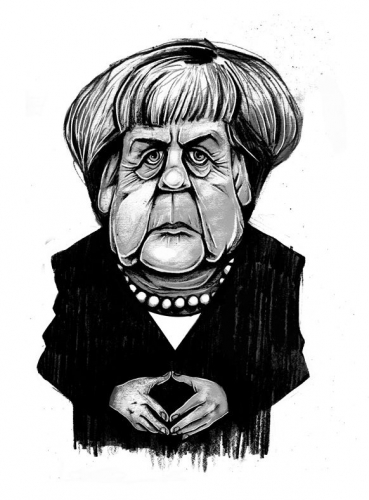
L'Allemagne post-Merkel sous le signe de la continuité: puissance économique et insignifiance géopolitique
par Luigi Tedeschi
Source : Italicum & https://www.ariannaeditrice.it/articoli/la-germania-del-dopo-merkel-nel-segno-della-continuita-potenza-economica-e-irrilevanza-geopolitica
L'héritage du merkelisme
L'ère Merkel s'est achevée, sans beaucoup de regrets pour l'Italie. En réalité, l'héritage de Mme Merkel est identifié à la primauté de l'Allemagne en Europe, et ses politiques étaient axées sur la stabilité politique et la croissance économique allemande. Mme Merkel n'est pas à l'origine d'une nouvelle doctrine politique ni d'un modèle économique et social novateur: le "merkelisme" peut être défini comme un pragmatisme qui implique l'adaptation économique et géopolitique de l'Allemagne à un monde globalisé en constante mutation. Mme Merkel n'a pas non plus été l'architecte de grandes réformes structurelles. Les grandes réformes qui ont conduit à la transformation du capitalisme d'inspiration sociale et de la cogestion en un système néolibéral anglo-saxon avaient déjà été menées par son prédécesseur social-démocrate Schroeder à travers les quatre plans Hartz de 2003 à 2005. Mme Merkel a ensuite mis en œuvre ce processus de réformes néolibérales, générant une crise d'identité peut-être irréversible au sein de la social-démocratie allemande.
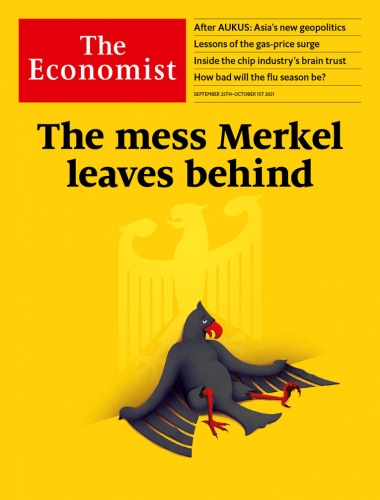
Au cours de ses 16 années de chancellerie, Mme Merkel a obtenu la sortie de l'Allemagne du nucléaire, supprimé le service militaire obligatoire, lancé le processus de reconversion énergétique, fait adopter la loi autorisant les mariages homosexuels, institué le salaire minimum, équilibré le budget, accueilli un million de réfugiés syriens et développé considérablement les relations économiques avec la Chine, qui est devenue son principal partenaire commercial.
Ce qui est certain, c'est qu'en 2005, Mme Merkel a hérité d'une Allemagne en crise profonde, dans laquelle elle se débattait depuis la réunification, mais qui a rapidement atteint une croissance remarquable qui a permis de réduire de moitié le chômage et de porter le PIB par habitant à des niveaux deux fois supérieurs à ceux de la Grande-Bretagne, de la France et du Japon. L'Allemagne de Mme Merkel s'est rapidement hissée au rang de puissance économique mondiale.
Mais ce développement tourbillonnant a été réalisé grâce au taux de change fixe établi avec l'unification monétaire, qui a conduit à d'énormes excédents de la balance commerciale, au détriment des pays européens les plus faibles, contraints à des dévaluations internes récurrentes et à des politiques d'austérité imposées par les règles budgétaires établies par le pacte de stabilité, avec des réductions conséquentes des dépenses publiques et des privatisations dévastatrices qui ont conduit à la déstructuration industrielle des États. En outre, avec l'adoption de l'euro, l'Allemagne a pu bénéficier d'un taux de change très compétitif pour ses exportations vers les pays tiers, étant donné que la valeur de l'euro sur les marchés financiers (résultant de la performance globale des économies des pays de la zone euro) était sous-évaluée, c'est-à-dire bien inférieure à la valeur que le mark aurait eue en présence du niveau élevé de l'excédent commercial obtenu par les exportations allemandes. En outre, les excédents commerciaux allemands au sein de l'UE ont été réalisés en violation ouverte des règles du Pacte de stabilité européen. Mais l'Allemagne n'a jamais été sanctionnée par les autorités européennes, compte tenu de sa position prépondérante dans les institutions de l'UE.
Le "merkentilisme" européen: un pangermanisme financier
La primauté allemande dans l'UE a créé une Europe structurée sur un modèle inspiré de la rigueur financière, qui a fait passer les équilibres budgétaires avant le développement et l'investissement. En effet, depuis la crise de 2008, la reprise en Europe a été beaucoup plus fragile et limitée qu'aux États-Unis et en Chine. La croissance de l'Allemagne n'a pas été un moteur pour les économies des autres pays européens. Au contraire, la croissance de l'Allemagne et de ses pays satellites du nord s'est accompagnée d'une récession/stagnation dans les pays du sud de l'Europe.
Le modèle merkelien adopté par l'UE pourrait être défini comme un "pangermanisme financier", dans la mesure où la primauté de l'Allemagne n'a pas fait participer les économies des autres pays à la croissance, mais a plutôt exproprié leurs ressources économiques et humaines et, par le mécanisme de la dette, a profondément affecté la souveraineté politique même des États du Sud.
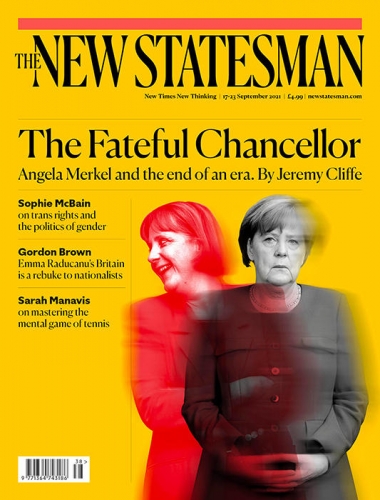
Le rôle dominant de l'Allemagne en Europe a conduit à l'imposition d'une rigueur financière aux effets dévastateurs. Dans le cas de la crise de la dette grecque, la rigidité de Merkel n'a été atténuée que par la perspective de la crise qui frapperait les banques allemandes, françaises et néerlandaises (qui avaient d'ailleurs honteusement accordé des financements sans couverture adéquate) en cas de défaut de la Grèce. La Grèce, elle, a été soumise à une politique d'austérité dont les effets économiques et sociaux se font encore sentir aujourd'hui. Le modèle Merkel en Europe a généré des conflits intereuropéens permanents et a contribué à une augmentation considérable des inégalités politiques entre les États et des inégalités sociales au sein des États membres de l'UE.
Dans l'UE, l'Allemagne a fait passer son expansion économique avant les politiques de solidarité interétatique et de respect des droits de l'homme. Les intérêts gouvernementaux (y compris électoraux) des États dominants (l'Allemagne et ses satellites, ainsi que la France) ont prévalu sur la nature supranationale de l'UE.
L'Allemagne a mené une politique d'expansion économique dans les anciens pays du Pacte de Varsovie, mise en œuvre par des délocalisations industrielles et des acquisitions des structures de production de ces pays. Les pays d'Europe de l'Est sont devenus membres de l'UE, avec la perspective de rejoindre l'OTAN. Par conséquent, ces pays sont aujourd'hui dépendants des États-Unis, tant d'un point de vue énergétique que stratégico-militaire. Ils accueillent des centaines de bases militaires de l'OTAN disséminées le long de leurs frontières orientales, dans une hostilité ouverte envers la Russie. La position pro-américaine adoptée par les pays d'Europe de l'Est constitue donc un obstacle permanent dans les relations entre la Russie et l'Europe. En outre, il y a eu des conflits évidents entre ces pays et les institutions de l'UE au fil du temps. Le statut de protectorat économique de l'Allemagne a souvent empêché l'UE d'imposer des sanctions à ces pays pour violation des lois européennes sur les droits de l'homme et le dumping industriel. Ce n'est pas un hasard si la politique de Mme Merkel a été baptisée "merkentilisme".
L'accueil d'un million de réfugiés syriens en Allemagne en 2015 s'est avéré être non seulement une mesure humanitaire, mais aussi une manœuvre économiquement bénéfique, car une main-d'œuvre bon marché a été importée pour être employée dans l'industrie allemande. En outre, la fermeture ultérieure à la vague migratoire a été réalisée en fournissant des fonds importants à la Turquie d'Erdogan pour garder les migrants sur son territoire. Le pacte avec Erdogan a donné à ce dernier une arme mortelle de chantage politique à laquelle l'Europe est toujours exposée. En ce qui concerne les flux migratoires en provenance de la Méditerranée auxquels l'Italie est exposée, l'UE s'est distinguée par son désintérêt flagrant.
L'Allemagne, entre puissance économique et insignifiance géopolitique
Avec les élections allemandes et le changement de structure gouvernementale qui aura inévitablement lieu, il faut s'attendre à ce que la politique allemande ne subisse pas de changements significatifs par rapport à la ligne Merkel. En fait, sous l'ère Merkel, l'Allemagne a toujours réaffirmé sa fidélité au pacte atlantique, en maintenant le bouclier militaire américain. L'Allemagne est également en bons termes avec la Russie en raison de sa dépendance énergétique. Ses relations économiques avec la Chine, qui est devenue son principal partenaire commercial, sont également très importantes.
Il convient toutefois de noter que la subordination de l'Allemagne et de l'Europe aux États-Unis, en vertu du Pacte atlantique, a signifié qu'au cours des 20 dernières années, elles ont été impliquées dans les guerres expansionnistes américaines en Irak, en Afghanistan et dans d'autres pays, partageant les résultats désastreux. Sans parler des dommages causés aux investissements européens par les sanctions imposées par les États-Unis à la suite des embargos commerciaux contre l'Iran et la Russie.
Nous assistons aujourd'hui à un changement profond des perspectives géopolitiques de l'Amérique, et la politique allemande et européenne apparaît dès lors inadaptée face aux nouveaux horizons de la nouvelle géopolitique mondiale. L'Allemagne et l'Europe ont délégué leur défense à l'OTAN, mais la politique de désengagement américain en Europe est désormais évidente. Toutefois, les États-Unis ont exprimé leur opposition ouverte à tout projet de défense européenne commune. En effet, la création d'une armée européenne commune ne serait pas compatible avec l'appartenance de l'Europe à l'OTAN, dont la politique d'endiguement de la Russie ne peut être conciliée avec les intérêts économiques et géopolitiques européens.

L'Allemagne est une puissance économique, mais elle n'est absolument pas pertinente d'un point de vue géopolitique. La nécessité d'une souveraineté géopolitique unifiée de l'Europe, associée à une autonomie technologique européenne, est constamment exprimée dans les forums institutionnels européens. Mais le peuple allemand, comme ses dirigeants, s'est toujours déclaré réfractaire à toute perspective de politique de puissance. Les limbes géopolitiques dans lesquelles se trouve l'Allemagne d'aujourd'hui, en tant que garantie de prospérité et de sécurité, rendent l'Allemagne comparable à une sorte de Grande Suisse, riche, solide, mais sans intérêt. Ce paresseux allemand est d'ailleurs cautionné par les États-Unis. Federico Fubini, dans le Corriere della Sera, a déclaré: "Mais il y a une question que les politiciens ne semblent pas se poser : que faire si nous ne voulons pas ? Et si les sociétés allemandes, italiennes et autres sociétés européennes de premier plan avaient la Suisse pour modèle ? Nous connaissons la Suisse: une démocratie solide, une civilisation laïque, ouverte et dynamique. Et sans intérêt. Elle profite des avantages de la mondialisation sans être réellement impliquée dans les affaires mondiales. Et si les Allemands voulaient devenir sur la scène internationale, avec nous tous, ce que la Suisse est pour l'Europe ?".
Toutefois, il est très peu probable que l'"introversion allemande" (telle que définie par Dario Fabbri dans Limes) se poursuive dans un avenir proche, face aux transformations de la géopolitique mondiale actuelle, au-delà de la volonté des dirigeants et de l'électorat allemands. Les changements profonds de la stratégie géopolitique américaine imposent des choix que ni l'Allemagne ni l'Europe ne peuvent éviter. Les États-Unis se sont lancés dans une stratégie globale d'endiguement vis-à-vis de la Chine et de la Russie. Les stratégies américaines sont actuellement concentrées dans le Pacifique. Le récent pacte de sécurité trilatéral entre l'Australie, le Royaume-Uni et les États-Unis (AUKUS), en tant qu'alliance militaire visant à contrer l'influence de la Chine dans la région indo-pacifique, a exclu l'OTAN, dont la fonction, bien que destinée à contenir la Russie, est devenue secondaire.
En outre, les États-Unis veulent imposer à l'Allemagne et à l'UE une réduction drastique de leurs relations commerciales avec la Chine et contrer la dépendance énergétique de l'Europe vis-à-vis de la Russie. Il est clair que l'Allemagne ne pourra pas renoncer à ses milliers de milliards d'investissements dans ses relations avec la Chine, pas plus qu'elle ne pourra se passer des approvisionnements énergétiques russes. Mais il n'existe pas de stratégie allemande ou européenne pour contrer l'hégémonie américaine.
L'Allemagne se trouve donc dans un état d'infériorité. La politique de non-choix (idéologiquement camouflée par un pacifisme rhétorique et un conformisme écologiste rampant) et la subordination militaire et technologique de l'Europe aux États-Unis ont condamné l'Allemagne et l'Europe à la marginalité, à l'insignifiance géopolitique.
L'échec de la politique allemande de rigueur financière imposée à l'Europe se traduit par un manque d'investissement dans l'innovation technologique et la recherche scientifique. La pandémie a mis en évidence les lacunes structurelles de l'Europe. L'Europe s'est révélée dépendante de la technologie américaine et chinoise à l'ère de la révolution numérique et de la reconversion environnementale, ainsi que totalement inadaptée dans le domaine de la recherche, puisqu'elle n'a pas été en mesure de mettre en œuvre de manière autonome la production de son propre vaccin anti-coronavirus, ce qui l'a rendue dépendante des importations de vaccins produits aux États-Unis.
L'austérité est-elle de retour ?
Le nouveau gouvernement allemand (probablement une coalition du SPD, des Verts et des libéraux) sera-t-il moins extrémiste en matière de politique d'austérité ? Il convient toutefois de noter que l'opinion publique allemande (à l'exclusion de la minorité de Die Linke) est très majoritairement favorable à la politique de rigueur financière de Mme Merkel et opposée à tout mécanisme de mutualisation de la dette dans l'UE. Merkel, déjà opposée à la création d'euro-obligations et partisane fanatique du mythe de l'équilibre budgétaire, avec un pragmatisme imposé par la crise pandémique, a permis le lancement du NGEU, c'est-à-dire la création d'une dette commune. Toutefois, le NGEU est une mesure exceptionnelle et temporaire, qui n'a pas vocation à devenir structurelle, comme ce fut le cas aux États-Unis. À terme, cela sapera la croissance et la compétitivité de l'Europe vis-à-vis des États-Unis et des autres puissances économiques mondiales.
Le pacte de stabilité a été suspendu, tout comme le pacte fiscal, mais ils ne seront certainement pas abrogés, et leur nécessaire réforme ne verra pas le jour. Au contraire, l'Allemagne et ses satellites ont exprimé à plusieurs reprises la nécessité d'un rétablissement rapide de ces règles financières strictes. Cependant, toute décision à ce sujet a été reportée pour l'instant. Ce qui est certain, c'est qu'un retour à l'austérité tuerait dans l'œuf la reprise européenne. Les sociaux-démocrates, qui ont été les alliés de Mme Merkel au sein du gouvernement pendant 16 ans, ne se sont jamais prononcés en faveur d'un changement de cap. Sur le possible retour de l'austérité, dans une interview de Franco Bechis sur "il sussidiario.net", Giulio Sapelli a déclaré : "Je le crains. Aucun parti n'a promis dans son programme de renégocier les traités, à l'exception de Die Linke qui, pourtant, est contre l'OTAN et n'est pas sacrifiable pour la cause. Les autres sont pour le statu quo. Un nouvel échec de la social-démocratie allemande. Le premier a été le oui au référendum sur la réunification. Aujourd'hui, sa rédemption dépend d'une sortie lente et progressive de la déflation séculaire, mais personne n'a le courage de l'assumer.
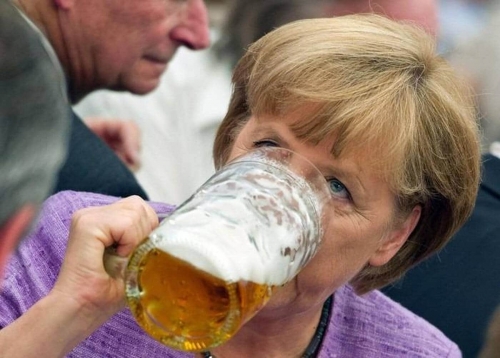
Dans le nouveau gouvernement de coalition, il y a les libéraux, et le "faucon" Christian Lindner, qui a été désigné comme futur ministre de l'économie, demande une réforme qui rendrait les règles du pacte de stabilité encore plus strictes. Cependant, il est impensable que, quelle que soit la couleur politique des gouvernements, l'Allemagne renonce à son rôle dominant dans l'UE et à la rigueur financière comme instrument de domination.
Il convient également de noter que seule une petite partie des fonds du NGEU a encore été déboursée, et qu'il faut donc s'attendre à ce que la rigidité allemande en matière de garanties et de conditionnalité des financements s'accentue. Toute restriction sur le versement des fonds NGEU et la réduction tant redoutée des problèmes de liquidité par la BCE conduiraient non seulement à l'implosion de l'UE, mais aussi à l'effondrement du système industriel en Italie, en Espagne et même en France. Le conflit intra-européen va s'accentuer, mais l'interdépendance entre les économies européennes reste nécessaire à la survie de la suprématie allemande.
La limite de la puissance allemande consiste précisément en son unilatéralisme absolu, qui exclut toute évolution du processus d'unification européenne dans une direction démocratique et solidaire. Cet unilatéralisme pourrait en outre provoquer à long terme une crise systémique en Allemagne même, aux conséquences imprévisibles.
L'Allemagne et la crise de la démocratie à l'Ouest
Les élections allemandes ont non seulement marqué la fin de l'ère Merkel, mais aussi la fin d'un système politique caractérisé par la bipolarité CDU/CSU - SPD. Comme dans tous les pays occidentaux, le cadre politique allemand issu des dernières élections est fragmenté. Un gouvernement de coalition (SPD - Verts - Libéraux) est une perspective totalement nouvelle pour l'Allemagne. Il s'agira presque certainement d'un gouvernement faible, résultant de médiations et de compromis dans sa ligne politique.
L'Allemagne, comme tout l'Occident, est depuis longtemps affligée d'une crise de gouvernabilité et de représentativité de la classe politique.
L'Allemagne de l'ère Merkel a été gouvernée par de larges coalitions d'unité nationale. Au cours des 16 années de la chancellerie, un certain nombre de scandales flagrants ont éclaté, tels que le Dieselgate, la Deutsche Bank, Wirecard et Siemens, qui ont révélé la dissimulation par le gouvernement du système financier et industriel allemand. À plusieurs reprises, la classe politique et l'économie allemandes ont subi de graves crises de crédibilité internationale.
En réalité, ces gouvernements d'unité nationale (et l'actuel gouvernement Draghi en Italie en est un exemple paradigmatique) représentent la fin de la dialectique démocratique qui s'articule dans la confrontation/le choc entre majorités et oppositions. Mais surtout, les systèmes libéraux-démocratiques souffrent d'une profonde crise de représentativité, étant donné la dévolution d'une grande partie de leur souveraineté économique et politique à des organismes technocratiques-financiers supranationaux, qui imposent leurs directives indépendamment du consensus populaire et du débat politique démocratique. Le déficit démocratique en Occident peut être identifié à l'absence de participation politique, et la gouvernabilité des États est de plus en plus précaire et incertaine.
En Allemagne, comme dans presque toute l'Europe, le régionalisme s'affirme comme l'expression de la prévalence des intérêts locaux sur les intérêts nationaux, compte tenu de l'écart de développement et de bien-être entre les différentes régions de chaque État. Le régionalisme est un élément de la dissolution des États. Ce phénomène, déjà évident dans des pays comme l'Espagne et la Grande-Bretagne (qui sont déjà dans un état de décomposition avancé), pourrait s'étendre au point de conduire à l'éclatement de nombreux États européens. Le virus sécessionniste des petites patries régionales, avec l'érosion des unités nationales des États, pourrait conduire à la dissolution d'une Europe qui, au lieu de représenter un idéal d'unité entre les peuples et les États, a elle-même généré les germes de sa décomposition.
16:21 Publié dans Actualité, Affaires européennes | Lien permanent | Commentaires (0) | Tags : angela merkel, allemagne, europe, affaires européennes, politique internationale | | del.icio.us | | Digg | Facebook
La revue de presse de CD - 03 octobre 2021

La revue de presse de CD
03 octobre 2021
AMÉRIQUE DU SUD
Le Brésil adhèrera-t-il à l'OTAN ?
Joe Biden a offert au Brésil la position de partenaire non membre de l'OTAN, l'alliance militaire atlantiste créée pendant la guerre froide pour faire face à l'URSS et qui sert aujourd'hui à affronter la Russie et la Chine. Mais quelles sont les conditions ? Et cela servirait-il l'intérêt national du Brésil ?
Euro-synergies
http://euro-synergies.hautetfort.com/archive/2021/09/25/l...
CHINE
Chine, le grand prédateur. Un défi pour la planète. Pourquoi ?
Pourquoi la RPC est-elle sur le banc des accusés en matière d’espionnage industriel ? Comment la Chine construit-elle ses relations avec les pays partenaires des Nouvelles routes de la soie ? Que penser du rapport de l’IRSEM qui fait grand bruit « Les opérations d’influence chinoises, un moment machiavélien » ?
Diploweb.com
https://www.diploweb.com/Chine-le-grand-predateur-Un-defi...
Le port de Hambourg devient chinois. Le dernier cadeau de Frau Merkel à Pékin
La République populaire de Chine a résisté à la pandémie mondiale sans trop de dommages (du moins en apparence) et poursuit son expansion économique, politique et militaire. Partout, vraiment partout. Même sur les mers. Pour la première fois de sa longue histoire - à l'exception de l'intermède du quinzième siècle avec les expéditions de l'amiral Zheng Hen - elle a créé une grande marine militaire et marchande, se transformant ainsi en une puissance maritime. Un objectif ambitieux et sans précédent, comme le rappelle Edward Sing Yue Chan, qui fait "partie intégrante du 'rêve chinois' de renouveau national". C'est l'un des principaux objectifs du président depuis son arrivée au pouvoir, comme il l'a réitéré en 2017 dans un discours aux commandants de la marine" (Limes, n° 10/ 2020).
Euro-synergies
http://euro-synergies.hautetfort.com/archive/2021/09/27/l...
DÉSINFORMATION
Comment le photographe Jonas Bendiksen a dupé « Visa pour l'image » pour dénoncer les fake news
Un reportage monté de toutes pièces dans une ville précisément connue pour sa production de « fake news » : la mise en abyme était osée. C’est pourtant l’entreprise insensée à laquelle un photographe norvégien s’est livré pour dénoncer les dangers de la désinformation. Son sujet a même été présenté au festival de photojournalisme Visa pour l’image… Et les professionnels du secteur n’y ont vu que du feu.
Marianne
https://www.marianne.net/culture/comment-le-photographe-j...
Déplacement à Marseille : l’Élysée encadre les journalistes et bride l’information
L’accréditation des journalistes pour couvrir un événement officiel est une pratique ancienne. Tout comme celle du « pool », qui consiste à autoriser la présence d’un nombre très réduit de journalistes, ensuite chargés de « partager » les éléments recueillis (sons, images…) avec leurs collègues des autres rédactions. Communiqué du SNJ-CGT.
Acrimed
https://www.acrimed.org/Deplacement-a-Marseille-l-Elysee-...
Pour dénigrer les talibans, NYT et CNN citent un compte Twitter fictif et pondent un article mensonger.
Après la victoire des talibans contre l'armée américaine, les médias grand public américains ont lancé un nouveau récit sur la menace imminente de terrorisme en Afghanistan pour préparer le terrain à de futures interventions militaires. Diffusé de manière étonnamment disciplinée, les médias ont démontré plus clairement que jamais leur coordination avec l'État de sécurité nationale et la promotion de ses intérêts.
Le Saker francophone
https://lesakerfrancophone.fr/pour-denigrer-les-talibans-...
ÉTATS-UNIS
La fièvre idéologique post-Guerre froide de l’establishment américain
L’ensemble de l’establishment américain de la politique étrangère a succombé à une fièvre idéologique post-Guerre froide monumentalement autodestructrice.
Les-crises.fr
https://www.les-crises.fr/la-fievre-ideologique-post-guer...
WikiLeaks : selon d’anciens officiels, la CIA aurait envisagé d'assassiner Julian Assange
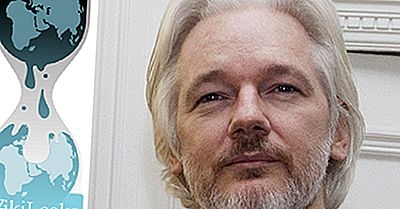
La CIA aurait songé à enlever et tuer Julian Assange, alors qu'il était réfugié à l’ambassade équatorienne de Londres, selon une enquête de Yahoo News et du « Guardian ». Le fondateur de WikiLeaks, qui avait rendu public des milliers de documents confidentiels en 2010, est toujours accusé d'espionnage par les États-Unis qui continuent de demander son extradition.
Marianne
https://www.marianne.net/monde/ameriques/wikileaks-selon-...
FRANCE
Sous-marins australiens : une rupture liée à la Nouvelle-Calédonie ?
Dans ce dossier de rupture de contrat des sous- marins australiens sous la pression de Washington et Londres, la France est doublement fragilisée. Elle tient le rôle de l’arroseur arrosé et surtout personne ne peut croire en sa volonté dans cette région d’assurer dans la continuité son rôle de puissance majeure. La nouvelle alliance anglo-saxonne doute de la solidité française.
Polémia
https://www.polemia.com/sous-marins-australiens-une-ruptu...
Électricité : les Français condamnés à payer pour un marché qui n’est pas le leur
Il est à espérer que les Français vont enfin comprendre dans quelle impasse les a menés la pantomime du tarif de l’électricité à laquelle ont souscrit les dirigeants français, ces dirigeants parfaitement incompétents qui ne comprennent rien au marché de cette énergie.
Boulevard Voltaire
https://www.bvoltaire.fr/electricite-les-francais-condamn...
GAFAM
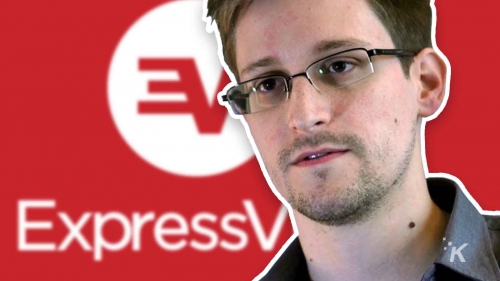
Grenouillages d’Abou Dhabi : E. Snowden appelle à la vigilance face à ExpressVPN
Souvent classée parmi les meilleurs fournisseurs de VPN, l’entreprise ExpressVPN a reconnu avoir été au courant – et ce dès le début de leur collaboration –, de la participation de l’un de ses cadres à un programme d’espionnage des Émirats arabes unis (EAU) employant des anciens agents du renseignement US. Malgré la condamnation dudit cadre par la justice américaine, ExpressVPN a déclaré lui maintenir sa confiance.
Perspectives med
https://www.perspectivesmed.com/grenouillages-dabou-dhabi...
Telegram, Apple, Google et la censure
Cet article est une traduction du dernier communiqué de Pavel Durov, le fondateur de la populaire application Telegram, dont nous avons déjà parlé à plusieurs reprises. Pavel Durov s’y explique sur le nécessaire ajustement de Telegram vis-à-vis des législations nationales (le cas de la Russie est développé ci-dessous), les contraintes des distributeurs d’applications et la politique de Telegram vis-à-vis de la censure. Les intertitres sont de notre rédaction.
Ojim
https://www.ojim.fr/telegram-apple-google-et-la-censure/
La fin du « tout-Microsoft » dans les administrations françaises ?
Le directeur interministériel du numérique de l’État (DINUM), Nadi Bou Hanna, a publié une circulaire le 15 septembre pour demander aux administrations françaises de ne plus migrer vers la suite bureautique de Microsoft hébergée dans le cloud Microsoft 365. L'État s'inquiète de la sécurité des données et veut en finir avec le « tout-Microsoft ».
Siècle digital
https://siecledigital.fr/2021/09/24/etat-francais-micoros...
YouTube interdit toutes les vidéos anti-vax, renforçant ainsi la campagne de censure de l’ère Covid
YouTube va bannir de sa plateforme tout « contenu nuisible relatif aux vaccins », notamment les affirmations selon lesquelles les vaccins sont inefficaces pour réduire la transmission de la maladie. Cette interdiction intervient après une année d’augmentation de la censure par l’entreprise détenue par Google.
RT finternational
https://lesakerfrancophone.fr/youtube-interdit-toutes-les...
GÉOPOLITIQUE
Le Pacte AUKUS et la guerre contre l'Eurasie
La géopolitique thalassocratique classique définit le "monde insulaire", la World Island, comme l'ensemble des masses continentales eurasiennes et africaines. Cette "sphère majeure" est entourée d'un certain nombre de "sphères mineures" qui agissent comme ses satellites et qui, d'une manière ou d'une autre, ont historiquement cherché à exercer une pression constante sur elle et à contenir tout effort de coopération possible en son sein. Ce rôle de "satellite" a été historiquement attribué au Japon à l'Est, d'abord à la Grande-Bretagne ("une île européenne mais pas en Europe") puis aux États-Unis à l'Ouest, et aujourd'hui à l'Océanie au Sud de l'Eurasie.
Euro-synergies
http://euro-synergies.hautetfort.com/archive/2021/09/25/l...
GRANDE-BRETAGNE
Angleterre. Des viols de mineurs toujours plus nombreux, la quasi-impunité pour les gangs pakistanais
Parmi les faces sombres de l’Angleterre, il y a le phénomène des viols de mineurs commis par des gangs de prédateurs sexuels, très souvent d’origine pakistanaise. Des abus sexuels qui sont de plus en plus nombreux tandis que les violeurs bénéficient d’une impunité presque totale avec une police craignant les accusations de racisme.
Breizh-info
https://www.breizh-info.com/2021/09/30/171544/angleterre-...

LECTURE
L’affaire Navalny. Le complotisme au service de la politique étrangère, de Jacques Baud. Max Milo, 2021. 16 €.
Présentation : « Navalny a-t-il délibérément été empoisonné ? Les éléments dont nous disposons justifient-ils des sanctions contre la Russie ? L’enregistrement avec l’agent du KGB est-il une mise en scène ? Navalny est-il réellement le ‘’principal opposant à Vladimir Poutine’’ ? Son film sur le ‘’Palais de Poutine’’ reflète-t-il la réalité ? Ce livre est la première enquête sur l’affaire Navalny. Il est fondé sur les documents officiels américains, britanniques, russes, français et allemands. » (extrait de la 4e de couverture)
Auteur : Jacques Baud est un colonel de l’armée suisse, ex-agent des services secrets suisses qui a combattu pendant dix ans en URSS. Il est expert en armes chimiques et nucléaires et formé au contre-terrorisme et à la contre-guérilla.
Contenu : 144 pages dont 12 pages de documents officiels (rapports, études, tous en anglais).
Extraits : « Après avoir lutté durant des années en première ligne contre la tyrannie communiste dans les pays de l’Est et en Union soviétique, j’ai le sentiment d’être revenu à, la ‘’case départ’’. Je constate que nous avons acquis tous les travers contre lesquels nous luttions durant la guerre froide : nous pratiquons la torture et la censure ; nous sanctionnons sans l’approbation des Nations unies ; nous nous ingérons dans les affaires d’autres pays et soutenons matériellement et financièrement des groupes d’opposition ; notre tolérance à l’égard des violations du droit international sont à géométrie variable. En fait, nous ne cherchons pas à promouvoir nos valeurs, mais nous les utilisons comme outil de pression au gré de nos intérêts. »
« En 2010, sur la recommandation de Garry Kasparov, Navalny est invité aux Etats-Unis à participer au Yale World Fellows Program. Il s’agit d’un programme de formation de quinze semaines, non diplômant, offert par l’université de Yale à des étrangers, identifiés par certaines élites américaines comme de ‘’futurs leaders’’ dans leurs pays respectifs. »
« L’analyse de l’affaire Navalny montre qu’à chacune de ses étapes, dans le spectre des explications possibles, on a systématiquement choisi celles cui s’inséraient dans le narratif d’un empoisonnement au Novitchok, donc commandité par Vladimir Poutine. Le fait que les symptômes des Skripal et de Navalny étaient totalement différents, que ni les uns ni les autres n’ont eu de symptômes d’un empoisonnement aux neurotoxiques, que ni les uns ni les autres ne présentent les séquelles de long terme associées à un empoisonnement au Novitchok, ou que le Novitchock a également été produit par des pays occidentaux, n’a incité ni les médias, ni les politiques à la prudence. »
MAGHREB
Réalisme politique au Maroc
Nation ancienne et pays à la longue histoire, le Maroc a pu se maintenir face à ses adversaires grâce à un réalisme diplomatique qui lui a souvent permis de déjouer les hostilités.
Conflits
https://www.revueconflits.com/realisme-politique-au-maroc...

RÉFLEXION
« La ligne politique d’une maison d’édition, c’est sa ligne éditoriale » – Entretien avec Thierry Discepolo
Thierry Discepolo appartient au collectif à l’origine des éditions Agone, qu’il a fondées en 1997 à partir de la revue éponyme lancée sept ans plus tôt à Marseille. Cette maison a contribué au renouveau du paysage intellectuel critique après la glaciation des années 1970-1980 dont nous parlait, lors d’un précédent entretien, Nicolas Vieillescazes des éditions Amsterdam. L’héritage des Lumières, l’histoire populaire ou encore la critique des médias sont les thèmes majeurs qui orientent leur catalogue et traduisent une ligne éditoriale attachée à donner des outils à un projet politique d’émancipation. Auteur de La Trahison des éditeurs, Thierry Discepolo livre également un portrait du monde de l’édition pris entre la logique du capital et les vicissitudes de l’indépendance.
Le Vent Se Lève
https://lvsl.fr/la-ligne-politique-dune-maison-dedition-c...

« Le passe sanitaire est un moyen extrajudiciaire de désactiver socialement les gens »
Selon le professeur de droit Guillaume Zambrano, le passe sanitaire est une atteinte aux droits fondamentaux ainsi qu’une sanction extrajudiciaire. La pérennisation de ce dispositif signifierait d’après lui la normalisation de l’atteinte à l’intégrité physique des individus et de la privation de sortie et de mouvement.
Reporterre.net
https://reporterre.net/Le-passe-sanitaire-est-un-moyen-ex...
Faille AP-HP : entrepôts de données, rêve de l’État, cauchemar des citoyens
Les bases de données créent de véritables pots de miel attirant les pirates. De plus, elles se transforment en arme de surveillance contre les citoyens.
Contrepoints
https://www.contrepoints.org/2021/09/28/406831-faille-ap-...
Les cabinets de conseil gouvernent-ils le monde ?
De la stratégie vaccinale au plan de relance européen, les cabinets de conseil sont omniprésents dans l’action publique contemporaine. D’abord issues du monde de l’entreprise, les firmes de consulting ont progressivement étendu leurs tentacules dans tous les domaines, jusqu’à dicter de vastes pans des politiques étatiques. Plus que jamais, leur influence doit être questionnée.
Le Vent Se Lève
https://lvsl.fr/les-cabinets-de-conseil-gouvernent-ils-le...
RUSSIE
Horizon 2036, ou la relance plébiscitaire du système politique russe
L’année 2021 marque-t-elle un durcissement de l’autoritarisme en Russie ? La condamnation d’Alexeï Navalny à deux ans et demi de prison et son incarcération ont été très sévèrement jugées en Occident.
Conflits
https://www.revueconflits.com/horizon-2036-ou-la-relance-...
SANTÉ
L'HRC fait marche arrière et interdit l'ivermectine malgré des centaines de bons résultats
Dernièrement, les loufoqueries américaines ont remplacé les relais d’études sérieuses dans les médias francophones qui abordent le thème de l’ivermectine. Pourtant, il existe bel et bien une expérience clinique qui plaide en faveur de la molécule. En Suisse romande aussi, des médecins la prescrivent au sein d’une institution reconnue. Du moins, c'était le cas jusqu’à la semaine dernière. Explications.
impertinentmedia
https://www.limpertinentmedia.com/post/l-hrc-fait-marche-...
« Le passe sanitaire est un moyen extrajudiciaire de désactiver socialement les gens »
Selon le professeur de droit Guillaume Zambrano, le passe sanitaire est une atteinte aux droits fondamentaux ainsi qu’une sanction extrajudiciaire. La pérennisation de ce dispositif signifierait d’après lui la normalisation de l’atteinte à l’intégrité physique des individus et de la privation de sortie et de mouvement.
Reporterre.net
https://reporterre.net/Le-passe-sanitaire-est-un-moyen-ex...
Crise coronavirale : entretien (1) avec le toxicologue Jean-Paul Bourdineaud
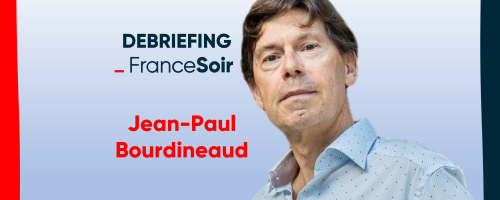
Dans cet entretien, le toxicologue Jean-Paul Bourdineaud conteste la supposée toxicité de l’hydroxychloroquine et de l’ivermectine, explique la raison de leur bannissement, et développe la notion de controverse scientifique ; il met en lumière le rôle des conflits d’intérêts et le problème de l’évaluation des risques par les agences de régulation, qui ont abouti à l’unique solution vaccinale.
Médiapart
https://blogs.mediapart.fr/laurent-mucchielli/blog/300921...
La "harcelosphère" contre l'IHU-Méditerranée et le professeur Raoult : de l'obscène aux menaces
Un an et demi de pandémie COVID-19. Un an et demi de "fraudes scientifiques", de problèmes et de mensonges relatés dans la tribune Diagnostic, traitements et vaccin : panorama d’une escroquerie. Cette tribune mettait en avant certains des dysfonctionnements sur la crise, sans en mettre à jour les mécanismes. Une analyse qui demandait une enquête complémentaire sur les attaques incessantes virant à l'obsession et au harcèlement envers l’IHU-Méditerranée et le Pr Raoult - ces derniers ayant porté les affaires en justice comme la plainte contre la Pr Karine Lacombe ou contre le Pr Raffi, comme l'a expliqué Me Grazzini avocat du Pr Raoult.
Nous nous sommes plongés plusieurs mois dans ces réseaux afin d’essayer de comprendre où et comment sévissent les principaux acteurs des actions contre l'IHU-Méditerranée, le professeur Raoult, et le professeur Chabrière, l'un de ses principaux collaborateurs, professeur de biochimie.
francesoir.fr
https://www.francesoir.fr/societe-faits-divers/la-harcelo...

TERRORISME
Livre – Terrorisme : les affres de la vengeance
Le terrorisme comme vengeance intégrale, tel est le fond de l’analyse profonde et stimulante de Myriam Benraad, un angle rarement utilisé. Pour comprendre les raisons de cette carence, il importe en premier lieu de souligner que la vengeance n’est pas nécessairement une violence. Lorsqu’elle l’est, encore faut-il identifier à quels types et à quelles catégories de violence elle se réfère exactement.
Conflits
https://www.revueconflits.com/livre-terrorisme-les-affres...
11:50 Publié dans Actualité, Affaires européennes | Lien permanent | Commentaires (0) | Tags : actualité, france, europe, affaires européeennes, presse, journaux, médias | | del.icio.us | | Digg | Facebook
vendredi, 01 octobre 2021
Le bonisme ou le "do-gooderisme"

Le bonisme ou le "do-gooderisme"
Pedro López Ávila
Ex: https://posmodernia.com/el-buenismo/
Pérez Reverte déclare dans une interview accordée à Semanal du 12 au 18 septembre 2021: "le XXIe siècle milite dans la médiocrité. L'excellence est pénalisée". Et votre serviteur ajouterait autre chose: le mensonge est récompensé. Car mentir avec l'effronterie de certains - sans broncher -, débiter des mensonges à droite et à gauche, est récompensé dans les urnes. Des conneries, comme dirait l'autre, mais c'est comme ça. On dirait que la modestie est tombée au fond de l'abîme et que l'important dans chaque action est le résultat final, et pour atteindre les objectifs il faudrait, comme condition sine qua non, entretenir l'ignorance et végéter avec elle le plus longtemps possible.
Jamais il n'a été aussi présomptueux - et d'une insolence orgueilleuse - de n'avoir jamais lu un livre, quelle différence pour les dirigeants ! L'important pour les responsables est plutôt d'annihiler tout espace de réflexion et de faire en sorte que le groupe ou le collectif acquière plus de consistance que l'individu lui-même. Cela a toujours été l'éternelle conquête de la classe dirigeante: essayer d'adapter l'individu au dogme éthique dominant et l'y enchaîner; et en ces temps de modorra (de dormition, de somnolence), le dogme éthique que les vents actuels nous apportent est celui du "goodisme", du "bonisme", qui, à vrai dire, me rend fou et me rappelle les réflexions de Baroja sur la conception qu'il avait du système démocratique, qu'il définissait comme "l'absolutisme du nombre".

Ce qui est vraiment grave ici, c'est que les gens ne veulent pas être amenés à penser, ce qui est dangereusement grave ici, c'est que nos modèles de coexistence orientent leur existence vers une société organisée comme s'il s'agissait d'un pur commerce; car les changements qui se produisent actuellement ne sont que les symptômes d'autres changements d'une portée beaucoup plus grande, qui sont en train de se consommer, pour la restructuration d'un monde dans lequel un nouvel ordre et une nouvelle ère s'imposeront à l'Occident.
Pendant ce temps, les masses silencieuses et dociles vaquent à leurs occupations : travailler (pour qui a un boulot), manger, boire et dormir. Le reste du temps est consacré à des comportements inspirés par l'évasion du quotidien, c'est-à-dire à des fêtes pantagruéliques, aux offices de Bacchus et aux réjouissances nocturnes. Je vais le dire autrement, pour qu'on me comprenne un peu mieux: les week-ends et les jours fériés, y compris les longs week-ends, devraient être consacrés exclusivement à offrir un culte au ventre, à manger pendant de longues heures dans de bons barbecues, ou bien à participer à la restauration jusqu'à épuisement des stocks; et, bien sûr, comme il ne faut pas perdre de temps entre les bouchées, et que le palais n'est pas dépourvu du sens du liquide, il est bien nécessaire de ne pas engloutir comme des dindes une bonne poignée de vin et de bière. Et c'est tout, il ne manque que le whisky et le sarao, qui commence avant la tombée de la nuit et dont on ne sait pas quand il se terminera. La musique est forte et la danse est bonne. Aujourd'hui, les gens sont très dansants, donc la communication est servie. Si quelqu'un veut parler, qu'il aille se faire foutre, qu'il fasse grincer ses cordes vocales ou qu'il apprenne le langage des signes ; d'ailleurs, il n'y a pas beaucoup de choses à dire non plus, les gens se considèrent suffisamment informés de tout par la télévision. Dieu merci, les youtubers sont arrivés comme le dernier espoir.
Pourtant, cette classe moyenne, stabilisatrice du système, composée d'ouvriers, de commerçants, de fonctionnaires, d'employés, etc. ne se rend pas compte qu'elle est arrivée. Ils ne se rendent pas compte que le moment est venu d'être plus vigilants que jamais, de plus en plus, car les forces du "bonisme", qui poussent à la haine, sont, par nature, viles et beaucoup plus véhémentes que les forces conciliatrices et, de plus, derrière elles se cachent des intérêts économiques beaucoup plus grossiers et méprisables que ceux qui correspondent au modus vivendi de la petite bourgeoisie, dont ils veulent extirper toutes les valeurs héritées de la tradition.
Ici, nous devons être tolérants envers les squatters, les criminels, ceux qui assassinent, ceux qui violent les femmes, ceux qui pillent, ceux qui se moquent de la religion catholique, les pédophiles, ceux qui volent, les putschistes, ceux qui sont condamnés comme des terroristes sanguinaires et ceux qui leur rendent hommage..... En bref, nous devons être bons et sympathiques envers tout ce que nous avons assimilé dans notre culture comme étant pervers et atroce, afin de ne pas être traités d'antipathiques ou accusés de crimes de haine pour avoir maudit cette racaille toujours plus abondante.
Nous le voyons tous les jours : le "goodisme", c'est-à-dire l'absurdité, a pris le dessus, et lutter contre lui est encore plus important, à ce moment de notre histoire, que les augmentations des tarifs d'électricité. Pour toutes ces raisons, c'est une tâche inexcusable pour nous tous, pour l'avenir de notre peuple, de ne pas céder à ceux qui veulent modeler notre esprit avec l'idéologie des nouveaux papes, qui veulent nous conduire par la main pour succomber à la domination d'une nouvelle société vulgaire et mécaniquement organisée, avec la perte conséquente des libertés individuelles.
Comme le dirait José Vicente Pascual dans Posmodernia 14-9-2021 : "Nous devons sauver le monde de ceux qui veulent sauver le monde. Il n'y a pas d'autre choix. Soit nous nous débarrassons d'eux, dans le meilleur sens du terme "eux". Ou ils se débarrassent de nous, dans le pire sens du terme.
15:31 Publié dans Actualité, Définitions | Lien permanent | Commentaires (0) | Tags : do-goodism, bonisme, actualité, problèmes contemporains | | del.icio.us | | Digg | Facebook
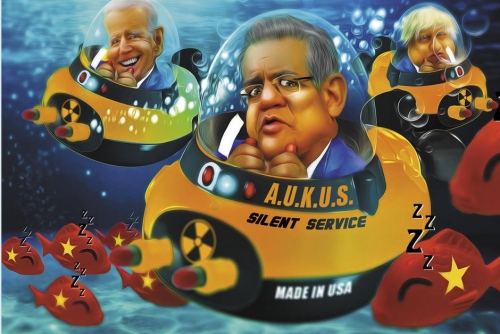
L’OTAN et sa projection AUKUS
L’OTAN et sa projection AUKUS
par Georges FELTIN-TRACOL
François Hollande n’a jamais eu de chance. Tout ce qu’il a entrepris en tant que président de la République vire au fiasco en cascade. L’annulation surprise par l’Australie du contrat mirobolant de vente de sous-marins en est un nouvel exemple. Le désaveu est aussi cinglant pour l’actuel ministre des Affaires étrangères, Jean-Yves Le Drian, qui l’avait négocié en tant que ministre de la Défense. Mortifié par la décision du Premier ministre australien Scott Morrison, Emmanuel Macron a ordonné le rappel immédiat et pour une durée indéterminée des ambassadeurs français en poste à Canberra et à Washington. En effet, l’Australie préfère la livraison de sous-marins à propulsion nucléaire de fabrication étatsunienne.
Doit-on être surpris de ce choix qui prouve le double discours anglo-saxon ? Certes, ce matériel n’entre pas dans le cadre du traité de non-prolifération nucléaire signé par l’Australie. Mais si la Chine avait donné le même type d’engin à Téhéran ou à Pyongyang, Washington aurait dénoncé un manquement grave aux traités internationaux.
Ce nouveau coup de Trafalgar présente plusieurs avantages pour l’Anglosphère. Il fragilise d’abord tout développement d’une industrie de défense française et européenne émancipée des États-Unis. La Suisse préfère acheter les avions de combat de l’Oncle Sam plutôt que des Rafale bien plus performants. Les Britanniques taclent le gouvernement français au moment où s’accentuent les tensions à propos des traversées clandestines de migrants et des zones de pêche dans la Manche. Dans la perspective du troisième référendum d’autodétermination du 12 décembre prochain en Nouvelle-Calédonie, les Anglo-Saxons travaillent à la fin de la présence française en Océanie. Ils encouragent en sous-main les indépendantismes kanak et polynésien et favorisent la prolifération des sectes évangéliques sur place.
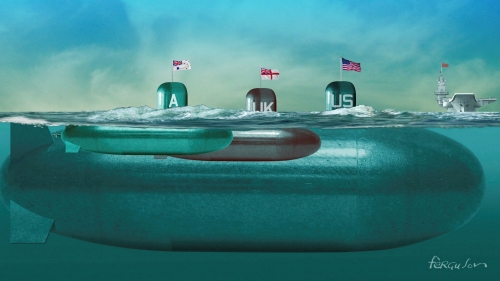
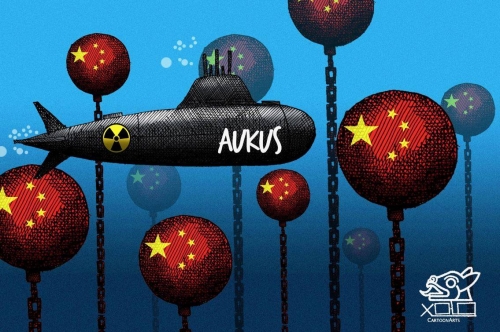
L’annulation du contrat français consacre enfin la nouvelle alliance appelée AUKUS en raison des initiales anglaises de ses membres. Cette nouvelle « Triple Alliance » belliciste des antipodes vise à contrer l’activisme diplomatique chinois en Océanie aux dépens de Taïwan. Elle regroupe l’Australie, les États-Unis qui ont dans la région l’île de Guam, les Samoa américains, et la fédération des îles Marianne du Nord, et la Grande-Bretagne présente dans le Pacifique-Sud par, d’un côté, sa possession autonome de Pitcairn et, d’un autre, par des États du Commonwealth (îles Salomon, Samoa occidentales, Karibati, Tuvalu, Nauru, Vanuatu et les Fidji). La conclusion de ce pacte est le premier succès diplomatique engrangé d’un Royaume-Uni hors du carcan bruxellois. Quant à l’Australie, elle a l’habitude de suivre Washington. Des troupes australiennes ont combattu au Vietnam et en Irak.
Rendu public le 15 septembre 2021, le pacte ANKUS se substitue au traité de sécurité militaire dans le Pacifique signé à San Francisco le 1er septembre 1951 entre l’Australie, les États-Unis et la Nouvelle-Zélande appelé ANZUS. Il cessa de fait en août 1986 quand les États-Unis suspendirent leur engagement à l’égard de la Nouvelle-Zélande travailliste, écologiste et pacifiste, qui refuse depuis l’accueil dans ses ports de tout bâtiment nucléaire. À l’échelle de l’aire Asie – Pacifique, AUKUS devient la clé de voûte stratégique d’une coopération militaire esquissée autour du QUAD (Groupe quadrilatéral de coordination de la défense) qui rassemble les États-Unis, l’Australie, le Japon et l’Inde. Il s’agit d’un retour partiel à l’OTASE (Organisation du traité de l’Asie du Sud-Est) qui, de 1954 à 1977, réunissait dans une volonté de contrer l’URSS et la Chine populaire l’Australie, les États-Unis, la Grande-Bretagne, la Nouvelle-Zélande, les Philippines, la Thaïlande et le Pakistan qui s’en retira en 1973. Ces nouvelles manigances géo-diplomatiques entendent maintenant contenir la Chine, la Russie et la Corée du Nord, voire le Myanmar…
Il faut par ailleurs rapprocher ces deux dispositifs asiatique et océanien à l’échelle intercontinentale avec les « accords d’Abraham » conclus en 2020. La reconnaissance de l’État d’Israël par des pays arabes et musulmans comme Bahreïn, les Émirats arabes unis, le Maroc et le Soudan qui rejoignent l’Égypte et la Jordanie, renouvelle avec de nouveaux partenaires le fameux « Pacte de Bagdad » du 24 février 1955 signé entre la Turquie et l’Irak et qui devint avec l’adhésion du Royaume-Uni, de l’Iran et du Pakistan la CENTO (ou Organisation du traité central) disparue en 1979. Les accords d’Abraham s’opposent au jeu régional de l’Iran, de l’Irak, de la Turquie, de la Syrie, de la Russie et de l’Afghanistan.
AUKUS et accords d’Abraham participent ainsi au projet géopolitique mondial des néo-conservateurs. Le pacte AUKUS renforce les liens étroits tissés entre les services de renseignement, civils et militaires, étatsuniens, britanniques, australiens, néo-zélandais et canadiens au cours du dernier demi-siècle dans le cadre des Five Eyes (les « Cinq Yeux »). Il offre à l’OTAN aujourd’hui composée de trente membres parmi lesquels la Slovaquie, le Monténégro, la Macédoine du Nord ou l’Albanie bien connus pour leurs magnifiques plages donnant sur l’Atlantique, une dimension planétaire. George W. Bush rêvait que le Japon ou l’Australie, déjà liés dans le cadre du « Partenariat global » otanien, intégrassent une « OTAN globale ». La France de Jacques Chirac s’y opposa fermement et fit capoter l’extension planétaire de l’organisation atlantiste. Elle en paie désormais le prix.
Paris aura beau réclamer une armée européenne; cela restera un vœu pieux. Les dirigeants des États-membres de l’Union dite européenne restent les fidèles laquais de l’Alliance Atlantique. Les réseaux atlantistes occupent par ailleurs une place non négligeable dans la haute-administration, la presse, les affaires, la haute-hiérarchie militaire et le personnel politicien ainsi que dans les banlieues de l’immigration. Les gesticulations diplomatiques françaises expriment surtout une vaine déception colérique. De plus en plus dépendant de la logistique étatsunienne, l’Hexagone ne peut plus se permettre de rompre avec l’Ogre atlantiste. Qu’Emmanuel Macron le comprenne bien, la gifle australienne qu’il vient de recevoir n’est que la première d’une longue série de baffes diplomatiques.
- « Vigie d’un monde en ébullition », n° 3, mise en ligne le 28 septembre 2021 sur Radio Méridien Zéro.
15:08 Publié dans Actualité, Affaires européennes, Géopolitique | Lien permanent | Commentaires (0) | Tags : aukus, actualité, indo-pacifique, espace indo-pacifique, australie, états-unis, france, royaume-uni, géopolitique, politique internationale, europe, affaires européennes, océanie | | del.icio.us | | Digg | Facebook
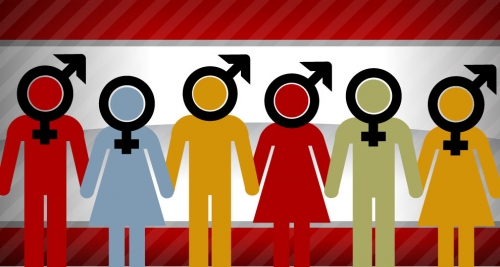
Le genderisme : l'énigme du consentement
Le genderisme : l'énigme du consentement
Michele Fabbri
Ex: https://www.centrostudilaruna.it/gender-lenigma-del-consenso.html
Le climat politique entre la fin du XXe siècle et le début du XXIe a été caractérisé par la montée irrépressible des idéologies de gauche qui, après la fin du communisme, ont énormément augmenté leur pouvoir et leur emprise sur les consciences en misant tout sur un arsenal culturel visant l'annulation des identités sexuelles : un système de pensée que l'on appelle généralement le "genre" ou le "genderisme". Dans de nombreux pays, l'opposition à la gauche est minime, et parfois même non manifestée.
Le comportement homosexuel a été élevé au rang d'idéologie d'État qui revêt un caractère normatif. Pourtant, les éléments abondent dans l'histoire de la gauche qui sont aujourd'hui une source d'embarras infini pour ses partisans. Dans les régimes communistes, l'homosexualité était considérée comme un "vice bourgeois" et souvent comme un crime, comme en témoigne la célèbre correspondance "homophobe" entre Engels et Marx. Dans les partis de gauche occidentaux, jusqu'aux années 1980, la question de l'homosexualité était marginale et n'était pas utilisée dans les campagnes électorales. Même le plus important idéologue homosexualiste italien, Mario Mieli, était considéré comme un élément insignifiant et n'influençait pas la rhétorique du parti.
Le mythe du collectivisme économique ayant disparu, la gauche a trouvé quelque chose de mieux: le collectivisme des identités sexuelles. Dans les années 1990, une gauche en crise et à la recherche de nouvelles voies a commencé à s'intéresser au monde LGBT, et en un rien de temps, elle a obtenu un consensus écrasant, dépassant probablement ses propres attentes !
Autrefois, la gauche se basait sur le concept vague d'"émancipation", qu'elle interprétait essentiellement comme un système de nivellement des différences entre les classes sociales; aujourd'hui, l'"émancipation" signifie se libérer de l'esclavage de l'appartenance à un genre sexuel. L'idéologie homosexualiste du "genre", efficacement soutenue par l'antiracisme, diversement entrelacée avec le féminisme et mélangée dans le grand chaudron des "droits de l'homme", s'est avérée être un excellent anesthésiant pour rendre l'opinion publique obéissante, servile, passive et insensible à la douleur.

L'accent mis sur les "droits civils" a fourni aux patrons l'outil idéal pour attaquer les droits sociaux: tandis que les médias célébraient les triomphes de la soi-disant "inclusion sociale", le capitalisme mondialisé a déclenché une vaste offensive néolibérale qui a désormais réduit le monde du travail à un marché d'esclaves. Ceci explique l'avalanche de financements qui a inondé les partis progressistes ces trente dernières années, leur permettant de mettre en œuvre de véritables "marteaux de propagande" à faire pâlir les grandes dictatures du XXe siècle !
Mais la propagande peut-elle expliquer à elle seule un consentement aussi enthousiaste à des comportements sexuels de niche que l'humanité a toujours considérés comme moralement répréhensibles, ou ridicules, et en tout cas sans intérêt pour la vie publique?
Comme par hasard, c'est en 1994 que le Wright Laboratory, un organisme qui conçoit des armes chimiques et biologiques pour l'armée américaine, propose une arme chimique à base de phéromones qui aurait généré chez les soldats ennemis un désir homosexuel irrésistible. Officiellement, l'arme n'a pas été développée, mais au train où vont les choses, il y a tout lieu de croire que de tels dispositifs seront utilisés à grande échelle sur la population civile...
Des articles sur la "bombe gay" sont disponibles sur le lien suivant :
Bombe gay - Wikipédia
Le chercheur indépendant David Icke a suggéré que les œstrogènes et les phtalates sont intentionnellement répandus dans les aliments et les boissons pour féminiser le sexe masculin.
Mais si David Icke est un théoricien du complot paranoïaque, même un documentaire de RAI 3 (source non suspecte) a abordé le phénomène de l'infertilité masculine et les changements d'identité sexuelle qui se produisent de plus en plus fréquemment chez les jeunes hommes. Et ce sont précisément les phtalates qui sont mentionnés comme l'une des substances les plus répandues provoquant des modifications de l'identité sexuelle.
L'émission peut être consultée sur le lien suivant :
Presadiretta 2016/17 - Ciao male - Vidéo - RaiPlay
Il y a aussi ceux qui pensent que des facteurs aléatoires ont contribué à l'évolution des caractéristiques sexuelles, mais la virulence de la campagne médiatique qui criminalise quotidiennement la sexualité masculine ne laisse guère de doute sur le caractère prémédité de ce phénomène...
Quoi qu'il en soit, que le consensus ait été acheté ou induit à l'aide d'armes chimiques, nous devons faire face à la réalité de foules hypnotisées par les slogans LGBT descendant dans les rues avec le drapeau arc-en-ciel, offrant la jugulaire à la sanglante boucherie sociale menée par les pouvoirs forts.
En outre, le nouveau paradigme établi par la confusion des rôles sexuels a des implications économiques qui le rendent indispensable au maintien d'une économie spéculative sans rapport avec les besoins réels de la vie : la fin de la famille traditionnellement comprise crée une société individualiste fonctionnelle à la multiplication des consommations. En outre, les traitements de changement de sexe alimentent un marché florissant pour l'industrie pharmaceutique. Il y a également un riche terrain de jeu pour les professions juridiques, qui sont appelées à réglementer des situations que les civilisations humaines n'avaient pas envisagées jusqu'alors. Parmi ces ajustements législatifs figurent les grotesques délits d'opinion que les démocraties orwelliennes du XXIe siècle ont su inventer pour blinder les nouveaux sujets de droit. Enfin, le récit LGBT est par nature parfaitement cohérent avec les carnavals déments de la société de consommation.
À ces éléments s'ajoute le choix du drapeau arc-en-ciel, dont l'impact esthétique est objectivement irrésistible...
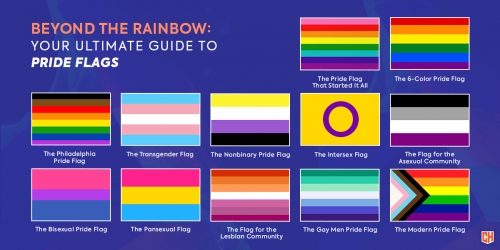
Le "genre" est le dogme fondateur de ce communisme 2.0 que les médias appellent "mondialisation" et constitue aujourd'hui l'enjeu idéologique autour duquel se joue une nouvelle guerre froide, contre la Russie et les anciens pays communistes alignés pour défendre la conception biologique de l'identité sexuelle, contrairement à un Occident qui soutient l'idée que l'identité sexuelle est un choix psychologique. L'Union européenne est allée jusqu'à faire du chantage à la Pologne et à la Hongrie, menaçant de refuser l'aide économique pour l'urgence covid aux deux braves nations si elles n'adhèrent pas au "sexisme".
Ce sont précisément les pays de l'ancien empire soviétique, vaccinés par l'expérience communiste, qui ont facilement reconnu le "gender" comme le collectivisme du XXIe siècle: le président polonais Duda a opportunément observé que l'idéologie LGBT est encore plus dangereuse que le communisme ! Les pays occidentaux, par contre, chloroformés par le consumérisme, se sont abandonnés à l'adoration du nouveau veau d'or. Quant aux Églises chrétiennes, faibles et timides, elles ont souvent tout simplement jeté l'éponge sur les questions éthiques, ou dans certains cas déserté pour s'enrôler dans le camp adverse !
À ce scénario géopolitique, il faut ajouter le monde musulman, qui est fermement attaché à sa propre tradition religieuse et ne réagit absolument pas à ces "nouveautés".
Le monde du divertissement et de la culture est aussi massivement favorable au "genre": les cerveaux "libéraux" des universités occidentales ne sont même pas effleurés par l'idée que la différence sexuelle dans la nature existe pour la reproduction de l'espèce. Et pourtant, il suffit de retirer les tranches de salami de ses yeux pour se rendre compte de la logique la plus élémentaire de la vie !
L'Occident, qui, avec arrogance, se sent justifié d'imposer ses prétendues "valeurs" au reste du monde, après avoir élaboré pendant des siècles une culture fortement dialectique, est arrivé au brillant résultat de ne plus pouvoir distinguer le mâle de la femelle ! Et vu le fanatisme avec lequel les Occidentaux soutiennent le "genre", il n'est pas exclu que l'empire du mal euro-américain soit prêt à déclencher une guerre mondiale au nom de ces "droits de l'homme" nouvelle génération.
Mais si l'on veut voir le verre à moitié plein, on peut aussi observer que le "genre" est désormais la dernière tranchée de la gauche. C'est certainement la mieux équipée, la plus fortifiée, mais si les masses devaient perdre la foi dans le "genre", il est vraiment difficile de voir ce que la gauche peut trouver d'autre pour réaliser ses plans de dégradation anthropologique. Le communisme s'est effondré sur lui-même, et son frère jumeau le mondialisme finira tôt ou tard de la même façon: ces systèmes sont insoutenables du point de vue des relations humaines, plus encore que du point de vue économique. Le "genre" est au sommet de la pyramide des "valeurs occidentales" et s'il s'effondre, le fragile château de cartes du politiquement correct s'écroulera, et avec lui le système de pouvoir mondialiste halluciné.
Les opposants au mondialisme font face à leur plus puissant ennemi, mais aussi au dernier obstacle qui les sépare de la liberté !
13:07 Publié dans Actualité, Définitions | Lien permanent | Commentaires (0) | Tags : actualité, genderisme, problèmes contemporains, définition | | del.icio.us | | Digg | Facebook
Alexandre Douguine sur les résultats des élections au Bundestag: "La politique allemande est caractérisée par la haine de soi"
Alexandre Douguine sur les résultats des élections au Bundestag: "La politique allemande est caractérisée par la haine de soi"
L'élection du Bundestag qui s'est tenue dimanche met fin à l'ère d'Angela Merkel. Dans une interview exclusive accordée à RT DE, le philosophe russe Alexandre Douguine commente les résultats des élections et leurs conséquences sur les relations russo-allemandes.
Source : Sputnik © ALEXANDER WILF & https://de.rt.com/inland/124923-alexander-dugin-ueber-ergebnisse-der-bundestagswahl/?fbclid=IwAR3v-qVX7Z_Qa_ijZjG2uSti0S2-ilnqKTd2dmgfHqZ5Az_6dpPynsy7zu0
Après les élections du Bundestag de dimanche, RT DE s'est entretenu avec le philosophe, politologue et sociologue russe Alexander Dugin. Dans une interview exclusive accordée à la chaîne, l'homme de 59 ans a commenté les résultats des élections et leurs conséquences sur les relations germano-russes. Le politologue a qualifié les dernières élections au Bundestag d'inhabituelles. Il a souligné la défaite "colossale" de la CDU et de la CSU. Le résultat, a-t-il dit, est un coup dur pour le centre-droit et les libéraux de droite avec lesquels la Russie entretenait de bonnes relations. Dans le même temps, M. Dugin a rappelé que les relations bilatérales avaient été encore meilleures sous la chancellerie de l'homme politique du SPD, Gerhard Schröder.
"Les relations entre la Russie et l'Allemagne ont une dimension beaucoup plus profonde et vont au-delà de telle ou telle coalition gouvernementale."
Selon Dugin, seul un événement extraordinaire, tel qu'une victoire des Verts, que beaucoup avaient prédite, pourrait radicalement détériorer cette relation. Le politologue a décrit Annalena Baerbock comme une représentante du mouvement de l'investisseur américain George Soros et a accusé son parti d'être beaucoup plus mondialiste que vert. Dugin a notamment souligné que les Verts s'étaient prononcés contre le gazoduc Nord Stream 2.
"Les sociaux-démocrates, qui ont maintenant gagné, et la CDU/CSU représentent une continuation du statu quo pour la Russie."
Dans sa conversation avec RT DE, le philosophe a partagé que les relations entre la Russie et l'Allemagne étaient pourtant tout sauf merveilleuses. Il a cité comme raison la dépendance de la politique étrangère allemande vis-à-vis du gouvernement américain, malgré la force économique du pays et sa sympathie pour la Russie.
"L'Allemagne est totalement dépendante de la politique américaine. Ce n'est pas un État souverain. <...> A cet égard, c'est en quelque sorte un territoire occupé jusqu'à présent."
M. Douguine a décrit la présence militaire américaine en Allemagne comme la poursuite de l'occupation d'après-guerre, malgré le retrait des troupes soviétiques. Bien que l'Allemagne tente de défendre ses intérêts économiques, elle n'y parvient que partiellement, a-t-il déclaré. Se référant à plusieurs collègues, le penseur a informé que le pays faisait face à une période de turbulence avec une possible crise politique et sociale. Trop de contradictions se sont accumulées, a-t-il dit.
"Les Allemands sont en effet très chaotiques. Tout leur ordre découle du fait qu'ils le savent et qu'ils ont une peur terrible de ce chaos."
Le politologue a également commenté le sort du soi-disant continentalisme européen sous le règne d'Angela Merkel en tant que chancelière allemande. Dugin a souligné que les positions du continentalisme avaient été plus fortes sous Schröder. Dans le contexte de la guerre en Irak en 2003, l'axe Paris-Berlin-Moscou avait émergé, mais il a ensuite été détruit par les "atlantistes". Sous Merkel, le continentalisme avait fait quelques pas en arrière. Bien que la Chancelière ait tenté d'aplanir certains courants, elle s'est trouvée dans le sillage de l'atlantisme américain et d'un politicien "docile". Les tendances continentalistes, en revanche, se retrouvent au sein du SPD, de la gauche et de l'AfD.
M. Dugin a également expliqué la perte de voix de l'AfD, alors que lui-même avait précédemment prédit une remontée du parti. L'AfD a remis en question le consensus des élites libérales pro-occidentales, marchant sur une corde raide en étant accusé d'extrémisme. Cependant, l'AfD est profondément bourgeoise.
"Le bourgeois allemand est tout simplement à bout de patience parfois. C'est pour cela qu'il doit formuler ses opinions de manière beaucoup plus dure, et c'est pour cela qu'il vote pour l'AfD."
Cependant, ce parti avait commencé à s'effriter et n'avait pas réussi à trouver un modèle idéologique plausible. Il n'avait pas utilisé sa chance et avait perdu des voix à cause de conflits internes. En même temps, Dugin a exprimé l'opinion que l'Allemagne a besoin d'un tel parti qui critique le libéralisme, l'atlantisme et la mondialisation. Au cours de la période de turbulence à venir, a-t-il déclaré, l'AfD renforcera ses positions si elle est assez intelligente pour saisir sa chance.
Dans son interview exclusive avec RT DE, le philosophe a également commenté le nombre record de votes pour les Verts. Dans ce contexte, il a décrit la protection de l'environnement comme le dernier refuge des politiciens qui n'ont rien à dire.
"L'absence absolue de philosophie politique est remplacée par des idées simplistes sur la nécessité de protéger l'environnement."
Dugin a lié le succès des Verts à l'infantilisme, à la myopie et à l'hystérie. Le politologue s'est réjoui que le résultat des Verts ait été plus modeste que prévu. S'ils arrivaient au pouvoir, il n'y aurait plus du tout de politique internationale en Allemagne. Pour la Russie, le renforcement de leurs positions serait tout sauf positif. Le politologue a comparé le comportement des Verts au fascisme. En Allemagne, le fascisme, par sa recherche excessive d'ordre et de rationalité, a finalement dégénéré en folie nationaliste.
"Aujourd'hui, c'est l'inverse : l'idée de liberté, de détente, d'humanité, de charité, ainsi que l'indulgence pour les vices et les maladies, en vertu de la même intempérance allemande, conduisent désormais au pôle opposé."
Puisque les Verts sont, entre autres, contre le gazoduc Nord Stream 2, rien de bon ne peut être prévu pour les relations bilatérales avec la Russie dans le cas de leur gouvernement. Selon Dugin, le projet est bénéfique à la fois pour Berlin et pour Moscou. L'industrie allemande a besoin des ressources naturelles russes pour maintenir le statu quo dans l'économie et le rythme de la croissance.
Dugin a décrit les relations entre Washington et Berlin comme n'étant pas un dialogue égalitaire. Il a déclaré que le gouvernement américain traite l'Allemagne comme une colonie qui a longtemps été économiquement autonome et indépendante.
"C'est précisément cette contradiction qui conditionne la relation américano-allemande. Les Allemands paieraient un prix élevé pour accroître ne serait-ce qu'un peu leur souveraineté, mais les Américains les tiennent comme George Floyd a été tenu un jour au point de ne plus pouvoir respirer."
Cette contradiction est tout sauf saine, dit-il. Après la Seconde Guerre mondiale, a-t-il dit, l'idéologie allemande voulait que le peuple allemand déteste tout ce qui est allemand. Douguine a appelé ce phénomène "politique de la haine de soi". Cette contradiction caractérise également les relations entre Berlin et Moscou. On ne peut que plaindre l'Allemagne dans cette situation, d'autant qu'elle souffre déjà d'une sorte de syndrome de Stockholm.
11:48 Publié dans Actualité, Affaires européennes, Politique | Lien permanent | Commentaires (0) | Tags : politique, allemagne, europe, affaires européennes, alexandre douguine, politique internationale | | del.icio.us | | Digg | Facebook
jeudi, 30 septembre 2021
La gauche bornée contre Daniel Bernabé et Ana Iris Simón
La gauche bornée contre Daniel Bernabé et Ana Iris Simón
Óscar Guardingo Martínez*
Ex: http://www.elespiadigital.com/index.php/tribuna-libre/35278-2021-09-14-16-04-54
La trampa de la diversidad de Daniel Bernabé et La Feria d'Ana Iris Simón, aux thèses opposées, ont essuyé des critiques furieuses en provenance de l'espace culturel de Podemos et de Más Madrid. Les deux auteurs ont été relégués à la position ambiguë de dissidents de gauche, tout en acquérant une certaine pertinence auprès du grand public.

Le succès dont nous parlons est objectif: onze éditions de La trampa de la diversidad ont déjà été publiées (plus de 18.000 exemplaires), tandis que Feria a été publiée douze fois (40.000 exemplaires) et figure régulièrement sur la liste des "best-sellers" et dans les vitrines des gares et des aéroports. La première chose qui frappe, c'est l'énorme écart entre ce que la gauche condamne et ce que le public apprécie.

La conclusion rapide est que culturellement, ainsi qu'électoralement, les militants de gauche vivent déconnectés du peuple, que ce soit en tant que public ou en tant que peuple. Les dizaines d'articles contre ces livres signés par des cadres de Podemos, des ex-tertulliens de La Tuerka et de Fort Apache et des experts convertis à l'environnementalisme ne semblent pas avoir réussi à porter la répudiation au-delà d'une bulle restreinte d'activisme urbain hyper-politisé. D'autre part, le succès commercial des thèses de Bernabé et de Simón - attention, parce qu'elles sont antithétiques l'une de l'autre - montre que les élites intellectuelles de la gauche espagnole sont culturellement "hors jeu". Le dernier épisode de ce désaccord de longue date a eu lieu cette semaine avec l'expulsion de Daniel Bernabé de la section Opinion de Público, malgré le fait que ses textes aient été largement partagés et commentés.
Bernabé et Simón viennent de l'extérieur de l'intelligentsia de gauche parce qu'ils n'ont pas appartenu à ses cercles sociaux: ils n'ont pas participé à des fêtes universitaires avec ceux qui sont aujourd'hui "députés pour le changement", ils n'ont pas assisté ensemble aux mêmes concerts, ils n'ont pas partagé un appartement dans le quartier branché de Lavapiés à Madrid, ils ne se sont pas rencontrés pour dîner et ils ne se retrouvent pas tous les jours dans des chats sur Telegram. C'est pourquoi beaucoup de ceux qui sont "prédestinés" par leur famille et leur formation au rôle d'intellectuels organiques de gauche estiment que, d'une certaine manière, ces deux auteurs issus du barrio ont usurpé un espace qui ne leur correspond pas, l'espace qui était réservé à ceux qui les remettent aujourd'hui en question.
De quel espace parlons-nous exactement ? Succès commercial, collaborations pour la station de radio SER, interviews et chroniques dans El País. Tout cet espace est réservé à une classe supérieure progressiste de Madrid qui montre maintenant nos deux auteurs rebelles du doigt. La plupart des critiques adressées à ces deux écrivains proviennent d'écrivains qui ont passé toute leur vie à l'université et qui comptaient bien hériter de ces podiums. C'était un prix qui leur appartenait après une jeunesse tissée de radicalisme et de flirt avec la gauche sud-américaine (surtout la gauche argentine, plus raffinée, mais aussi le chavisme et l'indigénisme). Bernabé et Simón jouent le rôle d'imposteurs et de "squatters", lui, avec un passé de simple libraire et, elle, de journaliste précaire, qui a travaillé pour le magazine féminin Telva ainsi que pour le magazine de tendances Vice. Ils ne sont pas "de leur propre chef", et ils seront donc rejetés par les "prédestinés". Cependant, une telle condamnation est comme la fatwa des ayatollahs sans les fidèles.

Le paquet idéologique de la gauche déclinante
Bien sûr, il ne s'agit pas seulement d'être étranger à la classe sociale de la jeune intelligentsia madrilène de gauche. S'il ne s'agissait que de cela, ce serait une simple question d'envie et de rancœur. Il y a aussi une question politique. Daniel Bernabé et Ana Iris Simón partent de positions antithétiques: Bernabé estime que l'heure est à la revanche contre le 15-M, qui, selon lui, a été une aberration pour la tradition de gauche. Simón, quant à elle, explique que la gauche a fini par s'approprier l'essence populaire (et populiste) du 15M pour son idéologie. Tous deux amendent de deux côtés le cocktail idéologique offert par la gauche espagnole aujourd'hui: "Féminisme, LGTBIQ+, Bienvenue aux réfugiés et un peu de travaillisme".
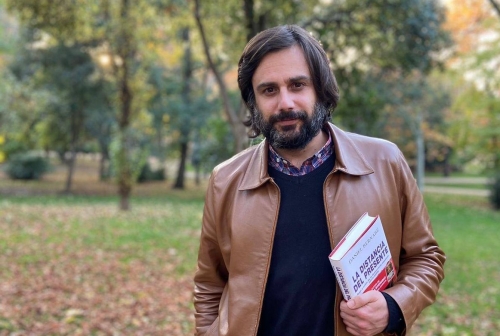
Les détracteurs de ces deux livres sont l'élite intellectuelle typique de la gauche de notre pays: des trentenaires qui ont consacré leur jeunesse à la communication politique, pratiquant un populisme étranger au peuple espagnol, qui préfèrent importer leurs propres visions du péronisme. Maintenant qu'ils ont cessé de faire le V avec leurs doigts et de chanter des chansons argentines, ils ont mis à profit leurs titres académiques obtenus dans les meilleures universités britanniques et françaises pour défendre des paris aussi prévisibles et suivistes que d'embrasser l'environnementalisme la semaine où les sondages allemands donnaient Die Grünen (les Verts) vainqueurs, ou d'adhérer au socialisme radical le mois où Bernie Sanders a participé aux primaires démocrates. Ils ont tellement muté qu'il est difficile de les situer. Ils sont toujours du côté de la mode progressiste du moment: il y a dix ans, ils criaient que la jeunesse n'avait pas d'avenir, aujourd'hui ils sont de fervents adeptes du progrès et décrètent des condamnations culturelles contre quiconque ose dire que la génération qui a fait la grève du 14D vit mieux que la jeunesse d'aujourd'hui.
Ana Iris Simón a écrit un roman, mais il fonctionne aussi comme un essai. Du moins, parce qu'il a une thèse claire que l'auteur a répétée dans chaque interview: "J'envie la vie de mes parents". Et c'est à partir de cette thèse qu'elle s'est connectée à un très large public de jeunes qui envient la vie de leurs parents, mais aussi, selon les mots du communiste Felipe Alcaraz, "de parents et de grands-parents qui se promènent chaque jour avec les cadavres de travailleurs de leurs enfants et petits-enfants sur le dos".
Se demander si les jeunes de 20 ou 30 ans vivent moins bien que ceux qui avaient leur âge dans les années 1990 semble plutôt absurde. C'est un débat qui a été réglé - entre autres - dans les pages du fameux rapport Petras, l'étude sociologique commandée par le PSOE pro-Felipista et ensuite cachée dans un tiroir parce qu'il n'aimait pas les résultats, qui montraient comment ses politiques avaient détruit le marché du travail espagnol pour les générations à venir. Trente ans de néolibéralisme ne passent pas en vain: il suffit de constater qu'aujourd'hui les nouvelles pensions sont déjà plus élevées que les salaires les plus courants. À l'âge de 65 ans, votre chèque de pension est plus élevé que celui d'un travailleur actif d'une trentaine d'années.
Modifications de la gauche actuelle
La thèse principale de Feria est si solide que je suis sûr qu'il doit y avoir plus que les critiques de Simon. Bien sûr que oui : la Feria contient les ingrédients d'une mobilisation politique qui modifie le cocktail idéologique de la gauche que nous avons cité précédemment (rappelez-vous : "Féminisme, LGTIBQ+, Bienvenue aux réfugiés et un peu de travaillisme"). Le piège de la diversité aussi, mais pas tant pour avoir appelé à un projet qui dépasse les factions, mais à une redistribution du poids du paquet vers d'autres contenus: "Beaucoup de Labour, un peu de Welcome refugees et un peu de féminisme". Simon, en revanche, modifie l'ensemble de l'offre et propose les ingrédients d'un projet aux émotions politiques nouvelles. Les émotions dans son sens étymologique, c'est-à-dire quelque chose qui fait bouger, qui mobilise.


La Feria offre des outils pour un nouveau populisme (le "isme" du peuple), mais pas en important un Perón qui, en Espagne, sonne martien, mais en assemblant des éléments populaires de notre nation: la nostalgie comme émotion face à un néolibéralisme qui a précarisé les vies en termes matériels (droits du travail et accès au logement), mais qui a aussi dissous les liens communautaires tels que l'amour de la patrie, de la famille et du parti, dans sa variante de la vie sociale au siège local, de l'espace de rencontre, de la camaraderie et de la formation d'une identité communautaire (c'est ainsi que sa famille paternelle vit le militantisme au sein du PCE). Elle a même osé aller un peu plus loin: elle est allée à l'église dès son plus jeune âge, au grand dam de son père athée. Feria exalte en fait les liens humains forts qui ont été affaiblis par les montagnes russes individualistes de la société de consommation.
Espagne et Ledesma Ramos
Il y a dans Feria un débordement de ce qui est permis par la gauche actuelle. Je fais référence à l'acceptation de l'Espagne de manière décomplexée, comme un pays qui appartient aussi aux gens ordinaires, ni meilleur ni pire qu'un autre après avoir accompli quatre décennies de démocratie. Alors que la gauche du PSOE maintient le tabou de ne jamais dire "Espagne" et remplace ce mot par des expressions telles que "l'État tout entier", Ana Iris Simón assume et embrasse l'Espagne. Les citations de Ramiro Ledesma Ramos ont été particulièrement controversées, bien que la personne citée dans le livre soit l'intellectuel Ledesma, une incarnation antérieure au politicien qui a fondé le syndicalisme de la Falange. La question se pose aisément : la gauche universitaire a-t-elle raison de lui faire des reproches ? a-t-elle une légitimité ?
Déchirer ses vêtements pour avoir cité Ledesma Ramos dénote une indignation surfaite, qui n'est pas apparue lorsque la jeune écrivaine antisystème et lauréate du prix national de littérature Cristina Morales, applaudie et récompensée en permanence par la gauche (même par l'Injuve andalou en 2012), a fait exactement la même chose. Les citations continues de Carl Schmitt, juriste de premier plan aux temps du nazisme, communes aux intellectuels de Podemos (surtout Errejón et Monedero), ne semblent pas non plus poser de problème. En fait, Ledesma Ramos lui-même a toujours été dans l'ADN du message de Podemos. Peu de différences peuvent être trouvées entre les discours vibrants d'Iglesias et d'Errejón proclamant que "la patrie n'appartient pas à ceux qui ont des comptes en Suisse ou un siège à l'IBEX" et la célèbre citation de Ledesma Ramos selon laquelle "seuls les riches peuvent se permettre le luxe de ne pas avoir de patrie".
Mon problème avec Ledesma Ramos? Son aversion élitiste pour la participation politique des masses mettra toujours la gauche mal à l'aise, sans compter que son engagement dans la violence pour exterminer l'opposition l'invalide comme point de référence pour un projet national-populaire. C'est ce qu'a expliqué récemment le pape François: l'Espagne a besoin de réconciliation, ce qui ne signifie pas abandonner nos positions politiques mais entrer dans un processus de dialogue national.
En réalité, Ledesma ne plaît même pas à l'aile droite espagnole de 2021, qui, au lieu de soutenir l'esprit d'entreprise national, s'est lancée dans un programme grotesque de défense de la bourgeoisie de la Silicon Valley, de Wall Street et de Barcelone (le fondateur de Glovo, Oscar Pierre, est la quatrième génération d'un arbre généalogique de la bourgeoisie catalane). Le caractère anti-bourgeois de Ledesma semble incompatible avec une droite espagnole dominée par les cadres des quartiers de Salamanque et les étudiants de MBA. Parfois, avec une pointe de sarcasme, on se demande si le syndicat Vox n'est pas au service du projet mondialiste de George Soros.
Le succès commercial de Bernabé et Simón, face au barrage lassant de critiques de la gauche universitaire, alors que le public populaire vibre du succès des deux livres, me rappelle ces critiques musicaux élitistes des années 2000 qui ne reconnaissaient pas les tubes de Juan Magán, même s'ils passaient en boucle dans les discothèques, les bars de plage et les fêtes de quartier. Après avoir surfé sur la vague d'indignation populaire en Espagne depuis 2011, la gauche du PSOE donne à nouveau l'impression d'être méfiante et déconnectée du peuple. Ces dernières années, son soutien s'est réduit à la taille de ses équivalents européens: entre 6% en Allemagne et 2,5% en Italie. C'est pourquoi je suis tenté d'utiliser le terme "shrinking left" pour les définir.
Aux antipodes de cet écrasement, des auteurs comme Daniel Bernabé et Ana Iris Simón parviennent à se connecter au goût et à la mentalité populaires. Ils le font parce qu'ils intéressent et émeuvent indubitablement les gens. Il faut les féliciter, même si la gauche déclinante peut le regretter, consternée par le fait que les goûts populaires d'aujourd'hui prennent des chemins très différents du projet qu'ils nous vendent, qui peut se résumer à "Féminisme, LGTBIQ, Bienvenue aux réfugiés plus un peu de travaillisme".
* Óscar Guardingo était un sénateur de Podemos. Il est maintenant revenu travailler dans l'usine de moulage par injection d'aluminium de la fonderie SEAT Componentes.
Source : Vozpopuli
19:20 Publié dans Actualité, Théorie politique | Lien permanent | Commentaires (0) | Tags : gauche, gauchisme, gauche espagnole, espagne, europe, affaires européennes, théorie politique, philosophie politique, politologie, sciences politiques, daniel bernabé, ana iris simon | | del.icio.us | | Digg | Facebook
Après AUKUS, l'espace: comment Johnson relance Global Britain
Après AUKUS, l'espace: comment Johnson relance Global Britain
Andrea Muratore
Ex: https://it.insideover.com/tecnologia/dopo-aukus-lo-spazio-cosi-johnson-rilancia-la-global-britain.html
À la mi-août, le retrait chaotique des Occidentaux d'Afghanistan avait vu le Royaume-Uni tenter, en vain, de prolonger le séjour des États-Unis et de leurs alliés dans le pays au-delà du 31 août et échouer à organiser une deuxième phase d'évacuation des civils et des soldats afghans face à l'avancée des talibans sans la couverture de la superpuissance. À l'époque, la stratégie Global Britain du gouvernement de Boris Johnson semblait ne tenir qu'à un fil, dépendant des priorités stratégiques américaines après des affaires passées similaires sur des questions telles que la 5G et la fermeture à la Chine.
En septembre, cependant, la signature du pacte AUKUS a montré le côté plus précieux stratégiquement de ce lien ombilical. La relation entre les États-Unis et le Royaume-Uni reste, dans un certain sens, spéciale et, avec l'Australie, Londres est choisie comme le partenaire le plus proche de la superpuissance dans l'alliance déjà restreinte des "Five Eyes". Une synergie comparable, à certains égards, à celle qui existe entre Washington et Israël.
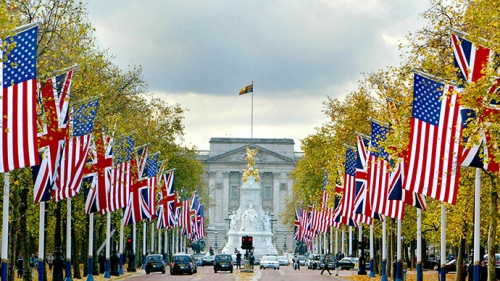
Et tout cela a été confirmé par un approfondissement des liens australo-américains sur le front spatial, directement lié au monde des sous-marins que Washington fournira à Canberra, ce qui s'est immédiatement traduit par un geste du gouvernement de Sa Majesté. Moins de deux semaines après la signature d'u pacte AUKUS, le 15 septembre, Londres a en effet présenté sa nouvelle stratégie spatiale nationale, qui semble taillée sur mesure pour le nouveau cadre stratégique né d'AUKUS.
La stratégie spatiale nationale mise en place par le gouvernement de Boris Johnson est ambitieuse et répond pleinement à la logique que la stratégie Global Britain avait indiquée pour l'avenir du Royaume-Uni post-Brexit : une plus grande importance dans les scénarios militaires internationaux, une intégration croissante entre les secteurs civils, les appareils économiques et de défense, et la recherche d'une position forte dans le contexte scientifique mondial.
Dans cette optique, la stratégie spatiale nationale définit cinq objectifs généraux pour renforcer la position du Royaume-Uni dans l'espace: renforcer la position de Londres dans l'économie spatiale, promouvoir l'utilisation de l'espace dans le respect du droit international, conformément à la convention des Nations unies signée cette année par le gouvernement, soutenir la recherche et l'innovation, exploiter les technologies spatiales pour lutter contre le changement climatique, et promouvoir la protection de l'intérêt national en se positionnant comme une puissance spatiale.
"Au cœur de cette stratégie", a déclaré George Freeman, le nouveau ministre des sciences du gouvernement conservateur, "nous reconnaissons que nous sommes engagés dans une course mondiale pour le contrôle de l'espace" et que nous avons certains atouts "sur lesquels nous avons l'intention de nous appuyer".
Londres rappelle sa volonté de devenir une superpuissance scientifique et technologique, également dans le secteur spatial, et d'établir des collaborations profondes et décisives avec ses alliés. De ce point de vue, la référence à AUKUS est évidente, étant donné que le Royaume-Uni entretient une relation privilégiée avec les États-Unis et l'Australie (ainsi qu'avec la Nouvelle-Zélande et le Canada) en matière de renseignement, avec pour conséquence le partage de flux d'informations qui ont une importance décisive pour les échanges dans l'espace ; dans les domaines naval et militaire, il se coordonnera avec Washington et Canberra ; et, surtout, il a depuis longtemps perfectionné le processus du Brexit dans le domaine spatial également. Partageant ses voies avec celles des programmes européens pour l'alternative au Gps (Galileo), les constellations de satellites vétérans et les nouveaux équipements pour l'internet par satellite.
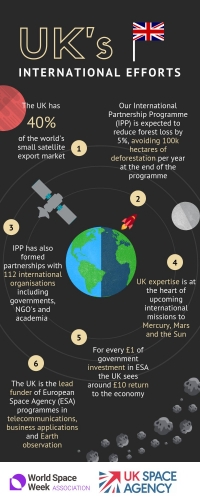
Space News souligne que, compte tenu des changements d'époque qui ont eu lieu dans le secteur à l'échelle internationale, Londres n'a pas reproposé l'objectif de prendre le contrôle de 10 % du marché mondial de l'économie spatiale qu'elle prône depuis des années ; et si Andrew Stanniland, PDG de Thales Alenia Space UK, a souligné que Londres doit rattraper son retard dans le domaine technologique, le Royaume-Uni conserve " une part de marché de 6 % " à l'échelle mondiale dans l'économie spatiale, avec 21 milliards de dollars sur 345 générés en 2019 dans le secteur.
Le périmètre AUKUS confirme ainsi son désir de projeter ses ambitions en tant que bloc cohésif au-delà des limites de l'alliance navale et de l'endiguement des stratégies chinoises dans l'Indo-Pacifique. Londres suit le pacte américano-australien sur les sous-marins et, en tant que nation disposant des capacités les plus avancées dans les domaines naval et spatial, poursuit sa stratégie de renforcement de l'hybridation mer-ciel, qui apparaît de plus en plus fondamentale en tant que déterminant de la puissance au XXIe siècle. Cela prouve que nous devrons attendre longtemps pour que les conséquences géopolitiques du nouvel axe anglo-saxon soient effacées, du moins avant de pouvoir considérer la stratégie de la Grande-Bretagne globale comme terminée.
18:26 Publié dans Actualité, Affaires européennes | Lien permanent | Commentaires (0) | Tags : espace, royaume-uni, politique spatiale, global britain, europe, affaires européennes, aukus | | del.icio.us | | Digg | Facebook
Le pacte entre la France et la Grèce: l'Aukus de Macron en Méditerranée
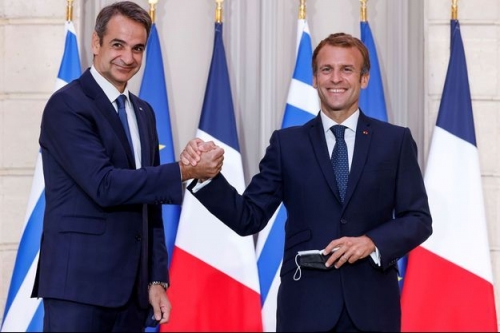
Le pacte entre la France et la Grèce: l'Aukus de Macron en Méditerranée
Lorenzo Vita
Ex: https://it.insideover.com/difesa/il-patto-tra-francia-e-grecia-la-aukus-di-macron-nel-mediterraneo.html
L'accord entre la France et la Grèce intervient après des semaines de négociations et des mois d'approches. L'accord a été fortement soutenu par le Premier ministre grec, Kyriakos Mitsotakis, et le Président français, Emmanuel Macron, pour des raisons différentes mais convergentes. Athènes voulait montrer à la Turquie qu'elle avait un allié solide derrière elle, prêt à intervenir pour la défendre en cas d'"ingérence" grave d'Ankara en mer Égée et en Méditerranée orientale. Paris, pour sa part, a dû réaliser un coup de marché pour couvrir (mais pas de la même manière) la perte du contrat avec l'Australie pour les sous-marins, anéanti à cause d'Aukus. Et elle l'a fait en plaçant trois frégates entre les mains de la marine grecque, qui depuis un certain temps avait inscrit sur sa liste d'achats le désir de renforcer sa flotte, comme elle l'avait déjà fait avec les chasseurs Rafale (également fabriqués en France) dans le ciel. Tout cela, il faut le rappeler, en subvertissant même les analyses qui donnaient la proposition italienne comme la meilleure. Comme le précise RID, cela peut également être un signe de la pression politique exercée par Paris après l'échec du contrat pour les sous-marins australiens. Mais elle montre aussi combien il est difficile d'évaluer les frictions entre la France et les Etats-Unis quand on espère s'insérer trop facilement dans leurs diatribes.
Les caisses françaises reçoivent près de trois milliards d'euros, ce qui ne fait certainement pas de mal après la fin du "contrat du siècle" de Naval Group avec la marine de Canberra. Mais ce qui est également important, c'est le signal politique d'une synergie, celle avec la Grèce, qui est en train de se cimenter en quelque chose de très similaire à une alliance stratégique parallèle aux organisations auxquelles les deux pays appartiennent, à savoir l'OTAN et l'Union européenne.
Selon l'accord conclu à Paris, il y a deux éléments à prendre en compte. Le premier est d'ordre technique: il s'agit de la livraison de trois frégates de classe FTI (Belharra est le nom donné aux unités vendues à l'étranger) et de l'option pour une quatrième. Les frégates seront également compatibles pour fonctionner précisément avec le Rafale vendu par la France dans le cadre d'un accord signé au cours des mois précédents par les deux gouvernements et qui a récemment été prolongé par de nouvelles fournitures.
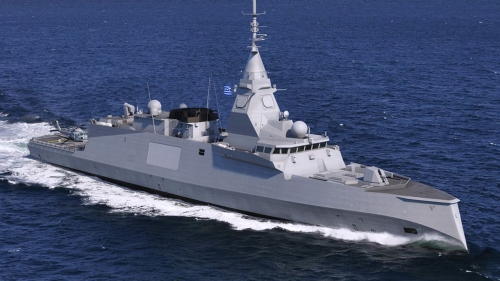
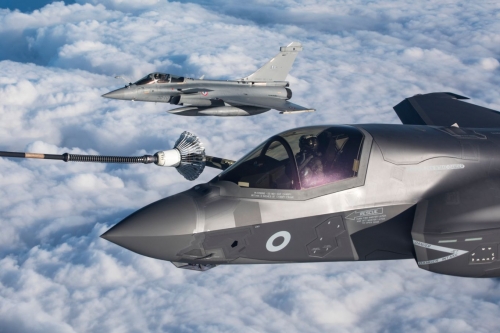
Les navires seront également équipés de systèmes anti-aériens et anti-sous-marins français (les navires seront construits de l'autre côté des Alpes), et les corvettes Goodwin pourraient être ajoutées prochainement. Ce contrat est donc important non seulement sur le plan économique, mais aussi sur le plan opérationnel: la force de défense grecque sera parfaitement compatible avec la force de défense française dans le déploiement aéronautique des prochaines années.
Le deuxième élément, outre l'élément technique, est bien sûr l'élément stratégique. Car en plus du renforcement de la flotte grecque, une clause d'aide mutuelle a été incluse qui est inévitablement orientée vers la protection de la Grèce. Dans l'accord - c'est ce qu'ont dit des sources gouvernementales rapportées par Το Βήμα et l'agence Mpa - il y a une garantie d'intervention en cas d'attaques de pays tiers, même s'ils font partie d'alliances dans lesquelles Athènes et Paris sont impliqués. Une façon de ne pas dire "Turquie", qui devient à ce stade le véritable adversaire d'une alliance franco-hellénique qui veut toucher, et touchera, la Méditerranée orientale. Et cette défense mutuelle est complétée par une série d'initiatives bilatérales visant à favoriser une synergie totale entre les deux gouvernements en Méditerranée orientale, en matière de sécurité maritime et dans les secteurs de la défense européenne commune.
Si la démarche est essentielle pour la Grèce en tant que frein aux ambitions turques et comme signal aux autres acteurs méditerranéens, elle est surtout importante en termes de stratégie française. La sortie de Macron de cet accord a un double objectif : d'une part, rafraîchir les caisses de Naval Group après la "claque" australienne, et d'autre part, se montrer comme le metteur en scène de cette autonomie stratégique européenne qui, traduite en termes beaucoup plus pragmatiques, ne signifie pour la France que la concrétisation de son désir de diriger certains secteurs de la défense du Vieux Continent.
En dehors des ambitions européistes, l'Elysée n'a jamais caché qu'il considère l'UE comme un multiplicateur de force. Et il est clair que tout cela, s'il est fait en synergie avec l'OTAN, plutôt que de renforcer l'autonomie stratégique de l'Europe, servira surtout à renforcer le cadre des alliances françaises en Méditerranée orientale et au Moyen-Orient, qui va de la Grèce à Chypre et de l'Égypte aux Émirats arabes unis. Un axe qui se projette en Libye, mais qui regarde aussi vers le Sahel et les champs gaziers de la Méditerranée orientale. Ce bloc, devenu nécessairement anti-turc compte tenu de la présence simultanée des adversaires stratégiques d'Ankara, a donc vocation à protéger les intérêts de chacun mais surtout à démontrer la capacité de la France à construire un écran protecteur en Méditerranée tant pour ses propres intérêts que pour sa diplomatie. Là-bas, au Levant, il existe déjà une sorte de "zone d'influence" parisienne.
Pour l'instant, les États-Unis ont donné leur accord. Et ceci est en soi un signe de la manière dont, plutôt qu'une autonomie européenne par rapport à l'Alliance atlantique, la France et la Grèce ont simplement envisagé un système d'aide mutuelle conçu dans une perspective bilatérale et bien inséré dans l'OTAN. Un porte-parole du département d'État américain, comme le rappelle le journal grec Kathimerini, a tenu à rappeler que Washington dispose depuis longtemps d'un accord de coopération avec Athènes mis à jour en 2019 et que des "progrès significatifs" ont été réalisés en vue de son actualisation.
Emmanuel Macron, comme l'écrit La Tribune, a déclaré en même temps qu'il signait l'accord que celui-ci "est en parfaite cohérence et en pleine conformité avec nos engagements vis-à-vis de l'UE et de l'OTAN, renforçant son efficacité pour la protection de nos territoires et permettant d'agir de manière plus efficace et coordonnée". Et les dépenses militaires grecques, bien supérieures à la moyenne de l'UE, ont déjà été appréciées par Washington, qui a non seulement atteint le niveau de financement requis, mais a également reçu des garanties sur l'utilisation des bases.
18:11 Publié dans Actualité, Affaires européennes, Géopolitique | Lien permanent | Commentaires (0) | Tags : france, grèce, europe, affaires européennes, méditerranée orientale, méditerranée, mer égée, géopolitique, politique internationale | | del.icio.us | | Digg | Facebook
Les États-Unis cherchent à construire le QUAD dont personne ne veut
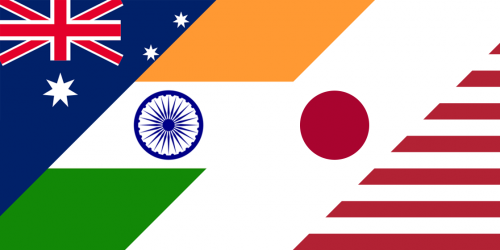
Les États-Unis cherchent à construire le QUAD dont personne ne veut
Salman Rafi Sheikh
Source: New Eastern Outlook & http://aurorasito.altervista.org/?p=20046
Si, pendant la guerre froide, les États-Unis ont divisé le monde entre le monde "libre", celui du capitalisme occidental, et le monde "proche" du communisme oriental pour se projeter comme le champion du monde "libre", la "guerre froide 2.0" utilise le même axiome pour désigner la Chine comme le meilleur exemple du monde "proche" que les pays du QUAD dirigés par les États-Unis doivent contenir pour établir l'Indo-Pacifique "libre".
Bien que Biden ait été catégorique lorsqu'il a affirmé, dans son discours à l'Assemblée générale des Nations unies, que les États-Unis ne souhaitaient pas une nouvelle guerre froide, l'alignement anti-chinois qu'ils cherchent à construire et à militariser par des accords tels que l'AUKUS, récemment révélé, indique une attitude globale sous-tendue par la compétition pour le pouvoir mondial qui a caractérisé la guerre froide. En blâmant la Chine sur un ton agressif, les États-Unis, sous la houlette de M. Biden, semblent concevoir un langage pour communiquer avec l'ANASE/l'Asie du Sud-Est et obtenir leur soutien contre la Chine en tant qu'alliés des États-Unis. La déclaration commune publiée par l'alliance QUAD indique que les pays membres s'engagent en faveur d'"une région qui constitue le fondement de notre sécurité et de notre prospérité communes, un Indo-Pacifique libre et ouvert, mais aussi "inclusif et résilient", ajoutant qu'"ensemble, nous nous engageons à nouveau à promouvoir un ordre libre, ouvert et fondé sur des règles, ancré dans le droit international et exempt de coercition, afin de renforcer la sécurité et la prospérité dans l'Indo-Pacifique et au-delà". S'adressant spécifiquement à l'ANASE, la déclaration indique que "nous réaffirmons notre soutien ferme à l'unité et à la centralité de l'ANASE et aux perspectives de l'ANASE sur l'Indo-Pacifique, et soulignons notre volonté de travailler avec l'ANASE et ses États membres, le cœur de la région Indo-Pacifique, de manière pratique et inclusive". Bien que la déclaration ne mentionne pas la Chine, l'accent mis par l'alliance QUAD sur l'Asie du Sud-Est montre comment le groupe cherche à faire contrepoids à la Chine plus directement qu'il ne l'a fait jusqu'à présent.
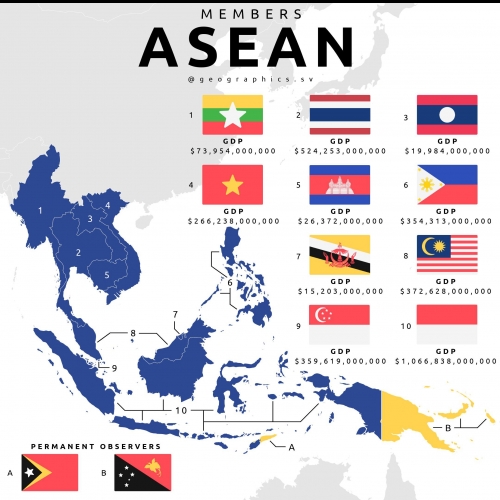
Plus de rhétorique que d'action
Toutefois, si l'on examine de plus près le QUAD, il apparaît clairement que la première réunion soi-disant "historique" des dirigeants n'a donné lieu qu'à de vagues déclarations et engagements. L'absence de mesures concrètes ne fait pas que maintenir la QUAD en tant que groupe sans unité stratégique interne, mais montre également comment les pays membres, même s'ils sont préoccupés par la Chine, continuent d'éviter de prendre le train en marche des États-Unis pour résoudre leurs problèmes avec la Chine. La seule mesure concrète que l'on trouve dans la déclaration est que QUAD s'est lancé dans la "Quad Fellowship", un programme éducatif qui "fournira 100 bourses d'études supérieures à des étudiants de premier plan en sciences, technologie, ingénierie et mathématiques dans nos quatre pays".
Au-delà de cette fraternité, un regard même superficiel sur la déclaration montre un engagement rhétorique de ces pays à prendre des mesures à l'avenir. Pour l'instant, la QUAD est rapidement entrée en hibernation, car la plupart de ses membres ne partagent pas l'impératif américain de développer une politique étrangère pour s'ancrer dans le monde après l'humiliante défaite en Afghanistan. Par conséquent, il n'y a pas beaucoup d'États heureux de laisser les États-Unis les forcer à conclure une alliance inutile. Par exemple, la réaction à l'AUKUS est indicative. L'Indonésie, que les Australiens décrivent comme leur plus important partenaire en matière de sécurité, a exprimé sa profonde inquiétude à propos de l'accord, déclarant que le pays est " profondément préoccupé par la poursuite de la course aux armements et la projection de puissance dans la région ".
Le Premier ministre malaisien Ismail Sabri Yaakob a déclaré au Premier ministre australien Scott Morrison que "AUKUS pourrait inciter d'autres puissances à agir de manière plus agressive, notamment dans la région de la mer de Chine méridionale". Le secrétaire à la défense nationale des Philippines, Delfin Lorenzana, a souligné la neutralité de son pays à l'égard de l'AUKUS, déclarant que Manille souhaite maintenir de bonnes relations bilatérales en matière de défense avec tous les pays de la région.
De même, le manque d'enthousiasme qui continue de caractériser l'alliance QUAD n'est pas seulement dû au fait que la plupart des pays ne veulent pas devenir des partenaires des États-Unis dans leur "guerre froide 2.0", mais aussi au fait que le manque de vision ne permet pas aux pays membres d'imaginer les avantages potentiels ou réels que le groupement pourrait leur offrir pour leurs intérêts nationaux spécifiques. Cela est dû en grande partie au fait que les États-Unis tentent d'imaginer et de mettre en œuvre une politique bipolaire à un moment où le monde est déjà multipolaire.
L'Union européenne adopte de plus en plus des politiques qui ne s'alignent pas sur celles des États-Unis. Elle a sa propre stratégie de coopération dans la région indo-pacifique, ce qui signifie que les pays de la région ont le choix entre de nombreuses options pour construire leurs ponts. Pour eux, les États-Unis ne sont pas la seule option.
Outre l'UE, l'ANASE dispose de ses propres mécanismes régionaux et d'accords bilatéraux solides avec la Chine pour résoudre toute question d'intérêt mutuel ou de conflit. Une autre raison importante du manque d'intérêt des pays membres de l'alliance QUAD est que le groupe n'a aucun plan pour s'engager économiquement avec l'Indo-Pacifique, et encore moins pour s'engager de manière crédible. Il met l'accent sur un Indo-Pacifique "libre" et sur une approche militariste, ce qui contraste fortement avec l'initiative "Belt & Road" (BRI) de la Chine et le partenariat économique global régional (RCEP), le plus grand accord commercial jamais signé dans l'histoire. L'approche militarisée des États-Unis, évidente dans l'AUKUS, n'est certainement pas un accord auquel l'ANASE sera heureuse de souscrire pour protéger ses intérêts, puisque, quelle que soit la nature de ses liens avec la Chine, elle n'est confrontée à aucune menace militaire chinoise. L'ANASE, ainsi que d'autres pays comme l'Inde, n'ont aucune raison de faire monter la température dans la région en s'alliant officiellement avec un groupe qui cherche justement à faire cela : militariser le conflit.
Salman Rafi Sheikh, chercheur-analyste des relations internationales et des affaires étrangères et intérieures du Pakistan, en exclusivité pour le magazine en ligne "New Eastern Outlook".
Traduction par Alessandro Lattanzio
17:53 Publié dans Actualité, Géopolitique | Lien permanent | Commentaires (0) | Tags : anase, asean, asie, affaires asiatiques, espace indo-pacifique, indo-pacifique, états-unis, quad, alliance quad, océan pacifique, politique internationale, géopolitique | | del.icio.us | | Digg | Facebook
Treize thèses sur la "Civilisation occidentale"
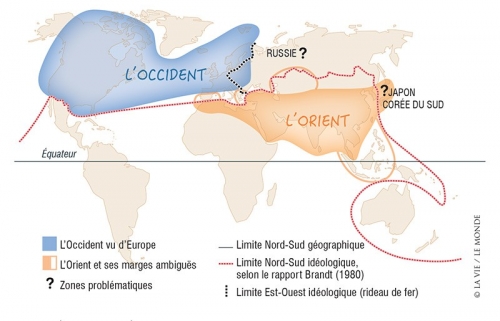
Raphael Machado:
Treize thèses sur la "Civilisation occidentale"
Ex: http://novaresistencia.org/
Sur les notions d'"Occident" et de "civilisation occidentale", il est important de reprendre et de synthétiser certains points qui, dans le giron organique-idéologique de la Nouvelle Résistance (et dans la perspective de la plupart des théoriciens dissidents actuels), sont considérés comme évidents et canoniques :
(1) La "civilisation occidentale" n'a aucun rapport avec la Grèce, Rome ou la période médiévale. C'est un terme qui a été utilisé, de manière quasi consensuelle, par des penseurs dissidents pour désigner, de manière très spécifique, la civilisation moderne, libérale, laïque et celle des Lumières. En ce sens, aujourd'hui, même le Japon fait partie de la civilisation occidentale.
(2) La civilisation occidentale a commencé en Europe, mais elle est anti-européenne, tout comme elle est anti-asiatique, anti-africaine, etc. L'essence de l'Occident est le déracinement. Le fait est que l'Europe occidentale, à un moment historique donné, a simplement réuni le degré d'aliénation spirituelle, le bagage technico-philosophique et les conditions matérielles nécessaires à la construction de ce que nous comprenons aujourd'hui comme la civilisation occidentale. Malgré cela, la civilisation occidentale n'a rien de spécifiquement européen.
(3) En ce sens, la civilisation occidentale est comme une maladie qui se propage à travers le monde, affectant les peuples de manière plus ou moins importante. Le Brésil, comme les autres pays d'Amérique latine, ne fait pas partie de la civilisation occidentale par essence, mais fait partie des régions périphériques occupées par la civilisation occidentale, dans lesquelles il existe encore un certain degré de tension entre les influences occidentales et nos propres influences civilisationnelles.
(4) Il est donc évident que l'anti-occidentalisme n'a rien à voir avec l'anti-européanisme. Au contraire, l'anti-occidentalisme est une condition nécessaire à tout européisme. Si une personne soutient la poursuite de l'occupation militaire de l'Allemagne et de l'Italie par les États-Unis, cette personne peut même être un occidentaliste, mais elle n'est logiquement pas un européiste. L'Occident et l'Europe sont des antithèses, et nous pouvons le voir dans la révolte des Gilets Jaunes en France.
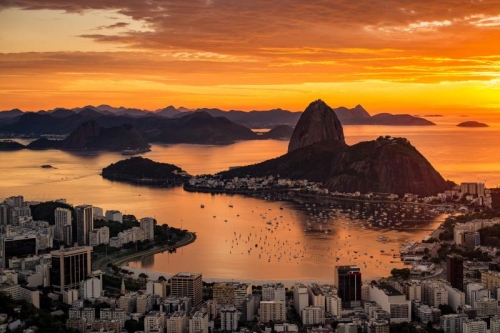
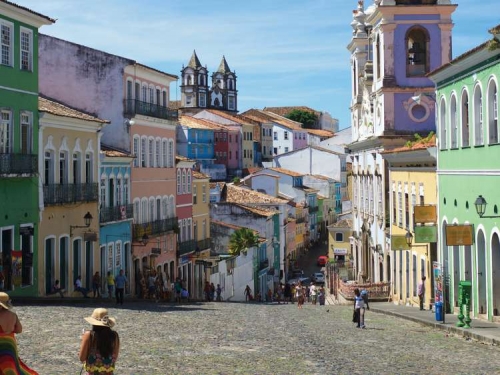
(5) Essentiellement, le Brésil fait partie d'une civilisation encore en formation, la civilisation latino-américaine, unie par le mythe d'une Nouvelle Rome. Le Brésil n'est pas européen, mais dans la mesure où l'européanité fait partie de son essence (avec les deux autres grandes influences, amérindienne et africaine), nier cette européanité, comme le fait la gauche, c'est nier la brésilianité. Au contraire, nous devrions célébrer cette européanité, comme nous célébrons déjà les autres sources et racines du Brésil.
(6) Si la gauche nie directement l'européanité, la droite cherche à remplacer l'européanité brésilienne (lusitanienne, ibérique, méditerranéenne, etc.) par un occidentalisme ultra-moderniste avec vernis anglo-saxon. Il s'agit de deux formes de négation : la négation de gauche est directe ; la négation de droite fonctionne comme une contrefaçon.
(7) Aujourd'hui, ce que nous appelons la civilisation occidentale est l'arrangement géopolitique-culturel qui exerce une hégémonie sur la planète. Le monde est unipolaire, même si cette unipolarité n'est pas stable. Pour les défenseurs des Lumières, de la modernité, du matérialisme et du libéralisme, cette situation (géopolitique) est positive et devrait être stabilisée et perpétuée jusqu'à ce que nous atteignions la fin de l'histoire (selon l'idéal de Francis Fukuyama).
(8) Mais pour ceux qui ne font pas partie de la catégorie ci-dessus, alors l'unipolarité est un problème et doit être combattue. Pour cela, il est nécessaire de soutenir toute forme de résistance contre cette hégémonie mondiale libérale. Une défaite de l'unipolarité à Madagascar est avantageuse pour nous au Brésil. Une défaite de l'unipolarité ici est avantageuse pour l'Estonie. Une défaite de l'unipolarité en Estonie est avantageuse pour le Yémen. Il ne semble pas difficile de comprendre ce raisonnement. La civilisation occidentale est l'expression culturelle du mondialisme. L'Occident, c'est le mondialisme. Et la contradiction entre le mondialisme et l'identité des peuples est la principale contradiction de notre époque.

(9) Trump possédait (et possède) un rôle dans l'aiguisement des contradictions de notre époque, qui conduira à l'effondrement de l'unipolarité. Ses tensions avec l'État profond ont en pratique conduit à plusieurs reculs par rapport aux positions avancées du pseudo-empire américain. Cela ne signifie pas et ne peut pas signifier, en aucun cas, une adhésion non critique au trumpisme. Chaque fois que Trump cède à l'État profond, il devrait être sévèrement critiqué pour avoir trahi les promesses faites à son électorat et au monde entier. Trump est un moment nécessaire dans le long processus de démantèlement de l'appareil mondialiste américain, mais il sera aussi dépassé.
(10) Toutes ces réflexions - nécessaires et vraies - ne sont possibles qu'à partir de la Quatrième théorie politique. C'est là que nous trouvons l'appareil théorique, conceptuel et intellectuel qui nous conduit à toutes ces conclusions.
(11) Dans ce scénario global, la voie du Brésil doit être construite en actualisant une certaine tradition politique du passé, significativement pertinente pour nous. Dans le cas du Brésil, la tradition politique la plus propice est le Trabalhismo, une idéologie qui a émergé du tronc de la troisième théorie politique. Le travaillisme doit être actualisé, ce qui signifie corriger ses erreurs et le relire du point de vue de la Quatrième théorie politique. Il n'y a pas d'autres options. Le résultat sera un nouveau programme, qui semblera "fasciste" pour les uns, "communiste" pour les autres, "nazi" pour certains, etc.
(12) Les affectations, les hystérismes et les purismes idéologiques par rapport à de tels constats ne sont rien d'autre que du sectarisme et du sentimentalisme, et celui qui ne le comprend pas ne possédera jamais les conditions d'un quelconque projet alternatif pour le Brésil. Il est inutile de répéter ad nauseam les erreurs historiques du travaillisme, puisque la NR a déjà procédé à une mise à jour organique du travaillisme à la lumière de la quatrième théorie politique : le travaillisme défendu par la NR est un travaillisme révisé et purifié de tous ses défauts - adapté aux défis de notre époque et ajusté à ce que nous appelons le nationalisme du XXIe siècle.


(13) Les objectifs du combattant patriotique et révolutionnaire brésilien (organiquement incarné dans le RN comme "parti national-révolutionnaire d'avant-garde"), pour être atteints et concrétisés, exigent la possession du Pouvoir. Nous avons identifié trois types de pouvoir : celui des armes, celui des positions politiques et celui de la culture. À cet égard, la NR a une stratégie réaliste et à long terme. Les autres organisations "nationalistes" ou pseudo-dissidentes, jusqu'à présent, ont l'auto-assistance, les mêmes et la nostalgie. Il me semble qu'il n'y a aucun doute sur ce qui est le mieux. Ainsi, il n'y a qu'une seule attitude possible (pour le patriote révolutionnaire brésilien) : soutenir la Nouvelle Résistance. L'unité d'une seule Organisation disciplinée surmonte le chaos de la multiplicité des groupements qui gravitent autour de l'ego de leurs dirigeants.
17:39 Publié dans Actualité, Définitions, Théorie politique | Lien permanent | Commentaires (0) | Tags : brésil, définition, théorie politique, travaillisme, civilisation occidentale, occidentalisme, occidentisme, politologie, sciences politiques, philosophie politique | | del.icio.us | | Digg | Facebook
Les relations transatlantiques au miroir de l'Afghanistan
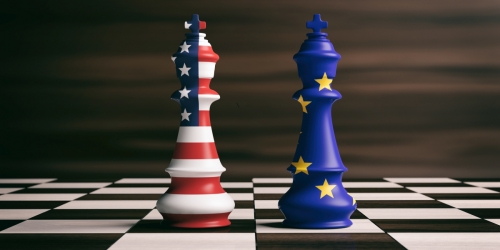
Les relations transatlantiques au miroir de l'Afghanistan
Sergey Yermakov
Ex: https://katehon.com/ru/article/transatlanticheskie-otnosheniya-v-zerkale-afganistana
Un mois après que les passions, liées au retrait manqué des troupes américaines et de celles de l'OTAN qui viennent de quitter l'Afghanistan, se soient apaisées à Washington et dans les capitales européennes, il est intéressant d'évaluer les conséquences du fiasco afghan sur les relations transatlantiques. Il convient de noter que la situation dans ce pays a évolué de manière inattendue et trop rapide et cela, dans un sens négatif pour les Américains et l'OTAN. Le retrait des troupes restantes et l'évacuation des civils de Kaboul s'apparentaient davantage à une fuite. Cela a causé d'énormes dommages à l'image des États-Unis et a réactivé les sources cachées de tendances centrifuges dans leurs relations avec leurs alliés.
En août dernier, les réunions d'urgence du Conseil de l'Atlantique Nord, du Comité militaire de l'OTAN et des ministres des Affaires étrangères de l'Alliance ont été principalement consacrées à l'adoption de mesures urgentes visant à garantir l'évacuation en toute sécurité du personnel de l'OTAN et des membres affiliés de l'Alliance, plutôt qu'à l'élaboration d'une position unifiée des Alliés sur la question de l'Afghanistan. Au départ, les experts occidentaux étaient assez sceptiques quant à la capacité de l'alliance à s'adapter rapidement aux nouvelles circonstances, en raison du choc et de la désorientation dans lesquels les forces de l'OTAN s'étaient retrouvées après la prise de contrôle éclair par les talibans.
Il convient de noter que les Européens ont tendance à considérer l'échec de la mission de l'OTAN en Afghanistan non seulement comme l'effondrement d'une seule opération, mais aussi comme un facteur qui aura de graves conséquences géopolitiques pour l'Europe et le monde, aggravant encore la crise des relations transatlantiques. C'est notamment la conclusion à laquelle est parvenu N. Loiseau, président de la sous-commission sécurité et défense du Parlement européen, qui estime que les récents développements devraient inciter l'Europe à renforcer son "autonomie stratégique" afin de garantir sa capacité à agir avec ses alliés (tels que les États-Unis) lorsque cela est possible, et indépendamment lorsque cela est nécessaire.
Pour sa part, D. Keating, senior fellow au European Center de l'Atlantic Council (USA) et correspondant à Bruxelles de France 24, note que les Européens ont été pris au dépourvu par la décision américaine de retirer rapidement les troupes d'Afghanistan sans avoir une compréhension réaliste de la vulnérabilité du régime politique de Kaboul. Selon lui, un certain nombre de pays européens, tels que le Royaume-Uni et l'Italie, ont été fortement irrités par le fait que l'administration Biden n'a pas tenu compte de leur avis sur la précipitation de ce retrait, après que leur opposition au retrait ait été ignorée lors du sommet de l'OTAN en juin. Selon l'évaluation de l'expert européen, le retrait rapide et en fait mal coordonné d'Afghanistan, qui a conduit à l'effondrement du leadership pro-occidental dans ce pays, renforcera le débat à Bruxelles sur l'"autonomie stratégique" européenne et la nécessité de développer une capacité de défense européenne indépendante. Ces actions américaines soulèvent également des questions sur l'engagement de l'Amérique à protéger ses alliés et sur la question de savoir si l'OTAN est réellement une alliance d'États souverains - ou simplement un protectorat militaire dans lequel les véritables décisions sont prises par Washington seul.
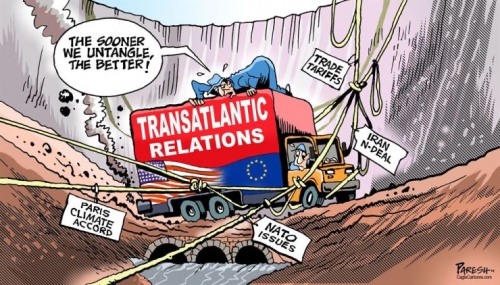
L'effondrement de la crédibilité de la politique étrangère américaine et des services de renseignement et militaires américains porte atteinte à l'autorité politique et morale de l'Occident dans son ensemble, déclare D. Schwarzer, directeur exécutif pour l'Europe et l'Eurasie à l'Open Society Foundations. Selon elle, l'exemple de l'Afghanistan démontre une trop grande dépendance des Européens à l'égard des États-Unis - et en même temps une trop faible prise en compte de leur point de vue à la Maison Blanche.
Dans le même temps, B. Masaes, ancien secrétaire d'État portugais aux affaires européennes, signale un grave problème pour l'Europe lié aux réfugiés d'Afghanistan. Selon ses évaluations, il existe un risque de nouvelles attaques terroristes contre l'Europe organisées à partir de ce pays. Masaes souligne également que la crise des réfugiés n'est qu'une partie de la destruction, voire de la désagrégation de l'ordre existant précipitée par les événements afghans. Selon lui, sous l'ancien président américain D. Trump, des doutes sont apparus sur l'engagement de l'Amérique envers ses alliés et ses engagements européens. Toutefois, l'analyste portugais estime que les événements afghans ont déjà jeté le doute sur la compétence américaine en tant que telle. Selon lui, la réponse ne peut être qu'une capacité européenne accrue à affronter seule un monde de plus en plus dangereux.
A son tour, M. Laschet, président de l'Union chrétienne-démocrate d'Allemagne et candidat à la chancellerie de centre-droit - a qualifié l'opération afghane de l'OTAN de "plus grand échec de l'alliance, qu'elle subit depuis sa fondation". Selon M. Laschet, une "analyse complète des erreurs" est nécessaire tant à Washington qu'à Bruxelles.
Les experts américains soutiennent de tout cœur l'avis de leurs collègues européens selon lequel les leçons de l'Afghanistan doivent être soigneusement étudiées. Par exemple, un analyste respecté du Centre d'études stratégiques et internationales de Washington, E. Cordesman, en parle dans son rapport. Cependant, il y a une nuance à apporter. Tout en admettant que l'absence de consultations complètes avec les partenaires de l'OTAN est inacceptable, l'analyste américain suggère néanmoins que l'Europe doit adopter une approche beaucoup plus réaliste de sa dépendance stratégique vis-à-vis des forces armées américaines. Par conséquent, les Européens devraient faire davantage pour améliorer leurs propres capacités militaires plutôt que de discuter du partage de la charge financière. Selon M. Cordesman, en réclamant une plus grande "autonomie stratégique", l'Europe devrait reconnaître qu'il n'existe pas aujourd'hui d'alternative européenne crédible à l'Alliance de l'Atlantique Nord. C'est pourquoi, selon lui, de nouvelles mesures sont nécessaires pour améliorer l'efficacité de l'OTAN et l'adapter aux nouveaux défis, plutôt que de détruire ce bloc, qui est pour l'instant irremplaçable.
Dans le même temps, l'analyste américain R. Ellehuys, qui a un temps dirigé le bureau de la politique européenne et des affaires de l'OTAN du département de la défense des États-Unis, estime qu'il est important de prêter attention à l'évaluation des conséquences négatives de la défaite afghane pour l'alliance. Il s'agit avant tout, selon elle, de saper la crédibilité de l'Alliance et d'accroître la menace terroriste qui pèse sur ses membres. Ellehuys et d'autres experts américains sont particulièrement préoccupés par la possibilité que les adversaires géopolitiques de l'OTAN utilisent le "syndrome afghan" pour discréditer et saper l'unité des alliés.
A cet égard, les experts occidentaux (par exemple, de l'Atlantic Council, de la RAND Corporation et d'autres) suggèrent à l'alliance de prendre des mesures urgentes d'information et de propagande permettant de justifier les actions américaines et de l'OTAN en Afghanistan, de calmer la société occidentale et de préserver l'unité des pays membres et la confiance dans l'organisation elle-même. Dans ces circonstances, par exemple, M.D. Williams, du Conseil atlantique, estime que dans la lutte pour la survie, le slogan moderne de l'OTAN devrait être l'appel "Pour la solidarité !" et non "Pour la sécurité !".
Dans le même temps, les experts américains faisant autorité estiment que les États-Unis doivent se préparer à une situation dans laquelle Washington devra compter non pas tant sur l'OTAN, mais plutôt sur une coalition de membres individuels intéressés de l'alliance qui représentent la plus grande valeur pour les Américains, pour résoudre leurs tâches stratégiques. L'application pratique de cette approche est visible dans la création de la nouvelle alliance militaro-politique entre les États-Unis, le Royaume-Uni et l'Australie, AUKUS.
L'Alliance de l'Atlantique Nord, estiment les analystes américains, a besoin d'une nouvelle approche de la planification des forces, fondée sur une évaluation réaliste des menaces, des plans et des budgets clairs. L'OTAN doit analyser activement l'évolution des capacités des trois superpuissances mondiales et introduire un régime de consultation sur la menace croissante que représente la Chine, plutôt que de se concentrer uniquement sur la Russie ou les menaces terroristes qui pèsent sur l'Europe.
Ainsi, l'approche ajustée des États-Unis vis-à-vis de l'Afghanistan, malgré l'échec de la "sortie discrète" envisagée du pays, suggère que la tâche de démêler le nœud afghan soit laissée à d'autres États, en comptant également sur le fait qu'il deviendra un problème pour les adversaires géopolitiques des États-Unis, la Russie et la Chine. Washington prévoit d'utiliser les ressources libérées en Afghanistan pour la compétition avec eux pour le leadership mondial.
17:03 Publié dans Actualité, Affaires européennes, Géopolitique | Lien permanent | Commentaires (0) | Tags : europe, affaires européennes, otan, atlantisme, alliance atlantique, états-unis, géopolitique, politique internationale, union européenne, afghanistan | | del.icio.us | | Digg | Facebook
mercredi, 29 septembre 2021
L'homme est obsolète

L'homme est obsolète
Carlo Gambescia
Ex: https://cargambesciametapolitics.altervista.org/luomo-e-antiquato/?fbclid=IwAR3VB5zpBJmInJasZpuPge6wsMyaHJOERDtmJ3mcSzo7eiI4UfJaV0vWb3s
Le titre est tiré d'un livre de Günther Anders, Die Antiquiertheit des Menschen, (= L'obsolescence de l'homme), philosophe allemand, pacifiste, figure culte de la gauche post-marxiste, mais néanmoins imprégnée d'utopisme négatif, cette même gauche, aujourd'hui au pouvoir, qui se "contente" (pour ainsi dire) de la transition écologique.


Une cause également épousée par les élites politiques libérales-socialistes (tout récemment, célébrée hier en Allemagne), un peu parce qu'elle est à la mode, un peu parce qu'elle est utile à la cause anticapitaliste. Et enfin par l'église populiste, incarnée par le pape François.
Anders a souligné l'insuffisance de l'homme par rapport à la technologie. Au cœur de sa philosophie, gravite l'idée d'un retour au monde pré-technologique et pré-industriel, pour équilibrer les comptes, entre l'humain et le non-humain (la technologie).
Ceci, comme nous l'avons dit, l'a rendu très populaire parmi les écologistes et les anticapitalistes, déclarés ou non. Ce qui explique aussi - c'est presque une blague - son divorce en 1937 d'avec Hannah Arendt, la "philosophe" par excellence, qui, si elle avait des défauts cognitifs, était coupable d'un excès de réalisme politique. Le contraire de son ex-mari : pessimiste oui, mais tourné vers le passé, vers le paradis pré-technologique perdu.
En réalité, l'homme est démodé pour une autre raison. Parce qu'il a toujours préféré croire plutôt que de comprendre. Il a donc besoin de croire, ou plutôt, si vous préférez, de "légendiser" la science et la technologie. Et, à son tour, de combattre ces derniers, au nom d'une sorte de retour à l'âge de pierre. Pour faire simple, il s'agit de passer de la légende B à la légende A. Si vous me permettez ce jeu de mots : du culte du Conseil supérieur de la santé aux cultes du soleil ou du dieu de la pluie.
Le fait est que la raison a un cours oscillant. Aujourd'hui encore, nous ne réalisons pas pleinement que deux à trois siècles de progrès technologique et scientifique, mais aussi de civilisation des bonnes manières, sont historiquement l'exception et non la règle. Ou en tout cas, un point culminant de la pensée humaine qui peut être suivi d'une chute verticale dans la direction opposée. En résumé, voilà comment les choses se présentent : les hauts et les bas de la pensée cognitive. Ça pourrait être le titre d'un livre. Probablement avec des ventes faibles...
Malheureusement, l'âge de raison, détesté par les droites les plus conservatrices et réactionnaires, a pour principal ennemi l'homme lui-même. Il remplace la raison par des légendes sur la raison, ouvrant ainsi des espaces sans fin aux ennemis de la raison et de la technologie, qui en est le prolongement naturel.
Prenons l'exemple de ce qui s'est passé ces deux dernières années. Un homme à l'ancienne, à tous les niveaux politiques (haut et bas), a cru à la légende de l'épidémie, pardon de la pandémie, et au pouvoir absolu, nous dirions salvateur, de la science médicale et de la science de l'organisation politique. Les conséquences sociales, économiques et culturelles désastreuses sont visibles pour tous.
La légende de l'épidémie semble désormais être remplacée par celle de la transition écologique. En bref, il n'y a rien à faire : les gens préfèrent encore croire plutôt que de comprendre. Le problème n'est pas la technologie, en tant que telle, mais le retard cognitif hoquetant de l'homme, qui - attention - peut le pousser à mettre la science au service de la réaction.
Après tout, en quoi consistait le discours d'Anders ? Dans la critique de la modernité, du point de vue d'un homme qui pourrait s'en passer en réduisant ses besoins.

Tout cela n'est-il pas la transition écologique ? Bien sûr, pour adoucir une pilule amère, l'avenir est amplifié. Ici, cependant, ce n'est plus Anders qui parle, mais l'État, avec ses moyens extrêmement puissants. Excellent pour finir de plier les consciences sous la bannière "On sera tous plus libres après", "Quelques 'petits' sacrifices, etc...".
Bref, un avenir qui a un "cœur antique"... Le titre d'un livre de Carlo Levi, datant des années 1950, dans lequel il faisait l'éloge de l'Union soviétique en tant que gardienne des valeurs traditionnelles. Une pure absurdité utopique. Et pourtant, les gens continuent à "croire" à ces absurdités.
Y a-t-il une issue ? La droite est incapable de proposer une quelconque recette (hier, par exemple, nous avons lu un article dans lequel Veneziani faisait l'éloge de Saint Padre Pio, qui doit être en colère là-haut). La gauche libérale-socialiste fait un clin d'œil complaisant aux mouvements écologiques. Et les gens ordinaires "préoccupés" par "l'avenir de la planète" applaudissent, ou presque.
Oui, l'homme est obsolète.
Carlo Gambescia
11:38 Publié dans Actualité, Philosophie | Lien permanent | Commentaires (0) | Tags : carlo gambescia, obsolescence, philosophie, günther anders | | del.icio.us | | Digg | Facebook
Marx et le délire administratif à la française
Marx et le délire administratif à la française
par Nicolas Bonnal
La dictature sanitaire est une aubaine pour notre administration traditionnellement tyrannique. Elle est aussi parfaitement acceptée par 80% ou plus de la population. Comprenons pourquoi car les causes sont anciennes. Tocqueville écrit déjà dans des lignes immortelles :
« Au-dessus de ceux-là s'élève un pouvoir immense et tutélaire, qui se charge seul d'assurer leur jouissance et de veiller sur leur sort. Il est absolu, détaillé, régulier, prévoyant et doux. Il ressemblerait à la puissance paternelle si, comme elle, il avait pour objet de préparer les hommes à l'âge viril; mais il ne cherche, au contraire, qu'à les fixer irrévocablement dans l'enfance; il aime que les citoyens se réjouissent, pourvu qu'ils ne songent qu'à se réjouir. Il travaille volontiers à leur bonheur; mais il veut en être l'unique agent et le seul arbitre; il pourvoit à leur sécurité, prévoit et assure leurs besoins, facilite leurs plaisirs, conduit leurs principales affaires, dirige leur industrie, règle leurs successions, divise leurs héritages, que ne peut-il leur ôter entièrement le trouble de penser et la peine de vivre ? »
En bon aristocrate libéral, Tocqueville accuse l’égalité :
« C'est ainsi que tous les jours il rend moins utile et plus rare l'emploi du libre arbitre; qu'il renferme l'action de la volonté dans un plus petit espace, et dérobe peu à peu à chaque citoyen jusqu'à l'usage de lui-même. L'égalité a préparé les hommes à toutes ces choses : elle les a disposés à les souffrir et souvent même à les regarder comme un bienfait. »
En réalité l’égalité est une conséquence et pas une cause ; elle est aussi un leurre pour tromper la masse ; on sait en plus que les élites au pouvoir sont moins égales que nous pour parler comme Orwell. C’est le pouvoir moderne, le minotaure de Bertrand de Jouvenel, qui a enflé comme la grenouille. Et Marx écrit quelques années seulement après Tocqueville, quand le bonapartisme a tout phagocyté en France terre de liberté et des droits de l’homme ; c’est dans le Dix-huit brumaire de Louis-Napoléon, le texte le plus jamais important jamais écrit sur la condition française :
« Ce pouvoir exécutif, avec son immense organisation bureaucratique et militaire, avec son mécanisme étatique complexe et artificiel, son armée de fonctionnaires d’un demi-million d’hommes et son autre armée de cinq cent mille soldats, effroyable corps parasite, qui recouvre comme d’une membrane le corps de la société française et en bouche tous les pores, se constitua à l’époque de la monarchie absolue, au déclin de la féodalité, qu’il aida à renverser. »

Apprécions cette expression de corps parasite : n’oublions que pour Marx (ce n’est pas pour rien que le maître libertarien Rothbard l’appréciait) rêve de la disparition de l’Etat. Et ajoutons que les corps parasites, hauts fonctionnaires, médecins vaccinateurs, journalistes 100% subventionnés et étatisés, profs socialistes de père en fils et autres butors de la police et de la gendarmerie s’en donnent à cœur joie en ce moment. On a cherché des Jean Moulin et on n’en a pas eu plus qu’en 1940 ; car ce fut cet étatisme (liberté, carrière, retraite) qui engendra notre soumission à Vichy.
Marx rappelle notre histoire moderne :
« La première Révolution française, qui se donna pour tâche de briser tous les pouvoirs indépendants, locaux, territoriaux, municipaux et provinciaux, pour créer l’unité bourgeoise absolue : la centralisation, mais, en même temps aussi, l’étendue, les attributs et l’appareil du pouvoir gouvernemental. Napoléon acheva de perfectionner ce mécanisme d’État. »
On arrive à la perfection sous la monarchie de Juillet (voyez mes textes sur Balzac et lisez son bref et génial Z. Marcas) :
« La monarchie légitime et la monarchie de Juillet ne firent qu’y ajouter une plus grande division du travail, croissant au fur et à mesure que la division du travail, à l’intérieur de la société bourgeoise, créait de nouveaux groupes d’intérêts, et, par conséquent, un nouveau matériel pour l’administration d’État. Chaque intérêt commun fut immédiatement détaché de la société, opposé à elle à titre d’intérêt supérieur, général, enlevé à l’initiative des membres de la société, transformé en objet de l’activité gouvernementale, depuis le pont, la maison d’école et la propriété communale du plus petit hameau jusqu’aux chemins de fer, aux biens nationaux et aux universités. »
Il n’y a rien de français en France en résumé. Tout est étatique. Et Marx observe tristement :
« Toutes les révolutions politiques n’ont fait que perfectionner cette machine, au lieu de la briser. Les partis qui luttèrent à tour de rôle pour le pouvoir considérèrent la conquête de cet immense édifice d’État comme la principale proie du vainqueur. »
J’ai comparé il y a bientôt cinq ans Macron à Louis-Napoléon. C’est l’ère de l’hyper-présidence comme disait un imbécile de la télé. Marx écrit :
« Ce n’est que sous le second Bonaparte que l’État semble être devenu complètement indépendant. La machine d’État s’est si bien renforcée en face de la société bourgeoise qu’il lui suffit d’avoir à sa tête le chef de la société du 10 Décembre, chevalier de fortune venu de l’étranger, élevé sur le pavois par une soldatesque ivre, achetée avec de l’eau-de-vie et du saucisson, et à laquelle il lui faut constamment en jeter à nouveau. »
Et d’expliquer la tristesse française :
« C’est ce qui explique le morne désespoir, l’effroyable sentiment de découragement et d’humiliation qui oppresse la poitrine de la France et entrave sa respiration. Elle se sent comme déshonorée. »
Depuis on est descendu plus bas. Dans ses admirables et inépuisables Commentaires, Guy Debord écrit après avoir cité Marx :
« Voilà qui sonne tout de même un peu bucolique et, comme on dit, dépassé, puisque les spéculations de l’État d’aujourd’hui concernent plutôt les villes nouvelles et les autoroutes, la circulation souterraine et la production d’énergie électronucléaire, la recherche pétrolière et les ordinateurs, l’administration des banques et les centres socio-culturels, les modifications du « paysage audiovisuel » et les exportations clandestines d’armes, la promotion immobilière et l’industrie pharmaceutique, l’agroalimentaire et la gestion des hôpitaux, les crédits militaires et les fonds secrets du département, à toute heure grandissant, qui doit gérer les nombreux services de protection de la société. »
Debord prophétisait aussi une nouvelle élite. Elle est arrivée au pouvoir avec Macron. Et je me risque non pas à une prophétie mais à une simple observation : il ne partira pas. Macron ne partira pas, Macron ne quittera pas le pouvoir, pas plus que sa clique qui se régale aux affaires en dépeçant la France.
Et tant mieux si je me trompe.
Sources :
https://www.dedefensa.org/article/balzac-et-la-prophetie-...
http://classiques.uqac.ca/classiques/Marx_karl/18_brumain...
http://achard.info/debord/CommentairesSurLaSocieteDuSpect...
http://classiques.uqac.ca/classiques/De_tocqueville_alexi...
10:59 Publié dans Actualité, Philosophie | Lien permanent | Commentaires (0) | Tags : philosophie politique, philosophie, karl marx, nicolas bonnal, histoire, france, actualité | | del.icio.us | | Digg | Facebook
mardi, 28 septembre 2021
Le port de Hambourg devient chinois. Le dernier cadeau de Frau Merkel à Pékin
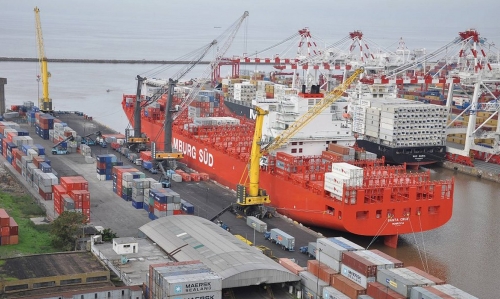
Le port de Hambourg devient chinois. Le dernier cadeau de Frau Merkel à Pékin
Marco Valle
Ex: https://blog.ilgiornale.it/valle/2021/09/27/il-porto-damburgo-diventa-cinese-lultimo-regalo-di-frau-merkel-a-pechino/#disqus_thread
La République populaire de Chine a résisté à la pandémie mondiale sans trop de dommages (du moins en apparence) et poursuit son expansion économique, politique et militaire. Partout, vraiment partout. Même sur les mers. Pour la première fois de sa longue histoire - à l'exception de l'intermède du quinzième siècle avec les expéditions de l'amiral Zheng Hen - elle a créé une grande marine militaire et marchande, se transformant ainsi en une puissance maritime. Un objectif ambitieux et sans précédent, comme le rappelle Edward Sing Yue Chan, qui fait "partie intégrante du 'rêve chinois' de renouveau national". C'est l'un des principaux objectifs du président depuis son arrivée au pouvoir, comme il l'a réitéré en 2017 dans un discours aux commandants de la marine" (Limes, n° 10/ 2020).
L'essor thalassocratique et naval de la Chine repose sur un réseau efficace d'alliances et d'influence étendu de l'Asie du Sud à l'océan Indien. C'est la stratégie du "collier de perles", un long cordon de comptoirs et de relais dans lequel Pékin a englobé le Sri Lanka, la Birmanie, le Bangladesh, les Maldives, le Pakistan et, depuis 2017, Djibouti en Afrique, la première base militaire du Dragon hors du territoire national. Officiellement, cette installation (la première garnison militaire permanente de la République à l'étranger) est un point d'appui pour les navires et les équipages engagés dans des missions de lutte contre la piraterie.
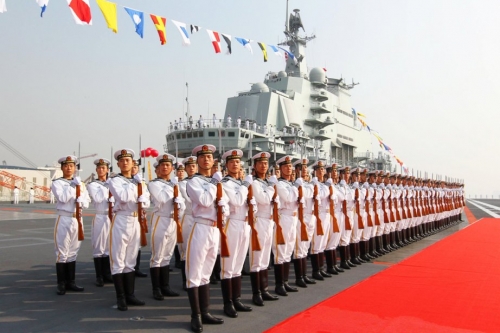
Depuis 2008, Pékin a déplacé plus de 70 unités, dont des destroyers, des frégates et des navires de ravitaillement, et maintient une force opérationnelle navale permanente devant Aden. En réalité, la base répond à des logiques plus larges. L'installation a une capacité d'accueil de dix mille personnes et représente une porte d'entrée sécurisée au cœur du continent ainsi qu'un bouclier efficace pour les innombrables intérêts chinois dans la petite république.
En 2018, les Chinois, juste devant leur base, ont inauguré un port multifonctionnel, le terminal à conteneurs de Doraleh, et une usine pétrolière (tous deux gérés par l'entreprise publique China Merchants Group) ; un an plus tard, le Djibouti Damerjog Industrial Development (DDID), une zone franche de 43 kilomètres carrés gérée exclusivement par trois entreprises chinoises (coût de 3,5 milliards de dollars), a été créé. Sous la direction de la Chine en janvier 2021 (virus ou pas...), Djibouti a clôturé l'accord entre Air Djibouti, Ethiopian Airlines et l'autorité portuaire nationale (DPFZA) pour la construction d'un nouvel aéroport, futur hub africain pour les marchandises chinoises (déchargées, bien sûr, par des navires chinois au port chinois de Doraleh).
Les Chinois possèdent désormais 77 % de la dette nationale, qu'ils utilisent pour programmer et rythmer le plan de développement Vision 2035, l'avenir de ce fragment de la Corne de l'Afrique. L'objectif, comme l'indique un document de la Banque de Chine, "est de transformer le pays, qui n'est plus un centre logistique régional, en un centre financier et un carrefour commercial mondial". En bref, un nouveau Dubaï en jaune.
L'investissement de Gibutan est en synergie avec l'enclave industrielle exempte de taxes dans la zone du canal de Suez - la zone économique et commerciale Chine-Égypte-Suez - et avec la gestion par Cosco (China Ocean Shipping Co., troisième compagnie maritime mondiale après Maersk et Msc) du terminal à conteneurs du canal de Suez, une plateforme entièrement chinoise. Un choix ciblé: depuis 2001, le volume de marchandises traversant le canal a fait de la Méditerranée le principal débouché de 19 % du trafic mondial; 56 % des marchandises empruntant la voie d'eau atteignent le cœur de l'Europe. Le calcul est simple.
Suez et Djibouti sont deux pièces centrales d'un grand projet. Laissez-nous vous expliquer. Les ports maritimes sont l'objectif prioritaire de Pékin: selon une étude du Centre for Strategic & International Studies, 46 ports africains ont été financés, conçus (et sont en cours de construction) ou gérés par des entités chinoises. Cet investissement vise à garantir un traitement prioritaire aux navires à moindre coût, assurant ainsi un avantage concurrentiel aux transporteurs chinois: acheminer des volumes croissants de marchandises vers les marchés européens dans les plus brefs délais. Il s'agit notamment des projets d'extension du port commercial de Lamu, au Kenya (pour un coût de 500 millions de dollars), et de la construction du port de Bagamoyo, en Tanzanie, avec un investissement estimé à 11 milliards de dollars et la coparticipation de la Tanzanie, de la Chine et d'Oman: situé à seulement 50 kilomètres au nord de Dar es Salaam et opérationnel à partir de 2022, Bagamoyo deviendra le plus grand port d'Afrique de l'Est.
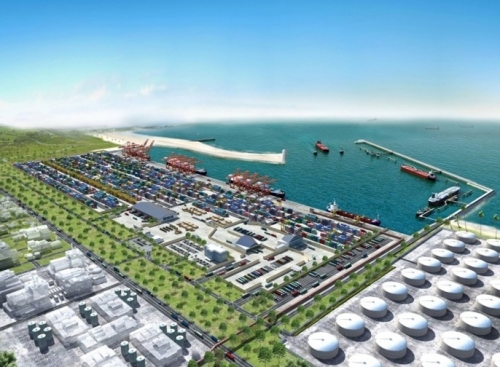
À son tour, la conquête douce de l'Afrique est imbriquée dans l'initiative Belt and Road (BRI), la "nouvelle route de la soie", une formidable offensive politique et commerciale qui concerne actuellement plus de 80 nations et s'apprête à investir toute l'Europe. C'est un projet articulé avec des investissements massifs et une planification efficace avec un objectif clair: nos économies, nos souverainetés.
Le point de départ est 2010, lorsque Cosco rachète le Pirée, le principal port de la Grèce, à un prix avantageux. L'Union européenne et l'Allemagne, trop occupées à vampiriser la Grèce, s'en sont moquées et ont donné leur accord. La concession aux Chinois de deux jetées était prévue pour 35 ans, et Cosco devait payer un milliard d'euros au total. Mais la valeur économique de l'opération devait être de 4,3 milliards au total, compte tenu des accords de répartition des bénéfices et des investissements que l'entreprise publique du Dragon s'est engagée à réaliser. L'appétit venant en mangeant, Cosco a racheté cet été 67% de l'ensemble de l'Autorité portuaire, prenant ainsi possession jusqu'en 2052 de la totalité de la structure, opérant depuis lors en tant qu'opérateur de terminal mais aussi en tant que concessionnaire, client et fournisseur de lui-même. Le Pirée est ainsi devenu la première véritable brique BRI européenne, une porte d'entrée de l'expansion commerciale et industrielle asiatique en Europe, avec des investissements massifs dans les terminaux mais aussi dans la logistique, la réparation navale et le tourisme.
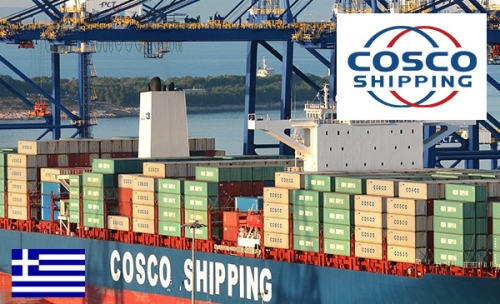
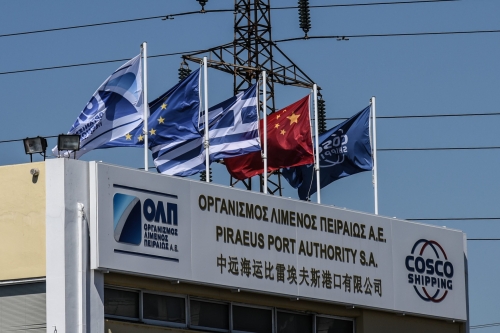
Le résultat ? Une excellente affaire, comme le confirment les chiffres: en 2009, le Pirée a traité moins de 700.000 Teu (unité de mesure des conteneurs de 20 pieds). En 2014, il en a traité 3,6 millions, en 2019, il est passé à 4,9 millions. "En 2010, souligne Alessandro Panaro, directeur de l'Observatoire du trafic maritime de Srm Intesa Sanpaolo, le Pirée n'était pas du tout compétitif, Valence faisait quatre fois ses conteneurs, Tanger Med en faisait déjà deux millions, Port Saïd trois et demi tandis que le port grec n'arrivait pas à en faire un. Depuis l'arrivée du colosse chinois, il est devenu le deuxième port de la Méditerranée et déplace aujourd'hui plus de cinq millions de Teu". Selon un rapport du Srm, en 2020, l'ensemble du système portuaire italien a transporté un peu moins de 10,7 millions de Teu...
Après le Pirée - désormais le pivot de la pénétration jaune en Europe, pour se connecter par train à Belgrade et Budapest - la Cosco a acquis d'importantes participations dans les ports de Kumport (Turquie), Ashod (Israël), Tangeri (Maroc), Cherchell (Algérie), Salonicco (Grèce), Valence et Bilbao (Espagne), Gyynia (Pologne), Rotterdam (Pays-Bas), Zeebrugge et Anvers (Belgique), Vado Ligure (Italie), acquérant ainsi le contrôle de 10% du mouvement conteneurisé du Vieux Continent ; un autre géant public basé à Pékin, China Merchant Port, détient une part minoritaire de Marseille et opère en tant qu'opérateur de terminaux ferroviaires à Venlo, Moerdijk et Amsterdam aux Pays-Bas, Willebroek en Belgique et Duisburg en Allemagne. C'est le plus grand port intermodal (fluvial) du monde, capable de traiter vingt mille navires et vingt-cinq mille trains par an, une cathédrale de la logistique intégrée.
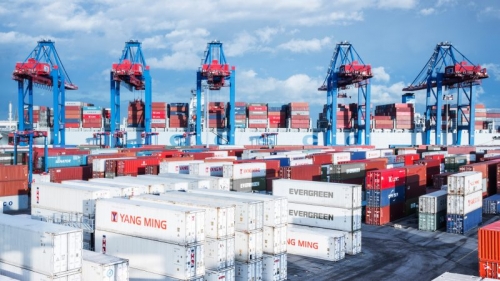
Mais ce n'est pas tout. Ces jours-ci, Cosco a conclu (dernier cadeau d'Angela Merkel à Pékin ?) l'accord pour le troisième port le plus important de l'UE, Hambourg: la société, par l'intermédiaire de sa filiale Grand Dragon, a conclu l'accord avec l'opérateur de terminal allemand Hhla pour reprendre 35% d'un des trois terminaux, le Tollerort (Ctt), au prix de 65 millions d'euros, en plus de reprendre 35 millions de dettes de Ctt avec Hhla. Bien qu'il s'agisse de la plus petite installation du port allemand, elle transporte environ 9,2 millions de TEU chaque année. Pas mal pour une entreprise qui émane directement de l'organe administratif suprême, le Conseil d'État, et donc du Parti communiste chinois.
La nouvelle a évidemment animé le débat électoral allemand (contribuant à l'effondrement de la CDU) et inquiété les bureaucrates de Bruxelles. L'accélération à Hambourg a pris au dépourvu la commissaire chargée de la lutte contre les ententes, Margrethe Vestager, qui a présenté au printemps dernier un "bouclier" communautaire pour défendre les entreprises européennes contre les rachats par des acteurs étrangers subventionnés par leur État d'origine, et a obtenu son approbation. Sur le papier, le signal envoyé à Pékin est clair : les entreprises qui reçoivent plus de 50 millions d'euros de subventions étrangères et qui cherchent à acquérir des actifs dans l'UE d'une valeur supérieure à 500 millions d'euros ou à participer à des marchés publics d'une valeur minimale de 250 millions d'euros devront notifier la transaction à Bruxelles et obtenir son approbation.
"Lorsque vous ouvrez votre maison à des invités, vous attendez d'eux qu'ils respectent les règles de la maison. Cela doit également s'appliquer au marché intérieur", a souligné Mme Vestager. Nous attendons maintenant que la loi soit approuvée par le Conseil et le Parlement de l'UE. Avant qu'il ne soit trop tard.
11:46 Publié dans Actualité, Affaires européennes, Economie | Lien permanent | Commentaires (0) | Tags : hambourg, le pirée, europe, affaires européennes, allemagne, grèce, afrique, djibouti, chine, affaires africaines, ports, installations portuaires | | del.icio.us | | Digg | Facebook
Novorossiya : le nom de l'avenir
Novorossiya: la solution de l'avenir
Alexandre Douguine
Je suis profondément convaincu que la formule dite du "quatuor normand", composé de la Russie, de l'Allemagne, de la France et de l'Ukraine pour résoudre la situation dans les anciens territoires de l'Ukraine orientale, est une impasse. Cela a permis d'aplanir la situation pendant un certain temps, mais cela n'a pas résolu et ne pouvait pas résoudre le problème. En outre, Kiev a tenté à plusieurs reprises de mettre la Crimée à l'ordre du jour, ce qui compromet définitivement la possibilité même de toute discussion.
La Russie ne discute pas de la Crimée - c'est la position stricte et sans ambiguïté de Moscou, qu'elle n'abandonnera en aucun cas.
Mais ce n'est même pas là que réside la question. Le statu quo dans le Donbass est totalement insatisfaisant, que ce soit pour Kiev ou pour le Donbass lui-même. Pour Kiev, le Donbass, c'est l'Ukraine, mais pour le Donbass lui-même, l'Ukraine en ses frontières officielles a cessé d'exister depuis longtemps. Tant que la Russie est derrière le Donbass, ce "non" repose sur des assises sérieuses, égales au poids stratégique de la Russie elle-même.
Étant donné que les forces mondialistes et extrémistes sont toujours au pouvoir à Kiev et qu'elles ont commus un gâchis terrible avec le soulèvement naziste de Maidan et avec le début des opérations punitives contre la population russophone, il n'y aura pas de progrès de ce côté-là non plus. Bien sûr, les puissances européennes seraient heureuses de se retirer du problème, car personne ne souhaite entrer dans une confrontation brutale avec Moscou, mais la position globale consolidée de l'Occident et de l'OTAN dans le soutien à la junte de Kiev ne peut être remise en question. C'est la raison pour laquelle ils soutiennent la formule du "quatuor normand" en mode couvé. Cette formule ne peut pas s'éteindre complètement, mais elle n'a aucune chance de s'enflammer vraiment.
À mon avis, il est temps de se préparer, au moins théoriquement, au prochain cycle de l'histoire. Le Donbass ne reviendra jamais à l'Ukraine. Mais même l'indépendance de ce Donbass ou sa réunification à la Russie dans ses frontières actuelles ne résoudra rien non plus. Oui, les malheureux doivent enfin avoir l'occasion de vivre normalement comme des êtres humains. Mais le Donbass n'est qu'une partie de la Novorossiya. Et libérer un territoire, en laissant tout le reste à un régime néo-naziste où même la langue russe ne fait plus partie des langues officielles, serait une demi-mesure pas trop différente de ce que nous avons maintenant. Tôt ou tard, Moscou devra vraiment s'occuper de la Novorossiya.
Il faut tenir compte de l'affaiblissement spectaculaire des États-Unis - la fuite honteuse hors d'Afghanistan en est un bon exemple. La situation politique en Ukraine s'effiloche peu à peu, et tous les espoirs associés à Zelensky se sont progressivement effondrés - et ne pouvaient d'ailleurs que s'effondrer. Aucune de ses promesses aux masses, le misérable comédien n'a pu les tenir. En 2024, sa situation sera clairement désespérée.
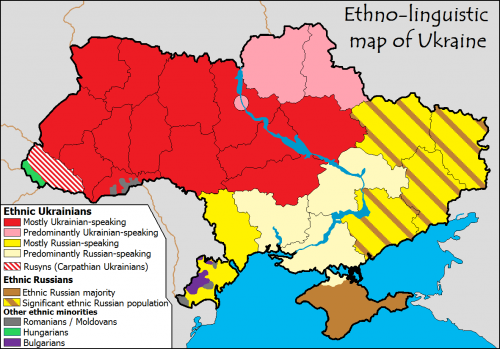
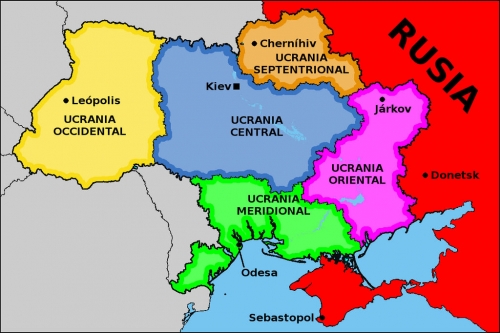
En attendant, la Russie doit se préparer à une percée stratégique. Si l'Ukraine ne peut pas être au moins neutre, elle ne devrait pas l'être du tout. Ce que je veux dire, c'est qu'à sa place, il devrait y avoir deux États confédérés - l'Ouest et l'Est. Et ce sera comme en Belgique. Deux peuples - deux territoires, deux langues. La Novorossia peut conclure un accord historique avec l'Ukraine - une sorte d'union - comme l'union de Krevsky ou de Lublin. Et c'est seulement après cela que la formule que "quatuor normand" pourra être convoquée. Ce n'est qu'alors que nous aurons vraiment quelque chose à discuter avec Kiev.
Il est inutile de s'indigner de ce qui se passe en Ukraine. La ligne choisie par les médias russes à l'égard des personnes véritablement fraternelles de la Petite Russie est très peu attrayante. Dans toute famille, le parent le plus proche et le plus cher peut devenir fou, boire jusqu'à la mort ou devenir invalide. Ce n'est pas drôle du tout. C'est un malheur. Il faut soigner un parent, et non pas lui faire honte.
Et seule l'idée d'une Novorossiya peut guérir notre cher frère slave. D'Odessa à Kharkov. Et que l'ukrainien y soit la langue officielle. Au même titre que le russe. Et tous les Slaves de l'Est, et non seulement les Slaves de l'Est, et non les Slaves en général, vivront dans ce bel État merveilleux de façon heureuse et amicale. Il ne s'agit pas de l'économie, ni du gaz, ni du fait que la population ukrainienne fuit le pays et que bientôt il n'y aura même plus personne pour regarder les émissions humoristiques et russophobes. C'est une question de principe. Kiev avait une chance historique de construire un État pour deux nations - comme l'a fait la Belgique. Là-bas, il y a des Wallons, et à côté d'eux, des Flamands. Et tous ensemble, ce sont les Belges. Mais si les Wallons exigeaient que les Flamands deviennent wallons et parlent français (ou vice versa), la Belgique disparaîtrait en un instant. Mais Kiev a raté cette occasion d'un bon confédéralisme. Irrévocablement. Et continue de le rater encore et encore.
D'où la réponse : nous reviendrons aux négociations après la mise en œuvre du projet Novorossiya.
Et ensuite nous parlerons. Sous n'importe quelle formule. Même dans sous la formule du quatuor normand.
11:22 Publié dans Actualité, Affaires européennes | Lien permanent | Commentaires (0) | Tags : alexandre douguine, actualité, europe, ukraine, novorossiya, affaires européennes, russie, donbass | | del.icio.us | | Digg | Facebook
lundi, 27 septembre 2021
Progressisme permissif et intolérant
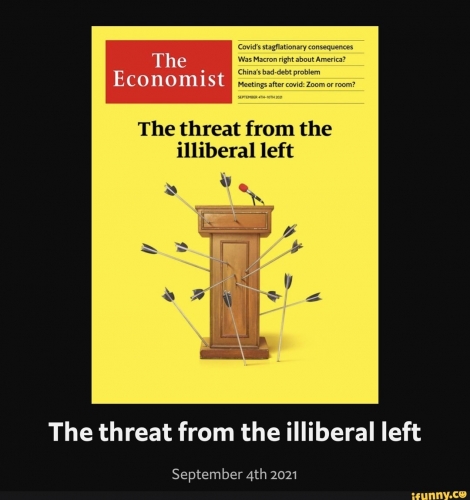
Progressisme permissif et intolérant
par Marcello Veneziani
Source : Marcello Veneziani & https://www.ariannaeditrice.it/articoli/il-progressismo-permissivo-e-intollerante
Il a fallu l'article de couverture de The Economist sur le danger de la "gauche illibérale" pour réveiller la gauche italienne de son sommeil dogmatique et présomptueux. Pendant des années, nous avons souligné et dénoncé le tournant libéral de la gauche issue du communisme et du socialisme, qui coïncidait avec la dérive néo-bourgeoise et néo-capitaliste. Mais depuis quelque temps, quelque chose se passe aux confins de cette gauche libérale: pour le dire dans le même langage anglo-américain, l'aspect radical s'accentue et les obligations et les interdictions, la censure et la suppression, les restrictions sérieuses aux espaces de liberté reprennent vigeur. La gauche semble de plus en plus une maison de l'intolérance, entre totems et tabous, interdits et intouchables.
D'un côté, la gauche marche aux côtés de la société néo-bourgeoise et néo-capitaliste, fait l'éloge de la mondialisation, se place résolument dans le camp de l'establishment, est la garde rouge du pouvoir économique, bureaucratique, judiciaire, médiatique et intellectuel. Et elle fait campagne pour une société permissive, de plus en plus individualiste et globale. Mais d'un autre côté, l'âme radicale se réveille elle aussi, et les batailles pour le libéralisme et les libérations de tous acabits sont flanquées de batailles correctives et punitives pour ramener la société dans les canons rigides du politiquement correct, de la culture du cachet et de la pensée uniforme.
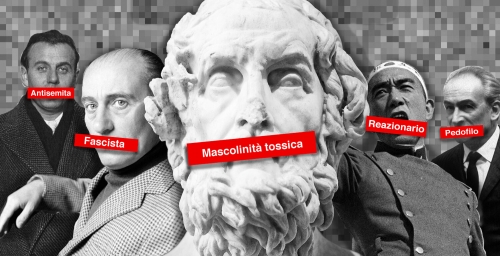
Le spectacle de cette schizophrénie et de cette volte-face de la gauche, libérale dans la sphère privée et radicale dans la sphère publique, tout à la fois permissive et intolérante, est là pour tous et ne concerne pas seulement la gauche italienne et la direction de Letta.
C'est un processus généralisé qui donne lieu aujourd'hui à des crises internes de rejet. D'une part, il y a la dissidence de certains intellectuels et philosophes de "gauche" contre le régime des restrictions sanitaires imposé pour la pandémie, avec les cas les plus évidents d'Agamben, Cacciari, Barbero; et, d'autre part, le malaise des intellectuels et des observateurs de gauche face à ce courant dément, intolérant et puritain de la cancel culture, qui s'est répandu des États-Unis à l'Europe - de Noam Chomsky à Federico Rampini - sur cette vague jacobine de censure et de destruction, d'omertà et d'hystérie gendériste, qui s'est abattue sur l'histoire, la tradition et la culture de l'Occident et sur les relations sociales et sexuelles. Il y a deux façons de violer la culture et l'histoire: l'actualiser par la force ou l'effacer, la nier. Les deux voies sont fréquentes, omniprésentes, voire dominantes aujourd'hui.
Le Festival de philosophie de Modène était consacré au thème de la liberté, et il est à la fois inutile et ennuyeux de constater que le défilé était réservé à la même troupe de personnages, sans voix dissonantes si elles ne sont pas dans cette ligne de pensée; et en plus avec l'auto-congratulation par laquelle le Festival a honoré les quotas roses. Deux critères qui rendent déjà grotesque et incohérent le thème auquel il était dédié: la liberté mais seulement jusqu'à un certain point, la liberté sous surveillance, sans dissidence et avec hommage à la rhétorique du genre.

Mais quelle est la relation entre la culture progressiste et la liberté ? Les spécialistes de la liberté de ces dernières décennies, d'Isaiah Berlin à Ralf Dahrendorf en passant par Norberto Bobbio, ont fait la distinction entre la liberté de et la liberté pour, c'est-à-dire entre la liberté négative, en tant que non-empêchement, caractéristique du libéralisme, et la liberté positive, qui est plutôt liée à l'émancipation, à la justice sociale et à l'égalité. La position qui découle de Nietzsche, qui a posé une autre question, est: la liberté pour quoi faire ? C'est-à-dire que la liberté, sa qualité, sa dignité, se mesure à l'usage que l'on en fait et à la manière dont on vit. L'implication est que la liberté n'est pas la même pour tous, mais que les différents degrés et les différences doivent être reconnus et qu'elle ne peut aboutir à l'égalité et à l'homologation.
Historiquement, l'idée de liberté à gauche, dans le monde progressiste, antifasciste et marxiste, a coïncidé avec l'idée de libération. La libération des peuples et des individus du joug de la tradition, des hiérarchies sociales et de classe, des régimes autoritaires, répressifs ou même bourgeois, ou comme on l'appelait autrefois la "démocratie formelle". Dans la gauche classique, la liberté individuelle était subordonnée à la libération des masses, le collectif prévalait sur le personnel, la classe sur l'individu.
Et aujourd'hui ? Aujourd'hui, il y a la schizophrénie que nous avons notée précédemment: c'est-à-dire que la libération individuelle par rapport à la nature, au sexe, à la tradition, à la sphère privée, est couplée à la coercition sociale sur les jugements historiques, politiques, idéologiques et sanitaires. Nous avons ici la tunique de Nessus, le lit de Procuste, bref, un régime de restriction et d'intolérance.
Les politiques économiques de la gauche reflètent l'oscillation entre ces deux pôles: d'une part, il y a la conversion de la gauche au marché libre, au secteur privé, au capital, mais d'autre part, il reste l'idée punitive de frapper et de taxer les sources de richesse, les activités entrepreneuriales, la libre entreprise, les actifs, les maisons. C'est là un capitalisme hybride et contradictoire, avec des intermittences dangereuses. Il n'existe actuellement aucune expérience politique significative qui ait été couronnée de succès à cet égard. Et il n'existe aucun régime progressiste connu de coercition et de libération qui bénéficie d'un réel et large consensus populaire.
A tout cela s'ajoute l'utilisation intolérante de l'antifascisme pour censurer tout opposant, pour le maintenir dans la claque, dans laquelle se manifeste le paradoxe de la dérive illibertaire au nom de la liberté elle-même: un abus qui ramène artificiellement à la vie des expériences historiquement défuntes depuis plusieurs décennies, afin de disqualifier les opposants; il sert à frapper la liberté d'opinion et la diversité du jugement historique et à soumettre la vérité et la réalité au moralisme et au sectarisme idéologique. En bref, la gauche d'aujourd'hui montre qu'il est possible d'être tout à la fois permissif et intolérant, de marcher pour la libération et d'être ensuite des ennemis de la liberté. C'est le bipensiero orwellien, le double-thought, ou la double vérité, la double-truth, l'antichambre des nouveaux totalitarismes.
16:59 Publié dans Actualité, Philosophie | Lien permanent | Commentaires (0) | Tags : actualité, totalitarisme, intolérance, philosophie, progressisme | | del.icio.us | | Digg | Facebook
L'Amérique est en recul. Il est temps de passer à l'offensive
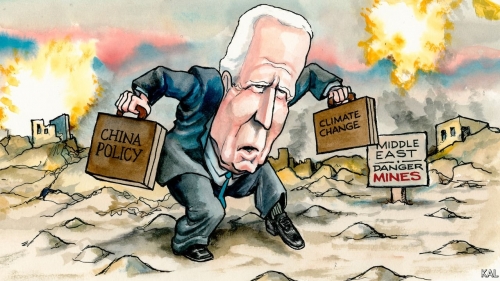
L'Amérique est en recul. Il est temps de passer à l'offensive
Alexander Douguine
L'hégémon se ratatine et recule partout!
Les élections en Russie sont terminées. Et c'est une bonne chose. Nous pouvons maintenant revenir aux affaires étrangères. C'est la politique étrangère qui compte vraiment. Et dans cette politique étrangère, un changement extrêmement significatif et important est en plein essor.
Le monde unipolaire s'effondre sous nos yeux. Il est sur une trajectoire descendante depuis un certain temps (depuis le 11 septembre), mais c'est en cette année clé 2021, au milieu de l'interminable crise sanitaire du Covid, que se sont produits certains événements symboliques, rendant irréversible la fin de l'unipolarité.
Déjà, Trump acceptait implicitement un ordre multipolaire, en insistant uniquement sur un statut spécial pour les États-Unis. C'était un programme parfaitement rationnel et responsable. Mais Trump a été renversé. Et cela a été perpétré par des partisans fanatiques du même mondialisme que celui que Trump combattait chez lui.
Avec le soutien des mondialistes, Biden est parvenu au pouvoir et a annoncé la grande réinitialisation. Il faisait référence à un retour aux années 90, années "dorées" (pour les mondialistes et les libéraux). La mondialisation a eu quelques problèmes, ont-ils dit, mais nous allons maintenant les régler rapidement, remettre à leur place tous les prétendants à la multipolarité et continuer à régner sur l'humanité, en l'entraînant de plus en plus profondément dans un programme insensé - presque ouvertement satanique.
Biden est intervenu et Kiev a envoyé des troupes dans le Donbass, démontrant ainsi sa détermination à "assiéger les Russes". Mais dès que Moscou a effectué des manœuvres innocentes sur son propre territoire, Washington a fait marche arrière. Nous ne parlons pas de Kiev, ce n'est pas un sujet. La grande réinitialisation a été reportée.
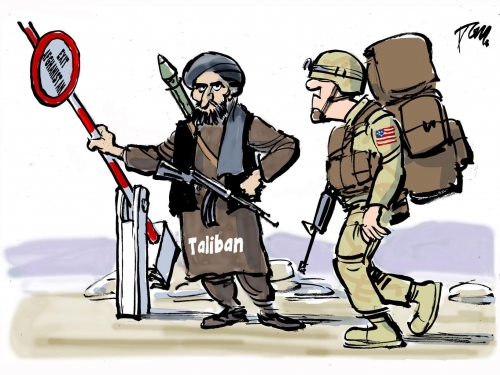
Et puis vient la fuite honteuse des États-Unis d'Afghanistan, alors qu'après 20 ans d'occupation brutale, les Américains n'ont même pas eu le temps d'emballer correctement leurs affaires (y compris leurs équipements militaires) et de renvoyer décemment leurs collaborateurs. Vers la fin, Biden tire un missile sur une voiture avec des enfants et s'en vante encore. Même Psaki a pâli devant les absurdités qu'elle a dû exprimer. L'Afghanistan est un embarras total pour l'Amérique.
Et dans la foulée, pour montrer qu'il est encore "wow", le pathétique et sénile Joe proclame l'axe anglo-saxon AUKUS, en scellant des traités avec l'Australie et en rayant d'un trait de plume les fournitures militaires françaises et italiennes (d'ailleurs, on l'oublie souvent) sur lesquelles Paris et Rome comptaient beaucoup, il détruit ainsi la cohésion de l'OTAN. En réponse, le rappel sans précédent de l'ambassadeur de France à Washington s'ensuivit. Si l'UE comprend l'enjeu de tout cela, c'est que les autorités américaines ont tout simplement perdu la tête.
Voyons maintenant ce qui se passe aux États-Unis mêmes.
Tout d'abord, Biden agit dans un contexte où l'on sait que la moitié de la population le déteste (pour une élection volée et une dictature libérale intolérante) et que tout ce qu'il fait est accueilli avec hostilité. Et dès qu'il commet une erreur - comme en Afghanistan et en Australie, sans parler de la situation totalement foireuse avec les migrants à la frontière sud des États-Unis, non seulement il commet une faute, mais il se fourvoie de manière répétée et démontrable - ses adversaires s'en emparent immédiatement, la font exploser, et commencent déjà à préparer la destitution.
Mais c'est la moitié du problème. Les mondialistes eux-mêmes qui soutiennent Biden sont divisés en droitiers et gauchistes, en faucons néoconservateurs et en ultra-démocrates avec un programme d'idéologie LGBT et de "marxisme culturel". Les néoconservateurs sont furieux du retrait de l'Afghanistan et des promesses de M. Biden de retirer les troupes du Moyen-Orient, en particulier de la Syrie et de l'Irak. En plus de sa lâcheté flagrante en Ukraine, Biden a déjà fait de son mieux pour s'aliéner la moitié de l'élite qui le soutient - les faucons.
Il semblerait que ce soit la gauche mondialiste qui devrait se réjouir. Oui, ils ont été globalement indulgents envers le retrait des troupes d'Afghanistan, mais personne aux États-Unis n'ose justifier la manière dont cela a été fait.
Mais Biden s'est ensuite souvenu des néoconservateurs et a créé, pour les amadouer, une nouvelle alliance stratégique anglo-saxonne, AUKUS (Australie, Royaume-Uni, États-Unis), écartant sans ménagement l'Europe. Il le fait sous l'égide de la guerre imminente avec la Chine dans le Pacifique. C'est là que les mondialistes de gauche se sont indignés. L'UE n'a rien contre la Chine du tout, et les mondialistes de gauche aux États-Unis essaient même d'utiliser le décollage économique de la Chine dans leurs stratégies. Pourtant, Biden l'ignore et crée AUKUS. Un tel coup porté à l'OTAN, avec en toile de fond le renforcement de la souveraineté de la Russie et du même Cathay, l'indépendance croissante de la Turquie, de l'Iran, du Pakistan, ainsi que de certains pays arabes et africains (une série de coups d'État en Afrique est également un phénomène très intéressant, nécessitant une évaluation géopolitique) - n'aboutit qu'à un affaiblissement brutal de l'élite libérale mondiale, divisée sous leurs yeux le long de la ligne - Anglo-Saxons/Européens et autres "alliés" oubliés.
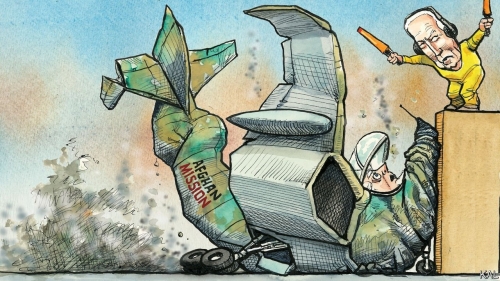
Biden a déjà réussi à frustrer la droite et la gauche mondialistes de cette manière, au milieu d'un bras de fer incessant avec les Trumpistes, qui se sont retrouvés dans une position d'opposition fermement réprimée. Lorsque Biden joue les faucons et se rapproche des néocons, il porte un coup au CFR (les mondialistes de gauche). Quand, au contraire, il essaie d'être une colombe, les mondialistes de droite entrent dans une colère noire. Si Joe Biden n'est pas un parfait perdant dans cette situation, alors qu'est-il ?
Cette situation est unique. Jamais, au cours des dernières décennies, la politique américaine n'a été aussi contradictoire, incohérente et carrément vouée à l'échec. C'est la chose la plus importante à retenir. L'Amérique est plus faible que jamais. Et c'est ce dont nous devons tirer parti. Trump s'est attelé à retirer la mondialisation de l'ordre du jour et à se concentrer sur les questions américaines, de manière consciente et responsable. Et il a négocié durement sur chaque question avec les représentants de la multipolarité croissante. Biden, paradoxalement, s'est révélé encore plus utile aux pôles multipolaires - il est tout simplement en train de détruire rapidement l'Amérique, et plus le mondialisme agonise, plus l'humanité voit clairement la faiblesse de quelqu'un qui prétendait encore récemment être le leader incontesté. Pour être réaliste (c'est-à-dire un peu cynique), mieux vaut un ennemi faible et impuissant comme Biden qu'un partenaire rationnel et conscient de lui-même comme Trump. Bien sûr, Biden est le mal absolu et un échec épique pour les États-Unis. Mais pour tous les autres... eh bien, eh bien, eh bien. Il y a quelque chose que nous commençons à aimer chez le vieux Joe...
C'est ce dont la Russie devrait profiter activement en ce moment. Le déclin rapide de l'hégémonie mondiale américaine libère de vastes possibilités dans le monde entier - des territoires, des pays, des nations, des civilisations entières. Par inertie, certains pourraient craindre l'alliance anglo-saxonne, en disant que la Grande-Bretagne revient, qu'ils vont maintenant s'allier aux États-Unis et aux pays du Commonwealth et restaurer leur emprise coloniale. (Nous parlerons du projet QUAD, plus sérieux, dans un autre article.) Qui va le restaurer ? La Grande-Bretagne n'est plus un véritable sujet de l'historie en cours depuis longtemps. Il n'y a pas grand-chose à dire sur l'Australie. D'ailleurs, la présence financière et même démographique de la Chine dans le Pacifique est déjà un facteur gigantesque aujourd'hui. L'hégémonie se réduit et recule partout. Il y a là une chance pour un grand projet continental de Lisbonne à Vladivostok (dans l'esprit de Thiriart et de Poutine), pour une alliance eurasienne russo-chinoise, pour un nouveau cycle dans les relations entre la Russie et le monde islamique, et pour une avancée en Afrique et en Amérique latine.
L'Amérique est en recul. Nous devons passer à l'offensive.
Cela nécessite une stratégie, une détermination, une volonté, une concentration des forces. Et ce qui est essentiel, c'est que cela nécessite une idéologie. La grande géopolitique exige de grandes idées. À l'heure actuelle - tant qu'il y aura un idiot au pouvoir aux États-Unis - la Russie a une chance historique non seulement de rendre la multipolarité irréversible, mais aussi d'étendre de manière spectaculaire son influence à l'échelle mondiale. L'hégémonie disparaît. Oui, c'est un dragon blessé, et il peut encore frapper fort et douloureusement. Mais il est à l'agonie. Nous devons donc faire attention aux douleurs fantômes de l'impérialisme, mais nous devons aussi garder la tête haute. Nous devons nous préparer à une contre-offensive. Tant que les choses sont telles qu'elles sont, c'est notre chance historique. Ce serait un crime de le manquer. Notre Empire est tombé en 1991. Aujourd'hui, c'est leur tour. Et il est de notre devoir de revenir dans l'histoire en tant qu'entité géopolitique pleinement souveraine et indépendante.
tg-Nezigar (@russica2)
16:38 Publié dans Actualité, Géopolitique | Lien permanent | Commentaires (0) | Tags : joe biden, actualité, géopolitique, politique internationale, états-unis, russie, multipolarité, alexandre douguine | | del.icio.us | | Digg | Facebook
Gifle anglo-saxonne à Macron et solitude géopolitique de la France
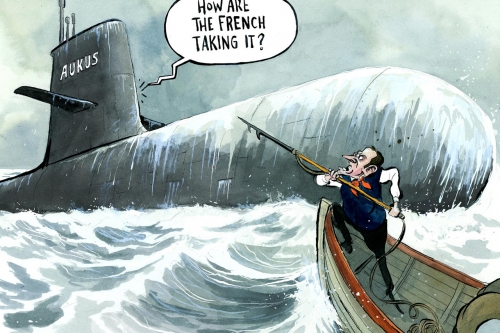
Gifle anglo-saxonne à Macron et solitude géopolitique de la France
Ex: http://www.elespiadigital.com/
La France subit les conséquences de sa plus grande défaite en politique étrangère depuis un quart de siècle, une défaite qui pourrait affecter la campagne électorale de Macron. Nous parlons du refus de l'Australie d'honorer le plus gros contrat avec la France ("le contrat du siècle", comme l'ont appelé les médias français) pour la construction de 12 nouveaux sous-marins de classe "Attack", qui a été finalement signé, après de longues et difficiles négociations, mais s'est retrouvé annulé en 48 heures au bénéfice des États-Unis et du Royaume-Uni. L'Australie a brusquement changé d'avis et a préféré les États-Unis à la France.
Dès le processus de négociation, la France, représentée par la société Naval Group, a assumé des coûts importants dans le projet, répondant ainsi aux souhaits des Australiens, mais la société américaine Lockheed Martin, qui a finalement obtenu le contrat, n'a reçu aucune demande de l'Australie. Le contrat perdu par la France s'élevait à 90 milliards de dollars, mais le montant du contrat avec la Grande-Bretagne et/ou les États-Unis est inconnu. Apparemment, il ne s'agit pas d'argent, mais de géopolitique.
Aujourd'hui, les Français commentent ce qui s'est passé en termes de "faux amis", de "coups de poignard dans le dos", de "coup de Trafalgar", en référence à la défaite de la France lors de la bataille de Trafalgar face à la Grande-Bretagne en 1805. Macron a même rappelé les ambassadeurs français en Australie et aux États-Unis pour des consultations afin de montrer son extrême ressentiment.
Le président français Macron a reçu une gifle de la part de l'alliance américano-britannique, déjà la deuxième ces dernières années, si l'on se souvient que lors d'une réunion dans la rue, un jeune homme a soudainement donné un coup de poing à Macron. L'incident a ensuite été étouffé, mais aujourd'hui, Macron se retrouve dans une position des plus humiliantes. Pour la culture politique française, compte tenu de son ambition, c'est prohibitif et douloureux.
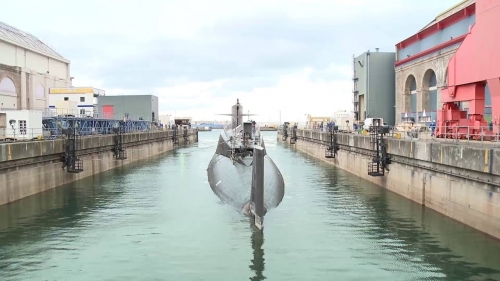
Le fait est que Macron a beaucoup investi dans ces négociations avec l'Australie : argent, temps, émotions, énergie. Il mettait tout à son actif et espérait passer triomphalement les élections. Depuis 2019, la commune de Cherbourg-en-Cotentin, où se trouve la base navale, accueille une partie du projet. Une école bilingue y a déjà été construite pour les enfants des Australiens venus s'entraîner sur la base, et deux artistes australiens ont été chargés de peindre le mur du poste de police avec des motifs aborigènes australiens.
Aujourd'hui, non seulement tous ces efforts ont été vains, mais les habitants de la commune sont privés du revenu attendu. Pour eux, cette situation, selon les médias français, est un séisme socio-économique. Macron est désormais perçu comme un homme politique faible, incapable de tenir ses promesses et de protéger ses citoyens et les intérêts nationaux de la France. Il a été humilié devant le monde entier, de surcroît d'une manière assez rude.
Les États-Unis sont convaincus que cela renforcera les arguments des adversaires de Macron et lui créera des problèmes, même si cela n'affectera pas le résultat de l'élection. Il est vrai que les Français vont désormais voter non pas pour les triomphalistes, mais pour les défaitistes. Maintenant, personne ne se souviendra que l'accord avec l'Australie a été élaboré par le prédécesseur de Macron, Hollande.
Le contrat a connu des difficultés, mais M. Macron a rencontré personnellement le Premier ministre australien Scott Morrison après le sommet du G7 à Londres, et les médias français ont ensuite écrit que "le contrat du siècle avait été sauvé". Macron aurait dû avoir un triomphe et aura en fin de compte une défaite.
On peut dire que la France a renoué avec le boomerang des Mistral. C'est elle qui a annulé le contrat avec la Russie pour les porte-hélicoptères déjà payés et construits. Cela a également été fait à la demande des États-Unis, mais il est incompréhensible que l'histoire n'ait rien appris aux Français. Quelle raison avaient-ils de croire que la Grande-Bretagne permettrait de telles actions au bénéfice de la France dans son fief ? Surtout si l'on considère qu'après le Brexit, les relations déjà difficiles entre la France et la Grande-Bretagne se sont encore détériorées.
Cette situation est particulièrement offensante pour Macron parce qu'il avait initialement soutenu les États-Unis contre le gazoduc germano-russe Nord Stream 2, ce qui a été fait de manière plus douce, sans pression polonaise, mais de manière diplomatique et sans équivoque. Macron a soutenu la Grande-Bretagne dans l'affaire des Skripals, dans le scandale du dopage, dans l'histoire de l'empoisonnement de Navalny, dans le problème de l'Ukraine. La France a été à l'avant-garde des alliés anglo-saxons sur des questions politiques de grande importance pour les États-Unis en Europe de l'Est.
Pour Macron, qui a servilement joué les utilités, la double souffrance n'est pas seulement le refus de l'Australie en soi, mais la façon dont il a été roulé dans la farine. En deux jours seulement, les fruits à long terme des efforts français ont complètement disparu. Dans le même temps, certains médias et partis politiques australiens vantent les mérites de la France.
La France aurait dû comprendre qu'elle ne pouvait pas prévenir et neutraliser les risques politiques dans ce contrat. Il ne s'agit pas d'argent, ou plutôt, il ne s'agit pas seulement d'argent. Nous parlons de géopolitique majeure, plus précisément de l'influence factuelle de la France dans la région Indo-Pacifique, qui est inacceptable pour la Grande-Bretagne et les États-Unis.
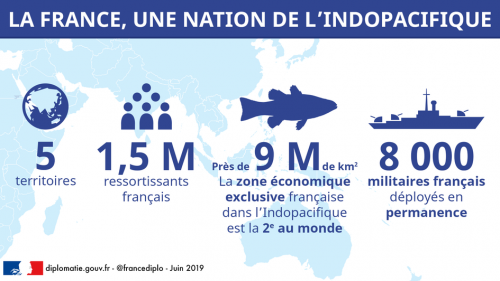
En effet, selon la stratégie française dans les océans Indien et Pacifique, c'est là que se trouve 93% de la zone économique exclusive de la France. Cette zone abrite 1,5 million de citoyens français et 8 000 soldats français. La France revendique le statut de puissance non seulement européenne mais aussi africaine. Selon les experts, individuellement, tous les territoires de la présence française en Afrique n'ont pas de poids, mais tous ensemble, ils en ont.
Le problème est que l'Australie participe à une coalition américano-britannique contre la Chine, tout en maintenant des liens avec la France. L'échec de l'accord sur les sous-marins n'affectera pas ces liens. Les deux pays n'ont aucun intérêt à ce que les relations se détériorent. Mais la position de la France devient maintenant très difficile.
La France a toujours revendiqué une politique indépendante, tout en reconnaissant que c'était une illusion, étant donné son inclusion dans la sphère d'influence américaine. Washington prend en charge ces ambitions françaises et permet même parfois de les satisfaire dans une certaine mesure. Mais la France ne s'est jamais trop laissée aller et a bien compris sa place et son rôle dans le monde. Aujourd'hui, la France se retrouve non pas isolée, mais seule.
Son scepticisme (ndlr: germanophobe et beneluxophobe, hostilité rabique et haineuse à l'égard des "Boches de l'Est et du Nord", ainsi qu'aux "rats hollandais" selon Edith Cresson) à l'égard de Nord Stream 2 n'a pas renforcé sa position vis-à-vis de l'Allemagne. Avec la Russie aussi, il n'y a pas la liberté de manœuvre qui serait souhaitable pour Paris: Moscou n'oubliera pas tous les coups de poignard français. La Chine tient également compte (et rancune) de la volonté française de s'imposer en participant à des alliances anti-chinoises. Les relations avec la Grande-Bretagne sont compliquées; sans les États-Unis, elles ne sont pas réglementées. Aujourd'hui, les États-Unis ont fait preuve de mépris envers la France, sans se soucier de "sauver la face" du président français (qui se retrouve gros-Jean comme devant).
Dans sa hâte ambitieuse, la France s'est soudainement retrouvée seule. En même temps, elle a un conflit avec la Turquie, qu'elle ne peut pas résoudre sans les États-Unis et la Grande-Bretagne. Quel était l'intérêt de s'engager dans une relation sur une question majeure d'importance militaire et géopolitique dans une sphère complètement contrôlée par les Anglo-Saxons ?
Sur quoi étaient fondés les espoirs de succès et de vigilance passive des États-Unis et de la Grande-Bretagne - sur le fait qu'en échange d'une rhétorique contre la Russie et la Chine, ils permettraient à la France de renforcer son budget naval et de continuer à accumuler du pouvoir géopolitique ? La France avait toujours fait preuve jadis de la plus grande rationalité et du plus grand pragmatisme dans les négociations. Qu'est-il arrivé à la diplomatie française sous la misérable houlette du banquier Macron ?
D'une manière ou d'une autre, la France a subi une défaite écrasante en matière de politique étrangère, et il n'y a aucun pays qui n'en profitera pas d'une manière ou d'une autre. Cela se traduira par de nombreuses petites décisions et étapes, mais toutes seront très sensibles pour la France. Quelque part, les intérêts de la France seront ignorés plus ouvertement qu'auparavant, quelque part, des conditions plus strictes lui seront proposées.
La France doit sortir de sa solitude en prenant des mesures décisives à l'égard des adversaires des États-Unis et de la Grande-Bretagne, mais elle n'est pas libre pour de telles actions. Les États-Unis comprennent que Macron s'énerve, souffle et puis se calmera. La France est trop dépendante des États-Unis pour se permettre une opposition même minime.
Mais dans l'UE, la France devra redorer son blason. La question est de savoir si l'Allemagne laissera à la France l'espace nécessaire après tout ce qui s'est passé. Quoi qu'il en soit, les relations entre la France et les États-Unis ont tourné au vinaigre et, connaissant la rancœur des Français, il ne fait aucun doute que Macron ne l'oubliera pas et ne pardonnera pas. Il n'osera pas se venger des États-Unis, mais avec Londres, Paris sera désormais encore plus à couteaux tirés.
La Russie et la Chine regarderont avec intérêt Macron soigner une autre blessure, mais il aura encore une chance de se rétablir. La France cherchera un motif de vengeance. Les boomerangs d'Australie reviendront sur Londres.
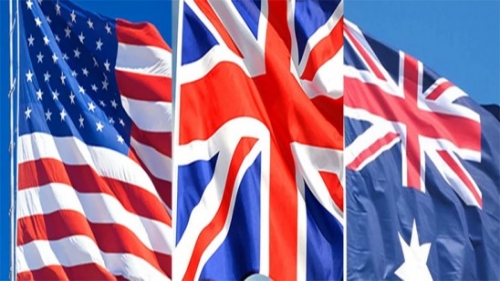
Analyse : Une nouvelle Triple Alliance est-elle en gestation ?
Vladimir Terekhov*
L'inauguration de l'AUKUS, une nouvelle configuration géopolitique comprenant l'Australie, le Royaume-Uni et les États-Unis (l'acronyme vient des lettres initiales des pays participants), a été l'un des développements les plus remarquables de la politique mondiale de ces dernières semaines.
Pour l'instant, il est difficile d'évaluer la nature d'une telle démarche. Il ne s'agit vraisemblablement pas d'un nouveau bloc militaire et politique, car les trois nations sont déjà liées par des engagements de défense mutuelle de longue date, un fait que la Maison Blanche n'a pas hésité à mentionner dans sa déclaration à ce sujet. La dernière phrase de ce document sur ces engagements indiquait notamment : "Nous nous engageons à nouveau dans cette vision".
À l'exception du paragraphe citant les plans visant à fournir huit sous-marins à l'Australie, le document est extrêmement médiocre et rappelle les discours de Mikhaïl Gorbatchev, toujours prêt à "intensifier et approfondir" ce qu'il juge nécessaire. Selon la déclaration, l'AUKUS est créé pour "renforcer le partenariat de sécurité trilatéral".
Toutefois, si l'objectif principal de ce pacte est de faire de l'Australie la première puissance régionale capable de contenir la Chine, cette démarche ne fait qu'ajouter à la confusion entourant la position politique du gouvernement australien vis-à-vis de la Chine, qui a presque toujours semblé être un désastre auto-infligé. Si cette hypothèse est vraie, ce cours commence à avoir l'air carrément suicidaire. La Chine a déjà prévenu que l'acquisition par l'Australie d'une flotte de sous-marins nucléaires pourrait faire de ce pays une cible pour une attaque nucléaire chinoise.
Toutefois, dans son ensemble, le projet AUKUS annoncé donne l'impression d'être improvisé et mal conçu, ce qui reflète son développement hâtif et, apparemment, les efforts déployés pour le dissimuler (aux concurrents ?). En outre, certains pensent qu'AUKUS pourrait avoir un impact négatif sur l'initiative QUAD, un autre projet que ses participants ont désespérément tenté de sauver de 15 ans d'oubli au Japon, qui ne savait apparemment rien du développement d'AUKUS. Plus important encore, l'Inde ne l'a pas fait non plus, ce qui signifie que la moitié des membres de QUAD ont été laissés dans l'ignorance.
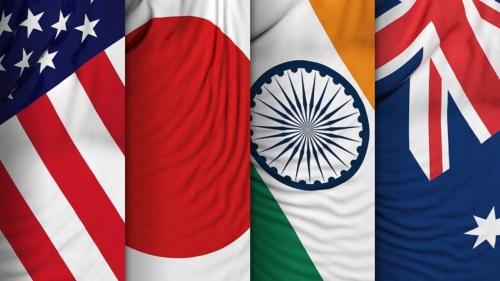
Jusqu'à présent, il semble que la principale raison derrière AUKUS était l'argent: ou, pour être précis, une somme forfaitaire exorbitante de 56 milliards d'euros, que l'Australie, un pays anglo-saxon, a "pour une raison ou une autre" décidé de donner en 2017 à des concurrents du monde anglo-saxon, les Français. À l'époque, la France a remporté un appel d'offres (les principaux concurrents étaient les Japonais) pour la construction de 12 sous-marins modernes à moteur diesel. Cette somme couvre non seulement les coûts de construction des sous-marins eux-mêmes, mais aussi le développement des infrastructures et la formation des équipages.
Il semble que l'Australie ait "reçu un ordre d'en haut", un entrepreneur de la défense d'un autre pays anglo-saxon, à savoir les États-Unis. "Vous en aurez plus pour votre argent. Vous aurez nos sous-marins à propulsion nucléaire". Mais qu'en est-il des appels d'offres "fondés sur des règles" ? La réponse est très simple: les "règles" sont un concept que les autres doivent respecter, pas nous.
Il n'est pas étonnant que le ministre français des affaires étrangères, Jean-Yves Le Drian, ait été furieux après avoir appris la formation de l'AUKUS et son objectif (il a été tenu secret pour les principaux alliés). Il y a une explication tout à fait naturelle (et pas seulement sous-marine) à tout cela. La première réunion des ministres des affaires étrangères et de la défense français et australiens (le "format 2 + 2") vient d'avoir lieu (le 30 août de cette année). Il s'est conclu par la déclaration d'un "partenariat stratégique renforcé".
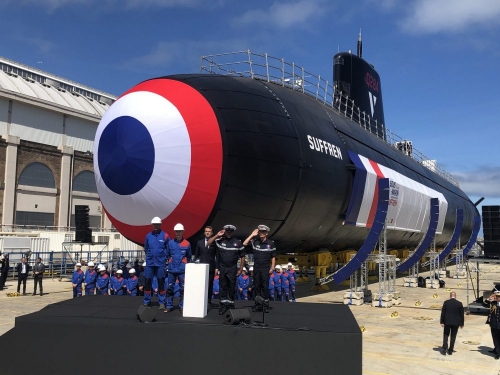
En d'autres termes, les relations bilatérales se déroulent sans encombre selon les grandes lignes tracées lors de la visite du président français Emmanuel Macron en Australie en mai 2018. Jean-Yves Le Drian lui-même a été directement impliqué dans le succès de l'appel d'offres susmentionné. Et voilà "le coup de poignard dans le dos". Il semble que le gouvernement de Scott Morrison était de connivence avec ses "partenaires stratégiques" au moment même où ils négociaient.
Quelle trahison, l'enfer de la politique étrangère !
La réponse française a été sévère, Paris rappelant ses ambassadeurs aux États-Unis (un geste sans précédent dans les relations diplomatiques entre alliés de l'OTAN) et en Australie. Pendant ce temps, le Royaume-Uni a échappé à la colère de la France, cette dernière estimant que Londres n'avait fait que "suivre aveuglément" les autres participants à l'AUKUS ("que peut-on attendre d'autre de ces simplets, vous savez?").
Compte tenu de la manière dont le parlement britannique a débattu de la question de la participation de la Grande-Bretagne à ce projet, Londres semble avoir adhéré au pacte plus ou moins dans ce sens. Apparemment, le processus de décision au Royaume-Uni est aussi chaotique qu'à Washington.
À quoi ressemble la politique chinoise de Londres? D'une part, plusieurs navires de la Royal Navy, menés par le porte-avions HMS Queen Elizabeth, viennent d'arriver au Japon pour participer à des exercices multilatéraux (avec un agenda anti-chinois évident) dans la région d'Okinawa. Pendant ce temps, Londres pointe du doigt Pékin.
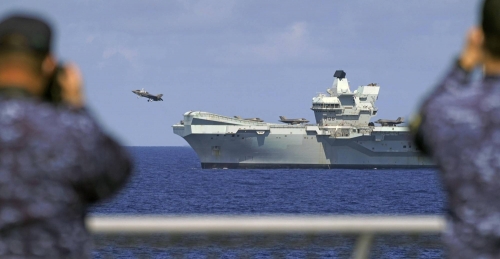
À cet égard, il convient de noter qu'Elizabeth "Liz" Truss, qui supervisait auparavant le commerce international, a été nommée ministre britannique des affaires étrangères. Elle a notamment mis en œuvre le volet commercial et économique de la politique globale du Royaume-Uni consistant à "s'incliner" vers la région indo-pacifique. Au demeurant, il est entendu que dans sa précédente publication, Elizabeth Truss préconisait le développement des relations avec Moscou.
Mais, dans l'ensemble, il semble que le projet AUKUS ait été développé dans la précipitation, sans tenir compte des conséquences possibles d'un projet aussi mal conçu. Les autorités responsables ont-elles vraiment été prises par surprise et n'ont-elles pas saisi les ramifications évidentes que le projet impliquait ? Car de tels projets ont tendance à se développer selon leur logique interne, ce qui surprend leurs auteurs.
En même temps, définir AUKUS comme une nouvelle "Triple Alliance" ravive quelques souvenirs désagréables en termes d'histoire. C'est la signature secrète de la "Triple Alliance" de 1882 entre l'Allemagne, l'Autriche-Hongrie et l'Italie qui s'est avérée être un jalon historique, une date qui a marqué le début du somnambulisme de dirigeants européens qui les ont conduit inexorablement vers la Première Guerre mondiale, qui a entraîné de très graves conséquences pour l'humanité dans son ensemble, tant pour les vainqueurs que pour les vaincus.
Quant à la Russie, s'il ne faut pas exagérer l'importance d'AUKUS, le projet doit être analysé, car les déclarations écrites et orales ne suffisent pas à apporter beaucoup de clarté. Nous avons besoin d'au moins quelques détails qui n'apparaissent nulle part.
Du point de vue le plus élémentaire, ces événements reflètent l'urgence croissante de renforcer l'alliance sino-russe qui (ce point doit être souligné) ne doit être dirigée contre personne. En d'autres termes, il doit être entièrement défensif.
Entre-temps, il est nécessaire de chercher à établir des contacts avec les factions américaines qui favorisent la résolution des problèmes intérieurs (la question clé ici est probablement de contrôler la situation à l'intérieur du pays), de diminuer l'implication de Washington dans les conflits de politique étrangère dans le monde, et de forger des liens avec la Russie et la Chine. Ces pays ne sont pas intéressés par l'effondrement de cette puissance mondiale encore prédominante. La question de l'arsenal nucléaire américain et du contrôle des armements constitue à elle seule un énorme problème.
Il est nécessaire de rivaliser pour l'influence en Allemagne (avec la France comme concurrent), en Inde et même au Japon. La Russie et la Chine ont leurs propres pierres d'achoppement dans leurs relations avec chacune de ces puissances. Mais il existe des ouvertures qui ne semblent pas totalement déraisonnables. Cela dit, Moscou et Pékin devront faire preuve de souplesse et de patience dans leurs relations avec ces États.
* Expert ès-questions de l'aire Asie-Pacifique.
00:21 Publié dans Actualité, Affaires européennes, Géopolitique | Lien permanent | Commentaires (0) | Tags : aukus, géopolitique, politique internationale, france, europe, affaires européennes, aire indo-pacifique, océan pacifique | | del.icio.us | | Digg | Facebook
L'affaire des sous-marins australiens: We All Live in a "Biden" Submarine
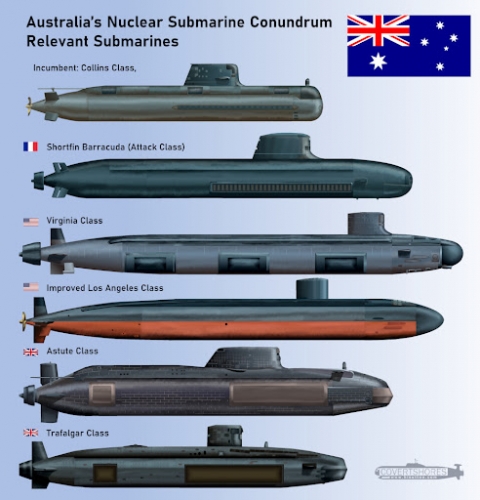
Café Noir N.34
L'affaire des sous-marins australiens: We All Live in a "Biden" Submarine
00:06 Publié dans Actualité, Affaires européennes, Géopolitique | Lien permanent | Commentaires (0) | Tags : europe, affaires européennes, sous-marins, aukus, australie, france, océan pacifique | | del.icio.us | | Digg | Facebook
dimanche, 26 septembre 2021
Russie, territoire libre de l'Europe
Russie, territoire libre de l'Europe
Par Claudio Mutti
Ex: https://www.eurasia-rivista.com/la-russia-territorio-libero-deuropa/#
L'année 2022 marquera à la fois le centenaire de la naissance et le trentième anniversaire de la mort de Jean Thiriart (1922-1922), un "géopoliticien militant" [1] dont ma revue Eurasia s'est occupé à plusieurs reprises, rendant accessible au public italien de nombreux articles publiés par lui dans des périodiques aujourd'hui pratiquement introuvables [2]. Défenseur acharné et infatigable, dans une Europe divisée entre le bloc atlantique et le bloc euro-soviétique, de la nécessité historique de "construire une grande Patrie: l'Europe unitaire, puissante, communautaire" [3], Thiriart en indique en 1964 les dimensions géographiques et démographiques: "Dans le cadre d'une géopolitique et d'une civilisation communes (...) l'Europe unitaire et communautaire s'étend de Brest à Bucarest. (...) Contre les 414 millions d'Européens, il y a 180 millions d'habitants des États-Unis et 210 millions d'habitants de l'URSS" [4].
Conçu comme une troisième force souveraine et armée, indépendante de Washington et de Moscou, l'"empire de 400 millions d'hommes", envisagé par Thiriart, devait établir une relation de coexistence avec l'URSS basée sur des conditions précises: "Une coexistence pacifique avec l'URSS ne sera pas possible tant que toutes nos provinces orientales n'auront pas retrouvé leur indépendance. La proximité pacifique avec l'URSS commencera le jour où l'URSS retournera dans les frontières de 1938. Mais pas avant: toute forme de coexistence qui pourrait impliquer la division de l'Europe n'est qu'une tromperie" [5].

Selon Thiriart, la coexistence pacifique entre l'Europe et l'URSS trouverait son aboutissement le plus logique dans "un axe Brest-Vladivostok". (...) Si l'URSS veut garder la Sibérie, elle doit faire la paix avec l'Europe, avec l'Europe de Brest à Bucarest, je le répète. L'URSS n'a pas, et aura de moins en moins, la force de garder Varsovie et Budapest d'une part et Tchita et Khabarovsk d'autre part. Elle devra choisir, ou risquer de tout perdre. (...) L'acier produit dans la Ruhr pourrait très bien servir à défendre Vladivostok" [6].
L'axe Brest-Vladivostok théorisé à l'époque par Thiriart semblait avoir davantage le sens d'un accord visant à définir les zones d'influence respectives de l'Europe unie et de l'URSS, car " dans la première moitié des années 1960, Thiriart raisonne encore en termes de géopolitique "verticale" [7], ce qui le conduit à penser selon une logique plus "eurafricaine" qu'"eurasienne", c'est-à-dire à esquisser une extension de l'Europe du Nord au Sud et non d'Est en Ouest" [8].
Le scénario esquissé en 1964 a été développé par Thiriart au cours des années suivantes, de sorte qu'en 1982, il pouvait le définir ainsi: "Nous ne devons plus raisonner ou spéculer en termes de conflit entre l'URSS et nous-mêmes, mais en termes de rapprochement puis d'unification. (...) Nous devons aider l'URSS à se compléter dans la grande dimension continentale. Cela triplera la population soviétique qui, pour cette raison même, ne pourra plus être une puissance à "caractère russe" dominant. (...) Ce sera la physique de l'histoire qui obligera l'URSS à chercher des rivages sûrs: Reykjavik, Dublin, Cadix, Casablanca. Au-delà de ces limites, l'URSS n'aura jamais la tranquillité d'esprit et devra vivre dans une préparation militaire incessante. Et coûteuse" [9].
À cette époque, la vision géopolitique de Thiriart était devenue ouvertement eurasiste: "L'empire euro-soviétique - lit-on dans l'un de ses articles de 1987 - s'inscrit dans la dimension eurasienne" [10]. Ce concept a été réitéré par lui dans le long discours qu'il a prononcé à Moscou trois mois avant sa mort: "L'Empire européen - disait-il - est, par postulat, eurasien" [11].

L'idée d'un "Empire euro-soviétique" a été formulée par Thiriart dans un livre écrit en 1984 et publié à titre posthume en 2018 (12). En 1984, il écrivit: "L'histoire donne aux Soviétiques l'héritage, le rôle, le destin qui, pendant un bref instant, avait été assigné au Reich: l'URSS est la principale puissance continentale en Europe, elle est le heartland des géopoliticiens. Mon discours actuel s'adresse aux chefs militaires de ce magnifique instrument qu'est l'armée soviétique, un instrument auquel manque une grande cause" [13]. Partant du constat que dans la mosaïque européenne composée d'États satellites des États-Unis et de l'URSS, le seul État véritablement indépendant, souverain et militairement fort était l'État soviétique, Thiriart attribuait à l'URSS un rôle similaire à ceux joués par le royaume de Sardaigne dans le processus d'unification italienne et par le royaume de Prusse dans le monde germanique ou, pour citer un parallèle historique plus ancien proposé par Thiriart lui-même, par le royaume de Macédoine en Grèce au IVe siècle avant J.-C.: "La situation de la Grèce en 350 av.J.C., morcelée en cités-états rivales et divisée entre les deux puissances de l'époque, la Perse et la Macédoine, présente une analogie évidente avec la situation de l'Europe occidentale actuelle, divisée en petits et faibles États territoriaux (Italie, France, Angleterre, Allemagne fédérale) soumis aux deux superpuissances" [14].
Par conséquent, tout comme il y avait un parti pro-macédonien à Athènes, il aurait été opportun de créer en Europe occidentale un parti révolutionnaire qui collaborerait avec l'Union soviétique; ce parti, en plus de se libérer des entraves idéologiques du dogmatisme marxiste incapacitant, aurait dû éviter toute tentation d'établir l'hégémonie russe sur l'Europe, sinon son entreprise aurait inévitablement échoué, tout comme la tentative de Napoléon d'établir l'hégémonie française sur le continent avait échoué. "Il ne s'agit pas, précise Thiriart, de préférer un protectorat russe à un protectorat américain. Non. Il s'agit de faire découvrir aux Soviétiques, qui n'en sont probablement pas conscients, le rôle qu'ils pourraient jouer: s'élargir en s'identifiant à l'ensemble de l'Europe. Tout comme la Prusse, en s'agrandissant, est devenue l'Empire allemand. L'URSS est la dernière puissance européenne indépendante disposant d'une force militaire importante. Il manque d'intelligence historique" [15].
* * *
L'URSS n'existe plus depuis trente ans. Pourtant, la Fédération de Russie, avec son immense territoire qui s'étend de la Crimée à Vladivostok, est aujourd'hui, comme l'URSS en 1984, le seul État véritablement indépendant et souverain dans une Europe qui est au contraire divisée en une multitude de petits États soumis à l'hégémonie de Washington.
En fait, le seul territoire européen qui n'est pas occupé par des bases militaires américaines ou de l'OTAN est le territoire russe. La seule armée qui n'est pas intégrée à une organisation militaire hégémonisée par les États-Unis d'Amérique est celle de la Fédération de Russie. La seule capitale européenne qui n'a pas à demander la permission aux États-Unis et à leur rendre des comptes est Moscou. Et même sur le plan spirituel et éthique, seule la Russie défend ces valeurs, héritage de la civilisation européenne authentique comme de toute civilisation normale, qui sont la cible de l'offensive massive déclenchée par les barbares de l'Occident "contre les fondements de toutes les religions du monde et contre le code génétique des civilisations, dans le but de renverser tous les obstacles sur la route du libéralisme". Ce sont les mots du ministre russe des affaires étrangères, Sergei Lavrov, qui, dans une analyse parue dans le magazine russe Russia in Global Affairs, a dénoncé le danger mortel de la "guerre menée contre le génome humain, contre toute éthique et contre la nature"[16].
Dans une Europe désormais incapable d'imaginer la possibilité et la légitimité d'un régime politique autre que le régime démocratique qui lui a été imposé dans les deux phases successives de 1945 et 1989, seule la classe dirigeante russe se montre consciente du fait que la démocratie n'est en aucun cas le seul ordre possible, valable indistinctement partout sur la terre, indépendamment des spécificités ethniques, culturelles et religieuses. Par exemple, commentant l'intervention américaine en Afghanistan, Sergueï Lavrov a déclaré : "La conclusion la plus importante est probablement que l'on ne doit apprendre à personne à vivre, et encore moins le forcer à vivre"; et il a rappelé les cas de l'Irak, de la Libye et de la Syrie, où "les Américains voulaient que chacun vive comme eux le voulaient" [17].
Quelques jours plus tôt, le 20 août 2021, Vladimir Poutine avait donné une semblable leçon de réalisme politique à une Europe acculée face au "Moloch de l'universel" - pour reprendre l'expression d'un philosophe admiré et lu par le président russe, Vissarion G. Belinskij (1811-1848). Poutine a déclaré : "Vous ne pouvez pas imposer votre mode de vie aux autres peuples, car ils ont leurs propres traditions. C'est la leçon à tirer de ce qui s'est passé en Afghanistan. Désormais, la norme sera le respect des différences, car on ne peut pas exporter la démocratie, qu'on le veuille ou non" [18].
La circonstance dans laquelle Poutine a prononcé ces mots, fut une conférence de presse avec la chancelière allemande, où il a pu rappeler à certains les paroles visionnaires de Dostoïevski: "L'Allemagne a besoin de nous plus que nous ne le pensons". Et il n'a pas besoin de nous seulement pour une alliance politique temporaire, mais pour une alliance éternelle. L'idée d'une Allemagne réunifiée est grande et majestueuse et plonge ses racines dans la nuit des temps. (...) Deux grands peuples, donc, sont destinés à changer la face de ce monde" [19].
Aujourd'hui, ce n'est pas seulement l'Allemagne qui a besoin de la Russie, mais toute l'Europe, qui est désormais proche du point critique que Dostoïevski avait prévu lorsqu'il prédisait que "toutes les grandes puissances de l'Europe finiront par être anéanties, pour la simple raison qu'elles seront usées et subverties par les tendances démocratiques" [20] et que la Russie n'aurait qu'à attendre "le moment où la civilisation européenne atteindra son dernier souffle, pour reprendre ses idéaux et ses objectifs" [21].
Il est certain que la situation actuelle n'incite pas la Russie à envisager, ne serait-ce que comme une possibilité théorique, d'assumer le rôle de puissance agrégatrice en Europe. Cependant, si Moscou manque encore de ce que Jean Thiriart appelait "l'intelligence historique" nécessaire pour concevoir le grand dessein de la libération de l'Europe de l'occupation américaine et de la construction d'une superpuissance impériale entre l'Atlantique et le Pacifique, les conditions objectives auxquelles la Russie devra faire face dans les prochaines années favoriseront probablement la naissance d'une telle intelligence.
NOTES:
[1] Cette définition (cfr. “Eurasia” 2/2018, p. 13) a été choisie pour donner un titre à l'édition italienne de l'unique biographie de Jean Thiriart: Yannick Sauveur, Jean Thiriart, il geopolitico militante, Edizioni all’insegna del Veltro, Parma 2021. Edition française: Qui suis-je ? Thiriart, Éditions Pardès, Grez-sur-Loing 2016. On lira aussi l'entretien que Sauveur a accordé à Robert Steuckers: Yannick Sauveur, biografo di Jean Thiriart, “Eurasia”, 4/2017, pp. 199-206.
[2] Praga, l’URSS e l’Europa, 1/2012; Criminale nocività del piccolo nazionalismo: Sud Tirolo e Cipro, 2/2013; La geopolitica, l’Impero, l’Europa, 1/2014; L’Europa fino a Vladivostok (prima parte), 4/2015; L’Europa fino agli Urali: un suicidio!, 2/2016; Intervista a Jean Thiriart (di Gene H. Hogberg), 2/2016; La NATO: strumento di servitù, 2/2017; Illusioni nazionaliste, 3/2017; L’Europa fino a Vladivostok (seconda parte), 4/2017; Esiste un “buon popolo” americano?, 1/2018; Carteggio col generale Perón, 1/2018; USA: un impero di mercanti, 2/2018; L’Occidente contro l’Europa, 3/2018; Dalla “Grande Europa” all’Europa più grande, 3/2018; L’imperialismo d’integrazione e gli Stati unitari, 4/2019; La stella polare della politica americana, 1/2019; Il vero pericolo tedesco, 2/2019; Il fallimento dell’impero britannico, 3/2019; Nazioni fittizie e nazionalismi illusori, 4/2019; Gli Arabi e l’Europa, 2/2020; Il mito europeo contro le utopie europee, 4/2020; La NATO: strumento di servitù, 1/2021; La pace americana: la pace dei cimiteri, 3/2021; La Russia in permanente stato d’assedio, 4/2021.
[3] Jean Thiriart, Un empire de 400 millions d’hommes: l’Europe, Bruxelles 1964. Trad. it. de Massimo Costanzo: Un impero di 400 milioni di uomini: l’Europa, Giovanni Volpe, Roma 1965, p. 19. Trad. it. de Giuseppe Spezzaferro: L’Europa: un impero di 400 milioni di uomini, Avatar, Dublino, 2011.
[4] Jean Thiriart, Un impero di 400 milioni di uomini: l’Europa, cit., pp. 17-18.
[5] Jean Thiriart, Un impero di 400 milioni di uomini: l’Europa, cit., p. 21.
[6] Jean Thiriart, Un impero di 400 milioni di uomini: l’Europa, cit., pp. 26-29.
[7] Sur les concepts de géopolitique "verticale" et de géopolitique "horizontale", voir les observations critiques développées par Carlo Terracciano en rapport avec la géopolitique "verticale" d'Alexandre Douguine: C. Terracciano, Europa-Russia-Eurasia: una geopolitica “orizzontale”, “Eurasia”, 2/2005, pp. 181-197.
[8] Lorenzo Disogra, L’Europa come rivoluzione. Pensiero e azione di Jean Thiriart, Préface de Franco Cardini, Edizioni all’insegna del Veltro, Parma 2020, p. 30.
[9] Jean Thiriart, Entretien accordé à Bernardo Gil Mugurza [rectius: Mugarza] (1982), in: AA. VV., Le prophète de la grande Europe, Jean Thiriart, Ars Magna 2018, p. 349.
[10] Jean Thiriart, La Turquie, la Méditerranée et l’Europe, “Conscience européenne”, n. 18, luglio 1987.
[11] Le long article L’Europe jusqu’à Vladivostok, diffusé en traduction russe par le périodique "Dyeïnn" puis publié en français dans le numéro 9 de “Nationalisme et République” en septembre 1992, est tiré du texte de la conférence de presse tenue par Thiriart à Moscou, le 18 août de la même année. La traduction italienne en est parue dans Eurasia: la première partie dans le n°4/2013 (pp. 177-183), la seconde partie dans le n° 4/2017 (pp. 131-145).
[12] Jean Thiriart, L’Empire euro-soviétique de Vladivostok à Dublin, Préface de Yannick Sauveur, Éditions de la Plus Grande Europe, Lyon-Bruxelles-Moscou 2018; trad. it. de C. Mutti: L’Impero euro-sovietico da Vladivostok a Dublino, Yannick Sauveur éditeur, Edizioni all’insegna del Veltro, Parma 2018.
[13] Jean Thiriart, L’Impero Euro-sovietico da Vladivostok a Dublino, cit., p. 204.
[14] Jean Thiriart, L’Impero Euro-sovietico da Vladivostok a Dublino, cit., p. 190.
[15] Jean Thiriart, L’Impero Euro-sovietico da Vladivostok a Dublino, cit., p. 191.
[16] L’Occidente sta conducendo una guerra contro tutte le religioni e il codice genetico umano, afferma il diplomatico russo, https://strategika51.org, 30 giugno 2021.
[17] Lavrov su campagna militare Usa in Afghanistan: “non insegnate a nessuno come vivere”, Sputnik Italia, 25 agosto 2021.
[18] ANSA, Mosca, 20 agosto 2021.
[19] F. Dostoevskij, Diary of a writer, London 1949, vol. II, pp. 912-913.
[20] F. Dostoevskij, Diary of a writer, cit., vol. I, p. 296.
[21] F. Dostoevskij, Kriticeskie stat’i, in Sobranie sočinenij, Pietroburgo, 1894-1895, vol. IX, p. 25.
09:47 Publié dans Actualité, Affaires européennes, Géopolitique | Lien permanent | Commentaires (0) | Tags : jean thiriart, géopolitique, politique internationale, europe, affaires européennes, russie, union soviétique | | del.icio.us | | Digg | Facebook
Précisions sur l'AUKUS
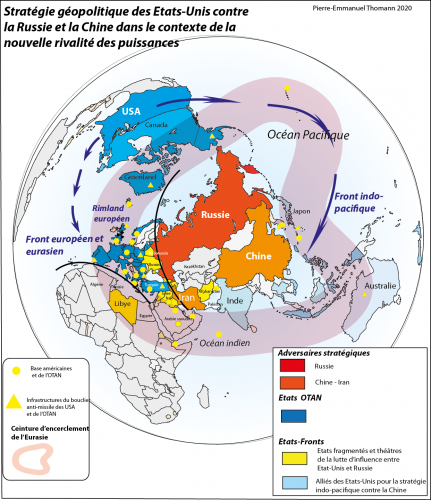
09:15 Publié dans Actualité, Affaires européennes, Géopolitique | Lien permanent | Commentaires (0) | Tags : géopolitique, affaires européennes, affaires asiatiques, europe, asie, aukus, australie, royaume-uni, états-unis, espace indo-pacifique, politique internationale | | del.icio.us | | Digg | Facebook
La revue de presse de CD - 26 septembre 2021

La revue de presse de CD
26 septembre 2021
ALLEMAGNE
Industrie 4.0 : les ambitions dévorantes de l’Allemagne
Avec le programme « Industrie 4.0 », l’État allemand soutient la numérisation et l’automatisation de ses chaines de production afin de renforcer la compétitivité de son industrie. Ce projet d’ampleur s’accompagne d’une offensive politique à l’échelle européenne, où Berlin propose de construire une « souveraineté numérique » face à la Chine et aux États-Unis. Cette stratégie sert pourtant d’avantage les intérêts de l’économie allemande que ceux de ses partenaires.
Le Vent Se Lève
https://lvsl.fr/la-numerisation-et-la-concurrence-entre-l...
CHINE
La longue marche des marques chinoises vers les marchés occidentaux
Les entreprises chinoises ont accentué leurs investissements sur les marchés internationaux ces dix dernières années. Malgré la crise mondiale engendrée par la pandémie de la Covid-19, les investissements directs étrangers (IDE) chinois continuent de se développer à un rythme stable. Selon les chiffres officiels récents, ces IDE chinois se sont élevés à 672,19 milliards de RMB (100,74 milliards de dollars) sur la période allant de janvier à juillet 2021, ce qui représente une hausse de 25,5 % en glissement annuel. Durant cette période, les investisseurs chinois ont réalisé des investissements directs non financiers au sein de 4 454 entreprises réparties dans 161 pays.
latribune.fr
https://www.latribune.fr/opinions/tribunes/la-longue-marc...
L’étrange querelle entre Soros et BlackRock à propos de la Chine
Une étrange guerre, par mots interposés, a éclaté ces derniers jours dans les pages des médias financiers entre le milliardaire George Soros, spécialiste des fonds spéculatifs et des révolutions de couleurs, et le gigantesque groupe d’investissement BlackRock. Le motif de cette dispute est la décision du PDG de BlackRock, Larry Fink, d’ouvrir le premier fonds commun de placement étranger en Chine, sans doute pour attirer l’épargne de la nouvelle population chinoise à revenu moyen.
Le Saker francophone
https://lesakerfrancophone.fr/letrange-querelle-entre-sor...
DÉSINFORMATION
Fdesouche et l’affaire du “fichier” : entretien avec Pierre Sautarel
Accusé par l’extrême gauche de fichage politique — accusations immédiatement relayées par des médias de premier ordre -, le site Fdesouche est de nouveau à la une de l’actualité. En cause : un tableau Excel, reprenant un certain nombre de données publiques sur des personnalités publiques. De quoi s’agit-il ? L’Ojim est allé demander des explications à son principal animateur, Pierre Sautarel, auquel nous donnons la parole ci-dessous.
OJIM
https://www.ojim.fr/fdesouche-et-laffaire-du-fichier-entr...
Ukraine : Zelensky bloque un site web d’opposition
En février, il y avait eu le cas de trois chaînes de télévision. Aujourd’hui, les sanctions imposées par le président Zelensky ont touché le site d’information « strana.ua ». Les juristes critiquent l’absence de base juridique.
les-crises.fr
https://www.les-crises.fr/ukraine-zelensky-bloque-un-site...
Comment le photographe Jonas Bendiksen a dupé « Visa pour l'image » pour dénoncer les fake news
Un reportage monté de toutes pièces dans une ville précisément connue pour sa production de « fake news » : la mise en abyme était osée. C’est pourtant l’entreprise insensée à laquelle un photographe norvégien s’est livré pour dénoncer les dangers de la désinformation. Son sujet a même été présenté au festival de photojournalisme Visa pour l’image… Et les professionnels du secteur n’y ont vu que du feu.
Marianne
https://www.marianne.net/culture/comment-le-photographe-j...
Déplacement à Marseille : l’Élysée encadre les journalistes et bride l’information
L’accréditation des journalistes pour couvrir un événement officiel est une pratique ancienne. Tout comme celle du « pool », qui consiste à autoriser la présence d’un nombre très réduit de journalistes, ensuite chargés de « partager » les éléments recueillis (sons, images…) avec leurs collègues des autres rédactions. Communiqué du SNJ-CGT.
Acrimed
https://www.acrimed.org/Deplacement-a-Marseille-l-Elysee-...
ÉTATS-UNIS
Briser l’Empire signifie rompre avec les Saoudiens
Dire que l’Arabie saoudite a été le pivot des objectifs de la politique étrangère américaine au Moyen-Orient et en Asie centrale est un euphémisme. Pendant plus de cinquante ans, les Saoudiens ont contribué à soutenir la politique étrangère américaine en exportant leur pétrole dans le monde entier et en ne recevant que des dollars en retour.
Le Saker francophone
https://lesakerfrancophone.fr/briser-lempire-signifie-rom...
FRANCE
Sous-marins australiens : une rupture liée à la Nouvelle-Calédonie?
Dans ce dossier de rupture de contrat des sous- marins australiens sous la pression de Washington et Londres, la France est doublement fragilisée. Elle tient le rôle de l’arroseur arrosé et surtout personne ne peut croire en sa volonté dans cette région d’assurer dans la continuité son rôle de puissance majeure. La nouvelle alliance anglo-saxonne doute de la solidité française.
Polémia
https://www.polemia.com/sous-marins-australiens-une-ruptu...
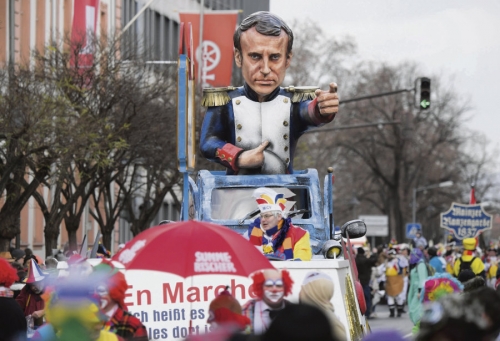
Start-up nation : Comment la « France-entreprise » de Macron est devenue un régime autoritaire
En devenant président, Emmanuel Macron a promis de transformer la France en une « start-up nation ». Mais en imitant le système hiérarchique des entreprises, son gouvernement est devenu profondément autoritaire, soumettant les institutions démocratiques à la tyrannie du patron.
Les-crises.fr
https://www.les-crises.fr/start-up-nation-comment-la-fran...
Drame chez LR ! La « droite » ne peut officiellement soutenir son candidat naturel, Macron
Les candidats de la droite s’alignent, de fait, pour un poste de Premier ministre d’un gouvernement Macron, déterminé par le score honorable d’une droite centriste au premier tour de l’élection. Un(e) chef de gouvernement LR succéderait, ainsi, en toute logique, à un premier Premier ministre LR qui en son temps a bien incarné la macronie ; nous parlons, bien évidemment, d’Édouard Philippe qui vient de renouveler son allégeance au candidat Macron.
Polemia
https://www.polemia.com/drame-chez-lr-la-droite-ne-peut-o...
GAFAM
ProtonMail mis sous pression par la France
L’État français a forcé l’entreprise ProtonMail à révéler l’adresse IP d’un militant écologique au nom de la lutte antiterroriste. Pour en comprendre l’importance, il faut rappeler qu’une adresse IP permet au gouvernement de remonter au domicile de l’internaute, brisant ainsi son anonymat.
Contrepoints
https://www.contrepoints.org/2021/09/18/405968-protonmail...
Impact environnemental du numérique : les internautes peu enclins à changer leurs habitudes
Cloud, vidéo à la demande, réseaux sociaux, webconférence, 5G, intelligence artificielle, blockchain, cryptomonnaies, Internet des objets… Ces technologies, outils et pratiques créent des opportunités de marché sans précédent pour les entreprises, et colonisent le quotidien des individus. Mais derrière ces évolutions « digitales » et « virtuelles » se cache un monde moins connu fait de serveurs, d’immenses bâtiments climatisés 24h/24, de câbles et autres relais qui consomment plus de 4 % de la consommation mondiale d’énergie primaire.
The Conversation
https://theconversation.com/impact-environnemental-du-num...
Grenouillages d’Abou Dhabi : E. Snowden appelle à la vigilance face à ExpressVPN
Souvent classée parmi les meilleurs fournisseurs de VPN, l’entreprise ExpressVPN a reconnu avoir été au courant – et ce dès le début de leur collaboration –, de la participation de l’un de ses cadres à un programme d’espionnage des Émirats arabes unis (EAU) employant des anciens agents du renseignement US. Malgré la condamnation dudit cadre par la justice américaine, ExpressVPN a déclaré lui maintenir sa confiance.
Perspectives med
https://www.perspectivesmed.com/grenouillages-dabou-dhabi...
GÉOPOLITIQUE
« Les États-Unis de Biden pensent d’abord aux intérêts américains… Et la France de Macron ? »
Une interview de Catherine Galactéros, géopolitilogue et directrice du cabinet Géopragma
Boulevard Voltaire
https://www.bvoltaire.fr/les-etats-unis-de-biden-pensent-...
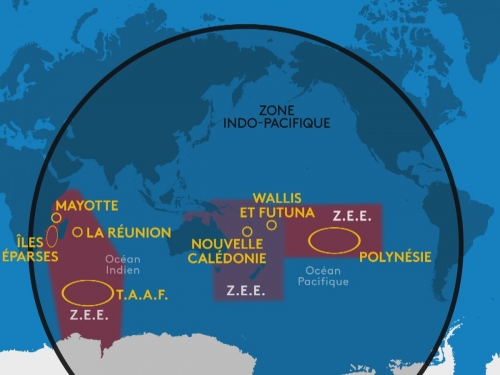
Le dilemme français de l’Indo-Pacifique
En mai 2018, lors d’une visite en Australie, Emmanuel Macron présente les contours de la stratégie indo-pacifique de la France. Il est alors question « d’espace inclusif et ouvert » et d’« Asie multipolaire ». Derrière le président de la République qui prononce son discours sur la base militaire de Garden Island, un hélicoptère d’attaque Tigre australien le regarde. Comme un sombre présage de l’avenir du partenariat stratégique passé entre Paris et Canberra dès 2012 : les Australiens ne sont pas satisfaits du félin à voilure tournante franco-allemand et ne se privent pas pour le répéter. Ses coûts d’exploitation seraient exorbitants, son taux de disponibilité faible. En janvier 2021, la nouvelle tombe : les Australiens remplaceront les Tigre par des Apache américains.
Géopragma
https://geopragma.fr/le-dilemme-francais-de-lindo-pacifiq...
ISRAËL
Le Mossad aurait abattu Mohsen Fakhrizadeh à l’aide d’un « robot tueur »
Le 27 novembre 2020, un assassinat revêtant une importance géopolitique majeure au Moyen-Orient s’est produit en Iran. Soutenu par les États-Unis, le Mossad, l’une des agences de renseignements israéliennes, a ôté la vie au scientifique nucléaire Mohsen Fakhrizadeh. Pour y parvenir, ils ont eu recours à une méthode qui risque de changer le visage de la guerre et de l’espionnage, rapporte le New York Times.
Le Siècle digital
https://siecledigital.fr/2021/09/21/iran-assassinat-arme-...

RÉFLEXION
Les voleurs de vélos : les Verts et « l’électromobilité »
Il y a écolo et écolo. La preuve dans cet article qui a le mérite de la clarté. Extrait : « Le vélo électrique est le symbole d’un double retournement technologiste : celui du vieux biclou, et celui de l’écologie. Cinquante ans après les premières manifs à vélo contre le tout-bagnole, la ministre de l’environnement Barbara Pompili, une Verte de Picardie, nous assure en effet qu’acheter un vélo électro-nucléaire, c’est ‘’choisir l’écologie’’. Ainsi Porsche choisit l’écologie en commercialisant un vélo à batterie lithium-uranium à 7 000 €. Ou comment faire de la bicyclette un engin de luxe, high tech, qui bousille la planète. Une tromperie que les industriels des années 70 n’auraient pas rêvé de voir propagée par les écologistes eux-mêmes. »
PMO
https://www.piecesetmaindoeuvre.com/IMG/pdf/voleurs_de_ve...
« La ligne politique d’une maison d’édition, c’est sa ligne éditoriale » – Entretien avec Thierry Discepolo
Thierry Discepolo appartient au collectif à l’origine des éditions Agone, qu’il a fondées en 1997 à partir de la revue éponyme lancée sept ans plus tôt à Marseille. Cette maison a contribué au renouveau du paysage intellectuel critique après la glaciation des années 1970-1980 dont nous parlait, lors d’un précédent entretien, Nicolas Vieillescazes des éditions Amsterdam. L’héritage des Lumières, l’histoire populaire ou encore la critique des médias sont les thèmes majeurs qui orientent leur catalogue et traduisent une ligne éditoriale attachée à donner des outils à un projet politique d’émancipation. Auteur de La Trahison des éditeurs, Thierry Discepolo livre également un portrait du monde de l’édition pris entre la logique du capital et les vicissitudes de l’indépendance.
Le Vent Se Lève
https://lvsl.fr/la-ligne-politique-dune-maison-dedition-c...
RUSSIE
Horizon 2036, ou la relance plébiscitaire du système politique russe
L’année 2021 marque-t-elle un durcissement de l’autoritarisme en Russie ? La condamnation d’Alexeï Navalny à deux ans et demi de prison et son incarcération ont été très sévèrement jugées en Occident.
Conflits
https://www.revueconflits.com/horizon-2036-ou-la-relance-...

SANTÉ
Ces ARS qui mettent au pas la médecine par temps de covid
Ah les Agences Régionales de Santé… Jusqu’alors risée de la profession, les voilà portées au rang de généraux de bataille par quelques inconscients. Cette confrérie de technocrates s’en est donné à cœur joie au cours de l’épidémie, la huitième depuis 1895. Ont-ils seulement conscience des précédentes ? Chacune d’elle a duré deux années et rien n’interdit de penser qu’il n’en sera pas de même pour celle-ci.
Contrepoints
https://www.contrepoints.org/2021/09/22/405873-ces-ars-qu...
TERRORISME
Livre – Terrorisme : les affres de la vengeance
Le terrorisme comme vengeance intégrale, tel est le fond de l’analyse profonde et stimulante de Myriam Benraad, un angle rarement utilisé. Pour comprendre les raisons de cette carence, il importe en premier lieu de souligner que la vengeance n’est pas nécessairement une violence. Lorsqu’elle l’est, encore faut-il identifier à quels types et à quelles catégories de violence elle se réfère exactement.
Conflits
https://www.revueconflits.com/livre-terrorisme-les-affres...
00:28 Publié dans Actualité, Affaires européennes | Lien permanent | Commentaires (0) | Tags : actualité, france, europe, affaires européennes, journaux, presse, médias | | del.icio.us | | Digg | Facebook