Connolly, Burnham, Orwell, & “Corner Table”
“In the torture scenes, he is merely melodramatic: he introduces those rather grotesque machines which used to appear in terror stories for boys.”
—V. S. Pritchett, The New Statesman [2], June 18, 1949
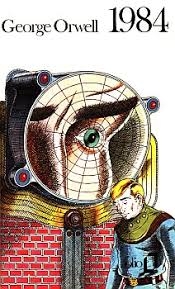
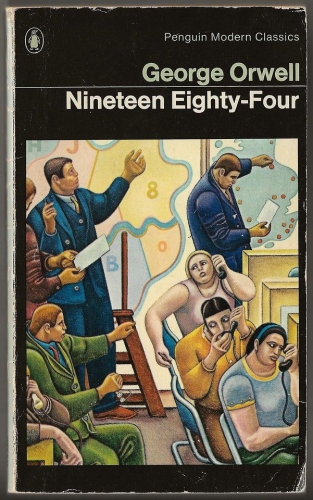
The torture section in Nineteen Eighty-Four[1] [3] was planned from the beginning, and intended to be the story’s core and culmination. The key influence here was James Burnham’s The Struggle for the World (discussed below), which George Orwell reviewed in March 1947, shortly before starting the first full longhand draft of the new novel. In Struggle, Burnham emphasized the likelihood of another World War within another few years, and probably even a war using the “atomic bomb.”
This found its way into Nineteen Eighty-Four, as did Burnham’s analysis of Communism (though Orwell didn’t call it that). Terror, torture, disinformation, humiliation: these are not unfortunate byproducts of Communist revolution, said Burnham, they are the system itself.
The original model for Nineteen Eighty-Four wasn’t as grim as that. It was frivolous, really, and written years and years before the Cold War was dreamt of. It was a little black comedy that used torture strictly for laughs. Titled “Year Nine,” Cyril Connolly dashed it off at the end of 1937.[2] [4] It appeared in The New Statesman in January 1938.
It’s a brief farce, less than two thousand words, yet in there are prefigured Big Brother, the Thought Police, Newspeak, and the Ministry of Love. To tell a brief story briefly: After happening upon a basement art exhibit, the narrator – an assembly-line envelope-flap-licker – is accused of thoughtcrime (approximately). He is arrested, severely tortured, and sentenced to excruciating execution.
Orwell was much impressed with it, and so were John Betjeman and others.[3] [5] Up to this point, Connolly was known mainly as an idler and failed novelist. Very soon, though, he published a memoir, Enemies of Promise, founded Horizon (“A Review of Literature & Art”), became editor of The Observer‘s book section (where he farmed out reviews to Orwell and Evelyn Waugh and Arthur Koestler), and was generally London’s number-one all-’round critic and litterateur.
From “Year Nine”:
As the hot breath of the tongs approached, many of us confessed involuntarily to grave peccadilloes. A man on my left screamed that he had stayed too long in the lavatory.
* * *
Our justice is swift: our trials are fair: hardly was the preliminary bone-breaking over than my case came up. I was tried by the secret censor’s tribunal in a pitchdark circular room. My silly old legs were no use to me now and I was allowed the privilege of wheeling myself in on a kind of invalid’s chair. In the darkness I could just see the aperture high up in the wall from whence I should be cross-examined . . .
Our narrator (not a Winston Smith type, more of a garrulous Connolly/O’Brien) is sentenced to be “cut open by a qualified surgeon in the presence of the State Augur.”
“You will be able to observe the operation, and if the Augur decides the entrails are favourable they will be put back. If not, not . . . For on this augury an important decision on foreign policy will be taken. Annexation or Annihilation? . . .
Yes, I have been treated with great kindness.[4] [6]
There is a cultural time-stamp on “Year Nine,” clearly visible. The Moscow Purge Trials were underway and widely known about, but Connolly pins the Stalinist outrages in his tale – torture, forced confessions, anonymous denunciations – upon a cartoonish pseudo-Nazi regime, complete with Stroop Traumas, Youngleaderboys, and a population in thrall to Our Leader. (Connolly hadn’t a political bone in his body, but he posed as a Fellow Traveler, that being comme il faut.)
Conversely, when Nineteen Eighty-Four came out in 1949, it too drew on the Moscow Trials, and no one questioned (least of all Pravda) that Orwell was depicting a Soviet-style police-state. This happened even though Orwell slyly denied that it was about Communism. You can see this in the novel’s own disclaimers, and in external press releases that author and publisher sent out.
A curious legacy of “Year Nine” is that its Punch-and-Judy brilliance shines through the surface narrative of Nineteen Eighty-Four, giving the torture scenes a lurid “vaudeville” feel. Orwell probably didn’t intend the scenes in the Ministry of Love (Miniluv) to be black comedy, but that’s what he got, from O’Brien’s jabberwocky speeches, all the way to the rats in the cage-mask. (“‘It was a common punishment in Imperial China,” said O’Brien as didactically as ever.’”)
Connolly/O’Brien is your emcee and Lord of Chaos in the Miniluv torture clinic. This is far from the standar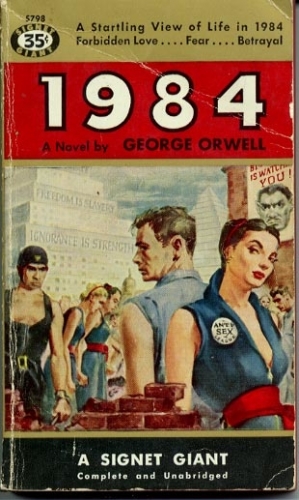 d crib-note interpretation of O’Brien (“zealous Party leader . . . brutally ugly”), but pray consider: a) Connolly was Orwell’s only acquaintance of note who came close to the novel’s description of O’Brien, physically and socially; b) if you bother to read O’Brien’s monologues in the torture clinic, you see he’s doing a kind of Doc Rockwell routine: lots of fast-talking nonsense about power and punishment, signifying nothing.
This is one reason why O’Brien fails as a villain. Villains must be monolithic. Here we have an Inner Party exemplar-cum-old Etonian who still boasts of his “antinomian tendencies” – a humorist and parodist, author of The Theory and Practice of Oligarchical Collectivism as well as “Where Engels Fears to Tread”;[5] [8] in short, a louche Fellow-Traveler-of-convenience, renowned for self-indulgence and amorality. And thus he fits right in with what O’Brien tells us about the Inner Party ethos (do read the monologues): someone who’s amoral, capricious, and power-hungry (and a potential sociopath, if O’Brien’s description of the Party’s lust for power is anything to go by).
* * *
If Orwell wanted to put Connolly out of his mind while working on Nineteen Eighty-Four, he couldn’t, because he was forever revising an essay-memoir about the school they went to together between 8 and 14. It was the most miserable time of life for young Eric Blair (for such he was). He had probably started this memoir in the early 1940s, and still had the unpublished typescript with him in London when he was playing with notes and abortive chapters for his projected novel in 1945 and 1946. And then he brought it with him to the Isle of Jura, Inner Hebrides, in the spring of 1947, where he finally began to handwrite the first draft of The Last Man in Europe (as he was then calling the Winston Smith novel). He also revised the memoir, sending a carbon to his publisher in late May. Then, in 1948, when he was laid up with TB in a hospital near Glasgow and struggling to rewrite the novel with his writing arm in a cast, he revised the memoir yet again. It wouldn’t be published in Great Britain until 1967.
The memoir was Cyril Connolly’s idea. Connolly had put his fond-but-unnerving school memories into Enemies of Promise (which made him famous), and suggested his old schoolmate Blair might do the same: a companion piece or “pendant” to Connolly’s sardonic memoir. So Blair/Orwell decided to do a Dickens about his time as an upper-middle-class poor boy at St. Cyprian’s, enduring six years of oppression, humiliation, and petty tortures. He attended the school on reduced fees (as the Headmaster’s wife reminded him loudly and often) because he was expected to win a scholarship to Eton, and so bring glory and honor to St. Cyprian’s. From age 11 onward, Young Blair was “crammed with learning as cynically as a goose is crammed for Christmas” (as he wrote), mainly Latin and Greek.
This is the nearest thing to an autobiography we ever got out of Orwell, and the disgusted, sulky, sharp-eyed loner we see in his essays and Winston Smith is thoroughly recognizable as the boy at St. Cyprian’s. To make himself seem even lonelier and more miserable – or perhaps for some other motive – he cut Cyril Connolly entirely out of story.
At one point in the memoir, Orwell pulls back and says he doesn’t mean to suggest his school was a kind of Dotheboys Hall. Then he marches off again and tells us about the filthy lavatories and disgusting food, and how he once saw a human turd floating on the surface of the local baths in Eastbourne. On finally leaving St. Cyprian’s – off to Eton, but first a term at Wellington – he looked to the future with despair. “[T]he future was dark. Failure, failure, failure – failure behind me, failure ahead of me . . .”
Orwell’s publisher and friends thought the memoir was just too embarrassing and self-pitying to publish. It would be bad for Orwell’s reputation, they said, and probably libelous. So the perennial work-in-progress didn’t see the light of day until Orwell was safely dead and Partisan Review in New York ran a slightly altered version in their September-October 1952 issue. It ran for 41 pages, called St. Cyprian’s “Crossgates,” and used Orwell’s title: “Such, Such Were the Joys.”[6] [9]
* * *
You sometimes hear that Orwell plagiarized from another dystopian story, usually one set many centuries in the future, with little or no resemblance to Orwell’s. In 2009, on Nineteen Eighty-Four‘s sixtieth anniversary of publication, Paul Owen in The Guardian tried to make the case that Orwell “pinched the plot” from Yevgeny (or Eugene) Zamyatin’s early-1920s novel, We.[7] [10] As evidence, Owen says that Orwell read Zamyatin’s book three years before Nineteen Eighty-Four was published (1949). This is a lie by misdirection. Orwell had been making notes and outlines since at least 1944, and finished his first draft in 1947. He first heard of Zamyatin’s book in 1943, failed to find a copy of the 1920s English translation published in New York,[8] [11] and finally settled for a French one, his review appearing in early 1946.[9] [12] Owen’s biggest claim is completely wrong: “that Orwell lifted that powerful ending – Winston’s complete, willing capitulation to the forces and ideals of the state – from Zamyatin.” The ending of Nineteen Eighty-Four is in fact a retread of a novel ending that Orwell wrote in 1935.
 A good deal of Nineteen Eighty-Four, in fact, is a twisted retelling of Keep the Aspidistra Flying.[10] [13] Orwell wrote Aspidistra in 1935 during his Hampstead bookshop-assistant days, and was ever after ashamed of it. Never mind, it’s a beautiful piece of pathetic self-mockery, giving us a 1930s-model Winston Smith. Instead of surrendering to Big Brother at the end, the Winston-figure, Gordon, finally sells out to the “Money God” – and goes back to his job as an advertising copywriter. A happy ending, strangely enough.
In place of glowering Big Brother posters, Gordon is surrounded by vast images of “Corner Table,” a “spectacled rat-faced clerk with patent-leather hair,” grinning over a mug of Bovex. (Presumably Bovril + Oxo.) “Corner Table enjoys his meal with Bovex,” shouts the poster all over town. Everywhere Gordon is stared down by the Money God, in the guise of advertisements on all the hoardings. “Silkyseam – the smooth gliding bathroom tissue.” “Kiddies clamour for their Breakfast Crisps.”
Like Winston, Gordon is under constant surveillance at home (from his landlady) and takes his girlfriend out to the countryside, where they have sex on the wet ground. When he gets in trouble with the law, he wakes up in a jail with walls of “white porcelain bricks,” like the lockup at Miniluv. His O’Brien-analogue, an upper-class literary friend and little-magazine publisher named Ravelston, shows up and rescues him from the clink. Instead of taking him to a torture chamber, he puts Gordon up in his flat and gently badgers him to straighten out his life, which Gordon does eventually, but not just yet. Torture was different in the Thirties.
* * *
Connolly’s “Year Nine” provided an amusing, pocket-sized framework for building a terror-regime satire, while Keep the Aspidistra Flying gave the naturalistic “human” elements to be restyled for Nineteen Eighty-Four. The new novel also needed serious geopolitical underpinnings, and here Orwell leaned heavily on James Burnham. It’s long been known that Orwell took the “three super-states” idea from Burnham’s The Managerial Revolution (1941).[11] [14] Orwell and his publisher cited Burnham and that book when they wrote a press release in June 1949, explaining what Nineteen Eighty-Four was “about.” (Press interest was intense, and the hat-tip to Burnham looks suspiciously like a red herring.)
Burnham’s “three super-states” schema was the inspiration not only for Oceania-Eurasia-Eastasia, but most probably the entire novel; it was like a piece of grit in the oyster, waiting for the pearl to form around it. It became Orwell’s pet geopolitical concept, and from 1944 onward we find him continually dropping mentions of “three super-states” in his reviews, articles, and columns.
[15]Nevertheless, it was a later book by Burnham, The Struggle for the World (1947)[12] [16] that really gave Nineteen Eighty-Four its horror and worldview. Here, Burnham argued that another World War was likely soon (say, 1950), and something nuclear would probably be in play. This provided the backstory to Oceania’s murky history of war and revolution, along with some early memories for Winston Smith. An “atomic bomb” – as we called them then – was dropped near London in Colchester. Burnham argued that a preventive war might well be necessary before the Soviets get the A-bomb. The rush of events soon outran that warning, needless to say.
But the really vital input from Struggle came from Burnham’s analysis of Communism. International Communism really, truly, does seek mastery of the globe, he maintained. He had made the argument a couple of years earlier, when he was with the OSS, but in 1947 it became the freshest insight in US foreign policy. Furthermore, he focused on a matter that most pundits feared to address, lest they look like unhinged extremists: the integrality of terror to the Communist apparatus. This was obvious to many people in those post-war years, but it was Burnham who took the logical leap and articulated the idea in a book: If your main activity is terror, then terror is your business.
 To repeat the obvious, Burnham was describing Communism, not some theoretical “totalitarianism,” as in some press blurbs for Nineteen Eighty-Four. As noted, Orwell explicitly disavowed any connection between his fictional “Party” and the Communist one. Nevertheless, the political program that O’Brien boasts about to Winston Smith is the Communist program à la James Burnham. It’s exaggerated and comically histrionic, but strikes the proper febrile tone.
First, some O’Brien:
Power is in inflicting pain and humiliation. Power is in tearing human minds to pieces and putting them together again in new shapes of your own choosing. Do you begin to see, then, what kind of world we are creating? It is the exact opposite of the stupid hedonistic Utopias that the old reformers imagined. A world of fear and treachery is torment, a world of trampling and being trampled upon, a world which will grow not less but more merciless as it refines itself. Progress in our world will be progress towards more pain. . . .
The espionage, the betrayals, the arrests, the tortures, the executions, the disappearances will never cease. It will be a world of terror as much as a world of triumph. The more the Party is powerful, the less it will be tolerant: the weaker the opposition, the tighter the despotism.[13] [17]
Now bits of Burnham:
The terror is everywhere, never ceasing, the all-encompassing atmosphere of communism. Every act of life, and of the lives of parents, relatives and friends, from the trivial incidents of childhood to major political decisions, finds its way into the secret and complete files. . . . The forms of the terror cover the full range: from the slightest psychological temptings, to economic pressure . . . to the most extreme physical torture . . .
* * *
It should not be supposed that the terror . . . is a transient phenomenon . . . Terror has always been an essential part of communism, from the pre-revolutionary days . . . into every stage of the development of the communist regime in power. Terror is proved by historical experience to be integral to communism, to be, in fact, the main instrument by which its power is increased and sustained.[14] [18]
Burnham and Orwell were of very different mentalities, the first always gushing theories with the fecundity of a copywriter dashing off taglines; while the second was constitutionally averse to abstractions and hypotheticals, much preferring near-at-hand things, such as the common toad. It’s striking that Orwell could not only find something useful and intriguing in Burnham, he honored him with a few of the most insightful and appreciative critiques.
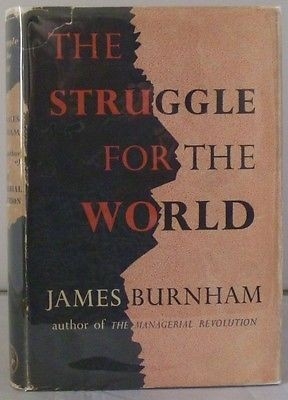 In March 1947, while getting ready to go to Jura and ride the Winston Smith book to the finish even if it killed him (which it did), Orwell wrote his long, penetrating review of The Struggle for the World. He paid some compliments, but also noted some subtle flaws in Burnham’s reasoning. Here he’s talking about Burnham’s willingness to contemplate a preventive war against the USSR:
[Burnham sees that] appeasement is an unreal policy . . . It is not fashionable to say such things nowadays, and Burnham deserves credit for saying them.
But suppose he is wrong. Suppose the ship is not sinking, only leaking. Suppose that Communism is not yet strong enough to swallow the world and that the danger of war can be staved off for twenty years or more: then we don’t have to accept Burnham’s remedy – or, at least, we don’t have to accept it immediately and without question.[15] [19]
Orwell was just using moderation and common sense here, but what he’s suggesting is what in fact began to happen that year (1947). Instead of the predicted war of destruction; policies of “containment,” “rollback,” “interventions”; defense treaties (NATO); and targeted economic aid (Marshall Plan) might work at least as effectively against the Soviets, as well as being far pleasanter and more manageable.
Ironically, Orwell did not pay much attention to what was going on in the outside world that year or next; he had bigger things to worry about. But as the world moved on, it diverged more and more from the fundamental premises of Nineteen Eighty-Four. There wouldn’t be an “atomic war” in 1950 (war, yes; not atomic) and Soviet-style terror regimes weren’t going to swallow all of Europe, however likely that looked in the spring of 1947.
Notes
[1] [20] The actual title of the book on publication date was Nineteen Eighty-Four in London (Secker & Warburg) on June 8, 1949; and 1984 on June 13, 1949 in New York (Harcourt Brace). Orwell and his publisher slightly preferred the numerals, but chose to go with the words for the London edition. Orwell used both styles interchangeably – obviously one is more convenient to type. (George Orwell: A Life in Letters, Ed. Peter Davison [London: W.W. Norton], 2010.)
[2] [21] Cyril Connolly, “Year Nine,” collected in The Condemned Playground (London: Routledge, 1945), originally published in The New Statesman, January 1938. Connolly was inspired by a visit to the “Degenerate Art” exhibition in Munich, where he got the uneasy sense he was expected to leer with a disapproving expression.
[3] [22] Clive Fisher, Cyril Connolly (New York: St. Martin’s Press, 1995).
[4] [23] Connolly, The Condemned Playground.
[5] [24] Connolly, The Condemned Playground.
[6] [25] George Orwell, “Such, Such Were the Joys,” Partisan Review, Vol. 19, No. 5 (New York), Sept.-Oct. 1952.
[7] [26] Paul Owen, “1984 thoughtcrime? Does it matter that George Orwell pinched the plot? [27]”, The Guardian, 8 June 2009.
[8] [28] E. (or Y.) Zamyatin, We, tr. Gregory Zilboorg (New York: E. P. Dutton), 1924. This English-language edition was actually the first publication of We.
[9] [29] George Orwell, review of We, Tribune (London), January 4, 1946.
[10] [30] George Orwell, Keep the Aspidistra Flying, many editions. Originally: London: Victor Gollancz Ltd., 1936.
[11] [31] James Burnham, The Managerial Revolution (New York: John Day, 1941).
[12] [32] James Burnham, The Struggle for the World (New York: John Day, 1947).
[13] [33] Nineteen Eighty-Four, Part III, iii.
[14] [34] James Burnham, The Struggle for the World (New York: John Day, 1947).
[15] [35] George Orwell, “James Burnham’s view of the contemporary world struggle,” New Leader (New York), March 29, 1947.




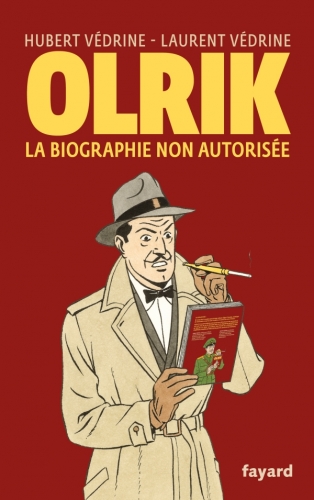 L’ancien secrétaire général de l’Élysée sous François Mitterrand (1991 – 1995) et ministre des Affaires étrangères lors de la troisième cohabitation entre 1997 et 2002, Hubert Védrine, co-signe avec son fils Laurent une « biographie non autorisée » sur Olrik.
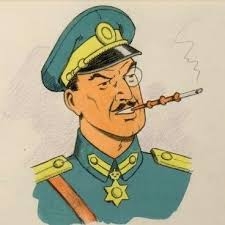 Des interprétations divergent une nouvelle fois sur l’identité réelle du colonel Sponsz. S’agit-il d’un faux nom du colonel Olrik ou bien d’un de ses élèves doués ? Les Védrine font d’ailleurs l’impasse complète sur la période bordure d’Olrik qui suit la fin de l’Empire Jaune mondial et l’échec de plusieurs actions politico-criminelles en Europe de l’Ouest. L’homme fort de la Bordurie, le Maréchal Plekszy-Gladz, ne pouvait pas ne pas accueillir un homme aussi réputé dans son art qu’Olrik.
 del.icio.us
 Digg
Digg Facebook
 Quelle est la méthode d’un neuro-pirate pour vous pirater l’esprit ? Comment faire pour vous implanter des virus cognitifs qui vont vous transformer à votre insu ? Tout d’abord, je dois franchir vos barrières de « sécurité cognitive », contourner vos défenses mentales. Pour vous pirater efficacement, je ne dois en aucun cas éveiller votre méfiance, sinon vous vous fermez à moi et je ne peux plus entrer dans votre esprit. L’ingénierie sociale est d’abord une capacité à manipuler trois types de relations : la confiance, la méfiance, l’indifférence. Pour cela, je dois utiliser toutes les ressources d’une figure d’Analyse transactionnelle inventée par Stephen Karpman qui modélise les interactions sociales selon trois places à occuper : la victime, qui déclenche confiance ou indifférence ; le sauveur, qui déclenche la confiance ; et le bourreau, qui déclenche la méfiance. Gagner la confiance, ou au moins susciter l’indifférence en occupant la place de la victime ou du sauveur, permet d’endormir la méfiance et la vigilance. George Soros a trouvé une tactique très efficace pour pirater des millions de gens sur la planète : demander à tout le monde de s’ouvrir, au nom des droits de l’homme et de leur idéologie victimaire. L’appel à l’ouverture a une connotation positive qui fait naître la confiance. Quand vous vous êtes ouvert à moi, quand j’ai gagné votre confiance, ou votre indifférence, je peux agir sur vous pour vous reprogrammer, et éventuellement vous détruire, sans éveiller votre méfiance, mais en éveillant la méfiance entre vous et autrui dans un conflit triangulé, de sorte que chacun perçoive l’autre comme un bourreau et se replie défensivement sur son ego.


 Si todas las semanas santas son periodos de recogimiento y tristeza, como manda el espíritu cristiano, ésta última de 2019 fue especialmente triste pues el incendio representó el punto más bajo en que una Civilización en crisis puede caer. Un punto de dejadez hacia nuestras instituciones medulares, un fuego que abrasará nuestros corazones podridos de molicie, consumismo y multiculturalismo. La foto de este pequeño (en extensión) pero gran libro (en profundidad y mensaje) puede parecer –en principio- que da paso a una jeremiada. Ya tuvimos ocasión de leer a Engels en numerosas ocasiones en La Tribuna del País Vasco y en Naves en Llamas. Al lector queremos remitirle un bellísimo artículo, que modestamente hemos traducido para este medio: "La Lágrima Ardiente de María" [https://latribunadelpaisvasco.com/art/10827/la-lagrima-ardiente-de-maria]. Pero ¿son lamentaciones y desesperos lo que nos transmite el prestigioso historiador y pensador belga? No. Nada de eso. Se trata de orientaciones, de consejos para la resistencia, se trata de armar la posibilidad de una Europa renovada.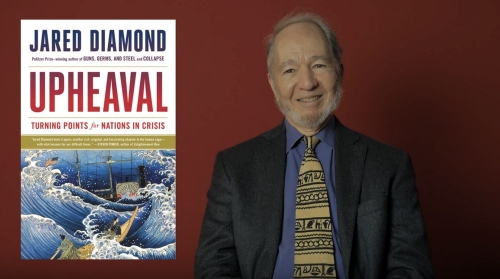
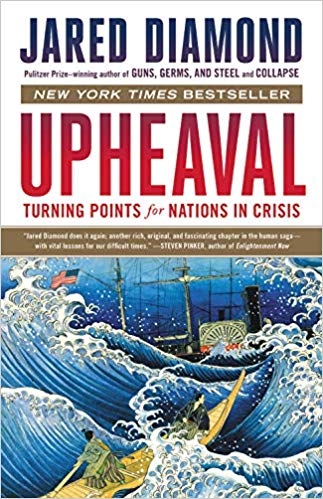 Jared Diamond is phoning it in. The legendary author of Guns, Germs, and Steel—the epic 1997 account of how Earth’s geography helped to determine the fates of the peoples who inhabit it—has produced a genuine mess of a book.

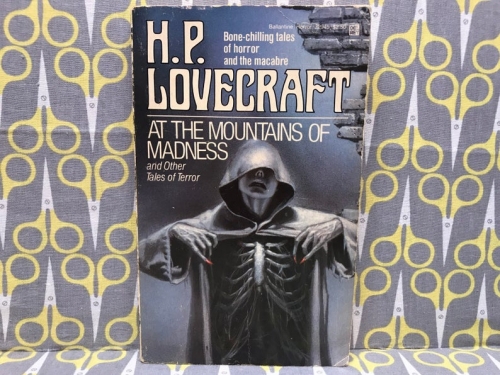
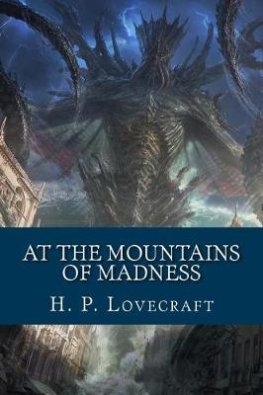 A group led by Lake sets off to investigate the source of the prints and discovers the remains of fourteen mysterious amphibious specimens with star-shaped heads, wings, and triangular feet. They are highly evolved creatures, with five-lobed brains, yet the stratum in which they were found indicates that they are about forty million years old. Shortly thereafter, Lake and his team (with the exception of one man) are slaughtered. When Dyer and the others arrive at the scene, they find six of the specimens buried in large “snow graves” and learn that the remaining specimens have vanished, along with several other items. Additionally, the planes and mechanical devices at the camp were tampered with. Dyer concludes that the missing man simply went mad, wreaked havoc upon the camp, and then ran away.
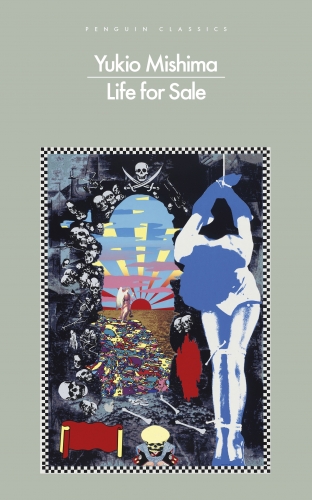 27-year-old Hanio Yamada, the protagonist, is a Tokyo-based copywriter who makes a decent living and leads a normal life. But his work leaves him unfulfilled. He later remarks that his job was “a kind of death: a daily grind in an over-lit, ridiculously modern office where everyone wore the latest suits and never got their hands dirty with proper work” (p. 67). One day, while reading the newspaper on the subway, he suddenly is struck by an overwhelming desire to die. That evening, he overdoses on sedatives.

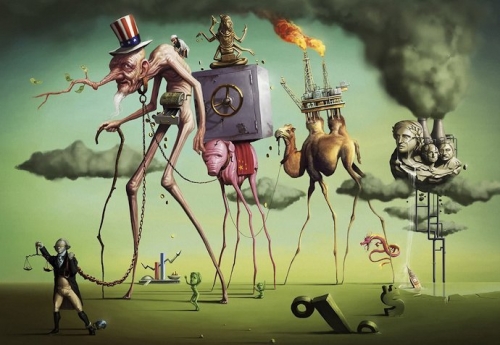
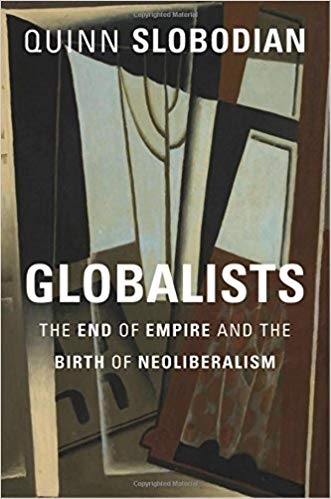 One of the seminal ideological battles of recent history has been that between internationalism, in one form or another, and nationalism. Countless words have been devoted to dissecting the causes, effects, merits, and drawbacks of the various incarnations of these two basic positions. Neoliberalism has, however, succeeded in becoming the dominant internationalist ideology of the power elite and, because nationalism is its natural antithesis, great effort has been expended across all levels of society towards normalizing neoliberal assumptions about politics and economics and demonizing those of nationalism.
 Slobodian begins with the dramatic shift in political and economic conceptions of the world following the First World War. As he observes, the very concept of a “world economy,” along with other related concepts like “world history,” “world literature,” and “world affairs,” entered the English language at this time (p. 28). The relevance of the nineteenth-century classical liberal model was fading as empire faded and both political and economic nationalism arose. As the world “expanded,” so too did the desire for national sovereignty, which, especially in the realm of economics, was seen by neoliberals as a terrible threat to the preservation of the separation of imperium and dominium. A world in which the global economy would be segregated and subjected to the jurisdiction of states and the collective will of their various peoples was antithetical to the neoliberal ideal of free trade and economic internationalism; i.e., the maintenance of a “world economy.”
 Philippe de Villiers en vilipende les fondements intellectuels. Ceux-ci reposeraient sur un trio infernal, sur une idéologie hors sol ainsi que sur un héritier omnipotent. Le trio regroupe Robert Schuman, Walter Hallstein et Jean Monnet. Le premier fut le ministre démocrate-chrétien français des Affaires étrangères en 1950. Le deuxième présida la Commission européenne de 1958 à 1967. Le troisième incarna les intérêts anglo-saxons sur le Vieux Continent. Ensemble, ils auraient suscité un élan européen à partir des prémices du droit national-socialiste, du juridisme venu d’Amérique du Nord et d’une défiance certaine à l’égard des États membres. Quant à l’héritier, il désigne « le fils spirituel (p. 255) », George Soros.
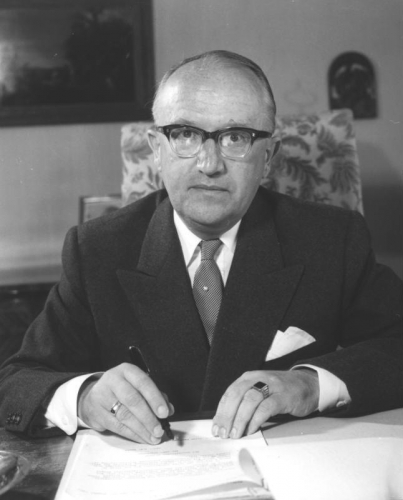 Outre le rappel du passé national-socialiste de Hallstein, il insiste que Robert Schuman, « le père de l’Europe fut ministre de Pétain et participa à l’acte fondateur du régime de Vichy (p. 67) ». Oui, Robert Schuman a appartenu au premier gouvernement du Maréchal Pétain. Il n’était pas le seul. Philippe de Villiers ne réagit pas quand Maurice Couve de Murville lui dit à l’occasion d’une conversation au Sénat en juillet 1986 : « Je me trouvais à Alger […] quand Monnet a débarqué. J’étais proche de lui, depuis 1939. À l’époque, j’exerçais les fonctions de commissaire aux finances de Vichy (p. 109). » L’ancien Premier ministre du Général De Gaulle aurait pu ajouter que membre de la Commission d’armistice de Wiesbaden, il était en contact quotidien avec le Cabinet du Maréchal. Sa présence à Alger n’était pas non plus fortuite. Il accompagnait en tant que responsable des finances l’Amiral Darlan, le Dauphin du Maréchal !



 Es en dos etapas bien diferenciadas en donde cabe hablar de la prosapia hispana de la filosofía. Hubo una primera -pero ya remota- etapa de realismo escolástico, en la Edad Moderna, esto es, en los siglos áureos del Imperio. Hubo y hay otra etapa, mucho más reciente, presidida de forma contemporánea por el vitalismo filosófico de nuestro Unamuno y de nuestro Ortega. Es de este vitalismo de donde partimos hoy en la hispana filosofía y de donde, según los pasos que muestra Manuel F. Lorenzo, podemos beber y alzar nuevas construcciones del pensamiento. El vitalismo hispano, como el de toda Europa, bien podría bascular en dos direcciones, entre sí antagónicas. Una dirección posible, hacia donde inclinar su peso, es claramente irracionalista. La Vida como opuesta a la Razón, la Vida como primum que no atiende a razones, que siente las razones como enfermas y como lastres, como artificios y excrecencias. Los pensadores germanos han sido pródigos en este vitalismo irracionalista e irracional. Schopenhauer Nietzsche, Klages, son nombres que acuden entonces a la mente, y su filosofía hiriente incomoda a todo aquel que busca incólumes certezas, cimientos lógico-matemáticos, solideces de plomo, granito y acero. Eran aquellos filósofos de la vida enemigos de la ratio rebeldes muy a la alemana, esto es, rebeldes dados a la reacción.
 La razón vital no se limita pensar en y desde "el hombre de carne y hueso". La razón vital implica que la vida humana no es sólo razón, pero sí es ejecución de actos en orden a una gestión de la vida misma, una gerencia y construcción que se hace de acuerdo con principios racionales. El hombre no es, para nada, un autómata racional, sino un sujeto orgánico cuya forma humana de adaptación y supervivencia psicobiológica exige la racionalidad. El hombre viene definido, en rigor, no por una sustancial cogitación ("yo soy una cosa que piensa") sino por una actividad circular, por un circuito entre el Yo y las Cosas (el "no-Yo" de Fichte). Ninguno de los polos del circuito debe ser reificado de antemano, ninguno ha de ser tratado acríticamente como una cosa o sustancia. La constitución de los dos polos, yo y mundo ("circunstancias"), consiste precisamente en el lanzamiento de series de acciones en las que el Yo se hace con el Mundo y recíprocamente el Mundo se presenta y re-presenta ante el Yo. La filosofía de Ortega, que tantas veces bebe de la fenomenología y del existencialismo alemán, es vitalista por cuanto que plantea siempre un sujeto humano orgánico definido como un verdadero sistema racional de operatividad, para quien conocer es, de otro modo, coextensivo con sobrevivir y "hacerse con el mundo". Las circunstancias orteguianas, como el "medio" (Umwelt) de los biólogos, conforman el espacio de las operaciones, un espacio que da pie a redefinir la experiencia en términos de construcción. Ortega no quería echar por la borda la razón, aplastarla bajo el peso de una salvaje o bestial Voluntad o Vida. Antes bien, quería explicar el hecho humano mismo de la razón. Al proceder así, al avanzar desde la dialéctica de Fichte, el raciovitalismo del filósofo madrileño ofrece un programa genético del racionalismo tanto como del empirismo. Se trata de volver al genuino espíritu con el que nació el idealismo: la superación de la magna filosofía europea de la Modernidad, tanto el empirismo isleño como el racionalismo continental, una superación que acude a la génesis misma del conocimiento. Y el conocimiento es al fin entendido no como resultado de acumulación de experiencias o como deducción de principios racionales o ideas innatas, sino como resultado de una experiencia en sí misma racional desde el inicio. Experiencia orgánica que se estructura en forma de sistemas de acciones que, por medio de una lógica material, estructuran nuevos sistemas de acciones más amplios en radio de alcance, más potentes en influjo sobre el medio, más "hábiles" en orden a una adaptación y control sobre el medio. En este sentido, Jean Piaget convirtió en empresa "positiva", científica y experimental, una parte muy importante del proyecto esbozado por Ortega. Piaget llevó a cabo un programa científico de esclarecimiento de los orígenes de la inteligencia y la razón de los sujetos orgánicos partiendo no tanto de un "Yo" que se pone (Fichte) y se limita con el No-Yo (mundo en torno, o "circunstancias") sino de un circuito que ya en la fase pre-intelectual incluye ese centro orgánico que lanza acciones-percepciones, como choca con "dificultades" y "obstáculos" de un entorno con el que deberá luchar. El bebé humano, tanto como cualquier individuo orgánico, es un centro de operaciones y es a la vez el eco y la respuesta de un medio ambiente transformado por las operaciones. Los dos sentidos en los que el sujeto orgánico "choca" con el mundo y lo transforma, a la vez que se transforma él, han recibido por parte de Piaget los nombres de "asimilación" y "acomodación". La asimilación, como proceso que generaliza la asimilación de los alimentos, supone la incorporación cognitiva y no sólo material del mundo. El Yo se "pone", se afirma, incorporando elementos del medio que él necesita para su mantenimiento (conservación, supervivencia). Pero el mundo (el "no-Yo") se le opone, se le enfrenta, le traza caminos por donde poder ejercer la acción y por donde no puede atravesar ese mundo con la acción. La acomodación piagetiana podría verse como el sentido opuesto a las acciones asimilativas. El Yo, como centro orgánico de operaciones, debe transformarse a su vez, debe reestructurar sus esquemas de acción para sortear, horadar, recomponer las barreras y resistencia del mundo-entorno. La razón en el proceso vital no es más que el grado máximo en que un sistema de acciones "se hace con el mundo" y, recíprocamente, el mundo se hace con el yo. Esta es la razón vital, pero investigada desde un punto de vista genético y positivo.
 La incorporación de la filosofía materialista de Gustavo Bueno a todo este enfoque genético-constructivo del pensamiento se hace ineludible en este punto de mi breve recensión. Manuel F. Lorenzo es un buen conocedor del materialismo buenista, como discípulo directo suyo desde los primeros tiempos, miembro activo de la llamada "Escuela de Oviedo", hoy en disolución bajo la sombra de los sectarios y de los arribistas. En "La Razón Manual", el autor nos recuerda el aserto fichteano con que encabezábamos esta reseña: "uno profesa la filosofía que va de acuerdo con la clase de hombre que se es". Profesar el materialismo de Bueno, a pesar de sus deudas para con la epistemología genética piagetiana supone, verdaderamente, profesar una suerte de dogmatismo, de pensamiento antipático a la libertad, dicho en términos fichteanos. Las clases de hombres que, filosóficamente hablando, cabe hallar en el mundo se pueden reducir a dos: los amigos de la libertad (idealismo) y los amigos de la servidumbre (dogmatismo, en donde cabe situar el "materialismo"). "La Razón Manual" es un libro que toma partido expreso y decidido por la libertad, se entronca en el idealismo. No en el idealismo visionario, celeste, construido sobre las nubes. Se entronca en la tradición idealista-vitalista que, desde Fichte, indaga en "el lado activo", esto es, en las operaciones. En ese sentido, la filosofía de Bueno estudiada a la luz de la filosofía de la "Razón Manual" adopta el aspecto de un centauro. Por un lado desarrolla una inmensa y magnífica "Teoría del Cierre Categorial", basada en la obra de Piaget y en una genética de las operaciones gnoseológicas, por otro lado incluye un "preámbulo ontológico" de corte escolástico-marxista, que lastra todo el sistema. El propio nombre de "materialismo filosófico" supone una fuente inagotable de equívocos, que ha dado pie a que muchos farsantes e iletrados lo confundan con una versión sofisticada del leninismo y otros, por el contrario, con un positivismo cientifista o realista. Los grandes logros de Gustavo Bueno, depurados del dogmatismo y su "culto a la materia", se pueden reaprovechar y potenciar siguiendo las indicaciones de "La Razón Manual", todo un programa de investigación que humildemente recomiendo.





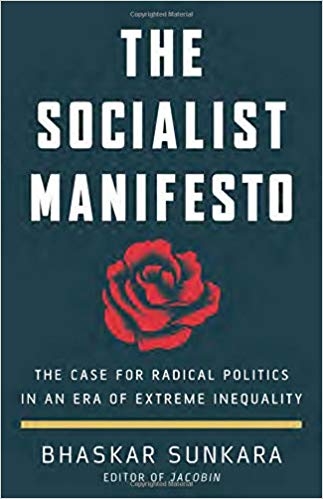 Through most of the book, the arguments are anchored in sturdy common sense, however much one might contest a point or emphasis here and there. On “Third World socialism,” for example, whether in China or Africa or the Americas, Sunkara is right that it turned Marxism on its head, so to speak: “revolutionaries embraced socialism as a path to modernity and national liberation. Adapting a theory that was built around advanced capitalism and an industrial proletariat, they struggled to find ‘substitute proletariats’—from peasants to junior military officers to deprived underclasses—to achieve these ends.” None of it was socialism in the Marxist sense, as coming from the breakdown (literal or not) of capitalism and signifying the liberation of humanity from alienated and exploitative production. It was a “socialism” subordinated to nationalistic ends.
 Sommaire :
 Aujourd’hui, il publie une plaquette réunissant les pièces du dossier polémique qui opposa Céline à Roger Vailland. Celui qui joua le rôle d’arbitre fut Robert Chamfleury (1900-1972), de son vrai nom Eugène Gohin. Comme chacun sait, il était locataire de l’appartement juste au-dessous de celui de Céline, au quatrième étage du 4 rue Girardon, à Montmartre. Après la guerre, il réfutera Vailland et affirmera que Céline était parfaitement au courant de ses activités de résistant. Au moment critique, Chamfleury lui proposa même un refuge en Bretagne. Dans une version antérieure de Féerie pour une autre fois, Céline le décrit (sous le nom de “Charmoise”) « cordial, compréhensif, conciliant, amical ». Sa personnalité est aujourd’hui mieux connue : parolier et éditeur de musique, Robert Chamfleury était spécialisé dans l’adaptation française de titres espagnols ou hispano-américains. Il fut ainsi une figure marquante de l’introduction en Europe des compositeurs cubains, et des rythmes nouveaux qu’ils apportaient. Il travaillait le plus souvent en duo avec un autre parolier, Henri Lemarchand. Lequel préfaça La Prodigieuse aventure humaine (1951, rééd. 1961) de son ami qui, sur le tard, rédigea plusieurs ouvrages de vulgarisation scientifique et de philosophie des sciences. Céline lui accusa réception avec cordialité de cet ouvrage et l’invita à venir le voir à Meudon. Dans sa plaquette, Andrea Lombardi reproduit la version intégrale de la lettre que Chamfleury adressa au directeur du Crapouillot, telle qu’elle parut, pour la première fois, dans le BC en 1990.
 Antoine a donc choisi l’obscurité, décevant ainsi son épouse, qui le largue (et cesse de jouer au mécène) et, bientôt, sa fille Blandine, que viendra consoler l’attentionné Thomas. Il vivote dans un HLM de la Grand’Mare (hilarants tableautins du « vivre-ensemble ») et se contente de CDD à la médiathèque Arthur Rainbow (!), l’un des décors du roman – prétexte pour l’auteur à une description aussi comique que glaçante du dispositif d’infantilisation des masses et de leur encadrement « culturel ». Notre bibliothécaire tranche d’avec ses jeunes collègues, acquis à la culture du divertissement et conscients de leur rôle dans le dressage « citoyen » de leurs usagers. Il fera, ô surprise, l’objet d’une dénonciation en règle pour un article littéraire de sa revue consacré à un écrivain qui, dans un français parfait, ose évoquer l’actuel chaos migratoire et ses conséquences sans l’enthousiasme ni la cécité de commande.

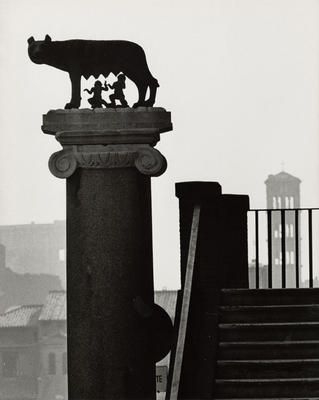 3) Tale conoscenza non è sapere se non è innanzitutto uno stato dell’essere; lo stato dell’essere è vedere l’Invisibile, che è l’Indicibile, ma per colui che è Essere non è che l’Uno, l’Istante che è fuori dal tempo: colui che vive nella dimensione dello Spirito è nel tempo pur essendo, nella radice, fuori dal tempo, vedrà il Divenire che è Essere, come indica l’enigmatico sorriso dell’Apollo di Veio, Egli, sorridendo della nostra stupidità, accenna, svela e rivela la Verità: l’Assoluto, il Divino è semplicemente ciò che tu vedi e che sei! Tu però non lo sai!
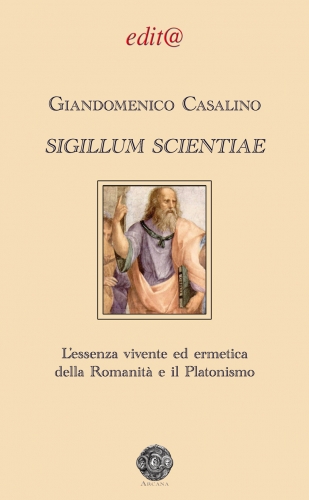 Si conosce solo ciò che si è e si è solo ciò che si conosce. Gli Dei non esistono a priori (per fede) ma esistono solo se si conoscono e si conoscono solo se si esperimentano, quindi esistono solo per colui il quale li esperimenta, cioè li vive e quindi li conosce; nel senso che, pur esistendo da sempre, per colui il quale non li conosce Essi non esistono. Tale è il significato della frase: “I Greci non credevano negli Dei; poiché li vedevano!”