Michael Bell
Ex: http://www.counter-currents.com/
 Concerning the genesis of modern humanity, there are two primary theories that receive credence in anthropological circles. One is the “Out of Africa” hypothesis, which argues that today’s humans are the evolved descendants of a primitive race of hominids that, 70,000 years ago, departed its homeland in Africa and spread across the globe. Upon entering Asia and Europe, these archaic humans displaced the indigenous Neanderthals through violent conflict and higher birthrates. They then adapted to their environments and gradually morphed into today’s human races through a process called localized evolution.
The other theory is “Divergent Evolution,” which posits that the various races of mankind were spawned out of continuous admixtures between the different proto-humans (Homo-erectus, Cro-Magnon, Neanderthal, etc.) many millennia ago. The countless hybrid amalgams then underwent localized evolution like the single ancestor of the “Out of Africa” process.
While these hypotheses are considered to be at loggerheads, they are united by one key concept: the idea of progress. While each gives a different origin to mankind, both proceed from the assumption that as time goes on, mankind has become better. Although evolutionary theory does not imply that superior adaptations are also superior in terms of intelligence or beauty, this notion is particularly hard to shake with regard to human evolution.
Radical Traditionalism rejects the modernist assumption of progressive human evolution, regarding it as the exact opposite of how the universe functions. For Traditionalism, all things begin at their zenith and gradually degenerate, through a series of stages, into mere shadows of their former glory, a pattern no less true of human beings. The purpose of this essay is to explain how this rule has applied to mankind, who has not risen to mastery of the world from the lowly origins of some apelike ancestor, but rather has fallen from godhood into his current, all-too-human condition.
To do so, it will first be necessary to describe the Radical Traditionalist understanding of history. Like all tenets of Traditionalism, this conception of history is held to be a revealed truth passed down through a chain of initiation. What recommends the Traditionalist outlook to the non-initiate is its coherence and explanatory power. In the following essay, I show that Traditionalism explains archaeological and historical records and harmonizes with ancient myths as well. The modern empiricist will likely disregard such myths as the fancies of primitive imaginations, but that begs the question, for it is just another version of the progress thesis that Traditionalism rejects.
Cyclical History
Radical Traditionalism shares the same view of human history as our ancient forerunners from nearly every corner of the globe. As opposed to the linear model of history—whether ruled by an overriding purpose of by mere chance—the ancients accepted a cyclical model. This is evident in the texts of virtually every civilized race. The Hindus traced man’s descent across four ages or yugas, from the age of Truth (Satya Yuga) to the Dark Age (Kali Yuga), with the series comprising a single Great Age (Mahayuga). The Hellenic Hesiod, in his Works and Days, described the procession from a Golden Age to Silver, Bronze, and Iron Ages, which corresponds to the Persian rendition of the cycles. The Old Testament reveals that the Semitic peoples also shared this cyclical understanding. In a dream experienced by the Chaldean king Nebuchadnezzar, there stood a statue with a head made of gold, a chest and arms of silver, thighs of bronze, and legs and feet made of iron and clay, all of which eventually crumbled upon being struck by a stone.[1] The list can go on, with discussions of peoples from the Aztecs to the Japanese, but the examples provided are sufficient to reveal the universality of this cyclical concept.
The ancients also agreed that with each successive age, man becomes more and more distant from a primordial state of perfection. In the Golden Age, man lived in harmony with divine beings and according to absolute, transcendent principles that brought happiness, wholeness, and near immortality to individuals while it brought order and prosperity to collective life. With the ushering in of the Silver Age came a fall from this state of grace and the establishment of an imperfect existence, where those old principles were abandoned, the gods lost much of their divine nature, and man took a step away from cosmic harmony toward chaos. For the purposes of this essay, we shall elaborate on the Golden and Silver Ages, for it was in these prehistoric periods that humanity underwent processes that bestowed our multitude of contemporary mental and physical forms upon us.
The Atlantean Silver Age
The Golden Age was a period of perfection on all levels. Human life was directly guided by the gods themselves and therefore orderly, plentiful, and enjoyable. Though the Golden Age was long ago and its location long since lost, its memory is kept alive by the mythical traditions of nearly every people on the planet. Hesiod, writing in the eighth century B.C., describes this “Age of Gold” thusly:
Men spent a Life like Gods in Saturn’s Reign,
Nor felt their Mind a Care, nor Body Pain;
The fields, as yet untill’d, their Fruits afford,
And fill a sumptuous, and enevy’d, Board.
From Labour free they all Delights enjoy,
Nor could the Ills of Time and Peace destroy;
They dy, or rather seem to dy, they seem
From hence transporting in a pleasing Dream.
Thus, crown’d with Happyness their ev’ry Day,
Serer, and joyful, pass’d their Lives away.[2]
Hesiod is one of few writers to directly mention the Golden Age and describe its qualities. Using his work as a reference point, however, the scholar can detect allusions to the same period in other ancient texts. For example, in Book 6 of the Mahabharata, the author discusses Mount Meru, “made of gold,” where the “measure of human life is 10,000 years” and “men are all of a golden complexion . . . [and] without sickness, without sorrow, and always cheerful.”[3] Outside the Aryan tradition, the Book of Lieh-Tzu (fourth century B.C.) describes what appear to be the inhabitants of the Golden Age:
All were equally untouched by the emotions of love and sympathy, of jealousy and fear. Water had no power to drown them, nor fire to burn; cuts and blows caused them neither injury nor pain, scratching or tickling could not make them itch. They bestrode the air as though treading on solid earth; they were cradled in space as though resting in a bed. Clouds and mist obstructed not their vision, thunder-peals could not stun their ears, physical beauty disturbed not their hearts, mountains and valleys hindered not their steps. They moved about like gods.[4]
Finally, we have in the Semitic memory the Garden of Eden, where man was first established on Earth at God’s decree. According to the Book of Genesis, those who dwelled there lived for nearly 1000 years in a blissful paradise.[5] The allusions to this pristine setting are numerous, from the Avestic recollection of a distant period in the Airyana Vaego, where man was under the aegis of the creator god Ahura Mazda himself, to the Buddhist remembrance of Shambhala, roughly translated “land of peace” or “tranquility.”
In tracing anthropogenesis, it is crucial to establish the physical location of this primordial paradise. Unfortunately, no material archaeological evidence lends any insight into this question. We are thus forced to rely solely on the mythological memories of our ancestors. Among the Greeks, this land “beyond the pole” where neither “pestilence nor wasting eld approach” the inhabitants was referred to as Hyperborea, meaning “beyond the north wind.”[6]
In his book Arctic Home in the Vedas, the Hindu nationalist and scholar Bal Gangadhar Tilak, writing in the early twentieth century, presents a vast array of clues from Vedic and Avestic literature to argue that the primordial paradise was located in the Arctic. Tilak explains that if one were stationed at the North Pole, the sky above would appear to be rotating around one “from left to right, somewhat like the motion of a hat or umbrella turned over one’s head.”[7] He also explains that one would see the sun continuously in the sky for roughly six months, followed by a period of dusk, night, and dawn of two months each. Thus for the Arctic inhabitant, a full year would appear to unfold as a single day.
With these astral phenomena in mind, Tilak proceeds to pinpoint allusions to them in the Aryan texts. For example, in the Mahabharata, Mount Meru is discussed in one passage as a place where the “sun and the moon go round from left to right every day and so do all the stars” and “The day and the night are together equal to a year to the residents of the place.”[8] He supports this with a selection from the post-Vedic Laws of Manu, which says “A year (human) is a day and a night of the Gods; thus are the two divided, the northern passage of the sun is the day and the southern the night.”[9] Tilak corroborates this evidence with clues from Persian tradition. From the Avesta we have reference to an “enclosure” in the Airyana Vaejo in which “the stars, the moon, and the sun are only once (a year) seen to rise and set, and a year seems only as a day.”[10]
The present conditions in the Arctic make it uninhabitable. According to Tilak, however, modern scientists have conceded that at one time in distant prehistory, perhaps in pre-Glacial times, the region was hospitable, fertile, and filled with life. Among these scientists is the geologist James Geikie, who in 1893 argued that “during the Inter-Glacial period the climate was characterized by clement winters and cool summers so that the tropical plants and animals, like elephants, rhinoceroses, and hippopotamuses, ranged over the whole of the Arctic region, and in spite of numerous fierce carnivora, the Paleolithic man had no unpleasant habitation there.”[11] Joscelyn Godwin confirms that such conditions were indeed possible when, as “numerous authorities” claim, “the earth was not tilted, but spun perfectly upright with . . . its axis perpendicular to the plane of its orbit around the sun,” which was the case in “primordial times.”[12]
Since the Arctic Golden Age took place many eons before recorded history, assessing its actual place in time is troublesome. Using Hindu calculations, Traditionalist René Guénon concluded that this Golden Age took place nearly 65,000 years ago.[13] We must prefer this number over Tilak’s hypothesized 12,000 years, as the latter would place the subsequent Silver Age far too near recorded history to be possible, especially considering that the fourth, Dark Age, “is said” to have begun only 6000 years ago.[14] In addition, it would be implausible to place man’s origins only 12,000 years ago, as the devolutionary processes that reduced him to his modern form could not have fully unfolded within that short span.
Eventually, the Arctic seat and its Golden Age met a catastrophic end for a number of reasons, both physical and metaphysical. In his magnum opus, Revolt Against the Modern World, Julius Evola argues that the Earth’s axis shifted positions slightly, ushering in a cataclysmic climate change.[15] As a result, the Polar Regions became inhospitable to most life forms. In ancient texts one finds numerous references to this tilting of the axis. The Taoist tradition recalls when the “pillar which connects Heaven and earth” was “snapped” (the axis is essentially an invisible pillar that unites the sky with Earth), explaining “why Heaven dips downwards to the north-west, so that sun, moon and stars travel towards that quarter.”[16] The Hebrew story of the crumbling of the Tower of Babel, which connected Heaven to Earth, is another example. The Avesta explains the onset of the climate change in a dialog between the creator god and his disciple, king Yima: “And Ahura Mazda spake unto Yima, saying: ‘O fair Yima, son of Vîvanghat! Upon the material world the fatal winters are going to fall, that shall bring the fierce, foul frost; upon the material world the fatal winters are going to fall, that shall make snow-flakes fall thick.”[17] As this event would have occurred tens of thousands of years ago, it likely coincides with the beginning of one of the various Ice Ages.
One more event, metaphysical in nature, is explained to us by the Old Testament. It tells of how the “sons of God” mated with the “daughters of man” and spawned a race of mighty giants, whose evil behavior, driven by the appetites of the flesh, made God unleash elemental forces against them.[18] These sons are likely parallels to the “celestial gods” who dwelled in Airyana Vaego, as well as the other gods and demigods that the ancient texts say lived in this primordial paradise. From the clues above, we can paint the following picture regarding the end of the Golden Age. Human beings lived harmoniously with divine beings in the Arctic paradise until the two entered sexual unions that produced powerful, semi-divine half-breeds. This action caused such a rupture in the cosmic balance of the universe that the Earth’s axis shifted, bringing on the Ice Age that turned the paradise into a cold wasteland.
Following the destruction of Airyana Vaego/Mount Meru/Eden/ Hyperborea, the semi-divine survivors were forced to migrate southwards. In their exodus they retained the memory of their Polar homeland, evinced by polar symbols such as the swastika (a bent cross revolving about a fixed point) and the axial World Tree, which traditionally links Midgard (Earth) with the realms above. Some settled in areas of North America and Northern Europe, but the majority regrouped in an Atlantic location to reconstitute their civilization.
If we are to make any conjectures about the race of our Hyperboreans, we must look to those people who carried with them the memory of the primordial home. By Hyperboreans, I mean the Arctic race of “men” who lived among the gods. Discerning the features of the latter is impossible, as they are not bound by the limitations of material existence; they could have been anthropomorphic, ethereal, or capable of alternating between the two. Our only clue is that they were “Golden,” which may be an allusion to vibrant blondness.[19]
In all of the civilizations discussed above, as well as in others, our concern would be with the upper castes, namely the priests and the military aristocracy, who preserved the memories of Hyperborea. Among the Aryan peoples of Europe, this task is simpler due to the abundance of physical evidence available, namely statues, frescoes, engravings, and physical remains. The ancestors of classical Greece and Rome, Germania, and Celtia, who brought with them the worship of Zeus, Saturn, Tuisto, and Dana, were evidently of a tall, robust, fair-haired, and fair-skinned Nordic stock. The fourth century A.D. physician, Adamantios, gives us a picture of the early Hellenes, claiming that “Wherever the Hellenic and Ionic race has been kept pure, we see proper tall men of fairly broad and straight build, neatly made, of fairly light skin and blond; the flesh is rather firm, the limbs straight, the extremities well made.”[20]
As we push further east, the evidence becomes less plentiful but nonetheless revealing. The Brahmins who carried to India the oldest extant accounts of the Golden Age in Mount Meru were of that same Nordic race. If one juxtaposes a modern Brahmin or Kshatriya with a member of the lower castes, it often appears that the former has something quite different “in his woodpile.” He would tend to be taller and fairer in complexion and occasionally possess blue or green eyes and, more rarely still, fair hair. Lower caste individuals generally tend to be shorter and darker, and although many have fine Caucasoid features, others display an Australoid phenotype. Kaiyata, writing in the second century B.C., affirms that White Brahmins once “flourished in a previous cycle of existence” but that their “descendants are rarely met with even now.”[21] The sixth century B.C. Kshatriya noble, Siddhartha Gautama (Buddha), is described in the Pali Canon as having abhi nila netto, or “very blue eyes,” a typical Nordic trait.
In the Far East, we have a non-Aryan milieu entirely. However, there is ample genetic evidence that tall, fair Whites roamed both Western[22] and Eastern[23] China long before the present-day Mongoloids. Taken with the racial description of the Buddha, we have enough to surmise a heavy influence upon China’s culture by Nordics or a stalwart white race akin to them. Since Buddhism influenced the development of Japanese religious culture, the same rule applies to Japan.
The list can go on, but we have already given sufficient proof that the bearers of the oldest and clearest recollections of Hyperborea were tall, fair, blue-eyed, and red or blonde-haired whites. It would thus be fair to conclude that the Hyperboreans, from whom they claim descent, were likely of a proto-Nordic race.
The Atlantean Silver Age
Hesiod’s poem continues with a discussion of a second age, “which the Celestials call the Silver years.”[24] In this period, man became subject to sickness and mortality. He no longer lived according to the absolute principles provided by his divine tutors during the Golden Age, and paid the gods themselves “no honors.”[25]
It is with the dawning of this era that the Arctic inhabitants, now a race mixed with divine and human elements, traveled as refugees from their destroyed Urheimat to a southern location somewhere in the Atlantic. There they founded the famed city of Atlantis in mimicry of their original homeland. After establishing themselves, they embarked on a colonizing campaign across the world, passing the “Pillars of Hercules” (the Straits of Gibraltar) and reaching deep into the Mediterranean Sea. There they established their hegemony, holding “sway . . . over the country within the Pillars as far as Egypt and Tyrrhenia.”[26] It is reasonable to assume that they also sent voyagers to the Americas, as Atlantis would have lain between them and Europe.
As this new civilization was built before recorded history, it is difficult to ascertain its precise chronology. Plato asserts that Atlantis crumbled 9000 years before his own time, while Guénon, relying once again on Vedic mathematics, says this occurred several thousand years earlier. This would, therefore, place its origins even further back. Regardless, our concern is the racial state of those dwelling within Atlantis.
The Boreal race inhabiting the Arctic was probably quite Nordic in appearance. When they mixed with the gods, however, they spawned “men of monstrous size” according to Hesiod, paralleling the Nephilim of the book of Genesis. Given that modern Nordics are some of the tallest humans, and that they themselves are merely degenerated descendants of something greater, the mythological testimony seems plausible. Thus, the Atlanteans sired from the union of gods and men were likely much taller than today’s tallest people and probably more muscular; they would have been frightfully imposing giants. Further credence is given to this idea by the fact that in Numbers, the Hebrews refer to the Anakim as “Nephilim” due to their immense stature, which made the Hebrews feel like “grasshoppers.”
These giants were not the norm, however. Plato speaks of them becoming “diluted too often and too much with the mortal admixture,” suggesting that unmixed Boreal humans also lived within Atlantean borders. This was also the cause of Atlantis’s inevitable downfall, much like that of Hyperborea. After several generations of unchecked miscegenation with their human subjects, the Atlantean giants forfeited their angelic constitution and “grew visibly debased, for they were losing the fairest of their precious gifts.”[27] When this happened, the cosmic balance was once again disrupted. Evidence from the myths, sometimes suggestive and other times affirmative, leads us to believe that a massive earthquake occurred, causing Atlantis, the seat of the Silver Age, to sink beneath the Atlantic. The Mesopotamian story of the deluge that submerged the first cult-centers, linked to the Biblical flood that Noah overcame, is an example.[28]
With the Atlantean admixture with humans came a race almost entirely sapped of divinity. They were the direct ancestors of modern Northern Europeans (proto-Nordics), retaining the fair complexion and keen intellect but losing their titanic build and strength. Forced to flee their sinking kingdom, these people migrated in an East-West trajectory, bringing significant numbers into the Americas and Europe.
There is some physical and genetic evidence to substantiate this claim.
Firstly, there is the link between the 18,000 year old Solutrean weapon culture of France and the 13,500 year old American weapon culture of Clovis, New Mexico. Archaeologists Bruce Bradley and Dennis Stanford concluded in 2004 that there was a striking similarity between the manufacturing methods of each culture, particularly because they both used a very difficult and rare technique called overshot flaking.[29] They also noted that a weapon culture discovered in Virginia, dating to 16,000 years ago, appeared to be a “technological midpoint between the French Solutrean style and the Clovis points.”[30]
Our second piece of evidence is genetic. Scientists have found that among the genes of Native American populations, the mitochondrial DNA (mtDNA) of haplogroups A through D, which are common in Asia, predominates. However, it has been found that a significant number of Native Americans in the Eastern United States possess mtDNA from haplogroup X, which is only also found in Western European populations and in some parts of Mongolia. One might argue that the presence of this mtDNA in Mongolia debunks the argument that Whites settled North America first, but this simply is not so when combined with all the other evidence provided here. Significantly, the mtDNA of pre-Columbian Native American skeletons has been studied, revealing that X was present in that race’s genes before the conquistadores arrived.[31]
Thirdly, we have the controversial Kennewick Man corpse. This 9300 year old skeleton, unearthed in Washington State in 1996, was discovered by anthropologist James Chatters to be of Caucasoid origin. In a clay reconstruction the face even ended up resembling that of British actor, Patrick Stewart.[32]
These bits of evidence indicate that a race of people predating the Mongoloid Native Americans split up and branched out into Europe and America from the Atlantic. They carried with them the same genes and tool-making methods, which they adapted to the available resources. An alternative possibility would be that this Upper Paleolithic race migrated first into Europe, with a group then splitting off and migrating eastward to America.
The Children from the Earth
As our Hyperborean ancestors ventured across the globe, first to the Atlantic and then in an East-West trajectory, they encountered preexisting societies in the lands they traversed. As the Golden and Silver Ages took place tens of thousands of years ago, these indigenous peoples were likely from the countless breeds of hominids, including Neanderthalensis and Soloensis. Whatever stock of proto-human they were, our ancestors characterized them as either chthonic, Earth-spawned beings or creatures originating from the chaotic waters. In most cases, their interaction resulted in conflict, but in others the two coexisted and even intermixed. These events have been vividly preserved in the various myths of Hyperborean origin: the epic struggle between the Tuatha da Danaan and the Fomors (people “from the water”); the battles between the Olympians and the various monsters spawned by Gaia (Earth); the vitriolic relationship between the Aesir (the Nordic sky gods) and the Vanir (trolls, giants, and other monsters); even the Anglo-Saxon epic Beowulf recaptures this theme in the fight between the hero and Grendel, a humanoid demon that lives beneath a lake.
Wherever the newcomers settled down and mixed with the natives, new races were spawned representing further bastardizations of the semi-divine Arctic prototype. Thus our giant, proto-Nordic race ramified into various hybrid breeds, each differing in appearance and attributes depending upon the areas they settled in, the stocks with which they mixed, and just how far they allowed this miscegenation to continue. From these mixed unions sprung the various Mongoloid, Semitic, Australoid, and Negroid races, with the latter two probably representing the farthest debasement from the original Hyperborean phenotype. In instances where mixing was less pronounced, or where adaptation to the environment and other factors had their effect, the various white races were generated (i.e. Nordics, Mediterraneans, Alpines, etc.).
Conclusions
In summary, anthropogenesis was a process of devolution, not evolution. Sixty-five thousand years ago, a race of gods described as “Golden” lived harmoniously with a race of advanced early humans, characterized by fair skin, fair hair, and light eyes, in a joyous, orderly Golden Age somewhere in the Arctic. At some point, the two races intermixed and bred giant demigods. As the Arctic seat froze over in one of the Ice Ages, these demigods led the remaining human survivors south into the Atlantic, with some remaining in different lands along the way. Those who did so, encountered autochthonous races with whom they ultimately mixed, debasing their divine nature and giving rise to a new, Silver Age that corresponded to the Atlantean civilization vividly described by Plato and remembered by many traditions as a “Western” land. It sent explorers out across the world from the Americas to the Far East. Thousands of years later this second super-civilization floundered due to continued mixing between the demigods and their human companions, generating the Upper Paleolithic proto-Nordic race.
With the sinking of Atlantis, these beings, now human in nature but still retaining a divine spark, migrated in an East-West trajectory. On this second great exodus, corresponding to a Bronze Age, some intermarried with indigenous peoples and further debased their line while others maintained their purity. The latter would later erect the most revered civilizations and empires of recorded history, such as Sumeria, Vedic India, Egypt, Hellas, Rome, China, and much later, the feudal regimes of Western Europe. The mixed peoples would be remembered as the Pelasgians, Minoans, Etruscans, Hebrews, Arameans, Iberians, and all other chthonic ethnicities that were subdued and restricted to a plebeian caste. Unfortunately, the vast empires noted above served as little more than dim reflections of the original Hyperborean civilization, precluded from fulfilling their true potential by the prevailing metaphysical conditions of the age in which they flourished.
We have now entered into the terminal phase of the Dark Age, and the type of humanity that is to inherit the succeeding Mahayuga remains to be seen; however, if the races of the world continue down the path of profligate inter-mixing, that divine spark, which drove the white peoples of the world to erect history’s grandest civilizations, and is now harbored by so few, will be completely extinguished. Humanity will then be forced to pass the torch of greatness to a succeeding species.
Notes
1. Dan. 2:35.
2. Hesiod, Works and Days, 1.154–63.
3. Mahabharata, 6.1.6.
4. Lieh-Tzu, The Book of Lieh-Tzu, trans. Lionel Giles (1912), 36.
5. Gen. 5:5.
6. Pindar, Pythian Odes, 10.29, 10.41.
7. Lokamanya Bal Gangadhar Tilak, Arctic Home in the Vedas (Poona City, India: 1903), 43.
8. Mahabharata, 3.7.163. Quoted in Tilak, 64.
9. The Laws of Manu, 1.67. Quoted in Tilak, 63.
10. Vendidad, 2.40. Quoted in Tilak, 350.
11. James Geikie, Fragments of Earth Lore: Sketches and Addresses, Geological and Geographical (1893), 266. Quoted in Tilak, 22–23.
12. Joscelyn Godwin, Arktos: The Polar Myth in Science, Symbolism, and Nazi Survival (Kempton: Adventures Unlimited Press, 1996), 13.
13. René Guénon, Traditional Forms and Cosmic Cycles (Paris: Gallimard, 1970), 24.
14. René Guénon, The Crisis of the Modern World, trans. Marco Pallis (Hillsdale: Sophia Perennis, 2001), 7.
15. Julius Evola, Revolt Against the Modern World (Rochester, Vt.: Inner Traditions International, 1995), 189.
16. Lieh-Tzu, 79.
17. Vendidad, 2.22.
18. Gen. 6: 2–7.
19. Julius Evola, Revolt Against the Modern World, 185. In his chapter “The Golden Age,” Evola contends that gold symbolizes the gods’ divine nature, which is “incorruptible, solar, luminous, and bright.” I see no reason, however, to reject the possibility that it could be a reference to something phenotypical.
20. Hans F. K. Gunther, The Racial Elements of European History, trans. G. C. Wheeler (London: Methuen, 1927), 157.
21. R. P. Chanda, The Indo-Aryan Races: A Study of the Origin of Indo-Aryan People and Institutions, Part I (Rajshahi: Varendra Research Society, 1916), 24.
22. “Genetic Testing Reveals Awkward Truth About Xinjians’s Famous Mummies,” Khaleej Times Online, April 19, 2005.
23. Li Wang et al, “Genetic Structure of a 2500-Year-Old Human Population in China and Its Spatiotemporal Changes,” Molecular Biology and Evolution, 17 (2000): 1396–1400.
24. Hesiod, Works and Days, 1.175.
25. Hesiod, Works and Days, 1.189.
26. Plato, Timaeus, 25.
27. Plato, Critias, 120.
28. “A Sumerian Myth: The Deluge,” trans. S. N. Kramer, The Ancient Near East, ed. James Pritchard, vol. 1 (Princeton: Princeton University Press, 1953), 29.
29. Bruce Bradley and Dennis Stanford, “The North Atlantic ice-edge corridor: a possible Paleolithic route to the New World,” World Archaeology 36 (2004): 465.
30. “Stone Age Columbus-programme summary,” BBC, 21 Nov. 2002. <http://www.bbc.co.uk/science/horizon/2002/columbus.shtml>. 1 Sept. 2008.
31. Maggie Villiger, “Tracing the Genes,” PBS, July 20, 2004, http://www.pbs.org/saf/1406/features/dna.htm.
32. Timothy Egan, “Old Skull Gets White Looks, Stirring Dispute,” The New York Times, April 2, 1998.
TOQ, vol. 10, no. 1 (Spring 2010)



 In un’occasione Evola cita la teoria giuridica di Carl Schmitt dell’international law . Il filosofo della politica tedesco aveva espresso l’idea della caduta del diritto internazionale europeo consuetudinario avvenuta, all’incirca, dopo il 1890, e la conseguente affermazione di un diritto internazionale più o meno ufficializzato. «Noi però qui non siamo interamente del parere dello Schmitt», scrive Evola, spiegando che «di contro all’opinione di molti, nei riguardi dell’azione svolta da Bismarck, sia all’interno della Germania che in Europa, non tutte le cose sono “in ordine”. […]. Più che Bismarck, a noi sembra che, se mai, Metternich sia stato l’ultimo “Europeo”, vale a dire l’ultimo uomo politico che seppe sentire la necessità di una solidarietà delle nazioni europee non astratta, o dettata solo da ragioni di politica “realistica” e da interessi materiali, ma rifacentesi anche a delle idee e alla volontà di mantenere il migliore retaggio tradizionale dell’Europa» . Contrariamente a quanto sostenuto da Baillet , Evola fu dunque piuttosto critico nei confronti di Bismarck, che non ebbe, secondo la visione tradizionale evoliana, il coraggio di opporsi in modo sistematico e rigoroso al mondo moderno e della sovversione (nella sua forma economico-capitalistica), ma dovette in alcuni casi venire a patti con esso.
 del.icio.us
 Digg
Digg Facebook
 Men kent onze bezwaren tegen bepaalde vormen van modern heidendom, die eigenlijk meer te maken hebben met een folkloristische beleving van iets dat er misschien in die vormen nooit is geweest. Bepaalde vormen van modern heidendom moeten inderdaad gezien worden als een emanatie van de “Tweede religiositeit”, zoals Oswald Spengler ze meende te moeten omschrijven. En bij Wende was ik bepaald op mijn hoede, op mijn ‘qui-vive’ door de vrij bombastische omschrijving als het halfjaarlijks “Odalistisch vormingsblad van de Werkgroep Hagal”.








 Since the rise of physical anthropology, the definition of the term “race” has undergone several changes. In 1899, William Z. Ripley stated that, “Race, properly speaking, is responsible only for those peculiarities, mental or bodily, which are transmitted with constancy along the lines of direct physical descent.”[1]
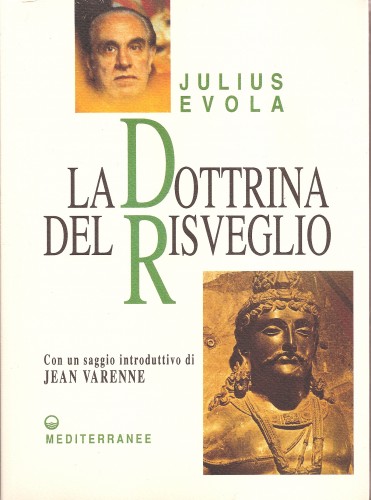
 Recentemente la Fondazione Julius Evola ha curato la seconda edizione (dopo quella del 1983) dell’antologia di testi evoliani dedicati alla civiltà statunitense, a cura di Alberto Lombardo, intitolata «Civiltà americana».



 In questo articolo prenderemo in considerazione l’importanza rivestita dalla



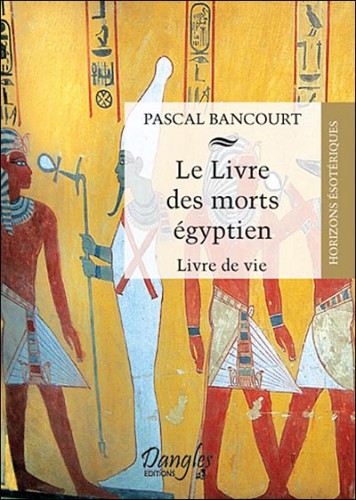
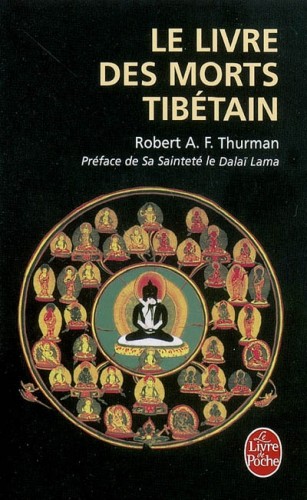 Nevertheless, there are many parallel points between the two texts dealing with the liberating identifications. Just as in the Tibetan ritual the destruction of the appearance of distinct entities, which all things perceived in the experiences of the other world may acquire, is indicated as a means of liberation, so in the Egyptian text formulae are repeated by means of which the soul of the dead affirms and realizes its identity with the divine figures.


Man’s Devolution Across Cycles:
Radical Traditionalism on Anthropogenesis
Michael Bell
Ex: http://www.counter-currents.com/
The other theory is “Divergent Evolution,” which posits that the various races of mankind were spawned out of continuous admixtures between the different proto-humans (Homo-erectus, Cro-Magnon, Neanderthal, etc.) many millennia ago. The countless hybrid amalgams then underwent localized evolution like the single ancestor of the “Out of Africa” process.
While these hypotheses are considered to be at loggerheads, they are united by one key concept: the idea of progress. While each gives a different origin to mankind, both proceed from the assumption that as time goes on, mankind has become better. Although evolutionary theory does not imply that superior adaptations are also superior in terms of intelligence or beauty, this notion is particularly hard to shake with regard to human evolution.
Radical Traditionalism rejects the modernist assumption of progressive human evolution, regarding it as the exact opposite of how the universe functions. For Traditionalism, all things begin at their zenith and gradually degenerate, through a series of stages, into mere shadows of their former glory, a pattern no less true of human beings. The purpose of this essay is to explain how this rule has applied to mankind, who has not risen to mastery of the world from the lowly origins of some apelike ancestor, but rather has fallen from godhood into his current, all-too-human condition.
To do so, it will first be necessary to describe the Radical Traditionalist understanding of history. Like all tenets of Traditionalism, this conception of history is held to be a revealed truth passed down through a chain of initiation. What recommends the Traditionalist outlook to the non-initiate is its coherence and explanatory power. In the following essay, I show that Traditionalism explains archaeological and historical records and harmonizes with ancient myths as well. The modern empiricist will likely disregard such myths as the fancies of primitive imaginations, but that begs the question, for it is just another version of the progress thesis that Traditionalism rejects.
Cyclical History
Radical Traditionalism shares the same view of human history as our ancient forerunners from nearly every corner of the globe. As opposed to the linear model of history—whether ruled by an overriding purpose of by mere chance—the ancients accepted a cyclical model. This is evident in the texts of virtually every civilized race. The Hindus traced man’s descent across four ages or yugas, from the age of Truth (Satya Yuga) to the Dark Age (Kali Yuga), with the series comprising a single Great Age (Mahayuga). The Hellenic Hesiod, in his Works and Days, described the procession from a Golden Age to Silver, Bronze, and Iron Ages, which corresponds to the Persian rendition of the cycles. The Old Testament reveals that the Semitic peoples also shared this cyclical understanding. In a dream experienced by the Chaldean king Nebuchadnezzar, there stood a statue with a head made of gold, a chest and arms of silver, thighs of bronze, and legs and feet made of iron and clay, all of which eventually crumbled upon being struck by a stone.[1] The list can go on, with discussions of peoples from the Aztecs to the Japanese, but the examples provided are sufficient to reveal the universality of this cyclical concept.
The ancients also agreed that with each successive age, man becomes more and more distant from a primordial state of perfection. In the Golden Age, man lived in harmony with divine beings and according to absolute, transcendent principles that brought happiness, wholeness, and near immortality to individuals while it brought order and prosperity to collective life. With the ushering in of the Silver Age came a fall from this state of grace and the establishment of an imperfect existence, where those old principles were abandoned, the gods lost much of their divine nature, and man took a step away from cosmic harmony toward chaos. For the purposes of this essay, we shall elaborate on the Golden and Silver Ages, for it was in these prehistoric periods that humanity underwent processes that bestowed our multitude of contemporary mental and physical forms upon us.
The Atlantean Silver Age
The Golden Age was a period of perfection on all levels. Human life was directly guided by the gods themselves and therefore orderly, plentiful, and enjoyable. Though the Golden Age was long ago and its location long since lost, its memory is kept alive by the mythical traditions of nearly every people on the planet. Hesiod, writing in the eighth century B.C., describes this “Age of Gold” thusly:
Men spent a Life like Gods in Saturn’s Reign,
Nor felt their Mind a Care, nor Body Pain;
The fields, as yet untill’d, their Fruits afford,
And fill a sumptuous, and enevy’d, Board.
From Labour free they all Delights enjoy,
Nor could the Ills of Time and Peace destroy;
They dy, or rather seem to dy, they seem
From hence transporting in a pleasing Dream.
Thus, crown’d with Happyness their ev’ry Day,
Serer, and joyful, pass’d their Lives away.[2]
Hesiod is one of few writers to directly mention the Golden Age and describe its qualities. Using his work as a reference point, however, the scholar can detect allusions to the same period in other ancient texts. For example, in Book 6 of the Mahabharata, the author discusses Mount Meru, “made of gold,” where the “measure of human life is 10,000 years” and “men are all of a golden complexion . . . [and] without sickness, without sorrow, and always cheerful.”[3] Outside the Aryan tradition, the Book of Lieh-Tzu (fourth century B.C.) describes what appear to be the inhabitants of the Golden Age:
All were equally untouched by the emotions of love and sympathy, of jealousy and fear. Water had no power to drown them, nor fire to burn; cuts and blows caused them neither injury nor pain, scratching or tickling could not make them itch. They bestrode the air as though treading on solid earth; they were cradled in space as though resting in a bed. Clouds and mist obstructed not their vision, thunder-peals could not stun their ears, physical beauty disturbed not their hearts, mountains and valleys hindered not their steps. They moved about like gods.[4]
Finally, we have in the Semitic memory the Garden of Eden, where man was first established on Earth at God’s decree. According to the Book of Genesis, those who dwelled there lived for nearly 1000 years in a blissful paradise.[5] The allusions to this pristine setting are numerous, from the Avestic recollection of a distant period in the Airyana Vaego, where man was under the aegis of the creator god Ahura Mazda himself, to the Buddhist remembrance of Shambhala, roughly translated “land of peace” or “tranquility.”
In tracing anthropogenesis, it is crucial to establish the physical location of this primordial paradise. Unfortunately, no material archaeological evidence lends any insight into this question. We are thus forced to rely solely on the mythological memories of our ancestors. Among the Greeks, this land “beyond the pole” where neither “pestilence nor wasting eld approach” the inhabitants was referred to as Hyperborea, meaning “beyond the north wind.”[6]
In his book Arctic Home in the Vedas, the Hindu nationalist and scholar Bal Gangadhar Tilak, writing in the early twentieth century, presents a vast array of clues from Vedic and Avestic literature to argue that the primordial paradise was located in the Arctic. Tilak explains that if one were stationed at the North Pole, the sky above would appear to be rotating around one “from left to right, somewhat like the motion of a hat or umbrella turned over one’s head.”[7] He also explains that one would see the sun continuously in the sky for roughly six months, followed by a period of dusk, night, and dawn of two months each. Thus for the Arctic inhabitant, a full year would appear to unfold as a single day.
With these astral phenomena in mind, Tilak proceeds to pinpoint allusions to them in the Aryan texts. For example, in the Mahabharata, Mount Meru is discussed in one passage as a place where the “sun and the moon go round from left to right every day and so do all the stars” and “The day and the night are together equal to a year to the residents of the place.”[8] He supports this with a selection from the post-Vedic Laws of Manu, which says “A year (human) is a day and a night of the Gods; thus are the two divided, the northern passage of the sun is the day and the southern the night.”[9] Tilak corroborates this evidence with clues from Persian tradition. From the Avesta we have reference to an “enclosure” in the Airyana Vaejo in which “the stars, the moon, and the sun are only once (a year) seen to rise and set, and a year seems only as a day.”[10]
The present conditions in the Arctic make it uninhabitable. According to Tilak, however, modern scientists have conceded that at one time in distant prehistory, perhaps in pre-Glacial times, the region was hospitable, fertile, and filled with life. Among these scientists is the geologist James Geikie, who in 1893 argued that “during the Inter-Glacial period the climate was characterized by clement winters and cool summers so that the tropical plants and animals, like elephants, rhinoceroses, and hippopotamuses, ranged over the whole of the Arctic region, and in spite of numerous fierce carnivora, the Paleolithic man had no unpleasant habitation there.”[11] Joscelyn Godwin confirms that such conditions were indeed possible when, as “numerous authorities” claim, “the earth was not tilted, but spun perfectly upright with . . . its axis perpendicular to the plane of its orbit around the sun,” which was the case in “primordial times.”[12]
Since the Arctic Golden Age took place many eons before recorded history, assessing its actual place in time is troublesome. Using Hindu calculations, Traditionalist René Guénon concluded that this Golden Age took place nearly 65,000 years ago.[13] We must prefer this number over Tilak’s hypothesized 12,000 years, as the latter would place the subsequent Silver Age far too near recorded history to be possible, especially considering that the fourth, Dark Age, “is said” to have begun only 6000 years ago.[14] In addition, it would be implausible to place man’s origins only 12,000 years ago, as the devolutionary processes that reduced him to his modern form could not have fully unfolded within that short span.
Eventually, the Arctic seat and its Golden Age met a catastrophic end for a number of reasons, both physical and metaphysical. In his magnum opus, Revolt Against the Modern World, Julius Evola argues that the Earth’s axis shifted positions slightly, ushering in a cataclysmic climate change.[15] As a result, the Polar Regions became inhospitable to most life forms. In ancient texts one finds numerous references to this tilting of the axis. The Taoist tradition recalls when the “pillar which connects Heaven and earth” was “snapped” (the axis is essentially an invisible pillar that unites the sky with Earth), explaining “why Heaven dips downwards to the north-west, so that sun, moon and stars travel towards that quarter.”[16] The Hebrew story of the crumbling of the Tower of Babel, which connected Heaven to Earth, is another example. The Avesta explains the onset of the climate change in a dialog between the creator god and his disciple, king Yima: “And Ahura Mazda spake unto Yima, saying: ‘O fair Yima, son of Vîvanghat! Upon the material world the fatal winters are going to fall, that shall bring the fierce, foul frost; upon the material world the fatal winters are going to fall, that shall make snow-flakes fall thick.”[17] As this event would have occurred tens of thousands of years ago, it likely coincides with the beginning of one of the various Ice Ages.
One more event, metaphysical in nature, is explained to us by the Old Testament. It tells of how the “sons of God” mated with the “daughters of man” and spawned a race of mighty giants, whose evil behavior, driven by the appetites of the flesh, made God unleash elemental forces against them.[18] These sons are likely parallels to the “celestial gods” who dwelled in Airyana Vaego, as well as the other gods and demigods that the ancient texts say lived in this primordial paradise. From the clues above, we can paint the following picture regarding the end of the Golden Age. Human beings lived harmoniously with divine beings in the Arctic paradise until the two entered sexual unions that produced powerful, semi-divine half-breeds. This action caused such a rupture in the cosmic balance of the universe that the Earth’s axis shifted, bringing on the Ice Age that turned the paradise into a cold wasteland.
Following the destruction of Airyana Vaego/Mount Meru/Eden/ Hyperborea, the semi-divine survivors were forced to migrate southwards. In their exodus they retained the memory of their Polar homeland, evinced by polar symbols such as the swastika (a bent cross revolving about a fixed point) and the axial World Tree, which traditionally links Midgard (Earth) with the realms above. Some settled in areas of North America and Northern Europe, but the majority regrouped in an Atlantic location to reconstitute their civilization.
If we are to make any conjectures about the race of our Hyperboreans, we must look to those people who carried with them the memory of the primordial home. By Hyperboreans, I mean the Arctic race of “men” who lived among the gods. Discerning the features of the latter is impossible, as they are not bound by the limitations of material existence; they could have been anthropomorphic, ethereal, or capable of alternating between the two. Our only clue is that they were “Golden,” which may be an allusion to vibrant blondness.[19]
In all of the civilizations discussed above, as well as in others, our concern would be with the upper castes, namely the priests and the military aristocracy, who preserved the memories of Hyperborea. Among the Aryan peoples of Europe, this task is simpler due to the abundance of physical evidence available, namely statues, frescoes, engravings, and physical remains. The ancestors of classical Greece and Rome, Germania, and Celtia, who brought with them the worship of Zeus, Saturn, Tuisto, and Dana, were evidently of a tall, robust, fair-haired, and fair-skinned Nordic stock. The fourth century A.D. physician, Adamantios, gives us a picture of the early Hellenes, claiming that “Wherever the Hellenic and Ionic race has been kept pure, we see proper tall men of fairly broad and straight build, neatly made, of fairly light skin and blond; the flesh is rather firm, the limbs straight, the extremities well made.”[20]
As we push further east, the evidence becomes less plentiful but nonetheless revealing. The Brahmins who carried to India the oldest extant accounts of the Golden Age in Mount Meru were of that same Nordic race. If one juxtaposes a modern Brahmin or Kshatriya with a member of the lower castes, it often appears that the former has something quite different “in his woodpile.” He would tend to be taller and fairer in complexion and occasionally possess blue or green eyes and, more rarely still, fair hair. Lower caste individuals generally tend to be shorter and darker, and although many have fine Caucasoid features, others display an Australoid phenotype. Kaiyata, writing in the second century B.C., affirms that White Brahmins once “flourished in a previous cycle of existence” but that their “descendants are rarely met with even now.”[21] The sixth century B.C. Kshatriya noble, Siddhartha Gautama (Buddha), is described in the Pali Canon as having abhi nila netto, or “very blue eyes,” a typical Nordic trait.
In the Far East, we have a non-Aryan milieu entirely. However, there is ample genetic evidence that tall, fair Whites roamed both Western[22] and Eastern[23] China long before the present-day Mongoloids. Taken with the racial description of the Buddha, we have enough to surmise a heavy influence upon China’s culture by Nordics or a stalwart white race akin to them. Since Buddhism influenced the development of Japanese religious culture, the same rule applies to Japan.
The list can go on, but we have already given sufficient proof that the bearers of the oldest and clearest recollections of Hyperborea were tall, fair, blue-eyed, and red or blonde-haired whites. It would thus be fair to conclude that the Hyperboreans, from whom they claim descent, were likely of a proto-Nordic race.
The Atlantean Silver Age
Hesiod’s poem continues with a discussion of a second age, “which the Celestials call the Silver years.”[24] In this period, man became subject to sickness and mortality. He no longer lived according to the absolute principles provided by his divine tutors during the Golden Age, and paid the gods themselves “no honors.”[25]
It is with the dawning of this era that the Arctic inhabitants, now a race mixed with divine and human elements, traveled as refugees from their destroyed Urheimat to a southern location somewhere in the Atlantic. There they founded the famed city of Atlantis in mimicry of their original homeland. After establishing themselves, they embarked on a colonizing campaign across the world, passing the “Pillars of Hercules” (the Straits of Gibraltar) and reaching deep into the Mediterranean Sea. There they established their hegemony, holding “sway . . . over the country within the Pillars as far as Egypt and Tyrrhenia.”[26] It is reasonable to assume that they also sent voyagers to the Americas, as Atlantis would have lain between them and Europe.
As this new civilization was built before recorded history, it is difficult to ascertain its precise chronology. Plato asserts that Atlantis crumbled 9000 years before his own time, while Guénon, relying once again on Vedic mathematics, says this occurred several thousand years earlier. This would, therefore, place its origins even further back. Regardless, our concern is the racial state of those dwelling within Atlantis.
The Boreal race inhabiting the Arctic was probably quite Nordic in appearance. When they mixed with the gods, however, they spawned “men of monstrous size” according to Hesiod, paralleling the Nephilim of the book of Genesis. Given that modern Nordics are some of the tallest humans, and that they themselves are merely degenerated descendants of something greater, the mythological testimony seems plausible. Thus, the Atlanteans sired from the union of gods and men were likely much taller than today’s tallest people and probably more muscular; they would have been frightfully imposing giants. Further credence is given to this idea by the fact that in Numbers, the Hebrews refer to the Anakim as “Nephilim” due to their immense stature, which made the Hebrews feel like “grasshoppers.”
These giants were not the norm, however. Plato speaks of them becoming “diluted too often and too much with the mortal admixture,” suggesting that unmixed Boreal humans also lived within Atlantean borders. This was also the cause of Atlantis’s inevitable downfall, much like that of Hyperborea. After several generations of unchecked miscegenation with their human subjects, the Atlantean giants forfeited their angelic constitution and “grew visibly debased, for they were losing the fairest of their precious gifts.”[27] When this happened, the cosmic balance was once again disrupted. Evidence from the myths, sometimes suggestive and other times affirmative, leads us to believe that a massive earthquake occurred, causing Atlantis, the seat of the Silver Age, to sink beneath the Atlantic. The Mesopotamian story of the deluge that submerged the first cult-centers, linked to the Biblical flood that Noah overcame, is an example.[28]
With the Atlantean admixture with humans came a race almost entirely sapped of divinity. They were the direct ancestors of modern Northern Europeans (proto-Nordics), retaining the fair complexion and keen intellect but losing their titanic build and strength. Forced to flee their sinking kingdom, these people migrated in an East-West trajectory, bringing significant numbers into the Americas and Europe.
There is some physical and genetic evidence to substantiate this claim.
Firstly, there is the link between the 18,000 year old Solutrean weapon culture of France and the 13,500 year old American weapon culture of Clovis, New Mexico. Archaeologists Bruce Bradley and Dennis Stanford concluded in 2004 that there was a striking similarity between the manufacturing methods of each culture, particularly because they both used a very difficult and rare technique called overshot flaking.[29] They also noted that a weapon culture discovered in Virginia, dating to 16,000 years ago, appeared to be a “technological midpoint between the French Solutrean style and the Clovis points.”[30]
Our second piece of evidence is genetic. Scientists have found that among the genes of Native American populations, the mitochondrial DNA (mtDNA) of haplogroups A through D, which are common in Asia, predominates. However, it has been found that a significant number of Native Americans in the Eastern United States possess mtDNA from haplogroup X, which is only also found in Western European populations and in some parts of Mongolia. One might argue that the presence of this mtDNA in Mongolia debunks the argument that Whites settled North America first, but this simply is not so when combined with all the other evidence provided here. Significantly, the mtDNA of pre-Columbian Native American skeletons has been studied, revealing that X was present in that race’s genes before the conquistadores arrived.[31]
Thirdly, we have the controversial Kennewick Man corpse. This 9300 year old skeleton, unearthed in Washington State in 1996, was discovered by anthropologist James Chatters to be of Caucasoid origin. In a clay reconstruction the face even ended up resembling that of British actor, Patrick Stewart.[32]
These bits of evidence indicate that a race of people predating the Mongoloid Native Americans split up and branched out into Europe and America from the Atlantic. They carried with them the same genes and tool-making methods, which they adapted to the available resources. An alternative possibility would be that this Upper Paleolithic race migrated first into Europe, with a group then splitting off and migrating eastward to America.
The Children from the Earth
As our Hyperborean ancestors ventured across the globe, first to the Atlantic and then in an East-West trajectory, they encountered preexisting societies in the lands they traversed. As the Golden and Silver Ages took place tens of thousands of years ago, these indigenous peoples were likely from the countless breeds of hominids, including Neanderthalensis and Soloensis. Whatever stock of proto-human they were, our ancestors characterized them as either chthonic, Earth-spawned beings or creatures originating from the chaotic waters. In most cases, their interaction resulted in conflict, but in others the two coexisted and even intermixed. These events have been vividly preserved in the various myths of Hyperborean origin: the epic struggle between the Tuatha da Danaan and the Fomors (people “from the water”); the battles between the Olympians and the various monsters spawned by Gaia (Earth); the vitriolic relationship between the Aesir (the Nordic sky gods) and the Vanir (trolls, giants, and other monsters); even the Anglo-Saxon epic Beowulf recaptures this theme in the fight between the hero and Grendel, a humanoid demon that lives beneath a lake.
Wherever the newcomers settled down and mixed with the natives, new races were spawned representing further bastardizations of the semi-divine Arctic prototype. Thus our giant, proto-Nordic race ramified into various hybrid breeds, each differing in appearance and attributes depending upon the areas they settled in, the stocks with which they mixed, and just how far they allowed this miscegenation to continue. From these mixed unions sprung the various Mongoloid, Semitic, Australoid, and Negroid races, with the latter two probably representing the farthest debasement from the original Hyperborean phenotype. In instances where mixing was less pronounced, or where adaptation to the environment and other factors had their effect, the various white races were generated (i.e. Nordics, Mediterraneans, Alpines, etc.).
Conclusions
In summary, anthropogenesis was a process of devolution, not evolution. Sixty-five thousand years ago, a race of gods described as “Golden” lived harmoniously with a race of advanced early humans, characterized by fair skin, fair hair, and light eyes, in a joyous, orderly Golden Age somewhere in the Arctic. At some point, the two races intermixed and bred giant demigods. As the Arctic seat froze over in one of the Ice Ages, these demigods led the remaining human survivors south into the Atlantic, with some remaining in different lands along the way. Those who did so, encountered autochthonous races with whom they ultimately mixed, debasing their divine nature and giving rise to a new, Silver Age that corresponded to the Atlantean civilization vividly described by Plato and remembered by many traditions as a “Western” land. It sent explorers out across the world from the Americas to the Far East. Thousands of years later this second super-civilization floundered due to continued mixing between the demigods and their human companions, generating the Upper Paleolithic proto-Nordic race.
With the sinking of Atlantis, these beings, now human in nature but still retaining a divine spark, migrated in an East-West trajectory. On this second great exodus, corresponding to a Bronze Age, some intermarried with indigenous peoples and further debased their line while others maintained their purity. The latter would later erect the most revered civilizations and empires of recorded history, such as Sumeria, Vedic India, Egypt, Hellas, Rome, China, and much later, the feudal regimes of Western Europe. The mixed peoples would be remembered as the Pelasgians, Minoans, Etruscans, Hebrews, Arameans, Iberians, and all other chthonic ethnicities that were subdued and restricted to a plebeian caste. Unfortunately, the vast empires noted above served as little more than dim reflections of the original Hyperborean civilization, precluded from fulfilling their true potential by the prevailing metaphysical conditions of the age in which they flourished.
We have now entered into the terminal phase of the Dark Age, and the type of humanity that is to inherit the succeeding Mahayuga remains to be seen; however, if the races of the world continue down the path of profligate inter-mixing, that divine spark, which drove the white peoples of the world to erect history’s grandest civilizations, and is now harbored by so few, will be completely extinguished. Humanity will then be forced to pass the torch of greatness to a succeeding species.
Notes
1. Dan. 2:35.
2. Hesiod, Works and Days, 1.154–63.
3. Mahabharata, 6.1.6.
4. Lieh-Tzu, The Book of Lieh-Tzu, trans. Lionel Giles (1912), 36.
5. Gen. 5:5.
6. Pindar, Pythian Odes, 10.29, 10.41.
7. Lokamanya Bal Gangadhar Tilak, Arctic Home in the Vedas (Poona City, India: 1903), 43.
8. Mahabharata, 3.7.163. Quoted in Tilak, 64.
9. The Laws of Manu, 1.67. Quoted in Tilak, 63.
10. Vendidad, 2.40. Quoted in Tilak, 350.
11. James Geikie, Fragments of Earth Lore: Sketches and Addresses, Geological and Geographical (1893), 266. Quoted in Tilak, 22–23.
12. Joscelyn Godwin, Arktos: The Polar Myth in Science, Symbolism, and Nazi Survival (Kempton: Adventures Unlimited Press, 1996), 13.
13. René Guénon, Traditional Forms and Cosmic Cycles (Paris: Gallimard, 1970), 24.
14. René Guénon, The Crisis of the Modern World, trans. Marco Pallis (Hillsdale: Sophia Perennis, 2001), 7.
15. Julius Evola, Revolt Against the Modern World (Rochester, Vt.: Inner Traditions International, 1995), 189.
16. Lieh-Tzu, 79.
17. Vendidad, 2.22.
18. Gen. 6: 2–7.
19. Julius Evola, Revolt Against the Modern World, 185. In his chapter “The Golden Age,” Evola contends that gold symbolizes the gods’ divine nature, which is “incorruptible, solar, luminous, and bright.” I see no reason, however, to reject the possibility that it could be a reference to something phenotypical.
20. Hans F. K. Gunther, The Racial Elements of European History, trans. G. C. Wheeler (London: Methuen, 1927), 157.
21. R. P. Chanda, The Indo-Aryan Races: A Study of the Origin of Indo-Aryan People and Institutions, Part I (Rajshahi: Varendra Research Society, 1916), 24.
22. “Genetic Testing Reveals Awkward Truth About Xinjians’s Famous Mummies,” Khaleej Times Online, April 19, 2005.
23. Li Wang et al, “Genetic Structure of a 2500-Year-Old Human Population in China and Its Spatiotemporal Changes,” Molecular Biology and Evolution, 17 (2000): 1396–1400.
24. Hesiod, Works and Days, 1.175.
25. Hesiod, Works and Days, 1.189.
26. Plato, Timaeus, 25.
27. Plato, Critias, 120.
28. “A Sumerian Myth: The Deluge,” trans. S. N. Kramer, The Ancient Near East, ed. James Pritchard, vol. 1 (Princeton: Princeton University Press, 1953), 29.
29. Bruce Bradley and Dennis Stanford, “The North Atlantic ice-edge corridor: a possible Paleolithic route to the New World,” World Archaeology 36 (2004): 465.
30. “Stone Age Columbus-programme summary,” BBC, 21 Nov. 2002. <http://www.bbc.co.uk/science/horizon/2002/columbus.shtml>. 1 Sept. 2008.
31. Maggie Villiger, “Tracing the Genes,” PBS, July 20, 2004, http://www.pbs.org/saf/1406/features/dna.htm.
32. Timothy Egan, “Old Skull Gets White Looks, Stirring Dispute,” The New York Times, April 2, 1998.
TOQ, vol. 10, no. 1 (Spring 2010)