


mardi, 23 septembre 2014
Naoko Inose’s Persona: A Biography of Yukio Mishima
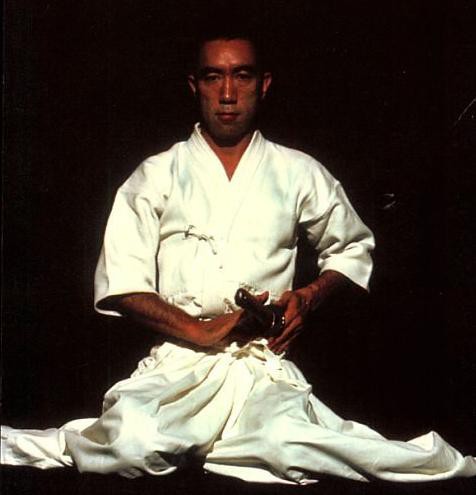
Naoko Inose’s Persona: A Biography of Yukio Mishima
By Riki Rei
Ex: http://www.counter-currents.com
Naoko Inose
Persona: A Biography of Yukio Mishima [2]
Berkeley: Stone Bridge Press, 2013

Editor’s Note:
This is a review of the Japanese edition of Persona, which is available now in English translation. I have read the translation, which appears to be much longer (864 pages) than the Japanese original. It is a treasure trove of information on Mishima. As an aside, the book’s unselfconscious frankness about sex and meticulous cataloging of genealogy and rank give one a sense of the consciousness of pre-Christian European society.
The Japanese version of Persona was originally published in November 1995 by Bungei Shunshu (literally meaning “the Literary Spring and Autumn”), an established and prestigious publishing house in Japan. The author, Mr. Naoki Inose, is a maverick and contentious figure who served as the vice governor of Tokyo municipality for a long time while also being a highly prolific and popular writer, having penned no less than 30 books so far, mostly on political, historical, and cultural themes. He was lately in hot water, being forced to step down from his official post due to alleged involvement in a murky financial scandal. His political and administrative stance, by post-war Japanese standards, is mainstream conservatism (center-Right).
The main body of the book has about 390 pages, including a prologue, four chapters, and an epilogue. There is also a brief postscript and an extensive bibliography which together occupy another nine pages. Considering the length of the book, it is surprising that there are only four chapters. The 17-page Prologue is a novel-like start, the main character of which is a former schoolmate of Yukio Mishima, and whose father also happened to be an old acquaintance and old schoolmate of Mishima’s father Azusa Hiraoka (Hiraoka is the real family name of Mishima), both pursuing the careers of elite imperial government officials, but with quite different fates. The author’s intention in starting the book in this way was to highlight Mishima’s family background so as to shed light on the factors, both familial and historical, that shaped and molded the early development of Mishima’s quite unorthodox and eccentric personality.
Indeed, the author goes far further than most would expect, expatiating on the overall political and social picture of Japan in the late Meiji and early Taisho periods at the very beginning of the 20th century, which, in the author’s presumed reckoning, might better disclose and clarify the political, socio-cultural, and family backdrops of Mishima’s childhood, which was characterized by a mixture of docile and rebellious elements. The first chapter, called “The Mystery of the Assassination of Takashi Hara,” lasts almost 80 pages. Here the author talks about the historical background of the time in which Mishima’s grandfather Sadataro Hiraoka saw his career blossom then wither due to larger and uncontrollable political struggles.
Sadataro was a capable functionary favored and appointed by then the Internal Minister and later the Prime Minister of Japan Takashi Hara, nicknamed the “Commoner Prime Minister,” to be the governor of Karabuto (the Southern half of the Sakhalin Island, ceded to Japan by treaty after the Russo-Japanese War of 1905 and forcibly annexed by Soviet Union at the end of WWII). However, due to some suspicious financial dealing and mishaps which were seized by political foes to attack him, and political sectarian conflicts during the Hara administration and after his assassination, Sadataro was relieved of his governorship, and from then on, Mishima’s family’s fortune started to take an abrupt and sharp downturn.
The second chapter, “The Insulated Childhood,” shifts attention from the rise and fall of the Hiraokas to Mishima himself. Mr. Inose spends 90 pages on Mishima’s complex and seeming contradictory childhood, using narration interspersed by flashbacks, and talks about the family life of the Hiraokas, the inter-relationship of family members, religion, Mishima’s grandparents and parents, especially his fastidious and arbitrary grandmother and his bemused father, against the background of decline of the family’s fortunes as a result of political failures of his grandfather. The author devotes large passages to explaining such matters as Mishima’s poor physical health, his tender, timid, and self-isolating personality as a child molded by the uncannily tense family ambience, and his father’s desperate last-ditch effort that brought about his narrow escape from the military draft in his late teen years near the end of the Second World War.
In this chapter, the author also starts to introduce Mishima’s passion for literature, which developed quite early, and his first attempts at writing, as well as his friendship and literary exchanges with several likeminded youths who gave him encouragement and inspiration. One point meriting emphasis is the influence of Zenmei Hasuda, a young imperial army officer, a steadfast traditionalist and nationalist, and a talented writer who killed a senior officer for cursing the Emperor and then committed suicide near the end of the war.
In the third chapter, that lasts almost 100 pages, the author continues to elaborate on the young Mishima’s literary and private life, culminating in his crowning literary achievement, the novel Kinkakuji translated as The Temple of the Golden Pavilion, which the author rightfully perceives as a landmark of the first phase of Mishima’s literary life, which is characterized by richly colored, minutely detailed, and often unsettling depictions of the inner lives of men among the ruins of post-war Japan — a formerly proud nation wallowing in nihilism.
It is noteworthy that Mishima’s works at this stage are rather different from the second stage of his literary activities, in which his works display a clearly nationalist and Rightist perspective. While Mishima’s exquisite writing reached its peak (or near peak) quite early in his life, his understanding of and awakening to the Japanese identity and nationalism centered on the monarchist tradition underwent a gradual process of maturation and was still immature and inchoate at his first literary stage, i.e. the time around his writing of Kinkakuji and other non-nationalist works, in contrast to his second literary phase of more virile, robust, and nationalistic works from Sun and Steel to The Sea of Fertility. In addition, Mishima’s dandyesque personal life of drinking, socializing, and mingling with fashion-conscious rich girls as described in this chapter was also indicative of his less than mature literature and personality at his stage of his life.
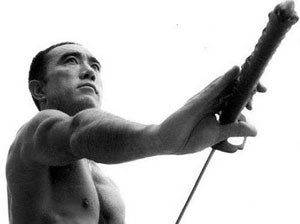 Chapter four, being the longest of the four chapters at about 110 pages, stands out as a relatively independent account of Mishima’s later years, dealing with both literature and political/ideological developments, leading to his failed coup, featuring his impassioned exhortation to the military servicemen and his ritual suicide by seppuku. This part covers the Mishima most familiar and interesting to Western readers. The chapter covers his body-building practices, his continued literary endeavors, consummated by the masterpiece The Sea of Fertility,his nominations for the Nobel Prize for Literature, and his increasingly active socio-political undertakings, including organizing his private militia troop, the Tatenokai (Shield Society), his serious and strenuous military training in Jieitai (Self-Defense Force), the post-war Japanese military — with the rather naïve aim of safeguarding the Emperor in concerted effort with the military in case of domestic unrest or even sedition at the hands of the leftist or communist radicals — and the events of this final day, November 25, 1970.
Although Persona has an overly long and detailed discussion of Mishima’s family history, the book still flows and proves an engaging read on the whole. The last chapter, though a bit overshadowed by the three preceding chapters, is definitely the most pertinent and fascinating of the whole, filled with interesting facts with insightful and trenchant observations.
Mishima’s veneration of the Emperor (Tenno) and ultimately the Imperial bloodline (Kotoh) of Japan, his candid criticism of Emperor Hirohito, and his final urge toward the coup and the subsequent suicide were already implied in his Kinkakuji, albeit symbolically as the impregnable top floor of the Kinkakuji pavilion itself. These themes became explicit in Voice of the Spirits of Martyrs published in 1966, which especially demonstrates Mishima’s mixed feelings if not overtly bitter resentment of Hirohito for his ignoble role in the failed Ni-Ni-Roku (Feb. 26) Coup of 1936[1] and his abject “I-am-a-human-not-a-god” announcement in 1945.[2] In the book, Mishima speaks through the mouth of a 23-year-old blind man, giving voice to the spirits of the Ni-Ni-Roku rebels and the Kamikaze pilots, i.e., the spirits of martyrs, speaking of the post-war economic boom coupled with the moral decay of Japanese society:
Under the benevolent imperial reign, the society brims with peace and stability. People smile albeit not without conflicts of interest and confusion of friends and foes. Foreign money drives and goads people, and pseudo-humanism becomes a necessity for making a living. The world is shrouded in hypocrisy while physical force and manual labor are despised. Youthful generations feel suffocated by torpor, sloth, drugs, and meaningless fights, yet they all move along the prearranged path of mundanity like meek sheep. People think about making money, even small amounts, for which they degrade their own value. Private cars multiply, whose stupid high speed renders people soulless. Tall buildings mushroom while the righteous cause and moral principles collapse, and the glittering glass windows of those buildings are just like fluorescent lights of implacable desires. Eagles flying high in the sky and break their wings, and the immortal glories are sneered at and derided by termites. In such a time, the Emperor has become a human.[3]
According to Mishima, the daily routines under the rapid economic growth of 1960s is but an ugly and hollow sign of happiness, all attributable to the fact that the Emperor Hirohito has proclaimed himself no longer a divine figure, a sacrosanct “Arahitogami”[4] but a mere human being devoid of sanctity. Mishima expressed this view via the collective voice of the spirits of the martyrs, that the Emperor has assumed a duality of image, one being the last sacred embodiment of the national myth, and the other being one kind smiling grandfather presiding over the economic rationalism of the current age, and it is the latter, the protector of the daily routines of the post-war Japan, that Mishima found intolerable, as the voice of the martyr spirits makes quite clear:
The reign of His Majesty has been dyed in two different colors. The period of the bloody red color ends with the last day of the war, and the period of the ash grey color begins from that day. The period of the authentic red color soaked with blood starts with the day when the utmost sincerity of the brotherly spirits was thrown away, and the period of that pallid grey color starts from the day of the ‘I-am-a-human’ announcement of His Majesty. The immortality of our deaths is thus desecrated.[5]
The “brotherly spirits” here refer to the soldiers of the failed 2.26 coup of 1936, failed by the Emperor Hirohito, by his headstrong refusal to understand and sympathize with their righteous patriotism and pure sincerity. Mishima also believed that the “I-am-a-Human” announcement of Hirohito in the wake of WWII rendered the heroic sacrifices of the lives of the Kamikaze Tokkottai (Special Attack Units) utterly futile and pointless.
According to the author, Mishima’s mother Shizue revealed a little secret about the writing of Voices of the Spirits of Martyrs on the occasion of the commemoration of the seventh anniversary of Mishima’s death, namely, the work was actually written one night. She recollected that Mishima handed the manuscript to her as he had always done and uttered “I wrote this in one stroke last night, and it’s now completed.” She read through it quickly, felt her “blood curdled,” and asked Mishima how he wrote this piece. Mishima answered: “I felt my hand moving naturally and the pen sliding on the paper freely. I simply couldn’t help it even if I wanted to stop my hand. Low voices as if murmuring could be heard across my room in the midnight. The voices seemed to be from a group of men. When I held my breath to listen carefully, I found they were the voices of the dead soldiers who had participated in the 2.26 Incident.” Shizue continued to remark that “I had known the saying about haunting spirits before but didn’t paid attention until that moment when I came to realize that Kimitake (Mishima’s real first name) was perhaps haunted by something, and I felt chills down my spine.”[6]
In the summer of the same year Voices of the Spirits of Martyrs was published, Mishima went to Kumamoto Prefecture on Kyushu Island, South Japan, and this trip would prove to have a decisively catalyzing effect on the consolidation of the nationalist and traditionalist ideology that guided his later literary and political actions, provided the urge for the writing of his final work The Sea of Fertility, and eventually paved the way for his suicide. The pivot of Mishima’s interest was the local Samurai warrior group Shinpuren (The League of Divine Wind) which was violently opposed to the various policies of westernizing reform enacted by the Meiji regime in the 1870s.
The original driving force of the Meiji Restoration was the idea of “Revering the Emperor and Repelling the Foreign Barbarians” (Sonnojoi), which stipulated that legitimacy came not from the Shogun but from the Emperor and that Western forces, epitomized by the dreaded “Black Ships,” must be decisively expelled.[7] Yet after abolishing the rule of the Tokugawa Shogunate by uniting around the rallying call of “Sonnojoi,” the newly-established Meiji regime immediately and drastically changed its course and started to purse a policy of reform: opening Japan to the outside world, imitating Western ways, and curbing or eliminating the traditional customs of Japanese society deemed by the new regime as un-Western and uncivilized. New laws were promulgated by the Meiji government: the former Shizoku (Samurai aristocrats) were prohibited from carrying swords in public places, a sacred and unalienable right in their eyes, marking their distinguished status from the masses. They were also forced to change their hairstyles (cutting off the buns at the back of their heads). These were the direct causes to the Insurrection of Shinpuren in 1876 (the ninth year of the Meiji period).
The members of Shinpuren were so thoroughly alienated and infuriated by the Meiji government that they went to comical lengths to reject modernity. For example, when banknotes replaced traditional metal coins, they refused to touch them with their hands, picking them up with chopsticks instead. They made long detours to avoid walking under electrical wires. If no detour was possible, they would cover their heads with a white paper fan and pass hurriedly under the wires. They cast salt on the ground after meeting anyone dressed in western garb. When they decided to revolt against the Meiji government, they insisted on using only traditional bladed weapons like the sword (Katana), spear (Yari), and cane knife (Naginata), instead of the “dirty weapons of the western barbarians.”
This group, consisting of about 170 men, launched a night-time attack on the Kumamoto garrison. The garrison troops were caught off guard and initially panicked. But they regrouped and started to fire volleys of bullets into the armor-wearing, sword-wielding Shinpuren warriors storming at them. The samurai fell one after another, and altogether 123 warriors died in the battle or committed seppuku after sustaining serious wounds, including a dozen 16- or 17-year-old teenagers.
It was indeed a sad and heart-wrenching story. Why were they willing to die to protect their right to carry samurai swords? It is hard to comprehend it by the commonsense of our de-spiritualized modern age. The rebellion was mocked by newspapers in Tokyo as an anachronism even at the time, let alone in post-War Japan. Nevertheless, the Shinpuren samurai believed they were serving the cause of righteousness and justice, and it was their spotless sincerity and combination of faith and action that deeply impressed Mishima. The following passage his comment on Shinpuren in a dialogue with Fusao Hayashi[8]:
Talk about the thoroughness of thinking, when thinking expresses itself in an action, there are bound to be impurities entering it, tactics entering it, and human betrayals entering it. This is the case with the concept of ideology in which ends always seem to justify means. Yet the Shinpuren was an exception to the mode of ends justifying means, for which ends equal means and means equal ends, both following the will of gods, thus being exempt from the contradiction and deviation of means and ends in all political movements. This is equivalent to the relation between content and style in arts. I believe there also lies the most essential, and in a sense the most fanatical sheer experimentation of the Japanese spirit (Yamatodamashii).[9]
As hinted previously, the trip to Kumamoto and the examination of the historical record of Shinpuren gave Mishima a model and meaning for his future suicide. In fact, three years before his suicide he published a piece in the Yomiuri Shinbun, in which he stated rather wistfully the following words: “I think forty-two is an age that is barely in time for being a hero. I went to Kumamoto recently to investigate the Shinpuren and was moved by many facts pertaining to it. Among those I discovered, one that struck me particularly was that one of the leaders of theirs named Harukata Kaya died a heroic death at the same age as I am now. It seems I am now at the ceiling age of being a hero.”[10] From such clues, which are actually numerous, the author argues that Mishima started at about forty to reflection on his own death and probably settled on terminating his own life upon the completion of his four-volume lifework The Sea of Fertility.
The heavy influence of Shinpuren is manifest in the second volume of The Sea of Fertility, namely Runaway Horses, in which the protagonist Isao Iinuma, a Right-wing youth, holds a pamphlet titled The Historical Story of Shinpuren and was depicted as possessing an burning aspiration of “raising a Shinpuren of the Showa age.” And the full content of the aforementioned book was inserted into Runaway Horses in the form of a minor drama within a major drama. The historical background of the novel was set in early 1930s. The 19-year-old Isao attempts to assassinate a man called Kurahara, known as the king fixer of backdoor financial dealing, who was in Mishima’s eyes the representation of Japanese bureaucrats who considered the “stability of currency” as the ultimate happiness of the people and preached a cool-headedly mechanical if not callous way of crafting economic policies. Kurahara was quoted saying, “Economics is not a philanthropy; you’ve got to treat 10% of the population as expendable, whereby the rest 90% will be saved, or the entire 100% will die” — the self-justifying words of a typical ultra-realist and even a nihilist — a stark contrast to the pre-War ideal of the Emperor as an absolute patriarch, a profoundly benevolent feudal ruler who guarded the identity, history, and destiny of the Japanese people — a metaphysical figure that Mishima embraced, held dear, and vowed to defend and revive regardless of cost.
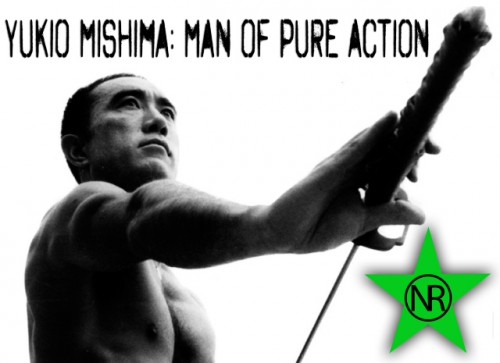
In sum, Mishima’s spiritual and historical encounter with Shinpuren and his military training can be viewed as elements in the design of his own death, as steps ascending to the grand stage. Shortly after concluding his military training, Mishima wrote a short book, A Guide to Hagakure, on Jocho Yamamoto’ famous summation of Bushido doctrine, Hagakure. Mishima’s Guide also illuminates his final action:
One needs to learn the value of the martial arts to be pure and noble. If one wants to both live and die with a sense of beauty, one must first strive to fulfill necessary conditions. If one prepares longer, one will decide and act swifter. And though one can choose to perform a decisive action oneself, one cannot always choose the timing of such an action. The timing is made by external factors, is beyond a person’s powers, and falls upon him like a sudden assault. And to live is to prepare for such a fateful moment of being chosen by destiny, isn’t it?! Hagakure means to place stress on a prior awareness and a regulation of the actions for such preparations and for such moments that fate chooses you.[11]
It is exactly in such a fashion that Mishima prepared for and embraced his self-conceived and fate-ordained final moment, to serve a noble, beautiful, and righteous cause.
Notes
1. Emperor Hirohito was angry at the assassinations of his trusted imperial ministers at the hands of the rebel soldiers. He vehemently refused to lend an ear to the sincere patriotic views of the rebels, refused to side with them, and immediately ordered the suppression of the coup and had the leaders tried and executed quickly.
2. Emperor Hirohito made this announcement partly due to the pressure of the US occupation forces, i.e. the GHQ, and partly willingly, as a cooperative gesture if not an overtly eager attempt to ingratiate himself with the conqueror.
3. Naoki Inose, Persona: A Biography of Yukio Mishima (Tokyo: Bungei Shunshu Press, 1995), p. 323.
4. Meaning literally “a god appearing in human form,” a highly reverential reference to the Japanese Emperor until the end of WWII.
5. Persona, pp. 323, 324.
6. Persona, p. 324.
7. American naval fleets commanded by Commodore Matthew Perry to force Japan to open itself to the world, which first arrived in 1853 and once again in 1854.
8. A famous and highly accomplished literary figure of contemporary Japan who is known for being flamboyant and highly contentious writer and literary critic. As a young man, he was a Leftist, he turned toward the Right-wing nationalism in the 1930s and remained a staunch and steadfast nationalist during the war and throughout the post-war years until his death.
9. Persona, pp. 327, 328.
10. Persona, p. 333.
11. Persona, p. 341.
Article printed from Counter-Currents Publishing: http://www.counter-currents.com
URL to article: http://www.counter-currents.com/2014/09/naoko-inoses-persona-a-biography-of-yukio-mishima/
URLs in this post:
[1] Image: http://www.counter-currents.com/wp-content/uploads/2014/09/persona.jpg
[2] Persona: A Biography of Yukio Mishima: http://www.amazon.com/gp/product/1611720087/ref=as_li_tl?ie=UTF8&camp=1789&creative=390957&creativeASIN=1611720087&linkCode=as2&tag=countecurrenp-20&linkId=62KCMLUZAWELMOLQ
00:08 Publié dans Littérature, Livre, Livre | Lien permanent | Commentaires (0) | Tags : livre, littérature, littérature japonaise, lettres, lettres japonaises, yukio mishima, japon |  |
 del.icio.us |
 |
 Digg |
 Facebook
Brigneau: qui suis-je?
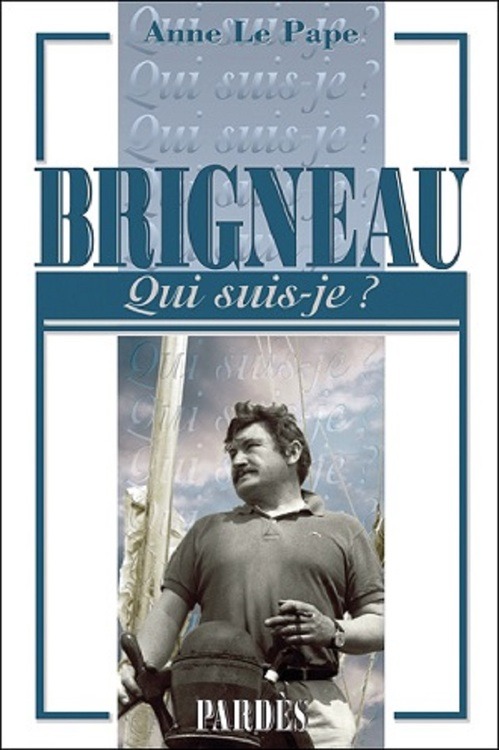
" Sous de multiples noms, François Brigneau a été journaliste, travaillant aussi bien pour la presse à grand tirage que pour des feuilles confidentielles voire clandestines. En 1965, rédacteur en chef d’un jeune mais vigoureux hebdomadaire, un sondage IFOP le désigna comme le deuxième journaliste le plus connu de France.
En 2012, à sa mort, le quotidien Le Monde, qui mettait un point d’honneur à ne pas le citer, se trouva toutefois obligé de lui consacrer une nécrologie. Il laisse une œuvre publiée abondante et variée : chroniques en langue parlée, romans policiers (il reçut en 1954 le Grand prix de littérature policière pour La beauté qui meurt), reportages à travers le monde, évocations de lieux, livres historiques, souvenirs de la vie journalistique et politique, etc.
Il a été apprécié par des hommes aussi différents que Frédéric Dard et Jean Madiran, Céline et Hubert Beuve-Méry, Robert Brasillach et Jean Gabin, Arletty et Marcel Pagnol, sans oublier Pierre Lazareff ou Alphonse Boudard. Pourquoi alors, pour reprendre un mot d’Alexandre Vialatte, fait-il aujourd’hui partie des auteurs «notoirement méconnus»? Tout simplement parce qu’au long de sa vie, fils d’un instituteur syndicaliste révolutionnaire mais s’étant toujours défini comme un Français de souche bretonne, François Brigneau, dont la plume valait une épée, a obstinément et fidèlement choisi « le mauvais camp», celui de «la France française», selon sa propre expression.
Ce « Qui suis-je?» Brigneau constitue la première biographie de ce journaliste de combat. Il s’appuie sur de nombreux entretiens avec lui et sur des archives familiales. “
00:07 Publié dans Livre, Livre | Lien permanent | Commentaires (0) | Tags : françois brigneau, livre, france, polémique, polémistes | | del.icio.us | | Digg | Facebook
lundi, 22 septembre 2014
Réquisitoire contre un système liberticide
 EN LIBERTE SURVEILLEE
Réquisitoire contre un système liberticide de Georges Feltin-Tracol
Pierre Le Vigan
Ex: http://metamag.fr
Du même coup, les humoristes qui ont le malheur de faire de l’humour sur des sujets décrétés « sensibles », et a fortiori quand ils sont tabous, sont privés de toute liberté d’expression, comme si la loi devait se faire l’arbitre des convenances, des élégances, des bonnes manières. C’est ce qui est arrivé à Dieudonné et c’est ce que relate Georges Feltin-Tracol dans En liberté surveillée.
Son ouvrage a le grand mérite d’aborder, au travers d’exemples nombreux et significatifs, le processus de limitation ou même de suppression des libertés en France. Nous sommes passés d’un Etat « territorial et militaire » à un Etat « pénal, policier et carcéral ». L’ennemi de l’Etat est désormais à l’intérieur. La grande menace est interne, et le contrôle social (et la préemption fiscale) devient la grande affaire de l’Etat. Il y déploie, sous les ministres de l’Intérieur successifs, quelle que soit leur « couleur » politique, une grande énergie, toujours dirigée dans le même sens, c’est-à-dire visant à ne laisser subsister que les « petites différences », les « petits oppositions », les marges folkloriques du système, celles qui ne le mettent pas en cause, mais en constituent en quelque sorte le colifichet décoratif.
Pour le contrôle de tous et l’intégration de tous au grand ordre mondial de la sécurité et de la marchandise, tous les moyens de l’Etat sont mobilisés, mais aussi ceux des groupes privés proches de l’Etat, des institutions judiciaires, etc. Louis Althusser appelait cela les appareils idéologiques d’Etat. Il convient de parler aujourd’hui plutôt d’ « Etat profond » pour mieux caractériser la forme actuelle de ce réseau, réseau tissé de convenances non dites mais évidentes, de connivences, d’ambitions, de renvois d’ascenseurs, de dissuasion aussi si nécessaire. Une carrière peut aussi vite être accélérée qu’elle peut être brisée.
Le domaine sociétal fait partie du champ d’application de la nouvelle intolérance. Plus les innovations pseudo-égalitaires, en fait niveleuses, et hostiles à toute sexuation, sont délirantes et de mauvais goût, plus elles sont encouragés, voire même obligatoires. Professeur(re)s et recteur(e)s prônent la « journée de la jupe » avec le soutien de toute l’institution éducative. La Grande Rééducation est en marche, et elle marche vite (aujourd’hui avec la bien jolie et si bien utilisée Najat Vallaud-Belkacem, Young leader 2006 de la French-American Foundation, tout comme l’atlantiste extrême Jean-Marie Colombani, Aquilino Morelle, Yves de Kerdrel et tant d’autres, représentatifs de toutes les fausses gauches et les fausses droites que le bon Dieu voudra bien imaginer).
Il s’agit, avec la révolution sociétale déjà bien engagée, d’éradiquer toutes les différences. Il s’agit d’aller vers une société androgyne. Pour rééduquer, la méthode est toute trouvée : il s’agit de considérer le peuple comme une classe d’élèves, et le gouvernement, aujourd’hui « socialiste », comme de bons instituteurs(trices). Cela tombe bien puisque, avec la gauche, l’idéologie du progrès se caractérise par le fait que l’homme (la femme aussi !) est considéré comme une table rase, sur laquelle il convient, par l’éducation, d’inscrire les idées adéquates et de programmer le comportement adéquat. C’est ainsi que la loi s‘invite, nous rappelle Feltin-Tracol, dans le lit des hommes et des femmes, statuant sur tel homme « pas assez actif » sexuellement avec sa conjointe. Délire occasionnel ? Bien plutôt, c’est l’aboutissement logique d’un mouvement de publicisation de l’espace privé (qui est le revers de la privatisation de la politique, notamment par la création de milices privées à la place des armées).
Plus aucun acte n’est d’ordre privé, l’Etat a le droit et même le devoir de regard sur tout. Il ne s’agit plus seulement de juger ce qui est dit mais ce qui pourrait être dit – jurisprudence Dieudonné, on interdit le spectacle avant que soient peut-être tenus des propos qui tomberaient sous le coup de la loi. Il s’agit même d’investiguer sur ce qui pourrait être pensé sans être dit. Le désir non conforme est interdit, par exemple celui éprouvé depuis quelques milliers de générations par des hommes pour des femmes faisant profit de leur charme. L’exemple de la prostitution, que le gouvernement veut interdire, est emblématique. Il s’agit non d’interdire une offre mais de mettre au pénal la demande qui s’exprimerait en face de cette offre. On ne fait pas plus hypocrite. La parole des femmes précisant se prostituer volontairement est niée. On ne saurait trop remarquer l’importance de ce retournement. La modernité a été l’assomption du sujet. Or, nous n’en sommes plus là du tout. Le sujet est agi dans certains domaines, il n’est pas libre. Voilà ce que nous dit l’idéologie. Qui le sait mieux que lui ? Qui sait « qui agit qui » mieux que le sujet ? Qui peut nous dire par qui les prostituées, y compris celles qui s’affirment libres, sont agies ? La réponse est simple, ce sont les associations qui peuvent nous dire le vrai, ces fameuses associations, celles légitimitées par des financements publics (ce qui assure le bouclage du système : l’Etat n’est pas en première ligne, il met en première ligne des structures qui dépendent de lui. De même, la Nuit de Cristal ne venait pas officiellement de l’Etat, mais de mouvements pseudo-« spontanés » de nazis de base). Ces associations ne sont pas n’importe lesquelles. Ce sont les associations dites féministes, celles qui sont à la fois le produit de l’idéologie dominante et ses agents de contrôle.
Les bien-pensants développent ainsi, comme le remarque fort bien G. Feltin-Tracol un véritable discours d’exclusion. A l’égard de qui ? A l’égard des gens simples, normaux, des sans voix, des sans grades, des sans associations. Il s’agit de changer le peuple à coups de réformes sociétales. Et c’est finalement plus facile que d’être accepté ou aimé par le peuple.
Georges Feltin-Tracol a le mérite d’aller à l’origine de ce processus de réduction toujours plus grande des libertés. L’idéologie « de gauche » a en fait gagné toute la droite. L’idéologie du genre n’a pas été mise en place par Vincent Peillon et Najat Vallaud-Belkacem, elle date – au moins –, dans sa prise en charge institutionnelle, de Luc Chatel. Pourquoi ? Parce que la droite et la gauche ont tout intérêt à détourner le peuple des problèmes économiques, sociaux et politiques. Parce que les gouvernants ont tout intérêt à faire du « sociétal » à la place du social qu’il ne peuvent plus faire, pour cause de désindustrialisation, de chômage de masse, de choix mondialistes et du soutien de toute la classe politique à la financiarisation de l’économie. Il s’agit soit d’endormir le peuple soit de lui fournir des dérivatifs.
Il s’ajoute à cela autre chose, très présent dans l’affaire Dieudonné : la culpabilisation due à la reconnaissance par Chirac de la responsabilité de la France (et non seulement du régime de Vichy) dans les déportations de Juifs pendant l’Occupation. A partir de là s’est répandu dans les élites une course au « rachat ». Il s’agit de ne plus jamais être en retard d’une lutte pour les droits humains. Mais ceux-ci n’ont plus guère de rapports avec les droits de l’homme de 1789 (même s’ils en sont l’aboutissement logique et incestueux), il s’agit désormais du « pourtoussisme », des droits pour tous à tout. L’indifférenciation généralisée est à l’horizon de cette lutte « pourtoussiste ». Ce projet est logique : pour l’idéologie dominante, les identités, les peuples n’existent pas. La France ? C’est une marque touristique qu’il s’agit de bien vendre. C’est au mieux la somme des entreprises françaises. C’est tout, sauf une patrie. Sexe masculin et féminin n’existent eux-mêmes guère plus que les peuples. Il n’y a plus d’hommes mais des gens qui ont une « orientation hétérosexuelle ». De même, il n’y a plus de Français mais des gens qui ont une « orientation française » (ou pas, et on appelle cela la « diversité »).
Indifférenciation, sans-frontièrisme, mondialisation, tels sont les fondamentaux de l’idéologie dominante. Elle se raidit. Elle recherche le contrôle sur tout : sur les semences, qui ne sauraient être produites par tout un chacun (loi d’orientation agricole du 5 janvier 2006), sur les médicaments, sur les idées, qui doivent être agréées, sur les comportements, qui doivent être conformes aux normes jugées « appropriées » par l’idéologie, sur le porte-monnaie des citoyens, qui doivent être endettés – sous prétexte de « relancer » la croissance – ce qui permet de les contrôler par le crédit.
Nous en sommes là. C’est très exactement un néo-totalitarisme post-démocratique. Il s’agit, comme avec tous les totalitarismes, de réduire la diversité du vivant. Tout doit être contrôlé et marchandisé. Or, le contrôle nécessite de rationaliser le vivant. Voilà les enjeux que Georges Feltin-Tracol nous aide à comprendre. Ce qui n’est pas mince. A lire pour retrouver (ou garder !) une joyeuse lucidité. Et l’envie d’enlever leurs masques aux imposteurs.
00:05 Publié dans Livre, Livre, Nouvelle Droite | Lien permanent | Commentaires (0) | Tags : georges feltin-tracol, surveillance, espionnage, liberté surveillée, livre, nouvelle droite | | del.icio.us | | Digg | Facebook
dimanche, 21 septembre 2014
En liberté surveillée...

En matière de liberté d’expression, la France donne facilement des leçons aux autres. Mais est-elle la mieux placée pour cela ?
Spectacles de Dieudonné interdits, livres édités par Soral ou d’autres caviardés, manifestations violement dispersées, mouvements patriotiques dissouts… c’est tout le système français, mais aussi occidental, que met en cause Georges Feltin-Tracol.
Étayé par de nombreux exemples pris dans la presse officielle, il démontre que loin de demeurer le « pays des hommes libres », la France est devenue, suite au sécuritarisme développé par l’UMP sous Sarkozy et appliqué avec zèle par Valls et par Hollande, un Hexagone surveillé où comportements et pensées sont scrutés en permanence.
Aujourd’hui, il est préférable d’être un délinquant de droit commun plutôt qu’un opposant politique convaincu au mondialisme.
En sept chapitres d’observations accablantes et parfois terrifiantes, Georges Feltin-Tracol examine l’incroyable et lente évaporation des libertés publiques avant d’esquisser quelques réponses révolutionnaires, populaires et identitaires.
Mais, faites attention, le simple fait de lire ce livre risque de vous rendre suspect aux yeux du Pouvoir…
00:05 Publié dans Livre, Livre, Nouvelle Droite | Lien permanent | Commentaires (0) | Tags : georges fltin tracol, nouvelle droite, surveillance, livre, actualité | | del.icio.us | | Digg | Facebook
vendredi, 19 septembre 2014
D'Annunzio ou le roman de la Belle Epoque
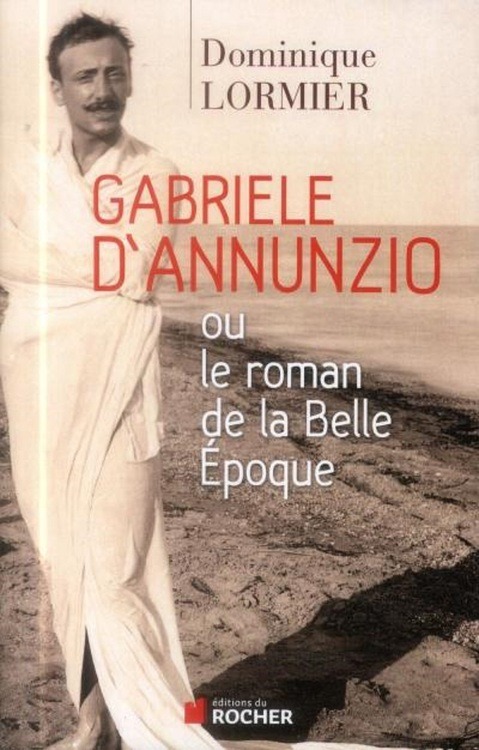
" Considéré comme le plus grand écrivain italien de son époque, Gabriele d’Annunzio (1863-1938) est l’une des figures centrales de la Belle Époque, de la Grande Guerre 1914-1918 et des Années Folles. Enfant surdoué, poète sublime, romancier mondialement reconnu, auteur d’œuvres de théâtre jouées par les plus grands, il multiplie les aventures amoureuses avec les plus belles femmes de son époque, duchesses et comtesses, artistes et comédiennes, fréquente les personnalités les plus illustres de son époque, comme Edmond Rostand, Marcel Proust, Maurice Barrès, Anna de Noailles, André Gide, Anatole France, Pierre Loti, Robert de Montesquiou, Marie de Régnier, Romaine Brooks, Jean Cocteau, Ida Rubinstein, Claude Debussy. Il mène la vie la plus mondaine qui soit, allant de réceptions en spectacles, mais peut également s’isoler dans la recherche d’une authentique quête mystique. Ami des humbles et des pauvres, il rencontre des personnages pittoresques comme une célèbre guérisseuse en Gironde, ou l’un des derniers bergers échassiers des Landes. D’Annunzio joue un rôle déterminant dans l’entrée en guerre de l’Italie en 1915, aux côtés des Alliés. Aviateur, marin et fantassin, il se couvre de gloire sur le front austro-italien, lors d’exploits militaires retentissants. A Fiume, il rédige une constitution révolutionnaire, refuse de rejoindre le fascisme de Mussolini, prend sa retraite au bord du lac de Garde. Il fait tout son possible pour empêcher une alliance italo-allemande contre la France et va même le payer de sa vie en 1938. "
00:05 Publié dans Littérature, Livre, Livre | Lien permanent | Commentaires (0) | Tags : gabriele d'annunzio, livre, littérature, littérature italienne, italie, lettres, lettres italiennes | | del.icio.us | | Digg | Facebook
mercredi, 17 septembre 2014
Tour d'Europe: le livre va sortir!
 Notre livre va enfin sortir !
Chers amis, chers inconnus qui ont suivi notre aventure, chers internautes qui découvrent notre blog au hasard de la Toile,
Le 21 septembre 2009, nous partions pour un tour d'Europe à pied sur les traces des légendes européennes. Nous nous étions promis d'écrire le récit de nos aventures.
Après plusieurs essais infructueux avec des éditeurs et de longs mois de flottement, nous avons décidé de tenir notre promesse !
Le récit de notre aventure, uniquement numérique pour l'instant, sera disponible ce dimanche 21 septembre 2014 sur ce blog.
Veuillez par avance excuser les éventuelles fautes de syntaxe ou d'orthographe, nous n'avons pas bénéficié de relecture professionnelle. Mais malgré ces maladresses, nous espérons qu'en lisant les paragraphes alternés de l'une et de l'autre, vous sentirez la bonne odeur du feu de bois, les crampes après une longue journée de marche, la joie d'un bon repas avec des hôtes inattendus.
Cinq années exactement après notre départ, nous vous souhaitons une bonne lecture et nous vous donnons un dernier conseil ; qu'aujourd'hui encore, nous ne regrettons pas d'avoir suivi : surtout, n'hésitez pas, lancez vous à l'aventure !
Partagez l'information et rendez-vous nombreux sur ce blog dimanche pour vous procurer notre livre (3.99€)
Fanny et Mathilde
11:38 Publié dans Livre, Livre, Mouvements de jeunesse | Lien permanent | Commentaires (0) | Tags : mouvement de jeunesse, tour d'europe, livre | | del.icio.us | | Digg | Facebook
Les migrations expliquées aux nuls...

Les migrations expliquées aux nuls...
Il y avait du travail,
Gourévitch l'a réalisé!
Est-il possible de confier la rédaction d'un ouvrage de vulgarisation sur l'immigration à un auteur souvent cité par l'extrême droite ? Les Editions First s'y risquent avec Les Migrations pour les nuls de Jean-Paul Gourévitch, en librairie ce jeudi 11 septembre et déjà contesté par des spécialistes. Ce docteur en sciences de la communication, auteur prolixe de livres sur l'Afrique ou pour enfants, est connu pour ses travaux sur les coûts de l'immigration qui lui ont valu d'être cité à plusieurs reprises par la Droite nationale et identitaire. Loin des ragots bobos des astiqueurs de niaiseries progressistes. A lire d’urgence.
Les migrations pour les nuls, par Jean-Paiul Gourevitch, First éd., 454 p., 23 €
00:05 Publié dans Livre, Livre | Lien permanent | Commentaires (0) | Tags : jean-paul gourévitch, migrations, livre, france | | del.icio.us | | Digg | Facebook
mardi, 16 septembre 2014
Jacques Vergès: l'ultime plaidoyer

" Durant les semaines ayant précédé sa mort en août 2013, Jacques Vergès, au travers de longs entretiens avec François Dessy, revient sur son parcours d’homme et d’avocat, ses combats, ses échecs, ses certitudes et ses doutes. Résistant, anticolonialiste et avocat entre autres de Klaus Barbie et de Carlos, considéré comme l’un des avocats les plus brillants de sa génération, homme au parcours hors du commun entrecoupé par une disparition restée mystérieuse entre 1970 et 1978 et sur laquelle il a toujours refusé de s’expliquer…, Jacques Vergès a pris part aux débats et aux combats qui ont marqué la société ces soixante dernières années. Ce livre nous invite à les (re)découvrir, ainsi qu’à réfléchir sur les limites d’un métier où l’on défend parfois « l’indéfendable ». "
00:05 Publié dans Livre, Livre | Lien permanent | Commentaires (0) | Tags : livre, france, jacques vergès | | del.icio.us | | Digg | Facebook