Max Funk
Ex: https://lesobservateurs.ch/2021/04/25/
Il y a une nouvelle religion. Elle se répand comme un raz-de-marée sur toutes les facettes de la culture occidentale, façonnant et redéfinissant la société sur son passage. Cette religion se présente sous l’apparence trompeuse de la compassion et de la justice, mais elle cache une idéologie maléfique incompatible avec les valeurs occidentales et avec la vision chrétienne du monde. Ce mouvement n’a pas commencé à Minneapolis le 25 mai avec la mort de George Floyd. Mais cet événement a marqué un tournant pour une idéologie qui se développait depuis des décennies. Si l’on n’y prend pas garde, cette nouvelle religion pourrait conduire à un démantèlement complet de la culture occidentale.
Il existe de nombreux termes pour désigner la situation dans laquelle nous nous trouvons actuellement: wokeness, politiquement correct, cancel culture en sont quelques-uns, mais ils ne résument qu’une partie du phénomène. Le marxisme culturel, le néo-marxisme, la justice sociale, la politique de l’identité et la théorie critique sont des descripteurs plus larges. Nous aimerions utiliser un terme qui rende bien compte de la religiosité du mouvement: le wokisme.
Le wokisme est une religion. Bien qu’il n’ait pas été organisé en une structure religieuse formelle, il a toutes les fonctions d’une doctrine religieuse. Il possède une épistémologie (théorie de la connaissance) qui lui est propre, une évaluation de la condition humaine et un récit de rédemption. Mais d’où vient-elle?
La théorie critique
Au début du 20e siècle, une école de philosophie allemande appelée l’école de Francfort a développé une philosophie sociale appelée théorie critique. En un mot, la «théorie critique» critique la culture et remet en question les structures de pouvoir sous-jacentes de la société. Il s’agit d’un mouvement visant à «libérer les êtres humains des circonstances qui les asservissent», en réinterprétant la culture occidentale comme une histoire des oppresseurs contre les opprimés. Pour la théorie critique, les seules choses qui existent sont les hiérarchies de pouvoir, et ces hiérarchies doivent être démantelées. L’objectif, déclaré ou non, de ce mouvement, n’est rien de moins que le démantèlement complet de la culture occidentale et sa reconstruction à partir de zéro.
 La théorie critique a commencé à s’imposer parmi les universitaires occidentaux dans les années 90 et a fini par s’infiltrer dans presque toutes les universités du monde occidental. Ces dernières années, l’idéologie a quitté l’université et a fait souche dans les médias et la culture d’entreprise, s’imposant comme la principale culture morale des sociétés occidentales. Actuellement, les principales lignes de démarcation entre oppresseurs et opprimés sont la race, le sexe et l’identité de genre.
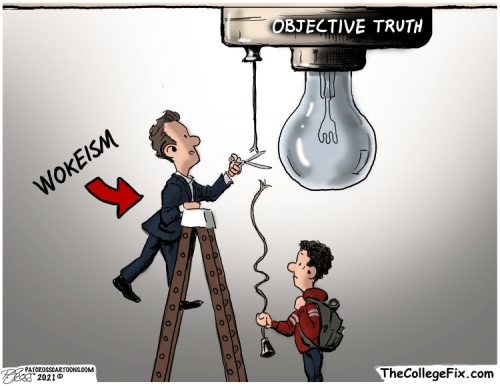
Il ne s’agit pas seulement d’un mouvement politique ou social dans le cadre des valeurs traditionnelles des Lumières. Des concepts tels que la logique, la science et la raison sont considérés comme des outils du patriarcat blanc oppresseur. Des valeurs comme l’individualisme, le travail assidu, la ponctualité et la gratification différée seraient comprises comme perpétuant la suprématie blanche. La théorie critique est devenue bien plus qu’une philosophie sociale et constitue le principal moteur philosophique de la nouvelle religion civile du wokisme.
L’objectif, déclaré ou non, de ce mouvement n’est rien de moins que le démantèlement complet de la culture occidentale et sa reconstruction à partir de zéro.
La nouvelle religion
Pourquoi qualifier le wokisme de nouvelle religion? Le fait est que la montée de l’humanisme séculier au cours des 70 dernières années a créé un trou en forme de religion dans notre culture. Le sécularisme, malgré toute sa domination culturelle, n’a pas réussi à offrir une philosophie solide du sens et du but, ni à fournir un cadre moral sur la façon d’agir dans le monde, à part «être une bonne personne parce que l’alternative est indésirable pour tout le monde». Au contraire, le wokisme a développé sa vision de la réalité avec son propre ensemble de valeurs et de récits. Des cendres de l’humanisme séculier naît une nouvelle religion civile.
 Le wokisme offre tout ce que le sécularisme n’a pas réussi à fournir, et a rapidement comblé le trou en forme de Dieu qui restait dans notre culture. Il revendique sa propre version de la vérité, de la justice, de la droiture, du péché et du jugement. Il donne un sens à ses adhérents, avec son méta-narratif de conflit sociétal, de lutte pour le pouvoir et de lutte pour la liberté rédemptrice. Le démantèlement des structures de pouvoir oppressives contribue à donner un sens à l’individu et à la collectivité. Ces valeurs sont solidifiées dans des rituels publics tels que la formation à la sensibilité ou la confrontation avec la fragilité blanche. Il y a un fort aspect communautaire, et les gens ont le sentiment de faire partie de quelque chose de plus grand qu’eux. L’hypothétique société utopique future, libérée des maux du système oppressif actuel, est également inhérente à ce «progrès social». Mais surtout, le wokisme offre ce que tout cœur humain pécheur désire profondément, à savoir une justification morale. Les gens croient qu’ils agissent de manière juste dans le monde, et reconnaissons-le, c’est parfois vrai. Mais souvent, tout ce qu’ils font n’est qu’une simple posture, ou pire, une action destructrice.
Cela ne veut pas dire que le wokisme offre une absolution totale à ses adeptes; en fait, c’est plutôt le contraire. Démolir des structures de pouvoir oppressives signifie que vous êtes aussi profondément conscient de vos préjugés. James Lindsay, un mathématicien, universitaire et athée, a récemment déclaré lors d’une émission de Joe Rogan:
«Certaines religions regardent vers le haut, elles regardent Dieu, et elles ont peur du péché, mais elles font attention à Dieu, et elles pensent au renouveau, elles pensent à la rédemption, elles pensent au pardon. Et puis certaines religions regardent vers le bas, et ne font que regarder le péché. Si vous regardez vers le haut, alors la religion peut être formidable, elle peut conduire les gens dans le développement spirituel, la communauté et ainsi de suite, mais si vous regardez vers le bas, si vous êtes obsédé par le péché, vous allez commencer à être obsédé par le péché de tout le monde aussi.»
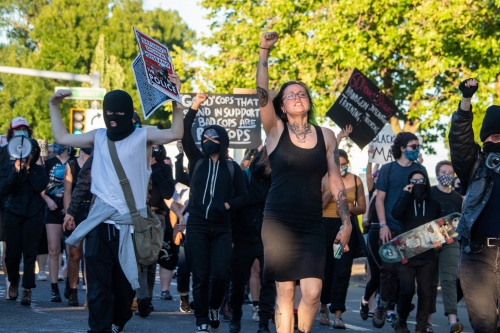
Les idées de péché (privilège) de droiture (victimisation) et de damnation (canceling) sont bien établies au sein du wokisme. S’il propose des rites de pénitence (la «prise de conscience de ses privilèges», la «solidarité avec les minorités») et de piété (s’agenouiller pendant l’hymne ou poster des carrés noirs), ce qu’il n’offre jamais, c’est le pardon. Dans une récente interview avec Dave Rubin, le théologien Nathan Finochio a décrit le phénomène:
«Si je suis enfermé dans le groupe des oppresseurs, sans possibilité de m’en échapper, il ne peut pas y avoir de pardon, s’il n’y a pas de repentance, n’est-ce pas? C’est bien ça l’idée? Je suis donc perpétuellement un pécheur, et je vais continuer à perpétuer le groupe oppresseur, et il n’y a rien que je puisse faire. Il est évident que la cancel culture est en fait la conclusion logique de la théorie critique... parce qu’il faut se débarrasser de la classe oppressive.»
Différences avec le christianisme
Ce qui est si abominable dans le wokisme, c’est qu’il joue régulièrement sur les meilleures motivations des gens, comme la compassion et le désir de justice. La plupart des gens ont un désir sincère de voir la vie des autres s’améliorer, et de nombreux chrétiens se sont engagés dans ces idées comme si elles étaient en accord avec les enseignements du Christ. Bien sûr, il existe des inégalités dans notre société, où la justice est nécessaire. Il n’en reste pas moins que le wokisme interprète différemment les concepts de vérité, de justice et d’équité et ne laisse aucune place à d’autres façons d’aborder ces questions. Le wokisme est incompatible avec la vision biblique du monde, car il s’en distingue de plusieurs façons essentielles.
Premièrement, il attribue une culpabilité ou une innocence intrinsèque à l’individu en fonction de son identité de groupe, indépendamment de ses actions individuelles.
Proverbes 17:15: Celui qui justifie le méchant et celui qui condamne le juste sont tous deux en abomination au Seigneur.
La croyance qui est au cœur de la culture occidentale, c’est que chaque individu est créé à l’image de Dieu et mérite donc intrinsèquement la dignité et le respect. Cette idée est également à la base de notre système juridique. Dans le cadre moral biblique, l’individu est responsable de ses actes devant Dieu. L’idée que le péché ou la justice puissent être hérités en fonction des caractéristiques naturelles d’une personne, comme la race, le sexe ou l’ascendance, a été réfutée lorsque le Seigneur a parlé au prophète Ézéchiel.
Ézéchiel 18:1-3: La parole du Seigneur me fut adressée: «Que veux-tu dire en répétant ce proverbe sur le pays d’Israël: «Les pères ont mangé des raisins aigres, et les dents des enfants en ont été agacées»? Je suis vivant, déclare le Seigneur Dieu, et ce proverbe ne sera plus utilisé par vous en Israël. Voici, toutes les âmes sont à moi; l’âme du père comme l’âme du fils sont à moi; l’âme qui pèche mourra.
Le Nouveau Testament va encore plus loin en disant que «désormais, donc, nous ne considérons plus personne selon la chair.» (2 Corinthiens 5:16). En tant que disciples de Jésus, nous ne devons pas juger les gens sur la base d’identifiants naturels (race, âge, sexe, etc.); au contraire, nous devons les évaluer sur la base des normes morales des Écritures et les traiter comme des égaux, créés par Dieu.
Deuxièmement, le récit de la rédemption que le wokisme met en avant est totalement antinomique au récit chrétien. Les récits bibliques présentent le modèle de l’individu, en relation avec Dieu, comme le mécanisme principal de la rédemption du monde. Ce modèle culmine avec le Christ, l’homme parfait et le sacrifice pour les péchés du monde. Notre croyance en son œuvre achevée et notre soumission à sa seigneurie sont notre motivation pour agir avec justice dans le monde. Par conséquent, le comportement chrétien idéal est celui de la miséricorde, de la paix, de la bonté et du pardon.
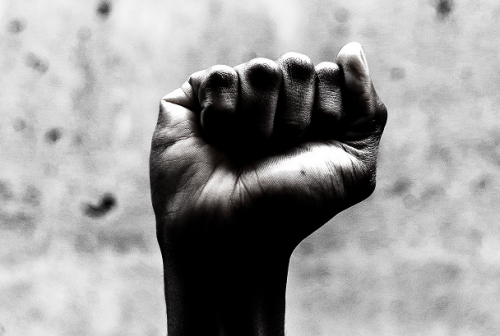
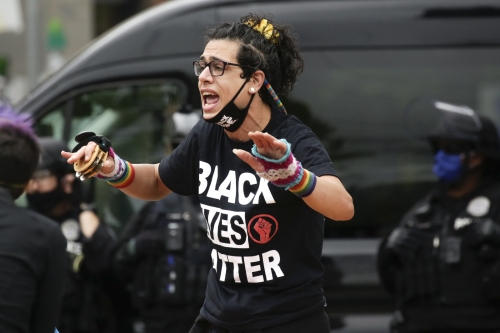
Le wokisme, en revanche, présente le modèle rédempteur de divers groupes qui se disputent le pouvoir au sein d’un système intrinsèquement oppressif. Dans cette vision tribaliste du monde, la seule chose qui existe est le pouvoir, et si seul le pouvoir existe, alors le pouvoir et le contrôle sont nécessaires pour démanteler un système corrompu. Dans ce récit de rédemption, la violence est facilement justifiée. Pour cette raison, nous avons vu de violentes émeutes, et pas seulement des protestations pacifiques, balayer l’Amérique au cours des deux derniers mois [été 2020].
Dans cette vision tribaliste du monde, la seule chose qui existe est le pouvoir, et si seul le pouvoir existe, alors le pouvoir et le contrôle sont nécessaires pour démanteler un système corrompu.
Futurs possibles
La culture occidentale a déjà atteint son point de basculement. La théorie critique est devenue la philosophie sociale dominante, et le wokisme est devenu la nouvelle religion civile. Il y a deux manières concevables dont notre avenir va se dérouler. La première est que le wokismese dévorera lui-même et se dissoudra parce que ces idéologies sont intrinsèquement auto-destructrices. Si la seule chose qui existe est le pouvoir, alors les structures de pouvoir corrompues doivent être détruites. Il se pourrait qu’un nombre suffisant de personnes commencent à se réveiller à la dissonance cognitive qui nous est imposée, mais c’est une vision incroyablement optimiste de la situation actuelle.
Ce qui est plus probable, c’est la deuxième option, à savoir que ces idées seront poussées jusqu’à leur conclusion logique. Dans l’interview mentionnée ci-dessus, Nathan Finochio a dit que «la culture de l’annulation est en fait la conclusion logique de la théorie critique... parce qu’elle doit se débarrasser de la classe oppressive». Rubin a répondu ainsi:
«Je déteste te le dire, mais je pense que c’est la décapitation qui est la conclusion logique de la culture de l’annulation.»
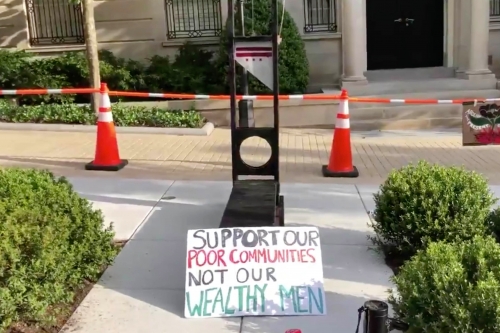
Nous avons déjà vu une zone autonome appelée CHOP (acronyme signifiant aussi ‘couper’: allusion à la Révolution française), et une guillotine montée devant la maison de Jeff Bezos. Les gens semblent croire qu’une chose comme le «Grand Bond en avant» chinois ne pourrait pas se produire dans le monde occidental, mais c’est précisément cette croyance qui pourrait être notre perte.
Comment réagir?
Bradley Campbell a récemment écrit un article pour Quillette, disant:
«Quoi qu’ils fassent, ceux qui ont des problèmes avec la nouvelle culture, ou avec certains de ses aspects, n’arriveront à rien par le rejet ou la moquerie. Dans la mesure où la culture de la justice sociale offre une nouvelle vision morale, ils devront proposer une autre vision .morale.»
En tant que chrétiens, nous devons être ceux qui offrent cette «autre vision morale», à savoir l’Évangile de Jésus-Christ. Nous ne pouvons pas incorporer la théorie critique dans l’Évangile. Le mélange de ces deux visions du monde n’aboutira qu’à une fracture de l’Église, à la perte de l’amour fraternel et à la perversion de l’Évangile. Malheureusement, de nombreux chrétiens ont déjà cru bon d’intégrer ces doctrines dans leur théologie. Le cheval de Troie du wokisme est déjà entré dans l’Église. Le temps nous dira comment l’Église réagira.
Encore une fois, tout cela ne veut pas dire que nous ne devons pas nous préoccuper des questions de justice ou des inégalités socio-économiques. Les vies des Noirs comptent [aussi]. Une application équitable des lois est importante. La pauvreté doit être combattues. Ces questions touchent profondément le cœur de Dieu, et nous devons chercher la solution de Dieu pour nous attaquer aux racines de ces problèmes. Mais Dieu a déjà donné ses définitions du péché et de la droiture, de la justice et de la rédemption. Ce sont ses interprétations à lui qui comptent, et son méta-récit est celui dans lequel nous vivons actuellement. C’est à l’Église de repérer les mensonges de l’ennemi, de dire la vérité dans l’amour et de chercher les solutions qui viennent du ciel. Il n’est peut-être pas trop tard.
Esaïe 5:20-21: Malheur à ceux qui appellent le mal bien et le bien mal, qui mettent les ténèbres pour la lumière et la lumière pour les ténèbres, qui mettent l’amer pour le doux et le doux pour l’amer. Malheur à ceux qui sont sages à leurs propres yeux et intelligents à leurs propres yeux.
Max Funk
Max Funk est né et a grandi à Abbotsford, en Colombie-Britannique, et a déménagé à Vancouver pour étudier l’art et le design à l’Université Emily Carr. Il pratique l’art, le design et l’écriture. Il est le directeur créatif de Converge et vit au Guatemala où il enseigne l’anglais.
Source: Wokeism – The New Religion Of The West – Converge Media
Traduction Albert Coroz pour Les Observateurs.ch

 del.icio.us
 Digg
Digg Facebook