Si les États-Unis ont été le laboratoire social du post-modernisme, des Européens, Français à l'avant-garde, en furent les théoriciens. Comme souvent, les Américains font d'abord, pensent ensuite et, philosophiquement, presque jamais par eux-mêmes. Ainsi la dissolution du patriarcat, l’individualisme économico-juridique, le règne du consumérisme et le relativisme moral ont-ils été expérimentés aux États-Unis avec plus de spontanéité et de radicalité qu’en Europe. Mais la vague post-moderne a dû ses concepts au travail de philosophes français. Sans l'hégémonie américaine combinant puissance matérielle et mimétisme social, hard et soft power, l'anti-monde des quarante dernières années aurait bien sûr été impossible ; mais sans les élaborations, ou élucubrations, menées en Europe par certains penseurs, il n'aurait pas exercé la même séduction intellectuelle.
Des deux côtés de l'atlantique, cependant, cette hégémonie n'a jamais été complète. L'histoire n'a pas de fin, aucune époque n'est parfaitement synchronique, et toute domination trouve ses contrepoids. Contre le nihilisme post-moderne, le katekhon a bien opéré. - Par l'inertie des traditions culturelles et des structures familiales, par un patriotisme imprégné de religiosité et un populisme qui viennent de porter Trump au pouvoir en Amérique, par un mouvement de réaction contre la « moraline » droit-de-l'hommiste qui doit encore trouver en Europe sa traduction politique. Je suis de ceux qui considèrent que la configuration nihilo-mondialiste est morte, dans l'ordre de l'esprit comme dans celui de la matière. Mais le cadavre poursuit ses destructions, comme un zombie. Il faut donc encore en disperser les restes.
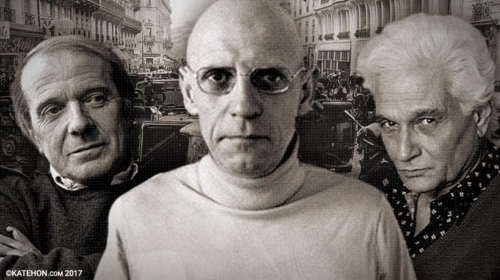
Il n'est pas utile en revanche d'entrer dans les subtilités, somme toute bien facultatives, de la déconstruction philosophique. La diversité interne de ses courants, réelle, n'est pas essentielle. Toutes ses variantes sont rassemblées sur la même ligne de front par leurs cibles communes : l'enracinement historique, la substantialité philosophique, la décence morale et, au strict plan politique, les nations dans leur identité et les États dans leur souveraineté. Somme toute, la déconstruction croise les deux principales idéologies soixante-huitardes : le post-marxisme et le libertarisme, qui ont rapidement surmonté leur antagonisme initial. La première peut être représentée par Toni Negri1 dont les « multitudes mondiales », qui succèdent aux classes nationales, ont pour première passion, plus que la lutte anti-capitaliste, de détruire « cette merde d’État-nation2 » (sic…). Quant à l'autre coulée répandue par mai 68, libertaire et « alterolâtre », cosmopolite et « autophobe », elle débouche sur la « gauche morale » immigrationniste. C'est elle que j'aborde ici à travers ses maîtres à penser Deleuze, Foucault et Derrida.
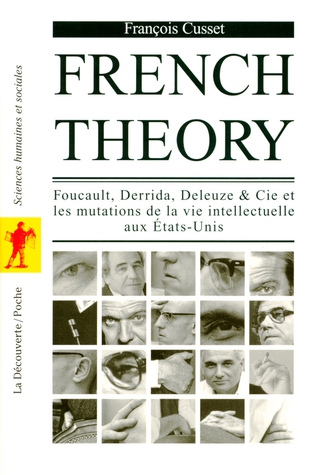
Les Américains, qui leur ont offert chaires sur chaires, les ont regroupés avec quelques autres sous le label « French Theory ». Cette faveur renseigne sur leur compte. Si elles touchent par endroits à l’éternité des grandes œuvres d’art, les philosophies majeures restent en effet, pour une part décisive, filles de leur temps. Il n’est pas seulement permis, il est nécessaire de les apprécier d’après leurs patries d'élection. Cette « géolocalisation » devient même indispensable quand une philosophie prétend lutter contre ce qui domine son époque. On pourrait sous ce rapport s’amuser de la popularité intellectuelle dont jouissent les déconstructeurs chez ceux qu’aux États-Unis on appelle liberals : occupant l’aile gauche du parti démocrate, progressistes en matière de mœurs, laissant intacts les piliers du libéralisme économique, ils sont, autrement dit, des libéraux-libertaires. Acteurs majeurs du capitalisme post-moderne dans sa superstructure idéologique, et bénéficiaires de son infrastructure économique, ils ont fait des déconstructeurs français leurs serviteurs érudits - semblables à ces esclaves grecs qui, dans l'antiquité, chapitraient la jeunesse romaine décadente. A cette différence près que ceux-ci entretenaient les fondements de l'histoire européenne que ceux-là veulent terminer. Pour parler « années 1970 », ces philosophes ont été les « valets du capital » post-moderne.
Lus de Berkeley à Columbia, donc, Deleuze, Foucault et Derrida sont les plus célèbres figures de la French theory. Je vais brièvement entourer le foyer commun de leur pensée. Ayant fait litière de la sentence opportuniste d’Heidegger selon laquelle la biographie des penseurs compterait pour rien3, je dirai aussi quelques mots de leurs parcours politiques personnels.
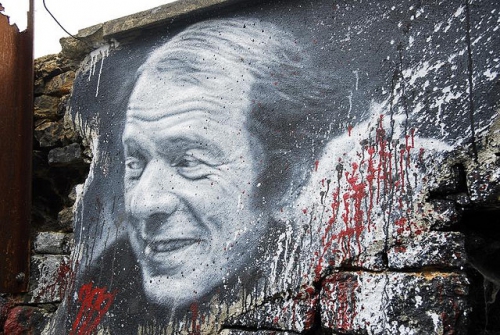
Deleuze forge des concepts puissants, nietzschéens, animés par les forces de l’art et de la vie. Naturaliste, il croit en suivre les croissances dans le « biotope » politique. Ainsi propose-t-il, dans l’Abécédaire qui a tant contribué à populariser sa pensée, la notion de « devenir révolutionnaire ». Une situation devient à ce point insupportable, dit-il, qu’elle cesse dans une explosion de liberté qui déracine les « arbres » - métaphores de tous les ordres oppressifs. Sur cette terre retournée fourmillent alors des « rhizomes » qui désignent dans la botanique deleuzienne d’imprévisibles ramifications libertaires. Car la liberté pousserait là, dans des « flux », entre les « branches », indisciplinée, anarchique, avant que les arbres liberticides reprennent vite et comme fatalement racine. Deleuze constate avec placidité que les révolutions « tournent mal » sans vraiment dire pourquoi, l’oppression lui paraissant devoir « arriver » à la liberté dans une sorte de balancement cosmique.
On ne peut à l'évidence concevoir avec lui un éventuel rôle positif de l’État, ni la valeur de la substance, au sens stoïcien de ce qui dure, tandis qu’on est happé par des flux « désirants ». Flux dont le potentiel consommateur-destructeur habite l’angle mort de cette pensée. Et c’est sans injustice flagrante que le vocabulaire deleuzien du « nomadisme », de la « déterritorialisation » et donc des « flux », se retrouve aujourd’hui dans la langue du capitalisme financier apatride. Et c'est aussi sans surprise qu'il sert à dissoudre par l'immigration l'identité des peuples et, avec elle, leur souveraineté politique. Deleuze, rétif aux rigueurs de la dialectique hégelienne, méprise les points d’arrêts, de repos et de contrainte, autrement dit les institutions indispensables à la liberté collective. Il renvoie ainsi les moments négatifs politiquement nécessaires – coercition, institution, autorité - aux « passions tristes » spinozistes, aux « forces faibles » nietzschéennes, autrement dit aux pathologies de la soumission. Et sa pensée offre l'aspect d’une sorte d'anarcho-naturalisme artiste qui, par constitution, supporte très mal l'épreuve historique. Ne comprenant l'histoire européenne qu'à travers ses grandes œuvres culturelles, il l'ignore superbement comme destin civilisationnel. Pour ceux qui font de ce destin leur combat, Deleuze n'offre que des armes piégées.
Quant à son parcours personnel, on peut y reconnaître une certaine fidélité et une probité stoïcienne. Il a certes cultivé le fétichisme des marges dans le joyeux (?) désordre de l'université de Vincennes, esquivé ensuite les questions embarrassantes sur les conséquences sociales et existentielles du gauchisme, refusé, en somme, de regarder en face le soleil noir de Mai. Mais après avoir embrassé la veine vitaliste de 68, sans jamais y revenir, il n’a jamais personnellement couru après les bénéfices, narcissiques ou matériels, de l’avant-garde.
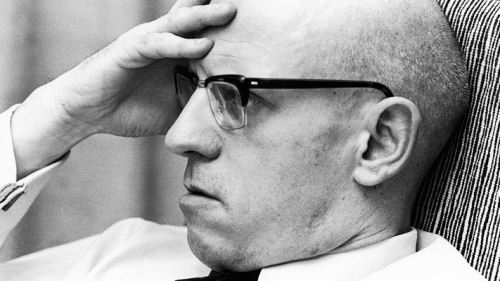
On lit chez Foucault une prose théorique parfois étincelante, ainsi dans les inoubliables ouvertures de ses deux œuvres maîtresses, Surveiller et punir et Les mots et les choses. On y apprend aussi beaucoup car un corpus de faits - historiques, scientifiques et esthétiques -, donne à chaque proposition essentielle un appui probatoire. Mais en dépit d’une telle volonté positiviste, le concept foucaldien de pouvoir glisse entre les doigts comme l’eau de Thalès : élément universel imprégnant toute chose, il serait à ce point répandu dans les institutions, les discours et les pratiques quotidiennes, qu’il en devient impensable. Avec cette conséquence logique qu’on ne peut échapper à un pouvoir partout oppresseur qu’en se projetant le long de lignes de fuite extraordinaires. Cédant comme Deleuze à l’idolâtrie des marges cultivée par son époque, Foucault réserve ainsi l’expérience de la liberté aux déments, aux criminels, aux parricides, aux transsexuels. Dès lors en effet que l’État (et toutes les institutions qui en émanent) ne serait qu’un pur agent d’oppression, n’importe quoi, à la lettre - du maoïsme aux droits de l’homme en passant par la révolution iranienne -, devient contre lui une ressource envisageable. Ayant bien saisi pourtant le passage des sociétés hiérarchisées « verticales » aux sociétés de contrôle « horizontales », Foucault, tout à sa répugnance pour l’État, n’imagine pas de le mobiliser contre les nouvelles dominations. Quant aux « subjectivations » individuelles dont il entreprend l’histoire originale depuis les Grecs, éprouvant chez eux, sans qu’œuvre ici le hasard, une dilection particulière pour les cyniques, elles se logent aujourd’hui à merveille dans le nouveau capitalisme de consommation. Celui-ci absorbe tous les modes de vie alternatifs dès lors qu'ils ne touchent pas, à travers une pensée rigoureuse et substantielle, au cœur de son réacteur. Il accumule les bénéfices de sa propre critique en y employant une armée de serviteurs « impertinents » (dont la « rebellocratie » du spectacle, selon l'expression de Philippe Murray, occupe au bout de la laisse la tête la plus avancée).
Honnies par le penseur, les institutions de la république ne furent pas si mauvaises mères pour l’universitaire. Il y menait jusqu’en 68 une belle carrière sans vagues, qu’il poursuivit ensuite au Collège de France. Il devient peu après Mai un « compagnon de route » des maoïstes spécialisé dans la question carcérale, avant d’abonder intellectuellement la Révolution islamique iranienne en même temps que, sans solution de continuité, les « nouveaux philosophes » (Deleuze, lui, avait eut le bon goût de les tenir sur-le-champ dans le mépris qui leur revient). Il achève avec eux sa trajectoire en rejoignant le droit-de-l’hommisme4 qui, envahissant le champ politique à partir de la fin des années 70, va former avec l’hédonisme le couple infernal des deux décennies suivantes. Les choses s’aggravent encore post-mortem puisque le principal légataire éditorial de Foucault, François Ewald, allait conseiller, en plus de la Fédération française des sociétés d’assurance, Denis Kessler l’ex-maoïste dirigeant du Medef. Je crois qu’il n’est plus à craindre qu’un jour contre son ambiance apparente, mais conformément à ses lames de fond, le foucaldisme devienne un libéralisme. C'est fait. De son vivant, Foucault avait adopté les uns après les autres les états de la critique institutionnelle, majoritaire, permise et sans risque. A telle enseigne qu’on peut soupçonner son positivisme revendiqué, qui devrait a priori loger sa déontologie dans le respect des faits, d’avoir abrité une sourde servilité au Fait hégémonique s’insinuant, honteuse ou inconsciente d’elle-même, sous la flamboyance des concepts et des poses.
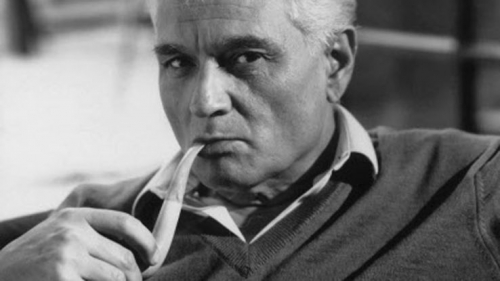
Derrida, enfin. Il livre quelques puissants textes à l’époque de L’écriture et la différence (1967) avant de se fortifier dans l’idée qu’entre le concept et la métaphore, la philosophie et la littérature, les frontières devaient s’effacer au profit de la notion d’« écriture »5 - qui ne peut chez lui, lecture faite, être confondue avec le style. Se plaçant dans le sillage de Heidegger, Derrida entend « dé(cons)truire » l’équation fondamentale du projet philosophique grec : la saisie de l’être des choses par la pensée rationnelle. S’il n’y a pas lieu de soustraire ce projet à la critique, qui est un de ses gestes essentiels, elle n’en épuise sans doute pas toutes les virtualités. On pourrait au risque de passer pour un humble naïf s’attarder un instant, quels dégoût, mélancolie ou consternation que nous inspire le devenir de l’Occident contemporain, sur les plus hautes réalisations du Logos. Il serait donc pour Derrida à déconstruire d’urgence ou, plus subtilement, il connaîtrait une déconstruction interne que la pensée devrait recueillir. Mais alors que Heidegger entendait pour ce faire une Voix « gréco-allemande » plus ancienne que les calculs de la rationalité technicienne, Derrida reçoit son inspiration là, près de lui-même, dans la lettre hébraïque. Et il fait glisser, après Lévinas et tant d'autres intellectuels juifs, la philosophie d’Athènes à Jérusalem. Elle s'y perd sans retour. Dès lors que le monde est supposé échapper au logos qui s’efforce de l’éclairer, qu’il se renferme désormais dans une écriture indéfiniment déchiffrable, on prend en effet le chemin du désert théologique.
Derrida, adoptant assez naturellement le ton de l’Ecclésiaste rabaissant les vains édifices humains, renvoie ainsi les grandes philosophies à leurs impensés, leur logique consciente à ce qu’elle refoule, leurs intentions rationnelles à une lettre qui, « disséminante » et « différante », les déborde parce que l’infini travaille en elle6. Il passe au rouleau compresseur kabbalistique les distinctions sur lesquelles repose la pensée occidentale (cause et effet, substance et accident, sujet et objet, etc.) avec un acharnement formel qui exprime une sorte de haine froide. Dans une telle atmosphère de confusion, on marche à rebours de l’esprit du logos avec ses déterminations habitables. Rien ici ne paraît pouvoir subsister, durer, s’établir ou s’affirmer sinon, peut-être, la figure du philosophe prophète qui semble posséder, lui et lui seul, la consistance du particulier et le magistère de l’universel. Il juge en effet sans bienveillance, en brandissant une Loi aussi absolue que retirée du commun, les œuvres politiques, les cultures et les mondes particuliers des peuples (moins Israël...) qui veulent être quelqu’un dans l’histoire. Restent alors, pour tout solde, un empêchement de pensée et une théologie judaïque de contrebande.
Quand Deleuze s’installe avec ses concepts vivants dans une affirmation sans dialectique, Derrida administre au sens une correction infinie qui, n’affirmant jamais que l’imperfection du monde, porte en chaire un maître de l’obscurité. On passe donc, d’un French theorist à l’autre, du refus libertaire de la dialectique à son engloutissement dans les eaux glacées d’une théocratie négative. Pour un résultat somme toute équivalent : partageant les mêmes hostilités - métaphysique contre la substance, politique contre la nation-, ils ligotent la philosophie au cosmopolitisme des droits de l'homme.
Derrida s’est montré publiquement plus discret que Foucault. Jouissant dans l’université française d’une marginalité confortable, il empile les chaires américaines, soutient les dissidents tchèques, rentre en 1995 au comité de soutien à Lionel Jospin, duquel il s’éloigne en 2002 parce qu’il juge sa politique d’immigration impitoyable... Il accomplit en définitive le parcours sans faute d’une grande conscience de gauche pétitionnaire – Antigone séfarade d’amphithéâtre contre les méchants Créon d’État - qui ne se risque sur le champ de bataille qu'abrité sous le Paraclet du droit naturel cosmopolitique.
A moins de croire à la stratégie du cheval de Troie, douteuse en général, il faut bien se rendre à l’évidence : ces pensées sont à tel point aspirées par les pôles du monde capitaliste « post-moderne », qui mêle hédonisme et juridisme, qu’elles sont impropres à en combattre les toxines. Pire, elles les répandent. Émasculant intellectuellement la capacité politique des peuples, la déconstruction méprise l’État et la Nation - l’acteur du pouvoir et sa source légitime – au profit de résistances introuvables. Par la Nature chez Deleuze, par les Faits avec Foucault, par la Loi aux termes de Derrida, on finit par perdre la mesure dans les choses, l’autorité des faits vacille et l’esprit des lois devient impensable. En pourchassant avec les gauchistes sa configuration patriarcale, nationale et industrielle, ils ont prêté leurs amples pensées à l’ennemi capitaliste qui, disais-je, passait avec eux au stade puéril, mondial et consumériste. A travers leurs cas particuliers le magistère de 68 est en cause, avec son « héritage impossible7 ».
Les French theorists déconstruisent, critiquent ou subvertissent les catégories de la tradition philosophique occidentale. Mais le poids des choses contrarie sans cesse leur prétention avant-gardiste de dépasser par la pensée ce qui, dans cette tradition, abrite les conditions d’un monde habitable. Même quand ils l’abordent plus humblement, la logique même de leur pensée leur fait maltraiter l’histoire. « Post-modernes », ils ne cherchent dans leur époque, et donc n’y trouvent, que des dates de péremption, frissonnant de plaisir à chaque acte de décès qu’ils croient pouvoir prononcer. En réalité, complaisamment postés partout où le « vieux monde » est déjà mort, ils ne conjurent que des menaces révolues en s'aveuglant avec métier sur les dangers présents.
Qu’on me comprenne bien : je ne pointe pas ici le retard sur le Temps des intellectuels en question. Non, je suis tout au contraire frappé par leur collusion avec le capitalisme dont ils semblent instruire la critique. S’ils étaient « inactuels » ou « intempestifs », ils joueraient du marteau nietzschéen. S’ils surmontaient leur époque, ils suivraient le totem des philosophes selon Hegel, « chouettes de Minerve prenant leur envol au crépuscule ». Bref, s’ils pensaient leur époque en s’écartant d’elle, pour la subvertir, la surmonter ou la dépasser, ils rempliraient le rôle moderne auquel ils prétendent. Mais, épousant la trajectoire du 68 des élites, ils sont passés d’une révolution libertaire parlant marxiste au « droit de l’hommisme » antiraciste millésimé « années 80 ». Via, donc, les universités américaines. Mais ils subissent aujourd'hui, le temps de leur splendeur passé, le retour d'une logique implacable : à force d’ignorer les permanences au fond des choses pour se précipiter à l’avant-garde de la critique de la domination, on est irrémédiablement condamné à épouser les formes que la domination prescrit à sa critique.
C'est au fond le vieux Jacques Duclos qui avait raison. Dans un opuscule paru dès l'été 19688, le dirigeant stalinien mettait en garde contre les descendants de Bakounine jetant des pierres au quartier latin. Ces gauchistes, avertissait-il, propagent un désastreux « amorphisme » révolutionnaire : leur haine des formes, des mœurs et des institutions, les condamne à définir la liberté comme une pure négation ou, ce qui revient au même, comme un pur plastique. « Détruire c’est créer » disait ainsi Bakounine, l’éternel adolescent.

Aux aurores de la modernité, Descartes avait pressenti les audaces terribles qui s’ouvraient devant la volonté infinie, illimitée et prométhéenne à laquelle la science nouvelle faisait découvrir sa puissance. Puissance qui pourrait s’exercer non seulement contre une tradition intellectuelle imparfaite mais aussi, et c’était la crainte de Descartes, contre tous les ordres moraux et politiques. Ainsi ne cesse-t-il dans le Discours de la méthode de mettre en garde contre une extension « démocratique » du doute radical qu’il pratique dans le domaine de la connaissance pure. De la grandeur inquiète de ces commencements, nous sommes passés au gauchisme de consommation « post-soixante-huitard ». S’il recule dans le passé, il continue d’irradier notre présent comme une strate géologique recouverte mais encore active.
Depuis quarante ans, la liberté moderne échoue ainsi sur une plage artificielle qui, après 68, a recouvert les durs, les vertueux pavés « gaullo-communistes ».
Un haïssable petit « moi » s'y agite, formant des pâtés capricieux, qui exige, revenu à la maison, de consommer sans ranger sa chambre. Bientôt père en rollers chantonnant Vincent Delerm, il n’hésite pas à porter des dreads-locks qui, bien acceptées dans son « job », aggravent son cas devant l’Éternel juge de tous les styles. Il prend avec l’âge l'aspect d’un vieux poupon arrogant et vagissant, réclamant l'air méchant de jouir encore et encore, et qui, gênant, tout le monde, ressemble trait pour trait à Dany Cohn-Bendit... Mais Cohn-Bendit va mourir bientôt, son monde est en phase terminale, et la déconstruction restera dans l'histoire de la pensée européenne comme le symptôme d'une dépression passagère. Le réalisme politique, la décence éthique et la consistance philosophique ont commencé leur insurrection. Mais c'est une autre histoire. Elle s'ouvre devant nous.
Notes:
Le site katehon.com ne donne malheureusement pas les notes de cet article !




 del.icio.us
 Digg
Digg Facebook
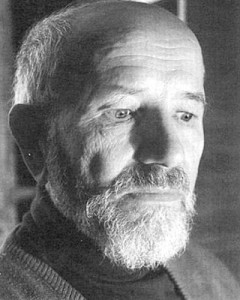 Heidegger's thought came to prominence in the post-Soviet era through the work of a remarkable polyglot translator and charismatic philosopher, Vladimir Bibikhin (1938-2004). Not only did Bibikhin translate Being and Time into Russian, he also cultivated a generation of young philosophers through his widely-attended lectures at the University of Moscow. It is difficult to apply a label to Bibikhin's thought, and I shall not try to do so. Suffice it to say that Bibikhin attempted to graft Heidegger onto central currents in Russian thought in such a way as to renovate Russian culture in the post-Soviet era, not as a wholesale rejection of western thought but as an effort at correcting its sometimes baleful influence, especially in regard to the insensate selfishness and venality that made strong inroads into post-Soviet Russia under the guise of promoting a free market and capitalist democracy. Bibikhin fought against the hypocrisy of American democracy as reflected in Russia, the ostensibly principled pursuit of freedom concealing there, as elsewhere, naked greed and exploitation.













 EUR 28,00