







 del.icio.us
 Digg
Digg Facebook
The “National Bolsheviks” of the Weimar period rallied around this cry. Sparta represented a type of porto-Prussian socialism, with the entire social body based around the all-male military and its campaigns. Potsdam represented true Prussian socialism, while Moscow represented what many thinkers in the 1920s and 1930s considered to be the world’s inevitable future.
This is a very concise rendering of a complex topic, around which there is confusion.
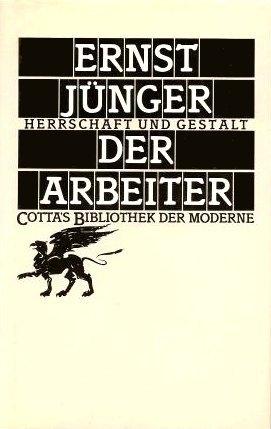 Much of this confusion stems from the fact that National Bolshevism did not have a guiding text or any kind of magnum opus for the proliferation of a workers’ state ruled by nationalist sentiment. The closest to such a founding document is Ernst Junger’s The Worker (1932), a long essay that mixes Marx with Nietzsche and Heidegger. Notably, The Worker was denounced by the Nazi Party for undermining its emphasis on biological race as the unifying glue of the new German state. But for Junger, work and workers not only created a new race through their very specific Typus (a German word closely meaning “typical,” as in typical representative), but future civilization would have to be a work-democracy in order to sustain itself in the face of technology unmoored from its original ideal as an engine of human progress.
To understand The Worker and the origins of National Bolshevism, one must recognize the truly revolutionary character of the First World War. Between 1914 and 1918, Junger (who experienced the war firsthand as a lieutenant in the 73rd Infantry Regiment) argues that the old bourgeoisie order of the nineteenth century was blown to bits by advanced artillery, poison gas, and machine guns. Along with this death, two nineteenth century ideals, namely nationalism and socialism, were also obliterated. In their wake came a new type of man—a violent individual who had mixed with all classes in the trenches. This “unknown soldier” rubbed elbows with Prussian Junkers, the sons of French Protestant immigrants, Catholic peasants from Bavaria and the Rhineland, and working class socialists from Berlin, Hanover, and Bremen. Through death and action, these various classes melded in order to create “the worker,” an individual who is neither an individualistic consumer (the prize desired by all capitalist democracies), nor a member of the mass (the ideal of the materialistic Marxists).
The characteristics that are valued have changed; they are of a simpler, dumber nature, which suggests the emergence of a will to race-formation…to produce a certain typus whose endowment is more standardized and more aligned to the tasks of an order determined by the total-work character. This is connected to how the possibilities of life in general decrease, to an advancing degree, in the interest of a singular possibility…[1]
The goal of this new “race” (Junger eschews a biological explanation for race, arguing that in the worker, the only thing that matters is whether or not the individual worker is excellent at performing his work) is to create the work-state. This state is beyond liberal capitalism and internationalist communism. Its sole purpose is to facilitate the existence of the worker—the poet-warrior-priest ideal that Junger compares to the knight orders of the Middle Ages and the Jesuit priests of the Counter-Reformation who braved foreign lands in order to spread the Gospel.
Once we have recognized what is needed now, namely, assertion and triumph…even readiness for utter collapse within a thoroughly dangerous world, then we will know which tasks are to take control of every kind of production, from the highest to the simplest. And the more life can be led in a cynical, Spartan, Prussian, or Bolshevist way, the better it will be. The established standard is to be found in the way the worker leads his life. It is not a matter of improving this way of living, but of conferring upon it a highest, decisive meaning.[2]
Put into simpler language, Junger sees the ideal worker not as a member of the working class (“class” is, after all, a liberal concept from the nineteenth century), but rather as a type of dedicated monk that sees existence as based on work. This means that workers are dedicated thoroughly to their work, almost as if work in the technological age is akin to Calvin’s “calling of God.” Unsurprisingly, Junger’s worker ideal closely mirrors the “Christian Sparta” of Puritan Massachusetts, where all things were done in order to uphold the Anglican Church’s special communion with God. In that society as in Prussia, order, duty, and work consumed all notions of liberty, freedom, or leisure. This is desirable, for Junger notes that “the measure of freedom possessed by any force corresponds precisely to the measure of obligation assigned to it.”[4] The negative “freedom from” and the positive “freedom to” are both undesirable unless said freedoms are attached to overriding obligations. To obey a higher law is the only freedom worth experiencing.
Such idealism is consciously divorced from all aspects of liberalism. In order for Junger’s desired “total mobilization” of society, all traces of liberalism must be eradicated in order for a work-democracy to form.
Much to the chagrin of the Communist Party of Germany (KPD), Junger does not see internationalist Marxism as the vanguard against the bourgeoisie. For Junger, the “Soviet” revolutions that swept through Germany in 1919 were thoroughly liberal in character—they conformed to liberal notions of individual freedom, they fought on behalf of material prosperity, and they accepted the liberal notions of “art” and “civilization.” The fact that striking workers and soldiers marched through Germany with copies of Faust in their knapsacks highlighted how thoroughly liberal culture had permeated the so-called “worker movement.”[3]
Junger was not the only German thinker who recognized the inherent weaknesses of Marxist-derived communism. Ernst Niekisch, who served the short-lived Bavarian Soviet Republic of 1919, saw in the very same Freikorps troops who put down the Munich Soviet Republic the ideal man for his movement. In contrast to Robert G.L. Waite, who saw in the Freikorps a nihilistic movement, Thomas Weber, in his new book Becoming Hitler, sees the Freikorps as the forefront of a new revolutionary movement that actively sought to stop both the KPD from importing Russian-style Bolshevism and Bavarian reactionaries from bringing back the failed Hohenzollern dynasty.
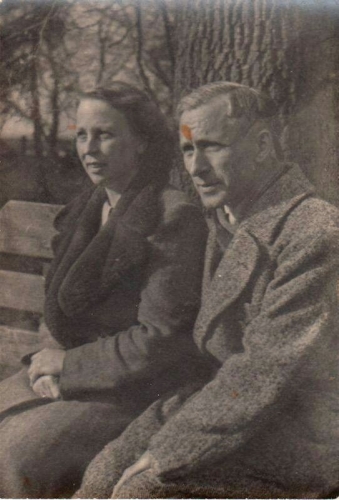 Niekisch would become the greatest propagandist for National Bolshevism during the Weimar era. His short-lived journal Widerstand would publish Junger and other German writers who wanted to mix the austere radicalism of the Bolsheviks with that frontline soldier’s dedication to nation.
Karl Radek, who saw in nationalism the perfect vehicle for mass mobilization, was all but excommunicated from the communist movement in Germany for delivering a speech in 1923 that lionized Leo Schlageter, a Freikorps officer and early supporter of the National Socialists who died while fighting the French following their military takeover of the Ruhr in 1923. In “Leo Schlageter: The Wanderer into the Void,” Radek encouraged the Communists to seek out men like Schlageter rather than either pacifistic academics or material-minded industrial workers.
The way in which he [Schlageter] risked his life speaks on his behalf, and proves that he was convinced he was serving the German people. but Schlageter thought he was best serving the people by helping to restore the mastery of the class which had hitherto led the German people, and had brought such terrible misfortune upon them.[5]
For Radek, brave Germans must be taught to think in national class terms first. Niekisch agreed, but he placed a much greater emphasis on nationalism than did Radek. In the pages of Widerstand, Niekisch wrote paeans to the glories of the Prussian spirit and the traditional German resistance to bourgeoisie society. Junger went much further in synchronizing radical nationalism with “elemental” socialism. For Junger, liberal society is against everything “elemental.” Liberalism seeks security, while elemental life seeks adventure. Elementalism often seems like romanticism. Junger praises “elemental” men who seek to live in the untrammeled wilderness or who volunteer for the French Foreign Legion. The Worker is a romantic text at its core, and Junger’s thinking privileges action, sacrifice, and philosophical poverty (if not also material poverty) over the riches produced by capital and global trade.
As hard to digest as The Worker is, some of Junger’s key points bear re-reading. A will to power is not enough, Junger writes. An example of the truth of this view can be seen in the current sex scandals rocking Hollywood and Washington. Such accusations, whether true or not, are emblematic of a female will to power that is encouraged by the capitalist class that understands that single women make better, more pliable workers than masculine men. However, as much as these accusations are helping to dethrone men in certain places of power, a new female boss or a more feminine economy is unlikely to change anything in any meaningful way. In fact, things will almost certainly change for the worse because this new hierarchy is not the result of merit. In order for a will to power to matter, a new “race” must exist in order to carry this power forward. For Junger, this race must only contain the best of a worker typus; if it is based on anything other than practical skill, it is doomed to fail.
Another important point that Junger makes in The Worker is that liberal democracies are the preserve of cowards who continually place unfounded faith in their own systems. After all, arms limitations and attempts at universal governance after World War I did not stop war. Similarly, the theory that “democracies do not fight democracies” could be taken by some to suggest that warfare against non-democracies is justified under the guise of creating new democracies. The international system be damned, Junger says; it is better to let workers become the new Dominican monks, except with a higher intolerance of heresy.
The Worker represents the best of the National Bolshevist ideal. Rather than graph jingoistic nationalism onto the shibboleths of Marxian socialism, Junger’s thought concerns how to defeat all traces of outdated liberalism, socialism, and other modes of nineteenth century thought. A new type of worker—a worker not bound by class, but by an organic desire to increase work and see everything as work—is the best antidote to the shape-shifting bourgeoisie. Creating this new worker will be difficult, but The Worker notes that peasants and workers in the twentieth century have shown that that they are neither the small capitalists of the liberal imagination nor the ardent proletarians of Marxist daydreams. A socialist Benito Mussolini saw that workers flocked to nationalist calls for war faster than their middle class counterparts, while Junger notes that when the aristocracy tried to used the peasantry as a bulwark against the bourgeoisie by instituting grain tariffs in the nineteenth century, the peasants did not respond to economic stimuli and instead preferred to stick to older economic arrangements.[6]
Without discipline, a desire for collective action, and a hatred of liberal freedom, a work-state cannot exist. Ergo, in order for a work-state to flourish, workers must acquire a new consciousness. This consciousness must also include action in the form of constant work, whatever that work may be.
For us, as Americans, much can be adopted from The Worker. In the book, Junger praises the unbridled energy of the American settler-workers who tamed the West and built the wealthiest state in human history all within one hundred years. Junger also notes that Soviet Russia’s economic success during the late 1920s was because so many American technocrats flooded the country, thus showing the Russian peasant what quasi-religious attachment to craft can accomplish.
Americans have long been known for their work ethic. This is to be praised, but it needs to be channeled. American workers should no longer work for the glory of the internationalist state. American workers should no longer toil away for the benefit of capitalism or even for the benefit of their own material prosperity. These goals, while understandable, are in fact invisible prisons. According to The Worker, a new, healthier American state would be concerned only with a total mobilization towards work and towards living an “elemental” life.
For Junger, this means America embrace Sparta and the unwavering path of duty.
This means America must embrace Potsdam and the Prussian virtues.
This means America must embrace Bolshevism not for its iconoclasm or its hatred for the higher classes, but for its unlimited energy for creating a new system.
Without creating new men, America cannot break from its liberal prison.
Bibliography:
[1]: Junger, Ernst. The Worker: Dominion and Form. Ed. Laurence Paul Hemming. Trans. Bogdan Costea and Paul Hemming (Evanston: Northwestern University Press, 2017). P. 66.


 La mujer
 La clave: crianza








 Mais il existe un exemple très connu de « publicité mensongère » : la « Deutsche Bank ». Beaucoup de gens – peut-être même certains ici dans l’auditoire – pensent que c’est notre banque nationale. En raison de son nom. Cela semble presque aussi stable et fiable qu’une « horloge suisse ». Mais la « Deutsche Bank » est une banque privée ordinaire, fortement impliquée dans des projets de spéculation hyper-capitalistes de Wall Street, une institution financière mondialiste où le mot « allemand » n’est qu’une marque. Notre banque nationale est la « Bundesbank » – « banque fédérale ». Bien sûr, « Bundesbank » semble moins attrayant que « Deutsche Bank ». Mais c’est exactement l’essence de la « publicité mensongère ».
 Mais l’un sans l’autre ne fonctionnera pas à la fin. Le système de l’économie virtuelle va de pair avec le système de désintégration des sociétés. Le marché libre vient avec la société ouverte et vice versa.
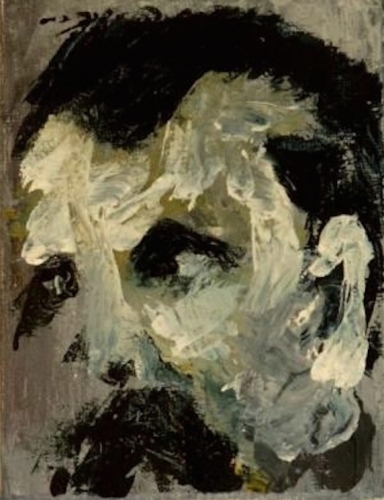
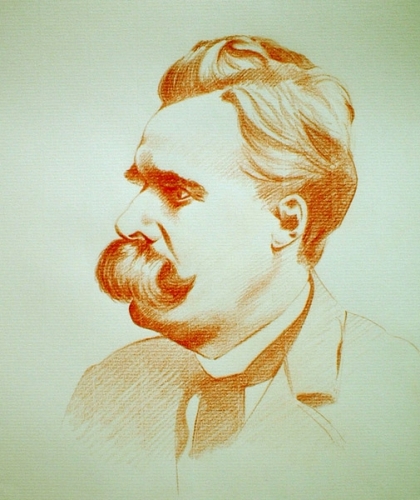
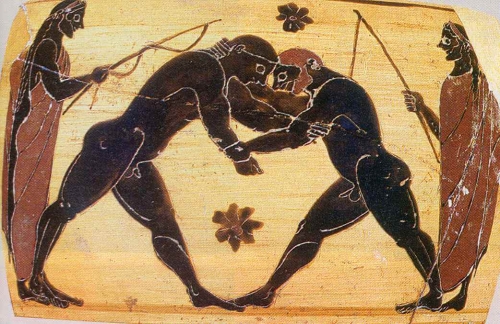

 There is a lot of wisdom here. At the very least, it leads one to ask questions: What is the role of a young man with regard to the fitness and well-being of the species? What is the role of a young woman? What is the role of a European in a context of decline? And so on. Stoicism represents one powerful way in which postmodern Westerners, conquered by liberalism, can learn to stop being so frivolous, narcissistic, and selfish, and begin living our lives in a mindful and communitarian fashion.

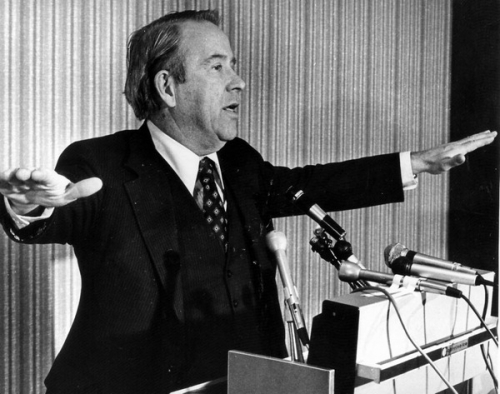
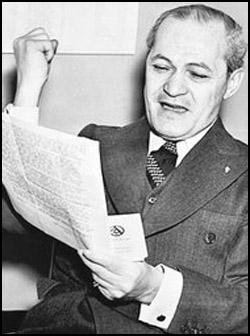 » La HUAC avait été mise en place à la Chambre des Représentants en 1934
 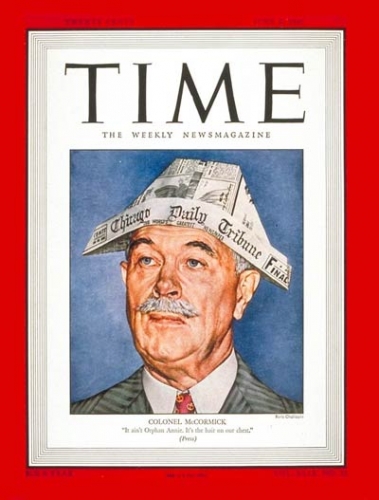 » Ce n'était que la plus visible des mesures répressives qui furent prises lors de la “Brown Scare” et qui furent ensuite réutilisées lors de la “Red Scare”. Il s’agissait d’un simple ajustement suivant le tournant de la politique étrangère américaine et un changement ultérieur de l'opinion publique américaine. Le FBI avait infiltré des groupes comme le Comité America First qui s'opposait à l'entrée des Etats-Unis dans la Seconde Guerre mondiale, il avait mis sur écoutes des dirigeants conservateurs tel que le directeur du Chicago Tribune Robert McCormick ; il suffisait alors de réorienter toutes ces procédures vers les cibles de gauche. Mais rappelez-vous l’essentiel : c’est la gauche qui lança tout cela et fit mettre en place la répression dans toute son ampleur, alors qu’elle tenait le fouet.
 (D’un autre côté, Roosevelt, qui était d’abord un politicien roué assez éloigné de l’image idéalisée qu’on en fit et qui persiste, s’opposait aux tentatives légales d’avancement trop affirmé de la gauche radicale, comme par exemple lorsqu’il sabota indirectement la campagne de l’écrivain




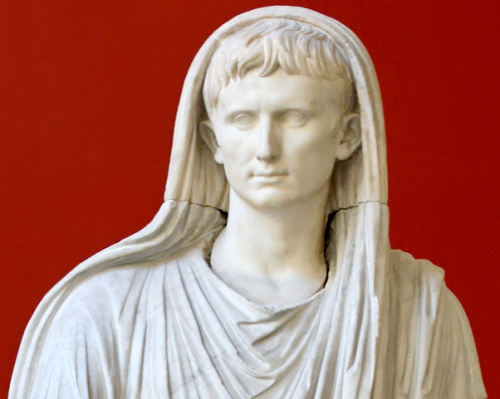
 The nineteenth-century French historian Fustel de Coulanges memorably showed, in his La Cité antique, the fundamental role which the religion had in shaping the laws, families, and very statehood of Greek and Roman societies. The ancient family and state were presided over by fathers also playing the role of priests. Participation in the religion defined who was a member of the community, whether familial or political, what were the inviolable sacred spaces were (the household, the city, the federal sanctuary), what were the duties of each, and who were the ancestors and gods one had to live up to. The religious-familial-political community – all the associated sentiments reinforcing one another in wondrous harmony – and its rules were constantly reinforced by regular and mandatory ritualistic activity featuring sacrifices, a set calendar, festivals, and so on. Coulanges says:
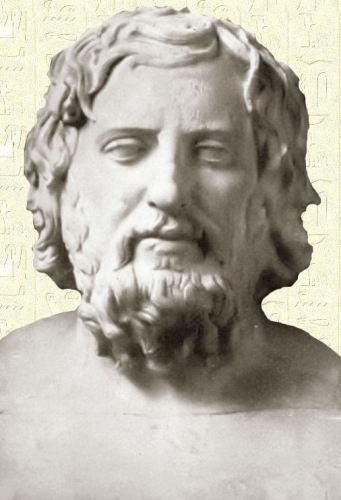 We are shocked to see, throughout Greco-Roman history, government and even military business being significantly affected by apparently trivial “omens” such as the weather, the entrails of animals, the flight of birds, dreams, sneezes, the inscrutable sayings of the oracles, to not speak of more significant events such as earthquakes and eclipses. All these were interpreted not as chance occurrences but as manifestations of divine will.
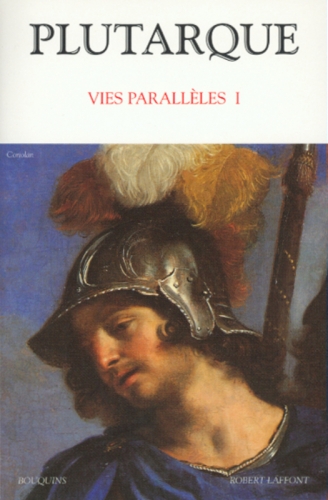 Plutarch, in his Life of Lycurgus, attributes a similar role to religious ritual in promoting hope and courage (my emphasis):

 Ma réponse sera : le monde conduit par l’économie est le vieux monde. Nous ne regardons pas seulement l’échec misérable des institutions de
  Laissez-moi dire quelques mots sur chaque question.
 La deuxième hypothèse est que toute société humaine dans le monde entier est à la recherche de développement. C’est aussi un mensonge. En fait, la plupart des communautés indigènes et des confessions religieuses sont organisées contre le développement ; elles n’ont pas de place pour une telle chose dans leur communauté. Près de chez moi, sur la côte ouest de Madagascar, ils brûlent la maison de quiconque devient riche, pour le garder dans la communauté. Ils comprennent très bien que l’argent est le grand fossé entre les êtres humains, et l’économie de marché, la fin des communs. Le fait n’est pas qu’ils sont incapables de se développer eux-mêmes ; la vérité est que, en tant que communauté, ils refusent l’individualisme lié au développement économique. Ils préfèrent leur communauté au droit illimité de rompre avec elle et avec la nature elle-même. La phrase qu’ils préfèrent est « Mieux vaux une touche de fihavanana (le bien-être collectif) qu’une tonne d’or ». Pour le bien de la croissance, ce que nous appelons le développement, c’est la rupture de ces communautés contre leur volonté et la fin de leur bien-être collectif pour les fausses promesses d’un accomplissement individuel. Sous le faux drapeau de la liberté, pour le commerce et l’argent, les Occidentaux l’ont fait à plusieurs reprises, de la rupture du Japon par le
  En disant cela, nous sommes proches du grand secret caché derrière la scène ; nous sommes confrontés à la fin des systèmes libéraux tels que nous les connaissions.
 Les biens communs, ou les communs, ne cadrent pas bien avec le libre-échange, la libre circulation des capitaux, les privatisations de masse et l’hypothèse de base que tout est à vendre ; la terre, l’eau douce, l’air et les êtres humains. En fait, le libre-échange et les marchés mondiaux sont les pires ennemis des communs. La grande ouverture des dernières communautés vivant sur elles-mêmes est une condamnation à mort. Bienvenue à la réinvention de l’esclavage par ces apôtres des migrations de masse et des frontières ouvertes ! Je n’ai aucun doute à ce sujet ; une grande partie de ce que nous appelons « développement » et « aide internationale » sera bientôt considérée comme un crime contre l’humanité – l’effondrement des biens communs pour le bénéfice des entreprises mondialisées et des intérêts privés. Et le mouvement des « no borders » sera également considéré comme une manière subtile d’utiliser le travail forcé et embaucher des esclaves avec un double avantage : premièrement, faire le bien avec le sentiment d’être d’une qualité morale supérieure, deuxièmement, faire du bien à la




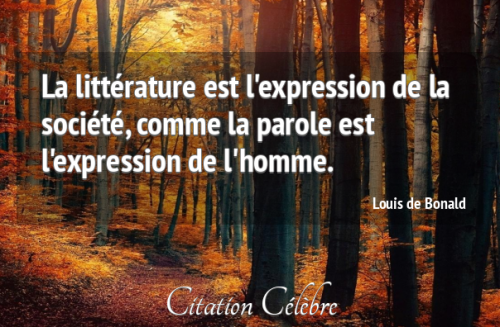


 Rarely will anyone form their own thought or choose different than what they are told. In fact, if you do not make decisions and intentions, someone else will do it for you. You know this from your own life: If your spouse asks you where you want to go for dinner and you don’t really have any specific preference, then they will decide where to go. The same applies on a mass-scale.
 A recent movie The Nightcrawler (starring Jake Gyllenhaal) exposes the juvenile and sadistic mindset of some sections of modern “journalism.” No doubt, the last decade has seen a rise in terrorist attacks all over the world. And while these are horrific, they are still actually just localised events, pinpointed at certain buildings with a limited amount of people. They are not nearly as bad as the nation-to-nation all-out-wars we’ve had in decades before that.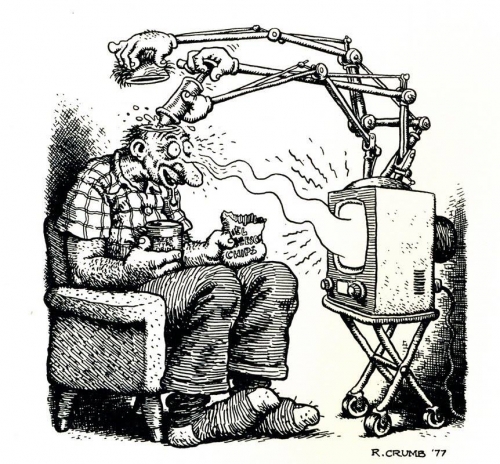


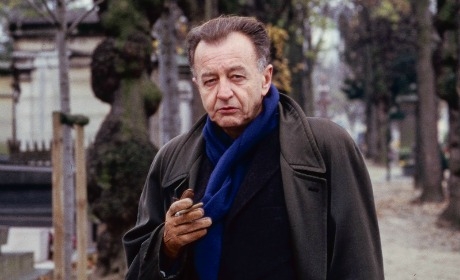
 « Ce monde est dérisoire, mais il a mis fin à la possibilité de dire à quel point il est dérisoire ; du moins s’y efforce-t-il, et de bons apôtres se demandent aujourd’hui si l’humour n’a pas tout simplement fait son temps, si on a encore besoin de lui, etc. Ce qui n’est d’ailleurs pas si bête, car le rire, le rire en tant qu’art, n’a en Europe que quelques siècles d’existence derrière lui (il commence avec Rabelais), et il est fort possible que le conformisme tout à fait neuf mais d’une puissance inégalée qui lui mène la guerre (tout en semblant le favoriser sous les diverses formes bidons du fun, du déjanté, etc.) ait en fin de compte raison de lui. En attendant, mon objet étant les civilisations occidentales, et particulièrement la française, qui me semble exemplaire par son marasme extrême, par les contradictions qui l’écrasent, et en même temps par cette bonne volonté qu’elle manifeste, cette bonne volonté typiquement et globalement provinciale de s’enfoncer encore plus vite et plus irrémédiablement que les autres dans le suicide moderne, je crois que le rire peut lui apporter un éclairage fracassant. »
 « Festivus festivus, qui vient après Homo festivus comme Sapiens sapiens succède à Homo sapiens, est l’individu qui festive qu’il festive : c’est le moderne de la nouvelle génération, dont la métamorphose est presque totalement achevée, qui a presque tout oublié du passé (de toute façon criminel à ses yeux) de l’humanité, qui est déjà pour ainsi dire génétiquement modifié sans même besoin de faire appel à des bricolages techniques comme on nous en promet, qui est tellement poli, épuré jusqu’à l’os, qu’il en est translucide, déjà clone de lui-même sans avoir besoin de clonage, nettoyé sous toutes les coutures, débarrassé de toute extériorité comme de toute transcendance, jumeau de lui-même jusque dans son nom. »
 « Dans le nouveau monde, on ne retrouve plus trace du Mal qu’à travers l’interminable procès qui lui est intenté, à la fois en tant que Mal historique (le passé est un chapelet de crimes qu’il convient de ré-instruire sans cesse pour se faire mousser sans risque) et en tant que Mal actuel postiche. »
 « …pour en revenir à cette solitude sexuelle d’Homo festivus, qui contient tous les autres traits que vous énumérez, elle ne peut être comprise que comme l’aboutissement de la prétendue libération sexuelle d’il y a trente ans, laquelle n’a servi qu’à faire monter en puissance le pouvoir féminin et à révéler ce que personne au fond n’ignorait (notamment grâce aux romans du passé), à savoir que les femmes ne voulaient pas du sexuel, n’en avaient jamais voulu, mais qu’elles en voulaient dès lors que le sexuel devenait objet d’exhibition, donc de social, donc d’anti-sexuel. »

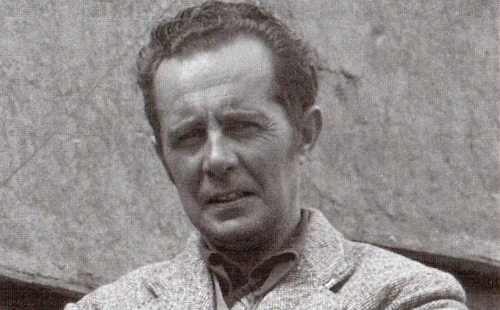
 Era il 5 giugno del 1894 quando un bimbo dagli occhi curiosi e le mani sempre pronte ad afferrare ciò che incontrava sul suo cammino nasceva in un confortevole appartamento di Macerata. Oggi la targa che ricorda la sua persona si trova in corso Cavour ed è facilmente visibile, tuttavia sono in molti ad avere ricordi di un adolescente di via Crispi originale, poco avvezzo a far amicizia, sempre immerso in letture e passeggiate tra le rovine storiche, che aveva attirato l'attenzione su di sé poiché spesso, durante il freddo inverno dell'entroterra marchigiano, usciva in balcone a dorso nudo e si cimentava in difficilissimi esercizi di yoga. Nessuno poteva immaginare che la città di Macerata sarebbe arrivata in un futuro non troppo lontano a dedicargli persino una via e una sede didattica a
  Giuseppe strinse la cinghia che teneva incollati tra loro gli antichi libri e sorrise compiaciuto. Era giunto il momento di lasciare Lhasa dopo che, non molto tempo prima, era davvero riuscito a farsi ammettere – unico uomo di tutta la spedizione – sfruttando una motivazione assai semplice: era buddista. Lo era diventato, in effetti, durante la precedente visita al Tibet nel 1935 grazie all'iniziazione dell'abate di Sakya Ngawang Thutob Wangdrag. Lo raccontò lui stesso nel libro Santi e briganti nel Tibet ignoto, esplicitando anche la convinzione di essere stato un tibetano e di essersi reincarnato nei panni di un esploratore per dare voce e lustro alla cultura di un popolo in continuo pericolo, ancora troppo ignoto al resto dell'umanità. Ed era proprio per questo motivo che Tucci, in quella soleggiata giornata dall'aria frizzantina proveniente dalle vette che si estendevano intorno a lui in lontananza, non aveva nessuna intenzione di restituire l'opera costituita da ben 108 volumi preziosi e di inestimabile valore che il Dalai Lama
  Sebbene Giuseppe Tucci sia oggi considerato unanimamente il più importante tibetologo del mondo e un esploratore, orientalista, professore e storico delle religioni di livello internazionale – contando le numerose università straniere e italiane in cui insegnò, o le prestigiose onorificenze ricevute – la sua figura resta tuttora avvolta nel mistero e nella discrezione. Acclamato nonché profondamente stimato all'estero, Tucci seppe sfruttare anche nel suo paese i legami politici e istituzionali che la sua immensa cultura gli aveva procurato; tuttavia, mai si piegò ai lustri del successo, ai salotti letterari e alla sete di visibilità, restando così un personaggio ben poco noto se si pensa all'estremo carisma che seppe emanare in vita, ma soprattutto alle incredibili missioni che svolse, degne di un'incomparabile genialità.