

jeudi, 26 mai 2011
Hinter dem Rücken der NATO
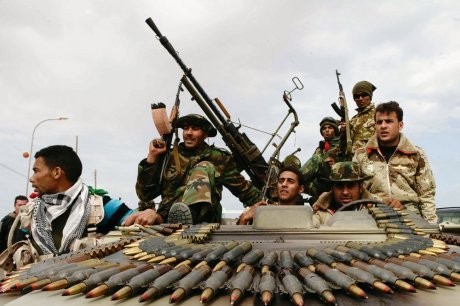
Hinter dem Rücken der NATO: Libysche Rebellenführer stehen kurz vor Einigung mit Gaddafi
Eine Delegation des Nationalen Übergangsrates, der die Rebellen in Libyen vertritt, war am Donnerstag, dem 12. April, zu Gesprächen mit dem britischen Premierminister David Cameron in London eingetroffen. Aufmerksamen und genauen Beobachtern dürfte nicht entgangen sein, dass der Delegation kein einziger Militärkommandeur angehörte. Zwei Tage später reiste die Delegation am 14. April nach Paris weiter, um sich mit dem französischen Staatspräsidenten Nicolas Sarkozy zu treffen.
00:25 Publié dans Actualité | Lien permanent | Commentaires (0) | Tags : libye, actualité, politique internationale, afrique du nord, afrique, affaires africaines, monde arabe, monde arabo-musulman |  |
|  del.icio.us |
  |
|  Digg |
  Facebook
Krantenkoppen - Mei 2011 (4)
Op de vrijdag ná Goede Vrijdag gebeurde er iets uitzonderlijks in Damascus. Het vrijdagsgebed was nauwelijks begonnen toen er een ongekend noodweer losbarstte boven de stad, vergezeld door hagelstenen ter grootte van knikkers. Het rioleringssysteem kon deze waterhoos niet aan en binnen de kortste keren veranderden vele straten in Damascus in complete rivieren. Enkele uren later werd er op Arabische satellieten gemeld dat er deze vrijdag in de Damasceense wijk Maidan een grote protestdemonstratie plaatsvond, geïllustreerd met door mobieltjes opgenomen filmpjes. Het merkwaardige was echter dat de getoonde demonstranten marcheerden over kurkdroge straten onder een stralend blauwe hemel. Dat maakte het onmogelijk dat deze beelden afkomstig waren uit deze wijk. Hetgeen niet belette dat deze filmpjes nog dezelfde dag door media wereldwijd klakkeloos werden overgenomen.
Het Westen beweert dat ze het democratisch proces in Syrië steunt, maar vormt het respecteren van de wil van het Syrische volk niet het fundament en de eerste voorwaarde van dit proces?"
00:20 Publié dans Actualité, Affaires européennes | Lien permanent | Commentaires (0) | Tags : affaires européennes, europe, journaux, presse, médias, pays-bas, flandre, actualité, politique internationale | | del.icio.us | | Digg | Facebook
Jean Parvulesco sur la Turquie (2003)
Archives Jean Parvulesco (2003)
Jean PARVULESCO:
La Turquie, avant-garde de l'action secrète de l'Al Qaïda en Europe
Pour moi, l'entrée de la Turquie dans l'Union Européenne, ce serait la fin de celle-ci.
Valéry Giscard d'Estaing.
 Ce n'est pas parce que l'on se tient, comme nous le faisons nous autres, totalement aux côtés des peuples palestinien et irakien actuellement menacés de génocide par la "conspiration mondialiste" des Etats-Unis et de ce que se tient derrière celle-ci, que l'on ne doit pas moins totalement être, en même temps, contre les grands desseins subversifs de l'Islam fondamentaliste en action. Et on ne peut quand même pas nier le fait que, de tous les chefs d'Etat européens actuellement en fonction, Silvio Berlusconi soit le seul qui, au nom de l'Italie, ait dit de l'Islam fondamentaliste tout ce qu'il fallait dire, ni qu'en chaque occasion il ait ouvertement pris le parti de rappeler et de soutenir la nécessité incontournable de l'intégration de la nouvelle Russie de Vladimir Poutine à part entière —politique, militaire, économique et culturelle— dans l'Union Européenne.
Des récents événements décisifs dans leur affirmation et dans leurs conséquences immédiates viennent de confirmer d'une manière dramatique l'urgence extrême de l'ensemble des options politico-stratégiques à faire nôtres, contre les ingérences européennes subversives en cours de se préciser de la part de l'Islamisme fondamentaliste, à travers ses avancées en Turquie, et pour l'intégration inconditionnelle de la Russie au sein de l'Union Européenne. Quels sont ces récents événements? Avant tout, le glissement de la Turquie —pour le moment quelque peu dissimulé encore— vers l'islamisme fondamentaliste à travers l'arrivée au pouvoir à Ankara du AKP, le "Parti de la Justice et du Développement" de Recep Tayyip Erdogan, et l'entrée, donc, de la Turquie dans la sphère d'influence de l'Al Qaïda d'Oussama Ben Laden. Et de par cela même, l'extraordinaire danger représenté pour l'ensemble du continent européen par les projets en cours concernant l'admission —tout à fait prochaine— de la Turquie au sein de l'Union Européenne.
Les choses importantes se passent toujours dans l'ombre, aujourd'hui comme hier. Il est grand temps que l'on s'en rende compte, il y va de notre survie même.
Un Hiroshima politique s'est produit en Europe, le 3 novembre dernier, dont personne ne semble s'en être encore aperçu : la prise du pouvoir conspirative, à Ankara, exécutée sous des apparences démocratiques fallacieuses, par les tenants visibles et invisibles du parti soi-disant "islamiste modéré" de Recep Tayyip Erdogan. En réalité, il s'agissait d'une opération subversive "finale", absolument décisive, à l'échelle grande européenne continentale, menée dans l'ombre, en relation directe avec l'organisation conspirative islamiste planétaire d'Oussama Ben Laden, Al Qaïda.
S'étant emparé, alors qu'il n'était que maire de Constantinople, de l'appellation diversionniste du soi-disant "islam modéré", Recep Tayyip Erdogan, personnage secret et essentiellement ambigu, a depuis toujours promu, pratiqué et confidentiellement représenté la ligne clandestine la plus dure de l'islam extrémiste et très activement conspiratif, appartenant à la mouvance panturque engagée dans le long processus subversionnel ayant finalement abouti à la prise du pouvoir politique total du 3 novembre dernier.
Car, dans la perspective de la future admission de la Turquie au sein de l'Union Européenne, les plans stratégiques d'ensemble de la subversion islamiste planétaire, représentée actuellement par l'Al Qaïda, se sont trouvés brusquement changés : le centre de gravité politico-stratégique de l'action islamiste révolutionnaire étant déplacé depuis l'Asie sur l'Europe, et la Turquie devenant ainsi la plaque tournante opérationnelle de ce changement. Désormais, tout se passera en Turquie.
Il s'agit, en fait, d'un changement total de la "ligne géopolitique" de l'Al Qaïda, dont l'objectif stratégique fondamental apparaît donc comme étant celui d'engager la bataille pour l'investissement islamique final de l'espace intérieur géopolitique européen dans son ensemble : Europe de l'Ouest, Europe de l'Est et Russie. L'Europe en venant donc, ainsi, à être déclarée "terre de guerre sainte", nouvel espace du "Grand Jihad" islamiste en action vers la réalisation du "Khalifat final", englobant, en dernière analyse, les Etats-Unis eux-mêmes.
La base d'implantation fondamentale, du départ et du déploiement politico-stratégique des futures offensives islamiques en Europe se trouvera ainsi située dans le Sud-Est européen, à partir de la Turquie et des territoires islamistes européens d'Albanie, de Bosnie, du Kosovo et de la Macédoine, ainsi que, en même temps, à l'intérieur de chaque pays européen comprenant en son sein une importante colonie islamique. Dont, notamment, l'Allemagne et la France.
"Quoi de plus normal qu'un islamiste allemand puisse vouloir qu'un jour il vive dans une Allemagne islamique", titrait, ces derniers jours, la presse turque de Berlin.
Le concept d'"Allemagne islamique" vient donc d'être lancé : il va bientôt être question du concept d'"Europe islamique".
A ce propos, il ne faut pas oublier qu'Oussama Ben Laden est déjà allé "inspecter" les colonies islamiques d'Albanie et de Bosnie, et que, suivant les services secrets de Belgrade, il serait allé clandestinement jusqu'en Allemagne, notamment à Berlin.
L'Europe a donc été choisie comme le futur champ de bataille de la grande guerre sainte de l'Islam, de son "Grand Jihad" des prochaines années à venir. Les dés de fer d'un nouveau destin dramatique pour l'Europe ont été jetés.
Laissant les combats d'Asie aux soins de ses fondés de pouvoir clandestins, le mollah Omar et Abdel Azim Al-Mouhajar, Oussama Ben Laden et les infrastructures occultes de l'Al Qaïda vont bientôt s'installer quelque part dans le Sud-est européen, d'où seront dirigées les opérations offensives révolutionnaires et les actions terroristes de l'"Internationale islamique", engagée dans l'investissement subversif et la conquête politique finale de l'Europe grande continentale.
En même temps, le flanc méridional de la Russie —la chaîne des anciennes républiques musulmanes soviétiques— constituant le domaine réservé à la Turquie —ce que, d'ailleurs, elles sont déjà— verront les ingérences de moins en moins clandestines de la Turquie s'intensifier au maximum, alors que la Tchétchénie fera figure, en l'occurrence, par rapport aux actuelles entreprises offensives islamiques d'envergure européenne grande continentale, à ce qu'avait été la guerre nationale d'Espagne à la veille de la dernière guerre mondiale.
Soit crétinisme congénital d'une civilisation irrémédiablement destituée, soit haute trahison concertée, soit les deux ensemble, c'est aussi le moment précis où l'ensemble des actuels gouvernements démocratiques de l'Union Européenne, ainsi que l'ensemble de la grande presse et des médias européens —de gauche et de droite— s'acharnent plus que jamais —comme Le Figaro, Le Monde, Le Courrier International, etc., toutes les radios et les télévisions d'Etat ou privées— à très ouvertement soutenir les positions pro-islamistes des gouvernements irresponsables en place. Et cela non seulement en ce qui concerne le problème de l'admission de la Turquie au sein de l'Union Européenne, mais encore et surtout en entretenant d'une manière de plus en plus exacerbée un climat d'hostilité ouverte, et provocatrice très à dessein, à l'égard des engagements contre-terroristes de la Russie de Vladimir Poutine en Tchétchénie, où les forces armées de Moscou combattent, héroïquement, à l'avant-garde de l'Europe assiégée, l'islamisme tchétchène aux ordres de ses commanditaires dans l'ombre de la ligne d'Oussama Ben Laden.
Si rien n'est entrepris pour faire cesser abruptement cet état suicidaire des choses, pour faire prendre conscience à l'Europe dans son ensemble des plans d'investissement politico-stratégique en profondeur poursuivis à son égard par les dirigeants occultes de l'"Internationale Islamique", il sera bientôt —très bientôt— trop tard pour tenter réellement d'endiguer, et de refouler les déversements dévastateurs des masses islamiques déjà en marche suivant les programmes prévus à cette fin.
Car il est certain, à présent, que l'"Internationale Islamique" conspirativement menée par Oussama Ben Laden a déjà déclaré une guerre religieuse et raciale, une guerre politico-historique totale à l'Europe, et que si elle ne se mobilise pas contre-offensivement de toute urgence, l'Europe disparaîtra en tant que telle, à terme, de l'histoire du monde : le travail obstiné, pathologique, abyssal de l'Islam pour la conquête et la soumission de l'Europe, sans cesse repris depuis des siècles, risque fort cette fois-ci d'aboutir à ses fins ultimes.
Ce qu'il faut avoir à l'esprit, c'est surtout le fait que l'offensive islamiste fondamentale contre l'Europe ne se fera pas depuis l'extérieur, mais de l'intérieur même de nos propres lignes, que le ver est déjà dans le fruit.
Ce sont les Etats-Unis et Israël qui font tout pour soutenir en force la Turquie, et c'est le régime socialisto-trotskiste de Gerhard Schröder et Joschka Fischer qui, aujourd'hui, en Allemagne, poussent avec un acharnement plus que suspect à l'admission de la Turquie dans l'Union Européenne.
Il faut donc que, par tous les moyens, nous entreprenions de combattre l'équipe subversive de traîtres actuellement au pouvoir à Berlin, que nous nous engagions à provoquer à brève échéance le renversement du régime socialisto-trotskiste de Gerhard Schröder et Joschka Fischer et le remplacement de celui-ci par le front national allemand et européen d'Edmund Stoiber et de sa coalition contre-stratégique pour le renouvellement de l'être profond de l'Allemagne et de ses destinées à venir.
C'est ainsi que, ces derniers jours, le Welt am Sonntag invitait les Allemands à se soulever contre la conspiration socialisto-trotskiste au pouvoir actuellement à Berlin, à manifester contre "les anciens soixante-huitards au sommet dans les universités, les médias, et finalement au gouvernement".
Il s'agit, pour nous autres, de batailles vitales, de batailles pour la survie finale de tout ce que nous sommes.
Jean PARVULESCO.
00:10 Publié dans Géopolitique, Islam, Jean Parvulesco | Lien permanent | Commentaires (0) | Tags : jean parvulesco, turquie, islam, al qaeda, proche orient, asie mineure, géopolitique, politique internationale | | del.icio.us | | Digg | Facebook
Bonald's Economic Thought
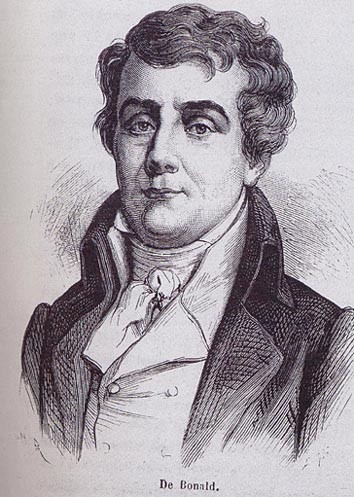
Bonald’s Economic Thought
By F. Rober DEVLIN
Ex: http://www.counter-currents.com/
The French Age of Enlightenment witnessed and celebrated an economic revolution: the rapid growth of speculation and a money economy, and a corresponding diminution in the importance of landed wealth. Bonald believed that the change had been brought about by the practice of usury. He did not condemn all lending at interest as usury, but distinguished between the cases of lending for the acquisition of productive goods (such as land or capital) and lending for unproductive goods meant for consumption.
For example, if I lend a man money to buy a farm, I may legitimately charge him interest out of the goods produced by the farm. In the France of Bonald’s day, this would usually have yielded an interest rate of around four or five percent per annum. On the other hand, if I lend a man money to by bread, his purchase, far from being productive of further value, loses what value it has if not quickly consumed. In contrast to the earth itself, “the products of the earth, are dead values which diminish in quantity or quality.” To earn money by lending for consumption is, in Bonald’s view, essentially unjust and a violation of Christian charity even if freely agreed to between borrower and lender.
It might appear that such a doctrine would forbid an ordinary greengrocer from operating his store at a profit. Bonald holds that the grocer’s ‘profit’ really amounts to a wage for the work he does:
The labor of men who purchase, transport, store, preserve and improve goods merits a salary. The natural decrease, the accidental and eventual loss of goods and the inevitable waste they suffer from their transformation into industrial values all require compensation.
This contradicts the teaching of Adam Smith:
The profits of stock, it may perhaps be thought, are only a different name for the wages of a particular sort of labour, the labour of inspection and direction. They are, however, altogether different, are regulated by quite different principles, and bear no proportion to the quantity, the hardship, or the ingenuity of this supposed labour of inspection and direction. They are regulated altogether by the value of the stock employed, and are greater or smaller in proportion to the extent of this stock. . . . In many great works, almost the whole labour of this kind is committed to some principal clerk. His wages properly express the value of this labour of inspection and direction. Though in settling them some regard is had commonly, not only to his labour and skill, but to the trust which is reposed in him, yet they never bear any regular proportion to the capital of which he oversees the management; and the owner of this capital, though he is thus discharged of almost all labour, still expects that his profit should bear a regular proportion to his capital. In the price of commodities, therefore, the profits of stock constitute a component part altogether different from the wages of labour, and regulated by quite different principles. (The Wealth of Nations, Book I, Chapter 6)
I will not venture to decide the question in Bonald’s favor, but I am inclined to wonder how many modern economists could give a coherent explanation of why his unfashionable view is mistaken.
Money, in Bonald’s view, is properly a sign of value and medium of exchange rather than a commodity like any other. It should not, therefore, command a ‘price’ in the form of interest (except as noted). Where usury is permitted,
interest, or rather the price of money, is infinitely greater than the produce of the earth, [so] everyone wishes to sell his land in order to procure money to lend. But when everyone wants to sell, no one wants to buy. The produce of the land tends to rise to the highest prices, and the lands themselves fall to the lowest, or they are unable to be sold at any price, and one buys only what misery leaves behind or revolutions make available. One notes a general tendency to leave one’s home and the home of one’s fathers, to leave one’s family and country. A vague restlessness and desire for change torments landowners. They complain of being attached to an estate burdened with so many cares, and with too little income left to pay for their luxuries and pleasures. We see an immoderate desire to become rich extending even to the lowest orders of society, causing horrible disorders and unheard of crimes; while in others giving rise to a cold, hard egoism, a total extinction of every generous sentiment, and an insensible transformation of the most disinterested and friendly nation into a people of stock-jobbers who see in the events of society only chances for gain or loss.
To this unstable, calculating and hectic system Bonald opposes the traditional landed or agrarian system of economy which flourishes when interest rates are not allowed to exceed the production of the earth:
Those who can live within the revenue of their capital seek to acquire productive land, because the revenue of land is approximately the same as the interest paid for money, and it is more secure because the capital itself is more sheltered from events. Yet were everyone wants to buy, no one wants to sell. Lands are therefore at a high price relative to goods. All the citizens aspire to move from being possessors of money to being possessors of land, i.e., from a mobile and dependent political condition to a fixed and independent position. This is the most happy and most moral cast of the public mind, the one most opposed to the spirit of greed and to revolution.
The reader will learn more about agrarianism from a few pages of Bonald than from all the literary exercises in I’ll Take My Stand.
Bonald saw no reason why the legislator should remain neutral regarding developments so harmful to the moral habits of society:
A wise policy, one more attentive to general interests than to private ones, would seek to render the circulation of money less rapid: in Sparta, by using iron money, in modern states, by the prohibition of lending at usury. . . . If the profits of commerce regularly rise far above the revenue of the land, it would be a wise measure to bring them back to equality, either by favoring the cultivation of the earth in every possible way, or by containing the speculations of commerce within the limits of general utility.
To restore the agrarian order, Bonald also advocated the restoration of primogeniture and entail: “a law not made for the benefit of the eldest, but for the preservation and permanence of the landowning family.” Revolutionary legislation had mandated the equal division and inheritance of landed estates. This was not unlike Solomon’s judgment of carving the child in two: a half or a quarter or an eighth of an estate is often not worth the corresponding fraction of the original. It may be unfortunate that all men cannot live off their own lands, but parceling out estates into a welter of vegetable gardens does not improve matters; it only forces the ‘heirs’ to sell out for any price they can get. As a leading citizen of his district, Bonald got to know the evils of the new system at first hand.
A rich cultivator whom the author congratulated for the good state of his properties responded in a dolorous tone: “It is true, my property is beautiful and well cultivated. My fathers for several centuries and I for fifty years have worked to extend, improve and embellish it. But you see my large family, and with their laws on inheritance, my children will one day be servants here where they were the masters.”
Bonald even defended the guild system, which Smith had criticized for restricting competition and inefficiently requiring seven year apprenticeships for trades which took six months to learn.
For the inferior classes, the corporations of arts and trades were a sort of hereditary municipal nobility that gave importance and dignity to the most obscure individuals and the least exalted professions. These corporations were at the same time confraternities, and this is what excited the hatred of the philosophes who hunted down religion even in its most modest manifestations. This monarchical institution brought great benefits to administration. The power of the masters restrained youths who lacked education, who had been taken away from paternal authority at an early age by the necessity to learn a trade and win their bread, and whose obscurity hid from the public power. Finally, the inheritance of the mechanical professions also served public morals by posing a check to ruinous and ridiculous changes of fashion.
The author’s first point is especially worth pondering: a man can be happy in a low station, so long as it is a recognized station within his society. The ‘equality bug’ infects men who are deracinated, i.e., who do not belong anywhere. Those with the dignity of even a modest ‘place’ are seldom disturbed by the greater fortunes of others.
Bonald criticized Smith directly:
Wealth, taken in a general and philosophical sense, is the means of existence and conservation; opes, in the Latin tongue, signifies both wealth and strength. For the individual—a physical being—these means are material wealth, the produce of the soil and of industry. For society—a moral being—the means of existence and duration are moral riches, and the forces of conservation are, for the domestic society, morals, and for the public society, laws. Morals and laws are, therefore, the true and even the only wealth of societies, families and nations.
Here again we see Bonald’s sharp distinction between universal or public interests and particular or private ones: economic goods are always private, even if they happen to be enjoyed by all the individuals in a given society. This is why Liberalism (which, according to no less an authority than Ludwig von Mises, is “merely applied economics”) cannot give any account of why citizens should have to sacrifice their lives for their country:
A public spirit cannot be maintained in a commercial and manufacturing nation devoted to calculations of personal interest, and still less today when the laws of war protect the personal property of the vanquished and in our humanitarian sentiments we call it a crime for a citizen not to be paid to defend his land. In every era, poor nations have conquered rich ones, even though they held in their wealth the most powerful motives for self-defense.
Similarly, in his earlier treatise On Divorce [2]
Bonald rejects the “privatize everything!” impulse which sees socialism lurking in every town square:
The use of common things, temples, waters, woods, and pastures constitutes the property of the community. Indeed, there is no more community where there is no longer a community of use. It may be true that the commons were poorly administered. I would even believe that their division, in some places, has produced a little more wheat. Yet in some lands this division restricts flocks to spaces too small for them and thus ruins and important branch of agriculture. More importantly, there is no more common property among the inhabitants of the same place and, consequently, no more community of interests, no more occasions for deliberation and agreement. For example, if there were only one public fountain in a village from which water was distributed to all the households, to take away the fountain would be to deny the inhabitants a continual occasion to see, speak to, and hear one another.
Bonald, like Marx after him, saw that industrial poverty was different in kind from the poverty in agricultural states, and a greater threat to traditional social order. Indeed, he comes close to calling the industrial proletariat the vanguard of the Revolution.
The true politician is concerned about the disorders that arise from the alternation of ease and misery to which the industrial population is exposed, which, making the objects of industry without being able to consume them, is no less obliged to consume the fruits of the soil without the ability to produce or even purchase them—and which, finding itself without work and without bread, is a ready-made instrument for revolution. . . . Let it not be doubted that it is in hopes of one day taking this superabundant population into its pay that one party in Europe promotes the exaggerated growth of industry, certain that it can give work to these idle arms in the immense workshop of the revolutionary industry.
Recommended reading:
Louis de Bonald
The True and Only Wealth of Nations: Essays on Family, Economy, and Society [5]
Ttranslated by Christopher Olaf Blum
Naples, Fla.: Sapientia Press of Ave Maria University, 2006

Critics of the Enlightenment: Readings in the French Counter-Revolutionary Tradition [6]
Edited and translated by Christopher Olaf Blum
Wilmington, Del.: ISI Books, 2004

Louis de Bonald
On Divorce [2]
Translated and edited by Nicholas Davidson
New Brunswick, N.J.: Transaction Publishers, 1992
TOQ Online, Dec. 5, 2009
Article printed from Counter-Currents Publishing: http://www.counter-currents.com
URL to article: http://www.counter-currents.com/2011/05/bonalds-economic-thought/
00:05 Publié dans Economie, Philosophie, Théorie politique | Lien permanent | Commentaires (0) | Tags : économie, philosophie, théorie politique, politologie, sciences politiques, sociologie, conservatisme, 19ème siècle, contre-révolution | | del.icio.us | | Digg | Facebook
Adzharian Dance - Horumi / Igor Moiseev's Ballet
Adzharian Dance - Horumi
Igor Moiseev's Ballet
00:04 Publié dans Musique, Terres d'Europe, Terroirs et racines | Lien permanent | Commentaires (0) | Tags : adjarie, géorgie, caucase, russie, musique, ballet, danse, terres d'europe | | del.icio.us | | Digg | Facebook
mercredi, 25 mai 2011
Das Janusgesicht westlicher Moral
Das Janusgesicht westlicher Moral
Ex: http://www.jungefreiheit.de/
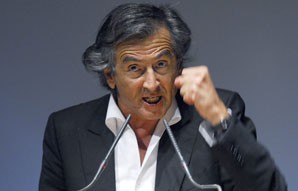 Der „Pariser Salonlöwe“ (WDR 5) und „Medienintellektuelle“ Bernard-Henri Lévy (BHL) gilt als einer eifrigsten Lautsprecher der Intervention in Libyen. Seine Reise im Osten Libyens Anfang März des Jahres, so will es die Fama, soll den Stein ins Rollen gebracht haben. Hier suchte er den Kontakt mit Anti-Gaddafi-Rebellen, um zu eruieren, wie glaubwürdig deren Absichten seien, den Despoten Gaddafi in die beziehungsweise – hier wohl angemessener – aus der Wüste zu jagen.
Die „Rebellen“ sollen BHL treuherzig versichert haben, daß sie es mit ihren Putsch-Plänen selbstverständlich ernst meinten, aber keinen islamischen Gottesstaat anstrebten. Lévy will daraufhin bei Frankreichs Staatspräsident Nicolas Sarkozy angerufen haben, und zwar „auf gut Glück“, wie er ebenso treuherzig wie die „Rebellen“ versicherte. Was aus diesem Anruf wurde, wissen wir. Mittlerweile indes wachsen aber selbst bei Befürwortern der sich unabsehbar in die Länge ziehenden Intervention die Zweifel.
Das Lager der „ewigen Nichtinterventionisten“
Exemplarisch hierfür steht der Streit zwischen BHL und dem Filmregisseur Claude Lanzmann. Lanzmann hatte zunächst für eine Intervention gestimmt, hat nun aber seine Meinung geändert. Daraufhin reihte ihn der französische Publizist Gilles Hertzog, ein Parteigänger von BHL, ins Lager der „Pontius Pilatus, der Münchner, der ewigen Nichtinterventionisten“ ein. Die libyschen „Rebellen“ kämpften, so Hertzog, wie einst „die freien Franzosen unter Leclerc“ gegen Hitler und Petain.
Mit anderen Worten: Wer kein „Appeaser“ sein will, der habe die Pflicht zur Einmischung. Daß dieser moralische Imperativ insbesondere von linksliberalen Kreisen verfochten wird, ist nicht ohne Hautgout, wie unter anderem der Publizist Rudolf Maresch in einem Beitrag für das Online-Magazin Telepolis deutlich gemacht hat. Waren es nicht diese Kreise, die den „Demokratieexport“ à la Bush und seiner „Neocons“ geißelten? Oder, in den Worten von Maresch: „Sind Bomben und Cruise Missiles, die im Namen von Sarkozy und Obama abgeworfen werden, moralisch höherwertiger als die von Neocons, Bush und Konsorten?“ Man müsse sich fragen, so Maresch, warum die NATO nur in Libyen interveniere, „nicht aber im Jemen oder in Syrien“.
Den Bellizisten der Libyen-Intervention ist dieses Argument, das analog zu Paul Kennedys Paradigma von der „imperialen Überdehnung“ auf eine „moralische Überdehnung“ hinausläuft, durchaus bewußt. Der Befreiungsschlag aus diesem Dilemma ist das altbekannte Spiel auf der Klaviatur der angelsächsischen Kriegspropaganda: Gaddafi wird zum „hostis humani generis“, zu „Hitlers Wiedergänger“ (Enzensberger) aufgeblasen, dessen angebliche Alleinstellungsmerkmale in Sachen Grausamkeit alle Mittel heiligen – und eine Intervention geradezu herbeigezwungen haben.
Die obskuren Anführer der „Rebellenarmee“
Mit Blick auf BHL steht die Frage im Raum, inwieweit er Kenntnis über den obskuren Hintergrund der „Rebellen“ hat, die in Libyen angeblich das Banner von Demokratie und Freiheit tragen. Was hier mittlerweile von namentlich bekannten Protagonisten dieser „Rebellen“ kolportiert wird, spricht für sich. Chalifa Hifter zum Beispiel, der Führer der Rebellenarmee, kehrte erst vor kurzem aus den USA nach Libyen zurück.
In den 1980er Jahren war er Oberst in Gaddafis Armee, sei dann im Zuge des Tschad-Konfliktes Gaddafi-Gegner geworden und emigrierte schließlich mit seiner Familie in die USA, wo er vor den Toren Washingtons, einige Kilometer von der CIA-Zentrale in Langley entfernt, lebte. Wovon seine Familie und er dann gelebt haben, ist unklar. Hifter soll – dies kann unter anderem in Pierre Péans Buch „Manipulations africaines“ (2001) nachgelesen werden – für die „Libysche Nationale Rettungsfront“ tätig gewesen sein, einer wichtigen Anti-Gaddafi-Organisation, die auch mit CIA-Geldern finanziert wurde.
Fünf Jahre auf Guantánamo
Mindestens ebenso schillernd ist die Karriere von Abu bin Qumu – heute einer der Exponenten der Anti-Gaddafi-Rebellen, der – so berichtete unter anderem die Junge Welt – nach den Anschlägen vom 11. September als „Mitglied der militanten Libysch-Islamischen Kampfgruppe in Pakistan festgenommen wurde“ – auch dank der Hinweise eines gewissen Muammar al-Gaddafi. Qumu brachte dann fünf Jahre auf Guantánamo zu; 2007 wurde er nach Libyen abgeschoben.
Im Zuge einer Amnestie, die Gaddafi verfügte, wurde er dann freigelassen. Qumu gilt als einer der Anführer der sogenannten „Darnah-Brigade“. Darnah (oder Derna) ist als Hochburg von Selbstmordattentätern (die insbesondere im Irak Anschläge durchführten) und Dschihad-Terroristen bekannt geworden. Unweit von Bengasi gelegen, gilt Darnah als ein Zentrum der „Rebellen“ im Kampf gegen Gaddafi.
Parallelen zu Afghanistan
Auch die Biographie des zum Musterdemokraten mutierten Abdel-Hakim al Hasidi, ein anderer bekannter Führer der Rebellenarmee, spricht für sich. Er kämpfte in Afghanistan für El Kaida, wurde von pakistanischen Einheiten verhaftet und an die USA ausgeliefert. Diese überstellten ihn Gaddafi, der ihn ins Gefängnis schickte. Einige der wenigen deutschen Zeitungen, die über Hasidis Hintergrund berichtete, war Anfang April die Berliner Zeitung:
„Einer der Rebellenführer, Abdel-Hakim al Hasidi, hatte einer italienischen Zeitung bereits vor zwei Wochen gesagt, daß viele Dschihadisten, die zuvor die westlichen Alliierten im Irak bekämpft hätten, nun auf Seiten der ,Rebellen‛ gegen das Gaddafi-Regime kämpfen würden. Der Libyer muß es wissen – er kämpfte selbst in Afghanistan gegen die Amerikaner, bis er in Pakistan festgenommen und ans US-Militär ausgeliefert wurde.“
Die Parallelen zu Afghanistan, wo die CIA die Mudschaheddin finanzierte und ausrüstete, damit sie die Russen aus dem Land jagen, sind nicht nur nicht zu übersehen, sondern drängen sich mit Blick auf die libyschen „Rebellen“ regelrecht auf.
Kolumne

Michael Wiesberg, 1959 in Kiel geboren, Studium der Evangelischen Theologie und Geschichte, arbeitet als Lektor und als freier Journalist. Letzte Buchveröffentlichung: Botho Strauß. Dichter der Gegenaufklärung, Dresden 2002.
00:25 Publié dans Actualité, Affaires européennes, Manipulations médiatiques | Lien permanent | Commentaires (0) | Tags : bhl, bernard henri lévy, manipulations médiatiques, france, intellos parisiens, actualité, europe, affaires européennes | | del.icio.us | | Digg | Facebook
Impasse Adam Smith
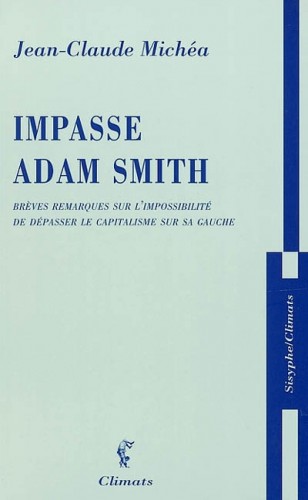
« Impasse Adam Smith » de Jean Claude Michéa
Le titre de l’ouvrage de Jean-Claude Michéa, Impasse Adam Smith, est quelque peu réducteur. Son sous-titre est plus explicite : Brèves remarques sur l’impossibilité de dépasser le capitalisme sur sa gauche. La thèse centrale de l’auteur est, en effet, que la gauche et le libéralisme puisent aux mêmes sources idéologiques : l’esprit des Lumières, c’est-à-dire un utilitarisme et un individualisme radicaux. Michel Geoffroy fait le point pour Polémia.
Une physique sociale
 Les philosophes des Lumières vont progressivement faire de l’intérêt rationnel le seul véritable déterminant de la conduite humaine, dans le fil de Newton qui découvrit la loi de l’attraction universelle. Cette réduction de l’homme à son intérêt « bien compris », c’est-à-dire éclairé par les lumières de sa raison, débouche sur une « physique sociale » dont l’esprit des Lumières croit avoir découvert les lois indépassables. Et si tout homme est déterminé par sa nature à rechercher ce qui lui est utile, « alors l’échange économique devient l’exemple le plus net d’une relation humaine rationnelle » puisque chacun, au terme d’une négociation – un négoce – pacifique, est censé y trouver son compte.
La conduite utilitariste ne constitue qu’une des figures possibles de la conduite humaine
Pour Jean-Claude Michéa cette vision est réductrice car la conduite utilitariste ne constitue qu’une des figures possibles de la conduite humaine. A l’appui de son analyse l’auteur développe notamment une analyse des comportements altruistes et reprend les travaux de Marcel Mauss sur le don, qui est irréductible à tout calcul économique. Il ouvre aussi d’intéressantes perspectives sur les limites de la théorie d’Hobbes pour qui la contrainte étatique serait le seul moyen d’empêcher la guerre de tous contre tous.
L’utilitarisme désagrège l’humanité
N’est-ce pas plutôt l’utilitarisme qui, en désagrégeant l’humanité en monades, en détruisant les solidarités, les identités et les cultures pour donner naissance à l’individu absolu, atome social, flexible et mobilisable à tout moment par le marché, a détruit les fondements du vivre ensemble ? C’est-à-dire la capacité à partager l’existence, y compris avec des hommes qui ne nous ressemblent pas. Car dans le paradigme utilitariste c’est le sujet individuel qui est premier et autosuffisant, la relation à l’autre est toujours seconde. Pour l’auteur qui assimile libéralisme et capitalisme puisque les deux sont indissociables, la théorie libérale n’est qu’une utopie, car le présupposé sur lequel elle repose du primat d’un individu toujours rationnel, calculateur et égoïste n’est rien d’autre qu’un mythe philosophique, une « robinsonnade », comme l’écrivait Marx. Et l’économie politique n’est qu’une « métaphysique libérale ».
C’est le libéralisme qui a bouleversé les traditions
Par conséquent l’auteur estime que la gauche fait fausse route quand elle assimile le libéralisme et le capitalisme au conservatisme : en réalité c’est le libéralisme qui a bouleversé les traditions et détruit l’ordre social. En particulier parce qu’il a introduit l’idée que l’on pouvait désormais dissocier société bonne et citoyens vertueux (cf. La Fable des abeilles, de Mandeville, 1714) et substituer le gouvernement des choses (la « main invisible » du marché, réputée toujours trouver la moins mauvaise solution) au gouvernement des hommes (réputé toujours tyrannique). Pour le libéralisme à l’encontre de la sagesse politique des temps anciens, le problème (l’égoïsme naturel des individus) est désormais aussi la solution. Plus les individus se conduisent en individus, c’est-à-dire se conforment au seul calcul égoïste, mieux cela sera. Cette logique, qui conduit à tuer toutes les relations humaines, explique la pente libertaire fatale du libéralisme que Jean-Claude Michéa analyse avec beaucoup de clarté.
La gauche n’est pas une alternative crédible au désenchantement du monde
Mais si la gauche puise aux mêmes catégories que le libéralisme, cela signifie qu’elle ne peut constituer une alternative crédible au désenchantement du monde que ce dernier a provoqué. Pour Jean-Claude Michéa cela signifie aussi que les clivages gauche/droite sont dépassés : la droite se contente de contester les conséquences sociales des prémisses libérales auxquelles elle adhère. Symétriquement la gauche prétend contester ces mêmes prémisses alors qu’elle présente leurs conséquences comme des progrès dans la « libération » des hommes.
Retrouver le sens des solidarités humaines
Pour Jean-Claude Michéa, qui se réclame aussi de Christopher Lasch, il n’y a pas d’autre issue que de retrouver le sens du socialisme originel, avant qu’il ne soit récupéré par la gauche au moment de l’affaire Dreyfus et avant qu’il ne soit contaminé par l’idéologie du progrès, fille des Lumières et contre laquelle il s’affirmait. C’est-à-dire de retrouver le sens des relations, des communautés et des solidarités humaines.
On n’est, certes, pas forcé de partager sa conclusion. Mais son ouvrage ouvre cependant de très enrichissantes perspectives, très actuelles.
Michel Geoffroy
20/05/2011
Jean-Claude Michéa, Impasse Adam Smith : Brèves remarques sur l'impossibilité de dépasser le capitalisme sur sa gauche, Editeur Flammarion, coll. Champs, 2006, 184 pages
00:25 Publié dans Economie, Livre, Théorie politique | Lien permanent | Commentaires (0) | Tags : adam smith, libéralisme, utilitarisme, philosophie, économie, théorie politique, sciences politiques, politologie, 18ème siècle | | del.icio.us | | Digg | Facebook
La manipulation de l'opinion en démocratie

Peut-être existe-t-il encore quelques naïfs qui pensent que la propagande et la manipulation de l’opinion sont des spécialités réservées aux régimes autocratiques ou totalitaires clairement proclamés comme tels. Dans le monde de bisounours gavés à la guimauve démocratolâtre télévisuelle dans lequel nous vivons, ce n’est pas du tout impossible. Et bien ces derniers candides seront définitivement guéris de leurs puériles illusions par la lecture de cet ouvrage d’Edward Bernays datant de 1928. Les autres y trouveront matière à approfondir leur connaissance des méthodes et mécanismes de l’instrumentalisation de l’opinion publique.
L’aspect le plus intéressant de cette analyse de « la manipulation de l’opinion en démocratie » (sous-titre de l’ouvrage) est qu’elle n’émane pas d’un adversaire de ces méthodes, un activiste « libertaire » visant à dénoncer et démonter l’odieuse forfaiture mais tout au contraire d’un promoteur de cette « dominations des foules par des élites éclairées », fondateur des « relations publiques » et grand théoricien de celles-ci.
Pour Edward Bernays en effet, la manipulation est tout à fait nécessaire à la « bonne conduite » de la société dans un système démocratique. Sans celle-ci, sans cette capacité des « élites » à influencer les foules dans le sens de leurs intérêts (forcément bénéfiques pour l’ensemble de la communauté selon Bernays) les démocraties sombreraient dans l’anomie et le chaos.
Le livre de ce neveu de Freud est donc en réalité un petit « mode d’emploi » de l’art de faire croire aux individus qu’ils font des choix libres et volontaires alors que ces choix leurs sont « suggérés » (fortement) par les élites maîtrisant les rouages de l’information, de la publicité et des arts populaires (cinéma, théâtre…).
Pour Bernays, « la manipulation consciente, intelligente, des opinions et des habitudes organisées des masses joue un rôle important dans une société démocratique. Ceux qui manipulent ce mécanisme social imperceptible forment un gouvernement invisible qui dirige véritablement le pays », et il se donne pour mission d’expliciter comment ce « gouvernement invisible » parvient à ses fins, grâce notamment à l’application des principes de « relations publiques » qu’il a mis au point et qu’il cherche à vendre aux « élites » de tous ordres (commerçants et industriels bien sûr mais aussi hommes politiques, facultés, lobbys divers…).
Bernays est ainsi l’homme qui est parvenu à faire fumer les américaines à la demande d’American Tobacco qui ne supportait plus d’être ainsi privé d’un si vaste marché potentiel. Détournant à son profit le mouvement des « suffragettes », Bernays a en effet réussi à faire passer le fait de fumer pour un acte de libération féminine, une marque d’indépendance et de « prise de possession d’un symbole phallique » (on reconnaît là l’influence de l’oncle) et a ainsi rempli un peu plus grassement les caisses du cigarettier (et accessoirement plus tard celles des cancérologues).
C’est ainsi avec une bonne conscience absolue et un contentement total que Bernays explique l’importance pour tout homme de pouvoir de s’adjoindre les services des « hommes d’autorités » (médecins, juges et tout autre personne considérée dans l’esprit général comme neutre et impartiale) pour leur servir de « relais d’opinion » et imposer peu à peu leurs projets et conceptions. Noam Chomsky considère d’ailleurs ce texte comme l'un des plus important du 20ème siècle, lui pour qui "la propagande est à la démocratie ce que la violence est à un Etat totalitaire".
Une lecture fondamentale pour ne jamais être dupe des modes, des engouements populaires et autres « mouvements d’opinion ».
Xavier Eman (in « Livr’arbitres », numéro 4, nouvelle série).
00:18 Publié dans Manipulations médiatiques, Réflexions personnelles | Lien permanent | Commentaires (0) | Tags : manipulation, manipulations médiatiques, réflexions personnelles | | del.icio.us | | Digg | Facebook
Ortega y Gasset: un européiste critique de la révolte des masses et de la désertion des élites
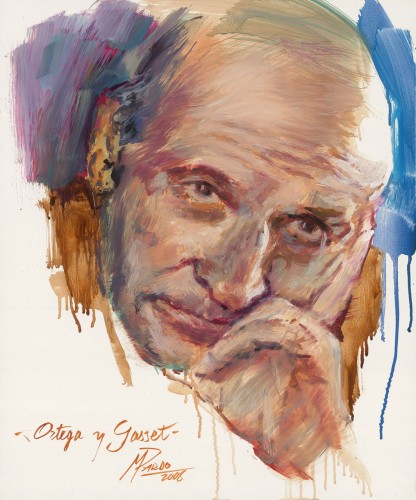
Ortega y Gasset : un européiste critique de la révolte des masses et de la désertion des élites
par Arnaud IMATZ
« “Avant moi le néant, après moi le déluge” semble être devenu la devise préférée d’une nouvelle classe dirigeante dont le style de vie est marqué par le rejet des valeurs communautaires, le mépris des traditions populaires, la fascination pour le marché, la tyrannie de la mode, le nomadisme, l'insatisfaction assouvie dans la consommation de la marchandise, l'obsession de l'apparence physique, le culte du spectacle, du succès et de la renommée. Ortega disait que la désertion des minorités n'est que l'envers de la révolte des masses. »
Polémia livre à ses lecteurs une belle analyse critique d’Arnaud Imatz consacrée à Ortega y Gasset et à la « Révolte des masses ». Nos lecteurs trouveront ci dessous la critique de l’œuvre maitresse d’Ortega y Gasset et en PDF (voir en fin d’article) l’intégralité de l’article d’Arnaud Imatz.
Polémia
La révolte des masses : une vision aristocratique de la société
Dans La rebelión de las masas Ortega soutient que la société, organisation hiérarchique normale et spontanée de la vie humaine, est fondée sur l'inégalité psycho-vitale des membres qui la composent. La société est toujours aristocratique parce que l'aristocratie n'est pas un État ou une classe mais un principe spirituel, indestructible par nature, qui agit dans le monde sous différente forme. « Une société sans aristocratie, sans minorité éminente, n'est pas une société ». L'homme exemplaire n'est pas un homme né avec des privilèges et des droits refusés aux autres, c'est simplement l'homme capable d'une plus grande vision et d'un plus grand effort que le reste du genre humain. C'est celui qui rejette les croyances et usages insatisfaisants, qui se rebelle pour construire et non pas pour détruire.
Avec une pléiade d'auteurs traditionalistes, nationalistes, conservateurs-révolutionnaires, anarcho-syndicalistes, libéraux et socialistes élitistes, Ortega partage une même confiance en la vertu des minorité « éclairées », « éminentes » ou « sélectives ». « Contrairement à ce que l'on croit habituellement, écrit-il, c'est l'être d'élite et non la masse qui vit "essentiellement" dans la servitude. Sa vie lui paraît sans but s'il ne la consacre au service de quelques obligations supérieures. Aussi la nécessité de servir ne lui apparaît-elle pas comme une oppression, mais au contraire, lorsque cette nécessité lui fait défaut, il se sent inquiet et invente de nouvelles règles plus difficiles, plus exigeantes qui l'oppriment ». La liberté c’est au fond la possibilité de choisir ses chaînes.
Pour Ortega, le nivellement par le bas à partir de l'élimination des meilleurs n'a rien à voir avec la démocratie. Il ne reflète au contraire que hargne et ressentiment. L'idée que l´égalité politique doit s'accompagner d'égalité dans tout le reste de la vie sociale est erronée et dangereuse. Une société vraiment démocratique doit tenir compte des différences individuelles pour ne pas sombrer dans le règne de la vulgarité et de la médiocrité.
L’homme masse
Selon Ortega, l'Europe traverse la plus grave crise que les nations, les peuples et les cultures puissent pâtir: la révolte des masses. L'homme-masse est un type d'homme qui apparait dans toutes les classes d'une société. Il représente à la fois le triomphe et l'échec de l'ethos bourgeois. C'est l'individu qui refuse toute forme de supériorité et se sent le droit inné d'exiger toutes sortes de commodités ou d'avantages de la part d'un monde auquel il n'estime ne rien devoir. Il ne se croit pas meilleur que les autres, mais il nie que les autres soient meilleurs que lui. C'est l'« homme moyen », qui « n'a que des appétits », « ne se suppose que des droits » et « ne se croit pas d'obligations ». C'est « l'homme sans la noblesse qui oblige ». C'est l'homme en qui « manque tout simplement la morale, laquelle est toujours, par essence, un sentiment de soumission à quelque chose, la conscience de servir et d'avoir des obligations ». A l'opposé de l'homme masse, Ortega affirme que l'homme noble ou exemplaire vit au service d'un idéal. Il est celui qui exige d'abord tout de lui même. « L'homme d'élite, dit-il, n'est pas le prétentieux qui se croit supérieur aux autres, mais bien celui qui est plus exigeant pour lui que pour les autres, même lorsqu'il ne parvient pas à réaliser en lui ses aspirations supérieures ».
Indiscipline des masses, démission des élites
Venons en enfin à son diagnostic de la crise historique que l'altération de la hiérarchie des valeurs et le désordre de la structure sociale manifestent. La raison en est double: d'une part, l'indiscipline des masses, d'autre part, la démission des élites. C'est parce que les minorités échouent dans leurs tâches d'orientation, d'éducation, de découverte et de direction que les masses se rebellent ou refusent toute responsabilité historique. Tôt ou tard l’aristocratie engendre une philosophie de l'égalité et la philosophie de l'égalité conduit au règne de nouveaux seigneurs.
Publié au début des années trente du siècle passé, La révolte des masses contient une étonnante et « prophétique » défense de l’Europe unie, communauté de destin dans laquelle les diverses nations peuvent fusionner sans perdre leurs traditions et leurs cultures. Ortega voit dans l’union de l’Europe la seule possibilité d’éviter la décadence, car le vieux continent a perdu son hégémonie historique au bénéfice des États-Unis et de l’URSS. Homogénéité et diversité sont, selon lui, les deux faces de la société européenne. L’Europe est à l’évidence une société plurielle, elle est une pluralité de peuples et de nations, non pas du fait d’inévitables flux migratoires, comme on le dit aujourd’hui, mais en raison de racines historico-culturelles. Pour Ortega, les racines européennes sont avant tout gréco-latines, chrétiennes et germaniques.
De la révolte des masses à la révolte des élites
Plus de soixante ans après la première publication de La révolte des masses, l'historien et politologue américain Christopher Lasch a complété et renouvelé la thèse d'Ortega y Gasset. Dans un ouvrage fondamental, The Revolt of the Elites and the Betrayal of Democracy (La révolte des élites et la trahison de la démocratie) (1994), Lasch a montré que les attitudes mentales de l'homme masse sont désormais plus caractéristiques des classes supérieures que des classes moyennes et basses.(*) « Avant moi le néant, après moi le déluge » semble être devenu la devise préférée d’une nouvelle classe dirigeante dont le style de vie est marqué par le rejet des valeurs communautaires, le mépris des traditions populaires, la fascination pour le marché, la tyrannie de la mode, le nomadisme, l'insatisfaction assouvie dans la consommation de la marchandise, l'obsession de l'apparence physique, le culte du spectacle, du succès et de la renommée. Ortega disait que la désertion des minorités n'est que l'envers de la révolte des masses.
Arnaud Imatz
12/03/2011
(*) Le livre de Christopher Lasch a été traduit et publié en France en 1996 (voir : La révolte des élites et la trahison de la démocratie, Avant-propos de Jean-Claude Michéa, Castelnau-le-Lez, Climats, 1996).
Voir le texte intégral de l’analyse d’Arnaud Imatz :
Ortega y Gasset : un européiste critique de la révolte des masses et de la désertion des élites, en PDF en cliquant ici.
00:10 Publié dans Philosophie, Révolution conservatrice | Lien permanent | Commentaires (0) | Tags : ortega y gasset, philosophie, espagne, révolte des masses, masses, élites, théorie politique, sciences politiques, politologie | | del.icio.us | | Digg | Facebook
Greek Dance - Sirtaki - Igor Moiseev's Ballet
Greek Dance - Sirtaki
Igor Moiseev's Ballet
00:05 Publié dans Musique, Terres d'Europe | Lien permanent | Commentaires (0) | Tags : musique, ballet, igor moiseev, russie, grèce, danse, sirtaki, chorégraphie | | del.icio.us | | Digg | Facebook
mardi, 24 mai 2011
Ein abgekartetes Spiel gegen Strauss-Kahn
Ein abgekartetes Spiel gegen Strauss-Kahn: Der amerikanische Polizeistaat auf dem Vormarsch
Paul Craig Roberts
Am vergangenen Sonntag wurde der Direktor des Internationalen Währungsfonds (IWF) Dominique Strauss-Kahn in New York aufgrund der Beschuldigung eines Zimmermädchens festgenommen, er habe versucht, sie in seinem Hotelzimmer zu vergewaltigen. Ein New Yorker Richter lehnte eine Freilassung Strauss-Kahns auf Kaution wegen angeblicher Fluchtgefahr ab. Der amerikanische Präsident Bill Clinton überstand seine sexuellen Eskapaden politisch, weil er für das System nützlich war und keine Bedrohung darstellte. Aber Strauss-Kahn wurde ebenso wie der frühere New Yorker Gouverneur Eliot Spitzer als Bedrohung angesehen, und ebenso wie dieser wurde auch Strauss-Kahn abserviert.

Wenn ich mich recht erinnere, war Strauss-Kahn der erste IWF-Direktor zu meinen Lebzeiten, der mit der traditionellen IWF-Politik brach, die Kosten der Rettungspakete für die Wall Street und die westlichen Banken den Armen und der Normalbevölkerung aufzubürden.
00:25 Publié dans Actualité, Affaires européennes, Politique | Lien permanent | Commentaires (0) | Tags : dominique strauss-kahn, fmi, politique internationale, actualité, politique, france, europe, affaires européennes, finances, finances internationales, etats-unis | | del.icio.us | | Digg | Facebook
Ce que le procès D.S.K. veut dire
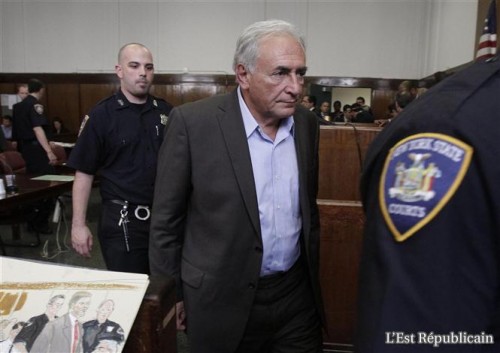
Ce que le procès D.S.K. veut dire
par Claude BOURRINET
L’affaire D.S.K., qui ébranla le monde médiatique, d’ailleurs étrangement partagé entre le jour et la nuit, comme si l’événement assumait crânement ses deux parts, d’ombre et de lumière, tel un mélodrame, dépasse largement le cadre des turpitudes scabreuses mettant en cause un homme politique.
Plusieurs plans se superposent, imposant des lectures différentes.
D’abord le plan humain. On peut certes détester l’individu, non peut-être pour des raisons morales, ou plus précisément moralisatrices. Les défauts de l’homme, ses pulsions, son manque notoire de maîtrise par rapport aux femmes sont maintenant révélés au grand jour. La vérité y gagne, et les tartuffes sont démasqués. On attendrait presque le lieutenant du roi pour arrêter tout ce beau monde, qui apparaît de plus en plus comme le monde, ce milieu interlope où se côtoient coquinerie, (vocable que l’on pare impudemment du terme historiquement noble, voire héroïque, de « libertinage »), et pratiques discursives qui, à force de calculs, en arrivent à tourner à vide, comme des moulins idéologiques que le vent remuerait mais qui ne broierait plus aucun grain. La faillite de l’ex-futur candidat socialiste à la présidentielle se révèle ainsi plus qu’une tragédie personnelle, mais, comme un négatif de pellicule photographique traversé par une lumière permettant de découvrir l’apparence des choses ; elle montre la vérité crue de nos maîtres. Ne nous trompons pas : Strauss-Kahn, nonobstant sa pathologie personnelle, par une figure de synecdoque par ailleurs largement usitée lorsqu’on veut détruire un adversaire, soudain découvre ce que tous pressentaient. On n’expliquerait pas la panique qui s’est emparée des politiques et des journalistes si l’on ne voyait pas cette ironie théâtralisée par la rudesse du système judiciaire américain, comme un Don Juan, qui enseigne brutalement, à la face du monde, ce qu’est l’hypocrisie, et ses vertus essentielles, qui sont de voiler l’immoralité et de faire taire définitivement ses éventuels contempteurs. La classe politique française est devenue une antiphrase dans notre histoire. Il est certes réjouissant de voir un ennemi tel que Dominique Strauss-Kahn, qui se serait réjoui de la destruction des patriotes, en grande difficulté. On présume qu’un dangereux ennemi de notre peuple est écarté de la scène. Cependant ce n’est qu’un individu, fût-il perçu comme le futur président. Il y en aura d’autres. C’est le Système qui est en cause.
Un autre aspect de l’événement est frappant, c’est la proximité du drame qui se joue à New York. La ville semble tout à coup devenue une banlieue de l’Europe, à moins que ce ne soit le contraire, que ce soient nous qui sommes devenus la périphérie de la Grosse Pomme, et que notre sort soit désormais décidé là-bas. Nous sommes bien sûr effarés par la mise en scène de la transparence, par cet édifice inhumain qui ne cache aucune des structures qui le constituent. Une sorte de pornographie judiciaire, en quelque sorte. Rien n’est caché, la chair souffrante est livrée à la jouissance publique, les rôles sont bien répartis dans cette orgie sans retenue, sans gêne, sans inhibition, dont le ressentiment populaire se repaît.
La matérialité du processus est le sens même de la justice. D’abord parce que chaque chose a son importance, les menottes, la déambulation ritualisée, consacrée par maints feuilletons télévisés, vers la voiture où s’engouffre, escorté par des policiers en civil, l’accusé, sa gueule mal rasée, le procureur, le juge, etc. Les caméras sont les facteurs de réalité. La logique de la machine suit son cours mécanique, ou plutôt son jeu cruel, mais l’acteur principal, ce sont les regards qui scrutent, qui, comme dans toute tragédie, s’ouvrent sur le destin horrifique et pitoyable d’un héros écrasé, disloqué par les conséquences de sa faute présumée. Et on se dit que la cible des procédures n’est pas à proprement dit l’accusé, ni la justice, ni même ici la victime, ectoplasme sans visage, mais la communion qui se noue autour d’un sacrifice, et la forte sensation d’ensemble d’être un peuple attaché à l’égalité des conditions.
Autrement dit, la justice américaine est un acte politique, qui draine toute l’histoire d’une nation qui s’est fondée contre les privilèges de la Vieille Europe.
Cet aspect hautement politique, qui nous semble appartenir à une civilisation exotique, étrange et étrangère, jure avec les us judiciaires de notre pays. Nous sommes sidérés, abasourdis par la brutalité avec laquelle on traite là-bas les Grands; on sait qu’ici ils jouissent, pour le moins, d’une mansuétude admirable de la part d’un pouvoir judiciaire sous influence, et d’une compréhension remarquable du quatrième pouvoir, la presse. Aussi bien les événements du Nouveau Monde jettent-ils une lueur crue sur la réalité de notre vie publique, tout à coup transmuée en vie fausse, et sur l’incurie de notre justice, que le pouvoir semble reconnaître d’ailleurs par la mise en place d’une réforme la calquant sur celle des Américains, sans que le cordon ombilical avec le ministère soit tranché.
La vraie conséquence de ce film à suspense, ce scénario palpitant, c’est une sensation d’irréalité. On a une impression onirique, les images se bousculent, un décor de Métropolis se met en place, les surprises s’enfilent, un homme qu’on croyait indéboulonnable se décompose, et on se demande si tout cela est vrai sur cet immense écran planétaire. Quel est le sens de tout cela ? Peut-on par là avoir prise sur le réel, notre destin ? Quelles vont être les conséquences du verdict, ou des inévitables négociations entre l’accusation et la défense ?
Ce qui restera sera la sensation désagréable, vertigineuse, que tout se passe maintenant de l’autre côté de l’Atlantique. L’Europe ne donne plus depuis longtemps le la de la grande musique internationale. Nous le savions, mais maintenant, cela crève les yeux. Dorénavant, elle n’est plus qu’une coquille vide, un fantôme de civilisation qui n’a plus aucune puissance, qui ne se fait plus craindre. On apprend que nos dirigeants sont coupés du peuple, qu’ils se livrent à leurs petits plaisirs et qu’ils bénéficient généralement d’une certaine impunité, que les Américains semblent être devenus des parangons de justice, qu’ils sont aptes, et même presque destinés, à juger les citoyens d’Europe, et qu’il n’est plus beaucoup de trajet avant qu’on ne demande à être gouvernés par eux.
Claude Bourrinet
Article printed from Europe Maxima: http://www.europemaxima.com
URL to article: http://www.europemaxima.com/?p=1984
00:25 Publié dans Actualité, Affaires européennes, Politique | Lien permanent | Commentaires (0) | Tags : actualité, politique internationale, dsk, dominique strauss-kahn, fmi, manipulation policière, europe, affaires européennes, etats-unis, finances, finances internationales | | del.icio.us | | Digg | Facebook
Krantenkoppen - Mei 2011 (3)
 Krantenkoppen
'Dominique Strauss-Kahn, managing director of the IMF, has called for a new world currency that would challenge the dominance of the dollar and protect against future financial instability.'
DSK actually poses a much greater threat to the dollar than either Saddam or Gaddafi because he's in the perfect position to shape policy and to persuade foreign heads of state that replacing the dollar is in their best interests. (...) Strauss-Kahn was rocking the boat, and now he's going to pay."
http://www.rollingstone.com/politics/news/the-people-vs-goldman-sachs-20110511
(...) Well, the old Middle East is over. The new Middle East is about to begin. And we better wake up."
Die genannte Zahl rechnet jene Kinder nicht mit ein, die bei kriegerischen Handlungen israelischer Besatzungssoldaten gegen die Zivilbevölkerung ums Leben kamen.
Die getöteten Kinder wurden beim Fußballspielen, bei Spaziergängen am Strand oder in ihren Wohnungen beim Beobachten israelischer Besatzungssoldaten durch gezielte Schüsse ermordet."
http://www.kreuz.net/article.13237.html
00:20 Publié dans Actualité, Affaires européennes | Lien permanent | Commentaires (0) | Tags : journaux, médias, presse, actualité, europe, affaireseuropéennes, politique internationale, flandre, pays-bas | | del.icio.us | | Digg | Facebook
Herder's Philosophy of the "Volksgeist"
Herder’s Theory of the Volksgeist
By Andrew Hamilton
Ex: http://counter-currents.com/
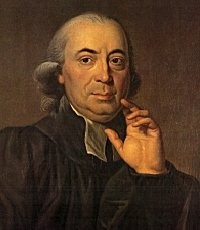 German philosopher and critic Johann Gottfried von Herder (1744–1803) developed the concept of romantic or organic nationalism, a form of ethnic nationalism in which the state derives its political legitimacy from historic cultural or hereditary groups. The underlying assumption is that every ethnicity should be politically distinct. Herder’s ideas on the subject were expressed in his theory of the Volksgeist.
A medical student at the University of Königsberg in East Prussia in the 1760s, Herder quickly abandoned medicine for theology and philosophy, which brought him into contact with philosopher Immanuel Kant, one of his professors. To encourage Herder, his favorite pupil, Kant waived the fees customarily paid for attendance at his lectures, allowed the student to read some of his unpublished manuscripts, and introduced him to the writings of Montesquieu, Hume, and Rousseau.
Ordained in 1765, Herder became assistant master (teacher) at the Lutheran cathedral school in Riga. His religious works include Christian Writings (Christliche Schriften), 5 vols. (1794–98), Luther’s Catechism, with a catechetical instruction for the use of schools (1798), and On the Spirit of Hebrew Poetry (Vom Geist der hebräischen Poesie) (1782–3). According to Steven Martinson, the Lutheran pietism in which he was raised exhibited “a sense of equality among the ‘brothers’ and ‘sisters’ that carried over into Herder’s later understanding of community life.” Herder regretted that Martin Luther had not established a German national church. Christianity, he believed, had been (and should be) Germanized, just as other nations should adopt modifications of Christianity suitable to their own circumstances, ethnic consciousness, and experience.
Romantic Son of the Enlightenment
In Strasbourg he met Goethe, five years his junior, upon whom Herder’s ideas about poetry and its social role produced a powerful effect. Herder was a key figure, with Goethe and others, in the Sturm und Drang (Storm and Stress) movement in German literature c. 1770–84.
Though a leader of the Romantics, Herder was nevertheless, according to Royal J. Schmidt, “a true son of the Aufklärung and seventeenth-century rationalism who was strongly influenced by the ideas of Leibniz, Kant, Spinoza, Montesquieu and Shaftesbury.” (“Cultural Nationalism in Herder,” Journal of the History of Ideas [June 1956], 407.) Because all human structures are transitory, Herder believed, tradition,
though in itself . . . an excellent institution of Nature, indispensable to the human race: but when it fetters the thinking faculty both in politics and education, and prevents all progress of the intellect, and all the improvement, that new times and circumstances demand, it is the true narcotic of the mind, as well to nations and sects, as to individuals.
In 1776, through Goethe’s influence, Herder was named Generalsuperintendent of the Lutheran clergy at Weimar, a post he held for the rest of his life.
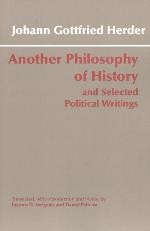 A prolific author in many different fields (poetry, art, comparative philology and linguistics, religion, mythology, philosophy of history, metaphysics, psychology or philosophy of mind, aesthetics, and political philosophy), his books most relevant to this discussion are This Too a Philosophy of History for the Formation of Humanity (1774); Ideas for the Philosophy of History of Humanity (Ideen zur Philosophie der Geschichte der Menschheit), 4 vols. (1784–91), his masterwork, in which he discussed all known peoples; and Letters for the Advancement of Humanity (Briefe zur Beförderung der Humanität), 10 vols. (1793–7), a work largely of political philosophy written in response to the French Revolution.
Stylistically, according to Michael Forster [2] of the University of Chicago, Herder is “hostile towards systematicity in philosophy. He is in particular hostile to the ambitious sort of systematicity aspired to in the tradition of Spinoza, Wolff, Kant, Fichte, Schelling, and Hegel: the ideal of a comprehensive theory whose parts display some sort of strict overall pattern of derivation.” He was skeptical that such systematic designs could work, as opposed to creating the illusion that they do, and believed system-building closes off inquiry and disregards or distorts vital empirical evidence. Herder’s views “established an important countertradition in German philosophy (which subsequently included e.g. F. Schlegel, Nietzsche, and Wittgenstein).” He also harbored “a general commitment to empiricism and against apriorism in philosophy which leads him to avoid familiar sorts of apriorist arguments in philosophy.”
Herder and Biological Race
Herder was a key figure in the development of two well-known philosophical-anthropological concepts.
One is Zeitgeist (zeit time + geist spirit), “spirit of the time” or “spirit of the age,” signifying the general cultural, intellectual, ethical, spiritual, and political climate of an era. Herder reportedly coined the term in his 1769 critique of a work by German philologist Christian Adolph Klotz.
The second concept, the one relevant here, is Volksgeist, usually translated as “national spirit” or “national character.” In German, however, Nationalgeist is the term for national spirit, and Nationalcharakter for national character. Volksgeist means “spirit of the Volk.”
In a holistic sense, race consists of dimensions beyond physical anthropology or population genetics. Just as every distinct population shares common morphological and physiological traits, despite within-group variation they likewise express unique group psychology, intelligence, behavior, character, morals and, ultimately, culture and civilization. (Jared Taylor: “White Americans believed race was a fundamental aspect of individual and group identity. They believed people of different races differed in temperament, ability, and the kind of societies they built.”) In fact, such second-order phenomena are the aspects of race that preoccupy most “racists” most of the time.
Herder’s Volksgeist is highly compatible with this modern understanding of race. This is why he is frequently viewed as a “racist” by modern academics (e.g., Cedric Dover, “The Racial Philosophy of Johann Herder,” British Journal of Sociology [1952]: 124–33) or as a forerunner of Nazism. It is easy to see why this is the case.
German physical anthropologist Egon von Eickstedt maintained that Herder and Christoph Meiners (1747–1810) were the founders of the anthropological theory of history. Anthropologist Ilse Schwidetzky wrote that Herder “entertained the general conviction that the character of a people, and subsequently their history, is determined by their nature and heredity.”
However, Herder’s implicitly racial or ethnic understanding of Volk was not predicated upon a biological worldview, at least not an explicit one. Moreover, it reflected the biological confusion and limited scientific understanding of the time. As Oxford biologist John R. Baker noted, in Herder’s Ideas,
his arguments appear rather feeble and in places actually foolish. For instance, he says that all men are the same in internal anatomy, and even—almost unbelievably—that a few hundred years ago the inhabitants of Germany were Patagonians [natives of a region located at the southern tip of South America]. He mentions [Johann F.] Blumenbach [the German father of modern anthropology, who developed a 5-race model of mankind], but will not agree to the division of mankind into races. ‘Race [he uses this actual word] implies a difference of origin [i.e., not the Biblical creation],’ he claims; and this difference he denies. ‘Denn jedes Volk ist Volk,’ he insists; for him, the reality is not the race but the nation with its national speech.
Herder shows better sense than some of the philosophers of his time [Baker mentions Rousseau and several other eminent figures] in rejecting the idea that the anthropoid apes could be regarded as human. He tells us that nature has divided the apes and monkeys into many genera and species, but man is unitary. ‘Neither the Pongo [chimpanzee] nor the Longimanus [gibbon] is your brother; but truly the American [Amerindian] and the Negro are.
Herder’s religious convictions prevented him from classifying mankind with animals. He believed national groups belonged not to “systematic natural history,” but to “the physico-geographical history of man.” With Montesquieu, he viewed human populations as products of the lands they inhabited, the climates in which they developed, and the circumstances that shaped their respective histories:
The structure of the earth, in its natural variety and diversity . . . Seas, mountain ranges and rivers are the most natural boundaries not only of lands but also of peoples, customs, languages and empires, and they have been, even in the greatest revolutions in human affairs, the directing lines or limits of world history.
Yet, despite these caveats, Herder’s worldview was unmistakably racialist, as can be seen in his observations concerning the Chinese:
. . . show what kind of nation it is, and evince it’s genetic character: a character which equally meets the eye on contemplation of the whole, and inspection of its parts, even to dress, food, customs, domestic economy, arts, and amusements. This northeastern mungal [Mongol] nation could no more change its natural form by artificial regulations, even though enduring for thousands of years, than a man can change his nature, that is, the innate character of his race and complexion. It was planted on this spot of the Globe: and . . . this race of men, in this region, could never become Greeks or Romans. Chinese they were, and will remain: a people endowed by nature with small eyes, a short nose, a flat forehead, little beard, large ears, and a protuberant belly: what their organization could produce, it has produced. . . . Nature seems to have refused them as well as many other nations in this corner of the World, great invention in Science: while on the other hand he has beautifully conferred on their little eyes a spirit of application, adroit diligence and nicety, a talent of imitating with art whatever their cupidity deems useful. Eternally moving, eternally occupied, they are forever going and coming, in quest of gain, or in fulfillment of their offices. . . .
Elsewhere he makes the reverse case: “Had Greece been peopled with Chinese, our Greece would never have existed.”
Jacques Godechot, a French Jewish historian, wrote that for Herder “the destiny of national groups is fixed by imperatives beyond popular [i.e., political] modification. These imperatives are race (Herder did not formulate a theory of race, but to a certain extent he can be considered as a forerunner of modern racism), language, tradition, and natural frontiers.”
It can be said that Herder inserted a full-blown, de facto racial-ethnic view of history and mankind at a level one step above that of biology (race). In Herder’s treatment, at least, the consequences are much the same as they would be for a more biologically-oriented approach.
Still, rejection of, or lack of clarity about, basic raciology is best avoided. It leads whites badly astray, as witness the consequences of the petty but internecine nationalisms of the 19th and 20th centuries.
The Volksgeist
The Volksgeist, the spirit of the folk, is a manifestation of the people; it animates the nation. “There is only one class in the state, the Volk (not the rabble), and the king belongs to this class as well as the peasant.” The Volksgeist is as old as the Volk, and evolves with the national group. There is a life of national groups, and withering and death marks the end of a Volk.
Every human group is, as an empirical matter, different from every other group, each nationality (or Volk) is characterized by its own unique spirit. Each people possesses its own cultural traits shaped by ancestral history and the experience of a particular physical environment, and mentally constructs its social life through language, literature, religion, the arts, customs, and folklore inherited from earlier generations. The Volk is the family writ large.
Law, too, must be adapted to the spirit of each nation, for rules applied to one nation are not valid for another. The only effective and legitimate governments are those that develop naturally from within particular nations and reflect, in their differences from other polities, the cultures of the people they govern.
It follows that two nations cannot have the same Volksgeist. Therefore, Herder rejected the French revolutionary (and contemporary) dogma that man is everywhere the same, whether he lives in Africa or England, or that every nation is fundamentally identical with every other nation, and thereby should be made homogeneous with them. Herder, Godechot writes, is staunchly opposed to all that is cosmopolite and universalist in character: “In contrast, he believes in particularism.”
Herder constantly likened the Volksgeist, “singular, marvelous, inexplicable, ineffable,” to a plant that grows, blooms, and withers. Just as the “botanist cannot obtain a complete knowledge of a plant, unless he follow it from the seed, through its germination, blossoming, and decay,” so too must the historian seek to understand the uniqueness of the present by reference to its roots in the past.
In other words, the Volksgeist can best be understood through the phenomena of history. Therefore, the study of history must play a central role in education. The objective of historical instruction, which should be nationalistic in character, is to teach how the Fatherland evolved over time.
 Rather than giving priority to the study of ancient and modern history, as was common in the 18th century, Herder redeemed the history of the Middle Ages, feeling that it had been given short shrift. He also refused to restrict history to the study of politics, wars, and dynasties. For Herder, history was primarily the history of the Volk: its language, culture, customs, religion, literature, law, and folklore. (A writer and collector of poetry, folk songs, and legends, and an early student of comparative literature, Herder published a collection of folk songs in 1773 entitled Voices of the People in Their Songs [Stimmen der Völker in ihren Liedern].)
Herder’s views of both the German and the Slavic Volksgeist did not match existing territorial borders, but were pan-national in character.
Despite being Prussian, Herder rejected Prussian nationalism as too narrow. An intense German nationalist, he was imbued with the spirit of the entire German Volk: “He is deserving of glory and gratitude who seeks to promote the unity of the territories of Germany through writings, manufacture, and institutions.” Herder believed that Austria, too, should be part of Germany.
Likewise, he conceived of Slavs as a Volk, rather than extolling specific polities. Thus, he wrote of the Slavic, as opposed to the Russian, Polish, or some other politically-defined Volksgeist. Herder predicted the Slavic nations would one day be the real power in Europe, as western Europeans would reject Christianity and rot away, while the eastern European nations would adhere to their religion and to their idealism. Through his concept of Volksgeist, which directly influenced Slavic intellectuals, and his high praise for the Slavic people and culture, Herder became an intellectual godfather of Pan-Slavism [4].
Herder rejected the mixture of Völker, each of which he believed was adapted to a particular ecological niche. Ideally, “if every one of these nations had remained in its place, the Earth might have been considered as a garden, where in one spot one human national plant, in another, another, bloomed in its proper figure and nature.” But just “as men are not firmly rooted plants, the calamities of famine, earthquakes, war and the like, must in time remove them from their place to some other more or less different.” Almost every people on Earth “has migrated at least once, sooner or later, to a greater distance, or less.”
On Language
For Herder, language became a key cultural differentiator and identifier:
Has a people anything dearer than the speech of its fathers? In its speech resides its whole thought-domain, its tradition, history, religion, and basis of life, all its heart and soul. To deprive a people of its speech is to deprive it of its one eternal good. . . . As God tolerates all the different languages in the world, so also should a ruler not only tolerate but honor the various languages of his peoples. . . . The best culture of a people cannot be expressed through a foreign language; it thrives on the soil of a nation most beautifully, and, I may say, it thrives only by means of the nation’s inherited and inheritable dialect. With language is created the heart of a people; and is it not a high concern, amongst so many peoples—Hungarians, Slavs, Rumanians, etc.—to plant seeds of well-being for the far future and in the way that is dearest and most appropriate to them?
Herder’s stress on the centrality of language, including dangerously divisive multilingual diversity within the white race, or even a single white state, impacted the development of European nationalism during the succeeding two centuries. (Linguistic diversity within multiracial states like the US is desirable because, genetically speaking, language barriers tend to hinder hybridization. You do not want anything like “English Only” in a multiracial milieu.) After Herder, European national languages assumed a heavily romanticized, mystical aura in nationalist thought. Worse, language was used as a poor stand-in for race in whites’ construction of their concepts of “people” and “nation” in the 19th and 20th centuries.
Madison Grant, Lothrop Stoddard, and others realized that race and language are not interchangeable, that language is not an adequate surrogate for race. Nor should language balkanize and divide whites, as it has to date. It is imperative that we transcend the currently impermeable linguistic barriers that seal whites into airtight national compartments, rendering us “foreign” and mutually unintelligible to one another. Rather, we must talk and move ceaselessly across the old territorial, linguistic, and intellectual borders as a prelude to full-fledged transnational white cooperation.
The Jews
In terms of religion, for Herder there was no continuity between (for him, legitimate) Old Testament Judaism and the Pharisaic Judaism of Jesus’ time, which he regarded as degenerate in form.
As far as ethnicity goes, Herder did not think of Jews primarily as individuals, but as a Volk. The Jews, he wrote, “in the land of their fathers, and in the midst of other nations . . . remain as they were; and even when mixed with other people they may be distinguished for some generations downward.” His view of Völker compelled him to regard Jews as alien to Germany and Europe:
For thousands of years, since their emergence on the stage of history, the Jews were a parasitic growth on the stem of other nations, a race of cunning brokers all over the earth. They have caused great evil to many ill-organized states, by retarding the free and natural economic development of their indigenous population.
In another passage reflective of Herder’s racial-ethnic worldview, he says:
The Jewish people is and remains in Europe an Asiatic people alien to our part of the world, bound to that old law which it received in a distant climate, and which, according to its confession, it cannot do away with . . . [Emphasis added.]
How many of this alien people can be tolerated without injury to the true citizens?
A ministry in which a Jew is supreme, a household in which a Jew has the key of the wardrobe and the management of the finances, a department or commissariat in which Jews do the principal business, are Pontine marshes which cannot be drained.
However, in the opinion of some Jews, Herder’s greatest sin was his formulation of the theory of the Volksgeist itself. David Isadore Lieberman, an anti-white publicist, writes:
Herder’s most important contribution to the intellectual history of antisemitism was entirely unintended: his novel argument for the organic development of national cultures, which incorporated elements of geography, language, kinship, and historical continuity. Although Herder maintained (with occasional lapses) that no culture enjoyed a privileged position with respect to any other, his model of the organic natural culture left Jews living in the Diaspora exposed, susceptible to charges that their culture was “inorganic” and therefore inauthentic.
This last sentence is dishonest or possibly ignorant. To Herder, Jews definitely constituted an organic, “authentic” Volk. (See Frederick M. Barnard, “The Hebrews and Herder’s Political Creed,” Modern Language Review [Oct. 1959], 533.) It would be correct to say that Herder’s model leaves Jews exposed to the charge of subverting and destroying—and today, committing genocide against—other authentic cultures and peoples.
Finally, Herder’s contention that “No nationality has been solely designated by God as the chosen people of the earth” must also be classified as anti-Semitic, flatly contradicting as it does the central dogma of Judaism, Jews, organized Jewry, and all governments today.
Editor’s Bibliographical Note
A number of Herder’s works are available in English translation:
Another Philosophy of History and Selected Political Writings [5]
God, Some Conversations [6], trans. Frederick T. Burckhardt (Indianapolis: Bobbs-Merrill, 1940)
On the Origin of Language: Two Essays [7]
On World History: An Anthology [8], ed. Hans Adler and Ernest A. Menze, trans. Ernest A. Menze and Michael Palmer (M. E. Sharpe, 1996)
Philosophical Writings [9]
Reflections on the Philosophy of the History of Mankind [10]
Sculpture: Some Observations on Shape and Form from Pygmalion’s Creative Dream [11], trans. Jason Gaiger (Chicago: University of Chicago Press, 2002)
Selected Early Works, 1764-1767: Addresses, Essays, and Drafts; Fragments on Recent German Literature [12]
Selected Writings on Aesthetics [13], ed. and trans. Gregory Moore (Princeton: Princeton University Press, 2006)
Shakespeare [14]
The Spirit of Hebrew Poetry [15]
Article printed from Counter-Currents Publishing: http://www.counter-currents.com
URL to article: http://www.counter-currents.com/2011/05/herders-theory-of-the-volksgeist/
00:06 Publié dans Philosophie | Lien permanent | Commentaires (0) | Tags : philosophie, herder, allemagne, anthropologie, volksgeist, 18ème siècle | | del.icio.us | | Digg | Facebook
Borodin: Polovetsian Danses with Lyrics
Borodin: Polovetsian Danses with Lyrics
00:05 Publié dans Musique | Lien permanent | Commentaires (0) | Tags : musique, russie, borodine, musique classique | | del.icio.us | | Digg | Facebook
lundi, 23 mai 2011
Klischee und Traditionalismus in der County-Musik
|
Ehre, Freiheit, Vaterland - Klischee und Traditionalismus in der Country-Musik Geschrieben von: Alexander Schleyer |
|
Ex: http://www.blauenarzisse.de/
|
|
Als Gegenbewegung dazu formierte sich der sogenannte Traditional Country um Künstler wie George Strait, Trace Adkins oder die deutschstämmige Alison Krauss. Ihr Erfolg gründet nicht umsonst auf ihrem tradierten Weltbild, auf christlichen Werten und der Vermittlung Mut machender Botschaften Bild 1: Trace Adkins |

 Army geht, im Irak kämpft und unverkennbar nicht ohne Stolz die „Hurensöhne“ aufspürt und abknallt: „We found them and killed them, these sons of the bitches.“ Man stelle sich den bundesdeutschen Aufschrei vor, schriebe ein Künstler hierzulande derartige Textzeilen.
00:17 Publié dans Musique | Lien permanent | Commentaires (1) | Tags : county music, musique | | del.icio.us | | Digg | Facebook
Nicholas Roerich
Nicholas Roerich
Nicholas Roerich and Alexander Borodin
00:05 Publié dans art | Lien permanent | Commentaires (0) | Tags : art, russie, asie centrale, asie, eurasisme, eurasie, nicholas roerich, peinture, arts plastiques, himalaya | | del.icio.us | | Digg | Facebook
dimanche, 22 mai 2011
Dragos Kalajic - Hyperborean Realism
Hyperborean Realism
Dragos Kalajic
00:10 Publié dans art | Lien permanent | Commentaires (1) | Tags : serbie, art, réalisme, avant-garde, réalisme hyperboréen, dragos kalajic | | del.icio.us | | Digg | Facebook
François Mitterrand & the French Mystery
François Mitterrand & the French Mystery
Dominique Venner
Ex: http://www.counter-currents.com/
Translated by Greg Johnson
 In the center of all the questions raised by the sinuous and contradictory path of François Mitterrand is the famous photograph of the interview granted to a young unknown, the future socialist president of the Republic, by Marshall Philippe Pétain in Vichy, on October 15th, 1942.
This document was known to some initiates, but it was verified by the interested party only in 1994, when he saw that his life was ending. Thirty years earlier, the day before the presidential election of 1965, the then Minister of the Interior, Roger Frey, had received a copy of it. He demanded an investigation which went back to a former local head of the prisoners’ association, to which François Mitterrand belonged. Present at the time of the famous interview, he had several negatives. In agreement with General de Gaulle, Roger Frey decided not to make them public.
Another member of the same movement of prisoners, Jean-Albert Roussel, also had a print. It is he who gave the copy to Pierre Péan for the cover of his book Une jeunesse française (A French youth), published by Fayard in September 1994 with the endorsement of the president.
Why did Mitterrand suddenly decide to make public his enthusiastic Pétainism in 1942–1943, which he had denied and dissimulated up to that point? It is not a trivial question.
Under the Fourth Republic, in December 1954, from the platform of the National Assembly, Raymond Dronne, former captain of the 2nd DB, now a Gaullist deputy, had challenged François Mitterrand, then Minister of the Interior: “I do not reproach you for having successively worn the fleur de lys and the francisque d’honneur [honors created by the Third Republic and Marhsall Pétain’s French State respectively – Trans.] . . .” “All that is false,” retorted Mitterrand. But Dronne replied without obtaining a response: “All that is true, and you know very well . . .”
The same subject was tackled again in the National Assembly, on February 1st, 1984, in the middle of a debate on freedom of the press. We were now under the Fifth Republic and François Mitterrand was the president. Three deputies of the opposition put a question. Since the past of Mr. Hersant (owner of Figaro) during the war had been discussed, why not speak about that of Mr. Mitterrand? The question was judged sacrilege. The socialist majority was indignant, and its president, Pierre Joxe, believed that the president of the Republic had been insulted. The three deputies were sanctioned, while Mr. Joxe declared loud and clear Mr. Mitterrand’s role in the Résistance.
This role is not contestable and is not disputed. But, according to the concrete legend imposed after 1945, a résistant past is incompatible with a Pétainist past. And then at the end of his life, Mr. Mitterrand suddenly decided to break with the official lie that he had endorsed. Why?
To be precise, before slowly becoming a résistant, Mr. Mitterrand had first been an enthusiastic Pétainist, like millions of French. First in his prison camp, then after his escape, in 1942, in Vichy where he was employed by the Légion des combattants, a large, inert society of war veterans. As Mitterrand found this Pétainisme too soft, he sought out some “pure and hard” (and very anti-German) Pétainists like Gabriel Jeantet, an old member of the Cagoule [the right-wing movement of the late 1930s dedicated to overthrowing the Third Republic – Trans.], chargé in the cabinet of the Marshal, one of his future patrons in the Ordre de la francisque.
On April 22nd, 1942, Mitterrand wrote to one his correspondents: “How will we manage to get France on her feet? For me, I believe only in this: the union of men linked by a common faith. It is the error of the Legion to have taken in masses whose only bond was chance: the fact of having fought does not create solidarity. Something along the lines of the SOL,[1] carefully selected and bound together by an oath based on the same core convictions. We need to organize a militia in France that would allow us to await the end of the German-Russian war without fear of its consequences . . .” This is a good summary of the muscular Pétainism of his time. Quite naturally, in the course of events — in particular after the American landing in North Africa of November 8th, 1942 — Mitterand’s Pétainism evolved into resistance.
The famous photograph published by Péan with the agreement of the president caused a political and media storm. On September 12th, 1994, the president, sapped by his cancer, had to explain himself on television under the somber gaze of Jean-Pierre Elkabbach. But against all expectation, the solitude of the accused, as well as his obvious physical distress, made the interrogation seem unjust, causing a feeling of sympathy: “Why are they picking on him?” It was an important factor that reconciled the French to their president. It was not an endorsement of a politician’s career. It was Mitterrand the man who had suddenly became interesting. He had acquired an unexpected depth, a tragic history that stirred an echo in the secret of the French mystery.
Note
1. The SOL (Service d’ordre légionnaire) was constituted in 1941 by Joseph Darnand, a former member of the Cagoule and hero of the two World Wars. This formation, by no means collaborationist, was made official on January 12th, 1942. In the new context of the civil war which is then spread, the SOL was transformed into the French Militia on January 31st, 1943. See the Nouvelle Revue d’Histoire, no. 47, p. 30, and my Histoire de la Collaboration (History of collaboration) (Pygmalion, 2002).
Source: http://www.dominiquevenner.fr/#/edito-nrh-54-mitterrand/3845286 [3]
Article printed from Counter-Currents Publishing: http://www.counter-currents.com
URL to article: http://www.counter-currents.com/2011/05/francois-mitterrand-and-the-french-mystery/
00:05 Publié dans Affaires européennes, Histoire, Nouvelle Droite, Politique | Lien permanent | Commentaires (0) | Tags : france, françois mitterrand, histoire, nouvelle droite, dominique venner, cinquième république | | del.icio.us | | Digg | Facebook
Präventivschlag Barbarossa
 |
Stefan Scheil Präventivkrieg Barbarossa Fragen, Fakten, Antworten Band 26 der Reihe Kaplaken. 96 Seiten, kartoniert, fadengeheftet, 8.50 € ISBN: 978-3-935063-96-8 8,50 EUR incl. 7 % UST exkl. Versandkosten |
|
Der Historiker Stefan Scheil ist einer der besten Kenner der Diplomatiegeschichte zwischen 1918 und 1945. In mehreren Büchern hat er Entfesselung und Eskalation des II. Weltkriegs analysiert und der platten These widersprochen, Deutschland sei alleinverantwortlich für dessen Ausbruch und Ausweitung. Im vorliegenden kaplaken faßt Scheil seine Studien zum deutschen Angriff auf die Sowjetunion im Jahr 1941 zusammen. Er stellt und beantwortet die Frage, ob es sich um einen Überfall oder einen Präventivkrieg gehandelt habe. Scheil geht in seiner Argumentation von vier Bedingungen aus, die jeden Präventivkrieg grundsätzlich kennzeichnen, und legt sie als Maßstab an das „Unternehmen Barbarossa“ an.
Scheils Untersuchung mündet in über 50 Fragen, die jeder aufmerksame Leser selbst beantworten kann, bevor Scheil die Antwort gibt. Wer die Argumentation nachvollzieht, wer die Äußerungen und Planungen von sowjetischer Seite liest und den geheimen Aufmarsch der Roten Armee an der Westgrenze Rußlands zur Kenntnis nimmt, kann zuletzt Scheils Fazit nur zustimmen: „Wenn das Unternehmen Barbarossa nicht als Präventivkrieg eingestuft werden kann, hat der Begriff Präventivkrieg seinen Sinn überhaupt verloren.“
|
|
00:05 Publié dans Histoire, Livre, Militaria | Lien permanent | Commentaires (0) | Tags : histoire, seconde guerre mondiale, deuxième guerre mondiale, allemagne, livre, militaria | | del.icio.us | | Digg | Facebook
samedi, 21 mai 2011
Terre & Peuple n°47: l'enjeu démographique
Terre & Peuple n°47
L'enjeu démographique
Dans le numéro 47 de TERRE & PEUPLE Magazine, bâti autour du thème ‘L’enjeu démographique’, Pierre Vial accuse de haute trahison ceux qui continuent de débattre du multiculturalisme face au cataclysme du tsunami migratoire. Et il enchaîne sur l’islamophilie d’une certaine extrême-droite, d’Alain Soral à Christian Bouchet en passant par Alain de Benoist. Il en profite pour exécuter Franco Cardini, catho tradi qui s’efforce d’infiltrer le politiquement correct au moyen d’impostures historiques, sur la nature et l’objet des croisades, sur l’origine de la chevalerie, sur les ordres militaires, sur la fameuse ‘magnanimité’ du Sultan Saladin et sur la prétendue insignifiance de la bataille de Poitiers.
A propos de l’euthanasie, Monique Delcroix s’aventure, à approuver celle-ci en prenant appui sur la certitude qu’on aurait de faire ‘le bien’ lorsqu’on achève un animal blessé. Le bien de l’animal ? Ou le bien de l’homme que l’image dérange ? Ou le bien des vivants unis à tenir ensemble la mort à distance ?
A propos de l’émission de TV ‘Les enfants d’Abraham, Pierre Vial, encore, rappelle que les religions monothéistes retirent à l’homme la liberté de juger de ce qui est bon ou mauvais pour lui.
Jean Leblancmeunier regrette que l’argent corrupteur ‘footbalise’ le rugby, sport viril gâché par le marketing-spectacle. Alors que, en Nouvelle –Zélande, c’est encore l’austère mystique qui règne : « Le ballon qu’on passe au moment de tomber, c’est comme la vie qu’on transmet. »
C’est avec le national socialisme et le communisme que Claude Perrin poursuit son étude des mythes. Pour emporter l’adhésion du peuple, le premier lui propose une Weltanschauung, ‘porte ouverte sur autre chose’. Le Fuhrer, entraîneur, reste une énigme : il se croit prophète, aimant « qui attire l’acier du peuple ». Le mythe du sang est le principe structurant et c’est le mérite qui définit la nouvelle aristocratie. Le svastika est devenu le symbole national. L’auteur souligne que l’image du nazisme résiste au dépérissement pour entrer de plus en plus vivace dans le mythe. A ce mythe du sang, les communistes opposent celui de la lutte des classes, qui débouche sur l’assassinat de la bourgeoise et sur la dictature d’un seul homme. Mis à part Salvador Allende, ces hommes défendent rarement les armes à la main leurs régimes, lesquels meurent de gangrène. Le mythe égalitaire du suffrage universel n’est qu’un ersatz incapacitant et la concurrence électorale accule à ce qui recueille la popularité facile : la corruption et la décadence. Mais les mythes survivent dans nos rêves, où murmure notre nature. Tout mythe implique une transcendance, appel des temps anciens. La jeunesse actuelle est en manque : on ne lui propose que le Veau d’Or , lequel n’est d’ailleurs réservé en réalité qu’à une super-classe.
Pierre Vial ouvre le dossier de la démographie en soulignant que faire des enfants témoigne de la confiance en soi.
Alain Cagnat assume quatre des six articles du dossier. Il note qu’en moins de trente ans tous les grands dictionnaires ont rompu avec les définitions classiques du concept de race, qu’ils qualifient de ‘scientifiquement aberrantes’, au moment même où des marqueurs génétiques permettent de situer la région d’origine de nos ancêtres, où Cavalli Sforza suggère neuf subdivisions d’homo sapiens et où les génomes permettent de distinguer des races dans l’espèce humaine. Le deuxième article relève que l’antiracisme a pour objet la disparition des Blancs, par la haine de soi érigée en vertu, aux fins d’installer une religion nouvelle : celle de la gouvernance mondiale. Paradoxe apparent, au moment où on protège l’identité des minorités visibles contre le racisme des ‘petits Blancs’, on prône le métissage. C’est contraire à l’opinion de Levy-Strauss dont pourtant les anti-racistes se réclament : celui-ci ne voit en effet de ‘civilisation mondiale que dans une coalition de cultures’ et il avertit avant tout contre l’explosion démographique. Celle-ci fait le thème du troisième article : jusqu’au XXe siècle, les équilibres démographiques étaient réalisés parce que les taux élevés de mortalité étaient compensés par une grande fécondité (6 à 8 enfant par femme). Mais l’hygiène, la médecine et une meilleure alimentation provoquent une explosion démographique : le délai pour ajouter un milliard d’unités à l’humanité ne cesse de diminuer. Les optimistes croient à une ‘transition démographique’. La richesse des pays industrialisés et la générosité de leurs régime sociaux produit sur les populations misérables du tiers monde l’effet d’une pompe aspirante. Dans le même temps, les ressources, alimentaires comme énergétiques, se tarissent et la fécondité des Européens ne cesse de baisser, alors que celle de ses envahisseurs ne baisse toujours pas. Le quatrième article dénonce cette invasion ‘pacifique’ comme une stratégie de destruction de l’identité européenne, pôle de déséquilibre d’un mondialisme qui vise un profond métissage. Le prétexte est qu’il faut remédier au vieillissement de l’Europe, ce qui d’après l’ONU nécessiterait, pour la seule France, une ‘migration de remplacement’ annuelle de 1,5 millions de 2010 à 2025 et de 2,4 millions de 2025 à 2050 ! Ce serait un ras de marée parfaitement inutile au grand patronat demandeur de main d’œuvre peu payée, car les permis de séjour au motif de ‘travail’ ne sont qu’une infime minorité et une fraction croissante d’emplois restent vacants. D’autre part, le métissage est heureusement un échec, car la femme blanche n’a plus la cote et les immigrés s’orientent de plus en plus vers l’endogamie. Cependant, il est devenu impossible de dissimuler des coûts et des nuisances qui crèvent les yeux.
Pierre Vial, soulignant l’importance primordiale de la démographie, rappelle la mise en place en 1941 du Service national des statistiques sous la direction d’Alexis Carrel. Alfred Sauvy qui lui succède (1945-1962) dénoncera la dénatalité (la ‘peste blanche’ selon Pierre Chaunu) due à la saignée de la première guerre mondiale et il prophétisera l’actuelle invasion sud-nord. Le gouvernement de Vichy avait sacralisé la famille et pratiqué une politique nataliste (aide aux familles nombreuses, forte prime à la première naissance), qui a été continuée par Sauvy, avec comme résultat le baby-boom qui commence en 1942. L’indice de fécondité sera encore de 2,0 enfants par femme en 1964, lorsque se dessine le baby-krach, conséquence de la déruralisation, du chômage des jeunes et de l’individualisme narcissique. Le dossier se clôture sur les réflexions de cinq jeunes ménages de notre communauté qui ont des enfants.
Jean-Patrick Arteault poursuit sa dissection des ‘Racines du mondialisme occidental’ en situant le rôle et l’influence de la Société Fabienne, cénacle sélectif qui servira de caution morale aux décisions souvent cyniques des politiques. Mais les Fabiens ne sont pas les rêveurs que dénoncent les marxistes. La fameuse ‘ruse fabienne’ consiste à préférer une gradation réaliste de la socialisation, pour amener le peuple au socialisme par des réalisations concrètes, partielles et imparfaites. Car le vulgaire n’est capable de véritablement assimiler la théorie que par la pratique. Parmi les vulgarisateurs fabiens, il y a pourtant pas mal de grandes pointures :
- Georges Bernard Shaw, futur Prix Nobel de littérature, qui traite notamment le thème de l’éducation du peuple dans sa pièce Pygmalion. Il est fasciné autant par Mussolini que par Staline.
- Herbert George Wells : auteur fantastique, très féru d’un ‘nouvel ordre mondial’, une république universelle à gouverner par les savants.
- Annie Besant : co-auteur des ‘Essais fabiens’, réformatrice de l’enseignement primaire, théosophe et fondatrice de l’obédience maçonnique du Droit Humain.
- Sydney Webb : grand organisateur de la Société Fabienne. Il est à l’origine du parti travailliste et il a fondé la London School of Economics and Political Sciences, homologue de Science Po qui collabore avec le Groupe Milner. Il découvre dans le stalinisme ‘les idées fabiennes en acte’ et n’en démordra pas jusqu’à sa mort en 1947.
La finalité fabienne est ‘démocratique’ : appropriation des moyens de production par l’Etat, mais le gouvernement doit aller, non pas au peuple, mais à des individualités héroïques. Les capitaines d’industrie et les experts, qui se sont désignés par leur mérite, sont les garants moraux de l’ordre et du progrès. Le peuple ouvrier est incapable de s’abstraire de ses intérêts à court terme. Webb a une conception organique de la société : les individus ne sont pas définis par leur relation avec leur gouvernement, mais par leur coopération au sein de la structure industrielle dans le cadre de l’Etat. Les Fabiens sont réfractaires au référendum, sauf au niveau municipal pour entretenir la participation de la base. Ils sont opposés au libre-échangisme. La rupture aurait dû être irrémédiable avec les manipulateurs de masse du Groupe Milner, très proches du Bloc de l’aristocratie terrienne, mais ils ont en commun l’héritage platonicien de John Ruskin : un état gouverné par les philosophes, et qui pilote bien sûr l’économie. La Guerre des Boers va être un révélateur : une forte minorité souhaite la victoire des Boers et une crise consécutive de l’impérialisme ; une minorité plus faible approuve la guerre, par solidarité nationale ; la majorité avec G.B. Shaw, propose une tierce voie plus subtile : l’impérialisme n’est contestable que s’il recherche la puissance par l’exploitation coloniale, pas s’il vise le bénéfice de la communauté mondiale. En attendant que celle-ci se réalise, il faut se satisfaire des fédérations impériales les plus responsables. Les membres pacifistes et anti-impérialistes quittent alors la société fabienne, laquelle se rapproche au contraire du Groupe Milner, notamment au sein du Coefficents Club, fondé par les Webb pour rapprocher les fabiens et les impérialistes sociaux. L’osmose de la société avec les Américains va se faire par les écrivains Jack London et Upton Sinclair, et par Graham Wallas, l’universitaire du groupe des fondateurs, qui va être invité à enseigner à l’université Harvard, à Cambridge Massachusetts.
00:15 Publié dans Nouvelle Droite, Revue | Lien permanent | Commentaires (1) | Tags : nouvelle droite, démographie, europe, affaires européennes, mouvement identitaire, identité, identitaires | | del.icio.us | | Digg | Facebook
Krantenkoppen - Mei 2011 (2)
 REGIME CHANGE AT THE IMF: THE FRAME-UP OF DOMINIQUE STRAUSS-KAHN?
A Strauss-Kahn presidency and a 'So...cialist' government would have been a serious setback for Washington, contributing to a major shift in Franco-American relations. It would also have contributed to weakening America’s role on the European political chessboard. It would also have changed the balance of power between America and "Old Europe" (namely the Franco-German alliance). It would have had repercussions on the internal structure of the Atlantic Alliance and the hegemonic role of the US within NATO."
http://www.haaretz.com/print-edition/news/j-street-israelis-run-ad-urging-recognition-of-a-palestinian-state-1.362886
00:15 Publié dans Actualité, Affaires européennes | Lien permanent | Commentaires (0) | Tags : europe, affaires européennes, journaux, presse, médias, flandre, pays-bas | | del.icio.us | | Digg | Facebook
Evola e il mondo di lingua tedesca
Evola e il mondo di lingua tedesca
Alberto Lombardo
Ex: http://www.centrostudilaruna.it/
 La Germania e in genere il mondo di cultura tedesca ebbero per Evola un’importanza centrale. Sin da giovanissimo questi apprese il tedesco per avvicinarsi alle opere della filosofia idealistica; la sua dottrina filosofica deve molto all’idealismo, ma ancor più a Nietzsche, Weininger e Spengler. Nel 1933 compì il suo primo viaggio in Austria ; per tutti gli Anni ’30 e ’40 continuò a tenersi aggiornato leggendo saggî scientifici in lingua tedesca sui diversi argomenti dei quali si occupava: dalla romanità antica (Altheim) alla preistoria (Wirth, Günther), dall’alchimia (Böhme) alle razze (Clauß, ancora Günther), dalla teoria politica (Spann, Heinrich) all’economia (Sombart) e via dicendo. In generale, considerando gli apparati di note, i riferimenti culturali e in un bilancio che tenga conto di tutti gli apporti non mi sembra affatto di esagerare sostenendo che il peso degli studi pubblicati in tedesco sia nell’opera complessiva di Evola almeno pari a quello di quelli italiani.
Tutto questo è già assai indicativo dell’influenza della cultura tedesca sull’opera di Evola. Vanno aggiunti però altri dati: richiamando qui quanto accennato in sede biografica nel capitolo primo, ricordo i lunghi soggiorni di Evola in Austria e Germania, le numerose conferenze ivi tenute, i rapporti con esponenti della tradizione aristocratica e conservatrice mitteleuropea e della Konservative Revolution etc . Inoltre nei paesi di lingua tedesca Evola godette, almeno sino alla fine della seconda guerra mondiale, di una notorietà diversa da quella che ebbe in Italia, poiché vi fu accolto quasi come l’esponente di una particolare corrente di pensiero italiana, e ciò sin dal 1933, anno della pubblicazione di Heidnischer Imperialismus . Questo il giudizio in merito di Adriano Romualdi: «L’azione di Evola in Germania non fu politica, anche se contribuì a dissipare molti equivoci e a preparare un’intesa tra Fascismo e Nazionalsocialismo. Essa investì il significato di quelle tradizioni cui in Italia e in Germania si richiamavano i regimi, il simbolo romano e il mito nordico, il significato di classicismo e romanticismo, o di contrapposizioni artificiose, come quella tra romanità e germanesimo» .
Dal 1934 Evola tiene conferenze in Germania: in un’università di Berlino, al secondo nordisches Thing a Brema, e all’Herrenklub di Heinrich von Gleichen, rappresentante dell’aristocrazia tedesca (era barone) col quale stabilì una «cordiale e feconda amicizia» . Così Evola ricordò nel 1970 quest’importante esperienza: «ogni settimana si invitava una personalità tedesca o internazionale in quel circolo di Junkers. Devo dire peraltro che, se ci fossimo aspettati di vedere dei giganti biondi con gli occhi azzurri la delusione sarebbe stata grande, poiché per la maggior parte erano piccoli e panciuti. Dopo la cena e il rituale dei toasts, l’invitato doveva tenere una conferenza. Mentre questi signori fumavano il loro sigaro e sorseggiavano il loro bicchiere di birra, io parlavo. Fu allora che Himmler sentì parlare di me» .
È effettivamente assai verosimile che l’attenzione da parte degli ambienti ufficiali per Evola sia nata in seguito alle prime conferenze in Germania. I suoi rapporti col nazionalsocialismo furono di collaborazione esterna, e specialmente con diversi settori delle SS tra cui l’Ahnenerbe ; Evola espresse nei confronti dell’“ordine” guidato da Himmler parole assai positive , anche nel dopoguerra , che da una parte gli valsero i prevedibili (e fors’anche scontati) strali dei suoi detrattori, dall’altra determinarono una rilettura – in seno alla storiografia e allo stesso “sentimento del mondo” della Destra Radicale del dopoguerra – del nazionalsocialismo come di un movimento popolare guidato da un’élite ascetico-guerriera . Dagli ormai numerosi dati d’archivio pubblicati, risulta un quadro di Evola tenuto in considerazione ma sempre osservato con cura dagli ambienti ufficiali tedeschi .
Dopo il conflitto mondiale la notorietà di Evola nei paesi di lingua tedesca andò scemando; la sua immobilità fisica pare che gli impedì, tra l’altro, ulteriori viaggi all’estero. Solo negli ultimi decenni Evola è stato fatto oggetto di una sorta di riscoperta, per merito soprattutto di Hans Thomas Hansen, che ne ha tradotto (e ritradotto) la buona parte delle opere, con il consenso dello stesso Evola quando questi era ancora in vita, e che viene giustamente considerato uno dei massimi conoscitori del pensiero e della vita di Evola. Oltre alla rivista da questi fondata e animata, «Gnostika» (che come suggerisce il titolo ha interessi prevalentemente esoterici), negli ultimissimi anni stanno nascendo diverse attività che si ispirano in vario modo all’opera di Evola, tra le quali meritano una menzione le riviste tedesche «Elemente» e «Renovatio Imperii» e soprattutto l’austriaca «Kshatriya», diretta da Martin Schwarz (autore della più ampia bibliografia evoliana sino a oggi stilata ), di più marcata impronta “evoliana ortodossa”. A margine di ciò, si stanno iniziando a tenere convegni sul pensatore e a tradurre sue ulteriori opere. Inoltre il centenario della nascita di Evola, nel 1998, è stato occasione per varie testate tedesche per ricordarlo con ampi articoli, tra cui quelli apparsi sulla storica «Nation & Europa» (che esce ormai da mezzo secolo, e cui nei primi Anni ’50 lo stesso Evola collaborò), «Criticn» e la prestigiosa «Zeitschrift für Ganzheitforschung», altra rivista cui Evola collaborò (nei primi Anni ’60) e che fu fondata e lungamente diretta da Walter Heinrich (sino alla morte di questi, avvenuta nel 1984), che era in grande amicizia con Evola. Come curiosità, segnaliamo che per l’occasione numerosi complessi e gruppi musicali tedeschi e austriaci hanno dedicato nel centenario allo scrittore tradizionalista un disco, intitolato Cavalcare la tigre.
* * *
Sebbene alcuni elementi politici della storia d’Italia e di quella tedesca appaiano affini, (il processo di unificazione nazionale avvenuto nella seconda metà dell’Ottocento, la comune partecipazione alla Triplice Alleanza, l’Asse Roma-Berlino), Evola individua nella “tradizione germanica” dei tratti che differenziano nettamente – in senso positivo – i paesi di lingua tedesca dall’Italia. Così anzitutto «può dirsi che in Germania il nazionalismo democratico di massa di tipo moderno non fece che una fuggevole apparizione. […]. Il nazionalismo in tal senso, con un fondo democratico, non andò oltre il fugace fenomeno del parlamento di Francoforte del 1848, in connessione con i moti rivoluzionari che in quel periodo imperversavano in tutta l’Europa (è significativo che il re di Prussia Federico Guglielmo IV rifiutò l’offerta, fattagli da quel parlamento, di mettersi a capo di tutta la Germania perché accettandola egli avrebbe anche accettato il principio democratico – il potere conferito da una rappresentanza popolare – rinunciando al suo diritto legittimistico, sia pure ristretto alla sola Prussia). E Bismarck, creando il secondo Reich, non gli diede affatto una base “nazionale”, vedendo nella corrispondente ideologia il principio di pericolosi disordini anche dell’ordine europeo, mentre i conservatori della Kreuzzeitung accusarono nel nazionalismo un fenomeno “naturalistico” e regressivo, estraneo ad una più alta tradizione e concezione dello Stato» . Estranei a questa forma “naturalistica” di nazionalismo, i paesi di lingua tedesca cullarono un diverso spirito, quello del Volk, che animò lo spirito pangermanico. La corrente völkish, che un notevole peso ebbe anche nella genesi del nazionalsocialismo, affondava le sue radici nei Discorsi alla nazione tedesca di Fichte, in Arndt, Jahn e Lange e soprattutto nel Deutschbund e nella deutsche Bewegung . In questa diversità di retroterra si ha la prima divaricazione tra Italia e Germania.
Ma le differenze di ambiente sono assai più nette. Nel suo saggio sul Terzo Reich, delineando le correnti culturali complesse e spesso irriducibili che cooperarono nella sua genesi, Evola scrive: «Dopo la prima guerra mondiale in Germania la situazione era sensibilmente diversa da quella dell’Italia. […] Mussolini dovette creare quasi dal nulla, nel senso che nel punto di combattere la sovversione rossa e di rimettere in piedi lo Stato non poteva rifarsi ad una tradizione nel senso più alto del termine. Tutto sommato, ad essere minacciato era solo il prolungamento dell’Italietta democratica ottocentesca, con un retaggio risorgimentale risentente delle ideologie della Rivoluzione Francese, con una monarchia che regnava ma non governava e senza salde articolazioni sociali. In Germania le cose stavano altrimenti. Anche dopo il crollo militare e la rivoluzione del 1918 e malgrado il marasma sociale sussistevano resti aventi radici profonde in quel mondo gerarchico, talvolta ancora feudale, incentrato nei valori dello Stato e della sua autorità, facenti parte della precedente tradizione, in particolare del prussianesimo. […]. In effetti, nell’Europa centrale le idee della Rivoluzione Francese non presero mai tanto piede quanto nei restanti paesi europei» .
 In un’occasione Evola cita la teoria giuridica di Carl Schmitt dell’international law . Il filosofo della politica tedesco aveva espresso l’idea della caduta del diritto internazionale europeo consuetudinario avvenuta, all’incirca, dopo il 1890, e la conseguente affermazione di un diritto internazionale più o meno ufficializzato. «Noi però qui non siamo interamente del parere dello Schmitt», scrive Evola, spiegando che «di contro all’opinione di molti, nei riguardi dell’azione svolta da Bismarck, sia all’interno della Germania che in Europa, non tutte le cose sono “in ordine”. […]. Più che Bismarck, a noi sembra che, se mai, Metternich sia stato l’ultimo “Europeo”, vale a dire l’ultimo uomo politico che seppe sentire la necessità di una solidarietà delle nazioni europee non astratta, o dettata solo da ragioni di politica “realistica” e da interessi materiali, ma rifacentesi anche a delle idee e alla volontà di mantenere il migliore retaggio tradizionale dell’Europa» . Contrariamente a quanto sostenuto da Baillet , Evola fu dunque piuttosto critico nei confronti di Bismarck, che non ebbe, secondo la visione tradizionale evoliana, il coraggio di opporsi in modo sistematico e rigoroso al mondo moderno e della sovversione (nella sua forma economico-capitalistica), ma dovette in alcuni casi venire a patti con esso.
La stessa Germania federiciana e poi guglielmina, seppur conservante le strutture e l’ordine di uno stato tradizionale, nel quale la stessa burocrazia e l’apparato statale apparivano quasi come corpi di un ordine, conteneva i germi della dissoluzione, dovuti alle idee illuministe che avevano iniziato a filtrare – in modo più larvato che altrove – presso le varie corti. Se il giudizio evoliano nei confronti del codice federiciano conservante l’ordinamento diviso negli Stände è positivo, ciò è poiché, per l’epoca in cui sorse, quel codice conservava meglio d’ogni altro le strutture feudali e gerarchiche precedenti. Esse, tramite la tradizione prussiana, affondavano nell’Ordine dei cavalieri teutonici e nella loro riconquista delle terre baltiche: un ordine ascetico-cavalleresco formato da una disciplina e da una severa organizzazione gerarchica. Così, sin da giovanissimo Evola intuì l’assurdità della “guerra civile europea” che, come ufficiale, egli andava a combattere sulla frontiera carsica: l’Italia si schierava cioè contro ciò che restava della migliore tradizione europea. «Nel 1914 gli Imperi Centrali rappresentavano ancora un resto dell’Europa feudale e aristocratica nel mondo occidentale, malgrado innegabili aspetti di egemonismo militaristico ed alcune alleanze sospette col capitalismo presenti soprattutto nella Germania guglielmina. La coalizione contro di essi fu dichiaratamente una coalizione del Terzo Stato contro le forze residue del Secondo Stato […]. Come in poche altre della storia, la guerra del 1914-1918 presenta tutti i tratti di un conflitto non fra Stati e nazioni, ma fra le ideologie di diverse caste. Di essa, i risultati diretti e voluti furono la distruzione della Germania monarchica e dell’Austria cattolica, quelli indiretti il crollo dell’impero degli Czar, la rivoluzione comunista e la creazione, in Europa, di una situazione politico-sociale talmente caotica e contraddittoria, da contenere tutte le premesse per una nuova conflagrazione. E questa fu la seconda guerra mondiale» .
Come accennato, anche nei confronti della tradizione dell’Austria Evola espresse un giudizio marcatamente positivo. La stessa linea dinastica degli Asburgo ebbe un ruolo di rilievo in questa valutazione (Evola si era espresso in termini molto positivi nei confronti di Massimiliano I) ; nel periodo in cui visse a Vienna Evola respirò ciò che restava dell’atmosfera antica dell’Austria felix, e venne in contatto con quella temperie culturale e spirituale e soprattutto con uomini in cui, per usare le parole di Ernst Jünger, «la catastrofe aveva certo lasciato le sue ombre […], ma si era limitata a distruggerne la serenità innata senza distruggerla. A tratti scorgevamo […] una patina di quella sofferenza che potremmo definire austriaca e che è comune a tanti vecchi sudditi dell’ultima vera monarchia. Con essa venne distrutta una forma del piacere di vivere che negli altri paesi europei già da generazioni era diventata inimmaginabile, e le tracce di questa distruzione si avvertono ancora nei singoli individui. […]. Da noi nel Reich, se si prescinde dal generale esaurimento delle forze, si incominciava a notare tutt’al più la disparità degli strati sociali; qui invece si erano aperte, come voragini, le differenze tra le varie etnie» . In questo humus storico degli anni compresi tra le due guerre, in cui ancora forti erano i legami sentimentali ed etici di molti con la precedente tradizione imperiale – la monarchia asburgica d’Austria aveva almeno formalmente conservato, sino al Congresso di Vienna, la titolarità del Sacro Romano Impero – Evola ebbe anche modo di percepire direttamente l’attaccamento diffuso a livello popolare alla monarchia , e lo spiegò in questi termini: «Senza riesumare forme anacronistiche, invece di una propaganda che “umanizzi” il sovrano per accattivare la massa, quasi sulla stessa linea della propaganda elettorale presidenziale americana, si dovrebbe vedere fino a che punto possano avere un’azione profonda i tratti di una figura caratterizzata da una certa innata superiorità e dignità, in un quadro adeguato. Una specie di ascesi e di liturgia della potenza qui potrebbero avere una loro parte. Proprio questi tratti, mentre rafforzeranno il prestigio di chi incarna un simbolo, dovrebbero poter esercitare sull’uomo non volgare una forza d’attrazione, perfino un orgoglio nel suddito. Del resto, anche in tempi abbastanza recenti si è avuto l’esempio dell’imperatore Francesco Giuseppe che, pur frapponendo fra sé e i sudditi l’antico severo cerimoniale, pur non imitando per nulla i re “democratici” dei piccoli Stati nordici, godette di una particolare, non volgare popolarità» . In questo stesso senso nel 1935, scrivendo a proposito della possibilità di una restaurazione regale in Austria, Evola riferisce ciò che gli esponenti del pensiero conservatore e monarchico in quel paese sostenevano: «La premessa, intanto, è quella a cui ogni mente non ingombra di pregiudizî può anche aderire, cioè che il regime monarchico, in generale, è quello che più può garantire un ordine, un equilibrio e una pacificazione interna, senza dover ricorrere al rimedio estremo della dittatura e dello Stato centralizzato, sempreché nei singoli sussista la sensibilità spirituale richiesta da ogni lealismo. Questa condizione, secondo dette personalità, sarebbe presente nella gran parte della popolazione austriaca, se non altro, per la forza di una tradizione e di uno stile di vita pluricentenario» .
Il problema dell’Anschluss, dell’annessione dell’Austria alla Germania naizonalsocialista, fu negli anni che lo precedettero al centro di un ampio dibattito internazionale. Giuristi e politici lo affrontarono da diversi punti di vista; Evola non fu in concordanza di vedute, su questo tema, con l’amico Othmar Spann, che, scriveva Evola, per la coraggiosa coerenza delle sue idee non era ben visto né in Austria né in Germania. Scrivendo sul sociologo viennese, Evola affermava: «gli Austriaci non perdonano le sue simpatie per la Germania, mentre i Tedeschi non gli perdonano le critiche da lui mosse al materialismo razzista» . Ampliando alla scuola organicistica viennese e al mondo culturale austriaco il suo sguardo, Evola ne esponeva in questi termini le vedute: «Non ci si può rassegnare a far scendere una nazione, che ha la tradizione che l’Austria ha avuto, al livello di un piccolo Stato balcanico. Qui non si fa quistione della mera autonomia politica, si fa essenzialmente quistione di cultura e di tradizione. Storicamente, la civiltà austriaca è indisgiungibile da quella germanica. Non è possibile che oggi l’Austria a tale riguardo si emancipi e cominci a far da sé. Proprio perché essa è stata menomata, ridotta ad un’ombra di quel che essa fu precedentemente, le si impone di connettersi nel modo più stretto alla Germania, appoggiarsi ad essa, trarre da essa gli elementi che possono garantire l’integrità della sua eredità tedesca». Proseguiva Evola sostenendo che dal lato positivo l’Austria avrebbe avuto molto a sua volta da trasmettere alla Germania sotto il profilo della tradizione culturale. Ma di là dal piano squisitamente intellettuale, «Nel dominio delle tradizioni politiche l’antitesi è ancor più visibile. Vi sarebbe infatti da chiedere a questi intellettuali germanofili che cosa essi pensino quando parlano di tradizione austro-tedesca. La tradizione austriaca era una tradizione imperiale. Erede del Sacro Romano Impero, il Reich austriaco, formalmente almeno, non poteva dirsi tedesco. Di diritto, era supernazionale, e di fatto esso sovrastava un gruppo di popoli assai diversi come razza, costumi e tradizioni, gruppo nel quale l’elemento tedesco non figurava che come parte. Nemmeno giova dire che purtuttavia la direzione dell’impero austriaco era intonata in senso tedesco e faceva capo ad una dinastia tedesca. Dal punto di vista dei principî ciò conta così poco quanto il fatto che i rappresentanti del principio supernazionale della Chiesa Romana siano stati in larga misura italiani. Se si deve parlare di tradizione austriaca», concludeva Evola, «è ad una tradizione imperiale che bisogna riferirsi. Ora, che cosa può avere a che fare una tale tradizione con la Germania, se Germania oggi vuol dire nazionalsocialismo?» . Francesco Germinario ha scritto a tale proposito che per Evola «un’Austria legata alle radici cattoliche, e in cui, soprattutto, rimaneva ancora vivo il ricordo degli Asburgo, era molto più vicina ai valori della Tradizione rispetto a una Germania travolta dalla nuova ondata di modernizzazione promossa dal nazismo» .
Si esprimevano in questi termini già nel 1935 le posizioni critiche di Evola nei confronti del nazismo, di cui il filosofo tradizionalista accusava gli eccessi populistici, sociali e di sinistra. Il tono in questo caso è particolarmente critico perché il raffronto è con l’Austria, nella quale Evola vedeva appunto l’erede spirituale della più alta tradizione europea. D’altronde, si tratta di una linea interpretativa e storiografica apprezzabile, e che Evola mantenne anche nel dopoguerra, tendendo a separare i diversi elementi e le varie correnti che operarono nel nazionalsocialismo per giudicarli separatamente . Concludeva dunque la sua lettura politica della situazione internazionale affermando: «Se non ci si vuole rassegnare alla perdita dell’antica tradizione supernazionale centro-europea, l’Austria più che verso la Germania dovrebbe volgere i suoi sguardi verso gli Stati successori, nel senso di vedere fino a che punto è possibile ricostruire una comune coscienza centro-europea come base non solo della soluzione di importantissimi problemi economici e commerciali ma eventualmente […] anche della formulazione di un nuovo principio politico unitario di tipo tradizionale» .
Nei confronti della seconda guerra mondiale, il cui esito indubbiamente Evola vedeva come l’ultima fase del crollo epocale della civiltà europea, lo scrittore tradizionalista denunciava le colpe morali delle potenze occidentali: «a Himmler si deve un tentativo di salvataggio in extremis (considerato da Hitler come un tradimento). Pel tramite del Conte Bernadotte egli tramise una proposta di pace separata agli Alleati occidentali per poter continuare la guerra soltanto contro l’Unione Sovietica e il comunismo. Si sa che tale proposta, la quale, se accettata, forse avrebbe potuto assicurare all’Europa un diverso destino, evitando la successiva “guerra fredda” e la comunisticizzazione dell’Europa di là dalla “cortina di ferro”, fu nettamente respinta in base ad un cieco radicalismo ideologico, come era stata respinta, per un non diverso radicalismo, l’offerta di pace fatta da Hitler di sua iniziativa all’Inghilterra in termini ragionevoli in un famoso discorso dell’estate del 1940 quando i Tedeschi erano la parte vincente» .
Anche dopo la seconda guerra mondiale Evola mantenne un occhio di riguardo nei confronti dei paesi di lingua tedesca. La sua visione fu di ammirazione nei confronti della nuova resurrezione economica operata dai Tedeschi dopo la distruzione del secondo dopoguerra («questa nazione ha saputo completamente rialzarsi di là da distruzioni senza nome. Perfino in regime di occupazione essa ha sopravvanzato le stesse nazioni vincitrici sul piano industriale ed economico riprendendo il suo posto di grande potenza produttrice») , e per il coraggio col quale la Repubblica federale aveva bandito il pericolo comunista dalla sua politica («I Tedeschi fanno sempre le cose con coerenza. Così anche nel giuoco di osservanza democratica. Essi hanno messo su una democrazia-modello come un sistema “neutro” – diremmo quasi amministrativo, più che politico – equilibrato ed energico a un tempo. A differenza dell’Italia, la Germania proprio dal punto di vista di una democrazia coerente ha messo al bando il comunismo. La Corte Costituzionale tedesca ha statuito ciò che corrisponde all’evidenza stessa delle cose, ossia che un partito che, come quello comunista, segue le regole democratiche soltanto in funzione puramente tattica e di copertura, per scopo finale dichiarato avendo invece la soppressione di ogni contrastante corrente politica e la dittatura assoluta del proletariato, non può essere tollerato da uno Stato democratico che non voglia scavare la fossa a sé stesso») . Ma, ciò nonostante, la guerra aveva ormai prodotto un vacuum, un vuoto spirituale non più colmato: «Di contro a tutto ciò, stupisce, nella Repubblica Federale, la mancanza di qualsiasi idea, di qualsiasi “mito”, di qualsiasi superiore visione del mondo, di qualsiasi continuità con la precedente Germania» . Anche nel campo della cultura, Evola ravvisa un generale franamento, una sorta di generale “venire meno” alle posizioni coraggiose e d’avanguardia tenute dall’intellettualità tedesca negli anni – ad avviso di Evola, assai floridi e proficui sotto il profilo culturale – del Reich nazionalsocialista. Nel suo giudizio negativo Evola prende come esempio di questo crollo Gottfried Benn ed Ernst Jünger (cadendo con ciò in errori di veduta piuttosto grossolani ).
* * *
Da Vie della Tradizione 125 (2002), pp. 37-50.
Il presente articolo è stato ripubblicato privo delle note a pié pagina.
00:05 Publié dans Révolution conservatrice, Traditions | Lien permanent | Commentaires (0) | Tags : tradition, traditions, traditionalisme, julius evola, italie, allemagne, révolution conservatrice | | del.icio.us | | Digg | Facebook
Croatie 1945: une nation décapitée
Christophe Dolbeau:
Croatie 1945: une nation décapitée
 Particulièrement impitoyable, la guerre à laquelle fut confronté l’État Indépendant Croate entre 1941 et 1945 s’est achevée, en mai 1945, par l’ignoble massacre de Bleiburg (1). Tueries massives de prisonniers civils et militaires, marches de la mort, camps de concentration (2), tortures, pillages, tout est alors mis en œuvre pour écraser la nation croate et la terroriser durablement. La victoire militaire étant acquise (3), les communistes entreprennent, en effet, d’annihiler le nationalisme croate : pour cela, il leur faut supprimer les gens qui pourraient prendre ou reprendre les armes contre eux, mais aussi éliminer les « éléments socialement dangereux », c’est à dire la bourgeoisie et son élite intellectuelle « réactionnaire ». Pour Tito et les siens, rétablir la Yougoslavie et y installer définitivement le marxisme-léninisme implique d’anéantir tous ceux qui pourraient un jour s’opposer à leurs plans (4). L’Épuration répond à cet impératif : au nom du commode alibi antifasciste, elle a clairement pour objectif de décapiter l’adversaire. Le plus souvent d’ailleurs, on ne punit pas des fautes ou des crimes réels mais on invente toutes sortes de pseudo délits pour se débarrasser de qui l’on veut. Ainsi accuse-t-on, une fois sur deux, les Croates de trahison alors que personne n’ayant jamais (démocratiquement) demandé au peuple croate s’il souhaitait appartenir à la Yougoslavie, rien n’obligeait ce dernier à lui être fidèle ! Parallèlement, on châtie sévèrement ceux qui ont loyalement défendu leur terre natale, la Croatie. De nouvelles lois permettent de s’affranchir des habituelles lenteurs judiciaires : lorsqu’on n’assassine pas carrément les gens au coin d’un bois, on les défère devant des cours martiales qui sont d’autant plus expéditives que les accusés y sont généralement privés de défense et contraints de plaider coupable…
Émanant d’un pouvoir révolutionnaire, aussi illégal qu’illégitime, cette gigantesque purge n’est pas seulement une parodie de justice mais c’est aussi une véritable monstruosité : en fait, on liquide des milliers d’innocents, uniquement parce qu’ils sont croates ou parce qu’on les tient pour idéologiquement irrécupérables et politiquement gênants. Au démocide (5) aveugle et massif qu’incarnent bien Bleiburg et les Marches de la Mort s’ajoute un crime encore plus pervers, celui que le professeur Nathaniel Weyl a baptisé aristocide et qui consiste à délibérément priver une nation de son potentiel intellectuel, spirituel, technique et culturel (« J’ai utilisé ce terme (aristocide) », écrit l’universitaire américain, « pour évoquer l’extermination de ce que Thomas Jefferson appelait ‘l’aristocratie naturelle des hommes’, celle qui repose sur ‘la vertu et le talent’ et qui constitue ‘le bien le plus précieux de la nature pour l’instruction, l’exercice des responsabilités et le gouvernement d’une société’. Jefferson estimait que la conservation de cette élite était d’une importance capitale »)-(6). Dans cette perspective, les nouvelles autorités ont quatre cibles prioritaires, à savoir les chefs militaires, les leaders politiques, le clergé et les intellectuels.
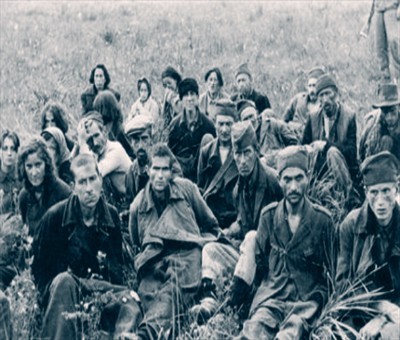
Delenda est Croatia
Au plan militaire et contrairement à toutes les traditions de l’Europe civilisée, les communistes yougoslaves procèdent à l’élimination physique de leurs prisonniers, surtout s’ils sont officiers. Pour la plupart des cadres des Forces Armées Croates, il n’est pas question de détention dans des camps réservés aux captifs de leur rang, comme cela se fait un peu partout dans le monde (et comme le faisait le IIIe Reich…). Pour eux, ce sont des cachots sordides, des violences et des injures, des procédures sommaires et au bout du compte, le gibet ou le poteau d’exécution. Il n’y a pas de circonstances atténuantes, aucun rachat n’est offert et aucune réinsertion n’est envisagée. Près de 36 généraux (7) sont ainsi « officiellement » liquidés et une vingtaine d’autres disparaissent dans des circonstances encore plus obscures. Colonels, commandants, capitaines, lieutenants et même aspirants – soit des gens d’un niveau culturel plutôt plus élevé que la moyenne – font l’objet d’un traitement spécialement dur et le plus souvent funeste. De cette façon, plusieurs générations de gens robustes et éduqués sont purement et simplement supprimées. Leur dynamisme, leur courage et leurs capacités feront cruellement défaut…
Vis-à-vis du personnel politique non-communiste, les méthodes d’élimination sont tout aussi radicales. Les anciens ministres ou secrétaires d’État de la Croatie indépendante, tout au moins ceux que les Anglo-Saxons veulent bien extrader (8), sont tous rapidement condamnés à mort et exécutés (9). Les « tribunaux » yougoslaves n’établissent pas d’échelle des responsabilités et n’appliquent qu’une seule peine. Disparaissent dans cette hécatombe de nombreux hommes cultivés et expérimentés, certains réputés brillants (comme les jeunes docteurs Julije Makanec, Mehmed Alajbegović et Vladimir Košak), et dont beaucoup, il faut bien le dire, n’ont pas grand-chose à se reprocher. Leur honneur est piétiné et la nation ne bénéficiera plus jamais de leur savoir-faire. (Remarquons, à titre de comparaison, qu’en France, la plupart des ministres du maréchal Pétain seront vite amnistiés ou dispensés de peine). La même vindicte frappe la haute fonction publique : 80% des maires, des préfets et des directeurs des grands services de l’État sont assassinés, ce qui prive ex abrupto le pays de compétences et de dévouements éprouvés. On les remplacera au pied levé par quelques partisans ignares et l’incurie s’installera pour longtemps. Moins brutalement traités (encore que plusieurs d’entre eux se retrouvent derrière les barreaux, à l’instar d’August Košutić ou d’Ivan Bernardic) mais tenus pour de dangereux rivaux, les dirigeants du Parti Paysan sont eux aussi irrémédiablement exclus de la scène politique ; leur formation politique, la plus importante du pays, est dissoute, tout comme les dizaines de coopératives et d’associations, sociales, culturelles, syndicales ou professionnelles, qui en dépendent… Coupé de ses repères traditionnels, le monde rural est désormais mûr pour la socialisation des terres et pour les calamiteuses « zadrougas » que lui impose l’omnipotente bureaucratie titiste.
Mort aux « superstitions »
Convaincus en bons marxistes que la religion est une superstition et que c’est bien « l’opium du peuple », les nouveaux dirigeants yougoslaves témoignent à l’égard des églises d’une hargne morbide. Les deux chefs de l’Église Orthodoxe Croate, le métropolite Germogen et l’éparque Spiridon Mifka sont exécutés ; âgé de 84 ans, le premier paie peut-être le fait d’avoir été, autrefois, le grand aumônier des armées russes blanches du Don… Du côté des évangélistes, l’évêque Filip Popp est lui aussi assassiné ; proche des Souabes, il était devenu encombrant… Vis-à-vis des musulmans, la purge n’est pas moins implacable : le mufti de Zagreb, Ismet Muftić, est publiquement pendu devant la mosquée (10) de la ville, tandis que dans les villages de Bosnie-Herzégovine, de nombreux imams et hafiz subissent un sort tout aussi tragique. Mais le grand ennemi des communistes demeure sans conteste l’Église Catholique contre laquelle ils s’acharnent tout particulièrement (11). Au cours de la guerre, le clergé catholique avait déjà fait l’objet d’une campagne haineuse, tant de la part des tchetniks orthodoxes que des partisans athées. Des dizaines de prêtres avaient été tués, souvent dans des conditions atroces comme les Pères Juraj Gospodnetić et Pavao Gvozdanić, tous deux empalés et rôtis sur un feu, ou les Pères Josip Brajnović et Jakov Barišić qui furent écorchés vifs (12). À la « Libération », cette entreprise d’extermination se poursuit : désignés comme « ennemis du peuple » et « agents de la réaction étrangère », des centaines de religieux sont emprisonnés et liquidés (13), les biens de l’Église sont confisqués et la presse confessionnelle interdite. « Dieu n’existe pas » (Nema Boga) récitent désormais les écoliers tandis que de son côté, l’académicien Marko Konstrenčić proclame fièrement que « Dieu est mort » (14). Au cœur de cette tempête anticléricale, la haute hiérarchie n’échappe pas aux persécutions : deux évêques (NN.SS. Josip Marija Carević et Janko Šimrak) meurent aux mains de leurs geôliers ; deux autres (NN.SS. Ivan Šarić et Josip Garić) doivent se réfugier à l’étranger ; l’archevêque de Zagreb (Mgr Stepinac) est condamné à 16 ans de travaux forcés et l’évêque de Mostar (Mgr Petar Čule) à 11 ans de détention. D’autres prélats (NN.SS. Frane Franić, Lajčo Budanović, Josip Srebrnić, Ćiril Banić, Josip Pavlišić, Dragutin Čelik et Josip Lach) sont victimes de violentes agressions (coups et blessures, lapidation) et confrontés à un harcèlement administratif constant (15). En ordonnant ou en couvrant de son autorité ces dénis de justice et ces crimes, le régime communiste entend visiblement abolir la religion et anéantir le patrimoine spirituel du peuple croate. Odieuse en soi, cette démarche totalitaire n’agresse pas seulement les consciences mais elle participe en outre de l’aristocide que nous évoquions plus haut car elle prive, parfois définitivement, le pays de très nombreux talents et de beaucoup d’intelligence. Au nombre des prêtres sacrifiés sur l’autel de l’athéisme militant, beaucoup sont, en effet, des gens dont la contribution à la culture nationale est précieuse, voire irremplaçable (16).
Terreur culturelle
Un quatrième groupe fait l’objet de toutes les « attentions » des épurateurs, celui des intellectuels. Pour avoir une idée de ce que les communistes purs et durs pensent alors de cette catégorie de citoyens, il suffit de se rappeler ce que Lénine lui-même en disait. À Maxime Gorki qui lui demandait, en 1919, de se montrer clément envers quelques savants, Vladimir Oulianov répondait brutalement que « ces petits intellectuels minables, laquais du capitalisme (…) se veulent le cerveau de la nation » mais « en réalité, ce n’est pas le cerveau, c’est de la merde » (17). Sur de tels présupposés, il est évident que les Croates qui n’ont pas fait le bon choix peuvent s’attendre au pire. Dès le 18 mai 1944, le poète Vladimir Nazor (un marxiste de très fraîche date)-(18) a d’ailleurs annoncé que ceux qui ont collaboré avec l’ennemi et fait de la propagande par la parole, le geste ou l’écrit, surtout en art en en littérature, seront désignés comme ennemis du peuple et punis de mort ou, pour quelques cas exceptionnels, de travaux forcés (19). La promesse a le mérite d’être claire et l’on comprend pourquoi le consul de France à Zagreb, M. André Gaillard, va bientôt qualifier la situation de « Terreur Rouge » (20)…
Les intentions purificatoires du Conseil Antifasciste de Libération ne tardent pas à se concrétiser et leurs effets sont dévastateurs. À Bleiburg comme aux quatre coins de la Croatie, la chasse aux intellectuels mal-pensants est ouverte. Dans la tourmente disparaissent les écrivains Mile Budak, Ivan Softa, Jerko Skračić, Mustafa Busuladžić, Vladimir Jurčić, Gabrijel Cvitan, Marijan Matijašević, Albert Haller et Zdenka Smrekar, ainsi que les poètes Branko Klarić, Vinko Kos, Stanko Vitković et Ismet Žunić. Échappant à la mort, d’autres écopent de lourdes peines de prison à l’instar de Zvonimir Remeta (perpétuité), Petar Grgec (7 ans), Edhem Mulabdić, Alija Nametak (15 ans) ou Enver Čolaković. Bénéficiant d’une relative mansuétude, quelques-uns s’en sortent mieux comme les poètes Tin Ujević et Abdurezak Bjelevac ou encore l’historien Rudolf Horvat qui se voient simplement interdire de publier. Tenus pour spécialement nocifs, les journalistes subissent quant à eux une hécatombe : Josip Belošević, Franjo Bubanić, Boris Berković, Josip Baljkas, Mijo Bzik, Stjepan Frauenheim, Mijo Hans, Antun Jedvaj, Vjekoslav Kirin, Milivoj Magdić, Ivan Maronić, Tias Mortigjija, Vilim Peroš, Đuro Teufel, Danijel Uvanović et Vladimir Židovec sont assassinés, leur collègue Stanislav Polonijo disparaît à Bleiburg, tandis que Mladen Bošnjak, Krešimir Devčić, Milivoj Kern-Mačković, Antun Šenda, Savić-Marković Štedimlija, le Père Čedomil Čekada et Theodor Uzorinac sont incarcérés, parfois pour très longtemps (21).
La répression frappe très largement et les gens de presse ou les écrivains sont loin d’être les seuls à passer au tamis de la Commission d’enquête sur les crimes de collaboration culturelle avec l’ennemi (Anketna komisija za utvrdjivanje zločina kulturnom suradnjom s neprijateljem). Une « grande peur », pour reprendre l’expression de Bogdan Radica (22), règne sur la Croatie où des milliers de citoyens sont contraints de répondre à un questionnaire inquisitorial (le fameux Upitni arak). Artistes, universitaires, magistrats, médecins, personnels des hôpitaux, membres des institutions scientifiques ou sportives, tous sont visés et pour ceux qui ne satisfont pas aux nouvelles normes, la sanction est immédiate. Au nombre des plus sévèrement « punis », citons l’architecte Lovro Celio-Cega, le diplomate Zvonko Cihlar, le banquier Emil Dinter, l’ingénieur naval Đuro Stipetić ou les médecins Šime Cvitanović et Ljudevit Jurak (23), tous assassinés. Chez les musiciens, les peines sont plus légères : le compositeur (et franciscain) Kamilo Kob se voit tout de même infliger 6 ans de prison et son collègue Zlatko Grgošević 6 mois de travaux forcés, tandis que le célèbre maestro Lovro Matačić passe 10 mois derrière les barbelés et que son confrère Rado degl’Ivellio est chassé du Théâtre National. Le peintre (et prêtre) Marko Ćosić est condamné à 10 ans d’incarcération et le sculpteur Rudolf Švagel-Lešić à 5 ans de la même peine ; plus chanceux, les peintres Oto Antonini, Ljubo Babić et Rudolf Marčić sont simplement interdits d’exposition. Le ratissage entrepris par la police politique est très systématique et des gens très divers, souvent peu politisés, se retrouvent au bagne comme le chansonnier Viki Glovački, le photographe Ljudevit Kowalsky, le géographe Oto Oppitz, le financier Branko Pliverić ou l’orientaliste Hazim Šabanović.
D’une brutalité inouie, cette grande purge cause dans la société croate un traumatisme profond, d’autant qu’elle s’accompagne de l’émigration massive et définitive de ceux qui parviennent à passer au travers des mailles du filet. Notons que pour parachever leur travail de déculturation, les communistes procèdent dans le même temps au nettoyage des bibliothèques publics et privées afin d’en extraire les « mauvaises » références. Sont ainsi pilonnés les ouvrages « oustachis » (y compris des éditions de Racine, Hugo ou Dostoïevski dont la seule « tare » est d’avoir eu recours à l’orthographe en vigueur sous l’État Indépendant Croate) et les « livres de l’ennemi », c’est à dire tous ceux qui sont rédigés en italien ou en allemand. On jette par exemple les textes de Nietzsche, Kant ou Dante ainsi que des traductions d’Eschyle, Homère, Sophocle, Euripide et Tacite (24)… Chef de l’Agitprop, Milovan Đilas (la future coqueluche des libéraux de Saint-Germain-des-Prés) recommande, en janvier 1947, de se débarrasser des livres de Roald Amundsen mais aussi des œuvres toxiques de Bernard Shaw et Gustave Flaubert (25). Restent toutefois, pour ceux qui veulent se cultiver, les ouvrages édifiants de Marx, Lénine et Dietzgen ( ! ) ou ceux des nouveaux maîtres à penser que sont Đilas, Kardelj et « Čiča Janko » (Moša Pijade)…
Au terme de ce bref et sinistre panorama, il semble bien que l’on puisse, sans exagération, considérer l’épuration communiste de la Croatie comme un aristocide. Cruelle et imbécile, cette « chasse aux sorcières » n’a jamais eu pour but de châtier de quelconques « criminels fascistes » (il n’y en avait guère) mais bien de se débarrasser d’une intelligentsia supposément hostile et de priver la Croatie d’une grande partie de ses moyens afin de faire place nette aux apparatchiks du nouveau régime. L’opération a, hélas, parfaitement atteint ses objectifs et la Croatie mettra près de 25 ans à se doter d’une nouvelle élite digne de ce nom, puis encore 20 ans à émerger définitivement du cauchemar yougo-communiste !
Christophe Dolbeau
Notes
(1) Voir C. Dolbeau, « Bleiburg, démocide yougoslave », in Tabou, vol. 17, Akribeia, Saint-Genis-Laval, 2010, 7-26.
(2) À propos de ces camps, le témoin britannique Frank Waddams (qui résidait en Yougoslavie à la fin de la guerre) affirme que « la famine, la surpopulation, la brutalité et la mortalité en faisaient des endroits bien pires que Dachau ou Buchenwald » – cf. N. Beloff, Tito’s flawed legacy, London, Victor Gollancz, 1985, p. 134.
(3) Grâce, il faut bien le dire, à une aide massive des Alliés comme en atteste par exemple l’ampleur exceptionnelle de l’ « Opération Audrey » – voir Louis Huot, Guns for Tito, New York, L. B. Fischer, 1945 et Kirk Ford Jr, OSS and the Yugoslav Resistance, 1943-1945, College Station, TAMU Press, 2000.
(4) « Après la fondation de l’État, l’objectif suivant fut d’amener la nation à accepter à 100% le Parti Communiste et son monopole idéologique, ce qui fut d’abord obtenu par la persécution et en compromettant les adversaires de diverses manières, puis en veillant à éradiquer toute pensée hétérodoxe, c’est à dire divergeant ne serait-ce que de façon minime du point de vue du Comité Central du Parti Communiste » – D. Vukelić, « Censorship in Yugoslavia between 1945 and 1952 – Halfway between Stalin and West », Forum de Faenza, IECOB, 27-29 septembre 2010, p. 6.
(5) Voir R. J. Rummel, Death by Government, chapitre 2 (Definition of Democide), New Brunswick, Transaction Publishers, 1994.
(6) cf. N. Weyl, « Envy and Aristocide », in The Eugenics Bulletin, hiver 1984. Voir également T. Sunić, « Sociobiologija Bleiburga », in Hrvatski List du 3 mars 2009 (repris dans The Occidental Observer du 15 mars 2009, sous le titre de « Dysgenics of a Communist Killing Field : the Croatian Bleiburg »).
(7) Junuz Ajanović, Edgar Angeli, Oton Ćuš, Franjo Dolački, Stjepan Dollezil, Julije Fritz, Mirko Gregorić, Đuro Grujić (Gruić), August Gustović, Muharem Hromić, Vladimir Kren, Slavko Kvaternik, Vladimir Laxa, Rudolf Lukanc, Bogdan Majetić, Ivan Markulj, Vladimir Metikoš, Josip Metzger, Stjepan Mifek, Ante Moškov, Antun Nardelli, Miroslav Navratil, Franjo Nikolić, Ivan Perčević, Makso Petanjek, Viktor Prebeg, Antun Prohaska, Adolf Sabljak, Tomislav Sertić, Vjekoslav Servatzy, Slavko Skolibar, Nikola Steinfl, Josip Šolc, Slavko Štancer, Ivan Tomašević, Mirko Vučković.
(8) Voir J. Jareb, « Sudbina posljednje hrvatske državne vlade i hrvatskih ministara iz drugog svjetskog rata », in Hrvatska Revija, N°2 (110), juin 1978, 218-224.
(9) Tel est le cas de M.M. Mehmed Alajbegović, Mile Budak, Pavao Canki, Vladimir Košak, Osman Kulenović, Živan Kuveždić, Slavko Kvaternik, Julije Makanec, Nikola Mandić, Miroslav Navratil, Mirko Puk et Nikola Steinfl.
(10) Le bâtiment sera fermé et ses minarets abattus en 1948.
(11) Au sujet de la querelle entre l’Église Catholique et l’État communiste yougoslave, voir l’article de B. Jandrić [« Croatian totalitarian communist government’s press in the preparation of the staged trial against the archbishop of Zagreb Alojzije Stepinac (1946) », in Review of Croatian History, vol. I, N°1 (décembre 2005)] et l’ouvrage de M. Akmadža (Katolička crkva u Hrvatskoj i komunistički režim 1945.-1966., Rijeka, Otokar Keršovani, 2004).
(12) cf. Ante Čuvalo, « Croatian Catholic Priests, Theology Students and Religious Brothers killed by Communists and Serbian Chetniks in the Former Yugoslavia during and after World War II » – http://www.cuvalo.net/?p=46
(13) Signée par les évêques croates, une lettre pastorale du 20 septembre 1945 fait état de 243 prêtres assassinés, 169 emprisonnés et 89 disparus ; en septembre 1952, un autre document épiscopal parle de 371 religieux tués, 96 disparus, 200 emprisonnés et 500 réfugiés – cf. Th. Dragoun, Le dossier du cardinal Stepinac, Paris, NEL, 1958. Voir aussi I. Omrčanin, Martyrologe croate. Prêtres et religieux assassinés en haine de la foi de 1940 à 1951, Paris, NEL, 1962.
(14) Th. Dragoun, op. cité, p. 239.
(15) Ibid, p. 67, 213, 219, 248-254.
(16) On pense notamment au philosophe Bonaventura Radonić, à l’historien Kerubin Šegvić, au compositeur Petar Perica, au sociologue Dominik Barac, au byzantologue Ivo Guberina, à l’écrivain et distingué polyglotte Fran Binički et au biologiste Marijan Blažić, tous assassinés.
(17) cf. Le livre noir du communisme, sous la direction de S. Courtois, Paris, R. Laffont, 1998, p. 864.
(18) Avant la guerre, Vladimir Nazor (1876-1949) avait soutenu le royaliste serbe Bogoljub Jevtić puis le Parti Paysan Croate de V. Maček et en décembre 1941, il avait été nommé membre de l’Académie de Croatie (HAZU) par Ante Pavelić…
(19) cf. D. Vukelić, op. cité, p. 1.
(20) cf. G. Troude, Yougoslavie, un pari impossible ? : la question nationale de 1944 à 1960, Paris, L’Harmattan, 1998, p. 69.
(21) Sur 332 titulaires de la carte de presse, seuls 27 seront autorisés à poursuivre l’exercice de leur métier. Pour une étude exhaustive sur la répression dans le milieu journalistique, voir J. Grbelja, Uništeni naraštaj : tragične sudbine novinara NDH, Zagreb, Regoč, 2000, ainsi que l’article de D. Vukelić mentionné en note 4.
(22) Voir B. Radica, « Veliki strah : Zagreb 1945 », in Hrvatska Revija, vol. 4 (20), 1955.
(23) Expert de renommée internationale, il avait fait partie, en juillet 1943, de la commission chargée d’enquêter en Ukraine sur le massacre communiste de Vinnytsia.
(24) cf. D. Vukelić, op. cité, pp. 21, 23/24.
(25) Dans la liste des auteurs prohibés figurent aussi Maurice Dekobra, Gaston Leroux (pour Chéri Bibi !) et Henri Massis (il est vrai que ce dernier prônait la création d’un « parti de l’intelligence » ce qui n’était pas vraiment à la mode dans la Yougoslavie de 1945…).
00:05 Publié dans Histoire | Lien permanent | Commentaires (0) | Tags : histoire, génocide, seconde guerre mondiale, deuxième guerre mondiale, croatie, yougoslavie, titisme, massacres, terreur, communisme | | del.icio.us | | Digg | Facebook
vendredi, 20 mai 2011
Regime Change at the IMF: The Frame-Up of DSK?
Regime Change at the IMF: The Frame-Up of Dominique Strauss-Kahn?
by Michel Chossudovsky
Ex: http://www.voltairenet.org/article169953.html
 According to Canadian scholar Michel Chossudovsky, the arrest of IMF Managing Director Dominique Strauss-Kahn has all the appearances of a frame-up ordered by powerful members of the financial establishment, in liaison with France’s Nicolas Sarkozy, whose presidency has served the interests of the US at the expense of those of France and the European Union. While there is for the moment no proof of a plot, the unusual circumstances of his arrest and imprisonment require careful examination.
Immediately following Strauss Kahn’s arrest, pressures were exerted by Washington to speed up his replacement as Managing Director of the IMF preferably by a non-European, an American or a handpicked candidate from an "emerging market economy" or a developing country.
Since the founding of the Bretton Woods institutions in 1945, the World Bank has been headed by an American whereas the IMF has been under the helm of a (Western) European.
Strauss-Kahn is a member of elite groups who meet behind closed doors. He belongs to the Bildeberger. Categorized as one of the world’s most influential persons, he is an academic and politician rather than a banker. In contrast to his predecessors at the IMF, he has no direct affiliation to a banking or financial institution.
But at the same time he is the fall guy. His "gaffe" was to confront the Washington-Wall Street Consensus and push for reforms within the IMF, which challenged America’s overriding role within the organization.
The demise of Strauss-Kahn potentially serves to strengthen the hegemony of the US and its control over the IMF at the expense of what former Defense Secretary Donald Rumsfeld called "Old Europe".
Blocking Strauss-Kahn, the Presidential Candidate
In recent years, a major shift has occurred in Europe’s political landscape. Pro-American governments have been elected in both France and Germany. Social Democracy has been weakened.
Franco-American relations have been redefined, with Washington playing a significant role in grooming a new generation of European politicians.
The presidency of Nicolas Sarkozy has, in many regards, become a de facto US "client regime", broadly supportive of US corporate interests in the EU and closely aligned with US foreign policy.
There are two overlapping and interrelated issues in the DSK frame-up hypothesis.
The first pertains to regime change at the IMF, the second to Strauss-Kahn as a candidate in France’s forthcoming presidential elections.
Both these processes are tied into the clash between competing US and European economic interests.
Strauss-Khan as a favorite of the Socialist Party, would have won the presidential elections leading to the demise of "Our Man in Paris" Nicolas Sarkozy.
As documented by Thierry Meyssan, the CIA played a central undercover role in destabilizing the Gaullist party and supporting the election of Nicolas Sarkozy. [1]
A Strauss-Kahn presidency and a "Socialist" government would have been a serious setback for Washington, contributing to a major shift in Franco-American relations. It would also have contributed to weakening America’s role on the European political chessboard. It would also have changed the balance of power between America and "Old Europe" (namely the Franco-German alliance). It would have had repercussions on the internal structure of the Atlantic Alliance and the hegemonic role of the US within NATO.
The Frame-Up?
Fifty-seven percent of France’s population, according to a May 17 poll, believe that Strauss-Kahn was framed, victim of a set-up. He was detained on alleged sexual assault and rape charges based on scanty evidence. He was detained based on a complaint filed by the Sofitel hotel where he was staying, on behalf of the alleged victim, an unnamed hotel chamber-maid:
 The 32-year-old maid told authorities that she entered his suite early Saturday afternoon and he attacked her, New York Police Department spokesman Paul J. Browne. She said she had been told to clean the spacious $3,000-a-night suite, which she thought was empty.
According to an account the woman provided to police, Strauss-Kahn emerged from the bathroom naked, chased her down a hallway and pulled her into a bedroom, where he began to sexually assault her. She said she fought him off, then he dragged her into the bathroom, where he forced her to perform oral sex on him and tried to remove her underwear. The woman was able to break free again and escaped the room and told hotel staff what had happened, authorities said. They called police.
Challenging the Washington Consensus
What is at stake in the immediate wake of Strauss Kahn’s demise is "regime change" at the IMF.
The Obama administration has demanded his replacement by a more compliant individual. U.S. Treasury Secretary Timothy Geithner, former CEO of the New York Federal Reserve Bank is pushing for the replacement of Dominique Strauss-Kahn, "suggesting he can no longer perform his duties" as IMF Managing director.
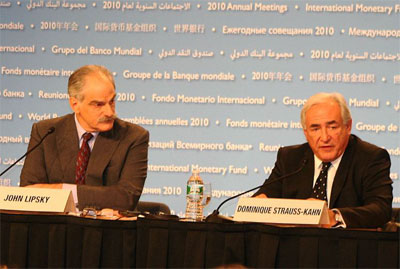
- At the opening press conference for the IMF and World Bank meetings held in Washington, 8-10 October 2010.
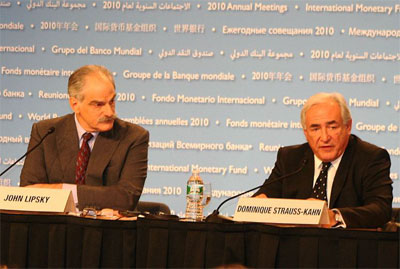
"Geithner called for greater formal recognition by the IMF board that John Lipsky, the fund’s second-in-command, will continue serving as temporary managing director for an interim period. Although Strauss-Kahn has yet to resign [Editor’s note: Mr. Strauss-Khan announced his resignation on 19 May 2011.], sources say the IMF is in touch with his legal counsel to discuss his future at the organization."
What lies behind the frame-up scenario? What powerful interests are involved? Geithner had a close personal relationship with Strauss-Kahn.
On the floor of the US Senate (May 18), Senator Mark Kirk of Illinois, called for the resignation of DSK while calling upon the IMF’s deputy managing director John Lipsky to "assume full responsibility of the IMF" as interim managing director. The process of "permanent replacement should "commence at once," he said. John Lipsky is a well connected Wall Street banker, a former Vice Chairman at JPMorgan Investment Bank.
While the IMF is in theory an intergovernmental organization, it has historically been controlled by Wall Street and the US Treasury. The IMF’s "bitter economic medicine", the so-called Structural Adjustment Program (SAP), imposed on countless developing countries, essentially serves the interests of creditor banks and multinational corporations.
The IMF is not the main architect of these devastating economic reforms which have served to impoverish millions of people, while creating a "favorable environment" for foreign investors in Third World low wage economies.
The creditor banks call the shots. The IMF is a bureaucratic entity. Its role is to implement and enforce those economic policies on behalf of dominant economic interests.
Strauss Kahn’s proposed reforms while providing a "human face" to the IMF did not constitute a shift in direction. They were formulated within the realm of neoliberalism. They modified but they did not undermine the central role of IMF "economic medicine". The socially devastating impacts of IMF "shock treatment" under Strauss-Kahn’s leadership have largely prevailed.
Dominique Strauss Kahn arrived at the helm of the IMF in November 2007, less than a year prior to September-October 2008 financial meltdown on Wall Street. The structural adjustment program (SAP) was not modified. Under DSK, IMF "shock treatment" which historically had been limited to developing countries was imposed on Greece, Ireland and Portugal.
Under the helm of DSK as Managing Director, the IMF demanded that developing countries remove food and fuel subsidies at a time of rising commodity prices on the New York and Chicago Mercantile exchanges.
The hikes in food and fuel prices, which preceded the September-October 2008 Wall Street crash, were in large part the result of market manipulation. Grain prices were boosted artificially by large scale speculative operations. Instead of taming the speculators and containing the rise in food and fuel prices, the IMF’s role was to ensure that the governments of indebted developing countries would not in any way interfere in the "free market", by preventing these prices from going up.
These hikes in food prices, which are the result of outright manipulation (rather than scarcity) have served to impoverish people Worldwide. The surge in food prices constitutes a new phase of the process of global impoverishment.
DSK was complicit in this process of market manipulation. The removal of food and fuel subsidies in Tunisia and Egypt had been demanded by the IMF. Food and fuel prices skyrocketed, people were impoverished, paving the way towards the January 2011 social protest movement:
Fiscal prudence remains an overarching priority for the [Tunisian] authorities, who also see the need for maintaining a supportive fiscal policy in 2010 in the current international environment. Efforts in the last decade to bring down the public debt ratio significantly should not be jeopardized by a too lax fiscal policy. The authorities are committed to firmly control current expenditure, including subsidies... [2]
"[The IMF] encouraged the [Egyptian] authorities to press further with food and fuel subsidy reforms, and welcomed their intention to improve the efficiency and targeting of food subsidy programs. [meaning the selective elimination of food subsidies].
"Consideration should be given to introducing automatic adjustment mechanisms for domestic fuel prices to minimize distortions [meaning dramatic increases in fuel prices without State interference], while strengthening cash-based social programs to protect vulnerable groups. [3]
Under the helm of DSK, the IMF also imposed sweeping austerity measures on Egypt in 2008, while supporting Hosni Mubarak’s "efforts to broaden the privatization program". [4]
The Frank G. Wisner-Nicolas Sarkozy Connection
Strauss-Kahn was refused bail by Judge Melissa Jackson, an appointee and protégé of Michael Bloomberg, who in addition to his role as Mayor is a powerful figure on Wall Street.
Manhattan District Attorney Cyrus Vance Jr. charged (using scanty evidence) Strauss-Kahn "with seven crimes, including attempted rape, sexual abuse, forcible touching and unlawful imprisonment".
Who is Cyrus Vance Jr.?
He is the son of the late Cyrus Vance who served as Secretary of State in the Carter administration.
But there is more than meets the eye. Nicolas Sarkozy’s step father Frank G. Wisner II, a prominent CIA official who married his step mother Christine de Ganay in 1977 served as Deputy Executive Secretary of State under the helm of Cyrus Vance Senior, father of District Attorney Cyrus Vance Junior.
Is it relevant?
The Vance and Wisner families had close personal ties. In turn Nicolas Sarkozy had close family ties with his step father Frank Wisner (and his half brothers and sisters in the US and one member of the Wisner was involved in Sarkozy’s election campaign).
It is also worth noting that Frank G. Wisner II was the son of one of America’s most notorious spies, the late Frank Gardiner Wisner (1909- 1965), the mastermind behind the CIA sponsored coup which toppled the government of Mohammed Mossadegh in Iran in 1953. Wisner Jr. is also trustee of the Rockefeller Brothers Trust.
While these various personal ties do not prove that Strauss-Kahn was the object of a set-up, the matter of Sarkozy’s ties to the CIA via his step father, not to mention the ties of Frank G. Wisner II to the Cyrus Vance family are certainly worth investigating. Frank G, Wisner also played a key role as Obama’s special intelligence envoy to Egypt at the height of the January 2011 protest movement.
Did the CIA play a role?
Was Strauss-Kahn framed by people in his immediate political entourage including President Obama and Secretary of the Treasury Tim Geithner?
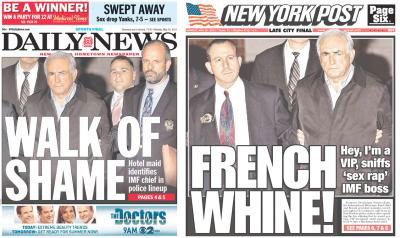
- Tabloids - May 16, 2011

Fair trial?
Innocent before proven guilty? The US media has already cast its verdict. Will the court procedures be manipulated?
One would expect that Strauss-Kahn be granted a fair trial, namely the same treatment as that granted to thousands of arrests on alleged sexual aggression charges in New York City.
How many similar or comparable alleged sexual aggressions occur on a monthly basis in New York City? What is the underlying pattern? How many of these are reported to the police? How many are the object of police follow-up once a complaint has been filed?
What is the percent of complaints submitted to police which are the object of police arrest? How many of these arrests lead to a judicial procedure? What are the delays in court procedures?
How many of these arrests lead to release without a judicial procedure?
How many of the cases submitted to a judicial procedure are dismissed by the presiding judge?
How many of the cases which are not dismissed are refused bail outright by the presiding judge? What is the basis for refusing bail?
How many are granted bail? What is the average amount of bail?
How many are imprisoned without bail based on scanty and incomplete evidence?
How many of those who are refused bail are sent to an infamous maximum security prison on Rikers Island on the orders of Michael Bloomberg?
Diplomatic Immunity
Press reports state that full diplomatic immunity does not apply to officials of the United Nations and the Bretton Woods institutions, namely that the US did not ratify the protocol.
U.N. convention on privileges and immunities for international agencies that most countries have ratified. It gives the heads of U.N. agencies broad immunity in the countries where they are based. But the U.S. government never became a party to that treaty. Employees of international agencies are covered by a U.S. statute that gives only limited immunity.
The relevant question is how has this limited immunity provision been applied in practice? Namely how many people with limited immunity (UN officials, officials of the Bretton Woods institutions) have been arrested and sent to a high security prison?
Has Strauss Kahn been given the same treatment as those arrested under the provisions of "limited immunity"?
Does the Strauss Kahn arrest fit the pattern? Or is Strauss Kahn being treated in a way which does not correspond to the normal (average) pattern of police and judicial procedures applied in the numerous cases of persons arrested on alleged sexual assault charges?
Without a frame-up instrumented by very powerful people acting in the background, the head of the IMF would have been treated in an entirely different way. The mayor of New York Michael Bloomberg and Timothy Geithner would have come to his rescue. The matter would have been hushed up with a view to protecting the reputation of a powerful public figure. But that did not happen.
Michel CHOSSUDOVSKY
==
See also Voltaire Network’s file on the International Monetary Fund
[1] See "Operation Sarkozy: How the CIA placed one of its agents at the presidency of the French Republic", Voltaire Network, by Thierry Meyssan, 26 July 2008.
[2] IMF Tunisia: 2010 Article IV Consultation - Staff Report; Public Information Notice on the Executive Board Discussion; and Statement by the Executive Director for Tunisia, September 2010.
[3] IMF Executive Board Concludes 2008 Article IV Consultation with the Arab Republic of Egypt Public Information Notice, PIN No. 09/04, January 15, 2009.
[4] Ibid.
19:56 Publié dans Actualité | Lien permanent | Commentaires (1) | Tags : actualité, dominique strauss-kahn, politique, fmi, politique internationale, france, etats-unis, finances, monde financier, finances internationales, scandale, puritanisme | | del.icio.us | | Digg | Facebook