Les apprentis-dictateurs
par Pierre-Emile Blairon
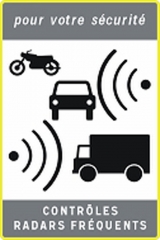
Pour votre sécurité
« Pour votre sécurité, contrôles radars fréquents ».
Ce panneau qui jalonne les autoroutes françaises en a fait sourire ou rager plus d’un. Les premiers radars automatiques sont apparus en 2003. « Pour votre sécurité », remplissez les caisses de l’Etat.
 Mais aussi, étouffez-vous : le port du casque pour les motards et la ceinture (de sécurité pour votre sécurité) pour les automobilistes avaient précédé cette touchante attention des autorités qui voulaient protéger nos vies sans notre accord express ; car, après tout, nous sommes responsables de notre destin et il n’appartient qu’à nous d’en faire ce que nous voulons, à une seule condition : que nous respections les règles de la société qui interdisent d’attenter à la liberté des autres (et encore plus à leur vie ou à leur intégrité physique). Que la vitesse excessive non maîtrisée de votre véhicule soit proscrite hors circuit, voilà qui est bien compréhensible ; mais le port du casque ou de la ceinture concerne exclusivement notre propre personne sans qu’il soit mis en danger la vie d’autrui.
La fureur de vivre
Les jeunes petits-bourgeois incultes qui se moquent des boomers (les vieux qui sont nés après la seconde guerre mondiale) en pensant qu’ils ne s’intéressaient, comme eux, qu’à l’économie et à la surconsommation, ignorent tout de la jeunesse de la plupart de ces « boomers » qui vivaient ailleurs qu’à Paris et d’une manière autrement moins conformiste qu’eux au même âge.
A l’époque de la « Fureur de vivre » et de la « Dolce vita », les jeunes rebelles avaient envie de mourir ailleurs que dedans un bon lit, comme dit la chanson, en brûlant la vie par les deux bouts et en la quittant, par exemple, le crâne fracassé contre un platane (qui en avait vu de toutes les couleurs).
D’autres, ou les mêmes, sur un registre plus romantique, se délectaient de voir passer les jolies filles des années 60, robes légères et cheveux au vent sur leurs mobylettes, leurs scooters ou leurs Solex.
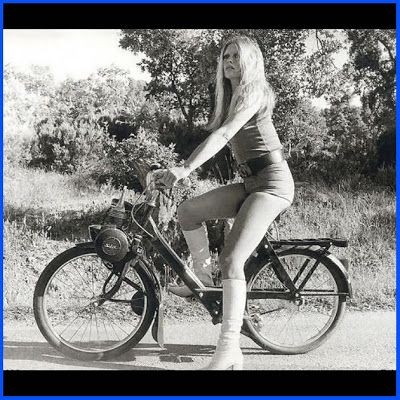 C’était l’époque des Blousons noirs, des bandes, de la castagne, le début des années 60, l’époque juste avant celle où Brigitte Bardot chantait sur son Harley-Davidson : « Que m’importe de mourir les cheveux dans le vent », une époque où « on se traitait de con, à peine qu’on se traitait », chantait Claude Nougaro, un temps qui n’avait pas encore vu la pseudo-révolution des mao-spontexs, les enfants des grands bourgeois parisiens, qui allaient s’amuser à faire mai 68 en prenant pour modèles de vertu les sanguinaires khmers rouges (avant de succéder aux affaires de leurs papas et de prendre le pouvoir politique), un temps qui n’avait pas encore vu les rassemblements Peace and love à la sexualité débridée et le mignon Flower power.
Aucun des membres de ces troupes bien disparates, gentils comme méchants, n’aurait imaginé porter un casque pour faire de la moto ou attacher une ceinture en montant dans une voiture.
On peut, en effet, ne pas aimer avoir le crâne compressé dans un casque (quand il n’est pas question de faire la guerre), dans une « prison pour la tête ». On peut ne pas aimer être ligoté dans une ceinture comme un aliéné (aliéné : être étranger à soi-même). J’entends déjà certains dire : « vous savez ce que ça coûte un accident, pour l’hôpital ? » Mais pourquoi est-ce toujours au citoyen d’être responsable de ce qu’il paye déjà, de n’être responsable que lorsqu’il s’agit de payer ? Combien coûtent tous ces parasites payés à ne rien faire ou à mal faire (Voir à ce sujet l’article de Michel Lebon sur Nice-Provence Info où il donne la liste des employés de l’Agence régionale de santé pour notre région Provence-Alpes-Côte d’azur[1]) et combien coûtent toutes les erreurs du gouvernement actuel (ah oui, l’hôpital, parlons-en…) ?
On a ensuite commencé à entendre ce slogan « sauver des vies » lorsqu’il s’est agi d’épargner celles causées par les accidents de la route puis celle des fumeurs. La formule était encore une fois mal venue car, après tout, on ne sauve jamais aucune vie qui finira bien par trouver son terme d’une manière ou d’une autre, tôt ou tard.
Le 17 mai 1973, La Prévention routière avait diffusé une campagne de publicité (voir photo) pour marquer les esprits afin de dénoncer le nombre de victimes annuel par accident de la route : 16545, approximativement la population de Mazamet qu’on fait allonger dans les rues de la ville. A noter que Chantal Perrichon, la présidente de la Ligue contre la violence routière, n’avait pas encore commencé à sévir.
Le principe de prévention
Il y avait, tout près de chez moi, une route qui menait directement à la ville ; elle était bordée, à son départ, par une falaise rocheuse ; longtemps, il y eut un panneau triangulaire très simple représentant une chute de pierres. Symbole compréhensible pour tout le monde, même ceux ne parlant pas français.
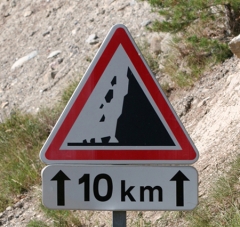 Le panneau voulait dire : attention, des pierres sont déjà tombées à cet endroit, méfiez-vous, le risque subsiste ; ce qui voulait aussi signifier : vous vous engagez dans cette voie à vos risques et périls, sous votre responsabilité ; ce panneau était simplement là pour vous faire comprendre que vous étiez libre de prendre une décision qui était votre choix, qu’il n’était pas question de vous infantiliser. Le panneau faisait partie d’un système de signalisation qui, à l’époque, n’avait pas de nom, parce que le bon sens n’a pas besoin d’être nommé, un concept qu’on aurait pu appeler alors le principe de prévention, du verbe « prévenir ».
Le principe de précaution
Et puis, il y a une dizaine d’années, des pierres sont à nouveau tombées de cette falaise sur la route.
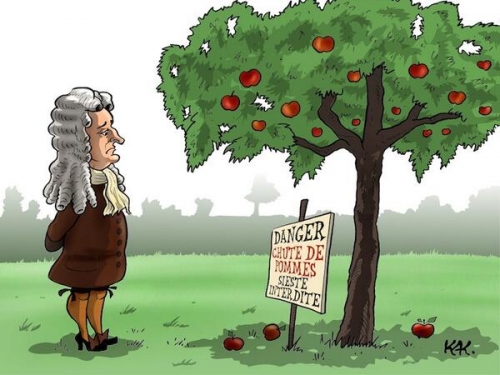
Le panneau à usage préventif avait disparu. Que faire ? il fallait entreprendre des travaux, placer un filet métallique pour recouvrir cette partie de la falaise sur une dizaine de mètres. Mais, derrière chaque incident de ce type, partout en France, il y a une énorme bureaucratie à la française, des milliers d’employés qui vont s’intéresser ou pas au problème (le plus souvent pas), des centaines de propositions contradictoires qui vont faire que rien ne sera fait avant longtemps ; c’est ce qui est arrivé. La route a été fermée pendant des mois parce que les différentes couches décisionnaires (l’Etat, la Région, le département, la communauté de communes, la Métropole, la ville, puis la DDE, le préfet, et les diverses instances bureaucratiques… (ce qu’on a appelé le « millefeuille administratif ») n’ont jamais voulu prendre la décision d’ouvrir la route avant que ne soient effectués les travaux - ça peut se comprendre – mais ont mis des mois avant d’autoriser leur réalisation, chacun des « décisionnaires » tenant trop à son confort pour risquer quelque initiative que ce soit. Et ce sont les citoyens qui pâtissent in fine de cette effarante impéritie.
Le principe de précaution provient du droit de l'environnement et du droit de la santé, ayant été développé à la suite d'affaires telles que celle du sang contaminé où les instances dirigeantes du milieu hospitalier se renvoyant la patate chaude pour ne pas prendre de décision ont fini par être « responsables » (mais « pas coupables ») de la mort de centaines de personnes parmi les populations hémophiles transfusées. Le scandale débouchera en 1993 sur la création de la Cour de justice de la République, compétente pour juger les crimes ou délits commis par les membres du gouvernement dans l’exercice de leurs fonctions, juridiction d’exception dont le président Macron a souhaité la disparition.
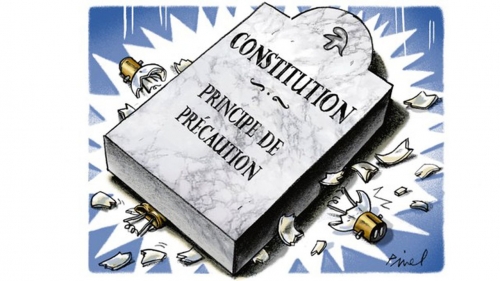
Le principe de précaution représente l’un des archétypes du politiquement correct d’une société bien policée, bien soumise et bien timorée, un principe contre lequel personne n’ose s’élever.
Il consiste à priver de liberté l’ensemble de la population pour sauver d’une part des irresponsables - les individus incapables de se gérer - et les décideurs, d’autre part, qui préfèrent pénaliser l’ensemble de la population au profit de leur confort personnel ; qu’il est loin le temps où les fonctionnaires étaient au service de la nation et des citoyens !
Les partisans de l’Ordre mondial, comme le sont tous nos gouvernants de l’ouest européen, rêvent d’une suppression des frontières au niveau national, mais assignent, « en même temps », à chaque citoyen une limite territoriale qui ne peut excéder celle de son propre corps (lequel citoyen l’accepte généralement très bien puisqu’il a été mutilé de son esprit critique très insidieusement par les médias, et principalement par la télé). Nous avons vu quel a été le processus de cet enfermement gradué et indolore qui a affecté perfidement la population depuis la fin des années 60.
Avant de poursuivre, je ferai remarquer que ces principes de sécurité et de précaution totalement artificiels et superflus mais dont le gouvernement semble tenir grand compte ne font nullement référence à la véritable insécurité, celle dont l’Etat doit se préoccuper en tout premier lieu – il s’agit d’une fonction régalienne - mais qui ne l’intéresse nullement de combattre car elle lui permet d’entretenir un climat de peur et de psychose qui affecte le citoyen dans le but de rester au pouvoir ; je veux parler de l’insécurité causée par les délinquants sur les personnes et les biens : incivilités, vols, viols, meurtres, de nos jours perpétrés au quotidien.
[Les citoyens] « ont peur, donc s’isolent les uns des autres, cessent de sortir, mettent une sourdine à leurs revendications. Les rues se vident, l’espace public se délite, chacun se replie sur sa sphère privée, meublent ses soirées en regardant la télévision : quoi de plus favorable à l’exercice de l’autorité ? En laissant les délinquants agir à sa place, le pouvoir fait d’une pierre deux coups. L’ordre se défait, tout est d’ailleurs mis en œuvre pour qu’il se défasse, mais le désarroi même qui en résulte débouche paradoxalement dans une relégitimation du pouvoir (car le pouvoir apparaît comme l’ultime rempart contre le désordre triomphant). Les forces de l’ordre ont pour consigne de laisser faire, c’est-à-dire de ne rien faire qui puisse empêcher l’ordre de se défaire (politique de passivité). »
Voilà ce qu’écrivait Eric Werner en 1998[2], nous nous retrouvons dans cette exacte situation en ce printemps 2020 après les mesures édictées dans le monde entier à l’occasion de cette pandémie ; nous voyons que les objectifs du Système n’ont guère changé. La peur de la pandémie a succédé, avec beaucoup plus de succès pour ceux qui l’ont instillée, à celle du terrorisme ; le « Restez chez vous » a remplacé plus efficacement le « Je suis Charlie » qui avait fait l’objet, à l’époque, d’une véritable hystérie collective.
Covid 19 : le coup de tonnerre qui bouleverse le monde
Soyons clair : un coup de tonnerre est un phénomène naturel ; nous ne sommes pas certains que le Covid19 soit véritablement une pandémie d’origine naturelle.
Le véritable coup de tonnerre est celui-ci : pourquoi le Système mondial a-t-il décidé de passer brutalement à l’action en propageant ce virus ? Nous nous attendions à une mise en place plus lente dans sa guerre contre les peuples traditionnels. En fait, je crois qu’il a mis en application le dicton : « L’occasion fait le larron ». Il est possible qu’un employé du fameux laboratoire P4 de Wuhan ait malencontreusement ou intentionnellement répandu le virus hors les murs du laboratoire ; et quelques esprits avisés dans les sphères du pouvoir mondial ont profité de cette opportunité pour mettre en place ce plan de manipulation des masses qui existe vraisemblablement depuis de nombreuses années « dans les cartons », comme on dit.
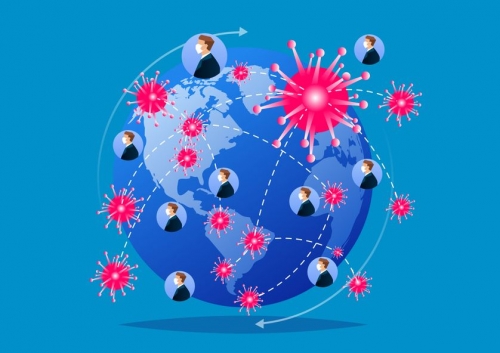
C’est ainsi que les deux principes que nous dénonçons ont tellement bien fait leur travail que les promoteurs de la pandémie ont pensé qu’il serait un jeu d’enfant de poursuivre le processus ; le monde est mûr pour un puçage global sous forme de vaccination, par exemple. Le principe de sécurité et le principe de précaution (tous deux entrés en vigueur contre la population) vont servir à canaliser et à faire accepter les restrictions aux libertés décidées à l’occasion de cette pandémie.
Une autre mise au point : la gestion de la crise pandémique par le gouvernement français (mais qui fut à peu de détails près la même dans d’autres pays européens : l’Italie, la Belgique, l’Espagne, notamment), cette gestion a été qualifiée de catastrophique par l’opposition réactionnaire de droite et de gauche ; rien n’est plus faux ; notre gouvernement est arrivé à ses fins avec un brio qu’il faut saluer. Inutile que je développe ce point, Georges Gourdin l’a remarquablement bien fait dans son article sur Nice-Provence-Info : https://www.nice-provence.info/2020/05/11/detrompez-vous-...
Souvenez-vous de ce que les commentateurs ont considéré comme un cafouillage au tout début de la crise : les déclarations contradictoires entre les différents membres du gouvernement sur l’existence de stocks de masques, de tests, sur les modalités tout aussi contradictoires du confinement, dont la dernière perle revient au président Macron lui-même qui assure, le lundi 18 mai, que la France n’a « jamais été en rupture de stock de masques », perle précédée de celle du ministre de l’Education nationale Blanquer : « Il y a plus de risques à rester chez soi que d’aller à l’école », après que tous les membres du gouvernement et autres « experts » en pandémies nous aient répété en boucle le contraire qui tenait en un mot : confinement , qui est un autre terme pour désigner l’incarcération, celle-ci quasiment volontaire de la part des incarcérés. On connaît la formule d’Aldous Huxley qui peut accompagner tous les épisodes de cette gigantesque manipulation : « La dictature parfaite serait une dictature qui aurait les apparences de la démocratie, une prison sans murs dont les prisonniers ne songeraient pas à s'évader. Un système d'esclavage où, grâce à la consommation et au divertissement, les esclaves auraient l'amour de leur servitude ... »

En réalité, tout le monde au gouvernement et dans les médias a admirablement joué le rôle qui lui a été attribué pour décontenancer le peuple qu’ils méprisent, tous plus acteurs et menteurs les uns que les autres.
“Quand tout le monde vous ment en permanence, le résultat n'est pas que vous croyez ces mensonges mais que plus personne ne croit plus rien. Un peuple qui ne peut plus rien croire ne peut pas se faire une opinion. Il est privé non seulement de sa capacité d'agir mais aussi de sa capacité de penser et de juger. Et, avec un tel peuple, vous pouvez faire ce que vous voulez”, disait Hannah Arendt.
Résultat, à l’heure où j’écris, un sondage vient d’être publié qui confirme que la côte du Premier ministre s’envole à 57%[3] d’opinions favorables après toutes les turpitudes dont ce sinistre personnage s’est rendu coupable ; se référer plus haut au texte d’Eric Werner pour comprendre l’attitude de la population qui peut apparaître comme une aberration.
Les matamores de la pandémie
On ne sait pas si c’est le principe de précaution qui s’est appliqué puissance 10 lors de cet épisode de pandémie. En tout cas, le conditionnement actuel de la population par le Système mondial a été préparé avec une telle constance et une telle méticulosité grâce à ces principes de « sécurité » rabâchés jusqu’à la nausée par les médias pendant des années qu’il n’y avait pratiquement plus rien à faire pour la conduire exactement là où il voulait qu’elle aille, c’est-à-dire : nulle part. Un labyrinthe dépourvu de sortie, un piège à rats. D’où le slogan : restez chez vous.
Je dirais qu’il y avait en partie de ça en ce qui concerne les petits décideurs, certains petits maires par exemple, toujours prompts à imiter ce qui se fait en haut lieu, histoire de passer pour des gens importants, même s’ils ne comprennent rien aux véritables intentions de l’oligarchie mondiale, ou même nationale. Nous avions déjà vu ce phénomène en ce qui concerne un autre sujet, tout à fait différent, mais qui procède de la même démarche, lorsque j’avais évoqué dans un autre article ces ronds-points « agrémentés » d’une « œuvre d’art » dont nous gratifiaient certains édiles locaux[4].
Si ces édiles, pour la plupart de bonne foi, savaient à quelle monstruosité ils s’empressent de collaborer avec un zèle inouï en croyant « protéger » leurs concitoyens, ils en resteraient mortifiés pour le reste de leur vie.
L’un des premiers à se distinguer dans cette surenchère sanitaire liberticide fut le maire de Sanary qui prohibait de circuler à plus de 10 mètres de son domicile et qui interdisait d’aller chez le boulanger pour acheter une seule baguette ; il avait été obligé de faire marche arrière devant le nombre de protestations de la population.
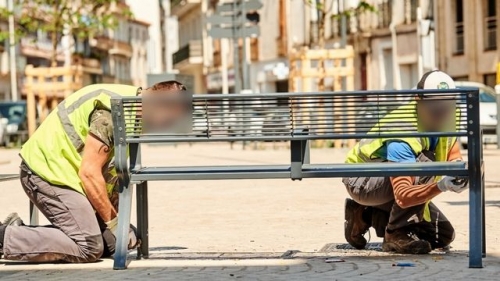
Robert Ménard, pour ne pas être en reste, a fait enlever tous les bancs de sa ville, Béziers, pour empêcher bien sûr la population de s’y asseoir (après avoir encensé, d’ailleurs, le premier discours du Président Macron sur la crise sanitaire ; il n’a pas été récompensé de cette flagornerie, l’Etat lui a interdit de proposer un test au personnel des écoles et des crèches).
A Biarritz, on n’avait pas le droit de s’asseoir « plus de deux minutes » sur les bancs publics face à la mer ; qu’importe, quand on a vu ses reflets changeants sous la pluie (comme chantait Charles Trénet) plus de deux minutes, on a tout vu ; Georges Brassens doit se retourner dans sa tombe, lui qui prenait la défense des amoureux qui se bécotaient sur les bancs publics, bravant les regards désapprobateurs des « passants honnêtes ».
Gilles Simeoni, président du conseil exécutif de Corse va demander que chaque personne souhaitant venir sur l'île (Corses compris) « présente à l'aéroport ou au port un test de dépistage négatif datant de moins de sept jours avant le départ. ». On a connu ce monsieur moins regardant sur les conditions d’entrée sanitaire sur l’île lorsqu’il proposait d’accueillir les clandestins de l’Aquarius.
J’ai gardé pour la bonne bouche l’inénarrable Estrosi qui nous a fait la totale à Nice.
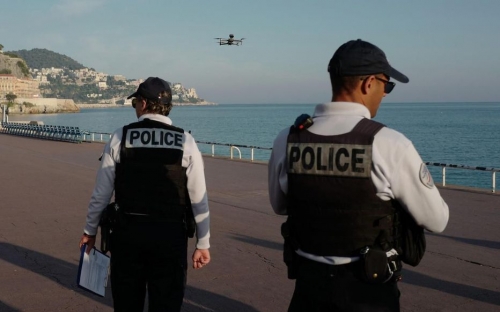
A propos des déplacements dits brefs, relatifs à la pratique sportive, aux promenades en famille ou aux sorties nécessaires pour les animaux domestiques, trop nombreux sont ceux dévoyant ces règles pour contourner les mesures du confinement. Trop nombreux sont ceux utilisant ce prétexte pour se retrouver entre amis, aller voir la famille ou tout simplement s’offrir un bol d’air…» C’est moi qui souligne. Et on rajoutera à ça quelques mesures qu’il avait prévues comme le port du masque obligatoire, le couvre-feu à partir de 20 h dans certains quartiers, la fermeture des plages, de la Promenade des Anglais, de l’avenue Jean Médecin et des parcs et jardins, les fermetures administratives des entreprises ne faisant pas respecter la « distanciation sociale »…
Masque : muselière, baillon, ou les deux ?
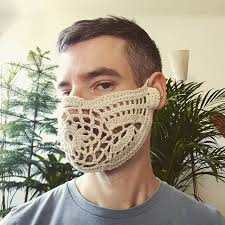 Le port du masque est aussi efficace que la loi Avia pour attenter à la liberté d’expression et presque aussi efficace que la fameuse marque de la bête, le puçage que Bill Gates nous promet en même temps que la vaccination à échelle mondiale.
Le masque, muselière, baillon, ou les deux à la fois, constitue le symbole parfait de soumission à l’ordre régnant qui permet à nos gouvernants de savoir globalement (sauf exception) quels sont ceux des Français qui leur sont passivement acquis et, mieux encore (car leurs visages sont à découvert) ceux qui deviennent de facto des dissidents.
On se souvient des polémiques qu’avait suscitées le port du voile, véritable signe de soumission de la femme musulmane ; nous avons avec cette nouvelle « masquarade » l’équivalent mondial du niqab pour tous.
Porteurs du masque ou visages découverts : paradoxalement, on pourrait dire que, quelque soit le choix, les masques sont (quand même) tombés.
Retour aux heures les plus sombres
La pandémie va passer, les big brothers de pacotille vont se faire oublier, resteront les modalités du but recherché qui a été atteint sans doute au-delà des espérances de ses promoteurs et particulièrement en France, comme l’a si bien relevé Eric Werner, encore lui :
« La France n’a pas été le seul pays d’Europe à instaurer un confinement strict de sa population, mais nulle part ailleurs la répression policière en lien avec la mise en œuvre de cette mesure, en elle-même, il est vrai, déjà très discutable, n’a comporté des traits d’une telle férocité, parfois même d’inhumanité. Certaines vidéos en font foi. L’État français traite aujourd’hui sa propre population comme s’il était en guerre avec elle. Une telle situation est complètement atypique et même unique en Europe.
Observons au passage que les Français dans leur ensemble n’en ont pas ou que rarement conscience. Il faudrait que quelqu’un prenne un jour la peine de le leur expliquer : leur dire que nulle part ailleurs sur le continent, la police ne se permettrait de traiter ainsi les gens. Ce n’est même pas imaginable. Le leur dirait-on qu’ils se montreraient peut-être moins timides dans leurs protestations. Quand on croit que c’est la même chose ailleurs, on a tendance à dédramatiser, quand ce n’est pas à banaliser. Or, justement, ce n’est pas la même chose ailleurs. » Article d’Eric Werner paru dans la rubrique «Enfumages» de l’Antipresse n° 232 du 10/05/2020.
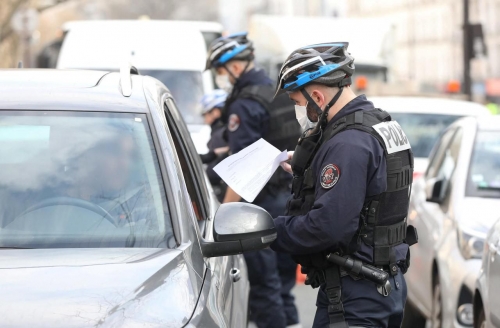
En vérité, les citoyens eux-mêmes, dans leur grande majorité, auront dépassé les souhaits des apprentis-dictateurs qui voulaient les contraindre ; chacun d’eux faisant assaut de veulerie, de mesquinerie et de conformisme, dénonçant à la police son voisin qui ne respectait pas à la lettre les règles du confinement ou regardant comme des criminels ceux qui ne portaient pas de masque, tous ces bons petits-bourgeois étant persuadés d’être, dans leur bon droit, des modèles de vertu. C’est le retour aux heures les plus sombres de la collaboration.
Pendant des siècles, nos soldats se sont battus pour conserver à leur peuple sa liberté qui était alors considérée comme la valeur suprême qui devait être le socle de toute vie digne de ce nom ; beaucoup sont morts pour cette cause.
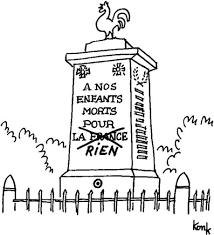 Les Français du XXIe siècle ont choisi : ils préfèrent désormais l’esclavage à la liberté. Comme l’avait si bien montré le dessin de Konk qui, représentant un monument aux morts, avait remplacé l’inscription « Morts pour la France » par celle plus en rapport avec la mentalité actuelle : « Morts pour rien ».
Paul-Georges Sansonetti a fort bien défini la situation tragique qui est actuellement la nôtre dans son livre, Présence de la Tradition primordiale (éditions ODS) : Si les civilisations s'épanouissent en reflétant, par la formulation de la beauté, un ordre suprahumain, leur sauvegarde n'est assurée que lorsque s'affirme une volonté combattante sans faille. Asservissements et ténèbres ne croissent qu'en des temps où rouillent les épées."
Pierre-Emile Blairon
Notes:
[1] « Par curiosité, faites-vous mal, jetez un coup d’œil sur l’organigramme de l’Agence régionale de santé Provence-Alpes-Côte d’Azur. Des comme ça, il y en a dans toutes les Régions. Ça en fait des brasseurs d’air pour décider du nombre de cases de la marelle. » (La marelle, Nice-Provence-Info, 10.5.2020)
[2] Eric Werner, L’avant-guerre civile, Editions L’âge d’homme.
[3] Sondage publié, le 12 mai, par Paris Match et Sud Radio et réalisé par l’IFOP.
[4] L’art de la provocation.



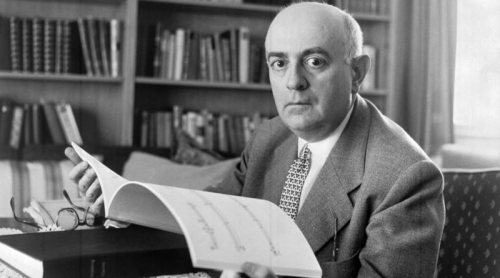
 L’année 1968 sera marquée par un enchaînement de révoltes partout sur le globe : dans le camp occidental, des États-Unis au Japon, en passant par la France ou l’Italie mais aussi dans certains pays du pacte de Varsovie, comme en Pologne ou en Tchécoslovaquie. L’ensemble de l’ordre du monde bipolaire capital-communiste issu de Yalta et du tribunal de Nuremberg allait être ainsi traversé dans un même élan par une série de révoltes marquées par le choc des générations. Pourtant, l’irruption soudaine de cette contestation étudiante internationale n’était pas le fruit du hasard mais bien celui d’un long travail d’incubation intellectuel et politique commencé il y a plusieurs décennies et qui connaîtrait son paroxysme dans les années d’après-guerre. Comme si des forces trop longtemps contenues et désormais sans frein se frayaient maintenant un chemin vers la surface et chercher à tout emporter avec l’éclatante et audacieuse énergie de la jeunesse. Les forces de l’ « Eros » déchaînées, chères aux théoriciens du freudo-marxisme.
 Relire aujourd’hui les Études sur la personnalité autoritaire de Theodor W. Adorno et de l’Institut de Recherche Social se révèle très instructif pour comprendre d’où provient une grande partie du mal-être et de la mauvaise conscience qui mine l’Occident contemporain. On y découvre l’application méthodique et clinique de penseurs politiques engagés qui se sont arrogés le droit de déterminer ce qui est moral ou non, non seulement dans l’Histoire et la culture de l’Occident mais jusque dans l’inconscient supposé des populations occidentales afin de l’en extirper comme par un acte psycho-chirurgical.
 del.icio.us
 Digg
Digg Facebook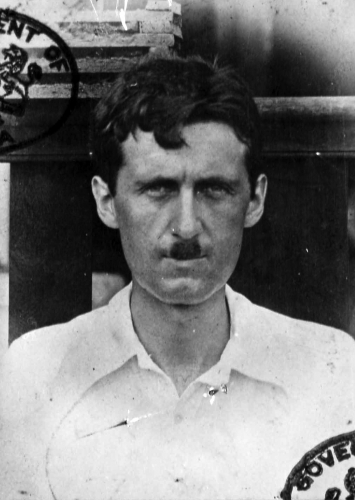
 But amid all their countless fiascoes and failures in every other field (including the highest per capita death rate from COVID-19 in Europe, and one of the highest in the world) the British remain world leaders at managing global Fake News. As long as the tone remains restrained and dignified, literally any slander will be swallowed by the credulous and every foul scandal and shame can be confidently covered up.
 The first important breakthrough in this fundamental reassessment of Orwell comes from one of the best books on him. “Finding George Orwell in Burma” was published in 2005 and written by “Emma Larkin”, a pseudonym for an outstanding American journalist in Asia whose identity I have long suspected to be an old friend and deeply respected colleague, and whose continued anonymity I respect.
 The young Eric Blair was so disgusted by the experience that when he returned home he abandoned the respectable middle class life style he had always enjoyed and became, not just an idealistic socialist as many in those days did, but a penniless, starving tramp. He even abandoned his name and very identity. He suffered a radical personality collapse: He killed Eric Blair. He became George Orwell.
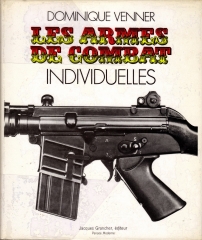 J’ai d’abord découvert Venner, l’expert en armement, avant de m’intéresser à son parcours politique et intellectuel. Pourtant « quel roman que (sa) vie ! » comme aurait dit Napoléon.
 Ayant étudié Marx et Lénine, il analyse le Communisme, qu’il combat depuis toujours, non seulement comme un programme politique, mais aussi comme une organisation que les militants nationalistes doivent imiter en se structurant intellectuellement.
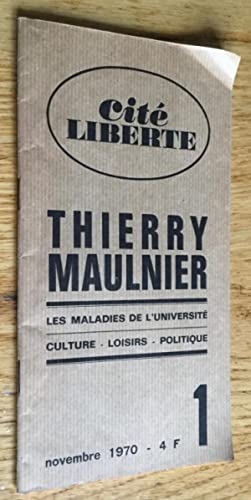 Après plusieurs colloques et sept numéros de « Cité-Liberté », l’institut se saborde en 1971.
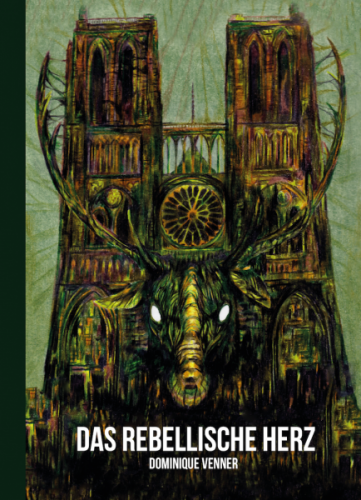 Certains ont aussitôt parlé du « geste d’un déséquilibré ». Il n’en est rien : dans une lettre envoyée à ses amis de « Radio Courtoisie » et à Robert Ménard, qui la publiera dans « Boulevard Voltaire », il explique « croire nécessaire… devant des périls immenses pour sa patrie française et européenne…de se sacrifier pour rompre la léthargie qui nous accable ». Il déclare « offrir ce qui lui reste de vie dans une intention de protestation et de fondation ».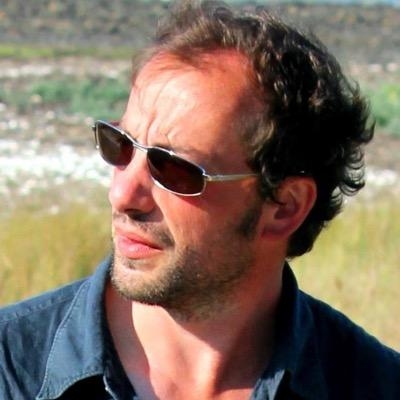
 Vous aurez peut-être remarqué que tous les idiots de France et de Navarre, et Dieu sait comme ils sont nombreux, nous répètent en boucle que, demain, rien ne sera plus jamais comme avant, alors bien évidemment que, demain, ce sera encore pire qu’hier : plus de pollution, plus de consommation, plus de saccage, puisqu’il faudra en somme reprendre, en mettant les bouchées doubles, là où cette regrettable pandémie nous a stoppés net. Au rebours de ces pseudo-analyses, c’est la société occidentale techno-marchande dans son ensemble qui depuis bien des lustres est passée en mode de confinement, et même qu’elle est résolument, de plus en plus implacablement confinée. Pour le dire sur les brisées de Carl Schmitt commenté par Giorgio Agamben, l’état d’exception est devenu la norme : flicage à tous les niveaux, dans les rues et sur les autoroutes virtuelles, prépondérance des discours des « sachants » au détriment des « apprenants » voire des ignorants que nous sommes tous plus ou moins devenus, démonstration quotidienne bien que décomplexée et même parfaitement méprisante de l’incompétence criminelle de nos gouvernements et relais étatiques, individus infantilisés par l’obligation de respecter protocoles sanitaires et gestes barrières, dématérialisation accentuée, triomphe de la novlangue managériale étendue à toutes les sphères de la société et, d’abord, au monde de la santé au sens le plus large, pandémie de la non-parole journalistique s’alimentant de ses propres discours bien davantage que de la réalité, etc..
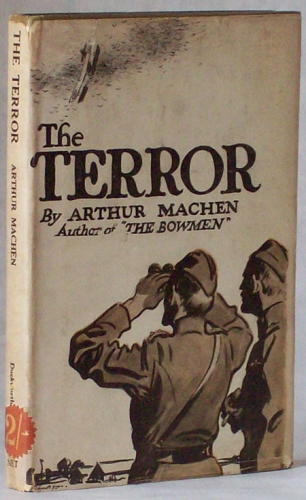 Non, la période dite de confinement n’a rien de vraiment très original, avouons-le même si, comme je l’ai dit, elle a pu faire figure, aussi étrange que fragile, d’un courte, trop courte parenthèse ayant ralenti l’avancée inexorable de la Machine, et permettre à la nature, durant un battement de sa paupière en plexiglass, de se rappeler à notre bon souvenir, sans l’aspect tragique et vengeur qu’illustre Arthur Machen dans une remarquable nouvelle intitulée La Terreur.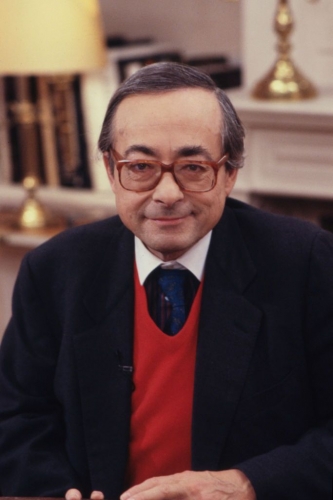
 Roberto Bolaño n’a eu de cesse de s’interroger sur cette question aussi fameuse que délicate, répondant de multiples façons dans presque chacune de ses œuvres, jusqu’à l’œuvre au noir que fut 2666. Résumons l’ensemble de ces réponses apportées par le biais d’ingénieuses figurations littéraires du Mal en affirmant que, pour le grand écrivain chilien comme pour d’autres romanciers, la plus grande œuvre d’art jamais ne saurait se bâtir sur des pleurs et des grincements de dents, encore moins sur du sang.
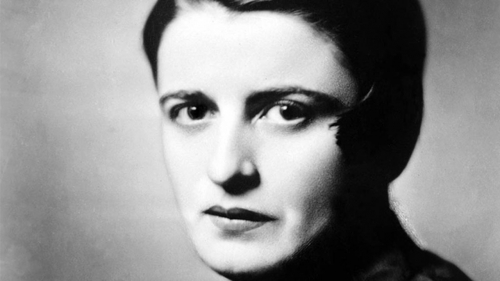
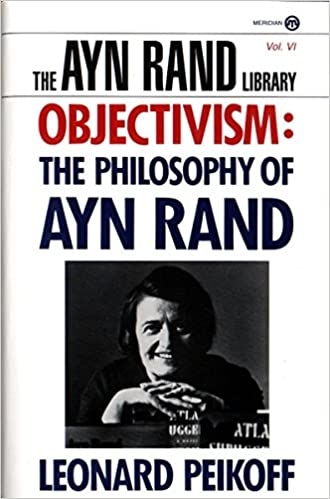
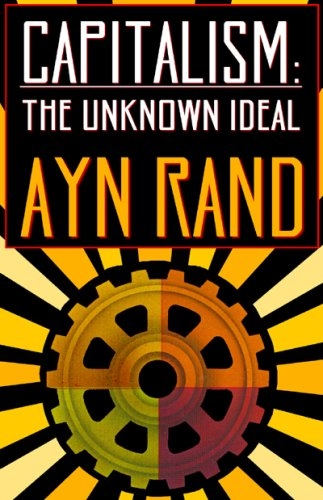 Sa vie bascule durant les années 1945-60, où elle devient une philosophe à la mode, soutenue par quantité de financiers et de littérateurs juifs, cyniques et conquérants. Durant les années 1960, un parent de l’épouse de son amant, Leonard Peikoff, anime le Mouvement objectiviste, à la gloire de la Dame.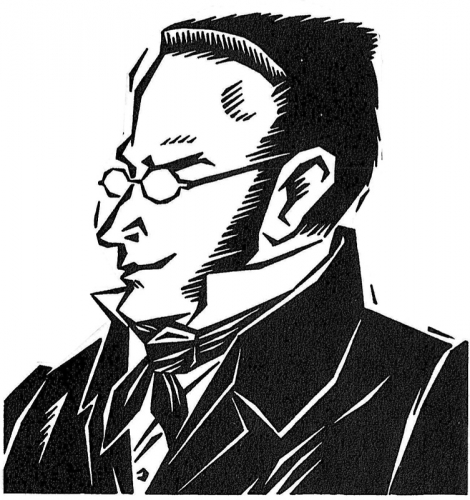
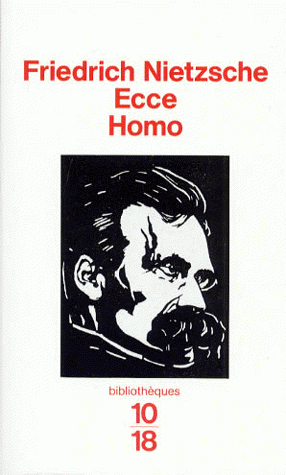 « Je reproche aux miséricordieux de manquer facilement de pudeur, de délicatesse, de ne pas savoir garder les distances. La compassion prend trop vite l’odeur de la populace. Surmonter la pitié, c’est une vertu aristocratique » (Nietzsche, Ecce Homo, de 1888). La compassion est une « valeur amorale » et la charité – le don gratuit, sans espoir de réciprocité – une « morale d’esclaves »… une autre analyse en ferait plutôt une valeur de Seigneur moral ! « Les horreurs de la réalité sont infiniment plus nécessaires que ce petit bonheur qu’on appelle “la bonté” », cette bonté que Friedrich, solitaire, aigri par son insuccès en terres germaniques, assimile à un hédonisme moral (même source). Il fait de la magnanimité une « vengeance sublimée »… alors qu’elle est surtout une forme subtile de mépris.
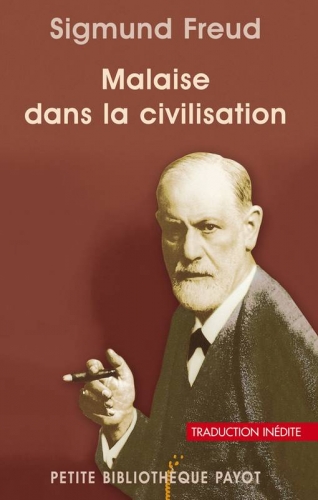 Dans son Malaise dans la civilisation (texte de 1930), le gourou de Vienne, alors en perte de vitesse, étant très contesté par ses concurrents et ses ex-élèves, écrit l’une des perles dont il a le secret : « Tout renoncement à une pulsion devient une source d’énergie pour la conscience », alors qu’elle ne fait généralement qu’alimenter la puissance d’une autre pulsion. Ne pas reprendre du gâteau fut une source d’intime satisfaction pour le stoïcien romain ; ne pas violer une jolie femme restera toujours une source d’honneur pour un homme.
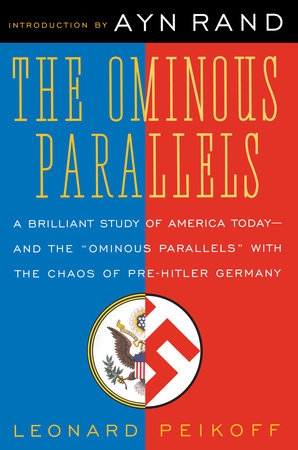 Se réclamant officiellement de « l’objectivité », la dame a fourni à ses lecteurs des analyses très « subjectives » de tout ce qu’elle a traité. Plutôt que les rhapsodies très lyriques de la romancière-philosophe, c’est le pavé de Leonard Peikoff (1991) qui explique le mieux les concepts assez rudimentaires de la dame, qui a tenté d’amalgamer le cynisme de « Stirner » et le délire mégalomaniaque du Nietzsche de ses dernières années d’éveil cérébral aux théories sommaires des économistes ultralibéraux des XVIIIe et XIXe siècles.
 Chaque être humain est libre de butiner là où il trouve son bien, libre également de crier Au génie !, libre de vouloir faire partager son admiration. Toutefois, nier toute valeur à la compassion et repousser l’altruisme et la pitié, au profit de l’individualisme forcené ou d’un darwinisme social quelque peu absurde, ce sont de curieuses attitudes, peu enthousiasmantes.
 B. Plouvier : Le dérangement du monde ou des erreurs et des hommes, L’Æncre, 2016

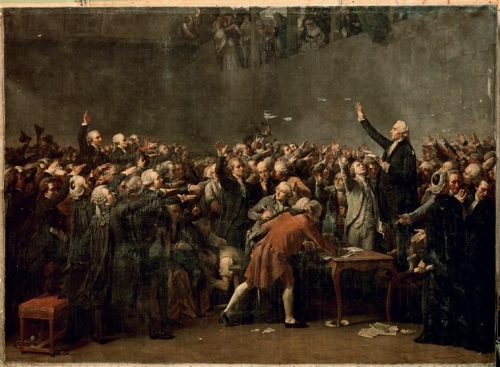
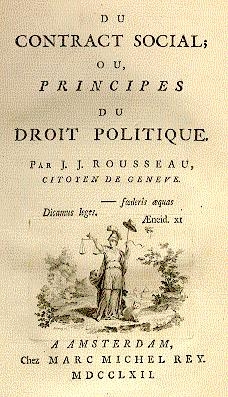 On sait que ces « valeurs », que l’on dit découler de la nature humaine, en fait, plus certainement, des délires philosophistes du XVIIIe siècle, sont celles qui charpentent le « pacte républicain », contrat social de la République dite « française ». Grâce au contrat social, ou pacte républicain, une société peut s’organiser et fonctionner avec des hommes venus du monde entier puisque les valeurs et principes qui président à cette organisation et à ce fonctionnement découlent de l’universelle nature humaine, et non de telle ou telle culture particulière. Ainsi une société fondée sur les droits naturels de l’Homme (le droit à la liberté, à l’égalité, à la propriété) serait acceptable par tous puisque ne contredisant les aspirations essentielles d’aucun. Les joueurs de pipo avaient simplement oublié de définir ce qu’on entendait par « liberté », « égalité » ou « propriété »…
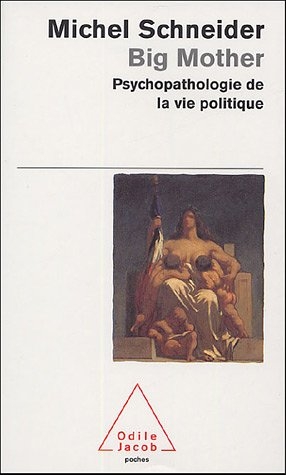 Nous choisissons la vie. La promesse implicite de tout gouvernement européen est que chaque femme, chaque homme a droit à plus de 80 ans de vie heureuse, sans souffrance, sans handicap, sans accident. Voilà pourquoi est jugée scandaleuse une épidémie qui a tué des patients dont l’âge médian est de 84 ans — rappelons que dans toutes les sociétés jusqu’à la nôtre, l’immense majorité de la population n’avait aucun espoir d’atteindre cet âge ! Tout ce qui arrive doit trouver une réponse collective, rien de ce qui arrive ne doit plus arriver vraiment, et tous les accidents de la vie doivent être corrigés par l’action bienfaitrice et consolante de l’État. Big Mother est là pour tout et pour tous, tout le temps, mère possessive et étouffante, comme l’a merveilleusement décrit Michel Schneider. Voilà pourquoi une pandémie qui touche une faible proportion des moins de 70 ans, presque exclusivement souffrant d’une ou plusieurs pathologies graves, est insupportable. La mort est exclue du tableau moderne, elle est cachée, dissimulée, le plus souvent noyée dans les brumes de l’inconscience et l’isolement de l’hôpital. Qu’il est loin le temps où Greuze montrait le chef de famille mourant entouré de ses enfants, petits enfants, domestiques, dans la conscience de la vie accomplie !
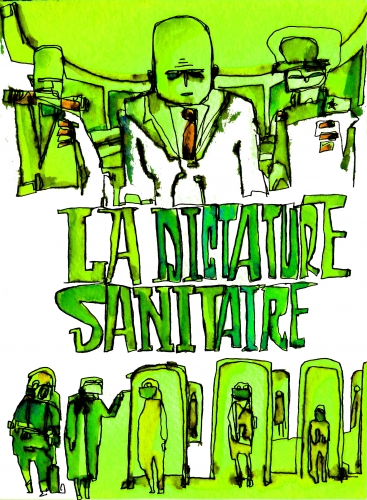 Démocratie libérale, vraiment ?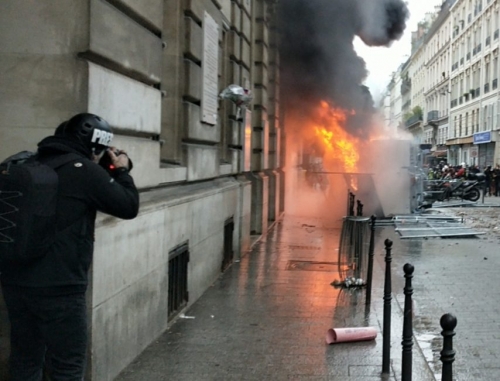

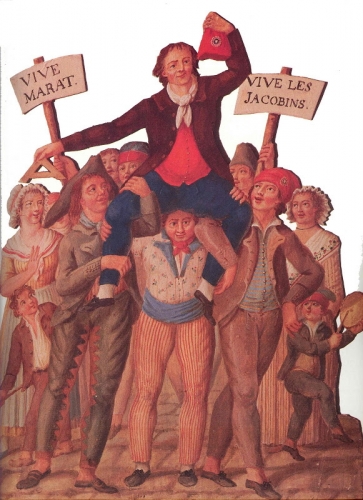
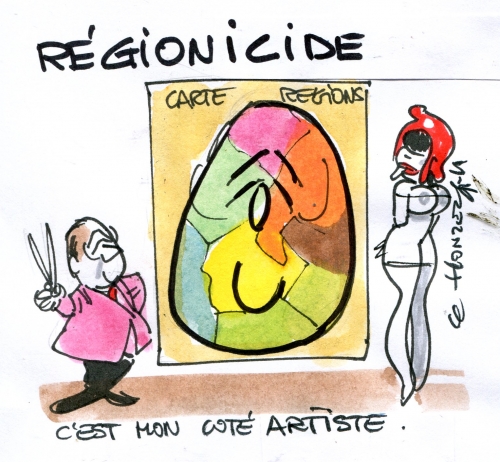
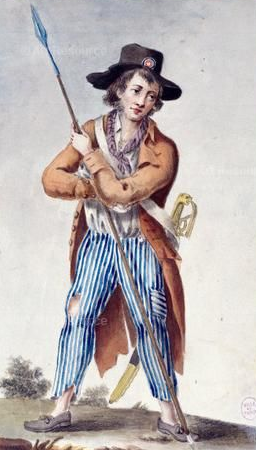 De fait, le parisianisme actuel, qu’il ait été fluctuant et grotesque sous le règne des nullités chiraquienne et hollandienne, ou qu’il soit celui du très directif Emmanuel Macron, est parfaitement illégitime parce que la Nation n’y trouve pas son compte, à la différence de ce qu’éprouvent les maîtres de l’économie et la cohorte de leurs féodaux, si gâtés par nos princes.




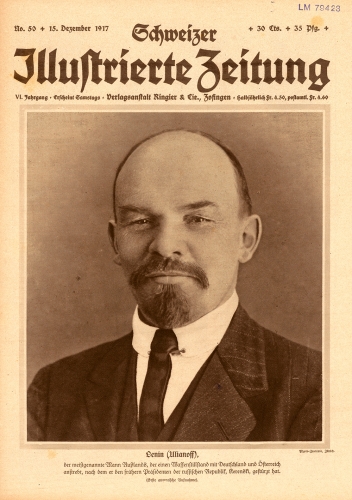
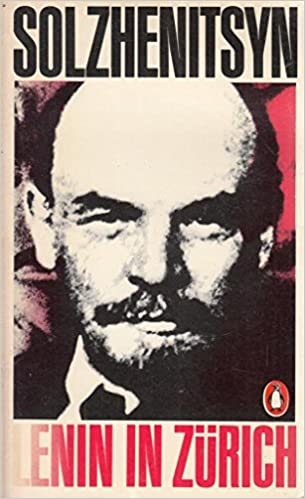 In 1975, Aleksandr Solzhenitsyn excised the several Lenin chapters from his massive and unfinished Red Wheel epic and compiled them into one volume entitled Lenin in Zürich. At the time, only one of these chapters had been published — in Knot I of the Red Wheel, known as August 1914 — while the remaining chapters would still have to languish in the author’s desk drawer for decades before appearing as part of The Red Wheel proper (November 1916 and March 1917, specifically). In order to save time and make an impression on his contemporaries, many of whom in the West still harbored misplaced sympathies for Lenin, Solzhenitsyn decided to share with the world his eye-opening and unforgettable treatment of the Soviet Revolutionary.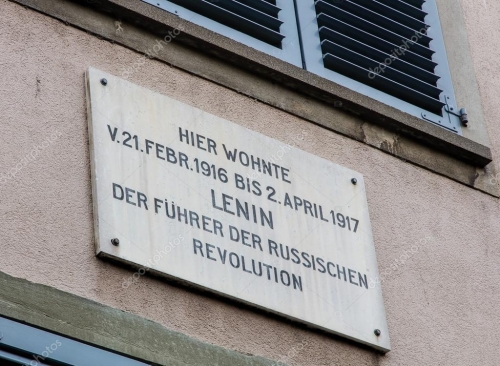
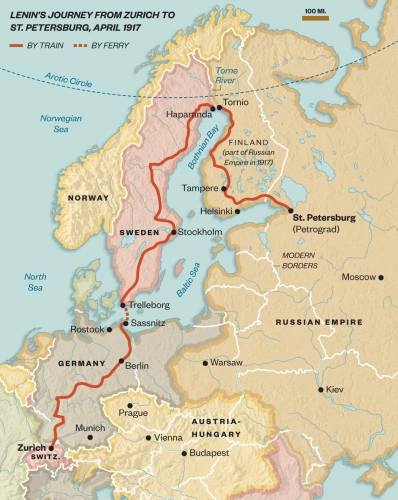
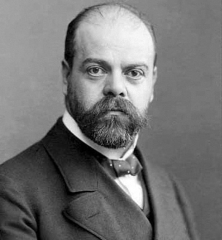 A man known as Parvus appears foremost among the Jews in Lenin in Zürich. Born Izrail Lazarevich Gelfand, he comes across, at least to Lenin, as an enigmatic and somewhat unscrupulous capitalist and millionaire who, for some reason, dedicates his life to socialist causes. Either this, or he wishes to destroy Russia while exhibiting a suspicious allegiance to Germany. Parvus, along with his protégé Leon Trotsky, had tried and failed to overthrow the Tsar in 1905, and now offers a new plan: With his deep contacts in the German government, he will arrange for the Bolsheviks’ to travel through Germany in order to re-enter Russia where they can foment revolution against a weakened Tsar. This would serve not only Lenin but Parvus’ German friends as well by knocking Russia out of the war. Suspicious of Parvus’ outsider status, and especially of his tolerance of Lenin’s detested Mensheviks, Lenin at first refuses. However, he cannot shake his respect and fascination for this mysterious benefactor.
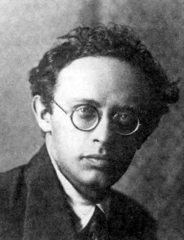 Another Jew who figures prominently in Lenin in Zürich is Radek (born Karl Berngardovich Sobelsohn). Lenin has tremendous respect for Radek as a writer and propagandist — that Radek had become one of the Soviet Union’s most prominent journalists years after Lenin’s death certainly justifies Lenin’s esteem. In all, he is clever and resourceful and the only person to whom Lenin would voluntarily surrender his pen. After the February Revolution in Russia, as Lenin prepares for travel back to his home country according to Parvus’ plan, Radek contrives ingenious solutions to formidable logistical problems that threaten to sink the enterprise. This makes Lenin, for one of the few times in the book, truly happy.
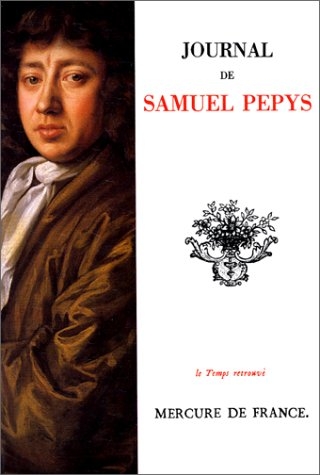 Dans son Journal, le fonctionnaire de l’Amirauté Samuel Pepys tient le «blog» de la peste de 1665. Alors que la classe aisée s’est prudemment réfugiée à la campagne, Samuel reste à Londres, accaparé par ses affaires. Chacun est libre, alors, de fixer ses « distances sociales ». Pepys décrit sans dramatiser la propagation de l’épidémie et ses ravages. Tel cocher s’est mal senti le matin : il était mort le soir. Telle famille de sa connaissance a été entièrement exterminée. Lorsqu’il se rend en ville, il doit éviter certaines rues, particulièrement touchées, pour ne pas enjamber des cadavres... Cela ne l’empêche pas, par ailleurs, de se commander un nouveau costume et de se le faire livrer à une adresse d’emprunt pour ne pas irriter sa femme contrariante. Ni de se rendre à un mariage — avec du retard, évidemment. Des connaissances s’en vont, de nouveaux visages arrivent. Samuel remet son destin entre les mains de Dieu et vaque à ses affaires, plutôt favorables du reste. Il ne manque pas de s’en féliciter. Samuel Pepys n’était ni insensible ni inconscient. Il était un homme plutôt ordinaire de son époque, vif d’esprit et doté d’humour. Il savait, à la différence de nos contemporains, que la mort nous guette au tournant et que l’homme ne contrôle rien. Son journal est un document de premier plan sur la vie quotidienne au XVIIe siècle. Il consigne aussi le terrible incendie qui ravagera Londres à peine la peste terminée, en 1666. La reconstruction inaugurera la période la plus glorieuse de la ville sur la Tamise. La peste avait emporté un quart des Londoniens. Eh, quoi, ce n’était pas la fin du monde...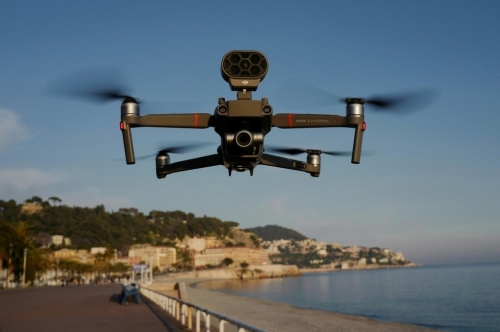
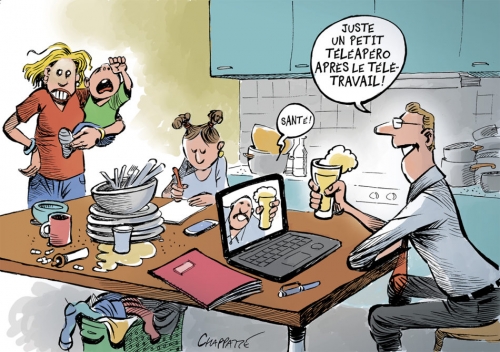
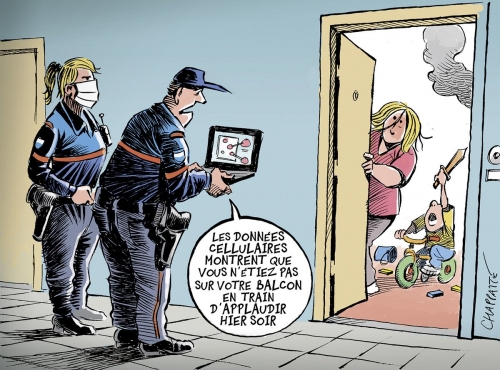
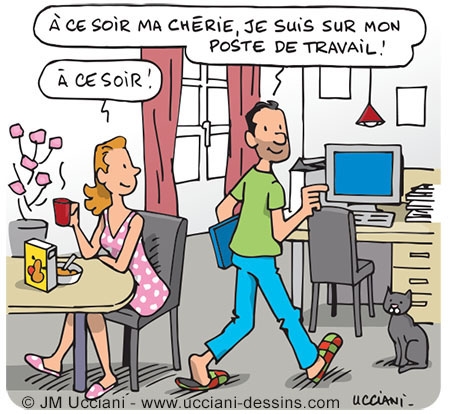
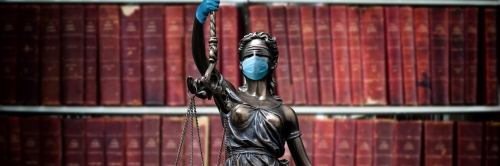
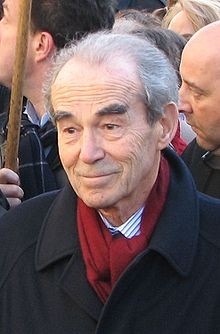 Avec le Code pénal Badinter, en vigueur depuis 1994, il existe au moins un délit fourre-tout, rétif à la règle multiséculaire de l’interprétation stricte, savoir la mise en danger de la vie d’autrui (article 223-1), véritable épée de Damoclès. Et voilà aussi pourquoi le gouvernement est si hésitant et incertain quant aux décisions franches à prendre face à la pandémie. Aucun ministre prenant une décision cherchant à être déterminante, avec un inévitable risque vital dans la population en l’occurrence, ne peut plus exclure de finir frappé par une condamnation pénale.


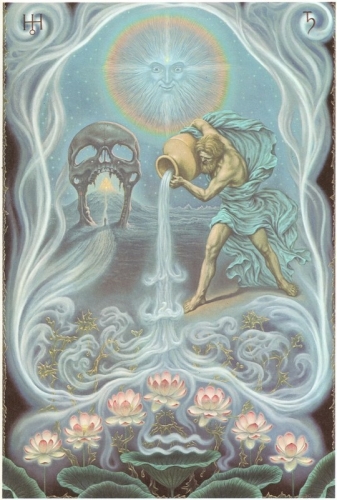
 En raison de sa provenance californienne, ce courant de pensée est plus connu sous le vocable anglais de New Age. On peut situer l’origine de cette mouvance intellectuelle au début des années 1960, notamment avec le livre de Marilyn Ferguson, Les enfants du Verseau (1962).

 A nation is formed by a majority living therein,” he declared. “What did the Jews do in Germany? They being in minority were driven out from Germany.”